
Anne R. Allen's Blog, page 58
April 27, 2014
How to Make the Bestseller Lists: Why Categories and Keywords Matter
...and how to use them effectively
by Ruth Harris
Fiction or non-fiction?
Thriller or sci-fi/fantasy?
Romance or mystery?
Young adult or self-help?
Readers know what they like and what they want. Categories help them find what they’re looking for whether it’s the latest in steamy romance, a classic, time-tested bestseller or a gardener’s guide to growing petunias in Petaluma.
Basically, what the category does is indicate where a particular book should be shelved (as in a library or bookstore) or, in the digital world, searched for.
For indie authors, selecting categories that will make it easy for readers to find your book is an essential part of your job.
For writers going the trad route, you still need a firm idea of your categories to make it clear in your query letter what you've got on offer. Nothing gets rejected faster than a "kind of mainstream/literary new adult paranormal urban fantasy post-apocalyptic thriller romance with chick lit elements".
How do you avoid that? Learn the ways the retailers categorize books.
Each of the major vendors—Kindle, Apple, GooglePlay, Kobo and Nook— allow authors and publishers to choose categories and sub-categories from a list of 2,800 subjects and subject codes called BISAC (The Book Industry Standards Advisory Committee). In addition, the main BISAC categories are further divided and subdivided into genres and sub-genres.
Here is the complete BISAC list of categories.
BIC, the UK version of BISAC, will shelf your book appropriately in English-speaking countries like the UK and Australia. The BIC list is similar to BISAC but can vary slightly. Here's the BIC list of categories. Germany and France also support book-and-author categories and are available to authors at GooglePlay.
Each vendor has a slightly different approach to categories. Nook permits a writer to choose five. Kobo permits three as does iBooks. GooglePlay offers five categories including BISAC, BIC and their equivalents in France and Germany.
Kindle, despite its seemingly stingy two-category choice, offers a much wider choice of categories, sub-categories, genres, and sub-genres. Getting into the correct niche is an important element of the discoverability you’re looking for. A skillful use of categories plus keywords (you can have seven) can get your book on more than two lists.
If you have a series and choose different combinations of categories and keywords for each book, you can expand your reach even further. You can choose six different categories if you have a three-book series. (Two times three.) A four-book series can get you into eight categories (two times four).
Your first step is to choose your two main categories. Your initial thought will probably be the overall category that most accurately describes your book—thriller, horror, sci-fi, romance, mystery and so on. Your second choice might be another relevant—and smaller, therefore easier to rank in—sub-category (historical romance, cozy mystery or whatever best describes your book).
If your book blends genres, choose two relevant categories: for example, if your book is a thriller with an significant romance element, you might want to choose romance and thriller as your two categories. Amazon offers an excellent guide to choosing your main book categories.
The problem? In a huge category like romance, unless you’re a top bestseller, your book will get lost and sink from view.
The fix? Keywords. Especially what Amazon calls “required keywords.” Required keywords will help place your book in appropriate sub-categories which tend to be much smaller, thus giving your book a better chance of being seen by the readers you are looking for. Here are links to Kindle’s required keywords broken down by category:
Romance.
Science Fiction & Fantasy.
Children’s.
Teen & Young Adult.
Mystery, Thriller & Suspense.
Comics & Graphic Novels.
Literature & Fiction.
Erotica.
3 Keys To Kindle
1) Small, niche categories can get your book into the categories that lead down to it. For example: Kindle Store > Kindle eBooks > Literature & Fiction > Genre Fiction > Sports will place your book in the Sports category but also in Genre Fiction, Literature & Fiction and so on.
2) If you’re not sure where to start, look at bottom of the Kindle page of a book similar to yours. This list is called Look for Similar Items by Category and will give you ideas about what categories might fit your book and how and where to start.
3) Nothing is set in stone. If you think your categories and keywords aren’t working well for you, go to your KDP dashboard and change them. Do your research first and then experiment to see whether other choices make your book more visible.
Keyword Gurus Tell All
Jason Matthews, author of How to Make, Market and Sell Ebooks and new adult novels, posted a comprehensive and easy-to-understand post plus video about choosing and using keywords. Jason explains how to test keywords at Amazon and at Google and tells why sometimes what seem to be trivial differences can make a difference. Jason also shares insights and valuable advice about important keyword dos and don’ts.
M. Louisa Locke, the bestselling author of Victorian mysteries set in San Francisco, has posted an excellent guide to de-mystifying the keyword/category duo. Ms. Locke’s advice is titled How to Get your books into the right Categories and Sub-categories: Readers to Books/Books to Readers. Part Three of her analysis includes links to the first two articles in her valuable series.
Swords and sorcery, anyone? Lindsay Buroker, bestselling author of Fantasy, lays out her approach to combining categories with keywords in order to rank in more lists and increase the odds that more readers will see your books.
In Let's Get Visible: How To Get Noticed And Sell More Books by award-winning bestseller David Gaughran details strategies and techniques to help you understand the inner workings of Amazon’s powerful recommendation engine and position your books to maximum advantage on other vendors.
At the Indie Chicks Café, Award-winning romance author, Donna Fasano, points out that keywords are not just for customer browsing purposes. Donna explains how she uses sub-categories such as Contemporary Romance, Drama and Multi Cultural to increase discoverability of her book, Reclaim My Heart.
Ebook Marketing Secrets Part 5 -- The Right Categories Can Make You A Bestseller points out that “keywords are not just search terms for people on Amazon.com. Amazon's products show up on Google, Bing, and Yahoo searches as well.” This article also delves into the correlation between ranking and bestseller lists and offers a shrewd approach to selecting categories with less competition and thus offering a better chance of appearing on a list.
Liliana Hart, bestselling author of the MacKenzie series, thinks keywords are more important than categories. She details her approach in a chapter called Navigating Algorithms, Categories and Keywords in The Naked Truth About Self-Publishing.
The self-publishing roundtable recommends experimenting with new categories/keywords and tells why branching out into various keyword-category combinations can help expand your audience. This article also suggests moving already-published books into new categories and adding the necessary keywords to gain extra exposure.
David Masters, author of The Prolific Writer's Toolbox, discusses categories and keywords in terms of “browsing” and “searching” and explains the difference. He offers a useful guide about how to cross-check keywords between Amazon and Google and tells how to identify obscure and niche categories with less-intense competition.
Finally: a bit of perspective
Finding the right “recipe” for Categories and Keywords require four qualities writers have in abundance.
Flexibility: the awareness that publishing trends are in constant flux and that if one thing doesn’t work, the next one (or the one after) will.Creativity: the willingness to experiment and try a variety of different ideas and combinations.Persistence: the refusal to give up when the first choice doesn’t work out as well as anticipated and try, try again.Patience: Allowing sufficient time for flowers to bloom and success to blossom.
The good news is that you can—and should—change any category or keyword that isn’t working and that periodically refreshing your categories and keywords is just part of the job.
What about you, Scriveners? Did you know all this stuff about categories? Amazing how powerful a carefully chosen keyword can be, isn't it? Those hoping to go the traditional route: does this help you understand why categories are so important in your query? Self-publishers, have you changed categories and had positive results?
BOOK OF THE WEEK
A hilarious, fast-paced read from Ruth Harris! Buying an e-reader or tablet for Mom for Mother's Day? Pre-load it with this fun "Chick Lit for Chicks who weren't born yesterday"
The Chanel Caper is $2.99 on Amazon US, Amazon UK and Nook | Kobo | iBooks
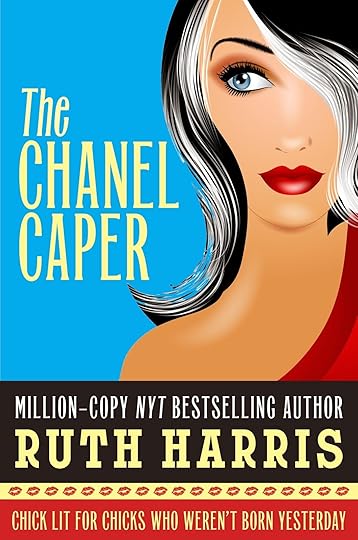
THE CHANEL CAPER Nora Ephron meets James Bond...or is it the other way around? Blake Weston is a smart, savvy, no BS, 56-year-old Nora Ephron-like New Yorker. Her DH, Ralph Marino, is a très James Bond ex-cop & head of security for a large international corporation. At a tense time in their relationship, Blake & Ralph are forced to work together to solve a murder in Shanghai & break up an international piracy ring.
Ruth Harris is a 1,000,000 copy New York Times and Amazon bestselling author and a Romantic Times award winner for "best contemporary." Critics have called Ruth's fiction "brilliant," "steamy," "stylishly written," "richly plotted," "first-class entertainment" and "a sure thing."
OPPORTUNITY ALERTS
The Literary Hatchet: Paying market for Dark Fiction and Poetry - Pays $15 a story. They welcome prose and poetry that scares and shocks readers. Open to horror, paranormal, and speculative fiction. Word length: 500-3000 words/story, and under 100 lines per poem. $15/story, $5/poem. Deadline is July 1, 2014 for the August issue. Read guidelines here - See more at: http://writingcareer.com/
The Saturday Evening Post "Celebrate America" fiction contest. $10 ENTRY FEE. The winning story will be published in the Jan/Feb 2015 edition of The Saturday Evening Post, and the author will receive a $500 payment. Five runners-up will each receive a $100 cash payment and will also have their stories published online. Stories must be between 1,500 and 5,000 words in. All stories must be previously unpublished (excluding personal websites and blogs). Deadline July 1.
$800 prize for your unpublished or self-published novel, plus possible representation. Writers' Village International Novel Award. $22 entry fee. The winning author will be assessed by international literary agency A. M. Heath for possible representation. The top eight contestants will receive personal feedback on their novels by the judge, novelist Michelle Spring, Royal Literary Fellow at Magdalene College, Cambridge. Entries are welcome worldwide. Deadline June 30th
The Golden Quill Awards: Entry fee $15. Two categories: Short fiction/memoir (1000 words) and Poetry (40 lines max) $750 1st prize, $400 2nd prize in each category. Sponsored by the SLO Nightwriters and the Central Coast Writers Conference. Entries accepted from April 1-June 30th.
NOWHERE TRAVEL STORIES $15 ENTRY FEE. $1000 prize plus publication. Award-winning literary travel magazine, Nowhere, is teaming up withOutside Magazine for the first Nowhere Spring Travel Writing Contest. Stories can be fiction or nonfiction. Entries should be be between 800-5,000 words and must not have been previously chosen as a winner in another contest. Previously published work is accepted. Deadline June 15.
by Ruth Harris
Fiction or non-fiction?
Thriller or sci-fi/fantasy?
Romance or mystery?
Young adult or self-help?
Readers know what they like and what they want. Categories help them find what they’re looking for whether it’s the latest in steamy romance, a classic, time-tested bestseller or a gardener’s guide to growing petunias in Petaluma.
Basically, what the category does is indicate where a particular book should be shelved (as in a library or bookstore) or, in the digital world, searched for.
For indie authors, selecting categories that will make it easy for readers to find your book is an essential part of your job.
For writers going the trad route, you still need a firm idea of your categories to make it clear in your query letter what you've got on offer. Nothing gets rejected faster than a "kind of mainstream/literary new adult paranormal urban fantasy post-apocalyptic thriller romance with chick lit elements".
How do you avoid that? Learn the ways the retailers categorize books.
Each of the major vendors—Kindle, Apple, GooglePlay, Kobo and Nook— allow authors and publishers to choose categories and sub-categories from a list of 2,800 subjects and subject codes called BISAC (The Book Industry Standards Advisory Committee). In addition, the main BISAC categories are further divided and subdivided into genres and sub-genres.
Here is the complete BISAC list of categories.
BIC, the UK version of BISAC, will shelf your book appropriately in English-speaking countries like the UK and Australia. The BIC list is similar to BISAC but can vary slightly. Here's the BIC list of categories. Germany and France also support book-and-author categories and are available to authors at GooglePlay.
Each vendor has a slightly different approach to categories. Nook permits a writer to choose five. Kobo permits three as does iBooks. GooglePlay offers five categories including BISAC, BIC and their equivalents in France and Germany.
Kindle, despite its seemingly stingy two-category choice, offers a much wider choice of categories, sub-categories, genres, and sub-genres. Getting into the correct niche is an important element of the discoverability you’re looking for. A skillful use of categories plus keywords (you can have seven) can get your book on more than two lists.
If you have a series and choose different combinations of categories and keywords for each book, you can expand your reach even further. You can choose six different categories if you have a three-book series. (Two times three.) A four-book series can get you into eight categories (two times four).
Your first step is to choose your two main categories. Your initial thought will probably be the overall category that most accurately describes your book—thriller, horror, sci-fi, romance, mystery and so on. Your second choice might be another relevant—and smaller, therefore easier to rank in—sub-category (historical romance, cozy mystery or whatever best describes your book).
If your book blends genres, choose two relevant categories: for example, if your book is a thriller with an significant romance element, you might want to choose romance and thriller as your two categories. Amazon offers an excellent guide to choosing your main book categories.
The problem? In a huge category like romance, unless you’re a top bestseller, your book will get lost and sink from view.
The fix? Keywords. Especially what Amazon calls “required keywords.” Required keywords will help place your book in appropriate sub-categories which tend to be much smaller, thus giving your book a better chance of being seen by the readers you are looking for. Here are links to Kindle’s required keywords broken down by category:
Romance.
Science Fiction & Fantasy.
Children’s.
Teen & Young Adult.
Mystery, Thriller & Suspense.
Comics & Graphic Novels.
Literature & Fiction.
Erotica.
3 Keys To Kindle
1) Small, niche categories can get your book into the categories that lead down to it. For example: Kindle Store > Kindle eBooks > Literature & Fiction > Genre Fiction > Sports will place your book in the Sports category but also in Genre Fiction, Literature & Fiction and so on.
2) If you’re not sure where to start, look at bottom of the Kindle page of a book similar to yours. This list is called Look for Similar Items by Category and will give you ideas about what categories might fit your book and how and where to start.
3) Nothing is set in stone. If you think your categories and keywords aren’t working well for you, go to your KDP dashboard and change them. Do your research first and then experiment to see whether other choices make your book more visible.
Keyword Gurus Tell All
Jason Matthews, author of How to Make, Market and Sell Ebooks and new adult novels, posted a comprehensive and easy-to-understand post plus video about choosing and using keywords. Jason explains how to test keywords at Amazon and at Google and tells why sometimes what seem to be trivial differences can make a difference. Jason also shares insights and valuable advice about important keyword dos and don’ts.
M. Louisa Locke, the bestselling author of Victorian mysteries set in San Francisco, has posted an excellent guide to de-mystifying the keyword/category duo. Ms. Locke’s advice is titled How to Get your books into the right Categories and Sub-categories: Readers to Books/Books to Readers. Part Three of her analysis includes links to the first two articles in her valuable series.
Swords and sorcery, anyone? Lindsay Buroker, bestselling author of Fantasy, lays out her approach to combining categories with keywords in order to rank in more lists and increase the odds that more readers will see your books.
In Let's Get Visible: How To Get Noticed And Sell More Books by award-winning bestseller David Gaughran details strategies and techniques to help you understand the inner workings of Amazon’s powerful recommendation engine and position your books to maximum advantage on other vendors.
At the Indie Chicks Café, Award-winning romance author, Donna Fasano, points out that keywords are not just for customer browsing purposes. Donna explains how she uses sub-categories such as Contemporary Romance, Drama and Multi Cultural to increase discoverability of her book, Reclaim My Heart.
Ebook Marketing Secrets Part 5 -- The Right Categories Can Make You A Bestseller points out that “keywords are not just search terms for people on Amazon.com. Amazon's products show up on Google, Bing, and Yahoo searches as well.” This article also delves into the correlation between ranking and bestseller lists and offers a shrewd approach to selecting categories with less competition and thus offering a better chance of appearing on a list.
Liliana Hart, bestselling author of the MacKenzie series, thinks keywords are more important than categories. She details her approach in a chapter called Navigating Algorithms, Categories and Keywords in The Naked Truth About Self-Publishing.
The self-publishing roundtable recommends experimenting with new categories/keywords and tells why branching out into various keyword-category combinations can help expand your audience. This article also suggests moving already-published books into new categories and adding the necessary keywords to gain extra exposure.
David Masters, author of The Prolific Writer's Toolbox, discusses categories and keywords in terms of “browsing” and “searching” and explains the difference. He offers a useful guide about how to cross-check keywords between Amazon and Google and tells how to identify obscure and niche categories with less-intense competition.
Finally: a bit of perspective
Finding the right “recipe” for Categories and Keywords require four qualities writers have in abundance.
Flexibility: the awareness that publishing trends are in constant flux and that if one thing doesn’t work, the next one (or the one after) will.Creativity: the willingness to experiment and try a variety of different ideas and combinations.Persistence: the refusal to give up when the first choice doesn’t work out as well as anticipated and try, try again.Patience: Allowing sufficient time for flowers to bloom and success to blossom.
The good news is that you can—and should—change any category or keyword that isn’t working and that periodically refreshing your categories and keywords is just part of the job.
What about you, Scriveners? Did you know all this stuff about categories? Amazing how powerful a carefully chosen keyword can be, isn't it? Those hoping to go the traditional route: does this help you understand why categories are so important in your query? Self-publishers, have you changed categories and had positive results?
BOOK OF THE WEEK
A hilarious, fast-paced read from Ruth Harris! Buying an e-reader or tablet for Mom for Mother's Day? Pre-load it with this fun "Chick Lit for Chicks who weren't born yesterday"
The Chanel Caper is $2.99 on Amazon US, Amazon UK and Nook | Kobo | iBooks

THE CHANEL CAPER Nora Ephron meets James Bond...or is it the other way around? Blake Weston is a smart, savvy, no BS, 56-year-old Nora Ephron-like New Yorker. Her DH, Ralph Marino, is a très James Bond ex-cop & head of security for a large international corporation. At a tense time in their relationship, Blake & Ralph are forced to work together to solve a murder in Shanghai & break up an international piracy ring.
Ruth Harris is a 1,000,000 copy New York Times and Amazon bestselling author and a Romantic Times award winner for "best contemporary." Critics have called Ruth's fiction "brilliant," "steamy," "stylishly written," "richly plotted," "first-class entertainment" and "a sure thing."
OPPORTUNITY ALERTS
The Literary Hatchet: Paying market for Dark Fiction and Poetry - Pays $15 a story. They welcome prose and poetry that scares and shocks readers. Open to horror, paranormal, and speculative fiction. Word length: 500-3000 words/story, and under 100 lines per poem. $15/story, $5/poem. Deadline is July 1, 2014 for the August issue. Read guidelines here - See more at: http://writingcareer.com/
The Saturday Evening Post "Celebrate America" fiction contest. $10 ENTRY FEE. The winning story will be published in the Jan/Feb 2015 edition of The Saturday Evening Post, and the author will receive a $500 payment. Five runners-up will each receive a $100 cash payment and will also have their stories published online. Stories must be between 1,500 and 5,000 words in. All stories must be previously unpublished (excluding personal websites and blogs). Deadline July 1.
$800 prize for your unpublished or self-published novel, plus possible representation. Writers' Village International Novel Award. $22 entry fee. The winning author will be assessed by international literary agency A. M. Heath for possible representation. The top eight contestants will receive personal feedback on their novels by the judge, novelist Michelle Spring, Royal Literary Fellow at Magdalene College, Cambridge. Entries are welcome worldwide. Deadline June 30th
The Golden Quill Awards: Entry fee $15. Two categories: Short fiction/memoir (1000 words) and Poetry (40 lines max) $750 1st prize, $400 2nd prize in each category. Sponsored by the SLO Nightwriters and the Central Coast Writers Conference. Entries accepted from April 1-June 30th.
NOWHERE TRAVEL STORIES $15 ENTRY FEE. $1000 prize plus publication. Award-winning literary travel magazine, Nowhere, is teaming up withOutside Magazine for the first Nowhere Spring Travel Writing Contest. Stories can be fiction or nonfiction. Entries should be be between 800-5,000 words and must not have been previously chosen as a winner in another contest. Previously published work is accepted. Deadline June 15.


April 20, 2014
How to Write Blog Content: 9 Tips to Entice Readers to Your Author Blog
You started a blog. Congratulations!
But nobody’s reading it.
Sigh.
Don't give in to despair. It takes a while to build a readership. Usually a long while. For the first six months I blogged, my followers consisted of my mom and my critique group. The other day I found my journal entry from my blog's first anniversary. I was totally jazzed because I was up to 36 followers. A year later, I had 600. (Now we've got 1652 and 1025 subscribers: thanks, everybody! And we're so jazzed to hear we've been named to Writer's Digest's Best 101 Websites for the second year in a row! )
So what happened in that second year?
1) I started commenting on other blogs and got some guest gigs. This is the part of blogging that most beginning bloggers skip. But nobody can follow you if they don't know you're there. You have to get out and meet other bloggers. Commenting on their blogs is the best way to to that. Here's my post on how to comment on a blog.
2) I learned how to blog. That took some trial and error. Lots of error. In fact, I'm still learning. I'm talking about format here, not subject matter, which I've blogged about before and will again soon. Here's one of my posts on What Should an Author Blog About?
Short version of the subject matter question:
An author can blog about anything. Just make sure it's interesting to somebody other than your family and your cat. Don't use it as a personal journal. Everything you say is "in public." I don't recommend new bloggers start another "how to write" blog, because we've got gazillions of them, and they don't attract non-writing readers. Fiction usually doesn't do well on a blog, and there could be copyright issues, so it's usually best to make it mostly nonfic. Write about stuff of interest to the readers you want to attract.
Once you do get a few people stopping by, you’re more likely to keep them coming back if you write content that's formatted for the Web reader.
A blogger is a "content provider"—and writing Web content isn't exactly the same as writing an essay or a magazine article.
Unfortunately most of the info you find on writing Web content comes from marketers and tech people, not novelists, and their stuff can be so riddled with jargon it might as well be written in Klingon.
Like this article I found about using hyperlinks with keywords (#7 below):
"What will help Google disambiguate the #entities - people, brands, places, industry terms, etc. - to which you refer in your copy? Through strong copy, understanding hierarchies and emphasising industry terms (without links), we can ensure that indexers have confidence in our content, thus render it in #SERPs with more certainty."
Uh-huh. I know that's probably solid info, but I'd be so grateful if people would write it in regular English.
For me, learning to blog meant unlearning a whole lot of what we were taught about writing prose back in the 20th century.
We learned to use topic sentences and avoid cutting to a new paragraph until there's a new topic.We wrote for people who paid money for our words and read every one.We wouldn't put a title on a serious essay that looked like a cheap tabloid headline.We avoided repetition. We would never offer an outline instead of an essay.We substantiated our information with footnotes.We never heard of "tags" or "SEO"
Unfortunately, the majority of people don't read on the Internet; they skim. In fact, most people don't even skim the whole article. In a recent piece in Slate titled "You Won't Finish This Article", Farhad Manjoo said only half the people who visit a site read past the first hundred words.
So how do you get them to come by...and stay?
Throw out the rules you learned in school and use a copywriter's tricks for grabbing your audience and not letting them go. Here are some copywriting techniques you might want to add to your writing skill set.
1) Write whiplash-inducing blog headers
C. Hope Clark said in her March "Funds for Writers" newsletter:
"You might be surprised at the key factor I use in deleting or holding to read: The quality of the subject line. Hey, when time is crazy limited...the words have to snag me as I rush by. That means first and foremost that the subject be crisp, sharp, attractive, intriguing, or whatever adjective you want to use that gives me whiplash. It has to shout, "HEY, READ ME OR YOU'LL REGRET IT."
She's right. Headers might be the most important element of your blog content, and it's the one most novelists don't get. We want our blogs to sound creative and literary like our books, not cheesy like a supermarket tabloid.
But tabloid and advertising writers know what they're doing. They have only a moment to grab a reader going through that checkout line, so they need an irresistible hook.
In our case our headers need to make whiplash Tweets and shares that will snag a reader in the endless stream of content they can choose from.
So how do we do that?
a) Don't be generic.
"An Interview with…" Isn't going to grab anybody unless it's "AN INTERVIEW WITH JUSTIN BIEBER AND VLADIMIR PUTIN TALKING ABOUT THEIR THREESOME WITH KIM KARDASHIAN" or something else involving trending news.
b) Make it Tweetable.
That means avoiding enigmatic, one-word headers. I recently saw a title in the London Review of Books that exemplified the one-word header that doesn't work well in the age of Twitter. The article was called "Ghosting." It turned out to be about Andrew O'Hagan's experience ghostwriting for Julian Assange, a fascinating subject.
But you wouldn't know from the title. It might have been a piece about ectoplasmic apparitions, or a remake of the Dan Ackroyd-Bill Murray movies, so I didn't bother to retweet it since I didn't have time to write a new header. You don't want that to happen to your posts.
c) Promise a quick read
Everybody's in hurry online.
In a March 2014 piece in the Web Writer Spotlight, Jillian Mullin wrote:
"....you have to compete with Facebook and Twitter, as well as with their family and work. The fact that they managed to land on your site is something to be thankful for. Generally, an average web user only spends 10 to 30 seconds reading Internet content. People rarely read web pages word-per-word. Instead, they scan the page for related keywords, bullet points, subtitles, and quotes."
So one of the best ways to make that promise is with numbered lists. "The 10 Best Ghostwritten Books" or "5 Signs Your Computer is Possessed."
d) Promise solid, helpful information that's YOU oriented, not ME oriented
Like: "How to Become a Ghostwriter" or "5 Simple Snacks to Serve at Your Next Exorcism," rather than "I'm Making a Living Now" or "Another Sleepless Night in My New Apartment."
e) Ask a question that stirs curiosity
Try appealing to greed: "Make REAL Money as a Writer!" Or paranoia—sorry, but it works: "Is Your Cubicle Haunted?" or "Who or WHAT is Flushing Your Toilet in the Middle of the Night?".
f) Use keywords in your header
So what are keywords? They're the words that most effectively let the public (and the search engines) know what your post is about. Like this one is about 1) blogs 2) blog content 3) authors
So let's say you're blogging about how you think your new house may be haunted by the ghost of an elderly lady who died there. Don't call it "Mildred Biggins Walks at Night", as much as it appeals to your storyteller's instinct. Call it "10 Signs Your House is Haunted: My Encounter with a Ghost".
That's because "haunted house" and "ghost"are your keywords.
In other words, just tell us what it's about. That's what will draw the most readers and it uses your keywords. (That's called SEO—more on that below.)
2) Put your most important info in the first few words
Make sure your lead is visible as soon as somebody opens your blog. People do a lot of reading on phones and small tablets these days, so those first words are all-important for today's reader.
It's also what Google shows in the search results. And those opening words will help the spiders decide what searches will pick it up, so you need some keywords there, too.
And since most people won't read past the second paragraph, you don't want to save your best stuff for the end.
Half a century ago, journalists were taught to "humanize" stories by starting with a human interest line. "Susie Scrivener shouldn't have a care in the world. She's a pretty 30-something freelance writer living in a gorgeous Victorian triplex in Old Town. She's sitting on the front porch of the house she moved into last month with her cat Hortense. The three-story home was once owned by one Mildred Biggins, who died in 1924…"
The reporter could get to the lead (then known as the "lede" to differentiate from the metal originally used to make type) in the third or fourth sentence, but these days, you've got to give us the facts in the first ten words.
"Susie Scrivener thinks her house is haunted by the ghost of its former owner." Bam. Just say it.
3) Learn to use and format subheaders
Subheaders aren't just for drawing the eye through and letting the reader know what's coming up. They also need to spell out your most important points. And include keywords.
That's because subheads get picked up by search engines too.
So for your Mildred Biggins post, you might use subheaders that contain words like "ghost", "haunted", and "poltergeist", rather than "Who flushed that toilet?" or "Mildred and Hortense".
NOTE: Be sure to use the "subheader" mode in your blog program, and not the "normal" setting. I didn't even know there was a "subheader" category until this year, when I stumbled on it. (Stumbling is how I found out most of this stuff.)
For Blogger users, the subheader menu is on the left-hand side of the toolbar, where you see the word "normal". That window has a menu, where you can choose Heading, Subheading, or Minor Heading.
For Wordpress users, here's the skinny from Romance Author Autumn MacArthur:
"WP users wanting to use headings and subheadings in a post need to bring up a second toolbar by hitting the "Toolbar Toggle" button on the far right of the toolbar. That adds a second toolbar, with a dropdown box labelled "Paragraph" as the first item. Headings are under there. Whether they act the same as Blogger Subheadings from a Googlebot point of view I'm not sure, but they look pretty!"
When I started using the appropriate format, our blog stats soared. Why? The Google spiders pay attention to subheaders the way they do to headers and hyperlinks.
4) Break up blog text
No big hunks of indigestible verbiage. Nothing is more daunting to a Web reader.
I subscribe to Publisher's Lunch, the daily report on traditional publishing's latest news. But like so much of traditional publishing, it's stuck in the 20th century. The information on new book deals comes in one in one big, passive-aggressive block of text in a tiny, gray, sans-serif font. I find myself dreading opening it every morning. Recently, I've just been skipping it.
So break up those word hunks. Forget what you learned in school about topic sentences. Don't write a paragraph more than a few sentences long.
I know. Your high school English teacher is rolling in her grave, but skimmers read the first sentence of a paragraph and maybe the last. Make your big points in those two spots.
5) Write blog content in a simple, conversational style
A blog is not the place to show off your encyclopedic vocabulary. If somebody has to click around to look up a word, they probably won't come back.
It's also not the place for the kind of jargon I quoted in my intro. Don't write in geekspeak, legalese, or that "most scholars agree" phony-tony style you used for college term papers.
Many tech people write in a language comprehensible only to them. It identifies them as one of the people "in the know." But an "in crowd" blog isn't going to get as many followers as one that's friendly and welcoming.
I agree completely with Ann Timmons, the Communications Artist who wrote in a March 2014 post about how her eyes glazed over at a conference when listening to:
"...all sorts of undoubtedly English language words used in combinations I could not make sense of. Not knowing the context, I was lost. Some people call this 'insider language'. Others call it 'jargon.' Whatever you call it, it is bound to frustrate people."
Marketers and SEO specialists are some of the worst offenders. I have read dozens of blogs about something called "Google Authorship" but I still haven't got the slightest idea if it's a software program, an app, a Google Plus circle, or the name of Larry Page's cat. Nobody seems able to define it. They only put people down who don't have it.
You're not going to reach the general public if you write in Klingon and act smug.
6) Arrange blog text in a scannable format
Scanning is easier with lists, bullet points, and bolding. Italics can be useful too—anything to draw the eye along the text.
MS Word makes this a breeze. Unfortunately Word formatting probably won't translate to your blog program, so you may have to resort to primitive means like numbering your own lists or using asterisks for bullet points.
*Lists: a numbered list has a three-fold benefit:
It provides lots of white space.It draws the eye through.It gives you fodder for your headline. (See the "header" section.)
*Bullet points: Like lists, bullet points are easy to grasp at a glance and they let people know they're just getting the "good parts."
*Bolding: Especially for headers and other significant information.
*Italics: Putting a quote in italics sets it apart from the normal text.
7) Use informative text for hyperlinks
What are hyperlinks? It's okay to ask. I had no idea how to make a hyperlink for the first six months I blogged.
You make a hyperlink when you turn an ugly url like this: http://annerallen.blogspot.com/2009/07/beware-bogus-literary-agents.html into a live bit of text you can click on like this link to one of my very first blogposts: Beware Bogus Literary Agents. (Where you will see my early urls in all their ugly, unhyperlinked glory.)
You make a hyperlink by selecting the text you want people to click on and going to the icon that looks like two links of chain up there on the menu bar. Or in Blogger it is cleverly identified with the word "Link".
See how I didn't make the link above with the word "here" or "this link"? That's because the words "here" and "this link" don't mean anything to the Google spiders (the reason these robot/algorithm things are called "spiders" is they "crawl" around the Interwebz looking for content.)
Those algorithms only notice links with identifying text. So either use the title of the piece as I did above, or say something about it, like "the time agent Janet Reid visited my clueless-newbie blog."
That means somebody searching for info on Janet Reid might run into my post. Also searches for "clueless", "newbie" and "blog".
I think the article I mentioned in the intro was trying to tell us that using keywords in links isn't as important as it used to be. But in any case, it's still better than just saying "click here."
8) Use significant tags
The "tags" or "labels" you put on the end of your post look as if they're for helping you organize your archives. And of course that's their primary purpose. But they're also noticed by those all-important spiders. So use as many tags as possible, including all your keywords, plus the names of people you're quoting or writing about.
If they're tagged, those people may get a Google alert that you've mentioned them. That means they may grace your blog with their presence, which is what happened to me with Janet Reid, on my fifth blogpost ever. I had twelve followers, but there was the QueryShark her ownself, telling me I had a "nicely written post." Oh, how I basked!
One caveat: once you've used a tag it's part of your blog for life. They can't be deleted. So now I have a lot of names in my tag list that I probably won't mention again. I'm hoping the number of tags isn't limited.
9) Keep SEO in mind, but don't lard your blog with repetitive words.
I know SEO (Search Engine Optimization) is one of those eye-glazing Klingon-jargon things—and a lot of people think it means repeating the same words over and over.
But search engines actually favor using regular speech, so you don't usually need to do anything that strange to "optimize" for a search engine. All you have to do is use simple keywords to help Google and other search engines find you with those algorithmic spider thingies.
Using keywords just means using the most basic words about your topic. So when you're writing your copy or header, think of what words somebody might put into a search engine on the topic you're writing about. Can you tell which would work better for SEO?
#1 My Cat Hortense is a Genius
#2 Can Your Cat Learn to Use the Toilet?"
If you're catching onto this keyword/SEO/header thing, you chose #2. A person looking for information on cat hygiene is more likely to type "cat use toilet" into Google than "Hortense" and "genius."
So if you want somebody to read your piece about how Hortense learned to flush the toilet, leading you to believe there was a poltergeist in the bathroom of your new apartment, use a header that the Googler might think up if she had an interest in toilet-flushing cats.
Alexis Grant wrote a great post on Robert Lee Brewer's blog last year called "SEO Myths that Scare Writers" that helped me understand a lot of this stuff.
She suggests you just "write like you always write, and then go back later and look for ways to optimize for search traffic.
So check after you write to see if you have keywords in the following:
HeadlineFirst paragraphSubheadersAnchor text for hyperlinks. Tags And don't worry a lot if you can't cram them all in there. Treat the list as helpful guidelines, but don't obsess, or your prose will sound stilted and boring.
Writing for a blog isn't hard, but it does require developing a slightly different skill set from what you use as a journalist or fiction writer.
And you may find the new "skimmable" prose style can help your fiction as well. According to new reports, skimming on the Interwebz has changed our reading habits. So next month I'll be talking about 21st Century prose and how even fiction is evolving in the age of skimming. (Whether we like it or not.)
What about you, scriveners? Do you skim on the Internet? How about fiction? Have you been using any of these tricks to get more people to your blog? Any other tips to suggest?
BOOK OF THE WEEK
In honor of all the chocolate delivered by the Easter Bunny this morning, Food of Love is only $2.99 in ebook on Amazon US or Amazon UK, Amazon CA, iTunes and at Barnes and Noble . It's available in paper in the UK and in the US for $8.54.
.jpg)
A hilarious romantic-comedy thriller about dieting, friendship, and a small nuclear bomb.
After Princess Regina, a former supermodel, is ridiculed in the tabloids for gaining weight, someone tries to kill her. She suspects her royal husband wants to be rid of her, now she’s no longer model-thin.
As she flees the mysterious assassin, she discovers the world thinks she is dead and seeks refuge with the only person she can trust: her long-estranged foster sister, Rev. Cady Stanton, a Christian talk show host who has romantic and weight issues of her own.
Cady delves into Regina’s past and discovers Regina’s long-lost love, as well as dark secrets that connect them all.
"I loved everything about this novel, the quirky humor and larger than life characters above all. The plot took me in unexpected directions and I could not guess what would happen next. This is a delightful surprise package skillfully bound by the author's immaculate writing. And like all stories involving a princess, it has a happy ending. HIGHLY recommended!"...The BookKeeper
OPPORTUNITY ALERTS
The Literary Hatchet: Paying market for Dark Fiction and Poetry - Pays $15 a story. They welcome prose and poetry that scares and shocks readers. Open to horror, paranormal, and speculative fiction. Word length: 500-3000 words/story, and under 100 lines per poem. $15/story, $5/poem. Deadline is July 1, 2014 for the August issue. Read guidelines here - See more at: http://writingcareer.com/
The Saturday Evening Post "Celebrate America" fiction contest. $10 ENTRY FEE. The winning story will be published in the Jan/Feb 2015 edition of The Saturday Evening Post, and the author will receive a $500 payment. Five runners-up will each receive a $100 cash payment and will also have their stories published online. Stories must be between 1,500 and 5,000 words in. All stories must be previously unpublished (excluding personal websites and blogs). Deadline July 1.
The Golden Quill Awards: Entry fee $15. Two categories: Short fiction/memoir (1000 words) and Poetry (40 lines max) $750 1st prize, $400 2nd prize in each category. Sponsored by the SLO Nightwriters and the Central Coast Writers Conference. Entries accepted from April 1-June 30th.
NOWHERE TRAVEL STORIES $15 ENTRY FEE. $1000 prize plus publication. Award-winning literary travel magazine, Nowhere, is teaming up with Outside Magazine for the first Nowhere Spring Travel Writing Contest. Stories can be fiction or nonfiction. Entries should be be between 800-5,000 words and must not have been previously chosen as a winner in another contest. Previously published work is accepted. Deadline June 15
E. M. Koeppel Short Fiction Award : Entry Fee: $15 A prize of $1,100 and publication on the Writecorner Press website is given annually for a short story. Submit a story of up to 3,000 words. All entries are considered for publication. Visit the website for complete guidelines. Deadline April 30th
Amazon’s literary journal Day One is seeking submissions. According to Carmen Johnson, Day One’s editor, the litzine is looking for “fresh and compelling short fiction and poetry by emerging writers.” This includes stories that are less than 20,000 words by authors that have never been published, and poems by poets who have never published before. To submit works, writers/poets can email their work as a word document, along with a brief description and author bio to dayone-submissions @amazon.com.
April 13, 2014
The 10 Commandments of Social Media Etiquette for Writers
When I wrote a couple of weeks ago about the importance of commenting on blogs to raise your social media profile, I forgot to say one essential thing—probably because I figured it's something your mom told you—but for those who've forgotten, here it is…
If you don't have anything nice to say, don't say it.
That's true even in a thread where a lot of people are being snarky and you're simply going along with the crowd. I've done it myself and ended up hurting good people's feelings. Remember when you're online, you're "in public" and anybody can see what you've written.
If you're planning to publish traditionally, the reason to follow mom's rule is simple. Editors and agents will Google you (often before they decide to read your pages) and if they find a bunch of nasty Tweets, forum flames, and bullying blog comments, your career is going nowhere.
Why do they Google you before reading your writing sample? The same reason any prospective employer Googles you. Most people prefer to work with level-headed, rational human beings who are not prone to drunk-posting, dissing their co-workers, or dancing naked with tighty-whiteys on their heads. Just the way it is.
Remember, "free speech" means you have a right to say what you want in public (not necessarily on private property) but it does NOT shield you from the consequences of what you say.
Even if you self-publish, or are planning to—establishing a reputation for being nasty, closed-minded, or self-centered can still damage your career. The indies who do best are the ones who respect fans, guest blog, do joint promotions, and generally play well with others.
It's fine to disagree and/or add new information to a discussion—in fact, that's a great way to raise your profile—but do it like a grown-up, civilized human, not an entitled adolescent with a vocabulary limited to barnyard words.
The tech world was invented by young, rule-breaking types, mostly males. So an early Internet culture evolved that tended to be adversarial, snarky, and intolerant of newbies—more like posturing teenagers than adults doing business.
But the publishing world is the opposite. It's a business that has always been powered by the gentlemanly art of the schmooze.
Making people angry may drive people to your blog, and you may hear that "troll posts" and creating controversy is a way to get traffic. But it's probably not the kind of traffic you want, even if you self-publish.
Remember everything you do or say online is public. That includes your snarky @tweets to your BFF (DM instead) and those party photos your idiot friend took at the Mardi Gras party and posted to FB (ask him politely to take down that tighty-whitey photo, or "untag" you.)
So here are ten tips for online behavior for people planning a writing career. (Unless your life goal is to be a professional extremist ranter—then ignore everything here. Being a person people love to hate can make you rich and famous—if you want that kind of fame.)
But for the rest of us, here are 10 basic rules: (This is not meant as dogma. My Moses impersonation is done with tongue firmly in cheek):
1) Thou shalt not spam.
I realize I'm repeating myself, and some authors will continue to post endless book spam to every social medium until the whole thing has gone the way of MySpace, but here I go again:
What is book spam? Repetitive links, blurbs, and quotes in your Twitter stream.Compulsively posting your book blurbitude in 100s of FB, GR and Google+ groups and forums.Putting somebody's address on your mailing list when they haven't subscribed.Posting endless, non-news, non-informational promos for yourself or other authors. A little promo is good. Nothing but promo...is nothing but annoying.People want news and personal connections on social media, not robotic advertising.
But I realize some anti-spam rules can be tricky and counter-intuitive. For more here's my post on How Not To Spam.
But here's the short version: if you'd ignore it in your own inbox, FB page, or Twitter stream, it's probably spam.
2) Thou shalt support other authors.
Your fellow authors are not "rivals". Authors who band together do better than antagonistic loners. In fact the number one thing a beginner should be doing on social media is getting to know other authors in your genre and subgenre and making friends.
One of the hottest sales tools in the business right now is the multi-author bargain boxed set with several titles by different authors. These boxed sets are getting on to the bestseller lists and raising visibility for all the authors. Yes. The NYT and USA Today Bestseller lists.
Another is the joint 99c sale. I participated in a 99c sale with other chick lit authors last year and it got my boxed set on the humor bestseller list where it stayed for 8 months.
Authors who band together get their books in front of the fans of all the authors in the group. Supporting each other is fun and profitable.
But note: "Support" does NOT involve demanding that other authors market your book for you by spamming their Twitter stream or FB or Google+ page. There's very little evidence that spam sells books anyway.
It also does not mean tagging other authors as members of your "launch party" on Facebook or asking them to play moronic games. (If you let people know you have time to waste on FB games, you're saying you're not writing. You might want to keep that under your hat.)
It also should not include begging for a "mention" on somebody's blog or other social media if you have no relationship with them. And it doesn't mean trading reviews and "likes". Review trading is unethical, and fake likes are pointless.
I've seen indies whine that their fellow authors weren't doing enough marketing for them and hadn't bought their books. That's not asking for support—it's being a brat. Unless you have a "how to write" or book-marketing title, your fellow authors are not your audience. Go find your own readers.
3) Thou shalt practice tolerance.
The Internet is global. That means primitive, insular thinking will only drive away most of your potential audience. Within a few years, experts predict most ebook sales will be outside of the US.
Hurting people because they have different customs or beliefs from yours has been a human pastime since Zog bonked Gog on the head because Gog's fertility goddess had bigger boobs than his fertility goddess.
But guess what? Zog couldn't actually make own his beliefs "more true" or Gog's "less true" with violence or cruel words. And neither can you.
If you're insecure in your own beliefs, go talk to your pastor, shrink, precinct coordinator, Belieber club president or whoever will guide you back to the light.
And if you are secure, other people's belief systems won't affect you one bit, so they're none of your business.
But remember tolerance isn't just about religion, ethnicity, or politics.
Saying rude things to writers who choose a different publishing path from yours is just as ridiculous. Want to prove your path is better? Go write a bestseller, and stop wasting time being snarky on the Interwebz.
I realize this stuff happens because primates are tribal. We instinctively fall into us/them, black/white, either/or thinking. It's easier to demonize the "other" than to understand them.
Plus we feel safer if we're part of a tribe. Especially if the tribe has a strong leader.
But no matter what chieftain/dear leader/blogger you follow, you'll be happier if you accept that people are different. Some are independent jacks-of-all-trades who can do it all. Others prefer to work as part of a team. Saying one is more "correct" than another is like saying chimpanzees are more "correct" than baboons.
Evolve. I promise you'll find better ways to spend your time.
4) Thou shalt not whine about the stupidity of the reading public, your lack of sales, or the unfairness of the industry.
If you constantly go on about how stupid romance/paranormal/fantasy/chick lit readers are, or how ebooks are the worst thing that ever happened to civilization, be aware you're alienating a huge segment of your potential audience.
Yes, you have an MFA and you've read Proust in the original French and you're furious because you're flipping burgers even though you've written the next On the Road/Ulysses/Work of Staggering Genius. But putting down readers won't change that. Save that stuff for the local coffeehouse where you can commiserate with your fellow proto-post-post-modern-neo-Beats.
This caveat includes detailing rejection woes. I see lots of writing blogs that chronicle the writer's history of rejection. Guess what? Agents see them too. That can be an automatic reject. You'll look like a potentially troublesome client.
And if you end up self-publishing, that stuff will make you look as if you chose your path because your book wasn't good enough, not because you embrace entrepreneurship.
This is a tough business, no matter how you publish. Most authors go through 100s or even 1000s of rejections before they get a book deal, and most self-publishers spend years building a substantial readership.
Whining will not sell books. Get off the Internet and go write.
5) Thou shalt remember: "On the Internet, nobody knows you're a dog".
That quote is from the 1993 New Yorker cartoon by Peter Steiner, the most reproduced cartoon in the magazine's history.
It became iconic because it speaks the basic truth of Internet culture: you never know who you're actually interacting with.
This is not only because some people/dogs are masking their identity.
It's also because humans tend to assume others are like ourselves unless we have information to the contrary.
So if you're a fresh, eager newbie, you'll assume everybody you meet is new to the writing profession, too. Or if you're a jaded system-gamer, you assume everybody is gaming the system right along with you. And trolls see other trolls under every cyber-bridge.
This can lead to lots of embarrassing faux pas and unpleasant encounters, especially since superstars and/or newbies can show up commenting on a blog thread along with the regulars.
You really don't want to find yourself telling @Neilhimself Gaiman that when he grows up and publishes a real book then he'll understand why all agents are useless parasites.
And you might look bad putting down a Christian grandma for being naïve about BDSM slang. Or a 12-year-old in Mumbai for not getting your references to 1980s US TV shows.
So look before you snark. Pay attention to the person you're communicating with.
Otherwise, you're only revealing stuff about your own faults and failings you probably want to keep to yourself.
6) Thou shalt not respond to reviews.
No matter how unfair. Just. Keep. Quiet. You can't please all the people all of the time.
We need reviewers, so treat them with respect. Even if you've paid for a review on a blog tour and were led to believe the review would be positive and it isn't. Honest reviewers can't guarantee a rave. (And BTW, the blog tour organizer may be paid, but the reviewer isn't.)
Everybody gets rotten reviews. You have just joined a club that includes every successful author who ever lived.
So go read the rotten reviews of great books and hilarious one-stars of the classics. Then go offline and do your mourning in private. Go to the gym. Buy chocolate and/or wine and call your BFF. Go out to your local pub and imagine the reviewer's face on the dart board—anything but respond online.
You'll not only embarrass yourself, but you may attract vigilantes who will try to destroy your career if you complain—even if it's on your own blog or FB page. The review community has its own brand of extremist ranters who demonize authors and keep honest reviewers in a state of terrified paranoia of the dreaded "badly behaving author." (Authors can be bullies too. Don't be one of them.)
And yes, we even have to put up with the sadistic trolls who call themselves "reviewers" but don't read anything they "review".
Unfortunately, there's a gang of sock-puppet bullies who play Amazon reviews as if they're a video game. They set up thousands of accounts under fake names so they can leave hateful one-stars of books they haven't read. They often buy an ebook and immediately return it so they can get an "Amazon verified purchase" seal of approval. And they usually know how to keep inside Amazon's guidelines, so Amazon seems to feel helpless to stop them in spite of pleas from publishers and bestselling authors.
It's got so bad that some authors are quitting the business. The Good E-Reader reported the growing phenomenon this week in their piece on "The Bullies Win". Let's not let them. Hang in there and keep reporting these people to Amazon until they put a stop to it.
A new retail site called Screwpulp is trying to combat the Amazon troll culture by offering books free until they collect 25 HONEST reviews. They have a vetting process that claims to be able to detect when a reviewer hasn't read the book. (Great idea, although I'm not in love with their name.)
The best way to fight troll reviews? Write an honest review yourself! Big-name authors get troll reviews even more than indies and newbies these days, so even somebody famous can be helped by your review. Go write one for your favorite book right now!
If the troll makes a personal attack—dissing the author rather than the book, report it. Goodreads has done some housecleaning and will promptly remove ad hominem attack reviews. (Thanks for getting it together, Goodreads!!)
Amazon, not so much—but do report obvious sock puppets. Or sign an anti-sock puppet petition. There are a number in circulation. If the reports reach critical mass, maybe the Zon will finally crack down on them, the way they did with paid reviews a couple of years ago.
If a reviewer obviously got a bad download of your book, you might contact him/her privately and offer a better copy. But even there, you're treading on dangerous ground, and it may be a trap. I almost offered a reviewer a new copy, since a bad download was her only reason for a one-star, but then I saw she'd left the identical review on dozens of ebooks. Either she's troll or she doesn't know the difference between a book review and Kindle tech support.
Most reviewers are hardworking, helpful people who genuinely love books. (And reading books takes time!) We can't survive without them. Don't confuse the sock puppet trolls with real reviewers.
7) Thou shalt not badmouth beloved authors.
When you diss Stephen King or J.K. Rowling or Suzanne Collins online, you are alienating a huge percentage of your potential readership. These authors are successful because lots of people love their work. When you call these people bad writers, you're criticizing the taste of all their fans. They won't reward you for it.
If you're also a book reviewer, you certainly can say King's latest book isn't up to his usual standards, or Divergent is no Hunger Games—that's your job. But if you're thoughtful, you'll realize you don't have to say it in sour grapes terms that make you seem like a whiner and a wannabe.
8) Thou shalt check facts before you share.
If something going viral on social media is so outrageous your emotions get triggered, take a deep breath and go to Snopes.com and check news sources. 99% of the time it didn't happen or it's been twisted to make you react.
And no, Bill Gates is not going to give a charity a billion dollars if you "like" some picture of a dying child or an abused puppy. That child and puppy have been gone for 20 years and you cause pain every time you share those pictures.
I have to admit I've fallen for a few scary, untrue Internet memes and I've shared or commented posts that were based on false accusations. I seriously regret that.
Now I avoid blogs that tend to make over-the-top accusations of "bad behavior" or "piracy" and I always check Facebook's watchdog pages like Facecrooks and Check Scam and Spam on Facebook before I share any of those hysterical "protect your privacy by blocking all your friends from seeing your pages" posts.
I repeat: anything done online is IN PUBLIC. Do not expect privacy here.
9) Thou shalt not feed trolls.
Trolls are part of Internet life. Kind of like those bloodsucking black flies (midges) in the Maine woods where I grew up.
Why are there trolls? A new Canadian study finds that trolls are "everyday sadists" who get pleasure from other people's pain. They're the people who like to torture kittens and abuse small children. Trolldom is less work than going the serial killer route. It's also equal-opportunity: the report found as many female trolls as males.
The anonymity of the Internet allows these otherwise closeted sociopaths to revel in sadistic behavior. It is simply fun for them.
YouTube and the Huffington Post are battling trolls by banning anonymous comments. Let's hope some more of the big sites will follow suit.
But remember that trolls feed on attention the way black flies feed on blood. So the only way to get rid of a troll is to give it no attention whatsoever—no matter how obnoxious and wrong he/she/it is, because your attention—good or bad—is its food. You must starve it by ignoring anything and everything it does.
Don't think of a troll comment or "review" as an exchange with a fellow human capable of rational thought. Think of it as a pile of poo you don't want to step in.
Unboot from the Interwebz and phone a friend, read a book, or walk the dog. Anything you say online will make things worse.
10) Thou shalt follow Wil Wheaton's Law.
Actor Wil Wheaton first coined the dictum, "Don't be a d**k" at a gaming conference in 2007. He was talking about interactive online game etiquette, but it is a good rule for anybody using the Internet.
In fact, it's a good rule for anybody participating in life itself.
In more polite terms, it can be called The Golden Rule: have empathy and don't do stuff to other people that would feel bad if it were done to you.
What about you, Scriveners? Any commandments to add to these? Have you ever fallen for an Internet meme before checking it out? Have you been a victim of the Amazon trolls?
BOOK OF THE WEEK
No Place Like Home 99c this month on Amazon US, Amazon UK, and Amazon CA, and Nook

"A warp-speed, lighthearted comedy-mystery"...Abigail Padgett"A fun, charming novel about the rich and less so" ...Karen Doering"A cross of dry British humor and American wackiness, and it all adds up to a fun read." ...Deborah Bayles.
And NO PLACE LIKE HOME IS NOW AN AUDIOBOOK!!
Narrated by award-winner C. S. Perryess and Anne R. Allen (as Camilla)
Set in San Luis Obispo. Great for that morning commute...
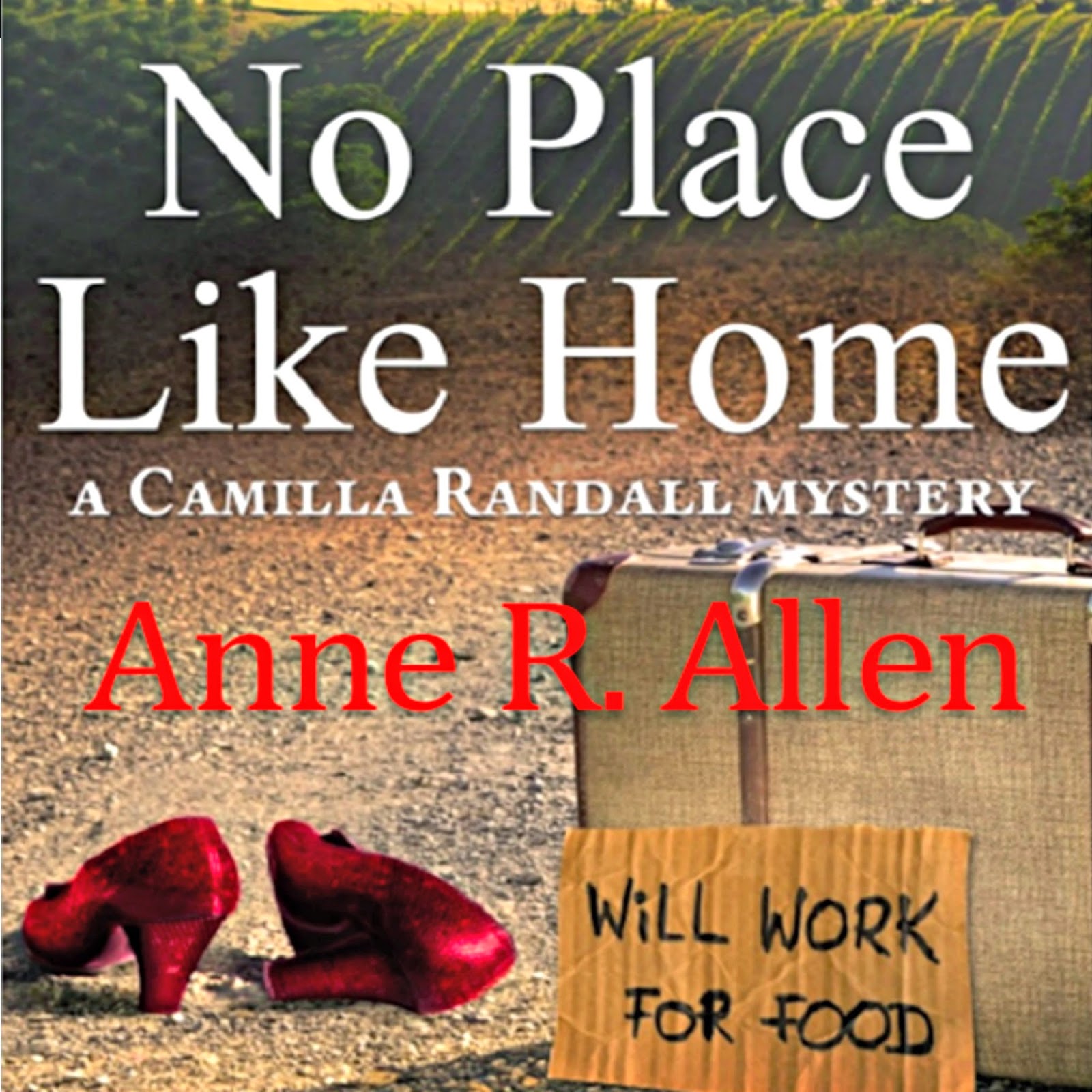
$17.46 for the audiobook or free with Audible free trial. Download of Audible is free for your PC or Tablet. Nearly 8 hours of hilarious entertainment!
Available at Audible and iTunes
OPPORTUNITY ALERTS
The Literary Hatchet: Paying market for Dark Fiction and Poetry - Pays $15 a story. They welcome prose and poetry that scares and shocks readers. Open to horror, paranormal, and speculative fiction. Word length: 500-3000 words/story, and under 100 lines per poem. $15/story, $5/poem. Deadline is July 1, 2014 for the August issue. Read guidelines here - See more at: http://writingcareer.com/
The Saturday Evening Post "Celebrate America" fiction contest. $10 ENTRY FEE. The winning story will be published in the Jan/Feb 2015 edition of The Saturday Evening Post, and the author will receive a $500 payment. Five runners-up will each receive a $100 cash payment and will also have their stories published online. Stories must be between 1,500 and 5,000 words in. All stories must be previously unpublished (excluding personal websites and blogs). Deadline July 1.
The Golden Quill Awards: Entry fee $15. Two categories: Short fiction/memoir (1000 words) and Poetry (40 lines max) $750 1st prize, $400 2nd prize in each category. Sponsored by the SLO Nightwriters and the Central Coast Writers Conference. Entries accepted from April 1-June 30th.
E. M. Koeppel Short Fiction Award : Entry Fee: $15 A prize of $1,100 and publication on the Writecorner Press website is given annually for a short story. Submit a story of up to 3,000 words. All entries are considered for publication. Visit the website for complete guidelines. Deadline April 30th
Amazon’s literary journal Day One is seeking submissions. According to Carmen Johnson, Day One’s editor, the litzine is looking for “fresh and compelling short fiction and poetry by emerging writers.” This includes stories that are less than 20,000 words by authors that have never been published, and poems by poets who have never published before. To submit works, writers/poets can email their work as a word document, along with a brief description and author bio to dayone-submissions @amazon.com.
April 6, 2014
10 Ways Pre-Published Writers Can Start Establishing Their Careers NOW
Today's guest post is from freelance writer Sarah Allen (no relation that we know of, but we do have a lot of things in common, including the agreement that Colin Firth is THE greatest Mr. Darcy, and a tendency to knee-weakness at the sight of Benedict Cumberbatch's cheekbones). She is still in the query process with her novels, but has published numerous articles and short stories. She also has a great blog and is working hard on establishing her career.
She'll be answering your questions on Sunday while I'm making some of those important in real life (IRL) connections. I'll be speaking at an event given by our local chapter of Sisters in Crime.
If you're anywhere near Morro Bay CA this afternoon, drop by the Coalesce Bookstore (inspiration for Camilla's bookstore in NO PLACE LIKE HOME) and meet some great mystery authors and join us in a glass of wine, some of my famous Tuscan white bean dip, and some chocolate-dipped strawberries...Anne
10 Things Pre-Published Writers Can Do To Boost Their Careersby Sarah Allen
There is a long (sometimes a LOOONG) period of time between the moment a writer decides they’re serious about this writing thing and starts writing their book and the moment when their first book finally hits shelves.
A writer can easily go through several years and several manuscripts before they are picked up by a traditional publisher or make the decision to go the indie route.
This period can be frustrating for so many reasons. One of the biggest frustrations about this waiting period for me personally is that even though the most important thing is the writing and writing and better writing, I still have this strong desire to start building an author career for myself.
Except, how does one do that without a published book? How can we start building ourselves this writerly life from the very beginning, without waiting until things work out for us in publishing?
I’ve come up with 10 things pre-published authors can do to boost their careers. Again, even though the most important thing is to just keep writing, and hone your craft, these are some practical things a new author can do to get the professional wheels moving. And even though the tips are targeted to pre-published authors, I think they can be easily adapted for writers at any phase of their career.
1. Write and submit short stories.
This may be the most important and directly applicable way writers can start building a professional career.
Publishing short stories is a great way to get your writing and name out there, and show agents and editors that you’re serious as you start querying them.
It’s also a great way to become a better writer. This is a long-haul and huge-effort journey of its own, but with some hard work it can potentially serve as a quicker way of getting your work out there while you work on the Big Novel Project. You can find great lists of literary magazines at Poets&Writers or NewPages.
(For more info on this very wise tip from Sarah, see my post 10 Reasons Why Short Stories are Hot..Anne)
2. Pitch articles to consumer magazines.
Similar to tip 1, but also another fantastic way to get your name and writing out there. I love picking up the latest Writers Market and seeing the insane number of possible venues. It can be a little intimidating, like going in to the Bellagio buffet and realizing how many exotic yet yummy options there are. (Calamari is surprisingly delicious).
But pick a subject that interests you and start researching a couple magazines in that area. And believe me, you can find lots of tasty options. Some of these magazines reach hundreds of thousands of people, and rather than paying for an advertisement, you get paid (usually) and get your name and bio right there in front of possible future readers.
3. Promote other writers.
This goes deeper than "I scratch your back, you scratch mine". Yes we want readers for our future books, but promoting other writers comes down to making genuine and lasting connections. It’s more than simply getting your name out there, although promoting other writers on your social media accounts is one of the best ways to do that.
It’s about joining a great community, and becoming someone who those in that community know, like, and trust. Be a friend first, a salesman second. And this pre-published waiting time is the perfect opportunity to do that, by promoting your fellow authors on Facebook, Twitter, and whatever other sites you use.
4. Enter writing contests.
This, again, comes down to getting your name and writing out there even before you have a published book. Don’t be intimidated by writing contests, and don’t take anything too personally. (Remember, even J.K. Rowling got rejected). But if you keep at it, contests can be a great way to build up some street cred as well as make connections within the publishing world. Awesome contest lists are easily accessible at Writers Digest, P&W, NewPages, and FreelanceWriting.com.
(Another great resource is C. Hope Clark's Funds for Writers newsletter...and the "Opportunity Alerts" at the bottom of this blog...Anne)
5. Use your hobbies.
I think it’s important to keep in mind that readers are not ONLY readers. They also have many other interests, including some that may overlap with yours (like kettle corn and all things Pixar...that’s not just me, right?).
So even if you don’t have a book out yet, you can still talk to future readers about things you both love. For example, if you’re a stamp collector, you could start a Philately Friday on your blog. If you’re a Victorian Era fan, do reviews of Jane Austen movies (and who doesn’t need another excuse to look up pictures of Colin Firth?). If you’re an artist, photographer, musician, singer, video-editor, anything like that, use your other skills and hobbies to start making connections in as many ways as possible.
I personally love movies and video editing, so I had a blast making a fun little stop-motion video (with my socks) and putting it on YouTube. (This is the most adorable love story about socks you've ever seen--Sarah sure is multi-talented!...Anne)
6. Use Social Media itself as an artistic outlet.
This one is just fun to me. It seems like authors are constantly told to push and push on every social media site like the world depends on it. No wonder it all seems weird and intimidating.
However, if you think of social media as an artistic outlet in and of itself--another way to publish your work--then hopefully it’s not only less intimidating, but can provide a way for us to use the best tool we have: our words.
Let me get more specific about what I mean here. Sites like Tumblr and Pinterest are growing incredibly fast, and provide a great way of tapping into new readers. And as I said, it doesn’t have to be super intimidating if you think of social media as another way of telling stories and being published.
You can use your words and creativity to tell stories on sites like Tumblr and Pinterest. There are some hilarious examples out there, like Yacht Cats on Tumblr and My Imaginary Well-Dressed Toddler Daughter on Pinterest. And many of these story-telling social media accounts (including MIWDTD) have been picked up as books.
So be creative, and just think of social media as another way of “getting published.”
7. Go to Conferences.
Conferences are great places to get good writing advice, learn about the publishing industry, and make connections. It’s as simple as that. I’ll be going to my first conference later this month, and I’m super excited! (If anybody’s going to the Las Vegas Writers Conference...wanna have lunch?)
8. Make IRL connections.
Wherever you live, it’s probably a good idea to get involved with the local writing community. Get to know your local booksellers, and use MeetUp.com and other sites to find local writing and book groups. You can also use LinkedIn to make real life publishing industry connections.
And if you can’t find any, maybe you can make your own!
9. Blog to join the conversation.
Yes, I know writers are already told to blog, blog, blog, and I mostly agree with that advice. If social media are spokes of outreach, a blog or website is your hub. And I do think every writer needs a hub.
However, I want to take it one step further.
I suggest looking at a blog not as a way of bringing people to you, but as a way for you to reach out to other people. Especially in the beginning. One of the great things about a blog is that you can make it whatever you want it to be, but keep in mind what type of content will be valuable to your readers.
And use your blog to join a community conversation by reading lots of other blogs and leaving thoughtful comments. Join blog-hops like the A-Z April Challenge currently going on.
Personally, I feel I have learned more about the publishing industry and being a writer through reading some of the amazing blogs out there (like this one...thank you Anne and Ruth) than I have in any other way.
10. Be you.
I mean this in a practical way. There is a certain combination of interests, skills, and connections that is completely unique to you. Be creative and use what you’ve got and you’ll be able to come up with your own strategies that will work for you in ways they couldn’t for anybody else.
Think of the unique connections you already have, and the unique services you have to offer. Put yourself out there and offer up whatever it is you’ve got (even if it’s mostly just an excessive ability to go on and on about Benedict Cumberbatch’s cheek bones). People are attracted to sincerity, and if you give them you, they’ll stick around for the long haul.
I’m working on these things as much as anyone, but hopefully this gives you some practical ideas to incorporate in your own writing career, whatever phase you’re at. If you’re a pre-published author struggling to get things going, keep working hard, and I have faith it will work out for all of us in the long run!
 Sarah Allen is querying two novels (one adult, one YA, both magical realism) and drafting a third. She has been published in several literary magazines and placed in several writing competitions such as the Utah Arts and Letters Original Writing competition and the Writers Digest 77th annual competition. She received her English degree from BYU and currently lives in Las Vegas where she works as a grant writer for Best Buddies Nevada.
 You can find her at her blog, Facebook, Twitter, and a myriad of other places. Her short story collection, Cross-Eyed, is available on Amazon.
What about you, Scriveners? Are you pre-published? Are you taking advantage of any of these ways to jumpstart your career? If you're published now, are there any things you wish you'd done before you started publishing? Anything to add to Sarah's list?
BOOKS OF THE WEEK
OUR BOOKS OF THE WEEK ARE AN AUDIOBOOK AND A MOVIE!!
Every writer who's ever been in a critique group has to see this one.
An ensemble comedy about a weekly critique group of unpublished writers whose fabric is threatened when one member scores an agent, a book deal, and a movie deal in quick succession. Starring Kaley Cuoco of the Big Bang Theory and the late Dennis Farina. (And written by SLO's own Dave Congalton) Here's the trailer at YouTube.Authors Anonymous
Available to rent or buy from Amazon and iTunes. It's also at Charter on Demand, Dish TV on Demand, and a whole lot of other Video on Demand sites. Although it's not yet on Netflix, you can save it to your queue. It will be shown in select theaters across the US starting April 18th, including the Fremont Theater in San Luis Obispo (afterward it will move to the Downtown Center).Here's a link to the other venues.
and this just in...
NO PLACE LIKE HOME IS NOW AN AUDIOBOOK!!
Narrated by award-winner C. S. Perryess and Anne R. Allen (as Camilla)
Set in San Luis Obispo. Great for that morning commute...
$17 for the audiobook or free with Audible free trial. Download of Audible is free for your PC or Tablet Nearly 8 hours of hilarious entertainment! Available at Audible and coming soon to iTunes
OPPORTUNITY ALERTS
The Golden Quill Awards: Entry fee $15. Two categories: Short fiction/memoir (1000 words) and Poetry (40 lines max) $750 1st prize, $400 2nd prize in each category. Sponsored by the SLO Nightwriters and the Central Coast Writers Conference. Entries accepted from April 1-June 30th.
The Saturday Evening Post "Celebrate America" fiction contest. $10 ENTRY FEE. The winning story will be published in the Jan/Feb 2015 edition of The Saturday Evening Post, and the author will receive a $500 payment. Five runners-up will each receive a $100 cash payment and will also have their stories published online. Stories must be between 1,500 and 5,000 words in. All stories must be previously unpublished (excluding personal websites and blogs). Deadline July 1.
Writers' Village International Short Fiction Award. Entry fee £15. This is a biggie. Stories in English up to 3000 words in any genre from anywhere in the world. £3000 First Prize. Judges include iconic mystery author Lawrence Block and Whitbread & Orange short-lister Jill Dawson. £4500 ($7200) in total prizes. The top 50 contestants also get a free critique of their stories. Deadline June 30th.
E. M. Koeppel Short Fiction Award : Entry Fee: $15 A prize of $1,100 and publication on the Writecorner Press website is given annually for a short story. Submit a story of up to 3,000 words. All entries are considered for publication. Visit the website for complete guidelines. Deadline April 30th
Flash Prose Contest $15 ENTRY FEE. WriterAdvice seeks flash fiction, memoir, and creative non-fiction running 750 words or less. Enlighten, dazzle, and delight us. Finalists receive responses from all judges. First Place earns $200; Second Place earns $100; Third Place earns $50; Honorable Mentions will also be published. Deadline April 18th.
Amazon’s literary journal Day One is seeking submissions. According to Carmen Johnson, Day One’s editor, the litzine is looking for “fresh and compelling short fiction and poetry by emerging writers.” This includes stories that are less than 20,000 words by authors that have never been published, and poems by poets who have never published before. To submit works, writers/poets can email their work as a word document, along with a brief description and author bio to dayone-submissions @amazon.com .
March 30, 2014
8 Tips for Writing that Killer Blurb
by Ruth Harris
You’ve written a book!
Or:
You’ve started the first draft. You’ve finished the first draft.You’re waiting for your editor’s comments. You’re thinking about writing a book.You’ve got a great idea for a book.You’re making notes for a book.You’re outlining a book.
No matter what stage you’re in, the fact is it’s never too soon to start thinking about your blurb.
(Also known as the sales pitch, the back cover copy, and on Amazon, the "product description".)
Writing or drafting your blurb at an early stage or even before you start writing can serve as a brief outline and help you stay focused as you write.
Coming up with the perfect headline for your blurb will also give you a head start on honing that all-important elevator pitch.
The cover is the first thing that grabs the reader’s attention and tells him/her what kind of book s/he is looking at: romance (sweet or steamy), women’s fiction, mystery, thriller, horror, sci-fi.
But once you have the reader’s attention, then what?
Then you have to make the sale.
We’re talking blurb here, and don’t think you can get away without a killer one. Every book—no exceptions—needs blurbing. These days, even the Bible has one. Don’t believe me? You can look it up.
The blurb is crucial, it’s essential. It's the message that seals the deal and tells the reader why s/he absolutely, positively, MUST buy the book.
Blurbs are a little bit art, a little bit craft, a little bit commercial poetry. They are (or should be) quick and easy to read but they are time-consuming and challenging to write—certainly for me and, I suspect, for most writers.
In another life, I wrote paperback blurbs, probably thousands of them over several decades. Back in TradPub days, blurbs had to be short (paperbacks only have so much space on those covers) but comparing the reader who’s browsing in a bookstore to the person who’s surfing the net is the difference between a leisurely stroll and NASA rocket flight. As a consequence, my definition of short has radically changed: Now it’s just about as short as humanly possible.
Here are some ideas about getting from here to there:
1) Research.
Read (and study) the blurbs for the bestselling books in your genre so you will start with a solid idea of what you’re aiming for in your own blurb. Make note of the exact words that pique your interest. Pay attention to the headlines, body copy and formatting of blurbs that particularly appeal to you so you can copy be inspired by them.
2) Keep your reader in mind.
Speak directly to him or her. You wouldn’t speak to a rowdy sports fan in a raucous bar the same way you’d speak to your child’sSunday school teacher, would you? (At least I hope not.) Blurbs work the same way and keeping a clear picture of your reader in mind will help you find just the right tone for your blurb.
3) Refine, rethink, rewrite.
You are looking for the most potent way to compel your reader’s attention, not a winning time in a track meet. Look at your blurb on your computer, your phone, your tablet. Print it out in a large font size and post it on the fridge or the bathroom mirror. See if viewing your blurb in different way exposes any weaknesses or triggers any ideas for improvement.
4) Every word counts.
As you work on your blurb, cut flabby, wishy-washy words (you know me and my love of the delete button!). Ditch meaningless hype like: the most exciting thriller ever written or the best romance you’ll ever read. Instead use power words such as: beautiful, shocking, exciting, scandalous, terrifying, sexy, hilarious—words that evoke an emotional reaction.
5) Use short sentences and lots of white space.
Don’t confront the reader with a dense block of text. Remember that s/he is probably skimming so make it easy for him or her. I also try to make sure my blurb on Amazon is short enough to be seen in its entirely without the reader having to click read more. Apple is stingy about space for the blurb so be prepared to do even more cutting if you are uploading to iBooks.
6) Use italics and bolding sparingly.
Too much or too many and they just cancel each other out.
7) Don’t marry your blurb.
Especially if you’re e-pubbing. I view my blurbs as WiPs and constantly change, tweak, refresh and revise them. Just remember that if you change your blurb on Kindle via Author Central, you won’t be able to make changes through your KDP bookshelf but will have to go back to Author Central if you want to do further tinkering.
8) Stay true to your genre and your voice.
Contemporary romance, historical romance, and Victorian-era mystery with a female version of Sherlock Holmes each set up different expectations. So do humor, horror, sci-fi, pulpy noir, steamy romance, sizzling coming-of-age stories, and action-adventure.
Make sure your blurb meets your prospective reader’s expectations and write your blurb in the same voice as your book.
More professional advice on blurbing
Bestselling author of romances set in New Zealand and former copywriter, Rosalind James, talks about how she had to re-learn the art and craft of copywriting because all copy is not the same. She has a great piece about her approach to the kickass romance blurb on her blog.
Ace blurb-writer, Amy Wilkins, Assistant Manager of Digital Content and Social Media at Harlequin, is a member of the acquisition team for Carina Press. Amy discusses how much plot to reveal, the importance of conflict, and describes different ways to hook a reader. She offers details about her method of writing romance blurbs at Romance University.
YA author Sarah Juckes breaks down the daunting task of blurb-writing into clear step-by-step directions.
Mark Edwards, a friend of the blog and a superstar #1 Amazon UK author, thinks the power of the blurb can sometimes be under-rated. Mark tells how he doubled the sales of his co-written book, Killing Cupid, by rewriting the blurb in a guest post on our blog, 5 Steps to a Great Product Description.
Joanna Penn, author and book marketer, was voted one of The Guardian UK Top 100 Creative Professionals 2013, and voted one of the Top 10 Blogs for Writers 3 years running. Joanna offers tips about writing an effective blurb (aka sales pitch)in her blogpost, How to Write an Effective Back Blurb.
Marilynn Byerly, who teaches on-line writing courses, breaks down blurb-writing by genre: romance, romantic suspense, sci-fi and fantasy, mystery and suspense. Marilynn also explains how to do the precise cutting required to make a short blurb even shorter.
Sarah Webb author of chick lit and children’s books, shares her recipe for the brilliant blurb here. Sarah also explains the power and importance of the shout line or tag line.
Other resources
Want advice from other writers? Post your blurb on Writers’ Cafe, ask for help, and get input from peers.
Fed up with the whole thing and want to pay someone to do the heavy lifting? If you’re looking for experienced help with your blurb, Ella Blythe, who has a background in corporate copywriting, offers a range of services from a touch-up to an entire blurb. Ella usually charges $25 for a blurb, is willing to negotiate depending on the job, and guarantees satisfaction.
***
Scriveners, are you as blown away as I am by all these great links? How do you approach blurb writing? Would you think of using a blurb service (At $25 it looks like a good deal to me.) I think it's fabulous that Writers Cafe has a blurb critique forum. Any other advice to add?...Anne
Next Sunday, we'll have a guest post from friend of the blog, freelance writer Sarah Allen (no relation.) She'll be talking about what things a pre-published author can be working on NOW to jumpstart your career.
Meanwhile, on April 6th, Anne will be signing books and giving short talk at the Coalesce Bookstore on Main Street in Morro Bay, along with her fellow members of our local Sisters in Crime chapter. If you're in the area, come by on April 6th from 1 PM to 3 PM, for wine and goodies and lots of fun book talk. BOOK DEAL OF THE WEEK
Ruth Harris's New York Times bestseller Love and Money is Marked down from $4.99 to 99c this month!
Available at Amazon US, Amazon UK, Amazon CA, Nook, NookUK, Kobo, iBooks,Google Play.
"Richly plotted and racing to a shocking climax, this glittering novel is first-class entertainment." --New York Times
"Fast-paced, superior fiction. With a crisply precise and descriptive narrative style and an unerring ear for dialogue, Harris has written a terrifically satisfying 'good read.'" --Fort Lauderdale News Sun-Sentinel
"Ruth Harris has done a miraculous job of entwining the lives of two women in a believable and fascinating way. You won't have to hide if someone asks what you're reading." --West Coast Review of Books
"Sophisticated and entertaining. I couldn't stop reading." --Rona Jaffe, author of The Best Of Everything
OPPORTUNITY ALERTS
The Golden Quill Awards: Entry fee $15. Two categories: Short fiction/memoir (1000 words) and Poetry (40 lines max) $750 1st prize, $400 2nd prize in each category. Sponsored by the SLO Nightwriters and the Central Coast Writers Conference. Entries accepted from April 1-June 30th.
The Saturday Evening Post "Celebrate America" fiction contest. $10 ENTRY FEE. The winning story will be published in the Jan/Feb 2015 edition of The Saturday Evening Post, and the author will receive a $500 payment. Five runners-up will each receive a $100 cash payment and will also have their stories published online. Stories must be between 1,500 and 5,000 words in. All stories must be previously unpublished (excluding personal websites and blogs). Deadline July 1.
Fantasy Scroll Magazine is a new paying-market, upscale SciFi online literary magazine. Now taking submissions for flash, micro-flash and stories up to 5000 words. They are also launching a kickstarter campaign to obtain funding to maintain this as a paying market. They're looking for highly original work in SciFi, Horror, and Fantasy.
Writers' Village International Short Fiction Award. Entry fee £15. This is a biggie. Stories in English up to 3000 words in any genre from anywhere in the world. £3000 First Prize. Judges include iconic mystery author Lawrence Block and Whitbread & Orange short-lister Jill Dawson. £4500 ($7200) in total prizes. The top 50 contestants also get a free critique of their stories. Deadline June 30th.
Flash Prose Contest $15 ENTRY FEE. WriterAdvice seeks flash fiction, memoir, and creative non-fiction running 750 words or less. Enlighten, dazzle, and delight us. Finalists receive responses from all judges. First Place earns $200; Second Place earns $100; Third Place earns $50; Honorable Mentions will also be published. Deadline April 18th.
You’ve written a book!
Or:
You’ve started the first draft. You’ve finished the first draft.You’re waiting for your editor’s comments. You’re thinking about writing a book.You’ve got a great idea for a book.You’re making notes for a book.You’re outlining a book.
No matter what stage you’re in, the fact is it’s never too soon to start thinking about your blurb.
(Also known as the sales pitch, the back cover copy, and on Amazon, the "product description".)
Writing or drafting your blurb at an early stage or even before you start writing can serve as a brief outline and help you stay focused as you write.
Coming up with the perfect headline for your blurb will also give you a head start on honing that all-important elevator pitch.
The cover is the first thing that grabs the reader’s attention and tells him/her what kind of book s/he is looking at: romance (sweet or steamy), women’s fiction, mystery, thriller, horror, sci-fi.
But once you have the reader’s attention, then what?
Then you have to make the sale.
We’re talking blurb here, and don’t think you can get away without a killer one. Every book—no exceptions—needs blurbing. These days, even the Bible has one. Don’t believe me? You can look it up.
The blurb is crucial, it’s essential. It's the message that seals the deal and tells the reader why s/he absolutely, positively, MUST buy the book.
Blurbs are a little bit art, a little bit craft, a little bit commercial poetry. They are (or should be) quick and easy to read but they are time-consuming and challenging to write—certainly for me and, I suspect, for most writers.
In another life, I wrote paperback blurbs, probably thousands of them over several decades. Back in TradPub days, blurbs had to be short (paperbacks only have so much space on those covers) but comparing the reader who’s browsing in a bookstore to the person who’s surfing the net is the difference between a leisurely stroll and NASA rocket flight. As a consequence, my definition of short has radically changed: Now it’s just about as short as humanly possible.
Here are some ideas about getting from here to there:
1) Research.
Read (and study) the blurbs for the bestselling books in your genre so you will start with a solid idea of what you’re aiming for in your own blurb. Make note of the exact words that pique your interest. Pay attention to the headlines, body copy and formatting of blurbs that particularly appeal to you so you can copy be inspired by them.
2) Keep your reader in mind.
Speak directly to him or her. You wouldn’t speak to a rowdy sports fan in a raucous bar the same way you’d speak to your child’sSunday school teacher, would you? (At least I hope not.) Blurbs work the same way and keeping a clear picture of your reader in mind will help you find just the right tone for your blurb.
3) Refine, rethink, rewrite.
You are looking for the most potent way to compel your reader’s attention, not a winning time in a track meet. Look at your blurb on your computer, your phone, your tablet. Print it out in a large font size and post it on the fridge or the bathroom mirror. See if viewing your blurb in different way exposes any weaknesses or triggers any ideas for improvement.
4) Every word counts.
As you work on your blurb, cut flabby, wishy-washy words (you know me and my love of the delete button!). Ditch meaningless hype like: the most exciting thriller ever written or the best romance you’ll ever read. Instead use power words such as: beautiful, shocking, exciting, scandalous, terrifying, sexy, hilarious—words that evoke an emotional reaction.
5) Use short sentences and lots of white space.
Don’t confront the reader with a dense block of text. Remember that s/he is probably skimming so make it easy for him or her. I also try to make sure my blurb on Amazon is short enough to be seen in its entirely without the reader having to click read more. Apple is stingy about space for the blurb so be prepared to do even more cutting if you are uploading to iBooks.
6) Use italics and bolding sparingly.
Too much or too many and they just cancel each other out.
7) Don’t marry your blurb.
Especially if you’re e-pubbing. I view my blurbs as WiPs and constantly change, tweak, refresh and revise them. Just remember that if you change your blurb on Kindle via Author Central, you won’t be able to make changes through your KDP bookshelf but will have to go back to Author Central if you want to do further tinkering.
8) Stay true to your genre and your voice.
Contemporary romance, historical romance, and Victorian-era mystery with a female version of Sherlock Holmes each set up different expectations. So do humor, horror, sci-fi, pulpy noir, steamy romance, sizzling coming-of-age stories, and action-adventure.
Make sure your blurb meets your prospective reader’s expectations and write your blurb in the same voice as your book.
More professional advice on blurbing
Bestselling author of romances set in New Zealand and former copywriter, Rosalind James, talks about how she had to re-learn the art and craft of copywriting because all copy is not the same. She has a great piece about her approach to the kickass romance blurb on her blog.
Ace blurb-writer, Amy Wilkins, Assistant Manager of Digital Content and Social Media at Harlequin, is a member of the acquisition team for Carina Press. Amy discusses how much plot to reveal, the importance of conflict, and describes different ways to hook a reader. She offers details about her method of writing romance blurbs at Romance University.
YA author Sarah Juckes breaks down the daunting task of blurb-writing into clear step-by-step directions.
Mark Edwards, a friend of the blog and a superstar #1 Amazon UK author, thinks the power of the blurb can sometimes be under-rated. Mark tells how he doubled the sales of his co-written book, Killing Cupid, by rewriting the blurb in a guest post on our blog, 5 Steps to a Great Product Description.
Joanna Penn, author and book marketer, was voted one of The Guardian UK Top 100 Creative Professionals 2013, and voted one of the Top 10 Blogs for Writers 3 years running. Joanna offers tips about writing an effective blurb (aka sales pitch)in her blogpost, How to Write an Effective Back Blurb.
Marilynn Byerly, who teaches on-line writing courses, breaks down blurb-writing by genre: romance, romantic suspense, sci-fi and fantasy, mystery and suspense. Marilynn also explains how to do the precise cutting required to make a short blurb even shorter.
Sarah Webb author of chick lit and children’s books, shares her recipe for the brilliant blurb here. Sarah also explains the power and importance of the shout line or tag line.
Other resources
Want advice from other writers? Post your blurb on Writers’ Cafe, ask for help, and get input from peers.
Fed up with the whole thing and want to pay someone to do the heavy lifting? If you’re looking for experienced help with your blurb, Ella Blythe, who has a background in corporate copywriting, offers a range of services from a touch-up to an entire blurb. Ella usually charges $25 for a blurb, is willing to negotiate depending on the job, and guarantees satisfaction.
***
Scriveners, are you as blown away as I am by all these great links? How do you approach blurb writing? Would you think of using a blurb service (At $25 it looks like a good deal to me.) I think it's fabulous that Writers Cafe has a blurb critique forum. Any other advice to add?...Anne
Next Sunday, we'll have a guest post from friend of the blog, freelance writer Sarah Allen (no relation.) She'll be talking about what things a pre-published author can be working on NOW to jumpstart your career.
Meanwhile, on April 6th, Anne will be signing books and giving short talk at the Coalesce Bookstore on Main Street in Morro Bay, along with her fellow members of our local Sisters in Crime chapter. If you're in the area, come by on April 6th from 1 PM to 3 PM, for wine and goodies and lots of fun book talk. BOOK DEAL OF THE WEEK
Ruth Harris's New York Times bestseller Love and Money is Marked down from $4.99 to 99c this month!
Available at Amazon US, Amazon UK, Amazon CA, Nook, NookUK, Kobo, iBooks,Google Play.
"Richly plotted and racing to a shocking climax, this glittering novel is first-class entertainment." --New York Times
"Fast-paced, superior fiction. With a crisply precise and descriptive narrative style and an unerring ear for dialogue, Harris has written a terrifically satisfying 'good read.'" --Fort Lauderdale News Sun-Sentinel
"Ruth Harris has done a miraculous job of entwining the lives of two women in a believable and fascinating way. You won't have to hide if someone asks what you're reading." --West Coast Review of Books
"Sophisticated and entertaining. I couldn't stop reading." --Rona Jaffe, author of The Best Of Everything
OPPORTUNITY ALERTS
The Golden Quill Awards: Entry fee $15. Two categories: Short fiction/memoir (1000 words) and Poetry (40 lines max) $750 1st prize, $400 2nd prize in each category. Sponsored by the SLO Nightwriters and the Central Coast Writers Conference. Entries accepted from April 1-June 30th.
The Saturday Evening Post "Celebrate America" fiction contest. $10 ENTRY FEE. The winning story will be published in the Jan/Feb 2015 edition of The Saturday Evening Post, and the author will receive a $500 payment. Five runners-up will each receive a $100 cash payment and will also have their stories published online. Stories must be between 1,500 and 5,000 words in. All stories must be previously unpublished (excluding personal websites and blogs). Deadline July 1.
Fantasy Scroll Magazine is a new paying-market, upscale SciFi online literary magazine. Now taking submissions for flash, micro-flash and stories up to 5000 words. They are also launching a kickstarter campaign to obtain funding to maintain this as a paying market. They're looking for highly original work in SciFi, Horror, and Fantasy.
Writers' Village International Short Fiction Award. Entry fee £15. This is a biggie. Stories in English up to 3000 words in any genre from anywhere in the world. £3000 First Prize. Judges include iconic mystery author Lawrence Block and Whitbread & Orange short-lister Jill Dawson. £4500 ($7200) in total prizes. The top 50 contestants also get a free critique of their stories. Deadline June 30th.
Flash Prose Contest $15 ENTRY FEE. WriterAdvice seeks flash fiction, memoir, and creative non-fiction running 750 words or less. Enlighten, dazzle, and delight us. Finalists receive responses from all judges. First Place earns $200; Second Place earns $100; Third Place earns $50; Honorable Mentions will also be published. Deadline April 18th.
March 23, 2014
Building Platform: What Most Writers are Getting Wrong
Writers know we need a "platform" these days.
That means we need to be on Twitter and FaceBook and Google+ and LinkedIn and Pinterest and Tumblr and have a blog with a ton of followers and get 100s of reviews on Amazon and Goodreads and drive ourselves batty keeping up with all of it, because…who needs to write books? It's all about racking up those numbers, 24/7, right?
That would be a no.
Last year I wrote a post about 7 Ways Authors Waste Time Building Platform and it's been one of our most popular posts.
But the majority of writers are still running on the old social media hamster-wheel, pursuing those elusive numbers. I even see writers begging for money on IndieGoGo and Kickstarter, so they can "buy Twitter followers and Facebook likes." I hope nobody's silly enough to give it to them.
Because those numbers mean almost nothing—even less now than they did a year ago.
If you write narrative (novel or memoir), all you need is a social media presence, not huge numbers. (Nonfiction is a little different. More on that below.)
You do need to be Googleable. You can get Google's attention by commenting on blogs, having a Google Plus, Twitter and/or Facebook account and maybe a blog.
But guess what is the #1 thing an agent, editor or reviewer wants to find out when they Google you?
Whether you're a pain in the butt.
Seriously.
They don't care much about your Alexa, Klout or PeerIndex rating. They aren't all that interested in how many Tweeps, blog followers, LinkedIn contacts, Google Plus circles, or Facebook friends and/or likes you have.
I know you've heard otherwise, but that info probably came from marketers, not actual agents, editors or influential reviewers. Not recently anyway.
What Publishing Professionals Look for When they Google an Author
1) Is this person making the effort to network on social media?
2) Is this person an a**hole, volatile, entitled, disrespectful, or a self-involved jerk?
Don't just take my word for it:
Super-agent Kristin Nelson (obviously trying hard to maintain her legendary niceness) put it this way in a roundtable discussion with Scratch magazine last week: "In terms of social media, a lot of times we’re just looking to see if this is somebody we want to work with or are they really … what’s the word I’m looking for … strange on social media circles, or lacking a level of professionalism in their online presence. Let’s just say there are some folks who have a Twitter/Facebook presence that’s a little … aggressive or antagonistic."Agent Sarah Burnes said in the same discussion that she looks at the whole "social media footprint. The truth is you can tell a lot about a person online."Rob Spillman, editor of the prestigious literary magazine Tin House, says he's looking for “literary citizenship" and people who are "supportive of other writers".Canadian agent Carly Watters wrote on her blog earlier this week that she's looking for: a website or landing page, some social media "proficiency", a professional attitude, good personality, and no blogposts detailing your personal submission woes to the general public.
In other words, no matter how good your numbers are, if you flame out on writing forums or use your blog to badmouth the publishing industry, complain about rejections, or put down other authors, it doesn't matter how many likes, hits, clicks or followers you have.
So be nice. Practice the Golden Rule. Don't be a whiner or a bully. And stop listening to marketers and system-gamers who tell you it's all about building up numbers.
This is because:
Most publishing professionals don't care Those numbers do not equal sales, and have become increasingly meaningless—as you'll see below
Why You Should Stop Worrying About Social Media Numbers
Social media numbers are being gamed—and the problem is getting worse. They're also bought and sold from "click farm" sweatshops that have sprung up all over Asia.
This week Forrester Research reported that marketers and publishers are coming to believe, "The paid ads Facebook encourages them to buy often lead to 'fake' fans generated by 'like farms'."
And an article in the HuffPo on how social media "likes" are bought and sold says:
"While the Federal Trade Commission and several state attorney generals have cracked down on fake endorsements or reviews, they have not weighed in on clicks. Meanwhile, hundreds of online businesses sell clicks and social media accounts from around the world. BuyPlusFollowers sells 250 Google+ shares for $12.95. InstagramEngine sells 1,000 followers for $12. AuthenticHits sells 1,000 SoundCloud plays for $9."
In other words, this isn't even illegal, so everybody's doing it.
But that doesn't mean it's smart.
Because large numbers of clicks/likes/followers, etc, now mean absolutely nothing.
Here are some other iffy and pointless ways to waste time and money on meaningless numbers:
Purchasing LinkedIn connections and email addresses
This week I got an email from an author I'd connected with on LinkedIn. She claimed to write reviews for the Wall Street Journal. She offered (in all caps—always a bad sign) to give me a book review in exchange for… a list of all my LinkedIn contacts.
How's that for creepy?
Are there really people who will sell out their accountants and doctors and everybody they do business with in exchange for an iffy book "review" from a complete stranger?
But it gets worse. She also promised the names and contact info for "2000+ Amazon book reviewers".
Oooooh! I'd be able to spam 2000 Amazon book reviewers and get them to all hate me at once? Hmmm. That sounds like a good marketing plan…
My agent Pam noted this was probably a sock puppet who was gathering LinkedIn contacts to sell on those click-selling sites.
But the underlying assumption has a basis in a sad fact: many authors will pay to rack up meaningless numbers, whether a quantity of nonsense reviews or "likes" or "contacts".
And even if you're not paying cash for reviews and clicks, if you're trading with other authors, offering prizes for "likes", or whatever, you're wasting time.
Fake Facebook "likes"
Many writers are duped by Facebook into paying to "boost" pages to get hits on their author page.
They tell me they do it because it gets "results". By which they mean they get more people to click on a "like" button.
But when I ask if those "likes" translate to book sales, the authors go strangely silent.
So I'm going to say it loud: SOCIAL MEDIA NUMBERS DO NOT EQUAL BOOK SALES.
A handful of real friendships and loyal readers mean more than thousands of nameless, faceless numbers.
Author Jonathan Evison advised writers at the annual conference of the Association of Writers and Writers Programs, “If you don’t like Facebook, then just don’t do it … It’s not about broadcasting. It’s about connections.”
Unwilling Newsletter Subscribers
I've been "subscribed" to dozens of newsletters by authors I don't know in genres I don't read. Maybe because they've queried me for a guest blogpost, or we've communicated on another subject. Or I've commented on their blogs. Or they just take my contact info off this blog. They've got my email address, and dammit, they're going to use it! Their marketing consultants told them to!!
But this is what a lot of marketing people don't understand: annoying people with email spam does not move them to buy books.
As the lawyer known as The Passive Guy said on The Passive Voice this week, "Email lists! What an powerful concept! For 1996."
And Tony Hursh responded to PG in the thread, "Just this morning I was reflecting that I don’t have nearly enough spam in my life."
How about you? Not enough spam?
That's what I thought.
And yet every marketer says you must have a newsletter and send it to as many addresses as possible, regardless of who they are or whether they read your genre. It's NUMBERS, they tell you. NUMBERS!!
I think it's wiser to listen to Mr. Evison. He advises writers that instead of blasting out group emails about their books and events, they should take the time to write a personal email to each friend.
A personal email to a friend. Not a bunch of advertising aimed at some undefined "them" you imagine to be out there.
Auto-Tweets to Fake Tweeps
I think Twitter is probably the medium authors abuse the most. Hundreds of thousands seem to autotweet book spam 24/7. Often to "followers" who have been purchased (and probably don't even read their language.)
And they can't figure out why their books aren't flying off the shelves.
That's because they don't understand that Twitter is not for direct marketing. People are on Twitter to get news and information. What gets retweeted most is links to original content or news stories.
Social media guru Jon Morrow at Boost Blog Traffic says this about boosting Twitter traffic,
"Consistently tweet the content of the other influencers in your niche (even if they’re your competition), making sure to mention their handle and, of course, include a link to their article."
That's right: the number one way to boost your own traffic is to share other people's links—both unknowns and big influencers. Unknowns will probably thank you and follow you, and the influencer's Tweeps will notice you and you can become part of their clan. They start noticing your other tweets, they might even see one for your blog and come on over and make friends. And eventually take a look at one of your books.
Bestselling mystery author Elizabeth S. Craig (@elizabethscraig) has 26K Twitter followers. I'm willing to bet those are real people who have followed her voluntarily. That's because she tweets the best links in the publishing business. And she has never once tweeted ads for her books. She tweets great content.
Obsessing about Blog Hits
It's my personal opinion that a blog is an author's most important tool on social media. My blog re-started my career after my first publisher went out of business. It got me two more publishers, an agent, and a blog partner I'd admired since she was on the NYT bestseller list and I was a wannabe actress reading Ruth Harris novels in the greenroom of a little theater in Southern California.
But none of those things happened because of huge numbers of hits on this blog.
Those things happened because I made connections with people on many blogs: mine and theirs and Nathan Bransford's and Kristen Lamb's and Elizabeth S. Craig's and many, many more.
1) Blogs for Nonfiction Authors
Nonfiction writers need to follow slightly different rules from fiction writers. (And although memoirs are nonfiction, they're narrative, so they're marketed like novels.)
A nonfiction writer definitely needs to work at driving traffic to his blog, because a widely read blog is one of the best ways to establish yourself as an expert in your field.
I advise nonfiction authors to work on a blog for some time before you launch a book, and to comment on the blogs of "rivals" for some time before that.
But you need an engaged readership, not fake numbers. An attack by a Moldovian spambot is going to boost your numbers through the roof, but it won't sell one person on your idea.
That's why you need to network with other bloggers in your field, and share their content, not sit alone on your blog waiting for hits like a spider waiting for flies.
2) Blogs for Fiction Writers and Memoirists
If you write fiction, you don't need a writing blog like this one, unless you also have a "how to write" book like, ahem, How to be a Writer in the E-Age: A Self-Help Guide.
Novel readers read novels. Blogs, not so much. So if you write fiction, you don't need worry about your stats or your Alexa rating.
Sure, it was fantastic for our egos when we got 50,000 hits last month. It's like the thrill you get from winning a videogame. With about the same real-world significance.
Yes, there was a bit of an uptick in sales of my novels. But I also had attack by the the Amazon sock puppet-trolls—maybe in retaliation for signing an anti-sock puppet petition—which probably helped my sales as much as the blog surge. It's funny how my sales go up when they leave their brainless 1-stars. I think any review gets a book some attention from the algos, no matter the star rating.
But I also see an uptick in novel sales when I visit smaller blogs. Almost any time you reach out to a new audience there will be a flurry of sales.
But the blog surge did put my nonfic book onto several bestseller lists. Nonfiction writers: take note.
A fiction writer's blog is simply a place for your fans to find you, or if you're not published yet, a way for you to build up friendships in the blogosphere.
Neither of those goals is dependent on a huge number of blog hits. It's the number of engaged readers that matter. You're not going for a million hits. You're going for 1000 true fans. Or even 100, or 50. Real people, not pointless numbers.
Catherine Ryan Hyde is one of the top selling novelists on Amazon. Last summer she bumped J.K. Rowling off her perch at #1.
But Catherine's blog has an Alexa rating down around #4 million. As of this writing, this one is at #132 thousand. (Google, at #1, being the best-rated)
But I probably don't sell as many novels in a month as Catherine sells in a day. She sells books because she has a fantastic reputation, she's been a star since she wrote Pay it Forward a decade and a half ago, and readers feel they know her. People who visit her blog already love her books. They're coming to the blog to get to know her better.
The thing most marketers don't understand is that selling books isn't the same as selling collapsible hoses, Sham-Wows or Perfect Bacon Bowls.
Readers are quiet people. You need to gain their trust. You can't influence them by shouting at them.
Or by being a pain in the butt.
So don't.
And you can stop obsessing about all those silly numbers.
As I said in last year's post: If you're dealing with marketers who are in love with numbers for their own sake, I hereby bestow a rank of 10 million ARA points!!! on each of you. When somebody puts you down for not having a Klout rating over 80, just roll your eyes and say "Klout is so over. I have 10 million ARA points."
Doesn't that feel better?
What about you, Scriveners? Have you been obsessing about numbers without really knowing why? Have you ever paid for Twitter followers or "boosted" a Facebook page? What do you find is the most effective way to boost your book sales? Or if you're unpublished, how much time do you spend building platform online?
BOOK DEAL OF THE WEEK
Sherwood, Ltd is $2.99 right now, marked down from its $3.99 list price for Kindle US, UK, CA Nook. It's also FREE on Smashwords and on Kobo. (The free run will be ending very soon.) And for book-sniffers (I have to admit to some closet book-sniffing myself) it is available in paper for the marked-down price of $8.54 (regularly $8.99 on Amazon and $12.99 in stores.) It's also on sale in paper in the in the UK for £6.81. (Canadians, I don't know why the paper version isn't listed on the Amazon CA site. I will talk to my publisher about it.)
.jpg)
A hilarious tale of intrigue, romance and spot of murder at a small press in the English Midlands.
"Good Manners for Bad Times" author Camilla Randall (Dr. Manners) could use a publisher…Currently broke and homeless, she would welcome opportunity knocking on her nonexistent door. Eventually it does. Sort of. From across the Atlantic, the upscale pornography press, Sherwood, Limited, is looking to become respectable. Free residency in their Lincolnshire factory is included. How can any well mannered person decline? Thus begin Camilla's adventures with a postmodern Robin Hood… and his band of scary men."…Kathleen Keena
"A wily tale of murder, deceit, and intrigue that can stand with the best of them. Her characters are all too real and her dialogue took me from laughter to chills to suspicion of everybody in the book...Read this book. It will be well worth the time."...David Keith
To anybody who has read and enjoyed Sherwood, Ltd: it could sure use some review love on Amazon US! It's got all 5 and 4-stars on Smashwords, Nook and Amazon UK, but my little anti-fan club have left their mark on the US Zon buy page.
OPPORTUNITY ALERTS
The Golden Quill Awards: Entry fee $15. Two categories: Short fiction/memoir (1000 words) and Poetry (40 lines max) $750 1st prize, $400 2nd prize in each category. Sponsored by the SLO Nightwriters and the Central Coast Writers Conference. Entries accepted from April 1-June 30th.
Fantasy Scroll Magazine is a new paying-market, upscale SciFi online literary magazine. Now taking submissions for flash, micro-flash and stories up to 5000 words. They are also launching a kickstarter campaign to obtain funding to maintain this as a paying market. They're looking for highly original work in SciFi, Horror, and Fantasy.
Writers' Village International Short Fiction Award. Entry fee £15. This is a biggie. Stories in English up to 3000 words in any genre from anywhere in the world. £3000 First Prize. Judges include iconic mystery author Lawrence Block and Whitbread & Orange short-lister Jill Dawson. £4500 ($7200) in total prizes. The top 50 contestants also get a free critique of their stories. Deadline June 30th.
Flash Prose Contest $15 ENTRY FEE. WriterAdvice seeks flash fiction, memoir, and creative non-fiction running 750 words or less. Enlighten, dazzle, and delight us. Finalists receive responses from all judges. First Place earns $200; Second Place earns $100; Third Place earns $50; Honorable Mentions will also be published. Deadline April 18th.
GLIMMER TRAIN FAMILY MATTERS CONTEST $1500 prize, plus publication in Glimmer Train Stories, plus 20 copies. $15 ENTRY FEE. They're looking for stories about families of all configurations. It's fine to draw on real experiences, but the work must read like fiction. Maximum word count: 12,000. Any shorter lengths are welcome. Deadline March 31.
March 16, 2014
The Changing Role of Literary Agents and New Submission Guidelines: Read Before You Query (or Self-Publish)
This week I'm totally jazzed to host my agent, Pam Van Hylckama Vlieg. She's one of the new breed of agents at the cutting-edge literary agency, Foreword Literary, founded by "Agent Savant" Laurie McLean.
Pam represents the book I wrote with Catherine Ryan Hyde, How to Be a Writer in the E-Age: A Self-Help Guide. I can't tell you how great it's been to have somebody savvy (and kick-ass) in our corner shepherding the book through all its various stages and lifting much of the stress off our shoulders.
Bu-bu-but, say the more tech-savvy among you...
...do I even need a literary agent in the digital age?
Nope. Plenty of writers are doing fine on their own, self publishing or working with a small press. But the most HIGHLY PAID authors—most of whom are "hybrid" these days—generally have representation, whether they started out traditionally-published or self-published.
A lot of the big name "indies" like Joe Konrath, Barry Eisler, and Hugh Howey have powerful, hard-working agents who earn every penny of their 15%. And most of the successful hybrids, like Catherine Ryan Hyde, also have representation from agents who understand the new publishing paradigm. (Catherine's novels are repped by Barry Eisler's wife Laura Rennert. The traditional publishing world is a small one.)
But self-publishing is growing fast. Some people say 50% of all books will be self-published by 2020, and others say it will be more like 75%.
So is the literary agent an endangered species?
Agents aren't going anywhere. But their role is changing.
UK Agent Andrew Lownie spoke at the London Author Fair about the role of agents in the digital age (quoted in Porter Anderson's Writing on the Ether):
"I think there will be much more partnership, much more like celebrity and sports agents, having to look at a much wider range of things that we do.…retainers, tapered commission, an a la carte menu for authors where agent will do some of their books, not all of their books." ...Agent Andrew Lownie
The most up-to-date agents not only represent their clients' work to traditional publishers (and keep them safe from bad contracts that don't allow them to indie publish as well.) They also give advice and aid in self-publishing.
Kristin Nelson, the super-agent who has propelled the careers of hybrid superstars like Hugh Howey and Barbara Freethy, has formed a self-publishing wing of her agency called NLA Digital, which she's eager to point out is NOT a publisher. This quote is also from Porter Anderson's blog.
"Our author clients do not grant us rights. They maintain full control of their rights and intellectual property. However, what we do offer is a platform that fully supports them in an endeavor to indie publish." ...Agent Kristin Nelson
That means NLA clients are self-publishing, but they have access to the top professional editors, designers, formatters, and publicists as well as the benefit of Kristen's industry savvy and clout guiding their careers.
Foreword Literary has launched a similar project, called Fast Foreword, which helped us self-publish How to Be a Writer in the E-Age when our small publisher, MWiDP had to close its doors.
(BTW, the head of MWiDP, Mark Williams, "Mr. International" is very ill, and has been airlifted from the African village where he was volunteering to a hospital in the UK. After a blood transfusion, he is on the mend, but I hope you'll send him healing thoughts and prayers.)
Our book was selling steadily, we both have big platforms, and Catherine Ryan Hyde is one of the top-selling novelists on Amazon, so Pam was willing to take us on.
But we're the exception to the rule. Mostly Fast Foreword publishes shorter works that can't be placed with traditional publishers because of rigid trad-pub word count rules. (Submission guidelines on the Foreword Literary website.)
It's true that a handful of superstars have gone from self-publishing to landing huge traditional contracts—but again, they are the exceptions. The reason you've heard names like Amanda Hocking and Hugh Howey is their kind of success is rare, which makes them news.
Pam wants authors to understand what agents can and can't do for them in this new publishing world, and when it's a good idea to query and when it isn't.
Here's my take-away from what she's been telling me:
If you think you want a traditional or "hybrid" career, you should start by querying, not by self-publishing. Or query with a different book from the one you self-published.
Yes, three years ago we were being told "the ebook is the new query", but that was back when Amazon's algorithms gave cheap indie books the same weight in calculating the bestseller lists as they did the big name, expensive trad titles. AND when the Big 5 weren't selling their backlists for 99c apiece through Bookbub.
This industry is going through turn-on-a-dime changes right now. What I tell you today may not be true next week.
That's why you need to make sure you're querying an agent who keeps up. It's also a good idea to run any agent contract by an expert in contract law to make sure you're not signing with somebody who wants a piece of everything you publish for the rest of your life and your children's lives. Yeah. It happens. Be careful out there.
But even a cutting-edge agent has an eye on the traditional publishing world (which isn't going away, and we should be glad of it.) This means she's not going to take on a book that publishers won't buy. And she won't invest her time in something that has already been in the marketplace and failed to sell. Yes, even ebooks can become "shopworn."
Agents only take on what they think will grab the interest of the editors they know. They'll only choose a self-publishing route after they've tried the traditional one, and their self-publishing departments are usually reserved for authors who are already clients.
Like anybody else, agents can make mistakes. Sometimes they misjudge what editors will buy. Agents often fall in love with a book that goes on submission for years and doesn't find a home.
That's heartbreaking to the agent as well as the author.
But now, savvy agents can help clients self-publish when the big publishers won't take a risk—or have suddenly decided they won't publish anything but Steampunk Bigfoot erotica set in Oz for the next two years—or whatever the marketing department has deemed the "next big thing."
But as publishing's rules change, so do query rules. So Pam, take it away—…Anne
Ch…Ch…Changes in Agent Submissionsby Pamela Van Hylckama Vlieg
I’ve been an agent for two years. I came in right at the start of the digital revolution.
I love that small presses and self-publishing create so many chances for authors. Whether you’re a debut author or a seasoned vet your world is wide open and there’s a myriad of ways you can make money creating the art you love.
I’m not a New York City agent. My husband is a manager at Yahoo. Tech rules our world. At Foreword Literary we strive to attract and manage hybrid authors. Of course we have authors that are interested in traditional only and that is still how we make the bulk of our income but we are committed to learning and kicking some major ass in digital.
Agents are evolving. We’re no longer the gatekeepers placed high atop Mt. Olympus peering down at the plebs of the written word deigning to take a look at your pittance of a novel.
I love this. I’m a helicopter mom in real life and I enjoy helicoptering my clients. I want to be involved in every aspect of your career (even if it’s stuff I don’t take/get my 15% on) so that together we can guide you to your goals in a timely manner.
Now that I’ve declared my love for all new cool things, here are 6 things that seriously drive me batty.
6 Mistakes New Authors Make When Dealing with Agents in Today's Marketplace
1) Mistaking an Agent for a Publicist
When an author self-publishes badly and then writes me asking me to sign them so that I can market their book, I can't help.
I’m not a publicist and even though we do have an in-house publicist at Foreword that’s not what she’s for.
If you want to self-publish you have to think of it as a business. Rarely does cranking out a book, not having it edited, and not having a professional cover work for anyone.
You can’t just sling your book on the internet plate like a side of bacon and expect it to fly off the proverbial shelves. There is work involved and that work is not my job. (Unless you are already my client and then I make it my job.)
2) Submitting to an Agent and a Small Press at the Same Time
You submitted to me at the same time you submitted to a small press and you come back three days after I asked to look at your manuscript and tell me you have an offer of publication from Otters R Awesome Press.
I don’t have a staff of fifteen to read that fast. I’ve never heard of that press so I’m not going to read you before I read the other people that have been waiting.
Upon looking at that press I see they have predatory deals, no distribution other than that you can secure for yourself, and their covers look like they were made in Paint by my four-year-old.
All of that is fine if you that is what you want from your publishing journey. Just don’t expect me to sign you. You’ve effectively taken my work out of my hands and done it for me and I didn’t get a shot to see if I can do better.
3) Asking an Agent to Negotiate Foreign Rights for a Non-Client.
You’ve self-published and sold a few thousand copies. You now want me to do your foreign rights but have no plans to give me a book at some point in the future that I can sell.
I don’t do foreign rights. We have agency partners that do that for me.
I can’t help you here. You don’t want me to be your business partner in any way so an agent is not what you want. You want a foreign rights specialist. (Some agencies have these but they are generally for their own clients.)
4) Self-Publishing Because Your Book isn't Right for Me.
You reply to my passing on your material saying you will just self-publish.
That’s fine, but I worry: are you doing it for the right reason? Are you doing it because you believe in your book and you want to make a real go of it getting the editing help you need and a good cover...or is it because you’re getting rejected because you haven’t put the time and effort needed into creating a novel.
(Note from Anne: Self publishing because of a few rejections isn't wise if you'd prefer to have representation. Agents and editors reject books for reasons that have nothing to do with the quality of your book. Often rejections mean exactly what they say: this isn't right for that particular agent at this particular time. For more on this, read Ruth Harris's post 11 Reasons Why Writers Get Rejected. Ruth was an editor at several Big Five houses, so she knows what those meetings are like.)
5) Self-Publishing a Book that's on Submission
I’ve signed you as a client! Yay! Then we go on sub to the Big Five publishers on the first round and you freak out over a few rejections. And self-publish the book.
Ouch!
You need to tell me first so I can pull the book off of submission. The editors reading the manuscript are not going to be happy with me.
Also this makes me have less faith in your motives. Do you really want traditional publishing? I have to reevaluate our relationship and decide whether we should go on together.
Trust and communication are key. I work hard for my clients. I expect them to work hard too. That means communicating and exercising patience.
6) Being Ambivalent about Whether you Really Want an Agent
If you want to publish yourself or only work with small presses that you can submit to on your own then…you don’t need me!
You need an entertainment lawyer to look over your offered contracts. Not an agent.
If you want someone who is available to brainstorm with you, or as contacts in the industry, or will fight for you like a mama bear, and you want to traditionally publish then you need me.
And I need you.
I do this job because I love it. I take 15% of the books I sell for you that you’ve given me to sell for you.
I don’t take 15% of your short stories or things you self-publish (unless you need my assistance in self-publishing).
I work at least 10 hours a day, seven days a week. I’m writing this on Saturday morning and when I’m done here I have a nonfiction book proposal to write and ready for Monday morning.
If I get done with that proposal today I’ll read queries and submissions. I think I deserve my 15%, which let us be honest doesn’t even amount to a living for a new agent. I’d break it down to what I made an hour this past year but I don’t want to depress myself (or you).
I love books, reading, and authors. I love that authors have choices. I love that those choices don’t have to include me. I’m not afraid of losing my job. I’m not afraid of big publishing going away. I’m excited for the change and want to meet it head on.
EFF YEAH REVOLUTION!
To read more about Pam you can follow her on Twitter or read her bio and submission guidelines on Foreword’s website.
What about you, Scriveners? Are you still hoping to "land" an agent? Did you self-publish hoping an agent would take you on afterward (I know 1000s of authors have been doing that, alas.) Do you hope for a "hybrid" career at some point? Do you have any questions for Pam? She's generously offered to reply to questions today and tomorrow.
WE HAVE A WINNER!! THE WINNER OF LAST WEEK'S "DE-LURKER" CONTEST IS CORDIA PEARSON, who was selected by a random number generator at Random.org. So CORDIA, just send me your email address to annerallen dot allen at gmail dot com, and I will gift you a copy of HOW TO BE A WRITER IN THE E-AGE from Amazon.
BOOK OF THE WEEK
It's HERE: the new, improved, deluxe version of HOW TO BE A WRITER IN THE E-AGE: a Self Help Guide now published by Fast Foreword.
NOT JUST FOR INDIES: It's full of advice from NYT bestseller Catherine Ryan Hyde (and moi). There's a step-by-step guide to blogging, and self-help guidance for dealing with social media overload. Lots more on how to deal with rejection, bad critiques and troll reviews—as well as how to query, how to decide the right publishing path for you, and how to market without spamming. It's all in there! Do you know who the Big 5 are? What agent-assisted self-publishing is? How to tell if your book is ready to publish? We've got the answers!

You can pick it up for only $2.99 at Amazon US, and the equivalent at Amazon UK, Amazon CA, and all the other Amazons around the world! (Paper version to follow in about 6 weeks)
"Their prose is easy to read, warm, worldly, honest...instantly we are welcomed into their fold, and serious subjects (encompassing our dreams and livelihoods) become fun."...Joanna Celeste
"I so wish there had been a book like this back when I first started….The moment I started to read 'How to be a Writer in the E-Age' I knew it was a winner in every sense. The information is not only valuable to new authors, it's relevant to published authors." ...Ryan Field ~OPPORTUNITY ALERTS
The Golden Quill Awards: Entry fee $15. Two categories: Short fiction/memoir (1000 words) and Poetry (40 lines max) $750 1st prize, $400 2nd prize in each category. Sponsored by the SLO Nightwriters and the Central Coast Writers Conference. Entries accepted from April 1-June 30th.
Writers' Village International Short Fiction Award. Entry fee £15. This is a biggie. Stories in English up to 3000 words in any genre from anywhere in the world. £3000 First Prize. Judges include iconic mystery author Lawrence Block and Whitbread & Orange short-lister Jill Dawson. £4500 ($7200) in total prizes. The top 50 contestants also get a free critique of their stories. Deadline June 30th.
The 11th Yeovil International Literary Prize now open for entries Prize categories for novels, short fiction, poetry. Entry fee £11 for novels. 1st prize £1000. Deadline May 31st.
Flash Prose Contest $15 ENTRY FEE. WriterAdvice seeks flash fiction, memoir, and creative non-fiction running 750 words or less. Enlighten, dazzle, and delight us. Finalists receive responses from all judges. First Place earns $200; Second Place earns $100; Third Place earns $50; Honorable Mentions will also be published. Deadline April 18th.
GLIMMER TRAIN FAMILY MATTERS CONTEST $1500 prize, plus publication in Glimmer Train Stories, plus 20 copies. $15 ENTRY FEE. They're looking for stories about families of all configurations. It's fine to draw on real experiences, but the work must read like fiction. Maximum word count: 12,000. Any shorter lengths are welcome. Deadline March 31.
14th “Dear Lucky Agent” Contest for Middle Grade fiction. FREE! This is a recurring online contest with a different genre each time, with agent judges. Submit the first 150-200 words of your unpublished, book-length work of contemporary middle grade fiction. Prizes are agent critiques and a free subscription to Writer's Market. Please note: To be eligible to submit, you must mention this contest twice through any any social-media. Please provide a social media link or Twitter handle or screenshot or blog post URL, etc. Deadline is March 18.
March 9, 2014
Are You Ignoring This Simple Platform-Building Tool? How to Comment on a Blog
Whether you're planning to self-publish or go the traditional route, every author needs a "platform" these days.
Some authors obsess too much about platform and waste time on pointless overkill. (More about how to skip the time-wasting stuff in my post, 7 Ways Authors Waste Time Building Platform.)
But others ignore it entirely, often because they're not quite clear on what it means.
It's true that "platform" isn't easy to define. But Jane Friedman, former Writer's Digest editor has written extensively about it. She says when agents say they're looking for author with platform:
"They’re looking for someone with visibility and authority who has proven reach to a target audience."
They'll probably start with "visibility". The first thing any agent, editor, reviewer, blogger—and even many book buyers—will do when you approach them is put your name into Google and hit the "search" button.
The results of that search are a good indication of your platform.
If you don't appear on that first page, or nothing comes up but your letter to the editor supporting John Edwards' Presidential primary campaign, or that picture of you partying at Señor Frog's in Mazatlán on your Spring Break in 2005, your career is not going anywhere.
Sorry to be the bearer of bad news, but:
The agent won't read those carefully honed pages. The blogger won't invite you to guest post.The reviewer won't read your book.The buyer won't pony up the $2.99 for your fabulous novel. (I know. Less than the cost of a latte, but buyers are tight-fisted in these days of the free ebook.)
I can hear the moaning now, especially from my fellow Boomers:
"But I'm still working on my first novel!""I don't have time for all that social media stuff!""I'm a serious literary writer. I'm not going to waste time on childish things.""I'm not going to take up blogging at my age.""I'm already on Facebook. Isn't that enough?"
But there's something quick, easy and relatively painless you can do right now to raise your search engine profile that won't take more than a couple of minutes from your writing time.
Ready for it?
Ta-da!
Comment on blogs.
With your real name. (Or whatever name you write under.)
Yup. Comments on high profile blogs get your name onto that Google search page. Also on not-so-high-profile blogs that have been set up by somebody schooled in SEO.
I'm not just talking writing blogs. Any blog that interests you will do (although I strongly advise against anything controversial, because you're going to alienate half your potential readership.)
But I know writers new to the world of social media have lots of reasons for not commenting on blogs. I hear them all the time.
1) "I can't even find the comments half the time!"
If you're my age, the whole concept of blogging may be new for you. I remember being frustrated when I first started. Sometimes I'd find comments, and sometimes I wouldn't. Sometimes I'd land on one post with a thread of comments after it, but sometimes I'd get a whole string of posts with nothing but a thingy at the end saying "37 comments".
Here's the little trick "everybody knows" so they don't bother to tell you—
Click on the "37 comments" (or whatever number) and that will open the post in a new page where all the comments appear at the end of the post. Some blog formats make you hunt around in the sidebar for the "comments" link, but it's there. Keep looking.
Some blogs, like this one, will allow you to reply to a particular comment if you hit the "reply" button under that comment.
Or you can leave a general comment if you hit "reply" at the bottom of the whole thread. (On some Wordpress blogs the reply button is at the top of the thread.)
Click on the header (title of the blog) and it will take you back to the comment-less stream of blogposts.
See? It's not so hard when somebody tells you what to look for.
2) "Why should I comment on Nathan Bransford's (or Kristen Lamb's, David Gaughran's or The Passive Guy's) blog? They never comment on mine."
Nathan has well over 5000 followers of his blog. (He doesn't post the widget anymore, so I've lost track: it's probably over 10K now) He also has 100K followers on Twitter, and 10K in his Google circles. If he spent all day, every day, doing nothing else, even sleeping, he still could not keep up with all his followers' blogs. And remember he's doing it all for free.
But if you comment on his blog, Google will notice YOU, because his blog is on their radar and your name has become part of his "content".
That means you get a bump in YOUR search profile. He doesn't benefit that much from one more comment, but YOU do. The same is true of a comment here.
3) "I'd rather send the blogger a personal email and get a personal answer."
Sure. That's fine. Sometimes the blogger will have time to give you a personal answer. I try to answer them all, even though it gets pretty time-consuming.
But my e-mailed answer is no more personal than my answer in a comment thread, and nobody will see it but you and me.
Last week a number of people sent me personal emails saying they liked the blogpost, and of course I appreciated it. We always like to hear that people are benefiting from our posts.
But I noticed several writers mentioned their own books. Some of the books sounded fascinating.
So let's stop a minute and think about this: what's better for YOU?
Getting your book title in front of me, the world's slowest reader, who has 500 unread books in my TBR list.Getting your book title in front of the 44,000 people who read this blog last month.Are you seeing why it's better to put your feedback into a comment?
Plus, if you have a question, you can be pretty sure other readers have it too. If I answer in the comments, rather than in a personal email, that's helping ALL our readers, not just you.
4) "I can't figure out how to leave a comment. They want some kind of ID and I don't know how to jump through all those hoops."
Okay: this is a biggie. New tech can be daunting, especially for Boomers. And nobody likes to be rejected, especially by a machine.
Blog software likes people who have blogs, so if you have a blog ID you're in without a problem (usually. For some reason a handful of Wordpress bloggers get blocked from this blog and I don't have a clue why.)
But there are two simple things you can do that can give you IDs that allow you to comment on almost all blogs even if you have no Web presence right now.
1) Get a Gravatar ID
2) Join Google Plus
But before you jump in, make sure the name you're using is the "brand" name you want for your writing career.
First Google yourself (put your name in "quotes" for a more accurate search.) This will tell you if your name is already in use. If your name is as dirt-common as Anne Allen, you don't even need Google to tell you there are hundreds of thousands of women using that name too. There are three Anne Allens in my small town doctor's practice alone.
To stand out, I added my middle initial. Everywhere I go on the Web, I'm annerallen. There are other Anne R. Allens but not as many, and at the moment Google gives me top billing.
Making your name unique is especially important if you share it with somebody famous. So if you're called Rush Limbaugh, Lindsay Lohan or Justin Bieber, choose a pseudonym or trot out a middle name, initial, or use a nickname. Try Rushton Q. Limbaugh or Elle Lohan or J. Montague Bieber.
You want to make this decision before you start to set up your profiles, or you're going to be adding to the other Justin Bieber's platform, not building your own.
And don't use a cutsie moniker. Unless you plan to write all your books under the nom de plume "scribblersally", "pufferballsmom", or "#1belieber" you don't want to comment on blogs with that handle. Use your professional name, because you're building a professional platform.
Gravatar (which stands for Globally Recognized Avatar) is affiliated with Wordpress, so if you have a Gravatar ID, you can comment on any Wordpress blog and your picture will show up with your comment. (A big plus—you're trying to get visible, remember?) Lots of Blogger blogs will accept a Gravatar/Wordpress ID too. So this is where I'd start if you're brand new.
It's easy. Just go to Gravatar.com and post a profile. Have a short bio prepared (info on how to write an author bio here), and choose a photo from your files before you go. The best kind of photo is a friendly, smiling picture of yourself in tight close-up. If you don't have an author photo, you might be able to crop an existing photo (You can crop for free at PicMonkey ), or even use a selfie, as long as it's professional and friendly looking.
And please do use a picture of yourself. Not your cat. Not a baby picture or a cartoon. It needs to be a grown-up picture of you. With clothes on. Beachy photos end up looking like porn spam in thumbnails. Even if you write erotica, save the skin for your website.
Here's more advice on how to sign up for Gravatar from Joel Friedman.
Google Plus isn't hard either. Most people think of Google Plus as a slightly geeky version of Facebook, but you don't actually have to use it for socializing. Simply putting up your profile will get you into Google's databanks. Remember you're trying to get the Google search engine to notice you, so that's a good thing.
If you don't want the hassle of dealing with another social media site right now, simply turn off all "notifications" and they won't bother you. But you'll have a nice profile where people can find out about you, Mr./Ms. Writer, with links to your website/book pages/and any blogs you contribute to.
Make sure you put "writer" in your "employment" even if you're not getting paid to write yet. If you flag yourself as a writer, it will come up in that Google search. Plus you'll be circled by other writers you can network with when you want to get more social.
In a guest post written for us by SEO expert Johnny Base, there's a video showing you exactly how to sign up.
He has you start by getting a gmail address if you don't already have one. It's a great idea to have a dedicated email address for your writing business, anyway. The only hard part of any of this is choosing a good password and then remembering it. And that's true of anything on the Web, alas. And if you already have a gmail account, you're halfway there.
5) I don't know what to say!
I understand. Writers are shy persons. We'd rather lurk in the shadows. I lurked for months before I started commenting on blogs. That's fine. Do lurk for a while if you're just starting in the blogsphere.
But eventually you'll probably feel moved to say something.
Most bloggers will put some questions at the bottom or the post to invite comments. Good questions will invite you to share your own opinions or experiences with the topic. For some examples of great comments, look at the comment thread from last week's post. Our peeps came up with some wonderful ideas and shared interesting experiences.
You don't have to heap praise on the blogger. Bloggers like praise as much as anybody, but it's best to say something that adds to the discussion. That doesn't mean you should be confrontational or put the blogger down, either. (That's a good way to get deleted.) But say something like, "Love these 10 tips for getting your cat to eat dry food and I'd like to add a #11..."
Or you can say, "I understand what you're saying about blogging nonfiction only ...but I blog daily cat haikus, and I have 400 followers who love them." You can even include a link to the blog. Every rule has an exception and if you're it, let people know.
You can even say something like, "I'm glad you say it's okay to be a slow writer. It took me 23 years to write Love is a Cat from Hell but I finally launched it last week." Don't put in a link to a retail buy page, but a mention of your book is fine.
Or, "I love what ScribblerSally said about Maine Coon cats in her comment." This can bring the added perk that ScribblerSally might click on your name to find out more about you and your cat. If you've joined Google Plus or Gravatar, that will take her to a profile with an address for your blog and an email address. She may follow your blog or even buy your book.
You can also say, "I've quoted this post on my blog today and we're having a lively discussion." It's okay to link to the blog here, too. Make sure you always link back to the original blog.
The most useful comments add something to your "authority". Remember what Jane Friedman said in her definition of platform. So if you can say stuff like, "I was in law enforcement for 20 years and this is what really happens when somebody reports a missing cat..." Or "I'm a social worker who also writes cat haiku and I have proof that cat poetry has healing properties," that will add the most to the discussion.
Plus that little fragment of text that comes up in the Google search of your name will show your name and "I was in law enforcement for 20 years..." A huge help to agents, reviewers, and other people who are trying to find out if you're a reliable person they want to work with.
A good blog comment can be anything from 10 to 300 words. I wouldn't go much longer. If you feel the need to go on and on, you probably have a blogpost of your own there.
Other than that, almost anything goes, with a few caveats:
1) Don't spam. Bringing up your book when it isn't relevant to the discussion is spamming. Ditto links to your website or buy pages if they don't illustrate a relevant point. Begging people to read your blog is spammy, too.
2) Don't be a troll. Saying insulting things about the blogger or other commenters, or using language that's inappropriate will get you deleted. Ditto political diatribes or religious screeds. Be professional and polite.
3) Don't use emotional blackmail. Don't say, "I just followed this blog, so now you have to follow my five blogs, like my Facebook page, follow me on Twitter and get me a double caf latte while you pick up my dry cleaning." If you demand any kind of quid pro quo for a comment or a follow, you'll look like a doofus to the whole community. Remember everybody who reads the blogpost will see your comment.
4) Don't whine. Dissing Amazon, agents, the publishing business, or trash-talking a bestselling author will generally not work in your favor. Ditto complaining about how nobody reads your blog. Getting your blog noticed by search engines involves many factors: SEO, tech savvy, Tweetable headlines, and original, general-interest content. Nobody owes you readership.
Besides, every author does not need a high profile blog. You simply need a place where fans can find you.
5) Don't expect Nathan Bransford or Kristen Lamb to follow you back or critique your blog. Not because they're snotty. Blogging doesn't work the same way Twitter and Facebook do. If you follow a blog, it shows up in a "dashboard" rss feed, and the number you can follow is limited. (And they can never be deleted as far as I know. If anybody knows how to delete a dead blog from an rss feed, let me know!)
Also, people who get thousands of emails a day can't subscribe to everybody's blog by email or visit every blog. Inboxes get stuffed and carpal tunnels get injured. Nobody has more than 24 hours in their days.
6) "How do I know if it's a 'high-profile blog'?"
To find the big blogs in the publishing industry, just go around to a few writers' blogs. Many will have a "blogroll" in the sidebar. Here's a great example on author Meg Wolf's blog.
If you're planning to publish traditionally, agent blogs are a good place to comment. Rachelle Gardner's and Janet Reid's have big followings (although I see Rachelle's comments have fallen off in a big way: no idea what's up with that.) Writers Digest editors have a number of high ranked blogs: Chuck Sambuchino's Guide to Literary Agents is a biggie.
I use Nathan Bransford's blog and Kristen Lamb's as examples of great all-purpose writing blogs, because they host helpful, nurturing communities, and both of them are generous, savvy industry professionals. But there are dozens of other great blogs for writers, both indie and trad, too many to list here. Don't try to read them all. Choose one or two to follow and drop in on others when you see them mentioned elsewhere.
1) Followers. Blogs that have more than 500 followers have probably been around a while, so the search engines will have found them.
2) Comments. Blogs with a lot of comments are probably being read by a lot of people, since less than 10% of readers comment.
But many top blogs do not get many comments. Joel Friedlander's and Jane Friedman's don't, but they're a great place for Google to find you.
3) Check out the blog with Alexa It's the most-used website ranking system worldwide. Just copy the url (web address) for any website and paste it in their search window.
Or you can download an icon for your own toolbar (go to "toolbar" on the Alexa site and choose the one for your operating system.) It takes seconds to install, and then you can click on it to automatically see the ranking of any website you visit. Also, if you have the Alexa icon on your toolbar, your own site will rise in the Alexa ratings more quickly, because they'll know you're there.
Alexa lists the top five websites in the world as #1 Google, #2 Facebook, #3 You Tube, #4 Yahoo, #5 Baidu (the Chinese language search engine.)
A blog with an Alexa rating of 500K or less is getting a lot of readers, since there are tens of millions of websites. (Alexa measures all websites, not just blogs.) Our ranking right now is 140K (28K in the US), which we think is kind of crazy for a couple of Boomer authors, but we sure are pleased. But we don't beat Nathan B. at 133K or Kristen Lamb at 112K (way to go Kristen!)
4) But don't just comment on the biggest blogs! Comment on the blogs that interest you. Comment on you favorite author's blog. Comment on cat blogs. Or food blogs. (But avoid the snark-infested waters of political blogs unless you're using a pseudonym.) Alexa ratings rise and fall, but your comment is forever. It may be picked up years from now by some search engine that hasn't even been invented yet.
And be aware that a smaller blog with an engaged audience can be much more useful to you in the long run.
For more info on how to research blogs, check out this great post from Brian Dean at Boost Blog Traffic.
Commenting on blogs is also a great way to make friends. And in the end, that's what a platform REALLY is: how many people feel they "know" you well enough to want to buy one of your books.
What about you, scriveners? Are you out there lurking, not knowing how to comment on a blog? Does this help? Does anybody remember when they made their first blog comment? Was it scary? How did you learn the basics of blogging? What writing blogs are on your "must-read" list? And does anybody know how to delete a dead blog from your Blogger feed?
LURKERS: WIN A FREE EBOOK!
If you DO jump through all those hoops and make your very first comment on this blog, you'll be eligible to win a copy of HOW TO BE A WRITER IN THE E-AGE. Just mention "this is my first comment on a blog" and I'll go to random.org to choose a winner to gift with a copy of the ebook. (Or another of my titles if you already have it.)
If you don't have any ID the Blogger elves like yet, and you'd like to make a comment on this blog, email me through the address on our "Contact us" page. Sorry we can't allow anonymous comments. We get so much spam, we either had to block anons or put on the dreaded "CAPTCHA" prove-you're-not-a-robot thing. We decided blocking anons was the lesser of two weevils.
Book Deal of the Week
No Place Like Home 99c this month on Amazon US, Amazon UK, and Amazon CA, and Nook
"A warp-speed, lighthearted comedy-mystery"...Abigail Padgett"A fun, charming novel about the rich and less so" ...Karen Doering"A cross of dry British humor and American wackiness, and it all adds up to a fun read." ...Deborah Bayles
Coming up on the Blog
Next week, we're going to have a visit from Pam Van Hylckama Vlieg, senior agent at the cutting-edge literary agency, Foreword Literary. She'll be talking about the role of agents in the new publishing paradigm.
OPPORTUNITY ALERTS
THE NEW GUARD FICTION AND POETRY CONTESTS entry fee $15 $1,000 prize for fiction in any genre. Up to 5,000 words: anything from flash to the long story. Novel excerpts are welcome if the excerpt functions as a stand-alone. $1,000 for an exceptional poem in any form. Three poems per entry. Up to 150 lines per poem. Deadline July 14.
Writers' Village International Short Fiction Award. Entry fee £15. This is a biggie. Stories in English up to 3000 words in any genre from anywhere in the world. £3000 First Prize. Judges include iconic mystery author Lawrence Block and Whitbread & Orange short-lister Jill Dawson. £4500 ($7200) in total prizes. The top 50 contestants also get a free critique of their stories. Deadline June 30th.
The 11th Yeovil International Literary Prize Prize categories for unpublished novels, short fiction, poetry. Agents and publishers pay attention to this one. Entry fee £11 for novels. 1st prize £1000. Deadline May 31st.
Flash Prose Contest $15 entry fee. WriterAdvice seeks flash fiction, memoir, and creative non-fiction running 750 words or less. Enlighten, dazzle, and delight us. Finalists receive responses from all judges. First Place earns $200; Second Place earns $100; Third Place earns $50; Honorable Mentions will also be published. Deadline April 18th.
Writers Digest Self-Published Novel Awards. First prize is $3000, plus free tuition to the Writers Digest Writers Conference, promotion in WD and a marketing consult. Many second, third and hon. mention prizes. This is a pricey contest, with entry fee of $99, but a win can open a lot of doors. Fiction or nonfiction. Send bound books only. Early Bird Deadline April 1st
March 2, 2014
Is There a Place for the Slow Writer in the Digital Age?
We live in a speed-obsessed culture. Whatever it is we crave—cars, trains, electronics, food, dates—we want them ever-faster-and-furiouser.
In fact, much of the developed world seems to be engaged some turbo-charged drag race of the soul, hurtling our frenzied selves from cradle to grave, terrified of slowing for even a minute.
Nobody is pressured to go for speed more than writers. Everybody tells us we need to churn out books as fast as Mickey D's grills burgers, or we'll never make it in this business.
One of the chief prophets of the speed-writing gospel is uber-prolific indie guru Dean Wesley Smith, who recently got into a verbal contretemps on the subject with his former friend, literary agent Donald Maass.
Dean Wesley Smith vs. Donald Maass on the speed question:
In early February, Donald Maass, author of the popular how-to-write-breakout-novels books, posted a controversial piece for Writer Unboxed, dividing all authors into three classes with the imperiousness of Caesar dividing Gaul.
He relegated self-publishers to "Freight" class, and the direct-to-paperback/ebook trad-pubbed authors to "Coach", while pronouncing the "First Class" artistic elite (like Snooki, Rush Limbaugh, and the Duck Dynasty guys, presumably) deserving of hardcovers, big bucks and the undying respect of the literati.
Many big-name indies rebutted him, but none with more passion than Dean Wesley Smith, who had apparently, up to that moment, enjoyed a cordial relationship with Mr. Maass. Or at least Mr. Maass thought so.
I agreed with much of what DWS had to say, until I read his remarks in the comment thread:
"He [Maass] thinks all writers need to rewrite and rewrite....He thinks that slowing down and writing less is a better way to become a better writer."
And
"I tell writers to write with passion and never rewrite."
I think DWS did more harm to the self-publishing movement with those statements than any of Maass's silly elitism.
He's reviving an old piece of advice from scifi great Robert Heinlein, excerpted from a 1947 essay, "On the Writing of Speculative Fiction", which offered the following counsel to young writers:
1. You must write.
2. You must finish what you write.
3. You must refrain from rewriting, except to editorial order.
4. You must put the work on the market.
5. You must keep the work on the market until it is sold.
I'm sure those were excellent rules for writing science fiction for pulp magazines 67 years ago—when writers were submitting to actual editors who would later give those "editorial orders".
But in the age of self-publishing, this stuff can be dangerous. It can derail a promising career and stoke the fears of every reader already cowering in dread of the indie "tsunami of crap."
Later in the thread, Donald Maass himself appeared, and I found myself agreeing with some of his points, like this one:
"What I advocate and teach is not any particular pace of output but the techniques that I’ve observed result in strong fiction. I do see that revision is pretty often part of getting that result."
My problem with both men in this argument is they're lumping together completely separate issues:
1) Writing fast
2) Self-publishing
3) Refusing to edit
So let's look at them separately:
1) Writing Fast: Authors have been urged to write faster for decades. Writing fast has nothing to do with the self-publishing movement.
As early as the 1970s, P.G. Wodehouse, prolific author of the "Jeeves" novels, gave this advice to new writers in the Paris Review, "I always feel the thing to go for is speed."
In 2011, the trad-pubbed Sci-Fi author Rachel Aaron wrote an article for SFWA outlining how she built from a pathetic 2000 words a day to 10,000 words a day or more, when her publisher required it.
And this month, The New York Times reported, "The practice of spacing an author’s books at least one year apart is gradually being discarded as publishers appeal to the same “must-know-now” impulse that drives binge viewing of shows like 'House of Cards' and 'Breaking Bad.'" They say it's now ideal to come out with books in a series every three months.
2) Self Publishing: Many self-publishers are also traditionally published, and hybrid authors are the best paid in the business, so these ridiculous "either/or" arguments should be long over. Donald Maass's own hybrid client Delilah Marvelle wrote a rebuttal more eloquent than anything I could say.
"I have to say, Freight Class is awesome. The seats are bouncy and let me swivel any way I want so I can write and deliver the books in any way I want. And the conductor isn’t sticking his nose in on my business telling me what I can and can’t write. It’s soooo nice. I guess what you’re not seeing is that I learned to appreciate the wonders and the joys of Freight Class after being stuck in Coach Class for so long. I’m loving it back here and I kinda wish you’d actually rename all the classes. Because the people in Freight Class deserve more respect."
3) Refusing to edit: In telling writers they don't need to edit, Mr. Smith sounds as imperious as Mr. Maass. His statements remind me of a quote sometimes attributed to Oscar Wilde:
"I never rewrite my own work. Who am I to tamper with genius?"
(Although it's said that Wilde actually edited his work meticulously.)
Maybe Mr. Smith himself can write a perfectly crafted novel in a weekend. He's had a lifetime of experience cranking out those puppies, so it's entirely possible.
Some people can jump off mountains with wooden planks strapped to their feet, do somersaults in the air and glide effortlessly to safety and Olympic glory.
But it's ridiculous to say that everybody can.
Or should.
Especially newbies.
A beginner can't do the same thing as a seasoned professional, no matter what skill set you're talking about.
I'm pretty sure Dale Earnhardt Jr. didn't vroom into a NASCAR race the day he got his learner's permit. Any music lover can tell you the notes produced by a first-year cello student won't fall as delightfully upon the ear as those of Yo-Yo Ma. And I promise you, nobody wants to wear a pair of socks created by a first-time knitter.
Why do people think it's different with writing? Telling beginning writers they should be able to do the same thing as a seasoned professional is not helpful. It can hurt the fledgling writer as well as the poor reader (who should factor into the equation somewhere, I think.)
And as far as the argument that writing lots of pages makes you a better writer—
That's only true if you get feedback. And learn from it.
Making the same mistake two hundred times is not an improvement over making it once.
Getting back to the speed question:
In spite of my undying admiration for Sir Pelham Grenville Wodehouse, I think it's important to remind people that not all bestselling authors write fast. Not even in the e-age.
Donna Tartt, whose brilliant novel The Goldfinch topped everybody's lists for the best book of 2013, has only written three novels since her first in 1992.
Lots of professional writers create slowly and edit as they go.
I do.
Okay, I've learned to compose a little faster than I could a few years ago. I've moved from a snail's pace to that of an arthritic penguin, but I still can't write much more than 1500 words a day on a WIP, combined with an average of maybe 500-1000 words of nonfic for blogs and social media. And maybe spend a few hours editing.
Am I a failure? I don't feel like one. I'm mostly published by small presses: one of Maass's pathetic mid-listers in "Coach" class. And I'm certainly not keeping the publishing industry afloat like those Duck Dynasty guys, but I have eight published books, several of which have made bestseller lists, and I'm being read all over the world.
Hey, I even have haters, which might be the real mark of success in today's snarky Internet culture.
The power of SLOW:
I remain a believer in doing things slowly.
This slow blog has received major awards usually reserved for the dailies. I read slowly, too—I hate to barrel through a book reading only for plot and missing the wit, nuances of character, and moments of insight that might expand my own mind. I eat slow food: I cook everything from scratch, buy from the local farmer's market, and never eat fast food unless I'm on the road (and it's an In-N-Out burger.) Hey, I even live in a place called SLO-town, which Oprah named the "happiest city in America."
And I'm here to tell you it's okay to be a slow writer.
Especially if you're a beginner. Write a little each day. Get joy from it. Feel pride when you get a page out.
Because a writing career is not a race or a contest.
It has to be a source of joy. It doesn't pay well enough to be anything else.
I'm not saying you can't be successful popping out a first draft at NaNoWriMo speed. In fact I encourage new writers to try NaNo at least once. It can help you overcome inhibitions and let your muse loose on the page. But afterward, you'll need to put in a lot of time editing, especially if you're a new writer.
No matter what Robert Heinlein said, I'm pretty sure no reader wants to pay money for your "sh***y first draft." As an editor, I had to read a lot of them, and I can tell you I wouldn't have finished 90% if I hadn't been paid.
If you properly edit your NaNo book, the bottom line of time spent is probably going to be about the same as if you wrote it slowly.
It's also wise to consider the following:
1) Many editors dislike working with people who write to a high daily word count. Speed writers tend to fall in love with the very bulkiness of their own product. That high number of words feels valuable, so they can't let go.
2) It's also important to be aware that for some people, writing more than a certain number of hours a day can be dangerous to your mental health.
The New York Times reported a few years ago that scientists have discovered the part of the brain stimulated by deep thought is the same part activated in clinical depression. The reason so many writers suffer from depression isn't because we all started out miserable. Writing for long periods without a break can actually trigger the illness in some people.
I think there's a role for slow in today's publishing world. In fact, I believe it's the best way to build a career. It's worked for me. And I'm not the only one. Most writers who become "overnight successes" have actually been at it for years, maybe decades.
My friend and mentor Catherine Ryan Hyde, who became a publishing star with Pay it Forward in 2000, and has become an even bigger success (#1 seller on Amazon) since she went hybrid a couple of years ago, collected 1000s of rejections before her first novel, Funerals for Horses was accepted by a small press. She had a decade to create a body of work and learn her craft before she needed to start producing books on a regular schedule. This is how most writers build their careers.
A slow writer who sells more than Asimov:
I've loved watching the career of sci-fi author Alex J. Cavanaugh. He's not a particularly fast writer. Yes, he's a prolific blogger, but he only puts out about a book a year. His career started out slow and he's still in "Coach class" with a small press. But last month he was outselling Isaac Asimov on Amazon.
Here's what he says:
"I am a slow writer. (Slow typist as well. Thirty words per minute if I’m lucky.) Since I also play in a band, I have to devote time to practicing my guitar every night. Plus spend time with my wife. I’m also juggling a busy blog schedule, not only with my own, but with the IWSG site and the A to Z Challenge. And yes, I work full time. So, cranking out a book or two a year just isn’t going to happen. Despite the fact my books aren’t very long. I know authors who can turn out quality books quickly, but I just don’t have that kind of time. I’d spend all my time writing and I don’t want to do that."
OMG, the man has a life.
And he's a bestselling author. Perhaps he might be a better role model for most of us than either Mr. Smith or Mr. Maass.
What about you, scriveners? Do you write slow? Have you been feeling pressure to write faster? Have you attempted NaNoWriMo? Did it improve your writing? How do you feel about being advised not to edit your work?
We LOVE comments. If you have trouble commenting because the Blogger elves won't accept your ID (They prefer Google+ IDs, because they're owned by Google, alas) just email me through the "contact us" page and I'll personally post your comment.
BOOK OF THE WEEK
It's HERE: the new, improved, deluxe version of HOW TO BE A WRITER IN THE E-AGE: a Self Help Guide now published by Fast Foreword.
NOT JUST FOR INDIES: It's full of advice from NYT bestseller Catherine Ryan Hyde (and moi). There's a step-by-step guide to blogging, and self-help guidance for dealing with social media overload. Lots more on how to deal with rejection, bad critiques and troll reviews—as well as how to query, how to decide the right publishing path for you, and how to market without spamming. It's all in there! Do you know who the Big 5 are? What agent-assisted self-publishing is? How to tell if your book is ready to publish? We've got the answers!
You can pick it up for only $2.99 at Amazon US, and the equivalent at Amazon UK, Amazon CA, and all the other Amazons around the world! (Paper version to follow in about 6 weeks)
"Their prose is easy to read, warm, worldly, honest...instantly we are welcomed into their fold, and serious subjects (encompassing our dreams and livelihoods) become fun."...Joanna Celeste
"I so wish there had been a book like this back when I first started….The moment I started to read 'How to be a Writer in the E-Age' I knew it was a winner in every sense. The information is not only valuable to new authors, it's relevant to published authors." ...Ryan Field ~
And I have to share with you this fabulous "magazine" ad created for me by Elizabeth Ann West. Each page has a different feel and vibe, but they work perfectly together. Seriously, the artistry in it is amazing. She will soon be offering this service on a commercial basis.
OPPORTUNITY ALERTS
Writers' Village International Short Fiction Award. Entry fee £15. This is a biggie. Stories in English up to 3000 words in any genre from anywhere in the world. £3000 First Prize. Judges include iconic mystery author Lawrence Block and Whitbread & Orange short-lister Jill Dawson. £4500 ($7200) in total prizes. The top 50 contestants also get a free critique of their stories. Deadline June 30th.
The 11th Yeovil International Literary Prize now open for entries Prize categories for novels, short fiction, poetry. Entry fee £11 for novels. 1st prize £1000. Deadline May 31st.
Flash Prose Contest $15 ENTRY FEE. WriterAdvice seeks flash fiction, memoir, and creative non-fiction running 750 words or less. Enlighten, dazzle, and delight us. Finalists receive responses from all judges. First Place earns $200; Second Place earns $100; Third Place earns $50; Honorable Mentions will also be published. Deadline April 18th.
GLIMMER TRAIN FAMILY MATTERS CONTEST $1500 prize, plus publication in Glimmer Train Stories, plus 20 copies. $15 ENTRY FEE. They're looking for stories about families of all configurations. It's fine to draw on real experiences, but the work must read like fiction. Maximum word count: 12,000. Any shorter lengths are welcome. Deadline March 31.
IMAGINE THIS! AN ARTPRIZE ANTHOLOGY $20 ENTRY FEE. For writers of poetry, short stories (1,500 words) and personal essays (1,500 words), 2014. First Prize $1,000. Second Prize $500. Third Prize $250. Top 20 entries will be published in the anthology. ArtPrize is an international competition held in Grand Rapids, Michigan, with over 1,000,000 visitors and 25,900,000 page views each year. Named by Time as one of the top five festivals of the year. Deadline March 31
February 23, 2014
From Pathetic to Professional: 8 Ways to Beat the First Draft Blues
by Ruth Harris
You’re happy, even delirious. You’ve finished your first draft!
Then you read it.
OMG, you think, did I write that?
Yes, you did. :-)
It stinks. It sucks. It’s so rancid it threatens to warp the time-space continuum.
Think you’re alone? Here’s Hugh Howey in a blog post: “I suck at writing. Watching a rough draft emerge from my fingertips in realtime would induce nausea.”
So remember, it’s not just you.
The first draft is just that—a first step.
As a long-time editor and author, I’ve found 8 strategies that can help you shape, refine and improve your draft. (Actually it’s called editing and, yes, you can do quite a bit of it yourself.)
1. Embrace the power of the delete button.
Elmore Leonard advised taking out all the unnecessary words. Cutting almost always makes a book better, more readable, more exciting.
Specifically, that means delete all the spongy, weasely, namby-pamby words—the ones that aren’t crisp and precise, the ones that drag out a scene or a description without adding anything except length.
Get rid of the windy digressions, the pointless descriptions, the info dumps, the meandering philosophical musings.
Duplicate your document before you begin in case you get too enthusiastic but, with a safe back-up on hand, go ahead and hack away. Take out everything that doesn’t advance your story or define your characters. See if the resulting clarity doesn’t vastly improve the pace of your book.
Don’t just kill your darlings. Kill everything that doesn’t move the story forward. Save your gems in a “future” file and use them in another book where they pull their weight.
2. Sharpen dialogue.
Just as you leave out the um’s and ah’s of real life, leave out chitchat about the weather, the local gossip, the “warming up” before you get to the point.
Condense long speeches that have nothing to do with your story or characters. Ernest Hemingway wrote narrative in long hand but used the typewriter for dialogue—the rat-tat-tat, he thought, was similar to speed of talk.
Dialogue should be short, sharp and speedy. A scene with dialogue should have lots of white space. Allow your characters to speechify at your own peril!
FREE dialogue tips from Nanowrimo here. More dialogue tips here.
3. Spot and solve plot problems.
Plot problems in a first draft?
I’m shocked, I tell you. Shocked.
A powerful technique called reverse outlining will help ferret them out. A reverse outline will also help you track character arcs and/or rein in wandering POV dilemmas.
Reverse outlining—basically a list plus some first-grade arithmetic—can also bail you out of glitches and blocks, aka those dreaded now-what-happens? moments.
The difference between an outline and a reverse outline is that you compose your reverse outline after you finish your first draft (or as you’re in the process of writing it). Even pantsers like me find the reverse outline invaluable.
You will find FREE directions and demonstrations of the power of reverse outlining here, here, here, and here.
4. Naming names.
Names are powerful—Hannibal Lector, Miss Marple, Mr. Darcy, Scarlett O’Hara, Rosa Kleb—and can even define character. Choose names carefully in order to make things easy for the reader.
Example: The hero is Kevin Barnett. The heroine is Kathy Blanchard. The villain is Keith Barron. The names are similar and the initials are identical.
Do you really want to drive your reader crazy, as s/he tries to remember which of the K’s are OK and which aren’t?
Make a list of all the character names in your book and see to it they are individual, even memorable, and, if possible, convey something about the character. Change names and initials that are too bland, too similar or easily confusable. Use a name generator if you run out of ideas or need ethnically or genre-correct names.
Scrivener, the go-to app for many writers offers a generous FREE trial and comes with a name generator. Find it in the edit > writing tools menu.
There’s a FREE standalone name generator offering everything from Finnish and Maori names to Biblical, witch, and rapper names
5. Cliffhanging.
The cliffhanger is the professional writer’s secret. Pros use the cliffhanger to compel the reader to turn the page so they end every chapter on a note of anxiety, suspense or irresolution.
The reader, dying to know what happens next, will turn the page, stay up till three AM to finish your book and the next day tell her/his friends “you have to read it!”
The cliffhanger worked for Shakespeare and probably back in the days when writers lived in caves and used chisels and clay tablets to tell their stories. It worked in soap operas, on sitcoms, and in commercial bestsellers. The cliffhanger is eternal: right now, today, tonight, you will find the little buggers on every show right before the commercial break.
Embrace the cliffhanger.
Respect its power.
Learn to use it.
6. Crutch words.
Many writers have them. Anne fesses up to “just.” Mine is “begin.”
Example: “She began to run for the bus” becomes “She ran for the bus.”
Simpler, more direct and more powerful and yet another example of the power of the delete button.
Do you abuse adverbs? A search for ly will ferret them out.
Scrivener provides an easy way to nail those crutch words. Go to Project > text statistics > word frequency and Scriv turns up a list (with numbers + bar chart!) of how many times you used a word in that particular project. Now that you have the evidence, go into hunt-and-kill mode and mow them down!
ID your own crutch words and be on the lookout for better, more expressive ways to convey what you want to describe.
7. Know your genre.
No football team is going to draft you as a receiver if you didn’t know how to run a route. Ditto, genre. Romance, thrillers, horror, romcom—all have conventions and readers expect those conventions to be honored.
Study the genre(s) you work in. Read widely. Keep up with shifts and changes in the genre. Be aware of what your readers are looking for and, when you revise that first draft, be sure you are giving your readers exactly what they are looking for.
Focus on thrills in a thriller, sexual tension in a romance, scares in horror. Make sure those scenes deliver the goods or you will lose your reader.
Find FREE expert advice on genre at the following sites:
Romance writers lecture three times a week at Romance University.Mystery writers share tricks of their trade at Crime Fiction Collective.David Morrell discusses writing thrillers here and Lee Child talks about how he breaks rules here. A few more tips about thrillers here.Chuck Wendig discusses 25 things you need to know about writing horror here. Stephen King on the craft of writing horror here.
8. Once is enough.
A common first-draft problem and not always a quick or easy one to fix because it involves actual thinking. Sorry about that, guys—but be on the lookout for places where you convey the same thought two (or more) times in different words.
Usually, this kind of repetition means the writer—that would be you—hasn’t quite thought through what he/she is trying to say. If you find yourself falling into this trap, you need to do the hard work of clarifying your thoughts and then conveying them clearly.
Decide exactly what you want to say and then say it. Do it right once and you don’t have to do it again.
Now you are ready to expose your book to your editor, crit group, beta readers.
If you show your work before you address the glitches and flaws you perceive, you risk getting stepped on and deflated. It’s not worth it.
Don’t ask me how I know.
What about you, scriveners? Do you edit before you show your work to other people? Have you learned to do that the hard way? What other self-editing tricks can you add?
We LOVE comments. If you have trouble commenting because Blogger elves won't accept your ID (They prefer Google+ IDs, because they're owned by Google, alas) just email Anne through the "contact us" page and she'll personally post your comment.
BOOKS OF THE WEEK
ZURI--the word means "beautiful" in Swahili--is an inspirational, romantic story of grief, healing, and second chances (contains no sex or cursing and is appropriate for adult and young adult readers.)
Available at Amazon US. Amazon UK, NOOK
Lanky, dark-haired Renny Kudrow, Director of the Kihali Animal Orphanage in Kenya, is a brilliant scientist, a noted television personality, and an expert in animal communication. But human communication? Not so much, thinks Starlite Higgins, the talented young vet he has hired over the objection of others. He is prickly, remote, critical, and Starlite, anxious to please and accustomed to success, is unable to win his approval.
When Renny and Starlite set out on a dangerous mission, they rescue a severely injured baby rhino whose mother has been killed by poachers. Upon their return to Kihali, they must work together to save the little orphan, now named Zuri. Zuri's courage and determination and the idyllic beauty of Kihali, gradually break down Renny's and Starlite's emotional walls. Little by little, they each confront their own painful, invisible wounds.
But how can Starlite know the secret Renny guards is as shocking as the past she conceals?
***
This just in: HOW TO BE A WRITER IN THE E-AGE: A Self Help Guide is back in e-print!!
Now published by Fast Forward, this is a new, updated version, full of tips from Anne and #1 Bestseller Catherine Ryan Hyde. A must-read for new writers who are planning to go the traditional OR indie route. Lots of info on how to query, self-edit, use social media, deal with rejection and bad reviews, and stay safe online.
You can pick it up for only $2.99 at Amazon US, and the equivalent at Amazon UK, Amazon CA, and all the other Amazons around the world!
OPPORTUNITY ALERTS
Writers' Village International Short Fiction Award. Entry fee £15. This is a biggie. Stories in English up to 3000 words in any genre from anywhere in the world. £3000 First Prize. Judges include iconic mystery author Lawrence Block and Whitbread & Orange short-lister Jill Dawson. £4500 ($7200) in total prizes. The top 50 contestants also get a free critique of their stories. Deadline June 30th.
The 11th Yeovil International Literary Prize now open for entries Prize categories for novels, short fiction, poetry. Entry fee £11 for novels. 1st prize £1000. Deadline May 31st.
GLIMMER TRAIN FAMILY MATTERS CONTEST $1500 prize, plus publication in Glimmer Train Stories, plus 20 copies. $15 ENTRY FEE. They're looking for stories about families of all configurations. It's fine to draw on real experiences, but the work must read like fiction. Maximum word count: 12,000. Any shorter lengths are welcome. Deadline March 31.
Women Writers: MSLEXIA SHORT STORY COMPETITION £10 ENTRY FEE. A competition for unpublished short stories of up to 2,200 words. First prize £2,000 plus two optional extras: a week’s writing retreat at Chawton House Library outside of London, and a day with a Virago editor. Second prize: £500. Third prize: £250. Three other finalists each receive £100. All winning stories will be published in the Jun/Jul/Aug 2014 edition of Mslexia. Deadline March 17
The Jerwood Fiction Uncovered Prize: now open to UK self-publishers as well as traditional publishers. Fiction Uncovered seeks to promote emerging and deserving British fiction writers of outstanding work, looking beyond the debuts and the bestsellers. Debut works of fiction are not eligible. Be sure to follow the guidelines on the Fiction Uncovered site. Deadline has been extended to March 3rd.
You’re happy, even delirious. You’ve finished your first draft!
Then you read it.
OMG, you think, did I write that?
Yes, you did. :-)
It stinks. It sucks. It’s so rancid it threatens to warp the time-space continuum.
Think you’re alone? Here’s Hugh Howey in a blog post: “I suck at writing. Watching a rough draft emerge from my fingertips in realtime would induce nausea.”
So remember, it’s not just you.
The first draft is just that—a first step.
As a long-time editor and author, I’ve found 8 strategies that can help you shape, refine and improve your draft. (Actually it’s called editing and, yes, you can do quite a bit of it yourself.)
1. Embrace the power of the delete button.
Elmore Leonard advised taking out all the unnecessary words. Cutting almost always makes a book better, more readable, more exciting.
Specifically, that means delete all the spongy, weasely, namby-pamby words—the ones that aren’t crisp and precise, the ones that drag out a scene or a description without adding anything except length.
Get rid of the windy digressions, the pointless descriptions, the info dumps, the meandering philosophical musings.
Duplicate your document before you begin in case you get too enthusiastic but, with a safe back-up on hand, go ahead and hack away. Take out everything that doesn’t advance your story or define your characters. See if the resulting clarity doesn’t vastly improve the pace of your book.
Don’t just kill your darlings. Kill everything that doesn’t move the story forward. Save your gems in a “future” file and use them in another book where they pull their weight.
2. Sharpen dialogue.
Just as you leave out the um’s and ah’s of real life, leave out chitchat about the weather, the local gossip, the “warming up” before you get to the point.
Condense long speeches that have nothing to do with your story or characters. Ernest Hemingway wrote narrative in long hand but used the typewriter for dialogue—the rat-tat-tat, he thought, was similar to speed of talk.
Dialogue should be short, sharp and speedy. A scene with dialogue should have lots of white space. Allow your characters to speechify at your own peril!
FREE dialogue tips from Nanowrimo here. More dialogue tips here.
3. Spot and solve plot problems.
Plot problems in a first draft?
I’m shocked, I tell you. Shocked.
A powerful technique called reverse outlining will help ferret them out. A reverse outline will also help you track character arcs and/or rein in wandering POV dilemmas.
Reverse outlining—basically a list plus some first-grade arithmetic—can also bail you out of glitches and blocks, aka those dreaded now-what-happens? moments.
The difference between an outline and a reverse outline is that you compose your reverse outline after you finish your first draft (or as you’re in the process of writing it). Even pantsers like me find the reverse outline invaluable.
You will find FREE directions and demonstrations of the power of reverse outlining here, here, here, and here.
4. Naming names.
Names are powerful—Hannibal Lector, Miss Marple, Mr. Darcy, Scarlett O’Hara, Rosa Kleb—and can even define character. Choose names carefully in order to make things easy for the reader.
Example: The hero is Kevin Barnett. The heroine is Kathy Blanchard. The villain is Keith Barron. The names are similar and the initials are identical.
Do you really want to drive your reader crazy, as s/he tries to remember which of the K’s are OK and which aren’t?
Make a list of all the character names in your book and see to it they are individual, even memorable, and, if possible, convey something about the character. Change names and initials that are too bland, too similar or easily confusable. Use a name generator if you run out of ideas or need ethnically or genre-correct names.
Scrivener, the go-to app for many writers offers a generous FREE trial and comes with a name generator. Find it in the edit > writing tools menu.
There’s a FREE standalone name generator offering everything from Finnish and Maori names to Biblical, witch, and rapper names
5. Cliffhanging.
The cliffhanger is the professional writer’s secret. Pros use the cliffhanger to compel the reader to turn the page so they end every chapter on a note of anxiety, suspense or irresolution.
The reader, dying to know what happens next, will turn the page, stay up till three AM to finish your book and the next day tell her/his friends “you have to read it!”
The cliffhanger worked for Shakespeare and probably back in the days when writers lived in caves and used chisels and clay tablets to tell their stories. It worked in soap operas, on sitcoms, and in commercial bestsellers. The cliffhanger is eternal: right now, today, tonight, you will find the little buggers on every show right before the commercial break.
Embrace the cliffhanger.
Respect its power.
Learn to use it.
6. Crutch words.
Many writers have them. Anne fesses up to “just.” Mine is “begin.”
Example: “She began to run for the bus” becomes “She ran for the bus.”
Simpler, more direct and more powerful and yet another example of the power of the delete button.
Do you abuse adverbs? A search for ly will ferret them out.
Scrivener provides an easy way to nail those crutch words. Go to Project > text statistics > word frequency and Scriv turns up a list (with numbers + bar chart!) of how many times you used a word in that particular project. Now that you have the evidence, go into hunt-and-kill mode and mow them down!
ID your own crutch words and be on the lookout for better, more expressive ways to convey what you want to describe.
7. Know your genre.
No football team is going to draft you as a receiver if you didn’t know how to run a route. Ditto, genre. Romance, thrillers, horror, romcom—all have conventions and readers expect those conventions to be honored.
Study the genre(s) you work in. Read widely. Keep up with shifts and changes in the genre. Be aware of what your readers are looking for and, when you revise that first draft, be sure you are giving your readers exactly what they are looking for.
Focus on thrills in a thriller, sexual tension in a romance, scares in horror. Make sure those scenes deliver the goods or you will lose your reader.
Find FREE expert advice on genre at the following sites:
Romance writers lecture three times a week at Romance University.Mystery writers share tricks of their trade at Crime Fiction Collective.David Morrell discusses writing thrillers here and Lee Child talks about how he breaks rules here. A few more tips about thrillers here.Chuck Wendig discusses 25 things you need to know about writing horror here. Stephen King on the craft of writing horror here.
8. Once is enough.
A common first-draft problem and not always a quick or easy one to fix because it involves actual thinking. Sorry about that, guys—but be on the lookout for places where you convey the same thought two (or more) times in different words.
Usually, this kind of repetition means the writer—that would be you—hasn’t quite thought through what he/she is trying to say. If you find yourself falling into this trap, you need to do the hard work of clarifying your thoughts and then conveying them clearly.
Decide exactly what you want to say and then say it. Do it right once and you don’t have to do it again.
Now you are ready to expose your book to your editor, crit group, beta readers.
If you show your work before you address the glitches and flaws you perceive, you risk getting stepped on and deflated. It’s not worth it.
Don’t ask me how I know.
What about you, scriveners? Do you edit before you show your work to other people? Have you learned to do that the hard way? What other self-editing tricks can you add?
We LOVE comments. If you have trouble commenting because Blogger elves won't accept your ID (They prefer Google+ IDs, because they're owned by Google, alas) just email Anne through the "contact us" page and she'll personally post your comment.
BOOKS OF THE WEEK
ZURI--the word means "beautiful" in Swahili--is an inspirational, romantic story of grief, healing, and second chances (contains no sex or cursing and is appropriate for adult and young adult readers.)
Available at Amazon US. Amazon UK, NOOK

Lanky, dark-haired Renny Kudrow, Director of the Kihali Animal Orphanage in Kenya, is a brilliant scientist, a noted television personality, and an expert in animal communication. But human communication? Not so much, thinks Starlite Higgins, the talented young vet he has hired over the objection of others. He is prickly, remote, critical, and Starlite, anxious to please and accustomed to success, is unable to win his approval.
When Renny and Starlite set out on a dangerous mission, they rescue a severely injured baby rhino whose mother has been killed by poachers. Upon their return to Kihali, they must work together to save the little orphan, now named Zuri. Zuri's courage and determination and the idyllic beauty of Kihali, gradually break down Renny's and Starlite's emotional walls. Little by little, they each confront their own painful, invisible wounds.
But how can Starlite know the secret Renny guards is as shocking as the past she conceals?
***
This just in: HOW TO BE A WRITER IN THE E-AGE: A Self Help Guide is back in e-print!!
Now published by Fast Forward, this is a new, updated version, full of tips from Anne and #1 Bestseller Catherine Ryan Hyde. A must-read for new writers who are planning to go the traditional OR indie route. Lots of info on how to query, self-edit, use social media, deal with rejection and bad reviews, and stay safe online.
You can pick it up for only $2.99 at Amazon US, and the equivalent at Amazon UK, Amazon CA, and all the other Amazons around the world!
OPPORTUNITY ALERTS
Writers' Village International Short Fiction Award. Entry fee £15. This is a biggie. Stories in English up to 3000 words in any genre from anywhere in the world. £3000 First Prize. Judges include iconic mystery author Lawrence Block and Whitbread & Orange short-lister Jill Dawson. £4500 ($7200) in total prizes. The top 50 contestants also get a free critique of their stories. Deadline June 30th.
The 11th Yeovil International Literary Prize now open for entries Prize categories for novels, short fiction, poetry. Entry fee £11 for novels. 1st prize £1000. Deadline May 31st.
GLIMMER TRAIN FAMILY MATTERS CONTEST $1500 prize, plus publication in Glimmer Train Stories, plus 20 copies. $15 ENTRY FEE. They're looking for stories about families of all configurations. It's fine to draw on real experiences, but the work must read like fiction. Maximum word count: 12,000. Any shorter lengths are welcome. Deadline March 31.
Women Writers: MSLEXIA SHORT STORY COMPETITION £10 ENTRY FEE. A competition for unpublished short stories of up to 2,200 words. First prize £2,000 plus two optional extras: a week’s writing retreat at Chawton House Library outside of London, and a day with a Virago editor. Second prize: £500. Third prize: £250. Three other finalists each receive £100. All winning stories will be published in the Jun/Jul/Aug 2014 edition of Mslexia. Deadline March 17
The Jerwood Fiction Uncovered Prize: now open to UK self-publishers as well as traditional publishers. Fiction Uncovered seeks to promote emerging and deserving British fiction writers of outstanding work, looking beyond the debuts and the bestsellers. Debut works of fiction are not eligible. Be sure to follow the guidelines on the Fiction Uncovered site. Deadline has been extended to March 3rd.


