
Anne R. Allen's Blog, page 57
July 6, 2014
12 Dumb Things Writers do to Sidetrack Our Own Success
by Anne R. Allen
We writers tend to be a delusional lot. Most of us know the average writer doesn't make a bunch of money, but we secretly believe our own efforts will bring us fabulous fame and fortune.
Or at least pay the rent.
When we start out, we're certain our books will leapfrog over all the usual obstacles, and in record time, we will land on the NYT bestseller list and the cover of Time.
Don't be embarrassed. The delusions are necessary. If we accepted the reality of how hard it is to make a living as a writer, we'd never get that first sentence on the page.
But those delusions—and the fear of losing the comfort they bring—can take us on dangerous detours that can derail a fledgling career.
They did for me.
My own personal detours happened because I didn't learn enough about the business. People kept telling me to join RWA to find out the ins and outs of the industry (excellent advice, by the way), but since I didn't see myself as a romance writer, I didn't join until my career had been stalled for several years.
I was sure I didn't have to learn the business side of things. I'd have a magical fairy god-agent to deal with all the boring stuff.
I actually landed an agent with my very first query. Who promptly left the agency without telling me. I'd read in the literary agent guidebooks that the process is slow and you should never phone an agent, so I waited over six months before I called to ask what was going on. (Yeah. I wasn't kidding about the "dumb" part.)
I wasted most of that time writing almost nothing, because I was waiting for my agent to guide me. Should this be a series? Should I rewrite it as romance? If this doesn't sell, what other kind of book should I be writing?
I had four more agents after that. None of whom sold my books. Or gave me any guidance.
Turns out I might have been just a tad delusional about those magical fairy god-agents.
Here are some other dumb things I see a lot of beginning writers doing today. If you recognize yourself or a friend, check out some of the "get back on track" solutions to get that career off and running again.
1) Aiming too low
Lots of brilliant writers never leave square one. They settle into a pleasant little comfort zone and never try to climb to the next step.
They enter—and win—the same couple of local contests every year and publish stories in the same handful of little magazines for decades. Nobody but the three judges of the contest and the five subscribers to the litzine have ever seen their work. But the writers get a thrilling little buzz every year from their wins and are scared of facing rejection in the larger marketplace.
Others never send their work out at all. They'll read the same book to a critique group for a decade or keep reading first chapters of books they never finish. I've met people at writers' conferences who always bring the same chapter of the same book to the workshops, year after year. I don't know if any of them ever get published. Or even finish their novels.
How to get back on track: Face your fears and accept that getting rejected is part of the process. Look at the "opportunity alerts" at the bottom of this column. Submit to a new magazine. Enter a contest with higher stakes. Finish that novel. Expand your world!
2) Aiming too high (a.k.a. not knowing you're a beginner.)
I cringe when a newbie writer with only a handful of credits tells me she will never write for free. Or after publishing four or five short stories an author says he'll never sell to anybody but Asimov's, Ellery Queen, or The New Yorker. Writers like this may say they're practicing the "law of attraction" by visualizing the big bux, but what they're actually doing is aiming to fail.
If you want to visualize yourself making it to the top of the success ladder, you need to visualize the whole ladder.
Even twenty years ago, expecting instant success was self-defeating. Nobody pole-vaults from the mailroom to the board room after their first paycheck. Especially in the publishing business.
And now, alas, we live in an era when everybody in this business works for free some of the time. Interns apprentice for no pay in literary agencies and publishing houses. Agents don't get paid until when/if they make a deal.
Even the rich and famous do it. Anne Rice pens Facebook posts all day long. Stephen King tweets. Tons of bestselling authors blog. All without remuneration.
How to get back on track: Accept that everybody has to start on the first rung of the ladder. Put in your 10,000 Malcolm Gladwell hours. If you write nonfic, write for smaller magazines, anthologies, and blogs and collect your clips. If you write mostly fiction, send those stories out to the non- and lower-paying litzines. The prestige you get from writing for some of them can be worth more to your career than getting a story into a higher paying slick monthly.
3) Taking an endless trip on the Query-Go-Round
Some writers never take the time to learn to write a good query. They keep sending out the same letter that calls their work a "fiction novel" and addresses the agent as "To Whom it May Concern" and talks about how their book is so much better than "all the crap out there."
Or they might fall for scams like this one, which charges $700 to write queries for you. (All query-mill letters are automatically rejected. Agents can tell.)
Or they can do the opposite and become query addicts. They send out queries on the same book for decades. They hone that query to perfection. They take all the workshops on querying at every writers conference they go to. What they don't do is work on the book. Or write another one.
These people don't want to discover what's really wrong:
That much-rejected book could be an unpolished gem that might get a contract if the author ran it through a few beta readers, cut the word count, and got somebody to proofread it.Or it could be a finished masterpiece that just needs a good query.Or it could be a polished book with a killer query, but the genre/theme is not trending right now. When everybody's looking for zeppelins, they've got zombies. Or the other way around.
But they'll never know if they're trapped on the query-go-round, addicted to the high they get from that rare request for a partial, then maybe a full, then waiting a year for the form rejection that says nothing. (Agents are very cagy these days. Their rejections are crafted to say nothing but "no thanks." And more and more, they reject with silence. Unfortunately, they've learned that any feedback at all can draw angry retaliation from crazed newbies.)
How to get back on track: Workshop the book if you haven't, and then write another one. Maybe not so trendy this time. Or look for a small press that specializes in your brand of zombie zeppelins. Or self-publish (but not until you've written zombie-zeppelin book #2. It's very hard to market a singleton title as an indie.)
And if you're querying and have never read the Query Shark or networked with the good people at QueryTracker, do. They may solve a lot of your problems.
4) Getting trapped with a bad agent and/or signing the first contract you're offered without reading the fine print
In these days of "forever" books and eternal bookshelves, bad contracts are much more dangerous than they were in the pre-ebook days.
You may end up signing away the rights to your book and characters for a lifetime—and even your children's lifetimes.
Some publishers insist that you give the right of first refusal for every word you will ever write. Here's a cautionary tale from Jordan McCollum. There are lots of bad contracts out there, even with well-known agents and publishers.
And unfortunately, there are lots of incompetent and disappearing agents, scammers, and vanity publishers eager to lead you astray and deplete your savings.
If you have fantasies of a magical fairy god-agent, you could easily fall prey.
How to get back on track: educate yourself about the business before you jump in. Join professional writing organizations like RWA or SCBWI . Keep yourself informed by checking Writer Beware, and read popular publishing industry blogs like the Passive Voice. (Very indie oriented, but usually solid advice.)
5) Chasing trends
Some writers have files filled with half-written Twilight clones, maybe a Dan-Brown artifact-chaser, a couple of a YA Dystopians and 25 ½ Shades of Mommy Porn. They never quite finish any of their projects because, well, what they really like is family sagas or space operas, but everybody says those aren't selling.
How to get back on track: Don't follow trends; set them. Anything that's on the bestseller list now will be saturated and waning by the time you get a book finished, polished, edited and ready to go. Write what you love to read, not what's on the bestseller list or a hot TV trend right now.
6) Forgetting the part where you learn how to write
We've all met newbie writers who say stuff like: "Why should I have to study writing? I read all the time and I edit our Justin Bieber fan club newsletter. I'm a great speller. So I can write a novel, no prob."
These people don't understand that writing narrative is an intricate, specialized craft. Eating a sandwich doesn't teach a person how to bake bread. They wouldn't expect to be able to knit a sweater or play golf without some kind of instruction. So why do they think they can write a novel in a total vacuum?
I'm amazed how many people would rather spend 20 years flailing around writing badly rather than pay a few bucks for a workshop or a book on plotting or structure.
Some of these people think they can hire an editor who will magically turn a bunch of random pages into a coherent novel. Anybody who's worked as a freelance editor has had to deal with a few of these. It's amazing when you see the horror on their faces when it dawns on them that writing a novel involves a whole lot of work.
How to get back on track: Take a writing class or workshop and buy a few books on writing. Nathan Bransford has a brilliant one called How to Write a Novel for only $4.99. Or try Save the Cat by Blake Snyder or How to Write a Damn Good Novel by James N. Frey.
7) Partying like it's 1999
Some writers are hooked on old media. They don't want to know anything about online marketing and every year they launch a new paper book with a signing party at a local bookstore announced by an ad in the hometown newspaper, or postcards sent to a local mailing list.
The same twelve people come. Every year. Twelve people who would have bought the book anyway. Nobody else knows these authors have books, because they don't have a website or a blog or an Amazon author page and consider themselves "above" social media.
You Google these people and up comes the picture from when they campaigned for John Kerry in 2004.
If they're with a traditional small or mid-sized press, they may have an ebook, but they don't know how to get online reviews or set up an Amazon author page, so their book ranks at about #7,891,000.
Or they self-publish with a vanity press and insist on putting tons of money into a hardcover novel that nobody can afford.
How to get back on track: Join the 21st century. It may seem scary, but it's more fun than you realize. Take baby steps. Get a friend or relative to help you set up your Amazon author page. Start reading blogs. Molly Greene and Kristen Lamb give top-notch info on how to use social media on their blogs. Pick up Molly's Blog it! , Kristen Lamb's Rise of the Machines or, um How to be a Writer in the E-Age by yours truly and #1 Amazon bestseller Catherine Ryan Hyde.
8) Refusing to accept that publishing is a business
An amazing number of writers seem to think the writing life is a perpetual high school English class where there are gold stars for everybody. They are offended when publishers and agents are "mercenary" or "only out for money."
Newsflash: people don't run businesses in order to lose money. Not everybody can live off the Bank of Dad forever.
If you want to make a living as a writer, you have to learn how the business works.
You wouldn't try to open a restaurant if you'd never worked in one, but most new writers know nothing about the business they're trying to enter.
How to get back on track: Give up the magical fairy god-agent fantasy. Then go read the archives of Jane Friedman's awesome blog, subscribe to (free) Publisher's Lunch and follow a few agents on Twitter. Or pick up a solid book on how to self-publish like David Gaughran's Let's Get Digital.
9) Chasing that first-draft high
We all live for that moment when we're in the zone and the muse is dictating that story as fast as we can write it down. Nothing's better than that.
But most of us know that euphoric high is fleeting.
Sooner or later we have to confront the reality that this book is not, in actual fact, the greatest cultural achievement in all human history, and we may have to, um, write a second draft.
In the middle of which we will be sure the book sucks.
But people hooked on that first-draft-high never get to the "my-book-sucks" stage. They never let a beta reader tell them about the holes in the plot or how it's totally confusing when Estella's name changes to Ralph halfway through. They'd never use a critique group. They never rewrite or hire an editor.
These self-adoring geniuses just go write another brilliant masterpiece instead. And another. And can't figure out why nobody wants to read them.
Whether they endlessly send the masterpieces to agents, or self-publish and constantly tweet "buy my book", they fail to become professional writers.
How to get back on track: Learn that the first draft is between you and your muse, but the final draft is for the READER. If you don't keep your readers in mind, you won't have any. It's simple as that.
10) Spending all your time and money on iffy marketing schemes
There are thousands of blogs and books that promise you instant riches with ebooks. Most of them are out of date and all of them are lying.
That's because nothing is certain in this business (except rejection and bad reviews.) Nobody can fulfill a promise that you'll make the bestseller list or become a millionaire.
I know lots of people do fall for the hype and bullbleep because I see them all over the place: Writers who tweet their books 24/7—or pay somebody to—and constantly spam their FB friends. Blogging authors who are always running contests to give away book swag they've overbought and nobody wants.Or they give away expensive gift cards to bribe people to "like" their Facebook page. A page those people will never visit again. Or they make boring book trailers and hammer friends and family to go "like" the videos on YouTube. Friends and family who are too busy, um, reading books. Or—this is the one that's trending now—they put a ginormous amount of money into a Kickstarter campaign designed to beg for an even more ginormous amount of money to pay a publicist to do all of the above.And in case you still think tweeting your book boosts sales, I now have personal experience that says it doesn't. A sweet friend put one of my books into a tweet circle a couple of weeks ago and it got tweeted at least 500 times.
Guess how many books I sold that week? None. Zip Zilch Nada. I'd sold 40 the week before. So if anything, those tweets made people NOT buy the book.
How to get back on track: Look at what actual successful authors are doing. Hugh Howey built his huge audience by connecting with fans on his blog and on forums. Catherine Ryan Hyde and Anne Rice have constant interaction with their readers on Facebook. Catherine gives away lots of free books from her blog.
All these bestselling authors are connecting with their fans one-on-one, not "targeting" a faceless "them". Books have to be hand-sold. Marketing schemes don't work unless you're the Big Five and can load every chain bookstore in the world with huge front-of store displays.
And don't tweet your book unless you have news about it. Like that it's free for the next 24 hours, and you just got a rave review from Big Al.
11) Failing to write the book at all
Speaking of gimmicks, I can't believe how many newbie writers get drawn into the Kickstarter game. They spend a bunch of money on a video ad for Kickstarter explaining how if you just give them a bunch of money, they will sign a book for you that they plan to write someday.
Oh, and they'll also need your money for an editor, a formatter, and a cover designer and of course, a book trailer, which will only cost $10,000.
Okay, it's true that if you do something truly outrageous on Kickstarter, like ask for money to make potato salad, a bunch of idiots may give you money. But this is not a good business plan.
Because here's the reality: anybody with a BookBub, Pixel of Ink, EBUK or KND subscription can get any number of brilliant books from bestselling authors for 99c-$3.99 these days.
Why would readers give $500 to a newbie who's got nothing but an idea? We all have ideas. Would you hire a hairdresser—for 500 times the going rate—who hasn't yet attended beauty school, just because he has a mental picture of a choppy bob with feathered bangs which would look totally sweet on you?
Kickstarter is a wonderful tool for things like reviving Reading Rainbow and the Veronica Mars movie. But you need to have something to offer the world besides your own neediness.
Here are some other ways wannabes avoid actually writing:
Endlessly talking out their books with other wannabes. Boring everybody they meet with blow-by blow descriptions of scenes from the novel they haven't started yet.Spending a year decorating the room where they're going to write someday.Obsessing about finding just the right software to compose in.Blogging about the book instead of writing it.Researching the book for decades without actually writing a word.
How to get back on track: Either put your butt in a chair and your fingers on a keyboard or figure out what you really want to do with your life. Hint: it's okay not to be a writer.
12) Not reading (especially in your genre)
I'm amazed at people who claim to want to be writers, but when you ask them what they're reading they go totally blank.
Or they’ll mention a bestseller of a decade ago as the last book they read. Or they say they read nothing but classics—which you strongly suspect they haven't read since college. They may even follow by telling you "there's nothing good out there."
It's awfully hard to write a novel contemporary readers are going to like if you haven't read anything published since The Great Gatsby. And it's impossible to write something Romance/Mystery/Thriller readers are going to like if you don't read (and love) those genres.
How to get back on track: Make time for reading every day. Especially new books in your genre. Consider it part of your writing routine. If you'd rather watch Dancing with the Stars or play a videogame, ask yourself why you want to be a writer. Are you trying to please Mom? Or Mrs. Hoolihan from fourth grade? Would you rather be designing videogames or sequined dance costumes? That's okay.
And probably pays better.
This is a great profession if you love it, but there are no shortcuts and the pay is pretty lousy for all but a handful of superstars. If you'd rather be doing something else, let go of the delusions and go follow your bliss, wherever it takes you.
What about you, Scriveners? Have you been sidetracked by any of these detours from your writing path? How did you get back on track? Do you have any other pitfalls to warn us about?
Oh, and you can hear a half-hour excerpt of my comic novel NO PLACE LIKE HOME narrated by C.S. Perryess and moi every Sunday night at 9 Pacific time, streaming at http://esterobayradio.com/ or 97.3 FM if you're in the Morro Bay area.
BOOK OF THE WEEK
How To Be a Writer in the E-Age: a Self-Help Guide has been republished again! It is again available at Amazon US, Amazon UK, Amazon CA and all the other Amazon stores.
It was not un- & re-published by choice. Our agent suddenly left her agency where we had been published with an "agent-assisted self-publishing" program, and without warning, the agency unpublished the book and sent us the files about two weeks ago. It was a "Yikes!" moment for this cybermoron. Especially since Catherine was on vacation at the time. But with some generous help from the kind tech blokes at EBUK, the book was back up within 24 hours. It took another two weeks and several requests to the Zon for our reviews to migrate, but as of this weekend, they're back.
And I think this means that I am finally over my fantasies about those magical fairy god-agents (not that it was our agent's fault, but intra-agency squabbles happen, and authors need to be on our toes.)
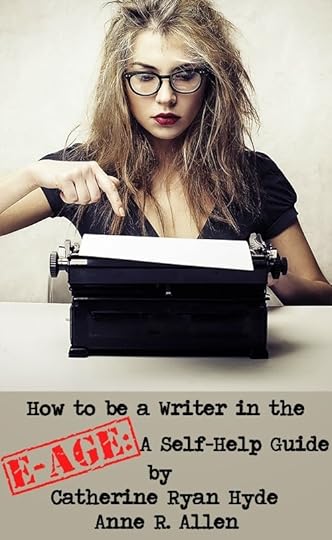
Unfortunately all this happened the day the paper book was supposed to go to the printer. Needless to say, that has been delayed. I'll let you know when that finally happens.
This is one of the few guidebooks that addresses both the writers who hope to traditionally publish AND indies. We even give some info to help you choose. Also lots of stuff on how to blog, use social media, get critiques, deal with agents and avoid scammers...without driving yourself nuts.
"The moment I started to read "How to be a Writer in the E-Age" I knew it was a winner in every sense. The information is not only valuable to new authors, it's relevant to published authors who might be thinking about making the switch to e-publishing, too." Ryan Field, reviewer
"This comprehensive, humorous and down-to-earth guidebook covers our ever-changing industry, our growing choices, and lays down what we can expect at the end of our road so we plan our travels well." Joanna Celeste, reviewer at Joanna Celeste's book blog
"I hadn't done much writing in recent years, but this book opened my eyes to many new things. I've now started a blog and following the suggestions in this book, have many more followers than I thought possible"... Travel Blogger Sil Cadenasso
OPPORTUNITY ALERTS
CHICKEN SOUP - HEARTFELT STORIES BY MOMS Pays $200 for 1,200 words. Stories can deal with the pains and highlights of motherhood, the wonders of parenting grandchildren, special moments of raising a newborn, being a role model to a teenager, or anything that touches the heart of a mom. Deadline September 30.
Want to Appear in Writer's Digest? Here's how. Have you ever tried to write a book in a month-as part of NaNoWriMo, with a writing group, or just on your own? What was your experience? WD wants to hear from you. Tell them about your write-a-thon! Send your story-along with your full name, city and state to writersdigest@fwmedia.com with "BIAM" in the subject line. Responses may appear in Writer's Digest publications and/or on WritersDigest.com.
Short Romance stories with holiday themes: Crimson Romance Ebooks (A division of F & W, publisher of Writer's Digest Books) is looking for holiday themed shorts (10K-20K words) Christmas/Hanukkah/Kwanzaa 2014, New Year's Even 2015, Deadline: August 15th
BLUE EARTH REVIEW FLASH FICTION CONTEST $2 ENTRY FEE. 750 words or less. Limit two stories per entry. First place $500. Second place $250. Third place $100. Winners will be published in the Blue Earth Review, the literary magazine of Minnesota State University. Deadline August 1.
A ROOM OF HER OWN FOUNDATION ORLANDO PRIZES $15 ENTRY FEE. Four Orlando prizes of $1,000 each and publication in The Los Angeles Review are awarded twice yearly for a poem, a short story, a short short story, and an essay by women writers. Deadline July 31.
Mash Stories: No entry fee. $100 prize. Quarterly short story competition aimed at promoting new talent. Flash fiction up to 500 words. Must incorporate the words: monkey, cathedral, relativity. Stories are voted on continuously throughout the submission period. Shortlisted stories are featured on the Mash website, professionally narrated on Mash podcast, and included in their magazine Deadline July 15.
We writers tend to be a delusional lot. Most of us know the average writer doesn't make a bunch of money, but we secretly believe our own efforts will bring us fabulous fame and fortune.
Or at least pay the rent.
When we start out, we're certain our books will leapfrog over all the usual obstacles, and in record time, we will land on the NYT bestseller list and the cover of Time.
Don't be embarrassed. The delusions are necessary. If we accepted the reality of how hard it is to make a living as a writer, we'd never get that first sentence on the page.
But those delusions—and the fear of losing the comfort they bring—can take us on dangerous detours that can derail a fledgling career.
They did for me.
My own personal detours happened because I didn't learn enough about the business. People kept telling me to join RWA to find out the ins and outs of the industry (excellent advice, by the way), but since I didn't see myself as a romance writer, I didn't join until my career had been stalled for several years.
I was sure I didn't have to learn the business side of things. I'd have a magical fairy god-agent to deal with all the boring stuff.
I actually landed an agent with my very first query. Who promptly left the agency without telling me. I'd read in the literary agent guidebooks that the process is slow and you should never phone an agent, so I waited over six months before I called to ask what was going on. (Yeah. I wasn't kidding about the "dumb" part.)
I wasted most of that time writing almost nothing, because I was waiting for my agent to guide me. Should this be a series? Should I rewrite it as romance? If this doesn't sell, what other kind of book should I be writing?
I had four more agents after that. None of whom sold my books. Or gave me any guidance.
Turns out I might have been just a tad delusional about those magical fairy god-agents.
Here are some other dumb things I see a lot of beginning writers doing today. If you recognize yourself or a friend, check out some of the "get back on track" solutions to get that career off and running again.
1) Aiming too low
Lots of brilliant writers never leave square one. They settle into a pleasant little comfort zone and never try to climb to the next step.
They enter—and win—the same couple of local contests every year and publish stories in the same handful of little magazines for decades. Nobody but the three judges of the contest and the five subscribers to the litzine have ever seen their work. But the writers get a thrilling little buzz every year from their wins and are scared of facing rejection in the larger marketplace.
Others never send their work out at all. They'll read the same book to a critique group for a decade or keep reading first chapters of books they never finish. I've met people at writers' conferences who always bring the same chapter of the same book to the workshops, year after year. I don't know if any of them ever get published. Or even finish their novels.
How to get back on track: Face your fears and accept that getting rejected is part of the process. Look at the "opportunity alerts" at the bottom of this column. Submit to a new magazine. Enter a contest with higher stakes. Finish that novel. Expand your world!
2) Aiming too high (a.k.a. not knowing you're a beginner.)
I cringe when a newbie writer with only a handful of credits tells me she will never write for free. Or after publishing four or five short stories an author says he'll never sell to anybody but Asimov's, Ellery Queen, or The New Yorker. Writers like this may say they're practicing the "law of attraction" by visualizing the big bux, but what they're actually doing is aiming to fail.
If you want to visualize yourself making it to the top of the success ladder, you need to visualize the whole ladder.
Even twenty years ago, expecting instant success was self-defeating. Nobody pole-vaults from the mailroom to the board room after their first paycheck. Especially in the publishing business.
And now, alas, we live in an era when everybody in this business works for free some of the time. Interns apprentice for no pay in literary agencies and publishing houses. Agents don't get paid until when/if they make a deal.
Even the rich and famous do it. Anne Rice pens Facebook posts all day long. Stephen King tweets. Tons of bestselling authors blog. All without remuneration.
How to get back on track: Accept that everybody has to start on the first rung of the ladder. Put in your 10,000 Malcolm Gladwell hours. If you write nonfic, write for smaller magazines, anthologies, and blogs and collect your clips. If you write mostly fiction, send those stories out to the non- and lower-paying litzines. The prestige you get from writing for some of them can be worth more to your career than getting a story into a higher paying slick monthly.
3) Taking an endless trip on the Query-Go-Round
Some writers never take the time to learn to write a good query. They keep sending out the same letter that calls their work a "fiction novel" and addresses the agent as "To Whom it May Concern" and talks about how their book is so much better than "all the crap out there."
Or they might fall for scams like this one, which charges $700 to write queries for you. (All query-mill letters are automatically rejected. Agents can tell.)
Or they can do the opposite and become query addicts. They send out queries on the same book for decades. They hone that query to perfection. They take all the workshops on querying at every writers conference they go to. What they don't do is work on the book. Or write another one.
These people don't want to discover what's really wrong:
That much-rejected book could be an unpolished gem that might get a contract if the author ran it through a few beta readers, cut the word count, and got somebody to proofread it.Or it could be a finished masterpiece that just needs a good query.Or it could be a polished book with a killer query, but the genre/theme is not trending right now. When everybody's looking for zeppelins, they've got zombies. Or the other way around.
But they'll never know if they're trapped on the query-go-round, addicted to the high they get from that rare request for a partial, then maybe a full, then waiting a year for the form rejection that says nothing. (Agents are very cagy these days. Their rejections are crafted to say nothing but "no thanks." And more and more, they reject with silence. Unfortunately, they've learned that any feedback at all can draw angry retaliation from crazed newbies.)
How to get back on track: Workshop the book if you haven't, and then write another one. Maybe not so trendy this time. Or look for a small press that specializes in your brand of zombie zeppelins. Or self-publish (but not until you've written zombie-zeppelin book #2. It's very hard to market a singleton title as an indie.)
And if you're querying and have never read the Query Shark or networked with the good people at QueryTracker, do. They may solve a lot of your problems.
4) Getting trapped with a bad agent and/or signing the first contract you're offered without reading the fine print
In these days of "forever" books and eternal bookshelves, bad contracts are much more dangerous than they were in the pre-ebook days.
You may end up signing away the rights to your book and characters for a lifetime—and even your children's lifetimes.
Some publishers insist that you give the right of first refusal for every word you will ever write. Here's a cautionary tale from Jordan McCollum. There are lots of bad contracts out there, even with well-known agents and publishers.
And unfortunately, there are lots of incompetent and disappearing agents, scammers, and vanity publishers eager to lead you astray and deplete your savings.
If you have fantasies of a magical fairy god-agent, you could easily fall prey.
How to get back on track: educate yourself about the business before you jump in. Join professional writing organizations like RWA or SCBWI . Keep yourself informed by checking Writer Beware, and read popular publishing industry blogs like the Passive Voice. (Very indie oriented, but usually solid advice.)
5) Chasing trends
Some writers have files filled with half-written Twilight clones, maybe a Dan-Brown artifact-chaser, a couple of a YA Dystopians and 25 ½ Shades of Mommy Porn. They never quite finish any of their projects because, well, what they really like is family sagas or space operas, but everybody says those aren't selling.
How to get back on track: Don't follow trends; set them. Anything that's on the bestseller list now will be saturated and waning by the time you get a book finished, polished, edited and ready to go. Write what you love to read, not what's on the bestseller list or a hot TV trend right now.
6) Forgetting the part where you learn how to write
We've all met newbie writers who say stuff like: "Why should I have to study writing? I read all the time and I edit our Justin Bieber fan club newsletter. I'm a great speller. So I can write a novel, no prob."
These people don't understand that writing narrative is an intricate, specialized craft. Eating a sandwich doesn't teach a person how to bake bread. They wouldn't expect to be able to knit a sweater or play golf without some kind of instruction. So why do they think they can write a novel in a total vacuum?
I'm amazed how many people would rather spend 20 years flailing around writing badly rather than pay a few bucks for a workshop or a book on plotting or structure.
Some of these people think they can hire an editor who will magically turn a bunch of random pages into a coherent novel. Anybody who's worked as a freelance editor has had to deal with a few of these. It's amazing when you see the horror on their faces when it dawns on them that writing a novel involves a whole lot of work.
How to get back on track: Take a writing class or workshop and buy a few books on writing. Nathan Bransford has a brilliant one called How to Write a Novel for only $4.99. Or try Save the Cat by Blake Snyder or How to Write a Damn Good Novel by James N. Frey.
7) Partying like it's 1999
Some writers are hooked on old media. They don't want to know anything about online marketing and every year they launch a new paper book with a signing party at a local bookstore announced by an ad in the hometown newspaper, or postcards sent to a local mailing list.
The same twelve people come. Every year. Twelve people who would have bought the book anyway. Nobody else knows these authors have books, because they don't have a website or a blog or an Amazon author page and consider themselves "above" social media.
You Google these people and up comes the picture from when they campaigned for John Kerry in 2004.
If they're with a traditional small or mid-sized press, they may have an ebook, but they don't know how to get online reviews or set up an Amazon author page, so their book ranks at about #7,891,000.
Or they self-publish with a vanity press and insist on putting tons of money into a hardcover novel that nobody can afford.
How to get back on track: Join the 21st century. It may seem scary, but it's more fun than you realize. Take baby steps. Get a friend or relative to help you set up your Amazon author page. Start reading blogs. Molly Greene and Kristen Lamb give top-notch info on how to use social media on their blogs. Pick up Molly's Blog it! , Kristen Lamb's Rise of the Machines or, um How to be a Writer in the E-Age by yours truly and #1 Amazon bestseller Catherine Ryan Hyde.
8) Refusing to accept that publishing is a business
An amazing number of writers seem to think the writing life is a perpetual high school English class where there are gold stars for everybody. They are offended when publishers and agents are "mercenary" or "only out for money."
Newsflash: people don't run businesses in order to lose money. Not everybody can live off the Bank of Dad forever.
If you want to make a living as a writer, you have to learn how the business works.
You wouldn't try to open a restaurant if you'd never worked in one, but most new writers know nothing about the business they're trying to enter.
How to get back on track: Give up the magical fairy god-agent fantasy. Then go read the archives of Jane Friedman's awesome blog, subscribe to (free) Publisher's Lunch and follow a few agents on Twitter. Or pick up a solid book on how to self-publish like David Gaughran's Let's Get Digital.
9) Chasing that first-draft high
We all live for that moment when we're in the zone and the muse is dictating that story as fast as we can write it down. Nothing's better than that.
But most of us know that euphoric high is fleeting.
Sooner or later we have to confront the reality that this book is not, in actual fact, the greatest cultural achievement in all human history, and we may have to, um, write a second draft.
In the middle of which we will be sure the book sucks.
But people hooked on that first-draft-high never get to the "my-book-sucks" stage. They never let a beta reader tell them about the holes in the plot or how it's totally confusing when Estella's name changes to Ralph halfway through. They'd never use a critique group. They never rewrite or hire an editor.
These self-adoring geniuses just go write another brilliant masterpiece instead. And another. And can't figure out why nobody wants to read them.
Whether they endlessly send the masterpieces to agents, or self-publish and constantly tweet "buy my book", they fail to become professional writers.
How to get back on track: Learn that the first draft is between you and your muse, but the final draft is for the READER. If you don't keep your readers in mind, you won't have any. It's simple as that.
10) Spending all your time and money on iffy marketing schemes
There are thousands of blogs and books that promise you instant riches with ebooks. Most of them are out of date and all of them are lying.
That's because nothing is certain in this business (except rejection and bad reviews.) Nobody can fulfill a promise that you'll make the bestseller list or become a millionaire.
I know lots of people do fall for the hype and bullbleep because I see them all over the place: Writers who tweet their books 24/7—or pay somebody to—and constantly spam their FB friends. Blogging authors who are always running contests to give away book swag they've overbought and nobody wants.Or they give away expensive gift cards to bribe people to "like" their Facebook page. A page those people will never visit again. Or they make boring book trailers and hammer friends and family to go "like" the videos on YouTube. Friends and family who are too busy, um, reading books. Or—this is the one that's trending now—they put a ginormous amount of money into a Kickstarter campaign designed to beg for an even more ginormous amount of money to pay a publicist to do all of the above.And in case you still think tweeting your book boosts sales, I now have personal experience that says it doesn't. A sweet friend put one of my books into a tweet circle a couple of weeks ago and it got tweeted at least 500 times.
Guess how many books I sold that week? None. Zip Zilch Nada. I'd sold 40 the week before. So if anything, those tweets made people NOT buy the book.
How to get back on track: Look at what actual successful authors are doing. Hugh Howey built his huge audience by connecting with fans on his blog and on forums. Catherine Ryan Hyde and Anne Rice have constant interaction with their readers on Facebook. Catherine gives away lots of free books from her blog.
All these bestselling authors are connecting with their fans one-on-one, not "targeting" a faceless "them". Books have to be hand-sold. Marketing schemes don't work unless you're the Big Five and can load every chain bookstore in the world with huge front-of store displays.
And don't tweet your book unless you have news about it. Like that it's free for the next 24 hours, and you just got a rave review from Big Al.
11) Failing to write the book at all
Speaking of gimmicks, I can't believe how many newbie writers get drawn into the Kickstarter game. They spend a bunch of money on a video ad for Kickstarter explaining how if you just give them a bunch of money, they will sign a book for you that they plan to write someday.
Oh, and they'll also need your money for an editor, a formatter, and a cover designer and of course, a book trailer, which will only cost $10,000.
Okay, it's true that if you do something truly outrageous on Kickstarter, like ask for money to make potato salad, a bunch of idiots may give you money. But this is not a good business plan.
Because here's the reality: anybody with a BookBub, Pixel of Ink, EBUK or KND subscription can get any number of brilliant books from bestselling authors for 99c-$3.99 these days.
Why would readers give $500 to a newbie who's got nothing but an idea? We all have ideas. Would you hire a hairdresser—for 500 times the going rate—who hasn't yet attended beauty school, just because he has a mental picture of a choppy bob with feathered bangs which would look totally sweet on you?
Kickstarter is a wonderful tool for things like reviving Reading Rainbow and the Veronica Mars movie. But you need to have something to offer the world besides your own neediness.
Here are some other ways wannabes avoid actually writing:
Endlessly talking out their books with other wannabes. Boring everybody they meet with blow-by blow descriptions of scenes from the novel they haven't started yet.Spending a year decorating the room where they're going to write someday.Obsessing about finding just the right software to compose in.Blogging about the book instead of writing it.Researching the book for decades without actually writing a word.
How to get back on track: Either put your butt in a chair and your fingers on a keyboard or figure out what you really want to do with your life. Hint: it's okay not to be a writer.
12) Not reading (especially in your genre)
I'm amazed at people who claim to want to be writers, but when you ask them what they're reading they go totally blank.
Or they’ll mention a bestseller of a decade ago as the last book they read. Or they say they read nothing but classics—which you strongly suspect they haven't read since college. They may even follow by telling you "there's nothing good out there."
It's awfully hard to write a novel contemporary readers are going to like if you haven't read anything published since The Great Gatsby. And it's impossible to write something Romance/Mystery/Thriller readers are going to like if you don't read (and love) those genres.
How to get back on track: Make time for reading every day. Especially new books in your genre. Consider it part of your writing routine. If you'd rather watch Dancing with the Stars or play a videogame, ask yourself why you want to be a writer. Are you trying to please Mom? Or Mrs. Hoolihan from fourth grade? Would you rather be designing videogames or sequined dance costumes? That's okay.
And probably pays better.
This is a great profession if you love it, but there are no shortcuts and the pay is pretty lousy for all but a handful of superstars. If you'd rather be doing something else, let go of the delusions and go follow your bliss, wherever it takes you.
What about you, Scriveners? Have you been sidetracked by any of these detours from your writing path? How did you get back on track? Do you have any other pitfalls to warn us about?
Oh, and you can hear a half-hour excerpt of my comic novel NO PLACE LIKE HOME narrated by C.S. Perryess and moi every Sunday night at 9 Pacific time, streaming at http://esterobayradio.com/ or 97.3 FM if you're in the Morro Bay area.
BOOK OF THE WEEK
How To Be a Writer in the E-Age: a Self-Help Guide has been republished again! It is again available at Amazon US, Amazon UK, Amazon CA and all the other Amazon stores.
It was not un- & re-published by choice. Our agent suddenly left her agency where we had been published with an "agent-assisted self-publishing" program, and without warning, the agency unpublished the book and sent us the files about two weeks ago. It was a "Yikes!" moment for this cybermoron. Especially since Catherine was on vacation at the time. But with some generous help from the kind tech blokes at EBUK, the book was back up within 24 hours. It took another two weeks and several requests to the Zon for our reviews to migrate, but as of this weekend, they're back.
And I think this means that I am finally over my fantasies about those magical fairy god-agents (not that it was our agent's fault, but intra-agency squabbles happen, and authors need to be on our toes.)
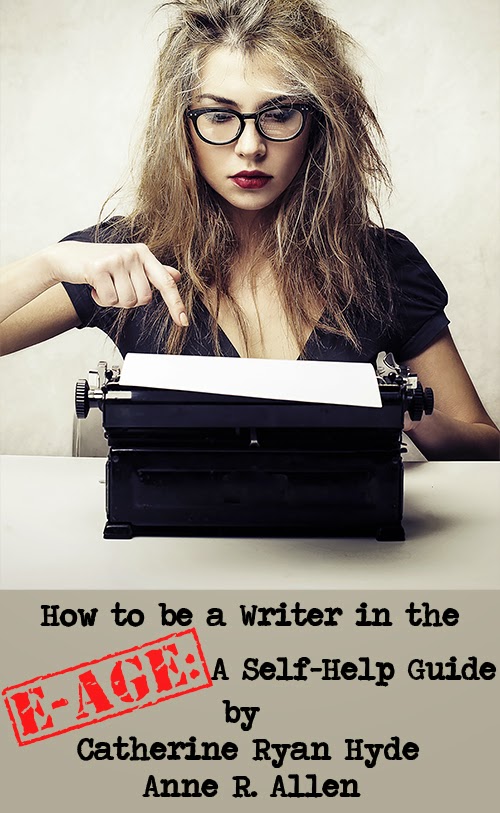
Unfortunately all this happened the day the paper book was supposed to go to the printer. Needless to say, that has been delayed. I'll let you know when that finally happens.
This is one of the few guidebooks that addresses both the writers who hope to traditionally publish AND indies. We even give some info to help you choose. Also lots of stuff on how to blog, use social media, get critiques, deal with agents and avoid scammers...without driving yourself nuts.
"The moment I started to read "How to be a Writer in the E-Age" I knew it was a winner in every sense. The information is not only valuable to new authors, it's relevant to published authors who might be thinking about making the switch to e-publishing, too." Ryan Field, reviewer
"This comprehensive, humorous and down-to-earth guidebook covers our ever-changing industry, our growing choices, and lays down what we can expect at the end of our road so we plan our travels well." Joanna Celeste, reviewer at Joanna Celeste's book blog
"I hadn't done much writing in recent years, but this book opened my eyes to many new things. I've now started a blog and following the suggestions in this book, have many more followers than I thought possible"... Travel Blogger Sil Cadenasso
OPPORTUNITY ALERTS
CHICKEN SOUP - HEARTFELT STORIES BY MOMS Pays $200 for 1,200 words. Stories can deal with the pains and highlights of motherhood, the wonders of parenting grandchildren, special moments of raising a newborn, being a role model to a teenager, or anything that touches the heart of a mom. Deadline September 30.
Want to Appear in Writer's Digest? Here's how. Have you ever tried to write a book in a month-as part of NaNoWriMo, with a writing group, or just on your own? What was your experience? WD wants to hear from you. Tell them about your write-a-thon! Send your story-along with your full name, city and state to writersdigest@fwmedia.com with "BIAM" in the subject line. Responses may appear in Writer's Digest publications and/or on WritersDigest.com.
Short Romance stories with holiday themes: Crimson Romance Ebooks (A division of F & W, publisher of Writer's Digest Books) is looking for holiday themed shorts (10K-20K words) Christmas/Hanukkah/Kwanzaa 2014, New Year's Even 2015, Deadline: August 15th
BLUE EARTH REVIEW FLASH FICTION CONTEST $2 ENTRY FEE. 750 words or less. Limit two stories per entry. First place $500. Second place $250. Third place $100. Winners will be published in the Blue Earth Review, the literary magazine of Minnesota State University. Deadline August 1.
A ROOM OF HER OWN FOUNDATION ORLANDO PRIZES $15 ENTRY FEE. Four Orlando prizes of $1,000 each and publication in The Los Angeles Review are awarded twice yearly for a poem, a short story, a short short story, and an essay by women writers. Deadline July 31.
Mash Stories: No entry fee. $100 prize. Quarterly short story competition aimed at promoting new talent. Flash fiction up to 500 words. Must incorporate the words: monkey, cathedral, relativity. Stories are voted on continuously throughout the submission period. Shortlisted stories are featured on the Mash website, professionally narrated on Mash podcast, and included in their magazine Deadline July 15.


June 29, 2014
TOOLS OF THE (WRITER’S) TRADE: Lots of them FREE + reviews, how-to videos and cheat sheets.
by Ruth Harris
Like plumbers and carpenters, architects and astronauts, cellists and golfers, writers need the right tools to help them get the job done. New tools appear constantly and many of them are FREE. Here is a round-up of current offerings.
Word processors on steroids:
MSWord is the industry standard, the app editors and agents prefer. Has its lovers and haters but it’s powerful, sometimes kind of clunky, and can do just about anything including format your book into epub and mobi files for upload.
Make MS Word Work for You Instead of Against You is JW Manus’s quick primer directed especially to fiction writers. JW explains why over formatting and useless manuscript styling is a counter-productive waste of time for authors.
MSWord also provides the tools that allow you to create a cover. Here’s an on-line tutorial about how to make a cover in MSWord.
Book designer Derek Murphy offers DIY professional-looking book cover how-tos plus templates you can use in Word.
Scrivener (about $40 but you can find often it on sale) comes in PC and Mac flavors and is coming—soon! everyone hopes—for iOS. Powerful and very flexible, Scriv is a must-have for many writers including me. Scriv has a cork board function, an outliner, will file images and web-based research, and compiles to epub and mobi.
The manual is extensive, the video tutorials are excellent and the help forum is outstanding. Keith, Scriv’s developer, often appears to answer questions and his savvy crew is responsive and will walk you through any dilemmas.
Gwen Fernandez’ book Scrivener For Dummies has bailed this dummy out more than once and will help both beginners and experienced users.
If you’re still unsure about Scrivener and want to know more, Gwen has written a post about why she ditched Word for Scriv.
Google+ Scriv forum is another go-to resource. Scrivener enthusiasts answer questions, offer templates and share creative approaches to getting even more out of Scriv.
I found Ed Ditto’s How to Format Your Novel for Kindle, Nook, the iBookstore, Smashwords, and CreateSpace...in One Afternoon indispensable for working my way through the compile process.
Scriptito: https://www.scriptito.com/tour/write.html is a FREE online Scrivener-like text editor and project manager. Scriptito offers storyboard, research folders and linking, autosave and versioning and will also compile epubs and other export formats.
To find out more, here’s a Scriptito review.
Nisus (Mac only—Express $45, Pro $79) is a superb word processor, one I’ve used for years. Nisus works well with Scriv, it’s elegant but powerful, very stable, and the Pro version lets you compile epubs and mobis from within. Their user forum is terrific and Martin—I think he’s one of the developers—is there to answer questions and help trouble shoot.
In this article, Joe Kissell, Senior Contributor, Macworld, tells why he prefers Nisus and puts it on his A-list.
Intuitive, safe and reliable, superfast, portable and entirely customizable, Atlantis (PC only—$35) is a full-featured, moderately-priced MSWord-like app. Comes with a 30-day try-before-you-buy offer, offers on-line help and a user’s forum. Atlantis, which can encrypt your files, can do much of what MSWord does including turn your text into epub and mobi files.
Here’s a helpful review of Atlantis.
Google Documents is cloud based, fast, responsive, and FREE. Google docs does its job well, can be accessed from all your devices and is useful for collaborators who can log in from different locations and work together. Since Docs is cloud based, you get off-site back up along with a fine basic word processor.
Pages (Mac only) is iOS native, often FREE or modestly priced ($9.99) word processor to use on your iPad, iPhone, iPod. Pages also compiles to epub and mobi.
In addition to the brand names listed above, there are even more FREE word processors available on-line. You will find a round up plus reviews of FREE word processors for the pc here. FREE for the Mac is a clean and simple word processor called Bean.
E-book builder:
Vellum (Mac only—FREE to download. Pricing depends on how many you purchase. Right now on sale.) is easy to use and does only one thing: it builds elegantly designed ebooks. Upload a Word file, style text, preview a live version of your book for the iPhone, iPad, Kindle, or Nook; and export multiple versions with a single click.
Serenity Caldwell reviews Vellum, citing its easy templates, excellent preview support, and beautiful multi-version export.
Office Suites:
My generous and tech-savvy twitter pal, @RangeWoman_Inc, clued me into three FREE powerful office suites.
Apache OpenOffice is FREE, has many the same features as Microsoft Office and is available for Windows, Linux, MacOS X, Linux X86-64, Solaris X86, Solaris Sparc. Through "save as" you can export your OpenOffice for Microsoft Office (inter-exchangeable).
Open Office extensions (includes dictionaries) and templates can be downloaded at http://extensions.openoffice.org/
OpenOffice extension "After the Deadline" (FREE editing and grammar check extension).
NeoOffice is a FREE office suite for OS X and includes a word processor, spreadsheet, presentation and graphic program. You can export NeoOffice documents in different formats, including .doc, .xlsx and .xml.
NeoOffice user's guide is a FREE download as are the language packs.
LibreOffice is FREE open source office software for Apple OS X, Linux and Windows and includes a word processor, spreadsheet, presentation and graphic program. It has received awards from the Linux and Apple communities. In 2013 it was awarded the InfoWorld Bossie Award:
"After the Deadline" is a FREE editing and grammar check extension for LibreOffice and here are five recommended grammar and editing extensions for LibreOffice.
Back Ups:
Dropbox is a must-have essential for off-site back up. It’s FREE, creates one file in the cloud and another on your desktop as you work. DB also synchs on all your devices and works seamlessly with both mobile and desktop apps.
Microsoft offers FREE cloud storage called SkyDrive and Apple’s version is called (guess what?) iCloud. Google’s cloud storage, Drive, is also FREE and works on all popular systems.
Mozy, Carbonite, CrashPlan are remote backup services. Each one offers a FREE trial and various subscription plans for personal and business back up.
Publishing blogger Passive Guy—who has worked on computers for thirty years and knows first hand the soul-searing tragedy of lost work—shares his belts-and-suspenders back up method in his must-read post Never, Never, Never Lose Your Work!
Ooopsie Fixers:
India Drummond takes on editors (the cyber kind) in this review of White Smoke, Style Writers, Serenity Software, and Autocrit.
Hemingway app aims to make your writing—guess what?—bold and clear. Hemingway highlights long, complex sentences and common errors, highlights passive verbs, points the finger at adverbs.
Ginger, a spell & grammar checker, offers various monthly plans and works with MS-Word, Outlook, PowerPoint, IE, Firefox and Chrome and enables cross-platform users to correct their text with a single click. Ginger’s Text Reader lets users hear what they wrote in a U.S. or U.K. accent as spoken in the voice of a male or female reader and is useful when proofreading.
ProWritingAid is a FREE online editor that checks your grammar but also acts as an online plagiarism checker, finds overused words and phrases, improves readability and checks for consistency of spelling, hyphenation, and capitalization.
Notebooks:
Although I’m still addicted to old-fashioned paper notebooks, I find the cyber versions indispensable.
Ubiquitous Evernote, is a powerful, FREE note keeping app that works on all platforms. Searchable by keyword or tags, includes reminder and web clipping functions, great for keeping research including images, for brainstorming ideas, for parking stuff you’re not yet sure what to do with. Cloud-based, Evernote synchs across all your devices.
One Note is now FREE and comes in Mac, Windows, iPads, iPhones and Androids flavors. An electronic version of a 3-ring binder, OneNote lives in the cloud and is synchable across devices.
In this article, award-winning tech writer Ed Bott offers cross-platform power tips for OneNote.
Bestselling romance author, Jami Davenport, provides a cheat sheet to OneNote and talks about the was she uses it to keep track of her heroes and heroines.
Preston Gralla is a contributing editor for Computerworld.com and the author of more than 45 books. Preston compares Evernote and OneNote pointing out the plusses and minuses of both.
Put the prod in productivity:
Spend too much time on FaceBook and not enough writing? A Tweet-a-holic? An internet addict? Need an enforcer?
RescueTime It’s FREE, but there’s also a Premium version with a monthly bill attached. https://www.rescuetime.com.
Write Or Die by Dr. Wicked. $20. Windows, Mac and Linux which aims to eliminate writer's block by providing consequences for procrastination and, new to this version, rewards for accomplishment http://writeordie.com.
Mac Freedom $10 compatible with Windows, Mac, Android & Ubuntu that blocks the 'net 60 day money-back guarantee.
Whew! We sure are lucky to have somebody as tech-savvy as Ruth offering us this smorgasbord of tech help for the writer. What about you, Scriveners? Do you have any more fav technology to add to this amazing list? Any questions for Ruth about what might work best for you? Have any of you made a book cover in MS Word? ...Anne
BOOKS OF THE WEEKFREE!!
#1 in Kindle 30-minute Short Reads: Humor
 Kindle | Kobo | GooglePlay | Nook
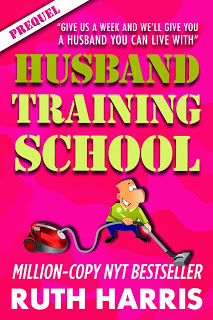
Ladies! Is Your Husband Driving You Crazy?
Is the husband you’re living with the man you married? Or has he changed? And not for the better? Is he too pooped to participate? Does he get an “F” in foreplay? Don’t give up. Get even. Stop the ugly nagging. Put an end to your anger, resentment and frustration. Two sisters who managed to survive four husbands decided to do something about it. Their creation, HUSBAND TRAINING SCHOOL, is dedicated to saving marriages—and the sanity of wives the world over. WHERE OTHERS FAIL, HUSBAND TRAINING SCHOOL SUCCEEDS!
 Kindle | Kobo | GooglePlay | Nook
$2.99
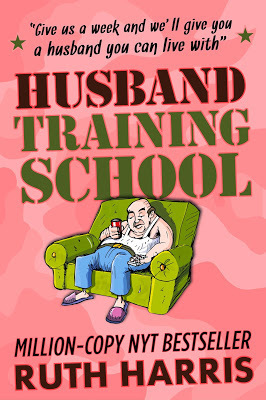
Three Fed-up Wives—and only Husband Training School stands between them, murder, and a lifetime in prison.
Will Trailer is a super-achiever on the baseball diamond but at home? Not so much, according to his gorgeous movie star wife. Efficiency expert Howard Hopkins has just retired. His wife married him for better and for worse—but not for 24-hours-a-day.Gordo Canholme would procrastinate breathing if he could, but will he ever get the new baby’s room ready? Not without HTS, according to his very pregnant wife.
Ex-Marine Drill Instructor, Robin Aguirre, and her sister, Melodie, run HTS and have been hardened by years of experience. When the three fed-up wives enroll Will, Howard and Gordo as new students, Robin and Melodie are ready for anything the most hapless and hopeless husbands of the 21st Century can dish out.
They think.
OPPORTUNITY ALERTS
Want to Appear in Writer's Digest? Here's how. Have you ever tried to write a book in a month-as part of NaNoWriMo, with a writing group, or just on your own? What was your experience? WD wants to hear from you. Tell them about your write-a-thon! Send your story-along with your full name, city and state to writersdigest@fwmedia.com with "BIAM" in the subject line. Responses may appear in Writer's Digest publications and/or on WritersDigest.com.
Short Romance stories with holiday themes: Crimson Romance Ebooks (A division of F & W, publisher of Writer's Digest Books) is looking for holiday themed shorts (10K-20K words) Christmas/Hanukkah/Kwanzaa 2014, New Year's Even 2015, Deadline: August 15th
BLUE EARTH REVIEW FLASH FICTION CONTEST $2 ENTRY FEE. 750 words or less. Limit two stories per entry. First place $500. Second place $250. Third place $100. Winners will be published in the Blue Earth Review, the literary magazine of Minnesota State University. Deadline August 1.
A ROOM OF HER OWN FOUNDATION ORLANDO PRIZES $15 ENTRY FEE. Four Orlando prizes of $1,000 each and publication in The Los Angeles Review are awarded twice yearly for a poem, a short story, a short short story, and an essay by women writers. Deadline July 31.
Mash Stories: No entry fee. $100 prize. Quarterly short story competition aimed at promoting new talent. Flash fiction up to 500 words. Must incorporate the words: monkey, cathedral, relativity. Stories are voted on continuously throughout the submission period. Shortlisted stories are featured on the Mash website, professionally narrated on Mash podcast, and included in their magazine Deadline July 15.
Like plumbers and carpenters, architects and astronauts, cellists and golfers, writers need the right tools to help them get the job done. New tools appear constantly and many of them are FREE. Here is a round-up of current offerings.
Word processors on steroids:
MSWord is the industry standard, the app editors and agents prefer. Has its lovers and haters but it’s powerful, sometimes kind of clunky, and can do just about anything including format your book into epub and mobi files for upload.
Make MS Word Work for You Instead of Against You is JW Manus’s quick primer directed especially to fiction writers. JW explains why over formatting and useless manuscript styling is a counter-productive waste of time for authors.
MSWord also provides the tools that allow you to create a cover. Here’s an on-line tutorial about how to make a cover in MSWord.
Book designer Derek Murphy offers DIY professional-looking book cover how-tos plus templates you can use in Word.
Scrivener (about $40 but you can find often it on sale) comes in PC and Mac flavors and is coming—soon! everyone hopes—for iOS. Powerful and very flexible, Scriv is a must-have for many writers including me. Scriv has a cork board function, an outliner, will file images and web-based research, and compiles to epub and mobi.
The manual is extensive, the video tutorials are excellent and the help forum is outstanding. Keith, Scriv’s developer, often appears to answer questions and his savvy crew is responsive and will walk you through any dilemmas.
Gwen Fernandez’ book Scrivener For Dummies has bailed this dummy out more than once and will help both beginners and experienced users.
If you’re still unsure about Scrivener and want to know more, Gwen has written a post about why she ditched Word for Scriv.
Google+ Scriv forum is another go-to resource. Scrivener enthusiasts answer questions, offer templates and share creative approaches to getting even more out of Scriv.
I found Ed Ditto’s How to Format Your Novel for Kindle, Nook, the iBookstore, Smashwords, and CreateSpace...in One Afternoon indispensable for working my way through the compile process.
Scriptito: https://www.scriptito.com/tour/write.html is a FREE online Scrivener-like text editor and project manager. Scriptito offers storyboard, research folders and linking, autosave and versioning and will also compile epubs and other export formats.
To find out more, here’s a Scriptito review.
Nisus (Mac only—Express $45, Pro $79) is a superb word processor, one I’ve used for years. Nisus works well with Scriv, it’s elegant but powerful, very stable, and the Pro version lets you compile epubs and mobis from within. Their user forum is terrific and Martin—I think he’s one of the developers—is there to answer questions and help trouble shoot.
In this article, Joe Kissell, Senior Contributor, Macworld, tells why he prefers Nisus and puts it on his A-list.
Intuitive, safe and reliable, superfast, portable and entirely customizable, Atlantis (PC only—$35) is a full-featured, moderately-priced MSWord-like app. Comes with a 30-day try-before-you-buy offer, offers on-line help and a user’s forum. Atlantis, which can encrypt your files, can do much of what MSWord does including turn your text into epub and mobi files.
Here’s a helpful review of Atlantis.
Google Documents is cloud based, fast, responsive, and FREE. Google docs does its job well, can be accessed from all your devices and is useful for collaborators who can log in from different locations and work together. Since Docs is cloud based, you get off-site back up along with a fine basic word processor.
Pages (Mac only) is iOS native, often FREE or modestly priced ($9.99) word processor to use on your iPad, iPhone, iPod. Pages also compiles to epub and mobi.
In addition to the brand names listed above, there are even more FREE word processors available on-line. You will find a round up plus reviews of FREE word processors for the pc here. FREE for the Mac is a clean and simple word processor called Bean.
E-book builder:
Vellum (Mac only—FREE to download. Pricing depends on how many you purchase. Right now on sale.) is easy to use and does only one thing: it builds elegantly designed ebooks. Upload a Word file, style text, preview a live version of your book for the iPhone, iPad, Kindle, or Nook; and export multiple versions with a single click.
Serenity Caldwell reviews Vellum, citing its easy templates, excellent preview support, and beautiful multi-version export.
Office Suites:
My generous and tech-savvy twitter pal, @RangeWoman_Inc, clued me into three FREE powerful office suites.
Apache OpenOffice is FREE, has many the same features as Microsoft Office and is available for Windows, Linux, MacOS X, Linux X86-64, Solaris X86, Solaris Sparc. Through "save as" you can export your OpenOffice for Microsoft Office (inter-exchangeable).
Open Office extensions (includes dictionaries) and templates can be downloaded at http://extensions.openoffice.org/
OpenOffice extension "After the Deadline" (FREE editing and grammar check extension).
NeoOffice is a FREE office suite for OS X and includes a word processor, spreadsheet, presentation and graphic program. You can export NeoOffice documents in different formats, including .doc, .xlsx and .xml.
NeoOffice user's guide is a FREE download as are the language packs.
LibreOffice is FREE open source office software for Apple OS X, Linux and Windows and includes a word processor, spreadsheet, presentation and graphic program. It has received awards from the Linux and Apple communities. In 2013 it was awarded the InfoWorld Bossie Award:
"After the Deadline" is a FREE editing and grammar check extension for LibreOffice and here are five recommended grammar and editing extensions for LibreOffice.
Back Ups:
Dropbox is a must-have essential for off-site back up. It’s FREE, creates one file in the cloud and another on your desktop as you work. DB also synchs on all your devices and works seamlessly with both mobile and desktop apps.
Microsoft offers FREE cloud storage called SkyDrive and Apple’s version is called (guess what?) iCloud. Google’s cloud storage, Drive, is also FREE and works on all popular systems.
Mozy, Carbonite, CrashPlan are remote backup services. Each one offers a FREE trial and various subscription plans for personal and business back up.
Publishing blogger Passive Guy—who has worked on computers for thirty years and knows first hand the soul-searing tragedy of lost work—shares his belts-and-suspenders back up method in his must-read post Never, Never, Never Lose Your Work!
Ooopsie Fixers:
India Drummond takes on editors (the cyber kind) in this review of White Smoke, Style Writers, Serenity Software, and Autocrit.
Hemingway app aims to make your writing—guess what?—bold and clear. Hemingway highlights long, complex sentences and common errors, highlights passive verbs, points the finger at adverbs.
Ginger, a spell & grammar checker, offers various monthly plans and works with MS-Word, Outlook, PowerPoint, IE, Firefox and Chrome and enables cross-platform users to correct their text with a single click. Ginger’s Text Reader lets users hear what they wrote in a U.S. or U.K. accent as spoken in the voice of a male or female reader and is useful when proofreading.
ProWritingAid is a FREE online editor that checks your grammar but also acts as an online plagiarism checker, finds overused words and phrases, improves readability and checks for consistency of spelling, hyphenation, and capitalization.
Notebooks:
Although I’m still addicted to old-fashioned paper notebooks, I find the cyber versions indispensable.
Ubiquitous Evernote, is a powerful, FREE note keeping app that works on all platforms. Searchable by keyword or tags, includes reminder and web clipping functions, great for keeping research including images, for brainstorming ideas, for parking stuff you’re not yet sure what to do with. Cloud-based, Evernote synchs across all your devices.
One Note is now FREE and comes in Mac, Windows, iPads, iPhones and Androids flavors. An electronic version of a 3-ring binder, OneNote lives in the cloud and is synchable across devices.
In this article, award-winning tech writer Ed Bott offers cross-platform power tips for OneNote.
Bestselling romance author, Jami Davenport, provides a cheat sheet to OneNote and talks about the was she uses it to keep track of her heroes and heroines.
Preston Gralla is a contributing editor for Computerworld.com and the author of more than 45 books. Preston compares Evernote and OneNote pointing out the plusses and minuses of both.
Put the prod in productivity:
Spend too much time on FaceBook and not enough writing? A Tweet-a-holic? An internet addict? Need an enforcer?
RescueTime It’s FREE, but there’s also a Premium version with a monthly bill attached. https://www.rescuetime.com.
Write Or Die by Dr. Wicked. $20. Windows, Mac and Linux which aims to eliminate writer's block by providing consequences for procrastination and, new to this version, rewards for accomplishment http://writeordie.com.
Mac Freedom $10 compatible with Windows, Mac, Android & Ubuntu that blocks the 'net 60 day money-back guarantee.
Whew! We sure are lucky to have somebody as tech-savvy as Ruth offering us this smorgasbord of tech help for the writer. What about you, Scriveners? Do you have any more fav technology to add to this amazing list? Any questions for Ruth about what might work best for you? Have any of you made a book cover in MS Word? ...Anne
BOOKS OF THE WEEKFREE!!
#1 in Kindle 30-minute Short Reads: Humor
 Kindle | Kobo | GooglePlay | Nook
Ladies! Is Your Husband Driving You Crazy?
Is the husband you’re living with the man you married? Or has he changed? And not for the better? Is he too pooped to participate? Does he get an “F” in foreplay? Don’t give up. Get even. Stop the ugly nagging. Put an end to your anger, resentment and frustration. Two sisters who managed to survive four husbands decided to do something about it. Their creation, HUSBAND TRAINING SCHOOL, is dedicated to saving marriages—and the sanity of wives the world over. WHERE OTHERS FAIL, HUSBAND TRAINING SCHOOL SUCCEEDS!
 Kindle | Kobo | GooglePlay | Nook
$2.99
Three Fed-up Wives—and only Husband Training School stands between them, murder, and a lifetime in prison.
Will Trailer is a super-achiever on the baseball diamond but at home? Not so much, according to his gorgeous movie star wife. Efficiency expert Howard Hopkins has just retired. His wife married him for better and for worse—but not for 24-hours-a-day.Gordo Canholme would procrastinate breathing if he could, but will he ever get the new baby’s room ready? Not without HTS, according to his very pregnant wife.
Ex-Marine Drill Instructor, Robin Aguirre, and her sister, Melodie, run HTS and have been hardened by years of experience. When the three fed-up wives enroll Will, Howard and Gordo as new students, Robin and Melodie are ready for anything the most hapless and hopeless husbands of the 21st Century can dish out.
They think.
OPPORTUNITY ALERTS
Want to Appear in Writer's Digest? Here's how. Have you ever tried to write a book in a month-as part of NaNoWriMo, with a writing group, or just on your own? What was your experience? WD wants to hear from you. Tell them about your write-a-thon! Send your story-along with your full name, city and state to writersdigest@fwmedia.com with "BIAM" in the subject line. Responses may appear in Writer's Digest publications and/or on WritersDigest.com.
Short Romance stories with holiday themes: Crimson Romance Ebooks (A division of F & W, publisher of Writer's Digest Books) is looking for holiday themed shorts (10K-20K words) Christmas/Hanukkah/Kwanzaa 2014, New Year's Even 2015, Deadline: August 15th
BLUE EARTH REVIEW FLASH FICTION CONTEST $2 ENTRY FEE. 750 words or less. Limit two stories per entry. First place $500. Second place $250. Third place $100. Winners will be published in the Blue Earth Review, the literary magazine of Minnesota State University. Deadline August 1.
A ROOM OF HER OWN FOUNDATION ORLANDO PRIZES $15 ENTRY FEE. Four Orlando prizes of $1,000 each and publication in The Los Angeles Review are awarded twice yearly for a poem, a short story, a short short story, and an essay by women writers. Deadline July 31.
Mash Stories: No entry fee. $100 prize. Quarterly short story competition aimed at promoting new talent. Flash fiction up to 500 words. Must incorporate the words: monkey, cathedral, relativity. Stories are voted on continuously throughout the submission period. Shortlisted stories are featured on the Mash website, professionally narrated on Mash podcast, and included in their magazine Deadline July 15.
June 22, 2014
How to Plan a Novel without Actually Outlining: 3 Awesome Tips from Nathan Bransford
I'm so jazzed we're hosting Nathan Bransford this week!
Mr. Bransford—who is a children's author, former literary agent, and blogging legend—gave this blog its start when he offered me a guest spot on his blog in 2010. I wrote a piece on why you should keep writing, no matter what, called You May Be a Bestseller on Trafalmadore.
In spite of endless rejections, I was able to follow my own advice, partly because of the growing readership of this blog, due in part to that guest post. A year and a half later, I got three publication offers in the space of a week. I chose to go with two small presses, and within a few months, I had seven books in print. Two of them have become bestsellers.
Which shows how a little leg up can be all you need to start climbing that old success ladder. So thank you, Nathan, for being the catalyst that got my career going again after half a decade of disasters...Anne
How to Flesh out a Vague Novel Idea Before You Startby Nathan Bransford
As much as it may disappoint us, entire plots do not spring forth fully formed from our brains for us to breezily channel into words.
You will not have a Eureka moment where you suddenly have an entire idea for a novel, from start to finish, that you can transcribe in mere days, and even if this should miraculously happen to you once, you should not tell another writer because they will hate you forever.
More likely, you’ll have a vague idea that might be the merest embryo of a novel. A tiny shard. A little novel sapling that needs to be lovingly coaxed not just into a tree but into an entire forest.
The entire Jacob Wonderbar series emanated from a single idea I once had when I was feeling very relaxed.
(Incidentally, the last relaxing moment you will experience is the moment before you figure out what you’re going to write your novel about. This is the life you’ve chosen.)
Here is the idea: a kid gets stuck on a planet full of substitute teachers.
That’s it. That’s all I had.
When I thought about that kid running away from the substitutes on a strange world, I knew I was going to write the novel. It was that unshakeable needle sticking in my brain. I just had to figure out what in the world was going to happen to fill out the rest of the story—which ended up being three novels.
I had to flesh out the idea.
And yes, all you improvisers out there, this chapter is starting to sound like planning in advance, and you have likely already broken out in hives. But bear with me. Even if you’re an improviser, following these few steps will go a long way toward helping you flesh out an initial idea, and this process will give you some surer footing before you start.
Here’s how you do it:
1) ASK QUESTIONS
Let’s look back to the then-unnamed kid stuck on a planet full of substitute teachers. Here are some of the questions I asked:
How did he get into space to begin with? (Answer: he traded a corndog for a spaceship).Why is he stuck in space? (Answer: when he blasted off into space, he accidentally broke the universe, and now he can’t get home).Why are substitute teachers in space? (Answer: there’s an entire galaxy full of wacky space humans).Did this kid really go to space by himself? (Answer: no way, a twelve-year-old would bring his best friends with him.)Who are his best friends? (Answer: a sassy tomboy and a timid sidekick who the protagonist is always getting into trouble.)Well, where did they go if the kid is stuck on the planet by himself? (Answer: they got split up along the way.)Who split them up? (Answer: a rogue space pirate.)
And as they say in The King and I, “Et cetera, et cetera, et cetera.”
The more questions I answered while brainstorm- ing, the more I began to flesh out and add flavor to the world of the novel. These questions aren’t just about deciding what actually happens in the plot (much of that can and will change later, anyway). Instead, you’ll begin to get a sense of what type of novel you’re going to write. Is it a funny novel? A sad one? Is it dark? Is it for kids? Adults? You’re learning about the setting of the novel, the style of the writing, and where the story is eventually going to go.
Instead of setting out ahead of time to write a particular type of novel, I let the idea guide me. When I had that first glimmer of an idea for Jacob Wonderbar, I had no prior notion that I wanted to write a wacky middle grade novel. I just went with the idea. When I started fleshing it out, it sounded like it was for 8- to 12-year-olds, so okay. I had the beginning of a middle grade novel.
Ask questions until your idea starts to make sense and you know what you have. The more you know about your world, the more you can build around your central idea and let it guide you.
2) START THINKING ABOUT WHAT YOUR CHARACTERS CARE ABOUT
Don’t stop with questions. Think about what matters in your novel.
A secondary idea I had while brainstorming for Jacob Wonderbar was that his dad could perhaps be lost in space. It would be too easy if Jacob knew for certain that his dad was out in space, so I created a mystery around it: Is his dad wandering around somewhere in outer space, or did he really just move to Milwaukee when Jacob’s parents got divorced?
With every character I introduced, I tried to figure out at least two things they wanted, preferably the type of things where I could put a “but” in the middle when I described them because they don’t easily go together. The space pirate loves pulling off wild stunts, but he also wants to be president of the universe. Sarah, the sassy tomboy, cares about her friends, but she also wants to be tough. Dexter, the timid sidekick, wants to stay out of trouble, but he’s also loyal to Jacob.
For the novel as a whole, I raised the stakes for everyone: space humans might just want to destroy Earth.
Again, not all of this has to be figured out before you start. It’s okay to go in with unanswered questions, but starting to think through the motivations of the characters will help you to guide the story.
3) PUT OBSTACLES IN THEIR WAY
Once I knew that Jacob wanted to find out what happened to his dad, I created one huge obstacle and one huge thing he cared about: he didn’t know where his dad was (obstacle), but he really wanted to find him (the thing he cares about).
And oh yes, there is that pesky obstacle of having broken the universe, so it’s not easy to get home.
Don’t just think about how to get your characters from Point A to Point B as you flesh out your idea, but think about how to make this journey as difficult for them as possible.
With just these initial questions, a few big obstacles, and the underlying motivations of the main characters, I had the basic arc of the entire first novel, and the groundwork for the series, before I started writing.
Jacob trades a corndog for a spaceship and blasts off into space with his best friends. They break the universe (obstacle), they get separated by a rogue space pirate (obstacle), and Jacob eventually begins to suspect his dad is in outer space (obstacle + what he cares about), but he also wants to get back home (another thing he cares about, which competes with his desire to find his dad).
This still wasn’t enough material for an entire novel, and there was a ton I didn’t know about the story and the characters before I started. However, I had a rough idea of where things were going to go, and I was well on my way.
If you ask yourself these questions and begin to figure out what your characters want, why it all matters, and why their task is difficult, you will be on your way, too.
How about you, Scriveners? Are you a pantser or an outliner? If you're a pantser, do these tips help to flesh out that vague idea in your mind? Do you have any other tips for getting that idea growing without hemming yourself in with a rigid outline? Do you have any questions for Nathan?

Nathan Bransford is the author of How to Write a Novel (October 2013), Jacob Wonderbar and the Cosmic Space Kapow (Dial, May 2011), Jacob Wonderbar for President of the Universe (Dial, April 2012) and Jacob Wonderbar and the Interstellar Time Warp (Dial, February 2013). He was formerly a literary agent with Curtis Brown Ltd. and is now the Director of Community and Social Media at Freelancers Union. He lives in Brooklyn.
~
Note to readers of How to be a Writer in the E-Age: Yes, Catherine Ryan Hyde and I have been promising a new version of the print book for ages, and it has been delayed once again. Our agent left for a new agency and our book got lost in the shuffle. We were actually unpublished for about 24 hours, but my intrepid fiction publisher, Mark Williams, got up from his sickbed to help me self-publish it. So it is now available again in ebook, although the reviews haven't yet migrated. The paper book may take another month. The cover art seems to have been misplaced. Publishing! Never a dull moment....Anne
BOOK OF THE WEEK
How to Write a Novel by Nathan Bransford
Available at Amazon US, Amazon UK, Amazon CA , NOOK and many other retailers
Read the guide that New York Times bestselling author Ransom Riggs called “The best how-to-write-a-novel book I've read”!
.jpg)
"Nathan Bransford's book on how to write a novel is smart, generous and funny as hell. Read it. No matter where you are in your writing life, whether you're on your first book or are a grizzled, multi published veteran, you'll find practical advice to help you through the process -- and plenty of wisdom to inspire you along the journey."
Lisa Brackmann, author of ROCK PAPER TIGER
"In his 47 brilliant rules, Nathan Bransford has nailed everything I've always wanted to tell people about writing a book but never knew how. Wonderfully thought out with lots of practical examples, this is a must-read for anyone brave enough to try their hand at a novel. It's also a great review for experienced writers. Highly recommended." -James Dashner, New York Times bestselling author of THE MAZE RUNNER
OPPORTUNITY ALERTS
Short Romance stories with holiday themes: Crimson Romance Ebooks (A division of F & W, publisher of Writer's Digest Books) is looking for holiday themed shorts (10K-20K words) Christmas/Hanukkah/Kwanzaa 2014, New Year's Even 2015, Deadline: August 15th
BLUE EARTH REVIEW FLASH FICTION CONTEST $2 ENTRY FEE. 750 words or less. Limit two stories per entry. First place $500. Second place $250. Third place $100. Winners will be published in the Blue Earth Review, the literary magazine of Minnesota State University. Deadline August 1.
A ROOM OF HER OWN FOUNDATION ORLANDO PRIZES $15 ENTRY FEE. Four Orlando prizes of $1,000 each and publication in The Los Angeles Review are awarded twice yearly for a poem, a short story, a short short story, and an essay by women writers. Deadline July 31, 2014.
Mash Stories: No entry fee. $100 prize. Quarterly short story competition aimed at promoting new talent. Flash fiction up to 500 words. Must incorporate the words: monkey, cathedral, relativity. Stories are voted on continuously throughout the submission period. Shortlisted stories are featured on the Mash website, professionally narrated on Mash podcast, and included in their magazine Deadline July 15.
The Saturday Evening Post "Celebrate America" Short fiction contest. $10 ENTRY FEE. The winning story will be published in the Jan/Feb 2015 edition of The Saturday Evening Post, and the author will receive a $500 payment. Five runners-up will each receive a $100 cash payment and will also have their stories published online. Stories must be between 1,500 and 5,000 words in. All stories must be previously unpublished (excluding personal websites and blogs). Deadline July 1.
MARK TWAIN HOUSE HUMOR WRITING CONTEST ENTRY FEE $12 or $22. First prize $1000. Other cash prizes. Celebrity judges. Two age categories: Adult (18 and over) and Young Author (17 and under). Submit 10,000 words (or fewer) of any original work of humor writing. Submissions are not required to be in the style of Mark Twain or about Mark Twain. They want you to make them laugh! Deadline June 30, 2014.
June 15, 2014
How to Blog: Essential Do's and Don'ts for Author-Bloggers
by Anne R. Allen
Do all authors have to blog?
Nope.
Blogging doesn't sell books. Not directly. And it's not a particularly good way to attract an agent (agents will glance at your blog if they're considering your query, but mostly to make sure you're not wearing a tinfoil hat and advocating the invasion of Canada.)
So what is blogging good for?
It's a way to make friends. With your readers and other writers.
John Green, superstar author of The Fault in Our Stars said on NPR last week that writing books is a life "in which you're in your basement alone for years and years, saying, 'Marco. Marco. Marco. Marco. Marco. And then if you're lucky, someone writes you and says ... Polo."
A blog provides people with a place to say "Polo."
(For non US readers, "Marco Polo" is a kind of annoying game of tag American children play in backyard swimming pools. The origins are unknown, although lots of people offer inventive stories "explaining" it on the Marco Polo game Wikipedia page.)
I spent the first few years of my blogging career saying Marco, without getting many Polos in return, until I won a contest run by uberblogger and then-Curtis Brown agent, Nathan Bransford. The prize was a guest spot on his blog.
That was my first lesson in "DO" #6 below.
I recently found my old journal from the day I got that guest spot. I had also just got the 70th follower on the blog. What an exciting day!
Four years later, the blog is getting 75,000 hits a month and Nathan is going to visit HERE next week...
So if you have a new blog, hang in there. You will get a readership. But it takes time.
I got an email from a reader recently asking if I was ever going to write about blogging for authors. I thought I'd been writing about blogging entirely too much. But I realized I hadn't written much recently, and other pieces have usurped my "how to blog" posts in the Top Ten posts in the sidebar.
So I figured it might be smart to provide an index of my "How to Blog" posts. Eventually I'll put a version of this post on a separate page for easy reference.
The problem with starting an author blog is that most of the instructions on blogging come from marketers and SEO specialists—people who blog with the purpose of getting revenue from the blog itself.
But as an author, you don't need to worry about advertisers and SEO isn't your top priority. Your blog is simply a part of your social media presence—your home on the Web where folks can stop in to chat. The only thing you want to advertise is your own books (and maybe your guests' books.)
Unlike a monetized blog, an author blog shouldn't be your main focus. And it shouldn't take too much time from your WIP.
Not that there's anything wrong with deciding you prefer blogging to writing books. Last week Nina Badzin wrote an inspirational post here about what happened when she did exactly that—and turned her love of blogging into a successful freelance writing career.
If you write primarily nonfiction—as a freelance essayist, journalist, or nonfiction book author—a blog is essential. You should start one as soon as you hang out your shingle. It's your portfolio on the Web: the place where people can stop by and see what you do.
But if you're pretty sure fiction is your primary medium, when should you start a blog?
Some writers start to blog too early in their careers and find it’s a time suck that keeps them from their fiction writing goals.
I don't think you have to worry about blogging if—
You’re at a stage where you need to put 100% of your writing time into learning your craft and getting that WIP onto the page. You’re a student who loves your creative writing class and hopes to be a writer someday, but you’re not sure what genre you’ll want to write or if you'll want to write novels, screenplays, poetry or whatever.You’ve written a NaNo novel and a few short stories but you know you've got a lot to learn and you're not ready to start submitting things yet. You’ve been to a few writers conferences and you’re working madly on edits on your first novel and you’ve got this new idea you’re just dying to get on paper...That’s not to say there’s anything wrong with blogging if you’re at any of those stages. For some of us, blogging is just plain fun. Playing around with words is good at any stage of your writing career, as long as it doesn't keep you from your basic writing goals.
But don’t feel pressured to jump in before you're ready. Blogging is a commitment. Don’t start if you don’t have the time or discipline to follow through.
I suggest you write at least four blogposts (more is even better) and have them ready to go before you set up the blog.
When should you start?
It's good to have a blog going by the time you start to send out queries or self-publish your first book.
You will need a website anyway. (Sending out a query when you don’t have a website is a waste of time. Many agents and editors reject on that item alone.) A blog is a website—while a Facebook, Google , Twitter or Pinterest page is not. Nothing that requires membership counts. And a blog hosted by Blogger or Wordpress is free as well as being interactive—as opposed to a static website. So it counts as “social media.” It’s a two-bird stone.
Blogging provides the most effective long-term strategy for writers to get their names out there into the marketplace and interact with the public, because:
You’re a writer. Blogging uses a skill you’ve already got. Other social media are subject to faddism and rapid changes. (Facebook has become much less effective now that you have to pay to reach more than a handful of readers.) Blogging is the social medium that gives you the most control over your brand.But author-bloggers usually make one huge mistake: we follow rules established by other types of bloggers.
I made this mistake myself.
Thing is: as an author, you are not blogging to monetize, so a lot of the standard rules don’t apply. You're blogging to make yourself an interactive home on the Web—a place for agents/fellow writers/fellow bloggers/publishers/editors/readers to find you and communicate with you. It's a place to establish your brand.
And your brand is YOU.
Here are some basic blogging rules authors would be wise to heed:
1) DO use an uncluttered, easy-to read design
Be aware that a light font on a dark background is hard to read for most people. Plus it tends to look like a 1980s computer interface. And it can scream "amateur". Light and bright and uncluttered is appealing and gives your blog a modern look.
If you use a standard Blogger or Wordpress free blog, the templates are pretty hard to mess up as long as you don't choose one of those white-on-black ones. (pale gray on white isn't that great either.) If you go with a Web designer and a self-hosted blog, don't let them talk you into too many bells and whistles.
And remember most people find pop-ups annoying.
2) DO learn to write good headers. An intriguing header is essential!
A good header should:
Ask a question or provide an answer. Attract search engines. Make a good Tweet (even if you aren’t on Twitter, you want somebody else to tweet it and spread the word.) Promise the reader something of value: information or entertainment Note: One-word and enigmatic titles may delight your muse, but minimalism won’t attract blog readers. Also stuff that’s unfocused, doesn’t inform, and nobody’s likely to Google.
Titles like “Scribbles”, “Alone,” or “Sad Thoughts” are not going to get you many hits. These are not words or phrases people are likely to search for, and they don't entice or offer anything. Look at the titles of our top ten blogposts for ideas on what works in a blog header. Numbered lists and questions work best.
3) DO include share buttons, a "follow" widget and a way to subscribe to the blog
Hey, somebody might stop by and like what they see. You want them start spreading the news. And come back.
Those little "f" "t", "g 1" and other buttons allow people to share your brilliant words to their Facebook, Twitter and Google pages. They are the way you will build a following. Put them up there even if you personally don’t use those sites.
It's how people will hear about your blog.
If nobody can Tweet or share a post they like, you're relying entirely on search engines for discoverability. Trouble is, a search engine can't find you unless you have a lot of traffic. And you can't get a lot of traffic unless people Tweet you. The Catch 22 of social media. Use the buttons.
And you want people to be able to subscribe by email. It's great to get people "following," but that just means they see the blog in their RSS feed when they happen to check it. A blogpost that lands in somebody's inbox is a whole lot more likely to be read.
I use MailChimp for our subscription service here. It's great as long as you don't get more than 2000 subscribers. After that, it costs 30 bucks a month, so when your numbers get up there, you have to do periodic housecleaning of subscribers who don't actually open the email. (But hey, that's what you call a First World problem.)
I know there's a lot of pressure to get people to sign up for author newsletters rather than subscribe to a blog. But I think a blog subscription is more useful.
Newsletters were big a decade ago, but there are just too many of them. And they're mostly self-serving and spammy. But a blog generally has actual content. So most people are more likely to subscribe to your blog than a "look at how fabulous I am" newsletter. I'll be writing more about this on another post.
4) DO post a bio and contact info—and your @twitterhandle, if you have one.
You're doing all this so that people can find out about YOU. And contact you. And discover your books.
But you would be amazed how many bloggers don't even put their names on their blogs. Or let people know what genre they write. ((The shy opposites of those braggy newsletter people.)
Even if you're a newbie and haven't published anything and haven't picked a genre, you still need a bio. It's best to put a short bio on the main page with more info on an "about me" page.
Yes. Your blog has many pages. Just click "pages" on your dashboard. In Blogger, you get twenty.
Here's a piece on how to write an author bio.
It's also important to put your @twitterhandle on your main page. That way, if somebody wants to Tweet the post, they can give attribution. Most share buttons only say "via @sharethis" but if you're on Twitter, you want it to say "via @yourname." Remember you're doing all this to establish that name!
5) DO ask questions, respond to comments and treat your visitors well
Be welcoming to people who visit your blog. Ask interesting questions that will get a discussion going.
You also want to respond to comments and make commenting as easy as possible.
You can’t control all the Blogger/Wordpress hoop-jumping. (I apologize to anybody with a Wordpress ID who can't comment here. I have the same problem trying to comment on a Wordpress blog, which is why I use a Gravatar ID for Wordpress. If you have gmail or you're on Google Plus, you have a Google ID, so it's best to use that.)
If you haven’t had a barrage of spam, you can turn off the “word verification” or “CAPTCHA”. That will triple your comments. (Especially from people with older eyes who can’t read those %#*! letters to save our lives.)
I also suggest you don't moderate comments on new posts. I only moderate ones more than a week old. That allows for real conversation to happen on a new post. Older posts are the most likely to attract spam, anyway.
6) DO visit other blogs: comment and guest post
Reciprocate those visits. Nobody’s going to know you’re there if you stay home all the time. Get out and socialize! Social media is about networking.
The single best thing you can do to raise your search engine profile is comment on high profile blogs that are already on Google's radar.
Once you make friends with other bloggers, ask if you can guest post. And do invite other bloggers to guest for you. Guest posting is one of the best ways to increase your reach and your readership.
7) DO learn to write for the 21st century reader.
People skim on the Internet. You need short paragraphs, subheaders, bullet points, lists, bolding, and lots of white space. Draw the reader's eye through the piece.
More in my post on How to Write Blog Content.
And some things author-bloggers DON'T have to worry about:
1) DON'T feel you have to blog every day.
Or even every week. Or on a schedule. (Although a schedule will give you a better chance of building a solid readership.) But it’s all good. For more on this, read my post on The Slow Blog Manifesto.
2) DON'T feel you have to keep to 300-500 words.
That's an old rule from the early days of blogging, when it was all about frequency of posts, not content. Google's algos have changed since then. They discovered people can feel cheated when they click through to a 3-paragraph post. The current ideal now is at about 1000-1500 words.
Make your post as long as it needs to be to cover the subject. If you go over 3000 words, you’ll probably lose some readers before the end, but some of our most popular posts come close 3000 words.
3) DON’T use a cutsie title that masks your identity.
The number one reason for an author to use social media is to get name recognition, so for heaven’s sake, PUT YOUR NAME ON THE BLOG.
Yes, a lot of blogs have cutsie names and the bloggers are anonymous. Many product reviewers prefer to remain anonymous. Ditto political bloggers.
But the reason you’re blogging is the opposite of anonymity. You want people to be able to put your name (or pen name) into a search engine and find you. Don’t make them rummage in their memory banks trying to remember if your blog is called “Songs from the Zombiepocalypse”, “Lost Marbles” or “MommiePornCentral". A whole lot more people will find you if they can just Google "Your Name."
Every minute you spend blogging anonymously is a minute wasted. Let the public know who you are and where you are and why we should be reading your stuff instead of the other 10 billion blogs out there.
4) DON'T limit yourself with a restrictive niche
For product bloggers and reviewers, niche is important. It's better to be the #1 blogger for jelly doughnut reviews or vegan baby food recipes than the 10 millionth blogger "musing about stuff".
But you're an author. Your product is YOU. Don't keep yourself hemmed in by a limited niche.
For a long time, I believed all the stuff about how you have to have a niche. So this is a niche blog. It's serving us well, but it hems us in.
Remember people surf the Web looking for two things: information and entertainment. Your blog can spin a good yarn, make people laugh, provide information, or all three, as long as you are putting it all in your own honest, unique voice.
I used to caution writers against putting fiction on blogs. It is still less likely to be read, because people are mostly skimming blogs for information, but there's been growth in the "story blog" recently, so if you have flash fiction you don't intend to send to contests or journals, it's okay to put it on your blog. But do realize it will be officially "published" so you have given away first rights.
NOTE: It's still not smart to post raw bits of a novel in progress. Agents and publishers won't consider that book because it's now published (unless you're getting 100,000 hits a post.) Also, readers respond much better to self-contained short fiction than unedited bits of novels. And remember your job is to entertain, not seek free editorial advice.
Another caveat: one of the least interesting topics to readers is your writing process. Hardly any potential reader wants to know your daily word count or your rejection sorrows. Other writers may stop by to commiserate, and you do want to network with other authors, but don’t make your writer’s block or attempts to get published the main focus of your blog.
You simply want to offer your unique voice talking about the things you feel passionate about: the research you’re doing on medieval armor; your theories on why raccoons are going to take over the planet; the hilarious adventures of an erotica writer running for PTA president. Anything that will draw in readers will work.
If you have "blogger's block", or are brainstorming for fresh content, author Linda Maye Adams offered this tip in the comments: there's a blog that provides daily "blog prompts", called the Daily Post. It looks like fun.
5) DON'T put a lot of energy into images.
(Unless you're a photojournalist, of course.)
You're showing off your WRITING SKILLS, remember?
Bloggers with monetized blogs need to spend a lot of time on images, and visuals do draw people in, but do you want people to notice somebody else'e photography or YOUR writing?
Don’t waste lots of time looking for the right photo (or risk getting sued for using copyrighted material.)
If your blog is about travel, or fishing, or antiquing, yes, take lots of photos, but if the post is about books or ideas—don’t sweat it. The blog is going to be a showcase for what you can do with the written word. We’ve never used images on this blog, and we’re doing pretty well. If you do use images, make sure they are in the public domain. Try Wiki Commons or WANA Commons
6) DON'T obsess about SEO (Search Engine Optimization)
Yes, you want to be picked up by the search engines, but your primary concern is entertaining your readers, not optimizing keywords for search engines. Early on a blog gets discovered by word of mouth, so it's more important to be networking with other bloggers than getting the attention of Google.
So that marketing jargon that goes over your head? Let it keep sailing by. It's not a priority for you.
7) DON'T start multiple blogs
Professional bloggers sometimes have dozens. They have a Cupcake Recipe Blog and a Mommy Blog and a Support Blog for Persons who Suffer from Chronic Dandruff. All fine and dandy. They run ads for kitchenware on one and Pampers on the second and homeopathic shampoo on a third. And they aren't writing novels.
And you aren't running ads. So unless you write in wildly conflicting genres, like Christian Middle Grade fiction and Bigfoot erotica, you only need one blog. Blogs take time. And you have books to write, remember?
If you've started 15 blogs, go back to the first one, put all your best content on it (you can change the header, but the oldest one is the one Google knows best, so keep it.) Then delete the others.
Then go work on that WIP!
Here are a few examples of great author blogs
Alex J. CavanaughCatherine Ryan HydeDonna FasanoDonna HoleFlorence FoisElizabeth S. Craig
Some are superstars, some are midlisters, and some are pre-published, but they all do blogging right.
Here is an index of my posts on how to blog
How to Write Blog Content April 2014
How to Comment on a Blog March 2014
Guest Blogging for Authors February 2014
Blog Communities Guest post by Alex J. Cavanaugh from Sept. 2013
What Should an Author Blog About? August 2013
How to Blog Your Way Out of the Slush Pile August 2013
When is it Okay to Blog Your Book? April 2013
Is it Time for Authors to Stop Blogging? March 2013
5 Blogging Rules Authors Can Ignore January 2013
10 Mistakes of Author-Bloggers September 2012
The Slow Blog Manifesto June 2012
15 Tips for Guest Bloggers May 2012
Cyberbullies: How to Deal with Difficult Blog Visitors February 2012
How to Blog #3 What to Blog About February 2012
How Not to Blog December 2011
How to Blog: A Beginner's Guide for Authors December 2011
(Also this information and a whole lot more is available in the book I wrote with superstar author Catherine Ryan Hyde, HOW TO BE A WRITER IN THE E-AGE: A Self-help Guide . Only $2.99. And yes, the paper version of the second edition will be available very soon.)
What about you, Scriveners? Do you have a blog? Have you been resisting blogging? What do you find are the best ways to get traffic? Do you have any tips for the new blogger? What general blogging rules do you find don't apply to an author blog?
BOOK OF THE WEEK
This week I'm doing a cover reveal: new cover by Keri Knutson of Alchemy Book Covers I love the exploding cupcake!
Food of Love: a Comedy about Friendship, Chocolate, and a Small Nuclear Bomb.
In honor of the re-launch, Food of Love is on sale for the next two weeks! 99c on Amazon.com and the equivalent on Amazon UK, Amazon CA, Amazon.com.au, (etc) and NOOK
[image error]
Two sisters: one white, one black. Two world views: one liberal, one conservative. But these two women have one goal in common—one they share with most women in modern society: the urge to diminish themselves by dieting. Food of Love is a comedy that carries a powerful message. It offers some of life’s darker truths—told with a punchline.
After Princess Regina, a former supermodel, is ridiculed in the tabloids for gaining weight, someone tries to kill her. She suspects her royal husband wants to be rid of her, now she’s no longer model-thin. As she flees the mysterious assassin, she discovers the world thinks she is dead, and seeks refuge with the only person she can trust: her long-estranged foster sister, Rev. Cady Stanton, a right-wing talk show host who has romantic and weight issues of her own. Cady delves into Regina’s past and discovers Regina’s long-lost love, as well as dark secrets that connect them all.
"I loved everything about this novel, the quirky humor and larger than life characters above all. The plot took me in unexpected directions and I could not guess what would happen next. This is a delightful surprise package skillfully bound by the author's immaculate writing. And like all stories involving a princess, it has a happy ending. HIGHLY recommended!"...The Bookkeeper
OPPORTUNITY ALERTS
Short Romance stories with holiday themes: Crimson Romance Ebooks (A division of F & W, publisher of Writer's Digest Books) is looking for holiday themed shorts (10K-20K words) Christmas/Hanukkah/Kwanzaa 2014, New Year's Even 2015, Deadline: August 15th
BLUE EARTH REVIEW FLASH FICTION CONTEST $2 ENTRY FEE. 750 words or less. Limit two stories per entry. First place $500. Second place $250. Third place $100. Winners will be published in the Blue Earth Review, the literary magazine of Minnesota State University. Deadline August 1.
The Saturday Evening Post "Celebrate America" Short fiction contest. $10 ENTRY FEE. The winning story will be published in the Jan/Feb 2015 edition of The Saturday Evening Post, and the author will receive a $500 payment. Five runners-up will each receive a $100 cash payment and will also have their stories published online. Stories must be between 1,500 and 5,000 words in. All stories must be previously unpublished (excluding personal websites and blogs). Deadline July 1.
The Golden Quill Awards: Entry fee $15. Two categories: Short fiction/memoir (1000 words) and Poetry (40 lines max) $750 1st prize, $400 2nd prize in each category. Sponsored by the SLO Nightwriters and the Central Coast Writers Conference. Deadline June 30th.
MARK TWAIN HOUSE HUMOR WRITING CONTEST ENTRY FEE $12 or $22. First prize $1000. Other cash prizes. Celebrity judges. Two age categories: Adult (18 and over) and Young Author (17 and under). Submit 10,000 words (or fewer) of any original work of humor writing. Submissions are not required to be in the style of Mark Twain or about Mark Twain. They want you to make them laugh! Deadline June 30, 2014.
Do all authors have to blog?
Nope.
Blogging doesn't sell books. Not directly. And it's not a particularly good way to attract an agent (agents will glance at your blog if they're considering your query, but mostly to make sure you're not wearing a tinfoil hat and advocating the invasion of Canada.)
So what is blogging good for?
It's a way to make friends. With your readers and other writers.
John Green, superstar author of The Fault in Our Stars said on NPR last week that writing books is a life "in which you're in your basement alone for years and years, saying, 'Marco. Marco. Marco. Marco. Marco. And then if you're lucky, someone writes you and says ... Polo."
A blog provides people with a place to say "Polo."
(For non US readers, "Marco Polo" is a kind of annoying game of tag American children play in backyard swimming pools. The origins are unknown, although lots of people offer inventive stories "explaining" it on the Marco Polo game Wikipedia page.)
I spent the first few years of my blogging career saying Marco, without getting many Polos in return, until I won a contest run by uberblogger and then-Curtis Brown agent, Nathan Bransford. The prize was a guest spot on his blog.
That was my first lesson in "DO" #6 below.
I recently found my old journal from the day I got that guest spot. I had also just got the 70th follower on the blog. What an exciting day!
Four years later, the blog is getting 75,000 hits a month and Nathan is going to visit HERE next week...
So if you have a new blog, hang in there. You will get a readership. But it takes time.
I got an email from a reader recently asking if I was ever going to write about blogging for authors. I thought I'd been writing about blogging entirely too much. But I realized I hadn't written much recently, and other pieces have usurped my "how to blog" posts in the Top Ten posts in the sidebar.
So I figured it might be smart to provide an index of my "How to Blog" posts. Eventually I'll put a version of this post on a separate page for easy reference.
The problem with starting an author blog is that most of the instructions on blogging come from marketers and SEO specialists—people who blog with the purpose of getting revenue from the blog itself.
But as an author, you don't need to worry about advertisers and SEO isn't your top priority. Your blog is simply a part of your social media presence—your home on the Web where folks can stop in to chat. The only thing you want to advertise is your own books (and maybe your guests' books.)
Unlike a monetized blog, an author blog shouldn't be your main focus. And it shouldn't take too much time from your WIP.
Not that there's anything wrong with deciding you prefer blogging to writing books. Last week Nina Badzin wrote an inspirational post here about what happened when she did exactly that—and turned her love of blogging into a successful freelance writing career.
If you write primarily nonfiction—as a freelance essayist, journalist, or nonfiction book author—a blog is essential. You should start one as soon as you hang out your shingle. It's your portfolio on the Web: the place where people can stop by and see what you do.
But if you're pretty sure fiction is your primary medium, when should you start a blog?
Some writers start to blog too early in their careers and find it’s a time suck that keeps them from their fiction writing goals.
I don't think you have to worry about blogging if—
You’re at a stage where you need to put 100% of your writing time into learning your craft and getting that WIP onto the page. You’re a student who loves your creative writing class and hopes to be a writer someday, but you’re not sure what genre you’ll want to write or if you'll want to write novels, screenplays, poetry or whatever.You’ve written a NaNo novel and a few short stories but you know you've got a lot to learn and you're not ready to start submitting things yet. You’ve been to a few writers conferences and you’re working madly on edits on your first novel and you’ve got this new idea you’re just dying to get on paper...That’s not to say there’s anything wrong with blogging if you’re at any of those stages. For some of us, blogging is just plain fun. Playing around with words is good at any stage of your writing career, as long as it doesn't keep you from your basic writing goals.
But don’t feel pressured to jump in before you're ready. Blogging is a commitment. Don’t start if you don’t have the time or discipline to follow through.
I suggest you write at least four blogposts (more is even better) and have them ready to go before you set up the blog.
When should you start?
It's good to have a blog going by the time you start to send out queries or self-publish your first book.
You will need a website anyway. (Sending out a query when you don’t have a website is a waste of time. Many agents and editors reject on that item alone.) A blog is a website—while a Facebook, Google , Twitter or Pinterest page is not. Nothing that requires membership counts. And a blog hosted by Blogger or Wordpress is free as well as being interactive—as opposed to a static website. So it counts as “social media.” It’s a two-bird stone.
Blogging provides the most effective long-term strategy for writers to get their names out there into the marketplace and interact with the public, because:
You’re a writer. Blogging uses a skill you’ve already got. Other social media are subject to faddism and rapid changes. (Facebook has become much less effective now that you have to pay to reach more than a handful of readers.) Blogging is the social medium that gives you the most control over your brand.But author-bloggers usually make one huge mistake: we follow rules established by other types of bloggers.
I made this mistake myself.
Thing is: as an author, you are not blogging to monetize, so a lot of the standard rules don’t apply. You're blogging to make yourself an interactive home on the Web—a place for agents/fellow writers/fellow bloggers/publishers/editors/readers to find you and communicate with you. It's a place to establish your brand.
And your brand is YOU.
Here are some basic blogging rules authors would be wise to heed:
1) DO use an uncluttered, easy-to read design
Be aware that a light font on a dark background is hard to read for most people. Plus it tends to look like a 1980s computer interface. And it can scream "amateur". Light and bright and uncluttered is appealing and gives your blog a modern look.
If you use a standard Blogger or Wordpress free blog, the templates are pretty hard to mess up as long as you don't choose one of those white-on-black ones. (pale gray on white isn't that great either.) If you go with a Web designer and a self-hosted blog, don't let them talk you into too many bells and whistles.
And remember most people find pop-ups annoying.
2) DO learn to write good headers. An intriguing header is essential!
A good header should:
Ask a question or provide an answer. Attract search engines. Make a good Tweet (even if you aren’t on Twitter, you want somebody else to tweet it and spread the word.) Promise the reader something of value: information or entertainment Note: One-word and enigmatic titles may delight your muse, but minimalism won’t attract blog readers. Also stuff that’s unfocused, doesn’t inform, and nobody’s likely to Google.
Titles like “Scribbles”, “Alone,” or “Sad Thoughts” are not going to get you many hits. These are not words or phrases people are likely to search for, and they don't entice or offer anything. Look at the titles of our top ten blogposts for ideas on what works in a blog header. Numbered lists and questions work best.
3) DO include share buttons, a "follow" widget and a way to subscribe to the blog
Hey, somebody might stop by and like what they see. You want them start spreading the news. And come back.
Those little "f" "t", "g 1" and other buttons allow people to share your brilliant words to their Facebook, Twitter and Google pages. They are the way you will build a following. Put them up there even if you personally don’t use those sites.
It's how people will hear about your blog.
If nobody can Tweet or share a post they like, you're relying entirely on search engines for discoverability. Trouble is, a search engine can't find you unless you have a lot of traffic. And you can't get a lot of traffic unless people Tweet you. The Catch 22 of social media. Use the buttons.
And you want people to be able to subscribe by email. It's great to get people "following," but that just means they see the blog in their RSS feed when they happen to check it. A blogpost that lands in somebody's inbox is a whole lot more likely to be read.
I use MailChimp for our subscription service here. It's great as long as you don't get more than 2000 subscribers. After that, it costs 30 bucks a month, so when your numbers get up there, you have to do periodic housecleaning of subscribers who don't actually open the email. (But hey, that's what you call a First World problem.)
I know there's a lot of pressure to get people to sign up for author newsletters rather than subscribe to a blog. But I think a blog subscription is more useful.
Newsletters were big a decade ago, but there are just too many of them. And they're mostly self-serving and spammy. But a blog generally has actual content. So most people are more likely to subscribe to your blog than a "look at how fabulous I am" newsletter. I'll be writing more about this on another post.
4) DO post a bio and contact info—and your @twitterhandle, if you have one.
You're doing all this so that people can find out about YOU. And contact you. And discover your books.
But you would be amazed how many bloggers don't even put their names on their blogs. Or let people know what genre they write. ((The shy opposites of those braggy newsletter people.)
Even if you're a newbie and haven't published anything and haven't picked a genre, you still need a bio. It's best to put a short bio on the main page with more info on an "about me" page.
Yes. Your blog has many pages. Just click "pages" on your dashboard. In Blogger, you get twenty.
Here's a piece on how to write an author bio.
It's also important to put your @twitterhandle on your main page. That way, if somebody wants to Tweet the post, they can give attribution. Most share buttons only say "via @sharethis" but if you're on Twitter, you want it to say "via @yourname." Remember you're doing all this to establish that name!
5) DO ask questions, respond to comments and treat your visitors well
Be welcoming to people who visit your blog. Ask interesting questions that will get a discussion going.
You also want to respond to comments and make commenting as easy as possible.
You can’t control all the Blogger/Wordpress hoop-jumping. (I apologize to anybody with a Wordpress ID who can't comment here. I have the same problem trying to comment on a Wordpress blog, which is why I use a Gravatar ID for Wordpress. If you have gmail or you're on Google Plus, you have a Google ID, so it's best to use that.)
If you haven’t had a barrage of spam, you can turn off the “word verification” or “CAPTCHA”. That will triple your comments. (Especially from people with older eyes who can’t read those %#*! letters to save our lives.)
I also suggest you don't moderate comments on new posts. I only moderate ones more than a week old. That allows for real conversation to happen on a new post. Older posts are the most likely to attract spam, anyway.
6) DO visit other blogs: comment and guest post
Reciprocate those visits. Nobody’s going to know you’re there if you stay home all the time. Get out and socialize! Social media is about networking.
The single best thing you can do to raise your search engine profile is comment on high profile blogs that are already on Google's radar.
Once you make friends with other bloggers, ask if you can guest post. And do invite other bloggers to guest for you. Guest posting is one of the best ways to increase your reach and your readership.
7) DO learn to write for the 21st century reader.
People skim on the Internet. You need short paragraphs, subheaders, bullet points, lists, bolding, and lots of white space. Draw the reader's eye through the piece.
More in my post on How to Write Blog Content.
And some things author-bloggers DON'T have to worry about:
1) DON'T feel you have to blog every day.
Or even every week. Or on a schedule. (Although a schedule will give you a better chance of building a solid readership.) But it’s all good. For more on this, read my post on The Slow Blog Manifesto.
2) DON'T feel you have to keep to 300-500 words.
That's an old rule from the early days of blogging, when it was all about frequency of posts, not content. Google's algos have changed since then. They discovered people can feel cheated when they click through to a 3-paragraph post. The current ideal now is at about 1000-1500 words.
Make your post as long as it needs to be to cover the subject. If you go over 3000 words, you’ll probably lose some readers before the end, but some of our most popular posts come close 3000 words.
3) DON’T use a cutsie title that masks your identity.
The number one reason for an author to use social media is to get name recognition, so for heaven’s sake, PUT YOUR NAME ON THE BLOG.
Yes, a lot of blogs have cutsie names and the bloggers are anonymous. Many product reviewers prefer to remain anonymous. Ditto political bloggers.
But the reason you’re blogging is the opposite of anonymity. You want people to be able to put your name (or pen name) into a search engine and find you. Don’t make them rummage in their memory banks trying to remember if your blog is called “Songs from the Zombiepocalypse”, “Lost Marbles” or “MommiePornCentral". A whole lot more people will find you if they can just Google "Your Name."
Every minute you spend blogging anonymously is a minute wasted. Let the public know who you are and where you are and why we should be reading your stuff instead of the other 10 billion blogs out there.
4) DON'T limit yourself with a restrictive niche
For product bloggers and reviewers, niche is important. It's better to be the #1 blogger for jelly doughnut reviews or vegan baby food recipes than the 10 millionth blogger "musing about stuff".
But you're an author. Your product is YOU. Don't keep yourself hemmed in by a limited niche.
For a long time, I believed all the stuff about how you have to have a niche. So this is a niche blog. It's serving us well, but it hems us in.
Remember people surf the Web looking for two things: information and entertainment. Your blog can spin a good yarn, make people laugh, provide information, or all three, as long as you are putting it all in your own honest, unique voice.
I used to caution writers against putting fiction on blogs. It is still less likely to be read, because people are mostly skimming blogs for information, but there's been growth in the "story blog" recently, so if you have flash fiction you don't intend to send to contests or journals, it's okay to put it on your blog. But do realize it will be officially "published" so you have given away first rights.
NOTE: It's still not smart to post raw bits of a novel in progress. Agents and publishers won't consider that book because it's now published (unless you're getting 100,000 hits a post.) Also, readers respond much better to self-contained short fiction than unedited bits of novels. And remember your job is to entertain, not seek free editorial advice.
Another caveat: one of the least interesting topics to readers is your writing process. Hardly any potential reader wants to know your daily word count or your rejection sorrows. Other writers may stop by to commiserate, and you do want to network with other authors, but don’t make your writer’s block or attempts to get published the main focus of your blog.
You simply want to offer your unique voice talking about the things you feel passionate about: the research you’re doing on medieval armor; your theories on why raccoons are going to take over the planet; the hilarious adventures of an erotica writer running for PTA president. Anything that will draw in readers will work.
If you have "blogger's block", or are brainstorming for fresh content, author Linda Maye Adams offered this tip in the comments: there's a blog that provides daily "blog prompts", called the Daily Post. It looks like fun.
5) DON'T put a lot of energy into images.
(Unless you're a photojournalist, of course.)
You're showing off your WRITING SKILLS, remember?
Bloggers with monetized blogs need to spend a lot of time on images, and visuals do draw people in, but do you want people to notice somebody else'e photography or YOUR writing?
Don’t waste lots of time looking for the right photo (or risk getting sued for using copyrighted material.)
If your blog is about travel, or fishing, or antiquing, yes, take lots of photos, but if the post is about books or ideas—don’t sweat it. The blog is going to be a showcase for what you can do with the written word. We’ve never used images on this blog, and we’re doing pretty well. If you do use images, make sure they are in the public domain. Try Wiki Commons or WANA Commons
6) DON'T obsess about SEO (Search Engine Optimization)
Yes, you want to be picked up by the search engines, but your primary concern is entertaining your readers, not optimizing keywords for search engines. Early on a blog gets discovered by word of mouth, so it's more important to be networking with other bloggers than getting the attention of Google.
So that marketing jargon that goes over your head? Let it keep sailing by. It's not a priority for you.
7) DON'T start multiple blogs
Professional bloggers sometimes have dozens. They have a Cupcake Recipe Blog and a Mommy Blog and a Support Blog for Persons who Suffer from Chronic Dandruff. All fine and dandy. They run ads for kitchenware on one and Pampers on the second and homeopathic shampoo on a third. And they aren't writing novels.
And you aren't running ads. So unless you write in wildly conflicting genres, like Christian Middle Grade fiction and Bigfoot erotica, you only need one blog. Blogs take time. And you have books to write, remember?
If you've started 15 blogs, go back to the first one, put all your best content on it (you can change the header, but the oldest one is the one Google knows best, so keep it.) Then delete the others.
Then go work on that WIP!
Here are a few examples of great author blogs
Alex J. CavanaughCatherine Ryan HydeDonna FasanoDonna HoleFlorence FoisElizabeth S. Craig
Some are superstars, some are midlisters, and some are pre-published, but they all do blogging right.
Here is an index of my posts on how to blog
How to Write Blog Content April 2014
How to Comment on a Blog March 2014
Guest Blogging for Authors February 2014
Blog Communities Guest post by Alex J. Cavanaugh from Sept. 2013
What Should an Author Blog About? August 2013
How to Blog Your Way Out of the Slush Pile August 2013
When is it Okay to Blog Your Book? April 2013
Is it Time for Authors to Stop Blogging? March 2013
5 Blogging Rules Authors Can Ignore January 2013
10 Mistakes of Author-Bloggers September 2012
The Slow Blog Manifesto June 2012
15 Tips for Guest Bloggers May 2012
Cyberbullies: How to Deal with Difficult Blog Visitors February 2012
How to Blog #3 What to Blog About February 2012
How Not to Blog December 2011
How to Blog: A Beginner's Guide for Authors December 2011
(Also this information and a whole lot more is available in the book I wrote with superstar author Catherine Ryan Hyde, HOW TO BE A WRITER IN THE E-AGE: A Self-help Guide . Only $2.99. And yes, the paper version of the second edition will be available very soon.)
What about you, Scriveners? Do you have a blog? Have you been resisting blogging? What do you find are the best ways to get traffic? Do you have any tips for the new blogger? What general blogging rules do you find don't apply to an author blog?
BOOK OF THE WEEK
This week I'm doing a cover reveal: new cover by Keri Knutson of Alchemy Book Covers I love the exploding cupcake!
Food of Love: a Comedy about Friendship, Chocolate, and a Small Nuclear Bomb.
In honor of the re-launch, Food of Love is on sale for the next two weeks! 99c on Amazon.com and the equivalent on Amazon UK, Amazon CA, Amazon.com.au, (etc) and NOOK
[image error]
Two sisters: one white, one black. Two world views: one liberal, one conservative. But these two women have one goal in common—one they share with most women in modern society: the urge to diminish themselves by dieting. Food of Love is a comedy that carries a powerful message. It offers some of life’s darker truths—told with a punchline.
After Princess Regina, a former supermodel, is ridiculed in the tabloids for gaining weight, someone tries to kill her. She suspects her royal husband wants to be rid of her, now she’s no longer model-thin. As she flees the mysterious assassin, she discovers the world thinks she is dead, and seeks refuge with the only person she can trust: her long-estranged foster sister, Rev. Cady Stanton, a right-wing talk show host who has romantic and weight issues of her own. Cady delves into Regina’s past and discovers Regina’s long-lost love, as well as dark secrets that connect them all.
"I loved everything about this novel, the quirky humor and larger than life characters above all. The plot took me in unexpected directions and I could not guess what would happen next. This is a delightful surprise package skillfully bound by the author's immaculate writing. And like all stories involving a princess, it has a happy ending. HIGHLY recommended!"...The Bookkeeper
OPPORTUNITY ALERTS
Short Romance stories with holiday themes: Crimson Romance Ebooks (A division of F & W, publisher of Writer's Digest Books) is looking for holiday themed shorts (10K-20K words) Christmas/Hanukkah/Kwanzaa 2014, New Year's Even 2015, Deadline: August 15th
BLUE EARTH REVIEW FLASH FICTION CONTEST $2 ENTRY FEE. 750 words or less. Limit two stories per entry. First place $500. Second place $250. Third place $100. Winners will be published in the Blue Earth Review, the literary magazine of Minnesota State University. Deadline August 1.
The Saturday Evening Post "Celebrate America" Short fiction contest. $10 ENTRY FEE. The winning story will be published in the Jan/Feb 2015 edition of The Saturday Evening Post, and the author will receive a $500 payment. Five runners-up will each receive a $100 cash payment and will also have their stories published online. Stories must be between 1,500 and 5,000 words in. All stories must be previously unpublished (excluding personal websites and blogs). Deadline July 1.
The Golden Quill Awards: Entry fee $15. Two categories: Short fiction/memoir (1000 words) and Poetry (40 lines max) $750 1st prize, $400 2nd prize in each category. Sponsored by the SLO Nightwriters and the Central Coast Writers Conference. Deadline June 30th.
MARK TWAIN HOUSE HUMOR WRITING CONTEST ENTRY FEE $12 or $22. First prize $1000. Other cash prizes. Celebrity judges. Two age categories: Adult (18 and over) and Young Author (17 and under). Submit 10,000 words (or fewer) of any original work of humor writing. Submissions are not required to be in the style of Mark Twain or about Mark Twain. They want you to make them laugh! Deadline June 30, 2014.
June 8, 2014
Thinking Outside the Book: When a Writing Dead End Becomes a Detour to Success
Today we're excited to be hosting freelance writer Nina Badzin. I've known Nina since she started blogging and it's been fantastic to watch her career soar.
Nina was a compelling blogger from the time she wrote her first post. It was obvious she had tons of talent and skill. And her "query addiction" post really hit home with me. I'd been a query addict too.
But what I most love about her story is that she took the writing road less travelled, and she's turned it into a professional career.
I always advise fiction writers not to spend so much time on their blogs that they lose sight of the "prize": finishing and publishing their books.
But what if you'd rather blog?
That doesn't have to mean you're a procrastinator or a failed novelist. It means you've got what it takes to be a successful nonfiction writer! And guess what? Nonfiction writers make good money, even with today's shrinking print markets.
The Web is fueled by content, and writers who provide good content are thriving. As I said in my post about writing for the 21st century reader, and The New Golden Age of Short Fiction "the book" is a construct of the age of Gutenberg. In the digital age, readers' habits are changing—they are reading shorter pieces on smaller screens—and wise writers will change with them...Anne
Recognizing the Difference Between a Writer’s Dead End and a Detour
by Nina Badzin
This post is about embracing the writer you are rather than the writer you thought you would be.
It’s about allowing your goals to change and your vision to shift even if you’ve worked hard to make one particular path work. It’s about redefining success as a writer and accepting your strengths and weaknesses. It’s also about seeing potential for a writing career that does not include a book.
Let me give you some background first.
THE TYPICAL NOVELIST’S DAYDREAM
As a child, I daydreamed about becoming a novelist, the only kind of writer I knew about at the time. Many of you can relate, I’m sure. I imagined book tours, and as I got older, I noted the place on a shelf where my books might sit.
In hindsight, however, my writing history, even the earliest moments, pointed towards the short form. In fifth grade I wrote short stories about my teachers, and I occasionally won essay contests in junior high and high school.
I took two creative writing class in college, and my professors would tell me, “You are a writer.”
Although the work these instructors based that statement on were essays and short stories, I still chose to hear “you are a novelist.” A writer had to write books, I thought. Even a nonfiction writer was not the real thing without a book.
I took a break from writing while I was an English teacher, a career choice that seemed more responsible and realistic for a lover of literature than trying to be the person who creates fiction. I enjoyed the job, but when I had my first child, I did not want to be stuck on a teacher’s schedule nor did I want to grade 125 essays every other week. I stayed home with my son, filling my days with play dates, baby classes, errands, and reading. I did not, however, revive my desire to write until my second child was born.
“I should have been a novelist,” I would say, through tears, to my husband.
“So do it,” he said. “Write novels. It’s not too late.”
THE FIRST BOOK
To make a very long story decently short, in a year I had a draft of a novel. I happened to mention the manuscript in a “Mommy and Me” class, and as luck would have it, one of the other moms had recently moved to Minneapolis from New York, where she’d worked as a foreign rights agent at a big agency.
“Let me read it,” she said.
I was shocked that she loved the manuscript and wanted to send it to a former colleague. During a long phone conversation months later with Becca, my classmate’s best contact for women’s fiction at the agency, she explained why she didn’t think the book worked. But Becca helped me identify the storyline in my manuscript that she could picture as a novel. (It’s unusual to get this kind of attention on the phone from an agent who is not signing you. Becca was doing her friend a favor.)
Grateful for some much needed direction, I then spent the next year writing the book that Becca envisioned. In the meantime, I had a few short stories published, one of which was the first chapter of the new book, an excellent fact for my query letters to agents once I completed the new novel.
QUERY LETTER ADDICTION
I wrote a killer query letter if I may say so myself. (See, another short form success!)
I then spent the next six months responding to emails from agents who requested chapter samples or the entire manuscript.
One dream agent took enough interest to speak to me on the phone with suggestions for revisions. She read several more drafts of the book and was willing to read yet another draft when it hit me:
I hate this book.
In fact, I didn’t like writing novels at all.
I told the agent that I wasn’t interested in pursuing the idea anymore, and of course thanked her profusely for the time she’d spent on my work.
DISCOVERING THE BLOGGING WORLD
I wanted a break from novels, but I didn’t want to stop writing. Luckily I had seen a few calls for submissions from two writing blogs I liked: Writer Unboxed and Write it Sideways.
I also answered a call for guests posts at my friend’s very popular parenting site, Scary Mommy, as well as a local Jewish site I enjoyed called tcjewfolk.com. Within a matter of months in the middle of 2010 right after my third child was born, I had four blog posts up on four different sites.
But I didn’t have a slice of the Internet to call my own.
While I was writing novels, I had always claimed that I would never start a blog, but by November of 2010, I quickly learned how to use the most basic version of a free Wordpress site.
I made a separate page for my published short stories and a page titled “essays” where I listed my four guest posts. I threw together my first few original posts and watched friends share them on Facebook.
My first post had about 20 comments, which I thought was incredible. After those years writing novels alone with little feedback, I was hooked.
Somehow I discovered Anne’s blog early on, and I’m so grateful that she encouraged me to change my blog’s name and URL from the silly “A Mom in the Middle” to “Nina Badzin’s Blog” with the URL as the simple ninabadzin.com.
She also helped me stay on the manageable posting schedule of once a week rather than slopping together several posts a week. This allowed me to keep writing and publishing short stories, as well as gave me time to build a readership through regularly reading others’ blogs and commenting thoughtfully.
GETTING PAID TO WRITE FOR OTHER SITES
Before I could abandon the old daydream of writing books, I had to make sure I wasn’t making a mistake. I pursued four new novel ideas, one after the other, but never got further than 25,000 words before I’d get to what I called the “so-what factor.”
I was forcing something that simply was not there.
The essays and short stories, while still hard work for me, became a challenge I enjoyed. And I was successful at earning new opportunities. I continued to get short stories published as well receive invitations to guest post for other writers’ blogs.
I had my first acceptance at The Huffington Post, which gave me some desired “street cred” with friends and family even if as a writer it’s not particularly impressive to give away that much work for free on a site so littered with ads. (That’s an entirely separate essay. I don’t mind writing for free for other writers’ blogs like the Twitter tips column I wrote for Writer Unboxed or the stories I submit to literary journals, but for sites that are successful businesses, it doesn't feel right.)
I’m proud to say that at this point I’m a paid contributing writer at two sites I enjoy and respect. One is Brain, Child: The Magazine for Thinking Moms and the other is Kveller.com a website focused on Judaism and parenting. Both sites fit my strengths and my voice well, and they have an active readership, wonderful editors, and good reputations.
I’ve had other exciting opportunities like a recent assignment for a local magazine, speaking and teaching engagements, and other freelance gigs. I feel confident that the more I continue to tackle new topics and try new outlets for creative nonfiction or short fiction, the more I will continue to get my words out there, even if those words are not between the covers of a book.
Perhaps I am not the writer I thought I would be when I started, but I am a writer. And I’m having a darn good time with it, too.
***
 Nina Badzin lives in Minneapolis with her husband and four children and blogs at ninabadzin.com. She's a contributing writer at Brain, Child: The Magazine for Thinking Mothers and at Kveller.com.
She has published many articles in The Huffington Post, Writer Unboxed, The Jewish Daily Forward, various anthologies, and elsewhere.
Her fiction has appeared in Compose Journal, The Drum Literary Magazine, The Illanot Review, Independent Ink Magazine, Literary Mama, Midwestern Gothic, Monkeybicycle, The Pedestal Magazine, The Potomac: a Journal of Poetry and Prose, and others. She was nominated for a Pushcart Prize for her favorite story “Son.” Nina tweets at @NinaBadzin and is on Facebook at NinaBadzinBlog.
What about you, Scriveners? Have you found yourself taking a detour in your writing? Do you feel guilty when writing blogposts or creative nonfiction instead of working on your novel? As a reader, do you feel the novel is a "superior" art form to essays, reviews, stories, and articles? Do you think the novel will continue to be the most respected form of verbal self-expression? Have you ever considered giving up on the query/self-publishing process and making money writing for magazines or the Web?
COMING UP ON THE BLOG
This week we hit a million pageviews! Thanks everybody! And thanks to Moira Allen at Writing World, for giving this blog their monthly "Awesome Blog" spotlight.
June 22: Nathan Bransford: Yes. That Nathan Bransford (squee!) Blog god, former Curtis Brown agent, children's author, and author of How to Write a Novel.
July 20th: Janice Hardy: host of Fiction University and bestselling YA author. Repped by uber-agent Kristen Nelson.
August 10th Jami Gold: editor, writing teacher, award-winning paranormal romance author, and awesome blogger.
September 14th Barbara Silkstone: bestselling indie author and owner of the Second Act Cafe.
October 12 Jessica Bell: author of Polish Your Fiction, a Self-Editing Guide.
BOOK OF THE WEEK
Chanel and Gatsby
Two great comedies for the price of one!Ruth Harris's The Chanel Caper and Anne R. Allen's The Gatsby Game
Together in one volume for only $2.99
Hollywood and Manhattan: it's Bi-Coastal Comedy! Perfect for summer beach reading on either coast.Available at NOOK, Kobo, and Amazon US, Amazon UK, Amazon CA
The Chanel Caper
Nora Ephron meets James Bond. Or is it the other way around?
The Gatsby Game
A Hollywood mystery with celebrities, murder and a smart-mouthed nanny.
OPPORTUNITY ALERTS
Short Romance stories with holiday themes: Crimson Romance Ebooks (A division of F & W, publisher of Writer's Digest Books) is looking for holiday themed shorts (10K-20K words) Christmas/Hanukkah/Kwanzaa 2014, New Year's Even 2015, Deadline: August 15th
BLUE EARTH REVIEW FLASH FICTION CONTEST $2 ENTRY FEE. 750 words or less. Limit two stories per entry. First place $500. Second place $250. Third place $100. Winners will be published in the Blue Earth Review, the literary magazine of Minnesota State University. Deadline August 1.
The Saturday Evening Post "Celebrate America" Short fiction contest. $10 ENTRY FEE. The winning story will be published in the Jan/Feb 2015 edition of The Saturday Evening Post, and the author will receive a $500 payment. Five runners-up will each receive a $100 cash payment and will also have their stories published online. Stories must be between 1,500 and 5,000 words in. All stories must be previously unpublished (excluding personal websites and blogs). Deadline July 1.
The Golden Quill Awards: Entry fee $15. Two categories: Short fiction/memoir (1000 words) and Poetry (40 lines max) $750 1st prize, $400 2nd prize in each category. Sponsored by the SLO Nightwriters and the Central Coast Writers Conference. Deadline June 30th.
WRITERS VILLAGE SUMMER SHORT FICTION CONTEST $24 ENTRY FEE. $4,800 First prize. Second prize $800, third prize $400 and 15 runner up prizes of $80. The top 50 contestants also get a free critique of their stories. Judges include Lawrence Block, a Grand Master of the Mystery Writers of America, and Jill Dawson, Orange and Whitbread-shortlisted author of eight novels. Winning stories showcased online. Any genre of fiction may be submitted up to 3,000 words, except playscripts and poetry. Entries are welcomed world-wide. Deadline June 30.
June 1, 2014
How Book Launches Have Changed in the Digital Age
by Anne R. Allen
Most writers have been picturing it since we started scribbling ideas for our first novel. It's the light at the end of the tunnel, the goal that keeps us slogging along, the Holy Grail of our writing journey—
It's your BIG BOOK LAUNCH PARTY!!
We've watched the scene in so many films and TV shows we know it by heart: the newly minted author is feted at a gala event at some posh restaurant or upmarket bookstore (preferably in Manhattan, of course.) Readers line up around the block to buy a signed copy of the fabulous soon-to-be-bestseller.
Rich and famous literati raise glasses of champagne in the author's honor. The author basks in all that well-earned attention. And maybe gets to gloat when the ex-spouse shows up, looking unprosperous, with the illiterate new significant other in tow.
Screenwriter David Congalton did a great send-up of this writer fantasy in his film Authors Anonymous, staging the book launch of Dennis Farina's hapless vanity-published character in the crowded hardware store where his girlfriend works (and sweetly buys up all his books when nobody shows up.)
So when your book debuts, are you going to get one of those parties? (Not the one in the hardware store—the glittery one.) Should you be planning your perfect Carrie Bradshaw or Richard Castle outfit to prepare yourself for this all-important event?
Sorry. Probably not.
Unfortunately, the era of the splashy book launch is pretty much over. Even big-name authors are lucky if they get a congratulatory phone call from their agents on launch day.
And as for successful self-publishers, the day their book goes live on Amazon, they're probably at home in their sweats, pounding out the next novel.
Why?
This is the age of infinite online shelf space: a book no longer has to be launched like a rocket that explodes in a blaze of glory and soon falls to earth.
Before the age of the ebook, launches were all-important because print books are given only a few months on valuable book store shelves before they are sent back to the publisher to be remaindered and/or pulped. All print books are in stores "on consignment" and can be returned at any time for lack of sales. So with the old print/warehouse/bookstore paradigm, you have a very small window in which to get your book noticed. (Even smaller if you're not one of the lucky few who get "co-op" space at the front of the store purchased by your publisher.)
But ebooks are forever. An ebook is just as valuable five years down the road as it is the day you launch it. Retailers don't have to return it in order to make room for new merchandise.
Most Amazon bestsellers I know launched their first ebooks quietly (what's called a "soft launch"), then waited for buzz to build. Many bestselling indies didn't sell at all for the first few months—or even years.
These days, it's very unusual for newbie authors to see real sales with their first book. Most authors don't see money coming in until they have at least three titles for sale.
So what's the best way to launch a book in this new publishing world?
Get to work on the next one.
Becoming a successful writer these days is a slow, ongoing process that begins when you start establishing your platform—usually long before you publish—and builds with each book.
Bu-but, sez you, what about book launches online? Can't I at least have an online launch party?
Yes. You can. The institution of the splashy launch is strong enough that the industry has found ways of marking the debut of a new title with online events. Some are effective, some not so much, but they all can have a cumulative effect.
But 99% of the effort will probably have to come from you.
Big publishers may send you on a blog tour, although you shouldn't expect any major festivities unless you're a politician with a Super-PAC, a Rolling Stone, or a regular on Duck Dynasty. A long-time bestselling author I know who's recently signed with an Amazon imprint was amazed to get flowers on launch day of her new title with the Zon. She'd never got a thing when she was with the Big Five.
Small presses usually make an announcement—with maybe a sale on their website—to spark interest in a new title. But don't expect much more.
Self-publishers sometimes turn to publicists and professional social media marketers for innovative ways to launch ebooks online. Some work and some don't, but most authors find the promotions they do themselves are as effective as the ones they pay big bucks for.
There's no "wrong" way to launch a book. Almost any of these methods will be effective, at least in a small way. The point of a launch is to get your name and your book cover/title in front of as many eyeballs as you can (without annoying the heck out of people.) Your method should be based on the strengths of your own personal platform, your promotion budget, and the time you have to devote to the launch. Go where your readers are, either online or in person.
Book Launch Pages and "Parties" on Facebook
Here's a great post from author Lynne Hinkey from the blog Where Writers Win on how to host a "virtual book party" on Facebook.
You don't have to be a tech-whiz to put one on. Just go to your FB page and click "events", then "create event". You'll get a pop-up screen and you just have to fill in the blanks.
There are even services that will do these for you, but they're easy enough to do on your own.
Some authors do an individual Facebook page for every book.
But note: they also sometimes add all their "friends" and followers to the group and everybody gets daily "only 13 days till launch" messages in their notification feeds for weeks.
You don't want to do this. It will lead to mass unfriending.
Ditto sending personal messages to random "friends" who aren't likely to read your genre. (My rule is never send a DM to somebody you haven't had at least one public online conversation with, and never, ever put your promo on somebody's FB wall.)
It's probably best to do a countdown to launch from your personal Facebook page, which will get many more views than your author page, due to Facebook's newly stingy ways. Or, if you do have a good, engaged readership for your author page, this might be the time to "boost" your post with a $30 ad. (Although the general buzz is that paying for Facebook "boosts" isn't cost-effective.)
Do these events boost book sales? Depends on who you ask. Some authors think they're a waste of time. Others have huge successes with Facebook parties. Especially if they're done with a group of other authors in the same genre. Generally, it seems to be Romance genres that do best with FB, but we'd love to hear from writers in other genres who have used them.
Hangouts on Google Plus
Google Plus hangouts can be more interactive than the FB pages, because they're more like a group Skype call. Some tech-savvy authors love them. Personally, I'm a cybermoron, and I have no camera on my computer (not by accident—I am not of an age where video is my friend.) So I don't do hangouts.
But don't let that stop you. Depending on your genre, these may work great for you.
For more on how to host author hangouts on Google Plus, Joel Friedlander at the Book Designer has a great step-by-step guide.
Do hangouts sell books? I haven't heard from anybody who's done it and had significant results. Any readers who have, please let us know! I know some people really love those hangouts.
Blog Tours
Blog tours used to be de rigeur a few years ago, when they were new. Some Big Five publishers provide them to launch new titles. There are also lots of independent blog tour companies out there.
A blog tour can cost from $20 to $1000, depending on the company and the number of blogs involved. Here's an excellent overview of a number of blog tour companies with info on what they charge from Greg Strandberg on Joel Friedlander's blog, and another from blogger Danielle Forrest with a handy spreadsheet.
Or if you're already in the blogosphere, you can plan your own. BookBaby offers a collection of links showing how you can set up your own book blog tour.
A blog tour involves visiting many blogs in your genre over a short time period. You provide guest posts, interviews (sometimes interviews with your lead character), plus free review and contest copies, then you visit each site to answer questions and get to know the blogger's audience.
They can be kind of exhausting, but compared to the old fashioned in-real-life book tour, they are a lazy day in the park.
On the other hand, a lot of authors have questioned how well they work, as in this piece by Lev Raphael in the HuffPo last year.
Cover Reveal Tours
Cover reveals are like a blog tour, but all you have to do when you "visit" is show a photo of your new cover. No iffy reviews, complicated contests, or cranking out 30 blogposts in two weeks.
It needs to be a brand new cover, not yet available for sale. The idea is to create buzz in anticipation of your launch.
Many review blogs will spotlight books with a cover reveal even though they're overbooked for reviews. (Most reviewers are these days. Reviewer burnout can be a big problem with the paid blog tours. The blog tour company gets paid, but the reviewer doesn't.)
Cover reveal tours seem to help create buzz. Do they lead to big sales? I'm not sure. I'd love to hear from somebody who's used them.
Give-aways and Contests on Your Own Blog
A fairly painless way to launch your new title is to announce it on your own blog. Offering free copies or a contest for free copies of the new book makes it more of an event.
The simplest way is to enter anybody who leaves a comment, assign each person a number, then go to Random.org to choose a winner or winners with their random number generator, which will also give you a time stamp to authenticate the win.
Do give-aways from your blog sell books? Not in a major way, in my experience. But they can be good for building your mailing list.
Amazon Freebies and Countdown Deals
You can choose to launch your book in KDP Select, which gives Amazon exclusive rights to sell your book for a period of 90 days.
If you do that, you can start with a "soft launch" and work on getting reviews. Then after a month or so, stage your big launch and make the book free or very cheap with Amazon's special countdown deals.
With a countdown, you can sell the book for as little as 99c, but still get a 70% royalty, instead of the 35% royalty you get if you normally price below $2.99 on the Zon. Countdowns are only available in the US and the UK, which is annoying for those of us with a lot of Canadian and Aussie readers, but it's still a great way to give your book a jumpstart.
And note: A $2.99 book (£1.43 GBP) is eligible for a countdown in the US, but it must be priced at £1.93 GBP to be eligible for a UK countdown, so my Lady of the Lakewood Diner countdown this week is only going to be available in the US, which is dumb. Sorry everybody.
If you have got enough reviews to qualify, then advertise your freebie or countdown in one of the book bargain newsletters.
With the big newsletters, you can often hit the jackpot. I know authors who have run a countdown and advertised on Bookbub and got into the top 100 on Amazon.
Those ads, especially on Bookbub, are pricey. But if you compare them to the price of a launch party with rental of the facility and a wine bill, you might look at them in a different light.
For more on the ebook newsletters—probably the most reliable way to make your book visible—here's Ruth Harris's post on the book bargain newsletters.
Multi-Author Online Events
Sales and promotions done jointly with other authors can give your book a nice push out into the marketplace. These have the advantage of putting your book in front of the fans of all the participating authors.
These can be done with a temporary landing page that features a book from each of the members (you'll need a tech-savvy member to build it for you.) Or they can be done with a blog hop—every author visits each other's blogs—or with Facebook or Google Plus.
These can be very effective if the person in charge is good at organizing and has great tech skills.
But What if you Really, Really Want that IRL Book Party?
You even have the outfit. You've been looking forward to it for decades. I can hear the whimpers out there:
"I want a book party in real life. With cake!"
Then give yourself one!
A book launch will never be cost-effective in terms of immediate book sales, but it's a great excuse for a party. If you've been holed up in your writing cave for a year, and you finally have that beautiful book in your hot little hands and you want to celebrate, DO IT!!
Some bookstores are equipped to host writer events and may even have a coordinator to assist you in setting things up.
These people are treasures, so be sure to show lots of gratitude and treat them like gold.
But some bookstores don't have the room or staff to put on book events. If they don't respond positively to your request, don't push them. I've worked in a lot of bookstores, so trust me on this. A signing in a small store can block the aisles and drive away regular customers and lose a lot of sales.
But you can also have the party at the local library or rent a public room at a restaurant or other banquet facility. You can even have it at your own home or get a friend with an entertainment-friendly house to host it for you.
The biggest sales benefit of an "In Real Life" launch is generating publicity, so be sure to send press releases to all the local papers and radio stations and publicize the event like mad. Even if not a lot of people come, they will have seen your name in the paper and heard it on the radio.
In my experience, a reading (especially with multiple readers) is a bigger draw than a simple signing.
Good food, coffee & tea and maybe some wine are a big plus, too. (One of our local bookstore owners makes some of the most decadent chocolate cookies you've ever tasted.)
Put out lots of advance publicity and round up all your friends by sending personal invitations. Here's more on how to put on a book event from small press editor Lynn Price. And here are some great tips on how to stage a successful reading from Judy Croome at Joel Friedlander's blog this week.
The most important part of a book launch party, no matter how you stage it, is to have fun. It's a way of marking a milestone for you and letting all your friends and fans know you've achieved your goal.
Then go write that next book.
What about you, Scriveners? Have you been planning your book launch party since forever? Have you had a book debut celebration, either virtual or In Real Life? Did you feel it was a success? Which events worked best for you? Do you have any tips for new authors planning a launch party?
BOOK OF THE WEEK
Amazon Countdown Deal
Today, June 1st, my new comedy The Lady of the Lakewood Diner is only 99c on Amazon! It will slowly go back up over the course of the week and on Saturday June 7th it will be back at its regular price. So grab it while it's cheap for your summer beach reading. Unfortunately, Amazon only lets us make this deal is available at Amazon US. (International deals and epub files will come soon.)
Who shot rock diva Morgan Le Fay? Only her childhood friend Dodie, owner of a seedy small-town diner, can find the culprit before the would-be assassin comes back to finish the job.
Boomers, this one's for you. And for younger people if you want to know what your parents and grandparents were really up to in the days of Woodstock and that old fashioned rock and roll. Plus there's a little Grail mythology for the literary fiction fans.
"A page turning, easily readable, arrestingly honest novel which will keep you laughing at yourself."...Kathleen Keena
"I borrowed this book free with my Amazon Prime membership, but I enjoyed it so much that I don't want to give it up. I'm buying a copy to keep."...Linda A. Lange
"In The Lady of the Lakewood Diner, nothing is sacred, nothing is profane. And yet, in the end, love does conquer all. If you're of an age to remember Woodstock and the Moonwalk, don't miss it. If you're not, well, you won't find a better introduction." ...Deborah Eve of the Later Bloomer
Coming up on the blog
June 8th: Nina Badzin: social media expert and freelance writer: regular contributor to Brain, Child, Kveller, and the HuffPo. Nina will talk about what to do if you realize you like blogging more than working on your novel.
June 22: Nathan Bransford: Yes. That Nathan Bransford (squee!) Blog god, former Curtis Brown agent, children's author, and author of How to Write a Novel.
July 20th: Janice Hardy: host of Fiction University and bestselling YA author. Repped by uber-agent Kristen Nelson.
August 10th Jami Gold: editor, writing teacher, award-winning paranormal romance author, and awesome blogger.
September 14th Barbara Silkstone: bestselling indie author and owner of the Second Act Cafe.
OPPORTUNITY ALERTS
Win $5000 for Fan Fiction! You read that right. This is a contest so innovative and different I couldn't resist posting it although you have to join Booktrack to find out all the details (membership is free, apparently). You to write a fan-fic story in the world of Hugh Howey's new book Halfway Home, add a soundtrack, post it on Wattpad, and you'll be eligible win the big cash prize, plus an edit by Mr. Howey himself. More info at Booktrack.com
BLUE EARTH REVIEW FLASH FICTION CONTEST $2 ENTRY FEE. 750 words or less. Limit two stories per entry. First place $500. Second place $250. Third place $100. Winners will be published in the Blue Earth Review, the literary magazine of Minnesota State University. Deadline August 1.
The Saturday Evening Post "Celebrate America" Short fiction contest. $10 ENTRY FEE. The winning story will be published in the Jan/Feb 2015 edition of The Saturday Evening Post, and the author will receive a $500 payment. Five runners-up will each receive a $100 cash payment and will also have their stories published online. Stories must be between 1,500 and 5,000 words in. All stories must be previously unpublished (excluding personal websites and blogs). Deadline July 1.
The Golden Quill Awards : Entry fee $15. Two categories: Short fiction/memoir (1000 words) and Poetry (40 lines max) $750 1st prize, $400 2nd prize in each category. Sponsored by the SLO Nightwriters and the Central Coast Writers Conference. Deadline June 30th.
Drue Heinz Literature Prize for a collection of short fiction and/or novellas. Prize of $15,000 and publication by the University of Pittsburgh Press. Author must have been previously published in print journals. Deadline June 30.
WRITERS VILLAGE SUMMER SHORT FICTION CONTEST $24 ENTRY FEE. $4,800 First prize. Second prize $800, third prize $400 and 15 runner up prizes of $80. The top 50 contestants also get a free critique of their stories. Judges include Lawrence Block, a Grand Master of the Mystery Writers of America, and Jill Dawson, Orange and Whitbread-shortlisted author of eight novels. Winning stories showcased online. Any genre of fiction may be submitted up to 3,000 words, except playscripts and poetry. Entries are welcomed world-wide. Deadline June 30.
Most writers have been picturing it since we started scribbling ideas for our first novel. It's the light at the end of the tunnel, the goal that keeps us slogging along, the Holy Grail of our writing journey—
It's your BIG BOOK LAUNCH PARTY!!
We've watched the scene in so many films and TV shows we know it by heart: the newly minted author is feted at a gala event at some posh restaurant or upmarket bookstore (preferably in Manhattan, of course.) Readers line up around the block to buy a signed copy of the fabulous soon-to-be-bestseller.
Rich and famous literati raise glasses of champagne in the author's honor. The author basks in all that well-earned attention. And maybe gets to gloat when the ex-spouse shows up, looking unprosperous, with the illiterate new significant other in tow.
Screenwriter David Congalton did a great send-up of this writer fantasy in his film Authors Anonymous, staging the book launch of Dennis Farina's hapless vanity-published character in the crowded hardware store where his girlfriend works (and sweetly buys up all his books when nobody shows up.)
So when your book debuts, are you going to get one of those parties? (Not the one in the hardware store—the glittery one.) Should you be planning your perfect Carrie Bradshaw or Richard Castle outfit to prepare yourself for this all-important event?
Sorry. Probably not.
Unfortunately, the era of the splashy book launch is pretty much over. Even big-name authors are lucky if they get a congratulatory phone call from their agents on launch day.
And as for successful self-publishers, the day their book goes live on Amazon, they're probably at home in their sweats, pounding out the next novel.
Why?
This is the age of infinite online shelf space: a book no longer has to be launched like a rocket that explodes in a blaze of glory and soon falls to earth.
Before the age of the ebook, launches were all-important because print books are given only a few months on valuable book store shelves before they are sent back to the publisher to be remaindered and/or pulped. All print books are in stores "on consignment" and can be returned at any time for lack of sales. So with the old print/warehouse/bookstore paradigm, you have a very small window in which to get your book noticed. (Even smaller if you're not one of the lucky few who get "co-op" space at the front of the store purchased by your publisher.)
But ebooks are forever. An ebook is just as valuable five years down the road as it is the day you launch it. Retailers don't have to return it in order to make room for new merchandise.
Most Amazon bestsellers I know launched their first ebooks quietly (what's called a "soft launch"), then waited for buzz to build. Many bestselling indies didn't sell at all for the first few months—or even years.
These days, it's very unusual for newbie authors to see real sales with their first book. Most authors don't see money coming in until they have at least three titles for sale.
So what's the best way to launch a book in this new publishing world?
Get to work on the next one.
Becoming a successful writer these days is a slow, ongoing process that begins when you start establishing your platform—usually long before you publish—and builds with each book.
Bu-but, sez you, what about book launches online? Can't I at least have an online launch party?
Yes. You can. The institution of the splashy launch is strong enough that the industry has found ways of marking the debut of a new title with online events. Some are effective, some not so much, but they all can have a cumulative effect.
But 99% of the effort will probably have to come from you.
Big publishers may send you on a blog tour, although you shouldn't expect any major festivities unless you're a politician with a Super-PAC, a Rolling Stone, or a regular on Duck Dynasty. A long-time bestselling author I know who's recently signed with an Amazon imprint was amazed to get flowers on launch day of her new title with the Zon. She'd never got a thing when she was with the Big Five.
Small presses usually make an announcement—with maybe a sale on their website—to spark interest in a new title. But don't expect much more.
Self-publishers sometimes turn to publicists and professional social media marketers for innovative ways to launch ebooks online. Some work and some don't, but most authors find the promotions they do themselves are as effective as the ones they pay big bucks for.
There's no "wrong" way to launch a book. Almost any of these methods will be effective, at least in a small way. The point of a launch is to get your name and your book cover/title in front of as many eyeballs as you can (without annoying the heck out of people.) Your method should be based on the strengths of your own personal platform, your promotion budget, and the time you have to devote to the launch. Go where your readers are, either online or in person.
Book Launch Pages and "Parties" on Facebook
Here's a great post from author Lynne Hinkey from the blog Where Writers Win on how to host a "virtual book party" on Facebook.
You don't have to be a tech-whiz to put one on. Just go to your FB page and click "events", then "create event". You'll get a pop-up screen and you just have to fill in the blanks.
There are even services that will do these for you, but they're easy enough to do on your own.
Some authors do an individual Facebook page for every book.
But note: they also sometimes add all their "friends" and followers to the group and everybody gets daily "only 13 days till launch" messages in their notification feeds for weeks.
You don't want to do this. It will lead to mass unfriending.
Ditto sending personal messages to random "friends" who aren't likely to read your genre. (My rule is never send a DM to somebody you haven't had at least one public online conversation with, and never, ever put your promo on somebody's FB wall.)
It's probably best to do a countdown to launch from your personal Facebook page, which will get many more views than your author page, due to Facebook's newly stingy ways. Or, if you do have a good, engaged readership for your author page, this might be the time to "boost" your post with a $30 ad. (Although the general buzz is that paying for Facebook "boosts" isn't cost-effective.)
Do these events boost book sales? Depends on who you ask. Some authors think they're a waste of time. Others have huge successes with Facebook parties. Especially if they're done with a group of other authors in the same genre. Generally, it seems to be Romance genres that do best with FB, but we'd love to hear from writers in other genres who have used them.
Hangouts on Google Plus
Google Plus hangouts can be more interactive than the FB pages, because they're more like a group Skype call. Some tech-savvy authors love them. Personally, I'm a cybermoron, and I have no camera on my computer (not by accident—I am not of an age where video is my friend.) So I don't do hangouts.
But don't let that stop you. Depending on your genre, these may work great for you.
For more on how to host author hangouts on Google Plus, Joel Friedlander at the Book Designer has a great step-by-step guide.
Do hangouts sell books? I haven't heard from anybody who's done it and had significant results. Any readers who have, please let us know! I know some people really love those hangouts.
Blog Tours
Blog tours used to be de rigeur a few years ago, when they were new. Some Big Five publishers provide them to launch new titles. There are also lots of independent blog tour companies out there.
A blog tour can cost from $20 to $1000, depending on the company and the number of blogs involved. Here's an excellent overview of a number of blog tour companies with info on what they charge from Greg Strandberg on Joel Friedlander's blog, and another from blogger Danielle Forrest with a handy spreadsheet.
Or if you're already in the blogosphere, you can plan your own. BookBaby offers a collection of links showing how you can set up your own book blog tour.
A blog tour involves visiting many blogs in your genre over a short time period. You provide guest posts, interviews (sometimes interviews with your lead character), plus free review and contest copies, then you visit each site to answer questions and get to know the blogger's audience.
They can be kind of exhausting, but compared to the old fashioned in-real-life book tour, they are a lazy day in the park.
On the other hand, a lot of authors have questioned how well they work, as in this piece by Lev Raphael in the HuffPo last year.
Cover Reveal Tours
Cover reveals are like a blog tour, but all you have to do when you "visit" is show a photo of your new cover. No iffy reviews, complicated contests, or cranking out 30 blogposts in two weeks.
It needs to be a brand new cover, not yet available for sale. The idea is to create buzz in anticipation of your launch.
Many review blogs will spotlight books with a cover reveal even though they're overbooked for reviews. (Most reviewers are these days. Reviewer burnout can be a big problem with the paid blog tours. The blog tour company gets paid, but the reviewer doesn't.)
Cover reveal tours seem to help create buzz. Do they lead to big sales? I'm not sure. I'd love to hear from somebody who's used them.
Give-aways and Contests on Your Own Blog
A fairly painless way to launch your new title is to announce it on your own blog. Offering free copies or a contest for free copies of the new book makes it more of an event.
The simplest way is to enter anybody who leaves a comment, assign each person a number, then go to Random.org to choose a winner or winners with their random number generator, which will also give you a time stamp to authenticate the win.
Do give-aways from your blog sell books? Not in a major way, in my experience. But they can be good for building your mailing list.
Amazon Freebies and Countdown Deals
You can choose to launch your book in KDP Select, which gives Amazon exclusive rights to sell your book for a period of 90 days.
If you do that, you can start with a "soft launch" and work on getting reviews. Then after a month or so, stage your big launch and make the book free or very cheap with Amazon's special countdown deals.
With a countdown, you can sell the book for as little as 99c, but still get a 70% royalty, instead of the 35% royalty you get if you normally price below $2.99 on the Zon. Countdowns are only available in the US and the UK, which is annoying for those of us with a lot of Canadian and Aussie readers, but it's still a great way to give your book a jumpstart.
And note: A $2.99 book (£1.43 GBP) is eligible for a countdown in the US, but it must be priced at £1.93 GBP to be eligible for a UK countdown, so my Lady of the Lakewood Diner countdown this week is only going to be available in the US, which is dumb. Sorry everybody.
If you have got enough reviews to qualify, then advertise your freebie or countdown in one of the book bargain newsletters.
With the big newsletters, you can often hit the jackpot. I know authors who have run a countdown and advertised on Bookbub and got into the top 100 on Amazon.
Those ads, especially on Bookbub, are pricey. But if you compare them to the price of a launch party with rental of the facility and a wine bill, you might look at them in a different light.
For more on the ebook newsletters—probably the most reliable way to make your book visible—here's Ruth Harris's post on the book bargain newsletters.
Multi-Author Online Events
Sales and promotions done jointly with other authors can give your book a nice push out into the marketplace. These have the advantage of putting your book in front of the fans of all the participating authors.
These can be done with a temporary landing page that features a book from each of the members (you'll need a tech-savvy member to build it for you.) Or they can be done with a blog hop—every author visits each other's blogs—or with Facebook or Google Plus.
These can be very effective if the person in charge is good at organizing and has great tech skills.
But What if you Really, Really Want that IRL Book Party?
You even have the outfit. You've been looking forward to it for decades. I can hear the whimpers out there:
"I want a book party in real life. With cake!"
Then give yourself one!
A book launch will never be cost-effective in terms of immediate book sales, but it's a great excuse for a party. If you've been holed up in your writing cave for a year, and you finally have that beautiful book in your hot little hands and you want to celebrate, DO IT!!
Some bookstores are equipped to host writer events and may even have a coordinator to assist you in setting things up.
These people are treasures, so be sure to show lots of gratitude and treat them like gold.
But some bookstores don't have the room or staff to put on book events. If they don't respond positively to your request, don't push them. I've worked in a lot of bookstores, so trust me on this. A signing in a small store can block the aisles and drive away regular customers and lose a lot of sales.
But you can also have the party at the local library or rent a public room at a restaurant or other banquet facility. You can even have it at your own home or get a friend with an entertainment-friendly house to host it for you.
The biggest sales benefit of an "In Real Life" launch is generating publicity, so be sure to send press releases to all the local papers and radio stations and publicize the event like mad. Even if not a lot of people come, they will have seen your name in the paper and heard it on the radio.
In my experience, a reading (especially with multiple readers) is a bigger draw than a simple signing.
Good food, coffee & tea and maybe some wine are a big plus, too. (One of our local bookstore owners makes some of the most decadent chocolate cookies you've ever tasted.)
Put out lots of advance publicity and round up all your friends by sending personal invitations. Here's more on how to put on a book event from small press editor Lynn Price. And here are some great tips on how to stage a successful reading from Judy Croome at Joel Friedlander's blog this week.
The most important part of a book launch party, no matter how you stage it, is to have fun. It's a way of marking a milestone for you and letting all your friends and fans know you've achieved your goal.
Then go write that next book.
What about you, Scriveners? Have you been planning your book launch party since forever? Have you had a book debut celebration, either virtual or In Real Life? Did you feel it was a success? Which events worked best for you? Do you have any tips for new authors planning a launch party?
BOOK OF THE WEEK
Amazon Countdown Deal
Today, June 1st, my new comedy The Lady of the Lakewood Diner is only 99c on Amazon! It will slowly go back up over the course of the week and on Saturday June 7th it will be back at its regular price. So grab it while it's cheap for your summer beach reading. Unfortunately, Amazon only lets us make this deal is available at Amazon US. (International deals and epub files will come soon.)
+smaller.jpg)
Who shot rock diva Morgan Le Fay? Only her childhood friend Dodie, owner of a seedy small-town diner, can find the culprit before the would-be assassin comes back to finish the job.
Boomers, this one's for you. And for younger people if you want to know what your parents and grandparents were really up to in the days of Woodstock and that old fashioned rock and roll. Plus there's a little Grail mythology for the literary fiction fans.
"A page turning, easily readable, arrestingly honest novel which will keep you laughing at yourself."...Kathleen Keena
"I borrowed this book free with my Amazon Prime membership, but I enjoyed it so much that I don't want to give it up. I'm buying a copy to keep."...Linda A. Lange
"In The Lady of the Lakewood Diner, nothing is sacred, nothing is profane. And yet, in the end, love does conquer all. If you're of an age to remember Woodstock and the Moonwalk, don't miss it. If you're not, well, you won't find a better introduction." ...Deborah Eve of the Later Bloomer
Coming up on the blog
June 8th: Nina Badzin: social media expert and freelance writer: regular contributor to Brain, Child, Kveller, and the HuffPo. Nina will talk about what to do if you realize you like blogging more than working on your novel.
June 22: Nathan Bransford: Yes. That Nathan Bransford (squee!) Blog god, former Curtis Brown agent, children's author, and author of How to Write a Novel.
July 20th: Janice Hardy: host of Fiction University and bestselling YA author. Repped by uber-agent Kristen Nelson.
August 10th Jami Gold: editor, writing teacher, award-winning paranormal romance author, and awesome blogger.
September 14th Barbara Silkstone: bestselling indie author and owner of the Second Act Cafe.
OPPORTUNITY ALERTS
Win $5000 for Fan Fiction! You read that right. This is a contest so innovative and different I couldn't resist posting it although you have to join Booktrack to find out all the details (membership is free, apparently). You to write a fan-fic story in the world of Hugh Howey's new book Halfway Home, add a soundtrack, post it on Wattpad, and you'll be eligible win the big cash prize, plus an edit by Mr. Howey himself. More info at Booktrack.com
BLUE EARTH REVIEW FLASH FICTION CONTEST $2 ENTRY FEE. 750 words or less. Limit two stories per entry. First place $500. Second place $250. Third place $100. Winners will be published in the Blue Earth Review, the literary magazine of Minnesota State University. Deadline August 1.
The Saturday Evening Post "Celebrate America" Short fiction contest. $10 ENTRY FEE. The winning story will be published in the Jan/Feb 2015 edition of The Saturday Evening Post, and the author will receive a $500 payment. Five runners-up will each receive a $100 cash payment and will also have their stories published online. Stories must be between 1,500 and 5,000 words in. All stories must be previously unpublished (excluding personal websites and blogs). Deadline July 1.
The Golden Quill Awards : Entry fee $15. Two categories: Short fiction/memoir (1000 words) and Poetry (40 lines max) $750 1st prize, $400 2nd prize in each category. Sponsored by the SLO Nightwriters and the Central Coast Writers Conference. Deadline June 30th.
Drue Heinz Literature Prize for a collection of short fiction and/or novellas. Prize of $15,000 and publication by the University of Pittsburgh Press. Author must have been previously published in print journals. Deadline June 30.
WRITERS VILLAGE SUMMER SHORT FICTION CONTEST $24 ENTRY FEE. $4,800 First prize. Second prize $800, third prize $400 and 15 runner up prizes of $80. The top 50 contestants also get a free critique of their stories. Judges include Lawrence Block, a Grand Master of the Mystery Writers of America, and Jill Dawson, Orange and Whitbread-shortlisted author of eight novels. Winning stories showcased online. Any genre of fiction may be submitted up to 3,000 words, except playscripts and poetry. Entries are welcomed world-wide. Deadline June 30.
May 25, 2014
Know Your Genre: Tips and Secrets from the Experts for Writing Bestselling Genre Fiction
by Ruth Harris
Romance with a side of horror?
Happens in real life—oy!—but not such a hot idea in fiction.
Cozy mystery with a soupçon of blood and gore?
Only if you want readers coming after you with shoulder-fired missiles.
Sci-fi in a gauzy, vintage-y mood?
Not unless you want to find an IED in your driveway.
Genres come with rules that create guidelines for writers—and set up expectations in readers. Break those rules, disappoint those expectations and the reaction will be a polar vortex of one-star reviews.
You can’t build a house without a solid foundation, so before you start playing around with wildly inventive and creative genre mash-ups, you first need to learn to stick the landing.
Romance can be contemporary or historical, steamy or sweet, Gothic or Regency. The characters can be pirates, soldiers, doctors, knights, noblemen or, of course, billionaires. No matter the tone or the period, though, romance requires a Happily Ever After (HEA) ending or, at the very least, a Happy For Now (HFN) ending. Period!Women’s Fiction. If the heroine decides she’d rather take a job at an archaeological dig in Kyrgystan than settle down with the boy next door, you’ve left romance territory and entered the world of Women’s Fiction. Horror requires scaring the cr*p out of the reader.Chick Lit/Rom-Com needs humor and a light-as-meringue style (and shoes).Thrillers must have a hero-heroine and a vile villain. Thrillers can focus on the CIA, the NSA or even the NRA. The backgrounds can be military, medical, political, legal or psychological.Mysteries better have a crime that needs to be solved and a detective to solve them.
Julie Ann Lawson provides an excellent overview of genre—Julie calls it a cheat sheet—defining the do’s and don’ts of genres and sub-genres ranging from Survival Horror and Christian Fiction to Gothic Punk and Urban Fantasy.
Note from Anne: The terms YA (Young Adult, age 12-18) MG (Middle Grade age 8-12) and to a certain extent, NA (New Adult, age 18-25) define demographics, not genres. Almost all these genres can also be written for specific age groups (Although I wouldn't recommend MG Romance.) For more on the New Adult category see Chuck Sambuchino's piece for Writer's Digest.
Here's a list of some of the most popular genres with links to expert advice on how to write them:
Romance
Over half the books sold in the US are categorized as Romance. It’s the Big Mama of genres, competitive and potentially lucrative.
Romance University is Harvard for romance, useful to beginners and advanced students alive. Professors (successful romance writers and editors) tell all about how to write and how to market romance. (And it's FREE!...Anne)
We’ll stay in the Ivy league with Everybody Needs A Little Romance, a group blog written by romance writers who share their opinions and insights, their triumphs and—sometimes—their tribulations. Romance writers, it turns out, are just like us.
Contemporary Romance, a chapter of RWA (Romance Writers of America) is devoted to the writing and marketing of contemporary (as opposed to historical) romance. Pros who write in genres and sub-genres ranging from “spicy to inspirational to young adult to adult” keep readers and writers informed and up to date via discussion forums and workshops. (This site requires RWA membership, but if you're a Romance writer, RWA membership is well worth the price...Anne)
Have a good time and learn at Romance Divas an award winning, website and discussion forum dedicated to romance.
Romantic Suspense
The suspense must add to the romance and the romance must add to the suspense. Nora Roberts lists some of her favorite Romantic Suspense authors—Mary Stewart, Sue Grafton and Elizabeth George (among others)—and explains the necessary balance between romance and suspense.
New York Times bestselling author, Lisa Gardner, lists 7 Tips for writing Romantic Suspense ranging from setting and research to character and plot.
Patience Bloom, senior editor of Harlequin Romantic Suspense, shares 5 Secrets for creating compelling Romantic Suspense.
Erotica
As Supreme Court Justice Potter Stewart said you "know it when you see it." But the line between erotica and erotic romance has blurred in recent years. It can be a, ahem, "Gray" area. Here's a piece (complete with infographic) on the difference between erotica and erotic romance from Sorcha Grace in the HuffPo. Got more than two people in the scene and there's no HEA? It's erotica.
Women’s Fiction
Anna Quindlen, Anita Shreve and Jodi Picoult are among the stars in a genre that can also merge/morph into Mainstream Fiction or Literary Fiction.
Author and blogger, Amy Sue Nathan, who hosts Women’s Fiction Writers, defines this not-always-easy-to-define genre.
RITA Award finalist and former journalist, Wendy Wax, talks about the impact of headline news and real life on women’s fiction.
Screenwriter and novelist, Paul FitzSimons, states that of all the major genres of fiction-writing, crime, fantasy, literary, comedy, sci-fi, erotica (thank you EL James for making it okay to include that last one) – the most popular and successful is women’s fiction. Paul has pulled together a list of useful links for women’s fiction authors.
Chick Lit (aka Rom-Com)
Think Bridget Jones Diary, Sex And The City and The Devil Wears Prada. Chick Lit, breezy and humorous, is written in the first person and is about 20- and 30- something women living in a big city. A Chick Lit novel is about relationships—romantic and otherwise—as the heroine searches for a job, a boyfriend, an identity.
Editors at Ballentine and Harlequin discuss what makes Chick Lit tick.
Will Write for Shoes: How to Write a Chick Lit Novel, by an author of chick lit, offers advice and a step-by-step method for writing the savvy and sassy chick lit novel.
While a romance novel usually ends with a wedding or a promise of one, a chick lit novel can end with the heroine having pink drinks with her girlfriends, dissing Mr. Wrong.
Note from Anne: Chick Lit is a bestselling genre that has found new popularity in the age of ebooks, but it was out of fashion for a few years. I see that Publisher's Lunch calls it "Rom-Com" rather than "Chick Lit" when talking about book deals—short for "Romantic-Comedy." So if you're querying Chick Lit, you might want to call it "Rom-Com" unless the agent specifically asks for Chick Lit.
Literary Fiction
Cormac McCarthy and Michael Ondaatje come to mind as authors of literary fiction. Literary Fiction tends to focus more on character than plot although—because characters interact and events take place—LitFic does have plot.
The prose in LitFic possesses aesthetic value, and the theme(s) and emotions are layered, complex and serious.
Like other genres, Literary Fiction defines itself through cover design, titles, book formats and shelving. In addition, there are four characteristics that make Literary Fiction a distinct genre.
Paranormal Romance and Urban Fantasy
Think Charlaine Harris and Stephanie Meyer, Dead until Dark and Twilight. Think noir, paranormal and magic.
At Heroes And Heartbreakers, Larissa Benoliel defines the difference between these two popular genres.
Here’s a questionnaire that will also help distinguish between ParaNormal Romance (PNR) and Urban Fantasy (UF)
Award-winning author Jami Gold is a go-to guru in PNR and UF. She conducts workshops and offers tips, tricks and tools for writers. Jami mixes in “elements of suspense and women’s fiction to create ‘Beach Reads with Bite.’ Her stories range from dark to humorous, but one thing remains the same: Normal need not apply.” (And she's going to be our guest in August!...Anne.)
Dystopian (Especially YA)
From Hunger Games to Divergent and Susanne Collins to Veronica Roth, this is a hotter-than-than-hot genre. In YA Dystopian fiction you’ll find reading lists, reviews and expert analysis.
Here’s pro advice from YA authors Lauren DeStefano and Moira Young on writing dystopian fiction and 5 more tips from "Miss Literati" about pushing the envelope in this wildly popular genre.
Mystery
Bestselling author P. D. James, Baroness James of Holland Park, OBE, FRSA, FRSL, is an English crime writer and creator of policeman and poet, Adam Dalgliesh. Baroness James has learned from writers like Jane Austen, Wilkie Collins, Dorothy L Sayers, Graham Greene and Evelyn Waugh. Here are her 8 suggestions for writing a mystery.
Ron Lovell, author of The Martindale Mystery Series, sweats blood. Not really but sort of, as he tells how to write a mystery.
Susan Spann, an attorney and author of the Shinobi Mystery series, says that “mystery novels work a lot like any other genre, except that mystery writers murder their imaginary friends.” Susan lists 25 things you need to know about writing mysteries.
Ginny Wiehardt, editor and writing teacher, offers 10 rules for writing mystery.
Cozy Mystery
The author Agatha Christie and TV’s Murder, She Wrote mean “cozy” to millions of fans who are looking for mystery sans graphic sex, profanity and violence.
Lynn Farris delves into the specifics that distinguish a cozy mystery from a classic mystery. Find out everything a writer needs to know about this popular genre as Lynn analyzes elements including cover, protagonist, audience, setting, and plot.
Author Stephen D. Rogers has written a useful run-down of characters, plots, setting and the exceptions that define the cozy mystery. Stephen also adds a list of resources and markets relevant to authors of cozies.
The Cozy Mystery List adds to the information about the genre and recommends books, DVDs in this increasingly hot genre.
Thriller
We’re in James Bond territory here. The thriller revolves around around anticipation and suspense, action and excitement. Unlike a mystery in which a crime must be solved, in a thriller the hero/heroine must prevent the crime from being committed or the dastardly plot from going forward.
Top thriller writers from Daniel Silva to Edgar Award-winner John Hart give advice about writing the can’t-put-it-down thriller.
Ian Fleming discusses the line between fact and fiction in a thriller and describes the nuts-and-bolts of his writing process.
Police Procedural
The police procedural ranges from Evan Hunter/Ed McBain’s 87th Precinct series to Maj Sjöwall and Per Wahlöö’s ten-book Martin Beck series to Michael Connelly’s Harry Bosch series.
Mystery novelist and college professor Margot Kinberg discusses the wide range of this genre, its diversity, history and current status on her blog, Confessions of a Mystery Writer.
Christian Fiction
Targeted to a large audience, Christian Fiction offers inspiration, positive uplift and points the way for relatable characters to resolve their real-life dilemmas via faith. Christian Fiction encompasses numerous sub-genres including mystery, sci-fi, romance, women’s fiction, historical and more.
CrossBooks, a publisher of Christian Fiction, reaches out to authors and lays out guidelines for writing Christian Fiction with realistic characters confronting gritty issues like abuse and alcoholism.
American Christian Fiction Writers (ACFW) is a professional authors’ association similar to Romance Writers of America (RWA) and/or Mystery Writers of America (MWA). The goal of ACFW is “developing the skills of its authors, educating them in the market, and serving as an advocate in the Christian Fiction publishing industry.”
Horror
Horror comes in a variety of flavors. There’s creepy, gross-out, and just plain evil. There’s H.P. Lovecraft, Peter Straub and Stephen King. Don’t forget slime, monsters, vampires and locked rooms. Horror, like all fiction, isn’t easy to write but here’s Ramsey Campbell’s guide to avoiding the clichés.
Stephen King shares some thoughts about the craft of writing horror.
Novelist, screenwriter, and game designer, Chuck Wendig, lists 25 things you should know about writing horror including severed heads and septic fear.
At Hellnotes, Robert Gray suggests 13 tips about writing horror fiction.
Western
Cowboys and Indians, sheriffs and outlaws, gunslingers and schoolmarms—we’re talking Westerns. Louis L’Amour, Tony Hillerman, Zane Grey, Larry McMurtry and Elmore Leonard are among the masters of the form. Western Writers of America, sponsors of the annual Spur Award, represents professional authors of Western literature.
Popular sub-genres include Western Romance and Western Historical Romance.
R.L. Coffield offers these guidelines for writing a Western and Adrienne deWolf’s writing resources for writing a Western offers tips and research help.
The NaNoWriMo site has interesting facts about iconic Western towns like Tombstone and the dangerous perils of six-shooters plus more tips for writing a Western.
Lyn Horner, bestselling author of Western Romance, shares tips and techniques for writing a Western Romance.
SciFi/Fantasy
Noted sci-fi/fantasy author and teacher, Jeffrey A. Carver, a Nebula Award finalist and developer and host of the educational TV series, Science Fiction and Fantasy Writing, has created an on-line course, how to write sci fi/fantasy. “There are no rules, exactly,” says Jeff. “But we do have what you might call guidelines. And that's to have fun writing!”
Award-winning sci-fi author, Massimo Marino, takes a scientist’s approach to sci-fi. Massimo, who worked at CERN—an international lab for particle physics research near Geneva, Switzerland—then at the Lawrence Berkeley National Lab as well as with Apple Inc., and the World Economic Forum, has created a useful and entertaining Guide For Down-And-Dirty Hairy-Knuckled Sci-Fi Writers.
Roz Morris, author, editor, bestselling ghostwriter and book doctor, shares 3 tips for writing watertight fantasy, science fiction and time travel stories. Roz talks about the roles of logic and magic and illustrates her points by discussing mistakes she herself made and how she corrected them.
Author and editor, Charlie Jane Anders contemplates 10 “Rules” scifi/fantasy authors should break. Charlie offers insights into portal fantasies, when it’s better to tell, not show, and the possibilities of faster-than-light space travel.
There are dozens of subcategories of SciFi/Fantasy, too many to go into here. Some are: Steampunk (The Anubis Gates, Homunculus) Space Opera (Dune, the Foundation Trilogy), Hard SciFi (I, Robot), Epic Fantasy (Lord of the Rings, Game of Thrones), Cyberpunk (Neuromancer), Speculative Fiction (A Handmaid's Tale, Brave New World) and Time Travel (The Time Machine—not to be confused with Time Travel Romance like Somewhere in Time or Time Travel Women's Fiction like The Time Traveller's Wife.)
Genres and sub-genres help readers find books and writers need to understand the conventions of his/her chosen genre to write satisfying fiction. Ignore the rules of genre at your own peril!
What about you, Scriveners? Do you set out to write in a particular genre, or do you write books first and ask questions about genre afterward? Do you write cross-genre work that you find hard to place in traditional publishing categories? Have you ever set out to write in one genre and had the book turn out to be another?
BOOK OF THE WEEK
A Kiss at Kihali--sweet romance set against the backdrop of African animal rescue
A must-read for animal lovers.
Available at Amazon US, Amazon UK, Amazon CA
Beautiful and inspirational, A KISS AT KIHALI draws on the power of human-animal relationships, the heroic accomplishments of African animal orphanages, and the people, foreign and Kenyan, drawn to careers involving the care and conservation of wild animals. Filled with drama and danger that lead to a happy ending, A KISS AT KIHALI will appeal to readers who love tender romance and who have personally experienced the intense, mystical bond between humans and animals.
"A must-read for anyone who cares about animals and the environment, because what we do to them, we do to ourselves”... bestselling author Sibel Hodge
Coming up on the blog
June 1st: Anne will talk about how to launch a new book in the digital age.
June 8th: Nina Badzin: social media expert and freelance writer: regular contributor to Brain, Child, Kveller, and the HuffPo. Nina will talk about what happens when you realize you like blogging more than working on your novel.
June 22: Nathan Bransford: Yes. That Nathan Bransford (squee!) Blog god, former agent, children's author, and author of How to Write a Novel.
July 20th: Janice Hardy: host of Fiction University and bestselling YA author. Repped by uber-agent Kristen Nelson.
August 10th Jami Gold: editor, writing teacher, award-winning paranormal romance author, and awesome blogger.
September 14th Barbara Silkstone: bestselling indie author and owner of the Second Act Cafe.
OPPORTUNITY ALERTS
BLUE EARTH REVIEW FLASH FICTION CONTEST $2 ENTRY FEE. 750 words or less. Limit two stories per entry. First place $500. Second place $250. Third place $100. Winners will be published in the Blue Earth Review, the literary magazine of Minnesota State University. Deadline August 1.
The Saturday Evening Post "Celebrate America" Short fiction contest. $10 ENTRY FEE. The winning story will be published in the Jan/Feb 2015 edition of The Saturday Evening Post, and the author will receive a $500 payment. Five runners-up will each receive a $100 cash payment and will also have their stories published online. Stories must be between 1,500 and 5,000 words in. All stories must be previously unpublished (excluding personal websites and blogs). Deadline July 1.
The Golden Quill Awards : Entry fee $15. Two categories: Short fiction/memoir (1000 words) and Poetry (40 lines max) $750 1st prize, $400 2nd prize in each category. Sponsored by the SLO Nightwriters and the Central Coast Writers Conference. Deadline June 30th.
Drue Heinz Literature Prize for a collection of short fiction and/or novellas. Prize of $15,000 and publication by the University of Pittsburgh Press. Author must have been previously published in print journals. Deadline June 30.
WRITERS VILLAGE SUMMER SHORT FICTION CONTEST $24 ENTRY FEE. $4,800 First prize. Second prize $800, third prize $400 and 15 runner up prizes of $80. The top 50 contestants also get a free critique of their stories. Judges include Lawrence Block, a Grand Master of the Mystery Writers of America, and Jill Dawson, Orange and Whitbread-shortlisted author of eight novels. Winning stories showcased online. Any genre of fiction may be submitted up to 3,000 words, except playscripts and poetry. Entries are welcomed world-wide. Deadline June 30.
Romance with a side of horror?
Happens in real life—oy!—but not such a hot idea in fiction.
Cozy mystery with a soupçon of blood and gore?
Only if you want readers coming after you with shoulder-fired missiles.
Sci-fi in a gauzy, vintage-y mood?
Not unless you want to find an IED in your driveway.
Genres come with rules that create guidelines for writers—and set up expectations in readers. Break those rules, disappoint those expectations and the reaction will be a polar vortex of one-star reviews.
You can’t build a house without a solid foundation, so before you start playing around with wildly inventive and creative genre mash-ups, you first need to learn to stick the landing.
Romance can be contemporary or historical, steamy or sweet, Gothic or Regency. The characters can be pirates, soldiers, doctors, knights, noblemen or, of course, billionaires. No matter the tone or the period, though, romance requires a Happily Ever After (HEA) ending or, at the very least, a Happy For Now (HFN) ending. Period!Women’s Fiction. If the heroine decides she’d rather take a job at an archaeological dig in Kyrgystan than settle down with the boy next door, you’ve left romance territory and entered the world of Women’s Fiction. Horror requires scaring the cr*p out of the reader.Chick Lit/Rom-Com needs humor and a light-as-meringue style (and shoes).Thrillers must have a hero-heroine and a vile villain. Thrillers can focus on the CIA, the NSA or even the NRA. The backgrounds can be military, medical, political, legal or psychological.Mysteries better have a crime that needs to be solved and a detective to solve them.
Julie Ann Lawson provides an excellent overview of genre—Julie calls it a cheat sheet—defining the do’s and don’ts of genres and sub-genres ranging from Survival Horror and Christian Fiction to Gothic Punk and Urban Fantasy.
Note from Anne: The terms YA (Young Adult, age 12-18) MG (Middle Grade age 8-12) and to a certain extent, NA (New Adult, age 18-25) define demographics, not genres. Almost all these genres can also be written for specific age groups (Although I wouldn't recommend MG Romance.) For more on the New Adult category see Chuck Sambuchino's piece for Writer's Digest.
Here's a list of some of the most popular genres with links to expert advice on how to write them:
Romance
Over half the books sold in the US are categorized as Romance. It’s the Big Mama of genres, competitive and potentially lucrative.
Romance University is Harvard for romance, useful to beginners and advanced students alive. Professors (successful romance writers and editors) tell all about how to write and how to market romance. (And it's FREE!...Anne)
We’ll stay in the Ivy league with Everybody Needs A Little Romance, a group blog written by romance writers who share their opinions and insights, their triumphs and—sometimes—their tribulations. Romance writers, it turns out, are just like us.
Contemporary Romance, a chapter of RWA (Romance Writers of America) is devoted to the writing and marketing of contemporary (as opposed to historical) romance. Pros who write in genres and sub-genres ranging from “spicy to inspirational to young adult to adult” keep readers and writers informed and up to date via discussion forums and workshops. (This site requires RWA membership, but if you're a Romance writer, RWA membership is well worth the price...Anne)
Have a good time and learn at Romance Divas an award winning, website and discussion forum dedicated to romance.
Romantic Suspense
The suspense must add to the romance and the romance must add to the suspense. Nora Roberts lists some of her favorite Romantic Suspense authors—Mary Stewart, Sue Grafton and Elizabeth George (among others)—and explains the necessary balance between romance and suspense.
New York Times bestselling author, Lisa Gardner, lists 7 Tips for writing Romantic Suspense ranging from setting and research to character and plot.
Patience Bloom, senior editor of Harlequin Romantic Suspense, shares 5 Secrets for creating compelling Romantic Suspense.
Erotica
As Supreme Court Justice Potter Stewart said you "know it when you see it." But the line between erotica and erotic romance has blurred in recent years. It can be a, ahem, "Gray" area. Here's a piece (complete with infographic) on the difference between erotica and erotic romance from Sorcha Grace in the HuffPo. Got more than two people in the scene and there's no HEA? It's erotica.
Women’s Fiction
Anna Quindlen, Anita Shreve and Jodi Picoult are among the stars in a genre that can also merge/morph into Mainstream Fiction or Literary Fiction.
Author and blogger, Amy Sue Nathan, who hosts Women’s Fiction Writers, defines this not-always-easy-to-define genre.
RITA Award finalist and former journalist, Wendy Wax, talks about the impact of headline news and real life on women’s fiction.
Screenwriter and novelist, Paul FitzSimons, states that of all the major genres of fiction-writing, crime, fantasy, literary, comedy, sci-fi, erotica (thank you EL James for making it okay to include that last one) – the most popular and successful is women’s fiction. Paul has pulled together a list of useful links for women’s fiction authors.
Chick Lit (aka Rom-Com)
Think Bridget Jones Diary, Sex And The City and The Devil Wears Prada. Chick Lit, breezy and humorous, is written in the first person and is about 20- and 30- something women living in a big city. A Chick Lit novel is about relationships—romantic and otherwise—as the heroine searches for a job, a boyfriend, an identity.
Editors at Ballentine and Harlequin discuss what makes Chick Lit tick.
Will Write for Shoes: How to Write a Chick Lit Novel, by an author of chick lit, offers advice and a step-by-step method for writing the savvy and sassy chick lit novel.
While a romance novel usually ends with a wedding or a promise of one, a chick lit novel can end with the heroine having pink drinks with her girlfriends, dissing Mr. Wrong.
Note from Anne: Chick Lit is a bestselling genre that has found new popularity in the age of ebooks, but it was out of fashion for a few years. I see that Publisher's Lunch calls it "Rom-Com" rather than "Chick Lit" when talking about book deals—short for "Romantic-Comedy." So if you're querying Chick Lit, you might want to call it "Rom-Com" unless the agent specifically asks for Chick Lit.
Literary Fiction
Cormac McCarthy and Michael Ondaatje come to mind as authors of literary fiction. Literary Fiction tends to focus more on character than plot although—because characters interact and events take place—LitFic does have plot.
The prose in LitFic possesses aesthetic value, and the theme(s) and emotions are layered, complex and serious.
Like other genres, Literary Fiction defines itself through cover design, titles, book formats and shelving. In addition, there are four characteristics that make Literary Fiction a distinct genre.
Paranormal Romance and Urban Fantasy
Think Charlaine Harris and Stephanie Meyer, Dead until Dark and Twilight. Think noir, paranormal and magic.
At Heroes And Heartbreakers, Larissa Benoliel defines the difference between these two popular genres.
Here’s a questionnaire that will also help distinguish between ParaNormal Romance (PNR) and Urban Fantasy (UF)
Award-winning author Jami Gold is a go-to guru in PNR and UF. She conducts workshops and offers tips, tricks and tools for writers. Jami mixes in “elements of suspense and women’s fiction to create ‘Beach Reads with Bite.’ Her stories range from dark to humorous, but one thing remains the same: Normal need not apply.” (And she's going to be our guest in August!...Anne.)
Dystopian (Especially YA)
From Hunger Games to Divergent and Susanne Collins to Veronica Roth, this is a hotter-than-than-hot genre. In YA Dystopian fiction you’ll find reading lists, reviews and expert analysis.
Here’s pro advice from YA authors Lauren DeStefano and Moira Young on writing dystopian fiction and 5 more tips from "Miss Literati" about pushing the envelope in this wildly popular genre.
Mystery
Bestselling author P. D. James, Baroness James of Holland Park, OBE, FRSA, FRSL, is an English crime writer and creator of policeman and poet, Adam Dalgliesh. Baroness James has learned from writers like Jane Austen, Wilkie Collins, Dorothy L Sayers, Graham Greene and Evelyn Waugh. Here are her 8 suggestions for writing a mystery.
Ron Lovell, author of The Martindale Mystery Series, sweats blood. Not really but sort of, as he tells how to write a mystery.
Susan Spann, an attorney and author of the Shinobi Mystery series, says that “mystery novels work a lot like any other genre, except that mystery writers murder their imaginary friends.” Susan lists 25 things you need to know about writing mysteries.
Ginny Wiehardt, editor and writing teacher, offers 10 rules for writing mystery.
Cozy Mystery
The author Agatha Christie and TV’s Murder, She Wrote mean “cozy” to millions of fans who are looking for mystery sans graphic sex, profanity and violence.
Lynn Farris delves into the specifics that distinguish a cozy mystery from a classic mystery. Find out everything a writer needs to know about this popular genre as Lynn analyzes elements including cover, protagonist, audience, setting, and plot.
Author Stephen D. Rogers has written a useful run-down of characters, plots, setting and the exceptions that define the cozy mystery. Stephen also adds a list of resources and markets relevant to authors of cozies.
The Cozy Mystery List adds to the information about the genre and recommends books, DVDs in this increasingly hot genre.
Thriller
We’re in James Bond territory here. The thriller revolves around around anticipation and suspense, action and excitement. Unlike a mystery in which a crime must be solved, in a thriller the hero/heroine must prevent the crime from being committed or the dastardly plot from going forward.
Top thriller writers from Daniel Silva to Edgar Award-winner John Hart give advice about writing the can’t-put-it-down thriller.
Ian Fleming discusses the line between fact and fiction in a thriller and describes the nuts-and-bolts of his writing process.
Police Procedural
The police procedural ranges from Evan Hunter/Ed McBain’s 87th Precinct series to Maj Sjöwall and Per Wahlöö’s ten-book Martin Beck series to Michael Connelly’s Harry Bosch series.
Mystery novelist and college professor Margot Kinberg discusses the wide range of this genre, its diversity, history and current status on her blog, Confessions of a Mystery Writer.
Christian Fiction
Targeted to a large audience, Christian Fiction offers inspiration, positive uplift and points the way for relatable characters to resolve their real-life dilemmas via faith. Christian Fiction encompasses numerous sub-genres including mystery, sci-fi, romance, women’s fiction, historical and more.
CrossBooks, a publisher of Christian Fiction, reaches out to authors and lays out guidelines for writing Christian Fiction with realistic characters confronting gritty issues like abuse and alcoholism.
American Christian Fiction Writers (ACFW) is a professional authors’ association similar to Romance Writers of America (RWA) and/or Mystery Writers of America (MWA). The goal of ACFW is “developing the skills of its authors, educating them in the market, and serving as an advocate in the Christian Fiction publishing industry.”
Horror
Horror comes in a variety of flavors. There’s creepy, gross-out, and just plain evil. There’s H.P. Lovecraft, Peter Straub and Stephen King. Don’t forget slime, monsters, vampires and locked rooms. Horror, like all fiction, isn’t easy to write but here’s Ramsey Campbell’s guide to avoiding the clichés.
Stephen King shares some thoughts about the craft of writing horror.
Novelist, screenwriter, and game designer, Chuck Wendig, lists 25 things you should know about writing horror including severed heads and septic fear.
At Hellnotes, Robert Gray suggests 13 tips about writing horror fiction.
Western
Cowboys and Indians, sheriffs and outlaws, gunslingers and schoolmarms—we’re talking Westerns. Louis L’Amour, Tony Hillerman, Zane Grey, Larry McMurtry and Elmore Leonard are among the masters of the form. Western Writers of America, sponsors of the annual Spur Award, represents professional authors of Western literature.
Popular sub-genres include Western Romance and Western Historical Romance.
R.L. Coffield offers these guidelines for writing a Western and Adrienne deWolf’s writing resources for writing a Western offers tips and research help.
The NaNoWriMo site has interesting facts about iconic Western towns like Tombstone and the dangerous perils of six-shooters plus more tips for writing a Western.
Lyn Horner, bestselling author of Western Romance, shares tips and techniques for writing a Western Romance.
SciFi/Fantasy
Noted sci-fi/fantasy author and teacher, Jeffrey A. Carver, a Nebula Award finalist and developer and host of the educational TV series, Science Fiction and Fantasy Writing, has created an on-line course, how to write sci fi/fantasy. “There are no rules, exactly,” says Jeff. “But we do have what you might call guidelines. And that's to have fun writing!”
Award-winning sci-fi author, Massimo Marino, takes a scientist’s approach to sci-fi. Massimo, who worked at CERN—an international lab for particle physics research near Geneva, Switzerland—then at the Lawrence Berkeley National Lab as well as with Apple Inc., and the World Economic Forum, has created a useful and entertaining Guide For Down-And-Dirty Hairy-Knuckled Sci-Fi Writers.
Roz Morris, author, editor, bestselling ghostwriter and book doctor, shares 3 tips for writing watertight fantasy, science fiction and time travel stories. Roz talks about the roles of logic and magic and illustrates her points by discussing mistakes she herself made and how she corrected them.
Author and editor, Charlie Jane Anders contemplates 10 “Rules” scifi/fantasy authors should break. Charlie offers insights into portal fantasies, when it’s better to tell, not show, and the possibilities of faster-than-light space travel.
There are dozens of subcategories of SciFi/Fantasy, too many to go into here. Some are: Steampunk (The Anubis Gates, Homunculus) Space Opera (Dune, the Foundation Trilogy), Hard SciFi (I, Robot), Epic Fantasy (Lord of the Rings, Game of Thrones), Cyberpunk (Neuromancer), Speculative Fiction (A Handmaid's Tale, Brave New World) and Time Travel (The Time Machine—not to be confused with Time Travel Romance like Somewhere in Time or Time Travel Women's Fiction like The Time Traveller's Wife.)
Genres and sub-genres help readers find books and writers need to understand the conventions of his/her chosen genre to write satisfying fiction. Ignore the rules of genre at your own peril!
What about you, Scriveners? Do you set out to write in a particular genre, or do you write books first and ask questions about genre afterward? Do you write cross-genre work that you find hard to place in traditional publishing categories? Have you ever set out to write in one genre and had the book turn out to be another?
BOOK OF THE WEEK
A Kiss at Kihali--sweet romance set against the backdrop of African animal rescue
A must-read for animal lovers.
Available at Amazon US, Amazon UK, Amazon CA
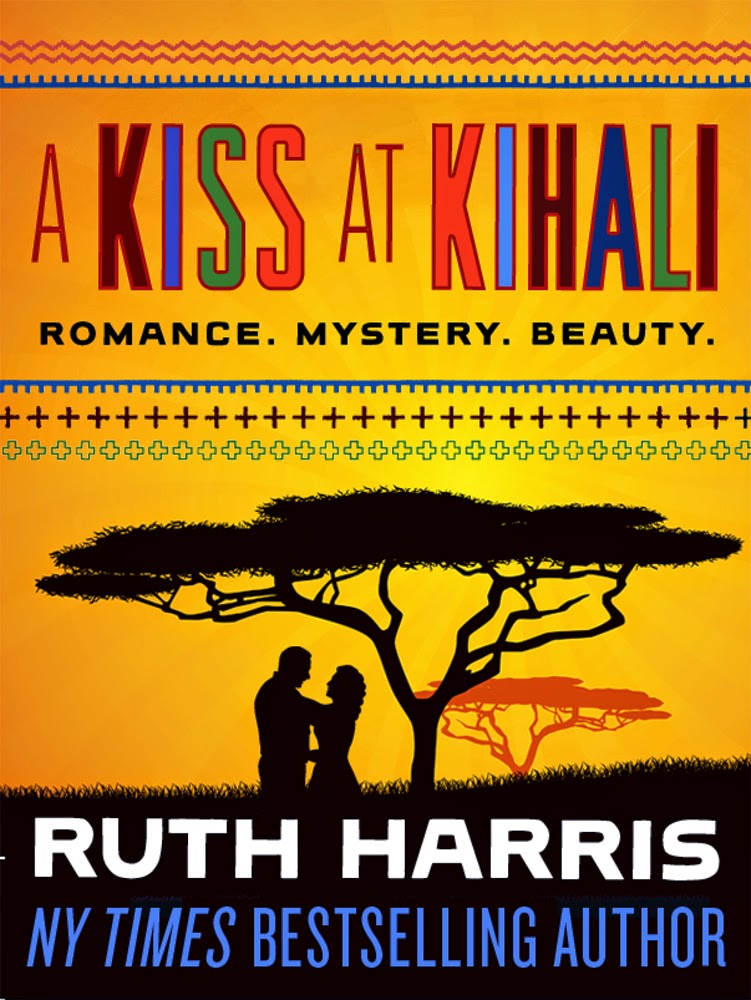
Beautiful and inspirational, A KISS AT KIHALI draws on the power of human-animal relationships, the heroic accomplishments of African animal orphanages, and the people, foreign and Kenyan, drawn to careers involving the care and conservation of wild animals. Filled with drama and danger that lead to a happy ending, A KISS AT KIHALI will appeal to readers who love tender romance and who have personally experienced the intense, mystical bond between humans and animals.
"A must-read for anyone who cares about animals and the environment, because what we do to them, we do to ourselves”... bestselling author Sibel Hodge
Coming up on the blog
June 1st: Anne will talk about how to launch a new book in the digital age.
June 8th: Nina Badzin: social media expert and freelance writer: regular contributor to Brain, Child, Kveller, and the HuffPo. Nina will talk about what happens when you realize you like blogging more than working on your novel.
June 22: Nathan Bransford: Yes. That Nathan Bransford (squee!) Blog god, former agent, children's author, and author of How to Write a Novel.
July 20th: Janice Hardy: host of Fiction University and bestselling YA author. Repped by uber-agent Kristen Nelson.
August 10th Jami Gold: editor, writing teacher, award-winning paranormal romance author, and awesome blogger.
September 14th Barbara Silkstone: bestselling indie author and owner of the Second Act Cafe.
OPPORTUNITY ALERTS
BLUE EARTH REVIEW FLASH FICTION CONTEST $2 ENTRY FEE. 750 words or less. Limit two stories per entry. First place $500. Second place $250. Third place $100. Winners will be published in the Blue Earth Review, the literary magazine of Minnesota State University. Deadline August 1.
The Saturday Evening Post "Celebrate America" Short fiction contest. $10 ENTRY FEE. The winning story will be published in the Jan/Feb 2015 edition of The Saturday Evening Post, and the author will receive a $500 payment. Five runners-up will each receive a $100 cash payment and will also have their stories published online. Stories must be between 1,500 and 5,000 words in. All stories must be previously unpublished (excluding personal websites and blogs). Deadline July 1.
The Golden Quill Awards : Entry fee $15. Two categories: Short fiction/memoir (1000 words) and Poetry (40 lines max) $750 1st prize, $400 2nd prize in each category. Sponsored by the SLO Nightwriters and the Central Coast Writers Conference. Deadline June 30th.
Drue Heinz Literature Prize for a collection of short fiction and/or novellas. Prize of $15,000 and publication by the University of Pittsburgh Press. Author must have been previously published in print journals. Deadline June 30.
WRITERS VILLAGE SUMMER SHORT FICTION CONTEST $24 ENTRY FEE. $4,800 First prize. Second prize $800, third prize $400 and 15 runner up prizes of $80. The top 50 contestants also get a free critique of their stories. Judges include Lawrence Block, a Grand Master of the Mystery Writers of America, and Jill Dawson, Orange and Whitbread-shortlisted author of eight novels. Winning stories showcased online. Any genre of fiction may be submitted up to 3,000 words, except playscripts and poetry. Entries are welcomed world-wide. Deadline June 30.
May 18, 2014
Tweet THIS, Not That! 12 Things Not to do on Twitter
This Week Twitter rolled out its new "mute" function for mobile phones. Muting will soon be available on all devices including your PC. That means you'll be able to mute anybody who tweets too often or annoys you with spam.
So it will be more important than ever to avoid annoying your Tweeps.
Here's some straight talk on the subject from Molly Greene, social media guru, blog coach, mystery novelist, and author of the handbook Blog It! The Author's Guide to Building an Online Brand.
I've learned a ton from reading her blog, so I was jazzed that she agreed to come to visit and tell us how to behave ourselves on Twitter.
And in case you think these are just "suggestions," pay attention to what Molly says about the Twitter Terms of Service. If you mis-use Twitter, your account may be suspended and you'll lose all your followers and have to start again from scratch.
I've seen some of those "How I Made Millions with Kindle" books that tell authors to do all of the things Molly warns against. Keep in mind those books were based on successes in 2007-09 when ebooks were new and Twitter wasn't overrun with indie authors and marketers. What worked then has been so overdone, it doesn't work any more. And could get you suspended.
Remember the first commandment of social media etiquette: Thou Shalt Not Spam. Short version: if it annoys you when it's done to you, it's spam. Spam isn't defined by what you can get away with; it's defined by how it makes your target feel...Anne
Tweet THIS, Not That!by Molly Greene
If you’ve spent much time on Twitter, you’re probably already aware that all kinds of people hang out there. Authors, spammers, celebrities, ranters, self-help advocates, you name it. All sorts of folk hawking their products and services jostle shoulders in our feeds.
It reminds me of eavesdropping on a thousand conversations all at once. And it’s easy to pick out personalities from a few simple tweets, because true character shines through. Am I right?
 Think of that next time you compose a 140-character sound bite.
Unfortunately, members of the self-publishing industry are notorious for utilizing aggressive book sale tactics on the platform. Every day authors jump onto TweetDeck and Hootsuite and program in a million tweets to try and sell their books – and often, this very practice is offered up to clients by book marketing consultants and social media experts who claim to be “in the know.”
I’m here today to refute that claim. While it’s perfectly acceptable to tweet a certain number of self-promotional messages, it’s not okay to tweet that promo directly to others. Unfortunately, I get a least one @mention a day from someone who isn’t following me, yet insists I buy their book and RT the message. Here are a couple of recent examples:
·
I’ll give them the benefit of the doubt and say that I don’t believe these authors understand that this behavior is irritating – and spam to boot.
And the tweets are nearly worthless, since marketing your book solely to other authors is a no-win game. (Especially an author who's not even in your genre! Send me tweets about heavy-duty gore and violence, and it's an automatic unfollow...Anne.)
Twitter is not a direct-sale platform, and Twitter rules call foul:
“If you send large numbers of unsolicited @replies or @mentions in an aggressive attempt to bring attention to a service or link.” ...Twitter Terms of Service
That means repeatedly tweeting or DM-ing a demand for others to visit your blog (instead of simply providing links to valuable content), like your Facebook page (rather than simply providing value in your posts), or buy your books is not only deeply annoying, it can get your Twitter account suspended.
Examples of tweets you should NEVER send:
1. Thanks for the follow @suesmith! Visit my Facebook page (or blog) and like me (or subscribe) there, too: www.bloglink oh, and buy my book!
2. Thanks for the follow! You can read all about me here: bloglink
3. Looking for a great read @suesmith? Buy my book: http://amzn.link
4. Free today! #Free #Kindle #eBook #Giveaway #YoullLoveIt #BestNovelEver #MustRead #RT
5. nice blog post @suesmith, now here’s mine – read and retweet: www.bloglink
6. Why did you block me @suesmith?
7. @suesmith just unfollowed me
8. Hi @suesmith! I just followed you – follow me back now
9. [Insert] angry rant about any event, person (including literary agents!), situation, or disappointment
10. [Insert] unsolicited, sarcastic, buttinsky comment about my profile, tweet, blog post or conversation with another tweep
11. [Insert any all-encompassing message in all caps] HI EVERYONE! HOW ARE YOU? HAPPY MONDAY, TWITTERVERSE!
12. [Insert any horribly mis-spelled message] I no your gong to luv my buk!
All these behaviors will just irritate folks or get you blocked.
So why are these types of messages a drag to read on Twitter? Because spamming with strings of hashtags, tweeting about who has unfollowed you, begging for retweets, bragging about your social authority, demanding follows, insisting people pay attention to your books, Facebook page, or blog content … all this is about you.
What should you do instead?
It’s easy to tell people what they’re doing wrong, harder to advise about what is right. But if you look at Twitter like you look at life, you’ll see that the same rules apply.
Twitter works best when you put others first.
How? Be a giver, not a taker. Be a resource.
1. Tweet valuable content that will be of interest to your targeted followers.
2. Add to the conversation by reaching out and complimenting others on the content they share.
3. Shine the light on others. Then your fans and followers may flatter you by sharing your links and content with their own followers.
4. Thank those generous followers by sharing the RT love.
If you don’t have anything nice to tweet, don’t tweet anything at all
You are going to come across people on Twitter you won’t particularly like or admire. They might even pick a fight with you, challenge your position on something, hurl insults or badger or stalk you.
In short, you’ll meet a small percentage of folks who hide behind social media and spew offensive things. Take the high road. Do not engage them. Do not add fuel to their fire by responding or adding to the drama.
DO NOT retweet their unkind remarks in hopes others will take notice and come to your aid.
JUST MOVE ON.
Apply the 80/20 rule for self-promotion
Nobody’s saying you can’t self-promote or share sale links to your books on Twitter.
But if your feed is over-weighted with calls to purchase your goods, be forewarned that followers will grow weary of your spiel and unfollow you.
The 80/20 rule applies: post 80% helpful content + RTs of your follower’s content + personal, “live” convos with others, and use the remaining 20% for self-promotion.
Readers, what do you love and hate about Twitter? How do you feel about auto DMs, crabby tweets, and aggressive book sale tactics? How do you balance interaction and self-promotion on social media?
Molly Greene is a blogger and author of Blog It! The author’s guide to building a successful online brand, and the Gen Delacourt Mystery series, which includes Mark of the Loon , Rapunzel , and Paint Me Gone . She blogs about her life and self-publishing topics at Molly-Greene.com and she spends time on Twitter (@mollygreene) • Facebook and Google+ Stop by and say hello!
***
PS from Anne: This week I found another helpful tip for writers using Twitter. If you're aiming for a traditional publishing career and you're submitting to agents, the hashtag #MSWL can be a great short-cut to finding the right agents to query.
#MSWL stands for Manuscript Wish List. Agents tweet what they're looking for (and sometimes what they're tired of) so you can get a peek into the minds of those agents you're so carefully researching. (You are researching carefully before querying, right?) Here's an overview of the #MSWL community from DS Mosier on the Publishing Cohorts blog.
Other Twitter hashtags for queriers are #querytip and #askagent. But DO NOT send book promos for a manuscript or self-published book with those hashtags. Seriously, when I checked the hashtag right now, I saw a bunch of tweets that looked just like Molly's "Twitter Don'ts"! Mostly that stuff gets ignored, but some agent just might see your tweet and remember you. Not in a good way.
...Anne
Coming up on the blog
June 8th: Nina Badzin: social media expert and freelance writer: regular contributor to Brain, Child, Kveller, and the HuffPo.
June 22: Nathan Bransford: Yes. That Nathan Bransford (squee!) Blog god, former agent, children's author, and author of How to Write a Novel.
July 20th: Janice Hardy: host of Fiction University and bestselling YA author. Repped by uber-agent Kristen Nelson.
August 10th Jami Gold: editor, writing teacher, award-winning paranormal romance author, and awesome blogger.
September 14th Barbara Silkstone: bestselling indie author and owner of the Second Act Cafe.
And of course NYT million-seller Ruth Harris will continue her information-packed posts on the last Sunday of each month.
BOOKS OF THE WEEK
Molly Greene's great blog guide for authors is available on Amazon US, Amazon UK, Amazon CA , Kobo, and Nook
Blog It! The Author's Guide to Building a Successful Online Brand by Molly Greene
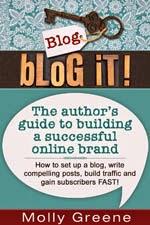
"Molly's book taught me so much. When I read it, I was pretty much blogged out. I'd said everything I had to say about the art and craft of writing and publishing. But Molly re-energized me with her concrete solutions for bloggers in need of new topics. I had to stop reading to jot down ideas for posts, that's how fast this book works.
Blog It! is easy to follow and packed with pertinent information. Molly gives clear, concise instructions for beginning bloggers and those of us in need of a blog-lift. I'd recommend this book to any blogger, from seasoned pro to newbie to not quite there yet."...Cynthia Harrison
and also...FREE ON AMAZON!!
Due to a weird glitch, Anne's funny mystery SHERWOOD LTD. is FREE right now on Amazon US. (I'm not sure if it's free in other countries, since they don't show the price) It climbed to the top 200 free books over the weekend: #3 in Humor and #21 in Romantic Comedy. So if you haven't read #3 in Camilla's misadventures (great to read as a stand-alone) and you want a fun summer read, grab it while it's free. My publisher is working on restoring the price, but he has no idea when it will go back up to $3.99
.jpg)
Camilla's hilarious misadventures with merry band of outlaw indie publishers in the English Midlands, where she falls for a self-styled Robin Hood who may or may not be trying to kill her.
"Good Manners for Bad Times author Camilla Randall (Dr. Manners) could use a publisher, or, at least, the cash advance from a publisher. Currently broke and homeless, she would welcome opportunity knocking on her nonexistent door. Eventually it does. Sort of. From across the Atlantic, the upscale pornography press, Sherwood, Limited, is looking to become respectable. Free residency in their Lincolnshire factory is included. How can any well mannered person decline?" ...Kathleen Keena
OPPORTUNITY ALERTS
Amazon’s literary journal Day One is seeking submissions. According to Carmen Johnson, Day One’s editor, the litzine is looking for “fresh and compelling short fiction and poetry by emerging writers.” This includes stories that are less than 20,000 words by authors that have never been published, and poems by poets who have never published before. To submit works, writers/poets can email their work as a word document, along with a brief description and author bio to dayone-submissions @amazon.com.
Drue Heinz Literature Prize for a collection of short fiction and/or novellas. Prize of $15,000 and publication by the University of Pittsburgh Press. Author must have been previously published in print journals. Deadline June 30.
The Saturday Evening Post "Celebrate America" Short fiction contest. $10 ENTRY FEE. The winning story will be published in the Jan/Feb 2015 edition of The Saturday Evening Post, and the author will receive a $500 payment. Five runners-up will each receive a $100 cash payment and will also have their stories published online. Stories must be between 1,500 and 5,000 words in. All stories must be previously unpublished (excluding personal websites and blogs). Deadline July 1.
WRITERS VILLAGE SUMMER SHORT FICTION CONTEST $24 ENTRY FEE. $4,800 First prize. Second prize $800, third prize $400 and 15 runner up prizes of $80. The top 50 contestants also get a free critique of their stories. Judges include Lawrence Block, a Grand Master of the Mystery Writers of America, and Jill Dawson, Orange and Whitbread-shortlisted author of eight novels. Winning stories showcased online. Any genre of fiction may be submitted up to 3,000 words, except playscripts and poetry. Entries are welcomed world-wide. Deadline June 30.
The Golden Quill Awards : Entry fee $15. Two categories: Short fiction/memoir (1000 words) and Poetry (40 lines max) $750 1st prize, $400 2nd prize in each category. Sponsored by the SLO Nightwriters and the Central Coast Writers Conference. Deadline June 30th.
May 11, 2014
The New Golden Age of Short Fiction: 12 Reasons to Write a Short Story This Month
by Anne R. Allen
I recently heard from a writer who said she felt disrespected by her writing group. They were all working on novels and memoir and didn't take her short fiction work seriously.
I saw another writer on Google Plus asking for help because his work kept coming in at around 40 pages—like that was a bad thing.
They were dealing with a common problem: short stories (up to 30K words) and novellas (30k-50K words) haven't been getting much respect since the demise of the fiction market in mainstream magazines two decades ago.
(Those word counts are from Writer's Digest. Some people use the term "novelette" to mean a story in the 10K to 30K range.)
For the past twenty years or so, most writers have treated short stories as practice pieces for classes and workshops—like the finger exercises piano students do before they graduate to playing real music.
And many of us have been treating novellas as unfinished, failed novels that need "fleshing out."
But that's so last century.
Shorter fiction is having a renaissance in the digital age. In fact, this may be the new golden age of the short story.
The New York Times reports, "Stories are perfect for the digital age...because readers want to connect and want that connection to be intense and to move on. That is, after all, what a short story is all about."
Book marketing guru Penny Sansevieri said in the HuffPo: "short is the new long. Thanks to consumers who want quick bites of information and things like Kindle Singles, consumers love short."
Short stories can also be a marketing tool for longer works. Digital Book World's Rob Eagar said, "Selling your book means writing effective newsletters, blog posts, short stories, free resources, social media posts, word-of-mouth tools, magazine articles, etc."
So it's definitely time for fiction writers to start re-thinking the shorter forms. I wish I'd never left them. It's hard to get those "writing muscles" working again when I've been focused on novels for so long.
During the early part of my career when I was writing and re-writing my “practice novels” I could have been building an inventory of short pieces that would be a gold mine now.
Traditional publishing still isn't interested in story collections from new writers, but collections of previously published shorts by big names like George Saunders are reaping awards and making money for the Big Five.
And Amazon welcomes short fiction in both their Kindle Singles program and their new literary magazine Day One. Self-publishers are finding success with shorter fiction on all retail sites.
People talk these days about the novel as if it's the most "legitimate" form of fiction, but it's a relatively new art form. It was perfect for the age of Gutenberg, but perhaps it won't dominate the market so completely in the digital age.
Cervantes is generally credited with inventing the novel with the 1605 publication of Don Quixote, but the form didn’t make it into English until a century later—and for a long time it had to masquerade as “history” as Defoe’s Robinson Crusoe did in 1719.
Non-factual narratives were considered frivolous and time-wasting even into the Victorian era. In the 20th century, the novel finally surpassed the play as the most revered form of fictional artistic expression in English.
But who knows what will happen in the 21st century? The times they are a-changing, especially in the publishing business. The popularity the novella, short story, and serial is on the upswing.
Here are some reasons why writers might want to rethink short fiction:
1) Smaller screens and shorter attention spans are changing the way we read.
We're a multi-tasking world. As bestselling short story writer Amber Dermont told the New York Times: “The single-serving quality of a short narrative is the perfect art form for the digital age…Stories are models of concision, can be read in one sitting, and are infinitely downloadable and easily consumed on screens.”
When the Kindle Singles program launched in 2011, they sold 2 million "singles" ebooks in the first year. And you don't have to be accepted into the highly competitive Kindle Singles program to publish stand-alone stories as ebooks. Many indies are doing it too. And agents are assisting their clients in self-publishing shorts.
Cal Morgan of Harper Perennial said in the same NYT article: “It is the culmination of a trend we have seen building for five years…The Internet has made people a lot more open to reading story forms that are different from the novel, and you see a generation of writers very engaged in experimentation.”
As I mentioned above, Amazon is actively promoting short fiction with Kindle Singles and its new Day One magazine. Kindle Singles are mostly for established authors, but Day One is actively seeking debut authors. (Info on submissions in the "opportunity alerts" below.) Amazon knows that the e-reader has ushered in a new kind of reading that favors brevity. More on that in my post last week on the 21st Century Reader.
2) The success of serial fiction like Hugh Howey’s Wool
Hugh Howey made history (and a nice chunk of change) by self-publishing his sci-fi novel Wool as a series of shorts—like the Saturday matinee cliff-hanger short films of the early 20th century. He put his first episode—a stand-alone that’s also a teaser—perma-free on Amazon, and the fans ate up the succeeding chapters, offered at 99c each.
Howey is now a superstar with a top agent, a deal with Random Penguin, and a movie deal with Ridley Scott. And it all started with one little short story.
I know many writers who are now serializing their work for free on Wattpad, which is a great place to showcase short fiction and get new fans. And Readwave is a story sharing-site that looks like a promising alternative to Wattpad.
Note: not every author can do what Howey did. I know some writers have had negative feedback when they sold each chapter for 99c, since so many full length books can be bought for that price these days.
So make sure each installment gives value—I'd say at least 10K-20K words, maybe divided into chapter-lets—and make the first one perma-free. Some novels lend themselves to serialization and some don't. You want each installment to work as a stand-alone story arc with a cliffhanger to keep the reader coming back.
3) Story anthologies are a great way to get your work in front of fans of more established authors in your genre
Short story and personal-essay anthologies are one of the best ways to increase your visibility. Especially for indies. They're inexpensive to put together as ebooks. They usually don’t pay, and often donate proceeds to a charity.
But if you can get a story into an anthology with some well-known authors in your genre, you’ll be paid in publicity that would be hard to buy at any price. All those authors' fans will be exposed to your work. For more on anthologies check my post on how to tell a good anthology from a scam.
Being in an anthology also gives an unpublished writer some great cred as a writer. Many successful authors I network with were first published by the Literary Lab anthologies, which also gave me a leg up when my career was in freefall.
Another plus for anthologies: some of the biggies, like the Chicken Soup series, also come out in print and are stocked in bookstores. So some anthologies can get you noticed by the old-school reader, too.
4) Published stories identify you as a professional.
Your website or blog has much more cred if you've got some publications to link to. And no matter what your genre, agents will be more likely to look at your pages if you've got publishing credits.
And it’s still pretty much the only way to a publishing contract if you write literary fiction. I don't know of a lot of successful literary writers who didn't also publish short stories in places like The New Yorker, The Paris Review, the Atlantic or McSweeneys
But they didn't get the first story they wrote published by The New Yorker. First they had to place dozens in small literary journals—those tiny labors of love that used to cost a ton to produce and often had under a hundred subscribers.
In the old days we often had to pay $25 or more to subscribe to find out what kind of writing they wanted and get the info on how to submit to them. But these days, most literary journals are available online. They have larger readerships and you don’t have to pay a fortune to read them or find out what the editors are looking for.
And if you write genre fiction, you don't have to start your career getting endless rejections from the ultra-competitive print magazines that still buy short stories, like Women's World, Ellery Queen and Asimov's.
Now there are are lots of genre story online zines. Here's a link to a great list of genre story markets put together by Romance author Cathleen Ross. Writer's Digest has contests exclusively for genre fiction.
5) Networking with editors at small magazines can get you a leg up.
Editors at literary magazines do their work for the love of their craft. Often they have connections in other parts of the publishing world. If you impress one of them, you can get an "in" with publishers you might never find otherwise.
I found my first publisher because one of their editors also volunteered for an online litzine that accepted my short fiction. The litzine went under before my story went up, but the editor liked my writing so much, he asked me if I had any novel manuscripts he could take to the publishing house where he worked. Two months later I had my first publishing contract.
6) Indie films are often adaptations of short fiction.
Stories are easier to adapt for the screen than full-length novels. Cheaper too. They tend to have fewer crowd scenes and more small interior settings.
Cost matters in the growing indie film world. Just as indies are revolutionizing the publishing industry, they are also the life-blood of the film industry. While the big studios concentrate on huge comic book spectacles and remakes of old TV shows, the more emotionally rich, award-winning films are coming from small-budget indies.
Some of our most enduring films have come from short stories. Classic films like The Birds; Breakfast at Tiffany's; Don't Look Now; Double Indemnity, Flowers for Algernon—and I’d need a whole post to list the stories of Stephen King and Philip K. Dick that have been made into great films. More recent Oscar contenders like Brokeback Mountain, Away from Her, and the Squid and the Whale were originally short stories. And I just heard on NPR this morning that the new Jesse Eisenberg film, the Double, is based on a novella by Dostoevsky.
7) Online retail sites favor authors with more titles
The more titles you have in an online bookstore, the more visible you are. You can write and publish a lot of shorter titles and have a bigger presence in the marketplace than with one long book.
Most writers can’t turn out more than two or three books a year, but they can turn out a lot of short stories and novellas.
8) Contests raise your profile and can win big bucks
Winning a story contest is a great way to promote yourself as a writer and create visibility for your books. Win a well-known contest and you can crow about it in social media and send press releases to the local newspapers to get some ink in your own hometown.
Story and creative short nonfiction contests are easy to discover and enter in the era of the Interwebz. Hope C. Clark's Funds for Writers , Poets and Writers, and the website Winning Writers are good sources for vetted contests.
For a list of fee-free contests and opportunities, Erika Dreifus has a great list on her blog called The Practicing Writer. Writers Digest has a number going on throughout the year.
And, ahem, I always list a few good ones in the "opportunity alerts" in these posts.
Entering short story contests is also an excellent way to get your career started. A big win for one of your pieces looks great in a query or a bio. Plus you might even win a money prize.
A lot of those prizes are bigger than the advances publishers offer on novels these days.
Plus some of the biggest prizes in literature are still for short fiction, like the Pushcart and the O. Henry award. And the venerable "Best of…" anthologies give huge prestige to those included.
9) Shorts keep your fans interested between novel releases
Forward-looking agents are now encouraging their authors to self-publish shorts to fill in the gaps between novels. They especially like shorts that are about characters in your novels. They keep your fans interested while they’re waiting for the next book.
(Note, if your publisher has a non-compete clause, you won't be allowed to do this. Another reason to have a legal professional look over your contract before you sign.)
Consider writing a couple of shorts about your main characters while you're working on the novel. It may get you through a tricky spot in the big work as well as giving you a saleable product for later down the road.
10) Short stories make money and hold their value
In terms of labor, a short story can make more money than a novel. Not only does it take less time to write and often sells for the same price as a novel in an ebook, but it can be re-purposed many times. Also, as I said earlier, contest prizes for short fiction can be substantial
I have stories that have been published and republished up to six times litzines and anthologies. And I can always self-publish them again in a collection sometime down the road.
11) Writing short keeps your writing skills honed.
Writing poetry and short stories keeps your writing from getting flabby and verbose. You can't spend three pages describing the wallpaper in short fiction. You have to learn to sketch with a few broad strokes.
In these days when readers demand "just the good parts" writing, learning to write short can help no matter what genre you're writing in .
12) May is Short Story Writing Month
Inspired by April’s National Poetry Month a group of writers supported by the StoryADay writing challenge, deemed May to be International Short Story Month.
They say short stories:
Make the perfect intro to a new author’s workAre a great way for readers to get a top-up from their favorite authors between novels,Are a perfect impulse purchase on a phone or e-reader.So isn't this the perfect time to write one?
Like any other skill, your ability to create short fiction will atrophy if you don’t use it. I find it a lot harder to write a short story now than I did when I wrote them regularly.
I admit I've always preferred reading and writing longer fiction. Most writers do gravitate to one form or the other. I know my ideas generally spool out in about 80,000 words. Shorter is harder for me.
The reverse is true for other writers. Some great short story writers have a hard time writing good novels. One of our greatest short story writers, Katherine Anne Porter, only wrote one novel, Ship of Fools, which was more like a tapestry of many short stories woven together without a compelling story arc. Critic Elizabeth Hardwick said it was " too static" in spite of "the flawless execution of the single scenes."
There's nothing wrong with preferring one form over the other. But these days, it will pay off to work on fiction in a variety of lengths. Not just short stories. Novellas, once taboo in traditional publishing, are soaring in popularity in the e-age.
Do note: I don't encourage newbie writers to self-publish your very first efforts at story-writing. To succeed in publishing—whether self- or traditional—you need to put in your 10,000 Malcolm Gladwell hours. But you can maximize your efforts by spending more of those hours writing short fiction and creative nonfiction shorts.
What about you, scriveners? Did you get out of the habit of writing short fiction the way I did? Have you written any lately? Have short stories helped your career?
Coming up on the blog: We have a fantastic line-up of guest posts for the summer.
May 18: Molly Greene: blog coach, romantic suspense author, and author of Blog It, the Author's Guide to Building a Successful Online Brand
June 8th: Nina Badzin: social media expert and freelance writer: regular contributor to Brain, Child, Kveller, and the HuffPo.
June 22: Nathan Bransford: Yes. That Nathan Bransford (squee!) Blog god, former agent, children's author, and author of How to Write a Novel.
July 20th: Janice Hardy: host of Fiction University and bestselling YA author. Repped by uber-agent Kristen Nelson.
August 10th Jami Gold: editor, writing teacher, award-winning paranormal romance author, and awesome blogger.
September 14th Barbara Silkstone: bestselling indie author and owner of the Second Act Cafe.
And of course NYT million-seller Ruth Harris will continue her information-packed posts on the last Sunday of each month.
I'd like to wish a happy Mother's Day to all the moms out there. It's a tough day for me since I lost my mom recently. So I want to give her a gift today and spotlight her wonderful books.
Books of the Week
Two books by Dr. Shirley Seifried Allen, my mom. She died December 1st, 2013 at the age of 92. She published her mystery Academic Body at the age of 89.
I learned most of what I know about writing from her. She was a Bryn Mawr PhD. who taught English Literature and creative writing at the University of Connecticut for many years. She's also the author of the nonfiction book, Samuel Phelps and Sadler's Wells Theatre , published by Wesleyan University Press. It's out of print, but still available used.
Roxanna Britton, a Biographical Novel.
Special Mother's Day sale: Only 99c on Amazon, Amazon UK, and Amazon CA
 "This has become one of my all time favorite stories of "real" people. Ms. Allen's adept use of dialogue and her clear eye for drama and suspense kept me compulsively turning the pages. Her evocation of a bygone era, rich with descriptive details--the historical Chicago fire is one vivid example--is absolutely brilliant.
I will never forget Sanny and her family, especially her struggle and her daughters' struggle to become individuals in a male dominated world. But it is family that triumphs in the end; and the need for it to survive resonates most deeply in my mind and heart. An excellent novel that I highly recommend to anyone who enjoys reading true stories about people who not only overcome adversity with grace and integrity but through strength of character also prevail. Well done, Ms. Shirley Allen!"...Ann Carbine Best
Academic Body: A Classic Cozy Mystery in the tradition of the "Thin Man" books. Available for $2.99 at Amazon US, Amazon CA, Amazon UK, Nook and Kobo
 "The academics at Weaver College are maintaining their exemplary standards, setting a stellar example for their students. Extramarital affairs, presumptuous posturing, blackout drinking, and gossip are part of campus life for this faculty.
But when their blackmailing dean is suddenly murdered, all who saw him that night become suspects. Retired stage director Paul Godwin, lately turned professor, and his actress wife Lenore ponder the dean's death with the theatrical knowledge of given circumstances, personal motivation, and a thorough comprehension of Shakespeare's classic tragedies and Tom Stoppard's Rosencrantz and Guildenstern, which seamlessly parallel the action.
A hilarious farce about college life delivers us to the circumstances that lead to murder most foul."...Kathleen Keena
OPPORTUNITY ALERTS
Amazon’s literary journal Day One is seeking submissions. According to Carmen Johnson, Day One’s editor, the litzine is looking for “fresh and compelling short fiction and poetry by emerging writers.” This includes stories that are less than 20,000 words by authors that have never been published, and poems by poets who have never published before. To submit works, writers/poets can email their work as a word document, along with a brief description and author bio to dayone-submissions @amazon.com.
Drue Heinz Literature Prize for a collection of short fiction and/or novellas. Prize of $15,000 and publication by the University of Pittsburgh Press. Author must have been previously published in print journals. Deadline June 30.
The Saturday Evening Post "Celebrate America" Short fiction contest. $10 ENTRY FEE. The winning story will be published in the Jan/Feb 2015 edition of The Saturday Evening Post, and the author will receive a $500 payment. Five runners-up will each receive a $100 cash payment and will also have their stories published online. Stories must be between 1,500 and 5,000 words in. All stories must be previously unpublished (excluding personal websites and blogs). Deadline July 1.
WRITERS VILLAGE SUMMER SHORT FICTION CONTEST $24 ENTRY FEE. $4,800 First prize. Second prize $800, third prize $400 and 15 runner up prizes of $80. The top 50 contestants also get a free critique of their stories. Judges include Lawrence Block, a Grand Master of the Mystery Writers of America, and Jill Dawson, Orange and Whitbread-shortlisted author of eight novels. Winning stories showcased online. Any genre of fiction may be submitted up to 3,000 words, except playscripts and poetry. Entries are welcomed world-wide. Deadline June 30.
The Golden Quill Awards : Entry fee $15. Two categories: Short fiction/memoir (1000 words) and Poetry (40 lines max) $750 1st prize, $400 2nd prize in each category. Sponsored by the SLO Nightwriters and the Central Coast Writers Conference. Entries accepted from April 1-June 30th.
I recently heard from a writer who said she felt disrespected by her writing group. They were all working on novels and memoir and didn't take her short fiction work seriously.
I saw another writer on Google Plus asking for help because his work kept coming in at around 40 pages—like that was a bad thing.
They were dealing with a common problem: short stories (up to 30K words) and novellas (30k-50K words) haven't been getting much respect since the demise of the fiction market in mainstream magazines two decades ago.
(Those word counts are from Writer's Digest. Some people use the term "novelette" to mean a story in the 10K to 30K range.)
For the past twenty years or so, most writers have treated short stories as practice pieces for classes and workshops—like the finger exercises piano students do before they graduate to playing real music.
And many of us have been treating novellas as unfinished, failed novels that need "fleshing out."
But that's so last century.
Shorter fiction is having a renaissance in the digital age. In fact, this may be the new golden age of the short story.
The New York Times reports, "Stories are perfect for the digital age...because readers want to connect and want that connection to be intense and to move on. That is, after all, what a short story is all about."
Book marketing guru Penny Sansevieri said in the HuffPo: "short is the new long. Thanks to consumers who want quick bites of information and things like Kindle Singles, consumers love short."
Short stories can also be a marketing tool for longer works. Digital Book World's Rob Eagar said, "Selling your book means writing effective newsletters, blog posts, short stories, free resources, social media posts, word-of-mouth tools, magazine articles, etc."
So it's definitely time for fiction writers to start re-thinking the shorter forms. I wish I'd never left them. It's hard to get those "writing muscles" working again when I've been focused on novels for so long.
During the early part of my career when I was writing and re-writing my “practice novels” I could have been building an inventory of short pieces that would be a gold mine now.
Traditional publishing still isn't interested in story collections from new writers, but collections of previously published shorts by big names like George Saunders are reaping awards and making money for the Big Five.
And Amazon welcomes short fiction in both their Kindle Singles program and their new literary magazine Day One. Self-publishers are finding success with shorter fiction on all retail sites.
People talk these days about the novel as if it's the most "legitimate" form of fiction, but it's a relatively new art form. It was perfect for the age of Gutenberg, but perhaps it won't dominate the market so completely in the digital age.
Cervantes is generally credited with inventing the novel with the 1605 publication of Don Quixote, but the form didn’t make it into English until a century later—and for a long time it had to masquerade as “history” as Defoe’s Robinson Crusoe did in 1719.
Non-factual narratives were considered frivolous and time-wasting even into the Victorian era. In the 20th century, the novel finally surpassed the play as the most revered form of fictional artistic expression in English.
But who knows what will happen in the 21st century? The times they are a-changing, especially in the publishing business. The popularity the novella, short story, and serial is on the upswing.
Here are some reasons why writers might want to rethink short fiction:
1) Smaller screens and shorter attention spans are changing the way we read.
We're a multi-tasking world. As bestselling short story writer Amber Dermont told the New York Times: “The single-serving quality of a short narrative is the perfect art form for the digital age…Stories are models of concision, can be read in one sitting, and are infinitely downloadable and easily consumed on screens.”
When the Kindle Singles program launched in 2011, they sold 2 million "singles" ebooks in the first year. And you don't have to be accepted into the highly competitive Kindle Singles program to publish stand-alone stories as ebooks. Many indies are doing it too. And agents are assisting their clients in self-publishing shorts.
Cal Morgan of Harper Perennial said in the same NYT article: “It is the culmination of a trend we have seen building for five years…The Internet has made people a lot more open to reading story forms that are different from the novel, and you see a generation of writers very engaged in experimentation.”
As I mentioned above, Amazon is actively promoting short fiction with Kindle Singles and its new Day One magazine. Kindle Singles are mostly for established authors, but Day One is actively seeking debut authors. (Info on submissions in the "opportunity alerts" below.) Amazon knows that the e-reader has ushered in a new kind of reading that favors brevity. More on that in my post last week on the 21st Century Reader.
2) The success of serial fiction like Hugh Howey’s Wool
Hugh Howey made history (and a nice chunk of change) by self-publishing his sci-fi novel Wool as a series of shorts—like the Saturday matinee cliff-hanger short films of the early 20th century. He put his first episode—a stand-alone that’s also a teaser—perma-free on Amazon, and the fans ate up the succeeding chapters, offered at 99c each.
Howey is now a superstar with a top agent, a deal with Random Penguin, and a movie deal with Ridley Scott. And it all started with one little short story.
I know many writers who are now serializing their work for free on Wattpad, which is a great place to showcase short fiction and get new fans. And Readwave is a story sharing-site that looks like a promising alternative to Wattpad.
Note: not every author can do what Howey did. I know some writers have had negative feedback when they sold each chapter for 99c, since so many full length books can be bought for that price these days.
So make sure each installment gives value—I'd say at least 10K-20K words, maybe divided into chapter-lets—and make the first one perma-free. Some novels lend themselves to serialization and some don't. You want each installment to work as a stand-alone story arc with a cliffhanger to keep the reader coming back.
3) Story anthologies are a great way to get your work in front of fans of more established authors in your genre
Short story and personal-essay anthologies are one of the best ways to increase your visibility. Especially for indies. They're inexpensive to put together as ebooks. They usually don’t pay, and often donate proceeds to a charity.
But if you can get a story into an anthology with some well-known authors in your genre, you’ll be paid in publicity that would be hard to buy at any price. All those authors' fans will be exposed to your work. For more on anthologies check my post on how to tell a good anthology from a scam.
Being in an anthology also gives an unpublished writer some great cred as a writer. Many successful authors I network with were first published by the Literary Lab anthologies, which also gave me a leg up when my career was in freefall.
Another plus for anthologies: some of the biggies, like the Chicken Soup series, also come out in print and are stocked in bookstores. So some anthologies can get you noticed by the old-school reader, too.
4) Published stories identify you as a professional.
Your website or blog has much more cred if you've got some publications to link to. And no matter what your genre, agents will be more likely to look at your pages if you've got publishing credits.
And it’s still pretty much the only way to a publishing contract if you write literary fiction. I don't know of a lot of successful literary writers who didn't also publish short stories in places like The New Yorker, The Paris Review, the Atlantic or McSweeneys
But they didn't get the first story they wrote published by The New Yorker. First they had to place dozens in small literary journals—those tiny labors of love that used to cost a ton to produce and often had under a hundred subscribers.
In the old days we often had to pay $25 or more to subscribe to find out what kind of writing they wanted and get the info on how to submit to them. But these days, most literary journals are available online. They have larger readerships and you don’t have to pay a fortune to read them or find out what the editors are looking for.
And if you write genre fiction, you don't have to start your career getting endless rejections from the ultra-competitive print magazines that still buy short stories, like Women's World, Ellery Queen and Asimov's.
Now there are are lots of genre story online zines. Here's a link to a great list of genre story markets put together by Romance author Cathleen Ross. Writer's Digest has contests exclusively for genre fiction.
5) Networking with editors at small magazines can get you a leg up.
Editors at literary magazines do their work for the love of their craft. Often they have connections in other parts of the publishing world. If you impress one of them, you can get an "in" with publishers you might never find otherwise.
I found my first publisher because one of their editors also volunteered for an online litzine that accepted my short fiction. The litzine went under before my story went up, but the editor liked my writing so much, he asked me if I had any novel manuscripts he could take to the publishing house where he worked. Two months later I had my first publishing contract.
6) Indie films are often adaptations of short fiction.
Stories are easier to adapt for the screen than full-length novels. Cheaper too. They tend to have fewer crowd scenes and more small interior settings.
Cost matters in the growing indie film world. Just as indies are revolutionizing the publishing industry, they are also the life-blood of the film industry. While the big studios concentrate on huge comic book spectacles and remakes of old TV shows, the more emotionally rich, award-winning films are coming from small-budget indies.
Some of our most enduring films have come from short stories. Classic films like The Birds; Breakfast at Tiffany's; Don't Look Now; Double Indemnity, Flowers for Algernon—and I’d need a whole post to list the stories of Stephen King and Philip K. Dick that have been made into great films. More recent Oscar contenders like Brokeback Mountain, Away from Her, and the Squid and the Whale were originally short stories. And I just heard on NPR this morning that the new Jesse Eisenberg film, the Double, is based on a novella by Dostoevsky.
7) Online retail sites favor authors with more titles
The more titles you have in an online bookstore, the more visible you are. You can write and publish a lot of shorter titles and have a bigger presence in the marketplace than with one long book.
Most writers can’t turn out more than two or three books a year, but they can turn out a lot of short stories and novellas.
8) Contests raise your profile and can win big bucks
Winning a story contest is a great way to promote yourself as a writer and create visibility for your books. Win a well-known contest and you can crow about it in social media and send press releases to the local newspapers to get some ink in your own hometown.
Story and creative short nonfiction contests are easy to discover and enter in the era of the Interwebz. Hope C. Clark's Funds for Writers , Poets and Writers, and the website Winning Writers are good sources for vetted contests.
For a list of fee-free contests and opportunities, Erika Dreifus has a great list on her blog called The Practicing Writer. Writers Digest has a number going on throughout the year.
And, ahem, I always list a few good ones in the "opportunity alerts" in these posts.
Entering short story contests is also an excellent way to get your career started. A big win for one of your pieces looks great in a query or a bio. Plus you might even win a money prize.
A lot of those prizes are bigger than the advances publishers offer on novels these days.
Plus some of the biggest prizes in literature are still for short fiction, like the Pushcart and the O. Henry award. And the venerable "Best of…" anthologies give huge prestige to those included.
9) Shorts keep your fans interested between novel releases
Forward-looking agents are now encouraging their authors to self-publish shorts to fill in the gaps between novels. They especially like shorts that are about characters in your novels. They keep your fans interested while they’re waiting for the next book.
(Note, if your publisher has a non-compete clause, you won't be allowed to do this. Another reason to have a legal professional look over your contract before you sign.)
Consider writing a couple of shorts about your main characters while you're working on the novel. It may get you through a tricky spot in the big work as well as giving you a saleable product for later down the road.
10) Short stories make money and hold their value
In terms of labor, a short story can make more money than a novel. Not only does it take less time to write and often sells for the same price as a novel in an ebook, but it can be re-purposed many times. Also, as I said earlier, contest prizes for short fiction can be substantial
I have stories that have been published and republished up to six times litzines and anthologies. And I can always self-publish them again in a collection sometime down the road.
11) Writing short keeps your writing skills honed.
Writing poetry and short stories keeps your writing from getting flabby and verbose. You can't spend three pages describing the wallpaper in short fiction. You have to learn to sketch with a few broad strokes.
In these days when readers demand "just the good parts" writing, learning to write short can help no matter what genre you're writing in .
12) May is Short Story Writing Month
Inspired by April’s National Poetry Month a group of writers supported by the StoryADay writing challenge, deemed May to be International Short Story Month.
They say short stories:
Make the perfect intro to a new author’s workAre a great way for readers to get a top-up from their favorite authors between novels,Are a perfect impulse purchase on a phone or e-reader.So isn't this the perfect time to write one?
Like any other skill, your ability to create short fiction will atrophy if you don’t use it. I find it a lot harder to write a short story now than I did when I wrote them regularly.
I admit I've always preferred reading and writing longer fiction. Most writers do gravitate to one form or the other. I know my ideas generally spool out in about 80,000 words. Shorter is harder for me.
The reverse is true for other writers. Some great short story writers have a hard time writing good novels. One of our greatest short story writers, Katherine Anne Porter, only wrote one novel, Ship of Fools, which was more like a tapestry of many short stories woven together without a compelling story arc. Critic Elizabeth Hardwick said it was " too static" in spite of "the flawless execution of the single scenes."
There's nothing wrong with preferring one form over the other. But these days, it will pay off to work on fiction in a variety of lengths. Not just short stories. Novellas, once taboo in traditional publishing, are soaring in popularity in the e-age.
Do note: I don't encourage newbie writers to self-publish your very first efforts at story-writing. To succeed in publishing—whether self- or traditional—you need to put in your 10,000 Malcolm Gladwell hours. But you can maximize your efforts by spending more of those hours writing short fiction and creative nonfiction shorts.
What about you, scriveners? Did you get out of the habit of writing short fiction the way I did? Have you written any lately? Have short stories helped your career?
Coming up on the blog: We have a fantastic line-up of guest posts for the summer.
May 18: Molly Greene: blog coach, romantic suspense author, and author of Blog It, the Author's Guide to Building a Successful Online Brand
June 8th: Nina Badzin: social media expert and freelance writer: regular contributor to Brain, Child, Kveller, and the HuffPo.
June 22: Nathan Bransford: Yes. That Nathan Bransford (squee!) Blog god, former agent, children's author, and author of How to Write a Novel.
July 20th: Janice Hardy: host of Fiction University and bestselling YA author. Repped by uber-agent Kristen Nelson.
August 10th Jami Gold: editor, writing teacher, award-winning paranormal romance author, and awesome blogger.
September 14th Barbara Silkstone: bestselling indie author and owner of the Second Act Cafe.
And of course NYT million-seller Ruth Harris will continue her information-packed posts on the last Sunday of each month.
I'd like to wish a happy Mother's Day to all the moms out there. It's a tough day for me since I lost my mom recently. So I want to give her a gift today and spotlight her wonderful books.
Books of the Week
Two books by Dr. Shirley Seifried Allen, my mom. She died December 1st, 2013 at the age of 92. She published her mystery Academic Body at the age of 89.
I learned most of what I know about writing from her. She was a Bryn Mawr PhD. who taught English Literature and creative writing at the University of Connecticut for many years. She's also the author of the nonfiction book, Samuel Phelps and Sadler's Wells Theatre , published by Wesleyan University Press. It's out of print, but still available used.
Roxanna Britton, a Biographical Novel.
Special Mother's Day sale: Only 99c on Amazon, Amazon UK, and Amazon CA
 "This has become one of my all time favorite stories of "real" people. Ms. Allen's adept use of dialogue and her clear eye for drama and suspense kept me compulsively turning the pages. Her evocation of a bygone era, rich with descriptive details--the historical Chicago fire is one vivid example--is absolutely brilliant.
I will never forget Sanny and her family, especially her struggle and her daughters' struggle to become individuals in a male dominated world. But it is family that triumphs in the end; and the need for it to survive resonates most deeply in my mind and heart. An excellent novel that I highly recommend to anyone who enjoys reading true stories about people who not only overcome adversity with grace and integrity but through strength of character also prevail. Well done, Ms. Shirley Allen!"...Ann Carbine Best
Academic Body: A Classic Cozy Mystery in the tradition of the "Thin Man" books. Available for $2.99 at Amazon US, Amazon CA, Amazon UK, Nook and Kobo
.jpg) "The academics at Weaver College are maintaining their exemplary standards, setting a stellar example for their students. Extramarital affairs, presumptuous posturing, blackout drinking, and gossip are part of campus life for this faculty.
"The academics at Weaver College are maintaining their exemplary standards, setting a stellar example for their students. Extramarital affairs, presumptuous posturing, blackout drinking, and gossip are part of campus life for this faculty.
But when their blackmailing dean is suddenly murdered, all who saw him that night become suspects. Retired stage director Paul Godwin, lately turned professor, and his actress wife Lenore ponder the dean's death with the theatrical knowledge of given circumstances, personal motivation, and a thorough comprehension of Shakespeare's classic tragedies and Tom Stoppard's Rosencrantz and Guildenstern, which seamlessly parallel the action.
A hilarious farce about college life delivers us to the circumstances that lead to murder most foul."...Kathleen Keena
OPPORTUNITY ALERTS
Amazon’s literary journal Day One is seeking submissions. According to Carmen Johnson, Day One’s editor, the litzine is looking for “fresh and compelling short fiction and poetry by emerging writers.” This includes stories that are less than 20,000 words by authors that have never been published, and poems by poets who have never published before. To submit works, writers/poets can email their work as a word document, along with a brief description and author bio to dayone-submissions @amazon.com.
Drue Heinz Literature Prize for a collection of short fiction and/or novellas. Prize of $15,000 and publication by the University of Pittsburgh Press. Author must have been previously published in print journals. Deadline June 30.
The Saturday Evening Post "Celebrate America" Short fiction contest. $10 ENTRY FEE. The winning story will be published in the Jan/Feb 2015 edition of The Saturday Evening Post, and the author will receive a $500 payment. Five runners-up will each receive a $100 cash payment and will also have their stories published online. Stories must be between 1,500 and 5,000 words in. All stories must be previously unpublished (excluding personal websites and blogs). Deadline July 1.
WRITERS VILLAGE SUMMER SHORT FICTION CONTEST $24 ENTRY FEE. $4,800 First prize. Second prize $800, third prize $400 and 15 runner up prizes of $80. The top 50 contestants also get a free critique of their stories. Judges include Lawrence Block, a Grand Master of the Mystery Writers of America, and Jill Dawson, Orange and Whitbread-shortlisted author of eight novels. Winning stories showcased online. Any genre of fiction may be submitted up to 3,000 words, except playscripts and poetry. Entries are welcomed world-wide. Deadline June 30.
The Golden Quill Awards : Entry fee $15. Two categories: Short fiction/memoir (1000 words) and Poetry (40 lines max) $750 1st prize, $400 2nd prize in each category. Sponsored by the SLO Nightwriters and the Central Coast Writers Conference. Entries accepted from April 1-June 30th.
May 4, 2014
How To Write For the 21st Century Reader: 6 Tips to Modernize Your Prose
Publishing isn't the only thing that's being transformed by the digital age. Reading and writing themselves are evolving.
We may not like it, but as writers, we need to be aware that our our audience's habits are changing.
Last month I wrote about how to format your blog for easy skimming, and unfortunately, we need to keep the skimmer in mind when writing our books as well. A good percentage of readers buy their novels for screens now, and their habits spill over from Web browsing to novel-reading.
Recently I've been getting some bizarre reviews for my novels, and I'm seeing similar ones on my favorite authors' books. It often seems to me the reviewers have read an entirely different piece of fiction.
But I can now see the reviews probably come from people who skim.
My books—and the ones I like to read—are full of fun one-liners and little ironic treats for people who are paying attention. But all the humor and irony is lost on skimmers who are rushing through, reading only for plot.
Personally, I'm a slow reader who savors every word. I grew up reading literary fiction and I also read genre fiction with an eye to detail, character, and nuance.
Reading only for plot seems to me like eating the pizza crust and throwing away the toppings. Or maybe watching Seinfeld with the sound off. But I have to accept that people like me are no longer in the majority.
In an April 6th piece in the Washington Post Michael S. Rosenwald wrote:
"Before the Internet, the brain read mostly in linear ways — one page led to the next page, and so on...The Internet is different. With so much information, hyperlinked text, videos alongside words and interactivity everywhere, our brains form shortcuts to deal with it all — scanning, searching for key words, scrolling up and down quickly...Some researchers believe that for many people, this style of reading is beginning to invade when dealing with other mediums as well."
The changes in reading and writing are so profound that Rob Eagar wrote in a piece in Digital Book World last October that authors no longer exist.
He said—obviously with a layer of snark:
"There is no such thing as an 'author'. Instead, there are only people who write stuff that they want other people to buy. Nobody dreams about writing for free, and the few who don’t care if people buy what they write are generally known as 'poets'. If there’s no such thing as an author, how do we define people who write stuff that they want other people to buy? We call them 'salespeople.'"
Okay, okay, don't bite my head off. I didn't say that, Mr. Eagar did. (I actually write some poetry and admit I'm totally jazzed when somebody offers to publish it for no pay whatsoever.)
But he's making an important point. We probably need to think of copywriting as part of our skill set—as he says:
"Selling your book means writing effective newsletters, blog posts, short stories, free resources, social media posts, word-of-mouth tools, magazine articles, etc."
This isn't really news. Ruth and I—and most writing bloggers—tell you this stuff all the time. Last month Ruth wrote a comprehensive post on the art of the blurb which is all about using copywriting skills to sell your book.
But Eagar is pushing it one notch further: he's saying we shouldn't think of selling as a burden, but part of the job description. He says writers have to learn to "sell" within the prose itself.
We now need to entice the reader to stay with us.
Readers now have the content of all world's libraries and bookstores—plus most of the films and TV shows—at their fingertips. Plus instead of investing $15-$30 in a new book, they're probably paying under $5. If it doesn't grip them with every word, they click away.
But the merging of sales techniques with the art of fiction isn't exclusive to the digital age. James Patterson pioneered it in the early 1990s.
Patterson came to writing from a career in advertising. (He was the Don Draper of one of the biggest ad agencies in New York in the 1980s.) He used his copywriting skills to create the unique prose style that has made him the bestselling novelist of the past 14 years. His books have sold more than 300 million copies: more than Stephen King, John Grisham, and Dan Brown combined.
Patterson isn't just a "good storyteller" as he described himself in a recent interview with Joe Berkowitz at Co.Create .
He is a master of white space.
He places words on a page in a way that's enticing and easy to read. He uses short chapters that invite the reader to go for "one more chapter," creating a kind of popcorn for the brain.
Or as he puts, he "glues people to the page"
I'm not saying we should all copycat Patterson—but there are things we can learn from him that will make our stories more modern and will draw in the contemporary, skimming reader:
1) Shorten chapters.
An Oyster study reported in the New York Times in December 2013 says people are 25% more likely to finish books with shorter chapters.
We don't all need to write two-and-a-half-page Patterson chapters. Sometimes a scene goes long and that's how it works best. But if a chapter has natural breaks—the ones we generally indicate with a skipped line—consider making each scene a separate chapter.
My editor suggested I do this with my third Camilla mystery, Sherwood, Ltd, and a lot of people have told me they prefer it. I used even shorter chapters with No Place Like Home, and that's my most popular book yet. So I have to admit there's something to this, even though it was hard to break from my habit of 10 page chapters with a multi-purpose, sometimes ironic title that gave an overview of all the scenes.
2) Unbury your dialogue.
Start a paragraph with dialogue instead of action. I learned about this from reading blogs like Writing on the Wall, the blog of Freelance Editor Lynette Labelle.
As she says, avoiding buried dialogue "isn’t a rule. It’s more like a trick to help keep your story’s pace flowing well. If you look through some of the more recently published novels, you’ll see authors rarely bury their dialogue"
Here's a scene from my original 2005 Babash-Ryan version of my rom-com, The Best Revenge:
Mr. Kahn’s voice got louder.“Why are you working for me? It’s obviously not the money. Eight hundred dollars a month is pocket change for somebody like you. “Is it revenge, Ms. Randall? Wasn’t blacklisting me enough for you? Is that angelic face hiding the soul of a vindictive bitch?” His eyes flashed icy blue.
This last speech had an odd effect on Camilla. She stopped wishing for the floor to swallow her up. Taking a deep breath, she drew on her mother’s most powerful weapons: a steady smile, and a slow, calm voice. “Mr. Kahn, I do not intend to get into a contest of bad manners with you. Bad manners are obviously your field of expertise, not mine."
And here's the more modern version:
“Why are you working for me?" Mr. Kahn’s voice got louder. "It’s obviously not the money. Eight hundred dollars a month is pocket change for somebody like you."
His eyes flashed icy blue
“Is it revenge, Ms. Randall? Wasn’t blacklisting me enough for you? Is that angelic face hiding the soul of a vindictive bitch?”
This last speech had an odd effect on Camilla. She stopped wishing for the floor to swallow her up. Taking a deep breath, she drew on her mother’s most powerful weapons: a steady smile, and a slow, calm voice.
"Mr. Kahn, I do not intend to get into a contest of bad manners with you. Bad manners are obviously your field of expertise, not mine."
See how the eye is drawn through the scene?
Putting the dialogue up front allows people to see something juicy is coming as they scan the page. Readers generally prefer dialogue to internal thoughts or "business". So we need to put the most important stuff at the beginning of the paragraph. Or, second best, at the end.
3) Break up paragraphs.
Recently I happened on a piece by P. G. Wodehouse from a 1970s issue of The Paris Review. Wodehouse was of the most entertaining writers of all time. But I found it tough going.
I mean, those paragraphs were HUGE. Solid blocks of words. I found myself mentally breaking them down to get to the point.
And I'm an old person. I can only imagine how it is for younger people who have never had to attack those indigestible hunks of text.
4) Don't paint a picture, sketch.
In the age of instant media, descriptive passages are mostly for the author (and our inner poet), not the reader. If you want to get the map of your medieval village or your teen heroine's school set firmly in your mind, by all means write it all down.
Just don't put it in your final draft.
Everybody has an idea what a medieval village and a contemporary high school look like, and if they don't, they can Google it.
But back in the 19th century, before air travel—and films and color photographs—a writer knew many of his readers probably didn't have a clue what an English country house looked like, or the Rocky Mountains, or a spooky old castle.
So Victorian novelists wrote pages and pages of description, like this opening paragraph of Henry James' 1881 novel, Portrait of a Lady. (No, this isn't the whole paragraph. It's about half. Obviously written in another time.)
"Under certain circumstances there are few hours in life more agreeable than the hour dedicated to the ceremony known as afternoon tea. There are circumstances in which, whether you partake of the tea or not - some people of course never do, - the situation is in itself delightful. Those that I have in mind in beginning to unfold this simple history offered an admirable setting to an innocent pastime. The implements of the little feast had been disposed upon the lawn of an old English country-house, in what I should call the perfect middle of a splendid summer afternoon. Part of the afternoon had waned, but much of it was left, and what was left was of the finest and rarest quality. Real dusk would not arrive for many hours; but the flood of summer light had begun to ebb, the air had grown mellow, the shadows were long upon the smooth, dense turf. They lengthened slowly, however, and the scene expressed that sense of leisure still to come which is perhaps the chief source of one's enjoyment of such a scene at such an hour. From five o'clock to eight is on certain occasions a little eternity; but on such an occasion as this the interval could be only an eternity of pleasure. The persons concerned in it were taking their pleasure quietly, and they were not of the sex which is supposed to furnish the regular votaries of the ceremony I have mentioned."
But these days, hey, most of us have seen Downton Abbey. And even for the people who haven't, pretty much everybody has their own picture of this setting in their own memory banks from a movie or photograph. Describing it in detail will not only bore them, it may even interfere with their own imaginative enjoyment of the story.
As Patterson says, "I think what hooks people into my stories is the pace. I try to leave out the parts people skip."
And these days, people skip a lot.
What you want to share with your reader is the emotions, not the visuals. They can do a lot of the visual work themselves. Let us know how the country house or the medieval village or the spooky old castle makes the characters feel and you've hooked the reader.
5) Make entertainment your top priority.
"The way it really happened" is almost always NOT the best way to tell your story.
Real life is full of traffic lights, pointless conversations, and long lines at the bank. Entertainment just gives us the good parts.
Realism is overrated. The most entertaining books and films aren't realistic at all. In fact, the most memorable stories go way over the top. One of my favorite movie moments ever is when Harold and Kumar ride the cheetah.
Is that realistic? Not even a little bit.
Is it realistic that someone like Miss Jane Marple of St. Mary Mead would personally know hundreds of murderers and crime victims?Or that a 107-year-old vampire would go to high school? (Even if you suspend disbelief about the whole vampire thing.)Or that some rich guy would dress up in a bat suit to fight crime?
Nope. But this is the stuff of some of our most popular entertainment.
In real life, we get stuck in traffic on the way to the burger place and end up eating the stale M & Ms in the glove compartment and going home and watching reruns of Law and Order.
In entertainment, we ride cheetahs.
I love this quote from Patterson,
"I don't do realism. Sometimes people will mention that something I've written doesn't seem realistic and I always picture them looking at a Chagall and thinking the same thing. You can say, "I don't like what you do, or I don't like Chagall, or I don't like Picasso" but saying that these things are not realistic is irrelevant."
Yes, you're going to get snarky reviews from people who think every book needs to be "realistic" (I sure get them—even for my silliest farces), but that kind of review doesn't seem to have hurt Mr. Patterson one bit.
6. Write Shorter Books and Publish More Frequently
Novellas and short informational books are surging in popularity. That's not to say that full-length books are on their way out, but you can fill in with shorter ones. Or you can break that doorstop saga into a trilogy of shorter works.
How short? Book marketing guru Penny Sansevieri says,
"Ten thousand to seventeen thousand words is generally acceptable. Keep in mind that if you do short, you don't have room for fluff. "
For more on novellas and short works see our great step-by-step post on how to write a novella by Paul Alan Fahey.
***
Am I personally going to switch from reading Margaret Atwood and Donna Tartt to downloading this week's Patterson? (He does turn them out at record speed.)
Sorry, no. More thoughtful fiction is my comfort zone. I love a nuanced, complex read, and I hope writers will continue to create the works of art I prefer.
Am I going to remove my signature irony, whimsy and humor from my books to accommodate the chronic skimmers? Again, no.
Am I going to start publishing four novellas a year instead of desperately trying to come up with one or two 80,000 worders?
Probably not right away. I'm going to have to learn to write novellas, for one thing. Writing shorter takes different muscles. And I tend to like big plots with lots of intertwining subplots.
But I am working on breaking up paragraphs, unburying dialogue, providing more white space—and I'll keep working on those shorter chapters my editor loves.
What about you, Scriveners? Have you started writing to accommodate the skimmer? How do you feel about adding "salesmanship" to your skill set? Do you write shorter chapters than you used to? Do you have more tips for writing 21st century prose?
BOOK DEAL OF THE WEEK
The Best Revenge: normally $2.99, is Only 99c on Amazon this month! Also available at Amazon UK, Amazon CA, Amazon AU, and Nook.
.jpg)
Snarky, delicious 1980s fun. And hey, the New Yorker says the 1980s are THE decade for nostalgia these days.
Perennially down-and-out socialite Camilla Randall is a magnet for murder, mayhem and Mr. Wrong, but she always solves the mystery in her quirky, but oh-so-polite way. This first episode of the Camilla Randall mysteries romps through the glitzy 1980s, when 19-year-old Camilla loses everything: her fortune, her gay best friend, and eventually her freedom. When she's falsely accused of a TV star's murder, she discovers she's made of sterner stuff than anyone imagined—herself included.
OPPORTUNITY ALERTS
Amazon’s literary journal Day One is seeking submissions. According to Carmen Johnson, Day One’s editor, the litzine is looking for “fresh and compelling short fiction and poetry by emerging writers.” This includes stories that are less than 20,000 words by authors that have never been published, and poems by poets who have never published before. To submit works, writers/poets can email their work as a word document, along with a brief description and author bio to dayone-submissions @amazon.com.
NOWHERE TRAVEL STORIES $15 ENTRY FEE. $1000 prize plus publication. Award-winning literary travel magazine, Nowhere, is teaming up with Outside Magazine for the first Nowhere Spring Travel Writing Contest. Stories can be fiction or nonfiction. Entries should be be between 800-5,000 words and must not have been previously chosen as a winner in another contest. Previously published work is accepted. Deadline June 15
Drue Heinz Literature Prize for a collection of short fiction and/or novellas. Prize of $15,000 and publication by the University of Pittsburgh Press. Author must have been previously published in print journals. Deadline June 30.
The Saturday Evening Post "Celebrate America" fiction contest. $10 ENTRY FEE. The winning story will be published in the Jan/Feb 2015 edition of The Saturday Evening Post, and the author will receive a $500 payment. Five runners-up will each receive a $100 cash payment and will also have their stories published online. Stories must be between 1,500 and 5,000 words in. All stories must be previously unpublished (excluding personal websites and blogs). Deadline July 1.
$800 prize for your unpublished or self-published novel, plus possible representation. Writers' Village International Novel Award. $22 entry fee. The winning author will be assessed by international literary agency A. M. Heath for possible representation. The top eight contestants will receive personal feedback on their novels by the judge, novelist Michelle Spring, Royal Literary Fellow at Magdalene College, Cambridge. Entries are welcome worldwide. Deadline June 30th
The Golden Quill Awards: Entry fee $15. Two categories: Short fiction/memoir (1000 words) and Poetry (40 lines max) $750 1st prize, $400 2nd prize in each category. Sponsored by the SLO Nightwriters and the Central Coast Writers Conference. Entries accepted from April 1-June 30th.


![[image error]](http://3.bp.blogspot.com/-8aXcPhC6urU/U5jjoMK2cYI/AAAAAAAAB2I/B4fu4xUtdMU/s1600/Food%20of%20Lovesmall.jpg)
