
Anne R. Allen's Blog, page 54
February 1, 2015
The Must-Read Story for Writers with an "Impossible" Dream: Walter Reuben and "The David Whiting Story"
by Anne R. Allen
"Be fearless… The world is filled with people who will be more than willing to give you self-defeating, negative advice. If you have a dream, the single most important question you must ask yourself is—how can you fulfill that dream? If your resources are very limited, that is not an excuse."
…Walter Reuben, writer-director of the award-winning film, The David Whiting Story
We don't usually talk much about screenwriting here, because, well, Ruth and I aren't screenwriters. But I'm pretty sure most writers (me included) have a lurking fantasy of seeing our work on the silver screen one day.
However, most of us figure screenwriting is even harder to break into than book publishing because of the financial investment involved. Besides, everybody and their grandmother is writing a screenplay. So the chances of fulfilling that dream are slim to none...right?
Not if you know the story of Walter Reuben, winner of the prestigious L.A. Film Critic Association's Douglas Edwards award for his indie film The David Whiting Story .
When he received his award on January 10th, 2015, Walter shared a stage with people like Angelina Jolie, Wes Anderson, and Patricia Arquette. The Douglas Edwards award has previously gone to the likes of Jean-Luc Godard and Gus Van Sant.
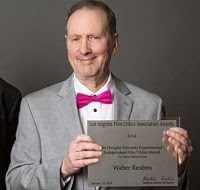 Walter Reuben, writer-director of The David Whiting Story
Walter is right about the negative advice. Go to any writing blog and you'll be presented with tons of scary rules.
Follow the conventions of your genre. Don't color outside the lines.Limit the number of characters and subplots. Don't make anything too complicated.Tell the story in linear time. Don't confuse your reader with lots of jumping around in time and place. Kill your darlings. Whatever you think is clever and innovative, most people will hate. Forget the literary stuff. Anybody who drops references to Henry James is NOT going to have a career as a writer. Get yourself a job teaching literature in a nice stuffy prep school.
I admit I've given some of that advice myself. I know from experience that it's tough to get anything literary, quirky, or rule-breaking in front of the public, and it's even harder to get recognition for it.
I've learned the hard way that unless you're a regular contributor to The New Yorker, you'll have a lot better chance of making a living if you stick to writing thrillers, romances and mysteries and forget about the cerebral stuff.
So let me introduce you to the man who proves us all wrong.
Walter Reuben has had his shorter screenplays produced in the past, but last year marked the debut of his first feature film: The David Whiting Story,
Oh, and did I mention that Walter is sixty-nine years old?
Yes, you read that right. Walter is nearly seventy. Until last year, he had never made a feature film, although filmmaking has always been one of his passions.
His story is one of persistence, grit, and the triumph of quirky artistic vision. It's a story to inspire writers everywhere, no matter what their age.
I don't actually know Walter, except online, although we think we probably met in person a very long time ago. We went to college together. That is, he was an upperclassman at Haverford when I was a freshman at Bryn Mawr. They're sibling schools. (And yes, I'm outing myself as a geezerette.)
Like me, Walter once befriended a strange, compelling, tragicomic young man named David Whiting, who later died under mysterious circumstances on the set of the Burt Reynolds film The Man Who Loved Cat Dancing, in 1973.
Walter and I met again online this year because we both recently created works of art that addressed David Whiting and his mysterious story.
A prep school classmate of David's who had read my book about David, The Gatsby Game, phoned me to ask what I knew about the real David. He dropped a remark about an upcoming film called The David Whiting Story written by somebody named Walter Reuben.
That was the first I'd heard of the film, so I Googled Walter and friended him on Facebook (see, social media is good for something!) We started an email exchange. He sent me a link so I could watch the film online.
A few months later, I saw the news that he'd won the Los Angeles Film Critics Award. He was over the moon. He says he's still reeling from the "surreal" experience, but I talked him into doing an interview for this blog. (Although he's hard at work on his next feature film.)
The David Whiting Story continues to get kudos. It was recently listed as one of "The Best Films Not Yet Showing at a Theater Near You"
Anne
Thanks, for visiting, Walter!
I know that I've wanted to write about David Whiting pretty much ever since I heard about his death. Maybe even before. He was such a quirky, over-the-top character. (Last week Ruth Harris told us how characters like that can fuel the best fiction.)
The news accounts of David's death never made sense to me. I felt I knew a lot more about him than anybody who was writing about him.
What about you? Have you had this story at the back of your mind for a long time?
Walter
Not at all. After I knew David in college, I lost touch with him. Although the news of his death was a scandal, which got reported in the media, I did not read about it at the time, and was not even aware of his death.
(Walter probably avoided supermarket tabloids, which was where much the story played out. It has been called one of "The 10 Most Notorious Sex Scandals in Hollywood History."...Anne )
However, in 2007, I went on vacation, and one of the books which I chose to take with me was a collection of essays by Ron Rosenbaum. I read a number of essays, one of which was about David and the curious circumstances of his demise in Sarah Miles’ hotel room, during a film shoot.
(Ron Rosenbaum's book is called The Secret Parts of Fortune and the David Whiting essay is titled "A Corpse as Big as the Ritz: in Which we Encounter Sarah Miles, Burt Reynolds and the Ghost of the Great Gatsby"...Anne.)
When I read the essay, it did not even occur to me that the fellow being described was the same David Whiting with whom I had gone to college. Apparently, David at some point claimed to be (or to have been) an undergraduate at Harvard, not Haverford College (which he actually attended with me, however briefly on his part).
David, clearly, was very “flexible” with the facts of his life, and he may have thought that Harvard would be a more impressive alma mater.
(He told me he was a Princeton student on an exchange program. He was obviously obsessed with the Ivy League...Anne.)
But that is one reason why I did not immediately realize that the subject of this essay was my old college acquaintance. But, somehow, the essay nagged at me, and, a few years later, I revisited it, and found an ancient 1966 diary of mine. It contained a couple of brief references to David Whiting—which confirmed my suspicion that the college David of 1966 was the fellow written about in the essay.
Anne
When did you decide to make David Whiting's story into a film? And how long did it take from concept to wrap?
Walter
Three years ago, I was visiting Austin. I had spent almost twenty years of my life there and had made my earliest experimental short films there, in the 1980’s. I had not been there in 20 years, and I was having dinner with one of my oldest friends, a person who shares my passion for film.
Somehow, I got to bringing up the story of David Whiting, his mysterious death, and Sarah Miles. My friend was very familiar with the entire business.
Somehow, I blurted out that I was going to make a movie about Sarah Miles and Ayn Rand. I, honestly, have no idea how this idea arose. It was spontaneous, and came from something very intuitive inside me. He smiled and said some encouraging words, because, earlier in the dinner, he had remembered fondly my early short movies.
That dinner was in April, 2012. The film wrapped in July, 2013.
Anne
I love stories of people who get ideas when speaking them out loud to somebody else like that. It has happened to me and it always feels sort of magical. I go..."did I really say that? I guess I'll have to do it, then." But I'm not always brave enough to follow through.
So what gave you the courage—at an age when most people are happily settling into retirement—to make a feature film?
Walter
Why not? There are various examples, especially in late 20th Century British literature, of writers who only started to write, or at least to publish, at what some consider to be an advanced age.
As for "happily settling into retirement," for whom is that really true? If you utterly love what you do, why would you want to retire? Of course, if you hate what you do, then you cannot wait for an unhappy career to be over.
As for F. Scott Fitzgerald’s famous dictum that "there are no second acts in American lives," well, I simply beg to disagree. I have started what is for me a third act, and I am loving it.
I read earlier today about a film director who made his first feature at the age of 20. I do not know this man’s movies, but, truly, I say—more power to anyone of any age who wants to make movies, and who finds a way to fulfill his or her dream!
Anne
I love your positive attitude, Walter!
You met David Whiting when he was a freshman, and I didn't get to know him until he was an upperclassman. I met him as a wannabe-ladies' man who had recently worked as a still photographer on the sets of several high-profile films where he had hobnobbed with the likes of Roger Vadim and Jane Fonda (or so he claimed.)
But in spite of his obvious phoniness, I liked the guy. I found him compelling. Maybe it was his intelligence, or maybe it was that desperate emotional neediness just under his veneer.
You met him when he was a pudgy kid right out of an upper-crust prep school, so we met quite different versions of the man.
Do you want to talk about what qualities drew you to David when you met him, and how you got to know him?
Walter
I did not know him terribly well. As depicted in my film, the 18-year old David Whiting was a con artist, a thief, and a pretentious poseur. The movie portrays the fact that he offered to help me sell tickets for a college film society screening which I had organized—and then, after, tried to get me to steal some of the money.
Anne
That is a memorable scene in the film. My fictional version of David, Alistair Milborne, is a thief, too, although I had no evidence the real David actually stole. But everything he did seemed dishonest in some way.
But all in all, David Whiting is something of a tragic figure. And it's always sad when a person dies at the age of twenty-four.
Your film is essentially a comedy—although certainly a pitch-black one. My novel is a dark comedy as well.
Why do you think his story sparks a comic reaction rather than a sentimental one?
Walter
David’s is the story of someone who wears multiple masks, who doesn’t really know who he is, and goes out of his way to tell a different falsehood to everyone he meets. Black comedy, not tragedy, is my forte.
But there is no reason that his story could not be told in more purely dramatic terms. However, I think that it would be very difficult to prevent a purely dramatic rendering from falling into melodrama.
Anne
I agree that falling into sentimentality the way they do on those true-crime TV shows would ruin the story. Phony people do seem to be intrinsically funny. Without liars, comic writers would run out of material pretty fast.
What else do you want to tell us about David Whiting in your film? I realize the film isn't only about him. It's also about the bigotry of your own parents and how it may be impossible to know anybody completely.
Walter
Actually, my film interweaves a variety of threads: the story of David Whiting; the search for the origins of a famous, but now forgotten, joke; the story of my parents' violent homophobia; staged interviews with Ayn Rand at two different points of her life; the reenactment of the single most famous scene from Henry James' The Wings of the Dove, with eight different casts. All interwoven as in an elaborate abstract collage.
The film attempts to ask two interconnected questions: How can we process our memories once we realize how fundamentally unreliable they are? And how is it possible to make sense out of our lives?
As we investigate people's college memories of David and also of that once famous joke, it seems that the very same people who remember that they do not remember David are the people who remember how funny the joke was—except that they can’t remember the actual joke at all….
Anne
Tell us a little more about how you made the film and how you got funding and were able to assemble your cast.
Walter
I shot the entire film in four days, each day on a twelve hour shooting schedule, in three different locations (each of which was used to represent several different locations). There was a crew of about six people for each day, which, for me, was a great luxury.
I funded the film entirely myself. My cast started with a few gifted actors whom I already knew. They in turn referred me to a few other actors. The cast was uniformly superb, enormously talented and gifted men and women.
Anne
That is so impressive: you didn't use a Kickstarter campaign or find a rich patron—you made your film with what you had.
What advice would you give young (and not so-young) writers out there who dream of seeing their work in film some day?
Walter
Be fearless. The world is filled with people who will be more than willing to give you self-defeating, negative advice.
If you have a dream, the single most important question you must ask yourself is—how can you fulfill that dream? If your resources are very limited, that is not an excuse.
If you imagine an elaborate science-fiction utopian film, which, in principal, would cost a studio a minimum of 100 million dollars, but all you have is an extra $2000, then you must really look inside yourself and find a way to realize your vision anyway.
Anne
That's such great advice, Walter! That's why I'm opening this blogpost with that quote.
Are there any other things you'd like to tell us about your film and this amazing honor it has brought you?
Walter
I am already hard at work on my second film. It too is a collage, though of a very different kind. Being a movie director is like simultaneously being a mommy and a daddy. Every movie is one of my children, and every child is different, unique, and precious.
What about you, Scriveners? Do you have a dream you've been afraid you might be too old or poor to fulfill? Have you felt defeated by negative advice? Do you think there are second acts in American lives? Third acts? Have you ever known an unforgettable character you felt compelled to write about?
Walter Reuben is one of the world's prominent dealers in vintage movie posters of all periods and from all countries.
He lived in Austin from 1971 through 1988 and directed his early experimental shorts there, including How Others Remember Us (1986), From Bad to Worse (1986) and How to Lose Weight (1987).
He wrote the screenplay for the festival award-winning film 3 Stories About Evil (2008). He produced and co-wrote the short film The Harvey Girl from Shanghai (2010).
The David Whiting Story (2014) is his first feature film.
Blog news: We got a kinda cool award this week, too. Marketing guru Penny Sansevieri, of Author Marketing Services named this blog one of the Top 30 Websites for Indies!
Next week we'll have a visit from Canada's Queen of Comedy, Melodie Campbell. She's going to give us tips for building atmosphere and setting tone in your fiction.
BOOK OF THE WEEK
The Gatsby Game, my fictionalized version of David Whiting's story is only $2.99 in ebook.
The paper version should be available later this month.
The ebook is available at all the Amazons, Barnes and Noble for NOOK, and Kobo. It's also available at Scribd and Inktera
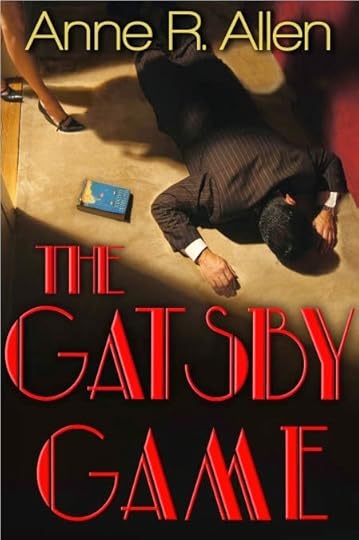
When Fitzgerald-quoting con man Alistair Milborne is found dead a movie star’s motel room—igniting a worldwide scandal—the small-town police can’t decide if it’s an accident, suicide, or foul play.
As evidence of murder emerges, Nicky Conway, the smart-mouth nanny, becomes the prime suspect. She’s the only one who knows what happened. But she also knows nobody will ever believe her.
The story is based on the real mystery surrounding the death of David Whiting, actress Sarah Miles’ business manager, during the filming of the 1973 Burt Reynolds movie The Man Who Loved Cat Dancing.
OPPORTUNITY ALERTS
VIGNETTE WRITERS, here's a contest for you! The Vine Leaves Vignette Collection Contest. The prize is for a collection of vignettes and poetry up to 20,000 words. Fee $25. Prize is $500, publication by Vine Leaves Press (paperback and eBook), 20 copies of the paperback, worldwide distribution, and promotion through the Vine Leaves and staff websites. It will be judged by an editor from Simon and Schuster. Deadline February 28, 2015.
Ruminate VanderMey Creative Nonfiction Prize Entry Fee: $20. A prize of $1,500 and publication in Ruminate is given annually for a work of creative nonfiction. Using the online submission system, submit an essay or short memoir of up to 5,500 words with an $20 entry fee, which includes a copy of the prize issue. Deadline: February 20, 2015
The Playboy College Fiction Contest Prize is $3000 plus publication in Playboy Magazine. You must be enrolled in college to be eligible. Stories up to 5000 words. Deadline February13th. $5 entry fee for non-subscribers.
Saraband Books prize for a book of poetry or literary fiction. Prize is $2000 and publication. The entry fee is $27. For fiction, submit a manuscript of 150 to 250 pages of stories, novellas, or a short novel For poetry, submit a manuscript of at least 48 pages. Deadline February 13th, 2015
Unpublished Literary Fiction Authors looking for a Traditional Career! Tinder Press, a division of Hachette, is going to be open to UNAGENTED SUBMISSIONS for two weeks in March. More information at Tinder Press.
"Be fearless… The world is filled with people who will be more than willing to give you self-defeating, negative advice. If you have a dream, the single most important question you must ask yourself is—how can you fulfill that dream? If your resources are very limited, that is not an excuse."
…Walter Reuben, writer-director of the award-winning film, The David Whiting Story
We don't usually talk much about screenwriting here, because, well, Ruth and I aren't screenwriters. But I'm pretty sure most writers (me included) have a lurking fantasy of seeing our work on the silver screen one day.
However, most of us figure screenwriting is even harder to break into than book publishing because of the financial investment involved. Besides, everybody and their grandmother is writing a screenplay. So the chances of fulfilling that dream are slim to none...right?
Not if you know the story of Walter Reuben, winner of the prestigious L.A. Film Critic Association's Douglas Edwards award for his indie film The David Whiting Story .
When he received his award on January 10th, 2015, Walter shared a stage with people like Angelina Jolie, Wes Anderson, and Patricia Arquette. The Douglas Edwards award has previously gone to the likes of Jean-Luc Godard and Gus Van Sant.
 Walter Reuben, writer-director of The David Whiting Story
Walter is right about the negative advice. Go to any writing blog and you'll be presented with tons of scary rules.
Follow the conventions of your genre. Don't color outside the lines.Limit the number of characters and subplots. Don't make anything too complicated.Tell the story in linear time. Don't confuse your reader with lots of jumping around in time and place. Kill your darlings. Whatever you think is clever and innovative, most people will hate. Forget the literary stuff. Anybody who drops references to Henry James is NOT going to have a career as a writer. Get yourself a job teaching literature in a nice stuffy prep school.
I admit I've given some of that advice myself. I know from experience that it's tough to get anything literary, quirky, or rule-breaking in front of the public, and it's even harder to get recognition for it.
I've learned the hard way that unless you're a regular contributor to The New Yorker, you'll have a lot better chance of making a living if you stick to writing thrillers, romances and mysteries and forget about the cerebral stuff.
So let me introduce you to the man who proves us all wrong.
Walter Reuben has had his shorter screenplays produced in the past, but last year marked the debut of his first feature film: The David Whiting Story,
Oh, and did I mention that Walter is sixty-nine years old?
Yes, you read that right. Walter is nearly seventy. Until last year, he had never made a feature film, although filmmaking has always been one of his passions.
His story is one of persistence, grit, and the triumph of quirky artistic vision. It's a story to inspire writers everywhere, no matter what their age.
I don't actually know Walter, except online, although we think we probably met in person a very long time ago. We went to college together. That is, he was an upperclassman at Haverford when I was a freshman at Bryn Mawr. They're sibling schools. (And yes, I'm outing myself as a geezerette.)
Like me, Walter once befriended a strange, compelling, tragicomic young man named David Whiting, who later died under mysterious circumstances on the set of the Burt Reynolds film The Man Who Loved Cat Dancing, in 1973.
Walter and I met again online this year because we both recently created works of art that addressed David Whiting and his mysterious story.
A prep school classmate of David's who had read my book about David, The Gatsby Game, phoned me to ask what I knew about the real David. He dropped a remark about an upcoming film called The David Whiting Story written by somebody named Walter Reuben.
That was the first I'd heard of the film, so I Googled Walter and friended him on Facebook (see, social media is good for something!) We started an email exchange. He sent me a link so I could watch the film online.
A few months later, I saw the news that he'd won the Los Angeles Film Critics Award. He was over the moon. He says he's still reeling from the "surreal" experience, but I talked him into doing an interview for this blog. (Although he's hard at work on his next feature film.)
The David Whiting Story continues to get kudos. It was recently listed as one of "The Best Films Not Yet Showing at a Theater Near You"
Anne
Thanks, for visiting, Walter!
I know that I've wanted to write about David Whiting pretty much ever since I heard about his death. Maybe even before. He was such a quirky, over-the-top character. (Last week Ruth Harris told us how characters like that can fuel the best fiction.)
The news accounts of David's death never made sense to me. I felt I knew a lot more about him than anybody who was writing about him.
What about you? Have you had this story at the back of your mind for a long time?
Walter
Not at all. After I knew David in college, I lost touch with him. Although the news of his death was a scandal, which got reported in the media, I did not read about it at the time, and was not even aware of his death.
(Walter probably avoided supermarket tabloids, which was where much the story played out. It has been called one of "The 10 Most Notorious Sex Scandals in Hollywood History."...Anne )
However, in 2007, I went on vacation, and one of the books which I chose to take with me was a collection of essays by Ron Rosenbaum. I read a number of essays, one of which was about David and the curious circumstances of his demise in Sarah Miles’ hotel room, during a film shoot.
(Ron Rosenbaum's book is called The Secret Parts of Fortune and the David Whiting essay is titled "A Corpse as Big as the Ritz: in Which we Encounter Sarah Miles, Burt Reynolds and the Ghost of the Great Gatsby"...Anne.)
When I read the essay, it did not even occur to me that the fellow being described was the same David Whiting with whom I had gone to college. Apparently, David at some point claimed to be (or to have been) an undergraduate at Harvard, not Haverford College (which he actually attended with me, however briefly on his part).
David, clearly, was very “flexible” with the facts of his life, and he may have thought that Harvard would be a more impressive alma mater.
(He told me he was a Princeton student on an exchange program. He was obviously obsessed with the Ivy League...Anne.)
But that is one reason why I did not immediately realize that the subject of this essay was my old college acquaintance. But, somehow, the essay nagged at me, and, a few years later, I revisited it, and found an ancient 1966 diary of mine. It contained a couple of brief references to David Whiting—which confirmed my suspicion that the college David of 1966 was the fellow written about in the essay.
Anne
When did you decide to make David Whiting's story into a film? And how long did it take from concept to wrap?
Walter
Three years ago, I was visiting Austin. I had spent almost twenty years of my life there and had made my earliest experimental short films there, in the 1980’s. I had not been there in 20 years, and I was having dinner with one of my oldest friends, a person who shares my passion for film.
Somehow, I got to bringing up the story of David Whiting, his mysterious death, and Sarah Miles. My friend was very familiar with the entire business.
Somehow, I blurted out that I was going to make a movie about Sarah Miles and Ayn Rand. I, honestly, have no idea how this idea arose. It was spontaneous, and came from something very intuitive inside me. He smiled and said some encouraging words, because, earlier in the dinner, he had remembered fondly my early short movies.
That dinner was in April, 2012. The film wrapped in July, 2013.
Anne
I love stories of people who get ideas when speaking them out loud to somebody else like that. It has happened to me and it always feels sort of magical. I go..."did I really say that? I guess I'll have to do it, then." But I'm not always brave enough to follow through.
So what gave you the courage—at an age when most people are happily settling into retirement—to make a feature film?
Walter
Why not? There are various examples, especially in late 20th Century British literature, of writers who only started to write, or at least to publish, at what some consider to be an advanced age.
As for "happily settling into retirement," for whom is that really true? If you utterly love what you do, why would you want to retire? Of course, if you hate what you do, then you cannot wait for an unhappy career to be over.
As for F. Scott Fitzgerald’s famous dictum that "there are no second acts in American lives," well, I simply beg to disagree. I have started what is for me a third act, and I am loving it.
I read earlier today about a film director who made his first feature at the age of 20. I do not know this man’s movies, but, truly, I say—more power to anyone of any age who wants to make movies, and who finds a way to fulfill his or her dream!
Anne
I love your positive attitude, Walter!
You met David Whiting when he was a freshman, and I didn't get to know him until he was an upperclassman. I met him as a wannabe-ladies' man who had recently worked as a still photographer on the sets of several high-profile films where he had hobnobbed with the likes of Roger Vadim and Jane Fonda (or so he claimed.)
But in spite of his obvious phoniness, I liked the guy. I found him compelling. Maybe it was his intelligence, or maybe it was that desperate emotional neediness just under his veneer.
You met him when he was a pudgy kid right out of an upper-crust prep school, so we met quite different versions of the man.
Do you want to talk about what qualities drew you to David when you met him, and how you got to know him?
Walter
I did not know him terribly well. As depicted in my film, the 18-year old David Whiting was a con artist, a thief, and a pretentious poseur. The movie portrays the fact that he offered to help me sell tickets for a college film society screening which I had organized—and then, after, tried to get me to steal some of the money.
Anne
That is a memorable scene in the film. My fictional version of David, Alistair Milborne, is a thief, too, although I had no evidence the real David actually stole. But everything he did seemed dishonest in some way.
But all in all, David Whiting is something of a tragic figure. And it's always sad when a person dies at the age of twenty-four.
Your film is essentially a comedy—although certainly a pitch-black one. My novel is a dark comedy as well.
Why do you think his story sparks a comic reaction rather than a sentimental one?
Walter
David’s is the story of someone who wears multiple masks, who doesn’t really know who he is, and goes out of his way to tell a different falsehood to everyone he meets. Black comedy, not tragedy, is my forte.
But there is no reason that his story could not be told in more purely dramatic terms. However, I think that it would be very difficult to prevent a purely dramatic rendering from falling into melodrama.
Anne
I agree that falling into sentimentality the way they do on those true-crime TV shows would ruin the story. Phony people do seem to be intrinsically funny. Without liars, comic writers would run out of material pretty fast.
What else do you want to tell us about David Whiting in your film? I realize the film isn't only about him. It's also about the bigotry of your own parents and how it may be impossible to know anybody completely.
Walter
Actually, my film interweaves a variety of threads: the story of David Whiting; the search for the origins of a famous, but now forgotten, joke; the story of my parents' violent homophobia; staged interviews with Ayn Rand at two different points of her life; the reenactment of the single most famous scene from Henry James' The Wings of the Dove, with eight different casts. All interwoven as in an elaborate abstract collage.
The film attempts to ask two interconnected questions: How can we process our memories once we realize how fundamentally unreliable they are? And how is it possible to make sense out of our lives?
As we investigate people's college memories of David and also of that once famous joke, it seems that the very same people who remember that they do not remember David are the people who remember how funny the joke was—except that they can’t remember the actual joke at all….
Anne
Tell us a little more about how you made the film and how you got funding and were able to assemble your cast.
Walter
I shot the entire film in four days, each day on a twelve hour shooting schedule, in three different locations (each of which was used to represent several different locations). There was a crew of about six people for each day, which, for me, was a great luxury.
I funded the film entirely myself. My cast started with a few gifted actors whom I already knew. They in turn referred me to a few other actors. The cast was uniformly superb, enormously talented and gifted men and women.
Anne
That is so impressive: you didn't use a Kickstarter campaign or find a rich patron—you made your film with what you had.
What advice would you give young (and not so-young) writers out there who dream of seeing their work in film some day?
Walter
Be fearless. The world is filled with people who will be more than willing to give you self-defeating, negative advice.
If you have a dream, the single most important question you must ask yourself is—how can you fulfill that dream? If your resources are very limited, that is not an excuse.
If you imagine an elaborate science-fiction utopian film, which, in principal, would cost a studio a minimum of 100 million dollars, but all you have is an extra $2000, then you must really look inside yourself and find a way to realize your vision anyway.
Anne
That's such great advice, Walter! That's why I'm opening this blogpost with that quote.
Are there any other things you'd like to tell us about your film and this amazing honor it has brought you?
Walter
I am already hard at work on my second film. It too is a collage, though of a very different kind. Being a movie director is like simultaneously being a mommy and a daddy. Every movie is one of my children, and every child is different, unique, and precious.
What about you, Scriveners? Do you have a dream you've been afraid you might be too old or poor to fulfill? Have you felt defeated by negative advice? Do you think there are second acts in American lives? Third acts? Have you ever known an unforgettable character you felt compelled to write about?
Walter Reuben is one of the world's prominent dealers in vintage movie posters of all periods and from all countries.
He lived in Austin from 1971 through 1988 and directed his early experimental shorts there, including How Others Remember Us (1986), From Bad to Worse (1986) and How to Lose Weight (1987).
He wrote the screenplay for the festival award-winning film 3 Stories About Evil (2008). He produced and co-wrote the short film The Harvey Girl from Shanghai (2010).
The David Whiting Story (2014) is his first feature film.
Blog news: We got a kinda cool award this week, too. Marketing guru Penny Sansevieri, of Author Marketing Services named this blog one of the Top 30 Websites for Indies!
Next week we'll have a visit from Canada's Queen of Comedy, Melodie Campbell. She's going to give us tips for building atmosphere and setting tone in your fiction.
BOOK OF THE WEEK
The Gatsby Game, my fictionalized version of David Whiting's story is only $2.99 in ebook.
The paper version should be available later this month.
The ebook is available at all the Amazons, Barnes and Noble for NOOK, and Kobo. It's also available at Scribd and Inktera
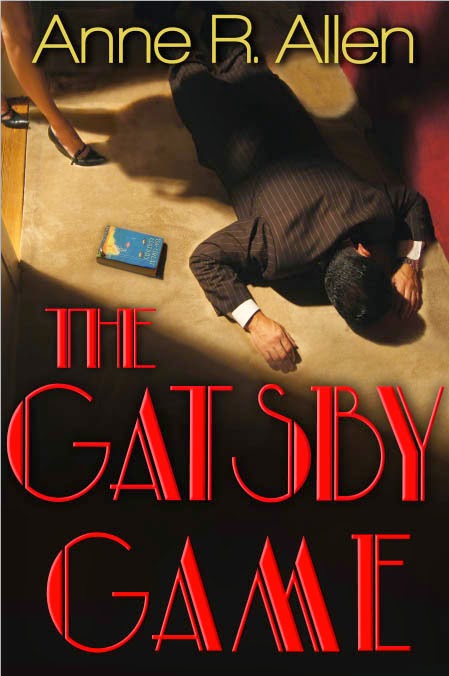
When Fitzgerald-quoting con man Alistair Milborne is found dead a movie star’s motel room—igniting a worldwide scandal—the small-town police can’t decide if it’s an accident, suicide, or foul play.
As evidence of murder emerges, Nicky Conway, the smart-mouth nanny, becomes the prime suspect. She’s the only one who knows what happened. But she also knows nobody will ever believe her.
The story is based on the real mystery surrounding the death of David Whiting, actress Sarah Miles’ business manager, during the filming of the 1973 Burt Reynolds movie The Man Who Loved Cat Dancing.
OPPORTUNITY ALERTS
VIGNETTE WRITERS, here's a contest for you! The Vine Leaves Vignette Collection Contest. The prize is for a collection of vignettes and poetry up to 20,000 words. Fee $25. Prize is $500, publication by Vine Leaves Press (paperback and eBook), 20 copies of the paperback, worldwide distribution, and promotion through the Vine Leaves and staff websites. It will be judged by an editor from Simon and Schuster. Deadline February 28, 2015.
Ruminate VanderMey Creative Nonfiction Prize Entry Fee: $20. A prize of $1,500 and publication in Ruminate is given annually for a work of creative nonfiction. Using the online submission system, submit an essay or short memoir of up to 5,500 words with an $20 entry fee, which includes a copy of the prize issue. Deadline: February 20, 2015
The Playboy College Fiction Contest Prize is $3000 plus publication in Playboy Magazine. You must be enrolled in college to be eligible. Stories up to 5000 words. Deadline February13th. $5 entry fee for non-subscribers.
Saraband Books prize for a book of poetry or literary fiction. Prize is $2000 and publication. The entry fee is $27. For fiction, submit a manuscript of 150 to 250 pages of stories, novellas, or a short novel For poetry, submit a manuscript of at least 48 pages. Deadline February 13th, 2015
Unpublished Literary Fiction Authors looking for a Traditional Career! Tinder Press, a division of Hachette, is going to be open to UNAGENTED SUBMISSIONS for two weeks in March. More information at Tinder Press.


January 25, 2015
How to Sizzle up your Fiction with Compelling Characters Readers Can't Forget
by Ruth Harris
Good guy/gal or bad guy/gal, the super spy, the nutcase, the grunt who saves his battalion, the alcoholic teacher who can’t save herself but rescues her class from a typhoon, the jihadist with a heart of gold, the whore with a heart of coal, the psychotic, psychopathic, and just plain psychic are the writer’s best friend.
The unforgettable character: he or she (or maybe even it) will energize your book, grab your reader, and jet-propel your plot.
Where do you start looking and where do you find the initial spark of inspiration? The answer is: all around you.
The passive-aggressive employer, the tyrannical secretary, the not-exactly-honest businessman, the bully who tormented you in mid-school, the mean girl who spread nasty rumors about your best friend.
Let your imagination go wild
Creating the “perfect” villain can be a form of delicious payback.
Creating the larger-than-life hero or the dreamboat romantic lead can put all your secret fantasies to work.
But what if you don’t know anyone who belongs in the DSM (Diagnostic and Statistical Manual of mental disorders) ? What if no one you know appears on a do-not-fly list? What if the brainiac whose algo saves the world wasn’t in your seventh grade math class? What if you don’t live next door to the guy who killed his wife and fed her body through a wood chopper? What if the woman who poisoned her husband with crocodile-bile-laced coffee isn’t in your exercise class?
Google and the internet provide endless sources of inspiration. Personality disorders, murders plain and fancy, angels and devils are lined up waiting to be chosen. They are on forums, they tweet, they share, they comment, they spew their crazed selves on FB. So do Medal of Honor winners, rescuers of abandoned pets, the devoted medics at Doctors Without Borders and the fearless journalists at Journalists Without Borders.
Books, television and the movies are filled with unforgettable characters, and are an unending source of inspiration as we watch or turn the pages with bated breath, waiting to see what amazing feat or dastardly deed they will do next.
In Breaking Bad, a high school chemistry teacher diagnosed with inoperable lung cancer turns to a life of crime to secure his family's financial future before he dies.Jane Tennison, the DI in television’s Prime Suspect is a “woman of a certain age.” Her love life is on the gritty side, she drinks too much, the men she works with give her a hard time, but she is brilliant and always solves the crime.Tony Soprano, a beleaguered New Jersey crime boss, must deal with two families, his own—and the criminal “family” he heads.Carrie Mathison, the bi-polar CIA agent in Homeland, is on and off her meds and has sex with the suspected terrorist she is supposed to track down.Tom Riley, a sociopath of uncertain sexuality in Patricia Highsmith’s The Talented Mr. Riley, lies, deceives, and murders without conscience.Mrs. Danvers, the creepy housekeeper with no first name in Rebecca, is dedicated to her dead employer, the first Mrs. Maxim de Winter. She is intimidating, manipulative and willing to drive the second Mrs. DeWinter to suicide.Lee Child’s Jack Reacher, an ex-military policeman, is a hero with no fixed address and almost no possessions except a foldable toothbrush and expired passport.M, as played by Judy Dench, is the head of MI6 and James Bond’s boss. She is blunt, fearless, and does not flinch from ordering 007 to kill when necessary.Rasputin, a failed monk and mystic, was a favorite of the last Czar of Russia and, swept up in the Russian revolution, met a brutal end.Glenn Close, the murderous seductress in Fatal Attraction is psychopathically determined to get what she wants—another woman’s husband.Hannibal Lecter, the twisted psychiatrist in the Silence Of The Lambswas known as Hannibal the Cannibal, a tribute to his culinary propensities.
Don’t overlook the animal kingdom in your search for inspiration for the memorable character.
The shark who terrorizes a resort community in Jaws.A friendly dolphin named Flipper.King Kong, a huge gorilla, and Godzilla, a sci-fi monster.Alfred Hitchcock turned to the avian world for his thriller, Birds, which, in turn, is based on a Daphne duMaurier short story.Canine characters, mostly good but not always, abound from loyalLassie to rabid Cujo.Cats, grumpy and otherwise, star in classics, children’s literature, and cozy mysteries.Extinct animals are brought back to life via DNA in dinosaur-driven Jurassic Park.
Comics also contribute their share of outsize heroes and villains.
Brainy and brawny Wonder Woman has her Lasso of Truth and her magic weapons.Mild-mannered Clark Kent aka Superman who, uh, you know.Assassin and bounty-hunter Elektra.Bad guys Dr. Doom and Joker.Martial artist and computer genius, Batgirl fights the bad guys—and wins.The memorable character will do the shocking, the unexpected and, as a consequence, will give your story an immediate jolt of energy.
They live in the “wrong” neighborhood or, like Jack Reacher, have no permanent address at all. They break rules, heads and maybe knees. They drink too much, squander their money and reputations, have sex at the “wrong” time with the “wrong” partners.
Their willingness to flout convention, break the mold, and break laws gives you the ability to create wow! plot twists and never-saw-it-coming endings.
A Caveat
But remember: no matter how lurid your character or his outrageous his or her behavior, you must also make your characters believable. Villains can’t be all bad and heroes need to have their flaws. Filling out a character questionnaire will help anchor your character.
Writing a character profile will also help.
Novelist, screenwriter, and game designer, Chuck Wendig spells out 25 essentials for creating a great character.
Got a great hero? Then you need an equally great villain.
Lindsey Barrett, short story writer and novelist, writing teacher, conference speaker, and member of the National Book Critics Circle, shares tips on crafting memorable characters.
The joy of creating the memorable character is that it’s fun. Lots of fun. Go wild. Go insane. Break every rule and every law, written and unwritten.
Go ahead. It’s safe here in writers’ world.
What about you, Scriveners? Where do you find your most memorable characters? Do you wreak revenge in your books on toxic bosses, abusive exes and that guy who cut you of on the 101 on-ramp? (I have to admit to killing off some fictionalized toxic people in my life.) What about your heroes? Do they come from real life? Who are your favorite fictional heroes/villains? Have you ever written about a heroic animal?
BOOK OF THE WEEK
A Kiss at Kihali: sweet romance set against the backdrop of African animal rescue
A must-read for animal lovers.
Available at Amazon US, Amazon UK, Amazon CA, Kobo, NOOK, iTunes
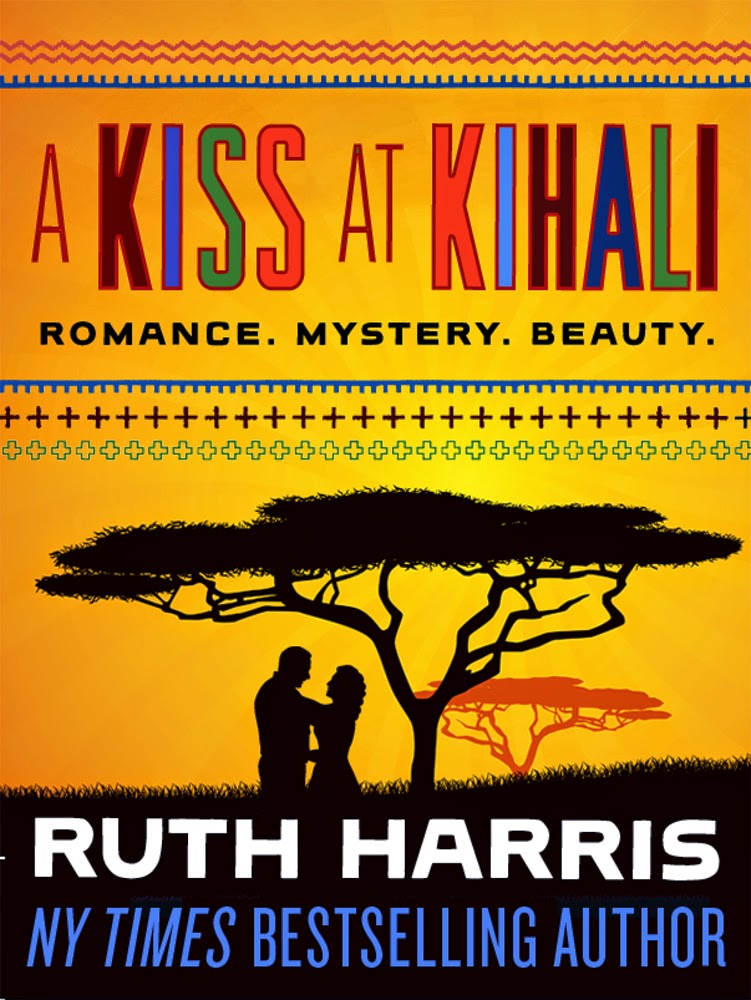
Beautiful and inspirational, A KISS AT KIHALI draws on the power of human-animal relationships, the heroic accomplishments of African animal orphanages, and the people, foreign and Kenyan, drawn to careers involving the care and conservation of wild animals. Filled with drama and danger that lead to a happy ending, A KISS AT KIHALI will appeal to readers who love tender romance and who have personally experienced the intense, mystical bond between humans and animals.
"A must-read for anyone who cares about animals and the environment, because what we do to them, we do to ourselves”... bestselling author Sibel Hodge
OPPORTUNITY ALERTS
VIGNETTE WRITERS, here's a contest for you! The Vine Leaves Vignette Collection Contest. The prize is for a collection of vignettes and poetry up to 20,000 words. Fee $25. Prize is $500, publication by Vine Leaves Press (paperback and eBook), 20 copies of the paperback, worldwide distribution, and promotion through the Vine Leaves and staff websites. It will be judged by an editor from Simon and Schuster. Deadline February 28, 2015.
The Playboy College Fiction Contest Prize is $3000 plus publication in Playboy Magazine. You must be enrolled in college to be eligible. Stories up to 5000 words. Deadline February13th, 2015 $5 entry fee for non-subscribers.
Saraband Books prize for a book of poetry or literary fiction. Prize is $2000 and publication. The entry fee is $27. For fiction, submit a manuscript of 150 to 250 pages of stories, novellas, or a short novel For poetry, submit a manuscript of at least 48 pages. Deadline February 13th, 2015
THE MEADOW NOVELLA PRIZE $15 ENTRY FEE. The winner of the contest will receive $500 and publication in the annual print edition of the journal. Submissions should be between 18,000 and 35,000 words. Deadline February 1, 2015.
Vestal Review Condensed Classics Anthology Call for submissions to an anthology of world classics condensed to 500 words or fewer. Submissions are still open for the new anthology edited by Mark Budman titled "Condensed to Flash: World Classics." Find specifics here and Scroll down to "Condensed to Flash" and check out the sub guidelines. The payment: $15 and a digital copy for an original story and $5 and a digital copy for a reprint. The deadline: January 31, 2015
Unpublished Literary Fiction Authors looking for a Traditional Career! Tinder Press, a division of Hachette, is going to be open to UNAGENTED SUBMISSIONS for two weeks in March. More information at Tinder Press.
January 18, 2015
6 Mistakes that Can Sidetrack New Writers
by Anne R. Allen
Ruth and I like to say we made all the writing and publishing mistakes so you don't have to. I figure that personally I've collected nearly the full set of authorial faux pas since I embarked on a writing career.
Here's a list of some of the things I wish I hadn't done when I was starting out.
I'm not saying these are always "mistakes" or that they will inevitably lead to disaster, but they did slow me down on my path to a career as an author.
1) Begging friends, family and co-workers to read your work
When we start writing, what we want most is to be read, so we often rush off to friends and family and implore them to take a look as soon as we've got those first chapters on paper. I admit I did. (And if any of my first readers see this post, I apologize. I know I was probably obnoxious and needy about it.)
But you'll often find loved ones can show a strange reluctance to be your first readers. (If they don't, be grateful, but realize the results may not be what you hope.) And if they say no, accept it. They're not being unkind.
They may be afraid they won't know what to say.
That's because they probably won't, unless they're in the writing business themselves.
They could end up swelling your head with over-the-top praise for your splendiferous adjectives, spritely adverbs and uniquely creative dialogue tags.
On the other hand, they might criticize excellent beginning efforts and squelch your fledgling muse from a fear of not being "honest."
Here's my cautionary tale: about a decade ago, my WIP was having problems with flow, so I gave it to a friend who had praised my published work. I thought he might be able to pinpoint what wasn't working.
Unfortunately, as a non-writer, my kind friend had no idea what “rough draft” meant. After he finished the typo-strewn manuscript, he phoned immediately, telling me to toss the book because it was a “complete mess that nobody would ever want to read.”
I tried to get him to tell me exactly what he didn't like, but he kept ranting, giving no specifics. After he shouted, "show, don't tell" about ten times, I have to admit I hung up on him. (Years later I realized I'd asked him at a very bad time in his life. He'd just lost a beloved job and my career was on the rise. His own dreams were in shatters, so he had no energy to put into mine.)
I shelved the book. I figured whatever was wrong, it must be pretty fundamental.
Years later, when I opened the manuscript again, I realized the book wasn't that bad. I'd let one uninformed person's opinion kill a project I'd spent years of my life creating. I did a quick polish and sent it to my publisher. The editor suggested a new opening chapter and a handful of tweaks that fixed the problems.
It became GHOSTWRITERS IN THE SKY, the first book in my bestselling Camilla Randall mystery-comedy series.
But the friendship died. And since then, I've never let a non-writer see a rough draft of any of my work.
This is why I recommend that all new writers join a critique group or find beta readers to exchange reads of new work. For more on how to get feedback, see Jami Gold's post on beta readers.
2) Trying to please everybody.
The right group or connection can provide you with the support and advice your loved ones can't give. But remember they'll all have different opinions. In the end, it's your book, so don't change anything just to please somebody else.
I do recommend groups for new writers. Working in a vacuum can waste lots of valuable time. Whether you meet in person or online, writing groups can provide invaluable information and support. They can give sympathy through the rough patches and help celebrate your successes. They can also provide a network that might be all-important to your career.
Kristen Lamb's "WANA tribe" (We Are Not Alone) is a great online community where writers can find mutual support. Another is Alex J. Cavanaugh's Insecure Writers Support Group. CritiqueCircle.com also offers many different groups in a variety of genres, with the extra benefit of critiques. There are also great writers groups on Facebook and Google Plus and in forums all over the Web.
National organizations with local chapters like RWA, SCBWI, and Sisters in Crime can also provide up-to-date industry information as well as support. Some also offer online and in-person critique groups.
But one caveat: if the organization does involve critiques, remember these groups do not have all the answers, and amateur writing groups can often result in the blind leading the blind.
I wrote about why to ignore most of the advice from your critique group here on the blog in August of 2014.
If you're participating in a critique group, it's wise to invest in a couple of good writing books or a vetted, solid writing course as well. Also read blogs like this one by veteran authors and agents.
Remember to take everything you hear in an amateur group with a grain of salt.
Here's how I got a reality check about group critiques: when my first was book accepted by a small press in England, my editor sent it back bleeding with red-pencilled edits. It didn't take me long to realize that every single issue he had with the book was something I'd added at the request of critique groups.
Trying to please everybody in my writing groups can lead to bad habits. Here are a few:
•Repeating yourself
Groups generally ask to be reminded who the characters are and what their relationship is to each other. They also want a recap of the plot and subplots at the beginning of each chapter.
This does not mean you should put that stuff in your book.
All those "remind me" comments stem from the fact these groups only meet once or twice a month, not because anything is wrong with your manuscript.
Because of the logistics of reading a book over a long period of time, I ended up larding my story with ridiculous repetitions. Thank goodness I had a good editor.
•Homogenized, boring storylines
I'd also removed some scenes because they offended one or two readers' political or personal beliefs. Unfortunately, eliminating strong opinions left my characters with no motivation for their actions.
Often naive critiquers can't tell the difference between a character's beliefs and those of the author. A woman wearing big Germanic sandals once stomped out of a critique session when I was reading because my fashionista character made fun of Birkenstocks.
She was too busy being offended to notice that I was wearing Birkenstocks at the time. Some people thrive on being offended. It gives them a kind of high. They will look for any excuse to chase that rush. Don't let it influence your writing.
Making your characters agree with everybody in the group can leave you with something that's more like a Hallmark card than a novel.
•Bad pacing and too much description
Because of "helpful" suggestions from my groups, I'd also put in too much description because some of my readers were poets who loved detailing minutia in a way that had no place in a thriller.
All those details bogged down the story and gave it a saggy middle that would have lost half my readers.
In trying to please everybody, I had sabotaged my own story.
Remember everybody has an agenda
The romance writer will tell you to put in more steamy scenes. The thriller writer will want more heart-pounding action. The believer in alien abduction will want big-eyed gray persons in every scene.
These people are telling you about themselves, not what your book needs.
Remember the people who are most strident in demanding that you do it "their way" are probably the least competent to give advice. That's called the Dunning-Kruger Effect. Scientists have proved the most ignorant people are generally the most sure of themselves.
Think Cliff the postman on Cheers and his "little known facts." Are you going to let somebody like that rewrite your WIP? I almost did.
3) Cart before horse thinking: worrying about publishing and marketing before you master your craft.
There was no social media when I was starting out, but I did have tons of anxiety about being sent on a book tour, because I have issues with agoraphobia.
I'm ashamed to say I obsessed about this stuff before I'd even finished my first novel.
I think even more writers today are thinking about book-selling instead of book-writing long before they have to.
I heard from a writer recently who had already paid a vanity press a huge amount of money to publish his book, but he'd never had the manuscript read by anybody. He wanted to know where he could find beta readers. Arrggh! He had the process completely backwards.
Learn to write before you try to find a publisher! You need to have a manuscript (or two) polished, critiqued, edited and polished again before you even think about publishing.
I also met a young man recently who was obsessed with marketing. He told me he had a website, X number of followers on Facebook, Twitter, Google Plus, Instagram and Tumblr.
He asked me...did I think he had a big enough platform to start writing his first story?
Poor guy. He had never written ONE WORD of fiction, but he'd spent a year building a platform to sell it.
This is like putting all your money into renting a store before you have any idea what you want to sell, and no money left to buy the inventory.
If you aren't compelled to write stories every day of your life, fiction is probably not your passion. If you like blogging, then blog. But don't use it for selling non-existent fiction.
There's nothing magic about writing fiction. Most professionals will tell you it's a lousy way to make money. Some people feel compelled to write it, and some people don't. This guy didn't. He might make a great social media marketer, though. And it's generally a much more lucrative profession.
On the other hand, if you're tearing away on your WIP and you don't want to stop to mess with social media, don't.
Keep writing.
You don't need to worry about social media or publishers until you've got at least a couple of books in the hopper, some published short work, and you're ready to start a writing business, either indie or traditional.
4) Expecting to make money right away.
Oh, yeah. This was me. After I got an agent for my first novel, I quit my day job and expected to be rolling in money by the end of the year.
You guessed it: Did. Not. Happen.
The agent shopped it around, failed to sell it and dropped me. When I got the bad news, I hadn't even finished a first draft of a second novel.
I was so devastated, I went back to work and didn't write another word for several years.
I's easy to get discouraged when you've been slogging away on a book for a year and then realize revising it may take another six months. You'll probably start querying the rough draft and get nothing but rejections.
"But I've been at this for so long and I don't have a penny to show for it," you say.
Here's the thing: it turns out a year is nothing. Try ten. At least put in your 10,000 Malcolm Gladwell hours. Very few authors have ever made money on a first novel. You need at least two in the hopper before anything earth-shaking is going to happen. And even then, you'll probably have to keep your day job. Most published fiction authors (both traditional and indie) don't earn enough money to pay all the bills.
Write because you love it—because you can't help yourself—not because you're counting on becoming the next J.K. Rowling.
If you need money, try something else. Like picking up cans for recycling. Seriously. You'll make more money than you will with the average first novel. Until you have at least five titles, you're not likely to make substantial money, whether you're traditionally published or indie. Yes, it's been done, but those authors are the exception to the rule. Many of the big-earner indies like Russell Blake and H.M. Ward have fifty or sixty books out there.
5) Writing Novels Exclusively
Yup. This was me. Once I decided I wanted to have a writing career, I dove right into writing novels. I left short stories and poetry behind. People told me they were for amateurs. (And in those days, nobody wrote novellas because they were considered "unpublishable.")
That's because in the early 90s, most magazines had stopped publishing fiction. The only way to publish was to spend a lot of time researching the small, low-circulation literary magazines. Which of course could only afford to pay in copies.
The only way to find these magazines was to buy a pricey copy of Writer's Market along with the Directory of Little Magazines and Small Presses. The bottom line didn't look good to me. I figured why should I spend more to buy the directories than I'd ever make getting short stories published? Later I did subscribe to them and started placing a few stories, but by then I had already published my first novel.
I was short-sighted. If I'd had more publishing credits and contest wins, I would have found a publisher for my longer fiction faster.
I'd also now be sitting on a goldmine, since short stories, novelettes and novellas are perfect for Amazon's new Kindle Unlimited program, and many other online venues. See more about the value of short fiction in my article for Writer's Digest. And here's a post on how to structure a novella by by Paul Alan Fahey.
And note that I always include short story publishing opportunities and contests at the end of this blog.
6) Not reading the bestsellers in your genre
I hate to hear new writers say they don't read bestsellers because:
A) "They're all crap." Which is usually followed by statements like, "I can learn everything I need to know by reading the classics. I've read George Elliot, Virginia Woolf, Faulkner, Fitzgerald,..and every word Kurt Vonnegut ever wrote. You seriously expect me to learn from 50 Shades of Gray and that Duck Dynasty guy?"
B) "I'll be too influenced by them." Lots of writers say this. They'll go on to say, "I don't want to lose my voice. I might start writing like Stephen King, Nora Roberts, Margaret Atwood, or George R. R. Martin."
And you know why it bothers me so much? Because I used to say that stuff too.
But I finally figured out that writing is a business. You need to know what the marketplace is looking for. As brilliant as the novels of Virginia Woolf are, they are not bestsellers right now. And even if you are the reincarnation of George Elliot, you're probably not going to attract a lot of attention in todays marketplace. You need to learn how to write for contemporary readers.
No, you don't have to read 50 Shades of Duck Dynasty.
But if you're a romance writer, you need to read Nora Roberts, and if you're a horror writer, you'd better have some Stephen King in your library. Anybody writing women's literary fiction who hasn't read Margaret Atwood is going to be at a major disadvantage. And if you write epic fantasy without any knowledge of George R. R. Martin—you're going to be reinventing the wheel.
And so what if I had started writing like Roberts, King, Atwood or Martin? I should have been so lucky. Seriously. A few echoes of the greats in our work is not going to be a problem.
The great painters all started by copying the classic works that came before them. Picasso copied El Greco and Goya, and you see lots of references to their work in his. As he said, "Good artists copy. Great artists's steal.
If I'd read more contemporaries and fewer classics when I was starting out, I'd have had a much better idea of what might sell. My first novel, THE BEST REVENGE, which was published later as the prequel to the Camilla Randall Mysteries, was partly inspired by the novel Camilla, A Picture of Youth , written by Mrs. Fanny Burney in 1796.
I was even clueless enough to mention that in my early queries.
Yup. I did that. I don't think it impressed any agents.
I would have done better to say the book was also inspired by an unflattering interview in the New York Times of debutante Cornelia Guest.
I also spent a lot of time reading and rereading my favorite classic mystery authors like Agatha Christie, Margery Allingham and Dorothy L. Sayers.
I would have saved myself a lot of time and grief if I'd glanced at the bestseller list and picked up some Janet Evanovich, Elmore Leonard, or Carl Hiaasen earlier in my career.
I'm sure most of you aren't as clueless as I was when I started writing. In those pre-Internet days, we were all pretty much working in a vacuum. Until I started going to writers' conferences, I did not have any idea what the publishing world was about. Now you have all the information you need at your fingertips.
The e-age has brought changes to publishing that seem chaotic and daunting, but things really are getting better for writers!
And remember that when you're making mistakes, you're learning. I'll leave you with this quote from Neil Gaiman:
"I hope that in this year to come, you make mistakes. Because if you are making mistakes, then you are making new things, trying new things, learning, living, pushing yourself, changing yourself, changing your world. You're doing things you've never done before, and more importantly, you're Doing Something."
What about you Scriveners? Have you done any of these things? Did they derail your writing? What do you think was the biggest mistake you made in your early career? Do you have other mistakes to add to this list?
NEWS: You can read an interview with me on Reedsy, talking about how blogging can help your career. (Reedsy is a new start-up that provides vetted listings of editors, cover artists, and other author-service providers.)
BOOK OF THE WEEK
We are offering the ebook of Ghostwriters in the Sky for 99c for the first time ever! It's a spoof of writers conferences, full of funny situations most writers will identify with.
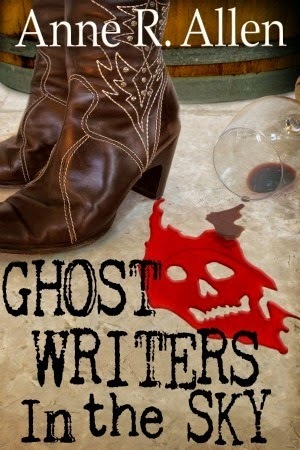
It's #1 in the Camilla Randall comedy-mysteries: a wild comic romp set at writers’ conference in the wine-and-cowboy town of Santa Ynez, California. When a ghostwriter’s plot to blackmail celebrities with faked evidence leads to murder, Camilla must team up with a cross-dressing dominatrix to stop the killer—who may be a ghost—from striking again.
Meanwhile, a hot LA cop named Maverick Jesus Zukowski just may steal her heart.
Here's a review from award-winning author Sandy Nathan
Ghost Writers is set in a writers' conference in Santa Ynez Valley, where I've lived for twenty years...This book is hysterically funny AND accurately depicts the Valley. Anne Allen gets it right, down to the dollar bills stuck on the ceiling of the Maverick Saloon. It was so fun to read as she called out one Valley landmark after another. Allen got the local denizens right, too, the crazy characters that roam our streets.
Speaking of which, Ms. Allen's literary characters are pretty crazy/zany by themselves. I love Camilla Randall, her ditzy, former debutante heroine, and all the rest. The action gets pretty frenetic when dead bodies start showing up. I heartily recommend this book..."
Ghostwriters in the Sky is available in e-book at all the Amazons, iTunes, Kobo, Inktera, and at Barnes and Noble for NOOK. Also in PAPERBACK for only $10.46
OPPORTUNITY ALERTS
VIGNETTE WRITERS, here's a contest for you! The Vine Leaves Vignette Collection Contest. The prize is for a collection of vignettes and poetry up to 20,000 words. Fee $25. Prize is $500, publication by Vine Leaves Press (paperback and eBook), 20 copies of the paperback, worldwide distribution, and promotion through the Vine Leaves and staff websites. It will be judged by an editor from Simon and Schuster. Deadline February 28, 2015.
The Playboy College Fiction Contest Prize is $3000 plus publication in Playboy Magazine. You must be enrolled in college to be eligible. Stories up to 5000 words. Deadline February13th, 2015 $5 entry fee for non-subscribers.
Saraband Books prize for a book of poetry or literary fiction. Prize is $2000 and publication. The entry fee is $27. For fiction, submit a manuscript of 150 to 250 pages of stories, novellas, or a short novel For poetry, submit a manuscript of at least 48 pages. Deadline February 13th, 2015
THE MEADOW NOVELLA PRIZE $15 ENTRY FEE. The winner of the contest will receive $500 and publication in the annual print edition of the journal. Submissions should be between 18,000 and 35,000 words. Deadline February 1, 2015.
Vestal Review Condensed Classics Anthology Call for submissions to an anthology of world classics condensed to 500 words or fewer. Submissions are still open for the new anthology edited by Mark Budman titled "Condensed to Flash: World Classics." Find specifics here and Scroll down to "Condensed to Flash" and check out the sub guidelines. The payment: $15 and a digital copy for an original story and $5 and a digital copy for a reprint. The deadline: January 31, 2015.
The M.M. Bennetts Prize for Historical fiction. $10 Entry fee. $500 prize for the best historical novel published in 2014. To be announced at the Historical Novel Society Conference in June in Deadline January 31st, 2015
Do you have books enrolled in Kindle Unlimited? There's now a Bookbub type newsletter exclusively for KU books, called Kindle Unlimited Daily Discovery newsletter . My new book, WHY GRANDMA BOUGHT THAT CAR is listed today. Listings cost under $10. Subscriptions are free, and if you're enrolled in KU (all you can read for $10 a month!) this looks like a great way to find new free books.
Ruth and I like to say we made all the writing and publishing mistakes so you don't have to. I figure that personally I've collected nearly the full set of authorial faux pas since I embarked on a writing career.
Here's a list of some of the things I wish I hadn't done when I was starting out.
I'm not saying these are always "mistakes" or that they will inevitably lead to disaster, but they did slow me down on my path to a career as an author.
1) Begging friends, family and co-workers to read your work
When we start writing, what we want most is to be read, so we often rush off to friends and family and implore them to take a look as soon as we've got those first chapters on paper. I admit I did. (And if any of my first readers see this post, I apologize. I know I was probably obnoxious and needy about it.)
But you'll often find loved ones can show a strange reluctance to be your first readers. (If they don't, be grateful, but realize the results may not be what you hope.) And if they say no, accept it. They're not being unkind.
They may be afraid they won't know what to say.
That's because they probably won't, unless they're in the writing business themselves.
They could end up swelling your head with over-the-top praise for your splendiferous adjectives, spritely adverbs and uniquely creative dialogue tags.
On the other hand, they might criticize excellent beginning efforts and squelch your fledgling muse from a fear of not being "honest."
Here's my cautionary tale: about a decade ago, my WIP was having problems with flow, so I gave it to a friend who had praised my published work. I thought he might be able to pinpoint what wasn't working.
Unfortunately, as a non-writer, my kind friend had no idea what “rough draft” meant. After he finished the typo-strewn manuscript, he phoned immediately, telling me to toss the book because it was a “complete mess that nobody would ever want to read.”
I tried to get him to tell me exactly what he didn't like, but he kept ranting, giving no specifics. After he shouted, "show, don't tell" about ten times, I have to admit I hung up on him. (Years later I realized I'd asked him at a very bad time in his life. He'd just lost a beloved job and my career was on the rise. His own dreams were in shatters, so he had no energy to put into mine.)
I shelved the book. I figured whatever was wrong, it must be pretty fundamental.
Years later, when I opened the manuscript again, I realized the book wasn't that bad. I'd let one uninformed person's opinion kill a project I'd spent years of my life creating. I did a quick polish and sent it to my publisher. The editor suggested a new opening chapter and a handful of tweaks that fixed the problems.
It became GHOSTWRITERS IN THE SKY, the first book in my bestselling Camilla Randall mystery-comedy series.
But the friendship died. And since then, I've never let a non-writer see a rough draft of any of my work.
This is why I recommend that all new writers join a critique group or find beta readers to exchange reads of new work. For more on how to get feedback, see Jami Gold's post on beta readers.
2) Trying to please everybody.
The right group or connection can provide you with the support and advice your loved ones can't give. But remember they'll all have different opinions. In the end, it's your book, so don't change anything just to please somebody else.
I do recommend groups for new writers. Working in a vacuum can waste lots of valuable time. Whether you meet in person or online, writing groups can provide invaluable information and support. They can give sympathy through the rough patches and help celebrate your successes. They can also provide a network that might be all-important to your career.
Kristen Lamb's "WANA tribe" (We Are Not Alone) is a great online community where writers can find mutual support. Another is Alex J. Cavanaugh's Insecure Writers Support Group. CritiqueCircle.com also offers many different groups in a variety of genres, with the extra benefit of critiques. There are also great writers groups on Facebook and Google Plus and in forums all over the Web.
National organizations with local chapters like RWA, SCBWI, and Sisters in Crime can also provide up-to-date industry information as well as support. Some also offer online and in-person critique groups.
But one caveat: if the organization does involve critiques, remember these groups do not have all the answers, and amateur writing groups can often result in the blind leading the blind.
I wrote about why to ignore most of the advice from your critique group here on the blog in August of 2014.
If you're participating in a critique group, it's wise to invest in a couple of good writing books or a vetted, solid writing course as well. Also read blogs like this one by veteran authors and agents.
Remember to take everything you hear in an amateur group with a grain of salt.
Here's how I got a reality check about group critiques: when my first was book accepted by a small press in England, my editor sent it back bleeding with red-pencilled edits. It didn't take me long to realize that every single issue he had with the book was something I'd added at the request of critique groups.
Trying to please everybody in my writing groups can lead to bad habits. Here are a few:
•Repeating yourself
Groups generally ask to be reminded who the characters are and what their relationship is to each other. They also want a recap of the plot and subplots at the beginning of each chapter.
This does not mean you should put that stuff in your book.
All those "remind me" comments stem from the fact these groups only meet once or twice a month, not because anything is wrong with your manuscript.
Because of the logistics of reading a book over a long period of time, I ended up larding my story with ridiculous repetitions. Thank goodness I had a good editor.
•Homogenized, boring storylines
I'd also removed some scenes because they offended one or two readers' political or personal beliefs. Unfortunately, eliminating strong opinions left my characters with no motivation for their actions.
Often naive critiquers can't tell the difference between a character's beliefs and those of the author. A woman wearing big Germanic sandals once stomped out of a critique session when I was reading because my fashionista character made fun of Birkenstocks.
She was too busy being offended to notice that I was wearing Birkenstocks at the time. Some people thrive on being offended. It gives them a kind of high. They will look for any excuse to chase that rush. Don't let it influence your writing.
Making your characters agree with everybody in the group can leave you with something that's more like a Hallmark card than a novel.
•Bad pacing and too much description
Because of "helpful" suggestions from my groups, I'd also put in too much description because some of my readers were poets who loved detailing minutia in a way that had no place in a thriller.
All those details bogged down the story and gave it a saggy middle that would have lost half my readers.
In trying to please everybody, I had sabotaged my own story.
Remember everybody has an agenda
The romance writer will tell you to put in more steamy scenes. The thriller writer will want more heart-pounding action. The believer in alien abduction will want big-eyed gray persons in every scene.
These people are telling you about themselves, not what your book needs.
Remember the people who are most strident in demanding that you do it "their way" are probably the least competent to give advice. That's called the Dunning-Kruger Effect. Scientists have proved the most ignorant people are generally the most sure of themselves.
Think Cliff the postman on Cheers and his "little known facts." Are you going to let somebody like that rewrite your WIP? I almost did.
3) Cart before horse thinking: worrying about publishing and marketing before you master your craft.
There was no social media when I was starting out, but I did have tons of anxiety about being sent on a book tour, because I have issues with agoraphobia.
I'm ashamed to say I obsessed about this stuff before I'd even finished my first novel.
I think even more writers today are thinking about book-selling instead of book-writing long before they have to.
I heard from a writer recently who had already paid a vanity press a huge amount of money to publish his book, but he'd never had the manuscript read by anybody. He wanted to know where he could find beta readers. Arrggh! He had the process completely backwards.
Learn to write before you try to find a publisher! You need to have a manuscript (or two) polished, critiqued, edited and polished again before you even think about publishing.
I also met a young man recently who was obsessed with marketing. He told me he had a website, X number of followers on Facebook, Twitter, Google Plus, Instagram and Tumblr.
He asked me...did I think he had a big enough platform to start writing his first story?
Poor guy. He had never written ONE WORD of fiction, but he'd spent a year building a platform to sell it.
This is like putting all your money into renting a store before you have any idea what you want to sell, and no money left to buy the inventory.
If you aren't compelled to write stories every day of your life, fiction is probably not your passion. If you like blogging, then blog. But don't use it for selling non-existent fiction.
There's nothing magic about writing fiction. Most professionals will tell you it's a lousy way to make money. Some people feel compelled to write it, and some people don't. This guy didn't. He might make a great social media marketer, though. And it's generally a much more lucrative profession.
On the other hand, if you're tearing away on your WIP and you don't want to stop to mess with social media, don't.
Keep writing.
You don't need to worry about social media or publishers until you've got at least a couple of books in the hopper, some published short work, and you're ready to start a writing business, either indie or traditional.
4) Expecting to make money right away.
Oh, yeah. This was me. After I got an agent for my first novel, I quit my day job and expected to be rolling in money by the end of the year.
You guessed it: Did. Not. Happen.
The agent shopped it around, failed to sell it and dropped me. When I got the bad news, I hadn't even finished a first draft of a second novel.
I was so devastated, I went back to work and didn't write another word for several years.
I's easy to get discouraged when you've been slogging away on a book for a year and then realize revising it may take another six months. You'll probably start querying the rough draft and get nothing but rejections.
"But I've been at this for so long and I don't have a penny to show for it," you say.
Here's the thing: it turns out a year is nothing. Try ten. At least put in your 10,000 Malcolm Gladwell hours. Very few authors have ever made money on a first novel. You need at least two in the hopper before anything earth-shaking is going to happen. And even then, you'll probably have to keep your day job. Most published fiction authors (both traditional and indie) don't earn enough money to pay all the bills.
Write because you love it—because you can't help yourself—not because you're counting on becoming the next J.K. Rowling.
If you need money, try something else. Like picking up cans for recycling. Seriously. You'll make more money than you will with the average first novel. Until you have at least five titles, you're not likely to make substantial money, whether you're traditionally published or indie. Yes, it's been done, but those authors are the exception to the rule. Many of the big-earner indies like Russell Blake and H.M. Ward have fifty or sixty books out there.
5) Writing Novels Exclusively
Yup. This was me. Once I decided I wanted to have a writing career, I dove right into writing novels. I left short stories and poetry behind. People told me they were for amateurs. (And in those days, nobody wrote novellas because they were considered "unpublishable.")
That's because in the early 90s, most magazines had stopped publishing fiction. The only way to publish was to spend a lot of time researching the small, low-circulation literary magazines. Which of course could only afford to pay in copies.
The only way to find these magazines was to buy a pricey copy of Writer's Market along with the Directory of Little Magazines and Small Presses. The bottom line didn't look good to me. I figured why should I spend more to buy the directories than I'd ever make getting short stories published? Later I did subscribe to them and started placing a few stories, but by then I had already published my first novel.
I was short-sighted. If I'd had more publishing credits and contest wins, I would have found a publisher for my longer fiction faster.
I'd also now be sitting on a goldmine, since short stories, novelettes and novellas are perfect for Amazon's new Kindle Unlimited program, and many other online venues. See more about the value of short fiction in my article for Writer's Digest. And here's a post on how to structure a novella by by Paul Alan Fahey.
And note that I always include short story publishing opportunities and contests at the end of this blog.
6) Not reading the bestsellers in your genre
I hate to hear new writers say they don't read bestsellers because:
A) "They're all crap." Which is usually followed by statements like, "I can learn everything I need to know by reading the classics. I've read George Elliot, Virginia Woolf, Faulkner, Fitzgerald,..and every word Kurt Vonnegut ever wrote. You seriously expect me to learn from 50 Shades of Gray and that Duck Dynasty guy?"
B) "I'll be too influenced by them." Lots of writers say this. They'll go on to say, "I don't want to lose my voice. I might start writing like Stephen King, Nora Roberts, Margaret Atwood, or George R. R. Martin."
And you know why it bothers me so much? Because I used to say that stuff too.
But I finally figured out that writing is a business. You need to know what the marketplace is looking for. As brilliant as the novels of Virginia Woolf are, they are not bestsellers right now. And even if you are the reincarnation of George Elliot, you're probably not going to attract a lot of attention in todays marketplace. You need to learn how to write for contemporary readers.
No, you don't have to read 50 Shades of Duck Dynasty.
But if you're a romance writer, you need to read Nora Roberts, and if you're a horror writer, you'd better have some Stephen King in your library. Anybody writing women's literary fiction who hasn't read Margaret Atwood is going to be at a major disadvantage. And if you write epic fantasy without any knowledge of George R. R. Martin—you're going to be reinventing the wheel.
And so what if I had started writing like Roberts, King, Atwood or Martin? I should have been so lucky. Seriously. A few echoes of the greats in our work is not going to be a problem.
The great painters all started by copying the classic works that came before them. Picasso copied El Greco and Goya, and you see lots of references to their work in his. As he said, "Good artists copy. Great artists's steal.
If I'd read more contemporaries and fewer classics when I was starting out, I'd have had a much better idea of what might sell. My first novel, THE BEST REVENGE, which was published later as the prequel to the Camilla Randall Mysteries, was partly inspired by the novel Camilla, A Picture of Youth , written by Mrs. Fanny Burney in 1796.
I was even clueless enough to mention that in my early queries.
Yup. I did that. I don't think it impressed any agents.
I would have done better to say the book was also inspired by an unflattering interview in the New York Times of debutante Cornelia Guest.
I also spent a lot of time reading and rereading my favorite classic mystery authors like Agatha Christie, Margery Allingham and Dorothy L. Sayers.
I would have saved myself a lot of time and grief if I'd glanced at the bestseller list and picked up some Janet Evanovich, Elmore Leonard, or Carl Hiaasen earlier in my career.
I'm sure most of you aren't as clueless as I was when I started writing. In those pre-Internet days, we were all pretty much working in a vacuum. Until I started going to writers' conferences, I did not have any idea what the publishing world was about. Now you have all the information you need at your fingertips.
The e-age has brought changes to publishing that seem chaotic and daunting, but things really are getting better for writers!
And remember that when you're making mistakes, you're learning. I'll leave you with this quote from Neil Gaiman:
"I hope that in this year to come, you make mistakes. Because if you are making mistakes, then you are making new things, trying new things, learning, living, pushing yourself, changing yourself, changing your world. You're doing things you've never done before, and more importantly, you're Doing Something."
What about you Scriveners? Have you done any of these things? Did they derail your writing? What do you think was the biggest mistake you made in your early career? Do you have other mistakes to add to this list?
NEWS: You can read an interview with me on Reedsy, talking about how blogging can help your career. (Reedsy is a new start-up that provides vetted listings of editors, cover artists, and other author-service providers.)
BOOK OF THE WEEK
We are offering the ebook of Ghostwriters in the Sky for 99c for the first time ever! It's a spoof of writers conferences, full of funny situations most writers will identify with.
.jpg)
It's #1 in the Camilla Randall comedy-mysteries: a wild comic romp set at writers’ conference in the wine-and-cowboy town of Santa Ynez, California. When a ghostwriter’s plot to blackmail celebrities with faked evidence leads to murder, Camilla must team up with a cross-dressing dominatrix to stop the killer—who may be a ghost—from striking again.
Meanwhile, a hot LA cop named Maverick Jesus Zukowski just may steal her heart.
Here's a review from award-winning author Sandy Nathan
Ghost Writers is set in a writers' conference in Santa Ynez Valley, where I've lived for twenty years...This book is hysterically funny AND accurately depicts the Valley. Anne Allen gets it right, down to the dollar bills stuck on the ceiling of the Maverick Saloon. It was so fun to read as she called out one Valley landmark after another. Allen got the local denizens right, too, the crazy characters that roam our streets.
Speaking of which, Ms. Allen's literary characters are pretty crazy/zany by themselves. I love Camilla Randall, her ditzy, former debutante heroine, and all the rest. The action gets pretty frenetic when dead bodies start showing up. I heartily recommend this book..."
Ghostwriters in the Sky is available in e-book at all the Amazons, iTunes, Kobo, Inktera, and at Barnes and Noble for NOOK. Also in PAPERBACK for only $10.46
OPPORTUNITY ALERTS
VIGNETTE WRITERS, here's a contest for you! The Vine Leaves Vignette Collection Contest. The prize is for a collection of vignettes and poetry up to 20,000 words. Fee $25. Prize is $500, publication by Vine Leaves Press (paperback and eBook), 20 copies of the paperback, worldwide distribution, and promotion through the Vine Leaves and staff websites. It will be judged by an editor from Simon and Schuster. Deadline February 28, 2015.
The Playboy College Fiction Contest Prize is $3000 plus publication in Playboy Magazine. You must be enrolled in college to be eligible. Stories up to 5000 words. Deadline February13th, 2015 $5 entry fee for non-subscribers.
Saraband Books prize for a book of poetry or literary fiction. Prize is $2000 and publication. The entry fee is $27. For fiction, submit a manuscript of 150 to 250 pages of stories, novellas, or a short novel For poetry, submit a manuscript of at least 48 pages. Deadline February 13th, 2015
THE MEADOW NOVELLA PRIZE $15 ENTRY FEE. The winner of the contest will receive $500 and publication in the annual print edition of the journal. Submissions should be between 18,000 and 35,000 words. Deadline February 1, 2015.
Vestal Review Condensed Classics Anthology Call for submissions to an anthology of world classics condensed to 500 words or fewer. Submissions are still open for the new anthology edited by Mark Budman titled "Condensed to Flash: World Classics." Find specifics here and Scroll down to "Condensed to Flash" and check out the sub guidelines. The payment: $15 and a digital copy for an original story and $5 and a digital copy for a reprint. The deadline: January 31, 2015.
The M.M. Bennetts Prize for Historical fiction. $10 Entry fee. $500 prize for the best historical novel published in 2014. To be announced at the Historical Novel Society Conference in June in Deadline January 31st, 2015
Do you have books enrolled in Kindle Unlimited? There's now a Bookbub type newsletter exclusively for KU books, called Kindle Unlimited Daily Discovery newsletter . My new book, WHY GRANDMA BOUGHT THAT CAR is listed today. Listings cost under $10. Subscriptions are free, and if you're enrolled in KU (all you can read for $10 a month!) this looks like a great way to find new free books.
January 11, 2015
Why You Don't Need a Literary Agent (but You Might Want One)
by Agent Laurie McLean, Fuse Literary
Although Laurie McLean is not open to general queries, she will be accepting queries from readers who mention this post! You can find her guidelines at Fuse Literary Agency, and her contact information at her blog, Agent Savant.
UPDATE: last week I posted about some high profile agents and other industry professionals who are saying self-published books are no longer a reliable bridge to traditional publishing. But not all agents feel that way! Here's what Laurie McLean has to say:
"Fuse is a renegade. I just sold a self-pubbed fantasy trilogy for six figures. And I've got two other self-pubbed authors who are garnering a lot of big trad pub interest, so I'm not willing to agree that the gravy train has left the station. Of course awards, intense marketing and fan clubs and other "extras" these authors have helped a lot." Thanks, Laurie, for your optimism and hopeful news!...Anne
WHY YOU DON'T NEED A LITERARY AGENTby Agent Laurie McLean
Publishing has been going through tumultuous times of late. Chaos reigns. But that doesn't scare me. I like chaos. Because when things are crazy it means there are opportunities galore for those willing to dive in and stir things up. And I like change as much as I like reading—which is a lot.
You see, publishing used to be very hierarchical and now it’s a much more level playing field. It used to be like this:
Author àAgent àPublisher àReader
But now it can be like this:
Author àReader
That should scare the bejeebers out of agents and publishers everywhere. Might even scare a few authors if they have some sense. Let’s recap:
Phase One: the Kindle Revolution
When Amazon’s Kindle e-reading device launched in 2007, followed quickly by the twin self-service publishing juggernauts Smashwords and KDP in 2008, my dormant high-tech antennae sprang back into action so fast I got whiplash!
For 20 years before I became an agent I had been in high tech marketing. I ran a PR agency that promoted emerging technology companies. To say that I had seen tech transform industries first hand is a gross understatement.
And now it was happening again in book publishing.
The Kindle succeeded because Amazon had the marketing muscle and pricing flexibility to make a market for ebooks for the first time.
Plus its Kindle Store put millions of books at reader fingertips. It was the ultimate in convenience and instant availability. And the low price points, with many free books (imagine!), made ebooks affordable for everyone.
I don't know about you, but in 2008-2010 I read dozens more books per year than I had previously because these devices made it fun. And the first "book" I sold in 2011 was an app—a testament to the experimental nature of dynamic, changeable text.
Once writers tried out Smashwords and KDP and experienced the automation of formatting and distribution, plus the freedom to experiment with cover art, pricing, edits, and more, it was clear that publishing had changed forever…and this change was happening so rapidly, success stories were cropping up faster than pop-up holiday stores.
Phase Two: The Rise of Social Media
Then came social media tools such as Facebook, Twitter, WordPress, Blogger, Linked-In, Pinterest, Tumblr, Instagram, and so many more. The revolution was not only being televised, it was being broadcast all over the World Wide Web!
As this second phase emerged, social media (especially blogging) became a friendly and familiar way to promote books. Now all bets were off. Writers could be at home typing away in their pajamas, while presenting their professional author brand front and center to the waiting world.
Readers could tell writers exactly what they thought without having to wait for a book signing tour to come to town. And there was something for everyone from caffeine junkies (Twitter) to serious nonfiction networkers (Linked-In).
Phase Three: The Self-Publishing Team and the Hybrid Author
Then the third wave hit. Writers who self-published a lot of books began to notice the importance of having their own publishing team. Independent editors, cover designers, interior book designers, formatters, marketers, bookkeepers, lawyers, business consultants, researchers and more began to form a cottage industry.
Kickstarter and Indiegogo gave writers a way to pay themselves their own advance and hire these ancillary professionals. I have clients who have successfully crowdfunded an adult picture book, a steampunk anthology, a graphic novel and an award-winning science fiction book.
The term Hybrid Author began to be used for writers who were thinking outside the covers of a book to reimagine their work in different media and using both traditional and self publishing techniques depending upon the project.
In fact, since this is a January guest blog, I’d like to make the bold prediction that we’ll all be Hybrid Authors in 5 years or less as different paths are taken to achieve each publishing goal.
So Do You Need an Agent?
But let’s get back to my original premise. Let’s talk about why you, as an author in 2015, do not need an agent.
First, it might be helpful to understand what an agent does.
At the most basic level, a literary agent is an author’s business partner. An agent locates a publisher interested in buying an author’s writing and then negotiates a deal. But a literary agent is so much more than that. An agent is:
A scout who constantly researches what publishers are looking forAn advocate for an author and his or her workA midwife who assists with the birth of a writing projectA reminder who keeps the author on track if things begin to slipAn editor for that last push before submissionA critic who will tell authors what they need to hear in order to improveA matchmaker who knows the exact editors for an author’s type of writingA negotiator who will fight to get the best deal for an authorA mediator who can step in between author and publisher to fix problemsA reality check if an author gets out of sync with the real worldA liaison between the publishing community and the authorA cheerleader for an author’s work or styleA focal point for subsidiary, foreign and dramatic rightsA mentor who will assist in developing an author’s careerA rainmaker who can get additional writing work for an authorA career coach for all aspects of your writing futureAn educator about changes in the publishing industryA manager of the business side of your writing life
So do you need one? Not necessarily.
If you self-publish, no self-respecting agent should ever take a penny of what you earn. Period. If your agent is not contributing to a project, they do not deserve compensation.
If you desire help with your cover design, want questions answered about editing on any level, need formatting advice, or seek wisdom about social media marketing, legal issues or other professional areas, you should either pay a flat fee per service rendered or if an agent offers to do this for a percentage of sales, that should be YOUR CHOICE!
With self-publishing, you might hire an agent to sell all the subsidiary rights that you now own. In fact, I’ll make another prediction that soon we'll see agents who only specialize in selling subsidiary rights for successful self-published authors. And why not?
You can make a lot of money from foreign translations, movies and television licenses, and audiobooks. Since you own all these rights, it makes sense to team up with someone who can sell them for you. If you know how to do this yourself, go for it. Most writers don’t. It’s a full time job.
Plus, if you want to sell to a Big Five publisher, well, for now, you’re still going to need an agent. But there’s another way agents can be helpful.
Back in the ancient past, say 2009, publishing pundits were screaming “conflict of interest” at agents who dared to offer assisted self-publishing as one of their services. Or at agencies who created a publishing arm to their business. I always thought that was ridiculous. I always try to get the best deals for my clients’ books.
But if I couldn't sell something because editors didn't see what I saw in a particular manuscript or writing style, why should that book or author be shelved? Plus, I had a lot of midlist authors who suddenly found themselves without a publisher. Were they just supposed to fold up their tents and vanish in the night? Not if I could help it.
Agents are the business experts in the publishing equation and are well-suited to be publishers. We know the entire process from story creation through to book distribution. And agents are great at networking and marketing. We have studied the arcane knowledge. We have personalities that can be beneficial.
Some agents are fabulous self-publishing guides, having learned the process themselves in the early days while continuing to keep up with the latest trends. Some agents are talented editors because that was the job they had in traditional publishing before leaving New York. And some agents are critically needed specialists on topics such as books-to-film, subrights sales, foreign deals, etc.
So you don’t need an agent in this dawn of a new age in publishing. You are perfectly capable of writing, publishing and selling every single book you write.
You no longer need an agent to be a REAL AUTHOR!
But you might want one.
And can I just pontificate a bit more here before we call it quits? Stop calling yourself a writer. If you've got a book out there for sale, you are an author. You don't need to jump through any more hoops. When people ask you what you do, you should, without hesitation or grimace, say, "I am an author." You don’t need anyone else's validation on that point.
In conclusion:
1. You don't need an agent to self-publish your books. You also don't need an agent to contact editors directly at conferences, or about digital-first imprints, or on work-for-hire projects.
2. If you want a good business partner, consider putting an agent on your team. Don't treat them like gods. Interview them like you would a high-level consultant.
3. Don't let the traditionalists pigeonhole you. Go out there and get your stories told.
Igniting Author Careers!Offices in San Francisco, New York, Chicago, Los Angeles, Vancouver
Laurie McLean is a veteran agent and the founder of Fuse Literary Agency . She specializes in adult genre fiction (romance, fantasy, science fiction, mystery, thrillers, suspense, horror, etc.) plus middle-grade and young adult children’s books. She does not handle non-fiction, or commercial, literary or women’s fiction, nor does she handle children’s picture books or graphic novels. Prior to founding Fuse Literary, Laurie was also the Dean of San Francisco Writers University and on the management team of the San Francisco Writers Conference.
What about you, Scriveners? Do you have an agent? Do you feel you'd benefit from having one? Do you have any questions for Laurie? She was planning to respond to all comments today, but because of the Golden Gate Bridge closure, she'll have to be travelling a lot more miles today than she anticipated. But she will stop by later to answer questions. And do note, she's accepting queries from our readers in the above genres
NEWS: I'm sure one of the things Laurie would tell you is that a query is more compelling if you have publication credits, and nothing is better for getting credits than the good old short story. My piece from November's Writer's Digest on why "Short is the New Long: 9 Reasons to Write Short Fiction" is now free to read at the Writer's Digest blog. I always include some opportunities to submit short work to journals and contests in the "OPPORTUNITY ALERTS" below.
BOOK OF THE WEEK
The KILLER SIX PACK: only 99c—for six novels!
Six Award-Winning Bestselling Authors bring you a Six Pack of Sleuths DEATH BY SARCASM by Dan Ames writing as Dani Amore MIAMI MUMMIES by Barbara Silkstone MY PERFECT WEDDING by Sibel Hodge, SADIE’S GUIDE TO CATCHING KILLERS by Zané Sachs (the demented alter-ego of author, Suzanne Tyrpak) BEING LIGHT by Helen Smith, FOOD OF LOVE, by Anne R. Allen
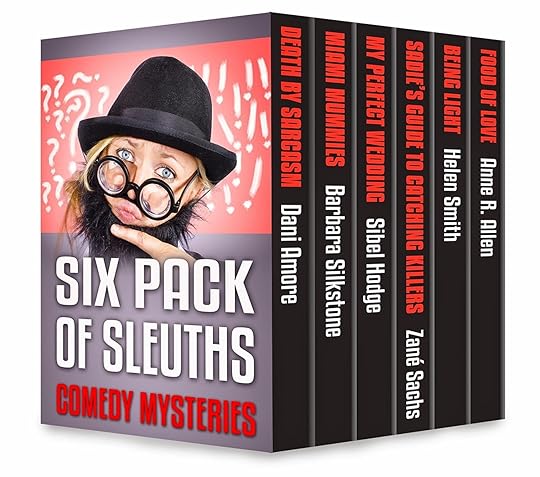
Six Pack of Sleuths is available from:
all the AmazonsKobo
iTunesB&N
OPPORTUNITY ALERTS
VIGNETTE WRITERS, here's a contest for you! The Vine Leaves Vignette Collection Contest. The prize is for a collection of vignettes and poetry up to 20,000 words. Fee $25. Prize is $500, publication by Vine Leaves Press (paperback and eBook), 20 copies of the paperback, worldwide distribution, and promotion through the Vine Leaves and staff websites. It will be judged by an editor from Simon and Schuster. Deadline February 28, 2015.
THE MEADOW NOVELLA PRIZE $15 ENTRY FEE. The winner of the contest will receive $500 and publication in the annual print edition of the journal. Submissions should be between 18,000 and 35,000 words. Deadline February 1, 2015.
Vestal Review Condensed Classics Anthology Call for submissions to an anthology of world classics condensed to 500 words or fewer. Submissions are still open for the new anthology edited by Mark Budman titled "Condensed to Flash: World Classics." Find specifics here and Scroll down to "Condensed to Flash" and check out the sub guidelines. You get paid: $15 and a digital copy for an original story and $5 and a digital copy for a reprint. The deadline: January 31, 2015.
The M.M. Bennetts Prize for Historical fiction. $10 Entry fee. $500 prize for the best historical novel published in 2014. To be announced at the Historical Novel Society Conference in June. Deadline January 31st, 2015
Writer's Digest Short Short Story Competition. First prize $3000. Top 25 will be published. Entry Fee $25. 1500 words or less. Deadline January 16th, 2015.
Although Laurie McLean is not open to general queries, she will be accepting queries from readers who mention this post! You can find her guidelines at Fuse Literary Agency, and her contact information at her blog, Agent Savant.
UPDATE: last week I posted about some high profile agents and other industry professionals who are saying self-published books are no longer a reliable bridge to traditional publishing. But not all agents feel that way! Here's what Laurie McLean has to say:
"Fuse is a renegade. I just sold a self-pubbed fantasy trilogy for six figures. And I've got two other self-pubbed authors who are garnering a lot of big trad pub interest, so I'm not willing to agree that the gravy train has left the station. Of course awards, intense marketing and fan clubs and other "extras" these authors have helped a lot." Thanks, Laurie, for your optimism and hopeful news!...Anne
WHY YOU DON'T NEED A LITERARY AGENTby Agent Laurie McLean
Publishing has been going through tumultuous times of late. Chaos reigns. But that doesn't scare me. I like chaos. Because when things are crazy it means there are opportunities galore for those willing to dive in and stir things up. And I like change as much as I like reading—which is a lot.
You see, publishing used to be very hierarchical and now it’s a much more level playing field. It used to be like this:
Author àAgent àPublisher àReader
But now it can be like this:
Author àReader
That should scare the bejeebers out of agents and publishers everywhere. Might even scare a few authors if they have some sense. Let’s recap:
Phase One: the Kindle Revolution
When Amazon’s Kindle e-reading device launched in 2007, followed quickly by the twin self-service publishing juggernauts Smashwords and KDP in 2008, my dormant high-tech antennae sprang back into action so fast I got whiplash!
For 20 years before I became an agent I had been in high tech marketing. I ran a PR agency that promoted emerging technology companies. To say that I had seen tech transform industries first hand is a gross understatement.
And now it was happening again in book publishing.
The Kindle succeeded because Amazon had the marketing muscle and pricing flexibility to make a market for ebooks for the first time.
Plus its Kindle Store put millions of books at reader fingertips. It was the ultimate in convenience and instant availability. And the low price points, with many free books (imagine!), made ebooks affordable for everyone.
I don't know about you, but in 2008-2010 I read dozens more books per year than I had previously because these devices made it fun. And the first "book" I sold in 2011 was an app—a testament to the experimental nature of dynamic, changeable text.
Once writers tried out Smashwords and KDP and experienced the automation of formatting and distribution, plus the freedom to experiment with cover art, pricing, edits, and more, it was clear that publishing had changed forever…and this change was happening so rapidly, success stories were cropping up faster than pop-up holiday stores.
Phase Two: The Rise of Social Media
Then came social media tools such as Facebook, Twitter, WordPress, Blogger, Linked-In, Pinterest, Tumblr, Instagram, and so many more. The revolution was not only being televised, it was being broadcast all over the World Wide Web!
As this second phase emerged, social media (especially blogging) became a friendly and familiar way to promote books. Now all bets were off. Writers could be at home typing away in their pajamas, while presenting their professional author brand front and center to the waiting world.
Readers could tell writers exactly what they thought without having to wait for a book signing tour to come to town. And there was something for everyone from caffeine junkies (Twitter) to serious nonfiction networkers (Linked-In).
Phase Three: The Self-Publishing Team and the Hybrid Author
Then the third wave hit. Writers who self-published a lot of books began to notice the importance of having their own publishing team. Independent editors, cover designers, interior book designers, formatters, marketers, bookkeepers, lawyers, business consultants, researchers and more began to form a cottage industry.
Kickstarter and Indiegogo gave writers a way to pay themselves their own advance and hire these ancillary professionals. I have clients who have successfully crowdfunded an adult picture book, a steampunk anthology, a graphic novel and an award-winning science fiction book.
The term Hybrid Author began to be used for writers who were thinking outside the covers of a book to reimagine their work in different media and using both traditional and self publishing techniques depending upon the project.
In fact, since this is a January guest blog, I’d like to make the bold prediction that we’ll all be Hybrid Authors in 5 years or less as different paths are taken to achieve each publishing goal.
So Do You Need an Agent?
But let’s get back to my original premise. Let’s talk about why you, as an author in 2015, do not need an agent.
First, it might be helpful to understand what an agent does.
At the most basic level, a literary agent is an author’s business partner. An agent locates a publisher interested in buying an author’s writing and then negotiates a deal. But a literary agent is so much more than that. An agent is:
A scout who constantly researches what publishers are looking forAn advocate for an author and his or her workA midwife who assists with the birth of a writing projectA reminder who keeps the author on track if things begin to slipAn editor for that last push before submissionA critic who will tell authors what they need to hear in order to improveA matchmaker who knows the exact editors for an author’s type of writingA negotiator who will fight to get the best deal for an authorA mediator who can step in between author and publisher to fix problemsA reality check if an author gets out of sync with the real worldA liaison between the publishing community and the authorA cheerleader for an author’s work or styleA focal point for subsidiary, foreign and dramatic rightsA mentor who will assist in developing an author’s careerA rainmaker who can get additional writing work for an authorA career coach for all aspects of your writing futureAn educator about changes in the publishing industryA manager of the business side of your writing life
So do you need one? Not necessarily.
If you self-publish, no self-respecting agent should ever take a penny of what you earn. Period. If your agent is not contributing to a project, they do not deserve compensation.
If you desire help with your cover design, want questions answered about editing on any level, need formatting advice, or seek wisdom about social media marketing, legal issues or other professional areas, you should either pay a flat fee per service rendered or if an agent offers to do this for a percentage of sales, that should be YOUR CHOICE!
With self-publishing, you might hire an agent to sell all the subsidiary rights that you now own. In fact, I’ll make another prediction that soon we'll see agents who only specialize in selling subsidiary rights for successful self-published authors. And why not?
You can make a lot of money from foreign translations, movies and television licenses, and audiobooks. Since you own all these rights, it makes sense to team up with someone who can sell them for you. If you know how to do this yourself, go for it. Most writers don’t. It’s a full time job.
Plus, if you want to sell to a Big Five publisher, well, for now, you’re still going to need an agent. But there’s another way agents can be helpful.
Back in the ancient past, say 2009, publishing pundits were screaming “conflict of interest” at agents who dared to offer assisted self-publishing as one of their services. Or at agencies who created a publishing arm to their business. I always thought that was ridiculous. I always try to get the best deals for my clients’ books.
But if I couldn't sell something because editors didn't see what I saw in a particular manuscript or writing style, why should that book or author be shelved? Plus, I had a lot of midlist authors who suddenly found themselves without a publisher. Were they just supposed to fold up their tents and vanish in the night? Not if I could help it.
Agents are the business experts in the publishing equation and are well-suited to be publishers. We know the entire process from story creation through to book distribution. And agents are great at networking and marketing. We have studied the arcane knowledge. We have personalities that can be beneficial.
Some agents are fabulous self-publishing guides, having learned the process themselves in the early days while continuing to keep up with the latest trends. Some agents are talented editors because that was the job they had in traditional publishing before leaving New York. And some agents are critically needed specialists on topics such as books-to-film, subrights sales, foreign deals, etc.
So you don’t need an agent in this dawn of a new age in publishing. You are perfectly capable of writing, publishing and selling every single book you write.
You no longer need an agent to be a REAL AUTHOR!
But you might want one.
And can I just pontificate a bit more here before we call it quits? Stop calling yourself a writer. If you've got a book out there for sale, you are an author. You don't need to jump through any more hoops. When people ask you what you do, you should, without hesitation or grimace, say, "I am an author." You don’t need anyone else's validation on that point.
In conclusion:
1. You don't need an agent to self-publish your books. You also don't need an agent to contact editors directly at conferences, or about digital-first imprints, or on work-for-hire projects.
2. If you want a good business partner, consider putting an agent on your team. Don't treat them like gods. Interview them like you would a high-level consultant.
3. Don't let the traditionalists pigeonhole you. Go out there and get your stories told.

Igniting Author Careers!Offices in San Francisco, New York, Chicago, Los Angeles, Vancouver
Laurie McLean is a veteran agent and the founder of Fuse Literary Agency . She specializes in adult genre fiction (romance, fantasy, science fiction, mystery, thrillers, suspense, horror, etc.) plus middle-grade and young adult children’s books. She does not handle non-fiction, or commercial, literary or women’s fiction, nor does she handle children’s picture books or graphic novels. Prior to founding Fuse Literary, Laurie was also the Dean of San Francisco Writers University and on the management team of the San Francisco Writers Conference.
What about you, Scriveners? Do you have an agent? Do you feel you'd benefit from having one? Do you have any questions for Laurie? She was planning to respond to all comments today, but because of the Golden Gate Bridge closure, she'll have to be travelling a lot more miles today than she anticipated. But she will stop by later to answer questions. And do note, she's accepting queries from our readers in the above genres
NEWS: I'm sure one of the things Laurie would tell you is that a query is more compelling if you have publication credits, and nothing is better for getting credits than the good old short story. My piece from November's Writer's Digest on why "Short is the New Long: 9 Reasons to Write Short Fiction" is now free to read at the Writer's Digest blog. I always include some opportunities to submit short work to journals and contests in the "OPPORTUNITY ALERTS" below.
BOOK OF THE WEEK
The KILLER SIX PACK: only 99c—for six novels!
Six Award-Winning Bestselling Authors bring you a Six Pack of Sleuths DEATH BY SARCASM by Dan Ames writing as Dani Amore MIAMI MUMMIES by Barbara Silkstone MY PERFECT WEDDING by Sibel Hodge, SADIE’S GUIDE TO CATCHING KILLERS by Zané Sachs (the demented alter-ego of author, Suzanne Tyrpak) BEING LIGHT by Helen Smith, FOOD OF LOVE, by Anne R. Allen

Six Pack of Sleuths is available from:
all the AmazonsKobo
iTunesB&N
OPPORTUNITY ALERTS
VIGNETTE WRITERS, here's a contest for you! The Vine Leaves Vignette Collection Contest. The prize is for a collection of vignettes and poetry up to 20,000 words. Fee $25. Prize is $500, publication by Vine Leaves Press (paperback and eBook), 20 copies of the paperback, worldwide distribution, and promotion through the Vine Leaves and staff websites. It will be judged by an editor from Simon and Schuster. Deadline February 28, 2015.
THE MEADOW NOVELLA PRIZE $15 ENTRY FEE. The winner of the contest will receive $500 and publication in the annual print edition of the journal. Submissions should be between 18,000 and 35,000 words. Deadline February 1, 2015.
Vestal Review Condensed Classics Anthology Call for submissions to an anthology of world classics condensed to 500 words or fewer. Submissions are still open for the new anthology edited by Mark Budman titled "Condensed to Flash: World Classics." Find specifics here and Scroll down to "Condensed to Flash" and check out the sub guidelines. You get paid: $15 and a digital copy for an original story and $5 and a digital copy for a reprint. The deadline: January 31, 2015.
The M.M. Bennetts Prize for Historical fiction. $10 Entry fee. $500 prize for the best historical novel published in 2014. To be announced at the Historical Novel Society Conference in June. Deadline January 31st, 2015
Writer's Digest Short Short Story Competition. First prize $3000. Top 25 will be published. Entry Fee $25. 1500 words or less. Deadline January 16th, 2015.
January 4, 2015
Why the Self-Published Ebook is No Longer the "New Query"
by Anne R. Allen
A few years ago, soon after the debut of the Kindle e-reader, the world was buzzing with talk of self-published "Kindle Millionaires" like Amanda Hocking and John Locke, and big publishers were beating a path to the doors of all the newly successful self-published ebook writers.
Even modestly successful self-publishers were being approached by agents with offers of representation. Agents were actually urging authors to self-publish, as in this quote from agent Jenny Bent from Sept 7, 2011, which I gleefully quoted on this blog.
"Unpublished authors, do you have a great book but can't find an agent? There's no excuse not to get that book out there independently and prove to yourself and to the world that there is an audience for your writing."
Soon after, as Ms. Bent said in an interview a few years later, an "industry" grew up of agents and publishers who approached Amazon bestsellers and offered them contracts. Some were more ethical than others, but many did get lucrative deals for their formerly self-pubbed clients.
That year, at the peak of "the EBook Revolution", Random House bought a self-pubbed book that became one of the bestsellers of all time, the notorious Fifty Shades of Grey.
But four years is a long, long time in publishing years.
Since then, a number of things have altered the publishing landscape (yet again).
1) Many of the authors who made those big deals did not earn out their advances.
As agent Janet Reid says:
"If you dig beyond headlines and snakeoil blogs, you'll discover that a lot of the people who "got discovered" by self-pubbing have not gone on to stellar print careers."
The Big Five usually charge a whole lot more for the same ebook, so sales often plummet once a book goes from indie to trad. An ebook that zoomed to the top of the charts at $3.99 often comes to a screeching halt at $12.99.
Also, agents usually take a book out of circulation from the moment the deal is inked until a year or more later, in which time the book loses all momentum. If people do recall the title when it resurfaces, they'll remember it as old news.
2) Ebooks provide higher profits than print, and the ebook market for your title may be tapped out.
An ebook doesn't have to be printed, shipped or displayed in brick and mortar bookstores, and electrons don't cost a thing. That means the profit to be made with an ebook is a much higher percentage than for a hard copy.
An indie title that has sold millions in ebook form has probably raked in the biggest profits already.
Even if sales can be expected to be brisk in print, the bottom line isn't big enough to be worth the trouble for most publishers. Executives at the Big Five are loathe to put money into a print run for a book whose profits have peaked.
As agent Kristin Nelson said in November, "a St. Martin’s editor was willing to go on record to explain exactly why her house will no longer buy indie authors who have self-published ebooks that have gone on to be wildly successful. St. Martin’s claims their data shows that the ebook sales have already tapped out the market."
This hasn't always proved true, as in the case of Nelson's client Hugh Howey and his Sci-Fi novel Wool, which went on to sell millions in hard copy after his phenomenal self-publishing debut. But Howey is the exception rather than the rule.
Since super-agent Nelson is well known for getting some of the biggest traditional deals for former self-publishers, her words have weight. If she no longer can get the Big Five to look at self-pubbed titles, it's unlikely that other agents will be willing to try.
3) Some chain bookstores refuse to promote formerly self-published books
Nelson also says bookstores often refuse to promote former indies, even with an enticing "co-op" deal (that's when publishers pay to rent the real estate in the front of a store to promote certain titles. )
Nelson was quoted in the Digital Reader, saying, "…even if a publisher buys a successful indie title intending to publish a trade paperback edition, and even if they’re willing to pay bookstore co-op, booksellers are reluctant to grant that title the physical retail space. They are simply turning down the co-op offer."
I don't know exactly why this is, but I have some theories.
By "chain bookstores" she may have meant Barnes and Noble specifically. B & N is a rival of Amazon, and they may see giving space to former indies as promoting Amazon, since indies generally make the majority of their sales on Amazon.
Or she may have been referring to the reputation indies have for producing unvetted work, including illegal, hardcore erotica.
After the big mess with illegal self-pubbed erotica making it into some of the big UK bookstores via Kobo in 2013, Kobo removed a huge number of indie books (both small press and self-pubbed.) Many of these books (like mine) didn't have a bit of sexual content, but Kobo's executives saw all small presses and self-publishers as suspect. (Kobo did eventually restore the majority of titles, but they took their time.)
UK bookstore chains like W.H. Smith and Waterstone's refused to carry any indie books after the scandal. I hear they are starting to restore a handful of very popular indie titles, but the big UK chains seem to continue to fear that indies will flood their websites with nasty stuff about getting it on with Bigfoot.
4) E-readers are full. People are more selective about what they download, even if it's free.
In those heady days of 2008-2011, anybody could make a book free on Amazon and it could hit the bestseller lists without a bit of promotion. In fact, at the beginning, there was no freebie bestseller list. An unknown self-pubbed ebook like Elisa Lorello's Faking It could be "sold" as free in 2008 and make it to #1 in the whole Kindle store. (And Amazon soon scarfed it up for their own imprint.)
But even after the introduction of the "Free" list, it wasn't hard to make "bestseller" status. My first freebie put me in the top 1000 in literature and fiction, and I didn't even know about it. My publisher just put it free for a couple of days and there it was.
That was because e-readers were new and picking up new ebooks for them was fun. But now a lot of people (including me) have 200+ books on our Kindles, so we think twice about downloading new books, even if they're free.
As author/publisher Bob Mayer told the New York Times, "If you’re not an author with a slavish fan following, you’re in a lot of trouble. Everyone already has a ton of things on their Kindle they haven’t opened."
5) Amazon is no longer the indie playground it used to be
Amazon's algorithms no longer treat indies as equals with the same "also-boughts" and advantages they give their own growing list of imprints, so becoming a bestseller is a whole lot harder if you self-publish or go with a small press.
The Zon also requires that you stay exclusive with them in order to offer freebie runs and countdowns, plus the borrows everybody used to get with Amazon Prime. Plus borrows pay a lot less than they used to since Kindle Unlimited debuted last summer.
In fact, the Kindle Unlimited program has been mostly a disaster for authors. Borrows only get a payout if at least 10% of the book is read, and the payout amount decreases by the month.
Amazon has also started to offer big bonuses to the superstars at the top of their bestseller lists. Most of the stars are with Amazon imprints and other trad. publishers, so that hurts indie authors as well. The superstars get big monthly checks from the K.U. pot, so the pot shrinks for everybody else. Amazon has become a zero-sum game where a handful of winners take all. Even former megasellers like H.M. Ward have seen their incomes plummet by 75%.
As Mark Coker said on his blog in November:
"The gravy train of exponential sales growth is over. Indies have hit a brick wall and are scrambling to make sense of it. In recent weeks, for example, I’ve heard a number of indie authors report that their sales at Amazon dropped significantly since…Amazon launched Kindle Unlimited."
Why? Partly because Kindle Unlimited draws the readers who buy the most books and decreases the amount of money they spend. For a flat fee, they can read all the books they want. So somebody who used to spend thousands a year on books now only spends $10 a month.
Also, people in the program are more likely to choose expensive trad-pubbed books over the 99c-$4.99 indie book because it looks like more of a bargain.
For more on how K.U. has ended the "indie honeymoon" with Amazon, see Porter Anderson's piece at FutureBook , David Streitfeld's piece from last Sunday's New York Times and another on Friday, as well as Mike Shatzkin's Dec. 31st post in the Shatzkin Files.
All the big name authors' books available at bargain prices have had a huge impact, too, as Russell Blake said on his blog in December:
"The tried and true gambit most indies have been using, which is selling based on price, at .99 or $2.99 or $3.99 or $4.99, likely won’t work particularly well anymore. Because when you can buy Gone Girl for $2.99 and Connolly’s latest at $3.99, why would most readers buy your book at or around the same price?"
Another thing Amazon has removed recently is the nice button that allowed you to share your purchase on Twitter, FB, etc. Clicking on a button that said, "I just bought [title] by [author]" was a simple way for a reader to endorse a book. Now it's gone. One more way that Amazon is becoming less author-friendly.
6) Most of the "tried and true" techniques for marketing indie books are no longer effective
a) Trad-pub has taken over Bookbub. The bargain book newsletter which used to be the most effective marketing tool for indies is now often dominated by Amazon imprints and Big Five backlist titles at bargain basement prices. The prices for advertising in a Bookbub mailing have also gone through the roof, and it's so popular, very few books make the cut.
b) Freebies don't mean much anymore. One of the best marketing techniques for indies was the free book. But now that Kindles are full, most people aren't excited about getting another free book. As reviewer Ed Cyzewski said on his blog recently, "If you’re promoting a book, you need to keep this in mind: A FREE BOOK IS NO LONGER A TREAT." (Ed's caps.)
c) Social media has been spammed to death. Facebook has become pretty much useless for authors, since FB only shows your posts to about a tenth of your followers unless you pay extra. Plus so many writers post endless streams of Twitter spam that nobody pays attention to any of it. Some writers say they make sales through Pinterest, but even those are fading.
You Can Still Have a Career as an Author-preneur
I don't mean to discourage anybody who genuinely wants to self-publish. Many self-publishers are still doing well and much prefer having control of their own careers.
Self-publishing is here to stay.
It's also growing and changing. Ebook sales have stalled at about 25% of the market, but indies are finding better ways to distribute their paper books. A few months ago, indie superstar Barbara Freethy signed her own deal with the #1 US distributor Ingram to provide hard copies of her books for bookstores without going through a publisher
As Porter Anderson wrote at Thought Catalog, "If Ingram can translate what it’s doing for the big-selling Freethy into practical, actionable avenues to bookshops for more modestly producing self-publishers, a considerable shift might be in the offing."
The really successful indies have no interest in traditional contracts. They don't need them. Romance superstar Marie Force has made the NYT bestseller list 11 times as an indie, and Brenna Aubrey, who turned down a six figure deal with trad publishing last year has had phenomenal success this year. It still does happen, especially for romance writers!
As Mark Coker said "If you publish for the right reasons and you adopt best practices that make your books more available and more desirable to readers, your future is as bright as your imagination."
But ebooks are no longer a novelty and the Amazon gravy train has left the station. Authors who want to make it as indies will have to use patience, well-placed advertising, and smart platform-building. Facebook and Twitter are no longer enough.
They will also do better with frequent launches of shorter books than a handful of long ones.
Most important: indies have to make their products available at as many retail sites as possible. Even though K.U.'s policies hurt most authors, other subscription services like Scribd and Oyster pay full royalties for all borrows.
Authors will thrive if they think outside the Amazon box.
For a great overview of the post-K.U. ebook outlook, Jason Matthews has a thoughtful post at The Book Designer. And here's another from indie guru Kristine Kathryn Rusch, who reminds us that "the publishing business is about ups and downs, not a slowly upward trending line."
But if your ultimate goal is a Big 5 contract...
Self-publishing is not the best path for authors who hope to have a "hybrid" career. If you want some of your titles to be traditionally published, you'll have to go with the trads first, which means starting by querying agents.
Some YA agents say they still do check Wattpad for superstars with an eye to signing them as clients. But Wattpad is a social network where people give away chapters of their books for free, not a self-publishing platform.
I recently read a blogpost by a self-publisher who used self-publishing as a kind of apprenticeship. She unpublished everything when she felt she was good enough to publish traditionally.
But in today's climate, I urge people like her who want a trad. career NOT to self-publish. Go the traditional route from the beginning. Don't put money into expensive cover design and marketing when you don't have a product that can compete with trad-pubbled titles. It's especially unwise to throw amateur work on Amazon with a homemade cover and no editing if you're hoping for a real writing career someday. Those things can lurk in dark corners of the Interwebz and come back to haunt you.
Put that energy into workshops and conferences and classes. The publishing business is for professionals, whether you self-publish or go traditional. Become one.
Mild self-publishing success will not work in your favor with agents. You need to first have a mega-seller, then query with another book (not in the same series.) Even then, agents will not be as interested as they were four years ago.
The new query is the old query. If you want a traditional or hybrid career, learn to write at a top-notch professional level, create a great book, and start the agent hunt anew. The best places to start hunting are QueryTracker and AgentQuery. The QueryShark archives can help you polish up that query.
If you're still on the fence about whether to self-publish or go the traditional route, here's a handy infographic to help you decide.
Next week: we'll have a guest post from Agent Laurie McLean of Fuse Literary Agency talking about all the latest news in the agent business.
And as a special favor, Laurie McLean will accept queries from readers of this blog, even though she is closed to queries from the general public.
So what about you, Scriveners? If you're self-published, have you found that K.U. is cutting into your bottom line? If not, can you share your success story with us? Or are you pre-published and still hoping for that Big Five contract? Have you felt pressured to self-publish? Are you planning to query agents with your current work?
BOOK OF THE WEEK
I have a new book!
It's a collection of eight stories and eight verses, formerly only available in anthologies and hard to find literary journals. Some are award winners. All are kinda funny.
Only 99c.
Why Grandma Bought that Car
I love the fun cover by designer Keri Knutson
 99c on Amazon
Humorous portraits of rebellious women at various stages of their lives. From aging Betty Jo, who feels so invisible she contemplates robbing a bank, to neglected 10-year-old Maude, who turns to a fantasy Elvis for the love she's denied by her patrician family, to a bloodthirsty, Valley-Girl version of Madam Defarge, these women—young and old—are all rebelling against the stereotypes and traditional roles that hold them back.
Which is, of course, why Grandma bought that car…
OPPORTUNITY ALERTS
VIGNETTE WRITERS, here's a contest for you! The Vine Leaves Vignette Collection Contest. The prize is for a collection of vignettes and poetry up to 20,000 words. Fee $25. Prize is $500, publication by Vine Leaves Press (paperback and eBook), 20 copies of the paperback, worldwide distribution, and promotion through the Vine Leaves and staff websites. It will be judged by an editor from Simon and Schuster. Deadline February 28, 2015.
THE MEADOW NOVELLA PRIZE $15 ENTRY FEE. The winner of the contest will receive $500 and publication in the annual print edition of the journal. Submissions should be between 18,000 and 35,000 words. Deadline February 1, 2015.
Vestal Review Condensed Classics Anthology Call for submissions to an anthology of world classics condensed to 500 words or fewer. Submissions are still open for the new anthology edited by Mark Budman titled "Condensed to Flash: World Classics." Find specifics here and Scroll down to "Condensed to Flash" and check out the sub guidelines. The payment: $15 and a digital copy for an original story and $5 and a digital copy for a reprint. The deadline: January 31, 2015.
The M.M. Bennetts Prize for Historical fiction. $10 Entry fee. $500 prize for the best historical novel published in 2014. To be announced at the Historical Novel Society Conference in June in Deadline January 31st, 2015
Writer's Digest Short Short Story Competition. First prize $3000. Top 25 will be published. Entry Fee $25. 1500 words or less. Deadline January 16th, 2015.
THE GOVER PRIZE FOR SHORT-SHORT STORIES from Best New Writing. $5 Entry Fee
Prize is $250 and publication in Best New Writing to the best short fiction and creative nonfiction. Entries are limited to 500 words or less. Gover Prize winner and finalists will be published in the upcoming BNW edition. Deadline January 10th, 2015
December 28, 2014
What Did You Care About Most in 2014? Our Top Writing Stories.
by Ruth Harris
As Anne and I looked back at the blog for the past year, a portrait emerged highlighting the themes and subjects that interested you most. We were intrigued by these clues about what was on our readers’ minds in 2014 and thought you’d be interested, too. So here are the topics that rang your bells.
Feedback
As writers we care about how our readers respond so getting feedback is high on our lists. A series of three posts addressed this important issue from three different points of view:
Anne delved into the function of crit groups and offered guidelines about what advice to heed and what to ignore.Editing is life. The blue tie? Or the yellow one? Peter or Paul? Or Mary? Ruth, a former editor, shared the secret of every successful writer, editors and editing, Jami Gold made valuable suggestions about how and where to find beta readers and how to hone your own skills as a beta reader.
Beginnings and endings
Great first chapters, made even more important because of the “Look Inside” feature, seal the deal and impel the reader hit the buy button. Ergo: first chapters matter. A lot. Anne talked about how not to begin your book (and turn off your prospective reader). Now that you’ve written a grabby, impossible-to-resist first chapter, what next? Chapter endings keep the pages turning. Jessica Bell gave must-heed advice about the key to a great chapter ending.
Do’s and Don’ts
Twitter Is big, confusing, fun, and scary and you have only 160 characters to make your point. Here’s Molly Greene’s stellar advice about how to behave (and how not to) on twitter.Aiming too high? Aiming too low? Stuck with a lousy deal? Anne wrote about the dumb things she did and what you can do so you don’t make the same mistakes. Pay attention!Tipping off that you’re a clueless newbie? Turning off readers and agents? You don’t want to do that either, do you? Here’s Anne’s guide to beginner’s mistakes—the mistakes you don’t want to make.
The no-outline outline, the killer blurb and writing for the 21st Century
There are plotters and there are pantsers but what about those of us somewhere in the middle? Nathan Bransford boils it down to 3 great tips that will get you from that first vague idea to an actual, usable plan that will get your book (and you) off to the right start.Blurbs are so important that today even the Bible has one. They are a little bit art, a little bit craft, a little bit commercial poetry, so how the $^%# do you write one? Ruth, a blurb writer in a former life, shares some tips.Styles change in art, music, fashion. And in books, too. Sketch, don’t paint. Unbury your dialogue. The magic of white space. Anne offers valuable insight into writing for the 21st Century reader.
Genre, categories and keywords
Romance with a side of horror? Happens in real life—oy!—but not such a hot idea in fiction. Cozy mystery with a side of blood and gore? Only if you want readers coming after you with shoulder-fired missiles. Genres come with rules that create guidelines for writers—and set up expectations in readers. Here’s Ruth’s round-up of genres with links to expert advice about how to write them. Readers know what they like and what they want. Categories and keywords help them find what they’re looking for and smart writers know how to use them effectively. Ruth delved into the mysteries of BISAC and BIC, of categories and keywords with lots of advice from the category and keywords gurus.
Coming attractions...from Anne
We've had such enthusiastic responses to our guest bloggers this year, we've invited some more great guests for 2015:
January: Agent Laurie McLean of Fuse Literary Agency on "Why You Don't Need a Literary Agent" (but why you might WANT one.)
This is an absolute MUST READ for anybody who is querying right now. Even though Laurie is closed to queries, SHE WILL ACCEPT QUERIES FROM READERS OF THIS BLOG.
Also in January: an interview with February: Melodie Campbell, Canada's Queen of Comedy and president of Crime Writers of Canada will be back for another of her hilarious how-tos.
March: Super-editor Jodie Renner on How to Write Award-Winning Short Fiction.
April: Robin Houghton, author of the great book Blogging for Writers with some Insider's Blogging Tips.
We also hope to have a visit from radio talk show host Dave Congalton with tips for authors on how to be a good radio guest.
We're also hoping to have some of our great guests from last year back again.
Coming up from Ruth: She's been researching the newest approaches to creativity and productivity and she's planning a post I know will help and inspire us all.
Coming up from Anne:
How Kindle Unlimited has changed indie publishing and why we need to think outside the Amazon box.Has the Indie Bubble Burst?How new changes to social media affect authors. Authors as marketers: why a lot of marketing advice doesn't apply to selling books.Should you follow the trend and return to newsletters and drop social media?Why quality, not quantity, is what still matters. Why blogging is more important for authors than ever. In spite of what you may hear.Why customer reviews are becoming less relevant. How to save money and time by ignoring people who are exploiting authors. Tips for entering (and winning) contests.How to decide if your book will do better with trad. or indie publishing in today's market.
Both of us wish all of you great reviews and happy readers, sentences that flow and books to be proud of. We look forward to seeing you in 2015 and, until then, wish you the very best of New Years!
BOOK OF THE WEEK
CHANEL and GATSBY: A Comic two-fer. Only 99c!
Hollywood and Manhattan: it's Bi-Coastal Comedy!
Available at NOOK, Kobo, Amazon US, Amazon UK, Amazon CA
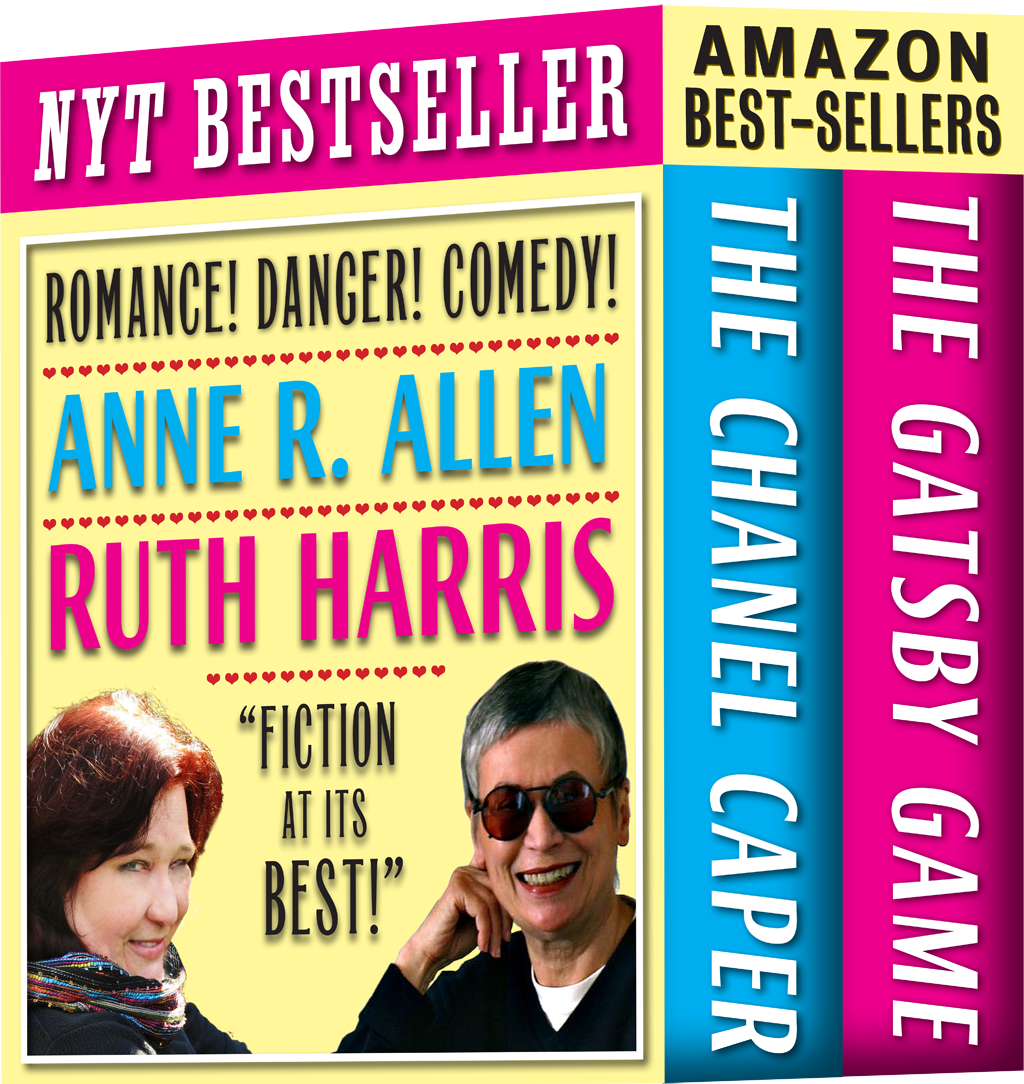
The Chanel Caper
JAMES BOND MEETS NORA EPHRON. OR IS IT THE OTHER WAY AROUND?
Blake Weston is a smart, savvy, no BS, 56-year-old Nora Ephron-like New Yorker. Her DH, Ralph Marino, is a très James Bond ex-cop & head of security for a large international corporation. At a tense time in their relationship, Blake & Ralph are forced to work together to solve a murder in Shanghai & break up an international piracy ring.
A totally fabulous, LMAO adventure with some of the best one-liners I've ever read!!! Ruth's wit is just a hoot, and her characters have the best sassy mouths in the biz!!!...bestselling author D.D. Scott
The Gatsby Game
A POSSIBLE SOLUTION TO A 40-YEAR OLD UNSOLVED HOLLYWOOD MYSTERY
When Nicky Conway meets Fitzgerald-quoting Alistair at a Princeton mixer, she falls for his retro, Jazz-Age charm. But she discovers he’s a con man obsessed with his own “Daisy”—British actress Delia Kent. After Alistair manipulates Nicky into nannying for Delia’s daughter on the set of a Hollywood film, Delia finds Alistair dead in her motel room. Local police can’t decide if it’s accident, suicide—or murder, in which case, Nicky is the prime suspect.
"For anyone who likes their books to be witty, with great characters, an atmosphere which it is a delight to experience, and a fast moving plot, this book is one you definitely shouldn't miss." ...Gerry McCullough of Gerry's Books
OPPORTUNITY ALERTS
VIGNETTE WRITERS, here's a contest for you! The Vine Leaves Vignette Collection Contest. The prize is for a collection of vignettes and poetry up to 20,000 words. Fee $25. Prize is $500, publication by Vine Leaves Press (paperback and eBook), 20 copies of the paperback, worldwide distribution, and promotion through the Vine Leaves and staff websites. It will be judged by an editor from Simon and Schuster. Deadline February 28, 2015.
THE MEADOW NOVELLA PRIZE $15 ENTRY FEE. The winner of the contest will receive $500 and publication in the annual print edition of the journal. Submissions should be between 18,000 and 35,000 words. Deadline February 1, 2015.
The M.M. Bennetts Prize for Historical fiction. $10 Entry fee. $500 prize for the best historical novel published in 2014. To be announced at the Historical Novel Society Conference in June in Deadline January 31st, 2015
Writer's Digest Short Short Story Competition. First prize $3000. Top 25 will be published. Entry Fee $25. 1500 words or less. Deadline January 16th, 2015.
THE GOVER PRIZE FOR SHORT-SHORT STORIES from Best New Writing. $5 Entry Fee. The prize is $250 and publication in Best New Writing to the best short fiction and creative nonfiction. Entries are limited to 500 words or less. Gover Prize winner and finalists will be published in the upcoming BNW edition. Deadline January 10th, 2015
WALKER PERCY PRIZE IN SHORT FICTION $15 ENTRY FEE. Winner receives $1,000 and publication in New Orleans Review. All finalists considered for publication. Enter previously unpublished original stories up to 7,500 words. Deadline December 31st
Writers’ Village International Short Fiction Contest: $24 entry fee. Prizes of $1600, $800, $400 and $80. A further ten Highly Commended entrants will receive a free entry in the next round. Professional feedback provided for all entries! Any genre: up to 3000 words. Deadline December 31st.
December 21, 2014
25 Must-Read Tips on Plotting from Top Authors and Editors
We have a special post for the holidays, compiled by freelance editor M. J. Bush.
I first met M. J. when she included Ruth and me in one of her great quote compilations: "99 Essential Quotes on Character Creation". I appreciated all the work that went into her post and asked if she'd like to do a quote post for us.
I'm especially grateful that she was able to get it done early and move it up to this month. I'm just now clawing my way back to health after a month-long Virus from Hell. It's a huge help that she's going to be at the helm while I'm madly wrapping gifts, addressing cards, and packing for a Christmas visit to my family.
I'm so glad she decided to tackle the subject of plotting. Mastering the art of the plot is probably the toughest part of learning to write novels. We can have too much going on, or too little. Or have it going on in the wrong place at the wrong time.
Even seasoned professionals usually need an editor's help to make sure the plot doesn't rush or sag anywhere.
Without a compelling plot, the most beautifully drawn characters, brilliant insights, and lyrical prose are lost on most readers.
Plot is the engine that drives your novel. M. J. brings us some tips to help you keep that engine fine-tuned. And if you follow all the links she provides, you will have a superb mini-course in how to plot your novel. Many thanks to her for compiling this excellent list!
Ruth and I wish you all a very happy holiday season...Anne
25 Penetrating Quotes on Plot Compiled by M.J. Bush
Plot is story; story is plot. Without something happening, your characters aren’t pushed to grow and you can’t show their carefully crafted complexities.
With a well-formed plot, you pull in the reader with flawless tension handling, robust arcs, and vibrant themes.
Brush up with 25 quotes from plot-savvy writers:
1. Structure is required in all of art. Dancing, painting, singing, you name it–all art forms require structure. Writing is no different. To bring a story to its full potential, authors must understand the form’s limitations, as well as put its many parts into proper order to achieve maximum effect.
K.M. Weiland, Structuring Your Novel
2. The best way to travel the length of your story is to grab hold of the throughline—the driving force of the book—and refuse to let go.
Nancy Lamb, What is the Throughline of a Novel? (And Why It’s Important You Have One)
3. Unless your story is very basic and simple, the throughline is something you will consciously have to look for and adjust.
Mooderino, Throughline: Tying Your Story Together
4. When you are mind mapping, you don’t need to think linearly yet. You just want to throw ideas onto the paper to let your story start gelling. Try to come up with ten strong scenes that will be the pivotal moments in your story.
C.S. Lakin, Ways Novelists Can Brainstorm Plot and Scenes
5. The fix for most script problems is to give serious attention to the movement from one narrative moment to the next. The easiest way to understand what a narrative moment is, is to ask two questions: What does this action or this line of dialogue force the audience to question? How does that information relate to previous questions raised by the story?
Clive Davies-Frayne, Why I Don’t Read “How To” Screenwriting Articles Anymore
6. You can’t rush certain sections to get them to a plot point or you might race ahead of the reader.
Roz Morris, Story structure: why plot milestones might not be equally spaced – and why that’s good
7. Plotting with mini arcs can be a handy tool to break your novel into smaller, more manageable pieces that keep the story moving and the ideas coming.
Janice Hardy, Plot Your Novel With Mini Arcs
8. As you are working out the plot for your book (or, for you pantsers, as you are trying to figure out what happens next,) make a list of all the things that could happen next.
Kara Lennox, The Plot Fixer #8 – Is Your Plot Too Predictible?
Tweetable: "Don’t go with the obvious next move in your story. Brainstorm and see what else you could do."
9. Make coincidences add complications, not take them away.
Jami Gold, The Green Lantern Movie: How *Not* to Plot a Story
10. Every scene should have conflict and a great way to test this is to do a Conflict Lock.
Kristen Lamb, Structure Part 8–Balancing the Scenes that Make Up Your Novel
11. Is there any point where a reader might feel like putting the book down?
James Scott Bell, 6 Common Plot Fixes
12. Subplots matter far more than their name implies. If a screenplay dies in Act 2 or Act 3, it’s just as likely the problem lies in the subplots as in the main narrative.
Allen Palmer, The secret to subplots
13. If a story goes too long without new information being revealed, the reader can get bored and feel that nothing is happening.
Janice Hardy, A Trick for Keeping Your Plot (and Story) on Target
14. What stirs our hearts isn’t the grand sweep of a plot but the piercing effect of moments along the way.
Donald Maass, Plot vs. Heart
15. It’s important to remember that your hook isn’t just the first line of a story, but a concert of parts acting together – the first line that pulls you in soundlessly or with a bang, the follow-up that adds depth and meaning to that first line making it as real as the Velveteen Rabbit, and the moment of clarity that connects the starting point to the rest of the novel.
Natalie C. Parker, The Anatomy of a Good Hook
16. The inciting incident is, by no means, an optional plot point. Without a life-altering event to catapult our characters in one direction or another, there isn’t a story.
Ava Jae, Plot Essentials: Inciting Incident
17. The pre-middle consists of the time period between receiving the invitation and the start of the “meaty” action. This is a great time for your hero to take a short trip, where he can naturally observe new things without “information-dumping” on the reader.
Christine H., What Every Writer Should Know About Their Novel’s Pre-Middle
18. Antagonists rule the middle and are there to teach the protagonist what she needs to know in order to prevail at the climax at the end.
Martha Alderson, How to Turn a Lackluster Middle into Page-turning Excitement
19. Before the Mid-Point both the hero and the reader experience the story with limited awareness of the real truth behind what’s going on. Because it reveals significant new information, everything after the Mid-Point carries new weight and dramatic tension.
Larry Brooks, Story Structure Series: #6 — Wrapping Your Head Around the Mid-Point Milestone
20. The midpoint moment is the moment that tells us what the novel or movie is all about.
James Scott Bell, Write from the Middle
Tweetable: The midpoint shift and the mirror moment are scene and sequel. Revelation and realization. External and internal.
21. At the Second Plot Point you can smell the ending just around the corner, whereas in the scene before you couldn’t. And yet, you’re not sure what it will be.
Larry Brooks, Story Structure Series: #8 – The Second Plot Point
22. The All Is Lost moment is powerful because it is primal. It reaches down into the core of our beings and takes what we fear in our lives and makes those things real.
Cory Milles, When All Is Lost, Your Story Succeeds
23. Your black moment isn’t black enough until the reader, and possibly even you as the writer, can’t see a way out.
Kara Lennox, Plot Fixer: Weak Black Moment and The End Does Not Satisfy
24. In many stories, the characters change a little bit at a time, but they won’t really change—deep down where it counts (and where it will stick)—until they realize how their beliefs are false. This revelation often happens all at once, right as they’re facing the biggest obstacle during the Climax.
Jami Gold, Building a Character Arc: Start at the End
25. The strategic purpose of a denouement is to reorient the characters towards the next phase of their lives.
Jason Black, Does your denouement murder your characters?
There are many names for the different points. To avoid confusion, I suggest picking one paradigm and sticking to it (with the addition of James Scott Bell’s mirror moment). But no matter which you choose, all the advice here should be easy enough to apply to the appropriate points in the your story.
Let’s recap. In a well-formed plot…
The midpoint shift and mirror moment embody your main theme. Tension is escalated with the use of well-timed conflict, obstacles, and complicating coincidences.Your characters arc naturally because of the revelations, realizations, and crises they go through. In the process, they show more of themselves.
Creating a plot takes the courage to trust your choices, the stomach to nuke what isn’t working, and the perseverance to keep plugging away.
I won’t claim it’s easy. Sometimes I have to set a plot aside for a few days to see where it isn’t working. The problem might be in the themes or the plot points or the reactions. It might be that I’m unconsciously protecting my characters from the worst. There are a lot of areas to consider.
...The point is: a healthy plot is worth the effort.
What about you, Scriveners? Do you have any questions for M.J. ? Additional insights to add to the list? Chime in! What's the toughest part of plotting for you?
If you'd like to join M.J.'s mailing list, she'll provide this post as a PDF here: 25 Penetrating Quotes on Plot PDF.
M. J. Bush blogs at WritinGeekery . She is a full-time writing coach, editor, and fantasy writer. She wants to "help writers climb through the jungle of conflicting advice and overwhelming information to find their personal perspective, true voice, and unique writing process."
BOOK OF THE WEEK
BOOMER WOMEN: Three Comedies about a Generation that Changed the World. ONLY 99c for a limited time. That's 33c a book!
.jpg)
The Lady of the Lakewood Diner, Food of Love and The Gatsby Game, now available in one boxed set. At Amazon US Amazon UK, Amazon CA, Inktera, Nook, Kobo, iTunes, Scribd And here's the link to the International Amazon page.
"Canny cultural observation that brings to mind two of my favorite British authors, Barbara Pym and Penelope Fitzgerald. Yes, the humor is there and sometimes spew-your-cocktail funny, but the character depth and plot fulfillment go so far beyond the humor. I felt I knew these people. I felt I was there." …Debra Eve
" I always enjoy a return to the not-so-past past, and Anne Allen does it so well. There is a mystery and nefarious things, but the best are her great characters and how they respond to events happening. A good read and a keeper." …JoAnne Lucas
"...if you’re looking for a quickened heartbeat, this is a story for you. It never sags. If anything, it roller-coasts." …Russell Bitner
OPPORTUNITY ALERTS
The M.M. Bennetts Prize for Historical fiction. $10 Entry fee. $500 prize for the best historical novel published in 2014. To be announced at the Historical Novel Society Conference in June in Deadline January 31st, 2015
Writer's Digest Short Short Story Competition. First prize $3000. Top 25 will be published. Entry Fee $25. 1500 words or less. Deadline January 16th, 2015.
THE GOVER PRIZE FOR SHORT-SHORT STORIES from Best New Writing. $5 Entry Fee
Prize is $250 and publication in Best New Writing to the best short fiction and creative nonfiction. Entries are limited to 500 words or less. Gover Prize winner and finalists will be published in the upcoming BNW edition. Deadline January 10th, 2015
VIGNETTE WRITERS, here's a contest for you! The Vine Leaves Vignette Collection Contest. The prize is for a collection of vignettes and poetry up to 20,000 words. Entry Fee $25. Prize is $500, publication by Vine Leaves Press (paperback and eBook), 20 copies of the paperback, worldwide distribution, and promotion through the Vine Leaves and staff websites. It will be judged by an editor from Simon and Schuster. Deadline February 28, 2015.
THE MEADOW NOVELLA PRIZE $15 ENTRY FEE. The winner of the contest will receive $500 and publication in the annual print edition of the journal. Submissions should be between 18,000 and 35,000 words. Deadline February 1, 2015.
WALKER PERCY PRIZE IN SHORT FICTION $15 ENTRY FEE. Winner receives $1,000 and publication in New Orleans Review. All finalists considered for publication. Enter previously unpublished original stories up to 7,500 words. Deadline December 31st
Writers’ Village International Short Fiction Contest: $24 entry fee. Prizes of $1600, $800, $400 and $80. A further ten Highly Commended entrants will receive a free entry in the next round. Professional feedback provided for all entries! Any genre: up to 3000 words. Deadline December 31st.
December 14, 2014
Confessions of NYT Bestselling Author Gone Indie
by Eileen Goudge
We have a visit from a literary superstar this week. New York Times bestselling author Eileen Goudge has written 32 novels, sold over a million copies, and been translated into 22 languages.
I first heard about Ms. Goudge in the 1980s, when my friends and I all ran out to buy her phenomenal novel Garden of Lies when it first made the New York Times bestseller list. I was living in the San Diego area at the time, and she was making all the local papers as the "hometown-girl-makes-good."
But like so many successful traditionally published authors at the height of their creative powers, Eileen found herself pushed out by her publisher (and agent--in a particularly unpleasant way, as you'll read below) as the marketing department went off chasing the next shiny thing.
We live in a winner-takes-all economy these days, and publishing companies often don't want to promote skilled, regular producers of good quality product when they can throw all their money behind a brand new Snooki book or ghost-written celebrity tell-all.
By cutting the advertising budgets of long-term successful authors, publishers create self-fulfilling prophecies that these authors "aren't selling anymore" and the authors find they're no longer making a living at the profession they've practiced successfully for 20+ years.
Luckily we now have self-publishing. Some of the most successful self-publishers are the former stars who were told they "weren't selling anymore" and went on to hit the bestseller lists as indies and live there permanently, like Catherine Ryan Hyde (who has a similar story of being told she "no longer had an audience" before hitting the #1 spot on Amazon with each of her self-published novels.)
However, Eileen didn't just have to deal with shifting publisher loyalties, difficult agent relationships and the usual disrespect. She also had a tech/social media catastrophe that would win any bad luck contest.
She has a message for all of us about how to take care of ourselves so this doesn't happen--so DO read the part at the end about social media. (Especially where she calls me a rock star. LOL)
But she's back on her feet, has a fabulous new series, and has lived to tell the tale...Anne
HOW I WENT FROM 'ON THE LIST' TO 'OUT ON A LIMB': CONFESSIONS OF A NEW YORK TIMES BESTSELLING AUTHOR GONE INDIE
By Eileen Goudge
Let me begin by saying I’ve never met an author who was an overnight success. It just sounds sexier when you put it that way and makes for good press.
So if you should happen to Google my name and come across an old article about my “meteoric” rise from welfare mom to millionaire, take it with a grain of salt. Yes, I was on welfare, years ago, at an especially low point in my life. And yes, I wrote my way out. But it didn’t happen overnight.
Behind every successful writer is a stack of journals or boxful of unpublished manuscripts moldering in the basement. I’m no exception.
The year was 1983. I had just moved to New York City from California with my two young children, a typewriter and no child support. I’d been eking out a living as a freelance journalist, but needed to find steady work – pronto – or we’d all starve.
At a party I chatted with an attractive young woman who confided that she earned more money moonlighting as a call girl than from her day job as a flight attendant. She offered to set me up with her escort service. I declined.
I wasn’t that desperate.
I signed with a book packager instead.
For the next couple years I paid the rent and stayed afloat churning out genre romances for teens. I was among the stable of ghost writers behind the wildly successful Sweet Valley High teen series created by Francine Pascal. I didn’t get rich from it—I was making only enough to squeak by—but I’m proud of the role I played in launching the series.
The "Overnight Success"
In 1986 I had the joy of seeing my first adult novel published in hardcover. I was ecstatic when Garden of Lies went on to become a New York Times bestseller. I’d been warned that green-colored book covers don’t sell but had ignored the warning, figuring if mine was the only green cover it would stand out. I was right, as it turned out.
Unfortunately it was the only thing I was right about.
Back then I naively believed I’d continue to build on my early success if I reliably produced a book a year. I failed to factor in the variables. The shifting sands of the publishing industry for one and flux and flow of the economy for another.
There was also the fact that I was married to my agent whom I later divorced.
I had a nice ride for a time. The novels that followed Garden of Lies sold well.
The Four-Step Fall from Grace
Then came a spectacularly horrible two-year period worthy of one of my novels in which I was slammed by the quadruple whammy of:
1) a corporate merger,
2) falling out with my editor,
3) the loss of my in-house “rabbi” to another house,
4) the aforementioned divorce from my agent husband.
I was left reeling. My sales took a hit. That in turn led to booksellers cutting back on orders. Long story short, I eventually reached a point where I was no longer making a living wage.
Come the Revolution
I ought to be depressed, right? Out on a ledge with some Good Samaritan trying to talk me down.
But I’m not depressed. Instead I’m hopeful. Why?
Because while I was on my ass a revolution was taking place.
With digital sales growing in leaps and bounds, traditional publishing is no longer the only avenue open to writers. Name authors displaced by the seismic shifts in the industry are migrating to indie publishing. Some have enjoyed great success. Others are making a living. The majority continue to struggle.
But one thing is clear: Indie publishing is a boon to writers. It provides hope where there was little and give us some control over our own destinies.
The inspiration for my first indie-published title, Bones and Roses, Book One of my Cypress Bay mystery series, came while I was strolling on the beach in my hometown of Santa Cruz, California.
I’m fan of the genre and always wanted to write a mystery, since I created the teen series Who Killed Peggy Sue? in the 1980’s. When I sat down to write the first draft, it poured out of me.
But writing was the easy part.
The Steep Learning Curve
Becoming my own publisher required a whole other skill set.
I took a self-taught crash course in indie publishing by reading everything I could find on the subject and picking the brains of my indie author friends. My friends have been amazing. They’re always on hand to answer questions, share resources and provide reassurance.
But I couldn’t shake the pit in my stomach and the little devil on my shoulder whispering in my ear that I was a fraud, I’d never be able to pull this off. In addition to the mechanics of launching of a business, there were social media platforms and computer programs to master (Goodreads alone was a labyrinth that had me lost!) and the biggest challenge of all: finding the time to do everything.
(Note from Anne: I can't figure out Goodreads either, and they've even made me a librarian!)
The Tech Catastrophe
I acquired so many passwords I didn’t know what to do with them all, so I stored them temporarily on my iPhone.
Bad move.
In a single, sleep-deprived moment, with a misbegotten swipe, I accidentally cut-and-pasted the entire list onto the text of an Instagram post.
I instantly deleted it, relieved to have dodged the bullet until my sister-in-law in California phoned me in alarm to let me know it was still on my Facebook page.
I panicked and spent the next two hours changing the passwords on all my accounts. I went from sleep-deprived to not being able to sleep, I was so wired, visions of Ukrainian hackers dancing in my head.
(Naked photos leaked on the Internet, as in the case of Jennifer Lawrence, wouldn’t be as bad a having your bank account hacked into!)
Don’t make the same mistake. I don’t mean just this business of securing your passwords. I mean don’t put yourself in a position where you’re so addled your left brain doesn’t know what your right brain is doing.
I saw my screw-up as a wakeup call. I was worn down from trying to do much.
Don't Try to Do Everything!
I know, I know. There are indie authors advising you to go all out and do everything the sun.
I learned the hard way I’m not one of those authors.
If you’re like me and value your sanity and wish to have some semblance of a personal life, you’ll ease up on the throttle. Here are three simple ways to achieve that while increasing your chances of success (because I’m convinced nothing good or lasting comes of pain or deprivation).
*Delegate wherever possible.
I signed with a distributor, INscribe Digital, once I realized I couldn’t do it all. Founded by former Borders executives, it’s a young and dynamic company with the expertise and preexisting relationships with e-tailers I knew I could benefit from.
It’s also where bestselling author Sylvia Day got her start. They work on a commission basis (15%) so I wasn’t out of pocket, which is important when you’re on a tight budget.
*Get marketing help
I also hired a freelance marketing expert to help develop a targeted plan of action. If you don’t have money in your budget to allocate on marketing, join an online writers’ group. I belong to several, and I’ve found my fellow members to be unstintingly generous, not only in sharing their wisdom and expertise but in helping promoting one another’s works. You can benefit from your peers. They’re always on hand to give advice, help out, or act as a sounding board. And it’s a global village, so there’s always someone awake in some part of the world.
*Put your money where it will do the most good.
Whether you’re working on a shoestring budget or have bottomless resources, play it smart.
1) Start with a professional-looking book cover. For the covers of Books 1 and 2 of my Cypress Bay mystery series, I hired a designer who’d done the covers of several of my backlist titles.
Mumtaz Mustafa is a senior art director at Harper Collins with a freelance business on the side. It was a joy to work with her. She’s super-talented and a seasoned professional. I ended up with two covers such as you might see on a front table at a Barnes and Noble.
There are other book designers like her; you just have weed through all the dross to get to them. Keep in mind you get what you pay for, so go with the best you can afford. In the meantime, read this insightful article from Psychology Today, Judging a Book By Its Cover, if you want to know more about what is it about certain covers that attracts buyers.
2) Don't stint on editing! The good news is there are lots of freelance editors to choose from. I went with people I knew, the editing team of Perfect Pen Communications. Samantha Stroh Bailey and Francine LaSala are both authors in their own right, so they have a unique perspective. They did an excellent job and delivered on time. I highly recommend them.
*Do what you can and don’t stress about the rest.
Let’s face it, you’re only human. If you try to do it all, unless you have a background in marketing like my savvy indie author friend, Josie Brown, you risk being a jack of all trades and master of none. Sort of like the old saying, He who represents himself in court has a fool for a lawyer. Best concentrate your time and energy on what you do best.
Which for me is
WritingBloggingEngaging through social media.
Writing, you already know how to do. So let’s talk about blogging.
Specifically guest blogging. I’ve been doing a lot of that lately because:
I enjoy it. I always have something to say. I engage with more people that way than I would on my own.
How do you get invited to hop on as a guest blogger? By first engaging with other bloggers.
Like Anne is always urging.
Actively seek out blog sites in the community of whatever genre you write in. Sign up for their newsletters and comment on their blog posts. That’s precisely how I came to be invited to do a guest post for this blog.
Anne commented on another blog post I’d done and one thing led to another. (At the risk of gushing, may I just say I was totally over the moon to be asked. She’s a rock star and role model.)
None of this happens overnight. Be prepared to do some spade-work. But don’t think of it as work. Find the joy in it. Make it fun!
(And always, always, always read a blog before you ask to guest post!! Otherwise it's like asking for a favor with your middle finger raised. You will not have happy results...Anne)
Keep in mind, unless you have a cast of thousands at your beck and call, you will only scratch the surface of all that’s available to indie publishers online. For every social media platform or app you master, there are a dozen new ones popping up. Every day. Every minute of every day.
If you try to keep up with it all, you’ll go crazy or drive your loved ones crazy. Information overload is a bigger threat than that of any sales you might lose due to not utilizing every bell and whistle. Take a deep breath, then let it out.
Now repeat after me:
"I understand I can’t do it all and I’m okay with that."
Say it a few more times until you mean it.
In short, do what fulfills you, what brings you pleasure, rather than strive for perfection. You’ll be happier. And probably more successful.
Me? I didn’t sell my body and I’m not going to sell my soul.
What will come of all this? I don’t have the answer yet. This is long-tail publishing so I may not know for another year or two. In the meantime, I’m happy to have some control over my destiny.
Now, if you’ll excuse me, I’m going to go bake a cake.
What about you, Scriveners? Do you have any horror tales of tech nightmares you've caused by being on overload? What do you feel is the best use of an author's time on social media? Do you have any questions for Eileen?
New York Times’ bestselling novelist Eileen Goudge is the author of 15 women’s fiction titles, which include Garden of Lies, published in 22 languages around the world. Bones and Roses is the first book in her Cypress Bay Mysteries series. She lives in New York City with her husband, television film critic and entertainment reporter Sandy Kenyon.
BOOK OF THE WEEK
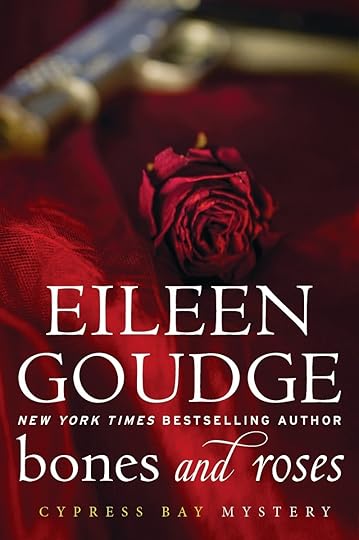
Available at Amazon, NOOK, Apple, Kobo
Welcome to the northern California seaside town of Cypress Bay, where the surf’s up, the sixties live on and long-buried secrets are about to surface.
From home invasions to cheating spouses, Rest Easy Property Management owner Leticia “Tish” Ballard thought she’d seen it all. Almost four years sober after flambéing her real estate career in an alcohol-fueled blowout, she’s finally in a good place in her life when the discovery of skeletal human remains rocks her world and plunges her headlong into solving a decades-old crime.
Now she must delve into the darkness of her own past, including the one-night stand gone horribly wrong with Spence Breedlove, who happens to be the lead detective on the case. When the truth comes out at long last, Tish finds herself pitted against an enemy who will stop at nothing in a fight for her own life.
OPPORTUNITY ALERTS
VIGNETTE WRITERS, here's a contest for you! The Vine Leaves Vignette Collection Contest. The prize is for a collection of vignettes and poetry up to 20,000 words. Fee $25. Prize is $500, publication by Vine Leaves Press (paperback and eBook), 20 copies of the paperback, worldwide distribution, and promotion through the Vine Leaves and staff websites. It will be judged by an editor from Simon and Schuster. Deadline February 28, 2015.
THE MEADOW NOVELLA PRIZE $15 ENTRY FEE. The winner of the contest will receive $500 and publication in the annual print edition of the journal. Submissions should be between 18,000 and 35,000 words. Deadline February 1, 2015.
WALKER PERCY PRIZE IN SHORT FICTION $15 ENTRY FEE. Winner receives $1,000 and publication in New Orleans Review. All finalists considered for publication. Enter previously unpublished original stories up to 7,500 words. Deadline December 31st
Writers’ Village International Short Fiction Contest: $24 entry fee. Prizes of $1600, $800, $400 and $80. A further ten Highly Commended entrants will receive a free entry in the next round. Professional feedback provided for all entries! Any genre: up to 3000 words. Deadline December 31st.
The California Book Awards NO ENTRY FEE Three prizes are given annually to writers residing in California for books of poetry, fiction, and nonfiction (including creative nonfiction). Prizes are also given for a first book of fiction and a book of fiction or nonfiction that relates to California. Authors or publishers may submit six copies of books published in 2014 by December 22. Visit the website for the required entry form and complete guidelines. Deadline December 22, 2014
We have a visit from a literary superstar this week. New York Times bestselling author Eileen Goudge has written 32 novels, sold over a million copies, and been translated into 22 languages.
I first heard about Ms. Goudge in the 1980s, when my friends and I all ran out to buy her phenomenal novel Garden of Lies when it first made the New York Times bestseller list. I was living in the San Diego area at the time, and she was making all the local papers as the "hometown-girl-makes-good."
But like so many successful traditionally published authors at the height of their creative powers, Eileen found herself pushed out by her publisher (and agent--in a particularly unpleasant way, as you'll read below) as the marketing department went off chasing the next shiny thing.
We live in a winner-takes-all economy these days, and publishing companies often don't want to promote skilled, regular producers of good quality product when they can throw all their money behind a brand new Snooki book or ghost-written celebrity tell-all.
By cutting the advertising budgets of long-term successful authors, publishers create self-fulfilling prophecies that these authors "aren't selling anymore" and the authors find they're no longer making a living at the profession they've practiced successfully for 20+ years.
Luckily we now have self-publishing. Some of the most successful self-publishers are the former stars who were told they "weren't selling anymore" and went on to hit the bestseller lists as indies and live there permanently, like Catherine Ryan Hyde (who has a similar story of being told she "no longer had an audience" before hitting the #1 spot on Amazon with each of her self-published novels.)
However, Eileen didn't just have to deal with shifting publisher loyalties, difficult agent relationships and the usual disrespect. She also had a tech/social media catastrophe that would win any bad luck contest.
She has a message for all of us about how to take care of ourselves so this doesn't happen--so DO read the part at the end about social media. (Especially where she calls me a rock star. LOL)
But she's back on her feet, has a fabulous new series, and has lived to tell the tale...Anne
HOW I WENT FROM 'ON THE LIST' TO 'OUT ON A LIMB': CONFESSIONS OF A NEW YORK TIMES BESTSELLING AUTHOR GONE INDIE
By Eileen Goudge
Let me begin by saying I’ve never met an author who was an overnight success. It just sounds sexier when you put it that way and makes for good press.
So if you should happen to Google my name and come across an old article about my “meteoric” rise from welfare mom to millionaire, take it with a grain of salt. Yes, I was on welfare, years ago, at an especially low point in my life. And yes, I wrote my way out. But it didn’t happen overnight.
Behind every successful writer is a stack of journals or boxful of unpublished manuscripts moldering in the basement. I’m no exception.
The year was 1983. I had just moved to New York City from California with my two young children, a typewriter and no child support. I’d been eking out a living as a freelance journalist, but needed to find steady work – pronto – or we’d all starve.
At a party I chatted with an attractive young woman who confided that she earned more money moonlighting as a call girl than from her day job as a flight attendant. She offered to set me up with her escort service. I declined.
I wasn’t that desperate.
I signed with a book packager instead.
For the next couple years I paid the rent and stayed afloat churning out genre romances for teens. I was among the stable of ghost writers behind the wildly successful Sweet Valley High teen series created by Francine Pascal. I didn’t get rich from it—I was making only enough to squeak by—but I’m proud of the role I played in launching the series.
The "Overnight Success"
In 1986 I had the joy of seeing my first adult novel published in hardcover. I was ecstatic when Garden of Lies went on to become a New York Times bestseller. I’d been warned that green-colored book covers don’t sell but had ignored the warning, figuring if mine was the only green cover it would stand out. I was right, as it turned out.
Unfortunately it was the only thing I was right about.
Back then I naively believed I’d continue to build on my early success if I reliably produced a book a year. I failed to factor in the variables. The shifting sands of the publishing industry for one and flux and flow of the economy for another.
There was also the fact that I was married to my agent whom I later divorced.
I had a nice ride for a time. The novels that followed Garden of Lies sold well.
The Four-Step Fall from Grace
Then came a spectacularly horrible two-year period worthy of one of my novels in which I was slammed by the quadruple whammy of:
1) a corporate merger,
2) falling out with my editor,
3) the loss of my in-house “rabbi” to another house,
4) the aforementioned divorce from my agent husband.
I was left reeling. My sales took a hit. That in turn led to booksellers cutting back on orders. Long story short, I eventually reached a point where I was no longer making a living wage.
Come the Revolution
I ought to be depressed, right? Out on a ledge with some Good Samaritan trying to talk me down.
But I’m not depressed. Instead I’m hopeful. Why?
Because while I was on my ass a revolution was taking place.
With digital sales growing in leaps and bounds, traditional publishing is no longer the only avenue open to writers. Name authors displaced by the seismic shifts in the industry are migrating to indie publishing. Some have enjoyed great success. Others are making a living. The majority continue to struggle.
But one thing is clear: Indie publishing is a boon to writers. It provides hope where there was little and give us some control over our own destinies.
The inspiration for my first indie-published title, Bones and Roses, Book One of my Cypress Bay mystery series, came while I was strolling on the beach in my hometown of Santa Cruz, California.
I’m fan of the genre and always wanted to write a mystery, since I created the teen series Who Killed Peggy Sue? in the 1980’s. When I sat down to write the first draft, it poured out of me.
But writing was the easy part.
The Steep Learning Curve
Becoming my own publisher required a whole other skill set.
I took a self-taught crash course in indie publishing by reading everything I could find on the subject and picking the brains of my indie author friends. My friends have been amazing. They’re always on hand to answer questions, share resources and provide reassurance.
But I couldn’t shake the pit in my stomach and the little devil on my shoulder whispering in my ear that I was a fraud, I’d never be able to pull this off. In addition to the mechanics of launching of a business, there were social media platforms and computer programs to master (Goodreads alone was a labyrinth that had me lost!) and the biggest challenge of all: finding the time to do everything.
(Note from Anne: I can't figure out Goodreads either, and they've even made me a librarian!)
The Tech Catastrophe
I acquired so many passwords I didn’t know what to do with them all, so I stored them temporarily on my iPhone.
Bad move.
In a single, sleep-deprived moment, with a misbegotten swipe, I accidentally cut-and-pasted the entire list onto the text of an Instagram post.
I instantly deleted it, relieved to have dodged the bullet until my sister-in-law in California phoned me in alarm to let me know it was still on my Facebook page.
I panicked and spent the next two hours changing the passwords on all my accounts. I went from sleep-deprived to not being able to sleep, I was so wired, visions of Ukrainian hackers dancing in my head.
(Naked photos leaked on the Internet, as in the case of Jennifer Lawrence, wouldn’t be as bad a having your bank account hacked into!)
Don’t make the same mistake. I don’t mean just this business of securing your passwords. I mean don’t put yourself in a position where you’re so addled your left brain doesn’t know what your right brain is doing.
I saw my screw-up as a wakeup call. I was worn down from trying to do much.
Don't Try to Do Everything!
I know, I know. There are indie authors advising you to go all out and do everything the sun.
I learned the hard way I’m not one of those authors.
If you’re like me and value your sanity and wish to have some semblance of a personal life, you’ll ease up on the throttle. Here are three simple ways to achieve that while increasing your chances of success (because I’m convinced nothing good or lasting comes of pain or deprivation).
*Delegate wherever possible.
I signed with a distributor, INscribe Digital, once I realized I couldn’t do it all. Founded by former Borders executives, it’s a young and dynamic company with the expertise and preexisting relationships with e-tailers I knew I could benefit from.
It’s also where bestselling author Sylvia Day got her start. They work on a commission basis (15%) so I wasn’t out of pocket, which is important when you’re on a tight budget.
*Get marketing help
I also hired a freelance marketing expert to help develop a targeted plan of action. If you don’t have money in your budget to allocate on marketing, join an online writers’ group. I belong to several, and I’ve found my fellow members to be unstintingly generous, not only in sharing their wisdom and expertise but in helping promoting one another’s works. You can benefit from your peers. They’re always on hand to give advice, help out, or act as a sounding board. And it’s a global village, so there’s always someone awake in some part of the world.
*Put your money where it will do the most good.
Whether you’re working on a shoestring budget or have bottomless resources, play it smart.
1) Start with a professional-looking book cover. For the covers of Books 1 and 2 of my Cypress Bay mystery series, I hired a designer who’d done the covers of several of my backlist titles.
Mumtaz Mustafa is a senior art director at Harper Collins with a freelance business on the side. It was a joy to work with her. She’s super-talented and a seasoned professional. I ended up with two covers such as you might see on a front table at a Barnes and Noble.
There are other book designers like her; you just have weed through all the dross to get to them. Keep in mind you get what you pay for, so go with the best you can afford. In the meantime, read this insightful article from Psychology Today, Judging a Book By Its Cover, if you want to know more about what is it about certain covers that attracts buyers.
2) Don't stint on editing! The good news is there are lots of freelance editors to choose from. I went with people I knew, the editing team of Perfect Pen Communications. Samantha Stroh Bailey and Francine LaSala are both authors in their own right, so they have a unique perspective. They did an excellent job and delivered on time. I highly recommend them.
*Do what you can and don’t stress about the rest.
Let’s face it, you’re only human. If you try to do it all, unless you have a background in marketing like my savvy indie author friend, Josie Brown, you risk being a jack of all trades and master of none. Sort of like the old saying, He who represents himself in court has a fool for a lawyer. Best concentrate your time and energy on what you do best.
Which for me is
WritingBloggingEngaging through social media.
Writing, you already know how to do. So let’s talk about blogging.
Specifically guest blogging. I’ve been doing a lot of that lately because:
I enjoy it. I always have something to say. I engage with more people that way than I would on my own.
How do you get invited to hop on as a guest blogger? By first engaging with other bloggers.
Like Anne is always urging.
Actively seek out blog sites in the community of whatever genre you write in. Sign up for their newsletters and comment on their blog posts. That’s precisely how I came to be invited to do a guest post for this blog.
Anne commented on another blog post I’d done and one thing led to another. (At the risk of gushing, may I just say I was totally over the moon to be asked. She’s a rock star and role model.)
None of this happens overnight. Be prepared to do some spade-work. But don’t think of it as work. Find the joy in it. Make it fun!
(And always, always, always read a blog before you ask to guest post!! Otherwise it's like asking for a favor with your middle finger raised. You will not have happy results...Anne)
Keep in mind, unless you have a cast of thousands at your beck and call, you will only scratch the surface of all that’s available to indie publishers online. For every social media platform or app you master, there are a dozen new ones popping up. Every day. Every minute of every day.
If you try to keep up with it all, you’ll go crazy or drive your loved ones crazy. Information overload is a bigger threat than that of any sales you might lose due to not utilizing every bell and whistle. Take a deep breath, then let it out.
Now repeat after me:
"I understand I can’t do it all and I’m okay with that."
Say it a few more times until you mean it.
In short, do what fulfills you, what brings you pleasure, rather than strive for perfection. You’ll be happier. And probably more successful.
Me? I didn’t sell my body and I’m not going to sell my soul.
What will come of all this? I don’t have the answer yet. This is long-tail publishing so I may not know for another year or two. In the meantime, I’m happy to have some control over my destiny.
Now, if you’ll excuse me, I’m going to go bake a cake.
What about you, Scriveners? Do you have any horror tales of tech nightmares you've caused by being on overload? What do you feel is the best use of an author's time on social media? Do you have any questions for Eileen?
New York Times’ bestselling novelist Eileen Goudge is the author of 15 women’s fiction titles, which include Garden of Lies, published in 22 languages around the world. Bones and Roses is the first book in her Cypress Bay Mysteries series. She lives in New York City with her husband, television film critic and entertainment reporter Sandy Kenyon.
BOOK OF THE WEEK

Available at Amazon, NOOK, Apple, Kobo
Welcome to the northern California seaside town of Cypress Bay, where the surf’s up, the sixties live on and long-buried secrets are about to surface.
From home invasions to cheating spouses, Rest Easy Property Management owner Leticia “Tish” Ballard thought she’d seen it all. Almost four years sober after flambéing her real estate career in an alcohol-fueled blowout, she’s finally in a good place in her life when the discovery of skeletal human remains rocks her world and plunges her headlong into solving a decades-old crime.
Now she must delve into the darkness of her own past, including the one-night stand gone horribly wrong with Spence Breedlove, who happens to be the lead detective on the case. When the truth comes out at long last, Tish finds herself pitted against an enemy who will stop at nothing in a fight for her own life.
OPPORTUNITY ALERTS
VIGNETTE WRITERS, here's a contest for you! The Vine Leaves Vignette Collection Contest. The prize is for a collection of vignettes and poetry up to 20,000 words. Fee $25. Prize is $500, publication by Vine Leaves Press (paperback and eBook), 20 copies of the paperback, worldwide distribution, and promotion through the Vine Leaves and staff websites. It will be judged by an editor from Simon and Schuster. Deadline February 28, 2015.
THE MEADOW NOVELLA PRIZE $15 ENTRY FEE. The winner of the contest will receive $500 and publication in the annual print edition of the journal. Submissions should be between 18,000 and 35,000 words. Deadline February 1, 2015.
WALKER PERCY PRIZE IN SHORT FICTION $15 ENTRY FEE. Winner receives $1,000 and publication in New Orleans Review. All finalists considered for publication. Enter previously unpublished original stories up to 7,500 words. Deadline December 31st
Writers’ Village International Short Fiction Contest: $24 entry fee. Prizes of $1600, $800, $400 and $80. A further ten Highly Commended entrants will receive a free entry in the next round. Professional feedback provided for all entries! Any genre: up to 3000 words. Deadline December 31st.
The California Book Awards NO ENTRY FEE Three prizes are given annually to writers residing in California for books of poetry, fiction, and nonfiction (including creative nonfiction). Prizes are also given for a first book of fiction and a book of fiction or nonfiction that relates to California. Authors or publishers may submit six copies of books published in 2014 by December 22. Visit the website for the required entry form and complete guidelines. Deadline December 22, 2014
December 7, 2014
Blogging for Authors: How to Create a Blog that Can Grow With Your Career
by Anne R. Allen
Maybe you've just finished that NaNo novel and you know you want to publish, so you'd like to get a head start while you slog through the editing process.
Or you've been writing for a couple of years, you've published some short pieces, and you've got maybe two novels in the hopper and you're ready to get this career on the road.
Or you've finally landed that agent, but you don't have anywhere near the platform she wants.
Any of these could be a good point to start a blog.
Yes, a blog is still a great way to build platform and establish an Internet presence. So says agent Laurie McLean of Fuse Literary, who will be visiting us here in January.
But a writer starting a blog right now faces two problems:
1) There are already, like, a trillion writers out there lecturing the blogosphere about how to write vivid characters, prop up saggy middles and avoid adverbs. A lot of them probably know more than you.
2) If you’re a writer with books to sell, you want to reach a general audience, not just other writers selling books.
So how can you be different? How do you create a blog that somebody will read—somebody besides your stalker ex-boyfriend and your mom?
The most important thing to remember with any kind of blog is you need to offer something. It should be fresh, informative, and/or entertaining.
How you approach your blog is going to depend a whole lot on your stage in the publishing process and your immediate goals. (For info on what not to blog about, see How Not to Blog )
Stage #1: You’re a developing writer.
You’re working on your first or second novel, and maybe have a few stories in literary journals or a couple of contest wins. You want to be a published author sometime soon, but you’re not quite ready to focus on writing as a career.
Your goal: LEARNING THE PUBLISHING BUSINESS AND NETWORKING.
You want to make friends in the writing community for career help and mutual support. You want to learn the best writing techniques, network with publishing professionals, and educate yourself about the business.
If you’re in stage #1, I think it’s OK to blog about writing. I know most blog gurus tell you not to do this, but I think that caveat is aimed more at people at stage #2 and #3.)
I’m not talking about lecturing on craft as if you’re a pro when you’re not. But an equal-to-equal post about something interesting trick you’ve discovered about writing the dreaded synopsis, or what agents are looking for this month is just fine when you’re reaching out to other writers.
Why do you want to reach other writers? Because networking with other writers is essential in today's market. Joint promotions and anthologies and boxed sets will be some of your most most powerful marketing strategies once you're published. The friends you make now will be a huge asset to you later on in your career.
Plus I know a number of authors who got their agents through a referral from a fellow blogger.
I found both my publishers through blogging.
Also, I’m not sure I would have made it through the darkest rejection phases if it hadn’t been for the support of writer blogfriends.
How do you get blogfriends? You visit other blogs. Social media is social. Don't sit all alone like a spider waiting for flies. Go out and meet people. Comment on blogs and engage in dialogue with other commenters.
When you have a writing blog, you get to participate in blog hops, flash fiction swaps, contests and all kinds of networking events that help you meet people who can be important in your future career. There are some great blogging groups like the Insecure Writers Support Group where you can meet lots of interesting, supportive writers.
But do make sure your writing blog has something fresh going for it—something that’s helpful. There are all sorts of ways you can help:
Author interviewsProfiles of small publishers or agents who are interested in your genre (take them from websites—you don’t have to bother the agents and editors)Info on contests, giveaways and blog hopsLinks to great articles and posts in your genre or field of interest.Book reviews. If you write thoughtful, useful reviews, you’ll immediately become everybody’s best friend. (But don't take on too many! Book review bloggers get burned out very quickly and unfortunately get a lot of disrespect from authors and publicists. For more on how to establish boundaries as a book review blogger, read this great post from book blogger Ed Cyzewski )Commentary on the book business or trends in your genre.Flash fiction and vignettes that you do not intend to market to magazines or publishers. Putting something on your blog is publishing, so it will be considered "published". I used to advise newbies not to put any fiction on a blog, but I know a number of successful bloggers who have built an audience with this kind of writing, so I've reversed on this. What you don't want to do is write the rough draft of a novel in public on your blog. It can be embarrassing, and no agent will take it on once it's been published on a blog.
Stage #2: You’re ready for the marketplace.
You’re querying agents or getting ready to self-publish. You’ve got a couple of books polished and ready to go. You have a business plan.
You’ve been to writing conferences, taken classes, and hired a freelance editor if you're going indie. Your writing is at a professional level.
Your goal: BUILDING PLATFORM
You want to get your name out there to the general public. When you query an agent or ask for a blurb or review, you want a Google search to bring you up on the first page, not page four, with that rant from five years ago about the ending of Lost.
If you’re a stage #2 writer, you should heed the blog gurus' advice not to blog about writing. You’ve got a trillion competitors and that would severely limit your audience. (Yes, I blog about writing, but I started a long time ago, and I already had an audience from my writing column at Freelance Writing International.)
So try something that’s related to your writing but has a unique slant. But don't restrict yourself too much. Leave room to grow and change. You may not even know yet what kind of people will be interested in your work.
Here are a few suggestions of topics to try when you're starting:
Focus on your genre or subgenre (unless you’re still experimenting with different genres.) You can discuss movies, videogames, TV shows, even jewelry and costumes—as long as they relate to your nicheBlog about your hometown or state, especially if they’re the setting of your novels. Travel sites that link to local landmarks and Chamber of Commerce will help you make friends locally that can be a big help later on.Offer links to important information. If you’re writing a memoir or fiction about certain health issues, promote organizations that help with those issues. Link to support groups and they might even link back.Provide people with the benefit of your research. If you’re writing historical fiction about a certain time period—post the research on your blog. (This is doubly useful because it will help keep you from cramming it all into the novel at the expense of story.) Have to research guns for a thriller? Poisons for a cozy? Are you basing the story on a real case? There are people who would love to read about this stuff.Appeal to another Internet community. If that historical novel is based on a real person or your own family history, you could target readers from the genealogy blogosphere and links to historical research sites. If your heroine loves to fish, sew, or collect stuff, connect with blogs for fly fisherpersons, quilters, or collectors of floaty pens.Provide a forum for people in your target demographic. If you write for a particular group—single urban women, Boomers, stay-at-home moms, or the just-out-of-college dazed and confused—focus on aspects of life of special interest to them.Offer recipes or how-tos. Have a character who’s an expert at something? Give readers the benefit of his expertise in the woodshop, garden or kitchen. Have some great recipes that relate to your character, time period, or region? Write about the food in your books, or food in fiction generally.
Stage #3: You’re a published author
Your agent/marketing dept. says, “Get thee to the blogosphere!”
Or you realize the brilliantly blurbed oeuvre you’ve self-published is sitting there on Amazon with only two sales in three months (both to your spouse) because nobody has heard of it—or you.
Your goal: FINDING AND CONNECTING WITH READERS If you’ve reached Stage #3, you can be more eclectic. People will be coming to your blog because they want to get to know you and find out more about your books—so focusing on one subject isn’t as important.
The blog becomes a place to showcase who you are. Think if it as your own version of Oprah magazine: not a place to toot your own horn as much as share things of interest to you that will also be of value to your readers.
So you can continue whatever you've been doing in Stage #1 and #2, plus add stuff about you and your books.
Yes, you can talk about your books. I think people are silly who say you shouldn’t use your blog for self-promotion. That’s why you’re in the blogosphere in the first place. It’s fine as long as you don’t use hard-sell tactics and make sure you provide something besides "buy my book!"
Each type of blog can evolve into another as your goals change.
A few tips for the new blogger:
Make a list of topics you might like to explore before you begin, so you have a running start. If you visit other blogs regularly (and you should) you may find yourself making long comments on some subject that gets your hackles up/juices flowing. That’s the stuff you should be putting in your own blog.I STRONGLY advise against having more than one blog. If you decide to change your blog tone and content, just change it. You can change everything but the url. But multiple blogs sap your energy and fragment your audience. (It also annoys the hell out of them: I hate hitting somebody’s profile and finding six blogs. Unless one is clearly marked “author” I don’t even try to wade through them: you’ve lost me.) Blogs have many pages. Use them.Put your own name (or pen name) in the blog title! Your name is your brand. And also, you’ll find it easier to transition from Stage #1 to #2 and #3 if you brand yourself from day one. Subtitles are easy to change. Titles, not so much. “Susie Scrivener’s Blog” can go from “Susie's writing and ranting” to “Susie's Floaty-Pen Collecting” if Susie decides to change the blog’s focus. But “Floaty Pen Central” can’t be changed to “Susie Scrivener’s Amazing Books” without a lot of confusion. And you want to keep the same blog. The longer a blog exists, the higher it ranks with the Google spiders. Write an inviting “About Me” page with clear contact information. I’m amazed at bloggers who don’t even post their names or contact information. The whole purpose of blogging is to let people know who you are and how to find you! (And don’t just post your resume. Be informal and friendly.)Don’t succumb to pressure to blog more than once a week. Posting once a week on a regularly scheduled day is better than posting often but erratically. Allow yourself time to write your books. Remember you’re in this for the long haul. Quality over quantity. Slow blogging works. Be friendly. The way to build an audience, no matter where you are in your writing career, is to be likable and helpful. You don’t have to be chirpy. Just don’t project a phony or selfish tone. Learn to write good headers. If you don't write Tweetable and shareable headers, nobody's going to find your deathless prose. That means avoiding titles that are generic, like "It's Wednesday" or poetic, like "Winter Clouds". And I guarantee nobody's going to retweet a post called "Random Thoughts" unless it's written by somebody famous, or maybe that nutjob who just married Charles Manson. The header must make a good tweet. Offer something other than your own angst. Questions, lists, or surprising facts will entice people to click
More blog advice in my blogpost How To Blog: A Beginner’s Guide for Authors.
And for a comprehensive guide to blogging, I highly recommend Robin Houghton's new book from Writer's Digest Books: Blogging for Writers. It's a beautifully designed paper book, full of useful illustrations and screenshots. I sure wish I'd had something like it when I started blogging. And I even learned some stuff.
Okay, I especially liked it because Robin named this blog as one of the Top 12 Writing Blogs to Follow. That really brightened a dismal day in a dismal month of fighting the endless, will-not-die, virus-from-hell.
But I'd love it even if she hadn't.
And it's only $13.99 at the Writer's Digest Bookstore right now. It's also available at Amazon US and Amazon UK. Got any writers or potential bloggers on your Christmas list? I highly recommend this book. It's a goldmine. And did a mention it's really pretty?
What about you, Scriveners? Do you have a blog? Does it suit your stage of writing? Are you going to be able to give up those six semi-neglected blogs and concentrate on one great one? What advice would you give a new blogger?
BOOK OF THE WEEK
The Camilla Randall Mysteries Boxed Set
9 Months on Amazon's Humor Bestseller list!
On Sale for $3.99: Three funny mysteries for 99c each!
Camilla Randall is a magnet for murder, mayhem, and Mr. Wrong, but she always solves the case in her loopy, but oh-so-polite way.
The Camilla Randall Mysteries Box set is available at Amazon US and Amazon UK, Amazon CA, Kobo, iTunes, Smashwords, Inktera, NOOK, and Scribd.
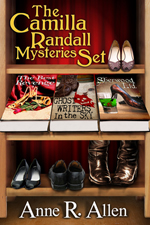
"The Best Revenge, Ghost Writers in the Sky and Sherwood Limited are hysterical. Anne Allen will keep you laughing throughout, but in the meantime she dabbles her fingers in some topics worth some serious thought: sexism, weightism, lechery, murder, duplicity, homelessness & poverty to name a few. If you love to laugh, you'll like these three books. If you love to think, ponder AND laugh, be ready to fall in love"... C.S. Perryess aka the Wordmonger
OPPORTUNITY ALERTS
VIGNETTE WRITERS, here's a contest for you! The Vine Leaves Vignette Collection Contest. The prize is for a collection of vignettes and poetry up to 20,000 words. Fee $25. Prize is $500, publication by Vine Leaves Press (paperback and eBook), 20 copies of the paperback, worldwide distribution, and promotion through the Vine Leaves and staff websites. It will be judged by an editor from Simon and Schuster. Deadline February 28, 2015.
THE MEADOW NOVELLA PRIZE $15 ENTRY FEE. The winner of the contest will receive $500 and publication in the annual print edition of the journal. Submissions should be between 18,000 and 35,000 words. Deadline February 1, 2015.
WALKER PERCY PRIZE IN SHORT FICTION $15 ENTRY FEE. Winner receives $1,000 and publication in New Orleans Review. All finalists considered for publication. Enter previously unpublished original stories up to 7,500 words. Deadline December 31st
Writers’ Village International Short Fiction Contest: $24 entry fee. Prizes of $1600, $800, $400 and $80. A further ten Highly Commended entrants will receive a free entry in the next round. Professional feedback provided for all entries! Any genre: up to 3000 words. Deadline December 31st.
The California Book Awards NO ENTRY FEE Three prizes are given annually to writers residing in California for books of poetry, fiction, and nonfiction (including creative nonfiction). Prizes are also given for a first book of fiction and a book of fiction or nonfiction that relates to California. Authors or publishers may submit six copies of books published in 2014 by December 22. Visit the website for the required entry form and complete guidelines. Deadline December 22, 2014
November 30, 2014
Frazzled, Overwhelmed, Swamped? A Writer's Guide to Mental Health
by Ruth Harris
You’re swamped and there are alligators in that swamp. They have sharp teeth and they bite. Their names are Stress, Clutter, Distraction, Disorganization, and Interruption.
You’ve got a book to write, a cover to create, tweets to tweet, promos to set up, blurbs to polish, and pins to Pin. There’s metadata, pricing decisions, giveaways, keywords, tagging, liking, formatting, blogging, Instagramming and facing FaceBook.
Your phone is pinging and your computer is beeping. Your lists have lists, your eyes are crossed from staring at a computer screen all day (and night), and carpal tunnel syndrome isn’t just something that happens to other people.
Frazzled doesn’t even begin to describe it. You’re irritable and short-tempered. You’re working hard but never experience the satisfied feeling that you’ve actually finished something. You can’t think much less think straight. You’re overwhelmed, overcommitted, and in a state of perpetual exhaustion.
You are not alone. Anne and I confess.
Your social media accounts are growing mold and/or they are covered with cobwebs? You got lured in/carried away and signed up for accounts you haven’t visited since the last century?
Ruth blushes and raises her hand.
Your email is a tsunami of the unanswered, unfiled, and/or undeleted? Your in-box overflows with requests for quotes, newsletters, mass mailings and triggers feelings of guilt, fear, panic, and inadequacy?
Anne sighs and raises her hand.
Anne and I have both been feeling overwhelmed lately. We recently compared notes and agreed that we were probably not alone. We decided it was time to take a step back and figure out How To Be A Writer In The E-Age (title alert!) and have a life, too.
Here’s a little of what we learned and what we’re doing about it.
Clutter is toxic. That ready-to-topple stack of messy papers, print outs, scribbled notes you can no longer decipher, remnants of yesterday’s ham sandwich, unsorted receipts, unpaid bills, and that drooping plant gasping for water are the enemy.
Clutter will (literally) fry your brain and torpedo your memory. Not only does a messy desk (or desktop or work space) look unprofessional, clutter is a scientifically proven source or stress.
In a recent study, neuroscientists at Princeton University found that each piece of physical clutter in your surroundings competes for your attention. Each item shouts “me first!” and the consequence is decreased performance and increased stress
Different people have different definitions for how much clutter is “too much.” Sentimental Sam’s treasured collection of five year’s worth of birthday and Valentine’s Day cards will send Neatnik Nancy shrieking into the abyss.
Still, there are alerts that will let you know when you’ve reached your own limit. A few hints:
Need to walk the dog but can’t find him/her anywhere in the chaos?Surprise! You’re almost fifty and you find your high school prom dress lurking in a file drawer?Wow! You’ve been looking high and low for your lawn mower and find it right there, under your desk.Your home office looks even worse than Steve Jobs’s home office?Your Significant Other confuses you with the Collier Brothers?
Sound familiar? If so, develop a realistic system for controlling the clutter. Some like to shovel out the mess straighten out their desk/office first thing in the morning. Others use breaks throughout the day to tidy up as they go along. Still others take a few moments at the end of the day so they can start the next day with a clear mind, ready to go to work.
Some let the chaos build for a while and then set aside a morning, an afternoon, a day if necessary, to dig out.
There is no one way to tackle clutter but whatever approach works best for you, stick to it and make decluttering a habit you incorporate into your daily routine. The reward will be increased peace of mind and an improved ability to concentrate.
Here are a few specific declutter and de-stress how-tos:Tips to declutter your desk.More ideas for dealing with a messy desk.These approaches to decluttering your desktop might inspire you. For Windows. For Mac.A 10-minute system to declutter your work space.Marie Kondo, the Japanese cleaning and organizing guru, offers guidance that will help you wage the War On Clutter: The Life-changing Magic Of Tidying Up.A simple guide to meditation will help to declutter your mind.Or perhaps a Buddhist chant by a zen master is more your style.
Organize and automate.
Writing by its nature is a messy business with notes, ideas, snatches of dialogue, plot points popping up in random order. All need to be organized and eventually wrestled into usable shape. Olde Faithful word processors like Word are powerful and reliable and work perfectly for many.
Newer writing apps take a deeper look at writers’ needs and offer tools to help control and organize the mess.
Scrivener, beloved by many (including me) comes in both Mac and PC versions. Scrivener is an organizing ninja that provides space for your manuscript plus character and place descriptions, and all manner of research including web links, images, audio files and videos. There’s an easily accessible cork board complete with index cards and an outline function. Thanks to Scrivener’s “binder” concept, moving scenes around is quick and easy.
There’s a learning curve but you can easily start with the basics and go on from there with the help of Scrivener’s own videos and tutorials plus loads of on-line info. Scriv offers a generous trial and, if you decide Scrivener is for you, the purchase price is $45.
Ulysses (Mac only) is another, newer but highly-respected writing app and presents the writer with a distraction-zapping interface. Author David Hewson is a fan and has written a number of helpful blog posts about how he uses Ulysses including why it’s so easy to write in Ulysses.
You will find a Ulysses-Scrivener comparison here and another here. Ulysses, like Scriv, offers a FREE trial and will cost $45 if you decide to buy.
Both Scrivener and Ulysses will export your manuscript into pdf and ebook formats.
Atlantis (for PCs) is a full-featured, moderately-priced MSWord lookalike. Comes with a generous FREE try-before-you-buy trial, offers on-line help, and user’s forum. Atlantis can do much of what most modern writing apps do including turn your text into an epub or mobi file.
Evernote and Microsoft’s One Note are both FREE downloadable on-line notebooks that will help organize the clutter. They are fast, searchable, and can be set up in whatever way works best for you.
Backing up your work is critical and being able to do it automatically means one more thing you can delete from your to-list. Some are FREE, others paid. Each takes a slightly different approach and each has its fans. To decide which is best for you, check out:
Dropbox
Carbonite
Backblaze
GoogleDrive
ICloud
CrashPlan
Mozy
Distraction and Interruption
Whether it’s the phone, IMs, emails, texts, a friend, a spouse, a neighbor, those interruptions add up and not in a good way. According to a New York Times article distraction actually makes you dumber.
Other data show that the stress of the distraction or interruption causes cognitive fatigue, which leads to omissions, mental slips or lapses, and mistakes.
A 2007 study by Basex estimated that distractions cost $588 billion per year. To compound the issue, the time required to reestablish your focus after an interruption takes even more time out of your productive day.
Another survey found nearly 60% of disruptions come from email, social networks, and cell phones.
Nora Roberts has said that she permits distractions only in the case of “blood or fire.”
Some writers (including Ruth) wear earphones to block out noise and others set timers to carve out no-interrupt writing periods. Still others close the door and post “Do Not Disturb” signs.
MindTools offers an in-depth look at distractions and lists ways to curtail or minimize them.
Laura Stack, a personal productivity expert, looks at the negative impact of self-sabotage and the downside of multitasking. She offers strategies for staying on focus and in the zone.
Anne and Ruth Shape Up And Pare Down
Anne is spending less time on Facebook and she’s taking Thursdays off from all social media. The volume of requests for her time make it impossible for her to deal with them.
From now on she’s decided she’s not going to respond to mass mailings or cold queries. If she doesn’t have time to read newsletters or online magazines, she deletes them immediately. No saving for “later” because she’s found she never gets back to them.
I ration my social media to Twitter (where I’ve made lots of friends and which I enjoy) and indulge in one brief, catch-up session in the morning and another in the evening. Whenever something catches my eye and I think of it, I share it on Pinterest. Otherwise, my moldy, cobwebbed accounts are doomed to stay that way.
I’ve cut down on my blog and basically use it only to announce sales, reveal new covers or introduce new books. If I get a zippy idea I can write quickly, I’ll post it but, otherwise, my blogging is focused here with Anne.
I’m also planning to turn off those annoying email notifications but I haven’t quite gotten around to it yet.
Too busy. ;-)
What about you, Scriveners? Are you feeling a tad frazzled and overwhelmed? Swamped? Are you paring down on Social Media? How about dealing with desk and office clutter? How do you deal with your tsunami of email?
BOOK OF THE WEEKDECADES: It's FREE!!
"The songs we sang, the clothes we wore, the way we made love. Absolutely perfect!" ...Publisher's Weekly
Kindle | iBooks | Nook | Kobo | GooglePlay
THREE WOMEN. THREE DECADES. Spanning the years from the optimistic post-War 1940s to the Mad Men 1950s and rule-breaking "Make Love, Not War" 1960s, DECADES is about three generations of women who must confront the radical changes and upended expectations of the turbulent decades in which they lived.
Evelyn, talented but insecure, is a traditional woman of the Forties. She is a loyal and loving wife and mother whose marriage and family mean everything to her.
Nick, handsome and ambitious, a chameleon who changes with the changing times, is her successful but restless husband.
Joy, their daughter, confused and defiant, a child of the Sixties, needs them both but is torn between them.
Barbara is the other woman, younger than Evelyn, accomplished but alone. She is a transitional woman of the Fifties who wonders if she can have everything--including another woman's husband.
DECADES, sweeping in scope yet intimate in detail, is the emotional, compelling story of family, marriage, crisis, betrayal and healing.
OPPORTUNITY ALERTS
VIGNETTE WRITERS, here's a contest for you! The Vine Leaves Vignette Collection Contest. The prize is for a collection of vignettes and poetry up to 20,000 words. Fee $25. Prize is $500, publication by Vine Leaves Press (paperback and eBook), 20 copies of the paperback, worldwide distribution, and promotion through the Vine Leaves and staff websites. It will be judged by an editor from Simon and Schuster. Deadline February 28, 2015.
THE MEADOW NOVELLA PRIZE $15 ENTRY FEE. The winner of the contest will receive $500 and publication in the annual print edition of the journal. Submissions should be between 18,000 and 35,000 words. Deadline February 1, 2015.
WALKER PERCY PRIZE IN SHORT FICTION $15 ENTRY FEE. Winner receives $1,000 and publication in New Orleans Review. All finalists considered for publication. Enter previously unpublished original stories up to 7,500 words. Deadline December 31st
Writers’ Village International Short Fiction Contest: $24 entry fee. Prizes of $1600, $800, $400 and $80. A further ten Highly Commended entrants will receive a free entry in the next round. Professional feedback provided for all entries! Any genre: up to 3000 words. Deadline December 31st.
SCHNEIDER FAMILY BOOK AWARDS: NO ENTRY FEE. These awards honor an author or illustrator for a book that embodies an artistic expression of the disability experience for child and adolescent audiences. Three awards of $5000 each will be given annually in each of the following categories: birth through grade school (age 0-10), middle school (age 11-13) and teens (age 13-18). May be fiction, biography, or other form of nonfiction. Deadline December 1, 2014.
You’re swamped and there are alligators in that swamp. They have sharp teeth and they bite. Their names are Stress, Clutter, Distraction, Disorganization, and Interruption.
You’ve got a book to write, a cover to create, tweets to tweet, promos to set up, blurbs to polish, and pins to Pin. There’s metadata, pricing decisions, giveaways, keywords, tagging, liking, formatting, blogging, Instagramming and facing FaceBook.
Your phone is pinging and your computer is beeping. Your lists have lists, your eyes are crossed from staring at a computer screen all day (and night), and carpal tunnel syndrome isn’t just something that happens to other people.
Frazzled doesn’t even begin to describe it. You’re irritable and short-tempered. You’re working hard but never experience the satisfied feeling that you’ve actually finished something. You can’t think much less think straight. You’re overwhelmed, overcommitted, and in a state of perpetual exhaustion.
You are not alone. Anne and I confess.
Your social media accounts are growing mold and/or they are covered with cobwebs? You got lured in/carried away and signed up for accounts you haven’t visited since the last century?
Ruth blushes and raises her hand.
Your email is a tsunami of the unanswered, unfiled, and/or undeleted? Your in-box overflows with requests for quotes, newsletters, mass mailings and triggers feelings of guilt, fear, panic, and inadequacy?
Anne sighs and raises her hand.
Anne and I have both been feeling overwhelmed lately. We recently compared notes and agreed that we were probably not alone. We decided it was time to take a step back and figure out How To Be A Writer In The E-Age (title alert!) and have a life, too.
Here’s a little of what we learned and what we’re doing about it.
Clutter is toxic. That ready-to-topple stack of messy papers, print outs, scribbled notes you can no longer decipher, remnants of yesterday’s ham sandwich, unsorted receipts, unpaid bills, and that drooping plant gasping for water are the enemy.
Clutter will (literally) fry your brain and torpedo your memory. Not only does a messy desk (or desktop or work space) look unprofessional, clutter is a scientifically proven source or stress.
In a recent study, neuroscientists at Princeton University found that each piece of physical clutter in your surroundings competes for your attention. Each item shouts “me first!” and the consequence is decreased performance and increased stress
Different people have different definitions for how much clutter is “too much.” Sentimental Sam’s treasured collection of five year’s worth of birthday and Valentine’s Day cards will send Neatnik Nancy shrieking into the abyss.
Still, there are alerts that will let you know when you’ve reached your own limit. A few hints:
Need to walk the dog but can’t find him/her anywhere in the chaos?Surprise! You’re almost fifty and you find your high school prom dress lurking in a file drawer?Wow! You’ve been looking high and low for your lawn mower and find it right there, under your desk.Your home office looks even worse than Steve Jobs’s home office?Your Significant Other confuses you with the Collier Brothers?
Sound familiar? If so, develop a realistic system for controlling the clutter. Some like to shovel out the mess straighten out their desk/office first thing in the morning. Others use breaks throughout the day to tidy up as they go along. Still others take a few moments at the end of the day so they can start the next day with a clear mind, ready to go to work.
Some let the chaos build for a while and then set aside a morning, an afternoon, a day if necessary, to dig out.
There is no one way to tackle clutter but whatever approach works best for you, stick to it and make decluttering a habit you incorporate into your daily routine. The reward will be increased peace of mind and an improved ability to concentrate.
Here are a few specific declutter and de-stress how-tos:Tips to declutter your desk.More ideas for dealing with a messy desk.These approaches to decluttering your desktop might inspire you. For Windows. For Mac.A 10-minute system to declutter your work space.Marie Kondo, the Japanese cleaning and organizing guru, offers guidance that will help you wage the War On Clutter: The Life-changing Magic Of Tidying Up.A simple guide to meditation will help to declutter your mind.Or perhaps a Buddhist chant by a zen master is more your style.
Organize and automate.
Writing by its nature is a messy business with notes, ideas, snatches of dialogue, plot points popping up in random order. All need to be organized and eventually wrestled into usable shape. Olde Faithful word processors like Word are powerful and reliable and work perfectly for many.
Newer writing apps take a deeper look at writers’ needs and offer tools to help control and organize the mess.
Scrivener, beloved by many (including me) comes in both Mac and PC versions. Scrivener is an organizing ninja that provides space for your manuscript plus character and place descriptions, and all manner of research including web links, images, audio files and videos. There’s an easily accessible cork board complete with index cards and an outline function. Thanks to Scrivener’s “binder” concept, moving scenes around is quick and easy.
There’s a learning curve but you can easily start with the basics and go on from there with the help of Scrivener’s own videos and tutorials plus loads of on-line info. Scriv offers a generous trial and, if you decide Scrivener is for you, the purchase price is $45.
Ulysses (Mac only) is another, newer but highly-respected writing app and presents the writer with a distraction-zapping interface. Author David Hewson is a fan and has written a number of helpful blog posts about how he uses Ulysses including why it’s so easy to write in Ulysses.
You will find a Ulysses-Scrivener comparison here and another here. Ulysses, like Scriv, offers a FREE trial and will cost $45 if you decide to buy.
Both Scrivener and Ulysses will export your manuscript into pdf and ebook formats.
Atlantis (for PCs) is a full-featured, moderately-priced MSWord lookalike. Comes with a generous FREE try-before-you-buy trial, offers on-line help, and user’s forum. Atlantis can do much of what most modern writing apps do including turn your text into an epub or mobi file.
Evernote and Microsoft’s One Note are both FREE downloadable on-line notebooks that will help organize the clutter. They are fast, searchable, and can be set up in whatever way works best for you.
Backing up your work is critical and being able to do it automatically means one more thing you can delete from your to-list. Some are FREE, others paid. Each takes a slightly different approach and each has its fans. To decide which is best for you, check out:
Dropbox
Carbonite
Backblaze
GoogleDrive
ICloud
CrashPlan
Mozy
Distraction and Interruption
Whether it’s the phone, IMs, emails, texts, a friend, a spouse, a neighbor, those interruptions add up and not in a good way. According to a New York Times article distraction actually makes you dumber.
Other data show that the stress of the distraction or interruption causes cognitive fatigue, which leads to omissions, mental slips or lapses, and mistakes.
A 2007 study by Basex estimated that distractions cost $588 billion per year. To compound the issue, the time required to reestablish your focus after an interruption takes even more time out of your productive day.
Another survey found nearly 60% of disruptions come from email, social networks, and cell phones.
Nora Roberts has said that she permits distractions only in the case of “blood or fire.”
Some writers (including Ruth) wear earphones to block out noise and others set timers to carve out no-interrupt writing periods. Still others close the door and post “Do Not Disturb” signs.
MindTools offers an in-depth look at distractions and lists ways to curtail or minimize them.
Laura Stack, a personal productivity expert, looks at the negative impact of self-sabotage and the downside of multitasking. She offers strategies for staying on focus and in the zone.
Anne and Ruth Shape Up And Pare Down
Anne is spending less time on Facebook and she’s taking Thursdays off from all social media. The volume of requests for her time make it impossible for her to deal with them.
From now on she’s decided she’s not going to respond to mass mailings or cold queries. If she doesn’t have time to read newsletters or online magazines, she deletes them immediately. No saving for “later” because she’s found she never gets back to them.
I ration my social media to Twitter (where I’ve made lots of friends and which I enjoy) and indulge in one brief, catch-up session in the morning and another in the evening. Whenever something catches my eye and I think of it, I share it on Pinterest. Otherwise, my moldy, cobwebbed accounts are doomed to stay that way.
I’ve cut down on my blog and basically use it only to announce sales, reveal new covers or introduce new books. If I get a zippy idea I can write quickly, I’ll post it but, otherwise, my blogging is focused here with Anne.
I’m also planning to turn off those annoying email notifications but I haven’t quite gotten around to it yet.
Too busy. ;-)
What about you, Scriveners? Are you feeling a tad frazzled and overwhelmed? Swamped? Are you paring down on Social Media? How about dealing with desk and office clutter? How do you deal with your tsunami of email?
BOOK OF THE WEEKDECADES: It's FREE!!
"The songs we sang, the clothes we wore, the way we made love. Absolutely perfect!" ...Publisher's Weekly

Kindle | iBooks | Nook | Kobo | GooglePlay
THREE WOMEN. THREE DECADES. Spanning the years from the optimistic post-War 1940s to the Mad Men 1950s and rule-breaking "Make Love, Not War" 1960s, DECADES is about three generations of women who must confront the radical changes and upended expectations of the turbulent decades in which they lived.
Evelyn, talented but insecure, is a traditional woman of the Forties. She is a loyal and loving wife and mother whose marriage and family mean everything to her.
Nick, handsome and ambitious, a chameleon who changes with the changing times, is her successful but restless husband.
Joy, their daughter, confused and defiant, a child of the Sixties, needs them both but is torn between them.
Barbara is the other woman, younger than Evelyn, accomplished but alone. She is a transitional woman of the Fifties who wonders if she can have everything--including another woman's husband.
DECADES, sweeping in scope yet intimate in detail, is the emotional, compelling story of family, marriage, crisis, betrayal and healing.
OPPORTUNITY ALERTS
VIGNETTE WRITERS, here's a contest for you! The Vine Leaves Vignette Collection Contest. The prize is for a collection of vignettes and poetry up to 20,000 words. Fee $25. Prize is $500, publication by Vine Leaves Press (paperback and eBook), 20 copies of the paperback, worldwide distribution, and promotion through the Vine Leaves and staff websites. It will be judged by an editor from Simon and Schuster. Deadline February 28, 2015.
THE MEADOW NOVELLA PRIZE $15 ENTRY FEE. The winner of the contest will receive $500 and publication in the annual print edition of the journal. Submissions should be between 18,000 and 35,000 words. Deadline February 1, 2015.
WALKER PERCY PRIZE IN SHORT FICTION $15 ENTRY FEE. Winner receives $1,000 and publication in New Orleans Review. All finalists considered for publication. Enter previously unpublished original stories up to 7,500 words. Deadline December 31st
Writers’ Village International Short Fiction Contest: $24 entry fee. Prizes of $1600, $800, $400 and $80. A further ten Highly Commended entrants will receive a free entry in the next round. Professional feedback provided for all entries! Any genre: up to 3000 words. Deadline December 31st.
SCHNEIDER FAMILY BOOK AWARDS: NO ENTRY FEE. These awards honor an author or illustrator for a book that embodies an artistic expression of the disability experience for child and adolescent audiences. Three awards of $5000 each will be given annually in each of the following categories: birth through grade school (age 0-10), middle school (age 11-13) and teens (age 13-18). May be fiction, biography, or other form of nonfiction. Deadline December 1, 2014.


