
Anne R. Allen's Blog, page 56
September 14, 2014
The Secret to Publishing Success in the Era of Social Media: Teaming with Your Fellow Authors
by Anne R. Allen
Jon Stewart said on the Daily Show on August 27, (with heavy irony, of course) "Everybody uses Social Media as a weapon; that's what it's for."
He was, as usual, uttering spot-on truth disguised as a joke. Lots of people DO seem to use social media as a weapon, whether it's to shame an ex, brag about themselves, gang up on a perceived miscreant, or bully people into action.
But that's not how to use social media if you want to succeed in publishing.
As I have said before, social media should be used for making friends, not direct marketing, bullying, or personal horn-tooting. (A little tooting is okay, but make sure it's sandwiched between lots of helpful stuff.)
I think writers should be making friends with other writers, not just the people they perceive to be their "target reader demographic" (although that is always wise as well.)
This may be the opposite of what you're hearing from some marketing gurus, but hear me out—
I'm not telling you to MARKET to other writers. That's pointless, annoying, and a great way to make enemies.
NOTE: NEVER market through a personal Direct Message or an @ message, ever. And anybody who spams my email with a newsletter I never subscribed to: I WILL remember you. And not in a good way. (I'm sure the spammers don't read this blog. They probably skim my info from FB groups or Goodreads. Do not do this.)
But writer friends can be helpful to you in a lot of more important ways than as one-time customers for a book.
So get out and meet them. Especially authors in your own genre. Other writers aren't your rivals; they're your colleagues.
I see a lot of pre-published writers talking trash about the stars of their genre, giving them rotten reviews or making disparaging remarks on forums. Oddly, this seems especially true of literary writers, as Stephen Almond wrote recently in Poets and Writers , but I see it in all genres. This is old-school thinking that can backfire, big time.
When you trash superstars, you're also trashing all their fans. That's a whole lot of your potential readers you've just alienated.
Some authors even try to knock another writer off the spot ahead of them on the bestseller list, as if selling books were a contest or a "reality" TV show.
There was a huge scandal a few years ago when a bestselling trad-pubbed author was caught leaving sock-puppet one-star reviews on "rival" authors' books. He seemed to think that by bringing down other authors' books, he would get more readers of his own.
That either/or thinking is ridiculous. If somebody liked one military thriller, they're likely to buy another. They're not going to read one and say, "Okay, I'm done with thrillers. Now I'll go buy me some chick lit."
In response to a recent nasty bit of bullying of an established author by a vicious plagiarist using sock puppets, David Farland wrote a list of "Standards of Excellence for Writers" that's worth a read.
In the era of social media, other writers can contribute a lot to your own marketing, so play nice.
One caveat: There are ways authors should NOT team up for marketing purposes. Beware "author rings" that trade reviews! It's against Amazon's TOS and can get you kicked off the site for life. It is also unethical. As David Farland says, "many people are getting positive reviews by giving positive reviews. I’ve seen them swapping openly on Facebook. This is just as illegal as buying reviews any other way, and it’s just as bad."
But there are lots of ethical ways to team up for book promotion. Here are some:
1) Guest Blogging
I first met Ruth Harris when she made a comment on this blog and I recognized her as a favorite author. I immediately asked her to guest. When I saw she didn't have her own blog yet, I asked her to make her contribution permanent.
I know this blog wouldn't have the success it's enjoying now if I'd tried to do this all on my own. Partnering with a seasoned, bestselling author who also worked behind the scenes at several Big Five houses has made this blog what it is.
When I needed guest posters this summer, I looked for other bloggers who appeal to our readers. Those bloggers almost all have "how to write" and "how to blog" books: books that could be seen as competition for my book HOW TO BE A WRITER IN THE E-AGE.
So do I treat them as rivals? Nope. I invited the authors of HOW TO WRITE A NOVEL, BLOG IT, and PLANNING YOUR NOVEL, to guest for us.
That meant that fans of Janice Hardy, Nathan Bransford, and Molly Greene came over here and discovered this blog. And Janice, Nathan and Molly got introduced to this blog's audience.
We all grew our subscriber lists and increased our book sales.
2) Spotlights and Interviews
I will always be grateful to the many, many author-bloggers who have interviewed me and spotlighted my books. Not all of them are published yet, but they all have valuable blogs that are read by people I want to tell about my books.
And when they are published, you can be sure I'll remember them and do what I can to help their careers.
One interview came up in a Google search a year later and got my book NO PLACE LIKE HOME noticed by the features editor of More magazine, which led to an interview that has done a huge amount to raise my profile with my target readers who may NOT be on social media.
3) Tweeting and sharing book news and blogposts.
If I love another author's books and see they're on sale, I will spread the word on social media. I also always tweet a link to a good blogpost.
And smart authors do the same, no matter how high up they are on the food chain.
Superstar Anne Rice shared a link to this blog on her FB page last week. I haven't read one of her books since Interview with the Vampire. But now, I just may pick up her new LeStat book…
So many of you are wonderful about tweeting and sharing this blog. I know who you are. I stop by your blogs when I have time, and tweet and share them too. And when you get book deals or publish a book, I'll spread the word.
4) Forming a multi-author joint blog, collective or even your own publishing house.
Some of the highest profile writing blogs, like Writer Unboxed, began as joint-author blogs of just two or three aspiring authors. As their careers grow, so do their blogs. Sometimes authors in the same genre who blog together will also join up for an anthology or boxed set, like the Embracing Romance group, who plan a Valentine's historical anthology.
We ran a piece about the international publishing collective Triskele last year. Banding together for cover design, formatting and marketing has worked very well for this group of hardworking, successful authors.
Two veteran trad-pubbed authors who have gone indie made news last week by forming their own crime fiction publishing house, Brash Books
5) Joint Promotions
This is a biggie.
In his bestselling book on marketing, LET'S GET VISIBLE, David Gaughran says the best forms of ebook promotion are:
1. A sale promoted through a bargain newsletter like BookBub, ENT, KNT, EBUK, Fussy Librarian etc.
2. A guest post on a major blog
3. A joint promotion.
#1 can be a gamble—sometimes an expensive one—but #2 and #3 simply involve getting together with your friends you've met on social media. You can put together a joint promotion with dozens of other authors, or just two or three.
It can be an anthology, a multi-author sale, or a boxed set.
Anthologies
Authors have discovered that if they band together with other authors in their genre, they can offer a sampler that expands readership exponentially.
The first joint promotion I was involved with was the super-successful INDIE CHICKS ANTHOLOGY . Twenty-five women writers contributed short essays about their publishing journeys, and we all included a sample from one of our books that linked to the buy page for the complete novel.
The anthology came out when I was going through my grueling launch-five-novels-in-three months marathon three years ago. I was a little out of my depth, but they were all so kind that many of the "Chicks" have become permanent friends. I know the anthology had a lot to do with my initial success when I re-started my career.
Multi-Author Sales
My books first started to hit the bestseller lists when I did a joint promo with nine other Rom-Com authors I met in a Chick Lit Facebook group. We all chipped in for an ad and ran 99c sales on our books for a holiday weekend. We all brought in our own fans and they got to know the other writers' work.
We were very lucky to have a tech-savvy member who put up a landing page for us. It linked to our websites and buy pages. We all promoted it on our own social media pages and it was simple and very effective.
Boxed Sets
The joint promo that's having the most spectacular success right now is the limited edition multi-author boxed set.
A nice benefit of ebooks is they can be easily bundled so a set of multiple novels that is as easy to deliver to your ereader as one book. That means boxed sets of complete novels can be sold a give-away prices (they're usually only offered for a limited time.)
Some of the biggest names in indie publishing have collaborated in boxed sets that have made the NYT and USA Today bestseller lists, like the Deadly Dozen that featured some of the biggest names in indie publishing and made the NYT bestseller list. Now every one of those authors can put "NYT Bestseller' on their Web pages and they've all gained thousands of new readers.
For more on boxed sets, there's a great post by Jason Kong at The Book Designer blog, and another by James Moushon at the E-Book Author's Corner.
And I'm very honored to announce that I was invited to join five bestselling comic mystery authors in the SIX PACK OF SLEUTHS boxed set that debuted this month. I'm in awe of all these fantastic authors. Dani Amore/Dan Ames, who's a veteran of this kind of promo, is a big fan of the boxed set. He says they're great because "an author can receive a lot of exposure for little invested money."
More on our boxed set below.
So play nice with your fellow authors. Don't spam or trash-talk. Make friends. It's amazing how being helpful and friendly can have a great influence on your bottom line.
What about you, Scriveners? Have you ever collaborated with other authors on an anthology, joint sale, multi-author blog, or boxed set? Have you collaborated in some other way? What was your experience? Have you ever bought a multi-author boxed set?
BOOKS OF THE WEEK
SIT BACK AND CRACK OPEN A KILLER SIX PACK * * LIMITED TIME OFFER * * 99c!!!
Six Award Winning Bestselling Authors bring you a Six Pack of Sleuths DEATH BY SARCASM by Dan Ames writing as Dani Amore MIAMI MUMMIES by Barbara Silkstone THE PERFECT WEDDING by Sibel Hodge, SADIE’S GUIDE TO CATCHING KILLERS by Zané Sachs (the demented alter-ego of author, Suzanne Tyrpak) BEING LIGHT by Helen Smith, FOOD OF LOVE, by Anne R. Allen

Six Pack of Sleuths is available from:
all the AmazonsKoboB&NiTunes
Happy Reading!
OPPORTUNITY ALERTS
The Central Coast Writers Conference One of the best deals around in a weekend writer's conference. And it's held on the Cuesta College campus in beautiful San Luis Obispo, CA. Mystery writer legend Anne Perry is the keynote speaker. See you there! September 19th-20th
SCHNEIDER FAMILY BOOK AWARDS: NO ENTRY FEE. These awards honor an author or illustrator for a book that embodies an artistic expression of the disability experience for child and adolescent audiences. Three awards of $5000 each will be given annually in each of the following categories: birth through grade school (age 0-10), middle school (age 11-13) and teens (age 13-18). May be fiction, biography, or other form of nonfiction. Deadline December 1, 2014.
For NEW WRITERS! THE FICTION DESK NEWCOMER'S PRIZE ENTRY FEE £8. First prize £500, second prize £250. Short fiction from 1,000 - 5,000 words. Writers should not have been previously published by The Fiction Desk, and should not have published a novel or collection of short stories in printed form. Deadline October 31st.
GLIMMER TRAIN VERY SHORT FICTION AWARD $15 fee. Maximum length: 3,000 words. 1st place wins $1,500, publication in Glimmer Train Stories, and 20 copies of that issue. 2nd place wins $500 (or, if accepted for publication, $700 and 10 copies). 3rd place wins $300 (or, if accepted for publication, $700 and 10 copies). Deadline October 31, 2014.
CHICKEN SOUP - HEARTFELT STORIES BY MOMS Pays $200 for 1,200 words. Stories can deal with the pains and highlights of motherhood, the wonders of parenting grandchildren, special moments of raising a newborn, being a role model to a teenager, or anything that touches the heart of a mom. Deadline September 30th.
Steamy Romance Anthology . No Fee. Fast Foreword is open for submissions for their "Holiday Hot Romance Anthology" Holiday-themed steamy romance or erotica. 3,000-8,000 words long. If the work has been published elsewhere, you must include bibliographic information and hold all publication rights. Deadline September 20th.


September 7, 2014
The Biggest Mistake New Writers Make and 5 Ways to Avoid It
by Anne R. Allen
It's been an exciting week for the blog. Marketing expert Penny Sansevieri named us to the Top 30 Websites for Indies and blog guru Molly Greene named us to her list of must-read "leaders" in self-publishing. (I'm only recently self-published—and most of my work is still with a small press—but I'll wear the "indie" label proudly.)
We also got some lovely kudos from superstar author Anne Rice, who linked to the blog from her FB page and said her readers were "deeply grateful" for our tips and insights. Very gracious of her.
I also heard from the producer of a new film about The David Whiting Story which is the subject of my novel The Gatsby Game. It's encouraging to know Hollywood is interested in David's case again.
All that, along with getting interviewed by the women's magazine More about my novel No Place Like Home have made me feel pretty good about the way my career is heading.
But no way have I forgotten how it felt to be down at the bottom of the publishing ladder, trapped on the query-go-round, desperately hoping for the smallest bit of encouragement. Sometimes I have nightmares that I'm still there. I'm still the same person with the same insecurities.
The difference: time. It takes way, way more time to learn to be a successful writer than anybody ever tells you.
I recently found some old diaries from fifteen years ago—a time when I was about to give up writing. I'd had seven rejections in one day—including the return of a full manuscript with no explanation. (I know that still happens, and I wish agents knew how that can throw the most optimistic writer into pit of despair.)
What I didn't realize then, which my present self can see so easily, is...I wasn't ready.
Of course I had no idea of that. I thought I was more than ready. I had a degree from a fancy college. I was a voracious reader. I'd worked in bookstores most of my life. I'd also spent years in the theater—acting and directing—so I knew how to build a character. My grammar skills were excellent. I'd been in writing critique groups for years.
I didn't realize those things had very little to do with writing commercially viable fiction.
Unfortunately, I'd made a promise to myself that I was going to have a book published by...some birthday or other. I honestly can't remember the number, but I had established an ironclad deadline in my mind.
The closer I got to that deadline, the more desperate I felt. Sometimes I'd send out ten queries a day. I spent tons of money on conferences, pitching unpolished books to agents and editors who tried to be kind, but I could see by their faces I was doing something wrong.
My mistake?
Trying to start my career too early.
Here's what I didn't understand: nobody wants to read a rough draft. And even your tenth draft is probably rough if you're a newbie. Your story idea may be great, but wading through a beginner's writing vs. reading professional work is the difference between grading a student paper and picking up your favorite author's book for a relaxing evening.
This morning I saw a perplexed FB post from a new writer who had just got a bunch of negative reviews on her new self-published book. A click-through to her Amazon buy page showed a book full of errors, typos and formatting problems. It also had an amateurish cover. On top of this, the author had apparently put out a request for "5-star reviews" on social media, All anybody could tell her was: unpublish, get an editor, and learn about the business.
Here's the thing—even if your writing is polished—you're unlikely to get readership, much less an agent or publisher, unless you know something about the business of getting your work into the marketplace. You don't ask for reviews without offering review copies and you never demand a certain type of review.
So if you've got a "career plan" with ironclad deadlines like mine, make sure it includes the steps of writing several books and educating yourself about the business first. That's true whether you're planning to go the traditional route or self-publish. The rules are a little different, but both paths require business savvy and insider knowledge.
But I sure do relate to the huge pressure you're feeling to get this career on the road, NOW:
Why we rush
You’ve got the external pressure:
From your mom, who thinks the fact you’ve written 80,000 words of anything is so amazing she’s already written up the press releases.From your significant other, who wants to know when exactly his/her years of sharing you with that manuscript are going to start paying a few bills.From your friends, who don't understand how you can spend all that time writing and have nothing to show for it. "How long can it take to write a book anyway? My mom can type 55 words a minute!"From your critiquers and betas, who are so tired of helping you revise that WIP …AGAIN, they’re screaming “Send it! Away! Immediately!”From self-publishing gurus who say "every minute you're not published, you're losing money."
And the internal pressure:
From your battered self-esteem and those eye-rolls you get every time you tell somebody you’re "pre-published," and you’re only working at the cafe until you make it as a writer.From artistic insecurity: you won’t REALLY know you have talent unless you’re validated by having a published book.From financial insecurity: it’s tough to pay off the loans for the MFA when the only paying writing gig you’ve had since you got the degree is updating the menu for your brother-in-law’s food truck.From your muse, who says: "This is pure brilliance. The world totally needs this book!"
So what do we do to get the pressure to let up?
1) Realize the "rush" is an illusion
If you're feeling pressure to rush, remember it's all in your head, like my "ironclad deadline."
Yes, at the beginning of the e-publishing revolution, some of the biggest self-publishing gurus said stuff like "every day your book isn't published, you're losing money." I think the gurus intended to speak to traditionally-published mid-listers who had out-of-print backlists.
Unfortunately, it became a mantra for all the beginning writers with practice novels in their files.
Whatever the reason for the advice, it's not wise to follow it any more. The "bubble" in which the random amateur's 99-cent self-pubbed ebook could make the big time has deflated.
You're probably making better money working at the coffee place than what most writers make, even if they're traditionally published, so if you're writing because you're pressed for cash, choose another profession. It takes years to build the readership that can provide you with a living wage.
2) Get lots of feedback
There are many ways to get free feedback before you get to the editing stage, as we detailed in our August posts on editing, critique groups, and beta readers. Most of them didn't exist when I was starting out. There are now online critique groups and beta reader connection sites. There's also self-editing software. Use whatever technique works for you, but don't write in a vacuum.
Another great innovation is story-sharing sites like Wattpad and Readwave. Some of the work on those sites is polished, professional stuff by well-known authors. (Long-time trad-pubbed author Elizabeth S. Craig has taken to Wattpad with good results.) But a lot of the writing on these sites comes from beginning writers who are still learning their craft. It's a way to be read and find fans while you're in that awkward stage I was in for so long.
If you're looking to go the traditional publishing route, preparing your manuscript by using any of these may be all you need to polish your work for an agent. In fact, some agents have picked up books right off Wattpad.
I have to stifle myself when I see comments from new writers who say they won't use a beta reader or editor, and they won't even query an agent because, "I'm not going to change a word of my novel for anybody. I write to please myself, not follow a bunch of phony rules."
Then they lament that agents or reviewers won't "give them a chance."
These people are deliberately choosing to remain amateurs and not enter the professional marketplace. Not that there's anything wrong with that. As I have blogged before, writing can be a wonderful hobby.
But for goodness' sake don't take up the time of agents, acquisitions editors, or reviewers with raw, unedited stuff you're not willing to work on.
I'm not saying you should change your book after every comment you get from a reviewer or critiquer. Far from it: you should ignore most of it. And even professional editors can fail to "get" every kind of writing. But do be aware that readers have expectations, and if you want to be read, you need to write for the contemporary reader, not just your own ego.
Musicians need to learn to master their instruments. Truckers need to learn to drive big rigs. Golfers need to learn to swing a club. Writers need to learn to craft words and sentences into a story. Learning takes time.
3) Practice, practice, practice
Easy self-publishing doesn't mean the learning process has been shortened. Learning to write narrative takes way longer than most people realize. (It took me about a decade longer than I expected.)
Self-publishing guru Kristine Kathryn Rusch put it this way:
"Do you remember how much work you had to do to learn how to read a novel? It took you years to get to “big” books of more than 20 pages...It’s much easier to read a novel than it is to write one. Why do you think that writing a good one is possible on the very first try? If you want overnight success, this is not the profession for you. If you want a writing career, then learn it... It takes practice, practice, practice, learning, learning, learning, and patience, patience, patience.
And the wonderful Kristen Lamb also reminds us of this a lot. She often points out that Malcolm Gladwell's 10,000 hours equal pretty much the length of time it takes to write three books. (That's how many polished novels I had before I got my first publisher.)
" ...all you indie/self-pub authors who put your first book up for sale and you haven’t sold enough copies to buy tacos? Keep writing. 10,000 hours. 3 books. Traditional authors? Three books. Rare is the exception."
4) Write and publish short fiction and creative essays
Remember you get great practice from writing short stories, essays, and novellas. They are the best way to get yourself noticed now and they'll be a goldmine later on. One of the biggest regrets of my career is that I spent so much time working on unpublishable novels instead of short pieces that would be valuable to me now.
Short fiction is having a renaissance and we should all be writing more of it. (I have an article on this coming in the November issue of Writer's Digest.)
Short stories and creative nonfiction pieces are easier to get published and you may even get paid or win a money prize. Which can get all those pressuring voices in your head to shut up.
This can include guest blog posts, which will get your name known and make you Googleable: all-important in the digital age.
5) Learn the business
We don't just need to learn to craft book-length narrative, which involves a steep learning curve. We also also need to be savvy about the business we're trying to enter. These days, being an author means not only knowing how to write, but understanding the business of publishing as it exists NOW. (As I say above, this can mean different things depending on how you publish, but every business path has rules.)
For all of you who are screaming "No! No! I just want to write. I'm not going to corrupt my soul with any of that crass commercialism," scroll up to my link to the post on writing as a hobby.
You're choosing to be an amateur. Many happy writers have good reasons for writing for recreation rather than business. Just be clear on your goals.
I wasn't. I queried for years without having a clue about genre or where my books would fit in the marketplace. I was firmly entrenched in the delusion that somebody could "just write" and be a professional author.
I knew you couldn't run a restaurant and "just cook" or a own a dress shop and "just buy pretty clothes." But I didn't want to accept that writing is a business.
So now I'm grateful that all my rotten queries got rejected. Even when I got those seven rejections in one day.
This is the simple truth: we have to become professionals before we join an industry. Any industry.
This post isn't meant to discourage anybody. It's meant to urge you to learn to be the best writer you can be—so you can have that career you've always dreamed of—not one unpolished book languishing in agents' slush piles or on book retail sites, unwanted and unloved.
You owe it to your book to do it right.
What about you, Scriveners? Do you feel pressured to get published? Did you self-publish before you were ready? Have you decided to be a happy amateur and leave all those pressures behind? If you're farther along in your career, what advice do you have for newbies who feel the pressure to publish before they have several books ready to go?
BOOKS OF THE WEEK
I got a crash course in the publishing business when my first novel, Food of Love was accepted by a small UK publisher in 2001. Not only did I have to learn about promoting my own books, but I was invited to live and work with the company, which was located in the English Midlands, near the legendary Sherwood Forest. The setting and colorful cast of characters provided the perfect backdrop for a mystery novel. That novel became Sherwood Ltd., published by MWiDP in 2011. It is now available in a brand new e-edition, from Kotu Beach Press.
And it's only 99c for two weeks on Nook, Amazon US, Amazon UK, Amazon CA, etc. It's also available in paper at Amazon US and Amazon UK.
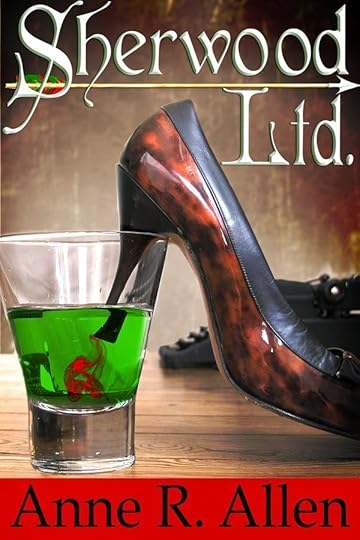
This second book in the Camilla Randall Mysteries follows Camilla's hilarious misadventures with merry band of outlaw indie publishers in the English Midlands. Always a magnet for murder, mischief and Mr. Wrong, she falls for a self-styled Robin Hood who may or may not be trying to kill her. It follows Ghostwriters in the Sky, but can be read as a stand-alone.
I like this book. I REALLY like this book. It's not yer typical whodunnit, nor is the protagonist anything like a cop. Ms. Allen has crafted a wily tale of murder, deceit, and intrigue that can stand with the best of them. Her characters are all too real and her dialogue took me from laughter to chills to suspicion of everybody in the book. Good on her! Editorially, the book is also refreshingly well-done and all but devoid of grammatical or other such gaffes. This was obviously written by an intelligent woman who is also a fine story-teller. My congratulations to her...David H. Keith
And TA-DA!!! NO PLACE LIKE HOME IS NOW IN PAPERBACK.
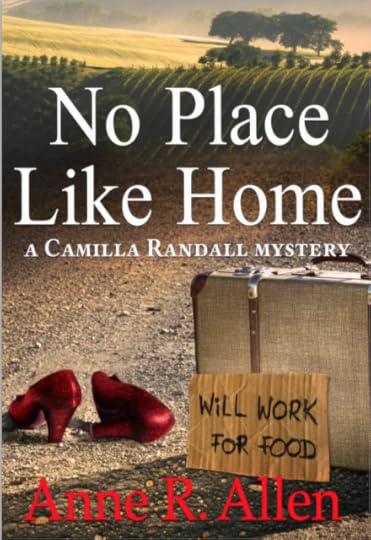
It's #4 in the Camilla Randall series, but it's easily read as a stand-alone. Set in the gorgeous wine country around San Luis Obispo, it's what one reviewer called "A fun, witty and charming novel about the rich and the less so."It's available on Amazon US and UK in both regular and LARGE PRINTAmazon has it on sale right now for $10.79 and £5.99
OPPORTUNITY ALERTS
The Central Coast Writers Conference One of the best deals around in a weekend writer's conference. And it's held on the Cuesta College campus in beautiful San Luis Obispo, CA. Mystery writer legend Anne Perry is the keynote speaker. I'll see you there! September 19th-20th
TENNESSEE WILLIAMS LITERARY FESTIVAL SHORT FICTION CONTEST $25 ENTRY FEE. Submit a short story, up to 7000 words. Grand Prize: $1,500, plus airfare (up to $500) and accommodations for the next Festival in New Orleans, VIP All-Access Festival pass for the next Festival ($500 value), plus publication in Louisiana Cultural Vistas magazine. Contest is open only to writers who have not yet published a book of fiction. Deadline November 16th, 2014.
CHICKEN SOUP - HEARTFELT STORIES BY MOMS Pays $200 for 1,200 words. Stories can deal with the pains and highlights of motherhood, the wonders of parenting grandchildren, special moments of raising a newborn, being a role model to a teenager, or anything that touches the heart of a mom. Deadline September 30.
Steamy Romance Anthology . Fast Foreword is open for submissions for their "Holiday Hot Romance Anthology" Holiday-themed steamy romance or erotica. 3,000-8,000 words long. If the work has been published elsewhere, you must include bibliographic information and hold all publication rights. Deadline September 20th
WRITER'S DIGEST POPULAR FICTION AWARDS. Early Bird fee $20. Stories up to 4000 words in six genres Science Fiction/Fantasy,Thriller,Young Adult, Romance, Crime, Horror. Early Bird Deadline September 15th.
It's been an exciting week for the blog. Marketing expert Penny Sansevieri named us to the Top 30 Websites for Indies and blog guru Molly Greene named us to her list of must-read "leaders" in self-publishing. (I'm only recently self-published—and most of my work is still with a small press—but I'll wear the "indie" label proudly.)
We also got some lovely kudos from superstar author Anne Rice, who linked to the blog from her FB page and said her readers were "deeply grateful" for our tips and insights. Very gracious of her.
I also heard from the producer of a new film about The David Whiting Story which is the subject of my novel The Gatsby Game. It's encouraging to know Hollywood is interested in David's case again.
All that, along with getting interviewed by the women's magazine More about my novel No Place Like Home have made me feel pretty good about the way my career is heading.
But no way have I forgotten how it felt to be down at the bottom of the publishing ladder, trapped on the query-go-round, desperately hoping for the smallest bit of encouragement. Sometimes I have nightmares that I'm still there. I'm still the same person with the same insecurities.
The difference: time. It takes way, way more time to learn to be a successful writer than anybody ever tells you.
I recently found some old diaries from fifteen years ago—a time when I was about to give up writing. I'd had seven rejections in one day—including the return of a full manuscript with no explanation. (I know that still happens, and I wish agents knew how that can throw the most optimistic writer into pit of despair.)
What I didn't realize then, which my present self can see so easily, is...I wasn't ready.
Of course I had no idea of that. I thought I was more than ready. I had a degree from a fancy college. I was a voracious reader. I'd worked in bookstores most of my life. I'd also spent years in the theater—acting and directing—so I knew how to build a character. My grammar skills were excellent. I'd been in writing critique groups for years.
I didn't realize those things had very little to do with writing commercially viable fiction.
Unfortunately, I'd made a promise to myself that I was going to have a book published by...some birthday or other. I honestly can't remember the number, but I had established an ironclad deadline in my mind.
The closer I got to that deadline, the more desperate I felt. Sometimes I'd send out ten queries a day. I spent tons of money on conferences, pitching unpolished books to agents and editors who tried to be kind, but I could see by their faces I was doing something wrong.
My mistake?
Trying to start my career too early.
Here's what I didn't understand: nobody wants to read a rough draft. And even your tenth draft is probably rough if you're a newbie. Your story idea may be great, but wading through a beginner's writing vs. reading professional work is the difference between grading a student paper and picking up your favorite author's book for a relaxing evening.
This morning I saw a perplexed FB post from a new writer who had just got a bunch of negative reviews on her new self-published book. A click-through to her Amazon buy page showed a book full of errors, typos and formatting problems. It also had an amateurish cover. On top of this, the author had apparently put out a request for "5-star reviews" on social media, All anybody could tell her was: unpublish, get an editor, and learn about the business.
Here's the thing—even if your writing is polished—you're unlikely to get readership, much less an agent or publisher, unless you know something about the business of getting your work into the marketplace. You don't ask for reviews without offering review copies and you never demand a certain type of review.
So if you've got a "career plan" with ironclad deadlines like mine, make sure it includes the steps of writing several books and educating yourself about the business first. That's true whether you're planning to go the traditional route or self-publish. The rules are a little different, but both paths require business savvy and insider knowledge.
But I sure do relate to the huge pressure you're feeling to get this career on the road, NOW:
Why we rush
You’ve got the external pressure:
From your mom, who thinks the fact you’ve written 80,000 words of anything is so amazing she’s already written up the press releases.From your significant other, who wants to know when exactly his/her years of sharing you with that manuscript are going to start paying a few bills.From your friends, who don't understand how you can spend all that time writing and have nothing to show for it. "How long can it take to write a book anyway? My mom can type 55 words a minute!"From your critiquers and betas, who are so tired of helping you revise that WIP …AGAIN, they’re screaming “Send it! Away! Immediately!”From self-publishing gurus who say "every minute you're not published, you're losing money."
And the internal pressure:
From your battered self-esteem and those eye-rolls you get every time you tell somebody you’re "pre-published," and you’re only working at the cafe until you make it as a writer.From artistic insecurity: you won’t REALLY know you have talent unless you’re validated by having a published book.From financial insecurity: it’s tough to pay off the loans for the MFA when the only paying writing gig you’ve had since you got the degree is updating the menu for your brother-in-law’s food truck.From your muse, who says: "This is pure brilliance. The world totally needs this book!"
So what do we do to get the pressure to let up?
1) Realize the "rush" is an illusion
If you're feeling pressure to rush, remember it's all in your head, like my "ironclad deadline."
Yes, at the beginning of the e-publishing revolution, some of the biggest self-publishing gurus said stuff like "every day your book isn't published, you're losing money." I think the gurus intended to speak to traditionally-published mid-listers who had out-of-print backlists.
Unfortunately, it became a mantra for all the beginning writers with practice novels in their files.
Whatever the reason for the advice, it's not wise to follow it any more. The "bubble" in which the random amateur's 99-cent self-pubbed ebook could make the big time has deflated.
You're probably making better money working at the coffee place than what most writers make, even if they're traditionally published, so if you're writing because you're pressed for cash, choose another profession. It takes years to build the readership that can provide you with a living wage.
2) Get lots of feedback
There are many ways to get free feedback before you get to the editing stage, as we detailed in our August posts on editing, critique groups, and beta readers. Most of them didn't exist when I was starting out. There are now online critique groups and beta reader connection sites. There's also self-editing software. Use whatever technique works for you, but don't write in a vacuum.
Another great innovation is story-sharing sites like Wattpad and Readwave. Some of the work on those sites is polished, professional stuff by well-known authors. (Long-time trad-pubbed author Elizabeth S. Craig has taken to Wattpad with good results.) But a lot of the writing on these sites comes from beginning writers who are still learning their craft. It's a way to be read and find fans while you're in that awkward stage I was in for so long.
If you're looking to go the traditional publishing route, preparing your manuscript by using any of these may be all you need to polish your work for an agent. In fact, some agents have picked up books right off Wattpad.
I have to stifle myself when I see comments from new writers who say they won't use a beta reader or editor, and they won't even query an agent because, "I'm not going to change a word of my novel for anybody. I write to please myself, not follow a bunch of phony rules."
Then they lament that agents or reviewers won't "give them a chance."
These people are deliberately choosing to remain amateurs and not enter the professional marketplace. Not that there's anything wrong with that. As I have blogged before, writing can be a wonderful hobby.
But for goodness' sake don't take up the time of agents, acquisitions editors, or reviewers with raw, unedited stuff you're not willing to work on.
I'm not saying you should change your book after every comment you get from a reviewer or critiquer. Far from it: you should ignore most of it. And even professional editors can fail to "get" every kind of writing. But do be aware that readers have expectations, and if you want to be read, you need to write for the contemporary reader, not just your own ego.
Musicians need to learn to master their instruments. Truckers need to learn to drive big rigs. Golfers need to learn to swing a club. Writers need to learn to craft words and sentences into a story. Learning takes time.
3) Practice, practice, practice
Easy self-publishing doesn't mean the learning process has been shortened. Learning to write narrative takes way longer than most people realize. (It took me about a decade longer than I expected.)
Self-publishing guru Kristine Kathryn Rusch put it this way:
"Do you remember how much work you had to do to learn how to read a novel? It took you years to get to “big” books of more than 20 pages...It’s much easier to read a novel than it is to write one. Why do you think that writing a good one is possible on the very first try? If you want overnight success, this is not the profession for you. If you want a writing career, then learn it... It takes practice, practice, practice, learning, learning, learning, and patience, patience, patience.
And the wonderful Kristen Lamb also reminds us of this a lot. She often points out that Malcolm Gladwell's 10,000 hours equal pretty much the length of time it takes to write three books. (That's how many polished novels I had before I got my first publisher.)
" ...all you indie/self-pub authors who put your first book up for sale and you haven’t sold enough copies to buy tacos? Keep writing. 10,000 hours. 3 books. Traditional authors? Three books. Rare is the exception."
4) Write and publish short fiction and creative essays
Remember you get great practice from writing short stories, essays, and novellas. They are the best way to get yourself noticed now and they'll be a goldmine later on. One of the biggest regrets of my career is that I spent so much time working on unpublishable novels instead of short pieces that would be valuable to me now.
Short fiction is having a renaissance and we should all be writing more of it. (I have an article on this coming in the November issue of Writer's Digest.)
Short stories and creative nonfiction pieces are easier to get published and you may even get paid or win a money prize. Which can get all those pressuring voices in your head to shut up.
This can include guest blog posts, which will get your name known and make you Googleable: all-important in the digital age.
5) Learn the business
We don't just need to learn to craft book-length narrative, which involves a steep learning curve. We also also need to be savvy about the business we're trying to enter. These days, being an author means not only knowing how to write, but understanding the business of publishing as it exists NOW. (As I say above, this can mean different things depending on how you publish, but every business path has rules.)
For all of you who are screaming "No! No! I just want to write. I'm not going to corrupt my soul with any of that crass commercialism," scroll up to my link to the post on writing as a hobby.
You're choosing to be an amateur. Many happy writers have good reasons for writing for recreation rather than business. Just be clear on your goals.
I wasn't. I queried for years without having a clue about genre or where my books would fit in the marketplace. I was firmly entrenched in the delusion that somebody could "just write" and be a professional author.
I knew you couldn't run a restaurant and "just cook" or a own a dress shop and "just buy pretty clothes." But I didn't want to accept that writing is a business.
So now I'm grateful that all my rotten queries got rejected. Even when I got those seven rejections in one day.
This is the simple truth: we have to become professionals before we join an industry. Any industry.
This post isn't meant to discourage anybody. It's meant to urge you to learn to be the best writer you can be—so you can have that career you've always dreamed of—not one unpolished book languishing in agents' slush piles or on book retail sites, unwanted and unloved.
You owe it to your book to do it right.
What about you, Scriveners? Do you feel pressured to get published? Did you self-publish before you were ready? Have you decided to be a happy amateur and leave all those pressures behind? If you're farther along in your career, what advice do you have for newbies who feel the pressure to publish before they have several books ready to go?
BOOKS OF THE WEEK
I got a crash course in the publishing business when my first novel, Food of Love was accepted by a small UK publisher in 2001. Not only did I have to learn about promoting my own books, but I was invited to live and work with the company, which was located in the English Midlands, near the legendary Sherwood Forest. The setting and colorful cast of characters provided the perfect backdrop for a mystery novel. That novel became Sherwood Ltd., published by MWiDP in 2011. It is now available in a brand new e-edition, from Kotu Beach Press.
And it's only 99c for two weeks on Nook, Amazon US, Amazon UK, Amazon CA, etc. It's also available in paper at Amazon US and Amazon UK.
.jpg)
This second book in the Camilla Randall Mysteries follows Camilla's hilarious misadventures with merry band of outlaw indie publishers in the English Midlands. Always a magnet for murder, mischief and Mr. Wrong, she falls for a self-styled Robin Hood who may or may not be trying to kill her. It follows Ghostwriters in the Sky, but can be read as a stand-alone.
I like this book. I REALLY like this book. It's not yer typical whodunnit, nor is the protagonist anything like a cop. Ms. Allen has crafted a wily tale of murder, deceit, and intrigue that can stand with the best of them. Her characters are all too real and her dialogue took me from laughter to chills to suspicion of everybody in the book. Good on her! Editorially, the book is also refreshingly well-done and all but devoid of grammatical or other such gaffes. This was obviously written by an intelligent woman who is also a fine story-teller. My congratulations to her...David H. Keith
And TA-DA!!! NO PLACE LIKE HOME IS NOW IN PAPERBACK.
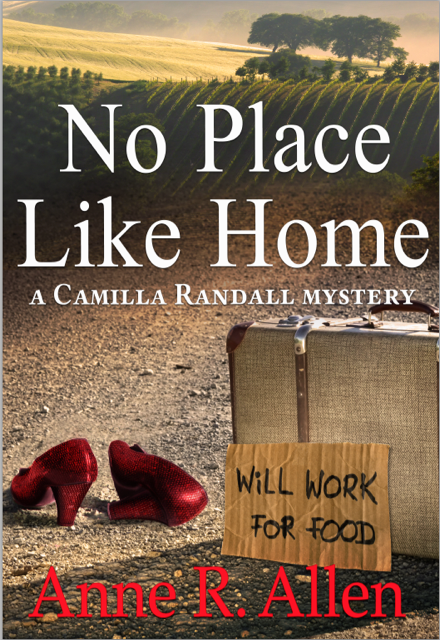
It's #4 in the Camilla Randall series, but it's easily read as a stand-alone. Set in the gorgeous wine country around San Luis Obispo, it's what one reviewer called "A fun, witty and charming novel about the rich and the less so."It's available on Amazon US and UK in both regular and LARGE PRINTAmazon has it on sale right now for $10.79 and £5.99
OPPORTUNITY ALERTS
The Central Coast Writers Conference One of the best deals around in a weekend writer's conference. And it's held on the Cuesta College campus in beautiful San Luis Obispo, CA. Mystery writer legend Anne Perry is the keynote speaker. I'll see you there! September 19th-20th
TENNESSEE WILLIAMS LITERARY FESTIVAL SHORT FICTION CONTEST $25 ENTRY FEE. Submit a short story, up to 7000 words. Grand Prize: $1,500, plus airfare (up to $500) and accommodations for the next Festival in New Orleans, VIP All-Access Festival pass for the next Festival ($500 value), plus publication in Louisiana Cultural Vistas magazine. Contest is open only to writers who have not yet published a book of fiction. Deadline November 16th, 2014.
CHICKEN SOUP - HEARTFELT STORIES BY MOMS Pays $200 for 1,200 words. Stories can deal with the pains and highlights of motherhood, the wonders of parenting grandchildren, special moments of raising a newborn, being a role model to a teenager, or anything that touches the heart of a mom. Deadline September 30.
Steamy Romance Anthology . Fast Foreword is open for submissions for their "Holiday Hot Romance Anthology" Holiday-themed steamy romance or erotica. 3,000-8,000 words long. If the work has been published elsewhere, you must include bibliographic information and hold all publication rights. Deadline September 20th
WRITER'S DIGEST POPULAR FICTION AWARDS. Early Bird fee $20. Stories up to 4000 words in six genres Science Fiction/Fantasy,Thriller,Young Adult, Romance, Crime, Horror. Early Bird Deadline September 15th.
August 31, 2014
Writing Collaboration: Is it Right for You?
by Ruth Harris
According to the sublime Cole Porter lyric: Birds do it. Bees do it. Even educated fleas do it.
Writers do it, too. Often. Collaborate, that is.
Peter Staub and Stephen King paired up to write horror and dark fantasy in The Talisman. Their Black House is a Stoker Award winner.Joe Konrath, an Amazon bestseller, is a serial collaborator who works with a number of different co-authors in a variety of genres. He describes his working process and shares his collaboration agreement.A.D. Garrett is the writing collaboration between Dagger Award-winning novelist Margaret Murphy and forensic scientist, Professor Dave Barclay. Together, they write forensic thrillers.
Other pairs of co-authors have also created impressive successes.
Vanessa Kelly, known for her Regency Romances, and her husband, Randy, write sports romance as VK Sykes. Vanessa and Randy are the authors of the USA Today Bestselling Philadelphia Patriots Series . Their newest book is Payoff Pitch.Marian Edelman Borden and Rhonda Dossett write together as Evelyn David. Currently they are writing two mystery series: The Sullivan Investigations Mystery series and The Brianna Sullivan Mysteries. Their latest whodunit, Mind Over Murder , is available in ebook formats and trade paperback.
Believe it or not, Marian and Rhonda have never met in person. “We were waiting for a very special Oprah – but that ship seems to have sailed. For the first year, we'd never spoken. All exchanges were by email. Now we talk frequently on the phone.”
Anne R. Allen wrote the nonfiction book How to be a Writer in the E-Age with bestselling novelist, Catherine Ryan Hyde, her friend of long standing.
In order to explore the inner workings of collaboration teams, I reached out to Vanessa and Randy, Marian and Rhonda, Anne and Catherine. Many thanks to each of them for taking the time to answer my questions.
RH: To begin at the beginning, how did you first decide to collaborate?
ARA: We've been friends for a long time, and I helped promote some of Catherine's workshops on this blog early on. Since we were teaching similar subjects—me on the blog and Catherine in workshops—we decided to pool our knowledge in book form.
CRH: I had been wanting to work on a nonfiction book for writers for a long time. But I felt like there was a big hole in my knowledge. I’d been with an agent for so long that I really didn’t know the down-in-the-trenches stuff like submissions in the “right now,” not submissions ten years ago. The fit with Anne’s experience was perfect.
Vanessa: It started out as a marriage survival tactic. When Randy was approaching his early retirement, I asked him what he intended to do with his free time. The answer came back as something like this: “Oh, I’ll just drive you to all your appointments and to shopping and just spend the day with you." O_o. I knew I had to do something, since so much together time would probably drive us both crazy. I think our writing collaboration has really helped keep our marriage healthy!
ED: We met on an Internet writers forum in 2002. We were each posting stories, learning the mechanics of writing fiction. We exchanged emails, offering feedback. Our styles of writing, even at the beginning, were similar and equally important, we shared a similar sense of humor. At some point, we decided that we'd try to collaborate on a story.
RH: How do you plot or are you pantsers? How do you create characters?
ED: Actually plotting styles is the one difference between us. Marian prefers to talk through the plot; Rhonda prefers to let the characters "talk" to her as she writes. So we've developed a general approach: plot but leave plenty of room for talkative characters to change the direction of the story.
Vanessa: We’re pretty anal plotters, especially me. I love to use plot boards, GMC and character charts, and I also write bios of my characters. Randy is a little more streamlined, but he also does tons of pre-writing work. We usually start with the hero and heroine, figuring out who they are and what central problem currently bedevils them (we both often dip into to the Sixteen Master Archetypes book by Cowden, LaFever, and Viders for ideas). From there, we brainstorm the basics.
ARA: We got together at Catherine's house and brainstormed one afternoon (with some help from Catherine's wonderful mom) and came up with the concept. We went home and fleshed out an outline and book proposal and it all seemed to come together pretty easily.
CRH: Anne and I both had a few things we’d written that writers had found especially helpful. That made it a little easier, because we could spread out what we already had (some of it just in my head, like the rejection stories) like a road map. Then it was clear what was needed to form a cohesive whole.
RH: On mechanics—Do you use MS Word, Scrivener, Google Docs? Or something else?
ARA: Funny you should ask. The only real problems we've had stemmed from formatting issues. I write in Word and Catherine writes in Word for Mac. We didn't realize that the two Words don’t mesh unless you save everything to Word 2003 (.doc, not .docx). Otherwise you get glitches in formatting for ebooks that read wrong on some devices.
CRH: Because these were all separate “pieces,” using separate Word docs (at first) for each chapter worked fine.
Vanessa: We just use good old Word. We’re pretty old school in that respect. I’ve tried to use things like Scrivener and Google Docs, but they just seem to mess with my process.
ED: Nothing elaborate. We use MSWord, employ Track Changes, and exchange via email the work-in-progress.
RH: How do you divide the work? Do you alternate chapters or does one person write 1st draft, the other polish, edit, refine? Or something else?
ED: We both write all characters and share the writing of every scene. The WIP goes back and forth constantly, with each of us tweaking and adding, so much so that we couldn't tell you who wrote what.
ARA: With a nonfic book like this, it was a piece of cake. We each wrote separate chapters and didn't do much besides proofread each other's pieces. We first published this with a small press, where they did the final edit.
CRH: It really divided itself, like Anne getting “How To Blog.” We let our experience dictate the work split.
Vanessa: Randy writes the first draft, then I do a major revision. He then does another pass through the document, refining and doing another level of copy edits. We then print out the document and I go through it line by line to catch any little errors or inconsistencies. We basically keep handing the document back and forth until we’re satisfied with it.
RH: How do you resolve disagreements?
Vanessa: We argue about it. Fortunately, we generally feel strongly about different things. Randy is very plot and story focused, and I worry more about emotion and characterization. So it’s usually not as difficult to reach an agreement as it could be, since we tend to defer to each other along those lines of concern.
ED: We don't have that many disagreements. We talk through when we hit a spot that isn't working for one of us. We've never had a turn in a story that we didn't both agree on.
ARA: I can't actually think of any. Is that weird?
CRH: We had none! I swear! I think it was a great example of how collaboration really can work, and doesn’t have to be a minefield.
RH: Are your writing styles similar or do they need to be honed into a single voice at some point in the process?
ED: Our writing styles are similar and have become more so over the years of collaboration. For our Brianna stories, which are set in Oklahoma, Rhonda will tweak when she sees something wrong with a geographic reference or an expression that wouldn't fly in that area. Similarly, Marian, who used to live in Washington, DC, will tweak stories set on the East Coast when necessary.
Vanessa: I’d say our writing styles are fairly similar; we even accuse each other being wordy and occasionally a bit arcane in our writing styles. It’s pretty funny to see how we red-pen each other in a fairly consistent way, but don’t seem to see the problem in our individual work.
ARA: I think we have distinctive voices, but they are similar enough in tone that they meshed very well, or at least our reviewers seem to think so.
CRH: Yes, I agree that our styles are easily distinguished. I think you could cover up the name at the beginning of the chapter and still know who’s writing. But we both like to serve up plenty of humor with lessons like these, so I think the styles meshed well.
RH: What are the biggest upsides of collaborating?
ARA: For me, I got my name linked with one of the bestselling authors on Amazon. I'm not sure what Catherine got out of it, except that she likes to help people and um, "Pay it Forward"
CRH: No, no. I got a lot more. I got a whole different perspective on the industry, especially the most recent changes as they affect the new author. I got a lot.
ED: Collaboration gives us the advantage of having someone to play off ideas. Talking through the plot, throwing out ideas, often with the preface "this may sound crazy," allows us to explore all kinds of possibilities for a story.
Writing is a tough business. Authors, especially in the rapidly changing publishing world, face disappointment on a regular basis. While it's wonderful to have someone with whom to celebrate the triumphs, it's also incredibly helpful to have someone to share the disappointments and frustrations.
Vanessa: It’s fun and also mitigates against the sense of isolation that often afflicts authors. It’s wonderful to have someone that close to you who “gets” what you’re doing. We spend hours talking about our writing and our books, which is a great way to keep our brains active and engaged.
RH: What pitfalls should writers considering collaboration be aware of?
Vanessa: Do NOT collaborate if you can’t let stuff go or you are a grudge holder. You need to be willing to lose an argument occasionally. If you’re not, it won’t be a happy relationship. I also think you need to define your work process before you even set one word down on the page. You want to be collaborating, not competing with each other.
ED: Collaboration means checking your ego at the door. It's not Marian or Rhonda's mystery -- it's Evelyn David's story. Final piece of advice: For a collaboration to work, it helps to have a sense of humor (in fact it's vital).
ARA: I should think collaboration on fiction would have lots of pitfalls, but collaborating on nonfiction is a lot easier. We each had our own chapters and fields of expertise, so we didn't have much to argue about.
CRH: I’m sure there are many pitfalls. Egos, for example. But like any human interaction, honesty, an ability to speak up, and maybe putting some points of the agreement in writing should go a long way.
Now about you.
If you’re thinking of collaborating, here are a few questions to ask yourself first:
Did you share when you were a kid?Can you put the book first and your ego second?Is your style compatible with your collaborator’s and easily blended? If not, will one of you act as editor and referee with the ability to make final decisions?Do you both have a sense of humor that will help you through the rough spots, the disagreements, the disappointments?Do you both write at the same speed? A Ferrari and a bicycle will both get you where you want to go but not at the same time.Plotter or pantser?How will you handle finances and bookkeeping?Decide on a marketing/promo budget and how to split the expenses.Is one (or both) of you a competent formatter or will you have to budget for pro formatting?Same applies to cover design. Can you DIY or will you need to hire a designer?And yes, sometimes the best collaborations run into snags. For a look at how Michael and I resolve our differences, here's a post at my blog on When Collaborators Disagree.
What about you, Scriveners? Have you been thinking about collaborating on a book? Have you ever successfully co-written anything? Do you have any disaster stories? What advice do you have for potential collaborators?
BOOK OF THE WEEK
99c Special! Last week!!!
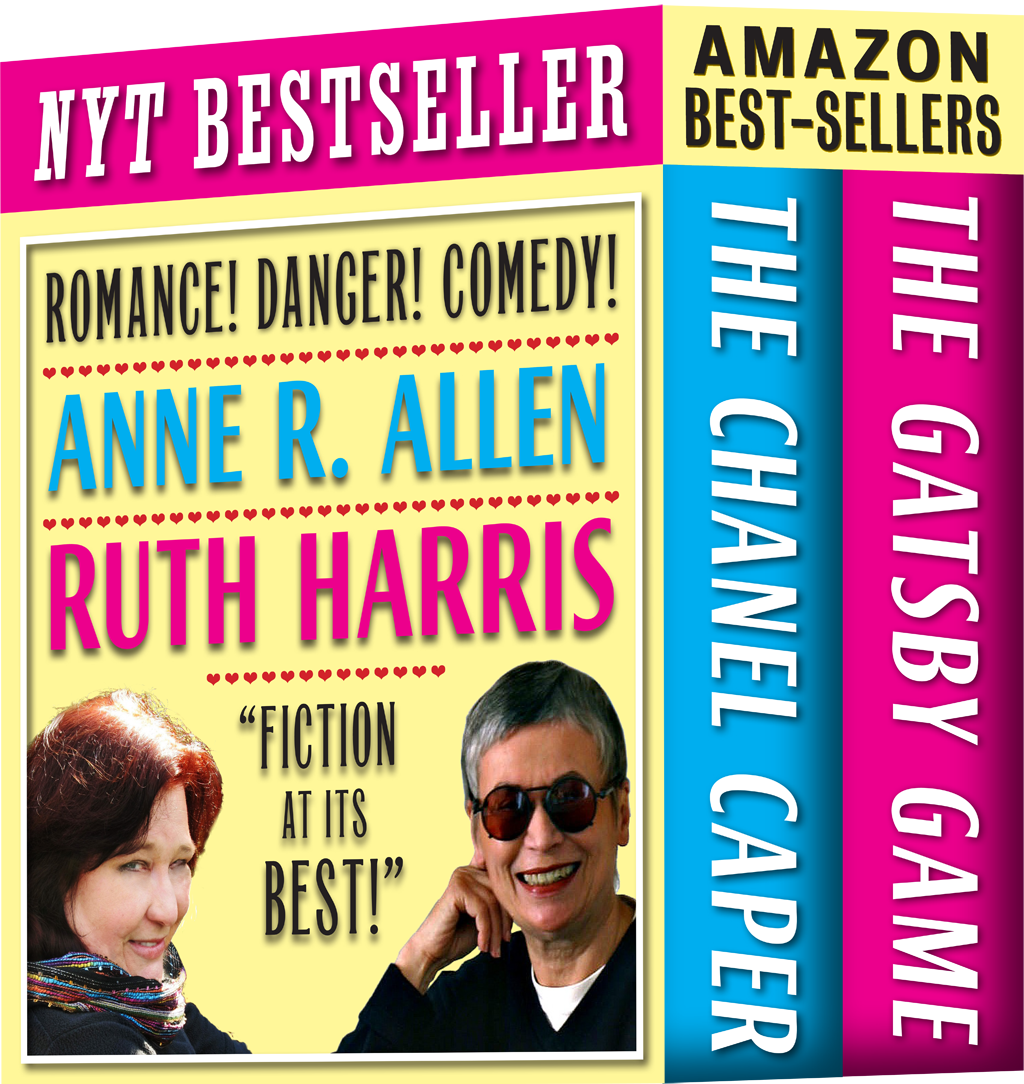
The Chanel Caper by Ruth Harris and The Gatsby Game by Anne R. Allen
It's CHANEL AND GATSBY, a comedy two-fer
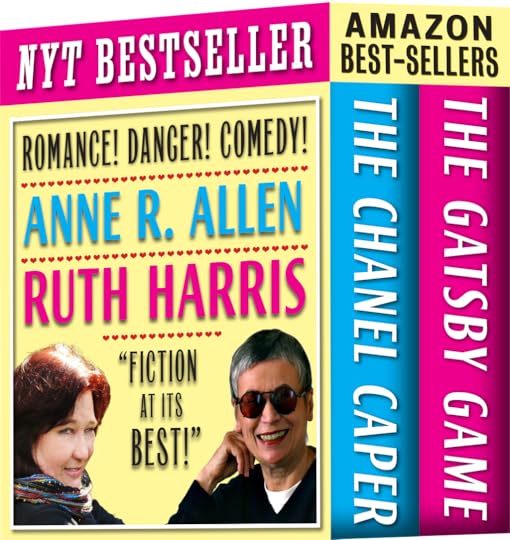
Hollywood and Manhattan: it's Bi-Coastal Comedy! A perfect read for those last lazy days of summer.99c at NOOK, Kobo, and Amazon US, Amazon UK, Amazon CA
The Chanel Caper
Nora Ephron meets James Bond. Or is it the other way around?
The Gatsby Game
A Hollywood mystery with celebrities, murder and a smart-mouthed nanny. Read it before you see the new film about the same real-life mystery, The David Whiting Story, due later this year.
OPPORTUNITY ALERTS
TENNESSEE WILLIAMS LITERARY FESTIVAL SHORT FICTION CONTEST $25 ENTRY FEE. Submit a short story, up to 7000 words. Grand Prize: $1,500, plus airfare (up to $500) and accommodations for the next Festival in New Orleans, VIP All-Access Festival pass for the next Festival ($500 value), plus publication in Louisiana Cultural Vistas magazine. Contest is open only to writers who have not yet published a book of fiction. Deadline November 16th, 2014.
GLIMMER TRAIN VERY SHORT FICTION AWARD $15 entry fee. Maximum length: 3,000 words. 1st place wins $1,500, publication in Glimmer Train Stories, and 20 copies of that issue. 2nd place wins $500 (or, if accepted for publication, $700 and 10 copies). 3rd place wins $300 (or, if accepted for publication, $700 and 10 copies). Deadline October 31, 2014.
RIVER TEETH'S BOOK PRIZE for Literary Nonfiction. The $27 ENTRY FEE is a little steeper than we usually list, but this is for a full book-length manuscript. River Teeth's editors and editorial board conduct a yearly national contest to identify the best book-length literary nonfiction. The winner will receive $1,000 and publication. Deadline October 15, 2014.
CHICKEN SOUP - HEARTFELT STORIES BY MOMS NO FEE Pays $200 for 1,200 words. Stories can deal with the pains and highlights of motherhood, the wonders of parenting grandchildren, special moments of raising a newborn, being a role model to a teenager, or anything that touches the heart of a mom. Deadline September 30.
The Central Coast Writers Conference One of the best deals around in a weekend writer's conference. And it's held on the Cuesta College campus in beautiful San Luis Obispo, CA. Mystery writer legend Anne Perry is the keynote speaker. September 19th-20th
Steamy Romance Anthology . NO FEE Fast Foreword is open for submissions for their "Holiday Hot Romance Anthology" Holiday-themed steamy romance or erotica. 3,000-8,000 words long. If the work has been published elsewhere, you must include bibliographic information and hold all publication rights. Deadline September 20th
According to the sublime Cole Porter lyric: Birds do it. Bees do it. Even educated fleas do it.
Writers do it, too. Often. Collaborate, that is.
Peter Staub and Stephen King paired up to write horror and dark fantasy in The Talisman. Their Black House is a Stoker Award winner.Joe Konrath, an Amazon bestseller, is a serial collaborator who works with a number of different co-authors in a variety of genres. He describes his working process and shares his collaboration agreement.A.D. Garrett is the writing collaboration between Dagger Award-winning novelist Margaret Murphy and forensic scientist, Professor Dave Barclay. Together, they write forensic thrillers.
Other pairs of co-authors have also created impressive successes.
Vanessa Kelly, known for her Regency Romances, and her husband, Randy, write sports romance as VK Sykes. Vanessa and Randy are the authors of the USA Today Bestselling Philadelphia Patriots Series . Their newest book is Payoff Pitch.Marian Edelman Borden and Rhonda Dossett write together as Evelyn David. Currently they are writing two mystery series: The Sullivan Investigations Mystery series and The Brianna Sullivan Mysteries. Their latest whodunit, Mind Over Murder , is available in ebook formats and trade paperback.
Believe it or not, Marian and Rhonda have never met in person. “We were waiting for a very special Oprah – but that ship seems to have sailed. For the first year, we'd never spoken. All exchanges were by email. Now we talk frequently on the phone.”
Anne R. Allen wrote the nonfiction book How to be a Writer in the E-Age with bestselling novelist, Catherine Ryan Hyde, her friend of long standing.
In order to explore the inner workings of collaboration teams, I reached out to Vanessa and Randy, Marian and Rhonda, Anne and Catherine. Many thanks to each of them for taking the time to answer my questions.
RH: To begin at the beginning, how did you first decide to collaborate?
ARA: We've been friends for a long time, and I helped promote some of Catherine's workshops on this blog early on. Since we were teaching similar subjects—me on the blog and Catherine in workshops—we decided to pool our knowledge in book form.
CRH: I had been wanting to work on a nonfiction book for writers for a long time. But I felt like there was a big hole in my knowledge. I’d been with an agent for so long that I really didn’t know the down-in-the-trenches stuff like submissions in the “right now,” not submissions ten years ago. The fit with Anne’s experience was perfect.
Vanessa: It started out as a marriage survival tactic. When Randy was approaching his early retirement, I asked him what he intended to do with his free time. The answer came back as something like this: “Oh, I’ll just drive you to all your appointments and to shopping and just spend the day with you." O_o. I knew I had to do something, since so much together time would probably drive us both crazy. I think our writing collaboration has really helped keep our marriage healthy!
ED: We met on an Internet writers forum in 2002. We were each posting stories, learning the mechanics of writing fiction. We exchanged emails, offering feedback. Our styles of writing, even at the beginning, were similar and equally important, we shared a similar sense of humor. At some point, we decided that we'd try to collaborate on a story.
RH: How do you plot or are you pantsers? How do you create characters?
ED: Actually plotting styles is the one difference between us. Marian prefers to talk through the plot; Rhonda prefers to let the characters "talk" to her as she writes. So we've developed a general approach: plot but leave plenty of room for talkative characters to change the direction of the story.
Vanessa: We’re pretty anal plotters, especially me. I love to use plot boards, GMC and character charts, and I also write bios of my characters. Randy is a little more streamlined, but he also does tons of pre-writing work. We usually start with the hero and heroine, figuring out who they are and what central problem currently bedevils them (we both often dip into to the Sixteen Master Archetypes book by Cowden, LaFever, and Viders for ideas). From there, we brainstorm the basics.
ARA: We got together at Catherine's house and brainstormed one afternoon (with some help from Catherine's wonderful mom) and came up with the concept. We went home and fleshed out an outline and book proposal and it all seemed to come together pretty easily.
CRH: Anne and I both had a few things we’d written that writers had found especially helpful. That made it a little easier, because we could spread out what we already had (some of it just in my head, like the rejection stories) like a road map. Then it was clear what was needed to form a cohesive whole.
RH: On mechanics—Do you use MS Word, Scrivener, Google Docs? Or something else?
ARA: Funny you should ask. The only real problems we've had stemmed from formatting issues. I write in Word and Catherine writes in Word for Mac. We didn't realize that the two Words don’t mesh unless you save everything to Word 2003 (.doc, not .docx). Otherwise you get glitches in formatting for ebooks that read wrong on some devices.
CRH: Because these were all separate “pieces,” using separate Word docs (at first) for each chapter worked fine.
Vanessa: We just use good old Word. We’re pretty old school in that respect. I’ve tried to use things like Scrivener and Google Docs, but they just seem to mess with my process.
ED: Nothing elaborate. We use MSWord, employ Track Changes, and exchange via email the work-in-progress.
RH: How do you divide the work? Do you alternate chapters or does one person write 1st draft, the other polish, edit, refine? Or something else?
ED: We both write all characters and share the writing of every scene. The WIP goes back and forth constantly, with each of us tweaking and adding, so much so that we couldn't tell you who wrote what.
ARA: With a nonfic book like this, it was a piece of cake. We each wrote separate chapters and didn't do much besides proofread each other's pieces. We first published this with a small press, where they did the final edit.
CRH: It really divided itself, like Anne getting “How To Blog.” We let our experience dictate the work split.
Vanessa: Randy writes the first draft, then I do a major revision. He then does another pass through the document, refining and doing another level of copy edits. We then print out the document and I go through it line by line to catch any little errors or inconsistencies. We basically keep handing the document back and forth until we’re satisfied with it.
RH: How do you resolve disagreements?
Vanessa: We argue about it. Fortunately, we generally feel strongly about different things. Randy is very plot and story focused, and I worry more about emotion and characterization. So it’s usually not as difficult to reach an agreement as it could be, since we tend to defer to each other along those lines of concern.
ED: We don't have that many disagreements. We talk through when we hit a spot that isn't working for one of us. We've never had a turn in a story that we didn't both agree on.
ARA: I can't actually think of any. Is that weird?
CRH: We had none! I swear! I think it was a great example of how collaboration really can work, and doesn’t have to be a minefield.
RH: Are your writing styles similar or do they need to be honed into a single voice at some point in the process?
ED: Our writing styles are similar and have become more so over the years of collaboration. For our Brianna stories, which are set in Oklahoma, Rhonda will tweak when she sees something wrong with a geographic reference or an expression that wouldn't fly in that area. Similarly, Marian, who used to live in Washington, DC, will tweak stories set on the East Coast when necessary.
Vanessa: I’d say our writing styles are fairly similar; we even accuse each other being wordy and occasionally a bit arcane in our writing styles. It’s pretty funny to see how we red-pen each other in a fairly consistent way, but don’t seem to see the problem in our individual work.
ARA: I think we have distinctive voices, but they are similar enough in tone that they meshed very well, or at least our reviewers seem to think so.
CRH: Yes, I agree that our styles are easily distinguished. I think you could cover up the name at the beginning of the chapter and still know who’s writing. But we both like to serve up plenty of humor with lessons like these, so I think the styles meshed well.
RH: What are the biggest upsides of collaborating?
ARA: For me, I got my name linked with one of the bestselling authors on Amazon. I'm not sure what Catherine got out of it, except that she likes to help people and um, "Pay it Forward"
CRH: No, no. I got a lot more. I got a whole different perspective on the industry, especially the most recent changes as they affect the new author. I got a lot.
ED: Collaboration gives us the advantage of having someone to play off ideas. Talking through the plot, throwing out ideas, often with the preface "this may sound crazy," allows us to explore all kinds of possibilities for a story.
Writing is a tough business. Authors, especially in the rapidly changing publishing world, face disappointment on a regular basis. While it's wonderful to have someone with whom to celebrate the triumphs, it's also incredibly helpful to have someone to share the disappointments and frustrations.
Vanessa: It’s fun and also mitigates against the sense of isolation that often afflicts authors. It’s wonderful to have someone that close to you who “gets” what you’re doing. We spend hours talking about our writing and our books, which is a great way to keep our brains active and engaged.
RH: What pitfalls should writers considering collaboration be aware of?
Vanessa: Do NOT collaborate if you can’t let stuff go or you are a grudge holder. You need to be willing to lose an argument occasionally. If you’re not, it won’t be a happy relationship. I also think you need to define your work process before you even set one word down on the page. You want to be collaborating, not competing with each other.
ED: Collaboration means checking your ego at the door. It's not Marian or Rhonda's mystery -- it's Evelyn David's story. Final piece of advice: For a collaboration to work, it helps to have a sense of humor (in fact it's vital).
ARA: I should think collaboration on fiction would have lots of pitfalls, but collaborating on nonfiction is a lot easier. We each had our own chapters and fields of expertise, so we didn't have much to argue about.
CRH: I’m sure there are many pitfalls. Egos, for example. But like any human interaction, honesty, an ability to speak up, and maybe putting some points of the agreement in writing should go a long way.
Now about you.
If you’re thinking of collaborating, here are a few questions to ask yourself first:
Did you share when you were a kid?Can you put the book first and your ego second?Is your style compatible with your collaborator’s and easily blended? If not, will one of you act as editor and referee with the ability to make final decisions?Do you both have a sense of humor that will help you through the rough spots, the disagreements, the disappointments?Do you both write at the same speed? A Ferrari and a bicycle will both get you where you want to go but not at the same time.Plotter or pantser?How will you handle finances and bookkeeping?Decide on a marketing/promo budget and how to split the expenses.Is one (or both) of you a competent formatter or will you have to budget for pro formatting?Same applies to cover design. Can you DIY or will you need to hire a designer?And yes, sometimes the best collaborations run into snags. For a look at how Michael and I resolve our differences, here's a post at my blog on When Collaborators Disagree.
What about you, Scriveners? Have you been thinking about collaborating on a book? Have you ever successfully co-written anything? Do you have any disaster stories? What advice do you have for potential collaborators?
BOOK OF THE WEEK
99c Special! Last week!!!
The Chanel Caper by Ruth Harris and The Gatsby Game by Anne R. Allen
It's CHANEL AND GATSBY, a comedy two-fer
Hollywood and Manhattan: it's Bi-Coastal Comedy! A perfect read for those last lazy days of summer.99c at NOOK, Kobo, and Amazon US, Amazon UK, Amazon CA
The Chanel Caper
Nora Ephron meets James Bond. Or is it the other way around?
The Gatsby Game
A Hollywood mystery with celebrities, murder and a smart-mouthed nanny. Read it before you see the new film about the same real-life mystery, The David Whiting Story, due later this year.
OPPORTUNITY ALERTS
TENNESSEE WILLIAMS LITERARY FESTIVAL SHORT FICTION CONTEST $25 ENTRY FEE. Submit a short story, up to 7000 words. Grand Prize: $1,500, plus airfare (up to $500) and accommodations for the next Festival in New Orleans, VIP All-Access Festival pass for the next Festival ($500 value), plus publication in Louisiana Cultural Vistas magazine. Contest is open only to writers who have not yet published a book of fiction. Deadline November 16th, 2014.
GLIMMER TRAIN VERY SHORT FICTION AWARD $15 entry fee. Maximum length: 3,000 words. 1st place wins $1,500, publication in Glimmer Train Stories, and 20 copies of that issue. 2nd place wins $500 (or, if accepted for publication, $700 and 10 copies). 3rd place wins $300 (or, if accepted for publication, $700 and 10 copies). Deadline October 31, 2014.
RIVER TEETH'S BOOK PRIZE for Literary Nonfiction. The $27 ENTRY FEE is a little steeper than we usually list, but this is for a full book-length manuscript. River Teeth's editors and editorial board conduct a yearly national contest to identify the best book-length literary nonfiction. The winner will receive $1,000 and publication. Deadline October 15, 2014.
CHICKEN SOUP - HEARTFELT STORIES BY MOMS NO FEE Pays $200 for 1,200 words. Stories can deal with the pains and highlights of motherhood, the wonders of parenting grandchildren, special moments of raising a newborn, being a role model to a teenager, or anything that touches the heart of a mom. Deadline September 30.
The Central Coast Writers Conference One of the best deals around in a weekend writer's conference. And it's held on the Cuesta College campus in beautiful San Luis Obispo, CA. Mystery writer legend Anne Perry is the keynote speaker. September 19th-20th
Steamy Romance Anthology . NO FEE Fast Foreword is open for submissions for their "Holiday Hot Romance Anthology" Holiday-themed steamy romance or erotica. 3,000-8,000 words long. If the work has been published elsewhere, you must include bibliographic information and hold all publication rights. Deadline September 20th
August 24, 2014
10 Obsolete Beliefs that Can Block Self-Publishing Success
by Anne R. Allen
New writers contact us every day, asking questions about everything from how to start their first short story (answer: butt in chair; hands on keyboard) to how to deal with trolls and bullies (don't respond; walk away; report abuse.)
We answer them all—as time permits—but there's one kind of writer we can't help much: self-published writers who ask us to help them become best-sellers.
It's not that we don't empathize. We'd all love to be rocking the bestseller charts.
But unfortunately, there is no sure-fire way to make a book a bestseller, whether it's self-published or trad-published.
At least for those of us who left our magic wands at Hogwarts.
The closest thing I know to a magic wand for marketing self-published books is David Gaughran's LET'S GET VISIBLE. And no, I don't know Mr. Gaughran and he's not paying us any kickbacks. He's simply got sensible, up-to-date, no-BS advice for self-publishers.
If you want an overview of publishing in the digital age so you can decide what publishing route is best for you, you'll find it in a book I wrote with #1 Amazon bestseller Catherine Ryan Hyde called HOW TO BE A WRITER IN THE E-AGE .
It can help you navigate today's publishing business whether you self-publish, go with a small press as I have, or are holding out for the agent and the Big Five contract.
You can also find a wealth of information on marketing in a post Ruth Harris wrote for this blog in her Writer's Toolkit series: How to Move the Merch.
David's book costs $4.99. Ours costs $3.99. Ruth's post is free. That's under ten bucks for all the information you'll need.
But an amazing number of people say they would rather spend thousands on a professional publicist than spring for that $10.00 or even read a blogpost.
Needless to say, Harry Potter himself could not help those folks. They are ripe for scammers, and getting ripped off may be the only way they're going to allow themselves to learn what they need to know.
I was once told by a wise friend that "we are all prisoners of our unexamined beliefs."
A lot of writers have fenced in their own careers by hanging onto beliefs about this business that are no longer true.
They are trying to make it as self-publishers while still thinking in terms of traditional publishing routes: bookstores, speaking engagements, and paper books. Some even pay for pricey hardback copies.
If seeing your own hardback books in a store window is the most important thing to you, then you probably shouldn't self-publish. Keep querying agents. Use AgentQuery and QueryTracker and make querying a priority. Authors usually have to send out hundreds these days before they find the right agent. But with persistence, you may become one of the handful of authors who get to debut between those dust-jacketed covers.
If you want to be traditionally published, don't give up on your dream because self-publishing is all the rage. The dream came true for my friend Mary Webber. (Congrats on the August 19 launch of your YA novel Storm Siren , Mary!) It's the first of a trilogy coming out in hardcover with Thomas Nelson (with great reviews from Kirkus and PW.) Here she talks to Writer's Digest about how she got her book deal.
But if you've decided on self-publishing (or want to go with a small digital press), here are ten pieces of old information you need to erase from your brain's hard-drive if you want a successful career.
1) You're not really published unless you have paper books.
I'm going to write this in the simplest way I can, hoping you guys will spread the word to self-published friends who obsess about selling paper books.
EVERY SUCCESSFUL INDIE AUTHOR YOU'VE HEARD ABOUT IN THE PAST FIVE YEARS HAS MADE THE BULK OF THEIR INCOME SELLING E-BOOKS.
Full stop.
E-Books. Not paper books. Especially not hardback paper books.
The e-book is the new mass market paperback. Even though sales are leveling off in the US, the market is expanding worldwide. Here's a recent Yahoo Finance article, complete with graphs and statistics on how genre writers are getting rich with e-books,
If you don't have an e-reader or tablet, and you're planning to self-publish, get one. You're not going to succeed in e-publishing if you don't read e-books and understand how people use them.
I'm not saying you shouldn't have paper books. Most readers still prefer them. But if you're self-publishing, paper will only represent a fraction of your sales. So you want to concentrate your marketing efforts on selling e-books, which is mostly done online.
I'm also not saying print is irrelevant. I'm totally jazzed to be featured in a print magazine this month. I'm interviewed in the September issue of MORE magazine, where I talk about "bag lady syndrome" and the fear of homelessness that plagues even successful women: the subject of my novel NO PLACE LIKE HOME .
But guess how Laura Sinberg, the features editor of MORE found me? Google Plus. It was a link to a guest blogpost I wrote on "bag lady fears" to promote NO PLACE LIKE HOME that came up when she Googled the phrase. The book only exists as an e-book. (Although it will come out in paper in September: YAY!) But my point is that I made a big national print magazine with an e-book (and a little help from Google Plus.) It can happen.
2) You need books in brick and mortar stores to be successful.
Paper books cost a lot to produce. And ship. Even when you use CreateSpace, the cheapest, most popular digital printer, and order 25 books at a time, the book's cost to you won't be much less than $7. When a bookstore adds its 40% mark-up, the book will cost the consumer at least $12.
Your profit on that sale? 20c.
But an e-book priced at $2.99 gets a royalty from Amazon of 70%, which comes to $2.09. Other retailers pay a little more or less, but it's safe to say you'll average around two bucks.
Two bucks vs. twenty cents. You don't need an MBA...
Of course what that means is you should probably charge more than $12 for the paper. Especially if you factor in all the time, money and energy you spend promoting bookselling events.
So you will probably want to price the book at about $15. But that makes it hard to compete with mass market paperbacks, which still sell substantially lower than that.
Then remember that without a Big Five publisher buying the expensive "co-op" real estate at the front of the store for you, your pricey book is probably going to be spine-out on a bottom shelf in the back of the store unless you have a personal friend working there.
That's assuming you can get into bookstores at all: most indie shops will only take self-published books on consignment, and big chain stores won't stock them, period.
See why successful self-publishers focus on online sales?
I know it's sad not to see your book on a shelf in a real store. As readers, we love bookstores. But there's change afoot in retail shopping that is way bigger than the book business. The Wall Street Journal reports shoppers are fleeing the malls and even WalMart is in decline.
So it doesn't make sense for indies to put much energy into in-store book sales. Leave that to the Big Five, who have to take the books back after they don't sell, and pay to ship and pulp them.
3) Personal appearances and book-signings are required of the successful writer.
Book events cost money. Usually quite a lot. Especially if you have to pay for the venue. You're also going to have the cost of your transportation, the de rigeur refreshments, the new outfit, the time spent preparing (and cooking, if you do the refreshments yourself) and all that time taken away from working on your WIP.
The average book signing done on the cheap might cost about $500. Say you sell 50 books (which would be way more than I've ever sold at a book event.) If you're charging $15 a book and you've got cheap CreateSpace books (which many bookstores won't carry, alas) at $8 profit per book, you've made $400.
That's a best-case scenario, and you've lost $100 bucks plus all that time and energy.
I'm not saying you should never have a book party. As I have written before, they can be a fabulous ego boost and a lot of fun. Plus if you're media savvy, you can send out press releases and maybe get it covered by local radio and newspapers, so they're good publicity.
But that's publicity in your hometown only. Great if you live in a large metropolitan area, if you're in little rural town like mine, not so much.
What if you put that $500 into a Bookbub ad instead? If you advertise a 99c sale on your thriller in the Bookbub newsletter, it will reach 1,250,000 targeted readers all over North America. (And other less expensive newsletters like EBookBargainsUK can reach the growing international markets.)
If that 99c sale is on an Amazon countdown, you get to keep most of that 99c on every book sale. And I have yet to hear from an author who didn't make back the cost of a Bookbub ad as well as getting a huge bounce.
This is why most successful self-publishers skip the personal appearances unless they're at the huge national conventions like RWA that raise their profile in the entire industry.
4) Book swag sells books.
I see so many self-publishers begging to give away stuff on their blogs. They've got pens, post-it notes, hats, tote bags, tee-shirts, and even jewelry with their book covers on them.
I know. They're shiny and fun and they're…TOYS!!
But they cost money. And their influence on book sales is minimal. Even if you're at a convention and hand out a ton of them. Thing is, everybody else is doing the same thing.
A cheap, simple bookmark or business card will remind people of your title just as well. (And yes, you need those: take them with you everywhere!)
I got some really cool business cards that advertise my books and this blog for $10 for a hundred from Vistaprint. And I understand some printers are even cheaper. They're all you need.
Toys don't sell books. Word of mouth from readers sells books. Especially word of mouth online, where people can simply click through to a buy page.
5) If you price your books high, you'll show you're the equal of Big Five writers.
I see many self-publishers pricing themselves right out of the market. I was asked to review a book some time ago that I really liked, but I haven't been able to bring myself to recommend it because the author is charging $9.99 for the e-book. I consider that high, even when it's a must-read brand new Big 5 bestseller. For a self-publisher, it's the kiss of death.
The average price for an ebook on Amazon is between $2.99 and $6.99. That's for self-published, small press, and much of the Big 5's backlist. Nearly every day the Bookbub newsletter has a Big 5 classic bestseller for $1.99.
Successful indies usually offer the first book in a series for 99c or even free. The later books are usually priced from $2.99-$4.99. Some price their newest release a little higher, but if you price over $9.99, your Amazon royalty goes down.
The Fussy Librarian provides a page on his site detailing how to price your ebook for optimum success.
I have heard so many self-publishers claim they "have" to charge top dollar for their book because "I spent years writing it."
We all spent years on our first novels. It's called "learning to write."
Besides, it's better to sell lots of books at a lower price than a few at a higher price. Many indies give away tons of books. That's because they want tons of readers who will come back for more.
Charging over $5 for a self-published e-book by an unknown shows nothing except the author has no knowledge of the market.
6) Paying a publicist guarantees more income.
Unfortunately, the old ways of selling books don't work very well any more, so even the efforts of the hardest working publicists can be hit or miss.The old book tour/personal appearance route is not cost effective, as I have blogged about before. Neither is a print ad. Nearly four years ago, Alan Rinzler talked about how a full page ad in the New York Times mostly impresses the author's mother. They're even less effective now.Press releases? Unless you've got a spectacular hook, like you're dating a guy on Duck Dynasty or your baby fell down a well, your press releases are not going to be picked up outside of your hometown.Endless automated Tweets, paying for ads for Facebook "parties" and most of the social media gimmicks don't work either, unless the author is personally engaging with readers.
As Mary W. Walters said on her blog last month, "…we have traditional book-promotion strategies that no longer work – and people who have been trained in those strategies who are no longer useful."
And the Book Marketing Buzz blog predicts that book promoters will soon become extinct.
I'm not saying all publicists are a waste of time and money. A top-notch publicist can get you interviews and appearances that would be closed to you otherwise, and they can plan a campaign around an issue or something in your bio that you might not be able to think up by yourself.
But most of the successful indies you read about did NOT use publicists.
7) You can start a career with one book
The most effective method successful self-publishers have used to sell their books in the digital age is the liberal use of free and discounted books.
They give away the first book in a series to get people to buy the others. If you don't have any others…um, you can figure it out.
Amazon algorithms also favor authors with more than one title.
In fact, indie superstar Liliana Harte suggests you hold back launching your book until you have five in the hopper, so you can launch one a month. Apparently that's the best way to get noticed by the "also bought" algos.
That's precisely what my publishers did with me in 2011. I won't pretend it wasn't exhausting, but after I re-launched my backlist books with Popcorn Press, MWiDP took on three more books I had in rough draft. Yes, we did some marathon editing, but I launched five books in four months. Plus two anthologies. It worked pretty well.
If I had only launched one a year, I'd probably still be taking on editing work to make ends meet.
8) Self-publishers need to attend lots of book fairs and industry events.
The reason to attend trade fairs is to sell to vendors. But as an indie author, you want to sell direct to customers. Of course readers as well as vendors do attend some of the big book festivals, but they generally don't buy a bunch of books to lug around all day.
If they're interested, they're more likely to pick up a card or bookmark and order your book from Amazon or Barnes and Noble when they get home. But during the ordering process, they might forget and order something else Amazon suggests to them. And it could very well be a book from an author who didn't just spend thousands of dollars to attend a convention.
Somebody who's at home in her sweats, pounding out that next book.
It's important to remember that a booth at a festival is so expensive you can't get back your investment unless you get a huge contract or sell in tremendous volume. Add to that the price of transportation and a hotel room, and you're spending a large chunk of change you will not be seeing again.
So only go to a book fair because you want a fun, fabulous vacation, meeting big name authors and schmoozing with industry movers and shakers. If that's why you're going, then by all means book that ticket. Networking in person is always exciting and it can build lasting relationships.
But you can also network and become visible online at no cost.
Book fairs are also used by shady vanity presses to scam newbies. David Gaughran has some hair-raising stories of wildly-overpriced booths and worthless promotion packages sold to newbie authors who are still trapped in this old-publishing-world mindset.
Note: I'm not talking about writers' conferences here. A writer's conference isn't a trade fair. It's a place to get a mini-course in writing craft and marketing as well as network with other writers, agents and editors. They can be a valuable experience, especially for new and pre-published writers. I have the details about our local Central Coast Writers Conference in the "Opportunity Alerts" below.
9) You need to pay for a lot of advertising to be successful.
I have mentioned BookBub ads, which get results but are pricey. However there are lots of bargain-book newsletters that cost less and are effective. Ruth Harris's post I mentioned earlier has a great run-down of the bargain newsletters and other online ads. We recently had success with The Fussy Librarian.
Set a budget and keep to it. Slpurging doesn't always pay off. When Catherine Ryan Hyde and I put our book HOW TO BE A WRITER IN THE E-AGE on an Amazon countdown a couple of weeks ago, we did no paid advertising at all. For most of the week we were on three Amazon bestseller lists. We often were just behind another writing book. When we were #4, it was #2, and we stayed in the same ratio most of the week.
The difference? The #2 book had an expensive BookBub ad. We spent nothing. So I'm willing to bet our bottom line was higher.
How did that happen? Catherine and I both have a strong social media presence. We spend a little time every day building relationships with our readers. Slow and steady. That's how writers build their audiences these days. Catherine gives away tons of books on her blog and Facebook. And she almost always has a book in the top 20.
We both think the Amazon countdown sale is a good promotion tool, whether or not you pay to promote it. If you're in KDP Select, you get one every 90 days. (See my current countdown sale below.)
Keep in mind the most successful self-publishers, like Hugh Howey, did not make their phenomenal sales by using pricey advertising. They did it by making lots of friends on social media and hand-selling those units one at a time.
10) E-books need to be launched like rockets.
Before the age of the e-book, launches were all-important because print books are given only a few months on valuable book store shelves before they are sent back to the publisher to be remaindered and/or pulped.
All print books are in stores "on consignment" and can be returned at any time for lack of sales. So with the old print/warehouse/bookstore paradigm, you have a very small window in which to get your book noticed. (Even smaller if it isn't one of the lucky few who get "co-op" space at the front of the store purchased by your publisher.)
But e-books are forever. An e-book is just as valuable five years down the road as it is the day you launch it. Retailers don't have to return it in order to make room for new merchandise.
Most Amazon bestsellers I know launched their first e-books quietly (what's called a "soft launch"), then waited for buzz to build. Many bestselling indies didn't sell at all for the first few months—or even years. Here's Dean Wesley Smith on why you don't have to sell a lot of books quickly to be a success.
So what's the best way to launch a book in this new publishing world? Nobody really knows. Sometimes books take off and the author doesn't have a clue why, as Sean Cummings blogged this week.
But there is one thing that will not cost you a penny and is pretty much guaranteed to help sales. Get to work on the next book.
Scriveners, do you think you might have an unexamined belief that's holding you back? Do you still have to see your book in the window of Barnes and Noble to feel successful? What advice do you have for the newly self-published author?
NEWS: Check out the September issue of MORE magazine, where I talk to Laura Sinberg about "bag lady syndrome" and the fear of homelessness in successful women: the subject of my novel NO PLACE LIKE HOME. It's on newstands now: the issue with the amazing Viola Davis on the cover.
BOOK OF THE WEEK
The Lady of the Lakewood Diner is on a 99c countdown
from August 24-August 31
Who shot rock diva Morgan Le Fay? Only her childhood friend Dodie, owner of a seedy small-town diner, can find the culprit before the would-be assassin comes back to finish the job.
Boomers, this one's for you. And for younger people if you want to know what your parents and grandparents were really up to in the days of Woodstock and that old fashioned rock and roll. Plus there's a little Grail mythology for the literary fiction fans.
"A page turning, easily readable, arrestingly honest novel which will keep you laughing at yourself."...Kathleen Keena
"I borrowed this book free with my Amazon Prime membership, but I enjoyed it so much that I don't want to give it up. I'm buying a copy to keep."...Linda A. Lange
"In The Lady of the Lakewood Diner, nothing is sacred, nothing is profane. And yet, in the end, love does conquer all. If you're of an age to remember Woodstock and the Moonwalk, don't miss it. If you're not, well, you won't find a better introduction." ...Deborah Eve of the Later Bloomer
OPPORTUNITY ALERTS
TENNESSEE WILLIAMS LITERARY FESTIVAL SHORT FICTION CONTEST $25 ENTRY FEE. Submit a short story, up to 7000 words. Grand Prize: $1,500, plus airfare (up to $500) and accommodations for the next Festival in New Orleans, VIP All-Access Festival pass for the next Festival ($500 value), plus publication in Louisiana Cultural Vistas magazine. Contest is open only to writers who have not yet published a book of fiction. Deadline November 16th, 2014.
GLIMMER TRAIN VERY SHORT FICTION AWARD Maximum length: 3,000 words. 1st place wins $1,500, publication in Glimmer Train Stories, and 20 copies of that issue. 2nd place wins $500 (or, if accepted for publication, $700 and 10 copies). 3rd place wins $300 (or, if accepted for publication, $700 and 10 copies). Deadline October 31, 2014.
RIVER TEETH'S BOOK PRIZE for Literary Nonfiction. The $27 ENTRY FEE is a little steeper than we usually list, but this is for a full book-length manuscript. River Teeth's editors and editorial board conduct a yearly national contest to identify the best book-length literary nonfiction. The winner will receive $1,000 and publication. Deadline October 15, 2014.
CHICKEN SOUP - HEARTFELT STORIES BY MOMS Pays $200 for 1,200 words. Stories can deal with the pains and highlights of motherhood, the wonders of parenting grandchildren, special moments of raising a newborn, being a role model to a teenager, or anything that touches the heart of a mom. Deadline September 30.
The Central Coast Writers Conference One of the best deals around in a weekend writer's conference. And it's held on the Cuesta College campus in beautiful San Luis Obispo, CA. Mystery writer legend Anne Perry is the keynote speaker. September 19th-20th
Xchyler Anthologies. Currently taking submissions of FANTASY stories of 5000-1500 words. Royalty-paying. No entry fee. Deadline August 31st.
New writers contact us every day, asking questions about everything from how to start their first short story (answer: butt in chair; hands on keyboard) to how to deal with trolls and bullies (don't respond; walk away; report abuse.)
We answer them all—as time permits—but there's one kind of writer we can't help much: self-published writers who ask us to help them become best-sellers.
It's not that we don't empathize. We'd all love to be rocking the bestseller charts.
But unfortunately, there is no sure-fire way to make a book a bestseller, whether it's self-published or trad-published.
At least for those of us who left our magic wands at Hogwarts.
The closest thing I know to a magic wand for marketing self-published books is David Gaughran's LET'S GET VISIBLE. And no, I don't know Mr. Gaughran and he's not paying us any kickbacks. He's simply got sensible, up-to-date, no-BS advice for self-publishers.
If you want an overview of publishing in the digital age so you can decide what publishing route is best for you, you'll find it in a book I wrote with #1 Amazon bestseller Catherine Ryan Hyde called HOW TO BE A WRITER IN THE E-AGE .
It can help you navigate today's publishing business whether you self-publish, go with a small press as I have, or are holding out for the agent and the Big Five contract.
You can also find a wealth of information on marketing in a post Ruth Harris wrote for this blog in her Writer's Toolkit series: How to Move the Merch.
David's book costs $4.99. Ours costs $3.99. Ruth's post is free. That's under ten bucks for all the information you'll need.
But an amazing number of people say they would rather spend thousands on a professional publicist than spring for that $10.00 or even read a blogpost.
Needless to say, Harry Potter himself could not help those folks. They are ripe for scammers, and getting ripped off may be the only way they're going to allow themselves to learn what they need to know.
I was once told by a wise friend that "we are all prisoners of our unexamined beliefs."
A lot of writers have fenced in their own careers by hanging onto beliefs about this business that are no longer true.
They are trying to make it as self-publishers while still thinking in terms of traditional publishing routes: bookstores, speaking engagements, and paper books. Some even pay for pricey hardback copies.
If seeing your own hardback books in a store window is the most important thing to you, then you probably shouldn't self-publish. Keep querying agents. Use AgentQuery and QueryTracker and make querying a priority. Authors usually have to send out hundreds these days before they find the right agent. But with persistence, you may become one of the handful of authors who get to debut between those dust-jacketed covers.
If you want to be traditionally published, don't give up on your dream because self-publishing is all the rage. The dream came true for my friend Mary Webber. (Congrats on the August 19 launch of your YA novel Storm Siren , Mary!) It's the first of a trilogy coming out in hardcover with Thomas Nelson (with great reviews from Kirkus and PW.) Here she talks to Writer's Digest about how she got her book deal.
But if you've decided on self-publishing (or want to go with a small digital press), here are ten pieces of old information you need to erase from your brain's hard-drive if you want a successful career.
1) You're not really published unless you have paper books.
I'm going to write this in the simplest way I can, hoping you guys will spread the word to self-published friends who obsess about selling paper books.
EVERY SUCCESSFUL INDIE AUTHOR YOU'VE HEARD ABOUT IN THE PAST FIVE YEARS HAS MADE THE BULK OF THEIR INCOME SELLING E-BOOKS.
Full stop.
E-Books. Not paper books. Especially not hardback paper books.
The e-book is the new mass market paperback. Even though sales are leveling off in the US, the market is expanding worldwide. Here's a recent Yahoo Finance article, complete with graphs and statistics on how genre writers are getting rich with e-books,
If you don't have an e-reader or tablet, and you're planning to self-publish, get one. You're not going to succeed in e-publishing if you don't read e-books and understand how people use them.
I'm not saying you shouldn't have paper books. Most readers still prefer them. But if you're self-publishing, paper will only represent a fraction of your sales. So you want to concentrate your marketing efforts on selling e-books, which is mostly done online.
I'm also not saying print is irrelevant. I'm totally jazzed to be featured in a print magazine this month. I'm interviewed in the September issue of MORE magazine, where I talk about "bag lady syndrome" and the fear of homelessness that plagues even successful women: the subject of my novel NO PLACE LIKE HOME .
But guess how Laura Sinberg, the features editor of MORE found me? Google Plus. It was a link to a guest blogpost I wrote on "bag lady fears" to promote NO PLACE LIKE HOME that came up when she Googled the phrase. The book only exists as an e-book. (Although it will come out in paper in September: YAY!) But my point is that I made a big national print magazine with an e-book (and a little help from Google Plus.) It can happen.
2) You need books in brick and mortar stores to be successful.
Paper books cost a lot to produce. And ship. Even when you use CreateSpace, the cheapest, most popular digital printer, and order 25 books at a time, the book's cost to you won't be much less than $7. When a bookstore adds its 40% mark-up, the book will cost the consumer at least $12.
Your profit on that sale? 20c.
But an e-book priced at $2.99 gets a royalty from Amazon of 70%, which comes to $2.09. Other retailers pay a little more or less, but it's safe to say you'll average around two bucks.
Two bucks vs. twenty cents. You don't need an MBA...
Of course what that means is you should probably charge more than $12 for the paper. Especially if you factor in all the time, money and energy you spend promoting bookselling events.
So you will probably want to price the book at about $15. But that makes it hard to compete with mass market paperbacks, which still sell substantially lower than that.
Then remember that without a Big Five publisher buying the expensive "co-op" real estate at the front of the store for you, your pricey book is probably going to be spine-out on a bottom shelf in the back of the store unless you have a personal friend working there.
That's assuming you can get into bookstores at all: most indie shops will only take self-published books on consignment, and big chain stores won't stock them, period.
See why successful self-publishers focus on online sales?
I know it's sad not to see your book on a shelf in a real store. As readers, we love bookstores. But there's change afoot in retail shopping that is way bigger than the book business. The Wall Street Journal reports shoppers are fleeing the malls and even WalMart is in decline.
So it doesn't make sense for indies to put much energy into in-store book sales. Leave that to the Big Five, who have to take the books back after they don't sell, and pay to ship and pulp them.
3) Personal appearances and book-signings are required of the successful writer.
Book events cost money. Usually quite a lot. Especially if you have to pay for the venue. You're also going to have the cost of your transportation, the de rigeur refreshments, the new outfit, the time spent preparing (and cooking, if you do the refreshments yourself) and all that time taken away from working on your WIP.
The average book signing done on the cheap might cost about $500. Say you sell 50 books (which would be way more than I've ever sold at a book event.) If you're charging $15 a book and you've got cheap CreateSpace books (which many bookstores won't carry, alas) at $8 profit per book, you've made $400.
That's a best-case scenario, and you've lost $100 bucks plus all that time and energy.
I'm not saying you should never have a book party. As I have written before, they can be a fabulous ego boost and a lot of fun. Plus if you're media savvy, you can send out press releases and maybe get it covered by local radio and newspapers, so they're good publicity.
But that's publicity in your hometown only. Great if you live in a large metropolitan area, if you're in little rural town like mine, not so much.
What if you put that $500 into a Bookbub ad instead? If you advertise a 99c sale on your thriller in the Bookbub newsletter, it will reach 1,250,000 targeted readers all over North America. (And other less expensive newsletters like EBookBargainsUK can reach the growing international markets.)
If that 99c sale is on an Amazon countdown, you get to keep most of that 99c on every book sale. And I have yet to hear from an author who didn't make back the cost of a Bookbub ad as well as getting a huge bounce.
This is why most successful self-publishers skip the personal appearances unless they're at the huge national conventions like RWA that raise their profile in the entire industry.
4) Book swag sells books.
I see so many self-publishers begging to give away stuff on their blogs. They've got pens, post-it notes, hats, tote bags, tee-shirts, and even jewelry with their book covers on them.
I know. They're shiny and fun and they're…TOYS!!
But they cost money. And their influence on book sales is minimal. Even if you're at a convention and hand out a ton of them. Thing is, everybody else is doing the same thing.
A cheap, simple bookmark or business card will remind people of your title just as well. (And yes, you need those: take them with you everywhere!)
I got some really cool business cards that advertise my books and this blog for $10 for a hundred from Vistaprint. And I understand some printers are even cheaper. They're all you need.
Toys don't sell books. Word of mouth from readers sells books. Especially word of mouth online, where people can simply click through to a buy page.
5) If you price your books high, you'll show you're the equal of Big Five writers.
I see many self-publishers pricing themselves right out of the market. I was asked to review a book some time ago that I really liked, but I haven't been able to bring myself to recommend it because the author is charging $9.99 for the e-book. I consider that high, even when it's a must-read brand new Big 5 bestseller. For a self-publisher, it's the kiss of death.
The average price for an ebook on Amazon is between $2.99 and $6.99. That's for self-published, small press, and much of the Big 5's backlist. Nearly every day the Bookbub newsletter has a Big 5 classic bestseller for $1.99.
Successful indies usually offer the first book in a series for 99c or even free. The later books are usually priced from $2.99-$4.99. Some price their newest release a little higher, but if you price over $9.99, your Amazon royalty goes down.
The Fussy Librarian provides a page on his site detailing how to price your ebook for optimum success.
I have heard so many self-publishers claim they "have" to charge top dollar for their book because "I spent years writing it."
We all spent years on our first novels. It's called "learning to write."
Besides, it's better to sell lots of books at a lower price than a few at a higher price. Many indies give away tons of books. That's because they want tons of readers who will come back for more.
Charging over $5 for a self-published e-book by an unknown shows nothing except the author has no knowledge of the market.
6) Paying a publicist guarantees more income.
Unfortunately, the old ways of selling books don't work very well any more, so even the efforts of the hardest working publicists can be hit or miss.The old book tour/personal appearance route is not cost effective, as I have blogged about before. Neither is a print ad. Nearly four years ago, Alan Rinzler talked about how a full page ad in the New York Times mostly impresses the author's mother. They're even less effective now.Press releases? Unless you've got a spectacular hook, like you're dating a guy on Duck Dynasty or your baby fell down a well, your press releases are not going to be picked up outside of your hometown.Endless automated Tweets, paying for ads for Facebook "parties" and most of the social media gimmicks don't work either, unless the author is personally engaging with readers.
As Mary W. Walters said on her blog last month, "…we have traditional book-promotion strategies that no longer work – and people who have been trained in those strategies who are no longer useful."
And the Book Marketing Buzz blog predicts that book promoters will soon become extinct.
I'm not saying all publicists are a waste of time and money. A top-notch publicist can get you interviews and appearances that would be closed to you otherwise, and they can plan a campaign around an issue or something in your bio that you might not be able to think up by yourself.
But most of the successful indies you read about did NOT use publicists.
7) You can start a career with one book
The most effective method successful self-publishers have used to sell their books in the digital age is the liberal use of free and discounted books.
They give away the first book in a series to get people to buy the others. If you don't have any others…um, you can figure it out.
Amazon algorithms also favor authors with more than one title.
In fact, indie superstar Liliana Harte suggests you hold back launching your book until you have five in the hopper, so you can launch one a month. Apparently that's the best way to get noticed by the "also bought" algos.
That's precisely what my publishers did with me in 2011. I won't pretend it wasn't exhausting, but after I re-launched my backlist books with Popcorn Press, MWiDP took on three more books I had in rough draft. Yes, we did some marathon editing, but I launched five books in four months. Plus two anthologies. It worked pretty well.
If I had only launched one a year, I'd probably still be taking on editing work to make ends meet.
8) Self-publishers need to attend lots of book fairs and industry events.
The reason to attend trade fairs is to sell to vendors. But as an indie author, you want to sell direct to customers. Of course readers as well as vendors do attend some of the big book festivals, but they generally don't buy a bunch of books to lug around all day.
If they're interested, they're more likely to pick up a card or bookmark and order your book from Amazon or Barnes and Noble when they get home. But during the ordering process, they might forget and order something else Amazon suggests to them. And it could very well be a book from an author who didn't just spend thousands of dollars to attend a convention.
Somebody who's at home in her sweats, pounding out that next book.
It's important to remember that a booth at a festival is so expensive you can't get back your investment unless you get a huge contract or sell in tremendous volume. Add to that the price of transportation and a hotel room, and you're spending a large chunk of change you will not be seeing again.
So only go to a book fair because you want a fun, fabulous vacation, meeting big name authors and schmoozing with industry movers and shakers. If that's why you're going, then by all means book that ticket. Networking in person is always exciting and it can build lasting relationships.
But you can also network and become visible online at no cost.
Book fairs are also used by shady vanity presses to scam newbies. David Gaughran has some hair-raising stories of wildly-overpriced booths and worthless promotion packages sold to newbie authors who are still trapped in this old-publishing-world mindset.
Note: I'm not talking about writers' conferences here. A writer's conference isn't a trade fair. It's a place to get a mini-course in writing craft and marketing as well as network with other writers, agents and editors. They can be a valuable experience, especially for new and pre-published writers. I have the details about our local Central Coast Writers Conference in the "Opportunity Alerts" below.
9) You need to pay for a lot of advertising to be successful.
I have mentioned BookBub ads, which get results but are pricey. However there are lots of bargain-book newsletters that cost less and are effective. Ruth Harris's post I mentioned earlier has a great run-down of the bargain newsletters and other online ads. We recently had success with The Fussy Librarian.
Set a budget and keep to it. Slpurging doesn't always pay off. When Catherine Ryan Hyde and I put our book HOW TO BE A WRITER IN THE E-AGE on an Amazon countdown a couple of weeks ago, we did no paid advertising at all. For most of the week we were on three Amazon bestseller lists. We often were just behind another writing book. When we were #4, it was #2, and we stayed in the same ratio most of the week.
The difference? The #2 book had an expensive BookBub ad. We spent nothing. So I'm willing to bet our bottom line was higher.
How did that happen? Catherine and I both have a strong social media presence. We spend a little time every day building relationships with our readers. Slow and steady. That's how writers build their audiences these days. Catherine gives away tons of books on her blog and Facebook. And she almost always has a book in the top 20.
We both think the Amazon countdown sale is a good promotion tool, whether or not you pay to promote it. If you're in KDP Select, you get one every 90 days. (See my current countdown sale below.)
Keep in mind the most successful self-publishers, like Hugh Howey, did not make their phenomenal sales by using pricey advertising. They did it by making lots of friends on social media and hand-selling those units one at a time.
10) E-books need to be launched like rockets.
Before the age of the e-book, launches were all-important because print books are given only a few months on valuable book store shelves before they are sent back to the publisher to be remaindered and/or pulped.
All print books are in stores "on consignment" and can be returned at any time for lack of sales. So with the old print/warehouse/bookstore paradigm, you have a very small window in which to get your book noticed. (Even smaller if it isn't one of the lucky few who get "co-op" space at the front of the store purchased by your publisher.)
But e-books are forever. An e-book is just as valuable five years down the road as it is the day you launch it. Retailers don't have to return it in order to make room for new merchandise.
Most Amazon bestsellers I know launched their first e-books quietly (what's called a "soft launch"), then waited for buzz to build. Many bestselling indies didn't sell at all for the first few months—or even years. Here's Dean Wesley Smith on why you don't have to sell a lot of books quickly to be a success.
So what's the best way to launch a book in this new publishing world? Nobody really knows. Sometimes books take off and the author doesn't have a clue why, as Sean Cummings blogged this week.
But there is one thing that will not cost you a penny and is pretty much guaranteed to help sales. Get to work on the next book.
Scriveners, do you think you might have an unexamined belief that's holding you back? Do you still have to see your book in the window of Barnes and Noble to feel successful? What advice do you have for the newly self-published author?
NEWS: Check out the September issue of MORE magazine, where I talk to Laura Sinberg about "bag lady syndrome" and the fear of homelessness in successful women: the subject of my novel NO PLACE LIKE HOME. It's on newstands now: the issue with the amazing Viola Davis on the cover.
BOOK OF THE WEEK
The Lady of the Lakewood Diner is on a 99c countdown
from August 24-August 31
%2Bsmaller.jpg)
Who shot rock diva Morgan Le Fay? Only her childhood friend Dodie, owner of a seedy small-town diner, can find the culprit before the would-be assassin comes back to finish the job.
Boomers, this one's for you. And for younger people if you want to know what your parents and grandparents were really up to in the days of Woodstock and that old fashioned rock and roll. Plus there's a little Grail mythology for the literary fiction fans.
"A page turning, easily readable, arrestingly honest novel which will keep you laughing at yourself."...Kathleen Keena
"I borrowed this book free with my Amazon Prime membership, but I enjoyed it so much that I don't want to give it up. I'm buying a copy to keep."...Linda A. Lange
"In The Lady of the Lakewood Diner, nothing is sacred, nothing is profane. And yet, in the end, love does conquer all. If you're of an age to remember Woodstock and the Moonwalk, don't miss it. If you're not, well, you won't find a better introduction." ...Deborah Eve of the Later Bloomer
OPPORTUNITY ALERTS
TENNESSEE WILLIAMS LITERARY FESTIVAL SHORT FICTION CONTEST $25 ENTRY FEE. Submit a short story, up to 7000 words. Grand Prize: $1,500, plus airfare (up to $500) and accommodations for the next Festival in New Orleans, VIP All-Access Festival pass for the next Festival ($500 value), plus publication in Louisiana Cultural Vistas magazine. Contest is open only to writers who have not yet published a book of fiction. Deadline November 16th, 2014.
GLIMMER TRAIN VERY SHORT FICTION AWARD Maximum length: 3,000 words. 1st place wins $1,500, publication in Glimmer Train Stories, and 20 copies of that issue. 2nd place wins $500 (or, if accepted for publication, $700 and 10 copies). 3rd place wins $300 (or, if accepted for publication, $700 and 10 copies). Deadline October 31, 2014.
RIVER TEETH'S BOOK PRIZE for Literary Nonfiction. The $27 ENTRY FEE is a little steeper than we usually list, but this is for a full book-length manuscript. River Teeth's editors and editorial board conduct a yearly national contest to identify the best book-length literary nonfiction. The winner will receive $1,000 and publication. Deadline October 15, 2014.
CHICKEN SOUP - HEARTFELT STORIES BY MOMS Pays $200 for 1,200 words. Stories can deal with the pains and highlights of motherhood, the wonders of parenting grandchildren, special moments of raising a newborn, being a role model to a teenager, or anything that touches the heart of a mom. Deadline September 30.
The Central Coast Writers Conference One of the best deals around in a weekend writer's conference. And it's held on the Cuesta College campus in beautiful San Luis Obispo, CA. Mystery writer legend Anne Perry is the keynote speaker. September 19th-20th
Xchyler Anthologies. Currently taking submissions of FANTASY stories of 5000-1500 words. Royalty-paying. No entry fee. Deadline August 31st.
August 17, 2014
5 Protagonists Readers Hate: Why Writers Shouldn't Identify too Closely with a Main Character
by Anne R. Allen
You can learn all you want about writing powerful prose, well-planned story arcs, lyrical descriptions—or any other aspect of fiction—but if you don't have a protagonist your readers care about, none of the rest matters.
I don't think it's terribly relevant to talk about character "likability" in the sense of "niceness." The most memorable characters in fiction are not people most of us would choose as our friends.
Certainly the most enduring literary detectives are not sweet and cuddly. Hercule Poirot was comically vain, Phillip Marlowe and Sam Spade were drunks, Lord Peter Wimsey was a dreadful snob, Jane Marple was a pushy, nosy old fussbudget, and Sherlock Holmes bordered on psychopathic.
You'd find even worse candidates for your BFF in classic literary fiction: Scarlett O'Hara, Becky Sharpe, Jay Gatsby, Heathcliff, and Emma Woodhouse were pretty awful human beings. Pip in Great Expectations was selfish and ungrateful, and even Jo March could be embarrassingly strident for her era (and she wasn't very nice to Laurie.) And well, Mr. Darcy was proud and Elizabeth Bennet was prejudiced.
Would you trust any of the great epic heroes with your car keys? Not "wily" Odysseus (10 years, dude? It took you 10 years to get home to the wife?) Or Aeneas (who wasn't much better, taking 6 years to get as far as Carthage, where he was such a bad boyfriend to Dido, he caused centuries of war between Rome and Carthage.) And Beowulf? He'd get monster blood all over the upholstery.
I'll bet even Atticus Fitch wasn't much fun at a dinner party.
These are not exactly "likeable" folks.
But we LOVE to read about them.
Here's the thing: "heroic" and "admirable" aren't the same thing.
Memorable fictional characters are larger than life and severely flawed. In fact Aristotle said all heroes must have a "tragic flaw". The fictional hero needs to learn something or change during the process of the story, or there's no character arc.
This is why you want to avoid characters who are too much like yourself—or the idealized person you would like to think you are. Nice guys are boring on the page. And nobody can grow and change when they're already perfect.
Note: An exception to the "grow and change" thing is the comic hero, who needs to maintain his comic flaws. Lucy Ricardo seemed to have learned her lesson at the end of each episode of I Love Lucy, but the next week, she'd be back getting into the same kind of trouble. And wouldn't we have been disappointed if she hadn't?
Unfortunately, when writers are starting out, we tend to write about ourselves and our own experiences. After all, we are always told to "write what you know."
But putting too much of yourself into your protagonist can result in a character the reader may find annoying or just plain boring.
The classic author stand-in character is called a "Mary Sue," but there are many contradictory theories about what constitutes a true "Sue/Stu", so I have invented my own names for some of the other types of author stand-ins who don't endear themselves to readers.
I call them Special Victims, Perfect Pats, Looky-Loos and Literal Larrys.
Mary Sue
If you didn't come to writing via the path of fan fiction, you may not have heard of Mary Sue. I hadn't until a couple of years ago.
But all writers need to be aware of her...and know she is not your friend.
The term “Mary Sue” originally comes from a 1973 parody of Star Trek fanfic by Paula Smith, “A Trekkie’s Tale,” in which the teen heroine, “the youngest lieutenant in the fleet,” shows up on the Enterprise and immediately wins the heart of Captain Kirk and takes over the helm of the starship to save the day.
If you've read a lot of newbie fiction (or you've been in many workshops and or critique groups) you probably know Mary Sue well, if not by name.
She's the author's fantasy self, living the author's fantasy life.
She kicks ass like Bruce Lee, solves every case, and saves every day. No problem is too tough for her to solve and no dragon too powerful for her to slay. And absolutely no hero is too hot or high up in the hierarchy to fall in love with her.
Mary Sue can be either gender—the male version is sometimes called "Gary Stu" or "Marty Stu".
A Gary Stu is the middle-aged guy who has hot, quirky young art students throwing themselves into his formerly unappreciated arms for no discernable reason.
Or he can be the young teen who has no knowledge of astrophysics, but somehow manages to figure out how to save the world from the asteroid when nobody else has a clue.
Garys and Marys are always adored by everybody.
Except readers, who absolutely loathe them.
As Laura Miller said in a 2010 article in Salon: "What irks readers about Mary Sues is that telltale whiff of an ulterior motive." To them, Mary Sue is "a daydream the author is having about herself. It’s an imposition, being unwittingly enlisted in somebody else’s narcissistic fantasy life, like getting flashed in the park. And just about as much fun."
There's nothing wrong with fantasies. We all have them. But we need to be aware they make lousy fiction.
The Special Victim
Special victims endure unspeakable horrors in stoic silence. Nothing is ever their fault. Their stories are plotted so they can never act to save themselves. This means the reader is put through a litany of horrors before the victim is finally rescued or dies.
We run into this kind of protagonist when the story is a fictionalized memoir where the author wants to "set the story straight," or rewrite a story of victimization with a different ending to wreak fictional revenge on a creepy ex-spouse, parent, or boss.
Unfortunately, whether it's a "misery memoir" or "revenge fiction" the reader will not be engaged unless the writer works very hard to cast a clear, unbiased eye on the story.
That's because in a story that's all about "how I suffered," villains will be unbelievable and the hero will come across as a wimp.
There's nothing wrong with using anger as a motivation for a story. I think a lot of us are inspired by the idea that "writing well is the best revenge". (I even used that as a title of my first Camilla novel.)
The problem comes when we fail to detach enough to process our anger into fiction. Then what you're writing is therapy, not entertainment.
It's like trying to fertilize your garden with actual garbage without going through the composting process first.
A hero must behave like one and act. If your protagonist is so victimized he is incapable of acting, you may have to tell the story from the point of view of a more active character.
Perfect Pat
Perfect Pat is a paragon of serenity, goodness, and gratitude who might do a bit of gardening, take long walks on the beach, or travel to scenic spots. Pats of either gender may scuba dive, sail, kayak, or hike alone in pristine wilderness. We hear about every magnificent rock, bird, tree and vista and how each one makes Pat feel. Which is serene, good and grateful.
And a little smug.
In spite of annoyingly judgmental opinions, Pat is, like Mary Sue, adored by all.
Nothing much happens in these stories because Pat spends most of the time thinking. She also never makes the mistakes that could set off conflict. Pats are not wildly brave like Mary Sues (they are always prudent) and never make the kind of misstep that would allow them to be victimized.
Like misery/revenge fiction, Perfect Pat tales are often thinly disguised memoirs or travel diaries.
I once attended a critique group whose members referred to each author's protagonists as "you." As in "you shouldn't buy those shoes; you'll go into debt." And "you shouldn't believe that man's lies. It's obvious he's an abuser," or "you shouldn't plant dahlias at that time of year."
It was a bizarre experience, since I had read them a chapter of the Camilla book I was working on. Well-mannered, conservative fashionista Camilla Randall could not be farther from my own pushy, Croc-wearing, old-hippie self.
But when I look back, I realize that nearly everybody in that group was writing a Perfect Pat book. Which is why I tended to fall asleep at meetings. And they must have thought Camilla was who I imagined myself to be. *cringe*
If you want to avoid a snoozerific Perfect Pat, try giving your character at least three traits you loathe. Make her a member of the opposite political party who is chronically late and hums while she works. Give him a fondness for heavy metal 1980s hair rock, substance abuse issues, and a houseful of paintings of dogs playing poker.
Then let Pat make a bunch of lousy decisions: voilà! Plot happens!
Looky-Loo
The Looky-Loo protagonist stands on the outside of the story, observing, but never affecting the action. She may wax poetic or philosophical, drop charming bon mots, or offer snarky, sarcastic commentary.
Readers are often drawn in by the engaging voice.
But they will eventually cool as they realize this character simply isn't the hero of the story. He's never going to do anything. And even though he's witness to one event after another, he never tries to help a victim or stand up to a bully or even save himself.
He never acts. He only reacts.
He is the same person at the end of the story as he was at the beginning. He has no character arc because this isn't really his story.
Much of our real lives are spent looking on helplessly as awful events unfold, but one of the reasons we read fiction is to escape from that feeling of helplessness.
We read fiction because we want heroes. And resolution.
We want a character who will say, "here I am to save the day" not "darn, I guess the bad guy killed another puppy. Life sucks, doesn't it?"
It's easy to slip into "looky-loo" mode when you're writing a mystery. That's why it's best not to focus entirely on the whodunit puzzle and give your detective some compelling personal problems. (Although if it's a battle with the bottle, you'd better give it a fresh spin. That's been kind of done to death.)
There are, of course, precedents in literature where the narrator is not the main character. Nick Caraway is not the focal character in The Great Gatsby and Nelly Dean isn't a big part of the story in Wuthering Heights (although some argue she's really the villain) and Mr. Lockwood only steps in at the end. But If you use the bit-part narrator technique (a tough one for a newbie to pull off) make sure you're clear—to your reader, as well as yourself—about who the real hero is.
Sometimes we start telling a story from the wrong point of view. To fix the "looky-loo" problem, try rewriting a couple of chapters from the point of view of another character who is more active in the story.
Literal Larry
Literal Larrys (or Lauries) are usually writing their own life stories, changing the names to protect themselves from imagined lawsuits, but they are not actually writing fiction.
Which means they are setting themselves up to fail.
That's because writing "what happened" and simply changing the names (and maybe making yourself a little hotter and smarter) is a recipe for an unreadable mess. Even memoirs have to be crafted into a story with an inciting incident, conflict and resolution. (For more on that, here's my post on how to write a publishable memoir.)
Literal Larrys feel compelled to tell each event exactly as it happened. No matter how pointless and boring or irrelevant to the story.
Real life is chaotic. It's an artist's job to make sense of it.
But Literal Larry refuses to do that. All his characters must have the same likes and dislikes and quirks of real people in his life. Even if those traits are contradictory and confusing.
In real life, human beings have many facets and often many different personalities, depending on who they are interacting with. In fact, all of us contain many characters.
But in art, a character needs to have only one personality (unless you're writing about somebody with dissociative identity disorder) because too many personalities will confuse your reader.
Literal Larry has also never heard of Chekhov's gun. He doesn’t realize that in art, if you put a gun on the table in act one, somebody has to shoot it by the end of the play.
He puts the gun on the table because that guy really had a gun on his table. Even if it has no meaning in the story.
This can result in muddled and pointless rambling. And an unreadable book. (And every editor's nightmare.)
A writer needs to learn to mold his own experience into a story with well-defined characters and a structured story arc.
Otherwise it's going to come out like one of those long stories drunks tell at parties that make you go hide in the bathroom or invent a pressing previous engagement rather than endure another moment of pointless blather.
The Solution is Empathy
I think almost all writers have written one or more of these characters. I have drawers full of early short stories with Mary Sue and Looky-Loo protagonists.
A few of my teachers clued me in, writing devastating comments like "this is a wish-fulfillment fantasy" or "why doesn't she DO anything?" in the margins of my fledgling fiction.
After that, was so afraid of being accused of writing about myself, I started writing about people as unlike me as possible. I even wrote about people I disliked. But I learned to like them. So much that their stories grew into novels.
Camilla in The Best Revenge was based on a real "Debutante of the Year" who came across as a selfish nitwit in an obviously biased interview in the New York Times. Congresswoman Cady Stanton in Food of Love was based on a conservative African American preacher who annoyed me on Bill Maher's "Politically Incorrect". Her foster sister Regina was a composite of the impossibly perfect supermodels we love to hate.
I tried to get into their heads, and pretty soon, I found I liked them much better than my Mary Sues and Looky-Loos. And readers do too.
I'm not telling anybody not to write from experience. All writers put personal experience into their work. But we need to remember experience is simply raw clay we need to mold with our art.
Ruth Harris wrote a great post about how to transform real-life experience into good fiction.
The problems come when you ONLY write your own experience. When you do that, you're not writing for publication: you're navel-gazing. As Nikki Giovanni said, "If you wrote [only] from experience, you'd get maybe one book, maybe three poems. Writers write from empathy."
Empathy. It's the key to writing a compelling protagonist. Get into the heads of people who are not you. Feel what they feel. See things as they see them. You probably don't know your own motivations for half the things you do, because you're too close to them. We all have unexamined beliefs that motivate us without our conscious consent. (More on this in a future post.)
But as an author, you need to know every motivation of every character you create.
Otherwise, you're not writing fiction. You're writing a wish-fulfillment fantasy, a therapy session, a lecture, a diary, or a police report.
And none of those offer much enjoyment to a reader.
If you need to put yourself in your fiction, be like Alfred Hitchcock. Be a walk-on character. I love to do that in my books. Only people who know me personally will recognize my "Hitchcock moment" but it lets me act out that "autobiographer" we all have in us.
For more on how to create great characters, check out MJ Bush's list of 99 Essential Quotes on Character Creation. (It has a quote from me and one from Ruth Harris; it's like a whole course in creative writing distilled into 99 sentences.)
What about you, Scriveners? Which one of these characters are you mostly likely to write? Have you ever felt you had to write something "the way it really happened"? What kind of protagonist turns you off the most?
BOOK OF THE WEEKFood of Love: a Comedy about Friendship, Chocolate, and a Small Nuclear Bomb.
Food of Love is on sale for 99c! in ebook on Amazon US or Amazon UK, Amazon CA , Smashwords, iTunes, and at Barnes and Noble . It's available in paper in the UK and in the US. It's also available at
Scribd and
Page Foundry (Inktera).

"I loved everything about this novel, the quirky humor and larger than life characters above all. The plot took me in unexpected directions and I could not guess what would happen next. This is a delightful surprise package skillfully bound by the author's immaculate writing. And like all stories involving a princess, it has a happy ending. HIGHLY recommended!"...The Bookkeeper
OPPORTUNITY ALERTS
TENNESSEE WILLIAMS LITERARY FESTIVAL SHORT FICTION CONTEST $25 ENTRY FEE. Submit a short story, up to 7000 words. Grand Prize: $1,500, plus airfare (up to $500) and accommodations for the next Festival in New Orleans, VIP All-Access Festival pass for the next Festival ($500 value), plus publication in Louisiana Cultural Vistas magazine. Contest is open only to writers who have not yet published a book of fiction. Deadline November 16th, 2014.
GLIMMER TRAIN VERY SHORT FICTION AWARD Maximum length: 3,000 words. 1st place wins $1,500, publication in Glimmer Train Stories, and 20 copies of that issue. 2nd place wins $500 (or, if accepted for publication, $700 and 10 copies). 3rd place wins $300 (or, if accepted for publication, $700 and 10 copies). Deadline October 31, 2014.
RIVER TEETH'S BOOK PRIZE for Literary Nonfiction. The $27 ENTRY FEE is a little steeper than we usually list, but this is for a full book-length manuscript. River Teeth's editors and editorial board conduct a yearly national contest to identify the best book-length literary nonfiction. The winner will receive $1,000 and publication. Deadline October 15, 2014.
CHICKEN SOUP - HEARTFELT STORIES BY MOMS Pays $200 for 1,200 words. Stories can deal with the pains and highlights of motherhood, the wonders of parenting grandchildren, special moments of raising a newborn, being a role model to a teenager, or anything that touches the heart of a mom. Deadline September 30.
Barthelme Prize for experimental flash fiction. $17 Entry Fee 500-word limit. $1000 first prize, $250 hon. mention prizes. Online submission form. Deadline August 31.
You can learn all you want about writing powerful prose, well-planned story arcs, lyrical descriptions—or any other aspect of fiction—but if you don't have a protagonist your readers care about, none of the rest matters.
I don't think it's terribly relevant to talk about character "likability" in the sense of "niceness." The most memorable characters in fiction are not people most of us would choose as our friends.
Certainly the most enduring literary detectives are not sweet and cuddly. Hercule Poirot was comically vain, Phillip Marlowe and Sam Spade were drunks, Lord Peter Wimsey was a dreadful snob, Jane Marple was a pushy, nosy old fussbudget, and Sherlock Holmes bordered on psychopathic.
You'd find even worse candidates for your BFF in classic literary fiction: Scarlett O'Hara, Becky Sharpe, Jay Gatsby, Heathcliff, and Emma Woodhouse were pretty awful human beings. Pip in Great Expectations was selfish and ungrateful, and even Jo March could be embarrassingly strident for her era (and she wasn't very nice to Laurie.) And well, Mr. Darcy was proud and Elizabeth Bennet was prejudiced.
Would you trust any of the great epic heroes with your car keys? Not "wily" Odysseus (10 years, dude? It took you 10 years to get home to the wife?) Or Aeneas (who wasn't much better, taking 6 years to get as far as Carthage, where he was such a bad boyfriend to Dido, he caused centuries of war between Rome and Carthage.) And Beowulf? He'd get monster blood all over the upholstery.
I'll bet even Atticus Fitch wasn't much fun at a dinner party.
These are not exactly "likeable" folks.
But we LOVE to read about them.
Here's the thing: "heroic" and "admirable" aren't the same thing.
Memorable fictional characters are larger than life and severely flawed. In fact Aristotle said all heroes must have a "tragic flaw". The fictional hero needs to learn something or change during the process of the story, or there's no character arc.
This is why you want to avoid characters who are too much like yourself—or the idealized person you would like to think you are. Nice guys are boring on the page. And nobody can grow and change when they're already perfect.
Note: An exception to the "grow and change" thing is the comic hero, who needs to maintain his comic flaws. Lucy Ricardo seemed to have learned her lesson at the end of each episode of I Love Lucy, but the next week, she'd be back getting into the same kind of trouble. And wouldn't we have been disappointed if she hadn't?
Unfortunately, when writers are starting out, we tend to write about ourselves and our own experiences. After all, we are always told to "write what you know."
But putting too much of yourself into your protagonist can result in a character the reader may find annoying or just plain boring.
The classic author stand-in character is called a "Mary Sue," but there are many contradictory theories about what constitutes a true "Sue/Stu", so I have invented my own names for some of the other types of author stand-ins who don't endear themselves to readers.
I call them Special Victims, Perfect Pats, Looky-Loos and Literal Larrys.
Mary Sue
If you didn't come to writing via the path of fan fiction, you may not have heard of Mary Sue. I hadn't until a couple of years ago.
But all writers need to be aware of her...and know she is not your friend.
The term “Mary Sue” originally comes from a 1973 parody of Star Trek fanfic by Paula Smith, “A Trekkie’s Tale,” in which the teen heroine, “the youngest lieutenant in the fleet,” shows up on the Enterprise and immediately wins the heart of Captain Kirk and takes over the helm of the starship to save the day.
If you've read a lot of newbie fiction (or you've been in many workshops and or critique groups) you probably know Mary Sue well, if not by name.
She's the author's fantasy self, living the author's fantasy life.
She kicks ass like Bruce Lee, solves every case, and saves every day. No problem is too tough for her to solve and no dragon too powerful for her to slay. And absolutely no hero is too hot or high up in the hierarchy to fall in love with her.
Mary Sue can be either gender—the male version is sometimes called "Gary Stu" or "Marty Stu".
A Gary Stu is the middle-aged guy who has hot, quirky young art students throwing themselves into his formerly unappreciated arms for no discernable reason.
Or he can be the young teen who has no knowledge of astrophysics, but somehow manages to figure out how to save the world from the asteroid when nobody else has a clue.
Garys and Marys are always adored by everybody.
Except readers, who absolutely loathe them.
As Laura Miller said in a 2010 article in Salon: "What irks readers about Mary Sues is that telltale whiff of an ulterior motive." To them, Mary Sue is "a daydream the author is having about herself. It’s an imposition, being unwittingly enlisted in somebody else’s narcissistic fantasy life, like getting flashed in the park. And just about as much fun."
There's nothing wrong with fantasies. We all have them. But we need to be aware they make lousy fiction.
The Special Victim
Special victims endure unspeakable horrors in stoic silence. Nothing is ever their fault. Their stories are plotted so they can never act to save themselves. This means the reader is put through a litany of horrors before the victim is finally rescued or dies.
We run into this kind of protagonist when the story is a fictionalized memoir where the author wants to "set the story straight," or rewrite a story of victimization with a different ending to wreak fictional revenge on a creepy ex-spouse, parent, or boss.
Unfortunately, whether it's a "misery memoir" or "revenge fiction" the reader will not be engaged unless the writer works very hard to cast a clear, unbiased eye on the story.
That's because in a story that's all about "how I suffered," villains will be unbelievable and the hero will come across as a wimp.
There's nothing wrong with using anger as a motivation for a story. I think a lot of us are inspired by the idea that "writing well is the best revenge". (I even used that as a title of my first Camilla novel.)
The problem comes when we fail to detach enough to process our anger into fiction. Then what you're writing is therapy, not entertainment.
It's like trying to fertilize your garden with actual garbage without going through the composting process first.
A hero must behave like one and act. If your protagonist is so victimized he is incapable of acting, you may have to tell the story from the point of view of a more active character.
Perfect Pat
Perfect Pat is a paragon of serenity, goodness, and gratitude who might do a bit of gardening, take long walks on the beach, or travel to scenic spots. Pats of either gender may scuba dive, sail, kayak, or hike alone in pristine wilderness. We hear about every magnificent rock, bird, tree and vista and how each one makes Pat feel. Which is serene, good and grateful.
And a little smug.
In spite of annoyingly judgmental opinions, Pat is, like Mary Sue, adored by all.
Nothing much happens in these stories because Pat spends most of the time thinking. She also never makes the mistakes that could set off conflict. Pats are not wildly brave like Mary Sues (they are always prudent) and never make the kind of misstep that would allow them to be victimized.
Like misery/revenge fiction, Perfect Pat tales are often thinly disguised memoirs or travel diaries.
I once attended a critique group whose members referred to each author's protagonists as "you." As in "you shouldn't buy those shoes; you'll go into debt." And "you shouldn't believe that man's lies. It's obvious he's an abuser," or "you shouldn't plant dahlias at that time of year."
It was a bizarre experience, since I had read them a chapter of the Camilla book I was working on. Well-mannered, conservative fashionista Camilla Randall could not be farther from my own pushy, Croc-wearing, old-hippie self.
But when I look back, I realize that nearly everybody in that group was writing a Perfect Pat book. Which is why I tended to fall asleep at meetings. And they must have thought Camilla was who I imagined myself to be. *cringe*
If you want to avoid a snoozerific Perfect Pat, try giving your character at least three traits you loathe. Make her a member of the opposite political party who is chronically late and hums while she works. Give him a fondness for heavy metal 1980s hair rock, substance abuse issues, and a houseful of paintings of dogs playing poker.
Then let Pat make a bunch of lousy decisions: voilà! Plot happens!
Looky-Loo
The Looky-Loo protagonist stands on the outside of the story, observing, but never affecting the action. She may wax poetic or philosophical, drop charming bon mots, or offer snarky, sarcastic commentary.
Readers are often drawn in by the engaging voice.
But they will eventually cool as they realize this character simply isn't the hero of the story. He's never going to do anything. And even though he's witness to one event after another, he never tries to help a victim or stand up to a bully or even save himself.
He never acts. He only reacts.
He is the same person at the end of the story as he was at the beginning. He has no character arc because this isn't really his story.
Much of our real lives are spent looking on helplessly as awful events unfold, but one of the reasons we read fiction is to escape from that feeling of helplessness.
We read fiction because we want heroes. And resolution.
We want a character who will say, "here I am to save the day" not "darn, I guess the bad guy killed another puppy. Life sucks, doesn't it?"
It's easy to slip into "looky-loo" mode when you're writing a mystery. That's why it's best not to focus entirely on the whodunit puzzle and give your detective some compelling personal problems. (Although if it's a battle with the bottle, you'd better give it a fresh spin. That's been kind of done to death.)
There are, of course, precedents in literature where the narrator is not the main character. Nick Caraway is not the focal character in The Great Gatsby and Nelly Dean isn't a big part of the story in Wuthering Heights (although some argue she's really the villain) and Mr. Lockwood only steps in at the end. But If you use the bit-part narrator technique (a tough one for a newbie to pull off) make sure you're clear—to your reader, as well as yourself—about who the real hero is.
Sometimes we start telling a story from the wrong point of view. To fix the "looky-loo" problem, try rewriting a couple of chapters from the point of view of another character who is more active in the story.
Literal Larry
Literal Larrys (or Lauries) are usually writing their own life stories, changing the names to protect themselves from imagined lawsuits, but they are not actually writing fiction.
Which means they are setting themselves up to fail.
That's because writing "what happened" and simply changing the names (and maybe making yourself a little hotter and smarter) is a recipe for an unreadable mess. Even memoirs have to be crafted into a story with an inciting incident, conflict and resolution. (For more on that, here's my post on how to write a publishable memoir.)
Literal Larrys feel compelled to tell each event exactly as it happened. No matter how pointless and boring or irrelevant to the story.
Real life is chaotic. It's an artist's job to make sense of it.
But Literal Larry refuses to do that. All his characters must have the same likes and dislikes and quirks of real people in his life. Even if those traits are contradictory and confusing.
In real life, human beings have many facets and often many different personalities, depending on who they are interacting with. In fact, all of us contain many characters.
But in art, a character needs to have only one personality (unless you're writing about somebody with dissociative identity disorder) because too many personalities will confuse your reader.
Literal Larry has also never heard of Chekhov's gun. He doesn’t realize that in art, if you put a gun on the table in act one, somebody has to shoot it by the end of the play.
He puts the gun on the table because that guy really had a gun on his table. Even if it has no meaning in the story.
This can result in muddled and pointless rambling. And an unreadable book. (And every editor's nightmare.)
A writer needs to learn to mold his own experience into a story with well-defined characters and a structured story arc.
Otherwise it's going to come out like one of those long stories drunks tell at parties that make you go hide in the bathroom or invent a pressing previous engagement rather than endure another moment of pointless blather.
The Solution is Empathy
I think almost all writers have written one or more of these characters. I have drawers full of early short stories with Mary Sue and Looky-Loo protagonists.
A few of my teachers clued me in, writing devastating comments like "this is a wish-fulfillment fantasy" or "why doesn't she DO anything?" in the margins of my fledgling fiction.
After that, was so afraid of being accused of writing about myself, I started writing about people as unlike me as possible. I even wrote about people I disliked. But I learned to like them. So much that their stories grew into novels.
Camilla in The Best Revenge was based on a real "Debutante of the Year" who came across as a selfish nitwit in an obviously biased interview in the New York Times. Congresswoman Cady Stanton in Food of Love was based on a conservative African American preacher who annoyed me on Bill Maher's "Politically Incorrect". Her foster sister Regina was a composite of the impossibly perfect supermodels we love to hate.
I tried to get into their heads, and pretty soon, I found I liked them much better than my Mary Sues and Looky-Loos. And readers do too.
I'm not telling anybody not to write from experience. All writers put personal experience into their work. But we need to remember experience is simply raw clay we need to mold with our art.
Ruth Harris wrote a great post about how to transform real-life experience into good fiction.
The problems come when you ONLY write your own experience. When you do that, you're not writing for publication: you're navel-gazing. As Nikki Giovanni said, "If you wrote [only] from experience, you'd get maybe one book, maybe three poems. Writers write from empathy."
Empathy. It's the key to writing a compelling protagonist. Get into the heads of people who are not you. Feel what they feel. See things as they see them. You probably don't know your own motivations for half the things you do, because you're too close to them. We all have unexamined beliefs that motivate us without our conscious consent. (More on this in a future post.)
But as an author, you need to know every motivation of every character you create.
Otherwise, you're not writing fiction. You're writing a wish-fulfillment fantasy, a therapy session, a lecture, a diary, or a police report.
And none of those offer much enjoyment to a reader.
If you need to put yourself in your fiction, be like Alfred Hitchcock. Be a walk-on character. I love to do that in my books. Only people who know me personally will recognize my "Hitchcock moment" but it lets me act out that "autobiographer" we all have in us.
For more on how to create great characters, check out MJ Bush's list of 99 Essential Quotes on Character Creation. (It has a quote from me and one from Ruth Harris; it's like a whole course in creative writing distilled into 99 sentences.)
What about you, Scriveners? Which one of these characters are you mostly likely to write? Have you ever felt you had to write something "the way it really happened"? What kind of protagonist turns you off the most?
BOOK OF THE WEEKFood of Love: a Comedy about Friendship, Chocolate, and a Small Nuclear Bomb.
Food of Love is on sale for 99c! in ebook on Amazon US or Amazon UK, Amazon CA , Smashwords, iTunes, and at Barnes and Noble . It's available in paper in the UK and in the US. It's also available at
Scribd and
Page Foundry (Inktera).
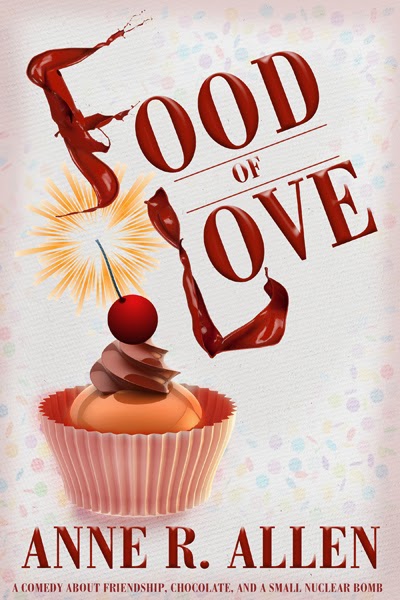
"I loved everything about this novel, the quirky humor and larger than life characters above all. The plot took me in unexpected directions and I could not guess what would happen next. This is a delightful surprise package skillfully bound by the author's immaculate writing. And like all stories involving a princess, it has a happy ending. HIGHLY recommended!"...The Bookkeeper
OPPORTUNITY ALERTS
TENNESSEE WILLIAMS LITERARY FESTIVAL SHORT FICTION CONTEST $25 ENTRY FEE. Submit a short story, up to 7000 words. Grand Prize: $1,500, plus airfare (up to $500) and accommodations for the next Festival in New Orleans, VIP All-Access Festival pass for the next Festival ($500 value), plus publication in Louisiana Cultural Vistas magazine. Contest is open only to writers who have not yet published a book of fiction. Deadline November 16th, 2014.
GLIMMER TRAIN VERY SHORT FICTION AWARD Maximum length: 3,000 words. 1st place wins $1,500, publication in Glimmer Train Stories, and 20 copies of that issue. 2nd place wins $500 (or, if accepted for publication, $700 and 10 copies). 3rd place wins $300 (or, if accepted for publication, $700 and 10 copies). Deadline October 31, 2014.
RIVER TEETH'S BOOK PRIZE for Literary Nonfiction. The $27 ENTRY FEE is a little steeper than we usually list, but this is for a full book-length manuscript. River Teeth's editors and editorial board conduct a yearly national contest to identify the best book-length literary nonfiction. The winner will receive $1,000 and publication. Deadline October 15, 2014.
CHICKEN SOUP - HEARTFELT STORIES BY MOMS Pays $200 for 1,200 words. Stories can deal with the pains and highlights of motherhood, the wonders of parenting grandchildren, special moments of raising a newborn, being a role model to a teenager, or anything that touches the heart of a mom. Deadline September 30.
Barthelme Prize for experimental flash fiction. $17 Entry Fee 500-word limit. $1000 first prize, $250 hon. mention prizes. Online submission form. Deadline August 31.
August 10, 2014
What is a Beta Reader? Everything You Always Wanted to Know About Getting and Giving Feedback on your WIP
This week we're proud to host author and editor Jami Gold, fresh from her role as a presenter at the RWA conference in San Antonio.
If you missed the conference, Jami's posts on the highlights of the annual Romance Writers Association event are fascinating. You'll find them on her blog at JamiGold, Paranormal Author.
Jami's blog is a must-read for new authors. She's formed a great community there. Comments are long and informative. Not only does she know more tech than my poor aging brain will ever comprehend, but her "beat sheets" for outlining and structuring your fiction are a fantastic resource.
Check out her Writing Resources page. It's a goldmine.
I discovered her blog a couple of years ago when I was looking for information on how to find beta readers, so when readers asked me for a post on the subject, Jami was my go-to expert.
So What are "Beta Readers"?
...and how do they differ from editors or critique groups?
The term first came from fan fiction, and it means a person who reads your work-in-progress (or "WIP") when you, the writer or "alpha," are ready for feedback—before it goes into final draft to be sent to your fanfic page, editor, or agent.
Lots of writers may have betas without knowing the term. Betas don't need professional-level editing skills and don't have to be members of a group. They only need to be willing to read your manuscript and give helpful feedback about what works and what doesn't.
They differ from editors since they usually comment as readers, not industry professionals. It's not necessary they have perfect grammar skills or knowledge of the genre (although they need to be aware of the conventions, so they don't try to turn your sweet romance into a gritty thriller, or vice versa.)
They differ from a critique group because they usually read a whole manuscript in a few sittings rather than hearing it over a period of months or years. This means a beta can offer better feedback on big-picture aspects: story arc, character development, pacing, etc.
Beta readers can be fellow writers who will exchange reads, or they can be friends or family who can read with a critical eye. They may become your moral support system and cheerleaders as well.
Like critiquers and editors, beta readers have to be able to leave their own egos out of their feedback and not try to change your story into their own.
When you've found someone who can do that, and still give honest, constructive, useful advice, you've struck gold...Anne
This is #3 in a series on GETTING FEEDBACK
#1 Ruth Harris on EDITING #2 Anne R. Allen on CRITIQUE GROUPS
Beta Reading: How to Find Readers and Become a Better Reader for Othersby Jami Gold
Ever struggle to make readers’ interpretations of your writing match your intentions? We probably all have.
Maybe readers come away with the wrong impression of a character. Maybe a plot twist is too obvious or from too far out of left field. Or maybe our subtext is too subtle or too “on the nose.”
As writers, we’re so close to our stories it’s impossible for us to know how readers will interpret our words. A good beta reader will go through our “the best we can make it by ourselves” draft and give feedback about what we can’t see. And that’s just one reason why we all need beta readers.
Sounds Great!
How Do We Get Beta Readers?
Once we have fans and readers of our published work, we might be able to find volunteers who would love a sneak peek at our stories in exchange for feedback of issues they discover. Until we reach that point, however, volunteers might not be as abundant.
Most writers in that position exchange work with other authors in an “I’ll give you feedback if you give me feedback” beta-reading arrangement. I wrote a blog post earlier this year with a massive list of ideas for where and how to find beta readers.
Here are some samples:
Post a request for beta readers on Twitter, Facebook, WANATribe, your blog, etc.Offer to beta read for someone else.Post a request in writer groups on Google+, LinkedIn, Yahoo, Facebook, NaNoWriMo, etc.Ask around in local writing organizations.Ask at book clubs interested in your genre.Ask at the library if they know of any local resources or clubs.For younger readers, ask teachers, friends’ kids, or at school libraries.Join critique-oriented writing organizations like Critique Circle, FictionPress, Scribophile, YouWriteOn, Authonomy, Ladies Who Critique CPseek, and Critters.org
Do Beta Readers Need to Be Familiar with Our Genre?
We probably want most of our beta readers to be familiar with our genre, but it’s possible for beta readers outside our genre to be valuable too. No matter what genre they read, good beta readers can provide valuable feedback like:
identifying confusing sectionsevaluating the pacing from a big picture perspectivelooking for too much telling versus showingfinding weak/missing character motivations, etc.
More importantly, beta readers who don’t love our genre can tell us what we don’t need to worry about:
Did they hate the main character, but love the voice? Did the pacing and story keep them reading despite their “meh” feeling toward the genre?Did they connect to the main character so much they plowed through a plot they didn’t like?
Sometimes our harshest (i.e., best) critics are those who aren’t predisposed to love our story. They won’t gloss over issues just because “that’s how it’s always done.” We’re always trying to get distance from our work for editing purposes. What better way to gain that distance than by finding a reader who won’t have any predisposition to like what we write?
How to Establish a Beta Reading Exchange
Step 1: Offer to Beta Read for Someone Else
Almost anyone can be a beta reader. The most important qualification is having a critical-enough eye to point out issues like:
confusing sentences or plot events,where their attention wavers, andwhether they find our characters likable or sympathetic, etc. (Or if the characters are compelling. A character can be pleasant and sympathetic, but not interesting enough to the reader, I'll be talking about this subject next week...Anne)
For example, when I send out a manuscript for beta reading, I ask people to mark:
Anything that takes them out of the story (confusing wording, voice/characterization seems off, too repetitive, no conflict/tension, etc.)Pacing issues (too slow, feels too “one note,” not enough of an arc, scene goes on too long, etc.)Emotional feedback (stream-of-consciousness emotional reactions)
That’s it. Beta reading isn’t about the reader’s knowledge of the craft of writing, but about what works and doesn’t work for them as a reader.
Step 2: Provide Good Feedback
Not all feedback is created equal, and we know we’re not likely to reuse a beta reader whose suggestions are 90% useless for our goals. The same applies in the opposite direction. For great beta reading relationships, we have to find a good match and we have to be the best beta reader we can be.
Here are three tips for how to increase the helpfulness of our feedback and become a better beta reader:
Tip #1: Focus on Making Their Story Better
We must work toward making their story better. We shouldn’t focus our comments on how we’d do it.
How we’d do it is irrelevant. Our voice is not their voice, our goals are not their goals, our themes and worldviews are not their themes and worldviews.
The only exception to this rule is when something about their writing doesn’t work for us. Maybe the writing is passive or the characters lack motivations, etc. Then—and only then—can we provide an example and say, “This doesn’t work for me because of xyz. Maybe something like abc would be stronger.”
Tip #2: Suggest Changes Only When the Writing Doesn’t “Work” in Some Way
Just because the writing is different from how we’d do it doesn’t mean it’s wrong. For all we know, the impression we’re left with is the impression they wanted.
If the writing works, suggested changes like word choice or sentence structure aren’t helpful. At most, we should share one comment along the lines of, “Words like a, b, and c create an impression of z, and I’m not sure that’s what you want.” Unless the writer asked us for line-by-line, copy-editing-level feedback, nitpicky suggestions are more likely to mess with their voice than provide useful information.
If the writing doesn’t work, we should focus on why it doesn’t work for us. Separating our thoughts on whether a section doesn’t work or if it’s just not how we’d word it can be tricky sometimes. So we should ask ourselves why we want to change the writing:
Does the current wording take us out of the story (confusing wording, voice/characterization seems off, etc.)?Are the stakes, goals, motivations, etc. unclear or weak?Do we not like or care about the characters?
If we can’t come up with a reason, we should leave it alone.
Tip #3: Always Give a Reason for Suggested Changes
The only time I make a change and don’t give a reason is when I find a missing word. Those are fairly self-explanatory. *smile*
Every other suggested change has my explanation of why. With that reason, the author can judge whether my suggestion comes from me not getting their voice, misinterpreting something, being confused, etc.
If we don’t give a reason, crossing out their writing and replacing it with our own is disrespectful. On the other hand, if we have a real reason, even nitpicky things like suggestions about word choices and sentence structures are helpful.
Leaving a comment like “I’d use x word instead of y word” isn’t a reason because it doesn’t respect their voice. In contrast, “I don’t think the character would use x word (would they even know that word?). Y seems more like their voice” is a real reason. The author now has enough information to decide whether or not to make the change.
Step 3: Be Gracious with the Feedback We Receive
First, no matter how much we disagree with (or are hurt by) the feedback from a beta reader, we should say thank you. They did spend time on our work, and for that, they deserve our thanks. If their feedback doesn’t work for us, consider it a lesson learned to not exchange work with them again.
Second, we need to evaluate our writing based on that feedback. Maybe we’ll slap our forehead and say “duh” to their comments. Maybe we’ll ignore their suggestion and instead just tweak our writing to fix a confusing plot point or character motivation. Maybe we’ll decide their misunderstanding is exactly what we wanted and not change a thing.
We don’t want to blindly implement changes until we decide what kind of story we want to tell. If a suggestion will help us tell that story better, we should make the change. If a suggestion would take us further from that story, we shouldn’t implement it.
Regardless, feedback is almost always a pointer that something is less than ideal for that reader. 99% of the time there’s a kernel of truth in a beta reader’s criticism, so our default should be to try to discover that truth and make the feedback work for us.
If we’re willing to provide good-quality feedback for others, we’ll usually be able to find other writers with whom we can exchange work. There are thousands of writers in the world, and we need to find just a handful to be beta buddies. Hopefully this post gives you some ideas on how to make that happen. *smile*
NOTE: Next Tuesday, August 12th, Jami will have some more info on beta readers on her blog. She's going to provide a worksheet with sample questions for beta readers.
What about you, scriveners? Do you use beta readers? Do you beta read for anybody else? Or do you prefer to send your stuff directly to professional editors? What advice would you give to authors looking for/working with betas?
***
 After genetically modifying sharks with lasers—er, after a decade of writing boring technical manuals and project plans—Jami Gold moved to Arizona and decided to become a writer, so she could put her talent for making stuff up to good use. Fortunately, her muse, an arrogant male who delights in causing her to sound as insane as possible, rewards her with unique and rich story ideas.
Fueled by chocolate, she writes paranormal romance and urban fantasy tales that range from dark to humorous, but one thing remains the same: Normal need not apply. Just ask her family—and zombie cat.
Find Jami at her blog, Twitter, Google+, Facebook, Pinterest, and Goodreads.
BOOK OF THE WEEK
99c Special! That's less than 50c a book!
The Chanel Caper by Ruth Harris and The Gatsby Game by Anne R. Allen
It's CHANEL AND GATSBY, a comedy two-fer
Hollywood and Manhattan: it's Bi-Coastal Comedy! Perfect for summer beach reading99c at NOOK, Kobo, and Amazon US, Amazon UK, Amazon CA
The Chanel Caper
Nora Ephron meets James Bond. Or is it the other way around?
The Gatsby Game
A Hollywood mystery with celebrities, murder and a smart-mouthed nanny.
OPPORTUNITY ALERTS
GLIMMER TRAIN VERY SHORT FICTION AWARD Maximum length: 3,000 words. 1st place wins $1,500, publication in Glimmer Train Stories, and 20 copies of that issue. 2nd place wins $500 (or, if accepted for publication, $700 and 10 copies). 3rd place wins $300 (or, if accepted for publication, $700 and 10 copies). Deadline October 31, 2014.
RIVER TEETH'S BOOK PRIZE for Literary Nonfiction. The $27 ENTRY FEE is a little steeper than we usually list, but this is for a full book-length manuscript. River Teeth's editors and editorial board conduct a yearly national contest to identify the best book-length literary nonfiction. The winner will receive $1,000 and publication. Deadline October 15, 2014.
CHICKEN SOUP - HEARTFELT STORIES BY MOMS Pays $200 for 1,200 words. Stories can deal with the pains and highlights of motherhood, the wonders of parenting grandchildren, special moments of raising a newborn, being a role model to a teenager, or anything that touches the heart of a mom. Deadline September 30.
Barthelme Prize for experimental flash fiction. $17 Entry Fee 500-word limit. $1000 first prize, $250 hon. mention prizes. Online submission form. Deadline August 31.
Short Romance stories with holiday themes: Crimson Romance Ebooks (A division of F & W, publisher of Writer's Digest Books) is looking for holiday themed shorts (10K-20K words) Christmas/Hanukkah/Kwanzaa 2014, New Year's Eve 2015, Deadline: August 15th
August 3, 2014
Why You Should Ignore Most of the Advice from your Critique Group…but They Can Help You Anyway
by Anne R. Allen
I generally advise new writers to join a critique group or participate in writing workshops. Getting feedback on your own writing and discovering what works—and what doesn't—in other writers' WIPs provides an education you can't get from simply reading craft books, blogs, or listening to lectures.
And I'm not the only fan of critique groups. Here's a post from Ian Martyn on Why You Should Join A Critique Group that was picked up by Joel Friedlander's Carnival of the Indies Round-up last week.
Joining a writing group is one of the easiest ways to learn your craft. And it's way cheaper than hiring an editor as soon as you write "the end" on that first draft. Editors are very expensive (for good reason, as Belinda Pollard tells us.)
The best use of an editor is to polish a book that's already been workshopped in a group or critiqued by several beta readers.
So how do you find a critique group and/or beta readers? Here's a fantastic post from author Jami Gold to help in your search. She'll be bringing us more information on the subject when she guest posts for us right here next week.
However, critique groups pose a unique set of problems. They're usually made up of other newbie writers. Who often give terrible advice.
So why am I telling you to join one?
Because writing in a vacuum is worse. Writing without feedback can waste tons of time. And critique groups are made up of other writers, so they understand the process. They know about s***y first drafts and the need to improve them.
You can effectively use groups to improve your writing skills and polish your book if you:
Learn to read between the lines.Always consider the source.Wear your psychic armor and ignore everything that's irrelevant.
When there's a problem with your opener, the thriller writer will say you need more violence and the poet will say you need more description. The budding romance writer may suggest you show the heroine looking in the mirror describing her appearance, and the scifi author wants to land a spaceship on the roof.
They're very likely all wrong.
But now you know you need to rework the opener. Go read some articles on how to start a novel or how not to start a novel, rewrite and take it back to the group. If you've learned from what you've read, they probably won't feel the need for spaceships and mirrors anymore.
If there's a problem with clarity, you'll get suggestions to slow it down, speed it up, add a prologue and/or a flashback, or have the characters explain what's going on in dialogue.
Those are probably all bad ideas, too.
But now you know you've got confused readers. What you've learned is you need to spell things out more clearly.
In other words, critique groups draw your attention to places where you have problems. The members may not know how to fix those problems, but what they choose to talk about can help you focus on what needs work.
Groups that meet in person offer the benefit of actual human contact, but online groups are helpful too.
Either type works better if it has a strong moderator who enforces the rules and keeps the conversation focused on improving the work...not furthering the critiquers' personal agendas.
As bestselling author Catherine Ryan Hyde says, "nobody does anything without an agenda, conscious or not." She has a great piece on "The Care and Feeding of your Critiquers' Agendas" our book How to be a Writer in the E-Age: A Self-Help Guide.
Which is, ahem, only 99c this week on an Amazon countdown special. See details below.
BTW, Catherine's new novel Take me With You hit #3 on Amazon this week and it made #1 in about six categories. I'm in awe of this woman.
Good moderators keep the feedback from being one-sided: either all negative or all positive. The best critique is a sandwich: two bits of praise surrounding one piece of criticism.
For an excellent, comprehensive set of guidelines read Sharyl Heber's Critique Group Guidelines written for the SLO Nightwriters.
Unfortunately, even with good moderation, groups can lose sight of their purpose and end up fulfilling the needs of the most dominant members of the group rather than helping ALL members produce their best work.
So it's good to be aware of what type of group you're dealing with so you can get the most out of their feedback and ignore the stuff that's not relevant to your own writing goals.
Groups of any kind can fall into bad habits. I've been in dozens of writing groups over the years, and I've seen how one or two members can often change the nature of a group entirely. Here are a few common deviations from the solid critique group we're all looking for. Some can be repaired, but sometimes you just have to move on.
1) The Literary Salon
This kind of group is usually dominated by readers and writers of literary fiction. There will probably be a couple of poets and a memoirist or two. They may write brilliantly and have a vast knowledge of literature, but their critiques can be less than helpful. They often veer off topic to discuss a recent article in the New York Review of Books or the Paris Review.
They tend to be old school, so won't consider self-publishing. They may send out a few half-hearted queries comparing their work to Kerouac, Joyce, and Karl Ove Knausgaard, but probably don't attempt to get published outside of small literary journals.
They can have very useful things to say about character and setting, and are probably fantastic at helping you weed out clichés. But on plot and structure, they can be pretty useless.
What to ignore:
These people will tell you (with great authority) that you must describe each tree and rock your heroine passes while running from the Orc army into the Forest of Doom. They want every nuance of emotion recorded while your starfighter hero is battling the droid hordes from Betelgeuse. They abhor cliff-hangers and want "closure" for every scene. Ignore this stuff if you are writing to sell.
The fix:
Ask that every writer state their genres and the kind of feedback they're looking for before they read. A logline can be very helpful too.
If you remind people you're asking for feedback on a political thriller, they may have more helpful suggestions than "add more description of the landscape" and if you know you're critiquing a metaphysical meditation on the oneness of the universe, you won't be as likely to say "where are the zombies?"
2) The Enforcers
These people never met a writing rule they didn't love. They want to enforce each one with a "zero tolerance" policy. At least one member is convinced the Harlequin submission guidelines were etched on stone tablets by the Almighty.
For them it's all about finding and shaming the rule-breakers, not improving their fellow writers' work.
They tell you the word "was" is taboo. (For more on this see my post on the "was" police) They insist on no prologues, EVER. They tell you a book can't (or must) be written in the first person or present tense. They have a search-and-destroy policy concerning adverbs.
What to ignore:
The dogma. Always ask yourself, "would this change strengthen or weaken my story?" and "who invented this rule?" Do their suggestions give you an "ah-ha" moment, or make you want to toss the baked brie in the critiquer's face?
The fix:
Pay attention but keep your shaker of salt handy. Sometimes the "rules" can hold a key to a big improvement in your writing. I once went to a workshop where an enforcer hated the word "just". I went through my work when I got home and discovered my overuse of the word was almost comical. 90% of the time, I could just eliminate the word and my sentence was stronger.
On the other hand, these people can drive you nuts. Humor sometimes helps, and using some in your own critiques may help. But mostly you have to put up your personal deflector shields and let a lot of it bounce off.
3) Group Therapy
One of the most common pitfalls for writing groups is the tendency to slip into psychotherapy. This happens most often if there are several memoirists in the group who are working on their break-up, wartime, or health issues through writing.
The line between creating and confessing gets very thin. (And some people use their writing to dump their troubles on the group.)
Critiquers often feel they should give supportive, "attaboy" feedback, no matter what the quality of the writing.
There can also be an element of the "suffering contest," if two or more memoirists are using the group to detail the horrors that tragified their lives.
When you're hoping to get a little help with the plotting of your chick lit novel or breezy romance, you can feel like you're crashing the pity party.
You're also going to get terrible advice from the tender-hearted members who have fits whenever your protagonist makes bad choices. They want you to stop every character from dancing with the judgemental aristocrat, fighting the fascists in Spain, or accepting the owl's invitation to wizard school (who would be dumb enough to do that?) Plotting is not their strong point.
What to ignore:
Almost all of it. You joined the group to polish your writing, not practice medicine without a license. There's a reason shrinks get paid the big bucks to listen to this stuff.
The fix:
Give professional, balanced critiques when it's your turn. Groups like this can be kind of toxic, so unless there are enough members who can rein in the psychotherapy drama you may have to move on. Especially if you write comedy or light fiction. (And remember laughter really is the best medicine.)
4) The Golden Girls
A group that consists mostly of an older demographic can sometimes be dominated by people with memory issues. (Hey, age happens to all of us, with any luck!) But this means critiques of longer works like memoir and novels can be difficult because people don't remember what they heard in the last installment.
What to ignore:
They'll insist that you remind the reader of plot points and character relationships in every chapter. Don't do it! This can result in repetition that can turn your book into a repetitive mess. They also may want to go off on tangents about how this story reminds them of the time back in '65…
The fix:
Try giving a short "in our last episode" recap before each reading. A logline helps too, as a reminder to people that this is a chapter in a mystery or a romance or a thriller and the action is moving toward a certain goal. If reminiscences start to take over, you may need a stronger moderator who will time the critiques.
5) The Punctuation Police
Some groups ask that members bring printed copies of their work to hand out to everybody in the group. This can be super-useful if you need help with proofreading, but meetings that use printed pages can often devolve into drawn-out arguments over use of the Oxford comma.
Groups that focus on grammar will do very little to help with your overall storytelling skills, but if you want to brush up on basic skills or need a proofreader, they're great.
What to ignore:
This isn't so much a case of ignoring something as going elsewhere for useful feedback on character, setting, story arc, plotting etc. These people can be golden for proofreading, so the group can be very valuable.
The fix:
Try not printing out the pages for several meetings. Just read aloud and give feedback on the characters and story instead of the punctuation.
6) The Coffee Klatch
This is the group that never quite gets around to more than a couple of critiques per meeting because so much of the time is spent catching up on personal news and enjoying elaborate refreshments.
Providing the refreshments can become a competitive sport. If the group meets in the evening there may be some lovely wine.
Groups like this can be a godsend to a writer who's been holed up in a writing cave for years and needs some human contact, but their feedback is usually skimpy. Groups like this can be made up mostly of hobbyist writers who only want to share a few written reminiscences or verses with the group, but aren't on a path to publication.
What to ignore:
Don't get sucked by the illusion you're doing anything to improve your craft at these meetings. Treat it as a social event where you'll get much needed moral support. But if you're on a career track, don't let them hold you back.
The fix:
If you find that giving an honest critique gets cold stares, look for people in the group who are hoping to be career writers and suggest you meet separately for a small no-nonsense workshop. Serve only water. (In my experience, alcohol—or other mind-altering substances—and critiques do not mix.)
7) The Reality Checkers
There are groups where the fact-checkers hold sway. These are super detail-oriented people who want a novel to be as close to real life as possible.
They want everything to be "realistic" down to knowing when and where your heroine goes to the bathroom when she's running from the mutant raccoons on Mars. Their most scathing criticism is that your scene is "like something out of a (insert your the latest blockbuster) movie."
They will be sure to point out that your Regency duke will have terrible B.O. after fighting off those ruffians, so the kiss the heroine has been anticipating for 30 pages would not be the glorious experience you describe.
They will never let you use the word "gun": you must give the make and caliber every time anybody gets off a shot during the battle between the sentient sea lions and the Norwegian mafia Lutefisk-smuggling ring.
What to ignore:
Anything that gets you bogged down in detail or defies accepted genre conventions in order to be more "realistic." A novelist is not a news reporter. As James Patterson says, "I don't write realism. I write larger than life. It's what I do." What Patterson also does is sell more books than any other writer in the world.
The fix:
If only one or two people in the group are hung up on tedious details, give them a nice smile and ignore them. If the whole group stresses mundane details at the expense of story, you probably need a new group.
8) The Poetry Slam
Whether or not the members are actual poets, some groups turn out to be less like critique groups and more like competitive poetry readings. These groups can be full of people who want to perform, but tune out when anybody else is reading.
Their critiques may careen from lavish praise to savage criticism, or they may order you to write an entirely new plot, which they will outline for you in detail. That's because they will say anything that allows them to hold the floor as long as possible.
These people can build you up one week and say devastating things the next—anything that comes into their heads—entirely without empathy. You are not real to them: you are just a bit of warm protoplasm that makes up their "audience."
What to ignore:
Most of what the prima donnas say. They probably didn't listen to more than a few sentences of your piece anyway, so their comments are irrelevant.
The fix:
If there are enough people in the group who do listen, and their feedback is useful, you might suggest timed critiques.
9) The Mutual Admiration Society
Like the Coffee Klatch, this group is all about schmoozing and bolstering flagging egos. To give them credit, these people are not focused on the ginger-pear Linzer torte and imported Gewürztraminer. They are actually interested in the work.
Unfortunately, everything brought for critique is always wonderful! marvelous!! and worthy of publication in The New Yorker and YOU MUST SEND IT OFF RIGHT THIS MINUTE!!! They don't want you to change a thing.
What to ignore:
The illusion your work can't be improved. Groups like this can send clueless newbies out into the mean streets of publishing where they'll be devastated by real-world feedback.
The fix:
You might start by asking for specifics on your own work. If you are having trouble choosing whether to go on with the book in first person or switch to third, or add a prologue, or delete a character or whatever, ask each member to to state an opinion.
Or join a second group, maybe online. Don't leave this group—praise is hard to come by in this business, but look for some balance
10) The Vicious Circle
This group is dominated by a handful of Dorothy Parker-wannabes who are waiting for the right moment to slip a verbal dagger into your heart.
They may have published a few things—which they feel makes them "experts"—but it was probably some time ago.
Like in college. When they got some harsh feedback from the writer-in-residence, who may have used words like "puerile", "self-indulgent", and "derivative."
Since then, they've been honing their bitterness till it cuts like a samurai sword.
They have a way of sighing before they deliver their scathing critiques that shows how much pain your very existence is causing them.
It only takes one or two of these—plus their devoted (and fearful) minions—to turn a critique group into one of the darker circles of hell.
A workshop like this at a well-known writers' conference was the inspiration for my comic mystery, Ghostwriters in the Sky . I got to kill off the workshop leader who created this Vicious Circle. Very satisfying.
What to ignore.
Every. Single. Word. People like this are operating from a place of envy and fear. Nothing they say can help you, because they're only half-listening to your piece. They're too busy rehearsing their bitter bon mots.
The fix:
Run! Get out while you still have the will to live.
Know your Goals
The main thing a writer should consider when joining a critique group is the group's goals. The level of skill of the participants isn't as important as knowing whether the members are working toward publication or if attending the group is an end in itself: either for therapy, company, or an audience.
As Jeannie Miernik said in a comment on Ruth's great post on editing last week, "love of rewriting and editing is what separates serious writers from people who just have an emotional need for an audience."
If you're on a career track and want to polish a WIP for publication, you'll get little help from a hobbyist writing group who enjoy "in class" writing exercises and book club-type general discussion.
There's nothing wrong with writing as a hobby. As I've written before, it's a great hobby. There's only a problem when career-track and hobby writers mix without being clear on their needs.
And the most important thing to remember when joining a critique group, as Sharyl Heber says in her critique group guidelines:
"Leave your egos at the door: You are not present to show how brilliant you are or how stupid others are. It is not about you. It is all about the work, and making it the best it can be, for ALL members. It is also about supporting ALL members to enhance their skills. You are not present to dominate any conversations or impose your will over others. No need to ‘defend’ your work. If you cannot leave your ego at the door, give your group members the greatest gift of all, and gracefully… quit the group."
So put on your armor, learn to consider the source, and jump in. These people may turn out to be your best friends and support as you fight the perils of today's publishing world.
And if you haven't seen it, check out David Congalton's wonderful film, Authors Anonymous, a gentle satire of a critique group where some members are on a career track and the others…not so much.
What about you, Scriveners? Have you ever been in any of these groups? How did you deal with it? Do you prefer online or in-person groups? Do you have any other "rogue critique group" types to add? Have I scared you off critique groups forever?
BOOK OF THE WEEK
It's here! The second edition of HOW TO BE A WRITER IN THE E-AGE is finally available in paper at Amazon US, Amazon UK! It's on sale right now for $11.69 and £10.00
PLUS the ebook is now on an Amazon Countdown: only 99c on Amazon US (99P in the UK) for the next week. The price will return to $3.99 on August 10th.
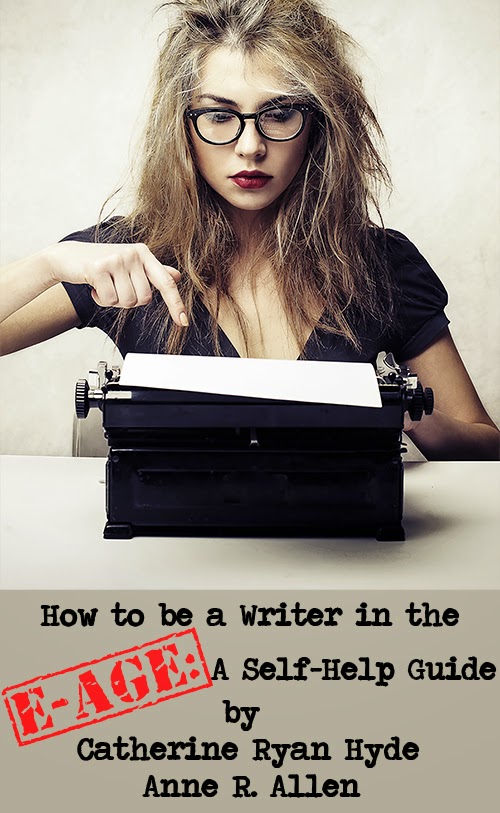
As some of you know, Catherine and I have had one disaster after another with this book. The worst blow came a month ago when our agent left her agency and the agency unpublished the Kindle book and stopped publication of the paper book with no warning. We have now published it ourselves. With a lot of help from Jason at Polgarus Studios and the blokes at EBookBargainsUK. (I love it that we can get help from Australia and England in a matter of minutes. There are lots of things to love about the E-Age.)
You'll see a lot of books out there about how to write, and a whole lot more that promise Kindle millions. But this book is different. It helps you establish a professional writing career in this time of rapid change—and answers the questions so many writers are asking:
Does an author still need an agent? Can new writers still get published by Big Five publishers?What about digital-only imprints, mid-sized publishers, small presses—or should everybody self-publish? How can you tell if you've found a good self-publishing partner, or a scammy vanity press?Do fiction writers need a platform? What's the difference between a hook, logline and a pitch? And how are they different from the dreaded synopsis? Does an author need to worry about all that if planning to self-publish?Do you need to spend endless hours on social media? Should all authors blog? What are the secrets of a successful blog? How do you cope with rejection, depression, bad reviews and other downsides of the writing profession?
OPPORTUNITY ALERTS
GLIMMER TRAIN VERY SHORT FICTION AWARD Maximum length: 3,000 words. 1st place wins $1,500, publication in Glimmer Train Stories, and 20 copies of that issue. 2nd place wins $500 (or, if accepted for publication, $700 and 10 copies). 3rd place wins $300 (or, if accepted for publication, $700 and 10 copies). Deadline October 31, 2014.
CHICKEN SOUP - HEARTFELT STORIES BY MOMS Pays $200 for 1,200 words. Stories can deal with the pains and highlights of motherhood, the wonders of parenting grandchildren, special moments of raising a newborn, being a role model to a teenager, or anything that touches the heart of a mom. Deadline September 30.
Barthelme Prize for experimental flash fiction. $17 Entry Fee 500-word limit. $1000 first prize, $250 hon. mention prizes. Online submission form. Deadline August 31.
Want to Appear in Writer's Digest? Here's how. Have you ever tried to write a book in a month-as part of NaNoWriMo, with a writing group, or just on your own? What was your experience? WD wants to hear from you. Tell them about your write-a-thon! Send your story-along with your full name, city and state to writersdigest@fwmedia.com with "BIAM" in the subject line. Responses may appear in Writer's Digest publications and/or on WritersDigest.com.
Short Romance stories with holiday themes: Crimson Romance Ebooks (A division of F & W, publisher of Writer's Digest Books) is looking for holiday themed shorts (10K-20K words) Christmas/Hanukkah/Kwanzaa 2014, New Year's Eve 2015, Deadline: August 15th
July 27, 2014
EDITS, EDITORS, EDITING—The Secret Weapon of Every Successful Writer
by Ruth Harris
Editing is life. The blue tie? Or the yellow one? Peter or Paul? Or Mary?
You’re an editor—whether or not you know it yet—because to edit is to choose.
As a former editor, I’m obviously biased. As a writer, I've learned that for me (and for just about every writer I know or have worked with), editing is the most interesting and exciting part of writing a book.
Editing is your opportunity to figure out what you really mean to say and how best to say it.Editing gives you the chance to come up with the killer line of dialogue, the on-target mot juste, the breath-taking cliffhanger that keeps the pages turning.Editing is the stage at which you cut the blubber or expand and embroider when you’ve gone too bare-bones.Editing can shore up a blah plot, identify, fill and fix plot holes; turn wooden characters into living, breathing, believable people.Editing lets you to pick up the pace when necessary and slow it down when you need to give the reader a chance to breathe.Editors are partners, coaches, shrinks, cops and cheerleaders—sometimes all at the same time. They dispense tough love when needed and gold stars when earned.
In my experience, editing takes longer than writing and can turn an OMG-did-I-write-that? draft into a book you can be proud of.
Your editors are your teachers especially if you are a beginning writer. Pay attention to them and you will come face to face with your worst habits—passive characters and/or passive verbs, adjective overkill, adverb and/or pronoun abuse, dangling participles, untethered plot points, run-on sentences.
You will also learn how to polish your strengths and turn interesting narrative into compelling storytelling, good dialogue to great, plot-twists-that-fall-flat into a breath-taking, never-saw-it-coming shocks.
Editing is expensive and choosing an editor is like picking a great date for Saturday night—without help from OkCupid or eharmony. Due to contractions in TradPublishing, there are many knowledgeable and experienced freelance editors offering their services. Most offer a sample edit of ten pages or so, a useful try-before-you-buy option.
Whether you plan to self-publish, want to work with a small press or are looking for an agent and a TradPub deal, hiring an editor to take a cool, calm look at your book is essential because—as if you didn’t already know—the days of Maxwell Perkins are long gone.
Define how much editing you need:
Valerie Comer wrote a succinct analysis of the differences between a rewrite, revision and editing that will help clarify your thinking.
Where to start looking for an editor:
Elisabeth Kauffman lists professional associations and sources and dispenses solid advice about what questions to ask as you search for your perfect editor.
Network with other writers in your genre:
They will be able to suggest editors who know what they’re doing and warn you away from those who don’t. Writers’ Cafe has yellow-page lists of editors and threads about editors and editing pop up often.
Understand the different kinds of editing:
Learn the difference between developmental (or content) editing and copyediting.
Joanna Penn describes the functions of different kinds of editors and offers valuable guidance about how to find the right editor.
Developmental: A developmental/content editor’s contributions involve a broad overview of the manuscript, its structure, scene and chapter placement or rearrangement, even the basics of plot and character. A developmental/content editor (sometimes called a book doctor) can answer an SOS when a manuscript is on life support and needs rescue.
Victoria Mixon delves further into the various aspects of editing and describes how the editing process works between writer and editor. She also addresses the circumstances that involve trimming, re-writing, rearranging, and even the writing of new material.
Editor Belinda Pollard warns writers not to depend on editorial labels but to find out exactly what to expect from different kinds of editors no matter what they’re called. She also reminds us that “the right feedback at the right time is the secret weapon of every successful author.” I couldn’t agree more!
Copyediting: Copyediting takes place at a later stage when all the nuts and bolts of a story are in place. The copyeditor is concerned with clarity, clarity, cohesion, consistency, and correctness (the "4 Cs”) according to Amy Einsohn's The Copyeditor's Handbook.
Proofreading: Proofing is yet another stage in the editorial process and comes last of all, just before you send your book out into the world. The good proofreader is über detail-oriented, on the look out for typos, typographical glitches and lapses in spelling and punctuation.
The Writers Center posted a good article that covers the art and craft of proofreading.
The Chicago Manual of Style offers a Rosetta Stone to proofreader’s marks and squiggles.
Not all editors are the same. Some edit with a light hand, preferring to let the writer’s own voice come through. Other editors take a firmer approach, making an effort to conform your manuscript to current industry standards. Decide which approach you prefer and which one will work best for you and your book.
Choose an editor who’s an expert in your genre. S/he will be knowledgable about current trends, best practices and no-nos. A sci-fi specialist will not be up to date on the latest in romance. And vice versa.
Your editor is your partner and guide—not your overlord. Feel free to disagree with suggestions but be sure you have a good reason for your choices. Sometimes a brief discussion will lead to a third solution that’s even better.
Even billionaires need editors. Warren Buffett’s long-time editor at Fortune, Carol Loomis, spills the beans.
Basics to take care of before you send off your manuscript.
Doing some advance clean-up will save you and your editor time and money:
Create a style sheet as you write. It’s not hard and it is invaluable for you and for your editor. I’ve written before about the importance of style sheets.Perform a basic spell check and watch out for homonyms and homophones—words that sound alike but have different meanings. They will pass a spell check but you must actually read the sentence in context to ensure the word you used is the word you mean. Examples: through/threw; there/their/they’re, here/hear, by/bye/buy, to/two/too.Run a grammar program. Most word processors have one and will root out common errors that guarantee rejection and/or bad reviews.Review your dialogue tags. They can often be pruned or even deleted.The cliché finder will hunt down, uh, clichés.The Passivator will highlight passive verbs and adverbs.
India Drummond takes on editors (the cyber kind) in this review of White Smoke, Style Writers, Serenity Software, and Autocrit.
I don’t recommend self-editing for beginning writers who will probably need help with at least some or possibly all of the following: pacing, character, structure and/or story arc.
With more experience, though, plus a crit group or beta readers, you will be able to read your manuscript with a more detached and professional eye. If you’re not sure whether or not you need an editor, Derek Murphy pinpoints some important issues and suggests affordable alternatives.
If you want to go ahead on your own, be on the lookout for:
Flabby language and trite dialogue.A saggy middle.A blah (or confused) ending.Info dumps.Boring backstory.Good guys who are too good and bad guys who are too bad. (Yes, it’s possible.) Characters require shades of grey to be believable.Too many sub-plots? The ones that go nowhere, wander off and disappear or result in a dead end? Decide if they should be combined and streamlined or even done away with.Too many characters? Do they get in each other’s way? Do they perform the same function in your book? Cut and combine is the answer.
Deborah Rains Dixon addresses story structure, why it’s crucial and includes different examples of structure.
In Self-Editing For Fiction Writers, two professional editors cover such aspects of fiction as dialogue, exposition, point of view and interior monologue.
If you think all this sounds too picky and painful not to mention too time-consuming and expensive to bother with, think again. As someone who served time in the slush pile, I guarantee: an unedited manuscript is the mark of the amateur, the bane of the pro, the kiss of death, a sure-fire route to nowheresville.
It’s your book. You decide.
What about you, Scriveners? Do you hire your own editor? How did you find your editor? Do you use the cyber-kind? Do you have any other tips for self-editing? What are your biggest problems that you need to address when you edit?
BOOK OF THE WEEK
A hilarious, fast-paced read from Ruth Harris! "Chick Lit for Chicks who weren't born yesterday"
The Chanel Caper is $2.99 on Amazon US, Amazon UK and Nook | Kobo | iBooks
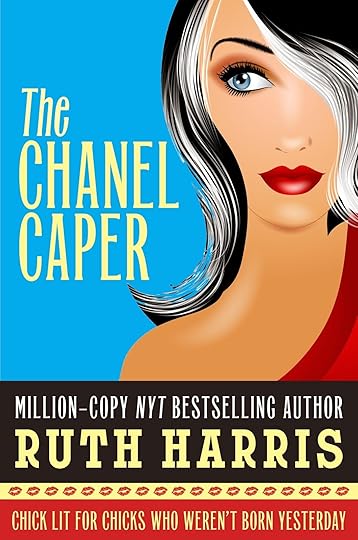
THE CHANEL CAPER Nora Ephron meets James Bond...or is it the other way around? Blake Weston is a smart, savvy, no BS, 56-year-old Nora Ephron-like New Yorker. Her DH, Ralph Marino, is a très James Bond ex-cop & head of security for a large international corporation. At a tense time in their relationship, Blake and Ralph are forced to work together to solve a murder in Shanghai and break up an international piracy ring.
Ruth Harris is a million-copy New York Times and Amazon bestselling author and a Romantic Times award winner for "best contemporary." Critics have called Ruth's fiction "brilliant," "steamy," "stylishly written," "richly plotted," "first-class entertainment" and "a sure thing."
OPPORTUNITY ALERTS
WHAT COULD POSSIBLY GO WRONG? CONTEST. Creative Writing Institute Short Story Contest. NO ENTRY FEE. First prize - $200 USD or a Writing Course with a Personal Tutor, valued at $260.Second prize - $100 USD or a Credit of $150 toward a Writing Course. Third prize - $50 USD or a Credit of $100 toward a Writing Course. Word limit: between 1,000 and 2,000 words. Your story may be any genre, but this exact sentence must appear in the story: "I have a list and a map. What could possibly go wrong?" Deadline August 9
CHICKEN SOUP - HEARTFELT STORIES BY MOMS Pays $200 for 1,200 words. Stories can deal with the pains and highlights of motherhood, the wonders of parenting grandchildren, special moments of raising a newborn, being a role model to a teenager, or anything that touches the heart of a mom. Deadline September 30.
Barthelme Prize for experimental flash fiction. $17 Entry Fee 500-word limit. $1000 first prize, $250 hon. mention prizes. Online submission form. Deadline August 31.
Want to Appear in Writer's Digest? Here's how. Have you ever tried to write a book in a month-as part of NaNoWriMo, with a writing group, or just on your own? What was your experience? WD wants to hear from you. Tell them about your write-a-thon! Send your story-along with your full name, city and state to writersdigest@fwmedia.com with "BIAM" in the subject line. Responses may appear in Writer's Digest publications and/or on WritersDigest.com.
Short Romance stories with holiday themes: Crimson Romance Ebooks (A division of F & W, publisher of Writer's Digest Books) is looking for holiday themed shorts (10K-20K words) Christmas/Hanukkah/Kwanzaa 2014, New Year's Eve 2015, Deadline: August 15th
Editing is life. The blue tie? Or the yellow one? Peter or Paul? Or Mary?
You’re an editor—whether or not you know it yet—because to edit is to choose.
As a former editor, I’m obviously biased. As a writer, I've learned that for me (and for just about every writer I know or have worked with), editing is the most interesting and exciting part of writing a book.
Editing is your opportunity to figure out what you really mean to say and how best to say it.Editing gives you the chance to come up with the killer line of dialogue, the on-target mot juste, the breath-taking cliffhanger that keeps the pages turning.Editing is the stage at which you cut the blubber or expand and embroider when you’ve gone too bare-bones.Editing can shore up a blah plot, identify, fill and fix plot holes; turn wooden characters into living, breathing, believable people.Editing lets you to pick up the pace when necessary and slow it down when you need to give the reader a chance to breathe.Editors are partners, coaches, shrinks, cops and cheerleaders—sometimes all at the same time. They dispense tough love when needed and gold stars when earned.
In my experience, editing takes longer than writing and can turn an OMG-did-I-write-that? draft into a book you can be proud of.
Your editors are your teachers especially if you are a beginning writer. Pay attention to them and you will come face to face with your worst habits—passive characters and/or passive verbs, adjective overkill, adverb and/or pronoun abuse, dangling participles, untethered plot points, run-on sentences.
You will also learn how to polish your strengths and turn interesting narrative into compelling storytelling, good dialogue to great, plot-twists-that-fall-flat into a breath-taking, never-saw-it-coming shocks.
Editing is expensive and choosing an editor is like picking a great date for Saturday night—without help from OkCupid or eharmony. Due to contractions in TradPublishing, there are many knowledgeable and experienced freelance editors offering their services. Most offer a sample edit of ten pages or so, a useful try-before-you-buy option.
Whether you plan to self-publish, want to work with a small press or are looking for an agent and a TradPub deal, hiring an editor to take a cool, calm look at your book is essential because—as if you didn’t already know—the days of Maxwell Perkins are long gone.
Define how much editing you need:
Valerie Comer wrote a succinct analysis of the differences between a rewrite, revision and editing that will help clarify your thinking.
Where to start looking for an editor:
Elisabeth Kauffman lists professional associations and sources and dispenses solid advice about what questions to ask as you search for your perfect editor.
Network with other writers in your genre:
They will be able to suggest editors who know what they’re doing and warn you away from those who don’t. Writers’ Cafe has yellow-page lists of editors and threads about editors and editing pop up often.
Understand the different kinds of editing:
Learn the difference between developmental (or content) editing and copyediting.
Joanna Penn describes the functions of different kinds of editors and offers valuable guidance about how to find the right editor.
Developmental: A developmental/content editor’s contributions involve a broad overview of the manuscript, its structure, scene and chapter placement or rearrangement, even the basics of plot and character. A developmental/content editor (sometimes called a book doctor) can answer an SOS when a manuscript is on life support and needs rescue.
Victoria Mixon delves further into the various aspects of editing and describes how the editing process works between writer and editor. She also addresses the circumstances that involve trimming, re-writing, rearranging, and even the writing of new material.
Editor Belinda Pollard warns writers not to depend on editorial labels but to find out exactly what to expect from different kinds of editors no matter what they’re called. She also reminds us that “the right feedback at the right time is the secret weapon of every successful author.” I couldn’t agree more!
Copyediting: Copyediting takes place at a later stage when all the nuts and bolts of a story are in place. The copyeditor is concerned with clarity, clarity, cohesion, consistency, and correctness (the "4 Cs”) according to Amy Einsohn's The Copyeditor's Handbook.
Proofreading: Proofing is yet another stage in the editorial process and comes last of all, just before you send your book out into the world. The good proofreader is über detail-oriented, on the look out for typos, typographical glitches and lapses in spelling and punctuation.
The Writers Center posted a good article that covers the art and craft of proofreading.
The Chicago Manual of Style offers a Rosetta Stone to proofreader’s marks and squiggles.
Not all editors are the same. Some edit with a light hand, preferring to let the writer’s own voice come through. Other editors take a firmer approach, making an effort to conform your manuscript to current industry standards. Decide which approach you prefer and which one will work best for you and your book.
Choose an editor who’s an expert in your genre. S/he will be knowledgable about current trends, best practices and no-nos. A sci-fi specialist will not be up to date on the latest in romance. And vice versa.
Your editor is your partner and guide—not your overlord. Feel free to disagree with suggestions but be sure you have a good reason for your choices. Sometimes a brief discussion will lead to a third solution that’s even better.
Even billionaires need editors. Warren Buffett’s long-time editor at Fortune, Carol Loomis, spills the beans.
Basics to take care of before you send off your manuscript.
Doing some advance clean-up will save you and your editor time and money:
Create a style sheet as you write. It’s not hard and it is invaluable for you and for your editor. I’ve written before about the importance of style sheets.Perform a basic spell check and watch out for homonyms and homophones—words that sound alike but have different meanings. They will pass a spell check but you must actually read the sentence in context to ensure the word you used is the word you mean. Examples: through/threw; there/their/they’re, here/hear, by/bye/buy, to/two/too.Run a grammar program. Most word processors have one and will root out common errors that guarantee rejection and/or bad reviews.Review your dialogue tags. They can often be pruned or even deleted.The cliché finder will hunt down, uh, clichés.The Passivator will highlight passive verbs and adverbs.
India Drummond takes on editors (the cyber kind) in this review of White Smoke, Style Writers, Serenity Software, and Autocrit.
I don’t recommend self-editing for beginning writers who will probably need help with at least some or possibly all of the following: pacing, character, structure and/or story arc.
With more experience, though, plus a crit group or beta readers, you will be able to read your manuscript with a more detached and professional eye. If you’re not sure whether or not you need an editor, Derek Murphy pinpoints some important issues and suggests affordable alternatives.
If you want to go ahead on your own, be on the lookout for:
Flabby language and trite dialogue.A saggy middle.A blah (or confused) ending.Info dumps.Boring backstory.Good guys who are too good and bad guys who are too bad. (Yes, it’s possible.) Characters require shades of grey to be believable.Too many sub-plots? The ones that go nowhere, wander off and disappear or result in a dead end? Decide if they should be combined and streamlined or even done away with.Too many characters? Do they get in each other’s way? Do they perform the same function in your book? Cut and combine is the answer.
Deborah Rains Dixon addresses story structure, why it’s crucial and includes different examples of structure.
In Self-Editing For Fiction Writers, two professional editors cover such aspects of fiction as dialogue, exposition, point of view and interior monologue.
If you think all this sounds too picky and painful not to mention too time-consuming and expensive to bother with, think again. As someone who served time in the slush pile, I guarantee: an unedited manuscript is the mark of the amateur, the bane of the pro, the kiss of death, a sure-fire route to nowheresville.
It’s your book. You decide.
What about you, Scriveners? Do you hire your own editor? How did you find your editor? Do you use the cyber-kind? Do you have any other tips for self-editing? What are your biggest problems that you need to address when you edit?
BOOK OF THE WEEK
A hilarious, fast-paced read from Ruth Harris! "Chick Lit for Chicks who weren't born yesterday"
The Chanel Caper is $2.99 on Amazon US, Amazon UK and Nook | Kobo | iBooks

THE CHANEL CAPER Nora Ephron meets James Bond...or is it the other way around? Blake Weston is a smart, savvy, no BS, 56-year-old Nora Ephron-like New Yorker. Her DH, Ralph Marino, is a très James Bond ex-cop & head of security for a large international corporation. At a tense time in their relationship, Blake and Ralph are forced to work together to solve a murder in Shanghai and break up an international piracy ring.
Ruth Harris is a million-copy New York Times and Amazon bestselling author and a Romantic Times award winner for "best contemporary." Critics have called Ruth's fiction "brilliant," "steamy," "stylishly written," "richly plotted," "first-class entertainment" and "a sure thing."
OPPORTUNITY ALERTS
WHAT COULD POSSIBLY GO WRONG? CONTEST. Creative Writing Institute Short Story Contest. NO ENTRY FEE. First prize - $200 USD or a Writing Course with a Personal Tutor, valued at $260.Second prize - $100 USD or a Credit of $150 toward a Writing Course. Third prize - $50 USD or a Credit of $100 toward a Writing Course. Word limit: between 1,000 and 2,000 words. Your story may be any genre, but this exact sentence must appear in the story: "I have a list and a map. What could possibly go wrong?" Deadline August 9
CHICKEN SOUP - HEARTFELT STORIES BY MOMS Pays $200 for 1,200 words. Stories can deal with the pains and highlights of motherhood, the wonders of parenting grandchildren, special moments of raising a newborn, being a role model to a teenager, or anything that touches the heart of a mom. Deadline September 30.
Barthelme Prize for experimental flash fiction. $17 Entry Fee 500-word limit. $1000 first prize, $250 hon. mention prizes. Online submission form. Deadline August 31.
Want to Appear in Writer's Digest? Here's how. Have you ever tried to write a book in a month-as part of NaNoWriMo, with a writing group, or just on your own? What was your experience? WD wants to hear from you. Tell them about your write-a-thon! Send your story-along with your full name, city and state to writersdigest@fwmedia.com with "BIAM" in the subject line. Responses may appear in Writer's Digest publications and/or on WritersDigest.com.
Short Romance stories with holiday themes: Crimson Romance Ebooks (A division of F & W, publisher of Writer's Digest Books) is looking for holiday themed shorts (10K-20K words) Christmas/Hanukkah/Kwanzaa 2014, New Year's Eve 2015, Deadline: August 15th
July 20, 2014
How Not to Start a Novel: Four Things to Avoid on Page One
In these days of the "peek inside" feature on retail sites like Amazon, the opener of your book is more important than ever.
Whether you're going the query route or self-publishing, your first page is essential to the success of your book...and may be your most crucial sales tool.
Those first 250 words can make or break a reader's decision to buy your book. All the marketing tricks and advertising in the world cannot make the sale if your first page is a snooze-fest full of info-dumps and backstory. Or if there's so much going on it makes the reader's head hurt.
Your first page is the hardest part of your book to write: a tightrope-walk between exposition and drama, so it's generally best to write it last, after you know what's absolutely essential for the reader to know. (The rest can be woven in later.)
The first page of your early drafts are usually written for you, the writer, to help yourself get to know your characters. But the final version is for the reader—who only needs to know what's going on in this specific incident. Always start with a scene with conflict and action, so the reader feels enticed, not lectured.
Is your first page ready?
 Today we're honored to host Janice Hardy (@Janice_Hardy) who's the author of the HarperCollins teen fantasy "Shifter" series and the owner of the Fiction University blog--one of the best sources of free writing craft information on the Web. Her tips are solid and useful to writers at all stages of their careers. Clicking through her archives is like a free college-level course in creative writing.
She also offers critiques of selections submitted to her "Real Life Diagnostics" series. Check out the latest one here, on how to avoid info-dumps.
And if you're looking for tips on planning or revising your novel, check out her newest book Planning Your Novel: Ideas and Structure, a series of self-guided workshops that help you turn your idea into a great novel.
As Janice tells us, inviting readers to enter the world of your book is like inviting them to a party. The most important thing isn't to impress the guest with your own accomplishments or tell them your life story, but to make them feel welcome and comfortable...Anne
Four Things to Avoid in the First Page of Your Manuscript by Janice Hardy
The first page of your manuscript is critical for more than just grabbing an agent's or editor’s attention. Readers often read the first page or two to determine whether or not to read the novel. If those pages grab them, they'll buy the book. If not, they'll put it back on the shelf. That’s a lot of pressure for 250 words.
Which is why those words need to capture the reader.
Common writing advice will tell you to "start with action," but that doesn't mean blow up a car or rob a bank—and this can actually hurt your opening not help if it.
What it really means is to start with something going on. It can be something going wrong, (my personal favorite), something revealed, something denied, something craved—the list is endless. But no matter what shape this “something” takes, there's a sense that things are about to happen, and that it won't be good for someone.
This sense of anticipation creates questions readers will want answers to. Why are the characters casing that playground? Who is that woman following them? What's the deal with these two people arguing way too loudly?
However, one question you want to avoid is, "What's going on?" A vague opening that confuses is not the type of question you want readers asking. They should be able to guess what’s going on, even if they’re not yet sure what it all means.
They know two men are watching a playground, but not why. They know a woman is tailing the protagonist, but not why or who she is. They know the protagonist is having an overly dramatic and clearly fake argument, but not why he’s doing it.
Aim for making the context of the situation clear, even if the details aren’t yet revealed. Create that mystery to pique curiosity and make readers want to know where this situation is going.
Of course, opening scenes can be challenging to write and hooking readers is easier said than done. But it’s easier to know what to do when you have a solid sense of what not to do. So…
Here are four common mistakes to avoid when crafting your open scene:
1. Having too much backstory and explanation.
Until the reader knows and cares about the characters, they don’t want to know the history of the world or the backstory of the protagonist.
They want to see a character with a problem and be drawn in by that story question.
Too much information can slow a story down and overwhelm a reader. If it’s too much work to read, they won’t read it.
Think of it like this: you walk into a party and some guy comes up to you and starts telling you all about his grandmother and how important she was to him, and how that’s affecting his current decision on whether or not to move to Baltimore and take this job he’s not sure s the right position for him. Are you intrigued? Odds are you’re looking for any excuse to get away from this bore.
To fix: Cut the backstory and look for ways to show how that backstory affects your character in that scene (If it doesn’t, that’s a big clue you don’t need to mention it at all). If it’s critical to know the protagonist is scared of dogs, don’t stop the story to explain how he was bitten when he was five, show him seeing a dog and being too scared to move.
2. Crafting a one-dimensional scene.
Some opening scenes focus on one thing and one thing only: a beautiful description, an action sequence, retrospective navel-gazing, etc.
The text is working too hard to set the scene, so there's no story yet, nor is there a character with a goal and something to lose.
Back to the party: If you walk in and the host gives you a detailed tour of the house (without you asking), odds are you’ll be bored and eager to get back to the party. Or if you walk into the middle of a complicated game in progress, and everyone ignores you and doesn’t tell you any of the rules. Sure, things are happening but you have no clue what or how to join in, so you’re just waiting to be included.
To fix: Don’t make readers feel unwelcome. Be a good host and ease your reader into the party. Introduce them to someone interesting who will be only too happy to show them around the house, share interesting facts, gossip a little and point out the people they’d might like to talk to—or avoid—during the night.
3. Using a fake opening
We’ve all read these bad boys: that prologue (or chapter one) that sets up a faux conflict to “hook” the reader, but then has very little connection to the following chapter. (A common "faux conflict" happens when authors use dreams and/or hallucinations at the beginning of a novel, one of my pet peeves...Anne.)
It’s a bait and switch, and no one likes to be tricked.
Often this includes a fast forward to an "exciting" scene later in the book. This isn't as effective as you'd think, because without the buildup to that scene, readers don’t understand why it matters—and they rarely care. If you lie to your readers, or trick them and change the book on them, there's a good chance you'll just piss them off.
At the party: Imagine you’ve been invited to a Hollywood party, and when you walk into the room you see all your favorite celebrities. You eagerly approach your favorite actor, gush all over him, and then discover he and everyone else at the party is a look-alike. Not only do you feel like a fool for buying it, but you’ll never trust your host again.
To fix: This one’s easy. Just don’t do it. Create a strong opening that works on its own. It takes just as much effort to fake an "exciting" opening as it does to fix a real opening. And since a fake opening is bound to feel flat anyway, and only seem exciting to someone who already knows the story, it's often a wasted effort.
4. Having a lazy protagonist
A lazy protagonist just sits around waiting for something to happen to her. She has nothing she wants, no goal in mind, she isn’t trying to accomplish anything—she’s just sitting around navel gazing or walking through a pretty setting. The job of a protagonist is to drive the plot, and if she’s not doing anything, the story goes nowhere.
One last trip to the party: Imagine a party where every single guest forces you to initiate all the conversation. No one talks to you unless you ask them a direct question, they don’t walk over, they don’t even make eye contact. How long before you give up and go home?
To fix: Give your protagonist something to do that matters to them. Their goal will help create that all-important story question to pull readers in and keep the story moving forward.
Openings are vital to getting someone to read your book. Don't waste those 250 chances. No matter how your novel starts, make sure it starts with the story.
Scriveners, what’s your favorite way to start a novel? What’s your least favorite trick? Are there any novel openers that are deal-breakers for you when you're buying a new book? Have you been agonizing about how to open your novel? Do you have any tips to add?
About Janice Hardy
 Janice Hardy is the founder of Fiction University, and the author of the teen fantasy trilogy The Healing Wars, where she tapped into her own dark side to create a world where healing was dangerous, and those with the best intentions often made the worst choices.
 Her novels include The Shifter, Blue Fire, and Darkfall from Balzer+Bray/Harper Collins. The first book in her Foundations of Fiction series, Planning Your Novel: Ideas and Structure is out now. She is also a regular contributor at Pub(lishing) Crawl.
She lives in Georgia with her husband, one yard zombie, three cats, and a very nervous freshwater eel. Find out more about writing at her site, Fiction University, or find her on Twitter @Janice_Hardy.
Website | Facebook | Twitter | Goodreads | Amazon | Barnes & Noble | Indie Bound
BOOK OF THE WEEKPlanning your novel by Janice Hardy
available at Amazon US, Amazon UK, Amazon CA, Nook, Kobo, and iTunes
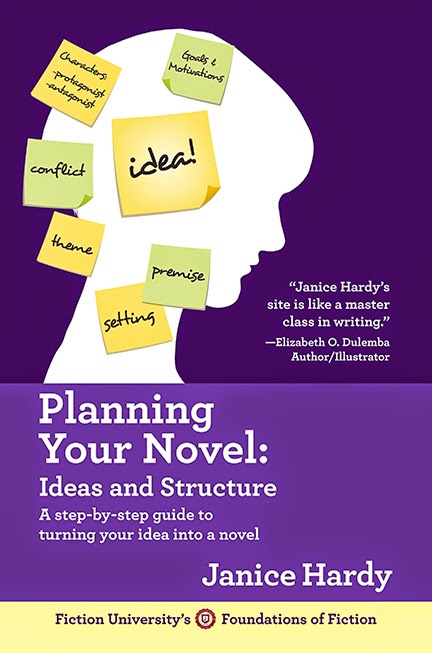
Planning Your Novel: Ideas and Structure takes you step-by-step through finding and developing ideas, brainstorming stories, and crafting a solid plan for your novel—including a one-sentence pitch, summary hook blurb, and working synopsis. Over 100 different exercises lead you through the novel-planning process, with ten workshops that build upon each other to flesh out your idea as much or as little as you need to do to start writing.
"Planning Your Novel" compiles great advice, plus adds brainstorming questions and writing exercises at the end of each chapter. A must-read for writers who want to dig deeper and push their craft to the next level...YA author Julie Musil
OPPORTUNITY ALERTS
CHICKEN SOUP - HEARTFELT STORIES BY MOMS Pays $200 for 1,200 words. Stories can deal with the pains and highlights of motherhood, the wonders of parenting grandchildren, special moments of raising a newborn, being a role model to a teenager, or anything that touches the heart of a mom. Deadline September 30.
Barthelme Prize for experimental flash fiction. $17 Entry Fee 500-word limit. $1000 first prize, $250 hon. mention prizes. Online submission form. Deadline August 31.
Short Romance stories with holiday themes: Crimson Romance Ebooks (A division of F & W, publisher of Writer's Digest Books) is looking for holiday themed shorts (10K-20K words) Christmas/Hanukkah/Kwanzaa 2014, New Year's Eve 2015, Deadline: August 15th
BLUE EARTH REVIEW FLASH FICTION CONTEST $2 ENTRY FEE. 750 words or less. Limit two stories per entry. First place $500. Second place $250. Third place $100. Winners will be published in the Blue Earth Review, the literary magazine of Minnesota State University. Deadline August 1.
A ROOM OF HER OWN FOUNDATION ORLANDO PRIZES $15 ENTRY FEE. Four Orlando prizes of $1,000 each and publication in The Los Angeles Review are awarded twice yearly for a poem, a short story, a short short story, and an essay by women writers. Deadline July 31.
July 13, 2014
What Defines "Traditional" Publishing? What You Don't Know CAN Hurt You.
by Anne R. Allen
The blogosphere has been full of debate about "traditional" vs. "indie" publishing since the dawn of the E-Age.
We've also seen lively discussions about the definition of the terms.
"Indie" once meant small independent publishers, but since the introduction of the ebook (and Kindle Direct Publishing) it has evolved to mean self-publishing as well.
Or maybe instead. The line is blurry these days. The word "indie" can change meaning depending on who you're talking to.
The traditional small independent press is now often called a "boutique publisher" or a "micropress" to avoid confusion. But I admit that I have often called myself "indie" since I'm with a boutique press, and I've been included in two "indie" anthologies.
Last month I joined the actual self-publishers for the first time when I re-published HOW TO BE A WRITER IN THE E-AGE all by my ownself (well, with co-author Catherine Ryan Hyde and some generous aid from the blokes at EBUK and the helpful Jason Anderson at Polgarus Studios, after our agent left the agency that published us in February.) So I guess I can say I'm truly "indie" now.
Meanwhile, some writers prefer to define the non-self-published model as "legacy" publishing rather than "traditional," because the tradition of self-publishing has been around at least since Benjamin Franklin.
But recently I've seen some odd statements on blogs and forums like, "only the Big Five are legitimate traditional publishers," and "you're just an indie unless you're with the Big Five."
So what's "traditional" publishing?
Of course the definition of "traditional" is going to be different depending on whose traditions you're talking about.
There may be people who believe only something printed on Johannes Gutenberg's actual printing press can be truly "traditional," and others might favor the papyrus scroll, the clay tablet, or the wall of a cave.
But most people in today's publishing industry—on both sides of the self-publishing fence—agree on the definition of traditional/legacy publishing.
Here's a version of that definition from Writer's Digest : "Traditional book publishing is when a publisher offers the author a contract and, in turn, prints, publishes, and sells your book through booksellers and other retailers. The publisher essentially buys the right to publish your book and pays you royalties from the sales."
And a here's a handy infographic from Writer's Digest Books' former head honcho Jane Friedman that lays out all our publishing options out in a colorful easy-to-read format.
Many thanks to the always-reliable Alex J. Cavanaugh and the good people at the Insecure Writers Support Group for those links and the tip about this new wrinkle in the indie vs. trad debate.
So is there any truth to this new claim that only a handful of multinational mega-corporations can be called "traditional"?
In a word, no.
Even if we all agree that multi-national media mega-conglomerates have been one of the world's most treasured traditions since 1998—when Bertelsmann swallowed Random House—traditional publishing is still defined the way it has always been defined, um, traditionally.
In fact, the whole argument is silly. By this new definition, J.K. Rowling's Harry Potter books were not traditionally published, because they were issued by Scholastic in the US and Bloomsbury in the UK—neither of which are members of the Big Five.
And most Harlequin authors would have to be called "indie"—since Harlequin was not part of the Big Five until May of this year when it was bought by HarperCollins (owned by NewsCorp, aka Rupert Murdoch's evil empire)
Ditto all Kensington authors, although now that they've made a deal with Random Penguin to use the Penguin distribution channels, maybe they can now wear the "traditional" tiara too.
Ruth Harris, former editor and publisher at Kensington, will be fascinated to hear she wasn't working in traditional publishing all those years.
I do understand that it may seem that the French, Germans and Aussie Rupert Murdoch control 100% of publishing on the planet, but that's slightly exaggerated.
The truth is, we have a tradition of publishing right here in the little old U. S. of A. And not all of it is owned by Carly Simon's family.
Here are a few non-Big Five publishers who are as traditional as Bertlesman, Hachette and NewsCorp: Scholastic, Kensington, Hay House, W.W. Norton, Rodale, Llewellyn, Chronicle Books, Workman (includes Algonquin), Sourcebooks, Sunset, F + W Media/Writer’s Digest Books...and hundreds more, including all academic presses from the University of Alabama to Yale University Press. (Although I can't guarantee some of them won't have been gobbled up by the Big Five before I hit "publish" on this post.)
Many prestigious smaller presses like Beacon Press, GrayWolf, and Copper Canyon Press have been around longer than the mega-monopolies of the Big Five, too. You can find whole books listing all the well-respected small presses in Writers Market, the Literary Marketplace, and the Poets and Writers Guide to Small Presses.
These are all considered "traditional presses" by the publishing industry. Some use digital technology (POD) these days and some still use offset printing. What makes them traditional publishers is the economic process (contract, royalties etc) rather than the printing technology.
Also defined as "traditional" are the more recent ebook-first presses like Ellora's Cave and Samhain. They have traditional contracts and pay royalties just like paper-first presses.
And Amazon itself has become a traditional publisher, with imprints like: 47 North, Montlake, Thomas and Mercer, New Harvest, Encore—with new imprints added all the time. They pay advances and royalties and generally you need an agent to sign with them, just like the Big Five and most mid-sized presses.
So why do new writers need to know this stuff?
Because I fear new writers may be duped into staying away from all these legitimate mid-sized, smaller and digital-first publishers and steered toward the subsidy or vanity presses now owned by the Big Five, thinking anything with a Big Five label is somehow more "traditional" or "legitimate".
Nothing could be farther from the truth.
In the last decade, most of the vanity presses in North America were bought out by AuthorHouse and brought under an umbrella called "Author Solutions". In 2012, Penguin acquired Author Solutions. Then Penguin merged with Random House.
That means that technically Author Solutions is part of the new Penguin-Random House group owned by German mega-corp Bertelsmann and therefore part of the Big Five.
But it's just that—a technicality. Their self-publishing packages do nothing with the Big Five except fill their coffers. All the editing, production, promotion, etc, is done strictly in-house by Author Solutions.
Ditto Simon and Schuster's vanity wing Archway, Thomas and Nelson's Westbow Press, Hay House's Balboa Press, and Guidepost's Inspiring Voices. These are vanity presses, all owned and operated by Author Solutions. (Writer's Digest has recently—and I think wisely—severed connections with their Author Solutions affiliate, Abbott Press.)
What's the problem with vanity presses (sometimes called subsidy publishing)?
They are not always a bad choice and not necessarily scams. There are good reasons why some people prefer to use a vanity press. If you want to print a book of poems, a memoir, club recipes, or a family history—and you want something special to give as gifts or promote your community group or organization, a vanity press can be just what you're looking for. Some use old-school offset printing and can provide a lovely, beautifully bound product.
But for a career writer they can be a disaster. This is because:
They make money FROM the writer, rather than making money FOR the writer.Their services are usually priced way over market value.They often masquerade as something they're not, or claim they'll get you on the road to publication with big name publishers.They often charge so much for a printed book that the author is unable to make money on resale.They often charge for non-existent or sub-standard editing.They often offer no distribution: you just get a box of books to sell out of your garage.They push overpriced marketing packages that do little to sell books. (How overpriced? Check out these prices.)
Or to quote one of the many lawsuits against Author Solutions (from Writer Beware), "It is a printing service that fails to maintain even the most rudimentary standards of book publishing, profiting not for its authors but from them." For more, here is the Science Fiction and Fantasy Writers Association on why not to use a vanity press.
So what does this have to do with the people claiming the Big Five are the only "traditional" publishers?
I'm not sure. But when I heard from the IWSG about the bizarre "Big Five are the only traditionals" pronouncements, I remembered something.
Planting shills in writers' forums is something Author Solutions has done in the past, with sock puppets like the infamous "Fake Jared," and his friends.
And it seems Author Solutions has been paying kickbacks to bloggers who will steer newbie writers to their deceptive websites, according to April Hamilton of Publitariat.
I don't mean to say that all the people making these weird claims are working for Author Solutions. It's quite possible they may simply be contrarians or gadflies who enjoy stirring up a discussion with claims to know silly "facts".
There are always people like Cliff the Postman from the TV show Cheers, who loved to regale the bar crowd with his "little known facts" like "the harp is a predecessor of the modern day guitar. Early minstrels were much larger people. In fact, they had hands the size of small dogs."
Or they could be newbies who've been taken in by the hype of the vanity presses. That's more worrying, because that means the hype is working.
Why does it matter what you call your publisher?
Personally, I don't care if people want to call their publishers "traditional", "indie", "legacy", or "snookums."
But what I do care about is newbie writers getting steered away from solid publishing deals with a small or midsized press and into the arms of a vanity press because they believe a vanity press is a road to the big bux of the Big Five. (Although as I said last week, you should always run any publishing contract by somebody knowledgeable in contract law before you sign.)
I am in no way discouraging anybody from real self-publishing. Self-publication is an excellent road to a solid writing career. In fact it may be the best way in these days of shrinking advances and draconian contracts.
As I said, I've recently self-published myself. You can read some great reasons for self-publishing from David Henry Sterry in last Tuesday's Huffington Post. He also gives good reasons to publish with a small or mid-sized press. (Which are actually the MOST traditional. Media mega-corporations are a phenomenon of the last few decades)
Self-publishing is a good path to a writing career, but it's not the best road to publication with the Big Five, unless you're the one-in-a-million breakout superstar like Hugh Howey.
Self-publish because you want to control your own career, not because you eventually want a Big Five contract.
Yes, three or four years ago we were told "the ebook is the new query", but that was back when a lot of indies were making huge sales and it was easier to make that leap. In those days, Amazon's algorithms gave cheap indie books the same weight in calculating the bestseller lists as they did the big-name, expensive Big Five titles. And in those early days of ebooks, Big Five publishers weren't selling their backlists for 99c apiece through Bookbub.
So if you think you want a traditional or "hybrid" career, you should start by querying, not by self-publishing—or query with a different book from the one you self-published. For more this, here's a post on the subject from agent Pamela Van Hylckama Vlieg.
Most agents won't look at a previously published book unless it is steadily selling 10,000 or more units a month. And very few vanity published books get picked up by anybody. (Although I realize Author Solutions makes a huge deal of the handful who do.)
What if you DO want to publish non-traditionally?
If you want to self-publish—and go truly "non-traditional"—there are several excellent companies you can use.
There are aggregators like Smashwords, BookBaby, and Direct 2 Digital, who help you format and publish your ebooks and then distribute them to dozens of retailers all over the world.
Ditto Amazon itself, with CreateSpace for paper and KDP for ebooks. And you can publish direct to Nook, iTunes, GooglePlay and Kobo by yourself as well.
For paper books, Lightning Source (owned by major US book distributor Ingram) and Lulu, as well as CreateSpace and BookBaby, are great choices (and I hear D2D can now shepherd your book through CreateSpace.) They all use POD technology and offer distribution as well as printing.
Distribution is the key here. If a company feels their job is over when they give you a box of books, your book hasn't been published, it's been printed.
All of the above companies take a percentage of what YOU make, so if you're not making money, they're not making money.
But a vanity press makes money off you, not your book.
You can get great info on how to self-publish profitably from David Gaughran's blog and his two books Let's Get Digital and Let's Get Visible. You can buy both for under ten dollars. (And no, I have no connection with Mr. Gaughran except that I've read his books and follow his blog.)
You can also learn a lot of the basics of how the publishing industry works and how to avoid getting scammed in the book I've written with Catherine Ryan Hyde, How to be a Writer in the E-Age: A Self-Help Guide.
To me, paying ten or fifteen bucks for a few guidebooks beats paying a vanity outfit $25,000 for a "premium package" which comes complete with your own personal spambots to "market" your book to unwilling victims...and an empty promise that you'll be "considered" by one of the Big Five.
As I have said before, making a living writing books is hard, and there are no shortcuts. You need to do it because you love it. If you have delusions of instant fame and fortune, you're going to be a prime target for the armies of scammers out there.
What about you, Scriveners? Do you define your publishing path as "traditional" or "indie"? Have you run into people who say small and mid-sized publishers are not traditional? How do you define "indie"? Do you have more faith in multi-national mega-corporations than mid-sized companies? What other books do you recommend for self-publishers?
BOOK (& VIDEO) OF THE WEEKA book and a video that both poke fun at the scams that plague starry-eyed new writers
GHOSTWRITERS IN THE SKY
Murder, mischief, and a little romance at a writers conference in the wine-and-cowboy town of Santa Ynez, California. When a ghostwriter’s plot to blackmail celebrities with faked evidence leads to murder, our oh-so-polite sleuth Camilla Randall must team up with a cross-dressing dominatrix to stop the killer from striking again. Meanwhile a wannabe writer who happens to be a hot L.A. cop may or may not help Camilla recover from her recent divorce.
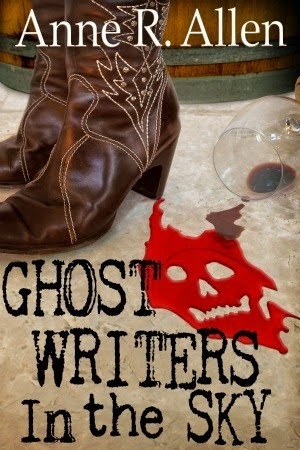
Ghostwriters in the Sky is now only $2.99 in e-book at Amazon US, Amazon UK, Amazon CA, iTunes, Kobo, Inktera, and at Barnes and Noble for NOOK.
Ghost Writers is set in a writers' conference in Santa Ynez Valley, where I've lived for twenty years.... This book is hysterically funny AND accurately depicts the Valley. Anne Allen gets it right, down to the dollar bills stuck on the ceiling of the Maverick Saloon. It was so fun to read as she called out one Valley landmark after another. Allen got the local denizens right, too, the crazy characters that roam our streets...Sandy Nathan, award-winning author of The Bloodsong Series
AUTHORS ANONYMOUS
NOW IN DVD: only 9.99 at Amazon.com also available at iTunes. Every writer who has been in a critique group has to see this one...

AUTHORS ANONYMOUS: An ensemble comedy about a weekly critique group of unpublished writers whose fabric is threatened when one member scores an agent, a book deal, and a movie deal in quick succession. Starring Kaley Cuoco of the Big Bang Theory and the late Dennis Farina. (And written by SLO's own Dave Congalton)
OPPORTUNITY ALERTS
CHICKEN SOUP - HEARTFELT STORIES BY MOMS Pays $200 for 1,200 words. Stories can deal with the pains and highlights of motherhood, the wonders of parenting grandchildren, special moments of raising a newborn, being a role model to a teenager, or anything that touches the heart of a mom. Deadline September 30.
Barthelme Prize for experimental flash fiction. $17 Entry Fee 500-word limit. $1000 first prize, $250 hon. mention prizes. Online submission form. Deadline August 31.
Want to Appear in Writer's Digest? Here's how. Have you ever tried to write a book in a month-as part of NaNoWriMo, with a writing group, or just on your own? What was your experience? WD wants to hear from you. Tell them about your write-a-thon! Send your story-along with your full name, city and state to writersdigest@fwmedia.com with "BIAM" in the subject line. Responses may appear in Writer's Digest publications and/or on WritersDigest.com.
Short Romance stories with holiday themes: Crimson Romance Ebooks (A division of F & W, publisher of Writer's Digest Books) is looking for holiday themed shorts (10K-20K words) Christmas/Hanukkah/Kwanzaa 2014, New Year's Eve 2015, Deadline: August 15th
BLUE EARTH REVIEW FLASH FICTION CONTEST $2 ENTRY FEE. 750 words or less. Limit two stories per entry. First place $500. Second place $250. Third place $100. Winners will be published in the Blue Earth Review, the literary magazine of Minnesota State University. Deadline August 1.
A ROOM OF HER OWN FOUNDATION ORLANDO PRIZES $15 ENTRY FEE. Four Orlando prizes of $1,000 each and publication in The Los Angeles Review are awarded twice yearly for a poem, a short story, a short short story, and an essay by women writers. Deadline July 31.
The blogosphere has been full of debate about "traditional" vs. "indie" publishing since the dawn of the E-Age.
We've also seen lively discussions about the definition of the terms.
"Indie" once meant small independent publishers, but since the introduction of the ebook (and Kindle Direct Publishing) it has evolved to mean self-publishing as well.
Or maybe instead. The line is blurry these days. The word "indie" can change meaning depending on who you're talking to.
The traditional small independent press is now often called a "boutique publisher" or a "micropress" to avoid confusion. But I admit that I have often called myself "indie" since I'm with a boutique press, and I've been included in two "indie" anthologies.
Last month I joined the actual self-publishers for the first time when I re-published HOW TO BE A WRITER IN THE E-AGE all by my ownself (well, with co-author Catherine Ryan Hyde and some generous aid from the blokes at EBUK and the helpful Jason Anderson at Polgarus Studios, after our agent left the agency that published us in February.) So I guess I can say I'm truly "indie" now.
Meanwhile, some writers prefer to define the non-self-published model as "legacy" publishing rather than "traditional," because the tradition of self-publishing has been around at least since Benjamin Franklin.
But recently I've seen some odd statements on blogs and forums like, "only the Big Five are legitimate traditional publishers," and "you're just an indie unless you're with the Big Five."
So what's "traditional" publishing?
Of course the definition of "traditional" is going to be different depending on whose traditions you're talking about.
There may be people who believe only something printed on Johannes Gutenberg's actual printing press can be truly "traditional," and others might favor the papyrus scroll, the clay tablet, or the wall of a cave.
But most people in today's publishing industry—on both sides of the self-publishing fence—agree on the definition of traditional/legacy publishing.
Here's a version of that definition from Writer's Digest : "Traditional book publishing is when a publisher offers the author a contract and, in turn, prints, publishes, and sells your book through booksellers and other retailers. The publisher essentially buys the right to publish your book and pays you royalties from the sales."
And a here's a handy infographic from Writer's Digest Books' former head honcho Jane Friedman that lays out all our publishing options out in a colorful easy-to-read format.
Many thanks to the always-reliable Alex J. Cavanaugh and the good people at the Insecure Writers Support Group for those links and the tip about this new wrinkle in the indie vs. trad debate.
So is there any truth to this new claim that only a handful of multinational mega-corporations can be called "traditional"?
In a word, no.
Even if we all agree that multi-national media mega-conglomerates have been one of the world's most treasured traditions since 1998—when Bertelsmann swallowed Random House—traditional publishing is still defined the way it has always been defined, um, traditionally.
In fact, the whole argument is silly. By this new definition, J.K. Rowling's Harry Potter books were not traditionally published, because they were issued by Scholastic in the US and Bloomsbury in the UK—neither of which are members of the Big Five.
And most Harlequin authors would have to be called "indie"—since Harlequin was not part of the Big Five until May of this year when it was bought by HarperCollins (owned by NewsCorp, aka Rupert Murdoch's evil empire)
Ditto all Kensington authors, although now that they've made a deal with Random Penguin to use the Penguin distribution channels, maybe they can now wear the "traditional" tiara too.
Ruth Harris, former editor and publisher at Kensington, will be fascinated to hear she wasn't working in traditional publishing all those years.
I do understand that it may seem that the French, Germans and Aussie Rupert Murdoch control 100% of publishing on the planet, but that's slightly exaggerated.
The truth is, we have a tradition of publishing right here in the little old U. S. of A. And not all of it is owned by Carly Simon's family.
Here are a few non-Big Five publishers who are as traditional as Bertlesman, Hachette and NewsCorp: Scholastic, Kensington, Hay House, W.W. Norton, Rodale, Llewellyn, Chronicle Books, Workman (includes Algonquin), Sourcebooks, Sunset, F + W Media/Writer’s Digest Books...and hundreds more, including all academic presses from the University of Alabama to Yale University Press. (Although I can't guarantee some of them won't have been gobbled up by the Big Five before I hit "publish" on this post.)
Many prestigious smaller presses like Beacon Press, GrayWolf, and Copper Canyon Press have been around longer than the mega-monopolies of the Big Five, too. You can find whole books listing all the well-respected small presses in Writers Market, the Literary Marketplace, and the Poets and Writers Guide to Small Presses.
These are all considered "traditional presses" by the publishing industry. Some use digital technology (POD) these days and some still use offset printing. What makes them traditional publishers is the economic process (contract, royalties etc) rather than the printing technology.
Also defined as "traditional" are the more recent ebook-first presses like Ellora's Cave and Samhain. They have traditional contracts and pay royalties just like paper-first presses.
And Amazon itself has become a traditional publisher, with imprints like: 47 North, Montlake, Thomas and Mercer, New Harvest, Encore—with new imprints added all the time. They pay advances and royalties and generally you need an agent to sign with them, just like the Big Five and most mid-sized presses.
So why do new writers need to know this stuff?
Because I fear new writers may be duped into staying away from all these legitimate mid-sized, smaller and digital-first publishers and steered toward the subsidy or vanity presses now owned by the Big Five, thinking anything with a Big Five label is somehow more "traditional" or "legitimate".
Nothing could be farther from the truth.
In the last decade, most of the vanity presses in North America were bought out by AuthorHouse and brought under an umbrella called "Author Solutions". In 2012, Penguin acquired Author Solutions. Then Penguin merged with Random House.
That means that technically Author Solutions is part of the new Penguin-Random House group owned by German mega-corp Bertelsmann and therefore part of the Big Five.
But it's just that—a technicality. Their self-publishing packages do nothing with the Big Five except fill their coffers. All the editing, production, promotion, etc, is done strictly in-house by Author Solutions.
Ditto Simon and Schuster's vanity wing Archway, Thomas and Nelson's Westbow Press, Hay House's Balboa Press, and Guidepost's Inspiring Voices. These are vanity presses, all owned and operated by Author Solutions. (Writer's Digest has recently—and I think wisely—severed connections with their Author Solutions affiliate, Abbott Press.)
What's the problem with vanity presses (sometimes called subsidy publishing)?
They are not always a bad choice and not necessarily scams. There are good reasons why some people prefer to use a vanity press. If you want to print a book of poems, a memoir, club recipes, or a family history—and you want something special to give as gifts or promote your community group or organization, a vanity press can be just what you're looking for. Some use old-school offset printing and can provide a lovely, beautifully bound product.
But for a career writer they can be a disaster. This is because:
They make money FROM the writer, rather than making money FOR the writer.Their services are usually priced way over market value.They often masquerade as something they're not, or claim they'll get you on the road to publication with big name publishers.They often charge so much for a printed book that the author is unable to make money on resale.They often charge for non-existent or sub-standard editing.They often offer no distribution: you just get a box of books to sell out of your garage.They push overpriced marketing packages that do little to sell books. (How overpriced? Check out these prices.)
Or to quote one of the many lawsuits against Author Solutions (from Writer Beware), "It is a printing service that fails to maintain even the most rudimentary standards of book publishing, profiting not for its authors but from them." For more, here is the Science Fiction and Fantasy Writers Association on why not to use a vanity press.
So what does this have to do with the people claiming the Big Five are the only "traditional" publishers?
I'm not sure. But when I heard from the IWSG about the bizarre "Big Five are the only traditionals" pronouncements, I remembered something.
Planting shills in writers' forums is something Author Solutions has done in the past, with sock puppets like the infamous "Fake Jared," and his friends.
And it seems Author Solutions has been paying kickbacks to bloggers who will steer newbie writers to their deceptive websites, according to April Hamilton of Publitariat.
I don't mean to say that all the people making these weird claims are working for Author Solutions. It's quite possible they may simply be contrarians or gadflies who enjoy stirring up a discussion with claims to know silly "facts".
There are always people like Cliff the Postman from the TV show Cheers, who loved to regale the bar crowd with his "little known facts" like "the harp is a predecessor of the modern day guitar. Early minstrels were much larger people. In fact, they had hands the size of small dogs."
Or they could be newbies who've been taken in by the hype of the vanity presses. That's more worrying, because that means the hype is working.
Why does it matter what you call your publisher?
Personally, I don't care if people want to call their publishers "traditional", "indie", "legacy", or "snookums."
But what I do care about is newbie writers getting steered away from solid publishing deals with a small or midsized press and into the arms of a vanity press because they believe a vanity press is a road to the big bux of the Big Five. (Although as I said last week, you should always run any publishing contract by somebody knowledgeable in contract law before you sign.)
I am in no way discouraging anybody from real self-publishing. Self-publication is an excellent road to a solid writing career. In fact it may be the best way in these days of shrinking advances and draconian contracts.
As I said, I've recently self-published myself. You can read some great reasons for self-publishing from David Henry Sterry in last Tuesday's Huffington Post. He also gives good reasons to publish with a small or mid-sized press. (Which are actually the MOST traditional. Media mega-corporations are a phenomenon of the last few decades)
Self-publishing is a good path to a writing career, but it's not the best road to publication with the Big Five, unless you're the one-in-a-million breakout superstar like Hugh Howey.
Self-publish because you want to control your own career, not because you eventually want a Big Five contract.
Yes, three or four years ago we were told "the ebook is the new query", but that was back when a lot of indies were making huge sales and it was easier to make that leap. In those days, Amazon's algorithms gave cheap indie books the same weight in calculating the bestseller lists as they did the big-name, expensive Big Five titles. And in those early days of ebooks, Big Five publishers weren't selling their backlists for 99c apiece through Bookbub.
So if you think you want a traditional or "hybrid" career, you should start by querying, not by self-publishing—or query with a different book from the one you self-published. For more this, here's a post on the subject from agent Pamela Van Hylckama Vlieg.
Most agents won't look at a previously published book unless it is steadily selling 10,000 or more units a month. And very few vanity published books get picked up by anybody. (Although I realize Author Solutions makes a huge deal of the handful who do.)
What if you DO want to publish non-traditionally?
If you want to self-publish—and go truly "non-traditional"—there are several excellent companies you can use.
There are aggregators like Smashwords, BookBaby, and Direct 2 Digital, who help you format and publish your ebooks and then distribute them to dozens of retailers all over the world.
Ditto Amazon itself, with CreateSpace for paper and KDP for ebooks. And you can publish direct to Nook, iTunes, GooglePlay and Kobo by yourself as well.
For paper books, Lightning Source (owned by major US book distributor Ingram) and Lulu, as well as CreateSpace and BookBaby, are great choices (and I hear D2D can now shepherd your book through CreateSpace.) They all use POD technology and offer distribution as well as printing.
Distribution is the key here. If a company feels their job is over when they give you a box of books, your book hasn't been published, it's been printed.
All of the above companies take a percentage of what YOU make, so if you're not making money, they're not making money.
But a vanity press makes money off you, not your book.
You can get great info on how to self-publish profitably from David Gaughran's blog and his two books Let's Get Digital and Let's Get Visible. You can buy both for under ten dollars. (And no, I have no connection with Mr. Gaughran except that I've read his books and follow his blog.)
You can also learn a lot of the basics of how the publishing industry works and how to avoid getting scammed in the book I've written with Catherine Ryan Hyde, How to be a Writer in the E-Age: A Self-Help Guide.
To me, paying ten or fifteen bucks for a few guidebooks beats paying a vanity outfit $25,000 for a "premium package" which comes complete with your own personal spambots to "market" your book to unwilling victims...and an empty promise that you'll be "considered" by one of the Big Five.
As I have said before, making a living writing books is hard, and there are no shortcuts. You need to do it because you love it. If you have delusions of instant fame and fortune, you're going to be a prime target for the armies of scammers out there.
What about you, Scriveners? Do you define your publishing path as "traditional" or "indie"? Have you run into people who say small and mid-sized publishers are not traditional? How do you define "indie"? Do you have more faith in multi-national mega-corporations than mid-sized companies? What other books do you recommend for self-publishers?
BOOK (& VIDEO) OF THE WEEKA book and a video that both poke fun at the scams that plague starry-eyed new writers
GHOSTWRITERS IN THE SKY
Murder, mischief, and a little romance at a writers conference in the wine-and-cowboy town of Santa Ynez, California. When a ghostwriter’s plot to blackmail celebrities with faked evidence leads to murder, our oh-so-polite sleuth Camilla Randall must team up with a cross-dressing dominatrix to stop the killer from striking again. Meanwhile a wannabe writer who happens to be a hot L.A. cop may or may not help Camilla recover from her recent divorce.
.jpg)
Ghostwriters in the Sky is now only $2.99 in e-book at Amazon US, Amazon UK, Amazon CA, iTunes, Kobo, Inktera, and at Barnes and Noble for NOOK.
Ghost Writers is set in a writers' conference in Santa Ynez Valley, where I've lived for twenty years.... This book is hysterically funny AND accurately depicts the Valley. Anne Allen gets it right, down to the dollar bills stuck on the ceiling of the Maverick Saloon. It was so fun to read as she called out one Valley landmark after another. Allen got the local denizens right, too, the crazy characters that roam our streets...Sandy Nathan, award-winning author of The Bloodsong Series
AUTHORS ANONYMOUS
NOW IN DVD: only 9.99 at Amazon.com also available at iTunes. Every writer who has been in a critique group has to see this one...
AUTHORS ANONYMOUS: An ensemble comedy about a weekly critique group of unpublished writers whose fabric is threatened when one member scores an agent, a book deal, and a movie deal in quick succession. Starring Kaley Cuoco of the Big Bang Theory and the late Dennis Farina. (And written by SLO's own Dave Congalton)
OPPORTUNITY ALERTS
CHICKEN SOUP - HEARTFELT STORIES BY MOMS Pays $200 for 1,200 words. Stories can deal with the pains and highlights of motherhood, the wonders of parenting grandchildren, special moments of raising a newborn, being a role model to a teenager, or anything that touches the heart of a mom. Deadline September 30.
Barthelme Prize for experimental flash fiction. $17 Entry Fee 500-word limit. $1000 first prize, $250 hon. mention prizes. Online submission form. Deadline August 31.
Want to Appear in Writer's Digest? Here's how. Have you ever tried to write a book in a month-as part of NaNoWriMo, with a writing group, or just on your own? What was your experience? WD wants to hear from you. Tell them about your write-a-thon! Send your story-along with your full name, city and state to writersdigest@fwmedia.com with "BIAM" in the subject line. Responses may appear in Writer's Digest publications and/or on WritersDigest.com.
Short Romance stories with holiday themes: Crimson Romance Ebooks (A division of F & W, publisher of Writer's Digest Books) is looking for holiday themed shorts (10K-20K words) Christmas/Hanukkah/Kwanzaa 2014, New Year's Eve 2015, Deadline: August 15th
BLUE EARTH REVIEW FLASH FICTION CONTEST $2 ENTRY FEE. 750 words or less. Limit two stories per entry. First place $500. Second place $250. Third place $100. Winners will be published in the Blue Earth Review, the literary magazine of Minnesota State University. Deadline August 1.
A ROOM OF HER OWN FOUNDATION ORLANDO PRIZES $15 ENTRY FEE. Four Orlando prizes of $1,000 each and publication in The Los Angeles Review are awarded twice yearly for a poem, a short story, a short short story, and an essay by women writers. Deadline July 31.


