
Anne R. Allen's Blog, page 52
June 14, 2015
Why All Authors May Have a "Hybrid" Future: Veteran Children's Author Kristiana Gregory Goes Indie
The self-publishing movement that was sparked by the introduction of the Kindle ereader eight years ago has taken the entire industry on a rollercoaster ride that shows no signs of slowing down.
The only thing we can count on in today's publishing world is change. Solid advice given yesterday may not work today. Authors need to realize that there is no one "safe" way to publish.
But there are lots of ways that might work for you. We all need to learn to spread a wide net and be open to the changes as they come zooming at us.
The authors who are doing best these days are "hybrid" authors who both self-and traditionally publish and take advantage of both paths.
Agent Laurie McLean of Fuse Literary believes all authors will be soon be hybrid. She thinks it's the job of their agents to help them self-publish as well as place books with big publishers. She wrote a great piece for us on the subject called, "Why You Don't Need an Agent...But You Might Want One."
In it she says, "I’d like to make the bold prediction that we'll all be Hybrid Authors in 5 years or less as different paths are taken to achieve each publishing goal."
Of course not every hybrid author makes the decision to jump into self-publishing out of optimism and love of innovation. Some get pushed.
It's a dirty little secret of the publishing industry that many executives in the traditional houses think of authors as an expendable commodity with a short shelf life. An author's expertise at turning out professional work doesn't matter to management if their last book tanked. Even if it tanked because the publisher put a gun on the cover of your heartfelt women's fiction and changed the title from I Will Always Love You to Gunfire from Hell.
In the publishing business, you're only as valuable as your last book's sales figures. An awful lot of authors are dropped by their publishers after a few years, even if they have steady sales and good representation.
What digital self-publishing has done for those "midlist authors" (and their readers) is phenomenal. Seasoned professional authors with an established readership have been rescued from the publishing trash heap. They are now thriving and continuing to entertain and educate us, thanks to ebooks and self-publishing.
No matter how you feel about ebooks, or Amazon, or the digital revolution in general, this is a fantastic thing for authors and their readers.
Here on this blog, we have hosted many authors who have re-established careers as indies—or supplemented their trad-pub income by self-publishing.
Our own Ruth Harris is a million-selling New York Times bestseller who took charge of her own career and went indie with the Kindle revolution.
So did Catherine Ryan Hydee—my co-author on How to Be a Writer in the E-Age. Since self-publishing, Catherine has become an Amazon superstar, even more successful now than she was when she sold Pay it Forward to Warner Brothers. (In fact yesterday Catherine's author rank was #11 on all of Amazon, ahead of J.K. Rowling.)
Other well-known authors who who have shared their indie journey with us are Eileen Goudge, Jeff Carlson, Lawrence Block...and now, Kristiana Gregory.
Kristiana is the author of over 30 YA and children's books published with Scholastic, Holiday House and Harcourt. She's a SCBWI Golden Kite award winner as well Literary Classics Gold Medal winner. Two of her books have been made into films by HBO, and her historical novels are staples in school libraries all over the country.
But, like so many authors, she found her books going out of print in spite of her awards and huge fan base. So she decided to go it alone.
Well, not really alone. Her whole family joined in and became her publishing team. Amazon ran an inspirational piece about her last month in their "Success Stories" series: Veteran Author Can Reach Kids Again.
This was especially exciting for me because Kristiana was the first writer I knew who "made it" as an author. She and I were members of a writers' group in San Luis Obispo in the early 1980s—the first critique group I ever joined.
That group was the first place I shared my work and owned up to my writing dreams. We lost track of each other for over 30 years and reconnected when I saw one of Kristiana's comments on Kris Rusch's blog. (Kris Rusch is another trad-pubbed author who has embraced self-publishing in a major way. Her blog is a goldmine for self-publishers.)
Kristiana has written a memoir about her journey which is full of insight valuable to all writers: Longhand: One Writer's Journey. Do check it out in our Book of the Week section below.
Talking with her has sent me reminiscing about my first aspirations as a writer—when simply finishing a short story and sending it to a magazine was cause for major celebration. We were all beginners as fiction writers, even though two members of the group were professional journalists.
What Kristiana reminded me of is that our critique group was supportive and always felt safe. I don't know if I would have had the courage to embark on this 35 year writing journey if my fledgling muse hadn't been nurtured in such a safe nest.
And just as I finally got the courage to leave the nest and start publishing my stories, Kristiana recently decided to leave what felt like the comfort of traditional publishing and venture out on her own into the wild world of indie publishing.
Here is the story of how Kristiana and I first met, and how she finally made that step to become a hybrid author...Anne
Stepping Away from the "Security" of Traditional Publishingby Kristiana Gregory
We called ourselves the Lost Writers of the Purple Prose.
I had just landed my dream job on the Telegram-Tribune, a daily in San Luis Obispo, California. This newsroom in 1980 was a cacophony of typewriters, ringing phones, and the chuggiddy-chug of a teletype machine. My assignment? Obituaries. It might sound macabre for a thirty-year-old, but I loved crafting these short stories, as I called them, and tried to make them interesting. Sometimes I interviewed family members to learn more about their loved ones so each obit could reflect a little warmth.
It was a dream job because at long last, I earned my paycheck as a reporter.
My assignments also included weather and weddings. Soon, though, I felt wiggly. My eyes glazed to describe yet another sun-drenched day or a taffeta veil crowned with daisies. Oh, to jazz things up a bit!
Enter a creative writing group.
I'm not sure how or where we found each other, but our gaggle bonded immediately over a shared passion: writing our own stuff that we hoped to get published. Poems, vignettes, cat episodes, sad tales about lost love, anything to fill a couple pages that we could read aloud as we sloshed wine and stories late into the night. At work I had been intimidated by the managing editor, John Marrs, but when he joined us in a friend's living room, I learned he was like the rest of us:
Writers trying to put words together.
Maybe it was the abundance of wine, but we oozed compliments. No criticism. I recall lots of laughs and flattery amid a haze of smoke from nicotine fiends: yours truly and Anne R. Allen. Yes, that Anne R. Allen who has graciously invited me to today's blog.
She and I last saw each other thirty-three years ago at my wedding in Harmony, California. A framed photo on our wall shows family and friends on a beautiful May afternoon standing under a eucalyptus tree. Anne is there, smiling, in a purple skirt. I think she knew it was one of my favorite colors.
Years passed, paths diverged. Letters and Christmas cards dwindled until even we writers lost contact.
Meanwhile, my path found wings with motherhood. I realized how much I loved kids and since I loved telling stories, writing for them became a new dream.
Fast forward.
I was extremely fortunate that Scholastic, Harcourt, and Holiday House published my children's books. It was a perfect job because I could work from home and enjoy my boys. And hearing from young readers continues to be a highlight. They ask about my dogs and tell me about theirs, and when they confide how a particular story has comforted them I think, "I'm the luckiest author in the world."
But by my 30th book, the letters "OP" began appearing on royalty statements: Out-of-Print. I felt crushed, especially because kids and parents continued to write glowing letters for my mysteries and historical adventures. Copies in stores were hard to find and many on-line vendors inexplicably priced the books way over a teacher's budget, making class sets prohibitive.
So when I learned about Amazon's Kindle Direct Publishing (KDP) and CreateSpace, I felt ecstatic. Here was a chance to reach readers once again, and to offer books for a reasonable price. Buoyed by this fresh opportunity, I began asking my publishers to revert the rights.
This took years of being turned down, asking again, waiting, and more waiting. Finally, as soon as a reversion letter would arrive, one by one and sometimes with its e-file, my family and I got to work. We uploaded, scanned or re-typed each book then my artist son, Cody Rutty, created new covers and added dozens of wonderful line drawings.
My family loves this idea of custom designing a book for children, to make it friendly and nice to hold. We hope the illustrations invite reluctant readers to give it a try.
So far we've resurrected sixteen titles, four more are in the works and I've published two new mysteries.
It was a bit of a catch-your-breath moment, stepping away from the security of traditional publishers. I miss my editors, their camaraderie, and their wisdom. The teamwork was so valuable and such fun. I miss spotting my titles in a bookstore, but having creative control is exhilarating. Hoping to make the paperbacks affordable, I price them as low as CreateSpace permits.
My book sales tick upward every week, like a little snowball gathering weight. It's a modest sum, but the real reward has been hearing from readers. The best support has been parents and teachers who have written Amazon reviews and emails, saying how delighted they are to find my books again.
This new freedom also inspired me to write my memoir, Longhand: One Writer's Journey, something I may not have undertaken if my only avenue had been traditional publishing. The submission process alone would have taken months and I wanted to tell my story now.
The most common question readers ask is, "Where do you get your ideas?" so herein lie the answers. I've jotted memories from writing for the Los Angeles Times and Scholastic, the world's largest children's book publisher: the rejections, heartbreaks, joys, and beloved editors. I hope these behind-the-scenes of book writing, which cover the era from traditional publishing to KDP, might inspire writers starting out and those who love the magic of words.
In the final pages of Longhand, I hyperlinked my rescued titles to Amazon, so Kindle readers can click for a "Look Inside."
It feels terrific to have this instant connection to my audience.
Now looking back three decades at the Lost Writers of the Purple Prose, I think, wow, those friendships and ponderings and reading aloud from our scratchings formed an incubator. We felt safe.
Thanks to social media, I'm happy to learn that at least three of us kept writing and did get published. Our passion survived. And Anne and I quit smoking!
As you know, she hosts this blog and has authored many comic novels. John Marrs writes a political column for Port O Call Publishing ("No Apology. No Apostrophe.") in Port Angeles, Washington, and still writes poetry.
"We had some great evenings in that group," he said in a recent email.
Anne said, "We were always supportive of each other. I remember how even John the professional editor would soften his critiques with phrases like 'I've always heard you shouldn't...' or 'I had a professor who said...' I will always be grateful for the encouragement I got from that amazing group of writers."
Member Lucinda Eileen said, "we were full of good humor, and that, as in any relationship, is the glue that holds us together. There was also something about the male/female mix that was unlike any mixed group I have ever been in before or since. Maybe it was respect for each other, with egos not getting in the way of our hearing what the others were saying. So, humor and respect, not to mention loads of talent, kept us going, even beyond the actual life of the group. I am very grateful to have been a part of it and to have reconnected with you."
We had no idea what the future held—who does?—but we knew one thing for sure: We liked to put words together.
It was a grand beginning.
***
Kristiana Gregory has published 30 children's books with Scholastic, Harcourt and Holiday House, and has now ventured into self-publishing with her memoir Longhand: One Writer's Journey. Her award-winning novels include Jenny of the Tetons, which earned the SCBWI Golden Kite Award. Set in 1876, it tells the story of the Shoshone Indian and her fur-trapper husband, Beaver Dick Leigh. Jenny Lake and Leigh Lake in Wyoming are named after this couple. Nugget: The Wildest, Most Heartbreakin'est Mining Town in the West is a mystery set in an Idaho mining camp of 1866. Formerly titled My Darlin' Clementine, it was Idaho's choice for the 2010 National Book Festival in Washington, D.C., sponsored by the Library of Congress.
What about you, Scriveners? We'd love for you to share memories of your own first writing group or class. Was it supportive? Did you keep in touch? Do you see hybrid publishing in your future? Do you have any questions for Kristiana about her trad-pub or indie experiences?
BOOK OF THE WEEK
Buy it at Amazon
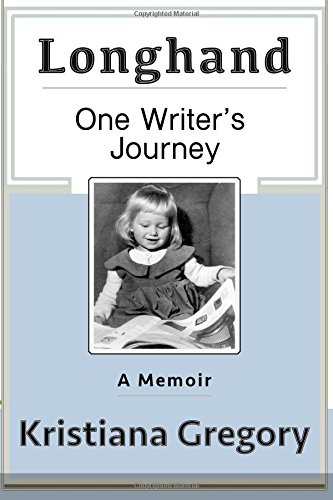
In this heartwarming memoir, Kristiana expands her story-telling and love of the written word, using excerpts from her prolific letters and journals kept since childhood: "I've jotted a few memories from writing for the Los Angeles Times and also Scholastic, the world's largest children's book publisher: the rejections, heartbreak, joys, and beloved editors. My privileged career has been intertwined with motherhood, the richest adventure of all. The most common question readers ask is, 'Where do you get your ideas?' so herein lie the answers. I hope these behind-the-scenes of book writing might inspire writers starting out and those who love the magic of words."
OPPORTUNITY ALERTS
Golden Quill Awards Writing Contest : Flash, Poetry, and Short fiction categories. Entry fee $20 for stories and poetry, $15 for flash fiction. The theme is TRANSFORMATION. Deadline July 15.
Glamour Magazine Essay contest. FREE! Theme: "My Real Life Story". Prize is $5,000 and possible publication in Glamour Magazine for personal essays by women, between 2,500-3,500 words. Enter online or by mail. Open to US residents aged 18+.Deadline July 15th
MARK TWAIN HUMOR CONTEST Entry fees: $12 Young Author or $22 Adult. 7,000 words (or fewer) of any original work of humor writing. Submissions must be in English. Submissions are not required to be in the style of Mark Twain or about Mark Twain. 1st Prize: $1,000 (Adult), $600 (Young Author). Other cash prizes! Deadline July 10, 2015
Saturday Evening Post Great American Fiction Contest. Entry fee $10. Your story should in some way touch upon the publication's mission: Celebrating America — past, present, and future. Think Norman Rockwell. No profanity or graphic sex. Any genre. No previously published stories, but they can have appeared on your blog. Between 1,500 and 5,000 words. Deadline July 1, 2015
Big Beautiful Wellness Creative Writing Contest. NO FEE Poems up to 30 lines Fiction or Nonfic between 1000 and 2000 words. $100 first prize. Theme: Body-positive living. Looking for inspirational, positive stories. Deadline July 1.
Writer's Village International Short Fiction Contest Prizes totalling $3200! And every entrant gets a critique. (which makes this a great deal.) Any genre of fiction up to 3000 words. Entry fee $24. Deadline June 30th.


June 7, 2015
14 Dos and Don'ts for Author-Bloggers
by Anne R. Allen
Everybody keeps telling authors we should blog. But for a lot of new authors, the challenge of a blog is daunting. How can we write our books if we're spending every day blogging?
You can't. And you shouldn't. If you think you have to blog every day, or even every week, you're reading the wrong blogging advice.
There are lots of great reasons for authors to blog. Here are some from blog expert Robin Houghton, author of Blogging for Writers. For more information on author-blogs, check out Molly Greene's Blog It!: The Author's Guide to Building a Successful Online Brand.
All authors need a website—even if you aren't published yet. Whether you're sending out short pieces to magazines or anthologies or querying a novel, you will be Googled. If you have no online presence, or nothing but a FB page and a Twitter account (or any other social media presence that requires membership of the reader) that will work against you with agents and editors.
But a free Blogger or Wordpress blog is often the only website you need. If you establish a well-maintained blog, you can avoid the expense of web hosting and have a perfect venue for interacting with your readers and fellow writers.
And it DOESN'T have to take all your time. One of the challenges for an author-blogger is that most of the information on blogging is written for professional bloggers. These are people who blog to sell ads and monetize their blog content.
But for the author-blogger, a blog is a means to an end, not the end in itself.
This means a lot of the blog "rules" don't apply to us, and a lot of authors are jumping through hoops and wasting time that could be spent on our primary activity: writing our books.
However, some rules do apply. There are basic things that all bloggers need to do to be successful.
Here's a handy list of Dos and Don'ts for the new author-blogger:
1) DON'T feel you have to blog every day.
Or even every week. Or on a schedule. (Although a schedule will give you a better chance of building a solid readership.) But it’s all good. For more on this, read my post on The Slow Blog Manifesto.
As Jane Friedman said in a recent interview at the Art of Commerce "Many people are confused about the role of social media or other online activity (e.g., blogging). They put it before the writing or the message. Let's be clear: the work comes first, in 90% of cases."
Always keep that in mind. Don't let the blog preempt your WIP, ever.
2) DO use an uncluttered, easy-to read design...and NO POP-UPS!
If you use a standard Blogger or Wordpress free blog, the templates are pretty hard to mess up as long as you don't choose one of those white-on-black ones. A light font on a dark background is hard to read for most people. Plus it tends to look like a 1980s computer interface or an old MySpace page. It tends to scream "amateur", unless your site is devoted to vampire fiction or some other "dark" subject.
I also advise against the passive-aggressive tiny pale gray font on a white background. Making your blog hard to read is counter-productive.
Light and bright and uncluttered is appealing and gives your blog a modern look.
If you go with a Web designer and a self-hosted blog, don't let them talk you into too many bells and whistles. This is about building your brand, not advertising the cute things the web designer can do to distract your reader.
And be aware that most people find pop-ups super-annoying. Yes, I know every website, including your bank, throws a pop-up at you every time you log on, wasting your valuable time to blast an ad at you, telling you to sign on with the company you already do business with. This is a great way to tell your current customers they are unimportant and does very little to entice new ones.
Greeting people with a pop-up before they're even allowed to look at your site is like giving people the finger when they come to visit a place of business. You really expect them to stick around if they don't have to?
I know you're crazy-desperate to get addresses for your mailing list because all the gurus are telling you that the author with the biggest mailing list wins.
But using pop-ups to get subscribers can backfire. Pop-ups are unfriendly. If you must, have your subscription window pop up when somebody navigates away from your blog, but don't block your own blog from your readers. You will lose more readers than you gain.
3) DON'T feel you have to keep to 300-500 words.
You don't want to address more than one subject per post, but you don't have to keep the word count under 500 words. That's an old rule from the early days of blogging, when it was all about frequency of posts, not content.
Google's algos have changed since then. They discovered people can feel cheated when they click through to a 3-sentence post. The current ideal now is at about 1000-1500 words.
Make your post as long as it needs to be to cover the subject. If you go over 3000 words, you'll probably lose some readers before the end, but a lot of our most popular posts come close 3000 words.
4) DO learn to write good headers.
An intriguing header is essential. Nobody will find your blogpost if it isn't tweeted and shared and clicked upon. How do you get clicks? With an eyeball-grabbing header. A good header should:
Tell clearly what the post is about.Ask a question or provide an answer. Attract search engines with relevant keywords. Make a good Tweet (even if you aren’t on Twitter, you want somebody else to tweet it and spread the word.) Promise the reader something of value: information or entertainment Note: One-word and enigmatic titles may delight your muse, but minimalism won’t attract blog readers. Also avoid stuff that’s unfocused, doesn't inform, or nobody's likely to search for on Google.
Titles like "My Writing" or "Random Thoughts" are not going to get you many hits. These are not words or phrases people are likely to search for, and they don't entice or offer anything. Look at the titles of our top ten blogposts in the sidebar for ideas on what works in a blog header. Numbered lists and questions work best.
5) DON'T use a cute title that masks your identity.
The number one reason for an author to use social media is to get name recognition, so for heaven’s sake, PUT YOUR NAME ON THE BLOG.
Just yesterday I read a hilarious post about the paleo diet. Since that diet is what caused the gout flare-up that has had me in agony for weeks, I found it especially funny. I wanted to share it everywhere. But I have no idea who wrote it. It was on some blog with a one-word, made-up name by an anonymous blogger. He mentioned a coming book, but since he keeps his name secret, what's the point?
Yes, I know you see lots of anonymous blogs. Many product reviewers prefer to keep their names private. Ditto political bloggers.
But the reason an author is blogging is the opposite of anonymity. You want people to be able to put your name (or pen name) into a search engine and find you. Don't make them rummage in their memory banks trying to remember if your blog is called "Primordial Ooze", "Alas, Poor Yorick" or "Enigmatic Toadstool". A whole lot more people will find you if they can just Google "Your Name."
Every minute an author spends blogging anonymously is a minute wasted. Let the public know who you are and where you are and why we should be reading your stuff instead of the other 10 billion blogs out there.
6) DO include share buttons, a "follow" widget and a way to subscribe to the blog
Hey, somebody might stop by your new blog and like what they see. You want them start spreading the news. And come back.
Those little "f" "t", "g 1" and other buttons allow people to share your brilliant words to their Facebook, Twitter and Google pages. (In Blogger, they are available in the list of widgets on your dashboard.) They are the way you will build a following. Put them up there even if you personally don't use those sites.
It's how people will find out about your blog.
If nobody can Tweet or share a post they like, you're relying entirely on search engines for discoverability. Trouble is, a search engine can't find you unless you have a lot of traffic. And you can't get a lot of traffic unless people Tweet you.
It's the Catch 22 of social media. Use the buttons.
And you want people to be able to subscribe by email. It's great to get people "following," but that just means they see the blog in their RSS feed when they happen to check it. A blogpost that lands in somebody's inbox is a whole lot more likely to be read.
7) DON'T limit yourself with a restrictive niche
For product bloggers and reviewers, niche is important. It's better to be the #1 blogger for jelly doughnut reviews or vegan baby food recipes than the 10 millionth blogger "musing about stuff".
But you're an author. Your product is YOU. Don't keep yourself hemmed in by a limited niche.
For a long time, I believed all the advice about how you have to have a niche. So this is a niche blog. It's serving us well, but it hems us in.
Remember people surf the Web looking for two things: information and entertainment. Your blog can spin a good yarn, make people laugh, provide information, or all three, as long as you are putting it all in your own honest, unique voice.
I used to caution writers against putting fiction on blogs. It is still less likely to be read, because people are mostly skimming blogs for information, but there's been growth in the "story blog", so if you have flash fiction you don't intend to send to contests or journals, it's fine to put it on your blog. But do realize it will be officially "published" so you have given away first rights.
NOTE: It's still not smart to post raw bits of a novel in progress. Agents and publishers won't consider that book because it's now published (unless you're getting 100,000 hits a post.) Also, readers respond much better to self-contained short fiction than unedited bits of novels. And remember your job is to entertain, not seek free editorial advice.
Another caveat: one of the least interesting topics to readers is your writing process. Hardly any potential reader wants to know your daily word count or your rejection sorrows. Other writers may stop by to commiserate, and you do want to network with other authors, but don’t make your writer’s block or attempts to get published the main focus of your blog.
You simply want to offer your unique voice talking about the things you feel passionate about: the research you’re doing on medieval armor; your theories on why raccoons are going to take over the planet; the hilarious adventures of an erotica writer running for PTA president. Anything that will draw in readers will work.
If you have "blogger's block", or are brainstorming for fresh content, regular commenter Linda Maye Adams offered this tip: there's a blog that provides daily "blog prompts", called the Daily Post. It looks like fun.
8) DO post a bio and contact info—and your @twitterhandle, if you have one.
You're doing all this so that people can find out about YOU. And contact you. And discover your books.
But you would be amazed how many bloggers don't even put their names on their blogs. Some don't even let people know what genre they write. (The shy opposites of those braggy newsletter people.)
Even if you're a newbie and haven't published anything and haven't picked a genre, you still need a bio. It's best to put a short bio on the main page with more info on an "about me" page.
Yes. Your blog has many pages. Just click "pages" on your dashboard. In Blogger, you get twenty.
Here's a piece on how to write an author bio.
It's also important to put your @twitterhandle on your main page. That way, if somebody wants to Tweet the post, they can give attribution. Most share buttons only say "via @sharethis" but if you're on Twitter, you want it to say "via @yourname." Remember you're doing all this to establish that name as a brand!
9) DON'T put too much energy into images.
(Unless you're a photojournalist, of course.)
You're showing off your WRITING SKILLS, remember?
Bloggers with monetized blogs need to spend a lot of time on images, and visuals do draw people in, but do you want people to notice somebody else'e photography or YOUR writing?
Don’t waste lots of time looking for the right photo (or risk getting sued for using copyrighted material.)
If your blog is about travel, or fishing, or antiquing, yes, take lots of photos, but if the post is about books or ideas—don’t sweat it. The blog is going to be a showcase for what you can do with the written word. We’ve never used images on this blog, and we’re doing pretty well. If you do use images, make sure they are in the public domain. Try Wiki Commons or WANA Commons
10) DO visit other blogs: comment and guest post
Reciprocate those visits. Nobody’s going to know you're there if you stay home all the time. Get out and socialize! Social media is about networking.
The single best thing you can do to raise your search engine profile is comment on high profile blogs that are already on Google's radar.
Once you make friends with other bloggers, ask if you can guest post. And do invite other bloggers to guest for you. Guest posting is one of the best ways to increase your reach and your readership.
11) DON'T obsess about SEO (Search Engine Optimization), but be aware of it.
Using keywords in your headers is vital. Those are words that define the subject matter of your post. Being murky and ambiguous will not work in your favor.
Understanding SEO means you don't title your post "My Thoughts on an Important Subject". Instead you say, "Why Justin Bieber Should Be Deported". "Justin Bieber" and "Deported" are keywords. If you use them, people interested in your subject matter will find your post. If you don't, they won't.
Marketing people love to use jargon that makes this stuff sound complicated. But now you know it isn't.
And as for the rest of the marketing jargon you hear, it's mostly not important to you. Yes, you want to be picked up by the search engines, but your primary concern is entertaining your readers, not optimizing keywords in your text. New blogs are more likely to get discovered by word of mouth, so it's more important to be networking with other bloggers than trying to game the search engines.
12) DO learn to write for the 21st century reader.
People skim on the Internet. You need short paragraphs, sub-headers, bullet points, lists, bolding, and lots of white space. Draw the reader's eye through the piece.
More in my post on How to Write Blog Content.
13) DO ask questions, respond to comments and treat your visitors well
Be welcoming to people who visit your blog. Ask interesting questions that will get a discussion going.
You also want to respond to comments and make commenting as easy as possible.
You can’t control all the Blogger/Wordpress hoop-jumping. (I apologize to anybody with a Wordpress ID who can't comment here. I have the same problem trying to comment on a Wordpress blog, which is why I use a Gravatar ID for Wordpress. If you have gmail or you're on Google Plus, you have a Google ID, so it's best to use that.)
If you haven't had a barrage of spam, you can turn off the “word verification” or “CAPTCHA”. That will triple your comments. (Especially from people with older eyes who can’t read those %#*! letters to save our lives.)
I also suggest you don't moderate comments on new posts. I only moderate ones more than a week old. That allows for real conversation to happen on a new post. Older posts are the most likely to attract spam, anyway.
14) DON'T start multiple blogs
Professional bloggers sometimes have dozens. They have a Cupcake Recipe Blog and a Mommy Blog and a Support Blog for Persons who Suffer from Chronic Dandruff. All fine and dandy. They run ads for kitchenware on one and Pampers on the second and homeopathic shampoo on a third.
But they aren't writing novels.
And you aren't running ads.
So unless you write in wildly conflicting genres, like Christian Middle Grade fiction and Dinosaur erotica, you only need one blog. Blogs take time. And you have books to write, remember?
Also, Google rewards authors who have only one website. For a great piece on the subject, check out Lisa Tenner's post, How Many Websites Should An Author Have? She says " If you have two websites, Google doesn't like duplicate content so you really need to write different articles for each site. So now, in order to have the same amount of content on a site, you actually have to write twice as much."
So if you've started 15 blogs, go back to the first one, put all your best content on it (you can change the header, but the oldest one is the one Google knows best, so keep it.) Then delete the others, or leave them up with a link to your main blog.
Then go work on that WIP!
What about you, Scriveners? Do you blog? How often do you post? Have you found a happy medium between blogging and working on your WIP? What kind of blogs are you most likely to follow? Have you tried a blog and given it up? Do you find a static website works just as well for you?
BOOK OF THE WEEK
The first book in the Camilla comedy series is only 99c!Start reading the Camilla Randall Mysteries to be ready for #5 in July! Ghostwriters in the Sky is a spoof of writers conferences, full of funny situations most writers will identify with.
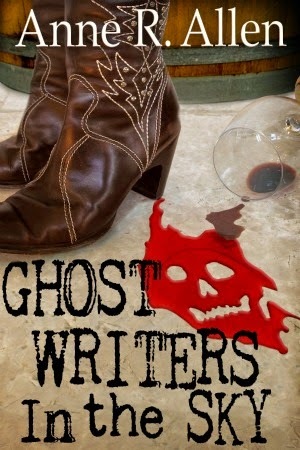
Ghostwriters in the Sky is available in e-book at all the Amazons,iTunes, Kobo, Inktera, Scribd and at Barnes and Noble for NOOK.
It is available in Paper (regular and large print) at Amazon and Barnes and Noble.
It's #1 in the Camilla Randall comedy-mysteries: a wild comic romp set at writers’ conference in the wine-and-cowboy town of Santa Ynez, California. When a ghostwriter’s plot to blackmail celebrities with faked evidence leads to murder, Camilla must team up with a cross-dressing dominatrix to stop the killer—who may be a ghost—from striking again.
Meanwhile, a hot LA cop named Maverick Jesus Zukowski just may steal her heart.
Here's a review from award-winning author Sandy Nathan
"Ghost Writers is set in a writers' conference in Santa Ynez Valley, where I've lived for twenty years...This book is hysterically funny AND accurately depicts the Valley. Anne Allen gets it right, down to the dollar bills stuck on the ceiling of the Maverick Saloon. It was so fun to read as she called out one Valley landmark after another. Allen got the local denizens right, too, the crazy characters that roam our streets.
Speaking of which, Ms. Allen's literary characters are pretty crazy/zany by themselves. I love Camilla Randall, her ditzy, former debutante heroine, and all the rest. The action gets pretty frenetic when dead bodies start showing up. I heartily recommend this book..."
OPPORTUNITY ALERTS
Golden Quill Awards Writing Contest : Flash, Poetry, and Short fiction categories. Entry fee $20 for stories and poetry, $15 for flash fiction. The theme is TRANSFORMATION. Deadline July 15.
The Masters Review Short Story Award is open from May 15 – July 15 and will pay $2000 (YES! You read that right) plus publication for the best short story. Second and third place stories will be paid $200 and $100 respectively and considered for publication. All stories will be sent to Curtis Brown Literary for consideration. Just your best piece of fiction under 6000 words. If you haven’t published a novel, you qualify. Deadline July 15th.
MARK TWAIN HUMOR CONTEST Entry fees: $12 Young Author or $22 Adult. 7,000 words (or fewer) of any original work of humor writing. Submissions must be in English. Submissions are not required to be in the style of Mark Twain or about Mark Twain. 1st Prize: $1,000 (Adult), $600 (Young Author). Other cash prizes! Deadline July 10, 2015
Saturday Evening Post Great American Fiction Contest. Entry fee $10. Your story should in some way touch upon the publication's mission: Celebrating America — past, present, and future. Think Norman Rockwell. No profanity or graphic sex. Any genre. No previously published stories, but they can have appeared on your blog. Between 1,500 and 5,000 words. Deadline July 1, 2015
Big Beautiful Wellness Creative Writing Contest. NO FEE Poems up to 30 lines Fiction or Nonfic between 1000 and 2000 words. $100 first prize. Theme: Body-positive living. Looking for inspirational, positive stories. Deadline July 1.
Writer's Village International Short Fiction Contest Prizes totalling $3200! And every entrant gets a critique. (which makes this a great deal.) Any genre of fiction up to 3000 words. Entry fee $24. Deadline June 30th.
Everybody keeps telling authors we should blog. But for a lot of new authors, the challenge of a blog is daunting. How can we write our books if we're spending every day blogging?
You can't. And you shouldn't. If you think you have to blog every day, or even every week, you're reading the wrong blogging advice.
There are lots of great reasons for authors to blog. Here are some from blog expert Robin Houghton, author of Blogging for Writers. For more information on author-blogs, check out Molly Greene's Blog It!: The Author's Guide to Building a Successful Online Brand.
All authors need a website—even if you aren't published yet. Whether you're sending out short pieces to magazines or anthologies or querying a novel, you will be Googled. If you have no online presence, or nothing but a FB page and a Twitter account (or any other social media presence that requires membership of the reader) that will work against you with agents and editors.
But a free Blogger or Wordpress blog is often the only website you need. If you establish a well-maintained blog, you can avoid the expense of web hosting and have a perfect venue for interacting with your readers and fellow writers.
And it DOESN'T have to take all your time. One of the challenges for an author-blogger is that most of the information on blogging is written for professional bloggers. These are people who blog to sell ads and monetize their blog content.
But for the author-blogger, a blog is a means to an end, not the end in itself.
This means a lot of the blog "rules" don't apply to us, and a lot of authors are jumping through hoops and wasting time that could be spent on our primary activity: writing our books.
However, some rules do apply. There are basic things that all bloggers need to do to be successful.
Here's a handy list of Dos and Don'ts for the new author-blogger:
1) DON'T feel you have to blog every day.
Or even every week. Or on a schedule. (Although a schedule will give you a better chance of building a solid readership.) But it’s all good. For more on this, read my post on The Slow Blog Manifesto.
As Jane Friedman said in a recent interview at the Art of Commerce "Many people are confused about the role of social media or other online activity (e.g., blogging). They put it before the writing or the message. Let's be clear: the work comes first, in 90% of cases."
Always keep that in mind. Don't let the blog preempt your WIP, ever.
2) DO use an uncluttered, easy-to read design...and NO POP-UPS!
If you use a standard Blogger or Wordpress free blog, the templates are pretty hard to mess up as long as you don't choose one of those white-on-black ones. A light font on a dark background is hard to read for most people. Plus it tends to look like a 1980s computer interface or an old MySpace page. It tends to scream "amateur", unless your site is devoted to vampire fiction or some other "dark" subject.
I also advise against the passive-aggressive tiny pale gray font on a white background. Making your blog hard to read is counter-productive.
Light and bright and uncluttered is appealing and gives your blog a modern look.
If you go with a Web designer and a self-hosted blog, don't let them talk you into too many bells and whistles. This is about building your brand, not advertising the cute things the web designer can do to distract your reader.
And be aware that most people find pop-ups super-annoying. Yes, I know every website, including your bank, throws a pop-up at you every time you log on, wasting your valuable time to blast an ad at you, telling you to sign on with the company you already do business with. This is a great way to tell your current customers they are unimportant and does very little to entice new ones.
Greeting people with a pop-up before they're even allowed to look at your site is like giving people the finger when they come to visit a place of business. You really expect them to stick around if they don't have to?
I know you're crazy-desperate to get addresses for your mailing list because all the gurus are telling you that the author with the biggest mailing list wins.
But using pop-ups to get subscribers can backfire. Pop-ups are unfriendly. If you must, have your subscription window pop up when somebody navigates away from your blog, but don't block your own blog from your readers. You will lose more readers than you gain.
3) DON'T feel you have to keep to 300-500 words.
You don't want to address more than one subject per post, but you don't have to keep the word count under 500 words. That's an old rule from the early days of blogging, when it was all about frequency of posts, not content.
Google's algos have changed since then. They discovered people can feel cheated when they click through to a 3-sentence post. The current ideal now is at about 1000-1500 words.
Make your post as long as it needs to be to cover the subject. If you go over 3000 words, you'll probably lose some readers before the end, but a lot of our most popular posts come close 3000 words.
4) DO learn to write good headers.
An intriguing header is essential. Nobody will find your blogpost if it isn't tweeted and shared and clicked upon. How do you get clicks? With an eyeball-grabbing header. A good header should:
Tell clearly what the post is about.Ask a question or provide an answer. Attract search engines with relevant keywords. Make a good Tweet (even if you aren’t on Twitter, you want somebody else to tweet it and spread the word.) Promise the reader something of value: information or entertainment Note: One-word and enigmatic titles may delight your muse, but minimalism won’t attract blog readers. Also avoid stuff that’s unfocused, doesn't inform, or nobody's likely to search for on Google.
Titles like "My Writing" or "Random Thoughts" are not going to get you many hits. These are not words or phrases people are likely to search for, and they don't entice or offer anything. Look at the titles of our top ten blogposts in the sidebar for ideas on what works in a blog header. Numbered lists and questions work best.
5) DON'T use a cute title that masks your identity.
The number one reason for an author to use social media is to get name recognition, so for heaven’s sake, PUT YOUR NAME ON THE BLOG.
Just yesterday I read a hilarious post about the paleo diet. Since that diet is what caused the gout flare-up that has had me in agony for weeks, I found it especially funny. I wanted to share it everywhere. But I have no idea who wrote it. It was on some blog with a one-word, made-up name by an anonymous blogger. He mentioned a coming book, but since he keeps his name secret, what's the point?
Yes, I know you see lots of anonymous blogs. Many product reviewers prefer to keep their names private. Ditto political bloggers.
But the reason an author is blogging is the opposite of anonymity. You want people to be able to put your name (or pen name) into a search engine and find you. Don't make them rummage in their memory banks trying to remember if your blog is called "Primordial Ooze", "Alas, Poor Yorick" or "Enigmatic Toadstool". A whole lot more people will find you if they can just Google "Your Name."
Every minute an author spends blogging anonymously is a minute wasted. Let the public know who you are and where you are and why we should be reading your stuff instead of the other 10 billion blogs out there.
6) DO include share buttons, a "follow" widget and a way to subscribe to the blog
Hey, somebody might stop by your new blog and like what they see. You want them start spreading the news. And come back.
Those little "f" "t", "g 1" and other buttons allow people to share your brilliant words to their Facebook, Twitter and Google pages. (In Blogger, they are available in the list of widgets on your dashboard.) They are the way you will build a following. Put them up there even if you personally don't use those sites.
It's how people will find out about your blog.
If nobody can Tweet or share a post they like, you're relying entirely on search engines for discoverability. Trouble is, a search engine can't find you unless you have a lot of traffic. And you can't get a lot of traffic unless people Tweet you.
It's the Catch 22 of social media. Use the buttons.
And you want people to be able to subscribe by email. It's great to get people "following," but that just means they see the blog in their RSS feed when they happen to check it. A blogpost that lands in somebody's inbox is a whole lot more likely to be read.
7) DON'T limit yourself with a restrictive niche
For product bloggers and reviewers, niche is important. It's better to be the #1 blogger for jelly doughnut reviews or vegan baby food recipes than the 10 millionth blogger "musing about stuff".
But you're an author. Your product is YOU. Don't keep yourself hemmed in by a limited niche.
For a long time, I believed all the advice about how you have to have a niche. So this is a niche blog. It's serving us well, but it hems us in.
Remember people surf the Web looking for two things: information and entertainment. Your blog can spin a good yarn, make people laugh, provide information, or all three, as long as you are putting it all in your own honest, unique voice.
I used to caution writers against putting fiction on blogs. It is still less likely to be read, because people are mostly skimming blogs for information, but there's been growth in the "story blog", so if you have flash fiction you don't intend to send to contests or journals, it's fine to put it on your blog. But do realize it will be officially "published" so you have given away first rights.
NOTE: It's still not smart to post raw bits of a novel in progress. Agents and publishers won't consider that book because it's now published (unless you're getting 100,000 hits a post.) Also, readers respond much better to self-contained short fiction than unedited bits of novels. And remember your job is to entertain, not seek free editorial advice.
Another caveat: one of the least interesting topics to readers is your writing process. Hardly any potential reader wants to know your daily word count or your rejection sorrows. Other writers may stop by to commiserate, and you do want to network with other authors, but don’t make your writer’s block or attempts to get published the main focus of your blog.
You simply want to offer your unique voice talking about the things you feel passionate about: the research you’re doing on medieval armor; your theories on why raccoons are going to take over the planet; the hilarious adventures of an erotica writer running for PTA president. Anything that will draw in readers will work.
If you have "blogger's block", or are brainstorming for fresh content, regular commenter Linda Maye Adams offered this tip: there's a blog that provides daily "blog prompts", called the Daily Post. It looks like fun.
8) DO post a bio and contact info—and your @twitterhandle, if you have one.
You're doing all this so that people can find out about YOU. And contact you. And discover your books.
But you would be amazed how many bloggers don't even put their names on their blogs. Some don't even let people know what genre they write. (The shy opposites of those braggy newsletter people.)
Even if you're a newbie and haven't published anything and haven't picked a genre, you still need a bio. It's best to put a short bio on the main page with more info on an "about me" page.
Yes. Your blog has many pages. Just click "pages" on your dashboard. In Blogger, you get twenty.
Here's a piece on how to write an author bio.
It's also important to put your @twitterhandle on your main page. That way, if somebody wants to Tweet the post, they can give attribution. Most share buttons only say "via @sharethis" but if you're on Twitter, you want it to say "via @yourname." Remember you're doing all this to establish that name as a brand!
9) DON'T put too much energy into images.
(Unless you're a photojournalist, of course.)
You're showing off your WRITING SKILLS, remember?
Bloggers with monetized blogs need to spend a lot of time on images, and visuals do draw people in, but do you want people to notice somebody else'e photography or YOUR writing?
Don’t waste lots of time looking for the right photo (or risk getting sued for using copyrighted material.)
If your blog is about travel, or fishing, or antiquing, yes, take lots of photos, but if the post is about books or ideas—don’t sweat it. The blog is going to be a showcase for what you can do with the written word. We’ve never used images on this blog, and we’re doing pretty well. If you do use images, make sure they are in the public domain. Try Wiki Commons or WANA Commons
10) DO visit other blogs: comment and guest post
Reciprocate those visits. Nobody’s going to know you're there if you stay home all the time. Get out and socialize! Social media is about networking.
The single best thing you can do to raise your search engine profile is comment on high profile blogs that are already on Google's radar.
Once you make friends with other bloggers, ask if you can guest post. And do invite other bloggers to guest for you. Guest posting is one of the best ways to increase your reach and your readership.
11) DON'T obsess about SEO (Search Engine Optimization), but be aware of it.
Using keywords in your headers is vital. Those are words that define the subject matter of your post. Being murky and ambiguous will not work in your favor.
Understanding SEO means you don't title your post "My Thoughts on an Important Subject". Instead you say, "Why Justin Bieber Should Be Deported". "Justin Bieber" and "Deported" are keywords. If you use them, people interested in your subject matter will find your post. If you don't, they won't.
Marketing people love to use jargon that makes this stuff sound complicated. But now you know it isn't.
And as for the rest of the marketing jargon you hear, it's mostly not important to you. Yes, you want to be picked up by the search engines, but your primary concern is entertaining your readers, not optimizing keywords in your text. New blogs are more likely to get discovered by word of mouth, so it's more important to be networking with other bloggers than trying to game the search engines.
12) DO learn to write for the 21st century reader.
People skim on the Internet. You need short paragraphs, sub-headers, bullet points, lists, bolding, and lots of white space. Draw the reader's eye through the piece.
More in my post on How to Write Blog Content.
13) DO ask questions, respond to comments and treat your visitors well
Be welcoming to people who visit your blog. Ask interesting questions that will get a discussion going.
You also want to respond to comments and make commenting as easy as possible.
You can’t control all the Blogger/Wordpress hoop-jumping. (I apologize to anybody with a Wordpress ID who can't comment here. I have the same problem trying to comment on a Wordpress blog, which is why I use a Gravatar ID for Wordpress. If you have gmail or you're on Google Plus, you have a Google ID, so it's best to use that.)
If you haven't had a barrage of spam, you can turn off the “word verification” or “CAPTCHA”. That will triple your comments. (Especially from people with older eyes who can’t read those %#*! letters to save our lives.)
I also suggest you don't moderate comments on new posts. I only moderate ones more than a week old. That allows for real conversation to happen on a new post. Older posts are the most likely to attract spam, anyway.
14) DON'T start multiple blogs
Professional bloggers sometimes have dozens. They have a Cupcake Recipe Blog and a Mommy Blog and a Support Blog for Persons who Suffer from Chronic Dandruff. All fine and dandy. They run ads for kitchenware on one and Pampers on the second and homeopathic shampoo on a third.
But they aren't writing novels.
And you aren't running ads.
So unless you write in wildly conflicting genres, like Christian Middle Grade fiction and Dinosaur erotica, you only need one blog. Blogs take time. And you have books to write, remember?
Also, Google rewards authors who have only one website. For a great piece on the subject, check out Lisa Tenner's post, How Many Websites Should An Author Have? She says " If you have two websites, Google doesn't like duplicate content so you really need to write different articles for each site. So now, in order to have the same amount of content on a site, you actually have to write twice as much."
So if you've started 15 blogs, go back to the first one, put all your best content on it (you can change the header, but the oldest one is the one Google knows best, so keep it.) Then delete the others, or leave them up with a link to your main blog.
Then go work on that WIP!
What about you, Scriveners? Do you blog? How often do you post? Have you found a happy medium between blogging and working on your WIP? What kind of blogs are you most likely to follow? Have you tried a blog and given it up? Do you find a static website works just as well for you?
BOOK OF THE WEEK
The first book in the Camilla comedy series is only 99c!Start reading the Camilla Randall Mysteries to be ready for #5 in July! Ghostwriters in the Sky is a spoof of writers conferences, full of funny situations most writers will identify with.
.jpg)
Ghostwriters in the Sky is available in e-book at all the Amazons,iTunes, Kobo, Inktera, Scribd and at Barnes and Noble for NOOK.
It is available in Paper (regular and large print) at Amazon and Barnes and Noble.
It's #1 in the Camilla Randall comedy-mysteries: a wild comic romp set at writers’ conference in the wine-and-cowboy town of Santa Ynez, California. When a ghostwriter’s plot to blackmail celebrities with faked evidence leads to murder, Camilla must team up with a cross-dressing dominatrix to stop the killer—who may be a ghost—from striking again.
Meanwhile, a hot LA cop named Maverick Jesus Zukowski just may steal her heart.
Here's a review from award-winning author Sandy Nathan
"Ghost Writers is set in a writers' conference in Santa Ynez Valley, where I've lived for twenty years...This book is hysterically funny AND accurately depicts the Valley. Anne Allen gets it right, down to the dollar bills stuck on the ceiling of the Maverick Saloon. It was so fun to read as she called out one Valley landmark after another. Allen got the local denizens right, too, the crazy characters that roam our streets.
Speaking of which, Ms. Allen's literary characters are pretty crazy/zany by themselves. I love Camilla Randall, her ditzy, former debutante heroine, and all the rest. The action gets pretty frenetic when dead bodies start showing up. I heartily recommend this book..."
OPPORTUNITY ALERTS
Golden Quill Awards Writing Contest : Flash, Poetry, and Short fiction categories. Entry fee $20 for stories and poetry, $15 for flash fiction. The theme is TRANSFORMATION. Deadline July 15.
The Masters Review Short Story Award is open from May 15 – July 15 and will pay $2000 (YES! You read that right) plus publication for the best short story. Second and third place stories will be paid $200 and $100 respectively and considered for publication. All stories will be sent to Curtis Brown Literary for consideration. Just your best piece of fiction under 6000 words. If you haven’t published a novel, you qualify. Deadline July 15th.
MARK TWAIN HUMOR CONTEST Entry fees: $12 Young Author or $22 Adult. 7,000 words (or fewer) of any original work of humor writing. Submissions must be in English. Submissions are not required to be in the style of Mark Twain or about Mark Twain. 1st Prize: $1,000 (Adult), $600 (Young Author). Other cash prizes! Deadline July 10, 2015
Saturday Evening Post Great American Fiction Contest. Entry fee $10. Your story should in some way touch upon the publication's mission: Celebrating America — past, present, and future. Think Norman Rockwell. No profanity or graphic sex. Any genre. No previously published stories, but they can have appeared on your blog. Between 1,500 and 5,000 words. Deadline July 1, 2015
Big Beautiful Wellness Creative Writing Contest. NO FEE Poems up to 30 lines Fiction or Nonfic between 1000 and 2000 words. $100 first prize. Theme: Body-positive living. Looking for inspirational, positive stories. Deadline July 1.
Writer's Village International Short Fiction Contest Prizes totalling $3200! And every entrant gets a critique. (which makes this a great deal.) Any genre of fiction up to 3000 words. Entry fee $24. Deadline June 30th.
May 31, 2015
REALITY CHECK: Mixed Martial Arts For Writers
by Ruth Harris
No two ways about it: You ARE going to suffer.
How do I know? Because I'm a writer and all of these things—or variations of them—have happened to me.
You will get one-star reviews. Your book will be rejected by the editor who "loves" you and your work.The hotshot agent who told you how wonderful you are will ignore you, your book, your phone calls and emails.Your agent—the one who made you boat loads of money—will retire.Your editor will leave for a new job at another publisher/to have a baby/to go into rehab.Your book will be pirated.Your perfectly formatted epub or mobi will get stuck in "processing"even as your BookBob promo comes—and goes.If you find a publisher, you will be asked to sign a crappy contract.If you have a publisher, he, she or it will go out of business and your book will never see the light of day or be tied up in bankruptcy proceedings for years.Your best book, the one with great characters and a fab plot, with a spectacular cover and super wonderful blurb plus a dazzling marketing strategy won't sell.To make it worse, an incredible, sub-literate POS will sell.BookBub will turn you down—and so will ENT.Your cover designer/free lance editor/formatter will pull a disappearing act.
If you haven't guessed by now, being a writer is no career for divas, narcissists, whiners, blamers or cry babies. It's a grown-up activity for adults and, if you decide to indulge, you will need a thick skin and a good sense of humor. You will also need to know how to fight.
Defeat the enemy within.
The Perfectionist:
What's the worse thing that can happen if you upload a less-than-”perfect” book? You're gonna break Kindle which has already survived the onslaught of a tsunami of crap? Really? Your book is gonna be the straw that breaks the internet? Puh-leeze, get your ego in check.
But, you say, it's a POS. Maybe you're right—but what if you're wrong? Maybe readers aren't as picky as you are. Maybe no one will notice or even care about whatever it is that's worrying you. Maybe whatever's bothering you is only the monster under the bed anyway. If people like your book and buy it, what's the problem?
If they don't like it, if they actually hate it, and your reviews absolutely, positively stink, take the book down. That's what the "unpublish" button is for. Use it.
The People Pleaser:
Your critique group thinks your characters are stereotypes? Doesn't that mean readers will be able to recognize themselves and relate?
Your beta readers complain there’s too much sex, too little sex, the wrong kind of sex? Who are they? Kinsey? Kraft-Ebbing? Dr. Ruth? Too much certainly didn't hurt E. L. James. Too little is just perfect for sweet romance. The wrong kind lies in the eye of the beholder although you should definitely forget about sex with children and animals.
Your bff tells you your plots are creaky? There are only 6 plots anyway so it's what you do with the plot that counts. Boy meets girl, boy loses girl, boy gets girl? What if the boy is Clark Kent and the girl is Lois Lane? What if the boy is a scruffy junkyard mongrel and the girl is a snooty Park Avenue poodle?
Heed the comments from the bleachers but put them in perspective. Anne's post on when to heed your crit group—and when not to—is a reliable guide to keeping your sanity when too many voices and too many conflicting opinions feel paralyzing.
The Also Ran:
10K words a day! A book a week! Blog! Tweet! Pinterest! LinkedIn! Google Play! Newsletter! Podcast! Sell a million books! Write four series—all at the same time!
What's wrong with you? Other writers do, why can't you?
Or do they? Do they have assistants, virtual or physical? Hired services that wrangle their social media presence? Pro formatters, cover designers, blurb writers, uploaders? Family members who carry some of the load? Have you actually seen them write 10K words a day, day in, day out?
#1: Why are you comparing yourself to other writers? Why aren't you good enough being yourself?
Paranormal romance writer, Debbie A. McClure, proposes a solid approach to finding the true you in Don't Let Anybody Should on You her fantastic guest post for Molly Greene. (I agree this post is a must read! Anne.)
#2. What you leave out is as important/more important as what you leave in. Sometimes deleting 10K words packs more punch than writing 10K new words: proof that new doesn't necessarily mean improved.
Anne's post on why short fiction is hot and the trend to "snackable content" will help you avoid the 10K-words-a-day trap.
The Procrastinator:
You know who you are. You're putting the spices in alphabetical order when you should be writing. You're rearranging the linen closet when you should be writing. You're cleaning out the garage when you should be doing-you-know-what.
You also know that procrastinating will stand between you and the book you want to finish, the story you want to write, the success you're dreaming of.
So stop! Here's how:
The two minute rule. 11 Ways to stop procrastinating. 3 minutes to get your butt in gear. 6 scientific steps to help you stop procrastinating. Why it's never to late to stop procrastinating.
EXCEPT when procrastinating is an important warning from you to you. As a member-in-good-standing of the Church of Do It Now, I have learned that when I dilly and dither instead of going to work, I have made a mistake somewhere in my manuscript. For me, it's almost always somewhere in the beginning where I have either told too much or not enough.
If you usually look forward to going to work, procrastination is a friendly warning. Do some detective work, find out where you went off track, make the fix and move forward again.
Develop a reliable defense.
Substitutes, Stand-Ins and Networks: Don't get left in the lurch.
Publishing isn't like romance. You might be rejected but you don't have to be jilted. Even though you lovelovelove your cover designer/formatter/editor, whenever you see a cover you like or come across a rec for an editor or formatter, make a note of the name, website link and contact info.Evernote, OneNote and Workflowy (among others) are all FREE and will do the job.Whether your network is cyber or a local writers' group, only other writers will really understand what you're going through. They will provide a shoulder to cry on, valuable introductions, helpful tips and tricks.Alex Cavanaugh's Insecure Writer's Group is a platinum-grade resource for writers, neurotic and otherwise (if any).
DIY formatting and covers: Learn to do your own formatting and basic covers.
High quality apps like Scrivener and Jutoh ($39 plus FREE 30-day try-before-you-buy trials) will guide you through the process of creating your own files in epub, mobi and Create Space formats. Both offer lots of in-app and online help and FREE manuals to walk you through the process.Sigil and Calibre are FREE on-line epub editors.Vellum (Mac only), elegant and easy to use, takes the pain out of formatting epub and mobi files for upload.Word processors like MSWord, Atlantis (for PC), Pages (for Mac) will create uploadable epub and mobi files.DIY covers:Declan O'Flaherty's cover ninja step-by-step video.Make a cover in MSWord.Create a cover (or import one) in Jutoh.Amazon's KDP has a cover creator.
DIY editing tips:Jodie Renner, editor and award-winning author, shares Tricks & Tips for Catching All Those Little Typos in Your Own Work.Margaret Moore at Harlequin discusses the heavy lifting aka DIY editing.How to edit your own book from blind spots to crutch words.From wrecking ball to scalpel, more tips on DIY editing.
Rights grabs, contract gotchas, rate schedules: protect yourself, your work and your money.
Helen Sedwick, a Contributing Writer for The Book Designer, is also an author and a California attorney with thirty years of experience. Helen cites the danger words to watch out for.Seller beware! NY Times and USA Today bestseller Roxanne St. Claire spells out the dire consequences of signing away rights.Not all agents are good agents and not all deals are good deals (for the author).Karen Dionne spells out the details.A guide to editorial rates—regardless of whether a project is flat rate or hourly.
Candy:
Got a book on a bestseller list? A cover you love? A line you or someone else wrote that you absolutely love? Take a screenshot and use it as your screensaver!
Don't forget: When the going gets tough, the tough reach for candy.
What about you, Scriveners? Do you have these "martial arts" in your skill set? Do you have an "enemy within"? How do you fight back? Do you take the time to give yourself "candy" and remind yourself of your successes?
BOOK OF THE WEEK
Based on secret, real-life psychiatric experiments conducted by the CIA. Zeb Marlowe, a scarred survivor of the experiment, and Jai Jai Leland, the beautiful widow of a man who didn't survive, must stop a nuclear threat that puts the world's security at risk.
Amazon US | Amazon UK | Amazon CA | NOOK | iBooks | Kobo | GooglePlay
ONLY 99c for a limited time!
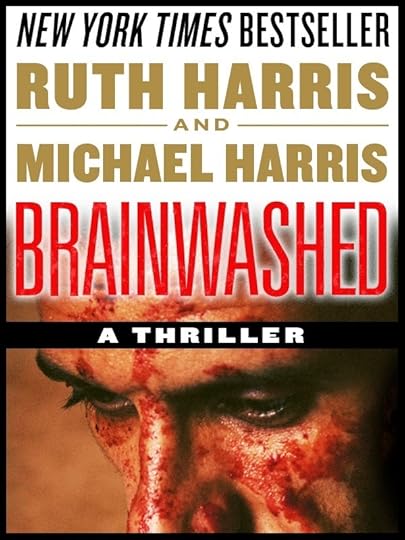
With a plot that hurtles forward at electric speed, BRAINWASHED takes place on the beautiful islands of the Caribbean, in Damascus and Ireland, the Philippines, Canada, Washington, DC--and in an underground torture chamber located on Victor Ressid's secluded private estate.
"BRAINWASHED delivers the goods: thrills, gut-churning suspense, nightmarish terror. Ruth and Michael Harris have delivered another great read and sure bestseller. I dare you to put it down!" --Bob Mayer, former Green Beret and million-copy bestselling author of AREA 51
OPPORTUNITY ALERTS
Golden Quill Awards Writing Contest : Flash, Poetry, and Short fiction categories. Entry fee $20 for stories and poetry, $15 for flash fiction. The theme is TRANSFORMATION. Deadline July 15.
MARK TWAIN HUMOR CONTEST Entry fees: $12 Young Author or $22 Adult. 7,000 words (or fewer) of any original work of humor writing. Submissions must be in English. Submissions are not required to be in the style of Mark Twain or about Mark Twain. 1st Prize: $1,000 (Adult), $600 (Young Author). Other cash prizes! Deadline July 10, 2015
Saturday Evening Post Great American Fiction Contest. Entry fee $10. Your story should in some way touch upon the publication's mission: Celebrating America — past, present, and future. Think Norman Rockwell. No profanity or graphic sex. Any genre. No previously published stories, but they can have appeared on your blog. Between 1,500 and 5,000 words. Deadline July 1, 2015
Big Beautiful Wellness Creative Writing Contest. NO FEE Poems up to 30 lines Fiction or Nonfic between 1000 and 2000 words. $100 first prize. Theme: Body-positive living. Looking for inspirational, positive stories. Deadline July 1.
Writer's Village International Short Fiction Contest Prizes totalling $3200! And every entrant gets a critique. (which makes this a great deal.) Any genre of fiction up to 3000 words. Entry fee $24. Deadline June 30th.
PULP LITERATURE'S The Hummingbird Prize for Flash Fiction $10-$15 ENTRY FEE. Winner published in Winter 2016. First Prize: $300 (Runner up: $75). For unpublished short fiction up to 1,000 words in length. Contest closes June 15th.
No two ways about it: You ARE going to suffer.
How do I know? Because I'm a writer and all of these things—or variations of them—have happened to me.
You will get one-star reviews. Your book will be rejected by the editor who "loves" you and your work.The hotshot agent who told you how wonderful you are will ignore you, your book, your phone calls and emails.Your agent—the one who made you boat loads of money—will retire.Your editor will leave for a new job at another publisher/to have a baby/to go into rehab.Your book will be pirated.Your perfectly formatted epub or mobi will get stuck in "processing"even as your BookBob promo comes—and goes.If you find a publisher, you will be asked to sign a crappy contract.If you have a publisher, he, she or it will go out of business and your book will never see the light of day or be tied up in bankruptcy proceedings for years.Your best book, the one with great characters and a fab plot, with a spectacular cover and super wonderful blurb plus a dazzling marketing strategy won't sell.To make it worse, an incredible, sub-literate POS will sell.BookBub will turn you down—and so will ENT.Your cover designer/free lance editor/formatter will pull a disappearing act.
If you haven't guessed by now, being a writer is no career for divas, narcissists, whiners, blamers or cry babies. It's a grown-up activity for adults and, if you decide to indulge, you will need a thick skin and a good sense of humor. You will also need to know how to fight.
Defeat the enemy within.
The Perfectionist:
What's the worse thing that can happen if you upload a less-than-”perfect” book? You're gonna break Kindle which has already survived the onslaught of a tsunami of crap? Really? Your book is gonna be the straw that breaks the internet? Puh-leeze, get your ego in check.
But, you say, it's a POS. Maybe you're right—but what if you're wrong? Maybe readers aren't as picky as you are. Maybe no one will notice or even care about whatever it is that's worrying you. Maybe whatever's bothering you is only the monster under the bed anyway. If people like your book and buy it, what's the problem?
If they don't like it, if they actually hate it, and your reviews absolutely, positively stink, take the book down. That's what the "unpublish" button is for. Use it.
The People Pleaser:
Your critique group thinks your characters are stereotypes? Doesn't that mean readers will be able to recognize themselves and relate?
Your beta readers complain there’s too much sex, too little sex, the wrong kind of sex? Who are they? Kinsey? Kraft-Ebbing? Dr. Ruth? Too much certainly didn't hurt E. L. James. Too little is just perfect for sweet romance. The wrong kind lies in the eye of the beholder although you should definitely forget about sex with children and animals.
Your bff tells you your plots are creaky? There are only 6 plots anyway so it's what you do with the plot that counts. Boy meets girl, boy loses girl, boy gets girl? What if the boy is Clark Kent and the girl is Lois Lane? What if the boy is a scruffy junkyard mongrel and the girl is a snooty Park Avenue poodle?
Heed the comments from the bleachers but put them in perspective. Anne's post on when to heed your crit group—and when not to—is a reliable guide to keeping your sanity when too many voices and too many conflicting opinions feel paralyzing.
The Also Ran:
10K words a day! A book a week! Blog! Tweet! Pinterest! LinkedIn! Google Play! Newsletter! Podcast! Sell a million books! Write four series—all at the same time!
What's wrong with you? Other writers do, why can't you?
Or do they? Do they have assistants, virtual or physical? Hired services that wrangle their social media presence? Pro formatters, cover designers, blurb writers, uploaders? Family members who carry some of the load? Have you actually seen them write 10K words a day, day in, day out?
#1: Why are you comparing yourself to other writers? Why aren't you good enough being yourself?
Paranormal romance writer, Debbie A. McClure, proposes a solid approach to finding the true you in Don't Let Anybody Should on You her fantastic guest post for Molly Greene. (I agree this post is a must read! Anne.)
#2. What you leave out is as important/more important as what you leave in. Sometimes deleting 10K words packs more punch than writing 10K new words: proof that new doesn't necessarily mean improved.
Anne's post on why short fiction is hot and the trend to "snackable content" will help you avoid the 10K-words-a-day trap.
The Procrastinator:
You know who you are. You're putting the spices in alphabetical order when you should be writing. You're rearranging the linen closet when you should be writing. You're cleaning out the garage when you should be doing-you-know-what.
You also know that procrastinating will stand between you and the book you want to finish, the story you want to write, the success you're dreaming of.
So stop! Here's how:
The two minute rule. 11 Ways to stop procrastinating. 3 minutes to get your butt in gear. 6 scientific steps to help you stop procrastinating. Why it's never to late to stop procrastinating.
EXCEPT when procrastinating is an important warning from you to you. As a member-in-good-standing of the Church of Do It Now, I have learned that when I dilly and dither instead of going to work, I have made a mistake somewhere in my manuscript. For me, it's almost always somewhere in the beginning where I have either told too much or not enough.
If you usually look forward to going to work, procrastination is a friendly warning. Do some detective work, find out where you went off track, make the fix and move forward again.
Develop a reliable defense.
Substitutes, Stand-Ins and Networks: Don't get left in the lurch.
Publishing isn't like romance. You might be rejected but you don't have to be jilted. Even though you lovelovelove your cover designer/formatter/editor, whenever you see a cover you like or come across a rec for an editor or formatter, make a note of the name, website link and contact info.Evernote, OneNote and Workflowy (among others) are all FREE and will do the job.Whether your network is cyber or a local writers' group, only other writers will really understand what you're going through. They will provide a shoulder to cry on, valuable introductions, helpful tips and tricks.Alex Cavanaugh's Insecure Writer's Group is a platinum-grade resource for writers, neurotic and otherwise (if any).
DIY formatting and covers: Learn to do your own formatting and basic covers.
High quality apps like Scrivener and Jutoh ($39 plus FREE 30-day try-before-you-buy trials) will guide you through the process of creating your own files in epub, mobi and Create Space formats. Both offer lots of in-app and online help and FREE manuals to walk you through the process.Sigil and Calibre are FREE on-line epub editors.Vellum (Mac only), elegant and easy to use, takes the pain out of formatting epub and mobi files for upload.Word processors like MSWord, Atlantis (for PC), Pages (for Mac) will create uploadable epub and mobi files.DIY covers:Declan O'Flaherty's cover ninja step-by-step video.Make a cover in MSWord.Create a cover (or import one) in Jutoh.Amazon's KDP has a cover creator.
DIY editing tips:Jodie Renner, editor and award-winning author, shares Tricks & Tips for Catching All Those Little Typos in Your Own Work.Margaret Moore at Harlequin discusses the heavy lifting aka DIY editing.How to edit your own book from blind spots to crutch words.From wrecking ball to scalpel, more tips on DIY editing.
Rights grabs, contract gotchas, rate schedules: protect yourself, your work and your money.
Helen Sedwick, a Contributing Writer for The Book Designer, is also an author and a California attorney with thirty years of experience. Helen cites the danger words to watch out for.Seller beware! NY Times and USA Today bestseller Roxanne St. Claire spells out the dire consequences of signing away rights.Not all agents are good agents and not all deals are good deals (for the author).Karen Dionne spells out the details.A guide to editorial rates—regardless of whether a project is flat rate or hourly.
Candy:
Got a book on a bestseller list? A cover you love? A line you or someone else wrote that you absolutely love? Take a screenshot and use it as your screensaver!
Don't forget: When the going gets tough, the tough reach for candy.
What about you, Scriveners? Do you have these "martial arts" in your skill set? Do you have an "enemy within"? How do you fight back? Do you take the time to give yourself "candy" and remind yourself of your successes?
BOOK OF THE WEEK
Based on secret, real-life psychiatric experiments conducted by the CIA. Zeb Marlowe, a scarred survivor of the experiment, and Jai Jai Leland, the beautiful widow of a man who didn't survive, must stop a nuclear threat that puts the world's security at risk.
Amazon US | Amazon UK | Amazon CA | NOOK | iBooks | Kobo | GooglePlay
ONLY 99c for a limited time!
With a plot that hurtles forward at electric speed, BRAINWASHED takes place on the beautiful islands of the Caribbean, in Damascus and Ireland, the Philippines, Canada, Washington, DC--and in an underground torture chamber located on Victor Ressid's secluded private estate.
"BRAINWASHED delivers the goods: thrills, gut-churning suspense, nightmarish terror. Ruth and Michael Harris have delivered another great read and sure bestseller. I dare you to put it down!" --Bob Mayer, former Green Beret and million-copy bestselling author of AREA 51
OPPORTUNITY ALERTS
Golden Quill Awards Writing Contest : Flash, Poetry, and Short fiction categories. Entry fee $20 for stories and poetry, $15 for flash fiction. The theme is TRANSFORMATION. Deadline July 15.
MARK TWAIN HUMOR CONTEST Entry fees: $12 Young Author or $22 Adult. 7,000 words (or fewer) of any original work of humor writing. Submissions must be in English. Submissions are not required to be in the style of Mark Twain or about Mark Twain. 1st Prize: $1,000 (Adult), $600 (Young Author). Other cash prizes! Deadline July 10, 2015
Saturday Evening Post Great American Fiction Contest. Entry fee $10. Your story should in some way touch upon the publication's mission: Celebrating America — past, present, and future. Think Norman Rockwell. No profanity or graphic sex. Any genre. No previously published stories, but they can have appeared on your blog. Between 1,500 and 5,000 words. Deadline July 1, 2015
Big Beautiful Wellness Creative Writing Contest. NO FEE Poems up to 30 lines Fiction or Nonfic between 1000 and 2000 words. $100 first prize. Theme: Body-positive living. Looking for inspirational, positive stories. Deadline July 1.
Writer's Village International Short Fiction Contest Prizes totalling $3200! And every entrant gets a critique. (which makes this a great deal.) Any genre of fiction up to 3000 words. Entry fee $24. Deadline June 30th.
PULP LITERATURE'S The Hummingbird Prize for Flash Fiction $10-$15 ENTRY FEE. Winner published in Winter 2016. First Prize: $300 (Runner up: $75). For unpublished short fiction up to 1,000 words in length. Contest closes June 15th.
May 24, 2015
10 Tips for Choosing the Right Book Title in the E-Age
by Anne R. Allen
I'm not going to pretend that picking a title for your book is easy. In fact, it gets tougher all the time. We have to consider a lot more than how grabby a title looks on a bookstore shelf these days.
In choosing a title now, we have to think about SEO, keywords, categories, and also-boughts as we fight for visibility in the ever-expanding digital marketplace.
I've struggled with a lot of my own book titles, and I realize could have made better choices for my early books if I'd been a little more tech-savvy at the time.
I can be stubborn. My editor for The Lady of the Lakewood Diner hate-hate-hated my working title, which was The Ashtrays of Avalon. But I didn't want to change it. I thought it was hilarious. He thought it was gross. And yeah, Mark, you were right. Sigh.
Traditionally authors have always been warned by agents and editors not to be "married" to their titles because publishers regularly change them based on marketing strategies and other factors that seem to have little to do with the story.
Even though publishers usually know what they're doing in terms of targeting the right demographic, the changes can be infuriating. Especially if a title goes through many versions between acceptance and publication.
Self-publishing guru Joanna Penn details the journey her book titles have gone through in her blogpost, "On Changing Book Titles and Covers". She shows that even marketing experts can't predict how a title will perform until authors are really certain of their audience.
What Joanna says is: "It takes time to get to know your own voice as a writer. It takes a few books to really get to grips with what you're writing, who you want to be as a writer, how you want your brand to look and also what your books even mean."
With self-publishing, it's possible to change titles even after publication, and Joanna has had good luck with her changes.
But don't make the decision to change titles of published books lightly. You'll create confusion for your established readers and you may lose your reader reviews. Also, older things always come up first in a Google search, so your old title will be with you forever on a SERP.
Title dilemmas are not a new problem, although it has been compounded with the fragmentation of the market in the electronic age.
But it's amazing how many classics had to go through a title make-over before they achieved success.
Here are some examples of books whose titles were changed before publication
Jane Austen’s First Impressions became Pride and Prejudice.Philip Roth’s The Jewboy, or Wacking Off, became Portnoy’s Complaint. Jacqueline Susann's They Don't Build Statues to Businessmen became Valley of the DollsRick Moody's F.F. became The Ice Storm. F. Scott Fitzgerald's Trimalchio in West Egg became The Great GatsbyGeorge Orwell's The Last Man in Europe became 1984William Golding’s Strangers from Within became Lord of the Flies. Carson McCullers The Mute became The Heart Is a Lonely Hunter.Ernest Hemingway’s Fiesta became The Sun Also Rises.Evelyn Waugh’s The House of the Faith became Brideshead Revisited.Alex Haley’s Before This Anger became Roots: The Saga of an American Family.Carl Bernstein and Bob Woodward’s At this Point in Time became All the President’s Men. Stephen Crane’s Private Fleming, His Various Battles, became The Red Badge of Courage.
From which we can see that authors don't always make the best choices in titling our own work. (I do know that some authors have had heartbreakingly bad titles inflicted on them as well. I'm not saying the publisher is always right.)
But in the age of self-publishing, authors should make sure they get lots of editorial and reader feedback before settling on a title.
Here are some tips for choosing that perfect title:
1) Always Do a Thorough Search for Your Title
You can't copyright a book title, and there's nothing intrinsically wrong with choosing a title that's already in use. Publishers have been recycling titles for centuries. Sometimes oldies but goodies work better than originals. In fact, some mass market lines regularly reuse titles they know work well.
But a recycled title can work against you, big time, so make sure you Google your title idea before you decide to go with it—and go through several pages of search results.
You definitely don't want to share your title with a mega-seller. Calling your book To Kill a Mockingbird, The Great Gatsby, or Gone with the Wind is perfectly legal, but it's going to disappoint a lot of readers and set you up for some unpleasant comparisons.
And you really don't want to use a title if it's been previously used for porn or something you don't want your name connected with.
Unfortunately, there's not much you can do if somebody chooses your title after your book comes out. When my comedy, The Best Revenge, debuted in 2005, there were only two books with similar titles. Now there are about twenty. I have thought of changing it, but it's so perfect for a book about a woman who writes a newspaper column called "Living Well" that I can't give it up.
2) Look at Titles That Don't Work for You as a Reader
Have you heard about a book from a friend and thought, "meh, that doesn't sound like it's worth my time"? Often that feeling comes from an uninspiring title.
Failed titles can be: too short too longtoo broad or genericuninformativewrong for the genreappeal to the wrong audienceunintentionally comical
As an example of the latter, I remember an American's thriller manuscript that came into the UK publishing house where I worked. It had the title A Passing Wind. The whole staff went into giggling fits. (North Americans, "passing wind" is what the Brits politely call farting.)
A broad, generic title like Love and Hope, Love is Forever, Living my Life, or Making Choices tends to sound amateurish because it doesn't tell the reader anything about the story and doesn't indicate genre. Broad topics can also sound grandiose. If you take on a huge subject like War and Peace, you'd better have the writing chops to go nose-to-nose with Leo Tolstoy.
One word titles are problematic. They do make an impact and can look great on a cover, but they can fall flat unless they are the name of a fascinating character or you choose a really hooky, precise word like Neil Gaiman's Neverwhere or Louis Sachar's Holes.
Bill Morris wrote a great post at The Millions about the appeals and perils of one-word book titles.
Big, all-encompassing words like "Hope", "Loneliness" ,"Lovers", or "Dreams" are usually too unfocused to work in a title. They tell the reader nothing except that either you think you're famous enough that your name alone sells a book, or you're an amateur biting off more than you can chew.
But don't get too specific, or nobody will know what the title means.
I think one of the worst one-word titles ever is the name of one of the best TV series of the last decade. It's called Treme. Yeah. What does that mean? How do you pronounce it? Does it rhyme with "creme" as in a faux dairy product?
Nope. You only know what it means if you've been to New Orleans. It's the name of a historic neighborhood in The Big Easy and it's pronounced Tre-may.
But that title means nothing to most people. And you can't ask for something you can't pronounce. At least it could have been made more dynamic with a few more words, like "Down in the Treme". Or they could also have used a title from any jazz song ever recorded—since the soundtrack is pretty much a journey through jazz and Cajun music history.
(And seriously, get it from Netflix. It's about New Orleans after Katrina, but it's not a depressing wallow. It's got some of the best acting and writing and musical performances you'll ever see. I felt bereft after I watched the last episode. I felt as if I'd lost a whole bunch of good friends.)
Titles that are too long can sound amateurish too, unless they are used for comic effect, like Ally Carter's I'd Tell You I Love You but Then I'd Have to Kill You. They also pose problems with marketing because they often get truncated.
And your cover designer will curse you.
You usually have to be a pro to get away with a long title. Bad long titles red-flag a newbie. I don't think a lot of people would buy the following (seriously, I met potential editing clients with book titles almost this bad.)
My Life as a Railroad Brakeman and Ladies' Underwear Salesman in America's Heartland in the 1950s before the Country was Overrun by Those PeopleWhy my Son is Going to Hell along with his Whiny Wife and their Ungrateful, Ugly Children: You Call That a Mother's Day Gift?101 Crafts to Make from Dryer Lint When Your Slimeball Husband Leaves you Destitute When he Runs off with a Bimbo Named Tiffany. Anything that says, "this book is all about me and my unresolved issues" is probably not going to sell all that well.
So what's the right length? According to studies, two to four word titles work best.
3) Study Titles that Work
Here are some title categories that are "tried and true."
The hero's nameThis is the oldest type of title in the book, literally. A title simply stating the name of the protagonist has been around since the birth of the novel. Names made up the most common titles in early fiction. From Don Quixote, Tom Jones, Robinson Crusoe, David Copperfield, Tess of the D'Urbervilles, Madam Bovary, Mrs. Dalloway, and Auntie Mame, to Olive Kitteridge and Coraline, the protagonist's name can be a pretty safe choice for a title.
Then there are protagonist's names with embellishments like The Picture of Dorian Gray, The Adventures of Huckleberry Finn, The Great Gatsby, Charlotte's Web, and Harry Potter and the Sorcerer's Stone, Bridget Jones' Diary, and The Talented Mr. Ripley
The antagonist's name
Sometimes the villain gets top billing, as with Moby Dick, Hannibal, and Jaws.
Daphne du Maurier's Rebecca is one of the most clever villain titles, because even though Rebecca DeWinter is dead, she casts a shadow over the entire story. The fact the main character has no name but "the second Mrs. DeWinter" makes this title all the more compelling.
The main character's occupation or title:
The Master Builder, The Vagabond, The Sot Weed Factor, The Mayor of Casterbridge, Master and Commander, The Continental Op, The Good Soldier, Gladiator.
A family member's occupation or title:
The Mermaid's Sister, The Duke's Children, The Time Traveler's Wife, Father of the Bride, The Memory Keeper's Daughter, The Baker's Daughter, The Unicorn's Daughter, The Bonesetter's Daughter.
You've probably noticed that daughters have been in vogue recently. Here's a piece with an infographic showing how titles involving daughters have expanded in recent years.)
Setting is good:
Mansfield Park, The Country of the Pointed Firs, Brokeback Mountain, Wuthering Heights, Cold Mountain, Mystic River, Echo Park, Dune, Tinseltown, Telegraph Avenue.
These let readers know where the story happens—which helps them decide if they want to go there. Remember you want your title and cover to give as much information as possible to your potential reader without confusing or overwhelming them.
Or use the setting with embellishments:
The Amityville Horror, Murders on the Rue Morgue, The Last Time I Saw Paris, The Incident at Owl Creek Bridge, The Bridges of Madison County
The main character's place of origin
The Virginian, Bastard Out of Carolina, The Man from Snowy River
The main event or inciting incident:
The Hunger Games, The Great Train Robbery, Escape from Alcatraz, The Curious Incident of the Dog in the Nighttime, The Murder of Roger Ackroyd, The Death of Ivan Ilyich....(or practically anybody). "Main event" titles are informative and contain the hook, so they're great choices.
Theme:
These advertise the book's big picture: Pride and Prejudice, Of Mice and Men, War and Peace, The Beautiful and the Damned. These are especially good for literary fiction.
Quotes from the Bible, nursery rhymes or the classics:
A Time to Kill, The Sun Also Rises, After Many a Summer Dies the Swan, Blithe Spirit, Along Came a Spider, The Golden Apples of the Sun, Tender is the Night, Infinite Jest, His Dark Materials
In fact there are so many from classic literature they have their own Wikipedia page.
Quotes from songs or song titles:
Catcher in the Rye, Go Down Moses, Norwegian Wood, Sometimes a Great Notion, and most of Mary Higgins Clark's oeuvre from While My Pretty One Sleeps (1990) to I've Got You Under My Skin (2014)
NOTE: If you take a line from a song rather than the title, make sure it's in the public domain. Song titles can't be copyrighted, but quoting even one line from a copyrighted song can cost you big bux.
Lines from the work itself:
The Silence of the Lambs is a reference to Clarice being traumatized in childhood by screaming lambs.)
To Kill a Mockingbird also comes from the book's dialogue, as do Gone with the Wind and Waiting to Exhale.
I did this with my title, The Gatsby Game. The anti-hero Alistair refers to his social climbing as "playing the Gatsby game."
4) Use Keywords to Match your Title to your Genre
Authors can run into real trouble if a title sets up the wrong expectations in a reader, so it's wise to keep keywords in mind, especially for genre fiction.
You'll really confuse people if you title your literary novel Her Secret Billionaire Lover, call a cozy mystery Blood of the Demon, or name a gritty thriller The Blueberry Muffin Mystery.
Browse bookstore sections or Amazon bestseller lists to find common keywords.
Romance titles tend to use words "love" and "romance" and "heart" a lot. Regencies feature a lot of dukes and other aristocrats, and contemporaries have their modern equivalent, billionaires. Other common romance keywords are "kiss", "rake", "seduction", "duke", "bride", "wedding", "rogue", and "wild". Just browse the Romance books on Amazon for the most common.Erotica titles have become more subtle in the wake of Fifty Shades, but if you want to make sure your readers know what to expect, words like "bondage", "chains", "submission" will reach the right audience.Mystery titles vary depending on whether they're cozy, noir, or gritty. A whole lot of cozies have puns in the titles these days, often involving food, like Assault and Pepper or Flourless to Stop Him. Darker mysteries use words like "body", "shadows", "dead", "dark", "farewell", "murder", "kill" and "corpse."Westerns and Western Romance identify themselves with words like "cowboy", "boots", "rider", "sagebrush", "lonesome", and "trail".Paranormals tend to do a lot with "blood", "demon", "night" and "dead," and "howl."Space Operas often use "stars", "space" and "alien", and "empire". Fantasy is probably going to have "swords", "sorcery", "wizard", "mage", "dragon", king", or "magic" in there somewhere.
I'm not saying you must use keywords—I know the cliché aspect can be off-putting—but you need be especially wary of using the wrong keyword for your genre.
There is no one rule for titling a particular genre, but the most successful titles are the ones that are clever enough they let your book stand out from the crowd while signaling to the reader what they can expect.
What you're looking for is something that's hooky and pinpoints your genre while offering something unique. (I did say it isn't easy.)
5) Put a Hook in the Title
Hooky titles are more important than ever in these days when so many more titles are competing for a reader's attention. A hook is something that presents a question or piques curiosity.
Who Framed Roger Rabbit?The Way We Live Now (Do we live differently now? How?)The DaVinci Code (I've heard of DaVinci, but not his code: what is it?)The Curious Incident of the Dog in the Nighttime (That one made me grab it before I even knew what it was about. That's an example of a longer title that works.)And a lot of people have wanted to know what was so great about Gatsby.
6) Use Specifics Rather than Broad, Poetic Strokes.
The kind of title that worked for a big novel a century ago may leave today's reader cold. People want instant information about the book's content.
Tom Corson-Knowles of TCK Publishing gives an example of a book called Pen, Pencil and Poison that didn't sell well until its title was changed to The Story of a Notorious Criminal.
I know—the first one is much more clever and represents better writing, but "notorious criminal" is going to sell better than pretty words.
Norah Ephron's memoir about aging, I Feel Bad About My Neck was a megaseller. But a book titled "A Woman of a Certain Age" probably wouldn't sell so well (especially without Ms. Ephron's name attached) even though it's more poetic.
7) Use Simple Words
You also do better with simple words rather than ones people have to look up—or ones you've made up yourself.
I have to admit I resisted the novel Quincunx for years even though lots of friends recommended it. I didn't know what a quincunx was and I wasn't sure I wanted to. If it had been called Dark, Twisted Victorian Families, I might have been more eager to pick it up.
Lots of Fantasy writers make up stuff with their world building, but make sure people can pronounce the words you put in the title. It's hard to go to the bookstore and ask for The Sword of Mzplyxan or the Death of the Vrypyttrx.
8) Analyze Your Title
Lulu has a title analyzer that purports to tell you the likelihood a title will become a bestseller. I'm not sure how accurate it is, but it may help you decide among several possibilities.
I did a little test putting in I Feel Bad About My Neck compared with the generic His Sweet Kisses, and "Neck" scored only a 21% chance and "Sweet Kisses" scored 61%. So use it with several grains of salt.
9) Don't Treat Nonfiction Titles like Narrative Titles
A lot of advice on book titles lumps together fiction and nonfiction, but nonfiction titles serve a different purpose. They don't have to stimulate the imagination like a novel or memoir title—instead, they need to grab attention and promise to fulfill a need.
This makes keywords essential for nonfiction book titles. And old-fashioned title like "What Color is your Parachute" does not work in today's search-engine driven world. Titles require subtitles that contain keywords now. So the 2015 version of What Color is Your Parachute has the subtitle "2015: a Practical Manual for Job-Hunters and Career Changes."
If you blog, you probably know something about what blog titles get you the most clicks. The same goes for nonfiction book titles. Numbers and lists work well. So do how-tos, questions and answers to questions. Shocking statements do too, like "Why you Should Never…" and "What you Don't Know About..."
What works best for nonfiction is a short, standout title that grabs the reader's attention, and a longer subtitle that explains what makes this book different.
Quiet: The Power of Introverts in a World that Can't Stop TalkingUnbroken: A World War II Story of Survival, Resilience, and RedemptionLone Survivor: The Eyewitness Account of Operation Redwing and the Lost Heroes of Seal Team 10The Residence: Inside the World of the White House
10) Use Social Media to get Feedback from your Readers
This week Frances Caballo wrote a great post on marketing (in which she quotes me, so obviously it's brilliant!) She suggested "It’s always a good idea to involve your readership every step of the way. How? Ask your readers for their ideas for names of your characters or ask them to help you select a book cover."
So why not titles? My current WIP has the working title of So Much for Buckingham (The Camilla Randall Mysteries #5.)
It's a title I've always wanted to use, because "Off with his head! So much for Buckingham!" is the most famous line from Shakespeare that Shakespeare never wrote. (It was added to the play Richard III by an 18th century London actor-manager named Colley Sibber.)
This is a novel about how people's lives can be destroyed by things that never happened—but get reported and repeated until they're accepted as fact. Like the story about Richard III murdering the princes in the tower.
And, well, there's a cat named Buckingham. And dead reenactor playing the part of the Duke of Buckingham, and the ghost of Richard III, who says the whole nasty rumor about the princes was started by...the Duke of Buckingham.
So Scriveners, would you read a mystery-comedy called "So Much For Buckingham?" What if it had a picture of a cat on the cover? Or Richard III? Or a cat dressed like Richard III? Let me know in the comments!
How do you title your own books? What's your favorite title of a story or book you've written? What's a brilliant title that made you want to buy a book? Can you think of a title like "Treme" that worked against itself?
BOOK OF THE WEEK
THE BEST REVENGE: Only 99c this week
30 weeks on Amazon's Humor Bestseller list!
Read how it all began, to prepare for Camilla #5
The Best Revenge is the prequel to the Camilla Randall Mysteries. We meet Camilla and Plantagenet in the big-hair, pastel-suited 1980s. A spoiled 1980s debutante comes of age and discovers strengths nobody knew she had when she loses everything in this satirical romp. It takes her from the doors of Studio 54 to the coke-fueled parties of Southern California to a cell in the LA County Jail accused of murder. We know she didn't do it, but who did?
THE BEST REVENGE : How it all began! When Camilla Randall, a 1980s New York debutante, is assaulted by her mother’s fiancé, smeared in the newspapers by a sexy muckraking journalist, then loses all her money in the Savings and Loan Scandal, she seeks refuge with her gay best friend in California. But her friend has developed heterosexual tendencies and an inconvenient girlfriend, so Camilla has to move in with wild-partying friends. When a TV star ends up dead after one of their parties, Camilla is arrested for his murder. She must turn to a friendly sanitation worker, a dotty octogenarian neighbor and the muckraking journalist who ridiculed her—who also happens to be her boss.
The Best Revenge is on sale at Amazon and Nook. Also at Smashwords, Apple, Kobo.
OPPORTUNITY ALERTS
Golden Quill Awards Writing Contest : Flash, Poetry, and Short fiction categories. Entry fee $20 for stories and poetry, $15 for flash fiction. The theme is TRANSFORMATION. Deadline July 15.
MARK TWAIN HUMOR CONTEST Entry fees: $12 Young Author or $22 Adult. 7,000 words (or fewer) of any original work of humor writing. Submissions must be in English. Submissions are not required to be in the style of Mark Twain or about Mark Twain. 1st Prize: $1,000 (Adult), $600 (Young Author). Other cash prizes! Deadline July 10, 2015
Saturday Evening Post Great American Fiction Contest. Entry fee $10. Your story should in some way touch upon the publication’s mission: Celebrating America — past, present, and future. Think Norman Rockwell. No profanity or graphic sex. Any genre. No previously published stories, but they can have appeared on your blog. Between 1,500 and 5,000 words. Deadline July 1, 2015
Big Beautiful Wellness Creative Writing Contest. NO FEE Poems up to 30 lines Fiction or Nonfic between 1000 and 2000 words. $100 first prize. Theme: Body-positive living. Looking for inspirational, positive stories. Deadline July 1.
Writer's Village International Short Fiction Contest Prizes totalling $3200! And every entrant gets a critique. (which makes this a great deal.) Any genre of fiction up to 3000 words. Entry fee $24. Deadline June 30th.
PULP LITERATURE'S The Hummingbird Prize for Flash Fiction $10-$15 ENTRY FEE. Winner published in Winter 2016. First Prize: $300 (Runner up: $75). For unpublished short fiction up to 1,000 words in length. Contest Opens May 1, 2015 and closes June 15, 2015.
Ink & Insights 2015 is a writing contest that comes with a detailed critique. Send the first 10,000-words of your book. The entry fee is $35: pricey for a contest, but a fantastic deal for a critique. Each submission is read by four judges who score 18 areas of your novel. This looks like a great opportunity! Over $5,000 cash and prizes. Deadline May 31.
WOW Spring Flash Fiction Contest: Fee $10, or $20 with critique. The critique is a fantastic deal. These quarterly contests are judged by an agent. 750 words. First prize is $350 plus a $500 publishing package, publication and an interview. 20 prizes in all. Enter early. They only take the first 300 entries. Deadline May 31.
Page and Spine —a literary magazine for emerging writers. Submit your stories and poems and get payment plus feedback! Stories get up to $20, quips and poems $5. Submissions considered between Oct. 1st and June 1st.
I'm not going to pretend that picking a title for your book is easy. In fact, it gets tougher all the time. We have to consider a lot more than how grabby a title looks on a bookstore shelf these days.
In choosing a title now, we have to think about SEO, keywords, categories, and also-boughts as we fight for visibility in the ever-expanding digital marketplace.
I've struggled with a lot of my own book titles, and I realize could have made better choices for my early books if I'd been a little more tech-savvy at the time.
I can be stubborn. My editor for The Lady of the Lakewood Diner hate-hate-hated my working title, which was The Ashtrays of Avalon. But I didn't want to change it. I thought it was hilarious. He thought it was gross. And yeah, Mark, you were right. Sigh.
Traditionally authors have always been warned by agents and editors not to be "married" to their titles because publishers regularly change them based on marketing strategies and other factors that seem to have little to do with the story.
Even though publishers usually know what they're doing in terms of targeting the right demographic, the changes can be infuriating. Especially if a title goes through many versions between acceptance and publication.
Self-publishing guru Joanna Penn details the journey her book titles have gone through in her blogpost, "On Changing Book Titles and Covers". She shows that even marketing experts can't predict how a title will perform until authors are really certain of their audience.
What Joanna says is: "It takes time to get to know your own voice as a writer. It takes a few books to really get to grips with what you're writing, who you want to be as a writer, how you want your brand to look and also what your books even mean."
With self-publishing, it's possible to change titles even after publication, and Joanna has had good luck with her changes.
But don't make the decision to change titles of published books lightly. You'll create confusion for your established readers and you may lose your reader reviews. Also, older things always come up first in a Google search, so your old title will be with you forever on a SERP.
Title dilemmas are not a new problem, although it has been compounded with the fragmentation of the market in the electronic age.
But it's amazing how many classics had to go through a title make-over before they achieved success.
Here are some examples of books whose titles were changed before publication
Jane Austen’s First Impressions became Pride and Prejudice.Philip Roth’s The Jewboy, or Wacking Off, became Portnoy’s Complaint. Jacqueline Susann's They Don't Build Statues to Businessmen became Valley of the DollsRick Moody's F.F. became The Ice Storm. F. Scott Fitzgerald's Trimalchio in West Egg became The Great GatsbyGeorge Orwell's The Last Man in Europe became 1984William Golding’s Strangers from Within became Lord of the Flies. Carson McCullers The Mute became The Heart Is a Lonely Hunter.Ernest Hemingway’s Fiesta became The Sun Also Rises.Evelyn Waugh’s The House of the Faith became Brideshead Revisited.Alex Haley’s Before This Anger became Roots: The Saga of an American Family.Carl Bernstein and Bob Woodward’s At this Point in Time became All the President’s Men. Stephen Crane’s Private Fleming, His Various Battles, became The Red Badge of Courage.
From which we can see that authors don't always make the best choices in titling our own work. (I do know that some authors have had heartbreakingly bad titles inflicted on them as well. I'm not saying the publisher is always right.)
But in the age of self-publishing, authors should make sure they get lots of editorial and reader feedback before settling on a title.
Here are some tips for choosing that perfect title:
1) Always Do a Thorough Search for Your Title
You can't copyright a book title, and there's nothing intrinsically wrong with choosing a title that's already in use. Publishers have been recycling titles for centuries. Sometimes oldies but goodies work better than originals. In fact, some mass market lines regularly reuse titles they know work well.
But a recycled title can work against you, big time, so make sure you Google your title idea before you decide to go with it—and go through several pages of search results.
You definitely don't want to share your title with a mega-seller. Calling your book To Kill a Mockingbird, The Great Gatsby, or Gone with the Wind is perfectly legal, but it's going to disappoint a lot of readers and set you up for some unpleasant comparisons.
And you really don't want to use a title if it's been previously used for porn or something you don't want your name connected with.
Unfortunately, there's not much you can do if somebody chooses your title after your book comes out. When my comedy, The Best Revenge, debuted in 2005, there were only two books with similar titles. Now there are about twenty. I have thought of changing it, but it's so perfect for a book about a woman who writes a newspaper column called "Living Well" that I can't give it up.
2) Look at Titles That Don't Work for You as a Reader
Have you heard about a book from a friend and thought, "meh, that doesn't sound like it's worth my time"? Often that feeling comes from an uninspiring title.
Failed titles can be: too short too longtoo broad or genericuninformativewrong for the genreappeal to the wrong audienceunintentionally comical
As an example of the latter, I remember an American's thriller manuscript that came into the UK publishing house where I worked. It had the title A Passing Wind. The whole staff went into giggling fits. (North Americans, "passing wind" is what the Brits politely call farting.)
A broad, generic title like Love and Hope, Love is Forever, Living my Life, or Making Choices tends to sound amateurish because it doesn't tell the reader anything about the story and doesn't indicate genre. Broad topics can also sound grandiose. If you take on a huge subject like War and Peace, you'd better have the writing chops to go nose-to-nose with Leo Tolstoy.
One word titles are problematic. They do make an impact and can look great on a cover, but they can fall flat unless they are the name of a fascinating character or you choose a really hooky, precise word like Neil Gaiman's Neverwhere or Louis Sachar's Holes.
Bill Morris wrote a great post at The Millions about the appeals and perils of one-word book titles.
Big, all-encompassing words like "Hope", "Loneliness" ,"Lovers", or "Dreams" are usually too unfocused to work in a title. They tell the reader nothing except that either you think you're famous enough that your name alone sells a book, or you're an amateur biting off more than you can chew.
But don't get too specific, or nobody will know what the title means.
I think one of the worst one-word titles ever is the name of one of the best TV series of the last decade. It's called Treme. Yeah. What does that mean? How do you pronounce it? Does it rhyme with "creme" as in a faux dairy product?
Nope. You only know what it means if you've been to New Orleans. It's the name of a historic neighborhood in The Big Easy and it's pronounced Tre-may.
But that title means nothing to most people. And you can't ask for something you can't pronounce. At least it could have been made more dynamic with a few more words, like "Down in the Treme". Or they could also have used a title from any jazz song ever recorded—since the soundtrack is pretty much a journey through jazz and Cajun music history.
(And seriously, get it from Netflix. It's about New Orleans after Katrina, but it's not a depressing wallow. It's got some of the best acting and writing and musical performances you'll ever see. I felt bereft after I watched the last episode. I felt as if I'd lost a whole bunch of good friends.)
Titles that are too long can sound amateurish too, unless they are used for comic effect, like Ally Carter's I'd Tell You I Love You but Then I'd Have to Kill You. They also pose problems with marketing because they often get truncated.
And your cover designer will curse you.
You usually have to be a pro to get away with a long title. Bad long titles red-flag a newbie. I don't think a lot of people would buy the following (seriously, I met potential editing clients with book titles almost this bad.)
My Life as a Railroad Brakeman and Ladies' Underwear Salesman in America's Heartland in the 1950s before the Country was Overrun by Those PeopleWhy my Son is Going to Hell along with his Whiny Wife and their Ungrateful, Ugly Children: You Call That a Mother's Day Gift?101 Crafts to Make from Dryer Lint When Your Slimeball Husband Leaves you Destitute When he Runs off with a Bimbo Named Tiffany. Anything that says, "this book is all about me and my unresolved issues" is probably not going to sell all that well.
So what's the right length? According to studies, two to four word titles work best.
3) Study Titles that Work
Here are some title categories that are "tried and true."
The hero's nameThis is the oldest type of title in the book, literally. A title simply stating the name of the protagonist has been around since the birth of the novel. Names made up the most common titles in early fiction. From Don Quixote, Tom Jones, Robinson Crusoe, David Copperfield, Tess of the D'Urbervilles, Madam Bovary, Mrs. Dalloway, and Auntie Mame, to Olive Kitteridge and Coraline, the protagonist's name can be a pretty safe choice for a title.
Then there are protagonist's names with embellishments like The Picture of Dorian Gray, The Adventures of Huckleberry Finn, The Great Gatsby, Charlotte's Web, and Harry Potter and the Sorcerer's Stone, Bridget Jones' Diary, and The Talented Mr. Ripley
The antagonist's name
Sometimes the villain gets top billing, as with Moby Dick, Hannibal, and Jaws.
Daphne du Maurier's Rebecca is one of the most clever villain titles, because even though Rebecca DeWinter is dead, she casts a shadow over the entire story. The fact the main character has no name but "the second Mrs. DeWinter" makes this title all the more compelling.
The main character's occupation or title:
The Master Builder, The Vagabond, The Sot Weed Factor, The Mayor of Casterbridge, Master and Commander, The Continental Op, The Good Soldier, Gladiator.
A family member's occupation or title:
The Mermaid's Sister, The Duke's Children, The Time Traveler's Wife, Father of the Bride, The Memory Keeper's Daughter, The Baker's Daughter, The Unicorn's Daughter, The Bonesetter's Daughter.
You've probably noticed that daughters have been in vogue recently. Here's a piece with an infographic showing how titles involving daughters have expanded in recent years.)
Setting is good:
Mansfield Park, The Country of the Pointed Firs, Brokeback Mountain, Wuthering Heights, Cold Mountain, Mystic River, Echo Park, Dune, Tinseltown, Telegraph Avenue.
These let readers know where the story happens—which helps them decide if they want to go there. Remember you want your title and cover to give as much information as possible to your potential reader without confusing or overwhelming them.
Or use the setting with embellishments:
The Amityville Horror, Murders on the Rue Morgue, The Last Time I Saw Paris, The Incident at Owl Creek Bridge, The Bridges of Madison County
The main character's place of origin
The Virginian, Bastard Out of Carolina, The Man from Snowy River
The main event or inciting incident:
The Hunger Games, The Great Train Robbery, Escape from Alcatraz, The Curious Incident of the Dog in the Nighttime, The Murder of Roger Ackroyd, The Death of Ivan Ilyich....(or practically anybody). "Main event" titles are informative and contain the hook, so they're great choices.
Theme:
These advertise the book's big picture: Pride and Prejudice, Of Mice and Men, War and Peace, The Beautiful and the Damned. These are especially good for literary fiction.
Quotes from the Bible, nursery rhymes or the classics:
A Time to Kill, The Sun Also Rises, After Many a Summer Dies the Swan, Blithe Spirit, Along Came a Spider, The Golden Apples of the Sun, Tender is the Night, Infinite Jest, His Dark Materials
In fact there are so many from classic literature they have their own Wikipedia page.
Quotes from songs or song titles:
Catcher in the Rye, Go Down Moses, Norwegian Wood, Sometimes a Great Notion, and most of Mary Higgins Clark's oeuvre from While My Pretty One Sleeps (1990) to I've Got You Under My Skin (2014)
NOTE: If you take a line from a song rather than the title, make sure it's in the public domain. Song titles can't be copyrighted, but quoting even one line from a copyrighted song can cost you big bux.
Lines from the work itself:
The Silence of the Lambs is a reference to Clarice being traumatized in childhood by screaming lambs.)
To Kill a Mockingbird also comes from the book's dialogue, as do Gone with the Wind and Waiting to Exhale.
I did this with my title, The Gatsby Game. The anti-hero Alistair refers to his social climbing as "playing the Gatsby game."
4) Use Keywords to Match your Title to your Genre
Authors can run into real trouble if a title sets up the wrong expectations in a reader, so it's wise to keep keywords in mind, especially for genre fiction.
You'll really confuse people if you title your literary novel Her Secret Billionaire Lover, call a cozy mystery Blood of the Demon, or name a gritty thriller The Blueberry Muffin Mystery.
Browse bookstore sections or Amazon bestseller lists to find common keywords.
Romance titles tend to use words "love" and "romance" and "heart" a lot. Regencies feature a lot of dukes and other aristocrats, and contemporaries have their modern equivalent, billionaires. Other common romance keywords are "kiss", "rake", "seduction", "duke", "bride", "wedding", "rogue", and "wild". Just browse the Romance books on Amazon for the most common.Erotica titles have become more subtle in the wake of Fifty Shades, but if you want to make sure your readers know what to expect, words like "bondage", "chains", "submission" will reach the right audience.Mystery titles vary depending on whether they're cozy, noir, or gritty. A whole lot of cozies have puns in the titles these days, often involving food, like Assault and Pepper or Flourless to Stop Him. Darker mysteries use words like "body", "shadows", "dead", "dark", "farewell", "murder", "kill" and "corpse."Westerns and Western Romance identify themselves with words like "cowboy", "boots", "rider", "sagebrush", "lonesome", and "trail".Paranormals tend to do a lot with "blood", "demon", "night" and "dead," and "howl."Space Operas often use "stars", "space" and "alien", and "empire". Fantasy is probably going to have "swords", "sorcery", "wizard", "mage", "dragon", king", or "magic" in there somewhere.
I'm not saying you must use keywords—I know the cliché aspect can be off-putting—but you need be especially wary of using the wrong keyword for your genre.
There is no one rule for titling a particular genre, but the most successful titles are the ones that are clever enough they let your book stand out from the crowd while signaling to the reader what they can expect.
What you're looking for is something that's hooky and pinpoints your genre while offering something unique. (I did say it isn't easy.)
5) Put a Hook in the Title
Hooky titles are more important than ever in these days when so many more titles are competing for a reader's attention. A hook is something that presents a question or piques curiosity.
Who Framed Roger Rabbit?The Way We Live Now (Do we live differently now? How?)The DaVinci Code (I've heard of DaVinci, but not his code: what is it?)The Curious Incident of the Dog in the Nighttime (That one made me grab it before I even knew what it was about. That's an example of a longer title that works.)And a lot of people have wanted to know what was so great about Gatsby.
6) Use Specifics Rather than Broad, Poetic Strokes.
The kind of title that worked for a big novel a century ago may leave today's reader cold. People want instant information about the book's content.
Tom Corson-Knowles of TCK Publishing gives an example of a book called Pen, Pencil and Poison that didn't sell well until its title was changed to The Story of a Notorious Criminal.
I know—the first one is much more clever and represents better writing, but "notorious criminal" is going to sell better than pretty words.
Norah Ephron's memoir about aging, I Feel Bad About My Neck was a megaseller. But a book titled "A Woman of a Certain Age" probably wouldn't sell so well (especially without Ms. Ephron's name attached) even though it's more poetic.
7) Use Simple Words
You also do better with simple words rather than ones people have to look up—or ones you've made up yourself.
I have to admit I resisted the novel Quincunx for years even though lots of friends recommended it. I didn't know what a quincunx was and I wasn't sure I wanted to. If it had been called Dark, Twisted Victorian Families, I might have been more eager to pick it up.
Lots of Fantasy writers make up stuff with their world building, but make sure people can pronounce the words you put in the title. It's hard to go to the bookstore and ask for The Sword of Mzplyxan or the Death of the Vrypyttrx.
8) Analyze Your Title
Lulu has a title analyzer that purports to tell you the likelihood a title will become a bestseller. I'm not sure how accurate it is, but it may help you decide among several possibilities.
I did a little test putting in I Feel Bad About My Neck compared with the generic His Sweet Kisses, and "Neck" scored only a 21% chance and "Sweet Kisses" scored 61%. So use it with several grains of salt.
9) Don't Treat Nonfiction Titles like Narrative Titles
A lot of advice on book titles lumps together fiction and nonfiction, but nonfiction titles serve a different purpose. They don't have to stimulate the imagination like a novel or memoir title—instead, they need to grab attention and promise to fulfill a need.
This makes keywords essential for nonfiction book titles. And old-fashioned title like "What Color is your Parachute" does not work in today's search-engine driven world. Titles require subtitles that contain keywords now. So the 2015 version of What Color is Your Parachute has the subtitle "2015: a Practical Manual for Job-Hunters and Career Changes."
If you blog, you probably know something about what blog titles get you the most clicks. The same goes for nonfiction book titles. Numbers and lists work well. So do how-tos, questions and answers to questions. Shocking statements do too, like "Why you Should Never…" and "What you Don't Know About..."
What works best for nonfiction is a short, standout title that grabs the reader's attention, and a longer subtitle that explains what makes this book different.
Quiet: The Power of Introverts in a World that Can't Stop TalkingUnbroken: A World War II Story of Survival, Resilience, and RedemptionLone Survivor: The Eyewitness Account of Operation Redwing and the Lost Heroes of Seal Team 10The Residence: Inside the World of the White House
10) Use Social Media to get Feedback from your Readers
This week Frances Caballo wrote a great post on marketing (in which she quotes me, so obviously it's brilliant!) She suggested "It’s always a good idea to involve your readership every step of the way. How? Ask your readers for their ideas for names of your characters or ask them to help you select a book cover."
So why not titles? My current WIP has the working title of So Much for Buckingham (The Camilla Randall Mysteries #5.)
It's a title I've always wanted to use, because "Off with his head! So much for Buckingham!" is the most famous line from Shakespeare that Shakespeare never wrote. (It was added to the play Richard III by an 18th century London actor-manager named Colley Sibber.)
This is a novel about how people's lives can be destroyed by things that never happened—but get reported and repeated until they're accepted as fact. Like the story about Richard III murdering the princes in the tower.
And, well, there's a cat named Buckingham. And dead reenactor playing the part of the Duke of Buckingham, and the ghost of Richard III, who says the whole nasty rumor about the princes was started by...the Duke of Buckingham.
So Scriveners, would you read a mystery-comedy called "So Much For Buckingham?" What if it had a picture of a cat on the cover? Or Richard III? Or a cat dressed like Richard III? Let me know in the comments!
How do you title your own books? What's your favorite title of a story or book you've written? What's a brilliant title that made you want to buy a book? Can you think of a title like "Treme" that worked against itself?
BOOK OF THE WEEK
THE BEST REVENGE: Only 99c this week
30 weeks on Amazon's Humor Bestseller list!
Read how it all began, to prepare for Camilla #5
The Best Revenge is the prequel to the Camilla Randall Mysteries. We meet Camilla and Plantagenet in the big-hair, pastel-suited 1980s. A spoiled 1980s debutante comes of age and discovers strengths nobody knew she had when she loses everything in this satirical romp. It takes her from the doors of Studio 54 to the coke-fueled parties of Southern California to a cell in the LA County Jail accused of murder. We know she didn't do it, but who did?
.jpg)
THE BEST REVENGE : How it all began! When Camilla Randall, a 1980s New York debutante, is assaulted by her mother’s fiancé, smeared in the newspapers by a sexy muckraking journalist, then loses all her money in the Savings and Loan Scandal, she seeks refuge with her gay best friend in California. But her friend has developed heterosexual tendencies and an inconvenient girlfriend, so Camilla has to move in with wild-partying friends. When a TV star ends up dead after one of their parties, Camilla is arrested for his murder. She must turn to a friendly sanitation worker, a dotty octogenarian neighbor and the muckraking journalist who ridiculed her—who also happens to be her boss.
The Best Revenge is on sale at Amazon and Nook. Also at Smashwords, Apple, Kobo.
OPPORTUNITY ALERTS
Golden Quill Awards Writing Contest : Flash, Poetry, and Short fiction categories. Entry fee $20 for stories and poetry, $15 for flash fiction. The theme is TRANSFORMATION. Deadline July 15.
MARK TWAIN HUMOR CONTEST Entry fees: $12 Young Author or $22 Adult. 7,000 words (or fewer) of any original work of humor writing. Submissions must be in English. Submissions are not required to be in the style of Mark Twain or about Mark Twain. 1st Prize: $1,000 (Adult), $600 (Young Author). Other cash prizes! Deadline July 10, 2015
Saturday Evening Post Great American Fiction Contest. Entry fee $10. Your story should in some way touch upon the publication’s mission: Celebrating America — past, present, and future. Think Norman Rockwell. No profanity or graphic sex. Any genre. No previously published stories, but they can have appeared on your blog. Between 1,500 and 5,000 words. Deadline July 1, 2015
Big Beautiful Wellness Creative Writing Contest. NO FEE Poems up to 30 lines Fiction or Nonfic between 1000 and 2000 words. $100 first prize. Theme: Body-positive living. Looking for inspirational, positive stories. Deadline July 1.
Writer's Village International Short Fiction Contest Prizes totalling $3200! And every entrant gets a critique. (which makes this a great deal.) Any genre of fiction up to 3000 words. Entry fee $24. Deadline June 30th.
PULP LITERATURE'S The Hummingbird Prize for Flash Fiction $10-$15 ENTRY FEE. Winner published in Winter 2016. First Prize: $300 (Runner up: $75). For unpublished short fiction up to 1,000 words in length. Contest Opens May 1, 2015 and closes June 15, 2015.
Ink & Insights 2015 is a writing contest that comes with a detailed critique. Send the first 10,000-words of your book. The entry fee is $35: pricey for a contest, but a fantastic deal for a critique. Each submission is read by four judges who score 18 areas of your novel. This looks like a great opportunity! Over $5,000 cash and prizes. Deadline May 31.
WOW Spring Flash Fiction Contest: Fee $10, or $20 with critique. The critique is a fantastic deal. These quarterly contests are judged by an agent. 750 words. First prize is $350 plus a $500 publishing package, publication and an interview. 20 prizes in all. Enter early. They only take the first 300 entries. Deadline May 31.
Page and Spine —a literary magazine for emerging writers. Submit your stories and poems and get payment plus feedback! Stories get up to $20, quips and poems $5. Submissions considered between Oct. 1st and June 1st.
May 17, 2015
Paid Reviews: Why Authors Should NEVER Buy Amazon Reader Reviews
by Anne R. Allen
Last month the Seattle Times reported that Amazon is suing a bunch of paid review mills.
Unfortunately, many paid review sites don't feel they're doing anything wrong. A spokesman for one of the companies Amazon is suing said:
"We are not selling fake reviews. However we do provide Unbiased and Honest reviews on all the products…and this is not illegal at all." (Caps are his. Apparently using mid-sentence caps makes you look more sincere.)
This stuff may not be technically illegal. (We'll have to see this play out in the courts.) But buying customer reviews is definitely against the Terms of Service of most retailers and can get you kicked off Amazon for life.
It can also draw the ire of the vigilantes who hang out in the Amazon fora, Goodreads, and BookLikes, who are some of the nastiest cyberbullies on the 'Net. To them, an accusation equals guilt and you are never allowed to prove your innocence. These are people who learned their ethics from the Salem witch trials.
So you really want to stay under their radar.
I understand why they are annoyed. It seems as if every day I get followed by another paid review mill on Twitter. And their sites are slick. They make it seem as if paying for reviews is a part of the process of self-publishing.
It often does seem as if paying for an online "customer review" is an accepted aspect of doing business these days. You hear all the time about businesses paying for five-star ratings on Yelp and other review sites.
But don't do it for your books. If you've been tricked into paying for reviews, ask that they be deleted.
Otherwise, you could get in big trouble. Soon.
What's the difference between a customer review and a professional review?
It's OK to pay for a professional review from established magazines like Kirkus, Publisher's Weekly, or Midwest Book Review. I don't know if they're worth the price, but they're not in the same category as paid "customer" reviews.
The reviewers at those journals are trained and vetted professionals writing for well known magazines that have a reputation to uphold—not a bunch of guys in a cafe in Sri Lanka stringing together a few words for five bucks.
Professional reviews can't be posted on retail sites in the review section. You can paste a small quote from one of them into the "editorial reviews" section, but not in the review thread.
A customer review is not supposed to be for sale.
What is considered payment for a review?
Unfortunately, a number of common practices in the traditional book world are considered "payment" in the online world.
Even a free book is considered payment by Amazon, so book review bloggers are required to post disclaimers when they review a book they received from the author or publisher.
Reviews that come from a paid blog tour are also not eligible as customer reviews. You can only quote from them in the "editorial reviews" section.
Amazon also does not permit reviews (or votes on reviews) to be posted in exchange for any kind of compensation—including bonus content, entry to a contest or sweepstakes, discounts on future purchases, extra products, or other gifts. And the free book must be given before the review is posted with no stipulations about what kind of review must be written.
If you do offer a free or discounted product in exchange for a review, you need to make it clear that you welcome both positive and negative feedback.
This includes trading reviews
Review barter between authors is strictly forbidden as well. Anybody who says, "I'll give you a five star if you give me one" is asking you to pay for a review in kind.
No author should review another with the expectation that the review will be reciprocated. I see authors all the time who complain that author "X" hasn't given them a review, "even though I gave him a rave." Let go of that expectation. Nobody owes you a review. If you did get it, you might not be pleased, anyway.
Some unscrupulous authors may approach another with this blackmail game: "I gave you a 5-star, now you give me one, or I'll change it to a one-star." Don't fall for it. It's better to lose the one review than get on the wrong side of the Zon or its vigilantes. Do report the blackmailer to Amazon.
Amazon doesn't always pay attention to reports of abuse, but any author who gets reported for blackmail repeatedly might find themselves banned from the site. When abuse reports reach critical mass, something is usually done.
Some of the vigilantes believe no author should be allowed to write a review, but this is silly in these days where nearly everybody who reads has tried their hand at writing a book. But you do need to make sure your reviews are always honest and there is never a direct trade or a quid pro quo.
But be careful when reviewing something in your own sub-genre or any author who might be considered "a competitor". Amazon's TOS say "You may not write reviews for products or services that you have a financial interest in, including reviews for products or services that you or your competitors sell. This has been interpreted in different ways, but everybody agrees it's a no-no to trash a competitor's books.
And please, please, please don't send me your book expecting me to review it. We average 100,000 hits a month, have nearly 4000 subscribers, and we LOVE every single one of you, but I have at least 200 books in my TBR pile. I read in a limited number of genres—I prefer cerebral comedies and classics—and I do leave an Amazon review if I enjoy a book, but I'm a very slow reader.
This blog is my way of giving back to the writing community. I get no revenue from it. It takes time I might otherwise spend reading and writing. So please do allow me some time to write my own books. (And deal with some heavy-duty health issues I'm fighting right now.)
But we do appreciate every one of our readers. We just reached 2 million hits yesterday!
The new plague of paid review mills
I'm sure the current spike in fake reviews comes from the rise of the e-book bargain newsletters—like Bookbub, Kindle Nation Daily, and Ereader News Today—which have become the advertising medium of choice for indie authors. (The Big Five make liberal use of them for marketing their backlists, too.) .
Unfortunately, most of the big newsletters require a large number of 4 and 5-star reviews on the US Amazon site to accept a book for promotion. I wish they'd find a more reliable method of choosing books, because this has brought authors a major incentive to game the system.
It also gives a huge weight to reviews at the US Amazon, so other countries' sites, plus B & N, Kobo, Apple, etc, get very few reviews at all.
The problem is momentous for authors who write for an older demographic. If your readership is older people, it can be an exercise in tooth-pulling to get even a handful of reviews, even though readers may gush about how they love your work on FB or email.
Several years ago, there was a big expose of review mills in the New York Times, and Amazon removed 1000s of reviews and most of the review sites were shut down. But they're back...with a vengeance. My friend who blogs as The Wordmonger said he got something like 19 tweets a week last month from different review mills promising 5-star reviews for a price. And Mr. Monger doesn't even have a book out.
The worst are the review companies who say they will write "honest" reviews with no guarantee of stars. DO NOT FALL FOR THIS. If you pay, the review is not acceptable to Amazon, even if it's honest.
This happened to a friend of mine. She paid for three or four of what she believed would be "honest" reviews.
Now a vigilante group is harassing the author, stalking her, trashing her reputation online, and making threats against her and her family.
This author is nearly seventy and has been writing her whole life, but she's new to the Amazon world. She didn't realize that all paid reviews are a no-no.
There's a reason for her confusion. The review mills are very clever at lying to their customers. Some even use the Amazon logo on their site and claim to be Amazon affiliates. I've seen them when they follow me on Twitter. They say that they provide "the correct way" to get Amazon reviews tell newbies it's the only way to make the bestseller lists.
But they are flat-out lying.
So how do we get reviews?
I know it's not easy, especially if you write for my generation. (Yes, I'm a Boomer who is very much feeling my age this week.) The problem is we simply aren't in the habit of writing online reviews. And we're usually put off by those emails demanding we do "homework" after buying a product. But we need to start writing them. It's one of the few ways to fight this stuff. Bring in some grown-ups!
If you want to know the right way to get reviews, here's a helpful piece by Kimberly Grabas at Your Writer Platform and another great one from marketing guru Penny Sansevieri.
Do follow all the steps they suggest. Randomly sending queries to the top-rated Amazon reviewers can lead to grief. Many of the established reviewers are very anti-self-publishing. So carefully research each one. Mass-querying hardly ever works, and it can backfire, big time. Don't do it.
Here are some tips from a bunch of pros about how to market your book. None of them involve paying for reviews. (I'm one of 18 people interviewed for this piece. I don't know if I've ever been called a "one of the world's foremost thought-leaders" before. LOL.) But there are some fantastic tips from some of the best marketing people out there!
How about Amazon's other review problems?
I know a lot of you are thinking, um, paid reviews aren't exactly the only problem on Amazon.
Every article I see about the paid review lawsuit is followed by comments from authors who feel the whole Amazon review system is in serious need of a clean-up
I agree there are BIG problems beyond the paid review stuff. Almost any author who is trying to sell books these days has run into the trolls and sock puppets who seem to spend their days leaving nasty or idiotic reviews (for books they obviously haven't read) for no particular purpose except to wield the power they probably don't have in their real lives.
There are also armies of Dana Carvey wannabes who love to one-star random books for "profanity and too much sex" (which they probably don't realize may actually boost sales). Others are trying to push some other political or religious agenda.
And lots of humor-challenged politically-correctibots seem to have nothing to do but lurk around Amazon attacking works of humor or satire that go over their tiny heads.
There's also lots of unpleasantness generated from the Amazon fora, which are the domain of long-time Amazon denizens who predate the ebook era and tend to hate ebooks and indies. These Amazon message boards (as opposed to the Kindleboards) started as a site for discussion of videogames and game reviews and are still dominated by a pervasive old-school gamer mentality.
If you heard anything about the #Gamergate controversy last summer, you know the attitude I'm talking about.This is an aggressive, intolerant, testosterone-fueled universe where innocence is a crime and everybody is assumed to be guilty of something. It's an attitude that can be dangerous to readers and writers alike.
(Remember people judge others by themselves. People who accuse everybody they meet of gaming the system are only telling you about themselves.)
The gamers-of-the-Amazon-system are often in competition with each other for the lucrative "top reviewer" status which gets them free stuff to review (not just books: they get electronics and videogames and other cool, expensive stuff.) A lot of their antics have to do with competition amongst themselves, but innocents often get caught in the crossfire.
And there are other petty-theft games some scammers like to play on retail sites, like leaving a one-star that says "I never received a copy of this book." Usually the person has placed the same "review" on dozens of books—sometimes all in one day—the only day that "person" has ever reviewed anything. If there's no "verified purchase" tag, it usually means this "reviewer" is a sock puppet for a scammer trying to blackmail the author into sending them a free book or product.
Sock puppets (multiple fake identities) are used for all sorts of nasty purposes. Amazon seems to have no restrictions on the number of aliases a person can have, so a handful of malevolent trolls with time on their hands can wreak serious havoc on any number of vendors at the same time.
Unfortunately, Amazon doesn't often respond to complaints about sock puppets and bullying behavior. Maybe this is because the bullies seem to be doing a good job of policing the site for free. But it's a bit like hiring the Hell's Angels to work security for your rock concert. That kind of stuff can backfire in nasty ways.
I hope Amazon will consider doing something to fight the bullying and scammy behavior on their site as well as the paid review people.
They could start by limiting the number of identities a person can have. I can't think of any reason a person would need more than five pseudonyms for review purposes. If they have hundreds, I think that would be a pretty strong signal they're up to something.
How to Fight Abuse: #1 Write Reviews
The best way you can fight the abuse of the review system is to leave honest reviews of the books you read. Amazon no longer requires 20 words for a review. Even one or two words will do, although a thoughtful review saying why you liked or disliked a book is always more helpful.
Every real review dilutes the pollution coming from review mills, scammers, trolls, and out-of-control vigilantes.
How to Fight Abuse: #2 Report It!
When you see abuse, report it through the drop down menu next to the review. They ask you if you find the review helpful or unhelpful, and right next to those buttons is one for "report abuse".
If you're a customer, you can also make a comment on the review, but never comment on a review of your own book. (An author shouldn't use the comment thread even to thank the reviewer. This is against the Goodreads TOS and much frowned-upon at Amazon as well. If you want to thank a reviewer or offer a copy of your next book, do it through Author Central.)
In my forthcoming mystery novel, SO MUCH FOR BUCKINGHAM: The Camilla Randall Mysteries #5, an author comments on a review and ends up being terrorized—online and off—with swarms of obscene one-star "reviews", destruction of her business, hacking her accounts, death and rape threats, and other horrors.
This isn't so farfetched. I know authors who have gone through this, for much smaller offenses than my heroine. It happened to me early in my blogging career when some moron in the fora decided to misinterpret one of my posts.
These vigilantes don't just fight fire with fire. They fight a glow-stick with a nuclear bomb. And they never let facts get in the way of their need to find somebody to torment.
It's always best if a customer reports abuse, rather than the victim. As authors, we are vendors, not customers, so if the bully/sock puppets pose as customers, they're the ones who are "always right."
But if customer complaints achieve critical mass, Amazon might act, the way they're doing with the paid reviews. I have discussed the problem with a number of well known authors, and their complaints fall on deaf ears. Complaints need to come from customers, not vendors.
Meanwhile, do not fall for the pitches of the paid reviewers. As much as you want to qualify for that Bookbub ad, the risks are too great. The vigilantes know how to game Amazon and use the rules against you in sadistic ways most of us can't even dream of.
Don't risk being a target. Don't pay for reviews and stay safe!
For a great analysis of the cybertroll and book bully problem and how to deal with them, see Shari Stauch's post at Where Writers Win. And Eden Baylee has a great post on Bad Reviews and Bad Author Behavior on her blog this week.
What about you, scriveners? Have you ever been approached by paid-review companies? Did they tell you they were Amazon affiliates? Have you ever been bullied by the vigilantes on Amazon, Goodreads or BookLikes? What do you think we can do about the problem?
For more on what authors need to do to stay under the radar of the vigilantes, see my post on May 18th at The Kill Zone.
BOOK OF THE WEEK
Six twisty novels of danger, love, and laughs, wrapped up in the Union Jack
From comedy to thrills, this box set has something for everyone. Whether your tastes run to laugh-out-loud escapades, spies, mysteries or just Brits behaving badly, these six authors, half in the US and half in the UK, offer up a selection of delicious reading. Enjoy this unique box set at an unbeatable price for a limited time.
***99c Limited Time Offer ***
Six Award-Winning Bestselling Authors bring you
British Bad Boys
Mystery! Romance! Intrigue! Comedy!Now available at Amazon US and Amazon UKHere's the International Amazon linkplus Nook, iTunes and Kobo
The set includes Anne's Sherwood Ltd.
"It's an hilarious lampoon of crime fiction, publishing and the British in general. Anne Allen gets our Brit idioms and absurdities dead to rights...Its digs at the heroic vanities of micro-publishing and author narcissism are spot on...Whether you enjoy crime suspense, comedy or satire - or all of them together - you'll have enormous fun with this cleverly structured romp. Highly recommended!" Anne is "obviously a Brum lass masquerading as a Yank"...Dr. John Yeoman
Follow Camilla's hilarious misadventures with merry band of outlaw indie publishers in the English Midlands. Always a magnet for murder, mischief and Mr. Wrong, Camilla falls for a self-styled Robin Hood who may or may not be trying to kill her. It follows Ghostwriters in the Sky, but can be read as a stand-alone. (And sets the scene for Camilla #5, due in July)
OPPORTUNITY ALERTS
Golden Quill Awards Writing Contest : Flash, Poetry, and Short fiction categories. Entry fee $20 for stories and poetry, $15 for flash fiction. The theme is TRANSFORMATION. Deadline July 15.
MARK TWAIN HUMOR CONTEST Entry fees: $12 Young Author or $22 Adult. 7,000 words (or fewer) of any original work of humor writing. Submissions must be in English. Submissions are not required to be in the style of Mark Twain or about Mark Twain. 1st Prize: $1,000 (Adult), $600 (Young Author). Other cash prizes! Deadline July 10, 2015
Saturday Evening Post Great American Fiction Contest. Entry fee $10. Your story should in some way touch upon the publication’s mission: Celebrating America — past, present, and future. Think Norman Rockwell. No profanity or graphic sex. Any genre. No previously published stories, but they can have appeared on your blog. Between 1,500 and 5,000 words. Deadline July 1, 2015
Big Beautiful Wellness Creative Writing Contest. NO FEE Poems up to 30 lines Fiction or Nonfic between 1000 and 2000 words. $100 first prize. Theme: Body-positive living. Looking for inspirational, positive stories. Deadline July 1.
Writer's Village International Short Fiction Contest Prizes totalling $3200! And every entrant gets a critique. (which makes this a great deal.) Any genre of fiction up to 3000 words. Entry fee $24. Deadline June 30th.
PULP LITERATURE'S The Hummingbird Prize for Flash Fiction $10-$15 ENTRY FEE. Winner published in Winter 2016. First Prize: $300 (Runner up: $75). For unpublished short fiction up to 1,000 words in length. Contest Opens May 1, 2015 and closes June 15, 2015.
Ink & Insights 2015 is a writing contest that comes with a detailed critique. Send the first 10,000-words of your book. The entry fee is $35: pricey for a contest, but a fantastic deal for a critique. Each submission is read by four judges who score 18 areas of your novel. This looks like a great opportunity! Over $5,000 cash and prizes. Deadline May 31.
WOW Spring Flash Fiction Contest: Fee $10, or $20 with critique. The critique is a fantastic deal. These quarterly contests are judged by an agent. 750 words. First prize is $350 plus a $500 publishing package, publication and an interview. 20 prizes in all. Enter early. They only take the first 300 entries. Deadline May 31.
Page and Spine--a literary magazine for emerging writers. Submit your stories and poems and get payment plus feedback! Stories get up to $20, quips and poems $5. Submissions considered between Oct. 1st and June 1st.
Last month the Seattle Times reported that Amazon is suing a bunch of paid review mills.
Unfortunately, many paid review sites don't feel they're doing anything wrong. A spokesman for one of the companies Amazon is suing said:
"We are not selling fake reviews. However we do provide Unbiased and Honest reviews on all the products…and this is not illegal at all." (Caps are his. Apparently using mid-sentence caps makes you look more sincere.)
This stuff may not be technically illegal. (We'll have to see this play out in the courts.) But buying customer reviews is definitely against the Terms of Service of most retailers and can get you kicked off Amazon for life.
It can also draw the ire of the vigilantes who hang out in the Amazon fora, Goodreads, and BookLikes, who are some of the nastiest cyberbullies on the 'Net. To them, an accusation equals guilt and you are never allowed to prove your innocence. These are people who learned their ethics from the Salem witch trials.
So you really want to stay under their radar.
I understand why they are annoyed. It seems as if every day I get followed by another paid review mill on Twitter. And their sites are slick. They make it seem as if paying for reviews is a part of the process of self-publishing.
It often does seem as if paying for an online "customer review" is an accepted aspect of doing business these days. You hear all the time about businesses paying for five-star ratings on Yelp and other review sites.
But don't do it for your books. If you've been tricked into paying for reviews, ask that they be deleted.
Otherwise, you could get in big trouble. Soon.
What's the difference between a customer review and a professional review?
It's OK to pay for a professional review from established magazines like Kirkus, Publisher's Weekly, or Midwest Book Review. I don't know if they're worth the price, but they're not in the same category as paid "customer" reviews.
The reviewers at those journals are trained and vetted professionals writing for well known magazines that have a reputation to uphold—not a bunch of guys in a cafe in Sri Lanka stringing together a few words for five bucks.
Professional reviews can't be posted on retail sites in the review section. You can paste a small quote from one of them into the "editorial reviews" section, but not in the review thread.
A customer review is not supposed to be for sale.
What is considered payment for a review?
Unfortunately, a number of common practices in the traditional book world are considered "payment" in the online world.
Even a free book is considered payment by Amazon, so book review bloggers are required to post disclaimers when they review a book they received from the author or publisher.
Reviews that come from a paid blog tour are also not eligible as customer reviews. You can only quote from them in the "editorial reviews" section.
Amazon also does not permit reviews (or votes on reviews) to be posted in exchange for any kind of compensation—including bonus content, entry to a contest or sweepstakes, discounts on future purchases, extra products, or other gifts. And the free book must be given before the review is posted with no stipulations about what kind of review must be written.
If you do offer a free or discounted product in exchange for a review, you need to make it clear that you welcome both positive and negative feedback.
This includes trading reviews
Review barter between authors is strictly forbidden as well. Anybody who says, "I'll give you a five star if you give me one" is asking you to pay for a review in kind.
No author should review another with the expectation that the review will be reciprocated. I see authors all the time who complain that author "X" hasn't given them a review, "even though I gave him a rave." Let go of that expectation. Nobody owes you a review. If you did get it, you might not be pleased, anyway.
Some unscrupulous authors may approach another with this blackmail game: "I gave you a 5-star, now you give me one, or I'll change it to a one-star." Don't fall for it. It's better to lose the one review than get on the wrong side of the Zon or its vigilantes. Do report the blackmailer to Amazon.
Amazon doesn't always pay attention to reports of abuse, but any author who gets reported for blackmail repeatedly might find themselves banned from the site. When abuse reports reach critical mass, something is usually done.
Some of the vigilantes believe no author should be allowed to write a review, but this is silly in these days where nearly everybody who reads has tried their hand at writing a book. But you do need to make sure your reviews are always honest and there is never a direct trade or a quid pro quo.
But be careful when reviewing something in your own sub-genre or any author who might be considered "a competitor". Amazon's TOS say "You may not write reviews for products or services that you have a financial interest in, including reviews for products or services that you or your competitors sell. This has been interpreted in different ways, but everybody agrees it's a no-no to trash a competitor's books.
And please, please, please don't send me your book expecting me to review it. We average 100,000 hits a month, have nearly 4000 subscribers, and we LOVE every single one of you, but I have at least 200 books in my TBR pile. I read in a limited number of genres—I prefer cerebral comedies and classics—and I do leave an Amazon review if I enjoy a book, but I'm a very slow reader.
This blog is my way of giving back to the writing community. I get no revenue from it. It takes time I might otherwise spend reading and writing. So please do allow me some time to write my own books. (And deal with some heavy-duty health issues I'm fighting right now.)
But we do appreciate every one of our readers. We just reached 2 million hits yesterday!
The new plague of paid review mills
I'm sure the current spike in fake reviews comes from the rise of the e-book bargain newsletters—like Bookbub, Kindle Nation Daily, and Ereader News Today—which have become the advertising medium of choice for indie authors. (The Big Five make liberal use of them for marketing their backlists, too.) .
Unfortunately, most of the big newsletters require a large number of 4 and 5-star reviews on the US Amazon site to accept a book for promotion. I wish they'd find a more reliable method of choosing books, because this has brought authors a major incentive to game the system.
It also gives a huge weight to reviews at the US Amazon, so other countries' sites, plus B & N, Kobo, Apple, etc, get very few reviews at all.
The problem is momentous for authors who write for an older demographic. If your readership is older people, it can be an exercise in tooth-pulling to get even a handful of reviews, even though readers may gush about how they love your work on FB or email.
Several years ago, there was a big expose of review mills in the New York Times, and Amazon removed 1000s of reviews and most of the review sites were shut down. But they're back...with a vengeance. My friend who blogs as The Wordmonger said he got something like 19 tweets a week last month from different review mills promising 5-star reviews for a price. And Mr. Monger doesn't even have a book out.
The worst are the review companies who say they will write "honest" reviews with no guarantee of stars. DO NOT FALL FOR THIS. If you pay, the review is not acceptable to Amazon, even if it's honest.
This happened to a friend of mine. She paid for three or four of what she believed would be "honest" reviews.
Now a vigilante group is harassing the author, stalking her, trashing her reputation online, and making threats against her and her family.
This author is nearly seventy and has been writing her whole life, but she's new to the Amazon world. She didn't realize that all paid reviews are a no-no.
There's a reason for her confusion. The review mills are very clever at lying to their customers. Some even use the Amazon logo on their site and claim to be Amazon affiliates. I've seen them when they follow me on Twitter. They say that they provide "the correct way" to get Amazon reviews tell newbies it's the only way to make the bestseller lists.
But they are flat-out lying.
So how do we get reviews?
I know it's not easy, especially if you write for my generation. (Yes, I'm a Boomer who is very much feeling my age this week.) The problem is we simply aren't in the habit of writing online reviews. And we're usually put off by those emails demanding we do "homework" after buying a product. But we need to start writing them. It's one of the few ways to fight this stuff. Bring in some grown-ups!
If you want to know the right way to get reviews, here's a helpful piece by Kimberly Grabas at Your Writer Platform and another great one from marketing guru Penny Sansevieri.
Do follow all the steps they suggest. Randomly sending queries to the top-rated Amazon reviewers can lead to grief. Many of the established reviewers are very anti-self-publishing. So carefully research each one. Mass-querying hardly ever works, and it can backfire, big time. Don't do it.
Here are some tips from a bunch of pros about how to market your book. None of them involve paying for reviews. (I'm one of 18 people interviewed for this piece. I don't know if I've ever been called a "one of the world's foremost thought-leaders" before. LOL.) But there are some fantastic tips from some of the best marketing people out there!
How about Amazon's other review problems?
I know a lot of you are thinking, um, paid reviews aren't exactly the only problem on Amazon.
Every article I see about the paid review lawsuit is followed by comments from authors who feel the whole Amazon review system is in serious need of a clean-up
I agree there are BIG problems beyond the paid review stuff. Almost any author who is trying to sell books these days has run into the trolls and sock puppets who seem to spend their days leaving nasty or idiotic reviews (for books they obviously haven't read) for no particular purpose except to wield the power they probably don't have in their real lives.
There are also armies of Dana Carvey wannabes who love to one-star random books for "profanity and too much sex" (which they probably don't realize may actually boost sales). Others are trying to push some other political or religious agenda.
And lots of humor-challenged politically-correctibots seem to have nothing to do but lurk around Amazon attacking works of humor or satire that go over their tiny heads.
There's also lots of unpleasantness generated from the Amazon fora, which are the domain of long-time Amazon denizens who predate the ebook era and tend to hate ebooks and indies. These Amazon message boards (as opposed to the Kindleboards) started as a site for discussion of videogames and game reviews and are still dominated by a pervasive old-school gamer mentality.
If you heard anything about the #Gamergate controversy last summer, you know the attitude I'm talking about.This is an aggressive, intolerant, testosterone-fueled universe where innocence is a crime and everybody is assumed to be guilty of something. It's an attitude that can be dangerous to readers and writers alike.
(Remember people judge others by themselves. People who accuse everybody they meet of gaming the system are only telling you about themselves.)
The gamers-of-the-Amazon-system are often in competition with each other for the lucrative "top reviewer" status which gets them free stuff to review (not just books: they get electronics and videogames and other cool, expensive stuff.) A lot of their antics have to do with competition amongst themselves, but innocents often get caught in the crossfire.
And there are other petty-theft games some scammers like to play on retail sites, like leaving a one-star that says "I never received a copy of this book." Usually the person has placed the same "review" on dozens of books—sometimes all in one day—the only day that "person" has ever reviewed anything. If there's no "verified purchase" tag, it usually means this "reviewer" is a sock puppet for a scammer trying to blackmail the author into sending them a free book or product.
Sock puppets (multiple fake identities) are used for all sorts of nasty purposes. Amazon seems to have no restrictions on the number of aliases a person can have, so a handful of malevolent trolls with time on their hands can wreak serious havoc on any number of vendors at the same time.
Unfortunately, Amazon doesn't often respond to complaints about sock puppets and bullying behavior. Maybe this is because the bullies seem to be doing a good job of policing the site for free. But it's a bit like hiring the Hell's Angels to work security for your rock concert. That kind of stuff can backfire in nasty ways.
I hope Amazon will consider doing something to fight the bullying and scammy behavior on their site as well as the paid review people.
They could start by limiting the number of identities a person can have. I can't think of any reason a person would need more than five pseudonyms for review purposes. If they have hundreds, I think that would be a pretty strong signal they're up to something.
How to Fight Abuse: #1 Write Reviews
The best way you can fight the abuse of the review system is to leave honest reviews of the books you read. Amazon no longer requires 20 words for a review. Even one or two words will do, although a thoughtful review saying why you liked or disliked a book is always more helpful.
Every real review dilutes the pollution coming from review mills, scammers, trolls, and out-of-control vigilantes.
How to Fight Abuse: #2 Report It!
When you see abuse, report it through the drop down menu next to the review. They ask you if you find the review helpful or unhelpful, and right next to those buttons is one for "report abuse".
If you're a customer, you can also make a comment on the review, but never comment on a review of your own book. (An author shouldn't use the comment thread even to thank the reviewer. This is against the Goodreads TOS and much frowned-upon at Amazon as well. If you want to thank a reviewer or offer a copy of your next book, do it through Author Central.)
In my forthcoming mystery novel, SO MUCH FOR BUCKINGHAM: The Camilla Randall Mysteries #5, an author comments on a review and ends up being terrorized—online and off—with swarms of obscene one-star "reviews", destruction of her business, hacking her accounts, death and rape threats, and other horrors.
This isn't so farfetched. I know authors who have gone through this, for much smaller offenses than my heroine. It happened to me early in my blogging career when some moron in the fora decided to misinterpret one of my posts.
These vigilantes don't just fight fire with fire. They fight a glow-stick with a nuclear bomb. And they never let facts get in the way of their need to find somebody to torment.
It's always best if a customer reports abuse, rather than the victim. As authors, we are vendors, not customers, so if the bully/sock puppets pose as customers, they're the ones who are "always right."
But if customer complaints achieve critical mass, Amazon might act, the way they're doing with the paid reviews. I have discussed the problem with a number of well known authors, and their complaints fall on deaf ears. Complaints need to come from customers, not vendors.
Meanwhile, do not fall for the pitches of the paid reviewers. As much as you want to qualify for that Bookbub ad, the risks are too great. The vigilantes know how to game Amazon and use the rules against you in sadistic ways most of us can't even dream of.
Don't risk being a target. Don't pay for reviews and stay safe!
For a great analysis of the cybertroll and book bully problem and how to deal with them, see Shari Stauch's post at Where Writers Win. And Eden Baylee has a great post on Bad Reviews and Bad Author Behavior on her blog this week.
What about you, scriveners? Have you ever been approached by paid-review companies? Did they tell you they were Amazon affiliates? Have you ever been bullied by the vigilantes on Amazon, Goodreads or BookLikes? What do you think we can do about the problem?
For more on what authors need to do to stay under the radar of the vigilantes, see my post on May 18th at The Kill Zone.
BOOK OF THE WEEK
Six twisty novels of danger, love, and laughs, wrapped up in the Union Jack
From comedy to thrills, this box set has something for everyone. Whether your tastes run to laugh-out-loud escapades, spies, mysteries or just Brits behaving badly, these six authors, half in the US and half in the UK, offer up a selection of delicious reading. Enjoy this unique box set at an unbeatable price for a limited time.
***99c Limited Time Offer ***
Six Award-Winning Bestselling Authors bring you
British Bad Boys
Mystery! Romance! Intrigue! Comedy!Now available at Amazon US and Amazon UKHere's the International Amazon linkplus Nook, iTunes and Kobo
The set includes Anne's Sherwood Ltd.
"It's an hilarious lampoon of crime fiction, publishing and the British in general. Anne Allen gets our Brit idioms and absurdities dead to rights...Its digs at the heroic vanities of micro-publishing and author narcissism are spot on...Whether you enjoy crime suspense, comedy or satire - or all of them together - you'll have enormous fun with this cleverly structured romp. Highly recommended!" Anne is "obviously a Brum lass masquerading as a Yank"...Dr. John Yeoman
.jpg)
Follow Camilla's hilarious misadventures with merry band of outlaw indie publishers in the English Midlands. Always a magnet for murder, mischief and Mr. Wrong, Camilla falls for a self-styled Robin Hood who may or may not be trying to kill her. It follows Ghostwriters in the Sky, but can be read as a stand-alone. (And sets the scene for Camilla #5, due in July)
OPPORTUNITY ALERTS
Golden Quill Awards Writing Contest : Flash, Poetry, and Short fiction categories. Entry fee $20 for stories and poetry, $15 for flash fiction. The theme is TRANSFORMATION. Deadline July 15.
MARK TWAIN HUMOR CONTEST Entry fees: $12 Young Author or $22 Adult. 7,000 words (or fewer) of any original work of humor writing. Submissions must be in English. Submissions are not required to be in the style of Mark Twain or about Mark Twain. 1st Prize: $1,000 (Adult), $600 (Young Author). Other cash prizes! Deadline July 10, 2015
Saturday Evening Post Great American Fiction Contest. Entry fee $10. Your story should in some way touch upon the publication’s mission: Celebrating America — past, present, and future. Think Norman Rockwell. No profanity or graphic sex. Any genre. No previously published stories, but they can have appeared on your blog. Between 1,500 and 5,000 words. Deadline July 1, 2015
Big Beautiful Wellness Creative Writing Contest. NO FEE Poems up to 30 lines Fiction or Nonfic between 1000 and 2000 words. $100 first prize. Theme: Body-positive living. Looking for inspirational, positive stories. Deadline July 1.
Writer's Village International Short Fiction Contest Prizes totalling $3200! And every entrant gets a critique. (which makes this a great deal.) Any genre of fiction up to 3000 words. Entry fee $24. Deadline June 30th.
PULP LITERATURE'S The Hummingbird Prize for Flash Fiction $10-$15 ENTRY FEE. Winner published in Winter 2016. First Prize: $300 (Runner up: $75). For unpublished short fiction up to 1,000 words in length. Contest Opens May 1, 2015 and closes June 15, 2015.
Ink & Insights 2015 is a writing contest that comes with a detailed critique. Send the first 10,000-words of your book. The entry fee is $35: pricey for a contest, but a fantastic deal for a critique. Each submission is read by four judges who score 18 areas of your novel. This looks like a great opportunity! Over $5,000 cash and prizes. Deadline May 31.
WOW Spring Flash Fiction Contest: Fee $10, or $20 with critique. The critique is a fantastic deal. These quarterly contests are judged by an agent. 750 words. First prize is $350 plus a $500 publishing package, publication and an interview. 20 prizes in all. Enter early. They only take the first 300 entries. Deadline May 31.
Page and Spine--a literary magazine for emerging writers. Submit your stories and poems and get payment plus feedback! Stories get up to $20, quips and poems $5. Submissions considered between Oct. 1st and June 1st.
May 10, 2015
How NOT To Win A Writing Contest: 7 Deadly Story Sins
by Dr. John Yeoman
Have you ever entered a short story contest and failed to win? And wondered why?
You may have made one or more of these seven 'killer' mistakes. How do I know? Since 2009, I've judged more than 6000 entries in the Writers' Village short story award. And I've given every contestant feedback on their entries.
I can honestly say that 99% of my contestants have been delighted. Many have revised their stories in line with my suggestions and gone on to see them published elsewhere.
Around 40% of my contestants have entered time and again across six years - more to get a critique, they say, than to win a prize. (I sometimes wonder why I offer prizes at all…)
That said, a few folk were not happy that they didn't win. It's understandable. We all fall in love with our stories and, if others don't love them, we take it personally.
Remember judging will always be subjective. Other judges might have different opinions or rank them in a different order. Every time I announce the winners I agonize over whether #3 should have been #2 or vice versa, or whether I've overlooked some hidden depth in a runner up.
One judge might give top marks to a prose poem that glitters with metaphor. Another might look for deep sensibility, a sensitive exploration of relationships that stirs us to the soul.
Some love Annie Proulx for her knotty, power packed syntax. Others adore the ethereality of Ian McEwan, Still others are biff-bang, meat-and-potato fans of Tom Clancy. We're all biased and I'll state it clearly here:
My own bias is for strong structure.
I like a story to tick like the proverbial Swiss watch. Take any little thing out (or put it in), and it stops working. If everything else in the story works, its unity of structure is the deciding factor.
How can you improve your chances in a contest? And win a four-figure cash award? By avoiding these errors.
Seven Killer Mistakes that Can Ruin Your Chances of Winning a Writing Contest
#1. Your story looks boring.
That's not what you expected, was it? You expected me to drone on about wondrous opening lines, sympathetic characters, clever plot ideas... Yes, I'll get to all that. But the first thing a judge or expert reader takes in, consciously or not, is the story's visual appearance. Does page one appear as a boring slab of text, unvaried by dialogue or paragraphs of different length?
If so, it suggests the story will be dull as well.
Either the writer has not been professional enough to insert carriage returns at key places or everything in the story will have the same cadence. A snore of tedium.
True, that rule can be broken. You can write long unbroken paragraphs, at times, and get away with it. But you'd better have a darned good reason.
#2. Your first paragraph is a bad advertisement for the story.
What genre do you write in? A story that aspires to literary fiction - and explores the nuances of moods, perceptions or relationships? Then it should engage us at once with the power and sensitivity of its language. Its command of form. The originality of its ideas.
A crime-suspense story may be written in a more mundane style but it must open with a mystery, hanging question or intriguing incident that compels the reader to read on. And so forth.
In your first fifty words let the reader know the genre of the story you're writing in, and give them a fast sample of your skills. Not sure of your story's genre? You're writing literary fiction.
#3. Your last paragraph fades away.
A lazy judge or agent (yes, they do exist, although not at Writers' Village) will read paragraph one then flip straight to your last scene to see how the story ends. If there's a hint of unity or satisfying structure - never mind what your story has to say - they'll read the whole work. If there's not, they won't.
BTW: A sneaky way to draft a winning story is to write your last paragraph first, then go back and write the story. At least, you'll know where you're heading. And your first and last paragraphs can now convey some teasing echo of the other - in their mood, symbol, incident or phrase.
That 'book end' structure is sneaky, it's formulaic, and it's certainly not apt for every tale. But it's amazing how often you'll find it in a winning story.
(I use this trick with most of my novels...Anne.)
#4. Your structure is all over the place.
In a short story, you typically have just 5000 words. Or less. There's no room for digression, padding or protracted scene setting. (Nor should there be in a novel.) Cut those scenes. "Impossible," you'll cry. "I spent a month writing them!"
Our limit in the Writers' Village contest is 3000 words. Strictly. In every round I have to reject around 10% of the stories entered because they were just too long. That hurts me. They were often good stories and could have been cut back so easily to the word limit, by 10% or even 30%.
Every story or novel can be cut and it will grow stronger.
#5. Your plot is a cliché.
According to Christopher Booker there are only Seven Basic Plots. (It's the title of his book.) He might have described those plots in one short page. Instead, he wrote 400,000 words to prove that just seven plots can be dressed up a thousand different ways. And so they can.
Don't worry if your plot is essentially Romeo & Juliet, or Huck Finn, or Cinderella. Don't fret that it's a cliché. (And it will be.) Give its structure a twist.
A homicidal clown? A visit to a dying parent where some Terrible Truth is finally revealed? A gentle coming-of-age story where the narrator discovers Love, the Universe and the wickedness of her Best Friend? It's all been done.
Just bring to it a fresh eye, clever language - and a new structure - and it can be done again.
#6. Your characters don't excite us.
"My people are drawn from life!" So one contestant reminded me. So what? The reader has to want to know them, if only to enjoy a shudder.
A Tip: to improve your structure, give the reader a comfortable 'seat' in your story, a single point-of-view character whose mind they can happily live in throughout the journey. Yes, you can head-hop through several different points of view, even in 3000 words, and your gamble might even work - if your plot is strong and your transitions skilful. But why take the risk?
#7. Your presentation screams 'amateur'.
A few typos can be forgiven. Spelling errors, aberrant commas, hyphens used instead of em dashes, single quotes around dialogue rather than double quotes (as The Chicago Manual of Style insists), and so forth. All convention is just opinion fossilized into dogma. But we'd better heed it.
And all authors nod.
But what a judge or agent won't forgive is the story set in tiny 9-point Helvetica type. (Always use Times Roman 12 point.) Or entirely in italics. Or that's laid out in a single unbroken paragraph. Or that has negligible margins. Or that includes second colours. Or graphics. (If you're keen on graphics, reserve them for your non-fiction.)
They all spell 'amateur'.
Should you use double line or 1½ spacing? Check the rules of submission. Contests usually insist on one or the other although both are ridiculous in this digital age. Sigh and do what the rules say. You'd be amazed at how many writers don't.
Good visual presentation is an aspect of structure. A judge will rate your presentation before they've even read your story.
NOTE: Make sure you avoid an amateur mentality as well. Here are four types I've run into. Every one had made a 'killer' mistake in their story, but they preferred to blame the judge.
*Conspiracy theorists: "My story is far better than any of the winners yet you didn't give me a prize. You're all in it together, judges, agents, publishers. Either you're blind to genuine talent or you have a secret agenda to destroy new authors. That's why my stories never get published!"
No, I don't exaggerate. I've had those emails. A few.
Let's take a reality check. Professional judges and agents - I can't answer for the others - know their business. If one or two turn down our work, that's happenstance. If ten do, something is wrong with our work.
*"You didn't understand my story." Sometimes I mark a story down, although it glows with craft techniques, because it's too cryptic. Maybe I could have understood it after a fifth reading... (Did I not once teach Finnegan's Wake?) But that's asking too much of the busy reader.
True, a studied ambiguity can give a story wondrous depth. What would The Turn of the Screw have been without its equivocal - and maddening - close?
Impenetrability is something else.
*"Your winning story twice misused a semi-colon." I get the odd protest - usually from English teachers - that a winning story was improperly punctuated, ungrammatical or otherwise philologically challenged. At times, it's true. How I've yearned to tidy up some stories!
Just one extra line at the close might have clinched them. Or a few close edits along the way. But short of correcting an obvious mistyping I can't tamper with a story.
Besides, if a story is otherwise outstanding, a few improprieties are a minor issue. If we get hung up over trifles, we've missed the point.
*"I didn't like the way you ranked the winning stories." I can judge only what I'm sent. The winners are, in my opinion, the best I received and they range from brilliant to darn good.
Avoid those seven errors and your entry should sail into the judge's 'maybe' pile. But will s/he clutch their throat, draw a ragged breath and gasp 'It works!'? As I do, at least a dozen times in every contest round? That cries out for another blog post entirely…
What mistakes have killed a story for you? What gross writing errors have you committed yourself? (Don't be shy. We've all made them.) Share your thoughts in a comment below.
Dr. John Yeoman, PhD. Creative Writing, judges the Writer's Village Story Competition and is a university tutor in creative writing in the UK.
He has been a successful commercial author for 42 years. You can find a wealth of ideas for writing stories that succeed in his free 14-part course at Writers' Village.
Writers' Village...helping new writers achieve publishing success
Win a £1000 ($1600) prize for your short story!
ENTER THE WRITERS' VILLAGE STORY CONTEST
Cash prizes totaling £2000 ($3200) can be won in the Writers' Village International Short Fiction Award summer 2015 for prose fiction in any genre up to 3000 words.
The first prize is £1000 ($1600), with a second prize of £500 ($800)and third prize of £250 ($400). Five runner up prizes of £50 ($80) will be awarded to short-listed contestants.
Everyone wins because every contestant, win or lose, is shown on request how their stories were graded, and given helpful tips for the stories' improvement according to their grades!
Plus this big FREE book that brims with fresh ideas to help you win story contests.
The Writers' Village award - now in its sixth year - is one of the world's few major story competitions that specifically welcomes new writers from anywhere in the English-speaking world. And the only one that gives detailed feedback on request to every contestant, win or lose, without extra charge.
OPPORTUNITY ALERTS
Golden Quill Awards Writing Contest : Flash, Poetry, and Short fiction categories. Entry fee $20 for stories and poetry, $15 for flash fiction. The theme is TRANSFORMATION. They even have a video on You Tube to inspire you. Deadline July 15.
Romance Novel Writing Competition! First prize is publication by Mills and Boon (Harlequin) and promoted by WH Smith and Kobo. Open to writers in the US, UK and Canada. Submit a synopsis and first chapter, up to a maximum of 5,500 words. Submission form on the site. Deadline July 14th
MARK TWAIN HUMOR CONTEST Entry fees: $12 Young Author or $22 Adult. 7,000 words (or fewer) of any original work of humor writing. Submissions must be in English. Submissions are not required to be in the style of Mark Twain or about Mark Twain. 1st Prize: $1,000 (Adult), $600 (Young Author). Other cash prizes! Deadline July 10, 2015
Saturday Evening Post Great American Fiction Contest. Entry fee $10. Your story should in some way touch upon the publication’s mission: Celebrating America — past, present, and future. Think Norman Rockwell. No profanity or graphic sex. Any genre. No previously published stories, but they can have appeared on your blog. Between 1,500 and 5,000 words. Deadline July 1, 2015
Big Beautiful Wellness Creative Writing Contest. NO FEE Poems up to 30 lines Fiction or Nonfic between 1000 and 2000 words. $100 first prize. Theme: Body-positive living. Looking for inspirational, positive stories. Deadline July 1.
Writer's Village International Short Fiction Contest Prizes totalling $3200! And every entrant gets a critique. (which makes this a great deal.) Any genre of fiction up to 3000 words. Entry fee $24. Deadline June 30th.
PULP LITERATURE'S The Hummingbird Prize for Flash Fiction $10-$15 ENTRY FEE. Winner published in Winter 2016. First Prize: $300 (Runner up: $75). For unpublished short fiction up to 1,000 words in length. Contest Opens May 1, 2015 and closes June 15, 2015.
Ink & Insights 2015 is a writing contest that comes with a detailed critique. Send the first 10,000-words of your book. The entry fee is $35: pricey for a contest, but a fantastic deal for a critique. Each submission is read by four judges who score 18 areas of your novel. This looks like a great opportunity! Over $5,000 cash and prizes. Deadline May 31.
WOW Spring Flash Fiction Contest: Fee $10, or $20 with critique. The critique is a fantastic deal. These quarterly contests are judged by an agent. 750 words. First prize is $350 plus a $500 publishing package, publication and an interview. 20 prizes in all. Enter early. They only take the first 300 entries. Deadline May 31.
The Vestal Review is looking for FLASH FICTION. Submissions are accepted February-May for the Vestal Review, the oldest journal devoted exclusively to flash fiction. 500 words or less. Humor is a plus. Pays $$ plus copies.
Chipotle Essay Contest for US Students Age13-18 . FREE. Write an essay in 1700 characters or less. Ten prizes of $20,000 each in college scholarships. Plus your work on a Chipotle cup or bag. (Which is why it needs to be short.) Kids, this looks like a fun one! Deadline May 31.
Have you ever entered a short story contest and failed to win? And wondered why?
You may have made one or more of these seven 'killer' mistakes. How do I know? Since 2009, I've judged more than 6000 entries in the Writers' Village short story award. And I've given every contestant feedback on their entries.
I can honestly say that 99% of my contestants have been delighted. Many have revised their stories in line with my suggestions and gone on to see them published elsewhere.
Around 40% of my contestants have entered time and again across six years - more to get a critique, they say, than to win a prize. (I sometimes wonder why I offer prizes at all…)
That said, a few folk were not happy that they didn't win. It's understandable. We all fall in love with our stories and, if others don't love them, we take it personally.
Remember judging will always be subjective. Other judges might have different opinions or rank them in a different order. Every time I announce the winners I agonize over whether #3 should have been #2 or vice versa, or whether I've overlooked some hidden depth in a runner up.
One judge might give top marks to a prose poem that glitters with metaphor. Another might look for deep sensibility, a sensitive exploration of relationships that stirs us to the soul.
Some love Annie Proulx for her knotty, power packed syntax. Others adore the ethereality of Ian McEwan, Still others are biff-bang, meat-and-potato fans of Tom Clancy. We're all biased and I'll state it clearly here:
My own bias is for strong structure.
I like a story to tick like the proverbial Swiss watch. Take any little thing out (or put it in), and it stops working. If everything else in the story works, its unity of structure is the deciding factor.
How can you improve your chances in a contest? And win a four-figure cash award? By avoiding these errors.
Seven Killer Mistakes that Can Ruin Your Chances of Winning a Writing Contest
#1. Your story looks boring.
That's not what you expected, was it? You expected me to drone on about wondrous opening lines, sympathetic characters, clever plot ideas... Yes, I'll get to all that. But the first thing a judge or expert reader takes in, consciously or not, is the story's visual appearance. Does page one appear as a boring slab of text, unvaried by dialogue or paragraphs of different length?
If so, it suggests the story will be dull as well.
Either the writer has not been professional enough to insert carriage returns at key places or everything in the story will have the same cadence. A snore of tedium.
True, that rule can be broken. You can write long unbroken paragraphs, at times, and get away with it. But you'd better have a darned good reason.
#2. Your first paragraph is a bad advertisement for the story.
What genre do you write in? A story that aspires to literary fiction - and explores the nuances of moods, perceptions or relationships? Then it should engage us at once with the power and sensitivity of its language. Its command of form. The originality of its ideas.
A crime-suspense story may be written in a more mundane style but it must open with a mystery, hanging question or intriguing incident that compels the reader to read on. And so forth.
In your first fifty words let the reader know the genre of the story you're writing in, and give them a fast sample of your skills. Not sure of your story's genre? You're writing literary fiction.
#3. Your last paragraph fades away.
A lazy judge or agent (yes, they do exist, although not at Writers' Village) will read paragraph one then flip straight to your last scene to see how the story ends. If there's a hint of unity or satisfying structure - never mind what your story has to say - they'll read the whole work. If there's not, they won't.
BTW: A sneaky way to draft a winning story is to write your last paragraph first, then go back and write the story. At least, you'll know where you're heading. And your first and last paragraphs can now convey some teasing echo of the other - in their mood, symbol, incident or phrase.
That 'book end' structure is sneaky, it's formulaic, and it's certainly not apt for every tale. But it's amazing how often you'll find it in a winning story.
(I use this trick with most of my novels...Anne.)
#4. Your structure is all over the place.
In a short story, you typically have just 5000 words. Or less. There's no room for digression, padding or protracted scene setting. (Nor should there be in a novel.) Cut those scenes. "Impossible," you'll cry. "I spent a month writing them!"
Our limit in the Writers' Village contest is 3000 words. Strictly. In every round I have to reject around 10% of the stories entered because they were just too long. That hurts me. They were often good stories and could have been cut back so easily to the word limit, by 10% or even 30%.
Every story or novel can be cut and it will grow stronger.
#5. Your plot is a cliché.
According to Christopher Booker there are only Seven Basic Plots. (It's the title of his book.) He might have described those plots in one short page. Instead, he wrote 400,000 words to prove that just seven plots can be dressed up a thousand different ways. And so they can.
Don't worry if your plot is essentially Romeo & Juliet, or Huck Finn, or Cinderella. Don't fret that it's a cliché. (And it will be.) Give its structure a twist.
A homicidal clown? A visit to a dying parent where some Terrible Truth is finally revealed? A gentle coming-of-age story where the narrator discovers Love, the Universe and the wickedness of her Best Friend? It's all been done.
Just bring to it a fresh eye, clever language - and a new structure - and it can be done again.
#6. Your characters don't excite us.
"My people are drawn from life!" So one contestant reminded me. So what? The reader has to want to know them, if only to enjoy a shudder.
A Tip: to improve your structure, give the reader a comfortable 'seat' in your story, a single point-of-view character whose mind they can happily live in throughout the journey. Yes, you can head-hop through several different points of view, even in 3000 words, and your gamble might even work - if your plot is strong and your transitions skilful. But why take the risk?
#7. Your presentation screams 'amateur'.
A few typos can be forgiven. Spelling errors, aberrant commas, hyphens used instead of em dashes, single quotes around dialogue rather than double quotes (as The Chicago Manual of Style insists), and so forth. All convention is just opinion fossilized into dogma. But we'd better heed it.
And all authors nod.
But what a judge or agent won't forgive is the story set in tiny 9-point Helvetica type. (Always use Times Roman 12 point.) Or entirely in italics. Or that's laid out in a single unbroken paragraph. Or that has negligible margins. Or that includes second colours. Or graphics. (If you're keen on graphics, reserve them for your non-fiction.)
They all spell 'amateur'.
Should you use double line or 1½ spacing? Check the rules of submission. Contests usually insist on one or the other although both are ridiculous in this digital age. Sigh and do what the rules say. You'd be amazed at how many writers don't.
Good visual presentation is an aspect of structure. A judge will rate your presentation before they've even read your story.
NOTE: Make sure you avoid an amateur mentality as well. Here are four types I've run into. Every one had made a 'killer' mistake in their story, but they preferred to blame the judge.
*Conspiracy theorists: "My story is far better than any of the winners yet you didn't give me a prize. You're all in it together, judges, agents, publishers. Either you're blind to genuine talent or you have a secret agenda to destroy new authors. That's why my stories never get published!"
No, I don't exaggerate. I've had those emails. A few.
Let's take a reality check. Professional judges and agents - I can't answer for the others - know their business. If one or two turn down our work, that's happenstance. If ten do, something is wrong with our work.
*"You didn't understand my story." Sometimes I mark a story down, although it glows with craft techniques, because it's too cryptic. Maybe I could have understood it after a fifth reading... (Did I not once teach Finnegan's Wake?) But that's asking too much of the busy reader.
True, a studied ambiguity can give a story wondrous depth. What would The Turn of the Screw have been without its equivocal - and maddening - close?
Impenetrability is something else.
*"Your winning story twice misused a semi-colon." I get the odd protest - usually from English teachers - that a winning story was improperly punctuated, ungrammatical or otherwise philologically challenged. At times, it's true. How I've yearned to tidy up some stories!
Just one extra line at the close might have clinched them. Or a few close edits along the way. But short of correcting an obvious mistyping I can't tamper with a story.
Besides, if a story is otherwise outstanding, a few improprieties are a minor issue. If we get hung up over trifles, we've missed the point.
*"I didn't like the way you ranked the winning stories." I can judge only what I'm sent. The winners are, in my opinion, the best I received and they range from brilliant to darn good.
Avoid those seven errors and your entry should sail into the judge's 'maybe' pile. But will s/he clutch their throat, draw a ragged breath and gasp 'It works!'? As I do, at least a dozen times in every contest round? That cries out for another blog post entirely…
What mistakes have killed a story for you? What gross writing errors have you committed yourself? (Don't be shy. We've all made them.) Share your thoughts in a comment below.
Dr. John Yeoman, PhD. Creative Writing, judges the Writer's Village Story Competition and is a university tutor in creative writing in the UK.
He has been a successful commercial author for 42 years. You can find a wealth of ideas for writing stories that succeed in his free 14-part course at Writers' Village.
Writers' Village...helping new writers achieve publishing success
Win a £1000 ($1600) prize for your short story!
ENTER THE WRITERS' VILLAGE STORY CONTEST
Cash prizes totaling £2000 ($3200) can be won in the Writers' Village International Short Fiction Award summer 2015 for prose fiction in any genre up to 3000 words.
The first prize is £1000 ($1600), with a second prize of £500 ($800)and third prize of £250 ($400). Five runner up prizes of £50 ($80) will be awarded to short-listed contestants.
Everyone wins because every contestant, win or lose, is shown on request how their stories were graded, and given helpful tips for the stories' improvement according to their grades!
Plus this big FREE book that brims with fresh ideas to help you win story contests.
The Writers' Village award - now in its sixth year - is one of the world's few major story competitions that specifically welcomes new writers from anywhere in the English-speaking world. And the only one that gives detailed feedback on request to every contestant, win or lose, without extra charge.
OPPORTUNITY ALERTS
Golden Quill Awards Writing Contest : Flash, Poetry, and Short fiction categories. Entry fee $20 for stories and poetry, $15 for flash fiction. The theme is TRANSFORMATION. They even have a video on You Tube to inspire you. Deadline July 15.
Romance Novel Writing Competition! First prize is publication by Mills and Boon (Harlequin) and promoted by WH Smith and Kobo. Open to writers in the US, UK and Canada. Submit a synopsis and first chapter, up to a maximum of 5,500 words. Submission form on the site. Deadline July 14th
MARK TWAIN HUMOR CONTEST Entry fees: $12 Young Author or $22 Adult. 7,000 words (or fewer) of any original work of humor writing. Submissions must be in English. Submissions are not required to be in the style of Mark Twain or about Mark Twain. 1st Prize: $1,000 (Adult), $600 (Young Author). Other cash prizes! Deadline July 10, 2015
Saturday Evening Post Great American Fiction Contest. Entry fee $10. Your story should in some way touch upon the publication’s mission: Celebrating America — past, present, and future. Think Norman Rockwell. No profanity or graphic sex. Any genre. No previously published stories, but they can have appeared on your blog. Between 1,500 and 5,000 words. Deadline July 1, 2015
Big Beautiful Wellness Creative Writing Contest. NO FEE Poems up to 30 lines Fiction or Nonfic between 1000 and 2000 words. $100 first prize. Theme: Body-positive living. Looking for inspirational, positive stories. Deadline July 1.
Writer's Village International Short Fiction Contest Prizes totalling $3200! And every entrant gets a critique. (which makes this a great deal.) Any genre of fiction up to 3000 words. Entry fee $24. Deadline June 30th.
PULP LITERATURE'S The Hummingbird Prize for Flash Fiction $10-$15 ENTRY FEE. Winner published in Winter 2016. First Prize: $300 (Runner up: $75). For unpublished short fiction up to 1,000 words in length. Contest Opens May 1, 2015 and closes June 15, 2015.
Ink & Insights 2015 is a writing contest that comes with a detailed critique. Send the first 10,000-words of your book. The entry fee is $35: pricey for a contest, but a fantastic deal for a critique. Each submission is read by four judges who score 18 areas of your novel. This looks like a great opportunity! Over $5,000 cash and prizes. Deadline May 31.
WOW Spring Flash Fiction Contest: Fee $10, or $20 with critique. The critique is a fantastic deal. These quarterly contests are judged by an agent. 750 words. First prize is $350 plus a $500 publishing package, publication and an interview. 20 prizes in all. Enter early. They only take the first 300 entries. Deadline May 31.
The Vestal Review is looking for FLASH FICTION. Submissions are accepted February-May for the Vestal Review, the oldest journal devoted exclusively to flash fiction. 500 words or less. Humor is a plus. Pays $$ plus copies.
Chipotle Essay Contest for US Students Age13-18 . FREE. Write an essay in 1700 characters or less. Ten prizes of $20,000 each in college scholarships. Plus your work on a Chipotle cup or bag. (Which is why it needs to be short.) Kids, this looks like a fun one! Deadline May 31.
May 3, 2015
13 Reasons Why You Should Write a Short Story This Month
by Anne R. Allen
Mashable reported this week that the buzzword of the moment is "snackable content"—described as "bite-sized chunks of info that can be quickly 'consumed' by its audience."
That's why short fiction is hot. Ditto creative nonfiction essays. But the word hasn't reached all writers. Recently I saw a newbie writer ask for help in a writing forum because his work kept coming in at around 40 pages—like that was a bad thing.
But he based his worries on some very out-of-date information.
 It's true that short stories (up to 30K words) and novellas (30k-50K words) dipped in prestige after the demise of the fiction market in mainstream magazines two decades ago, but they have come back—maybe stronger than ever—with the ebook revolution. (Those word counts are from Writer's Digest. Some people use the term "novelette" to mean a story in the 10K to 30K range.)
A novella is no longer an unfinished, failed novel that needs "fleshing out." It's a cash cow. Indie authors like Elizabeth Ann West are building fabulous careers writing novellas that sell for more than most full length novels. For more on the novella, see Paul Alan Fahey's post Why Novellas are Hot and How to Write One. Paul's step-by-step guide, using screenplay techniques, is pure gold.
With Kindle Unlimited, the books that are the most lucrative are shorter books in a series. Novella writers are cleaning up.
And all shorter fiction is having a renaissance in the digital age. In fact, right now may be the new golden age of the short story.
The New York Times reports: "Stories are perfect for the digital age...because readers want to connect and want that connection to be intense and to move on. That is, after all, what a short story is all about."
Book marketing guru Penny Sansevieri said in the HuffPo: "short is the new long. Thanks to consumers who want quick bites of information and things like Kindle Singles, consumers love short."
EBook Bargains UK reported in April that "Amazon’s Kindle Singles and B&N’s Nook Snaps have already proven the demand for short digital material, and Vintage/Anchor see a lot of potential to engage readers with shorter offerings." Vintage/Anchor books (an division of Penguin-Random) are releasing a vintage short story a day during May.
So it's definitely time for fiction writers to start re-thinking the shorter forms. I wish that during the early part of my career when I was writing and rewriting my "practice novels" I'd been building an inventory of short pieces. They'd be a gold mine now.
1) Novels are so last century.
Most people talk about the novel as if it is somehow superior to other forms of fiction, but it's a relatively new art form. It was perfect for the age of Gutenberg, but it may not dominate the market in the digital age.
Cervantes is generally credited with inventing the novel with the 1605 publication of Don Quixote, but the form didn't make it into English until a century later—and for a long time it had to masquerade as "history" as Defoe's Robinson Crusoe did in 1719. Non-factual narratives were considered frivolous and time-wasting even into the Victorian era.
It wasn't until the 20th century that the novel finally surpassed the play as the most respected form of fictional artistic expression in English.
And even some of our most revered novels are actually novellas, like A Christmas Carol and The Great Gatsby.
So who knows what will happen in the 21st century? The times they are a-changing, especially in the publishing business. The popularity the novella, short story, short creative essay, and the serial novel is on the upswing.
Just this week, the Washington Post published a plea to bring back the serialized novel from Hillary Kelly. Kelly said that while "consumers gladly gobble up other media in segments — whether it’s a “Walking Dead” episode...or a public-radio show", they are moving away from novels, which have become "bulks to trudge through or badges of honor to pin to pedants’ chests."
2) Smaller screens and shorter attention spans are changing the way we read.
We're a multi-tasking world. As bestselling short story writer Amber Dermont told the New York Times: "The single-serving quality of a short narrative is the perfect art form for the digital age…Stories are models of concision, can be read in one sitting, and are infinitely downloadable and easily consumed on screens."
When the Kindle Singles program launched in 2011, they sold 2 million "singles" ebooks in the first year. And you don't have to be accepted into the highly competitive Kindle Singles program to publish stand-alone stories as ebooks.
Many indies are doing it too—and agents are assisting their clients in self-publishing shorts that fill the gaps between novels. Fuse Literary has its own imprint "Short Fuse" that specializes in publishing short pieces for their clients.
The industry has figured out that the e-reader has ushered in a new kind of reading that favors brevity. More on that in my post on the 21st Century Reader.
3) Shorter works make great audiobooks.
Audiobooks are one of the big growth areas of publishing, according the Wall Street Journal. People especially love to listen to audiobooks while driving. Short stories are perfect for that daily commute.
And they're not such a big financial investment, so customers can pick and choose narrators and authors.
And if you're looking for narrators to share royalties, I can say from experience that most narrators prefer short works. When I put Why Grandma Bought that Car on Audible asking for narrators, I had 12 actors send me demos within the first two hours.
4) The success of serial fiction like Hugh Howey’s Wool
Indies have been producing serials for some time, and the trads may finally hop on the bandwagon. Hugh Howey made history (and a nice chunk of change) by self-publishing his sci-fi novel Wool as serial four years ago. It began as a short story, and as he wrote more episodes, he published each one separately. Later he put that first episode—a stand-alone that’s also a teaser—perma-free on Amazon. The fans ate up the succeeding chapters, offered at 99c each.
As a result of his early "snackable content", Howey is now a superstar with a top agent, a Big 5 publisher, and a movie deal.
And it all started with a short story.
I know many writers who are now serializing their work for free on Wattpad, which is a great place to showcase short fiction and get new fans.
Note: not every author can do what Howey did. I know some writers have had negative feedback when they sold each chapter for 99c, since so many full length books can be bought for that price these days.
So make sure each installment gives value—I'd say at least 10K-20K words, maybe divided into chapter-lets. Some novels lend themselves to serialization and some don't. You want each installment to work as a stand-alone story arc with resolution as well a cliffhanger to keep the reader coming back.
5) Story anthologies are a great way to get your work in front of fans of more established authors in your genre
Short story and personal-essay anthologies are one of the best ways to increase your visibility.
Often these anthologies donate proceeds to charity, so there are no royalties, but don't let that put you off. If you can get a story into an anthology with some well-known authors in your genre, you’ll be paid in publicity that would be hard to buy at any price. All those authors' fans will be exposed to your work. For more on anthologies check my post on how to tell a good anthology from a scam.
Anthologies offer one of the best ways for an unpublished writer to break into the business. Many successful authors I network with were first published by the Literary Lab anthologies, and the Indie Chicks Anthology which gave me a leg up when I was re-starting my career.
Another plus for anthologies: some of the biggies, like the Chicken Soup series, also come out in print and are stocked in bookstores. Those anthologies can get you noticed by the old-school reader, too.
6) Published stories identify you as a professional.
Your website or blog has much more cred if you've got some publications to link to. And agents will be more likely to look at your pages if you've got publishing credits.
Publishing short fiction is still pretty much the only way to a publishing contract if you write literary fiction. I don't know of a lot of successful literary writers who didn't also publish short stories in places like The New Yorker, The Paris Review, the Atlantic or McSweeneys
But they didn't get the first story they wrote published by The New Yorker. First they had to place dozens in small literary journals—those tiny labors of love that used to cost a ton to produce and often had under a hundred subscribers.
In the old days we often had to pay $25 or more to subscribe to find out what kind of writing they wanted and get the info on how to submit to them. But these days, most literary journals are available online. They have larger readerships and you don’t have to pay a fortune to read them or find out what the editors are looking for.
And if you write genre fiction, you don't have to start your career getting endless rejections from the few ultra-competitive print magazines that still buy short stories, like Women's World, Ellery Queen and Asimov's.
Now there are are lots of genre story online zines. Here's a link to a great list of genre story markets put together by Romance author Cathleen Ross. Writer's Digest has contests exclusively for genre fiction.
7) Indie films are often adaptations of short fiction.
The holy grail of the writing world is to get a film deal. But did you know that short stories are easier to adapt for the screen than full-length novels? Cheaper too. They tend to have fewer crowd scenes and more small interior settings. Cost matters in the growing indie film world.
Just as indies are revolutionizing the publishing industry, they are also the lifeblood of the film industry. While the big studios concentrate on huge comic book spectacles and remakes of old TV shows, the more emotionally rich, award-winning films are coming from small-budget indies.
Some of our most enduring films have come from short stories. Classic films like The Birds; Breakfast at Tiffany's; Don't Look Now; Double Indemnity, Flowers for Algernon all began as short stories—and I’d need a whole post to list the stories of Stephen King and Philip K. Dick that have been made into great films.
8) Online retail sites favor authors with more titles
The more titles you have in an online bookstore, the more visible you are. You can write and publish a lot of shorter titles and have a bigger presence in the marketplace than with one long book.
Most writers can't turn out more than two or three books a year, but they can turn out a lot of short stories and novellas.
And the advent of Kindle Unlimited presents even more incentive to write shorter works. An ebook in the KU program gets a flat-fee payment per title—no matter how long it is. So a 150K-word novel receives the same payment as a 15K novelette. Breaking your book down into serial ebooks makes a lot of sense in that market.
9) Contests raise your profile and can win big bucks
Winning a story contest is a great way to promote yourself as a writer and create visibility for your books. Win a well-known contest and you can crow about it in social media and send press releases to the local newspapers to get some ink in your own hometown.
Story and creative short nonfiction contests are easy to discover and enter in the era of the Interwebz. Hope C. Clark's Funds for Writers , Poets and Writers, and the website Winning Writers are good sources for vetted contests.
And, ahem, we always list a few good ones in the "opportunity alerts" in these posts.
Entering short story contests is also an excellent way to get your career started. A big win for one of your pieces looks great in a query or a bio. Plus you might even win a money prize.
Some of those prizes are bigger than the advances publishers offer on novels these days.
Plus some of the biggest prizes in literature are still for short fiction, like the Pushcart and the O. Henry award. And the venerable "Best of…" anthologies give huge prestige to those included.
10) Shorts keep your fans interested between novel releases
Forward-looking agents are now encouraging their authors to self-publish shorts to fill in the gaps between novels. They especially like shorts that are about characters in your novels. They keep your fans interested while they're waiting for the next book.
Fuse Literary Agency even has their own self-publishing arm for publishing short work by their clients and other agented authors. It's called Short Fuse.
(Note, if your publisher has a non-compete clause, you won't be allowed to do this. Another reason to have a legal professional look over your contract before you sign.)
Consider writing a couple of shorts about your main characters while you're working on the novel. It may get you through a tricky spot in the big work as well as giving you a saleable product for later down the road.
11) Short stories make money and hold their value
In terms of labor, a short story provides a better bottom line than a novel. Not only does it take less time to write and often sells for the same price as a novel in an ebook, but it can be re-purposed many times. Also, as I said in #9, contest prizes for short fiction can be substantial
I have stories that have been published and republished up to six times in litzines and anthologies. And I can always self-publish them again in a collection sometime down the road.
And as I said above, Amazon's new Kindle Unlimited program is perfect for short stories and novellas. Because you get paid the same for a borrow of a book that's 12 pages or 120,000, writing shorter books is much more lucrative. (As I mentioned above, do write in the over-10,000 word range, though, or you'll get some cranky reviews. You might want to collect your previously published stories into short collections like my Why Grandma Bought that Car.)
My Facebook friend Joyce Anne Laird writes mini-mysteries for Women's World Magazine—they're about to publish her 9th. They pay very well and only buy North American Serial Rights for six months. After that, a writer can sell the story again, or box it up in a self-published anthology. (Joyce does caution that you should buy a copy of the magazine to get up to date guidelines, and query via snail mail. They are old-school and very competitive.)
12) Writing short keeps your writing skills honed.
Writing poetry and short stories keeps your writing from getting flabby and verbose. You can't spend three pages describing the wallpaper in short fiction. You have to learn to sketch with a few broad strokes.
In these days when readers demand "just the good parts" writing, learning to write short can help no matter what your genre.
13) May is Short Story Month
Inspired by April's National Poetry Month, a group of writers supported by the StoryADay writing challenge deemed May to be International Short Story Month. Some people are going all out and writing a story a day. But you don't have to do a NaNo-style marathon to enjoy the festivities.
You can just read a story a day at the Short Story Month site.
I'm offering my own story anthology free for three days in honor of Short Story Month. (See below.)
Short stories:
Make the perfect intro to a new author's workAre a great way for readers to get a top-up from their favorite authors between novels,Are a perfect impulse purchase on a phone or e-reader.So isn't this the perfect time to write one?
Like any other skill, your ability to create short fiction will atrophy if you don’t use it. I find it a lot harder to write a short story now than I did when I wrote them regularly.
I admit I've always preferred reading and writing longer fiction. Most writers do gravitate to one form or the other. I know my ideas generally spool out in about 70K-80K words. Shorter is harder for me.
The reverse is true for other writers. Some great short story writers have a hard time writing good novels. One of our greatest short story writers, Katherine Anne Porter, only wrote one novel, Ship of Fools, which was more like a tapestry of many short stories woven together without a compelling story arc. Critic Elizabeth Hardwick said it was " too static" in spite of "the flawless execution of the single scenes."
There's nothing wrong with preferring one form over the other. But these days, we need to work on fiction in a variety of lengths. I'm aiming to write some shorter work after I launch the next Camilla mystery.
Do note: I don't encourage newbie writers to self-publish your very first efforts at story-writing. To succeed in publishing—whether indie or traditional—you need to put in your 10,000 Malcolm Gladwell hours. But you can maximize your efforts by spending more of those hours writing short fiction and creative nonfiction shorts.
***
For tips on how to write a short story, check out Jessica Strawser's post at the Writer's Digest blog.
And next week, we'll have a post from Dr. John Yeoman of the Writer's Village, where he's been teaching writing and judging writing contests for many years. He's going to tell us what to avoid when entering short story contests...and how to be a winner!
What about you, scriveners? Did you get out of the habit of writing short fiction the way I did? Have you written any lately? Have short stories helped your career?
BOOK OF THE WEEKFREE!!
3 Days only! May 3-5
"Anne R. Allen’s book of short stories explores womanhood in all seasons. I’ve read this book twice and get something new to appreciate each time. It is the kind of book one returns to periodically, just to revisit characters and stories like old friends that help clarify ages and stages of life and the changing world. Her poems are timely, tying stories together with theme, grace, and humor."
...Mary J. Caffrey
Why Grandma Bought that Car
a short book of short stories
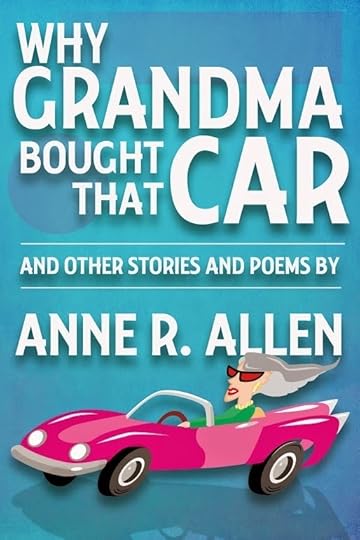 FREE!
FREE!
Humorous portraits of rebellious women at various stages of their lives. From aging Betty Jo, who feels so invisible she contemplates robbing a bank, to neglected 10-year-old Maude, who turns to a fantasy Elvis for the love she's denied by her patrician family, to a bloodthirsty, Valley-Girl version of Madam Defarge, these women—young and old—are all rebelling against the stereotypes and traditional roles that hold them back. Which is, of course, why Grandma bought that car…
And the audiobook is only $6.09!
Narrated by C.S. Perryess and Claire Vogel
OPPORTUNITY ALERTS
Golden Quill Awards Writing Contest : Flash, Poetry, and Short fiction categories. Entry fee $20 for stories and poetry, $15 for flash fiction. The theme is TRANSFORMATION. They even have a video on You Tube to inspire you. Deadline July 15.
MARK TWAIN HUMOR CONTEST Entry fees: $12 Young Author or $22 Adult. 7,000 words (or fewer) of any original work of humor writing. Submissions must be in English. Submissions are not required to be in the style of Mark Twain or about Mark Twain. 1st Prize: $1,000 (Adult), $600 (Young Author). Other cash prizes! Deadline July 10, 2015
Saturday Evening Post Great American Fiction Contest. Entry fee $10. Your story should in some way touch upon the publication’s mission: Celebrating America — past, present, and future. Think Norman Rockwell. No profanity or graphic sex. Any genre. No previously published stories, but they can have appeared on your blog. Between 1,500 and 5,000 words. Deadline July 1, 2015
Big Beautiful Wellness Creative Writing Contest. NO FEE Poems up to 30 lines Fiction or Nonfic between 1000 and 2000 words. $100 first prize. Theme: Body-positive living. Looking for inspirational, positive stories. Deadline July 1.
Writer's Village International Short Fiction Contest Prizes totalling $3200! And every entrant gets a critique. (which makes this a great deal.) Any genre of fiction up to 3000 words. Entry fee $24. Deadline June 30th.
PULP LITERATURE'S The Hummingbird Prize for Flash Fiction $10-$15 ENTRY FEE. Winner published in Winter 2016. First Prize: $300 (Runner up: $75). For unpublished short fiction up to 1,000 words in length. Contest Opens May 1, 2015 and closes June 15, 2015.
Ink & Insights 2015 is a writing contest that comes with a detailed critique. Send the first 10,000-words of your book. The entry fee is $35: pricey for a contest, but a fantastic deal for a critique. Each submission is read by four judges who score 18 areas of your novel. This looks like a great opportunity! Over $5,000 cash and prizes. Deadline May 31.
WOW Spring Flash Fiction Contest: Fee $10, or $20 with critique. The critique is a fantastic deal. These quarterly contests are judged by an agent. 750 words. First prize is $350 plus a $500 publishing package, publication and an interview. 20 prizes in all. Enter early. They only take the first 300 entries. Deadline May 31.
WE NEED DIVERSE BOOKS SHORT STORY CONTEST NO FEE! Open to emerging diverse writers from all diverse backgrounds (including, but not limited to, LGBT, people of color, people with disabilities, and ethnic, cultural and religious minorities) who have not been published in BOOK format in any genre. The winner receives US $1,000 and publication in the "Stories For All Of Us" anthology to be published by Random House. Opens April 27--Deadline May 8.
The Vestal Review is looking for FLASH FICTION. Submissions are accepted February-May for the Vestal Review, the oldest journal devoted exclusively to flash fiction. 500 words or less. Humor is a plus. Pays $$ plus copies.
Mashable reported this week that the buzzword of the moment is "snackable content"—described as "bite-sized chunks of info that can be quickly 'consumed' by its audience."
That's why short fiction is hot. Ditto creative nonfiction essays. But the word hasn't reached all writers. Recently I saw a newbie writer ask for help in a writing forum because his work kept coming in at around 40 pages—like that was a bad thing.
But he based his worries on some very out-of-date information.
 It's true that short stories (up to 30K words) and novellas (30k-50K words) dipped in prestige after the demise of the fiction market in mainstream magazines two decades ago, but they have come back—maybe stronger than ever—with the ebook revolution. (Those word counts are from Writer's Digest. Some people use the term "novelette" to mean a story in the 10K to 30K range.)
A novella is no longer an unfinished, failed novel that needs "fleshing out." It's a cash cow. Indie authors like Elizabeth Ann West are building fabulous careers writing novellas that sell for more than most full length novels. For more on the novella, see Paul Alan Fahey's post Why Novellas are Hot and How to Write One. Paul's step-by-step guide, using screenplay techniques, is pure gold.
With Kindle Unlimited, the books that are the most lucrative are shorter books in a series. Novella writers are cleaning up.
And all shorter fiction is having a renaissance in the digital age. In fact, right now may be the new golden age of the short story.
The New York Times reports: "Stories are perfect for the digital age...because readers want to connect and want that connection to be intense and to move on. That is, after all, what a short story is all about."
Book marketing guru Penny Sansevieri said in the HuffPo: "short is the new long. Thanks to consumers who want quick bites of information and things like Kindle Singles, consumers love short."
EBook Bargains UK reported in April that "Amazon’s Kindle Singles and B&N’s Nook Snaps have already proven the demand for short digital material, and Vintage/Anchor see a lot of potential to engage readers with shorter offerings." Vintage/Anchor books (an division of Penguin-Random) are releasing a vintage short story a day during May.
So it's definitely time for fiction writers to start re-thinking the shorter forms. I wish that during the early part of my career when I was writing and rewriting my "practice novels" I'd been building an inventory of short pieces. They'd be a gold mine now.
1) Novels are so last century.
Most people talk about the novel as if it is somehow superior to other forms of fiction, but it's a relatively new art form. It was perfect for the age of Gutenberg, but it may not dominate the market in the digital age.
Cervantes is generally credited with inventing the novel with the 1605 publication of Don Quixote, but the form didn't make it into English until a century later—and for a long time it had to masquerade as "history" as Defoe's Robinson Crusoe did in 1719. Non-factual narratives were considered frivolous and time-wasting even into the Victorian era.
It wasn't until the 20th century that the novel finally surpassed the play as the most respected form of fictional artistic expression in English.
And even some of our most revered novels are actually novellas, like A Christmas Carol and The Great Gatsby.
So who knows what will happen in the 21st century? The times they are a-changing, especially in the publishing business. The popularity the novella, short story, short creative essay, and the serial novel is on the upswing.
Just this week, the Washington Post published a plea to bring back the serialized novel from Hillary Kelly. Kelly said that while "consumers gladly gobble up other media in segments — whether it’s a “Walking Dead” episode...or a public-radio show", they are moving away from novels, which have become "bulks to trudge through or badges of honor to pin to pedants’ chests."
2) Smaller screens and shorter attention spans are changing the way we read.
We're a multi-tasking world. As bestselling short story writer Amber Dermont told the New York Times: "The single-serving quality of a short narrative is the perfect art form for the digital age…Stories are models of concision, can be read in one sitting, and are infinitely downloadable and easily consumed on screens."
When the Kindle Singles program launched in 2011, they sold 2 million "singles" ebooks in the first year. And you don't have to be accepted into the highly competitive Kindle Singles program to publish stand-alone stories as ebooks.
Many indies are doing it too—and agents are assisting their clients in self-publishing shorts that fill the gaps between novels. Fuse Literary has its own imprint "Short Fuse" that specializes in publishing short pieces for their clients.
The industry has figured out that the e-reader has ushered in a new kind of reading that favors brevity. More on that in my post on the 21st Century Reader.
3) Shorter works make great audiobooks.
Audiobooks are one of the big growth areas of publishing, according the Wall Street Journal. People especially love to listen to audiobooks while driving. Short stories are perfect for that daily commute.
And they're not such a big financial investment, so customers can pick and choose narrators and authors.
And if you're looking for narrators to share royalties, I can say from experience that most narrators prefer short works. When I put Why Grandma Bought that Car on Audible asking for narrators, I had 12 actors send me demos within the first two hours.
4) The success of serial fiction like Hugh Howey’s Wool
Indies have been producing serials for some time, and the trads may finally hop on the bandwagon. Hugh Howey made history (and a nice chunk of change) by self-publishing his sci-fi novel Wool as serial four years ago. It began as a short story, and as he wrote more episodes, he published each one separately. Later he put that first episode—a stand-alone that’s also a teaser—perma-free on Amazon. The fans ate up the succeeding chapters, offered at 99c each.
As a result of his early "snackable content", Howey is now a superstar with a top agent, a Big 5 publisher, and a movie deal.
And it all started with a short story.
I know many writers who are now serializing their work for free on Wattpad, which is a great place to showcase short fiction and get new fans.
Note: not every author can do what Howey did. I know some writers have had negative feedback when they sold each chapter for 99c, since so many full length books can be bought for that price these days.
So make sure each installment gives value—I'd say at least 10K-20K words, maybe divided into chapter-lets. Some novels lend themselves to serialization and some don't. You want each installment to work as a stand-alone story arc with resolution as well a cliffhanger to keep the reader coming back.
5) Story anthologies are a great way to get your work in front of fans of more established authors in your genre
Short story and personal-essay anthologies are one of the best ways to increase your visibility.
Often these anthologies donate proceeds to charity, so there are no royalties, but don't let that put you off. If you can get a story into an anthology with some well-known authors in your genre, you’ll be paid in publicity that would be hard to buy at any price. All those authors' fans will be exposed to your work. For more on anthologies check my post on how to tell a good anthology from a scam.
Anthologies offer one of the best ways for an unpublished writer to break into the business. Many successful authors I network with were first published by the Literary Lab anthologies, and the Indie Chicks Anthology which gave me a leg up when I was re-starting my career.
Another plus for anthologies: some of the biggies, like the Chicken Soup series, also come out in print and are stocked in bookstores. Those anthologies can get you noticed by the old-school reader, too.
6) Published stories identify you as a professional.
Your website or blog has much more cred if you've got some publications to link to. And agents will be more likely to look at your pages if you've got publishing credits.
Publishing short fiction is still pretty much the only way to a publishing contract if you write literary fiction. I don't know of a lot of successful literary writers who didn't also publish short stories in places like The New Yorker, The Paris Review, the Atlantic or McSweeneys
But they didn't get the first story they wrote published by The New Yorker. First they had to place dozens in small literary journals—those tiny labors of love that used to cost a ton to produce and often had under a hundred subscribers.
In the old days we often had to pay $25 or more to subscribe to find out what kind of writing they wanted and get the info on how to submit to them. But these days, most literary journals are available online. They have larger readerships and you don’t have to pay a fortune to read them or find out what the editors are looking for.
And if you write genre fiction, you don't have to start your career getting endless rejections from the few ultra-competitive print magazines that still buy short stories, like Women's World, Ellery Queen and Asimov's.
Now there are are lots of genre story online zines. Here's a link to a great list of genre story markets put together by Romance author Cathleen Ross. Writer's Digest has contests exclusively for genre fiction.
7) Indie films are often adaptations of short fiction.
The holy grail of the writing world is to get a film deal. But did you know that short stories are easier to adapt for the screen than full-length novels? Cheaper too. They tend to have fewer crowd scenes and more small interior settings. Cost matters in the growing indie film world.
Just as indies are revolutionizing the publishing industry, they are also the lifeblood of the film industry. While the big studios concentrate on huge comic book spectacles and remakes of old TV shows, the more emotionally rich, award-winning films are coming from small-budget indies.
Some of our most enduring films have come from short stories. Classic films like The Birds; Breakfast at Tiffany's; Don't Look Now; Double Indemnity, Flowers for Algernon all began as short stories—and I’d need a whole post to list the stories of Stephen King and Philip K. Dick that have been made into great films.
8) Online retail sites favor authors with more titles
The more titles you have in an online bookstore, the more visible you are. You can write and publish a lot of shorter titles and have a bigger presence in the marketplace than with one long book.
Most writers can't turn out more than two or three books a year, but they can turn out a lot of short stories and novellas.
And the advent of Kindle Unlimited presents even more incentive to write shorter works. An ebook in the KU program gets a flat-fee payment per title—no matter how long it is. So a 150K-word novel receives the same payment as a 15K novelette. Breaking your book down into serial ebooks makes a lot of sense in that market.
9) Contests raise your profile and can win big bucks
Winning a story contest is a great way to promote yourself as a writer and create visibility for your books. Win a well-known contest and you can crow about it in social media and send press releases to the local newspapers to get some ink in your own hometown.
Story and creative short nonfiction contests are easy to discover and enter in the era of the Interwebz. Hope C. Clark's Funds for Writers , Poets and Writers, and the website Winning Writers are good sources for vetted contests.
And, ahem, we always list a few good ones in the "opportunity alerts" in these posts.
Entering short story contests is also an excellent way to get your career started. A big win for one of your pieces looks great in a query or a bio. Plus you might even win a money prize.
Some of those prizes are bigger than the advances publishers offer on novels these days.
Plus some of the biggest prizes in literature are still for short fiction, like the Pushcart and the O. Henry award. And the venerable "Best of…" anthologies give huge prestige to those included.
10) Shorts keep your fans interested between novel releases
Forward-looking agents are now encouraging their authors to self-publish shorts to fill in the gaps between novels. They especially like shorts that are about characters in your novels. They keep your fans interested while they're waiting for the next book.
Fuse Literary Agency even has their own self-publishing arm for publishing short work by their clients and other agented authors. It's called Short Fuse.
(Note, if your publisher has a non-compete clause, you won't be allowed to do this. Another reason to have a legal professional look over your contract before you sign.)
Consider writing a couple of shorts about your main characters while you're working on the novel. It may get you through a tricky spot in the big work as well as giving you a saleable product for later down the road.
11) Short stories make money and hold their value
In terms of labor, a short story provides a better bottom line than a novel. Not only does it take less time to write and often sells for the same price as a novel in an ebook, but it can be re-purposed many times. Also, as I said in #9, contest prizes for short fiction can be substantial
I have stories that have been published and republished up to six times in litzines and anthologies. And I can always self-publish them again in a collection sometime down the road.
And as I said above, Amazon's new Kindle Unlimited program is perfect for short stories and novellas. Because you get paid the same for a borrow of a book that's 12 pages or 120,000, writing shorter books is much more lucrative. (As I mentioned above, do write in the over-10,000 word range, though, or you'll get some cranky reviews. You might want to collect your previously published stories into short collections like my Why Grandma Bought that Car.)
My Facebook friend Joyce Anne Laird writes mini-mysteries for Women's World Magazine—they're about to publish her 9th. They pay very well and only buy North American Serial Rights for six months. After that, a writer can sell the story again, or box it up in a self-published anthology. (Joyce does caution that you should buy a copy of the magazine to get up to date guidelines, and query via snail mail. They are old-school and very competitive.)
12) Writing short keeps your writing skills honed.
Writing poetry and short stories keeps your writing from getting flabby and verbose. You can't spend three pages describing the wallpaper in short fiction. You have to learn to sketch with a few broad strokes.
In these days when readers demand "just the good parts" writing, learning to write short can help no matter what your genre.
13) May is Short Story Month
Inspired by April's National Poetry Month, a group of writers supported by the StoryADay writing challenge deemed May to be International Short Story Month. Some people are going all out and writing a story a day. But you don't have to do a NaNo-style marathon to enjoy the festivities.
You can just read a story a day at the Short Story Month site.
I'm offering my own story anthology free for three days in honor of Short Story Month. (See below.)
Short stories:
Make the perfect intro to a new author's workAre a great way for readers to get a top-up from their favorite authors between novels,Are a perfect impulse purchase on a phone or e-reader.So isn't this the perfect time to write one?
Like any other skill, your ability to create short fiction will atrophy if you don’t use it. I find it a lot harder to write a short story now than I did when I wrote them regularly.
I admit I've always preferred reading and writing longer fiction. Most writers do gravitate to one form or the other. I know my ideas generally spool out in about 70K-80K words. Shorter is harder for me.
The reverse is true for other writers. Some great short story writers have a hard time writing good novels. One of our greatest short story writers, Katherine Anne Porter, only wrote one novel, Ship of Fools, which was more like a tapestry of many short stories woven together without a compelling story arc. Critic Elizabeth Hardwick said it was " too static" in spite of "the flawless execution of the single scenes."
There's nothing wrong with preferring one form over the other. But these days, we need to work on fiction in a variety of lengths. I'm aiming to write some shorter work after I launch the next Camilla mystery.
Do note: I don't encourage newbie writers to self-publish your very first efforts at story-writing. To succeed in publishing—whether indie or traditional—you need to put in your 10,000 Malcolm Gladwell hours. But you can maximize your efforts by spending more of those hours writing short fiction and creative nonfiction shorts.
***
For tips on how to write a short story, check out Jessica Strawser's post at the Writer's Digest blog.
And next week, we'll have a post from Dr. John Yeoman of the Writer's Village, where he's been teaching writing and judging writing contests for many years. He's going to tell us what to avoid when entering short story contests...and how to be a winner!
What about you, scriveners? Did you get out of the habit of writing short fiction the way I did? Have you written any lately? Have short stories helped your career?
BOOK OF THE WEEKFREE!!
3 Days only! May 3-5
"Anne R. Allen’s book of short stories explores womanhood in all seasons. I’ve read this book twice and get something new to appreciate each time. It is the kind of book one returns to periodically, just to revisit characters and stories like old friends that help clarify ages and stages of life and the changing world. Her poems are timely, tying stories together with theme, grace, and humor."
...Mary J. Caffrey
Why Grandma Bought that Car
a short book of short stories
 FREE!
FREE!
Humorous portraits of rebellious women at various stages of their lives. From aging Betty Jo, who feels so invisible she contemplates robbing a bank, to neglected 10-year-old Maude, who turns to a fantasy Elvis for the love she's denied by her patrician family, to a bloodthirsty, Valley-Girl version of Madam Defarge, these women—young and old—are all rebelling against the stereotypes and traditional roles that hold them back. Which is, of course, why Grandma bought that car…
And the audiobook is only $6.09!
Narrated by C.S. Perryess and Claire Vogel
OPPORTUNITY ALERTS
Golden Quill Awards Writing Contest : Flash, Poetry, and Short fiction categories. Entry fee $20 for stories and poetry, $15 for flash fiction. The theme is TRANSFORMATION. They even have a video on You Tube to inspire you. Deadline July 15.
MARK TWAIN HUMOR CONTEST Entry fees: $12 Young Author or $22 Adult. 7,000 words (or fewer) of any original work of humor writing. Submissions must be in English. Submissions are not required to be in the style of Mark Twain or about Mark Twain. 1st Prize: $1,000 (Adult), $600 (Young Author). Other cash prizes! Deadline July 10, 2015
Saturday Evening Post Great American Fiction Contest. Entry fee $10. Your story should in some way touch upon the publication’s mission: Celebrating America — past, present, and future. Think Norman Rockwell. No profanity or graphic sex. Any genre. No previously published stories, but they can have appeared on your blog. Between 1,500 and 5,000 words. Deadline July 1, 2015
Big Beautiful Wellness Creative Writing Contest. NO FEE Poems up to 30 lines Fiction or Nonfic between 1000 and 2000 words. $100 first prize. Theme: Body-positive living. Looking for inspirational, positive stories. Deadline July 1.
Writer's Village International Short Fiction Contest Prizes totalling $3200! And every entrant gets a critique. (which makes this a great deal.) Any genre of fiction up to 3000 words. Entry fee $24. Deadline June 30th.
PULP LITERATURE'S The Hummingbird Prize for Flash Fiction $10-$15 ENTRY FEE. Winner published in Winter 2016. First Prize: $300 (Runner up: $75). For unpublished short fiction up to 1,000 words in length. Contest Opens May 1, 2015 and closes June 15, 2015.
Ink & Insights 2015 is a writing contest that comes with a detailed critique. Send the first 10,000-words of your book. The entry fee is $35: pricey for a contest, but a fantastic deal for a critique. Each submission is read by four judges who score 18 areas of your novel. This looks like a great opportunity! Over $5,000 cash and prizes. Deadline May 31.
WOW Spring Flash Fiction Contest: Fee $10, or $20 with critique. The critique is a fantastic deal. These quarterly contests are judged by an agent. 750 words. First prize is $350 plus a $500 publishing package, publication and an interview. 20 prizes in all. Enter early. They only take the first 300 entries. Deadline May 31.
WE NEED DIVERSE BOOKS SHORT STORY CONTEST NO FEE! Open to emerging diverse writers from all diverse backgrounds (including, but not limited to, LGBT, people of color, people with disabilities, and ethnic, cultural and religious minorities) who have not been published in BOOK format in any genre. The winner receives US $1,000 and publication in the "Stories For All Of Us" anthology to be published by Random House. Opens April 27--Deadline May 8.
The Vestal Review is looking for FLASH FICTION. Submissions are accepted February-May for the Vestal Review, the oldest journal devoted exclusively to flash fiction. 500 words or less. Humor is a plus. Pays $$ plus copies.
April 26, 2015
New Hope for the Dead: Fiction Rehab And The Magic Of The Makeover
by Ruth Harris
Every writer has (at least) one—
The trunk bookThe published bestseller to which the rights have reverted but which is showing its ageThe half-finished book, the abandoned book, the book—published or not—that fizzledThe manuscript languishing on a hard drive or gathering dust under your bedThe aargh draft aka the first draft from hellThe outline/proposal no agent or editor on this planet or any other would take a chance on
They're the orphans, the misfires, the unloved and the unappreciated—and they're hopeless. But are they?
You're stuck on a plot point and don't know how to get unstuckThe characters bore you—and you created themThe background or setting no longer seems relevant or even interestingYou signed a contract for another bookThe concept—boy wizard—feels overdoneThe setting, the cold war, seems passéThe PG version of 50 Shades you started with high hopes and a burst of energy, now has you wondering: what was I thinking?
The makeover, defined
Beloved by magazines and TV, a makeover usually means a "new look" or at least a bit of refreshing. It might entail a new shade of lipstick, a new hair style or a new gym routine. Applies to books, too.
Sometimes a few small changes—a new title, a zippy cover, a name change for the main character, some zany new incidents for a cozy—can add up to a big difference and a new life.
Rx for more serious problems: Rehab
Rehab is a bigger deal than the mere makeover. Rehab usually implies the major changes needed to make the trip back from a setback: booze, drugs, athletic injuries. We're talking AA, drug counseling and Tommy John surgery to get the patient (or the book) back on the right track.
Ebooks have revolutionized book publishing in almost every area from editing, marketing, distribution, to pricing—and in one more but much less often discussed way. Unlike the hardcover or paperback of the TradPubbed past, today's novel isn't set in stone. In fact, the digital novel is almost infinitely malleable, the shape-shifter par excellence.
These days a lot of writers aren't writing for an editor, a publisher, or to meet a deadline. We're writing on our own schedules to reach thousands and maybe millions of readers—and we have more than one opportunity to reach them.
When I reread Decades, an international bestseller for me in hardcover (Simon & Schuster) and paperback (NAL), I still liked the structure and the story—a traditional marriage torn apart by an adulterous affair and the women who must confront the cultural convulsions of the mid-Twentieth Century. Told from the points of view of three women—wife, mistress, daughter—the story and theme seemed as relevant as ever but the book felt too long and the pace too slow.
To refresh Decades, I kept the bones of the story but cut over 20,000 words, deleted, tightened and/or combined scenes, and refocused the portrait of the daughter, a rebellious child of the 'Sixties in conflict with her parents. I relaunched the refreshed edition and, with a boost from a BookBub promo, Decades went to #1 in the Kindle store and #1 in Women's Fiction.
Three Authors Refresh their Books
As authors revert rights to previously published books, they are taking the opportunity to refresh them for digital editions. Self-publishing also allows for reviving manuscripts that didn't fit the needs of traditional publishing. Anne R. Allen, Consuelo Saah Baehr and Harriet Smart share their experiences.
Anne R. Allen
"I had an 'unpublishable' literary novel that languished in my files for decades. It explored the myth of mid-century America as a 'Golden Age' through the story of a friendship of two Boomer women from wildly different backgrounds. The subject matter had been too big and difficult for my fledgling writing skills, so I'd shelved it.
"Two years ago, when I had several books on the bestseller lists, my publisher, Mark Williams, asked me if I had anything in the archives that might be quickly polished up and published while I worked on my next Camilla novel.
"I sent him one of the 20 or so versions of the 'unpublishable' novel. I was pleased he saw potential in it. He gave me some great suggestions:
Shorten it. At 110K words, it was way too long for contemporary readers.Emphasize the humor and mystery aspects of the story, since my 'brand' is humorous mysteries.Think of a better title. "The Ashtrays of Avalon," and "The Leaders of the 21st Century," my working titles, did not fly. Beef up the opening scenes, which are set in the present and making the story more accessible to 21st century readers.
"After about three grueling months of editing, I sent him the 95K word version, newly titled The Lady of the Lakewood Diner which has been a steady seller for me, and has got some of my most enthusiastic reviews."
Consuelo Saah Baehr
Here's what Consuelo did when Amazon approached her about publishing her bestseller Daughters: "I had typed the book into my computer (yes all 700 pages) and had done some editing (always making scenes tighter) at the time."
"Amazon did not ask me to change the storyline of Daughters although they didn't restrict me. They wanted to edit for punctuation, formatting, grammar, typos, etc. At the beginning I asked them about changing aspects of the story that reviewers complained about and they said that reviewers always complained about the things I mentioned and I should leave the story as it was if I wanted to.
"I did some editing on my own but it was minimal. Toned down some scenes, streamlined others, etc. There was no difference in the way I saw the plot or characters. Here's the thing, there is a segment of readers that object to any sexual content (no matter how tastefully done) and will one-star you and call the book trash.
"The Amazon publisher asked me to change the title because she felt the older title didn't convey the breadth of the book. We went through several rounds and settled on Three Daughters and I went from a modest couple of hundred reviews to 750 in three and a half months."
"Two of my other novels, Nothing to Lose and Best Friends, received new covers because I did not own the artwork to the original covers. Each book presented me with different issues and each required a different solution.
"Many reviewers of Best Friends complained about the ending and they were MAD. After about twenty complaints I changed the ending. One character who was hanging by a thread was allowed to live.
"Nothing to Lose had a lot of dated references since it was written pre-Internet. I updated some and just took out others that didn't translate well."
Harriet Smart
English mystery writer Harriet Smart took her TradPubbed books and approached the rehab this way:
"All in all. I have 'rehabbed' four out of my five traditionally published books now, and I have to admit I didn't really do much in the way of textual tinkering, as I was quite satisfied with them as they were.
The most recent one, The Wild Garden, did give me some pause for thought, however, as it was a contemporary romance, written and set in 1996, and rereading it I was astonished at the character's use of landline phones and handwritten letters. Email appeared but only in passing. I did wonder if I should update this, but the story would not have worked in the age of Google and Facebook (it is about old lover's losing touch and then finding each other again by accident) so it remains a period piece—a conscious decision on my part.
"My first novel, A Garland of Vows, all three hundred thousand words of it, is another matter. An unabashed romantic historical epic, parts of it now make me cringe with embarrassment. I was learning my craft on the job when I wrote it, and it shows.
"I would tackle such a story in a very different way now, I am sure. But then again there are parts of which I am proud, and I wonder if I shouldn't scan it in, and try and re-form it into something that satisfies me artistically now. It would be a lot of work and I wonder if there would any real point to doing it. Would I just ruin it? A very difficult question and so it remains, untackled…"
Thanks to magic of digital publishing, no book need be left behind.
Inspiration from pros like Anne, Consuelo and Harriet can be your best friend when faced with a book or manuscript in need of help. A makeover might do the job. Maybe a trip to rehab is required. Or even a week or two in intensive care. A sympathetic eye and some well-considered refreshing can come to your—and your book’s—rescue.
First things first: The Dirty Details of The Salvage Operation
The cover: One of the first changes to consider when you are contemplating a book makeover is a new cover. A new cover, like a new shade of lipstick, can make all the difference and help your book stand out in the correct category where it will draw the attention of readers you are looking for. If your book's cover doesn't quite convey the genre or tone, check the covers of the top selling books in your genre and see if a new cover could be the equivalent of a weekend at the spa.
The title: Perhaps your publisher stuck you with a title you never liked. (Trust me, it happens.) Or, perhaps, like Consuelo's editor, you feel that your title, while OK, doesn't quite adequately convey the tone or scope of your book. Now's the perfect opportunity to spend time to come up with a title more fitting to the book.
Even though titles can't be copyrighted, be sure to search your title in case it's been overused. If so, think of a way to differentiate your title from the umpteen dozen already out there.
If you do change your title, be sure to add a note to the blurb indicating that the book was "originally published as [OLD BORING TITLE]" You do not want angry readers who already bought your book in its previous incarnation to feel cheated and bomb you with one-star reviews!
New author name: There is no reason not to use a pen name. Perhaps you want to start a new series or perhaps your book would sell better with an author name that fits well in your genre. Von Poopen Outhaus is not exactly the greatest author name for a romance even it is your real name!
New names for old characters: Don't forget that in the original draft of Gone With The Wind, Scarlet O'Hara’s first name was Pansy. (!) Would Hannibal Lector be as scary if he were named Joe Smith? And what about that old perv Humbert Humbert? Choosing character names carefully will instantly help define that person.
Strategic Revision
Once you've made the small makeover changes and you still want to address the larger problems in a ms., you need a diagnosis. Ask yourself why you've given up and try to ID the problem—plot holes, weak characters, slack pacing. The next step is to zero in and figure out how much and what kind of makeover is required to take your book out from under the bed and into the light of day.
Solve background/setting issues with research. Travel blogs and Goggle offer all sorts of foreign setting ideas. Get details on Southeast Asia at Nomadic Matt's, the latest on South America and what's offbeat, interesting and new in New Zealand.
An unfocused, go-nowhere scene or story arc? Don't forget the power of the delete button. Here's a superb example from TV writer, Ken Levine.Need medical facts from allergies to appendicitis (or is it constipation?) Here's a guide for fiction writers written by Jordy N. Redwood, an ER nurse,Too much tell, not enough show? What's the difference and how to fix it with examples.Characterization issues: Good guy/gal or bad guy/gal, the super spy, the nutcase, the grunt who saves his battalion, the alcoholic teacher who can't save herself but rescues her class, the jihadist with a heart of gold, the whore with a heart of coal, the psychotic, psychopathic, and just plain psychic are the writer's best friend. How to write characters readers remember.First line blahs: A killer first line in every chapter can go a long way to rehab a plain vanilla draft, hook your reader and keep the pages turning.Endings that keep readers hanging on: The art and craft of the cliffhanger. How to write sympathetic characters readers will identify with and want to know more about. Need a bad guy or gal? Want someone despicable yet charming? Sexy but dangerous? How to write a villain.Here's advice on how to fix your plot from Janice Hardy plus extra help from the story grid and Writer Unboxed .Bring in the rescue crew, aka the editor or the book doctor. Sometimes you need help from a pro. What an editor can—and cannot—do--advice from The Kill Zone.
USUALLY NOT WORTH THE EFFORT
Changing a time period—sci-fi retrofitted to Regency—is most likely just too big a jump.Changing a historical from Edwardian to World War II will require massive research plus deep-dish psychological makeovers of characters' personalities and attitudes.Satire into tragedy probably not worth the amount of work involved as is dystopian survivalist to contemporary romance.Hard-edged big city noir to small-town cozy is another bridge too far.GO FOR MAKEOVER MOJO AND WIN BIG
English politician and writer Lord Michael Dobbs did, and look what happened when he decided that "Location is irrelevant in political drama" and transferred the story in his novel and BAFTA-winning mini-series House of Cards from London to Washington.
What about you, Scriveners? Have you got a book in the archives that needs a makeover? A trip to rehab? Were you as pleased as I was to read that reviewers always complain about certain things and Amazon editors think we should leave the story as it is if we want to? Have you tried some of these makeovers?...Anne
BOOK OF THE WEEKDECADES: It's FREE!!
"The songs we sang, the clothes we wore, the way we made love. Absolutely perfect!" ...Publisher's Weekly
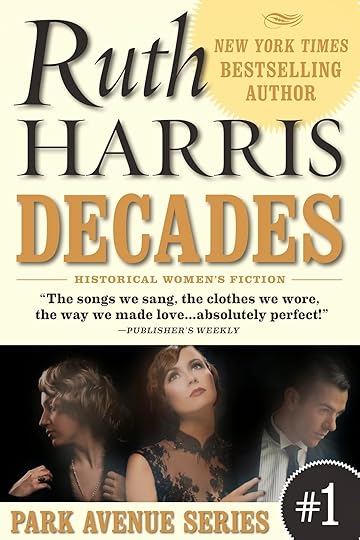
Kindle | iBooks | Nook | Kobo | GooglePlay
THREE WOMEN. THREE DECADES. Spanning the years from the optimistic post-War 1940s to the Mad Men 1950s and rule-breaking "Make Love, Not War" 1960s, DECADES is about three generations of women who must confront the radical changes and upended expectations of the turbulent decades in which they lived.
Evelyn, talented but insecure, is a traditional woman of the Forties. She is a loyal and loving wife and mother whose marriage and family mean everything to her.
Nick, handsome and ambitious, a chameleon who changes with the changing times, is her successful but restless husband.
Joy, their daughter, confused and defiant, a child of the Sixties, needs them both but is torn between them.
Barbara is the other woman, younger than Evelyn, accomplished but alone. She is a transitional woman of the Fifties who wonders if she can have everything--including another woman's husband.
DECADES, sweeping in scope yet intimate in detail, is the emotional, compelling story of family, marriage, crisis, betrayal and healing.
OPPORTUNITY ALERTS
Golden Quill Awards Writing Contest : Flash, Poetry, and Short fiction categories. Entry fee $20 for stories and poetry, $15 for flash fiction. The theme is TRANSFORMATION. Deadline July 15.
MARK TWAIN HUMOR CONTEST Entry fees: $12 Young Author or $22 Adult. 7,000 words (or fewer) of any original work of humor writing. Submissions must be in English. Submissions are not required to be in the style of Mark Twain or about Mark Twain. 1st Prize: $1,000 (Adult), $600 (Young Author). Other cash prizes! Deadline July 10, 2015
Saturday Evening Post Great American Fiction Contest. Entry fee $10. Your story should in some way touch upon the publication’s mission: Celebrating America — past, present, and future. Think Norman Rockwell. No profanity or graphic sex. Any genre. No previously published stories, but they can have appeared on your blog. Between 1,500 and 5,000 words. Deadline July 1, 2015
Big Beautiful Wellness Creative Writing Contest. NO FEE Poems up to 30 lines Fiction or Nonfic between 1000 and 2000 words. $100 first prize. Theme: Body-positive living. Looking for inspirational, positive stories. Deadline July 1.
Writer's Village International Short Fiction Contest Prizes totalling $3200! And every entrant gets a critique. (which makes this a great deal.) Any genre of fiction up to 3000 words. Entry fee $24. Deadline June 30th.
PULP LITERATURE'S The Hummingbird Prize for Flash Fiction $10-$15 ENTRY FEE. Winner published in Winter 2016. First Prize: $300 (Runner up: $75). For unpublished short fiction up to 1,000 words in length. Contest Opens May 1, 2015 and closes June 15, 2015.
Ink & Insights 2015 is a writing contest that comes with a detailed critique. Send the first 10,000-words of your book. The entry fee is $35: pricey for a contest, but a fantastic deal for a critique. Each submission is read by four judges who score 18 areas of your novel. This looks like a great opportunity! Over $5,000 cash and prizes. Deadline May 31.
WOW Spring Flash Fiction Contest: Fee $10, or $20 with critique. The critique is a fantastic deal. These quarterly contests are judged by an agent. 750 words. First prize is $350 plus a $500 publishing package, publication and an interview. 20 prizes in all. Enter early. They only take the first 300 entries. Deadline May 31.
WE NEED DIVERSE BOOKS SHORT STORY CONTEST NO FEE! Open to emerging diverse writers from all diverse backgrounds (including, but not limited to, LGBT, people of color, people with disabilities, and ethnic, cultural and religious minorities) who have not been published in BOOK format in any genre. The winner receives US $1,000 and publication in the “Stories For All Of Us” anthology to be published by Random House. Opens April 27--Deadline May 8.
Every writer has (at least) one—
The trunk bookThe published bestseller to which the rights have reverted but which is showing its ageThe half-finished book, the abandoned book, the book—published or not—that fizzledThe manuscript languishing on a hard drive or gathering dust under your bedThe aargh draft aka the first draft from hellThe outline/proposal no agent or editor on this planet or any other would take a chance on
They're the orphans, the misfires, the unloved and the unappreciated—and they're hopeless. But are they?
You're stuck on a plot point and don't know how to get unstuckThe characters bore you—and you created themThe background or setting no longer seems relevant or even interestingYou signed a contract for another bookThe concept—boy wizard—feels overdoneThe setting, the cold war, seems passéThe PG version of 50 Shades you started with high hopes and a burst of energy, now has you wondering: what was I thinking?
The makeover, defined
Beloved by magazines and TV, a makeover usually means a "new look" or at least a bit of refreshing. It might entail a new shade of lipstick, a new hair style or a new gym routine. Applies to books, too.
Sometimes a few small changes—a new title, a zippy cover, a name change for the main character, some zany new incidents for a cozy—can add up to a big difference and a new life.
Rx for more serious problems: Rehab
Rehab is a bigger deal than the mere makeover. Rehab usually implies the major changes needed to make the trip back from a setback: booze, drugs, athletic injuries. We're talking AA, drug counseling and Tommy John surgery to get the patient (or the book) back on the right track.
Ebooks have revolutionized book publishing in almost every area from editing, marketing, distribution, to pricing—and in one more but much less often discussed way. Unlike the hardcover or paperback of the TradPubbed past, today's novel isn't set in stone. In fact, the digital novel is almost infinitely malleable, the shape-shifter par excellence.
These days a lot of writers aren't writing for an editor, a publisher, or to meet a deadline. We're writing on our own schedules to reach thousands and maybe millions of readers—and we have more than one opportunity to reach them.
When I reread Decades, an international bestseller for me in hardcover (Simon & Schuster) and paperback (NAL), I still liked the structure and the story—a traditional marriage torn apart by an adulterous affair and the women who must confront the cultural convulsions of the mid-Twentieth Century. Told from the points of view of three women—wife, mistress, daughter—the story and theme seemed as relevant as ever but the book felt too long and the pace too slow.
To refresh Decades, I kept the bones of the story but cut over 20,000 words, deleted, tightened and/or combined scenes, and refocused the portrait of the daughter, a rebellious child of the 'Sixties in conflict with her parents. I relaunched the refreshed edition and, with a boost from a BookBub promo, Decades went to #1 in the Kindle store and #1 in Women's Fiction.
Three Authors Refresh their Books
As authors revert rights to previously published books, they are taking the opportunity to refresh them for digital editions. Self-publishing also allows for reviving manuscripts that didn't fit the needs of traditional publishing. Anne R. Allen, Consuelo Saah Baehr and Harriet Smart share their experiences.
Anne R. Allen
"I had an 'unpublishable' literary novel that languished in my files for decades. It explored the myth of mid-century America as a 'Golden Age' through the story of a friendship of two Boomer women from wildly different backgrounds. The subject matter had been too big and difficult for my fledgling writing skills, so I'd shelved it.
"Two years ago, when I had several books on the bestseller lists, my publisher, Mark Williams, asked me if I had anything in the archives that might be quickly polished up and published while I worked on my next Camilla novel.
"I sent him one of the 20 or so versions of the 'unpublishable' novel. I was pleased he saw potential in it. He gave me some great suggestions:
Shorten it. At 110K words, it was way too long for contemporary readers.Emphasize the humor and mystery aspects of the story, since my 'brand' is humorous mysteries.Think of a better title. "The Ashtrays of Avalon," and "The Leaders of the 21st Century," my working titles, did not fly. Beef up the opening scenes, which are set in the present and making the story more accessible to 21st century readers.
"After about three grueling months of editing, I sent him the 95K word version, newly titled The Lady of the Lakewood Diner which has been a steady seller for me, and has got some of my most enthusiastic reviews."
Consuelo Saah Baehr
Here's what Consuelo did when Amazon approached her about publishing her bestseller Daughters: "I had typed the book into my computer (yes all 700 pages) and had done some editing (always making scenes tighter) at the time."
"Amazon did not ask me to change the storyline of Daughters although they didn't restrict me. They wanted to edit for punctuation, formatting, grammar, typos, etc. At the beginning I asked them about changing aspects of the story that reviewers complained about and they said that reviewers always complained about the things I mentioned and I should leave the story as it was if I wanted to.
"I did some editing on my own but it was minimal. Toned down some scenes, streamlined others, etc. There was no difference in the way I saw the plot or characters. Here's the thing, there is a segment of readers that object to any sexual content (no matter how tastefully done) and will one-star you and call the book trash.
"The Amazon publisher asked me to change the title because she felt the older title didn't convey the breadth of the book. We went through several rounds and settled on Three Daughters and I went from a modest couple of hundred reviews to 750 in three and a half months."
"Two of my other novels, Nothing to Lose and Best Friends, received new covers because I did not own the artwork to the original covers. Each book presented me with different issues and each required a different solution.
"Many reviewers of Best Friends complained about the ending and they were MAD. After about twenty complaints I changed the ending. One character who was hanging by a thread was allowed to live.
"Nothing to Lose had a lot of dated references since it was written pre-Internet. I updated some and just took out others that didn't translate well."
Harriet Smart
English mystery writer Harriet Smart took her TradPubbed books and approached the rehab this way:
"All in all. I have 'rehabbed' four out of my five traditionally published books now, and I have to admit I didn't really do much in the way of textual tinkering, as I was quite satisfied with them as they were.
The most recent one, The Wild Garden, did give me some pause for thought, however, as it was a contemporary romance, written and set in 1996, and rereading it I was astonished at the character's use of landline phones and handwritten letters. Email appeared but only in passing. I did wonder if I should update this, but the story would not have worked in the age of Google and Facebook (it is about old lover's losing touch and then finding each other again by accident) so it remains a period piece—a conscious decision on my part.
"My first novel, A Garland of Vows, all three hundred thousand words of it, is another matter. An unabashed romantic historical epic, parts of it now make me cringe with embarrassment. I was learning my craft on the job when I wrote it, and it shows.
"I would tackle such a story in a very different way now, I am sure. But then again there are parts of which I am proud, and I wonder if I shouldn't scan it in, and try and re-form it into something that satisfies me artistically now. It would be a lot of work and I wonder if there would any real point to doing it. Would I just ruin it? A very difficult question and so it remains, untackled…"
Thanks to magic of digital publishing, no book need be left behind.
Inspiration from pros like Anne, Consuelo and Harriet can be your best friend when faced with a book or manuscript in need of help. A makeover might do the job. Maybe a trip to rehab is required. Or even a week or two in intensive care. A sympathetic eye and some well-considered refreshing can come to your—and your book’s—rescue.
First things first: The Dirty Details of The Salvage Operation
The cover: One of the first changes to consider when you are contemplating a book makeover is a new cover. A new cover, like a new shade of lipstick, can make all the difference and help your book stand out in the correct category where it will draw the attention of readers you are looking for. If your book's cover doesn't quite convey the genre or tone, check the covers of the top selling books in your genre and see if a new cover could be the equivalent of a weekend at the spa.
The title: Perhaps your publisher stuck you with a title you never liked. (Trust me, it happens.) Or, perhaps, like Consuelo's editor, you feel that your title, while OK, doesn't quite adequately convey the tone or scope of your book. Now's the perfect opportunity to spend time to come up with a title more fitting to the book.
Even though titles can't be copyrighted, be sure to search your title in case it's been overused. If so, think of a way to differentiate your title from the umpteen dozen already out there.
If you do change your title, be sure to add a note to the blurb indicating that the book was "originally published as [OLD BORING TITLE]" You do not want angry readers who already bought your book in its previous incarnation to feel cheated and bomb you with one-star reviews!
New author name: There is no reason not to use a pen name. Perhaps you want to start a new series or perhaps your book would sell better with an author name that fits well in your genre. Von Poopen Outhaus is not exactly the greatest author name for a romance even it is your real name!
New names for old characters: Don't forget that in the original draft of Gone With The Wind, Scarlet O'Hara’s first name was Pansy. (!) Would Hannibal Lector be as scary if he were named Joe Smith? And what about that old perv Humbert Humbert? Choosing character names carefully will instantly help define that person.
Strategic Revision
Once you've made the small makeover changes and you still want to address the larger problems in a ms., you need a diagnosis. Ask yourself why you've given up and try to ID the problem—plot holes, weak characters, slack pacing. The next step is to zero in and figure out how much and what kind of makeover is required to take your book out from under the bed and into the light of day.
Solve background/setting issues with research. Travel blogs and Goggle offer all sorts of foreign setting ideas. Get details on Southeast Asia at Nomadic Matt's, the latest on South America and what's offbeat, interesting and new in New Zealand.
An unfocused, go-nowhere scene or story arc? Don't forget the power of the delete button. Here's a superb example from TV writer, Ken Levine.Need medical facts from allergies to appendicitis (or is it constipation?) Here's a guide for fiction writers written by Jordy N. Redwood, an ER nurse,Too much tell, not enough show? What's the difference and how to fix it with examples.Characterization issues: Good guy/gal or bad guy/gal, the super spy, the nutcase, the grunt who saves his battalion, the alcoholic teacher who can't save herself but rescues her class, the jihadist with a heart of gold, the whore with a heart of coal, the psychotic, psychopathic, and just plain psychic are the writer's best friend. How to write characters readers remember.First line blahs: A killer first line in every chapter can go a long way to rehab a plain vanilla draft, hook your reader and keep the pages turning.Endings that keep readers hanging on: The art and craft of the cliffhanger. How to write sympathetic characters readers will identify with and want to know more about. Need a bad guy or gal? Want someone despicable yet charming? Sexy but dangerous? How to write a villain.Here's advice on how to fix your plot from Janice Hardy plus extra help from the story grid and Writer Unboxed .Bring in the rescue crew, aka the editor or the book doctor. Sometimes you need help from a pro. What an editor can—and cannot—do--advice from The Kill Zone.
USUALLY NOT WORTH THE EFFORT
Changing a time period—sci-fi retrofitted to Regency—is most likely just too big a jump.Changing a historical from Edwardian to World War II will require massive research plus deep-dish psychological makeovers of characters' personalities and attitudes.Satire into tragedy probably not worth the amount of work involved as is dystopian survivalist to contemporary romance.Hard-edged big city noir to small-town cozy is another bridge too far.GO FOR MAKEOVER MOJO AND WIN BIG
English politician and writer Lord Michael Dobbs did, and look what happened when he decided that "Location is irrelevant in political drama" and transferred the story in his novel and BAFTA-winning mini-series House of Cards from London to Washington.
What about you, Scriveners? Have you got a book in the archives that needs a makeover? A trip to rehab? Were you as pleased as I was to read that reviewers always complain about certain things and Amazon editors think we should leave the story as it is if we want to? Have you tried some of these makeovers?...Anne
BOOK OF THE WEEKDECADES: It's FREE!!
"The songs we sang, the clothes we wore, the way we made love. Absolutely perfect!" ...Publisher's Weekly

Kindle | iBooks | Nook | Kobo | GooglePlay
THREE WOMEN. THREE DECADES. Spanning the years from the optimistic post-War 1940s to the Mad Men 1950s and rule-breaking "Make Love, Not War" 1960s, DECADES is about three generations of women who must confront the radical changes and upended expectations of the turbulent decades in which they lived.
Evelyn, talented but insecure, is a traditional woman of the Forties. She is a loyal and loving wife and mother whose marriage and family mean everything to her.
Nick, handsome and ambitious, a chameleon who changes with the changing times, is her successful but restless husband.
Joy, their daughter, confused and defiant, a child of the Sixties, needs them both but is torn between them.
Barbara is the other woman, younger than Evelyn, accomplished but alone. She is a transitional woman of the Fifties who wonders if she can have everything--including another woman's husband.
DECADES, sweeping in scope yet intimate in detail, is the emotional, compelling story of family, marriage, crisis, betrayal and healing.
OPPORTUNITY ALERTS
Golden Quill Awards Writing Contest : Flash, Poetry, and Short fiction categories. Entry fee $20 for stories and poetry, $15 for flash fiction. The theme is TRANSFORMATION. Deadline July 15.
MARK TWAIN HUMOR CONTEST Entry fees: $12 Young Author or $22 Adult. 7,000 words (or fewer) of any original work of humor writing. Submissions must be in English. Submissions are not required to be in the style of Mark Twain or about Mark Twain. 1st Prize: $1,000 (Adult), $600 (Young Author). Other cash prizes! Deadline July 10, 2015
Saturday Evening Post Great American Fiction Contest. Entry fee $10. Your story should in some way touch upon the publication’s mission: Celebrating America — past, present, and future. Think Norman Rockwell. No profanity or graphic sex. Any genre. No previously published stories, but they can have appeared on your blog. Between 1,500 and 5,000 words. Deadline July 1, 2015
Big Beautiful Wellness Creative Writing Contest. NO FEE Poems up to 30 lines Fiction or Nonfic between 1000 and 2000 words. $100 first prize. Theme: Body-positive living. Looking for inspirational, positive stories. Deadline July 1.
Writer's Village International Short Fiction Contest Prizes totalling $3200! And every entrant gets a critique. (which makes this a great deal.) Any genre of fiction up to 3000 words. Entry fee $24. Deadline June 30th.
PULP LITERATURE'S The Hummingbird Prize for Flash Fiction $10-$15 ENTRY FEE. Winner published in Winter 2016. First Prize: $300 (Runner up: $75). For unpublished short fiction up to 1,000 words in length. Contest Opens May 1, 2015 and closes June 15, 2015.
Ink & Insights 2015 is a writing contest that comes with a detailed critique. Send the first 10,000-words of your book. The entry fee is $35: pricey for a contest, but a fantastic deal for a critique. Each submission is read by four judges who score 18 areas of your novel. This looks like a great opportunity! Over $5,000 cash and prizes. Deadline May 31.
WOW Spring Flash Fiction Contest: Fee $10, or $20 with critique. The critique is a fantastic deal. These quarterly contests are judged by an agent. 750 words. First prize is $350 plus a $500 publishing package, publication and an interview. 20 prizes in all. Enter early. They only take the first 300 entries. Deadline May 31.
WE NEED DIVERSE BOOKS SHORT STORY CONTEST NO FEE! Open to emerging diverse writers from all diverse backgrounds (including, but not limited to, LGBT, people of color, people with disabilities, and ethnic, cultural and religious minorities) who have not been published in BOOK format in any genre. The winner receives US $1,000 and publication in the “Stories For All Of Us” anthology to be published by Random House. Opens April 27--Deadline May 8.
April 19, 2015
How to Guarantee Rejection: Top 10 Ways Writers Self-Reject when Querying Bloggers, Editors, and Agents
by Anne R. Allen
Having a popular blog has helped me feel a lot of empathy with agents and publishers. That's because Ruth and I get a ton of queries, too.
Most of ours are from authors or publicists who want a blog tour promotion, guest blog spot, or a book review. Some want us to give critiques or edit their work. We also hear from people who want us to advertise products, websites and software or display their infographics.
And there's that guy from Grammarly who writes to me regularly to tell me I could be a successful writer if I just learned a little grammar. And the blog "gurus" who want us to pay money to get readers for our pathetic little blog.
Thing is: we don't do blog tours or book reviews or editing. We also don't provide advertising, free or otherwise. And strangely enough, we're not eager to do business with people who insult us.
These are what I call self-rejecting queries.
It does no good to ask somebody for something they do not provide.
It's like going to a pet store when you want to buy a computer mouse: you're setting yourself up for disappointment.
And making yourself look pretty silly.
Here's the most important thing to remember: publishing is a business. As is all Internet commerce.
A query is a job interview. Give it 100% or don't do it. Picture the real person behind the company, blog, or agency you're querying, and talk about what's of interest to them.
Whoever is reading the query is looking for a reason to reject you so they can move quickly through the inbox. Don't give them one.
Do a little homework, be respectful, and you can avoid most of these pitfalls. We were all newbies once, and some of these are typical newbie mistakes. But if you educate yourself and practice empathy, you can avoid them.
Top Ten Ways to Write Self-Rejecting Queries
10) Send a query via anything but email (or snail, in some more conservative pockets of the world.)
Do not send a Twitter or FB DM or @message pitching your book to agents, editors, bloggers or readers. Unless it's in a specific Twitter challenge set up by an agency or blog.
Twitter events like March 11th's #Pitmad Twitter query session are an exception, but make sure you stay within the time period and follow the rules to the letter. And don't send the Tweet via Direct Message. Send it in a regular Tweet.
DMs are intimate and come across as disrespectful if you don't have a prior relationship. I talked about that last month in my post on How NOT to Sell Books.
Book bloggers are especially annoyed by tweeted queries. Book review blogs are hard work, and the reviewers deserve the respect due to any other professional.
Disrespectful queries self-reject.
9) Skip the Proofreading
The e-query is a great boon to authors. No more double envelopes and return postage and trips to the Post Office with those expensive manuscript boxes.
But the e-age can lull us into a false sense of informality. An e-query is just as formal and official as a paper query and needs to be composed with just as much care.
Remember to watch out for your headers. I remember working for weeks on a query and then sending it off to my potential dream agent with a whopping typo in the header (misspelling my own title.)
Rejection came within minutes. Yup. I'd self-rejected.
8) Advertise your failures
Agent Alex Glass reminds authors to "Avoid a sentence such as 'This is my third (or fourth, or fifth, or sixth) unpublished novel, so I am clearly very dedicated and hardworking'…"
No: you've clearly failed a lot.
Everybody fails—that's how we learn. But we need to keep the failures quiet in a query.
I feel the same if somebody queries me saying: "Nobody is buying my books so you have to help me by giving me a guest spot."
My first thought is going to be that maybe your books aren't selling because they're as unprofessional as your query. If so, you will lose us subscribers and reduce our stats.
We always get fewer hits on guest blogposts. I don't know why, but I think it's like the substitute teacher syndrome. People come here expecting stuff from Ruth and me and when they get a substitute, no matter how great, they seem to feel disappointed. So a guest spot is something of a gift. We have to choose guests very carefully. Regular commenters on the blog get priority.
Writers who tell us they are no good at drawing an audience are rejecting themselves.
7) Verbosity
A query should be one page. At most. Anything more is a glaring advertisement of your lack of self-editing skills.
The query is your vehicle. Make sure it's streamlined and modern looking. This means it's short, hooky, and has lots of white space. Would you hire a car mechanic who showed up in a clunker bellowing smoke?
Most agents these days want a synopsis that is one page as well. They want it to read like book jacket copy—only with the ending included. Anything else is old fashioned and gets skipped. Don't write a long synopsis unless it's specifically requested. Here's my post on how to write a synopsis. And here's a great one from Jane Friedman.
Yes, I know you've taken all those creative writing classes that tell you it's all about your talent and passion and descriptive writing ability.
But a query uses a different kind of writing skills—skills you're going to need whether you publish traditionally or not. Every author needs to know how to write good blurbs, hooks, and product descriptions these days.
Learn those skills before you query.
And if you want a guest blogspot, show you have the writing chops to carry it off. If you write one big hunk of text in your query, you show you don't get 21st century writing.
Thus auto-rejecting yourself.
6) Forget the hook
It doesn't matter if you're querying a newbie blogger asking for a review or pitching your screenplay to Steven Spielberg, you always need a HOOK. Make what you have on offer enticing.
A simple formula for a novel hook is "When X happens, X must do X to X/otherwise X happens". It's a one or two sentence overview of the plot that needs to be dynamic and show what's at stake. For a more literary work, you might want to state the theme or setting and whatever makes it unique.
For a blogpost or nonfiction book, the hook only needs to answer the questions: why this book/post? Why now? Why you?
I wish I'd kept the query the Canadian "queen of comedy" Melodie Campbell sent asking to guest post two years ago. It had me laughing out loud. She pitched a post on how to write humor with humor. She had me hooked in two lines.
Yes, I know it's hard. But we all need to work on our skills as "hookers". Here's a good simple piece on writing a hook from agent Natalie Lakosil of the Bradford Literary Agency.
5) Lie
Don't tell me you read my blog regularly and then say you know how much I like to review Bigfoot erotica. It's an auto-delete.
Agents feel the same way. Don't say "I met you at the Southeast Montana Paranormal Romance Writers Conference-and-Gun Show" if you weren't there. Maybe the agent was scheduled but cancelled at the last minute. Maybe there were only four people in her workshop.
And if you say "I love your client's work," at least read the "look inside" of a few of the titles. If you say "I see you rep Zorian Q. Weatherbottom, so I know you'll love my work" make sure you know what Zorian Q. Weatherbottom writes.
If it turns out Mr. Weatherbottom writes Christian end-times thrillers, you've just self-rejected your steamy vampire/werewolf M/M romance.
4) Act arrogant
You want to sell your story or blogpost, not brag about yourself.
I don't get very far into a query that starts with "I'm a bigshot. Here are all the fabulous things I've done…" and then goes on for paragraph after paragraph of "I'm so special". I don't care if you're Shonda Rhimes. If you don't tell me why you've contacted me and what you have on offer, I'm going to delete.
And here's a secret: people who really are bigshots do not have to tell people who they are. When Anne Rice contacted me to talk about cyberbullying, her name in the address was more than enough to make me ignore everything else in the inbox and jump to open it.
And even if you're not that famous, just one or two major achievements are much more impressive than three pages listing every prize you've won since you got the trophy for good penmanship in third grade. That "lady doth protest too much" thing kicks in sooner than you think.
Here's how agent Shira Hoffman put it:
"I dislike it when a query letter focuses too much on the author’s bio and doesn’t tell me what the book is about. Make sure you include essential story details."
3) Don't bother to do your research
Agents say the number one reason for rejections is that most writers query them with books in genres they do not represent.
Reviewers say the number one reason for rejections is that most authors query them with books in genres they don't review.
Our number one reason for rejections is that most writers query us with posts on non-writing-related subjects.
See a pattern here?
I realize everybody starts as a beginner. I don't mean to make fun of novices.
But anybody can visit a website or blog. And read it. It's not hard. It just means taking the time to be polite.
And not look like a doofus.
You'll also want to learn about the industry you want to join. The best way to get general info about publishing is is read a few current books on the industry, like, ahem, HOW TO BE A WRITER IN THE E-AGE (get it cheap below.)
If you want an agent, then read agent blogs, especially in your genre. The #AskAgent hashtag on Twitter is also a great resource for up-to-date agent info.
There are three fantastic websites for agent-seekers that are must-reads: AgentQuery.com, QueryTracker.net, and QueryShark. If you write YA, check Literary Rambles, too.
AgentQuery.com has a searchable database. You can go there and put in the genre you write and choose the agents who are open to queries.
But don't stop there. Visit the agent's website. If the agent says "I don't rep paranormal romance or Young Adult," believe her. Even though she may have sold the genre three years ago and several of her clients write in that genre, it's counterproductive to send her your teen vampire romance now. She is not going to be so blown away by your brilliance that she's going to "make an exception."
If she says she doesn't rep that genre, she means she doesn't know any editors who are buying that genre right now. She probably can't even sell the books of her existing clients who write in that genre. Genres have fashions, and what's hot one month can be untouchable the next. Even if you have the storytelling skills of J.K. Rowling, that agent will not be able to sell your book..
People who query asking me to review a book—no matter the genre—are just wasting their time and mine. This is not a book review blog. It's not what we do. A quick glance around tells you that and it's clearly stated on our CONTACT US page.
These things happen because the queryiers think their time is more valuable than the person they are querying, so they don't bother to research. Not a good way to start a business relationship.
2) Ignore guidelines
NEVER ever query an agent or publisher or blogger without reading the guidelines—the ones on their actual current website, not in a library copy of some book on agents from 10 years ago.
Oh yeah, and then you have to FOLLOW the guidelines. I don't know how many times I have heard authors say "this agent says she wants a one-page synopsis, double spaced, but I have a book (published in 1987) that says a synopsis should be at least 7 pages, so that's what I sent."
You just self-rejected.
I don't care if the agent says she wants the synopsis written in Sanskrit. Just go to Google Translate and do it.
If you don't like her guidelines, don't query her. But otherwise, you're only wasting electrons.
1) Amateurish antics
If you query in the voice of your character, write a synopsis from the point of view of her cat, or handwrite your query on a heart-shaped piece of pink watered silk, you will get noticed, but not in a good way.
Even if your antics are wildly clever, this is like wearing an evening gown to a job interview. You are advertising yourself as an amateur who doesn't know how things are done in the business.
Listen to the agents:
"Queries are business letters. Agenting is business. Publishing is business. I try to be nice and friendly and funny and all, but the bottom line is that I expect those with whom I work to be professional and take what they’re doing seriously.
—Linda Epstein (Jennifer De Chiara Literary)"
"Treat [a] query as a job interview. Be professional. Be concise.
—Nicole Resciniti (The Seymour Agency)
Most writers (and a lot of Internet marketers) overestimate the value of raw "talent". If you're a clueless amateur, an egotist, or a pain in the patoot, nobody will want to work with you even if you have the talent of Shakespeare, Dickens, and Jane Austen all rolled into one.
So don't reject yourself before you even hit "send." Learn to write a professional query, whether it's to an agent, an editor, or a lowly blogger like me. Show respect. It opens an amazing number of doors.
For more great quotes from agents about queries, check out Chuck Sambuchino's blogpost Literary Agents Sound Off.
And for a comprehensive survey of what agents don't want to see in queries, read J.M. Tohline's 2010 blogpost The Biggest Mistakes Authors Make in Querying Agents.
For more on queries, here's Nathan Bransford's classic post on how to write a query.
How about you, Scriveners? What mistakes did you make when you were first querying? As bloggers, do you get outrageously inappropriate queries? What's the worst query you ever saw?
BOOK OF THE WEEK 99c Countdown!
It goes up to $3.99 on April 23rdIt's only on sale in the US and the UK, alas. (The Zon's policy, not ours.)
HOW TO BE A WRITER IN THE E-AGE: A SELF-HELP GUIDEby Anne R. Allen and #1 bestseller Catherine Ryan Hyde
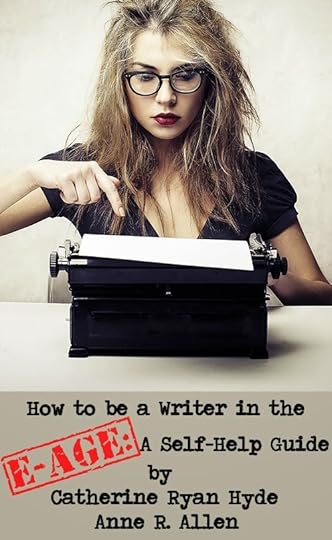
Not just for indies, and not just for authors going the traditional route. This is the book that helps you choose what path is right for YOU.
Plus there's lots of insider information on using social media and dealing with critiques, bullies, trolls, and rejection.
OPPORTUNITY ALERTS
Golden Quill Awards Writing Contest : Flash, Poetry, and Short fiction categories. Entry fee $20 for stories and poetry, $15 for flash fiction. The theme is TRANSFORMATION. Deadline July 15.
MARK TWAIN HUMOR CONTEST Entry fees: $12 Young Author or $22 Adult. 7,000 words (or fewer) of any original work of humor writing. Submissions must be in English. Submissions are not required to be in the style of Mark Twain or about Mark Twain. 1st Prize: $1,000 (Adult), $600 (Young Author). Other cash prizes! Deadline July 10, 2015
Saturday Evening Post Great American Fiction Contest. Entry fee $10. Your story should in some way touch upon the publication’s mission: Celebrating America — past, present, and future. Think Norman Rockwell. No profanity or graphic sex. Any genre. No previously published stories, but they can have appeared on your blog. Between 1,500 and 5,000 words. Deadline July 1, 2015
Writer's Village International Short Fiction Contest Prizes totalling $3200! And every entrant gets a critique. (which makes this a great deal.) Any genre of fiction up to 3000 words. Entry fee $24. Deadline June 30th.
PULP LITERATURE'S The Hummingbird Prize for Flash Fiction $10-$15 ENTRY FEE. Winner published in Winter 2016. First Prize: $300 (Runner up: $75). For unpublished short fiction up to 1,000 words in length. Contest Opens May 1, 2015 and closes June 15, 2015.
Ink & Insights 2015 is a writing contest that comes with a detailed critique. Send the first 10,000-words of your book. The entry fee is $35: pricey for a contest, but a fantastic deal for a critique. Each submission is read by four judges who score 18 areas of your novel. This looks like a great opportunity! Over $5,000 cash and prizes. Deadline May 31.
WOW Spring Flash Fiction Contest: Fee $10, or $20 with critique. The critique is a fantastic deal. These quarterly contests are judged by an agent. 750 words. First prize is $350 plus a $500 publishing package, publication and an interview. 20 prizes in all. Enter early. They only take the first 300 entries. Deadline May 31.
Writer's Digest Writing Compeition. This is their biggie. First prize is $5000 plus your photo on the cover of Writer's Digest. Entry fees are a little pricey at $25 for a story, $15 for a poem but there are lots of big prizes. Categories for many genres of fiction, Creative nonfic, essays, screenplays, and poetry. Early Bird deadline May 4th.
The Vestal Review is looking for FLASH FICTION. Submissions are accepted February-May for the Vestal Review, the oldest journal devoted exclusively to flash fiction. 500 words or less. Humor is a plus. Pays $$ plus copies.
WE NEED DIVERSE BOOKS SHORT STORY CONTEST NO FEE! Open to emerging diverse writers from all diverse backgrounds (including, but not limited to, LGBT, people of color, people with disabilities, and ethnic, cultural and religious minorities) who have not been published in BOOK format in any genre. The winner receives US $1,000 and publication in the “Stories For All Of Us” anthology to be published by Random House. Opens April 27--Deadline May 8.
Having a popular blog has helped me feel a lot of empathy with agents and publishers. That's because Ruth and I get a ton of queries, too.
Most of ours are from authors or publicists who want a blog tour promotion, guest blog spot, or a book review. Some want us to give critiques or edit their work. We also hear from people who want us to advertise products, websites and software or display their infographics.
And there's that guy from Grammarly who writes to me regularly to tell me I could be a successful writer if I just learned a little grammar. And the blog "gurus" who want us to pay money to get readers for our pathetic little blog.
Thing is: we don't do blog tours or book reviews or editing. We also don't provide advertising, free or otherwise. And strangely enough, we're not eager to do business with people who insult us.
These are what I call self-rejecting queries.
It does no good to ask somebody for something they do not provide.
It's like going to a pet store when you want to buy a computer mouse: you're setting yourself up for disappointment.
And making yourself look pretty silly.
Here's the most important thing to remember: publishing is a business. As is all Internet commerce.
A query is a job interview. Give it 100% or don't do it. Picture the real person behind the company, blog, or agency you're querying, and talk about what's of interest to them.
Whoever is reading the query is looking for a reason to reject you so they can move quickly through the inbox. Don't give them one.
Do a little homework, be respectful, and you can avoid most of these pitfalls. We were all newbies once, and some of these are typical newbie mistakes. But if you educate yourself and practice empathy, you can avoid them.
Top Ten Ways to Write Self-Rejecting Queries
10) Send a query via anything but email (or snail, in some more conservative pockets of the world.)
Do not send a Twitter or FB DM or @message pitching your book to agents, editors, bloggers or readers. Unless it's in a specific Twitter challenge set up by an agency or blog.
Twitter events like March 11th's #Pitmad Twitter query session are an exception, but make sure you stay within the time period and follow the rules to the letter. And don't send the Tweet via Direct Message. Send it in a regular Tweet.
DMs are intimate and come across as disrespectful if you don't have a prior relationship. I talked about that last month in my post on How NOT to Sell Books.
Book bloggers are especially annoyed by tweeted queries. Book review blogs are hard work, and the reviewers deserve the respect due to any other professional.
Disrespectful queries self-reject.
9) Skip the Proofreading
The e-query is a great boon to authors. No more double envelopes and return postage and trips to the Post Office with those expensive manuscript boxes.
But the e-age can lull us into a false sense of informality. An e-query is just as formal and official as a paper query and needs to be composed with just as much care.
Remember to watch out for your headers. I remember working for weeks on a query and then sending it off to my potential dream agent with a whopping typo in the header (misspelling my own title.)
Rejection came within minutes. Yup. I'd self-rejected.
8) Advertise your failures
Agent Alex Glass reminds authors to "Avoid a sentence such as 'This is my third (or fourth, or fifth, or sixth) unpublished novel, so I am clearly very dedicated and hardworking'…"
No: you've clearly failed a lot.
Everybody fails—that's how we learn. But we need to keep the failures quiet in a query.
I feel the same if somebody queries me saying: "Nobody is buying my books so you have to help me by giving me a guest spot."
My first thought is going to be that maybe your books aren't selling because they're as unprofessional as your query. If so, you will lose us subscribers and reduce our stats.
We always get fewer hits on guest blogposts. I don't know why, but I think it's like the substitute teacher syndrome. People come here expecting stuff from Ruth and me and when they get a substitute, no matter how great, they seem to feel disappointed. So a guest spot is something of a gift. We have to choose guests very carefully. Regular commenters on the blog get priority.
Writers who tell us they are no good at drawing an audience are rejecting themselves.
7) Verbosity
A query should be one page. At most. Anything more is a glaring advertisement of your lack of self-editing skills.
The query is your vehicle. Make sure it's streamlined and modern looking. This means it's short, hooky, and has lots of white space. Would you hire a car mechanic who showed up in a clunker bellowing smoke?
Most agents these days want a synopsis that is one page as well. They want it to read like book jacket copy—only with the ending included. Anything else is old fashioned and gets skipped. Don't write a long synopsis unless it's specifically requested. Here's my post on how to write a synopsis. And here's a great one from Jane Friedman.
Yes, I know you've taken all those creative writing classes that tell you it's all about your talent and passion and descriptive writing ability.
But a query uses a different kind of writing skills—skills you're going to need whether you publish traditionally or not. Every author needs to know how to write good blurbs, hooks, and product descriptions these days.
Learn those skills before you query.
And if you want a guest blogspot, show you have the writing chops to carry it off. If you write one big hunk of text in your query, you show you don't get 21st century writing.
Thus auto-rejecting yourself.
6) Forget the hook
It doesn't matter if you're querying a newbie blogger asking for a review or pitching your screenplay to Steven Spielberg, you always need a HOOK. Make what you have on offer enticing.
A simple formula for a novel hook is "When X happens, X must do X to X/otherwise X happens". It's a one or two sentence overview of the plot that needs to be dynamic and show what's at stake. For a more literary work, you might want to state the theme or setting and whatever makes it unique.
For a blogpost or nonfiction book, the hook only needs to answer the questions: why this book/post? Why now? Why you?
I wish I'd kept the query the Canadian "queen of comedy" Melodie Campbell sent asking to guest post two years ago. It had me laughing out loud. She pitched a post on how to write humor with humor. She had me hooked in two lines.
Yes, I know it's hard. But we all need to work on our skills as "hookers". Here's a good simple piece on writing a hook from agent Natalie Lakosil of the Bradford Literary Agency.
5) Lie
Don't tell me you read my blog regularly and then say you know how much I like to review Bigfoot erotica. It's an auto-delete.
Agents feel the same way. Don't say "I met you at the Southeast Montana Paranormal Romance Writers Conference-and-Gun Show" if you weren't there. Maybe the agent was scheduled but cancelled at the last minute. Maybe there were only four people in her workshop.
And if you say "I love your client's work," at least read the "look inside" of a few of the titles. If you say "I see you rep Zorian Q. Weatherbottom, so I know you'll love my work" make sure you know what Zorian Q. Weatherbottom writes.
If it turns out Mr. Weatherbottom writes Christian end-times thrillers, you've just self-rejected your steamy vampire/werewolf M/M romance.
4) Act arrogant
You want to sell your story or blogpost, not brag about yourself.
I don't get very far into a query that starts with "I'm a bigshot. Here are all the fabulous things I've done…" and then goes on for paragraph after paragraph of "I'm so special". I don't care if you're Shonda Rhimes. If you don't tell me why you've contacted me and what you have on offer, I'm going to delete.
And here's a secret: people who really are bigshots do not have to tell people who they are. When Anne Rice contacted me to talk about cyberbullying, her name in the address was more than enough to make me ignore everything else in the inbox and jump to open it.
And even if you're not that famous, just one or two major achievements are much more impressive than three pages listing every prize you've won since you got the trophy for good penmanship in third grade. That "lady doth protest too much" thing kicks in sooner than you think.
Here's how agent Shira Hoffman put it:
"I dislike it when a query letter focuses too much on the author’s bio and doesn’t tell me what the book is about. Make sure you include essential story details."
3) Don't bother to do your research
Agents say the number one reason for rejections is that most writers query them with books in genres they do not represent.
Reviewers say the number one reason for rejections is that most authors query them with books in genres they don't review.
Our number one reason for rejections is that most writers query us with posts on non-writing-related subjects.
See a pattern here?
I realize everybody starts as a beginner. I don't mean to make fun of novices.
But anybody can visit a website or blog. And read it. It's not hard. It just means taking the time to be polite.
And not look like a doofus.
You'll also want to learn about the industry you want to join. The best way to get general info about publishing is is read a few current books on the industry, like, ahem, HOW TO BE A WRITER IN THE E-AGE (get it cheap below.)
If you want an agent, then read agent blogs, especially in your genre. The #AskAgent hashtag on Twitter is also a great resource for up-to-date agent info.
There are three fantastic websites for agent-seekers that are must-reads: AgentQuery.com, QueryTracker.net, and QueryShark. If you write YA, check Literary Rambles, too.
AgentQuery.com has a searchable database. You can go there and put in the genre you write and choose the agents who are open to queries.
But don't stop there. Visit the agent's website. If the agent says "I don't rep paranormal romance or Young Adult," believe her. Even though she may have sold the genre three years ago and several of her clients write in that genre, it's counterproductive to send her your teen vampire romance now. She is not going to be so blown away by your brilliance that she's going to "make an exception."
If she says she doesn't rep that genre, she means she doesn't know any editors who are buying that genre right now. She probably can't even sell the books of her existing clients who write in that genre. Genres have fashions, and what's hot one month can be untouchable the next. Even if you have the storytelling skills of J.K. Rowling, that agent will not be able to sell your book..
People who query asking me to review a book—no matter the genre—are just wasting their time and mine. This is not a book review blog. It's not what we do. A quick glance around tells you that and it's clearly stated on our CONTACT US page.
These things happen because the queryiers think their time is more valuable than the person they are querying, so they don't bother to research. Not a good way to start a business relationship.
2) Ignore guidelines
NEVER ever query an agent or publisher or blogger without reading the guidelines—the ones on their actual current website, not in a library copy of some book on agents from 10 years ago.
Oh yeah, and then you have to FOLLOW the guidelines. I don't know how many times I have heard authors say "this agent says she wants a one-page synopsis, double spaced, but I have a book (published in 1987) that says a synopsis should be at least 7 pages, so that's what I sent."
You just self-rejected.
I don't care if the agent says she wants the synopsis written in Sanskrit. Just go to Google Translate and do it.
If you don't like her guidelines, don't query her. But otherwise, you're only wasting electrons.
1) Amateurish antics
If you query in the voice of your character, write a synopsis from the point of view of her cat, or handwrite your query on a heart-shaped piece of pink watered silk, you will get noticed, but not in a good way.
Even if your antics are wildly clever, this is like wearing an evening gown to a job interview. You are advertising yourself as an amateur who doesn't know how things are done in the business.
Listen to the agents:
"Queries are business letters. Agenting is business. Publishing is business. I try to be nice and friendly and funny and all, but the bottom line is that I expect those with whom I work to be professional and take what they’re doing seriously.
—Linda Epstein (Jennifer De Chiara Literary)"
"Treat [a] query as a job interview. Be professional. Be concise.
—Nicole Resciniti (The Seymour Agency)
Most writers (and a lot of Internet marketers) overestimate the value of raw "talent". If you're a clueless amateur, an egotist, or a pain in the patoot, nobody will want to work with you even if you have the talent of Shakespeare, Dickens, and Jane Austen all rolled into one.
So don't reject yourself before you even hit "send." Learn to write a professional query, whether it's to an agent, an editor, or a lowly blogger like me. Show respect. It opens an amazing number of doors.
For more great quotes from agents about queries, check out Chuck Sambuchino's blogpost Literary Agents Sound Off.
And for a comprehensive survey of what agents don't want to see in queries, read J.M. Tohline's 2010 blogpost The Biggest Mistakes Authors Make in Querying Agents.
For more on queries, here's Nathan Bransford's classic post on how to write a query.
How about you, Scriveners? What mistakes did you make when you were first querying? As bloggers, do you get outrageously inappropriate queries? What's the worst query you ever saw?
BOOK OF THE WEEK 99c Countdown!
It goes up to $3.99 on April 23rdIt's only on sale in the US and the UK, alas. (The Zon's policy, not ours.)
HOW TO BE A WRITER IN THE E-AGE: A SELF-HELP GUIDEby Anne R. Allen and #1 bestseller Catherine Ryan Hyde
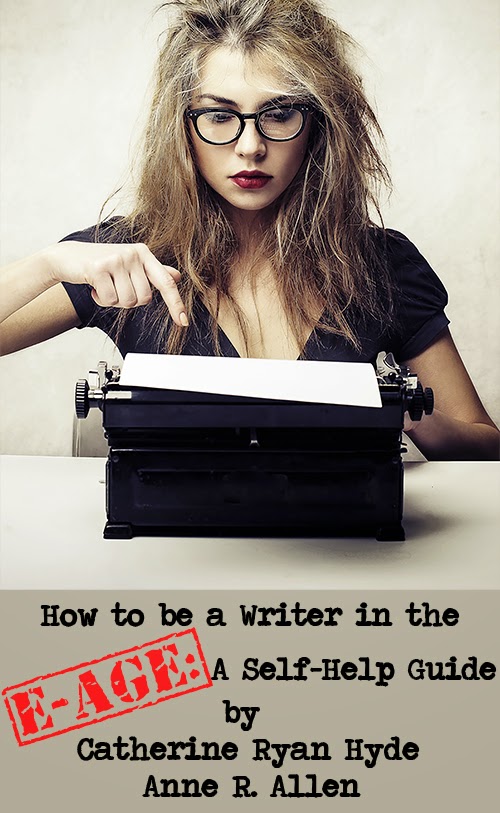
Not just for indies, and not just for authors going the traditional route. This is the book that helps you choose what path is right for YOU.
Plus there's lots of insider information on using social media and dealing with critiques, bullies, trolls, and rejection.
OPPORTUNITY ALERTS
Golden Quill Awards Writing Contest : Flash, Poetry, and Short fiction categories. Entry fee $20 for stories and poetry, $15 for flash fiction. The theme is TRANSFORMATION. Deadline July 15.
MARK TWAIN HUMOR CONTEST Entry fees: $12 Young Author or $22 Adult. 7,000 words (or fewer) of any original work of humor writing. Submissions must be in English. Submissions are not required to be in the style of Mark Twain or about Mark Twain. 1st Prize: $1,000 (Adult), $600 (Young Author). Other cash prizes! Deadline July 10, 2015
Saturday Evening Post Great American Fiction Contest. Entry fee $10. Your story should in some way touch upon the publication’s mission: Celebrating America — past, present, and future. Think Norman Rockwell. No profanity or graphic sex. Any genre. No previously published stories, but they can have appeared on your blog. Between 1,500 and 5,000 words. Deadline July 1, 2015
Writer's Village International Short Fiction Contest Prizes totalling $3200! And every entrant gets a critique. (which makes this a great deal.) Any genre of fiction up to 3000 words. Entry fee $24. Deadline June 30th.
PULP LITERATURE'S The Hummingbird Prize for Flash Fiction $10-$15 ENTRY FEE. Winner published in Winter 2016. First Prize: $300 (Runner up: $75). For unpublished short fiction up to 1,000 words in length. Contest Opens May 1, 2015 and closes June 15, 2015.
Ink & Insights 2015 is a writing contest that comes with a detailed critique. Send the first 10,000-words of your book. The entry fee is $35: pricey for a contest, but a fantastic deal for a critique. Each submission is read by four judges who score 18 areas of your novel. This looks like a great opportunity! Over $5,000 cash and prizes. Deadline May 31.
WOW Spring Flash Fiction Contest: Fee $10, or $20 with critique. The critique is a fantastic deal. These quarterly contests are judged by an agent. 750 words. First prize is $350 plus a $500 publishing package, publication and an interview. 20 prizes in all. Enter early. They only take the first 300 entries. Deadline May 31.
Writer's Digest Writing Compeition. This is their biggie. First prize is $5000 plus your photo on the cover of Writer's Digest. Entry fees are a little pricey at $25 for a story, $15 for a poem but there are lots of big prizes. Categories for many genres of fiction, Creative nonfic, essays, screenplays, and poetry. Early Bird deadline May 4th.
The Vestal Review is looking for FLASH FICTION. Submissions are accepted February-May for the Vestal Review, the oldest journal devoted exclusively to flash fiction. 500 words or less. Humor is a plus. Pays $$ plus copies.
WE NEED DIVERSE BOOKS SHORT STORY CONTEST NO FEE! Open to emerging diverse writers from all diverse backgrounds (including, but not limited to, LGBT, people of color, people with disabilities, and ethnic, cultural and religious minorities) who have not been published in BOOK format in any genre. The winner receives US $1,000 and publication in the “Stories For All Of Us” anthology to be published by Random House. Opens April 27--Deadline May 8.
April 12, 2015
Ten Reasons for Authors to Blog
by Robin Houghton
One of the questions I'm most asked is "how do you find time to write a blog?" I can answer this quite simply – I find the time in the same way that I find time to do the grocery shopping, or read poetry, or stroke the cat.
We all find the time to do the things we consider either essential/non-negotiable or enjoyable, preferably both. But this answer doesn't always satisfy people. That’s when it becomes clear that the real question they want to ask is "why do you blog?"
Professional persuader Simon Sinek says that in order to inspire anyone you need to "start with why". I'm not really in the business of persuading authors they need to be blogging, because it has to be an individual’s decision, it has to feel right. You have to be convinced of why you're doing it. And that why can be different for all of us. Here are a selection of reasons, and I'd be interested to which of them, if any, resonate with you.
1. To have your own real estate on the social web
The web is an ever-growing place and as with any land-grab it pays to do your research, read the small print and think long-term. As an author, there are many places to hang your hat: Facebook, Goodreads, Amazon, your publisher's or agent's website, your own website or blog – all good in terms of setting out your wares and promoting yourself.
But with the exception of your own website or blog (if it's self-hosted), all those other places belong to someone else. You're renting your space, and the cheaper it is, the less you can rely on security of tenure. Facebook could change its rules at any time (and does!), as might WordPress.com. Your page on a publisher’s site will be branded and controlled by the publisher, it goes without saying.
If you self-host your website and/or blog, that is, if you pay for hosting and are responsible for managing it, and if you own your domain name, you are in control. All presentation and content is down to you. And a blog by its very nature increases in value over time as you add content, it's more dynamic than a static website and that's something search engines love. Own your space!
2. To promote your writing and your name
This is often the number one reason authors start blogging: the blog is the heart of your author platform. I know the phrase has come up for some bashing and some have argued that a blog isn't even necessary to an author platform (for example in this piece by L L Barkat )
It's true that any old blog thrown up on the web won't suddenly deliver you a worldwide audience of clamorous readers. There's more competition for people's attention online than ever before. But a blog is still your number one opportunity to create a unique online property to showcase your work, your skills, your personality, and yes – to sell yourself.
There's a slight issue with the phrase "author platform" in that it brings to mind the author giving a reading or a signing, while eager readers line up to hear what they have to say in a passive manner. A one-way relationship in the pre-social web tradition, as if it were sufficient for the author to broadcast his opinion, with no expectation of feedback. Which of course is a very narrow view of what a blog actually offers.
3. To help develop a loyal readership
Here’s where it gets interesting. Wouldn't it be great to have a direct line to your ideal readers, those who are going to buy every word you write and tell all their friends about this amazing writer they've discovered?
That's exactly what a blog offers. But it takes time to build a relationship, in any setting. Just as in an office job you get to know your co-workers simply by encountering them every day, your blog readers get to know you gradually from reading your posts and comments, and getting a feel for who you are through repeated exposure to your blog. It’s not just your blog posts that create the impression, it's everything from how you invite interaction, the colors, graphics and images you use, even the choice of fonts.
A new writer, or one in a small niche, wants to build a network of loyal readers. I see this happen a lot in poetry, for example: it’s a small enough world, and sales are so tiny, that poets are inclined to support one another by attending launches and buying books. So what you get is a readership of peers, friends and family.
It's relatively easy to build a small but loyal readership, and you don't need a blog to get to this stage, although it certainly helps – especially if you encourage follows and social shares. And a blog, for example, gives you the chance to build a valuable email list (see point 7).
4. To build an army of advocates
What we sometimes forget, especially when starting out as a writer, as the difference between loyalty and advocacy. Loyalty comes when people get to know the person behind the words and want to support them.
But with a blog you have the means to develop something more, and that's advocacy. Your advocates, or ambassadors, are people who are happy to help promote your work to others and are prepared to stake their own reputation on it.
When your blog content gets shared on social networks it will potentially bring new readers, but social shares are relatively superficial. The real work of advocacy takes place when higher profile bloggers invite you to guest post, or reblog a post of yours, publish a favorable review, or reference your blog in a completely new setting such as at a conference or in a journal, or in the mass media. I'm not saying this happens right away, but the opportunity is there.
5. To do market research and try things out
Your blog is a safe place for experimenting. It might not feel that way at first, but even the most cautious of authors tend to relax into their blog at some point. I think of it as putting on the slippers. When I feel I'm among friends I'm more able to be honest and open myself up to other people's ideas and possible criticism.
Treating your blog readership as a crit group might be taking it too far, but don't dismiss the opportunity to ask for opinions on things – a new book idea you're mulling over, a plot twist or character change. You don't have to give anything away, you can keep your questions fairly general. But you could get some interesting feedback that might inform your decision.
If you're in the process of researching a new book, why not introduce into your blog some of the topics you need to know more about? Share one or two anecdotes or examples and ask if anyone has experienced anything similar. Write a post on your favorite and least favorite things about Sense and Sensibility and see how the comments pan out – it could be useful if you're contemplating a 21st version of Austen's classic.
6. To improve your writing
To say there's no substitute for practice has become a bit of a cliche, and even the 10,000 hours of practice rule has been shown to be too simplistic. But anecdotally, it seems to be the case that writing in different styles across a variety of genres and platforms can make you a better writer.
A blog calls for a different style of writing than, say, a novel, or poetry, or even a Twitter update. Some blogs have a lot in common with journalistic writing, and some are notably academic in style. Picture someone whose day job is writing 300-word articles for a celebrity gossip website. Blogging might be the last thing they want to do in their spare time. But perhaps they are also a poet.
If you are a writer and you have a passion for something, writing about it feels natural and easy. Someone who works in an academic or highly regulated setting may welcome the chance to write in a freer style.
Writing a blog makes you think about things like keywords and optimization, how people read on screen, how to order, format and chunk your content, how to plan and think like an editor. Blogging is a discipline that can help improve your organizational skills and well as the range and fluency of your writing.
7. To widen your network of professional (useful) contacts
On its own, a blog may not have agents, reviewers, publishers and other industry contacts beating a path to your door. First, they have to know it exists, second, they have to have a good reason to visit and third there has to be something unique and compelling about what they find there.
Let’s say your blog is up there in terms of amazing content. Let’s say also that you've worked really hard on optimizing the blog for search engines and are getting good visitor and following numbers. For some kinds of blog, especially those focused on making money, being found in searches is the holy grail. But for authors? The human aspect of blogging comes much more into play.
The age-old ways of connecting with influential industry contacts remains the same in that it's about building relationships one person at a time. Whether the initial contact comes from a face-to-face or online encounter, or from a recommendation, your blog is where people then go to get a feel for the person behind the work. A blog doesn't stand alone, but it's a key piece in your professional armory.
8. To create a new revenue stream /supplement your earnings
Selling digital products as one way writers can supplement their income, and a blog is the perfect platform. Decide what you can package (for example "hot topic" content you've already written for the blog, tutorials, ebooks or downloads, courses or even a "members only" site).
Taster material can be offered for free in return for an email sign up, so building up a list of prospects to which you can then market your paid content. The combination of a blog plus an opt-in email list is tried and tested: the result is a pre-qualified list of prospects who are likely to buy whatever you're selling.
9. To get you out of the garret
As with any solitary activity, writing can bring on feelings of isolation. We have a human need to connect, and a blog is a way into the blogosphere and the wider social web. Discovering and reading other people's blogs, connecting with people you otherwise wouldn't have met, conversation around shared interests – these are all side-effects of blogging, and there are more.
Combined with social media outreach in the form of a Twitter or Facebook account, a blog places you within a community of readers and writers from which peer support, friendships and inspiration soon follow.
10. For the serendipity
Blogging is undoubtedly a commitment, and however much of a challenge it might appear at times, if you stay focused on what you're really REALLY interested in, there's a good chance you will enjoy it. And from enjoyment comes the delight of the unexpected.
It’s not unusual to find that a blog takes you in a new direction, or leads to completely unforeseen opportunities. Enjoy the serendipity!
What about you, Scriveners? What is your strongest motivation to blog? I think I started blogging initially because of #9. I needed to get out of the garret and meet some other writers who understood what I was going through. Do you blog? Are you still on the fence about making the commitment? Have you tried blogging and found it wasn't for you? ...Anne
Robin Houghton (@RobinHoughton) has over two decades of experience in marketing and communications, formerly with Nike, then running her own business Eggbox Marketing since 2002 specializing in online. She now works primarily with writers and publishing industry professionals to help them make the best use of social media.
Robin writes blogs on social media and poetry and has been a guest blogger for a number of sites including Social Media Today and MarketingProfs. She is a published poet and a commercial copywriter for web and print, and an experienced trainer and conference speaker.
Her first book Blogging for Creatives was a best-seller and resulted in two more commissions, Blogging for Writers (2014) and The Rules of Blogging (and How to Break Them) (2015), both published by Ilex in the UK and Writers Digest Books in the US.
Twitter, LinkedIn, Social Media for Writers (blog) Blogging for Writers (newsletter)
BOOK OF THE WEEK
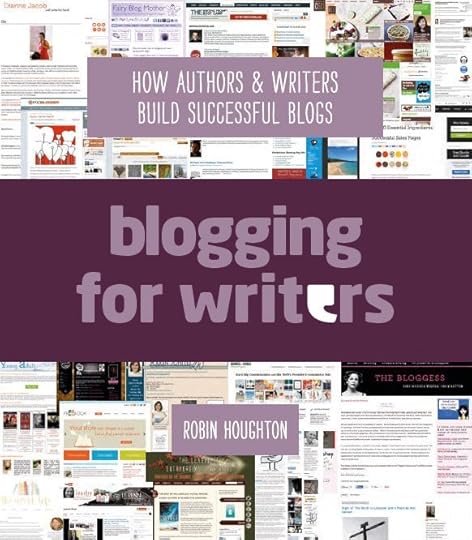
From which platform to use (Blogger, WordPress, etc) to setting up the perfect blog; from layout and design to getting the tone right; from social networking and getting noticed to finding a readership and liaising with publishers, Blogging for Writers lays out the fundamentals and then digs deeper, advising how to make your blog and your skills stand out from the pack and bring the customers your way.
Buy the book At Writer's Digest Books, Amazon US or on Amazon UK
If you happen to live in the San Luis Obispo area, Anne will be speaking to the SLO Nightwriters on April 14th at 6:30 PM on the subject of author and reviewer bullying and how we can fight it with a combination of good social media manners and reporting offenses. Directions at the SLO Nightwriters website.
OPPORTUNITY ALERTS
Golden Quill Awards Writing Contest : Flash, Poetry, and Short fiction categories. Entry fee $20 for stories and poetry, $15 for flash fiction. The theme is TRANSFORMATION. Deadline July 15.
MARK TWAIN HUMOR CONTEST Entry fees: $12 Young Author or $22 Adult. 7,000 words (or fewer) of any original work of humor writing. Submissions must be in English. Submissions are not required to be in the style of Mark Twain or about Mark Twain. 1st Prize: $1,000 (Adult), $600 (Young Author). Other cash prizes! Deadline July 10, 2015
Saturday Evening Post Great American Fiction Contest. Entry fee $10. Your story should in some way touch upon the publication’s mission: Celebrating America — past, present, and future. Think Norman Rockwell. No profanity or graphic sex. Any genre. No previously published stories, but they can have appeared on your blog. Between 1,500 and 5,000 words. Deadline July 1, 2015
Writer's Village International Short Fiction Contest Prizes totalling $3200! And every entrant gets a critique. (which makes this a great deal.) Any genre of fiction up to 3000 words. Entry fee $24. Deadline June 30th.
PULP LITERATURE'S The Hummingbird Prize for Flash Fiction $10-$15 ENTRY FEE. Winner published in Winter 2016. First Prize: $300 (Runner up: $75). For unpublished short fiction up to 1,000 words in length. Contest Opens May 1, 2015 and closes June 15, 2015.
Ink & Insights 2015 is a writing contest that comes with a detailed critique. Send the first 10,000-words of your book. The entry fee is $35: pricey for a contest, but a fantastic deal for a critique. Each submission is read by four judges who score 18 areas of your novel. This looks like a great opportunity! Over $5,000 cash and prizes. Deadline May 31.
Writer's Digest Writing Compeition. This is their biggie. First prize is $5000 plus your photo on the cover of Writer's Digest. Entry fees are a little pricey at $25 for a story, $15 for a poem but there are lots of big prizes. Categories for many genres of fiction, Creative nonfic, essays, screenplays, and poetry. Early Bird deadline May 4th.
WOW Spring Flash Fiction Contest: Fee $10, or $20 with critique. The critique is a fantastic deal. These quarterly contests are judged by an agent. 750 words. First prize is $350 plus a $500 publishing package, publication and an interview. 20 prizes in all. Enter early. They only take the first 300 entries. Deadline May 31.
One of the questions I'm most asked is "how do you find time to write a blog?" I can answer this quite simply – I find the time in the same way that I find time to do the grocery shopping, or read poetry, or stroke the cat.
We all find the time to do the things we consider either essential/non-negotiable or enjoyable, preferably both. But this answer doesn't always satisfy people. That’s when it becomes clear that the real question they want to ask is "why do you blog?"
Professional persuader Simon Sinek says that in order to inspire anyone you need to "start with why". I'm not really in the business of persuading authors they need to be blogging, because it has to be an individual’s decision, it has to feel right. You have to be convinced of why you're doing it. And that why can be different for all of us. Here are a selection of reasons, and I'd be interested to which of them, if any, resonate with you.
1. To have your own real estate on the social web
The web is an ever-growing place and as with any land-grab it pays to do your research, read the small print and think long-term. As an author, there are many places to hang your hat: Facebook, Goodreads, Amazon, your publisher's or agent's website, your own website or blog – all good in terms of setting out your wares and promoting yourself.
But with the exception of your own website or blog (if it's self-hosted), all those other places belong to someone else. You're renting your space, and the cheaper it is, the less you can rely on security of tenure. Facebook could change its rules at any time (and does!), as might WordPress.com. Your page on a publisher’s site will be branded and controlled by the publisher, it goes without saying.
If you self-host your website and/or blog, that is, if you pay for hosting and are responsible for managing it, and if you own your domain name, you are in control. All presentation and content is down to you. And a blog by its very nature increases in value over time as you add content, it's more dynamic than a static website and that's something search engines love. Own your space!
2. To promote your writing and your name
This is often the number one reason authors start blogging: the blog is the heart of your author platform. I know the phrase has come up for some bashing and some have argued that a blog isn't even necessary to an author platform (for example in this piece by L L Barkat )
It's true that any old blog thrown up on the web won't suddenly deliver you a worldwide audience of clamorous readers. There's more competition for people's attention online than ever before. But a blog is still your number one opportunity to create a unique online property to showcase your work, your skills, your personality, and yes – to sell yourself.
There's a slight issue with the phrase "author platform" in that it brings to mind the author giving a reading or a signing, while eager readers line up to hear what they have to say in a passive manner. A one-way relationship in the pre-social web tradition, as if it were sufficient for the author to broadcast his opinion, with no expectation of feedback. Which of course is a very narrow view of what a blog actually offers.
3. To help develop a loyal readership
Here’s where it gets interesting. Wouldn't it be great to have a direct line to your ideal readers, those who are going to buy every word you write and tell all their friends about this amazing writer they've discovered?
That's exactly what a blog offers. But it takes time to build a relationship, in any setting. Just as in an office job you get to know your co-workers simply by encountering them every day, your blog readers get to know you gradually from reading your posts and comments, and getting a feel for who you are through repeated exposure to your blog. It’s not just your blog posts that create the impression, it's everything from how you invite interaction, the colors, graphics and images you use, even the choice of fonts.
A new writer, or one in a small niche, wants to build a network of loyal readers. I see this happen a lot in poetry, for example: it’s a small enough world, and sales are so tiny, that poets are inclined to support one another by attending launches and buying books. So what you get is a readership of peers, friends and family.
It's relatively easy to build a small but loyal readership, and you don't need a blog to get to this stage, although it certainly helps – especially if you encourage follows and social shares. And a blog, for example, gives you the chance to build a valuable email list (see point 7).
4. To build an army of advocates
What we sometimes forget, especially when starting out as a writer, as the difference between loyalty and advocacy. Loyalty comes when people get to know the person behind the words and want to support them.
But with a blog you have the means to develop something more, and that's advocacy. Your advocates, or ambassadors, are people who are happy to help promote your work to others and are prepared to stake their own reputation on it.
When your blog content gets shared on social networks it will potentially bring new readers, but social shares are relatively superficial. The real work of advocacy takes place when higher profile bloggers invite you to guest post, or reblog a post of yours, publish a favorable review, or reference your blog in a completely new setting such as at a conference or in a journal, or in the mass media. I'm not saying this happens right away, but the opportunity is there.
5. To do market research and try things out
Your blog is a safe place for experimenting. It might not feel that way at first, but even the most cautious of authors tend to relax into their blog at some point. I think of it as putting on the slippers. When I feel I'm among friends I'm more able to be honest and open myself up to other people's ideas and possible criticism.
Treating your blog readership as a crit group might be taking it too far, but don't dismiss the opportunity to ask for opinions on things – a new book idea you're mulling over, a plot twist or character change. You don't have to give anything away, you can keep your questions fairly general. But you could get some interesting feedback that might inform your decision.
If you're in the process of researching a new book, why not introduce into your blog some of the topics you need to know more about? Share one or two anecdotes or examples and ask if anyone has experienced anything similar. Write a post on your favorite and least favorite things about Sense and Sensibility and see how the comments pan out – it could be useful if you're contemplating a 21st version of Austen's classic.
6. To improve your writing
To say there's no substitute for practice has become a bit of a cliche, and even the 10,000 hours of practice rule has been shown to be too simplistic. But anecdotally, it seems to be the case that writing in different styles across a variety of genres and platforms can make you a better writer.
A blog calls for a different style of writing than, say, a novel, or poetry, or even a Twitter update. Some blogs have a lot in common with journalistic writing, and some are notably academic in style. Picture someone whose day job is writing 300-word articles for a celebrity gossip website. Blogging might be the last thing they want to do in their spare time. But perhaps they are also a poet.
If you are a writer and you have a passion for something, writing about it feels natural and easy. Someone who works in an academic or highly regulated setting may welcome the chance to write in a freer style.
Writing a blog makes you think about things like keywords and optimization, how people read on screen, how to order, format and chunk your content, how to plan and think like an editor. Blogging is a discipline that can help improve your organizational skills and well as the range and fluency of your writing.
7. To widen your network of professional (useful) contacts
On its own, a blog may not have agents, reviewers, publishers and other industry contacts beating a path to your door. First, they have to know it exists, second, they have to have a good reason to visit and third there has to be something unique and compelling about what they find there.
Let’s say your blog is up there in terms of amazing content. Let’s say also that you've worked really hard on optimizing the blog for search engines and are getting good visitor and following numbers. For some kinds of blog, especially those focused on making money, being found in searches is the holy grail. But for authors? The human aspect of blogging comes much more into play.
The age-old ways of connecting with influential industry contacts remains the same in that it's about building relationships one person at a time. Whether the initial contact comes from a face-to-face or online encounter, or from a recommendation, your blog is where people then go to get a feel for the person behind the work. A blog doesn't stand alone, but it's a key piece in your professional armory.
8. To create a new revenue stream /supplement your earnings
Selling digital products as one way writers can supplement their income, and a blog is the perfect platform. Decide what you can package (for example "hot topic" content you've already written for the blog, tutorials, ebooks or downloads, courses or even a "members only" site).
Taster material can be offered for free in return for an email sign up, so building up a list of prospects to which you can then market your paid content. The combination of a blog plus an opt-in email list is tried and tested: the result is a pre-qualified list of prospects who are likely to buy whatever you're selling.
9. To get you out of the garret
As with any solitary activity, writing can bring on feelings of isolation. We have a human need to connect, and a blog is a way into the blogosphere and the wider social web. Discovering and reading other people's blogs, connecting with people you otherwise wouldn't have met, conversation around shared interests – these are all side-effects of blogging, and there are more.
Combined with social media outreach in the form of a Twitter or Facebook account, a blog places you within a community of readers and writers from which peer support, friendships and inspiration soon follow.
10. For the serendipity
Blogging is undoubtedly a commitment, and however much of a challenge it might appear at times, if you stay focused on what you're really REALLY interested in, there's a good chance you will enjoy it. And from enjoyment comes the delight of the unexpected.
It’s not unusual to find that a blog takes you in a new direction, or leads to completely unforeseen opportunities. Enjoy the serendipity!
What about you, Scriveners? What is your strongest motivation to blog? I think I started blogging initially because of #9. I needed to get out of the garret and meet some other writers who understood what I was going through. Do you blog? Are you still on the fence about making the commitment? Have you tried blogging and found it wasn't for you? ...Anne
Robin Houghton (@RobinHoughton) has over two decades of experience in marketing and communications, formerly with Nike, then running her own business Eggbox Marketing since 2002 specializing in online. She now works primarily with writers and publishing industry professionals to help them make the best use of social media.
Robin writes blogs on social media and poetry and has been a guest blogger for a number of sites including Social Media Today and MarketingProfs. She is a published poet and a commercial copywriter for web and print, and an experienced trainer and conference speaker.
Her first book Blogging for Creatives was a best-seller and resulted in two more commissions, Blogging for Writers (2014) and The Rules of Blogging (and How to Break Them) (2015), both published by Ilex in the UK and Writers Digest Books in the US.
Twitter, LinkedIn, Social Media for Writers (blog) Blogging for Writers (newsletter)
BOOK OF THE WEEK

From which platform to use (Blogger, WordPress, etc) to setting up the perfect blog; from layout and design to getting the tone right; from social networking and getting noticed to finding a readership and liaising with publishers, Blogging for Writers lays out the fundamentals and then digs deeper, advising how to make your blog and your skills stand out from the pack and bring the customers your way.
Buy the book At Writer's Digest Books, Amazon US or on Amazon UK
If you happen to live in the San Luis Obispo area, Anne will be speaking to the SLO Nightwriters on April 14th at 6:30 PM on the subject of author and reviewer bullying and how we can fight it with a combination of good social media manners and reporting offenses. Directions at the SLO Nightwriters website.
OPPORTUNITY ALERTS
Golden Quill Awards Writing Contest : Flash, Poetry, and Short fiction categories. Entry fee $20 for stories and poetry, $15 for flash fiction. The theme is TRANSFORMATION. Deadline July 15.
MARK TWAIN HUMOR CONTEST Entry fees: $12 Young Author or $22 Adult. 7,000 words (or fewer) of any original work of humor writing. Submissions must be in English. Submissions are not required to be in the style of Mark Twain or about Mark Twain. 1st Prize: $1,000 (Adult), $600 (Young Author). Other cash prizes! Deadline July 10, 2015
Saturday Evening Post Great American Fiction Contest. Entry fee $10. Your story should in some way touch upon the publication’s mission: Celebrating America — past, present, and future. Think Norman Rockwell. No profanity or graphic sex. Any genre. No previously published stories, but they can have appeared on your blog. Between 1,500 and 5,000 words. Deadline July 1, 2015
Writer's Village International Short Fiction Contest Prizes totalling $3200! And every entrant gets a critique. (which makes this a great deal.) Any genre of fiction up to 3000 words. Entry fee $24. Deadline June 30th.
PULP LITERATURE'S The Hummingbird Prize for Flash Fiction $10-$15 ENTRY FEE. Winner published in Winter 2016. First Prize: $300 (Runner up: $75). For unpublished short fiction up to 1,000 words in length. Contest Opens May 1, 2015 and closes June 15, 2015.
Ink & Insights 2015 is a writing contest that comes with a detailed critique. Send the first 10,000-words of your book. The entry fee is $35: pricey for a contest, but a fantastic deal for a critique. Each submission is read by four judges who score 18 areas of your novel. This looks like a great opportunity! Over $5,000 cash and prizes. Deadline May 31.
Writer's Digest Writing Compeition. This is their biggie. First prize is $5000 plus your photo on the cover of Writer's Digest. Entry fees are a little pricey at $25 for a story, $15 for a poem but there are lots of big prizes. Categories for many genres of fiction, Creative nonfic, essays, screenplays, and poetry. Early Bird deadline May 4th.
WOW Spring Flash Fiction Contest: Fee $10, or $20 with critique. The critique is a fantastic deal. These quarterly contests are judged by an agent. 750 words. First prize is $350 plus a $500 publishing package, publication and an interview. 20 prizes in all. Enter early. They only take the first 300 entries. Deadline May 31.


