
Anne R. Allen's Blog, page 60
December 8, 2013
The Secret to Writing the Dreaded Synopsis...and its Little Friends: the Hook, Logline, and Pitch
If you "won" at NaNo, and you're madly editing that manuscript, you're probably thinking about how you're going to go about sending it into the marketplace.
Or you may have spent years working on a manuscript and one of your New Year's resolutions will be to get it published.
Whether you're going to jump on the old query-go-round or you're planning to go indie, you need to learn a new set of skills—how to "pitch" a book, using things like hooks, loglines, and...the dreaded synopsis.
Yes, even if you self-publish. That's because your "product description" on Amazon and other retail sites will combine elements of all of three. Book reviewers usually ask for a short synopsis, too.
NOTE: If you plan to query agents or publishers, be sure to check the individual websites to see exactly what each one requires. The specifics may vary even between different agents in the same agency.
A query letter usually starts with a hook, and most agents want you to include a one or two page synopsis (double spaced) as well.
I've heard a lot of agents say they don't pay much attention to the synopsis, but they want to see one to find out if the book has a satisfactory ending. They also want to be reassured that zombie werewolves from Betelgeuse don't suddenly appear in chapter 25 of your sweet romance.
But a few agents and editors read them carefully. And some still ask for hefty ten-to-twelve page tomes. (It's my own opinion that an agent who asks for a twelve-page synopsis lives too hopelessly in the past to be much good representing work to modern publishers, but make your own decision on that.) So you do want that synopsis to be polished and enticing.
If you get to meet an agent or publisher in person, you're also going to want to have a great pitch ready, and you may get asked for a logline.
So logline, pitch, hook, and synopsis: what are they? Aren't they all sort of the same thing?
They are similar in that they are composed in the present tense and give the bare bones of your story. The difference is length and manner of presentation. And a synopsis always tells the ending.
LOGLINE is a term once applied only to screenplays, but it has been creeping into the literary world. It consists of one or two sentences describing the story’s premise, like a film description in TV Guide:
Here’s the basic formula for a logline:
When______happens to_____, he/she must_____or face_____.
Here's one for the Wizard of Oz:
“When Dorothy Gale gets tornadoed to Oz and accidentally squashes an unpopular head of state, she must find a wizard to help her get home to Kansas, or be killed by the ruler's evil sister and some nasty flying monkeys.”
A HOOK is longer—a paragraph or two giving the characters, premise, and conflict, like a book jacket cover blurb. (Skipping the cover blurb accolades. Self-praise doesn’t just sound narcissistic, it screams “clueless amateur.”) It should also state genre and word count.
The hook should be the main component of a query letter to an agent, editor, or reviewer and is essential for your back copy or Amazon blurb.
“The Wizard of Oz is a middle-grade fantasy novel set in a magical land where much of the population suffers from self-esteem issues. When Dorothy Gale, a Kansas farm girl, arrives via tornado, she accidentally kills the ruling witch. The witch’s powerful sister wants Dorothy dead, but Dorothy only wants to get home, which she cannot do until she finds the right traveling shoes.”
Or you might want to try the “Hook Me Up” formula of the late, great Miss Snark. (Although I suggest stating the setting first if it's an important factor, especially for fantasy or sci-fi.)
X is the main guy; he wants to do_____.Y is the bad guy; he wants to do_____. They meet at Z and all L breaks loose.If they don't resolve Q, then R starts and if they do it's L squared.
Don’t take the “bad guy” reference to mean you need to make your novel sound as if it has a Snidely-Whiplash-type villain. The antagonist can be anything that keeps the protagonist from his goals, from a wicked witch to the hero’s own addictions. If you want to read more on antagonists, Kristen Lamb has a fantastic blogpost on the subject, “Introducing the Big Boss Troublemaker.”
A PITCH can contain either or both of the above. You can make a pitch in writing or in person. It tells—in the shortest possible time—what your book is about and why somebody should buy it. This is what you prepare before you go to that Writers’ Conference, hoping you’ll get trapped in an elevator with Stephen Spielberg or an editor from Knopf.
When composing your pitch, you want to answer these questions: Who? Where? What’s the conflict? What action does the protagonist take? What are the stakes? How is it unique?
To get started, it's fun to play with Kathy Carmichael’s clever “pitch generator”. It's fun and amazingly useful.
Here’s her generator’s pitch for the Wizard of Oz.
The Wizard of Oz is a 54,000-word fantasy novel set in the magical land of Oz. Dorothy Gale is a Kansas farm girl who believes a legendary wizard can help her get home. She wants to return to Kansas to be with her Auntie Em. She is prevented from attaining this goal because her transportation vehicle is sitting on a dead witch, she’s being attacked by flying monkeys and her companions are a little dim.
A SYNOPSIS is a run-down of the complete plot, including the ending. Also include the genre and word count up front. It needs to include some details, but not a lot (one page is about 250 words.)
I know. Yikes. It's like taking your baby and squashing it into a horrible little box that hides all its beauty and subtlety and sparkle.
But here's the secret: you'll find it much easier to write a synopsis if you start with a hook or logline first. Try putting your story into Kathy's "pitch generator" and then add to the result.
That's right: work on the logline first. Imagine you're pitching your book to a film producer. Get all the sizzle you can into those few words.
Then write your synopsis using that as your first sentence.
This is a trick I learned from my friend Catherine Ryan Hyde, who was the #1 author on Amazon this summer, and the author of the iconic novel Pay It Forward. Here's what she says in our book, How to Be a Writer in the E-Age:
"You were worried about boiling 104,000 words down to 250. Weren’t you? Now you’re not boiling down...you get to expand it! You’ve got some elbow room, now! Boy howdy! You get to fill up a whole damn page!"
Try it. I'm not pretending it's not going to be easy, but Catherine's method makes it less painful.
In all four, you also want to convey the tone of your book:
1) You can have a humorous logline:
“When the romantic adventures of a southern belle are interrupted by an icky war PLUS her goody-two-shoes-BFF steals her boyfriend, Scarlett whips up a fabulous outfit in order to seduce Mr. Wrong, who in the end, doesn’t give a damn.”
2) Or punch it up by emphasizing high-stakes conflict:
“With his life in constant danger from the monstrous carnivore Snowbell, young Stuart must fight for his life, and prove once and for all whether he is a man or a mouse.”
3) Or go for the thrills by emphasizing the most dangerous scene:
“Marked for death along with his companions, a toy rabbit must learn to cry real tears in order to save himself from being thrown into a burning pit by the boy loves.”
4) Or give the overall premise:
"When the adopted son of Kansas farmer discovers he’s a strange visitor from a another planet, he tries to save the world, one clueless girl reporter at a time, in spite of opposition from an assortment of megalomaniacs armed with green rocks."
Then keep working on it.
Remember these are your most important sales tools. Whether you're selling to an agent, editor, or the general public, you want to make them sizzle. Pick out the elements that make your story unique and hit them hard.
Then leave out all the other stuff. Yeah, I know—easier said than done. But it's worth putting a lot of time into. These few words are as important as any you’ll ever write.
What about you, scriveners? Do you hate writing synopses? I'd love for readers to try the pitch generator and put your pitches in the comments.
Books of the Week
This week I'm featuring two books by Dr. Shirley Seifried Allen, my mom. She died last Sunday night, December 1st, at the age of 92. She published her mystery Academic Body at the age of 89.
I hope you'll consider buying one to honor her. I learned most of what I know about writing synopses (and pretty much everything else) from her. She was a Bryn Mawr PhD. who taught English Literature and creative writing at the University of Connecticut for many years.
She's also the author of the nonfiction book, Samuel Phelps and Sadler's Wells Theatre , published by Wesleyan University Press. It's out of print, but still available used.
Roxanna Britton, a Biographical Novel. Special December sale: Only 99c on Amazon, Amazon UK, and Amazon CA
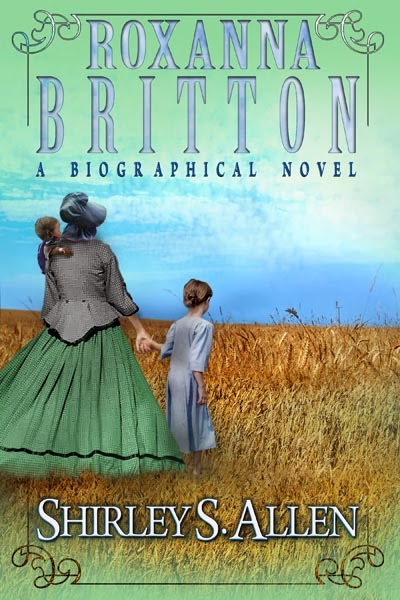 "This has become one of my all time favorite stories of "real" people. Ms. Allen's adept use of dialogue and her clear eye for drama and suspense kept me compulsively turning the pages. Her evocation of a bygone era, rich with descriptive details--the historical Chicago fire is one vivid example--is absolutely brilliant.
I will never forget Sanny and her family, especially her struggle and her daughters' struggle to become individuals in a male dominated world. But it is family that triumphs in the end; and the need for it to survive resonates most deeply in my mind and heart. An excellent novel that I highly recommend to anyone who enjoys reading true stories about people who not only overcome adversity with grace and integrity but through strength of character also prevail. Well done, Ms. Shirley Allen!"...Ann Carbine Best
Academic Body: A Classic Cozy Mystery in the Agatha Christie tradition. Available for $2.99 at Amazon US, Amazon CA, Amazon UK, Nook (where it is mysteriously only 99c), and Kobo
.jpg) "The academics at Weaver College are maintaining their exemplary standards, setting a stellar example for their students. Extramarital affairs, presumptuous posturing, blackout drinking, and gossip are part of campus life for this faculty.
"The academics at Weaver College are maintaining their exemplary standards, setting a stellar example for their students. Extramarital affairs, presumptuous posturing, blackout drinking, and gossip are part of campus life for this faculty.
But when their blackmailing dean is suddenly murdered, all who saw him that night become suspects. Retired stage director Paul Godwin, lately turned professor, and his actress wife Lenore ponder the dean's death with the theatrical knowledge of given circumstances, personal motivation, and a thorough comprehension of Shakespeare's classic tragedies and Tom Stoppard's Rosencrantz and Guildenstern, which seamlessly parallel the action.
A hilarious farce about college life delivers us to the circumstances that lead to murder most foul."...Kathleen Keena
Opportunity Alerts
Dog Lovers! Here's one for you: AMERICAN KENNEL CLUB FICTION WRITING CONTEST NO ENTRY FEE. Submit one short story, maximum 2,000 words. Entries can be on any subject, but must feature a dog. (But it can't talk) Prizes $500, $240, $100. Deadline January 31, 2014.
CRAZYHORSE PRIZES IN FICTION, NONFICTION, POETRY $20 fee (includes subscription). This is a biggie, well worth the fee. This venerable literary magazine has published the likes of John Updike, Raymond Carver and Billy Collins. Winners in each category receive $2,000 and publication. Submit up to 25 pages of prose or three poems. All entries considered for publication. Submissions accepted in the month of January 2014 only.
DRIFTLESS REVIEW ANNUAL FLASH FICTION CONTEST $15 ENTRY FEE for up to three stories. Each short-short story limited to 500 words. $500 prize. Deadline December 31
Dark Continents Publishing's Guns and Romances anthology. They're looking for previously unpublished short fiction from 3500-9000 words. Any genre as long as there's a tough protagonist, weapons, and... at least one reference to music. Sounds interesting. Payment rate is a one-off of $20 per story plus a percentage of the ebook royalties. Publication estimated in late-2014. More info on the website. Closing date for submissions is February 28, 2014.


December 1, 2013
Why Your Grandma Wants an E-Reader for the Holidays (Even Though She Doesn't Know It)
If you're reading this blog, you're probably relatively tech-savvy. But now that we're in the midst of holiday season, most of us are running into the inevitable friends and relations who are threatened by new technology and maybe even hostile to the whole idea of e-books and e-readers. Some of them are probably your grandparents.
Full disclosure here: I'm not a grandparent. I could be, if I hadn't neglected that interim step of having actual children. What I am is a Baby Boomer: a person born between 1946 and 1964—the demographic known in unenlightened circles as "old."
I'm also not naturally drawn to technology. My relationship to most machines is the same as your cat's relationship to the vacuum cleaner: Danger! MAKE IT STOP!
I've got some Boomer friends who think the e-reader is the spawn of the devil. They say ebooks and self-publishing are robbing us of our cultural heritage. I understand their fears. I worked in bookstores for much of my life. Every time a bookstore goes out of business I feel a sense of personal loss.
Plus I love being surrounded by tangible, hard-copy reading material. My house looks like a library. Books are my best friends. (My mother tells me that when I learned to read, I said, "now I'll never have to be lonely again.") I don't think I'll ever stop buying paper books. When I adore something I've read on my Kindle, I sometimes buy it in paper too—so I can really "have" it.
Electronics can die and get glitchy—and nothing's more infuriating when you're engrossed in a novel than to get that "low battery" message plastered across the page.
Paper feels "real". You can touch it and hold it and yes, sniff it. (Much fun is made of "book-sniffers" but scientists say the smell of old books is related to the smell of vanilla, and stimulates a comfort zone in your brain.) You can also keep a new paper book waiting on your night stand and study the cover art, read the blurbs, and anticipate it in a way you can't with a list of titles on your e-reader. Plus you can loan a beloved paper book to as many friends as you like.
But I urge even my book-sniffing Boomer friends to welcome the age of the e-book.
Why?
1) Learning new technology keeps us young.
I have lots of Boomer friends who avoid technology. They may use a computer for email and shopping, and they might even have a smart phone—but they're mostly annoyed by all of it. Especially if they learned a bunch of tech stuff in the early '90s and now it's all different and their hard-earned knowledge is useless. Everything keeps changing too fast and they don't like it.
Yes, change can be terrifying, but it's what keeps us alive. As Dylan said, "he not busy being born is busy dying."
There's scientific data to back this up. Doctors tell us that embracing the new keeps our brains active and healthy.
And let's face it, nothing says "geezer" like complaining about "newfangled gadgets" and waxing nostalgic about the good old days. All the hair dye, yoga, and kale smoothies in the world won't make you seem vibrant and healthy if you have a negative attitude and a sour expression on your face.
Besides, if you're a Boomer, you belong to a generation that has always embraced change.
As Mark Penn said in his 2007 book Microtrends, "Boomers reinvented youth in the 1960s and economic success in the 1980s; they are not about to do their senior years by someone else’s formula. According to a 2005 survey by Merrill Lynch, more than 3 in 4 boomers say they have no intention of seeking traditional retirement."
2) The e-book revolution is ending age discrimination against older authors.
Traditional publishing has always dictated that young authors are the most desirable. Even when I was in my forties, I was advised to keep my age secret when querying, because publishers don't want to invest money building a "brand name" for an author who doesn't have a potential forty-year trajectory for churning out product.
But this attitude eliminates a huge number of writers—especially writers with wisdom and life experience to share. As social media guru Kristen Lamb says. "A large percentage of writers have waited until the kids are out of the home and out of college to begin pursuing their dreams of being authors."
But ebooks and social media are changing all that. We now live in an age when there is infinite "shelf" space, and "long tail" niche marketing reigns.
New genres like Boomer Lit can appeal to specific demographics now that every book published doesn’t have to be a potential blockbuster of one-size-fits-all scope. And authors don't have to self-publish if they write for a niche. The Big Five probably won't be interested in a BoomerLit book unless it's written by Cher, but you can still go the traditional route with a small or digital-only press.
3) Older readers get to read books about their own issues.
For the past fifty years or so, traditional publishing has dictated that female protagonists in popular fiction must be under thirty-five. Men can be a little older, but the main characters have to be young people with young problems. (Literary fiction can be about old guys with prostate issues, but usually only if the author writes for the New Yorker.)
None of this is surprising, since the "gatekeepers" of traditional publishing are mostly 22-year-old interns at New York literary agencies.
(And I can't help wondering if some editors weren't scarred by being forced to read Silas Marnerin high school. George Eliot's aged curmudgeon has a lot to answer for.)
Thing is: older people have more time to read. And most of us are hungry for books that address our own life situations, not just who goes to the prom with the hunky vampire.
As Kristen Lamb says, older authors are "writing books they’d like to read: romance novels with a sixty-year-old protagonist finding love, not a twenty-two-year-old….Now there are options. Seventy is getting younger every day and the emerging e-commerce marketplace doesn’t care how old we are or how many books we write."
4) E-readers offer physical advantages to the older reader.
Adjustable fonts. I'm getting to the stage where I can't read books with tiny fonts, and I'd be much more comfortable with large-print books, if I weren't too embarrassed to be seen reading them. With an e-reader, all it takes is the click of a button to adjust the font to our own vision requirements. Lighter Weight. A friend told me she stopped enjoying reading hard-cover books a few years ago because of arthritis in her hands. But she loves that e-readers are easy to hold and getting lighter all the time. The new Nook GlowLight weighs only 6.2 ounces.Immediate new books. When I finish a book I love, I get an empty feeling. I often want to read another book by that author immediately, especially if it's the next in a series. But as we age, getting out to a bookstore can be more of a hassle. (And I stopped night driving when I realized it felt like driving by Braille on dark winter nights.) With an e-reader, you can have the new book in minutes.
5) E-books have got more people reading now than ever before.
People who might not go into a bookstore to procure entertainment are now reading books on their phones, iPads and tablets. Ebooks are cool.
According to the Christian Science Monitor , "the average reader of e-books read an average of 24 books in the past 12 months compared to 15 books for non e-book consumers."
And as Alex C. Madrigal wrote in the Atlantic last year "Our collective memory of past is astoundingly inaccurate. Not only has the number of people reading not declined precipitously, it's actually gone up since the perceived golden age of American letters. "
6) Because of the new paradigm, independent bookstores are making a comeback.
E-books are not killing indie bookstores. Big-box bookstores and their cozy deals with Big Publishing did that in the 1990s. Indies that survived are now having an increase in sales, according to the Christian Science Monitor.
Here are some ways e-books are actually helping independently-owned bookstores:Amazon is now selling devices and ebooks through indie bookstores with "Amazon Source".Kobo has been selling its e-readers through independent bookstores for at least a year (If you listen to NPR in the US, you've heard their ads.) Now that the marketplace isn't a monopoly of the Big Five and their cozy relationship with Big Box bookstores that sell advantageous shelf space to the highest bidder, the small independent bookshop has a more level playing field.Newsletters like E-Book Bargains UK that advertise bargain e-books to global markets also carry ads for indie bookstores.
7) Paper books aren't going anywhere.
It's not a question of either/or. You can have your Kindle and paper too.
Only about 30% of book sales are e-books, and that percentage seems to be leveling off as an October report from the Book Industry Study Group reported.
Here are some of their findings: Four years of consumer data shows clearly that e-book consumption has reached mainstream readers and has expanded well beyond early adopter 'power readers,' but that physical books remain a popular format for many consumers, especially in certain categories.Consumers are very interested in "bundling" print and digital versions of a book, with 48% of survey respondents willing to pay more for bundles. Consumers do not distinguish between e-books published by traditional houses and independently published options when making buying decisions.
The E-Age may seem scary to those of us who remember when the most tech-heavy thing a writer had to do was change a typewriter ribbon, but it's one of the best times in history to be a writer—or a reader—so we need to learn to embrace the new technology.
What about you, Scriveners? Did you have to be dragged kicking and screaming into the digital age? What advantages are you finding to reading electronic books? Do you have friends and family who don't "get" e-books?
Note: If you enjoy this blog, we'd love for you to nominate us for the Top 10 Writing Blogs at Write to Done.
Book Bargain of the Week
And when you buy Grandma that e-reader, here's the perfect book to load on it. Only 99c on Amazon for the holidays. Roxanna Britton, a biographical novel, is the story of my own great, great grandmother, written by my 92-year-old mom, Dr. Shirley S. Allen.
My mom is in hospice now, and I'm here at her bedside. It makes her happy that her well-reviewed book will live on after she's gone.
"If you love historical novels about women "making it" in the mid-1800's, you will NOT want to miss this one! I loved EVERY minute of reading about "Sanny's" life and making her own way and place in a time when women were considered having less than the status of "slaves." I also loved this book because it shows how the status, influences, opinions and upbringings can make or break a family and its heritage...and just how influential the women are who guide each.
HIGHLY RECOMMEND!"...Shawna Newton
Opportunity Alerts
The Lascaux Prize for Short Fiction: Stories may be previously published or unpublished. Length up to 10,000 words. Entry fee is $5, and authors may enter more than once.The editors will select a winner and nineteen additional finalists. The winner will receive $500 and publication in The Lascaux Review. Both winner and finalists will earn the privilege of displaying a virtual medallion on blogs and websites. Deadline December 31, 2013.
Boomers: The Huffington Post's Huffpo50 is publishing short fiction! The rules: You must be 50 or older to enter. Writers can submit only one story per year, and all pieces must be 5,000 words or less. Send your original submissions, as well as your contact details, to 50fiction@huffingtonpost.com
CRAZYHORSE PRIZES IN FICTION, NONFICTION, POETRY $20 fee (includes subscription). This is a biggie, well worth the fee. This venerable literary magazine has published the likes of John Updike, Raymond Carver and Billy Collins. Winners in each category receive $2,000 and publication. Submit up to 25 pages of prose or three poems. All entries considered for publication. Submissions accepted in the month of January 2014 only.
The Ladies Home Journal essay contest. Theme: The Best Decision You Ever Made. First Prize is $3,000 and the chance to have your essay published in the Journal. You're free to interpret the topic in whatever way you like. Essays will be judged on their emotional power, originality, and the quality of their prose. They should be no more than 2,000 words. More info and submission form on the website.
DRIFTLESS REVIEW ANNUAL FLASH FICTION CONTEST $15 ENTRY FEE for up to three stories. Each short-short story limited to 500 words. $500 prize. Deadline December 31
Dark Continents Publishing's Guns and Romances anthology. They're looking for previously unpublished short fiction from 3500-9000 words. Any genre as long as there's a tough protagonist, weapons, and... at least one reference to music. Sounds interesting. Payment rate is a one-off of $20 per story plus a percentage of the ebook royalties. Publication estimated in late-2014. More info on the website. Closing date for submissions is February 28, 2014.
November 24, 2013
Writers’ Toolkit #4: How to Sell Your EBook: Ads, Promo, Marketing—Paid and FREE
First, an Awesome Announcement
Ruth and Anne have been blog partners for over two years, and we both write comedy, but you've never been able to read our fiction in one place before. Now you can! On Friday, the official launch day, the new boxed set made #3 in Amazon's Hot New Release s for Mystery and #5 Hot New Releases in Comedy. Thanks to all our fantastic readers!!
Hot-off-the-cyber-press!CHANEL and GATSBY: A Comic two-fer. By guess who?????
Hollywood and Manhattan: it's Bi-Coastal Comedy!
Available at NOOK, Kobo, iTunes (soon), and Amazon US, Amazon UK, Amazon CA
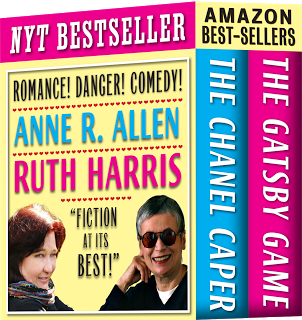
The Chanel Caper
JAMES BOND MEETS NORA EPHRON. OR IS IT THE OTHER WAY AROUND?
Blake Weston is a smart, savvy, no BS, 56-year-old Nora Ephron-like New Yorker. Her DH, Ralph Marino, is a très James Bond ex-cop & head of security for a large international corporation. At a tense time in their relationship, Blake & Ralph are forced to work together to solve a murder in Shanghai & break up an international piracy ring.
A totally fabulous, LMAO adventure with some of the best one-liners I've ever read!!! Ruth's wit is just a hoot, and her characters have the best sassy mouths in the biz!!!...bestselling author D.D. Scott
The Gatsby Game
A POSSIBLE SOLUTION TO A 40-YEAR OLD UNSOLVED HOLLYWOOD MYSTERY
When Nicky Conway meets Fitzgerald-quoting Alistair at a Princeton mixer, she falls for his retro, Jazz-Age charm. But she discovers he’s a con man obsessed with his own “Daisy”—British actress Delia Kent. After Alistair manipulates Nicky into nannying for Delia’s daughter on the set of a Hollywood film, Delia finds Alistair dead in her motel room. Local police can’t decide if it’s accident, suicide—or murder, in which case, Nicky is the prime suspect.
"For anyone who likes their books to be witty, with great characters, an atmosphere which it is a delight to experience, and a fast moving plot, this book is one you definitely shouldn't miss." ...Gerry McCullough of Gerry's Books****
And now here's this week's installment of Ruth's "Writer's Toolkit" series:
The old ways of publicizing books aren't working so well in the E-Age.
In 2011, editor Alan Rinzler famously said, "That $50K space ad in the New York Times? Forget it. It’s only for the author’s mother. The twenty-city bookstore tour with first class airplanes, limousines, and hotel suites? A waste of money. Not even an appearance on the Today Show can guarantee more than a brief spike in sales....The old ways don’t work."
So what does work? Facebook ads? Goodreads giveaways? Getting hundreds of fans to Tweet your book every five minutes?
Right now, most successful authors will tell you that none of the above methods are working very well either. (Not that we wouldn't welcome a few Tweets.)
But what really generates buzz for your book these days is e-book bargain newsletters and websites.
This week Ruth Harris gives us a rundown of the best-known sites and newsletters. The biggies are pretty pricey, but some are very reasonably priced, or even FREE....Anne
Writers' Toolkit #4:
How to Move the Merch.by Ruth Harris
After the book is written, edited, polished and published—that's when ads, promo and marketing matter.
A lot.
There are many sites—with new ones popping up constantly—that will promote your book. Some of them paid, others are FREE.
Each site has different rules and regs—not all of them accept erotica—and it’s important to read the fine print as you make your promotional plans and decide on a budget. As you will see later, some authors have found success with FREE promo, others with paid. There is, as has been pointed out many times, no such thing as one-size-fits-all.
In alphabetic order:
AwesomeGang offers FREE ebook listings in addition to a $10 paid option for more traction. As an extra service to authors, AwesomeGang provides a list of other sites offering FREE promotion.
Bargain Booksy will list your bargain or reduced-price book on their own site and in their daily email to over 50,000 subscribers at a cost of $50. If you are offering a free book, their companion site, free booksy, is the place to go.
BookBlast lists free and sale books discounted 50% from the usual price to over 40,000 readers. Authors can choose genres ranging from YA to thrillers to romance and just about everything in between.
BookBub, is picky and pricey but generally considered highly effective although, as with everything, YMMV and there can be variations between genres. As with most sites, BookBub works on an opt-in system and currently does not accept short stories and novellas or books costing more than $2.99.
Before deciding whether or not to try your luck at BookBub, you will want to do your due diligence. You will find the latest, hot-off-the-press info on BookBub promo results at this Writers’ Cafe thread.
BookDaily “invites [authors] to set up a FREE author account on BookDaily to promote your book to our readers. BookDaily introduces authors to new readers by providing a sample chapter from the author's books.” Recently, BookDaily emailed 43,753 sample chapters to readers.
E-Book Bargains UK (EBUK) is the UK’s version of BookBub and gets your book in front of readers in the UK (duh!) and 13 other English-speaking markets all over the world that are otherwise tricky for American authors to reach. This is the only newsletter that has a truly global audience. They're planning more countries for the next year, plus an all-erotica newsletter. The site is run by the efficient and very-nice-to-work-with Mick.
Note from Anne: I have used the EBUK guys for several books, and they jump-started stalled UK sales and got me on bestseller lists in Germany and France. Definitely worthwhile for me. I've heard from other authors who climbed the Kobo charts after advertising with EBUK. If you want to know more about them and their vision for the global marketplace, check out the guest post they wrote for us, The E-Book Market No Author Should Ignore.
E-Readers News Today aka ENT is a long-running book promo site with an excellent track record. ENT features include listings for a regularly-priced Book Of The Day, Bargain Books for books reduced to $.99 as well as free books. What sets ENT apart is that you pay after your promo runs and ENT bills you for 25% of your sales. Greg and Rachelle are the savvy guiding lights at ENT.
Donna Fasano, bestselling romance author, believes “the combined forces of BookBub and ENT are what propelled Reclaim My Heart onto the USA Today Best Seller List. My book appearing on the list captured the attention of an editor at Montlake who bought the pub rights. The BookBub ad cost $480 and the ENT ad cost approx $50. After the ads ran, Reclaim My Heart hit #9 on the Kindle Top 100, #4 on the Nook List, #20 on the Kobo List, and #9 on the iBooks Romance List.”
Fussy Librarian FREE (at least for now) is a new kid on the block and sends out daily ebook recs. You can choose from 32 genres, and select content preferences such as amount of sex and violence so that readers who want cozy mysteries won’t receive recs for steamy romance. Here’s a WC thread introducing Fussy Librarian.
You will also find an informative interview with Jeffrey Bruner who runs Fussy Librarian at Lindsay Buroker’s blog here.
Kindle Books and Tips is another paid promo site that offers readers a daily list of FREE and discounted books. 600,000+ visit the blog daily and 125,000+ people view the blog, FB page and subscribe to their email list.
Kindle Nation Daily is one of the first book promotional sites and, as the title indicates, specializes in featuring your book to Kindle owners and readers. KND offers a choice of genres including erotic which some sites don’t allow and also hosts a daily email blast called BookGorilla.
Pixel of Ink, another well-established and attractive book promo site, lists FREE and bargain books as well as Hot Deals browsable by category.
PeopleReads, a FREE ebook listing site, launched in July of 2013. Presided over by Van, PeopleReads features ebooks priced from $.00 to $3.99 and aims to offer top quality books to its growing list of subscribers.
Elaine Raco Chase ran a Veterans Day weekend sale for her contemporary romance title, Rules Of The Game, at 99 cents down from $2.99. Elaine comments: “On Friday: Pixelscroll + Awesome Gang free ads equalled 20 total sales. Saturday: the People Read ad appeared at 10 a.m (Van does a lot of tweets on his own). The Read Cheaply ad appeared at 11:45 a.m + tweets from other authors. On Sunday morning ROTG totaled 55 books sold over nite (just 1 at Nook).
“Have NOT paid a single penny and am pretty pleased plus sales on 4 other books at full price.”
Pixelscroll presents daily postings of eBooks, as well as Apps, Movies and Television Seasons, MP3s and CDs, Audio Books, and all sorts of electronics. PixelScroll offers both FREE and paid ebook listings and sponsorships.
ReadCheaply is another FREE book promo service offering targeted lists of free and deeply discounted ebooks. A few hoops to jump but an attractive option.
The Kindle Book Review is a multi-purpose site that offers author services like formatting and cover creation along with—as the name indicates—reviews. KBR also offers advertising services at prices ranging from $25 to $45.
In addition to these independent sites, the major ebook vendors offer their own promotional opportunities.At iBooks, you can set your book to $.00 and get coupons to give to readers, reviewers and anyone else you wish.KOBO will also let you set your book’s price to $.00 and has a new feature that allows you to specify a sale price for a specified amount of time. You will find this option when you scroll down to the bottom of the pricing screen.Kindle has added a new opportunity, Countdown Deals, allows authors to run limited-time discount promotions while maintaining their usual royalty. Countdown also offers a dedicated website and real-time sales and royalty information.NOOK also allows authors to set a book’s price to $.00 but, as of now, only via Smashwords
Hope this rundown is helpful and, if you know of other promo sites and especially if you have experience with them, please let us know! How about you, scriveners? Have you used any of these? What was your experience?
Here's a tweet, should you feel so inclined: New! Chanel and Gatsby 2 LOL comedies for the price of one http://bitly.com/19TjuI8
Opportunity Alerts
The Ladies Home Journal essay contest. Theme: The Best Decision You Ever Made. First Prize is $3,000 and the chance to have your essay published in the Journal. You're free to interpret the topic in whatever way you like. Essays will be judged on their emotional power, originality, and the quality of their prose. They should be no more than 2,000 words. More info and submission form on the website.
Narrative Fall Story Contest Enter your short story, short short, essay, or an excerpt from a longer work of prose up to 15,000 words. Entry fee is a little pricey at $22, but the prize is $2,500 for first prize, $1,000 second-place. The editors will judge. Online submission system. All entries are considered for publication. Visit the website for complete guidelines. Deadline November 30th.
DRIFTLESS REVIEW ANNUAL FLASH FICTION CONTEST $15 ENTRY FEE for up to three stories. Each short-short story limited to 500 words. $500 prize. Deadline December 31
Dark Continents Publishing's Guns and Romances anthology. They're looking for previously unpublished short fiction from 3500-9000 words. Any genre as long as there's a tough protagonist, weapons, and... at least one reference to music. Sounds interesting. Payment rate is a one-off of $20 per story plus a percentage of the ebook royalties. Publication estimated in late-2014. More info on the website. Closing date for submissions is February 28, 2014.
CRAZYHORSE PRIZES IN FICTION, NONFICTION, POETRY $20 fee (includes subscription). This is a biggie, well worth the fee. This venerable literary magazine has published the likes of John Updike, Raymond Carver and Billy Collins. Winners in each category receive $2,000 and publication. Submit up to 25 pages of prose or three poems. All entries considered for publication. Submissions accepted in the month of January 2014 only.
Ruth and Anne have been blog partners for over two years, and we both write comedy, but you've never been able to read our fiction in one place before. Now you can! On Friday, the official launch day, the new boxed set made #3 in Amazon's Hot New Release s for Mystery and #5 Hot New Releases in Comedy. Thanks to all our fantastic readers!!
Hot-off-the-cyber-press!CHANEL and GATSBY: A Comic two-fer. By guess who?????
Hollywood and Manhattan: it's Bi-Coastal Comedy!
Available at NOOK, Kobo, iTunes (soon), and Amazon US, Amazon UK, Amazon CA
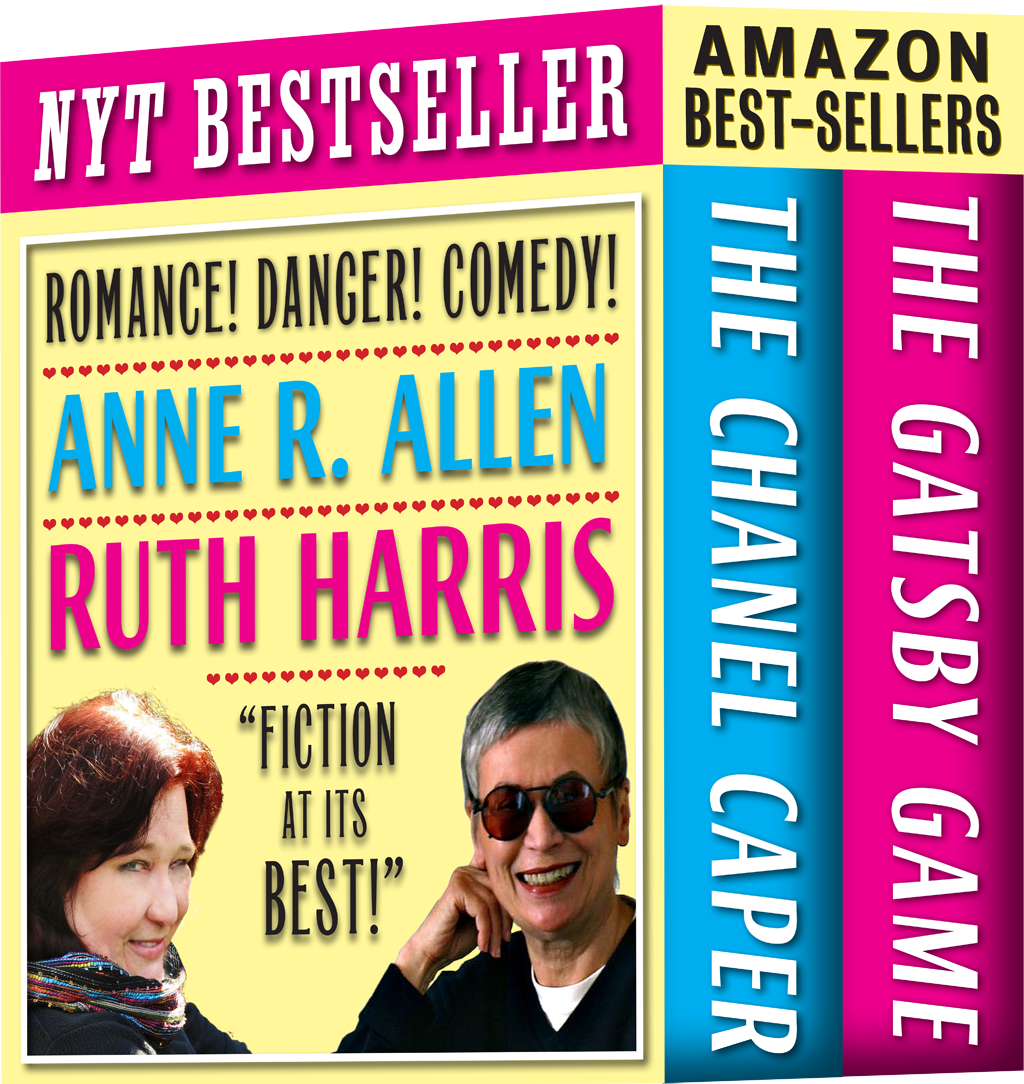
The Chanel Caper
JAMES BOND MEETS NORA EPHRON. OR IS IT THE OTHER WAY AROUND?
Blake Weston is a smart, savvy, no BS, 56-year-old Nora Ephron-like New Yorker. Her DH, Ralph Marino, is a très James Bond ex-cop & head of security for a large international corporation. At a tense time in their relationship, Blake & Ralph are forced to work together to solve a murder in Shanghai & break up an international piracy ring.
A totally fabulous, LMAO adventure with some of the best one-liners I've ever read!!! Ruth's wit is just a hoot, and her characters have the best sassy mouths in the biz!!!...bestselling author D.D. Scott
The Gatsby Game
A POSSIBLE SOLUTION TO A 40-YEAR OLD UNSOLVED HOLLYWOOD MYSTERY
When Nicky Conway meets Fitzgerald-quoting Alistair at a Princeton mixer, she falls for his retro, Jazz-Age charm. But she discovers he’s a con man obsessed with his own “Daisy”—British actress Delia Kent. After Alistair manipulates Nicky into nannying for Delia’s daughter on the set of a Hollywood film, Delia finds Alistair dead in her motel room. Local police can’t decide if it’s accident, suicide—or murder, in which case, Nicky is the prime suspect.
"For anyone who likes their books to be witty, with great characters, an atmosphere which it is a delight to experience, and a fast moving plot, this book is one you definitely shouldn't miss." ...Gerry McCullough of Gerry's Books****
And now here's this week's installment of Ruth's "Writer's Toolkit" series:
The old ways of publicizing books aren't working so well in the E-Age.
In 2011, editor Alan Rinzler famously said, "That $50K space ad in the New York Times? Forget it. It’s only for the author’s mother. The twenty-city bookstore tour with first class airplanes, limousines, and hotel suites? A waste of money. Not even an appearance on the Today Show can guarantee more than a brief spike in sales....The old ways don’t work."
So what does work? Facebook ads? Goodreads giveaways? Getting hundreds of fans to Tweet your book every five minutes?
Right now, most successful authors will tell you that none of the above methods are working very well either. (Not that we wouldn't welcome a few Tweets.)
But what really generates buzz for your book these days is e-book bargain newsletters and websites.
This week Ruth Harris gives us a rundown of the best-known sites and newsletters. The biggies are pretty pricey, but some are very reasonably priced, or even FREE....Anne
Writers' Toolkit #4:
How to Move the Merch.by Ruth Harris
After the book is written, edited, polished and published—that's when ads, promo and marketing matter.
A lot.
There are many sites—with new ones popping up constantly—that will promote your book. Some of them paid, others are FREE.
Each site has different rules and regs—not all of them accept erotica—and it’s important to read the fine print as you make your promotional plans and decide on a budget. As you will see later, some authors have found success with FREE promo, others with paid. There is, as has been pointed out many times, no such thing as one-size-fits-all.
In alphabetic order:
AwesomeGang offers FREE ebook listings in addition to a $10 paid option for more traction. As an extra service to authors, AwesomeGang provides a list of other sites offering FREE promotion.
Bargain Booksy will list your bargain or reduced-price book on their own site and in their daily email to over 50,000 subscribers at a cost of $50. If you are offering a free book, their companion site, free booksy, is the place to go.
BookBlast lists free and sale books discounted 50% from the usual price to over 40,000 readers. Authors can choose genres ranging from YA to thrillers to romance and just about everything in between.
BookBub, is picky and pricey but generally considered highly effective although, as with everything, YMMV and there can be variations between genres. As with most sites, BookBub works on an opt-in system and currently does not accept short stories and novellas or books costing more than $2.99.
Before deciding whether or not to try your luck at BookBub, you will want to do your due diligence. You will find the latest, hot-off-the-press info on BookBub promo results at this Writers’ Cafe thread.
BookDaily “invites [authors] to set up a FREE author account on BookDaily to promote your book to our readers. BookDaily introduces authors to new readers by providing a sample chapter from the author's books.” Recently, BookDaily emailed 43,753 sample chapters to readers.
E-Book Bargains UK (EBUK) is the UK’s version of BookBub and gets your book in front of readers in the UK (duh!) and 13 other English-speaking markets all over the world that are otherwise tricky for American authors to reach. This is the only newsletter that has a truly global audience. They're planning more countries for the next year, plus an all-erotica newsletter. The site is run by the efficient and very-nice-to-work-with Mick.
Note from Anne: I have used the EBUK guys for several books, and they jump-started stalled UK sales and got me on bestseller lists in Germany and France. Definitely worthwhile for me. I've heard from other authors who climbed the Kobo charts after advertising with EBUK. If you want to know more about them and their vision for the global marketplace, check out the guest post they wrote for us, The E-Book Market No Author Should Ignore.
E-Readers News Today aka ENT is a long-running book promo site with an excellent track record. ENT features include listings for a regularly-priced Book Of The Day, Bargain Books for books reduced to $.99 as well as free books. What sets ENT apart is that you pay after your promo runs and ENT bills you for 25% of your sales. Greg and Rachelle are the savvy guiding lights at ENT.
Donna Fasano, bestselling romance author, believes “the combined forces of BookBub and ENT are what propelled Reclaim My Heart onto the USA Today Best Seller List. My book appearing on the list captured the attention of an editor at Montlake who bought the pub rights. The BookBub ad cost $480 and the ENT ad cost approx $50. After the ads ran, Reclaim My Heart hit #9 on the Kindle Top 100, #4 on the Nook List, #20 on the Kobo List, and #9 on the iBooks Romance List.”
Fussy Librarian FREE (at least for now) is a new kid on the block and sends out daily ebook recs. You can choose from 32 genres, and select content preferences such as amount of sex and violence so that readers who want cozy mysteries won’t receive recs for steamy romance. Here’s a WC thread introducing Fussy Librarian.
You will also find an informative interview with Jeffrey Bruner who runs Fussy Librarian at Lindsay Buroker’s blog here.
Kindle Books and Tips is another paid promo site that offers readers a daily list of FREE and discounted books. 600,000+ visit the blog daily and 125,000+ people view the blog, FB page and subscribe to their email list.
Kindle Nation Daily is one of the first book promotional sites and, as the title indicates, specializes in featuring your book to Kindle owners and readers. KND offers a choice of genres including erotic which some sites don’t allow and also hosts a daily email blast called BookGorilla.
Pixel of Ink, another well-established and attractive book promo site, lists FREE and bargain books as well as Hot Deals browsable by category.
PeopleReads, a FREE ebook listing site, launched in July of 2013. Presided over by Van, PeopleReads features ebooks priced from $.00 to $3.99 and aims to offer top quality books to its growing list of subscribers.
Elaine Raco Chase ran a Veterans Day weekend sale for her contemporary romance title, Rules Of The Game, at 99 cents down from $2.99. Elaine comments: “On Friday: Pixelscroll + Awesome Gang free ads equalled 20 total sales. Saturday: the People Read ad appeared at 10 a.m (Van does a lot of tweets on his own). The Read Cheaply ad appeared at 11:45 a.m + tweets from other authors. On Sunday morning ROTG totaled 55 books sold over nite (just 1 at Nook).
“Have NOT paid a single penny and am pretty pleased plus sales on 4 other books at full price.”
Pixelscroll presents daily postings of eBooks, as well as Apps, Movies and Television Seasons, MP3s and CDs, Audio Books, and all sorts of electronics. PixelScroll offers both FREE and paid ebook listings and sponsorships.
ReadCheaply is another FREE book promo service offering targeted lists of free and deeply discounted ebooks. A few hoops to jump but an attractive option.
The Kindle Book Review is a multi-purpose site that offers author services like formatting and cover creation along with—as the name indicates—reviews. KBR also offers advertising services at prices ranging from $25 to $45.
In addition to these independent sites, the major ebook vendors offer their own promotional opportunities.At iBooks, you can set your book to $.00 and get coupons to give to readers, reviewers and anyone else you wish.KOBO will also let you set your book’s price to $.00 and has a new feature that allows you to specify a sale price for a specified amount of time. You will find this option when you scroll down to the bottom of the pricing screen.Kindle has added a new opportunity, Countdown Deals, allows authors to run limited-time discount promotions while maintaining their usual royalty. Countdown also offers a dedicated website and real-time sales and royalty information.NOOK also allows authors to set a book’s price to $.00 but, as of now, only via Smashwords
Hope this rundown is helpful and, if you know of other promo sites and especially if you have experience with them, please let us know! How about you, scriveners? Have you used any of these? What was your experience?
Here's a tweet, should you feel so inclined: New! Chanel and Gatsby 2 LOL comedies for the price of one http://bitly.com/19TjuI8
Opportunity Alerts
The Ladies Home Journal essay contest. Theme: The Best Decision You Ever Made. First Prize is $3,000 and the chance to have your essay published in the Journal. You're free to interpret the topic in whatever way you like. Essays will be judged on their emotional power, originality, and the quality of their prose. They should be no more than 2,000 words. More info and submission form on the website.
Narrative Fall Story Contest Enter your short story, short short, essay, or an excerpt from a longer work of prose up to 15,000 words. Entry fee is a little pricey at $22, but the prize is $2,500 for first prize, $1,000 second-place. The editors will judge. Online submission system. All entries are considered for publication. Visit the website for complete guidelines. Deadline November 30th.
DRIFTLESS REVIEW ANNUAL FLASH FICTION CONTEST $15 ENTRY FEE for up to three stories. Each short-short story limited to 500 words. $500 prize. Deadline December 31
Dark Continents Publishing's Guns and Romances anthology. They're looking for previously unpublished short fiction from 3500-9000 words. Any genre as long as there's a tough protagonist, weapons, and... at least one reference to music. Sounds interesting. Payment rate is a one-off of $20 per story plus a percentage of the ebook royalties. Publication estimated in late-2014. More info on the website. Closing date for submissions is February 28, 2014.
CRAZYHORSE PRIZES IN FICTION, NONFICTION, POETRY $20 fee (includes subscription). This is a biggie, well worth the fee. This venerable literary magazine has published the likes of John Updike, Raymond Carver and Billy Collins. Winners in each category receive $2,000 and publication. Submit up to 25 pages of prose or three poems. All entries considered for publication. Submissions accepted in the month of January 2014 only.
November 17, 2013
Are Your Family and Friends Sabotaging your Writing Dreams?
Writers participating in NaNoWriMo (National Novel Writing Month) may discover that friends and family aren't entirely enthused by your decision to disappear into your computer for a month. (I have a secret suspicion that Chris Baty invented NaNo in order to escape those painful family Thanksgiving dinners.)
But at any time of year, some people in your life will find it difficult to relate to your passion to write. A few will even sabotage your progress, often subconsciously, but sometimes with the deliberate intent of steering you onto another path "for your own good."
Kristen Lamb wrote on her blog this week about a minister of her church who told her she "had a better chance of being hit with lightning than becoming a published author." And that she "needed to be an adult and pursue a 'real' career."
Squelch.
What's a new writer to do?
One thing that can help a lot is networking with other writers. That's where blogging and social media can be helpful. Kristen's "WANA tribe" (We Are Not Alone) is a community where writers can find mutual support. Another is Alex J. Cavanaugh's Insecure Writers Group, which he wrote about on this blog a couple of months ago.
Online or in-person, writers' groups can be a godsend. I'm lucky enough to live in a town with a fantastic writing community called the SLO Nightwriters. It has members at all writing levels, from fledgling first-timers to New York Times bestsellers. National organizations with local chapters like RWA, SCBWI, and Sisters in Crime can also provide welcome support.
A good writing group will also save you from the mistake so many new writers make: asking friends or family members to read a work in progress.
The urge to share your work with loved ones is natural. I did it myself early in my career. If you're lucky, you may get some helpful suggestions, but you're more likely to get evasive looks and polite platitudes—or worse. Much worse.
Here's my cautionary tale: my WIP was having problems with flow, so I gave it to a friend who had praised my published work. I thought he might be able to pinpoint what wasn't working. But as a non-writer, he had no idea what “rough draft” meant. After he finished the typo-strewn ms., he phoned immediately, telling me to toss the book because it was a “mess that nobody would ever want to read.”
I tried to get him to tell me exactly what he didn’t like, but he kept ranting, giving no specifics. After he screamed "show, don't tell" about ten times, I have to admit I hung up on him. (Years later I realized I'd asked him at a very bad time in his life. He'd just lost a beloved job and my career was on the rise. His own dreams were in shatters, which made him into a Dream-smasher.)
I shelved the book. I figured whatever was wrong, it must be pretty terrible.
Years later, when I opened the manuscript again, I realized it wasn't that bad. I'd let one uninformed person's opinion kill a project I'd spent years of my life creating. I did a quick polish and sent it to my publisher. The editor suggested a new opening chapter and a handful of tweaks. It's now part of my boxed set that's been a humor bestseller on Amazon for 20 weeks.
But the friendship died. And since then, I've never let a non-writer see a draft of anything.
Critiquing and editing require experience and expertise. Anybody can say "I hate it," but it takes an expert to say. "This doesn't work because of ___ and____."
Recently novelist Michelle D. Argyle blogged about the problem, and she thinks even friends who are writers may not be the best people to critique your work. As she says, "there are enough people in the world who will tell you that you suck without having to hear it from a friend."
No matter how much you want to share your WIP with your real-life friends, it's not a good idea. Do try to enlist emotional support—although even that is not always forthcoming—but realize that finding a friend who's also a fan of your writing is a stroke of good luck, not something to expect.
And the truth is, a lot of people in your life may find your new interest threatening. If you’re not emotionally prepared, they can derail your project, stifle your creativity, and undermine your self esteem.
They may not be as heavy handed as Kristen Lamb's minister or my Dream-smasher friend, but they’ll work to sabotage your confidence in dozens of subtle—or not-so-subtle—ways.
They can do it for a variety of reasons. The most obvious is that your new passion can feel like a rival. Writing robs your loved ones of time you used to spend together.
Or your friends may be secret wannabes who have stifled their own creativity out of fear of failure. People like this may try to make you feel like a failure in order to justify their own fears.
Or they can just be at a bad time in their lives like my friend. In any case, it's best to be prepared.
Here are some non-supportive types to watch out for, and tips on how to deal with them:
Dream-smashers
These are the know-it-alls who specialize in discouragement.
Like Kristen's minister, they’re full of statistics showing the odds against being successfully published. They’ll send links to articles with dire warnings about carpal tunnel syndrome and back injuries due to long sessions at the keyboard.They have an unending supply of stories about suicide and depression in writers.They may appear to be supportive at first, and may even express an eagerness to read your WIP—only to give entirely negative feedback.
They always “know” some rule that you’ve broken—probably mis-remembered from their 5th grade grammar class. (Like my "show don't tell" friend.)They’ll criticize your premise in a way that’s also a personal attack: “nobody wants to read about women over 50/washed-up athletes/teenagers with disabilities.”They often try to hijack your story. They'll criticize anything in your work that doesn’t promote their own world view, and suggest the story would be much better if the hero were more like them. These people have given up on their own dreams and want you to do the same. Encourage them to write their own books, take an art class or start a new creative hobby.
Crazymakers
Creativity guru Julia Cameron described these people as “storm centers…long on problems but short on solutions.”
They are the drama queens, emotional vampires, and control freaks who crave your full-time attention and can’t stand for you to focus on anything but their own dramas.
Writers are magnets for these people because we tend to be good listeners.
You tell your Crazymaker friend your writing schedule, but she’ll always “forget,” and show up at exactly the time your story is on a roll. She’ll draw you into a weepy tale of woe, saying you’re the “only one who understands.”Have a deadline for a difficult article? That’s the moment Crazymaker will stomp into your office and confess the affair he had four years ago when you were on a relationship break. Got an editor waiting for a rewrite? That’s the week Crazymaker calls to beg you to babysit her sick child because she can’t take off work. After all, she has a REAL job Crazymakers need to be center stage, 24/7. Nothing you do can be of any importance: your job description is “minion.”
Politely resign from the minion department. If they're capable of real friendship, they'll get the message. If they don't, you're probably better off.
Groucho Marxists
The Groucho Marxist manifesto is, to paraphrase the great Julius Henry Marx: “I do not care to read a book by a person who would accept me as a friend.”
Groucho Marxists are your family members and buddies who assume your work is terrible because it was written by somebody they know.
These are the folks who feel compelled to ridicule and belittle your work, whether they’ve read it or not. No amount of success will convince them you’re any good. Their entire world view is based on the premise that success is impossible, so why bother? By aspiring to something more, you're violating their belief system, and no matter what you do, they will feel compelled to treat you like a failureYou get a story published. Groucho can’t be bothered to read it. But he’s always bringing you stories by other writers in your genre, “so you can see how a REAL writer does it.” You get your big call from that agent. Groucho will try to convince you she’s a scammer. Why would a real agent represent a nobody like you? You sign with a publisher. Groucho thinks he's heard a rumor the company is about to go under: look how desperate they must be if they’d publish your book.You self publish a book. Groucho will give you a heated lecture on how self-publishing is destroying the culture with a "tsunami of crap." You get a good review. Groucho doesn’t have time to read it. But he has lots of time to research other pieces by that reviewer to show the reviewer has terrible taste. You win a Pulitzer. What? No Nobel? These people are highly competitive and feel your success will make you “better than them.”
Remind them of their own skills and accomplishments and reassure them that any writing success you achieve won’t change your relationship.
It’s hard enough to live with the constant rejection we have to deal with from agents, editors, and reviewers, so when you’re attacked in your personal life, it’s tough to hang on.
We need to erect strong boundaries and be fierce in defending them.
But if you’re serious about your work, the people who really care about you will learn to treat your time and work with respect.
The others will evaporate. Chances are you won’t miss them.
The best way to get good feedback on your work is from other writers, through critique groups and beta readers. Even if you're not lucky enough to live in an area with good in-person writing groups, the Internet age provides wonderful opportunities to find good critiquers online. Two great resources are CritiqueCircle.com and SheWrites. And GalleyCat has a great new sign-up system for finding the right critique group.
What about you, scriveners? Have you run into any of these negative types in your writing journey? How did you deal with them?
Previews of Coming Attractions!
Ruth and Anne have a boxed set coming out this week! Chanel and Gatsby: A Comedy Two-fer
Available RIGHT NOW for lucky NOOK owners!
Amazon, Kobo, iTunes, etc. to come later this week.
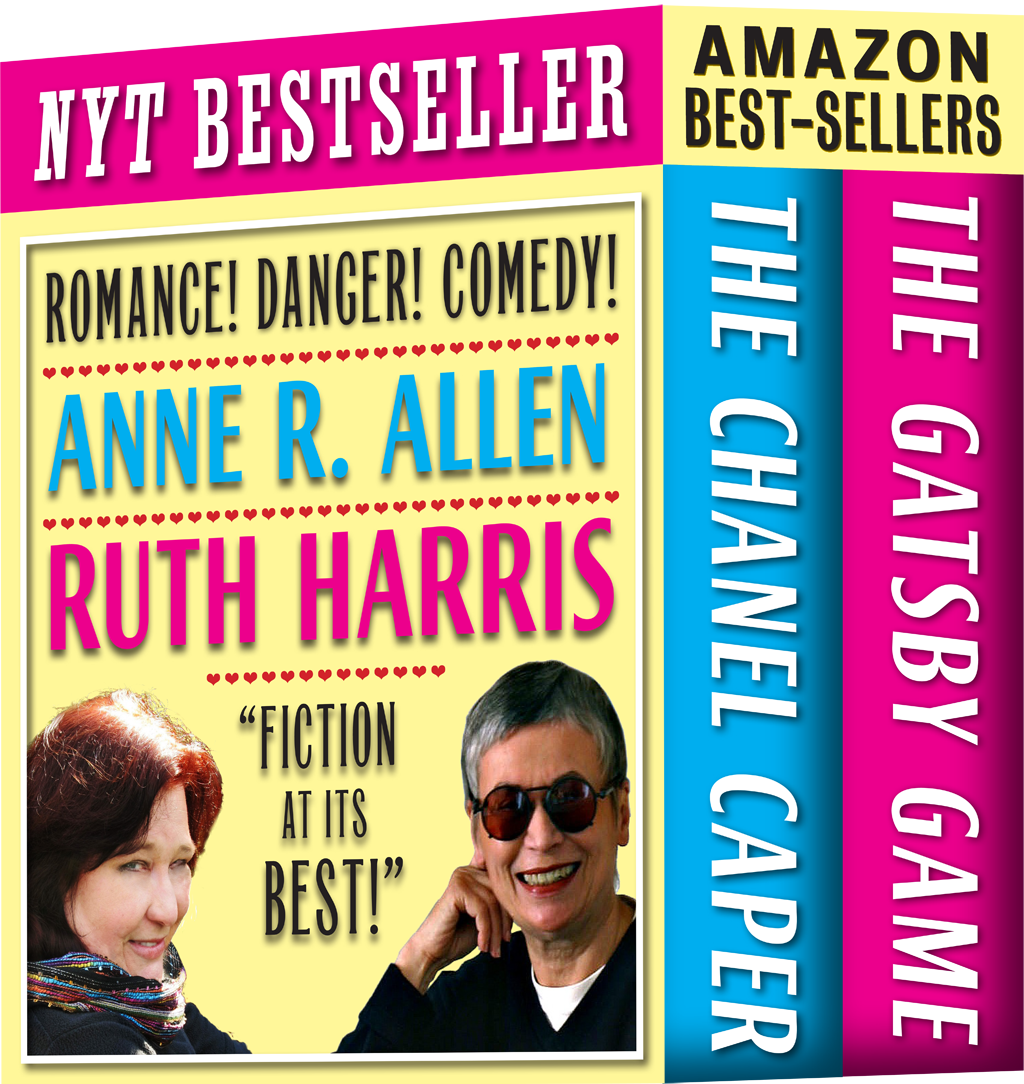
Smart chick lit for chicks who weren't born yesterday.
Ruth Harris and Anne R. Allen: together again for the first time!Need something to keep you entertained while traveling home for the holidays? Ruth and I have put together two of our most popular comic novels for the price of one!
Due in December
The Lady of the Lakewood Diner
a comedy
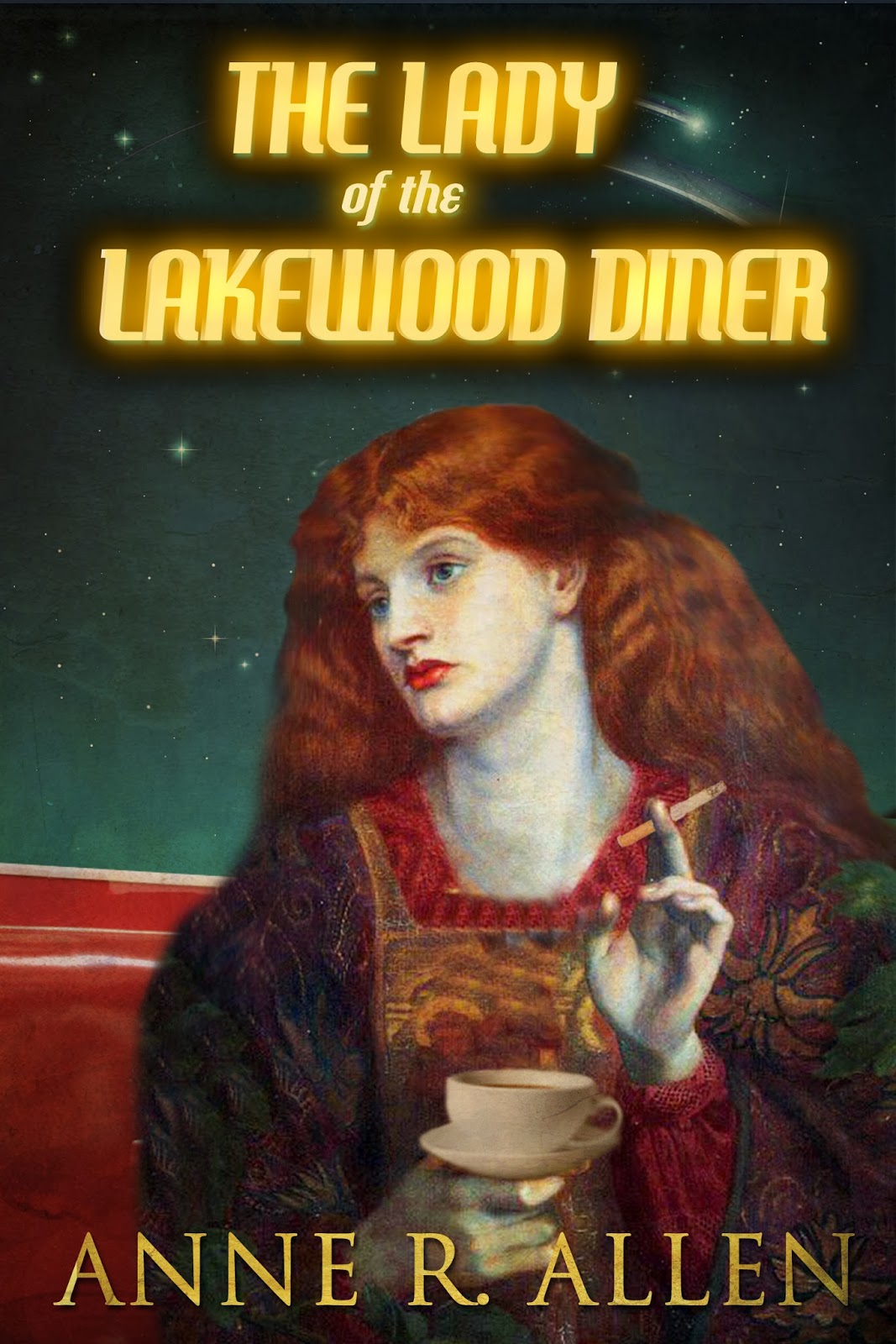
Nostalgia ain't what it used to be...
Who shot Morgan le Fay? The Lady of the Lakewood Diner is the story of a six-decade friendship between an aging rock star and her childhood best friend--the owner of a seedy diner in Central Maine. She just might be the only person who can figure out who's been trying to kill the rock diva. Think Beaches meets Fried Green Tomatoes at the Whistle Stop Cafe
How to be a Writer in the E-Age: a Self-Help Guide
Advice for writers from Anne R. Allen and Amazon #1 Bestselling author Catherine Ryan HydeUpdated edition with all new-material.
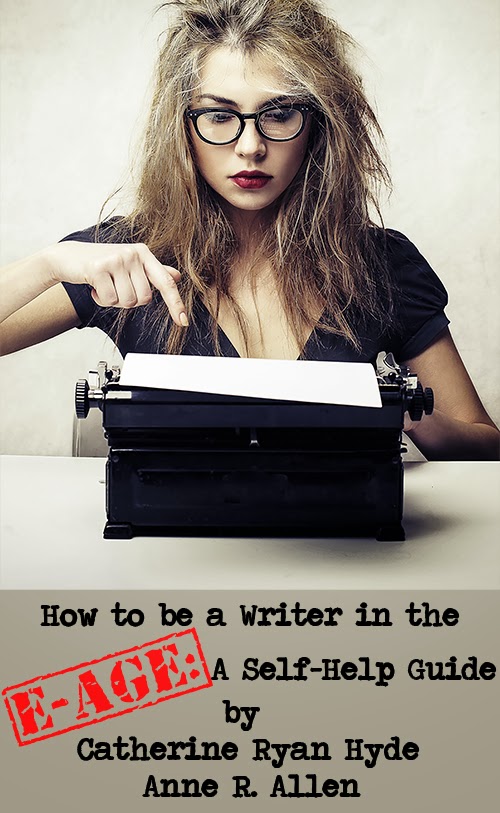
Not another guide to self-publishing. This is a fun, friendly book about how to plan your writing career and make the publishing choices that are right for you, as well as take care of yourself along the way.
Opportunity Alerts
Glimmer Train Press Short Story Award for New Writers Entry Fee: $15. A prize of $1,500 and publication in Glimmer Train Stories is given quarterly for a short story by a writer whose fiction has not been published in a print publication with a circulation over 5,000. The editors will judge. Using the online submission system, submit a story of up to 12,000 words with a $15 entry fee during the month of November. Visit the website for complete guidelines. Deadline: November 30, 2013
J.F. POWER PRIZE FOR SHORT FICTION NO ENTRY FEE. The winner will receive $500. The winning story will be announced in February, 2014 and published in Dappled Things, along with nine honorable mentions. The word limit is 8,000 words. Deadline is November 29, 2013.
DRIFTLESS REVIEW ANNUAL FLASH FICTION CONTEST $15 ENTRY FEE for up to three stories. Each short-short story limited to 500 words. $500 prize. Deadline December 31
The Lascaux Prize for Short Fiction: Stories may be previously published or unpublished. Length up to 10,000 words. Entry fee is $5, and authors may enter more than once.The editors will select a winner and nineteen additional finalists. The winner will receive $500 and publication in The Lascaux Review. Both winner and finalists will earn the privilege of displaying a virtual medallion on blogs and websites. Deadline December 31, 2013.
CRAZYHORSE PRIZES IN FICTION, NONFICTION, POETRY $20 fee (includes subscription). This is a biggie, well worth the fee. This venerable literary magazine has published the likes of John Updike, Raymond Carver and Billy Collins. Winners in each category receive $2,000 and publication. Submit up to 25 pages of prose or three poems. All entries considered for publication. Submissions accepted in the month of January 2014 only.
November 10, 2013
How to Write Funny Novels...And Why You Shouldn't
We've got a V.I.P. guest on the blog this week. She's Melodie Campbell, bestselling author and the Executive Director of Crime Writers of Canada.
She's also hilarious.
She contacted me last month because she liked one of my blogposts. (See, blogging is an effective networking tool!) She saw we share a love of funny books.
 A lot of North America's best comedy comes from Canada. From much of the original cast of Saturday Night Live to up-and-coming comics like The Daily Show's Samantha Bee, to superstars like Seth Rogan, Leslie Nielsen, Jim Carrey and Mike Meyers, Canadians have always known how to make us laugh. (You can supply your own joke about the mayor of Toronto here.)
Maybe it has something to do with wearing plaid shirts and those hats with the earflaps. The key to good comedy is not taking yourself too seriously.
My family say I got my quirky sense of humor from my dad, who was born in Canada, so that may be why I share Melodie's compulsion to write funny books.
Also, we both started our careers in the theater doing stand-up and improv comedy. The biggest compliment I ever got in my acting career was from an old Borscht Belt comic who came backstage after seeing me in Auntie Mame and said, "I didn't see you act funny once in that whole performance." Then he broke into a grin and added. "You don't act funny. You THINK funny. That's the secret to great comedy."
I think funny. Like Melodie, I can't help it.
Melodie is right in warning you away from this dangerous habit. An amazing number of people hate comedy in books. Most of the best comic novels have an average of three stars on their reviews.
People might laugh their heads off at Kristen Wiig and Melissa McCarthy in Bridesmaids and adore the antics of the guys in the Hangover movies, but when it comes to books, they want things to be politically correct and above all, "serious".
They want kick-ass heroines who can leap tall buildings at a single bound and never break a nail (or a smile), and heroes with six-pack abs and Cristal incomes who want to settle down and raise organic kale.
Melodie gets one-star reviews that say, "The heroine mentions being celibate for a while then has sex with at least 5 men in a month. Her boobs fall out of her dress at every opportunity. Most of the time, she doesn't even notice; other people have to point it out to her."
Like that's a bad thing.
My one-stars say stuff like, "This girl doesn't make the decisions I think she should", and "This book sets women back 100 years." (That one gets my feminist hackles up. As Helen Fielding says, "If women haven't reached the point where we can laugh at ourselves, we haven't come very far, have we?")
And then there's my favorite: "Why can't Camilla get a real job and stop looking for Mr. Right?"
Well, here's the thing: if our characters always made good decisions, there would be no story (you can read Kristen Lamb on the subject here), and if they got a clue, wore sensible shoes, and stopped looking for love in all the wrong places, they'd stop being funny.
Can you imagine reviewing films and TV this way?
"Leslie Nielson is on a plane about to crash and all he can say is 'don't call me Shirley'? So unrealistic. Anyway, the pilot didn't say 'Shirley'; he said 'surely'."
"Lucy Arnaz should stop hanging around with Ethel and stop trying to impress Ricky all the time. Why doesn't she get a real job? And where's the character development? She never learns."
When did people decide that fictional characters are supposed to be role models? The protagonists of our culture's earliest novels were mostly naive or deluded bumblers, from Cervantes' Don Quixote to Fielding's Tom Jones and Voltaire's Candide.
You don't read Cervantes or Fielding or Voltaire to escape into a fantasy about your idealized self. But people have been entertained by their stories for a lot of centuries now. Maybe that's because, as a recent study proved, laughter really is the best medicine. ...Anne
Writing Funny Novels Why You Shouldn’t – But You’re Going to Anyway – So Here’s a Primer by Melodie Campbell
“Is that a broadsword on your belt, or are you just glad to see me?”
I hope you smiled at that line. I think it’s one of my best. My name is Melodie Campbell, and I write comedies. (This is a self-help group, right?) Sure I’d like to kick the habit and write a ‘real’ book with literary merit.
Okay, so that’s a lie. Leave The Goddaughter’s Revenge behind? Not write a sequel? I’m starting to hyperventilate. Actually, I love writing comedies. It’s in my blood.
Some people are born beautiful. But most of us aren’t, and we look for ways to survive the slings and arrows of life. Sometimes we choose to hide behind a mask. That Greek Comedy mask was the one I picked way back.
 COMEDY IS TRAGEDY BARELY AVERTED
People smarter than me have concluded that tragedy is the root of all comedy. Making fun of our foibles is indeed one way to cope.
As a means of self-preservation in the cruel world of teenagers, I looked for the ‘funny.’ More often than not, I made fun of myself. This was easy to do. I knew the target well and there was a wealth of material. And it didn’t hurt anyone else, so people liked it.
When I left school and had a ‘real’ job, I started writing stand-up on the side. I rarely delivered it – usually I wrote for others. That led to a regular newspaper humour column, and more.
So when it came to writing novels, I fell back into ‘safe mode.’ Write it funny.
Lesson 1 (the first of 8): The rule of ‘WORST THING’(aka: Never go easy on your protagonist.)
Comedy writers take a situation, and ask themselves ‘what’s the worst thing that could happen now?’
And then, ‘what’s the funniest?’
What’s the worst thing that could happen to The Goddaughter when she is reluctantly recruited to carry hot gemstones over the border in the heel of her shoe? Predictable would be: she gets caught at customs. But I don’t want predictable. I want funny.
Instead, the shoes get stolen. By a complete amateur! It’s embarrassing, that’s what it is. How is she going to keep this from her new boyfriend Pete, who thinks she’s gone clean? And what the heck is she going to tell her uncle, the crime boss?
Nothing, of course. She’s going to steal them back. Or die trying.
And hopefully the audience will die laughing.
Yes, some people will turn up their noses and say this type of plot is silly. Reviewers may discount the book for not dealing with the ‘important’ issues of today. So…do you really want to join me in this reckless trade? Read below.
The Trouble with Writing Comedy
When people ask what I write, I say ‘comedies.’ Then I give the genres (crime capers and time travel fantasy.) My books are comedies first and foremost. I look for plots that will lend themselves to laughs.
This is different from authors who say they write humorous mysteries, for instance. In this case, they would peg their books mysteries first. The humour is secondary.
It’s tough writing comedy. Here’s why:
1. Everyone expects your next book to be just as funny or funnier than your last.
Example: Janet Evanovich. Readers are complaining that her 19th Stephanie Plum book isn’t as funny as her earlier books. They are giving it 2 and 3 stars. 19 books, people! Think about that. I’m on my third book in two different comedy series, and I’m finding it tough to sustain the humour in book three. Believe me, this woman is a master.
2. When you write something that isn’t meant to be funny (or is mildly humorous but not comedy) people are disappointed.
In fact, one award juror told me (way after the fact) that she didn’t consider my Agatha Christie-style whodunit for an award short list because it wasn’t laugh out loud funny like my other books. (It wasn’t supposed to be.) She admitted she never gave the book a chance because I was ‘all about comedy’ in her eyes.
My rep ruined my chances.
3. You will never be taken seriously for most awards.
Again, comedy is rarely taken seriously for awards. This drives some crime writers nuts. It seems to be endemic that books on the short lists are usually ones written with gravitas, on subjects that are ‘important’ or grim. To quote a colleague, “It seems to me, the more grim a book, the more merit is ascribed to it.” Blame the Scandinavians.
4. It’s hard to get published.
This is lamentable. It’s hard to get a publisher for comedic novels. Many seem to be afraid of funny books. Again, it may be the part about not being a ‘serious’ book, and thus not seen as an ‘important’ book.
Film suffers from a similar stigma. How often these days do comedies win Oscars?
5. The expectations are HUGE.
Not only will you be expected to produce a book with great plot, characterization, viewpoint, motivation and dialogue like all the other writers, but along with that you also have to make people laugh consistently throughout it. It’s like there is a sixth requirement for you, an additional test that others don’t need to pass. And you don’t get any more money for it.
Sucks, right? So why do it?
Because good comedy is magic to some readers. They love you for making them smile. Because not everyone can do it. There is talent as well as craft. Because making people laugh is what you do. You’ve done it since you were in high school. Most of us who write comedy were the class clowns. Because you’re mad, like I am. Well at least, madcap.
(Okay, you’re going to do it anyway, so here goes...)
Lessons 2 through 8
Let’s go beyond lesson 1 now. Of course, you don’t have to write comedies to get humour into your books. All stories can benefit from a dose of bathos to make the pathos seem more piquant. Here is my primer on how to put laughter in your books:
2. Make the basic plot funny.
This is the hardest thing to do. This is what makes ‘comedies,’ rather than books with humour.
a. For this, I fall back on the best of the best, my favorite book to quote.
In The Hitchhikers Guide to the Galaxy, Earth is about to be demolished to make way for an interstellar bypass. The very premise of the plot is funny. The construction plans have been filed for decades, but as no one on earth is aware of life beyond our own, of course the plans have gone unprotested. “Apathetic bloody planet…I’ve no sympathy at all,” says the Vogon construction leader before he blows Earth to smithereens.
That’s a comedic premise.
b. How I work it: In The Goddaughter’s Revenge, Gina must mastermind a bunch of burglaries to get back fake gems before anyone finds out they’re fake, otherwise her rep is toast. That’s right – she’s stealing fake gems and replacing them with real. And of course, all the burglaries go wrong. Once again, the basic plot is nutty.
3. Make funny things happen in your plot.
Back to Hitchhiker’s Guide. What if…humans weren’t the only ones experimenting with animals in the pursuit of science? What if…white mice were experimenting with humans?
What if…the answer to the Meaning of Life is the number 42?
4. Make a theme in your novel funny.
Rowena Through the Wall is a comic time travel/sword and sorcery novel. It is also a spoof of bodice rippers, but few people have picked up on that. (This baffles me, because it’s right over the top: she rips her bodice in almost every scene.) In the second book in the series, Rowena and the Dark Lord, she rips her skirt in almost every scene. Readers love it, even if they don’t get that it’s a spoof. They look for it. It is a theme that runs through the series.
5. Make a character in your plot funny.
This is the most common humour device in novels. Shakespeare was a master at this. We have lots of examples here.
a. Again, let me return to the master, Douglas Adams. In my opinion, Marvin the depressed robot is one of the greatest inventions in comic fiction.
“Here I am, brain the size of a planet, and they ask me to take you down to the bridge. Call that job satisfaction? ‘Cos I don’t.”
“Pardon me for breathing, which I never do anyway so I don’t know why I bother to say it, oh God, I’m so depressed. Here’s another of those self-satisfied doors. Life! Don’t talk to me about life.”
b. Can’t forget another unforgettable character: Grandma Mazar from Janet Evanovich’s Stephanie Plum series. Hobby: Funeral homes. Sexual orientation: Bring it on! (time’s a runnin’ out)Crass, embarrassing, and delightfully unique.
6. Add Wordplay.
Examples: surprise, unexpected, sarcasm, exaggeration, words with double meaning
This is different from making your character’s ‘character’ funny to the reader. In this example, a member of the cast says funny or clever things.
a. Surprise or unexpected:
“I had the flu once. It was terrible. I couldn’t eat a thing for three hours.”
This works because we expect to hear something else at the end: “I couldn’t eat a thing for three days.” Instead, we hear “three hours.” This is an example of the surprise or unexpected, plus exaggeration, giving us a chuckle. But wait a minute: this is also self-deprecating. Three in one.
b. Example 2: Remember how this post started?
“Is that a broadsword on your belt, or are you just glad to see me?”
This is an example of wordplay that requires the reader to have some prior knowledge or education. We know the original Mae West line, where the gun substitutes for something else. This exaggerates the gun into something bigger. The reader feels clever for getting the joke.
7. Riff off the reader’s own experience:
Also in Hitchhiker’s Guide: The Vogon monsters have developed a unique form of torture. They read their hand-written poetry to victims. It’s excruciating.
I’ve been to live readings just like that. You bet I laughed when reading this. And Douglas Adams wrote it for people like me who have been to poetry readings and – most likely- shared his reaction.
(Not all people will appreciate this humour. That’s okay. Not everyone will appreciate every funny line you write, either.)
Why was Adams such a master? He doesn’t explain it. No laugh track here. He shows you the scene and lets you make your own conclusion.
8. Emulate the Comedy Masters who do stand-up:
Don’t over-explain. Never point to a joke. Just lay the line. You don’t even need to have the other characters in your book laugh.
How to accomplish this? End the scene at the line.
“Is that a broadsword on your belt, or are you just glad to see me?”
***or***
The Earl appeared at the door. “What are you doing?!”
I poked my head out from under the table and wiped a shrimp from my hair. “We couldn’t wait for dinner, so we started ahead.”
The Caveats
1. Humour needs context.
So much of what makes us laugh depends on our previous experience, education, age and gender. That’s why some people find Monty Python funny, and others don’t. (I am, by the way, a huge fan. Ditto for Gilbert and Sullivan. Outrageous satire of the establishment gets me every time.)
Don’t be alarmed if not everyone gets every funny line in your fiction. They won’t.
2. Can you take the heat?
Not everyone will see the humour, particularly in satire. (Witness my bodice ripper spoof.) In fact, some may be annoyed by it, if they perceive you are making fun of something they value.
Going too far: there is a fine line that all of us work against. The line will wobble a bit and sometimes we step over it. (Stand-up artists do this frequently by picking on people in the audience.)
If you are going to write humour, you have to be able to take the heat from going too far.
Final Words (will she ever shut up)
Here’s the key, as I’ve discovered it:
The trick to combining humour and suspense is to play each against the other. Taut suspense is broken up by bathos, making the suspenseful parts seen more dramatic. And – as I have learned from writing the Land’s End series – one can make humour seem more funny by juxtaposing it against gripping danger. In fact, a steady diet of unrelenting wacky humour can make one grow blasé, just as a steady diet of porn might dull one to sensuality.
But why do it? Why does an otherwise sane individual write wacky and some might say silly fiction, and risk the inevitable hit from some critics who say your book is without great literary merit?
We do it for readers. Hopefully, we’ve lightened their day with laughter, and in some cases given them a story they can escape into, over and over again.
***
 Melodie Campbell experienced a personal best this year when Library Digest compared her to Janet Evanovich.
Melodie got her start writing comedy. In 1999, she opened the Canadian Humour Conference. She has over 200 publications, including 100 comedy credits, 40 short stories and 5 novels. Melodie has won six awards for fiction and was a finalist for the 2012 Derringer and both the 2012 and 2013 Arthur Ellis Awards.
Her first book, Rowena Through the Wall , hit the Amazon Top 100 Bestseller list. The Goddaughter’s Revenge, a comic mob caper, is her fifth book. Melodie is the Executive Director of Crime Writers of Canada. Her column "Bad Girl" runs in the satirical magazine, The Sage: Canada’s Best Source for Misleading News and Opinion. Lots more at www.melodiecampbell.com
What about you, Scriveners? Why do you think comedy gets no respect? Do you have a compulsion to write funny? Have you ever wondered why books full of gore and torture are considered "good" fiction while upbeat stories that makes you laugh are considered trivial time-wasters? What's your favorite comic novel?
Anne is off visiting other blogs this week. You can read her guest post at BoomerLit Fridays on why the ebook revolution is great for Boomers, and she'll be interviewed by Carmen Amato on Carmen's blog on Thursday, November 14th.
Bargain Book of the Week
The best way to get started with Melodie's comedies is with her first "Canadian Mobster" book, The Goddaughter. $2.99 on Amazon US, Amazon CA, and Kobo,

"Campbell's comic caper is just right for Janet Evanovich fans. Wacky family connections and snappy dialog make it impossible not to laugh." (Library Journal 2012-09-01)
"Campbell tells a hilarious story of the goddaughter of a mafia leader drafted into a jewel-smuggling operation." (Ellery Queen Mystery Magazine 2012-10-11)
"Perfect as an airplane read, or for waiting in the doctor's office, or standing in line at the DMV, or even for snuggling under the covers with a bout of flu...Throw in some drop-dead, laugh out loud funny hotel room and restaurant scenes...Bottom line: you['ll] find yourself quickly finishing one of the fun-est and funniest books I've enjoyed in years!" (Tutu's Two Cents blog 2013-02-06)
OPPORTUNITY ALERTS
Looking for a market for your humor writing? The Family Farce may be what you're looking for. They're looking for humor that's dark, snarky and irreverant. Fiction, columns, essays and interviews are all welcome. They're also looking for cartoons, videos and song parodies.
Tin House Shirley Jackson Story Contest. This is a fun one. The prestigious litmag Tin House has acquired an unfinished Shirley Jackson story. They invite readers to finish it. Submissions should be 2,500 words or fewer (not including Jackson’s prose). Winners will be published on the Tin House website and be awarded some Tin House swag and the collected works of Ms. Jackson. Deadline November 17th.
Glimmer Train Press Short Story Award for New Writers Entry Fee: $15. A prize of $1,500 and publication in Glimmer Train Stories is given quarterly for a short story by a writer whose fiction has not been published in a print publication with a circulation over 5,000. The editors will judge. Using the online submission system, submit a story of up to 12,000 words with a $15 entry fee during the month of November. Visit the website for complete guidelines. Deadline: November 30, 2013
J.F. POWER PRIZE FOR SHORT FICTION NO ENTRY FEE. The winner will receive $500. The winning story will be announced in February, 2014 and published in Dappled Things, along with nine honorable mentions. The word limit is 8,000 words. Deadline is November 29, 2013.
November 3, 2013
Sex Sells, Right? Maybe Not. Why you Might Want to Rethink those Steamy Scenes in Your Novel
When my publisher asked me to remove the explicit sex scenes from my upcoming novel, The Lady of the Lakewood Diner I thought he was nuts. Sex sells, doesn't it?
Maybe not so much anymore.
That screeching sound you hear is the abrupt U-turn the publishing industry is taking away from erotic material.
A number of factors have contributed to the change:
1) Erotica Fatigue
After the breakout success of Fifty Shades of Grey, there was a surge in copycats, and the industry seems to be suffering from overload.
Agent Ginger Clark tweeted from the Frankfurt Book Fair that she was seeing a lot of "erotica fatigue" in traditional publishing.
2) The Global Marketplace
As we reported here last month, the marketplace for ebooks is now global, and as Smashwords' Mark Coker says, "Major retailers set their sights on a global market where the cultural, religious or political norms in some countries will find certain categories of erotica too objectionable."
3) Apple has No Erotica Category
More and more people read books on their iPads and iPhones, but Apple steers clear of anything that could be called porn. Perhaps with the global market in mind, the Apple store banned hard-core erotica over a year ago. The heavy-handed purge removed entire publisher accounts from the site because of a few offending titles.
4) Amazon's "Erotica Ghetto"
Beginning last spring, Amazon, too, has sought to rein in the hard core stuff. It has created an "adult filter" that has been separating erotica from other books for suggestions and also-boughts. Authors find when they're put in this "erotica ghetto" it greatly reduces their sales.
5) No Sex, Please, We're British
In July of this year, the UK's Conservative government announced a "war on porn" that among other things, requires "family friendly" filters on computers and has made it illegal to possess material depicting rape.
6) The UK Tabloids' "Epidemic of Filth" Brouhaha
Worries about "An Epidemic of Filth" in the book industry escalated a couple of weeks ago, when UK tabloids brought up the problem of unvetted self-published porn, which can veer into illegal territory. The Daily Mail used it as an excuse for an anti-Amazon diatribe and the online magazine, The Kernel attacked even venerable UK retailers like W. H. Smith, Foyles and Waterstones.
Retailers blame indies:
Of course there's a lot of traditionally published erotica that gets into the wrong searches, too. But the tabloids chose some particularly vile examples of illegal porn that was self-published or put together by low-rent marketing companies, and people were disgusted.
Amazon simply removed the offending books immediately.
W. H. Smith, however, "solved" the problem by shutting down their entire website and not going back online until they had removed ALL self-published and small press books. Permanently.
Kobo, the mega-retailer that supplies W. H. Smith and many other bookstores worldwide, followed suit and removed all indie books from their UK site. Kobo has since returned most of the books. They seem to have worked out an algorithm like the ones at Amazon and Smashwords to filter offending books. If your book hasn't been returned, you can contact them at writinglife@kobo.com
What this means for authors:
Although the handful of books presented in the complaints were obviously offensive and illegal, the nuclear response sent a chill through the industry. You can read indie author Michelle Fox's take on the whole mess at the Indie Reader.
As Ms. Fox points out, aside from the question of censorship, the big problem is that algorithms are never 100% accurate. In fact, she reports some of the "offending books" mentioned in the Daily Mail article weren't offensive at all.
She says Amazon's erotica filter sometimes labels a book cover as porn just because it has a face on it. It seems the algo measures pixels of skin tones, so a baby's face will show as large a percentage of skin as hard core porn and can be labeled as such. And I've also heard that Amazon's algo originally put Fifty Shades of Grey into "Christian fiction" because the protagonist's name is "Christian". That may be an urban legend, but anybody who's received Amazon's title suggestions knows they often get things comically wrong.
Amazon's algos are constantly being revised and updated. They may get more restrictive following the recent bad press.
Smashwords' Mark Coker thinks they will.
Mr. Coker said this on his blog on October 15th: "Smashwords erotica authors can now assume that erotic fiction where the predominant theme, focus, title, cover image or book description is targeted at readers who seek erotic stories of incest, pseudo-incest or rape will find that their content is not welcome at the Kobo store. I've heard multiple reports that Amazon is cracking down on the same."
Smashwords was one of the first retailers to deal with the erotica filtering problem, when PayPal refused to deal with them unless they censored hard-core erotica. Erotica was banned for several weeks in 2012 until Mark Coker installed a new filter and made a deal with PayPal, so they're now ahead of the game.
Now it seems the Smashwords filter developed for PayPal isn't restrictive enough for Kobo and Apple, so Coker is working on a "two tier" system for erotica.
He says: "Smashwords is considering adding new metadata fields for erotica authors so they can voluntarily tag their books as NSFAK (not safe for Apple/Kobo), but because these titles meet the Smashwords Terms of Service they are allowed at Smashwords and other Smashwords retailers. This will allow us to omit certain books from certain distribution channels while maintaining the flow to the Smashwords store and others."
There's no question that some filtering was needed. Parents were understandably freaked when their kids got suggestions to read wildly inappropriate books. And not every adult is into kink. The "romance" category is a huge umbrella these days, and cover images can be pretty shocking to people who aren't used to looking at contemporary erotica.
But because the filtering is done by robots, a lot of mistakes happen. And the algos are secret, so nobody knows what words and images will tag your book as porn.
If you write erotica and want to know what might trigger the algos, there's a breakdown here at Smutwriters.
But what if you don't write erotica? It's bad enough for an erotic book to be shifted off to an "adult" section, but if your novel only has a few sex scenes, erotica buyers will think it's totally lame, but nobody else will see it.
This means that being flagged for adult content could kill your book dead.
That's why publishers like mine figure it's better to be safe than sorry. If you can tell your story without explicit language and descriptions of body parts, you might consider leaving them out, since those are most likely to trigger the algos.
I've deleted "f" bombs as well as explicit scenes from my new novel. It was too long anyway, and I don't think the story loses anything.
But does this herald a return to the Puritanism that banned books like Lady Chatterley's Lover and Lolita? Are we going to return to something like the Hays Code and let algorithms become the new Catholic Legion of Decency?
I don't think so.
Michael Tamblyn at Kobo wrote in the Writing Life on October 25, "Many of our readers have no problem with an erotic title in their library next to their romance, literary fiction, investing or high-energy physics books. And we are here for the readers, so erotica stays, a small but interesting part of a multi-million-title catalogue, in all of its grey-shaded glory."
But, he cautions, "…if your dream is to publish "barely legal" erotica or exploitative rape fantasies, distribution is probably going to be a struggle for you. We aren’t saying you can’t write them. But we don’t feel compelled to sell them."
If you need another reason to avoid explicit sex scenes, consider this quote from Julian Barnes, "Writing about sex contains an additional anxiety on top of all the usual ones: that the writer might be giving him or herself away, that readers may conclude, when you describe a sexual act, that it must already have happened to you in pretty much the manner described."
For more quotes from famous writers on the subject, check out the great post from Roland Yeomans called "Sex, Must We?" at Writing in the Crosshairs.
With so much explicit "mommy porn" available to peruse discretely on our e-readers, maybe the time has come when we no longer need to sprinkle our mainstream books with those titillating scenes that became de rigueur in the heyday of "steamy" novels by authors like Jacqueline Susann and Harold Robbins. (As Spock called them in Star Trek IV..."the giants.")
At the moment, I think writers need to treat sex scenes like adverbs. We should always ask ourselves, "is this necessary to the story?"
What about you, scriveners? Have you been affected by the recent erotica purge? Do you think sex scenes are necessary in mainstream novels, or would you prefer that authors leave things to the imagination? And do you remember that scene in Star Trek IV?
Coming up: Next week we'll have a great guest post by Melodie Campbell, Executive Director of Crime Writers of Canada. She teaches writing as well as being a bestselling author of comic fiction. She's going to give us a hilarious lesson in humor writing.
A note to my Canadian readers: My boxed set of Camilla comic mysteries has been selling briskly in Canada (and had reached #2 in women's fiction) until I got a sock puppet one-star review on the Amazon CA buy page this week. This now registers it as a one-star book, in spite of 50 good reviews in the US, so Canadian sales have screeched to a halt. If any Canadian reader who enjoys comedy would like to give it a fair review, contact me for a free review copy at annerallen dot allen at gmail dot com.
BOOK OF THE WEEK
Okay, Halloween is over, but it's a nice spooky cover for this time of yearonly $2.99 at Amazon US, Amazon CA, Amazon UK, NOOK, Kobo, and iTunes
Set at a Writers' Conference in Central California, Ghost Writers in the Sky is #2 in the Camilla Randall series of comedy-mysteries, but it can be read as a stand-alone.
"Ghost Writers is set in a writers' conference in Santa Ynez Valley, where I've lived for twenty years....This book is hysterically funny AND accurately depicts the Valley. Anne Allen gets it right, down to the dollar bills stuck on the ceiling of the Maverick Saloon. It was so fun to read as she called out one Valley landmark after another. Allen got the local denizens right, too, the crazy characters that roam our streets...I love Camilla Randall, her ditzy, former debutante heroine, and all the rest. The action gets pretty frenetic when dead bodies start showing up. I heartily recommend this book. I can hardly wait to read the rest of the series"...Sandy Nathan
OPPORTUNITY ALERTS
Tin House Shirley Jackson Story Contest. This is a fun one. The prestigious litmag Tin House has acquired an unfinished Shirley Jackson story. They invite readers to finish it. Submissions should be 2,500 words or fewer (not including Jackson’s prose). Entries should be sent, with the text of the story in the body of the e-mail to shirleyjacksoncontest@tinhouse.com. Winners will be published on the Tin House website and be awarded some Tin House swag and the collected works of Ms. Jackson. Deadline November 17th.
J.F. POWER PRIZE FOR SHORT FICTION NO ENTRY FEE. The winner will receive $500. The winning story will be announced in February, 2014 and published in Dappled Things, along with nine honorable mentions. The word limit is 8,000 words. Deadline is November 29, 2013.
The Lascaux Prize for Short Fiction: Stories may be previously published or unpublished. Length up to 10,000 words. Entry fee is $5, and authors may enter more than once.The editors will select a winner and nineteen additional finalists. The winner will receive $500 and publication in The Lascaux Review. Both winner and finalists will earn the privilege of displaying a virtual medallion on blogs and websites. Deadline December 31, 2013.
Boomers: The Huffington Post's Huffpo50 is publishing short fiction! The rules: You must be 50 or older to enter. Writers can submit only one story per year, and all pieces must be 5,000 words or less. Send your original submissions, as well as your contact details, to 50fiction@huffingtonpost.com
CRAZYHORSE PRIZES IN FICTION, NONFICTION, POETRY $20 fee (includes subscription). This is a biggie, well worth the fee. This venerable literary magazine has published the likes of John Updike, Raymond Carver and Billy Collins. Winners in each category receive $2,000 and publication. Submit up to 25 pages of prose or three poems. All entries considered for publication. Submissions accepted in the month of January 2014 only.
October 27, 2013
The Big "O" for Writers—Organization: The Writer's Toolbox #3
This is Ruth Harris's third installment in her Writer's Toolbox series. You can read Writer's Toolbox #2 here and Writers Toolbox #1 here.
Today she's talking about tools for organizing your research and ideas: very timely for me this week.
I've been working on and off for months on researching my next Camilla mystery, which takes Camilla back to the English Midlands (where she may or may not find out whether Peter Sherwood survived that yacht disaster).
I had the bright idea of creating a subplot involving Richard III, since his remains were recently discovered under a parking lot a few miles from the Midlands town I call Swynsby-on-Trent. (And who better to meet up with the ghost of the last Plantagenet king than Camilla's best friend, Plantagenet Smith?)
And ever since, I've been lost down a rabbit hole of research.
Do you have any idea how many books have been written on the subject of Richard III? Then there are the archives of the Richard III Society, the Society of Friends of King Richard III, the Richard III Foundation, Inc.—and myriad social media pages and websites. I could spend a lifetime reading Ricardian lore and never write my book at all.
There is, indeed such a thing as Too Much Information. So I'm going to get to work with some of these tools (just downloaded Evernote!) Now I'll see if it will help me tame the wild ideas in my head into a well-behaved plot. ...Anne
Writer’s Toolbox #3: Organize Up. Clutter Down. A cyber-Container Store for writers with lots of FREE stuff.
by Ruth Harris
Ideas come helter-skelter. Plot points arrive unbidden and in no coherent order. Characters can be stubborn and do what they what—not what the author wants. Dialog arrives in disjointed bits and pieces. The “perfect” sassy/ominous/devastating come-back might take a week (or more!) to marinate and then create.
Research all by itself can be chaotic mess. Take my novel ZURI for example:
Rhino ophthalmology? Check.Safety protocols at zoos? Yep.Endangered species? Basic.Poachers and poaching? Can’t write the book without.Illicit wildlife trading stats? Need-to-know.How elephants communicate? But of course.Career paths for veterinarians? Certainly.Good goats and bad goats? Definitely.What, exactly, does an expert in animal communication do? Gotta find out for sure.
In order to write Zuri there was all this plus plenty more but no way was I the only writer slogging through an Everest of info. Writers of historicals, techno thrillers, fantasy and multi-book series must also keep track of voluminous amounts of data and information.
In all books timelines need to be pinned down and adhered to. Can’t have a snowy Christmas scene in which a character in shorts and a t-shirt admires the blooming geraniums on the terrace.
Conflicts must escalate in pulse-pounding ways which means scenes must fall in just the right sequence. Can’t have a violent shootout in a gleaming office tower come before what seems a laid-off employee’s boozed-up threat against the boss s/he hates.
Characters need to be believable and consistent. Can’t have a blond, blue-eyed Alpha hero turn into the shy, poetic type. At least not without a damn good reason.
The overwhelmed writer must find a way to pummel, massage and mold the whole mess into a book that will delight readers.
It’s a huge, often frustrating task but here are some handy or even indispensable helpers, some I’ve mentioned before, others new (at least to me), lots of them FREE or available at modest cost.
Evernote, a FREE download, is well known and widely used. Evernote’s slogan is "Remember Everything", and this powerful app does exactly that. Evernote can save images, web pages, videos, audio files (great for phone interviews) and comes with a handy reminder function. Evernote will take dictation, you can email research to and from, the web clipper does its job perfectly and it’s hard to imagine a writer whose life won’t be made easier—and more organized!—thanks to Evernote.
Here are some research how-tos and tips from author and blogger Alexandra Samuel to help you get even more from Evernote. Thanks to Alexandra, I found out that notebooks can be set offline so you can access your information even when you’re away from an internet connection.
Scrivener, a powerful writing tool which comes in both Mac and PC versions, is an effortless organizer. My Mom used to say “a place for everything and everything in its place” and Keith Blount, Scrivener’s creator, must have been listening.
Scrivener provides places for your manuscript, your research including web links, images, audio files and videos. There are easily accessible cork board and outline functions and, because of Scrivener’s “binder” concept, moving scenes around is quick and easy. There is a generous trial and, if you decide Scrivener is for you, the purchase price is $45.
At The Organized Writer, Annie Neugebauer makes the excellent point that organization is just a framework for creativity. Hover your cursor over the Organized Writer on this page and you will find a useful drop down list of templates for everything from a writer’s bio to plot sheets, agent queries and character charts. All FREE.
A post there by Stacey Crew has a number of suggestions for coping with the messy business of writing. One I particularly like is using your smart phone to dictate ideas that occur to you when you’re away from your desk doing errands or walking in the park. Your phone will convert your words to text so you can email yourself your brilliant ideas and save having to retype them.
At Adventures in YA Publishing, Martina Boone and co. offer detailed instructions plus pix about how to create a plot board. The plot board (called a storyboard when used in pre-production on movies and tv) uses ordinary office supplies and allows a writer to visualize his or her book scene by scene or in overview.
Alexandra Sokoloff, screenwriter and teacher, uses an index card method for keep track of plot and story structure. She goes into detail about the three-act structure, the how-tos of her system and explains how her screenwriting techniques also apply to novels. Alexandra even includes a part-and-page breakdown for fiction writers.
Bestselling novelist Diane Chamberlain also uses the index card method and shows via pix the difference between the neat and organized final book and the chaotic and messy WIP stage.
Cindy R. Wilson at the Writers Alley talks about needing a direction (as opposed to a plot) when she starts to write. Cindy uses a combination of folders, notebooks and lists to keep herself organized and lays out the details here.
Author of medieval romance, Blythe Gifford, uses a spreadsheet to rein in the chaos. With her trusty Excel spreadsheet, Blythe has developed a way to keep track of everything from timelines to backstory, from a character’s first kiss to big picture stuff like war, peace, pestilence, famine and crashing meteors.
At Harlequin, Shelly Jump tells how she developed a simple way to keep track of myriad details that comprise a writer's life. She uses inexpensive stationery store items like colored folders, archive boxes, notebooks and highlighters to help tame the onslaught.
The staff writers at Open Education Database have pulled together 150 FREE online resources covering everything from help with research and statistics to basics like grammar, spelling and definitions. This invaluable list also includes assistance with business and legal matters, organizational tools, genre guides ranging from technical writing to fantasy, word counters and professional organizations.
We may never achieve the perfect big O (not that one; get your mind out of the gutter!), but these hints and tips will definitely help you contain the clutter.
***
How about you, scriveners? Do you find it tough to assemble all the data in your head into a coherent story? Do you use index cards or storyboards? How about Evernote or Scrivener? Or do you just jot stuff down in separate .docs and throw it in a big old Word folder the way Anne does?
Book of the WeekAvailable at Amazon US. Amazon UK, NOOK
The kindness of humans.
The intelligence of animals.
A book that will move you like no other.
ZURI's triggering event is the near-extinction of Africa's black rhino. Rhino horn is more valuable than gold and the illicit global trade in wild animals is third only to the smuggling of drugs and weapons. (Contains no sex or cursing and is appropriate for older YA readers as well as adults.)
Opportunity Alerts
The Sherwood Anderson Fiction Award from the Mid-American Review. $10 entry fee for a story up to 6000 words. First Prize: $1,000 and publication. Four Finalists: Notation, possible publication. You may submit online or snail mail. Details at website. Deadline is November 1, 2013.
J.F. POWER PRIZE FOR SHORT FICTION NO ENTRY FEE. The winner will receive $500. The winning story will be announced in February, 2014 and published in Dappled Things, along with nine honorable mentions. The word limit is 8,000 words. Deadline is November 29, 2013.
MYSTERY AUTHORS! The Poisoned Pen Press, one of the most prestigious small presses, is open for submissions for one month. They open for submissions twice yearly, once during the month of October, and once during the spring. During October, they will accept submissions for regular publication. During the spring submissions period they open for the Discover Mystery first book contest. Please note their entire submissions process is electronic via the online submissions manager, Submittable. Mailed or e-mailed submissions will not be read. They will be accepting regular submissions during the period between October 1 and October 31.
The Lascaux Prize for Short Fiction: Stories may be previously published or unpublished. Length up to 10,000 words. Entry fee is $5, and authors may enter more than once.The editors will select a winner and nineteen additional finalists. The winner will receive $500 and publication in The Lascaux Review. Both winner and finalists will earn the privilege of displaying a virtual medallion on blogs and websites. Deadline December 31, 2013.
October 20, 2013
Why Writers Need to be on Google Plus…Plus a FREE Tutorial on How to Use it Effectively!
A lot of writers seem to find Google Plus as mysterious as I do, so when I met Google guru and SEO expert Johnny Base in a Google Plus group a couple of weeks ago, I jumped at the chance to get him on the blog.
Not only does he have a great blogpost for us, but we've imbedded a mini-webinar that walks you though signing up for Google Plus and gives you a bunch of tips on how to use it.
Personally, this what I know about Google Plus.
1) Once you join, you want to turn off most of your "notifications" or your inbox will be glutted with them.
You can still get notified if you turn it off. All you have to do is look up in the right corner of your gmail program or your Blogger blog and you'll see a little icon of a bell with a number in it and a + sign. That's your notifications. Check them or not as you want.
2) If you put a + in front of somebody's name on Google+, it works like an @ symbol on Twitter. Use it and the person will be notified that you're talking to him. (I just learned this from Johnny.)
3) If you go to your profile page and click on the big "G+" it brings a dropdown menu with all sorts of great options, like "communities." Joining communities is how you meet people. I'd joined some in the past but could never find them again. Now I know.
4) As I said last week, there's much talk of Google+ going the way of Facebook in invading our privacy. They're even talking about using our images to endorse products. But you can opt out here.
…Anne
So heeeeere's Johnny (AKA John Allen: no, no relation)...
What Is Google Plus And Why Should Writers Use It? by Johnny Base
 Let's start with what Google Plus is not.
It is not a social media platform filled with teenagers and people with too much time on their hands. It's not a vortex which only wastes time. It is not Facebook, Pinterest, or Twitter.
Google Plus is a business tool.
Because of new changes occurring within Google and online search. Google Plus is where all writers will need to be if they want to be relevant in the Internet Age. These changes will affect anyone who publishes online content, e-books, or is interested in earning money writing online.
Here are some of the aspects of Google Plus that make it an entirely different experience from other social media:
Professionalism
Google Plus is a collection of professionals from many disciplines—who discuss, engage, disagree and collaborate quickly. They're building knowledge in their field of interest on a global scale. It is unlike anything I have ever experienced.
The people you are engaging with, in my experience, are not amateurs. I've had the pleasure to video-chat, comment on posts, and share articles I've written with people who are leaders in their industries from all over the world.
I'm deep in the changes in Google and how they affect writers, and anyone else who publishes online content, e-books, or is interested in earning money writing online. I've never had this kind of professional engagement on any other social media platform.
Networking with Influencers
I have an online business creating websites. I'm self-taught and have achieved a small success in the world of search engine optimization. I'm able to get websites in competitive niches on page one when people search on Google for specific terms.
But the people I engage with daily on Google Plus are much further up the food chain than myself. The other day I spoke with a group of amazing people in my field for more than an hour—experts from around the globe who are acknowledged leaders in the field and published in the leading trades. It was like a seminar at a top-level university.
There are writers on Google Plus—as well as attorneys, entrepreneurs, business owners, physicists, professors, and photographers. They're accomplished people who are open, helpful and eager to engage with you no matter what level you are at in your profession. I've never had this kind of professional engagement on any other social media platform.
Here's an example of how it's worked for me: I wrote an article about the SEO marketing community on my website, which I posted on Google Plus. Because I'd built a trusted relationship with other “influencers” (people who have authority in a given subject) a big influencer in SEO reposted my article and shared it. He had a ton of SEO people in his circles, so they shared it. And other people shared it.
My blog usually had five to ten visitors a day. That day, 106 people visited. Then I received 187 backlinks to that article. Backlinks are when other websites post a link to your website. They help with ranking and getting your site found on search results.
Google Plus is also how I met Anne R. Allen. Our conversation led to a quick invitation to guest-blog, which I realize she and Ruth don't extend that often.
But meeting other professionals is only one aspect of the power of Google Plus.
Google Plus Hangouts
Not only can you post articles, short stories, (photos/videos) you've written or found. (On Google Plus it's always good etiquette to source any material you post: give credit to the originator of the content and or the people who originally posted the content.)
But you have the added benefit of being able to speak directly to these people you engage with via Google Plus Hangout.
What's a Google Plus Hangout? Imagine Skype on steroids. Real-time conferencing online. They work great for book launches.
Here's an example of how they work: bestselling author Wally Lamb held a Google Plus Hangout "preview" of his new novel We are Water through Booktalk Nation on Wednesday Oct. 16th. It was advertised in Publishers Weekly and people could order signed, personalized books. Anybody could join in the live Google Hangout video chat with the author, more than a week before the book is going to hit stores....Anne
Google Authorship ProgramWhen you create and share content online, you want people to know you're the author— no matter how far that content may travel. With the Google Authorship program, not only do you get the credit, you can also grow your audience over time.
Several Google Plus platform features help authors do both — on Google, and across the Web.
Explaining Google authorship would take another post, but on my blog I have a number of videos that explain its use and function. If you want more, check out my website's page on Google Authorship.
Semantic Search
This is the biggie. It's about to change everything.
Since Google's beginnings, all search results were keyword based. Specific rules ruled how Google searched websites. They looked for words placed in specific locations, on each page of a website.
Google's algorithm, after scanning all the words and code on each website, determined where the site should rank, whenever someone typed a query. The results were mostly the same for everyone. Anyone searching for "red apple" would receive basically the same results in the same order no matter their location.
But Google is in the process of changing their algorithm so each individual on the planet will have different results, based on many factors. It's called "Semantic Search" And it's a huge tectonic shift in the way information is found online. Now, Google's algorithm will assign a reputation score based on topics, relationships, sharing, comments and connections.
For an overview of the semantic search revolution check out "How to Rank on the First Page of Google Search Forever: Get Social. Feed the Brain." by George Williams. Semantic Search is replacing Keyword search as I type. It should be fully implemented within the next six to twelve months. Leaving keyword-based search results in the dust.
Here's what you need to know: Google Plus is the key to Semantic Search.
Verified Google Plus Authors who create quality content which other Google Plus influencers (people who are trusted authorities in given niches) share will be looked at by Google as trusted authorities.
This is all new. It was only confirmed this August 2013.
Writers who position themselves now will bear fruit for years to come. And currently the only way to become a verified Google Plus Author is to first create a Google Plus account.
Other benefits of Google Plus. When you post to your Google Plus profile:
1. Posts are crawled and indexed almost immediately by Google
2. Google Plus posts pass link equity and Google Plus 1's (only if you add a link into the post) Let's say you write an article and you create a post on Google Plus. As with Facebook you can write a comment about the article. If anybody clicks a plus 1 on your post, that plus 1 will show up on the article you have posted, increasing its value. Shares do the same thing and are recognized instantly. This is huge for ranking your blog or website. If someone shares your article on social media like Facebook, Google does not have that information. But on Google Plus they recognize it right away and consider it a social signal and it becomes a ranking factor.
3. Google Plus is optimized for semantic relevance. (See info on Semantic search above.)
4. Verified Google Plus Authors will be accepted by Google as trusted authorities who create quality content.
Below is a video I created which guides you step by step to create a Google Plus account.
Johnny Base Created his first website in 1996. He's a Search Engine Optimization Specialist and Website Designer. He studied Art History under Irving Sandler at SUNY Purchase. A professional artist, blogger, loves writing and writers. Currently he's been involved in the Google Plus Community and working on an article on "Genetic Algorithms and Semantic Search" with his father who has a PhD in Physics and has worked at NASA. Johnny invites you to join the Google Plus For Writers Community .
John Allen SEO Consultant
Google + | SEO Richmond | FaceBook
Okay, scriveners: Do you feel smarter now? Are you going to join Google Plus? Do you have questions for Johnny? He'll be here Sunday afternoon to answer questions.
Book Deal of the Week
This month, Sherwood, Ltd is 99c for Kindle US, UK, Nook, and FREE on Smashwords and on Kobo. And for book-sniffers (I have to admit to some closet book-sniffing myself) it is available in paper for the marked-down price of $8.09 (regularly $8.99 on Amazon and $12.99 in stores.) It's also on sale in paper in the in the UK for £6.81.
.jpg)
"A wily tale of murder, deceit, and intrigue that can stand with the best of them. Her characters are all too real and her dialogue took me from laughter to chills to suspicion of everybody in the book...Read this book. It will be well worth the time."...David Keith
"One uses the term 'romping good yarn' advisedly but in fact this tale is exactly that. Aspiring author and failed A-lister Camilla, desperate for funds and affection, joins forces with a publishing team that beggars description. The similarities between the legend of Robin Hood and this story are subtle, the links never overdone or cliched. The narrative leaps from one twist to the next turn with pace and energy. The characters are delightfully off-centre and the hero? Well, he is definitely of a kind to swing down from the trees armed with bow and nocked arrow."...Prue Batten
Opportunity Alerts
New literary journal accepting submissions. CHINA GROVE debuted this August and will publish twice in 2014 and go quarterly in subsequent years. The editors are looking for unpublished short fiction, poetry and essays. The first issue features an exclusive interview with National Book Award winner Ellen Gilchrist, as well as a previously unseen letter from Mark Twain about an unpublished work called “The Great Republic’s Peanut Stand,” and a love letter from Pulitzer Prize winner Eudora Welty to crime-fiction writer Kenneth Millar (Ross Macdonald).
CHINA GROVE will also award two new literary prizes: The Gilchrist Prize in Short Fiction given biannually starting Fall 2014 with a monetary gift of $2,000, and The China Grove Prize in Poetry starting in 2015. - submit online: www.ChinaGrovePress.com Next deadline is February 2014
EBUK Bargains UK now has a blog! Get all the most up to-date info on the international book marketing scene from the guys who wrote one of our most popular guest blogposts ever.
The Sherwood Anderson Fiction Award from the Mid-American Review. $10 entry fee for a story up to 6000 words. First Prize: $1,000 and publication. Four Finalists: Notation, possible publication. You may submit online or snail mail. Details at website. Deadline is November 1, 2013.
J.F. POWER PRIZE FOR SHORT FICTION NO ENTRY FEE. The winner will receive $500. The winning story will be announced in February, 2014 and published in Dappled Things, along with nine honorable mentions. The word limit is 8,000 words. Deadline is November 29, 2013.
MYSTERY AUTHORS! The Poisoned Pen Press, one of the most prestigious small presses, is open for submissions for one month. They open for submissions twice yearly, once during the month of October, and once during the spring. During October, they will accept submissions for regular publication. During the spring submissions period they open for the Discover Mystery first book contest. Please note their entire submissions process is electronic via the online submissions manager, Submittable. Mailed or e-mailed submissions will not be read. They will be accepting regular submissions during the period between October 1 and October 31.
The Lascaux Prize for Short Fiction : Stories may be previously published or unpublished. Length up to 10,000 words. Entry fee is $5, and authors may enter more than once.The editors will select a winner and nineteen additional finalists. The winner will receive $500 and publication in The Lascaux Review. Both winner and finalists will earn the privilege of displaying a virtual medallion on blogs and websites. Deadline December 31, 2013.
October 13, 2013
Social Media Secrets for Authors, Part IV: How Not to Spam
If you've ever wondered why unsolicited Internet advertising is named after a perfectly innocent meat product, blame Monty Python. In a famous 1970 sketch, the customers in a café are constantly drowned out by a chorus of Vikings singing "Spam, Spam, Spam, Spam... Lovely Spam! Wonderful Spam!" Conversation is impossible because of the "spammers."
 Spam-mobile photo via Wikicommons
But whatever it's called, we don't want to generate it.
This is because:
It's annoying. When you annoy people, they might remember you, but not in a good way.It wastes time and energy you could be putting into your writing.Vigilante groups can be cruel in enforcing anti-spam rules.As I've said before, social media is social. It should not be used for direct marketing. For more in my "Social Media Secrets" here are links to Part 1: How to Avoid Twitter-Fritter and Facebook Fail, Part 2: How to Blog Your Way Out of the Slush Pile, and Part 3: What Should an Author Blog About?
Here's the "secret" about social media that marketers don't tell you: it should be used for making friends, not direct sales.
As I keep saying, you wouldn't wear an advertising sandwich board to a Chamber of Commerce mixer, but a lot of authors are doing the digital equivalent.
An ideal use of social media is when a digital friend picks up your new book because she loves your genre and she's watched you agonize over getting a publisher or struggle through all the hoops of self-publishing. Then she tells all her friends how the book made her laugh/cry/escape when she was going through her recent crisis. You connect emotionally with people, which is why your book takes on meaning for them.A bad use of social media is when people go to follow you on Twitter and find nothing but a stream of identical tweets saying "buy this book"...and nothing to suggest you're anything but a self-involved artificial life form. Or they visit your blog and it has nothing but posts bragging about how everybody loves you and your books and you're just so doggone...full of yourself! Yes, it's possible to spam your own blog. Don't do it. But it's not always so easy to tell if you're spamming. What is the line between "savvy marketing" and spam?
Truth is: the rules can be different for each site. But finding them can require tech savvy and knowledge of legalese (and good eyesight: they're usually written in a flyspeck font.)
Here are the rules I've managed to discover, mostly by breaking them. As Ruth and I say, we make the mistakes so you don't have to.
How not to Spam on Facebook
1) Don't link to your blog or website from anything but your own page or a designated thread. Links to your blog or website are considered spam on Facebook, no matter how useful. They'll put you in Facebook jail (freeze you out of your own page) if you post links to your blog more than a few times a week, even in a private group.
This happened to me. Somebody in a group asks at least once a week about using song lyrics in fiction. So I used to post a link to our guest blog piece from Michael Murphy that tells you how to get rights to song lyrics .
But I was wrong on that. Unwritten Facebook rules say you can't do that, and a self-appointed vigilante will click the "report for spam" button and you're off Facebook for a week or more and your blog is flagged forever as "spam." Much hoop-jumping is required to get reinstated. Don't take the chance.
2) But Facebook has NO problem with links to your buy page on Amazon or other retail sites. So it's fine to put "buy my book" posts on as many Facebook pages as you like. Just make sure they're promotion sites like Canadian Free and Promoted Books, Authors 99c E-Book Promotion , or Free Books 4 U and follow site guidelines.
3) Don't friend more than a few people a day. Even though Facebook is constantly hounding you to "friend" people, it's a trap. If you actually do what they say, you'll end up in Facebook jail.
4) Don't post a promotion of your book in a group without reading the rules first. Many groups will kick you out for it.
5) Posting promos on somebody else's Facebook page is serious spam. It's a violation of personal space. Nothing will make people unfriend you faster. It's like posting a billboard on somebody's lawn without permission.
6) Never market through a FB direct message. If you're not friends with the person, it will go in the "other" folder with all the proposals of marriage from men with poor English skills and a photo they stole from some CEO's bio page. which means they're not likely to see it anyway. And besides, it's rude. Never use personal messaging for advertising. A direct message is like a phone call. Do you like getting unsolicited "cold calls" from marketers? Yeah. Nobody else does, either.
7) Never add somebody to a group without permission. There's been a trend to add random people to book launch "parties" and other "love my book" groups. Your targets will start to get dozens of notifications about you and your book which will be unwanted 99% of the time. Facebook won't punish you for it, but you're likely to get unfriended. And lose possible sales. Thanks, Tymber Dalton for the addition.
How not to Spam on Twitter
1) Never send those automated direct messages that say, "Now that you've followed me, go like my Facebook and author pages, follow my blog, buy my book and pick up my dry cleaning, minion! Mwahahah."
They're against the Terms of Service as well as causing an auto-unfollow from practically everybody. For more on why not to use automatic direct messaging, here's a great post from social media consultant Rachel Thompson: Death to the Auto-DM on Twitter.
2) Do NOT send direct messages to people you don't have a relationship with. Not even to say "thanks for the follow." A follow is not a relationship. If you must thank for a follow, sent it in a @Tweet. (Not an automated one.)
3) Don't tweet your book more than a few times a week unless you have news like a great review or a sale or freebie run. Otherwise, it's just noise that gets ignored.
4) Don't tweet somebody else's book link just because they ask. Make sure it's in a genre your Tweeps will enjoy. (DO hit the button that says "I just bought [title] by [author] on Amazon when you buy a book. That's a great way to recommend it.)
How not to Spam on Amazon
1) A link to your own book in a review is spam. It can get you banned from Amazon. You can have a title in your signature and post as "Susie Scrivener, author of Scribblings," but without a link.
2) Do not mention your book in the Amazon Forums. Better yet, don't go there. It's troll habitat and very anti-author.
3) Link to your blog ONLY in a designated thread in Kindleboard forums, even if your blog is full of useful information to writers. I learned that the hard way.
How not to Spam on Blogs
1) Never, ever subscribe to a blogger's newsletter just so you can hit "reply" and send an ad for your book. It's happened to me a couple of times. It's insulting and pointless. The ad doesn’t go to the mailing list. It goes to the blogger—who will put you on their list of authors to avoid, especially if the genre has nothing to do with the blogger's interests. Remember this is about making friends, not enemies.
2) Don't link to your buy page from a blog comment. I don't mind links to a blog or webpage—in fact I find them useful—but some people don't like links of any kind from a blog comment, and they'll delete the comment as spam, so be wary.
3) Don't talk up your book or blog in a comment unless it's relevant to the conversation.
"I respect your opinion on prologues, but I've got testimonials from readers who love prologues—the longer the better—over at my blog today" is fine. "This discussion of Marcel Proust reminds me of my book, Fangs for the Memories, a zombipocolyptic vampire erotic romance, $3.99 on Smashwords." Not so much.How not to Spam on Forums
1) Lurk. Every forum is different. So never say anything in a forum until you've unearthed every rule and hung out for a good long time.
2) Beware "share" buttons. I made the mistake earlier this year of sending out my blog link to a number of sites via the "share" button Blogger provides. This apparently sent it to forums where it should not have gone on Reddit, StumbleUpon and Digg. A nice moderator from Reddit informed me all my posts had been deleted as spam.
3) Better yet, stay out of book-related forums altogether, except small, well moderated, author-friendly ones like Nathan Bransford's, Red Room, She Writes, Critique Circle, or Kristen Lamb's WANAtribe. The bigger and older the site, the more likely it will have resident trolls, bad-tempered vigilantes and anti-author groups.
How not to Spam on Goodreads
1) Don't join a group just to promote your book. Spend a long time talking about other books before you bring up your own. In fact, on Goodreads, it's best not to mention you're an author at all. Take off your author hat and discuss books you've read, not ones you've written.
2) Don't send mass friend requests. This is true on almost all sites. You will be flagged as a spammer.
3) Don't thank a reviewer or someone who has put your book on their "shelf." The new Goodreads author guidelines prohibit it.
4) And especially: never, ever, ever engage with somebody who has given you a bad review or put you on a hate "shelf." Not for any reason. Goodreads reviews are notoriously unpleasant, unhelpful, and snarky. But authors need to learn to live with them.
How not to Spam on Google+
I don't have a clue. Seriously. Google+ is mostly a mystery to me. So far I've observed that each group has its own rules, and people are remarkably polite.
Users seem to be techies and business-people who are too busy making a living to engage in childish behavior.
There has been a kerfluffle in the tech world this week because Google+ has changed its TOS and is going over to the dark side, and wants to invade your privacy like Facebook, and may even use your comments and profile pictures to promote products. But there is a way to opt out through this link.
Next week we're going to have a guest post from Google+ guru Johnny Base, who's going to tell us everything an author needs to know about Google+
What about you, scriveners? Have you ever been criticized or punished for spamming when you didn't realize you'd broken the rules? What kind of spam bothers you the most? Do you think spam marketing sells books?
Book Bargain of the Week
Sale extended! No Place Like Home is back to 99c this month since being chosen as "Book of the Month" by the BoomerLit group. Still only on Amazon US, Amazon UK, and Amazon CA , but my publisher promises it will be on all platforms by November. Thanks for your patience.

"A warp-speed, lighthearted comedy-mystery"...Abigail Padgett"A fun, charming novel about the rich and less so" ...Karen Doering"A cross of dry British humor and American wackiness, and it all adds up to a fun read." ...Deborah Bayles
Opportunity Alerts
Writers Conference Alert! The James River Writers Conference returns to Richmond, VA on October 19 and 20 with an extensive lineup of big name agents, authors and literary professionals. They're featuring award-winning book designer and writer Chip Kidd, National Book Award-winner Kathryn Erskine and best-selling author Christopher McDougall. Literary Publicity Firm JKSCommunications, Book Doctors and Pitchapalooza founders Arielle Eckstut and David Henry Sterry will be on hand for advice. You can pitch to agents including April Eberhardt, Deborah Grosvenor, Victoria Skurnick and Paige Wheeler. For details and registration, JamesRiverWriters.org
EBUK Bargains UK now has a blog! Get all the most up to-date info on the international book marketing scene from the guys who wrote one of our most popular guest blogposts ever.
The Sherwood Anderson Fiction Award from the Mid-American Review . $10 entry fee for a story up to 6000 words. First Prize: $1,000 and publication. Four Finalists: Notation, possible publication. You may submit online or snail mail. Details at website. Deadline is November 1, 2013.
J.F. POWER PRIZE FOR SHORT FICTION NO ENTRY FEE. The winner will receive $500. The winning story will be announced in February, 2014 and published in Dappled Things, along with nine honorable mentions. The word limit is 8,000 words. Deadline is November 29, 2013.
MYSTERY AUTHORS! The Poisoned Pen Press, one of the most prestigious small presses, is open for submissions for one month. They open for submissions twice yearly, once during the month of October, and once during the spring. During October, they will accept submissions for regular publication. During the spring submissions period they open for the Discover Mystery first book contest. Please note their entire submissions process is electronic via the online submissions manager, Submittable. Mailed or e-mailed submissions will not be read. They will be accepting regular submissions during the period between October 1 and October 31.
October 6, 2013
The Laws of the (Amazon) Jungle—Eight Rules Authors Need to Know to Stay Safe
Everybody tells authors we must use social media to have successful careers in the E-age, but nobody talks much about the dangers that lurk here.
Here's the thing: the Internet is still the wild frontier. And it's so huge nobody's quite sure how to police it. Big, loosely regulated social media sites seem to encourage the worst in human behavior. Facebook allows people to make hate pages for celebrities with happy abandon, and the comments on news sites and You Tube can make you want to wash your eyeballs.
You Tube is making some sweeping changes to try to curb some of the more horrifying comments. You'll soon need a Google account to log in. (Google is set to become the most important player for business in social media. We'll have a post on that in a few weeks.)
Online nastiness is so pervasive that even some literary sites have become more like a jungle full of feces-throwing monkeys than a place for civilized discourse.
Recently, the review site Goodreads (now owned by Amazon) has tried to cut down on the poop-tossing by deleting some ad hominem attack "reviews" and obscene or threatening "shelf" names. Some people decry this as censorship and are protesting by sabotaging Goodreads with thousands of one-star "reviews" on random authors' books.
You can read an overview of the new developments by Pavarti K. Tyler at Indie Reader and Laura Hazard Owen at Gigaom and more at the Passive Voice.
But I fear it will take more than deleting a few reviews to change the online culture of entitlement and emotional brutality.
After I wrote my post on "Gangs of New Media" a few months ago, people contacted me with heartbreaking tales of online bullying in the publishing industry. Authors, readers, and reviewers alike had horror stories.
Respected reviewers had stopped posting to Amazon because of reviewer-on-reviewer attacks and harassment by angry authors. A seasoned Hollywood screenwriter was hounded so mercilessly she had to unpublish her books and change her name. Even a retired army sergeant has been terrified into silence.
But Amazon is trying to crack down, and you can help by reporting abuse when you see it.
Meanwhile, writers need to learn how to avoid gang-infested neighborhoods and stay off the radar of the poop-tossers, bullies, and vigilantes.
Unfortunately marketers sometimes tell us to go into those neighborhoods and do the very things that will set off attacks. I've seen "marketing handbooks" that are the equivalent of sending children into gangland wearing a rival gang's colors.
Part of the problem is that the rules of the online book world bear little resemblance to the conventions of the staid, gentlemanly publishing industry of the past.
That's because the laws of online activity come from the people who were here first: hackers and gamers.
When you enter the online culture, it can feel like stepping into a game of "Grand Theft Auto." It's an aggressive, testosterone-fueled, competitive universe. On some sites, sociopathic behavior is the norm and innocence is a crime.
Everybody is trying to eliminate the enemy, and the enemy is probably you.
"Gaming the system" is a matter of pride for some, and because people tend to judge others' characters by their own, the system-gamers think every innocent newbie is gaming the system too. (If someone accuses everybody he meets of sneaky, underhanded dealings, he's revealing a lot about himself.)
Probably the most infamous Internet menace was the sociopath called Violentacrez, who slimed up the forums of Reddit with threats and hate speech masked as "categories" with names like "chokeabitch" that were technically within site guidelines, but invited misogynist rants, child pornography and hate.
We can't blame the Internet entirely for the phenomenon. These are the same people who 40 years ago would name their dogs a racial slur and claim to be "just calling the dog." If anybody objected, they'd rally a mob to beat up the "puppy hater."
Violentacrez was finally outed by Gawker last year, but thousands of his trollish kin remain—and plenty of them lurk under literary bridges.
So don't give them an excuse to terrorize you. Follow the rules. Nobody deserves to be bullied, but you're safer if the bullies don't notice you.
Remember: social media should not be used for direct marketing. It should be used for making friends. You wouldn't wear an advertising sandwich board to a Chamber of Commerce mixer, but a lot of authors are doing the digital equivalent. It makes them bully-bait.
If the bullies catch you breaking their rules—even unwritten ones—they will destroy your career and reputation with all the self-righteous sadism of the Taliban slaughtering a schoolgirl.
Unfortunately, ferreting out those rules can be daunting. Even when they're posted, they're usually obfuscated by legal jargon written in a fly-speck font. I've only learned the following by trial and error. Lots of error. When I wrote this post urging older people to learn to write Amazon reviews, I was pretty naive. I still urge readers of my generation to write reviews—this is a culture desperately in need of grown-ups—but if I'd known about the hostility of the review culture, I would have worded it more carefully.
Since then, I've been saying, "I wish somebody would post the rules!"
But hey, nobody has, so here they are—as well as I can figure out. Pass them on to your marketing department.
Rule #1 Never Spam
Easy to say; harder to follow.
What is spam? It's unwanted promotion: the digital equivalent of those sales pitch phone calls you get just as you're sitting down to a family dinner.
But one person's spam is another person's "savvy marketing." One of our biggest problems is that spam is defined differently depending on where you are.
Next week I'll provide a detailed post on how NOT to spam on specific sites like Facebook, Twitter, Goodreads, forums, etc.
A few authors have spammed and gamed the system so badly that we're all paying the price.
Some readers have reacted so negatively they've invented a bizarre dichotomy of readers vs. writers. They consider anybody who writes to be the mortal enemy of "readers." Don't ask me where they think reading material comes from. A Magical Book Stork in the Sky may be involved.
Of course, in real life, authors are voracious readers, but remember this is a videogame world, so they need an enemy.
Mention you've written a book—even an unpublished one—and that enemy is you.
Rule #2: Never Trade Reviews
It's against Amazon's terms of service. A violation can get you kicked off Amazon. It will certainly get your reviews pulled if you're caught.
One of the tricks of the early Amazon-gaming authors was to give a book a 5-star review, then contact the reviewed author and demand a 5-star in return. If the targeted author refused, the 5-star would be reduced to a one-star.
Not all trading of reviews is the result of blackmail. Lots of authors drop hints they expect a quid pro quo when they've written a good review. Do not fall into this trap. Even if you love the reviewer's book, you could be violating Amazon's TOS.
One of Amazon's rules is that you can't review a product if you will benefit from the proceeds. That's why your Mom can't give you a review. Or your editor. You also can't review if you have a "rival" product. This has been interpreted recently to mean "any author who writes in the same genre"—even if that review is positive. I think that's silly, but it's best to be safe.
In the great Amazon review purge following the purchased-review scandal of 2012, thousands of reviews were removed, some of which were solid, honest reviews, so you need to avoid any hint of impropriety.
If you love the book of an author in your genre who has given you a nice review, give her a spotlight or interview on your blog or offer a blurb to be included in the "editorial reviews" instead of appearing to trade.
Rule #3: Don't Pay for Customer Reviews
As I mentioned above, buying reviews is a major no-no. Not only will they be removed, but your career can take a big hit. When John Locke got caught doing it a year ago, he got hit with hundreds of one-stars and his sales slowed considerably.
It's OK to pay for a professional review from Kirkus, Publisher's Weekly, or other respected publication like the Midwest Book Review. But those reviews can't be posted on Amazon as "customer reviews." You can paste a quote into the "editorial reviews" section. But a customer review is not supposed to be for sale.
Even a free book is considered "payment" by some, so book review bloggers are now required to post disclaimers when they review a book they have received from the author or publisher, although free review copies have always been a standard practice in the industry.
(Recently a blogpost was circulating that accused pretty much every major indie author of purchasing 500 book reviews from Fivrr. This was a nasty hoax. Some of the authors accused don't even have 500 reviews on all their books combined.)
Rule #4 Never Respond to Your Reviews
If a review violates the rules, you can ask for it to be removed, but responding—even to a good review—makes some reviewers nervous. They want to feel we're off in another realm somewhere, not right here looking over their shoulders.
On places like Goodreads, people will call you a "badly behaving author" simply for thanking a thoughtful reviewer for a good review.
What you can do when you get a fantastic review is follow the reviewer on other social media and hope they'll initiate contact. Several of my reviewers have become good friends because I friended them on Facebook. But resist the urge to say "thank you" in the comments of the review itself. I did this myself before I knew the rules, with no bad consequences, but you never know when a vigilante might be lurking. (I'm only talking about review sites here: not blogs. Most bloggers welcome a thank-you for a nice review.)
But especially don't comment on nasty reviews. You're inviting more abuse.
Here are a few facts about reviews that may help to keep your fingers off the keyboard when the nasties hit:
1) Online review sites do not require reviewers to read a book and often allow people to rate a product even before it's available to anyone. This is a convention of the gaming world. It's something videogame companies did in the early days to gauge interest in a new game. Now, unfortunately, it's become a convention in online bookselling.
There's nothing we can do but spread the word that those star ratings don't mean a thing. I wish they'd drop them.
Why do people write nasty, hateful reviews of books they haven't read? Because being nasty and hateful is what they do. A new study says haters really gotta hate. Be glad they're on your book page and not in your living room.
2) One of the most common nasties is the "I hate this genre" review. I've seen plenty of review pages by people who apparently do nothing but troll Amazon for books in genres they hate so they can write one star reviews. Unfortunately, they have that right.
3) Bestsellers pretty much always get snarky reviews. So accept it as a mark of success. Sometimes they're from sour-grape wannabes and sometimes from sock puppets. (Those are other authors with fake id's trying to get you "out of the way.") But sock puppetry is hard to prove. If the person has no other reviews and mentions a "rival" book, report abuse and hope the Zon elves will give you a hearing.
4) Free books are magnets for cruel reviews. It's one of the reasons free books aren't working as well as they used to.
Give-aways of free paper review copies on Goodreads and other book sites are being gamed. Every day I see authors complain that their expensive review copies are immediately sold on Amazon as "new" and they get no review, or worse, a one-sentence one-star.
So I advise that authors only send paper review copies to established bloggers and reviewers they have a prior relationship with.
NOTE: Always query a book review blogger before sending a review copy and for goodness' sake, READ THE BLOG—why is that so hard? Publicists: I'm talking to you.
5) Luckily, your readers can usually spot a troll review and nice people may even buy the book because of it.
And guess what? There really are a lot more nice people than nasty ones. One way to fight all this is to be one of the good guys. Writing honest reviews of books you like is the best way to fight this behavior.
Rule # 5: Always Report Abuse (and take a screenshot)
These crimes are new—and span continents—but when a few sociopaths interfere with the bottom line of multinational corporations, you can be sure somebody's going to figure out how to control them.
That may result in restricted freedom for us all, so cutting down on it now is in everybody's interest. That's why you need to report abuse whenever you see it.
Okay, what's a screenshot? If you're a Boomer like Ruth and me, you may not know much about them.
But it turns out there's a way to take a photo of what's on your screen. I could really have used it when I witnessed some abuse recently. But since then, I've found this great thing called Awesome Screenshot that puts a button right on your toolbar. You just click on that button and, voila! You can capture the whole page, the visible part or a partial. You can even make red circles around the pertinent spots.
Note: a negative, snarky review is not abuse. A review that's obscene, threatening, or attacks the author personally is. So is an ad for another author's book or services.
So you have to live with a review that says:
"This wud be the wurst buk i ever red, if i wudda red it."
But you can report one that says:
"This author is a cyberslut-boy who gay-sexted with Anthony Weiner."or"Somebody should #%&*@#!@$&*%!!! you sidewayswith a %*&@#!!!"or "This book is soooo boring. My erotic romance FIFTY SHADES OF DRYING PAINT is much more exciting. Here's the link."
A barrage of One-star personal attacks, called "swarming" can usually be removed. Character assassination by "review" is one of the more heinous misuses of Amazon and Goodreads.
To report abuse:
1) On FaceBook there's a little downward-arrow to the right of the post that will bring up a menu. One of the possible selections is "report abuse." Unfortunately the trolls have found it too, and they love to report people for abuse when they haven't done anything. But if that happens, you can write to appeals@facebook.com.
2) On Twitter Click on "***more" in the lower right corner of the tweet. This brings up a menu for "share", "embed" or "report". "Report" brings up a new menu where you can simply block, mark as spam, "compromised" (for when your Tweep has been hacked) or "abusive". "Abusive" brings up a form to fill out. It's more hoop jumping than they used to require, but that's to prevent trolls from reporting random innocents for abuse, as has been happening on FB.
3) On Amazon there's a prominent button for reporting abuse. Use it especially if you see abuse on another author's page. Amazon will pay more attention if it's from somebody other than the victim.
4) On Goodreads the button for "flagging" abuse is harder to find, but this post by friend of the blog Lexa Cain will tell you how. Also report abuse to the administrators via support@goodreads.com. Goodreads has tolerated rampant abuse of their review and "shelving" system for a long time. But now they're trying to clean up their act, so they will pay attention to your reports.
Even if you don't see an immediate result, things are probably happening behind the scenes. Site admin. usually pays attention to abuse reports only after they get a lot. So report.
Rule #6: Never Argue with a Drunk or a Fool
Internet bullies are both. They are literally drunk on their own rage. Rage can trigger endorphins that create a high similar to cocaine or meth.
How far do you think you'd get using reason and logic with a crazed tweaker on the street? Right. Then don't try it on the Internet. Even if they are wrong. Because guess what? They almost always are.
This famous 2008 cartoon from xkcd says it all.
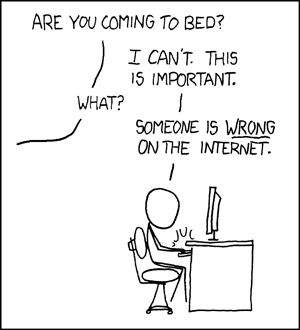
The most important thing to remember when you encounter unpleasantness is: take a breath, verify facts, and don't over-react. As Bob Mayer said on his blog last week: "The internet is a very dangerous place. I’ve seen internet lynch mobs go crazy over the slightest thing (done it myself a time or two) but a day or two of waiting and watching isn’t going to change anything."
When cybermonkeys start tossing verbal feces around a forum or blog, treat it like any other pile of poop.
Carefully walk around it.Realize you don't have to tell anybody what it is. Its stink will give it away.Call maintenance.Go someplace cleaner.You might want to send private messages of support to victims, but don't stand up for victims in cyberpublic no matter how much your inner Atticus Finch is hurting to speak.
I didn’t follow that advice recently and I'm still scraping stuff off my shoe.
Rule #7 Stay Out of Rough Neighborhoods
Absolute Write is no longer recommended. I used to suggest looking there for info on bogus agents and scam publishers. These days, it's so dominated by bitter, bad-tempered snark, you'd probably be safer with the scammers.
Amazon Forums: The Deadwood of the publishing frontier. Brutally anti-author and out of control with vigilantism.
LinkedIn Writers Groups. Some may be safe, but I've unsubscribed from all the ones I belonged to. Way too many rageaholics. LinkedIn is the most invasive of all social media and if you're not on it because of work, I'd recommend you stay away. They'll try to trick you into giving them access to all your email accounts so they can spam every one of your contacts mercilessly in your name, including every agent you've ever queried.
Goodreads: Mean Girls meets Lord of the Flies. This site has been desperately in need of adult supervision for a long time. Recently, they have made big steps in cleaning up the site, but I'd still suggest you stay in safe, author-oriented groups. (I'm fond of my BoomerLit group.) And don't read your reviews!
Or, to be really safe, follow the advice one agent tells her clients: "Go to Goodreads to put up an author profile. Link to your blog. Log out. Never go back."
Rule #8: Change your definition of "review" and don't take online reviews so seriously
1) An online product review is nothing like a traditional book review. When most of us think of a book review, we think of something in the New York Times, or a thoughtful assessment of a work written by a sincere blogger who has read the book and done some careful thinking and writing about it.
But online product reviews—as established in the early days of the Internet—are essentially comments, like the comments you see at the end of online news stories or a You Tube entry.
That means some online "reviewers" bear the same resemblance to traditional book reviewers that homicidal baseball fans do to sports commentators: not much.
2) Cruel, angry reviews say more about the reviewer than they do about your book. And they put you in excellent company. I know yours hurt like a physical wound, but it helps to read some of the idiotic one-stars of the classics.
3) It's an urban myth that Amazon requires a certain number of reviews or stars or "likes" on your author page to "move you up the ranks." Only one thing does that: sales.
Some advertising newsletters like Kindle Nation Daily, E-Reader News Today and BookBub do require tons of 5-star reviews, but I think that encourages gaming the system so I use advertisers that don't, like E-Book Bargains UK.
For actual readers, it's much more important to have a few good reviews and some good editorial reviews from well known authors. So don't obsess.
4) A lot of people view retail site reviews as a place for comic relief. Some can be hilarious. Actor George Takei recently made "top reviewer" status on Amazon for his reviews of odd products. I dare you not to laugh.
Others can be morbid and weird, like the Yelp reviews of the hotel where a body was found in the water cistern, or reviews of a wife-killer's "self-help" books.
5) Bad reviews don't always mean bad sales. One young writer engaged in an ill-advised snark battle with an ex that ended up in getting her book over 100 one-star nasty, racist reviews. But her book seems to be selling briskly.
6) Amazon also has an ultra-competitive "top 500/100/50 reviewer" program and you can get caught in their games. According to many reports, Grand Theft Auto mentality is rampant there. Reviewer-on-reviewer bullying and competition can be toxic. I've seen them use review comments and "useful" voting buttons to harass each other. Or they give one-stars to books their rivals love. With the author or vendor getting caught in the middle.
This is obvious breach of Amazon rules, so clicking the "report abuse" button usually solves the problem, but it can be traumatizing for the baffled author.
There is a rigid Amazon review culture and fall afoul of it at your peril. I've just heard of a new book about it called How to Get Good Reviews on Amazon by Theo Rogers, which may explain some more of the arcane rules.
7) Most people who write product reviews and comments are sincere, helpful customers, and some Amazon book reviewers are old school literary experts who could be published in any upscale magazine.
The best way to clean up the review system is add your honest reviews to the mix. Join the ranks of the sincere and helpful!
I know sometimes it seems as if nastiness on the Interwebz is getting worse, but according to some, it's actually turning around. In the May 2013 issue of Esquire, Stephen Marche said: "The Internet has reached peak hate. It had to. At every other moment in history when there has been an explosion of text — whether through social change, like the birth of a religious movement, or technological change, like the advent of print — a period of nasty struggle ensued before the forces of civility reined it in."
Let's hope for those forces of civility to step in soon.
***
Please don't discuss any specific recent incidents of bullying in the comments, or we'll attract monkey-poo (and if you see it, don't respond. Let it stink for itself.)
But don't keep bullying stories to yourself. Lawyers, law enforcement, and journalists are collecting information and will be grateful for your input. You can leave an incident report for NBC news here. There's more info at the International Bullying Prevention Website.
What about you, scriveners? Do you think Internet can be civilized? What other rules should writers follow to stay safe? Can you recommend other safe places for writers? Know of any other bad neighborhoods we should avoid? Do you think retailers should drop the "star" system on online reviews?
Book Bargain of the Week
Food of Love: a comic thriller about dieting, chocolate, and a small nuclear bomb.
Part thriller and part screwball romantic comedy, Food of Love is a rollercoaster comedy that also addresses complex issues about body image, religion and a woman's right to choose.Usually $2.99, now only 99c on Amazon , Amazon UK and NOOK
[image error]
"This hilarious page-turner packs a profound satirical bite. It's a Hollywood romp that provides romance, mystery, and an honest confrontation with the human condition. Food of Love is a funny and powerfully healing book." ...Lucia Capacchione, PhD, bestselling self-help author, Recovery of Your Inner Child
Opportunity Alerts
Looking for an editor? Are you an editor? Sign up for GalleyCat's Freelance Editor Directory. As a service to the writers and editors in the GalleyCat audience, they are building a free, automatically updated directory where editors can post their services and writers can seek freelance editors. It's FREE. GalleyCat is one of the top resources in the publishing industry.
Become a Certified Ghostwriter! with the only university level course in ghostwriting. Designed to expand or launch lucrative, professional careers, this course meets online Mondays from 5:30 - 8:30 PM Pacific beginning Oct 14, 2013. Certification at the end of the two semesters is conferred by California State University, Long Beach.
Boomers!! The Huffington Post's Huffpo50 is now publishing short fiction! The rules: You must be 50 or older to enter. Writers can submit only one story per year, and all pieces must be 5,000 words or less. Send your original submissions, as well as your contact details, to 50fiction@huffingtonpost.com.
Get your book international visibility for a reasonable price. EBUK is now advertising bargain books to a dozen countries, including the US and Canada. You can get more info here. Make sure your book is under $3.99 and provide links to all stores, not not only Amazon (unless you're in Select.) Ads are a little over 10 bucks until the end of August. And you can sign up for the newsletter for your country right here. I've signed up for the new US version. If you like bargain ebooks, this is a great free service.
Military Sci Fi Anthology. VFW: Veterans of Future Wars from Martinus Publishing. Write Military stories? Could one of them be set in the future? This is the anthology for you! 2000-6000 words. Make sure to follow submission guidelines. No docx files. Deadline Dec. 31, 2013.
***
This month Anne has an article about the pressures social media puts on authors at Talking Writing, the magazine for creative writers and readers.


![[image error]](http://2.bp.blogspot.com/-VFQLYbUrhLA/UdS-9IH3okI/AAAAAAAABUE/C6o9ScAInhM/s903/folcolor%20small.jpg)