
Anne R. Allen's Blog, page 61
September 29, 2013
The Writer's Toolbox #2: More Must-Have Tools for Writers
This week Ruth Harris gives us more must-have tools for writers in the second installment of her "Writer's Toolbox" Series. Lots of stuff here that's available FREE or cheaply.
This is another post—like the one about global markets last week—that reminds me how much I still don't know about this business. I have to admit I've never made out a style sheet. My publisher kindly has done this work for me, but I do need to learn this stuff.
Ruth really knows what she's talking about here. Before she was a high-powered editor (and later, publisher) at several Big Six Houses, AND a bestselling author on the New York Times bestseller list, Ruth Harris worked as lowly copywriter in Macmillan's textbook department. She worked in a "bullpen" and learned the trade from experienced, no-nonsense copy editors. She says it was a great education and foundation for what was to come.
Once again, Ruth brings us the benefits of her years of professional expertise. Take it away, Ruth!
...Anne
The Writer’s Toolbox #2Style sheets, style guides, code breaking + the best copyeditor’s query ever...and a copy editor joke
by Ruth Harris
Style sheets
Look, guys, I don’t want you to freak out but you need a style sheet.
Even if you’re trad-pubbing, you'll probably need one because publishers have cut back. Copyediting, like a lot of things, ain’t what it used to be.
 And if you self-pub and plan to hire a copyeditor, a style sheet will alert him/her to the basics of your manuscript and save you both time and money.
In case you don’t know what a style sheet is and maybe have never even heard of one, a style sheet is a list of all the important data—names, addresses, dates, people and places—in your manuscript. Making a style sheet is straightforward: the first time a character’s name (or any other data) is mentioned, add it to your list. Simple as that.
Basically, your style sheet is a road map to your book, a quality-control tool that provides coherence and consistency. A style sheet is analogous to continuity in a movie and will ensure, among other things, that your characters don’t suddenly change names—or worse—in the middle of your novel. Trust me, it happens.
Like this: Your MC is James Q. Black. You don’t want him to suddenly to become Jimmy Z. Brown and confuse the hell out of the editor you’re trying to sell. Because, guess what?, you won’t make the sale. A style sheet will save you from the vagaries of memory—and from yourself.
Or this: If you self-pub, you want to make certain your reader knows exactly which character is dangling off the edge of a cliff by the fingertips, don’t you? Is it James Q. or Jimmy Z, or, god forbid, Jane Z.—reader wants to know!
Example #2: Your heroine, Suzie Smith, lives at 21 Main Street. Add Suzie Smith plus her address to your style sheet. Will save you from calling her Suzy Smith a few chapters later and makes sure you refer to her address as 21 Main Street. Not twenty-one Main Street. And certainly not 22 Maine Avenue.
Suzie’s bff works at Lulu’s Bakery. Add bff’s name and Lulu’s Bakery to your style sheet. Loulou’s Bakery? What’s dat and what’s it doing in this story? A confused reader is a reader who’s going to lose interest.
Ace fiction editor Beth Hill, explains her approach to style sheets here and offers some useful how-to details. Deanna Hoak, star sf/f copyeditor, discusses the importance of style sheets here. She shares examples of actual style sheets here so you can see what they look like. You will find more about style sheets and a FREE downloadable template here.
Related to the style sheet are character descriptions that ensure a blonde is blonde (unless a change in hair color is critical to the plot). A six footer is six feet. A scar on the right side of a character’s face stays on the right side, doesn’t move to the left or completely disappear (at least not without a credible explanation).
Style guide or style sheet? Is there a difference?
Apple and oranges, bay-bee, although IRL ("in real life"...translation for the not so cool kids like me...Anne) sometimes there is overlap. Generally speaking, though, a style sheet keeps track of the nuts and bolts: 21 Main Street not twenty-one Main Street or 22 Maine Street, remember?
A style guide, OTOH (on the other hand), offer suggestions about how to write. Some publishers provide a style guide, a sort of house rules for writers.
This FREE style guide from The Economist emphasizes clarity—a goal every writer is (or should be) aiming for.
Here are some samples from the Economist style guide: Never use a metaphor, simile or other figure of speech which you are used to seeing in print.Never use a long word where a short one will do.If it is possible to cut out a word, always cut it out.Never use the passive where you can use the active.Never use a foreign phrase, a scientific word or a Jargon word if you can think of an everyday English equivalent. (I heartily endorse this one. So much tech info seems to be written in Klingon...Anne)The New York Times Style Guide ($13) is here. And here's a useful FREE overview of the AP Style guide. An entertaining consideration of the difference between a diaeresis and an umlaut (don’t forget the diphthong!) in The New Yorker.
FREE download of Fowler’s Modern English Usage here (McAfee seems to think this is a dangerous site, but I went there with no dire consequences...Anne) . How to choose a style guide. William Strunk’s classic The Elements Of Style FREE download.
Elmore Leonard’s beloved classic 10 Rules of Writing is a style guide with the stated goal of keeping the writer invisible to the reader.
Writers from Zadie Smith to Hilary Mantel spell out their approach in a great article in the Guardian on rules for writers. Here are rules for writing dialogue and William Safire’s witty Rules for Writers.
Writing teacher Roy Peter Clark reflects on the power of the short sentence here.
Just remember, rules are suggestions, not iron-clad laws. Once you know them and use them confidently, you can (maybe) break them as long as you know what you’re doing.
Preparing your manuscript
Related to the good housekeeping aspect of a style sheet is preparing your manuscript so that your book looks professional. Here, from the University of Chicago Press, is an easy-to-follow FREE guide to the details of manuscript preparation.
You will find more FREE information about preparing different kinds of manuscripts for submission—books, journals, art—here from the Chicago Manual of Style.
Breaking the code, or: working with an editor
Your editor has just returned your manuscript and it’s covered with doodles, squiggles and hieroglyphics. Those weird-looking doodles aren’t top-secret CIA spy codes or the formula for making an H-bomb in your kitchen.
They’re called editor’s (or proofreader’s) marks and, in order to communicate with your editor, you need to understand his/her language. You’ll find a handy Rosetta Stone here.
Format your manuscript for publication.
I wrote about formatting in the first Writer’s Toolbox but, since then, other on-line formatters have turned up on my radar.
Legend Maker for Mac costs about $30 and will turn your manuscript into epub or mobi format. Comes with a user guide, validators and on-line support. Find out more about Legend Maker here.Mobipocket Creator converts Word files to .prc files that can be uploaded directly to Kindle. Mobipocket Creator is a FREE download here.Kindlegen is Amazon’s own FREE downloadable tool for formatting your book into a Kindle-friendly format. Kindlegen is available for Windows, Mac and Linux.
Build your own website/blog
Even if you’re not a tech guru, a number of on-line helpers make the job of creating a professional-looking website or blog doable without fainting spells or hair-pulling. WordPress, Blogger.com, Wix and Weebly all have their proponents and all of them are FREE.
To help you decide, here’s more info: A Blogger vs. WordPress shoot out. A Weebly review. Weebly/WordPress comparison. Wix/Weebly compare and contrast.
Link shorteners
Google has one. Other flavors include is.gd, rd.me and tinyurl. Twitter and Hootsuite provide their own shorteners and bit.ly lets you create bundles, useful when you want to tweet a single link to send readers to your book at Kindle, Nook, Kobo, iBooks, etc.
Best editor’s query
“It’s not clear whose orgasm this is. Please clarify.”
Thanks to @SarahFrantz for this gem.
Copy editor joke
Q: How many copy editors does it take to change a light bulb?
A: This wording does not conform to our style guide.
Whew! Are you madly clicking on those links, scriveners? You don't have to do them all at once, the way I did. But you can ask Ruth questions about which style guides, web hosts, etc work for her, and what she'd recommend. Do you have any tools to add?
Book Bargain of the Week
The Park Avenue Series Five NYT Bestsellers for $4.99
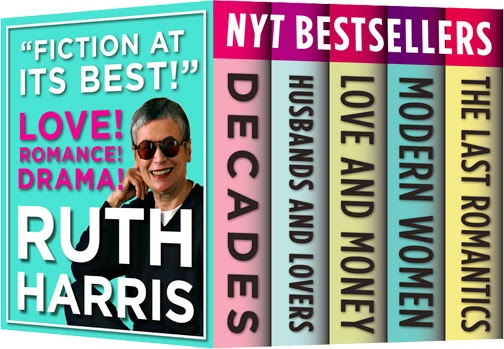
5 full-length novels by million-copy NYT bestseller and Romantic Times award winner Ruth Harris. 2000 pages of quality fiction.
Decades (Book # 1) Top 5 on Movers and Shakers. This bestselling classic is the compelling story of a marriage at risk, a family in crisis and a woman on the brink set against the tumultuous decades of the mid-twentieth century. "Absolutely perfect." ... Publisher's Weekly "Terrific!" ...Cosmopolitan "Powerful. A gripping novel." ...Women Today Book Club
Husbands And Lovers (Book #2) Million copy New York Times bestseller! Top 10 on Movers & Shakers! Winner, Best Contemporary, Romantic Times! The story of a shy wallflower who turns herself into a lovely and desirable woman and the two handsome, successful men who compete for her love. "A contemporary tale of passion and commitment. Steamy and fast-paced, you will be spellbound." ...Cosmopolitan
Love And Money (Book #3) #1 on Amazon's Movers and Shakers. Honored by the Literary Guild and the Book-of-the-Month Club. Rich girl, poor girl. Sisters and strangers until fate--and murder--bring them face to face. "Richly plotted. First-class entertainment." ...NY Times "Fast-paced, superior fiction. A terrifically satisfying 'good read.'" ...Fort Lauderdale News Sun-Sentinel
Modern Women (Book # 4) Million-copy NYT bestseller! #1 on Movers and Shakers! Three likable, dynamic women--and the men in their lives. The right men. The wrong men. The maybe men. "Funny, sad, vivid, and raunchy. Harris seeks to enliven and entertain, and she does it in spades." ...The Cleveland Plain-Dealer "Ruth Harris's rapier wit spices up a superb 'rags to riches' novel. You'll love Modern Women." ... West Coast Review of Books "Sharp and stylishly written." ... Chicago Sun-Times
The Last Romantics (Book # 5)--A sweeping love story set in Paris and New York during the glamorous Jazz Age of the 1920's. He is dashing, handsome and celebrated but dangerously flawed. She is beautiful, talented, lonely, haunted. Fate brings them together but will the tides of history keep them apart? "I love it, I love it! Fantastic, immensely readable." ... Cosmopolitan "Gloriously romantic" ... Kirkus
Opportunity Alerts
WILDA HEARNE FLASH FICTION CONTEST $10 ENTRY FEE. 500 words. Any theme. Semi-finalists will be chosen by a regional team of published writers. The final manuscript will be chosen by Susan Swartwout, publisher of Southeast Missouri State University Press. Winner receives an award of $300 and publication in Big Muddy: A Journal of the Mississippi River Valley. Deadline October 1st.
The Harper's Bazaar UK Short Story Prize is open to all writers. NO ENTRY FEE. Are you the next Dorothy Parker or Anita Loos? Submit an original short story (up to 3,000 words) on the subject of 'spring' to:shortstory@harpersbazaar.co.uk. The winning entry will appear in the May 2014 issue. Its author will be able to choose a first-edition book from Asprey's Fine and Rare Books Department to the value of £3,000 and enjoy a week-long retreat at Eilean Shona House, on the 2,000-acre private island off the west coast of Scotland where JM Barrie wrote his screenplay for Peter Pan. Deadline December 13th.
The Rumpus has launched the Weekly Rumpus and is calling for submissions. They are interested in "sharp, fresh, original work that grapples with life as it is really lived and felt in the world today. We want writing that walks on a wire, questions conventions, conveys a vision." 1000-6000 words. Here's their submissions page.
SMOKE AND MIRRORS podcasts. Get your short story recorded FREE for an online podcast! Fantastic publicity if your story is accepted by SMOKE AND MIRRORS. They broadcast about three stories a week. Spooky, dark tales preferred. No previous publication necessary. They judge on the story alone.
WILD LIGHT POETRY CONTEST The $25 entry fee is a little pricey, but this is run by the prestigious Red Hen Press and offers a prize of $1,000 and publication in The Los Angeles Review. Submit up to three poems of up to 200 lines each. Deadline October 15th.
***
This week Anne is visiting the Alliterative Allomorph, where she's talking about how the indie revolution has positively affected all readers, even if you still only buy paper books at brick and mortar stores.


September 22, 2013
The Ebook Market No Author Should Ignore: Think Globally!
One of the biggest changes the e-reader has brought to the publishing industry doesn't get much cyberink in the online book community.
It's the huge international market that's opening up now that we don't have to pay to ship physical books around the world.
If, like me, you've ever experienced that terrible moment on vacation when you discover you have nothing left to read in your native tongue but a copy of Henry James' The Golden Bowl you got in trade for your last Agatha Christie in that Athens hostel...you know how tough it used to be to find English language books abroad.
But no more!
The e-age has given us a global book market.
This weekend, some health challenges kept me from the Central Coast Writers Conference—a big disappointment—but it allowed me to stay home and see the first installment of PBS's series of Shakespeare's history plays, dubbed "The Hollow Crown." I got to watch a breathtaking production of Richard II. It contains some of Shakespeare's most eloquent love-letters to the mongrel language we call English.
Since I had just received this post on the international book market, I felt a small sense of irony when James Purefoy as Mowbray spoke those famous words protesting his exile from the Sceptered Isle.
"The language I have learn'd these forty years,
My native English, now I must forego:
And now my tongue's use is to me no more
Than an unstringed viol or a harp."
In the 21st century, exile is not so harsh. As Jay and the crew at Ebook Bargains UK tell us in this week's post: a whole lot of people all over the world now speak English.
They read it, too.
Which means there's a global market for ebooks in English that indie authors can tap into—with no worries about translation, shipping, or "foreign rights."
But most authors who write in English still focus on selling exclusively in the U.S. That worked for some of the big indie success stories a few years ago, but this is a rapidly changing industry.
Do you know the country where people read the most books? I sure didn't. According to a July article in the L.A. Times, it's India. And you know where the second biggest population of English speakers lives? Again, it's India. Followed by Pakistan and Nigeria.
Combined, those three countries make up a larger population of English speakers than in all of the US.
I've mentioned in several posts recently that I've been getting a boost in my sales outside the US thanks to a new ebook promo newsletter that's venturing where the big US advertisers like BookBub, Kindle Nation Daily and Pixel of Ink don't go: the international markets.
For those of you who aren't published yet, you may not know the ebook bargain newsletter is rated by many as the most effective way for new authors to get noticed. Buying ads in daily newsletters like Kindle Nation Daily, E-Reader News Today, Pixel of Ink, and Bookbub is one of the best ways to get a new book in front of readers.
But they have some big drawbacks:
They're pricey. They only sell to the US. They demand a huge number of Amazon reviews: reviews on blogs, newspapers, or on other retail sites don't count. Most only link to Amazon.
I'm lucky my publisher connected with EbookBargainsUK (EBUK for short) early, so we got in on some of their initial freebie ads. But the ads are still remarkably low priced, and I have seen direct results. After a "spotlight" week in the newsletter, my boxed set reached #2 in Canadian women's fiction: right between Margaret Atwood's latest and the new Bridget Jones. A fantasy come true for a longtime fan of both Atwood and Fielding. It also charted in France, Germany and Brazil.
The EBUK newsletters don't have all the bells and whistles of the big American promoters, and they've only been going a few months, but as co-founder Jay Housden explained to me, what they lack in budget and fancy tech they make up for in enthusiasm and ambition.
A whole lot of ambition, as you'll see below.
And okay, I have a thing for all things Brit, as my readers know. (Yes, the next Camilla adventure will take us back to Swynsby-on-Trent. And there's a possible future jaunt to India, where Camilla's etiquette books are very big. Funny how our fiction can sometimes be predictive.)
EBUK's newsletters target English-speakers all over the world. And as they will tell you, ebooks are already a major factor in the global marketplace.
I'm a little embarrassed by my ignorance about this stuff. I didn't have a clue my books were on all these international sites. If you don't have a savvy publisher like mine, you may want to use self-publishing sites like Smashwords or D2D who will automatically put you on most of the international retail sites.
I know this piece is more promotional than what we usually accept, but I was so blown away by the info, I had to share it with you. Plus I'm a big fan of Mark Coker at Smashwords, and he echoes their vision in a great post about the Indian market here. Smashwords is working at putting indies into as many of these markets as possible. It looks as if this will make Smashwords a much bigger player in a few years.
Maybe someday, like Camilla in No Place Like Home , you'll be able to put a down payment on a little cottage with the proceeds from your international sales.
So Mick, Jay and the EBUK tech geniuses—take it away!
...Anne
Why Every Author Should Start Thinking Globally
by the EBUK Team

Given we only launched Ebook Bargains UK (EBUK) this summer, on a shoe-string budget from a bedroom in Bedford, with the impossible ambition of promoting English-language ebooks to a world that supposedly doesn’t know ebooks exist, we’re pretty pleased with how things are going.
We started the first EBUK newsletter because we were tired of seeing newsletters that only linked to Amazon—usually only Amazon US. We'd search for the book on Amazon.co.uk or another UK site, and find it wasn't on sale to us.
We also wanted to know about ebook bargains to be found at our own UK bookshop sites, like Foyles, Waterstones, W.H. Smith, Tesco etc.
We soon realized such a newsletter would be useful in Canada and Australia and India...and English speaking countries all over the world. So our one newsletter rapidly expanded to ten. We hope to have twenty by the end of the year.
Okay, so right now our number of subscribers is pitiful compared to BookBub's million. But it's important to bear in mind EBUK is targeting the nascent markets, not a mature market like the United States. The vertical expansion (subscribers) is inevitably going to be slow to start. But the list is growing daily.
We believe the international English-language ebook market will dwarf the US market in the coming years. Which is why we’re happy with our gradual vertical expansion and are instead focused on our lateral expansion – reaching out to readers around the globe.
By the time you read this we will have just launched Ebook Bargains S.E. Asia, the twelfth of our international newsletters. By no coincidence it coincides with the launch of the new Kobo store in the Philippines.
The S.E. Asia newsletter (Not just the Philippines but Thailand, Singapore, Malaysia, Vietnam, Indonesia, etc) will join daily promo newsletters already shipping to:
AustraliaCanadaGermanyIndiaIrelandthe NetherlandsNew ZealandSouth AfricaSpainUKUSAEbook Bargains France, Italy and Scandinavia will be following next month, with another five to add before the year’s end.
Each daily newsletter carries the same titles, but the Australia newsletter only has links to retailers available in Australia. The German newsletter only has links to retailers available in Germany. The Dutch newsletter only has links to retailers in the Netherlands. Etc.
Ebooks Down Under
Guess what? Oz has been selling ebooks since the last century.
You’ve probably never heard of ebooks.com but they’ve been selling ebooks since 1997, ten years before Amazon introduced the Kindle – and are still going strong.

Amazon is estimated to have just over a 60% market share in Australia, which means four out of ten readers are shopping elsewhere.
Some of you may be familiar with Angus & Robertson and Collins, both supplied by Kobo.
What you probably don’t know is that Australians can also buy ebooks from:
Booktopia, BookworldDymocksQBDFishpond Here’s our host Anne R. Allen in Bookworld.Then of course there’s the Apple iTunes Australia storeand the GooglePlay Australia store. And not forgetting the Sony Australia Reader Store. Sony have been quietly reinventing themselves while your back has been turned and now have seven international stores – here’s Anne R. Allen in their Australian store.
Even the German ebook retailer 'txtr (no, that’s not a typo) has an ebook store in Australia. And guess who’s got her ebooks there...
 All these stores are selling ebooks to Australians in Australian dollars. Well, all except Amazon. They haven’t got a local store yet. And Australians have plenty of devices to read on. Not just Kindles and the now ubiquitous Kobo range, either.
 Then there’s the indie stores! Sydney bookstore Pages & Pages has been tempting patriotic Aussies to trade in their Kindle for AU$50 and buy a BeBook ereader instead. And for every AU$50 you spend on books or ebooks in a month in their store you get a AU$5 discount the following month.
Don’t under-estimate the niche marketing power of indie bookstores as they turn digital, be they in Australia, New Zealand , the UK or the USA.
What about Europe?
Most people know there's an Amazon store in Germany (Amazon.de) But you may not know there are many others:
 The Kobo store is Germany’s biggest ebook store by far. There's also an Apple iTunes Germany. Anne's here in the 'txtr Germany store. And here in Thalia. And she’s only in Buecher too.And Sony Reader Store Germany, which is running a nice little discount on Anne R. Allen’s titles right now. Sony also have a Reader Store in neighbouring Austria, and guess who’s there....
In fact there seems to be no escape from Anne R. Allen. It would be easier to tell you where she isn’t!
Here’s Anne R. Allen in Ireland’s prestigious Eason ebook store in Dublin. Eason will shortly be releasing their own ereader.
Her ebooks are even in Iceland!
The Netherlands? No Amazon store there yet, so no Anne R. Allen, right? Ah, but there is:
A local Dutch language Kobo store. And an Apple iTunes Netherlands storeAnd a GooglePlay Netherlands storeAnd of course a ‘txtr Netherlands store (Here’s Anne R. Allen for Dutch buyers in ‘txtr NL). And that’s before we start on the local competition: local Dutch ebooks stores. The Dutch retailer Bol has been busily selling ebooks in Holland since 2009, the same year Amazon launched KDP in the US.
No doubt you’ve been reading excitedly about the new US start-ups offering ebooks subscription stores.
Guess what? Skoobe in Germany and 24 Symbols in Spain have been doing it for years.
Denmark has two rival ebook subscription services, Riidr and Mofibo .
Incidentally 24 Symbols is dual language Spanish and English, acknowledging the huge number of Brit expats living in Spain with nothing to read. Come to that Skoobe is dual language, too.
 Far more people speak English in Germany than most people imagine. How does 40 million English speakers in Germany grab you?
The truth is, Europe is an untapped ebook goldmine.
GooglePlay has figured that out. They already had ebook stores in the USA, Canada, UK, Australia, Germany, France, Spain and Italy as of July this year. Oh, and also Austria, Belgium, Brazil, Ireland, Japan, Mexico, Portugal, South Korea and Russia. Pretty impressive.
Then across the summer they rolled out additional ebook stores in the Netherlands, Denmark, Sweden, Finland, Greece, Hungary, the Czech Republic, Poland and Romania. That’s twenty-seven ebook stores around the world. So far. Not in GooglePlay? Might be worth the effort.
Then there’s that bizarrely named 'txtr (no capital, the apostrophe is compulsory, and despite the lack of vowels they are German, not Welsh) has no less than seventeen ebook stores around the globe. Mostly in Europe, including a 'txtr UK store, and also in Australia, Canada, New Zealand, South Africa and America.
And 'txtr has some big surprises lined up. You may never have heard of them until now, but if you’re not in the ‘txtr international stores then you will be missing out on some big opportunities ahead. Here's Anne in ‘txtr Ireland. And in ‘txtr Poland.
Africa
Here’s Anne R. Allen in ‘txtr South Africa. South African readers can also buy Anne’s books in the local Kalahari store, where they might choose to read on the local gobii e-reader rather than a Kindle or the Kobo devices sold nationwide by the country’s biggest supermarket chain Pick-N-Pay.
Nor is it just Europe, South Africa and Down Under that have been busily enjoying ebooks.
Latin America
Over in Latin America you’ll be surprised (or maybe not by now) to learn they don’t just have the Amazon Brazil and Amazon Mexico stores to buy from.
Here’s Anne R. Allen in Livraria Cultura in Brazil. Okay, no more plugs for Anne’s titles (thanks guys...I was feeling a little embarrassed by all that...Anne) You get the picture.
And the rest of Latin America? BajaLibros is third largest Spanish language ebook store in the United States, and they’ve been selling ebooks in Argentina since 2010, the same year the Kindle arrived in the UK. They produce their own ereaders which, along with their ebooks, are sold across Latin America and also in Spain.
Wonderful as it was to see the Kindle store arrive in Brazil, and more recently Mexico, the truth is Latinos were buying ebooks long before. Here’s BajaLibros in Brazil. And here in Mexico. They also have stores in Bolivia, Chile, Colombia, Costa Rica, Ecuador, Paraguay, Peru, Uruguay and Venezuela, not to mention Puerto Rico and the Dominican Republic. BajaLibros produce their own ereaders too.
Argentina was the UNESCO Book Capital in 2011, and earlier this year managed to cram over one million visitors into the Buenos Aries Book Fair, so let’s be in no doubt Argentines like reading.
But don’t go thinking BajaLibros is the only ebook show in town.
Grammata have also been selling ebook and ereaders in Argentina since 2010, and are now pretty much everywhere where Spanish is spoken. Here in Colombia, for example. They’re even in Spain! And if you don’t fancy buying from Grammata, pop along to Movistar (started 2011, has own ereader) or try Amabook. Amabook too has ebook stores across Latin America, as well as in the US! And it too beat Amazon to Mexico.
This is just the tip of the iceberg. An iceberg growing at a phenomenal rate.
Ebooks are being sold on six of the seven continents.
But let’s end where we began, in Asia
In Thailand Kobo is working hard to launch a Thai store, but meantime local retailer Ookbee has well over 80% of the market. Ookbee already has a three million strong customer base and is currently picking up new customers at the rate of 6,000 a day. Ookbee launched in Malaysia this summer, where it picked up 100,000 customers in its first two months.
They are opening an ebook store in Vietnam where competition is already fierce from Aleeza and Biitbook `– Biitbook even has its own self-pub portal!
Ebooks have been slow to come to the Philippines. But that all changed this month with the launch of the Kobo Philippines store, in partnership with the National Book Store chain, which now sells both print and ebooks to Filipinos.
What if we told you National Book Store is not a translation from the local Tagalog language. Most of the signs in store – and most of the books – are in English?
There are 75 million English speakers in the Philippines. More than the entire population of the UK!
Did we mention we launched Ebook Bargains S.E. Asia this week?
China is not the easiest market to get into, but just this month OverDrive signed a major distribution deal with the Chinese authorities, which means their entire catalogue will be available to Chinese readers in due course.
At Ebook Bargains UK we are trying to stay a few steps ahead as we watch the international ebook market blossom. What we lack in fancy high-tech websites and slick newsletters (that will come as the advertising revenue builds) we make up for in knowledge of the international ebook scene and unbridled enthusiasm.
We produce regular helpful newsletters for authors about how to reach and promote in these markets.
We all know how difficult it is to break into a mature ebook market. Most best-selling indies got in to either the US or the UK markets very early on. Very few have managed to do well in both.
But what is happening now is unprecedented in publishing history. In the old world, book distribution was physical. It was simply not viable to print and distribute English language books en masse even to countries like Australia or New Zealand, let alone Iceland or Indonesia, or Paraguay or Papua New Guinea.
Digital changes all that. Here’s some numbers for you.
There are about 150 million English-speakers in India, and while local languages books and ebooks
 are available, the ebook retailers’ sales report mostly English-language titles selling, and with increasing rapidity. The question is how to get your books noticed and bought in this huge potential market.
Indians have been enjoying ebooks for several years. The Amazon India store is actually a bit of a late-comer. Way back in 2011 Indian retailers were selling Android tablets for... wait for it... $35. And buying ebooks from local stores like Flipkart, Infibeam and Pothi. Here’s Anne R. Allen in India’s Infibeam, the country’s second biggest ebook retailer after Flipkart. (OK, but that's the last one, guys...Anne)
Flipkart? India’s on-line giant Flipkart has an estimated 80% market share.
As of this month Smashwords is distributing ebooks in India.
You can also upload direct to another key Indian ebook retailer, Pothi. Along with Amazon India that’s a great base from which to become a future indie best-seller on the sub-continent, if only readers there knew your books existed. (Say, did we mention we have an Ebook Bargains India newsletter?)
But back to those numbers. When we said we expect the international English-language ebook market to dwarf the US market we weren’t joking.
In just India, Pakistan and Nigeria, the number of English-speakers exceeds the entire population of the United States!
And the rest of the world? Well, there’s upwards of 75 million English speakers in the Philippines as we’ve mentioned already. Over 40 million English speakers in Germany. 30 million in Bangladesh. 30 million in Egypt. 25 million in France. 20 million in Italy. 17 million in Thailand. 15 million in the Netherlands. 15 million in South Africa. 12 million in Poland. 12 million in Turkey. 11 million in Iraq. 10 million in Spain. 10 million in China.
Then there’s Brazil, Sweden, Kenya, Cameroon, Malaysia, Russia, Belgium, Israel, Zimbabwe, Romania, Austria and Greece, all with between 5 and 10 million English speakers each.
A very conservative estimate puts the number of English-speakers outside the USA at around 750 million, quite apart from the UK (60m) , Australia (20m), New Zealand (4m) and Canada (25m).
Because of the logistics of print distribution English-language print books have never even begun to approach their true sales potential. Digital changes everything.
And you have a chance to get a foot on the first rung of the international ladder now, before everyone else does.
How to find and get into these retailers you’ve never heard of and promote in countries you thought were still reading on parchment? That’s where we come in.
One small fee (and we do mean small – prices start at just $5 a day) will get you in however many international newsletters we have. Right now that’s $5 to appear in twelve newsletters going around the globe. The small fees reflect the small returns you should expect at this stage given these are nascent markets and our subscriber base is still building. Be realistic. But every paid ad gets a credit for a free ad of equal value, so effectively it’s two for one. And there are plenty of listing options. We’re a little bit different from all the other newsletters out there.
You can find links to the daily newsletters on our Facebook page. And connect with us on Google+. You can subscribe to the reader newsletters by country /region, sign-up for the authors’ newsletter, or check out our website www.ebooksbargainsuk.com.
We all dream of becoming a truly international bestselling author. Ebook Bargains UK can help make that dream come true.
***
Pretty amazing stuff, isn't it, scriveners? (Although I think the penguin community should lobby for an Antarctica ebook store.) The guys say they're going to check in on the blog when it goes live on Sunday (nighttime in the UK.) So ask your questions. I know I have some. Like how hard is it to get into all these bookstores? Ask away....
Book Bargain of the Week
Sale extended! No Place Like Home is still 99c on Amazon US, Amazon UK, and Amazon CA (and yes, after reading this post, I'm going to get my publisher to take it out of Select and make it available on other platforms, lickity split!...Anne)

"A warp-speed, lighthearted comedy-mystery"...Abigail Padgett"A fun, charming novel about the rich and less so" ...Karen Doering"A cross of dry British humor and American wackiness, and it all adds up to a fun read." Deborah Bayles
OPPORTUNITY ALERTS
The Harper's Bazaar UK Short Story Prize is open to all writers. NO ENTRY FEE. Are you the next Dorothy Parker or Anita Loos? Submit an original short story (up to 3,000 words) on the subject of 'spring' to:shortstory@harpersbazaar.co.uk. The winning entry will appear in the May 2014 issue. Its author will be able to choose a first-edition book from Asprey's Fine and Rare Books Department to the value of £3,000 and enjoy a week-long retreat at Eilean Shona House, on the 2,000-acre private island off the west coast of Scotland where JM Barrie wrote his screenplay for Peter Pan. Deadline December 13th.
The Rumpus has launched the Weekly Rumpus and is calling for submissions. They are interested in "sharp, fresh, original work that grapples with life as it is really lived and felt in the world today. We want writing that walks on a wire, questions conventions, conveys a vision." 1000-6000 words. Here's their submissions page.
Quirk Books "Looking for Love" contest. They offer a $10,000 prize for the best quirky love story of 50,000 words or more. Visit the Quirk Books website to download the entry form or for further information. Quirk Books was founded in 2002 and publishes around 25 books each year. Their bestselling titles include Pride and Prejudice and Zombies and Miss Peregrine’s Home for Peculiar Children. Entries close October 1.
SMOKE AND MIRRORS podcasts. Get your short story recorded FREE for an online podcast! Fantastic publicity if your story is accepted by SMOKE AND MIRRORS. They broadcast about three stories a week. Spooky, dark tales preferred. No previous publication necessary. They judge on the story alone.
WILD LIGHT CONTEST for poets. The $25 entry fee is a little pricey, but this is run by the prestigious Red Hen Press and offers a prize of $1,000 and publication in The Los Angeles Review. Submit up to three poems of up to 200 lines each. Deadline October 15, 2013.
September 15, 2013
Blog Communities: Forming a Safe Place for New Writers in a Scary Online World
Some pretty scary things have been happening in the online book world recently—stuff that's been shocking to those of us who expect our fellow book-lovers to behave like civilized adults.
I spend a lot of time telling new authors how to use social media to create a "platform," but I probably don't warn you enough about the dangers. I did write a post last spring on Gangs of New Media, talking about how the "hive mind" and rage addiction are adversely affecting our industry.
Unfortunately, so many authors have turned into non-stop spam machines that anti-author sentiment is on the rise. There are sites where anti-writer gangs dominate, and others that are tyrannized by groups who treat the Internet as a giant video game in which naivete is a crime and innocents are there to be slaughtered.
The bigger and older the site, the more likely it is to attract sociopaths and semi-literate potty-mouths. I'll be writing a series of posts starting in October about how to stay safe in this increasingly hostile environment.
There's a new Facebook group for Authors Against Abuse where you can discuss particular incidents of abuse in the writing and reviewing community. International legal teams and the media are gathering information as well. You can leave an incident report for NBC news here. It's better not to discuss specifics in the comments here, or we'll attract trolls. (If you see a nasty comment, don't respond. That's what they want.)
However, a few out-of-control thugs don't make the entire online book world a bad place.
There are wonderful communities where new writers can network, learn, and comfort each other as they learn the ropes and go through the long and often painful process of learning to be professional authors. As creatives, we're confronting our demons and putting our raw souls out here in public every day, and we need places where we can feel protected and safe.
.jpg) One of those places is the Insecure Writers Support Group, founded by Alex J. Cavanaugh.
One of those places is the Insecure Writers Support Group, founded by Alex J. Cavanaugh. Alex is one of the writing world's most prolific bloggers as well as the author of the bestselling Cassastar sci-fi series.
He's also one of my fellow contributors to the Indiestructible anthology, which donates profits to charity.
The IWSG, which turned two years old this week, is one of the most helpful online writing communities I've come across.
Blogger Julie Luek of "A Thought Grows" says, "I feel like I need to throw a little confetti in honor of Alex and the two year IWSG birthday. Thanks, Alex, for pulling a bunch of disconnected, fearful writers together. You've left quite a legacy in the writing-blog world."
IWSG a kind of monthly blog hop for writers who want to network, but prefer to avoid the "I'm-42-and-still-in-middle-school" atmosphere we find in much of social media.
As artist and blogger Donelle Lacy said in the comments of last week's post "writers need a support group of people who give helpful advice and encouragement. When you get buried under rejections, they can help pull you out. "
The Insecure Writer’s Support Group
Purpose: To share and encourage. Writers can express doubts and concerns without fear of appearing foolish or weak. Those who have been through the fire can offer assistance and guidance. It’s a safe haven for insecure writers of all kinds!
Posting: The first Wednesday of every month is officially Insecure Writer’s Support Group day. Post your thoughts on your own blog. Talk about your doubts and the fears you have conquered. Discuss your struggles and triumphs. Offer a word of encouragement for others who are struggling. Visit others in the group and connect with your fellow writers.
Their Twitter hashtag is #IWSG
Alex's Twitter handle is @AlexJCavanaugh
I recommend the group to writers who are just getting their feet wet in this business. It's a great way to get new blog followers and members are helpful and kind.
When I was feeling pretty down on the whole online book world recently, I found it uplifting to to visit a community where people haven't forgotten the Golden Rule.
Alex has a success story that proves my theory that a blog is the author's most important tool in establishing platform. Alex doesn't use Facebook, Pinterest, Instagram, Tumblr, or Google+. His blog, Twitter—and his visits to other blogs—are his major online activity. Try Googling him and you'll see how well this has worked for him. I ran out of time after the first thirteen pages of 100% Alex in the search results, but the pages probably go into the hundreds.
As gangs are allowed to terrorize big book and retail sites, the one place where we know we can be safe is in blog communities we choose for ourselves. Each blogger has the right to block hostile trolls and delete offensive comments. We can set the tone for our blogs and make sure they reflect our brand and standards.
"Insecure" writer Damyanti of the Daily (W)rite says, "I think blogging brings out the best in writers– we become a sympathetic, helpful community (which sometimes doesn’t happen in real life.) IWSG has become a safe place for blogger-writers on the web, and I personally have learned a lot from some of the posts I’ve read, be it writing advice or publishing tips."
Evolved, generous spirits tend to attract other evolved, generous spirits, and that is what what Alex J. Cavanaugh has done. He volunteers with literacy programs and is always looking for ways to make the world a better place.
Today he's going to talk about how to create a blog community of your own.
Yes, I'm always telling you not to market your books exclusively to other authors, but the first step in building platform is to network and build a solid core of online friends. Connecting with a group of writers in similar genres can benefit your career in many ways. Not only can you prop each other up during tough times, but you can publish anthologies, put on joint 99c sales and and team up for newsletters. Writers need writer friends. Forming your own community can pay off in huge dividends later.
...Anne
Creating an Online Community
by Alex J. Cavanaugh
 When I first began blogging, I was one lone writer. Little by little, I discovered other bloggers and writers and began to immerse myself in this awesome community. Through events, blogfests, and memes, I connected with others.
And I noticed something – writers are an insecure bunch!
Most writers are quick to offer encouragement and support of one another. I started to wonder if there was a way to focus that positive energy and make it even more powerful. I wanted to bring everyone together as a group and let other writers know they weren’t alone.
Thus two years ago the Insecure Writer’s Support Group was born!
Its purpose: To share and encourage. Writers can express doubts and concerns without fear of appearing foolish or weak. Those who have been through the fire can offer assistance and guidance. It’s a safe haven for insecure writers of all kinds!
Posting schedule: The first Wednesday of every month is officially Insecure Writer’s Support Group day. Post your thoughts on your own blog. Talk about your doubts and the fears you have conquered. Discuss your struggles and triumphs. Offer a word of encouragement for others who are struggling. Visit others in the group and connect with your fellow writer - aim for a dozen new people each time.
The success of the group has exceeded all expectations. Every month there are so many touching posts as writers bare their souls, followed by a slew of encouraging comments. Sometimes writers post encouragement, providing others with hope. Now three hundred strong, the group has come together in ways I never imagined.
Groups and communities like the IWSG are where we connect and thrive. Other groups have risen, including the Indiebles’ Indie Day, where writers and bloggers can come together and share their wisdom, knowledge, and experience. It’s a powerful force.
There are five ingredients and steps in creating a successful group:
1) Leadership - In any group, there are those who participate and those who facilitate. You get more when you are directly involved. Whether organizing or teaching or leading – you learn and benefit. You are able to give back. This benefits you in countless ways.
2) Value – There has to be a purpose and meaning behind the group. What can you and the other members offer? How will everyone benefit? Is there a real need that can be met?
3) Time –Do you have the time? Plan it out first. Perhaps get feedback from a couple key blogger friends. Make sure you think of every aspect and how long it will take to implement. Setting up the mission statement, sign up lists, badges, pages or group blogs, etc. – it all takes time and a commitment.
4) Involvement – Entice others to get involved not just with the group but with each other. This starts with you first. The leader must be involved. He must promote and uplift more than anyone else and set the example for others to follow. Find ways to actively involve the members.
5) Keep it going – Never lose the passion. If the leader loses it, the group falls apart. Delegate where necessary, because you can’t do it all. Evaluate members and make sure everyone is participating. Continue to promote and encourage. Be prepared for growth and adjust for it.
The IWSG has been a huge blessing to me and all who’ve participated. The comments and emails of thanks often pour in as writers tell me it’s their favorite day of the month. I’m no longer able to visit every single post (despite rumors I have clones) and have three rotating co-hosts every month. The group has grown large and I’ve already made plans to take the next step up and propel it into the future by setting up an IWSG dedicated site.
***
Alex J. Cavanaugh has a Bachelor of Fine Arts degree and works in web design and graphics. He's experienced in technical editing and worked with an adult literacy program for several years. A fan of all things science fiction, his interests range from books and movies to music and games. Online he is the Ninja Captain and founder of the Insecure Writer’s Support Group. The author of the Amazon bestsellers, CassaStar and CassaFire, he lives in the Carolinas with his wife.
For more on creating online communities check out this post by Alexis Grant on Jane Friedman's blog.
Are you part of the IWSG? Have you ever thought about starting your own online writing group? Have you been bullied or treated rudely in other online communities? What other communities can you recommend that are friendly to new writers?
CassaStorm by Alex J Cavanaugh
Available in paper at Barnes and Noble & Amazon and for Kindle for $4.99from Dancing Lemur Press
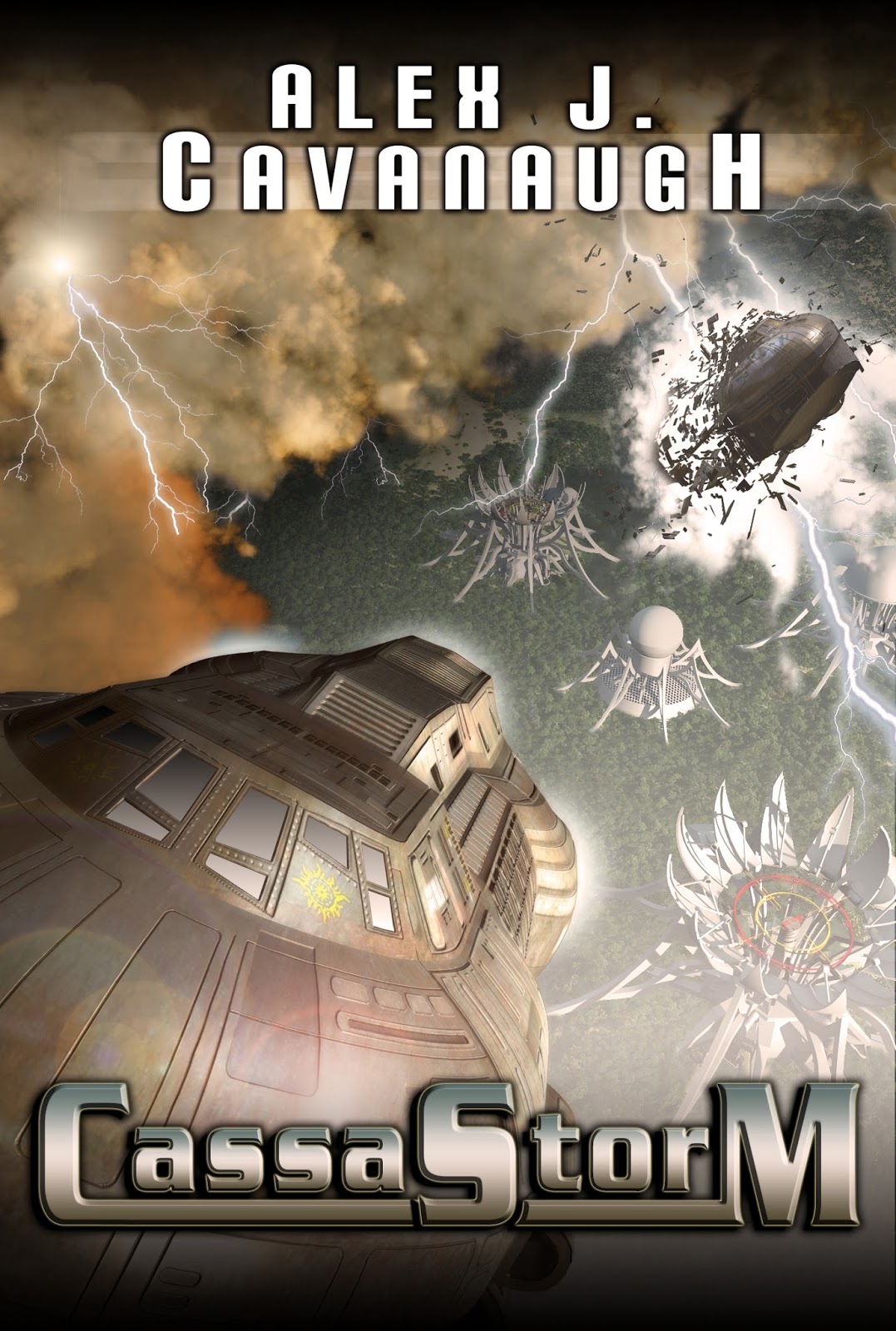
See the book trailer here
From the Amazon Best Selling Series!A storm gathers across the galaxy…
Commanding the Cassan base on Tgren, Byron thought he’d put the days of battle behind him. As a galaxy-wide war encroaches upon the desert planet, Byron’s ideal life is threatened and he’s caught between the Tgrens and the Cassans.
After enemy ships attack the desert planet, Byron discovers another battle within his own family. The declaration of war between all ten races triggers nightmares in his son, threatening to destroy the boy’s mind.
Meanwhile the ancient alien ship is transmitting a code that might signal the end of all life in the galaxy. And the mysterious probe that almost destroyed Tgren twenty years ago could return. As his world begins to crumble, Byron suspects a connection. The storm is about to break, and Byron is caught in the middle…
“CassaStorm is a touching and mesmerizing space opera full of action and emotion with strong characters and a cosmic mystery.” – Edi’s Book Lighhouse
"Cavanaugh makes world building on the galactic scale look easy. The stakes affect the entire known universe and yet Cavanaugh makes it intensely personal for our hero. The final installment of this series will break your heart and put it back together." - Charity Bradford, science fantasy author of The Magic Wakes
BARGAIN OF THE WEEK
2 Bestselling Thrillers for the price of oneKiller Thriller boxed set by Ruth Harris and Michael Harris only $4.99 at Amazon, Nook, Amazon UK and $4.93 CND at Amazon CA

"Slick and sexy. All the sure elements of a big seller written by pros who know how to tell a story." --Publishers Weekly
"Delivers the goods: thrills, gut-churning suspense, nightmarish terror. Ruth and Michael Harris have delivered another great read and sure bestseller. I dare you to put it down!" --Bob Mayer
OPPORTUNITY ALERTS
The Harper's Bazaar UK Short Story Prize is open to all writers. NO ENTRY FEE. Are you the next Dorothy Parker or Anita Loos? Submit an original short story (up to 3,000 words) on the subject of 'spring' to:shortstory@harpersbazaar.co.uk. The winning entry will appear in the May 2014 issue. Its author will be able to choose a first-edition book from Asprey's Fine and Rare Books Department to the value of £3,000 and enjoy a week-long retreat at Eilean Shona House, on the 2,000-acre private island off the west coast of Scotland where JM Barrie wrote his screenplay for Peter Pan. Deadline December 13th.
The Rumpus has launched the Weekly Rumpus and is calling for submissions. They are interested in "sharp, fresh, original work that grapples with life as it is really lived and felt in the world today. We want writing that walks on a wire, questions conventions, conveys a vision." 1000-6000 words. Here's their submissions page.
Quirk Books "Looking for Love" contest. They offer a $10,000 prize for the best quirky love story of 50,000 words or more. Visit the Quirk Books website to download the entry form or for further information. Quirk Books was founded in 2002 and publishes around 25 books each year. Their bestselling titles include Pride and Prejudice and Zombies and Miss Peregrine’s Home for Peculiar Children. Entries close October 1.
Get your book international visibility for a reasonable price. EBookBargainsUK is now advertising bargain books to close to a dozen countries, including the US and Canada. You can get more info here. Make sure your book is under $3.99 and provide links to all stores, not not only Amazon (unless you're in Select.) Ads go for as little as 10 bucks. These guys made my Camilla boxed set a bestseller in Canada: #2 in women's fic. between Margaret Atwood and Bridget Jones! (Which kind of perfectly describes what I aspire to in my fiction.)
And you can sign up for the newsletter for your country right here. I've signed up for the new US version. If you like bargain ebooks, this is a great free service.
September 8, 2013
Rejection 101: What Authors Should NEVER Do When They Get Rejections
I know. Rejections hurt.
But they're also a necessary part of your career as an author. So when you get your first one, give yourself time to feel the pain, then do something to celebrate. Maybe even print it out and frame it.
Yup. You read that right. Congratulations!
You now have the one thing that all professional writers have in common. Every single professional writer gets a boatload of rejections.
But you know what's worse than rejections?
No rejections.
The rejection system is part of your education in the publishing industry. Getting your work accepted before you've had time to learn about the business can backfire. Big time. You can get scammed or talked into signing a bad contract, or you can bumble into a comedy of errors the way I did.
The first agent I queried accepted me as a client. Great, right?
Not so much.
I'd sent out my query to one of the top agencies in L.A., got a request for a full manuscript, and a week later I heard from her assistant—a man about to become an agent in his own right—who was in love with my manuscript. In a delightful British accent, he pronounced my story "hilarious" and said he'd "show it around to a few people."
So—since I'd heard you should never phone an agent—I sat around and waited. And waited. Six months. Nothing. No contract. No word of anything. Finally I sent off a letter (no email in those days) asking if anything was happening. No word. So I waited some more. A month later, I finally phoned the agency.
Seems "my agent" had left the business a couple of weeks after we'd talked and gone back to England.
Thunk.
So I queried another agent. (No, I hadn't thought to keep querying during that eight months. I was naive enough to think that phone call meant what I had was a done deal.)
So did I finally get a rejection? Nope—acceptance, but again, no contract. My book went out to a dozen editors over six months, with no takers—so the agent dropped me.
Double thunk.
But I soldiered on. I bought Jeff Herman's Guide to Literary Agents and sent well-researched, targeted queries to dozens of agents. I was sure if I got two agents right off the bat, I could get my pick of others.
Ha! That's when I got the rejections. Hundreds of them. And they hurt worse because I'd set myself up to think I'd be easily accepted.
I'd search every one for clues to what was "wrong" with the book and go into a frenzy of rewriting.
When an agent said, "I just can't connect with these characters," I'd make every character a little more bland.When an agent said "this plot is confusing," I'd eliminate the subplots. When an agent said "humorous fiction is a hard sell," I'd remove the jokes. When an agent said she was no longer taking adult fiction; she only wanted YA, I'd try to rewrite the story as YA.So after years of rejections and rewrites, did I have a gorgeous, perfect book every agent would love?
No. I had an unreadable mess.
I wrote other books and went through the submission process with a few more agents and finally got my big break with a small UK publisher.
But that poor, much-rejected, over-edited book sat in a drawer, unloved.
I figured it was that practice novel that would never see print, even though my beta readers kept asking why I hadn't published it because it was their favorite.
Then about a year ago an old friend who had been cleaning out his garage came by with the manuscript of that abandoned book. He had one of the earliest versions, in printout and on a CD.
I looked over that old, unedited version and realized it was a pretty good story. It needed a polish, but it was 100% better than the Frankenbook I'd created while editing it to death—trying to please all the people all the time.
Recently I sent that ancient ms. to my publisher.
He loved it.
He wants a ton of edits, of course, and a new title.
The title we've decided on is The Lady of the Lakewood Diner. It will be #3 in my Boomer trilogy together with Food of Love and The Gatsby Game.
It's a fun, breezy romp through the last six decades, as a sixty-something small-town grandma tries to figure out who's trying to kill her childhood best friend—an aging rock star who calls herself Morgan le Fay. Think Beaches meets Mama Mia! at the Whistle Stop Cafe.
While I get to work on the edits, my friend and mentor, the phenomenal Catherine Ryan Hyde will tell you why you should never, ever do what I did.
Catherine is not only the author of the iconic novel that gave us the phrase Pay it Forward but her three newest titles Walk Me Home, When I Found You, and Where We Belong rocketed her to the top of Amazon's bestseller list this summer.
She even knocked J.K.Rowling off her perch as the #1 top selling author on Amazon.
And now you're going to see why Catherine's career has been so successful: she never doubts her muse.
...Anne
The Year of My 122 Rejectionsby #1 Bestselling Author
Catherine Ryan Hyde
 Between the time I wrote my first novel (my critique group didn’t much like it) and the time I wrote my third novel (ditto) I was unable to interest an agent in my work. Sound like anybody you know?
I sent out about 25 queries with synopses and sample materials, just like they asked me to do. And I waited. And not one single one of those agents wanted to know anything more about me or my novels. They either were not accepting new clients (or claimed they were not), or were “unable to give my work the enthusiasm it so obviously deserved.”
Right, I know. It’s incomprehensible. It’s not just you.
In an effort to batter down that brick wall, I decided I would market my own short fiction. Much easier. Right?
Over the next year or so, I received 122 rejections on about a dozen short stories. And no acceptances.
How did I keep going? A little bit of mentorship. A couple of authors in my critique group were much better published, and they said things like, “This happens to all authors,” and, “It’s right around the corner for you.”
Finally…finally, finally (did I mention that it was after a bit of a wait?) I received my first short story acceptance.
Five days later I received my second.

Nine days after that I received my third.
So, a year of nothing but rejection. Followed by three story acceptances in the span of two weeks. What does this say about the pattern of acceptance and rejection? So far as I know, nothing. There’s not much to be said, because there really is no pattern. A lot of it is just the luck of the draw. Getting the right story to the right editor on the right day.
Here’s the most important thing I want to tell you about my short story rejections: every one of those stories went on to find a home. And I did not rewrite them based on what each editor said.
It’s a good thing I didn’t, too.
That first acceptance was from a magazine called South Dakota Review, for my short story Earthquake Weather. South Dakota Review was a pretty darned good magazine for my first time out. Based in a reputable university, they’d been publishing stories for over 20 years.

Just before I sent Earthquake Weather to South Dakota Review, I got it back rejected from a magazine of much smaller reputation. It was called the Belletrist Review, may it rest in peace. They said they liked the story as a whole but felt there was a “hollowness” to the characters.
The editor at South Dakota Review was one of a very few who was nice enough to write an actual acceptance letter, telling me why he chose the story. He said I showed poise in the way I depicted the characters with brief brush strokes.
Hear what just happened?
The characters have a hollowness. The characters are depicted with brief brush strokes.One editor took it for the same reason the other editor rejected it.
Now picture me getting it back from Belletrist Review and revising it. After all, I don’t want the characters to be hollow. Then I send it to South Dakota Review, and the editor shakes his head. Because I’ve shown no poise in the way I depict the characters. Because I used far too many brush strokes.
Yes, I do mean to say you should not revise based on rejection.
 If you had a first date with someone who didn’t fall madly in love with you, would you just keep changing yourself until they did? And, as a follow-up question, do you think they ever would?
You should fix a story if you agree that it’s broken, but for no other reason.
In the meantime, just keep looking for someone who loves it for what it is.
Even if you have to weather 122 editors who don’t.
Book Deal of the Week
Catherine's #1 Bestseller is only $3.99 right now on Amazon. Digital list price reg. $9.99

Since their mother’s sudden death, sixteen-year-old Carly and her eleven-year-old sister, Jen, have been walking and hitchhiking across the Southwest trying to find Teddy, the closest thing they have to a family. Carly desperately hopes Teddy will take them in and save them from going into foster care—and forgive them for the lies told by their mother.
But when the starving girls get caught stealing food on a Native American reservation, their journey gets put on hold. While the girls work off their debt, Carly becomes determined to travel onward—until Jen confesses a terrible secret that leaves both sisters wondering if they can ever trust again.
Set against the backdrop of the American Southwest, Walk Me Home and its resilient heroines will inspire readers and renew their faith in recovery and redemption.
What about you, scriveners? Do you have any questions for Catherine about rejections? She'll be here Sunday September 8th to answer them. Have you ever rewritten a piece after a rejection?
Next week: Blog Ninja and Sci-Fi author Alex J. Cavanaugh will tell us about blog community and forming his Insecure Writers Support Group.
Opportunity Alerts
REAL SIMPLE'S 6th annual Life Lessons Essay Contest NO ENTRY FEE. A prize of $3,000 and publication in Real Simple magazine is given annually for an essay on a theme by a U.S. writer. 2nd place is $750 and 3rd place gets $500 are also given. This year's theme is, "What's the bravest thing you've ever done?" Submit an essay of up to 1,500 words. Visit the website for complete guidelines. Deadline September 19th.
Mary Wollstonecraft Shelley Award for Imaginative Fiction Entry fee $10. A prize of $1,000 and publication in Rosebud Magazine. Submit a previously unpublished story of up to 4,500 words. Deadline September 15th
The Harper's Bazaar UK Short Story Prize is open to all writers. NO ENTRY FEE. Are you the next Dorothy Parker or Anita Loos? Submit an original short story (up to 3,000 words) on the subject of 'spring' to:shortstory@harpersbazaar.co.uk. The winning entry will appear in the May 2014 issue. Its author will be able to choose a first-edition book from Asprey's Fine and Rare Books Department to the value of £3,000 and enjoy a week-long retreat at Eilean Shona House, on the 2,000-acre private island off the west coast of Scotland where JM Barrie wrote his screenplay for Peter Pan. Deadline December 13th.
BARTLEBY SNOPES WRITING CONTEST - Can you write a story that's in dialog only? $10 ENTRY FEE A minimum of $300 will be awarded, with at least $250 going to first place and at least $10 to four honorable mentions. 5 finalists will also appear in Issue 11 of the magazine due out in January 2014. Last year they awarded $585 in prize money. For every entry over 25, an additional $5 will be awarded to the first place story. Compose a short story entirely of dialogue. You may use as many characters as you want. Your entry must be under 2,000 words. Your entry does not have to follow standard rules for writing dialogue. Your entry cannot use any narration (this includes tag lines such as he said, she said, etc.) Deadline September 15th
The Rumpus has launched the Weekly Rumpus and is calling for submissions. They are interested in "sharp, fresh, original work that grapples with life as it is really lived and felt in the world today. We want writing that walks on a wire, questions conventions, conveys a vision." 1000-6000 words. Here's their submissions page.
September 1, 2013
Anthologies are Hot: How to Tell a Great Opportunity from a Pay-to-Play Scam
The Oxford dictionary says the word "anthology" comes from a Greek phrase meaning a collection of flowers. I love that image. An anthology is a place to display literary or musical works that have been chosen to work together—like a floral bouquet.
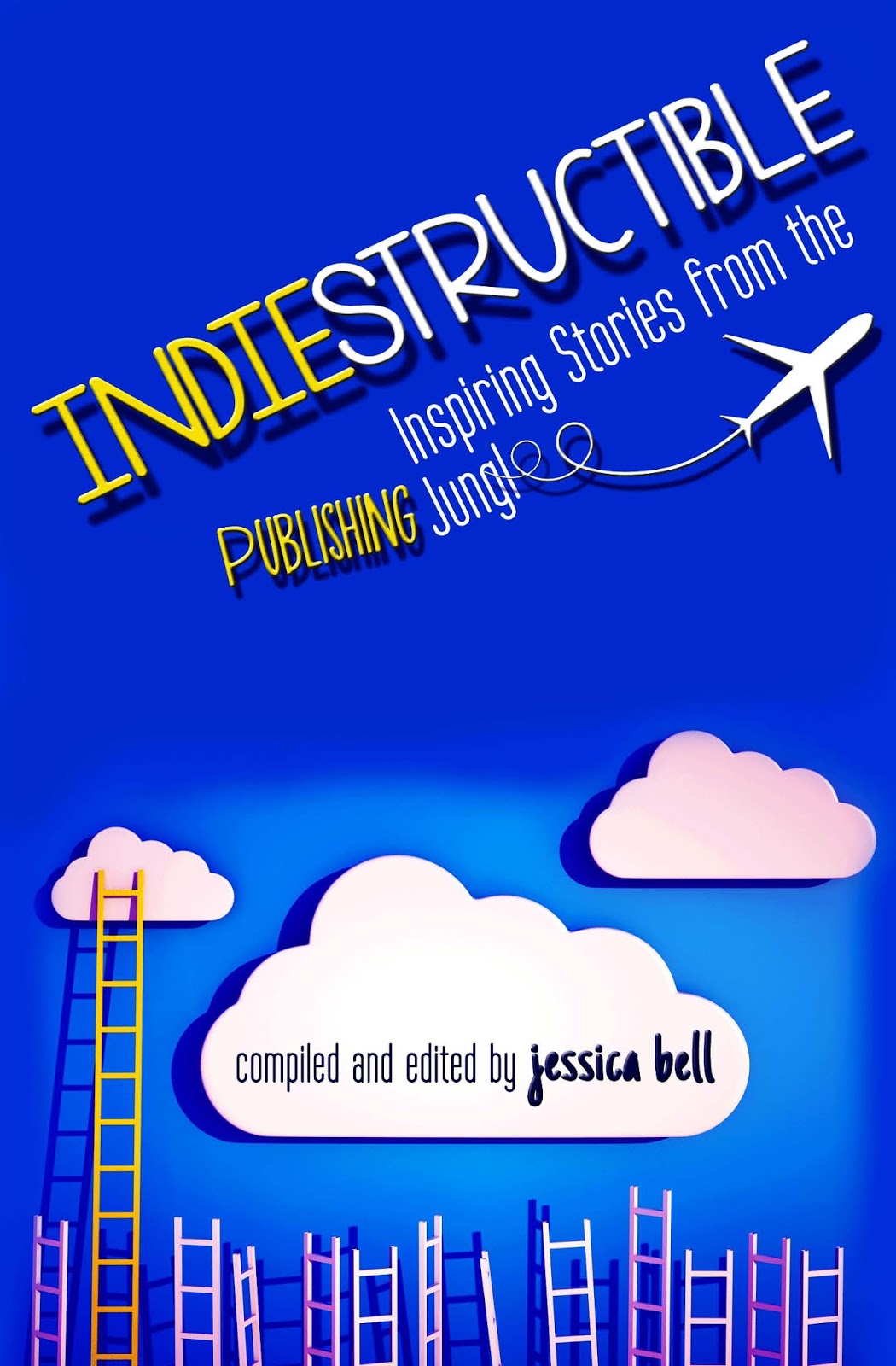 Only 99c!
I've had the privilege of contributing to seven great anthologies over the past few years. The latest, a collection of personal essays from a broad spectrum of successful authors, debuts this month: Indiestructible: Inspiring Stories from the Publishing Jungle.
It's especially empowering for writers thinking of going the self-publishing or small press route. But all writers will enjoy the stories of authors' struggles and successes on the road to publication. It's a wonderfully inspiring book—and only 99c!
Anthologies have long been one of the best ways for a new writer to get publishing credits and start building an audience. They're also a great way for an established author to increase visibility. Collections of short personal essays do especially well, but theme anthologies that include fiction and poetry are strong sellers, too, and their popularity is growing.
Unfortunately, anthologies have got themselves a bad name among a lot of savvy people in the industry, because so many vanity publishers and scammers have used them to bilk naïve writers.
Here are the types of good and not-so-good anthologies you may encounter:
Scammy
The Vanity Anthology
The vanity poetry anthology has been around for at least half a century. I remember when a sweet older poet in my town got so excited by her "acceptance" that she sent out press releases before she realized she'd been had.
The operation works like this: writers are invited to enter a "free contest" with a "prize" of inclusion in an anthology. Thing is, every piece entered gets accepted and the books cost $40 or more. So for $40 a copy, you get the privilege of seeing your work crammed into a huge book with a boatload of dreck. As Joe Konrath says, "Do the numbers. If there are 3000 poems in the book, and each writer in the anthology bought at least one copy, the publisher made $120,000."
Poetry dot Com was a famous vanity anthology outfit that flourished in the last decade. (The domain name has been bought by Lulu, where they're attempting to rehabilitate the brand.)
The Pay-to-Play Anthology
The bogus poetry anthology is bad, but there are other, even nastier scams out there. Victoria Strauss at Writer Beware tells of two vanity anthologies who have bilked writers out of up to $5000 each in what she calls the "pay to play" anthology scam. These anthologies of personal essays often mimic the highly successful Chicken Soup books, but instead of paying you, they expect you to pay them. Lots.
The Wake Up…Live the Life You Love series publishers boasted they included articles by well-known inspirational speakers like Dr. Wayne Dyer...but the pieces were simply reprints of old articles. Then they required contributors to buy up to 500 books each at a cost of several thousand dollars.
Another series, published by Inspired Living Publishing, required contributors to pay big bucks for worthless “marketing packages” as well as a huge number of overpriced books.
Always check Writer Beware before you sign on the dotted line.
However, most anthologies are fantastic venues for your writing. There are many good ones, both in print and ebook.
Great Opportunities
The Traditionally Published Inspirational Anthology
These are a boon to newbies. The venerable Chicken Soup for the Soul anthologies and their cousins are an excellent way to start a professional writing career. (Alas, the Cup of Comfort series from Adams Media has quit production, and I see McAfee blocks their old site as dangerous, so don't go looking for them.) These collections usually pay a flat fee for a personal essay, plus a generous number of copies.
Acceptance can be a big ego boost, and it's a nice credit for your query letter or author bio. (Authors planning to go indie should work on getting credits, too. They show you have a body of work that has been vetted, which helps you stand out from the crowd.)
The Traditionally Published Fiction or Poetry Anthology
Right now, short fiction anthologies are trending. Short fiction is ideal for reading on phones and tablets. For more on the new popularity of short fiction, see my posts, Short is the New Long and Why You Should Be Writing Short Fiction. and a piece in praise of short stories in BookRiot this week.
Because of all this, some publishers are bringing back vintage short fiction in new collections. This week, Sarah Weinman's compilation of vintage Ellery Queen stories, Troubled Daughters, Twisted Wives: Stories from the Trailblazers of Domestic Suspense, makes its debut from Penguin.
.jpg) Publishers often put together an anthology with a theme and issue an open call for submissions. They usually pay a flat fee for first rights and may also give copies.
Publishers often put together an anthology with a theme and issue an open call for submissions. They usually pay a flat fee for first rights and may also give copies.C. Hope Clark's Funds for Writers and Poets and Writers classifieds are good places to find vetted anthologies looking for submissions.
A few years ago, I found a call for submissions from the Silver Boomer press in Hope's newsletter and sold a poem to the anthology: From the Porch Swing, Memories of our Grandparents . I got paid and became a "published poet" at a time I couldn't give my fiction away. An excellent experience, (although I might have wished for more colorful cover.)
The Indie Fiction Anthology
 Indie publishers often put together short story anthologies to showcase their clients' work.
The Saffina Desforges Presents Coffee Break Collection
is a showcase of MWiDP authors. Inclusion helped me get the attention of fans of their better known authors when I first signed with them.
Indie publishers often put together short story anthologies to showcase their clients' work.
The Saffina Desforges Presents Coffee Break Collection
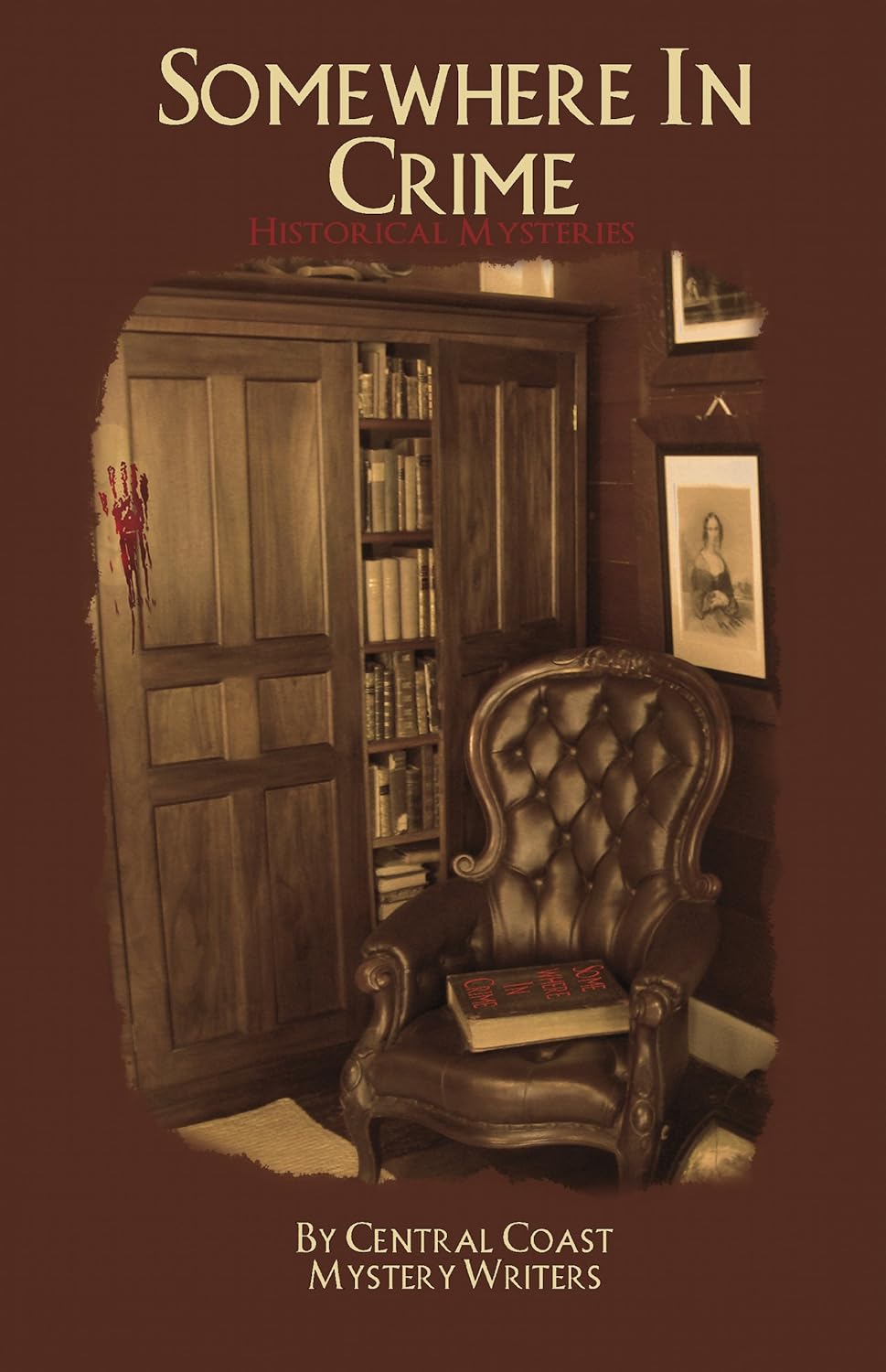
is a showcase of MWiDP authors. Inclusion helped me get the attention of fans of their better known authors when I first signed with them.Genre groups like Sisters in Crime sometimes put together themed anthologies like Somewhere in Crime , a collection of historical mysteries written by the members of the Central Coast Sisters in Crime chapter. It's a fantastic collection by some of the area's best crime writers.
These days, a launch party for a single title isn't terribly cost effective, but launching an anthology for a large group of local writers gets on the local news and can garner everybody more visibility on their home turf. I didn't have time to contribute to Somewhere in Crime, but I got to go to a great party and buy a wonderfully entertaining book.
Sometimes indie authors get together to put out a theme ebook anthology like the WG2E Martini Madness . Since I happened to have a story on hand about drinking appletinis with an alien, I rushed to contribute to that one.
The overhead on an ebook or POD anthology is much less than the old print anthologies so they're cheaper to put together—and they showcase all the authors to each others' fans
The Charity Anthology
Charity anthologies are hot. These are the ones where you donate your work and the proceeds go to a good cause. Both small publishers and self-publishing collectives have had success with these. Jump on the chance to be included if you get an invitation. No, you won't make any money directly, but you'll get a huge amount of free publicity and exposure to new readers.
Plus you're doing a good thing.
Also, a charity anthology saves the editorial staff the paperwork headaches trying to get small royalties to dozens of people. It's win/win. Just make sure you run it by the charity first to make sure you can use their name.
 Author Paul Fahey—former editor of Mindprints magazine—put together an anthology of essays by well-known LGBT authors called The Other Man, published by JMS publishing this summer. It is getting fantastic coverage in the trad print magazines as well as online. Many of the contributors are well known, established authors. Profits go to the "It Gets Better" project that helps bullied LGBT teens. (I personally recommend this one for readers who don't mind a little "R" rated content. Every essay is fascinating—and what a great cause!) And it's 40% off on the JMS site this weekend.
Probably the most successful charity anthology I've been involved with was the inspiring Indie Chicks Anthology of personal essays by independent women authors, which donates all its proceeds to breast cancer research. I'm sure the Indie Chicks are partly responsible for the success I'm having now. The anthology included some of the top indie authors in women's fiction, mystery, and romance. Since they invited
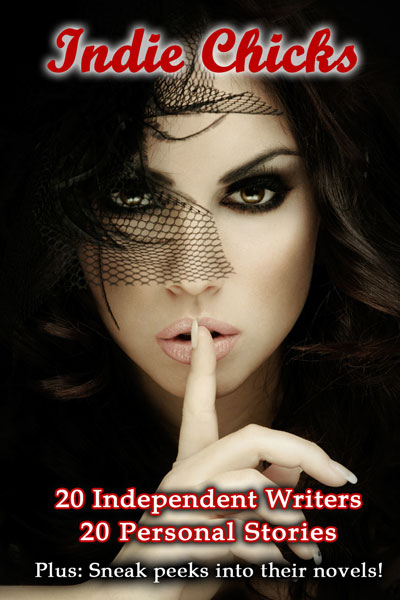 me just as my first novel
Food of Love
was being republished in 2011, I got a ride on their coattails. Their many fans read my piece and checked out my work. I'm very grateful to this terrific group of women.
me just as my first novel
Food of Love
was being republished in 2011, I got a ride on their coattails. Their many fans read my piece and checked out my work. I'm very grateful to this terrific group of women.I'm also grateful to the (now disbanded) Literary Lab, who accepted my work for two of their anthologies: Genre Wars and Notes from Underground at a point when my fiction writing career was stalled and I was starting to despair. Proceeds went to literacy charities. Not only did I get my work into print again and put my name back into the marketplace, but I met a group of awesome writers who were supportive and helpful at a low point in my career.
Now it's four years later and I'm totally jazzed to be included in Indiestructible with some of the authors who appeared in the Literary Lab books. It also includes a number of authors who frequently visit this blog. It gives 100% of proceeds to BUILDON.org, an international movement which breaks the cycle of poverty, illiteracy, and low expectations through service and education.
Indiestructible brings together the experiences of 29 indie authors—their passions, insights, and successes—to help new authors who are trying to decide if they should make the leap into indie publishing.
It's not a how-to guide, but it gives you first-hand information to help you on your journey.
The editor of Indiestructible is author Jessica Bell, whose blog, the Alliterative Allomorph was one of the first blogs I followed when I ventured into the blogosphere.
Remember how I keep telling you networking on blogs will help your career? This is one of the ways. Invitations to six of the seven anthologies came to me through people I met on blogs.
Or you could try putting together an anthology yourself. If you know a group of writers who write in a similar genre, whose work you admire, think about asking them to join you. It's hard work, but if everybody works on the marketing, you can reach a huge audience you'd never find on your own.
What about you, scriveners? Have you ever contributed to an anthology? Was it a good experience? Have you ever been scammed by one? Have you discovered new authors reading anthologies?
This week: I'm visiting Canadian author June McCullough to talk about my upcoming books any my own favorite characters. (And thanks, my Canadian fans, for making the Camilla boxed set #16 in single women's fiction this week!)
This month: while I recover from some surgery that's turned out to be a bigger deal than I expected, we'll have a parade of superstar guest posters:
September 8th: Catherine Ryan Hyde, a literary icon who reached #1 author status on Amazon this summer—she even knocked J.K. Rowling off her perch—will talk about rejection: what it means and what it doesn't.
September 15th: Alex J. Cavanaugh, sci-fi author, blogging ninja, and one of my fellow Indiestructible contributors, will post about forming a blog community, something he knows a lot about.
September 22nd: The blokes from EBookBargainsUK will tell us about the vast, untapped international market every indie needs to know about. (BTW, EBUK has had some technical difficulties this weekend but should be up and running by next week.)
September 29th: Our own NYT bestseller Ruth Harris is back in her regular spot, talking about how to protect yourself from writing scams.
On a personal note: For those concerned about my health, the lump they removed was benign and I'm going to be fine. I just need more time to heal.
It's been complicated by the fact I broke my own rules recently and let my inner Atticus Finch speak up at an ill-advised moment. (Never try to reason with rageaholics: you're only volunteering to be their next fix.) A legal team who monitors online hate groups informed my publishers I've been marked to be targeted with negative reviews and other harassment. So if you see any trollish comments here, ignore them—don't make my mistake and respond—and I'll delete ASAP.
And please, anybody who has read and enjoyed the humor of the Camilla Randall Mysteries, if you could take the time to write a genuine review on Amazon—I desperately need your help. It would make all the difference. Only a couple of sentences are necessary and all that's required is to be an Amazon customer. Waking up every day to a new nasty review by some "reviewer" who only repeats what other negatives has said and has never reviewed anything else gets pretty discouraging.
Bonus: any English major who notes in a review the parallels between the first Camilla book and Fanny Burney's 1796 novel, Camilla, a Picture of Youth, gets your choice of any of my books—paper or ebook—free.
Book Deal of the Week
The fourth Camilla Mystery, No Place Like Home 99c for one more week on Amazon US, Amazon UK, Amazon CA etc.
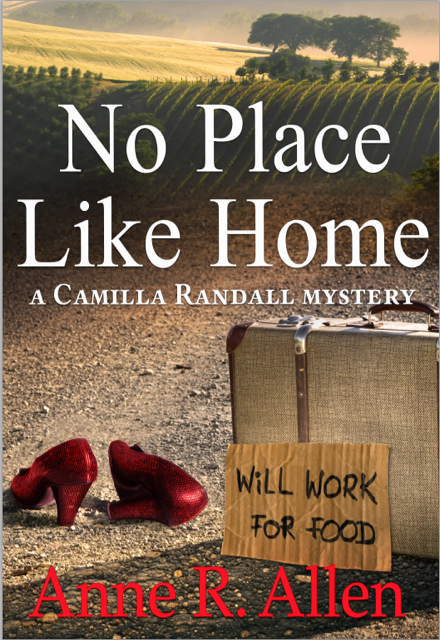
It's #4 in the series, but reads as a stand-alone.
"A warp-speed, lighthearted comedy mystery, No Place Like Home offers lasting laughs beneath which a message resounds – Being homeless is scary.
There’s a dastardly dead husband, a Ponzi scheme, a long-lost love, a new love who keeps vanishing and a tiny dog named Toto. Add a cross-dressing hooker and a Colombian drug cartel, and the pleasant little community Oprah named “The Happiest City in the USA” is revealed to be a bit more complex than the lady noticed.
The perfect read for the next time an escape from everything sounds like fun!"...Abigail Padgett
Opportunity Alerts
1) Quirk Books "Looking for Love" contest. They offer a $10,000 prize for the best quirky love story of 50,000 words or more. Visit the Quirk Books website to download the entry form or for further information. Quirk Books was founded in 2002 and publishes around 25 books each year. Their bestselling titles include Pride and Prejudice and Zombies and Miss Peregrine’s Home for Peculiar Children. Entries close October 1.
2) Writer's Digest Popular Fiction Awards. Since most short fiction contests tend to favor literary work, this is a great one for genre authors. Choose your favorite genre and enter your best in 4,000 words or less. Six first prizes of $500 each and a Grand Prize of $2,500 and a trip to the 2013 Writer’s Digest Conference in New York City. Deadline September 16th
3) The Harper's Bazaar UK Short Story Prize is open to all writers. NO ENTRY FEE. Are you the next Dorothy Parker or Anita Loos? Submit an original short story (up to 3,000 words) on the subject of 'spring' to:shortstory@harpersbazaar.co.uk. The winning entry will appear in the May 2014 issue. Its author will be able to choose a first-edition book from Asprey's Fine and Rare Books Department to the value of £3,000 and enjoy a week-long retreat at Eilean Shona House, on the 2,000-acre private island off the west coast of Scotland where JM Barrie wrote his screenplay for Peter Pan. Deadline December 13th.
4) BARTLEBY SNOPES WRITING CONTEST - Can you write a story that's in dialog only? $10 ENTRY FEE A minimum of $300 will be awarded, with at least $250 going to first place and at least $10 to four honorable mentions. 5 finalists will also appear in Issue 11 of the magazine due out in January 2014. Last year they awarded $585 in prize money. For every entry over 25, an additional $5 will be awarded to the first place story. Compose a short story entirely of dialogue. You may use as many characters as you want. Your entry must be under 2,000 words. Your entry does not have to follow standard rules for writing dialogue. Your entry cannot use any narration (this includes tag lines such as he said, she said, etc.) Deadline September 15th
August 25, 2013
METADATA 101: A Non-Techie Does Her Best to Explain Metadata (and Why it Matters) In Plain English
by Ruth Harris
First of all, what the &%^# is metadata? AccordIng to Wikipedia, it’s “data about data.” But we’re writers and we’re talking about books, so, huh?
Let me try again: when it comes to a book, metadata can be defined both by what it is and what it isn’t. Metadata’s everything in a file that’s not included between the first word and the last word of your book. Which leaves us, well, exactly what?
Essentially, for a writer, metadata is everything except the book we include when we upload a book: cover, title, author’s name, series name (if the book is part of a series), categories, keywords, blurb, ISBN, reviews, author bio.
Metadata also includes front matter and back matter and tells a reader what s/he wants to know before deciding to buy (or not to buy) your book. Metadata matters (a lot) and here are some reasons why, starting with the front matter (everything the reader sees that comes before the actual beginning of the book):
The cover is the writer’s first sell opportunity and the reader’s first clue to genre. A naked male torso avec bulging six-pack promises the reader hot s-e-x and maybe romance. A fanged death’s head drooling pus and blood means horror. Be creative but don’t mislead your reader! Book designer, Joel Friedlander, often blogs about covers here.
The title (and the series title, if there is one) is another crucial signal, so choose wisely. You wouldn’t call a sweet romance set in a sleepy Southern village Night Of the Psychotic Avenger, would you? You wouldn’t call a dystopian urban zombie thriller Aunt Matilda’s Ye Olde Knitting And Crochet Shoppe, would you? And Adventures of a Girl is hopeless: too generic, tells the reader nothing. Bottom line: choose your title carefully. Leading a reader astray or leaving him/her to wonder what the book is about isn’t good for you, your sales—or for your reader.
The author’s name is your brand so respect it. If the author name is a pseudonym, though, match the name with your genre. “Studly McBoozehound” might be an OK choice if you’re writing brass-knuckled noirpulp. It would be a lousy choice if you’re writing swoony 18th Century historical romance set in the Scottish Highlands. Capeesh?
The blurb or, as Amazon refers to it, the Product Description, is your opportunity to tell the readers why s/he absolutely must buy your book. Your blurb needs to pop and sizzle and compel the reader to hit the buy button. After the purchase, when your book is already present on someone’s ereader, placing the blurb in the front matter will remind the reader why s/he bought the book in the first place.
Writing a powerful blurb is both an art and a craft. Superstar indie author, Mark Edwards, gives advice on how to write a compelling blurb here.
The Invisibles (to the reader but not to search engines.)
The ISBN (or ASIN) is the alpha-numeric string (ZZ12345) that identifies your book to readers and book-sellers. ISBNs can be purchased from Bowker; the ASIN is the FREE number assigned by Amazon. Kobo and Apple also offer their own FREE identifiers when you upload your book.
There is disagreement about whether it’s worth buying your own ISBN or not. Some think buying your own ISBN is worthwhile. Others think it doesn’t much matter. Joel Friedlander discusses the pros and cons of the different flavors of ISBNs/ASINs here.
Keyword and keyword strategy. Although the reader doesn’t see keywords, they are crucial to discoverability and visibility.
Joanna Penn writes about the importance of keywords and explains the techniques for finding ones that will work best for you. She uses specific examples using one of her own books here.
Lisa Grace, mystery author, goes into the mysteries (sorry, couldn’t help it) of SEO and keywords here and Christopher Shevlin tells how he used keywords to bring his book back from the dead and turn it into a best seller here.
Category tells where a book would be shelved in a bookstore. No one will find your sci-fi epic if it’s shelved with gardening manuals so choose your categories (Amazon allows two; Nook permits five; Kobo and Apple also permit multiple choices.) carefully.
M. Louisa Locke blogs about the importance of choosing categories (and keywords) here and FreelanceSwitch offers a detailed tutorial about category-choosing here.
Amazon provides overall metadata guidelines here, and lists required keywords for certain categories (romance, sci/fi, YA, thriller, mystery, suspense) here.
Back matter (the last pages the reader sees & another chance to sell—but be careful.)
Possibilities for back matter:
Mail list sign up. Request for a review. Links to your other books. Link to your blog/website. Excerpt from another book. Copyright. Acknowledgments.Some advise that back matter should be no more than 5% of the entire length. Readers can feel cheated if they get to 55% of a file (the end of your story) only to find that another 45% is devoted to sales pitches! Obviously, a full-length novel will allow you more back matter space. A short story, less.
The savvy authors on the KB Writers’ Cafe share their thoughts about back matter (they don’t always agree about everything) here. Writers share examples of different approaches to back matter here. Another discussion of front matter and back matter and what information should go where is here.
From the first word of your title to the last period at the end of the last sentence in your back matter, metadata matters because metadata is one of the most important ways readers can find (and buy) your book. Ignore it at your peril!
Book Deals of the Week. We have two hilarious comedies this week.
The Chanel Caper by Ruth Harris is $3.99 on Amazon US, Amazon UKAnd Nook | Kobo | iBooks
Award-winning historical romance and USA Today Bestselling contemporary romance winner, Vanessa Kelly's take on The Chanel Caper in Love Rocks:
"Set primarily in the world of fashion and advertising in New York City, THE CHANEL CAPER features a fifty-six year old heroine who is smart, sardonic, and whose marriage to her sexy, ex-cop husband has hit a rough patch. Blake Weston makes for a fabulous heroine, watching in some bemusement as her husband Ralph, now head of security for a large international corporation, goes into mid-life crisis. For Ralph, this involves extreme workouts in an effort to recapture his youthful vigor, a new wardrobe, and a flirtation with a bombshell war correspondent doing everything she can to get Ralph between the sheets. Blake, naturally, has no intention of allowing her beloved husband of twenty-five years to slip away from her.
"In an ongoing effort to upmarket her own outdated style and rekindle some romance in her marriage, Blake buys a faux Chanel handbag from a street vendor. This sets off a chain of wild events that includes murder, explosions, counterfeit drug rings, and the pursuit of suspects and warlords from Shanghai to Afghanistan. The Chanel Caper is a romantic comedy, a thriller, and a send-up of the big city lifestyle in the wake of the global financial crisis. All the disparate elements of this very funny story are tethered by the engaging Blake, a smart, sensible, and dryly witty heroine intent on saving her marriage. It’s definitely a romance for the grownups, set against the backdrop of the bright lights of the city that never sleeps."...Vanessa Kelley, award winning Romance author
Plus Anne's fourth Camilla Mystery, No Place Like Home is 99c for two weeks only on Amazon US, Amazon UK, Amazon CA etc.
It's #4 in the series, but reads as a stand-alone.
"Under the guise of a great beach read - and no doubt it is that too, full of suspense and pleasingly written, the words keep flowing naturally, effortlessly and you keep turning the pages, eager to find out what happens next - this is a book that in fact delivers far more.
It explores what is behind our love for our home, our need for security and what happens to us when we lose it all. It raises some serious existential questions as age inexorably erodes the looks of one successful woman (Doria)and the recent economic recession that has affected us all destroys the livelihood of a woman who thought she had finally pulled it all together and resolved her problems (Camilla). The contrast between the two is intriguing and also raises more questions...
But don't get me wrong. This is a book that is high comedy, not deep philosophy...Happy reading and expect some unusual twists and turns!"...Claude Nougat, author of a A Hook in the Sky
Opportunity Alerts
1) Quirk Books "Looking for Love" contest. They offer a $10,000 prize for the best quirky love story of 50,000 words or more. Visit the Quirk Books website to download the entry form or for further information. Quirk Books was founded in 2002 and publishes around 25 books each year. Their bestselling titles include Pride and Prejudice and Zombies and Miss Peregrine’s Home for Peculiar Children. Entries close October 1.
2) Get your book international visibility for a reasonable price. EBUK is now advertising bargain books to close to a dozen countries, including the US and Canada, and they're still at half price through the end of August. You can get more info here. Make sure your book is under $3.99 and provide links to all stores, not not only Amazon (unless you're in Select.) Ads are a little over 10 bucks until the end of August. And you can sign up for the newsletter for your country right here. I've signed up for the new US version. If you like bargain ebooks, this is a great free service.
3) Writer's Digest Popular Fiction Awards. Since most short fiction contests tend to favor literary work, this is a great one for genre authors. Choose your favorite genre and enter your best in 4,000 words or less. Six first prizes of $500 each and a Grand Prize of $2,500 and a trip to the 2013 Writer’s Digest Conference in New York City. Deadline September 16th
4) The Harper's Bazaar UK Short Story Prize is open to all writers. NO ENTRY FEE. Are you the next Dorothy Parker or Anita Loos? Submit an original short story (up to 3,000 words) on the subject of 'spring' to:shortstory@harpersbazaar.co.uk. The winning entry will appear in the May 2014 issue. Its author will be able to choose a first-edition book from Asprey's Fine and Rare Books Department to the value of £3,000 and enjoy a week-long retreat at Eilean Shona House, on the 2,000-acre private island off the west coast of Scotland where JM Barrie wrote his screenplay for Peter Pan. Deadline December 13th.
5) BARTLEBY SNOPES WRITING CONTEST - Can you write a story that's dialog only? $10 ENTRY FEE A minimum of $300 will be awarded, with at least $250 going to first place and at least $10 to four honorable mentions. 5 finalists will also appear in Issue 11 of the magazine due out in January 2014. Last year they awarded $585 in prize money. For every entry over 25, an additional $5 will be awarded to the first place story. Compose a short story entirely of dialogue. You may use as many characters as you want. Your entry must be under 2,000 words. Your entry does not have to follow standard rules for writing dialogue. Your entry cannot use any narration (this includes tag lines such as he said, she said, etc.) Deadline September 15th
First of all, what the &%^# is metadata? AccordIng to Wikipedia, it’s “data about data.” But we’re writers and we’re talking about books, so, huh?
Let me try again: when it comes to a book, metadata can be defined both by what it is and what it isn’t. Metadata’s everything in a file that’s not included between the first word and the last word of your book. Which leaves us, well, exactly what?
Essentially, for a writer, metadata is everything except the book we include when we upload a book: cover, title, author’s name, series name (if the book is part of a series), categories, keywords, blurb, ISBN, reviews, author bio.
Metadata also includes front matter and back matter and tells a reader what s/he wants to know before deciding to buy (or not to buy) your book. Metadata matters (a lot) and here are some reasons why, starting with the front matter (everything the reader sees that comes before the actual beginning of the book):
The cover is the writer’s first sell opportunity and the reader’s first clue to genre. A naked male torso avec bulging six-pack promises the reader hot s-e-x and maybe romance. A fanged death’s head drooling pus and blood means horror. Be creative but don’t mislead your reader! Book designer, Joel Friedlander, often blogs about covers here.
The title (and the series title, if there is one) is another crucial signal, so choose wisely. You wouldn’t call a sweet romance set in a sleepy Southern village Night Of the Psychotic Avenger, would you? You wouldn’t call a dystopian urban zombie thriller Aunt Matilda’s Ye Olde Knitting And Crochet Shoppe, would you? And Adventures of a Girl is hopeless: too generic, tells the reader nothing. Bottom line: choose your title carefully. Leading a reader astray or leaving him/her to wonder what the book is about isn’t good for you, your sales—or for your reader.
The author’s name is your brand so respect it. If the author name is a pseudonym, though, match the name with your genre. “Studly McBoozehound” might be an OK choice if you’re writing brass-knuckled noirpulp. It would be a lousy choice if you’re writing swoony 18th Century historical romance set in the Scottish Highlands. Capeesh?
The blurb or, as Amazon refers to it, the Product Description, is your opportunity to tell the readers why s/he absolutely must buy your book. Your blurb needs to pop and sizzle and compel the reader to hit the buy button. After the purchase, when your book is already present on someone’s ereader, placing the blurb in the front matter will remind the reader why s/he bought the book in the first place.
Writing a powerful blurb is both an art and a craft. Superstar indie author, Mark Edwards, gives advice on how to write a compelling blurb here.
The Invisibles (to the reader but not to search engines.)
The ISBN (or ASIN) is the alpha-numeric string (ZZ12345) that identifies your book to readers and book-sellers. ISBNs can be purchased from Bowker; the ASIN is the FREE number assigned by Amazon. Kobo and Apple also offer their own FREE identifiers when you upload your book.
There is disagreement about whether it’s worth buying your own ISBN or not. Some think buying your own ISBN is worthwhile. Others think it doesn’t much matter. Joel Friedlander discusses the pros and cons of the different flavors of ISBNs/ASINs here.
Keyword and keyword strategy. Although the reader doesn’t see keywords, they are crucial to discoverability and visibility.
Joanna Penn writes about the importance of keywords and explains the techniques for finding ones that will work best for you. She uses specific examples using one of her own books here.
Lisa Grace, mystery author, goes into the mysteries (sorry, couldn’t help it) of SEO and keywords here and Christopher Shevlin tells how he used keywords to bring his book back from the dead and turn it into a best seller here.
Category tells where a book would be shelved in a bookstore. No one will find your sci-fi epic if it’s shelved with gardening manuals so choose your categories (Amazon allows two; Nook permits five; Kobo and Apple also permit multiple choices.) carefully.
M. Louisa Locke blogs about the importance of choosing categories (and keywords) here and FreelanceSwitch offers a detailed tutorial about category-choosing here.
Amazon provides overall metadata guidelines here, and lists required keywords for certain categories (romance, sci/fi, YA, thriller, mystery, suspense) here.
Back matter (the last pages the reader sees & another chance to sell—but be careful.)
Possibilities for back matter:
Mail list sign up. Request for a review. Links to your other books. Link to your blog/website. Excerpt from another book. Copyright. Acknowledgments.Some advise that back matter should be no more than 5% of the entire length. Readers can feel cheated if they get to 55% of a file (the end of your story) only to find that another 45% is devoted to sales pitches! Obviously, a full-length novel will allow you more back matter space. A short story, less.
The savvy authors on the KB Writers’ Cafe share their thoughts about back matter (they don’t always agree about everything) here. Writers share examples of different approaches to back matter here. Another discussion of front matter and back matter and what information should go where is here.
From the first word of your title to the last period at the end of the last sentence in your back matter, metadata matters because metadata is one of the most important ways readers can find (and buy) your book. Ignore it at your peril!
Book Deals of the Week. We have two hilarious comedies this week.
The Chanel Caper by Ruth Harris is $3.99 on Amazon US, Amazon UKAnd Nook | Kobo | iBooks
.jpg)
Award-winning historical romance and USA Today Bestselling contemporary romance winner, Vanessa Kelly's take on The Chanel Caper in Love Rocks:
"Set primarily in the world of fashion and advertising in New York City, THE CHANEL CAPER features a fifty-six year old heroine who is smart, sardonic, and whose marriage to her sexy, ex-cop husband has hit a rough patch. Blake Weston makes for a fabulous heroine, watching in some bemusement as her husband Ralph, now head of security for a large international corporation, goes into mid-life crisis. For Ralph, this involves extreme workouts in an effort to recapture his youthful vigor, a new wardrobe, and a flirtation with a bombshell war correspondent doing everything she can to get Ralph between the sheets. Blake, naturally, has no intention of allowing her beloved husband of twenty-five years to slip away from her.
"In an ongoing effort to upmarket her own outdated style and rekindle some romance in her marriage, Blake buys a faux Chanel handbag from a street vendor. This sets off a chain of wild events that includes murder, explosions, counterfeit drug rings, and the pursuit of suspects and warlords from Shanghai to Afghanistan. The Chanel Caper is a romantic comedy, a thriller, and a send-up of the big city lifestyle in the wake of the global financial crisis. All the disparate elements of this very funny story are tethered by the engaging Blake, a smart, sensible, and dryly witty heroine intent on saving her marriage. It’s definitely a romance for the grownups, set against the backdrop of the bright lights of the city that never sleeps."...Vanessa Kelley, award winning Romance author
Plus Anne's fourth Camilla Mystery, No Place Like Home is 99c for two weeks only on Amazon US, Amazon UK, Amazon CA etc.
It's #4 in the series, but reads as a stand-alone.
"Under the guise of a great beach read - and no doubt it is that too, full of suspense and pleasingly written, the words keep flowing naturally, effortlessly and you keep turning the pages, eager to find out what happens next - this is a book that in fact delivers far more.
It explores what is behind our love for our home, our need for security and what happens to us when we lose it all. It raises some serious existential questions as age inexorably erodes the looks of one successful woman (Doria)and the recent economic recession that has affected us all destroys the livelihood of a woman who thought she had finally pulled it all together and resolved her problems (Camilla). The contrast between the two is intriguing and also raises more questions...
But don't get me wrong. This is a book that is high comedy, not deep philosophy...Happy reading and expect some unusual twists and turns!"...Claude Nougat, author of a A Hook in the Sky
Opportunity Alerts
1) Quirk Books "Looking for Love" contest. They offer a $10,000 prize for the best quirky love story of 50,000 words or more. Visit the Quirk Books website to download the entry form or for further information. Quirk Books was founded in 2002 and publishes around 25 books each year. Their bestselling titles include Pride and Prejudice and Zombies and Miss Peregrine’s Home for Peculiar Children. Entries close October 1.
2) Get your book international visibility for a reasonable price. EBUK is now advertising bargain books to close to a dozen countries, including the US and Canada, and they're still at half price through the end of August. You can get more info here. Make sure your book is under $3.99 and provide links to all stores, not not only Amazon (unless you're in Select.) Ads are a little over 10 bucks until the end of August. And you can sign up for the newsletter for your country right here. I've signed up for the new US version. If you like bargain ebooks, this is a great free service.
3) Writer's Digest Popular Fiction Awards. Since most short fiction contests tend to favor literary work, this is a great one for genre authors. Choose your favorite genre and enter your best in 4,000 words or less. Six first prizes of $500 each and a Grand Prize of $2,500 and a trip to the 2013 Writer’s Digest Conference in New York City. Deadline September 16th
4) The Harper's Bazaar UK Short Story Prize is open to all writers. NO ENTRY FEE. Are you the next Dorothy Parker or Anita Loos? Submit an original short story (up to 3,000 words) on the subject of 'spring' to:shortstory@harpersbazaar.co.uk. The winning entry will appear in the May 2014 issue. Its author will be able to choose a first-edition book from Asprey's Fine and Rare Books Department to the value of £3,000 and enjoy a week-long retreat at Eilean Shona House, on the 2,000-acre private island off the west coast of Scotland where JM Barrie wrote his screenplay for Peter Pan. Deadline December 13th.
5) BARTLEBY SNOPES WRITING CONTEST - Can you write a story that's dialog only? $10 ENTRY FEE A minimum of $300 will be awarded, with at least $250 going to first place and at least $10 to four honorable mentions. 5 finalists will also appear in Issue 11 of the magazine due out in January 2014. Last year they awarded $585 in prize money. For every entry over 25, an additional $5 will be awarded to the first place story. Compose a short story entirely of dialogue. You may use as many characters as you want. Your entry must be under 2,000 words. Your entry does not have to follow standard rules for writing dialogue. Your entry cannot use any narration (this includes tag lines such as he said, she said, etc.) Deadline September 15th
August 18, 2013
Social Media Secrets, Part III: What Should an Author Blog About?
This is the third in my series on my "Social Media Secrets." If you haven't read the first two yet, you might want to check out #1: How to Avoid Twitter-Fritter and Facebook-Fail and #2 How to Blog Your Way Out of the Slush Pile and onto the Bestseller List.
When I teach blogging, the most common question I get is: "What should I blog about?"
My answer isn't the same as you'll hear from most blogging gurus: I say it depends on where you are in your career.
1) If you're a new author/blogger, your primary goal is to build an audience. The best way to do this is to network with other bloggers.
Most people who read blogs and comment regularly are also bloggers themselves, so this is your potential core audience.
Blog hops can be very valuable at this stage of your career. Jump on any opportunity to participate.
Go to other blogs in your niche—that's readers, reviewers and other authors—to see what they're blogging about and get to know people. When you find yourself leaving a long comment: that's your next blog post!
If you hope for a traditional publishing career, you should also be regularly visiting agents' blogs like Janet Reid's and Kristen Nelson's and former agent Nathan Bransford's to find out how the traditional publishing process works. You can also interact with other writers who comment on the blog.
If you think you might go indie, do the same on indie blogs like Joe Konrath's and The Passive Voice.
No matter what path you're contemplating, hanging out at friendly, troll-free writing-community blogs like Alex J. Cavanaugh's Insecure Writers Support Group, Nathan Bransford's forums, and Kristen Lamb's We are Not Alone, will make you feel less isolated and help you meet people who can help you in your career.
This is like hanging out with co-workers in the coffee room or cafeteria at a new job. You'll find a huge amount of information just by listening. Think of your blog as your cubicle where people stop by to say hello. But first you have to introduce yourself in a general meeting place.
This means yes, you CAN talk about writing and publishing when you're starting out. You can commiserate and congratulate each other as you ride the roller coaster of this crazy business. (As long as you don't complain too much. Believe me, we've all felt the temptation to vent about the unfairness of the industry, but it won't help your career.)
2) Once you've got a few followers and you're getting ready to publish, it's time to switch gears.
You don't have to stop blogging about writing entirely, but mix it up so you can start attracting more non-writers—especially readers in your niche.
Remember people surf the Web looking for two things: information and entertainment.
Your blog can spin a good yarn, make people laugh, provide information, or all three, as long as you put it in your own honest, unique voice and you’re not too whiny or preachy. (Although experts generally advise against fictional yarns. More on that below.)
Joel Friedlander wrote a great blogpost this month on 3 major mistakes author-bloggers make . He points out you need to know who you're blogging for. If you're writing hard sci-fi, you're going to want to reach to a different readership than if you're writing cozy mysteries. Unfortunately, marketers often tell authors to market indiscriminately to the entire population.
Try picturing your ideal audience when you're deciding what to blog about. What movies and TV shows might appeal to people who would like your book? What's their age group? What other interests do those people have?
If you're writing a Hunger Games type YA dystopian, blogging news about the next Hunger Games film might attract your ideal demographic. Tweet Jennifer Lawrence news and you'll get the HG fans coming to your blog.
If you're writing Regency romance, run a series on your favorite films set in the era, or talk costumes and history. Or join a Janeite community and weigh in on controversial topics like the mental health of Jane Austen's mother and whether Colin Firth is the one and only Darcy.
What Works in a Writer’s Blog
This is a partial list. I'd love more suggestions in the comments.
Interviews and Profiles: These don't have to be interviews with authors, although that's a fantastic way to network AND reach readers. Write crime novels? Interview a cop, forensic expert or private detective. Write bookstore cozies? Profile a series of bookstore clerks and visit their blogs. Informative pieces: This is where you can use all that research you did for your books that sounds too much like "info-dumping" in your novel. Reviews and spotlights of books in your genre: But be wary of starting an all-review site if you're an aspiring author. Honest reviewers sometimes have to be negative, which can open you up to bullying by an authors' posse. Spotlights make more friends. Film Reviews and info about other media in your genre. Alex J. Cavanaugh's blog is a great example of how to do this right. (Alex will be visiting next month to talk about how to create a blog community.) Comic or inspirational vignettes about your life. This can be almost anything, as long as it's entertaining, has a point, and doesn't turn into a pity party. An author who does a fabulous job with the comic personal story is rom-com author Tawna Fenske.Stuff about your pets. Seriously. Never underestimate the power of a cute puppy or grumpy cat to draw hits. Catherine Ryan Hyde posted photos and videos showing the progress of her new cat and old dog learning to get along: a lesson in diplomacy. It got so popular, the dog and cat—now best of friends—have their own Facebook page.Opinions (as long as you avoid polarizing subjects: see below) Any opinion piece about publishing news will probably get a lot of readers in the bookish community. Weigh in on Bezos buying the Washington Post, or how you feel about "authorized" fan fiction.History and nostalgia pieces: Write historicals, or novels set in an earlier era? Anything about that era will be of interest to your readers. This is where people writing books of military history can share their own experiences. If you lived through history, the world wants to know about it. A blog is the perfect place to share. Travel pieces about the settings of your books. Even if you've only made the journey via Google maps and Wikipedia, your readers will be interested. If it's your hometown, even better. Interview local business owners and people who live and work in similar places to your fictional ones. This is where your own photographs can be a big plus. (Make sure all other photographs you use are not copyrighted. Only use photos licensed through Creative Commons.) How-to's and recipes. Write crafting mysteries? Offer interesting quilt patterns or knitting directions. Have a character who likes to fly kites? Tell readers how to build one. And no matter what genre you write, if food is involved, people will enjoy a recipe for it. Or maybe you can offer a recipe for the busy writer to throw in the crockpot, or a tasty snack to serve to your book group.Almost anything of general interest—especially to the kind of people you think might like your books. Anything that might make a good magazine article will make a good blogpost—especially a magazine your ideal reader is likely to buy.A series of articles or vignettes you hope to make into a book. For nonfiction, blogging your book is OK, although if you get a traditional contract, you may be asked to take down those posts because of "non-compete" rules.
Not so Much
Daily word count. Sorry. Nobody cares. (Unless you're a member of a writers' group encouraging each other on—as sometimes happens during NaNoWriMo.) Although the original "weblogs" were often personal diaries, today's blogs are "other" oriented rather than "self" oriented and you need to write stuff that's interesting to people who don't already know you. Rejection sorrows and personal woes. These belong in your private journal. The one with the lock on it.Your writer's block. Ditto. Teachy-Preachy stuff. Especially if you're not an expert. Don’t lecture people on how to get published if you’re not.Pretentious word-farts. I landed on a writer's blog recently that gave no indication of the writer's name, genre, or work. Random phrases were scattered around, like: "This is all there is," and "Unless you are in pain, you're not doing it right," and "99% of published work is BS." Um, speaking of BS... OK, this person is obviously young and going through a stage, but this isn't something you want to do in public.Apologies for not blogging. We know it's hard to get around to the old blog. You don't need to tell us the specifics. Just call it "slow blogging" and get on with something interesting. Writing about writing exclusively, unless you have a "how to" book for writers. Religion or politics: unless your work is exclusively for people of the same faith or political persuasion. Or you live in a part of the world with interesting politics and you have a unique viewpoint. (Extra credit if you're in a war zone.)Your Fiction WIP. Especially if you hope to attract an agent. Not only do agents not have time to hunt for novels in the blogosphere, but they generally won't take a novel that's been blogged because it's already "published." (Selling novels is a different process from selling nonfiction—which is generally based 99% on platform—so the rules are different.)
Some writers ARE able to attract a blog following by posting some short fiction or poetry, but I don't recommend you do it exclusively, because people skim blogs and usually won't read denser stuff. Plus you are giving away first rights and can't enter it in contests or submit to journals after putting it on a blog. It's better to post work in progress on a place like Wattpad which is password-protected and therefore not "publishing."
But especially don't blog your unedited, unfinished novel hoping for praise or critique. You'll thank me later when you're at your editing stage. Honest. (If you want critique, I suggest you join one of the many online groups for the purpose, like CritiqueCircle.com.)A blog is an expression of who you are: the face you offer the world. So be real and have fun.
Sometimes blogging can take off and you find you'd rather blog than work on your WIP. There's nothing wrong with that. You may have a future as a professional blogger and content provider—a much more lucrative field than writing novels. Nina Badzin discovered she enjoyed blogging more than fiction writing and used her blog to launch a career as a freelance writer.
Or if you're a book review blogger, you may be invited to intern for an agent and even become an agent yourself. That's what happened to book blogger Danielle Smith, now an agent at Foreword Literary.
But if you have your heart set on being a novelist, remember your fiction must take priority. That's why I support "slow blogging"—blogging once a week or less, preferably to a schedule.
For fiction writers, here's a quote from Jason Kong's post "7 Reasons Why Social Media isn't Growing Your Fiction Readership" from Joel Friedlander's blog.
"Your key to more followers isn’t posting more frequently or having more conversations. Nor is it constantly checking your feeds to see who said what. A readership develops because they have something to value and talk about....Writing good stories, as always, should remain your top priority."
For a more in-depth piece on how the stages of your writing career affect your blog you might want to read my piece, How to Blog Part 3: What Should You Blog About?
And here's a great piece about how to make your content "addictive" from Jeff Bullas.
What about you, scriveners? What do you blog about? What do you want to read on other blogs? Any suggestions for the new blogger?
Next week: Ruth Harris is going to tell us about METADATA: one of those things we're all supposed to know about, but if you're like me, you're not quite sure what it is.
THIS WEEK'S BOOK DEAL:
The Camilla Randall Mysteries Boxed Set is now on sale INTERNATIONALLY!
My publisher has now spread the sale to all outlets. Thanks everybody, for keeping it on the Amazon US comic fiction bestseller list all summer. (And this week on the women's fiction bestseller list in Canada and comic fiction in Germany.)
99c on Amazon US, NOOK, and now £0.77 on Amazon UK and 99c CDN on Amazon CA and 49 rupees on Amazon IN, and the equivalent on all Amazon stores.
"The Best Revenge, Ghost Writers in the Sky and Sherwood Limited are hysterical. Anne Allen will keep you laughing throughout, but in the meantime she dabbles her fingers in some topics worth some serious thought: sexism, weightism, lechery, murder, duplicity, homelessness & poverty to name a few. If you love to laugh, you'll like these three books. If you love to think, ponder AND laugh, be ready to fall in love"... C.S. Perryess
Note to anybody who has read a Camilla book and enjoyed it—
I could use your help. If you have time to leave a review on Amazon or Barnes and Noble, I'll be eternally grateful. When you have a bestselling book, the negative nellies come out and your star rating takes a hit. Comedy can be so subjective and a lot of people don't "get" the same things. (And sock puppets abound: a lot of the nasty comments come from people who've never reviewed anything else—or give nothing but one-stars to every other book on the same bestseller list. Plus on B & N, people can give stars with with no text.) If you do like my humor, and you've enjoyed the books, I could really use your help. Just a star rating on B & N could make all the difference.
OPPORTUNITY ALERTS
1) Find a Writing Group through Galley Cat! One of the most reliable and popular news outlets in publishing is creating a directory for writers to network to get critiques of their work You can sign up here.
2) Get your book international visibility for a reasonable price. EBUK is now advertising bargain books to close to a dozen countries, including the US and Canada, and they're still at half price through the end of August. You can get more info here. Make sure your book is under $3.99 and provide links to all stores, not not only Amazon (unless you're in Select.) Ads are a little over 10 bucks until the end of August.
And you can sign up for the newsletter for your country right here. I've signed up for the new US version. If you like bargain ebooks, this is a great free service.
3) Writer's Digest Popular Fiction Awards. Since most short fiction contests tend to favor literary work, this is a great one for genre authors. Choose your favorite genre and enter your best in 4,000 words or less. Six first prizes of $500 each and a Grand Prize of $2,500 and a trip to the 2013 Writer’s Digest Conference in New York City. Deadline September 16th
4) FAMILY CIRCLE FICTION CONTEST NO ENTRY FEE Submit an original fictional story of no more than 2,500 words. Three (3) Entries per person and per household throughout the Contest Period. Grand Prize: A prize package including $1,000; a gift certificate to one Mediabistro online course of winner's choice, one year Mediabistro AvantGuild membership; and a one year Mediabistro Freelance Marketplace membership. Second Place Prize: $500; one year Mediabistro AvantGuild membership; and a one year Mediabistro Freelance Marketplace membership. Third Place Prize: $250; and a one year Mediabistro AvantGuild membership. Deadline September 16th.
5) The Harper's Bazaar UK Short Story Prize is open to all writers. NO ENTRY FEE. Are you the next Dorothy Parker or Anita Loos? Submit an original short story (up to 3,000 words) on the subject of 'spring' to:shortstory@harpersbazaar.co.uk. The winning entry will appear in the May 2014 issue. Its author will be able to choose a first-edition book from Asprey's Fine and Rare Books Department to the value of £3,000 and enjoy a week-long retreat at Eilean Shona House, on the 2,000-acre private island off the west coast of Scotland where JM Barrie wrote his screenplay for Peter Pan. Deadline December 13th.
August 11, 2013
Why Go to A Writers Conference? 10 Reflections and 10 Tips to Get the Most out of Your Conference Experience
I kind of have a love-hate relationship with writers' conferences. I've been to some that left me dazed and confused (and considerably poorer) but I've attended others that energized and inspired me.
So are conferences necessary to launch your writing career?
No, but it can be a great way to learn the basics of the business, network with other writers and industry professionals—and help you make the leap from amateur writer to professional author.
Plus a conference can offer an intensive course in the craft of writing that can be as valuable as a lengthy college class.
But I won't lie to you: it can be an exhausting, draining experience.
That's why I suggest newbies start with a smaller, local conference. They tend to be less expensive and less intimidating than the big national cons, but you can still make vital connections, meet agents, and network with other authors.
For tips on choosing the right conference for you, see our post on Writers Conferences: Are They Relevant in the E-Age? You can research conferences in the Shaw Guides to Writers Conferences.
Our local Central Coast Writers Conference in San Luis Obispo, CA is the type that can be ideal for a new writer. I always enjoy it, and I've made a lot of great connections there. I got to meet my blog idol Nathan Bransford at the CCWC, and Smashwords' brilliant Mark Coker.
I've asked CCWC director Judy Salamacha to give us some insights into the concrete ways the writers' conference experience can help an aspiring writer succeed. Judy is a long-time journalist and an industry professional who's savvy enough to fill her conferences with cutting-edge publishing stars like Nathan and Mark Coker—and this year, Joel Friedlander—so she knows the business.
But until recently, she'd never published a book-length work herself.
In April 2013 she and her co-author, Sandra Mittelsteadt, published a book of local California history, Colonel Baker's Field – about the history of Bakersfield, CA—with Bear State Books. Judy got to find out what it's like to be one of those authors she's been shepherding at the CCWC for all those conferences.
She had a lot of "a-ha" moments when the shoe was on the other foot, so I asked if she could share them here. Writers' conferences are a great place to educate yourself about our complex and rapidly-changing industry. I'm not teaching this year, but I know the CCWC will be great!
10 Things I've learned from Writers' Conferencesby Judy Salamacha
#1 – Writing is hard work, but the journey is worth it.
Why make the journey?
I think the answer could be as simple as "writers write." We’re here to tell the story…chronicle an era…please our readers...please ourselves.
But what I really believe is writers keep writing to feel the narcotic joy of the writing process—going to those out-of-body moments when the muse darts words from brain to fingertips to page or screen.
Publication is a bonus: a confirmation that someone wants to read what we have written.
#2 – Publishing has changed and now is the best time for writers to become authors.
Publishing has produced its own story arc during the four years of my involvement with the CCWC.
The first year, we heard we had to get a traditional publisher.
The next, we were advised to go for it and self-publish because self-publishing was the new pathway to get noticed by a traditional publisher.
Meanwhile, agents realized change is here to stay, so they are offering new services that today’s writers need. (For more on agent-assisted publishing , see Porter Anderson's series at Publishing Perspectives...Anne)
Now we see there are many different paths open to writers—more than ever before.
#3 – If the goal is to publish, then pitch until you find your niche.
Attending a conference allows writers to meet editors, agents and publishers face-to-face. If nothing else, writers are kept informed about the new rules of the game.
I’m convinced the safest forum to get genuine feedback for the least investment is at a conference.
Write something you think has potential and have it reviewed at an anonymous first page session. Or send ten pages in pre-conference for an editors’ manuscript critique. Be willing to test out your concept at an agents’ pitch session. Talk about your ideas with other writers who are as eager to glean and schmooze as you are. The more we put ourselves and concepts out there, the better the chances are that we’ll stumble upon that unique new story or a way to freshen an old one.
Conferences provide the inspiration and confidence so you can combine an idea with your personal voice and style and make your project ready to seek publication.
#4 – Write the first draft before editing and don't get lost in the research.
Once you have your outline, follow it and plow through until the end.
It was so easy to get lost in the vast amount of material about California in the 1800s, and it was also easy to go back and re-read and re-write each time I sat down to focus on the story.
Not only did we research and edit too soon, we let life and tangents take over. We'd have saved a lot of effort if we'd had a solid draft the first time.
#5 – Maybe your first idea won’t be one that gets published.
We changed the direction of the book a couple of times, learning from feedback we got at conferences.
The first change was for a great reason. We had the chance to collaborate with the great-great grandson of a character in our story. Here was an entirely new direction: a biography.
We wrote a new draft and submitted it for a manuscript critique and signed up to have our first page reviewed by the editors at the conference.
With kindness and finesse, our new concept was rejected.
So…we bought a book by one of the editors, Jordan Rosenfeld's Make a Scene. It helped us organize our format so we were back to writing a product that fit our style.
#6 – Don't self-publish a book before its time.
We self-published, thinking we’ll put it out there and discover the issues from our readers…what was I thinking!!...
We didn’t discover a thing from our readers. We were the only buyers.
But two things happened with our aborted effort.
1) An editor let us know the beginning chapter was not where the book needed to start.
2) We found a publisher who took charge to get us in print—the right way this time.
A conference can help you find an editor, agent or publisher who will help you avoid these pitfalls.
Best to listen! Query, pitch, manuscript critique opportunities are all available to help get you there. And agents are now creating opportunities within their agencies to help those who want to self-publish. Second time around, I’d go there.
#7 – Your friends are not editors.
Find a critique group in person or online, at a conference, or a privately conducted workshop like the one I attended with Catherine Ryan Hyde. (Catherine and I will be offering a series of webinars soon, so even if you don't live in CA, you can benefit from her expertise...Anne.)
Look for someone who appreciates your concept, genre, and talent and will enhance your creativity rather than change your vision for your story or style as a writer.
#8 – Shout-out your triumph.
Once the book is written you still need to find the readers. We got lucky. Our book has a regional niche and is the only biography about Bakersfield’s namesake currently in print.
So when our publisher asked for a review from the local newspaper, it started the ball rolling for other media opportunities and group presentations.
We partnered with libraries and independent book stores who were interested in regional books. By giving a couple of copies to the library, we also received an offer to do presentations for their local author’s programs. Once we had one presentation that motivated readers to buy, we fine-tuned our presentation and made ourselves available for future presentations and book signings.
#9 – Building platform makes sense.
Finding your readers before your book is finished through social media? What a concept!
What are the benefits for writers to use Facebook, Twitter, Blogging? Now I get it!
Posting on Facebook and blogging regularly forces us to write. Twitter encourages conciseness. All of it puts our name out there to more potential readers than we could ever find in a lifetime of presentations. Social Media allows us to search for our own writing voice. It gives us a platform to share insights that should build trust and inspire potential readers.
#10 – Enjoy the journey and thank those who have helped along the way.
Thank you, Anne R. Allen and Ruth Harris, for trusting I might have a “take-away” insight for your mega-reader blog base.
Even if you aren’t ready to publish, test out your manuscript and hang out with writers who want to be authors and authors who want to learn to be better writers. Who knows, you might even meet your editor, agent and publisher at the conference.
And I hope some of your readers can visit beautiful San Luis Obispo on September 20-21 and attend the 29th Central Coast Writers Conference.
~And if you do go, here are some tips from Anne...
Anne's 10 Do's and Don'ts to Help You Get the Most Out of Your Conference Experience
1) DON’T dress up. Wear neat but comfy clothes. The days will be long and intense. It helps to wear something distinctive: a scarf, hat, or jacket every day that will help people remember you.
2) DO Google the presenters and learn as much about them as you can so you'll have good subjects for conversation if you have a chance to chat. (Don't pitch your project unless you’re in a specified pitch session!) But it's smart to offer to get a presenter a cup of coffee or ask how she’s enjoying the conference. It will give you great material for your query letter.
3) DON’T expect to get representation at a conference. It does happen in rare cases, but it won't 99.9% of the time as agent Sarah LaPolla said in a great post last week.
4) DO get business cards printed if you don't have any yet. They are essential for networking. Something that can be helpful—if requested—is what’s called a “one sheet”. It’s mostly a convention in the Christian book world, but it’s useful for any kind of book gathering. It’s a printed page with your photo, bio, contact info and a short pitch for your book including word count, genre, target audience and short synopsis. Here's the skinny on one-sheets from the agents at Books & Such.
5) DON’T cart around all 800 pages of your magnum opus and try to thrust it upon faculty members. If you're attending a hands-on critique session workshop—bring a first chapter, story, or a few poems. (Full disclosure: I schlepped my own first novel around a writers' conference for a whole weekend before I realized nobody else had one.)
6) DO perfect your pitch beforehand, so you can tell an agent or editor in three sentences what your book is about. (See my post on “Hooks Loglines and Pitches.”) Then ask if you can query (if your book is complete.) If she says yes, you can put “REQUESTED” in the email header. A big plus.
7) DON’T neglect your health. Carry some protein bars and water and maybe an energy drink. Your breaks may be too short to grab real food. If you're feeling overwhelmed, don’t feel you have to attend every session.
8) DO take a notebook and several pens as well as your laptop or tablet—wifi can be iffy and batteries die.
9) DON’T forget to have fun. You’re there to make friends as well as learn. Skip a class and hang out with some other writers. Go to the bar. As Chuck Wendig says, that's where the writers are. These connections will probably be the most important thing you take away from the conference.
10) DO remember agents and editors are people too. As the late, great Miss Snark said “It’s like visiting the reptile house. They're as afraid of you as you are of them. Honest.”
For more great tips on Writers conferences, check out Meghan Ward's tips at Writerland.
What about you, scriveners? Have you ever been to a conference? Was is a good experience? What conferences would you recommend to a new writer? Is there one you're longing to get to someday?
Colonel Baker's Field by Judy Salamacha and Sandra Mittelsteadt is available
from Bear State Books
You can find more about the Central Coast Writers Conference at the Cuesta College Website.
OPPORTUNITY ALERTS
1) Self-Publish your book for FREE! BookBaby is offering their basic book publishing package free if you get their coupon here this week. This is an amazing deal. You get basic formatting and distribution on all formats, for Amazon, B&N, iTunes, Kobo and many, many more. Just make sure your ms. is perfect. Making corrections will cost you. Deadline August 15th.
2) Cash prizes for memoir. Poetry or prose. NO entry fee. Memoir Journal A prize of $500 and publication in Memoir Journal is given twice yearly for a memoir in the form of a poem or an essay. The editors will judge. Using the online submission system, submit up to five poems or up to 10,000 words of prose. Visit the website for complete guidelines. Deadline August 16th.
3) Writer's Digest Popular Fiction Awards. Since most short fiction contests tend to favor literary work, this is a great one for genre authors. Choose your favorite genre and enter your best in 4,000 words or less. Six first prizes of $500 each and a Grand Prize of $2,500 and a trip to the 2013 Writer’s Digest Conference in New York City. Deadline, Sept 16th
4) FAMILY CIRCLE FICTION CONTEST NO ENTRY FEE Submit an original fictional story of no more than 2,500 words. Three (3) Entries per person and per household throughout the Contest Period. Grand Prize: A prize package including $1,000; a gift certificate to one Mediabistro online course of winner's choice, one year Mediabistro AvantGuild membership; and a one year Mediabistro Freelance Marketplace membership. Second Place Prize: $500; one year Mediabistro AvantGuild membership; and a one year Mediabistro Freelance Marketplace membership. Third Place Prize: $250; and a one year Mediabistro AvantGuild membership. Deadline September 16th.
5) The Harper's Bazaar UK Short Story Prize is open to all writers. NO ENTRY FEE. Are you the next Dorothy Parker or Anita Loos? Submit an original short story (up to 3,000 words) on the subject of 'spring' to: shortstory@harpersbazaar.co.uk. The winning entry will appear in the May 2014 issue. Its author will be able to choose a first-edition book from Asprey's Fine and Rare Books Department to the value of £3,000 and enjoy a week-long retreat at Eilean Shona House, on the 2,000-acre private island off the west coast of Scotland where JM Barrie wrote his screenplay for Peter Pan. Deadline December 13th.
August 4, 2013
Social Media Secrets Part II: How to Blog your Way out of the Slush Pile and onto the Bestseller List
"Blogging doesn't sell books."
"Don't waste your time blogging."
"Spend more time on Facebook/Pinterest/Tumblr/Twitter/YouTube/ Goodreads/Soliciting reviews/Spamming your friends with newsletters."
You're hearing this stuff every day.
But in a survey published this week, 63% of readers said they discover books most often on author websites (a blog is a website.) Facebook nearly tied with that, but other forms of social media were also-rans, with newsletters at 36%, Goodreads at 27% and Twitter at 18%.
I think every author can benefit from a well-maintained blog. Even if you only blog once a month. (I'm a big advocate of slow blogging, but I think it's best to post on a timetable: write at your leisure, but post to a schedule.)
Why do I think authors should blog?
Because it worked for me. Let me tell you my story—
Four years ago my career was over. My publisher had gone under. My third agent had dropped me. All my freelance writing gigs had dried up or stopped paying.
I was bloodying my knuckles on the doors of agents and publishers. If I got a response at all, it was to let me know that nobody wanted a washed-up author of funny mysteries. (Humor never sells; just ask any agent.) I was advised to change my name and start writing steampunk or YA zombie romance.
If you Googled my name you'd have to go through 10 pages before you found one entry about me or my books.
On a sad Friday the 13th in the late 'oughties, I decided to start this blog as a place to post archives of my old columns from Freelance Writing Organization International.
I promptly lost the blog. Yeah. Don't do this. Remember to bookmark that baby blog!
But three months later, I went hunting and found it again. And I started blogging once a week or so. For the first year, nobody read it. Seriously. I have posts that still haven't had more than 10 hits.
But posting once a week gave me back some of the confidence I'd lost when my career fell apart. I felt like a professional again. I could communicate with other writers all over the world. (As well as close to home: a book blogger I met on an Irish site—so I thought she was Irish—turned out to be my neighbor in San Luis Obispo, CA!)
Then, in 2010, after I won a guest post spot on Nathan Bransford's blog, more people started to drift over here.
Fast forward to 2013.
My mystery boxed set has been in the top 50 bestsellers in comic fiction for two months. I'm playing bestseller-list leapfrog with my idols: Dave Barry, Douglas Adams, and Lisa Lutz.I've got seven books in print, another in final edits, and my work is in over a dozen new anthologies, magazines and literary journals.Both my publishers came to me—I didn't have to query.I share my blog with Ruth Harris: a NYT bestselling author.When I first started reading Ruth's books in the early 1990s, I never dreamed I'd even meet such a famous author. I've written a book with Amazon's current #1 bestselling author Catherine Ryan Hyde (and we're now preparing a set of webinars for new writers.) I'm invited to speak at writers' conferences and seminars—and magazines now solicit my work.When you Google my name, you get 47 pages of ME before you get to Anne R. Allen the San Jose stockbroker, (who must hate me. I apologize, Anne.) All of this happened directly because of my blog.
I'm not saying all blogs will do this. But with patience, a blog can help you meet the people who can take your career to the next level.
I know many authors who, like me, have met their publishers, agents, and writing partners through blogging. (And that neighbor I met on the Irish writing site? She's now a literary agent.)
Do all authors need a blog? Maybe not, but you need to be on social media somewhere. You can't just have a launch party in your local bookstore and get a press release into your hometown newspaper and expect to make significant sales. (And don't count on your publisher for much help with marketing.)
Today, a writer's market is global. Do you know the country where people read the most? India. Or where the 2nd biggest population of English speakers lives? India. Followed by Pakistan and Nigeria.
A blog is your home in that global marketplace. It's a place where people can drop in and get to know you and find out about your books.
NOTE: Blogging isn't for direct sales of books. No social media is about hard-selling. (See my post on Social Media Secrets from July 21.) Social media is about making friends. (With people and with search engines. You want Google to be your BFF.)
For an example of how making friends on social media can help your writing career, here's a heartwarming story of how Aussie novelist Prue Batten was able to get first-hand knowledge about a Knights Templar building in 12th century France for the next in her bestselling Guy of Gisborne series—through a social media connection.
When should you start blogging? Not when you've just started that book you’ve always wanted to write. Don't scatter your energies. If it’s either blogging or writing the book, the book should always win.
But I'd say if you don't have a blog yet, you should start one when you’re getting ready to send out queries or preparing to self-publish. (Which should probably be when you're polishing up your second book.)
Why blog?
1) You need a website anyway. Sending out a query when you don’t have a website is a waste of time. Most agents and reviewers will reject on that item alone. (And yes, if you're getting lots of form rejections on a polished query, this may be the reason. Stop revising the query and start blogging.)
2) It gets your name into the search engines faster. A static website gets less traffic, so the Google spiders don't notice it as often.
3) You’re a writer. Blogs are writing. This is your medium.
4) Other social media are subject to faddism. MySpace, anyone?
5) Other social media can kick you out any time. I get put in Facebook jail all the time, because some troll loves to mark links to this blog as spam.
6) Control. Unfortunately, the Internet is infested with trolls, rage addicts, and spammers. I know a woman whose Facebook account got hacked by some diet-drug spammer who hit all her FB peeps with insulting ads. Several promptly "defriended" her before she even knew what happened. Another friend got hit by a porn site who "tagged" a bunch of amateur porn with his name so it went all over his page. Stuff like this happens every day.
But on your own blog, there's that little trash can icon. A troll, spammer or furious fool shows up and you click it. All gone.
OK, now I'm going to tell you my #1 big, huge secret that nobody will tell you about how to have a successful blog:
1) Visit and comment on other blogs!!!
Even if you don't have your own blog, you can start building your online presence by commenting on popular blogs. Check the list of great blogs to follow on our new "HOW TO GET A BOOK PUBLISHED" page.
A comment right here can put your name in front of 10,000 people in a week. It could take years to reach that many people with a new blog.
Commenting on high profile blogs is the quickest way to get into search engines. Most of my 47 Google pages come from my comments on other people's blogs.My blog took off because of what I posted on Nathan Bransford's blog, not my own. That's how people learned my name and style.Discussions on high-profile blogs can lead to discussions on your own. Find yourself making a long comment? That's your next blogpost. Invite people to discuss it further on your own blog. Support somebody's argument on a high-profile blog and you have a blogfriend. That's how I got my first followers.
But for a newbie, commenting can be a daunting task. They ask you for some kind of ID and you've got no idea what that *&%# is about, right? You may be allowed to comment as "anonymous"—but that doesn't get your name out there, and you can't comment on blogs like this one where anon comments are disabled (because of spam and trolls, alas.)
So here's my #2 secret: if you're not commenting on blogs because you don't have a blog ID—
2) Join Google+
It's an easy, no-strings social site where you can participate or not (just unclick "email me" functions if you want to keep participation to a minimum.) It gives you a "user ID" that allows you to comment on most blogs without jumping through all those hoops.
Once you join, Google knows who you are, and that profile not only allows easier blog commenting, but it comes up when you're Googled, with your photo and contact info. If you have gmail, it's super easy to sign up, and it's not hard for anybody, even a confirmed Luddite.
And you'll be in a position to get more involved when you're ready. Google + is considered the up-and-coming social media site by most top social media experts. Guy Kawasaki says it's what Twitter was in 2008.
Google+ doesn't charge you for reaching more than a handful of readers the way Facebook does, and it doesn't invade your privacy or target you with ads. Right now, it's not as active as Facebook, but with 400 million users, it's a growing force.
You can also join Wordpress without having a Wordpress blog. You can sign up for a username only account.
Here are some more "secrets" I learned by trial and error
3) Put links in each post.
I happened to have done this right by mistake. (It's my academic training. Write those footnotes! Cite your source!) I always link to my source material, so people don't think I'm making stuff up.
Turns out those hyperlinks are how Google finds you. That's the bait that lures their robo-spiders to your site. That's what they mean by "SEO—search engine optimization"—three words that usually make my eyes glaze over.
Another way to "optimize" those search engines: don't get thesaurus-happy. That means avoid using what grammarian H.W. Fowler called "elegant variation."
Normal sentence: "It was a good bull, a strong bull, a bull bred to fight to the death."
Elegant variation: "It was a good bull, a strong animal, a male creature of the bovine persuasion bred to do battle..."
But search engines who are looking for something about bulls will be drawn to that repetition you're trying to avoid. So go ahead and repeat yourself. (But not so much that you look like you're gaming the spiders.)
4) Write Tweetable titles.
I often find a blogpost I want to Tweet about, but the title says nothing, so I have to make one up, and often I don't have time.
So make it easier for people to tweet you: No one-word titles. Nothing generic or enigmatic. This is one place to be a salesperson rather than a poet. You want stuff like "How to's", lists, and questions. Think magazine cover teasers: stuff like "What Your Teacher Won't Tell You About the Oxford Comma!" or "Does Chocolate Make You a Better Writer?"
Look at what you click on when you're skimming the web. Are you going to click through to read something titled "Alone" or "Scribblings" or "Sad Thoughts"?
5) Don't try to maintain more than one blog.
If you write in very different genres under several names, you may need more blogs, but do NOT have a blog for every book or every character. You can't keep them all up, and readers who are looking for you do not appreciate having to click all over the cyberverse looking for your current blog.
Note: the Internet is littered with abandoned blogs. Unfortunately, the old ones will show up higher in the search engines than a new one. So if you want to start a new direction with your blogging, use the old url, or at least leave a forwarding address on the old one. If an agent or reader Googles you and finds a blog that hasn't been updated since your rant about the cancelling of Boston Legal, they're not going to be impressed.
And unless you write erotica and keep your identity a secret, be wary of having a "personal" blog (or FB page) and a "professional" one. Nothing is secret in social media and everything you do online needs to be professional. (I strongly advise a "closed group" family Facebook page for family photos and news.)
6) Put share buttons on your blog
Those are those little "f" "t", "g +1" and other buttons that allow people to share your brilliant words to their Facebook, Twitter and Google+ accounts. They are the way you will build a following. Even if you don't use Twitter, Facebook, etc, you want people to spread the word.
7) Write a friendly, informative "About Me" page.
Have any awards, publications, etc? Have a claim to fame outside of writing—like winning the state chili cook-off or raising exotic gerbils? Have any online publications you can link to? This is where you crow about it. Here's more on how to write an author bio.
8) Invite comments.
Ask a question at the end of the post—a call to action.
And turn off the "prove you're not a robot" CAPTCHA. A new blog doesn't get much spam, so it doesn’t need protection from spambots. But it does need comments, so don't make people jump through hoops. Also, I think it's best not to moderate comments on your most recent post. I only moderate posts a week old or more. (Older posts attract the most spam.)
9) Don't forget social media is SOCIAL.
Reply to comments!
Full disclosure: I didn't do that for an entire year. I was totally clueless.
Oh, yeah, and visit your followers' blogs—especially when you're starting out. We don't have time to visit all 1475 of our followers, but I drop in on several each week. I always learn something.
10) Learn to write 21st century prose.
People skim on the Interwebz. Don't post big hunks of text. White space is your friend. So are numbered lists, bullet points, bolding, etc. Anything over 2000 words is off-putting. (I know. Sorry. I sometimes go over the limit myself.)
11) Make your blog easy on the eyes.
No light text on black background, please. Besides looking like an interface from 1987, it's hard on the eyeballs. Ditto tiny fonts and images behind the text. Anything too busy will drive people away.
12) Put your name on the blog.
Resist the urge to use a cutsie title. People will Google your name, not "Scribbles on Sunday" If you haven't got your name on your blog, just change the header to "Susie Scrivener's Scribbles on Sunday," (but keep your old URL, or you'll have to start from scratch with the search engines.)
***
And here's my personal #1 reason for blogging: It's the only form of social media (except maybe Google +) where you don't have to act all "OMG I'm totally still in high school!"
In TWO WEEKS, I'll devote a post to the biggest question I get from new bloggers: WHAT SHOULD I BLOG ABOUT?
What about you, scriveners? Do you blog? Have you found it helpful in your career? A total waste of time? Tell us your stories!
Next week: we'll have a fascinating post from the director of a writers conference on what she herself has learned from the conferences she's directed. Plus we'll have 10 must-read tips for anybody planning to go to a conference.
BOOK BARGAIN OF THE WEEK
This month, Sherwood, Ltd is 99c for Kindle US, UK, Nook, and FREE on Smashwords and on Kobo. And for book-sniffers (I have to admit to some closet book-sniffing myself) it is available in paper for the marked-down price of $8.54. (regularly $8.99 on Amazon and $12.99 in stores.) It's also on sale in paper in the in the UK for £6.81.
.jpg)
"It's not yer typical whodunnit, nor is the protagonist anything like a cop. Ms. Allen has crafted a wily tale of murder, deceit, and intrigue that can stand with the best of them. Her characters are all too real and her dialogue took me from laughter to chills to suspicion of everybody in the book. Good on her!
Editorially, the book is also refreshingly well-done and all but devoid of grammatical or other such gaffes. This was obviously written by an intelligent woman who is also a fine story-teller. My congratulations to her.
My suggestion? Read this book. It will be well worth the time."...David Keith
Special note to Camilla fans: If you've enjoyed any of the Camilla books, I hope you'll consider writing a review here. Once a book makes the bestseller lists, the trolls come out. And of course, comedy is always subjective. Genuine reviews from Camilla fans would be a huge help right now.
OPPORTUNITY ALERTS
1) SMOKE AND MIRRORS podcasts. Get your short story recorded FREE for an online podcast! Fantastic publicity if your story is accepted by SMOKE AND MIRRORS. They broadcast about three stories a week. Spooky, dark tales preferred. No previous publication necessary. They judge on the story alone.
2) Cash prizes for memoir. Poetry or prose. NO entry fee. Memoir Journal A prize of $500 and publication in Memoir Journal is given twice yearly for a memoir in the form of a poem or an essay. The editors will judge. Using the online submission system, submit up to five poems or up to 10,000 words of prose. Visit the website for complete guidelines. Deadline August 16th.
3) Authors: advertise to international readers with EbookBargainsUK. Yes, I keep pushing these guys, but they are growing like mad. I heard they've recently been contacted by Apple, so their newsletters should be great for reaching iPad readers. And their prices are amazingly reasonable.
Listings will be half-price through July and August and anyone listing then will get a credit for a free listing for September onwards (excluding the Holiday period December 20 – January 10). ALSO: They are launching Ebook Bargains Australia, Ebook Bargains New Zealand, Ebook Bargains Canada and Ebook Bargains India, offering authors a chance to target their ebooks at readers through local stores in those countries. Inclusion in these international email newsletters will not cost you anything extra! The one small listing fee will get your ebooks in all five newsletters, reaching five of the biggest English-speaking markets outside the USA.
Readers outside the US who want great deals—sign up here
4) FAMILY CIRCLE FICTION CONTEST NO ENTRY FEE Submit an original fictional story of no more than 2,500 words. Three (3) Entries per person and per household throughout the Contest Period. Grand Prize: A prize package including $1,000; a gift certificate to one Mediabistro online course of winner's choice, one year Mediabistro AvantGuild membership; and a one year Mediabistro Freelance Marketplace membership. Second Place Prize: $500; one year Mediabistro AvantGuild membership; and a one year Mediabistro Freelance Marketplace membership. Third Place Prize: $250; and a one year Mediabistro AvantGuild membership. Deadline September 16, 2013.
July 28, 2013
The Writer's Toolbox: Must-Haves for Today's Author, with Links to FREE Downloads
by Ruth Harris
As a follow up to Anne’s post, How To Get A Book Published for new or beginning writers, we’ve decided to post a list of the must-haves and the beyond-the-basics that belong in every writer’s toolbox.
Even writers just starting out will probably already have at least some of these tools, but there is so much out there on the web with new stuff appearing constantly, much of it FREE, that we want to add a page to the blog to round up what’s currently available.
The tools vary in cost from pricey to moderate (usually meaning around $35 or $40) to modest (under $10) and many are FREE. Most of the paid apps offer generous try-before-you-buy terms and conduct occasional sales or specials. All provide tutorials, on-line manuals, user forums and/or reviews on-line.
The popularity of ebooks and self publishing has also caused a revolution in word processors. They have evolved far beyond the usual spell check and grammar check. Most can compile your book or short story into epub and mobi files and some even give you the tools to create your cover.
THE MUST HAVES
MSWord is the Big Kahuna, the most basic word processor of all and comes in versions for the PC and the Mac. For years MSWord has been the industry classic: the app editors and agents prefer. Has its lovers and haters but it’s powerful, sometimes kind of klutzy, and can do just about anything.
In addition to all the word processing basics, MSWord can format your book into epub and mobi files for upload. India Drummond, an indie publisher, has created an excellent video tutorial here.
MSWord also provides the tools that will allow you to create your cover. I did say it was powerful, didn’t I? Here’s one on-line tutorial about making a cover in MSWord.
Scrivener comes in PC and Mac versions and is coming—soon! everyone hopes—for iOS. Almost infinitely flexible, Scriv is a must-have for many writers including me. If you’ve never used Scriv, there’s a bit of a learning curve but it’s quite intuitive and very logical once you get the hang of it.
The manual is extensive, the video tutorials are excellent and the help forum is outstanding. Keith Blount, Scriv’s developer, often appears to answer questions and his savvy crew is responsive and will walk you through any dilemmas.
Like MSWord, Scriv compiles to both epub and mobi and does it so fast that at first I thought nothing happened and I’d done something wrong. Bottom line: 5 stars all the way.
Nisus (pronounced Nice-us, for Mac only) is a less well known but superb word processor, one I’ve used for years. Moderately priced Nisus works well with Scriv, it’s elegant but powerful, very stable, and you can compile your epubs and mobis from within the Pro version. Their user forum is terrific and Martin—I think he’s one of the developers—is there to answer questions and help troubleshoot.
Atlantis (PC oriented) is a full-featured, moderately-priced MSWord lookalike. Comes with a try-before-you-buy offer, offers on-line help and user’s forum. Atlantis can do much of what MSWord does including turn your text into an epub or mobi file.
Google Documents is cloud based, fast, responsive, and FREE. Google docs does its job well and is particularly useful for collaborators who can log in from different locations and work together. Since Docs is cloud based, you get off-site back up along with a fine basic word processor.
Pages (Mac only) is iOS native, a modestly priced ($9.99) word processor to use on your iPad, iPhone, iPod. Pages also compiles to epub and mobi.
In addition to the brand names listed above, there are also FREE word processors available on-line. You will find a round up plus reviews of FREE word processors for the PC here.
FREE for the Mac is a clean and simple word processor called Bean.
BACK UPS
You do back up, don’t you? Because if you don’t you’d better start NOW! (For a tragic, cautionary tale, here's a story from the Kindleboards about a writer whose laptop was stolen from his car recently.)
Dropbox is so ubiquitous and so essential for off-site back up that it’s a must-have. It’s FREE, creates one file in the cloud and another on your desktop as you work. DB also synchs all your devices and works seamlessly with both mobile and desktop apps.
Microsoft offers FREE cloud storage called SkyDrive and Apple’s version is called (guess what?) iCloud. Google’s cloud storage, Drive, is also FREE and works on all popular systems.
Mozy, Carbonite, and CrashPlan are remote backup services. All offer a FREE trial and various subscription plans for personal and business back up.
Publishing blogger Passive Guy—he’s worked on computers for thirty years and knows first hand the soul-searing tragedy of lost work—details his belts-and-suspenders back up method here.
ORGANIZATION
Evernote is a powerful, FREE note keeping app that works on all platforms. Searchable by keyword or tags, includes reminder and web clipping functions, great for keeping research including images, for brainstorming ideas, for parking stuff you’re not yet sure what to do with. Cloud-based, syncs across all your devices. I consider Dropbox (or some form of cloud backup system) and Evernote indispensable.
Blogger Elizabeth Joss wrote a helpful post about how she uses Evernote to get organized and be more productive.
E-BOOK MANAGERS AND CREATORS
Calibre is a FREE e-book manager that does e-book file conversion, synchs your devices and manages your library.
Sigil, another FREE download runs on Windows, Linux and Mac. Sigil lets you edit epub files and comes with an on-line manual and user forum. As far as I know, right now there is nothing similar for editing mobi files which is where Calibre comes in. You edit your epub in Sigil, then use Calibre to convert to mobi.
Jutoh (Windows, Mac, and Linux) is a moderately-priced app that creates ebooks (including covers) in all the popular file formats.
ADD-ONS AND NICE TO HAVE
Do you have any useful to can’t-live-without apps I’ve overlooked? Anne and I want—and need—your help in building a useful writers’ resource!
Note from Anne: There's so much here I did not know! Thanks Ruth! I had no idea so many of these things are FREE.
THIS WEEK'S BOOK DEAL
99 cents for three full-length New York Times bestsellers. Over 1200 pages!Available on Amazon US, NOOK, and Amazon UK
Decades (Book # 1) This bestselling classic is the compelling story of a marriage at risk, a family in crisis and a woman on the brink set against the tumultuous decades of the mid-twentieth century."Absolutely perfect." —Publisher's Weekly "Terrific!" —Cosmopolitan "Powerful. A gripping novel." —Women Today Book Club
Husbands And Lovers (Book # 2) Million copy NYT bestseller! Winner, Best Contemporary, Romantic Times! The story of a wallflower who turns herself into a lovely and desirable woman and the two handsome, successful men who compete for her love. "Steamy and fast-paced." —Cosmopolitan
Love And Money (Book #3)--#1 on Movers and Shakers. Rich girl, poor girl. Sisters and strangers until fate--and murder--bring them face to face. "Richly plotted. First-class entertainment." —NY Times "Fast-paced, superior fiction. A terrifically satisfying 'good read.'" —Fort Lauderdale News Sun-Sentinel
OPPORTUNITY ALERTS
1) A Room of Her Own contest for women writers. Entry Fee: $15. Four prizes of $1,000 each and publication in Los Angeles Review. Submit a poem of no more than 36 lines, a short short story of up to 500 words, a story of up to 1,500 words, or an essay of up to 1,500 words. Visit the website for complete guidelines. Deadline: July 31, 2013
2) Authors: advertise to international readers with EbookBargainsUK. Listings will be half-price through July and August and anyone listing then will get a credit for a free listing for September onwards (excluding the Holiday period December 20 – January 10). ALSO: They are launching Ebook Bargains Australia, Ebook Bargains New Zealand, Ebook Bargains Canada and Ebook Bargains India, offering authors a chance to target their ebooks at readers through local stores in those countries. Inclusion in these international email newsletters will not cost you anything extra! The one small listing fee will get your ebooks in all five newsletters, reaching five of the biggest English-speaking markets outside the USA.
Readers outside the US who want great deals—sign up here!
3) Find a Writing Group through Galley Cat! One of the most reliable and popular news outlets in publishing is creating a directory for writers to network to get critiques of their work You can sign up here.
4) SMOKE AND MIRRORS podcasts. Get your short story recorded FREE for an online podcast! Fantastic publicity if your story is accepted by SMOKE AND MIRRORS. They broadcast about three stories a week. Spooky, dark tales preferred. No previous publication necessary. They judge on the story alone.
5) Win prizes for memoir! Poetry or prose. NO entry fee. Memoir Journal A prize of $500 and publication in Memoir Journal is given twice yearly for a memoir in the form of a poem or an essay. The editors will judge. Using the online submission system, submit up to five poems or up to 10,000 words of prose. Visit the website for complete guidelines. Deadline August 16th.
As a follow up to Anne’s post, How To Get A Book Published for new or beginning writers, we’ve decided to post a list of the must-haves and the beyond-the-basics that belong in every writer’s toolbox.
Even writers just starting out will probably already have at least some of these tools, but there is so much out there on the web with new stuff appearing constantly, much of it FREE, that we want to add a page to the blog to round up what’s currently available.
The tools vary in cost from pricey to moderate (usually meaning around $35 or $40) to modest (under $10) and many are FREE. Most of the paid apps offer generous try-before-you-buy terms and conduct occasional sales or specials. All provide tutorials, on-line manuals, user forums and/or reviews on-line.
The popularity of ebooks and self publishing has also caused a revolution in word processors. They have evolved far beyond the usual spell check and grammar check. Most can compile your book or short story into epub and mobi files and some even give you the tools to create your cover.
THE MUST HAVES
MSWord is the Big Kahuna, the most basic word processor of all and comes in versions for the PC and the Mac. For years MSWord has been the industry classic: the app editors and agents prefer. Has its lovers and haters but it’s powerful, sometimes kind of klutzy, and can do just about anything.
In addition to all the word processing basics, MSWord can format your book into epub and mobi files for upload. India Drummond, an indie publisher, has created an excellent video tutorial here.
MSWord also provides the tools that will allow you to create your cover. I did say it was powerful, didn’t I? Here’s one on-line tutorial about making a cover in MSWord.
Scrivener comes in PC and Mac versions and is coming—soon! everyone hopes—for iOS. Almost infinitely flexible, Scriv is a must-have for many writers including me. If you’ve never used Scriv, there’s a bit of a learning curve but it’s quite intuitive and very logical once you get the hang of it.
The manual is extensive, the video tutorials are excellent and the help forum is outstanding. Keith Blount, Scriv’s developer, often appears to answer questions and his savvy crew is responsive and will walk you through any dilemmas.
Like MSWord, Scriv compiles to both epub and mobi and does it so fast that at first I thought nothing happened and I’d done something wrong. Bottom line: 5 stars all the way.
Nisus (pronounced Nice-us, for Mac only) is a less well known but superb word processor, one I’ve used for years. Moderately priced Nisus works well with Scriv, it’s elegant but powerful, very stable, and you can compile your epubs and mobis from within the Pro version. Their user forum is terrific and Martin—I think he’s one of the developers—is there to answer questions and help troubleshoot.
Atlantis (PC oriented) is a full-featured, moderately-priced MSWord lookalike. Comes with a try-before-you-buy offer, offers on-line help and user’s forum. Atlantis can do much of what MSWord does including turn your text into an epub or mobi file.
Google Documents is cloud based, fast, responsive, and FREE. Google docs does its job well and is particularly useful for collaborators who can log in from different locations and work together. Since Docs is cloud based, you get off-site back up along with a fine basic word processor.
Pages (Mac only) is iOS native, a modestly priced ($9.99) word processor to use on your iPad, iPhone, iPod. Pages also compiles to epub and mobi.
In addition to the brand names listed above, there are also FREE word processors available on-line. You will find a round up plus reviews of FREE word processors for the PC here.
FREE for the Mac is a clean and simple word processor called Bean.
BACK UPS
You do back up, don’t you? Because if you don’t you’d better start NOW! (For a tragic, cautionary tale, here's a story from the Kindleboards about a writer whose laptop was stolen from his car recently.)
Dropbox is so ubiquitous and so essential for off-site back up that it’s a must-have. It’s FREE, creates one file in the cloud and another on your desktop as you work. DB also synchs all your devices and works seamlessly with both mobile and desktop apps.
Microsoft offers FREE cloud storage called SkyDrive and Apple’s version is called (guess what?) iCloud. Google’s cloud storage, Drive, is also FREE and works on all popular systems.
Mozy, Carbonite, and CrashPlan are remote backup services. All offer a FREE trial and various subscription plans for personal and business back up.
Publishing blogger Passive Guy—he’s worked on computers for thirty years and knows first hand the soul-searing tragedy of lost work—details his belts-and-suspenders back up method here.
ORGANIZATION
Evernote is a powerful, FREE note keeping app that works on all platforms. Searchable by keyword or tags, includes reminder and web clipping functions, great for keeping research including images, for brainstorming ideas, for parking stuff you’re not yet sure what to do with. Cloud-based, syncs across all your devices. I consider Dropbox (or some form of cloud backup system) and Evernote indispensable.
Blogger Elizabeth Joss wrote a helpful post about how she uses Evernote to get organized and be more productive.
E-BOOK MANAGERS AND CREATORS
Calibre is a FREE e-book manager that does e-book file conversion, synchs your devices and manages your library.
Sigil, another FREE download runs on Windows, Linux and Mac. Sigil lets you edit epub files and comes with an on-line manual and user forum. As far as I know, right now there is nothing similar for editing mobi files which is where Calibre comes in. You edit your epub in Sigil, then use Calibre to convert to mobi.
Jutoh (Windows, Mac, and Linux) is a moderately-priced app that creates ebooks (including covers) in all the popular file formats.
ADD-ONS AND NICE TO HAVE
Do you have any useful to can’t-live-without apps I’ve overlooked? Anne and I want—and need—your help in building a useful writers’ resource!
Note from Anne: There's so much here I did not know! Thanks Ruth! I had no idea so many of these things are FREE.
THIS WEEK'S BOOK DEAL
99 cents for three full-length New York Times bestsellers. Over 1200 pages!Available on Amazon US, NOOK, and Amazon UK
Decades (Book # 1) This bestselling classic is the compelling story of a marriage at risk, a family in crisis and a woman on the brink set against the tumultuous decades of the mid-twentieth century."Absolutely perfect." —Publisher's Weekly "Terrific!" —Cosmopolitan "Powerful. A gripping novel." —Women Today Book Club
Husbands And Lovers (Book # 2) Million copy NYT bestseller! Winner, Best Contemporary, Romantic Times! The story of a wallflower who turns herself into a lovely and desirable woman and the two handsome, successful men who compete for her love. "Steamy and fast-paced." —Cosmopolitan
Love And Money (Book #3)--#1 on Movers and Shakers. Rich girl, poor girl. Sisters and strangers until fate--and murder--bring them face to face. "Richly plotted. First-class entertainment." —NY Times "Fast-paced, superior fiction. A terrifically satisfying 'good read.'" —Fort Lauderdale News Sun-Sentinel
OPPORTUNITY ALERTS
1) A Room of Her Own contest for women writers. Entry Fee: $15. Four prizes of $1,000 each and publication in Los Angeles Review. Submit a poem of no more than 36 lines, a short short story of up to 500 words, a story of up to 1,500 words, or an essay of up to 1,500 words. Visit the website for complete guidelines. Deadline: July 31, 2013
2) Authors: advertise to international readers with EbookBargainsUK. Listings will be half-price through July and August and anyone listing then will get a credit for a free listing for September onwards (excluding the Holiday period December 20 – January 10). ALSO: They are launching Ebook Bargains Australia, Ebook Bargains New Zealand, Ebook Bargains Canada and Ebook Bargains India, offering authors a chance to target their ebooks at readers through local stores in those countries. Inclusion in these international email newsletters will not cost you anything extra! The one small listing fee will get your ebooks in all five newsletters, reaching five of the biggest English-speaking markets outside the USA.
Readers outside the US who want great deals—sign up here!
3) Find a Writing Group through Galley Cat! One of the most reliable and popular news outlets in publishing is creating a directory for writers to network to get critiques of their work You can sign up here.
4) SMOKE AND MIRRORS podcasts. Get your short story recorded FREE for an online podcast! Fantastic publicity if your story is accepted by SMOKE AND MIRRORS. They broadcast about three stories a week. Spooky, dark tales preferred. No previous publication necessary. They judge on the story alone.
5) Win prizes for memoir! Poetry or prose. NO entry fee. Memoir Journal A prize of $500 and publication in Memoir Journal is given twice yearly for a memoir in the form of a poem or an essay. The editors will judge. Using the online submission system, submit up to five poems or up to 10,000 words of prose. Visit the website for complete guidelines. Deadline August 16th.


