
Anne R. Allen's Blog, page 63
May 19, 2013
How NOT to Self-Publish: 12 Things for New Indies to Avoid
Self-publishing has lost its stigma, and it’s the publishing path of choice for a lot of writers these days.
But that doesn’t mean it’s easy.
Or that everybody who self-publishes will succeed.
Unfortunately, I’m seeing a lot of writers dive in head first without having a clue what they’re doing. Even long-time trad-pubbed authors who think they know the ropes can make fatal errors because self-publishing has a different set of rules. One of them lamented his fate in an article in Salon recently.
But the poor guy had an amateurish cover (not-to-do #3) and a dismal Amazon buy page (#4). He also tried to market an ebook like a trad-pubbed book (#7). Most of all he seems to think self-publishing means “second-class,” so he presented his book as a second-class product.
Full disclosure here: I'm not self-published. I'm "indie" in the old fashioned sense—I publish with a small, independent press. But I belong to lots of indie groups where the vast majority of authors are self-published. Quite a few are doing very well for themselves—better than the average mid-lister with a big publisher—but many more aren't.
Unlike Tolstoy's happy families, most happy indies are not alike. Successful indies seem to follow quirky, personal paths. But the less successful ones seem to make similar mistakes.
If you want to launch a career as a professional, self-published author, here are some things it's better not to do.
1) Publish your first novel before you’ve written a second.
The most popular way of marketing a self-published book right now is giving away a lot of free copies. But this only works if you have other books for the customer to actually pay for.
You should write at least two novels before you try to publish—whether you’re hopping on the query-go-round or self-publishing. Marketing takes a whole lot of time, and once you’re doing it, writing novel #2 is going to be really tough. Give yourself at least two novels worth of time before you jump into becoming an author-publisher.
2) Think you don’t have to follow “writing rules” because you’re not dealing with agents and publishers.
A lot of those "agent rules" are based on stuff that’s hardwired to the human brain. If you’re boring or self-indulgent, you’ll get bad reviews, disgruntled customers and dismal sales.
Some agent rules can be ignored, like "no prologues", "never use the word 'was'," and “if you’re not writing YA Steampunk Zombiepocalyptic dystopian romance, go die."
But things like, “start with an inciting incident, not 49 pages of musing”…that’s going to be a good rule no matter how you publish.
And yeah, you need a plot. Successful self-publishers are almost all genre writers. Literary musings probably aren't going to sell to an online audience—and successful indies make most of their sales online.
Also, you still have to learn basic spelling and grammar rules. They are the tools of your trade.
3) DYI editing, cover design and formatting
Some of the early Kindle pioneers got away with amateurish presentation. There weren’t so many ebooks to choose from in 2009 and 2010. Now, there are 1000s of new indie titles coming out every day. You gotta have a professional-looking product or you’re not going to sell.
4) Amateurish buy page
Lots of indies neglect their buy pages on Amazon, Kobo, Barnes and Noble, etc. Make sure you take advantage of the "editorial reviews" section if it's offered, and include quotes from good blog reviews. Check to see if the “peek inside” feature is working, and write a snappy product description.
Here's some great advice on how to write a compelling product description in a guest blogpost from indie superstar Mark Edwards.
5) Market exclusively to other authors
Unless you have a nonfic book for authors like HOW TO BE A WRITER IN THE E-AGE (had to get a plug in there), other authors aren't your market.
Bloghops are a fun way to get to know other authors, but they don't sell a lot of books
And guilt-tripping and spamming author sites that are meant for mutual support and exchange of information is going to backfire. There are some authors I'm much LESS likely to read because they’ve hijacked author info sites with “tweet and share and make my book the most successful in history and screw you if you have a book to sell too because I’m going to bump my posts up the thread every 15 minutes…it's all about me, me, ME!!”
You want to make FRIENDS with other authors, not get to the top of their list of "A**hats to Avoid."
Successful indie authors know their audience and market to that niche. As indie publishing guru Orna Ross said, "to succeed as an indie you need to go where your readers are, which means understanding your place within the reading ecosystem."
6) Solicit a bunch of phony rave reviews
Getting Aunt Susie and the gals in her garden club to all write glowing reviews of your opus can backfire, big time. Buying fake reviews is even worse. Ditto manipulating other authors into positive review exchanges. Some writers have even written themselves dozens of rave reviews under various aliases. All this stuff erupted in a big review scandal last September.
Amazon responded by removing 1000s of reviews and banning some writers from Amazon for life. You may not love the Mighty Zon, but it still sells more ebooks than any other site. You’d miss them.
And don't bully your readers into reviewing. It's fine to ask for reviews from time to time, but readers are starting to get fed up with all the begging, spammy newsletters. An angry reader vented on the subject in the HuffPo recently.
7) Expect a lot of sales right away
Self-publishing works on the principle of slow building. It doesn’t work like traditional publishing with a big splash, push for about a month, then a slow petering of sales, followed by returns, pulping the leftovers and rinse, wash, repeat. Self-publishers sell mostly ebooks, and ebooks are forever.
A title can sell nothing for months—or even years—then suddenly take off once you’ve built an audience with other books.
8) Put on an expensive book launch party
If you want an excuse for a fun get-together with your friends who haven’t seen you all those years you’ve been in your writing cave—fabulous. You deserve a celebration.
But as a marketing tool, it doesn’t make much sense. A real-world book launch is expensive. Even if you can get it in the local paper, you’re not likely to make enough money back to pay for it unless you have a very large, wealthy, extended family who have all pledged to buy copies in bulk.
9) Treat other authors in your genre as rivals instead of colleagues
It’s not a zero-sum game. The rising tide raises all boats. If your genre is hot, more people will read it.
One of the most disappointing things in the review scandal last fall was discovering that some authors were actually writing fake 1-star reviews for other authors in their genre, in some misguided hope they’d push their “rivals” off the bestseller lists.
That’s not the way it works. If you can get interest in your genre, all the authors in it will sell more. Teaming with more successful authors can do nothing but help your own sales. Patrice Fitzgerald did this with Hugh Howey—getting his permission to write a novella in his Wool series—and her career took off. So who knows, you might actually be able to collaborate with the star in your genre some day, the way so many authors do with James Patterson.
Appearing in anthologies with big sellers can also really boost your sales. So don’t fight them, join them!
10) Publish through a vanity press
“Oh, sure. I know that,” sez you. "I’d never get duped by a scammy outfit like PublishAmerica. I’m going with a big name publisher: Simon and Schuster. I'm using their self-publishing wing, Archway."
Sorry. Archway is run by AuthorSolutions, a notorious vanity publisher (even though AS is now owned by Penguin.) A lot of people thought the Penguin buy was a bad move, and the lawsuits suggest that’s the case. Unfortunately a lot of other traditional publishers are teaming up with AuthorSolutions too, like Hay House, Thomas Nelson, and Harlequin. Don't go there.
For more on vanity presses and how to avoid them, see David Gaughran's Blog or Writer Beware.
You don’t want to publish with a vanity press because they make money off the author, not book sales. They often charge 10 times what the normal self- publishing route would cost and the books are so overpriced you can’t make a profit selling them.
There is a tried and true method of self publishing that almost all self publishers use. Don’t self-publish without reading this from Sarah Woodbury. There are a whole lot of books out there on self-publishing. Probably too many, as Porter Anderson lamented in Writing on the Ether this week. The one I see most highly recommended by successful indies is David Gaughran's, Let's Get Digital. (on sale for 99c this week. No. Mr. Gaughran doesn't give me kickbacks, alas.)
The indie’s best friend, Mark Coker of Smashwords, has lots of great information on his site for free. Or if you need affordable help with the tech side of self-publishing, try BookBaby or Draft2Digital. Smashwords, BookBaby and Draft2Digital help you with formatting and post to retail sites for you, but they are not publishers or vanity presses. BookBaby provides ebooks and pbooks (paper).
The two biggest pbook printing companies are CreateSpace (owned by Amazon) and LightingSource (owned by Ingram, the biggest distributor to bookstores in the US) Lulu is good too, but beware their more expensive packages—those have gone over to the Author Solutions dark side, too
11) Believe there is one formula for publishing success
What worked in the past may have been overworked since then. And what sells books in one genre may not work in another. Every book and every marketing plan has to be different.
Prolific chick lit author D.D. Scott keeps on the bestseller lists with her “Snickers bar” pricing, but her method may not work for every genre. Some authors find professional blog tours are a great way to launch a title. Others say they’re an exhausting waste of money.Sci-Fi superstar Hugh Howey used the cliff-hanger serial format to build his audience. But a whole lot of authors have tried the serial thing since then and only managed to infuriate readers who expected a whole story.Giving away free books has been the big thing recently. But everybody’s Kindle is full of freebies now, so this may not work for long.At the moment, everybody’s having pretty good luck with those expensive ads on places like BookBub and Kindle Nation Daily, but Amazon no longer allows “affiliates” to advertise unlimited free books, so we’re not sure if they’ll have the same cachet a few months from now. (Some cheap ebook newsletters are not affiliates, like the UK bargain book site below.) Pay attention to your own sales and what seems to boost them. Do more of that. And be patient. Very patient. And go write another book. That’s the only proven way to increase sales.
12) And the biggest no-no of all? Dissing a reviewer who doesn’t like your book
Somebody is going to hate your book. I guarantee it. And they may be snarky about it. Especially if the book is self-published. But trad-pubbed books get nasty reviews, too. Look at the nearly 150 one star reviews of The Great Gatsby. Or some of the bad reviews J.K Rowling got for the Casual Vacancy. Every reviewer dislikes some books, and some reviewers revel in their dislikes. Put-downs can be fun, unfortunately.
Accepting the snark with grace is part of being a professional. You will feel the sting, of course, but deal with your anguish offline. Anything you do in response to a negative review is likely to backfire in a major way.
Note: this does not extend to bullying. Most bad reviews are not “bullying,” but some misguided morons do abuse the review system in order to attack or "punish" authors for imagined transgressions or out of sheer malevolence. People who use reviews for bullying generally follow a certain pattern.
1) They make it pretty clear they haven't read the book
2) They attack an author personally
3) They often attack in packs, using identical talking points
4) They may be organized by a "rival" author (yeah, mean people are usually kinda stupid, too.)
If you are being bullied, do NOT respond to the bullies in the comments or engage with them in any way. But DO report them for abusing the review system. I'm glad to hear that Amazon is rolling out a new program for reporting abuse. If you see this kind of bullying happening on any author's buy page, report it.
All writers benefit from fighting this kind of abuse, because it renders the whole review system useless.
If you're a victim, stay away from groups where bullies hang out and try to get some good professional reviews to quote in your product description to counteract the lies.
And trust that your readers can tell the difference.
If you want to read more about online bullying, I wrote a post a couple of weeks ago on Gangs of New Media.
If you're still sitting on the fence about self-publishing, Orna Ross has a great post this week at Jane Friedman's blog with 15 questions to ask before you self publish.
If you'd rather go the traditional route, but don't write in a genre on the agent hot list right now, take a look at indie presses. Escargot Books, listed below, has just opened to submissions in most fiction genres and accepts both agented and non-agented work. And there's a list of small digital presses with ratings at ePublishaBook.com.
What about you, scriveners? Have you made any of these mistakes? Have they turned out not to be mistakes at all? And what’s up with that steampunk stuff? If agents love it so much, why isn’t it all over the bestseller list? Have I missed something? What other advice would you give a new indie author? Have you ever been bullied by a review bully?
BOOK DEALS THIS WEEK
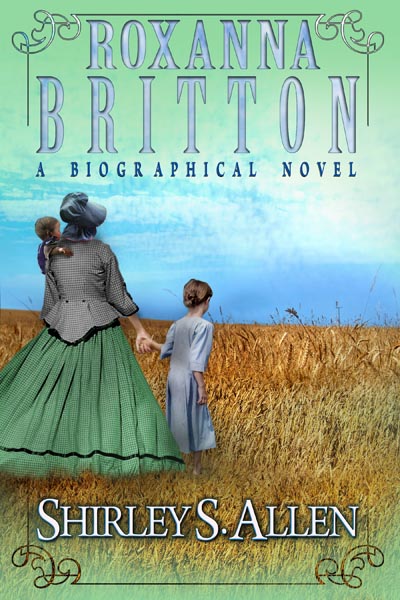 Roxanna Britton,
a biographical novel by Shirley S. Allen will be FREE on Amazon from May 22-25. It's Little House on the Prairie meets Jane Austen. In this wonderful novel, my mom tells the story of her own great-grandmother, an amazing pioneer of the Old West.
Roxanna Britton,
a biographical novel by Shirley S. Allen will be FREE on Amazon from May 22-25. It's Little House on the Prairie meets Jane Austen. In this wonderful novel, my mom tells the story of her own great-grandmother, an amazing pioneer of the Old West."This true biographical novel of an American pioneer is gripping and exciting in every sense. From Ohio to California one cannot help but admire the courage of the Britton women... If true history is your cup of tea, I strongly advise you to buy this book."--Karen Mabry Rice
"A family saga I could not put down. Ms. Allen has written a fascinating tale of real people, full of danger and tension, in prose that flows easily and pulls the reader along."--Susan Tuttle
.jpg) The Gatsby Game, based on a real unsolved Hollywood mystery, is only 99c at Amazon and Barnes and Noble. through May 31st, in honor of the debut of the Baz Luhrmann film. It's based on the mysterious death of David Whiting, a man I knew in college. Nobody knows what happened the night he died in Sarah Miles' motel room during the filming of a Burt Reynolds movie, but I have a theory, and this is a fictionalized account of it. Like David, my anti-hero Alistair Milbourne is obsessed with F. Scott Fitzgerald, and imagines himself to be "the ghost of Jay Gatsby, in a straw boater and spats, whistling a tune by Cole Porter."
The Gatsby Game, based on a real unsolved Hollywood mystery, is only 99c at Amazon and Barnes and Noble. through May 31st, in honor of the debut of the Baz Luhrmann film. It's based on the mysterious death of David Whiting, a man I knew in college. Nobody knows what happened the night he died in Sarah Miles' motel room during the filming of a Burt Reynolds movie, but I have a theory, and this is a fictionalized account of it. Like David, my anti-hero Alistair Milbourne is obsessed with F. Scott Fitzgerald, and imagines himself to be "the ghost of Jay Gatsby, in a straw boater and spats, whistling a tune by Cole Porter." "I was thoroughly entertained by The Gatsby Game. It has all the elements for a good mystery, and would also appeal to readers who enjoy romance in a women’s fiction style. I give the characters, cultural references, story building, and especially the slightly sarcastic narrator voice a 5 star rating" --Donna Hole
OPPORTUNITY ALERTS
1) Iron Writer Insane-a-Thon!
The Dreadful Cafe will hold their annual writing marathon on July 13, 2013. There are prizes for the most words written in a 24 hour period and for raising the most money for their charity, St. Jude's Hospital. It's a wild and crazy insane-a-thon for a great cause. More at The Dreadful Cafe. Send in your entry to submissions@dreadfulcafe.com before July 14th.
2) Spoonfuls of Stories Contest
For new, unpublished writers of children's fiction. HUGE prizes for the winning stories for children age 2-6. This contest, sponsored by Cheerios, offers a $5000 grand prize and some hefty runners-up prizes too. More info at spoonfulsofstories.com Deadline is July 31.
3) FREE book advertising to British readers from EbookBargainsUK
DEADLINE EXTENDED! Lots of authors and publishers have had huge successes with their free or sale books by advertising on BookBub, ENT, KND, POI, etc. But none of those target the UK, and their links go to US sites Brits can't use. But now there’s a newsletter for UK readers only. It links to all the big UK retailers like Apple UK, Waterstones and Foyles as well as Amazon UK. They don’t sell books direct or get paid for clickthroughs, so they don't have any restrictions on how many free books they can spotlight like BookBub and the others. So it's THE place to tell Brits about your book when it goes free or on sale in the UK. Since Brits have the highest number of readers per capita of any country in the world, this looks like a great idea to me: Plus: the site will be offering FREE book ads until June 30th, on a first come, first served basis.
And if you're in the UK, do sign up for their newsletter. It brings links to free and bargain ebooks—at the UK bookstore of your choice—in your inbox every morning. You can subscribe here.
4) Orion Magazine
Submission Window Opens June 1 “America's finest Environmental Magazine" is open to submissions only three times a year. Orionaccepts essays, narrative nonfiction, interviews, and short fiction that focus on nature, culture, and place. 1,200 to 5000 words.
5) Escargot Books is expanding its catalogue and are now accepting submissions.
Crime fiction (dark thrillers to cozies), women’s fiction, health and fitness, children’s, sci-fi and dystopian. All books will be published in digital format. Some books will be chosen for print and/or audio as well. Escargot Books does not offer an advance, but they offer higher royalties than traditional publishers, especially for direct sales from our website, as well as editing, formatting, promotion, and the company of bestselling authors. This is an indie press with some big name authors and a good track record. Here’s their online submission form.


May 12, 2013
Top 10 Questions from New Writers: Answers to Your Most Burning Questions
We welcome questions from readers, and we always try to offer an answer or at least steer you to a place where you can find one.
A good place to get more detailed information is a book I co-wrote with Catherine Ryan Hyde: How to be a Writer in the E-Age…and Keep Your E-Sanity. It addresses these and most other questions a beginning writer might have. It’s not a tech or self-publishing manual in spite of its techy cover. We may be changing that...
But I realized recently that I spend a lot of time answering the same questions in emails, so I thought it would make sense to put some of the answers here on the blog.
In fact, we could make this a regular feature if people want to send in questions. Just go to the “contact us” page for our addresses and put “Q and A” in the header. Remember the only stupid question is the one you don't ask.
Here are ten of the most common questions we’ve been getting in our emails.
10) Q. Does Facebook count as a Blog / Website? If not, why not? And what site would you recommend?
A. Facebook does NOT count as a website and should not be your primary Web presence. Lots of reasons for this:
Facebook requires membership. Not all your readers are going to be members.Facebook can kick people off for very minor infractions—or even if you've done nothing at all. If some troll reports you for spam, nobody checks on the troll, but you're outta there, and it's tough to get reinstated. It happened to me.The site has probably peaked. Younger people are leaving, and lots of users are fed up with the ads and lack of privacy and the fact you now have to pay to have more than a few people see your posts.An author needs a primary Web presence that you can control yourself. You need to establish your brand, with your own choice of colors, tone, photos, etc. It doesn't have to cost money. A Blogger or Wordpress blog is free.I use Blogger (blogspot.com—owned by Google) It's easy enough for a technomoron like me to use. And I like free. More tech-savvy folks prefer WordPress. Both are 100% free and work for most writers. Look up in the right hand corner of this blog. See the button for "create blog"? Hit it—and in about 5 minutes, you're a blogger. I don't recommend you do that though. Get things assembled, like photos, ideas for a title, etc. You can get more info on HOW TO BLOG right here. and through some of my popular pieces in the sidebar.
9) Q. Does every new writer need an agent? And how much do they cost?
A. No, every writer does NOT need an agent.
If you write short stories or poetry, agents won't be interested. If you write novels or memoir, you shouldn't seek representation until you have at least one finished, polished book—and most agents would prefer two. If you've got a nonfiction book or two, an agent might help you, but most nonfic authors do better with self-publishing or small presses these days because most agents require a Dr. Oz-sized platform. But if you are Dr. Oz, or you have a couple of novels with a potentially huge global market—the kind that will appeal to one of the Big 5 multinational publishing houses or some of the larger “medium” sized ones like Harlequin (except some lines)—you definitely need an agent.
Small and some medium-sized presses do not require an agent (for more on which ones require agents, they're listed in my book How to be a Writer in the E-Age .)
Most self-publishers don’t have agents, although the role of agent is changing, and now many agents are helping authors self-publish. I think it's a good plan for most first novelists to query agents to see if there’s interest. Going through the query process is a great way to learn about the business and hone marketing skills and it keeps your options open in this rapidly changing business.
But if you do get an offer, always have a lawyer or knowledgeable third party look at the contract before signing. Some agent contracts these days can be predatory, even from legitimate agencies. As far as cost: agents charge a commission—after they've sold your work. They pretty much all charge the same: 10%-15% of domestic sales, 20% foreign.
And NEVER pay an agent anything upfront. It’s not considered ethical to charge a fee for reading your manuscript. The network of agents and editors is fairly small, and a fee-charging agent won’t belong to that network and won’t be able to sell your book to a reputable publisher. Here’s a blogpost with more on how to spot bogus and unethical agents.
8) Q. Do I need to set up my own store to sell a self-published title? How do I set up my blog so readers can buy my book?
A. You probably don't want to bother with your own store unless you have a whole lot of titles and a ton of tech and business savvy. Most authors I know who've tried it say that running their own store is more trouble than it’s worth.
Obviously getting 100% of your cover price instead of 35%-70% is very tempting. But unless you have high visibility already, you’re going to sell more on the retail sites like Amazon, iTunes, and Barnes and Noble to make up the difference. If you prefer not to work with mega-companies like Amazon, consider Smashwords for ebooks and Lulu for paper (but avoid Lulu's more expensive packages, which are operated by AuthorSolutions.) .
As far as linking to retailers, here's what you do on Blogger:
Click "design" in the right top corner of your blog main page (once you're signed in.) This takes you to your “dashboard". Go to the list of links on the left hand side of the page that comes up and click "layout." A basic pattern of your layout comes up. Then hit "add a gadget" wherever you want your book to be. Then choose "image". A window will come up where you can upload your cover image and there will be another window that says "add a link". Paste in the link to your buy page at your publisher or Amazon or wherever you want.It sounds like a lot of steps, but it only takes a minute or two.
7) Q. I want to know if I have the talent to be a real writer. Will you look at my WIP and let me know if I’m wasting my time?
A. No writing wastes your time. Writing is about organizing thought. It keeps your little gray cells well exercised. It’s like a gym workout for your brain.
As far as being a “real writer”—if you’re writing, and you’re not a puppet carved by an old Italian guy named Gepetto, you’re a real writer. A writer is a person who writes, full stop. It’s a long learning curve, but I believe anybody can learn if they’ve got the drive.
But we can’t give free critiques. Our schedules are jam-packed and we’re always on overload. Plus critiquing can be a thankless job. Lots of beginners aren’t ready to hear how much work goes into learning to write narrative. I recommend CritiqueCircle.com for exchanging critiques.
6) Q. How much platform-building should I do before I sit down to write my first story?
A. If you write fiction, NONE. Write a book first. Or at least some short stories. It takes a long time to learn to write good fiction.
You can read some great advice from Jane Friedman about platform right here. Don’t let yourself get obsessed with platform until you have a finished draft and you’ve written some short stories that are ready to send out to contests and journals.
Learning to write well enough to publish usually takes at least three years (or 10K hours.) If you waste that time playing on the Internet, your learning curve will be longer.
If you’re a nonfiction writer, it's a different story. It's a good idea to start right away with a blog. I think all nonfiction writers benefit from blogging and you might as well start building an audience while you learn your trade.
5) Q. I want to get my WIP critiqued, but I’m afraid somebody will steal my plot. How can I make sure it won’t get stolen?
A. Relax. This is the most common fear in beginning writers, but you can let it go.
All your work is copyrighted to you as soon as you write it. If you want it official, you can pay to copyright a finished work with the US copyright office, who have a handy PDF pamphlet to help you along. But make sure it's finished, edited, and polished or you'll have to do it again. Could get expensive.
The truth is there are a whole lot of things to be afraid of out there in the publishing world: bad contracts, fee-charging agents, vanity publishers that masquerade as publishers—but this isn’t one of them.
Most writers have more ideas than they can write down in a lifetime. The more you write, the more ideas you have. Nobody needs to take yours. No matter how brilliant it is. More on the rarity of plot stealing here.
4) All I get is rejections. Should I give up writing?
A. Every successful author gets tons of rejections, so only quit if you know you’d rather be doing something else.
No matter how far along you are in your career, I guarantee somebody will hate your work and say that you “can’t write.” Look at the 140 one-star reviews of the Great Gatsby, which has become a #1 bestseller 90 years after its debut and has never been out of print..
All a rejection means is that you’re sending your work out there. Which puts you ahead of the writers who aren’t getting rejected yet. Ruth Harris has a great post on how arbitrary rejections can be. And here's a guest post on the subject from Catherine Ryan Hyde.
If your rejections are personalized—say you’ve had three that say your novel has structure issues, or point of view problems—you’ve been given a gift. Find a book, blogpost or class on structure or POV and work on your weak points. We all have them.
But if you find you really don’t enjoy writing novels, don’t think that giving up is “failure”. There are lots of other writing outlets besides the novel format. Short fiction is soaring in popularity. Or you may find that you’d prefer to put your energy into blogging. Blogs can reach a lot more people than a novel.
Novels are not somehow “better” than other formats. Writing is writing, and there are lots of ways to be successful at it.
And remember that learning to write takes time. How much time? Malcolm Gladwell’s 10,000 hours are a reasonable estimate.
Or maybe you'd rather create in an entirely different medium. That's OK, too. Pablo Picasso was probably a lousy writer.
3) Q. What do you think of bloghops and will you join ours?
A. Blog hops are a great way for new bloggers to network and form community—an essential thing when you’re starting out. If you have time to devote to daily blogging for a month or so, it can be a fun way to get to know your fellow writers and move your blog up in the search engines.
But personally, we’re kinda hopped out. Ruth and I have found the “hop” format doesn’t work well for this blog, because it’s a once a week “slow blog” (most blog hops require daily posts.) Plus this blog is more informational than personal. We don’t talk a lot about our writing process or characters unless they illustrate a point.
And remember other authors aren’t your primary audience. Blog hops are not going to sell a lot of books. They’re for building community.
2) Q. Should I use a pseudonym?
A. Funny how many writers worry about this as soon as they set out to write their first fiction. Pen names are definitely a good choice if you write erotica or your real name is Donald Trump.
But if you’re using a pseudonym so your family won’t know you’re a writing a book, you probably will get outed by the time you publish anyway, so consider the hassles of doing business as two people.
If you do want to use a pseudonym, choose one as soon as possible in your career and use the same one everywhere, so all your platform building and social networking can be done under your author name.
Do Google the name to make sure it doesn’t belong to another author, anybody who already has a big Web presence, or is wanted for a heinous crime.
Not everybody agrees with me on this, but I think authors can write under one name for all their books unless they write wildly incompatible genres like BDSM erotica and children’s picture books. These days lots of writers publish different genres under the same name. You can signal your genre with cover design, title and font, and you’ll save yourself a huge amount of time if you only have to build one platform.
And by far the most popular question is:
1) Q. Can I write a guest post for your blog to promote my book/service?
A. Probably not. Ruth and I take very few guest posters, as you'll see if you look around. Since we only post four pieces a month, each one has to offer a lot of value. It has to be informational rather than promotional. Unfortunately we've been seeing our stats drop off a cliff whenever we have a guest, even somebody wildly famous—and we've hosted Oscar winners and literary icons.
I'm not sure why that is. It may be that when we read blogs we're like schoolchildren with a substitute teacher: we want what we're used to or we don't feel we have to pay attention. In any case, this means we pretty much have to limit guests to people with their own online followings who can bring some audience with them or people who are pretty well known in the industry.
The best way to get on any blog is to start commenting and get to know the regulars. Readers are more likely to welcome one of their own. If we do start taking more guests, that would definitely put you ahead of the game. If you want to query us, there's more on guest posts on our "contact us" page and here's my post on HOW TO BE A GOOD BLOG GUEST.
BUT: If you have a contest going to promote your service, or you’ve got a literary zine or podcast and are looking for submissions, do send us the deets and we’ll put it in our “opportunity alerts.” That's why I created this section.
How about you, scriveners? Do you have anything to add to my answers to these questions? Do you have questions of your own you'd like us to tackle in future blogposts?
OPPORTUNITY ALERTS:
1) COMPOSE Literary Journal debuts this week with their Spring 2013 issue. Submissions are open for their Fall 2013 issue. This prestigious journal was founded by Suzannah Windsor, of Write it Sideways, and she's put together an amazing editorial staff. I'm so honored to have my poem No One Will Ever Love Him included in the debut issue. They are looking for art and photography as well as poems, literary short fiction, novel excerpts and essays. Must not be previously published (that includes anything that has appeared on your blog.)
2) The Saturday Evening Post’s Second Annual Great American Fiction Contest—yes, THAT Saturday Evening Post—is holding a short fiction contest. Could you join the likes of F. Scott Fitzgerald; William Faulkner; Kurt Vonnegut, Jr.; Ray Bradbury; Louis L’Amour; Sinclair Lewis; Jack London; and Edgar Allan Poe? $10 entry fee Deadline July 1, 2013
3) FREE book advertising to British readers from EbookBargainsUK Lots of authors and publishers have had huge successes with their free or sale books by advertising on BookBub, ENT, KND, POI, etc. But none of those target the UK, and their links go to US sites Brits can't use. But now there’s a newsletter for UK readers only. It links to all the big UK retailers like Apple UK, Waterstones and Foyles as well as Amazon UK. They don’t sell books direct or get paid for clickthroughs, so they don't have any restrictions on how many free books they can spotlight like BookBub and the others. So it's THE place to tell Brits about your book when it goes free or on sale in the UK. Since Brits have the highest number of readers per capita of any country in the world, this looks like a great idea to me: Plus: the site will be offering FREE book ads until May 31st, on a first come, first served basis.
And if you're in the UK, do sign up for their newsletter. It brings links to free and bargain ebooks—at the UK bookstore of your choice—in your inbox every morning. You can subscribe here.
4) The Lyttoniad contest for the WORST first sentence of a novel. The classic Bulwer-Lytton Contest makes news every year. Each entry must consist of a single sentence but you may submit as many entries as you wish. E-mail entries should be sent to Scott Rice at srice@pacbell.net in the body of the message, Ariel 12 font. One e-mail may contain multiple entries. Entries will be judged by categories, from “general” to detective, western, science fiction, romance, and so on. There will be overall winners as well as category winners. No prizes that I know of, but lots of admiration from your fellow writers. Deadline is June 30th.
May 5, 2013
Gangs of New Media: Twitchforks, the Hive Mind, and “Social Lasers of Cruelty”
I spend a lot of time here telling writers how and why to use social media, but I don’t often address the dangers. Yeah, they exist. I don’t know why, but otherwise sensible people can morph into irrational brutes when they’ve got their fingers on a keyboard and a connection to the Interwebz.
Bad behavior abounds in all social media. In an article in the NYT last week, Henry Alford said Twitter can be like "a crowded barroom that bristles with a certain kind of white male rage...marked by a hostility toward anything poetic or naïve."
The easy anonymity of the Interwebz is usually blamed for the nastiness—and I admit things have felt safer here since I disabled anonymous comments—but I think the most egregious abuses spring from something far more dangerous: mob mentality. A gang of self-righteously indignant “groupthinkers” can do more damage than one lone anonymouse, even a sociopathic one.
"Groupthink" is defined by Merriam-Webster as “a pattern of thought characterized by self-deception, forced manufacture of consent, and conformity to group values.” It's also known as “the hive mind.”
Writers new to social media need to be aware that anybody can become a target of one of these groups—often people who have done nothing wrong—and we all need to be careful not to jump into online dogpiles of crazy, no matter how righteous the cause appears to be.
Unfortunately, it’s easy to be sucked into mob behavior. Somebody says something that doesn’t conform to the majority opinion in a forum or comment thread and suddenly you’re part of a frenzied mob going after Mr. or Ms. Nonconformist with the digital version of torches and pitchforks.
I’ve seen Twitter version called “Twitchforks” —great word.
If you’ve ever become part of one of those mobs, you probably felt awful later. And if you’ve been the victim, you know their power to hurt, especially if the crazy invades your real home and affects your health and livelihood.
It happened to me in 2011. I endured a month-long barrage of threats and insults after somebody misunderstood one of my blogposts. I got hit with real world consequences: panic attacks, disordered sleep and stress-related illness. I thought I was taking it in stride, but the trauma of a death threat stays with you.
Thing is: most of the people who attacked me thought they were doing good. I've even made friends with some of them since.
Wanting to belong to a group is an instinct older than humanity. We were tribal animals before we walked upright. A recent study shows monkeys will go along with the crowd even if it means eating yucky food.
So it’s natural to carry our instinct to form tribes into the world of social media. Joining an online group can give us a warm, supportive feeling of community. It can make us feel welcome in the alien environment of cyberspace. Other members can teach and help each other on the road to success.
But the same instinct that urges us to help each other can be misdirected to do terrible harm. Especially if we’re led to believe our actions are sanctioned—or required—by the tribe. An us/them mentality can make people do unspeakable things in the name of protecting their own.
A minor, but significant attack by a cybermob with Twitchforks happened recently at the Pikes Peak Writers Conference. A bunch of agents, objecting to a keynote speech by author Barry Eisler, set off a swarm of nasty Twitter barbs against Mr. Eisler during his presentation.
The incident reverberated through the book community and serves as an embarrassing example of how even respected professionals can morph into a mob through the magic of the Internet.
Another more disturbing mob attack happened when superstar author Anne Rice had an over-the-top reaction to a bad review on Facebook and sent her fans to attack the reviewer—a young UK blogger with fewer than 100 readers. Rice's hordes called the reviewer obscene names and pelted her blog with classy comments like "I hope you get herpes." Kayleigh, the blogger, took the barrage of anger with grace. (I'll bet she got a lot more followers out of this.)
But I'm sure most of those commenters thought they were doing good in defending their idol.
When a group of people band together, they can be an unstoppable force. As Margaret Mead said,
“Never underestimate the power of a small group of committed people to change the world.”
Unfortunately, that needs a corollary:
“Never underestimate the power of a small group of misguided people to devolve into a mindless, bloodthirsty mob.”
That hive/gang mind that can do so much good can also be one of the most dangerous forces in the universe. It can make people do things they’d never dream of doing as individuals.
The hive mind is what powers pogroms, gang rapes, witch hunts, lynchings, war and genocide.
There’s a reason some of the most horrifying SciFi villains are semi-human creatures that share an unreasoning, destructive mind: like The Borg on Star Trek and Dr. Who’s Daleks.
I’ve seen dozens of good people attacked by gangs on social media in the past year or so. Usually for unverified infractions of murky rules. I’m not sure the people who sent me death threats even knew what I was supposed to have done. (I’m still not clear on that myself.) They only knew somebody told them the hive was under attack, and I was the designated villain.
Plus they were getting a rush from their own smug, self-righteous rage.
It’s that rage-induced high and feeling of superiority that is probably at the root of the problem. Anger management specialists tell us that self-righteous rage can trigger brain chemicals that mimic the high of cocaine. And it’s just as addictive. The angrier people are, the better they feel, so they feed their rage, often with unsubstantiated rumors their rational mind would recognize as lies. It’s why radio-ranters and conspiracy theorists are so popular.
Unfortunately a lot of those rage addicts feed their habit on the Interwebz.
Jaron Lanier, one of the early pioneers in Internet technology, has preached against this phenomenon for years. He has long warned people of what he calls “digital barbarism.” He sees terrible danger in “instant twitchy social networks which are designed to create mass action. “
And they get twitchier all the time. Look how one tweet in April nearly crashed the Stock Market.
In an interview with Ron Rosenbaum in the Smithsonian magazine in January, Jaron Lanier said,
“This is the thing that continues to scare me. You see in history the capacity of people to congeal—like social lasers of cruelty. That capacity is constant.”
For more on this, Lanier has a new book coming out this week, Who Owns the Future ?
I saw one of those lasers aimed at an Internet friend this week. She was a much less high-profile target than Barry Eisler, so the “social laser” could get away with a lot more cruelty. She was erroneously accused of piracy (a buzz-word guaranteed to set the hive-mind swarming.) The accuser didn’t deal with her directly. Instead he tweeted a call for the hive to attack. The victim was humiliated and castigated by dozens of authors (some of whom I know to be otherwise sensible individuals.) One rage-fueled smugster even posted the home address where the accused author lives with her disabled child.
The victim had the sense to call the FBI. Which is what I should have done when the crazies started sending me photos of my house and telling me they were armed and they’d “get me.”
She and I join the hundreds—probably thousands—who have had our homes and families targeted by mindless attacks by various branches of the online book community. Yes, these people are our fellow writers, readers, and reviewers. And I'm sure they all think they're doing good.
I saw it happen last year to a bestselling author who nearly lost a major national award because of a similar army of cyber-jihadists, feeding on rage fuelled by misinformation.There was a Goodreads group of bullies/antibullies (all the same at this point) who attacked each other last summer by posting addresses and photos of their children.A similar vigilante attack was waged against a disabled veteran who set up a book sharing site that was accused of piracy.And later the people who were swept up in the anti-piracy mob were targeted with attack-swarms of one-star “reviews” on Amazon and Goodreads.
Terrorizing victims and their families in their homes seems to be a pattern with the booky hive-mind. As is the fake review attack.
Posting addresses and photos of family seems to come from a twisted misunderstanding of what used to be done to silence anonymous trolls—stemming from the outing of hatemongers like “Violentacrez”, who terrorized Reddit a few years ago. Some clever person discovered his real name and residence and posted them online to keep the troll from continuing to pollute the site with anonymous hate speech.
But somehow these literary vigilantes don’t see how that’s different from posting the personal addresses and family details of a fellow author or reviewer who is NOT anonymous in the first place.
Talk about unclear on the concept…
But hey, nobody ever accused the Hive Mind of being smart. Ever tried to reason with a swarm of bees?
The other weapon of choice of the book hive is equally stupid and clueless. Wielding one-star reviews as weapons to assault the author’s character undermines the whole literary community by rendering customer reviews worthless.
Mind you, these cyber-militias claim to be standing up for the “integrity” of the writing community. They think writing fake, libelous “reviews” of books they haven’t read is a great way to show how honorable they are.
Come to think of it, those bees look pretty smart and reasonable in comparison.
So what can we do about cyber-gangs?
Nobody can stop groupthink-bullying on the Interwebz, but you can do your part by refusing to participate.
1) Check facts. Before you join in a cyber-attack sparked by a tweet or a FB post or other online call to jihad, read real news sources, not garbled hysteria from other members of the frenzied tribe.
2) Take a breath: Five seconds in; five seconds out. This will bring down your heart rate and give you time to remember that you have not, in actuality, been assimilated by the Borg.
3) Remember why you’re on social media in the first place. Are you here to alienate all potential readers who favor a different publishing path from yours, hate prologues, or prefer LeStat to Edward Cullen? Or are you here to make friends you hope will buy your books some day?
4) Consider what Joe Konrath said in his post about the attacks on Eisler:
The Internet is forever. Things you say will always be there to come back and bite you.”
And they WILL bite you. Especially if you—
Participate in snark attacks or throw “Twitchforks”Denigrate the review process with fake 1&2 star "reviews" Spread unsubstantiated, harmful rumorsSabotage a fellow author’s livelihoodThreaten a person’s life and/or familyMake personal attacks on reviewersThat initial rush of smug rage will subside. You’ll be left with nothing but a damaged reputation and digital egg on your face like those agents at Pike’s Peak.
5) Listen to the wise words of Porter Anderson, from his April 26th Writing on the Ether post:
“I recommend we create a little code for our community. ‘Pikes Peak.’ As in ‘Remember Pikes Peak’. If we see a conversation, a presentation, a thread online starting to spiral out of control, maybe if we remember Pikes Peak it will help us recall a sequence of negative emotions and reactions that we really don’t need to revisit.”
How can we avoid becoming gang victims?
You can’t. Not entirely. Barry Eisler’s speech was anything but incendiary. The accused “pirate” was actually promoting her favorite authors' work. I was attacked for writing a piece on my own blog to help fellow Boomers who aren't Web savvy. I admit I was naïve. But we’re all naïve about something.
However there are some things I could have done.
1) Contact law enforcement if your safety is threatened. The FBI has a hotline to report cybercrimes.
2) Delete out-of-control threads in your own blog before rage escalates. If a thread on your own blog gets out of hand, or a bunch of commenters gang up on another, just hit the little trash can icon. I used to think it was better to hang in there—and it probably was in the case of the Anne Rice fan attack—but when things get nasty on your blog, it can reflect on you. A lot of the stuff that made people most angry at me were things other people said in the blog thread, which were later attributed to me in the subsequent game of blog telephone.
3) But don’t delete messages and comments that are actually criminal. At least save a screen shot. You may need them for evidence. (I made this mistake. I thought deleting them from my computer would delete them from my mind. Doesn't work that way.)
4) Stay away from gang-infested forums and websites. Any forum that projects a them/us mentality can be dangerous. For some reason, the oldest forums seem to be plagued with the most groupthink and snark. A whole lot of writers no longer feel safe at Absolute Write, so I’ve stopped recommending them. Ditto the Amazon Forums (the Kindleboards tend to be a bit more civilized, but don’t expect many warm fuzzies.) Reddit could be toxic in the days of Violenticrez. I don't know if it has improved. I’ve also heard some Goodreads groups can get pretty nasty, but I belong to some great ones.
5) Look for community at moderated, helpful forums like Kristen Lamb's WANAtribe, Nathan Bransford’s forums, CritiqueCircle.com and SheWrites. (If you know of more good ones, do let us know in the comments.) I’ve left all the LinkedIn writing groups I belonged to because of idiots taking over the threads to stage one-on-one combat (and the misguided guys who think it's a dating site) but I haven’t seen overt gang activity. Maybe some of you know some good groups there.
6) Be careful where you post comments. Some blogs are heavily weighted pro- or anti- self-publishing or pro- or anti- author and may be controlled by a hive mind. If you see name-calling or blanket dismissal of a whole segment of the population by a blogger, you have wandered into a private clubhouse of snark and your time will be better spent elsewhere.
The internet book community is ours to create. We can become a jungle of irrational, violent thugs, or we can behave like literate, civilized adults. If you have a personal problem with an individual, consider talking to him or her about it in a reasonable, non-accusatory way. If the person is misusing a forum, or you see criminal activity, leave the group temporarily and contact the appropriate authorities.
As Konrath said—
“Have the integrity to defend your public statements and the courage to respond to people with different views.”
Probably braying “Exterminate. Exterminate. Exterminate….” like a Dalek is not what he means by "courage."
Here's my own message to anybody who is tempted to "go along with the crowd" and persecute a fellow writer rather than engage in intelligent discourse.
Remember you have your very own personal brain. Even when you’re on the Interwebz. Use it.
How about you, scriveners? Have you been the victim of a cyber-gang? What did you do about it? Have you ever found yourself being swept up in a gang-frenzy, saying things you later regretted? What groups and forums do you consider safe for writers who are new to social media?
***
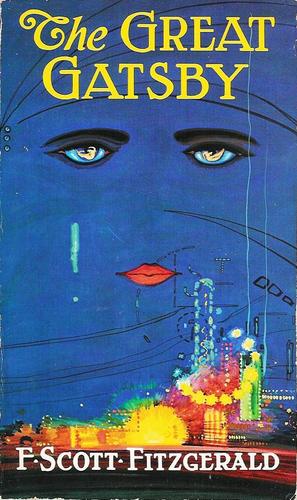 This week, in honor of the debut of the new film of The Great Gatsby, and of course the Stephen Colbert Book Club, which has made Fitzgerald's classic the #1 Bestseller on Amazon, Anne will be making the rounds talking about her own novel about a real-life Gatsby-obsessed con man, the Gatsby Game. ONLY 99c until the end of May!
.jpg) On Monday, May 6th, THE GATSBY GAME will be featured at reviewer Donna Hole's blog. with an in-depth look at the real events that inspired the novel.
On Monday, May 6th, THE GATSBY GAME will be featured at reviewer Donna Hole's blog. with an in-depth look at the real events that inspired the novel. And I'll also be at Janet Boyer's Blog, giving my #1 piece of advice for new authors.
On Tuesday, May 7th, THE GATSBY GAME will be featured on The Cheap Ebook. Anne is going to be talking about the new film, and how she feels about a giving a contemporary soundtrack to the greatest story of the Jazz Age. She'll also be talking about the real Gatsby-obsessed man who inspired her novel.
On Thursday, May 9, I'll be talking about the real-life Hollywood mystery behind THE GATSBY GAME with Elaine Raco Chase at the Author's Corner at Triangle Variety Radio.
OPPORTUNITY ALERTS:
1) Win a free book cover makeover! Westin Lee's Cover Cleaning Contest. Are your sales sluggish? It could be your cover. In this fun contest—open to self published writers and writers with small presses who have permission from their publishers. There's an easy online form. But you've only got a week. Winner and runner up will be announced May 15th, so get going!!
2) The Saturday Evening Post’s Second Annual Great American Fiction Contest—yes, THAT Saturday Evening Post—is holding a short fiction contest. Could you join the likes of F. Scott Fitzgerald; William Faulkner; Kurt Vonnegut, Jr.; Ray Bradbury; Louis L’Amour; Sinclair Lewis; Jack London; and Edgar Allan Poe? $10 entry fee Deadline July 1, 2013
3) FREE book advertising to British readers from EbookBargainsUK Lots of authors and publishers have had huge successes with their free or sale books by advertising on BookBub, ENT, KND, POI, etc. But none of those target the UK, and their links go to US sites Brits can't use. But now there’s a newsletter for UK readers only. It links to all the big UK retailers like Apple UK, Waterstones and Foyles as well as Amazon UK. They don’t sell books direct or get paid for clickthroughs, so they don't have any restrictions on how many free books they can spotlight like BookBub and the others. So it's THE place to tell Brits about your book when it goes free or on sale in the UK. Since Brits have the highest number of readers per capita of any country in the world, this looks like a great idea to me: Plus: the site will be offering FREE book ads until May 31st, on a first come, first served basis.
And if you're in the UK, do sign up for their newsletter. It brings links to free and bargain ebooks—at the UK bookstore of your choice—in your inbox every morning. You can subscribe here.
4) The Lyttoniad contest for the WORST first sentence of a novel. The classic Bulwer-Lytton Contest makes news every year. Each entry must consist of a single sentence but you may submit as many entries as you wish. E-mail entries should be sent to Scott Rice at srice@pacbell.net in the body of the message, Ariel 12 font. One e-mail may contain multiple entries. Entries will be judged by categories, from “general” to detective, western, science fiction, romance, and so on. There will be overall winners as well as category winners. Deadline is June 30th. No prizes that I know of, but lots of admiration from your fellow writers.
April 28, 2013
Three Keys to Writing Memorable Fiction
This week Ruth Harris discusses one of the major elements that separates ho-hum storytelling from bestselling fiction: details.
Yes, we know you're often told to keep details to a minimum, and that's a good rule, but like the judicious use of seasonings in cooking, choosing the right ones will make the difference between a bland, generic dish and memorable cuisine.
As Ruth says below,"writers don't have to know everything, but they need to be interested in everything." We need to be on the lookout for just the right detail that will add the most punch to a story. Living in the Internet Age, we don't have to spend endless hours in libraries to find them.
What sort of details should you choose? Ruth tells us they're the ones that put your story in a 1) social, 2) cultural and 3) political context. I love the examples Ruth has chosen—they're some of my favorite books, films and TV shows of the past few decades. (There's a reason we work so well together as blog partners!)
Would Downton Abbey or Mad Men have the same impact if they were set in the present? Could Homeland be set in any other period? Could the AbFab duo exist without the legacy of 1960s Swinging London?
We are constantly told that story is all—and yes, story is the engine that drives your book—but it won't have the impact you want without a powerful sense of time, place, and cultural context.
THREE KEYS TO WRITING MEMORABLE FICTIONby Ruth Harris
Social, cultural, and political history are powerful tools no writer should ignore.
John Le Carré used the Cold War, the Berlin Wall and the real-life unmasking of a double agent to create a compelling setting in The Spy Who Came In From the Cold.Isabel Allende’s The House Of The Spirits, a family saga partially inspired by the PInochet dictatorship, is set against decades of political and social upheaval in post-colonial Chile.Alexander Solzhenitsyn drew on his experiences in the forced-labor camps of the Soviet prison system to create world wide bestsellers in One Day in the Life of Ivan Denisovich and The Gulag Archipelago.However, writers do not need vast cultural and political disruptions to write powerful fiction readers can relate to. Ordinary, everyday details add enormous power to fiction and bring your story to life.
Whether your book is set in the conservative Eisenhower Fifties, the stylish Kennedy Sixties, Nixon’s Watergate and the gloomy Carter Seventies, the glitzy Reagan Eighties, or the Anxious-Age-of-the-Present, each period offers the writer its own specific backdrop and sound track. Trudeau’s Canada, Thatcher’s England, de Gaulle’s France, Ho Chi Minh’s China, Mubarak’s Egypt, Stalin’s Russia and Hitler’s Germany—all evoke powerful memories and feelings years after the events took place.
Characters need to be firmly anchored in a specific time and place. Even sci-fi and fantasy need social, cultural and political specifics to engage the reader. George Orwell’s 1984, Margaret Atwood’s Handmaid’s Tale and JK Rowling’s Harry Potter draw their power from their authors’ ability to create credible details of an invented world.
If you research and then judiciously set up the specifics of time and place, you will expand and enrich your fiction. Invoking the relevant cultural, political and social details will draw your reader into recognizable settings against which your characters can act out their dilemmas, frustrations and successes.
You shouldn’t give your reader a history lesson—that’s Doris Kearns Goodwin’s job—but you do want to give your characters a relatable world in which to live. Your characters can be—and should be—shaped by the attitudes of whatever period you choose to write about.Peggy and Joan in Mad Men deal with the casual sexism of the 1960’s.The characters in Downton Abbey are caught up in a long-gone post-Edwardian upstairs-downstairs world.Patsy and Edina, the fashion victims in Ab Fab, booze it up, get high and keep up with nutty trends as they attempt to recreate their younger, glory days in Swinging London.Carrie and Brody in Homeland are enmeshed in a paranoid present complete with bi-polar disorder, psycho-active drugs and a hero who might also be a terrorist.Elizabeth Moss’s character in Top Of The Lake searches for a missing and pregnant twelve-year-old in a remote, misogynistic area of contemporary New Zealand.The writers’ skillful use of these various eras bring the fictional characters who inhabit them vividly to life.
By using cultural history, high or low, past or current, your characters will become dimensional as they reflect the world around them. They can be limited by it—or they can rebel against it. Some will choose to drop out, some will learn to manipulate it, others will challenge it, some will be defeated and still others will triumph despite the barriers they face.
Are you writing about a period in which people feel positive about the future and confident about their prospects? Or are your characters coping with the Depression of the Thirties or the financial crisis or downsizing of the recent past and present? How they think and feel and what they do to deal with opportunity (or lack thereof) offers a potent way to explore and expand the inner and outer lives of the people you’re writing about.
Early Elvis, swinging Sinatra, Abbey Road Beatles, Motown Soul, Latino Salsa, Madonna’s Material Girl, Gangsta Rap, Lady Gaga’s and/or Rihanna’s latest immediately evoke times and places your reader will find familiar.Did your heroine’s first serious romance—maybe with her tweedy, pipe-smoking Literature Professor—begin and end to Mozart?Did your MC come of age when Michael Jackson was moon-walking?Did that bad-boy rascal of a boyfriend give your heroine heartache only Patsy Cline could express?Selecting just the right song and just the right singer can illuminate the emotional life of a character in a memorable way. (Anne here: Just remember to use the title, not the actual lyric--unless you're prepared to pay. Here's a recent blogpost on how to do that.)
Then there’s wardrobe:
Garter belts or Spanx?Turtlenecks or bustiers?Lip gloss or va-va-voom Marilyn Monroe red lipstick?A natural Fro, an old-fashioned perm, a blow dry bob or a Gwyneth dead straight ‘do?Punky pink streaks, Bergdorf’s blonde or let-it-all-hang-out grey?A hedge fund titan in a five-thousand-dollar suit?A dude in jeans and a pack of cigarettes in the rolled-up sleeve of a T-shirt?A genius techie billionaire in hoodie and sneakers?Are their clothes worn ironically? Or un-? Choices in clothing, makeup and hairstyles telegraph different personalities and different attitudes. A wise writer will make use of each telling detail as s/he creates characters readers will relate to.
Writers don’t need to know everything but they do need to be interested in everything from the Mau Mau uprising in the 1950s to today’s California surfers.
Research used to mean trips to the library, flipping through card catalogs and then waiting for the books to be pulled from the stacks. Research once meant slogging through microfilm, piles of old newspapers and magazines. It was time-consuming and often frustrating. Now, thanks to the web and Google, just about anything we want to know is instantly available.
Our world—past and present—is rich in incident, personality and conflict. It’s an oyster with a different pearl for every book, each character and every writer. An open mind and lively curiosity, a habit of reading widely, your own unique memories, passions and interests, plus basic research are your friends.
Embrace them and use them thoughtfully. Your readers will love you for it.
What about you, scriveners? What details do you use to anchor your book in time and place? Are there books that have more detail than you'd like? Do you read for setting as well as story?
SPECIAL WEEKEND SALE (Through Sunday, April 28 only)!
Ruth has reduced ZURI, a love story with all 5-star reviews, to $.99. ZURI will go back to its usual price on Monday, April 29.
 Kindle | Nook
And remember all of Anne's mysteries are 99c until April 30.Stephen Colbert wants us all to read the Great Gatsby in the next two weeks. After that, why not read Anne's Fitzgerald-inspired The Gatsby Game?

OPPORTUNITY ALERTS:
1) Literary Upstart Short Fiction Contest for writers in the New York area. You can submit your short fiction until May 28th; submissions must be no longer than 1,300-words. Semi-finalists, fifteen in total, will be invited to participate in one of three readings, in front of a live, lively audience, and a panel of judges comprised of members of the local literati. The grand prize winner will get a $500 award and be published in the annual Summer Fiction Issue of The L. Magazine.
2) FREE book advertising to British readers from EbookBargainsUK Lots of authors and publishers have had huge successes with their free or sale books by advertising on BookBub, ENT, KND, POI, etc. But none of those target the UK, and their links go to US sites Brits can't use. But now there’s a newsletter for UK readers only. It links to all the big UK retailers like Apple UK, Waterstones and Foyles as well as Amazon UK. They don’t sell books direct or get paid for clickthroughs, so they don't have any restrictions on how many free books they can spotlight like BookBub and the others. So it's THE place to tell Brits about your book when it goes free or on sale in the UK. Since Brits have the highest number of readers per capita of any country in the world, this looks like a great idea to me: Plus: the site will be offering FREE book ads until May 31st, on a first come, first served basis. But note: BE SURE TO READ THE DIRECTIONS. I've had complaints that a number of people are just leaving notes to "pick up the details and cover on my website." DO not do this. Just because this service is free right now does not mean you don't have to be professional.
You can see the nice ads they gave Ruth and Anne in this weekend's newsletter.
And if you're in the UK, do sign up for their newsletter. It brings links to free and bargain ebooks—at the UK bookstore of your choice—in your inbox every morning. You can subscribe here.
3) The Saturday Evening Post’s Second Annual Great American Fiction Contest—yes, THAT Saturday Evening Post—is holding a short fiction contest. Could you join the likes of F. Scott Fitzgerald; William Faulkner; Kurt Vonnegut, Jr.; Ray Bradbury; Louis L’Amour; Sinclair Lewis; Jack London; and Edgar Allan Poe? $10 entry fee Deadline July 1, 2013
4) Find a Writing Group through Galley Cat! One of the most reliable and popular news outlets in publishing is creating a directory for writers to network to get critiques of their work You can sign up here.
5) Readwave: A showcase for short stories: ReadWave is a community of readers and writers who love to discover and share new stories from contemporary writers. Readers can access thousands of stories and read them for free on mobile or desktop--and writers can use ReadWave to build up a fanbase and market their stories online. ReadWave has created a new reading widget, that allows bloggers and website owners to embed stories online in a compact form. The ReadWave widget is the first reading widget to allow readers to "follow" the writer. When a reader follows a writer they are added to the writer’s fanbase and can receive updates on all of the writer’s future stories. ReadWave puts writers in touch with the readers that are right for them. This looks like a great innovative site. You know how I've been encouraging you to write more short fiction? This is where to put it to start building a fan base.
Yes, we know you're often told to keep details to a minimum, and that's a good rule, but like the judicious use of seasonings in cooking, choosing the right ones will make the difference between a bland, generic dish and memorable cuisine.
As Ruth says below,"writers don't have to know everything, but they need to be interested in everything." We need to be on the lookout for just the right detail that will add the most punch to a story. Living in the Internet Age, we don't have to spend endless hours in libraries to find them.
What sort of details should you choose? Ruth tells us they're the ones that put your story in a 1) social, 2) cultural and 3) political context. I love the examples Ruth has chosen—they're some of my favorite books, films and TV shows of the past few decades. (There's a reason we work so well together as blog partners!)
Would Downton Abbey or Mad Men have the same impact if they were set in the present? Could Homeland be set in any other period? Could the AbFab duo exist without the legacy of 1960s Swinging London?
We are constantly told that story is all—and yes, story is the engine that drives your book—but it won't have the impact you want without a powerful sense of time, place, and cultural context.
THREE KEYS TO WRITING MEMORABLE FICTIONby Ruth Harris
Social, cultural, and political history are powerful tools no writer should ignore.
John Le Carré used the Cold War, the Berlin Wall and the real-life unmasking of a double agent to create a compelling setting in The Spy Who Came In From the Cold.Isabel Allende’s The House Of The Spirits, a family saga partially inspired by the PInochet dictatorship, is set against decades of political and social upheaval in post-colonial Chile.Alexander Solzhenitsyn drew on his experiences in the forced-labor camps of the Soviet prison system to create world wide bestsellers in One Day in the Life of Ivan Denisovich and The Gulag Archipelago.However, writers do not need vast cultural and political disruptions to write powerful fiction readers can relate to. Ordinary, everyday details add enormous power to fiction and bring your story to life.
Whether your book is set in the conservative Eisenhower Fifties, the stylish Kennedy Sixties, Nixon’s Watergate and the gloomy Carter Seventies, the glitzy Reagan Eighties, or the Anxious-Age-of-the-Present, each period offers the writer its own specific backdrop and sound track. Trudeau’s Canada, Thatcher’s England, de Gaulle’s France, Ho Chi Minh’s China, Mubarak’s Egypt, Stalin’s Russia and Hitler’s Germany—all evoke powerful memories and feelings years after the events took place.
Characters need to be firmly anchored in a specific time and place. Even sci-fi and fantasy need social, cultural and political specifics to engage the reader. George Orwell’s 1984, Margaret Atwood’s Handmaid’s Tale and JK Rowling’s Harry Potter draw their power from their authors’ ability to create credible details of an invented world.
If you research and then judiciously set up the specifics of time and place, you will expand and enrich your fiction. Invoking the relevant cultural, political and social details will draw your reader into recognizable settings against which your characters can act out their dilemmas, frustrations and successes.
You shouldn’t give your reader a history lesson—that’s Doris Kearns Goodwin’s job—but you do want to give your characters a relatable world in which to live. Your characters can be—and should be—shaped by the attitudes of whatever period you choose to write about.Peggy and Joan in Mad Men deal with the casual sexism of the 1960’s.The characters in Downton Abbey are caught up in a long-gone post-Edwardian upstairs-downstairs world.Patsy and Edina, the fashion victims in Ab Fab, booze it up, get high and keep up with nutty trends as they attempt to recreate their younger, glory days in Swinging London.Carrie and Brody in Homeland are enmeshed in a paranoid present complete with bi-polar disorder, psycho-active drugs and a hero who might also be a terrorist.Elizabeth Moss’s character in Top Of The Lake searches for a missing and pregnant twelve-year-old in a remote, misogynistic area of contemporary New Zealand.The writers’ skillful use of these various eras bring the fictional characters who inhabit them vividly to life.
By using cultural history, high or low, past or current, your characters will become dimensional as they reflect the world around them. They can be limited by it—or they can rebel against it. Some will choose to drop out, some will learn to manipulate it, others will challenge it, some will be defeated and still others will triumph despite the barriers they face.
Are you writing about a period in which people feel positive about the future and confident about their prospects? Or are your characters coping with the Depression of the Thirties or the financial crisis or downsizing of the recent past and present? How they think and feel and what they do to deal with opportunity (or lack thereof) offers a potent way to explore and expand the inner and outer lives of the people you’re writing about.
Early Elvis, swinging Sinatra, Abbey Road Beatles, Motown Soul, Latino Salsa, Madonna’s Material Girl, Gangsta Rap, Lady Gaga’s and/or Rihanna’s latest immediately evoke times and places your reader will find familiar.Did your heroine’s first serious romance—maybe with her tweedy, pipe-smoking Literature Professor—begin and end to Mozart?Did your MC come of age when Michael Jackson was moon-walking?Did that bad-boy rascal of a boyfriend give your heroine heartache only Patsy Cline could express?Selecting just the right song and just the right singer can illuminate the emotional life of a character in a memorable way. (Anne here: Just remember to use the title, not the actual lyric--unless you're prepared to pay. Here's a recent blogpost on how to do that.)
Then there’s wardrobe:
Garter belts or Spanx?Turtlenecks or bustiers?Lip gloss or va-va-voom Marilyn Monroe red lipstick?A natural Fro, an old-fashioned perm, a blow dry bob or a Gwyneth dead straight ‘do?Punky pink streaks, Bergdorf’s blonde or let-it-all-hang-out grey?A hedge fund titan in a five-thousand-dollar suit?A dude in jeans and a pack of cigarettes in the rolled-up sleeve of a T-shirt?A genius techie billionaire in hoodie and sneakers?Are their clothes worn ironically? Or un-? Choices in clothing, makeup and hairstyles telegraph different personalities and different attitudes. A wise writer will make use of each telling detail as s/he creates characters readers will relate to.
Writers don’t need to know everything but they do need to be interested in everything from the Mau Mau uprising in the 1950s to today’s California surfers.
Research used to mean trips to the library, flipping through card catalogs and then waiting for the books to be pulled from the stacks. Research once meant slogging through microfilm, piles of old newspapers and magazines. It was time-consuming and often frustrating. Now, thanks to the web and Google, just about anything we want to know is instantly available.
Our world—past and present—is rich in incident, personality and conflict. It’s an oyster with a different pearl for every book, each character and every writer. An open mind and lively curiosity, a habit of reading widely, your own unique memories, passions and interests, plus basic research are your friends.
Embrace them and use them thoughtfully. Your readers will love you for it.
What about you, scriveners? What details do you use to anchor your book in time and place? Are there books that have more detail than you'd like? Do you read for setting as well as story?
SPECIAL WEEKEND SALE (Through Sunday, April 28 only)!
Ruth has reduced ZURI, a love story with all 5-star reviews, to $.99. ZURI will go back to its usual price on Monday, April 29.
 Kindle | Nook
And remember all of Anne's mysteries are 99c until April 30.Stephen Colbert wants us all to read the Great Gatsby in the next two weeks. After that, why not read Anne's Fitzgerald-inspired The Gatsby Game?
.jpg)
OPPORTUNITY ALERTS:
1) Literary Upstart Short Fiction Contest for writers in the New York area. You can submit your short fiction until May 28th; submissions must be no longer than 1,300-words. Semi-finalists, fifteen in total, will be invited to participate in one of three readings, in front of a live, lively audience, and a panel of judges comprised of members of the local literati. The grand prize winner will get a $500 award and be published in the annual Summer Fiction Issue of The L. Magazine.
2) FREE book advertising to British readers from EbookBargainsUK Lots of authors and publishers have had huge successes with their free or sale books by advertising on BookBub, ENT, KND, POI, etc. But none of those target the UK, and their links go to US sites Brits can't use. But now there’s a newsletter for UK readers only. It links to all the big UK retailers like Apple UK, Waterstones and Foyles as well as Amazon UK. They don’t sell books direct or get paid for clickthroughs, so they don't have any restrictions on how many free books they can spotlight like BookBub and the others. So it's THE place to tell Brits about your book when it goes free or on sale in the UK. Since Brits have the highest number of readers per capita of any country in the world, this looks like a great idea to me: Plus: the site will be offering FREE book ads until May 31st, on a first come, first served basis. But note: BE SURE TO READ THE DIRECTIONS. I've had complaints that a number of people are just leaving notes to "pick up the details and cover on my website." DO not do this. Just because this service is free right now does not mean you don't have to be professional.
You can see the nice ads they gave Ruth and Anne in this weekend's newsletter.
And if you're in the UK, do sign up for their newsletter. It brings links to free and bargain ebooks—at the UK bookstore of your choice—in your inbox every morning. You can subscribe here.
3) The Saturday Evening Post’s Second Annual Great American Fiction Contest—yes, THAT Saturday Evening Post—is holding a short fiction contest. Could you join the likes of F. Scott Fitzgerald; William Faulkner; Kurt Vonnegut, Jr.; Ray Bradbury; Louis L’Amour; Sinclair Lewis; Jack London; and Edgar Allan Poe? $10 entry fee Deadline July 1, 2013
4) Find a Writing Group through Galley Cat! One of the most reliable and popular news outlets in publishing is creating a directory for writers to network to get critiques of their work You can sign up here.
5) Readwave: A showcase for short stories: ReadWave is a community of readers and writers who love to discover and share new stories from contemporary writers. Readers can access thousands of stories and read them for free on mobile or desktop--and writers can use ReadWave to build up a fanbase and market their stories online. ReadWave has created a new reading widget, that allows bloggers and website owners to embed stories online in a compact form. The ReadWave widget is the first reading widget to allow readers to "follow" the writer. When a reader follows a writer they are added to the writer’s fanbase and can receive updates on all of the writer’s future stories. ReadWave puts writers in touch with the readers that are right for them. This looks like a great innovative site. You know how I've been encouraging you to write more short fiction? This is where to put it to start building a fan base.
April 21, 2013
Author Etiquette 101: Do’s and Don’ts for Writers Using Social Media
Ruth and I are running a special sale to celebrate the amazing honor of being listed in Writers Digest’s Best 101 Websites for Writers. (Isn't that an awesome badge they sent us?) ALL my mysteries are 99 cents until the end of April, including the boxed set. Plus Ruth’s Park Avenue boxed set is 99 cents, too. That’s 33 cents a book for the boxed sets.
“Authors behaving badly” tends to be a hot topic on booky forums and blogs these days. A lot of people blame the indie movement, but some of the worst social media behavior I’ve seen comes from Big 5 authors who are following the dictates of their marketing departments.
Unfortunately, a lot of marketers seem to have studied their craft at the “let’s cold-call random strangers just as they sit down to dinner” school of salesmanship.
As a general rule, I feel if someone has the social graces of a rabid squirrel, he’s probably not the guy to listen to on the subject of winning friends and influencing people—which is what social media is all about. So if you have any choice, ignore the squirrels.
Especially if they tell you to follow a bunch of other authors and then spam them unmercifully until you sell a million books. Because hey, if you’re not selling, you’re not spamming hard enough, right?
Wrong. Thing is, other authors probably aren’t your best audience anyway, unless you’ve got a nonfic book of writing or publishing tips. So think twice before you market to other authors—especially authors outside of your genre.
And even if you’re sure you're targeting the elusive “reader” instead of fellow authors, remember fans are not forever. They don’t like to feel badgered. Asking them to tweet and share every promo and blogpost can turn a satisfied reader into an annoyed boycotter.
Keep in mind that social media isn’t about numbers, no matter how numbers-oriented your marketing department squirrels are. Social media is about making actual friends, not about mass-“friending” a horde of random strangers in order to annoy them.
You’ll make a lot more real friends and sell a lot more books in the long run if you heed the following dos and don’ts.
1) DO remember Tweets are casual: Never tweet a query—not to an agent, reviewer, blogger or editor. Here's Peter Ginna of Bloomsbury Press on the subject . Tweets are breezy and fleeting. When you approach a professional, be professional. Whether you want a review, a guest blog spot, or you’re looking for representation or publication, Twitter is not the place to make your pitch. E-mail is the proper medium.
2) DON’T post advertising on anybody's Facebook “wall”. A person’s wall is how they present themselves to the world. When you plaster the cover of your book on their timeline you seriously mess with their brand.
Put a naked vampire in bondage on a Christian romance writer's page, and you not only are NOT going to make a sale, you're going to lose a ton of sales for that author. And probably make an enemy for life.
And to whoever put the huge pictures of Krishna on my FB page every day for a week, you'll notice it was bye-bye, not buy-buy. You have no idea how freaked my friends and family were. They thought I'd been kidnapped by a cult or something.
Posting on somebody’s wall is like putting a sign in the front window of their house. Don’t do it without permission. This is true for pleas to sign petitions or donate to charities, no matter how worthy the cause.
And it’s especially true for ads for your own books. I just read a lament from a paranormal author whose wall was getting spammed with links by the author of a similar paranormal book. It may have been an attempt at networking, but it came across as trying to steal readers.
The ONLY time it’s OK to post on somebody’s wall is a ) when you know them well AND b) have something to say that will enhance their wall. Like “happy birthday” or “LOVE your book: just gave it a rave review on my blog: here's the link."
3) DO use social media to interact with people, not to broadcast a never-ending stream of “buy my book” messages. People whose Twitter stream is the identical promo tweet over and over look like robots with OCD. They will only get followed by other compulsive robots.
Twitter is a place to give congrats to a newly agented writer here or a contest winner there. It’s a wonderful vehicle for getting quick answers to questions. Or to commiserate when you've had a disappointment. Or if you’ve found a great book you love, tweet it. Facebook is great for sharing fun videos and talking about them. And for commenting on news items and sharing them. (Keeping in mind #14)
Social Media is a party, not a telemarketing boiler room.
4) DON’T make up an email list from people who have contacted you for other reasons. ONLY send newsletters to people you have a personal connection with, or who have specifically asked to be on your list. Lifting emails from blog commenters without permission is considered especially heinous. Cue Law and Order music…
Yes, I know marketers are hung up on email lists. They tell you to snag 1000s of names of people to harass with weekly spamograms filled with the details of your last trip to the laundromat. Obviously marketers aren’t on any email mailing lists themselves, or they’d know that 99% of those things go into the trash without being opened.
5) DO use Direct Messages sparingly. Private messages are for personal exchanges with people you have a legitimate connection with—not for advertising. The fact somebody has followed or friended you back doesn’t give you license to send them advertising through a private message. This is especially true with “thank you for the follow” messages that come with a demand to “like” your author page, visit your blog and buy your products.
I advise against using any kind of automatic Direct Messages. Sending an auto-response "thank you" that says, “read my blog, and someday you, too, can become a published author” is not going to get you anything but an auto-unfollow from Ruth or me. I must get five or ten of those a week. One-size-fits all responses usually don't fit anybody.
Yes, I realize the auto-respond DM is #1 on the marketer's list of favorite toys, but if you annoy 1000 people in order to make one sale, does that really help establish an attractive brand? (Don't ask a rabid squirrel to answer that or you'll witness some serious mouth-foaming. So just nod nicely and fail to get around to setting up that auto-response.)
I think authors should be careful about automating social media at all. I know lots of people tell you to automate your tweets, but that can lead to social missteps like the one Kim Kardashian made on the day of the Boston bombings.
As a general rule, if you can’t be bothered to put the recipient’s name in a message and you know nothing about them, you have no business sending them a direct message.
6) DON’T forget to check your @messages on Twitter several times a day and respond to them. It only takes a moment, but those are people reaching out to you. Ignoring them will negate what you're doing on Twitter in the first place.
7) DO change the Facebook default "email" address to your actual email address. You are on social media to connect with people. Post a reliable way to connect—which that Facebook address isn’t (see #8.)
Last year Facebook erased all our email addresses and put in a Facebook Direct Message address instead. You have to change it manually to get your real email address back in there. I strongly suggest you do this, especially because of the problem with messages getting lost in the “other” file.
I've heard rumors that FB wants to charge for sending messages to anybody not on your Friend list. I don’t know if it’s true, but be safe. Be findable. Who knows, some Hollywood producer may have just read your book and be trying to contact you to option your book. Don’t let him languish in your “other” file.
Which leads me to…
8) DON’T forget to check your “Other” Folder on Facebook regularly. People who want to contact you for legitimate reasons may contact you through a Direct Message, but if they’re not on your “friend” list, the message goes into your “other” file.
A lot of FB users don’t even know it’s there.
If you’ve never heard of it, go to your home page and click on the message button on the left side of the toolbar (It’s the one in the middle, between friend requests and notifications.) They’re semi-invisible if you don’t have anything pending, so if it’s all blank up on the left side of that blue toolbar at the top of the page, move your mouse slightly to the right of the “facebook” logo in white and click around.
Mostly your “Other” file will be full of spam and hilarious messages from third world guys who think Facebook is a dating site. They’ll say stuff like “You face to be so beautiful. I am want to scam you for everything you’ve got get to knowing you for marriage.” For some reason they seem to target women who are married and/or over 45. No idea what’s up with that.
But nestled in there you may find a note from a fan or a fellow author who wants to co-promote or is asking you to join a blog hop or something useful. So do check it once a week or so.
9) DO post links to your website on all your social media sites. And have your contact info readily accessible on your site! Being paranoid on social media makes your presence pointless. Even if you’re on the lam, incarcerated, and/or in the Witness Protection Program, you need to be reachable if you want a career. Use a pen name and get a dedicated email address where you can be reached at that Starbucks in Belize.
10) DON'T "tag" somebody in a photograph unless they're in the picture. This is an unpleasant new way writers try to get people to notice their book or FB page. They'll post their book cover or some related photo (or worse, porn) and "tag" 50 random people so they'll all get a notification.
But here's the thing: a tag means a person is in the photo. Full stop. Yes, you may get a person's attention with this—but not in a good way. It's a nasty invasion of privacy as well as a lie. You're not just going to be unfriended and unliked—if you tag somebody in a pornographic photo, you could get sued.
Remember you're trying to get people to like you, not wish for you to get run over by a truck.
11) DO Network with other writers in your genre. Instead of spamming her fellow author’s wall, that paranormal author I mentioned in #2 could have sent an email (or DM—yes, this is a time when it’s OK) saying how cool it is they have such similar books and how about a joint contest or give-away? Joining up with other authors to share fans and marketing is one of the reasons you’re on social media. You’re not here to sell to other authors, but you are here to pool your resources.
Look how well Ruth and I have done with this blog by teaming up. We met through her comments right here in the thread. Commenting on blogs is one of the best ways to network.
12) DON’T thank people for a follow, especially on Twitter. It may seem like bad manners, but the truth is most people on Twitter and FB would prefer you DON’T thank them for a follow, because those thank-yous have become 99% spam. But if you must, send it in a @ tweet. If you actually want to show gratitude, retweet one of their tweets. Then maybe they’ll thank YOU and you can get a conversation going.
13) DO talk about stuff other than your book. Yes, we’re all here because we want to sell books, but social media is not about direct sales. It’s about getting to know people who might help you make a sale sometime in the future. Consider it a Hollywood cocktail party. You don’t launch into your audition piece every time you’re introduced to a film executive. You schmooze. You tell them how great their last picture was. You find them a refill on the champagne. You get them to LIKE you. Then you might get asked to audition in an appropriate place.
NOTE: Don't talk politics or religion, though. Save extreme partisan or discriminatory religious talk for a different social media account, or better yet, take it offline. It's fine to let people know your religious or political affiliations, but remember your readers may not share them.
14) DON’T call it “giving back” when you’re actually advertising. This is a personal pet peeve of mine. People who say they’re “paying it forward” or “giving back” by letting you know about their book launch, blogpost or freebie days on Amazon are doing no such thing. They’re giving publicity to themselves.
(And I think Catherine Ryan Hyde should get a royalty every time somebody uses the expression “pay it forward”. Most of us had never heard it before her book came out, and now you hear it dozens of times a day. Often misused by marketers. If you use it, at least use it right.)
15) DO Read the directions. If you’re invited to join a group, and you’re instructed to put links to your books only in certain threads, do so. Anything else will be treated as spam and you could get kicked out of the group. And don't dominate any site with your personal promos, even if it isn't expressly forbidden in the rules. Taking more than your share of space is rude. People don't like rude.
16) DON’T ever dis a reviewer online.
Not in the Amazon or Goodreads comments. Not on your Facebook page Not on their blog. Or yours. And especially don’t Tweet it. If you get a horrible, stupid, brain-dead review from some moron who wouldn’t know great literature if it bit his big fat butt, step away from the keyboard. Go find chocolate. And/or wine. Call your BFF. Cry. Throw things. Do NOT turn on your computer until you’re over it. Except maybe to see these scathing reviews of great authors. A bad review means you've joined a pretty impressive club.
What about you, Scriveners? Have you been making any of these faux pas? (I'm not going to claim I haven't. I have trouble reading directions.) Do you have any funny "Other" folder encounters you want to share? Any do's and don'ts of your own would you'd like to add?
If you're not sick of me yet...
THE GATSBY GAME will be featured on The Cheap Ebook on April 23. I'm going to be talking about the new film of the Great Gatsby, and how I feel about a giving a contemporary soundtrack to the greatest story of the Jazz Age. I'll also be talking about the real Gatsby-obsessed man who inspired my novel.And I'll be getting cheesy at Chick Lit Chat on April 22, helping Julie Valerie celebrate Grilled Cheese month. Stop by and win a free copy of THE BEST REVENGE.
OPPORTUNITY ALERTS:
1) FREE book advertising to British readers from EbookBargainsUK. Lots of authors and publishers have had huge successes with their free or sale books by advertising on BookBub, ENT, KND, POI, etc. But none of those target the UK, and their links go to US sites Brits can't use. But now there’s a newsletter for UK readers only. It links to all the big UK retailers like Apple UK, Waterstones and Foyles as well as Amazon UK. They don’t sell books direct or get paid for clickthroughs, so they don't have any restrictions on how many free books they can spotlight like BookBub and the others. So it's THE place to tell Brits about your book when it goes free or on sale in the UK. Since Brits have the highest number of readers per capita of any country in the world, this looks like a great idea to me: Plus: the site will be offering FREE book ads until May 31st, on a first come, first served basis.
And if you're in the UK, do sign up for their newsletter. It brings links to free and bargain ebooks—at the UK bookstore of your choice—in your inbox every morning. More info on their site at Ebook Bargains UK.
2) The Saturday Evening Post’s Second Annual Great American Fiction Contest—yes, THAT Saturday Evening Post—is holding a short fiction contest. Could you join the likes of F. Scott Fitzgerald; William Faulkner; Kurt Vonnegut, Jr.; Ray Bradbury; Louis L’Amour; Sinclair Lewis; Jack London; and Edgar Allan Poe? $10 entry fee Deadline July 1, 2013
3) Find a Writing Group through Galley Cat! One of the most reliable and popular news outlets in publishing is creating a directory for writers to network to get critiques of their work You can sign up here.
4) The 35th annual Nimrod Literary Contest: The Pablo Neruda Prize for Poetry and The Katherine Anne Porter Prize for Fiction. The Awards offer first prizes of $2,000 and publication and second prizes of $1,000 and publication. One of the oldest “little magazines” in the country, Nimrod has continually published new and extraordinary writers since. For more information about Nimrod, visit their website at www.utulsa.edu/nimrod. Deadline is April 30th.
5) Readwave: A showcase for short stories: ReadWave is a community of readers and writers who love to discover and share new stories from contemporary writers. Readers can access thousands of stories and read them for free on mobile or desktop--and writers can use ReadWave to build up a fanbase and market their stories online. ReadWave has created a new reading widget, that allows bloggers and website owners to embed stories online in a compact form. The ReadWave widget is the first reading widget to allow readers to "follow" the writer. When a reader follows a writer they are added to the writer’s fanbase and can receive updates on all of the writer’s future stories. ReadWave puts writers in touch with the readers that are right for them. This looks like a great innovative site. You know how I've been encouraging you to write more short fiction? This is where to put it to start building a fan base.
April 14, 2013
What are Algorithms—and are They Killing the "Kindle Revolution"?
First, an awesome announcement: this blog will be named to Writer's Digest's Best 101 Sites for Writers in the May-June issue! (special thanks to Lila and Janet for the heads-up.) We are so jazzed! The magazine should be in stores soon. Subscribers have already got their copies. Many, many thanks to whoever nominated us!!
To celebrate this exciting news, my publisher has made all my mysteries 99 cents until the end of April. That's at Amazon and Barnes and Noble. This includes The Gatsby Game, Food of Love, and the Camilla Randall Mysteries, either as the boxed set or singly, and No Place Like Home, usually $4.99 (still only at Amazon, alas.) Click those links or click through the book covers in the sidebar. Here's my author page at Barnes and Noble.
And Ruth Harris has joined in, making her Park Avenue Boxed Set only 99 cents as well. (That's 33c a book!)
OK, we hear about them all the time, but what the *%@# are algorithms, anyway?
An algorithm is a line of code that gives a search engine a step-by-step process to produce a desired result: like a list of websites, a bra that fits, or a suggestion for the next title to put on your TBR list.
They aren't new. In fact they were invented in the 8th century AD by a Persian guy named Abū ʿAbdallāh Muḥammad ibn Mūsā al-Khwārizmi . The word "algorithm" or "algorism" is a corruption of his name: al-Khwarismi.
But in the digital age this venerable type of formula has taken on a huge importance for the marketplace. An algorithm can make or break sales of any product online. As superstar author Hugh Howey said in an interview on Reddit, “I'm guessing 90% of my sales are from reader recommendations and Amazon algorithms.”
Or as his interviewer called them "the inscrutable Amazon algos."
They're sure not scrutable to me. I'm pretty sure they have to do with math, at which I suck. Seriously. I had to be counseled for “math anxiety” in high school.
Besides, algorithms aren’t that easy to define—even for the people who work with them. The Wikipedia article says, “While there is no generally accepted formal definition of 'algorithm,' an informal definition could be 'a set of rules that precisely defines a sequence of operations.' For some people, a program is only an algorithm if it stops eventually; for others, a program is only an algorithm if it stops before a given number of calculation steps”
Yeah, right. If you’re like me, your eyes have started to glaze over already. Secretly, I think of them as little robot elves who get things done inside my computer.
Like bringing up 64,300,000 links in .52 seconds when you put the word “algorithm” into Google’s search window.
Pretty durn clever, these elves. And kind of Big Brothery. They're what Facebook uses to analyze your “Likes” and figure out if you’re gay, conservative and/or smart.
They’re not infallible. They're responsible for sending you those emails from Amazon suggesting you buy or review your own book, and they're the reason you got spammed with dozens of ads for refrigerators after you accidently Googled “fridge” instead of “fudge” last week.
But they work well enough that businesses increasingly depend on them. A new online lingerie retailer, True&Co, uses a questionnaire and an algorithm to sell mail-order bras—a product that’s difficult to fit even in real-life dressing rooms. According to the NYT, at True&Co “women end up buying more of the bras chosen by the algorithm than the ones they select themselves.”
As you might imagine, online book retailers depend heavily on algorithms to get books in front of the people who might buy them.
David Gaughran talked about the complexity of Amazon’s algorithms in making Amazon’s bestseller lists on his blog, Let’s Get Digital.
“Amazon has a bevy of Bestseller Lists, all split into Free and Paid listings. The big one is theTop 100 in the Kindle Store, and placement on this list can drive staggering amounts of sales. This list is populated with items ranked #1 to #100 in the overall Kindle Store, which includes not just e-books, but also things like games, magazines, and newspapers.
The exact algorithm Amazon uses to assign a Sales Rank to each book is a closely-guarded secret, but the general make-up is easy to deduce. Simply put, your Sales Rank tells you how many books are selling more than you at this moment in time (it’s updated hourly). However, it also takes account of historical sales. More recent sales are weighted much more heavily in the algorithm, though, and velocity plays a big part too (how much your sales are increasing at that moment in time). There’s a lot more to it, but those are the basics.”
David talks more about how Amazon’s algorithm-driven recommendation engines work in a post from February 2013.
But the most important thing to know about the algorithms book retailers use is that they CHANGE. Those robot elves are programmed by real people—who are constantly inputting new data.
Mark Coker changed algorithms at Smashwords last year to encourage authors to stop devaluing their work by giving away so many free books.
Mr. Coker said, “At Smashwords, up until January of this year [2012], our algorithm for best sellers just looked at absolute downloads, but authors gamed that system by offering discounted or free books using the Smashwords coupon tool. So we changed our algorithm to focus on gross sales, so now when you look at the Smashwords best seller list, you’re looking at absolute dollar sales, which we are using as a representation of the interest of customers.”
Amazon changes its algorithms more often than Smashwords. Which means a whole lot of the “rules” you hear about how to sell big on Amazon are based on algorithms that no longer exist.
If you're in the indie author scene, you've no doubt heard a ton of rumors about what the Amazon algorithms will reward or penalize. You’ll hear that more than 50—or 100—“likes” will get more recommendations, or any 3-star or lower reviews will exclude you from the also-boughts or downgrade your author rank. Or that uploading from a non-US country downgrades your status, or dissing Amazon in their forums will be reflected in your sales ranking. Some of these may be true or may have once been true, but they’re hard to prove. And trying to game them generally isn't a good idea.
That's because the one thing we do know for sure about algorithms is that Amazon does not like it when you try to game them.
Which is probably why the Zon is removing the “like” buttons and “tags” on US buy pages. Every author group I belong to asks people to “like and tag” each other’s book pages whether or not the books are in a genre you read or enjoy. Which means the “likes and tags” no longer have meaning for tracking a person's individual preferences, which was the point in the first place.
Even though nobody can know for sure how the “inscrutable algos” are programmed, Amazon watchers can tell when there’s been a change. Some people make a serious study of them.
With the advent of KDP Select—Amazon’s program for books they have exclusive rights to sell—the algorithms were changed to benefit Select members. Select books get more weight in the popularity lists, more suggestions for “also bought” books, e-mail recommendations, and are featured when somebody searches the genre. That makes sense. When you ask for an exclusive, you need to give perks.
Now there’s an even more privileged “White Glove” program for books that have been “self-published” through a literary agency. It has a longer exclusive period and gets the benefit of even more also-boughts and other promotions.
Nothing wrong with that. It’s Amazon’s store and they can promote what they want. But it does make it harder on the truly self-published and small-press competition.
The “Kindle Revolution” that Amazon sparked in 2009 allowed individual authors to self-publish cheaply and gave them an equal opportunity with big publishing’s authors to get discovered. This was a brilliant way of providing a lot of inexpensive books for their brand new Kindle at a time when most people didn’t even think they needed an ereading device.
It was win/win. Amazon sold Kindles—and individual authors got to enter a marketplace that had been reserved for big corporations for half a century.
In doing that, Amazon shook up the book world and did a service to new authors that was pretty unprecedented.
But since then, Amazon has become a publishing company itself. Their Thomas and Mercer, 47North, Montlake Romance, and other imprints now compete with the Big 5. They also compete with the indies. Guess who the algorithms are likely to favor? (I did mention the elves are smart?)
Meanwhile, Amazon's competition as a retailer continues to grow. Kobo and Apple are gobbling up market share. Like any big business, the Zon wants to dominate the competition and keep its place as Alpha Dog of the online retail business.
So they’ve made it very appealing for authors to sell exclusively through them—both with their KDP Select and White Glove program.
And last month they bought Goodreads. We still have to see how that will affect self-and small-publishers. David Gaughran thinks it’s a boon to authors. But some others, like Jarek Steele, and The Author's Guild —not so much. But Mr. Coker saw a silver lining: a way of thwarting people who try to manipulate the elves with paid reviews. For a nice, balanced overview of the argument, read Porter Anderson's piece in Ether for Authors at Publishing Perspectives.
The one thing people agree on is that Amazon wanted Goodreads' data to feed its algorithms. As Gaughran says “Amazon’s recommendation algorithms will be vastly improved with all the data that Goodreads has been collecting.”
So is it true that the Amazon algorithm elves are no longer friendly to indies? Do they only like you if you publish through them, or have an agent—or at least give them an exclusive?
I think it's clear that multi-platform indies are not in the Zon's A-list any more. I’m not sure we’ll see as many 100% self-pubbed authors reach the heights that Amanda Hocking and John Locke did in the heady early days of the "Kindle" revolution. But indie books by previously traditionally-published hybrid authors are still breaking records. And agents are still trolling the Amazon bestseller lists.
Indies are also hurt by the Big Six books that are being offered as cheaply as indies. (There have been amazing giveaways of big name author’s books, especially in the UK. And this week I saw Barbara Kingslover's iconic novel The Bean Trees for $1.99)
Some people think this all means that the self-publishing revolution is dying.
But the fact is, the trend to self-publishing and boutique digital press publishing is not only alive and well, but growing.
This is because Big Publishing has done nothing to change their attitude that the publisher/author relationship must be one of master/slave. They have made themselves less attractive to new writers with ever more draconian contracts and demands that authors hire publicists and provide expensive traditional marketing with their own funds while the publisher risks nothing, sometimes offering no advance.
The fact that Amazon aspires to become a big publisher itself may make Amazon less attractive for the truly independent author.
But the door to successful self-publishing has been opened and it’s not going to close. The Zon may no longer be the fairy godperson of indie self-publishers, but it's not the Great Satan, either.
And more important: it's not the only game in town. Amazon now represents less than 50% of the ebook market.
A huge number of readers prefer to read on their iPads, which makes the Apple store a big contender.50% of Apple ebook sales are outside of the US, where the Zon is not always revered, due to a habit of tax dodging. Kobo has a growing share of the international market, plus Kobo ereaders are selling in indie bookstores, which gives indie authors a chance to reach readers through old-time word-of-mouth, in-store promoting. The moribund Barnes and Noble/Nook store is undergoing a major overhaul with the new Nook publishing. Those who fear change say it's a disaster, but many in the know say it's much more user friendly and heralds new and forward thinking from Nook, which is still a player in the ereader market. Plucky little Smashwords is expanding all the time. They are the only way for non-US writers to get uploaded to region-specific sites like Barnes and Noble, so they are becoming more and more useful to indies all over the world.
Self-and small press published authors who want to be on top of the next trend need to spread their marketing to all platforms, instead of spending all their time courting the Amazon algorithms with freebies and/or organizing armies of fellow authors to give likes and tags and fake reviews.
Launching a book in Amazon's Select program still seems to be a good move. (It works for me, anyway) but after the first three to six months I think most writers need to spread out to other platforms and promote there.
What we do not want to do is keep repeating what worked when the algorithms were the BFFs of the indie authorpreneur and the word "Kindle" was synonymous with "ereader".
The Indie "Kindle" Revolution may be fading, but the Indie Digital Revolution is still in a dynamic and robust infancy.
What about you, scriveners? Have your sales been affected by the changes in algorithms? Have you heard rumors that you need to do certain things to keep on the good side of the Zon elves? Do you miss the "likes" and "tags"? Do you fear the indie revolution is petering out?
OPPORTUNITY ALERTS:
1) Readwave: A showcase for short stories: ReadWave is a community of readers and writers who love to discover and share new stories from contemporary writers. Readers can access thousands of stories and read them for free on mobile or desktop--and writers can use ReadWave to build up a fanbase and market their stories online. ReadWave has created a new reading widget, that allows bloggers and website owners to embed stories online in a compact form. The ReadWave widget is the first reading widget to allow readers to "follow" the writer. When a reader follows a writer they are added to the writer’s fanbase and can receive updates on all of the writer’s future stories. ReadWave puts writers in touch with the readers that are right for them. This looks like a great innovative site. You know how I've been encouraging you to write more short fiction? This is where to put it to start building a fan base.
2) The Saturday Evening Post’s Second Annual Great American Fiction Contest—yes, THAT Saturday Evening Post is holding a short fiction contest. Could you join the likes of F. Scott Fitzgerald; William Faulkner; Kurt Vonnegut, Jr.; Ray Bradbury; Louis L’Amour; Sinclair Lewis; Jack London; and Edgar Allan Poe? $10 entry fee Deadline July 1, 2013
3) Inspirational anthology accepting submissions: A "Chicken Soup for the Soul" author is looking for heartwarming inspirational nonfiction pieces. Do You Have a Story on "Staying Sane in the Chaotic 24/7 World"? If you have a great story and would like to be considered for the anthology, 30 Days to Sanity, Send submissions to: 30 Days to Sanity at Box 31453, Santa Fe, NM 87594-1453. Or e-mail stories to stephanie@30daystosanity.com The maximum word count is 1200 words. For each story selected for the program a permission fee of $100 will be offered for one-time rights. There are no limits on the number of submissions. Deadline is May 1, 2013
4) Stanford Story Slam The first ever Stanford Story Slam has opened, a chance for a team of writers to win $500. Anybody can enter. To enter, you must collaborate to write about this prompt: “There are over 15,000 bikes used by students, staff, and faculty to get around Stanford campus. Over 300 bikes are stolen each year. Where do they go?” The Stanford Arts Review will publish the winning entry. Here’s more from the organizers You don't have to be a Stanford student to enter. Deadline is April 22.
5) The 35th annual Nimrod Literary Contest: The Pablo Neruda Prize for Poetry and The Katherine Anne Porter Prize for Fiction. The Awards offer first prizes of $2,000 and publication and second prizes of $1,000 and publication. One of the oldest “little magazines” in the country, Nimrod has continually published new and extraordinary writers since. For more information about Nimrod, visit their website at www.utulsa.edu/nimrod. Deadline is April 30th.
April 7, 2013
When is it OK to Blog Your Book?
What? Blog a book? Sez you. You're always hammering us NOT to put our WIPs on our blogs!
True. And I continue to do so—if you're a beginning novelist hoping to get a traditional book contract.
Tiny snippets of fiction for blog hops and other writing-community bonding exercises are OK, but blogging the rough draft of your novel in order to get critique or attract an agent is a bad idea.
For one thing, agents say you're ruining your chances with traditional publishers by giving away your first rights.
And the simple truth is they are about as likely to go looking for new clients on blogs as Hollywood producers are to cast their next film from a drug store lunch counter. Yes, it has happened, but that doesn't mean it's likely. Agents look for new clients in their slush piles. Which is why writing a good query is the best way to attract them.
Also, for some reason, most people don't read fiction on blogs. A popular author I know put some of her short stories on her blog and got only a handful of hits in six months. She decided to self-publish the stories in an ebook and they're now making her hundreds of dollars a month.
The thing to keep in mind is that people generally read blogs for information. They want to skim for nuggets of data, not admire your deathless prose or read an episode in the middle of an ongoing saga.
And very few want to read first drafts and provide you with free editing.
If you're a new writer and want critique, I advise you use a password-protected site like CritiqueCircle.com where you aren't "in public." You'll get more trustworthy advice and you'll avoid hanging your fledgling fiction out there in cyberspace at the mercy of any passing grammar nazi who's having a bad day. Rough drafts are supposed to be s***ty, according to Anne LaMotte. Asking people to read them is asking for a favor. You want your blog to OFFER something, not try to GET something (like free editing.)
Besides, your more mature writer-self will thank you. Trust me on this.
If you want to post samples of work that's polished and ready for the marketplace, you can do it on Wattpad, where 17-year old Beth Reekles got discovered and made a 3-book deal with Random House this week. (Yeah. A big congrats to her.) There's also a new site called ReadWave for sampling short fiction, nicely categorized by genre.
But if you write nonfiction, it's a different story.
A blog can be a nonfiction writer's best friend. It showcases your skills and gets your name out there where the search engines can find you.
More than half the new writers I meet at conferences and seminars are working on a nonfiction book. Mostly memoirs. And by far the majority of clients who contacted me when I did professional editing wrote memoir or nonfiction as well.
I foresee even more in the pipeline. Many Boomers plan to write a memoir when they retire. And according to the Social Security Administration, every day 10,000 US Boomers hit age 65.
That’s a whole lot of memoirs.
Unfortunately, memoirs are the hardest books to write well. Almost no beginning memoir writer I’ve worked with knows how to mold a lifetime of experiences into a novelistic story arc that will make a compelling read. Instead they write autobiography: a series of episodes from birth until now. Or a series of personal essays.
These authors face years of learning to craft their episodic writings into narrative—or shelling out a ton of cash hiring an editor to do it for them.
So ask yourself: does your project have to be a book-length work at all? Why not a series of short pieces?
Like posts on a blog.
Instead of shoehorning your memories into an 80K-100K word narrative, you can take advantage of the contemporary reader’s short attention span and serialize them on a blog.
The goal of many memoirists is to share their experiences, bear witness to history and make a difference, not establish a long-term career churning out two or three books a year.
A lot of memoirists I've met are working on the following:
Eyewitness experiences of historical events, especially war. Advice from a health crisis survivor/caretaker to aid others who are going through the same challenges. Inspiring or unique stories about famous people the author has known. A journal of exotic travels.Advice from an elder to the younger generationIf you’re writing any of the above, and your primary goal is to reach a lot of people with your message, not establish a long-term writing career. I’m going to suggest you let go of the big-book goal—at least for a while. You'll save yourself a lot of money and grief.
Yes, even a self-published book. Of course you can self-publish these days for not a whole lot of upfront money. But here’s the problem with the indie revolution: the competition has become crazy-fierce. Which makes it very, very hard to sell a singleton ebook—as demonstrated in a recent article in Salon.
Indie authors don’t generally get traction in the big online retailers like Amazon until they’ve built a hefty inventory.
So I’m going to break from traditional advice and suggest you consider blogging your memoiric essays and advice rather than spending years conference-going, workshopping and learning to craft your memories into a book that may not have a market.
Another plus: posting your own photos on a blog costs nothing. Self-publishing a book that contains pictures is expensive and problematic. (At least in the age of the black and white Kindle)
Not me! Sez you. I want an agent. A book deal. And a big advance! Besides, I've heard blogs are totally over.
Actually blogs aren’t over. They’re just not the darlings of New York publishing any more.
But it’s not likely your memoir, travel, or self-help book will be either.
And that's OK. New York publishing is probably not a place you want to be.
It's good to be aware that as Big Publishing scrambles to keep profits up in the e-age, they only want what they consider “sure things.” That means they’re not interested in books—especially nonfiction—written by people who are not already household names.
These days, if you want to appeal to the Big Five nonfiction editors and their marketing departments, you pretty much need to be involved in a reality TV show and/or humiliating sex scandal, be the victim of a major disaster, or run for President. Better still—all of the above. (Unusual hairstyle choices are a plus.)
Being well-known in the literary world means nothing. You have to be über-famous: Donald Trump-famous; Snooki-famous; I-Had-Justin-Beiber’s-love-child famous.
Or be willing to buy your place on the bestseller list.
Yes. You read that right.
I recently heard from a very successful fiction author with an engaged, enthusiastic fan base who had decided to shop around a nonfiction book proposal. Because her long-time agent didn’t handle nonfiction, she had to go the query route.
She was stunned by what she found. To be considered for representation, she was told by an agent that she’d be expected to—
Book and pay for her own national speaking tour. Hire a publicist (with her own funds.) Provide names and addresses (along with blog stats and Klout ratings) of high profile reviewers who had been properly primed to give positive reviews.Contact major celebrities who would provide endorsements, TV spots, photo ops, etc. Provide names of organizations guaranteed to buy up copies of the book in bulk at the appropriate moment to game the bestseller lists. Spam her email list and personal contacts with newsletters, postcards, flyers, etc. (at her own expense, natch.) In other words, to get an agent to represent a nonfiction book, she’d need a private fortune or a SuperPAC.
And a very flexible set of ethics.
I don’t know if all agents require this kind of upfront promise to bankroll your own project these days, but it does explain why so many piles of political doo-doo make it to the top of the NYT Bestseller list.
Apparently those big advances you hear about are more likely to be what nonfiction authors PAY to have a bestseller, not the other way around. Nobody could break even with those expenses unless there was a truly epic advance. Which you’re not going to get unless you’re already a superstar.
It helped explain to me why Simon and Schuster thinks they can get away with selling a $25,000 “self-publishing” package through the vanity press AuthorHouse/Archway.
That’s because ALL Big Five nonfiction publishing seems to have become vanity publishing.
The famous author’s reaction was the same as the one I’m sure you’re having: “If I had the money for all that, why the %&@! would I need a publisher?”
Why indeed? This is the era of indie publishing.
Hey! didn’t you say if you’re not a career author with a big inventory, your self-pubbed book doesn’t have great odds of selling?
Yes, but remember that blogging is publishing, which is why agents won’t represent something that’s been partially blogged: once it’s on the Interwebz, you’re officially published.
Once you start building an audience, you can think about self-publishing ebooks—maybe a series of shorts. One of the great things about ebooks is they can be any length. More on that in a minute.
And of course, if your blog takes off and you get millions of followers and somebody wants to make the blog into a big book and movie like Julie/Julia, it’s funny how their rules evaporate.
I'm not the first one to suggest this. Nina Amir has been urging people to blog their books for a long time on her blog, How to Blog a Book.
It's true that Jane Friedman, one of the most knowledgeable bloggers in publishing, has advised authors "Please Don't Blog your Book." But she says blogging your book is fine if: "you’re blogging in a nonfiction category, especially if your blog focuses on how to do something or solves a problem for people." And "you’re focused on your blog for the joy of blogging."
That's what I'm suggesting: Blogging for its own sake. For community. For reaching an audience.
If you need to make a little money in order to justify the time you’re spending, you might want to start off right away with the kind of blog that allows advertising. Free WordPress blogs do not. Free Blogger blogs feature AdSense, which can monetize your blog as soon as you establish a readership. But a montetizable WordPress blog is not terribly expensive and I’ve heard it’s better for long term expansion. If you want more info on how to choose the right blogging platform, Jamie Gold wrote a great guest post for Kristen Lamb this week on WordPress.com vs WordPress.org.
You can also serialize your blog through Kindle and charge for the subscription. That way, your blog is listed on Amazon.
You can even put a donation button on the blog that works with PayPal. I think donation buttons are mildly tacky—and I definitely don't recommend installing one if you're bragging about how much money you're making with your business methods or you're chronicling your glamourous world travels. But if you've got a medical or caretaker blog that offers helpful advice and you're hard up financially, people can be amazingly generous. Funny how they're more likely to donate $5 to a blogger than they are to buy a $2.99 book.
I’m not pretending any of these methods will make you rich. But you won’t have to re-mortgage your house to bribe people to make your book into a fake bestseller, either. Or spend your golden years getting weekly agent rejections in your inbox.
Even the few bucks you might get from Ad Sense would be more than major newspapers pay most bloggers these days. The majority of newspaper bloggers are paid NOTHING—yes, I’m talking about professional journalists. Plus they have to sign away the rights to all their work forever—including their own photographs.
You’re way ahead of things with your own free blog. At least nobody’s making you pay to play.
But who’s going to read it? Sez you. How do I get traffic?
It’s not going to happen overnight, and it especially won’t happen if you sit on your own little blog and wait for people to find you. You need to go out and meet your potential readers.
Submit your stories to magazines and online sites that appeal to your audience. (Some of these might even pay you. Look in the "opportunity alerts" below.) And they'll all allow a link to your blog.
Find websites and blogs that cater to your demographic, then—
Subscribe to or follow those blogs, Comment often Offer to guest blog Submit short pieces to zines and anthologies in your fieldMake friendsIf you have some stories that are too long to make good blogposts or articles, this is when you should think about publishing some of them as ebooks. As I said above, any length manuscript can be an ebook (although I suggest you don’t try to charge money for anything under ten pages.)
If you have a series of shorter titles, you’ll make much more of a splash than with one book.
And if you have mixed media to present, including poems, photos and essays, you can produce your own literary magazine at a site called Flipboard
I don’t want you to be discouraged by this post. Some memoirs do still sell to big publishing houses. But I’m offering alternatives. And a way to save a lot of editing fees.
If you’re set on seeing your project as a book-length work with a publisher’s name on it, and you’ve been working really hard on that story arc, you can also look to small, niche and regional presses that don’t require agents.
Regional presses will be interested in books about local history, and niche presses that specialize in military history might look at a war memoir (see "opportunity alerts".) A small press that specializes in the occult might like your book on tarot reading. A university press might be interested in your meticulously researched biography of a little-known artist.
These presses are generally a whole lot more author-friendly than the big guys. You won’t get an advance, but you might make a nice royalty.
But they’re going to be more interested if you’ve already established an audience with a blog. If you want step-by-step help in how to start a blog, I've got one in the book I wrote with Catherine Ryan Hyde, HOW TO BE A WRITER IN THE E-AGE…AND KEEP YOUR E-SANITY.
Agents may not want memoirs or nonfiction by non-celebrities, but there are plenty of readers out there who do.
A number of readers of this blog have started successful memoir/personal essay blogs.
Florence Fois of Fois in the City blogs about all things New York, including her fascinating memories of a Brooklyn childhood, and has built a loyal following. Retired businessman Silvio Cadenasso has started a travel blog about the journeys he and his wife take exchanging houses with people all over the world. His great articles and photos have got the attention of National Geographic and has a steadily building audience. Nina Badzin started her blog to build platform for her fiction and discovered she prefers blogging full time. Now her witty pieces are often picked up by the Huffington Post.Instead of endlessly chasing that agent dream, these writers are reaching readers.
Right now.
Big publishing’s nonfiction wing may have become a one-percenters’ club for generating expensive, unread pulp for vain billionaires and political manipulators, but that leaves a big market unserved.
Yes, you can keep honing that memoir until the pages turn themselves while socking money away and hoping a sinkhole swallows your house, you become a contestant on the Biggest Loser, and/ or your wife admits to a secret affair with Dick Cheney.
Or, you can think outside the book and start a blog.
How about you, scriveners? Are you working on a memoir or nonfiction book? Are you surprised to hear that nonfiction writers need a private fortune to be considered for Big Five publication? Have you thought of blogging your own book or publishing it as a series of shorts?
OPPORTUNITY ALERTS
1) FOR THE FEARLESS: The Horatio Nelson Fiction Prize comes from Black Balloon Publishing: "we champion the weird, the unwieldy, and the unclassifiable. We are battle-worn enemies of boredom and we’re looking for books that defy the rules." Prize is $5,000 and a Black Balloon Publishing book deal. They want a sample of your completed, novel-length manuscript. It's a two-tiered process, so make sure you follow the guidelines in the link above. Wait until April 1 to submit.
2) The Saturday Evening Post’s Second Annual Great American Fiction Contest—yes, THAT Saturday Evening Post is holding a short fiction contest. Could you join the likes of F. Scott Fitzgerald; William Faulkner; Kurt Vonnegut, Jr.; Ray Bradbury; Louis L’Amour; Sinclair Lewis; Jack London; and Edgar Allan Poe? $10 entry fee Deadline July 1, 2013
3) Inspirational anthology accepting submissions: A "Chicken Soup for the Soul" author is looking for heartwarming inspirational nonfiction pieces. Do You Have a Story on "Staying Sane in the Chaotic 24/7 World"? If you have a great story and would like to be considered for the anthology, 30 Days to Sanity, Send submissions to: 30 Days to Sanity at Box 31453, Santa Fe, NM 87594-1453. Or e-mail stories to stephanie@30daystosanity.com The maximum word count is 1200 words. For each story selected for the program a permission fee of $100 will be offered for one-time rights. There are no limits on the number of submissions. Deadline is May 1, 2013
4) Stanford Story Slam The first ever Stanford Story Slam has opened, a chance for a team of writers to win $500. Anybody can enter the writing contest and the deadline is April 22.To enter, you must collaborate to write about this prompt: “There are over 15,000 bikes used by students, staff, and faculty to get around Stanford campus. Over 300 bikes are stolen each year. Where do they go?” The Stanford Arts Review will publish the winning entry. Here’s more from the organizers You don't have to be a Stanford student to enter.
5) Small Press Seeking Memoirs and other Nonfiction. Yes! See I told you they exist. GrayBooks in New Hampshire says they are always looking for authors. They publish in four categories - Food, Fiction, History, Memoir. They are especially interested in war and historical memoirs.
March 31, 2013
Style, Fear and the Bias Against Creativity
by Ruth Harris
Style was once described as "looking like yourself on purpose."
I don't know who said it but the words and the idea behind them always made sense to me. Certainly Barbra Streisand, Audrey Hepburn and Tilda Swinton are examples. So are Salvador Dali, Andy Warhol and Woody Allen. They don't look like anyone else and are instantly identifiable—and millions admire them and even want to copy them.
But what does style and looking like yourself on purpose have to do with writing?
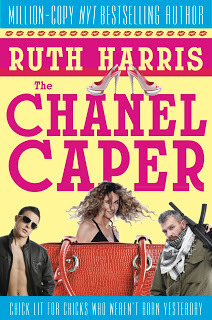 Available NOW!!Star hair cutter, Roger Thompson (he was Vidal Sassoon's first Artistic Director), told me that the dilemma is people are afraid to look like themselves. They come to the styling chair with a photo or a clipping and request a hair style like Jennifer Anniston’s, Beyonce’s or the model on that month’s Vogue cover.
Never mind that their own hair is super curly, stick straight or thick and wavy and will never work with the style they dream of unless a hairdresser equipped with curling iron, blow dryer, gel and hair spray is with them 24/7.
They fear owning their own hair, body, face when, in fact, the key to standing out and shining is to do exactly that.
So what does fear have to do with writing?
Stephen King has an answer to the question: “I’m convinced," he says, "that fear is at the root of most bad writing. . . . Good writing is often about letting go of fear and affectation."When you write, are you afraid of what critics/your Mom/a reviewer/your crit group will say? Do you feel pressured to prove to the world how smart you are and how brilliant your prose?Do you shrink from ideas that seem too far out/too freaky/too scary/too ordinary/too done-to-death? You know what I mean: boy meets girl, boy loses girl, boy gets girl. You don’t want to write that. Not again.Or do you? Never stopped lots of romance writers from making a lot of money, did it?And you do know, don’t you, there there are maybe 7 basic plots?Are you holding yourself back because you’re afraid? Of what? Of the nay-saying phantoms in your head? Of what “people” will say? Do you cringe from imagined hostile reviews?Is your writing suffering because you’re afraid of what people you don’t even know much less care about are going to think?Now you’re beginning to see what I’m getting at, aren’t you?But, you say, if I let go, if I indulge my nuttiest, weirdest, furthest-out or done-a-million-times idea, people will laugh at me, sneer at me, think I’m crazy, call me untalented.The fact is, you’re right. The fact is, they might even think of worse things to say.The reason is that there’s a bias against creativity.Only a few examples needed to make the point: Jackson Pollock was ridiculed and called “Jack the Dripper.” Picasso’s Cubist paintings were considered “shocking.” Two experiments at the University of Pennsylvania involving more than 200 subjects discovered that people resist creative ideas because they challenge the status quo:• People dismiss creative ideas in favor of ideas that are purely practical—tried and true.• Creative ideas are by definition novel, and novelty can trigger feelings of uncertainty that make most people uncomfortable.• Anti-creativity bias is so subtle that people are unaware of it, which can interfere with their ability to recognize a creative idea.
So now what?
The obvious answer is that a writer must face his or her fears. Which we do anything to avoid. Booze is popular. So is chocolate.
But an article I read a while ago about an in-demand sports psychologist gave me an idea for a different approach.
Why not accentuate the positive? Why not conquer fear with confidence?
The psychologist’s theory is that if a golfer is a good putter, s/he should practice putting until s/he becomes a superb putter? This shrink’s approach was not to focus on correcting an athlete's weaknesses, but on polishing his/her strengths.
Writers can take the same approach: write what you’re good at. To bring the end of this post back to the beginning, as you polish what you’re already do well, you’ll will inevitably hone and define a style. It will be as individual as a fingerprint, as recognizable as Streisand, Tilda or Audrey and you will develop it by doing what you like best and by practicing what you’re already good at.
 Ruth's hilarious new rom-com mystery-thriller, THE CHANEL CAPER has just launched. Nora Ephron meets James Bond. Or is it the other way around? It's Chick Lit for chicks who weren’t born yesterday. The story is about the ups and downs of long-term relationships and addresses two of the most important questions of our time: 1) Is there sex after marriage? 2) Is sixty the new forty?
What about you, scriveners? Do you think there is a bias against creativity? At first I thought Ruth's title might be a little too provocative, but then I thought of all the times my own rom-com mystery-thrillers were dismissed with statements like "I've never heard of anybody doing that," or "You aren't allowed to mix genres" or a sneering, "well, that's different."
But the big breakout books are indeed "different" and something "nobody's ever heard of doing." They succeed because the authors showcase what they're good at instead of trying to shoehorn themselves into existing stereotypes. Or they offer a completely different treatment of an old idea.
JK Rowling mixed the obsolete English boarding school story with magic. EL James mixed YA fanfic with very adult erotica. Hugh Howey sold his sci-fi epic as a series of short episodes like a TV show instead of marketing a traditional novel.
Are you working on developing what you're good at instead of trying to conform to an existing norm?
Have you ever had your creative ideas rejected by somebody who feared change?
Or, like me, have you ever tried to write in copycat genres dictated by agents (like steampunk or apocalyptic dystopian) instead of the book you really want to write? (Yup. I failed dismally.)
Is there a book that's really "you" that you've been itching to write, but fear—and other people's negativity—has been standing in your way?
For those of you who have faced your fears and written a "weird, unwieldy, unclassifiable" book, I found a contest for you in the Opportunity Alerts below.
—Anne
OPPORTUNITY ALERTS:
1) FOR THE FEARLESS: The Horatio Nelson Fiction Prize comes from Black Balloon Publishing: "we champion the weird, the unwieldy, and the unclassifiable. We are battle-worn enemies of boredom and we’re looking for books that defy the rules." Prize is $5,000 and a Black Balloon Publishing book deal. They want a sample of your completed, novel-length manuscript. It's a two-tiered process, so make sure you follow the guidelines in the link above. Wait until April 1 to submit.
2) Ploughshares Emerging Writers Contest. The prestigious literary journal Ploughshares runs a number of contests during the year. Winning or placing looks really good in a query. Plus there's a cash prize of $1000 in each category. This one is limited to writers who have not yet published. They're looking for poems and literary stories of up to 6000 words. Deadline is April 2.
3) The Saturday Evening Post’s Second Annual Great American Fiction Contest—yes, THAT Saturday Evening Post is holding a short fiction contest. Could you join the likes of F. Scott Fitzgerald; William Faulkner; Kurt Vonnegut, Jr.; Ray Bradbury; Louis L’Amour; Sinclair Lewis; Jack London; and Edgar Allan Poe? $10 entry fee Deadline July 1, 2013
4) New Literary Journal, The Puffin Review is looking for submissions of short fiction, (up to 3000 words) poetry and essays. They welcome new writers.
Style was once described as "looking like yourself on purpose."
I don't know who said it but the words and the idea behind them always made sense to me. Certainly Barbra Streisand, Audrey Hepburn and Tilda Swinton are examples. So are Salvador Dali, Andy Warhol and Woody Allen. They don't look like anyone else and are instantly identifiable—and millions admire them and even want to copy them.
But what does style and looking like yourself on purpose have to do with writing?
Available NOW!!Star hair cutter, Roger Thompson (he was Vidal Sassoon's first Artistic Director), told me that the dilemma is people are afraid to look like themselves. They come to the styling chair with a photo or a clipping and request a hair style like Jennifer Anniston’s, Beyonce’s or the model on that month’s Vogue cover.Never mind that their own hair is super curly, stick straight or thick and wavy and will never work with the style they dream of unless a hairdresser equipped with curling iron, blow dryer, gel and hair spray is with them 24/7.
They fear owning their own hair, body, face when, in fact, the key to standing out and shining is to do exactly that.
So what does fear have to do with writing?
Stephen King has an answer to the question: “I’m convinced," he says, "that fear is at the root of most bad writing. . . . Good writing is often about letting go of fear and affectation."When you write, are you afraid of what critics/your Mom/a reviewer/your crit group will say? Do you feel pressured to prove to the world how smart you are and how brilliant your prose?Do you shrink from ideas that seem too far out/too freaky/too scary/too ordinary/too done-to-death? You know what I mean: boy meets girl, boy loses girl, boy gets girl. You don’t want to write that. Not again.Or do you? Never stopped lots of romance writers from making a lot of money, did it?And you do know, don’t you, there there are maybe 7 basic plots?Are you holding yourself back because you’re afraid? Of what? Of the nay-saying phantoms in your head? Of what “people” will say? Do you cringe from imagined hostile reviews?Is your writing suffering because you’re afraid of what people you don’t even know much less care about are going to think?Now you’re beginning to see what I’m getting at, aren’t you?But, you say, if I let go, if I indulge my nuttiest, weirdest, furthest-out or done-a-million-times idea, people will laugh at me, sneer at me, think I’m crazy, call me untalented.The fact is, you’re right. The fact is, they might even think of worse things to say.The reason is that there’s a bias against creativity.Only a few examples needed to make the point: Jackson Pollock was ridiculed and called “Jack the Dripper.” Picasso’s Cubist paintings were considered “shocking.” Two experiments at the University of Pennsylvania involving more than 200 subjects discovered that people resist creative ideas because they challenge the status quo:• People dismiss creative ideas in favor of ideas that are purely practical—tried and true.• Creative ideas are by definition novel, and novelty can trigger feelings of uncertainty that make most people uncomfortable.• Anti-creativity bias is so subtle that people are unaware of it, which can interfere with their ability to recognize a creative idea.
So now what?
The obvious answer is that a writer must face his or her fears. Which we do anything to avoid. Booze is popular. So is chocolate.
But an article I read a while ago about an in-demand sports psychologist gave me an idea for a different approach.
Why not accentuate the positive? Why not conquer fear with confidence?
The psychologist’s theory is that if a golfer is a good putter, s/he should practice putting until s/he becomes a superb putter? This shrink’s approach was not to focus on correcting an athlete's weaknesses, but on polishing his/her strengths.
Writers can take the same approach: write what you’re good at. To bring the end of this post back to the beginning, as you polish what you’re already do well, you’ll will inevitably hone and define a style. It will be as individual as a fingerprint, as recognizable as Streisand, Tilda or Audrey and you will develop it by doing what you like best and by practicing what you’re already good at.
 Ruth's hilarious new rom-com mystery-thriller, THE CHANEL CAPER has just launched. Nora Ephron meets James Bond. Or is it the other way around? It's Chick Lit for chicks who weren’t born yesterday. The story is about the ups and downs of long-term relationships and addresses two of the most important questions of our time: 1) Is there sex after marriage? 2) Is sixty the new forty?
What about you, scriveners? Do you think there is a bias against creativity? At first I thought Ruth's title might be a little too provocative, but then I thought of all the times my own rom-com mystery-thrillers were dismissed with statements like "I've never heard of anybody doing that," or "You aren't allowed to mix genres" or a sneering, "well, that's different."
But the big breakout books are indeed "different" and something "nobody's ever heard of doing." They succeed because the authors showcase what they're good at instead of trying to shoehorn themselves into existing stereotypes. Or they offer a completely different treatment of an old idea.
JK Rowling mixed the obsolete English boarding school story with magic. EL James mixed YA fanfic with very adult erotica. Hugh Howey sold his sci-fi epic as a series of short episodes like a TV show instead of marketing a traditional novel.
Are you working on developing what you're good at instead of trying to conform to an existing norm?
Have you ever had your creative ideas rejected by somebody who feared change?
Or, like me, have you ever tried to write in copycat genres dictated by agents (like steampunk or apocalyptic dystopian) instead of the book you really want to write? (Yup. I failed dismally.)
Is there a book that's really "you" that you've been itching to write, but fear—and other people's negativity—has been standing in your way?
For those of you who have faced your fears and written a "weird, unwieldy, unclassifiable" book, I found a contest for you in the Opportunity Alerts below.
—Anne
OPPORTUNITY ALERTS:
1) FOR THE FEARLESS: The Horatio Nelson Fiction Prize comes from Black Balloon Publishing: "we champion the weird, the unwieldy, and the unclassifiable. We are battle-worn enemies of boredom and we’re looking for books that defy the rules." Prize is $5,000 and a Black Balloon Publishing book deal. They want a sample of your completed, novel-length manuscript. It's a two-tiered process, so make sure you follow the guidelines in the link above. Wait until April 1 to submit.
2) Ploughshares Emerging Writers Contest. The prestigious literary journal Ploughshares runs a number of contests during the year. Winning or placing looks really good in a query. Plus there's a cash prize of $1000 in each category. This one is limited to writers who have not yet published. They're looking for poems and literary stories of up to 6000 words. Deadline is April 2.
3) The Saturday Evening Post’s Second Annual Great American Fiction Contest—yes, THAT Saturday Evening Post is holding a short fiction contest. Could you join the likes of F. Scott Fitzgerald; William Faulkner; Kurt Vonnegut, Jr.; Ray Bradbury; Louis L’Amour; Sinclair Lewis; Jack London; and Edgar Allan Poe? $10 entry fee Deadline July 1, 2013
4) New Literary Journal, The Puffin Review is looking for submissions of short fiction, (up to 3000 words) poetry and essays. They welcome new writers.
March 24, 2013
Is it Really Time for Authors to Stop Blogging?
In a guest post on Jane Friedman’s blog on March 15th, L.L. Barkat said “blogging is a waste of time” for experienced authors. She feels blogging is only helpful for beginning authors who need “to find expression, discipline, and experience.”
Her piece suggests blogging is for farm-leaguers only. Once writers make the pros, she says, “they might want to give it up and begin writing for larger platforms that don’t require reciprocity (an exhausting aspect to blogging and a big drain on the writer’s energy and time).”
She’s not wrong about the exhaustion. And I gotta admit, if a larger, non-interactive platform like the New Yorker or the Daily Beast came calling, I might bail on you guys for a bit.
But as a long-term career move? It doesn’t strike me as a great idea.
We live in an interactive age. Sealing yourself up in an ivory tower (assuming the tower wants you) is likely to annoy readers these days.
And the truth is, most authors who aren’t named J.D. Salinger have always had to engage in some pretty exhausting, time-draining "reciprocity" to sell their books.
In the days before blogs, there were book tours.
Back in those dear dead days, most authors interacted with their readership through exhausting, time-sucking (and expensive) traveling. Ask a career author who has been in this business for a few decades whether they’d like to give up blogging and go back to the book tour, and you’d better cover your ears before the high-decibel “H*** NO!” erupts.
Nowdays only the superstar class goes on real-life book tours; the midlist blogs.
I think marketers at the Big 5/6 have probably been too heavy-handed in their fiat that every author must have a blog, and Barkat represents a backlash to that. She said: “the director of Marketing and Promotion from Simon & Schuster…told me flatly, ‘We ask all our authors to start blogs’.”
Anybody that dictatorial would get my hackles up, too.
But most Big 5/6-ers have softened that requirement. As I reported in January, agent Rachelle Gardner has changed her hard-line stance on blogs. She said “A few years ago, the standard wisdom was that authors, both fiction and non-fiction, should have blogs in order to gather an audience and build relationships with readers. Now, not so much. As social media and online marketing have evolved, my thoughts on blogging have changed. I think each author needs to carefully consider whether blogging is an appropriate vehicle for them.”
But later in the piece, Gardner makes it clear an author still has to be on social media. She’s not saying it’s OK to do the J.D. Salinger thing.
Jane Friedman herself doesn't tell us to drop our blogs. But in a post at Writer Unboxed this week, she does tell beginning writers who don't have blogs to let go of the pressure to start one. "If you’re a totally new, unpublished writer who is focused on fiction, memoir, poetry, or any type of narrative-driven work, forget you ever heard the word platform."
Friedman says it's best for beginners to concentrate on learning their craft and getting credits by publishing the fiction they want to be known for. (For opportunities to get your fiction better known, check our "Opportunity Alerts" below.)
But she adds a caveat: "Exception to the rule: Nonfiction/non-narrative authors and entrepreneurial authors who are self-publishing. Sorry, but you should probably focus on platform as much as the writing."
I agree. I don't think every beginning writer should be starting a blog. (On the other hand, reading blogs is something that can help from the beginning—and commenting on blogs is a great way to get your name out there.) I've been telling my workshop students that the time to think about a blog is after you've finished at least one polished novel, have another in the works and you're getting ready to query—or you've got a good backlog of short fiction you're sending to contests and journals.
In other words, give yourself time to build some inventory and learn your craft before you start thinking about marketing.
I also don't recommend blogging frantically simply for the sake of piling up blogposts to get the attention of search engines. I'm a big advocate of SLOW BLOGGING—once a week or less, preferably on a regular schedule. You can check out my post on the Slow Blog Manifesto here.
But I do think a blog is helpful, even for fiction authors. This blog doesn't sell books directly, but without my presence here, I'm not sure anybody would even know about them. And blogs are useful for so many other things—networking with other authors and people in the business, polishing your nonfiction writing skills (which are necessary, no matter how "experienced" you are at fiction.) Plus you can learn to write faster and...for fun. Yes. Blogging is fun for a lot of us.
Recently social media Jedi master Kristen Lamb devoted a whole week of blogposts to explaining the reasons why “blogs are probably THE BEST use of an author’s time when it comes to building an author platform using social media.” I wrote more on the subject in my own post that week.
And then there’s Hugh Howey, current media darling and author of the literary phenomenon Wool (and generally phenomenal guy.)
In an interview on Reddit, Mr. Howey said his primary promotion tools were, “After FB, I would say: having my own blog.”
Yup. Not expensive ads at BookBub. Not give-aways on Goodreads. Not Kindleboard ads (although he does mention interacting at the Writer’s Café forum on the Kindleboards, which is where I first met him.) Not vlogs or podcasts or book trailers or webinars.
Just his plain old blog and Facebook rocketed him to fame and fortune. (Well, that and a clever serial-format sales plan and a stupendous book.)
The Reddit interviewer followed up by asking him to name “a single most valuable tool for an author to promote himself” aside from “Amazon's inscrutable algos.”
Howey replied, “I'm guessing 90% of my sales are from reader recommendations and Amazon algorithms.”
Well, we all know the “inscrutable algos” are out of our control. (More on algorithms in a future post) but “reader recommendations”—where do they come from?
Howey said, “I don't concentrate my self-promotion on people who haven't read my work; I interact with those who have.”
And in a post on his own blog, he said very much the same thing: “The best promotion, I’ve found, is to interact with existing readers (which is enjoyable) rather than browbeat new people into reading (which nobody likes).”
Interacting with readers. Reciprocity. His number one self-promotion tool.
And where’s the best place to interact with readers?
Your blog.
So if you’re thinking of taking up L.L. Barkat’s suggestion to drop your blog to concentrate on pure art, do keep in mind that a lot of successful authors like Mr. Howey find their blogs have been a huge help.
Even experienced authors who aren’t blogging simply to practice the art of keeping their butts in their typing chairs.
I should be fair and mention that L.L Barkat and Hugh Howey’s genres couldn’t be more different. Barkat writes literary memoir and Howey writes blockbuster science fiction. Different genre readers expect different things from their authors. Literary readers tend to be conservative about technology, so they may not be on social media much themselves, whereas scifi-ers are in their native habitat on the Interwebz.
And it's important to consider that literary writers often make their livings teaching, and they may have to arrange for time away from anything "social" in order to stay sane. Most writers are introverts, so being around people too much—whether online or off—can drain your energies to the point where you can’t create.
If blogging does that to you, you might indeed feel you have to drop your blog as Barkat suggests. Maybe you can reach people via RedRoom or Google+ hangouts, or by occasionally interacting on Goodreads. Or write a monthly newsletter.
But I don’t think refusing to interact with your readers entirely is a smart move. No matter how experienced you are.
Not if you hope to follow in the footsteps of Hugh Howey, who still blogs regularly, even on his superstar book tour. He even took time to give this blog a shout-out in January. He is certainly a poster boy for the new era of publishing. It would appear that his accessibility via his blog and his reciprocity with readers has contributed to his phenomenal success.
So think long and hard before you give up that blog.
What about you, scriveners? Have you given up your blog? Will you give it up when you're more experienced? As a reader, do you like to interact with your favorite authors on a blog?
OPPORTUNITY ALERTS:
1) Inspirational anthology accepting submissions: A "Chicken Soup for the Soul" author is looking for heartwarming inspirational nonfiction pieces. Do You Have a Story on Staying Sane in the Chaotic 24/7 World? If you have a great story and would like to be considered for the anthology, 30 Days to Sanity, Send submissions to: 30 Days to Sanity at Box 31453, Santa Fe, NM 87594-1453. Or e-mail stories to stephanie@30daystosanity.com The maximum word count is 1200 words. For each story selected for the program a permission fee of $100 will be offered for one-time rights. There are no limits on the number of submissions. Deadline is May 1, 2013.
2) POISONED PEN DISCOVER MYSTERY CONTEST Enter your mystery manuscript of 60,000-90,000 words in an effort to win a $1,000 prize, the Discover Mystery title, and a publishing contract from Poisoned Pen Press. Open to all authors writing original works in English for adult readers who reside in the United States and Canada. $20 entry fee. Well worth it. Poisoned Pen is a widely respected small press. Deadline March 30, 2013.
3) Cash prizes for flash fiction. The San Luis Obispo NIGHTWRITERS are holding their annual 500-word story contest. Anybody from anywhere in the world is welcome to enter. Prizes are $200, $150 and $75. This is a fantastic organization that boasts a number of bestselling authors among their members, including Jay Asher, Jeff Carlson, and moi. (Well, some sell better than others :-) ) Deadline is March 31st.
4) Ploughshares Emerging Writers Contest. The prestigious literary journal Ploughshares runs a number of contests during the year. Winning or placing looks really good in a query. Plus there's a cash prize of $1000 in each category. This one is limited to writers who have not yet published. They're looking for poems and literary stories of up to 6000 words. Deadline is April 2.
5) The Saturday Evening Post’s Second Annual Great American Fiction Contest—yes, THAT Saturday Evening Post is holding a short fiction contest. Could you join the likes of F. Scott Fitzgerald; William Faulkner; Kurt Vonnegut, Jr.; Ray Bradbury; Louis L’Amour; Sinclair Lewis; Jack London; and Edgar Allan Poe? $10 entry fee Deadline July 1, 2013
6) New Literary Journal, The Puffin Review is looking for submissions of short fiction, (up to 3000 words) poetry and essays. They welcome new writers.
March 17, 2013
So You Want to Use Song Lyrics in Your Novel? 5 Steps to Getting Rights to Lyrics
This week the bookosphere saw something of a teapot-storm when a formerly indie author—now signed with a Big 5 publisher—got an odd notice from Amazon. It said her readers had been asked to delete their old versions of her book and get the new Big 5 version—at the author’s expense.
It sounded like some nasty author-bullying to me—until somebody on a writing forum said the first version might have used pop song lyrics without getting proper permission.
That could definitely get a publisher's panties in a bunch. Using lyrics from a song written in the past century or so can be a very expensive proposition, so most publishers won’t accept a book that quotes lyrics.
Note: I read later on the Passive Voice that there had simply been a misunderstanding and customers who bought the original book had been sent a nice "never-mind" note.
But why would it be such a big deal if the original indie book contained a few song lyrics? Isn’t there some kind of rule that you can use a couple of lines from something without worrying about copyright?
Yup. It’s called "fair use."
Thing is: fair use doesn’t apply to songs. That’s because songs can have very few lines to use—fairly or otherwise.
So be careful you don’t make a typo and have your character step on the gas gas gas, or you might have Keith and Mick’s lawyers on your doorstep asking for their cash cash cash for using a line from “Jumpin’ Jack Flash.”
What you CAN use without permission is a song’s title. Titles can’t be copyrighted.
That means you can say “Jumpin’ Jack Flash” but you can’t say “Jumpin’ Jack Flash is a [US term for petrol times three]", or you’re going to have to pay.
You can also use lyrics of songs that are in the public domain. Jane Friedman says you can be pretty sure something written before 1923 is OK. But some things written after that are OK, too, if the copyright wasn’t renewed. So it’s worth a check. Here are the basic rules for US copyright. A number of sites like Public Domain Review celebrate "Public Domain Day" on Jan 1 each year and give a list of new works that have come into the public domain.
But if you quote the Rolling Stones, (even if you think some of them might look as if they were born before 1923) you’re going to have to pay them.
Here’s Blake Morrison in the Guardian talking about the price of using song lyrics in his novel South of the River.
'I'd restricted myself to just a line or two from a handful of songs and vaguely hoped that was OK or that no one would notice. My editor, reasonably enough, was more cautious, and at the last minute someone from the publishing house helpfully secured the permissions on my behalf.
'I still have the invoices. For one line of "Jumpin' Jack Flash": £500. For one line of Oasis's "Wonderwall": £535. For one line of "When I'm Sixty-four": £735. For two lines of "I Shot the Sheriff" (words and music by Bob Marley, though in my head it was the Eric Clapton version): £1,000. Plus several more, of which only George Michael's "Fastlove" came in under £200. Plus VAT. Total cost: £4,401.75. A typical advance for a literary novel by a first-time author would barely meet the cost.'
Many thanks to Lexi Revellian for giving a heads-up about the Guardian article on her blog.
I totally relate to the urge to use song lyrics. My first stories relied on them heavily. My generation was all about its music, and I felt Paul Simon, Leonard Cohen, and Carole King could express what my characters were feeling much better than I could.
Not that I was wrong on that. My teenaged stories were pretty bad. Luckily, I didn’t try to publish any of them. If I had, I’d have run into some big trouble.
I’m working now on a novel about Boomers set in the ’60s, ’70s and ’80s, and I’ve solved the music problem by writing my own lyrics. I had a whole lot of fun writing a David Crosby-style folk-rock love song, “Happy Endings are Only for Fairy Tales” and a Donna Summer-style disco song, “City Girls” and a druggy hair-rock anthem, “Bored as Hell.”
I can’t tell you how much it pleased me when my editor told me I’d have to get permission to use them.
But what if you’re telling a story that absolutely requires the use of real lyrics? Say a book set at Woodstock?
Michael Murphy faced that when he wrote Goodbye Emily, his Boomer Lit novel about three sixty-something Boomers returning to Woodstock to revisit their experiences at the iconic rock concert. (Isn't that the perfect cover for a return-to-Woodstock story?)
He says he found some lyrics aren’t as expensive as the ones Blake Morrison mentioned, and it isn't that hard to get permission. Lyricists are our fellow writers and they deserve to get paid too. (And don’t forget you need permission to use recorded music in your book trailer—even if the music is in the public domain—because musicians deserve to be paid as well.)
You just have to know how to do it.
So here’s how:
Five Steps to Obtain Song Lyric Rightsby Michael Murphy
.jpg) Music was important to the story of my recently released return-to -Woodstock novel, Goodbye Emily. I would not have been able to express what I wanted to in the novel without using certain song lyrics. Lyrics can enhance a novel, but as an author you need to determine whether you’re willing to pay a price to reprint another person’s work
Music was important to the story of my recently released return-to -Woodstock novel, Goodbye Emily. I would not have been able to express what I wanted to in the novel without using certain song lyrics. Lyrics can enhance a novel, but as an author you need to determine whether you’re willing to pay a price to reprint another person’s workI’d obtained permission twice before in my earlier novels, Try and Catch the Wind and Ramblin’ Man, so I knew how to get started. If you’ve not made your way through this process, obtaining lyric reprint rights might sound like a daunting task. It doesn’t have to be. Here are five steps that should simplify the process.
Step 1. Confirm your song title. The rights to song lyrics are usually owned by the song’s publisher. To identify and locate the publisher you’ll need the actual title, the writer, and the recording artist.
Step 2. Locate the publisher. If you’re not certain of the publisher, there are two general sources where the information can be obtained ASCAP, the American Society of Composers, Authors and Publishers.
If ASCAP doesn’t have the rights, BMI, Broadcast Music Inc, should.
ASCAP and BMI have searchable databases where you can obtain the name of the publisher by entering the title and artist.
Step 3. Contact the publisher. Most publishers have websites including information on how to contact them when you’re seeking permission to use the song lyric. This is usually through direct email or an online form.
Step 4. Provide additional information. Once the publisher replies, they will ask several questions such as how many books will be printed or sold, the name of the novel, author, publisher and where the territory where the book will be sold. You may even be asked to provide copies of pages where the lyric will appear.
Step 5. Decide if you can afford it. Once the publisher considers the information, they will quote you a price. If the amount is within your budget and you pay the amount, they will send a letter/document confirming they are granting you permission to use the song lyric. I found the cost to use song lyrics in Goodbye Emily to be reasonable.
If you’re planning to use music for a book trailer, or your website, you must obtain what’s called synchronization rights which may be owned by the publisher or a different publisher. A separate but similar process is followed to obtain synchronization rights. The cost is often on an annual basis.
I hope these five steps have been helpful. Using song lyrics in a novel is an author’s artistic decision, but the process is not as complicated or expensive as many authors believe.
.jpg)
Goodbye Emily is Michael Murphy's eighth novel. A full time author and part time urban chicken rancher, Michael lives in Arizona with his wife of forty years, two cats, four dogs and five chickens who produce a steady supply of cholesterol. Read more about his novels and Woodstock at his website. (And his endorsements from both Wavy Gravy and Country Joe McDonald.)
What about you, scriveners? Have you used lyrics in your fiction or memoir? Did you know you had to get permission to quote even a few words? Have you ever written fake lyrics the way I did?
OPPORTUNITY ALERTS:
1) Inspirational anthology accepting submissions: A "Chicken Soup for the Soul" author is looking for heartwarming inspirational nonfiction pieces. Do You Have a Story on Staying Sane in the Chaotic 24/7 World? If you have a great story and would like to be considered for the anthology, 30 Days to Sanity, Send submissions to: 30 Days to Sanity at Box 31453, Santa Fe, NM 87594-1453. Or e-mail stories to stephanie@30daystosanity.com The maximum word count is 1200 words. For each story selected for the program a permission fee of $100 will be offered for one-time rights. There are no limits on the number of submissions. Deadline is May 1, 2013.
2) POISONED PEN DISCOVER MYSTERY CONTEST Enter your mystery manuscript of 60,000-90,000 words in an effort to win a $1,000 prize, the Discover Mystery title, and a publishing contract from Poisoned Pen Press. Open to all authors writing original works in English for adult readers who reside in the United States and Canada. $20 entry fee. Well worth it. Poisoned Pen is a widely respected small press. Deadline March 30, 2013.
3) Cash prizes for flash fiction. The San Luis Obispo NIGHTWRITERS are holding their annual 500-word story contest. Anybody from anywhere in the world is welcome to enter. Prizes are $200, $150 and $75. This is a fantastic organization that boasts a number of bestselling authors among their members, including Jay Asher, Jeff Carlson, and moi. (Well, some sell better than others :-) ) Deadline is March 31st.
4) Ploughshares Emerging Writers Contest. The prestigious literary journal Ploughshares runs a number of contests during the year. Winning or placing looks really good in a query. Plus there's a cash prize of $1000 in each category. This one is limited to writers who have not yet published. They're looking for poems and literary stories of up to 6000 words. Deadline is April 2.


