Michelle Ule's Blog, page 17
November 8, 2022
What is Demonstrated Unreliability in Real Life?

“That’s considered demonstrated unreliability,” my husband explained one day long ago.
I’d never heard the term before, but I heard it often after that.
The definition is pretty straightforward:
Demonstrate: to clearly show by actions, words, and intentions.Unreliability: undependable, not trustworthy.So, “demonstrated unreliability,” means a person proves they’re untrustworthy by their actions.
It applies in many areas.
Demonstrated unreliability on the jobThis is pretty clear.
If you tell someone you will do something and you blow off the work you’re not trustworthy.
It’s the same if your actions are illegal or immoral. (Theft, lying, sexually harassing).
 Would you trust this driver and your car?
 (Photo by Isak Sandin on Unsplash)
The first time I heard the concept involved the Navy.
A young officer received a DUI (driving under the influence) and went to jail.
A DUI for someone operating a nuclear power plant meant they lost their job at that time.
How do you trust someone with a nuclear power plant if they get drunk on their off hours?
Demonstrated unreliability in personal relationshipsDon’t we advise abused people to leave their relationships if nothing changes?
I used to think once was an accident or a mistake, but now I’m not so sure.
How can you physically harm someone you purport to love?
How can you trust such a person?
Male or female, the person demonstrated unreliability.
Mismanaging money, always arriving late, withholding affection, lying–how do you trust such people?
Once in a while is fine, but frequently? Their actions demonstrated unreliability.
With childrenWe have to love our kids. We hope for the best.
But if we don’t demonstrate trustworthy behavior, where do they learn it?
 Would you trust them with feather pillows again? Photo by Allen Taylor (Unsplash)
I like to think grace helps in this arena.
A child’s demonstrated unreliability often can be traced to a lack of knowledge.
Or, needing to handle something outside of their maturity or ability.
By apologizing when I fail, I demonstrate how to behave when I prove untrustworthy.
(Alas, I need to improve. I apologize a lot).
At the same time, I need to extend grace when they fail.
(I wanted to add, “and turn it into a teaching opportunity.” That’s still a good response, but not if I consistently demonstrate unreliability myself.)
What did Jesus do?Demonstrated unreliability is not a concept applicable to Jesus!
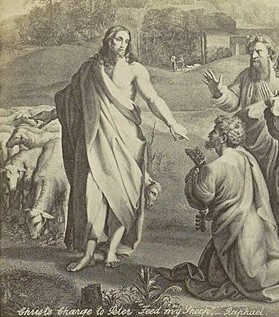 Jesus: “Feed my lambs,” to Peter–in forgiveness for his unreliability.
(Wikimedia Commons)
But, He anticipated his followers would struggle with the concept.
Peter, of course, was the disciple we all recognize as having failed Jesus–despite promising otherwise.
Jesus loves us. He forgives us. But, he also reminds us that “he who is faithful in little is also faithful in much.“
This is the verse that reminds us no one can serve two masters–he will love one and not the other.
So, the question to me is simple.
“Am I putting my own best interest in front of someone else’s? In so doing, am I demonstrating unreliability in that they cannot trust my word?”
When I put it that way, it becomes a question of my character and how much I love others.
And then?
Well, it’s time to apologize and start again–with a personal eye on being faithful rather than selfish.
Jesus loves me, yes.
But aren’t we asked to be more like him than ourselves?
Maybe we, like Peter, need to be reminded to “feed Jesus’ sheep,” rather than ourselves, first?
Tweetables
What is demonstrated unreliability in real life? Click to Tweet
What did Jesus do about his disciples’ demonstrated unreliability? Click to Tweet
The post What is Demonstrated Unreliability in Real Life? appeared first on Michelle Ule, Author.


November 1, 2022
Brother Andrew and My Utmost for His Highest

When Brother Andrew died in September 2022, I mourned with the rest of the world.
I corresponded with him in 2016 while writing Mrs. Oswald Chambers.
Through my research, I knew Andrew van der Bijl carried copies of My Utmost for His Highest through the Iron Curtain.
The God Smuggler, and the My Utmost for His Highest smuggler, both.
Men like Brother Andrew are important, and far between.
But how did Brother Andrew learn about My Utmost for His Highest?As Brother Andrew recounted in his book For the Love of My Brothers:
If there’s anything that can quickly quench the Spirit, it’s probably these four words: “You can’t do that.”
We must actively resist this attitude if we are to go where God wants us to go and do what he wants us to do. People have been saying those words to me all my life, even before I knew there was a suffering church.
For the Love of My Brothers, p. 28
In 1953, Brother Andrew attended the Worldwide Evangelism Crusade missionary training school in Glasgow, Scotland.
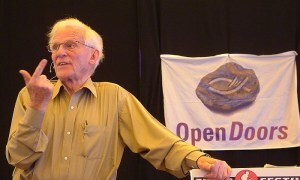 Brother Andrew in 2016
Photo By Jako Jellema –
He described in God Smuggler how little money he had when he went to Bible school.
In the fall of 1953, he spent a lot of time in bed with a back injury. While there, he “found solace” in the Oswald Chambers’ books, My Utmost for His Highest in particular.
The devotional blessed him so much, he wrote a letter to Biddy Chambers expressing his thanks.
As tended to be her custom, she replied with an invitation to visit someday.
How did Brother Andrew meet Biddy and Kathleen Chambers?The Christmas holidays came up not long afterward.
Not having anywhere to go during the holiday and not allowed to remain at the school, Brother Andrew packed his bag and went to Muswell Hill.
Biddy was used to Oswald Chambers fans dropping by, and when she heard his story, she invited him to spend the week.
He did.
Many years later, he recalled “It was a lovely, enjoyable week.”
When asked later by the school’s director where he went, Brother Andrew described his visit.
The horrified director exclaimed, “You can’t do that!”
To me it was nothing special. But to them it was strange. You do not just go and visit the family of a great spiritual man such as Oswald Chambers. Nor do you get up and go to a country that has declared itself closed to the message of Christ.
For the Love of My Brothers, p. 28
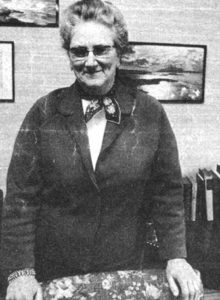 Kathleen circa 1974.Kathleen’s remembrances
Kathleen Chambers took over most of Biddy’s ministry as the years went by.
During an interview about her father’s life, she said Brother Andrew often visited to talk with Biddy about “all sorts of things,” before he began his Bible smuggling work.
You know of Brother Andrew? He’s a very great friend of ours. We’ve known him for donkey’s years.
He asked if he could take Utmost with him wherever he went. We’ve always been closely in touch with him. He’s a very fine person.
Kathleen Chambers taped interview (Wheaton College Special Collections Library)
After Biddy’s 1966 death, Kathleen continued the friendship.
In 1991, he called her and invited her to visit him at a conference at Oak Hill College.
What did Brother Andrew tell Biddy’s biographer about her?I said, yes, of course.
He was preaching to a conference of a couple of hundred Arabs who are pastors, theological students, all over here, men and women. They practically all spoke English.
“Do you want to bring me some Utmosts?” Brother Andrew asked.
I took him about 150. They were delightful people. They’d all come from places that I knew the names but couldn’t remember what they were like. He’s got a wonderful ministry, that man.
Kathleen Chambers taped interview (Wheaton College Special Collections Library)
While writing Mrs. Oswald Chambers in 2016, I sent Brother Andrew an email through Open Doors International.
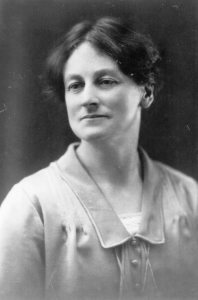 Biddy circa 1935
Wheaton Special Collections Library
One of the ministry staffers asked the questions and sent me a few answers.
Brother Andrew remembered,
Biddy was a warm hearted, generous person.
People compared Biddy with Enoch. As she walked with the secondhand books of Oswald Chambers to the post office in the evenings, people said, “look there goes Enoch, he walks with God.” This was a great testimony.
Email to Michelle Ule, May 23, 2016
About Kathleen, he recalled,
Love for My Utmost for His HighestKathleen was just as radical as her father was. When Brother Andrew attended pastor conferences in London, Kathleen brought big bags of mostly secondhand books to give away to others. They had a very warm connection.
Email to Michelle Ule, May 23, 2016
During Tributes for Brother Andrew posted at Open Doors International, several people spoke of his love for My Utmost for His Highest.
Over our many years of ministry together, another thing that united me with Brother Andrew was our mutual love of Scripture. He would discuss the Bible any time.
We also shared a mutual love of the writings of Oswald Chambers. We often talked about the daily reading from My Utmost for His Highest.
Sealy Yates, founding Chairman, Open Doors International
In addition, Pastor Ron Van Der Spoke of the Netherlands said:
The best way I can characterize Brother Andrew is with the title of the book he loved most after the Bible, the devotional of Oswald Chambers, called “My Utmost for His Highest.” That summarizes best why Brother Andrew was who he was and did what he did. He always told me that his epitaph should be: “He did what he couldn’t”. And yet he did it, because he longed to give his utmost for God’s Highest.
Pastor Ron Van Der Spoke
Well done, good and faithful servant. I’m sure he’s enjoying his rest with his Savior.
Tweetables
A wonderful friendship: Brother Andrew and Biddy Chambers. Click to Tweet
Brother Andrew and his love for My Utmost for His Highest. Click to Tweet
The post Brother Andrew and My Utmost for His Highest appeared first on Michelle Ule, Author.
October 25, 2022
Jane Austen and Fashionable Goodness
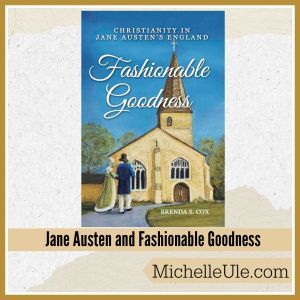
Fashionable Goodness: Christianity in Jane Austen’s England has arrived at our house.
It’s been a tussle to beat my Jane Austen fan (also known as a “Janite“) husband to the new book recently published by Brenda S. Cox.
Cox is a Janeite scholar and a regular contributor to the Jane Austen’s World website.
This nonfiction book is designed for those interested in Jane Austen’s world, the church, and how Christianity in the Anglican church influenced the rest of 19th-century England.
What does the title mean–Fashionable Goodness?I assumed the title meant behaving properly and with good manners–because that’s what society expected of someone wearing the label “Christian.”
You know. “Be nice.”
Cox’s answer was more nuanced:
During Jane Austen’s time, it was fashionable to attend church and pretend to be “good.” But the Prince Regent and others had also made immorality fashionable.
As one of the most socially influential Christian during Austen’s life, [William Wilberforce] made one of his goals to reform the “manners” of England.
[Mansfield Park‘s] Edmund Bertram explained “manners” meant behavior, how people acted based on their religious principles. When the era’s influencers promoted moral behavior, society improved.
Cox believes Austen’s novels, written between 1790 and her death in 1817 (at the age of 41), promoted moral behavior by their example.
What did Cox learn about Jane Austen while writing the nonfiction book?Like our mutual friend Rachel Dodge, Cox recognized how deeply Austen’s faith affected her life and novels.
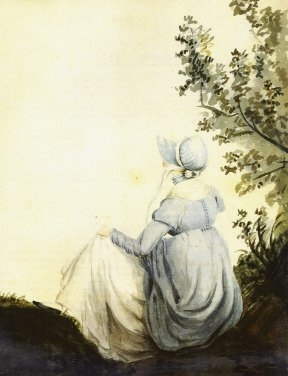 Jane Austen by her sister Cassandra
 (Wikimedia Commons)
Austen knew, and aptly described, the characters and circumstances of the clerics found in her books.
Indeed, Austen drew on personal family experiences to describe several of her famous characters. Her father George was a Church of England cleric, as were her two brothers.
Cox examined and read many of Austen’s letters and, of course, her books, paying close attention to details.
“As her contemporaries said, she [Austen] expressed her [values] more through examples and not direct teaching.”
As an example, Cox spoke at this year’s Jane Austen Society of North America‘s annual gathering on the spiritual messages in Sense and Sensibility.
She explained,
Was Austen’s faith susceptible to fashionable goodness?
I see Sense and Sensibility as a story contrasting the selfishness of characters like Willoughby with the self-denial, or selflessness, of characters like Elinor. Austen used words that had religious implications at the time, which we easily miss today.
Faith Words in Sense and Sensibility: A Story of Selfishness and Self-Denial
Both Cox and Rachel Dodge believe Austen’s faith centered on the Bible. With a clergyman father and boys boarding in the Austen household to learn good moral character and education, they read the Book of Common Prayer together daily.
In addition, Austen attended church every Sunday. She commended her niece’s suitor for “acting more strictly up to the precepts of the New Testament than others.”
Subtle reflections of Austen’s faith and Christian values are in her novels.
While not preachy, Austen always promoted moral behavior in her books.
Cox explained:
Was the Church of England fashionably good?She showed examples, both positive and negative. Readers of Pride and Prejudice, for instance, might learn to avoid quick judgments and ridicule of other people. We might instead want to be more like Jane Bennet, assuming the best of others until the worst is clearly proven.
The early 19th century when Austen lived was a time of change in the Church of England, presenting many challenges.
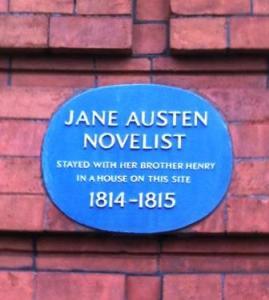
Some were addressed in Austen’s novels, particularly the lives of clergymen (perhaps like the hypocrisy of Mr. Elton and the absurdity of Mr. Collins). Cox examined the system of patronage and the different “levels” of influential clergymen.
It was also about this time that the Methodist movement and Wilberforce’s determination to end slavery took place. With Austen writing a type of comedy of manners, she didn’t examine the political issues of the day. (Though we did hear about the Napoleonic wars in Persuasion).
In writing a book describing the church experience during Austen’s life, Cox learned many surprising things.
I always thought of Sunday school as a time when children learn Bible stories. But in Austen’s England, it was a huge movement sweeping the country.
Sunday schools taught reading and other basic skills to hundreds of thousands of poor people, young and old. Education opened doors for them and transformed society.
In addition,
As I saw how the church was making an impact on the country and the world, I added Part 3 [to Fashionable Goodness]. It shows innovations ranging from the pioneering abolition of the slave trade to the Sunday school movement that educated millions of poor children and adults, breaking cycles of poverty and dependence.
 Brenda Cox
Jane never mentioned them in her books, but she wrote during such a time.
Learning about the social background of the time enables the reader to more fully appreciate what a skillful, thoughtful, and witty writer Jane Austen was.
As Cox explained:
Who is Brenda Cox?
Fashionable Goodness is written for anyone who enjoys Jane Austen, from everyday fans like myself to scholars, from casual readers to dedicated Janeites.
They will better understand the church’s important role in her novels and her world. Readers will also more fully appreciate Austen’s characters, their values, and their conflicts.
Trained as a chemical engineer, Cox and her husband have four homeschooled children. Interested in learning languages, England’s Regency Era, and everything involving Jane Austen, she regularly writes at Jane Austen’s World and Faith, Science, Joy, and Jane Austen.
You can learn more about Brenda Cox here.
Fashionable Goodness is also available here.
Tweetables
How did Jane Austen portray the Church of England in her novels? Click to Tweet
What was Fashionable Goodness in Jane Austen’s time? Click to Tweet
The post Jane Austen and Fashionable Goodness appeared first on Michelle Ule, Author.
October 18, 2022
“It’s None of My Business,” and Worry

“It’s none of my business,” I remind myself way too often.
That helps when I’m tempted to worry about things outside of my control.
“It’s none of my business,” also can curb juicy gossip.
Or enable tough love.
Let’s take a look at the concept.
What does it mean “it’s none of my business?”I use it as a reminder to drop a topic.
It’s generally considered a semi-rude response to a completely rude question.
As in, “it’s none of your business.”
The implication is someone–or even me–is making a judgment about someone else’s life.
Unless I’m directly involved in the decision or the results, I can leave it alone and not worry about it.
America Magazine, the Jesuit Review, has a similar reaction:
It can be an acknowledgment that we must respect the right of others to self-determination and personal privacy.
America Magazine September 20, 2004
With this concept, we can understand why to ask questions we have no need to know can be impertinent at best.
Intrusive at worst.
Tough love at best.
And only invite unnecessary worry for parents who, like me, often struggle with this idea.
But is it tough love or genuine concern?That depends on the attitude of the heart of those asking the question.
As well as what the person being questioned interprets the reason behind the question!
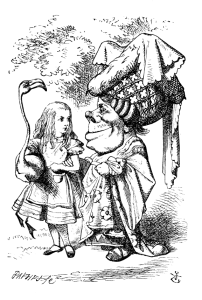 The Duchess would have more time if people would mind their own business! (John Tenniel; Wikimedia Commons)
America Magazine asked a pertinent question in the same article:
On the other hand, it can be used as an excuse for not stepping in to help when it is clear that another needs our help.
The phrase has almost become a motto for a society in which individuals are so totally absorbed in their own life projects that they fail to consider the common good.
America Magazine September 20, 2004
In my observation, the problem usually lies with the reason behind asking the question and how it’s answered.
As in, the interpretation is in the ears of the listener.
Frankly, I’d never heard the Jesuit concerns before in regards to this statement.
A history of the idiomApparently this is an old problem.
The Free Dictionary by Farlex provided more insight into “none of one’s business:”
Not one’s concern, as in ‘How much I earn is none of your business.’
This expression employs business in the sense of “one’s affairs,” a usage dating from about 1600.
idioms/ The Free Dictionary.com
The Free Dictionary continued: “To refrain from meddling, to keep to one’s own affairs.”
It listed several historical and notable works where the caution appeared:
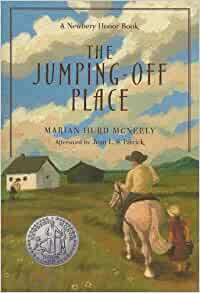 The Jumping-Off Place
 (modern cover)Plato: “Defines justice as minding one’s own business.”Seneca: Semper meum negotium ago. (“I always mind my own business”).The Bible in 1 Thessalonians 4:11: “Aspire to live quietly, and to mind your own affairs, and to work with your hands, as we instructed you.” (ESV)Lewis Carroll in Alice’s Adventures in Wonderland: “The things most people want to know about are usually none of their business.“Carroll also observed: “Mind your own business, then you’ll go a lot faster.“
There’s also the slangy term, “none of your beeswax,” from the 1930s.
The phrase first appeared in the July 30, 1928 San Francisco Examiner:
Withering retort, 1906—
“None of your beeswax!”
Word Origins
Perhaps Marian Hurd McNeely saw the reference. She published the Newberry Honor Book, The Jumping Off Place, in 1929.
My response to “It’s none of my business.”It’s amusing to read the above.
I use it a different way, however. (Perhaps I’ve been a mother too long).
When I’m tempted to question someone’s decision, or to worry, I remind myself, I’m not in charge of someone else’s decision.
That’s particularly helpful when I’m speaking to one of my adult children.
Some fellow-moms fret, “What will happen if I don’t intervene?”
When it’s not my child, and sometimes if I’m good when it is, I reply, “they’ll learn an important lesson–their own way.”
Isn’t that how you prefer to live?
Tweetables
The origin and relief of “It’s none of my business.” Click to Tweet
Tough love or relief: “It’s none of my business.” Click to Tweet
The post “It’s None of My Business,” and Worry appeared first on Michelle Ule, Author.
October 11, 2022
Oxford: Movie and Book Surprises

Surprised by Oxford, one of my favorite memoirs, is now a movie.
Written by literature professor Carolyn Weber, the memoir describes her conversion to Christ.
But, it also features her romance with the equally brilliant Christian “TDH.” (Shorthand for tall, dark, and handsome.)
I signed up to stream the movie when it appeared at the Heartland International Film Festival in early October 2022.
If you act the week this blog post runs, you, too, can watch the movie in your own home. See the website. It costs $14.
The opportunity ends on October 16.
What does Surprised by Oxford show the reader and/or film goer?Let me count the ways:
It’s mostly about how God can woo a heart:
 One of my favorite spiritual memoirsBroken by the past.Determined to seal off the chance of being hurt again.Untrusting of men.Hostile to Christianity.Hidden behind intellectualism.Lonely amid new friends in a strange land.Homesick.Hurting.
At least, that’s what I’ve read and seen of the book and movie.
The movie website explains it this way:
Reader and viewer reaction: to Oxford proper
Brilliant but emotionally guarded Caro Drake arrives in Oxford with the singular goal of attaining her PhD – but through a turbulent friendship with a charming young man, Caro begins to open herself up to mystery, vulnerability, and love.
Surprised by Oxford Movie IMDb
One of the stars of both the movie and the memoir is Oxford itself.
Weber describes the ancient town with love and insight.
The movie shows it to us.
I’ve written here about how reading the book and visiting Oxford affected me in 2013.
While watching the movie with my young adult daughter, her eyes lit up at a dining scene.
“That looks like Hogwarts!”

I, meanwhile, exclaimed at places I’ve visited. “Ah, the Bodleian!”
My daughter smiled. Books, libraries, and her mother. She knows them well.
I loved the churches, the music, the elegant dinners.
Weber’s Oxford experience–okay, she was in graduate school–was world’s apart from my years at UCLA.
The movie reminded me, yet again.
(But, I have vigorous intellectual conversations with my husband, which is satisfying, too.)
But the romance?While the movie shows us Weber’s intellectualism, the memoir better describes the reasoning.
For good reason. The film runs 102 minutes. The book is 480 pages long.
A movie has to compress events. The book provides a detailed read over a longer period of time at university.
It explores the romantic poets Weber studied. The title, of course, nods to C. S. Lewis–an Oxford don who titled his own spiritual memoir, Surprised by Joy.
Lewis turns up in this movie–when TDH introduces Weber to Surprised by Joy, and when Weber visits Lewis’ favorite pub The Eagle and Child.
Take away?
I love stories like Carolyn Weber’s.
Mixing books, learning, new cultural experiences, Christianity, simple, love, and fun–are the best kinds of stories.
A movie that reflects those themes and shows us new locales through the eyes of a young woman striving to find herself–works really well, too.
Here’s the movie trailer:
Surprised by Oxford movie trailer.Tweetables
Surprised by Oxford: a joy as memoir or movie! Click to Tweet
A book or a memoir? Which Surprised by Oxford shows Oxford best? Click to Tweet
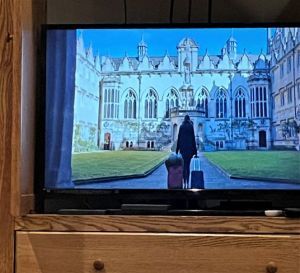 I watched it on my TV at home!
The post Oxford: Movie and Book Surprises appeared first on Michelle Ule, Author.
October 4, 2022
Mrs. Oswald Chambers Biography–5 Years Later

The Mrs. Oswald Chambers biography launched into the world five years ago this month.
If you read my blog, you know I’ve already written a lot about this Chambers biography.
Today, I’d like to recap how writing and publishing that book continues to change my life in wonderful ways.
And thanks to all who wrote about it, spoke about it, or wrote to me in thanks.
Why I wrote a Chambers biographyI just went to work one day in January 2013 and my entire life changed.
I’ve written in full about the experience here.
But, what I’m always struck by in remembering that day is I was just going about my regular business.
 This was just the start
Beyond reading that days’ My Utmost for His Highest, I wasn’t thinking about Oswald Chambers.
I knew next to nothing about Biddy Chambers. All I knew about her came from David McCasland’s excellent Chambers biography, Oswald Chambers Abandoned to God.
But then an opportunity arose to write a WWI novel based on spiritual ideas in My Utmost for His Highest.
I figured, “what better way to spend a year of my writing life?”
It took more than a year.
How did I spend my writing time between 2013 and 2017?Researching, of course.
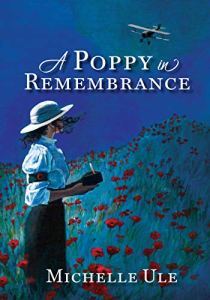
I began working on my WWI novel, A Poppy in Remembrance, which featured Oswald and Biddy Chambers as marquee characters–real people in a novel.
That meant I had to become an expert on WWI, the Chambers family, journalism in the early 20th century, women journalists during WWI (few), and while I was at it, Clapham Common, OC’s Bible Training College, and even the Somme battlefield.
 My husband on the left, took his life in his hands for my research! (Somme 2013)
I’ve written lots of posts about that research (50 on WWI alone), and done some traveling. (London, Scotland, the Somme battlefields, and even an Egyptian restaurant to sample Middle Eastern cuisine).
I also took two research trips to Wheaton College’s Special Collections Library where I befriended the archivist, Keith Call.
Between the two trips, I spent seven full days scanning documents (and even bought a new scanner one trip), examining photos, and even holding Chambers biography memorabilia.
My husband and I had innumerable conversations about the books. Biddy and OC are so frequently referenced at the dinner table, they feel like family!
What happened during the launch?A week before the launch of the Mrs. Oswald Chambers biography in October 2017, massive wildfires poured down the hillsides in my town. We fled in the middle of the night.
I picked up one copy of the actual book, grabbed my speaking suit “just in case,” and stuffed a backpack with clothing.
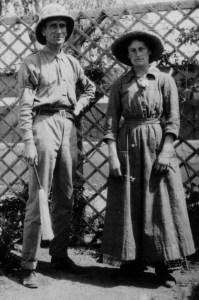 Biddy and Oswald’s final photo together. They’re both tired. (Wheaton College)
I had a Zoom interview the next day–from our evacuation lodgings–wearing my Zumba clothes (all I packed in the dark) and that handy suit jacket.
For the next two weeks, I “reported” on Facebook about the devastating fire, did phone and Zoom interviews about the book, and wondered what the future held in regards to our home.
In the middle of that uncertainty, my husband and I flew to Chicago where I took place at an event honoring the 100th anniversary of Oswald Chambers’ 2017 death.
We got news we could return home when we landed in Chicago.
(Who knows what I said? I was emotionally, mentally, and physically fried.)
Five days later, I held the official book launch at our church. Only a handful of beleaguered church members could attend. Most of our friends and church members were still evacuated. (A significant number of church families lost their homes.)
I spoke that day on “Biddy Chambers and Resilience.”
Biddy’s example has been an important theme for me and a speaking topic ever since.
(We evacuated again in 2020 when fires got within a block of our home. No book launch that time.).
 Chambers biography inspirations and offshoots
When you write a book, you send it out into the world–much like launching a child.
You don’t know where it will go, who will read it, how it will affect them, and how your life might change.
Dr. Eric Frugé wrote a Bible study series on My Utmost for His Highest using Mrs. Oswald Chambers as a textbook.
I’ve spoken on Biddy, Oswald, and My Utmost for His Highest a number of times.
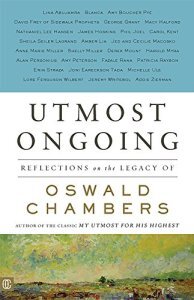
I also joined with a number of writers for Utmost Ongoing: Reflections on the Legacy of Oswald Chambers.
The biography is now available in German.
Last year, I narrated the Biddy Chambers biography. While I’ve read to children seemingly my whole life, reading a book you wrote is a different experience! (Now my American voice is out in the world, too!)
Who has written to me and why?Several men wrote dissertations and interviewed me (as well as read the book) for further information.
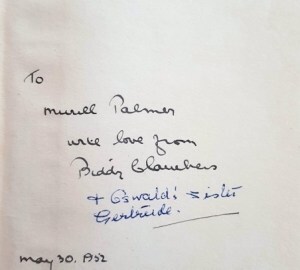 If only my name was Muriel!
In addition, I’ve spent the last five years discussing and sharing email with people looking for someone to explain what the My Utmost for His Highest daily reading meant.
People sent me photos they’ve found in their relatives’ possessions.
I’ve received a story about finding Oswald Chambers’ birthplace.
Someone suggested OC’s ANZAC revival in Egypt may have been responsible for the end of WWI in the Middle East. (That was a fascinating rabbit trail. Write if you want to know more).
One woman sent me photos of two paintings done by Oswald Chambers and given to her family nearly 100 years ago.
At someone’s suggestion, I downloaded a brochure when the former Bible Training College went up for sale. I could compare the old photos I have from 1912 to ones taken in 1968 and then today.
One lovely woman in Tasmania gifted me a copy of a book signed by Biddy.
A man from North Carolina passed along what probably was the final interview and photos of Kathleen Chambers.
 You can sign up here.
Over and over again, people wrote to thank me for the book–and described what they learned from it.
I’ve been touched and honored every time.
I’ve shared all this information in my newsletters over the years.
In the October 15, 2022 newsletter, I’ll share links to the stories once more.
BTW, if you sign up for my newsletter, you receive a free copy of Writing About Oswald and Biddy Chambers–which tells the stories of all the wild things that happened to me while writing the books.
Personal thanksgiving for the Chambers BiographyEvery time some new story, photo, or insight shows up, my husband reminds me of the many blessings writing the Mrs. Oswald Chambers biography brought us.
He’s right.
I’ve met so many splendid people in person and through the mail. Several of the Bible Training College student’s relatives first learned about their family’s connection to Oswald Chambers from me. (They were thrilled! I was thrilled!)
The son of Oswald’s student Eva Spink blessed me over the phone. (Thus, passing on a blessing that, as best I can tell, came all the way from Charles Spurgeon. I’ve continued to pass that blessing on!)
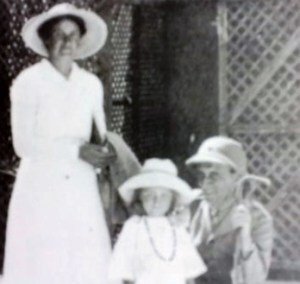 Chambers Family, Egypt 1917
(Wheaton College Library Special Collections)
I corresponded with an “old China hand,” about her mother, Gladys Ingram Donnithorne.
My life has been so enriched by hearing from people, sharing information with others, listening, and speaking.
It continues every week.
Thank you, again to Baker Books for publishing Mrs. Oswald Chambers.
Everyone who wrote to me, shared the book, and read My Utmost for His Highest to discuss with me, thank you.
Most of all, I thank God for how he worked in the lives of those three saints: Oswald, Biddy, and Kathleen Chambers to share the good news of Jesus Christ.
Well done, good and faithful servants.
I’m glad that when I enter my rest–I’ll join you with the God we worship to rejoice.
Thanks be to God.
Tweetables
Five years later: the joy of writing Mrs. Oswald Chambers. Thanks readers! Click to Tweet
Mrs. Oswald Chambers biographer writes about the resulting 5 years of joy. Click to Tweet
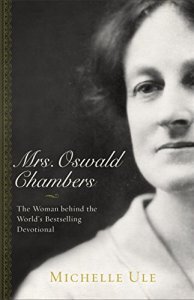
The post Mrs. Oswald Chambers Biography–5 Years Later appeared first on Michelle Ule, Author.
September 27, 2022
Who was Huldah the Prophetess?

Huldah the prophetess–have you ever heard of her?
She was female, not one of those towering Charlton Heston-type prophets.
As a contemporary of King Josiah and Jeremiah, she lived in Jerusalem 2700 years ago.
Her mention in the Old Testament brings up an important question.
Can God use women as mouthpieces to share His words and thoughts?
Yes.
What do we know about Huldah the prophetess?Some believe the name Huldah means “weasel,” or a burrowing animal. Judging by the Hebrew word itself, Huldah also could mean “abiding” or “continuing.”
It may be she focused her attention scouring Hebrew scrolls to understand the Torah and what God wanted his people to know.
Jewish history recounts her ability as a scholar or seer.
She lived in Jerusalem’s Second Quarter, the area just west of the Temple Mount along the ancient north wall of the city.
The King James Bible translated the area’s name as “The College,” implying–for good reason–the area housed Temple scholars.
Jewish oral tradition believes Huldah taught in a school for women. (It’s worth noting few women, if any, at that time studied Torah).
 Jerusalem, 1844. This is not where Huldah lived. Photo by Girault de Prangey (Wikimedia Commons)
Married to Shallum, son of Tikvah, the son of Harhas, the keeper of the royal wardrobe, she had access to members of Jerusalem’s royalty.
Many scholars believe she and the prophet Jeremiah were cousins.
What is a prophetess?A female prophet.
Or, a woman God used to speak Biblical truth.
The Old Testament recounts three other prophetesses.
Moses’ sister Miriam. Deborah. The false prophetess Noadiah (Nehemiah called her out in Nehemiah 6:14).New Testament prophetesses were Anna and Acts evangelist Philip’s four daughters.
A prophetess also might be the wife of a prophet, as in the case of Isaiah’s wife.
Some believe Mrs. Isaiah’s “prophecy” was giving birth to her child Maher-Salal-Hash-Baz. It depends on how you read the following:
How did God use Huldah?
And I [Isaiah] went to the prophetess, and she conceived and bore a son. Then the Lord said to me [Isaiah], “Call his name Maher-shalal-hash-baz; for before the boy knows how to cry ‘My father’ or ‘My mother,’ the wealth of Damascus and the spoil of Samaria will be carried away before the king of Assyria.”
Isaiah 8:1-4 ESV
When Josiah became King of Israel, he ordered a cleaning and repair of the sadly neglected Temple.
18 years later (Josiah was 26), workers discovered a scroll in one of the cluttered storage rooms and brought it to High Priest Hilkiah. Hilkiah passed it on to the King’s secretary Shaphan, who read it and took it to King Josiah.
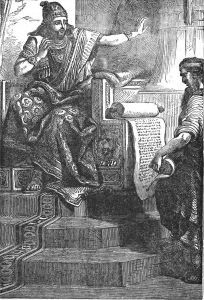 Josiah hears the book of the law for
the first time. (Wikimedia Commons)
It was a section of the Torah (the first five books of the Bible)–possibly Deuteronomy. This portion apparently recounted the dire consequences of not listening to, studying, and obeying God.
Horrified, the King tore his clothing in grief.
He feared God would send his wrath because under his forefathers’ rule, the people had not kept the law.
King Josiah sent High Priest Hilkiah, Shaphan and his son, along with three other men to a prophet to determine if they’d found an authentic scroll.
They went to visit Huldah.
Why Huldah?The Bible doesn’t say. Some believe Jeremiah was out of town!
The Gemara asks: But how could Josiah himself ignore Jeremiah and send emissaries to Huldah?
The Sages of the school of Rabbi Sheila say: Because women are more compassionate, and he hoped that what she would tell them would not be overly harsh.
Sefaria: Megillah 14b commenting on 2 Kings 22:14-16
Historian Jonathan Stökl observed:
What did King Josiah learn from Huldah?Huldah is clearly introduced as an authority figure with a skills set available neither to
King Josiah nor to the High Priest Hilkiah.The fact that she is a woman does not appear to be an issue to the author(s), neither in the characterization of her, nor in the oracle that she provides. Unlike [the prophetess] Deborah, she is depicted as capable of controlling her access to the deity.
Jonathan Stökl, p. 12 Deborah, Huldah, and Innibana: Constructions of Female Prophecy in the ancient Near East and the Hebrew Bible
Stökl continued:
The king requires an oracle . . . she [Hulda] also appears to be working for the king by providing him with information that he requires to make the necessary decisions through her oracle(s).
Jonathan Stökl, p. 12 Deborah, Huldah, and Innibana: Constructions of Female Prophecy in the ancient Near East and the Hebrew Bible
King Josiah had a question: was he and his kingdom doomed?
Huldah provided a prophetic oracle.
By so doing, she confirmed the validity of the scroll found in the temple.
In her oracle, which began “Thus says the Lord, the God of Israel,” she acknowledge God’s wrath would be kindled. Disaster would come to Jerusalem, nothing could stop it.
 Huldah’s tomb in Jerusalem; photo by דני
(Wikimedia Commons)
King Josiah, himself, got better news. God recognized Josiah’s penitent heart.
God saw him rent his garment, weep, grieve and humble himself.
For that reason, the disasters wouldn’t come until after Josiah’s death in 609 BC.
Babylon conquered Jerusalem and enslaved the people 24 years later in 587 BC.
What happened to Hulda?We don’t know for sure.
But, she does have a tomb in Jerusalem.
Tweetables
Who was Huldah the prophetess? Click to Tweet
Were there women prophets in the Old Testament? Click to Tweet
The post Who was Huldah the Prophetess? appeared first on Michelle Ule, Author.
September 20, 2022
Personal Adventures in Grocery Shopping

Don’t you have adventures while grocery shopping?
Could you need a change in perspective?
Here’s a description of how one day “stopping in” provided more than I expected.
Why grocery shopping is importantDuring the recent pandemic, my local grocery store was the one place I saw strangers.
I only visited every other week, but I’m thankful it was open.
Indeed, I made it a habit of thanking employees, “for coming to work today. I really appreciate it.”
Their reactions varied.
“Uh, it’s my job.”
“Thank you.”
 If she doesn’t come to work, we go hungry.
 Thank you. Photo by Big Dodzy (Unsplash)
Laughter.
But, if they hadn’t come to work, I wouldn’t have been able to buy enough groceries for two weeks at a time.
I really did appreciate it–and I knew not every one was as . . . thankful.
It’s a hard job, even in non-pandemic days, and I continue to thank them.
They still laugh.
Stopping to greet the homeless manIt’s hard to be homeless.
A bedraggled looking man, whom I’d seen before, sat beside the door when I reached the store.
I paused, “I’m going in for grocery shopping. Can I get you anything?”
He looked up, surprised. “Iced tea?”
“Sweetened or unsweetened?” Why not ask his preference?
His eyes widened. “Sweetened?”
“Okay.” I strode in and bought him a bottle.
When I delivered it, his eyes lit up.
(I handed him the receipt, as well, in case anyone asked.)
I felt self-righteous, but also happy.
It’s curious how helping someone blesses you, isn’t it?
Produce Adventures.I always have fun in the produce department. The recent visit involved avocados.
 Photo by susan susan (Unsplash)
Though, it could be tomatoes and it has been peaches.
I can never tell if these fruits are ripe. So, I hand them to others and ask.
Last week’s request prompted laughter. “I can never tell if avocados are ripe,” the woman said.
I don’t really care for them, but we were having a party involving Mexican food. How can you make guacamole without ripe avocados?
In this case, I went with the softer rather than rock hard choice.
My new acquaintance–who I then ran into several more times in the store–shrugged. “Enjoy!”
Do-sa-do-ing down the aislesI often go early in the morning when stockers are still at work.
That means do-sa-do-ing down the aisles, or reaching over folks restocking shelves.
I thank them for coming to work, too.
Since I often see the same people on the various aisles, we all do a dance: stockers, other shoppers, me.
Sometimes I sing out, “allemande left.”
Those who know German or square dancing always laugh.
Finishing the grocery shoppingOf course I finish at the checkout counter.
But, the other day I found myself behind my friend from the produce counter.
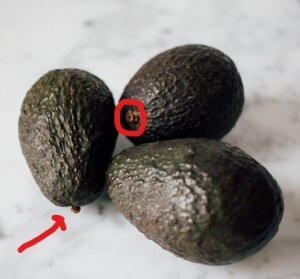 Noting the nubs.
 Photo by Charles Duluvio (Unsplash)
“I could have beaten you!”
“I know,” she laughed. “I’m just quicker!”
“Are you two friends?” asked the checker.
“We met in the produce aisle. We were trying to figure out if these avocados were ripe.”
The checker picked up one of my avocados and showed us the nub.
“If you can push in the nub, the avocado is too ripe.”
She demonstrated.
“This one is too ripe. Do you still want it?”
I didn’t, and thanked her.
See what happens when you’re friendly at the grocery store?
Ah, but the parking lot!When I had parked my car, I noticed a young couple nearby.
While the young man played classical music on a violin, the young woman sat watching the shoppers.
 This is not the man I saw.
 Photo by Tim Mossholder (Unsplash)
A box sat beside them, requesting funds.
I made a mental note to ask him to play for me when I returned.
He was a fine musician, and I slipped money into my pocket, anticipating a lively piece when I returned.
When I pushed out my full cart, I noticed him sitting on the ground, the violin in its case.
He was drinking water.
After I loaded my groceries in the car, I asked him to play his favorite piece.
The young man shook his head. “I’m on my break.”
I regarded him, frankly irked.
But who was I? He didn’t know I had money in my pocket for him.
After prodding from the Holy Spirit, I dropped my bill in the box, and climbed into my car.
The woman quickly reached into the box and then looked at the violinist.
When I drove past, I smiled and waved. They waved back.
I felt humbled. They didn’t owe me anything. I shouldn’t have expected him to play just because I asked.
Yes, I had a grocery shopping adventure that day.
But, I also learned a lesson about personal dignity.
What could be better than that?
Tweetables
Adventures in grocery shopping–good and bad! Click to Tweet
Lessons from a friendly trip to the grocery store. Click to Tweet
The post Personal Adventures in Grocery Shopping appeared first on Michelle Ule, Author.
September 13, 2022
Your Personal Cross and Choice

Can you chose your personal cross?
The personal cross that feels like such a burden to carry?
It’s the one you sigh and pick up, walking through life feeling unending heartaches and pains.
The term “carrying your cross” comes from Jesus hauling his up the Via Dolorosa to Calvary’s hill.
Okay, mine obviously aren’t that bad, but some days it just feels so heavy.
Where does the idea of a personal cross to bear come from?Some are familiar with an old poem written by the famous Anonymous.
Lettie Cowman talked about the concept in her August 29 reading from Streams in the Desert.
Why can’t we choose our own cross?Here are a series of excerpts from the poem (with my commentary). The entirety is here.
It was a time of sadness, and my heart,
Although it knew and loved the better part,
Felt wearied with the conflict and the strife,
And all the needful discipline of life.
The thought arose ‑‑ My cross I cannot bear:
Far heavier its weight must surely be
Than those of others which I daily see.
Oh! if I might another burden chose.
 Which suits you best?
Photo by Corey Collins (Unsplash)
We think we know best what challenges we need to carry.
But do we really?
What if we could choose our personal cross?
How would you select the “better one?”
Does Jesus give us a choice of our personal cross?
As I used to tell my kids, “you always have a choice.”
But do we really want to be responsible for the outcome?
Back to the poem.
Then One,
Came gently to me as I trembling lay,
And, “Follow me!” He said; “I am the Way.”
He led me far above,
And there, beneath a canopy of love,
Crosses of divers shape and size were seen,
Larger and smaller than my own had been.
And one there was,
A little one, with jewels set in gold.
Ah! this, methought, I can with comfort wear,
For it will be an easy one to bear:
And so the little cross I quickly took;
But, all at once, my frame beneath it shook.
Jesus merely bids us follow Him. He doesn’t often tell us where we’re going or what we’ll have to overcome.
Do you suppose that’s because He knows our weaknesses, and thus knows we might chose to do something hard?
Maybe we’re not so good at choosing our troubles?
The sparkling jewels fair were they to see,
But far too heavy was their weight for me.
I cried, and looked again,
To see if there was any here could ease my pain,
on a lovely one I cast my eye.
But oh! that form so beautiful to see
Soon made its hidden sorrows known to me;
Thorns lay beneath those flowers and colors fair!
Sorrowing, I said: “This cross I may not bear.”
And so it was with each and all around
‑Not one to suit my need could be found;
At length, to Him I raised my saddened heart:
He knew its sorrows, bid its doubt depart.
“Be not afraid,” He said, “but trust in me –
My perfect love shall now be shown to thee.”
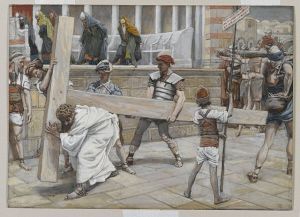 Jesus on the Via Dolorosa
 (James Tissot; Wikimedia Commons)
Ah, there’s the rub.
Do we really trust Jesus to know which personal cross we can best carry?
How to choose?
Listening to hear, and ready to obey –
A cross quickly found of plainest form,
With only words of love inscribed thereon.
With thankfulness I joyfully acknowledged it the best –
The only one of all the many there
I could feel was good for me to bear.
And, as I bent, my burden to sustain,
I recognized my old cross again.
And so, whate’er His love sees good to send,
I’ll trust it’s best, because He knows the end.
Too many times in my life I’ve encountered a hardship I simply do not want to go through.
Some of them are physically painful, others emotional unnerving.
But I try to resolve my hesitancy by remembering God loves me and will never leave me nor forsake me.
And just because I can’t see something, doesn’t mean God isn’t at work to bring good from completion.
He, alone, knows what I best can bear.
Can a personal cross really be a blessing? This one blessed me years ago!
It all sort of depends on your point of view, doesn’t it?
Do we really want to choose our life, thinking we know what will bring us the most happiness?
Or, would we rather ask the One who knows our beginning to our end?
He’s the One who created us to be the person we are with our gifts, talents and abilities in this time and place.
Who can best choose a life that will fill us in every way–no matter the difficulties?
What if the challenges ARE the life and those same difficulties make us into better people?
How can we choose?
And what if our personal cross, the pain and trouble, really ends up being the source of joy?
Tweetables
The advantages–or not–of choosing our personal cross. Click to Tweet
Who best can decide the real joy and contentment for our lives? Click to Tweet
The post Your Personal Cross and Choice appeared first on Michelle Ule, Author.
September 6, 2022
Proactive Prayer in Everyday Life
Lately, I’ve taken to proactive prayer in everyday life.
It’s not I didn’t pray for people before, it’s just I’m now more . . . focused to pray.
It took me by surprise the first several times.
It’s been taking others by surprise ever since!
What is proactive prayer in everyday life?I’ve written about prayer often enough that I think I know what prayer is.
You can see a long list of posts on the subject here.
But what about the word proactive?
Here’s the definition from Wordnik:
Acting in advance to deal with an expected difficulty; anticipatory.Acting in advance to deal with an expected change or difficulty(of a policy or person or action) controlling a situation by causing something to happen rather than waiting to respond to it after it happens.People ask me to pray for them all the time.
I’ve taken them at their request and started praying–right then.
It catches many people off guard!
Why proactive prayer?As in praying as soon as the request comes?
Everyday life has too many distractions. Someone can toss off a request and then scurry away.
It happens all the time.
But proactive prayer in everyday life means I respond immediately.
My reasoning is several-fold.
I don’t always remember to pray if I don’t either write it down or pray right then.If someone is asking, that means we’ve got at least two people agreeing. Jesus said, “Whenever two or more pray in my name, there I am in the midst of them.”(Confession) It startles people and indicates if they’re serious about their request.How do people respond?
 Available at any time and place!
 (Photo by Priscilla Du Preez; Unsplash)
They’re usually surprised.
But, most of the time, they join in.
What does it look like?I give advance warning.
“Great idea. Let’s pray.”
If I know the requester well, I might take their hands.
If I don’t, well, I don’t touch them.
Sometimes I put up my hand–like a blessing.
It all depends on the situation.
And then there was the time I went freelance . . .
I’d been standing in a long line to pick up a prescription.
The woman ahead of me and her daughter had a lengthy conversation about her ailments.
Lengthy.
I kept looking between them, wondering if I should offer to pray.
Everyone standing around, by this point, had heard about their problems.
When a lull finally broke, I prayed out loud.
“Lord, you’ve heard this woman’s needs and her desire to get well. We pray that you would touch her where she needs to be touched, give her peace, bless her, and heal her.
“Amen.”
The two women turned to look at me and nodded. “Amen.”
Asking before launching into proactive prayer in everyday life?Normally I ask, of course, but the above situation felt dire. (Though they already had announced all the details to the six of us standing in life with them!)
But then came another day while doing routine business with someone I’d gotten to know.
We’ve had bad fires in my county the last few years, and the woman’s eyes were wide and nervous as she took my money.
 When I feel my eyes focus like this, I know it’s time to pray.
(Photo by Jaclyn Moy on Unsplash)
“Are you okay?” I asked.
The story spilled out. It was tragic. Her eyes filled with tears.
“I’m so sorry,” I said when she wound down. “Can I pray for your family?”
“Yes!”
We closed our eyes and prayed for the people she cared about and their awful situation.
When we reached, “amen,” I opened my eyes and smiled at her.
Through her tears, she smiled back, barely able to whisper, “thank you.”
Of course, I haven’t forgotten this situation since–and I have continued to pray.
What if they don’t want prayer right then?That’s a completely understandable response.
So, I smile, tell them I’ll be thinking of them, and when they walk away I pray.
I can’t seem to remember if I don’t pray right then.
But, of course, I don’t have to pray out loud.
Other proactive prayer in everyday life?While playing tennis one day, my daughter and I noticed a plume of smoke in a nearby neighborhood.
We weren’t in any danger, but it troubled me.
Finally, I met my daughter at the net (to pick up errant tennis balls!), and pointed.
“Let’s pray for that house.”
I prayed out loud, she agreed, and we returned to the game.
I felt better about it.
That afternoon, a prayer request came from church.
A member of my Bible study’s home caught fire that day.
It was the house fire we prayed about while playing tennis.
Someone got her napping husband out in time.
None of us every forgot that prayer.
I also always pray for ambulances, fire trucks, and any other emergency vehicles.
Getting to the hospital, to the fire, home safely, means a lot to many people.
The praying part is easy–and the very least I can do.
What about you?
Tweetables
What does proactive prayer look like in everyday life? Click to Tweet
What should you do when you get a tug to pray? Click to Tweet
The post Proactive Prayer in Everyday Life appeared first on Michelle Ule, Author.