Carrie Vitt's Blog, page 27
October 2, 2018
Hypothyroidism: the Symptoms, Cause, and First Steps to Take
Hypothyroidism is a disease that’s rising at an alarming rate, especially in the United States. An estimated 30 million Americans have some form of thyroid disease, and up to 60% of those with thyroid disease are unaware of their condition.
On a global scale, 200 million have some form of thyroid disease. So, we need to take steps to educate ourselves and find out what we can do to reverse this problem!
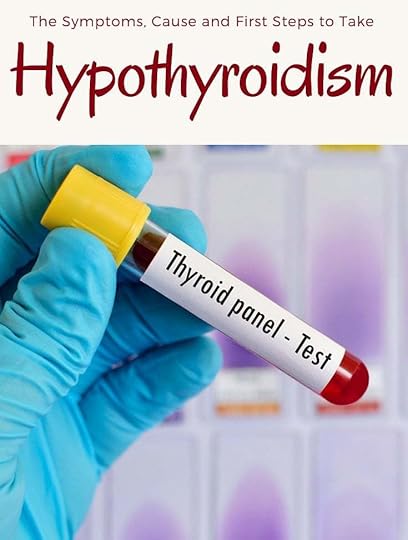
There are many different forms of thyroid disease, and today we’re going to look at hypothyroidism.
So let’s dive in…
What is hypothyroidism?
Hypothyroidism is most often diagnosed when TSH (thyroid stimulating hormone) levels are elevated and free T4 levels are low. But, oftentimes a doctor will diagnose a patient with hypothyroidism when they see just high TSH levels.
What is TSH and what is “normal” level?
TSH is a hormone that the pituitary sends out to tell the thyroid how much or how little thyroid hormones to produce.
Please note: TSH levels tell you what your pituitary is up to, but it’s not telling you what the thyroid is doing.
Everyone is biochemically individual, but in our practice we’ve found that a TSH level between 0.5-2.5 is the range where people feel healthy and vibrant. Most labs have “normal” TSH ranges that span anywhere from 4.0-8.0, but most people with TSH levels this high don’t feel well and need to make some steps to reduce their TSH level.
What is free T4 and what is a “normal” level?
Free T4 is a hormone produced by the thyroid. You want free T4 levels to be in the middle of the lab range. So if the range is 1.0-3.0, you want your free T4 to be 2 (or close to it). Each lab has a different range, so you have to look at what the specific range is to know what number to look for.
What are the symptoms of hypothyroidism?
There are actually hundreds of symptoms, but here’s a list of some of the most common:
Feeling tired
Anxiety
Thinning or loss of outer third of eyebrows
Depression
Weight gain
Feeling cold
Irritability
Hair loss or thinning
Weakness and aches in muscles and joints
Itchy and dry skin
Difficulty concentrating
Brain fog
Constipation
Heavy or irregular periods
Puffy face
Hoarseness in the voice
Muscle weakness
Elevated cholesterol
Slowed heart rate
Low blood pressure
Insomnia
Brittle nails
Muscle loss
Low libido
Infertility and miscarriage
Lack of motivation
Digestive issues
Low vitamin D
Low B12
Weak immune system
Low ferritin (or anemia)
Needing a nap in the afternoon
Chronic fatigue
Diminished appetite
Low basal body temperature
Frequent infections
Lump in throat
Why is my TSH high?
The pituitary, hypothalamus and adrenals (also called the HPA axis) are all part of the endocrine system and communicate with one another throughout the day. When the body perceives stress – emotional, mental, physical, environmental, mental, stress from disease, etc. – the hypothalamus tells the adrenals to work harder to put out additional cortisol, and it tells the pituitary to crank out more TSH so the thyroid will slow down.
So, a high TSH level isn’t actually a thyroid problem. Instead, there’s some sort of imbalance in the HPA axis. Your practitioner’s job is to now figure out why there is an imbalance.
Why is my free T4 low?
Most often, free T4 is low because the thyroid doesn’t have the resources to produce the proper amount of T4. The thyroid needs iodine and tyrosine to produce thyroid hormones. Increasing the consumption of iodine-rich foods, reducing exposure to chlorine, fluoride and bromine (this is incredibly important!), and taking an iodine supplement can often help improve this imbalance. If you’re concerned about taking iodine when you have thyroid disease, read this post and it should answer your questions.
Remember to talk to your nutritionist or a practitioner who’s had lengthy training in nutrition to help you figure out how much iodine your body needs. Self-diagnosing often doesn’t go well, so it’s worth paying a practitioner for their expertise.
What are the first steps to take if you’ve been diagnosed with hypothyroidism?
Ask your practitioner for a full thyroid panel. Remember, TSH tells you what’s going on with the pituitary, not your thyroid. So, getting a look at what’s actually going on with your thyroid will give you and your practitioner more insight as to what steps to take next. Here’s the list of labs to ask for (if your practitioner will not order labs for you, you can order them yourself here): TSH, TPO, TAA, Free T3, Free T4, Reverse T3, T3, T4, T3 uptake.
2. If your free T4 levels are low, then I recommend increasing your consumption of iodine-rich foods (sea vegetables, wild seafood, cultured yogurt, pastured eggs, etc.) and reduce your exposure to chlorine, fluoride and bromine (read this article to find out why this is important).
3. Take steps to support your adrenals. Why? Because anyone with a high TSH is also dealing with some kind of adrenal issue. I can’t tell you how many people have taken the steps I list and come back a month or two later telling me how much better they are already feeling!
4. Reduce your sugar intake. Sugar and stress bascially do the same thing in the body (minus the calories), so to help balance your TSH, you need to watch your sugar intake. If you have massive sugar cravings right now (I’ve been there before!), make this recipe for buttermints and follow the directions listed.
5. Remember that your practitioner is working for you, not the other way around. It’s ok to ask them questions about the root cause of what’s going on. If they don’t treat you respectfully when you ask them questions about what’s going on with your body, then it’s ok to find another practitioner to work with. It took me nine months of going doctor-to-doctor before I found someone who would listen to me and run tests. Being persistent to find the right practitioner to work with pays off!
6. Start moving away from processed foods and eat real, nutrient-dense foods. I’ve got hundreds of recipes here on my site and another 125 in my cookbook, The Grain-Free Family Table. Eating healthy foods will reduce the strain on your body and help bring things back into balance.
7. Make sure to get plenty of selenium, zinc, magnesium, iron, healthy saturated fats, Vitamin A (remember retinol/Vitamin A is only found in animal foods), B vitamins, Vitamin C and Vitamin E in your diet as they are all essential for thyroid support.
8. Support digestion so your body can utilize the nutrients in your food. Click here to read some practical steps to take.
Note: The purpose of this post is to give an overview of hypothyroidism from a holistic perspective. Due to biochemical individuality there can be many various reasons for the root causes of thyroid disease, and many ways to help improve thyroid in balance in the body. This information is not intended to take the place of your doctor’s advice.
The post Hypothyroidism: the Symptoms, Cause, and First Steps to Take appeared first on Deliciously Organic.


Hypothyroidism, the Symptoms, Cause, and First Steps to Take
Hypothyroidism is a disease that’s rising at an alarming rate, especially in the United States. An estimated 30 million Americans have some form of thyroid disease, and up to 60% of those with thyroid disease are unaware of their condition.
On a global scale, 200 million have some form of thyroid disease. So, we need to take steps to educate ourselves and find out what we can do to reverse this problem!
There are many different forms of thyroid disease, and today we’re going to look at hypothyroidism.
So let’s dive in…
What is hypothyroidism?
Hypothyroidism is most often diagnosed when TSH (thyroid stimulating hormone) levels are elevated and free T4 levels are low. But, oftentimes a doctor will diagnose a patient with hypothyroidism when they see just high TSH levels.
What is TSH and what is “normal” level?
TSH is a hormone that the pituitary sends out to tell the thyroid how much or how little thyroid hormones to produce.
Please note: TSH levels tell you what your pituitary is up to, but it’s not telling you what the thyroid is doing.
Everyone is biochemically individual, but in our practice we’ve found that a TSH level between 0.5-2.5 is the range where people feel healthy and vibrant. Most labs have “normal” TSH ranges that span anywhere from 4.0-8.0, but most people with TSH levels this high don’t feel well and need to make some steps to reduce their TSH level.
What is free T4 and what is a “normal” level?
Free T4 is a hormone produced by the thyroid. You want free T4 levels to be in the middle of the lab range. So if the range is 1.0-3.0, you want your free T4 to be 2 (or close to it). Each lab has a different range, so you have to look at what the specific range is to know what number to look for.
What are the symptoms of hypothyroidism?
There are actually hundreds of symptoms, but here’s a list of some of the most common:
Feeling tired
Anxiety
Thinning or loss of outer third of eyebrows
Depression
Weight gain
Feeling cold
Irritability
Hair loss or thinning
Weakness and aches in muscles and joints
Itchy and dry skin
Difficulty concentrating
Brain fog
Constipation
Heavy or irregular periods
Puffy face
Hoarseness in the voice
Muscle weakness
Elevated cholesterol
Slowed heart rate
Low blood pressure
Insomnia
Brittle nails
Muscle loss
Low libido
Infertility and miscarriage
Lack of motivation
Digestive issues
Low vitamin D
Low B12
Weak immune system
Low ferritin (or anemia)
Needing a nap in the afternoon
Chronic fatigue
Diminished appetite
Low basal body temperature
Frequent infections
Lump in throat
Why is my TSH high?
The pituitary, hypothalamus and adrenals (also called the HPA axis) are all part of the endocrine system and communicate with one another throughout the day. When the body perceives stress – emotional, mental, physical, environmental, mental, stress from disease, etc. – the hypothalamus tells the adrenals to work harder to put out additional cortisol, and it tells the pituitary to crank out more TSH so the thyroid will slow down.
So, a high TSH level isn’t actually a thyroid problem. Instead, there’s some sort of imbalance in the HPA axis. Your practitioner’s job is to now figure out why there is an imbalance.
Why is my free T4 low?
Most often, free T4 is low because the thyroid doesn’t have the resources to produce the proper amount of T4. The thyroid needs iodine and tyrosine to produce thyroid hormones. Increasing the consumption of iodine-rich foods, reducing exposure to chlorine, fluoride and bromine, and taking an iodine supplement can often help improve this imbalance. If you’re concerned about taking iodine when you have thyroid disease, read this post and it should answer your questions.
Remember to talk to your nutritionist or a practitioner who’s had lengthy training in nutrition to help you figure out how much iodine your body needs. Self-diagnosing often doesn’t go well, so it’s worth paying a practitioner for their expertise.
What are the first steps to take if you’ve been diagnosed with hypothyroidism?
Ask your practitioner for a full thyroid panel. Remember, TSH tells you what’s going on with the pituitary, not your thyroid. So, getting a look at what’s actually going on with your thyroid will give you and your practitioner more insight as to what steps to take next. Here’s the list of labs to ask for (if your practitioner will not order labs for you, you can order them yourself here): TSH, TPO, TAA, Free T3, Free T4, Reverse T3, T3, T4, T3 uptake.
2. If your free T4 levels are low, then I recommend increasing your consumption of iodine-rich foods (sea vegetables, wild seafood, cultured yogurt, pastured eggs, etc.) and reduce your exposure to chlorine, fluoride and bromine (read this article to find out why this is important).
3. Take steps to support your adrenals. Why? Because anyone with a high TSH is also dealing with some kind of adrenal issue. I can’t tell you how many people have taken the steps I list and come back a month or two later telling me how much better they are already feeling!
4. Reduce your sugar intake. Sugar and stress bascially do the same thing in the body (minus the calories), so to help balance your TSH, you need to watch your sugar intake. If you have massive sugar cravings right now (I’ve been there before!), make this recipe for buttermints and follow the directions listed.
5. Remember that your practitioner is working for you, not the other way around. It’s ok to ask them questions about the root cause of what’s going on. If they don’t treat you respectfully when you ask them questions about what’s going on with your body, then it’s ok to find another practitioner to work with. It took me nine months of going doctor-to-doctor before I found someone who would listen to me and run tests. Being persistent to find the right practitioner to work with pays off!
6. Start moving away from processed foods and eat real, nutrient-dense foods. I’ve got hundreds of recipes here on my site and another 125 in my cookbook, The Grain-Free Family Table. Eating healthy foods will reduce the strain on your body and help bring things back into balance.
7. Make sure to get plenty of selenium, zinc, magnesium, iron, healthy saturated fats, Vitamin A (remember retinol/Vitamin A is only found in animal foods), B vitamins, Vitamin C and Vitamin E in your diet as they are all essential for thyroid support.
8. Support digestion so your body can utilize the nutrients in your food. Click here to read some practical steps to take.
Note: The purpose of this post is to give an overview of hypothyroidism from a holistic perspective. Due to biochemical individuality there can be many various reasons for the root causes of thyroid disease, and many ways to help improve thyroid in balance in the body. This information is not intended to take the place of your doctor’s advice.
The post Hypothyroidism, the Symptoms, Cause, and First Steps to Take appeared first on Deliciously Organic.
September 26, 2018
Waffles with Sausage (Grain-Free, Gluten-Free)
I love serving waffles and sausage together for a weekend breakfast, and I thought, why not combine the two? So today, I’ve got a fun recipe for grain-free waffles with sausage.

I’m often asked if it’s ok to eat sausage because there’s a misconception that all sausage is unhealthy. The short answer is yes, but it’s important to make sure you purchase sausage that doesn’t contain fillers, and that is ideally organic and/or pastured.
The sausage can be made of pork, chicken, beef, duck—the choice is up to you!
Sometimes you can find this kind of sausage at your local health food store, but I often purchase from a local farm. If you’d like to find organic local meats in your area, then I recommend checking out the website Eat Wild. You can enter in your location and then it will give you a list of farms nearby.

These grain-free waffles can be made without the sausage if you prefer. And of course, serve them with a drizzle of warmed organic maple syrup!
Serves 8-10 (depending on size of waffle mak
Waffles with Sausage (Grain-Free, Gluten-Free)5 minPrep Time
20 minCook Time
25 minTotal Time
 Save Recipe
Print Recipe
My Recipes
My Lists
My Calendar
Ingredients
For the Sausage:1 pound breakfast sausageFor the Waffles:3 large eggs, separated1/2 cup buttermilk (or 1/2 cup coconut milk and 1 teaspoon lemon juice for dairy-free alternative)8 tablespoons unsalted butter, melted and cooled (or 6 tablespoons coconut oil for dairy-free alternative)1 tablespoon coconut sugar1 teaspoon vanilla extract1 1/4 cup almond flour 1/4 cup arrowroot flour 1/2 teaspoon baking soda1 teaspoon baking powder1/2 teaspoon Celtic sea saltMaple syrup for drizzlingInstructions
Place the sausage in a large skillet and cook over medium heat, breaking the sausage up with the back of a spoon for about 8-10 minutes until browned.Place the egg whites in the bowl of a standing mixer and whisk until soft peaks form.Combine the buttermilk, melted butter, coconut sugar, vanilla extract and 3 egg yolks in a medium bowl. Whisk in the melted butter.In a separate bowl, combine the almond flour, arrowroot, baking soda, baking power and sea salt. Pour the buttermilk mixture into the flour mixture and whisk until combined. Fold in the whipped egg whites. Stir in the browned sausage.Cook the waffles in a waffle maker according to the manufacturer’s instructions. Serve with maple syrup.Note: I only test the recipes on my site with the listed ingredients and measurements. If you would like to try a substitution, you are welcome to share what you used and how it turned out in the comments below. Thanks!7.8.1.24605https://deliciouslyorganic.net/waffles-sausage-grain-free-gluten-free/Copyright 2016 Deliciously Organic
Photo Credit: Becky Winkler
The post Waffles with Sausage (Grain-Free, Gluten-Free) appeared first on Deliciously Organic.
September 17, 2018
Creamy Lemon Chicken with Spinach and Artichokes (Grain-Free)
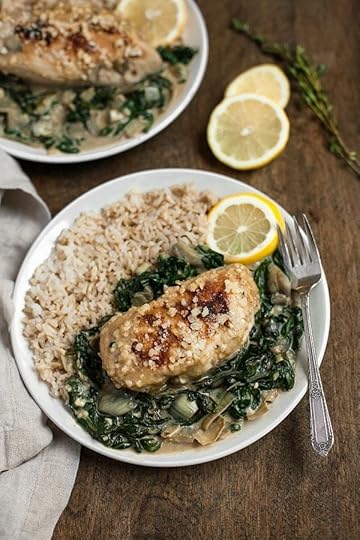
I love a good chicken recipe, especially one that’s easy to put together and packs in the flavor. Lemon Chicken with Spinach and Artichokes combines two of my favorites – spinach and artichoke dip and lemon chicken.

I recommend using fresh spinach, but if you’re in a pinch, you could use 16 ounces of frozen spinach and thaw it before cooking. I do recommend using frozen artichoke hearts instead of canned. The canned artichokes always have a tinny flavor and you really want the fresh artichoke flavor to shine through.
You can serve the dish with cauliflower rice or soaked brown rice (if you can tolerate rice).
Here are some additional grain-free chicken main dish recipes you might enjoy!
One-Pot Chicken and Potatoes
Butterlied Roast Chicken with Red Onions
Oven BBQ Chicken
Sesame Chicken with Plum Sauce
Chicken and “Rice” Casserole
Easy Garlic Chicken
Serves 4
Creamy Lemon Chicken with Spinach and Artichokes (Grain-Free, Gluten-Free)15 minPrep Time
20 minCook Time
35 minTotal Time
Save RecipePrint Recipe
My Recipes
My Lists
My Calendar
Ingredients
1 1/4 cups chicken stock 4 ounces organic cream cheese (or a dairy-free cream cheese for a dairy-free option)1 tablespoon arrowroot flour 1/2 teaspoon Celtic sea salt 4 boneless, skinless chicken breastsCeltic sea salt and freshly ground black pepper, for seasoning1/2 cup almond flour 2 tablespoons butter (or palm shortening for a dairy-free option)2 tablespoons olive oil, divided4 cloves garlic, chopped1 tablespoon fresh thyme8 cups baby spinach (about 12 ounces)1 package frozen artichoke hearts, thawed and choppedJuice of 1 lemon1/2 cup Parmiagiano-Reggiano cheese (omit for dairy-free)Instructions
Place the stock, cream cheese, arrowroot and salt in a blender and blend until combined. Set aside.Season the chicken with sea salt and pepper and dredge in almond flour, shaking off any excess. Heat a large cast iron skillet over medium heat for 2 minutes. Add the butter and 1 tablespoon olive oil and swirl the pan to coat. Add the chicken in a single layer and cook, flipping once, until golden brown and cooked through, about 4 minutes per side. Transfer to a plate.Add the remaining olive oil, garlic and thyme to the now empty skillet. Cook until fragrant, about 20 seconds. Add the spinach and cook, stirring frequently, until wilted, about 3-4 minutes. Stir in the artichokes. Pour in the chicken stock mixture and cook, stirring constantly, until the sauce just begins to thicken, about 3-4 minutes. Return the chicken and accumulated juices to the pan. Remove from the heat. Spritz the lemon juice over top and add the cheese. You can serve this with cauliflower rice or soaked brown rice (if you can tolerate rice). Serve immediately.Note: I only test the recipes on my site with the listed ingredients and measurements. If you would like to try a substitution, you are welcome to share what you used and how it turned out in the comments below. Thanks!7.8.1.24604https://deliciouslyorganic.net/creamy-lemon-chicken-with-spinach-and-artichokes-grain-free/Copyright 2016 Deliciously Organic
The post Creamy Lemon Chicken with Spinach and Artichokes (Grain-Free) appeared first on Deliciously Organic.
September 11, 2018
Skillet Chocolate Chip Cookie (Grain-Free, Gluten-Free, Egg-Free)
There’s nothing more fun than ending a meal with a skillet chocolate chip cookie topped with vanilla ice cream!

In this recipe, the butter is browned to give it a nutty, deep flavor, and I kept with nut-free and egg-free ingredients, so more of you could enjoy this dessert.
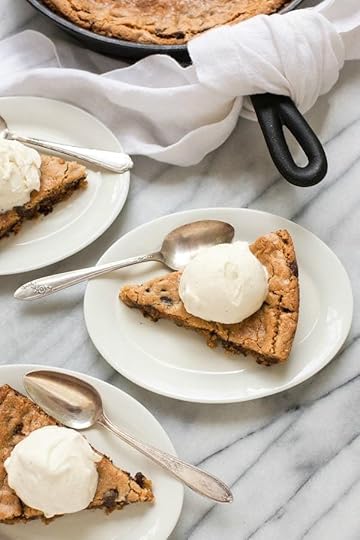
The cookie is crisp on the edges and chewy in the center. It’s a fun dessert for a special celebration or to finish out a comforting family dinner.
Serves 8
Skillet Chocolate Chip Cookie (Grain-Free, Gluten-Free, Egg-Free)Save RecipePrint Recipe
My Recipes
My Lists
My Calendar
Ingredients
12 tablespoons unsalted butter3/4 cup organic brown sugar or muscovado1/4 cup coconut sugar or maple sugar2 teaspoons vanilla extract1 teaspoon Celtic sea salt2 1/4 teaspoons unflavored grass-fed gelatin , divided5 tablespoons boiling water1/2 cup plus 2 tablespoons coconut flour 1/2 cup plus 1 tablespoon arrowroot flour 1/2 cup plus 1 tablespoon tapioca flour 1/2 teaspoon baking soda1 cup Enjoy life Chocolate ChipsInstructions
Preheat the oven to 375ºF and adjust the rack to the middle position. Melt 9 tablespoons of the butter in a 12-inch cast-iron skillet (or enameled cast iron like Le Creuset or Lodge ) over medium heat, stirring constantly until the butter is dark golden brown, has a nutty aroma, and foaming subsides, about 5 minutes. Pour the browned butter into a large bowl and add the remaining 3 tablespoons of butter into the hot butter and stir until melted.Whisk the sugars, vanilla and salt into the melted butter until smooth.Place 1 3/4 teaspoons of gelatin into a measuring cup. Add 5 tablespoons of boiling water and immediately blend with an immersion blender for 30 seconds until frothy. Pour the gelatin mixture into the butter mixture and whisk for 30 seconds. Let the mixture sit for 3 minutes and then whisk again for 30 seconds. Repeat the process of resting and whisking 2 more times until the mixture is thick, smooth and shiny.Whisk the coconut flour, arrowroot flour, tapioca flour, baking soda and remaining 1/2 teaspoon of gelatin in a small bowl. Add the flour mixture to the butter mixture and stir until combined, about 1 minute. Stir in the chocolate chips and make sure there aren’t any flour pockets remaining.#search_tags {
margin-left: -20px;
margin-top: 25px;
text-align: left;
}
#search_tags .tags dt {
line-height: 23px;
font-size: 12px !important;
}
#search_tags .tags span {
background: #a1a1a1;
color: #fff;
height: 22px;
margin: 0 6px 0.375rem 0;
padding: 0 6px;
text-transform: uppercase;
display: inline-block;
}
#search_tags .tags {
display: -webkit-inline-box;
width: 100%;
}
#search_tags .tags .tag {
display: inline-block;
}
#search_tags .tags .highlighted {
background: #01a64f;
}
Tags
Allergy : gluten free egg free soy free wheat free peanut free treenut free 7.8.1.24603https://deliciouslyorganic.net/skillet-chocolate-chip-cookie-recipe/Copyright 2016 Deliciously Organic
Photos by Becky Winkler
The post Skillet Chocolate Chip Cookie (Grain-Free, Gluten-Free, Egg-Free) appeared first on Deliciously Organic.
September 6, 2018
Natural Remedies for Heartburn and Acid Reflux
Are there truly natural remedies for heartburn? Can you reduce heartburn naturally or even get rid of it completely? Yes, you most certainly can!
 First, let’s look a what causes heartburn:
We’ve been told by the conventional medical world that too much stomach acid is the cause of reflux and heartburn. This simply isn’t correct. Stomach acid is incredibly beneficial to the body and an increase in stomach acid can actually reduce, and many times cure, issues like acid reflux or heartburn and improve common issues like irritable bowel syndrome (IBS), leaky gut, colitis, and other gastrointestinal problems.
Let’s break this down. . .
Stomach acid (also known as Hydrochloric acid or HCL) is a necessary part of the digestive process. The acid is our first line of defense against pathogens, bacteria, parasites, etc. It also helps us digest our food properly.
When the body is relaxed, stomach acid is released into the stomach and it breaks down fats into fatty acids, carbohydrates into glucose, and proteins into amino acids. This breakdown is very important because it allows the body to use the nutrients in our food.
When the food in your stomach has been mixed with the correct amount of stomach acid, enzymes, and other digestive secretions, it will reach an acidity between 1.5-3.0 on the ph scale and then move into the small intestine to continue the digestive process.
When there isn’t enough stomach acid, the pyloric sphincter – the valve that releases the broken-down food from the stomach into the small intestine – doesn’t want to open. This leads to food sitting in the stomach for much longer than intended. Because the stomach can’t release its contents into the small intestine, it eventually sends the food back up the other way. Ironically, because the food has been bathed in some stomach acid it burns when it comes back up the esophagus.
So, to put it simply, heartburn is caused by too little stomach acid.
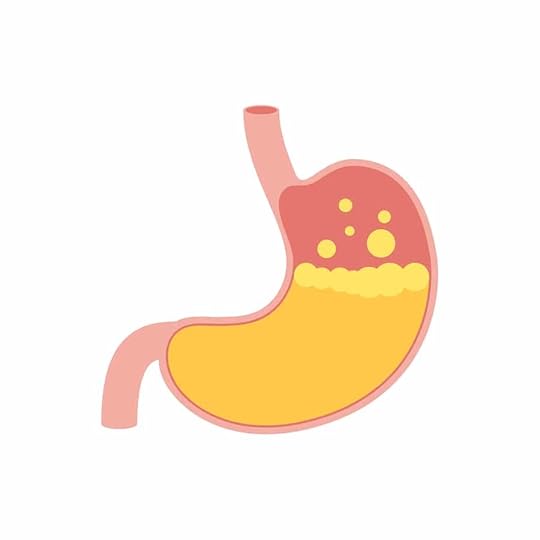
You’re probably asking, “Then why do acid-blockers work, or at least take the burn away?”.
The acid-blockers lower the acidity in the stomach, so when the food starts to come back up, it doesn’t burn. This doesn’t mean the problem is fixed. The acid-blocker is simply masking the symptoms of a bigger issue.
The way to cure heartburn naturally is to increase the amount stomach acid in the stomach. Kinda crazy, right?! But it’s true.
In the long-run, heartburn can create all sorts of health issues in the body, so it’s imperative that you find ways to cure your heartburn. Here are a list of problems chronic heartburn can cause:
1. Your body can’t utilize the nutrients in your food which can lead to nutrient deficiencies.
2. Overgrowth of harmful bacteria can occur which can lead to ulcers and cancer.
3. The proteins that weren’t broken down by the proper amount of stomach acid now irritate the villi and can lead to leaky gut. A leaky gut allows fats and proteins to pass through the gut directly into the bloodstream which overwhelms the immune system.
4. The undigested food heads to the large intestine and can degenerate and weaken the colon, disrupt the flora, and cause inflammation, IBS and colitis.
Enabling the body to use the nutrients in the food you eat is essential to a healthy body, so you can see why this is so important for your overall health!
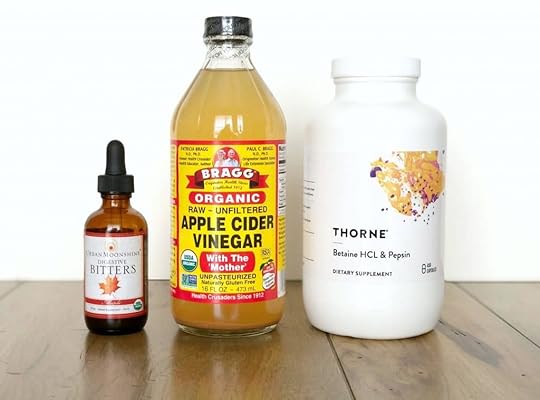
Here are 4 natural remedies for heartburn and acid reflux:
Note: I recommend trying these steps in this order. Sometimes it’s just a matter of eating slower, but sometimes you need to take a supplement to help increase production. Trying these different tips in order will help you know which one will work best for you.
Don’t eat when you’re stressed or on the go; and eat slowly. This is the most important piece of the puzzle. When you eat slowly and aren’t stressed, your body will be in the parasympathetic state, and the brain will tell the stomach to produce the correct amount of stomach acid. The parasympathetic state allows your body to release the correct amount of stomach acid, enzymes, etc. to digest your food.
Take 1 tablespoon of raw apple cider vinegar with a little bit of water before each meal. This will help stimulate stomach acid production.
Take 1 dropper full of digestive bitters before and after each meal. Bitters are very gentle and stimulate the stomach to produce the proper amount of stomach acid. If you’ve eaten your meal and you get heartburn, take a dropperful of bitters to reduce the heartburn.
If the three tips above don’t get rid of the heartburn, consider taking Thorne HCL with Pepsin at each meal (If you have a history of stomach ulcers, do not use HCL. Instead, try the steps above). Here’s how you figure out how many you need to take at each meal:
Take 1 HCL when you sit down to eat.
Take another 5 minutes later.
Continue taking another HCL every 5 minutes while eating until you get a warming in your stomach.
If you took 6 HCL and then got the warming in your stomach, then subtract one and now take 5 HCL at each meal.
Most people are deficient in stomach acid, so if you get to 6-8, don’t be surprised, but go ahead and stop there.
It’s not a good idea to be taking HCL for years and years because you don’t want your body to become dependent on it, so I recommend taking the steps above to train your body to eventually produce enough stomach acid.
In the future, you’ll want to wean yourself off the HCL, but taking this supplement for a while can initially help you digest your foods, reduce the heartburn and support the body while you’re learning to slow down and eat in a relaxed state.
Additional Tips:
If you tried one of the steps above and still got heartburn, then that simply means you need more stomach acid. Taking an additional tablespoon of apple cider vinegar, a dropperful of bitters or an additional HCL supplement can stop the heartburn. I’ve also found that eating a few tablespoons of raw sauerkraut can quickly reduce the heartburn.
So, remember, you need stomach acid to cure your heartburn! Eat slowly, in a relaxed state, take some of the steps I mentioned above, and I think you’ll start to see some great results!
The post Natural Remedies for Heartburn and Acid Reflux appeared first on Deliciously Organic.
September 4, 2018
Pizza Pockets (Grain-Free, Egg-Free)
Homemade pizza pockets are a fun make-ahead meal that the kids and adults alike will love!

These grain-free pizza pockets are layered with mozzarella, pepperoni, marinara sauce and baked until golden. The dough is very easy to work with, and you can add in any kind of fillings that you like.

This is a fun recipe to get the kids involved with. They can help cut, shape and fill the dough. Serve the pockets with a side of marinara and dip away!
Makes about eight 3-inch round pizza pockets
Grain-Free Pizza Pockets25 minPrep Time
15 minCook Time
40 minTotal Time
Save RecipePrint Recipe
My Recipes
My Lists
My Calendar
Ingredients
For the dough:2 cups shredded mozzarella cheese (or another hard cheese of your choice)1 cup arrowroot flour 1/4 cup plus 1 tablespoon coconut flour 1/2 teaspoon Celtic sea salt 1 large egg (or 1 gelatin egg for egg-free option)6 tablespoons waterFor the filling:1/2 cup pepperoni, chopped1/2 cup shredded mozzarella cheese (or another cheese of your choice)1/2 cup crushed tomatoes1/4 teaspoon dried Italian seasoningInstructions
Place the cheese, arrowroot, coconut flour and sea salt in the bowl of a food processor and pulse until combined. Add the egg and water and process until the dough comes together.In a small bowl, combine the pepperoni, mozzarella, tomatoes and Italian seasoning.Dust a clean space on the counter with arrowroot flour. Place the dough on top and using a rolling pin, roll the dough until it’s 1/4” thick. Using a round cookie cutter (I used the top of a large, 3-cup mason jar lid), cut circles out of the dough and place half of them on a cookie sheet lined with parchment paper. Place about 1 1/2 tablespoons of the pepperoni mixture into the center of each dough round. Fill a small bowl with water, dip your fingers in the water and then gently rub the water around the edges of the dough. Then, place a second dough round on top and gently press down on the sides to seal the edges. Repeat with remaining dough and filling ingredients.Using a fork, poke the top of the pizza pocket 3 times. Bake the pockets for 18-20 minutes until golden brown on the edges. Cool for 15 minutes. Serve alone or with marinara sauce .#search_tags {
margin-left: -20px;
margin-top: 25px;
text-align: left;
}
#search_tags .tags dt {
line-height: 23px;
font-size: 12px !important;
}
#search_tags .tags span {
background: #a1a1a1;
color: #fff;
height: 22px;
margin: 0 6px 0.375rem 0;
padding: 0 6px;
text-transform: uppercase;
display: inline-block;
}
#search_tags .tags {
display: -webkit-inline-box;
width: 100%;
}
#search_tags .tags .tag {
display: inline-block;
}
#search_tags .tags .highlighted {
background: #01a64f;
}
Tags
Allergy : soy free peanut free seafood free Gluten-Free 7.8.1.24602https://deliciouslyorganic.net/grain-free-pizza-pockets-recipe/Copyright 2016 Deliciously Organic
Photos by Becky Winkler
The post Pizza Pockets (Grain-Free, Egg-Free) appeared first on Deliciously Organic.
August 27, 2018
Easy Garlic Chicken Recipe (Grain-Free, Paleo)
This easy Garlic Chicken recipe has quickly become a new family favorite. It’s easy to prepare, and the fragrance of the garlic combined with the slightly sweet sauce is a winning combination!

You can serve the garlic chicken with a side of sautéed greens, Caesar salad, roasted carrots with herbed yogurt, or one of my favorites – sautéed zucchini with garlic and lemon.

When I made this for the family, the kids immediately asked when I was going to make it again. They liked it that much! Whip this up next time you’re making dinner for the family and I’m pretty sure everyone will be singing your praises!
Serves 4
Easy Garlic Chicken Recipe (Grain-Free, Paleo)10 minPrep Time
15 minCook Time
25 minTotal Time
Save RecipePrint Recipe
My Recipes
My Lists
My Calendar
Ingredients
4 tablespoons ghee , divided1 head garlic, each clove peeled and sliced into thin pieces Celtic sea salt and freshly ground black pepper4 boneless, skinless chicken breasts1 teaspoon maple syrupInstructions
Place 2 tablespoons of the ghee and the garlic slices in a large sauté pan over medium heat. Cook until garlic begins to soften, about 2-3 minutes. Using a slotted spoon, remove the garlic and set aside in a bowl.Season both sides of the chicken breasts with sea salt and pepper. Place the chicken in the pan with the hot ghee and cook until cooked through, about 5-6 minutes on each side (depending on the thickness of the chicken breasts). When the chicken is cooked through, add the remaining 2 tablespoons ghee, maple syrup and cooked garlic slices and gently stir to incorporate. Serve chicken breasts with the garlic sauce spooned over top.7.8.1.24601https://deliciouslyorganic.net/easy-garlic-chicken-recipe-grain-free-paleo/Copyright 2016 Deliciously Organic
Food Photography: Becky Winkler
The post Easy Garlic Chicken Recipe (Grain-Free, Paleo) appeared first on Deliciously Organic.
August 21, 2018
12 Healthy Ingredients to Add to a Smoothie
Smoothies are an easy way to get a lot of nutrients in a glass, and I’m always on the lookout for ways to add additional healthy ingredients to add to a smoothie. I like to go beyond the basics to really raise the nutrient value.
 Here are 12 healthy ingredients to add to a smoothie:
1. Instead of using juice, upgrade with raw milk, raw cream, cultured kefir, or cultured yogurt. These foods will add extra probiotics, vitamin A, vitamin D, CLA and iodine to your smoothie.
2. Add an organic egg yolk for extra vitamin A, D, choline, B6 and B12. You actually can’t taste it and it makes the smoothie extra creamy. I put them in my kids’ smoothies all the time!

3. A scoop or two of collagen peptides is a great way to add extra protein and this nutrient is also a powerhouse for the skin, hair and nails.
4. Add some leafy greens. It’s best to consume cooked greens (especially if you eat them daily) so cook the greens, drain them and then freeze them in an ice cube tray. You can do this with kale, spinach, mustard greens, and dandelion greens. Or, if you’d like a shortcut, check out Dr. Cowen’s greens powder. They are cooked beforehand to reduce the goitrogens and then dehydrated and crushed into a fine powder.
5. Adding a handful of other frozen veggies such as butternut squash, steamed cauliflower, or even frozen peas along with your frozen fruit is a great way to add nutrients.
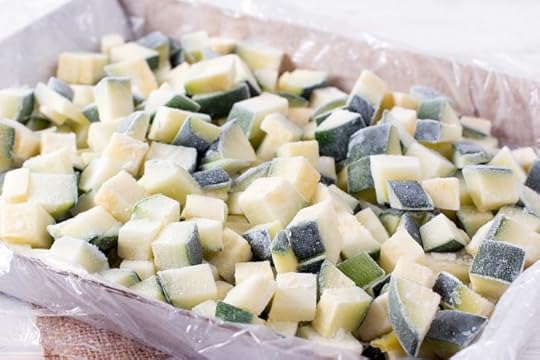
6. A spoonful of coconut oil is a great way to add some healthy saturated fat to make the smoothie more filling. Make sure and blend the smoothie really well, so you don’t have any clumps!
7. A handful of soaked nuts or seeds is a great way to add some extra minerals. It’s important to remember that chia and flaxseeds can interfere with estrogen production when consumed too often, so I only recommend using these kinds of seeds once a week.
8. A few slivers of frozen liver (hang with me!) are a fabulous way to add some extra Vitamin A, iron and B vitamins to your smoothie. Liver is one of the most nutrient-dense foods on the planet and the best part is, you actually can’t taste it! Here’s my favorite smoothie to add a bit of liver to.
9. Add a splash of vanilla or almond extract to a smoothie. Granted, it doesn’t add nutrients, but it does add tons of flavor! Just make sure it is pure extract and not imitation extract as the latter usually is made with corn syrup and artificial flavors and colors.
10. A sprinkle of bee pollen in the smoothie or on top is a nice way to add some additional B-complex and folate.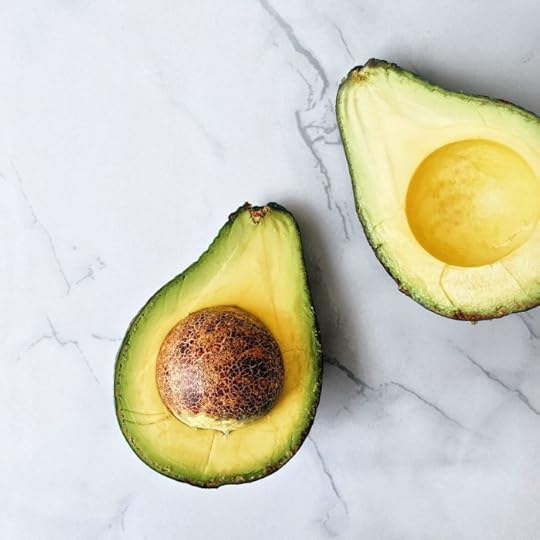
11. Half an avocado is a great way to add some extra vitamin C, healthy fats and B6. It also makes the smoothie nice and creamy.
12. Cacao Nibs are fun way to add some extra flavor, a bit of texture and some additional potassium and magnesium. I love putting a small handful on top of my smoothie!

What are your favorite healthy ingredients to add to a smoothie?
The post 12 Healthy Ingredients to Add to a Smoothie appeared first on Deliciously Organic.
August 15, 2018
Peach Cobbler (Grain-Free, Gluten-Free, Nut-Free, Egg-Free)
Peach cobbler is the essence of summer! Sweet juicy peaches topped with a fluffy, buttery, cake-like topping that’s just slightly crisp is one of the best ways I can think of to finish off a meal.

I know that peach season is very short, and finding organic peaches can sometimes be a challenge, so you can make this with either fresh or frozen (and thawed) peaches. I made the topping nut-free and if you’d like to make it egg-free, you can make a double batch of my gelatin egg recipe and add it when you add the eggs in this recipe.
Enjoy!

Serves 6-8
Peach Cobbler (Grain-Free, Egg-Free, Nut-Free, Gluten-Free)20 minPrep Time
50 minCook Time
1 hr, 10 Total Time
Save RecipePrint Recipe
My Recipes
My Lists
My Calendar
Ingredients
For the peach filling:3 ten-ounce bags of sliced frozen peaches, thawed (or about 10 cups of fresh peaches, peeled and cut into wedges)1/3 cup maple sugar or organic cane sugar2 tablespoons arrowroot flour 1 tablespoon fresh lemon juice1/3 cup waterFor the topping:1/3 cup coconut flour 1/3 cup arrowroot flour 1/3 cup tapioca flour 1/4 teaspoon ground cinnamon1/2 cup plus 1 tablespoon maple sugar or organic cane sugar, divided1 teaspoon baking powder12 tablespoons cold unsalted butter, cut into tablespoons2 large eggs, beaten (or make a double-batch of my gelatin egg recipe . I tested the recipe with the gelatin eggs and it works beautifully!)1 teaspoon vanilla extractInstructions
Preheat the oven to 350ºF and adjust the rack to the middle position. Place the peaches in a large mixing bowl. Remove about one quarter of the peaches and chop them.Combine the chopped peaches, maple sugar, arrowroot flour, lemon juice and water in a medium saucepan and heat over medium, stirring constantly until the liquid begins to thicken. Remove from the heat and pour the hot peach mixture over the remaining cold peaches and stir to combine. Pour the peach mixture into an 8 x 11 x 2-inch baking dish and set aside.Place the coconut flour, arrowroot flour, tapioca flour, cinnamon, 1/2 cup sugar, and baking powder into the bowl of a food processor and pulse to combine. Add the butter and pulse 15-20 times, until it is the size of peas. Add the beaten eggs and vanilla and pulse until the mixture is evenly moistened. Spoon dollops of the dough onto the peaches and sprinkle with the remaining 1 tablespoon of sugar.Bake for 45-50 minutes, until the topping is just turning golden brown. Cool for 20 minutes and then serve.#search_tags {
margin-left: -20px;
margin-top: 25px;
text-align: left;
}
#search_tags .tags dt {
line-height: 23px;
font-size: 12px !important;
}
#search_tags .tags span {
background: #a1a1a1;
color: #fff;
height: 22px;
margin: 0 6px 0.375rem 0;
padding: 0 6px;
text-transform: uppercase;
display: inline-block;
}
#search_tags .tags {
display: -webkit-inline-box;
width: 100%;
}
#search_tags .tags .tag {
display: inline-block;
}
#search_tags .tags .highlighted {
background: #01a64f;
}
Tags
Allergy : soy free peanut free treenut free Egg-Free Gluten-Free Wheat-Free 7.8.1.24600https://deliciouslyorganic.net/peach-cobbler-grain-free-gluten-free/Copyright 2016 Deliciously Organic
Photo credit: Becky Winkler
The post Peach Cobbler (Grain-Free, Gluten-Free, Nut-Free, Egg-Free) appeared first on Deliciously Organic.