Carrie Vitt's Blog, page 26
December 10, 2018
Graves’ Disease: The Cause, Symptoms, Labs and First Steps to Take
Graves’ disease is a form of thyroid disease that affects 1 in every 200 people in the United States. The disease often involves an overproduction of thyroid hormones, which often leads to hyperthyroidism.
Hypothyroidism and Hashimoto’s seem to get all the attention, but I know many of you are suffering from Graves’ disease, so hopefully this article can help clear the confusion and give you some concrete steps to take.
So let’s dive in…

What is Graves’ disease?
Graves’ disease is an autoimmune condition in which the antibody TSI (thyroid stimulating immunoglobulin) is elevated, and often FT4 and FT3 levels are also elevated.
There is often an excess amount of thyroid hormones circulating in the body, which leads to hyperthyroidism.
The TSI antibodies can be present even when TSH, T4, T3, FT4 and FT3 levels are normal.
It’s important to note that many who have Graves’ disease also have Hashimoto’s Disease.
What are TSI antibodies, and what is a “normal” level?
The TSI antibody (sometimes referred to as TRAb or TSHR) is an antibody that mimics TSH by telling the thyroid to make excess FT4. This also often creates an excess of FT3 and a decrease in TSH.
In some cases, the TSI antibody blocks thyroid hormone production instead.
A normal TSI level is
Positive TSI results are strongly indicative of Graves’ disease, but do not always correlate with the presence and severity of hyperthyroidism.
What is TSH, and what is a “normal” level?
TSH is a hormone that the pituitary sends out to tell the thyroid to tell how much or how little thyroid hormones to produce.
Please note: TSH levels tell you what your pituitary is up to, but it’s not telling you what the thyroid is doing.
When it comes to Graves’ disease, TSH levels are often very low because the TSI antibodies are mimicking TSH, telling the body that it has enough TSH when it really doesn’t.
Everyone is biochemically individual, but in our practice we’ve found that a TSH level between 0.7-2.0 is the range where people feel healthy and vibrant.
What is FT4 (free T4), and what is a “normal” level?
FT4 is a hormone produced by the thyroid.
You want FT4 to be in the middle of the lab range. So if the range is 1.0-3.0, you want your FT4 to be 2.0 or close to it. Each lab has a different range, so you have to look at what the specific range is to know what number to look for.
What is FT3 (free T3), and what is a “normal” level?
FT3 is a hormone that comes from FT4. The thyroid makes FT4 and sends most of it to the liver to be converted to FT3. FT3 is the thyroid hormone that goes to every cell of the body.
You want FT3 to be in the middle of the lab range. So if the range is 1.0-3.0, you want your FT4 to be 2.0 or close to it. Each lab has a different range, so you have to look at what the specific range is to know what number to look for.
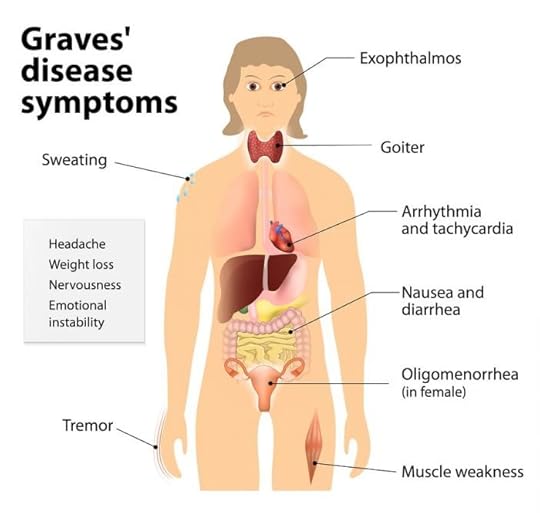
What are the symptoms of Graves’ disease?
Here is a list of some of the most common symptoms:
Hashimoto’s
Hyperthyroidism
Anxiety
A fine tremor in the hands or fingers
Panic Attacks
Insomnia
Fatigue
Heat sensitivity
Rapid or irregular heartbeat
Sensitivity to heat
Bulging eyes
Sweating
Weight loss
Change in menstrual cycles
Muscle weakness
Diarrhea and frequent bowel movements
Goiter
Why is my TSH too low?
When it comes to Graves’ disease, low TSH can come from two different causes.
The pituitary, hypothalamus, and adrenals (also called the HPA axis) are all part of the endocrine system and communicate with one another throughout the day. When the body perceives stress, the hypothalamus can signal to the pituitary to make less TSH and in turn the thyroid will produce more thyroid hormones (FT4).
The TSI antibody mimics TSH, and sends the signal to the thyroid to make excess FT4. This causes the pituitary to send out less TSH.
Keep in mind TSH is a pituitary hormone, so it’s not actually telling you what is going on with the thyroid. FT4 is the level you want to check to see how much thyroid hormone is being produced.
Why is my FT4 high?
Most often, FT4 is high because there is a severe form of either emotional or environmental stress (from things such as synthetic pesticides, toxic metals, and possibly glyphosate).
FT4 can also be elevated because TSI is mimicking TSH and telling the thyroid to make excess FT4.
Why is my FT3 too high?
Most often, FT3 is high because the thyroid is making too much T4 that is being converted to FT3. However, this can also happen when there is toxic overload in the body.

What are some steps you can take to reverse Graves’ disease?
1. Ask your practitioner for a full thyroid panel. Getting a look at what’s actually going on with your thyroid will give you and your practitioner more insight as to what steps to take next.
Here’s the list of labs to ask for (if your doctor won’t order labs for you, you can order them here):
TSH
TPO
TAA
TSI
Free T3 (FT3)
Free T4 (FT4)
Reverse T3
T3
T4
T3 uptake
Total T3
2. Improve your digestion. Graves’ disease is an autoimmune disease, and digestive issues such as low stomach acid, indigestion, chronic heartburn, leaky gut, bacterial infections, etc. can cause this kind of disease. So, it’s imperative that you take steps to heal any gut issues that may be present.
The first way to do this is by eating in a relaxed state, and making sure your body is producing enough stomach acid so it can properly break down and utilize the nutrients in your food.
Stomach acid (also known as hydrochloric acid or HCL) is a necessary part of the digestive process. HCL is the first line of defense against pathogens, bacteria, parasites, etc. It also helps us digest our food properly.
When the body is in a hyperthyroid state, like with Graves’ disease, it’s often necessary to use supplementation while you’re training the body to make enough stomach acid. Here’s an article I wrote that explains the steps to take.
3. Support your adrenals. Why? Because anyone dealing with thyroid disease is also dealing with some kind of adrenal issue. An adrenal imbalance will cause TSH levels to rise or fall out of the normal range, and it also interferes with proper thyroid hormone production.
Read this article to learn about 20 steps you can take to balance your adrenals. I can’t tell you how many people have taken the steps I list and come back a month or two later telling me how much better they feel!
4. Reduce your sugar intake. Sugar and stress do the same thing to the body (minus the calories), so to help balance your TSH and reduce antibodies, you need to watch your sugar intake. If you’ve got massive sugar cravings right now (I’ve been there before!), make this recipe for buttermints and follow the directions listed.

5. Reduce your chemical load and detox the liver. Most often, a root cause of Graves’ disease is from an overabundance of synthetic chemicals in the body.
First, I recommend switching your skincare, makeup, household cleaning products, etc. to more clean versions. Here’s where you can find a list of my favorites.
Second, it’s important to take steps to gently detox the liver, as this can help calm the autoimmune attack on the body. Detox is an ongoing event, not something you can do in a matter of a few days, so make sure to read this article and see what steps you can integrate into your daily routine.
6. Reduce your stress. Emotional stress is often another root cause of Graves’, so it’s important to look with clear eyes at the stress in your life and take steps to reduce it.
When it comes to emotional stress, I know it can be painful to deal with whatever you’re facing, but it’s a key part of supporting your immune system. Finding a counselor or therapist can be incredibly helpful.

7. Take steps to move away from processed foods, and eat a nutrient-dense grain-free diet. I’ve got hundreds of healthy grain-free recipes here on my site, and another 125 in my cookbook. Eating healthy foods will reduce the strain on your body, reduce inflammation, support the digestive system, and help bring things back into balance.
8. Remember that your practitioner is working for you, not the other way around. It’s ok to ask them questions about the root cause of what’s going on. If they don’t treat you respectfully when you ask them questions about what’s going on with your body, then it’s ok to find another practitioner to work with.
It took me 9 months of going doctor-to-doctor before I found someone who would listen to me and run tests. Being persistent to find the right practitioner to work with pays off!
9. Make sleep a priority. The body cannot heal or properly detox without adequate sleep. If insomnia is an issue right now, read this article and see which steps you can take to improve your quality of sleep.
If you’ve found specific steps that have helped you reduce your symptoms, antibodies, or balance your thyroid hormones please share in the comments below. It’s so helpful when we can learn from one another!
The post Graves’ Disease: The Cause, Symptoms, Labs and First Steps to Take appeared first on Deliciously Organic.


December 5, 2018
Cast Iron Roast Chicken with Potatoes (Grain-Free)
There’s nothing more simple than a Cast Iron Roast Chicken! The meal is good for any night of the week and is very easy to make.

Chicken and potatoes are a huge favorite, so I often make this with potatoes and then serve the dish with a salad or other vegetable on the side. If you’d like, you can substitute the potatoes for other vegetables, such as onions, root vegetables, broccoli, etc.
I recommend using a saturated fat that can withstand higher temperatures, such as ghee, lard, tallow, or duck fat. While fats such as butter and avocado oil are popular for cooking, I don’t recommend using them at high heats because they can oxidize and create free radicals that are harmful for the cells of the body.
And, if you’d like to take the flavors up a notch, you can swap out the sea salt and pepper for Herbamare or an organic cajun seasoning blend. Enjoy!
Cast Iron Roast Chicken with Potatoes (Grain-Free)
 Save Recipe
Print Recipe
My Recipes
My Lists
My Calendar
Ingredients
1 whole organic chicken2 tablespoons ghee or duck fat , melted6 medium Yukon potatoes, sliced thinCeltic sea salt and freshly ground black pepperInstructions
Preheat the oven to 425ºF and adjust the rack to the middle position. Place the chicken in a 12-inch cast iron skillet . Using a pastry brush, brush about 1 tablespoon of the ghee over the chicken.Place the potatoes in a large bowl and toss with the remaining ghee and then place the potatoes in the skillet around the chicken. Season everything with sea salt and freshly ground black pepper.Roast for 45 minutes, until skin on chicken is golden brown and when a meat thermometer is inserted into the chicken it registers 165ºF.Carefully, transfer the chicken to a cutting board, and then put the skillet with the potatoes back in the oven. Tent the chicken with foil and let it rest for 20 minutes, while the potatoes continue to roast. After 20 minutes, remove the potatoes, carve the chicken and serve.7.8.1.24613https://deliciouslyorganic.net/cast-iron-roast-chicken-recipe-grain-free/Copyright 2016 Deliciously Organic
Photo Credit: Becky Winkler
The post Cast Iron Roast Chicken with Potatoes (Grain-Free) appeared first on Deliciously Organic.
November 27, 2018
Bacon, Potato and Broccoli Frittata (Grain-Free)
A frittata is one of my go-to meals for breakfast, lunch or dinner. It is incredibly versatile because you can add just about whatever vegetables, meats or cheeses you prefer or have on hand.

In this frittata, I added crispy pastured bacon, yellow onion, shredded potato (it cooks much faster than chopped potato) and broccoli. I like to top the dish off with cheese before putting it in the oven, but you can omit it if you need to avoid dairy.
Whenever I talk about using bacon in my recipes, I’m always asked where I find pastured bacon. I purchase my bacon from a local farmer, and I always make sure it’s free from any synthetic ingredients such as sodium nitrate (which can cause migraines and other intestinal distress).
If you’d like to find some pastured bacon in your area, I recommend checking out the site Eat Wild. This site is really helpful because you can search by zip code to find farms near you.

Here are some additional healthy breakfast recipes for you!
Apple, Bacon and Sausage Skillet
Eggs Florentine
Strawberry Protein Shake (I have this multiple times each week for breakfast!)
Lemon Ricotta Pancakes
Sausage Hash with Carrots
Carrie Vitt
Serves 8
Bacon, Potato and Broccoli Frittata (Grain-Free)10 minPrep Time
45 minCook Time
55 minTotal Time
Save RecipePrint Recipe
My Recipes
My Lists
My Calendar
Ingredients
6 slices bacon, chopped (pastured preferred)1 yellow onion, chopped6 medium red potatoes, shredded12 large eggs1 tablespoon heavy cream (or coconut milk)1/2 teaspoon Celtic sea salt1/8 teaspoon freshly ground black pepper1 bunch baby broccoli1 cup shredded cheddar cheese (omit for dairy-free)Instructions
Preheat the oven to 400ºF and adjust the rack to the middle position.Place the bacon in a large cast iron skillet and cook over medium until just crispy, about 6-8 minutes. Add the onion and cook until the onion begins to soften, about 5 minutes. Add the grated potatoes and cook, stirring every minute or so, until soft and just starting to turn golden brown, about 12-15 minutes.Beat the eggs, cream, salt and pepper in a medium bowl. Pour egg mixture over the potato mixture and gently stir to combine the eggs with the potato mixture. Place the baby broccoli on top and using a spoon, gently push it down into the egg mixture. Sprinkle the cheese overtop and then place in the oven. Bake for 15-20 minutes, or until cheese is just turning golden brown. Slice into wedges and serve.7.8.1.24612https://deliciouslyorganic.net/bacon-potato-and-broccoli-frittata/Copyright 2016 Deliciously Organic
The post Bacon, Potato and Broccoli Frittata (Grain-Free) appeared first on Deliciously Organic.
November 13, 2018
Hashimoto’s Disease – The Cause, Symptoms, Labs and First Steps to Take
Hashimoto’s Disease is a form on thyroid disease that’s rising at an alarming rate, especially in the United States. An estimated 14 million people in the US alone have Hashimoto’s, making it one of the most common forms of thyroid disease.
Today, we’re taking a look at Hashimoto’s from a holistic perspective. So let’s dive in…

What is Hashimoto’s Disease?
Hashimoto’s is an autoimmune condition in which your immune system attacks your thyroid tissues.
Hashimoto’s is most often diagnosed when TPO (thyroid peroxidase) antibodies and/or TgAb (thyroglobulin antibodies) are elevated.
These antibodies can be present even when TSH, T4, T3, FT4 and FT3 levels are normal.
What are TPO antibodies (anti-TPO), and what is a “normal” level?
TPO (thyroid peroxidase) is the key enzyme that helps your thyroid make thyroid hormones. Anti-TPO is an antibody that attacks TPO. This is the lab that is most often used to diagnose Hashimoto’s.
A normal anti-TPO level is usually below 30.
Keep in mind that it’s normal to have a small amount of TPO antibodies in the blood.
What is TgAb and what is a “normal” level?
TgAb (thyroglobulin antibodies), sometimes referred to as TAA (thyroid antithyroglobulin antibody) are antibodies that attack thyroglobulin. Thyroglobulin is a protein produced and used by the thyroid to make T3 and T4.
A normal TgAb level is 0.
What is TSH and what is a “normal” level?
TSH is a hormone that the pituitary sends out to tell the thyroid how much or how little thyroid hormones to produce.
Please note: TSH levels tell you what your pituitary is up to, but it’s not telling you what the thyroid is doing.
When it comes to Hashimoto’s, TSH levels can change a lot, swinging back and forth between hypothyroidism and hyperthyroidism.
Everyone is biochemically individual, but in our practice we’ve found that a TSH level between 0.7-2.0 is the range where people feel healthy and vibrant.
What is free T4 and what is a “normal” level?
Free T4 is a hormone produced by the thyroid.
You want free T4 to be in the middle of the lab range. So if the range is 1.0-3.0, you want your free T4 to be 2 or close to it. Each lab has a different range, so you have to look at what the specific range is to know what number to look for.
What is free T3 and what is a “normal” level?
Free T3 is a hormone that mostly comes from T4. The thyroid makes T4 and sends most of it to the liver to be converted to free T3.
You want free T3 to be in the middle of the lab range. So if the range is 1.0-3.0, you want your free T4 to be 2 or close to it. Each lab has a different range, so you have to look at what the specific range is to know what number to look for.
What are the symptoms of Hashimoto’s Disease?
There are hundreds of symptoms, but here is a list of some of the most common symptoms:
Hypothyroidism
Hyperthyroidism
Depression
Exhaustion
Brain fog
Unexplained or excessive weight gain or loss
Loss of outer third of eyebrows
Dry or coarse hair
Nervousness
Irritability
Increased sweating
Heart racing
Hand tremors
Muscle cramps
Anxiety
Difficulty sleeping
Reduced libido
Hives
Rashes
Anemia
High cholesterol
Constipation
Thinning of your skin
Fine, brittle hair or hair loss
Weakness in your muscles—especially in the upper arms and thighs
More frequent bowel movements
Low Vitamin D
Low B12 or ferritin
Excessive appetite or loss of appetite
Irregular menstrual cycles
Water retention
Lots of energy (often too much)
Why is my TSH too high or too low?
The pituitary, hypothalamus, and adrenals (also called the HPA axis) are all part of the endocrine system and communicate with one another throughout the day. When the body perceives stress, the hypothalamus tells the pituitary to make more or less TSH so that the thyroid will produce more or less thyroid hormones to keep the body functioning.
So, a low or high TSH level isn’t actually a thyroid problem. Instead, it’s often an imbalance in the HPA axis. Your practitioner’s job is now to figure out why there is an imbalance.
Why is my free T4 high or low?
Most often, free T4 is high because there is a severe form of either emotional or environmental stress (from things such as synthetic pesticides, toxic metals, and possibly glyphosate).
Most often, free T4 is low because the thyroid doesn’t have the resources to produce the proper amount of T4. The thyroid needs iodine and tyrosine to produce thyroid hormones. Increasing the consumption of iodine-rich foods, reducing exposure to chlorine, fluoride and bromine (this is incredibly important!), and taking an iodine supplement can often help improve this imbalance.
If you’re concerned about taking iodine when you have thyroid disease, read this post and it should answer your questions.
Remember to talk to a nutritionist or health practitioner who’s had lengthy training in nutrition to help you figure out how much iodine your body needs. Self-diagnosing often doesn’t go well, so it’s worth paying a practitioner for their expertise.
Why is my free T3 too high or too low?
Most often, free T3 is high because the thyroid is making too much T4 that is being converted to free T3.
Most often, free T3 is low because either there isn’t enough T4 being produced by the thyroid to be converted into free T3, or there is liver congestion.
Let me explain. . .
Your thyroid produces T4 and sends most of it to the liver to be converted into the active form, free T3. If you have enough free T4, but not enough free T3, then you don’t necessarily have a thyroid problem, instead, you may need to support your liver so it can efficiently convert T4 to T3 for you.
Liver congestion is pretty common nowadays, and can not only cause low T3 in the body, it also can cause estrogen dominance, severe headaches, blood sugar imbalance, chemical sensitivities, skin issues, and dark circles under the eyes, among other things. Here is an article I wrote with specific steps you can take to improve this issue.
What are the root causes of Hashimoto’s disease?
There are many different root causes for thyroid autoimmune disease, but here is the basic list:
Stress
Diet
Synthetic chemicals or toxins
Food additives
Heavy metals
Infections
Digestive Issues (intestinal hyperpermeability)
What steps can you take to improve your symptoms if you’ve been diagnosed with Hashimoto’s Disease?
1. Ask your practitioner for a full thyroid panel. Getting a look at what’s actually going on with your thyroid will give you and your practitioner more insight as to what steps to take next.
Here’s the list of labs to ask for (if your doctor won’t order labs for you, you can order them here):
TSH
TPO
TAA
Free T3
Free T4
Reverse T3
T3
T4
T3 uptake
Total T3
I also recommend getting a CBC, CMP with phosphorus, and lipid panel.
2. Take steps to improve your digestion. The first way to do this is by eating in a relaxed state and making sure your body is producing enough stomach acid so it can properly break down and utilize the nutrients in your food.
Stomach acid (also known as Hydrochloric acid or HCL) is a necessary part of the digestive process. The acid is our first line of defense against pathogens, bacteria, parasites, etc. It also helps us digest our food properly.
This may sound like a trivial step, but I’ve never seen a client at our practice with Hashimoto’s disease that wasn’t also dealing with low stomach acid. Here’s an article I wrote that explains the steps to take.
3. Take steps to support your adrenals. Why? Because anyone dealing with thyroid disease is also dealing with some kind of adrenal issue. I can’t tell you how many people have taken the steps I list in this article and come back a month or two later telling me how much better they already feel!
4. Reduce your sugar intake. Sugar and stress basically do the same thing in the body (minus the calories), so to help balance your TSH and reduce antibodies, you need to watch your sugar intake. If you’ve got massive sugar cravings right now (I’ve been there before!), make this recipe for buttermints and follow the directions listed.
5. Use castor oil packs to gently detoxify the liver and thyroid. Here’s an article I wrote that explains why they are so helpful, lists the supplies you need, and explains exactly how to do one.
6. Remember that your practitioner is working for you, not the other way around. It’s ok to ask them questions about the root cause of what’s going on. If they don’t treat you respectfully when you ask them questions about what’s going on with your body, then it’s ok to find another practitioner to work with. It took me 9 months of going doctor-to-doctor before I found someone who would listen to me and run tests. Being persistent to find the right practitioner to work with pays off!
7. Start moving away from processed foods and eat real, nutrient-dense foods. I’ve got hundreds healthy recipes here on my site and another 125 in my cookbook, The Grain-Free Family Table. Eating healthy foods will reduce the strain on your body and help bring things back into balance.
One last note – Most people have various root causes, and it can take a while to figure out exactly what they are. This is why I always recommend that my clients first take steps to improve their stress, digestion, liver drainage, and diet. It’s pretty incredible how many symptoms can improve by working on these four main areas of health. Sometimes, that’s all that’s needed to reduce symptoms and see labs improve, but then there are other times when more testing and additional steps need to be taken. It’s all about baby steps!
The post Hashimoto’s Disease – The Cause, Symptoms, Labs and First Steps to Take appeared first on Deliciously Organic.
November 6, 2018
Duchess Potatoes Recipe
Thanksgiving is just two weeks away, so now’s the time to start planning your menu! Duchess Potatoes are definitely a special occasion side dish, and one your family will love.

The potatoes are boiled and then mixed with cream, egg yolks, sour cream, butter and sea salt to create a luxurious, velvety texture.
And, if you’re looking for additional Thanksgiving recipes, I’ve got you covered!

Check out these reader favorites (all grain-free and made with nutrient-dense ingredients):
Paleo Sweet Potato Casserole
Green Bean Casserole
Grain-Free Cornbread (tastes just like the real thing!)
Pecan Pie
Pumpkin Pie
Creamed Kale with Shallots
Grain-Free Stuffing (one of the most popular recipes on the blog!)
Chocolate Pecan Pie
Simple Gravy
Carrot Souffle (a family favorite!)
Pumpkin Roll Cake
Brussels Sprouts Gratin
Cranberry Kombucha “Jello” (the kids will love this one)
Turkey Roulade
Cornbread and Sausage Stuffing
Roasted Carrots with Parsley-Yogurt Sauce
Apple Pie
Serves 10-12
Dutchess Potatoes20 minPrep Time
40 minCook Time
1 hrTotal Time
Save RecipePrint Recipe
My Recipes
My Lists
My Calendar
Ingredients
4 pounds Yukon Gold potatoes, cut into 2” pieces5 large egg yolks1/2 teaspoon powdered garlic1 cup heavy cream1/2 cup sour cream8 tablespoons unsalted butter1 teaspoon Celtic sea saltInstructions
Place the potatoes in a large pot and cover with water. Bring the potatoes to a boil and cook until tender, about 20 minutes. Drain.Preheat the oven to 425ºF and adjust the rack to the middle position. Whisk together the yolks, garlic, heavy cream, sour cream, butter and sea salt in a large bowl. Pass the potatoes through a ricer or food mill directly into the egg mixture. Gently stir until combined (don’t over mix). Pour the potatoes into a 3-quart baking dish and decoratively shingle or swirl surface. Bake 30-40 minutes until golden brown on top and slightly puffed. Serve.7.8.1.24609https://deliciouslyorganic.net/duchess-potatoes-recipe/Copyright 2016 Deliciously Organic
Dutchess Potato photo credit: Becky Winkler
The post Duchess Potatoes Recipe appeared first on Deliciously Organic.
October 30, 2018
Pound Cake Recipe (Gluten-Free, Grain-Free)
A classic pound cake is a staple recipe and I’m excited today to bring you a grain-free pound cake recipe that tastes every bit as good as the original!

I’ve been doing some thinking about what kinds of sugars to use in my baking. I’ve been using coconut sugar as my go-to for many years and I like that it contains extra minerals and doesn’t have a very high glycemic index.
But coconut sugar isn’t as sweet as some other sweeteners, so you need to use a bit more coconut sugar to create the same sweetness when you compare it to a sugar like organic cane sugar.

I crunched some numbers and realized there’s not much of a difference in the amount of fructose when comparing organic cane sugar and coconut sugar.
Coconut sugar is 70-79% sucrose. Sucrose is made up of half fructose. Coconut sugar is 38-48.5% fructose which is just about the same as cane sugar.
When you take into account that cane sugar and coconut sugar contain about the same amount of fructose, and you need to use a bit more coconut sugar to get the same level of sweetness as cane sugar, there’s not much of an advantage to reaching for the coconut sugar.
So, in my opinion, if I’m going to bake for a special occasion, and the recipe doesn’t require an obscene amount of sweetener, there’s not much harm in reaching for some organic cane sugar.

And, make sure to always get organic cane sugar. Regular conventional sugar comes from GMO sugar beets. Reducing our intake of GMOs and glyphosate is very important for good health.
This pound cake is a fun dessert to make during the fast-approaching holiday season. You can serve it alone, or with a dollop of whipped cream and berries.
Carrie Vitt
Pound Cake Recipe (Gluten-Free, Grain-Free)
Save Recipe
Print Recipe
My Recipes
My Lists
My Calendar
Ingredients
16 tablespoons unsalted butter, room temperature1/2 cup organic cane sugar 4 large eggs, room temperature1 cup almond flour 1/2 cup arrowroot flour 1/2 cup coconut flour 1 1/2 teaspoons baking powder1/2 teaspoon Celtic sea salt1/2 cup whole milk1 teaspoon vanilla extract 1/2 almond extractInstructions
Preheat the oven to 350ºF and adjust the rack to the middle position. Place the butter and sugar in the bowl of a standing mixer, and beat for 5 minutes on medium-high until light and fluffy. Scrape the sides of the bowl and add the eggs one at a time with the mixer on low.In a separate bowl, whisk together the almond flour, arrowroot, coconut flour, baking powder and sea salt. In a separate measuring cup, combine the whole milk and extracts.With the mixer on low, add 1/3 of the flour mixture then 1/3 of the milk mixture. Continue to alternate between dry and wet ingredients until all ingredients have been added and combined.Pour the batter into a buttered 1 1/2 quart loaf pan. Bake for 60 minutes, or until golden brown. Cool for 10 minutes, and then invert the cake out onto a serving plate. Cool completely. Serve.Notes
I only test the recipes on my site with the listed ingredients and measurements. If you would like to try a substitution, you are welcome to share what you used and how it turned out in the comments below. Thanks!
7.8.1.24608https://deliciouslyorganic.net/pound-cake-recipe-gluten-grain-free-recipe/Copyright 2016 Deliciously Organic
Photography credit: Becky Winkler
The post Pound Cake Recipe (Gluten-Free, Grain-Free) appeared first on Deliciously Organic.
October 23, 2018
Hyperthyroidism – The Cause, Symptoms, Labs and First Steps to Take
An estimated 30 million Americans have some form of thyroid disease, and up to 60% of those with thyroid disease are unaware of their condition. Hyperthyroidism affects 2-5% of all women mainly between 20 and 40 years old.
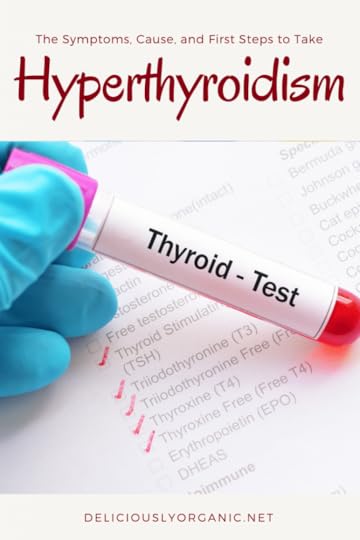
Today we’re going to cover the cause, symptoms, labs and first steps to take from a holistic perspective.
So let’s dive in…
What is hyperthyroidism?
Hyperthyroidism is most often diagnosed when TSH (thyroid stimulating hormone) levels are low and free T4 and free T3 levels are high. Basically, the thyroid is overproducing thyroid hormones.
What is TSH and what is a “normal” level?
TSH is a hormone that the pituitary sends out to tell the thyroid how much or how little thyroid hormones to produce.
Please note: TSH levels tell you what your pituitary is up to, but it’s not telling you what the thyroid is doing.
Everyone is biochemically individual, but in our practice we’ve found that a TSH level between 0.7-2.0 is the range where people feel healthy and vibrant.
What is free T4 and what is a “normal” level?
Free T4 is a hormone produced by the thyroid.
You want free T4 to be in the middle of the lab range. So if the range is 1.0-3.0, you want your free T4 to be 2 or close to it. Each lab has a different range, so you have to look at what the specific range is to know what number to look for.
What is free T3 and what is a “normal” level?
Free T3 is a hormone that mostly comes from T4. The thyroid makes T4 and sends most of it to the liver to be converted to free T3.
You want free T3 to be in the middle of the lab range. So if the range is 1.0-3.0, you want your free T4 to be 2 or close to it. Each lab has a different range, so you have to look at what the specific range is to know what number to look for.
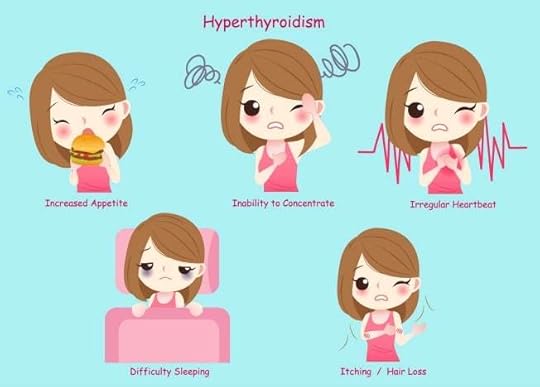
What are the symptoms of hyperthyroidism?
Here’s a list of some of the most common symptoms:
Nervousness
Irritability
Increased sweating
Heart racing
Hand tremors
Anxiety
Difficulty sleeping
Thinning of your skin
Fine brittle hair
Weakness in your muscles—especially in the upper arms and thighs.
More frequent bowel movements
Weight loss
Excessive appetite
Irregular Menstrual cycles
Lots of energy (often too much)
Lack of energy (as the body breaks down)
Bulging Eyes
Goiter
Graves Disease
Why is my TSH low?
The pituitary, hypothalamus and adrenals (also called the HPA axis) are all part of the endocrine system and communicate with one another throughout the day. When the body perceives stress (for those with hyperthyroidism, this is usually in the form of emotional or environmental stress), the hypothalamus tells the pituitary to crank out less TSH so the thyroid will produce more hormones to keep the body functioning.
So, a low TSH level isn’t actually a thyroid problem. Instead, it’s often an imbalance in the HPA axis. Your practitioner’s job is to now figure out why there is an imbalance.
Why is my free T4 high?
Most often, free T4 is high because there is a severe form of emotional or environmental stress (from things such as synthetic pesticides, toxic heavy metals, and possibly glyphosate).
Why is my free T3 high?
Most often, free T3 is high because the thyroid is making too much T4 that is being converted to free T3.
What do you need to do if you’ve been diagnosed with hyperthyroidism?
1. Ask your practitioner for a full thyroid panel. Remember, TSH tells you what’s going on with the pituitary, not your thyroid. So, getting a look at what’s actually going on with your thyroid will give you and your practitioner more insight as to what steps to take next.
Here’s the list of labs to ask for (if your doctor won’t run labs for you, you can order them here):
TSH
TPO
TAA
Free T3
Free T4
Reverse T3
T3
T4
Total T3
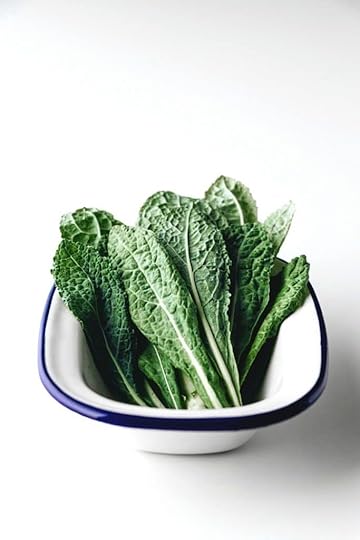
2. If your free T4 levels are high, then I recommend increasing your consumption of raw cruciferous and goitrogenic vegetables such as broccoli, kale, leafy greens, Brussels sprouts, cauliflower, etc. These raw vegetables can help inhibit the uptake of iodine into the thyroid which can help lower free T4 levels.
3. Take steps to support your adrenals. (This is one of the most important things you can do!) Why? Because anyone with a low TSH is also dealing with some kind of adrenal issue. I can’t tell you how many people have taken the steps I list and come back a month or two later telling me how much better they are already feeling!
4. Reduce your sugar intake. Sugar and stress do the same thing in the body (minus the calories), so to help balance your TSH, you need to watch your sugar intake. If you’ve got massive sugar cravings right now (I’ve been there before!), make this recipe for buttermints and follow the directions listed.
5. Remember that your practitioner is working for you, not the other way around. It’s ok to ask them questions about the root cause of what’s going on. If they don’t treat you respectfully when you ask them questions about what’s going on with your body, then it’s ok to find another practitioner to work with. It took me 9 months of going doctor-to-doctor before I found someone who would listen to me and run tests. Being persistent to find the right practitioner to work with pays off!
If you’re looking for a practitioner to work with, give our office, Biodynamic Wellness, a call to book a consult. We work with clients long-distance.
6. Start moving away from processed foods and eat real, nutrient-dense foods. I’ve got over 500 recipes here on my site and another 125 in my cookbook. Eating healthy foods will reduce the strain on your body and help bring things back into balance.
The post Hyperthyroidism – The Cause, Symptoms, Labs and First Steps to Take appeared first on Deliciously Organic.
October 16, 2018
White Bean and Ham Soup Recipe
Fall is here, which means it’s time for nourishing soups! This white bean soup with ham is warm and comforting, and best of all, it’s completely prepared in a slow cooker.
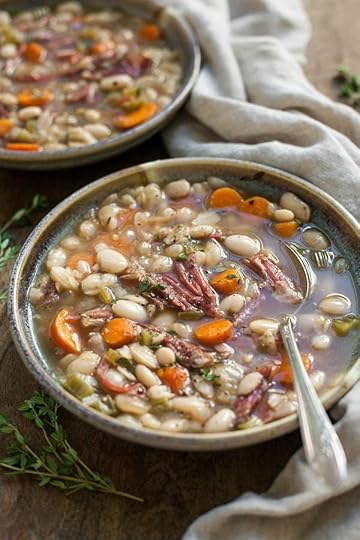
I’m often asked if legumes are “safe” to eat when you have thyroid disease. The short answer is “yes.” The key is to soak the beans overnight in water and a pinch of baking soda to reduce the anti-nutrients before cooking.
Most people go way too low-carb when they are trying to heal their thyroid, but remember, your adrenals need the carbs to stay balanced, and your liver needs the glucose so it can convert T4 to T3 (this is very important for your energy levels). This is why I don’t recommend a ketogenic diet or strict low-carb paleo diet when you have thyroid disease or hormone imbalance.

When I work with my nutritional therapy clients who have thyroid disease, I recommend getting at least 100g of complex carbohydrates each day. When they make this change, they often come back at our next follow-up appointment to report that their symptoms such as insomnia, irritability, anxiety, and headaches have improved!
Here’s a list of some healthy carbohydrates (and don’t forget to eat your carbs with a serving of healthy fats so your blood sugar stays balanced):
Leafy Greens
Broccoli
Cauliflower
Peas
Legumes (soaked)
Lentils (soaked)
Soaked grains (if you can tolerate grains)
Potatoes (all kinds)
Root vegetables
Carrots
Plantains
Asparagus
Bell peppers
Tomatoes (avoid if you have arthritis or joint pain)
Eggplant (avoid if you have arthritis or joint pain)
Zucchini
Leeks
Beets
Berries
Citrus fruits
Apples
All other vegetables
Serves 6-8
White Bean Soup with Ham6 hrCook Time
6 hrTotal Time
Save RecipePrint Recipe
My Recipes
My Lists
My Calendar
Ingredients
For the Beans:1 pound dried white navy beansPinch of baking sodaFor the Soup:2 meaty smoked ham hocks (pastured preferred)8 cups chicken stock 6 ribs celery, cut into bite-size pieces6 carrots, cut into 1/2”-thick coins1 yellow onion, chopped10 cloves garlic, peeled and smashed6 sprigs fresh thyme2 teaspoons Celtic sea saltInstructions
The night before, place the white beans in a large bowl and cover with water. Stir in a pinch of baking soda.The next day, drain and rinse the beans and then place them in a slow cooker . Add the ham hocks, chicken stock, celery, carrots, onion, garlic, and thyme in the slow cooker and stir to combine. Cover and cook for about 6 hours on low until the beans are tender.Using a pair of tongs, remove the thyme and ham hocks. Shred the ham and return it back to the slow cooker. Stir in the salt, taste and add more if needed. Serve.Notes
I only test the recipes on my site with the listed ingredients and measurements. If you would like to try a substitution, you are welcome to share what you used and how it turned out in the comments below. Thanks!
7.8.1.24607https://deliciouslyorganic.net/white-bean-and-ham-soup/Copyright 2016 Deliciously Organic
Photos taken by Becky Winkler
The post White Bean and Ham Soup Recipe appeared first on Deliciously Organic.
October 8, 2018
Paleo Chocolate Cake with Chocolate Frosting (Grain-Free, Dairy-Free, Nut-Free)
Deliciously Organic is 10 years old, so let’s celebrate with a Chocolate Cake with Chocolate Frosting! The cake is not only grain-free, but also nut-free and dairy-free so we can all enjoy!

I started this blog ten years ago simply because I had friends who were attending my at-home cooking classes and kept asking me the same questions. I thought, “Well, I’ve heard about this thing called a ‘food blog,’ so I’ll start one so I can have a helpful resource for my friends.”
I never thought in a million years it would turn into publishing two cookbooks, having millions of readers each year, becoming a Nutritional Therapist for Biodynamic Wellness, and getting to know so many of you through this little corner of the internet.

Thank you for coming back week after week and year after year and allowing me to share what I’ve learned with you!

To add a bit more fun to things, let’s do a good ‘ole blog giveaway! Here’s what one of you will have shipped to your front doorstep!
A copy of Deliciously Organic and The Grain-Free Family Table .
A doTERRA Home Essentials Kit – y’all know how much I love using essential oils, so I want to share the love with one of you! The kit comes with 15ml bottles of: lemon, lavender, Breathe, Digest Zen, OnGuard, Melaleuca, Peppermint, Frankincense, Oregano, a 5ml bottle of Deep Blue and a petal diffuser.
All-Clad 12-Quart Multi Cooker 3-Piece Stainless Steel Set – this is my favorite pot for making broth and soups, steaming vegetables, and more!
Take a look at the box below to see the 4 ways to enter. Good luck!
10-12
Chocolate Cake with Chocolate Frosting (Grain-Free, Dairy-Free, Nut-Free) and a HUGE Giveaway!Save RecipePrint Recipe
My Recipes
My Lists
My Calendar
Ingredients
For the Cake:1 cup coconut flour 1/2 teaspoon Celtic sea salt1 teaspoon baking soda8 ounces Enjoy Life Chocolate Chips (or semi-sweet chocolate), melted1/2 cup maple syrup8 large eggs1/2 cup dairy-free plain whole yogurt1 teaspoon vanilla extractFor the Frosting:1 cup palm shortening (if you'd prefer a buttercream frosting, check out this recipe )1/4 cup maple syrup2 teaspoons vanilla extract2 tablespoons arrowroot flour 1/2 teaspoon unflavored grass-fed gelatin 1/2 cup Enjoy Life Chocolate Chips (or semi-sweet chocolate chips), melted and cooledInstructions
Preheat the oven to 350ºF and adjust the rack to the middle position. Place the coconut flour, sea salt, and baking soda in a small bowl and whisk to combine. In a medium bowl, whisk together the 8 ounces melted chocolate, maple syrup, eggs, yogurt and vanilla extract. Whisk in the coconut flour mixture until smooth. Let the batter sit for 10 minutes.Pour the batter into two 9-inch buttered cake pans. Bake for 20-23 minutes, until a cake tester inserted into the center comes out with a few moist crumbs. Cool for 10 minutes, then revert onto a cooling rack.Place the palm shortening, maple syrup, vanilla extract, arrowroot, gelatin and melted chocolate in the bowl of a standing mixture and whisk for 3 minutes until light and fluffy.To assemble: Place one cake layer on a cake stand and top with one third of the frosting. Spread frosting evenly on the cake. Place second cake layer on top and use remaining frosting to frost the top and sides of the cake.Notes
I only test the recipes on my site with the listed ingredients and measurements. If you would like to try a substitution, you are welcome to share what you used and how it turned out in the comments below. Thanks!
Tags
Allergytreenut freeGluten-FreeWheat-Free
7.8.1.24606https://deliciouslyorganic.net/paleo-chocolate-cake-chocolate-frosting-grain-free-dairy-free-nut-free/
Copyright 2016 Deliciously Organic
Photography Credit: Becky Winkler
The post Paleo Chocolate Cake with Chocolate Frosting (Grain-Free, Dairy-Free, Nut-Free) appeared first on Deliciously Organic.
Paleo Chocolate Cake with Chocolate Frosting (Grain-Free, Dairy-Free, Nut-Free) and a HUGE Giveaway!
Deliciously Organic is 10 years old, so let’s celebrate with a Chocolate Cake with Chocolate Frosting! The cake is not only grain-free, but also nut-free and dairy-free so we can all enjoy!
I started this blog ten years ago simply because I had friends who were attending my at-home cooking classes and kept asking me the same questions. I thought, “Well, I’ve heard about this thing called a ‘food blog,’ so I’ll start one so I can have a helpful resource for my friends.”
I never thought in a million years it would turn into publishing two cookbooks, having millions of readers each year, becoming a Nutritional Therapist for Biodynamic Wellness, and getting to know so many of you through this little corner of the internet.
Thank you for coming back week after week and year after year and allowing me to share what I’ve learned with you!
To add a bit more fun to things, let’s do a good ‘ole blog giveaway! Here’s what one of you will have shipped to your front doorstep!
A copy of Deliciously Organic and The Grain-Free Family Table .
A doTERRA Home Essentials Kit – y’all know how much I love using essential oils, so I want to share the love with one of you! The kit comes with 15ml bottles of: lemon, lavender, Breathe, Digest Zen, OnGuard, Melaleuca, Peppermint, Frankincense, Oregano, a 5ml bottle of Deep Blue and a petal diffuser.
All-Clad 12-Quart Multi Cooker 3-Piece Stainless Steel Set – this is my favorite pot for making broth and soups, steaming vegetables, and more!
Take a look at the box below to see the 3 ways to enter. Good luck!
10-12
Chocolate Cake with Chocolate Frosting (Grain-Free, Dairy-Free, Nut-Free) and a HUGE Giveaway!Save RecipePrint Recipe
My Recipes
My Lists
My Calendar
Ingredients
For the Cake:1 cup coconut flour 1/2 teaspoon Celtic sea salt1 teaspoon baking soda8 ounces Enjoy Life Chocolate Chips (or semi-sweet chocolate), melted1/2 cup maple syrup8 large eggs1/2 cup dairy-free plain whole yogurt1 teaspoon vanilla extractFor the Frosting:1 cup palm shortening (if you'd prefer a buttercream frosting, check out this recipe )1/4 cup maple syrup2 teaspoons vanilla extract2 tablespoons arrowroot flour 1/2 teaspoon unflavored grass-fed gelatin 1/2 cup Enjoy Life Chocolate Chips (or semi-sweet chocolate chips), melted and cooledInstructions
Preheat the oven to 350ºF and adjust the rack to the middle position. Place the coconut flour, sea salt, and baking soda in a small bowl and whisk to combine. In a medium bowl, whisk together the 8 ounces melted chocolate, maple syrup, eggs, yogurt and vanilla extract. Whisk in the coconut flour mixture until smooth. Let the batter sit for 10 minutes.Pour the batter into two 9-inch buttered cake pans. Bake for 20-23 minutes, until a cake tester inserted into the center comes out with a few moist crumbs. Cool for 10 minutes, then revert onto a cooling rack.Place the palm shortening, maple syrup, vanilla extract, arrowroot, gelatin and melted chocolate in the bowl of a standing mixture and whisk for 3 minutes until light and fluffy.To assemble: Place one cake layer on a cake stand and top with one third of the frosting. Spread frosting evenly on the cake. Place second cake layer on top and use remaining frosting to frost the top and sides of the cake.Tags
Allergytreenut freeGluten-FreeWheat-Free
7.8.1.24606https://deliciouslyorganic.net/paleo-chocolate-cake-chocolate-frosting-grain-free-dairy-free-nut-free/
Copyright 2016 Deliciously Organic
Photography Credit: Becky Winkler
The post Paleo Chocolate Cake with Chocolate Frosting (Grain-Free, Dairy-Free, Nut-Free) and a HUGE Giveaway! appeared first on Deliciously Organic.