Hal Young's Blog, page 23
September 9, 2015
Faithful At Work
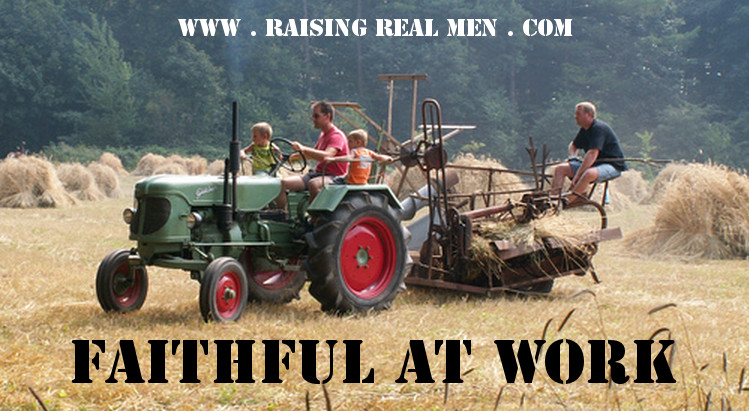
Does your Sunday morning faith go to work with you on Monday?
Maybe in our quiet moments we plan how we’ll respond if we end up like the apostles in Acts 5:29 – “We ought to obey God rather than man.”
But most days, the question is simpler – and sometimes more challenging: Am I working like a Christian today? Am I walking in faith when I walk into the workplace?
We humans have a tendency to complain, a temptation to slack off a bit, a desire to hurry up and get to the weekend – whee! But while we enjoyed our day off this Labor Day week (ironic, isn’t it?), it might be good to remember a few things God tells us about our work—and our attitude about it:
Actually, work is a good thing. When God created Adam and placed him in a perfect, sinless world, He gave him a job to do. “Then the LORD God took the man and put him in the garden of Eden to tend and to keep it.” (Genesis 2:15) The frustration and disappointment we often feel was a result of Adam’s sin, not the whole idea of working. In all labor there is profit (Proverbs 14:23)
It’s a blessing to find satisfaction in our work. I know that nothing is better for them than to rejoice, and to do good in their lives, and also that every man should eat and drink and enjoy the good of all his labor—it is the gift of God. (Ecclesiastes 3:12-13)
God expects us to be honest in our business dealings. This should be obvious and there are plenty of verses about integrity. Still, when I worked with industrial instrumentation in manufacturing plants, these passages jumped out at me in my specific employment: Dishonest scales are an abomination to the LORD, but a just weight is His delight. (Proverbs 11:1) Honest weights and scales are the LORD’s; all the weights in the bag are His work. (Proverbs 16:11)
Good work has its rewards. Do you see a man who excels in his work? He will stand before kings; he will not stand before unknown men. (Proverbs 22:29) The hand of the diligent will rule … (Proverbs 12:24)
Laziness just leads to your own suffering. Haven’t you found that short cuts usually add work in the end? The lazy man will be put to forced labor (Proverbs 12:24) He who has a slack hand (as opposed to the diligent man) becomes poor. (Proverbs 10:4) Do not love sleep, lest you come to poverty (Proverbs 20:13) Drowsiness will clothe a man in rags (Proverbs 23:21) If anyone will not work, neither shall he eat. (2 Thessalonians 3:10)
Our plans are always secondary to God’s plans. Come now, you who say, “Today or tomorrow, we will go to such and such a city, spend a year there, buy and sell, and make a profit”; whereas you do not know what will happen tomorrow. For what is your life? It is even a vapor that appears for a little time and then vanishes away. Instead, you ought to say, “If the Lord wills, we shall live and do this or that.” (James 4:13-15)
Ultimately, we’re all working for the Lord. Whatever you do, do it heartily, as to the Lord and not men, knowing that from the Lord you will receive the reward of the inheritance; for you serve the Lord Jesus Christ. (Colossians 3:23-24)
And He’s an awesome boss! “Take My yoke upon you and learn from Me, for I am gentle and lowly in heart, and you will find rest for your souls. For My yoke is easy and My burden is light.” (Jesus, in Matthew 11:29-30)
 In Christ,
Hal
We talked about this on our podcast this week … CLICK HERE TO LISTEN!
We also give a whole chapter on this in our book, Raising Real Men: Surviving, Teaching and Appreciating Boys. Have you read it? You can order your own copy below!


September 1, 2015
Talking to Teens About Ashley Madison, Josh Duggar, and The Rest

Years ago when Bill Clinton’s scandals were news, I hated to listen to the radio in the car because I constantly had to be ready to turn it off or explain awkward things on the way to homeschool P.E. If you have teens, though, there’s just no way to turn off the constant stream of news about the adultery hook-up site, Ashley Madison, and the Christians who’ve had their sins exposed through it.
It’s not something most of us want to talk about with our kids, but it’s a great opportunity to talk turkey to our teens about important issues. It might be something that will even come up in our church. So, what do we need to tell them about it? How do you even bring this up?
Just do it. “Hey son, have you heard all the stuff about Ashley Madison and Josh Duggar? Ashley Madison is a website where people contacted other people who wanted to commit adultery. Hackers got into their system and have exposed the names of people who signed up. Unfortunately, there were some well-known Christians on that list, like Josh Duggar.”
Kids have a very sensitive hypocrisy meter. They are idealistic and they want people to be what they seem to be. Situations like this can really challenge their faith. We need to remind them that if every single Christian is faithless, God is not.
And there are a few things we all need to learn from this:
Sin is dangerous. It ruins lives and not just the life of the sinner. Josh Duggar’s sin has betrayed and hurt his wife, his children, and even his extended family. Because of his public profile, it’s taken away from the witness of any Christian in the eyes of the world. When we give in to sin, we endanger ourselves and the ones we love.
Don’t ever believe it when temptation says, “No one will ever know.” The Lord warned us against hypocrisy in Luke 12:
He began to say to His disciples first of all, “Beware of the leaven of the Pharisees, which is hypocrisy. For there is nothing covered that will not be revealed, nor hidden that will not be known. Therefore whatever you have spoken in the dark will be heard in the light, and what you have spoken in the ear in inner rooms will be proclaimed on the housetops.
The Word tells us to “repent and believe.” Repentance is to be sorry for sin and to hate it and forsake it because it’s displeasing to God, as the Catechism for Boys and Girls puts it. Although temptations will persist until we go to be with the Lord, if we’re truly repentant, we don’t go chasing after sin, and we don’t make sin our lifestyle.
Sexual sin is a slippery slope. The early temptation is just to look at a few pictures, to click on a link, to think no one will know. This kind of sin is addictive, though. It causes a hormone cycle in the brain that makes you crave more or more intense stimulation – from bad to worse. The first sin leads you to more sin. Before long, you might find yourself doing things you never imagined you would. Stay away from porn. It’s a gateway sin (and it’s a drug, too).
If you’ve got a secret sin, confess it. The temptation is to hide our sin, but Proverbs 28 warns us, “He who covers his sins will not prosper, But whoever confesses and forsakes them will have mercy.”
“Son, if you find yourself in any kind of sin like this, if you’ve been looking at porn, for example, come to us and confess it and let us help you get out.”
Trust God, not men. Men fall. People sin. God, though, is always faithful. He’s faithful to keep us from sin, too, if we’ll submit ourselves to him:
Now to Him who is able to keep you from stumbling,
And to present you faultless
Before the presence of His glory with exceeding joy,
To God our Savior,
Who alone is wise,
Be glory and majesty,
Dominion and power,
Both now and forever.
Amen. Jude 24, 25
That’s pretty encouraging and it’s the answer to all of this. He can present us faultless, through the blood of Jesus Christ. “Son, that’s the only answer to all of this – Christ. Flee sin and believe in Him.”
Have you talked with your teens about this stuff? How did it go?
Your friends,
Hal & Melanie
August 31, 2015
Hope For Homeschooling With A Newborn
A reader asked on our Facebook page,
“I’m so frustrated. I have three boys: 5, 4, and 2 and a two week old little girl. My teacher husband just went back to work and I feel like I’m drowning. I’m exhausted and I feel like I have no control in house so I find myself yelling. I really dislike yelling so I give myself a pep talk teach morning that I will do better today. I pray for patience each morning but I feel like a complete failure. Our new baby is fussy and the boys are taking advantage of the time I have to spend feeding her or trying to calm her down and they are WILD. I try to provide structured activities but it hasn’t helped. To top it off, I’m getting pressured by both my “against homeschooling family” and my “perfect homeschooling friends” about my five year old who doesn’t read or write his name yet. I feel like such a failure every day. I expect them to show God’s love yet I’m being a horrible example. I don’t even know what to do.”

Dear sweet mama, it’s going to be okay. Having three or four littles was so hard for me! I felt like everyone needed me every second. This isn’t going to be forever. I wish I’d known how quickly it would all pass. Before long your oldest will be able to help you out by making sandwiches and rotating the dishwasher and helping to entertain the others.
If family and friends are critical, ignore them for now. They may have forgotten what their house was like when they had very little children. When you’ve been homeschooling ten years and you’ve got teenagers to help out, you can look like one of those organized, put-together families, too. Right now, give yourself some space!
Don’t let people put unrealistic expectations on your children, either. Five is very young for a boy to read or write, and it’s a stressful age to even try to get them to. Just tell your friends, “He’s doing great in school” — which he is, if he’s working at the right developmental level. It’s none of their business. Homeschool moms who interrogate their friends about what their kids are accomplishing are likely just trying to show off or make themselves feel better.

You’re still recovering from childbirth – embrace it! You have a newborn, sweet mama! You need time and rest to rebuild your strength.
Build your own nest. Get comfortable in a recliner or rocker with everything you need for the baby at hand. Put up some baby gates to keep everyone nearby. If family or friends call, tell them you’d love it if they’d bring by a meal.  Take care of yourself and those babies!
And take it easy on the schooling for now. When you’ve got a baby that young, it’s still too early to be doing formal school or having any expectations at all other than getting through the day. So here are some ideas to make life easier —
Get yourself some educational videos for the kiddos to watch. We loved the Moody science videos. They’re both calm and fascinating and there are a bunch of them! Click here to check them out.
Try some audiobooks. Our guys loved the Sugar Creek Gang when they were little.
Get one of those mini-trampolines so they can get their energy out without you having to get up.
Go ahead and take the time you need. Read your kids lots of great picture books and stories. Snuggle. Survive. It will get better!
Do you have any tips for surviving the newborn days?

For more help and encouragement, download these workshop favorites below: Homeschooling a Houseful and Homeschooled from the Beginning: Teaching Your Children . They’ll reduce your stress and give you practical ideas!
August 25, 2015
A Question of Honesty

A mother emailed us recently with a serious concern many of us have faced. Writing about her 11-year-old son, she explains,
Our oldest lies. He lies about his involvement in incidents. He lies about anything that might paint him in an unfavorable light. We catch him exaggerating at times to make himself look better. We talk about conspicuous honesty. We’ve read Bible passages. My husband and I have modeled honesty very carefully. We’re even very careful not to use white lies. We don’t know what to do to help him. We believe deep down he’s a wonderful person. I don’t think he understands what an issue this is … [and] he thinks we’re picking on him when we catch him in his lies. He seems more upset that he’s been caught than he feels ashamed about lying. How do we help him?
When we talked about sibling rivalry, we mentioned that it was one of the earliest sins shown in the Bible. Well, lying, deception, evasion, and blame shifting show up even earlier in the narrative of our fallen nature! When Adam and Eve disobeyed God and ate the fruit, Adam’s first reaction when God confronted him was to dodge the question and blame somebody else — “The woman whom you gave to be with me, she gave me fruit of the tree …” (Genesis 3:12a).
Followers of Jesus are always to be “speaking the truth in love,” and both our love and honesty are part of our life as believers — “Therefore, having put away falsehood, let each one of you speak the truth with his neighbor …” (Ephesians 4:15, 25) So how to we teach this to our children?
These parents are already doing the very things we’d recommend – things we’ve tried to do with our own children:
1. Look to God’s Word for instruction. Always be sure that your kids understand that the Bible is not your special attack dog to unleash on their misbehavior — rather, it’s the guide which God has given parents and children alike who want to follow His ways. We try to emphasize that all of us have to wrestle with sin and temptation, and we all look for God’s wisdom in those pages. That said, we can confidently read them passages like the Ninth Commandment, “You shall not bear false witness against your neighbor” (Exodus 20:16), and Proverbs 6:16-19, where there are seven things which are “an abomination” to God — including “a lying tongue” and “a false witness who breathes out lies ...”
2. Live the example. Our kids learn sooner from what they see than from what we tell them. And an 11-year-old already has a finely-tuned hypocrisy detector — if you cut corners, tell social fibs, and duck responsibility for your own actions, you can believe your son will see it and make careful note. If you want honest kids, you need to give them honest parents!
3. Balance the warnings with the blessings. Proverbs 12:22 repeats that “Lying lips are an abomination to the LORD,” but continues, “but those who act faithfully are His delight.” What’s more, we’re told “If we confess our sins, He is faithful and just to forgive us our sins, and to cleanse us from all unrighteousness.” (1 John 1:9) The path of lying and deception lead to God’s anger and judgment, but truthfulness — even when it means admitting what we’ve done — is the pathway to God’s pleasure and forgiveness. That’s much better!
4. Make the consequences fit the offense. Sometimes kids will say things out of pure imagination and childishness; they can be brought to earth without making too big a case out of it, using it as a teaching opportunity. “Now don’t be silly; there’s not really an elephant in the living room, is there?”
But when they are intentionally deceiving to try and escape punishment or accountability, or if they are lying to try and gain an advantage they haven’t earned, that’s a much more serious matter. Remember than all discipline is about teaching, but other consequences are appropriate, too. “I’m sorry, Son, but I can’t let you go to the park with your friends; you haven’t been truthful about what you do when I can’t watch you, and I can’t trust you out of my sight. Maybe another day when I have time to go and watch.” (This can be a really important consequence to a young guy who is stretching for a little independence.)
5. Be sure to focus on your concern for their future. Sure, their misbehavior is embarrassing to us, it causes inconvenience, and it shames our family’s reputation — it’s all true! But we need to be sure and express our love and alarm about what these character habits might cost them in the future. “Son,” you might say, “I’m worried that if you make a habit out of making up untrue stories and lying about your actions, that it will cause you all kinds of problems you haven’t thought about. When you’re just a few years older, you could have a reputation for being dishonest. Employers don’t like to hire people they can’t trust. You’ll find that friends always keep a little distance from you, since they don’t know if you’ll be loyal to them or blame them for your own mistakes or misbehavior. And it will cause trouble finding a wife, or gaining her trust, or raising your own children one day. Believe me, Son, you don’t want to be a dishonest man — and the Bible says you won’t be able to keep it hidden, because Galatians 6:7 says, “Whatever a man sows, that will he also reap“!”
Here’s the hard part – what if you’re doing all the right things, and your child isn’t submitting to your instruction–or to God’s Word? What can you do?
You do the most important thing: 6. Pray, pray, pray! Ultimately, each of us has to deal with a holy and righteous Judge one-on-one, and it’s a matter of the heart. A sinner who is ashamed he got caught but not ashamed of his sinful actions, doesn’t have his heart in the right place yet. As parents, we can shape behavior, but we can’t change hearts … only God can do that.
Jesus said the Holy Spirit “will convict the world concerning sin and righteousness and judgment,” (John 16:8) and we have to rely on Him to be working to change the stubbornness that even young hearts may carry. He can touch the part we can’t see.
So, “let us not grow weary of doing good, for in due season we will reap, if we do not give up.” (Galatians 6:9)

We talked about this on episode 92 of Making Biblical Family Life Practical —
CLICK HERE TO LISTEN!
One of our favorite resources for dealing with persistent misbehavior is Pam Forster’s For Instruction In Righteousness. This collection of Scripture not only shows where God says “Thou shalt not,” it also outlines the blessings of the right behaviors and suggests Biblical corrections for specific sinful habits. When we find ourselves saying, “Whew! The kids are always doing [this]!”, we reach for this book. It’s a thoroughly Biblical guide and very well-balanced reference for Christian parents.
We also highly recommend Tedd Tripp’s Shepherding A Child’s Heart. He helps you get beyond punishment for objectionable behavior, and get to the root of the matter – training a young person to see principles of Godly conduct, not just checklists of do and don’t.
Another good book is Carol Barnier’s Reaching Today’s Prodigal. Wait, you say, my son hasn’t run away — he’s not really “prodigal”! No, and you don’t want him to become one. Some of Carol’s wisdom (speaking as a recovered prodigal herself!) can help you head off some of the dangerous relationship issues which may be developing in your family–and maybe, with God’s help, keep wandering feet on the right path. Check it out!
Photo Credit: amandacatherine/Pixabay
August 24, 2015
Planning Your New Homeschool Year
 Planning … it doesn’t sound very exciting, does it? When we look back at our more than two decades of homeschooling, though, we see that the years we planned well were much more productive than the years we flew by the seat of our pants.
It’s not that hard, really. The most important thing is to figure out the pace you need to keep up to get your goals accomplished this year. To do that, open up your curriculum and read the notes to the teacher in the front, you know, the part we automatically skip over. That’s the part that will often tell you how much you need to do each week!
Even if your curriculum doesn’t tell you, just take a look at the table of contents. How many lessons are there in a year? Are there tests in addition to that? A typical school year is 180 days, that’s about 36 weeks. If there are something like 30-36 lessons, tests and activities, you need to do one per week. If there are 60-70 or so, two per week. If there are 150 to 180, you’ll need to do one per day. See, just divide it up!
Once you know how much to do each week, you are pretty much set. You don’t want to plan each individual day’s activity until the week before you need it since you won’t know until then which days will be busy with doctor’s appointments or commitments. When you plan the days the week before, though, you’ll know which day is better for projects or experiments and which days are better for self-directed work.
Of course, you don’t have to plan ahead. You can just open up the books each morning and “do the next thing.” We’ve done that, too, but sometimes you can have some unpleasant surprises when April comes and you realize you’ve somehow gotten too far behind. Don’t despair, though, it’s amazing how quickly you can catch up when you cut out the fluff and just put your head down and do it. We’ve been there, too!
If you’d like to hear more discussion about how we’ve approached planning, CLICK HERE and listen to episode 89 of our podcast Making Biblical Family Life Practical, “Planning For Your New School Year.”
And if you don’t even want to think about planning because you feel like a homeschool failure, here’s help. CLICK HERE to listen to our podcast on how to pick up the pieces and get going again!
Copyright 2015. Used with permission. All rights reserved by authors. Originally appeared August 5, 2015, in The Homeschool Minute™, an E-Newsletter published by The Old Schoolhouse® Magazine. Read this family education magazine free at www.TOSMagazine.com or read it on the go and download the free apps at www.TOSApps.com to read the magazine on your mobile devices. For free homeschool information visit ConsideringHomeschooling.info.
August 21, 2015
Rivalry and UnityBuilding Family Unity

What can we do to build positive relationships in our family? How can we create a home life which encourages a sense of unity and teamwork, rather than constant competition and rivalry?
Discourage problem behaviors. We don’t allow bullying or pestering (we talked about this in the last post). We have a rule that “Your Home Should Be a Haven.” You should never have to be on guard against your brothers and sisters. For example, we don’t allow name calling, ever. And nicknames have to be acceptable to the one who gets labeled.
Beware of sarcasm and mockery. The culture revels in the sharp put-down and verbal one-upmanship. That shouldn’t be the tone of our home life. We know families where the husband and wife are constantly sparring – not out of bitterness or hatred, but a misguided idea of fun and teasing. Be careful; not only do the children pick up on this and gain an outside reputation as sarcastic, disrespectful kids, we sometimes find that one spouse thinks it’s all in good fun, and the other is struggling to play along but harbors a secret hurt.
Instead, embrace and teach your family’s special heritage. What makes your extended family special? In our family tree, for example, there are numerous pastors, there are many who answered the call for military duty, and a reputation for honesty. So, when we talk with our kids about the need for integrity in all things and service to God and country, we often point out, “It’s what our family does.”
It can also be a call to be on guard. Does your family have particular temptations or trials – a weakness for drink, a bad temper, a tendency toward depression? Then rally your troops and remind them, “Look, these are dangerous things in our family – let’s help each other avoid them!”
Promote team spirit. How does a team identify itself? How about team shirts or hats – not every day, but from time to time? When we made a major trip several years ago, we bought two sets of inexpensive polo shirts so the whole family would dress in blue one day, green another. It made it easier to navigate through crowds and airports, but it encouraged us – and others, too – to think of ourselves as a special group. When Hal had cancer, the boys bought him a really cool fedora to wear in case the chemotherapy made him bald – and the hat was so cool, they all bought fedoras to match! We actually had a TSA agent call us at an airport, “Hey – Indiana Jones family! This line!”
Spend significant time as a family. It’s great to encourage each family member to develop his or her own gifts and interests, but keep an eye on how much time and attention they draw. It’s better if you find activities that several family members can share, and balance those which are more individualistic. For example, we have several boys who have played football, so Saturdays in the fall are just a long picnic for all of us.
If one has a particular individual interest, be sure that time is balanced with family time, too. Maybe when the children are little, it’s a time to step back a bit from our own time-consuming hobbies – you may have an opportunity to resume when your child is old enough to participate, or save it for retirement. Our family may divide between football players and football watchers in the fall, but that’s the only team sport we do – outside football season, there’s more focus on family-wide activity.
Embrace traditions you have, and create your own. The memories we share at holidays, vacations, and other activities help bind our hearts together as a family. It’s important to have some traditions which are just your immediate family’s. If you always go to Grandma’s house for Christmas, maybe you should create another tradition at home, too – caroling at the neighbors’ houses, or preparing “shoe box” packages for children on the mission field, or baking a special family recipe just once a year. Adopt a mix from both parents’ childhoods, and explain them to your children.
It’s amazing how even accidental traditions settle in our family’s mind. For several years, every Sunday, Hal would fix sausage-and-egg taquitos for the family while listening to “Great Sacred Music” on the local classical music station before church. To this day, the older boys tell us that whenever they hear Anglican church music or Gregorian chants, they think of taquitos on Sunday morning! Keep your eyes open, and you may find things you already do which are unplanned traditions for your family – like beeping the horn when you cross a state line, or cooking banana and chocolate chip pancakes on vacation, or bursting into song on random cues (we do all these, too!)
A sense of unity and belonging is a great thing in a family — but it’s not an accident. If you’d like that sort of relationship in your home, why not make it goal and work toward it — together?
We talked about promoting family unity in episode 92 of our podcast –
We have a whole workshop on this topic called “A House NOT Divided” – it’s available for
August 17, 2015
Rivalry and UnityGetting Along With Siblings
If you have siblings, you probably have rivalry. It’s a natural, human thing, and it’s plain from Scripture that it’s an expression of our fallen human nature. Think about Cain and Abel, Jacob and Esau, Joseph and his brothers … and that’s just in Genesis. It’s a problem–and something God wants us to deal with it. Look at Proverbs 6:16-18:
These six things the LORD hates,
Yes, seven are an abomination to Him:
A proud look, A lying tongue,
Hands that shed innocent blood,
A heart that devises wicked plans,
Feet that are swift in running to evil,
A false witness who speaks lies,
And one who sows discord among brethren.
Besides the sin issue, rivalry between siblings makes our home into a battlefield and wrecks the peace of our daily life. What can we do about this?
Make sure our parenting isn’t part of the problem. Part of the reason of Joseph’s breach with his brothers was his father Jacob’s clear favoritism toward him (Genesis 37:3-4). Favoritism doesn’t have to look like Cinderella’s wicked stepmother – our kids may see it in our facial expressions, how much patience or grace we show (or don’t show) toward one, or if we seem to choose sides for no good reason. (We may need to carefully and privately explain why the little brother seems to get protected from bigger siblings – and be sure we deal with little brother’s misbehavior appropriately, too).
Draw a firm line on bullying and pestering. Bullying is when a person uses his advantage to oppress someone smaller, weaker, or unable to defend himself. It’s marked by cruelty, and that has no place in our family. However, watch out for little siblings who have figured out that Mom or Dad will run to the rescue when they squawk … who hide behind this “protection” to goad older siblings into some mischief. This sort of pestering is bullying in reverse, using your relative weakness against stronger siblings.
Be sure to get the whole story before you take action. It’s easy to respond swiftly when a youngster cries, “My big brother hit me!” but we’ve found that’s seldom the whole story. The dialog is more often along these lines:
Little: “My brother hit me!”
Parent, to Big: “Why did you hit your brother?”
Big: “He threw my book down the stairs.”
Parent, to Little: “Why did you throw his book down the stairs?”
Little: “I wanted him to play a game with me, and he just kept reading!”
Parent: “Aha.”
Usually we discover that someone caused a minor offense, and his victim decided to escalate the disagreement rather than overlooking a matter (Proverbs 19:11). By the time parents are called into the argument, both sides have broken rules and offended one another – and both sides could have stopped the argument at many points.
Teach them how to work out disagreements honorably. In Matthew 18:15-17, Jesus taught His disciples that two people in conflict should try to resolve it privately. If that doesn’t work, a witness can be called in – someone who knows or saw what was going on. And if that doesn’t work, then it’s time to call in authority – the law, the church, the teacher, the parent – not before.
This has a side benefit in family life—frequently, we find the kids will have an argument, then run to Mom or Dad for support instead of talking it through. “I’m gonna tell!” is a catch-phrase for childhood. But if we listen to the complaint, and then ask, “Did you talk with your sister first?” nearly always the offended child will shuffle her feet and say, “Well, no …” At that point, we remind her of the process in Matthew 18 and send her back to try again with the offender. And usually, they figure it out!
 Want more ideas for dealing with sibling rivalry? We talked about it on episode 91 of our podcast, Making Biblical Family Life Practical — CLICK HERE TO LISTEN!
Next: Some positive ideas for building unity, not just dealing with bad behavior …
Resources
“The Brother Offended Checklist” by Pam Forster (Doorposts). This cartoon-style poster will help your kids visualize the steps of resolving a conflict. (It’s a good reminder for grown-ups, too) We kept our copy on the refrigerator door for years!
The Peacemaker and The Young Peacemaker by Ken Sande (Peacemaker Ministries). The original book has helped Christians sort through conflicts in church life, family, business, and community. The “young” version uses examples that children and youth can quickly connect. We read through The Young Peacemaker as part of family devotions during a time with a lot of conflict among the kids, and it was a big help.
 My Beloved and My Friend by Hal and Melanie Young. We devote a whole chapter on the idea that every argument is not worth having, and there are Biblical ways to resolve disagreements so both sides are satisfied. You can’t get everything you want, but it may be possible to reach a fair compromise.
“How To Fight So You Both Win” (workshop download) – We talk about the conflict-resolution principles we explain in My Beloved and My Friend. The same principles work for sibling rivalry and for adult conflicts, too.
August 4, 2015
What If Dad’s Not A Christian?

A reader wrote:
[In your webinar,] you discussed how Dad is the first Hero and he should point the boys to the Ultimate Hero, Christ. We have a 9-year-old son, he is our only child, and my husband is not a Christian, but is tolerant of our going to church (without him) and our son going to AWANAs, so long as none of this affects him or his time, So, I’m wondering if you have any help or advice for when Dad is not a Christian or in a position to point boys to Christ, but is almost adversarial towards the Ultimate Hero?
The question of a spouse who doesn’t share your faith touches on so many issues and concerns. It’s certainly no new problem for believers — the apostle Paul dealt with it in the early church. But this question is specifically concerning the effect on raising your boy — what’s a Christian mother to do if her husband doesn’t have a Christian faith to pass on to his son?
When Paul wrote to young Timothy, in 2 Timothy 1:3-5, he said,
I thank God, whom I serve with a pure conscience, as my forefathers did,as without ceasing I remember you in my prayers night and day, greatly desiring to see you, being mindful of your tears, that I may be filled with joy, when I call to remembrance the genuine faith that is in you, which dwelt first in your grandmother Lois and your mother Eunice, and I am persuaded is in you also.
The book of Acts mentioned that Timothy’s mother was a Jewish believer “but his father was Greek.” (Acts 16:1) These two passages tell me that Timothy’s father probably not a Christian, but both his mother and grandmother were primary spiritual influences in his family — and Paul rejoices in their presence there! So if you find yourself in the role of a modern day Eunice, I think you can take heart that God can empower you to fill that part of introducing your son to “The Ultimate Hero” yourself, while praying for His work in your husband’s life as well.
Another encouragement is from the new Gen2 Survey conducted by the National Home Education Research Institute and Generations with Vision. In this study of nearly 10,000 Millennials who were raised in the church, they found that one of the primary predictors of young adults who continued in the faith was a strong relationship with a believing parent – either father or mother. Naturally the ideal is for everyone in the family to be following Christ, but the data says that the whole family doesn’t stand or fall on the father’s beliefs alone.
It’s still important to point your son to any admirable traits in your husband. While he may not be a believer, he may be a great example in many ways – diligence, responsibility, trustworthiness, or loyalty, for instance. Youngsters will tend to look up to their father without worrying about Dad’s personal philosophy, and it’s only fair to acknowledge the grace which God has given him so far.
August 3, 2015
Tips for Learning Online

Years ago when we were newlyweds (and dinosaurs ruled the earth), we both took graduate classes by a extension program. A box of video tapes and textbooks arrived in the mail, and we arranged for some one to proctor our exams. It was a great improvement over the old “correspondence courses” we used to order from the back of magazines!
Years later, our homeschooled children take live classes over the Internet, including their tests. It’s a great improvement over the boxes of videotapes!
Online education is simply the next idea to allow students to learn from instructors a long way off. It can allow homeschoolers to take classes from top flight teachers, and it can take a load off the homeschool teacher, too. We’ve used online programs for four of our students so far, and even taught some ourselves; here are a few tips we’ve learned.
Try before you buy. If you’ve never taken an online class before, consider trying a single course before investing in a large-scale program. There are courses available online for free, and some providers may offer sample classes to demonstrate their program.
Find an environment that works for you. Most online courses need a solid, high-speed Internet connection. You may need to ask family members to avoid streaming media or large file transfers while class is in session. On the other hand, it may be worth a trip to the library or a coffee shop to get a faster connection than you have at home (though be polite and become a customer if you need to camp out on a cafe WiFi – consider a latte as an educational expense!)
Don’t wander off during class. It is s-o-o-o easy to “just check” social media, email, or other distractions when the action lags in class … and before you know it, you missed half the lecture. Don’t do it! If you think of something you want to look up online, jot it down and check during breaks or after class.
Participate! It’s important in any class, but especially when the teacher can’t see you. That’s how the instructor knows you’re there … and showing the instructor courtesy and interest can make a difference when grading time comes. Besides, it makes the class more effective for everyone when all the players get in the game.
 Be honest with yourself – does it work for you? The technology is a wonderful tool when it works, but some students have a hard time connecting with the teacher if they’re not face-to-face. That’s not a criticism, just a matter of self-awareness. And, to be honest, some teachers are not as effective online as in person, and sometimes the technology itself becomes an obstacle. Be willing to admit it, if the experiment isn’t the best ever.
In Christ,
Hal

We offer interactive classes for parents – Boot Camp 9-12 is a five-week program for parents of pre-teen boys and we’re starting our next class Tuesday, August 18! Live sessions meet Tuesdays at 8 p.m., and every session is recorded so you won’t have to miss anything. CLICK HERE for more information, or to sign up now!
Copyright, 2015. Used with permission. All rights reserved by author. Originally appeared February 18, 2015, in The Homeschool Minute™, an E-Newsletter published by The Old Schoolhouse® Magazine. Read this family education magazine free at www.TOSMagazine.com or read it on the go and download the free apps at www.TOSApps.com to read the magazine on your mobile devices. For free homeschool information visitConsideringHomeschooling.info.
July 30, 2015
Coming of Age Ceremonies 6. Taking The Next Steps
In this series, we’ve talked about why a formal “coming of age” ceremony can be useful. We discussed ideas about who to invite, who to have as a presenter, and what sort of presentation to have. Last post, we talked about the role of celebration – what sort of entertainment and fellowship you might include. After all, it’s not just teaching – it’s rejoicing at our son’s next step toward maturity!

At the end of the day, though, the whole point of the ceremony is not just a special event for a day or a weekend — it’s a milestone along a pathway to independent adulthood. And guess what – this is where the parents really get to shine.
The reason we have this celebration, after all, is to make a statement to the public and to our own family that our son has entered a new stage of his life. That means that things will be different from now on … and it’s the parent’s responsibility to start making that a reality.
We know that maturity doesn’t happen with the 18th birthday, or the 21st, or the 13th. It’s a process of training, growth, and correction we call “growing up”! And it takes time and effort.
The Bible talks about this period in many places as “youth.” In our churches and homes, we often think of “youth” as “the older kids,” emphasis on “kids.” And the Biblical pattern does show that young men in the stage of “youthfulness” still need mentoring, teaching, or coaching, if you will. Yet there are many examples that show young men still in their youth or youthfulness who were husbands, fathers, missionary pastors, church planters, warriors, and kings. Youth is not childhood, it’s the younger stage of adulthood.
So how to we recognize this on a day-to-day basis?
There are many small ways we can recognize this change. To begin with, don’t group your young adult son with “the kids” or “the boys” or “the little ones” any more. There is a definite break in our home between younger and older siblings, and we let our older sons stay up later, have more independence or at least more input into their daily plans, and go more places without their parents. If your Thanksgiving dinner has a “grown up” table and a separate table for “the kids,” it should be obvious where your young adult should be sitting!
At the same time, we start to change our parenting style from direction to advice. Your seven-year-old really needs a “benevolent dictator” to keep him on course and out of trouble. Your adult son needs a “trusted advisor” to help him think through decisions and makes his plans – but he’ll need to take responsibility for his final decisions and be willing to accept the consequences. The teen-aged years are our time of transition and training.
 Transition means gradual change, and sometimes you’ll have to repeat some things. We found we have to be both patient and persistent with our young adults. Even grown ups sometimes act childish – self-centered, demanding, thoughtless. We shouldn’t expect our young adults to be better behaved than we their parents! But we found that as we made this transition in our parenting, we stopped thinking, “Don’t do that – you’re embarrassing me!” and more often thought, “Don’t do that – you’ll embarrass yourself!” Remember this period of training will touch every aspect of their lives – spiritual, academic, social, work-related – and make the most of it!
We hope you found this series helpful in your thinking about the start of the big transition from childhood to independent adulthood. If you’d like to hear more of our thoughts and advice on the matter, you might enjoy these workshops available for download in our store:
Skipping Adolescence – Parenting Pre-Teens – Teaching Discernment – Passing The Baton