Phil Simon's Blog, page 71
October 22, 2014
Message Not Received Sample Pages
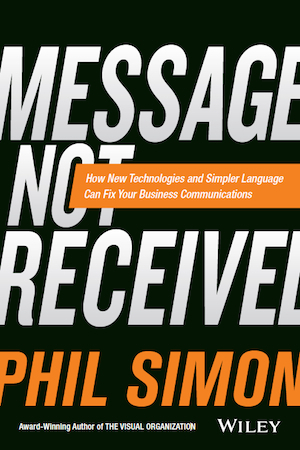
Message Not Received is being laid out as we speak. I should get the edited manuscript back by Friday.
In the meantime, here are a few sample pages from the book.
Click to view slideshow.
The book has been on Amazon for a few months now. Check it out here.
The post Message Not Received Sample Pages appeared first on Phil Simon.


New Site Has Launched
The new site is now live. It’s much faster, cleaner, prettier, visually consistent, and flatter than its predecessor. Many pages have been vastly simplified, especially the home page and those for my books. My old home page just had too much going on.
My Sites: A Retrospective
Here’s a little trip down memory lane:
Click to view slideshow.
This is my first trip down the Elegant Themes road. The Divi theme ships with a great deal of native functionality such as tabs, accordions, mega menus, toggles, custom sidebars, and much more. As such, it obviates the need for me to run so many plugins. What’s more, Divi’s visual builder is fantastic. I very much wanted to be able to tweak page layouts without calling a developer or learning PHP and CSS. After reading Chris Lema’s post on the subject, I experimented with several options before deciding on Divi. I was also able to kick its tires in a sandbox—never a bad thing when making such an important decision.
 That’s not to say that the Divi theme doesn’t contain more than a few bugs. Some of the surprise additions omissions were downright baffling. For instance, its visual editor causes extra characters to be placed in the text. How that remains an issue is beyond me.
Gracias
Hat tip to Babs Hobbs. I designed much of the site myself, but she served as my primary tweaker. I’d also like to thank Todd Hamilton, John Hawkins, and Owen Carver.
Also, thanks to those who voted on a few of the design elements. I always feel better with a little data.
As with any launch, there are bound to be a few issues. If you find one, please contact me.
The post New Site Has Launched appeared first on Phil Simon.
October 14, 2014
Dataviz, Data, and Developers
A few months ago, I wrote about the Google Refine tool to cleanse impure, duplicate, and incomplete data. I thought that it was a pretty neat tool but also that could be improved. As it turns out, others agreed. The project was recently renamed OpenRefine and ported over to GitHub, the most popular web-based hosting service for software development projects using the Git revision control system. (Read the history of the project here.)
What does OpenRefine look like now? I decided to check up on OpenRefine and see what kinds of improvements have been made.
Before continuing, let’s take a step back. You probably know that developers tend to like data and graphs, so it should be no surprise that GitHub makes the following information easily accessible on each of its projects:
Contributions over time
Additions and deletions over time
Time and day of commit activity (To contribute source code on most large projects, one must make modifications and then “commit” those changes to a central repository. Many large projects have committer FAQs and bylaws. For instance, to see the Hadoop ones, click here.)
Commit activity over the previous year
The following dashboard shows data on the most recent OpenRefine improvements:
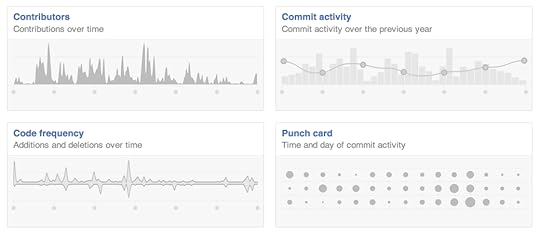
Of course, you can drill down on any of these graphs. For instance, the punchcard in the lower right-hand corner graph begs the following question: What days and times do these improvements take place? Fortunately with GitHub, these answers aren’t terribly difficult to discern. Check out the following bubble plot:
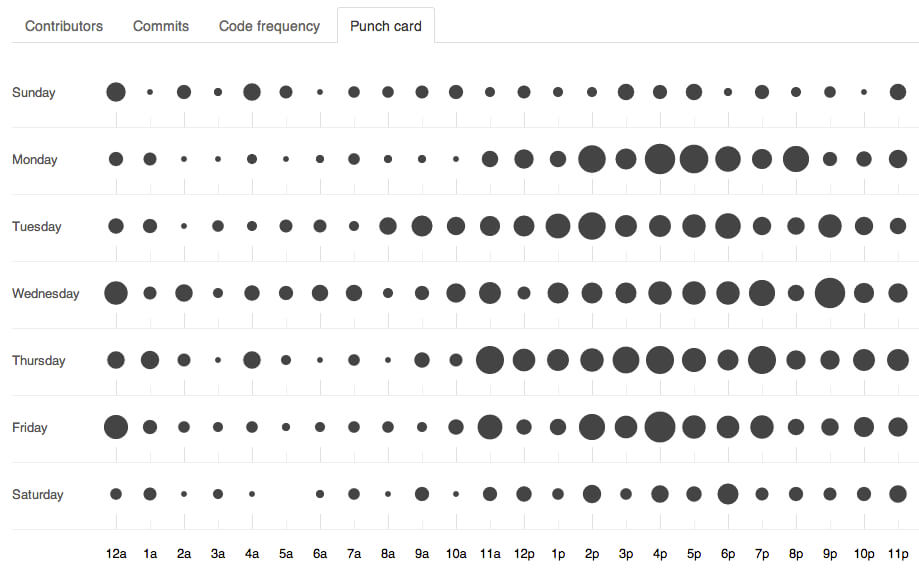
Click to embiggen.
It shouldn’t be surprising that there aren’t too many developers working on OpenRefine at 5 a.m. on a Saturday morning. I suspect that the same holds true for other open-source projects.
It’s never been more important to keep developers happy.
To be sure, there are many reasons for GitHub’s massive success. Developers love the site and tweets like this one aren’t uncommon. As Jimmy Jacobson, co-founder of social polling startup Wedgies told me, “Github built a social layer on top of an already powerful collaboration tool programmers used to build programs together. This has allowed code written by one developer to be easily shared and improved by thousands.”
I’d argue that one of the largest drivers is GitHub’s developer-friendly nature–and tools like real-time data visualizations shown above that cater to the needs of those who build tools. It’s never been more important to keep developers happy, a point made in excellent e-book The New Kingmakers.
Simon Says: Court the Developers
Every company is becoming a technology company. Some have just not realized it yet. To this end, it’s essential to attract, retain, and motivate developers. The term talent war is, if anything, an understatement. It’s a veritable bloodbath out there. Here’s visual proof:

Don’t skimp when building resources for developers. Listen to their feedback–and act on it, or another organization will. Harnessing the power of Big Data and platforms almost always requires some level of developer input.
Feedback
What say you?
 This post is brought to you by SAS.
The post Dataviz, Data, and Developers appeared first on Phil Simon.
October 13, 2014
Arrogance vs. Ignorance
 I’m sitting at networking event a few weeks ago and I recognize Lee (not his real name). I had met him once before a year ago and he rubbed me the wrong way. Before that, we had interacted on different social media sites. With beer in hand, this was my first chance to get to know him. Perhaps my first impression of him was off.
“My posts will be studied twenty years from now”, he boldly proclaimed early in our conversation. “They’re that far ahead of their time.”
OK… I thought to myself.
I hoped that he was joking, but alas, he was quite serious. He further boasted that he wrote for a high-profile media site. I mentioned that plenty of people did, and that I knew a few of them. “Oh no”, he boasted. “I am paid.”
We’re done here.
On Age and Arrogance
With dozens of others at the event, I didn’t see fit to spend any more time with Lee. I excused myself and wished him luck. That doesn’t mean, though, that I didn’t think about our brief chat on my way home.
Lee appeared to be around 40 years old—old enough to know how to comport himself. I mention his approximate age because I’ll judge different people by different criteria. For instance, when I met my first Thiel Fellow a few years back, I wasn’t surprised that he was downright supercilious. After all, how would you act if a billionaire gave you $100,000 not to go to school at the age of 18?
Simon Says
Is there anything more unattractive that arrogance? I find it much more unattractive and objectionable than ignorance. At least with the latter, the person doesn’t know any better.
Lee’s just made my list of people I can do without.
The post Arrogance vs. Ignorance appeared first on Phil Simon.
October 10, 2014
How to Liberate Employee Knowledge: A Starting Point
 I’ve been on a bit of an anti-email crusade over the past few years. In the process, I’ve ticked off a few of my friends and even a client or two. As I write in Message Not Received, for all of its benefits, e-mail suffers from some pretty significant limitations. Perhaps first and foremost is the fact that it restricts information to an employee’s inbox, making it virtually impossible for others to benefit from organizational knowledge. This often results in missed opportunities, redundant work, widespread inefficiency, and employee frustration.
Against that backdrop, I found the recent HBR piece Workspaces That Move People particularly interesting:
At one call center, the company expanded the break room and gave reps more time to hang out there with colleagues. Paradoxically, productivity shot up after the change. Away from their phones, the reps could circulate knowledge within the group.
And later:
Imagine, for example, that a worker finds a better way to do her job but never tells anyone else doing the same job what she discovered
It’s a long read but well worth your time.
Tech Alone Only Gets Us So Far
I’ve written a bunch of books and hundreds of nearly 1,000 posts espousing the benefits of emerging technologies. At the same time, though, it’s folly to think of “technology” in a vacuum. That is, the latest tchotchkes only get us so far. Unless we embrace a new mind-set at work (read: moving beyond e-mail), it’s unlikely that organizations will unlock the power of their most important resources: their employees and their knowledge.
The latest tchotchkes only get us so far.
Staring at screens for eight to ten hours per day doesn’t lend itself to the very collisions discussed in the article. (Maybe Marissa Mayer was right about banning telecommuting after all?)
Simon Says: Employees want to share. Let them.
That debate aside for a moment, make no mistake: There are ways to communicate well and work collaboratively even when hunched over a keyboard. The recent successes of knowledge bases, code repositories like GitHub, and collaborative tools like Asana, Yammer, and their ilk prove that there are legitimate alternatives to e-mail.
Feedback
Is your organization embracing them?
 This post was brought to you by IBM for Midsize Business, but the opinions in this post are my own. To read more on this topic, visit IBM’s Midsize Insider. Dedicated to providing businesses with expertise, solutions, and tools that are specific to small and midsized companies, the Midsize Business program provides businesses with the materials and knowledge they need to become engines of a smarter planet.

The post How to Liberate Employee Knowledge: A Starting Point appeared first on Phil Simon.
October 9, 2014
Site Changes Coming
 Every so often, it behooves you to blow up your current website. I see sites designed in the early 2000s that haven’t appreciably changed since then. That may work for plumbers, but certainly not for people like me.
Generally speaking, I’m no fan of stasis. To this end, over the next two weeks, I’ll be redesigning this site.
With more than 900 posts, my site contains a great deal of what I hope is useful content. The tags, categories, related posts, icons, and search bar make it relatively easy to find what you want. Ditto for videos.
I’m no fan of stasis.
Still, it’s easy to get a bit tired of your site when you work on it at every day. This is especially true for the home page. It contains too much content. It needs to be “thinner” and flatter. Beyond that, in 2015, I’ll be releasing Message Not Received. The home page needs to reflect the different communication services I’ll be launching and promoting.
It’s also time for some new, starker colors. I’m not going all Punky Brewster, but it’s time for a new skin.
Let me know if you have any thoughts on what you’d like to see. At a high level, I know what I’m going to do, but I’m certainly open to suggestions.
The post Site Changes Coming appeared first on Phil Simon.
My Interview with Neil Peart
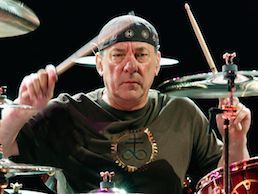 From a very early age, I’ve been a fan of the Canadian trio Rush. I recently had a chance to sit down with Neil Peart, the band’s longtime drummer and lyricist. A prolific writer, Peart has just published Far and Near: On Days Like These, his latest collection of observations and stories.
He was kind enough to send me a signed copy and I’ve been poring through it. Like his other texts, one not need to be a Rush fan to appreciate Peart’s story telling. It’s a beautiful text, rife with interesting photos, anecdotes, and factoids, as well as the occasional political commentary. For instance, the 2013 government shutdown of national parks nearly derailed Peart’s travel plans.

The following are excerpts from my interview with him.
PS: Tell me a little about your new book.
NP: This is a sequel to Far and Away, which was a collection of stories that I wrote for my website over a period of about three to four years. This, similarly, recollects my touring adventures on the road by motorcycle, some of sojourns at home, whether adventuring around in California or up in Quebec, Canada. Basically, they’re open in the sense that anything that I care enough about to work on can go into those stories.
I think in music you’re always hoping that you’ll have a like-minded audience and that the music you like making will appeal to them too. That’s the same way that I approach the stories. Just as we play our music for an ideal listener as it were, I have an ideal reader in mind who’s interested in nature like I am, interested in physical activity like I am, and human history. On other things along the way I try not to spread the audience too thin. If I find an interesting story somewhere, I’ll just leave a hint and say, ‘For anyone who’s interested, there’s a good story here.’ I won’t spend half a page for those who don’t care.
It occurred to me too that that’s what education should be. We should go to children and say, “There are some interesting things over here if you want to learn about plants or bugs or rocks or dinosaurs.” Not all of them will. Why bore them all with a subject that only a few of them are interested in?
That’s the approach that I take in the stories. I take a lot of care in the editing of them and the presentation of them on my website first. I then gather three or four year’s worth of them, which essentially combines artistic adventures as well as adventures in the wild, wild world.
PS: Beyond your observations, there are some really great photos in the book.
NP: The book is a collection, a hybrid of photographs and words. Over the years, I have found better and better ways of marrying the two and to think ahead. Oh, in that story, I’ll probably want a picture of that landscape or that moment. It’s something that has grown over time, not only to be a consuming art form for me but immensely satisfying–everything I want to write about, everything I want to share.
Most of it comes from enthusiasm in the true sense–things that get me excited I hope other people will get excited about too if I can just write them right. And that’s always true with music. It’s not the music you hear in your head that other people are going to hear. You have to be able to make it true enough to the image in your head and that’s where technique and technology come in for sure and knowledge. It’s not true and will never be true that someone who knows nothing can sit in a basement and make great music. It can never happen with any kind of great art. It takes a much bigger point of view than that. It doesn’t just take technique, of course. It doesn’t just take technology. They’re all tools that translate the music in your mind to the ears of another person–the visions in my mind through words and pictures to the imagination of another person.
I’m learning all the time. I’m evolving all the time as a human being. I’m getting better, I hope, in all of the important ways. So if I were less in the past it would be sad. It’s like when people ask me my favorite record, my favorite Rush album. How horrible it would be if I had to say something from thirty years ago. How embarrassing, right? Well I did something good thirty years ago but it’s been pretty much downhill since. No, no! I couldn’t live with that.
PS: You’re kind of reminding me of the Mark Twain quote about a teenager who thinks that his parents don’t understand him well. Twenty years later he remarked that they learned a lot.
NP: Exactly. That’s a good one, yeah. It was about his father, I think. When I was 21 I couldn’t believe how much my father had learned (laughs).
PS: Talk to me a bit about the subtitle of the new book. It seems that the phrase holds special significance for you.
NP: Remarkably so, yeah. It came about as so many beautiful things do: by accident. I was just reading an English magazine about old cars and in two cases the journalists were driving old Lamborghinis and were saying, “I felt I should be hearing ‘On Days Like These’ by Matt Monro.” I kind of knew who Matt Monro was, a Sinatra-type singer, but I hadn’t heard of the song. I just presumed that it was about beautiful days like these and I’m driving a beautiful Lamborghini around the English countryside. But, in fact, the song was the opening theme for the original of The Italian Job written by Quincy Jones. The lyrics were by Matt Monro’s manager. Imagining anyone’s manager being a lyricist? It still blows me away. But he wrote a lot of good songs; he was good at it.
The song has a mood about it. Watching the opening of that movie, Rossano Brazzi is driving an old Lamborghini over the Alps. Beautiful music is creeping in under the engine. The music just became one of those sound bytes, not an earworm. It never annoyed me. As I rode though Iowa or the English countryside or the Rocky Mountains or the Great Plains, that sound would be in my head (my helmet) playing all day long. I loved the words for it and the mood that it carried to me all the time. I still get it all the time.
I just loved the way the words on days like these resonated.
PS: In the book, you do quite a bit of wordplay. For instance, I didn’t know that word casino is from the Italian word for gathering place.
NP: (Laughs.) That was a story about Catalina Island off the coast of California. They have a beautiful old Art Deco-style building built in the 1920s. They call it the casino but there was never gambling there. I was curious. When I find a situation like that I go, “What a minute! What?” I had to do the research and find out those things.
Research, of course, nowadays is all about keystrokes. Good research means that you start with those links and keep going and going. Serious scholars point that out now. You cannot really just research on Wikipedia. As much as I love Wikipedia and support and contribute to it, you can’t stop there. That’s a beginning for real research.
When I’m looking into writing something about nature or history, I really have to make sure that I get my facts straight.
There’s another example from that same story. There was a place called Prisoner’s Bay on one of the Channel Islands. I loved that name. It was right out of The Hardy Boys or something. I wanted to find out why it’s called that. There was a simple story that some prisoners were marooned there during the Spanish era and then they disappeared, but the real story is way more complex and it took a lot of research to find out what really happened. The irony is that no one knows what really happened. There are other versions of that story that, when I wanted to write properly, I had to incorporate.
The same thing happens when I write about birds and animals. I want to get it right–and people for that matter. It takes a lot of thought and a lot of refinement and a lot of careful writing to put that forward.
I just ran into a quote the other day from Wallace Stegner, one of my all-time favorite Western writers. He said, “Hard writing makes easy reading.” Man… that is so good. I can’t believe that I never ran into it until now, but that is again the way that I approach it. I spend a lot time working over the words and pay an editor to help me get that clear. I have my test readers like Kevin J. Anderson does too–people he trusts to make sure that he’s getting across what he thinks he’s getting across.
It’s like what I said about music before. It’s not science (laughs). The fact that you can have a vision in your brain and try to describe it and transmit it doesn’t mean that it’s received. That’s the gift of technique and perhaps it’s easier explained in prose–in words–if you can get just the right words. In the primary instructional books of writing, the order of things the reader has to know, how to present and render a scene in the way that the reader needs to do it to see what you are seeing. That’s the simple definition of technique in that sense. Maybe if people have trouble with the natural musician idea, imagine someone who’s never written anything thinking that they can go in a basement and produce a great novel.
There is no such thing as a natural writer in that sense–without some type of schooling (often journalism, often a lot of failed unpublished words). For myself, I wrote for 20 years before I published and I’m so glad that I had all that practice. I’d go on a trip and write a little diary of it and share it with my friends and all that. I was learning how to do it and I’ve had good teachers–and the same with music all throughout my career with drumming.
Writing and music have to be learned over time and practiced. The great thing about live performance, at least in music (and that prose writers miss out on), is that you have an audience to judge how well you’re doing. That’s one of the great things that we’ve had.
Our background is in performance and I’ve come to realize in more recent years that our songs were written to play live. It seems like a simple thing but it’s not. Our songs were not written to be listened to in headphones or on the radio. They were written to be played. All of the little infinite detail that went into the arrangements and giving ourselves lots of breathing room in terms of playing what we wanted to play and using up any ideas that we had–all of those were conceived to be performed. I mean, there were rare exceptions in songs that we allowed to be a studio experiment. Thinking of most of the middle period of our songwriting, arranging, and recording, it was all to play live. All of those songs were made so we could still play them 30 years later–and like them. And that’s a great thing. On none of our songs now do we go, “Awww, I don’t want to play that again” because we still like those songs and we still like playing them in the physical, technical sense. A lot of them are a real challenge to get through. I take a deep breath before I start into them. And when you do them well you feel good. That’s an enduring reward we didn’t know we were getting ourselves into.
Click here to order Far and Near: On Days Like These.
Originally publishing on Huffington Post.
The post My Interview with Neil Peart appeared first on Phil Simon.
October 1, 2014
Facebook: The New King of Data Brokers?
 Perhaps you’ve never heard of the world’s largest data brokers—and that’s exactly how they like it. For instance, Acxiom brands itself as “a marketing technology and services company.” That sounds fairly benign, and it’s certainly preferable to the sinister term data broker.
When it comes to data, though, today Acxiom can’t hold a candle to Facebook. There a reason that the latter’s stock is flying so high. Unlike Apple, a company decidedly not in the data business, Facebook has certainly figured out how to monetize petabytes of unstructured user data. And Wall Street has taken notice.
The next logical, if not ethical, step for Facebook is to sell—or, as Facebook would put it, “open”—some of that data to those hungering for it: advertisers. As reported on Recode, Facebook has “reintroduc[ed] Atlas, the underused platform it bought from Microsoft last year. Facebook says Atlas can help marketers track the effectiveness of their ads around the Web; it also says it will allow them to buy ads on non-Facebook websites and apps, using Facebook targeting data.”
A few years ago, I argued that Zuck should charge users. I for one would pay $1/week for a premium, spam-free experience, and I suspect that millions of other Facebook users feel the same way. That never happened, and it’s not hard to read the tea leaves: Zuck’s believes his company can make more money via indirectly monetizing Facebook users through their data—and he appears to be right.
At least for now.
Facebook clearly possesses something that scores of established companies want: incredibly detailed user demographic and psychographic data. Want to find Millennials in Manhattan who like the HBO show Girls? No problem. Looking for male fans of the English prog rock band Marillion in London? Check. With 1.3 billion users (many of them legitimate and engaged), advertisers are frothing at the mouth. Atlas isn’t exactly a hard sell.
Mixed Feelings
As a capitalist, I can’t argue with what Facebook is doing. After all, no one forces anyone to share anything. Membership in any social network is not compulsory. Tweet and share at your own peril. I can’t fault a company for making money. In fact, publicly traded companies face fiduciary responsibilities to make money for their shareholders. And it’s not as if Zuck hasn’t been charitable.
On the ropes for so long, maybe privacy is finally making a comeback?
On the other hand, I’m still a bit queasy about so overtly being the product. Ditto for LinkedIn. Maybe I got it wrong in my open letter to Zuck. Instead of charging us for Facebook, maybe we users ought to be charging him for permission to use and sell all of our information, even in the aggregate.
It will be very interesting to see how ad-free social network Ello plays out. It’s no competitor to Facebook but its early growth is raising some eyebrows. On the ropes for so long, maybe privacy is finally making a comeback?
Cross-posted on Wired.
The post Facebook: The New King of Data Brokers? appeared first on Phil Simon.
Big Data and Privacy: Have We Reached a Turning Point?
“People have really gotten comfortable not only sharing more information and different kinds, but more openly and with more people—and that social norm is just something that has evolved over time.”
—Mark Zuckerberg
 We may look back at the period of the last few months of 2014 as Big Data’s turning point.
Just as the dust from the Snowden-NSA scandal was starting to settle, things got interesting. Facebook was outed for secretly experimenting on its users. Soon after, hackers grabbed nude pics from celebrity iPhones. Home Depot joined a phalanx of retailers hacked. In September, Tim Cook told Charlie Rose that Apple wasn’t in the data business, a thinly-veiled shot a Google. In fact, iOS 8 makes it impossible for Apple to comply with certain government requests for data. Not surprisingly, requests to join ad-free social network Ello skyrocketed.
Synthesizing these individual events, it becomes apparent that we’re reaching a tipping point. Many of us are moving beyond simple awareness around privacy and data issues. We are moving to action. How else can you explain the popularity and tremendous value of Snapchat and WhatsApp? Maybe Zuck was wrong about privacy after all?
There’s still enormous value to be gleaned from Big Data. Just tread lightly.
Look, there’s still enormous value to be gleaned from vast troves of unstructured information (read: Big Data.) Apple may not need to collect and monetize user data because of its healthy profit margins, but the company represents the exception to the general rule. Even Marc Andreessen openly questions whether many of these newfangled startups will survive unless they start making money relatively soon. Many CEOs of companies “on the bubble” aren’t above auctioning off user data to keep their companies afloat.
Simon Says: Behave Ethically
None of this means that you should alter your plans to hire a data scientist or to deploy Hadoop in your organization. By all means, go right ahead. Still, it’s essential to carefully evaluate your approach.
Are you collecting data first and asking questions later (if at all)?
Are you ignoring user and customer privacy concerns?
Are you being transparent about what you’re doing—and the data you’re using to do it?
Ignore these questions at your own peril. Big Data isn’t just about blithely collecting and acting upon data and abiding by pertinent legislation. Behaving in an ethical manner is increasingly becoming a sine qua non.
Feedback
What say you?
This post was brought to you by IBM for Midsize Business, but the opinions in this post are my own. To read more on this topic, visit IBM’s Midsize Insider. Dedicated to providing businesses with expertise, solutions, and tools that are specific to small and midsized companies, the Midsize Business program provides businesses with the materials and knowledge they need to become engines of a smarter planet.
The post Big Data and Privacy: Have We Reached a Turning Point? appeared first on Phil Simon.
September 22, 2014
Using Basic Data to Foil Tax Scammers
 Plenty of people believe that the IRS is incompetent, but I didn’t realize how little the organization understands about basic data.
Last night’s 60 Minutes segment on identify tax fraud drilled the point home. Sure, people have always tried to avoid paying taxes and looked for as many loopholes as possible. Those are givens. It’s obvious to me, though, that the highest levels of the organization are oblivious to the power of data to at least minimize these problems.
Sending 40 different refund checks to the same freaking address? You must be ‘shrooming. How is that not a basic audit report/alert? A college student could write a simple COUNT statement to alleviate the issue, but the top brass at the IRS doesn’t seem too concerned here.
Heads should roll.
Simon Says
It’s evident to me that many agencies are making progress with Big Data. Kudos to them. It’s also entirely clear that most have a long ways to go. Not asking basic questions is costing US taxpayers billions of dollars each year. We may not be able to eliminate fraud, but we are sure as hell not doing very much to stop it. We should be making our data work for us.
Feedback
What say you?
The post Using Basic Data to Foil Tax Scammers appeared first on Phil Simon.