Phil Simon's Blog, page 67
February 17, 2015
Twitter: Spinning in Circles
 At a high level, Message Not Received is about the increasing importance of clear business communication. I begin the book by citing several recent examples of terrible corporate communication, something that has become all too common today. If I were writing the book today, I’d probably start with how Twitter’s management has consistently mangled its message over the past year.
What Type of Circles?
I’ve been critical of Twitter and its management before, not that it’s terribly difficult to find fault with how the company’s top brass is presenting itself. Poor communications often start at the top of the organization. Perhaps its confusing communications and culture have resulted in alarming levels of executive turnover?
Greater clarity leads to a longer leash.
Increasingly, sentiment among prominent investors is starting to shift. Perhaps current head honcho Dick Costolo may no longer be the right person to lead the microblogging service. Adding fuel to the fire, consider Costolo’s words to investors during a recent earnings call:
You should think about the size of our total audience as a series of geometrically eccentric circles.
What type of circles?
You mean concentric, dear boy, and it didn’t take long for the Twittersphere to chime on the gaffe:
@edeng @dickc since you are the second person to notice, for the record, they are not concentric circles: http://t.co/ebcpxJA2Ja
— Alex Roetter (@aroetter) June 25, 2014
What’s worse, Cosotlo repeated the error later in the call. Costolo’s interviews don’t exactly confer clarity and confidence. As I recently tweeted after watching him on Bloomberg West:
Horrible misuse of 'use case' by @dickc. @bloombergwest. Just once I'd love for a reporter call out interviewee #jargon #MessageNotReceived
— Phil Simon (@philsimon) February 13, 2015
Simon Says
Look, everyone misspeaks from time to time, present company included. At one point or another, we all put our feet in our mouths. There’s a world of difference, though, between an off-the-cuff remark at a cocktail party and a repeated error during an earnings call for a public company worth $30 billion. Investors are more likely to be critical of these types of misstatements when they can’t understand a company’s vision.
Want a longer leash? Try communicating clearly.
Feedback
What say you?
The post Twitter: Spinning in Circles appeared first on Phil Simon.


February 16, 2015
The New Microsoft: A Plank in Other Platforms
 Since I was a kid, I’ve played poker with reasonable success. I even won a 40-person tournament in Vegas a few years back. To be sure, it’s a thinking person’s game, a fascinating amalgam strategy, patience, aggression, luck, and skill.
Contrary to popular belief, though, not all games of chance are created equal. For instance, poker is fundamentally different than roulette. In the latter, the house must act in a certain way. Always. A dealer cannot arbitrarily decided to hit on 17 because you have 20.
Along those lines, one of my favorite academic interests is game theory. In both poker and game theory, actors need to make decisions based largely upon imperfect information. What should you do when you don’t know what your opponent will do? (For more on this, see the prisoner’s dilemma.) And, to boot, what do you do when you face an uneven playing field?
Enter Microsoft
Against this backdrop, I find Microsoft’s recent moves very interesting. New CEO Satya Nadella may not be the world’s best communicator, and perhaps he’s even a little insensitive. Still, he clearly understands the importance of platforms and Microsoft’s declining relevance on the most popular ones (read: Amazon, Apple, Facebook, and Google). Exhibit A: A scant six years ago, more than 90 percent of all devices connected to the Internet via some version of Microsoft Windows. Today, by the company’s own admission, that number has dipped to about 14 percent.
Use other platforms as planks in your own platform.
You’re Satya Nadella. What do you do when you assume control of a company that’s already lagging its competitors in key areas? (Microsoft’s market share on mobile devices now stands at under three percent.)
There’s no one simple solution to Microsoft’s challenges, no five-point listicle. In reality, Microsoft will have to take a bunch of risky steps and gambles, not one of which guarantees success. One such recent move: Office Everywhere, a stark departure from the company’s mindset under the Balmer and Gates’ administrations.
Simon Says
One of the key points in The Age of the Platform can be stated as follows: It’s usually wise to use other platforms as planks in your own platform. Office Everywhere won’t turn Microsoft around overnight, but at least Nadella understands that the world has shifted.
Feedback
Can you say the same about your company’s senior management?
The post The New Microsoft: A Plank in Other Platforms appeared first on Phil Simon.
February 12, 2015
On Restrooms and Eye Glasses: An E-Mail Parable
 A while back, I flew home from a conference and sat next to the chief operating officer of an 800-person company. (Call him Steve here). We started chatting about business communication and he remarked that he receives upwards of 300 e-mails per day. Every day.
I asked Steve if all of the those messages were important and he chuckled. Many of them weren’t—maybe even most, he told me. Intrigued, I asked him for a recent example of a completely superfluous message.
It turns out that a female employee left a pair of glasses in the women’s restroom at his company. She understandably wanted to know if anyone had found them. To that end, she then sent a message to 800 people via the company’s “all employee” e-mail address.
I then asked Steve the following questions:
Does his company track employee gender in its HR/payroll system (Answer: Yes.)
About what percentage of employees are men? (Answer: More than half.)
Are the bathrooms at his organization unisex? (Answer: No.)
Do men often sneak into the women’s lavatory? (Answer: No.)
Is a male employee likely to find these glasses? (Answer: No.)
So why did more than 400 men need to receive this woman’s e-mail? (Answer: Good question.)
I asked Steve if there was at least a separate corporate inbox (or, better yet, a truly collaborative tool) that would let people post and claim lost items. There wasn’t. Steve correctly sensed an opportunity to lighten his e-mail load.
This isn’t 1995. There are other effective communication tools beyond e-mail.
Simon Says
Requests like these are very common and innocuous, but they underscore a number of serious communications issues.
No, unnecessarily diverting the attention of 400 employees for a few seconds certainly isn’t the end of the world. Make no mistake, though, constant distractions such as these add up, even if they are fleeting ones. They contribute to a feeling of being overwhelmed. They reinforce the misguided belief that e-mail should always serve as the universal internal communications mechanism for everything.
Feedback
What say you?
The post On Restrooms and Eye Glasses: An E-Mail Parable appeared first on Phil Simon.
February 11, 2015
How Developers Are Using New Platforms to Innovate
Go to any tech conference these days and you are likely to hear plenty of talk about platforms, software development kits (SDKs), and application programming interfaces (APIs). The general theory is that companies can realize significant benefits when external developers take their products and services in new, exciting, and often unanticipated directions. (For more on this, see my book The Age of the Platform: How Amazon, Apple, Facebook, and Google Have Redefined Business.)
Several examples will illustrate how important platforms have become to business. You’ve probably heard of the Gangnam Style video, the first to reach one billion views. (One can only guess at how much money Google has earned from its YouTube acquisition.) And then there’s the über-popular game Angry Birds. Steve Jobs was a mad genius, but even he could not have foreseen the game’s popularity when Apple launched the AppStore in July of 2008. To date, the addictive game has been downloaded more than one billion times.
In the Age of the Platform, the fundamental question around innovation changes.
Platforms, Innovations, and the Folly Predictions
Sure, Big Data is here, but it remains impossible to predict which videos, songs, and apps will go viral—and that’s precisely the point of platform thinking. By externalizing innovation, companies minimize the risk associated with putting all of their eggs in one expensive, time-consuming basket. Traditional notions of planning, management, and control fall by the wayside. To a large extent, developer ecosystems and user communities now determine whether products ultimately succeed or fail. It’s a tradeoff, but one that many organizations have come to accept.
Microsoft, BlackBerry, Amazon, and other companies late to the mobile explosion are more than willing to share app proceeds with developers. Each is following—or at least, trying to follow—the Apple model. By paying out more than $25 billion to external developers via its AppStore, Apple has staked a claim as the place for this highly courted group to be. Expect that to continue with HomeKit.
Beyond these stalwarts, thousands of other lesser known companies have embraced platform thinking. Put differently, one need not be a behemoth to take advantage of APIs and SDKs. On the contrary, many small companies are doing interesting things by combining their own intellectual property and ideas with third-party tools and data sources. The possibilities are mind-blowing.
One example is Thalmic Labs. The company’s flagship product, Myo, is a gesture-controlled armband that at first glance obviates the need for a proper computer mouse. In fact, though, its uses run the gamut.

Thalmic’s developer evangelist, Chris Goodine, gave me a demo of Myo at Dassault Systèmes SOLIDWORKS WORLD this week. After it “learned” the particulars of my arm, hand, and fingers through a quick pairing process, I was moving objects on a computer screen through simple physical gestures. Zooming in and out was as easy as moving my fingers. The computer had become an extension of myself. While not quite Singularity, Ray Kurzweil certainly would have approved.
It didn’t take long for my mind to start racing about what Myo and its ilk could accomplish. Sure, there’s the elephant in the room (read: the possibility to improve gaming à la Microsoft Kinect). That’s just the tip of the iceberg, though. Consider a doctor in one country who could perform a complicated surgery remotely. A patient undergoing physical therapy could precisely track her movements and then analyze her progress through the extensive capturing of data. She could expedite her recovery and avoid making time-consuming treks to PT officers.
Built on top of the SolidWorks API, future iterations of the armband will doubtless tie in new data sources. Google Maps? Facebook? Twitter?
Simon Says
In the Age of the Platform, the fundamental question around innovation changes. It’s less about encouraging innovation within a company’s walls, although that remains essential. These days, it’s as much—if not more—about how to get the outside world to innovate on your company’s behalf.
Originally published on HuffPo. Click here to read it there.
The post How Developers Are Using New Platforms to Innovate appeared first on Phil Simon.
February 10, 2015
Not Your Father’s 3D Printer
 Although he doesn’t bat 1.000, Chris Anderson sports a pretty good batting average when it comes to the next big things in business and technology.
In The Long Tail: Why the Future of Business Is Selling Less of More, the ex-Wired editor-in-chief described the benefits that the unlimited shelf space of digital stores (read: iTunes, Amazon, etc.) offer to even small-scale businesses, musicians, and writers. (Interestingly, recent research reveals that the tail may be much longer and thinner than Anderson posits. For more on this, see Blockbusters: Hit-making, Risk-taking, and the Big Business of Entertainment by Anita Elberse.)
Anderson’s next text was no less prophetic. Free: The Future of a Radical Price manifested how many companies can give away at least a basic version of their products and services. Although it doesn’t work all of the time, the Freemium business model has influenced untold numbers of companies, from TripIt to Evernote to Kim Kardashian games.
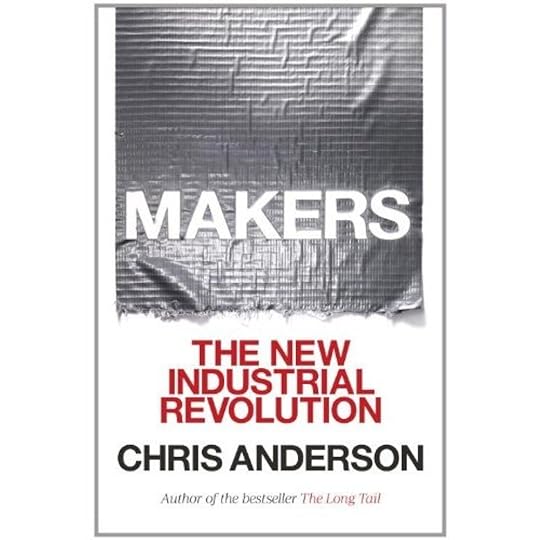
Anderson’s most recent text looks at the emerging trend of 3D printing (aka, additive manufacturing). Makers: The New Industrial Revolution portends a future analogous to desktop printing in the mid-1980s. For decades, we have taken for granted the ability to affordably generate a physical document from a computer, but not that long ago it was a radical notion. Now largely commodities, not too long ago computer printers used to cost a bloody fortune.

To be sure, not everyone buys into the hype. Even if you accept their benefits, 3D printers are still expensive, but the history of technology suggests that it’s just a matter of time before they can do much more and cost much less. Makers and progressive companies are just scratching the surface of their possibilities. We’re very much in the first inning.
When it comes to technology, one size never fits all.
The Evolution of 3D Printing
A while back, I watched a demo of a 3D printer that spit out an actual, playable guitar. After the initial shock wore off, I wondered, “How is that even possible?” To make a long story short, successive layers of plastic or metal powder are deposited according to the CAD file’s instructions.”
It turns out that most commercial 3D printers today use plastic filament spools to spit out objects. (Insert obligatory reference to The Graduate.) Plastic may serve as an acceptable material for guitar picks or dollhouses, but that’s hardly going to cut it across the board. What if a company wanted to print parts for, say, airplanes or race cars? Plastic would hardly suffice. A much stronger material like carbon fiber would do the trick, but early 3D printers couldn’t accommodate such a robust material.
Attending the Dassault Systèmes conference SOLIDWORKS WORLD this week, I saw a glimpse of the future of 3D printing and it looks a little like this:
MarkForged has launched the world’s first carbon fiber 3D printer.
[image error]
In a way, significant differentiation among 3D-printing companies shouldn’t come as a surprise any more than it did with its desktop antecedent. After all, not all desktop printers are created equal. A proper Fedex store sports vastly different printing needs than a grandmother who likes to print out photos of her grandkids. When it comes to technology, one size never fits all.
Simon Says
I’m no expert on the subject, nor do I have a crystal ball. It doesn’t take a rocket surgeon, though, to see that 3D printing will continue to evolve in new and unexpected ways.
In other words, it looks like Chris Anderson was right again.
Feedback
What say you?
This post originally ran on Wired. Click here to read it there.
The post Not Your Father’s 3D Printer appeared first on Phil Simon.
February 9, 2015
What the Pandora Debate Teaches Us about Big Data
 Do Pandora, Spotify, and other all-you-can-eat music sites properly value and compensate musicians for their work? Will these streaming services save the music industry or hasten its eventual demise? Let’s hope not. As Friedrich Nietzsche said, “Without music, life would be a mistake.”
If you care about the future of music, questions like these are incredibly important. Artists not paid for their work are less likely to write and record music. No, the members of Metallica and U2 are financially set for life (and have been for a long time), but what about their progeny? Will they be able to pay their bills as professional musicians?
(Over)looking at the Data?
Let this serve as the starting point for my recent interview with Marillion keyboardist Mark Kelly. By way of background, most people have never heard of his band, especially in the U.S. Nevertheless, Marillion has carved out an impressive niche for itself over the past three decades. Its fans (aka, Freaks) are among the most passionate and devoted in the world.
There’s enough data out there to justify just about any idea, product, service, or business.
When it comes to the fairness of streaming services, Kelly is no iconoclast. Plenty of other prominent rock stars share his views, most notably Taylor Swift. Of course, there’s anything but unanimity on the subject of royalties. Case in point: Radiohead frontman Thom Yorke recently decided to distribute his new album on BitTorrent via a “bundled paygate.” Yorke may not have only relinquished potential sales and royalties (as was his right); his decision may have also arguably devalued music further.
Kelly and I discussed these topics during our chat. He wasn’t speaking from some theoretical stance. The thorny issues around streaming and privacy affect his very livelihood.
Despite his own belief, Kelly noted how there’s enough data to make either case. In other words, if you believe that these sites help musicians, you can find plenty of data and examples. If you believe the converse (as I do), then you’re in luck. You can also find plenty of data and examples.
Forget music for a moment. The larger point is that there’s enough data out there to justify just about any idea, product, service, or business. This is both good and bad. I’m all for collecting, interpreting, and acting on data, but there’s a limit. Many people spend too much time on the first and too little on the last. (Read: paralysis by analysis.) As I told Dorie Clark on Forbes:
Contrary to what some people believe, intuition is as important as ever. When looking at massive, unprecedented datasets, you need some place to start. Intuition is more important than ever precisely because there’s so much data now. We are entering an era in which more and more things can be tested.
Simon Says: Uncertainty Is Alive and Well.
The tide has certainly shifted. Today, major corporate decisions without any data behind them are often viewed as irresponsible and destined to fail. So, spend the next decade collecting data, right?
Not even close. The law of diminishing returns applies to data as well. At some point, recognize that you’ll never be able to collect all relevant data. If you’re not sure about where to start, fret not. Plenty of partners can help organizations get their arms around new, complex data sources.
The era of Big Data has not brought about an end to uncertainty.
Feedback
What say you?
 This post was brought to you by IBM for Midsize Business, but the opinions in it are my own. To read more on this topic, visit IBM’s Midsize Insider. Dedicated to providing businesses with expertise, solutions, and tools that are specific to small and midsized companies, the Midsize Business program provides businesses with the materials and knowledge they need to become engines of a smarter planet.

The post What the Pandora Debate Teaches Us about Big Data appeared first on Phil Simon.
February 3, 2015
Is Message Not Received a Departure?
 Over the last few weeks, I’ve moved from editing mode to media-whore/marketing mode. This is very much the hard part about books. Truth be told, I prefer the former to the latter, but the fleas come with the dog.
As I recently tweeted:
#Writing is easy. #Marketing is hard.
— Phil Simon (@philsimon) January 31, 2015
Some of my friends and media contacts are a bit surprised about the subject of Message Not Received. Questions have included:
Why such a departure?
Why write a book about business communication as opposed to, say, the Internet of Things?
Wouldn’t that make more sense?
After all, aren’t you a tech and data guy?
These are all valid queries. In fact, I spoke with a publisher about a writing a book on the Internet of Things but the passion wasn’t there. Sure, it’s cool, but it’s a ways off and most organizations are still struggling with many technologies and concepts, some of which are no longer brand-spankin’-new.
Why write this book?
To paraphrase the inimitable Krusty the Clown, let me be blunt:
Organizations usually squander the massive opportunities that data and technology provide because their employees can’t effectively communicate. Period.
I can’t state it any simpler than that.
Simon Says
When viewed against that lens, Message Not Received is anything but a departure from my previous work. Effective communication is usually a necessary—but not sufficient—condition for success these days. Rare is the company that succeeds in spite of itself.
Feedback
What say you?
The post Is Message Not Received a Departure? appeared first on Phil Simon.
February 2, 2015
The Case for Small Data Analytics
 Amidst all of the hype and jargon surrounding Big Data, perhaps no term is as hackneyed as Big Data analytics. Ask ten thought leaders, consultants, or salespeople what this means and you’re bound to receive ten different answers.
Here’s a definition as good as any:
Big Data analytics enables organizations to analyze a mix of structured, semi-structured, and unstructured data in search of valuable business information and insights.
 No doubt that, equipped with the right tools (e.g., Hadoop) and mindset, organizations can unearth fascinating insights into their troves of data. In some cases, they’ll be able to this independently. In others, though, they might need to enlist the help of partners.
I often wonder, though, if the sexy nature of the term Big Data inadvertently inhibits many individuals, groups, departments, and companies from effectively using their Small Data. You know, the structured, relational database-friendly stuff.
An Example
In December, I experienced a number of über-frustrating broadband outages. The problems required me to call my provider 25 times, including 16 during one particularly irritating three-day period. (Calm blue oceans, I kept telling myself.) To be sure, the content of each call constituted the very definition of unstructured data.
The provider’s recording claimed that “all calls may be recorded to ensure quality assurance.” We have all heard that message before. In theory, there would be a call detail record (CDR) for each of my exchanges at minimum. The larger question is, What do employees actually do with recordings that don’t go viral? (See Ryan Block’s Comcast call as an example of a company forced to deal with a crisis of its own doing.)
Not nearly enough, as far as I’m concerned.
Organizations would be wise to make better use of their Small Data.
Forget the substance of each conversation for a moment (read: the data); just the sheer number of my calls over such a short period of time should have served red flag to anyone in the company’s customer retention department. Yet, I heard nothing crickets. Putting aside my frustrations as a customer for a moment, the data guy in me was amazed at what was happening—and not happening with the data and metadata I generated over the course of that month. Given the situation, I couldn’t shake the following queries:
Why wasn’t anyone looking at my tweets and phone calls and reaching out to me?
Why was the onus always on customers to report their issues and status updates?
Why wasn’t anyone calling me to ensure that my service appointment actually took place?
Why didn’t anyone call me after I had stopped calling? Or didn’t anyone even notice?
Rest assured that if I ran this company, things would be dramatically different. Forget some vague notion of “empowering” a retention department and encouraging “engagement.” Give me data, damn it. Entry-level phone reps would immediately know when customers called and which were at-risk of leaving. Dashboards would augment—if not altogether replace—individual e-mails. The right people would receive alerts. I would hold employees accountable for responding to them beyond perfunctory Twitter responses of “I’m sorry you’re having issues. Please give us your address.” After all, how hard can it be to store a customer’s Twitter handle in her profile?
Simon Says
There’s no question that organizations can learn a great deal from truly unwieldily amounts of data. I have zero doubt, however, that those same organizations would be wise to make better use of their Small Data.
Feedback
What say you?
This post was brought to you by IBM for Midsize Business, but the opinions in this post are my own. To read more on this topic, visit IBM’s Midsize Insider. Dedicated to providing businesses with expertise, solutions, and tools that are specific to small and midsized companies, the Midsize Business program provides businesses with the materials and knowledge they need to become engines of a smarter planet.
The post The Case for Small Data Analytics appeared first on Phil Simon.
January 30, 2015
Introduction to Message Not Received
 In a little over one month, my seventh book will be released. I believe that Message Not Received is my best work since The Age of the Platform.
Wiley and I are just putting the finishing touches on it. It the meantime, help yourself to the 17-page introduction of the book. Here, I lay out the plan of attack for the entire text.
Introduction: Message Not Received
The post Introduction to Message Not Received appeared first on Phil Simon.
January 29, 2015
How Language Routinely Inhibits HR
 I’ve seen throughout my career how HR folks routinely struggle with data. Big. Small. Structured. Unstructured. It doesn’t matter.
And the same holds true with communicating about data. It’s hardly an exaggeration to claim that the topic isn’t exactly in the sweet spot of most HR professionals.
At least you’d think that conferences designed to increase awareness, understanding, and, ultimately and most important, action on Big Data would be able to clearly communicate their messages.
Think again.
Here’s the front-page copy from the Big Data HR Forum:
As an experienced HR Professional you are facing a perfect storm of global macro competition, shrinking HR resources, fierce competition for superior talent, disruptive HR technologies, and an explosion of available workforce data, all the while your CEO is asking you for more and more input to make faster and better business decisions. In today’s new economy, data is the new oil and big data projects when implemented well can give you the answers to questions that make you a power player in your organization’s strategic planning process, making you an invaluable strategic asset with access to actionable business insights that improve talent acquisition, retention, development and organizational performance.
The first sentence contains 53 words (and many lofty ones to boot), only to be outdone by the second (56). That’s just way too much to swallow, never mind truly understand.
What’s a better way for attendees (both real and potential) to truly receive the conference’s message? Funny you should ask:
HR professionals today are facing a perfect storm of sorts. The business world is downright chaotic. Organizations have to deal with increasing global competition, shrinking resources, a perennial war for talent, disruptive technologies, and an explosion of available workforce data. If that’s not enough, CEOs are asking for greater input—and are not afraid to go elsewhere if HR cannot act in a timely and valuable manner.
In today’s new economy, data is often called the new oil. Big Data can help answer increasingly important questions, but just what is it? Where to begin? And how does one separate the signal from the noise?
The Big Data HR Forum will address these essential questions. It will demonstrate how HR finally can get off of the sidelines and truly participate talent acquisition, retention, compensation, organizational development, and other key process.
Simon Says: Simplify the language and you just may see real results.
There’s tremendous opportunity to convey true understand if a pesky thing like language didn’t get in the way.
Simplify the language and you just may see real results. Little real understanding has ever resulted from contrived, confusing language.
Feedback
What say you?
The post How Language Routinely Inhibits HR appeared first on Phil Simon.