Phil Simon's Blog, page 75
July 2, 2014
Cloud Computing Lessons from Apple
 A few years ago, I bought $AAPL near its zenith. True to form, my small purchase singlehandedly sent the stock into an amazing downward spiral, at one point hitting $375. Although the stock has rebounded as of late to $630 before splitting in June at 7:1, it’s still a relatively cheap stock by conventional measures (read: P/E ratio).
Investor sentiment shifted at some point, perhaps fueled by concerns over whether CEO Tim Cook could sustain the success of his iconic predecessor. Innovation (or perceived lack thereof) is of particular concern to many would-be Gordon Gekkos. After all, what significant new product has Apple introduced after the iPad? Tweaks to iPhones don’t count. (Fair point.) What’s more, some wonder if Apple really gets cloud computing. It hasn’t launched a competitor to Amazon AWS, Microsoft Azure, and Google’s cloud.
Overblown Concerns?
A look at the numbers, though, reveals that Apple generates billions of dollars from cloud computing every year. And that number has increased seven-fold in the last eight years. The following chart by Horace Dediu displays Apple revenues from cloud-based products and services:
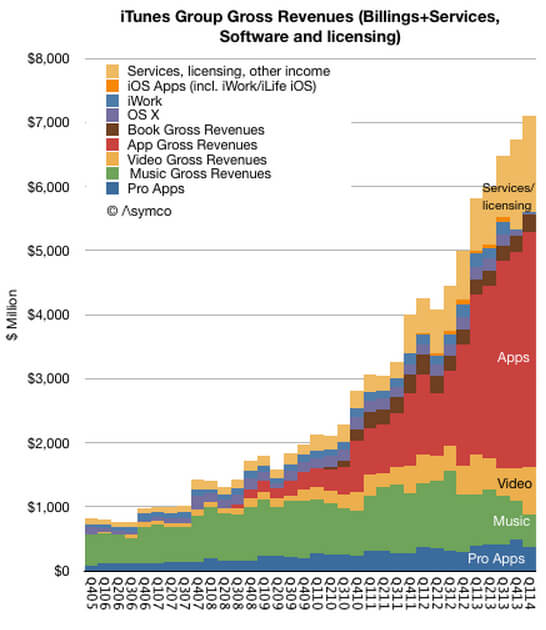
Click to embiggen.
Dediu continues: “Not getting the cloud” means that in the last 12 months Apple obtained:
800 million iTunes users
An estimated 450 million iCloud user spending
$3 billion/year for end-user services”
The statistics are amazing and only serve to strengthen my belief that Wall Street has been just plain wrong about Apple over the past two years.
Forget the Numbers. Look at the Direction.
I don’t dispense investment advice for a living. You are better off throwing darts at a board than making bets based on thoughts on the mercurial beast that is the stock market. I do know a thing of 30 about technology, though. To that end, there’s a great deal to learn here, although it’s unfair to compare just about any company to Apple. We’re talking about one of the largest, most influential companies in the world.
Don’t think of cloud computing as a discrete “IT project.”
The chart above displays revenues generated via cloud computing by category. (Licensing revenue has taken off like a rocket ship.)
To be sure, these are massive numbers, but even they obscure the total impact of cloud computing at Apple. Consider that they ignore what must be considerable savings from using cloud-based tools internally. Brass tacks: Apple understands the import of cloud computing as much as any company, not that that alone explain its remarkable success.
Simon Says
Put differently, Apple proves that a company is never finished with cloud computing, at least for the foreseeable future. Don’t think of it as a discrete “IT project” that goes live or a report that needs to be written once. Think about ways to do more.
Feedback
Are is your organization doing more with cloud computing today it was five or two years ago? Are there plans to deploy even more cloud-based applications?
 This post was brought to you by IBM for Midsize Business. The opinions in my post are my own. To read more on this topic, visit IBM’s Midsize Insider. Dedicated to providing businesses with expertise, solutions, and tools that are specific to small and mid-sized companies, the Midsize Business program provides businesses with the materials and knowledge they need to become engines of a smarter planet.

The post Cloud Computing Lessons from Apple appeared first on Phil Simon.


July 1, 2014
Publishing, Piketty, and Predictions
John Grisham. Steven King. Jack Canfield. Each author has sold hundreds of millions of books. Yet, before they were A-list authors, established traditional publishers rejected manuscripts from each of them, forcing them to either self-publish or to work with very small independent presses.
And the converse is true. More than 70 percent of all books don’t “earn out.” That is, authors fail to sell enough books to pay their publishers back their initial advances. The money that the author receives upon signing a contract most often represents the only check they will receive. Ever.
The forces of inertia are remarkably powerful in many industries, and publishing is no exception. As Michael Meyer wrote in 2009 New York Times’ piece:
Yet despite the economic downturn, and the fact that 7 out of 10 titles do not earn back their advance, the system doesn’t seem to be going away anytime soon. In recent interviews, a dozen New York-based publishers and agents told me, more or less, “Publishers have to keep buying books,” and “They have to bid for the best books” — which in large part means those that will sell.
Publishing in 2014
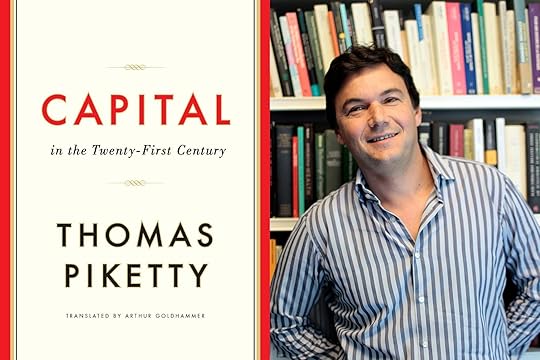 The Grisham and King examples might seem dated to some. Let’s look at something more contemporary. Surely publishers have improved their batting averages in the last five years, right? Perhaps not. Case in point: the ostensibly inexplicable bestselling book by an obscure French economist in 2014. Thomas Piketty’s 700-page tome on income inequality, Capital in the Twenty-First Century, is the very definition of a surprise bestseller, and not just among laypersons. Even smartypants economists were shocked. “When the book came out,” says economics professor Brad DeLong, of the University of California at Berkeley, “I thought it had an audience of three people in Berkeley”—himself, economic historian Barry Eichengreen, and Christina Romer, former head of the president’s Council of Economic Advisers.
Big Data does not mean the end of uncertainty.
You’ll get no argument from me on the state of traditional publishing and its inability to adopt to changing times. That’s one reason that I started my own micropublisher in 2010. Having penned more than a few books, I know where the bodies are buried. As such, let me say this about the book acquistion process: most publishers and acquisitions editors typically use at least rudimentary data when making the “buy/don’t buy” decision. Data include the prospective author’s:
Previous book sales
“Platform” (i.e., social media numbers like Twitter followers, Facebook likes, etc.)
Number of mailing list recipients
Number of previous and forthcoming speaking gigs
Proposed topic/competition (e.g., Is it another social media book?)
Although better than merely relying upon gut feeling, using data like this doesn’t come remotely close to successfully predicting future book sales. There’s just no way to account for a bevy of unknown factors, not the least of which is luck.
Simon Says
We can certainly get better at making predictions. Big Data offers tremendous promise. Still, it’s important to manage expectations here. People who believe that new software, methodologies, and consultants will eliminate uncertainty are bound to be disappointed. There’s a world of difference between managing the future and predicting it.
Feedback
What say you?
 This post is brought to you by SAS.
The post Publishing, Piketty, and Predictions appeared first on Phil Simon.
June 30, 2014
Business Words and Phrases that Annoy Me
I can be a bit of a prickly pear when it comes to language, especially among business folks. Jargon has always made me bristle, and I avoid it like the plague in my talks, posts, books, and everyday conversation.
In no particular order, here are some absolute verbal atrocities that I hear far too often:

Net net. I shudder every time that I hear this one. Completely meaningless.
Very unique and really unique. Unique is a superlative and a binary. Either something is unique or it isn’t. Period. There are no degrees.
Price point. Price is just fine by me. I’ve never heard a decent explanation of why “point” is needed here.
Also too. John Clayton of ESPN makes me cringe with this one pretty frequently, but I’ve heard it in business contexts as well. Just awful.
Transition (verb). What’s wrong with moving into a new role? Transition is just another example of nouns turned into verbs.
At the end of the day. One of my bosses at CapitalOne a zillion years ago routinely incorporated this one into his lexicon. Every time he said it, I used to think to myself “we go home, eat dinner, and go to sleep.”
It’s all about execution. This one is the epitome of facile. A consultant I knew used to drop this one like it was some type of grand revelation. It goes without saying that execution matters, what if you’re executing on the wrong strategy? Whoops. What’s more, luck, competition, and other factors also play big roles in outcomes. Don’t let anyone tell you any different.
It is what it is. This tautology is nothing short of moronic. When is something what it isn’t?
Thinking outside the box. This one is beyond hackneyed. Forget boxes. These days, I try to think inside of a pentagon or, at a minimum, a triangle. Yes, we get it. Creativity matters.
Honorable mention goes to “pivot.”
Since I’m a student of dataviz, check out this pretty neat Tagul word cloud that I created with some of the worst jargon I’ve heard:
How about you? What grinds your gears?
The post Business Words and Phrases that Annoy Me appeared first on Phil Simon.
June 24, 2014
On Microsoft, Android, and Platform Thinking
 File this under previously unthinkable.
Microsoft has released an Android phone. I’m a betting man, and I’d wager that such a move would have been considered a moonshot even four years ago. Imagine a Vegas casino taking such a bet.
Some may lambaste the Redmond giant for its mobile inertia and failure to understand The Innovator’s Dilemma. No argument here, but kudos to Microsoft for realizing–and acting upon–a key tenet of platform thinking: using other platforms as planks in your own. Amazon maintains its own YouTube channel. Facebook is hardly silent on Twitter. I could keep going.
Simon Says
Amazon’s Fire phone represents an attempt to create and grow its own ecosystem. Maybe that will work but many are justifiably skeptical, present company included. An alternative and potentially better stratagem is to piggyback on successful existing platforms. Never underestimate the importance of admitting defeat and making the best with the hand you have.
The post On Microsoft, Android, and Platform Thinking appeared first on Phil Simon.
On Lawnmowers and Data Management
 The battery on my 18-month-old lawnmower recently died. Rather than buy a new battery and possibly face this dilemma again next year, I decided to go electric.
After doing some market research, I knew which model I wanted. On a warm summer day in Las Vegas, I ventured into my local Lowes. I saw the model I wanted on the shelf but didn’t see any in stock. I finally found an employee, and he punched the product number into the computer.
Voila! Four are in stock, but where are they?
As it turns out, that is the two-hundred-dollar question. Lowes employee number one searches in vain, but he can’t help me. Nor can numbers two and three. The mowers are here, I’m assured, but we just don’t know where.
After 30 minutes of puzzled looks from Lowes’ personnel, I leave the store miffed that we can’t find one of four 50-pound lawnmowers. We weren’t looking for boxes of TicTacs, after all. Employee number three told me that “Dave” probably knew where they were, but he was out at lunch.
Not exactly confidence-inspiring. Think of this as the anti-Amazon.
All Too Familiar
Sound familiar? It does to me. Fifteen years ago, I worked for a Fortune 50 company that couldn’t tell you how many people it employed in any given week. (No, I’m not kidding.) Approximating headcount became a two-week endeavor, and readers of my blog know that I’m not the most patient person on the planet.
What is suboptimal data management costing your organization?
As I left the Las Vegas’ Lowes, I felt an odd sense of relief. At least other lines of business were struggling with basic data and inventory management.
Simon Says
Big Data, KPIs and advanced analytics are amazing. Remember one thing, though, as you enter the era of Big Data: boring data management still matters. Big time. In this case, it cost Lowes a sale.
Feedback
What is suboptimal data management costing your organization? Do you know? Do you care?
The post On Lawnmowers and Data Management appeared first on Phil Simon.
June 17, 2014
Android Fragmentation: A Dataviz on Platform Strategy
In The Age of the Platform, I detail the very different ways that Apple and Google have approached building their mobile planks. In short, iOS is closed while Android is open–and by open, I mean chaotic.

The above visual comes from OpenSignal. (Click on the image to see more interesting numbers on mobile OS usage.)
Knowing that Android is fragmented and seeing it displayed are two very different things. Brass tacks: it’s simply impossible to standardize Android at this point. That genie is out of the bottle, at least for the foreseeable future. Of course, this begs the inevitable question: Is it better to build a closed or open platform?
Is an open or closed approach better? It depends on a bevy of factors, many of which are shifting.
Those searching for an easy answer will go wanting. Each method offers different advantages. In other words, there’s no one right way to build a platform. As Ben Evans writes:
Android fragmentation isn’t of itself a bad thing–it’s inherent in the choices that Google made. This is what ‘open’ and ‘choice’ look like. And I doubt if it’s possible to have an ‘un-fragmented’ device landscape that includes both $600 devices and $50 devices: some scattering in capability is part of the deal. If you want to have thousands (literally) of OEMs, and a huge range of choice and price points, well, you’re going to have different devices with different capabilities.
Without question greater innovation may result from so much openness, although developers understand that their apps may not work on many or most Android devices. Perhaps this explains why, despite Android’s market dominance, most developers opt for an Apple-first approach.
Simon Says
Is an open or closed approach better? It depends on many factors, many of which are shifting. Microsoft struggled when many of its customers clung to Windows XP, despite the launches of Vista, 7, and 8. I never count Google out, but Android faces that same problem in spades.
It will be very interesting to see which approach companies like IBM will take in their quests to woo developers and build their own formidable ecosystems. I for one will be watching. As Joshua Brustein recently wrote for BusinessWeek, “Just because you have a platform, it doesn’t mean that everyone who doesn’t is screwed.”
Feedback
What say you?
This post was written as part of the
IBM for Midsize Business
program, which provides midsize businesses with the tools, expertise and solutions they need to become engines of a smarter planet. I’ve been compensated to contribute to this program, but the opinions expressed in this post are my own and don’t necessarily represent IBM’s positions, strategies, or opinions.
The post Android Fragmentation: A Dataviz on Platform Strategy appeared first on Phil Simon.
June 16, 2014
Site Issues
Over the past few weeks, I’ve been having some issues with the menu bar disappearing.

Click to embiggen.
I’m working with my hosting company to resolve the issue. Since the bar disappears, there’s no way to realistically navigate the site, other than the site map in the footer.
If you see no menu and need to reach me, just here to connect.
The post Site Issues appeared first on Phil Simon.
HBR Webinar on The Visual Organization

My 60-minute webinar for Harvard Business School is now live. In it, I discuss The Visual Organization, Netflix, Autodesk, and ways to embrace data visualization.
The post HBR Webinar on The Visual Organization appeared first on Phil Simon.
June 12, 2014
The Invisible Cloud
There’s no one right way to launch products and services today, a point that I make in The Age of the Platform. Consider the two vastly different approaches that two iconic companies took to achieve equally impressive results.
As Brad Stone writes in The Everything Store, Amazon CEO Jeff Bezos stressed the importance of getting big fast from the get-go. He astutely recognized that the Internet in 1994 was effectively a land grab. If his company established strong relationships with its customers, many would have a hard time switching. I’d argue that he was right. One can hardly quibble with Bezos’ results over the last 20 years.
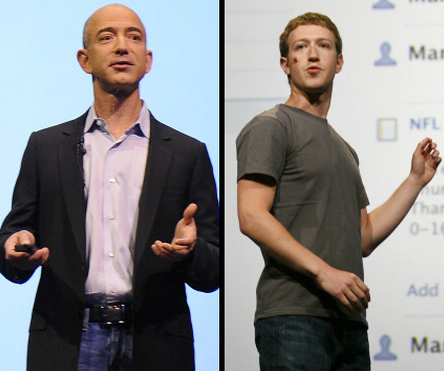
Contrast that strategy with Mark Zuckerberg’s much more measured approach at Facebook. Remember that, up until 2006, the social network used to be restricted to college and university students. (No .edu email address? No Facebook account. Period.) Zuck had to manage the insatiable demand for Facebook, telling prominent institutions that they would have to wait. Facebook just wasn’t ready to expand as quickly as millions of students would have liked. The precocious twentysomething CEO knew that, if Facebook repeatedly crashed due to exponentially growing traffic and infrastructure issues, his company could go the way of Friendster. He may very well only get one bite at the apple. Again, the results have been impressive.
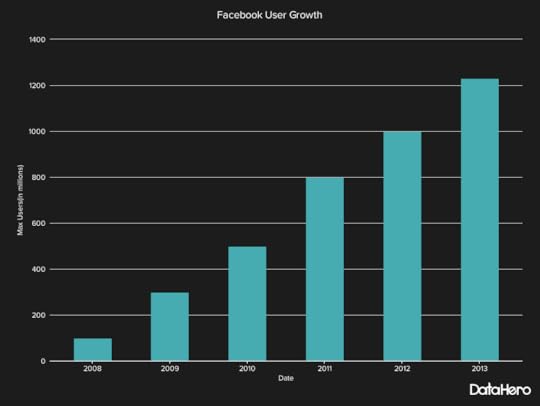
Brass tacks: By embracing cloud computing so early, Zuck was ahead of his time.
A More Mature Cloud
Both Bezos and Zuckerberg embraced cloud computing at key points in their companies’ histories, but make no mistake: they were early adopters, the exceptions that proved the rule. For a variety of reasons, in the early days of “the cloud”, most organizations treaded lightly. That is, they kept their data and applications “on-premise.”
This begs the question: Why the resistance?
Beyond legitimate security concerns, early cloud-computing pricing models were pretty clunky. It was analogous trying to predict at the beginning of the month how much electricity you would need for your home. (For more on this, see a brief history of cloud computing.)
These days, cloud computing is far more sophisticated than it was in the mid-2000s. It is no understatement to claim that is becoming the default deployment model for new technologies. More and more companies are launching new products, services, and apps in the cloud.
Along these lines, Samsung recently launched Milk, an ad-free music-streaming service exclusive to Galaxy phones. From a recent GigaOM piece, Milk:
…offers access to some 200 genre-based stations, as well as the ability to launch custom stations based on artists or songs, just like Pandora. The app’s user interface is however very different from Pandora’s fairly straightforward music player. At the center of the Milk experience is a virtual dial that can be used to quickly scan through stations that are arranged by genre.
Pretend if you like, but cloud computing isn’t going the way of the Dodo anytime soon.
Behind all of this is cloud computing, not that John Q. Consumers cares very much. Whether 50 or 50 million people downloaded Milk, Samsung would be able to meet consumer demand without a great deal of IT headaches.
Smart chief executives today understand that performance, flexibility, security, and reliability are far more important to most consumers and employees than how that those four things are achieved. Traditional tech powerhouses have recognized the power and import of cloud computing. Case in point: Consider IBM’s March acquisition of Cloudant. In the words of Cloudant VP Dan DeMichele, “Cloudant provides customers with a fully managed database-as-a-service option. This allows developers to focus on their core products rather than worrying about database administration. With Cloudant, IBM didn’t just acquire database technology. The company acquired expertise in reaching developers and cloud database options.”
Simon Says
Pretend if you like, but cloud computing isn’t going the way of the Dodo anytime soon.
Feedback
What say you?
Originally published on HuffingtonPost.
The post The Invisible Cloud appeared first on Phil Simon.
June 9, 2014
Need a Speaker in Montreal in late April of 2015?
Many readers of my blog know that I’m a huge fan of Marillion. Its music is layered, emotive, and incredibly powerful. Judge for yourself:
Neverland by Marillion on Grooveshark
 What’s more, they are all very friendly blokes. Over the last few years, I have interviewed three of the band members for Huffington Post. Between April 24th and 26th of 2015, I’ll be heading to Montreal for Marillion Weekend. Since I’m heading up there, why not get there a few days earlier and give a talk about Big Data, platforms, or dataviz?
So, here’s the deal: I’ll come to your organization or conference to do a one-hour talk about whatever you like. I’ll waive my normal speaking fee. I’ll only ask that you do the following:
Buy a decent number of copies of one of my books at the biggest discount that I can get you
Cover my travel expenses (business-class flight, hotel, parking, meals)
Reimburse me for my ticket ($150 CAN)
Contact me if you’re interested.
The post Need a Speaker in Montreal in late April of 2015? appeared first on Phil Simon.