
Susan Mary Malone's Blog: Happiness is a Story, page 9
July 13, 2016
The United States Is . . .

Photo Credit: Photo by local photographer Joseph Haubert
Dallas, TX.
Just the latest in a shooter rampage. And of course, this one at the end of a peaceful protest for Black Lives Matter, which stemmed from the killings in Baton Rouge and Minnesota of 2 black men by police.
Our cities are erupting with these protests, as in this day of social (instant) media, both shootings of the men in days prior were captured—one as it occurred, the other right after—in shocking living color, and streamed all over the world.
Not since 1968 has this country appeared so deeply divided on the issue of race.
Appearances can sure be deceiving, though, can’t they.
And as people all over spew rhetoric and blame, there seems no common ground. Even though the majority of what one sees on social media is parroted with no fact checking at all. There’s a lot of absolute falsehood propagated from both sides.
How did we get here?
For a country founded with the tenants intact of slavery, the issues goes back to our roots. All men were not in fact, in our country’s beginnings, created equal.
Complicated indeed, this race issue.
We fought a war over it.
Or did we?
Of course, the South fought the Civil War to preserve a way of life based on slave labor.
But as much as we revere Lincoln, the North didn’t fight that war to abolish slavery, which indeed provided the spark. It fought because the southern half of this country seceded.
Lincoln waged his war to preserve our Union. Although he had been working behind the scenes on the Emancipation Proclamation, he responded in 1862 in rebuttal to Horace Greely, “I would save the Union . . . If I could save the Union without freeing any slave, I would do it; and if I could save it by freeing all the slaves, I would do it . . . What I do about Slavery and the colored race, I do because I believe it helps to save this Union.”
Lincoln’s intent was clear.
And yes, he was successful after enormous manipulation behind the scenes, and the Emancipation Proclamation went into law.
But very little about this issue today is truly black or white. We indeed live in shades of gray.
Complicated, this race issue.
The symptoms, of course, are starkly divided. But again, the roots run silent and deep. And erupt in pockets, loud on the brittle surface of a tenuous peace.
If this weren’t so, the vitriol from both sides wouldn’t erupt—swift and sure and bloody—with each new bitter conflict.
The powder keg needs a simple spark in order to blow apart.
On the one side, some people point to Ferguson two years ago, and yell that the officer acted in self-defense. A grand jury agreed. And indeed, it appears so from the video. But in a community that has felt persecuted for decades, this was seen as just one more example of police brutality, of racist cops. Odd how, as well, the department there didn’t look like its residents . . .
Former Mayor NYC Mayor Rudy Giuliani said on Meet the Press after the Ferguson incident, “I find it very disappointing that you’re not discussing the fact that 93 percent of blacks in America are killed by other blacks . . . White police officers won’t be there if you weren’t killing each other 70 percent of the time.”
Enough holes exist in that statement to derail this blog, so I’ll just leave that as it is. But good grief, white-on-white murder rates are almost that high.
We all know the statistics. Approximately 12–13% of the American population is African-American, but they make up 35% of jail inmates, and 37% of prison inmates of the 2.2 million male inmates as of 2014 (U.S. Department of Justice, 2014). And of course we could go on with these. But just that is enough for here.
I have friends in law enforcement. They’re good people. They have tough, wickedly scary jobs, their lives in danger every day as they leave for work.
I don’t know about you, but my work life doesn’t bring me to death’s door each day. Nor do I live where violent crime is the norm. I live, literally, in a different world.
A dear friend of mine, a former major-city investigator, distraught about Dallas, told me that his partner died in his arms. Each and every one of these incidents where policemen are killed, cuts him to the core.
Emotions run pervasive and deep . . .
Another friend, an activist who has marched in Dallas many times, said that the Dallas police always marched with them. No riot gear. Just officers trying to protect the people and their rights to freedom of speech.
An African-American woman, in the midst of this standoff and its chaos, who had marched in the protest, talked about how it had been so peaceful. And yes, she was there to enforce the idea that Black Lives Matter.
She ended with, “But our police (the Dallas force) didn’t do anything wrong. They haven’t done this.”
This isn’t to say that Dallas is pristine on race relations. Not at all. We’ve surely had our problems.
But Police Chief David Brown—an African-American—and Mayor Mike Rawlings—an Anglo—have worked diligently to improve relations between police and the community. Especially the inner-city community, and places ridden with crime.
They have done a spectacular job handling this crisis. As they have been doing for years.
Complaints against excessive force by police are down 2/3 since Brown came into leadership. The overall crime rate in Dallas is down to a 50-year low. And we could continue on with similar statistics.
The point being that Dallas’ diligence on race and police issues has been quite effective.
So the question remains—what do we do about all of this?
The first thing is to stop digging the hole. Which of course, just means for both sides of onlookers to quit spewing hate, almost all of which has no basis in fact. Again, the ignorance of actual facts on social media is astonishing.
It’s almost impossible to find common ground when you’re shooting at ghosts.
So many of the recent mass murders—for a plethora of causes—have been committed by people of all colors, who had previously demonstrated mental illness or violent tendencies. But we can’t talk about that, can we.
One way or another, though, the hate-filled rhetoric stirs them into insanity.
Mental illness and fire power are always such a lovely alliance.
That combination is the elephant in the room. Perhaps if we can one day sit calmly and talk, we can face it.
Isn’t it funny how politicians blame the media for our divide? When the media is reporting (albeit, ad naseum), all of this. And quite often, they’re showing the intolerance and hatred spewing out of the mouths of politicians in the first place.
Texas Lt. Governor Dan Patrick, a scant day after this incident, blamed the Black Lives Matter movement for the shooting. He followed up with: “All those protesters last night, they ran the other way, expecting the men and women in blue to turn around and protect them,” Patrick said. “What hypocrites!”
Real helpful. At times, it is embarrassing to be from Texas.
But more to the point, such rhetoric makes it quite difficult to find common ground.
Which is, after all, the true insanity.
We hear both sides yelling that they won’t compromise their values.
Well, who, exactly, is asking them to?
When we boil these issues down to their essence, don’t we all want the same thing?
I live in the country, and I’m just about the only Anglo in my neighborhood. Everyone else is pretty much a shade of brown to black. And you know, I don’t even think about it unless contemplating something like this.
Funny thing, the longer you live around people who “look” different, the less you notice any differences.
Because all of these are good, hard-working, family folks.
We take care of each other. When little Alex from across the street brought his Chihuahua over, its leg dangling in the wind, for me to heal (because of course, I am the dog lady), crocodile tears streamed down his face. Although the family works very hard, they didn’t have the dollars for extra expenses, out of the blue.
And of course, I couldn’t stand seeing sweet Alex cry, so I had my vet set the broken leg, and tend to the follow up as well.
So incredibly thankful, Alex’s mother now feeds me. Literally. And often.
I got the far better end of the deal.
And I don’t even want to think what I’d do if not for Frank and Lupe next door . . .
And all these shades of skin color in my neighborhood, well, funny enough, we all want the same things. We all have fears (and yes, for many of these boys I’ve watched grow into young men, I fear daily for them as they go out into this world). We all bleed when cut. We all love deeply, profoundly, and want what is best for our families.
Please—don’t talk to me about Family Values as if half the country doesn’t have them.
It’s not that our values are different.
For any of us. We have differences of opinion on how to best affect the successful implementation of the laws and policies that uphold these values. But our values are the same. That is Truth.
I often read and listen to folks who see things quite differently from how I do. Decades ago, I heard the political columnist George Will—with whom I rarely agree, although sometimes do, but who always make me think—say that the beauty of this country—indeed, what has made it great—is our ability to compromise.
It is how this country has functioned and thrived for 240 years. It is the very essence of what has made us great.
Until somehow, over the past decade and a half, we’ve lost that ability for conciliation.
Indeed, the very idea of compromise is now seen as weakness. Just ask our Congress.
The very thing that made us great, which is at the very root of who we are, has been turned into a negative.
One of the most important distinctions to come out of the Civil War was and is a change in the verb used after United States.
Before the War, we would say, “The United States are . . .”
After the War, we say, “The United States is . . .”
Although this seems like a simple thing, the ramifications were and are huge.
We became one family, one people, one Union.
Like any family, we have issues with one another. Like in any family, some just don’t like others very much.
But as in any healthy family, we co-exist anyway.
Do we want to be healthy? Do we want to stop the madness?
It requires a bit of respect for those we see as different. To realize that we might look diverse, but we all bleed red.
So, I, too, am heartbroken over the events of the last week, the last months, the last years. Heartbroken for those on both sides of this insidious issue, and for everybody in between.
But what I know for true is that we can solve these problems.
It takes ears to listen with.
It takes hands being sat on if need be in order not to point fingers; tongues to be bitten bloody so as not to spew hate.
It takes a willingness and action to disseminate the facts from the fiction.
It takes a want to.
And it takes enormous courage to tackle the beasts, the most fearsome of which lie within our own breasts.
Shun the hate mongers. Listen to the rational voices. Support the oppressed. Understand why they feel the way they do—I can guarantee you it’s not something they made up. Support law enforcement—the vast majority of whom are good, hard-working folks—all over the country but especially in Dallas this day. They lost family.
As Chief Brown said on Monday, “Get involved. Be part of the solution. We’re hiring.”
By Tuesday, applications to DPD surged.
The young men killed last week have families who grieve. So do the Dallas police officers.
In the end, we are all the family who grieves.
Yes, a complicated issue, indeed.
But we can stop the insanity.
Are we willing?
The post The United States Is . . . appeared first on Susan Mary Malone.


June 29, 2016
Do You Really Want More Out Of Life?
Oh, aren’t we inundated these days by motivational gurus and bloggers? Everywhere we turn we see: Follow Your Dreams! How to Achieve Your Heart’s Desire! Find the Secrets to True Success!
And about a zillion variations on the theme. Seems tons of folks are striving to do what they love and the money will follow.
But doesn’t the very fact that for every guru, hundreds if not thousands of follows exist, tell us that most folks aren’t achieving the success for which they strive?
So what gives?
So many people I talk to feel as though they’re banging their heads against the wall, in pursuit of their dreams and goals.
But you know the funnier thing? So many are achieving them, and going on to seek higher peaks. Even if it takes decades to get there.
Woah! People say. Decades? Um, I thought that money would follow a bit sooner than that . . .
And for many, it does.
But I remember (all too well) having thoughts of giving up when years and years and years seemed to have trickled by and over each peak four more appeared to take its place.
Some dreams are exacting, indeed.
I recently came across a statistic that floored me. A Harvard study found that 3% of Harvard MBAs make ten times as much as the other 97% combined. Now, getting into a Harvard MBA program is difficult enough. And those doing so, and completing it, well, one can only surmise that these are motivated, goal-oriented people. Right?
Of those, they found that:
84% had no specific goals at all
13% had goals but they were not committed to paper
3% had clear, written goals and plans to accomplish them
Okay, we get that, right? We know making a plan, writing it down, breaking it into steps, having accountability, all those things put us on the path to success.
But those numbers just stopped me for a bit. Especially the 84% with no specific goals at all. This is just not a way of being I can understand.
Then again, I’ve always been blessed to know exactly what I wanted to do and to achieve in this life. My purpose is clear. And I do realize that so many folks don’t have that blessing.
Still, if you went to all the trouble of getting a Harvard MBA, or anything else that took a fair amount of work, one would think you’d have plans and dreams and goals once the diploma was in your hands. Right?
But put another way, we all can name a ton of reasons why we don’t get completely serious about succeeding in our quests. Fear of failure/success, self-doubt, excuses, being problem- rather than solution-focused, not having the motivation to truly commit.
And I bet you can think of a hundred more.
We’ve all fallen prey to some of those, along our paths. No?
But I believe that deep down, all those reasons can be distilled into one core issue.
I mean, we all know that life can surely beat you down. It’s filled with enough twists and turns, sadness and heartache, scrambling to get by at times, that who could blame anyone for giving up?
I, for one, certainly can’t. At many, many junctures I’ve felt the pull to give up on my dream. Sometimes you just get tired.
Especially as those decades go by . . .
I was talking with a good writer friend of mine, who’s in her fifth major revision of her novel (based on a top agent’s orders), and she said, “I see now why writers quit writing.”
Yep, this is a tough road to hoe. We both write Literary Fiction, which is the top of the publishing pyramid, and not a lot of spots are there for the thousands and thousands of folks penning it.
I have watched far more writers quit than keep going.
And of course, I can’t blame them one whit! A decent dose of masochism seems necessary to continue this.
Or does it? Is something more at play here?
Of course it is 
June 22, 2016
Are You the Cause of Your Bad Luck?
Now, that seems rude, doesn’t it. I mean, if you’re having a run of bad luck, the last thing you want to hear is that you caused it. I, for one, want sympathy at that point, not a kick in the butt. Even though I now know what I need is the latter . . .

Many, many years ago, I had a good friend tell me, “If you didn’t have bad luck, you’d have no luck at all.”
And, she was pretty much right. Sometimes you just feel like you’re in a never-ending battle.
To be clear, this was a time in my life where lots was going wrong. Sickness, dying, death of those near and dear to me. Sometimes life truly does dump a sack of coal at your door.
But that’s not all that was going wrong.
And it seemed that stuff just kept going wrong, as if I’d fallen into some quicksand and no matter how I worked to get free, kept being sucked back in.
Let me take a wild guess—you’ve been there too.
Annoying, isn’t it. And it left me asking: So what’s the problem? Me, or life?
And once I ask those sorts of questions, well, the universe tends to respond.
My negative thoughts can wind up in a never-ending downward spiral. And what I learned over this last decade, is that when I let them, more crap seems to come my way. Okay, does come my way.
Because when I get caught up in the negative, the energy around me changes. Which for me translates into making more poor decisions, and missing seeing the actions that can propel me out of the ditch.
In a nutshell, we all know the power of positive thinking. So many studies have been done on this, and the Mayo Clinic reports: Increased life span, lowered depression, lower distress, improved immune function, reduced risk of death from cardiovascular disease, and many more.
So, if we know this to be scientifically true, why on God’s green earth do I let myself get caught up in the negative?
And especially, when I now have a lot of tools to keep me from doing so. I mean, isn’t that just nuts?
Let’s face it—even with all the knowledge and skills we have, we can still sometimes get lost in those negative thoughts.
Oddly enough, I had this happen this spring. Horrors! And, I kinda eased into it.
I’ve been editing books for 25 years now. And in all that time, I’ve had hardly a client one who was unhappy. In the final analysis, none of them were.
But in early spring, I edited a nonfiction book that was a 50K rant on how life had treated this young man unfairly. And when I told him that (along with specific ways to turn it into a viable book), he was pissed. Really pissed.
And I got caught up in the drama. I know, I know, I should be far past that. But I focused an undue amount of time on it, spewing out into the universe my own negativity, along with his.
You know what happened? The same thing occurred again. Only this time, worse, at least for me, as the next client refused to pay his balance (which was significant). He doesn’t get the edited book and critique back without it, but I’m out the time and money.
And then, it happened twice more, in varying ways.
Okay, now, this got my attention. Again, before we go any further, in 25 years, this has never happened.
So what’s it all mean?
In my case, anyway, I truly did create my own reality by focusing on a perceived problem, rather than on the solution.
And the first thing I had to do was to sit myself down, and make a list of what I wanted to see happen in each case.
Now, I know I’m not powerful enough to change what someone else is going to do. But what I do know is that when I focus on solutions, instead of problems, things tend to work out.
Fairly quickly, most of these did. Almost immediately, actually.
So when I listed the possible solutions, focused on them, carried out any action steps, and kept my eyes on the prize—things working out—they did.
Funny how that happens.
Spiritual teachers have been espousing this for millennia. Psychologists have begun doing so over the last few decades. Scientists are now measuring the proof.
When all these folks agree, and I myself have anecdotal evidence, how goofy is it of me to fall back into the hole of negative thoughts?
What I realize of course after all that is, well, I’m human. So, no sense in beating myself up for falling off the positivity wagon. Lord knows, I get punished enough by doing so that I don’t need any self-flagellation!
But now, I’m back on that wagon. Moving forward again, with less stress, and much better well-being.
Whew! What could be better?
How do you stay positive in light of negative events?
The post Are You the Cause of Your Bad Luck? appeared first on Susan Mary Malone.
June 15, 2016
Inspiration from a Novelist: What Drives You?
As we know, I love stories and storytellers! This week we’re blessed to have the thoughts of novelist Colleen M. Story, talking about life philosophy as it relates to writing, and specifically to her beautiful new novel, Loreena’s Gift:
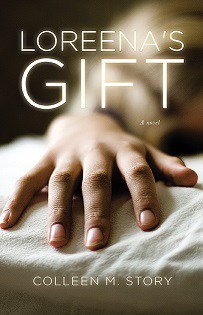
Why are you driven to do what you do?
This story came out of my insatiable curiosity about the afterlife. I remember even as a child that I spent a lot of time looking up into the sky wondering where I came from, and where I’d be going when I died. We attended church in my formative years, but I continued to seek out answers, so much so that I often felt like I was just a visitor here on Earth, and had to find out more about what waited beyond.
I think some of this came from the fact that my family lost people when I was still very young, and so death was an immediate thing I had to deal with during a time when I was still so new to life.
My curiosity compelled me to delve into a number of religions over the years, and I found so many similarities between them I began to seriously doubt that any one had better answers than another. I was also fascinated by the way scientific concepts and the more mystical ideas of “life force” and “chi” were finding common ground. I started practicing some of the “new wave” thinking of setting intentions, following one’s intuition, and proceeding as if the universe is there to support you. I was stunned at the way doors would open and opportunities would fall seemingly out of the sky.
I’m still seeking answers, but one thing I’ve learned over and over again is that our own personal energy (whether positive, negative, or neutral), our attitudes and personalities, and the intentions we set all greatly affect our experience of life.
Which gave me the idea: What if the same occurs in the afterlife?
What if the afterlife, too, is greatly affected by who we are, our beliefs, our attitudes, our expectations? And if that’s the case, what might different people find there?
My main character, Loreena Picket, a blind young woman raised in “cowboy” church in a small town in Idaho, gave me a way to explore that question.
How do you handle discouragement?
I do keep trying to get better at handling discouragement, but I’m a sensitive person and prone to self-doubt so it can set me back for a few days. I attended a workshop while working on Loreena’s Gift, for example, that was extremely confusing and left me feeling like I needed to change everything about the story, though I had no idea how. Fortunately, I came home to a request for the full manuscript that eventually led to a publishing contract, so that helped! (Always remember opinions are subjective!)
What I find usually happens, though, after a few days of being discouraged, is that I have this angry energy that kicks in, where I get kind of a “what the hell” attitude going. I’ve found that to be really beneficial over the years, as it gives me the grit I need to overcome the rough spots. It was this same anger that propelled me to a first place win in a Young Artist’s competition when I was in high school playing the French horn. I was sick of getting nervous every time before I played, and on the day of the competition, I got ticked off about it, and performed much better!
So I’d highly recommend anger—in the right doses, of course.
Tell us about a moment of blissful success.
I’ve been lucky enough to have several moments of feeling successful along the way. Loreena’s Gift placed first unpublished novel in a national contest while I was still working on it, which was very encouraging, and I ended up getting offers from four publishers before I eventually signed—all of which felt awesome after so many years working away, unsure if I’d ever get anywhere.
But I have to say that so far, I felt the most “blissful” success when members of my family responded to my stories. My mom remains Loreena’s biggest fan, and has told me many times how the story has been a comfort to her—something I never would have expected.
My older brother, who hasn’t done much fiction reading for decades, read my first book, Rise of the Sidenah, enjoyed it, and became someone happy to spread the word about my work. And my youngest brother, who was never a big reader, just finished reading the same book a few weeks ago and sent me an email that made me cry because it was so moving. The story really touched him, and he “got” some of the deeper meanings, which was hugely rewarding for me.
I mean, we all hope that readers enjoy our work, but we also know we can’t just expect friends and family to be our biggest fans—we have to keep those relationships separate from our work. So to have people I care about so much give me such incredible feedback makes me feel very fortunate.
Do you have an inspiring quote or saying that helps keep you motivated?
I have a notebook full of inspiring quotes and sayings that I’m always adding to, as different ones will inspire me at different times. The last one I wrote down is by James Altucher, author of what I’m finding to be a very inspirational book, Choose Yourself: Be Happy, Make Millions, Live the Dream:
“The only fire to cultivate is the fire inside you.”
What’s next for you?
I’m working on the second draft of The Beached Ones, my next novel. I’m also really enjoying my efforts with Writing and Wellness, an inspirational blog for creatives, and have some bigger projects planned with that I hope to complete by the end of the year.
Colleen M. Story writes imaginative fiction and is also a freelance writer, instructor, and motivational speaker specializing in creativity, productivity, and personal wellness. Her latest novel, Loreena’s Gift, was released with Dzanc Books April 12 2016. Her fantasy novel, Rise of the Sidenah, is a North American Book Awards winner, and New Apple Book Awards Official Selection (Young Adult). She is the founder of Writing and Wellness, a motivational site for writers and other creatives. Find more at her website, or follow her on Twitter.
The post Inspiration from a Novelist: What Drives You? appeared first on Susan Mary Malone.
June 8, 2016
The Joys Of Creating Are In The Journey
All artists—no matter in what form you create—know that to produce something of value, you have to learn your craft and then break it down into pieces.

No?
I mean, you don’t start out to write The Great American Novel. Or to paint a masterpiece. Or to pen a blog that gets ranked in the top 100. Or produce award-winning wines. Or whatever it is you dream of.
Because that’s the dream, no? And wouldn’t it be great if we could just envision summiting Mt. Everest and find ourselves smiling at the top?
But if we truly dream, if we’re taken by an idea that won’t let us go, we start figuring out how to get there. And clichéd as it is, if we just flew straight to the top of whatever mountain, we’d miss the entire journey.
Which is in itself filled with riches and gold.
I’m still tweaking on my time with vintner Gary McKibben at The Red Caboose winery and vineyard. About how he noticed something in his fields (native grapes thriving), and an idea took hold: “We could put in a vineyard.”
That sounds very much like something I see and then think, now that would make a great novel. Or a snippet of a dream takes me to a land I’ve never seen. Or when I hear the voice of a new character, whispering in my mind . . .
We’re taken by lots of ideas, no? But it’s the one that keeps coming up that pushes us onward, which we begin to purse in earnest.
I keep thinking how Gary then researched grapes, finding seventeen varietals that grow native in Texas. How he found the two that grew in his county, and focused on them. And then branched out from there.
Isn’t that just like learning about characters in your story? Where they came from, who they are, how they came to be?
As with any art, or task we seek to master, we then read and research and listen to the experts. And along the way, learn to sift and sort the wheat from the chaff.
And isn’t that one of the tasks “Vasalisa the Wise” has to master in her quest to find her inner guidance? Yes to this, no to that. I Just Came here to Dance took that as its main theme, and raced with it from there.
I keep thinking now how the further our winemaker went, the less he paid attention to the experts. The more he went his own way.
And what a success he’s made of that.
Listening to experts is not a bad thing in and of itself—I myself am one, in the book business! The books I’ve edited having gone on to great success.
But as I tell my writers, “Rules are meant to be broken. The thing is, you have to understand the rule, know how to use it, before you can effectively break it.”
I know this in my own writing as well.
And isn’t that just like any rule, whether for life or art or producing fabulous wines?
Isn’t that what we learn as we travel our own paths? The sagacity gained along the journey itself? That at the end of the day, with all of our learned knowledge, the right choice comes from a wisdom deep within.
I’m laughing too at one vignette Gary told. As every wineaux knows, you don’t make wine out of your first year’s grapes. Nor your second. But in year 2 of the vineyard, Gary and his son had produced 25 gallons each of Lenoir and Tempranillo wine. You have to have 50 gallons to put in an oak barrel.
They decided: “Let’s make wine!”
So they mixed the two together to make a barrel full.
And funny thing—the Lenoir was high in acid, the Tempranillo was not, so the blend actually worked beautifully.
And isn’t that like when you put your hero and your villain together in a story? If the mix of positive to negative traits is right, ah, does the interplay work! Or, when you’re writing a blog, and find just the right friction between your blog’s question and answer that makes the whole thing race off?
Back to our wine making, what that initial experiment taught Gary and his son was the basics of blending wine (which is pretty paramount to actually making wines :). And they kinda did it on a lark.
Have you ever noticed how the most beautiful creations are made while basking in the dance of inspiration and joy? Doing something just for the kick of it?
Of course, then the hard work comes in. Lol. As any writer knows, between the Inspiration and The End is, well, just a ton of work. But the more we stay in that joy, adhering to the love of what we do, the more inspired our process and our product.
Kinda like those incredible wines.
So I’m believing wine making and writing aren’t so different after all. We all want to make the angels sing, whether on our tongues or in our hearts.
Much hard work is required to do so. Many times slogging through the muck and mire, whether in the vineyard or in the recesses of our minds. But as long as that goal stays in place, the vision of the peak for which we are striving, we are provided with enough passion to propel us on.
Okay, that and beautiful wine. Pardon me while I go uncork that bottle of 2012 Malbec from The Red Caboose . . .
And dream of where my new novel is taking me.
The post The Joys Of Creating Are In The Journey appeared first on Susan Mary Malone.
June 1, 2016
Do You Remember how to have a Meaningful Conversation?
We move at the speed of communication light, no? Or at least we seem to. And so much of that these days includes the “always connected” syndrome on social media with our smart devices.
Don’t you sometimes feel you’re always up’n internet going? I know at times I do.
Studies are now coming out about the pitfalls of this—everything from shortened attention spans to isolation and depression to text neck from constantly being bent over.
But a bigger demon in this den is slowing down enough to have a deep conversation. You know the kind—where you actually take the time to sit down and truly communicate with another.
Imagine what it would be like 100 years ago, or even 50 years ago, when the majority of your communication was face to face—without a smart device in your hand. You know—where your attention was on the actual person you were speaking with.
How often have you sent an email, text, etc., only to find the person on the receiving end took your message all wrong? This happens to us all—even us writer folks, who are supposed to be good with words on the page!
Annoying, isn’t it? But why does this happen?
It’s pretty simple, really. Through technological communication (including the kind where you’re in the physical presence of one person while texting with another), we lose the nuances of human interaction.
I don’t much care about the debate about the famous studies by Albert Mehrabian about percentage breakdowns in the importance of nonverbal communication vs verbal, nor the debunking of those.
Chiefly because although human interaction can be studied, quantifying it leaves room for far too much error. Communication just can’t really be broken down into a numbers’ game.
But intuitively, we know this pretty well—if somebody’s playing on her smart phone when you’re trying to have a discussion, pretty much all the communication gets lost.
Because after all, meaningful conversations include not just words, but expressions, body language, whether the person’s gestures and words and all of the above match what he says.
Isn’t it interesting when someone smiles with his lips but that smile doesn’t quite reach his eyes . . .
Work with animals will show you the truth of this better than anything I know. I do a lot with my dogs. I know—not a news flash! And I once trained and showed horses as well.
Boy, do you ever glean a lot doing that.
And one of the most enlightening things I learned so long ago is that these animals que off your body language most of all. Very little while working with them is about words.
We think we’re teaching our dogs to do things based on verbal commands. But that’s a tiny drop in the water trough. Dogs key off our bodies. Off our signals to them—intended or not. And then they learn to put the words with the physical prompts.
Okay, so of course, people obviously aren’t dogs. But can’t you tell when someone’s not really listening to you? Eyes averted. Talking about something quite off-topic from what you were just saying. Body turned just slightly away.
Because the other ingredient for having a conversation that matters is being invested in what the other person is trying to communicate. Which comes down to asking meaningful questions.
The kind of questions to make sure you understand what she is saying in the first place, and then go another step further.
“Oh, so you think your mother doesn’t respect your boyfriend? Can you give me an example of that? Could she have meant that as something else? Maybe she didn’t know how to express what she felt.”
We all know the benefits of active listening, no? And doesn’t that just make the communication so much richer?
People want to be heard. To be understood. It’s basic to the core of being human.
You know that, right? How often have you really listened to someone, truly heard what she was saying, and she expresses how much better she then feels?
So often—with women, especially—we don’t want something fixed through a conversation. We want to talk it out with someone who really listens to us. Hears our plight. Shows some empathy.
And I know of no better way to express empathy than to truly care enough to listen to what’s on another’s mind.
Human connection is often nebulous. I blame the English language about half the time! It’s such a rudimentary way of communicating.
True connection takes a dissection when conversing, of what the other person actually thinks, feels, and means. Different words mean different things to people.
I’m still a lover of porches and swings, of sitting outside with a dear friend and just talking—slowly, at length, no timetable. No smart phones. I just had the most fabulous few weeks of doing so, with one close friend and another I just made.
Ah, heaven.
And funny thing—the more I listen, the more it enriches me.
As Henry David Thoreau said, “It takes two to speak the truth—one to speak and another to hear.”
How do you have meaningful conversations in this day of hyper-connection?
The post Do You Remember how to have a Meaningful Conversation? appeared first on Susan Mary Malone.
May 25, 2016
7 Ways To Change Your Attitude Right Now

Attitude
We all know the benefits of a positive attitude, no? According to research, the Mayo Clinic lists these:
Increased life span
Lower rates of depression
Lower levels of distress
Greater resistance to the common cold
Better psychological and physical well-being
Reduced risk of death from cardiovascular disease
Better coping skills during hardships and times of stress
And of course, we can list more, hypothetically anyway.
And don’t we all get into a funk now and then? Sometimes real life doesn’t bring us all wine and roses. Pity that.
But one thing we know for true is that it’s not what happens to us, but how we handle it. And “handling it” begins with our thoughts.
This is true in literature as well. When writing a novel, we have the “what” happened, in every scene. And after scene setting and conflict building, the conflict comes to a climax. That’s the what.
Then, our character gets to the “why” of it. She follows a natural progression of, in order: Feelings, Thoughts, Decisions, Actions.
Which all just means that you have to feel the feelings first, then analyze what happened, then make new decisions, in order to take future actions.
That pattern in fiction plays out in our lives as well. Fiction, after all, did come from somewhere.
And none of us want the future to play out the negative way of what just happened, right?
So, if it all comes down to attitude (and all the new studies shows that it does!) just imagine what it would be like to have a better attitude right now.
And we can. It all comes down to redirecting our thoughts, which redirect our emotions, and from there we can redirect our lives.
As one of my favorite characters in literature said, “Your car goes where your eyes go.” –Enzo, The Art of Racing in the Rain.
How do we do that? Here are a few ways I’ve found:
Figure out where you are right now .
I know, that sounds silly, no? But sometimes when I feel not so positive, I can’t quite pin down the exact negative emotion.
Do I feel anger? Fear? Frustration? Hopelessness?
First and foremost, it helps me to pinpoint the exact emotion.
Accept where you are right now.
That can be a tough one. I mean, we live in a world that revers positive thinkers, and the flip side can be judging when we’re not in a positive state. So, no pressure there! But again, if we’re honest, we all can slip into the negative at times.
And you know what? That’s okay. We’re human. Even Jesus got mad now and then. I figure if he could fall into that, then it’s okay for me to as well.
But don’t stay there.
That’s the key. Once you’ve figured out where you are, then accepted and made peace with it, it’s time to turn around and refocus rather than obsess on the facts. Because you can’t change what happened, right? But only what you do with that and where you go from here.
Look for the next best thought.
Let’s be honest: We want a quantum leap from fear to joy. At least I do!
But it doesn’t work that way. When we’re in negative emotions and we try to jump to the highest ones, well, usually we fall into the ditch and then beat ourselves up all over again. Or bemoan that positive thinking doesn’t work.
If, instead, we go to the next best thought, looking for one higher rung on the emotional scale, we succeed. And we feel better.
For example, if you’re angry, doesn’t blame feel a bit better? And while this is so not PC, it’s true. But you feel an instant bit of relief there.
And if you then take that blame and consider where the other person or situation was coming from, another bit of relief comes.
And then you can take . . . .
And so on.
Then focus on what you want to happen.
It’s difficult to stay in anger or fear without feeding it. Scientists talk of humans having 60,000 thoughts a day, and that the vast majority of the time, those are the same thoughts over and over.
And for most people, the thoughts are negative ones.
But what if we spent more time focused on our dreams, on what we want to happen, rather than our fears?
If our car goes where our eyes go, and our eyes go where our thought directs them, wouldn’t that be a much quicker (and more joyful!) way to change our futures for the better?
And get in a better mood the quickest?
Find gratitude in what’s right in front of you.
We all have things to be grateful for. No matter where I sit in my home, I can look up and immediately see a Labrador doing something Labrador silly. I mean, no matter if the nuclear holocaust surrounds me, this crew is into doing their goofy things. Making me laugh in the process.
But think about this another way. Just take it in monetary terms:
If you live in this country, you’re richer than most of the rest of the world. According to an article in Forbes, the bottom 10% in the US have better lives than the top 10% in Russia. And Russia isn’t even considered a third-world country. If your family income is $10,000 a year, you are wealthier than 84 percent of the world. If it’s $50,000 or more a year, you make more than 99 percent of the world. And we don’t even need to get into the benefits of indoor plumbing!
The point just being, we all have a bounty surrounding us. All we have to do is see it.
Focus on what you love.
The strongest force in this universe is love. It’s what moves mountains. It’s what motivates us to be and become all that we desire.
Love is the sheer joy of life. And you simply cannot be in love and fear at the same time.
So, think of someone you love. Didn’t you just feel a surge in your heart?
As Marianne Williamson said In Return to Love:
“Love in your mind produces love in your life. This is the meaning of heaven.
Fear in your mind produces fear in your life. This is the meaning of hell.”
So, when things aren’t going your way, how do you have a better attitude?
The post 7 Ways To Change Your Attitude Right Now appeared first on Susan Mary Malone.
May 18, 2016
This Texas Winemaker Found Bliss On The Vine
Being in any creative field is plain, hard work. As anybody doing so can attest to. But for me, accompanied by that is the fun side of writing fiction.

Because sometimes gifts simply fall from the sky. And on some brilliant and beautiful days, magic reigns.
So, as I’ve spoken of before, my new novel is set in a Texas vineyard and winery. I know, tough to research, but as they say, somebody’s gotta do it. And that’s a task I’m up to!
I had a bit of a head start, setting my fictional vineyard in a place I know well—Bosque County, where we’ve had a family farm since I was a first-grader, and on which I’ve lived for long stretches. I truly learned to write there, and my first novel was published while I lived on and worked that land. I know the soil, the geography, the topography, the climate. The bugs, the frost, the hail . . .
But anyway, what I didn’t know before I started all this insanity was how to grow wine grapes, or make something even resembling decent wine. So of course, as any astute novelist would do, I researched, took classes, asked questions, etc. But book learnin’, as they say around the farm, will only take you so far.
So, I’ve been to a host of Texas wineries, and while often rewarded with a nice vintage here and there, many times, well, hm. Texas viticulture is gaining respect, and deservedly so, but what I couldn’t seem to find was what the true connoisseurs speak of when talking about great wineries:
That you can tell from where the wine came. That it resembles the land on which the grapes were grown.
Which speaks to something deeper. To the intangibles that come from following guidance not found in books . . .
I’d visited this winery once before, picking grapes at harvest, and finally got to spend time at this place that’s been my number-one sought after, set in my novel’s county. This time I hoped to be there a couple of hours, glean deeper knowledge by picking the winemaker’s brain, and 7 hours later . . .
I knew The Red Caboose has developed into making world-class big reds. Now consistently winning awards, they took home 5 medals from the 2015 TexSom International Wine Competition—a true benchmark of excellence for the industry. And of course, I just love, love big reds. I’d tasted some of theirs before, and was pretty wowed.
So, I had high expectations 
Fabulously enough, as soon as we plunged into all things grape, grower/winemaker Gary McKibben alit, his focus sharp, his knowledge deep, but more to my purpose, his passion playing through every expressive word.
Under the beautiful Texas spring sky, the vineyard sprawling before us lush and healthy and the vines, dripping with early fruit, he opened up his world of viticulture in the same manner he uncorked the 2012 Cabernet, which would make you sink to your knees and sing to the angels.
Because for Gary, it’s all about the grapes.
Which sounds like a no-brainer, right? But so, so many (if not most, as I had already learned), buy a preponderance of their grapes from huge commercial growers.
Not so at the Caboose. All of the vintages we tasted that day were 100% estate grown.
When Gary bought his Meridian, TX ranch, it wasn’t with the intention of growing grapes or making wine. But he took note of the native grapes thriving there, having designed a winery some 40 years earlier as an architecture student.
What started as his “library vineyard,” to see which varietals grew best on his land, has grown over 14 years into 20 acres of vines, with more planned. They produced 7,500 cases last year, planning 10,000 or so this one, and estimating 20,000 next year.
“The vines are just now getting mature, just now to where we can produce big, mature wines,” he said.
And oh, are they producing.
But more to the point, these wines taste like where they came from. All of them.
I could wax poetic for days about what we tasted (and will do so next blog time!), but as we walked through the verdant rows and rows of vines young and old, I kept being struck by the techniques he employed.
He is doing what they say you can’t do in Texas (I’ve been through the courses, right?):
֎ Using no pesticides on the vines.
Say what? “NO Pesticides!!!” I wrote in my notes. You have to in Texas!
Well, apparently not. As Gary said of growing grapes and making wine, both were accomplished for thousands of years before pesticides and gadgets came into play. And since these grapes carry no carcinogenic poisons, he can make wine using the Old World Style—without filtering. Which keeps all the flavor intact.
“I just approached it logically,” he said. “My mom used neem oil on her roses, and I thought, why wouldn’t that work?”
It did.
But more was at play here . . .
֎ While grape growers calibrate Brix to Acid to calculate harvest, he accomplishes this in the Old World Style too—using his eyes, nose, taste, as he does with the wine as well.
And while his ratio for harvest is a family secret :), he says the taste can tell you within half a percent what the Brix is. His own internal calculations dictating the day.
No wonder I love his wines.
He also watches the birds, raccoons, and critters as they are drawn to the rising sweetness in the grapes. “When they start coming, you have 5 days to Brix.”
That’s his theory, but it sure seems to be panning out! Talk about listening to that guidance from within . . .
I could just imagine what the experts would say about this. Again, I listened to the lectures
His answer to that, with a gleam in his eye, was “If they tell me I can’t do something, I’ll do it.”
Using logic, of course!
But there’s more to it than that, isn’t there. Nuances, the intangibles, form a true art with making wine. And the mystical always dances through the ethers.
Gary says perhaps the vineyard’s hill is enchanted . . .
Ah! Now you’re talking my language
Because the people in my stories learn to rely on internal guidance—listening to that quiet whisper (whatever you deem that to be) that says, go this way, not that. No matter what anyone preaches must be done, what conventional wisdom says is The Way, they take the road less traveled. The path that is their own.
My mind raced with all the possibilities for Gwyn, my fictional vineyard’s proprietor, and how this could turn her story. Oh, my!
Sometimes you just feel as if you’ve found that pot of gold at the end of a long road of rainbows . . .
I can’t wait to talk about his wines, and my new favorite game ever—robbing the barrels! I felt the euphoria of childhood while doing so, amazed and giggling.
For now I’m just tweaking on the natural, Old World Style of his process, and what glorious wines that produces. Vintages that taste like the land on which they grew.
Listening to, and following that guidance from within, pays such beautiful dividends. Coupled with the rudder of logic, of course
And creating a signature that is all The Red Caboose’s own.
As he said, “We grow wine; we don’t manufacture it.”
Such a gift to spend time with an artisan, doing what he loves.
Bringing full circle once more Joseph Campbell’s wise words about truly experiencing the numinous adventure that is life: “Follow your bliss.”
The post This Texas Winemaker Found Bliss On The Vine appeared first on Susan Mary Malone.
May 11, 2016
This Is Not A Newsflash But It Is A Damn Good Story
I love stories.
This is not a newsflash. LOL. I’m a novelist, so of course I love stories.
But don’t you? Ah, hearing what makes people tick, how their lives have run their course, listening to what they’ve learned, doesn’t that just tweak you? It sure does me. Not that I can ever learn from them! Learning the hard way has been my choice
I also seem to have one of those faces that just says, “Please tell me about you.” Because no matter where I go, folks just do.
Think I’m exaggerating? I’ll relate just one, which just happened, and still has me laughing.
I had to get new tires on the van. And was feeling both annoyed and blessed about it. Annoyed that it was taking a piece of my day, but truly grateful I didn’t wreck as one tire had worn smooth. I know, I know—I should have paid more attention!
But to mitigate the time-waste annoyance, I took along a manuscript to edit. Lucky for me, I can work just about anywhere.
As long as I can keep to myself . . .
So there I sit in Discount Tire. Head buried in manuscript pages, red pen flying away. And open seats all over the place.
When here comes this little old lady, who plunks down right beside me, cane and all.
“You must be a teacher,” she said, nodding to the work in my lap.
I swallowed my sigh, knowing the gig was up. No way could I not talk to this sweet wrinkled face, and the crystal-clear blue eyes sparkling at me.
“A book editor,” I replied.
“Oh, what an exciting line of work!” she said, and we were off and running to wherever this meeting would take us.
We of course first bemoaned the lack of people actually reading these days, and how that’s led to the dumbing down of our country. What with all the “smart” devices, people have sure gotten stupid, was her take on that.
I could only laugh. And agree. Of course, I think everybody on the planet should read books
Not once did she say, “In my day . . .” but she did soon tell me she was 90 years old this year.
I about fell over. She didn’t look nearly that old. Especially with those sparkly eyes. But I also felt a pretty sharp catch. My mom would have been 90 this year . . .
We talked about living on the farm, and how that nurtured the values that our culture seems to have lost—chiefly, hard work and honesty.
Which got her onto politics. I kid you not. Sharp as a tack, she knew all the facts and was disgusted by the political climate we find ourselves in.
A lifelong Republican, she said she was sickened by what this group of clowns was doing to her party. And, before you throw tomatoes at me, “clowns” was her word!
I did mention that my parents would be revolving in their graves over this. And was so heartened when she reached over to squeeze my hand . . .
She did harken back to days of yore about one thing—how the journalists of her day wouldn’t let all these politicians get away with bald-facing lying to the camera without calling BS on them.
Again, BS was her word.
Lest you think she wasn’t proper, she was a prim and perfectly put together as any woman of that generation ever would be. She just said what she meant, and meant what she said.
And it was then that our conversation sort of merged journalists, politics, and men. I know, an odd combination, right?
But she talked about how the journalists today were just pretty faces, especially the female ones, and especially on the FOX news channel. Whom she would never normally see because this channel spread lies all day, with no facts involved.
Once more—I’m just reporting what she said!
And how the news readers were all these talentless but pretty young perfect girls, makeup expertly applied, and especially in tight, short skirts.
“Isn’t it funny,” she said, “how they always get a shot of their legs. And the skirts are so short, you can almost see to possible.”
Now, if you have spent much time with older generations of women, you get the “possible” joke. If you haven’t, such a pity!
She went on to say that she and her husband volunteer at the nursing home! They’re 90, mind you. Every time I think about it, that just makes me laugh.
And that the “old” men are always glued to FOX news, watching the pretty young things.
“They’re just staring at the girls’ legs,” she said with a chuckle of her own. “I told one of the old men that, and you know what he said? He turned to me with a mischievous grin and said, ‘Isn’t she wearing such purty shoes.’”
I’m still laughing.
Such marvelous stories are all around us. Such beautiful lives people have led. And how incredibly blessed I am that they tell me their tales with such unabashed abandon.
So now it’s your turn—what are the stories you’ve heard?
The post This Is Not A Newsflash But It Is A Damn Good Story appeared first on Susan Mary Malone.
May 4, 2016
7 Ways To Be More Energetic When You Don’t Want To Be
Don’t you just hate when you get up just dragging? I know I do. It makes me angry, actually. Because, like you, I don’t have time for it.

But I also know that being angry will just deplete my energy further. Causing a vicious cycle that, well, none of us have time for.
And sometimes when feeling tired, it’s tough to find the motivation to get un-tired. Sometimes you just feel like you’re banging your head against the wall of motivation to begin with, no?
Or is it just me.
At least according to the folks I know well, we’ve all been there. If you haven’t, I’d love to hear from you!
The CDC reported that women were more likely than men to feel very tired, or even exhausted, regularly. Women ages 18-44 were nearly twice as likely as men to feel very tired or exhausted. Interestingly (and I bet we can figure out why!), this gap lessens as we age, and no differences by sex were seen in persons aged 64-74 or those over age 75.
Yes, it’s true. But before we think we’re out of luck, ways exist to get us out of that cycle and back to feeling better.
Of course, we’re starting from the standpoint that nothing physical is wrong with you. We all know getting good sleep, eating right, drinking enough water, etc., are the foundations, so that’s not what I’m talking about, per se. We take those as givens
So how can we find more energy? Let’s dive in.
First of all, dissect the problem. This can be as simple as having a lot of lingering to-dos on your list. You know, the toilet keeps running or the sink leaking (which mine is now!).
“A one-time stressful event can impact energy short-term, but it’s all those little nagging unfinished tasks – I call them ‘NUTS’ – that hang around that wear you out over time,” explains Michael Roizen, M.D., author of You: The Owner’s Manual.
Who knew that low-grade chronic stress can cause your body to constantly produce stress hormones, such as cortisol, that increase blood pressure, age your arteries, and weaken your immune system, and age you by 32 years, Roizen’s research shows.
The Solution to this is easy, no? Call the plumber.
But more to the point, take that to-do list, prioritize it, and start crossing off the tasks that are bringing you the most stress.
Next, examine whether you’re scattering your energies throughout the day.
We hear about this a lot these days, no? How by being “super-connected,” we’re actually just multi-tasking, which we know dramatically decreases productivity.
But a new study at the University of Sussex really hit me between the eyes. The constant interruption of multi-tasking brings on higher levels of stress as well. Apparently, the cognitive overload dulls our brains and reaction times. This study showed that it actually damages our brains! Yikes. They found that people who regularly do so have lower brain density in the area of the brain responsible for empathy, cognitive control, and emotional control.
Quadruple yikes!
The Solution is clear, right? Stop the multi-tasking. Take one task at a time and finish it to your best ability. Then go on to something else. The energy rewards are huge. And your brain will certainly thank you!
But what if you need a quick fix right now? It’s easier than you think.
The Solution: Pop a mint. The aroma of mint ups alertness by stimulating your trigeminal nerve. Which is “the same nerve that’s activated by smelling salts,” says Alan Hirsch, M.D., director of Chicago’s Smell and Taste and Research Foundation.
What I like even better is taking a deep whiff of my peppermint essential oil. The effect truly is immediate. And I’m instantly more energetic.
Another quick fix is to eat a banana. Bananas provide potassium, which is a key mineral to converting blood sugar to energy, says Christiane Northrup, M.D., author of Women’s Bodies, Women’s Wisdom
In case of yes, we have no bananas! Or mints. Or any other ingestible but healthy items, you’re not home to meet the repairman, the phone keeps ringing, emails keep coming in, you’re running ragged . . .
The Solution: Stop. Turn everything off. Lock the door. (I promise, the world won’t go to hell in a handbasket if you take a few minutes.) And do a mini-meditation. Breathe slow and deeply.
Bruce O’Hara, associate professor of biology at the University of Kentucky, said,
“We found that meditation was the only intervention that immediately led to superior performance, even though none of the volunteers were experienced at meditation. Every single student who meditated showed improvement. Why it improves performance, we don’t know.”
It sounds simple. And it is.
But what if you have a lot of problems staring at you? I don’t mean the plumbing kind here, but those that go to our cores, such as with spouses, children, family, and friends. Or losing weight. Or any those chronic issues that just bug us.
We all have conflicts, no? And those are usually the biggest energy drains of all.
So what’s a person to do?
The Solution: Walk away. No, not from your family! But from the non-decision part of the equation.
If you’re constantly in a push/pull of what to do or not to do, the result of the back and forth is absolutely exhausting. And obsessing about it will drain you to the core. As my friends can tell you, this is a demon I know
At this point, any decision will release you—even the decision to not make a decision! Sometimes tabling a problem is the best path. And funny thing, you’ll come back to it later with much more energy—and the best solution will rise like cream to the top.
Quit beating yourself up.
Man, women are just the world champions at this. “If I’da only done this . . .” “If I wouldn’t have done that.” “This is where I failed . . .”
I hear this every day. And while yes, if you miss the mark, dissecting why is a good way to change your behavior in the future.
But only if you come to that understanding, and then stop the self-flaggalation. Just don’t go there.
The Solution: Do your best and let it go. Sing the silly Disney song—it’s a great way to make yourself laugh, and to remember to do just that. And oh, all the energy that’s freed up!
Assuring energy for tomorrow. How can we best do that?
You know, the funniest thing—I hear from women literally all the time who have had amazing days. Gotten an enormous amount done. Been truly wonderful women in their worlds.
And often, they’re stuck on # 5! But we’ve already dealt with that.
So, what’s the best way to wake up energized?
The Solution: Pat yourself on the back before going to sleep.
In other words, instead of going over that litany of ills from the day, of the things you didn’t get accomplished, of the outrageous to-do list for tomorrow, instead, remember the good deeds you did this day. What you did accomplish (even if it was remaining upright!).
You—even you!—got something good done this day.
Remind yourself of that. Focus on what worked. Give yourself credit for a job well done.
I’m so fond of this anonymous quote: “No one but you knows how hard you work, how many hours you put in the behind the scenes. Rely on yourself for approval, not the outside world.”
These are just a few ways for how to be energetic. I’d love to know what works for you!
The post 7 Ways To Be More Energetic When You Don’t Want To Be appeared first on Susan Mary Malone.
Happiness is a Story
- Susan Mary Malone's profile
- 85 followers

