
Susan Mary Malone's Blog: Happiness is a Story, page 11
February 10, 2016
When did being busy become a badge of honor?
We’re all busy, aren’t we? Sometimes it seems life zooms by at the speed of blurry light. Especially this time of year—holidays over, the new year in full bore, all those resolutions and goals begging for attention.

busyness badge of honor
Sometimes I’ve felt as if days and weeks and months peeled off the calendar without my ever knowing it.
You’ve had those sections of time, right? When one day you look up and think, where the heck did that year go?
But does being busy really earn us that gold star?
Many of us grew up with the old notion that idleness is the devil’s workshop. Or any variation on that theme. And while this may be true for children (which is why kids hear it so much :), does the sentiment hold true in adulthood?
We see busy people as the important ones, no? I mean, he’s so danged busy, he must be truly significant! Anyone who’s worked in the Dilbert principle of corporate America knows that to seem calm and on pace can be seen as non-essential. Although thank goodness this is changing as corporations become more conscious of what actual productivity means.
Even long ago when I worked in non-profit, where we enlisted volunteers to carry out the tasks of the organization, the mantra was: “Find the busiest person on your board and ask him to do the biggest job.” The idea being that busy folks got more done.
Which indeed, they might.
Or, all that busyness may be just that—someone chasing his own craziness around the room.
Because have you ever gotten to the end of a day, week, month, not knowing where it went, being so busy you hardly remembered your name, and couldn’t point to exactly what you’ve accomplished?
What, exactly, did you get done in all that time?
And if you ran like a lunatic in order to save time, cutting corners, always busy, when were you planning to use the time you saved? And to what end?
I’ve found myself in places where I’ve worked hard and fast and long, “saving” time in theory for more of it on the weekend. Only to find when the weekend came, I was too exhausted to enjoy it!
How insane is that.
I love what author and popular speaker on creativity, philosophy, culture, and business Scott Berkun said about this:
“This means people who are always busy are time poor. They have a time shortage. They have time debt. They are either trying to do too much, or they aren’t doing what they’re doing very well. They are failing to either a) be effective with their time b) don’t know what they’re trying to effect, so they scramble away at trying to optimize for everything, which leads to optimizing nothing.”
That got my attention. I know that when I’m too busy, I miss the nuances. I.e., I’m not doing what I’m doing to the best of my ability. That kinda sucks.
And something I know for true is that when I’m talking about how busy I am, then I’m not actually doing the work in front of me. I’m just talking.
Productivity is of course the opposite of perpetual busyness. I know this oh-so well with writing. Talking about it gets me nowhere. Actually doing it takes me to the moon. You have to in fact produce words on the page in order to be a writer. Otherwise, well, you’re not.
And creativity just can’t live in that state of constant movement.
Many studies have been done on this, and I love the one by Karen Gasper and Brianna Middlewood of Pennsylvania State University. They found that participants who were bored outperformed those who were relaxed, elated, or distressed on creativity tests.
Yep, this is something I know.
This past year has been a truly trying one. I’d bitten off a hair more than I could chew, for the best of intentions, of course. And even though I knew where this would lead, well, I did it anyway.
Until, well, I couldn’t.
By the end of most weeks I was panting. Did I get a lot done? Yes. Was it the very best of me? Hm . . .
But worse, I was doing a lot of talking about writing. And not actually writing. Which is of course where I live. Creativity had, however, flown to Brazil for the season.
Luckily enough, I’ve faced this demon before. So, I faced it again, and reorganized my life once more.
Because even if you have a dream, a goal, a prize for which you’re working hard, if you don’t take time to enjoy your life, what’s it all for? And if creativity is key to your work (and honestly, isn’t it to all of us?), then fostering that is paramount.
So next time you play hooky in whatever busyness your life is about, rather than feel guilty, pat yourself on the back. You’re feeding your creative muse. And that’s what the world needs more of.
How do you stop the busyness in order to accomplish more?
The post When did being busy become a badge of honor? appeared first on Susan Mary Malone.


February 3, 2016
Why Are You So Angry And How Do You Resolve It?
We think of anger as such a negative emotion.

Anger
After all, we know the physical repercussions of that “fight” part of the fight-or flight syndrome: Raised blood pressure from the surge of stress hormones, which do all sorts of rotten things to our bodies.
So we know the downside, and why learning to manage anger becomes more imperative as the decades roll by. None of us has the energy to waste, or the heart to take all those surges of cortisol, etc.
And especially in this age of more awareness on mental health, and with the growing industry of new-thought and spirituality, being seen as “angry” is a pretty big put down. One that then causes guilt and shame, which spur on more anger.
Quite the vicious cycle.
Buddhism actually lists anger as one of the three poisons—the other two are greed and ignorance.
But anger is actually a normal reaction to stressful events. That “fight or flight” response didn’t come out of nowhere. It developed to keep us safe, to either help us to flee a situation, or muster the energy to fight our way out.
Because anger is very energizing. Just remember the last time you were really mad. Man, you coulda knocked that guy into next week! Didn’t you just feel something zinging through your system? Heart rate raised, even if just a hair?
Yep, pesky little emotion to get rid of!
The great thing about that energy, however, is that we can then use it to unravel the knotty causes of it. And while we might feel justified in our anger, unless we really get to the bottom of it, the emotion will own us, rather than provide the energy to help us out of the scrape.
All psychologists (and spiritual gurus too) say that anger is a covering emotion. I.e., that it’s a cover for a deeper one—for hurt, for frustration, or for that old demon fear. Perhaps for all three.
So the key is to unravel the emotions, and see what’s driving your anger.
֎ First off, what is the anger covering? What, underneath that, are you really feeling? A great tool is to state your feeling, taking the word anger out of it. For example, rather than:
“I am mad he cut me off in traffic!” Becomes, “I am frustrated I might not get to work on time.”
֎ Once you’ve identified the true emotion, then identify the true source of it. Not the easiest thing to sift through! But who or what is the real source of it? For example:
“That guy’s a jerk for cutting me off!” Well, you don’t know if he is or not. He might not even have known you were there. Which becomes:
“I’m really angry at myself for leaving the house ten minutes late—again.”
Which doesn’t mean the guy’s not a real jerk, but does mean the only actions you can control are your own, so the responsibility goes straight back into your court.
֎ Third, and this is where it gets pretty tricky, figure out the unfulfilled need that keeps feeding the anger.
Not much fun. But if an unfulfilled need didn’t exist, you wouldn’t be angry in the first place.
Perhaps you need to forgive yourself for constantly leaving for work late. Perhaps there’s a reason you do it—such as not wanting to go to work for a variety of reasons. Maybe you need to forgive others as well. Perhaps you don’t feel validated or appreciated at work.
It’s like the old story of the man whose boss yelled at him, who goes home and yells at his wife, and she turns around and yells at the kids, who then kick the dog. Dog will at some point bite something (hopefully the fence rather than the kid), but one way or another, the cycle continues. The origin was the man’s relationship with his boss, which is skewed for . . . well, that’s what has to be figured out in the first place.
֎ Then identify what you can constructively do about it.
Again, you first have to investigate your side of the street. Perhaps you haven’t been giving 100 % at work in the first place. Which resulted in all those dings from your boss. Or, perhaps your boss is unreasonable. (Often it’s a combination of both, no matter the circumstances.) But dig down to the bones and get to what’s really going on in the situation. Forgiveness work is usually required at this point as well—whether forgiving yourself, someone else, or both.
֎ Finally, take action. Life always comes down to this, no? But the best way to release anger is pretty much always to move it out of your system. Which means you have to do something about it.
Perhaps that means talking with your boss—as uncomfortable as that may feel. Perhaps it’s acknowledging to him as well that you know you’ve been remiss in places, but feel your work isn’t being appreciated.
No matter what the specific step is, there will be one. Take it.
That’s what puts you back in the driver’s seat, and then you can reclaim your life and move forward.
As Aristotle said:
“Anybody can become angry – that is easy, but to be angry with the right person and to the right degree and at the right time and for the right purpose, and in the right way – that is not within everybody’s power and is not easy.”
How do you resolve your anger?
The post Why Are You So Angry And How Do You Resolve It? appeared first on Susan Mary Malone.
January 27, 2016
Life Is Not Fair, Get Over It
Well, that’s a bit harsh.
But doesn’t it sound like something your grandpa would say? I know mine would have. Although he’da said it in his soft sweet voice, which tampers a bit the clanging sound that goes right to the gut.
But grandpas tend to have learned a thing or two, and know that the truth is life is not fair.
As much as we wish it would be.
Perhaps wish isn’t a strong enough word.
Not matter how far we’ve come, the bags of coal deposited on our doorsteps still cause us to search for any way out from under them.
By any means.
We first deal with the shock of what happened, then complain, then try and undo whatever dastardly deed done to us. If that doesn’t work, we scheme.
We put untold amounts of energy into not accepting whatever the thing is we didn’t ask for in the first place.
Isn’t it all exhausting?
Why yes, it is.
But that stubborn ego doesn’t go down to defeat without a fight. That’s its nature.
Railing about whatever event or person or life in general that did us wrong is the ego’s first line of defense.
Funny thing about all that though, if you don’t learn the skills of acceptance and letting go, all the running in circles to control every event in your life will wear you to the bone.
Especially as you get older, when energy wanes a bit.
And that’s when so many folks finally go into therapy of some sort to deal with their “issues,” which stem so often from how life is not always fair .
My dear friend Suzanne is married to an Episcopal priest. And while that comes with tireless service, there are some perks involved 
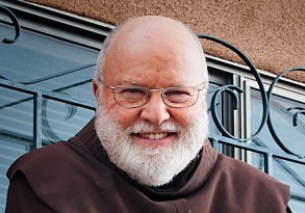
Recently her husband helped host a bishops’ conference in their city, and one of the main teachers was Franciscan priest of the New Mexico Province and founder of the Center for Action and Contemplation (CAC) in Albuquerque, New Mexico, Richard Rohr.
Suzanne had sent me his tapes long ago, and he just speaks to my soul. His work centers on contemplation and compassion, and as a teacher he is one of the best.
Anyway, Suzanne was invited to hear his talk.
And among the litany of wisdom he discussed was something that took my breath away.
“What is the opposite of faith?” he asked. “We immediately think of that as doubt, no?”
I’m sure everyone nodded here.
“The opposite of faith is not doubt. It’s control.”
Oh, my.
I’d never thought of it that way, had you?
We say we trust in the God of our understanding, no? We say the words. We may even think we believe them.
And then we go right back to our “real lives” and tell God we know she’s busy and we’ll handle all this
But what a mature person, with enormous faith, it takes to get quiet, contemplate, listen to the soft voice of the divine, make a plan based on that, do our part, and then let go of the outcome . . .
Wouldn’t you just rather tell people what to do and have them do it to your satisfaction? That’s so much easier!
But when we focus on how to become happy in life—and that’s what we all want, no?—we come to realize that Fr. Rohr hit the proverbial nail smack on its head.
If we truly had faith, we’d abdicate that blessed control.
Since hearing that, it’s become my litmus test of faith. When I say I believe something, say I’ve given it to God, say I’m doing my part and the divine will take care of the rest, I then look clearly and sharply at the situation to see where I’m still trying to control things.
And then turn that over as well.
Simple concept. Although of course simple rarely means easy!
I recently had quite a good test of this. It’s something I wish I didn’t have to confess . . .
I had an ooops breeding. First time ever—in 30 years. And although it wasn’t a disaster—it was a repeat of last spring’s litter, and I love what I kept out of it, Ms. Murphey Brown—oh, dear, was this not in the plan. For a thousand reasons. The way I do puppies is quite time consuming . . . Time I just didn’t have.
But after getting over the initial shock, I worked to let it go. To be okay with whatever happened. To non-resist, which has been one of the tools I’ve had to work on for decades to effectively practice. For a good bit of my life, I would have much rather pushed the river uphill than learned how to float.
In short, I knew I had to be okay with whatever happened—a litter of 13 or no pups at all or anything in between.
And I could hear Fr. Rohr’s soft voice in my head . . .
Long story short, Siren is not pregnant. We dodged that bullet! And even though I was prepared for puppies and truly okay with it, man, is this a relief!
Ah, control. Even when we think we have it, life has a way of laughing in our faces with events that show us how comical we are.
The old saying holds true: When you want to give the gods a laugh, tell them your plans . . .
But how freeing it is to let go. How much energy surges through the veins. Energy that can then be used for effective pursuits.
As Fr. Rohr says, “Faith does not need to push the river because faith is able to trust that there is a river. The river is flowing. We are in it.”
The post Life Is Not Fair, Get Over It appeared first on Susan Mary Malone.
Life is not Fair, Get over it
Well, that’s a bit harsh.
But doesn’t it sound like something your grandpa would say? I know mine would have. Although he’da said it in his soft sweet voice, which tampers a bit the clanging sound that goes right to the gut.
But grandpas tend to have learned a thing or two, and know that the truth is life is not fair.
As much as we wish it would be.
Perhaps wish isn’t a strong enough word.
Not matter how far we’ve come, the bags of coal deposited on our doorsteps still cause us to search for any way out from under them.
By any means.
We first deal with the shock of what happened, then complain, then try and undo whatever dastardly deed done to us. If that doesn’t work, we scheme.
We put untold amounts of energy into not accepting whatever the thing is we didn’t ask for in the first place.
Isn’t it all exhausting?
Why yes, it is.
But that stubborn ego doesn’t go down to defeat without a fight. That’s its nature.
Railing about whatever event or person or life in general that did us wrong is the ego’s first line of defense.
Funny thing about all that though, if you don’t learn the skills of acceptance and letting go, all the running in circles to control every event in your life will wear you to the bone.
Especially as you get older, when energy wanes a bit.
And that’s when so many folks finally go into therapy of some sort to deal with their “issues,” which stem so often from how life is not always fair .
My dear friend Suzanne is married to an Episcopal priest. And while that comes with tireless service, there are some perks involved
Recently her husband helped host a bishops’ conference in their city, and one of the main teachers was Franciscan priest of the New Mexico Province and founder of the Center for Action and Contemplation (CAC) in Albuquerque, New Mexico, Richard Rohr.
Suzanne had sent me his tapes long ago, and he just speaks to my soul. His work centers on contemplation and compassion, and as a teacher he is one of the best.
Anyway, Suzanne was invited to hear his talk.
And among the litany of wisdom he discussed was something that took my breath away.
“What is the opposite of faith?” he asked. “We immediately think of that as doubt, no?”
I’m sure everyone nodded here.
“The opposite of faith is not doubt. It’s control.”
Oh, my.
I’d never thought of it that way, had you?
We say we trust in the God of our understanding, no? We say the words. We may even think we believe them.
And then we go right back to our “real lives” and tell God we know she’s busy and we’ll handle all this
But what a mature person, with enormous faith, it takes to get quiet, contemplate, listen to the soft voice of the divine, make a plan based on that, do our part, and then let go of the outcome . . .
Wouldn’t you just rather tell people what to do and have them do it to your satisfaction? That’s so much easier!
But when we focus on how to become happy in life—and that’s what we all want, no?—we come to realize that Fr. Rohr hit the proverbial nail smack on its head.
If we truly had faith, we’d abdicate that blessed control.
Since hearing that, it’s become my litmus test of faith. When I say I believe something, say I’ve given it to God, say I’m doing my part and the divine will take care of the rest, I then look clearly and sharply at the situation to see where I’m still trying to control things.
And then turn that over as well.
Simple concept. Although of course simple rarely means easy!
I recently had quite a good test of this. It’s something I wish I didn’t have to confess . . .
I had an ooops breeding. First time ever—in 30 years. And although it wasn’t a disaster—it was a repeat of last spring’s litter, and I love what I kept out of it, Ms. Murphey Brown—oh, dear, was this not in the plan. For a thousand reasons. The way I do puppies is quite time consuming . . . Time I just didn’t have.
But after getting over the initial shock, I worked to let it go. To be okay with whatever happened. To non-resist, which has been one of the tools I’ve had to work on for decades to effectively practice. For a good bit of my life, I would have much rather pushed the river uphill than learned how to float.
In short, I knew I had to be okay with whatever happened—a litter of 13 or no pups at all or anything in between.
And I could hear Fr. Rohr’s soft voice in my head . . .
Long story short, Siren is not pregnant. We dodged that bullet! And even though I was prepared for puppies and truly okay with it, man, is this a relief!
Ah, control. Even when we think we have it, life has a way of laughing in our faces with events that show us how comical we are.
The old saying holds true: When you want to give the gods a laugh, tell them your plans . . .
But how freeing it is to let go. How much energy surges through the veins. Energy that can then be used for effective pursuits.
As Fr. Rohr says, “Faith does not need to push the river because faith is able to trust that there is a river. The river is flowing. We are in it.”
The post Life is not Fair, Get over it appeared first on Susan Mary Malone.
January 21, 2016
This Is What Happened When I Stepped Into A Man’s World
I had the funniest thing happen the other day. And funny odd, not ha ha.

Have you ever had your buttons pushed and you didn’t even know they were still there to be pushed?
Always so enlightening!
I’d just had a great hunt with my brother, extended brother, and another long-time family friend (also male). Out in the glorious sunshine, my dogs, just spectacular, with the best of life and laughter and fun.
Now, bird hunting in our part of the world—rural Texas—is somewhat restricted to a manly endeavor. In other words, pretty much the only participants are men. Or maybe, they’re all men, as I’ve never in decades seen other women out hunting. If females do attend, they stay in the warm lodge and wait on the hunters to return.
Sounds pretty archaic, no? Well, it kinda is
And this is also not only just a gentleman’s sport, but a fairly wealthy gentleman’s sport at that. Bird dogs (those used for upland game—quail, chukar, pheasant) are expensive—not just to buy but to have trained (I don’t personally know anyone who trains his own. Bird hunters employ pricey pros to get and keep their dogs in tip-top shape).
These days in Texas, quail populations have declined considerably (although as we speak, the numbers are coming up again, at least somewhat). So, hunters often go to upland-game clubs, which stock the birds, and pay for a day hunt or a yearly membership.
Which was where we were hunting as well. I get the benefit of going as I bring the dogs. And although mine are retrievers, they find the coveys, stop hard, flush for the hunters, then retrieve the downed quail.
It is fabulous fun! And getting to see the glee of my dogs doing what they were bred to do (and then some!), well, ah. Just heaven.
But I do know the culture. And sometimes . . .
So anyway, we’d had a great hunt and were back in the lodge before leaving. Another hunting party was there, a group of five or so men. And it’s always funny when that occurs, how they’ll rarely speak to me. And never, ever look me in the eye.
It’s uncomfortable for them to have a woman in their midst who actually goes on the hunt. It doesn’t fit the culture, and must be very puzzling.
But I can cause a tree stump to talk to me (as those who know me can attest!), so even though it’s a bit awkward for them, I always do at least say hi and ask about their hunts, etc. And lest one think all the men are prejudiced, those I go with are not in any way, and are always grateful for my dogs, and me. And the guy who runs the place, Terry, couldn’t possibly be more respectful.
The others, though . . .
So this day, back in the lodge, they were watching the end of the Seattle/Carolina playoff game. Which Carolina won. They were creaming them when we’d gone out, and apparently Seattle came back and made it a game, but Carolina won in the end.
“Wow,” I said, “I’da lost money on that one.” Because even though Carolina had the better record, I thought Seattle had a Super Bowl shot. And if nothing else, would beat the points.
Now, anyone who knows me also knows I’m a bit of an NFL fan. And I won’t get all-football on you, but I can go toe to toe about Xs and Os with oh, pretty much anybody.
This 60-ish man was sitting on the couch and said (and not too nicely), “I don’t know why you’d think that. Carolina’s the far better team.”
“On paper,” I agreed. “But with the matchups—“
“They’ve only lost one game, Hun,” he said with a sarcastic huff.
As if I didn’t know that!
I had just been put in my proper place. How dare me enter into a man’s world.
But none of this is really the point.
The point being: Anger surged up through my solar plexus and almost out of my mouth. The latter didn’t occur only because I bit my tongue to the root!
Because if I’da said anything, it wouldn’t have been pretty.
Now, had that anger not have occurred, I probably would have responded with a retort to make him look like an idiot. I know, not very spiritual of me. But in anger, well, who knew what would have come out.
Again, not the point. The point being that his sarcasm, and intent, pushed a deep button in me. One I thought had been dealt with decades ago.
Isn’t that just uncomfortable? When you get presented again (sometimes for the fiftieth time it seems) with an opportunity for personal growth. And by definition, those rarely come with a skip and a song.
Because of course I’ve had enough therapy to know that’s what that was! LOL.
But that the button still existed in the first place surprised me.
I grew up in a household headed by a Freudian psychiatrist. And though I loved my father, and still do now that he’s been gone for six years, he believed, along with the Freudians, that females are second-class males. I.e., women aren’t oranges to men’s apples, but rather, are defective apples.
I am not making this up. Believe me.
And while my father believed I was smarter, more accomplished, etc., etc., than other females, well, I wasn’t in any way expected to succeed in the manner that my brothers were. The only way to fulfillment for a female is to marry and have babies. That’s it. The only way. Again, trust me on this. The Freudians haven’t changed that line of thinking since, well, Freud.
I spent much of my youth and early adulthood digging out the various neuroses from all of that. And I must say, on the “other side” of it, I’m grateful as it helped spur on my drive. To be a writer in this world, you have to have a lot of drive
The thing being, I had no idea there was still a button in there to push!
Ah, what a great opportunity to revisit this issue, remember where I came from and why it’s been such a bear. And heal another piece of it.
Because I don’t believe we completely “get over” our issues. Not entirely. We absolutely can address and dig out and heal them, to the best of our abilities. But with our “stuff”—the core stuff—remnants remain to remind us. It’s like you never really resolve death, but rather, learn to live with it.
So, I thank that man. He gave me a great opportunity for more growth.
And besides—my dogs worked better than his. LOL! And I trained them my own self.
The post This Is What Happened When I Stepped Into A Man’s World appeared first on Susan Mary Malone.
January 13, 2016
11 Quotes That Will Boost Confidence And Inspire You
We all have those times where we’ve lost the fire.

Inspiration
Whether we’ve been knocked to our knees by defeat, or caught in the slog of a seemingly endless grind, or the mountain just keeps being too high to climb, or despite all our best cajoling the muse has escaped into the ethers and refuses to return, sometimes we need a little oomph to spur us back on. A method for how to regain self-confidence.
At least I know I do.
And so often, I find inspiration in the words of others who have gone before me. They learned/earned their truths. I gain by their wisdom, their courage. And can pull myself up by bootstraps that others have worn well.
When wondering if all the work matters, I remember these truths:
“No matter how small and unimportant what we are doing may seem, if we do it well, it may soon become the step that will lead us to better things.”
― Channing Pollock, Magician
Or as philosopher and psychologist William James said, “Act as if what you do makes a difference. It does.“
As a novelist, I spent many decades questioning my path. As anyone in the arts can attest, you’re constantly bombarded by well-meaning (or not) friends and family, by the culture itself, actually, with variations of: “Well, now, sweetie, that writing (painting, music, etc.) is all well and good, but don’t you think it’s time you get a real job? You know, grow up and become a successful member of society?”
And while yes, a girl does have to eat! Tossing out the creative for the “mature” way of living life will dry out the artistic persona to dust.
As playwright George Bernard Shaw said, “Life isn’t about finding yourself. Life is about creating yourself.”
Whatever you perceive yourself to be.
Because life is in the becoming, no?
I love the teachings of Behavioral Science Academic and Author Steve Maraboli: “Make a pact with yourself today to not be defined by your past. Sometimes the greatest thing to come out of all your hard work isn’t what you get for it, but what you become for it.”
But of course, all of this comes with obstacles, with falling down, with failures. It’s in the picking up of ourselves we learn the most. Often, though, I need a bit of a boost to keep going, a ‘how to increase confidence levels’ after said fall.
One thing that always sticks with me is from Zig Ziglar: “When obstacles arise, you change your direction to reach your goal; you do not change your decision to get there.”
And even though I would love just catching a broom and flying to the highest peak, I know that’s not where the magic lies.
As Helen Keller said, “The marvelous richness of human experience would lose something of rewarding joy if there were no limitations to overcome. The hilltop hour would not be half so wonderful if there were no dark valleys to traverse.”
Perhaps Andy Rooney hit its essence: “Everyone wants to live on top of the mountain, but all the happiness and growth occurs while you’re climbing it.”
And sometimes when weighing the risks, I think I should have my head examined. To look into the abyss, to feel the cold dark pull of what lies in the deep, and to jump anyway . . . Well, the rational side of me—the one learned via the over-culture of our world—tells me I’m nuts.
But then I’m warmed by the words of Holocaust survivor and Nobel laureate Ellie Wiesel: “We must understand that there can be no life without risk—and when your spirit is strong, everything else is secondary, even the risks.
He certainly knows a thing or two about risks.
But Author Friedrich Nietzsche speaks to my heart about this: “You must have chaos within you to birth a dancing star.”
Ah, yes, that is how it is . . .
To be able to let that chaos live takes a certain amount of trust as well.
Or as Steve Jobs said:
“ You can’t connect the dots looking forward; you can only connect them looking backwards. So you have to trust that the dots will somehow connect in your future. You have to trust in something – your gut, destiny, life, karma, whatever. This approach has never let me down, and it has made all the difference in my life.”
Isn’t it amazing to think of Steve Jobs dealing with trust? Somehow that just soothes my soul.
And when I need to put life all into perspective, I come back to Author and Philosopher Og Mandino’s words:
“Remember that even the most successful lives contain chapters of failure just as any good novel does, but how the book ends depends on us. We are the authors of our years, and our failures and defeats are only steps to something better.”
Wise words help us go on in times of trouble. To double down on our commitments. To not let this crazy world we live in stand in the way of our dreams and goals and the pursuit of ideals we cherish in our hearts.
To know that we all matter.
Because maybe all the sages are right; maybe life isn’t about the happy ending.
Because maybe all the sages are right; maybe life isn’t about the happy ending.
Click To Tweet
Maybe, just maybe, it’s all about the story.
The post 11 Quotes That Will Boost Confidence And Inspire You appeared first on Susan Mary Malone.
11 Quotes that will Boost Confidence and Inspire You
We all have those times where we’ve lost the fire.
Inspiration
Whether we’ve been knocked to our knees by defeat, or caught in the slog of a seemingly endless grind, or the mountain just keeps being too high to climb, or despite all our best cajoling the muse has escaped into the ethers and refuses to return, sometimes we need a little oomph to spur us back on. A method for how to regain self-confidence.
At least I know I do.
And so often, I find inspiration in the words of others who have gone before me. They learned/earned their truths. I gain by their wisdom, their courage. And can pull myself up by bootstraps that others have worn well.
When wondering if all the work matters, I remember these truths:
“No matter how small and unimportant what we are doing may seem, if we do it well, it may soon become the step that will lead us to better things.”
― Channing Pollock, Magician
Or as philosopher and psychologist William James said, “Act as if what you do makes a difference. It does.“
As a novelist, I spent many decades questioning my path. As anyone in the arts can attest, you’re constantly bombarded by well-meaning (or not) friends and family, by the culture itself, actually, with variations of: “Well, now, sweetie, that writing (painting, music, etc.) is all well and good, but don’t you think it’s time you get a real job? You know, grow up and become a successful member of society?”
And while yes, a girl does have to eat! Tossing out the creative for the “mature” way of living life will dry out the artistic persona to dust.
As playwright George Bernard Shaw said, “Life isn’t about finding yourself. Life is about creating yourself.”
Whatever you perceive yourself to be.
Because life is in the becoming, no?
I love the teachings of Behavioral Science Academic and Author Steve Maraboli: “Make a pact with yourself today to not be defined by your past. Sometimes the greatest thing to come out of all your hard work isn’t what you get for it, but what you become for it.”
But of course, all of this comes with obstacles, with falling down, with failures. It’s in the picking up of ourselves we learn the most. Often, though, I need a bit of a boost to keep going, a ‘how to increase confidence levels’ after said fall.
One thing that always sticks with me is from Zig Ziglar: “When obstacles arise, you change your direction to reach your goal; you do not change your decision to get there.”
And even though I would love just catching a broom and flying to the highest peak, I know that’s not where the magic lies.
As Helen Keller said, “The marvelous richness of human experience would lose something of rewarding joy if there were no limitations to overcome. The hilltop hour would not be half so wonderful if there were no dark valleys to traverse.”
Perhaps Andy Rooney hit its essence: “Everyone wants to live on top of the mountain, but all the happiness and growth occurs while you’re climbing it.”
And sometimes when weighing the risks, I think I should have my head examined. To look into the abyss, to feel the cold dark pull of what lies in the deep, and to jump anyway . . . Well, the rational side of me—the one learned via the over-culture of our world—tells me I’m nuts.
But then I’m warmed by the words of Holocaust survivor and Nobel laureate Ellie Wiesel: “We must understand that there can be no life without risk—and when your spirit is strong, everything else is secondary, even the risks.
He certainly knows a thing or two about risks.
But Author Friedrich Nietzsche speaks to my heart about this: “You must have chaos within you to birth a dancing star.”
Ah, yes, that is how it is . . .
To be able to let that chaos live takes a certain amount of trust as well.
Or as Steve Jobs said:
“ You can’t connect the dots looking forward; you can only connect them looking backwards. So you have to trust that the dots will somehow connect in your future. You have to trust in something – your gut, destiny, life, karma, whatever. This approach has never let me down, and it has made all the difference in my life.”
Isn’t it amazing to think of Steve Jobs dealing with trust? Somehow that just soothes my soul.
And when I need to put life all into perspective, I come back to Author and Philosopher Og Mandino’s words:
“Remember that even the most successful lives contain chapters of failure just as any good novel does, but how the book ends depends on us. We are the authors of our years, and our failures and defeats are only steps to something better.”
Wise words help us go on in times of trouble. To double down on our commitments. To not let this crazy world we live in stand in the way of our dreams and goals and the pursuit of ideals we cherish in our hearts.
To know that we all matter.
Because maybe all the sages are right; maybe life isn’t about the happy ending.
Because maybe all the sages are right; maybe life isn’t about the happy ending.
Click To Tweet
Maybe, just maybe, it’s all about the story.
The post 11 Quotes that will Boost Confidence and Inspire You appeared first on Susan Mary Malone.
January 6, 2016
7 Things Your Love Wants To Know About You
Love. That elusive beast. We all rejoice when we feel its surge. And fight it when it wanes.

Be Upfront
Of course, women at least want to believe that rush of loving feelings will remain—forever. In the happily-ever-after vein. Prince Charming will always be that hero galloping in on a white steed (with which of course Freud had a field day, but we won’t get into that here!).
The thing that kills love doesn’t come via sledgehammer in the night. Oh, an “event” may surely provide the death knell, but once that smoke has dispersed, even if you didn’t pay attention, the signs were clearly there.
Hate when that happens.
But the thing that kills love quicker than dead is resentment. That’s how those oh-so-lovely feelings turn first to hurt, then anger, then to indifference—the true antithesis of love.
So how does our fair maiden keep that from happening (provided she’s with a prince and not a frog)?
Communication.
I know, not very sexy.
But it’s the thing that fosters understanding. To be upfront with your emotions and needs and desires can sure cause feelings of vulnerability. Which isn’t a lot of fun at times. And to stand in the midst of it requires true courage.
If this list were about things our maiden wanted to know about our prince, it would be much longer.
But the thing that kills love quicker than dead is resentment.
Click To Tweet
Men, though, are fairly simple beasts. It’s not that difficult to keep one happy. Just make sure he knows these 7 things:
Will you be true?
I know, most women would hoot at this. “That’s not the first thing my man needs!” I hear a lot. Besides, they say, men think about sex 60 times per day (this number is continually changing via studies. Which I suspect results from any given man giving a different answer on any given day!). And he isn’t thinking about sex with me but with whatever cute girl walks into his line of vision!”
True. Men are wired that way. The propagation of the species and all of that.
Doesn’t discount, however, his need to know that you won’t stray.
A man’s most primary need is to attach to his mate. It all comes from his attachment to Mom, and no need to get all Freud here, but there’s a reason men call for their wives and mothers as they’re dying. It’s the number-one constant in his psyche.
So let him know you belong to him—however antiquated that feels.
Do you respect him?
You always have to keep in mind the fragile male ego. I know—this isn’t terribly politically correct! But men, although straightforward enough once you understand them, grow up trying to find their place in the pecking order, and pursuing a sense of mastery that if disputed, causes doubts about their very manhood.
I know, right? Bless ‘em.
But do not discount the vital importance of this need in men to “feel like a man.” If he doesn’t feel respected, then he feels castrated. Which isn’t something you want to deal with! Five Keys for Understanding Men delves deeply into this subject, so just know that he needs respect. From you.
He needs to believe that you think him capable, the master of his ship, the captain of his troops.
Does he please you?
Do you appreciate the little things he does? And to a man, these things are most likely different from what you’d think, or wish he would do. You might like some help in the kitchen, but he may or may not have a clue how to fit there.
Men show caring in ways odd to women’s thinking. But cleaning out the roof gutters may be his way of taking care of the homestead. Making sure your car’s oil is changed is his way to assuring you’ll be safe.
The trick is to discern the “odd” things he does and make him feel appreciated for doing so.
Does he stir your chili?
Simply, men need to feel sexual prowess. Although they’re wired to breed everything that walks willingly by, and we often joke about the male of the species just wanting to get off, that’s only partly the story.
Men want to feel that their women are fulfilled. Not only so they don’t stray (see number 1), but because it bolsters that fragile ego.
He’s a man, by golly! His woman is satisfied. Which means his manhood is intact.
Will you make him a sammich?
Or any food fit to eat. I know, I know, again, we’re in the liberated age, no? But we’re talking how men are, not how we want them to be (which is often a female psyche in a male body).
Again, men’s needs are fairly simple. Once he feels respected, appreciated, a manly man, he’s hungry. For food. And his woman fixing vittles for him fosters those feelings of attachment—his primary need.
Yep, sounds a lot like his attachment to Mom. And it is a carryover from that. But this is one you want to fight at your own peril, as the symbolism is as strong as the life force itself.
Just feed him.
Can he go out and play with his friends?
Women often laugh about male friendships. While women bare to their friends their deepest dreams and desires, their emotions and fears, men ask, “How ‘bout them Cowboys!” as a method of communication.
Men’s friendships are just different from women’s, but not any less vital.
Surprising? Often it seems men have no friends, or none outside the “couple.” This is, however, a mistake.
Men need other men. They need to reconnect with their hierarchy of friends and acquaintances. It keeps them safe in the pecking order of life.
If they’re doing this around a ballgame rather than a bar, that’s all good, right? And even better, if they’re playing in some ballgame, that’s the jackpot as they can reestablish that sense of mastery too, and connect with their tribe, and be men.
Do you love him?
Men rarely ask this. Women do, but men, not so much. The question itself implies some weakness, and showing that—even to you!—causes those feelings of castration again. Of not being manly enough.
So this is a question he needs answered in other ways. By your appreciation. By your desire. By your actions.
This is where you don’t make them guess!
This is where actions speak so much louder than words.
Yep, pretty simple beasts, these men. And it’s easy to rail at all the politically incorrect points here. And yep, these are politically incorrect.
Doesn’t make them any less true.
The old saying about pick your battles applies to all relationships. And yep, you can work to change your man on any of these issues. You’ll be going against his nature, though. And if you succeed on the outside, he may be very unhappy within.
Anybody who’s ever lived with an unhappy man would surely choose another way!
So, let him know you’re staying. That you think he’s cool. That you appreciate him mowing the lawn. That you want him. That you’ll feed him. That his playing basketball with his friends is a great thing.
All those things make him know he’s loved.
The post 7 Things Your Love Wants To Know About You appeared first on Susan Mary Malone.
7 Things Your Love Wants to Know About You
Love. That elusive beast. We all rejoice when we feel its surge. And fight it when it wanes.
Be Upfront
Of course, women at least want to believe that rush of loving feelings will remain—forever. In the happily-ever-after vein. Prince Charming will always be that hero galloping in on a white steed (with which of course Freud had a field day, but we won’t get into that here!).
The thing that kills love doesn’t come via sledgehammer in the night. Oh, an “event” may surely provide the death knell, but once that smoke has dispersed, even if you didn’t pay attention, the signs were clearly there.
Hate when that happens.
But the thing that kills love quicker than dead is resentment. That’s how those oh-so-lovely feelings turn first to hurt, then anger, then to indifference—the true antithesis of love.
So how does our fair maiden keep that from happening (provided she’s with a prince and not a frog)?
Communication.
I know, not very sexy.
But it’s the thing that fosters understanding. To be upfront with your emotions and needs and desires can sure cause feelings of vulnerability. Which isn’t a lot of fun at times. And to stand in the midst of it requires true courage.
If this list were about things our maiden wanted to know about our prince, it would be much longer.
But the thing that kills love quicker than dead is resentment.
Click To Tweet
Men, though, are fairly simple beasts. It’s not that difficult to keep one happy. Just make sure he knows these 7 things:
Will you be true?
I know, most women would hoot at this. “That’s not the first thing my man needs!” I hear a lot. Besides, they say, men think about sex 60 times per day (this number is continually changing via studies. Which I suspect results from any given man giving a different answer on any given day!). And he isn’t thinking about sex with me but with whatever cute girl walks into his line of vision!”
True. Men are wired that way. The propagation of the species and all of that.
Doesn’t discount, however, his need to know that you won’t stray.
A man’s most primary need is to attach to his mate. It all comes from his attachment to Mom, and no need to get all Freud here, but there’s a reason men call for their wives and mothers as they’re dying. It’s the number-one constant in his psyche.
So let him know you belong to him—however antiquated that feels.
Do you respect him?
You always have to keep in mind the fragile male ego. I know—this isn’t terribly politically correct! But men, although straightforward enough once you understand them, grow up trying to find their place in the pecking order, and pursuing a sense of mastery that if disputed, causes doubts about their very manhood.
I know, right? Bless ‘em.
But do not discount the vital importance of this need in men to “feel like a man.” If he doesn’t feel respected, then he feels castrated. Which isn’t something you want to deal with! Five Keys for Understanding Men delves deeply into this subject, so just know that he needs respect. From you.
He needs to believe that you think him capable, the master of his ship, the captain of his troops.
Does he please you?
Do you appreciate the little things he does? And to a man, these things are most likely different from what you’d think, or wish he would do. You might like some help in the kitchen, but he may or may not have a clue how to fit there.
Men show caring in ways odd to women’s thinking. But cleaning out the roof gutters may be his way of taking care of the homestead. Making sure your car’s oil is changed is his way to assuring you’ll be safe.
The trick is to discern the “odd” things he does and make him feel appreciated for doing so.
Does he stir your chili?
Simply, men need to feel sexual prowess. Although they’re wired to breed everything that walks willingly by, and we often joke about the male of the species just wanting to get off, that’s only partly the story.
Men want to feel that their women are fulfilled. Not only so they don’t stray (see number 1), but because it bolsters that fragile ego.
He’s a man, by golly! His woman is satisfied. Which means his manhood is intact.
Will you make him a sammich?
Or any food fit to eat. I know, I know, again, we’re in the liberated age, no? But we’re talking how men are, not how we want them to be (which is often a female psyche in a male body).
Again, men’s needs are fairly simple. Once he feels respected, appreciated, a manly man, he’s hungry. For food. And his woman fixing vittles for him fosters those feelings of attachment—his primary need.
Yep, sounds a lot like his attachment to Mom. And it is a carryover from that. But this is one you want to fight at your own peril, as the symbolism is as strong as the life force itself.
Just feed him.
Can he go out and play with his friends?
Women often laugh about male friendships. While women bare to their friends their deepest dreams and desires, their emotions and fears, men ask, “How ‘bout them Cowboys!” as a method of communication.
Men’s friendships are just different from women’s, but not any less vital.
Surprising? Often it seems men have no friends, or none outside the “couple.” This is, however, a mistake.
Men need other men. They need to reconnect with their hierarchy of friends and acquaintances. It keeps them safe in the pecking order of life.
If they’re doing this around a ballgame rather than a bar, that’s all good, right? And even better, if they’re playing in some ballgame, that’s the jackpot as they can reestablish that sense of mastery too, and connect with their tribe, and be men.
Do you love him?
Men rarely ask this. Women do, but men, not so much. The question itself implies some weakness, and showing that—even to you!—causes those feelings of castration again. Of not being manly enough.
So this is a question he needs answered in other ways. By your appreciation. By your desire. By your actions.
This is where you don’t make them guess!
This is where actions speak so much louder than words.
Yep, pretty simple beasts, these men. And it’s easy to rail at all the politically incorrect points here. And yep, these are politically incorrect.
Doesn’t make them any less true.
The old saying about pick your battles applies to all relationships. And yep, you can work to change your man on any of these issues. You’ll be going against his nature, though. And if you succeed on the outside, he may be very unhappy within.
Anybody who’s ever lived with an unhappy man would surely choose another way!
So, let him know you’re staying. That you think he’s cool. That you appreciate him mowing the lawn. That you want him. That you’ll feed him. That his playing basketball with his friends is a great thing.
All those things make him know he’s loved.
The post 7 Things Your Love Wants to Know About You appeared first on Susan Mary Malone.
December 23, 2015
Successful People Have More Than 7 Habits
We all know of Stephen Covey’s The 7 Habits of Highly Successful People. On the bestseller list for decades now, it’s de rigueur for all business types. And for people just wanting to better themselves and their lives.

Although it has revolutionized the business world, the habits themselves aren’t that revolutionary. I.e., you read them with recognition, no? I don’t know why but every time I see them, I think of that sweet book, All I Really Needed to Know I Learned in Kindergarten, by Robert Fulghum.
Both books pretty much boil down to respecting yourself and others.
It’s in the details where we humans get mixed up.
But one thing I know for true is that psychological and spiritual truths have the same meaning. I.e., if something is psychologically true, then it’s spiritually true as well, with the converse also being accurate. You just can’t separate one from another.
The seven habits Covey talked about are straightforward enough:
Be proactive. Which just translates of course to your choices in creating your life.
The spiritual equivalent: You create your own reality.
Begin with the end in mind. Know what you want and where you want to go. Create a personal vision statement.
The spiritual equivalent: Visualize and feel your perfect life, in all its details.
As Einstein said: “Imagination is more important than knowledge. For knowledge is limited to all we now know and understand, while imagination embraces the entire world, and all there ever will be to know and understand.”
Put first things first. Makes sense, no? You’re building on the choices and vision for the future you’ve designed.
The spiritual equivalent: Focus on your dreams.
Think win-win. Simply, that you don’t have to lose for me to win.
The spiritual equivalent: What you do to others, you do to yourself.
Seek first to understand, then be understood. Which not so many folks do! Most of the time, we’re so focused on getting our own points or opinions across, that we don’t stop to truly “hear” what someone else is trying to convey. So much so that we have to be taught active listening.
The spiritual equivalent: Love thy neighbor as thyself. Nothing shows caring more than truly listening to someone.
Synergy. Which is just working together. A knowing that the whole is more than the sum of its parts.
The spiritual equivalent: When 2 or more are gathered in my name . . .
Sharpening the saw. Which translates to taking care of you, in all the various ways you do so.
The spiritual equivalent: If you don’t love yourself, you cannot love another.
Of course I love that Covey went on to pen the sequel: The 8th Habit: From Effectiveness to Greatness
From effectiveness to greatness. Which shows how to truly thrive in today’s world, one must reach beyond effectiveness toward fulfillment, contribution, and greatness.
Sounds a lot like Victor Frankl’s findings on man’s search for meaning. Or Maslow’s Hierarchy of needs. Both dealing with the psychological need we have to thrive, to follow and reach our dreams, to know that we have a reason for being here, and that we leave the world a better place.
The spiritual equivalent: God has a plan for your life.
When I add all of this together, it makes for a life worth spent—one in which we, you and I, are the driving forces. Mythologist Joseph Campbell summed this up best:
“Life has no meaning. Each of us has meaning and we bring it to life. It is a waste to be asking the question when you are the answer.”
What do you do out of habit in order to succeed?
The post Successful People Have More Than 7 Habits appeared first on Susan Mary Malone.
Happiness is a Story

- Susan Mary Malone's profile
- 85 followers

