
Susan Mary Malone's Blog: Happiness is a Story, page 6
February 15, 2017
7 Tips on How to Focus in the Midst of Chaos
How did life get so rip-roaring crazy?
Okay, so we know how that happens. But seems these days the whole world is in chaos. Couple that with your normal hectic life, and, well, sometimes it seem like the tail just gets chased.
When that happens, how to stay focused just seems like a laughable question.
So what’s a conscious person to do? What’s the secret of how to focus better in this frenzied world?
1. Do the Most Challenging Task First.Jim Loehr and Tony Schwartz conduct intensive training with professional athletes to help them perform at peak levels under intense competitive pressures. But they’ve found that just regular folks face the same issues. In their book, The Power of Full Engagement: Managing Energy, Not Time, Is the Key to High Performance and Personal Renewal, they stress that energy, not time, is the fundamental currency of high performance.
In other words, whatever challenges you the most, do it when you’re at peak performance.
2. Meditate.We talk about this a lot, no? But we have so many studies to back up how mediation calms the brain, helps us to make better decisions, and to focus more acutely on the task at hand.
People who regularly practice meditation actually improve their mental focus by altering brain function. Compared to non-meditators, they show to be better equipped to quiet brain activity related to mind-wandering, a new study in the Journal of Neuroscience suggests.
Just 15 minutes a day. Who doesn’t have that?
3. Take Mental Breaks.A study published in the journal Cognition found that brief mental breaks helped participants stay focused on tasks longer.
So, setting a reminder to take a break every 50 minutes can help you return to your task with improved attention.
4. Practice Mindfulness.Yep, you guessed it—this is about multi-tasking. And we all know the pitfalls of that. The trick comes in keeping focused on the task at hand, rather than 50 other things, including the results of what you’re doing.
This requires discipline, but pays off in spades.
Simon Hartley, a sports psychologist who works with gold medalists and world record holders, helps both athletes and business people get to the top of their mental games.
He found that the most successful athletes in the world focused on doing their personal best—with each increment of their performances—rather than on the outcomes of those performances.
Breathe. Give your all to what you’re doing now.
5. Read MoreReading, especially reading fiction, proves to be a great exercise for sharpening focus—which then carries over through the rest of your day. When you read, all of your attention is focused on the story. You’re in it—in a different world, meeting new people, absorbing every detail as the book moves along.
The rest of the planet disappears.
And in our fast-paced global world, that’s saying something.
Not only does reading make you more empathetic, but it also reduces stress levels. Which causes you to focus more easily.
A study by the University of Sussex found that reading for just six minutes can reduce stress levels by up to 68%.
We can all read for a brief time every day, no? And some starving author will thank you.
Isn’t it often when you look at the state of things, you want to change them? To do something?
My ex-husband used to say, “It’s time to do something, even if it’s wrong.” And while sometimes, yep, a decision needs to be made, an action taken, on the other hand being able to live with uncertainty gives you the time and space to make a wise decision, rather than a knee-jerk reaction.
The thing is, neither your plans nor your home nor the world itself will ever be perfect. New information will be revealed, new people will come into the story, things will move forward and then, well, here they go backward again. If you can accept this as a given, you’re far less likely to get caught in the chaos of it.
What does that come down to? Basically, suppressing your urge to control things.
Jamie Holmes, a Future Tense Fellow at New America and a former Research Coordinator at Harvard University in the Department of Economics, says in Nonsense, The Power of Not knowing, our need for closure has dangers. It makes us stick to our first answer, which is not always the best. When we latch onto fast and easy truths, we lose a vital opportunity to learn something new, solve a hard problem, or see the world from another perspective.
He says that in an increasingly complex, unpredictable world, what matters most isn’t IQ, willpower, or confidence in what we know. It’s how we deal with what we don’t understand.
7. When all else fails and panic sets in: Remember What You’re Doing and Why You’re Doing It.Sit down, breathe, and get clear on exactly why you’re doing this task. It’s getting you closer to your dream, no? Whether that be the brass ring in your career or making the world a better place. Or anything in between.
When you refocus on why this task matters, you become energized again in your commitment to the goal.
And now, sharp, clear, focused—you’re ready to take on the world.
The post 7 Tips on How to Focus in the Midst of Chaos appeared first on Susan Mary Malone.


February 8, 2017
Be Honest, Do You Really Want To Listen To People?
Everyone knows what it takes to truly communicate, right? This is a common topic in therapeutic circles, on blogs, just about all over the place.
We have the skills, no? We all know about letting another talk, paraphrasing back what he said, using ‘I’ statements to convey hurt. You know, all that “therapy talk.”
We’ve all perfected those, haven’t we. Okay, so we’re working on them!
Because often, in the heat of things, exhibiting those skills proves tough to do.
Think back on your most heated arguments of late.Usually, the closer the relationship, the easier a difference of opinion can erupt into a full-blown fight. That argument was most likely with a spouse, a child, a brother or sister. Because, well, those closest to us know how to push our buttons most.
But this can happen with friends, colleagues, just about any person with whom you interact.
And we know as well, heated exchanges often are due to wanting to be heard, rather than wanting to hear what the other person is saying.
We all have our opinions, no? I know I’ve been guilty of this, and I bet you have too.
I truly believe that deep in our heart of hearts, we all just want to be heard.I truly believe that deep in our heart of hearts, we all just want to be heard.
Click to Tweet
Tough to do though, when everybody is wanting the same thing.
So before perfecting all those listening skills, you have to ask an essential question. This underlies all of the arguments, fusses, misunderstandings that occur when communication goes awry:
Do you care what the other person is saying?That seems like such a simple question. And the knee-jerk reaction always is, “Of course I do!” Now her teeth begin to clench. “I wouldn’t be talking to him otherwise!”
But let a minute pass, ask the question again, and almost everybody begins to squirm, just a little bit . . .
Because you’re right in your stance, no? Of course you are! Your thoughts, opinions, values, well, they matter and everyone ought to see it your way.
Damn the torpedoes to what they think!
Okay, so it’s usually not quite that overt, those pesky “I’m right” thoughts. But if they weren’t there, you wouldn’t hold to your position so strongly; wouldn’t have such a resistance to what another thinks.
And when you’re in that mode, you can practice all the active-listening skills in the world, and the fiery results (at least internally) will be the same.
Until we get to the bottom of: “Do I really care what another is saying,” no actual listening will occur.I had a microcosm example of this happen last week. My new wine novel is finished. Yahoo! And we’re going into the marketing tasks for it. I’ve employed the most wonderful writer/marketing expert, Virginia Tell, who excels in this, to help me.
Our first task was for me to write the synopsis, and then distill that down to a one-paragraph description, to then send to big-name authors, requesting jacket blurbs from them.
Now, this isn’t my strength. But it is hers.
The thing is, we had very different ideas on how these documents should read! And this is of course my novel, very close to my heart, and my goal was absolute perfection. Hers was too.
As we went back and forth (yes, it took us all week to get it just right), and I disagreed with a lot, I kept remembering that this truly is her bailiwick. And instead of tossing out what she’d say or write, I’d sit back and remember that. Because I have enormous respect for her and what she does.
I cared deeply about what she said.And funny thing—it spurred me on to take each draft to the next level. I used what I agreed with, and with what I didn’t, wrote something even better.
The result was a best-case scenario all the way around.
Did we succeed?
Within an hour of sending a query to a NY Times Bestselling author and finalist for the National Book Critics Award, I received a reply: “I'd be delighted to blurb your book.”
I could never, ever, have gotten there without Jinny.
And it happened because we respected one another, listened to one another—through our differences.
I cared—deeply—about what she had to say.
Only when you get to that place, to where the other person’s opinion actually matters to you, can you begin to actively listen. To make headway where the road seems blocked.Then all those skills will shoot you forward like heat-seeking missiles.
The deepest form of respect, in the end, is to actually hear what another is saying.
How do you get to the place where you can hear?
The post Be Honest, Do You Really Want To Listen To People? appeared first on Susan Mary Malone.
Be Honest, Do You Really Want Listen To People?
Everyone knows what it takes to truly communicate, right? This is a common topic in therapeutic circles, on blogs, just about all over the place.
We have the skills, no? We all know about letting another talk, paraphrasing back what he said, using ‘I’ statements to convey hurt. You know, all that “therapy talk.”
We’ve all perfected those, haven’t we. Okay, so we’re working on them!
Because often, in the heat of things, exhibiting those skills proves tough to do.
Think back on your most heated arguments of late.Usually, the closer the relationship, the easier a difference of opinion can erupt into a full-blown fight. That argument was most likely with a spouse, a child, a brother or sister. Because, well, those closest to us know how to push our buttons most.
But this can happen with friends, colleagues, just about any person with whom you interact.
And we know as well, heated exchanges often are due to wanting to be heard, rather than wanting to hear what the other person is saying.
We all have our opinions, no? I know I’ve been guilty of this, and I bet you have too.
I truly believe that deep in our heart of hearts, we all just want to be heard.I truly believe that deep in our heart of hearts, we all just want to be heard.
Click to Tweet
Tough to do though, when everybody is wanting the same thing.
So before perfecting all those listening skills, you have to ask an essential question. This underlies all of the arguments, fusses, misunderstandings that occur when communication goes awry:
Do you care what the other person is saying?That seems like such a simple question. And the knee-jerk reaction always is, “Of course I do!” Now her teeth begin to clench. “I wouldn’t be talking to him otherwise!”
But let a minute pass, ask the question again, and almost everybody begins to squirm, just a little bit . . .
Because you’re right in your stance, no? Of course you are! Your thoughts, opinions, values, well, they matter and everyone ought to see it your way.
Damn the torpedoes to what they think!
Okay, so it’s usually not quite that overt, those pesky “I’m right” thoughts. But if they weren’t there, you wouldn’t hold to your position so strongly; wouldn’t have such a resistance to what another thinks.
And when you’re in that mode, you can practice all the active-listening skills in the world, and the fiery results (at least internally) will be the same.
Until we get to the bottom of: “Do I really care what another is saying,” no actual listening will occur.I had a microcosm example of this happen last week. My new wine novel is finished. Yahoo! And we’re going into the marketing tasks for it. I’ve employed the most wonderful writer/marketing expert, Virginia Tell, who excels in this, to help me.
Our first task was for me to write the synopsis, and then distill that down to a one-paragraph description, to then send to big-name authors, requesting jacket blurbs from them.
Now, this isn’t my strength. But it is hers.
The thing is, we had very different ideas on how these documents should read! And this is of course my novel, very close to my heart, and my goal was absolute perfection. Hers was too.
As we went back and forth (yes, it took us all week to get it just right), and I disagreed with a lot, I kept remembering that this truly is her bailiwick. And instead of tossing out what she’d say or write, I’d sit back and remember that. Because I have enormous respect for her and what she does.
I cared deeply about what she said.And funny thing—it spurred me on to take each draft to the next level. I used what I agreed with, and with what I didn’t, wrote something even better.
The result was a best-case scenario all the way around.
Did we succeed?
Within an hour of sending a query to a NY Times Bestselling author and finalist for the National Book Critics Award, I received a reply: “I'd be delighted to blurb your book.”
I could never, ever, have gotten there without Jinny.
And it happened because we respected one another, listened to one another—through our differences.
I cared—deeply—about what she had to say.
Only when you get to that place, to where the other person’s opinion actually matters to you, can you begin to actively listen. To make headway where the road seems blocked.Then all those skills will shoot you forward like heat-seeking missiles.
The deepest form of respect, in the end, is to actually hear what another is saying.
How do you get to the place where you can hear?
The post Be Honest, Do You Really Want Listen To People? appeared first on Susan Mary Malone.
January 25, 2017
This Is What Happens When Women March
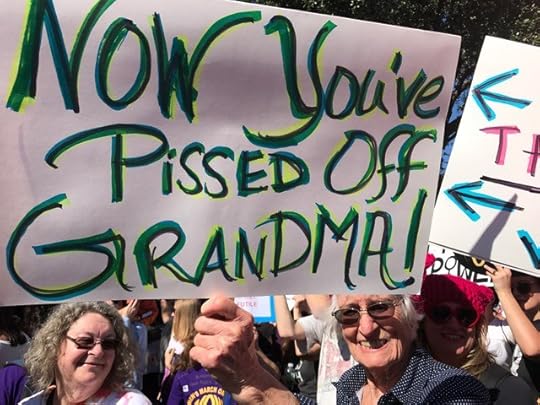
Did you catch the women’s march last Saturday? Perhaps participate in it? Or see the television coverage or online?
Such extraordinary numbers for a grassroots event! An estimated 1 in 100 Americans marched, and though the numbers are difficult to tally, an estimated 4 million worldwide.
That’s a lot of women. And men.
And talk about inauspicious roots. Teresa Shook, a retired grandmother, told a local TV station, "I went to bed the night of the election just discouraged and woke up feeling worse the next day thinking, 'How could this be?' I was just sad and dumbfounded.”
She decided to do something about it.
Tell me again how one person can’t change the world?On FB, she invited 40 of her friends to a March on Washington. By the next morning, 10,000 additional names had joined up.
From this grew the planning for the march on Washington. And then, worldwide sister marches sprung up of their own.
The very definition of grass roots.
Because apparently, one woman can change the world.
Click to Tweet
We participated in the March on Austin, Texas.
And my, what an event it was. They expected 20,000, but as the weeks beforehand brought it closer, we knew it would be larger than that.
Because although not well-publicized, every time I mentioned it to someone, the response came: “Yes, I know about it. We’re going!”
And this from women of all ages, socio-economic groups, and ethnic bents.
So when we arrived to find the lawn of the Capitol building filled with laughing women and girls (and many men and boys!), with more streaming through the entrance in vast numbers, we were not surprised.
We marched with 50,000 of our Texas sisters and brothers.
Ah, such beautiful energy! From babies all the way to the marvelous crones among us, the spirit of camaraderie, of joining in community for a much higher purpose, wafted over us all.
And the posters! How fabulous. My favorite being held by a sparkling lady who was 90 if she was a day, opens this blog.
Even though this came into existence as an answer to the election, ours was not a march against something.But rather, a march for women’s rights—sexual and work-place related. The rights of minorities, protection of our environment, people with disabilities and different faiths.
It was a march for unity.
And unified we were!
Women watch out for other women. Even though we were packed like the proverbial sardines for two hours before we took the first parade-route step (they just hadn’t planned for that many!), we did it singing, dancing, laughing, making sure those around us were okay.
It took that long for us to get going because they had to expand the parade route. Right then.
Women, when mobilized, stand up in enormous numbers.
Our belief is that women’s rights are human rights, and we voice this with our chants, our signs, our hats, our feet.
At least half of this country believes returning to the 1950s is not a good idea.
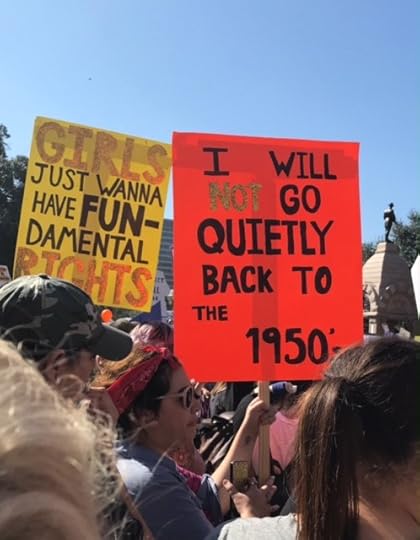
But then, now home and energized, what do we do with all of the momentum?
The official march website is launching a campaign to take 10 actions in the next 100 days.
It’s very simple, and they make it easy to participate.
My first action will be in the mail this week J
Are your beliefs different from mine? No problem! Your voice needs to be heard as well.
Only by opening up a real dialogue—one not based on sound bites and partisan rhetoric—can we ever hope to begin bridging the chasm between us.
As citizens of these United States, we all need to be involved.
What a joy as well to meet all of the next generation of committed, involved women! Made hope surge in my heart.
One vibrant young woman we met, Jana Lynne Sanchez, already works in our county to organize and promote these values. When I mentioned she’d undertaken quite a big mountain to climb (ultra-conservative is an understatement here), she responded:
“We have to start somewhere.”
Indeed.
I’ll be helping her as well.
Nothing can stop a movement of vivacious, committed women. Literally nothing.
Teresa Shook provides the most wonderful counter to the argument that what you do doesn’t matter.
Because apparently, one woman can change the world.She just did.
What will you be doing to bring about the change you seek?
The post This Is What Happens When Women March appeared first on Susan Mary Malone.
January 18, 2017
Women’s Rights are Human Rights
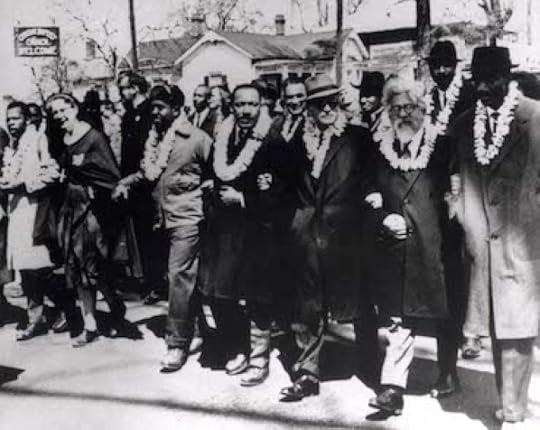
“Those who cannot remember the past are condemned to repeat it.”
–philosopher and author George Santayana
A new President will take power in our country this week. To say the campaign season, and even since the election, has been contentious is pretty much the understatement of this new century.
A divided country we live in, to say the least.And I grew up in a divided nation, hitting puberty in the ‘60s, young womanhood in the ‘70s.
For those of you who are younger, I can assure you the ‘60s’ divide was much more violent. At least so far. On the backs of peaceful protests, we had tear gas and bullets fired to keep kids in check. In 1963, four black schoolgirls were killed in a Birmingham church. And Kent State still takes my breath away, all these decades later . . .
A volatile time indeed, we lost many of the great voices to violence. Kennedy and King and Kennedy again, to name a few—their memories and that of their deaths still stop my heart.
Many, many people (half the country, it seems), just don’t understand the current divide.I mean, honestly, they don’t—they tell me so every day. The ones I speak with are good folks as well. They just don’t “get” it.
“Get over it,” they say. “The election is over, let’s move forward,” is a constant refrain.
And I can understand that—it’s the legacy of this country to move forward with the peaceful transition of power.
No one I know is arguing that the transition of power won’t be peaceful.
That doesn’t mean the other half of this country, who believe deeply into their souls that we’ve gone far awry, will accept this without voice.
Thank God the right to free speech is still alive and well in our society.No matter how much it has been maligned of late, or how insidious the threats to it now filter through the airwaves, the right to express one’s views is still protected.
Whether we like those views or not, some of us want to make sure that Constitutional right remains.
This is why we march.
I grew up in a time when “coloreds” had to drink from different water fountains.Seriously. For those of you who are younger, you have no first-hand image of the signs above two water fountains—perched side by side—designating which race could drink from which one.
But I do.
And that was just a symbol of a much more insidious truth.
This is why we march.
I grew up in a time when women had no access to birth control (except from the male family doctor, who often dined with the parents).Much less to any recourse should the dreaded pregnancy occur. If it did, boys went on off to college and lives of their choices, while girls were hidden in shame, their choices limited to adoption or giving up college to raise a baby (alone).
For those living in the world post-Roe, you have no idea the terror. No idea how being boxed between no birth control (unless properly married) + no access to any recourse caused your very blood to freeze.
But I do.
Planned Parenthood for 100 years has delivered reproductive health care, sex education, and information to millions of people worldwide—many of whom have no access to it otherwise. The idea of de-funding it because the organization also provides low-cost abortion is insane.
And I understand being personally against abortion. That’s a belief system—and I honor your right to believe it.
But a woman’s right to choose is truly a different thing.
If I don’t have autonomy over my very own body, I have no Civil Rights.
This is why we march.
I was a child when President Johnson signed into law The Voting Rights Act in 1965.Many whites (and I grew up in an all-white community) were outraged. Even though they were well aware of the various discriminatory practices used to prevent African Americans, particularly those in the South, from exercising their right to vote. On March 15, 1965, the President spoke to a joint session of Congress, outlining how election officials denied African-American citizens the vote.
Election officials often told Blacks they were at the wrong polling place, or had gotten the date wrong. Or, forced them to take literacy tests. They even forced them to recite the entire Constitution. Even blacks with college degrees were turned away from the polls.
During the Civil Rights movement of the 1950s and 1960s, beatings and murders and all sorts of violence were shockingly common. On March 7, 1965, six hundred marchers assembled in Selma, Alabama. Led by John Lewis (whom our president-elect recently tweeted is “All talk, talk talk - no action or results”) and other SNCC and SCLC activists, they crossed the Edmund Pettus Bridge over the Alabama River en route to Montgomery. Just short of the bridge, Alabama State troopers and local police ordered them to turn around. When the protesters refused, state troopers attacked them with nightsticks, tear gas and whips, hospitalizing over 50 people.
Thanks to the invention of modern television, we watched this on the broadcast news. It is indelibly stamped in my brain.
In 2013, the U.S. Supreme Court gutted the historic Voting Rights Act, which required federal pre-clearance of voting law changes for states with a history of voter discrimination.
This is why we march.
I grew up in a time when women weren’t hired nearly as much as their male counterparts, especially right out of college, because of course, they would soon be home “taking care of the children,” their designated and rightful role.Those of you born a decade later can’t really imagine being turned down for a job because you’re of child-bearing age, can you.
But I can. I heard this sentiment in my very home . . . I saw it happen to women I knew and respected. In many cases, women were barred from certain jobs. Take a gander at Hidden Figures for a glimpse into this not-so distant past . . .
This is why we march.
Many of y’all might not be able to imagine DDT being sprayed onto food crops, then leaching into waterways.But I witnessed it.
In her groundbreaking 1962 book Silent Spring, Rachel Carson highlighted the dangers of DDT. Carson used DDT to tell the broader story of the disastrous consequences of the overuse of insecticides. This raised enough concern from her testimony before Congress to trigger the establishment of the Environmental Protection Agency (EPA).
Her work attracted outrage from the pesticide industry and many others. Her credibility as a scientist was attacked, and she was disparaged as being “hysterical,” despite her fact-based assertions and calm and scholarly demeanor.
Only after activists took their fight to the world were environmental laws enacted—over industry’s protests and politicians’ apathy.
Industry fought this as hard then as they fight big-coal legislation now, among many other environmental issues. And today, the very EPA is under attack . . .
Don’t believe the environment is in peril? Read Robert Kennedy Jr’s Crimes Against Nature.
“Just another liberal whacko,” many say.
The book is incredibly well researched and completely, thoroughly documented. As astrophysicist Neil deGrasse Tyson is fond of saying, “The good thing about science is that it's true whether or not you believe in it.”
You have those same environmental wackos to thank for the banning of DDT, and many other environmental saves.
This is why we march.
I might not be of the same religious faith as you. Odds are, I’m not. I have friends from many different faiths.And though our beliefs may be different, I defend your right to hold and practice yours.
That's one of the tenants our country was founded upon.
This is why we march.
This country is of course not homogenous. We all come from different circumstances, socio-economic groups. Ethnic tribes.
We have knelt at different graves. But we have all knelt at graves.
At our core, we all want the same things--food, shelter, safety; the freedom to better ourselves and those of our families; to follow our dreams.
But to pursue any of those things, including happiness, the playing field must be level.
And of course, far too many injustices still exist to list them all here.
All these things are why we march.
This Saturday, January 21, a women’s march will be held in Washington, with sister marches around the country.The Mission Statement:
“The rhetoric of the past election cycle has insulted, demonized, and threated many of us—immigrants of all statuses, Muslims, and those of diverse religious faiths, people who identify as LGBTQIA, Native people, Black and Brown people, people with disabilities, survivors of sexual assault—and our communities are hurting and scared. We are confronted with the question of how to move forward in the face of national and international concern and fear. . . . women’s rights are human rights. We stand together, recognizing that defending the most marginalized among us is defending us all.”
That’s why women are marching. To give voice to the concerns of half of this country. As Martin Luther King Jr. said, “Our lives begin to end the day we become silent about things that matter.”
You can call me Pollyanna, but I still have a dream today. Dr. King’s words still ring in my head.
And I’ll be at the Women’s March on Austin, Texas this Saturday as well.
Will you join me?
Because I lived much of the horrors of our past. And I believe into my soul the truth in the words of poet Audre Lorde:
“It is not our differences that divide us. It is our inability to recognize, accept, and celebrate those differences.”
And that is why I will march.
photo attribution: "Heschel Selected Photos"
The post Women’s Rights are Human Rights appeared first on Susan Mary Malone.
January 11, 2017
To Truly Love a Dog
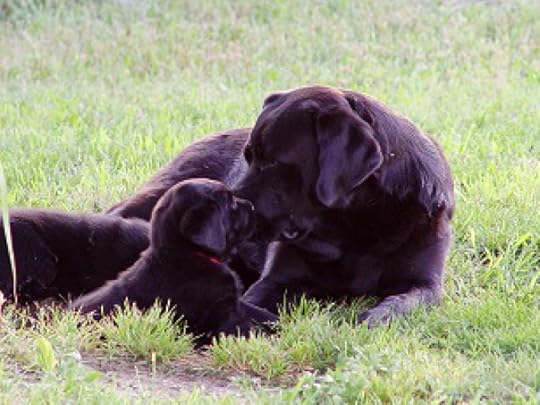
To Truly Love a Dog
This isn’t what this blog was supposed to be about.
In fact, I was writing this week about something quite dear to my heart. Something I believe in to my core. Something that is so very important in this day and time.
And then life got in the way.
Know how that happens?
But as with all things that occur in this incarnation, my way of dealing with the good, the bad, and the ugly, even the joy- and sorrowful, is to write them out. That other blog will just have to wait.
I talk about my dogs a lot. They’re such an enormous part of my world, and enrich it in so many ways.
They do yours as well, no? I’d stop here and provide statistics as to how much money folks spend on their pets, about how many families are owned by pets. But that’s not really the focus this time. Although it’s a lot of money involved and a huge percentage of our population.
One of the greatest sorrows in having them is that one day—all too soon—they’ll cross that rainbow bridge. Even if they live out longer than their predicted life spans, it’s always, always, far too soon . . .
Having an oldster is also one of the greatest honors that can be bestowed upon us. They’re so noble, enduring the indignities of old age with scarcely a whimper. The hearing goes, as does the vision, and they compensate. Even if orthopedically sound, the bones get frail, the hindquarters weaken. The day looms on the horizon . . .
And you know that every day with them is a beautiful gift.
Still, when they go . . .
Scoutie was not one I bred in my home. A dear friend did, and gave me the great honor of taking her home as a baby. I fell in love with her then (which we breeders know not to do—they have miles and miles of health clearances to pass before they can be in the breeding program, not to mention growing into those of sound type and structure as well).
It wasn’t, however, like I had a choice. Sometimes they grab you by the heart and just refuse to let go.
Thankfully she did work out, although no one believed for a second she’d have gone anywhere anyway 
January 4, 2017
This is Why Goal Setting Really Matters
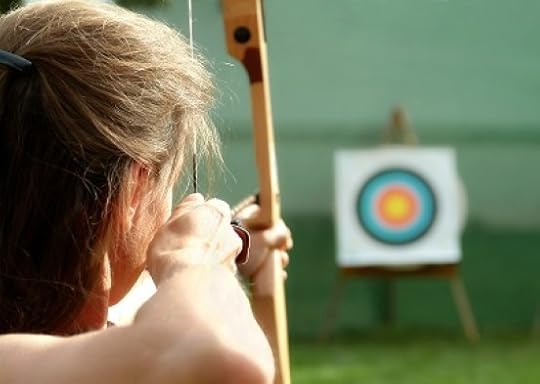
Welcome to 2017 and all of those New Year’s Resolutions!
Don’t you just hate when these come up?
I’m not into those sorts of resolutions. Chiefly because, well, they don’t work. Statistics show that 45% of Americans usually make New Year’s Resolutions. And only 8% are successful in achieving them.
Ever noticed how this happens? Most of us learned this for ourselves a good while back. I’m thinking the 45% of folks still making them are young J
But goals are different, no? While resolutions tend to be about losing weight, spending less/saving more, quitting some habit, etc., etc., goals get boiled down into something more concrete. And after that, the specific steps to achieve them.
Besides, a resolution is often about something you think you should be doing or not doing, while a goal is about something you want.
A resolution is often about something you think you should be doing or not doing, A goal is about something you want.
Click to Tweet
Yet and still, I hear a lot of folks resisting formulating actual goals. Maybe it feels too much like making those resolutions!
So, why is it important to set goals?
As Jim Rohn said, “If you don’t design your own life plan, chances are you’ll fall into someone else’s plan. And guess what they have planned for you? Not much.”
Talk about banging your head against a wall. But even Rohn’s sentiments don’t get to the heart of it for me.
There is at least one thing you truly want, right? Often more than one thing, but we all have an important goal we truly aspire to, whether it’s writing that novel, climbing a mountain, becoming the best whatever that we can be. And getting there takes more than wanting. More than passion and desire and stick-to-it-ness.
It takes a plan. A detailed one—which keeps you on track.
Because we’ve all set out on journeys that somewhere along the way fizzled out or ended up in Brazil, and usually we can’t even pinpoint where the trail disappeared.
So, what does goal setting do for you?
1). Helps You Plan the Best Route for YouPlanning for a goal is like setting your sights on a destination. You put into Waze where you want to go, and you’re presented with several different itineraries. Options include the shortest route, or the one with tolls, the longer but less-trafficked one, etc. Many ways exist to get to your destination.
Planning for a goal is like setting your sights on a destination.
Click to Tweet
Maybe you’re a type-A person, and you want the fastest path possible, even if it costs more. Or maybe the scenic route, while taking longer, includes pieces of the puzzle to your goal that you can pick up along the way.
In other words, mapping out your best road helps you to organize your time, efforts, and resources to make the most of your life.
2). But Still Provides Lessons from the Pitfalls of OthersEver been on a driving trip to somewhere entirely new? When in our youth, a dear friend and I drove to Estes Park, CO every summer. We basically went the same route every year. Then, one time we decided we’d just up’n go to Seattle. We had never been there, and we chose what looked like the shortest track.
And yep, it was the shortest driving distance. But what we didn’t take into consideration was that we would be driving through the badlands of the desert. In the summer. You know, Death Valley and all that.
I mean, we’d never been there. And we were like 20 or so, so thought we knew, oh, pretty much everything.
Thank God we ran into friends who sent us over a far less perilous route!
Even though your road is uniquely yours, others have traveled similar ones. Might as well learn from them.
3). Keeps You FocusedSometimes you probably take trips where it doesn’t much matter when you get there. You know, those meandering ones, where now and then you take off on a tangent and go see Niagara Falls or another wonder of the world.
Those are fun, aren’t they?
But a lot of time you’re actually heading to a planned event (your goal!), and have to arrive at a certain time, and that detour from Estes Park to Seattle really does take longer than the time you have . . .
By setting clear goals, and the steps within them, you can avoid getting tripped up by the Grand Canyon when you’re supposed to be at your sister’s wedding day after tomorrow. (Not to mention, avoiding the wrath of your mother as well!)4). Which Leads to Good Decisions
Yep, that detour through Taos sure is enticing. Ah, the Rio Grande Gorge! Taos Mountain! And really, it isn’t that far. See the route that goes directly through there on the way to Colorado? What’s another few days?
Or, perhaps it’s 33 degrees and raining out at 5 AM, and that run you’re supposed to take in order to maintain your pace for the marathon you’re running in 3 months, well . . . We could just pull up the covers and stay in bed.
But if you’ve set a clear goal, the goal itself won’t let you. It’ll slap your hand as you’re trying to steer toward Taos and away from your real destination. And that comforter? Well, even it needles you with guilt.
But if you’ve set a clear goal, the goal itself won’t let you detour.
Click to Tweet
5). You Can Measure Your Success
Man, we just crossed the border into Colorado! Half a day before schedule. Doesn’t that feel really good?
And more importantly, isn’t the trip starting to look worth it now?
Or, cool! I just cleared the 2 & ½ mark in my 5-year plan! And accomplished x, y, and z.
Setting clear, sharp, definable goals helps us to measure our progress. See where we might be falling a bit and figure ways to bolster those. And most important, gain a sense of pride in where we’ve come. This raises self-confidence, helps us to recognize our own abilities, and feel competence. All of which keeps us forging on, and helps to achieve those goals.
6). Provides Motivation on the Darkest RoadsFace it—some goals are far more difficult to achieve than others. Or at least, take more time. Not that that makes one more important than another, but just that some goals and dreams just, well, take longer, more circuitous routes.
For example, the goal to write a novel can be achieved in well-prescribed steps. There is a map for it (I’ve written many for my editorial clients). We go from our point of embarkation (which varies greatly), to the destined goal.
Writing truly well, however, requires an individually different route. One that is long and winding and depends entirely on the perseverance and fortitude of the person writing. Reaching the first goal—finishing a novel draft—is just another starting point.
I’ve seen many an aspiring writer get from the original point A to point Z. Then again, I’ve seen more become daunted by the Great Divide, and after that first novel is finished, slide off the cliff into oblivion.
You gotta have guts to play in this world.
But if the road is well mapped, you’ve learned from others, kept your eye on the prize, stayed true to your vision, measured your success and felt appreciative of it, those dark and winding roads will be less daunting.
You’ve been on similar ones before, no? And you survived. And even thrived.
So, toss out those resolutions and focus instead on your goals. Plan where you’re going and how to get there. Otherwise you’ll get scolded by the Cheshire Cat as Alice did:
Toss out those resolutions and focus instead on your #goals. Plan where you’re going and how to get there.
Click to Tweet
“Cat: Where are you going?
Alice: Which way should I go?
Cat: That depends on where you are going.
Alice: I don’t know.
Cat: Then it doesn’t matter which way you go.”
― Lewis Carroll, Alice in Wonderland
What goals are you committed to and planning?
The post This is Why Goal Setting Really Matters appeared first on Susan Mary Malone.
December 21, 2016
When to Freak Out and When to Remain Calm

Is it ever the right time to freak out?
Do you do it anyway?
Let me take a wild guess—you’ve had your share of freak outs. I know the feeling—I have too.
And of course you’ve heard this advice a million times—don’t do it!
Because freaking out causes your stress hormones—cortisol, being the main culprit, with a surge of adrenalin and the waking-up qualities of norepinephrine—to shoot to the moon.
Not that they don’t have their benefits. Energy, focus, immediate reaction. When faced with the Wooly Mammoth (or drunken Uncle Fred), these can be helpful traits indeed.
But if we allow ourselves to stay in that stressed state, well, the results aren’t good, are they. Too much cortisol can suppress the immune system, increase blood pressure and sugar, decrease sex drive, and contribute to a host of other dastardly physical issues.
And of course, during the holiday season, we seem to be faced with an abundance of stress. Like it gets its kicks from egg nog and holiday lights.
Right now, right this very minute, OMG—Christmas is in 4 days. As in, 4 DAYS!! God save us! You’re not finished! Your boss will fire you (even if you’re your own boss), your spouse be mad at you, the kids think you’re lame for not producing that Norman Rockwell holiday!
Help!
So go ahead—right now, this very minute—Freak Out! Seriously, you heard me right. Go freak out!Only 2 Rules Apply:1. First off, you have to really go freak. With everything you have. Put your whole entire self into it, and do it up right.
Shake your fist at the sky Scream to the heavens Run around the block like that decapitated chicken Dance in place as hard and fast as you canIn other words, no calmness allowed!
2. You get 10 minutes. Total. Max
Yep, that’s it. Time it. You have to use up the entire 10 minutes. You can’t go past 10 minutes.Please come back here and continue once you’re done.
Okay, all finished? Did you yell and stomp and the neighbors have called or dialed 911? Or, your dogs go run under the bed?
Then you have succeeded!
Oddly enough, this is the first step in the process—and the one that actually works—to lead you back to calm.
One of my favorite spiritual/psychological texts is a decades old book called Right Use of Will: Healing and Evolving the Emotional Body, by Ceanne DeRohan. The main premise is that in order to live a conscious life, you first must let go of repressed emotion. And screaming at the sky is one of the prescriptions. Because, perhaps unsurprisingly, it’s by releasing those emotions that we find freedom from them.
And that’s the secret, no? Feel the emotions, release them, find freedom from them, and get all those stinking stress hormones out of your system.Didn’t you come back from the exercise feeling more energetic and focused?
Now it’s time to do something with that:
1. First and foremost, breathe. Four counts in, eight counts out. Do this for a few minutes. Get that blood pressure back down to normal.
2. Take out that to-do list. Right now—this very second—do something from it. It needn’t be the most-important thing. Just do one thing—anything.
That will give you a sense of accomplishment—which is sorely needed right now.
3. Now, calmer, revisit that list. Prioritize it again.
(Note: Keep breathing while you do this.)
You can actually get a lot of the items done, no? And you know what? If you don’t, your boss mostly likely won’t fire you. Your spouse will get over it. Your kids may or may not be happy with you, but if they’re teenagers, well, what the heck else is new?
We have to laugh through some of this as well!
And besides, Uncle Fred is always drunk and obnoxious, so laugh him off too.
Wishing many blessings to you and yours in this beautiful holiday season, filled with light and love, friendship and good cheer.
The post When to Freak Out and When to Remain Calm appeared first on Susan Mary Malone.
December 14, 2016
This Is How You Can Help Change the World

We all want to positively affect our world, no?
Often in the idealism of youth, we truly believe we can change the world. And, we want to leave our marks to assure history doesn’t completely forget us. And then we get a bit older and realize we’re just dots in the grand scheme of human existence.
We’re literally stardust.
Somewhere along the way, however, comes the dawning that we still want to leave this world a better place—for our children and grandchildren, if nothing else.
And no matter which side of the political aisle you sit, the world could use bettering!
Imagine what it would be like if you really could help change the world. Didn’t even the thought of it make your blood surge a bit?
Imagine what it would be like if you really could help change the world.
Click to Tweet
You know—right before all that doubt came tumbling in about how “I’m just one person.” “What can I possibly do to help anything right outside my door, much less, across this vast land?” “I have my hands full with work, kids,” etc., etc., etc.
I know—I feel the same way at times. Our lives can be full to overflowing with barely time to decompress after the day (although we have to have some diversion!). Especially during those times, it’s far easier to say: “Let somebody else fix the world.”
And for periods of time, that’s all perfectly fine.
Sooner or later, though, we come to the realization that guess what—it’s us. We’re the adults. Especially when we get to the age of parents passing on, that understanding becomes, well, a bit stark.
We all have to take care of ourselves first. Maslow’s Hierarchy of Needs holds true for a reason! Of course the lower rungs are about food, shelter, safety, etc.
But funny thing—as you ascend the ladder, concern for your fellow man is part of the climb.
Maslow’s list of characteristics of self-actualizers has as #9:
Concerned for the welfare of humanity
So, all right, already! Let’s get this show on the road! What can I do? It’s easier than you think:
1. Stay informed about the world.Yep, it’s tough with the insanity of all we have to do to stay informed via real news sources (i.e., not from social media!). I understand. Truly I do. But without getting educated on what’s really happening, it makes you so much easier to be led.
And you don’t want to be led, do you? Don’t you want to lead?
So, how to do this in the course of your insane day?
Begin a simple habit. One that doesn’t take long. Commit to 10 minutes a day of reading a reputable news source (the NY Times, the Wall Street Journal, Time magazine, etc.). During this 10 minutes, read only from a source that actually vets information, checks sources, and curates information.
Who doesn’t have 10 minutes? Maybe steal it from all that Facebook time J
I can promise—this will change your life. And in so doing, you can help change the world.
As Thomas Jefferson said:
“Whenever the people are well-informed, they can be trusted with their own government.”2. Vote.
Yeah, yeah, I know—the election’s over. Thank God! But voting actually occurs every 2 years, and hardly anyone does it.
“But my vote doesn’t matter!” is a common refrain.
Well, it doesn’t matter if you don’t cast it.
Even in highly contested presidential elections, so many Americans don’t exercise this right, believing that their votes just don’t count.
In 2012, Phillip Phillips won the 11th season of American Idol. More people voted for him than for president that year. 132 million people voted in American Idol. 122 million in the Presidential election.
Okay, so this is somewhat deceptive. Statistics often are. At least with me, I’ll tell you when I’m skewing them! Granted, you can vote for Idol even if you’re under 18. And, you can vote multiple times (without being accused of voter fraud).
Still, that’s a pretty scary indictment of the state of our world.
In the recent election, almost half of eligible voters didn’t vote. The best count is 57.9 percent of eligible voters voted in 2016
In the 2014 midterms, just 36.4 percent of eligible voters turned out. And the thing is, those elections affect your life much more so than the presidential ones . . .
So what would happen if the rest of those folks voted?
It would change our world.
As Franklin D. Roosevelt said:
“Nobody will ever deprive the American people of the right to vote except the American people themselves and the only way they could do this is by not voting.”3. Broaden your horizons with Literary Fiction
I know—you don’t have time to read fiction, right? Or if you do, it’s for mindless diversion. I get that—truly I do. And I’m just proud as hell that you’re reading any fiction. The actual number of folks who read declines every year.
But one thing I know for true—the arts provide our very best method for not just learning about other cultures, about other people’s lives and values, but also in understanding them. And if you understand someone different from you, you are much less likely to see them as “other,” and far more likely to try and find common ground.
We even have studies that prove reading fiction enhances empathy and improves human connection, as well as stimulating the brain and improving language skills and vocabulary.
The surest way to lasting peace is through culture.
And a new study showed that people who read live longer than those who don’t!
And I know, I know—often Literary works are obtuse and difficult to wade through. But reading levels become more sophisticated when challenged. And the riches buried therein are far more valuable than the work involved to get there.
Challenge yourself to read 1, just 1 Literary novel a year.
a new study showed that people who read live longer than those who don’t!
Click to Tweet
It can even be the same one! A literary agent/friend of mine reads The Mayor of Casterbridge every New Year’s Day. I always chuckle at what this says about him. But what can I say? I read A River Runs Through It at least once a year.
But reading just 1 Literary novel each year will change your perspective, even if the tiniest bit. Which will change your world.
And therefore, change our world.
(Besides, the one you choose may be mine! Apologies for the little break for shameless self-promotion)
“A great book should leave you with many experiences, and slightly exhausted at the end. You live several lives while reading.” – William Styron4. Use your gifts.
We all have them, no? You came here with inherent gifts. You honed them. You’re good at various things at this point, some of which you don’t pursue.
Why not? Is it that little voice again telling you you’re not good enough? You’re not smart, talented, courageous, persistent, whatever, enough to do anything with those gifts?
Hogwash. Slap that little demon voice off your shoulder and reconsider the gift you buried, probably along with a broken dream.
Commit to your gift. Commit to persisting, using that gift in the future. As Calvin Coolidge said:
“ Nothing in the world can take the place of Persistence. Talent will not; nothing is more common than unsuccessful men with talent. Genius will not; unrewarded genius is almost a proverb. Education will not; the world is full of educated derelicts. Persistence and determination alone are omnipotent. The slogan “Press On” has solved and always will solve the problems of the human race.”
Now, more than ever before in the history of our planet, the world needs your gifts.
Bring them on. This will change your world.
And will help change ours.
5. Teach Yourself PeacePeople often laugh at this, no? “How,” they say, “will becoming more peaceful myself help this world one iota?”
Anger and fear go hand in hand. And we sure saw where that took us this political season! The body is wired to defend itself—that old fight-or-flight mechanism, courtesy of the limbic system.
But if you can quiet that monkey mind, many studies have shown that you also:
Improve memory Stimulate brain growth Relieve stress Combat insomnia Heighten awareness of other senses.All of which makes you a better, more thoroughly realized you. Which changes your world. And changes ours.
As Alice Walker said:
“Teach yourself peace. Pass it on.”6. Every month, do 1 thing—just 1 thing—to bolster the causes that reflect your values.
Just 1 thing.
We often think of that in terms of volunteering—which is great!
Or giving money—also helpful!
But these can be little things as well. For example, after the winning candidate in this election blasted The New York Times (venerated, vetted, curated, cross-checked traditional newspaper), I went and subscribed.
Yep, a little thing, but made me feel better. Because I was supporting something I believed in.
So imagine, if you will, if every citizen in these United States just did these few things—or others like them. What sort of world would we live in? Wouldn’t it be better, richer, stronger?
Sunday night, Cris Collinsworth said something that truly snagged my attention. (I won’t bore you non-football folks with the details!) He was describing how a particular player when hit, or faced with a play that would lose yards, would always “react up.”
Now, that tweaked me. Because that’s the key to life, isn’t it? When we’re hit, knocked down, derailed in some fashion, we have two choices: We can complain about our circumstances and blame another (that danged outside linebacker!). Or, we can immediately take the next step toward the goal line.
We can React Up.I do believe that will be my mantra for 2017.
Ah, yes, we’re just stardust. But then, stardust contains all the components of matter. It’s our choice what we will build with it.
How do you hope to change the world?
The post This Is How You Can Help Change the World appeared first on Susan Mary Malone.
December 7, 2016
This Is Why Your Brain Needs A Diversion Right Now

Life can be intense, no? In addition to our “normal” lives, often filled with hectic schedules and stress, the “outer” world seems to go from one chaos to the next, with no break in between.
I mean, finally we get through the election season, which was unrelenting bombardment, and we think it’s over only to find that’s still all the news. Even when pledging to take a mental break from it, we’re faced with much more insanity. It’s still not safe to go in those waters.
We have a build up to Halloween, followed the next day by Christmas stuff in stores. Thanksgiving gets all the press for a precious few minutes, and then here come all the Christmas ads.
The buying season is in full swing.
So are plans for holidays, family, travel.
Yikes! When do we breathe?
Because so often all of those things are filled with problems to sort out, or even just plans that need piecing together, and often we’re focused on what to do about x, y, and z—so much so that what we actually want to have happen gets lost in the mix.
Have you ever noticed that the more you get caught up in the chaos, the more chaos comes bounding in?There is both a psychological and spiritual reason for this. In a nutshell, what we think about expands. So when we’re focused on problems, issues (whether personal or political), stress—all those negative things—what we get about is more of the same.
“But I have to work out x, y, or z now!” our monkey minds scream.
And boy, can that scream seem as unrelenting as politics these days.
Ideas, though, can’t bubble up when we’re in the frenzy.
As Einstein said, “Problems cannot be solved with the same mindset that created them.”In other words, we have to get out of those small ego-centered minds, and look at things from a different perspective.
To resolve an issue we need to give our brains a break. This is where mental diversions come in.
Click to Tweet
But how to do this? That’s the tricky part, and the key to, well, just about everything.
I’m a big proponent of the teachings of Abraham’s Law of Attraction. As Abraham explains, we run into problems when we think about what’s not working, more than what we want to happen. The longer the issue has been with you, the more you need to get out from under it—if only for a time—and focus on something entirely different.
This is not so different from what Jesus meant when he said to repent. We think of that word in its English meaning—to confess what miserable sinners we are. But in the original Aramaic (the language Jesus spoke), the idiom meant: to turn a different direction. To focus on another way.
Which is, after all, the true meaning of making amends. The words mean nothing. The behavior change, everything.
A study this year by Pine and Fletcher, published in White Paper Number 2, “Do Something Different,” found that changing behavior, by doing something different, brings about significant changes in levels of anxiety and depression.
Isn’t it amazing how what is spiritually true is also psychologically true, and vice versa? Always tweaks me.I took up a major diversion around Labor Day of this year. The whole political thing was getting to me, and (unbeknownst to me), my subconscious decided it was time to take a different road. I didn’t really know why this materialized when it did, at least then. At the time, I just followed along. Because my gut said to, and I’m big on following its lead these days.
As I’ve mentioned before, I plunged headlong back in love with an old character from my past, in the Western TV series, Lancer. I watch an episode a night! Still. It takes me away, back into a former time, and all the troubles of this world disappear.
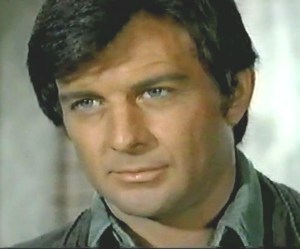
Perhaps it’s because (yes, I analyze everything to death :), it’s set in a simpler time. One without Twitter, to say the very least. Or maybe it’s because they lived by an honest code, and said what they meant, acted from the heart, and did the right thing.
Doesn’t that sound archaic. But, ah, heaven!
The thing is, however, it saved me through this political season. And from life’s daily stressors.
Funny thing, when I return to the actual issues of the day, which of course I do as do we all, each and every day, I see them differently. I approach them differently. And solutions come that I never would have pieced out from that old monkey mind.Now you might not have the luxury of watching an episode of Lancer every night (pity!), although it’s only 50 minutes J But you do have the luxury, nah, the necessity of getting out from under the stressors of the day.
You owe it to yourself, and to your world.
So, what do you do to turn a different direction?
The post This Is Why Your Brain Needs A Diversion Right Now appeared first on Susan Mary Malone.
Happiness is a Story
- Susan Mary Malone's profile
- 85 followers

