
Aaron Ross Powell's Blog, page 12
July 4, 2016
Batman vs. Superman Ultimate Edition is a good movie
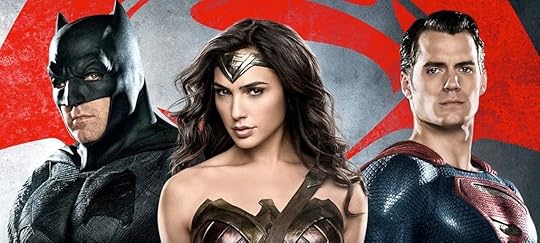
I never saw Batman vs. Superman: Dawn of Justice during its theatrical run. I saw reviews, the scathing piling on that had DC partisans crying conspiracy, claiming the only way the critics could say it was that bad was if they were on the Disney take.
I assumed the movie was bad. And maybe it was. But the Ultimate Edition, which adds what I gather are quite a lot of missing scenes, isn’t bad. In fact, it’s pretty great. I watched it on a whim, not expecting much, and found myself consistently surprised. This may be the most I’ve enjoyed a superhero movie since Nolan wrapped his Dark Knight trilogy. It makes me excited for Justice League, which isn’t something I expected.
What I likedThe visuals. The Marvel movies have a specific aesthetic, the result of their broader approach to making superheroes live action. Namely, they’re shot to look like what you’d get if you dropped costumed vigilantes into the real world, the world we actually live in. It’s our world, it just happens to have these minor gods walking around in it. Zach Snyder goes for something different. He brings the look of the comics to the screen. Batman vs. Superman isn’t our world, it’s a moving comic. The result — as we got before in Man of Steel and Watchmen — is far more visually interesting than anything from Marvel Studios. Snyder frames his shots with more attention to detail, composes them more carefully. There are moments of genuine beauty in his use of color and light. I’ve long thought that superheros are better served by animation than live action. They aren’t meant to look real and so when you make them real — putting an actor in a suit — they come off more like cosplay than like characters brought to life. Snyder’s aesthetics keep that from happening. The MCU’s do not.
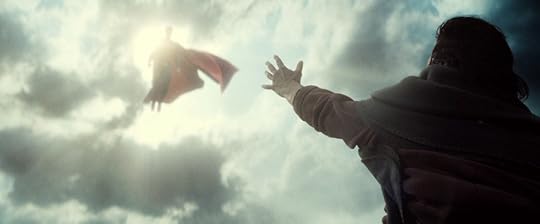
Ben Affleck. Here’s a guy who was born to play Bruce Wayne. And he owns the role. Others, like Christian Bale, are better actors overall, but nobody — nobody — looks more like he stepped off the comic page than Affleck. (The only thing that could’ve made him better is if they’d dubbed in Kevin Conroy’s voice.) A perfect casting.
Lex Luthor. The trouble with many comic book flicks is their forgettable villains. The second Thor movie, Guardians of the Galaxy, really any of the Marvel films without Loki or Ultron, all of them are just big, tough bad guys with gravelly voices and rage. There’s no charisma. Same thing held with earlier DC Universe films. But Batman vs. Superman’s Lex Luthor works. I’m not sure his plan works, but you can see why he does what he does and how he’s crazy enough to think it’s the right plan.
What I didn’t likeBatman and guns. On the one hand, the angrier, more violent Batman we got was cool. This is an older Bruce, the Bruce of Dark Knight Returns. He’s sick of this shit and wants to break things. But having him mount actual for real bullet shooting guns on his bat vehicles crosses a well-established line for the character. Having him hold a gun in his hands and kill people with it goes even further. It was unnecessary and I hope they walk it back in future films.
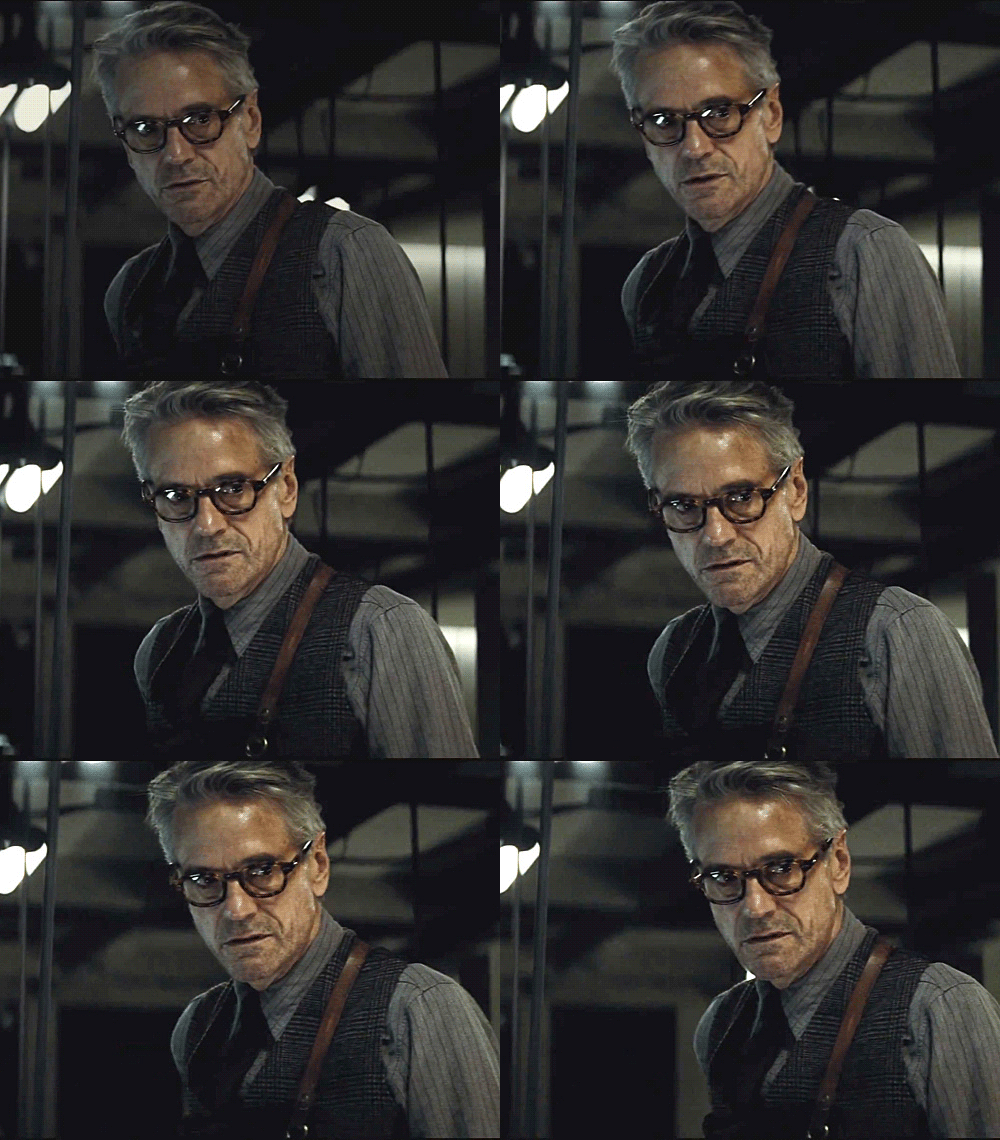
Alfred. Jeremy Irons needles Bruce, as he should, but he somehow manages to make that needling come off less like frustration and more like contempt. The whole point of the Alfred/Bruce relationship is that Alfred, no matter how much he puts up with and no matter how many times he’s disappointed, loves Bruce Wayne. He wants, more than anything, to see Bruce happy, even if that means — especially if that means — giving up Batman. Irons’s Alfred does not love Bruce Wayne. He despises him.
The other super guys. Wonder Woman was okay. But our brief glimpses of the rest of the JLA, especially Flash in his silly outfit, brought the movie back in that cosplay direction Synder’d been otherwise so good at avoiding.
What I didn’t care much about either wayThe plot. Yes, there were plot holes. Far fewer, I take it, than in the theatrical release, but still plot holes. A plot that holds up on further reflection is too high a bar for super hero movies, though. What matters is that the plot not be so nonsense that it distracts while watching the movie. This test the film passes. It’s silly, yes, but so were all the plots of Scott Snyder’s magnificent run on the Batman comic. You have to just accept those things, as long as they’re not too bad. And Batman vs. Superman’s plot wasn’t too bad.
The thing about super hero movies for me is that, other than Batman, I don’t much care about any of these characters. I don’t have anything invested in the DC or Marvel universe because I don’t often read comics anymore, and when I did, I wasn’t a super hero guy.
What this means is I approach these movies differently than a fan would. There needs to be something to grab my attention beyond seeing a dude dressed up as Iron Man or the Green Lantern. Batman vs. Superman gave me that, particularly with its frequently stunning visuals and its remarkably excellent score.
It wasn’t as good as Nolan’s work, but it was better than all but a couple of the Marvel movies and Zach Snyder deserves far more credit than he got.
But, then, I felt the same way about Watchmen.
I’ve written a couple of books. If you like horror and mystery stuff, you should check them out:

Batman vs. Superman Ultimate Edition is a good movie was originally published in Aaron Ross Powell’s Blog on Medium, where people are continuing the conversation by highlighting and responding to this story.


July 2, 2016
Star Wars: Lost Stars — A terrific Star Wars story dragged down by unfortunate YA-ness
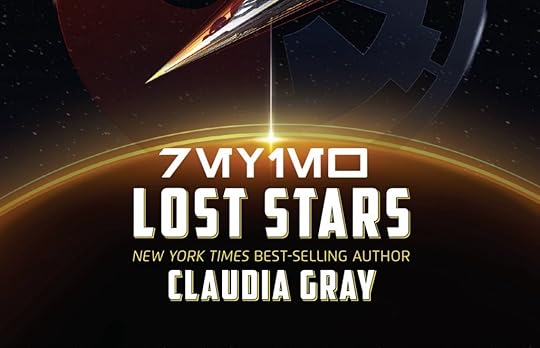
Claudia Gray’s Star Wars: Lost Stars caps off my reading of the five novels in the Journey to Star Wars: The Force Awakens series. On the whole, they’ve been quite good — and much better than the old EU stuff. Part of that, I’m sure, is their canon-ness. These books — and I know this is silly — are about what actually happened in the Star Wars universe. The EU, on the other hand, always had a whiff of fan fiction.
Gray’s novel is, on the one hand, a terrific look at the events of the three movies (plus a few years more) from a different and fun direction. But, I really wish it hadn’t been YA. Or rather, I wish it hadn’t been YA romance.
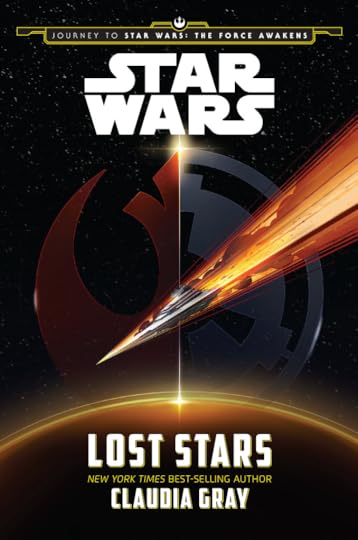
This is, I’ll admit, the first YA “boy-and-girl-fall-for-each-other-and-run-into-troubles” book I’ve read. Though I take it that genre’s kind of a thing among a pretty big set of readers. (Twilight and all the other supernatural romances fall into this category, I guess?) But, so far as I can tell, what it meant in practice is that we got basically a war story with a bunch of teen drama and teen romance shoehorned in, both of which were at best boring.
And, while the events of the novel were a ton of fun to read about, the two main characters, Thane and Ciena, were so totally flat, so totally without interesting features, that I didn’t care a jot about their budding love or tortured loyalties. Maybe that’s a romance thing. That you want the readers to be able to imagine themselves as one of the two leads, as so you have to make them sort of empty vessels and totally non-threatening, so there’s nothing where the reader’s like, “Oh, I don’t want to imagine myself as thatguy or girl.” For someone who didn’t find the drama/romance compelling, though, the flatness leaves the characters feeling, well, flat.
But, anyway, that aside, I quite enjoyed Lost Stars. Seeing how Imperials reacted to things like the destruction of Alderaan and then of the first Death Star was pretty neat. As was the Battle of Jakku.
I just wish it hadn’t been a novel about kids acting and talking like really bland kids.

Star Wars: Lost Stars — A terrific Star Wars story dragged down by unfortunate YA-ness was originally published in Aaron Ross Powell‘s Blog on Medium, where people are continuing the conversation by highlighting and responding to this story.
Free Thoughts Podcast
 A show about libertarianism and the ideas that influence it.
I’m the co-host — along with Trevor Burrus — of the weekly podcast, Free Thoughts, a production of Libertarianism.org and the Cato Institute.
Each episode of Free Thoughts features an hour-long discussion on topic related — although sometimes loosely — to the theory, history, and practice of libertarianism.
Subscribe:
iTunes Google Play Music RSS
Free Thoughts Podcast was originally published in Aaron Ross Powell‘s Blog on Medium, where people are continuing the conversation by highlighting and responding to this story.
My Books
I’ve written a couple of books.
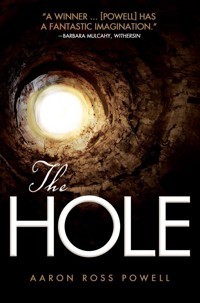 The Hole: A Novel of Supernatural Apocalypse
A horror tale telling the secret history behind America’s largely home-grown religious sect.
 Animus: Six Tales of Crime and Terror
A collection of horror, mystery, crime, and science fiction short stories.

My Books was originally published in Aaron Ross Powell‘s Blog on Medium, where people are continuing the conversation by highlighting and responding to this story.
Animus: Six Tales of Crime and Terror
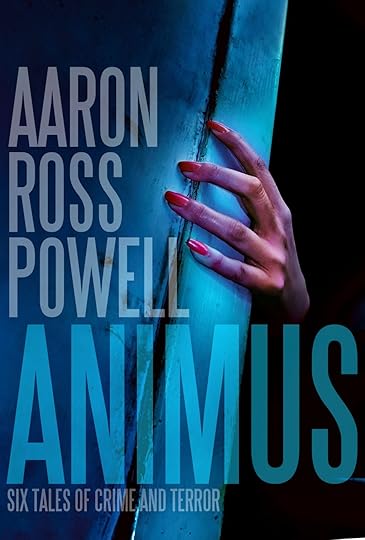
From Aaron Ross Powell, author of the apocalyptic horror novel The Hole, comes this collection of six stories of crime and terror.
“Snowed In” tells the story of three people with secrets to hide who meet at a roadside bar during a storm–and learn that there’s nothing deadlier than each other.In “Helix,” a detective takes a case that leads him into the twisted world of genetic modification and artificial intelligence.The violent noir “Let Sleeping Gods” features a bad man doing very bad things to prevent the end of the world.“What the People Want” is an alternate history legal mystery about what happens when the law becomes a product of popular culture.“Traffic Light” is about a carjacking with a terrible motive.In “Old Lady Prideaux’s Terrible Menagerie,” an ex-cop is asked to investigate the odd old lady who lives across the street–and discovers truths far weirder than he could’ve imagined.All of these stories can be found in Animus: Six Tales of Crime and Terror.

Animus: Six Tales of Crime and Terror was originally published in Aaron Ross Powell‘s Blog on Medium, where people are continuing the conversation by highlighting and responding to this story.
The Hole: A Novel of Supernatural Apocalypse
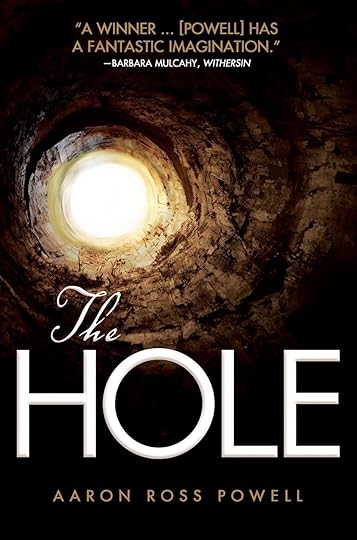
The world as Elliot Bishop and Evajean Rhodes know it is gone. Destroyed. In just two weeks, a horrific plague raged across the planet — driving its victims insane before killing them.
The two survivors set out on an unimaginable journey, driven by a cryptic message from Evajean’s husband: If anything terrible happens, you must get to Salt Lake City. But the pair soon discover they are not alone, and that the plague has done more than kill. The countryside between Virginia and Utah now crawls with victims who have been driven mad — violent lunatics fueled with definite yet unknown purpose.
To survive, Elliot and Evajean must fight for their lives — against the crazies, against sinister forces who would stop their quest, against long-ago hidden menaces — and uncover the deeply guarded secret of those driven mad and the plague that spawned them. The secret of a destructive force unleashed on the world by one of America’s most powerful religious sects…

The Hole: A Novel of Supernatural Apocalypse was originally published in Aaron Ross Powell‘s Blog on Medium, where people are continuing the conversation by highlighting and responding to this story.
June 26, 2016
Elites vs. the Working Classes

Here’s two common “sides” in the argument about the current cultural and political showdown and divide between elites and the working class:
Elites are unjustifiably condescending toward and dismissive of the working classes and don’t recognize how much their preferred policies may have made things more difficult for them, and this has legitimately angered the working classes.Segments of the working classes possess cultural pathologies that have hurt and continue to hurt them, pathologies that are not the fault of the elites, and some reactions of the working classes to the anger the elites have provoked — supporting and voting for certain candidates and public policies — are irrational, ignorant, stupid, bigoted, or hateful, and will in the near and long term do more harm to the working classes (as well as everyone else) than any of the policies the elites have supported or would prefer, or any of the policies and behaviors by the elites that have angered the working classes in the first place.They’re generally presented as mutually exclusive. But both of these points can simultaneously be true — and, likely, both are true. To admit the truth of one does not, and should not, immediately entail denying the truth of the other.

Elites vs. the Working Classes was originally published in Aaron Ross Powell‘s Blog on Medium, where people are continuing the conversation by highlighting and responding to this story.
June 25, 2016
Elites vs. the Working Class
Here’s two common “sides” in the argument about the current cultural and political showdown and divide between elites and the working class:
Elites are unjustifiably condescending toward and dismissive of the working classes and don’t recognize how much their preferred policies may have made things more difficult for them, and this has legitimately angered the working classes.
Segments of the working classes possess cultural pathologies that have hurt and continue to hurt them, pathologies that are not the fault of the elites, and some reactions of the working classes to the anger the elites have provoked—supporting and voting for certain candidates and public policies—are irrational, ignorant, stupid, bigoted, or hateful, and will in the near and long term do more harm to the working classes (as well as everyone else) than any of the policies the elites have supported or would prefer, or any of the policies and behaviors by the elites that have angered the working classes in the first place.
They’re generally presented as mutually exclusive. But both of these points can simultaneously be true—and, likely, both are true. To admit the truth of one does not, and should not, immediately entail denying the truth of the other.
June 20, 2016
Marginalizing the Marginalized
There was an argument a time back that said the best way to kill the religious right’s political influence was to let it nominate a presidential candidate and then get creamed in the general election. That’d show that there’s no there there, and then the country could safely ignore their feet stomping. (Instead cosmopolitanism triumphed in the culture war, which was overall good, but has also lead to quite a bit of carrying-it-too-far-ness.)
Could the same thing happen with the segment of the low-education, nationalist, white working class that’s gotten its irrational and childish way with the (probable) nomination of Trump? His campaign looks headed for an epic defeat, and one utterly of its own making. His support comes largely from a shrinking demographic, one the country is slowly leaving behind, for reasons both bad and good.
I’m pessimistic, because this is politics and politics is always a source of pessimism. But the values that represent the core of Trump’s support represent a massive threat to America, to our way of life, our economic future, and the principles at the heart of the country’s founding. If Trump goes down as spectacularly as it appears likely he will, the best that could come of it would be the further marginalization of what increasingly looks like a rightly marginalized voice for a set of beliefs and values America would be far better off without.
Fingers crossed.
May 20, 2016
Star Wars: Bloodline Isn’t Very Good, but It’s Star Wars, so That’s Okay
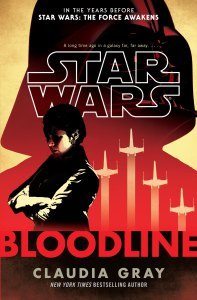
Fans hold novels set in their favorite universes to a different standard than they would original works. At least, I assume they do, because if they don’t, people’s standards for quality fiction are even lower than I thought.
What I mean is, what passes for an “I’ll totally read this” book when it’s got “Star Wars” on the front and Star Wars characters and locations inside can get away with shoddier plotting, weaker dialog, and less polished prose. For me, at any rate.
If Claudia Gray’s Star Wars: Bloodline hadn’t been Star Wars, I likely wouldn’t have picked it up in the first place, and I surely wouldn’t have finished it.
Not to say it’s bad. It isn’t. It’s just okay. But there are so many really great books out there I haven’t read that “just okay” isn’t enough place it above other titles in the reading pile. Except, again, that it’s Star Wars and covers events I want to know about, and has characters I want to spend more time with. So it gets a bit of a thumb on the scale.
Still, it could’ve been more. Alexander Freed’s Star Wars Battlefront: Twilight Company, the best book in the new canon, and by a country mile, managed the kind of nuanced and grown-up prose and characterization that makes Bloodline read like the work of a precocious high schooler.
Bloodline tells Leia’s story, as she slouches through a dull political career suddenly made livelier by uncovered secrets, unexpected betrayal, and a fall from grace. But the whole thing has a typically juvenile feel, like this is how an unworldly teenager thinks politics works or spying missions play out or adults talk to each other. There’s a lack of psychological plausibility, a lack of realistic emotional expression, and a lack of meaningful danger. And it’s all packaged in workmanlike prose that dulls the edge of whatever minor edge there may be.
Gray’s other Star Wars novel, Lost Stars, showed many of the same problems—though it was a good deal better than Bloodline. But that was intentionally pitched as a young adult book. Bloodline has the larger trim size and smaller type of a grown-up novel, yet it’s equally YA.
So, while not terrible, and certainly never outright boring, Bloodline gives little reason to actually read it, outside of that big Star Wars logo on the front. Which, I admit, for me, is reason enough.
Aaron Ross Powell's Blog

- Aaron Ross Powell's profile
- 18 followers

