
Aaron Ross Powell's Blog, page 16
October 12, 2014
The Corrupt Pleasure of Politics
One of the most troubling things about living in Washington, DC, is witnessing how many people find politics fun. These are the people who get super excited about a political candidate, talking about the chance of her winning with the same glee others discuss their team’s shot at a Super Bowl or World Series. These are the people who read Politico because they love the soap opera of Congress and the horse race of campaigns.
But it’s a corrupt pleasure and those who seek it ought to knock it off. Because politics is always and everywhere a failure of humanity. If we were better people, if we were of higher moral character, we wouldn’t need the state. We wouldn’t need, or feel the urge to, use the state to beat our neighbors into going along with–or at least paying for–our preferences, passions, and whims. We’d live our lives and let others do the same.
Thus the celebration of politics is the celebration of failure. It’s the celebration of our chronic inability to live up the standards we ought to strive for. You can participate in politics because you want to make the world better. But you must at all time be aware that “making the world better” means making the world the sort of place where politics is recognized as the dirty and degrading business of people who are capable of so much better. It’s never something to be proud of, and it sure as hell isn’t something you should find fun.


October 10, 2014
Star Wars Rebels
Star Wars Rebels feels like Star Wars. It looks like Star Wars. And it’s a whole lot more fun than The Clone Wars.
Which isn’t even really The Clone Wars’s fault. Very nearly everything about the prequels was terrible. And so the show got dragged down by having to be about Anakin and Obi-Wan—who Lucas, over three movies, had developed into utter dullness. It was burdened by those silly battle droids, who never felt like a threat—and didn’t even have the good sense to look cool while being non-threatening, like the stormtroopers managed so well. And it suffered from the banality of the clones themselves, carbon copies with all the personality that phrase implies. The Clone Wars did the best it could with what it had, but what it had was terrible.
Star Wars Rebels, on the other hand, gets to riff off the original trilogy. That means it’s Star Wars through and through. An Empire that feels dangerous. Glistening stormtroopers and lots of TIE Fighters. Jedi who come off as mysteriously powerful instead of dime-a-dozen cartoons. It’s about a band of misfits and outsiders struggling against impossible odds, not a bunch of cardboard cutouts from the heights of power (Jedi council members, queens, senators) blowing up an enemy that never seems to have a purpose and is lead by villains as clueless as their droids. The crew of the Ghost would fit right in at the Mos Eisley cantina.
I admit not expecting to enjoy it. The previews of Rebels didn’t inspire confidence, with a tone more approaching Lego Star Wars than A New Hope. But fortunately, Rebels isn’t much like its previews. Nor does it confirm the fears of many that it would, as a result of the Disney connection, be “for kids.” I mean, of course Rebels is for kids. But then so was A New Hope. But Rebels doesn’t come off as juvenile. The plot has decent depth, and so do the characters. About the only way to see is as “for kids” in a negative sense is if you insist on your Star Wars being as grim and dark as the final act of Revenge of the Sith.
So, yeah, this new show’s pretty good. If Star Wars Rebels represents what we can expect from Disney, then we can expect pretty good things.

August 31, 2014
Video Games Should Always Let You Win
Well, maybe not always. And maybe not every type of game. But, still, imagine this: You’re reading a super terrific novel. The setting’s wonderful, the characters demand attention, and you can’t wait to find out what happens next. The thing is, at the end of every chapter there’s a puzzle. Complete it and you get to keep reading. Fail and you can try again, but until you solve it, you can’t progress any further in the story. Never solve it and you’ll never know how the novel ends.
That’d be crazy, right? Because what if you’re really bad at puzzles? Or what if you could solve them but it’d take a ton of time and effort and you wouldn’t enjoy any of it? Why should not finding difficult puzzle solving fun–or being so bad at it that you’re unlikely to ever solve such puzzles–mean you can’t finish the narrative? Especially if it’s the narrative, and not the puzzles, that brought you to the novel in the first place? Put another way, a novel should always let you finish it. Even if it means skipping a section you can’t understand or don’t like. Just turn the page and keep going.
That’s what I’ve been thinking about now that I’m two-thirds of the way through the video game Dragon Age 2–and stuck. Even with the difficulty level set to “Casual,” I’m at a fight I can’t figure out how to win. (I’m really bad at video games.) What this means is that, engrossed as I am in the story and its characters, I’m unlikely to see the end. That’s really a bummer, too, because not only am I keen to see it through, but “experiencing the world and story of Dragon Age 2″ is why I bought the game in the first place.
Sure, I could practice–and practice, and practice. I could read strategy articles, focus on perfect timing, and maybe redo my character to optimize his power. I could go back to an old save game file, replay a large chunk of the game, and make sure I don’t miss finding the power-ups I did the first time around. I could, in a word, get better at video games.
But I don’t want to because–as shocking as this may sound–I don’t find that sort of thing fun at all. Stuff like that isn’t why I play games in the first place, especially games like Dragon Age 2. Rather, I play them as narrative mediums. I love the storytelling. I love emersing myself in the world, discovering its interesting bits, and seeing what happens as epic events play out. A game like this is an interactive novel or movie for me. Except it’s a movie or novel where I have to occasionally mash buttons during silly action sequences in order to advance the story.
Which means parts I can’t beat–acknowledging again my rather low degree of “skill” at game playing–are like those puzzles at the end of every chapter of a super engaging book. They’re the designers saying, “Unless you can perform this very specific sort of task, you can’t see everything we’ve designed.” They’re saying, in effect, “Our narrative is not for you.”
But it is, because I bought it and now it’s mine and I should be able to enjoy it however I’d like and enjoy as much of it as I’d like.
I grew up with PC games. It was only recently–long after switching to a Mac and so giving up most video games, and then years latter getting back into them after I bought a PlayStation 3 in order to stream NLF Sunday Ticket–that I transitioned to consoles. And the most obivous difference between the two, given my tastes and play style, is that PC developers get this need for catering to the range of players in a way console developers don’t. (Which is particularly odd given that, for many games, they’re the same developers.)
Take a look at a page of PC cheats for Dragon Age 2. That’s what I was used to as a kid. Open a console window, type in a few characters, and you’re invincible or have infinite ammo or something else that pretty much means you can’t lose. PC games let you win, no matter how much you suck them.
Now here’s that same page, but for the PlayStation 3 version. No invincibility. No cheat codes. Just some hidden items and some glitches the player can exploit to get minor benefits. The console version won’t let you win if you’re bad at button mashing and character optimization. Don’t like it? Go play something else.
Of course, these barriers to narrative didn’t matter much when video games were very new because the early games didn’t have much in the way of narrative. They were nothing but action sequences or puzzles, tied to the thinnest story and most minimal world. If you couldn’t beat the third level in Super Mario Bros., you weren’t missing out on anything meaningful.
But video games today aren’t like that. Instead, they’re like Mass Effect, Dragon Age, L.A. Noire, etc. Epic stories–and with the epic story the focus of the game.
Does it make the experience of the story pay off more if you had to struggle to get to the end? Probably, sure. If that final boss fight was a beast, what comes after may hit harder, the story beats stronger. But why can’t we let the player decide that? A minimally diminished payoff is better than no payoff at all. Console games ought to be at cheat friendly as their PC peers.
Or we should bring back the Game Genie.

June 4, 2014
Techies, Regulations, and Magic Spells
Techies are generally pretty smart people. It’s difficult to make a living designing and writing software if you’re a dummy. They’re also often self-motivated learners, because that’s how you become a programmer.
That said, much of the tech community possess a pretty huge blind spot when it comes to regulations. They have unrealistic expectations of the efficiency of government, the well-meaning-ness and knowledge level of regulators, and the clarity and precision with which regulations can be written and enforced. And they seem utterly uninterested in ameliorating that ignorance.
Case in point: Maciej Cegłowski has a really terrific essay called “The Internet With a Human Face.” In it, he argues that the incentives driving online businesses, specifically businesses dependent on adverstising, lead to too much data collection, which brings terrible social costs. If you launch a new social network, for example, in order to get investors to give you large checks, you need to tell them a story about how you’ll eventually be able to use the data you’re gathering to sell super effective ads. Cegłowski calls this “investor storytime.” The really troubling thing is that it has “a vastly higher ROI than [actual] advertising. Startups are rational, and so that’s where they put their energy.” He goes on to outline lots of ways this is very bad. It’s a powerful argument and an important one.
But then we get to Cegłowski’s solution. It’s not education, nor is it greater reliance on techological opt-outs like Do Not Track. Nope, it’s—you guessed it—regulation. “It should be illegal to collect and permanently store most kinds of behavioral data,” he tells us. And he’s got a bunch of ideas about what those regulations should look like.
The trouble is, Cegłowski, like so many in the tech community, thinks regulations are magic spells. Write the incantation, have the state utter it, and—presto!—the world will conform to your desires.
body[data-twttr-rendered="true"] {background-color: transparent;}.twitter-tweet {margin: auto !important;}It's depressing how many otherwise smart techies think regulations are magic spells that always work without a hitch. http://idlewords.com/bt14.htm
Blackstone’s insight rings true. The tech community by-and-large thinks the world is easy, because the computers they work with every day are easy. Not easy in the sense of being simple to understand or possessing a gradual learning curve, because computer programming is hard. But “easy” in the sense of “working as expected, doing what you tell it to, and quickly upgraded or fixed if bugs appear.”
While that’s how computers work, it’s not how government works. When you invite government into problems, you bring interest groups, ignorance, and inertia. You create perverse incentives and turn important and ever-changing questions over to insitutions structually unable to handle them well. You bind tomorrow’s advances to today’s shortsightness, hobbling the pace of progress and entrenching incumbants, who will use your well-meaning rules to bludgeon more agile competitors.
With that in mind, here’s two of Cegłowski’s regulatory ideas.
1. Limit what kind of behavioral data websites can store. When I say behavioral data, I mean the kinds of things computers notice about you in passing—your search history, what you click on, what cell tower you’re using.
2. Limit how long they can keep it. Maybe three months, six months, three years. I don’t really care, as long as it’s not fifty years, or forever. Make the time scale for deleting behavioral data similar to the half-life of a typical Internet business.
The thing about technology is it changes faster than most of us can keep up with, and heads off in directions few of us can imagine. What mobile, connected computing will look like in ten years is a huge unknown. What kind of data it will need to do amazing things and what kind of data we’ll want it to have remains equally hazy. What are the chances that highly specific limits on data gathering written in 2014 will make any sense at all in 2024?
Do we want an arbitrary time limit baked into the law? Who knows what kind of realy cool and possibly life enhancing applications will emerge 20 or 30 years from now that will depend on deep troves of data?
Technological fixes to these concerns exist today. Don’t pass session data to websites. Then they can’t keep tabs on your clicks. Anonymize web traffic and location information via things like Tor. That not many people actually do this doesn’t mean “There Oughta Be a Law!” Instead it means either people don’t care about big data as much as Cegłowski does, or the technology isn’t easy enough to use. Addressing those issues directly makes a lot more sense then adding pages to the Federal Register and turning their enforcement over to men with guns and the politically connected interest groups and corporations who have their ear.
It’s not like techies are totally clueless when it comes to regulations in the real world, of course. We need only look at their disdain for the rules cities and powerful business interests use against Airbnb and Uber to see that.
But this makes it even more confusing why so many techies seem to forget these lessons when it comes to regulations hitting even closer to home.

Techies, Regulations, and Magic Spells was originally published in Aaron Ross Powell’s Homepage on Medium, where people are continuing the conversation by highlighting and responding to this story.
May 30, 2014
People Don’t Owe You Money Just Because You Think You’re Awesome
Erin Biba doesn’t get paid much when she writes for online outlets and she’s pretty sure that’s other peoples’ fault. In a very silly essay at Medium, Biba explains how her “talent, critical thinking, ability to ask the right questions, and skill in explaining super complex topics”—presumably developed during her “$60,000 graduate journalism degree from Medill”—entitles her to more than the market’s willing to pay.
I can write and report a kickass story with my eyes closed and one hand tied behind my back. But the algorithm that decides how much I get paid for all that badass-ness doesn’t put any value on how good I am. It cares not at all how well written this story is or how much experience I have. All that’s important is how many times you guys click.
The going rate for this essay, she tells us, is “two and a half cents per click.”
Let me start by noting that, while $0.025 doesn’t sound like a lot, it’s actually not too bad. The essay runs just 612 words and they’re rather ranty and unpolished. I hope it took her less than an hour to write. But it’s likely getting a ton of traffic, as stuff that goes viral on Medium tends to do. How much? I don’t know. Probably more than my most popular column at Libertarianism.org this last year, at the very least, and that got 14,567 clicks. If I’d earned her rate, I’d have pocketed $364. Which isn’t bad. If she hits even twice that, she’ll get a nice pile of cash.
Still, the trouble with Biba’s tirade isn’t the numbers. It’s the sense of entitlement and the lack of, well, critical thinking and asking the right questions.
The core of her argument is just that online writing pays authors based on the traffic their writing generates and offers lower pay than many print outlets. Those print outlets, unable “to quantify the value of [the author’s] contribution to their business by counting clicks,” tend to pay more, and thus often pay to produce “great stories” instead of “the most popular ones.”
Biba reads this as print outlets “understanding the importance of a good writer,” while online sites care little for quality and want only traffic. Yet here’s an opportunity for Biba to ask one of those right questions she says she’s so skilled at asking. Namely, if the sort of writing print appreciates is so great, why are print sales in decline? Related: If those sorts of stories, the kind Biba wants to write, are so obviously better than the “journalism written entirely by amateurs with no experience, no education, and limited talent,” why do online outlets—which can meansure readership—ask for the latter and not the former?
Perhaps it’s that there’s just more of an audience for short and simple than there is for long and deep. And perhaps that’s always been the case, but in the past, in the print-only world, there wasn’t a way to measure it. So editors assumed everyone liked what they like (i.e., in-depth stories), when in fact most people actually would’ve preferred Buzzfeed listicles.
The fact is, if lots of people want what you produce, if what you produce is in demand, the market will compensate you accordingly. If Biba pulled in big checks when we had no way of measuring how much people actually wanted her writing, but now doesn’t when we do, then perhaps the problem is people just aren’t interested in what she writes. No matter how expensive her journalism degree or how talented she’s pretty sure she is.
Except, of course, for this particular instance of Millennial entitlement. I imagine it’ll pay her pretty well.
This essay original appeared at AaronRossPowell.com.

People Don’t Owe You Money Just Because You Think You’re Awesome was originally published in Aaron Ross Powell’s Homepage on Medium, where people are continuing the conversation by highlighting and responding to this story.
May 12, 2014
Some Crime Fiction Recommendations
A friend asked me for a list of crime fiction he should read. Then he suggested I turn it into a blog post. So here goes. The list isn’t comprehensive. Nor is it a bunch of hidden gems. If you’re a crime and mystery fan, you’ve probably read these already. It’s more just the works that have defined the genre for me. Everything and everyone on here is worth reading, I promise.
Edgar Allan Poe, “The Murders in the Rue Morgue”This short story is where it all begins. Wilkie Collins gets credit for inventing the mystery novel with The Woman in White and The Moonstone, but Poe invented the detective story. C. Auguste Dupin is the model for every detective to come, including Sherlock Holmes. “Murders in the Rue Morgue” is short and great and atmospheric—and very weird. One of the most memorable, if a bit nonsensical, “solutions” ever. Poe’s other Dupin story, “The Purloined Letter,” is much shorter—and much worse.
Arthur Conan Doyle, The Adventures of Sherlock HolmesHolmes’s adventures really begin with two short novels, A Study in Scarlet and The Sign of the Four. But those pale compared to the short stories. So start with this first collection, and read as many as you enjoy. (Which means you’ll likely read them all.) Raymond Chandler dismissed Holmes as “mostly an attitude and a few dozen lines of unforgettable dialogue,” and he’s partially right. The mysteries are often silly, but they’re always intriguing. The appeal of Holmes, for me, is mostly the atmosphere of the stories, but what atmosphere it is. These stories are fantastic.
Agatha Christie, And Then There Were NoneI’m not a fan of Christie, for reasons Raymond Chandler expresses far better than I could. I find most of her novels trite, the characters dull, and the crimes and their solutions too neat. She writes crimes that have never happened and never could happen. And her novel lack the atmosphere to get away with it like Poe and Doyle can. In short, Christie’s books are boring.
But And Then There Were None rocks. You’ll want to read it in one sitting. Great setup, great conclusion. And no Miss Marple or Hercule Poirot in sight. Yes, the book still suffers a bit from being maybe too precise in it’s happenings, but that’s forgivable.
It’s also a perfect mystery, one of only two on this list.
Dashiell Hammett, The Maltese Falcon, Red Harvest, and The Thin ManThere’s a reason I named one of my children after Hammet and another after one of his characters. Of the major, early hardboiled authors, he’s the finest writer. He didn’t write many novels. All of them are worth reading.
The Maltese Falcon kicks all kinds of ass. Sam Spade’s an icon for a reason, and this is very likely the best MacGuffin story there is. Red Harvest gets called Hammet’s best novel. There’s little mystery, and what there is ends up solved in the first few chapters. Then it’s just double dealing, brutality, and tough guy (and gal) dialog like nobody’s business. Plus, Red Harvest features the Continental Op, my favorite of the hardboiled detectives. (Sorry, Marlowe!) The Thin Man gets a mention because it’s funny as hell and has the best married couple in all of literature.
Raymond Chandler, Farewell, My LovelyDashiell Hammett invented the hardboiled detective. Chandler made him unforgettable. Hammett’s prose is simple and straight and wonderful in a Hemingway sort of way. Chandler’s is lush and funny— and has better similes than anyone’s ever written, except for maybe Roger Ebert.
Philip Marlowe is one of literature’s great creations. Like Hammett, Chandler didn’t write many novels, and all of them are worth reading. The Big Sleep is his first, and introduces Marlowe. The Long Goodbye is his last (finished) work, and many consider it his best. I may agree, but it’s also quite a bit different from his usual stuff. So I recommend starting withFarewell, My Lovely. It’s probably the best mystery of the bunch.
James M. Cain, The Postman Always Rings Twice and Double IndemnitySo far, everything on this list has been a mystery. Cain wrote straight up crime. Both are stories of bad men getting involved with bad woman and things going south very quickly. Cain writes spare prose and wonderful dialog.
Ross MacDonald, The ChillMacDonald is the heir to Hammett and Chandler. His Lew Archer (named after Sam Spade’s murdered partner in The Maltese Falcon) is more melancholy than his predecessors, and MacDonald’s books are more novel-ly. His mysteries focus on corruption within families and rot hiding under the facade of high society. The Chill is widely regarded as the best in the series.
Ed McBain, Cop HaterI chose Cop Hater because it’s the first in the 87th Precinct series. But, really, you could grab any of them (there are a lot) and be good. With this book, McBain invented the modern police procedural. His books feature fun mysteries, a terrific and huge cast of characters, and the best dialog this side of Elmore Leonard.
John le Carré, The Spy Who Came in from the ColdI’m maybe cheating by putting this here because it’s espionage instead of strictly crime. But it’s also the second of only two perfect mysteries I’ve ever read—see above for the first—and it’s goddamn amazing. Le Carré is a hell of a writer. Plus it’s a book about bad people doing bad things and destroying each other in the process, which is crime fiction’s M.O.
James Ellroy, The LA QuartetCrime fiction doesn’t get better than this. Hell, fiction doesn’t get better than this. Ellroy is my favorite author, period. And I’d argue he’s not only our best living writer (in any genre) but as quintessentially an American writer as they come.
The first book in the quartet is The Black Dahlia. It’s also the least mind-blowing. (But still mind-blowing.) Ellroy’s ambition and obsession choke every page—and the books only become more ambitious and obsessive as they go along. The prose evolves heavily, too, something most authors don’t try—and fewer still are capable of. But Ellroy updates his style with every book—and his prose in the latter half of the quartet is utterly unique. Most think he reaches his peak in L.A. Confidential, the third book. I prefer White Jazz, the fourth.
The L.A. Quartet are perhaps the four most masculine books you’ll ever find, and not at allin a glamorizing way. They’re about men destroyed by their masculinity, by their obsession with—but also power over and powerlessness in the face of—women. They’re violent, emotional, and angry books And, on top of all that, they’re incredible mysteries.
Even if it means reading nothing else on this list, read all four of these books..
Elmore Leonard, [Really Anything]Leonard’s an easy writer to underestimate. His prose isn’t flashy, and his books aren’t deep. But I challenge any author to write as smoothly and elegantly. Reading Leonard is like watching one of those world class chef cooking shows and thinking, “Boy, that looks pretty easy.’ Then you try it.
I’m in awe of Leonard’s craft. And nobody writes better dialog. It’s difficult to pick a single book to recommend— in part because they’re all pretty much the same book. Take one or two good people, mix them up with a lot of bad and stupid people, throw in one or two bad and smart people, and have them all get into a lot of trouble. He’s written some very fine westerns, but you want his crime stuff. I love City Primeval. Lots of people think Killshot is his best. But grab anything from the middle period (i.e., stay away from his last five or six books unless you’re a serious fan) and you’ll love it.
This essay originally appeared at AaronRossPowell.com . I don’t just recommend fiction. I write the stuff, too. If you’d like a free ebook of my short story collection Animus , you can join by very low volume mailing list.

Some Crime Fiction Recommendations was originally published in Aaron Ross Powell‘s Blog on Medium, where people are continuing the conversation by highlighting and responding to this story.
March 25, 2014
The Incoherence of Denying Thick Libertarianism
If political philosophy is a branch of moral philosophy (and it is), then to have a political philosophy assumes having–even if only in an inchoate form–a moral philosophy.
If that’s true, then the claim (and it’s a rather common one) that libertarians should only concern themselves with permissible state action and take no stand on relationships and power structures outside of the state’s control is, I fear, rather incoherent. Because being a “thin libertarian”–as this view is called, in opposition to “thick libertarianism”–means (1) having a moral theory justifying your libertarianism but (2) believing that moral theory doesn’t also have something to say about relationships and behaviors outside of (the proper sphere of) politics.
Put another way, anyone who claims to be a libertarian (or claims any other political philosophy, for that matter) is a libertarian because she holds certain moral views about how people should–or are permitted to–interact with each other. Views such as, “Initiating aggression is always wrong” or “People have equal moral worth, and so should be treated equally or given equal say.”
Those moral beliefs then lead the libertarian to hold certain politicalbeliefs about the legitimate role of the state–or, for some, beliefs about the state’s inherent illigitimacy. But if those moral beliefs are strong enough to motivate a political philosophy, they also must be strong enough to lead to conclusions about human interactionoutside of the political sphere.
This means that anyone who is libertarian because of foundational moral beliefs (which is most of us who have thought deeply about our political views), must be a thick libertarian–even though they (likely) believe that the state should not enforce many (or most) of the conclusions their moral philosophy leads to. Because the very nature of a moral belief is that, if we believe something to be a moral truth, then we believe people ought to follow it. And if we believe people ought to do something, then we ought to want them to follow it. Or, at least, think the world would be better if they did follow it.
Of course, just because two different moral philosophies may both lead to libertarianism, it doesn’t follow that their non-political views (the “thick” part of their “thick libertarianism”) will be identical, or even compatible. That’s okay! But that pluralism should not lead us to think that libertarians should remain silent about moral questions outside of the (proper) realm of politics.

The Incoherence of Denying Thick Libertarianism was originally published in Aaron Ross Powell’s Homepage on Medium, where people are continuing the conversation by highlighting and responding to this story.
Animus: Six Tales of Crime and Terror
 Six Tales of Crime and Terror
Animus is a collection of six short stories, covering everything from mystery to thriller to science fiction. I’m particularly happy with the first story, “Snowed In,” and the last, “Old Lady Prideaux’s Terrible Menagerie.”
“Snowed In” tells the story of three people with secrets to hide who meet at a roadside bar during a storm–and learn that there’s nothing deadlier than each other.
In “Helix,” a detective takes a case that leads him into the twisted world of genetic modification and artificial intelligence.
The violent noir “Let Sleeping Gods” features a bad man doing very bad things to prevent the end of the world.
“What the People Want” is an alternate history legal mystery about what happens when the law becomes a product of popular culture.
“Traffic Light” is about a carjacking with a terrible motive.
In “Old Lady Prideaux’s Terrible Menagerie,” an ex-cop is asked to investigate the odd old lady who lives across the street–and discovers truths far weirder than he could’ve imagined.
Buy it: Kindle
Get This Book Free!
You can get a free copy of Animus just for joining my mailing list. I’ll keep you up to date on what I’m writing, and you’ll get a free book. Pretty good deal. And I won’t send you anything more than a few times a month at most. If that sounds good, drop your email in the field below.
The Hole: A Novel of Supernatural Apocalypse
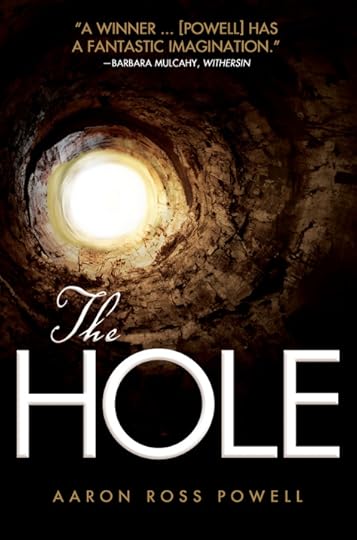
A novel of supernatural apocalypse.
The Hole is my first novel. It’s a tale of supernatural apocalypse and the secret history of America’s largest home-grown religion.
The world as Elliot Bishop and Evajean Rhodes know it is gone. Destroyed. In just two weeks, a horrific plague raged across the planet–driving its victims insane before killing them.
The two survivors set out on an unimaginable journey, driven by a cryptic message from Evajean’s husband: If anything terrible happens, you must get to Salt Lake City. But the pair soon discover they are not alone, and that the plague has done more than kill. The countryside between Virginia and Utah now crawls with victims who have been driven mad–violent lunatics fueled with definite yet unknown purpose.
To survive, Elliot and Evajean must fight for their lives–against the crazies, against sinister forces who would stop their quest, against long-ago hidden menaces–and uncover the deeply guarded secret of those driven mad and the plague that spawned them. The secret of a destructive force unleashed on the world by one of America’s most powerful religious sects…
The Hole
A novel of supernatural apocalypse.
The Hole is my first novel. It’s a tale of supernatural apocalypse and the secret history of America’s largest home-grown religion.
The world as Elliot Bishop and Evajean Rhodes know it is gone. Destroyed. In just two weeks, a horrific plague raged across the planet–driving its victims insane before killing them.
The two survivors set out on an unimaginable journey, driven by a cryptic message from Evajean’s husband: If anything terrible happens, you must get to Salt Lake City. But the pair soon discover they are not alone, and that the plague has done more than kill. The countryside between Virginia and Utah now crawls with victims who have been driven mad–violent lunatics fueled with definite yet unknown purpose.
To survive, Elliot and Evajean must fight for their lives–against the crazies, against sinister forces who would stop their quest, against long-ago hidden menaces–and uncover the deeply guarded secret of those driven mad and the plague that spawned them. The secret of a destructive force unleashed on the world by one of America’s most powerful religious sects…
Aaron Ross Powell's Blog

- Aaron Ross Powell's profile
- 18 followers

