
Aaron Ross Powell's Blog, page 9
October 19, 2017
003: Science Fiction w/ Will Duffield
Today I’m joined by my friend Will Duffield. We discuss our favorite science fiction novels.
Apple Podcasts
Android
Google Play
Stitcher
YouTube
RSS


October 18, 2017
America’s Hyperbole Problem
 Why our culture has become so exhausting.
Ours has become a culture of hyperbole. Nothing characterizes American social interaction, mediated through politics and social media, more than our need to assure ourselves, and broadcast to others, that whatever is happening now — whatever currently grasps our unexamined attention — is the most, greatest, acutest of whatever has ever been.
Everything — sexism, racism, political differences, economic differences — is a war. A war on women. A war on blacks. A war on the poor or on the elderly or on immigrants or on Christmas. We are all soldiers for equality, religion, ideology. We engage not in debate, but in skirmishes. We face not interlocutors, but enemy combatants.
This war footing turns our interactions toxic and destructive. Twitter shame mobbing, or counter protesting, or who we allow to speak on our campuses, accomplishes little of value but causes great harm, because we’re fighting the good fight, no matter the costs and no matter the stakes — which are, let’s face it, typically enormously low.
We do this because it’s fun. Because it makes us feel like important players in battles of significance, instead of the playacting trolls we so frequently actually are. None of it matters, except insofar as we’ve opted to destroy livelihoods or lives or just faces when we thrill in punching instead parley. But we can’t admit we do it for fun, because that would be admitting we’re not at war, not really, but instead seek only the rush of pretending to be foot soldiers in whatever Battle for the Fate of Civilization strikes our fancy at the soon-to-be-forgotten moment.
Without the belief in culture war, we’d burn out. Adrenaline takes its toll. With the belief in culture war, we keep up this destructive and deranged momentum through an irrational sense of moral urgency. “This matters,” we tell ourselves and signal to our tribes. “We can’t stop now, lest we capitulate to them.”
As one side stumbles drunkenly into this process, the other ratchets up its hyperbole engines in response, and the cycle accelerates, tearing through decency and respect and social bonds. Nobody wants to be the one who calls a halt, who halts themselves, for the war of the moment must be won, and besides, it’s all so gratifying and fun.
Except it’s not. Not at all. It’s degrading and the fun is false, like the rush of skydiving without a parachute. What’s needed is a culture-wide calming down, a letting out of breath. What’s needed is an understanding that things aren’t as dire or urgent or aggressively bad or dangerous as we’ve worked ourselves up to believe.
Can we do that? I don’t know. But you can. You can step away from your hyperbolic guns and find something better to do.

America’s Hyperbole Problem was originally published in The Aaron Ross Powell Show on Medium, where people are continuing the conversation by highlighting and responding to this story.
October 17, 2017
Star Wars Rebels Season 4 Needs to Get Better Than Its First Episode
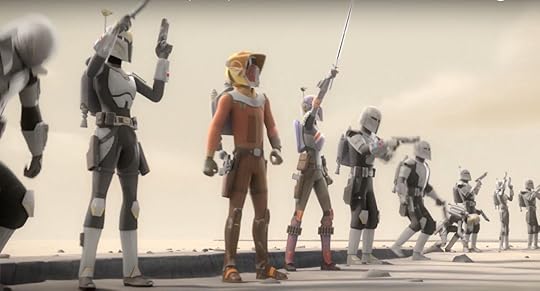 “Heroes of Mandalore” is not a good start to the show’s final season.
Star Wars Rebels rarely does two-part episodes well. Unfortunately, “Heroes of Manadalore,” the Season 4 premier, wasn’t an exception. This being the show’s final season, the quality needs to improve if Rebels wants to go out on a high note.
Let’s get the obvious out of the way: Without spoiling anything, not a whole lot happens, and what does couldn’t fit in a single episode’s 22 minutes. To stretch the story to 44, we get a number of unnecessary and rather dull action sequences. In fact, the entire first half of “Heroes of Mandalore” could’ve been compressed to a three minute cold open.
That aside, the premier served not to establish the terms of the new season, but to reset to the status quo. It’s effectively an excuse to get Sabine back in the Ghost’s crew so that next week, I expect, we can kick off Season 4 proper.
This is all made worse because the Mandalorians just aren’t interesting. They’re a warrior culture and not much else. Nor has Sabine’s involvement with them, this season or last, been any better. It’s felt like an unwarranted diversion from the core Rebels story. That might be fine if you’re a handful of seasons in to an ongoing show. Digressions can work then. But this is the final season. This is when things matter, when the creators ought to be running full speed towards an epic conclusion. Taking a full two of their limited remaining episodes to tell a bland story that just gets us back to where we’d already been is indulgent and not a great sign.
There’s still time, though. And I still have hope Rebels will end in a way that establishes its place as a major part of the Star Wars story.
So, on to next week.

Star Wars Rebels Season 4 Needs to Get Better Than Its First Episode was originally published in The Aaron Ross Powell Show on Medium, where people are continuing the conversation by highlighting and responding to this story.
October 13, 2017
“Wonder Woman” Isn’t Bad. It’s Boring.
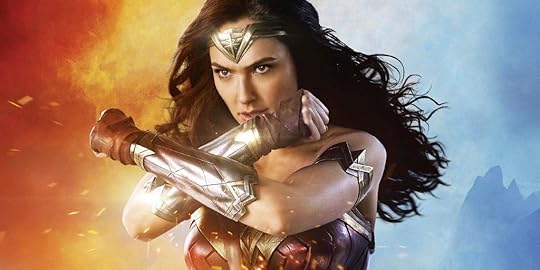 This by-the-numbers, visually dull movie doesn’t deserve the praise it received.
Ninety-two percent of reviewers, according to Rotten Tomatoes, liked Wonder Woman — which just shows the limits of the site’s methodology. “Like” is such a milquetoast evaluation. A shrug of “Yeah, I thought it was decent enough” counts equally with “This was a genre defining cinematic breakthrough.” Lukewarm is indistinguishable from ecstasy.
After watching Wonder Woman, I have to think its 92% is of the lukewarm variety. It’s not a bad film, but it’s not a good one, either. And its not-badness is perhaps inflated by the fact that it follows on two much less critically liked DC films.
Call it the Sigh of Relief method of movie reviewing. When expectations are low, or at least worry high, a movie that’s not bad gets reviewed as if it’s really good, because it allayed the fears of reviewers. After Man of Steel and Batman v Superman, expectations were low. (Though the latter film received far more negativity than it deserved.)
Batman vs. Superman Ultimate Edition is a good movie
Still, Wonder Woman’s sigh of relief is earned. Nothing stands out as aggressively bad, and there are quite a few things to like. Wonder Woman herself is super charismatic. Gal Gadot delivers an effortless performance. She’s not asked to do much, but she plays the role with enormous charisma. Godot is a far better Wonder Woman than Ben Affleck is Batman or Henry Cavill is Superman. (I say this as someone relatively unfamiliar with the source material, so it’s possible she misses in that regard, but within the context of the DC movies, she works well.)
Yet, beyond Gadot’s character, Wonder Woman feels entirely disposable. I liked that the movie was self-contained, instead of taking the Marvel strategy of every movie just being a cold open for the next, but story’s thin, the villains remarkably boring, and, most tragically for a DC movie, the visuals dull.
There’s not a single interesting visual filmmaking moment in Wonder Woman. The whole thing lacks any sense of style. Say what you will about Snyder, but he has an eye for gorgeous shots. Patty Jenkins does not. Wonder Woman looks more like a Marvel movie with heavier color grading than it does a DC movie as Snyder established them.
The Contrasting Visual Styles of the Marvel and DC Cinematic Universes
Like is so often the case with comic book films, if Wonder Woman hadn’t been called “Wonder Woman,” but featured a super hero with all the same traits but a different name, and without the build-in fan base, it would’ve received at best low to middling reviews. There were good moments, sure, but it’s certainly not a movie I’d ever feel like watching again.
It does feature the best theme of any superhero to date, though.
https://medium.com/media/8ddfdddb5c9ddeaab4306e8576baf492/href
“Wonder Woman” Isn’t Bad. It’s Boring. was originally published in The Aaron Ross Powell Show on Medium, where people are continuing the conversation by highlighting and responding to this story.
False Promises and Uncertain Economic Truths
 Markets are overwhelmingly good, but the results of market processes aren’t always good for everyone, in every instance.
Markets are overwhelmingly good, but the results of market processes aren’t always good for everyone, in every instance. Pretending otherwise isn’t persuasive.
There’s an unfortunate tendency among some free market advocates to blame the victim: If you can’t find work, it’s because you’re lazy or you somehow screwed up. Hard work’s all that’s necessary to succeed. But of course that’s not true. It’s quite easy to think of counterexamples. We know creative destruction is a necessary part of a well-functioning economy. Market churn means people lose their jobs through no fault of their own, and shifts in technology and consumer preferences mean that skills once lucrative can suddenly become relatively worthless. Markets are overwhelmingly good, yes, and are responsible for the astonishing amelioration of poverty we’ve seen since the Industrial Revolution, but they have their victims.
A changing global economy has meant a changing American economy and a changing American economy has meant that some people who did well in the old pattern are having a harder time in the new. This harder time is felt by, among others, a segment of America’s lower-middle class who used to be able to find decent-paying jobs that demanded physical labor and the kinds of skills you don’t learn in school. That segment increasingly faces a fact about the modern economy: Unless you’re a knowledge worker, it’s become a whole lot harder to find a well-paying, stable, long-term job because the skills you bring to an employer aren’t as in demand as they used to be.
And that’s awful for the people going through it. We can say that free markets change over time and that those changes lead to more prosperity in the long term, and that’s true. But it doesn’t make life better for the machinist or construction worker without a college degree and without much retirement savings. Empathy seems an appropriate response by those of us not facing such hardship.
That even well-functioning markets hurt some people some of the time makes selling market solutions to policy problems often a difficult task. We know that the solution to unemployment or underemployment is more economic freedom. Get rid of the barriers to entry and the protectionist policies keeping afloat what would otherwise be failing firms. Enable private schools to create a robust and successful educational system so more people have the skills needed to succeed in a modern economy. Open trade with the rest of the world, so we can grow our economy, buy goods at lower prices, and sell into more markets.
But here’s the thing. Every one of those solutions ends up sounding, to the person economically hurting now, like saying, “Leave it alone and things will work themselves out. Don’t know quite how or when, but they will.” Market solutions are emergent solutions, and emergence takes time and can’t be planned or predicted. In fact, it’s the attempt to plan and predict that leads so many non-market-based policies to fail. Economists understand this and so largely trust markets. But most Americans aren’t economists.
I think this explains, in part, the appeal of people like Donald Trump or Bernie Sanders. We see them as misdiagnosing the problems and offering counter-productive, and sometimes abhorrent, “solutions.” Immigrants are taking your jobs. (They aren’t.) So let’s fix it right now but closing the borders. Trade with China is making us poor. (It isn’t.) So let’s fix it now by establishing quotas and tariffs. But to people hurting right now, people like Trump or Sanders offer something free markets can’t: certainty, even if illusory. These people right here are the cause of your problems. Punish or stop them and your problems will go away. America will go back to being great, with “great” meaning the way it was when low-information, low-skill Americans could spend their lives comfortably in the middle class. In other words, before America’s economy became modern. We don’t want that, of course. The economic visions of Trump and Sanders aren’t just backwards, but are dangerously retrograde policies that will hurt everyone without doing much to improve the lives of those who support such policies.
Liberty struggles when confronted with this combination of widespread economic ignorance and the political incentive for politicians to pander and promise solutions that are anything but. And I don’t know how to solve that. Nor do I believe there’s an easy solution. The incentives in politics run against us, and so we somehow need to get better at articulating the story of markets, of the voluntary and the emergent, and do it in a way that’s as compelling and hopeful in its rhetoric as the false hopes sold by those pitching meretricious intervention. Part of that means consciously avoiding a panglossian picture of markets, and recognizing that sometimes people get hurt by them, and that often that hurt is blameless.
Originally published at www.libertarianism.org .

False Promises and Uncertain Economic Truths was originally published in The Aaron Ross Powell Show on Medium, where people are continuing the conversation by highlighting and responding to this story.
October 12, 2017
Has There Ever Been a Box Office Smash Scifi Movie With Less Cultural Impact Than Avatar?
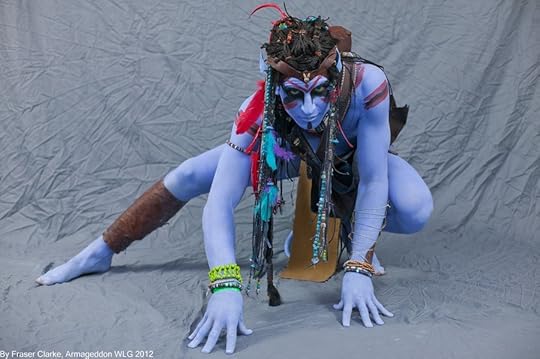 http://avaretarded.deviantart.com/art/Na-vi-Costume-No-edit-306654733
We’re on our way to four(!) Avatar sequels, which is probably the same as number of people excited about Avatar sequels.
It’s pretty striking, really, how quickly Avatar vanished from the public consciousness. The movie came out at the end of 2009, and in the years since, we’ve seen really no lasting attempts to keep the universe alive. There aren’t any Avatar toys, novels, or comics being sold. No video game franchise. People don’t wear Avatar t-shirts, or reference it except in occasional satire. Nobody’s wondering what the Avatar universe holds, or about the backstories of its characters. It was a pretty 3D movie, but otherwise entirely forgettable. And “forgotten” is exactly what happened to it, except in the mind of James Cameron and as trivia about top box office receipts.
Avatar’s disappearance happened so fast, with so little cultural impact, that I got to wondering whether any other movie comes close.
The answer is “No.” Avatar looks rather unique in this regard. To figure it out, I went to Box Office Mojo’s list of all time top “Sci-Fi — Adventure” movies, and sorted it by estimated ticket sold. Avatar sits at #5. People bought 97,000,000 tickets to see it. Here’s what its company in the Top 20 looks like, skipping movies that are sequels to films already in the list, and so piggybacking on their parent’s cultural impact.
Star WarsE.T.Jurassic ParkBack to the FutureClose Encounters of the Third Kind2001: A Space OddessyGuardians of the GalaxyStar Trek: The Motion PictureStar Wars, of course, has more cultural influence than any movie ever made. The others either continue to live in public consciousness, are considered eminently rewatchable classics, or have inspired entire genres. The only that might not fit this are the last two. Guardians of the Galaxy is part of the larger Marvel Cinematic Universe, and so it’s impossible to judge what its impact would’ve been without membership in the MCU. (My bet, however, is that without the MCU tie-in, it wouldn’t have cracked the Top 20 in the first place.) Star Trek: The Motion Picture itself is something of a forgotten film, but it kicked off the Star Trek movie franchise, and there’s no doubting the importance of that. Avatar, which falls between E.T. and Jurassic Park in box office receipts, stands alone as leaving not a ripple.
And it’s not like Cameron has no experience making culturally influential films. He gave us Aliens, the Terminator movies, and Titanic. That’s nothing to sneeze at.
The easy answer is that Avatar was just a spectacle. People didn’t see it for its characters, story, or worldbuilding. They saw it because it was the first major 3D movie to make full use of that medium. But still, really popular scifi stuff tends to take on a life of its own. That’s the nature of scifi fandom. The fans want to live in the world, explore it more, expand upon it. Or, at the very least, reference it incessantly. And yet, nothing.
Now 3D’s been done. We’ve all seen Avatar. Four more Avatars will be nothing more than four more Avatars, without the breakthrough to drive ticket sales. Still, the movie’s absence from pop culture remains interesting. It’s not even parodied. To make something so big and yet so forgettable is, itself, a rather remarkable achievement.

Has There Ever Been a Box Office Smash Scifi Movie With Less Cultural Impact Than Avatar? was originally published in The Aaron Ross Powell Show on Medium, where people are continuing the conversation by highlighting and responding to this story.
September 30, 2017
Which Star Wars Novels Are Worth Reading?
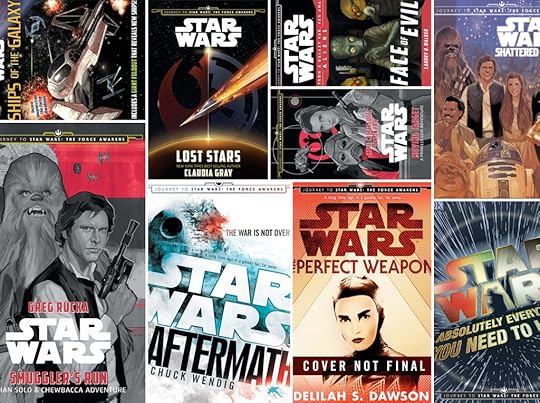
When Disney took over the Star Wars franchise, they rebooted the novel line. The publication of A New Dawn in September 2014, meant not only the end of the Expanded Universe, but also a much tighter integration between the novels and new movies. That cleared out decades of cruft — and also made these novels interesting in a way the old ones weren’t, because we could now be confident that their events would be reflected in future films.
That said, the new Star Wars canon remains shared universe fiction, with its reputation for less-than-literary merit. For the most part, that reputation holds. With only one exception to date, none of the new Star Wars novels would be worth reading if they weren’t Star Wars, if you took the same characters, story, and prose, and put them in an original universe. But they are Star Wars, and so some are worth reading for those of us who love the movies and want to know the events happening between them, who those background characters are, or what the major characters get up to when they aren’t on screen.
The question is, if you’re going to read Star Wars novels, which ones should you read? If you’re dedicated enough, you read them all, of course. But if your time is limited or your tastes not quite so focused, which ones are worth your time? Here’s my stab at answering for each of the new Star Wars novels I’ve read.
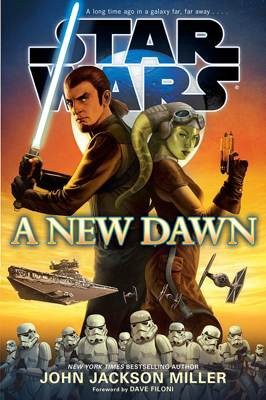 “A New Dawn” by John Jackson Miller
The first in the new canon is an entirely forgettable affair.
The novel that started it all doesn’t have a ton to offer, even for fans of Kaden and Hero from Star Wars Rebels, whose introductions it tells. Here’s where they meet, in a story about an evil corporate overlord in cahoots with the Empire, and his plan to blow up an inhabited moon to speed up mining operations.
The book took me a while to get through because I just didn’t care much about what was happening. We don’t need to know how Kaden and Hera met, especially given how little both of them in A New Dawn remember their Rebels versions. This reads like it was written by someone who’s never seen the show.
“Aftermath ” by Chuck WendigThe first novel to give us a peek at events between Episodes VI and VII, Star Wars: Aftermath is mostly about dropping hints. It also suffers from a problem common to many of the new books. Namely, because big reveals must be saved for the movies, reveals in the novels are necessarily small. A such, Aftermath spends most of its time following a rather inconsequential story, though it does give a decent sense of what the galaxy looks like immediately following the Emperors death. Is it worth reading? Maybe. Though perhaps it would be better, if your interest is mostly in the state of the universe stuff, to just read the Interludes spread throughout the book, instead of the whole thing. Still, like Bloodline, Aftermath probably falls in the category of novels to read only if you've got nothing better. Otherwise, the Wookieepedia coverage is just as good.
“Aftermath: Life Debt” by Chuck WendigThe second in the Aftermath trilogy, Aftermath: Life Debt is more of the same. We get to see the liberation of Kashyyyk, but its less interesting than it ought to be. We get to see the remnants of the Empire continue to sputter, intrigue, and seek to regain control. But, again, theres not enough good here in terms of storytelling, characters or prose to make reading 400 pages worth it unless you really liked Aftermath.
“Battlefront: Twilight Company” by Alexander FreedThe best Star Wars novel ever written.
The thing about Star Wars novels is that if you took away the Star Wars branding and set them in an original universe, we fans probably wouldn’t see much value in reading them. Top-shelf sci-fi they’re typically not. Battlefront: Twilight Company’s a rare exception.
Not much new in terms of world-building or secrets revealed, but this story of grunts fighting for the Rebellion is just so damn good, with compelling and adult characterization, meaningful emotion, and excellent, if a little workmanlike, prose. If you read just one of the novels in the new Star Wars cannon, make it this one. Though you run the risk, as happened to me, that Alexander Freed’s book will ruin a bit whatever else you read in the series, because its that much better than its peers.
“Before the Awakening” by Greg RuckaThe book that makes The Force Awakens make sense.
Oh man, do I wish I’d read this before seeing The Force Awakens. A collection of three short stories set just before the events of the film, Before the Awakening answers a few of the most confusing things about Episode VII while not spoiling the introductions of Rey, Finn, and Poe. Rey’s story tells us why she’s such a good pilot if she spent her life landlocked on a single planet. Poe’s tells us what the Resistance is and its relationship to the New Republic. Okay, theres not much in Finns. But its still good.
The book arrived from Amazon a few days before Episode VII’s premier and I held off reading it, fearing spoilers. That was a mistake. I would’ve enjoyed the movie more if Id read this first.
“Bloodline” by Claudia GrayA grown up novel fro the author of the much better YAStar Wars: Lost Stars,Bloodline ploddingly tells a story that shouldve been better, given the importance of its premise. Episode VII begins with the new that Leia is no longer a senator but instead back in a military role leading The Resistance against the First Order, and this Resistance is somehow distinct from the Republic Navy. So what gives? Thats the storyBloodline sets out to tell. But its just not all that interesting when the events are all out on the table. And while the author handles the tragic love affair inLost Stars with the necessary YA ham-handed starry-eyedness, when shes writing adults engaged in whats supposed to be political intrigue, she lacks the chops to make it at all convincing. Simply put, the book is boring and not worth the time. Better to just read about the events and characters online.
“Catalyst: A Rogue One Novel” by James LucenoCatalyst is a difficult novel to slot into this list. On the one hand, its pretty dull and largely plotless. On the other, having read it before seeing Rogue One, Im convinced it make me enjoy that movie more than otherwise. Introducing Galen Erso and Orson Krennic, it strengthens the characters and relationship of both men, and so makes the events ofRogue One better resonate. Recommended for that, but not much else.
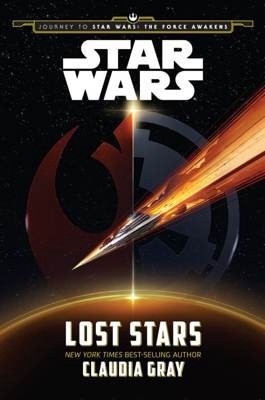 “Lost Stars
” by Claudia Gray
“Lost Stars
” by Claudia GrayA necessary book for anyone who loves Star Wars.
The first genuinely interesting novel in the new canon, and the first thats an unquestionably recommended read. Star Wars: Lost Stars gives us a bit of new information on the post-Return of the Jedi era, mostly regarding the Battle of Jakku, but its good stuff comes in presenting a thoughtful, realistic look at the events of the original trilogy from an Imperial perspective. We get to see the Rebels as terrorists. If we don’t rebuilt it, the terrorists will have won.and the Imperial rank and file as sympathetic true believers.
My only knock against the book is that as a YA novel, it shoehorns in largely uninteresting teenage drama and romance. But thats easy enough to overlook when the rest contributes so much to a story I thought I already knew inside and out.
“Tarkin” by James LucenoOkay, if a little unfocused. It fills in a good deal of Tarkins backstory, but I found it didnt do much to change my sense of the character or make me appreciate him more. Lucinos a decent enough writer, but theres just not enough here to make reading the novel worth the extra time over just reading Tarkins entry in Wookieepedia.

Which Star Wars Novels Are Worth Reading? was originally published in The Aaron Ross Powell Show on Medium, where people are continuing the conversation by highlighting and responding to this story.
September 29, 2017
Masculinity, Whiteness, Respect, and Donald Trump
Much of white male American has long felt it was owed respect because of its whiteness and masculinity.
And for decades, they pretty much got it. Now that’s changed, with people recognizing that respect has nothing to do with race or gender.
For many of us white men, this hasn’t been a problem, because we draw our sense of self-worth from other things and offer our fellow citizens reasons to respect us that aren’t our whiteness and our maleness.
But a segment of white men in fact do draw their sense of self-worth from their race and gender, and so can’t cope with this change.
This is what drives them to the alt-right, to Trumpism, to feeling threatened by kneeling black athletes.
They fear — many of them rightly — that if whiteness and maleness don’t earn respect, they’ll have little else to earn it with.
That’s scary. For them, yes, but also for the rest of us affected by their raging against the loss of unearned respectability.
This is why it’s encouraging that, for instance, athletes aren’t cowed by Trump’s bullying. And why all of us should applaud them.
So #TakeAKnee. Not just to protest police violence, but also because not giving in is how we move society in a better direction.
Apple Podcasts
Google Play
Stitcher
YouTube
RSS
September 28, 2017
002: Top 5 Video Games w/ Adam Bates
On today’s show, I’m joined by my friend Adam Bates. Each of us made a list of our top five video games of all time–and there’s only a couple of points of agreement.
One of the games we talk about is Star Control 2. If you want to play it, there’s an open source, remastered version that’s totally free, called The Ur-Quan Masters.
If you like the show, or want access to previews and behind the scenes stuff, please consider supporting the show.
Apple Podcasts
Google Play
Stitcher
YouTube
RSS
September 27, 2017
Maleness, Whiteness, Respect, and Donald Trump
 Culture is shifting under the feet of white males, and many of them aren’t reacting well to it.
Much of white male American has long felt it was owed respect because of its whiteness and maleness.
And for decades, they pretty much got it. Now that’s changed, with people recognizing that respect has nothing to do with race or gender.
For many of us white males, this hasn’t been a problem, because we draw our sense of self worth from other things and offer our fellow citizens reasons to respect us that aren’t our whiteness and our maleness.
But a segment of white males in fact do draw their sense of self worth from their race and gender, and so can’t cope with this change.
This is what drives them to the alt-right, to Trumpism, to feeling threatened by kneeling black athletes.
They fear — many of them rightly — that if whiteness and maleness don’t earn respect, they’ll have little else to earn it with.
That’s scary. For them, yes, but also for the rest of us affected by their raging against the loss of unearned respectability.
This is why it’s encouraging that, for instance, athletes aren’t cowed by Trump’s bullying. And why all of us should applaud them.
So #TakeAKnee. Not just to protest police violence, but also because not giving in is how we move society in a better direction.

Maleness, Whiteness, Respect, and Donald Trump was originally published in The Aaron Ross Powell Show on Medium, where people are continuing the conversation by highlighting and responding to this story.
Aaron Ross Powell's Blog

- Aaron Ross Powell's profile
- 18 followers

