Amy Julia Becker's Blog, page 3
October 9, 2025
10 Dimensions of Belonging
10 Dimensions of Belonging created by Erik Carter
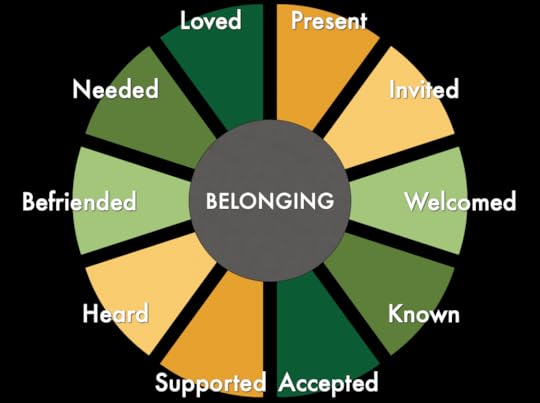
In a recent conversation, Erik says:
Early in our research, we wanted to understand what it really means to be a community of belonging—one that truly weaves in people with disabilities and their families. So we took that question back to families themselves.
Again and again, we heard the same themes:
Belonging means being present in the communities that matter most. It means being invited and welcomed, known deeply and accepted as you are. It means being supported, heard, befriended, needed, and loved.
Belonging isn’t just about a place. It’s about relationships and interactions that lead to deep connection—a sense that you matter within your community.
Much of our work now is about helping communities move toward that vision—becoming places where every family can truly belong.
SUBSCRIBE to my Substack newsletter: amyjuliabecker.substack.com
JOIN the conversation on Instagram: @amyjuliabecker
LISTEN to my podcasts: amyjuliabecker.com/shows/
CONNECT on YouTube: Amy Julia Becker on YouTube
The post 10 Dimensions of Belonging appeared first on Amy Julia Becker.


October 8, 2025
Disability & Family: The Yes/No Filter Every Parent Needs
TAKE THE NEXT STEP PODCAST
 Disability & Family: The Yes/No Filter Every Parent Needs with Jillian Benfield
 Overwhelmed by therapies, appointments, and never-ending “to-dos”? Author Jillian Benfield shares practical tools for families experiencing disability—offering parents guidance on setting limits, saying yes to what matters, and finding beauty in everyday life. Jillian and Amy Julia Becker explore:
Parenting and caregiving without burning outDeveloping a yes/no filterTurning routines into lasting habitsCreating a clear vision for your familyHonest gratitude as a tool for resilience Episode 4Listen on your favorite platform:
Apple YouTube Spotify More! Jillian benfield
 Jillian Benfield is a former journalist and news anchor. She holds a broadcast journalism degree from the University of Georgia. Her freelance essays about living an unexpected life have appeared on sites such as TODAY, Good Morning America, Yahoo! News, and ABC News. Jillian regularly advocates for the full inclusion of people with disabilities in her writings and community, and as a part of the National Down Syndrome Congress’s National Down Syndrome Advocacy Coalition. Jillian and her husband, Andy, and their three children make their home on Florida’s Space Coast. Learn more at JillianBenfield.com.
MENTIONED IN THIS EPISODEUPCOMING Q+R EPISODE: Record your question for our upcoming Question & Response episode: amyjuliabecker.com/qr/
__
FREE DOWNLOAD: 30 Next Steps for Parents available at: amyjuliabecker.com/parent-gift/
__
Podcast episode: James Clear: Building & Changing Habits (#183 rebroadcast)Jillian’s newsletter: https://view.flodesk.com/pages/5df185a2154bd20026a1b01bJillian’s books: Overwhelmed & Grateful: The Key to Finding God’s Goodness in All Life’s Ups & Downs and The Gift of the Unexpected: Discovering Who You Were Meant to Be When Life Goes Off Plan_
WATCH this conversation on YouTube: Amy Julia Becker on YouTube
SUBSCRIBE to Amy Julia’s Substack: amyjuliabecker.substack.com
JOIN the conversation on Instagram: @amyjuliabecker
LISTEN to more episodes: amyjuliabecker.com/shows/
TRANSCRIPTNote: This transcript is autogenerated and does contain errors. Please check the corresponding audio before quoting in print.
Amy Julia (00:06)
I’m Amy Julia Becker. This is Take the Next Step, a podcast for families experiencing disability. We’ve teamed up with our friends at Hope Heals to bring you weekly conversations from fellow parents, therapists, disability advocates, all about practical ways to cultivate a thriving future for the whole family. Here at Take the Next Step, we see your family as a gift to our society and to our local community. Your family matters. Your child matters.
We need you among us. Today I’m talking to Jillian Benfield, author of the new book, Overwhelmed and Grateful, the key to finding God’s goodness in all life’s ups and downs. Jillian is a former journalist who writes about living an unexpected life. And she writes these days on sites such as Today, Good Morning America, Yahoo News, ABC News. And in addition to all of that, she is a mom to three kids, including her son Anderson, who has Down syndrome.
You’ll hear more about Jillian and her family as she talks with me today about parenting and caregiving, parenting and caregiving without burning out and discerning when to say no, when to say yes, what it looks like to live a life of gratitude while also acknowledging the hardship that can come. Before we turn to that interview, I want to let you know that I’ve created a free resource for you. It’s called 30 Next Steps for Parents.
It’s just a one page calendar that you can print out. It’s got 30 simple ideas. Each one takes five minutes or less to help you connect. This is connection with yourself, your family, and your community. So you can grab that through the link in the show notes. I would love to send it your way. One final thing before we dive into this conversation with Jillian, we are collecting questions for an upcoming question and response episode. So please click the link in the show notes, record your question, or you can send it by email.
we will respond to as many as we can. And now here’s Jillian Benfield.
Jillian Benfield, welcome to Take the Next Step. Thank you so much for being here.
Jillian (02:14)
Thank you so much for having me.
Amy Julia (02:16)
I am really glad you’re here today because you’re here both as an author and as a mother. And this podcast is particularly designed for parents. So I wanted to start just by asking you to give us a picture of your family with all of the challenges you face and all of the goodness you experience.
Jillian (02:33)
So we are a family of five. My husband, prior military, we’ve moved all over the country and we have finally settled on Florida space coast. And my husband is an orthodontist here. We have three children. The oldest is 12, that’s our daughter Violet. Our middle son Anderson has Down syndrome and our youngest Preston is in second grade.
Preston was born with a whole host of issues as well. So that’s kind of ⁓ what inspired this book was having, was that timeframe specifically. It was having a very medically complex infant as well as a toddler who has a disability and associated medical illnesses that come with that disability at the time.
plus behaviors that can also come with that disability. so it was just, that is kind of our origin story. We’re not exactly there now. Our youngest is very, you would never know that he had had all these medical issues other than the scars that he still wears from them. ⁓ However, there was a period of time where it was pretty dicey. ⁓ And honestly, it was pretty awful at points too.
And that’s when I came across this article between the two boys. had 18 specialists between them. And I came across this article after going to two different doctor appointments that day, one for each. And ⁓ it was this woman who was grieving the loss of her infant daughter and who also had just had the birth of her nephew happen. And her therapist asked how she was doing with that. And she said, well,
I’m really glad he was born healthy, but I’m still really sad about my loss. And her therapist corrected her and said, and you’re still really sad about your loss. ⁓ And that she said, you don’t have to choose. You don’t have to choose between these emotions. They can both exist. And that just really changed things for me. ⁓ It was this small little Facebook post that really started, it was just such,
an awakening for me that I didn’t have to choose. I could be really grateful that my youngest son held these shoes were not as bad off as the doctors led me to believe they could be when he, when I was pregnant with him. and I could also admit that this was incredibly hard because it was, and that’s what kind of shapes my perspective and then shaped this book, which is called overwhelmed and grateful. And it’s the concept of
being real about our hard things. And I think this particularly relates to parents of kids with disabilities because we do have extra challenges that come with raising kids, disabled kids in a non accessible world. ⁓ And keeping our eyes open to the beauty that is within our experiences as well.
Amy Julia (05:41)
Will you speak a little bit to that, just the experience we’ve heard already, some of the challenges that you’ve faced as a family. Will you speak a little bit, because you do this a lot in your writing, but to the beauty as well, so that we get a picture of that aspect of your family life.
Jillian (05:56)
Or, um, I mean, gosh, you know, my first book was called The Gift of the Unexpected, and it’s about how the unexpected has the opportunity to transform us into who we’re meant to be. And I really do believe that having my son with Down syndrome, um, honestly killed off some of the worst parts of me, um, and parts of me that needed to die and really taught me how to live.
⁓ he helped me deconstruct so many bad ideas I had about, ⁓ about faith, about worth, ⁓ about what success is and what that should look like and, ⁓ helped me build better ones. And so I, holy, we have these challenges raising a child with a disability and it is my greatest challenge and my greatest gift. Both of those things are true to me.
⁓ Because we wouldn’t be who we are as a family unit without Anderson, without this experience of disability. I see how it has shaped my children and how it has shaped us and how we choose to live in the world.
Amy Julia (07:09)
Thank you. And yeah, just to repeat, your book is called Overwhelmed and Grateful. And I suspect that there are many listeners who just hearing the title are saying, yes, yes, I got it. ⁓ And each chapter is a different kind of pairing of some emotion or experience with gratitude. And there was one that I wanted to hone in on for this audience and it was called Busy and Grateful. And I just want to read one.
⁓ portion from that chapter you wrote I didn’t realize that all of my guesses meant I was saying no to much I was saying no to rest I was saying no to being present with my kids when we finally had downtime in the day I was saying no to being quiet enough to discern where my heart was leading me so when I read those words I just resonated as a parent as and certainly as a parent of a child with a disability myself because we just so often find ourselves swimming in
paperwork and email responses and all just all the things to do all day long. So I wanted to ask you to just give some like thoughts on how you learned like to stop start saying no and what it meant to say yes to the things that you really wanted.
Jillian (08:22)
Yeah, so what really made me realize that was an old sermon. We were hosting a ⁓ Bible study at our house with people who all had kids, like very young kids, like we all had the same phase of life. And we were listening to a sermon series by Andy Stanley and it was from the 90s. I mean, it was like cheesy skits before the service. I don’t even know how he found it. But anyways, in the last part of his series about the starting the will of God, he talked about ⁓
He showed a puzzle box picture and how this is how we have to think about our lives and thinking about our lives like five and 10 years out. What do we want the picture atop this puzzle box to look like? And our yeses and our no’s should be discerned through that lens. Like if it doesn’t go into this puzzle box, then it shouldn’t, we should be saying no to those things. That’s how I interpreted the sermon. was a very long time ago when I watched it now. ⁓
But it really did start a fire in me where I realized like I was doing part-time PR work. I was a board member of a Down Syndrome Association and doing other things too, volunteering at the school. And I realized that I had to eliminate, I had to realize first what the vision for my life was 10 years out. And then once I got really clear on that, I had to start eliminating. And that was hard because I knew I was disappointing people.
⁓ you know, it was hard to step off of that board for the Down Syndrome Association, but I realized like I could not put the hours in that they needed out of me, to, and to also build what I needed to build in order to write books. And, so it, anyways, my point is, is to have a vision of what you want for your life, your individual life, and also your family’s life.
And if it does not fit into that vision, those are the things that we should be saying no to. Now I’m going to say there is a whole lot more that comes when your kids get older, I think, and opportunities that come. And it becomes, I think, even harder to say no as our kids get older. And I want to empathize with people on that point, especially as kids. We have kids with disabilities who have all these
specialists and appointments and things like that. ⁓ However, I think just keeping that vision of does this fit into my life? And if you can say if the answer is no, and it’s something you can say no to, go ahead and say no. And if the answer is yes, and it’s something you can say yes to, then try to say yes.
Amy Julia (11:08)
So you tell us a little bit about even the work of, ⁓ I think for so many people, there’s no vision. we, and I can include myself in this, sometimes get so caught up in the busyness that that big picture is really hard to discern, especially when our days are so full, as you said, of appointments and therapies and paperwork and whatever. Was there anything that you were able to do that allowed you to?
say, hold on, wait a second, like, where am I headed 10 years down the road? What do I want that puzzle picture to actually end up looking like? Like, how did you do that?
Jillian (11:46)
Yeah, honestly, it was a sit down conversation with my husband on our front porch with a paper and pen. yeah, really, I mean, it wasn’t anything formal, but it was just like hearing how he envisioned our family looking 10 years out and how he envisioned his career looking 10 years out ⁓ and me doing the same and realizing like for us, we wanted kids that would want to come back and visit us in 20 years.
And what does that look like building those relationships with them and with each other within our own household now? And so like family dinner, ⁓ know, four nights a week is something like, okay, like that’s something that that’s a yes for us and we’re going to make that happen. So just, just trying to see like, especially as you move on in life and people want you to volunteer your time.
And I think volunteering is great and I get so much out of volunteering. And also that has to shift depending on where my life is year year.
Amy Julia (12:53)
I I listened to a podcast maybe last year. It was James Clear and Peter Attia. So some of these like big guy, you know, having people. But they said something that really has stuck with me in thinking about these types of things. One of them, I don’t even remember which one said, you need to know A, B and Z. And so what they would mean by that is like, you need to know where you are right now. Like, you know, in your case, as you described it, like A was, I am overwhelmed. I’m too busy. There’s too much going on.
Z was that conversation with your husband in terms of like 10 years from now, what do I want this to look like? And sometimes we think we need to know everything in between, you know, like B through Y, like I’m like getting my alphabet correct there. And what they were saying is actually, no, you need to know A and Z and B, like just the next you want to take towards that good future. That was really freeing to me.
Jillian (13:44)
the next step.
Amy Julia (13:51)
when I was feeling overwhelmed, especially actually sometimes with things that come up with Penny, get overwhelmed at the prospect. Like when she was turning 18 and I was trying to navigate social security and whether we should become guardians and what’s a transition program look like and all of these questions. And what I started to do was just to be like, okay, like literally what is the one next step that I can take that is really small actually. And so I’m listening to you just being like,
sitting on the porch with my husband with paper and pen. Like that was the next step, even towards understanding what that vision might be. And then it sounds like you all did some work to be like, okay, the next step is on Wednesdays we eat dinner together or whatever night it was. And so trying to kind of break that down, at least for me, often makes these become less these kind of, I don’t know, sometimes the vision for my life adds to the overwhelm.
But what you’re saying is that there are ways in which that can actually help us to discern how to simplify and make the choices that we really want to make and just move forward towards something that is good for us and for others.
Jillian (15:00)
Yeah, and I think that vision doesn’t have to be super detailed. Like doesn’t have to be, I want to sell this many books. It can just be, I want to become a published author. Like, and break that down for whatever that looks like for you. Obviously that’s my example. ⁓ But I don’t think it has to be super specific, but just listing out those couple of things that really mean the most to you. There were probably five for us ⁓ when…
listing out our most important things for the next 10 years. That helped us, it really just gave me that filter, that yes and no filter. And I eliminating stuff pretty quickly. ⁓ And then, no, the next step was like, okay, then I guess I actually have to write this book now. You know what I’m saying? like, it’s like taking it, you’re right. It is looking A to Z. And then what’s the next step? The next step was starting to say no. And then the next step was
gosh, I have to learn how to do this. It’s just taking it, you’re right, A to Z and steps in between. That’s so good.
Amy Julia (16:01)
Yeah, that helped me a lot. also love what you’re saying because ⁓ you are both acknowledging the limits that are on your life and your family’s life while also believing that there are like good possibilities. And so I think sometimes we get either we are so insisting on the possibilities that we deny our limits or we are so aware of our limits that we think there are no possibilities. But what I’m hearing you say is like there’s actually a process that helps you.
say, as you said, it’s, I mean, you could probably list 20 things that you would love to be true in 10 years that would include serving on a board that helps people with Down syndrome. Like, why would you not want to do that? And yet when you’re like, but probably five is our max, we can’t actually do all 20. And so there’s just, again, that acknowledgement of both limitations and possibilities that I think is very human and really, really helpful as well.
Jillian (16:54)
Yeah, I think that what you’re saying is to kind of goes to the message of this book. It’s living in that and it’s acknowledging the challenges ⁓ and delighting in what could be possible. Both of those things are true. And I think that’s important when we ⁓ live our daily lives, but also when we look to the future.
Amy Julia (17:13)
You also in this chapter about being busy and grateful right about the difference between routine and habit and I found that very helpful so I wondered if you could just explain what that difference is and why it matters especially as we perhaps are looking to make changes.
Jillian (17:28)
Yeah, so a habit is something that our brain really likes. I think that like almost half of our daily actions are habits. ⁓ I think that’s right. Something it’s a very high number of our daily actions that are actually habits that we have instilled. habits are our brains easy button. It’s something that we have done so often like getting in the car and then you automatically put on your seatbelt. That’s a habit. But in order to create a habit,
you have to do something routinely. So habits are comfortable, routine is uncomfortable. So you have to be uncomfortable and saying, I’m going to do X every day as part of my routine in order for it to become habit. ⁓ An example of this for me is I realized probably during that time where I had the sick infant and Anderson, and who was also pretty sickly at the time.
I realized that I was a much happier person and a better mother when I exercised and I had always been an inconsistent exerciser. And so it was realizing like, Nope, like Monday through Friday, I have to spend 30 minutes moving my body before I really get into the meat of my day. And so it’s like doing that uncomfortable thing. And now I have to say, like, I don’t even dread.
working out because it is my, it’s become habit. I did it so routinely that now it’s like, this is just, we wake up, we have a cup of coffee, we work out, then we get the kids. Like that’s just how that goes. And trust me, I am not trying to push exercise on it. I think there is too much of that in this culture. That’s just something that works for me. but that’s the difference between habit and routines. You have to be uncomfortable and adding it to your routine in order for it to become more comfortable when it becomes a habit.
Amy Julia (19:24)
I really appreciate that. And there are so many things like that. And sometimes the habits that I’m the most comfortable with are ones that actually need to change. ⁓ And that involves a lot of discomfort too. And I think going back to what we were saying before, at least in my own life, I can pay attention to maybe one routine, one uncomfortable routine at a time. So there might be like seven different things that I think, gosh, I would like that to become a habit.
It’s not like they can’t all, but ⁓ I’m gonna probably be working on one at a time. And for me, things like I also needed exercise and was not getting it. And there were little kind of life hacks like putting my clothes in.
that I was going to wear to exercise in the morning in the bathroom where it was like, okay, I’m going to see them and put them on without thinking about it. Like the night before I was very motivated to exercise the morning of not as much. But if the night before I had put the clothes there, it actually helped be like, okay, I’m going to put them on and I’m not going to take them off until something has happened that involves my body.
Jillian (20:27)
Yeah, it’s like a trigger for your brain. Yes
Amy Julia (20:30)
Yeah,
totally. Well, I’m thinking about parents who are listening to this conversation and who are feeling both overwhelmed and grateful right now. And I’m wondering if you want to just leave us with one change or thought or step they might take that helps to both reduce busyness and take the next step towards a good future. And I know you’ve already said so many. So if you want to just even return to anything ⁓ as a summary of our conversation, that’s fine.
Jillian (20:56)
for this audience, for, our people, the people who are parenting or caregiving for someone with a disability. ⁓ I would say really, I think that this and lens has changed so much for me because, ⁓ what I say about raising someone with a disability is that it’s more, it’s more paperwork. It’s more advocacy.
It’s more effort and I feel very comfortable in saying that because I also have two typically developing children. When I have people be like, well, all parenting is like that. Well, yes. ⁓ And it’s more, it just comes with more. And so I think that acknowledging that what you said earlier, those limits, those challenges that are present in our lives and also knowing that somehow some way goodness is always present.
For me, I think that’s because God is always present and ⁓ finding ways to hold both of those throughout the day. For me, that is before I sit down to work in the morning, before I open my laptop, I pray over my and, my more and my and. And honestly, often that has to do with raising my son with a disability, that more part, those challenges. And we have a lot of those right now.
And so it’s admitting to God, to myself, those things that are weighing on me, that are worrying me. And it is intentionally looking for what is beautiful in my life right now. Even if it is opening my eyes and looking out the view out of my back door window and that’s what I have to hold onto, that’s a great thing to hold onto. But it’s like practicing that more, admitting you’re more on it, being honest.
and being grateful. It’s honest gratitude is what I call it. And I think that that is something to help us move forward. And then just one more thing, because I knew we were going to talk about this question. I think that when, if you have young, younger parents listening, I think when you get thrust into the disability world, you feel like you have to do it all. You know, you have to do every single therapy and all of these things. And it’s okay to
to not say yes to all of those things for our children. It’s okay to do the thing that maybe say yes to one thing, one therapy, ⁓ because honestly, they probably need a break, you probably need a break, and it’s okay to think about your child as a whole person and not just their disability ⁓ and your family as a whole family unit too. ⁓
Amy Julia (23:40)
I so appreciate those words. And yes, that’s still true, but my gosh, I wish I had had that wisdom when Penny was three years old and I had a whiteboard in my kitchen with the 72 things I was supposed to be doing daily. And I felt so overwhelmed. ⁓ yes, that is one ⁓ word I would give to a younger mom too, is like, just pick one thing.
and work on that and let and otherwise. And, you know, even within that, enjoy, enjoy your child and your time together. And thank you so much just for the work that you do. We will certainly make sure in the show notes to link to that. am a subscriber to your newsletter and I receive just some both fun and thoughtful wisdom from you on a regular basis. I’m grateful for that. I’m grateful for the books that you’ve written. We will also just link to.
this new book, Overwhelmed and Grateful. And thank you for all that you’ve shared here today.
Hmm, well, the thanks is mutual.
Thank you so much for joining me here at Take the Next Step. This show is produced in partnership with our friends at Hope Heals. And if you don’t know it already, Hope Heals is a nonprofit that creates sacred spaces of belonging and belovedness for families affected by disabilities to experience sustaining hope in the context of inter-ability communities.
couple quick reminders before we close. One, if you haven’t already, grab your free resource, 30 Next Steps for Parents, just by clicking the link in the show notes. Simple calendar, five minute practices that help you connect with yourself, your family, and your community. We are gathering your questions for an upcoming question and response episode. So again, click the link in the show notes, record a question, send it by email. However you want to get it to me, I would love to hear from you and to really start answering your questions.
which leads me to tell you about our upcoming episodes. have Eric Carter, Professor Eric Carter from Baylor University talking about belonging. We have Down Syndrome Advocate and Lucky Few founder Heather Avis here to talk about the light. And Matt Mooney, one of the founders of 99 Balloons is also going to join me for that question and response episode so that we have the perspective of a dad ⁓ and a disability advocate and scholar in addition to my perspective.
So as we come to a close, I’m always going to ask you to follow the show, to rate it, to review it. That all helps more people know that this resource is available to them. Even better, share it with someone who you know might need this conversation. And finally, you can send questions or suggestions my way. Just tap the Send Us a Text link at the end of the show notes or email me amyjuliabeckerwriter at gmail.com. I want to thank Jake Hansen for editing the podcast.
Amber Beery, my assistant for doing everything else to make sure it happens. I hope you leave this time with encouragement to start with delight, connect to community, and take the next small step toward a good future with your family.
HOPE HEALS COLLABORATIONTake the Next Step is produced in collaboration with Hope Heals. Hope Heals creates sacred spaces of belonging and belovedness for families affected by disabilities to experience sustaining hope in the context of inclusive, intentional, inter-ability communities. Find out more about our resources, gatherings, and inter-ability communities at hopeheals.com. Follow on Instagram: @hopeheals.
Subscribe to Reimagining the Good Lifemy weekly Substack letter
My newsletter delivered to your inbox that challenges assumptions about the good life, proclaims the inherent belovedness of every human being, and envisions a world of belonging where everyone matters
LET’S REIMAGINE THE GOOD LIFE TOGETHER. SUBSCRIBE TODAY!
The post Disability & Family: The Yes/No Filter Every Parent Needs appeared first on Amy Julia Becker.
October 7, 2025
How Do You Know Your Calling?
REIMAGINING THE GOOD LIFE PODCAST
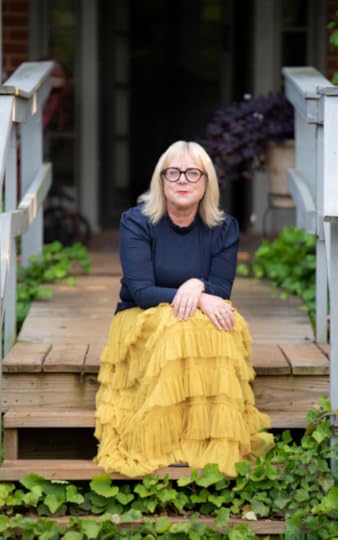 How Do You Know Your Calling? with Karen Swallow Prior, PhD
 Some people get paid to do what they love, but most don’t. How can we find meaning in everyday work that we don’t always love doing? How can we discover our purpose in life? Author Karen Swallow Prior and Amy Julia Becker explore:
Why passion is not the same as callingHow vocation centers on service and relationships, not just careerPursuing truth, goodness, and beauty in ordinary lifeHow multiple callings unfold across a lifetimeWisdom for discerning and living into deeper purpose Season 9 Episode 1Listen to Reimagining the Good Life on your favorite platform:
Apple YouTube Spotify More!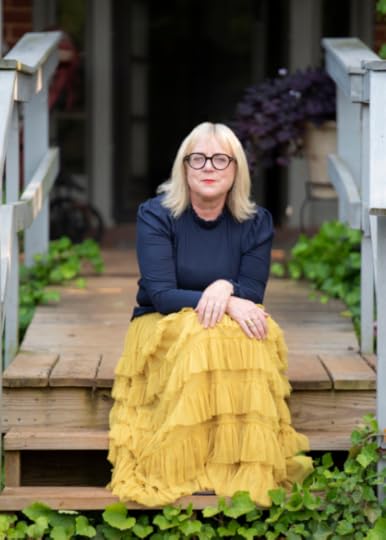 karen swallow prior
 Karen Swallow Prior, Ph.D. is the 2025-26 Karlson Scholar at Bethel Seminary. She is a popular writer and speaker, a contributing writer for The Dispatch, and a columnist for Religion News Service. Her writing has appeared in The New York Times, The Atlantic, Vox, The Washington Post, Christianity Today, and many other places. Her most recent book is You Have a Calling: Finding Your Vocation in the True, Good, and Beautiful (Brazos 2025).
CONNECT with Karen: karenswallowprior.com
Facebook: Karen Swallow PriorInstagram: karenswallowpriorX: @KSPrior Substack: @karenswallowprior MENTIONED IN THIS EPISODE Subscribe to my weekly newsletter: amyjuliabecker.com/subscribe You Have a Calling: Finding Your Vocation in the True, Good, and Beautiful by Karen Swallow Prior_
WATCH this conversation on YouTube: Amy Julia Becker on YouTube
SUBSCRIBE to Amy Julia’s Substack: amyjuliabecker.substack.com
JOIN the conversation on Instagram: @amyjuliabecker
LISTEN to more episodes: amyjuliabecker.com/shows/
TRANSCRIPTNote: This transcript is autogenerated and does contain errors. Please check the corresponding audio before quoting in print.
Amy Julia (00:04)
I’m Amy Julia Becker and this is Reimagining the Good Life, a podcast about challenging the assumptions about what makes life good, proclaiming the inherent belovedness of every human being, and envisioning a world of belonging where everyone matters. Today I’m talking with Karen Swallow-Pryor, the 2025-26 Carlson Scholar at Bethel Seminary. Karen is in addition to being a scholar and professor.
a popular writer and speaker, a contributing writer for The Dispatch, a columnist for Religion News Service, and the author of many books. Her writing has appeared in The New York Times, The Atlantic, Vox, The Washington Post, Christianity Today, etc., etc. And her most recent book is You Have a Calling, Finding Your Vocation in the True, Good and Beautiful. Today, I’m talking to Karen about that book and we are exploring questions like what is your calling? How do you discern it in the different seasons of life?
What does it have to do with living the good life? I’m really excited to have this conversation and for you to join us. But before I turn to that, I want to mention two other ways that you can connect with me. One is a new podcast called Take the Next Step. I’m producing this podcast in partnership with Hope Heals, and it offers conversations for families experiencing disability. We’ll put a link in the show notes so you can follow along if you want to learn more about how to take the next step towards a good future with your family.
If you are interested in the topics Karen and I talk about today, my weekly Substack newsletter explores what a good life really looks like for individuals, families and society. Over there, I write about all these things through the lens of disability, faith and culture. And I share books, podcasts, movies and all sorts of things that I’m loving. So sign up today. Join the conversation. I will share a link in the show notes. And here is my conversation.
with Karen Swallow Pryor. Karen, I am so glad to be sitting here with you today. Thank you for joining us.
Karen (02:09)
It’s great to talk with you, Amy Julia.
Amy Julia (02:11)
So you recently wrote a book and it’s called You Have a Calling, Finding Your Vocation in the True, Good and Beautiful. And I thought we’d start with asking, what prompted you to write this book? Who is it for? What is it? Yeah, where did it come from within you?
Karen (02:26)
Well, the immediate prompt for the book was a talk I was asked to give on being called to be creative at a creativity ⁓ conference. ⁓ So I gave this talk and I really liked it and the people seemed to like it. ⁓ And coincidentally, I was shortly thereafter facing a transition in my own calling in life. ⁓
And so that became part of it. But really, I’ve been talking about these things for 25 years in the college classroom ⁓ as an English professor or any kind of professor, really, especially within an environment of Christian education. ⁓ You’re talking with students all the time about why they’re there, what they’re doing, big life questions. And so I’ve had lots of conversations over the years as an educator.
⁓ with younger people about work, vocation, calling. ⁓ And the older I was getting and facing some of those questions myself and talking to older people and seeing the kinds of shifts and transitions and even backward looking questions and even regrets that they might have, I just realized, you know, I mean, there are hundreds of books out there on calling. I had to read half of them for this book. So it’s an important topic. A lot has been written about it, but
We are in a particular moment, I think, where we are transitioning from some of the assumptions from even just a few decades or generations ago about calling and work and vocation into something new. And there’s a lot of anxiety and fear and even ⁓ disappointment that people are facing that I think is really ⁓ unnecessary ⁓ if we have what I hope is a more correct and thorough
and human understanding of what calling is.
Amy Julia (04:25)
So I love what you said just about those two different, almost different generations who might be exploring the question of calling. You’ve worked with college students for many years, and that seems like the obvious time. I remember when I was in college, people giving me books about what color is your parachute? Who are you? Ask these big questions. And then I very much fall into that second category also of in my probably late 30s, early 40s being like, wait a second.
Who am I? What am I doing with my life? I didn’t realize I’ve closed so many doors that I didn’t realize were closed until around now. And so I think it’s just an important thing to underline that sense that this book and this question is perennial. Like it’s going to come up at different times for different reasons throughout our lives. And I love that idea that maybe there are ⁓ some ways to. ⁓
I fend off but like not need to go to the anxious places, but actually to explore and ask questions. I’m actually on the first couple of pages, I wanted to mention some of the questions that you write. It just begins with all these questions that I have certainly, some of which I’ve thought myself, I’m gonna read a few of them. These are the ones I underlined. What if your calling is something no one sees? What if your calling takes different forms over the course of your life? What if your calling is not an activity, but a place?
So I loved those questions, but I also thought maybe they would help us into a question about ⁓ our common misunderstandings around the idea of calling. Can you just speak to that? Like, what are some of the ways we understand calling?
Karen (05:58)
Yeah,
so ⁓ many are the ways, but I think those ways are again, very particular to this moment in history. you know, I love to give broad context. So, so indulge me while I give a few thousand years worth of context for these questions. But, you know, in our moment in history, particularly in Western culture, ⁓ in the modern age,
we are living in the last few decades, not even centuries of a time when we have had so much freedom of choice. We weren’t just assumed and locked into whatever calling or vocation our parents were or whatever our sex determines for us or whatever our geographical location determines for us. mean, that was the case for almost all of the human beings who lived before us.
And for only about a century or so, maybe two, but not even, have people been able to say, hey, I’m going to move or hey, I’m going to do something other than what my mother and my father and my other ancestors did. And so there’s a lot of freedom there. And it’s been exciting and exhilarating, but also ⁓ there’s a lot of anxiety and responsibility that comes when we’re making decisions because we have the agency to do that.
And so in the past few decades that has really accelerated. And so some of the assumptions that younger people and older people, because we all live in sort of the same media environment, get a lot of the same messages. ⁓ One big misunderstanding is that if you pursue your passion, you’ll never work a day in your life.
follow your dreams and you’ll get a lot of money for doing it because you’ll be doing what you love. And these are messages that have somehow been communicated, especially to younger generations. But also I have spoken to those in the midlife and after midlife who are now looking back and saying, wait, I didn’t do that. I don’t love what I do. I’m not getting paid a lot of money. My work isn’t even paid. Did I do something wrong?
No, no one did anything wrong just because they’re either not getting paid or not getting paid a lot or didn’t pursue the thing that they’re most passionate about because they had other callings in their lives. So this is a very particular moment in history that I was writing to where these are the myths that have fueled us and also I think ⁓ cultivated that frustration and disappointment that we have when we didn’t live up to this false dream that was set before us by our culture.
Amy Julia (08:51)
And so how do we understand, like, let’s just define calling, right? You’ve mentioned the word vocation. Are they the same thing? Like, we just make sure we know what it is that we’re talking about.
Karen (09:03)
Well, just like the word modern, these words can have different meanings and different contexts. So I use vocation and calling interchangeably throughout the book because they all come from the idea, they come from the same word that means to vocalize or to call and they mean the same thing. So a calling or vocation is something that we are called by someone else to do.
So it’s something external. Now it could be like a job, like we filled out an application and we got the call and that’s our job. ⁓ That’s not necessarily that particular job isn’t something that may be or turn into our calling or vocation and it could, but a calling or ⁓ vocation is a role that we have in life that may be something that we leaned into or ⁓
pursued, but it could be something that just is just part of our circumstances, part of our contingency. Vocation calling, this is another myth, is we don’t have just one vocation or calling. We have many and they include the relationships that we have with our family. We are called into a family which makes us a mother or a daughter or a son or a sister or brother. We are called to be neighbors. We are called to be citizens.
These are all callings. then sometimes the work that we do for pay can be more than that. It can be a calling that we have that is a significant role for us to fulfill in life. Or sometimes it can be just the role that we’re fulfilling through our work can be that we get a paycheck to bring home to take care of the family that we’re called to serve.
And so I do spend, but there’s overlap. ⁓ And I think the Protestant theology that I draw on that are, know, are again, our most of our modern world has drawn on is that understanding that vocation is not just something as it was used in the medieval times that’s in the church. So for Christians, talk, there’s a special resonance we have for the word vocation.
that comes from the time when a vocation meant a calling by God to serve in the church, like a nun or a priest or cleric of some kind. And then those who worked outside the church didn’t have vocation. But Luther and other Protestant reformers, and then of course later the Counter-Reformation came along and acknowledged that no, God can call us and our neighbors can call us.
Amy Julia (11:38)
Thanks.
Karen (11:51)
to do a variety of things. It doesn’t matter whether it’s in the church or out of the church. ⁓ The farmer, the truck driver, the baker, the mother, all of these are callings that are used to serve our neighbors and there is no sacred or secular calling.
Amy Julia (12:11)
Well, and this is somewhat a, I guess, furthering of what you just said. This is a quote from the book. Vocation is not about being able to fulfill our desires, pursue our passions or follow our bliss. Vocation is about being called by others to serve. And so you’ve mentioned the serving part a little bit already, and I don’t think you just mean like we all should go work for nonprofits.
But there is also somewhat like maybe like a relational sense to calling both in terms of I mean you and this is comes up in the book as well like literally other people are often the ones who will call you and that may be on the phone like an actual physical, you know, like what we now think of as a call or it may be simply by asking you and paying attention to the things that you’re asked to do. But can you speak about that like kind of relational aspect of calling both in being called by others and the to serve like to do something for others?
Karen (13:06)
Yeah, yeah. And so maybe I need to also flesh out this doctrine of vocation that I was talking about because it is a theological understanding of work and its meaning and purpose for ourselves, but also for the way that God has designed the world and the way the world operates. And so it essentially says the doctrine of vocation teaches that God uses our work to serve our neighbor. ⁓
If you believe in God, then whatever kind of God you believe in probably is a God who can do anything he wants to do. He could have designed the world to be any way, could have provided food like manna from heaven on the ground every day. He could have done any number of ways to sustain this world that is created. for whatever reason, part of how he created this world and created human beings is that we have to work to serve one another.
We have to work to keep ourselves alive. We have to work and then we can do different kinds of work that keeps other people alive and one person can do this thing, another person can do another thing. ⁓ And so all of our work in that way is designed to serve our neighbors. And I am certainly not saying that we should not and cannot be happy and blissful and fulfilled in our work. That is the ideal and that’s what we should ⁓ strive for.
But if we understand that the first purpose is to serve our neighbors, to serve our families, to serve our family, you know, ⁓ the rest of the world ⁓ through our work, then that alone is already a start on being fulfilled and happy and to understand that we’re doing something so important. And then as we grow and develop and, you know, we get better at things, then we’re more likely to get called
to do that thing that we’re good at because we love it and because we have skills to do it. And that’s not always the case. And I think that’s why the foundation is so important. If we understand what the purpose of work is and why we’re called to work and do different varieties of work, then we can actually find fulfillment ⁓ in that. And that can become our calling or our vocation through that process.
Amy Julia (15:27)
So I’m curious how this intersects because you have another ⁓ statement about the midpoint of the book, ⁓ pursuing truth, goodness, and beauty is your calling. And so let’s weave that in, right? Because you’ve talked almost practically, like in kind of practical terms, about like, you might get a phone call and then you go and you learn this thing and you become good at it. But like truth, goodness, and beauty.
often don’t seem practical. seem very like abstract and beautiful and good. But also like, wait, what do mean? How do these things go together? ⁓ What is pursuing truth, goodness and beauty? And how is that our calling in like some general statement about humanity?
Karen (16:05)
Right. Well, because the calling has been so elevated and mystified and sacralized again, ironically, in so much of, our understanding of it. ⁓ I really wanted to kind of begin with the practicalities as I did, but on the other hand, ⁓ you know, calling really is important. We are as human beings created to be called by others and by God and by.
you know, by the things, the gifts that we have, we are called ⁓ to use our gifts and use our passions. ⁓ But it doesn’t always turn out to be the way we envision or it seems very mysterious and very fraught. ⁓ And so I’m actually trying to break it down even a little bit more by saying, ⁓ well, we may not know what our real calling is and we may not know if we’re
we’re fulfilling that calling because that can be a hard, hard, impossible question to answer. But I do know that we are created to pursue the true, the good and the beautiful ⁓ in all that we do. And so my thesis, and I want to talk about each of those a little bit, but my basic thesis is that if we are pursuing the true, the good and the beautiful.
We are fulfilling our calling already and we will, as we are doing that, be able to see and understand what our calling is and what our calling isn’t as well, because that’s important too.
Amy Julia (17:42)
So why don’t you do a little dive into truth, goodness and beauty? What are we talking about here?
Karen (17:48)
Yeah. And so I start with ⁓ truth because in many ways, truth is kind of the easiest. Like everyone can, you know, acknowledge ⁓ at least, you know, cognizant that we should pursue what’s true and not what’s false. And everyone wants to be a truthful person and ⁓ know the truth rather than lies. And that’s what we think of when we think of truth. But applying that to our work and to calling
⁓ means a few practical things, actually. means, ⁓ you know, we might have, and again, I’m writing in a particular. Cultural context in which we are given lots of visions and pictures and images of what things should look like. ⁓ you know, women’s bodies are one example outside of this conversation. That’s a good, a good one to think about how we’re given so many realistic ideas of what that, what
women’s bodies are supposed to be like and look like. ⁓ But work related things are also subject to these kinds of idealized visions. so because of social media, might, or streaming television shows, we might have this image of, ⁓ I remember one time, this goes back many years, a student who is very smart academically and had some academic ⁓ goals. And she told me that she and her husband,
⁓ dreamed of they wanted to become goat farmers. And I was like, why do you want to be goat farmers? Have you ever lived on a farm or know anything about goats? And no, no, but this is what they wanted to do. This was years ago, they do have not done that. But it was like, so somewhere someone planted this romantic image of being goat farmers.
⁓ in her head and and some we the world needs goat farmers and And I’m not discouraging anyone from becoming a goat farmer But it was an example of just something very random that had been planted as an image or ideal that wasn’t really based in the truth of or the reality of who this person was what her experiences and abilities were ⁓ and so knowing pursuing the true means find out
you know, you need to know what the real nature of the work is. And then you need to know yourself, like, can you do can you fulfill what the nature of this work is? And that goes beyond work, it goes, you know, it can be ways of, you know, serving in community or church, like we may have this idea, like, ⁓ I want to stand on front in the front of the stage and sing every Sunday. And, well, you know,
You may not be called to do that. You may not be good at it. You may wish that you were. ⁓ We have to know the truth about, again, the nature of the work and ⁓ ourselves. And there are lots of other ways that truth plays into these questions. But I think because there’s so many distorted pictures of everything out in the world today, that part of the book for me was to say, let’s get beyond those distortions and romanticized images.
and really understand what the nature of reality is, the work, the world, ourselves, and then also the need. Like I might really wish to be a goat farmer, but where I live and in my time and place, there may not be much of a need for it. Sometimes it’s the reality of the world around us and the marketplace, and ⁓ that means that there just isn’t a demand for the thing that I wanna do. I know as writers, Amy Julia,
We know that, right?
Amy Julia (21:27)
Thinking about.
No, it is a really hard thing, actually, to I feel like that is a place of ⁓ discernment for me right now, like in a world that is really not ⁓ reading many books comparatively, ⁓ you know, to even the recent past. ⁓ Do I kind of insist on continuing to put words on paper out there or try to pivot without losing what you were just talking about the truth of who I am?
⁓ in what I have to offer and that I’m very much wrestling in that place as you may be too.
Karen (22:02)
Yeah, yeah. And you know, 30 years ago, a lot more books were needed, right? So it can just be a matter of a few years that makes all the difference in whether our gifts and our abilities ⁓ and the goodness of what we might offer is really needed in the world. We have to face that reality.
Amy Julia (22:24)
We talk about like the true, the good and the beautiful in relation to each other. That was one part of the book I had never thought about before. And I really loved because you really talked about those as being somewhat integral to one another. And I loved that. So if you just. ⁓
Karen (22:41)
Yeah,
sure, sure. And you know, I do, I do have a short chapter where I explain why I’m talking about the true, the good and the beautiful. And there’s a tradition for them. They are considered the transcendentals in classical philosophy. And by the way, for anyone listening who might be passingly familiar with me or might not be, my background is as an English professor. And so for some people have been like, well, why are you writing about a book about vocation and calling?
you know, really, because I love literature and good literature, because it is good and beautiful, I’ll take any excuse to talk about the true good and beautiful. And so these are the subjects that I love, the transcendentals and classical philosophy and classical literature. And so for me, this was, I’m understanding calling and vocation through these things that I’ve always loved and studied. So the transcendentals were considered by, you know, even
pagan pre-Christian philosophers as ⁓ pointing to some, you know, God or eternal cause, whatever word they might have for it, some transcendent being or source that is reflected in our human nature. ⁓ And so we as human beings have, ⁓ we have a moral aspect to our being, which is
what helps us to recognize whether something is good or bad. We have an intellectual and rational aspect so we can recognize whether something is true or false. And we have aesthetic sensibilities such that we can recognize what is beautiful. ⁓ And those things are outside of ourselves, but we are drawn to them merely by being human at whatever level we’re just drawn to them. And so,
You can’t have one without the other because, and this is where the distortion and the fallenness comes in. We have broken understandings of what truth, goodness and beauty are. But in, because they are transcendental and because they have their ultimate source in one source, they can’t really be separated, even though we can think about them separately. So something cannot be beautiful, truly beautiful.
if it’s not also true and good and something cannot be true and not also be good and beautiful. They’re really just three different facets of talking about the ultimate ⁓ nature of our being. ⁓ And if we’re pursuing one, then we really are pursuing the others and just sort of, but we.
It’s like getting a glimpse of a different side of the same thing. If we see something beautiful, then we can look for what’s true and good and vice versa.
Amy Julia (25:41)
Well, and I love also this is something you write. We pursue truth in our thinking. We pursue goodness in our doing. We pursue beauty through our senses and in our feelings. So there’s a sense in which although these are almost different facets of the same thing, but also different facets of who we are, goes out in pursuit of them. And then you wrote to cultivate these abilities is to pursue what the ancient philosophers described as the good life. ⁓ Will you?
talk a little bit about the good life. This is another good life quotation from the book, the good life, the abundant life is your telos, your purpose, your call. yeah, how’s this idea of the good life play in?
Karen (26:19)
Yeah. And, and again, I do draw heavily on, Aristotle, Aristotelian philosophy here, who writes about this. And I think it also, ⁓ he, he really, his ideas conform to, ⁓ my Christian faith. ⁓ but Aristotle would look at anything that exists and say, why does this thing exist? ⁓ it has a purpose, a Taylors, which is, you know, very, you know, even have the idea of having a purpose is, is.
is not assumed in modern and postmodern days today. if, know, so even you could take an object like a hammer or saw and say, why does this exist? And you’d have to know what its purpose is in order to determine whether it’s a good one or not. Like you have to actually know what a hammer is supposed to do before you can know if it’s doing its job well. ⁓ and then therefore a good hammer. The same is true of human beings. So Aristotle looked at human beings and said,
what makes an excellent human being. And an excellent human being ⁓ is one who has virtues like courage and patience and kindness and diligence and there are lots of list of virtues. And so when we demonstrate the excellence of what human beings are and what they were made for, ⁓ that’s the good life according to Aristotle. That is what it means to have the good life. And so
In the book, I’m trying to show that if we are pursuing the things that we were made to pursue, ⁓ we are fulfilling our calling and we will understand it as our calling. this is actually what the good life is, is to do what we were made to do.
Amy Julia (28:06)
How,
I mean, do you have any thoughts on the discerning part of that in terms of how we know that we are doing what we are made to do, especially when, again, we’re in a world of endless choice. We’ve got distorted messages about who we are, about the good, the true, the beautiful. And we might find that pursuing our calling does not result in certainly like the Instagram version of the good life.
Karen (28:35)
Yeah, you know, and one of the things I say at the outset of the book is I don’t have a formula or an easy six step plan. That’s not possible. And a lot of it is framing and understanding. So, for example, in the book, I give a couple of examples of, ⁓ you know, when I was in college, different jobs that I had ⁓ in pursuit of my college and then later education. And those jobs that I had were
assisted me in finding and fulfilling my calling to teach, working in a restaurant, working in a horse farm. But I knew that those were means to an end. But that doesn’t mean that the people that I worked with who committed their lifetime to breeding, training, and showing horses, ⁓ I was doing this, helping them as a job, they were fulfilling a calling. So the same kind of work.
can be just a job for one person, but it can be a calling for another. And that’s just marvelous and wonderful, I think. ⁓ And so I think we, know, sometimes we don’t even know something is our calling until we’re looking back at it. ⁓ You know, I think of my mother who had never had formal ⁓ college education as a teacher that just was mainly a stay at home mom all the years that we were growing up and even beyond.
but she would always, always teach Sunday school, teach vacation Bible school. When she was too elderly and frail to really go out of the house to do that, she would make lessons and mail them to children in India and to family members. she was in her eighties before she looked back and she said, I was a teacher all my life. I was a teacher. I was called to be a teacher, but she just did it.
without thinking of it and then didn’t realize later that this is what she’d been doing all of her life. so we don’t always know and we don’t always know immediately, but sometimes we do. mean, the very first day, ⁓ it was a night school. The first night I taught an English class when I was in my PhD program and I was only ran away into a PhD program because I didn’t want to teach. And then I had my first class and I said,
this is what I was made to do. ⁓ And so I didn’t know until I did know. And ⁓ but it was very accidental or providential. And so again, it’s like all of the mysteries of human life. ⁓ don’t always know immediately or know clearly in the moment. But again, that’s why I described this journey of pursuing the true, the good and the beautiful because when we
When we understand and desire those, we’re going to see everything that we’re doing through the right lens. And we will know the things that we are doing that are true, good and beautiful are part of our calling. And the things that are not true, good and beautiful are not.
Amy Julia (31:39)
I’m thinking within all of that you just said about suffering. And I would say as a friend who has kind of known your life and watched your life for the past, I don’t know, decade, that there’s been some pretty serious suffering that you’ve experienced both physically and emotionally. So maybe for listeners who aren’t aware of what I’m referring to, you could tell a little bit of that story, but also talk about how the experience of humans who suffer actually aligns or perhaps
I don’t know, does that, I think it can confuse our sense of calling. It also maybe can help us discern. So I just wanted to bring suffering into the conversation, but you know, personally, but also in this, in this broader sense.
Karen (32:20)
Yeah, yeah. Well, let me talk about it more broadly first and then maybe ⁓ home in on my personal application. ⁓ notice that true good and beautiful does not say anything about suffering. ⁓ You know, I’ve already alluded to Protestant theology and I’m very Protestant. But, you know, there’s an older tradition and the Catholic Church still, I think, has a better grasp on this, ⁓ on the understanding of ⁓
the centrality of suffering to the Christian faith, the suffering of Christ on the cross, right? In my chapter on passion, which is a big part of how we think about calling, I talk about how the word passion actually means suffering. ⁓ If we have a passion for something, it means we are actually suffering for it or suffering because of it or willing to suffer in order to achieve it.
real passion is suffering. That’s why Christ’s death on the cross is called the Passion of the Christ, because he suffered for us. ⁓ so even in terms of what we would call, what we do consider beautiful, ⁓ beautiful things do not omit suffering. Oftentimes, what is beautiful comes
out of the crux of suffering. ⁓ And so we certainly cannot avoid suffering. I include a lot of ⁓ literature and cultural references in the book ⁓ to sort of flesh these things out. And my favorite ⁓ poem that I include to talk about this is ⁓ by the 17th century poet George Herbert, who was a priest. And his poem, The Caller, The Caller is about wearing the clerical collar.
And the whole poem is him crying out to God about his calling ⁓ because God has called him into the priesthood and he’s doing nothing but suffering in it and not seeing any fruit or reward in it. And by the time he gets to the end of the poem, ⁓ the Lord calls him again, my child. And ⁓
The process of the poem is one in which he accepts this calling, but he laments his disappointment and frustration and pain, and yet it is still his calling and he submits to it. ⁓ so suffering is not absent from the true good and beautiful. It’s not absent from the good life. It’s not absent from our calling. ⁓ The physical pain that I’ve suffered is from
you know, an accident that I had seven years ago getting hit by a bus, ⁓ very much in the midst of my calling. I was actually on my way to meet with an editor at a publisher who wanted to meet with me about one of my books, you know, there’s a bigger story around it, but you know, so it’s very intertwined for me. then the calling that I mentioned, the shift in calling I mentioned at the start of our conversation ⁓ was just kind of being forced to make a choice between
my academic career, which I’d had for over two decades. And really, as I said, it was something I think I was created to do and my own voice and integrity because I was, you know, it was no longer wanted where I was and I had to choose between the two. And so I chose myself and my voice and my integrity and lost my academic career and my, you know, you could say, and I could say I lost that particular calling. ⁓
On the other hand, I’m still called to teach and speak and write and share, teach in different ways. so one particular form of my calling ended. And that’s another central point of the book is that I’ve already mentioned, it’s not just one calling. We have multiple callings over the course of our lives. The callings can change, the form can change. And so, yeah, so I am learning to
take on and fulfill a new calling or at least the old calling in a new way.
Amy Julia (36:36)
Yeah, I like that idea of an old calling being fulfilled in a new way. also like the yeah, the truth that there may be different callings at different seasons. I’m thinking about anyone listening to this and, you know, ⁓ probably for the most part, maybe there are some young people. I would imagine we’ve got more people in kind of our demographic group, middle aged, who might be at a point of, gosh, I don’t know whether I.
Pursued the right calling or maybe it’s a new season. And I’m wondering if there are any, just as we come to the end of this time, like spiritual practices that you might recommend to someone who’s wondering about even just the truth of those opening words of your book, you have a calling. The title of the book, too, you have a calling that there’s a declarative statement there about each and every one of us. How do we ⁓ get kind of. ⁓
pursue that truth in ⁓ the sense of, yeah, I’m thinking about like, what do we actually do to pursue that truth, perhaps from a spiritual perspective? And maybe there are other things you want to say too, I don’t know.
Karen (37:43)
Yeah, I’m a word person and I process things through words and through thought. So those are the kinds of practices I use. And so I’ll just share sort of how I’ve had to teach myself some of the things I say in this book recently, because I have a new calling in my life. I don’t know if I have a word for it, you know, my, lost my mother last year and living in a community with my father.
⁓ and it, you know, ⁓ it’s been very sweet, but there are additional responsibilities that I have to like be company for him and cook for him and just be there for him. ⁓ and those are things I’ve never had to really do before in my life. and it can be, you know, there are times when I get, I do get frustrated and impatient.
I hope I don’t show it, but I do. And there was just a moment the other day when I said, wait a minute, this is my calling. And I just wrote a book about, you know, you don’t have to be passionate about your callings and you may have callings that you don’t want. I, the light just went on for me because I also do say in the book that I’ve been very blessed to, to,
experienced some of the things I say not everyone will experience to have a calling and a job that you’re passionate about and to be paid for it all these things. I acknowledge that. Well, now I’ve just acknowledged the other part. No, I actually have a calling right now that I did not ask for, that is hard for me. ⁓ I’m living out my words. It’s truly a blessing though. don’t want to say it’s just like I’m a terrible cook and I hate cooking and now I’m cooking a lot. It’s just as simple as that. ⁓
Amy Julia (39:31)
I
mean, was early, my children’s early childhood was exactly what you just described. Like I am so grateful I get to do this and ⁓ my gosh, you’ve got to be kidding me that I have.
Karen (39:40)
do this. Let’s affirm what you’re saying. And those are callings. When you had children, you were called to feed them. ⁓ And when my mother died, I had a new calling to be there for my dad in a different way that ⁓ she was able to do before. so sometimes just, and again, this is kind of what my whole book is doing is reframing
thinking about things in a different way or from a different angle. For me, that is a spiritual practice because of how I work. But the other thing that I think is just is more is ⁓ again, it goes back to why I focus so much on the true good and the beautiful is to just to see, you know, again, because because we do have these romantic images and everyone wants to be creative and artistic and significant and what they do and
We are like, if we can see that in what we do every day, the way that if you just, when you are washing and putting away the dishes and creating a little order in your kitchen, you’re making it more beautiful. If you make the bed, you’re making the room more beautiful. you leave the mess and let the mess, if you let the mess stay because you need to sit down and have a conversation with your neighbor who stopped by and that is good. ⁓
Like just seeing the truth, goodness and beauty in the little things that we do every day, whether it’s to take the goodness of time with someone who needs it, to create the little bit of order by doing the housework we might not want to do. ⁓ And by ⁓ taking, by being, doing something truly, by doing it well ⁓ in that moment, whether it’s a small thing or big, ⁓ then we’re
We’re living the good life by pursuing those.
Amy Julia (41:38)
things. That is such a good place to end this conversation. Thank you for bringing us home so well. But ⁓ I really love the that sense of ⁓ as we talked about at the very beginning, there’s like a practical and an abstract aspect to what we’re talking about here. And I think you just brought that together so beautifully that these really practical, everyday aspects of our lives that can feel almost easily meaningless and mundane.
can also be something that we’re able to have eyes to see as ⁓ as a really good, true, beautiful part of a good life. So and of the good life. Thank you for that. Thanks. Yeah. And thank you for your book and for your time. And I’m glad we got to be here together today.
Karen (42:23)
I am as well, thanks Amy Julia.
Amy Julia (42:30)
Thanks as always for listening to this episode of Reimagining the Good Life. I’m really excited for this season. I’ve already got some excellent conversations coming, one with Sharon Hottie Miller on self-forgetfulness, Kelly Kapek on human limitations, and Leah Labresco Sargent on the dignity of dependence.
My weekly newsletter, again, is where I dive deeper into the ideas we talked about today and share books, essays, and more that I’m excited about. And so I will share a link in the show notes. You can subscribe over there. It’s free. And I’m also going to ask you a favor. If you have listened this long, then you might be willing to follow the show, to rate it, to review it, and to share this conversation with other people who might enjoy it and benefit from it.
As always, you can send questions or suggestions my way. In the show notes, there’s a link that you can tap on, the one that says send us a text. You also can email me at amyjuliabeckerwriter at gmail.com. Finally, I want to thank Jake Hansen for editing this podcast and Amber Beery, my social media coordinator for doing everything else to make sure it happens. I hope this conversation helps you to challenge assumptions, proclaim the belovedness of
every human being and envision a world of belonging where everyone matters. Let’s reimagine the good life together.
Subscribe to Reimagining the Good Life
my weekly Substack letter
My newsletter delivered to your inbox that challenges assumptions about the good life, proclaims the inherent belovedness of every human being, and envisions a world of belonging where everyone matters
LET’S REIMAGINE THE GOOD LIFE TOGETHER. SUBSCRIBE TODAY!
The post How Do You Know Your Calling? appeared first on Amy Julia Becker.
October 6, 2025
Lonely as a Parent? How to Build Real Friendships
This summer, I spent a lot of time with families experiencing disability, and again and again, parents told me they feel lonely and disconnected. Sometimes, the biggest need we have is relationships. But how do we actually start building honest, deep friendships? Here’s some guidance from Kevan Chandler, coauthor of The Hospitality of Need.
1. Examine your posture toward your own needs.How you view your own needs shapes how others see them. Ask yourself:
Do I see my need as a burden or an obstacle?Or do I see it as an opportunity to connect?Sometimes friendship begins when we invite someone into our need. It’s an act of openness that reminds us relationships aren’t one-sided. They’re spaces of mutual care.”
_
2. Start small. Start with just one friend.You don’t need a whole community right away. Start with one person. Kevan says:
“When I moved to Indiana, I had one friend. A few weeks later I had a second. And then it grew naturally.”
Deep connection grows slowly, and often, when we nurture that one relationship, others will follow in time.
_
3. Take the risk.Not every attempt at friendship will work out. Some people may misunderstand, and some relationships may not grow the way you hope. But the rewards are worth it: mutual care, support, and meaningful companionship.
Take small, intentional steps, even if it feels uncertain:
Ask for connectionNormalize your needsLean into the relationship you have without pressure_
4. Invite, don’t just ask.Kevan frames it beautifully: think of your need as a house and your invitation as…
“Let’s walk into this together.”
Friendship begins when we share space—shoulder to shoulder—rather than simply requesting help. Seeing need this way turns it into an opportunity for genuine connection.
_
5. Lead by example.For parents, modeling this openness matters. When you invite friends into your life, you show your children what mutual care and authentic relationships look like. They learn that friendships are built on presence, invitation, and shared life—not just convenience or obligation.
__
There’s more from my conversation with Kevan on Take the Next Step: “The Hospitality of Need: Disability and Interdependence with Kevan Chandler”
SUBSCRIBE to my Substack newsletter: amyjuliabecker.substack.com
JOIN the conversation on Instagram: @amyjuliabecker
LISTEN to my podcasts: amyjuliabecker.com/shows/
CONNECT on YouTube: Amy Julia Becker on YouTube
The post Lonely as a Parent? How to Build Real Friendships appeared first on Amy Julia Becker.
October 5, 2025
Choosing Hospitality Over Isolation
Growing up in a household with two wheelchairs, Kevan Chandler experienced firsthand the challenges, and the choices, that shape how a family navigates disability.
Kevan and his sister both have spinal muscular atrophy. Many parents in similar circumstances might have (justifiably, he says) closed their doors, shuttered the windows, and focused solely on survival. But Kevan’s parents chose a different path: they invited others in. They welcomed friends, neighbors, and the wider world, and they also encouraged their children to go out and engage with the world around them.
For Kevan, this openness was profound.
In their small town, it didn’t just normalize disability. It normalized asking for help and embracing the needs that everyone has. Inviting others into those needs wasn’t a weakness but was rather a natural way to build connection and community.
By the time he reached college, Kevan was carrying this lesson forward. What started as asking for help with small, everyday tasks evolved into deeper, mutual experiences of care. From simple assistance like getting ready for bed to sharing the responsibilities of a road trip, Kevan found that inviting peers into his world created friendships rooted in trust, reciprocity, and understanding.
Kevan says:
“There’s not a hierarchy. It’s not them just coming to meet my need. We’re stepping in together, and as a result, because my needs are being met, I can focus on theirs.”
__
You can find more from my conversation with Kevan on on Take the Next Step: “The Hospitality of Need: Disability and Interdependence with Kevan Chandler”
SUBSCRIBE to my Substack newsletter: amyjuliabecker.substack.com
JOIN the conversation on Instagram: @amyjuliabecker
LISTEN to my podcasts: amyjuliabecker.com/shows/
CONNECT on YouTube: Amy Julia Becker on YouTube
The post Choosing Hospitality Over Isolation appeared first on Amy Julia Becker.
October 2, 2025
Creating Belonging in Diverse Communities
I wrote a few weeks ago about curiosity as an act of belonging. I also had a chance to go to Baylor University for a few lovely days of conversation and connection that only furthered my thoughts.
Belonging is relatively easy if we are trying to create a sense of commonality and connection among a homogeneous group. Country clubs create belonging by having shared activities, like golf or tennis or sailing, a membership process where friends recommend friends, and shared social life. When churches and schools attract homogeneous groups of people, it is also relatively easy to create a sense of belonging.
But what about diverse groups of people who don’t assume they fit together? What about the scholar with a PhD sitting in a Bible study alongside a young woman with an intellectual disability? What about the single mother of two and the married couple of fifty years? Or the recent immigrant to this country and the proud daughter of three generations of veterans? The Republican and the Democrat? Or on down the list of our perceived differences? How do we create belonging in these spaces?
It strikes me that belonging does not depend upon homogeneity, but it does depend on a deep sense of shared identity and purpose. And when we think identity and purpose comes only, or primarily, from our ethnic heritage, our political leanings, or any other marker of status or social position—it is easy to segregate ourselves. In other words, belonging in an inter-ability context, or a multi-racial context, or an intergenerational context, will depend on becoming curious and open to our shared humanity and to a deeper sense of shared identity and purpose.
Every person has inherent worth and dignity.We are all vulnerable and in need of one another.Each of us longs for love, connection, and belonging.Everyone has gifts to give—and needs to be met.We all know suffering and joy, loss and beauty.Our shared humanity is the foundation of true belonging.
(I had a chance to talk with John and Kathy about this, as well as our political divisions, last week on the John and Kathy show.)
SUBSCRIBE to my Substack newsletter: amyjuliabecker.substack.com
JOIN the conversation on Instagram: @amyjuliabecker
LISTEN to my podcasts: amyjuliabecker.com/shows/
CONNECT on YouTube: Amy Julia Becker on YouTube
The post Creating Belonging in Diverse Communities appeared first on Amy Julia Becker.
October 1, 2025
The Hospitality of Need: Disability and Interdependence
TAKE THE NEXT STEP PODCAST
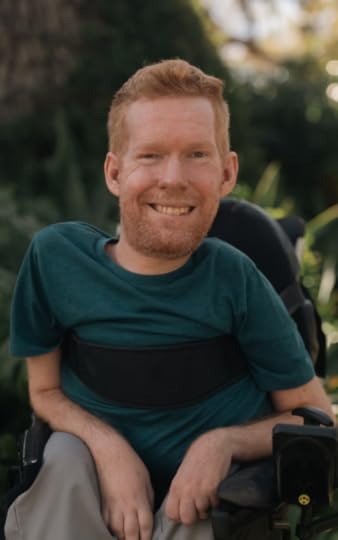 The Hospitality of Need: Disability and Interdependence with Kevan Chandler
 It can be hard to ask for help, but what if being needful isn’t weakness but a doorway to connection, friendship, and belonging? Kevan Chandler, coauthor of The Hospitality of Need, shares his personal story with Amy Julia Becker, reflecting on his experiences with spinal muscular atrophy, neediness, and the ways mutual care shapes his life. They explore:
What peer-to-peer caregiving looks likeHow disability opens doors to friendshipWays to start supportive friendshipsHow your view of need shapes connectionWhy vulnerability and care are worth the risk Episode 3Listen on your favorite platform:
Apple YouTube Spotify More! kevan chandler
 KEVAN CHANDLER is the founder of the nonprofit organization We Carry Kevan and speaks worldwide about friendship and disability. He and his wife, Katie, enjoy doing everything together, including growing vegetables and reading to each other.
Kevan was the second of his siblings to be diagnosed with spinal muscular atrophy, type 2, a rare neuromuscular disease. In 2016, he and his friends took a trip across Europe, leaving his wheelchair at home, and his friends carried him for three weeks in a backpack.
An avid storyteller, Kevan is an author and speaker worldwide about his friendships and unique life with a disability, being a featured speaker for Tedx and Google, as well as various conferences, pharmaceutical companies, and universities.
MENTIONED IN THIS EPISODEThe Hospitality of Need by Kevan Chandler and Tommy Shelton
Connect to Community download:
A one-page guide to help families experiencing disability map out the connections that matter most. With simple prompts, you’ll identify the peers, mentors, experts, and supports—both within the disability community and in your wider circles—that create strength, encouragement, and belonging for your family. Get the guide: amyjuliabecker.com/connect-to-community-guide-free-download/
UPCOMING Q+R EPISODE:
Record your question for our upcoming Question & Response episode: amyjuliabecker.com/qr/
_
WATCH this conversation on YouTube: Amy Julia Becker on YouTube
SUBSCRIBE to Amy Julia’s Substack: amyjuliabecker.substack.com
JOIN the conversation on Instagram: @amyjuliabecker
LISTEN to more episodes: amyjuliabecker.com/shows/
TRANSCRIPTNote: This transcript is autogenerated and does contain errors. Please check the corresponding audio before quoting in print.
Amy Julia (00:06)
I’m Amy Julia Becker and this is Take the Next Step, a podcast for families experiencing disability. We’ve teamed up with our friends at Hope Heals to bring you weekly conversations with fellow parents, therapists, disability advocates, and others about practical ways to cultivate a thriving future for your whole family. Here at Take the Next Step, we see your family as a gift to our society and to your local community. Your family matters, your child matters,
We need you among us. Today’s episode gives a real life picture of the goodness that can come to a whole community when parents and kids affected by disability participate widely in community life. I’m talking with Kevin Chandler, founder of the nonprofit organization, We Carry Kevin, and co-author of The Hospitality of Need. We talk about the idea of peer-to-peer caregiving, about ways that every family can invite others into relationships of care.
And we get to hear a little bit of Kevin’s own story as a man with spinal muscular atrophy, his own story of neediness and mutual care. I’m so excited to share this conversation with you today. One thing I wanted to let you know in relation to this conversation, I have a free gift for you. It’s a worksheet to help you begin your own process of connecting to community. This one page guide helps families experiencing disability map out the connections that matter most.
You’ll get some simple prompts to help you identify the peers, mentors, experts, supports, both within the disability community and in your wider circles. Those supports that will create strength, encouragement, and belonging for your family. You can find that link in the show notes. One final word before I get to this great interview with Kevin, I wanna let you know we are collecting questions now for an upcoming question and response episode. So go to the show notes, click the link, record your question,
and we are really excited to respond to as many as we can. And now for my conversation with Kevin Chandler.
Kevin Chandler, thank you so much for joining me here at Take the Next Step.
Kevan (02:20)
Yeah, thanks for having me.
Amy Julia (02:22)
Well, I’m delighted to have you on this podcast because you are the author of a recent book co-written with Tommy Shelton called The Hospitality of Need, which even in its title might be something that causes people to wonder what it is exactly that you’re talking about. So we’re going to talk about that today. But I thought maybe you could start with giving your listeners a sense of yourself.
⁓ You are someone who describes yourself as needy in fact, that’s somewhat central to this whole book Can you talk about what it means for you to be needy and what that neediness has taught you?
Kevan (02:54)
Sure. Yeah, so I’m 39 years old and ⁓ I’m married. My wife, Katie, and I are married for five years and we live in Indiana. And I have a disease called spinal muscular atrophy, which ⁓ means that I’m fully dependent on a power wheelchair. ⁓ And even with that, I’m
⁓ fully dependent on other people to make my everyday life happen. We just had a friend of ours come over this morning and get me up and showered and ready for the day. And we have different guys that come in and out of our house a lot and help out with things. And ⁓ Kavi does a lot as well with, ⁓ you know, we cook together and she helps me eat and helps me with the restroom.
⁓ she knows the driving and everything. And so, ⁓ really I, I don’t think I go more than, right. I just can’t get through a day without other people being involved. ⁓ which, you know, the, the world would look on and I’m, tempted to look on and say, wow, that’s, that’s a lot. That’s not really a full life or a, a full like great quality of life. But,
I experienced firsthand and I believe fully that it actually has led to a fuller life and a more, ⁓ not to be cliched, but a wonderful life. Because of my needs, these relationships have gone deeper. They’ve taken deeper roots ⁓ that I just am so thankful for.
Amy Julia (04:52)
Well, and again, what shows up in the book is that, as you just said, this is it’s a relational experience. Your your needs are relational. And even the way you described your own day to day life, which has perhaps magnified an understanding of need, is also not completely dissimilar to my life as a woman who walks around the house and can’t reach the top shelf. And I know that’s a.
Small example, I can get a stool, but I do, I ask other people in my household to help me daily with various things, whether that’s because I don’t want to do something or I’m physically unable to do something. And sometimes we don’t like to think of ourselves as needy, but the way you’re talking about need allows us to reimagine it a bit as a way in which we can actually call upon each other and interact with each other.
as humans, right? And I just love that idea of ⁓ kind of a network of care that is both attending to your needs, but that’s not all that’s happening there. It’s like you’ve ⁓ created a, yeah, a network that’s not a hierarchy of people who are in and out of your home and your life. And I’m curious how that came to be. How did it come to be that there are people who are coming over on Monday?
and Tuesday and Wednesday and showing up ⁓ in a way that is actually good for everyone involved.
Kevan (06:23)
Yeah, that’s a really good way to predict that there’s not a hierarchy. It’s not them just coming to meet my needs, but we are stepping in together. And as a result, because my needs are being met, I get to focus on theirs. And so it’s a mutual ⁓ care for one another, which is what friendship is. ⁓
it’s just maybe cranked up a little bit. But again, that’s a good thing, I think. ⁓ So as far as where it came from or how it originated, ⁓ you know, I have to say it started with my parents. ⁓ I grew up in North Carolina and I’m the youngest of three. ⁓ My sister also has spinal muscular atrophy. so ⁓ growing up in a house with two wheelchairs and
⁓ that’s a lot, ⁓ going on. And, and I think my parents could have very easily and in some ways justifiably just, you know, close the door and, and shuttered the windows and said, we’re going to hunker down and, and just survive and take care of this ourselves. ⁓ but instead they invited
their friends in and ⁓ invited the world in and they sent us out. We went ⁓ to normal everyday classes at school. I played soccer when I was a kid before the other kids were too big and if they ran into me, it’d be catastrophic. But up until then, I played with just normal old soccer. ⁓
went on field trips and went on, ⁓ you know, missions trips with our youth groups and summer camps. And, ⁓ and we also had an open door policy. We got to bring our friends over to the house and, ⁓ even did a few slumber parties at other friends houses. ⁓ and my parents invited their friends into our home and, and what that did, especially for our kind of small town at the time.
⁓ was that it really normalized not just our disability, but normalized the needs that we had ⁓ for the world around us as well as for me. And so I got really comfortable and really used to inviting people into those needs. If I needed a door open, I just ask someone or if I… ⁓
you know, drop my fork or whatever it is, then it’s not making it a big deal, but asking people to help with that. so what that ⁓ and also like my parents had friends who, ⁓ you know, could help with ⁓ my caregiving, you know, so my parents could go away for their 25th and or three, you know, and that kind of thing.
⁓ One of their friends could stay over and take care of my sister and I. And so what that translated to was in ⁓ like near the end of high school, going into college, realizing that I could now invite my peers into my needs at that deeper level. So it went from, you know, can you…
scoop me over or help me with my jacket or whatever to, hey, what if we go on a road trip and you help me ⁓ get ready for bed and get me up in the morning? ⁓ so it just felt like a very natural ⁓ progression because of the ⁓ examples and framework that my parents had set before me.
Amy Julia (10:29)
⁓ I love that and it’s ⁓ inspiring to me as a parent. ⁓ And I’m curious if we could like drill down a little bit on that, because I know in your book you write about a new model of care that you call peer to peer caregiving. And so I just wondered if you could describe that and like practically how that has worked in your life.
I know we talked before we even started recording about how you don’t have a checklist of exactly what other families should be doing. All of us have different circumstances and different social situations and all of that. So I don’t mean it in like a checklist way. But I also said to you that one of the things reading your book did for me as a parent was help to shape my imagination for our daughter, Penny, living outside of our home, not independently, not all by herself, but in an interdependent way with people who would benefit from that alongside her.
And so I would like to just ask if you could, yeah, tell us more to shape our imaginations, not to give us a checklist.
Kevan (11:27)
Yeah. Yeah. Well, ⁓ so peer to peer caregiving. I don’t even know where I like at what point did that term came about. I just kind of started saying it and it kind of stuck. But and I’m sure other people have said it or said it better. But but the idea is ⁓ I’ll tell you where I am now with it. But then we can go back a little bit. ⁓
So the idea of peer-to-peer caregiving is rather than having ⁓ hired professional ⁓ nurses or in-home caregivers coming in and getting hired ⁓ to take care of you, it’s actually just your friends, just your peers. And it’s peer-to-peer because it’s going both ways, as we said earlier.
⁓ that there’s a reciprocality, a mutual caring for one another. I have a lot of guys that get me up in the morning or are involved in our lives and the way that they see it, and I see it as well, is that this is our opportunity to ⁓ have quality time. I had a friend who ⁓ was a pastor
And, you know, lived on the other end of town and was really busy being a pastor. ⁓ and he said, you know, me coming to get you up every other Tuesday is our predictable pattern. So that if, if, you know, we don’t get to touch base any other time, we have that. And, ⁓ and there were mornings that, ⁓ you know, I had additional
things on my heart that I was so happy to see him and work through. And there were days that he was going through really hard stuff and he didn’t say, well, then I’m not going to come. It was, good, I get to be with Kevin and as my friend and we get to work through this. And so that’s kind of the basic idea. Now I do want to back up and say, I don’t think
hiring people is the worst thing in the world. ⁓ And actually my sister has kind of a hybrid of hiring people for some things, but then having friends come in for the other things. And she’s ⁓ done a good job of the people that she hires end up being friends. Or like I used to do ⁓ back when I was in college and we were all just starving artists, know, and musicians.
⁓ using means to hire my friends was a way to care for them. And so ⁓ kind of what happened was in college and right after college, ⁓ through vocational rehabilitation, I was able to hire a couple of friends to help with my caregiving. ⁓ I’ve never
just gone through an agency. Some people do that and that’s fine. for me, I just always wanted my friends to help. And when I moved from North Carolina up here to Indiana, I just really had this burden. And I will say, I think it’s a personal burden ⁓ that ⁓ I don’t want to place on others, but I think it’s something to consider, which is that I felt like, you know,
⁓ All these people, all these guys are my friends helping out and they do get paid and the trickiest, most frustrating and time consuming annoying part of that transaction is them getting paid because we have to deal with the government. And not to mince words, but I was like, so I wonder if I just take that part out and
And it will put more responsibility on me to care for them and to be present because I can’t say, well, you’re getting paid to do this. This is a friend just doing it because they love me. I’m thankful for that season and thankful for those resources. But coming to Indiana, thought, prayerfully, I’m just going to invite people in and never bring up
fund finances, never bring up contracts or anything. I’m just going to say, Hey, would you mind getting me up tomorrow? You know, and, and stepped into that. And that was 11 and a half years ago. ⁓ and, it’s just been really, really amazing, ⁓ to see what that looks like. And I think I say in the book at one point,
You know, you can do it either way or some hybrid of all of that. But what I’ve found in my own life is that, ⁓ because I hear this a lot in the disability community, it’s like, well, I don’t want my friends taking care of me because it gets too messy relationally. So I’m just going to hire people and then, you know, have my friendships over here on the side. And what I found personally is that
whether money is involved or not, all are going to be messy. again, personally, adding a lot of caveat there, but personally, I would rather get into that mess with my friends. And, and so that’s kind of how I ended up in this spot. And, ⁓ just really thankful for how it’s worked out and how it’s, ⁓ now something that I can
point to as like, here’s the love of Christ that I get to experience and invite people into to not just experience from me, but to exercise themselves and I get to experience it from them. So it’s been a wonderful experience of mutual care.
Amy Julia (18:06)
Yeah, and you write beautifully about it. I’m thinking about just the ways in which what you’re saying also hinges upon friendship and that there are ⁓ many people with disabilities, parents of kids with disabilities who would say that loneliness or a lack of friendship is one of the core needs, actually. And in fact, like that if there’s neediness, it’s actually in that area.
I’m just curious if you have any thoughts for parents or individuals with disabilities who are like, yeah, I want friends like that and I don’t have them. Like, I don’t know what to do to actually begin building those relationships, much less asking people for, I mean, maybe the only care I need is actually that relationship, you know? Yeah, so I’m just curious if you have any thoughts on that.
Kevan (18:55)
Yeah, yeah, well, ⁓ I would say a couple of things. The first is to ⁓ what is your position and posture toward your own needs? You know, are you seeing them as a burden? Are you seeing them as an obstacle to those relationships? Or are you seeing them as an opportunity or a tool that you can use? You know, because
For a lot of us, disabilities are not. The hardest part of starting a friendship is, you know, how do you start the conversation? I mean, you look at when you’re in high school and you have a crush on someone, and you’re like, ah, how do I talk to them? You know? Totally. That’s the same with friendships. How do I start this? Well, if you…
If you have a need, inviting someone into that is a great way to start. ⁓ Not always the way to start, but it’s something, you know. ⁓ So seeing your need as a tool or an opportunity is huge as far as your posture toward your own need, because the way you see your need is going to influence and inform how other people see it. Not everyone, but it will, it will help.
Um, and then the other thing I would say is it just takes one. Um, you know, people look at my life and, and the lives of many other people around them or online. And they say, wow, this person’s got all these friends around them or they, like Kevin can only make this happen because he’s got 20 guys, you know, and said, yeah, but when I moved to Indiana, I had one guy, you know, and then a few weeks later.
I had a second guy and then a few weeks later it just, you know, it grows and what I found that’s really beautiful is that ⁓ if you have a couple of people that you’re close with and you’re, you and people see that relationship, then what I’ve had is other guys look on and say, wait, can I be a part of that? You know, and, and so
Don’t set out thinking that you need a whole football team. You just need one friend in a contented, satisfied way. Don’t say, all right, I got one. Now where’s the next? Just really lean into a genuine relationship and go from there and give it.
to the ward, see what happens. Because you may only end up with one or two and that’s great. Or that may grow into four or five or 10. But, you know, I think don’t overwhelm yourself with needing that. And the last thing I would say there is it’s not everybody. It’s not going to work every time. You know, people are going to not want to be a part of it. People are not going to want to
⁓ it’s, that’s unfortunately the world that we live in that you’re going to be misunderstood sometimes or, ⁓ it’s kind of backfire, but for the, and I’ve experienced that. yet for the number of times that it has ended it ended, ⁓ poorly, the, the number of amazing, ⁓
Kingdom of God experiences ⁓ far outweigh it. I can’t give you a specific number, but I mean, it’s a huge, huge difference. And I think it’s worth the risk. ⁓ And for the parents that are listening, as that’s our main audience here, just like my parents did, you can set the example for your kids. ⁓
by inviting your friends into this and into your app.
Amy Julia (23:24)
I love that. I’m kind of cataloging some of the different things that you’ve said over the course of this time. And I want to know if you have anything to add as we start to wind up our far too short conversation. But I wrote down just ask as one just kind of very small takeaway, but I do think a really important one. I also wrote down normalized need that idea that we
we get to be needy. Like that’s just true about who we are. And in fact, it can welcome other people into our lives and into an experience of their own needs. So just ask, normalize need and ⁓ examine your own posture towards need, which I guess those things kind of go together. I also just love what you had to say about, and it just takes one and take the risk. Like the risk of…
disappointment, the risk of mess and the risk of like an ongoing loving mutual relationship, right? All of those things together. I just am curious again, as we kind of come to a close, if there are any ⁓ other things you would add to that list of wise things I’ve heard from you today.
Kevan (24:35)
Hmm. I mean, as far as those first three ⁓ points, I think you could sum them up into saying ⁓ that it’s an invitation. You know, there’s a difference between ⁓ which the way you said it was great, but there is a difference between, you know, asking and inviting or ⁓ getting people to do something or invite. There’s a ⁓ shoulder to shoulder. ⁓
kind of invitation. I like to think of it as my need is a house and I’m saying, let’s walk into this together, ⁓ to ⁓ be together in that space. so, yeah, I think that there’s a lot of opportunity that God’s called us into, if we’re willing to give it a try and take that risk, as you said. So, and right.
people will do that.
Amy Julia (25:37)
So beautiful. ⁓ The way you just talked about it makes me think maybe your need is a house and so is mine and we’re going to get to live next door to each other and visit often. So ⁓ thank you for that invitation and just that picture. And again, for all the parents ⁓ and perhaps individuals with disabilities listening, ⁓ I hope that we each will just take a step into that invitation ⁓ today in response to this conversation. Thank you so much.
Kevan (26:05)
No, thanks.
Amy Julia (26:08)
Thanks so much for joining me here at Take the Next Step. This show is produced in partnership with our friends at Hope Heals, a nonprofit that creates sacred spaces of belonging and belovedness for families affected by disabilities to experience sustaining hope in the context of inter-ability communities. I three things I want to mention to you. So one free gift, I told you about this at the beginning, the Connected Community Download. It’s a one-page guide that helps families experiencing disability
map out the connections that matter most. can find the link to that in the show notes. Two, we are collecting questions for an upcoming question and response episode. Again, show notes, click the link, record your question. We’ll answer as many as we can. And three, there are some great conversations in store. So I hope you will stick around, we’ll take the next step. I will be talking with Gillian Benfield, author of Overwhelmed and Grateful, Eric Carter about becoming communities of belonging.
Heather Avis about delighting in our children, and so much more throughout this season. So to make sure you get all of those fabulous conversations, please follow this show. You also can help the algorithm tell other people about it by rating it and reviewing it. And of course, you can personally share this conversation with other people who you know would benefit from it. I love to hear your questions or suggestions. You can send us a text. There’s a link at the end of the show notes. You can email me.
at amyjuliabeckerwriter at gmail.com. And last but not least, I want to thank Jake Hansen for editing this podcast and Amber Beery, my assistant, for doing everything to make sure it happens. And finally, I want to thank you for being here. I hope you leave this time with encouragement to start with delight, connect a community, and take the next small step toward a good future for your family.
HOPE HEALS COLLABORATIONTake the Next Step is produced in collaboration with Hope Heals. Hope Heals creates sacred spaces of belonging and belovedness for families affected by disabilities to experience sustaining hope in the context of inclusive, intentional, inter-ability communities. Find out more about our resources, gatherings, and inter-ability communities at hopeheals.com. Follow on Instagram: @hopeheals.
Subscribe to Reimagining the Good Lifemy weekly Substack letter
My newsletter delivered to your inbox that challenges assumptions about the good life, proclaims the inherent belovedness of every human being, and envisions a world of belonging where everyone matters
LET’S REIMAGINE THE GOOD LIFE TOGETHER. SUBSCRIBE TODAY!
The post The Hospitality of Need: Disability and Interdependence appeared first on Amy Julia Becker.
September 30, 2025
Reimagining the Good Life: What’s Coming This Season
REIMAGINING THE GOOD LIFE PODCAST
 Reimagining the Good Life: What’s Coming This Season with Amy Julia Becker
 What really makes life worth living? This season on Reimagining the Good Life, Amy Julia Becker dives into the ideas, assumptions, and cultural narratives that shape how we live. Upcoming conversations include:
Karen Swallow Prior on callingSharon Hodde Miller on self-forgetfulnessKelly Kapic on human limitationsLeah Libresco Sargeant on the dignity of dependenceIf you’re curious about disability, family, faith, and culture—and how big ideas can change everyday life—this season is for you.
Season 9 TrailerListen to Reimagining the Good Life on your favorite platform:
Apple YouTube Spotify More! TRANSCRIPTNote: This transcript is autogenerated and does contain errors. Please check the corresponding audio before quoting in print.
Amy Julia Becker (00:05.464)
friends, it’s been a few months since we’ve been here together at Reimagining the Good Life. I do enjoy taking a break from all sorts of things in the summer, but I also love returning to the rhythms of the fall. This is Amy Julia Becker, and I am really excited to return to this podcast and tell you what we have in store for the next couple of months. Some of you might remember that we changed the name of this podcast last year, and it is now called Reimagining the Good Life.
When we went through that process of renaming, was really helpful because it gave me a way to consider who we wanted to invite on the show. And this season, we’ve looked for guests who will help us think about where our ideas of the good life comes from, what might be problematic about those ideas, and also how we can understand the good life and really live into it. The good life is a concept in philosophy that’s been around for thousands of years.
But it’s also right now in a set of assumptions that we have about what we want in our lives. And sometimes those assumptions are not helpful to us and they don’t lead us where we want them to. And sometimes they can help us envision something different. And those ideas can help us live into something more hopeful and human and freeing and good. So we are gonna ask those types of big questions together this season.
I’m going to start by talking with Karen Swallow Prior about her most recent book, You Have a Calling. What does our sense of calling have to do with the good life? I’m also really looking forward to a conversation with Sharon Hottie Miller about the idea of self-forgetfulness as a pathway to the good life. I’m excited about my conversation with Kelly Kaepke about the ways our human limitations are a crucial part of who we are.
And with Leah Labresco Sargent, she has an upcoming book called The Dignity of Dependence that has really challenged and enhanced my understanding of the good life. So if you are someone who likes big ideas that can make a big difference in our everyday lives, these conversations are for you. My hope is that this show challenges the assumptions about what makes life good, proclaims the inherent belovedness of every human being,
Amy Julia Becker (02:26.54)
and envisions a world of belonging where everyone matters. Not every guest will speak to all of those things, but as we look at disability and family and faith and culture together, we will start to, together, explore this idea of the good life and how we can live in it. So get ready for that first conversation with Karen Swallow-Pryor about our calling to the true, the good, and the beautiful.
That conversation will drop into this podcast feed on October 7th. If you haven’t already, you can follow this show and let other people know the good things that are in store. Thank you so much for listening. I’m excited for the chance to reimagine the good life with you.
Subscribe to Reimagining the Good Life
my weekly Substack letter
My newsletter delivered to your inbox that challenges assumptions about the good life, proclaims the inherent belovedness of every human being, and envisions a world of belonging where everyone matters
LET’S REIMAGINE THE GOOD LIFE TOGETHER. SUBSCRIBE TODAY!
The post Reimagining the Good Life: What’s Coming This Season appeared first on Amy Julia Becker.
September 29, 2025
Parenting with Joy: Why Self-Care Helps You Delight in Your Children
Here’s a question I’ve been sitting with lately: Can we truly delight in our children if we don’t know what it means to delight in ourselves?
When we don’t feel joy in our own lives, it’s easy to slip into survival mode—checking off the next thing, running on empty, and unintentionally passing that stress along to our kids. But when we tend to our own sense of delight, it naturally spills over into the way we parent.
I recently heard a story of parents with five children, one of whom is on the autism spectrum. They felt like they were drowning under the demands of daily life. The advice they received was simple but profound: Take a 10-minute walk every day.
It didn’t need to be long. It didn’t even need to be convenient. But that small act of self-care could create margin and help them give from a place of overflow rather than depletion.
I was also reminded of a father of four whose child suddenly began experiencing unexplained seizures. His first instinct was to stay up all night researching, calling experts, and pushing himself harder. But he realized what their family needed most wasn’t frantic striving—it was rest, play, and presence. As he put it: “We didn’t know how long this season would last. The best thing we could do was care for ourselves and enjoy the gift of our family.”
Both stories point to the same truth: We communicate love and delight to our kids not by solving every problem, but by showing up with presence, joy, and connection—even in hard circumstances.
So here’s a gentle encouragement for this week:
Take a short walk.Play a song you love.Call a friend.Do one small thing that fills you up.Your delight in yourself matters. And it will ripple outward into the lives of your children.
This wisdom comes from a recent conversation with therapist and author Sissy Goff, and I’m so grateful for her reminder that delight begins with us: Parenting Kids with Disabilities: The Power of Delight with Sissy Goff
SUBSCRIBE to my Substack newsletter: amyjuliabecker.substack.com
JOIN the conversation on Instagram: @amyjuliabecker
LISTEN to my podcasts: amyjuliabecker.com/shows/
CONNECT on YouTube: Amy Julia Becker on YouTube
The post Parenting with Joy: Why Self-Care Helps You Delight in Your Children appeared first on Amy Julia Becker.
September 26, 2025
Focus on Delight, Not Deficits
I thought my job as a mom was to fix the deficits. Instead, I was missing the delight. On this week’s podcast, I talked with therapist and author Sissy Goff about how when our daughter Penny was young—she’s almost 20 now—there was a lot of pressure to have an “agenda” for her development. It wasn’t just something I felt internally. It was the implicit message from professionals and society:
Make sure she doesn’t fall behind.
Make sure that she hits the milestones.
But when we focus only on deficits, it affects our ability to truly delight in our children. Psychologists call this confirmation bias. We find what we’re looking for. If we’re only looking at what’s missing, that’s all we see.
What if we focused instead on delight? What if we intentionally noticed our child’s delights, their strengths, and the things they enjoy? And here’s the remarkable part: when we delight together, development happens naturally.
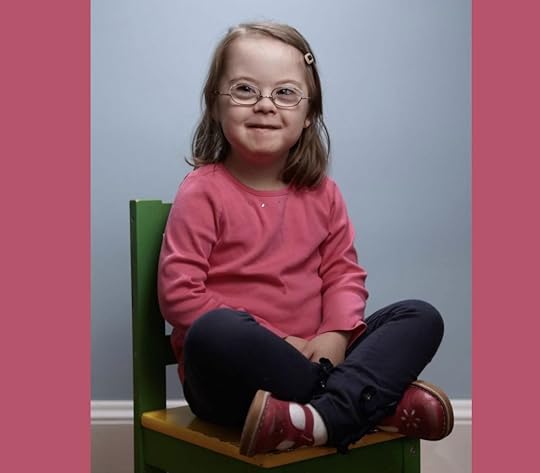
For us, it was reading. Penny loved books. We weren’t focused on fine motor skills or any of the deficits—just on sharing something she enjoyed. In the process:
skills developedrelationships strengtheneddelight became mutualNot every child loves reading. Some want to run, dance, or explore outside. The key is this: pay attention to who your child is and what they love. Trust that the way they are developing will still happen—and your relationship will be richer for it.
When we focus on delight instead of deficit, we see our children more fully. And when they feel seen and loved for who they are, they thrive in ways that checklists could never capture.
___
Parenting Tip from therapist Sissy Goff, LPC-MHSP:Each week, take time to notice and reflect on two things:
(Bonus if you write them down!)
And then pay more attention to their growth and strengths than the deficits.
This simple practice transforms your relationship and deepens connection.
___
There’s more! Listen to or watch this week’s episode of Take the Next Step: Parenting Kids with Disabilities: The Power of Delight with Sissy Goff
Listen on your favorite podcast platform.
SUBSCRIBE to my Substack newsletter: amyjuliabecker.substack.com
JOIN the conversation on Instagram: @amyjuliabecker
LISTEN to my podcasts: amyjuliabecker.com/shows/
CONNECT on YouTube: Amy Julia Becker on YouTube
The post Focus on Delight, Not Deficits appeared first on Amy Julia Becker.