K. Rex Butts's Blog, page 9
August 16, 2022
Against Liberal Theology
For many of us, our roots within the Stone-Campbell Restoration Movement is among congregations with a history of legalism in matters of faith. Such legalism has certainly contributed to divisions and so as we seek to live in unity, we also have reconsidered some of the theological views of our Christian faith. The ideal result would be a more mature and healthy Christian faith as followers of Jesus. Unfortunately, that is not always the case. Sometimes the pendulum tends to swing from one extreme to the other. This concern is what lies behind Roger Olson’s book Against Liberal Theology: Putting the Brakes on Progressive Christianity, published by Zondervan Reflective (2022).

For those unfamiliar with Roger Olson, he is the emeritus professor of Christian theology at Baylor University’s Truett Theological Seminary and the author of numerous books. He is also ordained as a Baptist minister and therefore writes from an orthodox theological perspective within the stream of evangelicalism.
This book, which is 174 pages, includes an introduction and eight easy-to-read chapters. Though the subject is theology, the book is written for a broad range of Christian leaders and not just other academically trained scholars. Citations are made with footnotes, which means avoiding the hassle of continuously turning to the back of the book to read the endnotes. The book reads like a primer critique of liberal theology in that it begins by defining what liberal theology is, the sources of such theology, and how liberal theology understands the Bible as well as the Christian doctrines of God (theology proper), Jesus Christ (Christology), Salvation (soteriology), and the future (eschatology).
Despite what the title might suggest, the book “is not a diatribe against progressive Christianity” (p. 1). The book is a warning to the so-called progressive Christians, who typically have emerged from very rigid forms of conservative Christianity, about the problems of adopting classical liberal theology. In fact, on the very last page, the author writes, “The message of this book to self-identified progressive Christians is: Beware of liberal Christianity, because it is not real Christianity at all. Look for and find a church, a seminary, whatever, that truly takes the Bible and orthodox doctrine seriously but is not cultic in its ethos, like most fundamentalist churches, seminaries, and other ultraconservative Christian organizations” (p. 174).
It is important to understand the purpose of the book as a cautious warning to Christians shedding themselves of rigid conservatism. Although Olson names numerous liberal theologians, such as Friedrich Schleiermacher and Albrecht Ritschl as well as more contemporary liberals like John Shelby Spong and Marcus Borg, as he cites their work, he is not trying to belittle them in any way. In fact, although Olson clearly demonstrates how the views of these theologians depart from the orthodox theology historically held by Christians, Olson remains charitable. That is, he is content to let God be the judge on the matter of salvation for these liberal theologians.
What Olson does well is that he does not just explain the views of these various liberal theologians but also explains what is wrong with such ideas. For example, Olson points out that a pluralistic view of salvation in which Jesus Christ becomes a way, not the way to God, “actually means a demotion of Jesus to one savior among many and not really the Savior of humankind” (p. 111). I would also add that if there are other ways of salvation then the death of Jesus on the cross was unnecessary, which is a big theological problem too.
Olson’s book matters because what we believe as Christians matters. As Olson says, “Beliefs matter. Christianity has cognitive content; it is not just a matter of ethical behavior” (p. 112). Those of us who have grown tired of the sectarianism and legalism we experienced in restoration congregations are eager to leave such rigid theology in the past. Yet we still need to stand firm within orthodox Christian theology if we’re to proclaim the historic faith of Christianity coherently.
I don’t have any major disagreements with this book. My only concern, which is minor, involves the title of the book. I realize that the title is like the work of the 2nd-century church bishop Irenaeus’s work Against Heresies and follows a similar title to another book Olson wrote called Against Calvinism (2011). However, in our own North American context, I wonder if the title is too antagonistic and may lead some to assume the book is just a tirade without ever reading. Nevertheless, the book is worth the time to read as we engage in matters of theology – faith seeking understanding.


August 9, 2022
Remembering Kenny
It has been three weeks since I last posted an article. I’ve traveled to Michigan, Indiana, and Arkansas to visit with family and preached as a guest for the Bono Church of Christ in Bono, Arkansas. Beyond that, I celebrated my 49th birthday, and my wife and I celebrated our 24th anniversary.
Needless to say but still necessary, I am thankful for the blessings of family, another year of life, and another year of marriage to my lovely wife Laura.
Of course, the last three weeks also had some difficult moments. People who know my wife and I know that our oldest child, Kenneth James, passed away when he was just three days old. I tell a good portion of that story in a chapter called “Lost Sons” which is part of the book Surrendering to Hope: Guidance for the Broken, edited by John Mark Hicks, Bobby Valentine, and Christine Fox Parker.
 Kenneth James Butts
This year marked the 20th anniversary of Kenny’s birth and death in 2002. I shared the following posts on Facebook and Instagram as part of remembering my son. On July 31st, Kenny’s birthday, I wrote:
On this day twenty years ago our first son was born — Kenneth James Butts. Laura and I were parents and Kenny was our son. Like any parent, we lack the words to adequately describe the joy we had in holding Kenny for the first time. We cried tears of joy but thanked God for Kenny.
I have struggled with what I might say on Kenny’s twentieth birthday. Laura and I have never forgotten this day but twenty years ago we had no idea that Kenny would leave us so soon. We want to celebrate his life, his birthday of July 31st, but it’s so hard because of his unexpected passing on August 2nd. How do we celebrate in the midst of grief?
We share these pictures year after year to remember our son because his life matters, just like we shared him with family and friends when he was born. We do so with a loss that we have never gotten over but have learned to live with over the years. We do so with questions for which there are not any answers but with hope in the resurrected Jesus Christ that Kenny’s life is not over. We celebrate and grieve all together because that’s all we know how to do.
Christian Recording artist Mark Schultz wrote a song called Reminder Me. The third stanza says, “Remember Me when the children leave their Sunday school with smiles. Remember Me when they're old enough to teach, old enough to preach, old enough to leave.”
Followed by these words on the date of Kenny’s passing, August 2nd:
August 2nd is the day that haunts me. Twenty years ago Laura and I brought our son Kenny home and an hour later an ambulance was rushing him to the emergency room where he was pronounced dead. The picture you see of Kenny was the last picture we took of him. Over the last twenty years, I’ve wondered what Kenny would be like today. I’ve wanted to tell Kenny that I’m sorry he couldn’t live, even though there wasn’t anything my wife or I could have done to change the course of history. I’ve wanted to see Kenny one more time.
I know, I know… When Christ comes again, Kenny will rise again. I believe that and my hope in Christ is what keeps me from despair but it doesn’t lessen the loss or take away the pain.
Today I’ll visit Kenny’s grave, something I don’t do often because I live too far away. I don’t know if I’ll cry or just stare at his memorial wondering. But then I’ll get up and keep living life, reminding myself of what I believe — that Christ is risen. That’s what I did twenty years ago and what I’ll keep doing.
By the grace of God.
There’s not much else to say except to note, as I did in my sermon to the Newark Church last Sunday: I’m still here because of the redemptive way God worked through a few other believers who were willing to grieve with me, listen to me without telling me that I just need to get over it. And when I wasn’t sure what I believed or if I could ever trust God again, they didn’t judge me or criticize my apparent lack of faith. Instead, they loved me. Most importantly, it was the grace of God that saved me and it is by the grace of God that I’m here today.
I’ll end this post by noting that there are many others who have lost children too. If or when you choose to remember your child by mentioning them in a public setting, I will listen because I know how important it is to know that your child is not forgotten.
Grace and Peace, Rex
Thanks for reading K. Rex Butts Newsletter! Subscribe for free to receive new posts and support my work.
July 19, 2022
The Living Bible
I believe the Bible is the inspired word of God and therefore speaks with authority regarding our life and faith as followers of Jesus. That is why I want to encourage the reading of the Bible. Yet, I also believe we must learn to read the Bible well. Contrary to what some Christians might think, reading the Bible is more complicated than simply saying, “The Bible says it, I believe it, and that settles it.”

The Bible actually says a lot of different things throughout the sixty-six writings we call the Old and New Testaments. These writings consist of different genres that span different contexts and historical periods as well as different covenants. Also, though the writings of the Bible were written for us, they were not written to us but were written to people living in contextual circumstances different from our own. Please don’t misunderstand me though. Most of the Bible is understandable with just a plain reading but simply pointing to a verse to make any kind of claim without any interpretive or theological considerations is rather banal, ignorant, and even dangerous too. Ergo my frustration with both the fundamentalist insisting that the creation narrative of Genesis unequivocally supports young-earth creationism and the secularist insisting the violence in the conquest narrative of Joshua makes God evil.
This is why, in addition to reading my book, I also highly recommend reading Dan Kimball’s book How (Not) to Read the Bible.1 Kimball lists “four facts” for reading the Bible:
The Bible is a library, not a book.
The Bible is written for us, but not to us.
Never read a Bible verse.
All of the Bible points to Jesus.
These are all important because though Bible is a collection of sixty-six different writings, they together tell a story that is Christ-centered and Kingdom-oriented. This is part of the point I am getting at in the fifth chapter of my book, titled The Living Bible: A Library with One Story to Tell. Once we understand that the Bible is telling a story, offering us a narrative of how God is redemptively at work in Christ to remake his creation into new creation,2 we are able to move beyond a concordance approach to reading the Bible that fails to understand various texts within the larger story.
Why does the biblical narrative matter? Because as followers of Jesus, we are part of the story the Bible is telling. That is, we are participants in this story and if we are to help convey the story well then we need to know the story.
This is also important because it gets to the purpose of scripture in the first place. The apostle Paul writes in 2 Timothy 3:16-17, “Every scripture is inspired by God and is useful for teaching, for showing mistakes, for correcting, and for training character, so that the person who belongs to God can be equipped to do everything that is good.”3 The purpose of scripture is to teach us how to live this Christ-centered and Kingdom-oriented story well by doing what is good. As the church, we read the Bible so that we may understand what it means to follow Jesus Christ as people living under the kingdom-reign of God.
Doing good works that reflect the kingdom life Jesus teaches is why reading the Bible matters. But it matters even more because how we live always tells a story. So will we learn from the Bible and therefore tell the story of the Bible? I raise this question because the Bible that most people read every day is us as they observe the way we live. The question then is what story will they read, just another story ripped from the pages of our world, or will they read the good news of Jesus Christ and the Kingdom of God in the life we are living?
This is why our embodiment of the gospel matters and we can only do that well when we read the Bible well. That is why I wrote Gospel Portraits. If you already purchased a copy of my book and are reading it, thank you! If you haven’t, then what are you waiting for (wink, wink)?
1Dan Kimball, How (Not) to Read the Bible: Making Sense of the Anti-Women, Anti-Science, Pro-Violence, Pro-Slavery, and Other Crazy-Sounding Parts of Scripture, Grand Rapids: Zondervan Reflective, 2020.
2At this point, let me also recommend John Mark Hicks, Around The Bible in 80 Days: The Story of God from Creation to New Creation, Abilene: Leafwood Press, 2022.
3Unless otherwise noted, all scripture quotations are taken from the Common English Bible, copyright 2011. Used by permission. All rights reserved.
July 12, 2022
The Artwork of God
Knowing good art is always in the eye of the beholder but bad art is easy to recognize when we encounter it. I want you to keep that in mind as you read this post, which is about the church as the artwork of God. I’ll explain a little more but the important matter has to do with the quality of artwork people encounter when they meet our local churches.
If you’re reading my book or just reading the posts I have been sharing, you know that I believe the church is called to live as followers of Jesus. This means we are called to live a particular way of life. In the fourth chapter of Gospel Portraits: Reading Scripture as Participants in the Mission of God, which has to do with the church as the artwork of God.
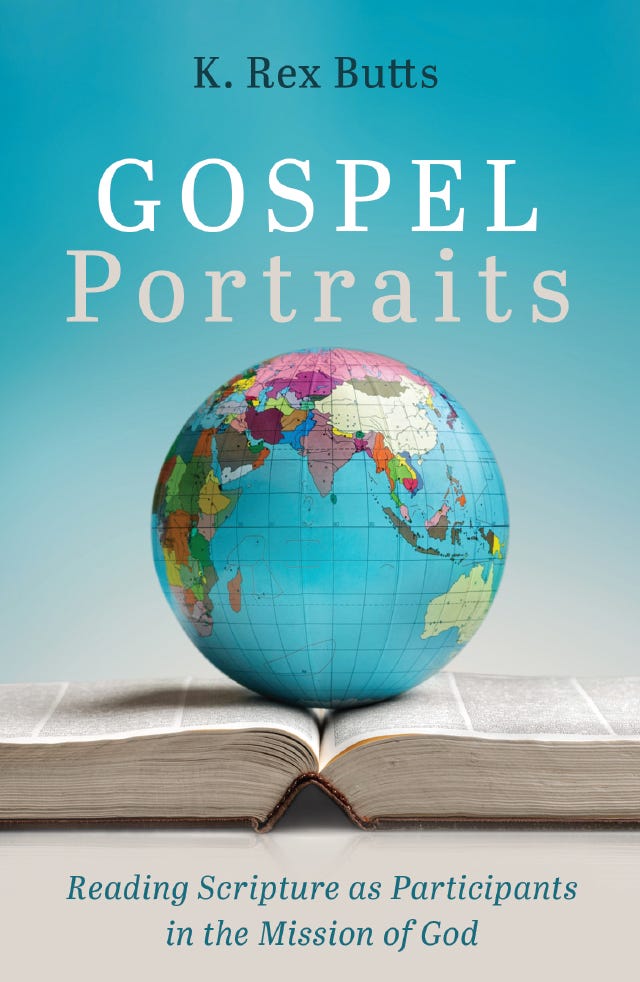
I get deeper into the matter of following Jesus by thinking of discipleship as a practice. The idea of practice draws from the work of Alasdair MacIntyre and involves what he regards as internal goods, which as certain skills aimed at achieving a particular goal based on those skills.1 In short, when thinking of discipleship as a practice, we cannot truly claim to be followers of Jesus unless we are living by the “skills” taught by Jesus that define discipleship.
Now there’s room for discussion and even disagreement as to what are the essential skills of discipleship but such skills are not difficult to imagine. To name a few, we might start with showing mercy, becoming a servant, loving others, and telling the truth. What is important is that when we practice such skills, we are living as followers of Jesus and therefore living as an embodiment of the gospel. That also matters to our understanding of the church as the artwork of God. In particular, I have in mind the way in which local churches embody the gospel. That’s because it is within local communities of disciples where people truly encounter what it means to be among the church and therefore what the good news of Jesus Christ and the Kingdom of God really is. But to understand this, we also have to think about the church as the artwork of God.
So what do I mean by the church as the artwork of God? Well, first of all, it’s the Bible that describes the church as God’s artwork. The apostle Paul writes that “we are God’s accomplishment created in Christ Jesus to do good things. God planned for these good things to be the way that we live our lives.”2 The key word here is “accomplishment.” Other English translations use the word “handiwork” (NIV), “masterpiece” (NLT), or “workmanship” (ESV). In the original language, the word is poiēma, which is where we get our English words poem and poetry from. I mention this because poetry is a form of art and what Paul is saying in this passage is that we, the church of Jesus Christ, are the artwork of God.3
Thanks for reading K. Rex Butts Newsletter! Subscribe for free to receive new posts and support my work.
The purpose of art is to place a particular work on display so that others will see the art. Art is to be encountered. So God is placing the church on display so that the people will encounter his artwork but for what purpose? For the sake of keeping these posts fairly short, I suggest that God is putting the church on display so that the world may begin to see what the future of his redemptive work in Christ is life. That is, God is painting a portrait of the new creation he is bringing about in Christ with the church. The church participates in the mission of God by embodying the gospel and thus living as God’s gospel portrait. This means that local churches serve as gospel portraits, hence the title of my book.
I realize that at any given time in history there are segments within the universal church that fail to truly embody the gospel, becoming bad artwork. My hope is that as we think about our own churches, we can discern what kind of portrait our neighbors will encounter. Does our embodiment of the gospel offer a coherent portrait of the good news of Jesus Christ and the Kingdom of God — God’s new creation in Christ? Of course, how we read the Bible goes a long way in shaping the answer to such a question and whether our local churches exist as the artwork God seeks to display.
I hope you find this post helpful as you think about your own church. Of course, I hope you’ll get a copy of my book because I think it will be of help to you. Anyway, thank you for reading.
1Alasdair MacIntyre, After Virtue: A Study of Moral Theory, 3rd ed., Notre Dame: University of Notre Dame Press, 2007, 187. See also Bryan Stone, Evangelism After Christendom: The Theology and Practice of Christian Witness, Grand Rapids: Brazos Press, 2007.
2Unless otherwise noted, all scripture quotations are taken from the Common English Bible, copyright 2011. Used by permission. All rights reserved.
3D. Edmond Hiebert, “God’s Creative Masterpiece,” Direction 23 (Spring 1994), 117.
July 5, 2022
To Follow Jesus
How we read the Bible as a church will have a say in how our churches participate in the mission of God. However, our reading of scripture or hermeneutic isn’t the only challenge to our participation in the mission of God. Discipleship, or the lack thereof, matters too.
In general, Christianity in the West has really struggled with discipleship or learning to follow Jesus. Dietrich Bonhoeffer wrote, “When Christ calls a man, he bids him come and die.”1 He wrote from a context in which he witnessed the abject failure of discipleship among most of the Christians in Germany, who aligned themselves with the Nazi regime and we all know the results. But he knew the words of Jesus in Mark 8:34-35:
Thanks for reading K. Rex Butts Newsletter! Subscribe for free to receive new posts and support my work.
All who want to come after me must say no to themselves, take up their cross, and follow me. All who want to save their lives will lose them. But all who lose their lives because of me and because of the good news will save them.2
Therefore Bonhoeffer followed Jesus, which meant obeying Jesus rather than aligning himself with the Nazis. And so, this German theologian and pastor followed Jesus even to the point of death — executed by hanging inside Flossenbürg Concentration Camp on April 9, 1945.
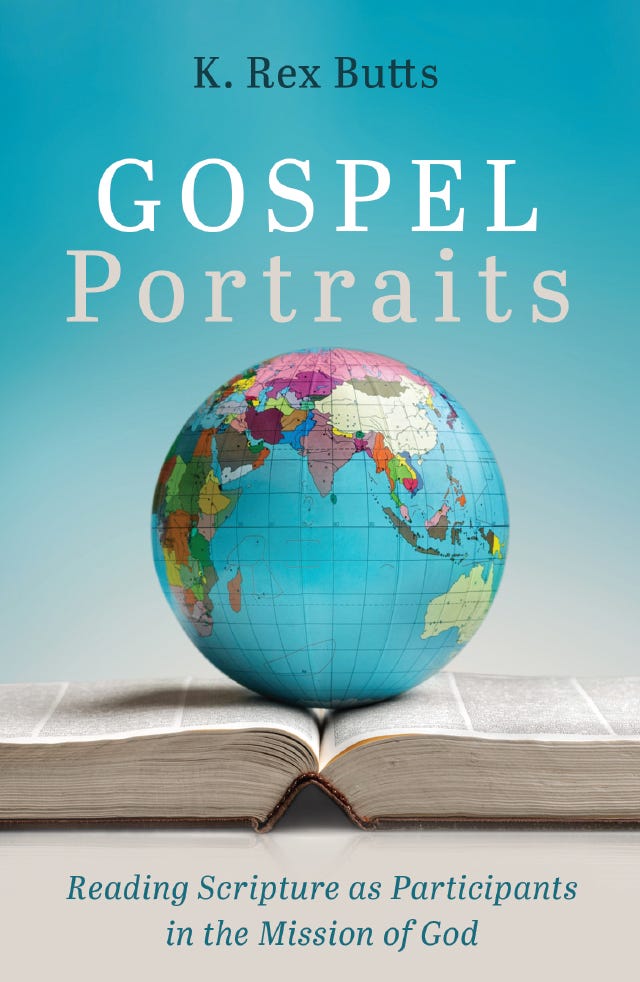
The third chapter of my book Gospel Portraits: Reading Scripture as Participants in the Mission of God begins the second section which focuses on discipleship and the church. In the chapter, I share some stories and struggles with discipleship but the point of the chapter is that following Jesus is the beginning place for missional participation. Yes, I believe we need to read the Bible in a manner that opens space for reimagining how we, as local churches, participate in the mission of God but learning to follow Jesus is the prerequisite for such missional participation.
Discipleship begins with hearing the call of Jesus to repent and believe the good news of the kingdom of God, and therefore come to follow Jesus (Mk 1:14-15, 17). We obviously can’t literally follow Jesus anymore. However, we can learn about the life Jesus lived through scripture and Christian tradition as well as from imitating others who take discipleship seriously. The key is first in repentance, which is not just a turning away from sinful ways but turning towards the way of God’s kingdom, which requires us to believe that the kingdom-reign of God is really appearing in Jesus. Following then happens by learning to live the life Jesus teaches and exemplifies. Over time, our entire life is transformed in a way that redefines and reshapes us, determining how we will live and therefore participate in the mission of God as local churches.3
What I hope is sufficiently conveyed in my book is that following Jesus is not just about us as individuals but about us becoming local communities of disciples. This is why discipleship matters to how local churches participate in the mission of God. Yes, I believe reading the Bible as a Christ-centered and Kingdom-oriented narrative, which I am getting to, is necessary for a contextual participation in the mission of God. But we can’t ever truly participate in the mission of God apart from following Jesus as his disciples. However, once we are committed to following Jesus, then, as I conclude the third chapter, “God becomes not only the center of our lives but the fullness of our lives through the Holy Spirit. As that happens, we become partners with God in the real restoration movement which is living as a new creation in Christ bringing about heaven here on earth—the kingdom of God” (p. 45).
If you’ve already purchased a copy of my book and are reading, thank you! If you haven’t, I hope this post might encourage you to consider getting your copy. I didn’t write this book for any other reason other than I had something to say, something I believe God wanted me to say as a word to the church. To that end, my prayer is that Gospel Portraits will help cultivate this missional hermeneutic that opens space for a new imagination of what it means to live as the church.
1Dietrich Bonhoeffer, The Cost of Discipleship, New York: SCM Press, 1959; New York: Touchtone, 1995, 89 (the link is to a 1980 edition).
2Unless otherwise noted, all scripture quotations are taken from the Common English Bible, copyright 2011. Used by permission. All rights reserved.
3Michael Frost and Alan Hirsch, The Shaping of Things to Come: Innovation and Mission for the 21st-Century Church, rev. ed., Grand Rapids: Baker Books, 255.
June 28, 2022
Hermeneutics
It’s entirely possible to read the Bible and somehow miss the good news of Jesus Christ and the Kingdom of God. This is unintentional but still a problem. People sometimes cherry-pick passages from the Bible to justify their own ideologies and sometimes the Bible is simply read through frameworks of other stories than the biblical narrative. Although such readings may note the good news of Jesus Christ and the Kingdom of God, like the disciples in the Gospel of Mark, some readers of the Bible still have a fuzzy vision. Restoring a 20/20 vision of the gospel is necessary.1
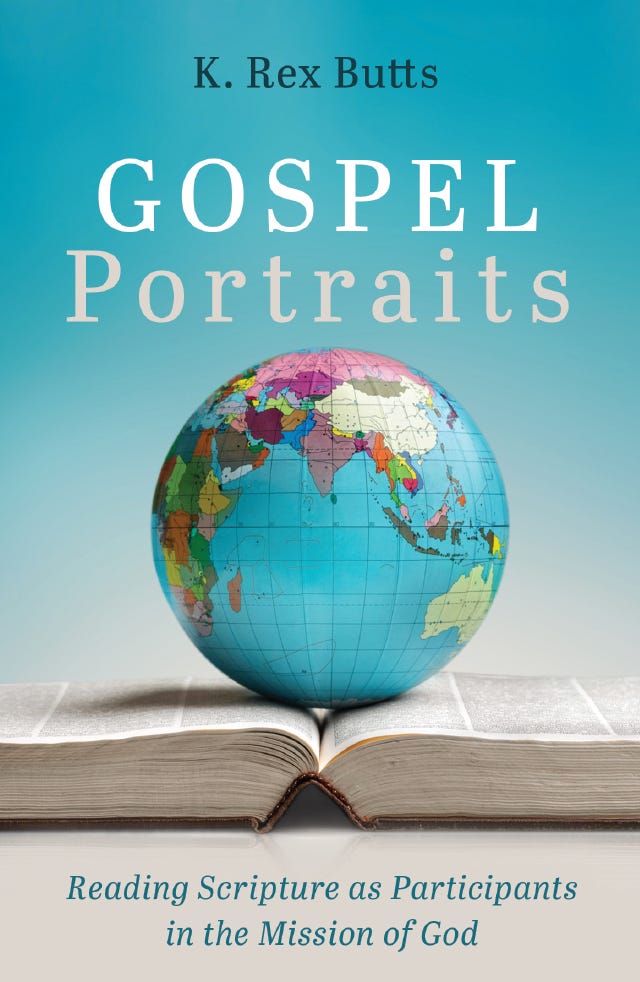
Another way Christians sometimes misread the Bible is by reading through a particular hermeneutical lens, one that is usually inherited through participation in a particular church. This is the issue I address in the second chapter of my book Gospel Portraits: Reading Scripture as Participants in the Mission of God.
One such hermeneutic is what Scot McKnight characterizes as the soterian gospel, which equates the gospel with salvation.2 This particular lens is prevalent among many Evangelical churches and is expressed with questions like “Do you have a personal relationship with Jesus Christ?” or even “If you died tonight, do you know where you would spend eternity?” Such questions are not inherently wrong but when this becomes the hermeneutical lens that Christians read the Bible with, the focus shifts to getting people saved. The problem is that discipleship, learning to live as followers of Jesus, often becomes secondary and as a result, participation in the mission of God suffers.
In my own church tribe, the Churches of Christ, the dominant hermeneutic is often referred to as CENI. This is short-hand for Commands, Examples, and Necessary Inferences. There’s a lot of history and assumptions with this hermeneutical lens that I discuss in the book. For now, I want to point out that this hermeneutic was tied to the historical goal of the Stone-Campbell Restoration Movement of restoring primitive Christianity. The focus was on restoring the pattern of the New Testament church, an ecclesiological focus. All that was needed was knowing the will of God for the church which was given through commands, examples, and necessary inferences.3
One of the ongoing challenges with the CENI hermeneutic is legalism, in that the reading of scripture came to focus on a strict reproduction of a church pattern deducted from the New Testament.4 Deviation from the so-called pattern of the church was considered as disobeying God’s word and so the congregations known as Churches of Christ became rather homogenous, regardless of their local context. Congregations became clones of a mother church, if you will, that took shape within the rural Bible-belt states. As new churches were planted outside of the Bible belt in more urban and suburban areas, these churches, which assumed their Bible-belt form, relating in a faithful but relevant manner to their community was difficult. Now in the twenty-first century, the lack of contextualization with a rapidly changing cultural landscape has made a contextualized participation in the mission of God even more difficult. It is one reason, not the only reason, but one reason and, in my opinion, a significant reason why the Churches of Christ are declining.
What I am proposing is the need for a missional hermeneutic, which is a reading of the Bible that opens space for a faithful but contextualized participation in the mission of God. Such a reading does not jettison the Bible at all but instead is a recognition of the missional nature of God at work in history as depicted within scripture.
The Christian doctrine of the Incarnation confesses that God, the Eternal Word became the Incarnate Word. God became flesh and made his dwelling among us in the person of Jesus Christ (cf. John 1:1-5, 14-18). This is why Christians believe that Jesus is both fully divine and fully human. But, to also speak with Trinitarian language, what God the Father is doing in the Son by the power of the Spirit is coming to us and becoming one of us rather than making us come to him and become him. This is the foundation for a missional hermeneutic, a reading of the Bible that opens space for contextualized participation in the mission of God.
In subsequent posts, I will unpack more of what contextualized participation in the mission of God implies and requires. For now, I’ll simply say that contextualization holds together the need of living as faithful and relevant witnesses of the good news of Jesus Christ and the Kingdom of God.
The church, both universally and locally, is called to follow Jesus as a participant in the mission of God. For such participation, reading the Bible is essential but we also need a missional hermeneutic as we open the word of God in scripture. To that end, my prayer is that Gospel Portraits will help cultivate this missional hermeneutic that opens space for a new imagination of what it means to live as the church.
1For more discussion, read my previous post Reading The Bible: Just Don’t Overlook Jesus, June 22, 2022.
2Scot McKnight, The King Jesus Gospel: The Original Good News Revisited, Grand Rapids: Zondervan, 2011, 29. Note that the word “soterian” comes from the Greek sōtēria (salvation).
3Thomas H. Olbricht, “Hermeneutics in the Churches of Christ,” Restoration Quarterly 37, January 1995, 14-15.
4Two other helpful books to read regarding Churches of Christ and the issue of hermeneutics are John Mark Hick, Searching For The Pattern: My Journey in Interpreting the Bible, 2019; Thomas H. Olbricht, Hearing God’s Voice: My Life with Scripture in the Churches of Christ, Abilene: ACU Press, 1996.
June 21, 2022
Reading The Bible
As surprising as it might seem, it is entirely possible to read the Bible and still miss Jesus. What I mean is that people can read the Bible and yet somehow miss what the good news of Jesus Christ and the Kingdom of God is really about.
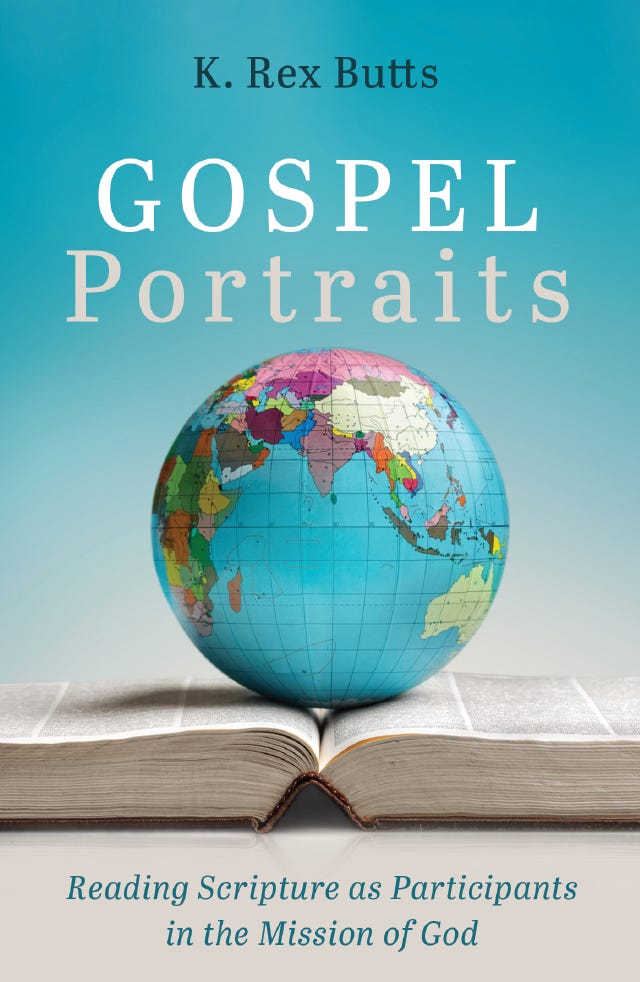
This is the issue I address in the opening chapter of my book Gospel Portraits: Reading Scripture as Participants in the Mission of God. Besides matters like the so-called prosperity gospel and legalism, I offer some examples of people who cherry-pick the Bible to justify ideologies that are incoherent with the good news of Jesus Christ and the Kingdom of God.1 I also cite several examples of English Bible editions whose summaries manage to describe what the particular edition is about without ever mentioning Jesus Christ and the Kingdom of God.2
If people can read the Bible and somehow miss Jesus, is it any wonder why following Jesus is such a challenge?
One of the problems is that for far too many people, the Bible is read through the framework of other stories. As often happens, the Bible becomes a fragmented text, as opposed to a coherent narrative, that gets absorbed into whatever alternative stories shape the life of the reader.3 So part of the solution is recovering a narrative reading of scripture, which has become increasingly popular over the last forty or so years. So this approach is hardly new with me. In fact, I first heard about a narrative reading of scripture during one of my preaching classes as a seminary student at Harding School of Theology.
But… And this is important. Even with a narrative reading of scripture, it’s possible to still miss the good news of Jesus Christ and the Kingdom of God. This is why I bring up the story about the healing of the blind man in Mark 8:22-26:
Jesus and his disciples came to Bethsaida. Some people brought a blind man to Jesus and begged him to touch and heal him. Taking the blind man’s hand, Jesus led him out of the village. After spitting on his eyes and laying his hands on the man, he asked him, “Do you see anything?”
The man looked up and said, “I see people. They look like trees, only they are walking around.”
Then Jesus placed his hands on the man’s eyes again. He looked with his eyes wide open, his sight was restored, and he could see everything clearly. Then Jesus sent him home, saying, “Don’t go into the village!”4
With this story, Mark is telling us something about the disciples of Jesus then. And perhaps it says something about us, as disciples, today.
At this point in the story, as Mark is telling the gospel, the disciples see like the blind man when he can only see people that look like walking trees. He can see but he can’t. That is, his vision is flawed and still incapable of allowing him to see what is necessary for healthy living. His eyesight is still in need of restoration. Likewise, disciples, both then and now, can have a vision that is incapable of the necessary sight for living as God’s kingdom people and are yet in need of a restored vision.
We are called to follow Jesus as participants in the kingdom of God. Our primary way of understanding what this means and how we live this life is by reading the Bible. To that end, my prayer is that my book Gospel Portraits can be used by God to help restore a 20/20 vision for the good news of Jesus Christ and the Kingdom of God.
1I am using the language of “the good news of Jesus Christ and the Kingdom of God” intentionally because I argue in my book that we should read the Bible as a narrative that is Christ-centered and Kingdom-oriented (see ch. 4).
2The three editions I cite are The American Patriot’s Bible (NKJV), Every Man’s Bible (NIV), and the NKJV Spirit-Filled Life Bible (pp. 9-10).
3Craig G. Bartholomew and Michael W. Goheen, The Drama of Scripture: Finding Our Place in the Biblical Story, Grand Rapids: Baker Academic, 2014, 14.
4The Common English Bible, copyright 2011. Used by permission. All rights reserved.
June 14, 2022
Faith and Mission for Churches
What does it mean to have faith? How is faith necessary for participation in the mission of God?

These are the kind of questions that I reflect on as a pastor and pastoral theologian interested in helping the church live as followers of Jesus. Such questions seem very important for churches in North America where secularism is readily apparent and, following the Covid-19 pandemic, there is a rapidly growing disinterest in “going to church” on Sundays.
The question then is what can churches do to live as witnesses of Jesus Christ in a society where the church is not something people are interested in?
Well, churches can’t keep doing the same thing and expect different results. Doing so is, as you know, the classic definition of insanity. So this question impacts both the way we go about planting new churches as well as leading renewal among existing churches.
Now there’s a lot more to this question that can be said in just one post. In fact, we could spend an entire year reading books about church, mission, and leadership, and still not address every matter on this question. However, I do want to share something from the life of Abraham that I believe bears the two questions this post began with… What does it mean to have faith? How is faith necessary for participation in the mission of God?
Back in Genesis 12, the Lord summons Abram, whom we know as Abraham, saying verses 1-3:
“Leave your land, your family, and your father’s household for the land that I will show you. I will make of you a great nation and will bless you. I will make your name respected, and you will be a blessing. I will bless those who bless you, those who curse you I will curse; all the families of the earth will be blessed because of you.”1
Abram is told to “leave” or “Go” (NIV, NRSV) but regardless of how the Hebrew is rendered in English, this is an imperative. So the Lord is mandating to Abram that he must leave/go because what God is calling Abram to go towards requires Abram to leave something behind. That is, Abram must first let go of something in order to go participate in what God is calling his into. Specifically Abram must let go of is his land, family, and father’s household, which is his safety net for living. So Abram must choose the risky proposition of faith over safety position of security.
And risky it is. Abram is never told how God will accomplish his promise, what sort of timeline God has in mind, or what sort of skills and resources Abram might need. Instead, Abram is simply told to go with a promise that God will bless him. Now for those of you who might work as engineers, project managers, or in some leadership capacity, try getting your team to pursue a goal without saying a word about how the goal will be accomplished, what resources are needed to accomplish the goal, and so forth. Nobody would get on board and yet, that is exactly what God calls Abram to do.2
This is also the kind of faith that is necessary for churches to participate in the mission of God. That is if churches are going to live as witnesses of Jesus Christ in a society where the church is not something people are interested in, then there is something churches need to let go of in order to risk going where God is leading.
So what might churches need to let go of in the broad North American society? I want to humbly submit that churches might need to let go of the Sunday/building-centric approach in which nearly everything revolves around a church building and getting people to participate in activities Sunday church activities. That’s a difficult concept to imagine, and it’s difficult for even me, because our buildings and Sunday church activities are the way we’ve always done things. So it’s what we know, which means it’s less stressful and more safe clinging on to that Sunday/building-centric approach than taking the risk of letting go in order to go where God is leading when we’re not entirely sure what that future looks like.
Now, please don’t misunderstand me. I’m not saying it’s wrong for churches to gather for worship in a building on Sunday. What I’m suggesting is that we now live in a time when more people than ever are not coming back to worship gatherings inside a church building on Sundays. So perhaps God just might be saying it’s time to focus on going outside the church building throughout the week rather than what happens for a couple of hours on Sunday mornings inside a church building.
Again, there’s so much more that can and needs to be said. Right now, I’m just trying to provoke a conversation that needs to be had among churches. So I ask what might churches need to leave behind in order to go into the future on mission with God?
1Unless otherwise noted, all scripture quotations are taken from the Common English Bible, copyright 2011. Used by permission. All rights reserved.
2Walter Brueggemann, Genesis, Interpretation: A Bible Commentary for Teaching and Preaching (Atlanta: John Knox Press, 1982), 122, notes how the summons to faith in this story is a challenge to our ideological thinking which longs for “settlement, security, and placement” against God “who sojourns and moves about” (cf. 2 Sam 7:4-6).
May 31, 2022
About Gospel Portraits
I recorded a very short video about my book Gospel Portraits and uploaded the video to YouTube but am sharing it here for your viewing.
Gospel Portraits is now available in both paperback and Kindle format, which can be purchased through Amazon.
If you’ve read the book, I would love to hear from you. Send me an email at k.rex.butts@gmail.com and I will try to respond in a timely manner. Also, if you really like what you read and would like to do me a favor, leave a review on Amazon.
May 23, 2022
Gospel Portraits
I am so excited to share with you the release of my book Gospel Portraits: Reading Scripture as Participants in the Mission of God published by Wipf and Stock. The official release date was this past May 17th and is available directly through Wipf and Stock as well as on Amazon and Barnes and Noble.

I began writing the rough draft for this book back in the early part of 2020 and seeing this project through to completion is more exciting than I can express in words. If you’re wondering what this book is about, here is what I wrote for the back of the book:
Many people realize that the cultural landscape of North America has shifted significantly. With such changes, new challenges for how churches live as a proclamation of the gospel have and continue to emerge. These challenges are related to the church’s participation in the mission of God and particularly how local churches live faithfully to God while remaining relevant to such challenges. Because scripture is revered as God’s word, this matter also pertains to the way churches read scripture since the Bible does shape how churches embody the gospel.
Gospel Portraits addresses the intersection of mission and hermeneutics for churches within their local contexts. Believing the gospel calls the church to follow Jesus and bear witness to the Kingdom of God, this book proposes that churches should read the Bible as a Christ-centered and Kingdom-oriented narrative. This reading of scripture allows churches to reimagine how they might embody the gospel within their local contexts.
Discerning what a contextual embodiment of the gospel involves, churches portray God’s new creation in ways that are coherent with the biblical story and relevant to their local context. In doing so, churches live as Christ-formed and Spirit-led communities portraying the gospel.
On the back of the book, the following four endorsements are included:
“How do we interpret Scripture, integrate it into our lives, and then minister in a way that reflects the kingdom of God within our contemporary culture? This most significant book on hermeneutics (the interpretation of Scripture) helps us understand this question.” — Gailyn Van Rheenen, author of Missions
“If you are anything like me, you love to read books about Jesus. While we see the church continuing to struggle with our place and identity in North American culture, K. Rex Butts gives us a compelling picture of what it means to combine our Christology and ecclesiology. It turns out the two can’t be separated!” — Joshua Graves, author of How Not To Kill a Muslim
“In Gospel Portraits, K. Rex Butts bids us come to the Bible with new and fresh eyes, so that we might see Jesus at work in our lives, our context, our world. Very person and well researched, from a pastor who is a scholar, this book offers us a fresh invite to think through scriptural hermeneutics for the formation of Christian mission.” — David Fitch, author of Faithful Presence
“As an experienced practitioner in local church ministry, Rex Butts explains the significance of missional hermeneutics for the life of the local church as it reads the Bible together . . . This invitation to read the Bible through the lens of God’s mission provides a hopeful path to renewal in the local church.” — John Mark Hicks, Lipscomb University
I’m thankful to Gailyn Van Rheenen, Joshua Graves, David Fitch, and John Mark Hicks for not only reading the book but offering an endorsement.
My hope, of course, is that you will be interested enough in Gospel Portraits to get a copy and read it. I say that because I believe reading this book will be a blessing to you and your church as you seek to serve on mission with God. That’s one of the reasons I wrote this book.
Also, if you find the material interesting and would like me to speak to your church, organization, etc..., please contact me via email (krbutts@icloud.com) and we can work out arrangements.