K. Rex Butts's Blog, page 5
January 24, 2024
How Shall We Read the Bible?
I was asked the other day about some books that I would recommend on the matters of Biblical Interpretation and Hermeneutics. So I compiled a list of books that I have read and are also pretty accessible to a broad audience.

Before sharing the list, let me say a brief word about why such books are helpful. I hear a lot of people talk about the importance of exegesis which seeks to interpret the original meaning of the text rather than eisegesis in which we read our own meanings into the text. I’m completely on board with exegesis which it comes to biblical interpretation. However, I hear some people talk as though reading the Bible in a manner that equips us for good works (cf. 2 Tim 3:16-17) in our own context requires nothing more than exegesis, which is just very short-sighted.
Reading the Bible involves not just biblical interpretation but also hermeneutics and everyone, whether they realize it or not, has a hermeneutic lens through which they read scripture. When it comes to understanding not just what the Bible says but how we out to live as followers of Jesus within our own context, we need to bring scripture into dialogue with our own Christian tradition(s) and culture. This dialogue is the necessary business of hermeneutics, so that we will not only read the Bible responsibly but also embody the gospel of Jesus Christ in a faithful and contextual manner.
So here is a list of twelve books I recommend on the matter of biblical interpretation and hermeneutics:
Brueggemann, Walter. Text Under Negotiation: The Bible and Postmodern Imagination. Minneapolis: Fortress Press, 1993. This book takes the challenges of postmodernism seriously by reminding the readers that the Bible is telling a story we participate in. It is also one of the early books that provides a narrative framework for scripture as a series of acts/movements.
Butts, K. Rex. Gospel Portraits: Reading Scripture as Participants in the Mission of God. Eugene: Wipf & Stock Publishers, 2022. I know this appears a little self-serving but I do believe my book provides a rationale and framework for how local churches can read scripture in order to embody the gospel in both a faithful and contextual manner.
Fee, Gordon, D. New Testament Exegesis: A Handbook for Students and Pastors, 3rd ed. Louisville: Westminster John Knox Press, 2002. This is a standard introduction for learning the exegetical skills necessary for biblical interpretation of the New Testament.
Fee, Gordan, D. and Douglas Stuart. How To Read the Bible For All Its Worth, 4th ed. Grand Rapids: Zondervan Academic, 2014. This book is a solid introduction for anyone who is new to reading the Bible, as it helps the readers understand that reading the Bible is to read a collection of different books that span differing historical contexts and are composed of different genres (i.e., history, poetry, etc…).
Fowl, Stephen E. Engaging Scripture: A Model for Theological Interpretation. Eugene: Wipf & Stock Publishers, 1998. This book is also one of the early books that provides a narrative framework for scripture as a series of acts/movements.
Hicks, John Mark. Women Serving God: My Journey in Understanding Their Story in the Bible. Nashville: John Mark Hicks, 2020. While this book addresses the role of women in church and ministry, it also offers an example of the author’s hermeneutic applied to a specific issue. Since I address issue in the tenth and final chapter of my book Gospel Portraits as an example of how a missional hermeneutic is applied, I include this book in this list.
Hicks, John Mark. Searching for the Pattern: My Journey in Interpreting the Bible. Nashville: John Mark Hicks, 2019. This book is important, especially for those who come from the Churches of Christ and the larger Stone-Campbell Restoration Movement. With grace and appreciation for his own fellowship among the Churches of Christ, Hicks lays out the problem of the traditional restoration hermeneutic as he develops a theological hermeneutic rooted in a narrative reading of the Bible.
Kimball, Dan. How (Not) to Read the Bible: Making Sense of the Anti-women, Anti-science, Pro-violence, Pro-slavery and Other Crazy Sounding Parts of Scripture. Grand Rapids: Zondervan, 2020. This book helps readers avoid different pitfalls that too many people make when reading scripture, such as making an ancient pre-scientific text into a text that answers all contemporary scientific questions or reading every text as literal instruction that must be continued today.
McKnight, Scot. The Blue Parakeet: Rethinking How You Read the Bible, 2nd ed. Grand Rapids: Zondervan, 2018. This book helps reader move beyond just flat readings of scripture that ignore context or treat the Bible like a concordance by helping the reader consider that big story the Bible is telling and how that shapes the way scripture should be read. I had Scot McKnight as a professor for one of my doctoral seminars and his work has shaped a lot of my own thinking on the subject of hermeneutics.
Stuart, Douglas. Old Testament Exegesis: A Handbook for Students and Pastors, 5th ed. Louisville: Westminster John Knox Press, 2022. This is a standard introduction for learning the exegetical skills necessary for biblical interpretation of the Old Testament.
Vanhoozer, Kevin J. Faith Speaking Understanding: Performing the Drama of Doctrine. Louisville: Westminster John Knox, 2014. This book assumes a narrative theological reading of scripture but focuses more on how the church puts its reading of scripture into practice.
Wright, N.T. Scripture and the Authority of God: How to Read the Bible Today. New York: HarperCollins, 2011. This book explains why Christians should read scripture as having authority in terms of instruction and how such instruction is discerned. His example of actors in a play is excellent and helped me formulate the idea of playing in a jazz ensemble as a metaphor for we should read/practice scripture. Along with McKnight, N.T. Wright is also a big influence on my own theological understanding.
Now for a bonus, in addition to the books listed above, I’ll mention two other resources important resource for biblical interpretation, hermeneutics, and theology.
The first resource is the website of John Mark Hicks (PhD, Westminster Theological Seminary), who just recently retired as a Professor of Theology at Lipscomb University in Nashville. I had John Mark Hicks as a professor when I was a student at Harding School of Theology, which included a class titled Theological Hermeneutics. This course a game changer for be because I realized that there were problems with the traditional restoration hermeneutic and this course helped me both articulate those problems as well as begin contracting a theological hermeneutic (which eventually morphed into a missional hermeneutic). You can read more from John Mark Hicks on his blog: johnmarkhicks.com.
The second resource is Greg McKinzie (PhD, Fuller Theological Seminary), who serves as the missions minister at Stones River Church of Christ in Murfreesboro, Tennessee. Greg’s studies have focused on missional hermeneutics and he just wrote an article titled The Bible Says: Reading Scripture as Participants in the Mission of God on the Mission Alive Substack. Greg also writes and podcasts regularly on theology, discipleship, mission, and culture at theologyontheway.com.


January 17, 2024
Listening to Jesus
I’m currently still preaching a sermon series called Good News from the Gospel of Mark with the Newark Church of Christ. The premise for each message is that Mark wrote his gospel so that Christians would continue living as faithful followers of Jesus Christ. Such living requires both faith and discipleship. That is, we must not only believe in Jesus Christ but also, because of our belief in Jesus Christ, commit ourselves to learning from Jesus in order that we may embody the gospel—the good news of the kingdom of God—in our own lives just as Jesus does in his life.
Yet as I type these words, I realize that not everyone professing the Christian faith is interested in actually following Jesus. The lack of discipleship is one of the reasons why Christianity, for the most part, no longer presents a compelling story that other people might consider to be a better alternative to the stories they’re already living.
Now I’m not one who likes ultimatums but sometimes ultimatums are necessary. According to the Gospel of Mark, Jesus’s ultimatum is the cross. There is no path to kingdom of God except though the surrendering of life to death upon a cross. So Jesus clearly says, “Whoever want to be my disciple must deny themselves and take up their cross and follow me” (Mk 8:34).1 Whatever taking up our cross as followers of Jesus might look like today, doing so seems strange, if not irresponsible and foolish, in our American society. For this reason, listening to Jesus becomes extremely important.
Perhaps saying that Christians should listen to Jesus sounds rather axiomatic. After all, don’t all Christians listen to Jesus? Sadly, I believe the answer is no. In fact, what should be rather obvious is that not everyone who professes the Christian faith actually listens to Jesus. But let’s hold this thought for a moment and take up Mark’s invitation to join Peter, James, and John on the mountain with Jesus in Mark 9:2-12.
The Christian faith is a tangible reality lived by us as people willing to carry our cross as followers Jesus gathered together as local churches. The way in which the Christian faith becomes real is by listening to Jesus.
The scene we are invited to observe is where Jesus is transfigured. As Jesus is transfigured, the voice of God speaks from a cloud and says, “This is my Son, whom I love, listen to him!”2 On the surface, listening to Jesus seems like an easy point to understand but in reality it is more difficult than we realize.
When Jesus was transfigured, he appeared with Moses and Elijah. These two great prophets of Israel symbolize the past that animates the nationalistic aspirations many of the Jews have embraced in their desire to the kingdom of God restored. Their understanding of the kingdom is mistaken but it’s because of this misunderstanding that the disciples can’t accept Jesus’s talk about crucifixion. So God identifies Jesus as his Son and says, “Listen to him!” And immediately Moses and Elijah disappear, leaving only Jesus as the voice the disciples must listen to.
The problem of listening to Jesus is a matter of when rather than if. That is, almost every Christian will agree that they should listen to Jesus. In fact, I can’t think of one Christian who would say differently. The problem is that there are other competing voices that many Christians listen to alongside of Jesus, unconsciously regarding these voices as having equal or more authority than Jesus.
I’m particularly alarmed by the increasing influence of people advocating Christian nationalism, which fuses aspects of Christianity and America into one ideology.3 The rise of Christian nationalism is due, in part, because Christians are listening to other voices besides Jesus. But what makes the voices of Christian nationalism so attractive is because they speak to the desires of many Christians, which says something about just how much the ultimatum of carrying the cross and then following Jesus has been ignored.4
So I want to offer an important reminder. Christianity is not just an idea we mentally ascribe to. The Christian faith is a tangible reality lived by us as people willing to carry our cross as followers Jesus gathered together as local churches. The way in which the Christian faith becomes real is by listening to Jesus. Herein lies a great challenge to faith and discipleship in North America: Will we, who profess the Christian faith, listen to Jesus? That is a question that we will answer in the way we live and what we live for—the kingdom of God or just another kingdom of this world.
1All scripture quotations are from The Holy Bible, New International Version, NIV. Copyright © 1973, 1978, 1984, 2011 by Biblica, Inc. Used by permission. All rights reserved worldwide.
2The verb akouō (“listen”) in Mk 9:7 is in the imperative form which makes listening to Jesus a command rather than something like a suggestion or just a piece of advice.
3Andrew L. Whitehead and Samuel L. Perry, Taking America Back For God: Christian Nationalism in the United States, updated ed., (New York: Oxford University Press, 2020, 2022), 10.
4Contrast the ethic of Jesus that resulted in the non-coercive self-surrender of death on the cross, with the ethic of Christian nationalism that calls for a nation to be led by “Christian warriors” which are considered to be “Christian men who embrace their God-given masculine energy to conquer and lead,” see Andrew Torba and Andrew Isler, Christian Nationalism: A Biblical Guide To Taking Dominion and Discipling Nations, (gab, 2022), 27.
January 3, 2024
The Start of a New Year
Happy New Year!
It’s hard to believe that 2024 has arrived and 2023 is now in the past. I’m always thankful for the arrival of another year, as the alternative isn’t desirable.
All kidding aside, there are plenty of reasons to embrace another year around the sun. Life is a blessing from God. Therefore, I look forward to what the year will bring. I’m sure the days ahead will encounter moments of surprise filled with laughter and some tears, as that seems to be how life goes.
One thing I don’t do every year is make any so-called New Year’s Resolutions. I’m not saying that there is anything wrong with making resolutions, I just don’t do them. What I do have is a commitment to living as a follower of Jesus called to serve as a minister of the gospel. That is, I have a Christian commitment to Jesus Christ that involves living a life of vocational ministry.
2023 was a challenging year in many aspects. Helping lead a church past Covid-19, in the new post-Covid era, was difficult at times. I’m not complaining because every church and pastor I know encountered many challenges. But if the local church is likened to a ship, for two years it felt like the ship was waiting out the storm in a harbor. That’s okay, as there are certainly times when an ocean vessel needs to drop an anchor in the harbor for a time. However, ships are made to sail rather than sit safely in a harbor.
Helping lead a church in 2023 to start sailing again was more difficult than I imagined but the Newark Church is sailing again and my commitment remains the same. I will continue living as a follower of Jesus called to serve as a minister of the gospel, doing so with the Newark Church.
I’m always fascinated by what the Holy Spirit accomplished through a small community of believers who were committed to following Jesus.
As I write this, I just started reading Mark Love’s new book It Seemed Good to the Holy Spirit and To Us. In the first chapter Love calls attention to the way scripture should shape ministry:
Ministry emerges naturally through a long habitation with Scripture. Good ministry is an art, requiring a well-funded imagination. In shaping a theological imagination, Scripture must be more than a tool one uses to solve puzzles. Instead, the deep structures of the text—the way they move, their rhythms, the peculiar way they name things—must become deep structures for ministers as well.1
I also just finished reading through the book of Acts again. I’m always fascinated by what the Holy Spirit accomplished through a small community of believers who were committed to following Jesus. Reading through Acts reminds me of what happens when believers live in the name of Jesus Christ (in submission to his authority as the Lord) by the power of the Holy Spirit (allowing their lives to be animated and led by the Lord).
Reading through Acts isn’t done with the intention of doing all things church just like it was done in Jerusalem and later among Gentile churches. Quite differently, reading through Acts inspires me to ask, as a minister, what it might look like for the church I serve, the Newark Church, to live in the name of Jesus Christ by the power of the Holy Spirit among our community in 2024.2
Such living also requires an attentiveness to God, seeing the work that God is already doing here in 2024. But I’ll confess that my hindsight is better than my foresight. So within my commitment to living as a follower of Jesus called to serve as a minister of the gospel, my challenge is to be more attentive to God. It’s a challenge that will require me to embrace more silence where, by the grace of God, I can become more aware what the Father, Son, and Spirit might be doing.
And if reading thus far encourages and inspires you to a deeper life lived in the name of Jesus Christ by the power of the Holy Spirit, then all glory be to God!
Thank you God for what you will do in this Two Thousandth and Twenty Third Year of our Lord!
1Mark Love, It Seemed Good to the Holy Spirit and To Us: Acts, Discernment, and the Mission of God, Eugene, OR: Wipf & Stock Publishers, 2024, 10. Knowing the author personally, I am confident that this book will be well worth the read.
2This is also the question of how churches read scripture as participants in the mission of God, which is why I wrote my book Gospel Portraits: Reading Scripture as Participants in the Mission of God, Eugene, OR: Wipf & Stock Publishers, 2022. And yes, that’s a little self-promotion.
December 13, 2023
Five Loaves and Two Fish
For the last couple of months, I have preached from the Gospel of Mark, a series called Good News. I gave the series this title because the very first verse in Mark says, “The beginning of the good news about Jesus the Messiah, the Son of God.”1
Of course, the good news or gospel involves the coming of the kingdom of God. According to Mark 1:14-15:
“After John was put in prison, Jesus went into Galilee proclaiming the good news of God. ‘The time has come,’ he said. ‘The kingdom of God has come near. Repent and believe the good news.’”
This proclamation leads to an invitation from Jesus, calling people to come and follow him (1:17). So Mark is clarifying to us that participation in the kingdom of God involves repentance, faith, and discipleship.
More than just letting go of sin, repentance is a call for us to let go of our expectations and ideas of how we should live life so that we can make the turn of receiving the kingdom life that Jesus is calling us into. Such a turn requires us to not just believe in Jesus but believe what Jesus says and does so that we will learn to live like Jesus in our contexts. So our repentance, faith, and discipleship is an ongoing active learning. This is why I have stressed that Mark is written so that we will live as faithful followers of Jesus and thereby enter into the kingdom of God with Jesus.
The emphasis is on living or doing rather than just talking or studying about Jesus Christ and the kingdom of God. As the late Dallas Willard so wisely said, “Doing and not just hearing and talking about it is how we know the reality of the kingdom and integrate our life into it.”2 Yet living and doing is more of a challenge than we often realize.
When Mark tells us the story of Jesus providing food to five thousand people in chapter six, we see a stark contrast between Jesus and his disciples. According to the text, Jesus saw the crowd of people and “had compassion on them, because they were like sheep without a shepherd. So he began teaching them many things” (v. 34). Then as the day got late, Jesus tells his disciples to give the people some food to eat. Unlike Jesus, who has compassion for the people, the disciples only see the people as a problem that would take too much money to feed.
Having compassion requires vulnerable and sacrificial service but compassion is the way we follow Jesus as participants in the kingdom of God and thereby extend the kingdom as a blessing to others.
Jesus has compassion for the people but the disciples, not so much. What about us? When we see people in need, hurting, or struggling in some manner, do we have compassion or see the people as a problem—too much of a burden? Such a question calls for reflection and self-examination but for now, let’s just consider what it might mean to have compassion for people like Jesus does.
The etymology of compassion means to suffer with, which we see in Jesus. The word splagchnizomai, which is translated as “compassion,” implies having pity and sympathy. Such compassion in Mark 6 speaks to how Jesus cares for the people.3 More importantly, the compassion of Jesus results in the action of teaching and then feeding the people. Jesus is making the burden of the people his burden, suffering with them by acting for their good.
Jesus offers us an example of what it means to have compassion for others. Compassion is more than just feeling bad. To have compassion for people involves serving people and doing so even when it costs us our time, our emotional energy, and sometimes even our wages. Having compassion requires vulnerable and sacrificial service but compassion is the way we follow Jesus and thereby extend the kingdom as a blessing to others. So if we are serious about repentance, faith, and discipleship as participants in the kingdom of God, learning to have compassion for others is a must.
And by the way, Mark never tells us how Jesus was able to provide enough food from five loaves and two fish. All Mark tells us is that “They all ate and were satisfied” (v. 42). So instead of worrying how we might be able to bless people when we only have five loaves and two fish, let’s just trust that God can take what we have and use it to bless others as serve with compassion for other people.
1All scripture quotations are from The Holy Bible, New International Version, NIV. Copyright © 1973, 1978, 1984, 2011 by Biblica, Inc. Used by permission. All rights reserved worldwide.
2Dallas Willard, The Divine Conspiracy: Rediscovering Our Hidden Life in God, New York: HarperCollins Publisher, 1997, 137.
3R.T. France, The Gospel of Mark: A Commentary on the Greek Text, The New International Greek Testament Commentary, Grand Rapids, MI: Eerdmans, 2002, 265.
November 16, 2023
About My Newsletter
To all my subscribers, I first want to thank you for subscribing and reading my Substack Newsletter. I hope you enjoy the posts and that each post helps us reflect more thoughtfully about embodying the gospel as followers of Jesus Christ.

Secondly, I apologize for having a “paywall” on my last post. That was an accident, as I don’t want to charge anyone for reading this Substack Newsletter. I know some writers on the Substack platform do charge a subscription fee and I am not passing any judgment on those that do so but I want my content to always be free of charge.
With that said, I have had several people ask about offering small financial support for my writing on this Substack Newsletter. Although I am humbled that anyone would want to offer such support, I have an alternative request. If you believe that what I have written is worthy of any financial offering, then consider making a donation to one of these three Christian non-profit organizations:
Christian Relief Fund. CRF “is a non-profit organization striving to empower orphans and vulnerable children to break the cycle of poverty” and focuses on child sponsorship and clean water projects. CRF is located in Amarillo, Texas. You may give here.
Mission Alive. MA is a North-American church-planting organization that “equips leaders to develop innovative communities of faith focused on transforming marginalized communities.” MA is located in Dallas, Texas. You may give here.
Reflect Campus Missions. Reflect is campus ministry organization that has a vision of transforming students for Christ and planting vibrant campus missions. Reflect is located in Newark, Delaware. You may give here.
Please do not feel obligated to make any donation but if you do, I know these three different organizations will appreciate your contribution.
Again, thank you for subscribing and reading this news letter.
November 14, 2023
Are We Listening?
In the fourth chapter of the Gospel of Mark, Jesus tells a parable about a farmer who sows seed. You can read the parable and Jesus’ instructions about the parable here. As we think about this text in Mark, we should remember that parables are short little stories meant to illustrate an instructive point. So this parable about the farmer sowing seed isn’t really about a farmer sowing any crop seed, rather the parable is about the kingdom of God.

We know that Jesus is talking about the kingdom of God because after he tells his disciples this parable, he says to them, “The secret of the kingdom of God has been given to you” (v. 10).1 Then when Jesus begins explaining the parable to his disciples, he says, “The farmer sows the word” (v. 14).
The “word” is the message that Jesus proclaims as the gospel,2 which is the good news of the kingdom of God (Mk 1:14). Jesus has come into the Galilean region proclaiming this message about the kingdom of God while embodying the message in his life through his preaching, teaching, and healing. Per Jesus’ explanation of the parable, some will hear the word but Satan or concerns about persecution, worldly affairs, and so forth will drown out the message. For such people, the gospel is like a seed sown on the ground that is not conducive to cultivating any seed that will grow into a crop-producing plant. However, for those who are likened to good soil, what farmers think of as fertile soil, they “hear the word, accept it, and produce a crop” (v. 20) thirty, sixty, and even a hundred times more.
The difference is those who hear the word. That is why earlier, as soon as Jesus finished telling the actual parable, he said to his disciples, “Whoever has ears to hear, let them hear” (v. 9). The NRSV reads, “Let anyone with ears to hear listen!” The question we’re are faced with is whether we’re listening to Jesus. We may have ears but that doesn’t mean we automatically hear Jesus. Some do but some don’t.
Why do some with ears to hear, fail to hear? Well, Jesus tells the disciples. As mentioned earlier, The schemes of satan and concerns about worldly affairs have a way of diverting our attention from the gospel.
“What matters is how we love both God and our neighbor and to do that, we must listen to Jesus and keep listening to Jesus more and more.”
One of the major schemes having to do with worldly affairs that churches are challenged with today is partisan politics. Earlier this year the Arkansas Democrat-Gazette ran an article about the preacher shortage that Churches of Christ are facing, which comes at a time in history when most Churches of Christ are also in decline. The article shares a quote from Jeremy Beller, the opinion editor for the Christian Chronicle, that caught my attention:
“Everything we say from the pulpit is being heard from a political lens and people are leaving the church, not because they understand Jesus and are more committed to Jesus but because they're more connected to their political party.”3
Although anecdotal, Beller is far from the only one who sees the problem that politics is wrecking among Churches of Christ.4 The problem, however, isn’t merely politics but that too many Christians are listening to the never-ending line of talking heads and ideologues who keep chasing after kingdoms of this world rather than Jesus. Thus, matters that have little, if anything, to do with the kingdom of God become the concerns and hence these “desires for other things come in and choke the word, making it unfruitful” (v. 19).
Our ability to live as a productive kingdom crop stems from our willingness to live as faithful followers of Jesus Christ. We are never told when the harvest of such crop will appear, whether we will see the fruit of our faithfulness in our lifetime or only when Jesus Christ comes again. However, when 24-hour news like CNN, FOX News, MSNBC, and Newsmax is what we turn on before and after work, where’s the time for listening to Jesus? When our social imaginaries and worldviews begin to reflect The Guardian US, The Daily Wire, Mother Jones, Breitbart, and on and on, is it any wonder when what a preacher says is filtered through politics?
Please don’t misunderstand me. I am not suggesting that politics don’t matter at all, as such a suggestion would be nonsensical. But if we believe that Jesus is the crucified, resurrected, and exalted Lord and Messiah who is to come again, then most of the issues, including who wins an election, will be nothing more than a minuscule footnote in the annals of history. What matters is how we love both God and our neighbor and to do that, we must listen to Jesus and keep listening to Jesus more and more.
So here are my three suggestions as alternatives to the consumption of politics. First, read the Bible and keep reading it. I know that may sound rather cliché but I have never met a Christian who lived like they spent too much time reading the Bible. On the other hand, I’ve met some Christians who seem like they never read the Bible and you’ve met them too. If we’re serious about following Jesus, we need to read the Bible because the Bible is given so that we might learn how to live as followers of Jesus.5 Secondly, spend more time in prayer and solitude. The contemplative space of prayer and solitude allows for reflection on how the good news of Jesus and the kingdom of God form us for living as followers of Jesus. Finally, stay connected as a participant in a local church. We deceive ourselves if we think we can follow Jesus apart from a community of believers following Jesus. Self-perception can easily become self-deception but within the community of a local church, the Spirit who dwells within other believers just as he dwells within us can help guide us along the path of following Jesus.
1Unless otherwise noted, all scripture quotations are from The Holy Bible, New International Version, NIV. Copyright © 1973, 1978, 1984, 2011 by Biblica, Inc. Used by permission. All rights reserved worldwide.
2Morna D. Hooker, The Gospel According to Saint Mark, Black’s New Testament Commentaries, Peabody, MA: Hendrickson, 1991, 125-126.
3Frank E. Lockwood, “Churches of Christ grappling with preacher shortage,” The Arkansas Democrat-Gazette, Sept 20, 2023, https://www.arkansasonline.com/news/2023/sep/30/churches-of-christ-grappling-with-preacher/.
4Bobby Ross Jr., “Why are some Christians so angry?,” The Christian Chronicle, Sept 12, 2022, https://christianchronicle.org/why-are-some-christians-so-angry/.
5K. Rex Butts, Gospel Portraits: Reading Scripture as Participants in the Mission of God, Eugene: Wipf & Stock Publishers, 2022, 39. This is part of the argument I make, which is in contrast with the Christendom paradigm which has nullified much of the call to discipleship.
October 23, 2023
The Good News About Jesus
The Gospel of Mark starts with these words: “The beginning of the good news about Jesus the Messiah, the Son of God.”1 There’s a lot said in that one passage but it’s clear Mark wants us to know that what he has written about Jesus is good news.
The word gospel literally means “good news.” The gospel is something we share and tell others about, much like we gleefully do when we get married, have children, and so forth. When we have good news to share, we share with others and this is what Mark has done with his gospel. The reason Mark says this news about Jesus is good news is because Jesus is the Messiah, the Son of God.
Hearing that Jesus is the Messiah or Christ, and the Son of God comes with a lot of meaning for us who identify as Christians. Words like savior and salvation come to mind because we believe Jesus is the one who saves us since we believe that Jesus is the Son of God. Although such beliefs are true, the Jewish people of Jesus’s day would have understood Messiah as a referent to the future king of Israel who would save God’s people by re-establishing or restoring the kingdom of God.
So reading the Gospel of Mark is to read about Jesus, the Messiah, inaugurating the kingdom of God. That sounds good but this claim about the good news of Jesus is also disruptive because the word gospel was used throughout the Roman Empire to talk about the life that Caesar made possible. There is a conflict now because the kingdom life Jesus proclaims as good news (Mk 1:14-15) and therefore makes possible is vastly different than the life imagined in the politics of Caesar, including any of the Caesars today.2
Though many people are cynical when it comes to politics, such organizing of life for the polis is necessary for maintaining a just and civil society. And we all abhor the idea of a society where matters are settled by bullets rather than ballots. Yet politics has a way of co-opting people into its various ideological webs as though politics are the source of life rather than ways of stewarding life. When we look at politics as though our life depends on the progression or conservation of a particular ideology, idolatry emerges. Even though there are not any golden calves, idolatry materializes in the form of fear that is often vocalized with anger and antagonism when our particular politics is threatened.3
The Gospel of Mark wants to remind us to place our faith in Jesus and therefore follow Jesus, doing so even if it means we must literally carry our own cross (Mk 8:34). God is the source of life and God extends his life to us by sending his Son—Jesus, the Messiah. Lest we forget, Mark tells us about the life Jesus lived during his ministry and the authority he exhibited over nature, demons, illness, and death as well as the authority Jesus taught with. As the story goes, Mark leads us to the cross and empty tomb so that we will continue placing our faith in Jesus and faithfully living as his disciples.
“As important as any political election is, our livelihood depends on God and what God has accomplished in Jesus the Messiah—the Son of God.”
From this angle, the Gospel of Mark also offers us a counter-argument against the claims of any idol. Understanding this counter-argument matters because other people and ideas can subvert our faith and do so even with good intentions, politics especially. Yes, good things can become supreme things and thus our idols.4 In fact, if we are honest, we all get entangled in such webs of idolatry.
One of the great things that makes the news of Jesus Christ good news is that Jesus comes with an invitation rather than condemnation. Jesus knows how prone to idolatry we are but does not come seeking retribution. Instead, Jesus offers an invitation by calling us to repentance and faith as he says, “Come, follow me…” (Mk 1:17). This is an invitation to come and learn to live as participants in the kingdom of God. Jesus invites us into the adventure of discovering life with him and in him,5 so that we may believe and live under the reign of God once again.
I have brought the Gospel of Mark into conversation with the ever-volatile subject of politics. If that troubles you, then so be it because I believe politics is becoming an idol for many people. Christians are not exempt from this idolatry either. But my point is neither to point fingers nor get into the perilous trap of partisan arguments. Furthermore, I’m not writing to say anything about whether Christians should participate in local, state, and federal political matters and if so, in what capacity. However, since most Christians, including myself, do participate to some degree in politics, I want to encourage us to keep such politics in perspective.
We must guard against letting politics become an idol and therefore be proactive in making sure we continue following Jesus. In America, we are nearly a year away from another major election that will decide who serves as President as well as who serves in many other public offices. From what I have observed during the last few elections, various voices will speak to us saying that our livelihood depends on the outcome of the election. Other people will act as though their livelihood depends on the outcome of the election (is this not what motivated the January 6, 2021 attack on the United States Capital Building?).
Be discerning! Any hint or suggestion that our livelihood depends on the outcome of a political election is a lie. As important as any political election is, our livelihood depends on God and what God has accomplished in Jesus the Messiah—the Son of God.
So hear the voice of Jesus in the Gospel of Mark saying, “Come, follow me!”
1Unless otherwise noted, all scripture quotations are from The Holy Bible, New International Version, NIV. Copyright © 1973, 1978, 1984, 2011 by Biblica, Inc. Used by permission. All rights reserved worldwide.
2N.T. Wright, Simply Good News: Why the Gospel Is News and What Makes It Good, New York: HarperCollins Publishers, 2015, 42; see also Marius Nel, “The Gospel of Mark in Light of Its Apocalyptic Worldview,” Journal of Early Christian History 4 (2014): 138, who notes that the opening verse of the Gospel of Mark “carries eschatological and political overtones of a kingdom that necessarily implies the delegitimization and destabilization of the Roman and Jewish order because it bespeaks the establishment of this kingdom, of the sovereignty of God.”
3Tim Keller, Counterfeit Gods: The Empty Promises of Money, Sex, and Power, and the Only Hope That Matters, New York: Penguin Random House, 2009; reprint, New York: Penguin Books, 2016, 98-99 (citation to reprint edition), “One of the signs that an object is functioning as an idol is that fear becomes one of the chief characteristics of life. When we center our lives on the idol, we become dependent on it. If our counterfeit god is threatened in any way, our response is complete panic.” Keller goes on to say two paragraphs later, “Another sign of idolatry in our politics is that opponents are not considered to be simply mistaken, but to be evil.”
4Ibid, xix.
5Brendan Byrne, A Costly Freedom: A Theological Reading of Mark’s Gospel, Collegeville: Liturgical Press, 2008, 42, “To follow [Jesus] as disciples will not mean a static gathering around a teacher but a journey to a future as yet unclear.” Of course, as we read through the Gospel of Mark, the future is revealed.
October 9, 2023
Review of The God of Monkey Science
I’ve always had a fascination with science. From astronomy to biology and even quantum physics, which makes my head hurt just by thinking about such a theory. Part of my fascination has to do with understanding life better and how such understanding gained from science intersects with theology in my service as a minister of the gospel. That intersection between science and theology also raises a concern with the way some Christians deny, sometimes even vilify, science on the grounds of what they believe the Bible teaches and what faith demands. This is one of the concerns that Janet Kellog Ray shares in her latest book.1

The God of Monkey Science is 238 pages in length, including twelve chapters followed by a discussion guide, endnotes, and an index. Like Ray’s previous book,2 this book is highly accessible and engaging. Readers need neither a theology degree nor a degree in some field of science to follow along with the book. Where more academic terms and concepts are necessary, there is a good layman’s explanation. The endnotes also provide sources in support of the argument of the book as well as for further inquiry.
The purpose of the book is the exploration of “science denial” among evangelical Christians, which is a matter that begins with evolution (p. 21). Denial of modern science happens for a variety of reasons, some of which have to do with fear but also the way some Christians read scripture and understand the Christian faith. If Christians are taught to believe there are contradictions between modern science and what the Bible says, then denial of science is a must. This denial includes the discounting of evidence for evolution, rejecting stem cell research, and anything else that appears as opposed to the Christian faith, including science-based responses to the COVID-19 pandemic. But there are ramifications to such rejection of modern science, which is the author’s concern.
Before saying anything more about the book, let me be upfront about the lenses I am writing from. Without apology, I am a follower of Jesus Christ who also appreciates the knowledge gained through modern science. I also know Janet Kellog Ray and so I know that she is a scientist that follows Jesus Christ too. This matters also because Ray is not just concerned with defending modern science but also with how a better view of science among evangelical Christians will contribute to the Christian practice of loving neighbor and living as image bearers of God (p. 173).
In the book, the author connects the rejection of evolution to the objection of other matters in modern science. Most notably, the denial of science was visible during the COVID-19 pandemic, in which some people dismissed the information provided by the Centers for Disease Control and other scientifically established medical information.
“Let’s talk about overcoming our ‘me-first’ survival instincts in order to love our neighbor. Let’s talk about what it means to be chosen as God’s image bearers in creation.”The eighth chapter, They’ll Know We Are Christians By Our Constitutional Rights, illustrates the social and theological ramifications of science denial. Because many evangelical Christians denied the science that said the COVID-19 pandemic was a serious, even deadly, health matter for all people, the practices of social distancing, wearing masks, and closing public gatherings became a point of contention. Some Christians saw these practices as infringing on their individual liberty and went so far as to reject such practices under the rubric of standing up for their Constitutional rights. Such Christians, as Ray rightly says, “baptized political obstinance as religious freedom and off [they] went” (p. 109). The theological problem is that Christians are called to follow Jesus, who gave up his rights (cf. Phil 2:5-8) and became a crucified Christ, so putting our individual rights above temporarily sacrificing some of our rights for the greater good discredits our witness as Christians.
The book ends with a chapter discussing how Christians can live in a modern-scientific world. Having shown how a rejection of scientific facts has created a great distrust in modern science, the author is pleading for a different approach that accepts modern science as a way of “leading with a faith-formed voice” (p 173). In other words, instead of fighting modern science by postulating alternative scientific facts that lack strong supporting evidence, we position ourselves to lead in conversations that science can’t answer, such as the meaning of life. Or as the author suggests, “Let’s talk about overcoming our ‘me-first’ survival instincts in order to love our neighbor. Let’s talk about what it means to be chosen as God’s image bearers in creation” (p. 173).
One minor criticism I have is in the second to last chapter where the author discusses what is going on in modern science regarding stem cell research. When it comes to the use of embryonic stem cells, there are obvious moral/ethical questions. Ray mentions the moral/ethical dilemma faced by scientists (p. 161) but she doesn’t address how she or other Christian scientists resolve this dilemma. Yet because the moral/ethical dilemma matters, I thought a section addressing how this dilemma is resolved would have served this chapter and the book well.
All that said, Ray reminds us that modern science is a trustworthy ally rather than an adversary. The God of Monkey Science offers an accessible critique of evangelical Christianity’s attempts to malign modern science under the guise of defending the Bible and the Christian faith. Such malignment results in a misunderstanding that has real-life consequences. Ray is rightfully urging evangelical Christians to do better and offering a laudable example of what that better is.
1Janet Kellog Ray, The God of Monkey Science: People of Faith in a Modern Scientific World, Grand Rapids: Eerdmans, 2023.
2Janet Kellog Ray, Baby Dinosaurs on the Ark?” The Bible and Modern Science and the Trouble of Making It All Fit, Grand Rapids: Eerdmans, 2021; see also A Study Guide for Baby Dinosaurs on the Ark?, Grand Rapids: Eerdmans, 2023.
September 19, 2023
God Work
Last Sunday I began preaching a series I’m calling God Work. This series has to do with how the church recognizes the work of God and joins in that work as followers of Jesus. Of course, recognizing and participating in the work of God stems from how we are formed as God’s people. So I began with a message on Psalm 19, reflecting on how we are formed to discern the work of God among creation through prayer and scripture.
Psalm 19 is often cited as a reference to both the general revelation of God among creation and the trustworthiness of God’s statutes of God for life. That’s because the Psalm affirms first that “The heavens declare the glory of God; the skies proclaim the work of his hands. Day after day they pour forth speech; night after night they reveal knowledge”(vv. 1-2).1 The second affirmation is “The law of the Lord is perfect, refreshing the soul. The statutes of the Lord are trustworthy, making wise the simple. The precepts of the Lord are right, giving joy to the heart. The commands of the Lord are radiant, giving light to the eyes” (vv. 7-8). These affirmations are important as we consider our participation in the mission of God as followers of Jesus.
The doctrine of Missio Dei claims that mission is an attribute of God, just as much as love and holiness are attributes of God. That is, mission is just as much a part of God’s nature and character as is love and holiness. Because the Lord is a Missionary God, it’s not the church that has a mission but that God has a church to participate in his mission.2 So the primary task of every local church is participation in the work of God, which is how the congregation lives on mission with God.
Living on mission with God begins with discerning the work of God among us and this is where I find the affirmations of Psalm 19 helpful. Despite the evil that occurs on almost a daily basis in a multitude of forms, there is good that happens among God’s creation. In fact, despite the fact that humans are fallen, humans still bear the image and likeness of God (cf. Gen 1:26-27) and this divine image that humanity still bears is affirmed after the fall (cf. Gen 5:1; 9:6). So we should even expect to see people, regardless of their religious convictions, doing good in a variety of ways, whether this good is as simple as helping an elderly person carry a heavy bag or something more organized such as UDance, which involves University of Delaware students raising money for the cause of ending childhood cancer.3
I’ve never met a Christian who lived like they spent too much time praying and reading scripture. However, I’ve met some Christians who seem to live like they spend very little time, if any, ever praying and reading scripture.
The good we see happening should point us toward God but the sacred is often obscured in a secular society. At the very least though, I suggest the good is pointing to something beyond itself and to that which is beautiful and true—the way in which God created life to function. It’s through the eyes of faith that we see the work of God taking place among the good that happens around us.
Yet we also know that not everything happening in life is good or of God. So how do we discern the difference between good and evil? The answer is scripture, which reveals to us the statutes of the Lord. Psalm 19 affirms these statutes and decrees of the Lord as having an illuminating effect. Although the NIV translation renders the Hebrew word zahar as “warned,” the word implies giving light or instruction rather than just sounding an alarm.4 Therefore v. 11 in the Common English Bible reads, “No doubt about it: your servant is enlightened by them…”
Reading scripture serves as a guide for knowing what is right and therefore of God. With scripture as our guide, we are able to name that which is good in society. Scripture is formative, instructing us so that we are able to discern how we might participate in such good as followers of Jesus. Psalm 19 also ends with a prayer, “May these words of my mouth and this meditation of my heart be pleasing in your sight, Lord, my Rock, and my Redeemer.”
My point here is that both prayer and scripture matter. There are a variety of practices that form us for discernment and participation in the work of God as followers of Jesus but praying and reading scripture are two disciplines that we cannot neglect. I know it sounds cliché to suggest we should spend more time praying and reading scripture. Maybe such a suggestion sounds too simple but maybe that’s just the devil finding another way to distract us from recognizing the work of God and participating in that work as followers of Jesus. Plus, I’ve never met a Christian who lived like they spent too much time praying and reading scripture. However, I’ve met some Christians who seem to live like they spend very little time, if any, ever praying and reading scripture.
Our formation through prayer and scripture matters because that’s how we discern the work of God among creation. But it matters also because the work of God that most people will see is in what we, who profess to follow Jesus, do with our lives. People will hear how we speak and see how act. That means we should take the disciplines of praying and reading scripture seriously so that our words and actions will bear witness to the true redemptive work of God in Jesus Christ. This is the beginning of participating in the mission of God.
1Unless otherwise noted, all scripture quotations are from The Holy Bible, New International Version, NIV. Copyright © 1973, 1978, 1984, 2011 by Biblica, Inc. Used by permission. All rights reserved worldwide.
2Christopher J.H. Wright, The Mission of God: Unlocking the Bible’s Grand Narrative, Downers Grove: IVP Academic, 2006, 62.
3See https://www.udancedelaware.org.
4Francis Brown, S. R. Driver, and Charles A. Briggs, The Brown-Driver-Briggs Hebrew and English Lexicon, 6th ed., Peabody, MA: Hendrickson Publishers, Inc., 2001, 264.
September 5, 2023
Welcome Each Other
Despite what you may have heard, the New Testament book of Romans is not the Apostle Paul’s systematic theology. Although this writing is very theological, Romans is actually a letter Paul writes to Jewish and Gentile Christians in Rome who are at odds with each other. In other words, this letter was written to respond to a conflict that Paul sought to resolve. In that sense, Romans is offering what we might think of as a lived theology because Romans is concerned with not only what we believe about the gospel of Jesus Christ but also how we put the gospel into practice.
So this past Sunday, I preached on Romans 15:1-3, a sermon I titled Welcome Each Other. Here is the text:
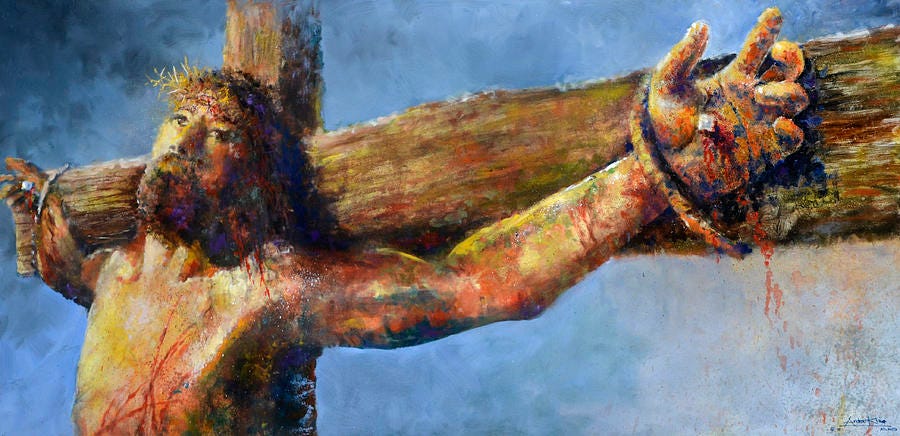
We who are strong ought to bear with the failings of the weak and not to please ourselves. Each of us should please our neighbors for their good, to build them up. For even Christ did not please himself but, as it is written: “The insults of those who insult you have fallen on me.” For everything that was written in the past was written to teach us, so that through the endurance taught in the Scriptures and the encouragement they provide we might have hope. May the God who gives endurance and encouragement give you the same attitude of mind toward each other that Christ Jesus had, so that with one mind and one voice you may glorify the God and Father of our Lord Jesus Christ.
Accept one another, then, just as Christ accepted you, in order to bring praise to God. For I tell you that Christ has become a servant of the Jews on behalf of God’s truth, so that the promises made to the patriarchs might be confirmed and, moreover, that the Gentiles might glorify God for his mercy. As it is written: “Therefore I will praise you among the Gentiles; I will sing the praises of your name.” Again, it says, “Rejoice, you Gentiles, with his people.” And again,“Praise the Lord, all you Gentiles; let all the peoples extol him.” And again, Isaiah says, “The Root of Jesse will spring up, one who will arise to rule over the nations; in him the Gentiles will hope.” May the God of hope fill you with all joy and peace as you trust in him, so that you may overflow with hope by the power of the Holy Spirit. 1
That title is taken from the Common English Bible translation of v. 7, “So welcome each other in the same way that Christ has welcomed you, for God’s glory.”
Assuming we understand that the gospel means God’s promise of salvation is for all people, the text of Romans 15 offers instructions for how we should treat each other. If we take this text seriously, than acceptance of each other is a big part of how we embrace the salvation God has made us a part of in Christ.
Such acceptance is the lived theology of Christian unity—oneness in Christ. Our acceptance or welcome of each other is possible because, as the text instructs us, we adopt the same attitude of Jesus Christ (cf. Phil 2:5). Our new attitude results in what Scot McKnight describes as “a Christoform act of crossing boundaries and turning no status into in-Christ status.”2 That is, even when we disagree with other believers and even believe they are wrong, we still love them and serve them in a manner that says we are all siblings in Christ.
Except this is where we run into problems. Some Christians insist that unity means uniformity. Even if they don’t teach uniformity, their lived theology rejects acceptance of any believer who differ in their understanding and practice of the Christian faith. As a result, Christianity is turned into a sectarian religion that accepts as a true Christian only those who conform to the narrow expectations of the sectarian believer.
Let me be clear that such sectarianism is sin. Beyond that, the uniformity that sectarianism demands is practically impossible because where two or more people are gathered, there will be disagreements on matters of the Christian faith and practice. If you don’t agree with me on that, then you’re already proving my point. Our lived theology of Christian unity means accepting one another even when we have differences.
Through the crucifixion and resurrection of Jesus Christ that God has made us all his children and therefore brothers and sisters—siblings in Christ. Therefore when we encounter each other, we must know each other the child of God that God knows us as through the crucified and resurrected Jesus Christ.
Now I do believe there are some limitations. I mean, there isn’t any unity apart from a shared confession that Jesus Christ is Lord. And there are times when people live in such a rebellious manner towards Jesus Christ, that they functionally deny the Lordship of Jesus Christ. So I’m not suggesting that our lived theology means reducing the Christian faith to an ignorant universalism. But that’s for another discussion. What I am talking about is a lived theology where we seek to serve each other and build each other up as brothers and sisters in Christ despite our differences.
In other words, our understanding of certain doctrines may differ. We may lean towards Calvinism or Arminianism or we may understand the meaning of justification, faith, and baptism in Romans differently. We may differ in our ecclesiology, just life we may lean towards complimentarianism or egalitarianism. Whatever the case might be, we still must welcome each other as Christ welcomes us.
But there is more to press in on given where America as a society seems headed, I want to say a little more about Christoformity and then do a little twist. Our lived theology as Christian unity does not require us to agree on who we should vote for in a political election, or whether we should even vote. We don’t have to agree on what kind of education—public, private, or homeschool—is best for children nor do we have to insist everyone share our preference. We don’t have to like the same movies. We can go watch movies like Barbie or Sound of Freedom, or not go to the movies at all. Accepting each other certainly means that we avoid labeling our brothers and sisters in Christ as “woke” because they like Barbie or as an “extremist” because they like Sound of Freedom.
Our lived theology of Christian unity must reject the subjucation of each other to any label other than brother or sister. Through the crucifixion and resurrection of Jesus Christ that God has made us all his children and therefore brothers and sisters—siblings in Christ. Therefore when we encounter each other, we must know each other the child of God that God knows us as through the crucified and resurrected Jesus Christ.
Our gospeled witness is a beautiful portrait of God’s redemptive work in Christ when we accept of each other as siblings in Christ, despite our differences. In a society that is fracturing with intolerance and hostility on every side, churches can demonstrate a different path that points to the redemptive love of God in Christ.
“May the God of hope fill you with all joy and peace as you trust in him, so that you may overflow with hope by the power of the Holy Spirit.”
1Unless otherwise noted, all scripture quotations are taken from the Common English Bible, copyright 2011. Used by permission. All rights reserved.
2Scot McKnight, Reading Romans Backwards: A Gospel of Peace in the Midst of Empire, Waco: Baylor University Press, 2019, 21.