K. Rex Butts's Blog
November 24, 2025
Portraits of the Gospel
My family and I used to live in Columbia, Maryland, about 20 miles north of Washington, D.C., where all the Smithsonian Museums are located.1 One of the perks of visiting a Smithsonian Museum is that they don’t charge admission fees, which means my wife and I can do something with our children without breaking the bank.

I never thought I would enjoy visiting an art museum, since I thought it would be boring. However, my wife wanted to visit the Smithsonian National Museum of Art. So we took the children, which meant we would only be there for a couple of hours because they would get bored. Once we started touring the museum, it became apparent that we should have gotten someone to watch our children.
My assumption that art museums were boring was way off. As we walked through the Smithsonian Museum of Art, I was mesmerized. Every display was so captivating. It became apparent that I could spend all day just walking around that art museum, taking it all in.
I mention this experience because I’ve also given some thought to the church as God’s artwork and what that means for the mission of God.
There’s a passage in Ephesians that is significant to this line of thought. In the second chapter, we’re told that we were dead in our sins and transgressions, but that we were made alive in Christ by God. Now that matters because it’s God, not us, who is doing the redemptive work of salvation. We were dead, and couldn’t do anything but God did. So Ephesians 2:8-10 says, “For it is by grace you have been saved, through faith—and this is not from yourselves, it is the gift of God—not by works, so that no one can boast. For we are God’s handiwork, created in Christ Jesus to do good works, which God prepared in advance for us to do.”2
There it is. By God’s grace, we have been saved. It’s not by our works, but by the redemptive work of God, which makes us alive in Christ to do good works. But there’s a particular word in v. 10 that I find very fascinating.
The New International Version uses the word handiwork. “For we are God’s handiwork…” Other English translations might use the word workmanship or masterpiece. In the original language, the word is poiēma, which is where our English words “poem” and “poetry” come from.3 Of course, poetry is a form of art. So v. 10 in the New Jerusalem Bible reads, “We are God’s work of art, created in Christ Jesus for the good works which God has already designated to make up our way of life.”
I’m not sure if you have given much thought to the church as God’s artwork. But I believe we need an ecclesiology that views the church, both universally and locally, as God’s artwork. The congregations you serve with and the congregation I serve with are all displays of God’s artwork.4
Our task as the church is good works, not to earn salvation, but because we have already received salvation. A life of good works is our way of participating in the mission of God.
Now I’ve served as a minister of the gospel for long enough that I’ve seen trends come and go. I recall reading books about church growth, some of which were good. I even took a seminary class on the subject. There was a time when every church I spoke with about ministry opportunities asked whether I had read Rick Warren’s book The Purpose-Driven Church. Then came the Spiritual Formation phase, followed by the Emerging Church phase, and then the Missional Church phase.
I’m not sure what phase we’re in now, but I know many congregations that are experiencing decline. They realize that door-knocking campaigns and gospel meetings don’t work as effectively as they once did, but they’re unsure what to do. Well, I’m not here to offer any advice that promises church renewal if your church will do this, this, and that. Frankly, I’m weary of such notions. However, I do want to say that perhaps we’re overthinking what it means to participate in God’s mission.
What are the good works we’re supposed to be doing? It’s the life we live in the name of Jesus Christ by the power of the Holy Spirit. So when people from the church visit someone in a hospital or assisted living facility, it’s good work. When the church prays for a young couple whose first pregnancy has complications, it’s a good work. When the church does a giveaway for people in the neighborhood, it’s a good work. When some people from the church invite a guest to lunch at the local diner, it’s a good work. When the church embraces people whose nationality, language, and documented status differ from its own, it’s a good work.
Earlier this year, I asked my church to invite people to our Easter Sunday worship gathering. That meant I had to ask someone because far be it from me to ask a church to do something I’m not willing to do. However, that meant talking to a stranger, which, as an introvert, is always a chore. So, I knocked on my neighbor’s door and invited her to our Easter worship service, and she came.
Most of the church I serve knows the story of my wife and me losing our first child. But because it’s Easter Sunday and I’m preaching on the resurrection of Jesus, I say something like “The resurrection of Jesus says that my son’s not dead forever.” As I say that, I look at my neighbor, and she’s in tears.
After the sermon, I approached my neighbor, and she asked if she could share something with me. “Sure,” I said.
My neighbor looked at me and said, “Two years ago, my daughter took her own life, and this is the first time I’ve been back to church. My husband won’t come and doesn’t want to talk about religion with anyone because he’s so angry with God.”
Of course, I told my neighbor that I was sorry about the loss of her daughter. And then I said, “I hope being here today helps you know that there’s hope.”
This past July 6th, my neighbor, Barb, was baptized into Christ. I share that with you just as a reminder that we never know how God is working, but God is always working for the redemptive good. So let’s open our eyes to see the opportunities God is opening for us to do such good works. For as we do, God is working redemptively among us, putting us on display as portraits of the gospel.
1This is the manuscript for a “talk” I gave at the Resoration Collective gathering in Dallas, Texas, on Tuesday, November 11, 2025.
2Unless otherwise noted, all scripture quotations are from The Holy Bible, New International Version, NIV. Copyright © 1973, 1978, 1984, 2011 by Biblica, Inc. Used by permission. All rights reserved worldwide.
3D. Edmond Hiebert, “God’s Creative Masterpiece,” Direction 23 (Spring 1994): 117.
4K. Rex Butts, Gospel Portraits: Reading Scripture as Participants in the Mission of God (Eugene, OR: Wipf & Stock Publishers, 2022), 60, the church as God’s artwork is an embodiment of the gospel understood through a Christ-centered and Kingdom-oriented reading of the Bible. “As we follow Jesus, embodying the gospel in a manner that is centered in Christ and oriented towards the kingdom, God is painting a picture for the world of what the future will be when Christ comes again. Of course, the painting isn’t complete, but as we engage in doing the good works that God has prepared for us, we become a living portrait of what the gospel—then good news of Jesus Christ and the kingdom of God—really looks like.”


October 21, 2025
A Subsequent Chapter
There are twenty-eight chapters in the New Testament writing of Acts, which picks up where Luke left off, with the story about God’s redemptive mission fulfilled in Jesus Christ. Acts continues this story of God’s mission to the ends of the world, extending from the Jews to the Gentiles. What began in Luke with Jesus is now carried forward by the followers of Jesus. Those who accepted the invitation to follow Jesus into the in-breaking realm of God’s kingdom are now extending the same invitation to Jews and Gentiles
Last December, I began preaching through the Gospel of Luke, followed by Acts. Now I have finished the series on Acts. But Acts is far from done if we’re following Jesus because doing so means we’re all actors and actresses in the ongoing mission of God. We continue extending the invitation of the gospel—the good news of Jesus Christ and the kingdom of God—to our neighbors.
The writing of Acts begins by imagining us as witnesses of Jesus Christ. “But you will receive power when the Holy Spirit comes on you, and you will be my witness in Jerusalem, and in all Judea and Samaria, and to the ends of the earth” (1:8).1 The final chapter of Acts is also about witnessing. “He witnessed to them from morning till evening, explaining about the kingdom of God, and from the Law of Moses and from the Prophets he tried to persuade them about Jesus” (28:23). Between the first chapter and the last chapter, what we read is the story of the Jesus movement, a community of believers, living as a witness to the gospel.
I don’t believe it’s a mere coincidence that Acts ends with Luke telling us how Paul “proclaimed the kingdom of God and taught about the Lord Jesus Christ…” (28:21). Everything stands or falls on this proclamation. It is what matters.
The Bible is filled with many moral teachings. Without any doubt, following the teachings of the Bible will result in a virtuous life. We will be better husbands and wives, better parents, better brothers and sisters, better neighbors, and even better employees in whatever job we do. But none of that matters without the good news of Jesus Christ and the kingdom of God. Without this gospel, we are all still hopeless. Not only are we still bound to the plagues of our sin, but death still holds us captive to a fight we cannot win. But with the good news of Jesus Christ and the kingdom of God, God fulfills the promise of hope.
Although Paul spoke of this hope as “the hope of Israel” (28:20), it’s a hope for us all. But it also means we must continue living as participants in the mission of God, bearing witness to the good news of Jesus Christ and the kingdom of God. That’s why there is no end to Acts, even though the writing we know as Acts ends with the twenty-eighth chapter.
“I’m not worried about the future of Christianity in America if we, who follow Jesus, continue living as gospel witnesses. As long as we follow Jesus, we’ll always be the church Jesus wants us to be.”
In his theological commentary on Acts, Willie Jennings describes Paul’s witness to his fellow Jewish people as “trying to turn the reading practices of his own people in a new direction in, toward and through the life of Jesus.”2 Like many of us, the Jewish people had scripture too. Still, they needed to see how scripture testifies to Jesus as the Messiah who fulfilled the promise of hope that God made regarding the restoration of the kingdom. I’m convinced that there are Christians who need to have their Bible reading practices turned away from legalism, nationalism, and prosperity, and turned towards Jesus Christ and the kingdom of God.
In Gospel Portraits, I discuss the need for reading the Bible as a “Christ-centered and Kingdom-oriented narrative.”3 This is a participatory reading of scripture whereby we (re)imagine ourselves as actors and actresses in the story, discerning how we play our part as witnesses.4 The reason why such a reading of scripture matters is because, to circle back to Jennings' point, not only do we need our reading practices turned towards Jesus, but so does the rest of the world.
Only when our neighbors learn to navigate life through the gospel lens of Jesus Christ and the kingdom of God will they begin to discover the life God is redeeming them to live. But we’re not living in any of the twenty-eight chapters of Acts anymore; we’re living in a subsequent chapter. Our chapter, set in an American context, is one where people have already heard something about Jesus and the kingdom of God. However, the marriage of legalism, nationalism, and prosperity to Christianity has muddled the testimony. It’s for this reason that we must pay as much attention to the way we live as to the content we preach, because if our life, what we live for, isn’t congruent with the content of our preaching, then we undermine our witness.
Although the writing of Acts ends with twenty-eight chapters, the acts of participating in the mission of God do not. There are subsequent chapters. Our chapter, perhaps titled Christianity in America, must continue bearing witness to the good news of Jesus Christ and the kingdom of God. This is what matters. I’m not worried about the future of Christianity in America if we, who follow Jesus, continue living as gospel witnesses. As long as we follow Jesus, we’ll always be the church Jesus wants us to be. The forms by which we worship, the space where we gather together, and whether we serve fried chicken or pulled pork at a fellowship meal do not matter. What matters is that we bear a living witness to the kingdom of God as the promise of hope God has fulfilled in Jesus Christ.
1Unless otherwise noted, all scripture quotations are from The Holy Bible, New International Version, NIV. Copyright © 1973, 1978, 1984, 2011 by Biblica, Inc. Used by permission. All rights reserved worldwide.
2Willie James Jennings, Acts, Belief: A Theological Commentary on the Bible, Louisville: Westminster John Knox Press, 2017, 244.
3K. Rex Butts, Gospel Portraits: Reading Scripture as Participants in the Mission of God, Eugene: Wipf & Stock Publishers, 2022, 110. On the same page, I go on to write, “As we read the Bible, whether from the Old or New Testament, we are invited to read in a manner that instructs us on how we follow Jesus and embody the kingdom of God he proclaimed.”
4Ibid, 113. See also N.T. Wright, Scripture and the Authority of God: How to Read the Bible Today, New York: HarperCollins Publishers, 2011, 121-127; The New Testament and the People of God, Christi Origins and the Question of God, vol 1., Minneapolis: Fortress Press, 1992, 139-143.
September 29, 2025
Our Baptism Matters
This past Sunday, a baptism took place during the Southside Church worship gathering. After confessing faith in Jesus Christ as Lord, Tim was immersed in water as a believer. It’s always a wonderful occasion to see someone surrender their life to Jesus Christ in the waters of baptism.

Baptism is a sacramental act, a means by which God’s grace is received. It’s participation in the death, burial, and resurrection of Jesus Christ. As the apostle Paul writes:
Or don’t you know that all of us who were baptized into Christ Jesus were baptized into his death? We were therefore buried with him through baptism into death in order that, just as Christ was raised from the dead through the glory of the Father, we too may live a new life.1
To be clear, baptism is not a human work. The believer is simply submitting to the redemptive word of God, who is raising the believer unto new life in Jesus Christ. This is why baptism is an essential step in living as followers of Jesus Christ.
Because baptism is an act of surrender where, by faith in Jesus Christ, we die to our old life and are raised unto new life in Christ, baptism has everything to do with discipleship. We’re baptized not just for the forgiveness of sins, but in the name of Jesus, with the promise of receiving the gift of the Holy Spirit (cf. Acts 2:38). Being baptized in the name of Jesus Christ means we acknowledge and submit to the authority of our Lord. Baptism is a commitment we are making, a declaration that says our allegiance is now with Jesus Christ.
In Acts 19, there are twelve disciples whom Luke describes as believers, people who are Christians. They’re seeking to follow Jesus Christ just like anyone who believes should. The problem is that they’ve only received the baptism of John the Baptist and have never heard about the baptism of Jesus Christ. Because of this, they are baptized in the name of Jesus Christ and then receive the Holy Spirit (cf. Acts 19:5-6). Receiving the baptism of Jesus was their identification and commitment to the way of Jesus, the new life that is only received by laying down their lives. As Jennings writes, Paul invited these disciples “to baptize their discipleship in Jesus, and thereby join their lives to his in such a way that they will lose their life in the waters only to find it again in the resurrected One.”2
“Our baptism matters because it signifies our commitment to living as followers of Jesus Christ. It’s a commitment that ought to change the way we operate in the world.”
Baptism has never been just about receiving a ticket to heaven. It’s not our “get out of jail” free card. Baptism is our initiation into a new way of life in which we live in the name of Jesus Christ by the power of the Holy Spirit. Baptism is our commitment to living as witnesses of Jesus Christ, leaving behind all the ways of the old creation, so that we can live as God’s new creation—Gospel Portraits. Because we’re baptized, we embody the gospel by conforming to the beliefs, values, and habits of Jesus Christ.3 It is the reason why Paul, back in Romans, brought up baptism as the reason why we shouldn’t continue sinning.
Baptism matters. When we were baptized, it mattered. When we witness others receiving baptism, it matters. Our baptism matters because it signifies our commitment to living as followers of Jesus Christ. It’s a commitment that ought to change the way we operate in the world.
I wasn’t around in the 1960s. So I don’t know what life was like in America during those turbulent years. I know the Vietnam War was unpopular and that there were a lot of protests during those years. The assassinations of President Kennedy, Malcom X, Martin Luther King Jr., and Robert Kennedy were terrible and only made matters worse. But in the twenty-four years since 9/11, the United States of America has become increasingly polarized, filled with vitriol, and violence.
Sadly, this is the USA. As I write, the nation is sinking deeper and deeper into an evil pit, with people becoming so accustomed to it that they no longer recognize the madness. I’m not saying this to point fingers because everyone, including us, is a sinner. But what the nation needs from us who follow Jesus Christ, whether or not people recognize it, is for us to remember our baptism and live accordingly. Nobody needs us to be liberals or conservatives. What they need is for us to be the body of Christ, to remember our baptism, and be the people Jesus has taught us to be.
Our baptism matters because it signifies our commitment to living as followers of Jesus Christ, which is how people will be saved from all the madness. But as a pastor, I am concerned that too many Christians are forgetting their baptism and the commitment their baptism demands. We live as followers of Jesus Christ so that we serve as a portrait of the gospel, not so that we can make America great or build up the nation. There are plenty of people to do the nation’s business, but only the church can serve as witnesses to the gospel—the good news of Jesus Christ and the kingdom of God. And we surrendered our lives to Jesus Christ in baptism, not just to receive the promise of salvation, but so that we will live as witnesses of that salvation.
So remember our baptism because it signifies our commitment to living as followers of Jesus Christ. Let’s go live accordingly!
1Romans 6:3-4; Unless otherwise noted, all scripture quotations are from The Holy Bible, New International Version, NIV. Copyright © 1973, 1978, 1984, 2011 by Biblica, Inc. Used by permission. All rights reserved worldwide.
2Willie James Jennings, Acts, Belief: A Theological Commentary on the Bible, Louisville: Westminster John Knox Press, 2017, 184.
3K. Rex Butts, Gospel Portraits: Reading Scripture as Participants in the Mission of God, Euguene: Wipf & Stock Publishers, 2022, 56.
September 9, 2025
Eyes and Ears to See and Hear
The American Novelist Marilynne Robinson once said, “Wherever you turn your eyes, the world can shine like transfiguration. You don’t have to bring anything to it except a little willingness to see.” Therein is the first challenge of living by faith in a secular society. We have to be willing to open our eyes and, I would add, open our ears to see and hear God at work. If we don’t, we’re at risk of becoming people who, though still believing in God and professing to be a Christian, lack an “active practice” of the Christian faith.1

In Acts 17, we read of Paul standing before the Areopagus in Athens—the judicial council. Paul expresses his appreciation, mentioning how “very religious” (v. 22)2 the Athenians are. After all, the Athenians have various objects of worship. They even have an altar with the inscription, “To an unknown God.” Yet, for all of their religiosity, if you will, they don’t even know God.
When my wife and I were in Brazil, we visited the town of Ouro Preto in the State of Minas Gerais. Because Ouro Preto was a gold mining town, the Catholic Church built these beautiful church buildings decorated with gold that have become a big tourist attraction. And believe me, they are spectacular to see. But I always wondered how many people pass through those churches and yet don’t know God.
Temples and altars may look beautiful, but they don’t equate to knowing God. What good is religion without knowing God? We can have a nice building filled with beautiful artwork and still lack faith, or have faith but lose it. I don’t mean renouncing Jesus as Lord. What I’m talking about is losing faith in a functional sense. It’s the kind of life where we can be a church member but still live as though Jesus hasn’t changed a thing outside of what goes on inside a church building on Sunday morning. Another way of putting it is to say that losing faith is nominalism. To have a nominal faith is to say we believe, even though that belief has little to no bearing on the way we live. In other words, nominalism is a loss of faith.
There is more to knowing God and having faith in Jesus Christ than just nominalism. As Paul speaks to the Athenians about God, he tells them that God is the Creator who has purposely chosen to give the blessing of life. As part of creating life, Paul says that God created people “so that they would seek him and perhaps reach out for him and find him, though he is not far from any one of us” (v. 27). We just have eyes and ears to see and hear, eyes and ears that are open and willing to look and listen.
Although it may seem like God is far off sometimes, he’s not. God isn’t hiding from us. As Thomas Merton once said,
“God manifests Himself everywhere, in everything — in people and in things and in nature and in events. It becomes very obvious that He is everywhere and in everything and we cannot be without Him. You cannot be without God. It's impossible. It’s simply impossible. The only thing is that we don't see it.”
If our struggle is a matter of seeing and hearing God, how do we live with eyes and ears to see and hear the work of God taking place in life? The answer, I believe, is that we must train our eyes and ears to see and hear God.
“Christ with me, Christ before me, Christ behind me, Christ in me, Christ beneath me, Christ above me, Christ on my right, Christ on my left, Christ when I lie down, Christ when I sit down, Christ when I arise, Christ in the heart of every man who thinks of me, Christ in the mouth of everyone who speaks of me, Christ in every eye that sees me, Christ in every ear that hears me.” - Saint Patrick
I started learning to play the guitar when I was twelve. Now, at 51 years old, I have been playing the guitar for 39 years. I’m no Eddie Van Halen or Stevie Ray Vaughan on the guitar but I can play well enough to hold my own in a jam session. Part of learning to play the guitar involves training the eyes and ears to see how other guitarists are playing and hear what they’re playing. The training of the eyes and ears involved in learning to play the guitar requires practicing what is seen and heard. Such training develops what guitarists describe as muscle memory, which then allows the guitarist to become more natural at playing what the mind has learned.
There are some parallels when it comes to learning how to play the guitar and learning to live by faith. However, instead of watching other guitarists, we train our eyes and ears by focusing on what God has done in the past so that we’ll begin to anticipate what God is doing in the present for the future of his new creation that he is bringing about in Jesus Christ. Such training involves spiritual disciplines: regular times spent in prayer, reading our Bible, reflecting on our daily lives as followers of Jesus, serving others in need, and spending time in fellowship with each other. These disciplines allow us to see and hear how God has worked among people in scripture, people within our local church community, and even in our own lives. In doing so, we develop a Christ-formed faith (cf. Gal 4:19) that allows us to more naturally live as participants in the mission of God.
Luke ends the story in Acts 17 with the following: “Some people joined him [Paul] and came to believe, including Dionysius, a member of the council on Mars Hill, a woman named Damaris, and several others” (v. 34, CEB). At the end of the day, to participate in the mission of God is to become so formed in Christ by the Spirit that we reflect Christ in a manner that compels others to become believers just like us. As the prayer of Saint Patrick goes…
“Christ with me, Christ before me, Christ behind me, Christ in me, Christ beneath me, Christ above me, Christ on my right, Christ on my left, Christ when I lie down, Christ when I sit down, Christ when I arise, Christ in the heart of every man who thinks of me, Christ in the mouth of everyone who speaks of me, Christ in every eye that sees me, Christ in every ear that hears me.”
The more we see and hear God, as he has revealed himself in Jesus Christ, the more others will see and hear Christ in us—perhaps becoming believers just as some did after hearing Paul.
1Charles Taylor, A Secular Age, Cambridge, MA: Harvard University Press, 2007, 513.
2Unless otherwise noted, all scripture quotations are from The Holy Bible, New International Version, NIV. Copyright © 1973, 1978, 1984, 2011 by Biblica, Inc. Used by permission. All rights reserved worldwide.
August 26, 2025
Dear Christians
If someone you have never met spent a month observing your life—paying attention to the things you say, how you treat others, what you invest your time in doing, the values you embrace—would they see a reflection of Jesus Christ?
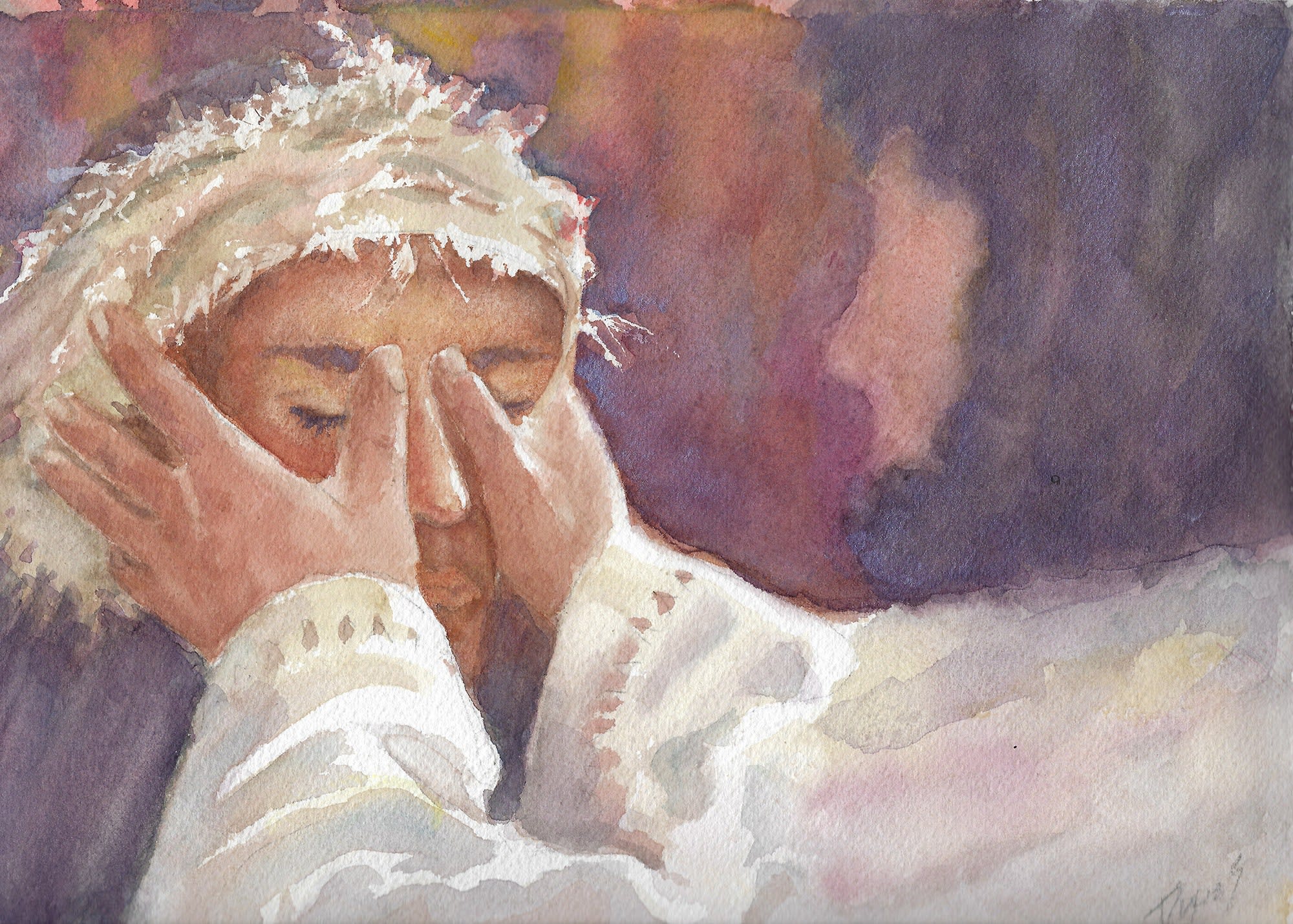
This was the question I asked in my Bible class with the Southside Church last Sunday morning, as we discussed reading the Bible and embodying the gospel. Consider the two following passages of scripture:
For it is by grace you have been saved, through faith—and this is not from yourselves, it is the gift of God— not by works, so that no one can boast. For we are God’s handiwork, created in Christ Jesus to do good works, which God prepared in advance for us to do.” - Ephesians 2:8-101
All Scripture is God-breathed and is useful for teaching, rebuking, correcting and training in righteousness, so that the servant of God may be thoroughly equipped for every good work. - 2 Timothy 3:16-17.
As a Christian, you have been saved by grace through faith so that you may live a life of good works. The life of good works is what I mean when I talk about embodying the gospel—the good news of Jesus Christ and the Kingdom of God. There is plenty of space for discernment about the particulars of what such an embodiment of the gospel requires, but it has to do with our lives reflecting the life of Jesus Christ.
“Your life as a Christian should make non-believers question their disbelief in God.” - Dietrich Bonhoeffer
Thankfully, God has given you scripture to teach you about embodying the gospel and thus living a life of good works. Scripture is not given so that you can solve all kinds of philosophical and theological puzzles. Likewise, scripture is not given so that you can use it as a weapon to beat those you disagree with in a game of What Does the Bible Teach. There is nothing wrong with reflecting on scripture so that you may know the truth and not be misled by false teachings. But at the end of the day, scripture is given so that you may live as a faithful embodiment of the gospel.
I go into more detail about what I am saying here in the book I wrote.2 My point is that you need scripture because you are a follower of Jesus Christ. Nobody, myself especially, faithfully embodies the gospel all the time. Everyone, including myself and you, is still learning and will continue to learn how to follow Jesus. Don’t give up. Continue following so that others may encounter the God revealed in Jesus Christ. As the late Dietrich Bonhoeffer once said, “Your life as a Christian should make non-believers question their disbelief in God.”
Every day, numerous things vie for your attention. Or at least they do for me, so I’ll assume they do for you also. Many of these matters are not inherently evil. However, satan still wants to use such items to distract you. The distractions are meant to keep you from giving your undivided attention to the good works for which you have received scripture, so that you may learn to do those good works. Jesus said, “Be wise as serpents and innocent as doves” (Matt 10:16, RSV). It takes intentionality to remain focused on following Jesus Christ.
Intentionality. Be intentional with what you do. Be intentional with the things you say. Be intentional with what you post on social media. Be intentional in how you treat the people you encounter. Be intentional in wanting people to see Jesus Christ in you. Even if they don’t know who Jesus Christ is, be intentional anyway. Then, when God opens space for you to share the good news of Jesus Christ, they’ll recognize that good news as your way of life too.
Don’t worry. You don’t have to go it alone because God has given you His Spirit so that you may have the strength to live as a reflection of Jesus Christ.
So I’ll leave you with this question again… If someone you have never met spent a month observing your life—paying attention to the things you say, how you treat others, what you invest your time in doing, the values you embrace—would they see a reflection of Jesus Christ?
Grace and Peace to you! - Rex
1Unless otherwise noted, all scripture quotations are from The Holy Bible, New International Version, NIV. Copyright © 1973, 1978, 1984, 2011 by Biblica, Inc. Used by permission. All rights reserved worldwide.
2K. Rex Butts, Gospel Portraits: Reading Scripture as Participants in the Mission of God, Eugene, OR: Wipf & Stock Publishers, 2022.
August 19, 2025
Strange People
As surprising as it may be to some, the name Christian was first coined by non-believers in Antioch during the first century. According to Acts 11:26, “The disciples were called Christians first at Antioch.”1 This was a label given to the community of disciples.

Far from a compliment, the label of Christians was a form of ridicule, which may seem strange to us. For those of us who grew up in the United States, Christianity was embedded in much of our culture. What seemed strange, if not offensive, was to hear atheist voices like Madalyn Murray O’Hair and Christopher Hitchens, who were quite vocal about disdain for Christianity. But in the first century, these so-called Christians were a small group of people whose difference was that they aligned themselves with Jesus Christ, a Jewish man crucified on a Roman cross. Therein lies the strangeness of being Christians.
Crucifixion was viewed as shameful and weak (cf. 1 Cor 1:23-25). It was the Roman way of humiliating their enemies,2 especially those whom others believed to be the Christ (Messiah). Crucifixion was a mockery that said, as N.T. Wright so eloquently puts it, “If you want to be high and mighty, then we’ll give you high and mighty when we nail you to the cross.”3
It seems strange to think that people aligned themselves with someone crucified, but these Christians did. According to Acts, they had a message that they shared with anyone who would listen, “telling them the good news about the Lord Jesus.” Of course, we know they did so because they believed that God raised Jesus from the dead. The result was that many more people became believers and joined their ranks as Christians.
Something significant was happening. Although these folks who believed in Jesus were few in comparison to the larger Roman Empire, a movement was taking shape. The Christians in Jerusalem sent Barnabas to Antioch. The text tells us, “When he [Barnabas] arrived and saw what the grace of God had done…” (Acts 11:23). This is the big clue as to what it means to be a Christian.
When Barnabas came to Antioch, he was able to see with his eyes. Seeing has to do with the act of physically observing or perceiving with the eye.4 Nobody had to tell Barnabas what was happening because he was able to see it for himself. The life of these Christians was more than just ascribing to particular doctrines, attending a Sunday church service, and leaving an offering before leaving. Their Christian Faith was a way of living as much as it was a belief. It was an allegiance to Jesus as Lord, rather than Caesar, that resulted in a radical life rooted in the grace of God.
The lives of these Christians embodied the gospel—the good news of Jesus Christ and the kingdom of God. It was the living of their faith in Jesus Christ that made them appear strange,5 earning these disciples in Antioch the label “Christians.”
But that was then, and this is now. Here we are, more than halfway through 2025. The challenge for us is that we’re not living in a time where Christianity is new. We’re living in a society where people are aware of Christianity, and a significant portion of those people are seeing the lives of Christians and saying, “If that’s Christianity, then we’ll take a pass.” It’s part of the reason we now live in sort of a post-Christian society. Anyhow, eighteen years ago, a book by David Kinnaman and Gabe Lyons was released, titled Unchristian: What a New Generation Really Thinks About Christianity… and Why It Matters. What their research revealed was that Christians are perceived as hypocrites, disingenuous in our motives, homophobic, too sheltered and out of touch with reality, too political, and lastly, judgmental.6
Like it or not, these are the circumstances we live in, and they are not likely to change for the better anytime soon. But that doesn’t mean we throw the towel in, so to speak, and give up. What we can do and must do is recommit ourselves to living as a strange people, strange as in following the way of the crucified Jesus Christ. I mean, strange as in giving our sole allegiance to Jesus Christ in the way that we live to warrant that label, Christians. I mean, strange but in a godly way, so that people might see us as Christians with an envy that draws them to us and makes them curious about the Christian Faith.
The believers we read about in Acts came to be known as Christians not by their own choice but because they were committed to living in the name of Jesus Christ by the power of the Holy Spirit. We’re called to be no less, no more: Living in the name of Jesus Christ by the power of the Holy Spirit, and as long as that is how we live, we’ll always be the Christians Jesus wants us to be.
1All scripture quotations are from The Holy Bible, New International Version, NIV. Copyright © 1973, 1978, 1984, 2011 by Biblica, Inc. Used by permission. All rights reserved worldwide.
2N.T. Wright, The Day the Revolution Began: Reconsidering the Meaning of Jesus’s Crucifixion (New York: HarperCollins Publishers, 2016), 55, “Those who crucified people did so because it was the sharpest and nastiest way of asserting their own absolute power and guaranteeing their victim’s absolute degradation.”
3Ibid, 59. Wright makes this point as he writes, “…the Romans sometimes used crucifixion as a way of mocking a victim with social or political pretensions. ‘You want to be high and lifted up?’ they said in effect. ‘All right, we’ll give you ‘high and lifted up.’’ Crucifixion thus meant not only killing by slow torture, not only shaming, not only issuing a warning, but also parodying the ambitions of the uppity rebels.”
4See the entry for ὁράω in Walter Bauer, A Greek-English Lexicon of the New Testament and Other Early Christian Literature, 3d ed., rev. Frederick William Danker (Chicago: University of Chicago Press, 2000), 719..
5Willie James Jennings, Acts, Belief: A Theological Commentary on the Bible (Louisville: Westminster John Knox Press, 2017), 124, writes that the name Christians was meant as “ridicule that registered the strangeness of their song and of their sound. But like a new song that announces a new time in present time, it may often seem and sound strange. Christian in its plural form always equals a strange new future.”
6David Kinnaman and Gabe Lyons, Unchristian: What a New Generation Really Thinks About Christianity… and Why It Matters (Grand Rapids: Baker Books, 2007), 29-30. It’s worth noting that perception and reality are not the same. The research shared in this book reveals how Christians, in general, are perceived. This doesn’t mean that these perceptions are always accurate, but almost always there is some truth to perception.
July 30, 2025
Remembering Kenny
Last week, my family and I visited Searcy, Arkansas. My youngest son had an admissions visit at Harding University, the alma mater of Laura and me. It was nice to run into some familiar faces, visit Midnight Oil Coffee House, and see all the changes to the town and campus since we moved away. Unfortunately, Mi Ranchito, a local Mexican restaurant that Laura and I frequented, has closed down.
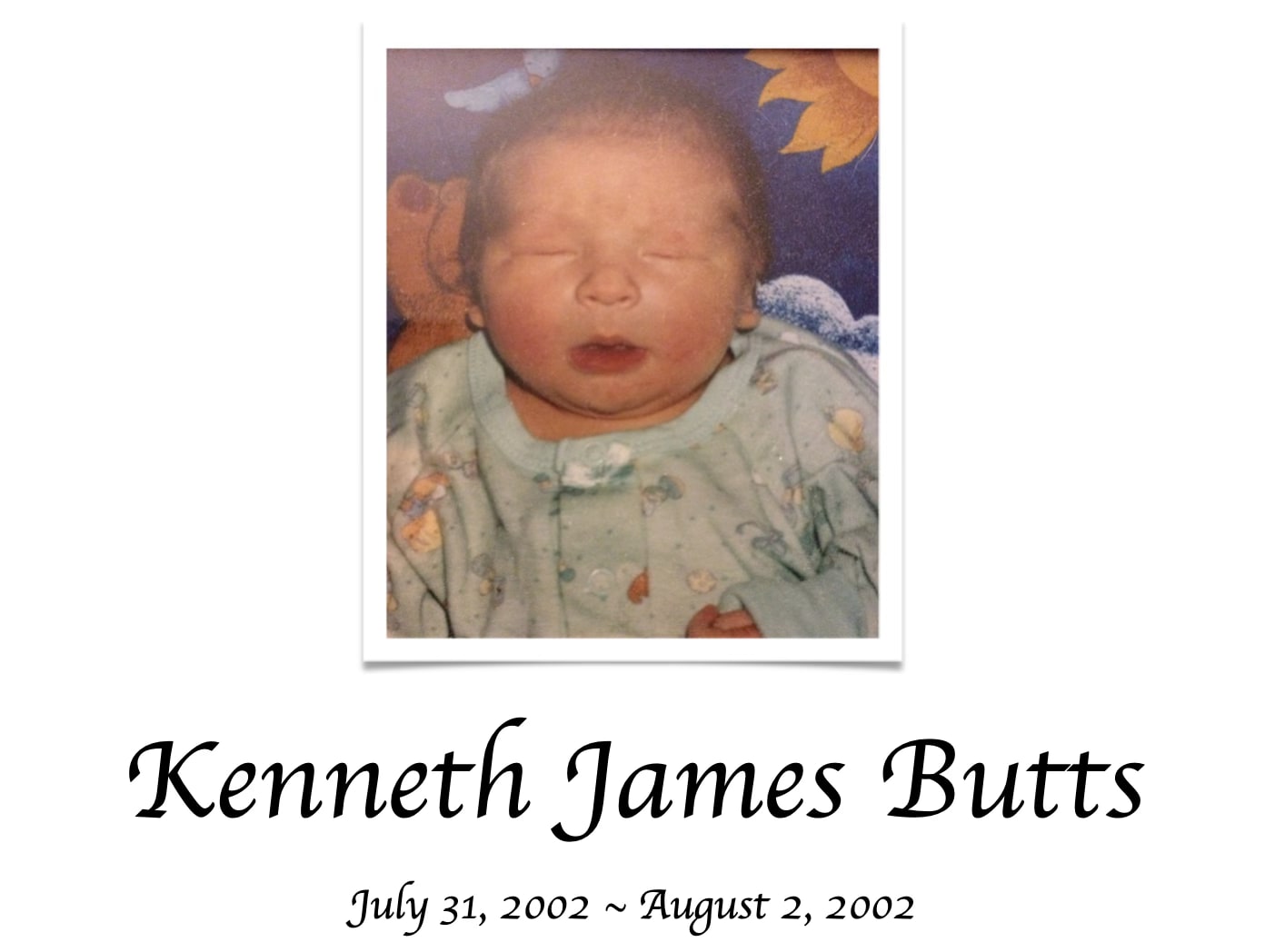
One other thing we did was visit the grave of our son, Kenny, who would be twenty-three years old today. Like we’ve done before, Laura and I took a photo with our two other children, Caryn and Jared, standing by the flat headstone.
Of course, the loss of Kenny leaves a lasting sadness. I have never gotten over it, so to speak. Grief doesn’t go away over time; I have just learned to live with the grief. So grief is a journey, filled with lament and also the hope that springs from lament, knowing that the tomb is empty. Our son’s death isn’t forever. Kenny isn’t gone forever. I grieve his passing and ask God why our son couldn’t live, but I also know that he rests in Christ and will rise again when Christ comes again.
Regarding the journey of grief, I’m at a point where the bitterness has subsided, and I can reflect on the joys of Kenny’s life. That’s good because I promised Kenny that I would always remember him, and part of that is to remember not just the loss but also the good.
I remember the beauty of his mother as she gave birth to our first child. I remember the overwhelming sense of God’s presence as I held Kenny for the first time. I remember the joy of introducing Kenny to his grandparents as I carried him from the delivery room to the nursery. I remember the blessing of changing his diaper and caring for him as a parent should. I remember holding him as he slept, his firm grip grasping my finger. I remember…

And so I look at this picture of Caryn and Jared standing beside Kenny's grave with a sense of God’s presence. Just as I sensed when Kenny was born, I know that God is here in this place and has extended his blessing. I look around and am reminded that Kenny is still part of a family. That Kenny has a younger sister and brother, and that they have an older brother. And today, on Kenny’s birthday, we will celebrate life as a family.
I never thought I would see any blessing standing beside Kenny’s grave, but that’s what I saw this past week. God was present there.
“The Lord is close to the brokenhearted...” - Psalm 34:18 (NIV)
July 16, 2025
What Hinders Baptism?
One of the nice things about Acts is that the stories told don’t always involve the apostles. The stories also involve other ordinary people, men and women, who became believers. Two weeks ago, our text from Acts 7 was about the first Christian martyr. His name wasn’t Peter, James, or John, or any of the other apostles. His name was Stephen, and living in the name of Jesus Christ by the power of the Holy Spirit, he participated in the mission of God.
Then there is Philip. There’s nothing special about him except for the fact that he, too, lives in the name of Jesus Christ by the power of the Holy Spirit. After the persecution of the church in Jerusalem scattered the believers, Philip began telling people in Samaria about Jesus. People were healed of illnesses and impure spirits, and they also became baptized believers (8:7, 12). Then, after being told by the Lord to head back south, Philip does so. It is on this journey that we read that Philip “met an Ethiopian eunuch” (8:27).1
Hearing the fact that Philip encounters an Ethiopian eunuch probably doesn’t shock us. In fact, many of us have probably heard this story in Acts 8 enough that nothing about it shocks us. But in Luke’s world, there’s much that is shocking about this story. So much that Luke wants to make sure we know Philip hasn’t just encountered an Ethiopian but an Ethiopian eunuch. An Ethiopian man would be intriguing enough, as there was a fascination among Jews with people from far-off, exotic places like Ethiopia, where people had very dark skin.2 But the first person beyond the Jews in Jerusalem to hear the good news of Jesus that Luke wants to tell us about is a castrated man, who was excluded from much of the religious activities in Jewish life (cf. Deut 23:1).
What is interesting is that we have a eunuch from Ethiopia, a man whose existence has been castrated and thus left with a mark of exclusion. Of all the texts of scripture the eunuch could read, he’s reading what we know as the Suffering Servant Song in Isaiah 53. The eunuch is drawn in particular to the following words of the text, “He was led like a sheep to the slaughter, and as a lamb before its shearer is silent, so he did not open his mouth. In his humiliation he was deprived of justice. Who can speak of his descendants? For his life was taken from the earth” (8:32-33; cf. Isa 53:7-8).
“This is how the kingdom of God advances, and likely a good plan for how the local church grows. If we want people to know that God loves and welcomes them, then we must love and welcome people. It’s not complicated either. It simply requires a church committed to living in the name of Jesus Christ by the power of the Holy Spirit.”
Now with Philip in his chariot, the eunuch says, “Tell me, please, who is the prophet talking about, himself or someone else?” (8:34). However, Philip never actually tells the eunuch who the prophet is speaking about. The eunuch is likely curious because he’s a man who has suffered humiliation and has been deprived of justice throughout life. Philip doesn’t say who the prophet is talking about; instead, he just begins telling the eunuch “the good news about Jesus” (8:35).
Telling the eunuch the good news about Jesus opened up the possibility of a new future without exclusion. The good news about Jesus is that even though evil men crucified Jesus according to God’s plan, God raised Jesus from the dead and exalted him as the Lord and Messiah (cf. Acts 2:23-24, 32-33, 36). So now the eunuch knows that the power of the religious authorities to exclude people like him isn’t God’s work. The redemptive work of God, accomplished in Jesus Christ, means that a new community is taking shape where there is a place for this eunuch. So the eunuch says to Philip, “Look, here is water. What can stand in the way of my being baptized?” (8:36). It’s a rhetorical question because there is nothing that can hinder the eunuch, or anyone for that matter, from being baptized.
However, the text tells us, “Then both Philip and the eunuch went down into the water and Philip baptized him” (8:38). It’s not enough to know that the eunuch was baptized. Luke wants us to know for sure that Philip baptized him, because it’s not just God welcoming the eunuch through his baptism, but also Philip. By participating in this redemptive work of God and effectively telling the eunuch that God welcomes him, Philip is assuring the eunuch that he welcomes him too.3
Here’s an important lesson for churches. This is how the kingdom of God advances, and likely a good plan for how the local church grows. If we want people to know that God loves and welcomes them, then we must love and welcome people. It’s not complicated either. It simply requires a church committed to living in the name of Jesus Christ by the power of the Holy Spirit. Then, with the love and hospitality learned from Jesus, look for the opportunities to share the good news about Jesus. The result is someone like the Ethiopian eunuch being baptized or, like more recently, my neighbor, Barb, being baptized.
I don’t claim to be any expert on evangelism or any church growth guru. I know that in a secularized society like the United States, there are some significant challenges as churches seek to live on mission with God. However, I do believe that God is always at work, in both visible and invisible ways. I am reminded, though, that when we look for the opportunities to participate in God’s work and have the courage and conviction to do so, God’s redemptive work still happens. As I wrote for Mission Alive, “Perhaps encountering God’s redemptive work at hand is simply a matter of when opportunity meets courage and conviction.”4
So church, keep living in the name of Jesus Christ by the power of the Holy Spirit! God will give us the opportunities to serve, and as you do, God’s redemptive work will go on.
1All scripture quotations are from The Holy Bible, New International Version, NIV. Copyright © 1973, 1978, 1984, 2011 by Biblica, Inc. Used by permission. All rights reserved worldwide.
2Will Willimon, Acts, Interpretation: A Bible Commentary for Teaching and Preaching (Atlanta: John Knox Press, 1988), 71.
3Willie James Jennings, Acts: A Theological Commentary on the Bible, Belief (Louisville: Westminster John Knox, 2017) 85, “Philip and the eunuch are in that strange new unknown that surrounds divine presence. Where God comes a surprising new follows, such that no one in Israel had ever seen (Luke 5:26). The strange and the new wrought by God will now bind together Philip and the eunuch in a new paradigm of belonging. They will now forever travel the same road.”
4K. Rex Butts, “God's Redemptive Work: When Opportunity Meets Courage and Conviction,” Reimagining Church, July 9, 2025.
June 23, 2025
What Gospel Are Christians Hearing?
When we read through Acts, we encounter a movement of people whose way of life is completely transformed by what God has done in Jesus, whom they believe to be the crucified, resurrected, and exalted Lord and Messiah. As a baptized community of repentant believers, these Christians live in the name of Jesus Christ by the power of the Holy Spirit. Everything about their life, from what they believe to the values they embrace and the kingdom they seek, is different. The difference involves an unwavering courage and conviction centered in Jesus Christ and oriented towards the kingdom of God.
Fast forward nearly two thousand years to Christianity in the United States, and life for Christians seems remarkably different. Looking across the spectrum of Christianity in the United States, it seems like we’ve taken a different course, and the results are showing up in spades.
We know that Christianity has experienced a notable decline in the United States over the past fifty years. Once vibrant congregations are now struggling to remain; some have even closed, and more will close. Why?
There are many reasons why Christianity in the United States is struggling. Some of the reasons are beyond the control of Christians. Changes in demographics, social culture, and a more transient lifestyle among people make it more difficult for local churches. But other reasons, for which Christians are to blame, have contributed to the decline of Christianity in the United States. One of those reasons is the abandonment of the commitment that our baptism pledges us to live. Please allow me to illustrate with two brief examples, one of which was evident just a couple of weeks ago.
Years ago, I met a neighbor who told me that she belonged to a local church but then identified herself as an Episcopalian, Wiccan, and Taoist. Now I don’t know how to even parse that out, but I remember wondering what kind of gospel this neighbor had heard at her church that allowed her to believe she could mix the gospel with a pagan religion and Eastern philosophy. Of course, I could probably share this story with any group of Evangelical Christians, and most would wonder with me.
Now jump forward to June 14, 2025. While many of us were enjoying a cup of coffee and perhaps reading a book or getting ready to run some errands, news broke that a man by the name of Vance Boelter had shot four people in Minnesota. Sadly, two of those people, Minnesota State Representative Melissa Hortman and her husband, Mark, both died. Since then, we have learned that these violent attacks were premeditated, motivated by partisan politics, and that Boelter also professes to be a Christian. Just think about the incongruity in that last sentence. Someone who professes to be a Christian but is so driven by partisan politics that they murder their political cause.
“If we want to see Christianity thrive, then we have to return to living a life solely focused on Jesus Christ and the kingdom of God. It’s what I call a testifying church —a church that lives exclusively in the name of Jesus Christ by the power of the Holy Spirit.”
Just as I wondered about my neighbor from years ago, I found myself wondering again after hearing about the horrific crimes Vance Boetler committed. But beyond the tragedy of such violence, I wondered what kind of gospel Boelter heard at his church that allowed him to believe he could still seek a worldly kingdom first, rather than seeking the Kingdom of God and his righteousness (cf. Matt 6:33).
At a time when partisan politics is driving a deep wedge through American life and among Christians, the entire situation begs the question: What kind of gospel are Christians hearing in their churches that allows them to think it’s okay to pursue a kingdom of this world over the kingdom of God? What kind of gospel are Christians hearing in their church that allows them to think it’s okay to mix following Jesus with other religious and political ideologies?
The problem isn’t just that Boelter murdered people, but that he was a part of a church whose teaching allowed him to think he could seek after a kingdom of this world, pursuing a Christian Nationalist agenda that is remarkably different from the gospel. The problem with my neighbor years ago wasn’t just that she had adopted a syncretistic faith, but that she was part of a church whose teachings allowed her to think doing so was acceptable. But it’s not just their churches but every church. Even if churches are not explicitly encouraging members to pursue worldly kingdoms and adopt false ideas, any failure to explicitly proclaim the sort of particular beliefs, commitments, and kingdom that Christians seek is a failure.
When Christians are allowed to believe they can follow Jesus but still embrace other pursuits, the risk is giving their lives to a darkness that is different than the good news of Jesus Christ and the kingdom of God. The result is the decline of Christianity, and the reason is simple: Christians cannot run two races at the same time. One race is the race that Jesus and the great cloud of witnesses have run (cf. Heb 12:1-2), and then there are numerous other races to run. Christians living in the United States must decide which race they are going to continue running and run that race. But in the end, only one race wins. So choose wisely!
Now, please understand me. What I am discussing is not the only reason for the decline of Christianity in the United States but I do believe it’s a big reason. If we want to see Christianity thrive, then we have to return to living a life solely focused on Jesus Christ and the kingdom of God. It’s what I call a testifying church —a church that lives exclusively in the name of Jesus Christ by the power of the Holy Spirit.
The church we read of in Acts was a testifying church, whose business was investing in the future by living as faithful witnesses so that future generations would know the truth. When the powers that be told them to stop, they said no! Acts chapter 5 ends with Luke telling us, “Day after day, in the temple courts, and from house to house, they never stopped teaching and proclaiming the good news that Jesus is the Messiah.” For those with eyes and ears to see and hear, therein lies the secret sauce to a renewed Christianity in America that lives on mission with God.
June 9, 2025
A Testifying Church
This past Sunday was Pentecost Sunday. Therefore, it is more than appropriate to consider the famous Pentecost Sunday in Acts 2. In particular, let’s consider why we read about a church in Acts that lives in the name of Jesus Christ by the power of the Holy Spirit. To this end, I would like to write from the perspective of a witness, testifying about why the church is portrayed as Luke describes it in Acts 2. Afterwards, I’ll comment further on this text as a minister of the gospel. As I do, the passages of scripture I quote will come from the Common English Bible (2011). Additionally, before proceeding, you may want to read Acts 2:14-47.
Now that you’ve read Acts 2:14-47…
“Tell me more about your church,” Tim said, as we talked while eating dinner together.
“Sure,” I said, “It’s an amazing way of life that we have. We’re baptized believers who follow Jesus. We believe he’s the Messiah, which is why we refer to him as Jesus Christ. So we align ourselves with the apostolic teaching that we’ve been taught, which is about Jesus Christ and the kingdom of God. But we also have wonderful fellowship. So we are always breaking bread and praying together.”
“Wow,” Tim interjected, “that sounds terrific. Very biblical, you might say.”
“Well, we hope so.”
“Tim, I can tell you that we’re united on mission with God. There’s so much commonality and equality among us that those of us who have wealth are willing to even sell our properties and possessions to help our brothers and sisters when they’re in need. I don’t say that to brag but just because that’s how we live. We meet regularly to spend time praising God in worship and share meals with joy and fellowship. It’s one of the ways that we love God and our neighbors, which are the two great commands in the Torah that Jesus taught us about.”
“My, oh my,” Tim said, sounding surprised. “That’s just so wonderful.”
“It is,” I told Time. “The most fantastic thing is that even though everyone doesn’t like our community, our Lord just continues bringing people to us. ‘Adding them,’ so to speak,” to be saved just like us.”
“I’m sure, without seeing it for yourself, that it might seem difficult to believe everything I’m telling you. And there are probably a thousand ways that people can dismiss our way of life, saying it's too weird. After all, some people refer to us as radicals but I think they do that just so that they don’t have to consider the possibility that this might just be what God wants.”
“You know, Tim, I’ve heard many crafty arguments and strange excuses. I don’t waste arguing with people. I just keep sharing our testimony.”
“What’s that? What’s your testimony?,” Time asked.
“Well, I’m glad you asked,” I said to Tim. “In short, it’s about Jesus Christ and the Holy Spirit. You see, we learned a lot about the way Jesus lived… The way he extended grace to others and spoke the truth, the way he always had compassion on people, and pursued peace with others, all while showing mercy, doing justice, and living a holy life. Most importantly, Jesus was always faithful in loving God and his neighbors—even the ones who hated him. But that all ended with Jesus being killed. His enemies conspired to have him crucified. So he died and was buried.”
“Now ordinarily, the story of Jesus would end there but it doesn’t. You see, Jesus was raised from the dead. Tim, I know that might seem very far-fetched to believe but Jesus spent time with a lot of different people, showing them that he was really alive again.”
“Now, I never saw Jesus myself. In fact, once I tell you the rest of the story, you’ll see that I wasn’t always a fan of Jesus.”
“The rest of the story,” Tim asked.
“Well, there is more to the story,” I said. “After Jesus was raised, something else happened. It was on Pentecost. Things got really weird. It seemed like a severe thunderstorm was coming through but there were also these men who followed Jesus around as his apostles. They were speaking in everyone’s language.”
“One of those men, the one called Peter, stood up to speak. As he began speaking, he started quoting the Bible. He was quoting the prophet Joel, which was familiar to a lot of us. He reminded us that God had promised to pour out the Spirit on all people—both men and women.”
“Then… and Tim, this is where a lot of us were caught by surprise. This Peter… he began speaking about Jesus being raised from the dead after he was crucified. I know that I already mentioned to you about Jesus being raised but this is how most of our church heard about it for the first time. Peter said that God raised Jesus and exalted him as the Lord and Messiah.”
“Tim, my heart still races when I tell people about this because, as far as many of us were concerned, Jesus was just a radical. Most of us wrote Jesus off and wanted nothing to do with him. Some of our leaders, no doubt under pressure to keep our Jewish way of life in tact, convinced the Roman authorities to crucify Jesus.”
“Yeah, that’s what happened.
“Peter, the one speaking, blamed us as he told us how he and his other comrades had witnessed Jesus’s resurrection and how God exalted Jesus and poured out the Holy Spirit.”
“So, you’re telling me that you believe this,” asked Tim in an unsettled voice.
“Yes, Tim, I do.”
“I know it might sound crazy but I do believe. That’s what makes what I’m telling you so terrifying and amazing at the same time.
“You see, Tim, I was glad when they crucified Jesus. The last thing we needed was a radical causing more trouble with the Roman authorities. But I couldn’t deny what Peter was saying. He spoke with such conviction and fervor that there’s no way he could be making all this stuff up. Plus, he and his comrades… They’re just a bunch of Galileans. I know that doesn’t sound nice but I say that because they spoke with such power in everyone’s language. Galileans, mind you! I knew right then and there that the Holy Spirit was upon them, enabling them to speak.
“And Tim, that’s when I realized that Jesus was God’s Messiah and still is but also that we had rejected him. I was so terrified at that moment. It was as though we had spit in God’s face. This sense of dread came over us. It was just overwhelming, realizing that we had made ourselves enemies with God.”
“So what did you do?” asked Tim.
“Well, a bunch of us began asking what we could do. We weren’t thinking in terms of something we could do to appease God. We were just wondering if there was any possibility left for God’s mercy. That’s when Peter told us to repent… You know, change our minds about Jesus, realize that Jesus is now Lord, and submit our lives to Jesus. That’s why Peter also told us to be baptized in the name of Jesus, assuring us that God would forgive us of our sins and that we would receive the Spirit too.”
“So, one person stepped forward. Then another. And then another. And before you know it, about three thousand of us said “Yes to repentance and we were baptized in the name of Jesus for the forgiveness of our sins. And just like Peter said, God gave us all the Holy Spirit.”
“Tim, I guess what I’m trying to tell you is why our church is the way it is, why we're so committed to the apostolic teaching and each other, eating together, praying, and all the other stuff you have heard about us. We’re just trying to live our repentance and baptism every day, living in the name of Jesus by the Power of the Spirit.”
“Wow, that’s just so amazing to hear,” exclaimed Tim.
There was a short pause and then Tim asked me one more question, “Is there anything else you’d like to share with me, Luke?”
Now I can’t speak for what else Luke might say. I only hope I’ve accurately conveyed the word God speaks through this biblical text and then write about why it matters. What we need to understand is that Acts 2 wasn’t written as a weapon to wield in all of the doctrinal debates some Christians have sought to engage in. Some people will read what Luke says about Jesus and either ignore it or reject it. That’s their choice. What matters here is how those of us who believe Jesus is the crucified, resurrected, and exalted Lord and Messiah, who believe that God has poured out his Spirit, will respond. What must we do if we take Luke's account seriously?
“Repentance and baptism are our acceptance of God’s redemptive work, to enter into his salvation, as our pledge to live in the name of Jesus Christ by the power of the Holy Spirit.”
Well, our response begins with repentance and baptism. According to Acts 2:38, we are told, “Change your hearts and lives. Each of you must be baptized in the name of Jesus Christ for the forgiveness of your sins. Then you will receive the gift of the Holy Spirit.” The three thousand on that day didn’t argue or raise any objections. They believed that God had raised Jesus and exalted him as Lord and Messiah, so when they were told to repent and be baptized, that is what they did. It’s not rocket science. It’s just a matter of whether you want to obey God or not. The choice is yours. Choose wisely!
If we have already turned to God in repentance and surrendered our lives to Jesus Christ in baptism, great! But we still need to hear this summons to repentance and baptism again. You see, when Peter told the Jewish people to repent and be baptized, he wasn’t just talking about them having their sins forgiven. He also talked about being baptized in the name of Jesus and receiving the gift of the Holy Spirit. Those two statements align with what he preached. The two big claims Peter made in his message were that God was now pouring out his Spirit on all people and that God had exalted the crucified and resurrected Jesus as Lord and Messiah. Do you see the connection between his message and the summons to repentance and baptism?
Repentance and baptism are an initiation into a new way of life in which we live our lives in the name of Jesus Christ by the power of the Holy Spirit. Repentance and baptism become, so to speak, our pledge to live as a community of disciples under the authority of Jesus, where the Holy Spirit leads us forward on mission with God. When we do, the result is a testifying church. We live as a community of disciples who embody the gospel in both a faithful and contextual manner in society.
The picture of the early church that Luke paints with words isn’t entirely prescriptive but it’s more than just descriptive. The second chapter of Acts should stir our imaginations for what our life as a church should be like if we take our repentance and baptism seriously. The communal life Luke imagines doesn’t mean we all must sell all our property and possessions but it does mean we should consider such a gesture if that’s what is necessary to care for those in need. After all, such charity is a way in which we bear witness to the good news of Jesus Christ and the kingdom of God. That means our witness, always centered in Jesus Christ and oriented to the kingdom of God, is subversive.
Our subversive witness as disciples is intended to be a light that shines in contrast to the darkness of the world, which too often relishes in coercive power, exploitative economics, and discriminatory social policies. The point isn’t just a criticism of the world and its entrapment in darkness but an alternative vision that depicts what can be when people surrender to Jesus as the Lord and Messiah. That’s why it’s so important that we take our repentance and baptism as a commitment to an ongoing life of following Jesus. Repentance and baptism are our acceptance of God’s redemptive work, to enter into his salvation, as our pledge to live in the name of Jesus Christ by the power of the Holy Spirit. While our lives will vary as an expression, depending on the local contexts in which we embody the gospel, we will serve as a portrait that faithfully testifies to the good news of Jesus Christ and the Kingdom of God.