K. Rex Butts's Blog, page 3
February 12, 2025
The Secrets to the Kingdom
Last Sunday, I preached a sermon on Luke 8:4-15. This text is the parable of the sown seed that Jesus tells. The parable, I suggest, isn’t about how we sow the seed of the gospel but what kind of soil the seed, sown in us, has landed in. But to understand the parable, it will be helpful to do a little reflection on a very familiar prayer and the kingdom of God.
Our Father, in heaven, holy is your name. Your kingdom come, and your will be done on earth as it is in heaven. Give us this day our daily bread and forgive us our trespasses, as we forgive those who trespass against us. And lead us not into temptation, but deliver us from evil. For yours is the kingdom, the power, and the glory, forever and ever. Amen.
The Lord’s Prayer is a prayer we should probably pray at least once every day. After all, in the Gospel of Matthew, Jesus says that when we pray, we should pray like this (Matt 6:9).

When I’m asked what is the kingdom of God, I start with the line about the kingdom as God’s will done on earth as in heaven. What more could we want than for God’s will to be done on earth as it is in heaven? In your life, as it is in heaven. In my life, as it is in heaven. But praying for the coming of God’s kingdom begs the question of how the kingdom comes.
So, who better to learn about how the kingdom of God comes than from Jesus? After all, Jesus is all about calling people to repentance as he proclaims the arrival of God’s kingdom. Among the Synoptic Gospels—Matthew, Mark, and Luke—the Kingdom of God or the Kingdom of Heaven is mentioned ninety-one times. Thirty-two of those mentions are in the Gospel of Luke because Jesus had a knack for talking about God’s kingdom.
In the Gospel of Luke, we’re told that Jesus is going from town to town. “Proclaiming the good news of the kingdom of God” (Lk 8:1).1 Remember that because whatever the gospel or good news is, it involves the kingdom of God—God’s reign or rule—his will done upon earth as it is heaven.
One of Jesus’ preferred ways of teaching is to tell a parable. A parable is a little story or saying that illustrates a truth.2 In the case of the parable, Jesus tells about a farmer who lavishly sows seed—seemingly anywhere and everywhere. Thus, some seed falls on good soil, but not all. It seems like a lot of seeds fell on bad soil, along a walking path, as well as among rocks and thorns.
After Jesus finishes the parable, he says, “Whoever has ears, let them hear.” In other words, listen up and pay attention. If we want to know how the kingdom of God comes, then pay attention because Jesus is about to reveal what he calls the secrets or mysteries of the kingdom.
“Jesus doesn’t say one word about stifling the power of the devil or stifling any threats of persecution or concerns with the problems of this world. All Jesus says is that a seed planted in good soil, those with a noble and good heart, are the ones who will produce a crop.”
Explaining the parable, Jesus says, “The seed is the word of God.” It’s the message Jesus has proclaimed about the good news of God’s kingdom, which comes with an invitation for us to believe this good news and repent so that we can follow Jesus as participants in God’s kingdom. But not everyone will. For some, the seed just never takes root. Maybe the devil snatches it away. Maybe the challenge of following Jesus is too difficult, and when tested, it’s just easier to give up on Jesus. Or it could be that there’s just more concern for the things of this world that keep the seed from ever maturing.
The silver lining is that some do hear the word of God. Those who hear the word of God are like a seed planted in good soil because the seed produces a crop. However, when Jesus told the parable, he said the crop would produce a hundred times (v. 8), but now, in explaining the parable, Jesus doesn’t say a word about how much the crop produces. Instead, Jesus says, “the seed on good soil stands for those with a noble and good heart, who hear the word, retain it, and by persevering produce a crop” (Lk 8:15).
If I understand what Jesus is getting at, he is talking about how we live. How we live has everything to do with our faithfulness in following Jesus—even when it seems difficult. Our faithfulness in following Jesus is the secret to seeing the kingdom of God come. Jesus doesn’t say one word about stifling the power of the devil or stifling any threats of persecution or concerns with the problems of this world. All Jesus says is that a seed planted in good soil, those with a noble and good heart, are the ones who will produce a crop. They are the ones who, because of their faithfulness in following Jesus, see the kingdom of God.
This is an important point to ponder because we might question how the kingdom can come with all the evil, troubles, and concerns of the world. Wouldn’t it be easier if we formed some sort of Christian coalition and sought to elect politicians who would support laws that favor Christianity? Some voices within Christianity have sought to do just that. Then there’s Jesus, who was offered all the kingdoms of this world if he would just serve Satan. Yet, Jesus refused such an offer because he knew the kingdom of God comes only through faithfulness to God, hearing the word of God that summons him (and us, as his followers) to the cross.
I don’t know what the near and intermediate future will look like in the United States. Ask ten people, and you’re likely to get eleven different opinions. But what I do know is that we are still called to follow Jesus as participants in the mission of God. Whatever that entails, I believe the kingdom of God will flourish as we hear the word of God that Jesus proclaims. No ballots and certainly no bullets are necessary for following Jesus because they never have been necessary. All that is necessary is for us, by the power of the Holy Spirit, to remain steadfast in our commitment to following Jesus.
Will the seed fall on good soil?
1Unless otherwise noted, all scripture quotations are from The Holy Bible, New International Version, NIV. Copyright © 1973, 1978, 1984, 2011 by Biblica, Inc. Used by permission. All rights reserved worldwide.
2Walter Bauer, A Greek-English Lexicon of the New Testament and Other Early Christian Literature, 3d ed., rev. Frederick William Danker (Chicago: University of Chicago Press, 2000), 759, the entry for parabolē describes a parable as a story or saying that points beyond itself to illustrate a truth through comparison or simile.


January 15, 2025
Because Jesus Says So
Welcome 2025! It’s been more than a month since I have written on my SubStack. I just haven’t had the time. Beyond the busyness of the Holidays, my wife and I are days away from closing on the sale of our house in Delaware and closing on the purchase of a house in Wisconsin. So yes, I’ve been very busy but in a good way.
As we now start plodding our way through 2025, I’m still “new” as a lead minister serving with the Southside Church here in Milwaukee. As a new minister, the church is praying for a successful season of ministry in the coming years, as any local church would do. That has me thinking about what defines a successful ministry.
There are so many ways to approach the question of what defines successful ministry. First and foremost, are we faithful in living as followers of Jesus? And, of course, how do we discern what faithfully following Jesus involves? Well, that might lead to questions about serving. After all, Jesus was a servant. So, will others—both church members and the people in our neighborhoods—encounter the humility of Jesus in us? Will those we encounter know they are cared for, welcomed with hospitality, helped when in need, and loved as we love ourselves? In other words, will people see the kingdom of God in us? Of course, such questions are abstract, but people are not fooled. People can tell when a church is honestly trying to live as followers of Jesus, serving as Jesus did.
With all that said, I know that every church says they want to grow with more people becoming a part of their church. In twenty-five years of serving in ministry, I have never encountered a church that has said otherwise. Ideally, such numerical growth means there are new people becoming Christians and learning to live as followers of Jesus. Yet, numerical growth is still a desire of every church I know and one of the ways that churches often define success. That begs the question then of why might a church grow or not.
There are a myriad of reasons why churches grow or not. There is no shortage of books on the subject of church growth. There is nothing I am going to say that assures a local church will succeed in growing, especially in a post-Christian America where more people are rejecting church and the Christian faith or, at least, rejecting the version of Christianity they’ve often encountered in the U.S. But there is one thing that I am confident will either hinder a church from success or open space for the kind of success that matters where people see the kingdom of God in us.
“The results are ultimately up to God, but opportunities to serve as Jesus served open when churches have a submissive posture of faith that is willing to do what Jesus says even when it doesn’t make complete sense.”
In Luke 5, Jesus is teaching people along the shore of the Lake of Genesaret when he sees the fishermen coming ashore in their boats. So, Jesus gets into Simon’s boat and tells him, “Put out into deep water, and let down the nets for a catch” (v. 4).1 The only problem is that Simon and his comrades have worked all night and caught nothing. It makes no sense to put their nets back into the water when they’ve not caught anything yet. But even after explaining to Jesus how they’ve caught nothing, Simon says to Jesus, “But because you say so, I will let down the nets” (v. 6).
If you’re one of those people who underlines or highlights phrases in your Bible, then you should really underline or highlight what Simon just said to Jesus. “But because you say so, I will…” Therein lies the key to the biggest matter that will either hinder a church from success or open space for success.
Simon’s “But” is not an objection in which he insists that his own reasoning trumps what Jesus has said. Rather, Simon is submitting his own reasoning to the instruction of Jesus. I am convinced that our willingness to say, “But because Jesus says so, we will…” is the submissive posture of faith that opens space for a church to serve as Jesus served. The results are ultimately up to God, but opportunities to serve as Jesus served open when churches have a submissive posture of faith that is willing to do what Jesus says even when it doesn’t make complete sense.
It is easy to say that we’ll follow and do what Jesus says, but it’s much more difficult on the front lines of ministry outside the confines of our church buildings. It’s not a shock that twenty-five years into the twenty-first century, many challenges facing churches now were once not as challenging. Most people are not waking up on Sunday morning with plans to attend a church service somewhere else. Many people are living in circumstances that are challenging to the Christian faith, raising questions about what it looks like to embody the gospel in a manner that’s faithful to Jesus and yet relevant to the circumstances of people’s lives. We inhabit a society that embraces religious pluralism, moral relativism, and political tribalism. And yet Jesus is saying, “Don’t be afraid; from now on you will be catching people” (v. 10).2
Fishing for people sounds kind of strange, but that’s what churches following Jesus are called to do. It’s discipleship, which I understand as learning to live like Jesus. The more both churches and the individual Christians that make up local churches learn to live like Jesus, the more attractive we all become to people who are looking for God, and the more we can help them find new life in God’s kingdom.3
Nothing I’ve said is a guarantee of success for any local church. But I am convinced that the one sure way to stifle any possibilities is to convince ourselves that the way of Jesus just isn’t realistic as we double down on our ways, telling Jesus, “We worked all night and caught nothing, so we’re done trying.” On the flip side, I believe that God opens space for all kinds of possibilities when we invest in the lives of people God introduces us to and say “But because you say so…”
1Unless otherwise noted, all scripture quotations are from The Holy Bible, New International Version, NIV. Copyright © 1973, 1978, 1984, 2011 by Biblica, Inc. Used by permission. All rights reserved worldwide.
2Taken from the New Revised Standard Version Updated Edition, 2023.
3Brendan Byrne, The Hospitality of God: A Reading of Luke’s Gospel, rev. ed., Collegeville: Liturgical Press, 2015, 58, Whereas catching fish resulted in the death of fish, now Simon will catch people, but instead of death, Simon will bring people “to the more abundant life of the kingdom of God.”
November 26, 2024
Not Everyone is Okay
Like last Sunday, this Sunday, someone will gather with our church and do so bearing much pain.

Chances are that we may not see the person who is hurting. Whoever the person is, they will likely have a smiling face. When asked how they are doing, they’ll say, “I’m doing well,” even though they’re not. They’ve learned that just saying they’re doing fine will shield them from even more pain because they remember…
The time when they told someone that their marriage was in trouble, only to hear that person tell them they just need to be more understanding of their spouse—words spoken without understanding.
The time when they questioned why God healed other children but let their child die of cancer, only to hear someone say they just need to trust God—words spoken without empathy.
The time when they shared their struggles with anxiety and depression with someone only to hear that person suggest they just pray more about it—words spoken without care.
That time when they confessed their struggles with pornography to someone only to hear someone respond rather terse with a bible proof-text about overcoming temptation—words spoken without grace.
Church folk usually mean well, but I don’t think many Christians know how to respond to people who aren’t doing well. There are likely a variety of reasons but the result is a church culture where people are afraid to let their guard down, to be honest, and let people know that they’re not doing well.
People who know me know that I come at this from the perspective of a parent who had a child pass away. The death of a child is a suffering that has often left me “too troubled to speak” (Ps 77:4, NIV). The result of such grief and pain is a trauma that I’m only beginning to understand.1 As both a person who has endured suffering and a pastor who has walked with others along the journey of suffering, I know that church can be a difficult place to be honest about hurting.
This past Sunday, I shared with the Southside Church the story of Laura and I losing our son, Kenny. One of the reasons I share is because I want others who live with grief and pain to know they’re not alone. I also want them to know that it’s okay to gather without having to act as if everything is okay. I want to cultivate a church atmosphere where people feel free to voluntarily say they are struggling and have people who will listen to them with empathy that flows from God’s grace and mercy.
Should someone have enough courage to share with you how they are struggling, the best response is to have an empathetic presence. By that, I mean not only having the ability to empathize because you have taken the time to sit and listen. Such presence also requires resisting the temptation to speak, offer advice, and even suggest praying together. Being present with a person long enough to sit and listen, giving them the time to share what they want to share (without the pressure to share more than they are ready to share), lets them know that you are a safe person who cares and can be trusted. Such empathetic presence opens space for God to work for his redemptive good (cf. Rom 8:28) in ways that go beyond what we often can imagine is possible.
The reason I’m sharing this now is because we are now in the Holiday Season. Tomorrow is Thanksgiving, with Christmas and New Year’s Day around the corner. It’s a season of festivities, family dinners, and parties with coworkers and friends. But the Holiday Season is also a difficult season for some people. Perhaps the best gift you can offer is your empathetic presence to those you know might be struggling. In doing so, you not only acknowledge their pain but also let them know that they are not bearing their burden alone. That’s a gift that is worth more than any amount of silver and gold.
1To understand how trauma impacts life, I recommend reading Bessel Van Der Kolk, The Body Keeps the Score: Brain, Mind, and Body in the Healing of Trauma, New York: Penguin Books, 2014.
November 6, 2024
Southside Church
Last Sunday was my first official day serving the Southside Church in Milwaukee as the new lead minister. New is usually exciting for many reasons, especially for the opportunities that await.

As mentioned, the Southside Church is located in Milwaukee, and the name of the congregation tells you something about the location. We’re located on the south side of the city. If you’re looking at a map, the Southside Church is about a mile due west of Milwaukee’s Mitchell International Airport.
This coming Sunday is Family Bible Day, with a focus on the Old Testament book of Jonah. During the Bible class, the children will perform a play that will tell the story of Jonah. During our worship gathering, I will share a message from Jonah that I’m calling The Rest of the Story. The title of the message is because when many people think about the story told in Jonah, all they know is about Jonah being swallowed by a large fish and later spit back out. But there is much more to the story of Jonah, which offers an immensely important contribution to our understanding of God’s mission and our participation in the mission of God.
Knowing the entire story of Jonah has me also thinking about the city of Milwaukee. Like any urban center, many things are happening. The city is also a socially diverse place with different ethnicities, languages, and religions, and like any city, it’s obvious that Milwaukee has its challenges.
We have nothing to fear, only a city of people to love as followers of Jesus who embody the gospel—the good news of Jesus Christ and the kingdom of God.
When Jonah is told to go preach to the city of Nineveh, he runs the other way. In my experience, I have met too many Christians who would rather run from the city than go on mission with God into the city. Though Jonah’s fear was likely rooted in his ethnic disdain for the Ninevites, there are likely many reasons why Christians want to run from the city. Sometimes, it’s that the city is intimidating. Christians just don’t seem to know how they might engage people in such urban spaces. I also have met White Christians who wanted to flee the city because of their own racism, but that’s a whole other problem to deal with.
I’m raising the matter of Jonah running from Ninevah because Christians need to think about their disposition towards the city. Simply put, whatever we think about the challenges that any city brings, we cannot allow those challenges to have us running away from the city. The redemptive mission of God is for the urban cities as much as it is for the suburbs and rural communities. If God locates us within a city, we can either participate in the mission of God by joining in the redemptive work that God is doing in the city, or we just don’t participate in the mission of God. The former breathes new life into the local church, while the latter is the slow death of the local church.
Whatever challenges we face in the city, we remember that by our baptism, we live in the name of Jesus Christ and by the power of the Holy Spirit. The challenges may at times seem like very difficult challenges, but we have nothing to fear, only a city of people to love as followers of Jesus who embody the gospel—the good news of Jesus Christ and the kingdom of God.
It’s great to be serving with the Southside Church, and it’s great to be in Milwaukee!
October 8, 2024
The Truth Matters
To say that the truth matters should be an obvious given. Except it’s not. For some time, the notion of truth has sunk into a quagmire of relativism. Honesty with information and facts is manipulated daily. Instead of the truth, we now have phrases like “my truth” and “alternative facts.” Such adjectives allow us to qualify what we mean by truth. Even the so-called pursuit of objective truth is another way we define truth rather than submitting to whatever is true. Now it seems we have arrived at a point in society where we determine for ourselves what we want to regard as true, regardless of whether there’s any factual support.
In other words, the truth be dammed.

In his book Post-Truth, Lee McIntyre described our society as a place where all kinds of people are trying to make us believe in ideas whether there’s good evidence and facts or not.1 We need to look no further than some of the conspiracy theories that people continue to share and believe despite the lack of facts to support their claims. For example, we might recall the lies that were spread about the Sandy Hook Shooting being just a hoax or the more recent fabricated story about Haitian immigrants in Springfield, Ohio, eating dogs and cats.
I mention the two above examples to illustrate that a post-truth society is more than just sharing ideas and thoughts infused with our own particular biases. We all share information, stories, etc… that are told in ways that reflect our biases because we all have biases, particular lenses that shape how we interpret what’s going on around us. What I am talking about is sharing stories and claims that are factually untrue either because they lack credible evidence, have perhaps already been found to be false, or worse, something we just made up.
“Thou shalt not bear false witness against thy neighbour.”
Sharing anything false and untrue is a matter of sin for Christians. Throughout the Bible, there is plenty of instruction about God’s people being honest and truthful in what is said and done. Among the Ten Commandments, we read, “You shall not bear false witness against your neighbor” (Ex 20:16).2 We are also told in scripture, “Lying lips are an abomination to the Lord…” (Prov 12:22). Moving to the New Testament, the apostle Paul wrote that love “rejoices in the truth” (1 Cor 13:6). Likewise, the apostle John wrote, “Little children, let us love not in word or speech but in deed and truth” (1 Jn 3:18).
Obviously, the truth matters and I realize that none of the passages of scripture cited above directly address the post-truth situation we live with today. My point is to remind us that truth and honesty should matter, especially to Christians because our credibility rests upon our ability to speak truthfully. Without credibility, our witness to the good news of Jesus Christ and the kingdom of God is lost.
But with social media and the emergence of Artificial Intelligence, there seems to be a different set of rules regarding sharing what is true and not bearing false witness. Or so it seems because the photo in this post is one of several fake, AI-generated photos that have been widely shared on social media. And what is maddening is that some Christians don’t seem to care.
Recently, I pointed out that an AI-generated photo of former President Trump wading through flood waters to rescue a survivor of Hurricane Helene. In response, I was told that it didn’t matter that the photo was fake because the photo was “representative of who showed up with help and cared enough to be present.” No, the reality is that the fake image didn’t matter because it fits with the narrative the person is already committed to believing, and that’s part of the problem with truth. When we have already committed to an ideological narrative, we’re prone to say and share whatever fits that narrative, even if it’s not true. It’s also a problem for Christians because our allegiance is to Jesus Christ, who is the Truth, and yet more Christians seem captivated by the ideological narratives of American politics—red and blue— rather than the Gospel of Jesus Christ.
But I digress.
As followers of Jesus Christ, we must be committed to bearing truthful witness. We are not free to share photos, information, and other false claims. There will certainly be times when we share or say something that, upon further inquiry, turns out to be wrong or misleading. It happens but the onus is on us to speak what is true and real. To do otherwise is to sin by bearing false witness.
With the amount of misinformation and even lies that are passed off as true, we must take more seriously the ethics of how we use social media and AI-generated content. Neither social media nor AI is inherently wrong, but if we are using AI to write an article that we share as being written by us, then we are being dishonest. Likewise, if we create an image of our favorite athlete visiting sick children in the hospital just because it represents something good, then we are being dishonest. And if we use social media to share this fake article or image, then our use of social media is dishonest.
When Jesus told Pilate that he came into the world to testify to the truth, Pilate asked Jesus, “What is truth?” It was a dismissive response because for Pilate to even consider that the truth was speaking to him at that very moment would have forced Pilate to consider the narrative upon which he built his life was false. For us who profess faith in Jesus Christ, we believe Jesus is the Truth, and the gospel story told within scripture is a true testimony to Jesus. Therefore, all the other narratives and the world kingdoms they cultivate are false—perilous lies—that will one day perish. So we have nothing to lose by letting go of those false narratives that would have us bearing false witness just to perpetuate their lies. What we gain is not only Christ but, perhaps over time, the credibility that would cause others to ask Pilate’s question and consider that the truth is the Truth—Jesus Christ, the Son of God.
The truth does matter!
1Lee McIntyre, Post-Truth, Cambridge, MA: Massachusetts Institute of Technology, 2018, 13.
2See also Deut 5:20. Unless otherwise noted, all scripture quotations are from the New Revised Standard Version, Updated Edition Bible, copyright © 1989, 2021 by the Division of Christian Education of the National Council of the Churches of Christ in the U.S.A. and are used by permission. All rights reserved.
August 13, 2024
Hello Milwaukee
This past Sunday the news became public that my family and I will be moving to Milwaukee, where I will serve as the lead minister with the Southside Church of Christ. The plan now is for me to begin at the beginning of November.
Of course, such a change means moving away from Newark. More importantly, I’ll be leaving the Newark Church of Christ where I have served as the lead minister for six and a half years. So sadness is mixed in with the excitement of what’s to come.
When the opportunity to consider serving with the Southside Church of Christ was presented, my wife and I were excited because relocating to Milwaukee would place us within three hours of our aging parents. But I’m also excited because, like the Newark Church of Christ, I see in the Southside Church of Christ a commitment to following Jesus with an openness to what that looks like as a lived embodiment of the gospel.
I’m thankful for the opportunity to have served with the Newark Church of Christ, and for the relations I have made with church members and people in the community. I am equally thankful for the way we have embodied the gospel within Newark and on the University of Delaware Campus. The shepherds of the Newark Church—Richard Duzan, Joe Giubardo, Bennett Foster, Harold Friedline, Ira Lockwood, and Dale Kirkpatrick—are godly men who care deeply for the congregation, serving with humility and integrity. Casey Coston, our campus missionary, has become a friend as much as he is a colleague and he’s a solid minister of the gospel too. I am also thankful that the Newark Church has a campus ministry apprentice like Lauran Brady, who is full of passion for Jesus and is well on her way to becoming a competent campus minister.
I say all that not only because of the gratitude I have for the Newark Church of Christ but also because I want to be clear that I am leaving without any animosity or conflict. But I am a follower of Jesus who has been called to serve as a minister of the gospel. So I also look forward to serving in Milwaukee with the Southside Church of Christ, just helping the church to follow Jesus as we strive to embody the gospel together.
On the homepage of the Southside Church of Christ website is the line that reads “For Christ’s Love Compels Us.” Indeed, we know we are loved by God in and through the love he has expressed in the crucified, resurrected, and exalted Jesus Christ. What more reason do we need to serve God as his servants in Milwaukee? Rather than overthinking what it means to live on mission with God, we will do well in striving to love God and love our neighbor as followers of Jesus.
To God be the glory!
August 6, 2024
Understanding the Gospel?
“And I tell you, you are Peter, and on this rock I will build my church, and the gates of Hades will not prevail against it.” - Matthew 16:181
“but we proclaim Christ crucified, a stumbling block to Jews and foolishness to gentiles, but to those who are the called, both Jews and Greeks, Christ the power of God and the wisdom of God.” - 1 Corinthians 1:23-24
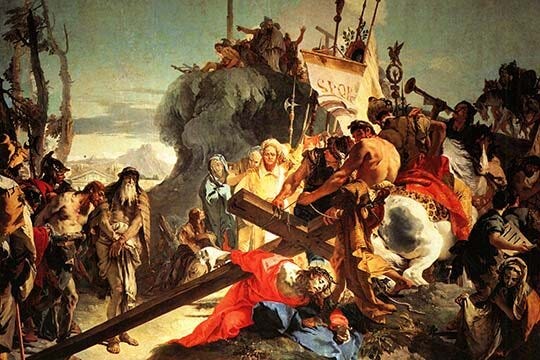 Artwork: “Jesus Carrying the Cross” by Gionvanni Battista Tiepolo
Central to the Christian Faith is the gospel, what I often refer to as the good news of Jesus Christ and the kingdom of God. The gospel is the story of how God, according to the scriptures, is redeeming and restoring creation in and through Jesus of Nazareth as the crucified, resurrected, and exalted Lord and Christ. This gospel also reveals the particular way God is at work in the world bringing his promise of salvation, forgiving and reconciling people through the power of Jesus Christ suffering death on the cross. This particular way of the cross, how the gospel is revealed, becomes the way of life that the church of Jesus Christ embodies as a living portrayal of the gospel.2
Only don’t expect non-Christians to understand the gospel, much less the particular way in which the gospel is revealed in and through Christ and his church. In fact, expecting non-Christians to understand the gospel is probably unrealistic. Understanding requires more than just acquiring knowledge about the historical claims and doctrines that define Christianity. Understanding the gospel requires faith. By faith, I mean not only believing and obeying Jesus but doing so as people whose allegiance to Jesus as the Lord and Christ.3 Having such faith, we follow Jesus with trust and do so even when we have doubts, and as we continue following Jesus we gain in our understanding of the gospel.
“Christianity in America may be on its way into exile for the foreseeable future but we have resources for learning how to live an exilic faith in the Bible and Christian Tradition.”
So I don’t expect non-Christians to understand the gospel and its claims on the Christian way of life. But I do take notice when people who are not Christians want to try telling Christians how to respond to ongoing civil matters in the world. For example, in the midst of growing political polarization in society, Elon Musk said on X (formerly Twitter) “Unless there is more bravery to stand up for what is fair and right, Christianity will perish.”4 And in the last few days I have seen more than a few Christians sharing this post, as if Musk is right.

And now I wonder if Christians understand the gospel.
My brothers and sisters in Christ, if Elon Musk is saying that Christianity will perish unless Christians take a civil stand for our rights then he is emphatically wrong. It is also a grave misunderstanding of the gospel to read Musk’s statement as good advice for Christians.
What Musk is suggesting seems to tap into the fears that lurk beneath the Christian nationalist movement, which seeks to impose Christianity as the way of life upon society.5 Instead of understanding the power and wisdom of Jesus Christ crucified as a way of serving in the world with self-sacrificial love that trusts God to bring about his redemptive good, worldly power is adopted. Instead of understanding the promise of Jesus that the gates of Hades will never prevail against his church, fear is substituted for faith.
But any Christianity that emerges through the adoption of coercive power and reliance upon the state is a departure from the way of Jesus Christ. What remains is a syncretistic ideology that has co-opted elements of Christianity to serve its own ideological agenda.
The crucifixion, resurrection, and exaltation of Jesus Christ is God’s victory over every adversarial power, including sin and death (1 Cor 15:56). True Christianity will never cease because it is rooted in the new birth in which there is a living hope through the resurrection of Jesus Christ that can never perish, spoil, or fade (1 Pet 1:3-4). In Christ, there is nothing to fear and nothing to lose that is worth keeping. By sharing in the sufferings of the crucified Jesus Christ, we share also in his resurrection life (Phil 3:10).
Please don’t misunderstand me. I am not suggesting that living as a Christian will be easy and Jesus never said it would be. But the crucifixion, resurrection, and exaltation of Jesus Christ is God’s promise of victory, a victory we know now by faith but will know by sight when Jesus Christ comes again.
If we really understand the gospel, then ploys to make us afraid and embrace any power and wisdom that differs from God’s power and wisdom in the crucified Jesus Christ should be rejected. Christianity in America may be on its way into exile for the foreseeable future but we have resources for learning how to live an exilic faith in the Bible and Christian Tradition. Instead of listening to such ploys of worldly wisdom and power, we need to dig deeper into scripture and learn again how God’s people lived in exile. There’s much to learn in both the Old and New Testament if we have the eyes and ears to see and hear.
We also have the crucifixion, resurrection, and exaltation of Jesus Christ as Lord to remind us that living by faith, even in an exilic existence, is more than possible. I suppose the only question we have to ask as Christian is do we understand the gospel?
1Unless otherwise noted, all scripture quotations are from the New Revised Standard Version, Updated Edition Bible, copyright © 1989, 2021 by the Division of Christian Education of the National Council of the Churches of Christ in the U.S.A., and are used by permission. All rights reserved.
2See also K. Rex Butts, Gospel Portraits: Reading Scripture as Participants in the Mission of God, Eugene: Wipf & Stock, 2022, where I go into more detail about this point in chapter 4 and explain why embodiment of the gospel means conforming our lives “to Christ, his beliefs, values, and habits” (p. 56).
3Matthew W. Bates, Gospel Allegiance: What Faith in Jesus Misses for Salvation in Christ, Grand Rapids: Brazos Press, 2019, 59.
4Elon Musk, X, July 27, 2024 [2;58 p.m.], accessed on July 29, 2024 (https://x.com/elonmusk).
5Andrew Torba and Andrew Isker, Christian Nationalism: A Biblical Guide to Taking Dominion and Discipling Nations, Gab AI, 2022, 27, “No it is time for our nation to be led by wise Christian warriors who fear God, read their Bible, and will not bend the to the wicked Establishment class and ways of the world. In other words: we need Christian men who embrace their God-given masculine energy to conquer and lead.” I’m not sure how widespread the Christian nationalist movement is but I do know its influence is growing. I have even had a couple of Christians tell me that they are Christian nationalists, which is why I disagree with Brad East that we should drop the label “Christian nationalism” (see Dr. Brad East, “Episode 64: Dr. Brad East REALLY doesn't want to talk about Christian nationalism,” The Christian Chronicle Podcast, May 15, 2024, length: 50:26 (https://christianchronicle.org/episod...).
July 30, 2024
Twenty-Two Years
Happy Birthday, Kenny!
There’s both joy and sadness in telling you a happy birthday.
The joy is that you exist. Though you are not with us now, you’re never forgotten and July 31st will always be the day your mother gave birth to you. Words cannot describe the joy that overcame us as we held you, named you, and told you how much we love you. Your life mattered then and it matters as much now. Just as your life brought us joy then, your life brings us joy now.
 Kenneth James Butts, July 31, 2002 - August 2, 2002
The sadness is that you would leave us way too soon. It’s not your fault nor anyone else’s but your mother and I still grieve you leaving us and always will. For years I carried around a sense of guilt for not being able to help you when you needed me the most, as if I failed you somehow. I know now that there’s nothing that your mother and I could have done differently. But you’re still not with us, so remembering you on your birthday also comes with sadness.
I often wonder what you would be doing now, especially as your mother and I see what your younger sister and brother are doing. When I listen to the song Remember Me by Mark Schultz, I wonder as I hear these words.
Remember me
When the children leave
their Sunday school with smiles
Remember me
When they're old enough to teach
Old enough to preach
Old enough to leave
Wondering about you seems good because in wondering, I do remember you. I also remember the promise that God has made in Jesus Christ, so I know you are resting in Christ and will live again when Christ comes again. That hope is what keeps me from despair.
So twenty-two years… Wow! I know I speak for your mother too when I say that you will always be our son. What a blessing you are. And once again, happy birthday!
With love,
Your father.
July 25, 2024
Help If You Can

Y'all, meet Clara. This beautiful little girl is a year old now but she was born with some serious health complications. She has already had a couple of surgeries and this September she will undergo a massive heart surgery in Boston (one of two locations where her surgery can be performed in the U.S.A.). The medical bills are going to pile up but if you can help with any amount, her parents will appreciate your help. Clara's father and mother are members of the Newark Church of Christ where I serve as lead minister, so I can vouch for their need and for the legitimacy of this fundraising. Just click on the GoFundMe link and give whatever you can. Also, remember Clara in your prayers. Thank you for your help.
Lord, have mercy!
July 16, 2024
The Prodigal Gospel Pt. 3
Good morning church!1 For the last two weeks, I have preached a sermon series called The Prodigal Gospel which is based on Luke 15:11-32. The text is the parable we know as The Parable of the Prodigal Son but as I have pointed out, the parable is really about a father and his two lost sons, so to speak.
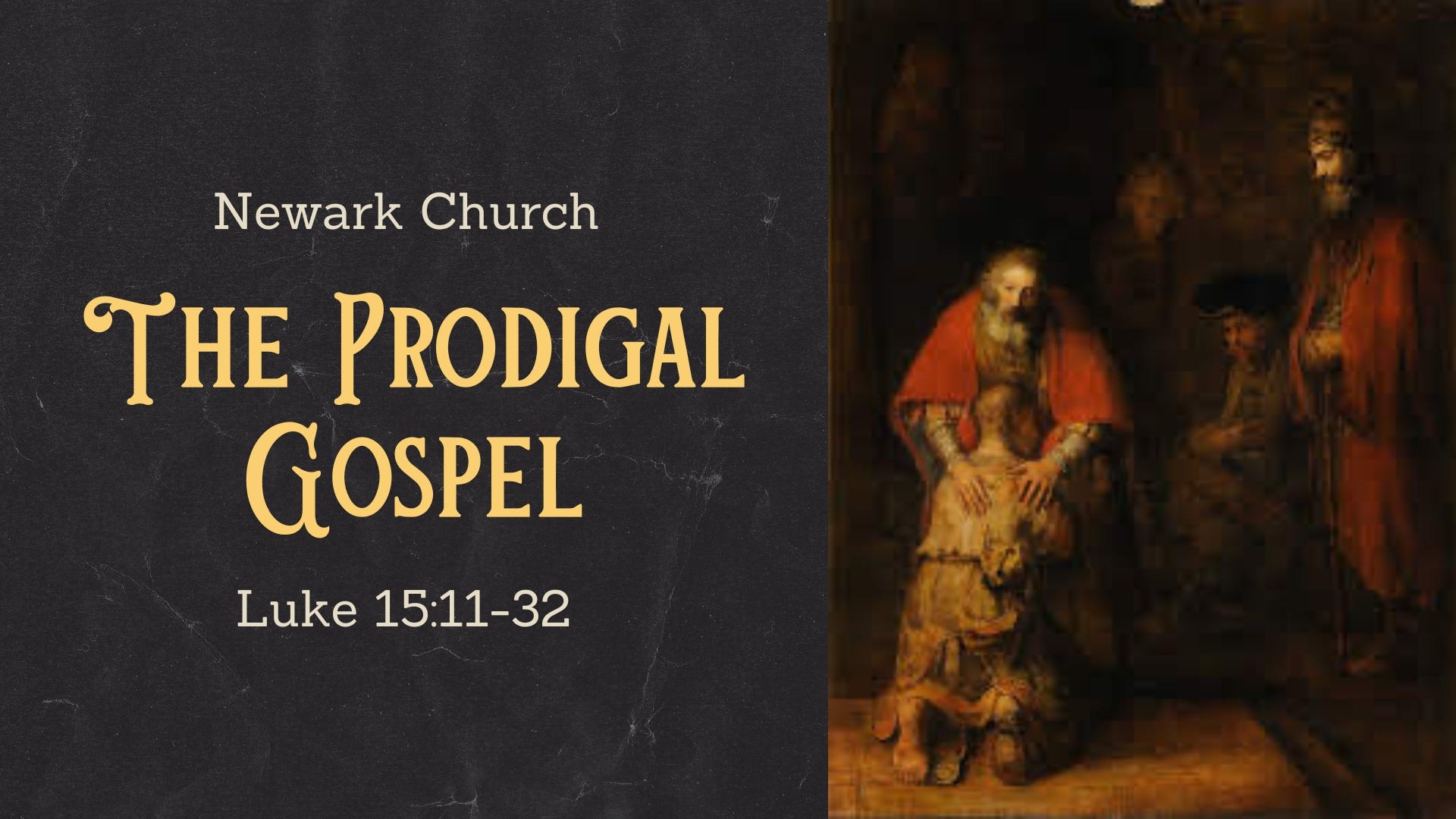
The story Jesus tells is about a father with two sons, who both have their problems. So in many ways, the story illustrates the grace of God. But the grace of God is not without challenge. So the message I’m preaching today, Embracing the Others, is about the challenge of extending the grace of God to others just as we have received the grace of God. So let’s pray and then we’ll read Luke 15:11-32.
One of the common requests preachers hear from churches is to preach more challenging sermons. Every preacher I know has had a church member approach them saying something like, “Preacher, we need some more challenging sermons.”
“Oh really?” Well, I’m happy to hear that and I will not try to disappoint today.
If my reading of Luke 15 is correct, then this text must challenge us at some point. As much as there is a word of grace from the father to both of his sons, there is also a challenge to the older son. But what about us as the readers of Luke’s Gospel, hearing this text proclaimed?
We open the Gospel of Luke up to the fifteenth chapter and immediately find Jesus having dinner with sinners. At least that’s how Pharisees and teachers of the Law categorized the Gentiles. How does it strike us to know that Jesus is friendly with people who might soil his reputation and ours too, if we’re to associate with Jesus?
What response might the Gospel of Luke have for us? In reading through the Gospel of Luke, Jesus has already shown us that the kingdom of God includes the Gentiles along with Israel. At the beginning of his ministry, Jesus read from the scroll of Isaiah in Luke 4 to declare the fulfillment of God’s promised salvation. What seemed like good news to the Jewish people in the synagogue suddenly was rejected with acrimony and even animosity as Jesus reminded the Jews that the prophets Elijah and Elisha were sent to Gentiles. The people attempted to kill Jesus.
Later on, Jesus is questioned about why he is eating with the “tax collectors and sinners” (Lk 5:31).2 “Sinners” was not just a pejorative reference to the Gentiles but also a way of reinforcing their exclusion and the treacherous tax collectors who served the Gentiles. But Jesus didn’t get that memo.
Instead, Jesus continued with a ministry that would eventually extend to all nations, from “Jerusalem, to Judea and Samaria, and to the ends of the earth” (Lk 24:46-48; Acts 1:8). So it seems this parable about a father and his two sons is really about God and his relation to the Jews and Gentiles, with the younger brother as the Gentiles and the older brother as the Jews.3
The problem for the religious experts seems to be their acrimony and animosity, which leaves no room for any empathy and sympathy. And when people lack empathy and sympathy for others, any notion of embrace—welcoming hospitality—isn’t even a consideration.
So we open our Bible to the fifteenth chapter of Luke where we encounter the ire of the Pharisees and teachers of the Law. “This man welcomes sinners and eats with them,” they mutter in their anger towards Jesus.
Jesus, on the other hand, keeps his cool and responds by telling three parables. A parable about a lost sheep, followed by a parable about a lost coin, and then finally a parable about a lost son. His point seems to be that God’s salvation is for everyone, embracing even the people who we might assume to be excluded or perhaps wish to exclude. The challenge is to anyone who would exclude others.
As we know, in the third parable Jesus tells a story about a younger son who demands his inheritance from his father. Once this rebellious son gets his inheritance, the text says that he went out and “squandered his wealth in wild living.” But after a famine, the son finds himself suffering in abject poverty. So the son sets out to return home with the plan of bargaining with his father, offering to be one of his hired hands just so that he can have food to eat and a roof over his head again. But the surprising moment of grace comes when this son’s father sees him and is “filled with compassion for him.” The father runs to his son, embraces him with a hug and kiss, and welcomes him home by throwing a party to celebrate his lost son now being found.
Grace is refreshing to our souls because we all know we need such grace. We sing songs about the grace of God because we want to remember that God is willing to forgive us no matter how egregious our sins are. But there’s more to the parable Jesus is telling than just grace shown to a rebellious child or the table of sinners Jesus is eating with.
The older brother is enraged when he learns that his father is throwing a party for his younger, who has come home. “Well Dad, you never threw me such a party,” says the jealous older son. “But,” the older brother says in v. 30, “when this son of yours who has squandered your property with prostitutes comes home, you kill the fattened calf for him.”
Did you notice how the older brother didn’t speak of his brother by saying, “My brother”? Instead, distancing himself from any relation to his brother, he says “this son of yours.” But the father will not allow such a sentiment to go unchecked. As the father explains the reason for throwing a party, he says to his older son, “this brother of yours…”
And now my imagination pictures Jesus at the table with the sinners, glancing at them and then turning his glance toward the religious experts… “But we had to celebrate and be glad, because this brother of yours was dead and is alive again; he was lost and is found.” So I wonder if Jesus was speaking directly to us today, just who he might glance at before turning to us to say “this brother or sister of yours…”? After all, just as the older son must embrace the younger son as his brother, we too must embrace the others, whoever our “others” might be, as God embraces them—people who are welcome in the kingdom of God.4
How then do we embrace others the way Jesus embraces the sinners? Some years ago, I was speaking as a guest preacher at a Church of Christ in Oklahoma. On a Saturday evening, I was having dinner with some of the church leaders. The conversation was rather light until one of their shepherds said to me, “Stick around town long enough and you’ll hear people refer to us as the “Gay church.”
“Oh…” I said, “Why do people think of you as a gay church?” I asked because this wasn’t an affirming church or anything like that, so to hear them say they had a reputation as being a gay church meant that I had to know why.
So the shepherds told me about a gay man who is a part of their church. They said I won’t see him tomorrow because he’s shut in, in hospice care, dying of AIDS. They told me that he grew up in this church but moved as an adult to Dallas, where he lived a very risky lifestyle as a gay man and eventually became HIV positive. Once his infection had developed into AIDS, he moved back to live with his parents, who were members of this church.
“Were,” I asked. The shepherd explained that the parents passed away a few years ago. So the church let this man move into their parsonage which was no longer used as a preacher’s house. And the shepherds said that with the way gossip works in a small town, all kinds of stories get told. So even though they still teach that sex outside of the marriage between one man and woman is wrong, people in town think of them as the gay church.
Well, I share that story because it helps us understand what it means to extend the grace of God and embrace the “sinners” like Jesus is doing at the table with sinners. It’s easy to talk about showing God’s love and mercy to all people as long as “all people” remain nameless and faceless abstract people.
We can recite all kinds of pious-sounding platitudes… “God loves the sinner but hates the sin.” “Jesus loves you and so do we.” “Come as you are, everyone is welcome here.”
Such platitudes are easy to say so long as we’re talking about abstract people and people for who there isn’t any acrimony or even animosity. It’s easy to show grace to someone whose beliefs and lifestyle are of no irritation, offense, or worse. But Jesus won’t allow us to talk about grace in the abstract when Jesus is actually sitting at the table with the sinners. Jesus has already embraced these sinners without any sign of confession or repentance.5 So embracing others as brothers and sisters challenges us to move beyond platitudes about grace and instead extend grace by embracing people with hospitality.
Can we picture Jesus sitting at a table with “sinners” saying “this brother or yours” or “this sister of yours”? Extending grace means making space at the table for others as our brothers and sisters. If we want people to know that God loves them and welcomes them into his presence, invite people to your table. And when they invite you to their table, go fellowship with them at their table. And when welcoming means caring for a man in hospice, dying as a result of AIDS, go sit at his bedside. And when we find ourselves challenged to embrace a sinner as Jesus is doing, just remember that we too are sinners whom Jesus has embraced.
1This post was originally the manuscript for a sermon titled Prodigal Love that I preached to the Newark Church of Christ on Sunday, June 23, 2024.
2Unless otherwise noted, all scripture quotations are from The Holy Bible, New International Version, NIV. Copyright © 1973, 1978, 1984, 2011 by Biblica, Inc. Used by permission. All rights reserved worldwide.
3Keith F. Nickle, Preaching the Gospel of Luke: Proclaiming God’s Royal Rule (Louisville: Westminster John Knox Press, 2000), 162, the lost son most likely represents the Gentiles since the son goes off “to a distant country” (v. 13) where he lives among the pigs (v. 16). This fits with the overall context of Luke in which Jesus declares his fulfillment of the Isaiah prophesy of liberation in Luke chapter four (cf. Isa 61:1-2) by associating himself with the prophets Elijah and Elisha who both were sent to Gentiles. By contrast to the lost son as the Gentiles, the older brother represents Israel.
4Brendan Byrne, The Hospitality of God: A Reading of Luke’s Gospel, rev. ed., Collegeville, MN: Liturgical Press, 2015, 147, the parable joins with the previous two parables of the lost sheep and lost coin to ask those who would exclude others from the kingdom if they can accept that God loves and welcomes all people, including the sinners, into his kingdom.
5Miroslav Volf, Exclusion and Embrace: A Theological Exploration of Identity, Otherness, and Reconciliation (Nashville: Abingdon Press, 1996), 159-160.