
Henry Jenkins's Blog
November 17, 2025
Frames of Fandom: An Excerpt From 'Fandom as Consumer Collective'
Henry Jenkins and Robert Kozinets recently released the third book in their Frames of Fandom book series, Fandom as Consumer Collective and the fourth book, Fandom as Subculture, will be published before the end of 2025. Altogether, fifteen volumes have been planned in this series and are at various stages. The books are being self-published and print-on-demand on Amazon. This post provides an excerpt from the third book, which examines how consumer collectives overlap with, include, and also transcend subcultures and audiences to form a new type of social grouping, simultaneously engaged with and critical of consumer culture.
BUY FRAMES OF FANDOM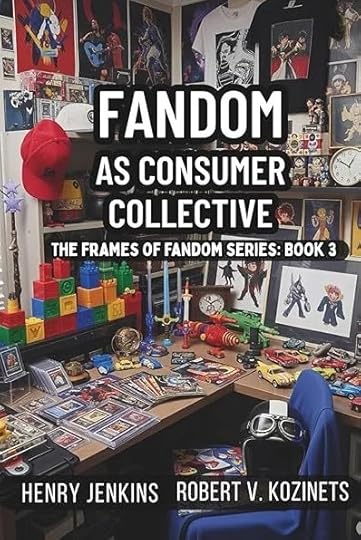 READ ABOUT THE FRAMES OF FANDOM SERIES AT POP JUNCTIONS About Fandom as Consumer Collective
Consumer collectives overlap with, include, and also transcend subcultures and audiences to form a new type of social grouping, simultaneously engaged with and critical of consumer culture. The book explores this tension—between individual consumer and social collective, participation and resistance, community and market, consumer and producer—unpacking how consumer collectives challenge existing commercial norms while also embracing the cultural opportunities they offer. It demonstrates a bridging of unhelpful disciplinary divides and calls for an enhanced appreciation of the creative, critical, and transformative potential of consumer collectives. Furthermore, it builds and then demonstrates an integrated conceptual toolkit for better understanding a world where passionate consumers participate in collectives that provide them with a deep sense of fulfillment. For scholars, practitioners, and fans alike, this book explores fandom as a critical engine of cultural production, a source of creative collective effervescence, and a force for cultural expression in an increasingly fragmented world.
This selection uses three publications targeted at Star Trek fans (and others) to illustrate the different ways fan works might relate to consumer culture.
Chapter 9: Canaries in the GemeinschaftAll About Star Trek Fan Clubs
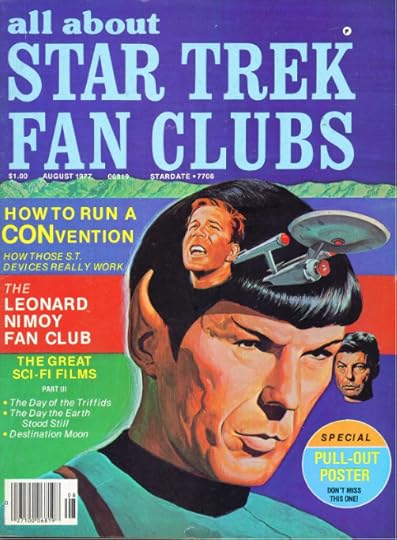
Figure 9.1: All about Star Trek Fan clubs magazine cover, circa 1977
We begin with an example from Rob’s personal collection of memorabilia (Henry has a copy of it as well!). It is a magazine called All About Star Trek Fan Clubs, whose cover is pictured, and a sample table of contents is provided. We chose it because it exemplifies an intriguing and important aspect of consumer collectives, including fandom: the ability of these collectives to combine both economic value, as indicated both by the price tag on the magazine’s cover and the fact that Rob bought it in his neighborhood convenience store, and the cultural values it possessed that derive from its interaction within a communal or gift economy.
The theory underlying this understanding goes back to Tönnies’ influential book, which postulated a core division in social groups. The first form, Gemeinschaft, translates to community in English and has many of the same positive connotations. In Kozinets (2002, p. 21), Rob explained the communal ideal as “a group of people living in close proximity with mutual social relations characterized by caring and sharing,” placing its origins within “the deep trust and interdependence of family relations,” and linking it to Robert Putnam’s (2000) theory of dwindling social capital and the need for a renewed gemeinschaft-like sense of belonging, civic engagement, and social contribution.
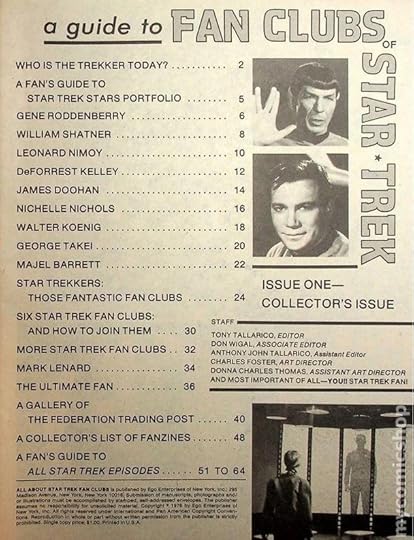
Figure 9.2: All about Star Trek Fan clubs magazine cover, circa 1976
The second type of social group, Gesellschaft, is the dark sister in this theoretical story. The English word society only roughly captures the connotations of Gesellschaft. Gesellschaft describes a relational situation opposite to that of familiar or familial relations. Where families are informal and help one another, societies are formal, contractual, and transactional. When people interact in a large marketplace, they are interacting with the roles and rules—the social logics—of a Gesellschaft: keeping a distance, getting the best deal, and making a profit. Gemeinschaft communities prioritize caring for and sharing with those within the group, whereas Gesellschaft markets emphasize transactions with outsiders where each player is trying to get a better deal at the other’s expense. Both settings are characterized by their own power dynamics. However, the divergence in social logics appears to account for the historical spatial and temporal confinement of markets to specific locales, occasions, and roles. People and institutions have sought to maintain a clear separation between the more ruthless and exploitative social logics of the Gesellschaft market and communal social institutions like home and family.
With the advent of industrialization and later, postindustrialization, market influences have increasingly permeated aspects of life traditionally dedicated to communal relationships. Times, spaces, and roles once exclusive to community-oriented interactions now often accommodate market-driven activities. Theorists like Biggart (1989), Frenzen and Davis (1990), and Granovetter (1985) have argued that markets and communities—Gemeinschaft and Gesellschaft—are now interdependent and even embedded within one another. This encroachment of market logic into communal spheres has led to criticism that the foundational communal values of caring and sharing are being eroded, as market-oriented self-interest reshapes the nature and quality of communal relations, making the actualization of the caring and sharing communal ideal in modern societies ever more challenging.
Communities and Markets: Contrasting yet Interconnected
A substantial body of research on consumer collectives and fandoms has explored these interconnections. In Jenkins (1992), Henry observes that many media fan communities establish nonprofit trade relationships to create a sense of shared communal experience. In Kozinets (2001), Rob suggested that Star Trek fans' distinction between the commercial and the sacred reflects a broader cultural tension between consumer communities and markets. Henry and Rob, along with others too numerous to mention, tended to hold the fort, noting the differences and tensions between these two pervasive and historically important forms of social logic.
Conversely, another strand of research suggested that the relationships between communities and markets might be less problematic than they seemed. Studies on various communities, including river rafters (Arnould and Price 1993), Harley-Davidson subcultures (Schouten and McAlexander 1995), and Macintosh, Saab, and Bronco brand communities (Muñiz and O’Guinn 2001), show little tension between consumer communities and markets. As we noted above, Schouten and McAlexander suggest that marketers and subcultural communities could pursue a symbiotic relationship, implying benefits to both of them. Perhaps even more strongly, Muñiz and O’Guinn (2001) suggested that brands and communities had merged, a transformation they cast as generally positive.
Now, let’s start to think about what went into the “All About Star Trek Fan Clubs” magazine and what else it tells us about how market and communal logics work. We can see how the magazine, despite being a widely distributed commercial product that was sold for profit, is deeply intertwined with the nonprofit, gift economy-driven elements of the Star Trek fan community. That interrelationship demonstrates some of the complexities inherent in many consumer collectives, which are hybrids where market and communal forces coexist and influence each other.
First, it is crucial to position this magazine in relation to the broader theoretical frameworks we have established. Star Trek fandom is a quintessential culture of consumption, as we have defined it—a vast, interconnected system of commercially produced images (the starship Enterprise, Spock's ears), texts (the episodes, films, and novels), and objects (phasers, uniforms, and model kits). This magazine, as a piece of merchandise, is undeniably one of those objects, produced by a media company whose goal is to profit from mass culture. By its very nature, popular culture depends on mass culture, and thus fandom is interrelated in its very DNA with the market logics of contemporary corporate capitalism.
However, the magazine occupies a fascinating, paradoxical space. Like fan fiction, its content and the core of its appeal are heavily reliant on the gift economy that fuels the fan community. It makes the legitimating claim that it is “made by fans for fans” (and there is no reason to doubt it, either). Although the eye-catching cover illustration features the trinity of Classic Trek characters and the iconic U.S.S. Enterprise, the magazine is not dedicated to Star Trek, per se. It is dedicated to Star Trek fan clubs—although, strangely, fans never graced any of the covers of its six-issue run. The Fanlore wiki describes its content as “a fusion of professional boosterism of Star Trek and its actors, and of fandom boosterism” (Fanlore, 2024). In this fusion, the magazine acts as a node, a physical artifact that channels the global flows that Arjun Appadurai (1990) describes. It circulates ideas about fan identity (the ideoscape), showcases fan art and stories (the mediascape), and provides the organizational know-how for fan-run conventions (the technoscape), all while being part of a commercial flow (the financescape).
The magazine’s content reveals its role as a bridge, designed to guide what we might call the "fandom-curious" from individual engagement into deeper, more structured forms of collective life. In 1977, before the mass availability of the Internet, a fan's experience could be isolating. The magazine's articles serve as a direct intervention in the size and intimacy dynamics of the collective. The first major story mentioned on the cover, "how to run a convention,” serves as a type of blueprint for transforming an unstructured gathering into a highly structured, self-governing event. It provides the tools for fans to scale up their activities from small, intimate groups into larger, more organized forms.
The second cover story, about a fan club dedicated to Leonard Nimoy, illustrates another key function: making specific fan collectives visible and accessible. By featuring this club and a fan painting of Mr. Spock, the magazine takes an unofficial, grassroots entity and grants it a form of official legitimacy by placing it within a professionally produced, commercial text. It serves as an advertisement for a specific subgroup within the larger fandom, offering a pathway for an individual fan to increase the intimacy of their involvement by joining a dedicated group. This process of highlighting and legitimizing unofficial fan activity is a primary way that the commercial marketplace identifies and engages with the energy of its most passionate consumers.
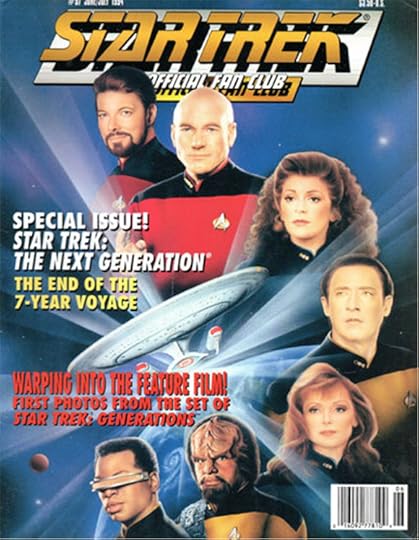
Figure 9.3: Star Trek Official Fan Club magazine cover
The final cover story, offering reviews of three "great sci-fi films," is particularly revealing. It acknowledges that fans are often "omnivorous" in their tastes and do not exist within a single, hermetically sealed culture of consumption. As we and numerous others have found, many Star Trek fans are not exclusively loyal to the show. This article functions to deliberately broaden the boundaries of the Star Trek culture of consumption, linking it to the wider universe of science fiction fandom, emphasizing the intersection of different cultural consumption circles, as we depict in Figure 7.1. The article on sci-fi films acts as another type of bridge—encouraging fans to explore the adjacent territories and demonstrating the fluid, overlapping nature of these cultural worlds.
Upon examining the table of contents, the mission to shape fan identity becomes even more evident. The lead story, “Who is the Trekker today?,” is an explicit act of identity construction. By using and validating the (then-preferred) term “Trekker,” the magazine tells its readers, ‘Look, others might call you a Trekkie, but you are a Trekker. You can take your fandom seriously. We have worked these things out for you, and there is a community waiting for you.’ Following the articles that profile the show's creators and actors, the magazine shifts its focus to the main topic: “Star Trekkers: Those Fantastic Fan Clubs.” It features six specific fan clubs, offering instructions on how to join them. By profiling an “ultimate fan,” listing collectible fanzines, and providing a 13-page “fan’s guide” to all 79 original episodes, the publication provides a comprehensive toolkit. It offers a prepackaged identity, a directory of collectives to join, and the cultural capital (episode knowledge) needed to participate, effectively serving as a primer for building a deeper, more structured, and more socially connected fan life.
We can usefully compare the “All About...” magazine with another, much longer-lived publication, Star Trek: The Official Fan Club magazine, which was renamed Star Trek Communicator after its 99th issue. The most important word to note regarding the magazine’s title is the term “official.” The magazine actually began as a fan publication created by Dan Madsen at the age of 18 as an outgrowth of the fan club he started. Madsen’s publication found its way to Paramount, who asked him to license the publication—and, later, to make his fan club the “official” one. As the cover featured in Figure 9.3 shows, the publication’s focus is not actually about fan clubs per se, but the Star Trek franchise itself. The cover in the figure offers fans exclusive information such as “first photos from the set of Star Trek: Generations.” But it does not offer them information about fandom and how it operates or how to identify oneself as a fan, although Dan Madsen—who is also a devoted Star Wars fan, fan organizer, and publisher—continued as publisher of the magazine until it was sold and stayed on until it was abandoned by its new owner.
Official publications are beholden to rights holders and as a consequence, they are policed to ensure that nothing occurs that might raise the risk of damaging the value of the franchise. Official organizations typically support affirmational forms of fandom (see Defining Fandom) but allow much less space for unauthorized and transformative fan activities. Zines, in the old days, might be sold under the table at a Creation con but other fan conventions center around fan works, which are openly displayed and celebrated. Fan authors have the opportunity to read excerpts from their works. Huge piles of new and vintage fanzines may be displayed on the dealer’s tables rather than the kinds of authorized merchandise that are sold at, say, San Diego Comic-Con. The same fan may go to official and unofficial conventions but an experienced fan knows what to expect from each.
We can see from this analysis that the “All About” magazine, although it is a published market offering, serves the function of helping to educate and potentially build individual fanships into collective fandoms. It provides a socializing and enculturating platform for individual fans. It offers them DIY and how-to-type guides on things like starting a convention, broadening their tastes and knowledge, buying merchandise, and collecting fanzines. It caters to fans' sometimes eclectic tastes, such as featuring poetry written by Classic Trek star and fan favorite Nichelle Nichols, something that would not be likely to appear in the official magazine. The general fan community benefited from the presence of the “All About” magazine. The All About magazine's existence generates value for the fan community by facilitating connections, circulating knowledge, and providing a sense of shared identity. This value generation aligns with the communal aspects of a gift economy, where the focus is on mutual benefit and shared resources.
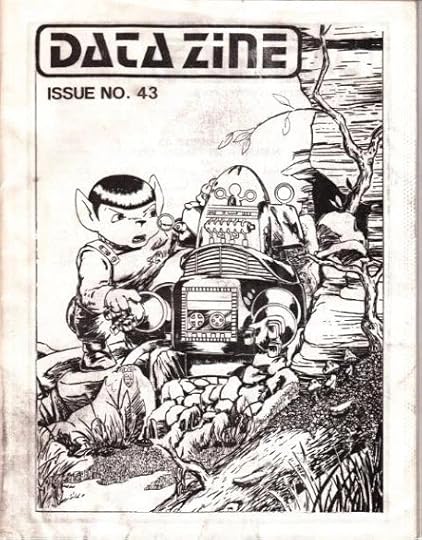
Figure 9.4: Datazine zine cover
Datazine: Unofficial and UnboundWe might contrast both of these publications with Datazine, which, from 1980 to 1991, served as a key resource for—rather than about—the fan fiction community (see Figure 9.4). Unlike the other two publications, which engaged to some degree with the commercial sphere, Datazine was totally unauthorized—by any official group, including the copyright holders. Datazine was closer to Factsheet Five which had been central to the larger zine movement coming out of the underground press efforts of the 1960s counterculture. The magazine never sought nor needed a mass audience, as long as it maintained the support of highly motivated readers who were themselves often also producing its content. Witness the fact that it makes extensive use of fan slang and jargon: you have to be invested in the community to understand what’s being said. Put differently, Datazine could be insular and exclusive. Unlike the commercial publications, Datazine had no incentive to broaden the ranks of fandom. Datazine was uninterested in formal fan clubs unless they had grassroots publications to offer. Datazine published notices from fan editors about their publications, where you could order them, and how much they cost. In one sense, these were advertisements, but the underlying logic was that of a gift economy since, in most cases, the zines were sold at cost.
Henry found Datazine to be a key resource when he began his work on Textual Poachers (Jenkins, 1992). The world Henry described in that book was largely circumscribed by the contents of this publication in ways he would only belatedly recognize. At that point, what had begun as a female fandom around Star Trek was expanding to incorporate more and more other fan objects, although mostly within the realm of genre films and television series. Thus, a passion for Star Trek led to interests in Star Wars, the original Battlestar Galactica, the British Blake’s 7, and so forth. But it also includes cop partner shows like Starsky and Hutch or the British series, The Professionals. Datazine also played important roles in identifying and codifying genres of fan fiction. Kirk/Spock, understood as a very particular relationship, was expanded there to the concept of slash, which could incorporate any number of other same-sex partnerships from across the spectrum of popular media. Some of the publications supported by Datazine were multimedia publications where smaller and diverse fandoms worked together. These zines might introduce readers to shows they had never heard of before, but if readers followed particular writers and editors, their range of fan objects might broaden. Datazine paved the way for today’s even more inclusive fan fiction archives like Archive of Our Own (discussed in Fandom as Participatory Culture).
Datazine also provided other resources in support of fan creators, such as advice columns and, somewhat more controversially, reviews of fanzines. Fans had a heated debate about whether reviews were negative, especially in a public context, or whether they could be vital in nurturing the creative development of the fans involved. Were reviews—which often imply a consumer orientation (“should you read this story?”)—consistent with the caring and sharing ethos of the fan gift economy?
The readers were assumed to be invested in building up the infrastructure of a fandom perceived to be a loosely affiliated network of people who both consumed and created fan works. In this realm, Datazine’s low production values were a badge of honor. Datazine, thus, has a different conception of how fandom was structured than publications that delimited themselves around Star Trek, sought to support the interests of formal fan clubs, and were primarily oriented around commercial efforts rather than grassroots publications. Datazine was very much a byproduct of a counterculture conception of DIY production as applied to the realm of fandom.
Datazine thus represents a fascinating and powerful form of consumer collective, one that can be understood through the frameworks we have developed. It stands as a prime example of a self-governing or grassroots commons formation—fiercely unofficial and valuing its unstructured, networked nature over any formal hierarchy. This structure directly influenced its relationship with size and intimacy.Datazinedeliberately operated at the small-scale, high-intimacy end of the spectrum, in contrast to the commercially oriented magazines that sought to expand their audience using the market logic of the gesellschaft. Its use of insider jargon and its focus on a gift economy were cultural mechanisms used for maintaining a manageable size and cultivating deep, trusting bonds among a core group of highly dedicated participants. The zine acted as a gatekeeper, prioritizing the quality of connection among initiates over the quantity of a mass readership. In doing so, it became the connective tissue for a multitude of overlapping cultures of consumption. While the other magazines primarily focused on the singular Star Trek culture of consumption,Datazinecurated a space where fans could fluidly move between the Star Trek,Starsky and Hutch, andBlake’s 7cultures, among others. The unifying principle was not a single fan object, but a shared passion for a specific creative practice—the writing and circulation of fan fiction—which itself became a vibrant, meta-level culture of consumption, complete with its own distinct objects (the zines), texts (the stories), and social norms.
Henry Jenkins is the Provost Professor of Communication, Journalism, Cinematic Arts and Education at the University of Southern California. He arrived at USC in Fall 2009 after spending more than a decade as the Director of the MIT Comparative Media Studies Program and the Peter de Florez Professor of Humanities. He is the author and/or editor of twenty books on various aspects of media and popular culture, including Textual Poachers: Television Fans and Participatory Culture, Hop on Pop: The Politics and Pleasures of Popular Culture, From Barbie to Mortal Kombat: Gender and Computer Games, Convergence Culture: Where Old and New Media Collide, Spreadable Media: Creating Meaning and Value in a Networked Culture, and By Any Media Necessary: The New Youth Activism. His most recent books are Participatory Culture: Interviews (based on material originally published on this blog), Popular Culture and the Civic Imagination: Case Studies of Creative Social Change, and Comics and Stuff. He is currently writing a book on changes in children’s culture and media during the post-World War II era. He has written for Technology Review, Computer Games, Salon, and The Huffington Post.
Robert V. Kozinets is a multiple award-winning educator and internationally recognized expert in methodologies, social media, marketing, and fandom studies. In 1995, he introduced the world to netnography. He has taught at prestigious institutions including Northwestern University’s Kellogg School of Business and the Schulich School of Business in Toronto, Canada. In 2024, he was made a Fellow of the Association for Consumer Research and also awarded Mid-Sweden’s educator award, worth 75,000 SEK. An Associate Editor for top academic journals like the Journal of Marketing and the Journal of Interactive Marketing, he has also written, edited, and co-authored 8 books and over 150 pieces of published research, some of it in poetic, photographic, musical, and videographic forms. Many notable brands, including Heinz, Ford, TD Bank, Sony, Vitamin Water, and L’Oréal, have hired his firm, Netnografica, for research and consultation services He holds the Jayne and Hans Hufschmid Chair of Strategic Public Relations and Business Communication at University of Southern California’s Annenberg School, a position that is shared with the USC Marshall School of Business.


November 4, 2025
“I May Be Circling the Drain But I Have a Few Steps in Me!’: Dick Van Dyke, ‘Mary Poppins’ and Playful Aging
The following blog post is based on remarks I presented as a keynote speaker at The Older, The Better! Aging Celebrity in Contemporary Media and Sport Contexts, PRIN 2022 PNRR “Celebr-Age” Final Conference organized by Ylenia Caputo, Simona Castellano, Antonella Mascio, Roy Menarini, Maurizio Merico, Sara Pesce, Mario Tirino at Universita di Bologna in September.
Dick Van Dyke will turn 100 this December and this past year has seemed like one big victory lap, starting with the extraordinary moment when a production number of “Step In Time” on Dancing with The Stars (ABC) concluded as this particular star stepped out onto the stage and (with an assist from two chorus boys) danced a few steps. The crowd went wild and so did the internet, as the scene brought a rush of nostalgia for anyone who grew up with Walt Disney’s Mary Poppins and Van Dyke’s performance of Bert the Chimney Sweep. I count myself among them. Mary Poppins was the first film I remember seeing in the theater and what a theater it was – Atlanta’s fabulous Fox Theater, an arabesque themed movie palace from the 1920s.
Mary Poppins plays a central role in my recent book, Where the Wild Things Were: Boyhood and Permissive Parenting in Post-War America. I want to begin this blog post where that book’s discussion of the film left off or perhaps more accurately where the book began, since I used the film to ground the book’s introduction of the concept of permissiveness, which turns out to be useful to think about the current moment in Van Dyke’s life (and mine) also. I am an aging Boy in a Striped Shirt, admiring Van Dyke’s dexterity all the more at a point where my own mobility has been limited by symptoms associated with diabetes and neuropathy.
In the book, I use this scene where the Banks household discusses how to hire a new nanny, with both the father (embodying prewar patriarchal norms focused on disciplining the child) and the children (embracing a more pleasure-centered and permissive style then coming into popularity through the widespread success of Benjamin Spock’s Baby and Child Care). We might map the contrast between the two approaches through this chart from another popular child-rearing guide of the era by Rudolf Dreikurs in 1964, the same year Mary Poppins was released.
Autocratic Parenting (Mr. Banks)Authority Figure Power Pressure Demanding Punishment Reward Imposition Domination Seen and Not Heard YOU do because I said soHere, and throughout the rest of the song, the key words and concepts—“precision,” “firmness,” “discipline,” “rules,” on the one hand and disorder and moral disintegration on the other—come directly from the discipline-centered child-rearing advice of the early 20th century. Ada Hart Arlitt’s The Child From One to Six (1930) warned that the child “will not know that there are laws that govern the universe unless he knows that there are laws that govern the home.” The home was to be regulated not by “mother love” but by the “kitchen time-piece.” Here, we speak to a core concern of the behaviorist model: the idea that children should be fed and put to bed on a fixed schedule rather than giving over to their demands or desires.
As in the pre-war models, the best methods for achieving these goals required the father to be the head of the household and for those under his “command” to maintain authority over the young. Going hand in hand with this emphasis on patriarchal power within the home is a distrust of maternal sentimentality or what Banks refers to as “the slipshod, sugary, female thinking they get around here all day long.” Banks is portrayed as seeking a polite distance from his children: “I'll pat them on the head and send them off to bed.”
Democratic Society (The Children)Knowledgeable LeaderInfluenceStimulationWinning CooperationLogical ConsequencesEncouragementSelf-determinationGuidanceListen! Respect the childWE do it because it is necessaryThe conversation between parents and children models something closer to the family council Dreikurs (1964) describes: “Each member has the right to bring up a problem. Each has the right to be heard. Together, all seek for a solution to the problem and the majority opinion is upheld” (p. 301). The children assume that they have the right to contribute to solving the problem and that their insights will be helpful to the adults. The children’s attempt to assert their voice in the process is only heard because their mother insists that the parents should listen to what they have to say.
The children’s criteria emphasize an affectionate relationship, the opposite of the anti-sentimentalist approach advocated by Watson and Mr. Banks. If Banks wants a nanny who can give commands, they want one with a “cheery disposition.” She is defined by the ways that she engages with them through jokes, songs, outings, and games, and not through the expectations she places upon them. She is to win their cooperation through what she permits and the guidance she offers. And as if to dramatize this process of winning cooperation, the next verse functions as a negotiation in which the children agree not to misbehave if the nanny agrees to better respond to their needs.
As defined in my book, permissiveness:
Uses empathetic reflection to “take stock” and attempt to understand children’s motivations and drivers
Values children’s sensuality, curiosity, push for independence, passion, playfulness as part of how they process the world
Seeks to protect the rights of children to find their own voices, to pursue just solutions, to engage democratically with others in their own community
Offers opportunities for children to achieve catharsis by working through emotional conflicts via expressive means, such as drawing pictures, writing stories, acting them out using dolls or other household materials.
Seeks to minimize conflict by decreasing the use of authoritative statements in favor of discussions and explanations
Seeks indirect rather than direct means to shape children’s characters
Is known for what it permits and accommodates rather than what it disciplines, constraints, limits and thwarts
Gives children security and freedom to work through their own problems, watches from distance, provides resources when needed
Embraces play as a mode of learning and as a means of communication, especially between parents and children
My book discusses the ways permissiveness permeated the representations of children—especially boys—in the children’s fictions of the era. Consider, for example, this sequence from one of my favorite films, 5000 Fingers of Dr. T, written by Doctor Seuss, as a young boy in a striped shirt proclaims his rights to be treated with the same respect owed to adults.
Alongside Spock, the other major advocate on the permissive family ideal was the grandmotherly Margaret Mead who was preoccupied with the idea that changing the dynamics of the American family was the best way to foster a more democratic culture. American family life, Mead argued, had been shaped by several decades of disruption. First, there had been the immigrants who came to America in the late 19th and early 20th century; their children had rejected old world traditions in order to try to become more American. There were also the dislocations felt by families, like my own, that had moved to the city from the country, shifting from agriculture-based to industrialized lifestyles. Then, there was the generation which had postponed starting a family during the Depression and the war. Consequently, baby boom parents had little to no memories of what the typical American family had looked like before. Mead wrote in November 1945, “this leaves two courses open to them, either to fashion a pattern out of partial remembrance of the war years or to make a new pattern for themselves altogether” (p. 91). What will happen, Mead (Unpublished, 1945) asks, “if the young people of this generation realize that the world is theirs for the making, that because of the break between peace and war, they can -- if they wish -- reject the whole model which their brothers and sisters -- living in another world -- have given them in the past five years?” Developing this new model will require intentionality: Otherwise, she fears:
It is this younger group who will be most lost, most groping, most likely to take short cuts and easy solutions, most likely to become a ‘lost generation.’ The only way in which this can be prevented is to help these young people think it through, give them a chance to discuss the whole problem, to realize why they are at sea, to talk over the kind of life their elder brothers and sisters have been living, to label those aspects of it which don’t belong in their lives now….There is no older generation who can give these models to them. The most we can do is to help them find them themselves. (Mead, 1945, Unpublished)
Writing for Harpers, also in 1945, Mead calls upon “the symbol-makers, the writers, the artists, the radio broadcasters and the filmmakers” to be “enlisted” into producing new narratives, the shared designs out of which the post-war family would be constructed.
And the “symbol makers” responded by producing works, such as Mary Poppins, which consciously modeled what a permissive household might look like. In “Just a Spoonful of Sugar,” Mary describes her use of “reverse-psychology,” through which work becomes less painful if embraced as a form of play and medicine tastes better if disguised by sucrose.
In both Mary Poppins and Sound of Music, Julie Andrews embodied the ideals of the period, freeing children from the constraints imposed upon them from conservative fathers, allowing them to sing and play and go on outings, and gradually bringing the father to embrace the new values of the postwar family.
A recent Disney film stressed the way the story was about “Saving Mr. Banks” as much as it was about setting the family right. And in practice, permissive culture sought to place greater demands on adults to listen to, empathize with, and achieve understanding of their children. Often, the parenting guidebooks of the era stressed the importance of the father becoming a playmate for his children, a practice which not only brought a strong male presence into their lives, but also gave the father a way to rejuvenate himself at the end of a hard day at work. Similarly, in 5000 Fingers, we see the adult male’s potential to be an ideal father for the orphaned boy by observing how they played together.
Advertisements of the period warned fathers that if they did not take time to play with their children now, then it would be soon too late. We can see examples of this discourse in a Kodak advertisement. Or, again, in a popular song about fatherhood performed by folk singer Harry Chapin.
If the plot of Mary Poppins works to get the workaholic Mr. Banks, who is named for the institution where he has dedicated his life, to go out and fly a kite with his children, the Van Dyke character, Bert, models what it might mean for an adult to enjoy a more playful and imaginative life. It is Bert who draws chalk pictures on the sidewalk that are so immersive that the children and their Nanny can jump into them and have wild adventures together. It is Bert and his Uncle Albert who lets loose with wild laughter which sends them floating up to the ceiling. And it is Bert who teaches the father that he needs to be more attentive to the emotional needs of his children.
And much as Mary Poppins teaches the children that “just a spoonful of sugar makes the medicine go down,” Bert and his Chimney Sweep friends model what a more playful relationship to work might look like. And, ironically, it was Dick Van Dyke who also portrayed the most fossilized version of adult work, the ancient old man who is the elder leader of the board of the Bank of England. Here, we see a still relatively young Van Dyke imagining what it would be like to be elderly, having, like Charles Dickens’ Ebanezar Scrooge, spent his life dedicated to little more than the pursuit of gold or in this case, tuppence.
In hindsight, it is clear that Mary Poppins had as much to teach us about being an adult as it had to say to us as Baby Boom era children, if we only knew where to look.
I want to argue that a new phase in Van Dyke’s life can be seen in Mary Poppins Returns when he steps on screen, now himself an older man, singing and dancing, having grown into the bank president who looks more like the original than we could have anticipated. And this becomes the persona which Van Dyke adopts more and more in his public appearances. As the character explains, “I may be circling the drain but I have a few steps left in me.”
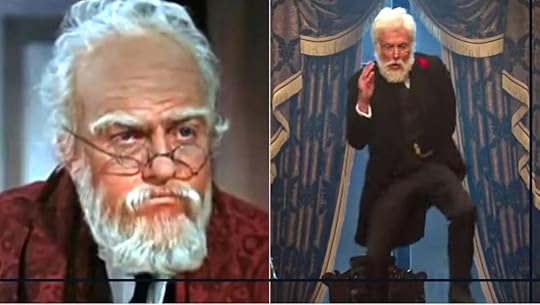
dick van dyke in Mary poppins returns (2018)
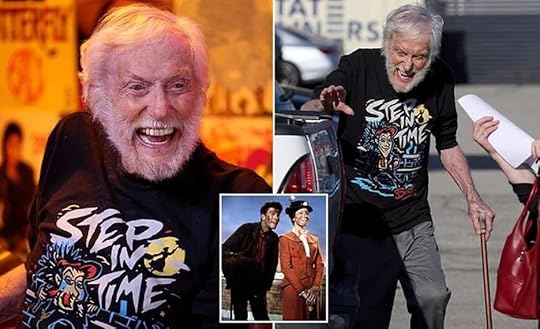
Each new birthday requires that Van Dyke, now widely seen as a national treasure, flash another broad smile and looking like he will burst out laughing at any moment. We already know how much he loves to laugh. While Van Dyke played many roles across his career, it is the part of Bert to which he returns again and again. Photographs show him in T-Shirts which evoke catch phrases from Mary Poppins, now repurposed to reflect ironically on the process of aging. He and Bert have fused with the star sign becoming a living, breathing intertextual reference back to his most beloved role.

For his 90th Birthday, he stood on a balcony in Disneyland being serenaded by throngs of the public below and presided over the opening of a new cafe dedicated to memories of the film.
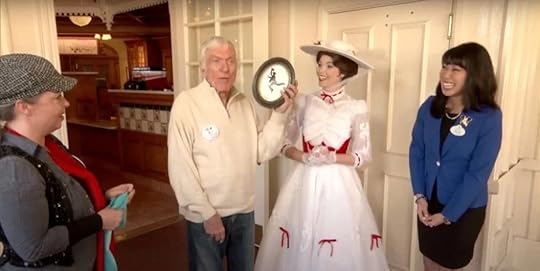
Dick Van Dyke celebrates his 90th birthday at disneyland
For his 96 birthday, Van Dyke released a music video where he dances with his considerably younger wife and gives a ribald version of “Everyone loves a lover.” Again, he demonstrates his physical control of his body as well as the fact that he still is a clown who does not take himself too seriously. A news segment commemorating his 98th birthday includes references to his roles in Chitty Chitty Bang Bang and the Dick Van Dyke show but it starts with “Jolly Holliday” and references Mary Poppins multiple times.
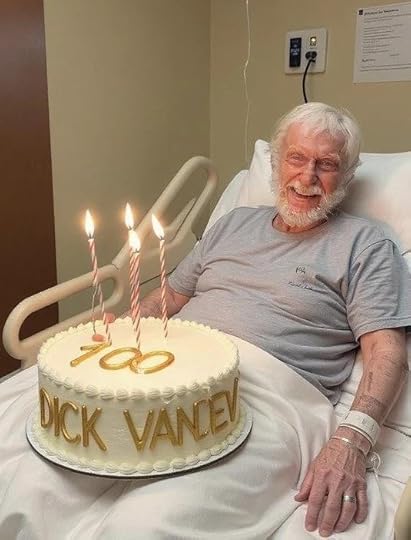
Much as Bert in Mary Poppins models what a permissive father might be, Van Dyke’s later appearances showcase to an aging Baby Boom audience what playful aging might look like. He’s still got it, baby, and so do you, he seems to say, as we watch from our arm chairs and imagine what it might be like to “step in time” with a chorus of always cheerful chimney sweeps. In Entertainment and Utopia Richard Dyer (1977) tells us that musicals model what utopia feels like through their appeals to spontaneity, plentitude, energy, and the other virtues they associate with entertainment. As my own 68th birthday approaches, I would just love to move through the world with less numbness in my feet, less stiffness in my knees, and less discomfort in my chest.
Van Dyke’s 100th birthday approaches in just a month and a half and he seems to be joining George Burns and Betty White as an example of a star who comes to perform what it is like to break the century boundary. Happy Birthday, Dick, and may everyday continue to be a “Jolly Holiday.”
Biography
Henry Jenkins is the Provost Professor of Communication, Journalism, Cinematic Arts and Education at the University of Southern California. He arrived at USC in Fall 2009 after spending more than a decade as the Director of the MIT Comparative Media Studies Program and the Peter de Florez Professor of Humanities. He is the author and/or editor of twenty books on various aspects of media and popular culture, including Textual Poachers: Television Fans and Participatory Culture, Hop on Pop: The Politics and Pleasures of Popular Culture, From Barbie to Mortal Kombat: Gender and Computer Games, Convergence Culture: Where Old and New Media Collide, Spreadable Media: Creating Meaning and Value in a Networked Culture, and By Any Media Necessary: The New Youth Activism. His most recent books are Participatory Culture: Interviews (based on material originally published on this blog), Popular Culture and the Civic Imagination: Case Studies of Creative Social Change, and Comics and Stuff. He is currently writing a book on changes in children’s culture and media during the post-World War II era. He has written for Technology Review, Computer Games, Salon, and The Huffington Post.
October 23, 2025
IPDW2025—(Re)designing Production: An Interview with Alex McDowell
TL: Alex, thank you for sharing your time and experience in this discussion to celebrate International Production Design Week. I’d like to start by reflecting on the history and transformation of production design in the filmmaking process. Throughout your career, have you experienced much change in production design and the role of the production designer in filmmaking and screen storytelling?
AM: Hi Tara, thanks for your questions!
There have of course been huge changes in our craft since I started, but not enough to fully integrate Production Design in the opportunities of non-linear production. Rick Carter has one of my favorite quotes for all of us: “the production designer's first job is to design the production”.
This has always been true, and it's our responsibility as designers to take it on. But the context has changed radically. For over 20 years we’ve been pushing for a change in the relationship between the front end and the back end of production and since the early 2000s we developed an art department workflow that aligned closely to visual effects. But the reality was that the pre-production assets that framed the shoot tended to be discarded and then rebuilt in post.
With virtual production, non-linear production has kicked in. Now our work is to use the tools we have—and keep them up to date—to design the virtual production. Now we take responsibility to update the production design/art process to drive the full breadth of the production, which means a different make-up of the art department. Increasingly, we are working with illustrators using 3D and game platforms, engineers, designers in Rhino or Maya to drive models informed by photogrammetry scans from drones in a location, reference images to blender or rapid fabrication, etc. At this point, the design development can be distributed to any of the appropriate departments—construction, location, stunts, set dressing, DP, VFX, virtual production—and director.
The art department increasingly needs polymaths. Schools need to teach accordingly, and designers need to hire appropriately. It’s also worth saying that a lot of these processes no longer apply only to mega-productions. The smallest budget can use a drone to scan a location and a single designer to accurately add a set extension.
Across your career you have worked as a production designer on a range of different projects, including Madonna’s early music videos, The Crow (1994), The Fight Club (1999), Minority Report (2002), Charlie and the Chocolate Factory (2005), Watchman (2009), and Man of Steel (2013). How would you describe your own approach to production design and has this changed across your career?
In addition to the previous response, the only thing to add is obvious: every show has different demands. We learn from every show and apply that learning to the next. The designer probably has to adapt to the nuance and context of a script and direction more fully than almost any other department—materials change, crew skills change, vendors change, tools change, location resources change and your knowledge updates exponentially.
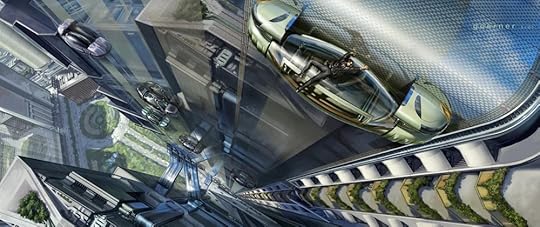
Minority report (2002)
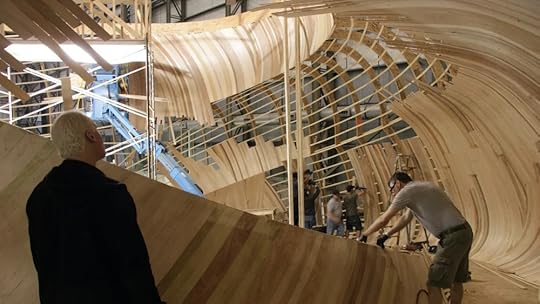
Man of steel (2013)
Your work has been instrumental in the development of a world-driven approach to storytelling, whereby the world is designed prior to and beyond the boundaries of a script. This seems to enable a stronger relationship between production design and other filmmaking crafts across the storytelling and production process. What do you see to be the role of the screenplay within this approach and how does this redefine story ideation, authorship, and collaboration in screen production?
What we have learnt simply is that non-linear production is possible when storytelling meets narrative design. Every world provides unique context and logic from which any number of story paths can evolve. Ideation, authorship, and collaboration in screen production become a single workspace for development. Production design in this context provides an immersive and adaptive container that much more closely mirrors the conditions of production start to finish for all the makers of a film and evolves accordingly.
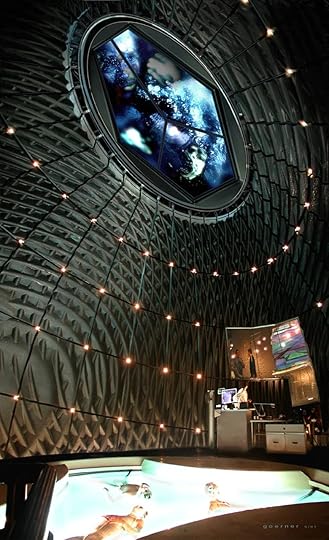
minority report (2002) ‘precogs temple’
World building requires an interdisciplinary approach to storytelling, within filmmaking departments and with experts in other fields like computer science, animation, and culture. This seems to require a reimagining or reorganization of the traditional film development and production process. Do you see evidence of this kind of reorganization happening in the industrial context? And is it possible for traditional filmmaking processes to still embrace world-building principles without a complete restructuring of the production process?
Industrial is the right word. We are finally moving from a 19th century Victorian-industrial linear production process to one of the most agile and effective non-linear practices in the world. I’ve experienced a broad range of industries outside entertainment media, and our industry can compete with any of them. But it absolutely requires a restructuring of the traditional production process. This assumes that the traditional creative skills remain and are still vital, but we all have to work with new tools as we always have. These tools speak to each other in ways that make ideation and creativity more intuitive, closer to our imagination, and we have to adapt to take advantage of that. We are biological, cellular creatures, but we’ve been forced to work with straight lines. It’s fun to see us getting closer to our intuitive selves.
Your work sits at such an interesting intersection between design, technology, and education and you have been instrumental in promoting the critical role that production design plays in world building and storytelling. Can you discuss some of the work you have been doing as part of the World Building Institute at USC, particularly the Project JUNK consortium? Why has it been so important for you to also work across education and support the development of future world builders? What has been the most rewarding part of working at the interface of industry and education?
Most rewarding and valuable continues to be the demands of the students when they see that the edges of their work are unconstrained, and when they understand that world building demands cross-disciplinary co-creation. I hope we are developing the base for new generations of polymaths, who can work across media, in industries within and outside entertainment, and in fields that do not yet exist. If we are able to focus on the need to break down the silos of disciplines and understand the power of folding together the craft skills and toolsets across media, we need to train generations that can navigate and exploit these changes as they happen.
The JUNK project is a world building program that we are now teaching globally that originated in a collaboration between USC SCA and Austral University in Buenos Aires. It is not only reaching students in entertainment media but also in trades as wide reaching as engineering, biology, anthropology, architecture and social politics. It’s a true test of how what we are learning through the intersection of the advances in media and world building can change the world.
Finally, how would you characterize the twenty-first century production designer based on creative and technological developments in screen practice and the film industries?
Our work is to stay on our toes, be aware of every change in tools and resources, interface more deeply with the full breadth of production, and increasingly demand that the technology keeps up with our imagination.
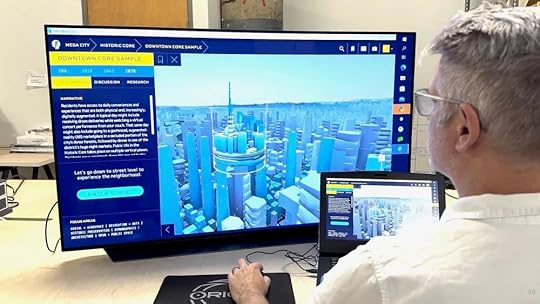
future world vision – mega city 2070 project
BiographiesAlex McDowell. Designer. Royal Designer for Industry (RDI). Creative director, production designer, professor, world builder. British citizen, US citizen, living in the US since 1986. He has been a production designer and creative director in film, game, animation, theatre and other media for over 30 years. McDowell is an advocate and originator of the narrative design system world building. His practice incorporates design and storytelling across media in education, research, institutions, corporations, and entertainment media. He is co-founder & creative director of Experimental Design, Professor of Cinematic Practice at the University of Southern California School of Cinematic Arts, Director of the USC World Building Institute & World Building Media Lab, USC William Cameron Menzies Endowed Chair in Production Design, founder of the the JUNK Consortium, Associate Professor at USC Dornsife College of Letters, Arts and Sciences, The Bridge Institute. He’s written and talked a lot about narrative design, for a long time, in many places, to many people.
Tara Lomax is an Associate Editor at Pop Junctions. She has expertise in entertainment franchising, multiplatform storytelling, and contemporary Hollywood entertainment and has published on topics such as transmedia storytelling and world building, creative licensing, seriality, virtual production and visual effects. Her work can be found in publications that include JCMS: Journal of Cinema and Media Studies, Senses of Cinema and Quarterly Review of Film and Video, and the book collections The Screens of Virtual Production (2025), Starring Tom Cruise (2021), The Supervillain Reader (2020), The Superhero Symbol (2020), The Palgrave Handbook of Screen Production (2019), and Star Wars and the History of Transmedia Storytelling (2017). She is the Discipline Lead of Screen Studies at the Australian Film Television and Radio School (AFTRS) and has a PhD in screen studies from The University of Melbourne.


IPDW2025—Minding Dreams
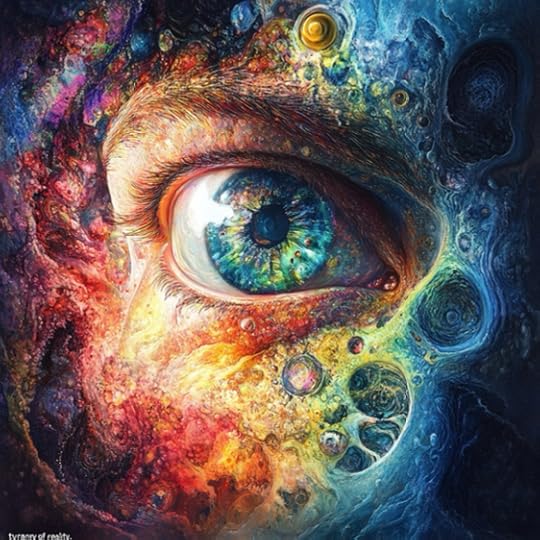
As a teenager in the late 1960s, I enjoyed “turning on, tuning in and tripping out.” But I never in my wildest adolescent dreams could have foreseen the trip that “minding dreams” has taken me on. These dream journeys that I have experienced have been far more wondrous than I could have ever imagined when I was younger.
What have I discovered over this past 50+ years of “minding dreams?” What is it about each one of the dreams that has resonated with me? When you experience specific types of dream imagery over and over again... it’s almost like you’re finding your own water level of subconsciousness. My pursuits and interests as a young person were quite varied. From drawing and painting and writing and traveling and then philosophizing, continuously seeking transcendental experiences, even being on the receiving end of “messages,” which I thought were meaningful to me. I don’t mean weird otherworldly “messages,” I just mean listening to and being influenced by music, especially the songs of the Beatles; to the extent that I, like so many others of my generation, felt I actually understood where they were creatively coming from. I still do.
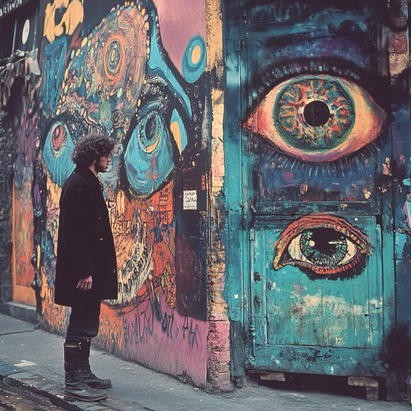
I marveled at the Beatles’ ability to form something that was so much greater than the sum of the individual parts in their music, and to express that so magnificently that the “message” was not only exhilarating, but overwhelmingly resonant when played and replayed again. And most importantly, that I could keep hearing those musical and lyrical “messages” playing in my head over all these years. I think that my being on the receiving end of that kind of a dream-like “messaging” in the late 1960s, especially from John Lennon, reinforced for me something that I felt I already intuited about the life of many Dream Minders.
After a Dream is first experienced, each person who “has it” often tries to recall who was in it and what happened…and then perhaps to understand what it was about. But afterwards, what the dreamers are often left with is the memory of images of not just who was in the dream and what occurred, but also where the dream took them, and how it made them feel to be there.
During this process of “minding dreams,” we often like to think we can justify the aesthetics from an “almost” rational perspective, but most of the time we simply respond to what feels intuitively plausible to us. Over the years, I have learned that there is almost always a way to perceive an ethereal creative dream web underlying each dream, so that we later can actually “mind” that area, as in later exploring it conceptually and emotionally. And perhaps even spiritually.
I’ve found that this level actually matters to many of the best dreams, which inspire us to find the mysterious aspects that are “there” to be discovered, which we might not at first have seen or realized were “there.” I’m personally usually looking to experience dream places that feel like they have already existed before I arrived there in my dream.
What does the process of “dream minding” look like? What does it feel like? What does this emotionally or even intellectually express? Where we go, we take others. And once we show where we are, it often becomes clear that this also fundamentally helps to determine “who we are.” And this, for me, is the essence of what “minding dreams” is all about. They reflect simultaneously both the sum of what was first experienced, and then subsequently what is shared with other dreamers who can now “mind” the same dream.
Through writing, music, film, painting, sculpture, in a digital or analogue medium, many dreamers attempt to express or re-create their dreams in order to see them “come true.” However, not many are successful at doing this. The fortunate Dream Minders, who truly create from the dreams that come to them naturally, usually have their inner eyes and ears attuned to their inner mind of dreaming much of the time.
One celebrated Dream Minder once said, “Some of my best dreams are not my own.” His interactions with others in the creative process of “minding dreams,” which have subsequently inspired so many, is located somewhere within the mind space between where he is and where others subsequently arrive mentally.
One of the things that most “Dream Minders” have in common with one another is a deep love of visual storytelling, combined with a great desire to inspire and be inspired by the dreams of others. Dream visions are not always something anyone can illustrate right away. Dream Minders can feel that they’re having a vision of a dream before they can fully “see” it. It’s not always an image that comes into view in their mind’s eyes, but almost more of the feelings of a presence in a dream that mysteriously demands engagement and exploration.
There’s always a gap between each one of us, because as individuals we each have our own individual consciousness. We usually feel original and uniquely alone while we are dreaming. But where do those images and sounds, and our responsive thoughts and feelings come from? Surely from somewhere…and, once we express them as dream visions, how are they actually received by other dreamers, particularly in a potentially collaborative process such as “minding dreams?”

The context of what you're “seeing” or trying to “see” in a dream makes such a big difference in how you perceive it, especially when you’re trying to transform it into something else in the process of “minding dreams.” Sometimes when I'm scouting in my mind’s eye, I have the feeling that actually I'm “auditioning” dream places, characters, ideas and feelings in order to see if they not only want to be in my dream, but can they be in my dream to fulfill a specific purpose.
That means a Dream Minder must have a filter that disregards what they are looking at in a naturalistic sense. We’re only “seeing” it for how it might potentially fit into that specific dream. Underneath this level are other considerations, such as, what is it for or what’s the reason for it to be in this dream? Most importantly, what is its spiritual purpose in the dream?
BiographyRick Carter is a production designer and art director best known for his work on films such as Back to the Future Part II (1989), Back to the Future Part III (1990), Jurassic Park (1993), Forrest Gump (1994), Avatar (2009), Lincoln (2012), Star Wars: The Force Awakens (2015), and The Fabelmans (2022). He has collaborated with directors such as Steven Spielberg, Robert Zemeckis, James Cameron, and J. J. Abrams and is a two-time Academy Award winner.

October 22, 2025
IPDW2025—Storytelling Through Spaces: The Blood, Sweat, and Tears of Production Design
Having worked in the Art Department for the last twenty years, and as a production designer for ten of those years, across feature films, short films, commercials and television, I have come to believe that, put simply, production design is about creating worlds that are believable. Worlds where the audience is unable to tell real locations from created sets. I have very often overheard the line, meant as criticism, “what did the production designer even do here?!” But to me, this is the highest compliment the production design team can receive. It’s what we strive to do in our profession. The audience knows what they see is not real, yet if the world feels true, they can surrender to it. My job is to make that surrender possible.
To the outside world, the term “production design” conveys something glamorous and creative. But, in reality, this profession is a constant battle between creativity, logistics, deadlines and budgets. Even the weather and changing shoot schedules shape what we finally build. Every project turns into a balance between vision and adjustment. You start with a clear plan, but the plan never survives the ground reality. And so, you learn to adapt, all the while ensuring that the set never suffers.
John Lennon once said, “life is what happens when you’re busy making other plans”. But I’d tweak it a little to say, “production design is what happens when you’re busy making other plans”!
When I started in this field, the work began with hand-done sketches and physical models. Now, with the major technological advances available to us, we begin with screens: digital renders, previsualization and virtual production tools. These have changed how we plan and build, and they certainly help when you’re putting together large-scale productions. But personally, I still find that there is no match for the details one can bring to elements by hand, especially in a culture of resourceful ‘hacks’ like India. Technology is useful, but it’s not design. Real design happens when your hands are dirty, when you’re mixing colours on site and when you find a new tone under natural light. A render can show a space, and it can’t give it life.
Every film or series I’ve worked on has taught me something new about how the spaces a story is set in shapes how we feel about the story itself. I pick two of these projects as examples to shed light on my experience in this business across two decades: Gold (Dir. Reema Kagti, Excel Entertainment, 2018) and Dahaad (Dir. Reema Kagti, Amazon Prime Video, 2023). Both these productions could not be more different to each other: one is a period sports drama, set against the backdrop of pre- and post-independent India; the other is a thriller series set in present-day rural Rajasthan and in the context of the Indian caste system.
Though diametrically different in the brief I was given, my challenge on both projects was the same: to bring the screenplay to life visually, in such a seamless manner that the audience should feel like they’ve entered India in the 1940s or rural Rajasthan as it stands today, all while sitting in the comfort of their seats. A personal challenge I set myself, as I always do, was to create a space that would inspire the actors to perform, the cinematographer to shoot, and the director to direct, from the moment they walked onto set.
As production designer on Gold, I had to recreate a colonized country striving to find its identity back in the 1940s. The story of India winning its first Olympics gold medal in hockey after independence was not just about sport. It was about pride, self-belief, and reclaiming dignity. That feeling had to live in every frame—not just through dialogue, but through the world we built.
India has changed so much in the seven decades since its independence that few visual elements from that era still exist. While some places retain an old charm, modern life has seeped in everywhere — glass, steel, signboards, and cables. For this film, our challenge was to erase the present to find the past. Extensive research went into every element, from the props and set dressing, to the colonial Indian architecture, and the color palettes. We fabricated props and recreated objects like cameras and furniture from archival photographs we discovered. Some period elements were even sourced from London to capture the colonial influence visible in India during that time.
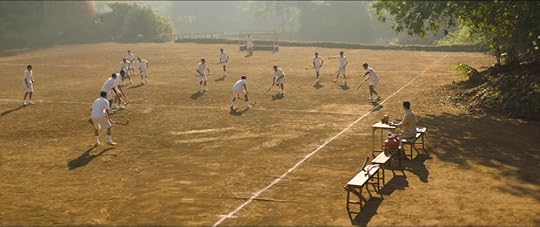
the finished hockey field.

making the hockey field
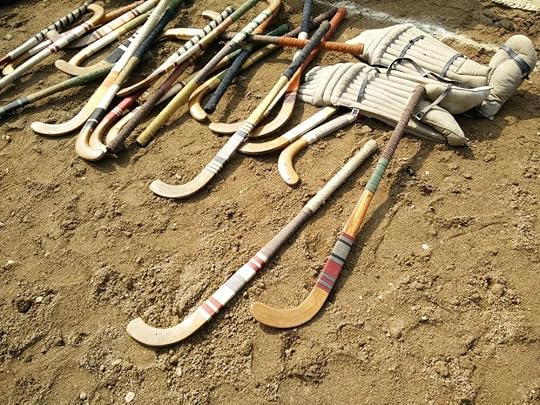
hockey stick props
Gold was an extremely labor-intensive film. An anecdote that comes to mind pertains to one of the key props in the film: the hockey sticks. We needed 350 of them, all wooden and appropriate to the period. After scanning my database, I found a vendor in Punjab whose grandfather had crafted hockey sticks for India’s Olympic team decades ago. We discussed every detail of these hockey sticks — the shape, the weight, the finish. Once the sticks arrived in Mumbai, my team and I refined each one by hand. We dyed the thread and grips ourselves, used toweling fabric to wrap them, and matched their texture to the old sticks used in the 1940s. By the end, these hockey sticks went from being mere props, to being an integral part of the story on screen and behind the scenes for the team of Gold. The actors too rehearsed their hockey games with these sticks for the shoot, to create authenticity on set and in their performances.
One of the largest structures we built for this film was a monastery and the area around it. Everything was built on one large piece of land: the mud hockey field, dining hall, kitchen, hostel rooms and so on. The monastery had to look timeless and completely free from any British architectural influence. It was designed as a Buddhist place of calm and focus, with simple geometry, earthy tones, and raw textures. The hockey field itself came with its own set of problems. The ground, which once used to be a paddy field, was soft from years of cultivation. We spent days draining it, layering it and stabilizing it before the players could train on it. It took us more than a month to build that entire world, and every day brought new challenges: structural, aesthetic, and emotional.
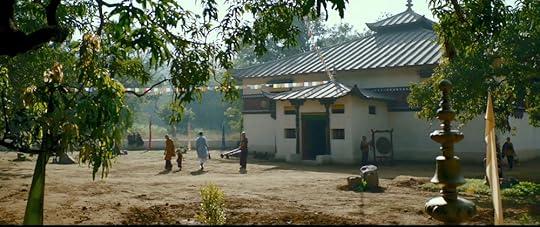
THE FINISHED MONASTERY (GOLD)
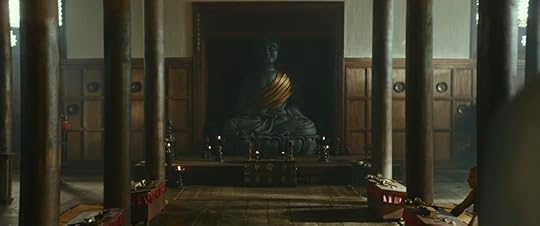
THE FINISHED MONASTERY (GOLD)
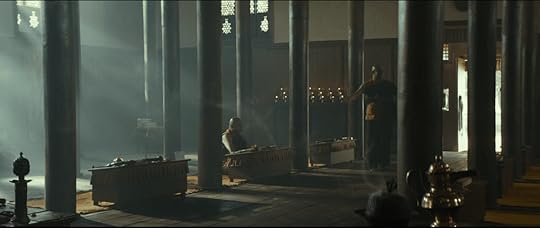
THE FINISHED MONASTERY (GOLD)
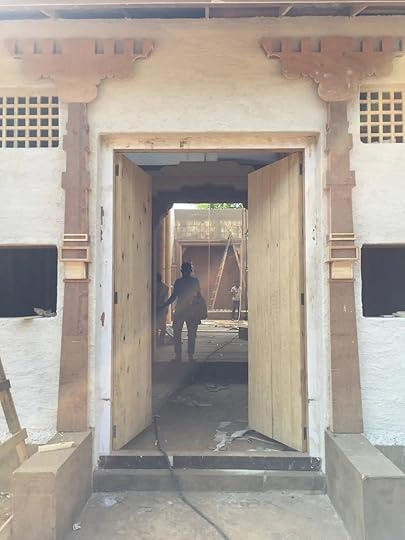
MAKING THE MONASTERY (GOLD)
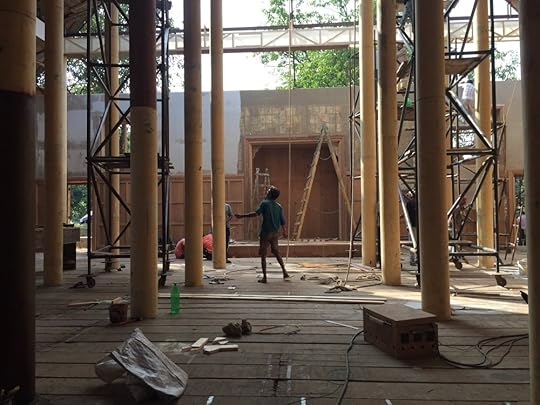
MAKING THE MONASTERY (GOLD)
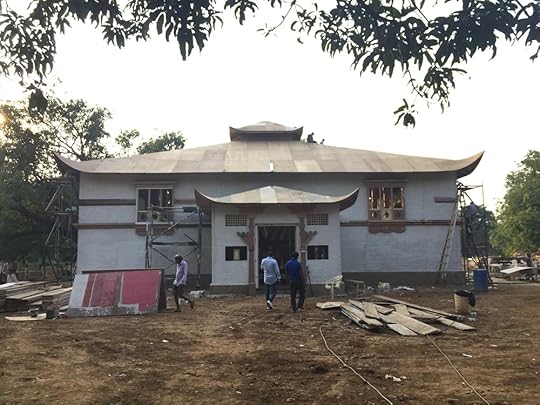
MAKING THE MONASTERY (GOLD)
We also had to build an entire market set outdoors for this film. It was beautiful on paper, but nature had other plans. For a week straight, thunderstorms hit every evening like clockwork. Each time it poured, the street became drenched, the paint washed off, and large parts of the wooden structures swelled or warped. The next morning, my team and I would start again: repainting, replacing damaged plywood, drying out props under whatever sunlight we got. Because the schedule couldn’t shift, we lost the chance to age the walls the way we had planned. The surfaces looked too fresh for the period we were recreating. That set was never quite what I wanted it to be. It’s hard to admit that, but it’s part of the truth of our work—some frames carry your pride, others carry your struggle. This experience taught me more about the limits of control than any technical challenge. You learn to adapt, to make the best of what remains after a storm, sometimes literally.
Another incident that comes to mind is how one afternoon, while the set was still being constructed, a violent thunderstorm hit. In the chaos that followed, one of our carpenters got struck by lightning. He was seriously injured and had to be hospitalized for months. That moment stays with me. It continues to remind me how much unseen risk goes into creating what appears effortless on screen. After this lightning incident, the mood on the Gold set changed completely. What could have torn the team apart brought us closer. Every member became more careful, more connected. This incident taught me an important life lesson which I carry to this day: production design is not just about visuals, but it’s about people—the carpenters, the painters, the set dressers, and the workers whose hands built a whole world from nothing. Every beam, every wall carried human effort. Every set is a record of hands that built, painted, and carried. These are the invisible architects of cinema. Their names appear briefly in the credits, but their presence lives in every frame. Film production is, and must always be, a culture of collaboration. Each person brings their craft, and everyone depends on each other to complete the film. The hierarchy may exist as hierarchies do, but what truly matters is trust and teamwork.
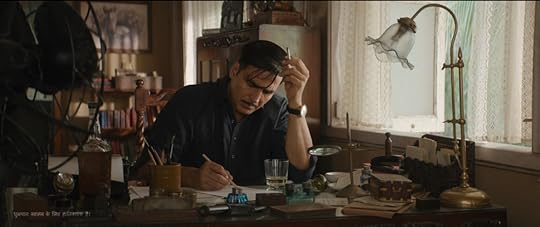
AT THE DESK (GOLD)
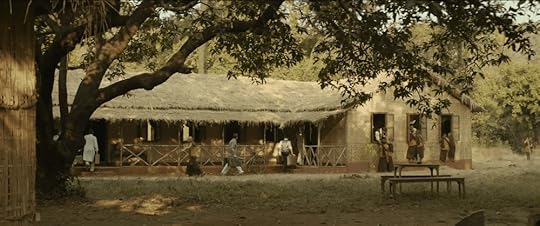
HOSTEL EXTERIOR (GOLD)
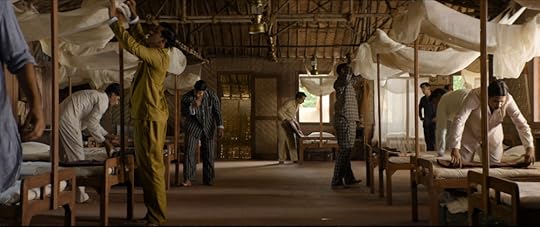
HOSTEL INTERIOR (GOLD)
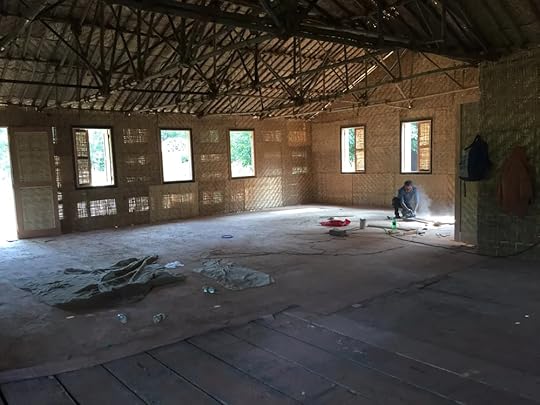
CREATING THE HOSTEL (GOLD)
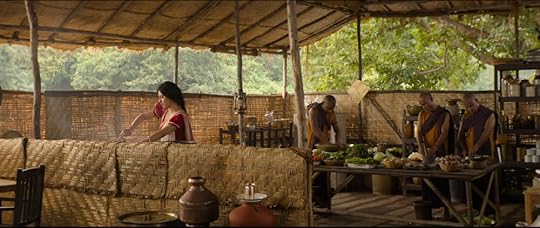
DINING AREA (GOLD)
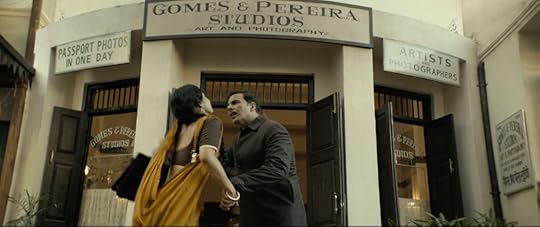
MARKET AFTER RAIN (GOLD)
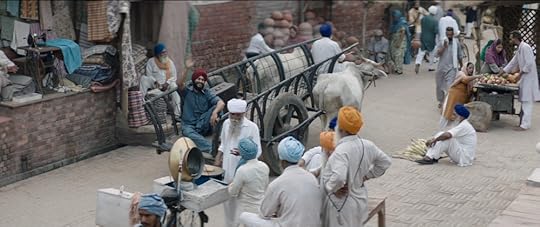
VILLAGE STREET (GOLD)
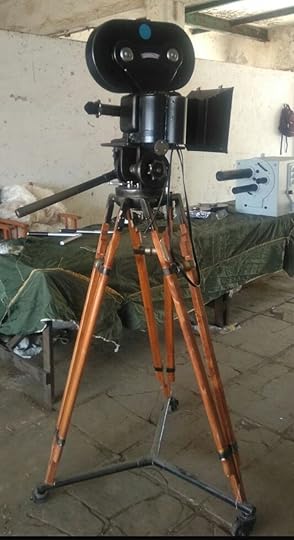
PROP FABRICATION (GOLD)
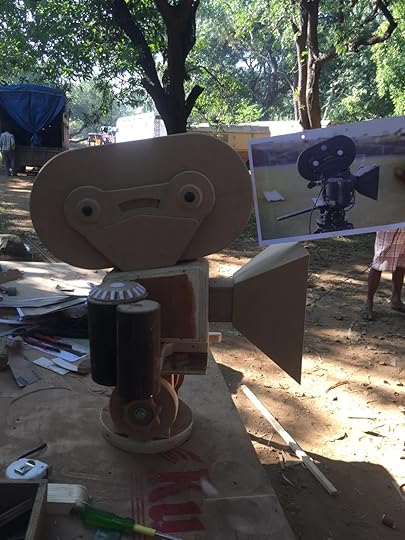
PROP FABRICATION (GOLD) Dahaad (2021)
Whether it’s a massive historical film or a contained streaming series, the foundation is the same: shared labor, patience, and a belief in the story we’re telling together. Dahaad wasn’t a grand period piece, but a grounded story about real people and the social constraints around them. The team was smaller than Gold and more intimate, but the effort was just as extensive. When I began work on this series, I wanted the setting to act like a character. This story lived in ordinary spaces — small towns, police stations, homes—but each of these spaces hid tension, and the quiet dread that something terrible might exist in familiar places. There was no scale or spectacle to hide behind on this project, which ultimately became our biggest creative and technical challenge.
During the location scout, we found an abandoned building that we finalized for the main police station set. It wasn’t ideal. The rooms were tiny, arranged around a large central courtyard, the corridors were narrow, and camera angles were difficult. But there was something that just clicked about the space. To turn that cramped building into a workable set became one of the biggest tests of our design skills. Because the rooms were small, every surface mattered: the color, the texture, and the light all had to come together seamlessly to create an atmospheric and visually appealing, yet realistic, police station set in rural India.
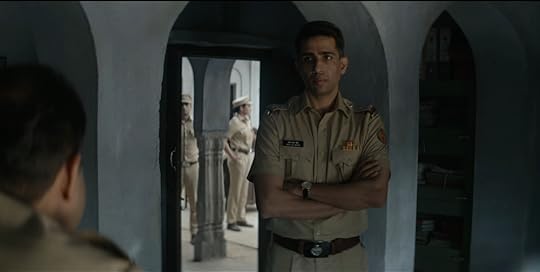
POLICE STATION INTERIOR (DAHAAD)
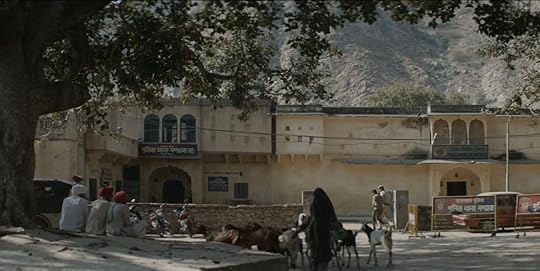
POLICE STATION EXTERIOR (DAHAAHD)
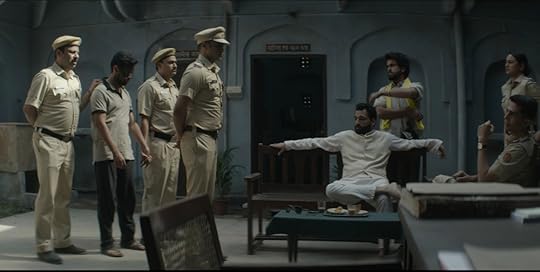
POLICE STATION COURTYARD (DAHAAD)
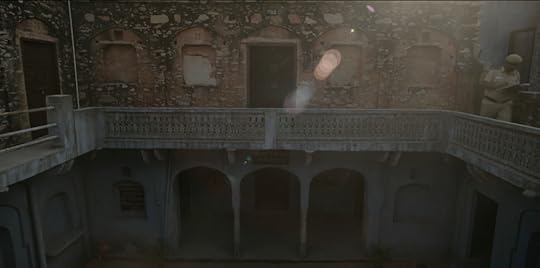
POLICE STATION CORRIDOR (DAHAAD)
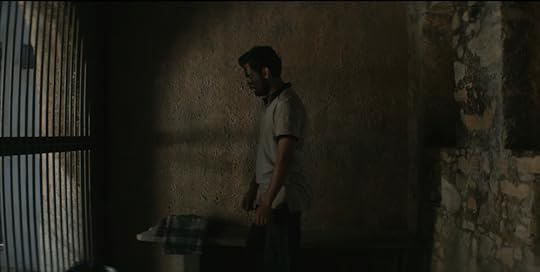
JAIL CELL (DAHAAD)
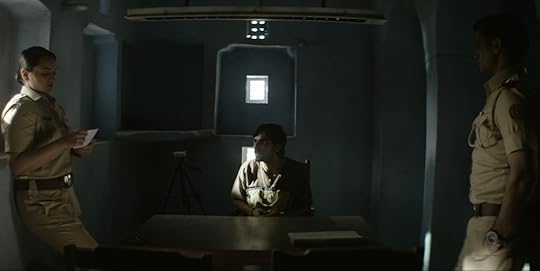
INTERROGATION ROOM (DAHAAD)
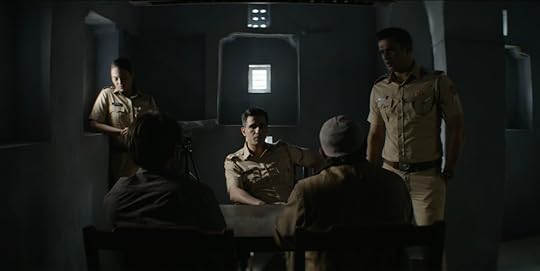
INTERROGATION ROOM (DAHAAD)
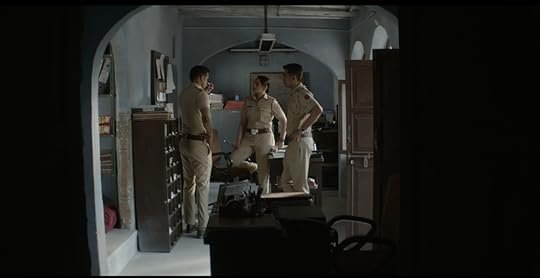
ANJALI CABIN (DAHAAD)
I decided to keep the look bare and stark. Too much set dressing would make the set feel false. The walls, the dust, the cracks were all created by hand, with minimal dependence on technology. Since regular paint on the walls looked too clean, we decided to use limewash to get a rough, uneven texture which caught light differently at every hour. That surface gave life to the frame: it looked like a real government building that had seen years of use.
The limited space also influenced how scenes were staged. The tension between the officers, the fatigue, and the moral unease of the investigation in the screenplay all lived within that confinement; it left the viewer feeling like the killer could be anywhere, maybe in the next room, maybe outside that very wall. That’s the thing with production design—it has the power to make or break a film.
Shooting Dahaad wasn’t easy. The heat and the dust of the crowded sets in Rajasthan tested everyone. But that discomfort became part of the story. The actors weren’t performing in comfort; they were surrounded by the same exhaustion their characters carried. Designing Dahaad taught me that realism isn’t just about accuracy. It’s about feeling the truth of a space. When a wall has history, it speaks without dialogue.
Some of my favorite memories from Dahaad are from smaller moments. We turned a 17-seater van into a moving library for children, filled with toys, bright colored books, and Hindi poetry on its sides. That set brought me pure joy because it carried lightness in a story filled with tension. At the other extreme were the public toilets featured in the cold openings of each episode. We built them in real public spaces, and they had to feel unsettling and dirty.
In streaming projects like Dahaad, the pressures are different—longer schedules, tighter budgets, and the need for consistency across episodes. The pace is slower, but the demands are constant. You’re always maintaining a visual rhythm while staying realistic. The constraint shifts from weather to time, but it still tests the same thing: patience.
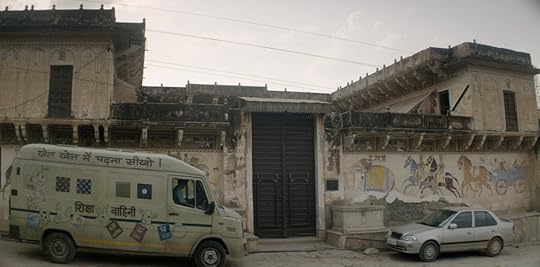
VAN EXTERIOR (DAHAAD)
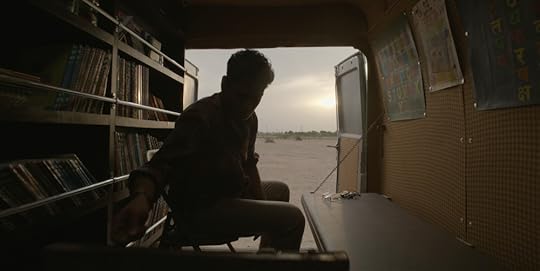
VAN INTERIOR (DAHAAD)
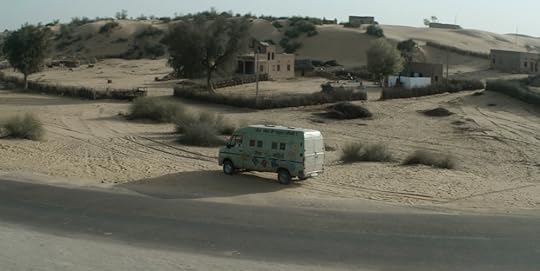
VAN EXTERIOR (DAHAAD)
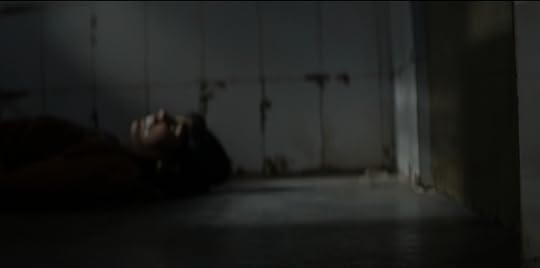
PUBLIC TOILET (DAHAAD)
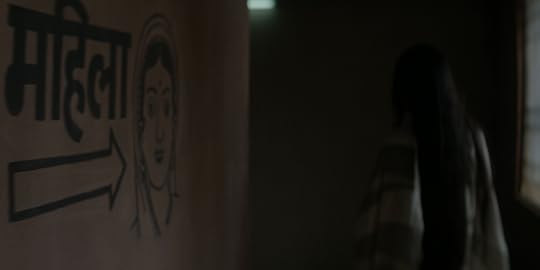
PUBLIC TOILET (DAHAAD)
__________________________
To summarize, production design is often described as background work. But for me, it’s where the story begins. It gives actors a world to inhabit and audiences a world to believe in. Production design is not just about how a space looks: it’s about how it feels. The walls, the surfaces, the props all carry the weight of the story visually, even before the characters speak.
This line of work continues to teach me so much more than just visual world building. Every day is a philosophy class and a therapy session that teaches me life skills. I learn about detachment because these worlds we build with our blood, sweat and tears are temporary—they get dismantled, repainted, or replaced. I learn about coping with disappointment when sometimes you build sets that never make it to the final cut—a scene gets rewritten or a sequence is edited out, and the entire set you built with so much effort quietly leaves the film. I also learn about going with the flow and about adapting to change and dealing with difficult scenarios (sometimes people!).
Your patience is tested, you’re pushed to limits you didn’t know you have, all the while learning new things about yourself. In production design, you learn to let go and build again. Every project becomes a lesson in resilience. You learn to let go of perfection, to trust your team, and to find the beauty in what survives. You learn to build worlds that disappear, yet somehow, continue to live on in emotion, forever immortalized on the celluloid.
I truly believe that you have to either be totally mad, or totally passionate to be in this profession. I think I’m a mix of both.
BiographyShailaja Sharma is a Mumbai-based production designer. She began her journey in Bollywood nearly two decades ago, starting out as an assistant and learning the craft on the job. Over the years, she has worked on films like Gold and Yeh Ballet, and on Dahaad—the first Indian series to premiere at Berlinale in 2023. She also completed a course in Production Design at the London Film School. In Japan she also studied the language and absorbed its design sensibilities, which continues to shape the way she sees detail, texture, and balance in every project.
October 21, 2025
IPDW2025—Natural Realism in Production Design Through the Lens of ‘Watching You’ (2025–)
When audiences think about production design, they often imagine the elegance of period pieces or futuristic science-fiction. But in contemporary drama, design succeeds by doing the opposite — disappearing. The goal is not to create spectacle but to persuade; to build spaces so truthful that viewers forget they were ever designed.
As Production Designer on the Stan Original series Watching You (2025 – ), this creative paradox was at the heart of the work: the more authentic a world appears, the less audiences notice it. Yet achieving that invisibility requires an extraordinary amount of visible labour — research, experimentation, collaboration, and sensitivity to story. The show has been described as “elevated Australian noir — sexy, stylish and suspenseful” (The Conversation, 2025). For me, it was an opportunity to explore how the language of natural realism can heighten psychological tension while staying grounded in emotional truth.
Watching You is a contemporary thriller built around the themes of surveillance, intimacy, and power. The story follows Lina, a paramedic whose one-night stand is secretly recorded, spiralling her life into paranoia and danger as she hunts for the voyeur while questioning everyone she trusts. From early script meetings, it was clear that voyeurism wasn’t just part of the plot — it was a design philosophy. Sydney’s oppressive summer became an agitator, a force that pushed our characters to the edge.
We embedded these themes into the visual language building it around reflection and concealment; exposing for harsh sunlight, embracing deep shadows combined with Hitcockian framing. Urban environments featured glass facades, open-plan layouts, and visible sightlines that could both reveal and obscure. We used fluted and mottled glass in key locations to distort visibility, blurring what's seen and unseen. In contrast, our rural setting — an old bush house belonging to Lina’s Grandfather — worn timber, aged metal, heavy drapery — was the opposite: concealment, protection, and memory. It provided refuge yet carried an unease through its isolation.
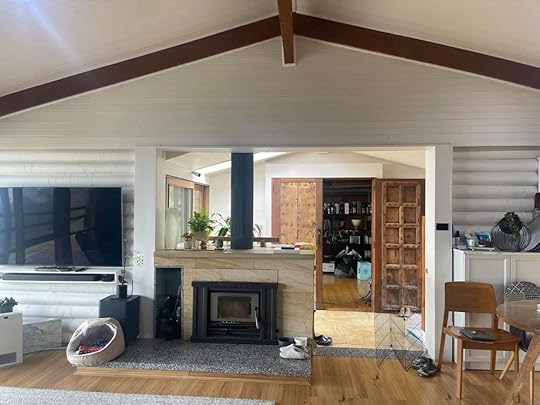
Location photo, pre art department work
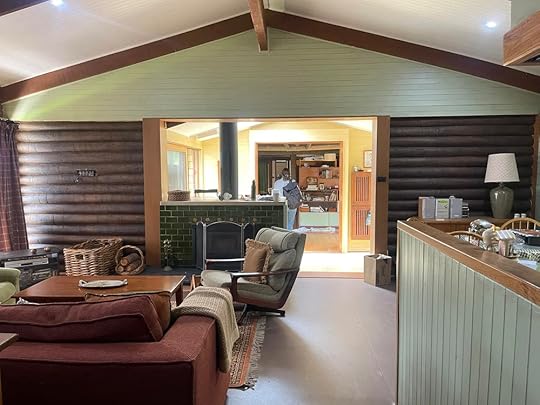
Pa's House location with set dressing and painted throughout
This environmental contrast operates on multiple levels—urban versus rural, modern versus aged, transparent versus opaque—all reinforcing the story's themes without announcing themselves. Rather than dressing sets to look “pretty,” we designed environments that were sun-bleached, tactile, and alive with atmospheric heat, letting natural elements like fire and wind shape the emotional landscape.
Every character’s environment reflected their psychological arc. Lina’s home felt warm but constraining, echoing her move from security to vulnerability. Low ceilings and vertical blinds foreshadowed her eventual sense of entrapment. Clare and Axel’s aspirational home embodied femineity through curves and archways, its palatial scale contrasted with Lina and Cain’s modest townhouse, reinforcing themes of desire, duplicity, and power. Pa’s House became almost a character itself — a space layered with memory, decay, and transformation.
The way a person lives tells us everything: clutter versus order, material choice, colour temperature, or the wear on a chair arm. Cultural identity was also integral. Characters’ mixed backgrounds were represented subtly through heirlooms, design motifs, or pattern that reflected layered heritage without cliché. Similarly, their occupations as first responders informed practicality: furniture placement, accessible storage, lived-in functionality.
We personalised environments with small, authentic touches drawn from collaborative conversations. During pre-production, Aisha Dee, who plays Lina recalled a set of childhood toys she’d collected. We sourced those exact items and placed them in Pa’s House on the shelf beside a photograph of Lina’s Mother. They never needed to be referenced, or have a close-up, we dressed them into the set to support her performance and trigger an emotional connection to a real childhood memory for the scene.
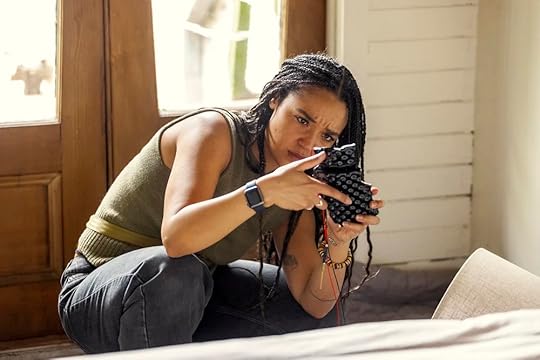
Lina discovers the hidden camera concealed in a textured lamp base designed so the lens fit inside a single embossed bump. Stills: Lisa Tomasetti.
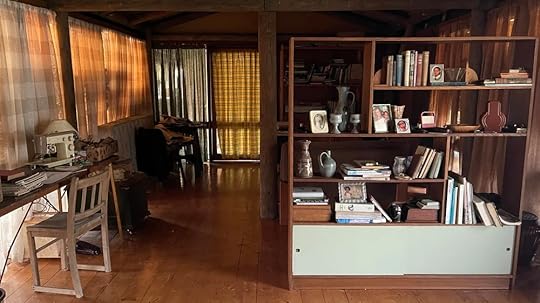
Pa’s House, set dressed with heavy drapes and curtains responding the themes of concealment.
Production design thrives on collaboration. My Design Bible — a visual compendium of mood, palette, materials, lighting and spatial reference — became a shared language for our second block director and cinematographer as well as the whole art department team. Design thinking often happens collectively and physically. For one major set build, we taped out dimensions on the office floor so the director and DOP could walk it and lens up on it, feeling proportions viscerally before construction. Practical limitations inevitably shaped creative choices. A dream location might collapse due to permissions or scheduling; budgets stretch only so far. But constraint breeds authenticity. When our ideal setting fell through, we adapted an industrial space instead — and it felt more truthful than the original concept.
Naturalistic design doesn’t mean neutral design. Every colour choice, material, and line carried meaning. Orange emerged as a key accent. Through the last-minute location change mentioned earlier, we were gifted a bright orange door — an unmissable visual warning. Vanessa Loh (Costume Designer) dressed Lina in an orange dress as she entered for the first time. That repetition of the orange dress against the orange door amplified the danger like a subliminal message: don’t go in. Orange became a warning associated with specific characters and props foreshadowing danger. These decisions aren’t decorative — they’re narrative.
Natural realism extends beyond walls and furniture. It lives in the brands, logos, and artefacts that populate the world. We designed fictional companies like NestShare and ForgeFit with the same care real branding demands. Hundreds of names, logos, and applications were tested until they felt authentic. These details, a phone App logo, a promotional LED screen video, may pass unnoticed, but they cement the believability of the universe.
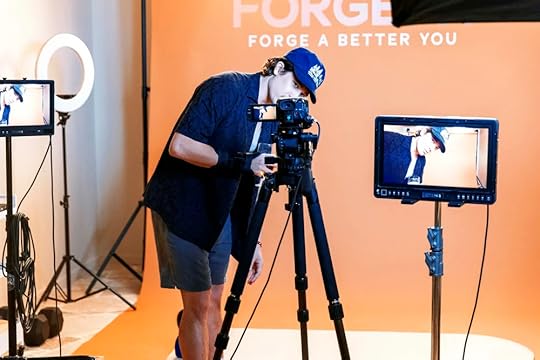
Chai Hansen as Cain, looking down the lens and seen through playback screens against the ForgeFit backdrop. Stills Lisa Tomasetti.
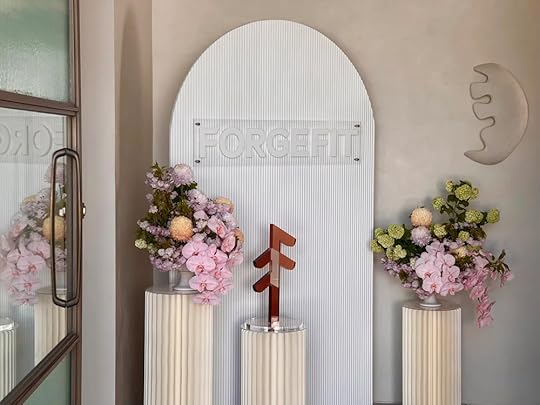
ForgeFit Launch Party entrance dressed with branding and decadent flower arrangements. Vertical line and glass motifs reoccurring throughout the series.
As production designers working in contemporary drama, we face unique professional challenges. We must advocate for resources and creative vision while deliberately creating work that shouldn't draw attention. The irony of natural realism being the more invisible our work, the stronger its impact. What looks effortless on screen is, in truth, the result of intense collaboration between departments; costume, cinematography, direction, and the entire art team. Every seemingly intuitive choice reflects careful consideration of narrative function and authentic representation. Our work may remain largely invisible, but it profoundly shapes how audiences experience and emotionally engage with screen narratives. Production design is not just about choosing the right couch or wall colour, it’s the architecture of emotion — the invisible scaffolding that holds story together.
This article is adapted from her chapter in Perspectives on Production Design: Practice, Education and Analysis (UoW Press).
BiographyVirginia Mesiti is a visual storyteller who is drawn to character driven drama and projects she can build worlds within. Her passion for colour, research and developing a rich backstory drive her creatively. Her Production Design credits include some of our most loved Australian TV such as After the Verdict, Diary of an Uber Driver, The Moodys, A Moody Christmas, No Activity and the Seachange reboot. She also Production Designed AFTRS Alumni Craig Boreham’s debut feature film, Teenage Kicks with fellow Alumni Bonnie Elliott as Cinematographer. Her most recent credit was as Assistant Set Decorator on George Miller’s Three Thousand Years of Longing. Virginia is Senior Lecturer in Production Design at the Australian Film Television and Radio School.
October 20, 2025
IPDW2025—Making the Invisible Visible: New Book Celebrates and Reframes Production Design
Production design is the backbone of screen storytelling. From the grandeur of a fantasy city to the subtle texture of a lived-in kitchen, production designers shape the worlds we see on screen. Yet their work is often overlooked in film discourse, education and even within the industry itself. Our forthcoming open-access collection, Perspectives on Production Design: Practice, Education and Analysis (University of Westminster Press, 2026), seeks to change that. Co-edited by Jane Barnwell, Jo Briscoe, and Juliet John, the book brings together voices from across industry and academia to illuminate the creativity, challenges and cultural impact of production design.
Production design is everywhere, yet often invisible. Every detail of a film or television environment, the architecture of a room, the texture of a piece of furniture, the placement of a prop shapes how we interpret story, character, and emotion. Yet the field remains relatively unexplored compared to directing, cinematography, or performance. Our collection responds to this gap. Drawing on the voices of practitioners, educators and theorists, it reframes production design as central to storytelling and screen culture. The book also serves as the first major output of the Production Design Research and Education Network (PD-REN), an international community founded in 2022 to advance scholarship and pedagogy in this field.
This article signposts some of the book’s central concerns - how production design is practiced, taught, critically analysed, and why it matters to the wider ecology of film and media studies. The book is divided into three sections - Practice, Education, and Analysis, with written chapters interlaced with visual materials that capture and convey the processes of production design. These include original artwork, sketches, photographs and process documentation contributed by our authors. Each editor led one section: I curated Practice, Jo Briscoe Education and Juliet John Analysis. Our collaboration reflects a shared design sensibility; we worked collectively on every aspect of the book, enjoying the creative challenge and finding inventive solutions to the publishing process.
Section 1. Practice: Making Worlds VisibleThe practice of production design is both pragmatic and visionary. Designers translate words on a page into material environments that feel lived-in and emotionally resonant. They collaborate with directors, cinematographers and their art departments, yet retain a distinctive creative voice. The Practice section features stories from working professionals who reveal how ideas emerge, evolve and materialise. Virginia Mesiti foregrounds “natural realism,” showing how everyday environments can carry implicit critique when staged with care. Wynn Thomas, in a sketchbook contribution, invites readers into the design logic of Cinderella Man (2005), where sets were built not only for authenticity but also for narrative affect. Moira Tait reflects on the realist aesthetics of the BBC design department during the 1960s and ’70s; Karen Nicholson considers the evolution of the prop master; Sebastian Soukup and Wim Wenders discuss their creative collaborations; and Inbal Weinberg shares her detailed design notes.
Other contributors explore questions of cultural representation, such as Sarah Mursal’s chapter on authenticity and sensitivity in design, or industry-specific challenges, like May Davies’ examination of low-budget art departments in Europe. Jeannine Oppewall’s reflections on L.A. Confidential (1997) and Sarah Greenwood and Katie Spencer’s sketchbooks for Pride and Prejudice (2005) and Barbie (2023) reveal how sketches, references and imagination map onto finished films. Together, these contributions underscore that production design is never purely decorative. It is the architecture of meaning on screen.
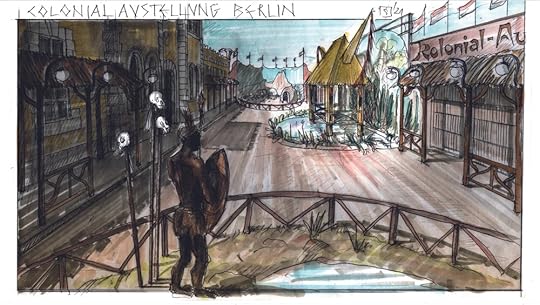
Sebastain Soukup artwork
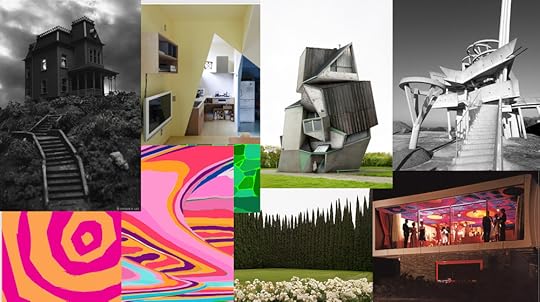
Weird Barbie House images, courtesy of Sarah Greenwood and Katie Spencer
Section 2. Education: Building a Pedagogy of DesignIf practice demonstrates the richness of production design, education reveals the fragility of its foundations. Many film schools worldwide still do not teach production design systematically. Where it does appear, it often emerges from theatre scenography or as an add-on module in generalist film programmes. The Education section begins to redress this absence. Paola Cortés argues that production design training should be core to all filmmakers, not just specialists, since visual storytelling underpins every aspect of cinema. Valérie Kaelin demonstrates how interdisciplinary curricula, blending design, history, technology and practice can provide holistic training. Other contributors address urgent contemporary challenges. Jo Briscoe explores the teaching of collaboration, leadership, and management, skills essential to production design but rarely emphasised in curricula. Emerging technologies are also transforming the classroom. Natalie Beak’s chapter on Unreal Engine and virtual production highlights how pedagogy must adapt to digital workflows without losing sight of the storytelling principles that ground the field. The images below showcase some of these Unreal Engine activities as part of the Master of Arts Screen (MAS) at AFTRS.
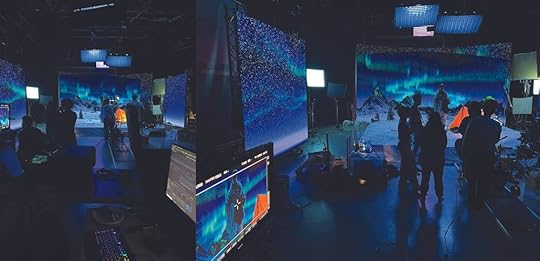
Master of arts screen, Unreal engine workshop at AfTRS (2023)
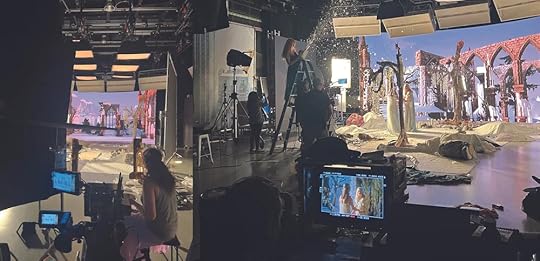
Master of arts screen, Unreal engine workshop at AfTRS (2024)
PD-REN members have generously contributed curriculum outlines and project models, including Anne Seibel (La Fémis, Paris), Anna Solic (University of South Wales), Kerry Bradley (Nottingham Trent University), Angelica Böhm (Film University Babelsberg Konrad Wolf), and Boyana Bucharova (NAFTA). Together, these contributions offer practical resources for teachers worldwide and mark a crucial step toward a shared pedagogical language, one that honours both craft and creativity.
Section 3. Analysis: Bridging Practice, Education and TheoryThe third section, curated by Juliet John, situates production design within broader frameworks of theory and analysis. The aim is to build bridges between practice, educational need and critical understanding. Including vibrant contributions from Deborah Nadoolman Landis, Ian Christie, Lucy Fischer, Geraint D’Arcy, Jakob Ion Wille, Benjamin McCann, Vincent LoBrutto, Abraham Thomas, Liselotte Justesen, Juliet John and Sir Christopher Frayling, the significance of this scholarly intervention becomes clear. Production designers often lack the time or space to reflect on their work, yet analysis can illuminate what practitioners know intuitively. Essays in this section connect visual style to political context, showing how production design registers ideological currents. Others engage with metaphors of space:labyrinths, thresholds, architectural motifs that shape audience perception. Such analysis does not serve academics alone; it also advocates for production design in the public sphere. By making visible the interpretive stakes of design decisions, theory demonstrates why production design matters - not as background, but as the very fabric of cinematic meaning.
PD-REN: A Global Network for a Growing FieldUnderlying this collection is the story of PD-REN itself. Founded in 2022, the network emerged to address the misunderstandings around the role and the structural barriers in industry and education. PD-REN connects researchers, educators, and practitioners on a global scale. It functions as both a professional platform and an academic forum, designed to generate research, foster pedagogy, and advocate for the field. Its emergence reflects a wider shift: production design is no longer content to remain invisible.
Conclusion: Toward a Visible FuturePerspectives on Production Design: Practice, Education and Analysis marks a milestone. By bringing together practitioners, educators, and scholars, it reframes production design as a vital, complex and collaborative field of knowledge. This collection and the network it from which it springs reveals the centrality of production design to visual storytelling, where pedagogy nurtures future designers with rigour and creativity and analysis builds bridges across practice, education, and theory. Perspectives on Production Design advocates for a new understanding of visual storytelling. It positions production design not as background decoration but as a central force shaping character, atmosphere, and meaning in film and television.
On a personal note, it has been a pleasure to work with such a talented and inspiring group of writers and artists, all of whom have been generous with their knowledge and time. It feels as if we have cooked up a delicious feast together and my hope is that readers relish the results as much as we enjoyed making it. For filmmakers, educators, and anyone who loves screen stories, this book offers a rare look behind the scenes and a compelling case for why production design deserves greater recognition. Perspectives on Production Design: Practice, Education and Analysis will be published open access by University of Westminster Press in early 2026.
Special Thanks to collaborators on the project:Juliet John, Jo Briscoe, Virginia Mesiti, Wynn Thomas, Moira Tait, Karen Nicholson, Sebastian Soukup, Wim Wenders, Inbal Weinberg, Sarah Mursal, Fleur Whitlock, May Davies, Jeannine Oppewall, Sarah Greenwood and Katie Spencer, Paola Cortés, Valérie Kaelin, Natalie Beak, Anne Seibel, Anna Solic, Kerry Bradley, Angelica Böhm, and Boyana Bucharova, Deborah Nadoolman Landis, Ian Christie, Lucy Fischer, Geraint D’Arcy, Jakob Ion Wille, Benjamin McCann, Vincent LoBrutto, Abraham Thomas, Liselotte Justesen, Barbara Freedman Doyle, Rose Lagace, Sir Christopher Frayling, Anne Winterink, Romke Faber, Ondrej Lipensky, Kaisa Makinen, and Rauno Ronkainen.
BiographyJane Barnwell is Reader in Moving Image at the University of Westminster. Graduating from the University of Leeds and The Northern Film School she began her career at the BBC, before working freelance in production. Jane has authored articles in a range of forms and genres including popular magazines, periodicals and websites. Her books include Production Design for Screen; Visual Storytelling in Film and TV (2017), Production Design: Architects of the Screen (2004), The Fundamentals of Film Making (2008) and Production Design & the Cinematic Home (2022). She is co-founder of PD-REN and co-editor of the forthcoming collection, Perspectives on Production Design: Practice, Education and Analysis, (UoW Press, Open Access, due 2026) a ground-breaking collaboration with authors drawn from practice, research and education.
October 19, 2025
IPDW2025 — We All Eat Feta: Reflections on the First Production Design Gathering
I have been struggling to describe the ineffable.
In a week in October 2022, 260 production designers from 36 countries gathered on a Greek island of pines. We experienced something so profound — together — that I know we are forever changed.
This was ‘The Gathering’: the first time in history that production designers had come together for a long weekend of panels, workshops, shared meals, sketching sessions, late-night dancing, and communal reflection.
I had my “a-ha moment” very early on. On the ferry to Spetses, I noticed Jack Fisk — legendary production designer of The Tree of Life (2011), Mulholland Drive (2001), The Revenant (2015) — eating a piece of feta. I thought to myself:
“wow, I eat feta too.”
It was a silly, simple thought. But it was also everything. Here we were, peers at the same table, bound not by credits or years of experience, but by our shared love of storytelling. That realisation — that we all eat feta — became my shorthand for what unfolded: the collapse of distance and the recognition of ourselves as a global community of makers.

image 1: On the ferry to Spetses
Image 2: Breakfast views over the Aegean, with “The Gathering” Program.
Why “The Gathering” MatteredProduction designers rarely meet outside the context of awards shows or guild events. Our work is deeply collaborative, yet our careers are strangely solitary. Each of us is embedded in the ecosystem of a particular production, framed by schedules and deliverables.
It was the vision of Inbal Weinberg and Kalina Ivanov who founded the Production Designers Collective as a space for community that made The Gathering possible. By calling us to Spetses, they created a space of recognition. As Kalina wrote at the time, “We’re starting a new chapter in film mythology, and what’s a better place to do it than in Jason and the Argonauts’ backyard?”
For the first time, the invisible became visible: the production designer’s role not as ‘below-the-line’ technicians, but as co-creators of narrative worlds, spatial storytellers who shape the very architecture of screen stories.
Image 3: A toast to Inbal Weinberg and Kalina Ivanov, founders of the Production Designers Collective.
Image 4: A folio of production designers sketching en plein air along the Spetses waterfront.
Voices in the PinesThe days on Spetses unfolded as a chorus of perspectives, giving voice to the tacit knowledge of our craft while also exposing its challenges. Mornings were spent in Cinema Titania, the island’s open-air cinema, where curated panel discussions were less about how to design and more about why we design: what it means to bring imagination into form within an industry defined by truncated schedules, shifting technologies, and resourcing constraints. Afternoon workshops took us to the Anargyrios & Korgialenios School (AKSS), its neoclassical halls and pine-lined pathways steeped in history, a place that once inspired John Fowles’s The Magus. Evenings ended with dinners under the stars and one unforgettable Zorba dance in a festoon-laden courtyard.
Image 5: Cinema Titania, the island’s open-air cinema where morning panels took place
Image 6: The pine-lined grounds of the Anargyrios & Korgialenios School (AKSS), home to afternoon workshops
What emerged in those spaces was a series of provocations that would reshape how we understood our work. Jean-Vincent Puzos, enigmatic French designer behind Amour (2012) and Beast (2022) urged us to, “learn how to disobey — analyse everything. Have courage. Creativity is poetry, creativity is surprise. You either obey or you challenge.” Beside him, K.K. Barrett, who gave Her (2013) its futuristic intimacy, warned against mediocrity, “the script is not a bible, it is a sketch of a map. Go beyond the obvious. The opposite of obvious is original.” He described the common purpose of director and designer as one of elevation and surprise. Together, they reminded us how easy it is to fall in service to the ordinary, when in fact we are hired to interpret, interrogate and inspire.
Inbal Weinberg, whose textured work amongst the pines on The Lost Daughter (2021) brought us to Spetses, responded: “All cinema is a dream. Dreams don’t have to be responsible.” She spoke of wandering through libraries, exhibitions, and galleries, of the importance of staying open to the unexpected, of research as a way of always going deeper. I thought of my own students, often tempted by Pinterest algorithms, and how valuable it is to model what she calls, “the meandering moments” of research.
There was pragmatism too. Jeannine Oppewall, Oscar-nominated for films including L.A Confidential (1997) and Pleasantville (1998) said it best in her resonant Boston accent, “Things change!” For all our drafted plans, previs and white card models, production design is made in flux, and our art departments needs to move with it.
The conversation also turned, inevitably, to labour. Kalina Ivanov reminded us that hierarchies are unavoidable but must be managed with kindness. David and Sandy Wasco, Oscar winners for La La Land, encouraged us to acknowledge where the ideas come from, to give credit to our teams. “We are in the business of collaboration,” they said, an important reminder in an industry that systemically privileges individual authorship over the distributed reality of creative labour.
Others pushed further. Jamie Lapsley, speaking from a career built upon richly diverse collaborations, called out the culture of presenteeism: “We are employed for our ideas, not our time… We need to break down the officeness of the office.” Her words hit me harder than I expected. How many times have I measured my worth by hours logged?
Visibility, or rather, our lack of it, became a recurring theme. Fiona Donovan, representing the Australian Production Design Guild, called for parity between design, costume, and cinematography. The evidence is stark: despite Wikipedia listing directors, writers, producers, cast, cinematographers, editors, and composers for every film, the production designer and costume designer are consistently absent. The same is true across festival programs worldwide. “Let’s not compete,” said Miranda Cristofani, a leading voice in production design advocacy, “we are better together.”
Then came the ecological reckoning. Blair Barnette, chair of the British Film Designers Guild, put numbers to our work: a single blockbuster produces 3,500 tons of carbon — the same as flying a full Airbus A318 around the world 15 times. The gasp in the room was collective. It reframed our sets, our materials, our choices.
Virtual production emerged as the most galvanizing topic of discussion. James Chinlund, whose credits include The Lion King (2019) and The Batman (2022) challenged us to reclaim virtual space: “Virtual production allows designers to finish our thoughts. That’s our space. We should reclaim it.” His words were both a provocation and a call to arms. Udo Kramer, who designed the labyrinthine world of Netflix’s 1899, showed what this means in practice. Pipelines had to be reinvented, and new roles carved out. His case study revealed both the complexity and the creative potential: the craft is evolving rapidly, and we have the opportunity to shape that transformation, to dissolve barriers between the Art and VFX departments and ensure holistic world-building from conception to completion.
This vision resonated deeply with my own experience as Discipline Lead in Production Design at Australia’s National Film School. At AFTRS, I have worked to make virtual production integral to our curriculum, recognising that it represents more than new tools, it’s a fundamental shift toward collaborative, non-linear creation. Unlike traditional filmmaking’s sequential workflow, virtual production collapses the divisions between pre-, production, and post- into a simultaneous, iterative process. This transformation demands that we rethink how we teach design, moving beyond technical skill-building to embrace integrated approaches where production design and VFX merge into continuous world-building.
Image 7: Panel discussion on Fostering Creativity at Cinema Titania
Image 8: Workshop circle at AKSS, where designers, educators, and students shared experiences. image credit: production designers collective (PDC)
The AmphitheatreOn the final evening, as workshops ended, we made a slow pilgrimage up the pine-lined path to the amphitheatre that crowns the island.
One by one, voices carried across the stone circle. Rick Carter, the extraordinary world-builder behind our most beloved realms including Jurassic Park (1993), Avatar (2009), and Star Wars: Episode VII and IX (2015, 2019), opened our church. It was fitting. Rick’s wisdom had resonated as a through-line across the panels, workshops, and late-night dinner conversations throughout the week. He evoked the words of Socrates: “True knowledge exists in knowing that you know nothing.” For Rick, the essence of creativity lies in discomfort; “Of course it hurts. The trick is not to mind it.”
Fiona Crombie, Australian production designer of The Favourite (2018) and Cruella (2021) reflected on being in the company of people who had informed her thinking. Thomas Walsh, past president of the ADG, evoked the old Hollywood Cinemagundi Club, a community he felt had been reborn in these pines.
Tigerlily, a student whose third favourite colour is pink, set aside vulnerabilities and spoke of what it meant to be surrounded by people who loved what she is currently learning to love.
Some spoke of fear, others of joy. Akin McKenzie called it a “vibration.” Alex Whittenberg described it as our “apotheosis”: the highest point of something, brushing against the sacred.
As the lilac hues of dusk deepened, Kalina closed the circle. We leave this island, she told us, with white passports: production designers of the world.
Image 9: The pilgrimage through the pines up to the island’s amphitheatre.
Image 10: A historic first: 260 production designers gathered in the amphitheatre at Spetses. Image credit: production designers collective (PDC)
Beyond the IslandThe Gathering was not a retreat. It was a cultural event that altered the fabric of our craft.
It disrupted the production culture that keeps us siloed and invisible. It reminded us that though our work is embedded in hierarchies, we can choose how to manage them: with generosity, transparency, solidarity.
It reframed authorship in cinema. The old myth of the singular auteur began to give way to a more collective, distributed understanding where production designers are recognised as co-authors of screen space.
It exposed the structures of our industry that must change: the carbon cost of our builds, the inequities of our labour systems, the need for new collaborative frameworks in virtual production pipelines, the absence of recognition amongst our colleagues.
The legacy of Spetses is not only emotional but structural. The Gathering also saw the founding of the Production Design Research and Education Network (PD-REN), first imagined over lunch on the balcony of the Poseidonion Hotel and now connecting more than 400 researchers and educators worldwide.
And perhaps most importantly, it cultivated a sense of identity. No longer solitary practitioners fighting for recognition in isolation, but a global community.
When I think back to Spetses, I remember the panels and workshops, the amphitheatre, the late-night dancing, the sketches completed on cobblestones, the meandering conversations over dinner.
But mostly, I remember the feeling: that for the first time, I was not alone in this craft.
The Gathering gave us white passports, symbolic citizenship in a borderless community of storytellers. It asked us to carry that sense of connection back into our guilds, our classrooms, our studios. And it left us with an unfinished task: to keep gathering, to keep pushing, to keep challenging the industrial conditions that limit us.
What began in 2022 has already continued, with another Gathering in 2024 and plans for a biennial rhythm. The conversations are living.
Because in the end, what we learned on that island is simple: we all eat feta. And in that recognition lies the possibility of a new culture of cinema, one where production design is not hidden but celebrated, not solitary but collective, not obedient but original.
Until we gather again.
Image 11: The closing feast in the AKSS courtyard, lit with festoon lights. Image credit: PDC
Video: Dancing in a dream, the final celebration under the stars. Video credit: Alex Whittenberg.
BiographyNatalie Beak is a Production Designer with twenty years’ experience across film and television in Australia and the UK. A graduate of the Australian Film Television and Radio School (AFTRS), she was the inaugural recipient of the Thelma Afford Award for excellence in Costume Design and has since built a reputation for an inclusive and collaborative design practice. Her screen credits include the Berlinale Crystal Bear-winning short Franswa Sharl (2009), the ABC’s acclaimed comedy series Black Comedy (2014-2020), the First Nations Anthology feature We Are Still Here (2022), the Stan drama Year Of (2023), and Bus Stop Films’ debut feature Boss Cat (2026).
Alongside her professional practice, she is Discipline Lead in Production Design at AFTRS and a founding committee member of the Production Design Research and Education Network (PD-REN). Her forthcoming chapter will appear in Perspectives on Production Design: Practice, Education and Analysis (University of Westminster Press).
October 8, 2025
Geek Week: A Pop Culture, Gaming, Young Adult and Children's Literature, and Fanfiction Event at UFRJ with A Significant Academic Impact in Brazil
Logo from GEEK WEEK. Source: NEPF².
After a year of meticulous planning, the research groups NEPF² (Fans and Fanfic Studies and Research Group), NuPNE (Electronic Narrative Research Center), and NUPLIJ (Center for Research in Children's and Youth Literature) — affiliated at the time with the Laboratório da Palavra (Word Lab) and PACC (Advanced Program of Contemporary Culture) — collaborated to organize a week dedicated to geek studies at the Federal University of Rio de Janeiro (UFRJ). The event, named Geek Week UFRJ, took place recently at the Faculty of Letter, while also being made available online through Google Meet and YouTube.
The primary objective of Geek Week was to establish a safe and engaging space for intellectual discussions on topics related to pop culture, gaming, young adult and children's literature, and fanfiction. The event encouraged not only the academic research groups to share their perspectives but also provided an open forum for attendees to actively engage in discourse about widely consumed cultural phenomena.
Given that the subjects addressed during the event’s panels and discussion sessions are not traditionally explored within academic research, Geek Week served as a crucial platform to highlight the significance of both formal and informal studies on pop culture. The participating research groups assumed the responsibility of documenting and disseminating their insights, combining their academic investigations with their experiences as enthusiasts and fans to foster deeper academic interest in these emerging fields.
Event Structure and HighlightsDay 1 – Theoretical Frameworks in Popular LiteratureThe first day of the event was marked by engaging theoretical discussions centered on popular literature. A standout moment was the lecture, “There Are No Ostriches in Fairy Tales,” delivered by professor Francisco Câmelo. Offering a rich analysis of children's literature and fairy tales, Câmelo guided the audience through the evolution of these narratives—from their early origins to modern reinterpretations.
His talk shed light on the symbolic use of animals in storytelling, with a particular focus on birds. Drawing attention to the curious absence of ostriches in traditional fairy tales, the professor contrasted this with the frequent appearance of other birds such as crows, swans, and nightingales. The lecture invited listeners to reflect on how symbolic choices in literature reveal cultural values and shape the way stories are told and understood over time.
Professor Francisco Camêlo presenting “There are no ostriches in fairy tales”. Source: NEPF².
Letícia Pimenta giving a talk on the origins, stereotypes and diversity of the Furry fandom. Source: NEPF².
Day 2 – Fandom Culture and Community InterpretationsThe second day of the event shifted focus to fandom studies, highlighting the diversity and complexity of fan communities. A standout session featured a compelling lecture on the Furry fandom, presented by Letícia Pimenta, General Coordinator and Administrator of NEPF².
In her talk, Letícia explored the origins of the Furry community and unpacked the multiple ways it is understood both within and outside the fandom. She addressed common stereotypes and misconceptions, offering a critical lens on how these narratives are shaped. The presentation also mapped out the varied subcultures within the Furry world, shedding light on their evolution and the ways in which they are portrayed in mainstream media. With a thoughtful and informative approach, the session challenged prevailing assumptions and broadened the conversation around fan identities and representation.
Day 3 – Gender, Sexuality, and Representation in MediaThe third day of the event centered on discussions surrounding gender and sexuality, examining how these themes are represented across literature, gaming, and K-pop. Among the most thought-provoking sessions was the panel “Chapter 21: Sex, Fantasy, and Young Readers”, organized by NUPLIJ and NEPF².
This panel offered a critical examination of how sexuality is portrayed in children's and young adult literature. The discussion compared narrative approaches across age groups and reflected on the broader societal implications of these representations. By unpacking the complexities of storytelling aimed at younger audiences, the session encouraged a deeper understanding of how literature can shape perceptions of identity, desire, and fantasy during formative years.
Presentation by NEPF² coordinators Júlia Carneiro and Ticiane Pilar “From Himbo to Babygirl: kpop bodies and personalities (understanding 21st century virtual terminology)”. Source: NEPF².
Lecture “Psychosis and neurodivergence in electronic games” given by NUPNE. Source: NEPF².
Day 4 – Horror Narratives and Their Literary EvolutionThe fourth day of the event turned its focus to horror fiction, exploring the genre’s narrative strategies across literature and various media. The day’s sessions featured dynamic discussions on a range of themes, including the presence of horror elements in children's literature, the craft of building suspense, and the symbolic use of zombies as recurring narrative devices.
Participants examined how horror adapts to different literary formats and audience demographics, shedding light on the enduring appeal and cultural significance of the genre. By dissecting how fear is constructed and conveyed, the day offered a rich exploration of horror as both a storytelling tool and a mirror for societal anxieties.
Day 5 – Creative Workshops: Comics, The Sims, and FanzinesThe final day of the event shifted from theory to practice, featuring a series of interactive creative workshops that encouraged participants to explore storytelling through various artistic mediums. This day involved three distinct sessions, each led by a different research group.
The Comics Workshop, organized by NUPLIJ, offered participants an in-depth introduction to the fundamentals of visual storytelling, emphasizing the dynamic interplay between images and text in narrative construction. Far beyond a theoretical overview, the session provided a hands-on experience where attendees created their own original comic strips, applying the concepts discussed in real time. Throughout the workshop, participants explored key elements of comic book language including panel sequencing, framing, character design, and dialogue pacing, gaining a deeper understanding of the creative and technical aspects that define the comic book industry. The activity not only demystified the process of making comics but also highlighted their cultural and narrative potential as a powerful medium of expression.
UFRJ students at the Fanzine Workshop. Source: NEPF².
NuPNE led The Sims Workshop, demonstrating how simulation games can serve as powerful tools for crafting complex, character-driven narratives. Participants were divided into groups of four, collaborating closely to explore the inner workings of character creation and world-building within The Sims universe. Through guided activities, each group developed unique scenarios, navigating choices related to identity, relationships, and environment design. The workshop highlighted how interactive digital platforms can foster creativity, narrative coherence, and collaborative storytelling, offering participants a deeper appreciation for the narrative possibilities embedded in simulation games.
Meanwhile, NEPF² hosted the Fanzine Workshop, offering participants a hands-on experience in creating and self-publishing their own zines. The session walked attendees through the entire process: from concept development and layout design to photocopying and final assembly, emphasizing the zine as a medium of both artistic expression and grassroots communication. All participants produced fanzines centered on themes of protest and/or appreciation, with most works focused on fandoms related to music and cinema. The workshop fostered a space for personal voice and collective identity, illustrating how fanzines remain a vibrant form of cultural commentary and fan engagement.
All workshops were met with great enthusiasm, offering participants not only the chance to engage creatively, but also to apply storytelling techniques in concrete and meaningful ways. Whether through comics, simulation games, or fanzines, students explored new forms of narrative expression while collaborating, experimenting, and producing original content. The outcomes of these activities, as well as each lecture, reflect the diversity of voices and interests presented throughout the event.
Lecture “Images of childhood and K-POP” given by Letícia Pimenta, Maria Eduarda Oeby and Ticiane Pilar. Source: NEPF².
Impact, Academic Recognition and a commitment to Pop Culture StudiesGeek Week UFRJ garnered meaningful engagement from both in-person and online audiences. Over 50 participants joined the virtual sessions simultaneously and the total number of views (including both live and recorded lectures) surpassed 1,000. These numbers gain relevance within the Brazilian academic context, where fanfiction and pop culture studies still face limited institutional recognition. The event marked an important step in legitimizing these fields, and the lectures remain available through NEPF's YouTube channel.
NEPF firmly believes in the necessity of fostering spaces for knowledge exchange. Our mission is to bridge contemporary interests with academic and theoretical studies, ensuring that discussions on fandoms, literature, and digital culture receive the scholarly attention they deserve. With Geek Week, we had a surprising turnout of students from both the Faculty of Arts and Humanities and the School of Fine Arts in general; the project provided space for people to familiarize, as well as break down, some prejudices and even discover new themes.
For readers in the U.S. and Europe, it’s worth noting that, while the numbers may seem modest compared to large-scale international conferences, Geek Week resonates within a context where fanfiction and pop culture studies are still emerging as legitimate academic subjects. Much like early fan studies conferences held in North America or the UK in the 1990s, Geek Week represents a turning point for the formalization of this field in Brazil.
Recordings of all Geek Week lectures are accessible on NEPF²’s YouTube channel, and the fanzines produced during the final day's workshop can be browsed and downloaded through the group’s online publication platform. Further updates, including news on upcoming projects and collaborations, will be regularly posted on the group's Instagram page and institutional website.
By opening space for academic dialogue on topics once marginalized by traditional scholarship, Geek Week laid the groundwork for a broader, interdisciplinary approach to culture and education. As pop culture continues to shape contemporary identities and communities, events like these reaffirm the importance of giving it serious academic attention.
Currently there are no plans for another edition of Geek Week soon, as our team is currently focusing on the development of a new project. However, Geek Week has already generated valuable outcomes beyond its original scope, including the creation of collaborative research initiatives and increased student engagement with topics such as fanfiction, media studies, and digital authorship. These developments continue to inform our ongoing work and will be reflected in future publications and activities.
Although the continuity of Geek Week UFRJ in its original format remains uncertain, due to recent structural changes at the research center, the enthusiasm it sparked among students and scholars suggests a promising future for pop culture studies within academia. With NEPF² now operating at Universidade Federal Fluminense (UFF), under the supervision of professor and researcher Adriana Amaral, the group aims to expand its research lines and reaffirm its commitment to exploring contemporary cultural phenomena.
As a direct result of the success of Geek Week, a new academic initiative is already confirmed: Virtual Fan Studies Week, to be held online from September 1 to 5, 2025. This event will bring together early-career researchers, university scholars, and professionals working in the field of Fan Studies, aiming to foster dialogue, collaboration, and increased visibility for this emerging area in Brazilian academia. The full program and registration details will be made available on NEPF²’s official communication channels and social media pages such as Instagram and Tumblr.
Further information can be found in social media like Instagram and Tumblr. NEPF has an AO3 - Archive of Our Own account available to read fanfics created and beta read by Brazilian students on Fanfic Workshops.
BiographiesLetícia Fernandes Pimenta is a researcher focused on contemporary pop culture and fan narratives. Her work explores the K-pop fandoms, construction of women in pop culture, fanfics, and fanzines, with a special interest in cultural and affective practices. She is coordinator, editor, and designer/social media manager at the NEPF² research group, combining academic expertise with creativity, critical thinking, and strong communication skills.
Ticiane Pilar Café is a researcher that focuses on contemporary pop culture, fan narratives, and their intersection with education. With strong experience in educational settings, she leads workshops and training projects. She is one of NEPF²’s coordinators and supervisor of events from NEPF².
September 29, 2025
Hiring a "Virtual Boyfriend": Chinese Cosplayer Construct Authenticity and Romantic Fantasies in Cosplay Commission
At an event centered on Chinese otome games (dating games aimed at a female audience), I cosplayed as a male game character and was asked several times if I would accept cosplay commissions — getting paid to cosplay as someone’s favourite character and going on a date with them. Although I turned them down at the time, the practice of combining cosplay and otome games caught my attention. I asked one cosplayer friend for their advice; they told me “You should try cosplay commissions to understand it.” Thus, I began undertaking cosplay commissions, which meant I cosplayed as the client’s chosen character and walked around with them, on the street, on a date. To be honest, I must confess that even as an experienced cosplayer, I found it challenging to act nonchalant in public while wearing a full costume and a light-colored wig. This difficulty was compounded by the specific nature of this commission: I was tasked with roleplaying as a romantic partner and caring for my "girlfriend." Though the date was challenging, I was obsessed with the sense of accomplishment I felt when I took care of someone and acted as their beloved character.

Cosplayers Commissioned by the Otome Game "Love and Deep Space" at Bilibili World 2025
Cosplay commission is an emerging practice within Chinese fandom, where clients hire cosplayers to perform as characters in animation, manga, and games, simulating romantic or friendly relationships and dating them in real life. It usually happens in shopping malls, on the streets, in art galleries or in restaurants. Not only fans but game companies themselves hire cosplayers to interact with the audience at comic cons, what is called an “official commission” in the otome game fandom. These performances usually earn the longest lines in the venue.
This study examines the practice of cosplay commission. Despite variations in character portrayals and dating scenarios, commonalities exist in cosplayers’ motivations and authenticity strategies. Employing participant observation since June 2023 and semi-structured interviews with 16 female cosplayers, each with substantial commission experience, the research adopts a thematic analysis framework. In this post, I will explain authenticity in this context and the motivations for participation in cosplay commissions, in order to further provide a context for discussion on cosplay culture.

The posters of five most popular mobile otome games in China (Top Left: Love and Deep Space, Lower Left: Light and Night; Top Right: Tear of Themis; Middle Right: Mr. Love: Queen’s Choice; Lower Right: Far beyond the World)
Otome Games and Cosplay Commissions in China
In recent years, the growing female market has led to the emergence of female-oriented services, including otome games. A representative example is Mr Love: Queen's Choice, which centers on a female producer developing a television show while forming emotional bonds with male characters—each possessing unique supernatural traits and professional backgrounds such as CEOs, scientists, detectives, and idols—through interactive storytelling and decision-making. Chinese otome mobile games have gained significant market share since the success of Mr. Love: Queen’s Choice in mainland China in 2017. Game companies now see the female market’s potential, bringing more love stories rather than just the endless adventure tales that fulfill male players’ tastes. The genre gathered a distinct fandom in China, centering on the five most popular mobile otome games in the market: Love and Deep Space, Light and Night, Tears of Themis, Mr. Love: Queen’s Choice, and For All Time.
In otome games, the parasocial relationship between characters and players is noteworthy, pointing to a one-sided emotional bond where players feel intimately connected to the characters, who, as fictional beings, are unaware of the players' existence. Many mobile otome games enhance this dynamic through simulated communication systems that allow players to “chat” with characters. These features, combined with immersive romantic narratives, foster a sense of intimacy and create idealized virtual relationships that cater to the players’ emotional desires. These parasocial relationships not only exist but also extend into physical reality, giving rise to the cosplay commission. The practice is deeply rooted in cosplay culture, where fans embody fictional characters through alterations in physical appearance, costumes, and behavior (Bainbridge & Norris, 2013). Cosplay commissions represent two notable changes to that culture: the expansion of cosplay spaces beyond unique cultural venues like comic conventions and specialized stores (Lamerichs, 2010), indicating increased social acceptance; and the breakdown of participation boundaries between non-cosplayers and cosplayers (Reysen & Plante, 2020), allowing non-cosplayers to create their own narratives through interactions with cosplayers.

The virtual photos in the game V.S. The real interaction in the life
Cosplay commission clients are fans of specific games, anime and other cultural productions. Among them are "dream girls" (yume-joshi夢女子), people who envision romantic relationships with the characters and project themselves into the otome games (Giard, 2024). Others see characters as virtual friends who provide emotional support.
In cosplay commissions, authenticity serves as a crucial link between the virtual and the real; it distinguishes commissioned services from standardized game plots and attracts clients seeking a distinctive experience. Here, authenticity is not merely about visual or behavioral imitation, but encompasses a deeper, emotional and relational realism that allows clients to feel a genuine connection with the character. This performed authenticity involves a dual negotiation: “role-authenticity,” where the cosplayer embodies the fictional persona through meticulous attention to narrative and aesthetic details (Rahman, 2012), and “self-authenticity,” where the cosplayer injects their own emotional responsiveness and personal touch to create a believable and individualized interaction (Roberts, 2005). Such authenticity is co-constructed through ritualized practices—such as gift-giving, personalized communication, and physical boundary negotiations—which together transform the commercial transaction into an intimate, emotionally resonant experience. Consequently, authenticity in this context functions as both a commodity and a mechanism for emotional fulfillment, bridging fantasy and reality in ways that predefined game narratives cannot replicate.
Constructing Authenticity: Intimacy, Boundaries, and Emotional Conflict in the PracticeBringing characters into reality, cosplay commissions transcend the boundaries of the virtual world and highlight the value of authenticity within intimate relationships. Although such relationships are parasocial in nature and the characters themselves are fictional, participants often develop genuine emotional attachment and romantic imagination toward the characters. Perceiving these feelings as real, many engage in cosplay commissions precisely to seek tangible, real-world feedback, which is a central motivation behind the practice. In cosplay commission, cosplayers need to disclose their own private lives to be close to their clients, sometimes using physical touch, but that does not mean they will do anything a client asks. Cosplayers develop strategies to avoid intimate behavior beyond their duties. When taking a commission, I will repeat what degree of physical contact I can accept and will ask my client what kind of physical touch she expects. Most physical interactions are limited to hugging, which is a boundary set through mutual agreement. During the commission, cosplayers will also devise a strategy for unexpected incidents, such as using humor to sidestep sensitive subjects. Many respondents stressed the importance of negotiation and agreeing to limits on physical contact:
“I will prepare a small questionnaire and ask for the specific information about their needs, such as whether they want me to set the couple's avatar on social media, and other behaviors that show intimacy. How far this intimacy goes depends on both of us, and this is necessary during the commissioning process”.

The questionnaire provided by Cosplayers to guests

The Cosplay Commission Picture in the Supermarket
Characters in otome games have distinct personalities—they show their love and hate for specific things. Cosplayers try to follow this script, but sometimes such characterization causes trouble since the character can be too masculine to fulfil what a woman needs romantically. Hence, only bringing the character into real life is far from enough; cosplayers need to combine personal emotion and experience into their interpretations of the characters, which helps cosplayers to judge the situation and perform in a proper way to satisfy their clients. Some respondents have their own stories to show how they balance emotion and perform when meeting a special situation:
“One client cried at the end of the day, and I comforted her as gently as I could for a long time. She said I was much gentler than the character. It is because I didn't want to follow the character's personality and tried to adjust my behavior relying on my own experience. If I followed the personality of the character strictly, I would ask her to die, but I said, ‘Don't get upset over this little thing, we will meet again in the future’.”
“When I cosplay as some ruthless characters, I don’t know how to deal with the character’s and my own personality ... As a commissioned cosplayer, I should take care of my partner’s emotions and may be out of character. It is sometimes very hard for me to imitate and balance character’s arrogance and humility. So I try to talk less and keep my emotions very stable, I won’t talk about anything involving values during the date because it sometimes may be offensive.”
When a cosplayer suppresses part of their personality to meet the emotional expectations of others, scholars like Hochschild (1983) may call it emotive dissonance. However, many cosplayers insist that, although they should adhere to certain character scripts, they are not passive; they are able to express their own emotions and adjust feelings during the commission. For example, many respondents mentioned their cosplay experience of Jesse in the game Light and Night, saying such an optimistic character mobilizes their positive side, allowing them to ignore some negative thoughts.
There is no doubt that the expression of personal emotions immerses commissioners in the commission, strengthening the authenticity of the performance. At Bilibili World (a comic con hosted by the video website Bilibili), the official cosplayer of Love and Deep Space sat on the ground to rest due to fatigue. The behavior sparked discussions among fans; many people believed that the action of a cosplayer taking a break brings the characters into reality. In their words: “No one is perfect. After encountering so many things, both the characters and the cosplayers have the right to show their vulnerability in front of us.” This incident illustrates how displays of personal emotion—such as fatigue or vulnerability—do not break the illusion but instead deepen the sense of authenticity. By revealing the person behind the costume, the cosplayer makes the character more relatable and human, thereby strengthening the emotional connection with the audience. This case underscores the vital role of cosplayers in mediating between the virtual and the real: their ability to convey truthfulness through humanizing details helps construct a believable and emotionally resonant experience, affirming that authenticity in cosplay is often forged through imperfect, relatable moments.


Official commissioned cosplayer of Love and Deep Space in Bilibili World
Fulfilling Fantasies by Caring for Others: Emotional Compensation in Cosplay CommissionsAlthough they have the freedom to set a rate for their services, some cosplayers are willing to take commissions without fees, while others strive to strike a balance between expenses and income. In order to minimize costs, some cosplayers will provide an illustrated catalog of available character costumes for the client’s selection; since many costumes will be put aside after wearing them to cons or photo shoots a few times, this is a perfect way for cosplayers to reuse them. When cosplayers do not have the necessary wigs or costumes, it is expected that clients will cover those costs. Some interviewees admitted that they sometimes spend more than they get paid for cosplay commissions, which is also seen frequently in experiences shared on social media. For example, some will ask makeup artists for help to improve their appearance, and some others will choose to “go Dutch” with clients when getting involved in paid activities. This willingness to spend beyond what is earned signals a deeper motivation behind the practice. In some respondents’ views, cosplay commission is a practice that can fulfill a player’s dreams:

“Comfort from a virtual lover”
"I was an otome game player before I started to take commissions, but my interest differed from those who harbored romantic fantasies about the characters. I found myself drawn to the characters' thoughts within the narrative ... I did not take on cosplay commissions at the beginning, but as I got to know more otome game fans, I realized how important the characters were to them, and it is not too much of a stretch to say that some characters were their hope of survival. So I have been thinking about taking on cosplay commissions to bring happiness into their lives and also to fulfill my dreams. After all, I hope that there is such a person by my side."
The interaction between the cosplayer and the client reveals a new participatory practice in fandom. Clients fulfill their dreams through interaction with cosplayers, and cosplayers obtain emotional satisfaction from taking care of others. As otome gamers, they are aware of the importance of the characters in the game to other players, taking it as their mission to fulfill the emotional needs of others and, at the same time, gain psychological satisfaction by taking care of others:
"Cosplay commission is a form of emotional fulfillment for me, and I would feel good to see others happy because of me .... Once the clients say they are happy, my purpose is accomplished, and it is my duty to make others feel happy and satisfied under my care."

Cosplay commission by the seaside
In Reading the Romance, Radway (1984) uses emotional compensation to explain why women love to read romantic literature; she compares it to compensatory fiction that provides emotional support when they can’t get enough psychological support from family and society. In cosplay commissions, many cosplayers try to satisfy others by coordinating emotions and behaviors. They take the practice to fulfil deficiencies in companionship in real life, drawing motivation from the clients' responses during their dates. This sense of emotional fulfillment and relational value often transcends monetary incentives, thus leading some cosplayers to willingly engage in unpaid work and invest effort that surpasses the compensation for the commission.
Although the cosplay commission, as an emerging subculture practice, is still in the process of exploration and standardization, many cosplayers and gamers have realized their romantic imaginations through this practice and found another dimension to their love of otome games and cosplay. As a subcultural practice that challenges gender norms and commercially connects the virtual and the real, cosplay commissions have huge research potential. As a cosplayer, I look forward to more research and deeper development.
ReferencesBainbridge, JG. & Norris, C. 2013. “Posthuman Drag: Understanding Cosplay as Social Networking in a Material Culture.” Intersections: Gender and Sexuality in Asia and the Pacific 32. https://hdl.handle.net/102.100.100/579057
Giard, A. 2024. “Love for a handsome man requires a lot of friends: Sociability practices related to romance games (Otome Games) in Japan.” Diogenes 65(1): 1-17.
Hochschild, AR. 1983. The Managed Heart: Commercialization of Human Feeling. University of California Press. https://baijiahao.baidu.com/s?id=1592...
Lamerichs, N. 2010. "Stranger Than Fiction: Fan Identity in Cosplay." Transformative Works and Cultures 7(1). February 1, 2016. https://journal.transformativeworks.org/index.php/twc/article/view/246
Radway, J. 1984. Reading the Romance: Women, Patriarchy and Popular Literature. University of North Carolina Press.
Rahman, O., Wing-Sun, L, & Hei-man Cheung, B. 2012. "'Cosplay'—Imaginative Self and Performing Identity." Fashion Theory 16 (13): 317–42. http://dx.doi.org/10.2752/175174112X13340749707204.
Reysen, S., & Plante, C. N. 2020. “Cosplayers’ and Non-Cosplayers’ Involvement in Fandom-Based Drama.” The Phoenix Papers 4(2): 29–36. https://doi.org/10.17605/OSF.IO/JZE2P
Roberts, LM. 2005. “Changing faces: Professional image construction in diverse organizational settings.” Academy of Management Review, 30(4): 685-711. https://doi.org/10.5465/amr.2005.1837...
Song W. & Fox, J. 2016. “Playing for Love in a Romantic Video Game: Avatar Identification, Parasocial Relationships, and Chinese Women's Romantic Beliefs.” Mass Communication and Society 19 (2): 197-215, DOI: 10.1080/15205436.2015.1077972
BiographyLenore Wang is a doctoral student at the Annenberg School for Communication and Journalism at the University of Southern California, where her research focuses on the intersections of fandom, gender, and cultural dynamics. In her work, she analyzes how cosplay influences cultural economies, bridges the gap between virtual and physical realities, and serves as a medium for cultural expression. Her academic scope also includes video games, pop music, comic conventions, and science fiction.
Henry Jenkins's Blog

- Henry Jenkins's profile
- 184 followers

