Tim Calkins's Blog, page 7
May 5, 2023
Branding Advice for Fifty Fifty

If you spend time on Tik Tok, you’ve probably heard the new song Cupid from K-Pop group Fifty Fifty. The new group is rocketing, climbing the charts and becoming a global brand in a stunningly short amount of time.
With success comes challenges, so here is some branding advice for the group.
The Fifty Fifty StoryAfter Mars misled the New York Times, the WSJ, and the world about plans for their M&M characters, I’ve become completely skeptical about anything I see on-line.
Still, the story behind Fifty Fifty appears to be both credible and remarkable. The band is new, formed in just November of 2022. The four members are Saena, Aran, Keena and Sio.
It is backed by a new and underfunded agency called Attrakt. To produce the first album the CEO, Jeon Hong Joon, sold his car and worked at a tea shop.
This is unusual, since most K-Pop groups such as BTS and Blackpink are supported by massive enterprises like YG Entertainment and JYP Entertainment.
Fifty Fifty released their first single, Cupid, on February 24. Here is the official video.
Since that time, it has been an incredible story of growth. The song Cupid is climbing the charts and becoming a wildly popular Tik Tok song and dance. The #FiftyFifty has 1.2 billion views on Tik Tok. The song is #41 on the Billboard Hot 100 and climbing. Cupid is the fastest ever start for a K-Pop girl band.
Why? Some of this is just Tik Tok luck, but there are contributing factors. First, Cupid is a remarkably catchy tune, paired with an entertaining and fun dance. Second, the brand has a positive brand positioning. In the dynamic world of K-Pop groups, Fifty Fifty is fun and cute. It is completely different from Blackpink, another K-Pop group having a moment after headlining Cochella. One of Blackpink’s hits starts off with the inspiring lyrics, “I say fuck it when I feel it.”
Branding AdviceSo, what now for Fifty Fifty? Here is a bit of branding advice.
First, the group needs to move fast to capture the momentum. Tik Tok fame is fleeting. So, Fifty Fifty needs to relentlessly promote its hit song. When you are on a wave, surf! Schedule interviews, appear on shows, add performances, release new versions.
Second, Fifty Fifty should reflect on its brand positioning. What are the key elements? Once these are clear, the group should reinforce these. This isn’t the time to broaden out. When a brand is new the key is to firmly establish the core positioning.
Third, the group should work to build for the long-term. Blackpink is supported by rapid fans known as Blinks. How can Fifty Fifty fans engage? Apparently they are called Hunnies, short for the number 100. Promoting other songs will become critical to avoid the one hit wonder scenario.
The Speed of BrandsIt used to take a long time to build a brand. Today, things can move quickly and a new brand can find itself getting unexpected attention and success. That is certainly the story of Fifty Fifty.
The challenge is that a quick dose of attention can quickly vanish. Let’s see how Fifty Fifty navigates the next phase.
The post Branding Advice for Fifty Fifty appeared first on STRONGBRANDS.


April 19, 2023
Brands in the News: Bud Light and Max

Two brands are getting a lot of attention this week: Bud Light and HBO Max. Here is my take on what’s happening.
Bud LightYou’ve probably read about the Bud Light situation. The brand sent custom cans to Dylan Mulvaney an outspoken trans influencer. This resulted in backlash from Kid Rock, Travis Tritt and others. The brand didn’t comment, though the brand manager discussed the move, and the CEO finally issued a statement over the weekend.
Let’s try to make sense of this.
1. Was Bud Light right to partner with Dylan Mulvaney?
Yes. Bud Light wants to expand its user base and connecting with influencers in an authentic way is an important part of this effort.
Working with influencers and celebrities is always somewhat risky. This partnership was particularly so; Bud Light walked right into one of the most controversial issues in society. This makes it more debatable. Why immerse a brand like Bud Light in a controversy not directly related to the brand proposition?
2. Were Kid Rock and Travis Tritt smart to attack Bud Light?
No.
Kid Rock and Travis Tritt used this situation to promote their own personal brands. Do I understand why they did this? Sure. Did it work for them? Yes, it got them lots of attention. Was it the right thing to do? No.
3. Was Bud Light’s response inappropriate?
Yes and No.
The basic response from Bud Light was to say nothing. The brand went dark on social media. The CEO put out a statement that said absolutely nothing.
This is all understandable. Bud Light can’t back down from supporting Mulvaney. But the brand also doesn’t want to double down on the endorsement. Saying little was the correct move.
The Bud Light VP Alissa Heinerscheid, however, did an interview talking about the need to evolve the brand and move on from its frat boy roots. This was not smart. Anytime you disparage your existing customers, you are not helping your brand. This was an unforced error by the team at Bud Light.
4. Will this have a long-term impact on Bud Light?
No.
This event will have no long-term impact on sales of Bud Light. People will move on. Bud Light will focus on creating interesting marketing efforts. Travis Tritt is a fading country music star, so losing his business just isn’t a big concern.
5. What can we learn?
The big lesson here is to be intentional about who you partner with and be particularly careful if you wade into hot social issues that aren't part of your brand's overall positioning. Do you really need to get your brand involved in the debate over medical abortion or gun control? If not, well, it is best to leave those debates to others. Pick your battles.
The Wisdom Behind MaxLast week Warner Bros. Discovery that it was rebranding HBO Max as just Max. The change, effective on May 23, will bring together HBO, Discovery + and HGTV content on a single streaming platform.
From a branding perspective, the move makes a lot of sense.
HBO is a powerful media property. The franchise includes edgy programming such as The White Lotus and Succession. For many years, HBO has brought high impact shows such as Game of Thrones to consumers.
The problem with HBO is that the brand features mature content. It isn’t a brand for kids or families. Some of the material pushes the boundaries in terms of violence and nudity.
This makes HBO Max a limited platform. It represents distinctive content, but largely for adults.
Warner Bros. Discovery has a range of content. Putting all this content under HBO Max wouldn’t make any sense; it would dilute HBO Max and restrict the audience. Advertising that HBO Max now has kids programming just wouldn’t work.
Shifting to Max makes sense for several reasons.
First, Max can be a broader brand; Max isn’t just HBO. It is also Discovery + and HGTV and potentially other platforms.
Second, it protects HBO. To succeed, HBO needs the freedom to be polarizing. As just one of the brands available on Max, HBO can resist pressure to broaden its appeal.
Third, it should lead to better financial results. If you break it down:
- Current HBO Max customers are likely to stick around. Someone who enjoys HBO Max is likely to remain when it becomes Max. Nothing is going away.
- Retention might get better. Someone who subscribes to see a particular HBO show might stay after seeing all the other offerings.
- New customers might sign up now that there is programming beyond HBO.
JB Perrette, CEO of Warner Bros. Discovery Global Streaming explained the move well, saying “HBO is not TV. HBO is HBO. It needs to stay that way. We will not push it to the breaking point by forcing it to take on the full breadth of this new content proposition had we kept the name in the service brand. By doing so, we’ll better elevate and showcase our unparalleled array of other content and brands that will be key to broadening the appeal to this enhanced product.”
It is interesting that HBO and Disney, two strong media brands, are taking different paths. HBO is moving to narrow its positioning and retain a distinctive voice. Disney is broadening its brand to be more than just family friendly programming. Branding theory here gives the edge to the HBO approach.
Of course, the fact that the move makes branding sense doesn’t mean it will work. The problem is that competition is intense: Hulu, Apple +, Netflix, Disney +. Financially, this competition puts significant financial pressure on all the players; there is a need to create terrific content, which is expensive, and consumers have a big incentive to switch based on particular shows.
Ultimately, we are likely to see further consolidation. Going into this process, protecting HBO is key. Max doesn’t have a lot of financial value. HBO does.
The post Brands in the News: Bud Light and Max appeared first on STRONGBRANDS.
April 4, 2023
A Ski Crash and Some Savvy Branding

There were big legal stories last week featuring two celebrities: Donald Trump and Gwyneth Paltrow. Both stories are a curious mix of legal issues and branding.
Today I am going to focus on the Paltrow trial and highlight why it was such a branding triumph. Gwyneth Paltrow walks away from the case the victor with a dramatically enhanced personal brand.
The CaseIn 2016, Gwyneth Paltrow was skiing on a bunny slope at Park City and ended up in a crash with Terry Sanderson, a retired optometrist.
He sued for $3.1 million, claiming that she was skiing out of control and had slammed into him, causing broken ribs and head trauma the resulted in cognitive function issues and a personality change.
A judged later reduced the maximum damages to $300,000.
It seems like a weak case to me, since apparently Sanderson hit Paltrow from behind, and then went on to live an active life with travels including hiking and riding on camels.
Paltrow’s Smart ApproachGwyneth Paltrow, an actress and success entrepreneur, made a series of smart decisions in dealing with the case.
- She didn’t settle.
The logical thing to do when faced with a legal claim is to simply compromise and reach a settlement agreement. This is what happens to many legal matters. Paltrow could have paid some money and the matter would have faded away.
She elected not to do this. There were likely several factors behind the decision. First, settling creates a dangerous precedent for her and other celebrities. Second, settling would have been an admission of guilt. As Paltrow explained, “I felt that acquiescing to a false claim compromised my integrity.” Third, the downside risk wasn’t enormous. If she lost, damages were just $300,000. Even before the award reduction, damages were $3.1 million, and this isn’t a huge amount for someone like Paltrow with an estimated $200 million in assets.
-She focused on integrity, not cash.
After Sanderson filed suit, Paltrow filed a counter-suit. She asked for damages of $1. This was completely symbolic. Still, it communicated to the world that Paltrow wasn’t fighting the battle to make money from Sanderson. Paltrow might have been following Taylor Swift’s example on this front.
-She managed her image well.
Paltrow showed up for the trial. She was attentive and polite. She dressed well, but not in a flashy way. In a clearly deliberate move, she wore no branded items. People wondered where her different clothes came from.
Avoiding brands protected Paltrow from easy characterizations. If she showed up with something branded Prada, for example, people would have focused on the symbolism – wealth, elitism. If she arrived wearing a blouse clearly labeled Target, people might have declared that it was a blatant effort to be manipulative.
The lack of obvious branding is of course the highest sort of status. People who have the most status and wealth don’t overtly show it. Instead, they employ what some call “stealth-wealth.” If you show flashy brands and carefully protect your luxury items, it suggests that you are striving for status. If you don’t show flashy brands and use luxury goods in a dismissive, cavalier manger, it shows the world that you have so much status you just don’t care.
-She was well spoken.
During testimony, Paltrow was unflappable. She was pleasant and patient. She gave thoughtful answers. She wasn’t dismissive or sarcastic.
The ResultPaltrow won the case. The jury found Sanderson 100% liable for the incident, and awarded Paltrow the requested $1.
The overall impact of all this? Paltrow emerges with a stronger brand. She comes across as thoughtful, smart, tough, and approachable.
Legal battles aren’t usually considered brand-building tools, but this was one of those times.
The post A Ski Crash and Some Savvy Branding appeared first on STRONGBRANDS.
March 24, 2023
Managing Expectations and Google’s Bard
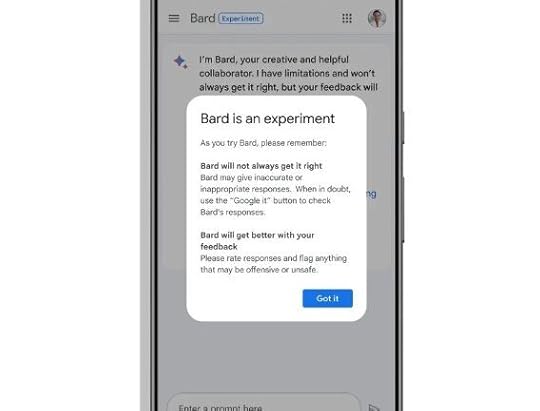
This week Google released a new A.I. chat bot called Bard. The move is part of an epic competitive battle between technology giants. There seems to be a general consensus that A.I. will be a major part of life going forward, and the big players are fighting for leadership in the space.
My friend and Kellogg colleague Jim Lecinski is using Bard and his initial assessment was positive. I’ll be looking forward to learning more about his take on it.
I was particularly struck by Google’s efforts to manage expectations; the company is wisely making a big effort to lower expectations. This is a very savvy move.
The Power of ExpectationsOur expectations have a big impact on our happiness. In general, we are pleased when things are better than we expected. If we anticipate that a company will make $20 million in profit, and the firm actually makes $30 million, well, this is great performance. If we predicted a profit of $50 million, however, the $30 million seems like a huge miss.
This dynamic shows up in many parts of life. Going to the dentist? Expectations are often low. A moderately unpleasant time then seems pretty good. Flying Southwest? After the holiday fiasco, simply getting to your destination at all seems like a miracle. Go Southwest!
Managing ExpectationsThe process of managing expectations is important and challenging. In general, managing expectations down is always safe, because you can clear the low bar.
Mary Dillon, the new CEO at Foot Locker, is doing this. Earlier this week the firm released disappointing results and Dillon predicted weak profits for the rest of the year. She observed, “We are clear-eyed about the actions that we need to take to simplify and make our business more efficient.”
High expectations are a challenge. I have mixed feelings when my class requires lots of bid points from students. It is nice to see the demand, but with the high bids come high expectations and the risk that people will say, “Sure, that was a fine class, but it wasn’t worth all those points.”
Of course, managing expectations down can be a problem, too. If you are interviewing for a new job, you should increase expectations. If you say, “I’ll be amazed if I get 50% of the numbers right” you’ve lowered expectations but you also won’t get hired. Similarly, if you say “This new product I’m working on isn’t likely to make any money at all” then you’ll have trouble raising funds.
People who are gifted at managing expectations know there is a time to raise them and a time to lower them. It is an art.
Another dynamic is ambiguity. If an experience is non-ambiguous, managing expectations down can be a good idea. The customer will experience things in a non-ambiguous way and will notice when things are better than expected.
If an experience is ambiguous, however, this won’t happen. With ambiguous products, setting expectations high is best, because you experience what you expect. For example, if you are selling a vitamin, then you’ll want set high expectations, “This is amazing stuff!” When people take the vitamin, they will likely say, “Wow! This vitamin is doing great things.” Wrinkle creams are the same, “Think how many wrinkles I would have had!”
Google’s Savvy MoveThis all brings us back to Google’s Bard. The company made one of the most deliberate efforts I’ve ever seen to lower expectations, stating right up front that the technology isn’t very good at the moment, and might produce inaccurate or offensive results.
This is a very smart approach by Google. By lowering expectations, Google is anticipating problems. If something then goes wrong, people will say, “Well, I expected that to happen.” If this goes well, people are delighted, “This is pretty good!”
When you have a respected and loved brand like Google, introducing a new technology is risky. If the new offering doesn’t work well, it could damage both the new product launch and the base business. If Bard makes mistakes, people might say “Wow, this technology is terrible. What is going wrong at Google?” Setting low expectations addresses this problem.
Now the competitive dynamics here are complicated. If there are multiple new products, all with some flaws, what is the best way to proceed with expectations? If there is no upfront investment required, lower expectations might be best – people will stick with the offering that delights. Upfront investment makes it more complex, because people get locked in, making it beneficial to sell the promise and raise expectations.
It will be interesting to see how Bard fares. I suspect that by lowering expectations, Google is ensuring that most people will say it is better than expected, and that is a key to success.
The post Managing Expectations and Google’s Bard appeared first on STRONGBRANDS.
March 6, 2023
A Good Reminder from Goldman Sachs

Last week in my Marketing Strategy course we discussed new business strategy. There are different strategies for entering an established category. Perhaps the most difficult one is the attack the core. This approach rarely works but that doesn’t stop people from giving it a try, as Goldman Sachs reminded us last week.
Attack the CoreAn attack the core strategy is simple. A company develops a product that is comparable to existing offerings and then launches it with significant support. The new product might be slightly better than existing products, or modestly different.
The outlook? Not good.
There are all sorts of problems. One issue is that gaining trial will be expensive. Why will people try the new offering? In many cases it will require massive spending; if you pay people enough money, they will do almost anything.
Another problem is that the new entrant will likely end up with a small market share. The order of entry model projects that each successive entrant into a category is likely to get a smaller portion of the market. The late new entrant ends up with a small share, few resources and no significant differentiation. This is not a formula for long-term success.
One of the biggest problems is that the existing players will likely defend. It is a direct attack, so hard to miss, and a clear threat. The established companies will almost always mount a notable and effective defensive effort.
The most interesting question might be this: why do people do this at all? The strategy isn’t likely to work for obvious reasons. Why embark on a doomed initiative?
Attack the core is a flawed but tempting strategy. One nice thing about the approach is that it is easy to implement. You just copy the existing offerings.
The opportunity is clear: the market exists and margins are good. There is money to be had.
All you need is a bit of confidence and optimism. We can do that!
It is a dangerous combination.
Sometimes people use creative language to obscure an attack the core strategy. As soon as you call something a brand extension, for example, it seems more appealing and reasonable. But a brand extension is often just an attack the core strategy with a different name, with similar odds of success.
Goldman SachsThe business leaders at Goldman Sachs are smart, driven, and talented. And yet Goldman Sachs embarked on an attack the core strategy with its entry into retail banking.
The firm launched a very respectable savings account under the brand of Marcus from Goldman Sachs. Then Goldman partnered with Apple and GM to get into credit cards. The company acquired Green Sky to build a presence in retail lending. There were plans to launch a checking account, too.
How did this all work out? It was a complete fiasco. The company has lost more than $3 billion on the effort since 2020.
Last week Goldman CEO David Solomon said the company was considering selling off much of its consumer division. He explained, “It became clear that we lacked certain competitive advantages and that we did too much too quickly which affected our execution.
Is this a surprising outcome? Not at all. Attack the core strategies usually don’t work.
Still, this didn’t stop Goldman from giving it a shot and losing billions in the process.
The LearningWhat do we take from all this?
Be careful about attack the core strategies. They are tempting. The financials can look good. It is easy to generate enthusiasm.
Optimism is a good thing, of course, but it shouldn’t obscure the strategy reality. Sometimes the smartest strategy is to say no.
The post A Good Reminder from Goldman Sachs appeared first on STRONGBRANDS.
February 13, 2023
2023 Super Bowl Advertising
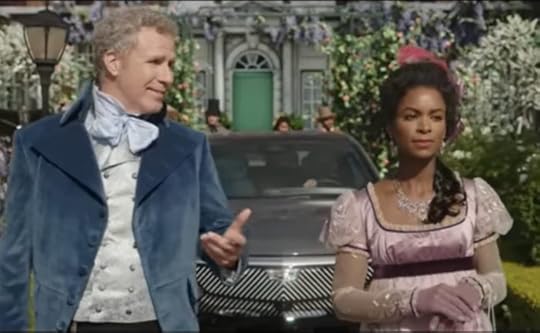
The cost of a Super Bowl spot keeps increasing—with prices this year in the neighborhood of $7million for 30-seconds! With ever-increasing stakes, Super Bowl advertisers are investing more time and attention on the ads.
The 2023 Super Bowl featured upbeat, safe advertising. The number of celebrities seemed to hit a new high, with many advertisers featuring a cast of different characters. Of course, all the partnerships and celebrities makes production another huge cost. How expensive were some of those ads to produce? Perhaps $3 million? More?
Overall, it was a strong collection of advertising. For the 19th year, a panel of approximately 70 Kellogg students evaluated all the ads during the game. Here are the top and bottom spots, according to the Kellogg Super Bowl Ad Review panel.
Strong Spots: Grade AGoogle Pixel
The top spot this year was Google Pixel. The ad broke through the clutter, starting with an emotional segment on memories, then pivoting to correcting them. At the core, it was a product demonstration.
The late branding might have been a problem for some, but the overall look and feel was so consistent with Google’s past efforts that the panel made the connection.
Of interest, the features shown in the spot weren’t unique to Google, but somehow that didn’t matter. Just because something exists in the world doesn’t mean most people know about it.
Disney
The Disney spot was a surprise; the company hadn’t released plans for the ad in advance. The Disney spot was charming and exceptionally well-branded. It was a reminder spot, highlighting just how remarkable Disney is.
This ad didn’t have a specific call to action, but it reinforced positive associations among anyone familiar with the Disney brand. It is a great example of using the reach of the Super Bowl to reinforce the relationship between a consumer and the brand to maintain brand equity.
Doritos
Doritos made a curious strategic decision, to focus on the shape of its chip. Some might debate that call, since people don’t buy a chip because of its shape. Moreover, the shape isn’t even a unique attribute. Frito-Lay was also running another Super Bowl spot for another triangle-shaped chip, Popcorners.
Still, that didn’t seem to matter as this engaging spot scored well with the Kellogg panel. It was surprising and cute, with strong branding. The Elton John appearance was one of the great moments of the Super Bowl.

Kia
Bringing together a product, an insight and a benefit is often a recipe strong advertising. That was certainly the case with the Kia Binky Dad spot. Parents can easily relate to forgetting a child’s special item, and the emotional trauma that can result. The Binky Dad’s heroic effort to retrieve the forgotten item is embraced by social media. It captivates the nation’s attention.
In the middle of this story, however, is a product demonstration. The ad features the Kia Telluride doing amazing things.
T Mobile
T Mobile has become one of the most consistent Super Bowl advertisers. This year the company did it again, scoring well with two strong spots. Branding was solid in both executions. The Bradley Cooper spot was funny and communicated product messages: America’s largest 5G network, price lock and most awarded.
The second spot, a takeoff of Grease, was charmingly product focused. Tell me more was a call to action. The ad also communicated product information like one cord, fast speeds, $50 a month.
Uber
Uber ran perhaps the most complex spot of the Super Bowl, featuring artists singing about its loyalty program Uber One. The ad was distinctive and broke through the clutter. It also communicated the benefit: saving money.
There wasn’t much in the way of detail. How much saving? Any other benefits? Still, perhaps getting people to remember that Uber One is enough. People will then take the next step, learning more about the product. Tell me more.
GM
It might be hard to go wrong with Will Ferrell in a Super Bowl ad. GM ran a Super Bowl spot with him in 2021, a clever spot about Norway.
This year’s GM spot, featuring a Netflix partnership, attracted attention. It clearly communicated GM has a lot of EVs.
The Kellogg panel gave this a high score. We are a little more split ourselves. First, we found the branding is odd. Do people know the GM brands? Second, why buy a GM EV? Given GM has established itself in the EV category, it might be time to differentiate itself. For now, the question remains: why buy a GM EV instead of a Tesla?
Squarespace
For many years, perhaps most years, you would find Squarespace at the bottom of our rankings. The brand has run some very weak ads over the year. Most of the misses were from a lack of linkage – the creative was interesting, but the branding was weak, and it wasn’t clear what the product even did.
This year, Squarespace went with a different approach and, according to the Kellogg panel, it worked. The spot featuring Adam Driver was creative in execution, but essentially a simple product description. Squarespace is a website that makes websites. Got it.
Popcorners
Media partnerships were a creative theme this year, and Popcorners embraced Breaking Bad in its Super Bowl spot. The spot was creative, and the branding was strong. Not everyone may walk away knowing exactly what Popcorners are, but we will try them despite the association with some rather unsavory characters.
Good SpotsAmazon
For the past several years, Amazon has been at the top of the Super Bowl ranking with creative spots for Alexa. This year, Amazon changed strategy, backing away from Alexa and instead supporting its core business.
The spot, featuring an engaging dog story, was product focused. The unexpected twist at the end was charming.
That said, the ad suffered from two things. First, it was one of two dog spots on the Super Bowl. Similar spots risk interfering with one another. Second, the basic message was that you can order a dog crate on Amazon. That isn’t a powerful message. Perhaps Amazon has deeper strategic issues to consider.
Booking.com
It is time for a vacation, according to Booking.com. If the effort here was to get people to remember Booking and to think about travel, well, mission accomplished. The spot communicated that it was time for travel and Booking has lots of options.
At issue was the lack of a differentiating message. Why Booking instead of other travel platforms? This was clearly a strategic choice by the brand; perhaps Booking just needs to own the “non-Airbnb” space.
Bud Light
Across the span of Super Bowl history, some of the funniest ads have come from the creative team at Bud Light.
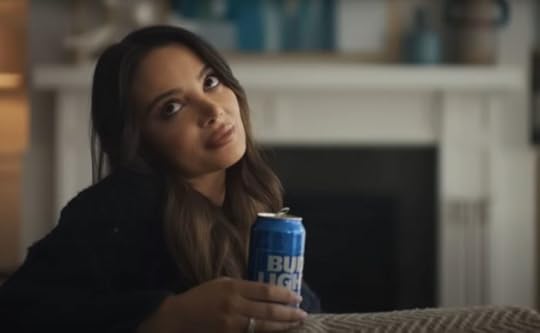
That was not the approach this year. The Bud Light featured a couple stuck on hold, a universal experience. Opening two Bud Lights transforms the moment, turning it into a small joyful scene.
The spot was different and product focused. The entire spot pivoted on the product: great integration and branding.
If Bud Light can bring that kind of joy to everyday moments, well, it is time for some Bud Light.
Crowdstrike
This Super Bowl used the classic trojan horse image to dramatize cyber-threats, and notes that Crowdstrike protects you in the digital world. Branding kicked in about half-way through this spot, which helped the linkage. Overall, an entertaining and effective spot.
Dexcom
Healthcare ads were scarce on the Super Bowl this year. Astellas ran a spot just before the game, and Dexcom ran an effective spot during the game.
This ad, featuring Nick Jonas, was product focused. It showed the product, how to use it and what it does.
In terms of business impact, we suspect this ad will do very well, even if it didn’t have the breakthrough of other ads on the game this year.
Dunkin
The first spot of the Super Bowl was unexpected: Ben Affleck was working at the local Dunkin.
The ad was distinctive, creative and memorable, with great use of celebrities. The Jennifer Lopez appearance was a highlight. Branding was good, too, but the spot could have communicated a stronger product benefit. Why to go to Dunkin? There was a mention of low price but not much beyond that. A product mention could have strengthened this.

Farmer’s Dog
Most of the Super Bowl ads were light-hearted this year. One of the few brands to take a more serious approach was the Farmer’s Dog.
The spot was a celebration of dogs. The team that created the spot apparently liked dogs more than the team behind the Amazon spot. The ad touched on one of the emotional truths of dog ownership, that dogs don’t live very long, and loss is an inevitable part of dog ownership.
Branding was weak, however, and the spot didn’t say anything about the product. How does the Farmer’s Dog give us more time?
Hellmann’s
This year Hellmann’s was back on the Super Bowl battling food waste. Of course, people don’t use Hellmann’s because the brand is worried about food waste. That is perhaps the brand mission, but it isn’t the benefit. People reach for Hellmann’s because it makes food delicious. One reason this year’s spot worked better than prior efforts is because the creative spot focused on a more motivating benefit: Hellmann’s creates delicious food.
Pepsi Zero Sugar
Pepsi made two interesting choices this year. First, the brand focused on just one item instead of the overall brand. The goal appeared to be to drive trial of Pepsi Zero Sugar. This wasn’t a bad strategic choice, assuming Pepsi Zero Sugar is a key part of the brand’s growth plan.
Second, the brand encouraged trial by simple asking a question: real, or acting? Will people be intrigued enough about the question to go out and try Pepsi Zero Sugar? Perhaps. It is likely more motivating than going with the predictable and tired “tastes amazing!” message.
Planters
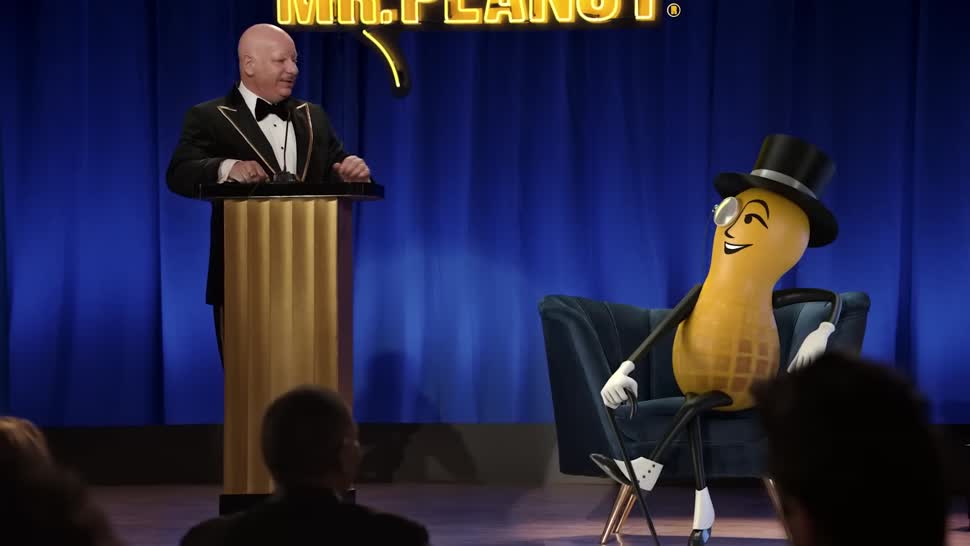
Roasting Planters? This spot played off the meaning of roasted. This is a simple idea, but the spot was product focused and well-branded. The mention of killing off Mr. Peanut was a bit of advertising inside baseball, but we aren’t against that.
Pringles
Should a brand embrace its most distinctive feature, even if it is a negative thing? The Pringles team offers an argument for doing so, at least based on this Super Bowl spot. The ad focused on the awkward container, and the challenge of reaching in for the chips.
Reminding people about Pringles might be enough; that is what this spot did in an engaging and well-branded fashion.
Ram
This spot was a cute joke, a play on ED. We quickly tired of it, however, and wished the brand moved on to explaining how it addressed some of the reliability and power issues mentioned.
As with GM, why buy a Ram instead of a Tesla? That is a pretty simple question, so we aren’t sure why they didn’t answer it. Jeep did a better job.
Skechers
Snoop Dogg and Martha Stewart teamed up (again) in this entertaining Super Bowl spot for Skechers. It attracted attention and delivered a product message – comfortable, slip-on shoes. This is not going to go down as one of the great Super Bowl spots of all time, but we can see how it could help the brand.
Weathertech
A solid spot from Weathertech! The brand managed to show many of its different products, while sticking with its historic message of made in America.
It is hard not to like the Weathertech brand.
Weaker Spots (D)
Remy Martin
Serena Williams showed up in two first quarter spots. This might be good for Serena, but it isn’t ideal for either Remy Martin or Michelob Ultra.
Michelob Ultra ran a creative, engaging spot. However, perhaps the story was more interesting than the brand. The Kellogg panel gave it a C.
Remy Martin ended up as the bottom spot in the Kellogg ranking. The problem? There was so little linkage. The ad is an inspirational talk about Serena about teamwork, dedication, and achievement. How does Remy Martin fit into that story? It doesn’t seem too. Branding is weak, linkage is weak.
M&Ms
This year M&Ms rolled out an elaborate campaign. The brand was going to shift away from the characters and embrace Maya Rudolph. She would proceed to make crazy changes. The characters would come back and save the day.
The problem?
First, the brand misled major news outlets, which is not a great way to build credibility, trust, and good relationships with media partners.
Second, the Super Bowl spot was just Maya Rudolph doing crazy things like introducing clam M&Ms. That was it.
After the game, there was a spot with the characters holding a news conference announcing their return. This attempted to resolve the story. But the main Super Bowl ad fell flat.
This effort was just too complicated.
Tubi
The prize for the most disturbing character on the Super Bowl this year goes to Tubi and its demonic rabbits. The critters showed up on several occasions, but it was never clear why they were roaming the screen.
The Super Bowl interruption spot caused stress for millions – at least some in our room were panicked that our review would run into technical problems. That attracted attention.
Tubi never really got around to its positioning. Who is it for? What is it? What is the benefit?
Overall, a great year for Super Bowl advertising. Look for another year of record prices in 2024.
By Tim Calkins and Derek Rucker
The post 2023 Super Bowl Advertising appeared first on STRONGBRANDS.
February 10, 2023
Are Super Bowl Ads Worth the Price?
The Kellogg Super Bowl Ad Review is just a few days away. Once again, a panel of Kellogg MBA students will evaluate all the spots to determine which ones worked and which ones didn’t.
I do a host of talks and interviews before and after the Super Bowl. The question I get most often: Is Super Bowl advertising worth the high price?
The InvestmentAdvertising on the Super Bowl is not cheap. This year the headline number for a thirty second spot is $7 million. That isn’t what all the advertisers are paying; there is a lot of negotiation. Still, it is a starting point and in a year like this, with strong demand, discounts are likely few and far between.
But $7 million is just the start. First, many advertisers will run a sixty or even ninety second ad. That $7 multiplies quickly.
Second, there is the production. It can easily cost $1 million to produce a Super Bowl spot, and often more, especially when the creative features celebrities. This year many of the spot will have recognizable figures. Workday, for example, has a remarkable collection of rock stars. Even a somewhat faded celebrity will ask for a lot of money to be in a Super Bowl ad.
Third, the advertising is just the start. Almost every advertiser will spend on a social media campaign to amplify the creative. Firms will use QR codes that lead to websites. There will be promotions and PR efforts and internal communication efforts.
A typical Super Bowl ad effort can easily cost $20 million.
The OpportunityDespite the high cost, the Super Bowl is often worth the investment.
The broad reach is one appealing factor. Viewership in recent years has been about 100 million people, so a good proportion of the U.S. population. More important, there isn’t anything else that comes close to that sort of reach. The Academy Awards, for example, used to be a huge event and advertisers compared it to the Super Bowl. But viewership has slumped, so now the Academy Awards aren’t even close.
More important is the attention. It is incredibly hard to get people to pay attention to an advertising message. On YouTube, advertisers might have just five seconds before people skip the ad. Social media is powerful, but it is very easy for people to just scroll past a brand's message.
The Super Bowl is unique because people will focus on the advertising. Many people watch the Super Bowl for the advertising more than the football. People debate the merits of different ads. More than 1,000 people will watch the webinar I do each year with Derek Rucker talking about the Super Bowl ads. I suspect people would not show up for a talk about the advertising that ran last week on the Amazing Race.
The Super Bowl also gives advertisers a reason to engage on social media. Most days, it is hard for a brand like Downy to do anything on social media that would warrant attention. Laundry videos don’t get a lot of views of Tik Tok (though I suspect there is a following). But Super Bowl advertisers have a lot to talk about: the decision to run, the celebrity, the teaser spot, the promotion, the spot.
During the game, the advertisers are all on Twitter, commenting about the game, their brand, and the other advertisers.
The Super Bowl is also powerful as a signaling tool. Everyone knows that a Super Bowl ad is expensive, so spending on the game communicates to employees, channel partners, suppliers, and investors that the company is investing. This can be a powerful and important message.
The Right FitThe Super Bowl isn’t right for every brand. While the opportunity is considerable, it will work better for some brands than others.
The cost is of course one concern. Another issue is the risk: Super Bowl ads are supremely high-profile. With this comes opportunity and risk. You can damage your brand with an ill-considered effort, and a marketing team and ad agency can both be fired.
Broad Reach
Brands with a broad target market are generally a better fit for the Super Bowl. Who watches the Super Bowl? Everyone.
It rarely makes sense to advertise on the Super Bowl if you have a small target market. You don’t see Vail Resorts on the Super Bowl for the simple reason that many people don’t ski. Why spend so much money to reach people with an irrelevant message?
Margins
Financially, the Super Bowl will only work for brands that generate a strong margin. Commodity brands will struggle to justify the investment. Cars? Sure…there is a lot of profit in that space. Spirits? Of course; the margins are great and brands matter.
Strategic Fit
Perhaps the most important reason is the strategy: there has to be a compelling reason to advertise on the Super Bowl. Why step up? Why take the huge risk?
It might be that the brand has important news to share: a new product, for example. Sometimes a brand is under competitive attack and needs to fight back and send a signal. It could be that a brand has negative perceptions and needs a repositioning. Or sometimes a brand is doing well and has the potential to grow much faster.
You can see different strategies on this year’s Super Bowl. GM is defending against Tesla, spending to push back Tesla in the EV space. AB InBev is investing in Busch, a high potential brand showing growth potential. Fan Duel and Draft Kings are both scrambling to acquire customers, spending heavily as that industry becomes more established.
I suspect the price of a Super Bowl ad will continue to increase in the years to come because it is a compelling opportunity for so many brands, even if that opportunity comes at a remarkable cost.
OpportunitiesThere are three ways to engage with the Kellogg Super Bowl Advertising Review.
You can join the discussion on social media with the hash tag #KelloggBowl. During the game I’ll be on Twitter. You can follow me at @timothcalkins or just use the hash tag. It is great fun to see what people think of the different spots.
On Monday after the game, my colleague Derek Rucker and I will be doing a LinkedIn Live session. We will spend thirty minutes talking about the spots and answering questions. You can sign up here.
Wednesday, we will host a webinar where we will analyze the advertising. We will show and discuss some of the top spots, some of the weaker spot and a few that are interesting. You can post comments and discuss the ads with us through the session. Sign up here.
The post Are Super Bowl Ads Worth the Price? appeared first on STRONGBRANDS.
February 6, 2023
A Debatable Move from M&Ms

It is Super Bowl ad season, a time when marketers work to create excitement and interest heading into the big game.
One of the brands that has received a lot of attention this year is M&Ms. The brand is apparently in the middle of an elaborate stunt designed to create interest and excitement.
It is a fun concept, but a highly debatable move.
The CampaignTwo weeks ago, M&Ms released a statement saying it was going to focus less on the M&M characters, in part because they had become polarizing after a recent redesign. Instead, Maya Rudolph would be their new spokesperson.
Mars took the M&Ms story to the media. The New York Times ran an article on the news, as did the Wall Street Journal and other outlets.
It now appears that the announcement was a hoax. M&Ms is releasing a series of videos showing Maya Rudolph making a hash of her role. She changed the name of the product and is proposing to launch strange flavors like clam.
Presumably, on the Super Bowl, the characters will take back control.
The PowerThis marketing effort is certainly generating a lot of interest. People debated the move to step away from the M&M characters. Some said it was sad that life had become so polarized. Others criticized Mars and M&Ms for backing away from diversity and inclusion.
The brand is now having quite a lot of fun with things, generating interest and attention.
If the goal was to get people talking about M&Ms again, well, mission accomplished.
The ProblemThe issue, of course, is that Mars is getting all this attention because the brand released fake news. The company tricked powerful, credible media properties into running a false story.
Putting out misleading information, especially in a blatant bid to get publicity, is a dangerous move for companies. The first problem is that it erodes trust. In a time when trust is falling, actions like this just further erode it. Can we trust the next announcement from Mars? Probably not.
This doesn’t matter so much when dealing with the fate of some animated characters. But how about when Mars discusses the safety of Pedigree dog food? Do we trust that? Or the presence of allergens in its candy? Is that reliable?
The bigger problem is that stunts like this create bad feelings with media partners. Daniel Victor wrote the article in the New York Times about the move. How do you think he is feeling, knowing he was played by Mars PR people? How about Jennifer Calfas from the Wall Street Journal, who was also duped by Mars?
A few years back Volkswagon released a statement saying it was changing its name to Voltswagon. Media outlets ran the , taking it as true. When the company revealed that it was just a gimmic, the reporters looked foolish. I spoke to one who was bitter and furious at VW.
The DebateSo what is this? A charming, clever campaign that will generate publicity for M&Ms, or a bad strategy that will damage the credibility of Mars? It seems to me like it is both, a clever short-term promotion, but a move that has Mars joining a list of people and organizations that can't be trusted, like Volkswagon, George Santos and Sam Bankman-Fried.
Getting people talking is always good, but doing it with false stories is a dangerous approach in a world where trust is hard to find.
The post A Debatable Move from M&Ms appeared first on STRONGBRANDS.
January 19, 2023
It Is Time to Drop the Zoom Events

The Super Bowl is coming up, and the Kellogg Super Bowl Advertising Review along with it. For me, it is a particularly busy and fun time of year. There are campaigns to study and brands to analyze.
I speak at a lot of seminars and programs before and after the Super Bowl, discussing advertising trends, the hits, and the misses. My colleague Derek Rucker and I have a unique perspective; we’ve been studying Super Bowl ads for many years, and, unlike advertising executives, we don’t have a vested interest since we don’t work on any of the spots.
This week someone approached me about doing a Super Bowl program for their group. I was open to the idea; I always enjoy talking about the spots. But then everything fell apart as they said, “We’d like to do the event on Zoom.”
I quickly declined the opportunity.
The Power of Business SeminarsBusiness programs are terrific. These events are usually sponsored by business school alumni associations or other community groups. Sometimes the events are hosted by companies for their employees.
The format is usually the same: a group gathers before or after work, there is a talk lasting perhaps an hour, then some food and drink.
These events provide a lot of benefits.
First, it is a chance for learning and skill development. It is all too easy for people to become focused on their daily tasks and work. Stepping back to hear a different point of view is a chance to reflect and learn. Sometimes the content will be immediately applicable. More often, the talk will provide a few interesting ideas and concepts to think about.
Second, these events are a great opportunity for networking and creating relationships. Formal networking events can be forced and awkward. Who attends a “networking event”? Often it is people looking for a new job and consultants looking for a new client. That isn’t a great combination.
A development program focused on content is different; it attracts a range of people, many drawn by the program and the learning. The content provides a topic for conversation, “What did you think of the speaker?” is an easy starting point when you meet someone new at the event.
Third, it can be fun. People in business usually like talking about business. Almost everyone appreciates food and drink.
For presenters, these events can be appealing. Many people enjoy talking to a group about their research or book. It is always fun to interact with an enthusiastic audience. The events are a great chance to meet new people.
The Problem with ZoomAt first look, Zoom seems like a perfect platform for these events. It is easy for people to attend; more people will usually sign up for a Zoom program than an in-person program. It is easier to put on: you don’t need a venue. It is cheaper, too, since there is no cost for food or drink.
But it is time to recognize the reality: Zoom programs are terrible.
Networking on Zoom rarely seems to work; there are no opportunities for informal, spontaneous conversations on Zoom. If you really want to meet someone attending the same Zoom program as you, well, you won’t.
The programs aren’t very fun. There is no food or drink. Who wants to stare at their computer for a few more hours? Nobody laughs.
The learning isn’t good, either. With an in-person program, there is some social pressure to pay attention. There is more to look at, too, which makes it all interesting and engaging. There are other people. The speaker is moving around. On Zoom, it is supremely easy to check your email during the program or wander away to organize your socks.
For speakers, Zoom programs aren’t fun. They are more exhausting than in-person programs, and there is no real benefit for the speaker. Nobody looks great on Zoom, so you aren’t enhancing your brand. You don’t meet anyone. You don’t even get to hear people laugh or clap.
Back TogetherIt is time to give up on Zoom for business seminars. Instead of taking the easy road and hosting a Zoom, organizers should focus on doing a few quality events that will bring people together.
Speakers should decline Zoom programs, too. Better to show up for an event that will delight an audience and enhance your brand, than struggle with a Zoom program that will be mediocre at best for all involved.
The post It Is Time to Drop the Zoom Events appeared first on STRONGBRANDS.
January 4, 2023
2023 Brands to Watch

Happy New Year! Each year I pick a few brands to watch. These are brands that I think are heading into a particularly interesting year. Some have opportunities to break out, and some are likely to struggle. Here is my 2023 list.
In a somewhat risky move, I’ll also include my stock market forecast at the end of this post.
SouthwestOf course! After the past couple weeks, how could Southwest not make the list.
Southwest has long been a unique and charming airline. The other players are big, corporate and impersonal. Southwest is different. The boarding process, flight schedule and check-in process are unique. Flight attendants sing songs and tell jokes. How often has your United flight attendant belted out a Frank Sinatra tune?
But everything collapsed over the holidays. Thousands and thousands of flights were cancelled, Christmas and vacations plans were shattered, luggage piled up. The pilots blamed management, the gate agents blamed the operations team and the CEO blamed the weather.
Can Southwest recover? My projection: I think the CEO won’t last, but the airline will come back.
People have short memories, and Southwest has decades of success to fall back on. This is the power of a strong brand.
Today I would be nervous booking a Southwest flight. I suspect I’ll feel differently in June and most other people will, too.
MetaA decade from now, we will look back at Facebook/Meta and marvel at Mark Zuckerberg's big bet on the metaverse.
It is a huge bet. The company is investing billions in the metaverse. Zuckerberg renamed the company. Who renames a company based on a completely unproven technology? Zuckerberg even started calling employees metamates.
As Meta invests in the metaverse, Tik Tok is taking over the social media world.
I suspect we won’t see the metaverse take off in 2023 and by the end of the year Zuckerberg will have stepped back and Facebook/Meta will have shifted its focus back to the core business and defending against Tik Tok.
BitcoinCan crypto survive after a devastating 2022?
The obvious answer is no. Crypto and Bitcoin rely on trust, and after the FTX collapse trust seems hard to find.
But I think Bitcoin, in particular will bounce back. It is the largest, most established cryptocurrency. Many investors won’t go near it, but these investors were never going to buy Bitcoin anyway. More aggressive investors will see an opportunity, and any faint signs of hope will propel it forward.
TysonWhat happens when all your marketing people leave? Tyson is running an experiment.
Last year, the company announced that it was “bringing the team together” and moving employees to Arkansas. Tyson shut the Chicago office. The result, predictably, was that almost everyone left.
So now Tyson doesn’t have a lot of marketing talent and I suspect that recruiting marketing employees in Arkansas can’t be that easy.
Will Tyson deliver a strong year? Perhaps, because the core of the business is commodity chicken production, and you don’t need great marketing talent for that. But the most profitable business, the consumer business, is driven by new product development, brand management and other skills.
I suspect Tyson will struggle to keep the consumer business performing well. The company won’t reopen the Chicago offices, but investors will question the logic behind that move and the capabilities of the senior management team.
Pete ButtitiegThere are a lot of politicians to watch this year, as candidates position themselves for 2024 and 2028 presidential elections. Ron DeSantis is of course a notable brand.
For the democrats, I think Pete Buttitieg is a brand to watch in 2023. He is serving now as Sectary of Transportation. He is well-spoken, moderate and young. He is willing to work with Republicans. He is reasonable and forceful, humble and funny. He is good on social media.
Some will say that a gay politician just can’t win on a national stage. I disagree. Yes, some regions might have issues, but these aren’t areas that tend to support democrats anyway. The battle ground states are quite different.
His current role gives him exposure while avoiding controversy; pretty much everyone agrees that airports and roads and trains are important. This will help his brand. Pete isn’t going to challenge Biden, but he might emerge as a logical successor.
CarnivalThe cruise industry fundamentals are exceptionally appealing. The high fixed costs provide a barrier to entry, limiting competition. Expenses are surprisingly low. People love the experience.
Still, can a company like Carnival bounce back? COVID was devastating, and Carnival loaded up on debt to survive. It now has over $33 billion in long-term debt. The stock price is down 88% over the past five years.
Will Carnival rebound? I think so. People value vacations perhaps more than ever, and cruises are a terrific value. Look for Carnival to stabilize and then begin rebuilding its brands in 2023.
-------------------------------------------
The Stock MarketProjecting the stock market is a hopeless task. When it looks poised for a gain, it falls and when things look hopeless, a rebound is often just ahead.
Nonetheless, I’ll give it a shot. My projection: we will see a small rebound in 2023. The shock of higher interest rates is past and inflation is moderating. Stocks generally go up. Inflation can be a positive for company profits. The S&P 500 closed the year at 3,839. My projection is about a 4% gain, less than the historical average but still positive. Let’s call it 3,990.
Best wishes for a productive and fulfilling 2023.
The post 2023 Brands to Watch appeared first on STRONGBRANDS.