Tim Calkins's Blog, page 5
January 22, 2024
The Top Super Bowl Advertisers #7-9
For the past 20 years, students at the Kellogg School of Management have been evaluating all the Super Bowl Ads in the Kellogg Super Bowl Advertising Review.
In honor of the 20th year, I'm counting down the top advertisers. These are the brands that received the most top grades from the panel.
I'll post a new video every few days leading up to this year's Super Bowl. Here are the advertisers that finished in the 7, 8 and 9 positions.
The post The Top Super Bowl Advertisers #7-9 appeared first on STRONGBRANDS.


The Top Super Bowl Advertisers

For the past 20 years, students at the Kellogg School of Management have been evaluating all the Super Bowl Ads in the Kellogg Super Bowl Advertising Review.
In honor of the 20th year, I'm counting down the top advertisers. These are the brands that received the most top grades from the panel.
I'll post a new video every few days leading up to this year's Super Bowl.
The post The Top Super Bowl Advertisers appeared first on STRONGBRANDS.
January 10, 2024
2024 Brands to Watch
Each year I highlight some brands to watch. These are brands facing unique situations as the year begins. You can see my 2023 list here, along with a look back at what actually happened here.
Below are my 2024 picks.
HarvardIt has been a rough stretch for Harvard. The university has been attacked on various fronts, and President Claudine Gay recently stepped down.
The question now: who does Harvard pick to be its new leader? One certainty: the choice will be scrutinized from all sides.
It is hard to ignore the DEI dynamics in the decision. Will Harvard select another black woman? A white man? This will be fascinating to watch.
Yale is also in the process of selecting a new president, and Fourth Presbyterian Church in Chicago is searching for a new head pastor. The decisions aren’t easy.
I expect that Harvard will rebound in 2024. The new president will do well. Great brands can move past short-term controversies.
EVsThere were two big stories in the EV space recently. First, demand seems to be slowing; dealers are complaining that EVs just aren’t moving off the lots. Second, China’s BYD passed Tesla as the biggest global player.
I predict we will start to see a split in the EV market this year. There will be a luxury segment, led by top brand names. These will be expensive, prestigious vehicles. This is where Tesla has historically played.
And then we will see a low-price segment emerge. For many people, the only way they will buy an EV is if it is cheap. What is the difference between a cheap EV and a golf cart? Perhaps not that much.
People have to see a benefit. Luxury buyers like to look prosperous, tech savvy and environmentally friendly, and this has driven Tesla’s success to date. The mass market is different. EVs don’t have a strong value proposition.
Put an EV at half the price of a gasoline powered car, and now things start to happen.
SheinOne of the most surprising brands of the past few years is Chinese apparel company Shein.
The firm has grown by selling relatively stylish clothes at absurdly low prices. Shein is currently selling a dress for $12.90 and a sweatshirt for $5.66. This is the same low price/interesting design space where Zara plays, but Shein is dramatically cheaper and moves much faster.
The firm is heading for an IPO this year.
Shein has two challenges. First, what are the firm’s unique differentiators? Beyond an amazing supply chain, what is there? The brand? The design? If competitors can copy the model, then profits will be hard to find. Temu is already making lots of headway.
Second, how far can the cheap, throw-away clothes market go? Shein clearly fills a need, but will people eventually lose enthusiasm for companies like Shein that rely on cheap materials, cheap labor, and lots of waste?
I suspect Shein will struggle this year.
AppleQuite a few years back I advised a friend not to buy Apple stock. My logic was that the devices were so good that people just didn’t need to buy new ones. Sales would have to slow.
That was terrible advice, of course, and I’m still apologizing.
But perhaps the insight was correct, just the timing was off. Apple still faces a basic problem; the iPhones are really good. The new ones aren’t dramatically better. Apple’s efforts to grow in media and finance haven’t amounted to much. This might be the year when Apple starts to noticeably slow. Recent indicators haven’t been great. I’m thinking 2024 will be a difficult year in Cupertino.
Non-Profit BoardsNon-profit boards have long been powerful branding tools. Prosperous people join boards to have a positive impact on society, to network, and to look good. They donate lots of money to be part of the brand. For personal branding, a high-profile board looks great.
In 2024, however, I think we will see a shift and people will become more hesitant to take on these roles.
The reason? Our tense, polarized society leads to high-profile controversies, and these issues spill over to the board. Serving on the Harvard Corporation, for example, is enormously prestigious but it doesn’t seem too appealing today. Northwestern’s Board of Trustees received criticism following the improper handling of hazing on the football team.
Both conservatives and liberals have learned to exert influence through carefully developed campaigns. Targeting a board is a huge part of this.
A non-profit board role is great but not if it drags someone into controversy. This is especially true when one has little practical influence on operations. With a fifty-person board, most members have little impact.
I expect people will be much more cautious when taking on these roles in 2024.
Nikki HaleyIn politics, it is all about Nikki Haley. She is now the only viable challenger to Donald Trump.
At the moment, Trump has all the momentum. Joe Biden’s struggles with immigration, the Middle East and inflation continue. Part of this is perception and recency. People think back fondly to the Trump days, and they blame the current administration for their day-to-day challenges.
Nikki Haley has only two opportunities. The first is that Trump suffers from a health issue that prevents him from running. This is possible but not something to build a strategy on.
The second is that Haley comes across as more exciting, dynamic, and optimistic.
Most people apparently aren’t moved by the January 6 debate and warnings about our democratic system. People also aren’t swayed by attacks on Trump’s character or discussion of his legal issues.
But people are motivated by hope. Barack Obama tapped into this again and again. Haley can do it, as well.
If Haley can get a little bit of traction, she can start portraying herself as the bright future. Nobody wants to go back – people want to move forward.
So new ideas, fresh thinking, excitement, hope. Could it happen? Definitely.
Bud LightWill Bud Light finally rebound in 2024?
Bud Light has been through a terrible stretch. The company completely mismanaged its sponsorship of Dylan Mulvaney and got caught in the center of cultural controversy. The impact was a dramatic and sustained downturn. The huge impact on sales surprised me and many other marketers.
In 2024, I think we will see Bud Light bounce back. People forget, even if it sometimes takes a while. Bud Light will put forward interesting messages and sponsorships. The brand will keep showing up at cool places. And gradually people will begin to feel more positive.
Stock MarketI’m thinking this will be another positive year for the market, as interest rates slowly come down and people move funds from money market accounts back to equities. FOMO is powerful. I project the S&P to finish + 6% at 5058.
Here’s to a great 2024!
The post 2024 Brands to Watch appeared first on STRONGBRANDS.
January 2, 2024
Looking Back at my 2023 Brands to Watch

Recently I’ve started off the new year by highlighting some Brands to Watch. These aren’t necessarily the best or worst brands, they are simply brands that I project will be heading into an interesting stretch.
As we begin 2024, it is time to look back at my 2023 Brands to Watch and see how I did.
Southwest AirlinesLast Christmas was a complete disaster for Southwest, as the airline essentially shut down in the middle of the busy travel period. People were livid as Southwest struggled to fly planes and sort out baggage. Presents never arrived and people spent days sleeping in terminals across the country. While other carriers faced challenges due to the weather, Southwest’s struggles were unique.
I predicted that Southwest would move past the bad period and that people would largely forget about the terrible holiday season. This was correct; while Southwest hasn’t had a great financial year, in part due to the lingering costs of the holiday stumble, people are back to flying the airline with confidence.
I also predicted that the CEO would step down, taking the fall. This was not correct; Bob Jordan was and remains CEO. The Southwest team was apologetic and rolled out a series of changes to ensure the problems wouldn’t happen again.
CarnivalI predicted that cruise-industry giant Carnival would bounce back. Cruising is great fun and an inexpensive vacation option.
This was a good prediction. Carnival is filling up ships and the stock is up from less than $8 at the start of the year to over $18 at the close.
MetaI predicted that we would hear less about the metaverse and that Meta the company would focus on its existing businesses.
This was correct. We hear a lot about AI these days and very little about the metaverse. What is the metaverse? Most people have no idea.
A renewed focus on the existing businesses helped spark a massive boom in the stock. Meta is up from about $125 per share at the start of the year to over $350 at the close.
BitcoinAt the start of 2023, the collapse of FTX was top of mind and cryptocurrencies were out of favor. I predicted that Bitcoin would rebound as the leading brand in the crypto space.
This was a good call. Bitcoin began the year at just under $17,000 and finishes at over $42,000.
TysonIn 2022, Tyson made the bizarre decision to close its Chicago office and essentially fire all the people responsible for its most successful business, consumer products. I predicted that Tyson would have a rough year in 2023.
This was another good call. Tyson delivered one bad quarter after another in 2023. In a year when the stock market is up over 20%, Tyson fell from about $62 per share to $54. Tyson's leadership team is clearly struggling.
Pete ButtigiegI predicted that 2023 would be a good year for Secretary of Transportation Pete Buttigieg and he would emerge as a logical successor to Joe Biden.
In the end, 2023 wasn’t a perfect year for Pete, as he got caught in the Southwest meltdown. Still, he has done a solid job as Secretary of Transportation.
With Joe Biden running for reelection, Democratic candidates aren’t stepping forward. When the time comes, Buttigieg will be there. He is in a far better position than Kamala Harris and others.
The collapse of Ron DeSantis is another notable 2023 political story. My assessment is that his decision to play to the far right – rejecting choice, banning books, criticizing his alma mater and attacking the LGBTQ community – made him seem unfriendly and mean, and that is rarely a good image regardless of one’s political affiliation.
The Stock MarketI made the risky move to predict how the stock market would do. I thought stocks would be up, but just a little: +4%, with the S&P 500 at 3,990.
I was right on the direction, but off on the amount. The S&P 500 closed at 4,770, up a remarkable +24%.
Best wishes for 2024!
The post Looking Back at my 2023 Brands to Watch appeared first on STRONGBRANDS.
December 15, 2023
A Huge Branding Move by McDonalds
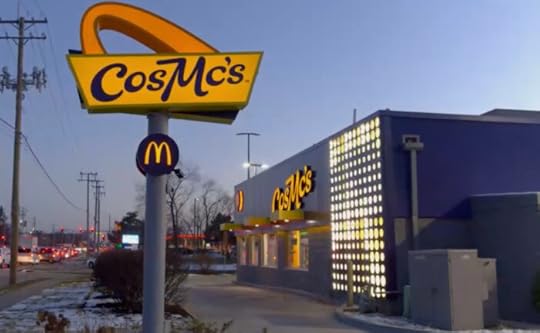
Last week McDonalds opened the first CosMc’s, a new restaurant concept built around drinks and snacks, in Bolingbrook, Illinois. CosMc's serves items including coffees, lemonades, cookies, pretzel bites and ice cream.
This is a huge move from McDonalds, and it makes a lot of strategic sense.
You can learn a lot about brand portfolio strategy from McDonalds: the challenge of managing a house of brands, the limitations of a branded house and the wide range of branding options available to managers.
McDonalds PortfolioIn the early 2000s, McDonalds was a classic house of brands. The firm managed thousands of restaurants under the McDonalds brand, of course, but also owned brands like Chipotle, Donatos Pizza and Boston Market. This gave the company a range of growth opportunities but also created complexity.
When the McDonalds brand started struggling, the company got rid of all the other brands to focus just on fixing McDonalds. That was the priority. The move worked and the company flourished.
Since then, McDonalds has been a branded house, focused just on the McDonalds brand. The company has other brands like Big Mac and Egg McMuffin, but these are sub-brands under the primary brand of McDonalds.
CosMc's BrandingThe launch of CosMc's is a strategic change. The company is back to managing multiple brands.
Now one could debate the branding strategy of CosMc's. What exactly is it? It seems like a distinct brand and isn't strongly endorsed. It isn't CosMc's from McDonalds. Still, there are lot of McDonalds references, so the company is playing up the fact that it is related to McDonalds. Indeed, the branding work highlights this connection. To me, this looks like a new brand, endorsed by McDonalds. It is different and yet connected.
The LogicWhy is McDonalds launching CosMc's? Growth.
The challenge for McDonalds, and every company, is delivering growth over time. This is what managers have to deliver. Growth is what investors want to see, and what provides opportunities for employees.
There is only so far you can push McDonalds. At some point, the company will run out of locations for new restaurants. You can’t put a McDonalds right next to another McDonalds.
There is a limit, too, on what you can sell. Every incremental item creates complexity – the menu gets more crowded, the need for staff training goes up, the chance of mistakes increases. All of this leads to slower service times and less accuracy, and this impacts customer satisfaction.
Pricing is a challenge, too. McDonalds is a value player, so increasing prices isn’t easy, and premium offerings might struggle.
With CosMc's, McDonalds is positioned for growth. The “beverage break” need state is huge. People love to take a pause from their day to enjoy a coffee or special drink. Snacking is enormous. Starbucks and Dunkin have flourished in this space. The beverages are affordable luxuries. Yes, paying $6 for a coffee or lemonade is a little strange, but why not! For $6 you can have the very best.
CosMc's is clearly not McDonalds. There are no burgers. It isn’t a place for a meal. It only has drive through. It is a place to stop in the middle of your busy day for a quick break.
The new chain seems easy to run. There is no indoor dining, for example, so the company doesn’t have to worry about security or cleaning washrooms or kicking out people who stay too long.
The OutlookSo, will it work? Perhaps. The concept seems well developed in many dimensions. If it does, CosMc's opens up a new world of opportunities for McDonalds.
It also creates a problem for Starbucks and Dunkin – watch for a fascinating competitive battle.
The post A Huge Branding Move by McDonalds appeared first on STRONGBRANDS.
November 29, 2023
Making Sense of Girl Math

If you’ve spent much time on Tik Tok this fall, you’ve likely seen videos about Girl Math, a set of rather debatable financial principles. Here is an example.
Now it is easy to dismiss Girl Math as just bad financial thinking, but it isn’t that simple. Some of the insights behind Girl Math are valuable and true. Others are completely wrong.
Today, I will take a look at some Girl Math advice and try to make sense of it.
Important NoteThe entire concept of Girl Math is unfortunate. It plays on the idea at that women aren’t good with money. This reinforces a negative view.
It is also incorrect. Studies show that women investors tend to do better than men. The problem is that many men are too confident in their financial abilities. As a result, they take risks, trade frequently and end up hurting their overall returns.
Reviewing Girl Math PrinciplesIf I pay for something in cash, it’s free.
This seems completely wrong on the surface because it doesn’t matter how you pay for something. It still costs money.
But there is actually a helpful insight here about budgeting. One problem with a budget is that keeping track of things is a burden. Are you really supposed to write down that you spent 80 cents on a bag of pretzels? Or that you put a quarter in the parking meter? But once you start skipping items, the budget can slip away.
One way around this is to just record when you take out cash from the ATM. If you take out $100, you record $100 in your budget. You then don’t have to track every little cash transaction.
In this way, paying for something in cash is indeed sort of free; it doesn’t hit your budget. You are no worse off than you were.
So, +1 for Girl Math.
If I order something using the Starbucks app and I have money pre-loaded, it’s free.
Once again, this seems wrong, but it is actually helpful. If you record in your budget when you load the app, then using this money is indeed free. You don’t have to put it in the budget as a separate item.
This is a positive approach because it makes the Starbucks experience more enjoyable. If you have to track and record that you spent $8 on a Peppermint Mocha Latte, the entire event is less fun. There is work to be done – mental energy – and the reminder that you just dropped $8 on a cup of coffee, and that is not a sensible thing to do.
Another +1 for Girl Math.
If you return something and buy something at the same time, it’s free.
This works, too. The key is that the original purchase hit your budget. So, if you return it and get something else, there is no additional impact on the budget, assuming it is the same price.
Another +1 for Girl Math.
If I buy something at a store and return it, when I return it, I am making money.
This one doesn’t seem to make sense, but it does. If you buy something and record that purchase in your budget, when you return it for a refund you are indeed putting money back in your budget. So, in a way this making money, or at least putting money back.
+1
If you spend $50 and then you get $10 off your next purchase, you made money.
Not all the principles work. This one is a clunker. If you spend $50 and then get $10 off your next purchase, you spent the $50, and this hits your budget. You didn’t make $10. Worse, the $10 is off a future purchase, which means you will likely forget to redeem it, or you’ll spend even more when you try to.
-1 for Girl Math.
If I don’t spend any money today, I have double the budget tomorrow.
If you have a tight budget, a zero spend day indeed means there will be more money available later in the month. So, this is true.
This one is also motivating. Bringing in a zero, a day with no spending, allows for days with more spending in the future.
+1 for Girl Math.
OverallLike many things, Girl Math is complicated. Some of the ideas make sense. Others are motivating. Some are wrong.
It all depends on your situation. If you do a certain type of budgeting, many of the principles can help you. But not all of them. Be careful what you believe.
The post Making Sense of Girl Math appeared first on STRONGBRANDS.
November 10, 2023
Why Teslas Sell and EVs Don’t
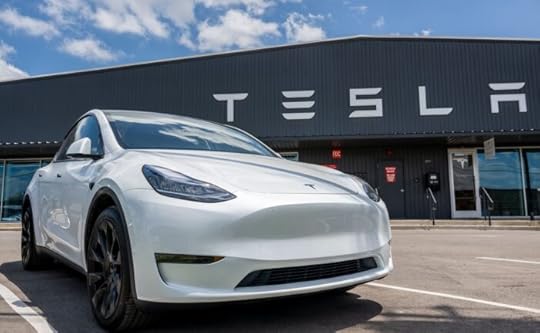
There is a strange situation developing in the world of electric vehicles. As companies ramp up production and the government showers the market with incentives, demand isn’t expanding as fast as expected.
This all seems strange. Tesla managed to sell a lot of cars, at high prices. As EV prices decline, demand should expand dramatically. This is the way things are supposed to work.
I suspect there is more happening here than meets the eye.
TeslaThere are few brands in the world with the distinctiveness of Tesla. Since its founding in 2003, Tesla has grown to be a huge company and a global brand. The firm sold 1.3 million cars in 2022 and had revenues of $81.5 billion.
What explains the appeal? I suspect it is primarily the Tesla brand.
Tesla is a remarkable car. I confess that I don’t have one and haven’t driven one, but everyone I talk to raves about the interface and the performance. It apparently has incredible acceleration.
Still, most cars have a good interface and solid acceleration. Tesla might be better, but that can’t fully explain things.
The big appeal of Tesla is likely the brand. When someone buys a Tesla, they make a statement. To drive a Tesla means that you are wealthy, tech-savvy, and environmentally friendly. You are a remarkable person, the perfect balance of personal success and concern for the world.
A Porsche makes a statement, too, but very different. People who drive a Porsche love performance and engineering. They are wealthy, too. Tesla has a different and, for many people, more compelling appeal.
Of course, Tesla’s brand is something of an illusion. If a person was really concerned about global warming, they wouldn’t be driving a Tesla. They would be riding a bike and taking the bus.
Still, that doesn’t matter. If you show up at a client's office driving a Tesla, you make a statement. If you are going on a date, or to a party, or to a wedding, the Tesla stands out.
EVsThe situation is very different when it comes to electric vehicles. Why drive an EV?
There are certainly many reasons not to drive one. The range is limited. Finding charging stations seems like a hassle. The idea of running out of power in the middle of a snowstorm somewhere in rural Indiana is scary.
When I rented a car a couple weeks ago, Hertz was keen to get me into an EV. I thought that was almost comical. Where would I plug it in? How would that make any sense at all?
So, what are the positives that offset the negatives?
I guess driving an EV is better for the environment, though I haven’t studied the carbon footprint of electric vs gas. Regardless, most people aren’t swayed by environmental concerns.
Performance? Perhaps, but I am not sure that a Honda EV is better than a gas powered one. For trucks and bigger SUVs, it is hard to imagine that the EV will be better.
Branding? I suspect not. Driving a Ford EV makes a statement, but this isn’t any different than a normal Ford. It is a good quality American car.
That leaves price. Perhaps an EV is cheap to buy and operate. Historically, however, this hasn’t been true; EVs were more expensive. Maybe now with the incentives the price has come down. Believing it will be cheaper in the long run is a risk. What will be the price of a charge in five years? Will that be more or less than gas? I don’t think anyone knows the answer.
OutlookWhen you step back, the appeal of a Tesla is clear. The appeal of an EV is more debatable.
To fix this problem, EVs will have to win on performance and price. That is a difficult task, but possible. Or the government will have to restrict or tax traditional vehicles to destroy that option.
This will be interesting to watch.
The post Why Teslas Sell and EVs Don’t appeared first on STRONGBRANDS.
October 26, 2023
Ironman’s Branding Challenges

I am back from a trip to Hawaii; I flew back last Sunday, just in time for my Monday class. That isn’t a best practice but it all worked out ok.
I was in Hawaii to see my daughter Claire compete in the Ironman World Championships in Kona. She did great, surviving (the most important thing) and finishing 5th in her age group. Amazing.
The experience was an immersion into the remarkable Ironman brand, both the power and the challenges.
IronmanThe Ironman is a remarkable competition. First run in 1978, the race includes a 2.4 mile swim, followed by a 112 mile bike, and then a marathon, or 26.2 miles of running. Each part is difficult; I don’t think I’ve ever biked 112 miles in a day, and I’ve only done one marathon. Put them together and you have an event that borders on absurd.
At Kellogg, we define brands as the associations linked to a name, mark, or symbol. What are the associations around Ironman? I suspect they include challenge, endurance, achievement, discipline and fitness. Some might add crazy to the list, and that would fit, too.
Evaluating the Ironman BrandIronman is an incredibly strong brand. In particular, it excels in three dimensions.
First, Ironman has high awareness. All over the world, people have heard of the Ironman race. Few have actually done it. but many people know about it.
Second, the associations are crystal clear. Ironman is what it is. The brand is exceptionally well defined. It is a tough, distinctive brand. There is nothing funny, relaxing or casual about Ironman.
Third, Ironman has customer advantage. This is a critical consideration for any brand. Customer advantage means that customers value the benefit you provide, are willing to pay for it and see you as best as providing in. For Ironman, customers are the athletes, and they clearly value the challenge. They also are willing to pay for it. Participants travel to races, invest in remarkable equipment and pay large entry fees.
There are competitors, but none have the power of Ironman. Name just one other triathalon with those distances. I’ll wait.
The BenefitsA powerful brand creates all sorts of advantages. It drives search and social activity, shifts perceptions, differentiates, attracts partners, creates trust, and builds loyalty.
People use strong brands for self-definition, too. I used to think that Harley Davidson was the most tattooed brand. After a few days in Hawaii I’m now thinking Ironman should get that honor.
The ChallengesWhile Ironman is a strong brand, managing it is likely a huge challenge.
One issue is ensuring that the brand experience is positive and consistent. It isn’t easy to organize one of these races; the race goes on for 17 hours. How many towns will let you close streets for that long? How do you organize something like that, and deliver a consistent experience?
There is also the risk that something bad could happen. When you push people that hard, some will struggle. I was at the finish in Kona. Participants crossed the line and then were met by two assistants and a medical person. In seconds, they were escorted away, down a covered walkway. I suspect this was designed with care, to ensure that when people collapsed, as many did, they were out of sight. The Ironman isn’t supposed to be like Nascar, where some people show up to watch the crashes. My daughter collapsed after she was helped down the walkway and ended up in the medical tent. She is fine, but the medical tent was quite lively.
Another challenge is finding growth. The Ironman race series is owned by World Triathalon Corporation, which was purchased by Advance Publications in August 2020. There is no question that Advance is looking for growth.
But how much can you build Ironman? Finding new locations is difficult and there is a long lead time. Capacity on races is capped. Pricing is an opportunity, but at some point that runs out.
The easiest way to build Ironman is to expand into shorter races that are logistically easier and more accessible. In 2005, for example, Ironman added the Ironman 70.3 race, featuring a 1.2 mile swim, a 56 mile bike and a 13.1 mile run.
But expanding further could damage the brand. Ironman has experimented with 5150 races (a 1.5 mile swim, 40 km bike and 10 km run). Is this consistent with Ironman?
One could go further. How about an Ironman marathon? That seems odd but perhaps. How about an Ironman 5k?
The OutlookUltimately, Ironman is positioned for continued success, as long as the leaders don’t push it too far.
The post Ironman’s Branding Challenges appeared first on STRONGBRANDS.
October 5, 2023
Getting Rid of a Tough Business
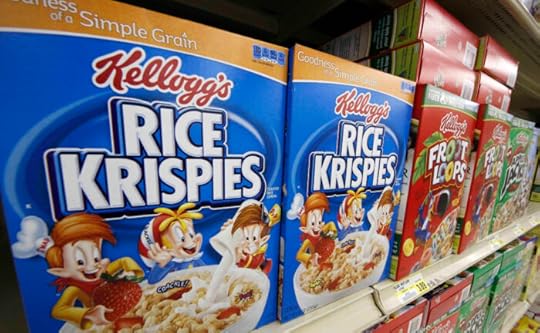
I’ve had an old Tommy Hilfiger shirt hanging in my closet for about 10 years. I could never figure out when to wear the shirt; it had a bold pattern and didn’t go with anything. Then it started to get dusty, which is always a bad sign.
Last weekend I gave up and donated it to the Salvation Army. This was a great move; the shirt is no longer cluttering my closet, looking forlorn, and someone else is hopefully enjoying it.
That is essentially what the Kellogg Company did this week; Kellogg got rid of the North American cereals division, spinning it off into its own company, WK Kellogg. The remaining company adopted a new name, Kellanova.
While some have criticized the move, I think it makes enormous sense.
The ProblemThe Kellogg Company had a big problem: its cereals business was big and struggling. Looking ahead, the trends would likely continue.
It is a bit like Kraft’s BBQ business. I spent years working on that brand, struggling to deliver profit growth. But the category was flat, and we faced tough competitors, so market share wasn’t likely to move. The category was price sensitive, which meant there wasn’t an easy way to increase prices. Marketing spending and fixed costs were both essentially flat. There weren’t obvious unmet needs that could spark innovation.
It wasn’t a bad business, but it wasn’t going to grow.
This is essentially the situation for Kellogg’s cereal business. The category is declining, market share is stable, and competition is intense. There isn’t a lot of opportunity to increase prices, especially after the recent increases. Spending is likely flat. Opportunities for innovation are few; people have been trying to innovate in that category for decades. If there were easy innovations, they would likely have been discovered year ago.
The OpportunityThe rest of Kellogg’s portfolio has more opportunity. The company owns brands including Pop Tarts, Pringles, Rx Bar, Cheez-It and Morningstar Farms. Many of the snack brands are growing quickly and there is room for innovation.
Splitting OffKellogg could have continued as one company, but this would not have been optimal. Separating the firms does three good things.
First, it frees Kellanova to deliver better results. Previously, the cereals business dragged down overall company performance. People watch profit growth from year to year. If part of the portfolio is flat or down on profits, it pulls down the average for the entire firm. Essentially the growth brands offset the declining brands, leaving uninspiring overall financial performance. Kellanova now has the potential to deliver stronger growth.
Second, it improves focus. Previously, executives had to worry about the big cereals business and the growth brands. The more time leaders spent on cereals, the less time they could spend on the rest of the portfolio. After the split, both companies will have greater focus.
Third, the move creates a geographic split. In a somewhat unique situation, the Kellogg Company was split between Battle Creek, its long-time home, and Chicago. Now, the cereal company will be based in Battle Creek, and the snacks group will be in Chicago. This makes perfect sense; the part of the firm most focused on innovation will be in a big urban center, likely to attract talent and spark ideas. The traditional cereal business will carry-on in Battle Creek, presumably with a lot of long-time employees that know the business exceptionally well.
The OutlookCPG firms are getting clobbered this year in the stock market, as they battle inflation and high interest rates. I suspect the new Kellanova will be a good investment for the long-term.
The firm will post stronger growth numbers and provide a solid dividend. It won’t be Tesla or Apple, but for patient investors it will be a good holding now that it has gotten rid of the difficult cereals business.
Just like that old shirt, sometimes getting rid of things is the best move.
The post Getting Rid of a Tough Business appeared first on STRONGBRANDS.
September 22, 2023
Presentation Learnings from a Dave Ramsey Event

I am a huge fan of great presentations. Unfortunately, in the business world many (most?) presentations are weak; they are plodding, cluttered and dull. People like to blame PowerPoint, but the issue isn’t the software platform. I think the issue is that people haven’t studied and just don’t know how to present well.
My book on presenting, How to Wash a Chicken: Mastering the Business Presentation, is designed to help people improve.
Last week I heard that Dave Ramsey was hosting a conference in Chicago. Ramsey is a financial thought-leader perhaps best known for his focus on living a debt free life. According to Dave and his team, the key to financial peace is getting rid of debts. I think he is right.
Dave Ramsey runs a lot of conferences, so I was intrigued. How does Ramsey run a live event? What can we learn from Ramsey and his team about presentations? So, I signed up for a Saturday with Dave and his personalities such as John Delony and Jade Warshaw. Here is what I learned.
Set the MoodThe conference was scheduled to start at 9 AM. I wandered in at about 8:45. There was music playing as people gathered, and then at 8:55, a cover band took the stage. They were amazing, with terrific energy. All of this built the momentum heading into the actual start when the MC bounded out, exactly at 9.
The Ramsey team knows that the time before a presentation starts is just as important as the presentation itself.
Start with a StorySpeakers often begin with some platitudes, perhaps “I’m so happy to be here” or “Thank you for that amazing introduction.” These comments add no value.
At the Ramsey conference, each presenter started with a story. This approach quickly got people engaged; people like stories. Jade Warshaw talked about her debt. John Delony talked about not being able to sleep.
Indeed, all of the presentations featured stories. The ratio of stories to facts was about 7:1. The insight is simple: stories are interesting and fun. Facts and figures are important, but best used sparingly.
Bring the Energy and FocusAt the Ramsey event, each speaker was dialed in. It was astonishing to see the energy and intensity. They used eye contact, hand gestures, and movement to project focus. You had the sense each one took the opportunity to present seriously and was working very hard to be of service to the audience.
Were they nervous? I suspect they were. But the nervousness came across as intensity and it worked.
Use Analogies and VisualsTwo easy ways to bring a situation to life are analogies and visuals.
Analogies are a useful way to help people understand an unfamiliar situation. Dave compared the process of getting control of your financials to his experience running a marathon. You just keep moving forward, step by step. His marathon story was fun and relatable. The comparison is helpful.
John Delony compared anxiety to a fire alarm going off. He then noted, the problem usually isn’t the fire alarm. The problem is the fire. The analogy was a simple way to understand stress. Sometimes the problem isn’t the anxiety, it is the things causing the anxiety.
The highlight of Jade Warshaw’s talk was a list of all her debts. At one point she was more than $400,000 behind. That is quite a figure. It took on more meaning, however, when she showed the actual hand-written list. She owed this much to Capital One, this much to Discover. It was quite a list.
Don’t Carry NotesThere were no notes. The speakers didn’t carry papers, read from a computer, or hide behind a podium. In truth, there wasn’t a podium to hide behind. They were just on a stage talking in a natural fashion.
There were confidence monitors, but they were very low to the ground and the speakers rarely used them. I wonder what was on the monitor.
Give People BreaksThe program timing was interesting. Session 1 went for just over an hour, followed by a 25-minute break. Then session 2 went on for about an hour. Then lunch was 90 minutes.
Ninety minutes for lunch? That struck me as an absurd amount of time. I was ready to get going in twenty minutes.
But I think I was the only one who found the break excessive. Most people happily lined up at the food trucks, enjoyed their meal, and eventually ambled back.
I think the Ramsey team has learned that people don’t mind breaks. Many came with friends and used the open time to catch-up. Or they compared notes with other Ramsey followers. Reducing the time for lunch might have made people feel rushed (rushed causes anxiety!).
A long break or a long time for lunch isn’t a bad thing.
OverallIt was an impressive event. There were a few things I would have done differently. I would have liked the speakers to have started with an objective and then an agenda. More audience interaction would have been great. I’m not sure why they didn’t ever come down off the stage.
That is the fun part of presenting. If you watch others, you can always find things that work and things that might have been better. Becoming a student of the craft is how we all improve.
The post Presentation Learnings from a Dave Ramsey Event appeared first on STRONGBRANDS.