Why Teslas Sell and EVs Don’t
There is a strange situation developing in the world of electric vehicles. As companies ramp up production and the government showers the market with incentives, demand isn’t expanding as fast as expected.
This all seems strange. Tesla managed to sell a lot of cars, at high prices. As EV prices decline, demand should expand dramatically. This is the way things are supposed to work.
I suspect there is more happening here than meets the eye.
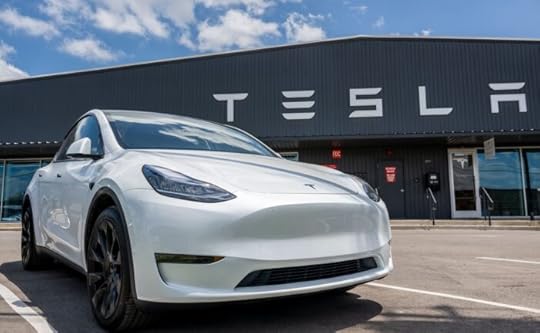
TeslaThere are few brands in the world with the distinctiveness of Tesla. Since its founding in 2003, Tesla has grown to be a huge company and a global brand. The firm sold 1.3 million cars in 2022 and had revenues of $81.5 billion.
What explains the appeal? I suspect it is primarily the Tesla brand.
Tesla is a remarkable car. I confess that I don’t have one and haven’t driven one, but everyone I talk to raves about the interface and the performance. It apparently has incredible acceleration.
Still, most cars have a good interface and solid acceleration. Tesla might be better, but that can’t fully explain things.
The big appeal of Tesla is likely the brand. When someone buys a Tesla, they make a statement. To drive a Tesla means that you are wealthy, tech-savvy, and environmentally friendly. You are a remarkable person, the perfect balance of personal success and concern for the world.
A Porsche makes a statement, too, but very different. People who drive a Porsche love performance and engineering. They are wealthy, too. Tesla has a different and, for many people, more compelling appeal.
Of course, Tesla’s brand is something of an illusion. If a person was really concerned about global warming, they wouldn’t be driving a Tesla. They would be riding a bike and taking the bus.
Still, that doesn’t matter. If you show up at a client's office driving a Tesla, you make a statement. If you are going on a date, or to a party, or to a wedding, the Tesla stands out.
EVsThe situation is very different when it comes to electric vehicles. Why drive an EV?
There are certainly many reasons not to drive one. The range is limited. Finding charging stations seems like a hassle. The idea of running out of power in the middle of a snowstorm somewhere in rural Indiana is scary.
When I rented a car a couple weeks ago, Hertz was keen to get me into an EV. I thought that was almost comical. Where would I plug it in? How would that make any sense at all?
So, what are the positives that offset the negatives?
I guess driving an EV is better for the environment, though I haven’t studied the carbon footprint of electric vs gas. Regardless, most people aren’t swayed by environmental concerns.
Performance? Perhaps, but I am not sure that a Honda EV is better than a gas powered one. For trucks and bigger SUVs, it is hard to imagine that the EV will be better.
Branding? I suspect not. Driving a Ford EV makes a statement, but this isn’t any different than a normal Ford. It is a good quality American car.
That leaves price. Perhaps an EV is cheap to buy and operate. Historically, however, this hasn’t been true; EVs were more expensive. Maybe now with the incentives the price has come down. Believing it will be cheaper in the long run is a risk. What will be the price of a charge in five years? Will that be more or less than gas? I don’t think anyone knows the answer.
OutlookWhen you step back, the appeal of a Tesla is clear. The appeal of an EV is more debatable.
To fix this problem, EVs will have to win on performance and price. That is a difficult task, but possible. Or the government will have to restrict or tax traditional vehicles to destroy that option.
This will be interesting to watch.
The post Why Teslas Sell and EVs Don’t appeared first on STRONGBRANDS.