Tim Calkins's Blog, page 4
July 1, 2024
Three Branding Observations on the Debate
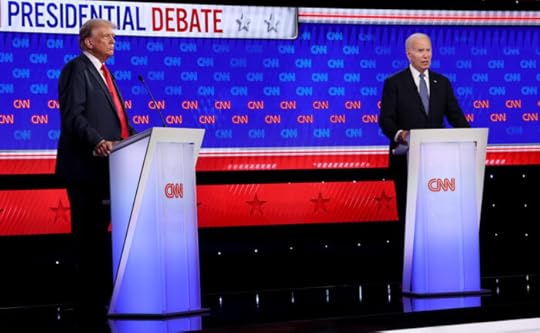
It is the week after the debate. People are still digesting exactly what happened and the implications. Here are three observations on the campaign.
Biden Shouldn’t RunFor Joe Biden, the debate was a branding disaster. Heading into the event, his brand was tarnished by perceptions of age and cognitive decline. The debate reinforced these perceptions; he flubbed answer after answer. He looked old. At times it seemed like he just couldn’t follow what was happening.
Here is Biden talking about the benefits of his proposed tax plan:
“We’d be able to help make sure that all those things we need to do: childcare, eldercare, making sure we continue to strengthen our healthcare system, making sure that we’re able to make every single solitary person eligible for what I’ve been able to do with the a COVID, excuse me, with dealing with everything we have to do with a, look, if. We finally beat Medicare.”
Shaking these brand perceptions won’t be easy. Every time he does anything that actually reflects his eighty+ years people will say, “Look! I knew it. The fellow is nice but just too old.” And when he doesn’t appear old, even if he joins me in the Ironman 70.3 in Muncie, Indiana in a couple weeks, people will say, “Look! I knew it. He is just trying to compensate. He is just too old.”
For the country, stepping down is the best move. Wherever you stand on politics, the country should have two physically capable candidates.
Biden Will RunEarly indications are that Biden is planning to continue his campaign. When you consider the people involved in the decision, it makes all the sense in the world.
For Joe, the minute he declines to run is the minute he loses power and relevance. I suspect it is pretty thrilling to be the center of the world, with everyone looking at you and waiting for your next word. A campaign is exciting. Who wants to declare that they are old and irrelevant? There is always a chance something will break his way. Trump is unpredictable.
For Jill Biden, there are lots of reasons to encourage Joe to run. You remain the center of attention. You get to fly around and meet with influential people. You speak at big events. When Joe isn’t a candidate, who wants to hear from Jill? And maybe Joe will win! Either way, for Jill, the campaign should go on.
Even easier is Hunter. He has lots of troubles but one thing he has going for him is that his father is the president. Why would Hunter recommend Joe step away?
Biden’s team will want Joe to run, too. Those closest to Joe are aligned with his brand. To leave the spotlight now, after that disastrous debate performance, is not appealing. Even if he loses, Joe can go out on a high note, having bounced back a little. They will be able to talk about the amazing recovery process and strong campaign.
Since Joe and everyone around him benefits from the campaign continuing, well, the campaign will likely continue.
There Won’t Be Another DebateThe two campaigns apparently agreed to have two debates this year. I don’t think that will happen.
For Biden, another debate would be a risk. There is a very real chance that Biden’s weak performance reflects meaningful issues, so another debate wouldn’t necessarily go better, though it is hard to see how it could go worse.
For Trump, there is no reason to show up to another debate. He trounced Biden. There is almost no chance that another debate could go better, so Trump only has downside. He won’t show up. Instead, Trump will just run clips of Joe stumbling through his answers.
Trump will work very hard to ensure that Biden’s brand remains associated with aging and cognitive decline.
The post Three Branding Observations on the Debate appeared first on STRONGBRANDS.


June 9, 2024
Career Advice for Graduates

It is Commencement Day at Kellogg. This afternoon, hundreds of students will gather in Evanston to receive their degrees. I’ll be there for the procession and ceremony. For the faculty, attendance is optional, but I love the energy and seeing my students on such a notable day.
If you follow this blog, you know I usually write a post offering some financial advice to the new graduates. Someone asked me if I planned to do that again, inquiring, “Do you have anything new to say on that topic?”
I really don’t, so if you are interested in my financial recommendations, you can look at the posts from 2023 or 2021 or earlier.
Instead, today I’ll provide some career advice, things that new graduates might keep in mind as they launch their careers and build their personal brands.
Focus on the NumbersThe world of business revolves around numbers. Results matter and results are almost always financial: profit, revenue, cash flow. Creative ideas and innovations are wonderful but quickly connect to financial questions. What is the margin? How much investment? What is the price?
You want to be known for getting the numbers right. If senior managers think you can’t handle the numbers, you won’t get big opportunities.
As you start off then, keep an eye on the numbers. Double check the figures. Understand what the numbers mean and where they come from. Avoid complicated calculations you don’t completely understand.
Curate Your Digital FootprintWe all have a digital presence; everything we post on-line circulates in the world. You can be very confident that the people around you will see all this. Hiring managers will of course do searches. Your colleagues and managers will see your posts, too.
Unfortunately, it is impossible to have a personal digital presence and a work digital presence. These all blend together more than we might like.
This means you have to be thoughtful about what you post. A strong Linked-In presence is key, along with occasional updates. Post of travels are fine. A picture from the Taylor Swift concert is ok. Work highlights are great. Just be sure everything is consistent and well-done.
Ignoring the digital world isn’t a solution; someone with no on-line presence is a making a statement, too.
Nurture Your TeamRelationships are the foundation of business, and the relationships you form early in your career can last for decades. I worked with Jonathan Copulsky when I was just out of college decades ago; he was a senior consultant at Booz Allen when I was a new analyst. I now work with Jonathan at Northwestern, and he advised me on my book (you can blame him for the title). Sergio Pereira was my first manager at Kraft when I finished my MBA, and he now speaks in my class. Julie Hennessy was my manager for many years when I worked on Miracle Whip, and we now work together at Kellogg.
As you start out, get to know your peers. Show up for them. Build these relationships and then keep in touch. They will be valuable throughout your career journey.
Being new in a career is a unique moment to form relationships. You are all junior people, trying to figure out the world. It is a lot harder to build trust when you are more senior; politics is intense, people are busy with life, everyone has agendas. Take advantage of your opportunity.
Be PositiveThe simplest way to boost your brand is to be enthusiastic. When you project positive energy, you become a welcome presence in the world. Managers love it when employees are happy. Dinner hosts are delighted when guests seem to be enjoying the evening. If you say something nice about a colleague, it might get back to them and they will think good things about you.
It is easy to complain but being negative does a lot of damage. Who wants a complainer around? Life is tough enough. This year, for example, I had a class where two students scored me a 1 out of 6 on my teaching evaluation. They clearly didn’t love the class. But a 1? All this does is create bad feelings. I don’t have fond feelings for that class.
A colleague’s team recently did their annual anonymous feedback. A couple people were highly critical. This was a surprise because everyone had been encouraged to bring up any concerns. The impact of this negative feedback? Negativity all around. Why do something nice for people who ding you on the anonymous survey?
This doesn’t mean you shouldn’t make suggestions and ask for changes. Just don’t hide behind anonymous surveys and bring bad energy.
Show UpWorking from home is all the rage, but being present is critical. When you can, go into the office. Show up.
When you are in-person, you can build relationships. Work friends make things a lot more fun; you have people to celebrate with and complain to. It is tough to build a friendship on Teams or Zoom.
Being present also builds your brand. When your manager sees you in the office, they know that you are there and engaged. If something interesting comes up, it will likely go to the person who is there.
If you are working remotely, take every opportunity to go in.
Ask for HelpI think a lot of highly trained people believe that they should know what to do. With a college degree and a Kellogg MBA, you should know how to proceed.
I would be quick to ask for help. The people around you will usually know what to do. Just ask them. The reality is that most people like helping; it makes them feel knowledgeable and useful. When taking on a new project, start by asking for advice.
This all extends beyond work. If life seems hard and difficult and hopeless, and it sometimes will, reach out. Your friends and family can sometimes help. There are so many other resources available. Don’t think that it is all on you.
Congratulations graduates. Best wishes for this next phase. Here’s to grand adventures, interesting work and great colleagues.
The post Career Advice for Graduates appeared first on STRONGBRANDS.
May 20, 2024
Presenting Tip: Don’t Use PowerPoint Notes
I teach marketing strategy, branding, and biomedical marketing at Kellogg. One of my core beliefs is that it isn’t enough to develop smart strategies; you also have to communicate them persuasively to get people on board.
A few years back I wrote my book on the topic, How to Wash a Chicken: Mastering the Business Presentation. We recently reprinted the book since it continues to sell well. It is a great resource for new graduates about to start a business job.
For the next few months, I’ll be occasionally providing tips on presenting well. I’ll also continue to write about branding and marketing topics.
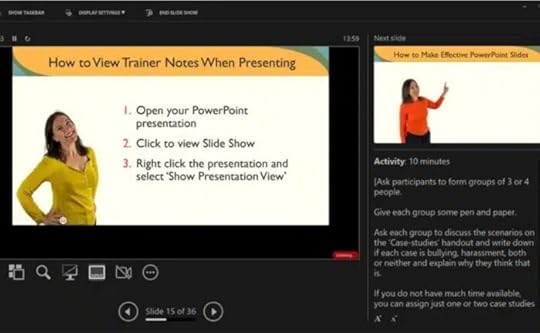
PowerPoint Presenter NotesRecently a student contacted me to let me know that he put his footnotes in the presenter notes section of PowerPoint.
If you use PowerPoint, you are likely familiar with the presenter notes feature. Below a page in PowerPoint, you can add material in the notes section. This area isn’t shown when the presentation is displayed. In a cool bit of technology wizardry, you can see the presenter notes on your computer while the audience just sees the slide.
It is tempting to use this section. One advantage is that the notes travel with the presentation, so you’ll always have the supporting information. Putting information in the presenter notes section feels like a good thing. You can add a mix of figures, sources, and tips.
My strong recommendation: never use PowerPoint presenter notes. Just because the feature exists, doesn’t mean you should use it.
Problem #1: Using Notes Will Hurt Your DeliveryWhen doing a presentation, you want to work the room. Usually, this means moving away from the podium and approaching the audience. This creates engagement and keeps things interesting. If someone is asking a question, you can walk over to them. If you want someone to end a comment, you can subtly walk away.
Some formal speeches require a podium, but these are few and far between.
If you are using the PowerPoint presenter notes function, you will either be stuck behind the podium, or you will need to go back to the podium again and again. You can only see the information on your computer. Both approaches are not ideal.
In addition, if you are using PowerPoint presenter notes you will constantly be looking at your computer to see them. This is a problem. You shouldn’t look at your computer; it is better to look at your audience and occasionally glance back at the screen.
Problem #2: You Don’t Know If People Will Read ThemPerhaps the biggest problem is that you just don’t know if people will look at the presenter notes. I haven’t seen a study on this, but my hunch is that some people always look at the notes and some people never do. A third group will occasionally turn to the section.
Since there is a chance that people might look at the presenter notes, you have to be careful what you put there. The writing has to be polished and curated. You can’t put down “Tell story about the CEO meeting the customer” in the presenter notes section. This looks odd and ruins the idea that you just remember this wonderful story. You also shouldn’t put down cryptic messages that are only meaningful to you, like “Segmentation – frequent prescribers – loyalty.”
Worse, you could put damaging things in the notes. You might write, “Don’t mention the side-effects!” or “Need to check this number.”
Of course, there is a good chance people won’t read the notes section. This means that if something is important, you have to put it in the main presentation.
Problem #3: Notes Can LingerMany people create presentations by copying pages. I do this all the time. You find a slide in your presentation that has the right format and copy/paste it. This provides the base to modify with new information.
The issue is that when you copy/paste a slide, you are also copy/pasting the presenter notes. If you aren’t careful, you’ll end up with notes that have nothing to do with the page. I’ve sometimes noticed that I have the same irrelevant material running through an entire presentation.
This looks awkward at best if someone looks at the notes. It can also be damaging if the notes reference something that doesn’t support your argument.
The Right Way to Manage NotesI am a big believer in having notes for a presentation. One reason is that notes can build confidence. If you are worried about forgetting a number or information source you can just have it in your notes.
Another positive is that notes can include more information. You want your slides to be clean and crisp. With notes you can have more information in case a question comes up.
Instead of using the presenter notes function in PowerPoint, a better approach is to just write your notes on a piece of paper, or maybe a notecard. You can then set this down in a convenient place when presenting. You could also create a Word document with your notes.
For most of my classes, I have three files:
-File 1: The PowerPoint slides I will present.
-File 2: The PowerPoint slides I will give to students. For this version I drop out videos and anything I don’t want students to see before class.
-File 3: A Microsoft Word file with my notes.
PowerPoint presenter notes looks like a powerful tool, but it will lead to less effective presentations.
The post Presenting Tip: Don’t Use PowerPoint Notes appeared first on STRONGBRANDS.
April 30, 2024
A New Stadium for the Chicago Bears

The Chicago Bears last week unveiled plans for a new lakefront stadium. It is a spectacular proposal: a gorgeous stadium with views of the downtown skyline. The cost? More than $4.5 billion.
All this raises four questions.
Is a new stadium necessary?Sports teams thrive in glorious venues. The better the fan experience, the more a team can charge for tickets. Box seats command top-dollar prices.
It is difficult to prosper in a rundown, older facility. When it comes to planning, cities and teams should assume that stadiums will lose their effective appeal long before they are operationally decrepit.
The current Chicago Bears stadium is a small, awkward facility, a modern stadium squeezed into a historical landmark. It looks like a spaceship landed on top of the old one. How was that project was ever approved?
It is hard to blame the Bears’ lackluster results on the field on the stadium, but the facility certainly doesn’t help.
So yes, the Bears need a new stadium.
Will the City of Chicago benefit?There is no question that Chicago will benefit from a new stadium. Every game generates economic activity, and the stadium will likely be used for all sorts of other events.
Big events are economic super-chargers for cities. People visit and spend money on hotels, restaurants, Ubers. More than that, events create excitement and
energy.
Chicago will definitely benefit from a new stadium.
Should taxpayers pay for it?The big question is funding. A new stadium will cost billions. The current plan is for the Bears to share the cost with local taxpayers (primarily Illinois and Chicago), with more than $1.5 coming from public support.
Government funding is a common factor in many projects. When a venture doesn’t make financial sense on its own, government support can make it viable. Micron, for example, is going to invest in chip manufacturing in the U.S., a project that wouldn’t be viable without subsidies.
In this case, government funding makes no sense. It just isn’t needed.
There are two factors here. First, the NFL and the Chicago Bears are incredibly powerful, wealthy businesses. In the world of media properties, professional football in the U.S. is in a class of its own. As viewership falls across virtually all other shows and events, the NFL grows. This gives it astonishing power as an advertising and promotion platform. Add in gambling, a completely new revenue stream, and the NFL’s profit opportunities are vast.
The Bears and the NFL don’t need any help from taxpayers. Giving them financial aid is a bit like sending the government sending a check to a random billionaire.
Of course, the theory is one thing, but business calculations are different. Perhaps the Bears will leave for greener pastures if public funding isn’t available!
This isn’t going to happen. The Bears might move to the suburbs, but this wouldn’t be the worst thing for the Chicago area. The Bears might leave for another city, perhaps London or St. Louis. But if they did, the NFL would relocate another team to Chicago. As the third largest city in the U.S., the NFL isn’t going to leave Chicago without a team.
What is the likely outcome?I suspect the stadium deal will move forward with significant public support.
The funding isn’t needed or appropriate, but everyone involved in the deal wants to get it done.
The Bears and the NFL? Of course.
Chicago taxpayers? Yes…who doesn’t want a new stadium? The spending won’t require new taxes, just redirected funding, so it seems free. A bit like Girl Math.
One would think Chicago Mayor Brandon Johnson would definitely oppose the deal, being a social activist. Why would someone who wants to develop challenged neighborhoods call for giving billions of dollars to billionaires? It is bizarre. But Mayor Johnson wants a win and a legacy. Securing a new stadium gives him a major achievement.
When everyone involved wants something to happen, it tends to happen. Look for a stadium deal and more wealth flowing to the billionaire NFL owners.
The post A New Stadium for the Chicago Bears appeared first on STRONGBRANDS.
April 11, 2024
Rethinking College Tuition

Colleges are announcing tuition and other costs for the 2024-25 academic year.
Washington University in St. Louis is increasing tuition and fees by 4.5%, bringing the cost of attending to $87,644 (including tuition, housing, meals, student health, and activity fee). Yale is increasing tuition and fees by 3.9% to $87,150. Bucknell’s is up 4.75% to $84,736. Princeton will be $86,700, an increase of 4.3%.
As schools announce the new tuition levels, the message is similar: we will increase financial aid at the same time and help families that need assistance.
This model, “raise tuition and increase financial aid,” is followed by universities around the country. It is time to rethink this approach to tuition.
The ModelPrivate colleges in the U.S., especially selective schools, follow a simple model: Set a high price to attend and then provide financial aid for families that need it. Public universities have a different approach, with relatively low in-state fees and higher out-of-state fees.
The private school model makes a lot of sense. Families with more resources should pay more and families that need support should pay less.
So, each year tuition and fees go up and so does financial aid.
The $100,000 ThresholdPeople have a funny reaction to prices. Discounts, for example, are popular. Surge pricing is often considered opportunist price gouging, as Wendy’s discovered recently. Even when the prices are the same, how the pricing is presented matters.
Threshold prices are particularly important. A product priced at $79.99, for example, seems cheaper than one priced at $80.00.
Back when I was managing the Parkay margarine business at Kraft, for example, the $0.99 threshold was critical. Changing the price from $0.91 to $0.96 did not have a big impact on sales. Moving from $0.99 to $1.04 sent sales dramatically down.
Colleges are quickly approaching a threshold: $100,000. In one or two years, the cost of attending a private college will pass this mark. Washington University in St. Louis, for example, has three years of 4.5% increases before it passes $100,000. Other private schools are looking at a similar timeframe.
The ProblemsStill, what is the problem?
There are several.
First, the $100,000 price makes college seem completely unaffordable to potential students, so qualified students, especially from economically disadvantaged communities, might not apply. When the median household income in the U.S. is $74,580, spending over $100,000 to attend college seems wildly out of reach, even if there is aid. Yale President Peter Salovey has noted this problem. In a recent interview with the Yale Daily News, he noted “People have difficulty understanding the relationship between the sticker price and the actual cost to them of an education at Yale.” Crossing $100,000 will firmly cement the perception that a private college is only for the wealthy.
Second, the $100,000 mark will invite criticism. Private universities with large endowments are targets on a wide range of topics: tuition levels, admission policies, curriculum, faculty hiring. Already, endowments are taxed, thanks to the Tax Cuts and Jobs Act. After the Supreme Court ruling on affirmative action, state legislatures are talking about regulating admission policies. Going over $100,000 will make universities an even easier target.
Third, the basic financial model will stop working. The problem with the “raise tuitions and financial aid model” is that it works less and less well over time. As tuition and fees increase, each move generates smaller amounts of incremental funds. Fewer students can pay the higher full cost, meaning more students become eligible for financial aid.
This is clearly happening. At Northwestern about 40% of students received financial aid a few years ago. Now the number is over 60%. This means that today a 4% increase will generate less than 1.6% more revenue.
Of course, the situation is actually worse than that because the percentage of students receiving aid will be higher next year. The following year’s 4% increase might generate only perhaps 1.1%. Pretty soon it will be close to zero.
It will likely accelerate faster than expected with the $100,000 threshold. Even wealthy families might start to question the value proposition of private universities, outside a select few with particularly powerful brands: Harvard, Stanford, MIT, and a few others.
One option is in-state tuition at a state school. Is a private school really worth an incremental $250,000? Another option is paying attention to merit and athletic scholarships, used extensively at many private colleges to attract students. Even a family with resources will be tempted by a major offer from a well-regarded school.
As many schools move well past $100,000, there will be few families left paying the full tuition. The high tuition will essentially be a fictional number. It will nonetheless be a tempting target for critics and a strong message to those with fewer resources that a top education is unattainable.
A Different ApproachSome people suggest the solution is to raise more donations to pay for more financial aid. Directing contributions to aid is fine, but this money is not free; the support could have been used for research or improved student support and teaching. More contributions will not solve the basic problem.
Instead of raising tuition, universities should consider holding the line before getting to $100,000. This would be a powerful talking point, “We understand that the cost of attending college is a barrier for many families. So, we provide substantial financial aid. In addition, we are not increasing tuition and fees this year. And we will guarantee tuition and fees will not increase during your time as a student.” A university that moves first could be perceived as a leader. It would be an appealing angle for fund raising, too.
Purdue, a public university, has embraced this approach: the school recently announced its 13th year with no tuition increases.
Perhaps it is time to go the other way and reduce tuition and fees. This would not be as financially difficult as it might seem because most of the revenue shortfall would be offset by a corresponding reduction in financial aid. It would be a dramatic move, a school taking action to make education less elitist and more accessible for all students.
Some might argue lower tuition would damage the brand since people sometimes link price and quality. I think this is not a major concern. Will people think more of Hamilton College when it costs over $100,000 to attend? Would people think the school was a discount player if the tuition was $80,000 a year? No. If anything, the very high price might create negative perceptions around elitism and the idea that it is just a school for children of wealthy families.
Might colleges also need to reduce costs? Yes. But that is inevitable as schools lose the ability to increase revenue with higher tuition and fees.
Cost reductions would be a good exercise. Does every university need to teach every subject? Schools might get more strategic in course offerings and research staffing to excel in certain domains while easing back in other areas. Being all things to all people is rarely a good strategic approach in a competitive market.
It is time for fresh thinking on college tuition strategy.
The post Rethinking College Tuition appeared first on STRONGBRANDS.
March 29, 2024
Brand Portfolio Questions for Tesla
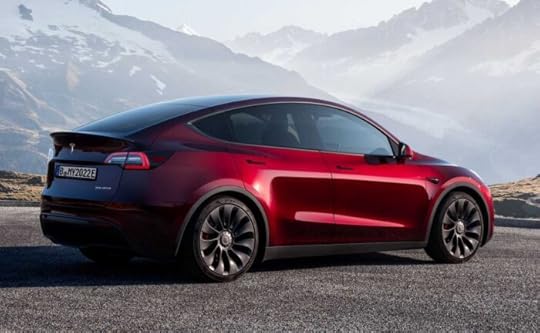
The golden company Tesla is in the news for disappointing results. The stock price is down, and people are wondering about the company’s prospects.
Tesla is facing many different issues, ranging from competition to the erratic behavior of Elon Musk.
One of the most interesting problems is Tesla’s brand.
The Tesla BrandTesla has soared in popularity due to the combination of a remarkable product and a special brand. Tesla’s performance as a car is terrific; people rave about the driving experience.
Tesla has built a special brand. When people think about Tesla, they often mention things like expensive, tech-savvy, environmentally friendly and modern.
Tesla has leveraged a classic formula:
A great product + a remarkable brand = Success!
Of the two, the brand is always more important. It is difficult to maintain product differentiation. Most technologies are possible to copy, if you have enough resources. For Tesla, continued success depends on strong branding.
The ProblemThe issue is that to grow, Tesla has been forced to reduce prices. The company has launched new vehicles at lower price points and reduced prices on existing cars.
This has made Tesla more accessible for the average person.
When the average person can buy a Tesla, what happens? The brand loses its appeal as a marker of exclusivity.
The more Tesla feels like Honda or Chevrolet, the weaker the brand becomes.
Without a unique brand, Tesla is forced to compete on product and price. That is a scary place in the world of electric vehicles when companies like BYD, Geely and others are producing thousands and thousands of pretty good, very inexpensive electric cars.
An interesting problem for Tesla is that the company has always embraced a primary brand strategy. It is just Tesla. The individual vehicles are just model numbers or letters: Model 3 and Model Y. Every Tesla is, more than anything, a Tesla.
This is a naturally limiting brand strategy: a brand can’t be all things to all people.
OptionsSo, what do you do?
One option is to fight on, battling on quality and price. This isn’t a terrible option. Tesla has momentum and capabilities in this area. It might do fine. The brand has grown dramatically since I first wrote about it in 2015.
Another option is to sell to a larger player. This would create brand portfolio opportunities. If GM owned Tesla, it could position the brand as a premium player. Other brands could fight at the low end, protecting Tesla.
Or Tesla could introduce a new brand. Perhaps the company should have two brands: Tesla as the high-end, premium player, and a new brand, maybe called Elon as the discount brand. This strategy would help Tesla win in both parts of the market.
Looking AheadWatch the Tesla brand over the next year. Will the company protect its high-end special brand? Or will Tesla become more like Ford or Chevrolet? Or will the antics of Mr. Musk turn it into a polarizing brand like Kanye West’s Yeezy?
There are big branding choices ahead for Tesla.
The post Brand Portfolio Questions for Tesla appeared first on STRONGBRANDS.
March 14, 2024
Chicago’s Misguided Attack on Dollar Stores
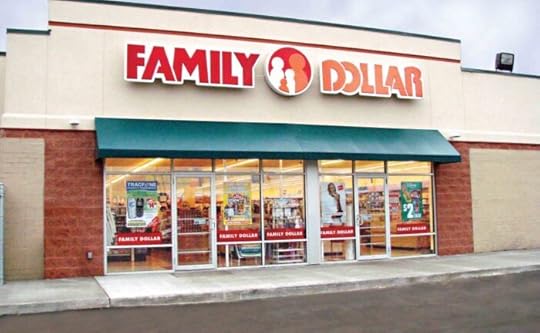
To make good strategic decisions, it is important to identify the potential options and then think deeply about which one is best. Not thinking through the implications can lead to bad choices. The simple, obvious answers that seem right often aren’t.
Chicago’s City Council provides a good example. The group recently passed a series of rules designed to limit the growth of dollar stores in the city. The legislation is well-intended but will do more harm than good.
Chicago’s Retail ProblemsChicago has multiple retail problems. One issue is that Michigan Avenue, Chicago’s great retail street, is emptying as stores close. The combination of high crime, high costs and lower street traffic is apparently motivating firms to focus elsewhere. Parts of State Street, running through the heart of the Loop, are almost empty.
The largest retail problem might be in challenged neighborhoods that have almost no grocery stores at all. These food deserts are expansive. The lack of retailers is a major issue; it is difficult for residents to buy basic products because there are no stores.
The food desert problem has become particularly serious in recent years as retailers like Target and Whole Foods have closed. The companies shuttered the stores because they weren’t profitable; the mix of costs and revenue didn’t work.
As the big retailers have moved out, dollar stores have moved in.
Dollar StoresDollar stores are remarkable retail establishments. First, they fulfill a need; people want products at low prices and dollar stores offer that.
Second, dollar stores can survive where other stores can’t. A typical store operates in a small space, often in a strip mall. Rents are low. The store has minimal finishing, which means the company can quickly move to another location if the rents increase. Staffing is limited, often just a couple people. Dollar stores negotiate hard to secure low-cost items from manufacturers.
Crime is less of a concern for dollar stores, too. When you are selling things that only cost a dollar or two, there is less of an incentive for people to rob you, and less loss when they do.
So, dollar stores can survive in areas where retailers with higher costs can’t. In Chicago, dollar stores opened up in challenged neighborhoods as stores like Target and Whole Foods closed.
There are some parts of Chicago where even dollar stores won’t open; the city recently had to provide subsidies to some dollar stores.
Chicago’s LegislationThe problem with dollar stores is that they are not high-quality retailers. The shopping experience isn’t great, selection is limited and customer service is minimal.
This has caused some of Chicago’s government leaders to declare that dollar stores are the problem and the best way to limit the dollar stores is to restrict them.
Recently passed legislation prevents a chain like Dollar General from opening a store within a mile of an existing store. This virtually ensures that the chains can’t open new locations. There are other restrictions and requirements as well.
The IssueUnfortunately, limiting dollar stores won’t bring back higher-quality retailers. Limiting dollar stores will just mean food deserts will continue. When you block the only stores that might open, you will end up with no stores.
Chicago’s new restrictions might result in higher prices; when stores have little competition, there is an opportunity to raise prices. The efforts to help residents will instead result in fewer retailers and higher prices.
The way to solve the food desert problem isn’t to limit dollar stores; it is to create conditions where companies can earn a reasonable return.
The easy answer won’t solve the problem.
The post Chicago’s Misguided Attack on Dollar Stores appeared first on STRONGBRANDS.
February 14, 2024
Evaluating the 2024 Super Bowl Ads

The Super Bowl remains the most expensive, the most watched, and the most important marketing event of the year.
For the 20th year, students at Northwestern University’s Kellogg School of Management gathered to review the advertising. The focus: business impact. Will the ads succeed in building the brand and the business?
Using ADPLAN, a framework created by Kellogg faculty, students evaluated each spot. Their ratings were used to generate overall grades for each brand: A, B, C, D and F. Brands that ran more than one spot like T Mobile received an overall grade for their total Super Bowl effort.
Overall, the 2024 Super Bowl featured some remarkable advertising. Below are the grades from the panel for some of the spots, along with some of our own observations.
To see all the grades, visit the event site, You can see the top advertisers over the past 20 years on Tim's site.
Strong Spots: Grade AThese spots didn’t necessarily make everyone’s top list, but we share our thoughts on why they earned an A with our panel.
Google Pixel
The top spot this year was Google Pixel. The ad broke through the clutter with a focus on a product feature to aid visually impaired individuals. At the core, it was a product demonstration, but it elevated the associations of Google to an emotional level. The approach is consistent with prior efforts by Google to take function to emotion. The spot's strong distinction and linkage likely pushed this one to the top.
Doritos
Doritos has done better than any other brand over the past 20 years in the Kellogg Super Bowl Ad Review, and the momentum continued in 2024. The brand played on the equity of how great the product is by running a funny spot about two ladies scrambling for a bag of Doritos Dinamita chips.
The panel rewarded the spot because the brand was the center of the action. Linkage was strong and the benefit was clear.
Microsoft
There wasn’t a lot of AI on the Super Bowl, which is surprising since many see it as the next big thing. One possible reason for the lack of AI is that most brands are not yet certain what to do with it.
Microsoft stepped up, however, with a compelling spot for its new Copilot AI platform. The benefit: Copilot can help you achieve your dreams. The brand didn’t show up until midway through this spot, but ultimately linkage was strong. The ad broke through the clutter with a product focused message, and we’ve already heard more people talking about Copilot now than before.
Hellmann’s
Sometimes a simple joke is enough. It worked for Hellmann’s, as the brand embraced its mayo cat. The advertising was silly and compelling. Most important: it focused on mayo and increasing usage. The celebrities enhanced the impact, though the spot worked either way. If you knew the celebrities it was great, but if you didn’t know the celebrities it still worked.
Our favorite scene was the one where people were scrambling to pull the Hellmann’s off the shelf. This was a clear effort to drive purchase.
Etsy
One of the most important tasks for any brand is to figure out the use case. When should I use this brand, anyway? For some brands it is obvious, but for others this takes more work.
Etsy’s Super Bowl spot did a terrific job of showing this. Why go to Etsy? To find a unique, special gift.
The scenario was just absurd enough to break through: finding a gift to send back to France after they sent the Statue of Liberty. The solution was Etsy, and, of course, a cheese platter.
Reese’s
It is hard not to like the Reese’s Super Bowl spot. The scenario is over the top absurdity; a group of people panic that Reese’s might be changing, then celebrate with the new caramel flavor, then panic that supply might be limited, then celebrate that the company will be making millions of them.
It all works because the branding is exceptional, and the benefit comes through. The spot does a great job introducing the new product while also supporting the base business.
Uber Eats
Uber Eats was built around a cute concept: to remember something, you have to forget something else. So, to remember Uber Eats you have to let other memories go.
The spot showed the range of things Uber Eats delivers, though this wasn’t the creative focus. It was more about what people forgot,
Uber Eats deserves credit for responding to feedback on earlier creative. The original version of the ad featured someone having an allergic reaction, having forgotten that peanut butter contains peanuts. After hearing negative feedback from the food allergy community about making light of a serious issue, the company reworked the ad to cut that scene. A smart idea to head off potential negative amplification.
Verizon
There were two exceptional uses of celebrities on the Super Bowl this year. First, Verizon, which ran a remarkable ad featuring Beyonce and her efforts to break the internet. The message was clear: even Beyonce couldn’t generate enough traffic to take down Verizon’s incredibly resilient network.
We wonder about the deal behind this spot. Verizon likely paid a small fortune. But perhaps less than one might imagine because this put Beyonce on the Super Bowl in a big way and was a platform for her to announce her new album. Verizon paid for Beyonce’s Super Bowl ad. A great win-win partnership.
CeraVe
The other remarkable use of celebrity was CeraVe’s partnership with Michael Cera. This clever tie-in turned into an integrated campaign with a host of different touchpoints.
The spot worked well; the Michael Cera connection was prominent, but the product benefit also came across: CeraVe is a dermatology product with exceptional moisturizing.
Dove
Dove was back this year with a spot about keeping girls in sports. The ad was completely in line with Dove’s real beauty campaign. The consistency of Dove is impressive.
Mountain Dew
Aubrey Plaza was the star of this spot for Mountain Dew Baja Blast. The focus was the key line: Having a blast. The line is memorable and catchy. Branding is strong. The spot works well.
One could debate the decision to focus on the name of a flavor, Baja Blast, instead of the overall brand.
VW
We wondered if this spot would make the top group, but it did. This look-back at the history of VW highlighted the power of the brand and its emotional connection with people.
The goal here was to strengthen connection to the VW brand, not promote a particular vehicle. With strong branding, the spot appears to have achieved that goal.
Weaker SpotsA few brands fell short this year and received a D. Here are our thoughts on a few of them.
Square Space
It is always notable when our panel’s results differ from other evaluations. Square Space is a perfect illustration. The New York Times television critic reviewed the Super Bowl ads and declared that the Square Space spot, directed by Martin Scorsese, was one of the best.
Our panel, taking a more strategic perspective around building a brand, had a different assessment. The Square Space spot missed on multiple fronts. Brand linkage was exceptionally weak. There was little in terms of benefit.
Even the basic message, you need a website, doesn’t make strategic sense. Most people now know that websites are important. The question for Square Space: why is Square Space the best place to build one?
Bass Pro Shops
It makes lots of sense for Bass Pro to advertise on the Super Bowl; people are starting to think about summer plans. Drumstick is more debatable; it is a challenge to sell ice cream in the winter.
The Bass Pro spot didn’t score well with the panel. We suspect this was due to the complicated message; there was some history, some focus on the Tracker brand of boats, some discussion of the Bass Pro Shop brand. The learning: sometimes it is best to embrace simplicity and focus.
Homes.com
You have to give Homes.com credit for trying. The brand ran three spots on the Super Bowl (four if you count Apartments.com) and worked with high profile celebrities including Dan Levy. The problem: the message was cluttered and hard to follow.
Even basic positioning questions got lost. What exactly is Homes.com anyway? A website? A network of realtors? To be fair, maybe it got the name across, but with so many spots it seems like an opportunity to do much more was missed.
Temu
Discount retailer Temu takes the prize for most annoying Super Bowl advertiser. The brand’s spot wasn’t a catastrophic failure: branding was solid, and the benefit was clear: cheap stuff.
That said, it lacked the luster of a Super Bowl spot. To make matters worse, the company ran the same ad three times. On the Super Bowl, this is not a winning approach. The amplification can turn into “Why did they run that terrible ad three times!” instead of something more positive.
Other Interesting SpotsThere were many other spots on the Super Bowl. Here are a few notable ones.
T Mobile: B
One of the core Super Bowl advertisers, T Mobile was back with two spots this year. One was a funny spot about people auditioning for T Mobile’s loyalty program. The other focused on home internet service.
Branding for both spots was strong, but we suspect the audition spot might not deliver. T Mobile’s old strategy of highlighting how its product is better than Verizon’s strikes us as more promising.
M&Ms: B
The M&Ms brand was back with the characters and with a clear message: peanut M&Ms are the perfect consolation, just right for when things don’t go your way and you need of a boost.
The spot worked fairly well. Linkage was good, and the ad was both attention-getting and distinctive. The complexity of it – something about M&Ms being compressed into diamonds for some reason - detracted a bit from the impact.
Kia: B
The most heart-warming spot this year was for Kia. The story of a girl finishing a competition and then driving to her grandfather’s house to give him the performance was emotional. It is easy to lose the brand and the benefit in a spot like this, but the Kia team kept the focus on the brand. Benefits came through: Kia EVs perform well in the snow and can be a power source. Ultimately, Kia enhances your life.
Foundation to Combat Anti-Semitism: B
One of the more anticipated spots was for the Foundation to Combat Anti-Semitism. People in the industry wondered: how would this fit into the Super Bowl environment? Would the spot polarize?
The ad worked well. In a deft move, the creative focused on all forms of hate and racism. This elevated the message to one with universal appeal.
MGM: C
One of the most entertaining spots was for MGM. This was a well-produced ad that had a clear message: everyone is welcome to bet at MGM except Tom Brady. He has won too much so should let others have a chance.
The issue here is that the spot doesn’t address the obvious question. Why should someone bet at MGM? In a world with Draft Kings and Fan Duel, what is the reason to use MGM? We suspect that some sort of differentiating message would have been more powerful.
Pringles, State Farm, Dunkin and BMW: C
Quite a few advertisers this year focused on things only tangentially related to the actual product. State Farm’s spot was about Arnold Schwarzenegger’s inability to correctly pronounce its slogan. Pringles focused on the character on its package. BMW’s spot was about Christopher Walken. Dunkin's was a joke about last year’s Super Bowl spot.
The result? Mediocre Super Bowl ads, according to the Kellogg panel. While the ads were memorable, there weren't any clear benefits.
OverallIt was a great year for Super Bowl advertising, and no spots received an F from the Kellogg panel. Advertisers are being careful, and this is good.
With record viewership, 2025 should set a new high for pricing. There is no sign that the Super Bowl is losing its place as marketing’s biggest event.
Tim Calkins and Derek Rucker
The post Evaluating the 2024 Super Bowl Ads appeared first on STRONGBRANDS.
February 5, 2024
The Top Super Bowl Advertisers #1 – 3

For the past 20 years, students at Kellogg have been evaluating all the Super Bowl ads to determine which were most effective. Which ads did the best job building the business and the brand?
I am counting down the top advertisers, the brands that received the most grades of A and B.
You can see #4-6 here and #7-9 here.
This post has the top 3. I will post #3 on 2/5, #2 on 2/7 and #1 on 2/9.
https://vimeo.com/909856088?share=copy
The post The Top Super Bowl Advertisers #1 – 3 appeared first on STRONGBRANDS.
January 29, 2024
The Top Super Bowl Advertisers #4 – 6
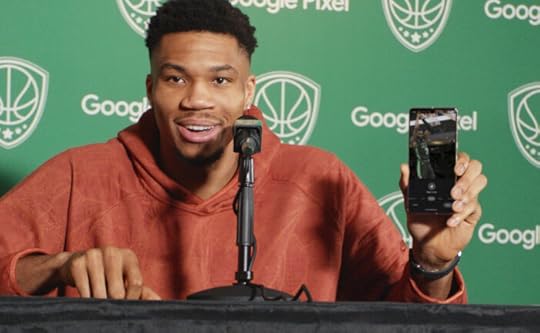
Students from Northwestern University's Kellogg School of Management have been evaluating Super Bowl ads for the past 20 years in the Kellogg Super Bowl Advertising Reivew.
In this series of videos, I am counting down the top advertisers; these are the brands that have received the most grades of A and B from the panel over that period.
Here is #6. I will post #5 advertiser on 1/31, and the #4 advertiser on 2/2.
You can see the #7 - #9 advertisers here.
https://vimeo.com/907551670?share=copy
The post The Top Super Bowl Advertisers #4 – 6 appeared first on STRONGBRANDS.