Tim Calkins's Blog, page 3
January 10, 2025
2025 Brands to Watch
Welcome to 2025! The year will bring a new administration in Washington and with it lots of discussion of tariffs and tax policy and Greenland.
Here are my 2025 brands to watch.
Private College TuitionSelective private colleges have long embraced a simple model: raise tuition and increase financial aid. The result: families with resources pay more while the school remains accessible to all.
It is a nice concept, but the model is no longer working. As the cost of attending college reaches $100,000 per year, there are fewer and fewer families that can pay the full cost. Children of wealthy families are highly sought after and showered with merit scholarships. Even for the families with resources, is Carleton or Bates or Washington University in St. Louis worth $350,000 more than the local state school?
Brown University has apparently reached a milestone. Despite increasing tuition by 4.5%, the school reports that overall tuition revenue is flat. The increases in financial aid and shifts in student mix are negating the list price increase.
The high cost also invites criticism. Colleges that charge over $100,000 a year are easy targets for politicians for regulation and taxes. Even with financial aid, the schools seem elitist and out of touch.
It is time for selective colleges to go the other way and reduce tuition. A small tuition cut will make a school seem more accessible. It will be less of a political target. The move won’t have a significant impact on overall revenue. Paired with a fund-raising campaign, a tuition reduction would likely be financially positive.
Will any top school take the lead? I predict not, but they should.
Beyond MeatBeyond Meat was once a high-flying CPG firm. The company received enormous attention and had a valuation of over $14 billion in 2019. People marveled at the products.
Things have since unraveled. The company’s valuation is now down to $235 million. The stock price peaked at $195 per share and is now at $3.47.
If possible, the actual financial results are even worse. Last year the company had revenues of $343 million, and net income loss of $338 million. When your negative net income is about the size of your revenue, you have trouble. In the most recent quarter, the firm lost another $27 million. The company has been steadily burning cash.
Will the company survive? I suspect we will see financial distress in 2025.
The problem for Beyond Meat is that there isn’t a great value proposition. People who like to eat meat like to eat meat. People who don’t like meat don’t like meat. So, a plant-based meat will have a narrow appeal.
Beyond Meat’s mission highlights the brand’s problem: “We build meat from plants to nourish and protect our bodies, heal earth and climate, and better share the planet with the miracle of life that surrounds us.” As all too many companies have learned, for many people, healing the earth is important but not motivating. It is a bit like protecting democracy. How about more concrete benefits like taste, price and nutrition?
Louis VuittonAs we start 2025, the luxury industry is encountering some rare turbulence, and no brand better represents the industry than Louis Vuitton, part of the global giant LVMH.
There are two big problems for luxury goods. The first is China, where a weak economy is leading to a slow-down in luxury good sales.
The second is pricing. Luxury brands have dramatically increased prices in recent years. For a while, the strategy worked because the move increased margins and perceptions of exclusivity. It seems pricing has now gone too far, so the value proposition is starting to weaken. The brands seem unattainable, and the price increases give people a sense of discomfort. Everyone ultimately wants to think they are getting a good value.
The super-wealthy often don’t buy the classic luxury brands. They buy elite brands that few people know about or sometimes just wear things from Uniqlo.
Can Louis Vuitton find the right balance and rebound? It is hard to see a quick improvement for the brand or for LVMH.
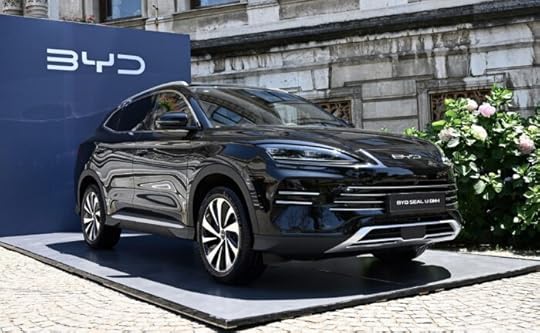
BYDChinese car company BYD is positioned to have a big year in 2025. The company is now the world’s largest maker of EVs. The firm’s overall strategy is simple: build market penetration of EVs with low prices.
BYD has a range of models and brands, but many of the company’s sales are inexpensive EVs. The least expensive cars cost less than $10,000.
With a super low price point, EVs start to make sense. Think of these cars as one step up from a golf cart.
Scale matters, which is why BYD’s size is super important. The only way to succeed with low prices and margins is with volume that drives efficiency.
The big risk is tariffs. I suspect tariffs will be a challenge for BYD, but even with a 100% tariff, BYD’s offerings will be a solid value.
Look for BYD to have a huge year as other EV firms struggle.
DEICompanies are backing away from DEI at an astonishing pace. Almost every day, it seems, another major firm announces a shift in policy to put less emphasis on DEI efforts.
The problem is that the DEI brand has developed negative associations. Activist investors are now pressuring companies to change policy and companies, eager to avoid complexity and attack, are complying.
I suspect DEI will fade in 2025, just as Black Lives Matter faded as it, too, developed some negative perceptions.
Something else will likely emerge. The idea of diversity is both appealing and a business necessity; shifts in the population mean organizations must be welcoming places where people from different backgrounds can thrive. Look for a new brand to emerge this year to represent the idea of inclusion without using the words diversity, equity or inclusion.
Stock MarketEvery major investment firm is projecting an up year for the stock market. I’m not so confident. We are coming off two big years and the new administration will focus on tariffs and tax cuts, completely ignoring the deficit. All of this will lead to higher interest rates and damage the economy, at least in the short run. So, I project the S&P 500 will finish down 3%, at 5,706.
The only thing I’ve learned about predicting the stock market is that it usually goes up and I’m usually wrong. So, I’m not making any investment moves based on my forecast and you shouldn’t either. Timing the market is hopeless. Just keep buying stocks.
Best wishes for 2025!
The post 2025 Brands to Watch appeared first on STRONGBRANDS.


January 3, 2025
Looking Back on My 2024 Brands to Watch
In recent years I’ve started the year by highlighting a few brands to watch. These are brands that are set up to have an interesting year, some poised for growth and others likely to struggle. Here is a look back at my 2024 picks and how things worked out.
Harvard2023 was a rough year for Harvard as the school was attacked by critics for a variety of issues ranging from free speech to financial responsibility. President Claudine Gay stepped down at the start of 2024 and Harvard Provost Alan Garber was tapped to be the interim president.
The selection of a new Harvard president was likely to be intensely scrutinized as issues related to free speech and DEI complicated the choice.
So, what happened?
Harvard simply delayed the decision. The school dropped interim from Alan Garber’s title, but noted that a full presidential search would begin soon. Garber isn’t an interim president, but he also isn’t a long-term player.
I think the decision makes a lot of sense. How do you avoid offending people with a choice? You don’t make the choice.
It seems to have worked. As we begin 2025, things have stabilized at Harvard.
EVsI wondered if mass-market EVs would struggle in 2024 and I was correct. Even Tesla saw a decline in sales.
The problem is that the value proposition for EVs isn’t particularly strong. High-end offerings can do well, leveraging exclusivity and branding. Mainstream offerings lack a compelling benefit. Now if prices fell dramatically things might shift, and Chinese firms like BYD are seeing gains in some places with very inexpensive EVs.
But this didn’t happen here: EVs aren’t dramatically cheaper than other cars and demand has weakened.
SheinDiscount retailer Shein was flying high at the end of 2023, heading for an IPO in 2024. As I anticipated, things haven’t gone particularly well and the IPO didn’t happen.
Shein’s business model is unique, but challenging. Selling clothes at ridiculously low prices can be done, but it is hard to generate a lot of profit. Competition is a huge problem and is likely to lead to falling prices, margins and profits.
In 2024, Shein continued to grow, but the pace has slowed and while the company doesn’t publish all its results, profits apparently have slumped. Temu is a particularly difficult competitor.
Shein is still planning on an IPO, perhaps in 2025, but this will likely be in London after U.S. politicians threatened to block the deal.
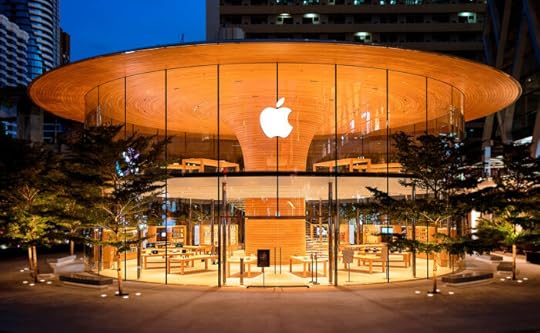
AppleI anticipated that Apple would slow in 2024 as penetration gains of iPhone decloined and this was a good prediction.
Revenue was $391 billion in FY 2024, up from $383 billion in FY 2023, a gain of just +2%. Net Income was $94 billion, down from $97 billion prior year, a decline of -3.4%.
The results were pretty good given the circumstances. Two things are working in Apple’s favor. First, the brand has astonishing loyalty. People love Apple and once in the Apple world they aren’t likely to leave.
Second, Apple can continue to drive phone purchases through product improvements and replacements. I’ve come to believe that the battery is the key to it all. When the battery gives out, which it inevitably will, there is a big incentive to get a new phone.
Apple’s stock was nonetheless a huge winner, increasing from $191.6 at the end of 2023 to $250.4 at the end of 2024. One might wonder about valuations given the growth rate and the PE ratio of 41.
Nikki HaleyThe only person who could stop Donald Trump was Nikki Haley and I anticipated she had a chance if Trump had a health issue or if Haley could own the concept of hope.
As it worked out, Trump’s health was fine and he survived the assassination attempt. He also held onto the hope platform. Trump’s campaign was all about marketing, employing two key strategies: focus on a benefit and create a foil. The benefit was a better economy, higher wages and lower inflation. The foil was illegal immigrants.
Protecting democracy and talk of fascist behavior just weren’t motivating benefits. I suspect few people have any idea what fascism is.
Bud LightThe fall of Bud Light continues to astound marketers, including me. I anticipated the brand would start to rebound in 2024 as the Dylan Mulvaney controversy faded from memory.
Apparently, things have stabilized for Bud Light, but the brand is not bouncing back yet. The negative perceptions remain, and Bud Light hasn’t managed to find a new message.
This is a good reminder that changing negative perceptions is easier said than done.
Stock MarketI was right on the direction of the stock market, but off on the magnitude. I thought stocks would rise, with the S&P 500 finishing at 5,057, up +6% from the 2023 close of 4,770. The actual results: 5,882, up +23%.
I’ll be back with my 2025 brands to watch next week.
The post Looking Back on My 2024 Brands to Watch appeared first on STRONGBRANDS.
December 11, 2024
Apple’s Astonishing Holiday Ad

It is the season for Christmas ads.
No country does Christmas advertising quite like the U.K., where people wait anxiously to see what brands will come up with. Expectations are high. It is a bit like the Super Bowl here in the U.S. You can watch two of my favorite Christmas ads here, one from department store giant John Lewis and another from grocery store Sainsbury’s. Fair warning: I don’t think the ads are particularly effective and they would score poorly on the ADPLAN framework.
Still, they are charming and positive, and that is worth something.
U.S. advertisers are getting into the spirit, too, and Apple’s spot deserves our attention.
Advertising and SocietyMarketing reflects society. Brand teams work very hard to understand how people are feeling and craft messages that will resonate.
Done well, spots subtly reflect the environment. Marketers don’t announce, “We’ve uncovered an insight about how you are feeling: you are anxious about AI.”
The work just somehow fits the moment.
Apple’s SpotSo, what has Apple come up with? A spot that is wonderfully effective, but also a striking reflection of where we are as a country.
https://www.youtube.com/watch?v=EvnJh...
As a piece of advertising, the spot is terrific. It highlights the Air Pods new hearing aid feature. The device transforms the spot; before using the devices, a father can’t hear everything his children say. After, he picks up all the messages. This is a clear differentiating benefit.
More interesting, the spot embraces traditional family values.
- The ad features a mother, a father and children. There are no broken families here.
- Everyone is white. The child is blond.
- They live in a nice home with a fireplace and nice furniture, probably in a small town. There is a dog, a train and a piano.
- There are no tattoos or dynamic piercings. There is no discussion of anyone transitioning. Everyone seems comfortable with their gender.
-The father is named John.
- The spot is a celebration of parenting. The children are beautiful and appreciative. There are warm feelings all around.
Of course, this spot arrives shortly after Donald Trump and the Republican party won an enormous victory, in part by embracing traditional family values. It is a moment where companies and universities are backing away from DEI initiatives.
Apple clearly has gotten the message.
Even the casting reflects our new world: the ad’s main character bears a striking resemblance to JD Vance.
I suspect we will see many advertisers embracing traditional values in 2025.
The post Apple’s Astonishing Holiday Ad appeared first on STRONGBRANDS.
A Remarkable Spot from Apple
It is the season for Christmas ads.
No country does Christmas advertising quite like the U.K., where people wait anxiously to see what brands will come up with. Expectations are high. It is a bit like the Super Bowl here in the U.S. You can watch two of my favorite Christmas ads here, one from department store giant John Lewis and another from grocery store Sainsbury’s. Fair warning: I don’t think the ads are particularly effective and they would score poorly on the ADPLAN framework.
Still, they are charming and positive, and that is worth something.
U.S. advertisers are getting into the spirit, too, and Apple’s spot deserves our attention.
Advertising and SocietyMarketing reflects society. Brand teams work very hard to understand how people are feeling and craft messages that will resonate.
Done well, spots subtly reflect the environment. Marketers don’t announce, “We’ve uncovered an insight about how you are feeling: you are anxious about AI.”
The work just somehow fits the moment.
Apple’s SpotSo, what has Apple come up with? A spot that is wonderfully effective, but also a striking reflection of where we are as a country.
https://www.youtube.com/watch?v=EvnJh...
As a piece of advertising, the spot is terrific. It highlights the Air Pods new hearing aid feature. The device transforms the spot; before using the devices, a father can’t hear everything his children say. After, he picks up all the messages. This is a clear differentiating benefit.
More interesting, the spot embraces traditional family values.
- The ad features a mother, a father and children. There are no broken families here.
- Everyone is white. The child is blond.
- They live in a nice home with a fireplace and nice furniture, probably in a small town. There is a dog, a train and a piano.
- There are no tattoos or dynamic piercings. There is no discussion of anyone transitioning. Everyone seems comfortable with their gender.
-The father is named John.
- The spot is a celebration of parenting. The children are beautiful and appreciative. There are warm feelings all around.
Of course, this spot arrives shortly after Donald Trump and the Republican party won an enormous victory, in part by embracing traditional family values. It is a moment where companies and universities are backing away from DEI initiatives.
Apple clearly has gotten the message.
Even the casting reflects our new world: the ad’s main character bears a striking resemblance to JD Vance.
I suspect we will see many advertisers embracing traditional values in 2025.
The post A Remarkable Spot from Apple appeared first on STRONGBRANDS.
November 15, 2024
Learning from the Election Results
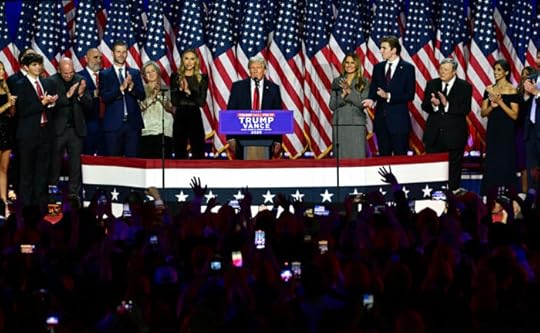
We are just a little more than a week past the election, but it seems like the distant past. Before the excitement fades away, it is worth reflecting on some things marketers can learn about branding and strategy from what happened.
Don’t Assume Others Are Like YouIt is very tempting to assume that everyone is just like us. We usually believe our opinions are rational and logical, so naturally other people will look at things the same way and reach the same conclusions.
As the election results showed, this approach is a good way to get into trouble when it comes to elections, marketing and new product development.
Many people were astonished by Donald Trump’s big win, and the fact that so many people were eager for a change.
The surprise reflects the reality that people are experiencing very different economic situations in the U.S. People who own their homes and have investments are doing well as real estate prices and the stock market rise.
People who rent and live paycheck to paycheck are having trouble. Inflation is running faster than wage increases, creating a problem for many.
For the first group, there isn't an urgent need for a change. For the second group, a continuation of Joe Biden's policies is the wrong approach.
This is all a good reminder that to be an effective marketer, you have to step outside of your own circumstances and listen to others with empathy and an open mind.
Embrace a Powerful StrategyIn the days leading up to the election, the Trump campaign focused on a spot about the transgender issue, featuring a video of Kamala Harris saying, “Surgery, for prisoners. Every transgender inmate in the prison system would have access.” The ad finished with the line, “Kamala is for they them. President Trump is for you.”
This is an example of a clear strategy. The Trump campaign could have discussed many different messages, but it settled on just one. I suspect the Trump team had data that showed that many people were uncomfortable with the transgender issue. Linking Harris to it was a good way to make her seem out of touch.
Or perhaps the Trump team just looked back at Bud Light and what happened when that brand was seen as supporting a transgender influencer.
The Harris campaign made a strategic choice to focus on Trump’s threat to democracy and the idea that Trump was a fascist. This was ultimately not a motivating message. I suspect most people don’t know what a fascist is.
Be AuthenticWe live in a world where reality can be hard to find. When you talk on the phone, it isn’t always clear if you are talking to a person or a bot. A photo might be real, or it might be doctored and altered. A person in a video could be real, or it might be an AI creation.
An entertaining way to pass the time in a Zoom meeting is trying to figure out if a background is real or virtual.
All this makes authenticity more important than ever. Kamala Harris seemed to have a problem in this area. She often answered questions in an indirect way. She spoke like many politicians do, in a cautious, hesitant fashion, considering each word and how it might be interpreted.
Donald Trump is an untraditional candidate. He veers off the prepared script. He says things that are awkward and ill-considered. Still, all of this creates a feeling of authenticity. He isn’t a perfectly coached and prepared candidate. His wandering rally monologues seemed like his actual thought process.
Create ExcitementIt was striking that in the final days of the campaign, both candidates turned away from the battleground states to do high-profile events. Donald Trump went to New York City to hold a rally at Madison Square Garden. Kamala Harris traveled back to Washington to speak outside the White House.
These were unexpected moves because New York and DC were never in play. Both were firmly in the Harris camp.
But the campaigns understood the importance of attracting attention with stunning visuals. People aren’t likely to talk about a rally in Madison, Wisconsin. They will notice a rally in Madison Square Garden.
The emphasis on events reflects a broader change in the media world. Local and regional media outlets are in decline. National outlets are playing a more important role. The big Trump and Harris events were all about getting interest, coverage and attention across the U.S. In both cases, it seemed to work.
Embrace InfluencersInfluencers matter. Both campaigns worked very hard to engage with influencers, but the Trump campaign seemed to do a better job in this area.
Trump’s efforts to engage with podcasters were particularly notable. He did a three-hour interview with Joe Rogan, delaying a rally in Traverse City, Michigan. Trump sat down for an interview with financial influencer Dave Ramsey. Kamala Harris apparently declined both opportunities.
Harris courted influencers, too. She did an interview with Alex Cooper’s Call Her Daddy podcast, for example, and others.
Influencers are particularly important because they can deliver a long-form message. TV spots are thirty seconds and then gone. TikTok posts are sometimes even shorter and exist just briefly before being lost under the wave of new posts. Podcasts are usually longer, and they stick around.
Some Things We Can Agree OnWhile we are a polarized country, I think people can agree on three things.
First, it was good to have a clear winner. Tight elections lead to problems: court cases, hanging chads, political wheeling and dealing. None of this is good.
Second, there were no notable claims of election fraud. This was a fair election. Hopefully we can now move past dangerous talk of stolen elections.
Third, it will be an interesting few years. The next campaign starts now.
The post Learning from the Election Results appeared first on STRONGBRANDS.
October 29, 2024
The Election Branding Battle
Elections are brand battles.
At Kellogg, we define brands to be the associations linked to a name, mark or symbol associated with a product or service. When people see a name or symbol, what do they think? This is the brand.
A political race is all about branding. People aren’t buying a product they can see and touch, they are picking an individual whom they hope will make good decisions. If a candidate has positive associations, they will tend to attract votes. Negative associations will drive people away.
Two Branding JobsA candidate has two branding tasks. The first job is to build their own brand. This is about building brand awareness and name recognition. More importantly, this is creating certain associations. A candidate might want to be associated with being tough on crime or cutting taxes or supporting a woman’s right to choose.
The second job is defining your opponent’s brand. Brand associations can come from anywhere. With marketing funds, you can build negative associations around your opponent’s brand, perhaps defining them as unethical or out of touch.
Unfortunately, the second task is sometimes easier and more powerful than the first.
A Chicago School Board BattleChicago is electing a school board for the first time this fall. The races are intense, despite the fact that these are unpaid positions with limited impact, since the majority of the school board will still be appointed by Chicago Mayor Brandon Johnson.
The battle in my district has become a remarkable branding fight, with each candidate working to define their opponent’s brand.
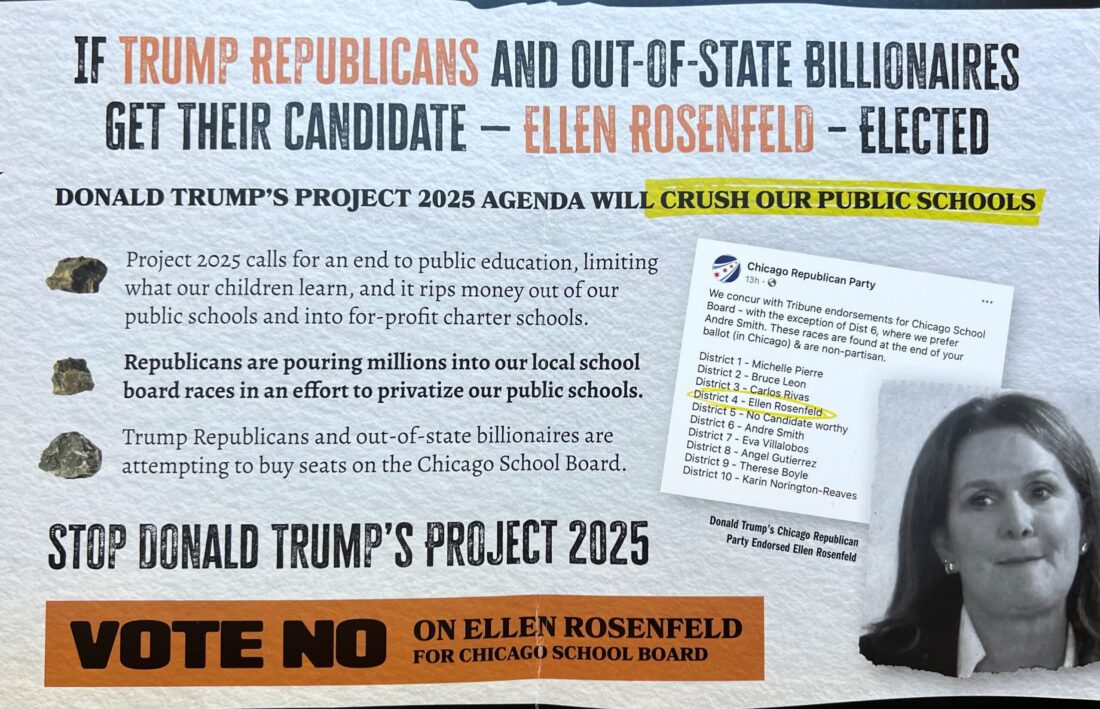
There are two big spending candidates. One of them is Karen Zaccor. She is a Democrat supported by the Chicago Teacher’s Union and Mayor Brandon Johnson. The other is Ellen Rosenfeld, a former teacher and a Democrat not aligned with the CTU.
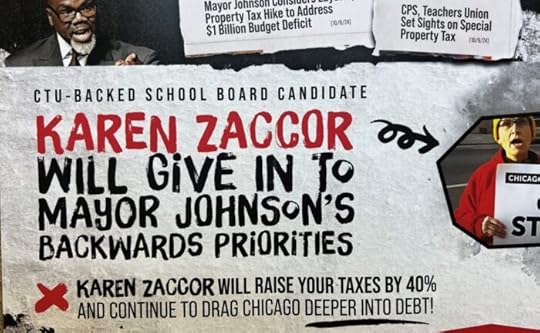
Zaccor’s team is spending aggressively to tie Ellen Rosenfeld’s brand to Donald Trump, Project 2025 and the Republican party. One of her recent flyers calls out, “Billionaire Backed. Republican Funded. Billionaire Backed. Republican Funded.”
Take a look at her flyer below.
Ellen Rosenfeld’s side is working very hard to link Ellen Zaccor to the unpopular CTU and Brandon Johnson. One of her flyers notes, “Karen Zaccor is a paid CTU Delegate who donated $2,000 to Brandon Johnson. Her campaign is mostly funded by the Chicago Teachers Union.” Not surprisingly, Zaccor’s marketing materials don’t mention that she is supported by the CTU and Brandon Johnson.
Here is one of the flyers supporting Rosenfeld.
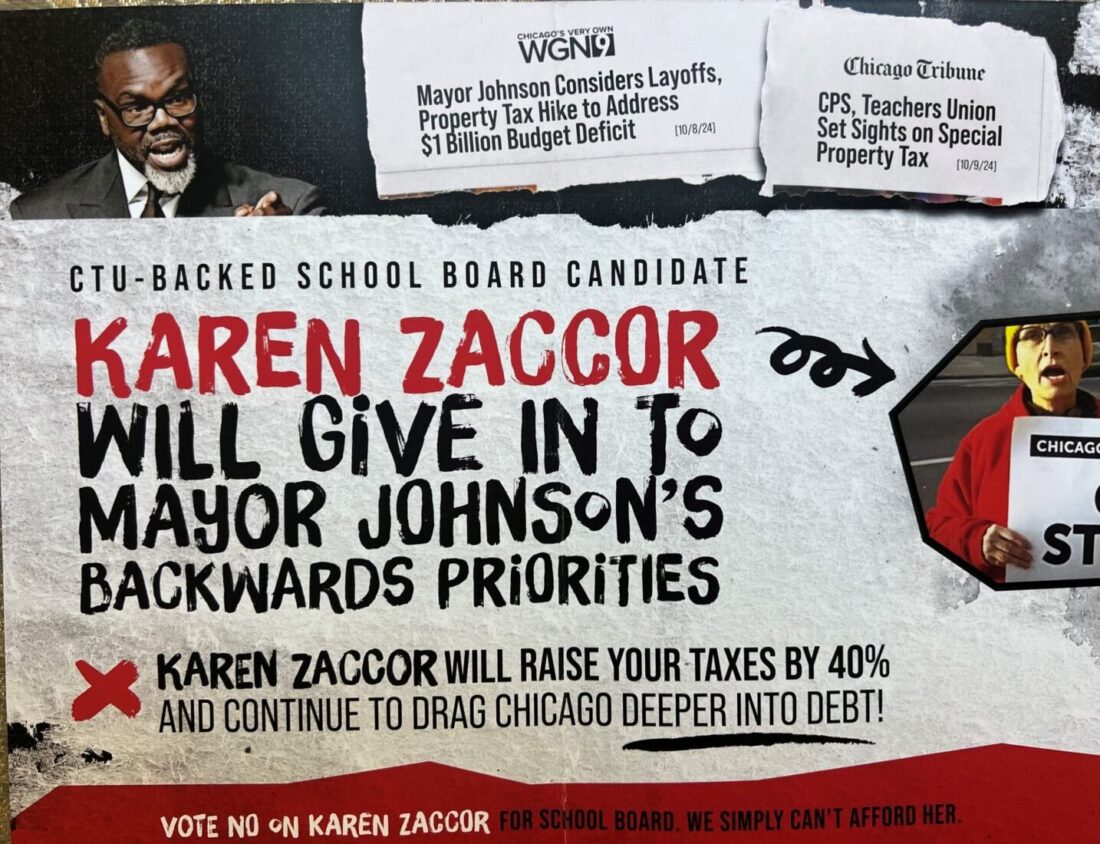
While the candidates were sending positive brand messages earlier this fall, things have now spiraled into a distinctly negative battle.
Responding to negative attacks is a losing approach, partly because many of the attacks are based on elements of truth. I suspect Zaccor contributed to Brandon Johnson, and some Republicans have donated to Ellen Rosenfeld.
As a result, the candidates spend as much as they can shaping their opponent’s brand and building negative associations.
It is amazing that anyone runs for office.
The Presidential RaceWe are seeing a stunning branding battle at the presidential level. Trump is doing a nice job making people think that Harris is no different than Joe Biden and not that bright. Harris is highlighting Trump’s bizarre behavior and the threat to choice.
Harris is struggling to attack Trump because Trump’s brand is associated with outrageous statements. When Trump says he will do something illegal and dangerous, people ignore it, thinking “That is just Donald Trump doing his thing.”
The momentum seems to be favoring Trump.
My advice to Harris: take another swing at that CNN question from October 8 “Would you have done something differently than President Biden during the past four years?" At the time she said, “There is not a thing that comes to mind.” That was the wrong answer.
Harris should put out a list of four or five important things she would have done – and will do – differently.
Harris will get the continuity vote, the liberal vote and the choice vote. To win, she also needs to attract people looking for a change.
The post The Election Branding Battle appeared first on STRONGBRANDS.
October 15, 2024
Why Starbucks and Nike Should Study LVMH
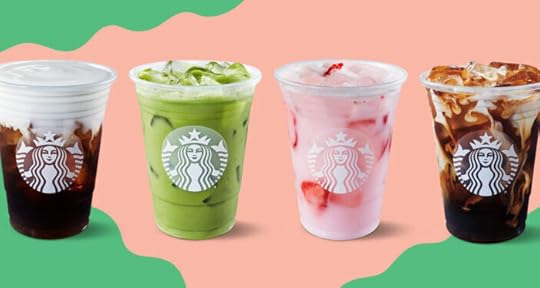
Two of the most astonishing branding stories this year have been the struggles of Nike and Starbucks. Both firms might benefit from studying luxury giant LVMH.
Starbucks and NikeA few years back, Nike and Starbucks were business school go-to brands. Want an example of a strong brand? How about Nike or Starbucks? Looking for a firm that has innovated and found new growth opportunities? Maybe Nike or Starbucks?
Today, of course, the situation is vastly different. Both firms are struggling. While the S&P 500 soars, Nike’s stock price is down more than 50% from its peak. Starbucks is having similar troubles, with its stock down more than 30%.
Not surprisingly, the firms are churning through CEOs. Both just brought on this summer.
In some ways, the companies face similar problems. In a bid to grow, executives took steps that weakened the core of the business.
Nike lost its focus on athletic achievement and began to focus more on fashion and collectibles. Its partnership with Tiffany was a striking example of just how far the brand strayed from its core. More focused brands like On and Hoka are now stealing share and Nike is adrift.
Starbucks began with a focus on the coffee culture and an inviting store experience, Howard Schultz’s “third place.” This all went away as the company introduced a vast variety of drinks, many complicated to make and not related to coffee at all. Starbucks also redesigned stores to maximize efficiency and the take-out business. The “third place” was a financial drag on operations.
It is easy to say Nike and Starbucks shouldn’t have focused so much on growth, but this isn’t realistic. Companies have to deliver profit and cash flow growth.
Perhaps instead the problem is that they relied so much on just one brand.
The LVMH ModelOne of the most successful firms in the world is LVMH. The company owns more than 75 different luxury brands, everything from Louis Vuitton to Tiffany to Rimowa.
The power of the LVMH brand portfolio is that it gives the company many ways to grow. One year perhaps brand A will be a growth driver. The next year brand B might align with trends. If brand C is at risk of losing its exclusivity, it can pull back and reduce revenues as other brands step up.
LVMH can also keep each brand focused on its target. With a portfolio, each brand can remain true to its positioning, resisting the temptation to stretch and extend too far.
A portfolio approach also makes acquisitions relatively easy. The simplest way to deliver growth? Acquire a new brand that brings revenue and further growth potential.
LVMH has delivered remarkable financial results, with a current market cap of more than $350 billion. Until recently, it was the most valuable company in Europe. CEO Bernard Arnault is one of the richest people in the world, worth more than Microsoft's Bill Gates.
An Idea for Starbucks and NikeIt may be time for both Starbucks and Nike to take the LVMH approach and embrace a portfolio of brands. Perhaps Starbucks should narrow the Starbucks brand, regaining a focus on the core positoning. The company could introduce a second brand to address opportunities that don't fit under Starbucks. Nike can similarly retrench.
Acquisitions seem appropriate for both brands. Now some may argue that acquiring a small brand won’t have much impact on a company the size of Nike or Starbucks. But when the challenge is to grow revenue by 4 or 5% annually, a brand even 1% of the size of parent can meaningfully contribute to the gap.
Maybe Starbucks should merge with Cava, adding a completely new growth opportunity, while staying in hospitality and food. Perhaps Nike should finally acquire Peloton. There are many different ways to grow once you are open to expanding the portfolio.
The LVMH model is compelling and perhaps the most strategic way for both Nike and Starbucks to move forward.
The post Why Starbucks and Nike Should Study LVMH appeared first on STRONGBRANDS.
September 17, 2024
Learning from a Free Walking Tour in Milan
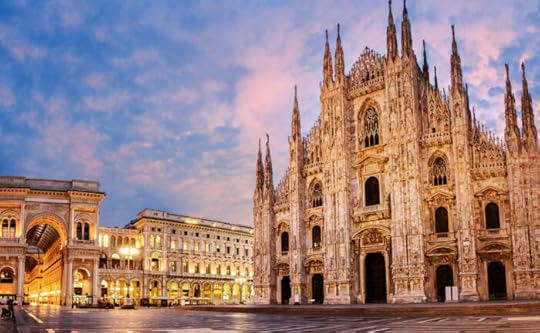
I’m teaching in Europe this month; I was in Copenhagen last week and will be in Italy for the next few days.
I had some open time in Milan, so I signed up for a free walking tour. I always love these because they attract an interesting group of people, and the guides have a big incentive to do a quality tour. A weak guide won’t last long in the industry.
Marco, the guide from Citywalkers, delivered a fabulous tour. He was funny, informative and energetic. On the tour, I learned a lot about Milan, but also about presenting and teaching. There were some great lessons to start the new academic year.
Here are few of my takeaways:
NamesAt our first tour stop, Marco shocked the group by referring to a few of the participants by name. He called out Cindy, from Phoenix, and Guy, from France.
Throughout the tour, he would use people’s names, whether that was Peter from the UK or Bob from Orlando. This made everyone feel connected and impressed, thinking, “Amazing, he remembers everyone’s name!”
Now I suspect Marco remembers just three or four names and drops them in periodically. Still, it was impressive.
Learn About Your AudienceAt the start of the tour, Marco checked everyone in. He greeted them enthusiastically, “Chicago is my favorite city in the U.S.!” He then asked questions “Where are you from? How big is your group?” He wrote down the answers.
By doing this, Marco was gathering the information he needed, learning certain names. He also made people feel that they were noticed and counted. This kept them with the tour.
Set ExpectationsMarco did a great job setting expectations. Early on he explained that while this was a walking tour, we wouldn’t be walking that much. Later, he asked if people were tired and noted that there were just three more stops, and one would be brief. This kept people with the group; virtually everyone finished the tour.
Address the ConcernsIt was quickly apparent that this was going to be a big tour, maybe thirty people. This gave everyone pause. Marco was quick to respond, noting that he had led much larger tours and that it actually was a good thing: “I do my best tours with bigger groups!”
Bring Energy and EnthusiasmMarco radiated energy. He spoke and moved quickly. His body constantly seemed tense, almost ready to spring. This pulled people into the tour. He also never checked his phone and never appeared bored.
My highlight was near the end where Marco observed, “I love talking about Milan but there is so much history. If I ran the company, I would make it a 16-hour walking tour.”
Gently Enforce DisciplineMarco ran a tight ship. When someone started smoking, he quickly addressed it, “I’m a smoker, too, but this is a non-smoking tour.” When two people had a side conversation he stopped talking and waited. It didn’t happen again. If someone drifted away from the group, he would call them out, “Maria, are you with us?”
By forcing people to pay attention and focus, Marco ensured the tour was positive for everyone.
Make It SpecialAt one point on the tour, Marco started singing. I can’t recall precisely why, but after he finished, he bowed and said, “Wow, I think that was my best singing ever!” We all cheered again and loved feeling like we were on a unique and special tour.
Have FunMarco seemed to be having fun. He appeared to love Milan and was lucky to be giving a tour. This made everyone feel good about the production.
Did he really enjoy giving that tour? I wonder. It was probably his 107th time, and exhausting. I wandered back later to ask a question and saw him having a smoke, checking his phone, looking drained. I didn’t bother him.
There is magic in making things appear fun, even when you might not be having fun. Great performers like Marco do this. We all want to feel like the people we are with are having fun.
Communication is difficult. It is all too easy to focus on the facts, delivering them in a dull fashion. The challenge is making things interesting and engaging.
The post Learning from a Free Walking Tour in Milan appeared first on STRONGBRANDS.
August 19, 2024
The Future of the GE Brand
Anyone interested in branding should pay attention to GE. What will happen to the GE brand over the next decade? My prediction: it will start to fade away.
A Glorious PastGE is perhaps the most famous corporate brand. Under CEO Jack Welch, GE was the envy of the business world and regarded as the pinnacle of corporate achievement. Year after year, GE delivered outstanding financial results. GE’s Crotonville training center was, outside of a few top business schools like HBS and Kellogg, the best place to learn business leadership.
According to Interbrand’s brand valuation, GE was one of the most valuable brands in the world. In 2007, it ranked number #4 with a brand value of over $52 billion.
A Stunning FallIt turns out that GE’s glorious past wasn’t so glorious. Jack Welch manipulated earnings. All the acclaim led to arrogance. CEO Jeff Immelt thought he was so important that he traveled with two corporate jets. If one broke down, there was always another one available. One group of GE executives came to Kellogg for strategic training, then decided they didn’t need any instruction after all and just wanted to do their own work.
The stock price traded near $300 per share in 2020. Twenty years later it was about $35.
As the business imploded, GE shattered into pieces. Appliances, healthcare, energy and aerospace all ended up as different companies. The company sold off the Crotonville facility.
The result is that the GE brand is now owned and used by multiple different firms. There are three large public companies: GE Healthcare, GE Aerospace and GE Vernova, the energy division. GE Lighting is owned by a company called Savant. GE Appliances is owned by Haier, a Chinese enterprise.
The OutlookSo, what does the future hold for the GE brand? It will be a challenge.
The problem is that nobody owns the brand. There are at least five different companies with rights to use the GE name. Each one has different interests, strategies and motivations.
Great brands stand for something distinctive and consistently deliver it. Coke, Apple and Google all have clear meanings. The firms carefully manage the brands, shaping the associations over time.
How will the GE brand flourish with its fragmented ownership?
Start with a basic question. What is GE? A consumer company? A lighting company? You might say GE stands for technology, but that seems like a stretch. Yes, GE Healthcare and GE Lighting both use technology. They also use cardboard.
Is GE a U.S. company? No. Is it a consumer company? No. Is it a business-to-business company? No. A healthcare company? A trusted company? Perhaps, but that is a modest claim.
The inconsistency will become more and more of a problem as time goes on. The values of each company will drift apart. The social media voices will be inconsistent.
It is a bit like having several musicians named Taylor Swift all recording and performing at the same time. Things would be very complicated.
And it will get worse. Each organization will try to define the brand in its own way. The appliances group will push GE to stand for something notable in appliances. GE Healthcare will try to shape GE to mean credibility in the healthcare world.
At the same time, none of the organizations will have an incentive to look after the overall GE brand. A company isn’t likely to spend money against GE when the benefits of that spend will go to multiple different entities.
Gradually, the GE brand, already tarnished by a business implosion, will lose more meaning and create more confusion.
The reality is that each of the firms using the GE brand should start making plans to embrace a new name. As the companies do this, the GE brand will gradually fade.
I don’t think GE will go away completely, at least not in the next fifty years. But it will inevitably recede from view, as even the strongest brands sometimes do when they are managed with arrogance and complacency.
The post The Future of the GE Brand appeared first on STRONGBRANDS.
July 22, 2024
A Troubling Trend in Not-For-Profit Branding
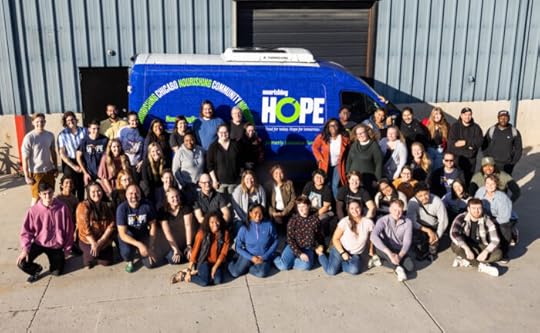
There seems to be a trend developing in the world of not-for-profits: rebranding. Many organizations are moving from descriptive brands to broad, general brands. In most cases, this is well-intentioned but a bad move.
The TrendIn recent years, a series of not-for-profits have rebranded to general, inspirational names. Here are a few examples:
-The Lakeview Pantry, a food pantry in the Lakeview neighborhood of Chicago, is now Nourishing Hope.
-Teen Living Programs, an organization that helps young people find long-term housing, became Ignite.
-Chicago Children’s Choir rebranded to Uniting Voices.
-Just recently, the Juvenile Diabetes Research Foundation became Breakthrough T1D.
-In June, the French Institute Alliance Francaise, a New York organization dedicated to teaching French and promoting French culture, rebranded to L’Alliance.
The LogicAll of these rebranding efforts seem to be grounded in similar logic: the old brand name was seen as too narrow, and the new brand name opens up more opportunities for growth.
For example, the Lakeview Pantry explained its rebranding like this: “Nourishing Hope began the process of rebranding in 2019 after coming to the realization that its legacy name, while strong in reputation, no longer represented the work of the agency and was limiting plans to scale its impact.”
JDRF’s CMO Pam Morrisroe explained its rebranding like this: “Together, we have developed a visionary, powerful brand that more accurately reflects who we are: the world leader in type 1 diabetes research, advocacy, and community support.”
The logic isn’t wrong: a descriptive brand can feel narrow and flat. Many of the best brands in the world lack any descriptive element. Nike is only distantly related to footwear. Apple doesn’t immediately suggest computers and technology. I’m not sure what Uniqlo means, or Instagram, or Google.
The ProblemSo, what is the problem?
The issue for not-for-profits is that brands that lack a descriptive element have no meaning. As a result, the organization has to create this meaning, and that takes enormous investment.
How much has Apple spent building its brand? Maybe $1 billion? How about Nike? Or McDonald's? Each one: hundreds of millions of dollars.
Not-for-profits just don’t have the resources to create these brands. If they had the money, people would likely wonder why the organization is spending on marketing instead of working on the task at hand. As a result, these new brand names are just confusing.
What is Lakeview Pantry? It is a food pantry. Where is it? Lakeview.
What is Nourishing Hope? Is that a Christian music group? A therapy app? Maybe it is an addiction treatment center?
What is the Juvenile Diabetes Research Foundation? Just guessing here, but that might be an organization that invests in research to fight juvenile diabetes.
What is Breakthrough T1D? That sounds like a fitness plan. Or maybe it is a supplement. I guess it could be a K-Pop group.
The confusion will become a problem over time.
Here is just one issue: board membership. Every not-for-profit depends on its board. One reason board members serve is to burnish their CVs. If you are on the board of New York’s Metropolitan Museum of Art you are clearly a high flier. Say that and people notice. A meaningless name doesn’t have the same impact, “Oh, you are on the board of Breakthrough T1D. Sure, great.” It doesn’t mean much.
Another issue is with donors. If someone makes a contribution to the Lakeview Pantry, it is pretty clear what they are doing. A donation to Nourishing Hope might not provide the same feeling. Even transitioning donors to the new brand will be a challenge.
The OutlookI suspect some of these organizations will gradually retreat and return to their old brands. Most of them still refer to their old brands, for obvious reasons.
Alternatively, the organizations should consider moving to a more descriptive brand or adding descriptive elements. At one point the Lycee Francais de Chicago, or LFC, added "Chicago's French International School." The line provided some clarity.
One apparently successful rebranding was America’s Second Harvest becoming Feeding America in 2008. This move shifted towards a more descriptive name. What does Feeding America do? Provides food. Got it.
For not-for-profits considering a less descriptive brand, be careful. Changing to a new brand is fun and exciting but ultimately it will only succeed with massive investment, and that investment is rarely available.
The post A Troubling Trend in Not-For-Profit Branding appeared first on STRONGBRANDS.