Tim Calkins's Blog, page 2
May 12, 2025
Evaluating 2024 Annual Reports

It is annual report season! If you own individual stocks, your mailbox may well be filling up with mailings from companies. I am a huge fan of annual reports. In today’s post, I want to review why annual reports are important, what makes for a good one, and how some firms have done this year.
Companies are required to send out information to investors each year. This includes notice of the annual meeting, proxy materials and a 10-K.
There is no requirement to produce a fancy annual report or include any additional information; company leaders decide what to do.
Why Annual Reports MatterPeople debate annual reports. Some think the reports are a waste of money. Who cares? Most individual investors don’t vote and don’t matter. Big investors like mutual funds and family offices attend company presentations and can meet with executives one-on-one. Index funds don’t care about annual reports.
I have a different view. Annual reports are an important communication opportunity and a unique chance to build your company’s brand.
An annual report is an opportunity to communicate to investors, employees, political leaders, board members and partners. Reporting back to investors is simply a matter of respect. If you care about the people who own your company, you will keep them posted on how things are going.
Annual reports are particularly important for employees, both current and potential. People working at a firm should know the results and the strategic direction. An annual report is also a chance to celebrate employee contributions. A company is nothing without employees.
If you are leading a company, it is critical to tell your story. The annual report is a great way to do this.
Many of the great business leaders today are gifted at communicating. Warren Buffett writes long annual reports and holds festive gatherings in Omaha. He understands the value of communication and telling the story. Jamie Dimon, CEO of JP Morgan Chase, is a master of communication. You’ll see my assessment of his annual report below.
What an Annual Report NeedsEvery annual report should address several topics.
1. Results! Investors can easily see the numbers, but the annual report is a chance for executives to provide some context. Should we be happy with these results? Disappointed?
2. Drivers. What led to the results? What worked and what didn’t? This is particularly important when the results aren’t good. What went wrong? The underlying question is whether the leadership team has earned the right to continue running the company.
3. Direction. It doesn’t make sense to include detailed plans in an annual report, since the competitors will of course read it. However, a company should lay out general priorities. What is the company working on? Where are the big investments? What are the risks?
Beyond these elements, companies can include other things.
-Employee recognition. Celebrating employees is critical – people want to be recognized and appreciated, and an annual report is a great opportunity to do this.
-Community engagement. People want to work for and invest in companies that make a positive impact. As a result, it is always good to highlight how a firm is making a positive impact on the community. Perhaps this is volunteer efforts or investments to improve the environment.
-Views on the world. Some executives use their annual report to provide thoughts on the broader environment. What are the important trends that might impact the company? What are potential regulations that might help or hurt the firm?
Evaluating the ReportsI invest small amounts in many different companies and in recent weeks I’ve received dozens of annual reports. Here is my assessment of a few.
One note: I’m evaluating what I received. A company might have a quality annual report on its website, but I’m not considering that for this exercise. I’m just looking at what came to me in the mailbox. Still, this is the only information I receive each year from firms, so it is fair to evaluate what they decided to send me.
DisappointmentsBefore getting started, I’d like to call out all the companies that don’t send anything at all beyond the required legal documents. Many went so far as to print everything on what feels like the thinnest paper in the world.
This is an insult to investors, partners and employees. It says the company just doesn’t care.
Among the disappointments this year.
Kraft Heinz: Proxy materials and a 10-K, printed on tissue thin paper.
Really? Kraft Heinz is a marketing company. One might think the company would value communication and telling its story. Apparently not. Over the past two years, Kraft Heinz has seen its stock fall from $41 to $28. It seems like a good moment to explain what is happening and discuss the outlook.
Verizon, Merck, Kimberly-Clark, Corning, Stryker, Baxter, WK Kellogg, Union Pacific: All of them, nothing. Please send something.
Two companies deserve special note.
First is healthcare firm Baxter. This company has delivered outrageously bad results, with the stock price on a steady decline from $87 in 2022 to its current $30. It would be great to have some message of hope, or at least a review of what happened.
Second is WK Kellogg. This new company, spun out recently from Kellogg, missed the opportunity to tell investors something about the firm. If ever there were a time for an informative annual report, this was it.
SomethingMany firms send at least something: this might be a brief letter from the CEO discussing the year and the outlook. Let’s give these companies a C.
Waste Management: This company put a cover on the proxy materials and 10-K. So, the trash hauler at least showed a trash truck and an employee.
Integra: This biotech firm sent a 10-K and proxy materials, with a short letter from the CEO. The letter read well, but I couldn’t really figure out why the company was doing so poorly, with the stock price down from $75 to $12, and net income down from $181 million in 2022 to a loss of $7 million in 2024. Please explain what happened!
Good OnesMany companies produce solid reports. The document is a quality discussion of the company, the results and the outlook. These reports build perceptions of the company. Clearly, the firm cares about telling its story. For these firms, a B+.
McDonald's: A quality report! McDonald's sent the 10-K with a cover and a nice letter from CEO Chris Kempczinski. The letter discussed results, priorities for the future and how the company is giving back, making headway on things like supplier diversity.
McDonald's also printed the 10-K in color and on nice paper.
Kenvue: This is a new company, recently spun out from J&J. The company sent the 10-K with a quality cover and a three-page letter from CEO Thibaut Mongon. I think the company could have done more, especially since it is a new company with an unfamiliar name. But the letter was thorough and the overall presentation quite good.
Elanco: I have mixed feelings about this annual report. It is similar to the McDonald's report, with good printing and a nice cover and letter.
I just couldn’t make sense of the commentary. CEO Jeff Simmons was very upbeat, noting “Having achieved six consecutive quarters of organic constant currency revenue growth, our innovation-driven strategy is working.” But Elanco’s stock price is down from $36 in 2021 to $11 today. Some explanation would be nice. Things don’t seem to be going well, so why all the optimism? I’m not saying that optimism isn’t warranted, I just don’t understand it given the results.
Southern Company: This utility sent out a high-quality annual report, with an informative letter from the CEO, charts and photos. I particularly liked the start: “2024 was another outstanding year for Southern Company.” This is right to the point.
Northrop Grumman: This defense firm sent a nice annual report, with a spectacular cover and then a series of graphs showing the excellent results. The letter from CEO Kathy Warden was brief but informative.
The BestA few annual reports really stand out. These are super high-quality publications. The company clearly cares about communication, its investors, its employees and its partners.
The best annual reports are intelligent discussions of the company and the broader economy. There is a strong point of view.
The CEOs who create these reports look like thoughtful, responsible leaders. I would be happy to work for any of them.
Abbott: It is hard not to be impressed with Abbott after reviewing its annual report. The thirty-six page report is a thorough review of the Abbott business: the results and the strategy. The report reviews Abbott’s different business sectors, which is useful given the breadth of Abbott’s portfolio: Nutrition, Vascular, Neurmodulation, Medicines and all the rest. It is a quality, attractive report with photos, graphs and relevant information.
Textron: Like Abbott, Textron has a complex portfolio of businesses. The annual report is an elegant review of the different units: Aviation, Bell, Industrial, etc. The annual report starts with results, which is always a good way to begin. Then there is an informative letter from CEO Scott Donnelly. This isn’t the longest annual report but it communicates well.
M&T Bank: Buffalo-based M&T Bank sent a remarkable annual report. The thirty-two page document is an in-depth discussion of the business and the team, with commentary on broader trends such as the rapid growth of private credit. The cover features artwork from Ophelia M. Chambliss that represents connection.
The annual report sends the signal that M&T is a thoughtful, quality organization that values results and integrity.
State Street: Sometimes you read an annual report and are happy you own a piece of the company. That is the case for me with State Street, a Boston bank financial services giant. The annual report exudes quality: thick paper, brilliant colors. The letter from CEO Ronald O’Hanley is detailed and thoughtful. There is a review of the latest excellent results. And there is a theme: “It all starts with trust.”
I learned something, too: 11% of the world’s assets are entrusted to State Street. Amazing.
JP Morgan Chase: CEO Jamie Dimon is an exceptional business leader, and JP Morgan Chase creates an exceptional annual report. This is the top annual report I’ve received this year. It starts out with a blizzard of charts and graphs showing business results. This might be too much, but all the charts point up and to the right so there is a theme.
Dimon’s letter is then a thoughtful discussion of the business, the state of the world and leadership. I recommend everyone read it. The writing is crisp and the points spot on. Hard to argue with this one: “We need consistent and responsible tax and fiscal policies.”
We need more political leaders with this type of logical, honest and compassionate thinking.
The post Evaluating 2024 Annual Reports appeared first on STRONGBRANDS.


April 14, 2025
Tesla’s Cyber Truck Fiasco
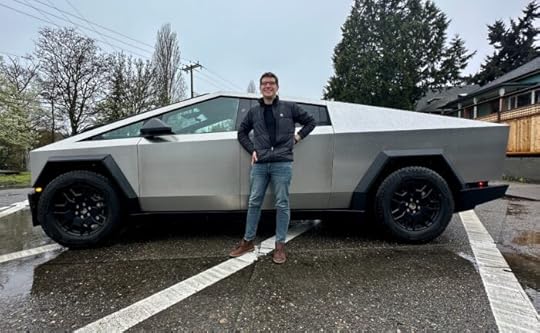
At some point, you have to feel bad for the people working at Tesla. I suspect these are driven, smart people working very hard. So, it is sad to see one of their biggest new products potentially heading to legendary status as one of the great innovation fiascos of all time.
Cyber TruckElon Musk introduced the Cyber Truck concept in 2019, and Tesla launched the vehicle after many delays in November 2023.
Functionally, the Cyber Truck is a good vehicle. Motortrend did a review of the Cyber Truck and concluded that it “…is fairly good at performing the tasks truck owners desire.”
There are two notable things about the Cyber Truck. First, it has a distinctive shape, which is immediately recognizable and different from any other car or truck on the road. Some people love it and some people don’t.
Second, it is expensive. The base price is $80,000, but variants can go well over $100,000. The Ford F-150 Lightning, another electric truck, starts at about $60,000.
ResultsInterest in the Cyber Truck was high. After Musk unveiled the concept in 1999, more than 250,000 people apparently put down $100 deposits.
The more recent results? Dismal. In Q1, Tesla sold 6,400 Cyber Trucks, which is down more than 50% from Q4 and far below expectations.
There are two problems.
Issue one is the obvious problem that sales are wildly short of forecast. Elon Musk projected sales of 500,000 trucks a year and Tesla built capacity to make 250,000 trucks a year. At the current sales rate, Tesla will sell 25,600 trucks this year, 95% below Musk’s vision.
Issue two is that sales are falling. When launching a new product, you always want to see sales build as awareness increases, distribution improves and word-of-mouth marketing kicks in. When people love a product, they tell others about it. Look at the revenue figures of a successful new product and you’ll see growth year after year.
A new product’s customer base shifts over time. Initial buyers are variety or innovation seekers; these are people eager to try new things, willing to take a risk and highly motivated. Later, the target market becomes a more mainstream group, and the innovator segment fades away.
A decline in sales in the early days of a new product launch is scary; it suggests the new product has stalled out and either its appeal is limited to innovation seekers or that buyers have been disappointed with the ownership experience.
A sharp fall for the Cyber Truck is a massive warning for Tesla.
What’s NextSo, what do you do now, if you are managing Cyber Truck?
The first step is to understand why sales are down. You could spend a lot of money on market research, but I suspect it isn’t too complicated: the design is polarizing, the truck doesn’t have a rugged image likely to appeal to typical pickup truck drivers, and Tesla has become a toxic brand.
The second step is figuring out a plan to fix things. That is more difficult. What do you do? The easiest move is to cut the price to broaden its appeal. This isn’t likely to work: it will damage margins and hurt resale values. A lower price also won’t attract people who are turned off by Musk’s political activities or the Cyber Truck’s design.
Creating desire for the truck is an option. Perhaps Tesla could engage influencers to boost appeal with certain segments. Perhaps there could be special events for the Cyber Truck owners. Narrowing the target and tailoring marketing efforts is a classic way to revitalize a product.
Ultimately, I think Tesla might need to redesign the Cyber Truck. I am not an operations expert, but I suspect the production facilities could be converted to produce a less polarizing truck. Just copy the Ford F-150 and bring Tesla’s impressive technology. That would likely sell better.
Still, a complete redesign would be a tough decision. It would cost hundreds of millions to retool the factory.
More significant, perhaps, people, especially people like Elon Musk and others in Washington, don’t like to acknowledge that they made a big mistake.
The post Tesla’s Cyber Truck Fiasco appeared first on STRONGBRANDS.
April 4, 2025
Viking and the Power of Not

The key to building a successful brand is clarity. Brands are associations linked to a name, mark or symbol and the best brands have very clear associations. Rolex is associated with some things, but not with other things. The same goes for Apple, Tiffany, Patagonia and Porsche.
When building a brand, it is important to carefully consider both what your brand is and isn’t. The second part of this is often more important. It is easy to come up with things you want your brand to be. It is more difficult to identify the things that your brand shouldn’t be.
A Viking MailerMy parents passed away several years ago. I was the trustee of their estate, so all their mail still comes my way. I toss most of it into the recycling bin, but when a flyer from Viking Cruises shows up, I hang on to it and take a look.
Viking is of course a cruise line, founded as Viking River Cruises in 1997. The company is best known for its European river cruises; Viking has a fleet of river ships traveling the Rhine, the Main, the Mosel and other European rivers. The company has since expanded to ocean cruising and expeditions. Viking has delivered remarkable results, with revenues of over $3 billion by 2018.
The Viking flyer explains their river cruise concept and provides dates for upcoming voyages. I’m not a big fan of cruising, but I am tempted by some of these expeditions.
What I particularly love is how Viking clearly communicates the brand positioning. The flyer explains it. Viking is all about small ships, with unique experiences and inclusive value. The promise is captured in this line: “Immersive experiences for the curious traveler.”
Viking Is Not…The most astonishing part of the Viking flyer, and I think the best part, is that it includes a full-page list of what Viking is not. It is quite a list. Here are just a few of them:
What We Do Not Do
No children under 18
No casinos
No umbrella drinks
No photography sales
No art auctions
No formal nights
No inside staterooms
This is an example of great brand building, a clear definition of what the brand is and isn’t. Viking is taking a stand; there is no confusion here.
This clarity has many benefits. First, clearly explaining the brand positioning will attract the right people. Viking wants active travelers who are ready to explore. These people will likely find the idea of no kids and no gambling highly appealing.
Second, clarity will discourage the people who aren’t the target. I suspect there is nothing worse than someone looking for a Carnival cruise showing up on a Viking ship. They might ask, “Where is the casino?” or “What time is the limbo competition?” Told there is no casino, they might conclude, “Well, let’s at least get going on a few pina coladas” only to learn there are no pina coladas. Viking doesn’t want Carnival cruisers to sign up.
Third, it helps the team. People want to be part of a successful venture. I love it when a class seems to be happy with the material and things are going well. When they are having a good time, I am having a good time. I suspect the same is true on a cruise. When the guests are happy, the team is happy. And when the team is happy, they will deliver a better experience.
Finally, it leads to great reviews. When people show up looking for what you provide, they leave happy. This generates positive word of mouth, especially among the group of people you want to attract.
I suspect Viking’s enormous success is due in large part to its disciplined approach to brand positioning.
When brand building is done well, it is a positive, reinforcing loop. The first step to starting that loop is being clear on what you are and aren’t.
Next time you think about your brand, don’t start with what you are. Start with what you aren’t.
The post Viking and the Power of Not appeared first on STRONGBRANDS.
March 14, 2025
Tesla’s Brand Repositioning Problem
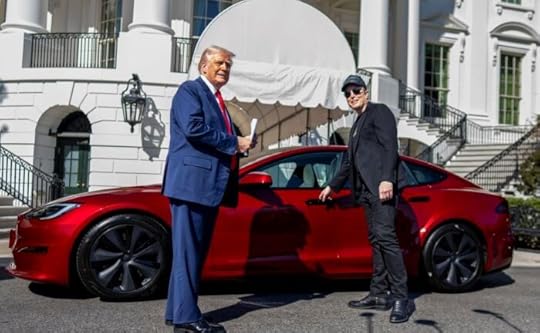
Elon Musk and Tesla are in the news. Musk, for leading Donald Trump’s DOGE effort, and Tesla for its weak sales and slumping stock, recently down more than 50% from its peak.
Tesla clearly has a sales problem. The scarier part: it has a massive branding problem.
Brand RepositioningBrands are the associations linked to a name, mark or symbol. When you see Apple, you might think technology, simplicity, iPhone and Steve Jobs. That is the brand.
Repositioning is when a brand takes on new and different associations. A brand known for low-price and value becomes known for quality. A brand associated with athletic achievement takes on associations related to fashion and luxury.
Marketers love to plan repositioning efforts, but often the initiatives don’t work out. With well-known brands, associations tend to stick. Creating new ones is difficult and usually requires a massive investment.
In some cases, a repositioning effort leads to the end of a brand. By trying to shift associations, the brand leaders drive away existing customers and fail to attract new ones. This is what happened to Oldsmobile with its ill-conceived repositioning effort, “This is not your father’s Oldsmobile.”
The Tesla BrandTesla is a remarkable brand. In recent years, it was a brand associated with technology, luxury, performance and environmental responsibility. Elon Musk was part of this, too, in his role as gifted and innovative technology leader. People who drove a Tesla were the masters of the universe: wealthy, tech-savvy and green.
The green part was always a stretch; if someone really wanted to be environmentally responsible, they wouldn’t buy a Tesla; they would get a bicycle.
Still, to drive a Tesla was to be a high-status person.
Tesla’s RepositioningIn 2025, Tesla is undergoing a repositioning; it is taking on new associations.
The reason is obvious: Elon Musk is front and center on the global stage, leading Donald Trump’s effort to cut the size of the Federal Government. And Musk is closely linked to Tesla.
This week, Musk and Trump appeared together at the White House with a bright red Tesla. The photos and headlines further cemented the link between Trump, Musk, DOGE and Tesla. In case anyone didn’t know about the connection, photos clarified it: Trump, Musk and Tesla.
The ProblemIs this good for the Tesla brand? No, it isn’t.
There is a reason most brands try to stay out of political debates. It is hard enough to get a customer. The last thing you want to do is drive them away by getting involved in issues unrelated to your business.
Tesla now represents the Trump administration and DOGE. People are protesting at Tesla dealerships and attacking people who drive a Tesla. Some people are trying to unload their Teslas, but this isn't easy.
So where are we now?
Would a Democrat buy a Tesla? No.
How about someone who has been impacted by the DOGE cuts? No.
Someone concerned about the environment and global warming? In a bizarre twist, no.
And here is the crux of the issue. Tesla’s sales to date have been highest in many blue states, including California, Washington, and New York. Buyers in these states will now think twice.
To maintain sales momentum, Tesla needs to pick up sales in red states: Texas, Louisiana, Georgia. In theory, Tesla’s new associations with Trump and DOGE should be appealing to people in these areas.
But are people in Texas and Louisiana going to buy dramatically more Teslas? No. There is no way that Tesla will see a sales boost in red states that offsets the sales decline in blue states.
Even WorseThe biggest problem is that the Tesla brand is now stuck with its polarizing associations.
The only way to drop negative associations is to replace them with new ones, going through another repositioning. Left alone, brand associations remain.
Can Tesla ever generate publicity and attention equal to the recent frenzy around Trump, Musk and DOGE?
I suspect not. If Musk leaves the administration, he won’t receive much attention. So, the brand associations that he created during his time in the spotlight will stick.
The OutlookTesla's sales were down 1% in 2024. The decline will accelerate in 2025 given Tesla's branding problems.
My prediction: Tesla will perform poorly and become an acquisition target in the next few years.
The post Tesla’s Brand Repositioning Problem appeared first on STRONGBRANDS.
February 24, 2025
Once More: It Is Time to Stop Raising College Tuition

This weekend I had the chance to spend time at Yale and heard a terrific talk by President Maurie McInnis.
I was struck by one of her comments: top research institutions are under attack as never before, in large part because they are seen as elitist and inaccessible. This perception is enhanced by the astonishing tuition levels, which are rapidly closing in on $100,000 per year.
This brings me back to a cause I’ve written about before: universities should stop increasing tuition.
The Tuition ModelTop colleges in the United States have embraced a simple model for decades: increase tuition levels each year and increase financial aid. This way families that can afford to pay more do, and families that need support aren’t affected.
It makes sense.
The ProblemsUnfortunately, there are two problems with this model.
First, the high tuition levels create a perception of elitism and inaccessibility. While only a few families pay the full cost, and many pay nothing at all, the perception created by the high tuition sticks. It is tough to argue that a school is accessible when the cost is $100,000, even when there is financial aid.
In the world today, the perception of elitism is particularly dangerous. When politicians are looking for places to find revenue, a school that charges $100,000 per year certainly looks like a good target.
Surely, a school with that type of tuition is wealthy and the domain of the elite.
Second, the model eventually breaks. As the tuition goes up, fewer families can pay it, and more families will receive financial aid. How many families in the United States can pay $400,000 to send just one child to college? Some, but not many.
Eventually even the families that could pay the tuition begin to wonder about it. Why not go to a cheaper school or a school that offers merit scholarships? Losing even a few of the full tuition families quickly becomes a problem.
TodayThis is the moment to freeze tuition levels or reduce them just a little for three reasons.
First, it would be big news. This would be a dramatic change. It would receive a lot of attention, and the headlines would be great: We are committed to making our institution more accessible for everyone. We will become more efficient and use our resources to expand access.
Second, the model is officially broken. Schools this year have revealed that despite raising tuition, overall tuition revenue isn’t increasing. Both Brown and Harvard have announced this. I suspect other schools are seeing the same thing.
This means that freezing tuition levels would have no financial impact. Even reducing tuition by 1% or 2% wouldn’t have a big impact.
If anything, the financials might improve! Prosperous families might contribute much more if told, “We are making this move, but to keep it up, we really need your financial donations.”
Third, it responds to the critics. Universities are desperately trying to tell political leaders that they do important work and shouldn’t be a target. This is a difficult argument to make. Reducing tuition? That is a solid response.
The Counter ArgumentsNow, some people will argue against this plan. I suspect there are two reasons.
We’ve always done it this way.
This is never a particularly strong argument. It is almost absurd in the current environment. Yes, universities haven’t done it this way before. But the financial model used to work and now it doesn’t. And universities are facing unique threats. Things in Washington are many things right now, but not normal.
It is ethically right.
Some will argue that taking more from the wealthy is always a good idea. Why relax the pressure on those with resources?
One can debate the merits of this economic policy. However, pursuing a strategy that creates a perception of elitism and provides no financial benefit is just not logical.
Fighting the trends isn’t easy. Today, the U.S. isn’t in a liberal high tax/high government spend time.
Sticking with the current tuition model in the current environment only reinforces the perception that universities are out of touch and more focused on pursuing social causes than helping the country and middle-class families.
The OpportunityI predict that a college this year will move first and get all the benefits of being a leader. Other schools will make similar moves, but they will be seen as followers.
Who will move first? The race is on.
The post Once More: It Is Time to Stop Raising College Tuition appeared first on STRONGBRANDS.
February 10, 2025
2025 Super Bowl Ad Review
With Super Bowl ads now selling for up to $8 million for a thirty-second spot, it is clear that the extravaganza remains as important as ever for marketing leaders.
For the 21st year, students at Northwestern University’s Kellogg School of Management gathered to review the advertising. The focus: will these spots likely build the business and build the brand? The event is primarily about experiential learning, but the panel’s scores can be insightful.
Using the ADPLAN framework, students evaluated each spot. These were turned into overall grades for each brand: A, B, C, D and F. Brands that ran more than one spot like Meta received an overall grade for the total Super Bowl effort.
Here are some of the highlights from me and Derek Rucker. To see all the scores, visit www.kelloggsuperbowladreview.com
The Best Spots: Grade AHere is our take on all the advertisers that received an “A” from our panel.
Novartis
The top spot this year went to Novartis, with an ad focused on breasts and screening. The spot grabbed attention by celebrating breasts: big breasts, small breasts, all breasts. Although appearing humorous and playful at first, the spot then pivoted to cancer screening, with a serious message on the importance of regular mammograms to detect cancers early.
The backstory is that Novartis makes Kisqali, the first-line treatment for breast cancer that has not spread. So, Novartis has a financial and social interest in women getting screened early.
This was a high-risk spot that according to our panel worked well for Novartis.
Michelob Ultra
How good is Michelob Ultra? Worth playing for. This charming spot featuring Williem Dafoe and Catherine O’Hara focused completely on the product: it was all about Ultra. The link to pickleball was timely and a perfect fit with the brand’s fitness positioning. The branding was strong and brand linkage was tremendous.
Last year Google had the top spot in the Kellogg Ad Review. This year it was right up there with a sweet ad about fatherhood. The music was perfect, bringing together classic scenes of parenthood. And the Pixel phone was present throughout, helping the father turn his parenting experience into compelling interview material.
Nike
After many years, Nike was back on the Super Bowl in a big way with two spots that celebrated women in sports. The imagery was powerful – one about achievement, the other about empowerment and flag football. It was all distinctive and consistent with the Nike brand.
We wonder if Nike needs to solidify its roots in the functional offers of its products, but these spots show the potential of the imagery approach.
T Mobile
A classic Super Bowl advertiser, T Mobile was back with an intriguing message about providing satellite coverage across the U.S. The brand successfully communicated a potentially complex message. We don’t know if this is actually a unique or ownable feature, but it seems like it and that might be enough to garner interest.
T Mobile’s offer to give the service to people with Verizon and AT&T was a nice touch and competitive jab.
Lay’s
This spot about a girl raising a potato finished at the top of our panel’s scores. We are split on it. It is a cute story that makes you feel good about Lay’s—a great example of laddering up to an emotional benefit. Who doesn’t like potatoes from American farms?
But one can also wonder about whether the brand can credibly play in the emotional space. Lay’s has plenty of functional distinction in its equity. Also, at least some wondered about the logic of planting a potato to get a potato; that seems inefficient.
Hellmann’s
We can only imagine the expense and complexity of getting rights to this iconic scene from When Harry Met Sally! It all seemed to work well for Hellmann’s: it communicated a very real product benefit in a credible way.
There is a striking strategic shift in this ad: the brand is now talking about its core product use, on a sandwich, instead of its higher-order brand-purpose of reducing food waste.
Liquid Death
For a product that is fundamentally a cute twist, this ad fits perfectly. Liquid Death is just water, presented in a big, colorful, outrageous way. The fact that people buy it suggests that many are willing to spend a little to bring some fun into their life. We get that.
The branding is strong here, it gets your attention, and it delivers the benefit. A very fun and entertaining spot.
Very Good Spots: BThere were a number of effective spots on the Super Bowl earning a grade of B. Here are our thoughts on some of them.
Dove
You have to give Dove credit for consistency. The brand has been supporting women and working to address body image issues for many, many years.
This latest spot – Born to Run – delivers the message in a powerful way. The creative and music combine to present a serious cause in a way that fits the festive Super Bowl vibe. We suspect last year’s execution was a bit too serious.
Pfizer
Another pharma company finished strong this year, with Pfizer’s inspiring message about finding cures for cancer.
It makes sense for pharma companies to invest money in boosting their brands. Ultimately, Pfizer wants people to be rooting for the company, not demonizing it. This spot is a good step.
Ritz
Celebrating a product attribute can be an effective strategy. Ritz did just that in its Super Bowl ad, communicating the attribute of salty.
No organic or all natural offerings here: just delicious salty crackers.
Angel Soft
It is always fun to see innovative ideas on the Super Bowl, and Angel Soft had one: a 30 second bathroom break.
This is a memorable execution that will leave people feeling good about Angel Soft. Differentiating toilet paper in a meaningful way is a difficult task. Better, perhaps, to position your brand as the one that understands your world.
Nerds
Sometimes a spot just fits a brand: this was the case with the Nerds Gummy Clusters ad featuring a festive New Orleans scene and the brand’s spokesperson, Shaboozey.
The basic message: What a Wonderful World where we can enjoy the incredible Nerds Gummy Cluster candies.
Duracell
Tom Brady freezes mid-delivery as he runs out of batteries. The problem? Someone didn’t use Duracell.
This is an effective bit of brand building, reinforcing the core product benefit.
Uber Eats
Many people thought this spot would finish in the top group, but we think it is well placed with a B. Or maybe even that is a little bit generous.
The creative, clever spot focused on the idea that the NFL was just a conspiracy to sell food. And, when you want food, you should think Uber Eats.
This all is distinctive, but the brand linkage is weak. Most of the spot is creative NFL and food messaging, but has nothing to do with Uber Eats
Stella Artois
This was a big spot for Stella. It built the brand through the effective use of David Beckham and Matt Damon and positioning Stella as a brand for people with taste and “For moments worth more.”
Notable SpotsThere were many interesting ads on the Super Bowl this year. Here are a few that struck us.
Jeep
One of the most iconic spots of the evening came from Jeep and Harrison Ford, continuing a Stellantis tradition of creating high-impact, big-budget, high-order spots and launching them as a surprise.
We liked this spot: great product focus, tremendous linkage to the brand, important thoughts about freedom and choice and life and getting along.
Jeep has been struggling in recent years; this ad is a good reminder of why the brand matters.
Bud Light
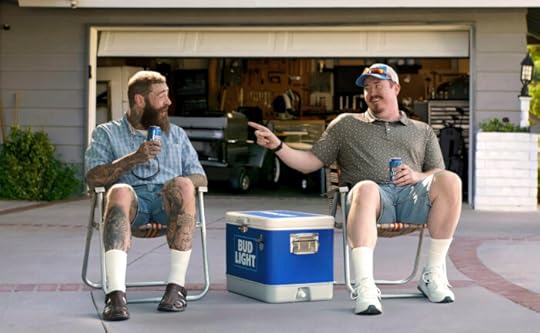
This ad finished in the middle of the pack but is a very solid effort from Bud Light. The suburban scene fits the moment and the concept that Bud Light brings the fun comes across. Branding is very strong throughout.
Budweiser
The great Clydesdale debate continues: do spots featuring these characters sell beer? This year AB InBev released a charming sixty-second spot ahead of the Super Bowl. For the Super Bowl, it trimmed it to a thirty-second spot and lost some of the impact. Still, it is hard not to like this advertising and think it helps the Budweiser brand.
Coors Light
There are a handful of Super Bowl ads that go down in history as famous examples of linkage trouble. Cat Herding and Terry Tate are two of them. Joining this esteemed group might be this year’s Coors Light spot that featured very entertaining sloths.
The problem? The sloths weren’t really linked to the brand. We still aren’t sure how the best way to cure the Mondays is with Coors Light. Though perhaps there is some advice about hair of the dog….
Him’s and Her’s
There is a high impact but complex spot. Start with the fact that we believe this company doesn’t have the patent to produce GLP-1 products; the company only is allowed to produce because Novo is having trouble keeping up with demand. And then this spot seems to violate a host of regulations on healthcare advertising. There are no side-effects, no discussion of risks, no fair balance. We wonder how this was approved.
Weaker Spots (D)
A few spots missed the mark this year.
Chat GPT
Many people were eager to see what Open AI would do with its first ever Super Bowl spot for Chat GPT. The result? A strange ad featuring dots turning into images. We suspect there was some remarkable story being told with the pictures, but our panel couldn’t see it and neither could we. Overall, this was a weak ad for positioning, linkage and amplification.
If they didn’t, perhaps they should have developed the ad with Chat GPT.
In a vivid example of how our approach at Kellogg differs from reviews that focus on purely artistic concerns, the New York Times reviewer declared this was the best spot of the year.
Squarespace
A big spot for Squarespace this year, but yet another disappointment. The town crier tosses computers with websites to people in the Irish village. We are once again left wondering: why is Squarespace a better place to build a website? We suspect there is general agreement that websites are good, so this commercial isn’t really news. Maybe next year.
Coffee mate and Tubi
These are two very different brands, but they share at least one thing in common: a Super Bowl ad with negative amplification.
The Coffee mate spot featured a long tongue that danced around in apparent joy from the Coffee Mate. The overall impact was disturbing, and it did not leave our audience excited about the brand.
The Tubi ad focused on a person born with a head shaped like a cowboy hat. We understand the point: people are born different and like different things, and Tubi has offerings for everyone. Unfortunately, the disfigured and disturbing head overwhelmed the message.
The post 2025 Super Bowl Ad Review appeared first on STRONGBRANDS.
February 6, 2025
Remarkable Super Bowl Ads 2014-2024 (Part 3)
Our review of remarkable Super Bowl ads continues! Here are the 2021 and 2022 picks. You can see 2014-2017 here and 2018-2020 here.
For more on the Kellogg Super Bowl Ad Review visit our website.
https://vimeo.com/1054207332?share=co...
The post Remarkable Super Bowl Ads 2014-2024 (Part 3) appeared first on STRONGBRANDS.
February 3, 2025
Remarkable Super Bowl Ads 2014-24 (Part 2)
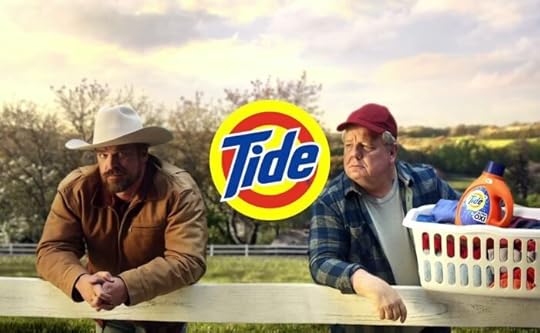
The biggest marketing event of the year - the Super Bowl - is just days away. My colleague Professor Derek Rucker and I are looking back at a decade of remarkable Super Bowl spots: 2014 to 2024. You can see our selections from 2014, 2015, 2016 and 2017 here. You can also visit the Vimeo site to see all the videos as they are released.
For more on the Kellogg Super Bowl Ad Review visit the site here.
https://vimeo.com/1053030678?share=co...
The post Remarkable Super Bowl Ads 2014-24 (Part 2) appeared first on STRONGBRANDS.
January 26, 2025
Remarkable Super Bowl Ads 2014-24 (Part 1)

The Super Bowl is the biggest marketing event of the year, and once again students at Northwestern University's Kellogg School of Management will be evaluating all the spots to sort our which ones are most effective and which ones miss the mark. This will be the 21st year of the Kellogg Super Bowl Advertising Review. You can see the prior ratings here.
Heading into the game, my colleague Professor Derek Rucker and I are looking back at a decade of Super Bowl advertising, and highlighting a few remarkable spots. Some are terrific, some are strange, some are interesting for other reasons.
In the three videos below, we discuss spots from 2014, 2015, 2016 and 2017.
https://vimeo.com/1050055404?share=copy
https://vimeo.com/1051543826?share=copy
https://vimeo.com/1052282463?share=co...
The post Remarkable Super Bowl Ads 2014-24 (Part 1) appeared first on STRONGBRANDS.
A Decade of Remarkable Super Bowl Ads 2014-2024
The Super Bowl is the biggest marketing event of the year, and once again students at Northwestern University's Kellogg School of Management will be evaluating all the spots to sort our which ones are most effective and which ones miss the mark. You can see the prior ratings here.
Heading into the game, my colleague Professor Derek Rucker and I are looking back at a decade of Super Bowl advertising, and highlighting a few remarkable spots. Some are terrific, some are strange, some are interesting for other reasons.
Starting off, here is a spot from 2014.
https://vimeo.com/1050055404?share=copy
The post A Decade of Remarkable Super Bowl Ads 2014-2024 appeared first on STRONGBRANDS.