Tim Calkins's Blog, page 10
March 28, 2022
A Branding Disaster at the Oscars
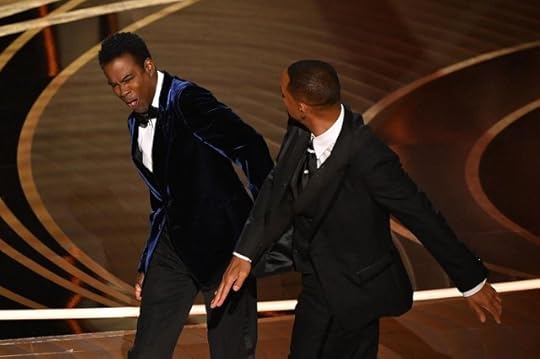
A disaster. That is perhaps the one word we can use to sum up the Academy Awards this year, an event most notable for Will Smith attacking Chris Rock.
The Branding ImpactThe Oscars were a disaster for Will Smith. At his time of great success, the moment when he should be celebrating and enjoying congratulations, he hits Chris Rock and completely transforms the night and the branding message. His violent outburst changes his brand, forever.
It was a disaster for Chris Rock. First, he gets brutally hit by Will Smith. Then people attack him for making an inappropriate joke about someone’s health condition.
It was a disaster for the Academy. The good news is that people are now talking about the Oscars, which is a refreshing change for the fading spectacle. It might result in stronger viewership in future years, reversing a stunning decline. The problem is that the story is about a violent interchange between two high profile actors.
It was a disaster for race relations. This was a conflict between two high-profile, well-established black actors. It occurred as violence is raging in cities across our country, especially black neighborhoods.
A LearningOne branding lesson is pretty clear: when you are in the spotlight, be particularly careful with what you do. Think first, act later. Don’t push the envelope. You build a brand and damage a brand most when everyone is watching.
The dynamic holds in a business context. When your brand is getting attention, be cautious and careful. On an individual level, when you are doing a big presentation, get it right. Don’t make flip jokes. Have back-up copies of everything.
What Now?The more complex question now is this: what should Chris, Will and the Academy do to address the brand damage?
Chris Rock should take the high road. He already did an amazing thing when he continued the show after the assault. He didn’t hit back. He didn’t stumble. He was a master. Chris Rock should say “I understand these things happen. It was an intense time. Will Smith is an amazing performer. I apologize if my joke touched on a personal health issue, and I will try to avoid this in the future.”
Will Smith has a far more difficult task. He apologized in his acceptance speech, which was a start. But his comments didn’t work. Saying “Love will make you do crazy things…” suggests that sometimes violence is appropriate. This is the wrong message. Then he apparently celebrated later at Oscar parties.
Smith should apologize to the Academy and to Rock. He should say that he will be getting counseling to deal with his anger issues. He should step back for six months or a year. He should be an example of humility and leadership. Perhaps something like “As a country, we have to do a better job managing violence. We have to learn that attacking people is never the right answer.”
He could use this to have a bigger impact. He could visit schools and talk to young people. He could work with anti-violence organizations. Perhaps he could make this a positive moment for his brand and for the country.
The easy move for the Academy would be to just say that it rejects violence in any form and then move on. Taking away Smith’s award won’t address the issue. But perhaps the Academy could also use this as a platform, launching a new initiative to reduce violence in Hollywood. The reality is that performers are influencers and violence should never be seen as an appropriate response to a situation.
If the players move quickly, there might be a positive end to the story.
The post A Branding Disaster at the Oscars appeared first on STRONGBRANDS.


March 16, 2022
The Transformation of Brand Russia

Brands are the associations linked to a name or symbol, and these connections are usually created over time. At first the Nike swoosh was just a swoosh, but today it has enormous meaning. Once created, brands are difficult to change. Brand repositioning, shifting the meaning of a name, is one of the great marketing challenges.
All of which makes the transformation of the Russia brand so shocking. In just a few days, the brand of Russia has completely changed.
Brand Russia in Recent YearsIn recent years, the brand of Russia has had a complex set of associations. There were traces of the old Soviet Union, combined with images of the Kremlin. Vladimir Putin, a former KGB agent, was a somewhat scary figure. Reports of Putin assassinating his critics were dark and hard to process. Russia was known for doping athletes and siding with unsavory characters like Bashar al-Assad in Syria. At the same time, Russia had a vibrant, opening economy. It was certainly not a global threat.
Russia wasn’t a perfect brand like Switzerland, Denmark or Japan, but it wasn’t a profoundly negative brand, either.
Brand Russia TodayNow everything has changed for brand Russia. The country is seen as an aggressive, evil player, bombing civilians, hospitals and schools. Russia is willing to disrupt the global economy and food production in a bid to further its imperialistic goals. It is a country that has eliminated free press. Putin is a calculating, distant and dangerous dictator.
In an interesting twist, efforts to draw a line between Putin and ordinary citizens seem to be falling flat. Putin, Russia, Russians…all threatening, evil players.
The impact is profound. Brands are racing to exit Russia. Some brands have tried to argue that remaining in the country was the ethical move, since the people of Russia need food and clothes. These arguments have generally missed the mark. Uniqlo, for example, tried to stay open in Russia but quickly backtracked in the face of opposition.
Countries that fail to condemn Russia, such as China and India, are suspect, too.
The implications are vast. Investments in Russia? No. Summer vacations to Russia? No. Sporting events with athletes from Russia? No. On a smaller scale - hiring someone from Russia?
The OutlookIt isn’t clear what happens next in Ukraine. Will Russia press forward with the invasion? Or will Russia settle with taking just part of the country? This would make sense, though nothing has made much sense so far.
What is clear is that the negative brand associations will remain in place. Brands only change when there is information that replaces the negative associations. A cease fire by the Russian army won’t get people thinking good things about Russia. Even a change in the government won’t result in positive associations.
These are generational perceptions.
The ImpactThe transformation of brand Russia will have a major impact in two ways.
First, Russia will be isolated globally. Brand Russia joins a select group of country brands like North Korea and Myanmar. These are not countries people visit, move to, or invest in. The Russian economy will continue; people have to eat and buy clothes. Imports will fall, however, and local brands will come to dominate the market. But Russian brands will not be globally competitive.
Second, Russia will have enormous influence in eastern Europe simply because the country is scary. When a nation is willing and able to attack another with tanks, flame-throwers and threats of nuclear bombs, it has to be taken seriously. Everything Russia says and does will be important.
Perhaps this was Putin’s goal all along: to transform the country from a smaller, opening market into a global power that people listen to and respect simply because of its capability for ghastly behavior.
The flaw in his logic was that it isn’t enough to have a brand that people know and respect; you have to have a brand that provides a benefit and attracts people.
Putin has turned Russia into a toxic global brand that people will flee and avoid. This isolation will result in a weak country that people still fear, a bit like an erratic person you might encounter on a subway platform. You notice them, fear them, and move away as quickly as possible.
The post The Transformation of Brand Russia appeared first on STRONGBRANDS.
March 2, 2022
Building a Strong Personal Brand
This week I’m giving a talk to Kellogg MBA students about building a strong personal brand during their summer internship. I’m looking forward to the session. Here are some of my main points.
Personal BrandingA lot of things need to come together to have a successful run at a company. You must have supportive managers and good opportunities, and then you have to do great work and capably lead teams.
The most important thing, however, is building a strong personal brand.
People who have a great reputation move ahead. They get the high-profile opportunities. When things go well, it reinforces the positive perceptions. When they make a mistake, people tend to ignore it or find excuses. “That supplier is always a problem” or “The pandemic caused that new product to fail.”
Those with questionable brands have a different experience. They don’t get the best opportunities. People are quick to check their work and find mistakes. When things don’t go well, they tend to take the blame. “I always had questions about Dave.”
It can be exceptionally difficult to shake these perceptions. Brand associations, whether for Nike, Patagonia or a person, tend to endure.
Six ThingsThe question for students, then, is simple: how do I create a positive brand? This week I’ll provide six pieces of advice.
1. Focus on the people first, the business second
The first task in a new role should be forming relationships with the team. If people feel that you care about them, they will probably like you. They will help you along. For an intern, this is essential for the simple reason that in a ten-week period you won’t know very much about the company. Everything you do will depend on the people around you.
Don’t show up with the idea that you know the answers. You don’t. The people around you do, so focus on them.
2. Get the numbers right
For a new person, it is critically important to be accurate on the numbers. If you make mistakes early on, you can quickly develop a reputation for not knowing the business or making mistakes. These negative brand perceptions are some of the most damaging.
So be careful with numbers. If you are going to say a number, or put a number in an email, be very certain that you know the number is accurate. What is it? Where did the number come from? Is that a reliable source?
3. Be enthusiastic
A positive, happy person is a great addition to any team. If your brand is associated with energy and positivity, it will be magnetic.
So, embrace positivity.
When someone asks how the summer is going, the correct answer is, “Amazing!” or “Fabulous! What a great business and team” or “Best summer ever!”
Nobody wants to hear that you aren’t getting much guidance or that it is absurdly hot in Dallas or that the company might be heading for disaster, even though it might all be true.
Just because something is true doesn’t mean you should say it.
4. Ask for help
People love to help, so ask. As an intern, you should be proactive on this.
The research in this area is fascinating. If someone gives you a tip or suggestion, it tends to be a bad experience. You feel bad and they feel bad. If you ask for help and then someone gives you a suggestion, you feel good, and they feel good.
5. Stay in your lane
As a summer intern, it is tempting to provide your opinion on lots of topics. You might notice something in a company presentation that you talked about in class, or you might have an idea for a new product.
In general, if it doesn’t involve your project, keep these thoughts to yourself. Remember, you are new and don’t know much about the company. Your opinions really don’t matter. More important, you will annoy people by jumping in with a perspective or view.
It is useful to remember that sage advice, “Talk less, smile more.”
6. Present well
Your presentation is your moment to shine, so get this right. At some companies you will have several opportunities to present. At other firms there might be just one.
It doesn’t matter the format. Presenting slides is pretty common, though more and more people are using written documents. The challenge is the same.
I’ve written a lot about presenting, so I won’t go into everything here. Just remember that the presentation is critical for shaping your brand. Find the story, create simple pages, check your numbers, pre-sell the entire thing, to everybody.
If it all works out, you’ll form a positive brand, and this will help you whether you go back to the company or not.
Don’t stress about it too much – remember that with an internship if it doesn’t work out you’ll have another chance to start again at your full-time employer.
The post Building a Strong Personal Brand appeared first on STRONGBRANDS.
February 16, 2022
Super Bowl Ad Review 2022 Results
The 2022 Super Bowl was one of the most watched television programs ever in the United States with estimated audience of over 100 million viewers. The football was exciting, and the advertising was just as engaging.
For the 18th year, a panel of Kellogg MBA students evaluated all the ads to identify which ones took full advantage of the opportunity and which ones might have settled for less effective work. This year’s panel featured over 60 students and was back in-person after a virtual event in 2021. You can see the 2021 results here.
Below are the rankings and our thoughts on the specific spots (for a full list click here).
Strong Spots: Grade AUber Eats
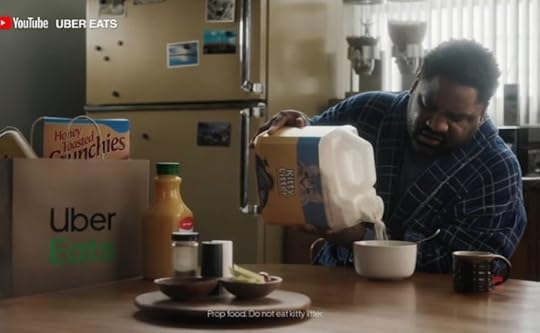
The top ad in the 2022 Super Bowl, according to the Kellogg panel, was the spot from Uber Eats. The ad featured people eating all sorts of unexpected items like cat litter and candles, confused because the items were delivered by Uber Eats.
The spot scored well because it attracted attention and had terrific branding and linkage. The message was clear and it was not easy to substitute another brand. You can easily imagine the creative brief behind this spot.
We were worried this ad could suffer from negative amplification, and the only thing people would remember would be the distasteful imagery. Apparently, that wasn’t a problem; the creative seemed to deftly thread that needle.
Cheetos/Doritos
Frito-Lay ran a spot for both Cheetos and Doritos. Including both brands was an efficient move.
The spot also worked! The ad dramatized Flamin’ Hot and was exceptionally strong: the message and branding were very clear.
One of the great things about this spot is that it completely revolved around the product; this really boosted linkage.
One of our favorite moments is near the end when the sloth scampers off with the chips.
BMW
This was a classic Super Bowl ad: big celebrities, big production, big idea. It was funny and charming. We particularly liked the teaser spot featuring the barista trying to pronounce Zeus and having lots of trouble.
The message comes through: BMW has an electric car, and it is the ultimate electric driving machine.
And, while the panel graded it an A, the spot is not without its concerns. There seem to be two important questions when it comes to electric vehicles. First, is an EV a realistic alternative to a traditional car? How long is the range? How about the charging time? Second, why is a BMW EV better than a Tesla?
This spot doesn’t address either question. It just communicates that BMW has an EV. Establishing category membership is a fine start, but BMW quickly needs to get to the differentiation question. As our review is only a snapshot in time, it will be interesting to see how the brand differentiates in other channels.
The Super Bowl spot from Google was elegant. The ad talked about the challenge of photographing people with darker skin and noted that the Google Pixel has new technology that addresses the problem.
The messages here: Google has great technology and is helping people of color. Instead of just saying that Google supports diversity, the company is taking action, and doing something about it.
Pixel is a small player in the world of smart phones, so Google is celebrating a technology that will have limited reach.
Still, we don’t think that matters; Google will get credit for addressing an important issue and might force Apple and Samsung to do the same. Moreover, when you think about the Google brand as approachable and inclusive, the ad certainly builds on this part of the brand’s personality.
Coinbase
The most unexpected spot on the Super Bowl was the ad from Coinbase that featured a QR code floating around the screen. That’s it. As one panel member observed, “sometimes times simplicity is the strongest way to get attention.”
The code led to a Coinbase landing page where new customers could get $15 for signing up.
This spot rose to the top of the Kellogg rankings because it was unexpected and different.
Coinbase deserves credit for recognizing that the QR code is firmly entrenched in society. Over the past two years, we’ve all learned what to do. If you see a QR code, you scan it.
The spot worked! More than twenty-million people visited, crashing the site. Of course, there are still a number of open questions. Will the website visits result in valuable customers? That remains to be seen.
Planters
When a spot revolves around your product, you are likely to get good linkage. That was certainly the case for Planters, with a spot that featured a debate around eating mixed nuts. Is it best to eat them one at a time or all together? The benefit came through without being clearly stated: these are terrific nuts.
Amazon Alexa
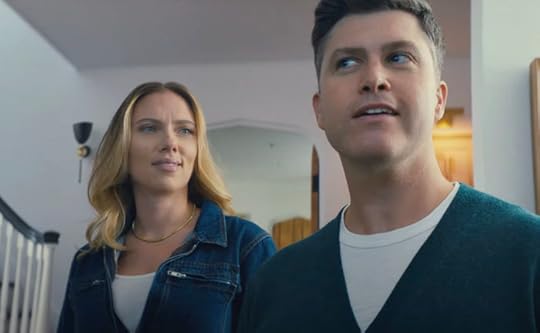
Amazon is perhaps the #1 Super Bowl advertiser over the past five years. The company has rolled out a series of strong spots, all based on the same basic concept: big celebrities interact with Alexa. This year’s spot featuring Scarlett Johansson and Michael Che continued the tradition. Branding and linkage were strong. The spot demonstrated Alexa’s functionality.
Some people worried that the concept of Alexa potentially reading your mind was a little too close to home. Still, overall, this spot continues Amazon’s remarkable streak of excellent Super Bowl ads.
Lay’s
In Lay’s Super Bowl ad, Seth Rogan and Paul Rudd look back over the years. Lay’s was part of every story.
Strong branding, good breakthrough and excellent linkage help this spot.
Strategically it is more debatable; we aren’t sure that saying a brand has been around a long time will drive sales.
Avocados from Mexico
How do you bring together a divided crowd? Bring out the food and the avocados! This spot positioned avocados as a delicious food that everyone likes. It is a natural at a party.
Perhaps in our fractured society we need more avocados.
The Low Scores: Grades D/FSalesforce
Where should we start on this spot? There are so many problems. We lost count of the missed opportunities with this ad, but here are some highlights:
First, the linkage it terrible. Pretty much any brand could show up at the end of this spot and it wouldn’t affect the delivery. That is never a good sign.
Second, the positioning just doesn’t come through at all. What is Salesforce, anyway? Why should we use it? What is the benefit?
Third, this spot feels like inside baseball; this is just Salesforce taking a shot at Meta. It seems like San Francisco technology executives attacking each other.
There were a couple cute rhymes in this ad but not much else to like.
Toyota
This spot is heartwarming, the story of the McKeever brothers. It is a tale of commitment and brothers and excellence.
The problem is the ad has no linkage to Toyota. Yes, Toyota salutes these brothers. But why does that mean we should buy a Toyota? We have no idea.
GM
One thing is clear from the GM spot: the company is willing to spend to build its EV business. Last year GM ran a big spot with Will Ferrell; this year the company is using Dr. Evil.
The spot certainly stood out; it was charming and funny and engaging. For fans of Dr. Evil, this was a nice continuation of the saga. However, in some ways that’s the problem: it was more about Dr. Evil than the brand. Indeed, the ad had weak branding and linkage.
GM and BMW (and Kia!) have the same problem. It isn’t enough the say you have an EV; you have to address the two big issues: convincing people that EVs are a viable alternative, and then convincing them that you have a better EV.
Other Notable SpotsGreenlight (B)
One of the funniest spots was from Greenlight Financial featuring Ty Burrell. He wanders through life buying one impractical thing after another, “I’ll take it!” He is then out of money. It is a fabulous piece of film.
The problem? Linkage, branding and positioning. Who is Greenlight? Why should we use it?
Irish Spring (B)
Anyone who likes brands has to be pulling for the revitalization of Irish Spring. This old brand has lost its way. The Super Bowl spot is part of an effort to give the brand some new life.
Does it work?
Yup. The branding is strong, it attracts attention, and the benefit comes across: a good smell. We are now excited to keep an eye on this brand.
Hellmann’s (B)
Unilever has received a lot of criticism for its support of brand purpose – the idea that a brand should stand for something beyond its purely functional purpose. Hellmann’s helps the world by reducing food waste.
Take that brand purpose, combine it with Terry Tate, Jerod Mayo and Hellmann’s and what do you get? A charming mess.
How does Hellmann’s help with food waste? It isn’t entirely clear.
Meta (B)
What is the metaverse? According to Meta’s Super Bowl spot, a place you can go when your real life is a depressing mess.
Down and out stuffed animals recreate their prior and more joyful life on the metaverse.
Really?
Budweiser (C)
It was great to see the Clydesdales back on the Super Bowl, and the message of resilience was an inspiration, connecting to the rebounding country.
The spot didn’t work quite as well as some of the classic Budweiser spots; the emotions didn’t develop in our audience. The longer cut of the ad was much stronger; it takes time to develop a story.
Will it sell more beer? Will we be seeing a return of the Clydesdales? Will Budweiser reclaim its place atop Super Bowl greatness in the year to come? We are left with more questions than answers.
FTX (B)
In a charming spot, FTX showed Larry David missing out on one great technology after the next: the wheel, the toilet, democracy. When he dismisses crypto currency, the implication is that once again he is getting it wrong. The ad closes with “Don’t be like Larry. Don’t miss out on the next big thing.”
Buried in the spot, and lasting about one second, is the only notable line about FTX: “It’s a safe and easy way to get into crypto.”
The ad doesn’t cover the important questions. Why invest in crypto? Why is FTX a good place to invest?
Carvana (B)
This is a fun, simple ad featuring a lady who just can’t stop talking about her car buying experience on Carvana.
It is a solid spot: the entire commercial is a celebration of the joys of using Carvana.
The challenge with a spot like this is making it interesting enough that people will watch it. The creative situations work.
Vroom (C)
In a big Super Bowl spot, Vroom takes us through the highs and lows of selling a car on your own. Apparently, it isn’t so easy.
Vroom is a simple solution. The company will buy your car and show up to take it away.
This is a pretty good spot. The C grade is likely because the focus of the spot is on the woman's story, not the Vroom solution.
eToro (C)
Sometimes we come across an advertisement that leaves us simply lost. The eToro spot falls into this camp. It starts off well enough: “Crypto? Stocks? Where to start?” This established the frame of reference: we are in the world of investment.
Then? People fly around and we get “The Power of Social Investing.”
Hmmm.
What is eToro? What is social investing? Would that be subscribing to a dating app? Buying Meta stock? An investment club?
Hologic (C)
One of the most insightful and beautiful spots was from Hologic. The ad featured Mary J. Blige and cut between her active, vibrant life and healthcare. It taps into an insight: there is life, and there is healthcare. These are two different things, and we all navigate that strange balance, ideally seeing as little of the medical side as possible.
The problem here is that Hologic didn’t explain what it is (a new pharmaceutical company focused on women’s health), or why we should care about it.
Chevy Silverado (C)
Fans of the Sopranos might have liked the Silverado spot. We did not. Most of it was someone driving through a city: no linkage, no branding.
And once again, the strategic questions go unanswered. Is it time to get an electric vehicle? Why is the Silverado better than other ones?
Overall, it was a year with strong advertising. Advertisers are being careful with the spots; there were few risky spots, and no disasters. This all makes sense given the huge investment and intense scrutiny.
By Tim Calkins and Derek Rucker
The post Super Bowl Ad Review 2022 Results appeared first on STRONGBRANDS.
February 14, 2022
February 9, 2022
The Kellogg Super Bowl Ad Review Returns
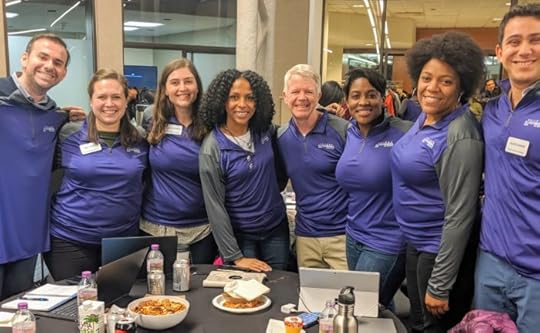
The Super Bowl is just days away, and once again a panel of Kellogg students will be evaluating all the spots in the Kellogg Super Bowl Advertising Review. This is the 18th year of the event. I'll be teaming up with my colleague Professor Derek Rucker again this year.
The StartWe started this event in 2005 with a small panel. The goal was simple: to give students experience evaluating advertising by studying all the Super Bowl ads.
We didn’t know what to expect the first year. Would the student scores prove to be on track? Would we get any PR coverage? That wasn’t and isn’t the main point, but we wondered about it.
The event was a success from the start. It was terrific experiential learning, the panel’s analysis was excellent and we all had great fun.
The Event TodayOver the years the Kellogg ad review has changed and grown.
It is bigger. Our student panel is up to about 70 students. We have a bigger space and better food.The technology is different. We started the event using paper scoring slips. It was a blur of paper as we distributed and gathered hundreds of pieces of paper over the course of the evening. The tabulation challenge was considerable. Today we use a phone-based system to quickly capture all the scores.We’ve added events. The program has grown from an evening evaluating Super Bowl ads to two-week series of different events. There is a student pre-game program and a Northwestern alumni program. After the Super Bowl Derek and I will be hosting a webinar and LinkedIn live discussion (more on those below). We are doing programs for the Kellogg Alumni Club, the Harvard Alumni Club, and other organizations.Our participants are now making the ads. Kellogg produces some of the top marketing leaders in the world, so it was just a matter of time until students who were on the panel assumed leadership roles where they are responsible for the creative.Ultimately, that is the goal: we train and inspire marketing leaders, and they go on to have an impact in the world.
Super Bowl 51This will be a remarkable year for advertising on the Super Bowl. It will be the biggest year ever.
This will be the year for Crypto and EVs. There will be a host of new crypto advertisers. The EV advertisers will be familiar names, with a common message: the companies are now completely focused on winning in the EV space.
Travel is back! With the pandemic (hopefully!) winding down, travel firms like Turkish Airlines and Booking.com are advertising. This seems like a smart idea: my sense is people are ready to hit the road this summer.
Look for the big technology firms to return this year with huge spending. Amazon will once again run a big budget and highly entertaining spot. Google and Meta will be advertising as well. Look for Google to once again try to tap into emotions.
Familiar characters will be back! The Super Bowl will feature E Trade Baby, Terry Tate and the Clydesdales.
Here are a few things to watch for as you watch the game:
Pandemic: How do advertisers address the pandemic? Will there be any reference to it at all?Politics: There is no shortage of opportunity here for some highly entertaining spots but I suspect advertisers will stay far away from divisive political topics.Tik Tok and NFTs: How do advertisers take advantage of these emerging platforms?It promises to be a big game. Read on to see how you can be part of the review.
Join the ActionThere are three ways to be part of the Kellogg Ad Review and hear what the panel thought of the spots.
- Social Media: Post your thoughts on Twitter and LinkedIn! Use #KelloggBowl. I'll be tweeting throughout the game, as well as before and after.
- Webinar: Derek Rucker and I will be reviewing the results at a webinar on Wednesday, February 16 from 12 - 1 CST. You can sign up for this free event here.
- LinkedIn Live: On Monday, February 14, we will be live on LinkedIn at 12:30 CST. Visit the Northwestern University - Kellogg School LinkedIn site to watch it.
As always, you can see my post and comment here on the blog.
The post The Kellogg Super Bowl Ad Review Returns appeared first on STRONGBRANDS.
February 2, 2022
Learning from the 2022 Healthcare Case Competition
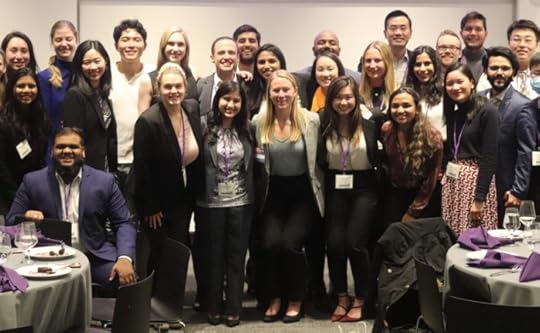
Last weekend we hosted the 19th annual Kellogg Biotech and Healthcare Case Competition, sponsored by Moderna. It was a terrific event. More than sixty teams applied and eleven gathered in Evanston for the final round. It was an in-person competition, complete with masks and vaccination cards and tests. It would have been easy to take the event to Zoom, but we decided to go in-person and I think everyone involved was happy with the decision.
I was struck by a few things.
Products Need to Provide Compelling BenefitsPerhaps the most important marketing insight is simple: products need to offer compelling benefits to customers. Most important, the benefits have to out-weigh the costs. These costs might include price, inconvenience, and pain.
In the case competition this year, teams had to analyze the launch of two cholesterol lowering medications: Repatha and Praluent. Both products are remarkably effective at lowering cholesterol levels with the potential to save many lives. However, they have received little use.
Why?
The benefits just aren’t compelling for most people. High cholesterol is asymptomatic, and the risk of a heart attack is not an immediate problem for most people. For patients, lowering cholesterol is good, but not essential. The same applies to many physicians when it comes to their patients. It is an important thing to do but it isn’t critically urgent.
Repatha and Praluent require injections every two weeks. This is inconvenient and painful. The products came out at a high price, so payers created barriers to access making it difficult and expensive for patients to get the drugs.
It isn’t really complicated: products sell when the benefits are larger than the costs.
I know one of the few people who takes Repatha, mainly because they have poor circulation and are worried about losing a limb. Lowering cholesterol levels might help circulation. Reducing the chance of losing a foot, or leg, is a compelling benefit.
Presenting TipsTeams presented to a panel of judges. Several things struck me as I saw the presentations.
The Start
You always want to ease into a presentation, so the first few slides should be an agenda and an executive summary. If you get right into the heart of a presentation, your audience is likely to be confused and disoriented. Where are we going, anyway? Why does this information matter?
Some teams did this exceptionally well. Others stumbled by skipping the early pages.
Placement
Many teams presented with everyone lined up across the front of the room. This is just not the best approach.
When giving a presentation, you want your audience to focus on your presenter. That person should be the center of the action. Everyone else should be off to the side. When shifting to the next person, one person walks off and the other walks in.
People who aren’t presenting contribute nothing when standing in front of the room. In many cases, they detract, because they look awkward or bored. If nothing else, the audience might admire their shoes or watch. This is just a distraction.
Zoom
Zoom works! The winning team from Wharton had several people presenting remotely. This hybrid approach worked – the team elegantly pivoted from the in-room presenter to the Zoom presenter and back.
The Zoom presenters did a particularly good job, looking right at the camera and projecting energy.
While the presentation was effective, I suspect the people who didn’t make it to the event had a much less impactful and memorable experience.
Networking vs Purposeful InteractionI’ve always found networking to be difficult. You meet someone, learn something about them, and that is it. The relationship doesn’t usually lead anywhere significant.
Purposeful interaction – working with someone on a project – is very different. When you are on a team, there is a reason for you to be together. You share insights and learning. You have a common experience.
I suspect the participants in the competition got to know their peers very well, and formed relationships that will last a long time. The judges, too, worked together in a common task.
When expanding your network, don’t worry about networking. Instead, look for opportunities to work with other people.
The post Learning from the 2022 Healthcare Case Competition appeared first on STRONGBRANDS.
January 26, 2022
The Biggest Super Bowl Ever
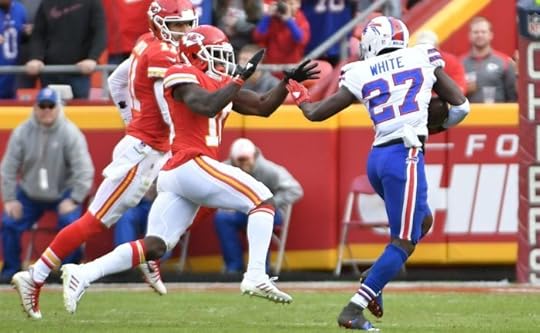
We are two and a half weeks from the Super Bowl, so it is time to focus on the big event.
The Super Bowl is without question the #1 advertising platform in the United States. One could make the case that it is the most important marketing event in the world.
The game is important for several reasons. First, the audience is enormous. Viewership has bounced around in recent years, but it is almost always in the neighborhood of 100 million people. This is remarkable - there are only 330 million people in the country.
Second, people focus on the advertising. Most people watching the Super Bowl don't care about the particular teams that are playing. Many viewers don't care about football at all. For these people, the Super Bowl is simply the thing to do on a cold winter's evening; nothing else happens on Super Bowl Sunday. For these viewers, the draws are the party and the advertising. For marketers, this is a unique opportunity. People are very good at avoiding advertising. Getting people to sit around waiting to watch the commercials is an astonishing thing.
Third, the Super Bowl is early in the year. Most companies embrace a calendar fiscal year, and this makes February a perfect time for a big marketing push: Budgets are full and there are ten months ahead to bring in the sales. If you want to start the year strong, a Super Bowl ad is a good option.
More Important Than EverThe Super Bowl has become more important over the years. I've been leading the Kellogg Super Bowl Advertising Review for almost twenty years. When the event started, Super Bowl spots were important but many people thought the Super Bowl would lose its appeal over time.
The opposite has happened: the Super Bowl has taken on a far greater significance for marketers over the decades. There is a simple reason for this: the alternatives have collapsed.
If you want to reach a lot of people in the United States, what can you do? Network television? No, network television has crumpled as people rely on streaming. Radio? Magazines? Newspapers? You don't have to be a media expert to know those have all faded away. Social media? This has become super important for marketers but it doesn't work well for broad reach.
Big events are a draw, but many of these have faded. The Oscars, for example, used to attract an audience of more than 40 million viewers. In 2021, the audience was down to only about 9 million.
The Super Bowl is the only game in town.
The 2022 OutlookThis year's game will be the biggest advertising event in the history of Super Bowls, with ad time costing $6.5 million for a thirty-second spot. Demand is huge; the ad space was largely sold months ago. The demand is up versus 2021 and the prices are, too. Ads last year were about $5.5 million.
This is a function of the enduring appeal of the Super Bowl, combined with a booming economy and some major new innovations. Crypto investing, on-line betting, electric vehicles - these are all huge new markets and companies are scrambling to secure a piece. A Super Bowl ad can be a key part of the plan.
Look for this year's game to feature the usual mix of traditional big names and new upstarts, some entertaining and safe creative, and no mention of the virus, masks and quarantines. It should be fun to watch.
The post The Biggest Super Bowl Ever appeared first on STRONGBRANDS.
January 12, 2022
2022 Brands to Watch
Welcome to 2022! Every year I highlight a few brands to watch, brands that are heading into a particularly interesting year. This year I have five selections.
The OlympicsRarely has there been a more interesting time for the Olympics. The big question: can the Olympics separate the event from the host country?
The Olympic brand remains strong, with high global awareness and positive associations. The idea of celebrating athletic achievement unites the world, and the Olympic brand strengthens with each athlete’s struggle and success.
China is a very different story. Every day, the brand of China becomes more polarizing as the country cracks down on dissent, tracks its citizens and sends ethnic groups to work camps. China’s drive to eliminate democracy in Hong Kong has received global attention.
This will play out most clearly with sponsors. How will these brands support the Olympics without supporting (or criticizing) China? Can brands saluting freedom and democracy look away from China’s policies? I anticipate advertisers will work very hard to honor the athletes without commenting at all on the host country.
PelotonA pandemic darling, Peloton has taken an astonishing fall. The stock price peaked at over $160 per share and now is trading at $37, down a stunning 77%.
The brand seems to be in disarray. In the fall, Peloton stated that it didn’t need additional capital, and a few days later announced that it needed more money. The company agreed to a Sex and the City product placement but didn’t ask about the scenario. Then the brand scrambled to create a response ad, only to pull the spot days later.
Everything suggests things are not well at Peloton. Can the brand settle down and stay focused on the core proposition? Or will Peloton flail, pursuing crazy dreams of continued exponential growth? At what point will the rock star instructors start to leave? When the stock was soaring, there was a compelling reason for them to stick around. As growth slows and the stock languishes, moving on starts to seem more interesting.
I suspect Peloton will rebound, but only if the brand keeps the focus on the core proposition: remarkable fitness programs.
White ClawVery few people thought White Claw would be the next big thing in the world of alcoholic beverages. In hindsight, it seems obvious, of course. That is how things so often go.
But what happens now in this space? Will White Claw maintain its strong position? Or will competitors steal share?
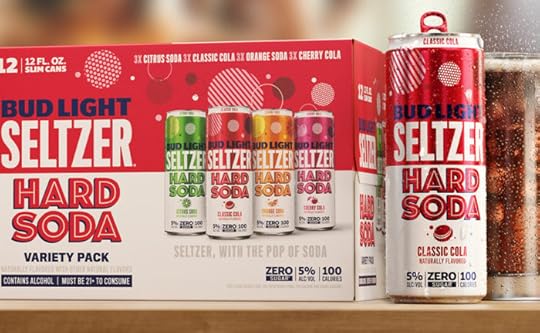
The world of beverages is quickly crashing together. There used to be a clear line between water/soda and bear/wine/spirits. Coke and Pepsi produced soft drinks. Diageo and AB InBev made alcoholic beverage. Hard seltzer crashed right into that line and destroyed it. So now we have a wild mix of products coming out. Pepsi is crossing the line with hard Mountain Dew, and AB InBev is launching Bud Light hard soda.
I suspect this frenzy of new products and innovation will benefit the big players. Scale matters. Look for difficult times for White Claw and a rebound for the big players like AB InBev this year.
Donald TrumpI find it hard to believe that Donald Trump is once again a brand to watch, but he is. Out of office, cut off from social media, largely confined to his Florida compound, Trump remains the most important figure in the Republican party and one of the most significant political players in the country.
The big question: will Trump run in 2024? If his health holds up, I suspect he will. Trump has a loyal, enthusiastic base of supporters. He has managed to retain control of the Republican party and forced dozens of smart people to conclude that their optimal move is to support the election fraud story. He has a vast email list (over 50 million) and the ability to raise huge funds (perhaps $100 million in 2021).
Look for Trump to proclaim victory in November as the Republicans gain the edge in both houses and use that to start a new campaign for the presidency.
RivianThe electronic vehicle market continues to grow. Tesla has been a shining brand success story and remains a stock market favorite. A more questionable brand is Rivian, the start-up company making electric trucks.
The big question in electric vehicles is when will the big players finally regain the momentum: GM, Ford, Toyota, VW?
There is no question the big brands are coming. Under CEO Mary Barra, GM is pivoting the entire company to electric. Ford is launching some hot new electric vehicles.
Tesla seems to have reached critical mass. What happens to Rivian?
I suspect 2022 is the year that the big brands will dominate. Expect Rivian to struggle and potentially be acquired (perhaps by Ford?) as its stock slumps.
Best wishes for a healthy and dynamic 2022!
The post 2022 Brands to Watch appeared first on STRONGBRANDS.