Alicia McKay's Blog, page 10
March 8, 2022
Wednesday Wisdom: Scary questions
Welcome to another Wednesday Wisdom. Every week, I share with you what I'm thinking about life, work, and leadership. This week we're talking about asking scary questions.
Man, you're busy.
Meetings to go to, emails that need a response, all the little tasks that need ticking off the list.
Did you remember to ring that person back?
Have you finished that report?
Are you ready for next week's thing?
We bemoan the busy-ness, despairing at the pace and volume of work in front of us. But here's a controversial idea:
What if you secretly want to be busy?
In fact, what if you actually need it?
Sometimes we avoid boredom, so we don't have the space to stop and face niggly questions like...
“Is this all bullshit?"
"Do I actually care about this?"
"Do I like this job?"
"Am I happy in this relationship?"
"Does my life bring me real joy?"
Those are scary questions, and many of us will go to great lengths to shirk them. The bad news is: not asking the scary questions doesn't make them go away. They simmer inside of us and lead to poor decisions.
We eat them away. Work them away. Smoke them away. Drink them away. Show up poorly at work. Snap at our kids. Withdraw from our friends and partners.
Here's an idea: next time you get the twinge, pay attention to it. Stop for a minute, and think - instead of filling the hole with emails and Tim Tams.
Have you got any scary questions you need to answer?
Til next week,
A


Wednesday Wisdom: Scary questions (Copy)
Welcome to another Wednesday Wisdom. Every week, I share with you what I'm thinking about life, work, and leadership. This week we're talking about asking scary questions.
Man, you're busy.
Meetings to go to, emails that need a response, all the little tasks that need ticking off the list.
Did you remember to ring that person back?
Have you finished that report?
Are you ready for next week's thing?
We bemoan the busy-ness, despairing at the pace and volume of work in front of us. But here's a controversial idea:
What if you secretly want to be busy?
In fact, what if you actually need it?
Sometimes we avoid boredom, so we don't have the space to stop and face niggly questions like...
“Is this all bullshit?"
"Do I actually care about this?"
"Do I like this job?"
"Am I happy in this relationship?"
"Does my life bring me real joy?"
Those are scary questions, and many of us will go to great lengths to shirk them. The bad news is: not asking the scary questions doesn't make them go away. They simmer inside of us and lead to poor decisions.
We eat them away. Work them away. Smoke them away. Drink them away. Show up poorly at work. Snap at our kids. Withdraw from our friends and partners.
Here's an idea: next time you get the twinge, pay attention to it. Stop for a minute, and think - instead of filling the hole with emails and Tim Tams.
Have you got any scary questions you need to answer?
Til next week,
A
March 1, 2022
Wednesday Wisdom: Be a strategist
Welcome to another Wednesday Wisdom, Nikki. Every week, I share with you what I'm thinking about life, work, and leadership. This week we're talking about being a strategist.
First things first, before we kick into this week's chat... I'M LAUNCHING A SHOW!
It's like a TV show, but better, because it's not on TV. For the pilot, you can watch it LIVE on LinkedIn, Youtube and Facebook. It's called The Alicia McKay Show, because that's my name and I'm not very imaginative. I'd love you to be there, Nikki! So join us on Friday at 8am.
With that out of the way, I've been thinking again about how to answer the dreaded BBQ question - you know the one: "So, what do you do for work?"
Ugh.
Even after all these years, I'm terrible at answering. "Ah, I'm like an author, um, speaker, sort of a consultant, but not really, um..."
Does anyone else hate answering that question? I'm still working out how much detail to provide, and always get it slightly wrong.
Not here though. Here, you know what I mean when I say: I'm a strategist. *puffs up chest proudly*
But here's the thing: that doesn't make me special at all. You're all strategists too. In fact, everyone is - it's our defining characteristic. Our ability to join dots and plan for the future is what makes us human.
Spoiler alert: strategy is simple
I'm determined to change the narrative around strategy. It doesn't need to be some complicated, jargon-infused world dominated by old white American dudes. You don't need blue oceans, five forces, long documents or multi-grid canvases.
But strategy's not much good without strategists. So, I reckon there's three key things you can do to more fully embrace your strategist identity (and none of them require you to have a strategy MBA.)
Ask better questions
Play the long game
Have more ideas.
1. Ask better questions
When in doubt, zoom out. Strategists are annoyingly curious and ask lots of questions that come from a wider perspective. How do things fit together? How does this thing affect that thing? Is this the same or different than the thing we did last year? Why are we doing it like this? Do we need to do this at all? etc.
(Careful, this one will really annoy people who just want to get on and uphold the status quo.)
2. Play the long game
Strategists think about how today's choices make tomorrow's reality. Rather than wondering what's going to look good, or feel good in the short-term, strategists play a longer game.
They know what their values are, what kind of life they want, and they use that as their lens... even when it means suffering or looking stupid now.
By thinking more carefully about how small choices fit into the big picture, and allocating time, energy and resources to the things that will make the most difference, strategists have an edge that most people are envious of. That can be you.
3. Have more ideas
Most people have one or two good ideas, and then settle on their decision. Strategists pull the edges of their thinking a bit further.
Masters of a simulation, strategists push a bit harder and ask: what else could we do? What haven't we thought about? What if we did the opposite? What if we had twice as much time and half as much money? Half as much time and twice as much money? What's the worst idea we can think of? And so on.
You'd be surprised at the goodness that comes out when you dig a bit deeper. Try to come up with 10 different options for every challenge, even when they seem ridiculous.
Live your best strategist life.
Well, I guess that secret's out. We're all strategists, my corner of the market has now been decimated, and I'll have to come up with something else to do. Good thing I just started a new show.
Did I mention the Alicia McKay Show?
You should watch it live. On Friday. At 8am.
On LinkedIn, YouTube or Facebook.
Til next week,
(or, y'know, Friday.)
- A
Strategy 101Sign up to the strategy 101 course for FREE on the Alicia McKay Academy
February 26, 2022
Mojo, mojo, wherefore art thou mojo?
Sometimes it happens quickly. You wake up one morning, and you… can’t.
More often, it happens slowly. Insidiously. It creeps gently and before you know it, you just. don’t. give a f**k.
It’s in your head. You’re tired. You’re snappy. The hint of a headache always lingering, threatening to take hold. The things that excite you failing to stir you. Hobbies, sports, places to be. What was brimming with joy overflows with pointlessness. Too hard. Not worth it.
It’s in your body, too. Your limbs feel heavier. Your body doesn’t fit right. You blame your clothes - they’re too big, too small, too wrong. Either way, it doesn’t feel like you living inside you anymore. There’s an invader. A blob. It doesn’t want you to move. It isn’t comfortable. It’s fidgety, but flat. Frustrated, but static.
Your instinct is blame, isn’t it? It must be your spouse. Your kids. Your job. Your house. Your friends. They’re wrong. Why can’t they see how wrong they are? They were right, before. You chose them. OLD you chose them. But now, they’re a problem. Annoyance, obligation, resentment. Something needs to change. It’s probably you, but it doesn’t feel like it, not at the start.
In the beginning, you shake it off. Mild morning malaise, conquered by movement. A quick cup of coffee and you’re on your way. Evening ennui, soothed by inertia. A quick glass of wine and you’re off to bed. An unsatisfying sleep, and you’re at it again.
The mornings pass. The afternoons stretch, and it gets harder to kick. Intermittent frustration gives way to chronic cynicism. Temporary withdrawal gives way to chronic absence.
Why get up? Why clean, when it will only get dirty again? Why type, when the reports go nowhere? Why respond, when every email spawns another three? Why pick up the call? You’ve got nothing to say. Nothing to share. Nothing to contribute.
Modern living is designed to keep you listless. Advanced algorithms, all poised to profit from your petulance. Scroll. Click. Auto-play. The courier’s here. You forget what you ordered. Checkout was fast, but satisfaction is futile.
Tap the remote. Are you still watching? Refresh, review, repeat.
Comms replace connection. Memes replace meaning. Chats replace camaraderie. Views replace visits. Posts replace people. Games replace joy. Netflix replaces novelty. Zooms replace zing. Tiktoks replace talking. Facebook replaces friends. Instagram replaces information.
Counterfeit connection - it’s hollow, but it’s easy. Virtual engagement - it’s lonely, but it’s there.
You know this isn’t you. You know you aren’t designed for this. You know this isn’t what you want. Sure, you could stay here. You could sit down. Put your comfortable pants on. Kick your shoes off. Settle in. Settle down. Settle.
This isn’t you. You aren’t designed for this. This isn’t what you want. The gnawing will only get stronger. The whisper will only get louder. The cramp in your hand will only become more insistent, as your tiny screen morphs into a blur of desperate cries for attention and love. The algorithm isn’t the answer.
Put the phone down.
Shut your laptop.
Give your recalcitrance a chance to morph into rage. Give your ambivalence a chance to switch into action. Allow your fear to become fury. Your exhaustion to become interest. Push back against your passivity.
The otherness you feel isn’t real. You are not an outsider. You are not on the fringe. The content you’re consuming is counterfeit. They aren’t happy either. They’re scrolling, too.
You care. You matter. You have too much to offer to reside in reluctance any longer.
Get up. Go out. Give.
Talk to a stranger about the book you’re reading. Call a friend you’d usually text. Run. Go to a class. Make something new. Write a furious blog post. Remember your dreams. Write them down. Draw a picture. Shout. Jump. Stand up. Do something.
The world is waiting for you.
Mojo… engage.
February 22, 2022
Wednesday Wonder: Real talk
Welcome to Wednesday Wonder, Nikki. This week, we're continuing our LIVE collaboration experiment. We're talking about how to be real this week.Read more below! (Or go straight to this week's question here)
I'm a big fan of being real. Sometimes it gets me into social trouble, but I'd rather be authentic than polite. At a group lunch on Sunday, the following exchange took place for the whole table to hear:
Person A: "How are you going?"
Pause.
Person B: "Honestly? My nerves are shot and I'm on the cusp of a breakdown 3 days out of 5. What about you?"
Pause.
*Rush of breath and relief.*
Person A: Oh man, really? That sucks. I feel you. I'm battling too. My husband's dad has cancer and the baby doesn't sleep. I'm losing my sh*t."
Gulp.
The vibe instantly shifted at the table...
for the better.
It was like a pressure valve had been let off.
We all relaxed, as the event shifted from polite lunch, to actual friendship connection - and the body language, breathing patterns and grins on people's faces showed that immediately.
If there's one thing your responses were to last week's Wednesday Wonder... they were genuine, honest and real. It got me thinking - what makes it hard for us to do that consistently at work? And what would change if we could do it better?
Last week I asked you how you know it's time to change something in your life - what the signs are, and how you know whether to act on those signals. The theme was overwhelmingly consistent - it was all about energy, motivation and frustration. Heaps of you suffer physically, experiencing disrupted sleep, gut and poor wellbeing when things aren't right.
Then I asked how you knew whether to act on those signals or not. Here's what you said:
1. It doesn't go away
"Recurrence, frustration, more than one function or team or sector of business is negatively impacted e.g. momentum is waning or lost"
"If the feeling is always there, no matter the external circumstances (no matter the weather, the people I'm with, the work that is being done).."
"If that sense of not learning and growing is still there after a reasonable length of time - sometimes that's a couple of months, sometimes that could be as long as a year. When I know it's not just a blip."
2. You've talked it through.
"I like to give it pondering time and then air-time (talk about it with loving critics - trusted friends who are straight shooters) and usually then feel strongly about a path forward."
"Talk to colleagues and friends, gather thoughts opinions and other perspectives."
3. You've taken space to reflect
"Give it a bit of time - is it me, or is it the situation? Weigh up what is the worst case scenario and test my own comfort with that outcome."
"Typically I have to stop and assess what is really going on. Is it the thing I am working on, or something else influencing me at a deeper level? I also ask if it is something I can control now, or something that I should make sure I don't repeat in the future."
"I explore the factors that are troubling me, practice my mindfulness, and try to determine whether my stressors or real or perceived."
4. You just... feel it.
"When the gnawing in your gut gets too much and you want it to go away."
"Internal sanity check. Listen to myself. I'll know."
"I feel in my gut a deep seated urge to act- like it's self preservation."
You can read all of the responses by clicking here.
Now, onto the last of our first Wonder series! I'd love to know how "real" you feel you can be at work... time to share your thoughts!
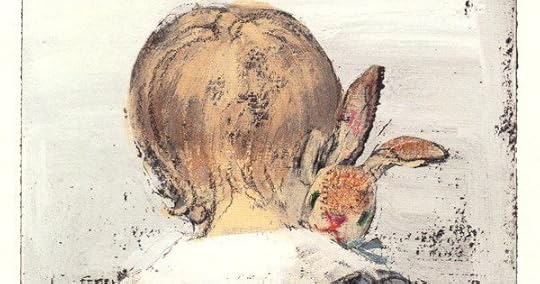
“Real isn't how you are made,' said the Skin Horse. 'It's a thing that happens to you. When a child loves you for a long, long time, not just to play with, but REALLY loves you, then you become Real.'
'Does it hurt?' asked the Rabbit.
'Sometimes,' said the Skin Horse, for he was always truthful. 'When you are Real you don't mind being hurt.'
'Does it happen all at once, like being wound up,' he asked, 'or bit by bit?'
'It doesn't happen all at once,' said the Skin Horse. 'You become. It takes a long time. That's why it doesn't happen often to people who break easily, or have sharp edges, or who have to be carefully kept.
Generally, by the time you are Real, most of your hair has been loved off, and your eyes drop out and you get loose in the joints and very shabby. But these things don't matter at all, because once you are Real you can't be ugly, except to people who don't understand.”
― Margery Williams Bianco, The Velveteen Rabbit
February 15, 2022
Wednesday Wonder: Finding meaning
Welcome to Wednesday Wonder. For the next few weeks, we're continuing our LIVE collaboration experiment. Read more below!
Last week I admitted to losing my mojo at work. In a fun new experiment, I crowd-sourced your wisdom on meaning at work and WOW, you delivered! We received 469 incredibly helpful and insightful ideas about meaning and purpose at work.
Take a look...
Here's all your responses in a cloud!
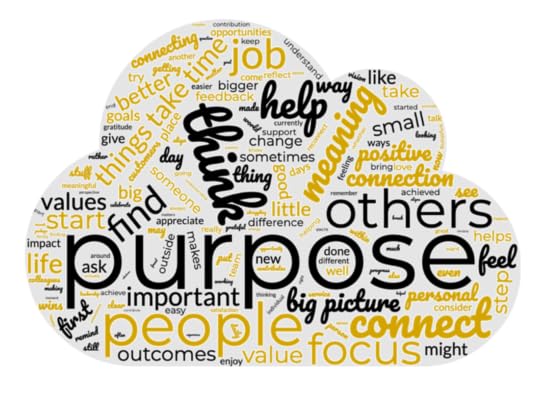 We asked how important a sense of meaning was in your work, and the results were an average rating of 9.0/10. Woh.
Then I asked how to rediscover meaning, when it's lost. There were heaps of incredible answers and suggestions - and most of them centred around three key areas:
1. Shifting perspective
"Look at the big picture. Your work will be helping somebody indirectly which is so cool!"
"I think zooming out and zooming back in. Checking out the big picture of how your work fits into the grand scheme of things, and then maybe digging around in nooks and crannies to consider the tiny little ways you contribute and make a difference."
"Shift your focus - go big or go small. It's easy to get stuck on aspects of our work such as endless emails, meetings, same routine day after day. "Meaning can be found by focusing at a different level, for example the one on one interactions you have with others that can make a difference in their lives (going small) or the ultimate good that results from your contribution to a bigger whole (going big). Play around with different perspectives until you find even a glimmer of meaning or purpose and focus on that. What you focus on will expand."
2. Focusing on how you help others
"Remembering how their work impacts the lives of others, no matter how small."
"Talk to others you work with or provide a service/product to. They may appreciate your work more than you do!"
"Flip that question on its head, a realisation that your contribution, no matter how small makes other wheels go around. Also it’s about humility and a strong belief in ‘service to others’. Believe in your team or community and strive to serve. Don’t look to be recognised, it will come when the people say, “we did it ourselves”
3. Connecting with your personal vision and values
"In my experience when this has happened it is generally because I have gotten caught up in stress or too much mental activity and am operating from my head rather than my heart - I have lost my connection with myself. So in the first instance I recommend taking steps to reconnect with yourself first."
"Undertake a values exercise, it forces you to consider aspects of yourself you don't often notice, pay attention to, or are aware needs nourishment. This helps you focus when it really matters for you."
"Find a cause you can PERSONALLY support by your work. Create a personal vision and mission bigger than the company, bigger than the self."
You can read all 469 responses by clicking here.
CHANGE SIGNALSThis week, I've been thinking about the warning signals that something needs to change. It stems from some work I'm doing around change and ambiguity.
It's a work in progress, but here's an early model that sums it up. It's similar to a Cynefin framework, providing a guide about the criteria we should use to make decisions, based on what's going on around us, and how important our decision is.
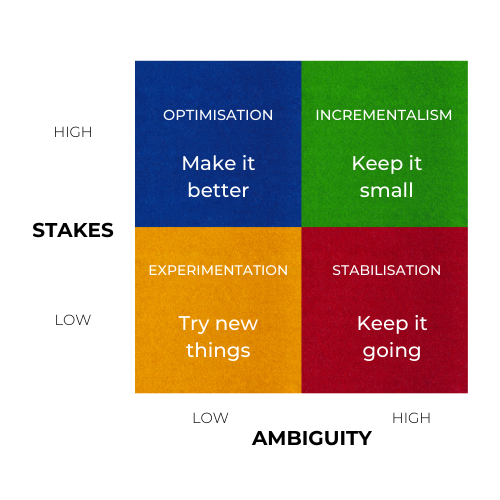
When there's low ambiguity and low stakes, we should try new things while it's safe. This is great for hobbies, outfits and activities!
When there's low ambiguity, but high stakes, we should look for the best solution, rather tham innovating. Here, we should do what's smartest for our wallet, time and big goals. This is usually true for large purchases, career and relationship choices.
When ambiguity is high, but decision stakes are low, we should keep things on an even keel. There's enough going on. If you're mid restructure and wondering whether to switch gyms or get a dog - don't. Wait.
When ambiguity is high, and the stakes are high, we should make decisions as small as possible, so we can shift as things change. So, if you're mid restructure and wondering whether to end your marriage... don't blow it up - but don't just let it sit, either. Small steps.
My initial work suggests this framework holds up whether we're looking at policy making, lifestyle choices or organisational change, but in the spirit of Wednesday Wonder, I'm open to your thoughts, ideas or examples!
Now, onto this week's Wonder! I'd love to know about your early warning system - how do you know it's time to change something? What advice do you give others?
February 8, 2022
Wednesday Wonder: How to get your mojo back
Welcome to the inaugural Wednesday Wonder, Nikki. For the next few weeks, we're trying out a LIVE collaboration to share what we're all thinking about life, work, and leadership. Read more below!
CONFESSION TIME...I lost my mojoI'm embarrassed to admit this, but over the last few months, I lost my work mojo.
I became cynical and unmotivated, and questioned whether the work I did made any difference, or if it was all a load of corporate bullsh*t. 😬
Inspired Introducing: Wednesday WonderAn exciting experiment in collective intelligence.
Every week I'm blown away by the insightful and interesting responses I get to my email and I want to keep connecting with you all.
So, a lightning bolt struck. ⚡️
You should all share in each other's brilliance.
Inspired by an amazing session I recently attended where Chad Littlefield crowd-sourced a live 40,000 word book from 170 people (!!!???!!!) I'm kicking off a collaborative experiment of my own.
Here's how it works.
Every week, I'm going to ask for your brief thoughts on a specific question or idea. You'll anonymously share your quick contribution - and then you can access everyone's ideas, as many times as you like.
Try it out now!
(...for those who are interested, here's what I'm currently doing to get my mojo back)
1. Reminding myself of the good stuff. I love the work I do with groups and teams, and I know it makes a huge difference to the people who take part. So, I've recorded myself expressing that, (fresh out of an awesome session), and set it as a morning alarm, for as long as I need to remember it.
2. Changing things up If you do the same thing for long enough, it will get stale. That doesn't mean you need to get rid of it, but it could be time to change how you do it. Wednesday Wisdom has been going out weekly for almost 4 years, it's time to try on something new on for size.
3. Focusing on helping others. Spend long enough in your own head and things will always seem worse than they are. I recently read Lost Connections by Johann Hari (such a good book) and the antidotes to drowning in your own misery are conclusively proven to be connection and service. This experiment achieves both!
February 1, 2022
Wednesday Wisdom: Ask how, not if
Welcome to another Wednesday Wisdom. Every week, I share with you what I'm thinking about life, work, and leadership. This week we're talking about how strategists get what they want.
One of the most exciting modules in the naMBA curriculum is when we talk about systems. Drawing on the work of the brilliant Dr. Russell Ackoff, we look at how to solve tricky problems in teams and organisations by focusing on how things work together.
Almost everything Dr. Ackoff says is worth quoting, but here's a line I think about at least once a week:
"An improvement programme must be directed at what you want, not at what you don't want. Determining what you want requires asking yourself: what you would do right now, if you could do whatever you wanted to? Because if you don't know what you could do if you can do whatever you wanted to, how in the world do you know what you can do under constraints?"
Aim for what you want
When it comes to life, work and leadership, this could not be more accurate. If you spend your time designing for what you don't want, you might be successful. You might, for example, avoid financial ruin, reputation loss and poor health.
But what about what you do want? Before you cut your dreams off at the knees thinking about your lack of time and money, the needs of others and the precedent that's been set in the past... stop.
Stop asking if
Strategists don't ask if they can have what they want. They don't wonder if they could have a more successful business, a happier marriage, a healthier lifestyle or a more engaged team.
If questions lead us to come up with all the reasons why we won't be able to achieve our goals, and promote mediocre goals. If questions see us thinking small, designing systems to manage risk in our business, manage conflict in our marriage, serve others, stave off weight gain and stop employees from leaving.
Strategists do it differently.
Ask why, then how
First they ask why they want it, and then they ask how they can get their why.
Faced with a business idea or dream, they don't look at all the reasons it won't work. Instead they'll ask why it's worth achieving, and, if it's worth it, they'll set about working out how to make their why it a reality. Who they'll need on board, where they'll get the money from and what they need to learn to make it real.
What about you?
What would you do if you could do whatever you wanted?
Why do you want that?
How can you get there?
TL; DR Focus on the how, and the if will go away.
Til next week,
- A
January 25, 2022
Wednesday Wisdom: Kicking off 2022
Welcome to another Wednesday Wisdom. Every week, I share with you what I'm thinking about life, work, and leadership. This week, we're talking about change
Here's three important things for you to remember this year:
1. Important change takes longer than you think it will.
(Do it anyway.)
2. The first step can be sooner than you think it can.
(Make it smaller.)
3. When you want to give up, you're often about to break through.
(Stick it out.)
Til next week,- A
December 21, 2021
Wednesday Wisdom: Christmas Poverty and Innovation
Welcome to another Wednesday Wisdom. Every week, I share with you what I'm thinking about life, work, and leadership. This week, we're talking about forcing innovation through constraints - in life, and at work.
When I was a very young and broke mum, I had lots of tricks up my sleeve to manage holidays and special occasions. Some of them were pretty standard - putting gifts on layby early in the year and slowly paying them off, or selling unused toys to buy new ones.
I had some more creative ones too, like... visiting some members of the family on Boxing Day so I could pick up an extra discounted gift on the way, making homemade treats and putting them in baskets picked up from op-shops, buying toys or furniture for the kids second-hand and giving them a makeover, or framing nice pictures of the children to gift to others.
I chuckle now at the lengths I went to. It's often in times of resourcefulness that we generate the best solutions! Our brains prefer to be lazy, because they're tired, so if we can buy our way out of a problem, we probably will. I certainly did this year.
Mo' Money, Mo' Problems
I'm not here to romanticise poverty - I spent enough time there to know that it's garbage. There are many families out there who can't innovate their way out of an extremely difficult situation. It's tough out there, and our most vulnerable need our compassion and support.
But I do want to point to the link between forced innovation at home, and the same phenomenon at work.
Sir Ernest Rutherford is famously quoted as saying: "We haven't the money, so we have to think" and there's a lot in that.
People often tell me that the root of all their problems at work are resource constraints or budget caps - and while they certainly make life tough, lack of funds is rarely the main problem.
If it was, the companies and agencies with the most revenue would be the best places to work, and they'd be having the most impact. (Hint: they're generally not.)
The truth is:
Having more money at Christmas won't make your gifts more meaningful, your children more grateful, or your family more functional.
Having a bigger budget at work won't make your systems more efficient, your strategy clearer, or your leadership more effective.
Something to think about over the break, with a beverage and a bag of chips in hand.
Merry Christmas,
- A
NOTE: Wednesday Wisdom is officially on holiday. I'll catch you all on Wednesday 26 Jan 2022. Have a wonderful break!