Elizabeth Rusch's Blog, page 28
April 30, 2013
Introducing Judith Fradin
This month I interviewed
Judy Fradin, author of dozens children’s and young adult non-fiction books. I
met her recently at the 45th Children’s Literature Festival in Warrensburg, MO,
forty authors and thousands of school children and adults meet every year. In
the student center of CMSU all the authors books are displayed for sale and I
found myself pausing to page through her beautifully designed books. Judy has
written on a wide range of subjects from Who Was Sacagawea? (recently issued in
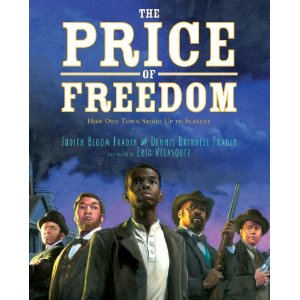
Spanish) to the upcoming The Price of Freedom (illustrated by Eric Velasquez). She
is a passionate cheerleader for non-fiction and enjoys visiting schools and
talking with young readers. You can reach her at yudiff@aol.com . Her responses to my
questions flowed together so seamlessly that I decided to present them without
interruption.
My career as a writer was born of desperation. In the mid-1990s my husband Dennis landed a
contract to write the Sea to Shining Sea series of state books. He had to deliver one book per month. Halfway through this project he fell ill from
exhaustion and begged me to help him. I
became his FrankenFradin, quickly writing the New Mexico and Louisiana books as
he recuperated. Thus was born our
collaboration.
We ultimately co-authored dozens of non-fiction books for
children and young adults, many of them award-winners, on topics ranging from
American history to biographies, from finance to natural disasters.
Four Fradin books have been published within the past two
years. TORNADO! was released by National
Geographic in 2011. It opened with the
story of a teenaged survivor of the Greensburg, Kansas F5 storm that
annihilated hundreds of homes and businesses.
TORNADO! is one of the six books in our Witness to Disaster
series.
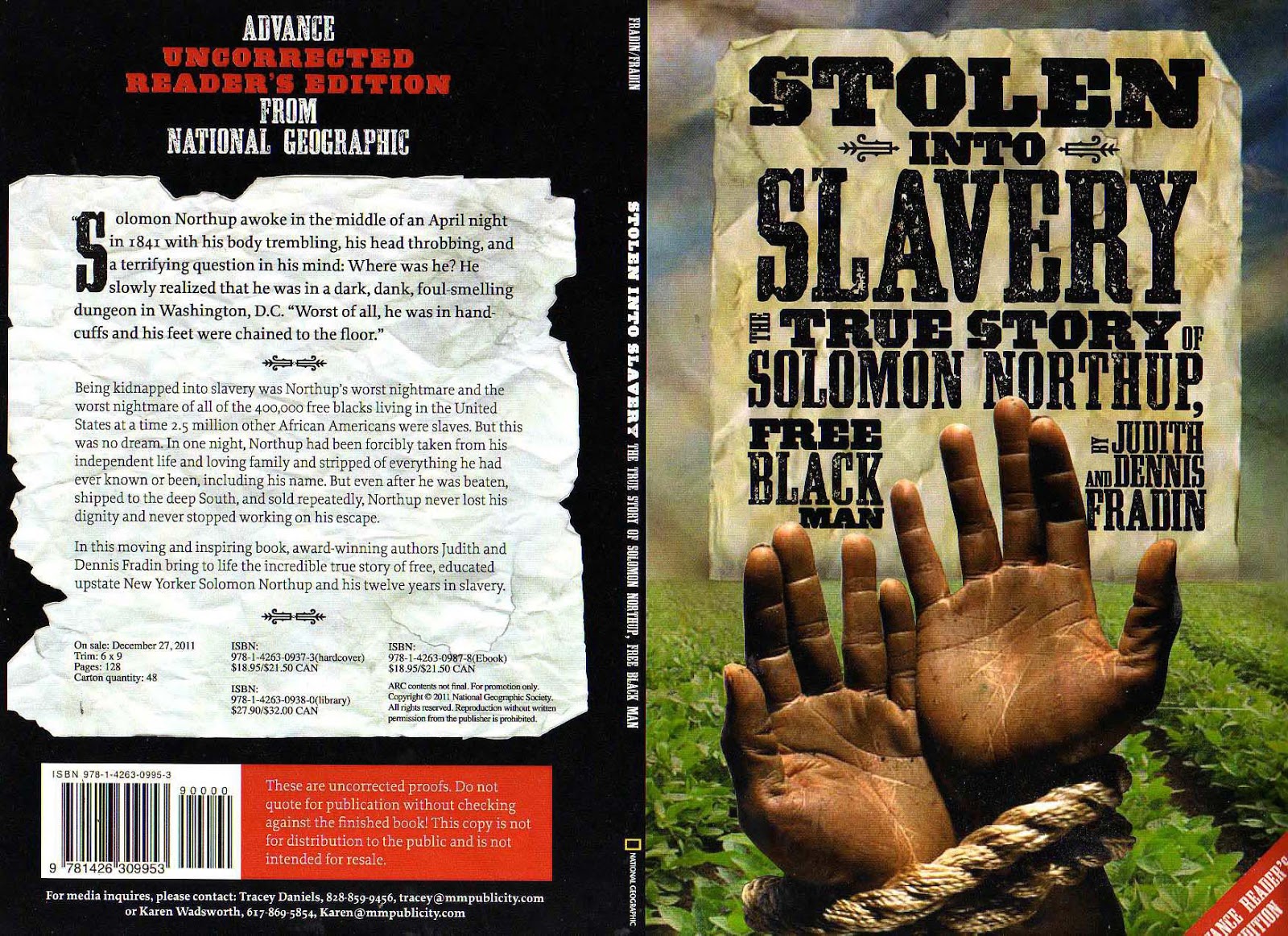
STOLEN INTO SLAVERY (also
Geographic, 2012) recounts the drugging, kidnapping and sale into bondage of a free
black New York family man named Solomon Northup. Northup’s story of survival is currently
being made into a movie directed by and starring Brad Pitt. ( National Geographic has made a study guide
that can be acquired from Bill O’Donnell (bodonnel@ngs.org).
THE PRICE OF FREEDOM (Walker, 2013) is a historical
Fradin/Fradin picture book illustrated by Belpre Award winner Eric
Velasquez. This dramatic true story
tells how the residents of two small Ohio towns rescued a re-captured slave, sparking
the start of the Civil War.
Last but not least, ZORA! (Clarion, 2012) is our biography
of Zora Neale Hurston, an early African American writer. I wanted to title our book “The Nine Lives of
Zora Neale” because this remarkable woman went from family outcast to nanny to
manicurist to waitress to anthropologist to teller-of-tales with several other
“lives” interspersed.
I especially enjoyed marrying text to image in our National
Geographic Witness to Disaster series.
As I child I would spend hours poring through old National Geographic
magazines. I was always fascinated by
the natural world—animals, weather, and natural geology. I loved my college geology course and had
been collecting rocks for decades. For
me, the series was a perfect fit.
Non-fiction was a great genre for us. Dennis was more focused and detail-oriented;
I am more scattered and speculative. Our
contrasting approaches, I think, enhanced our books. Our work has led us on unforgettable,
intriguing hunts for information. I know
that truth is far more fascinating than fiction, and hope that we’ve enriched
the field of children’s and YA non-fiction.
Below are book covers from The Price of Freedom and Stolen into Slavery and a spread from Tornado.


April 28, 2013
Endings and Beginnings
As we are so often reminded,
for everything there is a season.
And when the season of intense work on writing a manuscript and choosing
dozens of photos to illustrate it ends, it’s time for a season of renewal.
Lucky me—I sent off my next
manuscript and photos just a day before flying off to a beautiful spa in Mexico
called Rancho La Puerta. I get the
best deal there is—for my husband’s efforts in planning and carrying out three
cooking classes using ingredients from the rancho’s amazing garden, I receive a
free week to do as I please in this lovely environment. Opportunities to participate in all
sorts of activities abounded, but I promised myself I would just live day by day,
moment by moment, during our visit.
Time and experience have taught me this lesson. As children’s fiction author Bruce
Coville reminded fellow author Jeanette Ingold when she worried about not
having any new ideas following submitting a manuscript, the well gets emptied
and must be filled again before we can proceed.
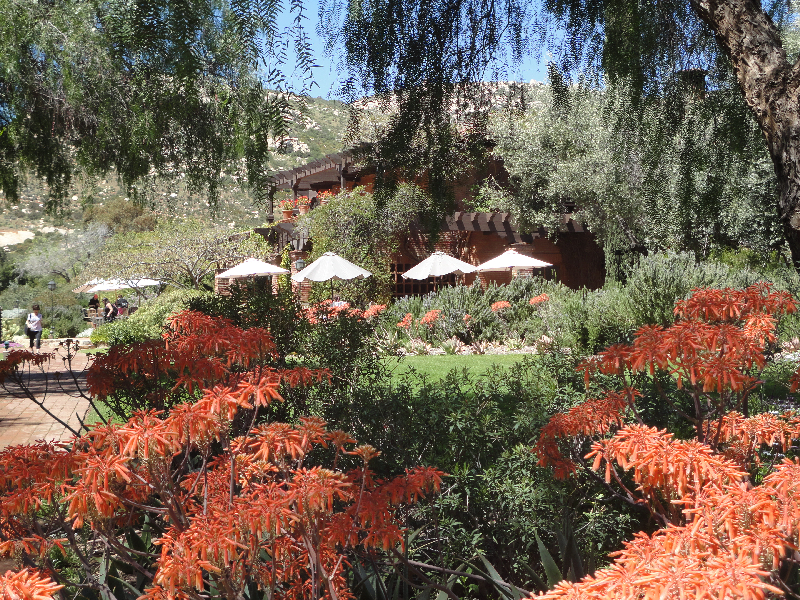
Garden and dining hall at Rancho La Puerta
I believe this principle is
in play for nonfiction writers just as much as for fiction creators. We fill our brains with facts and
images. We struggle to find the best
way to organize our material to present it to our readers in logical,
easy-to-follow sequences. We get
tired! Our minds need to rest, to
clear out what we no longer need to remember and make room for the new information. And perhaps most importantly of all, we
need to let the enthusiasm for the next project grow and let the “old”
enthusiasm for the previous project fade.
This gradual process
actually serves a dual function.
Not only does it set in motion a new enthusiasm, it helps us distance
ourselves from the previous project, knowing that soon an editor will be
pouring over our manuscript with a highly critical eye, suggesting changes,
preparing queries, and, most dreaded of all, making cuts. We authors must be able to distance
ourselves at least a bit from that “old” project so we can react calmly to our
editors’ reactions.
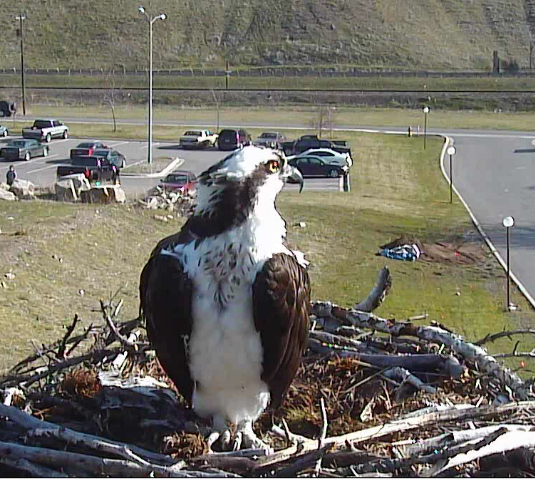
"Iris" awaits her mate on her Montana nest
And while we await that
inevitable pain, we plunge into the next project, becoming increasingly
involved and excited as we see the new possibilities involved with a fresh,
open-ended topic. I want to share
my enthusiasm right now with a new project, a book about osprey research. To me the most exciting aspect so far
is learning about wild bird web cams.
I’d known they existed but hadn’t paid much attention until I got going
on this project. Two of the osprey
nests in the study have web cams that allow anyone in the world with internet
access to “spy on” these birds as they conduct their daily lives. (http://tinyurl.com/6mcdgst and http://tinyurl.com/dyj5ddf)
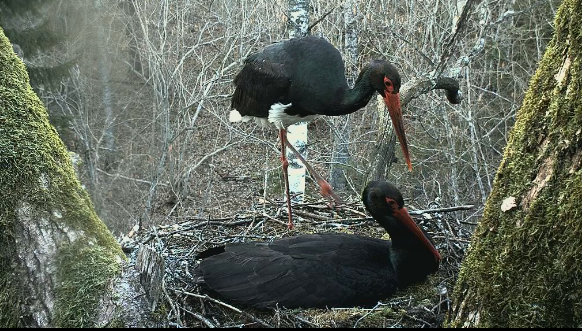
http://www.unavitaverde.net/webcam-black-stork/
Such cameras are working in countries
around the world on many bird species, not just ospreys in Montana. As I write this blog, I’m watching a pair of rare black storks in Estonia and listening to the unfamiliar
calls of European forest birds in the background. For a person like me, who
identifies so strongly with the natural world, it’s the perfect background
music for writing—one bird chirps a lovely song as a dove calls sweetly, then
passing geese honk overhead.
Writers like me are truly
blessed by the opportunities of delightful discoveries that our work gives us.

April 26, 2013
How to Empower Girls – Use Nonfiction, Not T-shirts
"Always remember, you have within you the strength, the
patience, and the passion to reach for the stars to change the world.” Harriet
Tubman
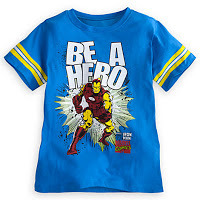
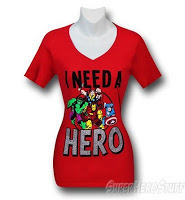
In an April 11, 2013 Huffington Post article, Sexist'Avengers' T-Shirts Tell Boys To Be Heroes And Girls To Need A Hero , Christina
Huffington draws attention to how products continue to be marketed differently
for boys and girls. It is noted that the boy’s shirt is child-size and the girl’s
shirt is junior-size. Compare the two shirts:
This week, a HuffPost Live segment titled Gender Equality? Keep Dreaming discussed the same subject - hosted by Josh Eppes with guests Cristen Conger @MomStuff Podcast host of "Stuff Mom Never Told You", Sarah Mulhern Gross @thereadingzone National Board Certified Teacher, Michael Riegel, Managing Director of Engineers Are People Too, and Charity
Stewart @SpaceCampUSA Social Media and Advertising Manager, Space Camp. The live telecast brought to light many topics concerning the quest to bring more girls into STEM
careers.
The focus of the discussion concerned t-shirts sold at Space Camp, a
champion for STEM careers for over 30 years. (The t-shirts have been removed from their site.) Compare the two shirts (Men's on left, Women's on right):

It has been over 20 years since Mattel Toys got into hot water for releasing the Teen Talk Barbie that uttered the phase, “Math
class is hard!” We are getting better at creating products to encourage young girls into STEM careers, but we still have to stay on our path. Dr. Wilda V. Heard, writes about STEM careers and girls in her
April 21, 2013 blogpost titled Reducing gender differences in STEM education , where she outlines what needs to still be done.
Interesting, for readers of this blog, Jonathan
Olsen and Sarah Gross, in a April 16, 2013 guest post in an Scientific
American article, site a 2006 research study that shows that "storys activate the brain and changes how we act in life." In the article, To Attract More Girls to STEM, Bring More Storytelling to Science, Olsen and Gross, both teachers at High Technology
High School in Lincroft, New Jersey, suggest that STEM be taught through the lens of a story - and they add "it sure beats a pink microscope".
As we approach the next decades, our world needs the ideas
of all our young people - both boys and girls.
Looking for a few good nonfiction STEM books to empower
young readers? Here’s a few links I found on STEM nonfiction books, which include several excellent books written by our INK authors.
YALSA - STEM Resources
Carnegie Library of Pittburgh – STEM books – Great source
for all things STEM
PBS Parents - Empowering Books for Girls
STEM Nonfiction Reading (Middle Grade) via Goodreads
STEM Friday
I know I've left out some favorite links. Readers ~ please leave suggestions in the comments, I'll be sure to include them.
NOTE: Quote from the intro page of Anna's YA book Women of Steel and Stone: 22 Inspirational Architects, Engineers, and Landscape Designers , to be published by Chicago Review Press, January 2014.
patience, and the passion to reach for the stars to change the world.” Harriet
Tubman
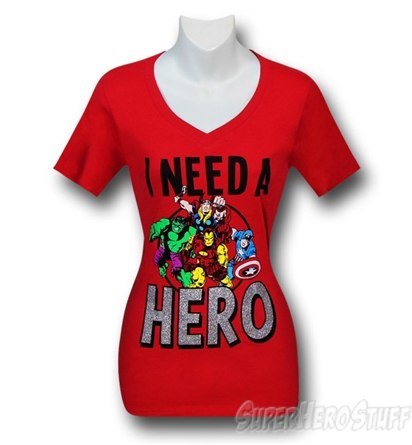
In an April 11, 2013 Huffington Post article, Sexist'Avengers' T-Shirts Tell Boys To Be Heroes And Girls To Need A Hero , Christina
Huffington draws attention to how products continue to be marketed differently
for boys and girls. It is noted that the boy’s shirt is child-size and the girl’s
shirt is junior-size. Compare the two shirts:

This week, a HuffPost Live segment titled Gender Equality? Keep Dreaming discussed the same subject - hosted by Josh Eppes with guests Cristen Conger @MomStuff Podcast host of "Stuff Mom Never Told You", Sarah Mulhern Gross @thereadingzone National Board Certified Teacher, Michael Riegel, Managing Director of Engineers Are People Too, and Charity
Stewart @SpaceCampUSA Social Media and Advertising Manager, Space Camp. The live telecast brought to light many topics concerning the quest to bring more girls into STEM
careers.
The focus of the discussion concerned t-shirts sold at Space Camp, a
champion for STEM careers for over 30 years. (The t-shirts have been removed from their site.) Compare the two shirts (Men's on left, Women's on right):

It has been over 20 years since Mattel Toys got into hot water for releasing the Teen Talk Barbie that uttered the phase, “Math
class is hard!” We are getting better at creating products to encourage young girls into STEM careers, but we still have to stay on our path. Dr. Wilda V. Heard, writes about STEM careers and girls in her
April 21, 2013 blogpost titled Reducing gender differences in STEM education , where she outlines what needs to still be done.
Interesting, for readers of this blog, Jonathan
Olsen and Sarah Gross, in a April 16, 2013 guest post in an Scientific
American article, site a 2006 research study that shows that "storys activate the brain and changes how we act in life." In the article, To Attract More Girls to STEM, Bring More Storytelling to Science, Olsen and Gross, both teachers at High Technology
High School in Lincroft, New Jersey, suggest that STEM be taught through the lens of a story - and they add "it sure beats a pink microscope".
As we approach the next decades, our world needs the ideas
of all our young people - both boys and girls.
Looking for a few good nonfiction STEM books to empower
young readers? Here’s a few links I found on STEM nonfiction books, which include several excellent books written by our INK authors.
YALSA - STEM Resources
Carnegie Library of Pittburgh – STEM books – Great source
for all things STEM
PBS Parents - Empowering Books for Girls
STEM Nonfiction Reading (Middle Grade) via Goodreads
STEM Friday
I know I've left out some favorite links. Readers ~ please leave suggestions in the comments, I'll be sure to include them.
NOTE: Quote from the intro page of Anna's YA book Women of Steel and Stone: 22 Inspirational Architects, Engineers, and Landscape Designers , to be published by Chicago Review Press, January 2014.
April 25, 2013
Excerpt of Common Core guide for The Mighty Mars Rovers
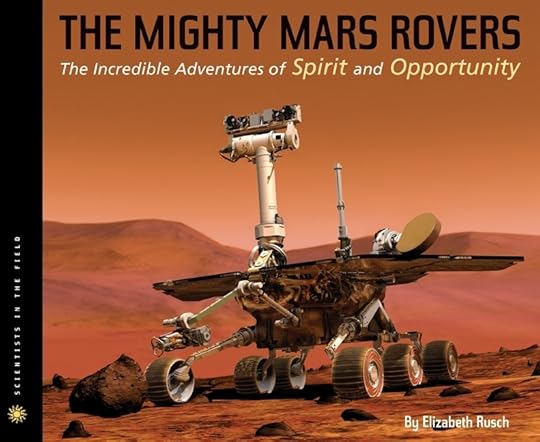
I did not write The Mighty Mars Rovers
with the Common Core standards in mind, but it turns out that all of my
nonfiction books, and I would venture to say virtually all of the I.N.K.
bloggers nonfiction titles, offer rich opportunities to support Common Core
learning. (Adopted in 45 states, the
Common Core State Standards will be shaping teaching and learning across the
country in years to come.)
But
how exactly can teachers use high-quality nonfiction to support Common Core
learning? Teacher Erin Dees and I collaborated on a Common Core guide to The Mighty Mars Rovers , which you
can download for free here. Before
giving students these Common Core tasks, I hope teachers will first have
students read and enjoy the book. I think being engaged in a book can inspire kids to
be more interested in delving into how the book was researched and written.
What
follows are some excerpts from our guide.
I hope to make Common Core guides for all my other nonfiction titles, so
I would love any feedback from teachers, other educators, and other writers…
Craft and Structure
CCSS.ELA-Literacy.RI.4.5 Describe
the overall structure (e.g., chronology, comparison, cause/effect,
problem/solution) of events, ideas, concepts, or information in a text or part
of a text.
Ask students to describe
the overall structure of The Mighty Mars Rovers and why
author Elizabeth Rusch might have structured it that way. What are some
other structures she might have considered? How would they have changed
the book? What would be gained and what would be lost?
The author also uses all of the structures listed above
within the main structure. Where? Why?
Chronology of events.
EX: The book is written
chronologically for each rover.
Comparison of ideas,
concepts, and information. EX: The
book switches focus from rover to rover in order to compare their two
journeys.
Cause/effect &
problem/solution. EX: Many
obstacles cause the rovers to put their journeys on hold. The team works
together to free/help the rovers.
The rovers encountered
some obstacles along the way. Ask students to describe the cause and
effect of each situation. Summarize how the JPL dealt with and solved
problems the rovers encountered:
Opportunity’s jam in
the Purgatory Dune on page 55.
Spirit’s stuck wheel on
page 59.
Dust storm on page 64.
The book spans more than
eight years, so some material was left out. Ask students to compare events
in the book to those described in mission update on the website http://marsrover.nasa.gov/mission/wir/. What did the author emphasize
and what did she leave out? Why? Do you think there was anything else she
should have included? Why?
CCSS.ELA-Literacy.RI.4.6 Compare
and contrast a firsthand and secondhand account of the same event or topic;
describe the differences in focus and the information provided.
Encourage students to
compare and contrast daily rover updates for Spirit and Opportunity with
accounts in the book. How are the adventures of the rovers the same and
different?
http://marsrover.nasa.gov/mission/status_spirit.html
http://marsrover.nasa.gov/mission/status_opportunity.html
http://marsrover.nasa.gov/mission/status.html
Ask students to read firsthand blogs from
NASA engineers then match and compare/contrast them to events detailed in
the book.
http://blogs.jpl.nasa.gov/category/solar-system/mars/
Ask students to compare
Rusch’s version of Opportunity’s journey toward Endeavor (pg 63-64) to a
Robotics Engineer’s version.
http://blogs.jpl.nasa.gov/2008/10/on-the-road-again/
Integration of Knowledge and Ideas
CCSS.ELA-Literacy.RI.4.7 Interpret
information presented visually, orally, or quantitatively (e.g., in charts,
graphs, diagrams, time lines, animations, or interactive elements on Web pages)
and explain how the information contributes to an understanding of the text in
which it appears.
The book provides many
opportunities to teach text features. It includes titles, subtitles,
sidebars, maps, images, captions, maps, an index, a table of contents, and
a glossary. Create a treasure hunt to help students find and understand
these important text features.
Ask students to
interpret the photographs of Steve Squires as a child and young man on
page 8 and 9. What do they tell us about Steve? Why did the author include
them? How will/do they help us understand the motivations and passions of
Steve Squires?
What does the diagram of
the solar system on page 14 tell us about the launch of the rovers? How
does this diagram contribute to the understanding of the text on page 15?
Page 53 displays a map
of Opportunity’s adventures. How does this map help the reader understand
the journey of the rover?
Ask students to
interpret the image on page 64. Ask
students to explain how the information detailed in the image relates to
the story on page 64, starting: “Suddenly, whoosh, a huge dust storm blew in.” What does the image show?
Why did the author decide to add this image? How would the image affect
your perception of the story if it was an image of only the last
measurement?
CCSS.ELA-Literacy.RI.4.9 Integrate
information from two texts on the same topic in order to write or speak about
the subject knowledgeably.
AND
CCSS.ELA-Literacy.W.4.7 Conduct
short research projects that build knowledge through investigation of different
aspects of a topic.
Students may combine
information from The Mighty Mars
Rovers with information from other books on the same topic to compile
research papers. Check out Cars on
Mars by Alexandra Siy or Eyewitness
Mars by Stuart Murray.
Have students pick a
subtopic from the book to research. They may use the book and other
resources to write short informational reports. Potential topics:
Early Mars exploration
Rover tools/parts of
the rover
Life of Mars
Powering the Rovers
Landing rovers on Mars
The next Mars
rover, Curiosity, landed on Mars in August 2012 and offers a great
opportunity deepen students’ knowledge and understanding of space
exploration. Send students to the NASA website on the mission:
http://www.nasa.gov/mission_pages/msl/ Ask students to compare the two missions. How are they the same? How are they different? How
have rover design, launch, and landing changed? What are the biggest challenges
of each mission? How were they overcome? What questions are the missions
designed to answer? What tools do the rovers and scientists have to answers
those questions? What questions might come next?
You can download the whole guide on my website: www.elizabethrusch.com or go here. We welcome any comments and suggestions!
Thanks,
Elizabeth Rusch

April 23, 2013
My Turn For The Next Big Thing
If you read Tanya Lee Stone’s INK blog in
February, you know about The Next Big Thing. If you didn’t or if you forgot,
it’s is an author blog tour. Each week a different author answers specific
questions about his or her upcoming book. The answers are posted on authors’
blogs. Then we get to tag another author. On and on it goes.
I was tagged by Nina Kidd, member of my local critique group.
She was tagged by Julie Williams. My tags are at the end.
And just in time because…. I’ve got a new book!
What is the title
of your book?

The Wind at Work: An
Activity Guide to Windmills –Second
Edition Revised and Expanded – published by Chicago Review Press. For more on how I wrote the second edition
click on one of my previous INK blog posts.
Where did the idea come
from for the book?
Way
back in the mid-nineties, just when I started writing for children, I wanted to
explore renewable energy. Can’t
remember why, but I chose wind energy and found a fascinating history of
windmills that included not just the machines themselves, but the intriguing
cultures of windmillers. They had their own idioms, jokes, folk tales, “signal
codes,” and more.
What genre does your book
fall under?
Nonfiction:
part historical, part contemporary environmental, from middle grade to YA. Each
chapter includes activities that can be performed at a younger or more advanced
level.
Which actors would you
choose to play your characters in a movie rendition?

Stephen Fry is a perfect plump European windmill.
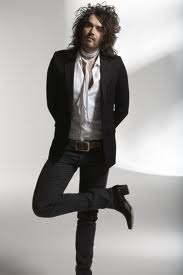 Russell Brand would make a good North American Windmill – tall and skinny, whirling about.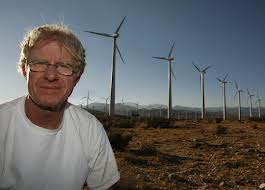
And
Ed Begley, Jr., Mr. Green himself, could be a wind turbine!
What is the one-sentence
synopsis of your book?
1000
years of windmills: how they created a country, powered an industrial
revolution, watered the American west, and offer a bright energy future.
Is your book represented by an agency?
I
found Chicago Review Press on my own. They published the first edition back in
1997 and it has been in print for fifteen years! I can’t praise them
enough. They have reprinted the book over and over, and were keen to do an
updated edition. As well as the paper edition, they are publishing the new
edition in three ebook formats: Kindle, epub, and pdf.
How long did it take you to
write the first draft of your manuscript?
I
had published short stories in Cricket
and Spider, but The Wind at Work was my first book. These days a book can take me
years to write, but as a naïve newbie I plowed through it in about three
months, as I recall. The activities, all the appendices, and photo research
took a few more months.
What other books would you
compare this story to within your genre?
Chicago Review Press has published dozens of
history/activity books similar to The
Wind at Work. Friends
of the Earth: A History of American Environmentalism
by Pat McCarthy is a nice complement to my book. I’d also like to recommend The Boy Who Harnessed the Wind by William Kamkwamba and Bryan
Mealer. This is the amazing story
of a young African boy who built himself a wind turbine. It’s out in a YA/adult version and a picture book. Both tell a terrific story in very different
ways.
Who or what inspired you to
write this book?
My
interest in renewable energy got me going on the first edition. After the 2011
Fukushima nuclear disaster I contacted Cynthia Sherry, Chicago Review Press
publisher, thinking that we’d have renewed interest in renewables. Cynthia
reported that they were near to selling out the latest reprinting, and so I
went to work. The difference between 1997 and today? This time I did all
the text and photo research online !
What else about your book
might pique the reader’s interest?
Check
out the activities. I had so much fun with them. They range from science
experiments to cooking, singing, writing, drawing, collage-ing, saving energy
at home, researching local environmental issues, finding out how your
politicians vote, and becoming a local activist. You can also plan a Global Wind
Day celebration (June 15). There’s something for everyone here.
Now for the lucky taggee: Susan Kuklin.

The Demise of Our Intellectual Playgrounds

This photo is my last look at my beloved local children’s
bookstore. Like so many others, it will soon close and be gone for good. I
mourn the loss of this important staple in the neighborhood. I really believe the
slogan, “there goes the neighborhood” is apt in this case and throughout cities
and suburbs across America as one way of life begins to all but vanish.
My kids and I went to this bookstore for a variety of
reasons: to browse, to buy birthday gifts for friends, to get a long awaited
book on its release date, and to meet authors in person. This was the kind of
bookstore that drew in authors for presentations and then set them up to visit
local schools. We met a great many interesting, friendly, famous children’s
authors in this store. It was here that we admired Jacqueline Wilson’s rings on
every finger, talked to Linda Sue Park about her recent carpel tunnel surgery,
and chatted with Wendelin Van Drannen about the origins of her name.
I got all fan girl crazy a couple of times. I got to shake
hands with Christopher Paul Curtis and I know we were smiling and chatting but
I can’t really remember anything else clearly after that *swoon*. And after
years of adoration I got to meet E.L. Konigsberg in person. (Who sadly passed
away over the weekend after I originally wrote this). My kids now have a signed
copy of “From the Mixed Up Files” It’s hard to think of anything much cooler
than that. Soon there will be no place to meet favorite authors and nothing to
sign. Typing an autograph on someone’s Kindle is just never going mean much.
Not to sound like an
amateur Jane Jacobs, but the bookstore closings show me that our environments
are becoming wastelands for intellectual growth. Urban and suburban design are
becoming devoid of places to meet and exchange ideas. If there are no places to
browse for books, no places to meet like minded book lovers to chat about a
book, no places to interact with actual writers, then there will be no place to
grow as readers and lovers of books. The multifunctional nature of these spaces
are not being replaced by anything similar but by clothing stores, juice bars,
and the like. City neighborhoods and suburban communities thus both lose a key
element of their successful design.
So what will our kids do instead? I guess they will run
around on the artificial turf with shirts that say “play hard or go home.” And
then they will go to their SAT prep classes so they can produce the results
that our society seems to value. Clearly they will not buy books in the numbers
they used to and they will not have the opportunity to appreciate the value of
a society that supports intellectual curiosity, creative writers and
thinkers, and reading for pure unadulterated pleasure. The demise of our
intellectual playgrounds seems to be a done deal.

April 21, 2013
Guest Blogger Andrea Warren on Using Nonfiction to Help 5th Graders Think About Family History

I have asked author and journalist Andrea Warren to write in my place this month. Andrea has written seven esteemed books about young people who have experienced extreme personal challenges as a result of extreme historical circumstances that changed their lives. Andrea is a member of iNK's Authors On Call videoconferencing group, and she writes about her videoconference experience with a school in New York City.
David
What's it like to serve as an author-consultant in the
schools? I’ve just completed my first experience, and I loved every minute of
it.
As one of the iNK “Authors on Call,” I worked with fifth
grade faculty and students at PS 49 in Queens, New York, on a two-week study of
the orphan trains. For those who don’t know, the placing out program that came
to be known as the orphan trains was the brainchild of Charles Loring Brace and
New York City’s Children’s Aid Society. CAS started a number of fine programs to
assist poor children. Brace believed that every child needed a family. He did
not like institutional care and was especially concerned about street children,
many of whom were the sons and daughters of down-on-their-luck immigrants. He
theorized that if he could get homeless youngsters to good-hearted farm couples
who could afford to feed an additional child and could also benefit from
another pair of hands to help with all the work, that they would step up to
either foster or adopt one of the train children. A few experiments lent
support to his notion, and thus started a movement that over a 75-year period
sent nearly 250,000 children west via trains to new homes.
The 5th grade teaching team at PS 49 had each student
read my book Orphan Train Rider: One Boy’s True Story. I suggested
supplemental materials, including my young readers nonfiction book, We
Rode the Orphan Trains.
We agreed that I would do four Skype sessions. The first was
with the teaching team to discuss planning for the unit. They wanted students
to understand the history, economics, and culture of the 1850s when the orphan
trains began. I made some suggestions and then pulled together some
research to assist them. When we had our second Skype session, they were further
down the road with their preparation. They had used many of my suggestions and
we had a lively discussion.
Then I had a Skype session with the students and talked with
them about a variety of subjects related to the orphan trains. The students were
well prepared with questions. Many of them come from immigrant families. We
talked about the value of them interviewing family members whose stories they
did not know. I gave them examples of how they could start their interviews and
the importance of taping these to preserve their relative’s voice. The students
were lively and engaged during our session. The teachers reported that they
bubbled over with enthusiasm about doing interviews and were also excited that
they’d met a “real” author.
Instead of a second Skype session with students, the teachers
chose to have a third Skype session with me so they could review how the unit
had gone. They shared essays the students had written and they reported that
many students had gone above and beyond in their research and in buying books
for themselves to expand their learning. Among their in-class writing
assignments was one in which each student imagined being the eldest child in a
large family who was told to go fend for himself or herself on the streets
because the family had too many mouths to feed. This assignment helped students
imagine how lost and helpless some of the children were who boarded orphan
trains. The teachers had some additional questions about how students could
interview relatives and asked how students could proceed if their relative was
resistant. Again I offered suggestions.
Altogether I invested between 20-25 hours in my initial
preparation, additional research to assist the teachers, participation in four
Skype sessions, and all the e-mails and other communication that took place.
After our final session, Paul Longo, who coordinated my work with the school,
said that the unit was a professional high point for several of the teachers. He
wrote, “I think this experience has confirmed some of their best instincts
as teachers and that has been made possible by you and the good work you have
done in your writing and sharing. The whole experience has been extremely
positive for all of us on our end of the exchange.”
On my end, too! Should I have other opportunities to serve as
a consultant, I will certainly do so. It’s one more way we authors can bring
our work to educators and students, and assist in exploring and fulfilling the
goals of the CCSS. And it’s a great way to connect with students in the
classroom—which in my book is always a joy.


April 19, 2013
Feed Your Brain: Eat Your Math! (A guest blog by Ann McCallum)
As a kid, I thought that
math was bland—unappetizing worksheets and heaps of boring word problems. Those
were the worst, the word problems: Disjointed scenarios that you had to sit
with until you were done.
I fell in love with math
after college. Not a case of love at first taste, it was more an awakening of
the senses. A realization that there was pattern and meaning to all those seemingly
random numbers. Like a well-made dish, the ingredients aligned so perfectly
when I finally understood. The steps were meaningful, too—not a series of
machinations to memorize, but a logical process of creating. With my new-found appetite
for math, I knew I had to share.
Pairing food with math was
a fluke, really. It started with a math project for my students (I was teaching
5th grade at the time). It was nearly winter break, and I had my
students make mathematical gingerbread houses. I didn’t provide many
instructions—just, you know, make one of those graham cracker houses glued
together with icing and be prepared to talk about how you used math. The
results were far richer than I had anticipated. Students shared innovations
such as polygon windows and doors, candy tessellations, the perimeter of roofs,
and the length of icing pathways. I was so excited, I went home and made multiplication
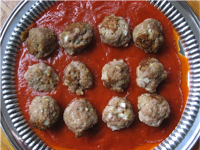
meatballs! Okay, maybe not right away, but the idea was there. Food, I figured,
was a perfect medium for getting kids to love math.
What
followed was a series of yummy experiments: Estimation Cookies, Fibonacci Snack
Sticks, Variable Pizza Pi . . . Fun, oh fun! Finally, here was a connection to
some of math’s tough concepts, but with a delicious new twist. It made so much
sense to learn math by using food.
Eager to share this idea beyond my students, I sent
a book proposal to an editor and was accepted—but not for a math cookbook. Instead, I was engaged to
write “The Secret Life of Math” which is a history/project book about math for
kids (I was allowed one recipe:
Mayan
Number Cookies). I went on to write two math fairy tales, but I still kept
coming back to the math cookbook idea. I
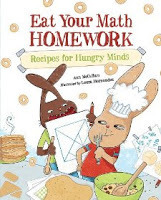
tried again. This time, a second editor accepted my proposal for “Eat Your Math
Homework: Recipes for Hungry Minds” and I was thrilled. I went back to the
kitchen to perfect my math recipes.
One
of my favorite math authors, Theoni Pappas, says it best: “The joy of
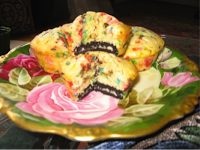
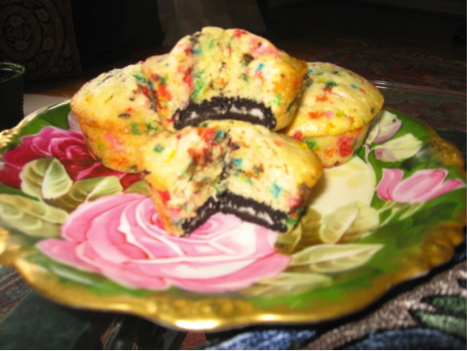
mathematics is that it is everywhere.” I’ll add to that: Even in cupcakes!
What you need:
½ cups butter
1
¼ cups white sugar
2 large eggs
1 cup milk
1 teaspoon vanilla
2 cups flour
1 teaspoon baking powder
½ teaspoon baking soda
½ cup rainbow sprinkles
Oreos (one for every muffin cup)
What you do:
1. Cream butter, sugar, vanilla, and
eggs.
2. Mix in flour, baking powder and
baking soda, alternating with milk.
3. Stir in the colored sprinkles.
4. Grease a muffin tin (or use cupcake
papers) and place one oreo cookie in every muffin cup. Pour dough on top so
that each muffin cup is ¾ of the way full.
5. Bake for about 30 minutes in a 350° F
oven.

math was bland—unappetizing worksheets and heaps of boring word problems. Those
were the worst, the word problems: Disjointed scenarios that you had to sit
with until you were done.
I fell in love with math
after college. Not a case of love at first taste, it was more an awakening of
the senses. A realization that there was pattern and meaning to all those seemingly
random numbers. Like a well-made dish, the ingredients aligned so perfectly
when I finally understood. The steps were meaningful, too—not a series of
machinations to memorize, but a logical process of creating. With my new-found appetite
for math, I knew I had to share.
Pairing food with math was
a fluke, really. It started with a math project for my students (I was teaching
5th grade at the time). It was nearly winter break, and I had my
students make mathematical gingerbread houses. I didn’t provide many
instructions—just, you know, make one of those graham cracker houses glued
together with icing and be prepared to talk about how you used math. The
results were far richer than I had anticipated. Students shared innovations
such as polygon windows and doors, candy tessellations, the perimeter of roofs,
and the length of icing pathways. I was so excited, I went home and made multiplication
meatballs! Okay, maybe not right away, but the idea was there. Food, I figured,
was a perfect medium for getting kids to love math.

What
followed was a series of yummy experiments: Estimation Cookies, Fibonacci Snack
Sticks, Variable Pizza Pi . . . Fun, oh fun! Finally, here was a connection to
some of math’s tough concepts, but with a delicious new twist. It made so much
sense to learn math by using food.
Eager to share this idea beyond my students, I sent
a book proposal to an editor and was accepted—but not for a math cookbook. Instead, I was engaged to
write “The Secret Life of Math” which is a history/project book about math for
kids (I was allowed one recipe:

Mayan
Number Cookies). I went on to write two math fairy tales, but I still kept
coming back to the math cookbook idea. I
tried again. This time, a second editor accepted my proposal for “Eat Your Math
Homework: Recipes for Hungry Minds” and I was thrilled. I went back to the
kitchen to perfect my math recipes.
One
of my favorite math authors, Theoni Pappas, says it best: “The joy of
mathematics is that it is everywhere.” I’ll add to that: Even in cupcakes!
What you need:
½ cups butter
1
¼ cups white sugar
2 large eggs
1 cup milk
1 teaspoon vanilla
2 cups flour
1 teaspoon baking powder
½ teaspoon baking soda
½ cup rainbow sprinkles
Oreos (one for every muffin cup)
What you do:
1. Cream butter, sugar, vanilla, and
eggs.
2. Mix in flour, baking powder and
baking soda, alternating with milk.
3. Stir in the colored sprinkles.
4. Grease a muffin tin (or use cupcake
papers) and place one oreo cookie in every muffin cup. Pour dough on top so
that each muffin cup is ¾ of the way full.
5. Bake for about 30 minutes in a 350° F
oven.
April 17, 2013
A Guilty Confession and a PSA for INK
Sex and the City: Carrie and her friends are having their usual breakfast gathering, going over the issues of the day when Carrie makes a reference to something she wrote in one of her columns. This is followed by a lengthy awkward silence. One by one, she points her raised eyebrow at Samantha, Miranda, and Charlotte for an explanation, as each confesses her own guilty reason why she has not, in actual fact, been reading her best friend’s column.
Present Day. Present Company: Hello, my name is Tanya, INK fellow and regular contributor, and I don’t always read our column.
Now that that guilty confession is out of the way, let me just say, that changes today.
There is a lot of content out there, friends—and content is a word we nonfiction writers are learning to loathe, what with the current trend to label most of what we do “content” or “informational.” A lot of content + too much to do + not enough time to do it = (hangs head) INK not always making my reading list.
What a mistake. Here’s the PSA part.
Bottom line: If you are a person who loves reading, writing, teaching, and/or helping readers find interesting nonfiction for kids (a.k.a. INK), make INK a frequent place to come calling.
Why? There are a ton of incredible, fascinating blog posts here! I am in awe of what I have learned just in the past hour by scrolling through the posts of my esteemed colleagues. And funny! Insightful, witty, interesting, and off-the-beaten-path. Check it out.
Highlights from this past month: ways to think about alternatives to e-books, what “writing like a boy” might mean, intelligent design in science classrooms, and more!
From this past year: meaningful uses of backmatter, how an illustrator tackles creating a pb about an artist, why books pub on Tuesdays, nostalgic childhood stories directly relevant to an author’s current process, and more!
From years past: photo research, ethics, responsibility to our readers, visual storytelling, movies made from books, and more!
Wow. I have always known that this was the place to be. It’s why I’ve been here all these years. But seeing it in black and white brings it into clear focus. Thank you, all you INK writers, for contributing to this wealth of fascination. I’m yours, now and forever. Carrie Bradshaw won’t need to raise her eyebrow in my direction ever again.

Present Day. Present Company: Hello, my name is Tanya, INK fellow and regular contributor, and I don’t always read our column.
Now that that guilty confession is out of the way, let me just say, that changes today.
There is a lot of content out there, friends—and content is a word we nonfiction writers are learning to loathe, what with the current trend to label most of what we do “content” or “informational.” A lot of content + too much to do + not enough time to do it = (hangs head) INK not always making my reading list.
What a mistake. Here’s the PSA part.
Bottom line: If you are a person who loves reading, writing, teaching, and/or helping readers find interesting nonfiction for kids (a.k.a. INK), make INK a frequent place to come calling.
Why? There are a ton of incredible, fascinating blog posts here! I am in awe of what I have learned just in the past hour by scrolling through the posts of my esteemed colleagues. And funny! Insightful, witty, interesting, and off-the-beaten-path. Check it out.
Highlights from this past month: ways to think about alternatives to e-books, what “writing like a boy” might mean, intelligent design in science classrooms, and more!
From this past year: meaningful uses of backmatter, how an illustrator tackles creating a pb about an artist, why books pub on Tuesdays, nostalgic childhood stories directly relevant to an author’s current process, and more!
From years past: photo research, ethics, responsibility to our readers, visual storytelling, movies made from books, and more!
Wow. I have always known that this was the place to be. It’s why I’ve been here all these years. But seeing it in black and white brings it into clear focus. Thank you, all you INK writers, for contributing to this wealth of fascination. I’m yours, now and forever. Carrie Bradshaw won’t need to raise her eyebrow in my direction ever again.
April 16, 2013
A Painless Way to Accomplish Common Core State Standards: Using Nonfiction Books and the Library of Congress
One of my favorite parts of being an author of nonfiction
books is using primary sources. There is
something wonderful about seeing actual documents or images related to what I’m
writing about. It makes the events
deeper, richer and more meaningful. I
use primary source documents to learn more about the topic I’m researching and
I look for ways to use them in my books.
Recently I took a class through the Library of Congress
Teaching with Primary Sources Program. Since I often write about historical topics, I
wanted to learn more about the collections at the Library of Congress (LOC). I was amazed at their massive online collections
which contain documents, maps, newspapers, images, sound recordings, sheet
music and much, much more. While
searching the LOC website I found myself getting lost in a fascinating world of
primary sources—a real treat for a nonfiction author.
Library of Congress Teaching with Primary Sources Program
Since the LOC places incredible primary sources at our
fingertips, I’ve thought a lot about how to use them in conjunction with my
books in order to accomplish the goals of the Common Core State Standards
(CCSS). These standards require using
nonfiction books not only in English class but in history, science and math class
too. This is good news to me because as I
write, I’m thinking of possible ways great teachers could use my books in various
content areas. In each subject area, I
want readers to take in what I’ve written about the topic, but I also want them
to use my books as a jumping off place to learn more about related topics.
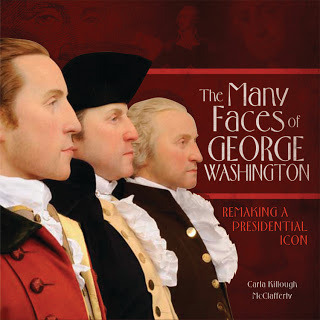
A teacher could use one short scene in my book The Many
Faces of George Washington: Remaking a Presidential Icon to read and
discuss in class-then go to the LOC website to search for related primary
source documents (suggestions below excerpt).
For example:
Excerpt from pages 98-99, The Many Faces of George
Washington: Remaking a Presidential Icon (Carolrhoda, 2011).
At noon, the
hooves of six white horses clattered on the cobblestones of Wall Street as they
pulled a white coach carrying one man. Fifty-seven-year-old George Washington
climbed out. Out of respect, the silent crowd removed their hats. Washington
removed his hat and bowed to the right and left as he moved through the crowd.
Nearing the building, he walked through a line of soldiers and was escorted
inside and took a seat in a mahogany armchair. Vice President John Adams told
Washington that members of Congress would accompany him as he took the oath of
office.
So more people
could witness the ceremony, the swearing in would take place on the second
floor balcony, which had been decorated with red and white stripped curtains.
Federal Hall had recently been remodeled using patriotic symbols. On the
balcony, the middle wrought-iron railing featured a design of thirteen arrows,
representing the thirteen states. The pediment above featured the image of an
eagle.
Washington stepped
onto the balcony wearing a ceremonial sword and dressed in the height of
fashion. He wore a linen shirt with pleated ruffles underneath his suit. His
waistcoat and jacket were made of the same brown fabric as his knee breeches.
For this formal occasion, his hair was pulled back in a braid, covered in white
powder then tucked into a black bag.
Robert Livingston,
the Chancellor of the State of New York, administered the oath of office.
Secretary of the Senate, Samuel Otis, held a huge Bible.
Washington placed
his hand on the Bible and said: "I do solemnly swear that I will
faithfully execute the office of President of the United States, and will to
the best of my ability, preserve, protect and defend the Constitution of the
United States."
Livingston raised the Bible slightly, and
Washington bent over and kissed it.
“Long live George Washington, the President
of the United States!” exclaimed Livingstone when he turned to the crowd.
“Huzza! Huzza! Huzza!” roared the
masses.
President George Washington bowed.
“Huzza! Huzza! Huzza!” they cheered.
Some were so overcome with emotion that they
could not speak. Tears of joy rolled down the cheeks of many members of
Congress and people in the crowd.
Library of Congress website
Go to the Library of Congress and search for:
1. Original U.S. Constitution,
which created the office of the President.
Find the oath of office in Article II, section 1. Note that George Washington was given the
honor to be the first person to sign the Constitution and his name appears at
the top. (You could also take a look at
the Articles of Confederation and the Bill of Rights.)

2. Federal Hall,
location of inauguration. See a 1790
hand colored image of the building.
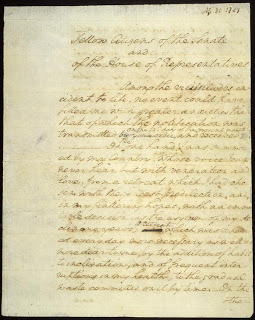
3. George
Washington’s inaugural address, April 30, 1789.
See and read Washington’s handwritten notes-the actual pages he held in
his hands as he addressed Congress that day.
By using and discussing the primary source documents from
the LOC, and my book (or another nonfiction book that deals with this topic) as a secondary source
document, a teacher accomplishes many of the CCSS Anchor Standards. With these few selections, a teacher can teach
reading, writing, research, speaking and listening skills, and language-and it
happens naturally and all at the same time.
Painless . . . really.
www.carlamcclafferty.com

books is using primary sources. There is
something wonderful about seeing actual documents or images related to what I’m
writing about. It makes the events
deeper, richer and more meaningful. I
use primary source documents to learn more about the topic I’m researching and
I look for ways to use them in my books.
Recently I took a class through the Library of Congress
Teaching with Primary Sources Program. Since I often write about historical topics, I
wanted to learn more about the collections at the Library of Congress (LOC). I was amazed at their massive online collections
which contain documents, maps, newspapers, images, sound recordings, sheet
music and much, much more. While
searching the LOC website I found myself getting lost in a fascinating world of
primary sources—a real treat for a nonfiction author.
Library of Congress Teaching with Primary Sources Program
Since the LOC places incredible primary sources at our
fingertips, I’ve thought a lot about how to use them in conjunction with my
books in order to accomplish the goals of the Common Core State Standards
(CCSS). These standards require using
nonfiction books not only in English class but in history, science and math class
too. This is good news to me because as I
write, I’m thinking of possible ways great teachers could use my books in various
content areas. In each subject area, I
want readers to take in what I’ve written about the topic, but I also want them
to use my books as a jumping off place to learn more about related topics.
A teacher could use one short scene in my book The Many
Faces of George Washington: Remaking a Presidential Icon to read and
discuss in class-then go to the LOC website to search for related primary
source documents (suggestions below excerpt).
For example:
Excerpt from pages 98-99, The Many Faces of George
Washington: Remaking a Presidential Icon (Carolrhoda, 2011).
At noon, the
hooves of six white horses clattered on the cobblestones of Wall Street as they
pulled a white coach carrying one man. Fifty-seven-year-old George Washington
climbed out. Out of respect, the silent crowd removed their hats. Washington
removed his hat and bowed to the right and left as he moved through the crowd.
Nearing the building, he walked through a line of soldiers and was escorted
inside and took a seat in a mahogany armchair. Vice President John Adams told
Washington that members of Congress would accompany him as he took the oath of
office.
So more people
could witness the ceremony, the swearing in would take place on the second
floor balcony, which had been decorated with red and white stripped curtains.
Federal Hall had recently been remodeled using patriotic symbols. On the
balcony, the middle wrought-iron railing featured a design of thirteen arrows,
representing the thirteen states. The pediment above featured the image of an
eagle.
Washington stepped
onto the balcony wearing a ceremonial sword and dressed in the height of
fashion. He wore a linen shirt with pleated ruffles underneath his suit. His
waistcoat and jacket were made of the same brown fabric as his knee breeches.
For this formal occasion, his hair was pulled back in a braid, covered in white
powder then tucked into a black bag.
Robert Livingston,
the Chancellor of the State of New York, administered the oath of office.
Secretary of the Senate, Samuel Otis, held a huge Bible.
Washington placed
his hand on the Bible and said: "I do solemnly swear that I will
faithfully execute the office of President of the United States, and will to
the best of my ability, preserve, protect and defend the Constitution of the
United States."
Livingston raised the Bible slightly, and
Washington bent over and kissed it.
“Long live George Washington, the President
of the United States!” exclaimed Livingstone when he turned to the crowd.
“Huzza! Huzza! Huzza!” roared the
masses.
President George Washington bowed.
“Huzza! Huzza! Huzza!” they cheered.
Some were so overcome with emotion that they
could not speak. Tears of joy rolled down the cheeks of many members of
Congress and people in the crowd.

Library of Congress website
Go to the Library of Congress and search for:
1. Original U.S. Constitution,
which created the office of the President.
Find the oath of office in Article II, section 1. Note that George Washington was given the
honor to be the first person to sign the Constitution and his name appears at
the top. (You could also take a look at
the Articles of Confederation and the Bill of Rights.)

2. Federal Hall,
location of inauguration. See a 1790
hand colored image of the building.
3. George
Washington’s inaugural address, April 30, 1789.
See and read Washington’s handwritten notes-the actual pages he held in
his hands as he addressed Congress that day.

By using and discussing the primary source documents from
the LOC, and my book (or another nonfiction book that deals with this topic) as a secondary source
document, a teacher accomplishes many of the CCSS Anchor Standards. With these few selections, a teacher can teach
reading, writing, research, speaking and listening skills, and language-and it
happens naturally and all at the same time.
Painless . . . really.
www.carlamcclafferty.com