Elizabeth Rusch's Blog, page 37
November 26, 2012
Googol On!
I had just given an evening program for families at a school
in Berkeley when a parent named Steven Birenbaum came up to tell me something
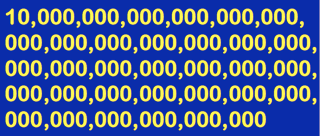
remarkable. During the presentation I had introduced my book G Is for Googol: A Math Alphabet Book by projecting this
inequality on the screen. (The slashed equal sign means "does not equal.")

No one who has tapped a computer keyboard in the past ten
years needs an explanation of the word on the right. The less-known word on the
left is the name for the number one followed by one hundred zeros and it appears
in the title of my book. Googol, the number, is of enduring interest to myself, to many children and adults who love thinking about big numbers, and to Steven
Birenbaum. He is the great-great nephew of Edward Kassner, the mathematician in
the story I had told about how this un-numberlike name had been
invented:
"A mathematician wrote a one with a hundred zeros after
it and showed it to his nine-year old nephew. 'What do you think we should call
this number?' he said. The nephew thought a minute and said, 'Googol!" I
have no idea why the mathematician asked the question or why the boy answered the way he
did, but his name stuck and ever since then we've called this giant number 'googol.'"
After speaking with Mr. Birenbaum I now know why the storied mathematician was seeking a fanciful name for this enormous number and I
have a pretty good idea of why the winning name was "googol."
The mathematician was Edward Kasner, who taught at Columbia University for 39
years during the first half of the 20th Century. He was looking for a striking
way to make a point about all whole numbers, no matter how large, because he
had been irked by the way people (even scientists) used the words "infinite"
and "infinitely" as synonyms for "enormous" or
"numerous." In a published lecture, Kasner observed ruefully that people commonly said things like, "It is so large that it is infinite."
Kasner wanted the world to know that no matter how large something may be, "large" cannot mean infinite!
I am reminded of my sixth grade teacher who said, "Tell me any number and
I'll tell you one bigger." Whatever number we proffered, he just appended "and
one" to it, and he had a bigger number. If you thought the biggest number was "gazillion," he would ask, "What about gazillion and one?" His point was that there is no such
thing as the biggest number. Infinity,
on the other hand, is not countable and is not a number. As I sometimes tell
upper elementary kids in presentations, "Infinity is not a number but
numbers are infinite."
Back to Kasner. He wanted an easily-remembered monicker for a gigantic number
so he could talk about it. He presented the challenge of naming it to his two
young nephews Milton and Edwin Sirotta during a walk in Palisades Park, near
Manhattan. As the story goes, Milton blurted out "Googol!"
A few years ago, when the internet company Google* was holding its initial public stock offering, the Wall Street Journal ran
a profile of Kasner by Carl Bialik. (You can read it here.) From the article I learned that some of Kasner's living
relatives believe that the two brothers should be given equal credit for a
collaborative effort. (A number that big can stand to have two namers, I
guess.) Denise Sirotta, daughter of Edwin, not only makes that case based on
family lore, but she sheds light on
the question of why "googol"? She says her father told her that Kasner
wanted "a word with a sound that had a lot of O's in it."
Think about it: "googol." Not only is the sound rich with O's but so
is the look. Notice those letters. Every one of them except the "l"
has an "O" in it (yep, even the "g's").
So, thanks to the serendipity of my encounter with Steven
Birenbaum, both of my public musings earlier in the evening—why did Kasner want
a name for this basically useless number and why did the boy(s) say
"googol"?— have been answered.
I have to mention one other thing about Kasner, which I
learned from the Wall Street Journal
article. The mathematician never had children but he was adored
by his nieces and nephews. It is said that on a walk with some of them in the
Palisades, the party encountered tea kettles and matches that he had hidden
under rocks and teabags that he had hung from trees. They stopped to make tea!
No wonder Kasner was described by Time magazine in 1940 as a mathematician who was
"distinguished but whimsical." What a noble combination!
Googol on!
* Google, the company, is said to have derived its name from
"googol," as an implicit reference to the enormous amount of information
on the internet. Whether of not the founders changed the spelling deliberately
or mistakenly is an open question. But there is no question that the company's
headquarter complex is named for another number that the Sirotta boy or boys
named: The Googleplex. A googolplex (note the spelling) is a one followed by a
googol zeros. Try writing them all.


November 21, 2012
Back to Reality

At the NBA dinner: "Who are you again?"
Last week was kind of surreal—three amazing days in New York
City, doing National Book Award-related events. I walked around much of the
time with this huge medal around my neck (they said we had to wear it—really!),
read on stage with some serious literary heavy hitters, even walked a red
carpet (a very short one) at the super-fancy black tie awards dinner. Okay, it
was mildly deflating when photographers asked, “Now, who are you?” (which I noticed
they didn’t do to Dave Eggers). But still, an unforgettable experience.
Driving home early the next morning, with two screaming kids
in the back seat, that’s when reality began to reassert itself. I guess the
good news is, when your job is to research and write nonfiction, reality is a
pretty good place to be. At least, it’s filled with stories as wild and
incredible as anything any novelist could invent.

Due out in Jan. 2013, Scholastic
My next book, aimed a bit younger than Bomb , will be Lincoln’s Grave Robbers , a true crime thriller about a bunch of Midwest counterfeiters who
decide it would be a good idea to steal Abraham Lincoln’s corpse. This was eleven
years after Lincoln’s death, and the gang was desperate to get their best
engraver out of the state pen. Their plan: bust into Lincoln’s tomb in
Springfield, steal the body, stash it under a bridge, and refuse to give it
back unless the government lets their partner out of jail. And the most amazing
thing of all is how close this crazy-sounding scheme came to working.

Would you trust these men? (Hint: they're grave robbers)
On top of the priceless plot, what makes this story great
from a writer’s point of view is that the sources are so rich. The top Secret
Service agent in Chicago discovered the plot from an informer, and wrote daily
reports on the case to his boss in Washington, D.C. (the boss didn’t believe a
word of it). And the caretaker of Lincoln Monument, a man who dedicated his
life to protecting this sacred place, saw the crime up-close and later wrote a
detailed memoir about it. There was even a Chicago
Tribune reporter lurking around the monument the night of the attempted
theft—he’d been tipped off that something big was going to happen, and was able
to write an eye-witness account of the showdown between cops and robbers.
This is one of those stories you just love telling kids. One
of the events last week was a “teen press conference” at the Brooklyn Public
Library, where students got to ask the five finalists questions about our books
and writing process. I was the one nonfiction guy up there with four fantastic
novelists, but the students were every bit as intrigued by true tales of atomic
espionage and grave robbing as they were by fictional plots!
A good reminder that in this line of work, getting back to
reality is not such a bad thing.


November 20, 2012
What Happens In Vegas....
When you read this, I will be in Las Vegas. I've kind of always wanted to go to Vegas. Even after seeing the movie LOST IN AMERICA. Maybe especially after seeing that movie.
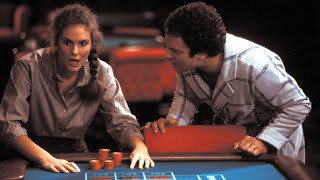
My husband, on the other, hand has not wanted to go to Las Vegas or more importantly, for me to go to Las Vegas. This may or may not have to do with the time he had to drag me away from a slot machine in Atlantic City after I won $13.00. Which was not long after we saw the movie and the words "nest egg" kept reverberating in his mind. Have you seen the movie? You should. It's Albert Brooks at his best, and Julie Hagerty, well. Take a look at the trailer, and then come back.
Right? It's really funny. But. I'm not going to Las Vegas to gamble (keep in mind I'm writing this on Friday in the comfort and safety of my own home). I'm going to the ALAN part of the NCTE conference. I'm thrilled to be part of it, honestly, not because it's in Las Vegas but because English teachers are some of my favorite people. Hi, Mrs. Thomas! Hi, Dr. Egolf (two of my high school English teachers).
I'm curious to hear if there will be any discussion in that set about the Common Core. I wonder if there are any English teachers who read I.N.K. who would be willing to comment about whether you and your colleagues will be using more nonfiction in your classrooms. One of my editors yesterday told me that a huge part of the Core is learning about point of view. That can be done in really interesting ways in nonfiction, can't it?
I'm really looking forward to my panel. On Tuesday afternoon (maybe while you're reading this) I'll be talking to teachers with the great Francisco Stork about "The Last Taboo in YA--Religion." I'll be talking about Charles and Emma: The Darwins' Leap of Faith, my YA about the Darwins' marriage of religion and science, and my new novel, Intentions, about Rachel, whose struggle with her faith is precipitated by her idol, her rabbi, crashing down off his pedestal in a most spectacular fashion. Intentions was recently listed in Booklist as one of this year's top ten books for youth with religious and spiritual themes. Here is the list. Notice there are both fiction and nonfiction titles.
Francisco and I have been compiling a list of YA books with religious and spiritual themes. Check on my website soon for the list, which we hope people will add to.


My husband, on the other, hand has not wanted to go to Las Vegas or more importantly, for me to go to Las Vegas. This may or may not have to do with the time he had to drag me away from a slot machine in Atlantic City after I won $13.00. Which was not long after we saw the movie and the words "nest egg" kept reverberating in his mind. Have you seen the movie? You should. It's Albert Brooks at his best, and Julie Hagerty, well. Take a look at the trailer, and then come back.

Right? It's really funny. But. I'm not going to Las Vegas to gamble (keep in mind I'm writing this on Friday in the comfort and safety of my own home). I'm going to the ALAN part of the NCTE conference. I'm thrilled to be part of it, honestly, not because it's in Las Vegas but because English teachers are some of my favorite people. Hi, Mrs. Thomas! Hi, Dr. Egolf (two of my high school English teachers).
I'm curious to hear if there will be any discussion in that set about the Common Core. I wonder if there are any English teachers who read I.N.K. who would be willing to comment about whether you and your colleagues will be using more nonfiction in your classrooms. One of my editors yesterday told me that a huge part of the Core is learning about point of view. That can be done in really interesting ways in nonfiction, can't it?
I'm really looking forward to my panel. On Tuesday afternoon (maybe while you're reading this) I'll be talking to teachers with the great Francisco Stork about "The Last Taboo in YA--Religion." I'll be talking about Charles and Emma: The Darwins' Leap of Faith, my YA about the Darwins' marriage of religion and science, and my new novel, Intentions, about Rachel, whose struggle with her faith is precipitated by her idol, her rabbi, crashing down off his pedestal in a most spectacular fashion. Intentions was recently listed in Booklist as one of this year's top ten books for youth with religious and spiritual themes. Here is the list. Notice there are both fiction and nonfiction titles.
Francisco and I have been compiling a list of YA books with religious and spiritual themes. Check on my website soon for the list, which we hope people will add to.
November 19, 2012
The Tragic, the True, and the Weird
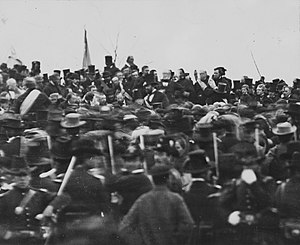
So, this being the 149th anniversary of the day when a beleaguered president spoke briefly to folks assembled at "a great battlefield of" that ghastly, pestilential war that was currently shredding the nation and nerves of its people, I ought to be writing about Lincoln today. And about how stunningly he was portrayed in a certain film which I saw Saturday morning. Or maybe I could be quibbling about said film: General Grant's clean boots and uniform at Appomattox – [No! Burst my bubble, why doncha, Mr. Spielberg! I'm sitting there thinking: Everyone knows Grant was head-to-toe muddy that day from the battlefield! then 'Get over yourself – It's a movie, not a term paper. Sheesh.] And the stalwart Mrs. Keckley – would Mrs. Lincoln's African American dressmaker and confidante have been seated next to the First Lady? at the US Senate? in 1865?
But, anyway, anyway, I'm not writing about the wily & charming Man of Sorrows today. [For a fine discussion, though, of the historical aspects of the Film, there's a fine essay HERE.] Or the fact that today marks the 269th anniversary of the birth of frontier soldier, George Rogers Clark, as rugged & then some as his kid brother William, the explorer.
Or that James A. Garfield, US President No. 20, would have been 181 years old today if still another assassin hadn't shot him and his doctors had had a working knowledge of soap and germ theory.
Or that Teddy Roosevelt's youngest son Quentin, came into the world on this day in 1897, only to leave it twenty years later, a casualty of the air war over the Western Front.
Nope, not writing about any of that. Instead I wanted to tell you about hauling my sleep-deprived self out of bed way too early last Friday morning to go talk to some of the Missouri teachers attending their association's annual conference in Kansas City. Lucky for them, coming to MY session because they were informed to a fare-thee-well about our blog and about I.N.K., thanks to Vicki Cobb, bless her, sending me a pile o' pretty blue iNK Think Tank postcards. They rode in the heavy suitcase along with a thick stack of nonfiction picture books, including Jim Murphy's Blizzard , and Vicki Cobb's Open Your Eyes. These the teachers looked at [along with my handout sheet, introducing them to I.N.K. authors & their books ] and passed around while I gassed away at them about historical literacy [an excellent essay about that HERE. ] and about the uses of trade nonfiction books in the classroom [a far out essay about THAT HERE]. And most of all, I talked with them about the virtues of knowing history, despite the fact that some blockhead educational planners appear to deem such knowledge to be less important than math, reading, and writing, can you believe it? After all, what are people to read and write about; how are citizens to think and feel about their nation without a knowledge of what has been done before? The reasons decisions were made, actions were taken? By whom? To what ends?
After all history is no mere catalogue of factoids – although, let me tell you that I've been working on an historical Weird But True book for the National Geographic and I'm not suffering from a want of human weirdness. I mean, don't you love knowing that the fashionistas of medieval Japan painted their teeth black? That Hannibal of ancient Carthage snake-bombed his enemies with pots full of poisonous reptiles? That in 1415, when the Chinese emperor was confronted with his first sight of an African giraffe, he and his wise men identified it as a unicorn?
Anyway, anyway, history's more than a roster of battles and dead people's birthdays. It's the saga of human behavior, your basic cockeyed caravan of role models and cautionary tales. It's EVERYTHING, all that we have said and dared to do. It's a "guide to navigation in perilous times," so said David McCullough. "History is who we are and why we are the way we are."
And it's a boatload of stories: Of TR whispering "Poor Quinnikins," on hearing that his youngest had been shot down behind enemy lines in the summer of 1918. That the old lion of an ex-president/soldier/explorer died not long after of hard living and a broken heart. Of his old political enemy, big-bellied Wm. Howard Taft, weeping in the cold by TR's grave.
Of James A. Garfield surviving a fatherless, poverty-stricken childhood to become a college president by the time he was 26 years old.
Of Colonel George Rogers Clark leading his half-starved Kentucky "Long Knives" through chest-deep icy water, on their Kaskaskia>Vincennes campaign, 1778-79.
Excellent movie fodder, Mr. Spielberg.


November 16, 2012
Painting and Writing Interesting Nonfiction for Kids
I love “By the Book”, a semi-new section of the Sunday New
York Times Book Review. Each week, a different author shares his or her
favorite books, the books on their nightstand, who they’d like to eat a meal
with, and various questions on writing ~ and each week, I manage to glean a few
useful gems from each author.
The author profiled last weekend was Orhan Pamuk; author of
“The Innocence of Objects” and “Silent House”. What caught my attention was the interview question: “How has your
training as a painter informed the way you write and read your books?” When I read that, I knew I struck
gold!
Orhan’s response: “As I wrote in my autobiographical book,
“Istanbul”, and now in “The Innocence of Objects”, I was raised to be a
painter. But when I was 23-years-old, one mysterious screw got loose in my head
and I switched to writing novels. I still enjoy the pleasures of painting. I am
a happier person when I paint, but I feel that I am engaged more deeply with
the world when I write. Yes, painting and literature are “sister arts” and I
taught a class about it at Columbia.”
Orhan points out the five things that the painter in him
taught the writer in him:
Don’t start to write before you have a strong
sense of the whole composition, unless you are writing a lyrical text or a
poem.
Don’t search for perfection and symmetry --- it
will kill the life of the work.
Obey the rules of point of view and perspective
and see the world through your characters’ eyes --- but it is permissible to
break this rule with inventiveness.
Like Van Gogh or the neo-Expressionist painters,
show your brushstrokes! The reader will enjoy observing the making of the novel
if it is made a minor part of the story.
Try to identify the accidental beauty where
neither the mind conceived of nor the hand intended any. The writer in me and
the painter in me are getting to be friendlier every day. That’s why I am now
planning novels with pictures and picture books with texts and stories.
Read more of the interview here.
Now, tell me that you didn’t grab an inspirational gem from
that.
While writing my manuscript the past year, I’ve been aching to paint. I even have a board on my Pinterest page titled “Things that
make me want to paint”. If I look it from Orhan’s perspective, I shouldn’t be
berating myself for not painting… on canvas --- guess I was painting on Word.
Later in the day last Sunday, I watched part two of the
David McCullough interview with Morley Safer on 60-Minutes. Truth be told, I
have a little author crush on David. The Great Bridge helped me immensely
while writing my Emily Roebling chapter. Turns out David originally started
studying painting in college. He even drew a picture of Another gem!
The book "The Writer's Brush: Paintings, Drawings, and Sculpture by Writers", written by Donald Friedman, is filled with many paintings
by our favorite writers, but I had never made that writing/painting connection
that Orhan pointed out.
So, now that my manuscript has been sent in and another looms
in the future, I think I will try to switch to some canvas work. Question is: acrylic
or oil?

York Times Book Review. Each week, a different author shares his or her
favorite books, the books on their nightstand, who they’d like to eat a meal
with, and various questions on writing ~ and each week, I manage to glean a few
useful gems from each author.
The author profiled last weekend was Orhan Pamuk; author of
“The Innocence of Objects” and “Silent House”. What caught my attention was the interview question: “How has your
training as a painter informed the way you write and read your books?” When I read that, I knew I struck
gold!
Orhan’s response: “As I wrote in my autobiographical book,
“Istanbul”, and now in “The Innocence of Objects”, I was raised to be a
painter. But when I was 23-years-old, one mysterious screw got loose in my head
and I switched to writing novels. I still enjoy the pleasures of painting. I am
a happier person when I paint, but I feel that I am engaged more deeply with
the world when I write. Yes, painting and literature are “sister arts” and I
taught a class about it at Columbia.”
Orhan points out the five things that the painter in him
taught the writer in him:
Don’t start to write before you have a strong
sense of the whole composition, unless you are writing a lyrical text or a
poem.
Don’t search for perfection and symmetry --- it
will kill the life of the work.
Obey the rules of point of view and perspective
and see the world through your characters’ eyes --- but it is permissible to
break this rule with inventiveness.
Like Van Gogh or the neo-Expressionist painters,
show your brushstrokes! The reader will enjoy observing the making of the novel
if it is made a minor part of the story.
Try to identify the accidental beauty where
neither the mind conceived of nor the hand intended any. The writer in me and
the painter in me are getting to be friendlier every day. That’s why I am now
planning novels with pictures and picture books with texts and stories.
Read more of the interview here.
Now, tell me that you didn’t grab an inspirational gem from
that.
While writing my manuscript the past year, I’ve been aching to paint. I even have a board on my Pinterest page titled “Things that
make me want to paint”. If I look it from Orhan’s perspective, I shouldn’t be
berating myself for not painting… on canvas --- guess I was painting on Word.
Later in the day last Sunday, I watched part two of the
David McCullough interview with Morley Safer on 60-Minutes. Truth be told, I
have a little author crush on David. The Great Bridge helped me immensely
while writing my Emily Roebling chapter. Turns out David originally started
studying painting in college. He even drew a picture of Another gem!
The book "The Writer's Brush: Paintings, Drawings, and Sculpture by Writers", written by Donald Friedman, is filled with many paintings
by our favorite writers, but I had never made that writing/painting connection
that Orhan pointed out.
So, now that my manuscript has been sent in and another looms
in the future, I think I will try to switch to some canvas work. Question is: acrylic
or oil?
November 15, 2012
Why Do History Books Win So Many Awards?
While
I was presenting at a recent conference, I tossed out a question I’ve
been thinking about for a long time: Why don’t science titles seem to win the
BIG awards in children’s literature as often as social studies titles? It led
to an interesting discussion, so I thought INK readers might like to join the
conversation.
Since
I’m a scientist, here’s my data. I tallied Newbery and Caldecott winners since 1995.
The Sibert was created in 2001, so I tallied the winners since its inception.
Newbery
Medal
Caldecott
Medal
Sibert
Medal
Total
biography
0
2
6
8
history
0
1
5
6
science
0
0
1
1
Newbery
Honor
Caldecott
Honor
Sibert
Honor
Total
biography
3
10
16
29
history
7
0
9
16
science
1
3
7
11
I
have to admit that when I’ve read through these lists in the past, I came away
with the impression that history titles had science books beat hands down. But
a closer look shows that history is only the clear leader among Newbery Honors.
Biographies are the big winners overall with a total score of 37 (8 medalists,
29 honors). While history (22 overall) and STEM (12 overall) trail behind.
Next,
I took a closer look at the people featured in the biographies. It turns out
that 23 are key historical figures, and 8 are scientists. The rest are visual artists
or musicians.
Combining
all these figures, the totals work out to 45 winning history titles and 20 winning
science books. In other words, history titles win the big awards more than
twice as often as science titles. Why is that?
Frankly,
I don’t have an answer, so I’d love to hear any thoughts you have.


I was presenting at a recent conference, I tossed out a question I’ve
been thinking about for a long time: Why don’t science titles seem to win the
BIG awards in children’s literature as often as social studies titles? It led
to an interesting discussion, so I thought INK readers might like to join the
conversation.
Since
I’m a scientist, here’s my data. I tallied Newbery and Caldecott winners since 1995.
The Sibert was created in 2001, so I tallied the winners since its inception.
Newbery
Medal
Caldecott
Medal
Sibert
Medal
Total
biography
0
2
6
8
history
0
1
5
6
science
0
0
1
1
Newbery
Honor
Caldecott
Honor
Sibert
Honor
Total
biography
3
10
16
29
history
7
0
9
16
science
1
3
7
11
I
have to admit that when I’ve read through these lists in the past, I came away
with the impression that history titles had science books beat hands down. But
a closer look shows that history is only the clear leader among Newbery Honors.
Biographies are the big winners overall with a total score of 37 (8 medalists,
29 honors). While history (22 overall) and STEM (12 overall) trail behind.
Next,
I took a closer look at the people featured in the biographies. It turns out
that 23 are key historical figures, and 8 are scientists. The rest are visual artists
or musicians.
Combining
all these figures, the totals work out to 45 winning history titles and 20 winning
science books. In other words, history titles win the big awards more than
twice as often as science titles. Why is that?
Frankly,
I don’t have an answer, so I’d love to hear any thoughts you have.
November 13, 2012
Connecting to Nature's Rhythms
Jim Murphy's recent post connected us to the familiar and mundane aspects of our daily lives, those frustrating moments that can crush our creativity. When we can get away from our routines and experience something different, our creativity can be inspired and renewed.
This Saturday, my husband and I traveled from our home in Missoula, MT, where the temperature was 19 degrees, through Salt Lake City, where the snow fell fast enough to delay our flight by 1 1/2 hours, through sunny LA and on to the Garden Isle of Kauai'i, where it rarely gets below 75 degrees or over 84. Jeans are traded in for shorts and shoes for sandals. The phone doesn't ring, and meals become simple. The seashore calls, and the warm breeze welcomes. Nature is up close and personal.
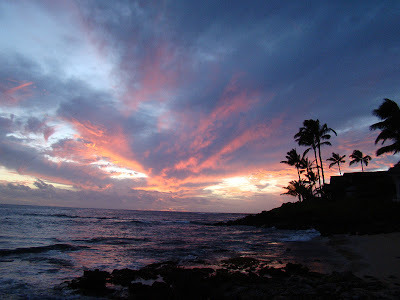 The natural world is both my personal beat and my professional one, so I really 'dig' this place. I believe that when we are close to nature we are closer to our fundamental, creative selves. On this island, residents and tourists alike are drawn to the natural rhythms of sun and sea, moon and tide. Every evening, people flock to the sea wall on the west side of the island in hopes of seeing a great sunset.
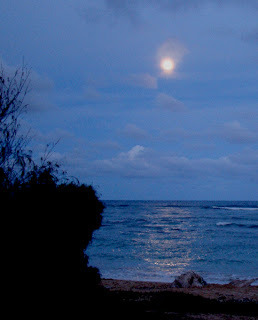 And when the full moon rises out of the ocean, families and neighbors gather in the park to watch as the moon spreads its silver mantle over the dancing waves. No wonder this island is home to many artists and writers.
I don't write about Hawai'i, but I do renew my creative batteries here, not only because of the closeness of nature, but also because being here brings a shift in my daily life, and being jogged out of our routines helps nudge our creativity. At home in Montana, summer days stretch on deep into what is black night in Hawaii, and winter days end while the tropical sun is still shining. Here in Hawaii, the record high and low temperatures throughout the year don't vary as much as they do over a normal 24 hour span at home. Everything is different, and the differences bring about a shift in my being. I do work here--one of the perks of being a writer is that you can carry out your craft wherever you are--but I try to keep that to a minimum. I want those batteries to be chock full of creative energy when I return to the deep, dark cold of winter, when writing is the one thing I can do, no matter what nature has to offer my spirit.

This Saturday, my husband and I traveled from our home in Missoula, MT, where the temperature was 19 degrees, through Salt Lake City, where the snow fell fast enough to delay our flight by 1 1/2 hours, through sunny LA and on to the Garden Isle of Kauai'i, where it rarely gets below 75 degrees or over 84. Jeans are traded in for shorts and shoes for sandals. The phone doesn't ring, and meals become simple. The seashore calls, and the warm breeze welcomes. Nature is up close and personal.
 The natural world is both my personal beat and my professional one, so I really 'dig' this place. I believe that when we are close to nature we are closer to our fundamental, creative selves. On this island, residents and tourists alike are drawn to the natural rhythms of sun and sea, moon and tide. Every evening, people flock to the sea wall on the west side of the island in hopes of seeing a great sunset.
 And when the full moon rises out of the ocean, families and neighbors gather in the park to watch as the moon spreads its silver mantle over the dancing waves. No wonder this island is home to many artists and writers.
I don't write about Hawai'i, but I do renew my creative batteries here, not only because of the closeness of nature, but also because being here brings a shift in my daily life, and being jogged out of our routines helps nudge our creativity. At home in Montana, summer days stretch on deep into what is black night in Hawaii, and winter days end while the tropical sun is still shining. Here in Hawaii, the record high and low temperatures throughout the year don't vary as much as they do over a normal 24 hour span at home. Everything is different, and the differences bring about a shift in my being. I do work here--one of the perks of being a writer is that you can carry out your craft wherever you are--but I try to keep that to a minimum. I want those batteries to be chock full of creative energy when I return to the deep, dark cold of winter, when writing is the one thing I can do, no matter what nature has to offer my spirit.