Elizabeth Rusch's Blog, page 20
October 15, 2013
It's All About George Clooney
This month on I.N.K. we're writing about George Clooney, and how the adoption of George Clooney standards by most US states affects the way we write our books, and I guess the way teachers use our books to teach. Well, I have to admit I'm a little puzzled by this. I mean, I think about George Clooney as much as the next person while writing my books. I mean, who can forget him in E.R.?

Not I, I tell you that. I mean, it's quite often that when I'm researching my current project, or thinking about my next book, I remember that moment when he tells Nurse Carol how much he loves her, something about the smell of her on the pillow next to him, remember...? I hope that when teachers teach significant George Clooney moments, they teach that.
But lately, when I'm thinking about how to keep my book moving, how to make it interesting to kids while also fit into the George Clooney standards--nah, I don't actually think about George Clooney at THOSE moments. At those moments I think about plot arcs, and details that make me go, "oh wow," and that kind of thing. Maybe I should think about how teachers will use my book to teach to the GC standards at those times, though. Like in Gravity, when Matt tells Ryan to sip not gulp. That's a good standard when you're running out of CO2 I guess, isn't it? And maybe also when you're writing about something hard? Sip don't gulp.
To tell the truth, usually I think about George when I'm stuck. Or worried that not enough people will read my book. Then I kind of wander into all kinds of dark places, like some of those weird scenes in Men Who Stare at Goats.
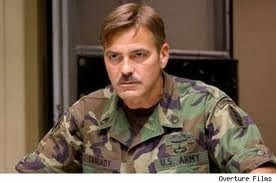
And I think, "well, it was a weird movie, but some people liked it, and I sure did, and I'm proud of those filmmakers for telling that story, no matter how quirky it was. And that movie was at least in part non-fiction, so that's cool and I wonder if anybody did actually walk through a wall."
By the time I'm done with that line of thought, I've either come up with a good idea for the problem I was trying to solve, or I go make dinner.
So, in sum, I'd just like to say that I don't actually think about George Clooney to do my work, but more as a distraction. And if it turns out that he likes my books, or that teachers can really use them for the George Clooney standards, well then I'm really hap-- what? -- It's not George Clooney Standards??--
It's Common Core Standards???!!
Holy Headlines, Batman. I need a superhero to save this post.
The thing is, I'm not a teacher, never been one. I've been told my books are perfect for Common Core. But I don't know exactly how I'd use my books to teach the Common Core. And I'm not even sure if it's a good thing, or a bad thing. Of course I think that anything that gets kids to read more nonfiction is a good thing. To read more at all, is a great thing. I just hope that CC is not a flavor of the month, or that it turns out to be more work for teachers and less help to kids like No Child Left Untested has been.
But I don't know. This is not my expertise. So here's my plan: I'm going to keep writing books to the best of my ability. Books about subjects that make me (and I hope Mr. Clooney) go WOW. And I will leave the Common Core stuff to the experts.
But let me say this: other people here on I.N.K. seem to have good thoughts about and a good understanding of the Common Core. So please read the other really good columns about Common Core here on I.N.K.
And clearly, I better read my email more carefully.
Yikes. Come to think of it, I hope my editor actually did agree to my new picture book about Robert Redford.


Not I, I tell you that. I mean, it's quite often that when I'm researching my current project, or thinking about my next book, I remember that moment when he tells Nurse Carol how much he loves her, something about the smell of her on the pillow next to him, remember...? I hope that when teachers teach significant George Clooney moments, they teach that.
But lately, when I'm thinking about how to keep my book moving, how to make it interesting to kids while also fit into the George Clooney standards--nah, I don't actually think about George Clooney at THOSE moments. At those moments I think about plot arcs, and details that make me go, "oh wow," and that kind of thing. Maybe I should think about how teachers will use my book to teach to the GC standards at those times, though. Like in Gravity, when Matt tells Ryan to sip not gulp. That's a good standard when you're running out of CO2 I guess, isn't it? And maybe also when you're writing about something hard? Sip don't gulp.
To tell the truth, usually I think about George when I'm stuck. Or worried that not enough people will read my book. Then I kind of wander into all kinds of dark places, like some of those weird scenes in Men Who Stare at Goats.

And I think, "well, it was a weird movie, but some people liked it, and I sure did, and I'm proud of those filmmakers for telling that story, no matter how quirky it was. And that movie was at least in part non-fiction, so that's cool and I wonder if anybody did actually walk through a wall."
By the time I'm done with that line of thought, I've either come up with a good idea for the problem I was trying to solve, or I go make dinner.
So, in sum, I'd just like to say that I don't actually think about George Clooney to do my work, but more as a distraction. And if it turns out that he likes my books, or that teachers can really use them for the George Clooney standards, well then I'm really hap-- what? -- It's not George Clooney Standards??--
It's Common Core Standards???!!
Holy Headlines, Batman. I need a superhero to save this post.

The thing is, I'm not a teacher, never been one. I've been told my books are perfect for Common Core. But I don't know exactly how I'd use my books to teach the Common Core. And I'm not even sure if it's a good thing, or a bad thing. Of course I think that anything that gets kids to read more nonfiction is a good thing. To read more at all, is a great thing. I just hope that CC is not a flavor of the month, or that it turns out to be more work for teachers and less help to kids like No Child Left Untested has been.
But I don't know. This is not my expertise. So here's my plan: I'm going to keep writing books to the best of my ability. Books about subjects that make me (and I hope Mr. Clooney) go WOW. And I will leave the Common Core stuff to the experts.
But let me say this: other people here on I.N.K. seem to have good thoughts about and a good understanding of the Common Core. So please read the other really good columns about Common Core here on I.N.K.
And clearly, I better read my email more carefully.
Yikes. Come to think of it, I hope my editor actually did agree to my new picture book about Robert Redford.


October 14, 2013
A Look at Common Core Standard #6 (and some friends!)
Note: I can write a book, but I can't figure out why the print size has changed periodically throughout this post. Sorry for the visual disruption!
* * * * *
Whether it’s for early elementary or high school, concerning Literature, Informational Text,
History/Social Studies, or Science and Technical Studies, Common Core Standard Six basically assesses how
point of view or purpose shapes the content and style of a text.
I thought it might be interesting for some
educators to hear about how an author (me) dealt with this issue (or standard) for
two of my books.
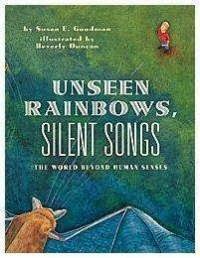
Unless a nonfiction book is memoir, it is typically
written in third person. Unseen
Rainbows, Silent Songs was my first book and I wrote it in second person. Many reviews mentioned that this was an
interesting, effective, and unusual choice.
I didn’t do it to be unusual; I didn’t know any better.
Or, let’s say I did it because it seemed like the
best approach to the material. When you think about it, the point of view an
author chooses is usually so she can accomplish the purpose she has set out for the book. As
mentioned in last month’s blog, I wrote Unseen Rainbows because I wanted kids
to understand that our world was just part of a whole world of colors and
smells and sounds dancing beyond the threshold of our senses. I did so by creating vignettes of animals’
lives in this other world--from the rattlesnake who hunts with heat vision to the battles
between bats and prey that are as loud as jackhammers but at a frequency too
high for us to hear.
I worked
hard to create a picture of this strange, exciting world. But it also seemed
essential to anchor what happened outside our “world” by comparing it to our
own. Even though the book begins with a
picture of a little boy relaxing in the country night without a clue of the
mysteries surrounding him, he was just my stand-in, my symbolic human presence. My text was addressed to the reader. And I wrote about your senses, not human
senses, to bring you, my audience, into the story beside the rest of these
creatures.
If a
teacher wanted to use Unseen Rainbows, Silent Songs to concentrate on Standard Six in both
Informational Text and Science, here are some ideas:
1. Read aloud
the text on page 12, written primarily in second person. Then ask your students: What words would you use to describe this passage?
How did it made you feel? What did it make you think about?
2. Read the
section again,but now change the second person to third person singular or
plural. If you want to use this as a
writing exercise, ask your students to transpose the text from second to third. Then ask
them: How do the passages feel different? Which do you like better? Why?
3. Point
out that the text about the animals is in third person, but the primary
narrative is in second person. Ask the kids for theories about why the author
chose this voice and what effect she hoped to achieve. (See the answer above.)
4. For further enrichment, read aloud the section about the rattlesnake on page 20. Then reread this section, transposing it into
past tense. Or, have your students do
this as a written exercise (CCSS ELA Writing #1) Then ask them: Which version do
you prefer? Why? How does the change in
tense make you feel? Why do they think
the author decided to write in present tense (making the story feel more
immediate and dramatic, strengthening the connection between readers and the
material, which increases the change they will remember and learn).

Fast
forward many years and I wrote It’s a Dog’s Life. In many ways, my interests and goals for this
book were the same. I wanted kids to marvel
at the realization that the beloved pooch sharing their couch was living in a
very different world than they were. This time, I wrote the book in first person and Joe, my mutt narrator, directly
addresses the audience. It’s a variation
on the theme, making the text even more immediate (and adding a few wrinkles
I’ll address in a moment).
If you
want to use It’s a Dog’s Life to work on Standard Six in both Informational Text
and Science:
1. Pick some
straightforward informational text about dogs to read aloud. A short example could be the introductory
paragraph about dogs on http://animals.nationalgeographic.com/animals/mammals/domestic-dog/#close-modal.
Then read aloud the first two spreads of It’s a Dog’s Life. (A longer option is to first
read the paragraphs on dogs’ senses of smell, sight, and hearing at http://www.petplace.com/dogs/just-for-kids-your-dog-s-senses/page1.aspx then the spreads in It’s a Dog’s Life that
cover the same information).
2. While making a list of chart of your students' comments to refer back to, ask the kids: Which version do you like better?
Why? How did the style of your preferred text contribute to your liking it better? Did you feel that this point of view helped you understand the information better? Feel more interested? Were there other advantages of one approach more than the other?
3. Finally
ask your students: Why do you think
each author chose their point of view?
What effect did he or she hope it would create? Did it work?
5. For a
little enrichment, point out that the Library of Congress classified It's a Dog's Life as nonfiction (SF426.5), which is what the author intended, but some people might not agree. Create a chart and have your students suggest
points to support the statement that it is nonfiction (including the LOC
classification, the author’s note in the bibliography, the cover’s statement,
“Just the facts, none of the fleas, etc., every fact was researched and
doublechecked (I swear!), etc.;” and arguments that it is fiction (dogs can’t
speak English, Joe is a made-up character, etc.).
Ask if there could be a third possibility: Can both be true at the same time?
6. Your
students could turn this exploration into an essay supported with quotations and
by citing specific examples (CCSS ELA Writing #1, 2, 4); a class debate (CCSS ELA
Speaking 4, 5); or a podcast in which students record their points-of view (CCSS ELA
Writing #1, 2, 4, 6).

October 11, 2013
Pairing Fiction and Nonfiction: A Common Core Pleasure
It
may seem strange to start a post for a nonfiction blog this way, but I confess
that when I read for pleasure, I usually choose fiction. One of my very
favorite things in the whole world is curling up with a good novel. So as I was
exploring the Common Core website in hopes of finding an idea for this post, I latched onto the ninth "anchor reading standard." It calls for
students to analyze how two or more texts address similar themes or topics.
Asking students to compare and contrast different texts or genres (fiction and
nonfiction, for example) is not a new idea, of course. But it gave me the
perfect excuse to assign myself a work of historical fiction I’ve been meaning
to read for a while, Chains by Laurie
Halse Anderson.
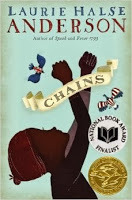 If only all assignments were this gratifying! Chains is
a gripping, fascinating story, and even if I had been totally unfamiliar with
the subject matter I still could not have put it down. But my appreciation and
understanding of the novel were deepened by my familiarity with some of the subjects Anderson explores: the day-to-day lives of enslaved African Americans
in the 18th century, the destructive relationship between slave
owner and slave, and the irony of waging a war based on the revolutionary
ideals of “life, liberty, and the pursuit of happiness” at the same time people
were being bought and sold. They are topics I address in my nonfiction book, Master George’s People.
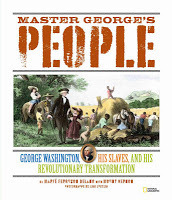 Because
historical records document that a great many of George Washington’s slaves ran
away, I could confidently claim in Master
George that Washington’s “people,” as he called them, “yearned to live
their lives as free men and women.” Unfortunately, however, these people left no written accounts that we know of. Very few of them could read or write. So without evidence to back it up, I couldn't say how any of these men and women personally felt about being enslaved. Novelists, thankfully, are free to let their imaginations and their pens roam beyond the historical record. In Chains, Anderson's fictional heroine, Isabel, tells us just how it feels to suffer the indignities of slavery, to ache for freedom.
And because Anderson makes us care about Isabel, we suffer and ache—and hope
and rebel—with her.
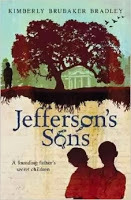 Another wonderful historical novel I recommend pairing with Master George’s People is
Jefferson’s Sons: A Founding Father’s Secret Children
by Kimberly Brubaker Bradley. This moving, impeccably
Another wonderful historical novel I recommend pairing with Master George’s People is
Jefferson’s Sons: A Founding Father’s Secret Children
by Kimberly Brubaker Bradley. This moving, impeccably
researched book explores what live was like for the enslaved people owned—and fathered—by the author of the Declaration of Independence. Like Chains—and, I hope, Master George—it raises fundamental questions about equality and
freedom and the contradictions inherent in our nation's founding.
In a recent column in the Huffington Post, Vicki Cobb said that the Common Core standards are not in our books, but in the way our books are used. Pairing narrative nonfiction with top-notch historical fiction is an excellent way to use both. For more suggestions on matching fiction with nonfiction in
middle grade classrooms, check out this Nerdy Book Club blog post by Susan Dee. What are your
favorite fiction/nonfiction pairings? I hope you'll leave a comment and let me know. I’d
love to include them in a future post.
may seem strange to start a post for a nonfiction blog this way, but I confess
that when I read for pleasure, I usually choose fiction. One of my very
favorite things in the whole world is curling up with a good novel. So as I was
exploring the Common Core website in hopes of finding an idea for this post, I latched onto the ninth "anchor reading standard." It calls for
students to analyze how two or more texts address similar themes or topics.
Asking students to compare and contrast different texts or genres (fiction and
nonfiction, for example) is not a new idea, of course. But it gave me the
perfect excuse to assign myself a work of historical fiction I’ve been meaning
to read for a while, Chains by Laurie
Halse Anderson.
 If only all assignments were this gratifying! Chains is
a gripping, fascinating story, and even if I had been totally unfamiliar with
the subject matter I still could not have put it down. But my appreciation and
understanding of the novel were deepened by my familiarity with some of the subjects Anderson explores: the day-to-day lives of enslaved African Americans
in the 18th century, the destructive relationship between slave
owner and slave, and the irony of waging a war based on the revolutionary
ideals of “life, liberty, and the pursuit of happiness” at the same time people
were being bought and sold. They are topics I address in my nonfiction book, Master George’s People.
 Because
historical records document that a great many of George Washington’s slaves ran
away, I could confidently claim in Master
George that Washington’s “people,” as he called them, “yearned to live
their lives as free men and women.” Unfortunately, however, these people left no written accounts that we know of. Very few of them could read or write. So without evidence to back it up, I couldn't say how any of these men and women personally felt about being enslaved. Novelists, thankfully, are free to let their imaginations and their pens roam beyond the historical record. In Chains, Anderson's fictional heroine, Isabel, tells us just how it feels to suffer the indignities of slavery, to ache for freedom.
And because Anderson makes us care about Isabel, we suffer and ache—and hope
and rebel—with her.
 Another wonderful historical novel I recommend pairing with Master George’s People is
Jefferson’s Sons: A Founding Father’s Secret Children
by Kimberly Brubaker Bradley. This moving, impeccably
Another wonderful historical novel I recommend pairing with Master George’s People is
Jefferson’s Sons: A Founding Father’s Secret Children
by Kimberly Brubaker Bradley. This moving, impeccablyresearched book explores what live was like for the enslaved people owned—and fathered—by the author of the Declaration of Independence. Like Chains—and, I hope, Master George—it raises fundamental questions about equality and
freedom and the contradictions inherent in our nation's founding.
In a recent column in the Huffington Post, Vicki Cobb said that the Common Core standards are not in our books, but in the way our books are used. Pairing narrative nonfiction with top-notch historical fiction is an excellent way to use both. For more suggestions on matching fiction with nonfiction in
middle grade classrooms, check out this Nerdy Book Club blog post by Susan Dee. What are your
favorite fiction/nonfiction pairings? I hope you'll leave a comment and let me know. I’d
love to include them in a future post.
October 10, 2013
On the Value of Visuals
Art is the representation, science the explanation, of the same reality. -- Herbert Read, quoted at the top of the rubric for aligning CC Anchor Standards for Reading with Art Interpretation, from DePaul University, link at the end of this post.

As an illustrator and science comic creator, I wanted to know what the Anchor Standards for Reading: Informational Text said about visuals in books. Here it is:
English Language Arts Standards >> College and Career Readiness Anchor Standards for Reading >> 7
CCSS.ELA-Literacy.CCRA.R.7 : Integrate and evaluate content presented in diverse media and formats, including visually and quantitatively, as well as in words.
Well, that sounds great! The overall standard (Anchor Standard 7) is promising, but I wanted to know how this broke down in terms of learning objectives at grade level. What I found concerned me.
Below, I quote the standards for each grade level that refer to illustrations and other visual media, give my interpretation of their implications, and add a reference to a book that I think exemplifies the vital importance of "reading" visuals as well as text.
The Common Core language is in bf Roman, and my comments appear in italics.
Kindergarten/ Craft and Structure
CCSS.ELA-Literacy.RI.K.5: Identify the front cover, back cover, and title page of a book
CCSS.ELA-Literacy.RI.K.6: Name the author and illustrator of a text and define the role of each in presenting the ideas or information in a text.
Visual elements are explored here as tools to understanding what a book is and where it comes from.
Integration of Knowledge and Ideas
CCSS.ELA-Literacy.RI.K.7: With prompting and support, describe the relationship between illustrations and the text in which they appear (e.g., what person, place, thing, or idea in the text an illustration depicts.)
This standard reflects functionality of illustration only, does not reflect criteria important in children’s literature in which illustrations are expected to enhance, not simply reflect text, and in many cases tell their own parallel but closely integrated story.

Monsieur Marceau: Actor Without Words by Leda Schubert, illustrations by Gérard DuBois
Grade 1/Craft and Structure
CCSS.ELA-Literacy.RI.1.6 Distinguish between information provided by pictures or other illustrations and information provided by the words in a text.
This is a key analysis, but I’m not sure the standards and I are on the same page. Once again, the illustrated representation of the information and story seems to be undervalued.
Integration of Knowledge and Ideas
CCSS.ELA-Literacy.RI.1.7 Use the illustrations and details in a text to describe its key ideas.
If an illustration tells its own story, it may reflect the theme of the text, but again, the focus is on how the pictures illuminate the text -- and never the other way around.
 Life-Size Zoo: From Tiny Rodents to Gigantic Elephants, An Actual Size Animal Encyclopedia
Grade 2/Integration of Knowledge and Ideas CCSS.ELA-Literacy.RI.2.7 Explain how specific images (e.g., a diagram showing how a machine works) contribute to and clarify a text.
Although the example pertains to nonfiction, I think it’s an interesting question to ask where a picture book or other illustrated story is concerned. Nonetheless, I'm glad to hear that the standards recognize the use of a visual in explaining processes.
 Balloons Over Broadway: The True Story of the Puppeteer of Macy’s Parade by Melissa Sweet
Grade 3/ Integration of Knowledge and Ideas
CCSS.ELA-Literacy.RI.3.7 Use information gained from illustrations (e.g. maps, photographs) and the words in a text to demonstrate understanding of the text (e.g., where, when, why, and how key events occur.)
Is it me, or are the standards distinguishing between informational illustrations and setting a criteria that the only Truly Useful illustrations are those that add facts to a text?
 Swirl by Swirl: Spirals in Nature by Joyce Sidman, illustrations by Beth Krommes
Grade 4/ Integration of Knowledge and Ideas
CCSS.ELA-Literacy.RI.4.7 Interpret information presented visually, orally, or quantitatively (e.g. in charts, graphs, diagrams, time lines, animations, or interactive elements on Web pages) and explain how the information contributes to an understanding of the text in which it appears.
Now we are ignoring actual artwork-type illustrations in favor of those with a purely informational purpose.

A Drop of Water: A book of Science And Wonder by Walter Wick
Grade 5/Integration of Knowledge and Ideas
CCSS.ELA-Literacy.RI.5.7 Draw on information from multiple print or digital sources, demonstrating the ability to locate an answer to a question quickly or to solve a problem efficiently.
The line in the K-4 standards that referred to visuals now makes no mention of visual elements. Lack of specific mention of visuals makes me wonder whether finding answers or solving problems through illustrations or any kind of visual is considered a viable way of getting the job done. I'm particularly shocked because this is the beginning of the target age for much of my graphics work, including my Humanimal Doodles science comic. And yet, as April Pulley Sayre said yesterday, teachers are constantly telling me how my work can help them meet the Common Core standards, because they draw students in through their eyes, and go on to involve them in the text.

Electric Ben: The Amazing Life and Times of Benjamin Franklin by Robert Byrd
Grade 6/ Key Ideas and Details
CCSS.ELA-Literacy.RI.6.3 Analyze in detail how a key individual, event, or idea is introduced, illustrated, and elaborated in a text (e.g. through examples or anecdotes).
Visuals are back! Or are they? On second thought, I wonder whether that word “illustrated” pertains to visuals at all.
Integration of Knowledge and Ideas
CCSS.ELA-Literacy.RI.6.7 Integrate information presented in different media or formats (e.g. visually, quantitatively) as well as in words to develop a coherent understanding of a topic or issue.
This one, I can get behind. It seems to acknowledge that there are multiple access points to “a topic or issue.”
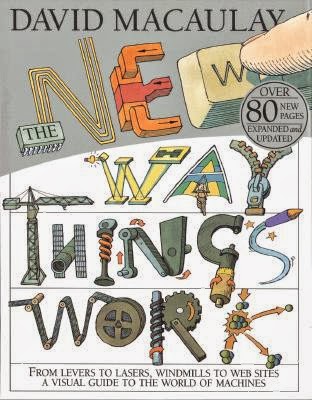
The NEW Way Things Work by David Macaulay
Grade 7/ Integration of Knowledge and Ideas
CCSS.ELA-Literacy.RI.7.7 Compare and contrast a text to an audio, video, or multimedia version of the text, analyzing each medium’s portrayal of the subject (e.g. how the delivery of a speech affects the impacts of the words).
Print visuals are gone completely, giving the lie to the use of illustration in the first grade 6 standard listed above. It must not apply to visuals, but refer only to figurative illustration through text.

Tibet Through the Red Box by Peter Sis
Grade 8/ Integration of Knowledge and Ideas
CCSS.ELA-Literacy.RI.8.7 Evaluate the advantages and disadvantages of using different mediums (e.g. print or digital text, video, multimedia) to present a particular topic or idea.
Print is back! I wish they had left out “different mediums” altogether if their only inclusion is intended to inspire kids to evaluate them in such general terms. This seems to indicate that one particular medium may be a poor choice for presenting an idea. Wouldn’t it be better to assess the value of a specific video, graphic, or illustration?

Laika by Nick Abadzis
Grades 9-10/ Integration of Knowledge and Ideas
CCSS.ELA-Literacy.RI.9-10.7 Analyze various accounts of a subject told in different mediums (e.g. a person’s life story in both print and multimedia), determining which details are emphasized in each account.
I had a teacher in AP American History who gave us biography assignments like the one in the example.
Not only did we read texts about a public figure, we also used documentaries, fictional portrayals, artwork, and other sources. No wonder I think visuals are so valuable in learning.
However, I’m concerned that the purpose of looking at different mediums is to determine which details each emphasizes, rather than to use them together to form a more complete, rounded, and perhaps even-handed
understanding of the topic. Must we be so quantitative?

Maus by Art Spiegelman
Grades 11-12/ Integration of Knowledge and Ideas
CCSS.ELA-Literacy.RI.11-12.7 Integrate and evaluate multiple sources of information presented in different media or formats (e.g. visually, quantitatively) as well as in words in order to address a question or solve a problem.
Yes! There you go. Now you’re cooking with gas. I wonder why it took us so long to get to this point -- and why the emphasis, at the ages at which visual presentations of nonfiction information are so popular, is so firmly on text and on squeezing visuals for the details or other quantitative information they offer, rather than to use them as they are usually intended -- to illuminate and enhance information, as well as to invite and involve all kinds of learners to new topics and ideas.

A Child Is Born by Lennart Nilsson
DePaul University education specialists have put together a rubric for giving visuals in nonfiction books the emphasis and value they deserve: Common Core Anchor Standards for Reading Align with Art Interpretation

October 9, 2013
Common Core Connections
Over the last year, the schools I’ve been visiting have been a-buzz over Common Core. Like other INK authors, I have had many educators exclaim “What you do fits in perfectly with common core!’ Frankly, at first, I had no idea what they meant other than perhaps what I’ve been doing for years, apparently, is suddenly in vogue and has new buzz words for it.
But the more I’ve learned about it, the better it sounds. We as a country definitely need to “up our game” in teaching and comprehension of these fields. My math teacher friends are generally pumped about the common core standards for math.
A great librarian, armed with his/her resources, is the heart of inquiry in a school. Information and resources come and go from that library and feed into all subject areas. The idea of “library circulation” goes far beyond books. It has to do with feeding inquiry and information, books, whatever it is, coming and going from the library. So, here we are diving into Common Core, when many schools have laid off the very experts in this kind of inquiry: highly trained librarians. I think folks don’t really understand what today’s librarians do. So, I interviewed one about what she does. (By the way, she has freed herself to do this by coordinating an army of parent volunteers who do all the checking in and out of books and such...all those things one thinks a librarian does.)
Where else have I seen Common Core, librarians, books, and nonfiction authors working in harmony? One surprising place was in my work last year with Authors For Earth Day, a program founded by Brooke Bessesen. Authors volunteer to donate a portion of their school visit fee to an environmental cause the students choose by vote.
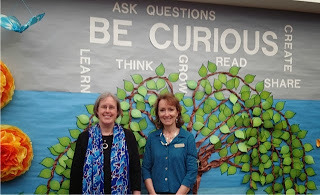 http://www.authorsforearthday.org/april-sayre.html
The librarians at schools I was visiting during Earth Week jumped on the idea, practically wrestled for the right to do it. And it wasn’t just for the feel good aspect of helping the environment. They immediately knew this was a Common Core bonanza which tied right in to nonfiction research and persuasive writing. Here’s Hella Rumschlag, the librarian who booked me for the visit.
In advance of the visit, I chose five organizations for them to consider: American Bird Conservancy, the Elephant Listening Project, the Nature Conservancy, the Pollinator Partnership, and the Rain Forest Conservation Fund. These are favorite organizations of mine and relate to my books such as The Bumblebee Queen and Secrets of Sound: Studying the Calls of Whales, Elephants, and Birds. I tried to choose organizations that would give kids a sense of the wide variety of environmental issues and approaches to solving them. Initially, I had chosen a sea turtle organization among the candidates, but the librarian informed me that the turtle is their school mascot so it would have an unfair advantage in swaying the students.
The 5th grade students researched the five organizations. Because Common Core emphasizes evaluating text, especially with regards to who authored it, the fifth graders could really look at the news about these organizations with a critical eye. They wrote persuasive essays on behalf of whichever organization they had. Some students appeared on the schoolwide television broadcast to advocate for their cause. Students in all grades voted on Google docs in order to avoid any paper waste associated with the project.
When I arrived, the students were excited about the vote that day. When the winner, Rain Forest Conservation Fund, was announced, the surge of joy from the students was so tremendous, tears rushed to my eyes. It was clear that the students felt a sense of ownership; they had done something great for the planet.
I gave my donation to Rainforest Conservation Fund and told them how it had been generated. They wrote an incredible thank you letter to the school. The letter added an additional layer of education to the project because it delineated, in detail, where the money went and taught about some fascinating new approaches to grassroots conservation in South America and Africa. The kids were read the letter on their morning school television show.
Next, the event was shared districtwide in an education newsletter. The librarian was thrilled with the results of the program. The kids were so invested in their research, analysis of texts, and their persuasive writing because, as the librarian says, it had “real world consequences.” As for me, I felt like my donation from my school visit fee had been multiplied manyfold in its positive impact on the earth and education.
How else have I seen creative educators extend nonfiction to fit the needs of science standards and common core? Actually, many of the activities educators have done with my books over the years would fit perfectly with Common Core. It’s a new framework but this kind of text study and math analysis has been done by dedicated teachers and librarians for years. Over a hundred of those earlier activities are on my website, www.aprilsayre.com. Below are some links to common core standards and lessons that have come up in the last year. (Folks just send me links related to my books but I’m sure many nonfiction authors have terrific lesson plans and activities that educators have shared with them about their books, as well. Feel free to add some links in the comments section if you have some in mind.)
A science unit lesson with common core aspects from AAAS, the same folks who give those wonderful awards for best science books of the year:
http://sciencenetlinks.com/lessons/april-pulley-sayre/
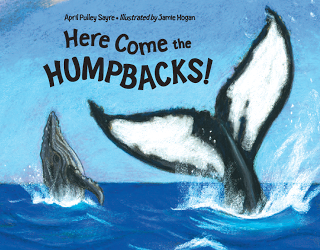
An article in School Library Journal about Nonfiction as Mentor Texts (It includes my whale book, Here Come the Humpbacks.)
http://www.slj.com/2013/05/standards/curriculum-connections/nonfiction-as-mentor-text-style-on-common-core/
One of my most widely used books worldwide is One Is a Snail, Ten Is a Crab. It’s easily extended to fulfill common core math standards at many levels. Here are some related resources for that:
Initial list of Common Core Standards for One Is a Snail, Ten Is a Crab.
Lesson Plan for One Is a Snail, Ten Is a Crab
Other activities related to One Is a Snail, Ten Is a Crab
One Is a Snail Worksheets
As you can see, Common Core is a natural for librarians, teachers, and nonfiction authors who have been involved in inquiry for years. I say, let's embrace it and expand on it. The ideas seem solid and the thinking aspects of these standards are deeper than most previous mandated curricula. The bureaucratic aspects of how it is implemented are the sticky points and those will be fought in districts all over the country. Most of all, we just need to give our teachers more respect and better tools. And bring back librarians—the champions of deep inquiry!

But the more I’ve learned about it, the better it sounds. We as a country definitely need to “up our game” in teaching and comprehension of these fields. My math teacher friends are generally pumped about the common core standards for math.
A great librarian, armed with his/her resources, is the heart of inquiry in a school. Information and resources come and go from that library and feed into all subject areas. The idea of “library circulation” goes far beyond books. It has to do with feeding inquiry and information, books, whatever it is, coming and going from the library. So, here we are diving into Common Core, when many schools have laid off the very experts in this kind of inquiry: highly trained librarians. I think folks don’t really understand what today’s librarians do. So, I interviewed one about what she does. (By the way, she has freed herself to do this by coordinating an army of parent volunteers who do all the checking in and out of books and such...all those things one thinks a librarian does.)
Where else have I seen Common Core, librarians, books, and nonfiction authors working in harmony? One surprising place was in my work last year with Authors For Earth Day, a program founded by Brooke Bessesen. Authors volunteer to donate a portion of their school visit fee to an environmental cause the students choose by vote.
 http://www.authorsforearthday.org/april-sayre.html
 The librarians at schools I was visiting during Earth Week jumped on the idea, practically wrestled for the right to do it. And it wasn’t just for the feel good aspect of helping the environment. They immediately knew this was a Common Core bonanza which tied right in to nonfiction research and persuasive writing. Here’s Hella Rumschlag, the librarian who booked me for the visit.
In advance of the visit, I chose five organizations for them to consider: American Bird Conservancy, the Elephant Listening Project, the Nature Conservancy, the Pollinator Partnership, and the Rain Forest Conservation Fund. These are favorite organizations of mine and relate to my books such as The Bumblebee Queen and Secrets of Sound: Studying the Calls of Whales, Elephants, and Birds. I tried to choose organizations that would give kids a sense of the wide variety of environmental issues and approaches to solving them. Initially, I had chosen a sea turtle organization among the candidates, but the librarian informed me that the turtle is their school mascot so it would have an unfair advantage in swaying the students.
The 5th grade students researched the five organizations. Because Common Core emphasizes evaluating text, especially with regards to who authored it, the fifth graders could really look at the news about these organizations with a critical eye. They wrote persuasive essays on behalf of whichever organization they had. Some students appeared on the schoolwide television broadcast to advocate for their cause. Students in all grades voted on Google docs in order to avoid any paper waste associated with the project.
When I arrived, the students were excited about the vote that day. When the winner, Rain Forest Conservation Fund, was announced, the surge of joy from the students was so tremendous, tears rushed to my eyes. It was clear that the students felt a sense of ownership; they had done something great for the planet.
I gave my donation to Rainforest Conservation Fund and told them how it had been generated. They wrote an incredible thank you letter to the school. The letter added an additional layer of education to the project because it delineated, in detail, where the money went and taught about some fascinating new approaches to grassroots conservation in South America and Africa. The kids were read the letter on their morning school television show.
Next, the event was shared districtwide in an education newsletter. The librarian was thrilled with the results of the program. The kids were so invested in their research, analysis of texts, and their persuasive writing because, as the librarian says, it had “real world consequences.” As for me, I felt like my donation from my school visit fee had been multiplied manyfold in its positive impact on the earth and education.
How else have I seen creative educators extend nonfiction to fit the needs of science standards and common core? Actually, many of the activities educators have done with my books over the years would fit perfectly with Common Core. It’s a new framework but this kind of text study and math analysis has been done by dedicated teachers and librarians for years. Over a hundred of those earlier activities are on my website, www.aprilsayre.com. Below are some links to common core standards and lessons that have come up in the last year. (Folks just send me links related to my books but I’m sure many nonfiction authors have terrific lesson plans and activities that educators have shared with them about their books, as well. Feel free to add some links in the comments section if you have some in mind.)
A science unit lesson with common core aspects from AAAS, the same folks who give those wonderful awards for best science books of the year:
http://sciencenetlinks.com/lessons/april-pulley-sayre/
An article in School Library Journal about Nonfiction as Mentor Texts (It includes my whale book, Here Come the Humpbacks.)
http://www.slj.com/2013/05/standards/curriculum-connections/nonfiction-as-mentor-text-style-on-common-core/

One of my most widely used books worldwide is One Is a Snail, Ten Is a Crab. It’s easily extended to fulfill common core math standards at many levels. Here are some related resources for that:
Initial list of Common Core Standards for One Is a Snail, Ten Is a Crab.
Lesson Plan for One Is a Snail, Ten Is a Crab
Other activities related to One Is a Snail, Ten Is a Crab
One Is a Snail Worksheets
As you can see, Common Core is a natural for librarians, teachers, and nonfiction authors who have been involved in inquiry for years. I say, let's embrace it and expand on it. The ideas seem solid and the thinking aspects of these standards are deeper than most previous mandated curricula. The bureaucratic aspects of how it is implemented are the sticky points and those will be fought in districts all over the country. Most of all, we just need to give our teachers more respect and better tools. And bring back librarians—the champions of deep inquiry!
October 8, 2013
The CCSS and Me -- I could Be Wrong
I smiled when I saw Steve Sheinkin's comment on Barbara Kerley's excellent and informative blog, Common Core Through the Eyes of a Storyteller. He said, "I still hate the idea of thinking about standards." And I totally agree.
When the new standards came out a few years ago I did read through them. Twice, if I recall correctly. I found them quite normal and sensible. Nothing a good, imaginitive, and dedicated teacher couldn't easily translate into his/her every day routine (for both fiction and nonfiction).
I also discovered myself nodding as I went from one standard to another, thinking, "okay, I do that. And that. And that, too." I wasn't being smug. Just telling myself that I should keep on doing what I was already doing.
But here's the thing. I don't write to the CCSS. I happen to write books that fit into it by sheer dumb luck or some such. But reading the standards did prompt me to wonder how this happened and whether there was an approach I took or a way of thinking that lent itself to producing books that seemed to echo what the folks who cooked up the changes to the CCSS seemed to be asking for.
Here's what I figured out:
1: I choose topics because they interest me and not because they fit into the curriculum. I become bored quickly by a lot of things, but if I find a topic that's odd, unusual, or discover a piece of information that gets my attention, then I follow up on it. I usually don't set out to do this in order to write a book; I do it out of curiosity and if it leads to a book, fine.
2: I research every project to death. I try to make myself an expert on every topic I approach, reading books, documents, talking with real experts, etc. until my head and notes are bursting with (the only word I can think of just now is) stuff. I'm never completely satisfied that I'm really an expert, which keeps me researching and asking questions; I feel happy when I read someone else's book and I know where they got their information.
3: When I write, I don't do an outline. I just look at my computer screen and ask myself, "how can I begin this and get a kid's attention." Then I write a sentence, revise it, and think about it again and again. Then I might go on to the second sentence. I do this over and over again, all the while wondering if a reader (who would probably prefer to be doing something where there are explosions, loud music, and famous stars involved) is still turning the page. Paragraphs and chapters end when my brain says "that's where it ends, pal."
4: About those sentences. I have two approaches. First, I try to tell my nonfiction stories as if I'm talking with a kid across a table. Are they engaged with what I'm saying, do they understand the context and individuals and the time that I'm talking about, do they really care about the situation, have I been able to make them think they are actually in the situation, etc., etc? Along with this, I don't limit word choice or paragraph length to fit an age group. I try to write simple, direct sentences without too many show off words or stylistic flairs.
Second, I tend to view what I write as poetry or music in prose (I was once a very serious poet-type; really, I once could write perfect love sonnets, which I did for friends at $5 a pop). This sort of approach means that every word counts, so if I change a word in Chapter 5, I have to go back over the entire ms. to make sure that particular word works. This might be one reason I usually end each day with a headache.
5: I don't check any curriculum guides to make sure my books fit in. I try to build themes that reach wider than whatever the situation I'm writing about, I don't wrap up every incident in a "here's what this meant in history" paragraph or some such (kids are plenty smart and can figure out a great deal more than we allow them to), I interpret history and speculate about individual motives based on my research and often go against the popular grain (hey, I said that Benedick Arnold was a better field general than George Washington and actually helped us as much as any well-honored general to gain our independence from Great Britain). In the end, I hope that a reader will feel as if they were let in on a secret and maybe even re-read the book.
Five is a nice number to end on (though I could probably add a few more). I think what I'm saying is that I try to write books that are organic in nature, that evolve out of my research, my love of words and how they fit together, and my respect for young readers, rather then from a set of rules. Those rules are great and I'm happy they have been formulated and are there for education experts (teachers and librarians and other interested people) to read and think about. But following them line by line when writing or revising my books seems like it might lead down the road to a text that has more in common with a textbook than a satisfying read. I could be wrong about this, but only time will tell.
When the new standards came out a few years ago I did read through them. Twice, if I recall correctly. I found them quite normal and sensible. Nothing a good, imaginitive, and dedicated teacher couldn't easily translate into his/her every day routine (for both fiction and nonfiction).
I also discovered myself nodding as I went from one standard to another, thinking, "okay, I do that. And that. And that, too." I wasn't being smug. Just telling myself that I should keep on doing what I was already doing.
But here's the thing. I don't write to the CCSS. I happen to write books that fit into it by sheer dumb luck or some such. But reading the standards did prompt me to wonder how this happened and whether there was an approach I took or a way of thinking that lent itself to producing books that seemed to echo what the folks who cooked up the changes to the CCSS seemed to be asking for.
Here's what I figured out:
1: I choose topics because they interest me and not because they fit into the curriculum. I become bored quickly by a lot of things, but if I find a topic that's odd, unusual, or discover a piece of information that gets my attention, then I follow up on it. I usually don't set out to do this in order to write a book; I do it out of curiosity and if it leads to a book, fine.
2: I research every project to death. I try to make myself an expert on every topic I approach, reading books, documents, talking with real experts, etc. until my head and notes are bursting with (the only word I can think of just now is) stuff. I'm never completely satisfied that I'm really an expert, which keeps me researching and asking questions; I feel happy when I read someone else's book and I know where they got their information.
3: When I write, I don't do an outline. I just look at my computer screen and ask myself, "how can I begin this and get a kid's attention." Then I write a sentence, revise it, and think about it again and again. Then I might go on to the second sentence. I do this over and over again, all the while wondering if a reader (who would probably prefer to be doing something where there are explosions, loud music, and famous stars involved) is still turning the page. Paragraphs and chapters end when my brain says "that's where it ends, pal."
4: About those sentences. I have two approaches. First, I try to tell my nonfiction stories as if I'm talking with a kid across a table. Are they engaged with what I'm saying, do they understand the context and individuals and the time that I'm talking about, do they really care about the situation, have I been able to make them think they are actually in the situation, etc., etc? Along with this, I don't limit word choice or paragraph length to fit an age group. I try to write simple, direct sentences without too many show off words or stylistic flairs.
Second, I tend to view what I write as poetry or music in prose (I was once a very serious poet-type; really, I once could write perfect love sonnets, which I did for friends at $5 a pop). This sort of approach means that every word counts, so if I change a word in Chapter 5, I have to go back over the entire ms. to make sure that particular word works. This might be one reason I usually end each day with a headache.
5: I don't check any curriculum guides to make sure my books fit in. I try to build themes that reach wider than whatever the situation I'm writing about, I don't wrap up every incident in a "here's what this meant in history" paragraph or some such (kids are plenty smart and can figure out a great deal more than we allow them to), I interpret history and speculate about individual motives based on my research and often go against the popular grain (hey, I said that Benedick Arnold was a better field general than George Washington and actually helped us as much as any well-honored general to gain our independence from Great Britain). In the end, I hope that a reader will feel as if they were let in on a secret and maybe even re-read the book.
Five is a nice number to end on (though I could probably add a few more). I think what I'm saying is that I try to write books that are organic in nature, that evolve out of my research, my love of words and how they fit together, and my respect for young readers, rather then from a set of rules. Those rules are great and I'm happy they have been formulated and are there for education experts (teachers and librarians and other interested people) to read and think about. But following them line by line when writing or revising my books seems like it might lead down the road to a text that has more in common with a textbook than a satisfying read. I could be wrong about this, but only time will tell.
October 7, 2013
Common Sense
Since we INK bloggers have agreed to address the Common Core State Standards in our posts this month, I thought it prudent to actually read them — at least the K-5th grade standards. I’d already taken a crack at this a few times, but always realized, part way through, that I really needed to check the weather at NOAA or fix another cup of coffee. (It was so easy to get distracted that you’d have thought I was actually trying to write something myself. But that’s another story). Since I’m a nonfiction picture book author, it’s unsurprising that I have a generally positive view of the CCSS. I do have some concerns about their potential for spawning yet another array of standardized tests (see Vicki Cobb’s excellent Huffington Post blog on this subject).
Once I applied myself, however, I found the standards to be as sensible and uncontroversial as educational policy as they are dry and unexciting to read. But I was surprised — though I probably shouldn’t have been — by the virulent online diatribes that bubbled up when I did a “Common Core” search. This stuff makes you want to laugh or cry. If you choose the former, you might appreciate my favorite argument against the CCSS, which turned up in a number of places. Since the standards do not require the teaching of cursive handwriting (though states or local school boards can include such instruction if they choose), future schoolchildren may be unable to read handwritten documents penned by the founding fathers. But I digress.
My main takeaway from the informational text (nonfiction) standards was that good nonfiction authors are already writing books that fulfill the requirements of the CCSS, and have been for years. It’s also encouraging that the breadth and generalized language of the standards will probably make it difficult for publishers to produce opportunistic, passionless texts to cash in on the new market for nonfiction. Not that they’d do that.
Before I alienate any more constituencies, I’ll conclude with an excerpt from a 2008 interview I gave to Seven Impossible Things Before Breakfast, an impossibly good children’s book blog. We were talking about the sometimes unequal emphasis on fiction and nonfiction, which seems relevant in the current context:
7-Imp: Children’s book author and America’s first National Ambassador for Young People’s Literature, Jon Scieszka, talks through his Guys Read effort about how teachers and librarians can sometimes, whether inadvertently or not, be rather dismissive of non-fiction and how perhaps we could do a better job of acknowledging non-fiction, especially for boy readers. Do you have any thoughts on that?
Steve: In my experience, teachers and librarians have not been dismissive of non-fiction, though that may be because I’m usually interacting with a self-selected group of non-fiction fans. In fact, that’s so obvious I don’t know why I never thought of it before.
I agree with Jon. I think there are several things going on. Many early education professionals come from a language arts or “soft” science background, such as sociology (I’m not using “soft” in a negative way), rather than from a ‘hard” science (physics, chemistry, biology) curriculum. Reading and analyzing fiction is an integral part of most teachers’ education.
I also think fiction and non-fiction elicit different kinds of passion in readers. The themes of fiction — love, fear, adventure, triumph over adversity — are universal. Read aloud, the exploits of Lilly or Despereaux can’t fail to captivate a room full of kids. The pleasures of non-fiction are more subtle. Few readers laugh out loud or cry as they learn about the extraordinary abilities of the jumping spider or how the continents have drifted about. And not all children are interested in the same non-fiction subjects. Some are fascinated by astronomy, others by geology or zoology. Unless a child has expressed interest in a specific subject, I think it’s much harder for a librarian to suggest a sure-fire non-fiction book.
More: there’s a canon of great children’s fiction. Awards, best-of lists, reviews, and blogs focus disproportionately on fiction. And there’s the shelf-life problem. Charlotte’s Web and My Father’s Dragon (two of our family’s favorites) have lost none of their appeal after more than fifty years. Almost any geology, astronomy, or biology book of that age will be hopelessly out of date in many important respects. Finally (whew), though I hate to say it, I think the bar is higher for children’s fiction. Too many non-fiction books are just collections of facts presented without context or passion.
But we shouldn’t let a few little things like that stand in the way of turning kids on to the world of non-fiction books. I’m serious. But I understand why it’s not always easy.

Once I applied myself, however, I found the standards to be as sensible and uncontroversial as educational policy as they are dry and unexciting to read. But I was surprised — though I probably shouldn’t have been — by the virulent online diatribes that bubbled up when I did a “Common Core” search. This stuff makes you want to laugh or cry. If you choose the former, you might appreciate my favorite argument against the CCSS, which turned up in a number of places. Since the standards do not require the teaching of cursive handwriting (though states or local school boards can include such instruction if they choose), future schoolchildren may be unable to read handwritten documents penned by the founding fathers. But I digress.
My main takeaway from the informational text (nonfiction) standards was that good nonfiction authors are already writing books that fulfill the requirements of the CCSS, and have been for years. It’s also encouraging that the breadth and generalized language of the standards will probably make it difficult for publishers to produce opportunistic, passionless texts to cash in on the new market for nonfiction. Not that they’d do that.
Before I alienate any more constituencies, I’ll conclude with an excerpt from a 2008 interview I gave to Seven Impossible Things Before Breakfast, an impossibly good children’s book blog. We were talking about the sometimes unequal emphasis on fiction and nonfiction, which seems relevant in the current context:
7-Imp: Children’s book author and America’s first National Ambassador for Young People’s Literature, Jon Scieszka, talks through his Guys Read effort about how teachers and librarians can sometimes, whether inadvertently or not, be rather dismissive of non-fiction and how perhaps we could do a better job of acknowledging non-fiction, especially for boy readers. Do you have any thoughts on that?
Steve: In my experience, teachers and librarians have not been dismissive of non-fiction, though that may be because I’m usually interacting with a self-selected group of non-fiction fans. In fact, that’s so obvious I don’t know why I never thought of it before.
I agree with Jon. I think there are several things going on. Many early education professionals come from a language arts or “soft” science background, such as sociology (I’m not using “soft” in a negative way), rather than from a ‘hard” science (physics, chemistry, biology) curriculum. Reading and analyzing fiction is an integral part of most teachers’ education.
I also think fiction and non-fiction elicit different kinds of passion in readers. The themes of fiction — love, fear, adventure, triumph over adversity — are universal. Read aloud, the exploits of Lilly or Despereaux can’t fail to captivate a room full of kids. The pleasures of non-fiction are more subtle. Few readers laugh out loud or cry as they learn about the extraordinary abilities of the jumping spider or how the continents have drifted about. And not all children are interested in the same non-fiction subjects. Some are fascinated by astronomy, others by geology or zoology. Unless a child has expressed interest in a specific subject, I think it’s much harder for a librarian to suggest a sure-fire non-fiction book.
More: there’s a canon of great children’s fiction. Awards, best-of lists, reviews, and blogs focus disproportionately on fiction. And there’s the shelf-life problem. Charlotte’s Web and My Father’s Dragon (two of our family’s favorites) have lost none of their appeal after more than fifty years. Almost any geology, astronomy, or biology book of that age will be hopelessly out of date in many important respects. Finally (whew), though I hate to say it, I think the bar is higher for children’s fiction. Too many non-fiction books are just collections of facts presented without context or passion.
But we shouldn’t let a few little things like that stand in the way of turning kids on to the world of non-fiction books. I’m serious. But I understand why it’s not always easy.
October 2, 2013
Common Core Through The Eyes Of A Storyteller
Common Core Through the Eyes of a Storyteller
The first time I looked at the Common Core website, I
remember feeling a little bit overwhelmed. Even looking at the all the
information with a very tight focus—in my case, what the standards say about
reading informational books—it felt like a lot to process.
It took me a little while to understand that there are ten
big standards, the Anchor Standards for Reading, and that each of these
standards then has grade-specific guidelines for implementation.
The Anchor Standards discuss aspects of writing from an
educator’s viewpoint, with educator vocabulary—and I’m a writer, not a teacher.
So understanding what each Standard was asking students to do took a little
processing as well.
But I am coming to understand that many of the Standards
address things I think about all the time as I am working on storytelling.

Take Standard 2, for instance. It asks students to identify
the main theme of a text, and I think about the main theme of every book I
write. The theme is the big picture idea, the ‘so what?’ of every story. Why
the story matters. What we can learn from it. We can enjoy reading about all of Alice Roosevelt’s antics,
but the takeaway is what matters: “eating up the world.” Having a zest for
life. That’s the theme.

Standard 3 asks students to look at how people interact,
something I thought about constantly as I tried to show the development of the
relationship between Adams and Jefferson—how two total opposites could come
together to work for a common purpose.

Standard 4 is all about word choice and figurative
language—a writer’s dream standard, if you will. Finding just the right word to
express an idea is my favorite part of the job, capturing, for example, Walt Whitman’s passion for taking notes everywhere he went in his little notebooks, and
how these notebooks were “fertile ground for the seeds of his poems.”
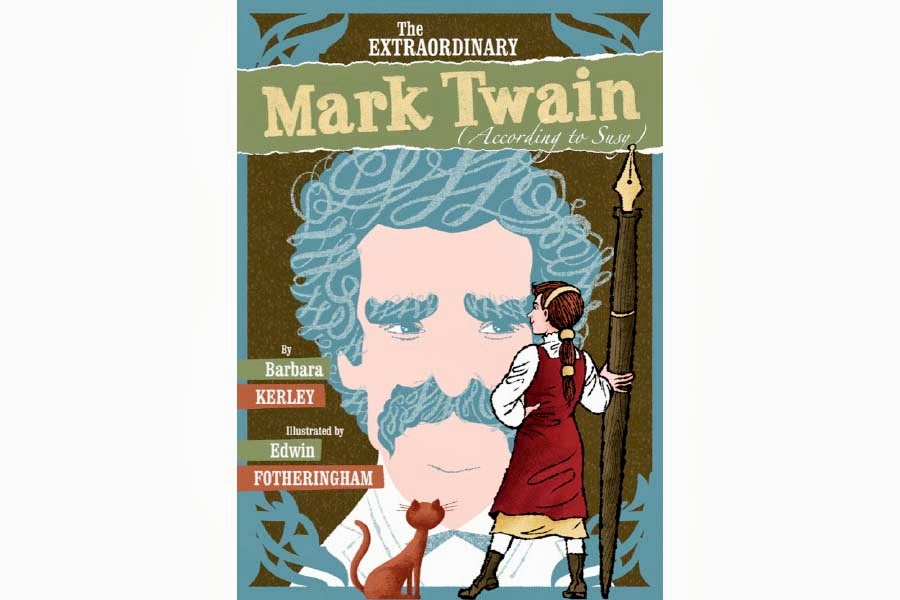
Standard 5 looks at structure, and boy is that a big part of
crafting a story. Every story needs a beginning, middle, and end, and
especially in a picture book, the opening lines are crucial to set the story in
motion and establish the promise to the reader that will be fulfilled by the
story’s end. And so when we learn
that Susy Clemens is “’annoyed’” that everyone is wrong about her famous
father, and that she is “determined to set the record straight,” we’re launched
into the story of how she does this by creating her own biography of Mark
Twain—excerpts of which were eventually published for all to read.
And finally, Standard 6, which asks students to think about
how an author’s purpose shapes the text. This ties into everything I do when
crafting a story. How do I present the facts of a person’s life in a way that
illustrates my theme, shows character development, and gives a satisfying
ending to the story just read? Which events, quotes, and details do I choose to
include, when I’m limited by the fact that a picture book text must be
short—and that every word counts.
When I think about the Standards and how they apply to
nonfiction books, what I understand is that the Standards will change the way
that students interact with nonfiction texts. Students won’t just be reading
nonfiction books to gather information. They’ll be reading books and analyzing
how that information is presented.
And for someone who cares deeply about storytelling, this is
very good news indeed.

October 1, 2013
The Fly in the Common Core Ointment
Note: I wrote the following piece and submitted it to the Huffington Post. It was accepted and now I am a regular blogger for them. This allows me to be an advocate for children's nonfiction literature on a national platform. Please support me--this means making comments, tweeting, sharing, following, liking, becoming a fan, etc. I believe that we nonfiction authors can bring the joy of learning back to the classroom but not without the help of teachers, librarians, forward-thinking administrators and the readers of this blog. Huff Post published this entry last week. Please forgive the repetition. You can find me at: http://www.huffingtonpost.com/vicki-cobb/
The recent release of the NY State assessment scores based
on the about-to-be-implemented Common Core State Standards for education has
created quite a stir, to put it mildly.
As predicted, the scores were poorer than in previous years because of
the new Standards. Statewide, 31
percent of students passed the exams in reading and math. Last year, 55 percent
passed in reading, and 65 percent in math.
The Common Core State Standards
become law in 47 states by 2014. Dr. John King,
Commissioner of Education for the State of New York, has already started to
execute them and to sell them to the public. He explains that the CCSS came out of a
governors’ meeting several years ago.
Governors want to attract businesses to their states. Before relocating, businesses want to know
about the quality of each state’s labor pool.
The question for each governor was: What can your state’s workers be
trained to do? This generated a
conversation about the skill sets needed by businesses and how well each state
was doing in producing capable workers.
The standards and measures for the different states were all over the
waterfront. Rather than compete with
each other, the governors agreed to work together to establish common standards
for college and career readiness. And so
the Common Core State Standards came to be.
John King said: “The organization
of CEOs for Cities did a study that
showed if you added a single percentage rate for college achievement in NY you
would add 17.5 billion dollars of economic activity.” Hmmm…there’s nothing wrong with that.
Diane Ravitch, educational historian and
activist on behalf of public education, blogs five or six times a day to
spotlight how the CCSS are wreaking havoc on already beleaguered public school
systems across the country. It made news
when she came out against the Common Core State Standards. It is not possible to find two more
well-intentioned, passionate advocates for effective education than these
two. But they are in opposite camps.
As a
children’s nonfiction author, I welcome the Common
Core State Standards. If you read
them, you will see that they are quite benign.
There is nothing in there about curriculum, what books are to be read,
just a shift to reading a lot more complex text about the real world. I see it as an opening for us authors. That’s
why I was startled when I heard vitriolic hatred of the CCSS from a veteran
teacher of 35 years. When I asked if he
had read them, he allowed that he had not
Like
many teachers, this teacher was unaware of the difference between high quality
nonfiction literature and what many educators think of as nonfiction for kids –
the flat, boring, uninspiring writing that is in textbooks. They are used to
the prepackaged texts, teachers’ guides, study questions and tests that they
use to “cover” the curriculum topics. They don’t know how inspiring, engaging
nonfiction literature brings a love of learning to content. And since the CCSS says nothing about
curriculum, implementing the standards means that educators are now free to
insert wonderful books –of which there is a huge selection—into their science,
social studies, history, math, art, music, and physical education classes. Teachers can continue to teach their favorite
fictional literature but now the door is open to using nonfiction literature
across the curriculum. So, to the
teacher who told me that she didn’t like the arbitrary quota that 50% of all
reading in elementary school must be nonfiction, I say that when you add
high-quality reading across all disciplines, even if you keep all the fiction
you like in ELA, the quota are more than met.
It just means that kids will have to read a lot more across the board. …Nothing
wrong with that either.
The fly
in the ointment is the testing. More
particularly the high-stakes placed
on the tests and the absurd notion that a teacher’s value-added
comes from the way his/her students perform on the assessment tests. There is
nothing new about testing. We’ve always
tested. When I was a teacher almost 50
years ago my students took tests. There
were three possible outcomes.
1.
The student test performance was about the same
as their performance in my class.
2.
The student performed poorly on the test but
well in my class
3.
The student performed well on the test but
poorly in my class.
As a teacher, the only result I paid attention to was number
3. If the student aced the test but was
doing sub-standard work in my class, I knew there was something for me to
correct.
When I
taught, back in those days, I had autonomy to teach creatively. I didn’t use
the textbook but found other more interesting science reading material for my
students on curriculum content. I worked
to make sure that they understood the basics and gave them all kinds of fun
details to make the basics memorable. We
spent a less than a week practicing test questions just before they took the
tests. They did just fine. The beauty of the CCSS is that they open the door again to this kind of creative teaching.
I agree
with Diane Ravitch’s criticism of the testing.
Test prep, in my opinion, is a form of child abuse. Schools lose almost two months of instruction
between the time spent on test prep and the tests themselves. The new tests, based on the CCSS, have
produced dismal failure. So what! Let’s use the CCSS as license to teach the
best way we know how. Give the tests
with minimal test prep, use the data internally along with other measures of
school effectiveness, and let the chips fall where they may. And, at least for
the next few years, sever the connection between test results and real estate
values. The latest news is that the
test-makers recognize their failure and the tests results won’t count this
year.
As a
scientist, when I didn't get the results from an experiment that I expected or
wanted, I figured that the problem lay in my experimental design, not in the
natural phenomenon I was exploring. (Nature doesn't lie!) The test makers need
to find other ways of measuring student achievement rather than a single yearly
snapshot where teachers are given instructions on how to handle test booklets that
have vomit on them so that the results can be tabulated. And the educational community and the public
need to stop giving the test outcomes so much power.
The recent release of the NY State assessment scores based
on the about-to-be-implemented Common Core State Standards for education has
created quite a stir, to put it mildly.
As predicted, the scores were poorer than in previous years because of
the new Standards. Statewide, 31
percent of students passed the exams in reading and math. Last year, 55 percent
passed in reading, and 65 percent in math.
The Common Core State Standards
become law in 47 states by 2014. Dr. John King,
Commissioner of Education for the State of New York, has already started to
execute them and to sell them to the public. He explains that the CCSS came out of a
governors’ meeting several years ago.
Governors want to attract businesses to their states. Before relocating, businesses want to know
about the quality of each state’s labor pool.
The question for each governor was: What can your state’s workers be
trained to do? This generated a
conversation about the skill sets needed by businesses and how well each state
was doing in producing capable workers.
The standards and measures for the different states were all over the
waterfront. Rather than compete with
each other, the governors agreed to work together to establish common standards
for college and career readiness. And so
the Common Core State Standards came to be.
John King said: “The organization
of CEOs for Cities did a study that
showed if you added a single percentage rate for college achievement in NY you
would add 17.5 billion dollars of economic activity.” Hmmm…there’s nothing wrong with that.
Diane Ravitch, educational historian and
activist on behalf of public education, blogs five or six times a day to
spotlight how the CCSS are wreaking havoc on already beleaguered public school
systems across the country. It made news
when she came out against the Common Core State Standards. It is not possible to find two more
well-intentioned, passionate advocates for effective education than these
two. But they are in opposite camps.
As a
children’s nonfiction author, I welcome the Common
Core State Standards. If you read
them, you will see that they are quite benign.
There is nothing in there about curriculum, what books are to be read,
just a shift to reading a lot more complex text about the real world. I see it as an opening for us authors. That’s
why I was startled when I heard vitriolic hatred of the CCSS from a veteran
teacher of 35 years. When I asked if he
had read them, he allowed that he had not
Like
many teachers, this teacher was unaware of the difference between high quality
nonfiction literature and what many educators think of as nonfiction for kids –
the flat, boring, uninspiring writing that is in textbooks. They are used to
the prepackaged texts, teachers’ guides, study questions and tests that they
use to “cover” the curriculum topics. They don’t know how inspiring, engaging
nonfiction literature brings a love of learning to content. And since the CCSS says nothing about
curriculum, implementing the standards means that educators are now free to
insert wonderful books –of which there is a huge selection—into their science,
social studies, history, math, art, music, and physical education classes. Teachers can continue to teach their favorite
fictional literature but now the door is open to using nonfiction literature
across the curriculum. So, to the
teacher who told me that she didn’t like the arbitrary quota that 50% of all
reading in elementary school must be nonfiction, I say that when you add
high-quality reading across all disciplines, even if you keep all the fiction
you like in ELA, the quota are more than met.
It just means that kids will have to read a lot more across the board. …Nothing
wrong with that either.
The fly
in the ointment is the testing. More
particularly the high-stakes placed
on the tests and the absurd notion that a teacher’s value-added
comes from the way his/her students perform on the assessment tests. There is
nothing new about testing. We’ve always
tested. When I was a teacher almost 50
years ago my students took tests. There
were three possible outcomes.
1.
The student test performance was about the same
as their performance in my class.
2.
The student performed poorly on the test but
well in my class
3.
The student performed well on the test but
poorly in my class.
As a teacher, the only result I paid attention to was number
3. If the student aced the test but was
doing sub-standard work in my class, I knew there was something for me to
correct.
When I
taught, back in those days, I had autonomy to teach creatively. I didn’t use
the textbook but found other more interesting science reading material for my
students on curriculum content. I worked
to make sure that they understood the basics and gave them all kinds of fun
details to make the basics memorable. We
spent a less than a week practicing test questions just before they took the
tests. They did just fine. The beauty of the CCSS is that they open the door again to this kind of creative teaching.
I agree
with Diane Ravitch’s criticism of the testing.
Test prep, in my opinion, is a form of child abuse. Schools lose almost two months of instruction
between the time spent on test prep and the tests themselves. The new tests, based on the CCSS, have
produced dismal failure. So what! Let’s use the CCSS as license to teach the
best way we know how. Give the tests
with minimal test prep, use the data internally along with other measures of
school effectiveness, and let the chips fall where they may. And, at least for
the next few years, sever the connection between test results and real estate
values. The latest news is that the
test-makers recognize their failure and the tests results won’t count this
year.
As a
scientist, when I didn't get the results from an experiment that I expected or
wanted, I figured that the problem lay in my experimental design, not in the
natural phenomenon I was exploring. (Nature doesn't lie!) The test makers need
to find other ways of measuring student achievement rather than a single yearly
snapshot where teachers are given instructions on how to handle test booklets that
have vomit on them so that the results can be tabulated. And the educational community and the public
need to stop giving the test outcomes so much power.
September 30, 2013
Voila-Seven CCSS Activities You Can Do Now
Hi everyone-
This is it—we're devoting all of our October posts to
the Common Core State Standards. I guarantee that each of us has a different
take on this subject, but of course it’s no big surprise that we like CCSS. We like it a lot. What else would you expect, since teachers
at every grade level get to revel in some of the (ahem) most excellent nonfiction
books available, right? (Hint: say yes…) So how can teachers and students have a blast
with these books and learn everything worth learning at the same time? I’m thinking
that a few suggestions are in order.
As it turns out, we should be able to make this
easy for everyone today because I recently got a lucky break. I've had the chance to add some outstanding classroom
projects to my website, and they're directly tied into every possible aspect of
CCSS. They were created by a true Common Core aficionado named Dr. Rose Reissman, who
really knows her stuff when it comes to fun activities that instill the love of learning into just about anything. So............
Below is a link to a set of six incredible projects geared
directly toward the book Witches! The Absolutely True Tale of Disaster in Salem.
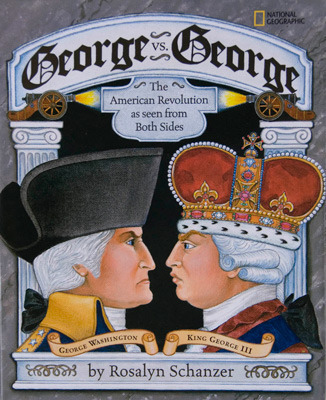
Here you’ll find step-by-step directions for these six activities: Help kids write, stage, and perform a
play that tells the tale; Create a great dictionary of strange words and terms related to the Witch Trials; Play
a cool game called Which Witch Perspective Rings True?; Go Back to the Future to
re-write the shameful events of 1692 using 21st Century values; Treat
the book as a framework for writing a scary ballad or and Edgar Allen Poe style
poem about it; Or have a 21’st Century Mock Trial Do-Over of the Witch Trials. You can access these activities directly by
going here:
http://www.rosalynschanzer.com/pdfDocuments/CCSSWitchesActivities.pdf
And here’s
the link to a great Alphabet Book project that ties into Witches! and two other books to
boot: George vs. George: The American Revolution as Seen from Both Sides and
What Darwin Saw: The Journey that Changed the World.
As an extra added
attraction, this is an excellent project for all kinds of additional nonfiction books, and it works
well for a broad age range too. Here’s the
link:
http://www.rosalynschanzer.com/pdfDocuments/AlphabetActivity.pdf
To make your lives even easier, these activities
are filled with details and print-outs (which means they’re too long to display
directly in this blog, so check the links).Tie-ins to professional CCSS lingo are presented in spades for
each activity.
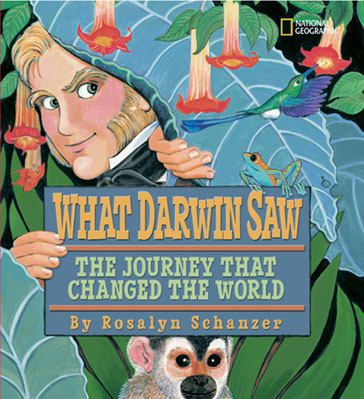 More to follow....if you try out any of these
projects, I’d love to hear what happens.