Elizabeth Rusch's Blog, page 16
December 19, 2013
A Poem Can Be Good for a Nonfiction Girl
Poetry is the sunny spot on the carpet. It is a sea salt caramel. It is a hermit crab tickling its way across my raspberry-punch-painted toes. It is an orchestra tuning before the curtain rise.
Poetry helps me breathe. It makes me consciously calm.
Poetry is voices.
When I started writing A Bad Boy Can Be Good for a Girl, the characters talked to me in whispers, pieces of sentences, snippets of thought. They visited me when I was half-awake, drifting between late night and early morning.
As someone who most often writes narrative nonfiction, I am regularly asked why I decided to write a YA novel in verse. The answer is: I didn’t.
What I did decide was to listen.
I listened to that first voice, that first day. Her name was Josie. An orchestra began tuning in my brain. It played Nicolette for me a different day. And then Aviva.
I listened. I wrote. I listened some more. I wrote some more. Poetry had come back to me.
Maybe it came back because I went looking for it.
Like the sunny spot on the carpet, and sea salt caramels.
It visits me still, dancing into my nonfiction, adding shadows to lines of prose.
There are poems that accompany Almost Astronauts, and poetic prose that describes some of the events in that true story.
The WWII black paratrooper heroes in Courage Has No Color risk their lives to jump out of airplanes and serve their country, at a time when their country is not serving them. Poetry is there to help me share their fall.
I will always be listening as the orchestra tunes.

Poetry helps me breathe. It makes me consciously calm.
Poetry is voices.
When I started writing A Bad Boy Can Be Good for a Girl, the characters talked to me in whispers, pieces of sentences, snippets of thought. They visited me when I was half-awake, drifting between late night and early morning.
As someone who most often writes narrative nonfiction, I am regularly asked why I decided to write a YA novel in verse. The answer is: I didn’t.
What I did decide was to listen.
I listened to that first voice, that first day. Her name was Josie. An orchestra began tuning in my brain. It played Nicolette for me a different day. And then Aviva.
I listened. I wrote. I listened some more. I wrote some more. Poetry had come back to me.
Maybe it came back because I went looking for it.
Like the sunny spot on the carpet, and sea salt caramels.
It visits me still, dancing into my nonfiction, adding shadows to lines of prose.
There are poems that accompany Almost Astronauts, and poetic prose that describes some of the events in that true story.
The WWII black paratrooper heroes in Courage Has No Color risk their lives to jump out of airplanes and serve their country, at a time when their country is not serving them. Poetry is there to help me share their fall.
I will always be listening as the orchestra tunes.


December 18, 2013
Photographing Dancers - Really
A month ago, November 13, April Pulley Sayre wrote a post about photographing nature, Common Core and Nonfiction Photography Part I. (Part II was posted December 11.) As another photographer-INKer, I’d like to continue the discussion by writing about photographing dancers. Capturing dance is much like photographing nature. Every part of the dancer's body must be, as April wrote, “clear and complete.” This is especially true when it comes to the very strict and formal lines in ballet. The shapes dancers make must be perfect, as defined by balletic rules. If even one finger is not in the correct position, the photograph is useless. Formal lines and movement have a little wiggle room, but that is usually the choreographer's domain. As examples, I will use photographs taken for the book, Beautiful Ballerina, by Marilyn Nelson. In order to illustrate dance books I follow the 1-2-3 Rule:1. Perfect ballet form2. Recreate the choreographer’s vision or style3. Visually express the meaning behind the writer’s words. You won’t find these rules on Google. I just made them up. But this is pretty much what’s involved. As you might imagine a heap of dance images end up under the delete button. Here’s an example:

Notice the ballerina’s foot resting on the barre. Wrong. The foot must be slightly elevated. Although I loved the emotional connection captured in the photograph, it would never pass the choreographer’s veto power. Here’s the image reshot with a correct line.

[The little ballerina gets a free pass because she’s only four.] This image ended up in the B list – I didn’t have the heart to delete the two entirely – because the two dancers at the barre didn’t fit Marilyn’s words, rule 3.
HOW PHOTOSHOP CHANGED IT All - & Opened a Can of WormsFortunately, today’s technology gives photographers some space to make mistakes. For this book I used large, white, diffusion screens and strong strobes to capture dancers in motion. While going for the dancer, the background often turned into an angular mess that overwhelmed the picture. With the help of PhotoShop, I got rid of the distracting background elements. Here’s what the original photograph looked like.

Here’s what was sent to the art director.
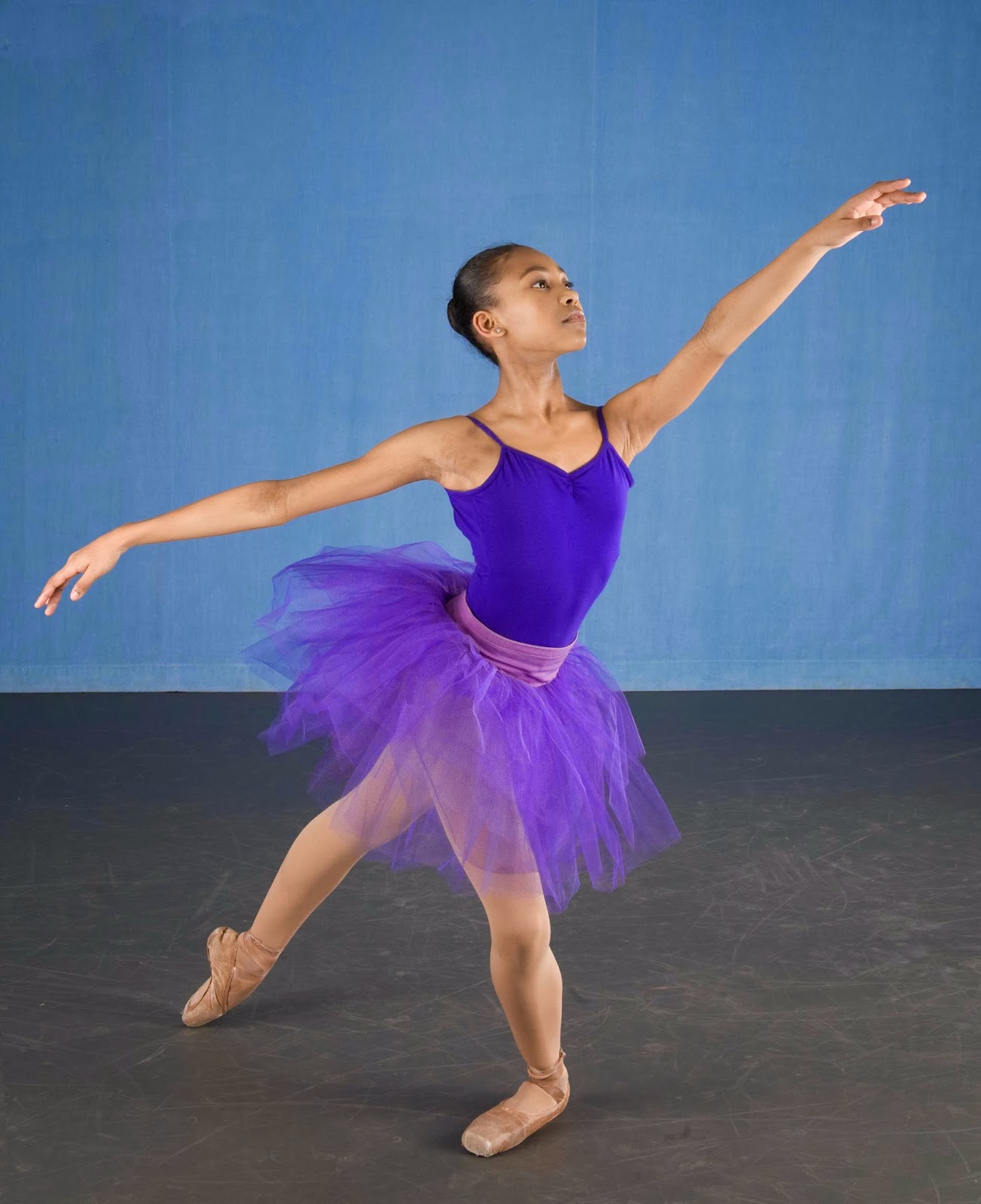
So here's the question ... Is a retouched, cropped, straightened photograph fact or fiction? As a budding photographer I would practically have a nervous breakdown if anyone cropped or tinkered with my black and white photographs. Now I’ve come to appreciate the fact that technology can help make images more real.The curtain in the photograph above had splotches on it. Can you see them? They look huge enlarged in the computer. If I kept them in, they would be a distraction. So out they went. In order to show the entire body of the dancer I sometimes ended up with slanted curtain tops. By taking the dancer out of her environment via layers in PhotoShop, I was able to get rid of the angled spotted curtain and keep the focus on her. Is it still real? More real?In the middle of shooting the book one of the dancers arrived with a small canker sore on her lip. It was hardly noticeable. But under powerful lights, and a camera that records every little pore, it looked enormous. Out, damned spot! Out, I say! [I just saw Macbeth at Lincoln Center.] The book was about ballet, not pimples. I PhotoShopped it out. Then I decided to get rid of the curtain and slightly change the background colors. Does that mean the image is less true than had I left it in?

Like research and writing, photography includes choices. What to leave in/take out? We make choices while creating narratives, building arcs, and describing a subject. I don’t know about you, but when I do an interview, the subject usually has repeat quirk words such as, “you know,” “okay,” “right.” Right? I once counted seven “likes” in one transcribed sentence. Leaving in those involuntary quirks detracts from the read. The quirk then becomes the subject rather than what the person is saying, or who the person is. Sometimes I leave one or two “you knows” or “likes” scattered throughout a chapter for flavor. Just like sometimes I leave in a small pimple or two. But I take out blemishes, visual and syntactic, because I don’t want the distraction. Another element when photographing dancers is rule 2. The image must, must, must reflect the choreographer's unique vision. Arthur Mitchell, the founder of Dance Theater of Harlem, where the book was shot, insists that his dancers have perfect, classic, balletic lines. His view is what makes this book distinct from other dance books I've done in the past.One more thing ... rule 4. After all three rules are met, the photograph must also represent the vision of the photographer. For me dance is not just about body and form. I want to show the emotion, the individual je ne sais quoi, that turns dancers into artists. Adding to the emotional content is historical context in at least one image per book. No one notices this but that's okay. Arthur Mitchell became famous as a lead dancer for George Balanchine’s New York City Ballet. As homage to Mr. B, the first photograph in the book had to be a ballet shape that he created.
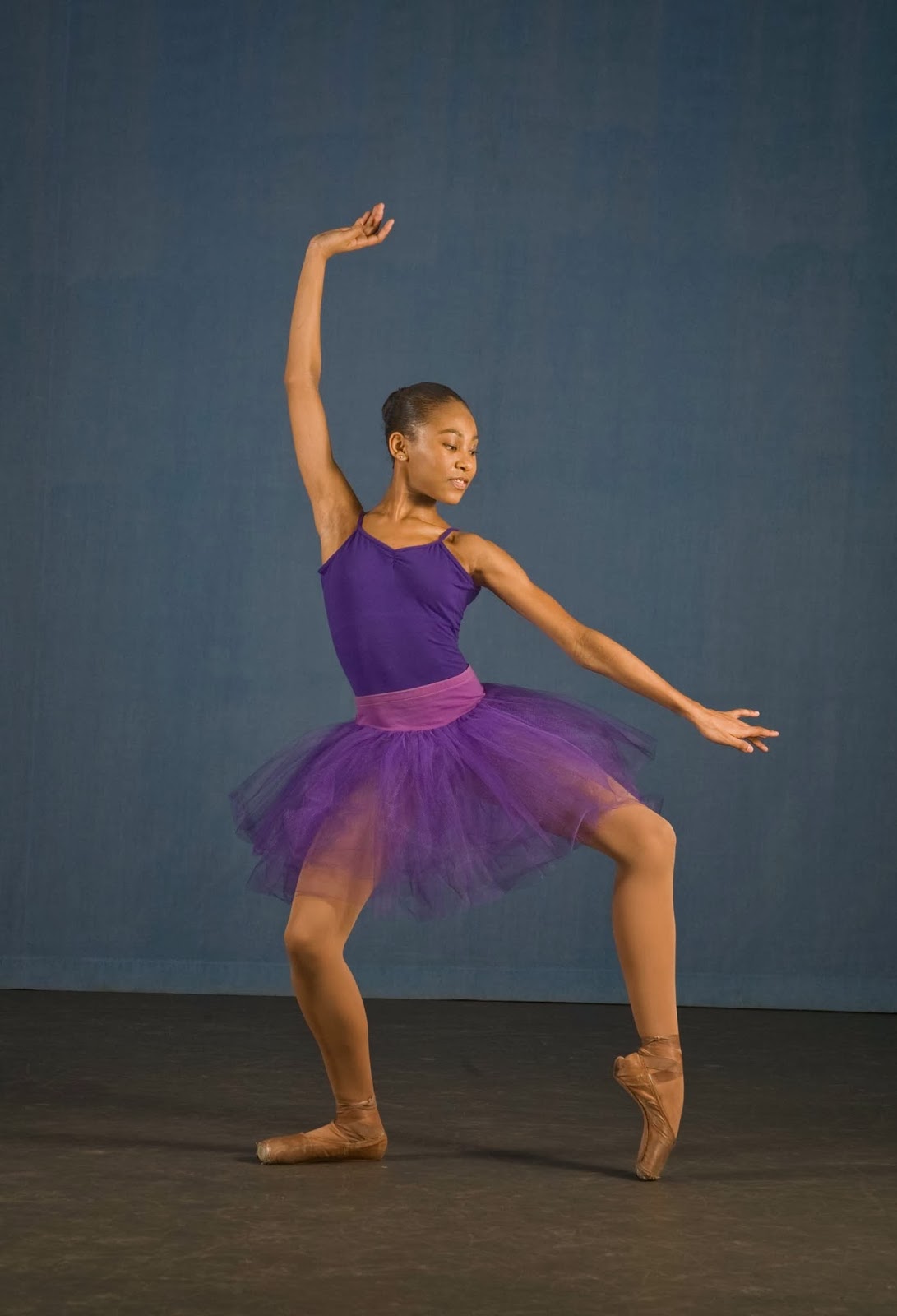
Next February, I plan to write about photographing people for my new book, Beyond Magenta: Transgender Teens Speak Out . Happy holidays everyone. May we dance into a beautiful New Year.

December 16, 2013
Some of the Eureka! Award Books
Last month I blogged about the Eureka! Awards for Nonfiction, given each year by the California Reading Association. A recap:
I like all things about the Eureka! Awards.I like that they honor many types of nonfiction – those closely tied to the curriculum and those that are not. I like that all age levels receive Eureka! Awards: K-12.I like that small presses are liberally represented among the prize winners.*I like that awards go to books with clever, often multi-disciplinary approaches to a subject.
*Small presses with 2013 winners include Annick Press (4 awards,) Scarletta Junior Readers, Mountain Press, Dawn Publications, Lee & Low, Bearport, Calkins Creek, and Wordsong, as well as big NY-based houses.
A list of all the 2013 Eureka! Winners is here.

Bones Never Lie: How Forensics Helps Solve History’s Mysteries by Elizabeth MacLeod (Annick Press) blends history and science into a mystery format as it explains how old and new forensic science has solved age-old mysteries about the deaths of Napolean, King Tut, Anatasia Romanov, and a recent King of Thailand.

The Great Bicycle Experiment: The Army’s Historic Black Bicycle Corps, 1896-97 by Kay Moore (Mountain Press Publishing), uncovers an obscure bit of history. This group of intrepid athletes rode primitive bicycles on wretched roads over mountains, through rivers, and broiling prairies. Period photographs show just how challenging the rides were. Subsequent history of the corps reveals racist injustice that was not overturned until the 1970s.

Cowboy Up? Ride the Navajo Rodeo by Nancy Bo Flood (WordSong) takes us out West, and gives us a multi-layered day at the rodeo. We hear a voice in verse of a young rodeo rider; the announcer rousing the crowd, and a narrative that explains the intricacies of each event. Stunning action photographs complement the text.

Here Come the Girls Scouts by Shana Corey (Scholastic) is a wonderful example of how illustrations and book design can add to the power of the text. Hadley Hooper’s paintings bring Daisy Low’s energy and enthusiasm alive.
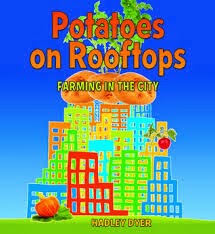
Potatoes on the Rooftop: Farming in the City , by Hadley Dyer (Annick Press) also uses book design to make an impact. This book combines nutrition, geography, zoology, botany, with lots of go-out-and-get-your-hands-dirty activities. Urban gardens at home, in schools, and communities all around the world are presented.
 It Can’t Be True
(Dorling Kindersley) is for readers who are interested in how big, how tall, how much, how fast. Chapters on the universe, the earth, living things, and feats of engineering are presented with photos, graphs, drawings and wacky analogies. (“An adult heart pumps enough blood to fill 5.3 10,000 gallon road tankers every month.”)
It Can’t Be True
(Dorling Kindersley) is for readers who are interested in how big, how tall, how much, how fast. Chapters on the universe, the earth, living things, and feats of engineering are presented with photos, graphs, drawings and wacky analogies. (“An adult heart pumps enough blood to fill 5.3 10,000 gallon road tankers every month.”)
Animals Upside Down: A Pull, Pop, Lift & Learn Book by Steve Jenkins and Robin Page (Houghton Mifflin) Leave it to these two authors to show us yet another quirky view of the animal world. Pull, lift, slide to see some odd creatures and how they live.

Dreaming Up: A Celebration of Building by Christy Hale (Lee & Low Books) will intrigue kids from pre-K to 12, as it relates kids’ play (stacking cups, mud pies, building blocks, sand castles, house of cards, etc) to architectural treasures all around the world, in rhyming verse. Back matter introduces the architects represented.

10 Plants That Shook the World by Gillian Richardson (Annick Press.) Some food – pepper, tea, sugarcane, cacao. Some not – papyrus, rubber, cotton, cinchona (source of quinine.) All these plants have had enormous economic, political, and social consequences through the centuries. Lots of biology info too.
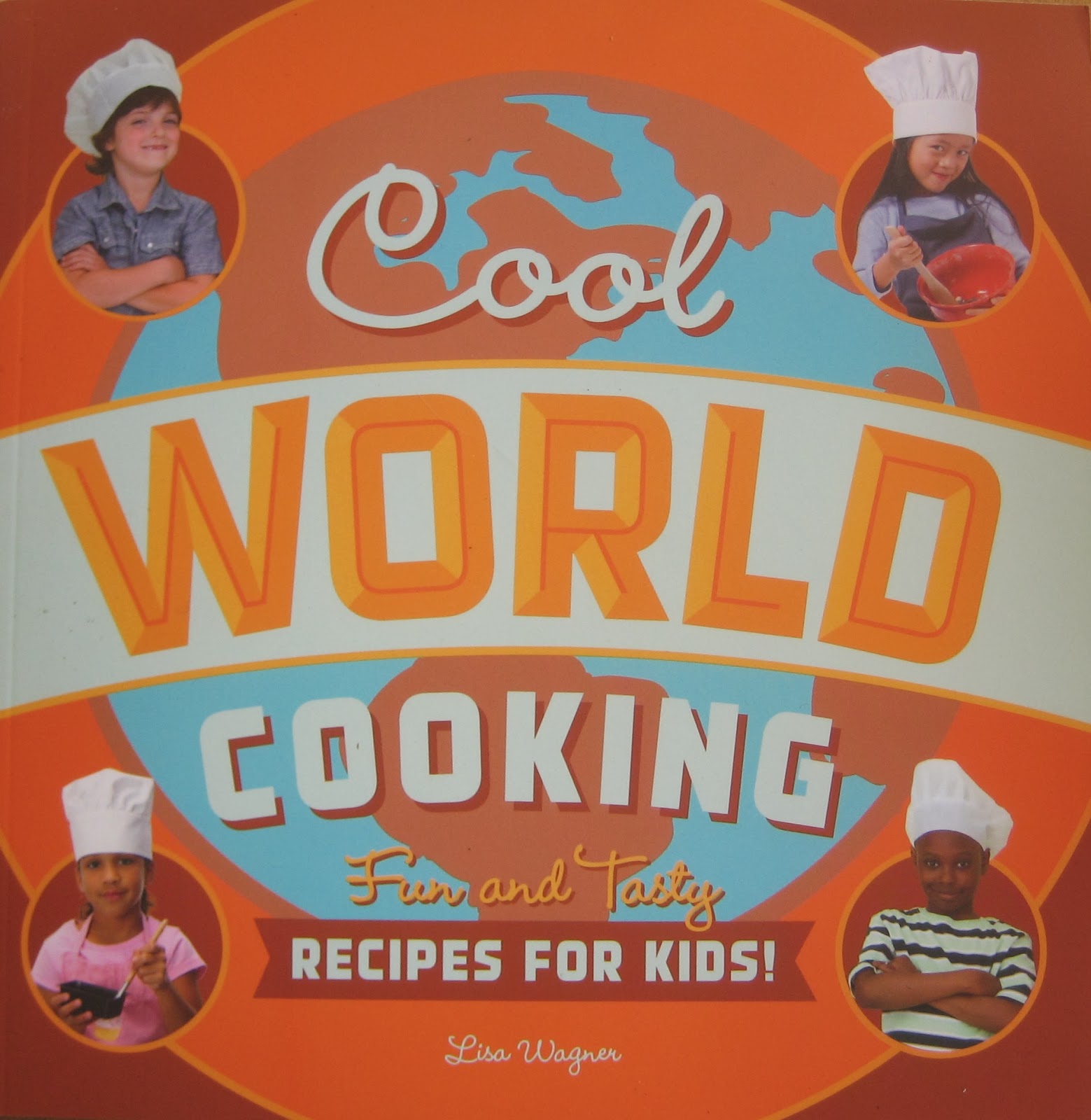
Cool World Cooking by Lisa Wagner (Scarletta) gives us recipes with text and visual directions, suitable for many ages of children (with adult help.) While it certainly can offer curriculum connections, it also offers a great way to have fun with kids at home.
Happy eating and reading to you all!

Stop, Stop, You're Both Right!!!
I’m sure many of you are like me—making your lists, checking ‘em twice. Mid-December isn’t the best time to think about writing, reading or Common Core, but here I am.
Both on this blog and the rest of the web, I’ve read a lot about our job as authors concentrating upon our writing/thinking about Common Core or providing support materials for teaching our books.
I end up smack in the middle. I’m reminded of an old ad campaign for Certs when I was a kid (Do they still exist?). “Certs is a breath mint,” one person states. “Certs is a candy mint,” insists the other. Then some bodiless baritone booms, “Stop, stop, you’re both right. It’s two, two, two mints in one!"
I believe my job is being a storyteller. It’s what I love. I love to dig in to a subject, find my idea of what is important and extraordinary, then do the best I can to convey my sense of wonder and hope it’s contagious.
I also like the idea that someone will read my book (hopefully, buy my book) and have the opportunity to get caught up in its ideas. I like the idea that teachers use my book in fun ways that introduce kids to reading or space or politics and make them believers. In something.
Opening my computer to write this post, I peeked at my email and saw something from World Book Night, a program that organizes one day a year when participants hand out 30 free books to the unsuspecting public. Years past, I have left them on the #39 bus in Boston and distributed them to a class in an inner city school. It’s a great program and a great experience you might want to have.
Anyway, this email reprinted a letter the organization received:
I wanted to tell you that I am at our local library for the first time because I received a book. I read sometimes, but not a lot. After I received and read the book I thought I could start going to our library and checking out books. I now have my first library card ever and I am 78 years old. Thank you for having this great promotion.
P.S. The library helped me do this letter on the computer because I don't have one and I didn't think you would be able to read my writing. I didn't realize that there were even computers at the library. I've learned a lot by coming to our library and seeing what is available. I would never have done this without your World Book Night.
 We never know how, when or where a person will find a book that will guide his career choice or set off her life of reading. It is in this spirit that I'm providing the link to my new lesson plans for
How Do You Burp in Space?
We never know how, when or where a person will find a book that will guide his career choice or set off her life of reading. It is in this spirit that I'm providing the link to my new lesson plans for
How Do You Burp in Space?
Happy Holidays to all--Susan

December 13, 2013
hiStorytelling
This post isn’t about the Common Core or rubrics or other pedagogical concerns. It’s about storytelling, which, when it comes right down to it, is what all great writing should be—even nonfiction.
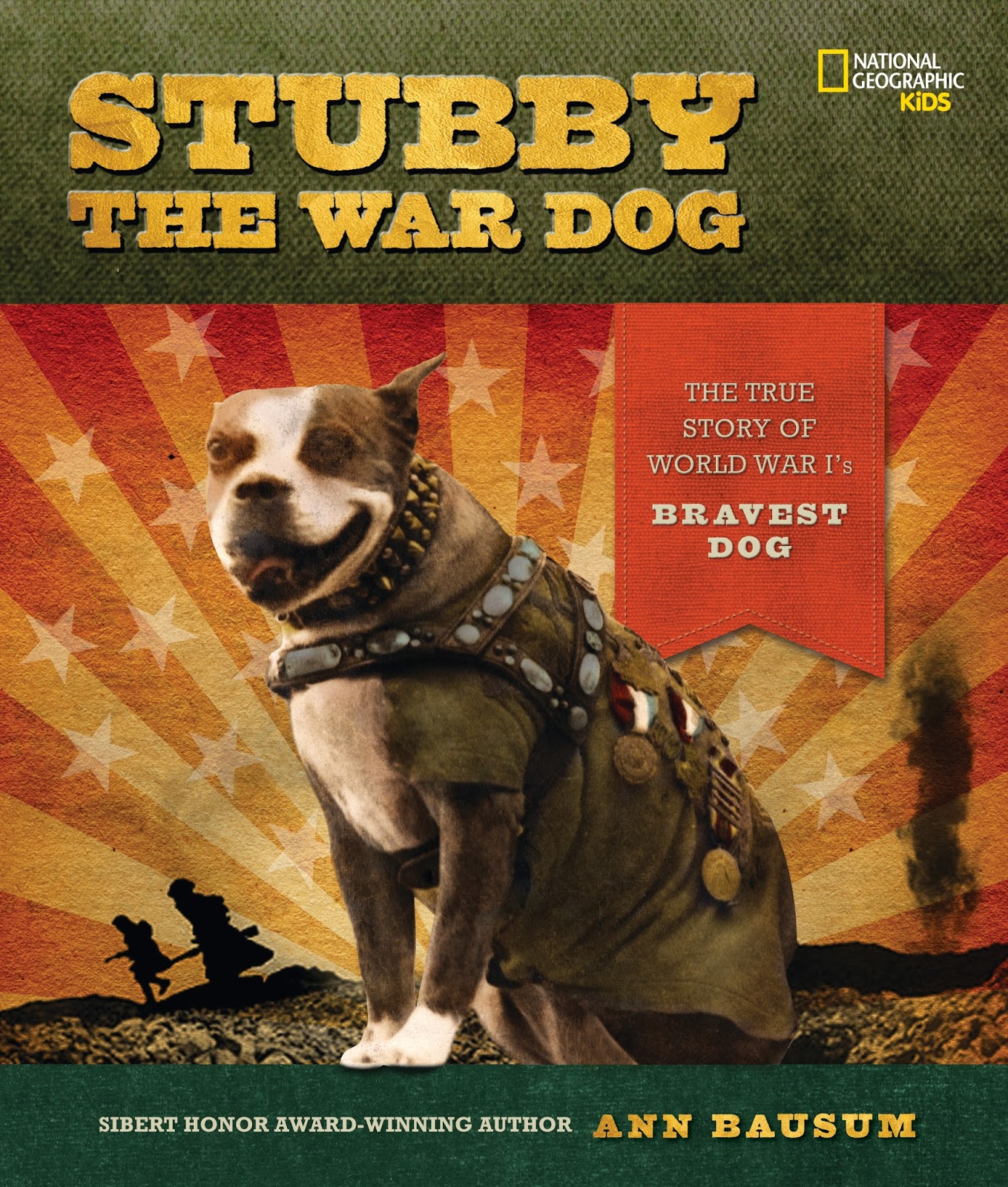
.JPG) Stubby, on display at the Smithsonian InstitutionThis past year I’ve had the good fortune to become an hiStoryteller twice on the same topic. My unusual escort has made the journey pure pleasure, trotting forward on four feet as he’s led me back to 1917, across the Atlantic, through the Great War, and home again. As with so many topics, accident and good fortune led me to discover Stubby, a stray dog smuggled with American troops to France who returned to the United States and became a post-war icon. I stumbled across him while doing photo research for
Unraveling Freedom,
another book set during World War I. Even though I was not a dog person, I could not get this intrepid creature out of my mind, and that meant only one thing: I was destined to write about him. More than that, I was, apparently, destined to write about him twice.
Stubby, on display at the Smithsonian InstitutionThis past year I’ve had the good fortune to become an hiStoryteller twice on the same topic. My unusual escort has made the journey pure pleasure, trotting forward on four feet as he’s led me back to 1917, across the Atlantic, through the Great War, and home again. As with so many topics, accident and good fortune led me to discover Stubby, a stray dog smuggled with American troops to France who returned to the United States and became a post-war icon. I stumbled across him while doing photo research for
Unraveling Freedom,
another book set during World War I. Even though I was not a dog person, I could not get this intrepid creature out of my mind, and that meant only one thing: I was destined to write about him. More than that, I was, apparently, destined to write about him twice. First I researched and wrote about Stubby the War Dog for young people and then, at the request of my publisher, I embarked on another telling of his tale, this time for adult readers. The National Geographic Society will publish both books next May.
 I’ve learned a lot about storytelling from these projects. My subject left behind an historical record riddled with contradictions, omissions, and hyperbole. Just sorting out the narrative was a job. Figuring out how to share it with two very different audiences was a challenge, as well. Keeping the story fresh became a particular concern. I knew I needed to stay in love with the topic for the readers to love it, but, after writing the first book, I feared I would find myself trapped in a sort of Groundhog Day nightmare for the second one.
I follow a definite mental and physical trajectory when writing a book. Part of the challenge is pacing myself so that I don’t run out of stamina or enthusiasm before the project’s completion. Once a book is done, there is a natural let-down that shares kinship with the postpartum feelings of childbirth. Exhaustion. Relief. Satisfaction. Plus a sense of aimlessness after losing the connection to a goal long-in-the-making and now achieved. No mother would want to go right back into labor, and no one ever has to give birth to the same baby twice. Yet there I was, facing the same topic again.
 It turned out that my greatest challenge was overcoming the sense of panic that gripped me at that prospect. Once I’d slain the apparition of repetition, I found myself liberated to write in new ways, from simple things such as the freedom to construct complicated sentences and use big words to the rewards of writing for an audience that could appreciate a more sophisticated rendering of the history. I fell in love with my subject all over again, generating the energy and motivation required to explore Stubby’s story along new research and writing avenues.
 Sometimes I think we forget that writing, at its best, is storytelling. Writers such as those at I.N.K. don’t park their passions at their office doors; they infuse their work with them, and that’s why such incredible books emerge from their fingertips. Nothing but the facts, true, but the facts can truly inspire—sometimes even twice—when we write from our hearts as well as from our heads.
In the wake of standards, and testing, and benchmarks it can be hard to remember that the best reading, the best writing, the best teaching, and the best learning come when we are most inspired. My new year’s wish for all is this: May writers, educators, and students alike be allowed to fall in love with facts through wonderful, wonderful storytelling.

December 11, 2013
Common Core Care Package: 10 Ways Authors Can Help Educators
Common Core is in the news almost daily. A lot of people don’t like the new standards, or at least the standardized testing that comes along with them. But the fact is that CCSS has been adopted by most of America, so teachers have to address the new standards regardless of the political frenzy swirling all around them.
So the best thing we can do as authors of both fiction and nonfiction is help them. Throughout October, INK bloggers wrote posts about the new standards and many of us suggested ideas for using our books and/or books we admire to support the standards.
Today, I thought I’d share some general strategies for authors who would like to guide educators in using their books to meet the Common Core standards. I'm not sure any author would have time to do them all, but pick one or two and dig in. It will make a difference.
1. Write discussion questions that help students identify a book’s main idea and key details.
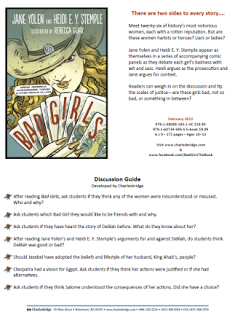 Jane Yolen and Heidi Stemple
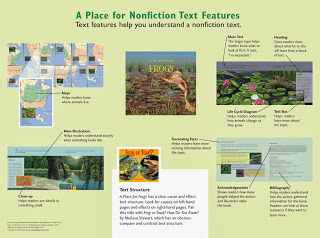
2. Develop a teacher’s guide with activities that help students build vocabulary; understand connections and relationships between key ideas, events, or individuals in a book; and examine a book’s structure.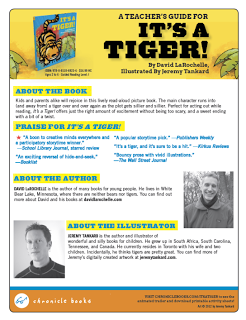 David La Rochelle3. Offer writers’ workshops that focus on such topics as structure, voice, and word choice.
 Barbara O'Connor4. Write blog posts that describe your intentions as you wrote a specific book.
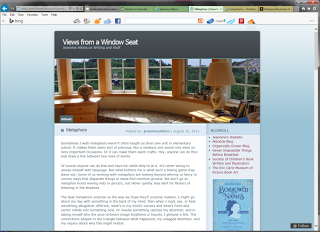 Jeannine Atkins 5. Write blog posts, create videos, or develop school visit programs that deconstruct specific aspects of your writing and/or illustrating process.
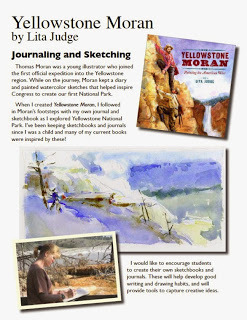 Lita Judge
6. If you write picture books or photo-illustrated books, write blog posts, create videos, or develop school visits or classroom materials that highlight the connection between pictures and words in your books.
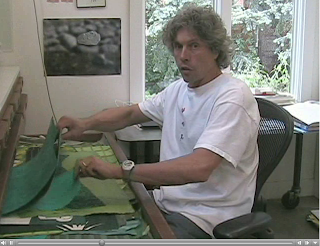 Steve Jenkins
7. Speak at local and national conferences for teachers and librarians about specific aspects of writing craft.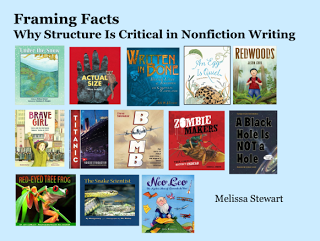 8. Develop worksheets and visual aids that educators can use to teach specific aspects of writing craft.
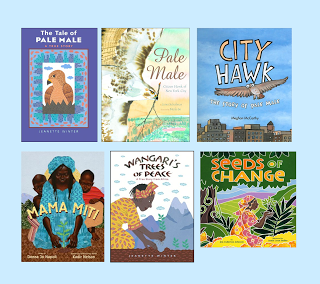
 9. Create lists of fiction and nonfiction titles that have a connection to your book, so students can compare the texts.
 10. Provide links to related media on your website, so students can compare them to your book.
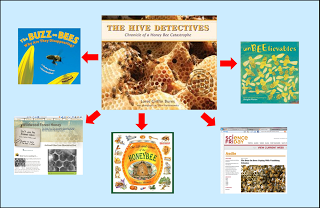 Loree Griffin BurnsDo you have other ideas about how authors can help educators address the goals of Common Core? I’d love to hear them. If we all work together, we can give teachers the tools they need to thrive in the age of Common Core.

So the best thing we can do as authors of both fiction and nonfiction is help them. Throughout October, INK bloggers wrote posts about the new standards and many of us suggested ideas for using our books and/or books we admire to support the standards.
Today, I thought I’d share some general strategies for authors who would like to guide educators in using their books to meet the Common Core standards. I'm not sure any author would have time to do them all, but pick one or two and dig in. It will make a difference.
1. Write discussion questions that help students identify a book’s main idea and key details.
 Jane Yolen and Heidi Stemple
 2. Develop a teacher’s guide with activities that help students build vocabulary; understand connections and relationships between key ideas, events, or individuals in a book; and examine a book’s structure.
 David La Rochelle3. Offer writers’ workshops that focus on such topics as structure, voice, and word choice.
 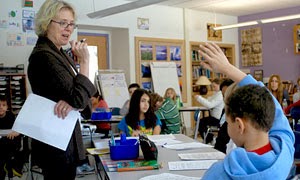 Barbara O'Connor4. Write blog posts that describe your intentions as you wrote a specific book.
 Jeannine Atkins 5. Write blog posts, create videos, or develop school visit programs that deconstruct specific aspects of your writing and/or illustrating process.
 Lita Judge
6. If you write picture books or photo-illustrated books, write blog posts, create videos, or develop school visits or classroom materials that highlight the connection between pictures and words in your books.
Steve Jenkins7. Speak at local and national conferences for teachers and librarians about specific aspects of writing craft.
 8. Develop worksheets and visual aids that educators can use to teach specific aspects of writing craft.
 9. Create lists of fiction and nonfiction titles that have a connection to your book, so students can compare the texts.
 10. Provide links to related media on your website, so students can compare them to your book.
 Loree Griffin BurnsDo you have other ideas about how authors can help educators address the goals of Common Core? I’d love to hear them. If we all work together, we can give teachers the tools they need to thrive in the age of Common Core.
Common Core & Nonfiction Photography Part II
PHOTOS CAN HAVE LAYERS OF CONTENT, JUST AS GOOD DRAWN ILLUSTRATIONS DO.
You know all those little fun bits that illustrators tuck into their drawings and paintings? The birds that shows up in every illustration, the signs on every door, the meaningful numbers that make sense when you read to the end? Well, those features are a tad harder to plop into a photo. But photographers can seek to add those extra, nourishing elements, too, if they know ahead of time they are working on a book.
When I photographed Rah, Rah, Radishes, I was just beginning to hone my photography and content in this way. For that book, I tried to photograph at booths that had signs that brought forth good math content, nutrition and farm messages. No, I did not write them. Those signs were there. Nonfiction photography is a matter of choice, as my thousands of unused photos can attest. But for the subsequent book, Go, Go, Grapes, I did more still lifes, here and there, to fill in produce that I could not find in the same photo in the markets and small stores.
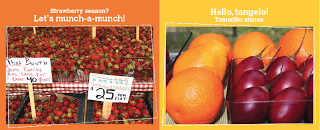
Yet I didn’t really understand the power of what I could do until I was in an IKEA in Chicago selecting some props for Let’s Go Nuts: Seeds We Eat. Perhaps it’s because I have so many math teachers in my life but when I saw the red measuring cups and spoons, I thought: AHHHH! Yes! That’s when I realized I wanted to add cool stuff whenever possible...math fractions, quantities, geographic context, cultural context. Things that would make bounce readers to fun activities. I have only begun to push in this direction. It’s a matter of trial and error and learning what works for audiences at this young level. It’s not what a really cool graph can do for synergy but it is layering some more deliciousness into the work.
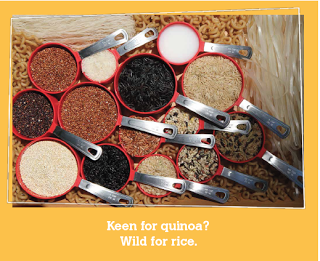 Measuring cups are in the book!
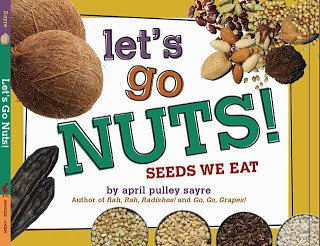
After the measuring cup moment, I kinda went, um, nuts, organizing photos with extra content not covered in the text: extra information about patterns, foods, and eating local foods. (Note: only some were organized in this way. Many were photographed onsite at the market or store.) But if you look closely you will find mathematical patterns of repetition and grouping.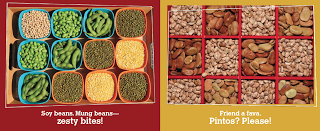 Colors and patterns for early childhood teachers may use
At times, I inserted food made from the focal seed into the photo. Sometimes I overdid this. The cutting room floor is littered with photos I carefully arranged to show both coconut and coconut milk, both red bean and Chinese red bean bun and mung bean pastry, and the like. (But even in the final book there are some of these extra bits for readers who want to extend. That page of rices has rice pastas of many sorts in it.)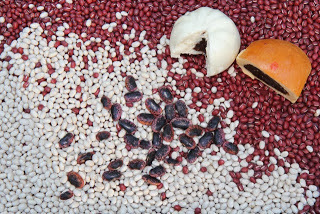 Photo experiment discarded. Bean rolls, however, not discarded! Yum!
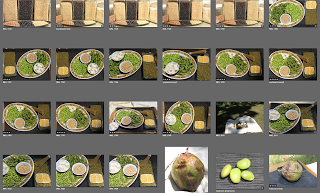 Experiments for various photographsLAYERS OF CONTENT IN PHOTOS IN NATURE
Despite my journey into food chants, most of the photography I do is in the wild: out in nature, not in still lifes. But those book can have “extras,” too. Sometimes you find them by accident. Thanks to digital cameras, we can take thousands of photos and sometimes hit ones that have those “teachable nuggets” for a book or slideshow. Last week I was sorting hundreds of seagull photos when I noticed this one with a band.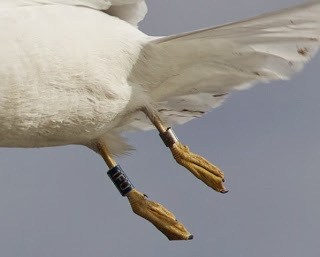
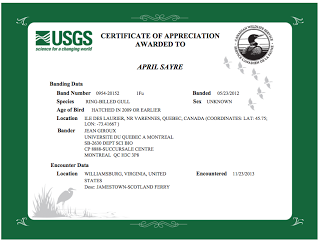 Soon I found out that there’s a government site www.reportband.gov you can contact to report bird bands. Within a few days, they’d sent me this nice certificate and information that my bird, photographed at the ferry near Williamsburg, VA, had been banded in Quebec!
That was a lucky break. Mostly, layers in photography develop from sweat and time. You just have to be there, and stay there, and stand there, and walk there, until the right moment happens.
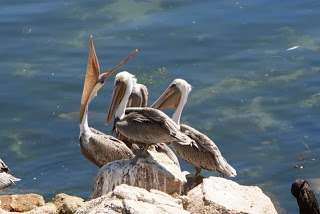
For my latest book, Raindrops Roll, which will be out in 2015, I spent five months photographing raindrops. Raindrops on butterfly antenna, raindrops on soggy bees, raindrops on seedpods, and frogs, and the like. The text is simple. The bulk of what I wanted to say about scale, moisture, mass, weight, mushrooms popping up after rain and so on, will have to be carried by the photos because the editor and I edited some of that text out of the book. The photography took endless stomping in rain-filled boots, dripping with raindrops and my hair a rippled hygrometer from being out in humidity. I loved it. A bit can be expanded in the endmatter but my hope is that the photos will carry the message the young, carved-to-the-bone text cannot contain.
One of the things about picture book text and illustration is the immense love and care (obsessive need for perfection?) that goes into it. For illustrators, including photographers, the work takes gobs of experimentation. Editors, designers, art directors often do their share of the tinkering, too. They give comments and they’ve been known to print out, tape up, move around things as part of the process. In a great team, everyone is on board, with that kind of care.
For the photographer, the responsibility is to GET OUT THERE. And, of course, carry your camera. Nothing replaces just putting in time. That’s the only way you’ll get something special: something that will help your reader find new colors and connections in your content.
###

You know all those little fun bits that illustrators tuck into their drawings and paintings? The birds that shows up in every illustration, the signs on every door, the meaningful numbers that make sense when you read to the end? Well, those features are a tad harder to plop into a photo. But photographers can seek to add those extra, nourishing elements, too, if they know ahead of time they are working on a book.
When I photographed Rah, Rah, Radishes, I was just beginning to hone my photography and content in this way. For that book, I tried to photograph at booths that had signs that brought forth good math content, nutrition and farm messages. No, I did not write them. Those signs were there. Nonfiction photography is a matter of choice, as my thousands of unused photos can attest. But for the subsequent book, Go, Go, Grapes, I did more still lifes, here and there, to fill in produce that I could not find in the same photo in the markets and small stores.

Yet I didn’t really understand the power of what I could do until I was in an IKEA in Chicago selecting some props for Let’s Go Nuts: Seeds We Eat. Perhaps it’s because I have so many math teachers in my life but when I saw the red measuring cups and spoons, I thought: AHHHH! Yes! That’s when I realized I wanted to add cool stuff whenever possible...math fractions, quantities, geographic context, cultural context. Things that would make bounce readers to fun activities. I have only begun to push in this direction. It’s a matter of trial and error and learning what works for audiences at this young level. It’s not what a really cool graph can do for synergy but it is layering some more deliciousness into the work.
 Measuring cups are in the book!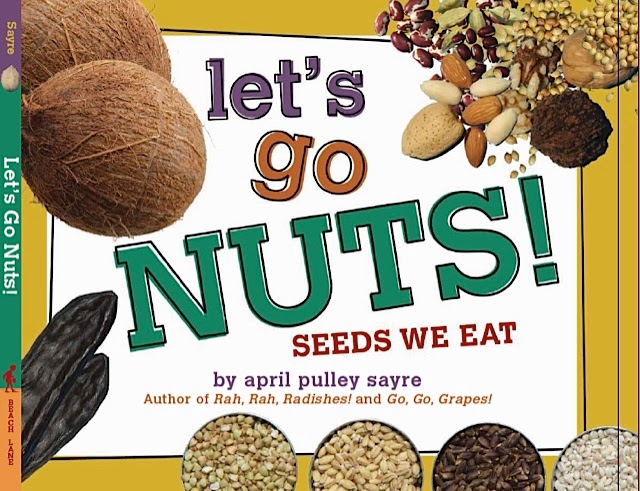
After the measuring cup moment, I kinda went, um, nuts, organizing photos with extra content not covered in the text: extra information about patterns, foods, and eating local foods. (Note: only some were organized in this way. Many were photographed onsite at the market or store.) But if you look closely you will find mathematical patterns of repetition and grouping.
 Colors and patterns for early childhood teachers may use
At times, I inserted food made from the focal seed into the photo. Sometimes I overdid this. The cutting room floor is littered with photos I carefully arranged to show both coconut and coconut milk, both red bean and Chinese red bean bun and mung bean pastry, and the like. (But even in the final book there are some of these extra bits for readers who want to extend. That page of rices has rice pastas of many sorts in it.)
 Photo experiment discarded. Bean rolls, however, not discarded! Yum!
 Experiments for various photographsLAYERS OF CONTENT IN PHOTOS IN NATURE
Despite my journey into food chants, most of the photography I do is in the wild: out in nature, not in still lifes. But those book can have “extras,” too. Sometimes you find them by accident. Thanks to digital cameras, we can take thousands of photos and sometimes hit ones that have those “teachable nuggets” for a book or slideshow. Last week I was sorting hundreds of seagull photos when I noticed this one with a band.
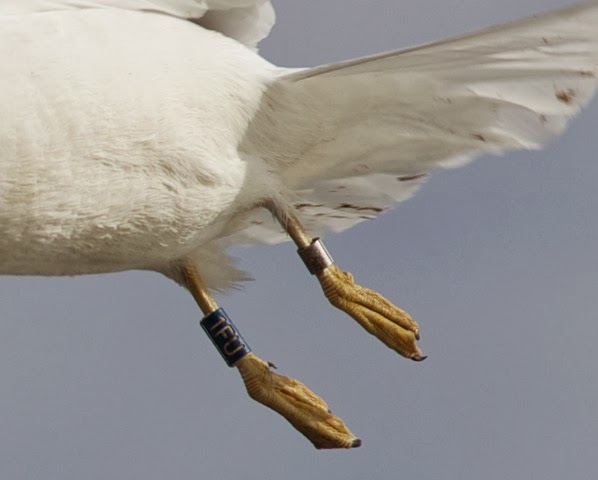
 Soon I found out that there’s a government site www.reportband.gov you can contact to report bird bands. Within a few days, they’d sent me this nice certificate and information that my bird, photographed at the ferry near Williamsburg, VA, had been banded in Quebec!
That was a lucky break. Mostly, layers in photography develop from sweat and time. You just have to be there, and stay there, and stand there, and walk there, until the right moment happens.

For my latest book, Raindrops Roll, which will be out in 2015, I spent five months photographing raindrops. Raindrops on butterfly antenna, raindrops on soggy bees, raindrops on seedpods, and frogs, and the like. The text is simple. The bulk of what I wanted to say about scale, moisture, mass, weight, mushrooms popping up after rain and so on, will have to be carried by the photos because the editor and I edited some of that text out of the book. The photography took endless stomping in rain-filled boots, dripping with raindrops and my hair a rippled hygrometer from being out in humidity. I loved it. A bit can be expanded in the endmatter but my hope is that the photos will carry the message the young, carved-to-the-bone text cannot contain.
One of the things about picture book text and illustration is the immense love and care (obsessive need for perfection?) that goes into it. For illustrators, including photographers, the work takes gobs of experimentation. Editors, designers, art directors often do their share of the tinkering, too. They give comments and they’ve been known to print out, tape up, move around things as part of the process. In a great team, everyone is on board, with that kind of care.
For the photographer, the responsibility is to GET OUT THERE. And, of course, carry your camera. Nothing replaces just putting in time. That’s the only way you’ll get something special: something that will help your reader find new colors and connections in your content.
###
December 9, 2013
Coffee-Table Science Redux
It’s that time again — time for my quinquennial list of coffee table books, just in time for the gift-giving season. Hard to believe it was five years ago when I blogged about some of the weightier photography books I pulled from my own bookshelves, pointing out that looking through them with a child — or alone — can be a great introduction to corners of the natural world that we sometimes overlook. That list is still relevant, but since then I’ve accumulated a few more volumes that are well worth considering. These books are not written for children. The text is often academic or technical. But in the context of children’s nonfiction, the text doesn’t matter. The images are so compelling that they can’t help but engage children (and adults), and they provide all sorts of opportunities for talking about animals, the environment, and our relationship to them.
Animal Earth Ross Piper

This is a beautiful book (all the books I suggest here are beautiful, so we’ll get that adjective out of the way). Piper focuses on unfamiliar animals such as sea worms or phoronids (you’ll have to look it up). There are also remarkable images of more familiar creatures — a spider or shrimp — greatly enlarged.
Seeing Trees: Discover the Extraordinary Secrets of Everyday Trees
Nancy R. Hugo (Author)
Robert Llewellyn (Photographer)

The fantastically precise photos in this book look at the buds, leaves, flowers, and other details of ten different trees. It’s an intimate look at the life cycle of these organisms. I think that trees, if we stop and think about them (or really look at them), are a kind of miracle, one that we don’t often appreciate because trees are so ubiquitous. This book wakes us up.
Ice — Portraits of Vanishing Glaciers
Jame Balog

Balog, who has produced a number of elegant photographic books about animals and trees, began a project in 2005 that became something of an obsession. He started photographing ice — particularly glaciers. I think he was initially interested in the visual possibilities of the subject, but he soon realized how quickly most of the world’s glaciers are disappearing. This led to a multi-year project involving time-lapse photography of glaciers on several continents. With director Jeff Orlowski, Balog made the excellent documentary film Chasing Ice. Ice includes many images from the film. Both book and film make a compelling case for taking global warming more seriously. Culture wars notwithstanding, I believe an awareness of human-caused climate change should be part of every child’s education.
Survivors: A New Vision of Endangered Wildlife


Another Balog book. The photographer placed his subjects in unexpected contexts — often in a photo studio — which, aside from capturing them in exquisite detail, somehow makes them seem even more vulnerable.
More than Humanby Lewis Blackwell (Author)
Tim Flach (Photographer)

Most of Flach’s animal images feature familiar animals, many photographed in close-up in a studio setting. They are powerfully affecting photos. Flach manages to capture both the uniqueness and dignity of these species, and makes us feel as if we have not really looked at them closely before.
Walton Ford: Pancha Tantra
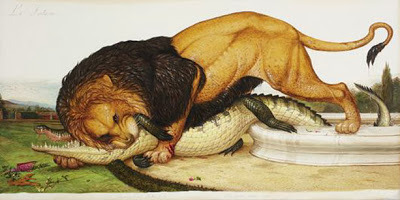
 The last book on my list is a bit of a wild card, and probably not for young children. These animal paintings are stylistically reminiscent of Audubon. But the compositions are not simply depictions of scenes from nature: the creatures are often characters in some sort of allegory or fable. The images can be dark. Some feature violence or other disturbing juxtapositions. That said, the questions they raise — many about man’s relationship to the natural world — are relevant, and the book could provoke some very interesting conversations with a child who is old enough to understand the artist’s perspective. (I don’t like giving age ranges for books, but I’ll make an exception here and say that most 4th or 5th graders should be fine with this book, and that many kids that age will find it fascinating.)
December 5, 2013
Enter Horn Player, Tooting
Ta Dah!
I’ll be compiling a monthly list of new books, awards, and appearances of our illustrious INK members.
This being December, we don’t have any Oscar ceremonies to report, but we have a boatload of new and notable books and awards.
NEW BOOKS
Dorothy Hinshaw Patent, Homesteading: Settling America's Heartland photos by William Muñoz (Missoula, MT, Mountain Press)April Pulley Sayre, Let's Go Nuts! Seeds We Eat (Beach Lane/S&S) David Schwartz, Rotten Pumpkin (Creston Books)
Karen Romano Young, Bats and Rats: A Humanimal Doodles Book (Collins Big Cat)
More new books are among those below…
AWARDS AND NOTABLES
Ann Bausum: Marching to the Mountaintop: How Poverty, Labor Fights, and Civil Rights Set the Stage for Martin Luther King, Jr.'s Final Hours (National Geographic
• Jane Addams Children's Book Honor Award for older readers
• Carter G. Woodson Award (Middle Level) from National Council for the Social Studies (NCSS)
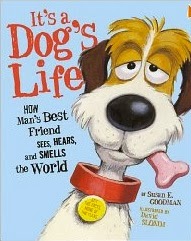
Susan Goodman: It's a Dog's Life: How Man's Best Friend Sees, Hears, and Smells the World (Roaring Brook Press)
• nominated for the Beehive Book Award for 2014. • The Center for Children’s Books (U of Illinois), 2013 Guide Book to Gift Books for kids.

Jan Greenberg and Sandra Jordan: The Mad Potter/ George E. Ohr: Eccentric Genius (Neal Porter Book/ Roaring Brook Press)
• SLJ Best Books 2013 Nonfiction • Booklist Youth Editor's Choice 2013
Deborah Heligman, The Boy Who Loved Math: the Improbable Life of Paul Erdos (Roaring Brook Press)• New York Times Notable Children's Book of 2013• Kirkus Best Books of 2013. • Book List Top 10 Science and Health Book for Youth• Booklist and Booklinks Top 30 (1 of 2 in Mathematics) lasting connection in the K-8 classroom. • Best Jewish Children's Book by Tablet Magazine.
Steve Jenkins, The Animal Book (Houghton Mifflin Harcourt) • Kirkus Best Children’s Book of 2013 • National Science Teacher's Association 2013 Outstanding Science Trade Book
 Steve Jenkins and Robin Page,
Animals Upside Down
(Houghton Mifflin Harcourt)• Kirkus Best Children’s Books of 2013 and on the • National Science Teacher's Association 2013 Outstanding Science Trade Book • California Reading Association Eureka! Honor Award.
Steve Jenkins and Robin Page,
Animals Upside Down
(Houghton Mifflin Harcourt)• Kirkus Best Children’s Books of 2013 and on the • National Science Teacher's Association 2013 Outstanding Science Trade Book • California Reading Association Eureka! Honor Award.
Barbara Kerley, The World is Waiting for You (National Geographic)
• Kirkus Best Children’s Book of 2013
Dorothy Hinshaw Patent: Dogs on Duty: Soldiers' Best Friends on the Battlefield and Beyond (Walker Children’s Books) • Mitten Award, Michigan Library Association
Elizabeth Rusch: Electrical Wizard: How Nikola Tesla Lit up the World (Candlewick)• Gelette Burgess Award for biography.
 April Pulley Sayre,
Eat Like a Bear
, illustrated by Steve Jenkins (Henry Holt) • National Science Teacher's Association 2013 Outstanding Science Trade Book
April Pulley Sayre,
Eat Like a Bear
, illustrated by Steve Jenkins (Henry Holt) • National Science Teacher's Association 2013 Outstanding Science Trade BookApril Pulley Sayre, Here Come the Humpbacks! (Charlesbridge)• National Science Teacher's Association 2013 Outstanding Science Trade Book • Editor’s Choice, Science Books and Films.
April was also a Picture Book Month Champion. Read her blog on that forum here.http://picturebookmonth.com/2013/11/why-picture-books-are-important-by-april-pulley-sayre/
Steve Sheinkin, Lincoln’s Grave Robbers (Scholastic)• Publishers Weekly Best Books of 2013
David Schwartz, Where Else In the Wild? (Tricycle Press) Finalist Grand Canyon Reader Award (Arizona Children's Choice Award)• NY Public Library's infographic of the Best Children's Books of 2013

Melissa Stewart, No Monkeys, No Chocolate (Charlesbridge)• National Science Teacher's Association 2013 Outstanding Science Trade Book
Melissa Stewart: A Place for Turtles (Peachtree)• National Science Teacher's Association 2013 Outstanding Science Trade Book
 Tanya Lee Stone,
Courage Has No Color:
The True Story of the Triple Nickles:
America's First Black Paratroopers
(Candlewick)
Tanya Lee Stone,
Courage Has No Color:
The True Story of the Triple Nickles:
America's First Black Paratroopers
(Candlewick)• Publishers Weekly Best Books of 2013• Kirkus Best Books of 2013• Texas Tayshas Reading List• Parents' Choice Award Recommended Title• Tennessee's Volunteer State Book Award List
Tanya Lee Stone, Who Says Women Can’t Be Doctors? (Henry Holt)• Parents Magazine Best Nonfiction Picture Books 2013• National Science Teacher's Association 2013 Outstanding Science Trade Book • Junior Library Guild• Spring 2013 Kids Indie Next List

Ask a Slave
One of the great pleasures of researching a book can be the people you meet along the way. I met Azie Dungey a few years ago, when I was doing research at Mount Vernon, George Washington's Virginia plantation. At the time, Azie was working as a "living history character" on the estate. Azie played a slave. She interpreted the role of Caroline, an enslaved woman who worked as a housemaid for George and Martha Washington. In this role, Azie talked to hundreds of people a day about what it was like to be black in 18th-century America.
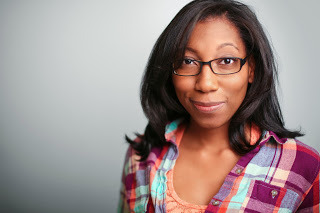 Azie Mira DungeyAfter she left Mount Vernon, Azie looked for "a way to present all of the most interesting, and somewhat infuriating encounters that I had, the feelings that they brought up, and the questions that they left unanswered." The result is her hit comedy web series "Ask a Slave."
In "Ask a Slave," Azie plays Lizzie Mae, a fictional housemaid to the Washingtons. Her deadpan delivery is hilarious, but the series addresses serious issues about race and gender and power--and historical ignorance.
If you haven't seen "Ask a Slave," check it out! I'll make it easy for you. Here's the first episode, "Meet Lizzie Mae." Teachers, you'll want to preview the series before sharing it with students. Some of the later episodes get a little raw. But I'm betting most high-schoolers will dig this edgy satire, and it might just nudge them to think a little deeper about our country's history. Way to go, Azie!

 Azie Mira DungeyAfter she left Mount Vernon, Azie looked for "a way to present all of the most interesting, and somewhat infuriating encounters that I had, the feelings that they brought up, and the questions that they left unanswered." The result is her hit comedy web series "Ask a Slave."
In "Ask a Slave," Azie plays Lizzie Mae, a fictional housemaid to the Washingtons. Her deadpan delivery is hilarious, but the series addresses serious issues about race and gender and power--and historical ignorance.
If you haven't seen "Ask a Slave," check it out! I'll make it easy for you. Here's the first episode, "Meet Lizzie Mae." Teachers, you'll want to preview the series before sharing it with students. Some of the later episodes get a little raw. But I'm betting most high-schoolers will dig this edgy satire, and it might just nudge them to think a little deeper about our country's history. Way to go, Azie!