Elizabeth Rusch's Blog, page 12
March 21, 2014
Puzzling
“How many hours a day do you write?” is one of the most frequent questions I encounter when I speak at schools. That’s a tricky one to answer when you write nonfiction. The truth is, because research is such a major part of the process of creating nonfiction, nonfiction authors may go weeks or months without writing, and yet we’re working all the time. That’s the case for me, at least. My writing months are the treasured few in a given year that follow the sometimes interminable phase of research.
Some of my earliest childhood memories are of emptying and solving our family’s wooden tray puzzles. Some were easy. Some were not. I learned as a child which ones I could do quickly and which ones were more difficult. As my puzzling skills improved—and I began to memorize the layout of each puzzle—I took the logical next step to increase the challenge and dumped all the puzzles out together and proceeded to sort the jumble of pieces into their respective frames. That was fun. It took time, but it was so satisfying to turn the chaotic pile of colored wooden shapes into familiar scenes.
 I still puzzle: here's my 2012 holiday diversion.In my teen years, I returned to puzzling, but this time they were the 500-piece cardboard variety. My father and I worked on puzzles recreationally, perhaps with a football game or TV show playing in the background. We loved the work—the incremental progress that could be measured by locking each piece into place, the strategy required to best solve a particular design, the satisfaction of placing the final piece into place.
Many years later, after I became an author, I realized I could not have found a better way to prepare my mind for a life of research and writing. Every project I undertake is a new puzzle. Each fact collected adds an element of understanding to the project. The more I collect, the clearer the picture becomes of what I am trying to create.
 The Big Sort--organizing note cards before writing.But the picture—that’s the one difference between puzzling and authoring. We know exactly what a jigsaw puzzle should look like by the image portrayed on its carton. A book is another matter. Authors start with topics and a basic knowledge of a subject, but the details and nuance that follow add a dimension of creativity to our work that eclipses the jigsaw puzzling experience.
 My office--the epicenter of puzzling and writing.
I’m in the puzzling phase of a project right now. Completing the reading. Converting the facts I’ve found into notes. Drawing connections in my mind. Those interconnected steps will empower the words that begin to flow in a few more weeks. I have no doubt that my childhood passion for and practice of puzzling helped to make me the writer I am today. Patient. Persistent. A puzzler.
How many hours a day do I write? Throw in the puzzling and it’s more than a full-time job. On any given day you'll find me, metaphorically at least, spilling the pieces of the project onto the floor to see what picture emerges.
Posted by Ann Bausum


March 20, 2014
The Madness of Multiple Versions
[image error]So what does the Nike swoosh have to do with writing? Well, it’s more the motto than the logo, actually.
Let me explain. As you might know from past posts, I’m working on a nonfiction picture book biography about Bartolomeo Cristofori, who invented the piano in Renaissance Italy in the late 1600s. As I mentioned in my last post, I had a draft that we submitted to one editor in the fall. She turned it down. Instead of submitting the manuscript elsewhere, I put on the brakes so I could keep working on it. So what exactly am I doing? Multiple drafts.
I don’t mean multiple drafts that follow each other, draft5, draft6, draft7. Rather I am writing starkly different versions of the same story at the same time. I’m working on:
1. A radically shortened version of a 32 page book. This one I am cutting mercilessly. I’m seeing if by dramatically shortening it, I can find a musicality and fluidity to the story. (This worked with a book I wrote on Mexican-American chemists Mario Molina, which will be published in 2016.)
2. I am revising a medium 32-page version based on feedback from the Scrivas and my other critique group. (Revising based on feedback always makes my books better.)
3. I’m rewriting the medium 32-page version into present tense, to see if it helps makes the story more lively. (I’ve never done a tense revision, but someone suggested it, and I thought I should try it.)
4. I’m expanding the story into a 48-page version where I tell everything I know and present primary source material as I go. This will help me identify all the very best, most important material so I will be sure to include it in the final version.
5. I am also dummying out a 40-page version to see if that is the right length for the book.
Why would I subject myself to the madness of writing and dummying out so many different versions? Because I’ve learned from experience that sometimes I should JUST DO IT. I will never know for sure if present tense is the best way to tell the story unless I try it. I will never know if the book should be shorter or longer if I don’t see the 32-, 40- and 48-page versions side by side. I will never know if I should include primary source material in the main story or save it for the back matter if I don’t give each way my best shot.
This may not be the most efficient way to write a book, but I know that when I’m done, I will be satisfied that I found the best way for me to tell this story. And if it’s true that we learn to write by writing, then banging out all these versions should make me a better writer.
So maybe there is a method to my madness.
Elizabeth Rusch
P.S. Just so you don’t think I’m completely insane, I want you to know that I’m not trying absolutely everything people suggested. Someone suggested I write a middle-grade version of the story that delves into the Renaissance and the Medici and I knew instinctively that that was not the story I wanted to tell. So that’s it. I’m limiting myself to five different versions. For now…
Making Multimedia Connections with Books
For one thing, because of the Internet, students can get a behind-the-scenes view of the research and writing that went into a book. Websites, Facebook pages, and blogs can (miraculously, I think) connect students directly with authors. Many authors have websites (try the author’s first and last name.com or do a google search by using the author’s name and the word “author”). Author websites also often contain links that can deepen students’ understanding of a book or topic.
For example, after reading Muckrakers by Ann Bausum, they can stop by her website and click on the "photo research" link for an interactive tutorial on how to conduct photo research using the online collections of the Library of Congress.
After reading Bausum’s Unraveling Freedom, they can visit the page for that book and click on the "political cartoons" link to begin an interactive session about decoding political cartoons, using six cartoons from World War I.
Many authors also have Facebook pages which can give readers insights into the on-going life of writers, updates on developments related to their books, and play-by-play descriptions of their current work on new writing projects. (I’m just getting mine going at https://www.facebook.com/authorelizabethrusch). Some even write blogs or contribute to group blogs like this one. (Try googling the author’s name and the word “blog,” or check author websites, which will have links to their blogs.)
Many nonfiction authors write about current topics that are still unfolding after the book has been published. The internet can continue the story. For instance, after reading Loree Griffin Burns’ The Hive Detective, students can watch a TED talk about the plight of the honeybee or learn about pollinator conservation at the Xerces Society’s website. Likewise,after reading Steve Jobs: The Man Who Thought Different by Karen Blumenthal, students can check out what’s happening with the company now at http://www.apple.com/hotnews/ or read recent articles about the company at www.techspot.com.
After reading my book, The Mighty Mars Rovers: The incredible adventures of Spirit and Opportunity, students can explore what the rover Opportunity is up to now (10 years after landing!) at JPL’s website, which includes regular mission updates, press releases, photos and videos; and follow the newest rover Curiosity, too.
And after reading one of my volcano books—Volcano Rising; Will it Blow? or Eruption! -- students can learn more about current on-going eruptions at Earthweek; Volcano Discovery, which includes a map of recent eruptions and webcams at active volcanoes; and Smithsonian’sGlobal Volcanism Program, which has both weekly updates of volcanic activity and an amazing searchable database of past and current eruptions.
Think this only relates to current events? Think again. Fascinating additional reading and other resources such as audio, films and websites related to American history, 1492 and onward, can be found on the website of the Zinn Ed Project, which is searchable by theme, time period, document type and reading level. You can also search by book. For instance, the entry for Gretchen Woelfle’s Mumbet’s Declaration of Independence, (https://zinnedproject.org/materials/mumbets-declaration-of-independence/) links to actual court records from the lawsuit Mumbet brought against her owners to win her freedom.
Multimedia experiences can bring a book to life. After reading A Home for Mr. Emerson by Barbara Kerley, students can visit thehome online. They can view a slideshowfrom the New York Times about the caretaking of the home, which Emerson bought in 1835; the site includes interior shots of the home, including the rocking horse in the playroom and Emerson's hat, hanging on the wall. To dig even deeper into Emerson’s life, readers can go to an online exhibit by the Concord Free PublicLibrary with photos and essays about Emerson, which also features many primary source documents.
If you want to offer your students a multimedia experience, most likely you don’t have to do the research on the best resources yourself. Many nonfiction authors include a list of the best multimedia resources in the back matter of their books or on their websites. Check them out – and send your students to them, too. You’ll both be enriched by the experience.
Elizabeth Ruschwww.elizabethrusch.comhttps://www.facebook.com/authorelizabethruschwww.vivascriva.com

March 18, 2014
The Illustrator's Side of the Story

Birds and feathers go together, like trees and leaves, like stars and the sky.”
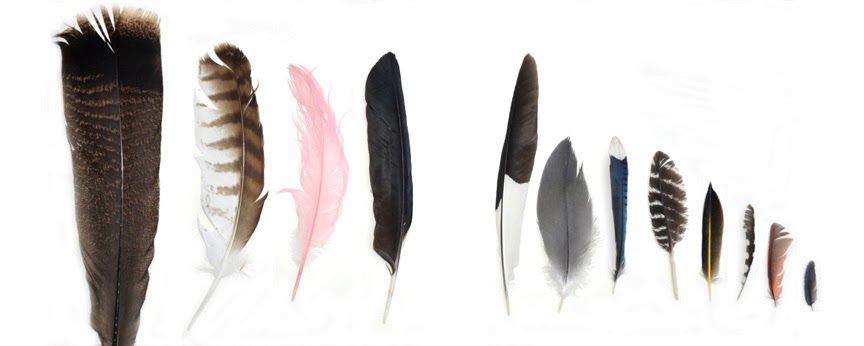
It had me at hello. I read the first sentence of the manuscript that would become Feathers: Not Just for Flying, and I wanted to illustrate it more than any book that had come my way before. I love drawing natural things like rocks, moss, bones, or feathers, but I hadn’t yet had the opportunity to illustrate the things I do best in a children’s book.
Several years went by before I was able to start; Melissa had to finish the book and get a contract for it, and the publisher, Charlesbridge, had to find me—I was eagerly waiting to be found—and spend some more time finalizing details. At last, in the fall of 2011, it was time to start sketching.
Although I had been wanting to illustrate this book for years, once I read the manuscript over a few times, I realized that it was going to be an unusual challenge. Each bird discussed had two separate pieces of text, which had to be presented separately. I was convinced that I couldn’t illustrate a book about feathers without drawing actual feathers, but because of the text, it was clear that each illustration would also need to show the bird doing the action described.
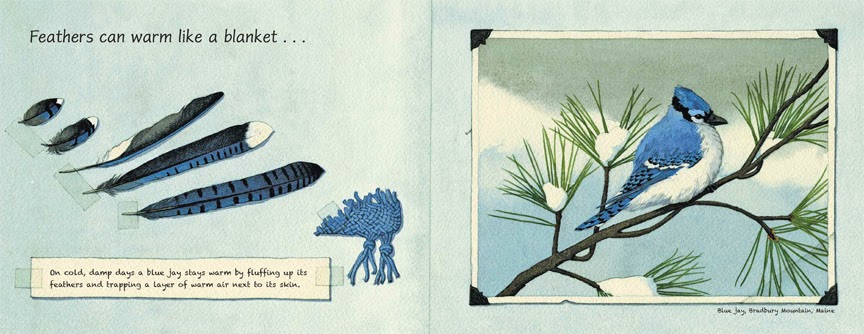
And I wanted to add another set of illustrations. The similes in the book compare feathers to blankets, cushions, matador capes, fishing sinkers, etc.; I felt that it would be necessary to illustrate some of the things a young child might not be familiar with, like a matador.

So each spread had five different elements; ten, in the cases of spreads that showed a different bird on each page. I couldn’t think of how to pull it all together in a coherent design. I went for a walk, as I always do when I have a tough problem to solve. I wish I could explain how I came to the idea of a trompe l’oeil scrapbook, but the idea just burst into my head full-formed, as I walked along North Road near my house.

Actually, my first idea was that each page would be the drawer in a curio cabinet, laid out like a collection, with the words written on a background, cut out of “magazines,” scribbled on sketchbook “pages,” etc. Then the main illustration could also look like it was a photo, or a piece of art, and the feather could lie on top.
 Everyone liked the idea, although it eventually changed from a cabinet into a scrapbook.

I did a lot of research to find images of birds doing the things discussed in the text. I had been picking up feathers for over three years, hoping against hope that I would someday illustrate this book. I had to spend a lot of time identifying them, and figure out how to get feathers from some of the more unusual birds. A rosy-faced lovebird owner in Iceland sent me some feathers from her pet. A scientist in New York and a nature photographer in Australia sent me high-resolution photos of the club-winged manakin and the sandgrouse, respectively. The red-tailed hawk was easy… I was mowing the lawn one day and found a wing feather in the grass next to my house.
After all the research, the art went quickly and it was a delight. I loved drawing the feathers.
Along the way, someone mentioned to me that it was illegal to possess wild bird feathers. I didn’t believe them. But I told Melissa, and we looked into it, and discovered that under the terms of the 1918 Migratory Bird Treaty, it is illegal to possess feathers from a long list of native American birds. (It is legal to possess feathers of non-native species like peacocks, lovebirds, and mute swans; domestic fowl like turkeys are also okay).
I learned to draw feathers where I found them, and I’ve actually done a series of drawings of feathers on rocks, or sand, which turned out to add an interesting layer to the art.
However, the whole idea of the book was to encourage children to make a scrapbook of natural things, to study and learn. Obviously we couldn’t recommend that children engage in an illegal activity! The publisher talked to the Department of Fish and Wildlife and was told that although enforcing this aspect of the act was not a high priority, that it is illegal to possess the feathers of any bird on the list.
It may sound absurd, but when the law was enacted, many species were threatened by the fashion of wearing bird wings and feathers in hats, and egg collecting was very popular. Although picking up a feather a bird has dropped doesn’t harm the bird, there is no way to prove where you got a feather once it’s in your possession. So it does make sense, once you think about it.
Ultimately, it was decided to remove the tape which showed the feathers being mounted in the book. The scrapbook look remains, and the illustrations of the feathers accompany the illustrations rather than being intrinsically part of them. We had a slight story idea that was cut—there had been an illustration of a child holding the scrapbook on the original title page, and it was dropped.
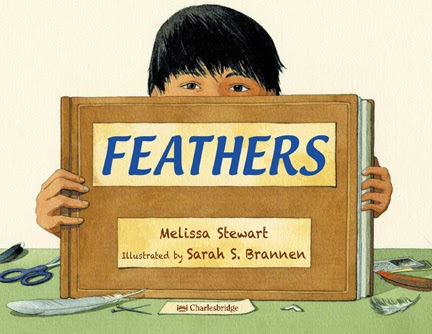
It was a long, labor-intensive, complicated process, and the book was published over five years after I first saw the manuscript and fell in love with it. I’m very proud of how it turned out, and I can’t wait to share it with the world.


Everything I've Learned About Interesting Nonfiction, Kids, Writing, and Life from I.N.K.
I.N.K. has been a great place to hang around these past few years. I've learned so much from all of the other writers, from the teachers and librarians who've commented, and from writing my own posts.
So I thought I'd share with you some--no, not everything, of course--of what I've learned and give you some places to visit in the absence of I.N.K. Though I hope Linda will keep the blog up so people can dip into the archives.
1.Nobody knows kids like teachers. Stating the obvious, but I'm amazed by how much teachers know about children, about human nature, about different kinds of learning, about what works and what doesn't. One of my favorite blogs is There's A Book For That, written by a woman who must be one of the best teachers ever. Carrie Gelson teaches a class made up of 2nd, 3rd and 4th graders in Vancouver. She's a great fan of nonfiction, of books, and, clearly, of children. I kind of want to pretend I'm 9 and go sit in her class.
2.Nobody knows books and research like librarians. Soapbox time. Every time I visit a school I am bowled over by how much librarians know. Which book to put in which kids' hands. Better than any Amazon formula, "If you liked Those Rebels John and Tom, you will probably like A Home for Mr. Emerson and Handel, Who Knew What He Liked ." Ditto independent booksellers!
And whenever I need research help, no amount of futzing around on the internet will be better than asking a librarian. One hour of futzing around on the internet is worth 270 seconds with a librarian. There's nobody like a librarian and there's nobody like Betsy Bird. Visit her blog Fuse8 whenever you can. You won't be sorry! And there are so many more. In fact, HERE is a compendium of the best librarian blogs!
3. Nobody knows writing like authors. Except when we're stalled or stuck or terrified. Then we go read what other authors have to say. I'm sort of addicted to the Paris Review interviews. If you go here you'll see Geoff Dyer saying all kinds of interesting things about nonfiction and how one can bend it and still have it be nonfiction! I've talked about John McPhee's interview before on I.N.K. in a piece I wrote about letting content dictate form. I intend to be addicted to the DRAFT column in the New York Times as soon as I'm done with my W.I.P. Check it out. It's a wealth of information--writers writing about writing.
4. There's nothing like having friends who do what you do. There are so many great authors on I.N.K. Great people. Having this blog has been like having a nation-wide support group. Teachers have the faculty room. Librarians have the water cooler. Writers can get lonely. Thanks to all you I.N.K. folks for hanging around the virtual coffee machine with me. Someone please pass the cookies. And while you're at it, please add to my list of what you've learned, and where we should hang out next.
*Ok, I found a recording. It's a real school singing it, and it's rough, but it brought a tear to my eye.
Here you go: As We Leave This Friendly Place.
Love,
Deb

March 12, 2014
Don’t Play It Safe, a guest post from editor Emma D. Dryden
 Today the Scrivas are thrilled to have freelance editor Emma D. Dryden blogging about the risky business of writing.
(Originally posted here.)
Scriva Amber had the good fortune to work with Emma on THE HUNT FOR MARA LAYIL (Relium Media, 2014). She wishes Emma could edit all her books!
If you want to up your game, make sure to check out Emma’s website, blog, and twitter.
Why Playing It Safe May Be the Most Dangerous Game of All
I read some exchanges recently between picture book authors in which one posed the question (and I’m paraphrasing here) as to whether she could do whatever she wanted with her main character in her manuscript, or whether it was better to perhaps “play it safe.”
A few authors responded right away that it’s important to “play it safe” and they meant that it’s probably best to stay in familiar territory for picture book age readers who are too young to understand the dangers of certain activities, or too young to understand the difference between reality and fantasy. I hastened to add my voice to the comments with a quick DON’T PLAY IT SAFE! message and this got me to thinking, if any authors are out there assuming they have to play it safe for picture book age readers, my position on how detrimental that way of thinking is deserves a bit more space than a Facebook comment box allows.
As someone who’s edited and published hundreds of picture books, my position has never flagged on one particular point about what makes a great picture book: whether your characters are human, animal, or otherwise; whether your story is realistic or fantasy; whether your story is contemporary or historical; whether your approach is serious or funny; whether your story is practical or completely off the wall…anything goes as long as a very young child will be able to relate to your main character’s emotions, perspectives, and world view.
A story can open with our main character in a kitchen with mom and dad and dog all safely and soundly situated—to many readers, that’s familiar, but to other readers such a scene will be a fantasy and not familiar at all—not by a long shot. A story can open with our main character caped and masked and flying through the trees—to many readers, that will be familiar because it’s exactly how they think of themselves all the time, but to other readers it will be a brand new idea, maybe a little scary, but maybe a little fantastic, too. As long as the trajectory of the picture book story taps into the emotions and feelings a very young child will find familiar, that’s as familiar and “safe” as a picture book needs to be. As long as the emotional needs, interests, and resolutions of the main character in a picture book resonate with the very young reader’s emotional knowledge and capacity, that’s as familiar and “safe” as a picture book needs to be. As long as that’s solid, the trappings and settings and structuring of the picture book can be whatever your imagination can conjure—and here’s the very place where I see most new picture book authors not pushing themselves enough.
Authors need to allow their imaginations to take them all over the place, particularly out of safety zones—if authors play it too safe, we end up doing a disservice to ourselves and a disservice to our young readers. Where but in stories can we allow our youngest readers to not play it safe, to try new things, to explore, to roam, to make mistakes and make amends, to reach higher, deeper, and further than we ever thought possible? And where but in stories can we allow ourselves the very same? And if we don’t do all this in stories for children, I shudder at the cost that will take on our collective imaginations and creativity.
We wrap our children too tightly in bubble wrap sometimes—and sometimes, indeed, it’s completely necessary, but not in stories. Stories are where we must let our children play and dream and imagine roles and lives for themselves that they’ve never thought about before; that’s how stories help children explore their sense of empathy, sharpen their resolve, enrich their dreams, and expand their imaginations. There’s no harm in that at all as long as the stories we provide as the vehicle for this ride carry within them the emotional core young children will be able to understand as their own.
If we push ourselves out of the familiar to ask “what if?” and to find the magic in the world, think how much more interested our children will be in doing the same. The safest route is rarely the most scenic. So feel free to explore creatively and imaginatively in your stories so children can explore the world in the same way. And if you find yourself spinning your wheels in a safety zone, go listen to young children telling each other stories and have them tell stories to you. I promise, the emotions will be familiar, but the stories will be out of this world–and that’s a trip well worth taking.
(c) emma d dryden, drydenbks LLC
March 10, 2014
Good Advice from Ira Glass
I found this video very encouraging. Ira talks about how long it takes to get good at your craft and the key to getting better: Put yourself on a schedule!
Watch it here.
Picture Books and Middle Grade Readers: A Perfect but Uneasy Mix?
You can’t judge a book by its cover? Rightly or wrongly, we all do. In the children’s book market, trim size matters too. And, when you’re a nonfiction picture book author, these two criteria create a complicated mix.
Here’s why I’ve been thinking about this subject. Last year, Penguin’s paperback imprint, Puffin Books, approached me and illustrator Elwood H. Smith about combining our books, The Truth About Poop and Gee Whiz, into one digest format edition for the middle grade market. Why not? Where Elwood’s original illustrations were vivid and lovely, they were just as funny in black-and-white and worked well in this 5 x 7 ½ trim size.

 PLUS
PLUS EQUALS

Furthermore, this new edition was in a format that says to kids, “You’re older now, grown up enough for a big person’s paperback. Welcome to middle grade and the road to adulthood.”
The Truth About Poop is remaining in print; in fact, it’s soon celebrating its tenth anniversary. I’m happy to say it’s still selling, being reviewed on Amazon and hopefully offered in brick-and-mortar bookstores around the country. But I realize that these two versions, that share the same text and drawings, are for different audiences.
There comes a day in every child’s life when it’s no longer okay to carry a teddy bear outside or hug Mom in public. For most kids, there’s also a time when reading landscape-format or square-shaped picture books with bright illustrations becomes taboo—at least in public or outside the classroom. The same material that can amuse, amaze and be shared in black-and-white and portrait-shaped rectangles doesn’t cut the middle grade mustard when it’s in color.
But, here’s the rub. So many nonfiction picture books in these sizes and shapes are written for this age group and even older. This short length is just the right sized introduction to an idea or subject that can become an abiding interest. Beautiful pictures or photographs not only bring these subjects gloriously alive, they are a “working vacation,” providing additional information while they also give respite, letting a young reader stay involved while absorbing what was just read. And our readers may need this rest. We often write about complex situations or questions with high level language and abstraction. We talk about the ingenuity of Ben Franklin, the eccentricity of mathematicians and Thelonius Monk, the stuff that stardust is made of.
The Truth About Poop and Pee just came out on March 6th and I couldn’t be happier. It translates well into its new format, and snuggles comfortably into its new home on bookstore shelves where every book is the same dimension. If it reaches new readers this way, I’m very delighted. I’m glad I can nurture an interest in biology, chemistry, sociology, history while kids just think they are reading about poop and pee.
But I also hope these same readers won’t be so ready to “put away childish things” and will still be willing to explore the wonderful world of nonfiction picture books in living color.

March 6, 2014
INK Authors Making News

Welcome to the World: A Keepsake Baby Book by Marfé Ferguson Delano (National Geographic)

The Truth about Poop and Pee, by Susan E. Goodman (Penguin), a new edition that brings together two of her best-selling books.

A Home for Mr. Emerson , by Barbara Kerley (Scholastic)
APPEARANCES
Deborah Heiligman will be speaking at the Virginia Festival of the Book March 21-23
Anna Lewis, author of Women of Steel and Stone: 22 Inspiring Architects, Engineers, and Landscape Designers, will be speaking at the Bellefonte, PA Art Museum on March 22, which has installed a large Anna Keichline exhibit.
AWARDS
The Animal Book: A Collection of the Fastest, Fiercest, Toughest, Cleverest, Shyest--and Most Surprising--Animals on Earth , written and illustrated by Steve Jenkins (HMH) • The Horn Book 2013 Fanfare List of the Best Books for Young People • NPR 2013 Great Reads • Book Links Top 30 Titles from 2013 • Junior Library Guild Top 10 Books for Youth 2013 • ALA Notable Book 2014
Who Says Women Can’t Be Doctors by Tanya Lee Stone (Henry Holt) • NPR Great Reads
The Boy Who Loved Math: The Improbable Life of Paul Erdo s, by Deborah Heiligman. (Roaring Brook) • Orbis Pictus Honor Book • Book Links Top 30 Titles from 2013
Eruption! Volcanoes and the Science of Saving Lives , by Elizabeth Rusch. (HMH) • Book Links Top 30 Titles from 2013
Courage Has No Color: The True Story of the Triple Nickles, America’s First Black Paratroopers , by Tanya Lee Stone. (Candlewick) • Book Links Top 30 Titles from 2013
The Nature Generation has announced the shortlist for its 2014 Green Earth Book Awards. The award honors authors whose books best convey the environmental stewardship message to youth.
Eat Like a Bear , by April Pulley Sayre, illustrated by Steve Jenkins (Henry Holt)
Here Come the Humpbacks, by April Pulley Sayre (Charlesbridge)
No Monkeys, No Chocolate, by Melissa Stewart and Allen Young(Charlesbridge)
A Place for Turtles , by Melissa Stewart(Peachtree Publishers)

March 4, 2014
Join the Resistance
My “inner blogger,” which I discovered six years ago when Linda Salzman started this blog, is now in full flower at the Huffington Post. Since September I’ve tried to post twice a week. My initial mission was to add my two cents to the national discussion on education. But a second mission has emerged—to shed light for the general public on our genre, children’s nonfiction literature. To that end I’ve requested that my colleagues send me their most recent books. I read them and write posts that show a book’s timeliness to current events or where it fits into the curriculum. I am not a book reviewer as all of my posts are unabashed cheers for the brilliance of these authors. As an author, myself, there is a conflict of interest for me to act as a critic. But I have no problem endorsing the creativity and insights of my fellow authors.
The adoption of the Common Core State Standards has created an opening for public awareness of our genre. It has helped to create a readership for this blog. When I first read the CCS standards, I saw them as an opportunity for teachers and educators to bring their own passions and creativity to classrooms through, among other things, the use of our books. Children need to know there are many voices out there so they can develop voices of their own. But this opening for diversity has been hi-jacked by standardized testing and the demand that teachers constantly document how they are meeting the CCSS—yet another chore that competes with instructional time. One of the more absurd examples of the implementation of the CCSS is the lesson on close reading of the Gettysburg Address by focusing on text only, with no background knowledge of the Civil War.
Diane Ravitch is leading a movement against the CCSS. I’ve been a faithful subscriber to her amazing blog (she posts 5,6,7 times a day!) and she and her followers are gaining traction. Meanwhile, NY State, for example has a huge contract with Pearson for their textbooks and their texts. Granted, they and McGraw Hill and other textbook publishers are buying rights to our books to excerpt in their publications (and/or in the tests themselves) along with lesson plans making nice, convenient packages for harried teachers and furthering the notion that their books are the only books kids need to read to pass the tests, although their ethics in this are currently being questioned (in the example I've linked above).
My intent through my Huff Post blogis to join Diane's fight against the huge corporations that have dominated classroom reading for many years, the standardized teaching and testing and their ties to teacher evaluation. Instead of emphasizing the horrors of turning teachers in to robots, all teaching the same page at the same time, I want to show the exciting alternatives that our genre offers. So I invite the readership of this blog to join me. This means you need to use social media to spread the word. So "follow," "tweet," "share," and "like." It's the way business is being done these days. So many people out there are still unaware of our existence. This is one positive way we can all help save public education.
I’m showing you the covers of the books I've given a shout-out to, so far. The titles below the images are links to my posts. Please join the "resistance" and spread the word.
 Thinking and Reading about Football
 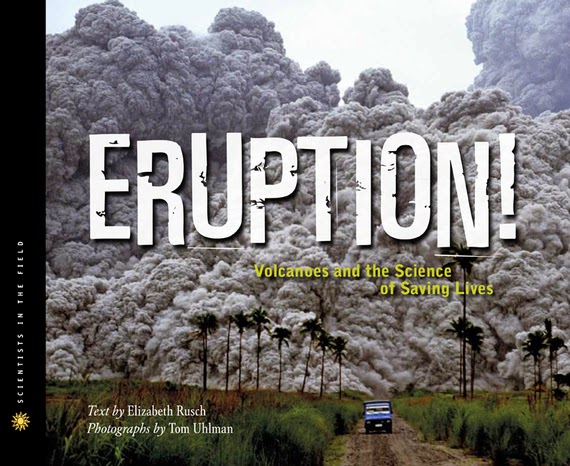 A Volcanic Eruption Can Lead to an Eruption of Learning
 Woman Pilots of WWII: Soaring Above the Glass Ceiling
 A New Story for Black History Month
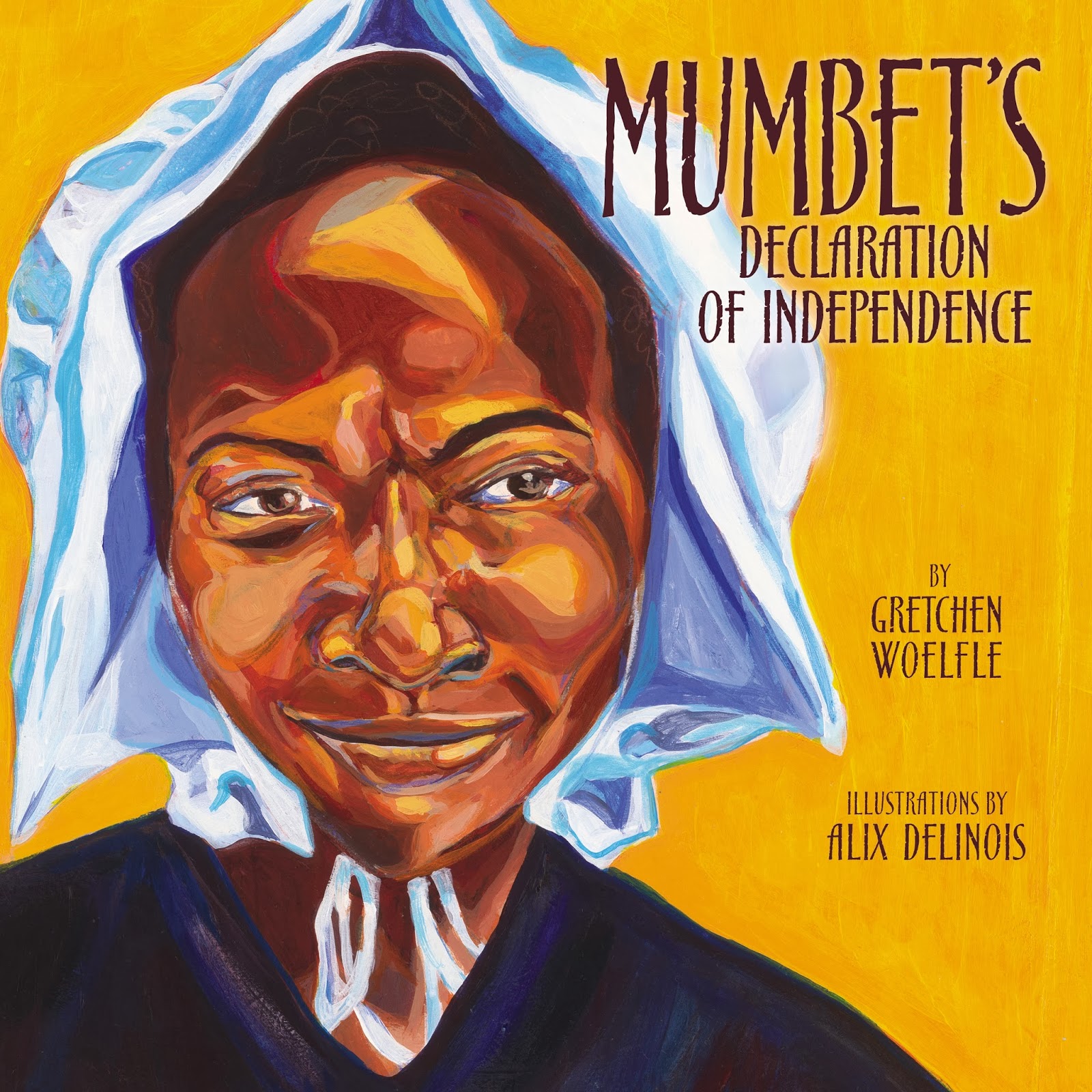 An Early Lawsuit in Pursuit of Liberty
 True American Grit
 A Post-Halloween Teachable Moment
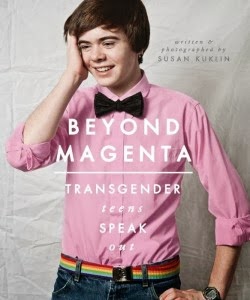 Gender Identity Is Not What's on the Outside
 Celebrating 10 Years.....
 ...of Road Trips on Mars
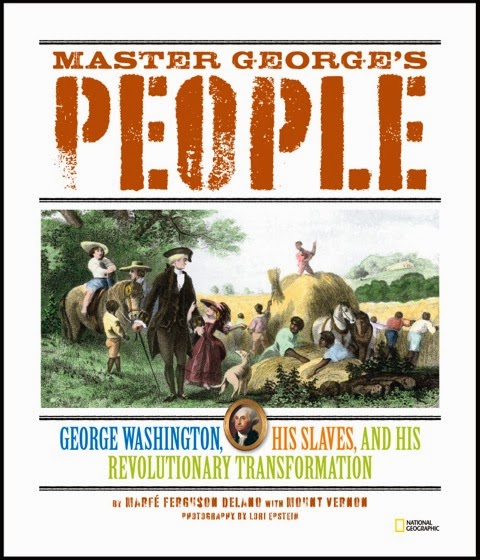 George Washington's Dilemma
 Art Can Save Education and Lives
 The Unnoticed Passing of an American Hero
The Second Smartest Animals on the Planet
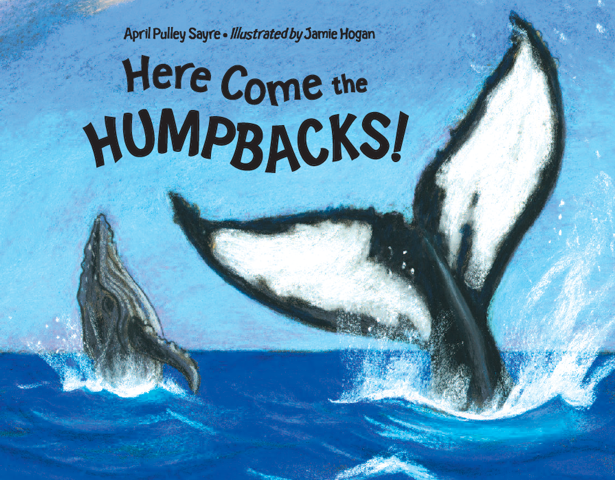 Arousing a Sense of WonderIn the post that went live last Thursday (Here Come the HUMPBACKS!), I featured April’s three recent picture books. I gave a shout-out to all of us who write for this blog and on the iNK website. Keep those (virtual) cards and letters coming!!!