Elizabeth Rusch's Blog, page 10
May 5, 2014
Rebar and Writing: John Green’s Model
 For months now, a slew of humans and machines have been constructing the Janey II, an apartment/condo building within sight of my dining room balcony. I decided to see which would be done first, the Janey II or my Book Three, and I’m tracking the progress of both on my website.
The Janey II is at the rebar (reinforcing bar) stage. This blurry photo shows a construction guy building the mesh of heavy steel wires that provide tensile strength to the concrete walls. (Yes, guy. I’ve seen no construction women on site. Sigh.) Rebar helps to support and spread the load. You don’t see rebar in the finished structure, but you’re glad it’s there.
I happened to be reading John Green’s first book, Looking for Alaska, at the same time the rebar guy was doing his thing. That’s when it hit me. John Green is a genius at enmeshing literary rebar into his work. Looking for Alaska is such a solid story in part because it’s been built to last. Here’s what I mean:
Time. The novel is divided into two parts, labeled “before” and “after.” The key event is almost exactly in the middle. Rather than chapter headings, the before and after parts are divided into sections leading up to, and away from, the main event. The first section is entitled “one hundred thirty-six days before.” The last section of the novel is entitled “one hundred thirty-six days after.” How’s that for a sturdy structure? Talk about a beginning, a middle, and an end. Nice.
Place. Most of the story is narrowly focused on Culver Creek Boarding School, giving the reader a chance to get familiar with a single (and singular) setting. You know when you are and where you are. By the time the characters go to the smoke hole for the third time, you can practically lead them there.
Characters. There are only a handful, and they are a handful. Each one is memorable, from Alaska Young, whose actions drive the “before” and the “after,” to Dr. Hyde, the religion teacher, who guides the main characters and the reader into an exploration of death, guilt, and grief.
Humor. Looking for Alaska is not what you’d call a light-hearted tale. There are layers upon layers of serious stuff crammed into 136 days before and 136 days after. That said, our trusty author/rebar guy adds enough of the funny bits to spread the emotional load. Our skin-and-bones protagonist is nicknamed Pudge. We get to see several hilarious pranks, including one involving a male stripper and another involving blue dye. We get the laugh-out-loud and relatively innocent antics of a first “blow job.” Green treats us with care. As a reader, I’m grateful. As a writer, I’m taking notes!
I don’t know whether my Book Three or the Janey II will be finished first. I do know that I’m learning a bunch about crafting a novel as I watch the construction site, not the least of which is John Green’s rebar.


May 1, 2014
The Body Speaks
 So there’s this pier at Seal Beach, the beach closest to where my Southern California-brother lives. My brother loves the pier, any pier, and he’s got a nice, strong personality. So pretty much every time we go to the beach there, or anywhere there’s a pier, we all walk on the pier, together, talking. Maybe we talk intensely, maybe we talk desultorily, but usually, all of us who come stick with my brother and walk with him on the pier.
Don’t get me wrong: I enjoy spending time with my brother, and I love walking on piers myself. But not every time, I realized a while ago when I happened to go to Seal Beach with my nephew instead. This surfing-mad nephew parked himself on the pier above the breaking surf. “I’m going to stay here and watch the waves,” he said. My younger sister had already peeled off, eventually finding the ice cream shop. And I? I began to walk on the pier, as we usually do. Then, ‘No, I’d rather sit right now!’ So I did.
Ah, how my body savored just sitting on that bench, the sea in front of me, nipping wind safely at my back, my thoughts freely wondering!
I noticed my body’s physiology, affected by my emotions and thoughts, and remembered a goal setting/visioning seminar I attended at the beginning of the year. One of the speakers said our bodies talk to us, if we’d only listen to them. They can even help us make decisions, if we think of options and look at how our body reacts. We observed ourselves by thinking of a difficult situation in our lives, and noticing our body’s reaction. Then we thought about a happy time…
I haven’t nailed it down yet, but I’ve been ruminating lately about this connection between thoughts, feelings, and body/physiology. There are ways to harness this connection for my writing that I haven’t gotten yet, but it feels important to continue to ponder. I think how differently I would have felt—and how different my physiology would have been—if, on that bench, rather than savoring a lovely choice, I would instead have been waiting for someone who was terribly late, and I in a terrible, terrible hurry…
Capiche?
I observed my thoughts-feelings-physiology connection another time, on a perfect beach outing that I didn’t want to end. As I kept expecting the announcement that it was time to leave, my stomach and mind tensed, siphoning off enjoyment. When the call to leave didn’t come as soon as I feared, my mind and body finally relaxed. I could again enjoy the sweep of seaside colors, of clean, warm air…
The fab instructors of Mt. Hood Meadows ski instructors host movement analysis sessions, where we get to think through how we teach. The point is not to just tell a student to do something. If he knew how to do it right, he’d already be doing it. Instead, we need to specify exactly what muscles he needs to use and in what ways to achieve a desired outcome.
So, too, we can listen to our body speak, and include specific muscle reactions when painting the mood or action in a particular scene we’re writing. Before falling asleep the other night, for example, I felt myself tense my upper arms because I remembered something I should have done that day that I hadn’t gotten done. I may one day use that physical reaction for a character. Maybe it will be something defining, that s/he does all the time, or it may signal a situation outside the norm.
Alright, my tensing stomach and arms are telling me that I’ve spent too much time on this blog post and it’s time to turn in. What is your current physiology alerting you to? Or what conclusions might you have come to, on the topic of physiology and writing, that you’d like to share?
-Sabina I. Rascol
April 24, 2014
Q & A with Ruth Tenzer Feldman
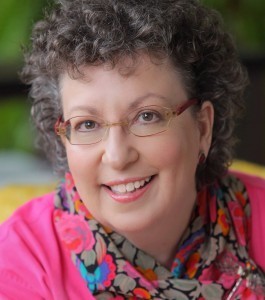 Read more about Scriva Ruth, and her love of both history and writing, as she is interviewed by writer and educator Sandra Bornstein.
 Today, I welcome Ruth Tenzer Feldman. She is the author of numerous non-fiction and fiction children’s books. In the last couple of years, she published the award-winning novel, Blue Thread and its companion The Ninth Day. Both books were written for a young adult audience, but adults can enjoy these historical fiction books as well.
In exchange for an honest review, I received a complimentary copy of The Ninth Day. I had previously purchased Blue Thread.
Welcome Ruth.
Your website mentions that you had a successful career as a legislative attorney. Why did you decide to shift gears to become a young adult book author?
Writing has been my first love since elementary school, when I did a report on eye care from the point of view of the eye. My work as an attorney was satisfying, challenging, productive…but still basically a job. Somewhere in mid-life, my first love won out.
You started your children’s book writing career by authoring numerous books that are part of various non-fiction book series. What drew you to these historically based projects?
When I was an international relations major in college I began to realize that what we are (as individuals, families, nations) depends so much on what we were—or what we think we were. There’s so much story in history.
Blue Thread and The Ninth Day catapulted you into the realm of fiction. What prompted you to take this leap?
Well, to put it baldly, I had an urge to lie. I was writing the bio of U.S. president Calvin Coolidge, and I wondered what it would be like for the secret service guys who had to deal with Cal’s pranks. He was a practical joker, even in the White House). Did they ever play a trick on the president? That’s when I knew it was time to write fiction.
April 20, 2014
YIKES! Social Media?!
 In a conference call with AMP for Kids, the publisher of my forthcoming middle-grade graphic novel called Muddy Max: The Mystery of Marsh Creek, I asked what I could do to support a successful launch of the book. Their answer: A social media campaign. GULP.
The whole idea seemed vague and scary to me at first. What does that mean? I thought. What would I post about? Who would care?
We began brainstorming ideas and one rose to the top: Since the book is about a kid who gets superpowers from mud, what if I posted 25 to 50 items about mud? Weird mud animals. Mud masks. Cool slow motion mud splashing videos. Funny tips like how to walk in a swamp. Mud jokes. Hands-on mud activities. Beautiful mud sculptures. Yummy mud recipes. I decided if it’s something I would like to read, if it’s fun, funny, or useful, I’ll post it.
To mix things up a bit, I’ll throw in some contests, a quiz and some free giveaways. Starting now!
 Everyone who likes my Facebook page this month will be entered into a drawing to win either a copy of the galley signed by both the author (me) and the illustrator (Mike Lawrence) with a Muddy Max book mark or this wonderful original art by created by Mike.
Wish me luck. Like my page. Join the fun.
SPLAT!
Elizabeth Rusch
April 15, 2014
A Day for Biographers
I can easily conjure up little Eleanor Roosevelt suffering through her lonely childhood, or Helen Keller, on the cusp of adult life, announcing her intention to go to Harvard; both scenes were imprinted on my memory by my early reading of biographies. Biography thrives as a literary genre because people love to read about other people. This is true for readers of any age. A good biography breathes life into a figure readers may have met only briefly in a classroom or history book; it takes them behind the scenes, where they get to know the subject in family life; it places them on the spot as the subject experiences triumphs and setbacks, sorrow and joy, and learns how to navigate life. I still like reading about people, but today I like writing about them as well. Biography lets me do what writers love to do: tell good stories. Even better, through biography I can explore a character in depth and create a vivid portrait in words. But writing is a solitary task, so like many writers I welcome opportunities to mingle with other people doing the same kind of work, to talk shop and gain from others’ wisdom. This is why I was happy to discover Biographers International Organization, or BIO for short. BIO is young (founded in 2010), but it has been strong and active from the start. Having as its mission “to promote the art and craft of biography, and to further the professional interests of its practitioners,” BIO presents the annual BIO Award to a distinguished biographer for his or her body of work. This year’s recipient is Stacy Schiff, author of the Pulitzer Prize-winning Véra and other notable works. BIO also hosts a terrific annual conference that always sends me home with many new ideas to think about and apply to my work. At this year’s Compleat Biographer Conference, which will be held at the University of Massachusetts Boston on May 17 and 18, I will moderate a panel on young adult biography. On the panel will be two accomplished biographers, Mary Morton Cowan and Kem Knapp Sawyer, and a representative of the world of children’s book blogging, Dorothy Dahm. Cowan received a 2010 National Outdoor Book Award and other honors for Captain Mac: The Life of Donald Baxter MacMillan, Arctic Explorer (Calkins Creek). She has also published numerous magazine stories and articles, a novel based on MacMillan’s experiences, and a book on logging in New England. Cowan has said about her work, “I am pleased and proud that these books give young readers a glimpse of relatively unknown history—dangerous and adventurous chapters of history!”Sawyer’s recent biographies are of Mohandas Gandhi and Nelson Mandela (both from Morgan Reynolds) and Harriet Tubman and Abigail Adams (both from DK Publishing). “I try to figure out what gave my subjects the ambition and the drive to set out to change the world,” she said in a recent interview. “And I like to focus on what they were like when they were young, before they went on to become leaders.” Sawyer has written as well about current social issues such as the situation of refugees worldwide, and historical subjects such as the Underground Railroad. She also reports on youth in developing countries for the Pulitzer Center, an organization that supports journalism and education.In recent years, book bloggers and online reviewers have become increasingly influential in the world of children’s literature. Dahm’s lifelong interest in biography for young readers led her to launch the Kidsbiographer’s Blog (http://kidsbiographer.com/), where she reviews new and noteworthy biographies for children and young adults and interviews their authors. A professor of English at Castleton State College in Vermont, Dahm has contributed articles and reviews to publications in the United States and Great Britain. I’m eager to hear what she has to say about the state of young adult biography today and what she looks for in a book of this genre.Other conference sessions will focus on such matters of craft as creating suspense in biography and finding the right balance between a subject’s life and work, and on practical aspects of the writing life: dealing with agents, marketing, and the like. There will be plenty to interest biographers writing for any age level. You can learn more about the Compleat Biographer Conference from BIO’s website: http://biographersinternational.org/conference/. I hope to see you in May!

April 11, 2014
No Chosen Ones Need Apply
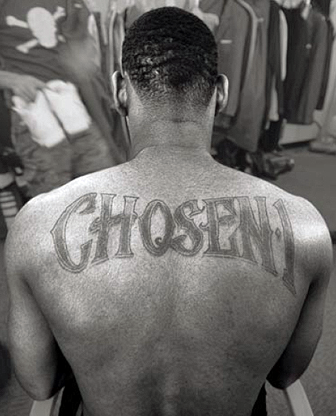 Go to an action adventure movie, and you’ll see cars flying, buildings exploding, and more pyrotechnics than during wild fire season in a California summer. Spend a few months reading the daily book deals from Publisher’s Marketplace like I do, and you’ll be overrun by Chosen Ones who have to save the world. Every story meant to entertain us is faster, bigger, stronger, more explosive.
Let’s face it. Our stories are doping.
And just like I’m tired of Lance Armstrong and EPO, I’m exhausted by books and book pitches on steroids. I love Harry Potter as much as the next geek girl, but not every character we write is destined to stop history’s darkest wizard.
If I could wave my magic wand and restore balance to the universe, I’d start by banning some vocabulary. Let’s shut down chosen ones and destiny. Forget saviors who must question everything they ever knew. No more magic portals and quests to save the world.
Good stories don’t require steroids. They require characters we are intrigued by facing challenges that will force them to grow.
Let’s face it folks—not everyone is the Mockingjay.
Drawing it True
Today’s guest blogger is Cynthia Levinson.
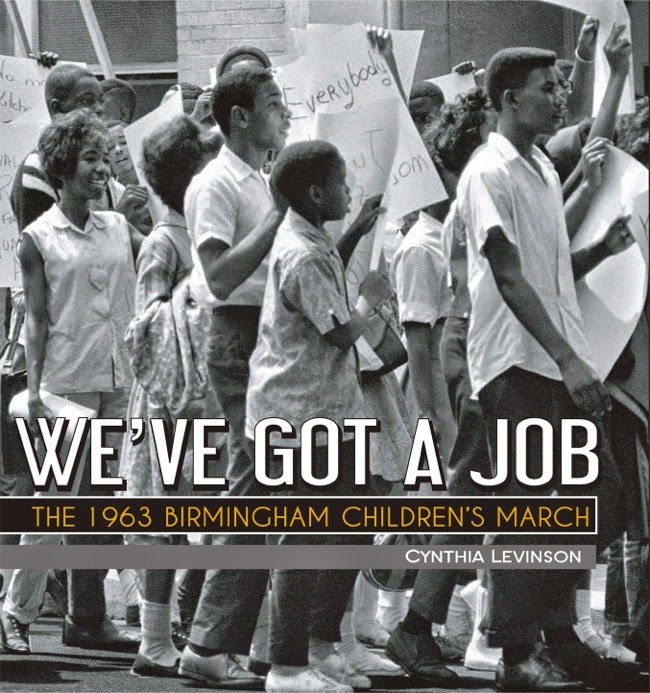 With my first nonfiction picture book under development, I’ve begun to think about—and look hard at—the illustrations in nonfiction books for younger readers. Although it was challenging to ferret out photographs, pamphlets, legal documents, and memorabilia for images in my first nonfiction middle-grade, We’ve Got a Job: The 1963 Birmingham Children’s March, they served at least two purposes. Above all, as primary sources, they informed me about the times and events I was writing about. In addition, placed in the book, they broke the text and provided both visual interest and verisimilitude for readers.
Illustrations, I’m realizing, are very different. They’re not artifacts. They’re the artists’ imagined representations of time, place, events, and mood. Although they can be very precise and accurate, water colors, collages, oils, etc., don’t necessarily show the reader exactly how the spur attached to the boot, say, or that the temperature was 99 degrees. They can be more atmospheric and still be valid—not just valid but also emotionally true.
I’m beginning to think of the artwork in nonfiction picture books as the visual voice of the book. And, just as I struggled to make the textual voice in The Youngest Marcher authentic, even when I wasn’t quoting someone, I’ve been looking at illustrations for authenticity—even if they’re not photographically accurate.
Here’s a range of pictorial styles, in recently published and lauded picture books, from the concrete to the imagistic. (Warning: I am not an artist! These are merely my impressions.)
Brian Floca’s illustrations in Locomotive are as precise and detailed as those in any Richard Scarry word
book. After looking at the end papers’ labeled diagrams, I’d recognize a piston rod, throttle lever, and Johnson Bar anywhere! And the accuracy of those drawings tells me that every other illustration must be right also, even the water-colored elevation map of the Great Basin in the frontispiece and the sketch of a man chasing his horse, who must have been spooked by an approaching train. Floca not only conveys depth of information but he also gives the reader confidence that he knows what he’s writing—and drawing—about.
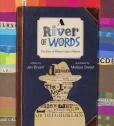 Similarly, many of Melissa Sweet’s illustrations, such as the medical drawings, in Jen Bryant’s A River of Words: The Story of William Carlos Williams seem to be completely accurate. Other, blurrier ones, however, appear metaphoric, which seems appropriate for a book about a man who was a poet as well as a physician. Sweet’s blocky collages display a conglomeration on each page of neat facts and lyrical tone.
To Dare Mighty Things: The Life of Theodore Roosevelt, written by Doreen Rappaport and illustrated by C. F. Payne, takes the realistic cum impressionistic approach a step further. Clothing is appropriate to the times, of course, as are saddles and ten-dollar bills. Furthermore, Payne might well have drawn the faces of politicians and bystanders by copying them exactly
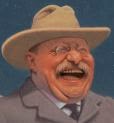 from contemporary sketchbooks or photographs. Today’s facial recognition software could practically identify them! Yet, snow falling in the Dakota Territory looks like unnaturally soft polka-dots, and Teddy sometimes appears unrealistically eyeless behind his spectacles— appropriate for someone who was hard-of-seeing. And, in a spread of young Teddy’s dream, he seems to float along with a butterfly and a polar bear. As with Sweet’s illustrations, both accuracy and mood prevail.
 There are many superlative nonfiction picture books I could focus on. Georgia in Hawaii: When Georgia O’Keefe Painted What She Pleased, written by Amy Novesky and illustrated by Yuyi Morales, must have been particularly challenging for Morales because it needed to convey both the truth of the paintings by its artist-subject and also the mood of O’Keefe’s lush surroundings.
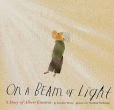 Possibly at the furthest extreme of dispensing with concrete accuracy while maintaining recognizability might be On a Beam of Light: A Story of Albert Einstein by author Jennifer Berne. Most of illustrator Vladimir Radunsky’s images are sweetly cartoon-like. Yet, Einstein is obvious with his brushy mustache and distracted gaze.
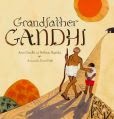 I’d like to round off my exploration of visuals in nonfiction picture books with Grandfather Gandhiby Arun Gandhi and my friend Bethany Hegedus and illustrated by Evan Turk. Cloth and paint collages of the Mahatma’s posture and emaciated frame make him instantly recognizable, even in crowd scenes. The vivid background coloration sequence from beige to yellow to orange to red and back to beige again conveys not only India’s searing heat but also young Arun’s moods, from awe of his famous grandfather to anger and back, appropriately, to peace with himself and his family. Readers will sense the place, the times, and the moods without the need for photographic detail.
I’m curious to see how Vanessa Brantley-Newton, the wonderful illustrator of The Youngest Marcher, will choose to visualize its voice. Will she portray scenes of, say, jailed civil rights protesters by drawing hundreds of them packed into a cell, just the way they endured those stifling conditions? Or, will she take a more atmospheric approach?
The Youngest Marcher focuses on one of the people highlighted in We’ve Got a Job. While the books address the same topic, the readership is entirely different. Seeing them side-by-side will further inform me about the various ways that text and visuals can enhance each other. Check back in in January 2016 to see how she accounts for the
April 10, 2014
Invitation

Who could resist an invitation like this:
3 July 1872Dear Mr Thayer, Come be a brave good cousin, and face our heats and solitudes on Friday eve… and we will give you a cup of tea, and piece of a moon and all the possibilities of Saturday…. Your friend, R. W. Emerson This sweet, quirky invitation was one of the first things I read as I began researching the life of Ralph Waldo Emerson. And as soon as I read it, I thought, ‘I’ve got to write this book!’
Not that I knew what ‘this book’ was, of course—not at first. (It was only after months of reading and thinking and writing that A Home For Mr. Emerson began to take shape.)
But from the start, I was inspired by this man who believed that each of us can create the life we dream of living.
Emerson, that was a life centered on friendship and home.
In his study, brimming with books and journals, Ralph Waldo Emerson wrote many letters to friends far and near. Come to my home in Concord, he invited them. Come on the four o’clock train.
I love how Edwin Fotheringham’s illustration invites readers into Emerson’s home AND into a book about his life.
And this invitation sums up in a nutshell my sense of what a picture book biography is meant to do: to invite young readers into a new life, to meet someone they might like to know better.
If you think about it, all nonfiction for kids is an invitation. Here’s something interesting, a nonfiction book says. Here’s something you might like to know about. Come on in.
I’ve been lucky these past few years to work in concert with the other authors on INK, issuing invitations to kids—offering them through our books a “piece of a moon and all the possibilities of Saturday.”
And I’ve loved getting to know the readers of this blog, folks just as passionate about nonfiction as I am.
This is my last post on INK, brainchild of the amazing Linda Salzman. The past five years have been an honor and a pleasure. Thank you, all.

April 8, 2014
Query Advice from KT Literary
ədˈvīs/
noun
1.
guidance or recommendations concerning prudent future action, typically given by someone regarded as knowledgeable or authoritative.
Need help writing the perfect query for your middle grades or YA novel?
Go to this website, hosted by KT Literary. (They represent Maureen Johnson and Stephanie Perkins, two big names in YA.)
Every Friday, in the column About My Query, they critique a query letter from the slushpile.
Here are some tidbits:
– I’d also always cut any mention of future books in a series in the query letter — save that for once you actually have an agent interested in the story.
– My first thought: Hooray! We won’t have to deal with a YA heroine looking in a mirror to describe herself!
– What I’d want to see in the author’s query is what sets it apart from the expected. In general, look to find a way to give us the details that make the main character’s specific story interesting, and her character one we’d like to hang out with for the length of a novel.
So helpful and addictive! Enjoy!
April 6, 2014
INK Author News for April

Beneath the Sun by Melissa Stewart, ill. by Constance Bergum (Peachtree)

A Place for Butterflies by Melissa Stewart (revised edition, Peachtree)
LATEST AWARDS
The Mad Potter : George E. Ohr, Eccentric Genius by Jan Greenberg and Sandra Jordan (Roaring Brook) • Orbis Pictus Recommended • Booklist Best Book • School Library Journal Best Book • CBC/NCSS Notable for Social Studies • Dorothy Canfield Fisher Children’s Book Award Master List
The Animal Book by Steve Jenkins (Houghton Mifflin Harcourt) • John Burroughs Riverby Award • featured title, New England Book Show eBook category.
The Mystery of Darwin's Frog by Marty Crump, ill. by Steve Jenkins and Edel Rodriguez (Boyds Mills) • John Burroughs Riverby Award
Animals Upside Down by Steve Jenkins & Robin Page (Houghton Mifflin Harcourt)
• featured selection, New England Book Show
Eruption!: Volcanoes and the Science of Saving Lives by Elizabeth Rusch (Houghton Mifflin Harcourt) • 2014 CCBC Choices
Volcano Rising by Elizabeth Rusch (Charlesbridge) • 2014 CCBC Choices
Rotten Pumpkin, by David Schwartz (Creston Books) • 2013 Distinguished Book, Association of Children's Librarians of Northern California
Courage Has No Color, by Tanya Lee Stone (Candlewick) • NAACP Image Award for Outstanding Literature for Youth/Teens
APPEARANCES
April 3-5 Melissa Stewart will speak at the National Science Teachers Association conference in Boston, MA.
April 7: Deborah Heiligman will speak at the Simons Foundation in New York City: Lyrical And Logical: A Reading of Children's Books About Math.
April 9: Steve Jenkins and his co-author Robin Page will speak at the TLA (Texas Library Association) Conference in San Antonio, TX.
April 10-11 Melissa Stewart will speak at the Massachusetts Reading Association annual meeting in Quincy, MA.
April 10-11: David Schwartz will speak at the National Council of Teachers of Mathematics National Meeting, New Orleans, LA.
April 10-12: Deborah Heiligman will speak at the Festival of Faith and Writing, Calvin College, Grand Rapids MI.
April 26: Steve Jenkins will speak at the 32nd annual Spring Festival of Children’s Literature at Frostburg State, MD.
April 26: Susan Kuklin will be guest speaker at the 2014 Stamford Literary Competition Award Ceremony, Stamford, CT.