Elizabeth Rusch's Blog, page 15
January 21, 2014
News-o-Matic: A Daily for Kids' FingertipsI'm a long-time...
News-o-Matic: A Daily for Kids' Fingertips
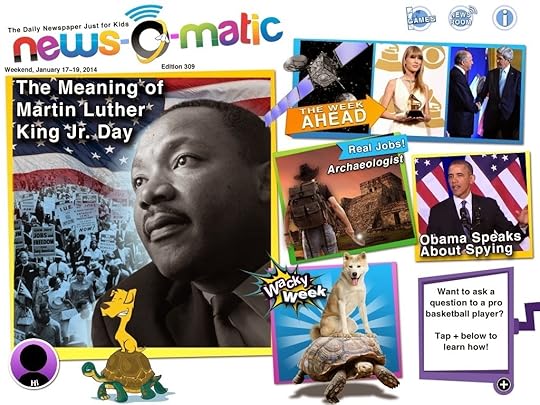
I'm a long-time news hound. I got my start in children's publishing writing news for kids. Like other nonfiction writers, I continually try to adapt my work to new audiences, new formats, and new markets. So I was psyched to find an app that brings news directly to kids via iTunes -- whether they're on their own or at the sides of their parents, teachers, and classmates.
I'm the newest contributing writer to News-o-Matic, a news app for children ages 7 to 11 available in pdf for classrooms and in the home via iPad and iPhone. I think it's pretty great, so I checked in with editor-in-chief Russell Kahn to find out more about it.
Q. How long has News-o-Matic been going?
A. We formed our company, Press4Kids, two years ago, and launched News-o-Matic in the App Store about a year ago. We launched our School Edition over the summer. And News-o-Matic 3.0, which allows users to read the editions on both the iPad and iPhone with one subscription, launched last week.
Q. Why did you create News-o-Matic?
A. My business partner Lillian Holtzclaw Stern, had the initial idea because her two children (then seven and nine) had nowhere to go to make sense of the news happening in the world. Maybe a generation ago it was possible to shelter your children from current events, but it's not possible with today's media saturation.
Q. Who is your audience?
A. We have now been downloaded more than 50,000 times in 120 countries. That doesn't include the 600-plus schools that use a PDF of our publication on a daily basis. (We want to be sure that schools without tablet technology still have access to our stories.)
Q. What kind of response do you get?
A. Kids feel like they have a newspaper just for them. Kids write comments and draw pictures every day; I usually get about 100 of each from them every day. Our readers are incredibly invested in our stories. They share their opinions and ask additional questions to show how much they care. You should see some of the drawings that we get; it's clear that they understand, for example, how an eclipse works or what the effects of climate change are.
As for educators, we've had teachers tell us that we're the reason they bought iPads for their classroom. Others have said that their students have begged to read News-o-Matic during breaks in the school day. It's opened up new avenues for discussion, and of course it's helped teachers meet the need to ensure that half their content covered in the class is nonfiction (as directed by the Common Core Standards.)
If you're a parent with an iPad, it can be difficult to know how to use the tablet as a valuable tool. The iPad can be much more than a game console. So we're trying to give parents an app that will get their kids READING (and actually enjoying it) without it being a forced assignment. Parents are grateful to know that their kids are being safe on our app and developing a reading habit.
Q. How do you decide what should be covered?
A. The two founders and I are French, Brazilian, and American. It's always been our mission to be international. We feel it's important to expose readers to the world beyond America's borders at a young age. Sometimes that means we deal with tough stories, such as Syria's civil war or the Taliban resurgence in Iraq. But we need to establish a glance in every edition. Our readers constantly request stories about animals, sports, and entertainment. In a given edition I would hope we'd cover at least one or two stories that will appeal to ANY young reader.
Q. I was interested to read the section about what to do if the news upsets you. This is a topic very dear to my heart.
A. We can't shield kids from scary events anymore. Kids hear about them, and without an appropriate place to learn what happened, they may get upset. We want them to understand that News-o-Matic will help explain the event in a way that makes sense. We don't want to be the ones to INTRODUCE scary news to a kid. You won't see us covering a car bomb in Baghdad. But if something happens that makes the front pages of the newspaper, if kids will hear about it in the schoolyard, we feel we have to cover it. We covered Newtown. We covered the Boston Marathon bombing. We had to!
Misinformation can be scarier than the truth. We have a child psychologist, Dr. Phyllis Ohr, on staff who helps us help young children understand tough current events in a safe and age-appropriate way. Together with her, we try to accentuate the positives and focus on the helpers. That said, we do know that some kids will be upset by the news. We worked with Dr. Ohr to develop a series of strategies to help children cope. But ultimately we hope that News-o-Matic serves as a tool to help kids understand why things happen (and how people try to help), making the world a less scary and more inspiring place to live.
Q. Tell me a little bit about your work load.
A. Oh, boy. First, it's really important to recognize that we're an original content creator, not just a repackager of the news. We've interviewed gold medal Olympic athletes, astronauts, and artists. We've talked to scientists and Iditarod mushers and kids who've discovered supernovas. We've gone into the street to cover events.
I read the news all day long, every day. As a daily newspaper, we need to be able to respond immediately to anything that's happening. We publish Monday through Friday, 52 weeks a year. At 261 editions a year, that's six more than USA Today! We considered not publishing during the holidays, but we want kids to become addicted to the habit of daily reading -- especially when they're out of school!
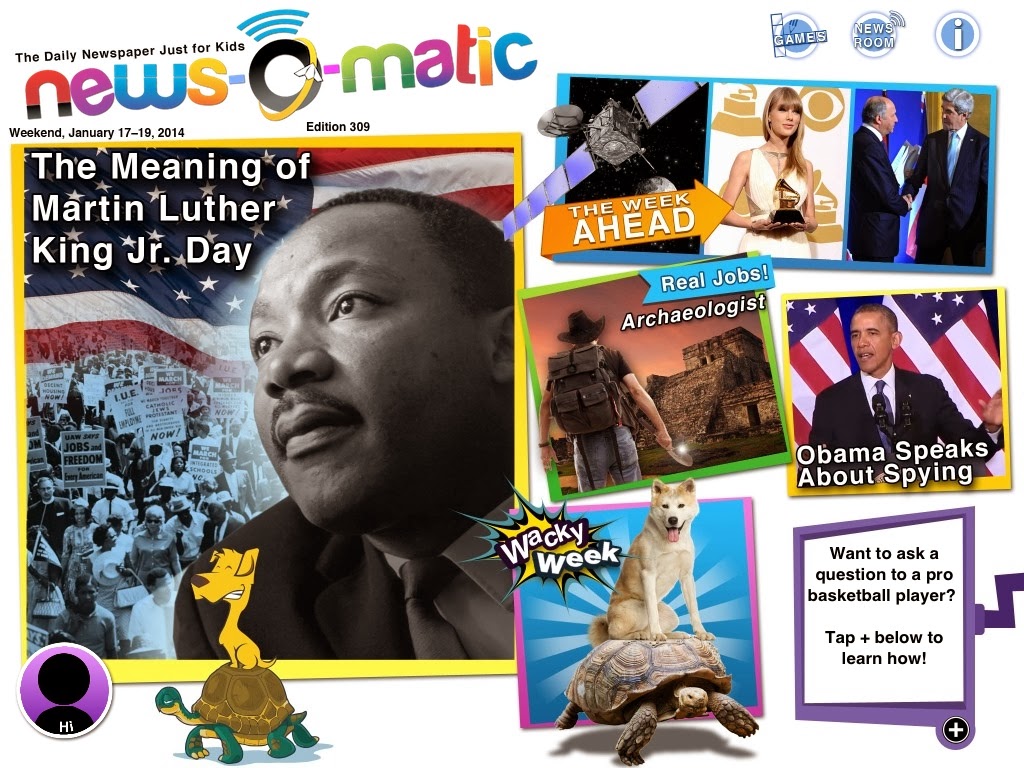
And of course we talk to kids to get their perspectives, such as with our Martin Luther King, Jr., article (posted yesterday). To be truly a kids' newspaper we need them to be a part of it. News-o-Matic aims to create a dialogue to get children writing, asking questions, and actively interacting with the news. And it's working. Kids feel like they have a newspaper just for them.

I'm a long-time news hound. I got my start in children's publishing writing news for kids. Like other nonfiction writers, I continually try to adapt my work to new audiences, new formats, and new markets. So I was psyched to find an app that brings news directly to kids via iTunes -- whether they're on their own or at the sides of their parents, teachers, and classmates.
I'm the newest contributing writer to News-o-Matic, a news app for children ages 7 to 11 available in pdf for classrooms and in the home via iPad and iPhone. I think it's pretty great, so I checked in with editor-in-chief Russell Kahn to find out more about it.
Q. How long has News-o-Matic been going?
A. We formed our company, Press4Kids, two years ago, and launched News-o-Matic in the App Store about a year ago. We launched our School Edition over the summer. And News-o-Matic 3.0, which allows users to read the editions on both the iPad and iPhone with one subscription, launched last week.
Q. Why did you create News-o-Matic?
A. My business partner Lillian Holtzclaw Stern, had the initial idea because her two children (then seven and nine) had nowhere to go to make sense of the news happening in the world. Maybe a generation ago it was possible to shelter your children from current events, but it's not possible with today's media saturation.
Q. Who is your audience?
A. We have now been downloaded more than 50,000 times in 120 countries. That doesn't include the 600-plus schools that use a PDF of our publication on a daily basis. (We want to be sure that schools without tablet technology still have access to our stories.)
Q. What kind of response do you get?
A. Kids feel like they have a newspaper just for them. Kids write comments and draw pictures every day; I usually get about 100 of each from them every day. Our readers are incredibly invested in our stories. They share their opinions and ask additional questions to show how much they care. You should see some of the drawings that we get; it's clear that they understand, for example, how an eclipse works or what the effects of climate change are.
As for educators, we've had teachers tell us that we're the reason they bought iPads for their classroom. Others have said that their students have begged to read News-o-Matic during breaks in the school day. It's opened up new avenues for discussion, and of course it's helped teachers meet the need to ensure that half their content covered in the class is nonfiction (as directed by the Common Core Standards.)
If you're a parent with an iPad, it can be difficult to know how to use the tablet as a valuable tool. The iPad can be much more than a game console. So we're trying to give parents an app that will get their kids READING (and actually enjoying it) without it being a forced assignment. Parents are grateful to know that their kids are being safe on our app and developing a reading habit.
Q. How do you decide what should be covered?
A. The two founders and I are French, Brazilian, and American. It's always been our mission to be international. We feel it's important to expose readers to the world beyond America's borders at a young age. Sometimes that means we deal with tough stories, such as Syria's civil war or the Taliban resurgence in Iraq. But we need to establish a glance in every edition. Our readers constantly request stories about animals, sports, and entertainment. In a given edition I would hope we'd cover at least one or two stories that will appeal to ANY young reader.
Q. I was interested to read the section about what to do if the news upsets you. This is a topic very dear to my heart.
A. We can't shield kids from scary events anymore. Kids hear about them, and without an appropriate place to learn what happened, they may get upset. We want them to understand that News-o-Matic will help explain the event in a way that makes sense. We don't want to be the ones to INTRODUCE scary news to a kid. You won't see us covering a car bomb in Baghdad. But if something happens that makes the front pages of the newspaper, if kids will hear about it in the schoolyard, we feel we have to cover it. We covered Newtown. We covered the Boston Marathon bombing. We had to!
Misinformation can be scarier than the truth. We have a child psychologist, Dr. Phyllis Ohr, on staff who helps us help young children understand tough current events in a safe and age-appropriate way. Together with her, we try to accentuate the positives and focus on the helpers. That said, we do know that some kids will be upset by the news. We worked with Dr. Ohr to develop a series of strategies to help children cope. But ultimately we hope that News-o-Matic serves as a tool to help kids understand why things happen (and how people try to help), making the world a less scary and more inspiring place to live.
Q. Tell me a little bit about your work load.
A. Oh, boy. First, it's really important to recognize that we're an original content creator, not just a repackager of the news. We've interviewed gold medal Olympic athletes, astronauts, and artists. We've talked to scientists and Iditarod mushers and kids who've discovered supernovas. We've gone into the street to cover events.
I read the news all day long, every day. As a daily newspaper, we need to be able to respond immediately to anything that's happening. We publish Monday through Friday, 52 weeks a year. At 261 editions a year, that's six more than USA Today! We considered not publishing during the holidays, but we want kids to become addicted to the habit of daily reading -- especially when they're out of school!
And of course we talk to kids to get their perspectives, such as with our Martin Luther King, Jr., article (posted yesterday). To be truly a kids' newspaper we need them to be a part of it. News-o-Matic aims to create a dialogue to get children writing, asking questions, and actively interacting with the news. And it's working. Kids feel like they have a newspaper just for them.


January 20, 2014
We Bumble Onward
"Faith is taking the first step even when you don't see the whole staircase." Dr. Martin Luther King, Jr.
Certainly it is a day upon which I should make mention of such splendid books as Martin's Big Words: The Life of Dr. Martin Luther King, Jr.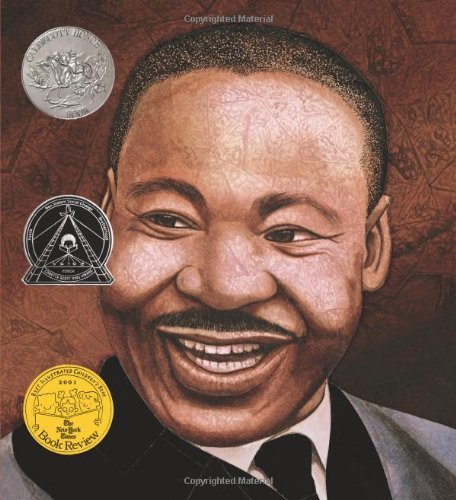 written by Doreen Rappaport
illustrated by Bryan CollierAnd David A. Adler's A Picture Book of Martin Luther King, Jr.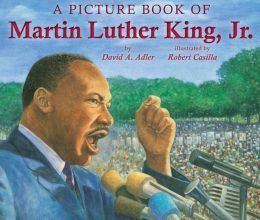 written by David A. Adler
illustrated by Robert Casilla And I Have a Dream , featuring the great man's words, along with Kadir Nelson's handsome illustrations. It is a noble day to remember that all for which the great man is known was once in the unimaginable future of a bright little boy in Atlanta, Georgia, in a very different America. And, on this here anniversary of Inauguration Day , please note that young Martin had just turned 8 at the time of President Franklin D. Roosevelt's second Inaugural, in 1937.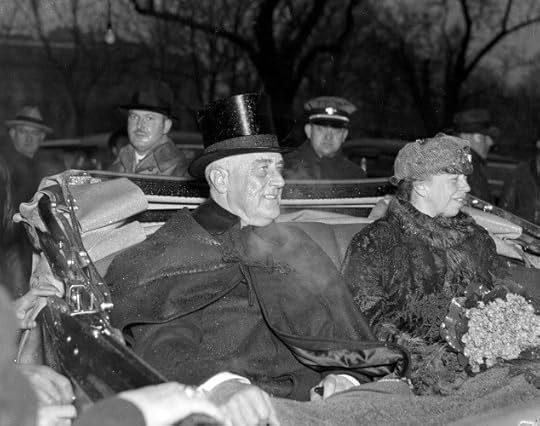 A freezing, rainy day for an Inauguration, January 20, 1937.Never before had a U.S. president taken his Oath of Office on the 20th of January. (If you're reading this, it's likely that you know the big day used to be in March and had been since 1789.) On that raw winter day in Washington, DC, 1937. FDR quoted a long-gone Victorian poet, Arthur Wm. Edgar O'Shaughnessy, when he said "each age is a dream that is dying, or one that is coming to birth." It was a day to "reconsecrate our country to long-cherished ideals." And so it is with this very Monday, this holiday commemorating the words and deeds of an idealistic leader, this anniversary of commencements. It's a far out day for rededication, to our works, our books, our readers, our dear ones, our purposes, various and precious. Though this blog is coming to an end, I'd be willing to bet that I'm not the only author who could cheerfully quote Franklin Roosevelt's buddy, Winston Churchill: "We bumble onward."

Certainly it is a day upon which I should make mention of such splendid books as Martin's Big Words: The Life of Dr. Martin Luther King, Jr.
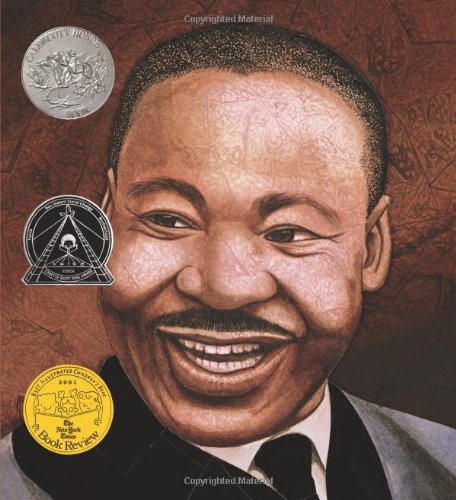 written by Doreen Rappaport
illustrated by Bryan CollierAnd David A. Adler's A Picture Book of Martin Luther King, Jr.
 written by David A. Adler
illustrated by Robert Casilla And I Have a Dream , featuring the great man's words, along with Kadir Nelson's handsome illustrations. It is a noble day to remember that all for which the great man is known was once in the unimaginable future of a bright little boy in Atlanta, Georgia, in a very different America. And, on this here anniversary of Inauguration Day , please note that young Martin had just turned 8 at the time of President Franklin D. Roosevelt's second Inaugural, in 1937.
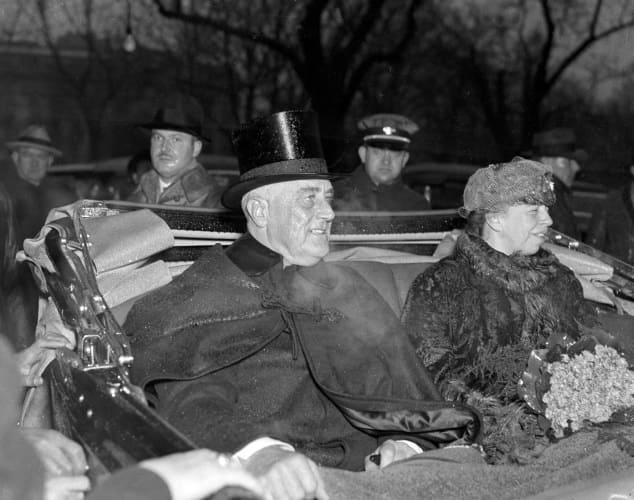 A freezing, rainy day for an Inauguration, January 20, 1937.Never before had a U.S. president taken his Oath of Office on the 20th of January. (If you're reading this, it's likely that you know the big day used to be in March and had been since 1789.) On that raw winter day in Washington, DC, 1937. FDR quoted a long-gone Victorian poet, Arthur Wm. Edgar O'Shaughnessy, when he said "each age is a dream that is dying, or one that is coming to birth." It was a day to "reconsecrate our country to long-cherished ideals." And so it is with this very Monday, this holiday commemorating the words and deeds of an idealistic leader, this anniversary of commencements. It's a far out day for rededication, to our works, our books, our readers, our dear ones, our purposes, various and precious. Though this blog is coming to an end, I'd be willing to bet that I'm not the only author who could cheerfully quote Franklin Roosevelt's buddy, Winston Churchill: "We bumble onward."
January 16, 2014
Goodbye from Tanya Lee Styone
This is my last post on I.N.K.. It has been a wonderful community of writers and I have thoroughly enjoyed interacting with some of the teachers, librarians, and other readers here. Thank you so much for your attention and time. As I say when I am doing school visits, if I leave with you remembering just 2 things about our visit together, remember this: What If? are the two most powerful words in your writing arsenal (and in life, for that matter). And always, always, always have an emotional connection to what you are writing. If you are interested in what you are writing, your writing will be interesting. Thank you I.N.K.ers and readers!You can always find me at www.tanyastone.com
January 9, 2014
Common Core Care Package: 5 Ways to Sneak Nonfiction into Your School-day Schedule*
1. Booktalks
If you’re a teacher-librarian, you probably already do booktalks on a regular basis, but they also work well in a classroom setting. Think of a booktalk as a 2-3minute commercial that introduces students to a book. If you teach grade 3 or higher, try modeling a booktalk a few times, and then invite your students to choose a favorite book and do booktalks of their own. Booktalking is a great technique for introducing your students to the classroom book collection. If you alternate between fiction and nonfiction titles, students will be exposed to a wide range of literature. By including nonfiction titles, you let students know that you value nonfiction and find it interesting to read.
2. Read-aloudsBy adding nonfiction picture books to your classroom read-alouds, you provide engaging opportunities to explore content. Choose books with a varying voices so students can explore the many ways to write nonfiction and come to realize that an author's writing style often reflects content. Here are a few recommendations:
Vulture View by April Pulley Sayre
Army Ant Parade by April Pulley Sayre
The Boy Who Loved Math by Deborah Heiligman
Under the Snow by Melissa Stewart
Those Rebels, Tom and John by Barbara Kerley Lightship by Brian Floca
When Marian Sang by Pam Munoz Ryan
Redwoods by Jason Chin
Here Is Antarctica by Madeleine Dunphy
An Egg Is Quiet by Dianna Aston Hutts
Move! by Steve Jenkins & Robin Page
Neo Leo by Gene Barretta
Dave the Potter: Artist, Poet, Slave by Laban Carrick Hill
Frog in a Bog by John Himmelman
Hello, Bumblebee Bat by Darrin Lunde
Mosquito Biteby Alexandra Siy & Dennis Kunkle
3. Use Nonfiction as Mentor TextsWhen you teach writing, use high-quality trade titles (such as the ones listed above) as authentic models for structuring text, crafting beginnings and endings, choosing precise words, selecting voice, and more. Some students may understand the power of vibrant verbs, sensory details, similes, metaphors, alliteration, hyperbole, imagery, and other language devices better by interacting with examples in both fiction and nonfiction texts.
4. Pair Fiction and Nonfiction Titles on Related Topics
Reading fiction and nonfiction titles together enriches student experience by allowing them to make real-world connections to the ideas or themes of a fiction work. It also provides students who prefer nonfiction with a concrete way to approach the story. For more information about this teaching strategy and sample book pairings, see this article .
5. Give Students Opportunities to Skim and Scan Nonfiction Texts
When students have free time, encourage them to look through nonfiction titles and complete activities that involve identifying text structures, text features, key ideas, or specific language devices. You can find some sample ideas here and here and here . *Strategies based, in part, on suggestions in Reading in the Wild: The Book Whisperer’s Keys to Cultivating Lifelong Reading Habits by Donalyn Miller with Susan Kelley (San Francisco: Jossey-Bass, 2014).
If you’re a teacher-librarian, you probably already do booktalks on a regular basis, but they also work well in a classroom setting. Think of a booktalk as a 2-3minute commercial that introduces students to a book. If you teach grade 3 or higher, try modeling a booktalk a few times, and then invite your students to choose a favorite book and do booktalks of their own. Booktalking is a great technique for introducing your students to the classroom book collection. If you alternate between fiction and nonfiction titles, students will be exposed to a wide range of literature. By including nonfiction titles, you let students know that you value nonfiction and find it interesting to read.
2. Read-aloudsBy adding nonfiction picture books to your classroom read-alouds, you provide engaging opportunities to explore content. Choose books with a varying voices so students can explore the many ways to write nonfiction and come to realize that an author's writing style often reflects content. Here are a few recommendations:
Vulture View by April Pulley Sayre
Army Ant Parade by April Pulley Sayre
The Boy Who Loved Math by Deborah Heiligman
Under the Snow by Melissa Stewart
Those Rebels, Tom and John by Barbara Kerley Lightship by Brian Floca
When Marian Sang by Pam Munoz Ryan
Redwoods by Jason Chin
Here Is Antarctica by Madeleine Dunphy
An Egg Is Quiet by Dianna Aston Hutts
Move! by Steve Jenkins & Robin Page
Neo Leo by Gene Barretta
Dave the Potter: Artist, Poet, Slave by Laban Carrick Hill
Frog in a Bog by John Himmelman
Hello, Bumblebee Bat by Darrin Lunde
Mosquito Biteby Alexandra Siy & Dennis Kunkle
3. Use Nonfiction as Mentor TextsWhen you teach writing, use high-quality trade titles (such as the ones listed above) as authentic models for structuring text, crafting beginnings and endings, choosing precise words, selecting voice, and more. Some students may understand the power of vibrant verbs, sensory details, similes, metaphors, alliteration, hyperbole, imagery, and other language devices better by interacting with examples in both fiction and nonfiction texts.
4. Pair Fiction and Nonfiction Titles on Related Topics
Reading fiction and nonfiction titles together enriches student experience by allowing them to make real-world connections to the ideas or themes of a fiction work. It also provides students who prefer nonfiction with a concrete way to approach the story. For more information about this teaching strategy and sample book pairings, see this article .
5. Give Students Opportunities to Skim and Scan Nonfiction Texts
When students have free time, encourage them to look through nonfiction titles and complete activities that involve identifying text structures, text features, key ideas, or specific language devices. You can find some sample ideas here and here and here . *Strategies based, in part, on suggestions in Reading in the Wild: The Book Whisperer’s Keys to Cultivating Lifelong Reading Habits by Donalyn Miller with Susan Kelley (San Francisco: Jossey-Bass, 2014).
My Trusty Bike
 When we first moved to Portland, OR, we lived in a condo downtown…and my life was downtown-centric. Now, we live in a little house across the river. I love our quiet neighborhood, but it's a bit removed from the action. Several times a week, it seems like I'm commuting somewhere, and my favorite way to do this is by bike.
I hate driving, for one thing. The bus is reliable but takes a while. And I’ve slowly outfitted myself with a variety of bike gear—waterproof this-and-that’s, good gloves and booties, and even most recently, a truly sweet headlamp that is so high tech you just plug the whole thing in to recharge.
And then there’s the commute itself. Portland has this wonder called the Springwater Corridor and wow is it great. It allows me to travel much of my commute on a dedicated bike path. No cars, just bikes, joggers…and the occasional goose.
You see, the section of the corridor I travel runs alongside the Willamette River, skirting the edge of the Oaks Bottom Wildlife Refuge.
As I ride, I see kayakers or crew teams in the river, and, on the other side of the trail, Great Blue Herons standing quietly in the marsh. Three times now I have even seen a bald eagle. There are hawks. And in the spring, there are baby geese—Canada Geese that start out as tiny yellow puffballs and quickly grow into gangly awkward goslings.
I commute by bike a lot, and my favorite ride is to and from my critique group meetings. The commute home often proves to be almost as productive as the meeting was.
My critique partners raise good points, ask good questions, leave me wondering how on earth I am going to fix the problems I didn’t even realize were there until I went to group.
But as I start pedaling, once I’m off the busy streets and into the quiet, tree-filled, goose part of my commute, I find that I’ve started to work out those problems, without even realizing it. I’ve had to stop my bike more than once (sometimes more than once in the same ride) to write down what I’ve just figured out while I was pedaling.
I’ve come to look forward to those rides home. And I always pack my notebook and pen in easy reach.

January 7, 2014
Elementary Science Fairs in the Era of STEM and the Next Generation of Science Standards
As an author of science activity books for children, I've attended my share of elementary/middle school science fairs. I cannot recall ever being surprised by a project or display that was particularly clever or original. Mostly the exhibits are the predictable volcano models, electric circuits, acid-base changes detected by red cabbage juice. Parent fingerprints are all too often all over the display and when I've asked the student about their work, they show little background or knowledge of the subject. The “fair” aspect of the event is far more important than the science. I’d like to help change that. Since most science fairs take place in March—two months away—NOW is the time to start.
First, there is a coming shift to looking at science as a process. Juliana Texley, president-elect of the National Science Teachers Association, told me: “The Next Generation Science Standards emphasize the practices of science. With respect to science fairs, the first six are most crucial: 1. Asking questions (for science) and defining problems (for engineering)2. Developing and using models3. Planning and carrying out investigations4. Analyzing and interpreting data5. Using mathematics and computational thinking6. Constructing explanations (for science) and designing solutions (for engineering)
Tomorrow's science fairs will place less emphasis on winning, more on cooperation and on the pathways that were used to get to the products.”
I like the idea of kids working together. After all, the body of knowledge we call “science” comes more from collaboration than competition. When I researched my biography of Marie Curie, I was impressed with the eagerness she exhibited when a new journal came in the mail. She couldn't wait to go to her own lab and repeat the experiments of colleagues in other parts of the world. Science is the original wiki—a communal body of work.
Playing with nature, asking testable questions, taking an initially informal, experiential approach to curiosity are the scientific behaviors that elementary students should be doing. The formalization of experiments and the “scientific method” can be learned after there is some experience with just playing around. My approach in my own books has always been to bring science into the world of children; let them learn something new about something familiar before subjecting them to the abstract, rigorous generalizations or laws of science that are the result of cumulative knowledge. One problem in elementary school science is that most teachers do not understand it well themselves. They need to learn to listen to the questions of children so that they become aware of the questions that can be answered by doing something.
The best science activity books for children give a reason or motivation for doing an experiment that goes beyond a “wow!” or a “so what.” So if you’re looking for help, here are two books to get you started: Prize-Winning Science Fair Projects for Curious Kids by Joe Rhatigan and Rain Newcomb. This book is a collection of experiments actually done by kids for science fair project that answer kid-friendly meaningful questions and show dramatic changes in otherwise ordinary items.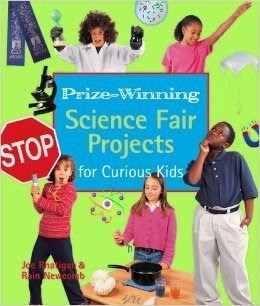
My own book: See for Yourself: More Than 100 Experiments for Science Fairs and Projects . Projects are rated according to “challenge level” so there are quickies and then there are more ambitious projects.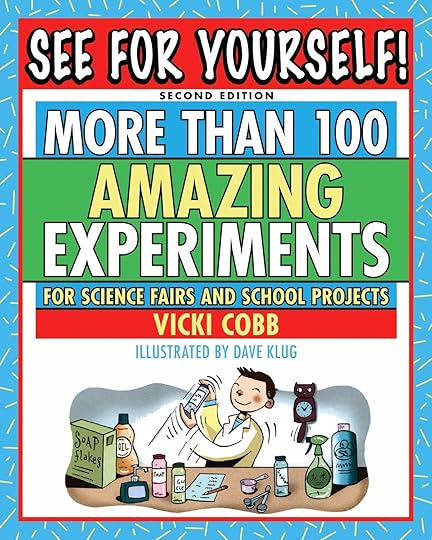
Here's a suggestion: since science touches every aspect of our universe, find out what a child is interested in and Google it along with the word “science” and see what you get. Experiment with other word combinations but always attach the word “science.” Bring imagination and curiosity to the inquiry. If a question occurs to you or the child, don't dismiss it; think about it. You just might be led down a path of creative discovery that shows you why scientists love science.
Note: I’m collecting a list of terrific science books to be published here on the I.N.K. blog at the end of January. Please send your suggestions to me along with the link to the Amazon catalog page, a brief description of the book and an image of the cover: email@vickicobb.com.

First, there is a coming shift to looking at science as a process. Juliana Texley, president-elect of the National Science Teachers Association, told me: “The Next Generation Science Standards emphasize the practices of science. With respect to science fairs, the first six are most crucial: 1. Asking questions (for science) and defining problems (for engineering)2. Developing and using models3. Planning and carrying out investigations4. Analyzing and interpreting data5. Using mathematics and computational thinking6. Constructing explanations (for science) and designing solutions (for engineering)
Tomorrow's science fairs will place less emphasis on winning, more on cooperation and on the pathways that were used to get to the products.”
I like the idea of kids working together. After all, the body of knowledge we call “science” comes more from collaboration than competition. When I researched my biography of Marie Curie, I was impressed with the eagerness she exhibited when a new journal came in the mail. She couldn't wait to go to her own lab and repeat the experiments of colleagues in other parts of the world. Science is the original wiki—a communal body of work.
Playing with nature, asking testable questions, taking an initially informal, experiential approach to curiosity are the scientific behaviors that elementary students should be doing. The formalization of experiments and the “scientific method” can be learned after there is some experience with just playing around. My approach in my own books has always been to bring science into the world of children; let them learn something new about something familiar before subjecting them to the abstract, rigorous generalizations or laws of science that are the result of cumulative knowledge. One problem in elementary school science is that most teachers do not understand it well themselves. They need to learn to listen to the questions of children so that they become aware of the questions that can be answered by doing something.
The best science activity books for children give a reason or motivation for doing an experiment that goes beyond a “wow!” or a “so what.” So if you’re looking for help, here are two books to get you started: Prize-Winning Science Fair Projects for Curious Kids by Joe Rhatigan and Rain Newcomb. This book is a collection of experiments actually done by kids for science fair project that answer kid-friendly meaningful questions and show dramatic changes in otherwise ordinary items.

My own book: See for Yourself: More Than 100 Experiments for Science Fairs and Projects . Projects are rated according to “challenge level” so there are quickies and then there are more ambitious projects.

Here's a suggestion: since science touches every aspect of our universe, find out what a child is interested in and Google it along with the word “science” and see what you get. Experiment with other word combinations but always attach the word “science.” Bring imagination and curiosity to the inquiry. If a question occurs to you or the child, don't dismiss it; think about it. You just might be led down a path of creative discovery that shows you why scientists love science.
Note: I’m collecting a list of terrific science books to be published here on the I.N.K. blog at the end of January. Please send your suggestions to me along with the link to the Amazon catalog page, a brief description of the book and an image of the cover: email@vickicobb.com.
January 6, 2014
HUCK FINN, THE “N” WORD, AND ME
Wow. During the past three weeks or so, I’ve been following an extremely passionate and thoughtful debate on the NCTE (National Council of Teachers of English) Discussion Forum. English teachers and their students are currently discussing Mark Twain’s famous classic, Huckleberry Finn, a book that's included on required reading lists for schools all over tarnation. And it seems that every single teacher has a different way of dealing (or not dealing) with the ever-present “N” word in Huck’s tale.
What do the teachers have to say? You name it:
~So should the book be banned?
~How dare anyone even think the book should be banned!!
~Should the “N”word be repeated aloud in class?
~Let’s put a less offensive word in its place!
~No way….that’s verboten.
~How do I keep from offending my black students?
~We’re a bunch of white men, so maybe we’re unfit to discuss such things.
~Can the word make for a teachable moment?
~Maybe there’s another equally good book that could replace Huckleberry Finn and still get Mark Twain’s points across without using politically incorrect language.
~Why would you want to do that?
~Mark Twain just uses the "N" word to satirize the racists' immoral behavior.
~Should we simply have kids read certain “safe” passages and ignore the rest?
~Why can’t they take a gander at the whole tamale?
~Can we as adult teachers even use the word “nigger” with each other in this forum?
~Yes, of course!
~NO, most certainly not!
I just looked at Mark Twain’s book as I was typing this blog, and the word is all over the place; on the first page of Chapter XLII alone, it appears 14 times. But what does all this have to do with yours truly?
Right now, a lot. I’m writing a nonfiction picture book about the Civil War for kids ages 10 and up, and to me, many of the most riveting, memorable, candid, and revealing quotes I have ever seen anywhere come from slave narratives compiled verbatim after these people were freed. If anyone wants to understand what life was really like for black Americans before and during the Civil War, they should see these unfiltered stories as experienced by the genuine human beings themselves. I’ve read slave narratives by the hundreds by now, and for that reason, I’m including a few of the strongest paragraphs in my (not yet finished) manuscript. Or at least, that’s my full intent. This is nonfiction, so the plan is to uncover the truth, not to Bowdlerize history.
The problem is that slave narratives are liberally peppered with the ubiquitous “N” word. It was an integral part of the language back then and appears on almost every page. Of course I’m no Mark Twain—tis to laugh— but I’m already getting the same kind of push-back Huck Finn is getting for including the word (in its proper context). You can find the warnings I’ve gotten in the list above, and I’m getting five more: 1) Your book will be banned if you use that word because you ain’t Mark Twain.
2) Yup, Mark Twain was white like you, but he’s a famous dead guy and can get away with things you can't.
3) Have fun trying to get the word nigger past your publisher.
4) Be practical. If you include the word you won’t sell a single copy.
5) Look out for the hate mail.
People, get in line. I’ve gotten push-back for writing non-Bowdlerized history plenty of times already, so why stop now? (Even so, I’d like to know what you think…..)

New book list is up!
April Sayre has just posted our latest book list Feasts and Food. Check it out along with our other book lists which you can find directly below our blog logo.
January 2, 2014
January News of INK bloggers
NEW BOOKS

Anna M. Lewis, WOMEN OF STEEL AND STONE: 22 Architects, Engineers, and Landscape Designers (Chicago Review Press)

Steve Sheinkin, THE PORT CHICAGO 50: Disaster, Mutiny, and the fight for Civil Rights (Roaring Brook Press)

To Be or Not to Be -- Work-for-Hire Projects
 As a working writer without spousal back-up, I sometimes get lost in the day-to-day business of survival. Writers of nonfiction seldom enjoy the advances most novelists take for granted. So the sale of one, two, three, even four nonfiction children’s books a year does not guarantee fiscal security (or health insurance) for the same twelve month period.
 Work-for-hire projects are a tempting but controversial option for keeping ends met. I say controversial because some experts say a writer should never agree to a flat-fee contract because they put no pennies in your account down the road.
I understand that concern, as a woman alone in paying the bills. But I have often agreed to writing work-for-hire projects, too.
So let’s explore three hard facts about taking these assignments. Then let’s explore three great reasons, hopefully to help you make the choice that will be best for your career.
Hard to Handle
1. 1. The paycheck that covers your mortgage this month may seem skimpier once the work-for-hire project is released and on sale to the public. When you’ve long since deposited the five figure check, but the book is earning six or seven, be prepared for a wee bit of jealous longing. If you know it’s coming, it’ll disappear almost as quickly as it comes.
2. 2. If you take too many work-for-hire assignments, you won’t have time to write and research royalty based book proposals that will pay a modest longer term dividend. Balance in all things.
3. 3. It may be hard to give away the perfect idea for a royalty based project to your work-for-hire editor unless you retain the right to write about the same subject again in another format. Maybe.
Those are some of the weak points of writing work-for-hire projects. Now, consider these very important strong points before you make your decision to say yes or no to the flat-fee work.
Perks to Ponder
1. 1. Some flat fee books have a better price point bringing your work within reach for kids at all economic levels. Financially challenged kids will be able to buy a book, where they would not otherwise have that chance. More affluent kids will suddenly buy two.
2. 2. Creating strong, work-for-hire books for an editor helps you build a very important working relationship that can lead to more work in the future – work-for-hire and work for royalties. Do a great job for your editor and you’ll see your opportunities grow.
3. 3. Kids who read don’t care what you make for writing your books. They only care about great stories. So ignore the contract when you write. Give the kids and the editors the best work you can muster, because they deserve no less. That’s how you build your fan base. NEVER underestimate the power of those readers.
After all, young readers are not just our bread and butter, they are our inspiration.
I love my work-for-hire books just as much as I love my traditional royalty based book projects. I am proud of every book I’ve written and feel grateful to all the editors who have been generous with their contracts and assignments. I hope I am always lucky enough to have both kinds of book projects.
I hope you’ll consider both options too. The more we write, the more we fine tune our craft, the better it will be for every player on the team, from writers to editors to book designers to marketing pros to the kids who curl up with the books.
And remember, either way you ARE the winner, every time a young reader falls in love with your books.