Elizabeth Rusch's Blog, page 18
November 15, 2013
Who was The Mad Potter of Biloxi?
Back in the 1980’s an art dealer in L.A. invited me to see his collection of pottery by an artist named George Ohr, who had died in obscurity in Biloxi, Mississippi in 1918. “Ohr called himself The Mad Potter,” my friend told me. “The ceramics establishment thought his personality, as well as his pottery, were too flamboyant. He was ahead of his time.” Fascinated by the Arts and Crafts Movement, I had started my own modest collection of green matte pottery from that era, which I found at various flea markets, “antique” malls and junk stores. But I’d never seen anything quite like the crinkled, wrinkled, distorted, abstract pots by George Ohr that lined the shelves of this man’s study. I ended up buying a small mug with a metallic glaze and a whimsical snake wrapped around it.
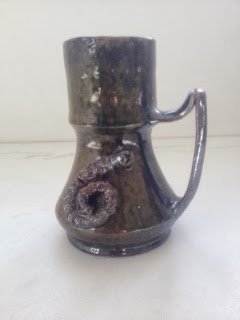
A few years later when Sandra Jordan and I began writing books together, we often took breaks by going on what we called “field trips.” Museums, galleries, movies, plays, bookstores, gardens, restaurants, even a party or two constituted these forays away from the computer, out of the study. Wandering around flea markets or antique stores were favorite outings. Sandra was on the lookout for glass fan vases, while I hunted green pots. In Lambertville, NY, after a presentation at a Children’s Literature Festival, we stopped by David Rago’s gallery and discovered we both were fans of George Ohr’s pottery.
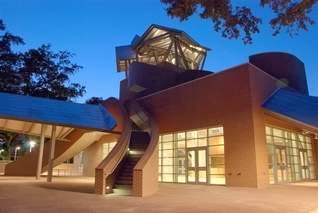
And so the years went by, as we wrote twelve books on the arts and settled into a collaboration that sometimes makes us behave like an old married couple. At an ALA conference in New Orleans several years ago, a field trip in and of itself, we had a free day between an award ceremony and a panel, and decided to drive to nearby Biloxi, Mississippi, where the architect Frank Gehry (we’d written a book about him) had designed a museum in honor of George Ohr. It had been leveled in 2005 by a gambling barge that had been lifted off its’ moorings during hurricane Katrina.
 The Gehry museum buildings finally were in the process of being rebuilt. We’d been invited for a hardhat tour. There we discovered through vintage photographs and reference books that not only were George Ohr’s pots wild and interesting but so was his life.
Then there were coincidences, besides our shared interest, along with Frank Gehry, in Ohr’s work. When we researched Andy Warhol’s life for Prince of POP, we discovered Andy collected Ohr pots. Here is a photo of some pieces that were in his house in New York City.

The artist Jasper Johns collects Ohr pots and even reproduces them into his paintings.

Now The Mad Potter: George E. Ohr Eccentric Genius is out and people are saying Who? Who is George Ohr? It seems like a remarkable turn of events to find out that he died in 1918, mostly unappreciated, and more than fifty years later was heralded America’s most important turn of the century potter. A tale of redemption for an artist, who, like Van Gogh, believed passionately in his own talent, worked hard, and finally received the attention he deserved.

FYI: If anyone happens to be in Pittsburg, visit the Carnegie International art exhibit, where a French artist, Pierre Leguillon, has created an amazing artwork, a vitrine filled with photos of George Ohr and pieces of his ceramics, placed on a sandy surface, perhaps a nod to the beaches of Biloxi.

In Biloxi, Mississippi, visit to the Ohr/ O’Keefe Museum of Art designed by Frank Gehry. https://www.georgeohr.org/


November 13, 2013
Common Core and Nonfiction Photography Part I
As Steve Jenkins discussed in his recent post, informational graphics can contribute much to nonfiction. I agree. Yet it’s not only drawn images and graphs that can elevate nonfiction material. Photography can elevate and transmit content, as well.
One of my favorite examples of the power of a photograph for nonfiction impact comes from an article about the lightest metal on Earth.
http://www.popsci.com/science/article/2012-11/fyi-what-lightest-metal-earth
Now, I want to know, who had the brilliant idea to put that metal on a dandelion to show it’s lightness? A drawn illustration of that metal on top of a dandelion would not have done the same thing. You need the photo to feel as if you are experiencing that moment, the metal pressing down on the dandelion fluff, the fluff holding up the extremely light metal.
Photography is powerful even in an age when we admit that some photos can be manipulated with image processing programs. (Understanding the image fully is also easier if you have had contact with real dandelions, i.e. nature, the greatest source of metaphors that reach beyond cultural and language barriers.)
If Common Core includes deeper study of context and richer critical thinking, then a study of photography in nonfiction could be a rich unit, indeed. To that end, I thought I’d share some of the things I’ve been thinking about as a professional photographer creating images for nonfiction books for children and adults.
EDITORIAL PURPOSE IMPACTS HOW YOU PHOTOGRAPH A SCENE
Here’s how I know that purpose matters. My husband is coauthoring a field guide to nature of the midwest for Houghton Mifflin’s Kaufman Guides. As we traveled all over the Midwest to dunes, prairies, forests, and bogs, I soon learned that not just any photo will do for a field guide that promises to help people identify animals and plants.
His images for the field guide need to be clear and complete, showing every aspect of the lizard, insect, or mushroom to best effect for identification purposes. No bush in front of the right foot. No tree bisecting the image of the deer. I call it “Egyptian tomb painting” school of photography. All limbs must show, just like those wonderfully awkward elbows and arms in ancient Egyptian scenes. You may think you have great photos of animals but if you look through them I bet you’ll find that 99% of them are useless for field guides.
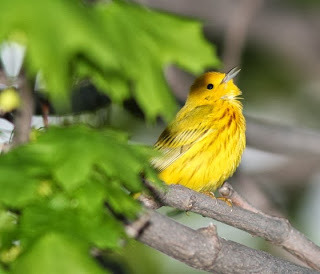
Yellow warbler, tail hidden, not useful for field guide
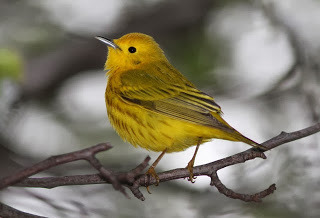
A field guide worthy photo, all relevant field marks showing
I’m happy to find raindrop-covered creatures for my rain book (Raindrops Roll, 2015). But that’s not so great for Jeff’s work on field guide photos. Raindrops reflect light, making the image spattered with polka dots. A smattering of pollen changes the color of a hummingbird—not so great for i.d. If you show a photo of an animal with stripes of mud on it, people might think that it should always have stripes. Some of these variations can be altered in editing software. But, then again, should you show a leaf as is, with all the caterpillar bites in it? Or do you fix it so people won’t think that species of tree has every leaf “holey?” These are the questions that plague field guide photographers. What image will represent the species?
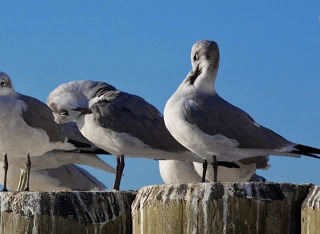
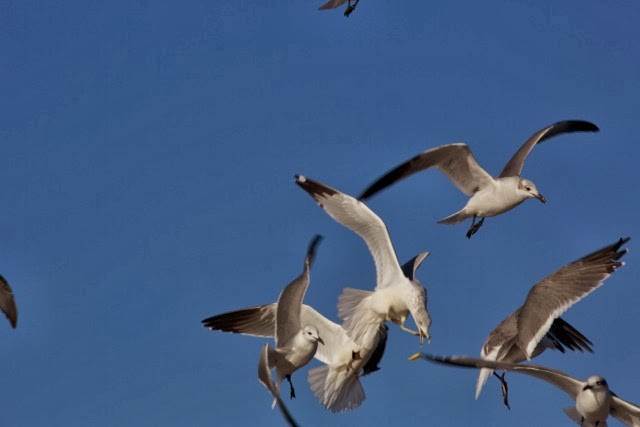
A photo of seagulls that shows preening behavior would make it seem, in a field guide, as though seagulls perpetually have rather awkward necks. Will you show the wren with a relaxed tail? Well, it just wouldn’t look wren-ish although wrens do sometimes put down that perky tail. So, judgments must be made. Characteristic postures of a creature are as important as coloring.
The other thing is that the photos are keyed out, so it helps to photograph things on uniform, contrasting backgrounds. So Jeff carries around a flag-like piece of cloth which I sometimes have to hold, seemingly forever, behind a plant until the wind stops making the plant move so Jeff can get a good shot. This helps make sure all the needles on a tree will be distinct from the background. Yes, purpose matters.
CHOICE OF VIEWPOINT MATTERS
Nonfiction authors and illustrators make choices. In my school programs I show kids why this is important in photography. In the first slide I show them a broad view of the stunningly lovely wings of a polyphemus moth. Ooh! Aahh! the audience coos. Then I show them a closeup of a polyphemus moth face and its hairy, tarantula-like legs. Eeeuw! is the common response. Yup—same moth, same day, different angle. Photographers can make you fawn over an animal or fear an animal. It’s all in the visual choices we make. The same goes with writing. When you choose a metaphor, you are putting an image, albeit made with words, right next to your subject. Say a spider just covers a medium pizza and people imagine that spider ON their pizza. That makes them feel a certain way. Excited or grossed out. Depends on the audience.
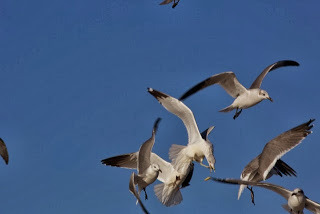
As a book author I often think in terms of a book spread and leave room for my own words/sidebars.
FRAMING MATTERS TO MEANING
No, I don’t mean the frame around the picture although, yes, the setting of a photo in a book is important. (Book design impacts meaning.) No, I’m talking about psychological framing—the way we digest words and images. Framing is a tad deeper than the impact of viewpoint and metaphor I discussed above. This is a chewy topic for older grades.
Basically, framing refers to the fact that words and photos do not live on a blank page that floats in space. A single seemingly innocuous image can activate a whole “frame” of beliefs/thoughts about a topic. Then, when you see the next word or image, you’re set up to believe it, not believe it, or take it in an entirely different way. Just imagine your whole lifetime of experience with an image of a dark alley, a snake, an American flag, a robot, a baby-in-arms, and such.
Here’s how one program describes the concept.
http://www.bmsg.org/resources/framing-101
Framing can be productive in good and bad ways. On the scary side, you don’t have to be directly insulting or racist or actually say someone is guilty. You just flash up an image or use a word that brings the emotions and thoughts of fear/guilt/protectiveness. Those previous images or words can totally change a person’s viewpoint of seemingly neutral facts or statements that follow it. Alas, this kind of “framing” is very sophisticated. Its work goes quite below the radar even for people who are educated and think they control their reactions to things. It’s used a lot in political ads.
I’ll never forget the course I took at Duke: Media Power Politics. That brilliant, wild professor blew our minds. He showed us how newscasts use music, color, lighting to make their newscasters look authoritative, how statistics can be manipulated for best impact in advertisement, how disturbing news images then lead us to the happy solutions—the commercials, where you learn that although you cannot solve war, you can smell better if you buy this soap. He showed us how the Nazis used patriotic films and images to set up the anger and shift the public’s view of certain groups.
Perhaps framing and media power politics don’t directly impact the way I take photos. But it certainly impacts how I read and watch TV. Being a savvy digester of images is going to be just as important as being a critical thinker about words if you care about nonfiction, now and in the future. The more students learn about it, the better they’ll be at sorting truth from manipulation.
Next month I’ll be discussing some more aspects of photography, such as how to enrich photos with layers that give additional educational content beyond the main focus of the images. (It’s sort of like what illustrators do with drawing or painting when they include extra symbols, words, and seek-and-find elements.) For now I’m going right back outside to see if I can photograph those warblers that were eluding me this morning. Good day, INK folks!
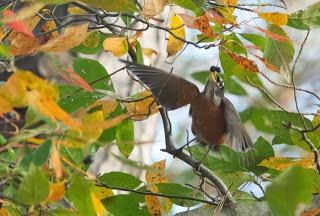
Sometimes a little blur can convey action.
Not great for field guide but good for the feel of the scene.

One of my favorite examples of the power of a photograph for nonfiction impact comes from an article about the lightest metal on Earth.
http://www.popsci.com/science/article/2012-11/fyi-what-lightest-metal-earth
Now, I want to know, who had the brilliant idea to put that metal on a dandelion to show it’s lightness? A drawn illustration of that metal on top of a dandelion would not have done the same thing. You need the photo to feel as if you are experiencing that moment, the metal pressing down on the dandelion fluff, the fluff holding up the extremely light metal.
Photography is powerful even in an age when we admit that some photos can be manipulated with image processing programs. (Understanding the image fully is also easier if you have had contact with real dandelions, i.e. nature, the greatest source of metaphors that reach beyond cultural and language barriers.)
If Common Core includes deeper study of context and richer critical thinking, then a study of photography in nonfiction could be a rich unit, indeed. To that end, I thought I’d share some of the things I’ve been thinking about as a professional photographer creating images for nonfiction books for children and adults.
EDITORIAL PURPOSE IMPACTS HOW YOU PHOTOGRAPH A SCENE
Here’s how I know that purpose matters. My husband is coauthoring a field guide to nature of the midwest for Houghton Mifflin’s Kaufman Guides. As we traveled all over the Midwest to dunes, prairies, forests, and bogs, I soon learned that not just any photo will do for a field guide that promises to help people identify animals and plants.
His images for the field guide need to be clear and complete, showing every aspect of the lizard, insect, or mushroom to best effect for identification purposes. No bush in front of the right foot. No tree bisecting the image of the deer. I call it “Egyptian tomb painting” school of photography. All limbs must show, just like those wonderfully awkward elbows and arms in ancient Egyptian scenes. You may think you have great photos of animals but if you look through them I bet you’ll find that 99% of them are useless for field guides.
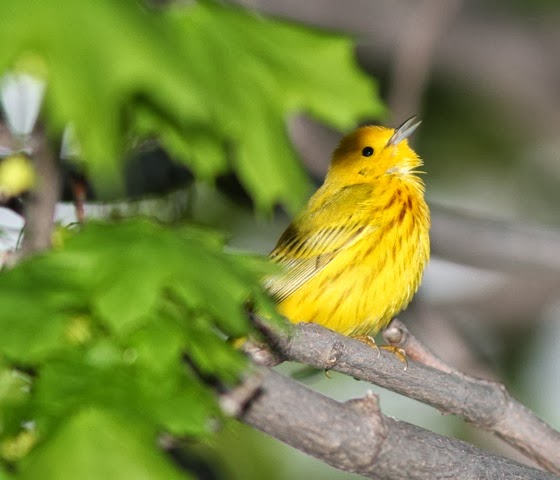
Yellow warbler, tail hidden, not useful for field guide
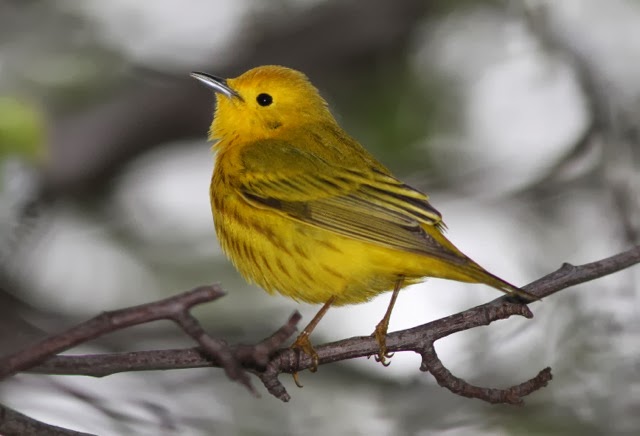
A field guide worthy photo, all relevant field marks showing
I’m happy to find raindrop-covered creatures for my rain book (Raindrops Roll, 2015). But that’s not so great for Jeff’s work on field guide photos. Raindrops reflect light, making the image spattered with polka dots. A smattering of pollen changes the color of a hummingbird—not so great for i.d. If you show a photo of an animal with stripes of mud on it, people might think that it should always have stripes. Some of these variations can be altered in editing software. But, then again, should you show a leaf as is, with all the caterpillar bites in it? Or do you fix it so people won’t think that species of tree has every leaf “holey?” These are the questions that plague field guide photographers. What image will represent the species?
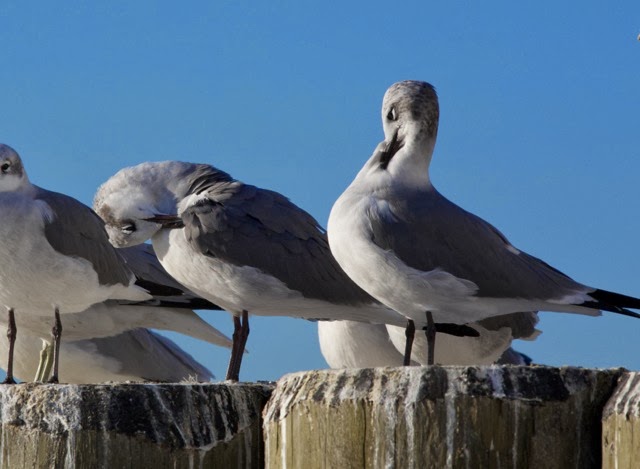
A photo of seagulls that shows preening behavior would make it seem, in a field guide, as though seagulls perpetually have rather awkward necks. Will you show the wren with a relaxed tail? Well, it just wouldn’t look wren-ish although wrens do sometimes put down that perky tail. So, judgments must be made. Characteristic postures of a creature are as important as coloring.
The other thing is that the photos are keyed out, so it helps to photograph things on uniform, contrasting backgrounds. So Jeff carries around a flag-like piece of cloth which I sometimes have to hold, seemingly forever, behind a plant until the wind stops making the plant move so Jeff can get a good shot. This helps make sure all the needles on a tree will be distinct from the background. Yes, purpose matters.
CHOICE OF VIEWPOINT MATTERS
Nonfiction authors and illustrators make choices. In my school programs I show kids why this is important in photography. In the first slide I show them a broad view of the stunningly lovely wings of a polyphemus moth. Ooh! Aahh! the audience coos. Then I show them a closeup of a polyphemus moth face and its hairy, tarantula-like legs. Eeeuw! is the common response. Yup—same moth, same day, different angle. Photographers can make you fawn over an animal or fear an animal. It’s all in the visual choices we make. The same goes with writing. When you choose a metaphor, you are putting an image, albeit made with words, right next to your subject. Say a spider just covers a medium pizza and people imagine that spider ON their pizza. That makes them feel a certain way. Excited or grossed out. Depends on the audience.
As a book author I often think in terms of a book spread and leave room for my own words/sidebars.
FRAMING MATTERS TO MEANING
No, I don’t mean the frame around the picture although, yes, the setting of a photo in a book is important. (Book design impacts meaning.) No, I’m talking about psychological framing—the way we digest words and images. Framing is a tad deeper than the impact of viewpoint and metaphor I discussed above. This is a chewy topic for older grades.
Basically, framing refers to the fact that words and photos do not live on a blank page that floats in space. A single seemingly innocuous image can activate a whole “frame” of beliefs/thoughts about a topic. Then, when you see the next word or image, you’re set up to believe it, not believe it, or take it in an entirely different way. Just imagine your whole lifetime of experience with an image of a dark alley, a snake, an American flag, a robot, a baby-in-arms, and such.
Here’s how one program describes the concept.
http://www.bmsg.org/resources/framing-101
Framing can be productive in good and bad ways. On the scary side, you don’t have to be directly insulting or racist or actually say someone is guilty. You just flash up an image or use a word that brings the emotions and thoughts of fear/guilt/protectiveness. Those previous images or words can totally change a person’s viewpoint of seemingly neutral facts or statements that follow it. Alas, this kind of “framing” is very sophisticated. Its work goes quite below the radar even for people who are educated and think they control their reactions to things. It’s used a lot in political ads.
I’ll never forget the course I took at Duke: Media Power Politics. That brilliant, wild professor blew our minds. He showed us how newscasts use music, color, lighting to make their newscasters look authoritative, how statistics can be manipulated for best impact in advertisement, how disturbing news images then lead us to the happy solutions—the commercials, where you learn that although you cannot solve war, you can smell better if you buy this soap. He showed us how the Nazis used patriotic films and images to set up the anger and shift the public’s view of certain groups.
Perhaps framing and media power politics don’t directly impact the way I take photos. But it certainly impacts how I read and watch TV. Being a savvy digester of images is going to be just as important as being a critical thinker about words if you care about nonfiction, now and in the future. The more students learn about it, the better they’ll be at sorting truth from manipulation.
Next month I’ll be discussing some more aspects of photography, such as how to enrich photos with layers that give additional educational content beyond the main focus of the images. (It’s sort of like what illustrators do with drawing or painting when they include extra symbols, words, and seek-and-find elements.) For now I’m going right back outside to see if I can photograph those warblers that were eluding me this morning. Good day, INK folks!

Sometimes a little blur can convey action.
Not great for field guide but good for the feel of the scene.
November 12, 2013
Leaf Watching Writer-Style
It seems as if I blinked and, poof, all the trees around our house instantly went from green to an artist's pallete of yellow, orange, and rusty brown, with dashes of muted red here and there. And slowly, leaves are falling, making their twirling, spiraling journey to the ground. Alison hates this time of the year (it marks the end of summer's warm weather and the beginning of winter); I find it calming (I can sit in one of our sunrooms surrounded by pots of flowering plants, coleus and whatever else we can lift and haul indoors and think about stuff. Yes, I know, I can think about stuff any time of the year, but during this brief transition time I always go back over my writing year to evaluate it and think about future projects).
Generally, I go over the negative aspects of my writing much more than the positive. Did I really put in enough time at the computer? Why did writing the backmatter and locating images for a new project seem to cause me so many problems? Etc., etc., etc. I think this is my 'beat yourself up' approach to making future projects better.
Which does eventually lead to thinking about those future projects (and they are subjected to the same sort of examination -- is the research solid, don't wait so long to get images, oh, and don't write another 350 page manuscript!). Now the good news is that Alison and I do have two future projects to work on together and she is pushing for a very tight schedule for the one we're about to start (and I agree that we took a little too long to figure out how we were going to work together on our first co-authoring adventure). But here's the thing; I don't really know what nonfiction I'm going to be writing about on my own in the future.
I sit there at night in the sunroom, the tiny humidifier chugging along to send out a warm mist, and wonder why no subject has really caught my attention in months that would prompt me to dig in and do some serious research. I mean, I LOVE doing research. I keep nosing around for a topic or an individual that I'm going to like enough to still be working on it years from now. Usually I come across these by reading anything and everything I can get my hands on and stumble onto something that gets my attention. Not this year. And I did a great deal of reading this summer, so it wasn't for lack of trying.
The good news is that I haven't given up. I'm still looking and reading. And hoping -- that something amazing will come drifting into my life like a perfect red maple leaf. Wish me luck and I'll try to keep you posted. Meanwhile, enjoy the leaves.
Generally, I go over the negative aspects of my writing much more than the positive. Did I really put in enough time at the computer? Why did writing the backmatter and locating images for a new project seem to cause me so many problems? Etc., etc., etc. I think this is my 'beat yourself up' approach to making future projects better.
Which does eventually lead to thinking about those future projects (and they are subjected to the same sort of examination -- is the research solid, don't wait so long to get images, oh, and don't write another 350 page manuscript!). Now the good news is that Alison and I do have two future projects to work on together and she is pushing for a very tight schedule for the one we're about to start (and I agree that we took a little too long to figure out how we were going to work together on our first co-authoring adventure). But here's the thing; I don't really know what nonfiction I'm going to be writing about on my own in the future.
I sit there at night in the sunroom, the tiny humidifier chugging along to send out a warm mist, and wonder why no subject has really caught my attention in months that would prompt me to dig in and do some serious research. I mean, I LOVE doing research. I keep nosing around for a topic or an individual that I'm going to like enough to still be working on it years from now. Usually I come across these by reading anything and everything I can get my hands on and stumble onto something that gets my attention. Not this year. And I did a great deal of reading this summer, so it wasn't for lack of trying.
The good news is that I haven't given up. I'm still looking and reading. And hoping -- that something amazing will come drifting into my life like a perfect red maple leaf. Wish me luck and I'll try to keep you posted. Meanwhile, enjoy the leaves.
November 11, 2013
Hand-selling Books

I am doing something fun on November 30th and I
have author Sherman Alexie to thank for it.
After being a bookseller-for-a-day to celebrate a new bookstore’s opening, Alexie and the owner came up with the great idea of having local authors
hand-sell books at local independent bookstores on Small Business Saturday.
Big box stores have their Black Friday and online giants
have Cyber Monday, TV football games their expensive ads. If the long Thanksgiving weekend is going to
be taken over by commerce, why not feature the stores and products that we
should all be truly thankful for. What
is life without good books? And where
will we find them without good local indie bookstores?
This is a win-win-win-win idea if I’ve ever seen one:
Win! Authors will
draw more business to the store.
Win! Authors may sell lots of their friends’ books.
Win! Authors may sell some of their own books.
Win! Some authors (me, for sure,) may convince stores to
beef up their children’s nonfiction collection.
So…
Authors, find your local indie and see if they are
interested in having you come in. Or register with the American Booksellers Association.
Local indie storeowners, say, “Yes!”
Teachers and other book lovers, come in, support your local
store, meet a local author (Support him or her too. We are very indie).

PS. I will be at the
Harvard Book Store, 1256 Massachusetts Ave, Cambridge, MA, on November 30 from
about noon to 4 p.m. Come on in, I have many books I
love that I’m happy to share with you.

November 8, 2013
10 Nonfiction Activity Ideas for Kids

After writing about the Common Core State Standards last month, I wanted to keep the ball rolling with activities to use with any nonfiction book or other informational text. Getting kids more engaged in reading is the goal, so here goes:
1. Create a comic strip version of some or all of the book.
2. Make an illustrated glossary of terms.
3. Act out one or more important parts.
4. Make a game board of significant events or information.
5. Write a list of things you learned then make a quiz for the class.
6. Write an imaginary (or real) interview with the author.
7. Draw a step-by-step process.
8. Create a poster that summarizes and advertises the book.
9. Take a survey of your classmates knowledge about the topic then graph it.
10. Write how the info will affect your life.
There are plenty of other ideas, of course, just needed to start somewhere. Having students create something in response to a book or other text is one of the best ways to make the information stick, don't you think? If you would like, please visit my Kids + Nonfiction board on Pinterest...it definitely needs more pins added to it, so I'm going to go do some searches right now. Thanks for reading!
Loreen
My web site

November 6, 2013
Nonfiction, November, New England
Autumn in New England. The words conjure
images of colorful foliage, frost-covered fields, and pumpkins. But this year
autumn is extra special for New Englanders who are passionate about children’s
books because two of the biggest conferences of the year are taking place here.
This is the first time AASL—the American
Association of School Librarians—has ever held its bi-annual conference in New
England. It will take place at the Connecticut Convention Center, and many of us INKers
will be presenting. Here’s a run down:
Friday, November 15,
8:00 a.m. - 9:15 a.m.
Authors Who Skype
With rising travel costs and shrinking budgets, schools are experimenting
with ways to connect authors through Skype and other video conferencing.
Presenter(s):
Laura Given, Moderator
Laurel Snyder, Author
Jarrett Krosoczka, Author
Melissa Stewart, Author
A.S. King, Author
Vicki Cobb, Author
Friday, November
15, 1:00 p.m. - 2:15 p.m.
Exploring Scientists at Work
Join authors, a science teacher, and an
editor to discuss—with a special emphasis on meeting the new CCSS—how stories
about scientists at work can meet the needs of children, school librarians, and
teachers. Participants are encouraged to come prepared to share their own ideas
too.
Presenter(s):
Vicki Cobb, Moderator
Pamela S. Turner, Author
Loree Griffin Burns, Author
Rebecca Johnson, Author
Carol Hinz, Editor
Jill Zangerl, Science Teacher
Friday, November 15, 1:00 p.m. - 2:15 p.m.
The New Nonfiction:
Using Award-Winning Children's Books to Support CCSS
Author-educator Melissa Stewart will introduce a broad range of recently
published children's nonfiction books that combine engaging text with
innovative art and design in ways that delight—as well as inform—young readers.
These titles have been paired with fun, effective activities and teaching
strategies that directly address the goals of CCSS RIT #1–9.
Attendees go home with a handout that lists more than 70 award-winning titles
and with a flashdrive full of CCSS-related teaching ideas.
Presenter(s):
Melissa Stewart, Children's Book Author
Saturday, November 16,
8:00 a.m. - 9:15 a.m.
Nonfiction and the CCSS
Authors of nonfiction discuss how adoption of the CCSS has impacted their
creative process—or has it?
Presenter(s):
Daryl Grabarek, Moderator
Steve Sheinkin, Author
Meghan McCarthy, Author
Tonya Bolden, Author
Robert Burliegh, Author
Saturday, November 16, 10:15 a.m. - 11:30
a.m.
Biographies through Picture Books: A Focus on the CCSS
Picture-book biographies draw readers into exploring a slice of history.
Through both words and images, authors can share primary sources with young
audiences.
Presenter(s):
Mary Ann Cappiello, Moderator
Melissa Sweet, Author
Jennifer Bryant, Author
Doreen Rappaport, Author
Matt Tavaras, Author
Andrea Davis Pinkney, Author
All of the authors will be signing books at
their publishers’ booths and/or the AASL Authors’ Alley.
Just one week later, NCTE—the National
Council of Teachers of English—will hold their annual conference at the Hynes
Convention Center in Boston. And once again, INKers will be there in full force.
Pre-NCTE Event
Thursday,
November 21, 7:00 p.m.
Evelyn M.
Finnegan Children's Literature Lecture
Marrian Theater, Lesley University Doble Campus,34 Mellen
St., Cambridge, MA 02138
Friday, November 22, 11:00 AM - 12:15
PM
Passion! Plot! Primary Sources!
Three notable authors
of nonfiction for young readers (ages 6-young adult) reveal their secrets for
bringing history to life, sharing methods teachers can use to enhance their
students’ writing skills while addressing Common Core principles. Two teachers
of children’s literature moderate and offer criteria for selecting stellar
nonfiction
Presenter(s):
Sandip LeeAnne Wilson, Husson University, Bangor, Maine
Marfe Ferguson Delano, Author
Marc Tyler Nobleman, Author
Rosalyn Schanzer, Author-Illustrator
Sue Parsons, Oklahoma State University, Stillwater
Friday, November 22, 12:30-1:45 PM
Hidden Pleasures: (Re)defining Nonfiction
Authors Marc Aronson,
Deborah Heiligman, Steve Sheinkin, and Tanya Lee Stone highlight the hidden or
dismissed pleasures of nonfiction: pleasures of telling story, revealing
history, exposing new knowledge; pleasures of shaping narrative, unveiling
lives, discovering images, experimenting with form. Teacher Erica Shipow
accents the pleasures of reading and learning with nonfiction.
Presenter(s):
William Kemp, New York University, New York
Mark Aronson, Author/Rutgers University
Deborah Heiligman, Author
Steve Sheinkin, Author
Erica Shipow, Boston Collegiate Charter School
Tanya Lee Stone, Author
Cathryn Mercier, Center for the Study of Children's Literature
Saturday, November 23, Elementary
Section Luncheon, 12:30-2:30
Redefining Literacy
Presenter(s):
Steve Jenkins, Author-Illustrator
During this luncheon, an author is seated
at each table. Barbara Kerley, Elizabeth Rusch, and Melissa Stewart will be
among the authors present.
Saturday, November 23, 4:15-5:30 PM
Reflecting
on the Writing Process: Orbis Pictus Authors Share Their Journeys Authors of the Orbis Pictus award and
honor books for 2013 will each share their writing journey and craft used in
the creation of their nonfiction works. This session will provide participants
with knowledge of the research and writing processes used in writing
nonfiction. Information from this session may be used with students in
classrooms.
Presenter(s):
Lisa Morris-Wilkey, Casa Grande Union High School, Arizona
Deborah Thompson, The College of New Jersey, Ewing
Fran Wilson, Madeira
City Schools, Cincinnati, Ohio
Loree Griffin Burns, Author
Gerard DuBois, Author
Barbara Kerley, Author
Cynthia Levinson, Author
Elizabeth Rusch, Author
Leda Schubert, Author
Sunday, November 24, 8:30-9:45 AM
Framing Facts: How Nonfiction Writers are (Re)Inventing Structure
Award-winning
children’s nonfiction authors Leslie Bulion, Cynthia Levinson, Susan E.
Goodman, Steve Sheinkin, and Melissa Stewart discuss the critical role of
structure in their own writing across nonfiction genres, and its application to
Common Core and NCTE/IRA Standards. Questions and dialogue with audience included.
Presenter(s):
Leslie Bulion, Author
Susan E. Goodman, Author
Cynthia Levinson, Author
Steve Sheinkin, Author
Melissa Stewart, Author
All of the authors will be signing books at
their publishers’ booths and/or Anderson’s Bookstore.
Each year, the Assembly on Literature for Adolescents of the
NCTE (ALAN) has a post-conference event, and this year it includes a nonfiction
panel that you won’t want to miss.
Tuesday, November 26, 9:10 – 9:45
AM
Nonfiction Panel
Presenter(s):
Anne McLeod, Moderator
Blaine Harden, Author
Beth Kephart, Author
Tanya Lee Stone,
Author
Last,
but not least, there is one big November conference that apparently didn’t get
the memo that the nation’s kidlit lovers should head eat this year. NCSS—the National
Council of Social Studies—will take
place at the Cervantes Convention Center in St. Louis.
We are
very proud that our own Ann Bausum will be honored with the 2013 Carter G.
Woodson Award. She and the two honor winners will be speaking here:
Saturday, November 23, 2013, 2:45 p.m.
2013 Carter G. Woodson Award and Honor Books Author Panel
Room
260
What a
great month November will be!
images of colorful foliage, frost-covered fields, and pumpkins. But this year
autumn is extra special for New Englanders who are passionate about children’s
books because two of the biggest conferences of the year are taking place here.
This is the first time AASL—the American
Association of School Librarians—has ever held its bi-annual conference in New
England. It will take place at the Connecticut Convention Center, and many of us INKers
will be presenting. Here’s a run down:
Friday, November 15,
8:00 a.m. - 9:15 a.m.
Authors Who Skype
With rising travel costs and shrinking budgets, schools are experimenting
with ways to connect authors through Skype and other video conferencing.
Presenter(s):
Laura Given, Moderator
Laurel Snyder, Author
Jarrett Krosoczka, Author
Melissa Stewart, Author
A.S. King, Author
Vicki Cobb, Author
Friday, November
15, 1:00 p.m. - 2:15 p.m.
Exploring Scientists at Work
Join authors, a science teacher, and an
editor to discuss—with a special emphasis on meeting the new CCSS—how stories
about scientists at work can meet the needs of children, school librarians, and
teachers. Participants are encouraged to come prepared to share their own ideas
too.
Presenter(s):
Vicki Cobb, Moderator
Pamela S. Turner, Author
Loree Griffin Burns, Author
Rebecca Johnson, Author
Carol Hinz, Editor
Jill Zangerl, Science Teacher
Friday, November 15, 1:00 p.m. - 2:15 p.m.
The New Nonfiction:
Using Award-Winning Children's Books to Support CCSS
Author-educator Melissa Stewart will introduce a broad range of recently
published children's nonfiction books that combine engaging text with
innovative art and design in ways that delight—as well as inform—young readers.
These titles have been paired with fun, effective activities and teaching
strategies that directly address the goals of CCSS RIT #1–9.
Attendees go home with a handout that lists more than 70 award-winning titles
and with a flashdrive full of CCSS-related teaching ideas.
Presenter(s):
Melissa Stewart, Children's Book Author
Saturday, November 16,
8:00 a.m. - 9:15 a.m.
Nonfiction and the CCSS
Authors of nonfiction discuss how adoption of the CCSS has impacted their
creative process—or has it?
Presenter(s):
Daryl Grabarek, Moderator
Steve Sheinkin, Author
Meghan McCarthy, Author
Tonya Bolden, Author
Robert Burliegh, Author
Saturday, November 16, 10:15 a.m. - 11:30
a.m.
Biographies through Picture Books: A Focus on the CCSS
Picture-book biographies draw readers into exploring a slice of history.
Through both words and images, authors can share primary sources with young
audiences.
Presenter(s):
Mary Ann Cappiello, Moderator
Melissa Sweet, Author
Jennifer Bryant, Author
Doreen Rappaport, Author
Matt Tavaras, Author
Andrea Davis Pinkney, Author
All of the authors will be signing books at
their publishers’ booths and/or the AASL Authors’ Alley.
Just one week later, NCTE—the National
Council of Teachers of English—will hold their annual conference at the Hynes
Convention Center in Boston. And once again, INKers will be there in full force.
Pre-NCTE Event
Thursday,
November 21, 7:00 p.m.
Evelyn M.
Finnegan Children's Literature Lecture
Marrian Theater, Lesley University Doble Campus,34 Mellen
St., Cambridge, MA 02138
Friday, November 22, 11:00 AM - 12:15
PM
Passion! Plot! Primary Sources!
Three notable authors
of nonfiction for young readers (ages 6-young adult) reveal their secrets for
bringing history to life, sharing methods teachers can use to enhance their
students’ writing skills while addressing Common Core principles. Two teachers
of children’s literature moderate and offer criteria for selecting stellar
nonfiction
Presenter(s):
Sandip LeeAnne Wilson, Husson University, Bangor, Maine
Marfe Ferguson Delano, Author
Marc Tyler Nobleman, Author
Rosalyn Schanzer, Author-Illustrator
Sue Parsons, Oklahoma State University, Stillwater
Friday, November 22, 12:30-1:45 PM
Hidden Pleasures: (Re)defining Nonfiction
Authors Marc Aronson,
Deborah Heiligman, Steve Sheinkin, and Tanya Lee Stone highlight the hidden or
dismissed pleasures of nonfiction: pleasures of telling story, revealing
history, exposing new knowledge; pleasures of shaping narrative, unveiling
lives, discovering images, experimenting with form. Teacher Erica Shipow
accents the pleasures of reading and learning with nonfiction.
Presenter(s):
William Kemp, New York University, New York
Mark Aronson, Author/Rutgers University
Deborah Heiligman, Author
Steve Sheinkin, Author
Erica Shipow, Boston Collegiate Charter School
Tanya Lee Stone, Author
Cathryn Mercier, Center for the Study of Children's Literature
Saturday, November 23, Elementary
Section Luncheon, 12:30-2:30
Redefining Literacy
Presenter(s):
Steve Jenkins, Author-Illustrator
During this luncheon, an author is seated
at each table. Barbara Kerley, Elizabeth Rusch, and Melissa Stewart will be
among the authors present.
Saturday, November 23, 4:15-5:30 PM
Reflecting
on the Writing Process: Orbis Pictus Authors Share Their Journeys Authors of the Orbis Pictus award and
honor books for 2013 will each share their writing journey and craft used in
the creation of their nonfiction works. This session will provide participants
with knowledge of the research and writing processes used in writing
nonfiction. Information from this session may be used with students in
classrooms.
Presenter(s):
Lisa Morris-Wilkey, Casa Grande Union High School, Arizona
Deborah Thompson, The College of New Jersey, Ewing
Fran Wilson, Madeira
City Schools, Cincinnati, Ohio
Loree Griffin Burns, Author
Gerard DuBois, Author
Barbara Kerley, Author
Cynthia Levinson, Author
Elizabeth Rusch, Author
Leda Schubert, Author
Sunday, November 24, 8:30-9:45 AM
Framing Facts: How Nonfiction Writers are (Re)Inventing Structure
Award-winning
children’s nonfiction authors Leslie Bulion, Cynthia Levinson, Susan E.
Goodman, Steve Sheinkin, and Melissa Stewart discuss the critical role of
structure in their own writing across nonfiction genres, and its application to
Common Core and NCTE/IRA Standards. Questions and dialogue with audience included.
Presenter(s):
Leslie Bulion, Author
Susan E. Goodman, Author
Cynthia Levinson, Author
Steve Sheinkin, Author
Melissa Stewart, Author
All of the authors will be signing books at
their publishers’ booths and/or Anderson’s Bookstore.
Each year, the Assembly on Literature for Adolescents of the
NCTE (ALAN) has a post-conference event, and this year it includes a nonfiction
panel that you won’t want to miss.
Tuesday, November 26, 9:10 – 9:45
AM
Nonfiction Panel
Presenter(s):
Anne McLeod, Moderator
Blaine Harden, Author
Beth Kephart, Author
Tanya Lee Stone,
Author
Last,
but not least, there is one big November conference that apparently didn’t get
the memo that the nation’s kidlit lovers should head eat this year. NCSS—the National
Council of Social Studies—will take
place at the Cervantes Convention Center in St. Louis.
We are
very proud that our own Ann Bausum will be honored with the 2013 Carter G.
Woodson Award. She and the two honor winners will be speaking here:
Saturday, November 23, 2013, 2:45 p.m.
2013 Carter G. Woodson Award and Honor Books Author Panel
Room
260
What a
great month November will be!
November 5, 2013
My Short History of Blogging
It is now six years since the late fall of 2007 when Linda
Salzman emailed me and asked if I would be interested in contributing to a
group blog called Interesting Nonfiction for Kids or I.N.K. My first question was, “Does it pay?” When she said the anticipated “No,” I immediately replied that I was in. The marching order for my life and career,
which I’ve always told my kids, was three things:
·
I might learn something
·
It might lead someplace
·
It paid well
Two out of three determined if I would do it; Linda’s blogging
opportunity met the first two criteria.
One post a month did not seem like a heavy lift, besides I had some old,
previously published articles sitting around that I could resurrect if I ran
out of ideas. At that time, people were just
starting to create individual blogs on their websites, which I was reluctant to
do. I was afraid of the pressure of
having to come up with something,
anything, on a regular basis to build a readership in cyberspace where
there seemed to be an infinite number of writers competing for a finite number of
eyeballs. I wanted to make sure that everything
I wrote had enough “dwell time” to satisfy me. (Does that sound like I’m a diva?)
Linda’s request tapped into a deep-rooted insecurity. As a child, I wondered who would ever be interested
in anything I had to say. Pundits seemed
to know so much and have so much confidence.
I never thought I could ever be in such a league. I became a scientist in part because science gave me
authority. After all, I wasn't talking
about my ideas. There was empirical evidence for scientific knowledge. I discovered that once I understood a
scientific concept, I had a gift for explaining it so that others got it. By
writing a lot of different things early in my career (because they paid well
enough) I found my voice and discovered that writing is a craft that changes
one. I was a different person after I had
written a book than I was beforehand.
The process of writing, of thinking through something to share with
others, changes the writer. I discovered
that, no matter what the subject or how many others had written about it, my
take was always somewhat different and furthered the conversation. It was enough to build confidence.
Blogging for I.N.K. opened up something in me. I loved the writing, the community, the
comments, and ultimately, the conversation.
I became concerned with education and began blogging for Education
Update, the online version of a print newspaper here in NYC. I started out there by writing once a week,
but they couldn’t publish as fast as I wrote.
I have been transformed from a girl who was afraid to share her ideas to
a woman of a certain age who can’t shut up.
It seems that my well is not likely to dry up any time soon.
 In September, I
became a regular blogger for the Huffington Post. This meant getting approved by a gate-keeping
editor who set up my account. Every post is screened by editors before publishing.
(So far, all but one of mine have been
published.) Huff Post has hundreds, maybe thousands of bloggers. My plan is to publish twice a week, at least
in the beginning to establish a following.
I am writing carefully, so that it doesn’t look like I’m selling
anything (they frown on that at HP) but I do have an agenda. I want to promote our genre to an audience
that, for the most part, doesn’t think about us and the contribution we make to
the education of children (and adults, if they’re interested in learning
something new). This means I can talk
about just about everything.
So please support me so I can support you. Send me ideas for issues you want discussed
(email@vickicobb.com),teachers, please speak to me, nf books that need attention (especially I.N.K.ers),
follow me (click on the rss or google+ feed to get my columns regularly), share,
tweet, comment. It’s helpful if you can
tie your thoughts (or your book) to a news peg. Here's what I wrote for Tanya Lee Stone, David Schwartz, and Jan Greenberg.
It might lead someplace.
And if it doesn't, we’ll all learn something. For the record, blogging doesn't pay, at least not
directly with money.

November 4, 2013
A Picture Is Worth . . .
Information graphics (infographics, if you must) have a long and rich history in print. The classic of the genre is probably Charles Joseph Minard’s 1869 map of Napoleon's march on Moscow.

According to the information graphic authority Edward Tufte in his book The Visual Display of Quantitative Information, this map “may well be the best statistical graphic ever drawn.” The map shows the size and direction of travel of the French army both geographically and by date as they invaded Russia, then retreated. It also shows the temperature at key points of the march, making it dramatically clear how river crossings and bitter cold spells decimated the French army. Of the 424,000 men who began the campaign, only 10,000 returned.

2012 Presidential Election Map — The New York Times
Minard’s map sets a high bar, but lately I've noticed that the information graphics in newspapers and magazines have become more common, more complex, and more effectively designed. No doubt this is due, in part, to more sophisticated and accessible digital tools. I also suspect that the audiences for these publications have become accustomed to interpreting information rich graphics on television screens and mobile devices.

Historical Hurricane Tracker — NBC News.com
News and sports programming often features split screens, inset images, superimposed numerical data, and text scrolls across the top and/or bottom of the screen.
Video games, with real-time inset maps, 3d views of a city or battlefield, gauges showing strength or battery life, lists of other players, etc. have certainly helped a significant segment of the population — many of them children — develop impressive visual and cognitive multitasking skills and the ability to monitor multiple informational inputs (wow --I'm talking the talk).
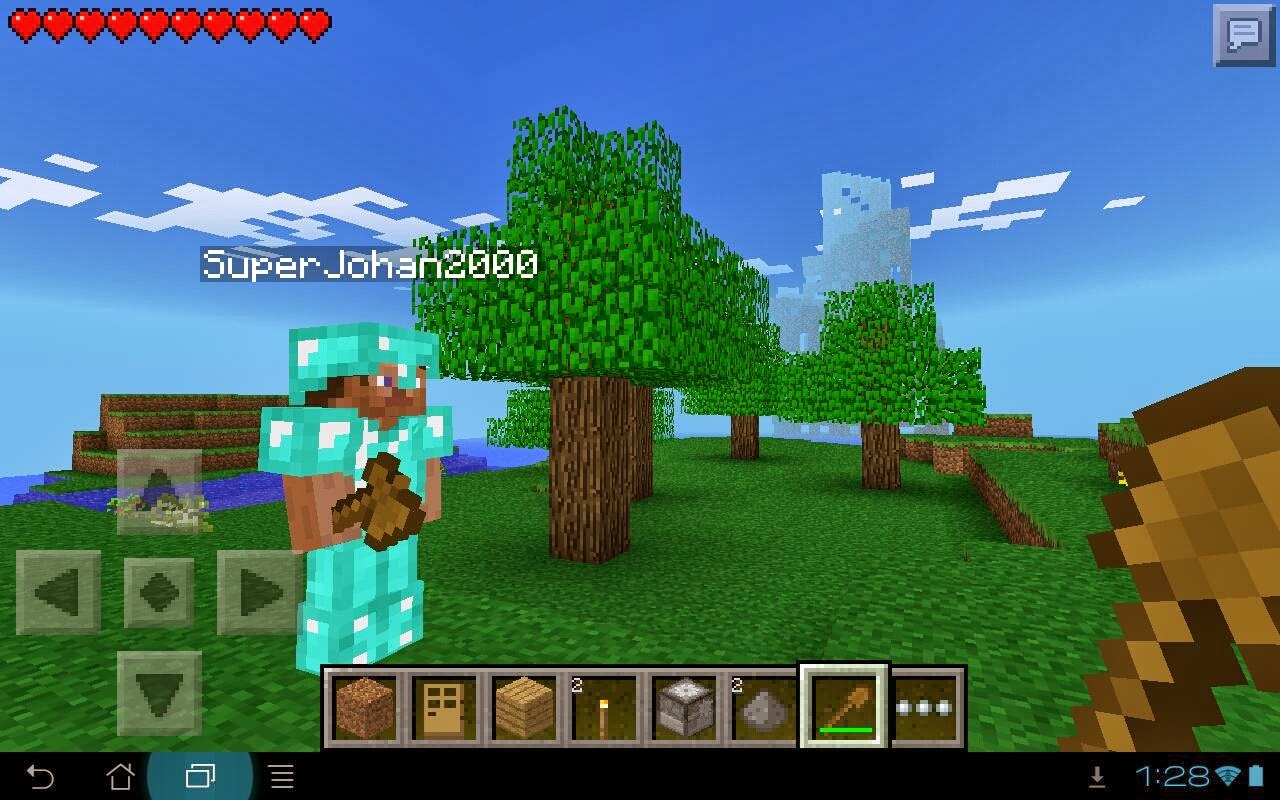
Minecraft screen shot
I'm starting to think, however, that this is an area in which nonfiction picture books may be missing an opportunity. There is a real possibility that children — our audience — are capable of processing and benefiting from more complex informational graphics than those we typically include in our books. Now, I understand that not every author is interested in chasing this particular trend, and I certainly don't think that we should all jump on this bandwagon, if that's what it is. But I was a graphic designer for many years before I was an author, and I've always been intrigued by the possibility of communicating information graphically.
I explored a few of these possibilities, if only tentatively, in my most recent title, The Animal Book. Here are three of them . . .
The first is a diagrammatic food web. It's intentionally complicated, almost to the point of confusion, the better to express the complex interactions in a forest food web.
The pie chart, which shows the relative number of living animal species, is more conventional and accessible.
And the last graphic, which is perhaps more decorative than strictly informative, does emphasize that the vast majority of animal species are extinct. I think all three examples make their points more effectively than text alone.


For more, see Karen Romano Young's related I.N.K. post On the Value of Visuals.

October 30, 2013
Something HAUNTING for Halloween!
All month, I.N.K. bloggers have explored the promise of
Common Core Standards when partnered with nonfiction books. Here I
am, on Halloween, bringing up the rear.
What can I add that hasn’t already been said?
Not much, in terms of academic prowess. I’m not a teacher. People don’t even see me as a “serious”
nonfiction writer because of the topics I tackle. They say I’m a little goofy. So I’ll
give you my goofy point of view about ghosts.
For eight years, kids have begged me to write a book
about ghosts. For seven years, I have politely
declined. Then I met a boy in New
Hampshire who changed my mind.
“Can I talk to you for a minute?” he asked. I said yes.
“A girl died in a fire in my house, and now she comes to
me at night and it scares me,” he said. “What
should I do?”
Consider that for a minute. This boy, eight going on nine, believes he’s
dealing with an apparition -- a dead girl
consumed by flames.
What kid has the tools to deal with such a vivid
imagination, much less the possibility of it being real? And what brain trust thought it was a good
idea to tell a 3rd grader a child died where he sleeps?
When I was a kid, I had night terrors – realistic bad
dreams that felt real – and I explained that to him. He said no, these were not dreams. The ghost was real, so we moved forward on
that premise. Remember, it doesn’t
matter what WE think if HE believes this is real.
“Okay,” I said. “She’s
not a dream. She’s real. Want me to tell you what I’d do, if I were in
your shoes?”
“Yes,” he said, not a flicker of nonsense in his
eyes. “What would you do?”
“If she came into my room, I’d try to talk to her,” I said. His no nonsense
look was instantaneously replaced by, are
you crazy? But he listened.
“I’d say, ‘Hey, it’s really sad that you died and I’m
sorry, but I didn’t do it. So can you
stop scaring me?”
He nodded. “What
if it doesn’t work?” he said.
“Ignore her,” I said. His hope began to evaporate. So I
pulled him back.
“Wait, hear me out,” I said. “When I was a kid, I loved to scare my sister. Do you know when I stopped trying to scare
her?”
He said no. “I
stopped trying to scare her when she stopped screaming. If she didn’t react, it wasn’t fun. If your ghost doesn’t scare you anymore,
maybe she’ll stop, too. So try ignoring
her if talking doesn’t work.”
“But how do I ignore her?” he said.
“What would you do if a zombie showed up at your window?” I asked.
He said he’d be scared, and I agreed.
“Me too, totally.”
“What would you do if it came a second night?” We agreed, we’d still be scared.
“What about the third night, fourth night, fifth? What about the sixth, seventh, eighth? What if that zombie came TEN DAYS IN A ROW?” I asked him.
“By the tenth night, I wouldn’t be scared, I’d be mad. Stupid zombie,
don’t you have anything better to do?”
He laughed and agreed, kind of annoying after ten days,
not scary.
“Great, I said. “Skip to the tenth night with your
ghost. Because, eventually, she’ll be
just like that zombie – a poor sad girl with nothing better to do.”
A thousand pound weight lifted off his shoulders. At least he had a game plan.
That’s why I decided to write GHOSTLY EVIDENCE: EXPLORING
THE PARANORMAL (Millbrook, 2014). Thousands
of kids are watching ghost shows on television, and almost no one has time to
talk with them about those shows or the fears they invoke. Most say, “Ignore it,” but they don’t say how
(or why).
And that’s where Common Core Standards come in.
When effectively implemented, Common Core Standards empower
kids, teaching them how to gather evidence of their own. With hard core evidence, kids become critical
thinks, making it harder for our multi-media world to feed them half truths and
lies. I hope books like mine help
teachers and librarians to do exactly that.
For GHOSTLY EVIDENCE, I visited three haunted houses, a
haunted prison, four haunted grave yards, two haunted hotels and a haunted
ship. I read dozens of books and
articles and interviewed more than fifteen experts on medicine, electricity,
photography, near death experiences, mediums, ghosts and skeptical
analysis.
I put eight years of hard research into my 64 page book,
hoping it would help kids challenge the information strangers will feed
them. I wrote it, hoping they’d be
inspired to do real research of their own.
When educators and authors join forces, we can teach kids
the facts, sure. But via Common Core
Standards, we can also teach them how to think – how to evaluate information
presented as facts. When we give them
such powerful skills, they have a shot at separating lies from the truth.
Did I come to any conclusions writing my book about
ghosts? Yes. I decided there was enough information to
justify further scientific study, but I doubt it will happen in my lifetime. We’re far too invested in superstition and disbelief
to move past fear toward facts.
Common Core Standards could change that. It could usher a new generation toward discoveries we have scarcely imagined, much less proven.
And that’s an unfolding mystery I can get behind.

Cousin Ida
We are one day from the end of our month’s discussion about
Common Core State Standards. Like Steve Sheinkin's blog yesterday, I purposely waited till the end of the month to steal - I mean figure out how to talk about CCSS. I reread the blogs to see if anything is missing.
There is. We’ve not yet discussed cousin Ida. This surprises me because cousin
Ida is the whole shebang, the common core
when it comes to standards.
My cousin, Ida Kravitz, was a
teacher and later an administrator in Philadelphia. She still lives in the same
house where as a child I spent so many hours learning to love learning. She
taught numerous subjects, but history and reading were her babies. Here’s what
made her a great teacher:
First, Ida knew her material cold.
Say a country, give a range of dates, and off she'd go. Second, she revealed an
unapologetic passion for whatever subject she taught. Her enthusiasm was
contagious. And third, you couldn’t help but get sucked in by her extraordinary
story telling. These three points: facts, passion, and good story telling
are what I consider the most important standards for teachers and for writers,
and come to think of it, for much of life.
As a kid I was a daydreamer. I spent classroom time in a
world of make believe, passing notes to friends, and sneaking tiny pieces of
the tuna fish salad sandwich on rye bread that my mother made for lunch. Tuna
fish salad is not a good thing to give to a kid who daydreams and sneaks snacks
in class. The teacher can smell the tuna when you open the wax paper wrapper. (No baggies back then.) It’s better to give kids peanut butter and jelly, or cheese, or baloney.
In those days classes were taught
from very dry textbooks. History covered this king and that, this battle and
that. More time was spent learning the chronology of French and English royalty
than about slavery. I remember only a half paragraph devoted to Native
Americans. When I asked, really, really politely, why, I got into a lot of
trouble. A lot of trouble.
I tried hard to concentrate but
history especially was bor-ing! Since I was close to failing, a B- was
considered failing in my family, my totally panicked parents brought in the top
gun: COUSIN IDA.
Once a
week, and before a test, I was driven across town to Ida’s house where she
tutored me in history. This was no easy feat because Philadelphia is spread out
and the drive took up most of the afternoon.
Ida would
ask what period a test covered. England, 1485 – 1558. “Ah, the Tudors!” she’d rub her hands gleefully, “Now that’s a family! This will be fun.” She then
proceeded to fill my head with stories, stories of sex, intrigue, and murder. There were details, marvelous details – how people dressed, what they ate, how they
ate, who they loved. Between roasted wild bore, damask, brocade, bosom-popping
dresses, and red stains on bed linen, she threw in the names of royals, laws,
and a battle or two. It was unforgettable.
I started
to get top grades in history. After a bit some of my classmates would wait for
me to return home from cousin Ida’s. I told them all the super stories I had
learned. The retelling of Ida’s stories reinforced learning, and was a way in
with the popular kids. It was a win-win.
When visiting schools it’s heart-warming to meet many a
cousin Ida. If Common Core standards help teachers deconstruct our books to
benefit their students, I say go for it. But please, please, please don’t
overlook cousin Ida standards.
This month some INK writers deftly
deconstructed their own books following CCSS key ideas. Others explained why
they did not. One thing all the INKers have in common is they are Cousin-Ida-Writers. So let’s keep our eye on the prize:
learn the subject, share it with passion, and tell a good story. That’s a
common core we can all agree on.