
Exponent II's Blog, page 28
May 6, 2025
Guest Post: Letter to President Nelsen
Guest Post by Jami Newton
President Nelson,
I wrote you back in June 2021, after your April 2021 conference talk, “Faith in Him Will Move Mountains,” destroyed me. I explained in my last letter how your talk caused me great pain. I had never written a prophet before, but your message hurt me so much that I finally said, “Enough.”
Throughout my life, I’ve been taught that prophets can’t lie, cause harm, or say anything that will lead me astray. I was taught that when a prophet speaks, it is like scripture: “And this is the ensample unto them, that they shall speak as they are moved upon by the Holy Ghost. And whatsoever they shall speak when moved upon by the Holy Ghost shall be scripture, shall be the will of the Lord, shall be the mind of the Lord, shall be the word of the Lord, shall be the voice of the Lord, and the power of God unto salvation.” (D&C 68:3–4)
I’ve also been taught that when a prophet speaks, it’s as if God Himself is speaking directly to me—and I must listen and obey. The prophet was presented as our earthly link to our Heavenly Father and His Son, Jesus Christ. Supposedly, we are blessed to have a living prophet through whom God communicates.
I was taught that whatever the prophet says is from God: “What I the Lord have spoken, I have spoken, and I excuse not myself; and though the heavens and the earth pass away, my word shall not pass away, but shall all be fulfilled, whether by mine own voice or by the voice of my servants, it is the same.” (D&C 1:38)
I have also been taught through the scriptures that “Surely the Lord God will do nothing, but he revealeth his secret unto his servants the prophets.” (Amos 3:7) The Church teaches that a prophet teaches truth and interprets the word of God.
And the biggest and most damaging and deeply indoctrinated teaching of them all is that a prophet will never lead us astray. As stated in D&C and reinforced for generations, President Wilford Woodruff said: “The Lord will never permit me or any other man who stands as President of this Church to lead you astray.” This message has been repeated again and again, often with the added threat that if a prophet were to lie or mislead, God would remove him from the earth.
For example, Harold B. Lee taught: “You don’t need to worry about the President of the Church ever leading people astray, because the Lord would remove him out of his place before He would ever allow that to happen.” (The Teachings of Harold B. Lee, 1996)
And Virginia U. Jensen once said: “The Lord has given some marvelous guarantees without any disclaimers. And this is one of them: He will choose the prophet, and He will never let that man lead us astray.”
Even Brigham Young assured members that they could have complete confidence in the prophets when he stated: “The Lord Almighty leads this Church, and he will never suffer you to be led astray if you are found doing your duty. … If [your leaders] should try to do so, the Lord would quickly sweep them from the earth.” (Journal of Discourses, 9:289)
And most recently, Elder Ronald A. Rasband in October 2021 said: “We are distinguished as a Church to be led by prophets, seers, and revelators called of God for this time. I promise that as you listen and follow their counsel, you will never be led astray. Never!”
Never be led astray! That’s a big promise.
Because of these teachings, I was indoctrinated to believe that prophets and apostles always spoke the truth, could not lie, were infallible, could not cause any harm, were always right, always spoke for God, and everything that came out of their mouths was true. It’s heartbreaking that God had to come behind the Church and these teachings to correct what was, in fact, being led astray—something that was promised would never happen.
These doctrines have caused my family and me great harm. They are unhealthy, untrue, and psychologically damaging. After being diagnosed with spiritual trauma and scrupulosity, I am now in my third year of spiritual trauma processing and recovery therapy.
I now know that you and other prophets and apostles—past and present—are just human beings. You can and do make mistakes. You lie. You say untruthful things, harmful things, hurtful things, and manipulative things. You do not always speak for God. You are not always kind. You are not always good leaders. And yes—you can and do abuse power.
I wish these truths were taught in the Church. Acknowledging your humanity wouldn’t diminish your importance—it would enhance it, by making your leadership more grounded in love and humility, rather than the authoritarian way that dominates our church teachings. The authoritarian teachings the church uses regarding prophets and apostles are very destructive and abusive. They stifle the spiritual growth, development, and agency of the individual members. Because the members have been indoctrinated to outsource their spiritual authority to an external figure, rather than learning to trust their own internal spirit and in development of their own personal connection with God.
This is not Christ’s plan. It aligns more closely with Satan’s—removing a person’s agency, eliminating personal choice, demanding obedience over connection, and pressuring them to conform rather than letting them choose for themselves what they believe in and what strengthens them spiritually.
President J. Reuben Clark Jr. once counseled: “You will never make a mistake by following the instructions and the counsel of him who stands at the head as God’s mouthpiece on earth.”
These authoritarian teachings about prophets and apostles are a big mistake. President Woodruff’s teaching that prophets will never lead you astray, is also a big mistake. These teachings have caused immense pain and internal suffering—not just for me and my family, but for many others as well.
While some now claim that the Church teaches prophets are fallible, that message is barely taught—and only in recent years. I’ve heard it maybe a handful of times in my 45 years in the Church. When a message is presented 99% of the time in one direction, people internalize it. That’s how indoctrination works.
There’s a quote I love: “The Catholics teach that the pope is infallible—and nobody believes it. Latter-day Saints teach that the prophet is fallible—and nobody believes it.”
My latest struggle has come from Elder Holland’s message, “The Garment of the Holy Priesthood” (September 2024): “Please don’t misunderstand. As you reach out for divine guidance, the Spirit will not inspire you to do less than follow the instruction received in the temple and the prophetic counsel shared by the First Presidency.”
So, is he teaching that we believe in personal revelation—or in personal conformity to the leaders?
These are exactly the types of messages that lead people astray. These are the kinds of messages that cause real and lasting harm. People spend years in therapy recovering from the shame, fear, and internal conflict these teachings create. They can not hear or feel the spirit speaking to them when the messages from the church are so much louder and contradict what they are feeling from the spirit.
Also, in October 2021, you said: “Take your questions to the Lord and to other faithful sources. Study with the desire to believe rather than with the hope that you can find a flaw in the fabric of a prophet’s life or a discrepancy in the scriptures. Stop increasing your doubts by rehearsing them with … doubters.”
I hate how, as Church leaders, you think you have the right to dictate what our spiritual journey should look like. When I read about Jesus Christ and his life, I see someone who welcomed questions more than He gave answers. I see someone who embraces seekers, not silences them. Doubt, questions, curiosity, and honest struggles are essential to spiritual growth. That’s how revelation works.
When you discourage questioning, whether you realize it or not, you are following Satan’s plan more than Christ’s—you are stripping away a members free agency, you are removing their ability to think and choose for themselves, you’re telling them not to trust their own spirit, not to listen and use their own discernment, and not to trust in our Heavenly Parents process of communicating directly to their children. Many of you should already know that using manipulation tactics like fear, shame, guilt, and spiritual gaslighting destroys a member’s free agency. Because now they are making choices based off of that manipulation tactic instead of making decisions from a place of love, peace, and truth.
I’m thankful that my Heavenly Parents have come behind the Church to correct the terrible, untruthful, hurtful, and abusive authoritarian teachings about prophetic authority. I only wish They had done it sooner—and not waited 43 years. I’ve had to painfully work through years of betrayal trauma because I sincerely believed everything I was taught. I know better now, but that doesn’t lessen the pain of the spiritual abuse I have endured.
People can handle painful truths far more than they can survive manipulative lies. Lies catch up to you—and those lies destroy people.
It has been empowering to take my control back for my own spirituality. I will never again outsource it to the leaders of our church. In a strange way, I should thank you—because your April 2021 talk was the moment when God clearly told me that what you were saying was, “Not true. And was not kind.” Can you imagine the pain, the turmoil, and the betrayal that was stirring in my heart and soul. It was devastating! It has been a long and difficult journey—but I made it. And I know my Heavenly Parents are proud of me. And I am proud of myself.
I finally understand my true worth, without the layers of manipulation, lies, fear, and control. I know my connection with my Heavenly Parents is eternal and will always be. I no longer believe the Church’s lie that I would lose that connection if I stopped “doing all the things.” Their love is unconditional. Their guidance is gentle and peaceful. And Their Spirit is stronger in my life than ever before. And I now know that it has nothing to do with all the rules, rituals, or perfect/exact obedience. In fact, I was being blinded by “doing all the things”, that is what destroyed my spiritual connection to Them and caused years of mental health struggles.
There is still so much pain and trauma to work through. But I know I can do it—because I feel Their love surrounding me. And love—not fear—is what heals, encourages, liberates, and transforms.
I’m writing this not because I expect a reply or even an apology—but because my story deserves to be heard. I will no longer stay silent about the harm done in the name of obedience. I speak up for myself, for my healing, and for the many others who are still trying to find their voice.
Thank you for listening,
Jami Newton
PS: I’m still a member but trying to do it with a new Lens of love, it is much harder than just following a script blindly, but also, way more rewarding.
Jamie is a life long Mormon & return Missionary. She has struggled with perfectionism and scrupulosity most of her life. She internalized so many harmful teachings from the church probably because she had no parent at home to tell her otherwise. Everything she learned, she learned from the church. She and her 3 brothers raised each other. She played college basketball and loves all things sports, and outdoors. She has 3 amazing kids, one of which was diagnosed with a rare incurable pain disease called AMPS/CRPS, after 3 major brain surgeries to remove a brain tumor when he was 5 years old. She been married to her best friend for over 20 years. She is thankful for him everyday.


Mama, What is Lynching?
This post grew out of my own mother role, and I share it here with the acknowledgement that our LDS emphasis on motherhood makes these discussions fraught with an expectation that all women must claim the nurturing characteristics and must want to be mothers. I hope these thoughts are useful beyond parenting and welcome insights from anyone regardless of parental status.
We were listening to Suffs, our current favorite cleaning day soundtrack, when my 8-year-old caught a lyric and asked, “Mama, what is lynching?”
My mind was on getting the dishwasher loaded and the cleaning done. Reader, prepare yourself for a fumbled answer.
“It’s when…well…see…they…kill people. I mean, regular citizens kidnap…I mean…they kill someone to make everyone else afraid…”
You will have to imagine my daughter’s face as I stumbled through. Her, processing my rambling. Me, trying to decide in that moment if the raw truth of a lynching – an innocent person hanging from a tree surrounded by masked cowards– was developmentally appropriate to describe.
Just in case we don’t all see the train sized issue with that response, I was sidestepping the racial element of lynching. In the moment, I knew she would be terrified someone would attempt to lynch her biracial dad.
Her next question, and the wide-open fear in her eyes, meant she connected the dots despite my disjointed explanation.
“Would anyone try to lynch us?”
I wasn’t on any stronger ground here. The real answer – the possibility of violence against our family is never 0% – wasn’t helpful when my daughter looked to me with reassurance.
In 2016, I was plagued by imaginations of a mob surrounding our home with a conveniently placed Black man inside. Raised on the Mormon lore of movies like Legacy, “the mob” is all too easy to imagine. Although our MAGA flag flying neighbor has moved since then, with my husband running for local political office (and getting elected!), I have had to make my peace with the increased risk of visibility.
So I offered to my daughter, “If anyone tried, we wouldn’t let them. They rely on fear, and we won’t be afraid. We would stop them.”
We won’t be afraid.
The problem is, I am absolutely afraid, on many levels, to an occasionally overwhelming degree. But I also have to parent.
Is there a parenting book out there on guiding one’s child through political upheaval? A rise of fascism? Climate crisis? How about one for raising daughters up into a world gone backwards?
Maybe there’s not. But there is a strong body of work on raising Black children in a racially unjust America. As a very white lady who has a biracial spouse and children, I’m going to share some of the insights I’ve been meditating on as of late. What can I learn from Black mothers?
Sojourner Truth1 came to her activism through her first efforts to reclaim her illegally enslaved children, including her son Peter. Following the example of her own mother, Truth named and spoke the pain that systemic racism caused in her life. Crystal Lynn Webster writes, “Sojourner Truth used mourning as a way to convey both the disruption of family and the loss of motherhood rights in relation to the separation from her children.”
Mourning.
I feel cause to mourn.
I mourn what feels like broken promises – that the world my children are inheriting is not the one I wanted them to have.
My state legislation is in the process of passing a massacre of bills designed to wound and destroy. I mourn the safety and security trans kids deserve but are not guaranteed. This isn’t what I wanted for my kids.
I’m watching our educational system dismantled, and I mourn.
I’m watching videos of young women apprehended by masked, unidentified agents, and I mourn. I’m learning about torture in El Salvador, and I mourn.
I heard that someone in a car yelled a slur at a local queer student in our town and drove away. I mourn.
It’s the Mormon in me that I can’t hear the word mourn without thinking of Jesus Christ’s direction “to mourn with those that mourn” (Mosiah 18:9). It’s the faith in me that makes mutual mourning an integral touchstone.
It is a value that can only be enacted in Community. It’s impossible to share the pain and suffering – and hope and comfort – if there are not at least two people to share the load.
There is power in speaking and sharing. There is power in taking action.
Webster says, “In Truth’s own experience with being forcibly separated from her child Peter, she converted the mourning meditations and practices of her mother into active resistance.”
Can we feel called to act because of and through our children?
Zenobia Jeffries Warfield, in conversation with author Dani McClain, asks McClain how community work and family life intertwine. McClain says, “[Cat] said that sometimes her daughter gets kind of frustrated. ‘Why can’t we be like these other families?’ And Cat told her, ‘We don’t live for the I, we live for the we.’”
We don’t live for the I, we live for the we.
Mic. Drop.
I feel like I want to cross stitch that saying on a pillow or paint a board and slap on some vinyl lettering during a RS craft night so I can put it over the door.
Better yet, I can live out the principle. We Mormon women are good at service. It’s in our DNA to deliver casseroles, babysit the kids, move the people, clean up the mess, and leave some cookies by a doorstep.
While all that service is meaningful and important, there’s more to “living for the we” than traditional Mormon expressions of community service.
McClain continues, “And when she said that, that was like an affirmation of what I’d heard from other mothers in other interviews, and had also read in the Black motherhood literature. This idea that as Black mothers we tend to not only be focused on solving problems for our children and our individual families, but we understand that when we see a problem that our children are facing—a problem at school or we’re having trouble getting them adequate health care or there’s not a playground on the block—we know that this isn’t just something that’s a problem for our family. We understand that there’s a solution that benefits a broader community and a broader family.”
When we do feel called to action for and on behalf of our children, can we also consider our broader communities?
If there’s a problem affecting my family, it might affect others too. “Living for the we” gives purpose and meaning to our actions. It asks us to think about the future and the past. To build good things that can last. To right wrongs.
What wrongs do I want to right? Where do I want to make a difference? Do I think I can make a difference?
What values and strengths can I help my children to embody – to become the foundational touchstones of their lives – by engaging in visible community action both with and for my children?
Is there a single child in our country that doesn’t benefit when we root out racism, xenophobia, homophobia where we stand?
When my daughter asked me about lynching, my immediate response was to shield her innocence. I don’t really want her to know about the nightmares of our world before she’s ready to handle them. But I did her an initial disservice. She was ready. What she needed was a mom who could hold her and help her process the nightmares. To know there’s something she can do in response.
In the grace of allowing myself to be a very imperfect mom, there are other times I’m not half bad at taking my children along for the ride as I offer up my ability to lift where I stand in my community.
I also know that I am very often exhausted. The time and effort it takes to be engaged in our communities, on top of financially, emotionally, physically providing for our families is, well, a lot.
No one knows this better than Black mothers. If the liberation of a white American Mormon mother is the agency to freely choose not to engage in stay-at-home-motherhood without judgement or penalty in her religious community, the OG working moms – American Black women – deserve the right to be able to engage in stay-at-home-motherhood without judgement or penalty as well.
There’s a lot of pressure to live up to the ideal of Black motherhood:
“The Strong Black Woman is easily recognizable. She confronts all trials and tribulations. She is a source of unlimited support for her family. She is a motivated, hard-working breadwinner. She is always prepared to do what needs to be done for her family and her people. She is sacrificial and smart. She suppresses her emotional needs while anticipating those of others. She has an irrepressible spirit that is unbroken by a legacy of oppression, poverty, and rejection. (Harris-Perry, 2011, 21) “ Nichols, Gringle, and Pulliam
I can think of a few white Mormon mothers who could relate to some of these statements, particularly when pointing to the hobbling effects of Presidents Benson and Kimball’s ideal Mormon motherhood:
“No career approaches in importance that of wife, homemaker, mother—cooking meals, washing dishes, making beds for one’s precious husband and children. Come home, wives, to your husbands. Make home a heaven for them. Come home, wives, to your children, born and unborn. Wrap the motherly cloak about you and, unembarrassed, help in a major role to create the bodies for the immortal souls who anxiously await.”
We all might have a bit of an understanding of what it means to squeeze into a tiny box because it’s more convenient for those around us. For white Mormon women, it’s men who need the convenience. For Black women in America, it’s a whole lot more than that.
A. Rochaun Meadows-Fernandez asks, “How can I tuck my children in and kiss them goodnight with the knowledge that a murderous white supremacist world is out there waiting to make an example of them? At the same time, how can I fight in the streets knowing that I’ve missed so many bed times, so many opportunities to kiss my kids goodnight?”
This question has no good answer, but it has stuck with me.
How can I endure the world as it is and also know that doing the work to make it better takes me away from my family at times and will take a toll on my own personal well being? How do we sustainably engage in this work?
Toni Cade Bambara explores this double bind in her novel The Salt Eaters2.
Author Danica Savonick describes Bambara’s character Velma Henry, who “is a community organizer, computer programmer, sister, wife, and mother who has been spread thin by these multiple modes of cultural work” (43). Velma goes on a healing journey, discovering more about herself and finding focus and peace through dance. Velma ultimately decides that it is through dance that she will do her cultural work. Savonick concludes, “Restoring Velma’s position in the community gives her (and, by extension, readers) permission not to try and do it all, but to pursue one’s preferred modes of cultural work, bolstered by the knowledge that others are working alongside us, too, and in different ways” (44).
If there’s an opportunity in this moment, it’s perhaps in finding our mode of cultural work, teaching our children how to be make a difference, how to stand up for what is right, and how to navigate an engaged life as a public citizen, a seeker of social justice, and as a mother, wife, sister, aunt, daughter. Black women can and do lead the way.
No one can do it all. There is no ideal that is worth maiming our souls to attain. But we all can do something.
Notes:
1. To avoid continuing the trend of putting Truth’s life on a pedestal, I want to take a moment to sit with her grief: “ Sojourner Truth is the symbolic representation of the “strong black woman.” She was also a mother who, in an often overlooked section of her famous speech, reminded her audience of the price of motherhood for black women: I have borne thirteen children, and seen most all sold off to slavery, and when I cried out with my mother’s grief, none but Jesus heard me! And ain’t I a woman? (Lekan 2009, 312)” Nichols, Gringle, and Pulliam
2. Full disclosure: The Salt Eaters just went on my TBR, and I’m pulling from a synopsis from Danica Savonick’s Open Admissions, which is what I’m currently reading.
Photo by Daniel Curran on Unsplash
May 5, 2025
Guest Post: we fall together
Guest Post by Annie Allen
 A Song of Evewe fall together
I know no good.
I know no evil,
but I know my Mother,
and I know my Father.
I know that They are Glorious.
And he and I are made in Their image,
so we too, must be gloriously radiant.
I know no joy.
I know no sorrow.
but I know my Father,
and I know my Mother.
So I know inconvenience is entangled in creation,
and sacrifice is confluent with parenthood.
I know no generosity.
I know no greed.
But I know my Mother,
and I know my Father.
So I know to consult and to pray.
They teach me to trust in Their word,
for trust is all I know.
I know no pleasure.
I know no pain.
But I know my Father,
and I know my Mother.
So I know courage.
They are torchbearers, so I must take heart,
and reach for what I cannot see.
I know no virtue.
I know no vice.
But suddenly, I know a stranger;
he tells me to partake.
In that moment, I come to know uncertainty.
I am teetering on the precipice of fear.
On the edge of serene stagnation and
perplexing progression
For the first time,
I know that I do not know.
So I ponder what I do know.
I am glorious, because They are.
Parenthood is sacredly sacrificial.
Trust, and pray, and consult.
I must pioneer whatever wilderness I encounter.
More than anything, I know my Mother,
and I know my Father.
That knowledge becomes the eye of the storm.
Chaos abounds, but They are the one constant.
I know what must be done.
My eyes linger on the turmoil
swirling on all sides,
but my gaze rises heavenward.
I see the light, and it begs me to act.
I leap.
And in that midair moment,
I am suddenly encircled in the arms my Parents’ love.
The cacophony quiets, we fall together,
and in a moment,
I know their Son, my Brother.
And with tears in our eyes and
my weight on His shoulders,
I whisper, “thank you.”
I now know radiance because I know the dark.
I now know sacrifice because I know convenience.
I now know prayer because I know loneliness.
I now know progression because I know stagnation.
I know good and evil
I know joy and sorrow.
I know pleasure and pain.
I know generosity and greed.
I know virtue and vice.
Because
I know my Mother.
And I know my Father.
____
Annie grew up in the Church, and loves using Jesus as an excuse to love others, especially the marginalized and outcast. She is studying Sociology at BYU, and her dream is to help people feels God’s love. She loves to write, and does it often, in addition to being a river rafting guide in the summers, and avid rock climber year round, a lover of sleeping in the dirt, and an appreciator of all things beautiful.
May 4, 2025
Guest Post: This is holy, this is love
by Emmy
I wrote this poem after finishing another sealing session with my husband. I was frustrated by the lack of connection I felt on yet another date night. Time with just the two of us is hard to find with small children at home and we wanted to prioritize God in our relationship. However, as we faithfully attended the temple every other week I felt the distance between both God and my husband growing wider.
Fortunately, I finally told my husband how I felt about our temple trips one night. He graciously apologized for not knowing and we decided together to start going every other month instead so we could do more fun dates. Last night, I got a strike as we enjoyed bowling and ice cream, being able to freely talk and laugh as we played. That was holy, and that was love.
This is holy, this is love
In a quiet, pristine room,
dressed in unfamiliar clothes,
hands are clasped across the altar,
the closest we can touch
formality in every step,
words profound but distant
told to focus, yet I feel apart
an observer, not a participant.
solemn promises echo,
spoken by one I barely know,
my only word echoes in the chambered room, yes I simply say
promises of future blessings, yet nothing for here and now
this is holy? this is love?
In my small familiar room, dressed in comfy clothes,
hands grasp tightly to each other, nothing separating us
familiarity in every step, every word a whispered vow
no need to focus, I simply feel, I experience every joy
laughter echoes as we talk about our days, nothing goes unshared
we are here and we are now, nothing more to fear
this is holy. this is love
Emmy is a new mother from Wisconsin. She’s learning to navigate the complex world of motherhood and her faith, all while learning who she really is.
May 3, 2025
“Listen” – FALL 2025 CALL FOR SUBMISSIONS
The directives to “listen” and “hearken” appear over and over again in our scriptural canon. How has your appreciation for these teachings deepened—or perhaps been upended? How has your relationship with listening evolved?
While we often think of listening as passive, deep listening actively shapes understanding. We know that using our voices can be a source of power, but what about the reverse? When have you been shaped by the failure or the success of listening or “being heard,” recognizing that effective communication goes beyond spoken words? Who (or what) taught you to listen better? How have you learned to listen to yourself?
We welcome all prose, poetry, and art that reckons with deep listening. Written submissions are due by July 15, 2025. Please follow the guidelines. Authors and artists should identify with the mission of Exponent II.
(Photo by Anastasiya Badun on Unsplash)
May 2, 2025
On Dealing with Bladder Pain, Pelvic Floor Dysfunction, and Health Anxiety
This post is in honor of National Women’s Health Month, a time to focus on and prioritize women’s health in the US, Women’s Health Week in Canada, happening May 5-11, 2024, and International Day of Action for Women’s Health on May 28th.
Women’s pelvic health issues affect the well-being of millions of women throughout the world. In the United States, up to about 8 million American women suffer from bladder pain syndrome, and roughly one-quarter suffer from pelvic floor disorders.
The impact on women’s mental health due to pelvic dysfunction is something to take seriously. Suicidal thinking is “alarmingly more common” for women who face chronic pelvic pain. Symptoms can sometimes be debilitating and keep them from working and enjoying their lives. Women may suffer from health anxiety, depression and hopelessness. It can truly be hard to enjoy life when you almost constantly feel you have to pee, suffer from incontinence, or deal with pain and urinary trouble day and night.

Many women have had negative experiences when seeking medical help. They might not receive adequate or appropriate treatments, referrals, mental health support, or the information they need. This is all the more a concern under the current federal administration in the US.
My ongoing journey healing from pelvic floor dysfunction and bladder pain started about six years ago. My symptoms have impacted my spiritual and emotional life and been an immense challenge at times. I have dealt with some common problems, including hypertonic pelvic floor, bladder pain syndrome, overactive bladder, and vulvodynia (vulvar pain and inflammation). I’ve found a lot of relief from pelvic pain, including bladder pain, even though at first it wasn’t clear this would be possible. My family doctor had told me my chronic pain didn’t have an effective path for treatment and he ignored its negative impact on my mental health. Later it became clear that he hoped without telling me it would clear up on his own, which it didn’t. I’m glad I sought out help from specialists who could do more to educate and help me (my gynecologist and pelvic floor therapist were the most helpful).
While I’m not an expert and I can’t speak to all the pelvic disorders that women face, I’d like to share some of what I’ve learned about pelvic floor rehabilitation and ways to deal with health anxiety about chronic pain.
For excellent information about the full range of pelvic floor health needs for both men and women, I highly recommend the Pelvic Health and Rehabilitation Center’s Blog, which often posts about helpful new insights and research findings, where you can easily browse articles about whatever pelvic health topics you want to learn about.
Bladder pain is often caused by tightness, weakness and dysfunction happening in the muscles around itBladder pain, difficulty peeing, urinary urgency and leaks are often caused by a pelvic floor that is weak, stiff and/or tight such that it is not relaxing or functioning optimally. The pelvic floor can become “hypertonic,” or chronically tense over time. We might clench the pelvic floor muscles like a fist as a natural stress response, as well as a reflex to help prevent loss of bladder control when we’re in fight or flight mode. We might hold these muscles tight because they and surrounding muscles are weak and we’re trying not to have urine leaks. Or we might overuse them during a urinary tract infection or due to dealing with overactive bladder. Also, the compression, stretching, and tearing that the pelvic floor undergoes during pregnancy can play a big role in women developing pelvic muscle weakness, dysfunction, and pain.
Pelvic floor tension creates pressure where the bladder sits, which can cause bladder irritation, pain, and overactivity. Pelvic clenching also makes it hard for the pelvic floor muscles to release and lengthen as we breathe, something that is meant to benefit and make space for our internal organs, including the bladder.
Your frequent bladder pain is probably not caused by UTIsWhen I first had bladder pain, I was scared that I seemed to be having recurrent UTIs. Before my chronic pain started, I’d had a UTI that I didn’t manage to treat immediately due to my insurance situation. The infection had resolved, but UTI-like pain resurfaced. My doctor told me there was no infection, and a urologist told me my bladder looked perfectly normal inside. A pelvic floor physical therapist showed me that the root cause of my bladder pain and urgency was hypertonicity in my pelvic floor muscles. When she put pressure on muscles around the bladder, this replicated the unpleasant sensations I had been feeling that felt just like a UTI. She also explained that hip tightness and pain was connected to the tension and pain in my pelvic floor.
Pelvic floor dysfunction is the more common and significant culprit of bladder pain than the bladder itself. It’s true that the lining of the bladder can sometimes be sensitive, like the intestines can be. Spicy foods, highly concentrated urine or acidic drinks might irritate it or contribute to symptoms. If the lining of the bladder is sensitive, some women take an aloe vera supplement for the bladder throughout the day and report that this relieve symptoms. (I tried this and it made no difference for me). But unless you get a cystoscopy (camera bladder imaging by a urologist) that shows an issue with your bladder, or you have recurrent UTIs validated through urine tests, bladder pain and having too much urgency is most likely caused by what is going on with the muscles and tissues around your bladder.
Becoming confident my bladder pain and urgency were not due to infections helped me catastrophize less when I had symptoms and get in a calmer headspace. I also learned that vulvar irritation and inflammation that accompanied these symptoms for me was not caused by infections, but vulvodynia (chronic pain in the vulva) and was also caused by pelvic floor tightness and compression in the area. As I stopped worrying about what had seemed like chronic vaginal infections, many of the vulvodynia symptoms started fading and didn’t bother me much even when they flared up.
Below are some resources and practices for rehabilitating and finding relief from bladder pain:
Get help from a pelvic floor physical therapist and create a routine of rehabilitative exerciseA pelvic floor physical therapist can let you know what is going on in your pelvic floor and the connected muscles groups that affect it. This is a really valuable and important resource to tap into because it can be easy to misinterpret what is going on with your pelvic floor and what it needs and choose the wrong rehabilitative exercises if you’re just trying to figure things out on your own at home. A physiotherapist can provide and help carry out an expert plan on how to go about meeting your needs and treating your symptoms with rehabilitative treatments and exercises.
Recognize the whole body is connected to the pelvic floorDoing internal massage with my first pelvic floor therapist to release the pelvic floor muscles directly didn’t really help relieve my pain much–everything still felt sensitive and would just tighten up again. A second therapist taught me that many other muscle groups are connected to and influence the function of my pelvic floor. Working on these muscles is helping me find pain relief a lot more than internal massage. Stretches I currently do everyday to prevent bladder pain include lying butterfly stretch, thoracic rotation, passive ROM extension, diaphragmatic (belly) breathing, happy baby, yogic squat, wide-legged forward bend, sideways child’s pose, and child’s pose to cobra.
Your physical therapist may give you exercises for your hips, glutes, core and back, even your feet, to counteract the dysfunction and pain. Yoga is also a good idea. Online pelvic health physical therapist Melissa Oleson offers workshops and classes that address pelvic floor pain and dysfunction that strengthen all these related muscle groups, including a free class on her you tube channel. The idea is that when you back, core, glutes, hips, etc. become stronger and better conditioned, they will better support your pelvic floor even in resting position, and will help promote better breathing that optimizes the pressure inside the abdomen.
If your pelvic floor is hypertonic and/or tends to tighten up, release and relax it dailyThere are lots of helpful videos on you tube for this. Here is the one I personally found the most effective for helping me release my pelvic floor when it was really hypertonic: 4 Techniques To Relax A Hypertonic Pelvic Floor. Using belly breathing with the relaxation is really good for the pelvic floor. Even if things are really tight and discouraging at first, don’t give up. Daily efforts will make a difference. I also recommend this playlist of pelvic floor relaxation videos from The Flower Empowered. To know what kinds of stretches will help you most, its best to advise a pelvic floor therapist.
Treat any constipation and minimize any pushing when you use the toiletPushing hard when you go to the bathroom is hard on your pelvic floor and can contribute to pain. If you’re struggling with constipation, treating this through a healthy diet with enough fiber, drinking plenty of water, and having a stable routine with you diet can help relieve patterns of pain. Miralax can help take the edge off of constipation and make things gentler on the pelvic floor. Also, avoid pushing when you pee, it is better to adjust your hips to help speed things along if peeing is slow. According to my therapist, you should also be in a normal seated position when urinating instead of squatting. (although using a “squatty potty” stool is great for constipation!)
Bladder training is helpfulWhen we have a lot of bladder discomfort and urgency, we pee frequently, and the bladder gradually reduces its capacity–that is, it will send signals for you to pee when there isn’t much in it. An adult normally shouldn’t start getting any messages that it’s time to start planning a trip to the toilet until there is about one cup of urine in the bladder. And ideally (though there is of course some variation with this) we should pee about 7 times in a 24 hour period. If you are peeing small amounts many times a day to find pain relief and you don’t have a UTI, bladder training can help address this.
Your pelvic floor therapist (or a physician) can help support you through this and give personalized instructions. You track how frequently you are peeing, and sometimes how much. You can buy toilet inserts that measure how much you are emptying if needed. To stretch your capacity, you gradually challenge yourself to wait a little longer than you’d normally empty (even just 5 minutes) so that you don’t gratify the bladder until it fills more. It takes patience and practice, but over a few months, your bladder’s capacity and your pelvic floor strength will improve, and urgency messages will decrease.
Be in it for the long gamePhysical therapy for pelvic floor dysfunction is usually not a quick healing process you finish and are done with, but a process of creating a life-long prevention and maintenance plan of stretches and practices to care for your body. The dysfunction can take a long time to change and improve, but change is possible and real. I’ve accepted I’ll be doing exercises to help my pelvic floor for the rest of my life, and this actually makes me happy because it gives me purpose and hope. Improvement is often slow, but what matters to me is that relief and improvement are possible.
Use Belly Breathing and Optimize your Posture to Promote Pelvic Floor Health and Decrease Bladder PainImproving your posture and breathing habits can go a long way in improving pelvic floor health. When we walk and sit, it benefits the pelvic floor to use a posture in which the rib cage is stacked above the pelvis like a lampshade that is sitting directly on top of a bowl (instead of tucking the pelvis forward), and to take full breaths (through the nose) that expand all four sides of the rib cage and that reach all the way to your sit bones and pelvic floor.
When you inhale deeply with this posture, the diaphragm descends, and the pelvic floor relaxes, lengthens and descends. When you exhale, the diaphragm ascends, and the pelvic floor contracts and ascends. It’s a constant flux and wave that supports the pelvic floor’s flexibility, strength, and function. Good breathing and posture also regulates abdominal pressure which is good for the bladder. If you can’t feel this happening in your pelvic floor, it’s probably because it is too tight. It’s easier to feel this happening while lying down on your back. Time, practice, and rehabilitative exercise can help restore this constant flow of the pelvic floor.
Avoid pelvic clenching during exercise, times when you are stressed, etc. The muscles should be used, then relaxed. Kegels at 100% contraction of the pelvic floor can actually be counterproductive for individuals struggling with pelvic pain, advise your pelvic floor therapist about what Kegels, if any, are right for you. I do Kegels at no more than 50%.
In a “Boss Bladder” workshop I attended, pelvic health specialist Melissa Oleson suggested leaning ever so slightly forward (4 degrees) while walking and hiking in order to optimize breathing and abdominal pressure, and better activate the glutes (which better help support a healthy pelvic floor when strengthened).
On Vulvar Pain and GarmentsIf your pelvic troubles include vulvar irritation, redness, itchiness, and or swelling, here is some advice from the Mayo clinic: “Tight clothing limits airflow to your vulva, which can be irritating to the area. Wear 100% cotton underwear instead of nylon underwear. Try sleeping without underwear at night. Also make sure to wear loose pants and skirts. Choose thigh-high or knee-high hose instead of pantyhose.”
As others have discussed before on the blog, vulvar health is one reason the Church mandating women to wear garments 24/7 is a huge problem and really isn’t acceptable in light of women’s actual medical needs. Garment shorts are unsuitable for the vulva, which needs airflow. When I look back at all the time I was struggling with bad vulvodynia and sleeping in garment shorts, sometimes even with panties and pads underneath, I’m confident it made my symptoms worse. Give yourself a medical permission slip to do what you need to to treat your symptoms.
I was personally inspired by this Exponent II post in which Shahnana shares candid, useful advice given to her by her gynecologist when she was struggling with recurrent vaginal infections: “my Mormon underwear wasn’t really made for a woman’s body which needed a little more room to breathe. [My doctor] suggested that I change into something that would allow my lady parts to air out at night while I was sleeping. I could wear them during the day all day but I just needed to allow for a little more circulation.”
Treat any health anxiety that may be exacerbating your pelvic and/or bladder painIt is normal to develop health anxiety and patterns of panic and catastrophizing about chronic pain. When you’re caught up in the middle of this, it can feel like you’re the only person to have this kind of scary and overwhelming anxiety, but of course that’s not true. Your health anxiety follows the same old patterns as millions of other people– such as worrying it will never improve or go away, that it’s going to prevent you from doing certain things, etc. The problem is this anxiety can keep your mind in a fear state in which you don’t feel safe, which only makes it harder to release tension.
Educational clips and meditations for health anxiety on Curable, an app dedicated to offering info. and exercises for treating health anxiety and chronic pain, helped me recognize that the crippling fear I was experiencing about the chronic pain was something millions of other people understood very well, and that it was only making my patterns of pelvic tension worse. Once I understood how health anxiety typically works, it’s like I saw through a broken framework that couldn’t have the same pull on me anymore. In addition to the Curable app, I recommend Barry McDonagh’s approaches to health anxiety and dealing with difficult sensations found in his book Dare: The New Way to End Anxiety and Stop Panic Attacks.
Cultivate a safer and more reassuring state of mindOne of the most powerful things you can learn to do with chronic pain is to learn to respond differently to pain flares, with kindness, mindfulness it will pass, and resilience instead of despair or panic. When symptoms flare up, the thing that helps most to change patterns is to send yourself messages of comfort, compassion, and safety rather than messages of danger and threat. This takes practice, but can be helpful. I’ve used meditations from Curable to help me reassure myself when I was in pain. One exercise has you say affirmations while placing your hand on your heart to invoke the comfort of a hug. The mantras include: “these sensations are safe,” “this is just temporary,” “we’re in this together,” “this is not forever,” I’m gonna be okay,” and “we’re gonna get past this.” Another exercise I like helps you set a daily intention to create new and healthier thought patterns that help me feel safe.
The body and nervous system can adapt and change more readily when the mind is open to change and feels safe. While there is certainly a physical element to my pain, there is also a considerable mental and emotional one I’ve needed to address and learn to understand, and addressing this has helped me rehabilitate.
Open your mind to hope, and the reality of constant changeThis is a key principle for finding relief from chronic pain. One thing that helps me be open to hope and healing is remembering that I’ve already had over forms of pain change immensely in my life. I had IBS from childhood through to my mid-thirties. It became debilitating around age 28–I lost forty pounds I didn’t have to lose, had trouble eating in general, and worried I’d never have a proper appetite again or improve. After a few years of medical support and experimentation with treatments in my early 30s, IBS is no longer a problem that looms over me or fills me with dread, just something that flares up pretty briefly every once in a while.
We and the things around us are always in flux and always changing, and even pain that is long lasting and forceful can change and fade. Even women in their 80s can improve their pelvic floor function through rehabilitative exercise. There is always more to learn and new approaches to try as we take care of ourselves. Pelvic muscle tone and function can change and evolve over months and years of tending to these things.
Let go of any narratives that God (or the universe) sent you pelvic or bladder pain or that you did something to deserve itThe hips and pelvis are a place many of us tend to store and tap into a lot of emotions, trauma, and feelings, so having chronic pain here can be extra emotional and confusing just because of this. I don’t care what mistakes or omissions you’ve made in taking care or your body, what lustful feelings you might have had, what’s going on in your relationships, or whatever flaws you might have. You haven’t done anything to deserve this pain, and God didn’t send it to you. As Adam Miller discusses in Original Grace, God doesn’t do evil or harm to humans. How could we love a God that hurts us, that treats us as not good enough or unworthy just for being born in and having learning experiences in this world? God extends grace and support and doesn’t want you to suffer.
Be self-compassionate and don’t stop doing things you enjoySit on the couch at the end of the day in whatever position relieves some of the pressure and pelvic and/or bladder pain– maybe with your legs up on the couch in a relaxed yogic squat, or with both knees to one side and then the other, or in a butterfly. Turn on a comedy. Schitt’s Creek, the 1996 version of Pride and Prejudice, whatever suits your fancy! In short, do what it takes to feel like yourself and to have something relaxing to look forward to. Take whatever breaks you can from pain. Plan and execute things you enjoy whether or not you’re in pain, don’t let it rule your life.
You might also like to do loving-kindness meditations directed toward yourself should you have any self-loathing thoughts or a loud voice in your head that is really mad at you about the pain. It is possible to change our mental attitudes toward ourselves and our pain.
Last ThoughtsI’m not fully rehabilitated from pelvic and bladder pain, and I have flare ups sometimes. I’m also in middle age now facing mid-life stress and responsibility, and pelvic issues can get more difficult in perimenopause and menopause due to hormonal changes and aging. But my life is livable and I have gathered resources and tools I didn’t have in the past. I’m living pain-free and health anxiety free the majority of my time and the issues don’t bother my mental health very much anymore. I’m currently going to physical therapy and I continue to learn about how I can counteract tendencies for pelvic trouble through stretching and rehabilitative exercise. I hope this post will help others with their pelvic floor issues and can help bring both emotional and physical relief. If I can improve and find relief and hope, I believe all other pelvic patients can too!
Images were downloaded from unsplash.com.
The blog is free to read, but not free to host! Check out our donation page to make a tax-deductible donation.
May 1, 2025
Guest Post: The Baby Blessing Blues
Guest Post by Naomi McAllister Noorda
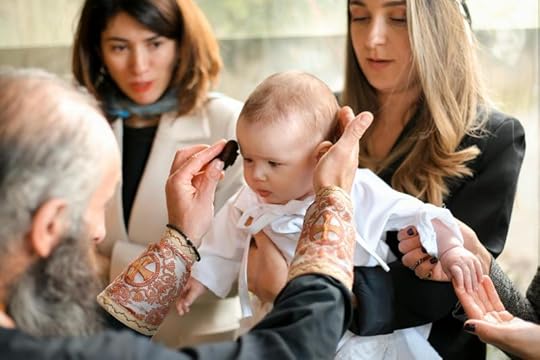 Photo by Photography Maghradze PH
We recently blessed my baby daughter in our ward. I’ve always loved the idea of moms holding their babies during the baby blessing as a way for them to still be involved somehow (since, you know, they just carried and birthed this baby) and it seems like the babies are so much happier, too! My daughter has some health issues that had her in braces at the time of her blessing. This makes her more fussy and particular about how she is held, and also heavier than the average baby being blessed because of the extra weight from the bracing. Anyways, I felt like I had a very valid reason for wanting to hold her during the blessing instead of the men in the circle trying to hold her with one hand while also supporting the braces and keeping her happy.
I reached out to my bishop letting him know the circumstances for why I wanted to hold her, and said that it would probably be a better experience for her and everyone else if I were to hold her.
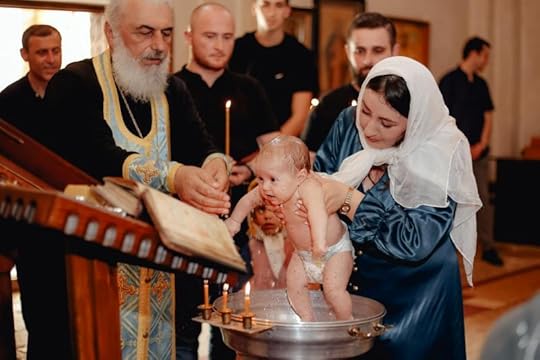 Photo by Photography Maghradze PH
He took some time to think about it, which I was grateful for instead of an immediate dismissal.
Eventually, he said that if it were up to him he’d let me hold her in a heartbeat, but that he also needed to think about the needs of the congregation as a whole. He mentioned that the stake has previously said no to other families wanting to do this, so they would feel awkward saying yes to me now even though we have a valid reason (In my opinion they’re all “valid reasons,” though!).
He also explained that some ward members would be deeply offended that a woman was participating because they might think that I’m part of the ordinance even though I’m not. He did offer to let us do the blessing in our home instead of sacrament meeting, and said he’d be totally fine with me holding my daughter in the comfort of our home.
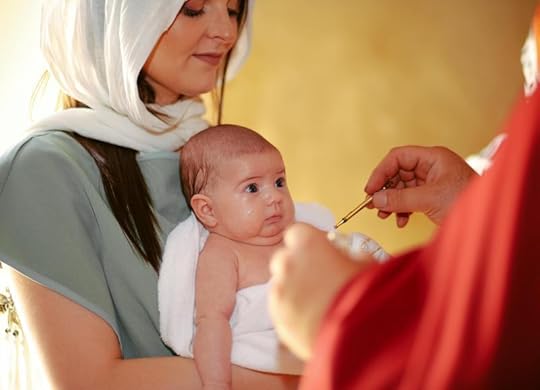 Photo by Photography Maghradze PH
My bishop said that it was okay if my baby cries during the blessing because it happens all the time and people in the ward are used to it. But I want it to be a good experience for me, my daughter, and my husband. I want to actually be able to hear the words of the blessing instead of feeling stressed while my daughter cries, and I want my husband to not feel anxious about comforting a fussy baby while he’s trying to articulate really sensitive stuff. I don’t really care what the congregation thinks about my baby crying, and I don’t really care if they’re uncomfortable seeing a woman up there holding her baby, in fact, I think it would probably do them some good.
Why is what other people in the congregation might think more important to local leadership than the wellbeing of my baby?
Why is it okay for me to hold my baby during an ordinance in the privacy of my own home, but not in a church building during the same ordinance?
Apparently avoiding “the appearance of evil” is more important than actually meeting the needs of families, the appearance of evil in this case being a mom helping to bless her baby.
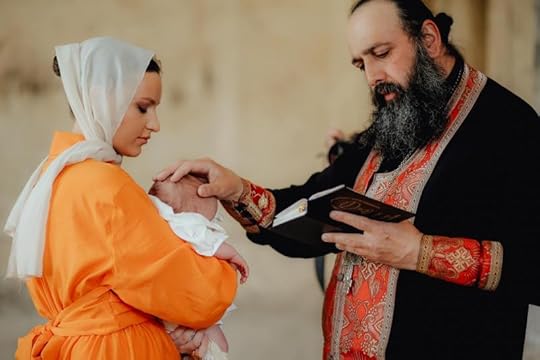 Photo by Photography Maghradze PH
We opted to have the blessing in sacrament meeting after all, mostly for pragmatic reasons (we would not have been able to comfortably fit all of the family members who wanted to come in our basement apartment). So we just had to cross our fingers and hope for the best.
This interaction with my bishop was yet another example of how a church that is supposedly so focused on families has room to improve to actually support families with young children.
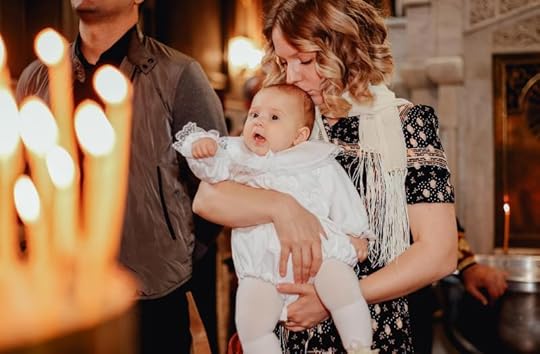 Photo by Photography Maghradze PH
Naomi has a masters degree in family studies and human development from BYU. She loves thrifting, serving in her ward’s relief society, and being a mom to her daughter
Loud Laughter is Holy Laughter
There were a lot of things that made attending the temple an uncomfortable experience for me. One of the hardest parts was when I was commanded to avoid loud laughter.
I’m naturally a loud person. I can sit still and be quiet, but if you get me going in a conversation I’ll be loud – very loud. I love to tell boisterous stories. I physically can’t whisper. And I have a very distinct loud laugh.
So to go to the temple and hear that I was supposed to avoid loud laughter was hard for me.
I spent years puzzling over what exactly was meant by loud laughter. I also wondered how I was supposed to avoid it if my loud laugh was something I couldn’t really control.
The last time I went to the temple was the first time I didn’t have to covenant to avoid loud laughter. I was happy that that admonition was no longer part of the ceremony. But I also felt a little cheated. I’d spent 15 years worrying about that specific part of the ceremony – and now it was just gone. No explanation. No apology for making me question part of my personality. It was just removed without comment.
There are a lot of reasons I don’t go to the temple anymore, but the fact that someone made a decision to have that wording removed – without acknowledging that it had hurt people – is one reason I don’t want to go. I don’t want to pretend that the temple is so wonderful now when it made me feel bad about myself for years.
Around the same time that I went to the temple for the last time, I went to an overnight retreat hosted by a nondenominational church where I attended Bible Study. At the end of the retreat one of my friends gave me a hug and told me, “I love your loud laugh. My mom had a loud laugh and whenever I hear you laugh I think of her.”
That was the first time I’d ever been told that someone loved my loud laugh. It’s not lost on me that the complement was given by someone who wasn’t part of the Church of Jesus Christ of Latter Day Saints. No one who had gone through the temple pre 2023 would ever think to compliment someone on their loud laugh.
That complement was the first step in feeling better about my loud laugh. Recently, I had an another experience where I learned that loud laughter isn’t profane. It’s actually holy, and healing.
My family has started participating in community theatre. In March I was in a production of Cinderella with my two 14 year old daughters. We all had very small ensemble parts and were only on stage for about four scenes. We had backstage jobs though. My daughters helped with moving the set and I helped with the costume changes – especially Cinderella’s transforming dresses. I was backstage in the wings for most of the show.
We had good sized audiences every night, but sometimes they weren’t laughing at the silly parts of the play as much as we’d like. It was hard to hear a good joke that only got a few laughs. However, on the nights with responsive audiences everyone would perk up and say, “Oh this audience is good.”
I hadn’t realized how well the sound of a good laugh carried backstage. Some especially loud laughs were picked up by the actors’ microphones and transmitted down to the green room.
I loved when I could hear my friends with distinctive laughs in the audience. One night we could hear a friend from the theatre community laughing. Everyone was like “Oh ____ is in the audience!” Another night I could pick out the laugh of a man from my ward. I thought, “I know that laugh. That’s ______.”
The best night was when I heard my daughter. My 11 year old daughter hadn’t done the show with me and her older sisters. She came to see it and sat on the front row with my dad.
I’d had a hard day and was feeling sad and worn down as we started that performance. About 15 minutes into the show I realized that I could pick out my daughter’s laugh. She was laughing at everything – silly line deliveries, physical comedy, overdramatic moments. She caught every comedic element and laughed in response.
Hearing her enjoy the show was life giving. All the sadness and hurt feelings from earlier in the day evaporated when I heard her loud laugh carry backstage.
A week later she came to the show again with my husband and son. She was sitting further back so her laugh didn’t carry as well, but I could still pick it out a few times throughout the night.
As I’ve reflected on how beautiful her laughter was I can’t help think about the words of the temple ceremony that hurt my soul and made me self conscious about my laugh for 15 years. I’m glad that if my daughter chooses to go to the temple she will never hear words that make her doubt her laugh. But I’m angry that so many of us did hear those words.
How about you? Did that part of the temple ceremony affect you in any way? Were you made to feel self conscious about having a loud laugh? How do you feel now that the wording has been removed?
 Photo by Tim Mossholder on Unsplash
April 30, 2025
The Bible Says So
I know the truth.
I can testify so.
I have all the answers and I can prove them.
Where does all truth come from?
God.
Where do we get God’s word?
Scriptures.
The End.
(A quick look at all Christian denominations as understood by this blog author, Melissa Tyler)
The Bible Says So, written by Bible Scholar Dan McClellan outlines 19 hot topics on truth claims made by the Bible…or rather made by religions or people of differing religious beliefs, referencing the Bible as the source. Topics that many religions claim to have THE answer of authority or truth on because… the Bible said so.
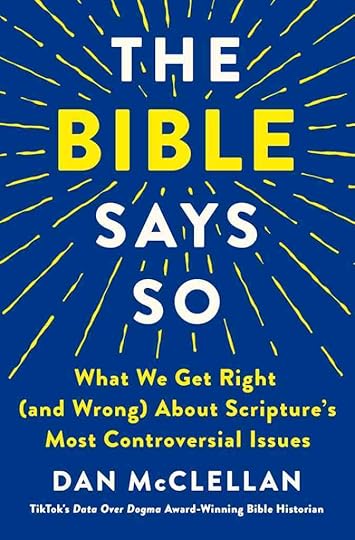
However each religion can claim a biblical source that supports their stance and those stances can be on different sides of the spectrum. “You can make the Bible say whatever you want it to say” “Religions all make God in their own image”, says Dan. But if you get down to the source, if you learn who actually wrote what you are referencing, or go back to the original text’s language, well then your reference most likely may not hold up.
Whatever approach we choose, we create the meaning.
I have grown up with Sunday school teacher’s, religious leader’s, and of course Seminary teacher’s personal interpretations of scripture. If the Bible supported the LDS doctrine, it was true. If the Bible verses did not support LDS doctrine, then the monks must have messed it up.
“Our cognitive default is to favor dogma over data…it ain’t easy, it’s work dammit, it’s work.”
The refreshing thing about Dan McClellan and his work, “data over dogma”, which are not only words he lives by, but the name of his podcast, is that he does not try to extrapolate religious doctrine from the text, but simply states what the words say. He will tell you if your conclusions are wrong, especially if they hurt any marginalized or less powerful group of people.
This is the refreshing part. Many on and off line Preachers, Pastors, Apologists, Prophets, Apostles, past Popes, and lay members of all sects- have used the Bible to marginalize minorities and minority groups. But McClellan will show you how it is foolish to try and do so. He will not allow the Bible to be used as a weapon.
At the same time, he will point out that the Bible also promotes ideas and rules that I’m sure we wish were not a part of the text. Such as the examples given in chapter 8 of his book that state victims must marry their rapists, or in chapter 11 that shows where the Bible says you should sacrifice your first born child.
It should not be concluded however, that it’s okay to do these practices, but that we should take a critical look at who wrote the Bible and why…and spoiler… it’s not God. This is where it is beneficial to be or learn from a critical scholar vs be or learn from a regular reader of the Bible trying to creating meaning with it.
…”started making trouble in the neighborhood..”
There were many times while listening to the audio version of The Bible Says So, that I laughed out loud, which for a book on the Bible, is pretty impressive. Dan actually makes biblical study interesting.
The book is peppered with music lines and pop culture quotes that a child born in the 80’s will definitely catch. Especially if your parents let the TV raise you like mine did, and you watched way too many sitcoms, MTV, and VH1.
“Despite its frequent misogyny, the Bible absolutely nowhere authorizes or polices women’s dress.”
One topic that McClellan discusses the biblical contradictions well, are his chapters on women and more particularly, Abortion. He helps the reader recognize that there are many different versions of the Bible or what makes up the Bible for each religion. He points out that Jewish interpretation states that the “breath of life” a baby takes once they have exited the Mother’s womb, is what makes a baby human. There are other biblical verses that speak of knowing someone before they were born making one wonder when the spirit enters the body, pitting ideologies against each other.
That is to say, the Biblical contradictions make it impossible to know what is actually ideologically or doctrinally true. It also makes it unethical and amoral to push one person’s interpretation of the Bible onto another and make it law….because the Bible says so….because it actually doesn’t.
LDS church doctrine, it should be noted, does not take a stance on when the spirit enters the body and gives mixed messaging on abortion. My own grandmother back in the 50’s was told not to bury her six month old miscarried baby, due to her leaders advice in regards to whether the baby’s body had been inhabited by the spirit or not.
“Strictly speaking, the Bible does not mean anything until it is interpreted. Appeal to textual agency, “but the Bible says”, is far too simple an evasion of the readers responsibility.” John J. Collins
Dan’s purpose, which he states much better himself in his own conclusion, is to take the Bible down to the original text and what those words translate to be while understanding the context of the authors historical setting.
“But this is what interpreting the Bible is!” you may say. However, it’s the meaning put into to fit a dogma instead of analyzing the data for what it just says….and there in lies the work Dan speaks of.
“Re-examine all you have been told in school or church or in any book, dismiss whatever insults your own soul…” Walt Whitman.
Dan McClellan’s work is worth your time. In fact, it’s a great gift. I plan to give it to my parents and in-laws.
You can find The Bible Says So here.
What Happens in New Hampshire—Exponent II Retreat Reflections
Registration for the 2025 Exponent II retreat opens this Saturday, May 3. It will be held September 19-21, 2025, in Greenfield, New Hampshire. Sylvia Cabus will be this year’s keynote speaker. Consider registering! Find more info here.
What began in 1983 as a “reunion” to celebrate Exponent II’s tenth anniversary has blossomed into an annual sanctuary for connection, reflection, and empowerment among Mormon feminists.
The essays and short reflections about that first national retreat were a wealth of information and insight for me and Heather Sundahl while writing Fifty Years of Exponent II. And though the magazine has continued to publish essays about the retreat (like this one and this one), I wanted to capture the spirit of the Exponent II retreat for recent participants.
Their responses indicate that participants find the Exponent II retreat to be a deeply accepting and empowering gathering where Mormon women and gender minorities across the spectrum of belief can authentically express their identities.
The retreat’s essence is captured in simple yet profound moments of connection, spiritual renewal, and emotional intimacy through practices ranging from mealtime conversations to communal singing to nighttime games or campfires. Attendees frequently leave with transformative insights that have encouraged them to pursue significant life decisions, redefine their spiritual identities, and reclaim personal authority in powerful, lasting ways.
Check out their responses, and add your own to the comments!
How would you describe the Exponent II retreat to someone who has never attended?
Here’s your chance to be whoever you are, while among other Mormon women who long for permission to be whoever they are, too.Meeting Mormon feminists from all over the country does a body and soul GOOD!!!! I go for the community, the gorgeous retreat center (autumn in rural New Hampshire!), the talent show, and hearing from incredible keynote speakers.I once heard someone describe Midwest Pilgrims as “Relief Society for liberals,” and I think if we just add “on steroids,” it helps explain Exponent II.It’s a place of radical acceptance—wherever you are on the Mormon spectrum, retreat is a place of curiosity, clarity, celebration, healing, and friendship like no place I have ever been.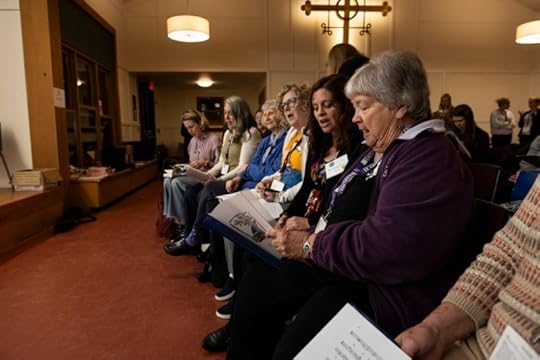 Photo Credit: Anna Ream
What’s a cherished ritual or tradition that you always look forward to?
This might not be the popular answer, but I love meal times sitting by people I don’t know and getting to know them. I’m always curious about how people hear about the retreat and what brought them there. I’ve met some incredible people that way and have had conversations I won’t forget.Friday night intros.Bunking with my besties! We laugh, we cry, we plan skits, we process. Also, the presence and embodiment that leads to some of the most surprising and transformative moments.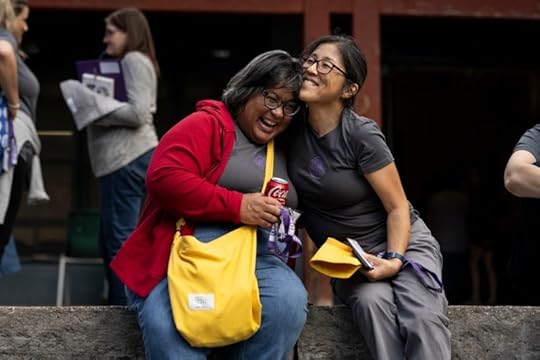 Photo Credit: Anna Ream
What captures the essence of the retreat for you?
Walking down a gravel path in the darkness of night with a loose line of about twelve other women, one wearing a cape. We stop at a clearing by a lake that reflects the moonlight onto our gathering. We improv ritual, testing and trying and bold. It’s warm as the midnight breeze rustles the leaves in the trees we can barely see. The fire we started with wet wood pops and cracks while women talk and laugh and bless and cry.Singing Dona Nobis Pacem at the end of the retreat. Feeling the love for every woman there because of the time/thoughts/feelings/presence that we have shared.[Participating in giving] baby blessings.The Quaker meeting on the last day is a great way to wrap up the weekend. Outdoors, sun in our faces, looking down at the speakers and listening to what is in their hearts as we all go our separate ways… with clarity for the directions our lives need to take, validation for our grievances, and a type of soul renewal!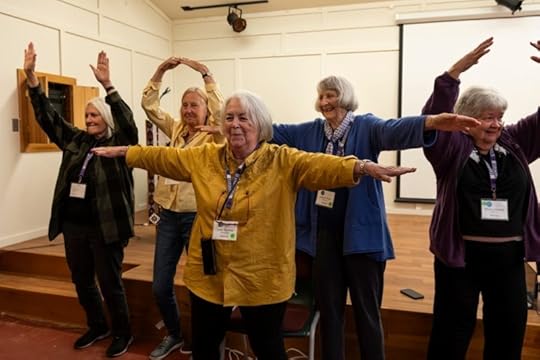 Photo Credit: Anna Ream
Have you ever taken an insight from a retreat and applied it in your life? What was it, and what difference did it make?
I signed up to take prerequisite classes for a master’s degree after attending retreat for the first time and loved it. I felt so inspired by all the social workers and it felt empowering to do something for myself. I haven’t completed my goal but I am grateful for the examples and life-changing conversations I had to give me the courage to start.I was just thinking today that it wouldn’t matter if I moved to another ward, because I’ve decided that the church hierarchy has no power over me. I can be my kind of Mormon wherever I am.The retreat introduced me to an array of Mormon women . . . including my first encounter with a former “all in” woman . . . who had left the LDS church. Seeing the array of women and hearing their experiences was valuable for me.I myself have moved on and am a member of a mainline Protestant denomination. The 1987 retreat was an eye-opener for me, and I certainly recall it fondly as one of the highlights of my early young adult Mormon life. I went from a nuanced Mormon to a nuanced mainline Protestant. I enjoy reading the Exponent II blog.Heather’s Mistresses of Patriarchy talk (spiritual autobiography?) really left a mark on me. It helped me to understand how women can be just as misogynistic as men. Page Turner’s bundling workshop made me aware of what and how I choose to bundle things: objects, thoughts and beliefs. Victoria Grover’s spiritual journey/disastrous solo hike was spellbinding. I was in awe of her faith and strength.The boldness of the women there is life-changing. Witnessing women claim their authority in a way nonexistent in my religious upbringing is a significant insight that I have taken from retreat and I am slowly learning how to explore my own authority. I’m inspired by women like Kyra Krakos and the way she talks and blesses—I’ve never seen anything like it. Also, the way introductions celebrate the group and how trust can be a gift.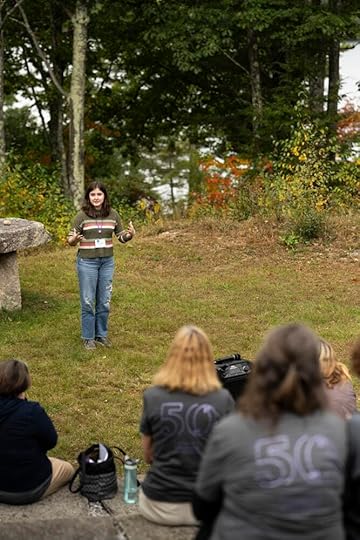 Photo Credit: Anna Ream
Sign up for the Exponent II monthly newsletter to stay updated with announcements and retreat registration information. As this blog series develops, read more blog posts about the Exponent II retreat.


