
Exponent II's Blog, page 292
July 29, 2017
Feminism in the Wesleyan-Holiness Tradition of Evangelical Christianity with Kate Wallace Nunneley
Kate Wallace Nunneley
In this episode of the Religious Feminism interview series, Kate Wallace Nunnely, co-founder of the Junia Project and Associate Pastor at Wellspring Free Methodist Church in Bakersfield, CA, tells us about feminism within the Wesleyan-Holiness tradition of Christianity, an evangelical faith that supports gender equity and the ordination of women, and yet, still lacks a significant proportion of women in leadership.
You can find the video versions and the episode notes for the Religious Feminism Podcast here at the Exponent website at: http://www.the-exponent.com/tag/religious-feminism-podcast/
Video Version:
Feminism in the Wesleyan-Holiness Tradition of Evangelical Christianity with Kate Wallace Nunneley
Links to Connect and Learn More:
Kate Wallace Nunneley on Twitter: @KateWallace1313
The Junia Project on Twitter: @thejuniaproject
Kate Wallace Nunneley on Instagram: katewallacenunneley
The Junia Project on Instagram: thejuniaproject
For audio-only podcast, listen and subscribe below:


What if the LDS Church brought polygamy back?
Susanna Florence, April Fossen and Mark Fossen perform Pilot Program at Plan-B Theatre Company.
It would be awkward, for one thing.
That is one of the takeaways from Pilot Program, a play included in the collection Third Wheel by Melissa Leilani Larson. I saw it live when it premiered at Plan-B Theatre Company in Salt Lake City.
I was nervous to attend, because I knew I’d have to think about polygamy for two straight hours. Two whole minutes of thinking about polygamy is usually a little much for me. The problem is that I don’t believe in it enough. Also, I believe in it too much. Polygamy disgusts me, angers me, and leads me to question my identity as a Mormon. And it scares me. What if it really is God’s will? What if it is practiced in the eternities? What if church leaders brought it back?
Pilot Program explores the answer to that last question. The premise: church leaders extend a calling to a modern Mormon couple to add another wife to their family as part of a restoration of polygamy. The first scene opens with the stunned couple, Abby and Jake, coming home from church after meeting with their stake president about the call.
They aren’t religious fanatics. Abby, in particular, is a liberal-leaning professional woman. She’s not the stereotypical dupe of a cult. Neither is Heather, the woman they ask to join them as the second wife. I wanted both of them to say, “No.” I was sitting on the edge of my seat, trying to will them to go a different direction.
I feel the same way about real women like Eliza R. Snow and Emmeline B. Wells. They were ardent feminists, professionals, women who were ahead of their time. These real women didn’t fit the stereotypes either. Why would they get involved in polygamy?
In the play, Abby recognizes the patriarchy in this situation. She feels the insult to womankind, and to her, specifically. This calling, like so many in the church, is all about her husband.
“They don’t want me in this scenario,” she tells Jacob. “I’m the broken one. They want you.”
Heather is insulted, too. “There’s nothing wrong with being single at thirty-three,” she points out. 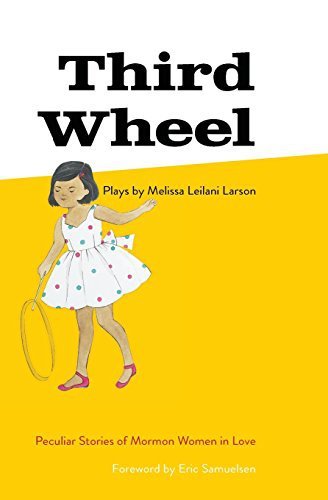
And yet, both of these women are Mormon, like me, like Eliza, like Emmeline. And they have reasons for the choices they make. Maybe they aren’t rational reasons, but they aren’t irrational either. Even as I tried to will the characters to run away, I simultaneously understood them and empathized with them. I thought about it much longer than the two-hour duration of the play.
The end of the play was unsatisfying to me. I wanted something more, some closure. But then, historically, the actual end of Mormon polygamy was unsatisfying, too: just a proclamation that we weren’t practicing it anymore because of legal issues (but we were). No one denounced the practice as wrong. They still don’t. Divine threats against women who won’t comply with polygamy are canonized in our scriptures. Accommodations for polygamy linger in our temple marriage ceremonies and policies. Polygamy could come back. It never went away, really.
You can read the script of Pilot Program within the collection, Third Wheel: Peculiar Stories of Mormon Women in Love by Melissa Leilani Larson. The collection also features the play Little Happy Secrets.
July 28, 2017
“Extraordinary Ordinary Mormon Women”: Exponent II’s Coloring Book “Illuminating Ladies”
I’m attending Sunstone this week and attended a very moving session yesterday. It was titled “Extraordinary Ordinary Mormon Women.” The session description promised to “explore the lives of women, both ordinary and extraordinary, [to] help us better understand our past, give us insights into our own lives, and expand our own possibilities.” It featured a panel of women, including Margaret Toscano, Janice Allred, Vickie Eastman, and Gina Colvin, all of whom spoke about seemingly ordinary women who lived what they considered to be extraordinary lives. Nearly all of the presenters highlighted their own mothers’ lives, from their struggles with depression and surviving traumatic experiences to how well they loved, supported, and championed their children. After their remarks, the moderator made time for attendees to stand and tell the audience about women they considered to be extraordinary. And every woman who stood told a similar story—how their own mothers seemed rather ordinary until they were adults and reflected on the ordinary yet heroic feats their mothers accomplished during their lifetimes.
Margaret Toscano also featured a notable woman from Church history, Jane Manning James, who was a contemporary with one of Toscano’s female ancestors, both of whom lived very long and productive lives raising large families, often alone, while experiencing crushing poverty and significant health challenges. It struck me that we know about these women over a hundred years after their deaths because they chose to record their personal histories before they died. They chose to tell their stories.
This Sunstone session reminded me of a coloring book that my daughters and I enjoy working on together every Sunday during sacrament meeting. It’s called “Illuminating Ladies: A Coloring Book of Mormon Women.” I adore this book. When sacrament meeting begins, I ask my 5-year-old daughter to choose the illustration she’d like us to color during the meeting with me (my 3 year-old is too busy for this part). When the sacrament begins, we snuggle together and I quietly read the biographical sketch that accompanies the illustration she chose. Then we begin the process of coloring the page together, with my 3-year-old daughter occasionally adding her toddler flare to the page with a few scribbles here and there. This is an activity that I look forward to every Sunday, when attending church can often be a challenge for me due to the invisibility of women in almost all aspects of church structure, leadership, decision making, and theology.
Last week, my daughter flipped through the “Illuminating Ladies” coloring book and chose the pages devoted to Eliza Roxcy Snow Smith Young (whose full name I didn’t know!). What struck me about this illustration was the depiction of the God couple, specifically that Heavenly Mother is depicted side by side with Heavenly Father at the top of the page. It filled my heart to imbue the image of Heavenly Mother with color, and to watch my daughter choose a fuscia crayon to bring color to Her face. It was such an ordinary task, to color during sacrament meeting, but having an image of the Feminine Divine provided for us—two marginalized members of the LDS Church—became a sacred, empowering moment.
Below the illustration of the Heavenly Parents, and next to the image of Eliza, is a portion of the well-known LDS Hymn “Oh My Father” that Eliza penned:
In the heavens are parents single?
No, the thought makes reason stare!
Truth is reason; truth eternal
tells me I’ve a mother there.
Eliza R. Snow was childless. I imagine this fact caused her great pain over her lifetime, and yet the fact that she wasn’t a mother does not make her any less notable. As I read the page describing her life, my daughter and I learned how significant her contributions were. During her lifetime, she wrote more than 500 poems. One of those poems became the lyrics for the song, “Invocation, or the Eternal Father and Mother,” which we now know as “O My Father.” The coloring book goes on to explain that
In this poem Eliza expounded upon doctrines she had discovered as a Latter-day Saint—a premortal existence, an intimate relationship with a personal God, our own godly potential, and the marvelous truth that God is not just a Heavenly Father but also a Heavenly Mother! Eliza had learned these truths from the Prophet Joseph, but she had her own powerful revelation of their realities. Her poem was one of the only declarations of Heavenly Mother in LDS writings. . . . Eliza’s poem about Heavenly Mother helped elevate the discourse concerning women’s divine destiny.
But, we learned, that was not the end of her contributions as a Mormon woman. She worked to reconstitute the Relief Society after it was disassembled by Brigham Young in Nauvoo, and she lead the women of the church as General Relief Society President for over twenty years. Eliza was one of the first women in church history to receive her temple ordinances, and “was eager to continue this worship . . . and frequently performed ordinance work in the Endowment House.” Because of this, many referred to her as a “High Priestess. She devoted her life to expanding knowledge and wisdom through both action and words.” Ultimately, Eliza Snow was “lovingly called by her contemporaries, and is still remembered as, Zion’s Poetess, Priestess, Prophetess, and Presidentess.”
What a legacy of a woman born as ordinary as you and me, who used her life to accomplish the extraordinary. This coloring book reminds me that despite the institutional and structural sexism my daughter and I experience inside and outside of the Church, we can make meaningful contributions to the arc of human experience.
(You can purchase “Illuminating Ladies: A Coloring Book of Mormon Women” today and tomorrow at the Exponent II booth at Sunstone in Salt Lake City, at the BYU-Provo Bookstore, or online at the Exponent II Etsy shop, once it resumes after a summer hiatus.)
July 27, 2017
When our youth see a gospel that is small-minded, fearful, and irrelevant
Photo by Benjamin Davies on Unsplash
A few months ago, a friend of mine who was recently called into a Young Women presidency shared with me a question that has been troubling her. She put it like this:
Why are we losing so many of our active youth in the ten or so years after they graduate from high school?
According to my friend, over the last few years only about a third of the active youth in her ward are still regularly attending church by the time their 10 year high school class reunion has rolled around. This, she says, is a sharp decrease in retention rates from years prior (she figures it was a little over half that were still active at that same point 20 years ago). She also told me that she had recently seen this 2016 article (citing Jana Riess’ research) that states that about 64% of Mormon millennials are remaining in the faith as compared to about 90% 30 years ago. While the percentages themselves are different, the steep decline in retention in my friend’s ward is a reflection of what seems to be happening in the church as a whole.
FWIW, how to better reach Mormonism’s young people is a question I feel especially desperate/motivated/responsible to seek solutions for. I’m a millennial, an active Mormon, a feminist mom of two young daughters, and someone who’s held Young Women callings in each of the last three wards I’ve attended (I’m currently a Beehive advisor). Some of the brightest, dearest, most morally-minded people I know have stepped away from the church over the last decade, and renegotiating my own relationship with the church over the last few years hasn’t been a cakewalk.
The friend who called me has also spent a lot of time thinking thinking about this topic (though for some different reasons than I have). And as we shared experiences and insights about the pressing question of why we are losing so many of our youth, we both agreed on two things; 1) that the heart and soul of the gospel is expansive, empowering, and redemptive; and 2) that that’s often not the version of the gospel our young people (or old people!) are hearing or seeing at church.
Some examples that came up during our conversation (we mostly discussed Young Women):
That too often, what we teach at church around the topic of women’s bodies promotes hypersexualization, teaches our young women to self-objectify, and reinforces the dangerous notion that women are responsible for men’s thoughts and actions.
That too often, we continue to justify teaching a sanitized version of Mormon history to our youth despite the serious existence of the internet (making false but “faith-promoting” stories only temporarily the latter) and despite the reality that our youth can handle (and even crave to be trusted with) messiness and authenticity.
That when describing what a worthy and fulfilling life can look like for a Mormon woman, we too often promote a rigid and overly-simplistic narrative that not every girl will be able to achieve or find happiness in–one that can discourage them from having aspirations, limit their willingness to seek for and act on personal revelation, and weaken their ability to respond to life’s challenges with resilience and creativity.
That too often, our YW activities are far more crafting and baking and makeovers and wedding-themed modesty fashion shows (eek) than they are about developing crucial life skills and providing meaningful service and having honest discussions about the complex questions and struggles our youth are facing.
Our shared feeling was that our youth are too often being presented with a version of the gospel that feels small-minded, fearful, and irrelevant to their lives. And if that’s what they see, why would they stay?
This isn’t always the case, obviously. And of course there are many factors here that neither your nor I have have much control over. Different people can come to different conclusions about the same information regardless of how well it is taught or how valuable we might think it is. And there are larger forces at work too, of course; e.g, as societal attitudes towards issues of gender and sexual orientation continue to shift, it seems only logical that the Church’s male-only priesthood and attitudes/policies aimed at LGBTQ individuals will alienate youth in increasingly greater numbers. I don’t think many Mormons would dispute that regardless of personal stances.
Yet despite factors outside our control, we can help our youth experience the gospel in more meaningful and encompassing ways. This should be the goal, in my opinion–not only because we have more control over what we teach than we do over retention numbers, but because I personally find it just as frightening to think that former YW of mine might leave the church because the gospel was never presented to them in ways that encouraged them to be strong and ever-learning and compassionate as it does to think that they might stay because of the same lack of teaching. I want young women to leave my lessons and activities better prepared to face life with greater courage and self-sufficiency and kindness regardless of whether they end up choosing to stay connected to Mormonism.
Having said all of that, I’ll be the first to admit that this is easier said than done. I have two rules for myself as a YW teacher in the Church:
1) that I will never knowingly teach anything that contradicts current, official church teachings or policies, no matter my personal opinions; and
2) that I will never knowingly teach anything that undermines principles of good spiritual and mental health or contradicts my conscience or, no matter what is in the manual or what other people in the Church might be teaching.
Keeping within these parameters is usually easy enough (these resources have been enormously helpful for navigating this balance). And when I see the thoughtfulness and faith and compassion of our young people and glimpse the kind of Mormonism capable of “stretching people’s moral imaginations,” of “[calling us] to a life of faith that is… creative, venturesome, open, and empowering,” I feel a renewed determination to keep at it. But there are other times when it’s morally messy; like when 3rd hour ends and I’m carting two overtired kids and an overflowing diaper bag across the parking lot while holding back hot tears or with my stomach in knots, feeling inadequate to the task and complicit in things that I believe have the potential to inflict serious damage on my young women’s faith or relationships or sense of worth or even their long-term relationship to the Church. For better and for worse, I’m restricted in my ability to encourage honest questioning and seeking, to counter what I feel are the ill-effects of patriarchy, and to convey to them that there are people and conditions commonly labeled as broken or deficient that I believe God sees as whole and good. There are many times when I don’t even know how to do this thing I usually love and sometimes feel called to do with my differing opinions and lack of social capital (I’m an awkward human) and general limitations as a teacher. And at times, juggling all of that starts to feel pointlessly exhausting.
It’s often easy for me to feel uncertainty and worry and apathy when I consider the future of the church and its young people. But I’m an idealist, too; and stories like this one inspire me and remind me that there are teachers in the church who feel motivated to find ways to make the gospel more meaningful and relevant for our youth. While teachers in the church don’t have control over everything when it comes to better reaching and retaining Mormon youth in the church, I think that wrestling with the question can at least invite revelation as to how to better reach the kids we teach every Sunday. There’s a lot I can’t fix or change, but I can at least work to better connect my young women with a gospel and a God big enough to hold each of them through the spectrum of life’s painful and perplexing things and animate the best and most beautiful within them.
*
*
*
*
*
*
*
*
*
* With all of this in mind, I’m planning to at least occasionally post ideas for activities I’ve done [or want to do] with my young women that at least make an honest attempt at addressing timely topics in open, meaningful, and empowering ways while honoring the rules I’ve made for myself as a teacher in the Church. There’s several topics I’d like to cover that regular church lessons might not touch on or naturally make much space for: from bringing in more stories that celebrate diversity and encourage positive, faithful discussion around tough moments in Mormonism’s past to covering things like consent and characteristics of healthy (and unhealthy) relationships and objectification of women in the media. A lot of these things have already been covered on various Mormon blogs, of course, and when that is the case, I’ll do my best to link to good resources. Mostly, I’ll be asking for input to make my teaching better and offer comprehensive materials to other teachers who may sometimes feel stuck or discouraged like I have. Hooray!
July 26, 2017
Friends
[image error]
Camille Pissaro, Two Young Peasant Women
“I’m so thankful for friendship. It beautifies life so much.” ― L.M. Montgomery, Anne of Avonlea
Joseph Smith said, “Friendship is one of the grand fundamental principles of Mormonism.” Jesus had quite a lot to say about friends, including telling them that he was going to lay down his life for them.
If it’s so important, why aren’t we Mormons better at it? Why isn’t friendship one of the young women values that are chanted every Sunday all over the world? As far as I can tell, our knowledge and our relationships are the only things we take into the eternities, so it is puzzling that we get very little training in relationships. Many studies verify that friends are essential for happiness throughout our lives, and are as beneficial to our physical health as regular exercise and quitting smoking.
Why so many “family” (which Jesus really didn’t say too much about…) talks in general conference, and very few talks about “friends?” Think of the old hymn “What a friend we have in Jesus.” Being a friend is actually being Christ-like in the best possible way.
Shouldn’t a grand fundamental principle get a merit badge and a personal progress goal? Or a temple recommend question?
Friendship fulfills the second great commandment to love one another.
Aren’t there many people, especially women, in our wards and neighborhoods that are hungry for friendship? Each of us has something amazing to offer others–our friendship.
I know, you are busy. I am busy. I have even been so busy at different times in my life that friends seemed like a luxury, or a guilty pleasure, only indulged in at the expense of something or someone else. Friends fell to the very bottom of my never-ending “to do” list. Thankfully, I learned to prioritize my friendships enough to see the amazing blessing that they are in my life. My friends, my monthly book group, and my annual sisters weekends have been so important to me.
Surely something that is a grand fundamental principle that makes us healthier in both mind and body AND is of eternal worth AND does good for others AND can be offered by anyone and everyone AND is a truly Christ-like behavior is deserving of some of our time and attention. I know those are scarce resources in our lives, but the return on that investment far outweighs the sacrifice.
Do you have enough friends? How do you make time for friendship in your crazy busy lives? Do Mormons have a reputation for friendliness where you live?
July 25, 2017
18 Returned Missionaries Give You Their Best Mission Advice
July 24, 2017
February Young Women Lesson: How can I find comfort when someone I care about dies?
This card and others like it are available for purchase at emilymcdowell.com.
For this lesson, I think it’s incredibly useful to know what the experiences of the young women in your class have had in relation to death and grieving. Have any of them lost a parent, a sibling, a grandparent, a close friend, or somebody else? Do they have a friend who has lost somebody close to them? I would begin by asking about their experiences, and then also asking what we know as Latter-day Saints about death. My guess is that they will bring up eternal families, the resurrection, and that we can complete ordinances for deceased loved ones if they die before completing them in this life. Write the things they know about death on the board and be prepared to come back to them later in the lesson.
For much of the lesson, I’m using the framework presented in Chapter 13 of Chieko Okazaki’s book, Disciples, about how we can approach death and grieving when someone we love dies, as she gives both a faith-centered and pragmatic approach to how to cope with the death of a loved one. She writes,
When I lost [my husband], a great source of strength was the knowledge that kept ringing in my heart, “I don’t have to do this by myself.” You don’t have to do it by yourself either – neither death nor illness nor any of the trials that face you. “When ye shall search for me with all your heart,” the Lord told Jeremiah, “Ye shall. . . find me” (Jeremiah 29:13).
Remind the young women that no matter how alone we feel, the Savior is with us as we go through our trials. Sydney S. Reynolds, counselor in the General Primary Presidency, taught in 2003:
“Who shall separate us from the love of Christ? I am persuaded, with Paul, that neither tribulation, nor life, nor death, nor any other circumstance shall have the power to separate us from His love.”
Acknowledge to the young women that grief and death are hard. So often we tell people that “I’m so sorry for your loss, but I know that you’ll be together again in the eternities.” Encourage the young women to stop before the “but” in that sentence! President Russell M. Nelson once said,
Irrespective of age, we mourn for those loved and lost. Mourning is one of the deepest expressions of pure love. It is a natural response in complete accord with divine commandment: “Thou shalt live together in love, insomuch that thou shalt weep for the loss of them that die.” (D&C 42:45.)
Have the young women open their scriptures to John, chapter 11, and read verses 1-35. These verses contain the story of the death of Lazarus, brother to Mary & Martha. Despite having called for Jesus to come heal Lazarus, Jesus doesn’t come in time, and Lazarus dies, and is four days dead by the time Jesus arrives. And what does Jesus do, when he sees Mary and others weeping? He weeps with them (verse 35). He mourns with those who mourn. Despite knowing the plan of salvation, and even knowing that He would raise Lazarus from the death, Christ takes the time to mourn and allow them their grief. We need to recognize that for us, and for others, the emotional reality of what is happening to us. To quote Sister Okazaki on page 171 of Disciples, “Grieving is a process. It’s okay to experience that process. To deny the bitterness of the sorrow is to deny some of the sweetness of the comfort when it comes.” She later continues,
We need to understand the plan of salvation. It may not seem very comforting at times of pain and loss to think about the plan of salvation. It may seem too intellectual, too remote, and too theoretical to be very comforting. But each of us makes sense of our experience in a context. It is wise and truly comforting to see that context as a purposeful and loving plan – and especially as something we chose.
What do we know about the plan of salvation regarding death? Refer back to the suggestions on the board from earlier in the lesson. What about these doctrines can bring us comfort during times of grief?
Read 1 Corinthians 15:22. Remind the young women that the resurrection is a gift given to all, regardless of righteousness or temple ordinances. Because Christ completed the Atonement and was resurrected, we will also all be resurrected. Reading Mosiah 16:7-8 can also reinforce this concept (the sting of death is swallowed up in Christ). President Uchtdorf also spoke on this, saying,
That is why we are here on this beautiful planet earth—because God offered us the opportunity, and we chose to accept it. Our mortal life, however, is only temporary and will end with the death of our physical body. But the essence of who you and I are will not be destroyed. Our spirits will continue living and await the Resurrection—a free gift to all by our loving Heavenly Father and His Son, Jesus Christ. At the Resurrection, our spirits and bodies will be reunited, free from pain and physical imperfections.
This doctrine – of being whole again through the resurrection – can be especially comforting to those who have lost loved ones after painful disease or injury. Many are comforted by the idea of their loved one being able to walk, talk, eat, and rejoice again without infirmity or ailment hindering them.
As Sister Okazaki said above, sometimes knowing about the Plan of Salvation isn’t enough comfort. Elder Shayne Bowen describes the pain and sorrow he felt after losing his infant son, Tyson, to a choking accident:
It is impossible to describe the mixture of feelings that I had at that point in my life. Most of the time I felt as if I were in a bad dream and that I would soon wake up and this terrible nightmare would be over. For many nights I didn’t sleep. I often wandered in the night from one room to the other, making sure that our other children were all safe.
Feelings of guilt racked my soul. I felt so guilty. I felt dirty. I was his father; I should have done more to protect him. If only I would have done this or that. Sometimes even today, 22 years later, those feelings begin to creep into my heart, and I need to get rid of them quickly because they can be destructive.
About a month after Tyson died, I had an interview with Elder Dean L. Larsen. He took the time to listen to me, and I will always be grateful for his counsel and love. He said, “I don’t think the Lord would want you to punish yourself for the death of your little boy.” I felt the love of my Heavenly Father through one of his chosen vessels.
However, tormenting thoughts continued to plague me, and I soon began to feel anger. “This isn’t fair! How could God do this to me? Why me? What did I do to deserve this?” I even felt myself get angry with people who were just trying to comfort us. I remember friends saying, “I know how you feel.” I would think to myself, “You have no idea how I feel. Just leave me alone.” I soon found that self-pity can also be very debilitating. I was ashamed of myself for having unkind thoughts about dear friends who were only trying to help.
He then continues,
As I felt the guilt, anger, and self-pity trying to consume me, I prayed that my heart could change. Through very personal sacred experiences, the Lord gave me a new heart, and even though it was still lonely and painful, my whole outlook changed. I was given to know that I had not been robbed but rather that there was a great blessing awaiting me if I would prove faithful.
My life started to change, and I was able to look forward with hope, rather than look backward with despair. I testify that this life is not the end. The spirit world is real. The teachings of the prophets regarding life after death are true. This life is but a transitory step forward on our journey back to our Heavenly Father.
I would emphasize that while our faith in the plan of salvation can eventually help move us past our grief and our anger, it doesn’t usually eliminate it. Allowing ourselves to grieve is just as important as earnestly pleading with the Lord to heal our hearts and help us integrate our loss.
If we’re not the ones personally experiencing a death of a loved one, how can we help friends and family members navigate the waters of grief and loss? Joy F. Evans of the General Relief Society Presidency said the following in her 1989 General Conference address:
Helping others through a time of special challenge requires understanding and patience. People respond to grief in different ways. Not everyone recovers in the same period of time, and not everyone acts the same. The griever might be irritable, depressed, quiet, or withdrawn, but through kindness and friendship, he or she will almost always recover and will come to acceptance…Being sensitive to such needs helps everyone find joy in the precious reality of everyday living and look forward with faith to the future, knowing that sorrow and struggle and endurance to the end are necessary parts of mortality.
It is said that love is tested and proved in the fire of suffering and adversity. How sensitive we should be to those who are suffering or hurting, to those with special problems—the sister who has had a miscarriage or a stillbirth, a premature or handicapped child; the one whose beloved husband has died; the lovely woman to whom marriage and family have not yet come; the new convert whose family has rejected her because of her baptism.
What we do or say is not as important as that we do or say something—’I care about you,’ or ‘Let me help.’ Where love is, heart will respond to heart and burdens will be lightened.
We must never feel that we have done our share or had our turn.
Remind the young women that we have covenanted at baptism to mourn with those who mourn and comfort those who stand in need in comfort (Mosiah 18:8-10). How do we do that? What can we learn from Jesus’ example in the story of Lazarus? Jesus didn’t offer platitudes to Mary & Martha. He didn’t say that he knew exactly how they felt, nor that “everything happens for reason.” He didn’t allow their grief nor anger scare him away. He simply sat and wept with them.
We can also learn from the story of Job. Quoting from a beautiful blog post about Job and mourning on By Common Consent:
Following the devastating destruction of his livelihood and the deaths of his children, Job tears his robe and shaves his head. Falling on the ground, he worshipfully insists that what was the Lord’s always to give must by that same token be the Lord’s to take away. Soon, he is afflicted with painful sores all over his body. Now, he collapses in a pile of ashes, heavy with lamentation and grief.
When Job’s friends hear of their companion’s tragedy they immediately set out to find him and comfort him. Upon seeing him from a distance, covered in scabs and ash, they barely recognize him. Weeping for their friend, they too tear their robes and sit down in the ashes with him. They had come to comfort him, but there were simply no words available to speak his suffering and ease his pain. They sit with him in silent mourning for seven days and seven nights.
Later in the book of Job, his friends’ patience begins to fade as Job experiences affliction after affliction with no sign of wearing thin. His friends turn to judgment and scorn, thinking Job must have done something to deserve his suffering. This story provides excellent examples of how to mourn with someone (sit with them, be present) and how not to mourn with someone (judge them, think their mourning/afflictions are self-induced or that their grief is taking too long to resolve).
Being with people while they mourn can be uncomfortable, and we often want to offer words of comfort. I think that there is a time and place for offering words of comfort, but most often, it’s simply most helpful to sit and be present. Rather than offering explanations, or comparing their experience to one of your own, try to be present and sensitive to the whisperings of the spirit. Expressing sorrow and condolences (like “I’m so sorry for your loss” and “I care about you”) is generally more helpful than offering platitudes or comparisons (“God must have needed him/her in Heaven more than you needed them here” or “I know exactly how you feel – my hamster died last year and I cried for days”).
Being present while people mourn means that we’re not just present for the immediate aftermath, but also in the days/weeks/months/years that follow. It also means that we try to lift up and support those who mourn. How can we do this for our friends and family members? Have the young women brainstorm ways to support others through their grief. Examples could include bringing a meal, checking in with friends on important dates or anniversaries, offering to help them with logistics or regular life things (like cleaning, gardening, childcare) that may feel overwhelming, and offering to listen without judgment as they process through their feelings. Simply being a steady, non-judgmental presence in somebody’s life as they grieve can mean so much. And even if you don’t know the person well, offering condolences via Facebook, text, a card, flowers, or other culturally appropriate ways can mean so much. Even though your gesture or words may feel small, they really do mean a lot to those who are grieving.
I would close with a testimony of the Atonement, of Christ healing all wounds. I would emphasize that part of our doctrine is that God is a loving and merciful God, and that we can have faith in the plan of salvation while also allowing ourselves to experience grief and sadness. Remind the young women of their covenant responsibilities to mourn with those who mourn, and that empathy is a characteristic that we can cultivate and increase.
**********
Other resources on The Exponent:
The posts found in the “Mormons and Death” series, especially this Guide to Giving Comfort post (and the comments!).
Grief Lessons, in which Deborah lists what did (and didn’t) help her through a time of grief
Telling the Story of Grief, in which Julie talks about the grief that’s unique to being single in the LDS church
July 22, 2017
Little Black/White Lie
Humans use story to understand and make meaning of their existence. Sometimes life happens in a way that shakes your foundational paradigms and they crumble, as mine did. As a Mormon child, the theoretical framework by which I understood my world was very black/white. I came by this honestly, as weekly indoctrination had taught this both implicitly and explicitly.
This talk by Elder Jeffrey R. Holland demonstrates the worldview I am talking about:
“Either the Book of Mormon is what the Prophet Joseph said it is or this Church and its founder are false, fraudulent, a deception from the first instance onward. Either Joseph Smith was the prophet he said he was, who, after seeing the Father and the Son, later beheld the angel Moroni, repeatedly heard counsel from his lips, eventually receiving at his hands a set of ancient gold plates which he then translated according to the gift and power of God—or else he did not. And if he did not . . . he is not entitled to retain even the reputation of New England folk hero or well-meaning young man or writer of remarkable fiction. No, and he is not entitled to be considered a great teacher or a quintessential American prophet or the creator of great wisdom literature. If he lied about the coming forth of the Book of Mormon, he is certainly none of those. I am suggesting that we make exactly that same kind of do-or-die, bold assertion about the restoration of the gospel of Jesus Christ and the divine origins of the Book of Mormon. We have to. Reason and rightness require it. Accept Joseph Smith as a prophet and the book as the miraculously revealed and revered word of the Lord it is or else consign both man and book to Hades for the devastating deception of it all, but let’s not have any bizarre middle ground about the wonderful contours of a young boy’s imagination or his remarkable facility for turning a literary phrase. That is an unacceptable position to take—morally, literarily, historically, or theologically.” (June 1996 Ensign)
This worldview which I internalized is a setup for faith crisis and collapse of epic proportions. Why? It basically says that if any aspect of church history doesn’t turn out to be just as we were taught it was then we should abandon the whole religion altogether.
Do you think I’m being extreme? I wish I were! President Gordon B. Hinckley said: “Each of us has to face the matter — either the Church is true, or it is a fraud. There is no middle ground. It is the church and kingdom of God, or it is nothing.” (May 2003 Ensign) And guess what? Church history is absolutely not the rosy whitewashed picture we were all taught. In the internet age we are learning there are a lot of questionable aspects of Joseph Smith’s story. For example, he was indeed a treasure-digger who sought buried Indian gold with a seer stone in a hat (which he then later used to translate the Book of Mormon). There are 9 differing versions of the first vision story, and they do not give a cohesive narrative ‒ his reason for inquiry was different, those who answered him were different, and what they said to him was different. The Book of Mormon seems to be a product of Joseph Smith’s time period with 0 archaeological evidence of its historicity. Joseph Smith had himself married plurally to 35 women (give or take), several of whom were teens, and several who were already married to other men (Gospel Topics Plural Marriage in Kirtland and Nauvoo); and caused a deep rift in his marriage with Emma Hale. There so many dark and troubling aspects of church history ‒ massacres at Mountain Meadows and Circleville, the teaching of blood atonement and Adam-God doctrine, the Book of Abraham, and the acceptance of the Salamander letter. If we insist on the entire narrative being true, or none of it, people are left with nowhere to turn if small pieces crumble. The black/white, good/bad, true/false narrative is a setup for failure. The worldview they were taught tells them, “If every piece isn’t true, then none of it is.”
Please, dear Brethren, do not set us up with an all or nothing paradigm any more. You are driving people away. You have taught them that if there are any problems in church history that the entire thing has no value whatsoever. If there is anything I know now, it is that this is a false dichotomy. When you set us up that there are only choices A and B, one of which is all good and the other all bad then no amount of inoculation can really help. But people can be innovative and creative when they feel freedom to choose, inventing options C-Z.
Life is complex, morality complicated. Black and white thinking makes us lazy agents, remaining children morally by ceding all important moral decisions and thinking to some vague hierarchical power structure. When we give our agency away, we lose touch with our moral authority and become more judgemental of ourselves and others as we try to reinforce the rules rather than deal with the complex nuances of all the shades of color in our world. I support people in clinging to the good in our tradition, and in letting the bad go. The middle road in Mormonism is not easy and Elder Holland was mistaken in saying this was an unacceptable position. If that is the only position that works for you, it is okay. There are more colors than black and white in this faith journey, if you are not colorblind feel free to embrace them and find your way with God. “May we ever choose the harder right instead of the easier wrong.” – Thomas S. Monson (Apr 2016 Ensign)
July 20, 2017
Female Grooming Mandates That Aren’t That Hard
Pantyhose
It’s a strange kind of clothing that is completely see-through, offers no protection whatsoever from the elements, and breaks when you wear it. Pantyhose break when washed, too, if you throw them in the washing machine with the rest of the laundry. The few pairs I own that haven’t fallen apart yet are often unavailable to me because I don’t have time for hand washing. Wearing hose in cold weather is useless; in hot weather, they get sticky and cause infection.
Skirts
Skirts ride up when I carry a toddler on my hip, and aforementioned toddler likes to yank on the skirt or run under it. Skirt-wearing complicates all sorts of otherwise simple human motions: bending over, running, sitting cross-legged. Wearing a skirt precludes commuting by bike; biking in a skirt is possible—I did it as a missionary—but it is dangerous, messy and immodest.
Lipstick
Almost every lipstick I buy, regardless of the color it claims to be, eventually morphs into a garish shade of fuchsia on my lips. I’ve researched this and it has something to do with my body chemistry. It doesn’t happen right when I put it on, so I can’t tell if a lipstick will work for me simply be trying it on at the make-up counter. It often takes several purchases before I find one that works. Even for women who are blessed with less fuchsia lips than mine, lipstick can be expensive. And it has to be reapplied after eating, drinking, kissing, perspiring or just breathing too much.
High Heels
I can’t think of any downside to walking—or better yet, running to catch a bus in the rain on a cobblestone sidewalk—while wearing little stilts on my feet, so I’ll stop here.
Wear a little lipstick, we’ve been told. It’s not that hard. I wonder how the man who said that knew; had he tried wearing lipstick?
I have, and I can bear testimony that wearing lipstick is not that hard. Neither is wearing pantyhose, skirts, or heels. At least, not in comparison to climbing Mount Everest or curing cancer. In spite of the drawbacks, I often do wear such things.
But it’s not as easy as a man who has never worn any of these things might assume.
I have certainly never worn a skirt for bike-riding since my mission. I marvel that the LDS missionary program, which seems so obsessed with safety in most matters, still requires most women to wear skirts even while biking, in spite of the hazards of biking in a skirt. Recently, the church relaxed its dress code to allow sister missionaries to (usually) comply with health officials’ recommendations to wear pants during mosquito-borne illness outbreaks but still requires them to risk it in a skirt at least once a week. Maybe it’s not that hard, but it’s not that safe, either.
Welcome changes have come to the church’s dress codes for paid female employees, removing the pantyhose mandate in 2011 and as of a few weeks ago, allowing women to wear pants to work. Female worshippers could enter Mormon temples wearing pants beginning in 2010. In response to Wear Pants To Church Day in 2013, a church spokesperson stated, “Generally Church members are encouraged to wear their best clothing as a sign of respect for the Savior, but we don’t counsel people beyond that.” However, some local bishops continue to chastise women who attend church wearing pants.
Sexist dress codes have never been unique to Mormons. For example, workplaces that require women to wear high heels have been in the news of late in the United Kingdom. When announcing the new LDS church employee dress code, Elder Quentin L. Cook said, “I would hope that Latter-day Saints would be at the forefront in creating an environment in the workplace that is more receptive and accommodating to both men and women.” *
I hope that going forward, we will be. Regardless of how hard female-specific grooming mandates are or aren’t, let’s not create an extra burden on women—and only on women—through sexist dress codes or by preaching prettiness standards over the pulpit.
* In contrast to many of his predecessors, Elder Cook’s General Conference talks indicate that he is concerned about making workplaces woman-friendly and making the church less judgemental toward working women. Establishing a more equitable dress code, even if it is too late to be at the forefront, demonstrates his sincerity. Moreover, the most recent dress code change was accompanied by an announcement that the church would begin offering paid parental leave, which is progressive in the United States, where the LDS church is headquartered. Only 12% of American employees have access to paid parental leave.


![[image error]](https://i1.wp.com/www.the-exponent.com/wp-content/uploads/2017/07/il_fullxfull.1145975710_lfge.jpg)
![[image error]](https://i0.wp.com/www.the-exponent.com/wp-content/uploads/2017/07/IMG_5051-e1501266977380.jpg)
![[image error]](https://i2.wp.com/www.the-exponent.com/wp-content/uploads/2017/07/IMG_5053.jpg)
![[image error]](https://i1.wp.com/www.the-exponent.com/wp-content/uploads/2017/07/benjamin-davies-301161-1.jpg)
![[image error]](https://i2.wp.com/www.the-exponent.com/wp-content/uploads/2017/07/image-for-July-Exponent-Post-Friends-5.jpg)
![[image error]](https://i1.wp.com/www.the-exponent.com/wp-content/uploads/2017/07/broken-shadow-1514148.jpg)