
Exponent II's Blog, page 289
August 25, 2017
“You’ve Got Mail!”: How to Get Exponent II Blog Posts Sent to Your Email
Do you enjoy reading Exponent II blog posts but don’t think to go to the blog site as often as you’d like? Fun tip! You can subscribe to the blog for free and get the daily posts sent directly to your inbox. I subscribed months ago and it has been a dream!
There are two ways to subscribe:
1) Go to http://www.the-exponent.com/ on a computer, which should take you to the blog site (if it doesn’t, type “Exponent II blog” into any internet search engine and click on the option that says “Blogsite Exponent II.”) On the right sidebar you’ll see “Subscribe to the Blog” (it’s under the “Donate” section). Simply enter your email in the space provided and within minutes you’ll get an email asking you to confirm your subscription. Then voila! You are officially subscribed!
2) This option can be done on a handheld device (like a smart phone) or on a computer. Go to http://www.the-exponent.com/ and click on any blog post (even this one!). Scroll to the bottom of the post to where you’ll see “Leave a Reply.” Click on the box that reads “Leave your comment here . . .” Type in anything, like “Thanks,” and in the lines below enter your email and name (you can use your first name only, a pseudonym, or something like “Anonymous”), and click the button next to “Notify me of new posts via email.” You will get a confirmation email sent to your inbox where you will need to click on a link to complete your free subscription to the blog posts. It’s really that easy!
Hope you enjoy your free subscription to Exponent II’s blog posts as much as I have!


August 24, 2017
Niceness is my favorite sin
Several years ago, I sat in a Sunday School class where the following question was posed:
“What is your favorite sin?”
The question was an adaptation of Lamoni’s father’s simple invocation in Alma 22: ”O God… if there is a God, and if thou art God, wilt thou make thyself known unto me, and I will give away all my sins to know thee.” Using the definition of sin used in this verse, the teacher invited us to consider what is it that we (individually and collectively) might currently do or believe that most inhibits our ability to know and become more like God—the sin we cling to at the greatest cost.
The “What is my favorite sin?” question has stuck with me. It’s catchy, and perhaps because it’s derived from those verses in particular (which resonate with me for several reasons), that question has resurfaced in my brain and served as a springboard for self-reflection many times since I first sat in that Sunday School class. But it wasn’t until last November that I identified and named the sin that I think is most deserving of the “favorite” descriptor. Of all the ugly motives and tendencies within me, I’ve come to believe that perhaps nothing is quite as damning as all the niceness I find there: my deeply rooted tendencies to privilege “being nice” at any cost.
For the record, niceness (at least how I’m using it here) is not synonymous with kindness. Kindness is a fact that is always, always worth seeing and acting upon. Niceness, on the other hand, comes down to privileging selfish comfort over moral courage or genuine love for others. Niceness is choosing to disengage because honest self-critique isn’t pleasant or painless. It’s allowing the fear of uncertainty or vulnerability or being disagreed with to prevent us from acting with integrity. Niceness is choosing to remain in comfortable ignorance around hard questions that don’t directly impact our safety and well-being, even when others’ lives are at stake. It’s buying into the self-gratifying idea that not being guilty of the vilest of sins somehow means that there aren’t any real changes that need to be made in our hearts and conduct. And every one of these things is something I’ve been guilty of.
I didn’t start to realize that I have a niceness problem until an experience I had last November as I watched in flabbergasted horror as my country voted Donald Trump into the White House. I was one of the many Americans who got a painful, badly needed wake-up call that night—one of those people who had to come to terms with the fact that I was dead wrong about what I thought my fellow Americans (and Mormons) most valued, and that there was so much more I needed to hear and learn and try to understand and do.
I was watching the news that night by myself at someone else’s house while an unrelated party was going on in the room next to me (long story). And as I sat there watching the elections results come in, someone was suddenly standing between me and the TV, saying, “Obama encouraged black people to have persecution complexes, you know,” this person said. “He convinced black people that they’re being discriminated against so that people would support him.”
I still have no idea what motivated this person to start a conversation with that, but what troubles me most about this moment is what I said: which is nothing. I don’t remember what my go-to justification was in this moment, but like many times before and even many times since, I just nicely sat there and stayed nicely quiet as the kind of thinking I had naively believed that only a handful of people really espoused, the kind that seems to have played a defining role in the outcome of the election I was watching develop in real time—was in full display right in front of me.
I share all of this because I don’t think I’m the only one with this favorite sin. Mormons are a notoriously nice group of people; and while I think that ‘nice” in this context generally means “friendly” (which, great!), we’re also known for silencing tough questions, for placing an obsessive overemphasis on appearances, and for refusing to apologize for mistakes, all of which fit under the other definition of nice to a T.
When approached with honesty and humility, the process of naming and confronting our favorite sins is an intensely uncomfortable one. But choosing to reject niceness in favor of kindness is worth the effort, I think, if doing so makes greater space for the depth of compassion, wisdom, and strength that Lamoni’s father sought to know.
August 23, 2017
V.I.P.s in the Kingdom?
…Of a truth I perceive that God is no respecter of persons.
Acts 10:34
Central to our beliefs is that each of us is a child of god. I mean, we have been singing about it all our lives. We call each other “brother” and “sister” to remind us that we are all part of the same family. In the temple we all wear pretty much the same thing, so there are no class distinctions. We all are a needed part of “the body of Christ.” So are there V.I.P.s in the Kingdom of God?
Status and prestige are irresistibly attached to power, and we saints are no exception. A lay clergy helps in this department, but leader worship and church celebrity is a challenge. How many homes have pictures of the first presidency on their walls? Apostles are widely admired, and many faith promoting stories circulate about “my brother in law’s old mission president is in Elder _____’s ward, and he said….” Spotting the occasional apostle at Costco, getting a selfie with them, is one of the perks of living in Zion! The burden of celebrity must be uncomfortable for them and their families. They are watched on TV every 6 months by millions of people, and quoted incessantly in talks and lessons every single Sunday. All over the world. Are they the V.I.est of P.s?
This is on my mind as our area prepares for a temple dedication. Not only will there presumably be some apostles in town, but there are all the local elite leaders to consider as well. As is traditional, there is going to be a Youth Cultural Celebration, and there are more youth than there are roles in the celebration. There will be three dedication services, each broadcast to area churches. There is much speculation about who will be invited to be in the temple for the dedications. There will also be a small choir at each dedication. Who will be singing? There will be many open house sessions, but some of them are for specially invited V.I.P.s only. Who is a V.I.P. in the Kingdom?
What is the best way to allocate a finite resource? Have any of you been involved in a big church event that involved invitations or tickets? How were those extended? Did they go to the priesthood leadership first? What do you think Jesus would do?
August 22, 2017
Racism in the church
Photo by Vlad Tchompalov on Unsplash
With the recent events in Charlottesville, a church member brought up the issue that racism is still present in the church.
I remember being shocked when I learned as a teenager that blacks didn’t receive the priesthood until 1978. That was only 10 years before I was born! And then, a few years ago, when I read the new essay on Race and the Priesthood that the church published, I learned that blacks couldn’t even receive temple ordinances until 1978. That seemed so wrong and absurd to me. After all, we put so much focus on the temple at church.
When I was young, an adult member of the church once told me that whites and black should not intermarry. He even used scriptures to back up his claims. This made me feel uncomfortable. I thought, “Why should whites and blacks not marry?” I had a good friend who was black, and her mother was black and had married a white man. I didn’t see anything wrong with that.
As a child, I once acquired a board game that taught about famous black people in history. I was super excited to play this game! I asked a church member to play the game with me. He looked at it and said, “But I don’t want to learn about black people. I want to learn about white people.” I felt so confused. I already knew so much about white people, and so I wanted to learn about black people, since I didn’t hear as much about them in my school history classes.
Some of my favorite people I learned about in history at school, were black people. In fact, I would often choose black people for my school assignments. I once did a report on Harriet Tubman. Another time I did a report on Martin Luther King, Jr. I love these people and there’s no reason why we shouldn’t learn about them. One of my favorite things to learn about in school was the Civil Rights Movement.
Some whites may lament that they are persecuted for being white, but when they do this, they downplay the persecutions that blacks face. This is wrong to do. Racism has always been directed at blacks, not whites. Whites don’t experience racism and cannot completely understand what blacks go through. They should stand with blacks and promote equality.
I wanted to end by saying that, as Zandra Vranes said in her video, members of the church should speak up when they hear something racist at church. Racism has been disavowed by the church and goes against today’s Church teachings. I highly recommend watching Zandra’s video. She talks about her experiences with racism in the church. We have so much work to do, but if we work together, we can put an end to racism once and for all.
Relief Society Lesson #18: Virtue-A Cornerstone on Which to Build Our Lives

“There is nothing in all this world as magnificent as virtue. It glows without tarnish. It is precious and beautiful. It is above price. It cannot be bought or sold. It is the fruit of self-mastery.” GBH Manual
Relief Society Lesson 18 teaches us about virtue and what it means to live a virtuous life. Often, we conflate virtue with chastity and end up spending the entire lesson talking about chastity. But chastity is only one virtue that can bring beauty to our lives through self-mastery. Virtue is defined as “moral excellence; goodness; righteousness” and “a good or admirable quality of property.” http://www.dictionary.com/browse/virtue?s=t
What are some virtuous qualities that you can think of? The teacher may want to write these on the board to go over some of them in more depth. Some examples may include: patience, integrity, kindness, mindfulness, purity, respect, trustworthiness, wisdom, compassion, contentment, courage, fidelity, generosity, gratitude, humility…
What does it mean when Gordon B. Hinckley says that virtue will glow without tarnish? When we live virtuously and act with some of the qualities mentioned above, the goodness and beauty of our souls will shine through to the world. Like polished silver, we will have a self-mastery that allows us to associate with others by making our relationships and conversations a thing of beauty. Our lives and our relationships will bear the fruits of trustworthiness, generosity, and compassion. They won’t be tarnished with negativity, greed, or hate.
Gordon B. Hinckley says,
“…The Lord has given a wonderful mandate. He has said, “Let virtue garnish thy thoughts unceasingly” (D&C 121:45). This becomes a commandment to be observed with diligence and discipline. And there is attached to it the promise of marvelous and wonderful blessings. He has said to those who live with virtue:
“Then shall thy confidence wax strong in the presence of God…
“The Holy Ghost shall be thy constant companion, and thy scepter an unchanging scepter of righteousness and truth; and thy dominion shall be an everlasting dominion, and without compulsory means it shall flow unto thee forever and ever” (D&C 121:45-46).
Could there be a greater or more beautiful promise than this?” GBH Manual
This scripture speaks of an inward, personal power that comes from living a virtuous life. It speaks of dominion, but not a dominion over other beings. It’s a dominion without compulsory means. We will have mastery of our actions, not by forcing ourselves to behave in a certain way, but because first we choose to have virtue in our thoughts. Then we will develop skillful means to act with confidence and through the internal guide of the Holy Ghost.
Using one example of a virtuous quality like honesty, we can see how this works. Young Women President Ann M. Dibb says, “When we are honest in all things, big and small, we experience peace of mind and a clear conscience. Our relationships are enriched because they are based on trust. And the greatest blessing that comes from being honest is that we are able to have the companionship of the Holy Ghost.” Ann M Dibb, Young Women Presidency “I Believe in Being Honest and True.” Ensign, May 2011
Do you have a personal experience where garnishing your thoughts with virtue has helped you to be more skillful in the way you acted? As a young mom of small children, patience has been a virtue I have drawn upon often to help me act with self-mastery in my home. As I have worked to develop the virtue of patience, along with other virtues like empathy, kindness, and contentment, I have found a clearer presence of mind and conscience that allows me to strengthen my relationship with my children.
Gordon B. Hinckley goes on to say,
“Be clean in mind, and then you will have greater control over your bodies. It was said of old. “As [a man or woman] thinketh in his or her heart, so is he or she.” (Prov. 23:7)
Unclean thoughts lead to unclean acts.
When tempted we can substitute for thoughts of evil thoughts of [our Savior] and His teachings. He has said: “And if your eye be single to my glory, your whole bodies shall be filled with light, and there shall be no darkness in you; and that body which is filled with light comprehendeth all things.” GBH Manual, words in italics added for gender neutrality.
How does this passage explain the connection between mind and body? As we garnish our minds with virtue, we act upon those virtues and our bodies are filled with light. Then we begin to think and act with the light that fills our bodies.
“Mental control must be stronger than physical appetites or desires of the flesh. As thoughts are brought into complete harmony with revealed truth, actions will then become appropriate…Each of us, with discipline and effort, has the capacity to control our thoughts and our actions. This is part of the process of developing spiritual, physical, and emotional maturity…” GBH Manual
The path to living a virtuous life will also be fraught with difficulty. We will fail sometimes. As much as I try to garnish my mind with patience and express that patience in my daily life as I raise my kids, sometimes I give in to the emotions that arise from my body. Sometimes I fail to be content in my life or mindful during the time I spend with my kids. Sometimes I become frazzled with the chaos in my home and lack the compassion that I need in order for my relationship with family members to flourish and grow. Seriously, as I’m preparing this lesson, I’ve been asked about 20 questions within the last two minutes. And yes, I just bribed my kids to go away from me for five minutes. Virtue is not always easy. But we don’t need to be perfect.
President Hinckley said, “Be true to yourselves and the best you have within you.” GBH Manual
Patricia T. Holland said, “We must have the courage to be imperfect while striving for perfection.” Patricia T. Holland, Young Women Presidency “One Thing Needful: Becoming Women of Greater Faith in Christ.” Ensign, October 1987
Doing the best we can is all that God expects of us. Eliza R. Snow said, “[Joseph Smith] said he did not care how fast we run in the path of virtue. Resist evil, and there is no danger; God, men, and angels will not condemn those that resist everything that is evil, and devils cannot; as well might the devil seek to dethrone Jehovah, as overthrow an innocent soul that resists everything which is evil.” Eliza R. Snow, Relief Society President “Teachings of the Presidents of the Church: Joseph Smith.” 2007, p. 214
Virtue is not something that can be lost or ruined. Eliza R. Snow made it clear in the passage above that virtue is something that we practice constantly as we resist negative impulses and embrace qualities from which moral excellence flows. No matter what mistakes we have made, whether they are sexual sins or egregious acts that have hurt us or others, we can rise above them and find forgiveness.
“Let me…assure you that if you have made a mistake, if you have become involved in any immoral behavior, all is not lost. Memory of that mistake will likely linger, but the deed can be forgiven, and you can rise above the past to live a life fully acceptable unto the Lord where there has been repentance. He has promised that He will forgive your sins and remember them no more against you (see D&C 58:42).” GBH Manual.
August 21, 2017
Reclaiming my Dresses
I am a stubborn lady. I can’t be convinced to change my mind about something if I’ve already researched and made my decision. Salespeople often dislike me for this reason – I’m impossible to upsell. I have no interest in other people’s opinions about what I should study, TV shows I should watch, what language I should use, or what I should wear.
I love clothes, to be honest. I enjoy sleek slack and twirly skirts.I have a love-hate relationship with dresses. I love wearing dresses and skirts, but only where and when I want to.
[image error]
Why no trousers?
I grew up with less choice about my apparel – each day I would be given a choice in what to wear, but that choice was Outfit A or Outfit B only, so my choice was often the least objectionable option. Some things (any tank top, even if it had very wide straps) were not allowed, and other things (such as the wearing of a dress or skirt to school at least once per week) were mandatory.
And of course, dresses were mandatory for church.
I don’t like mandatory things if I don’t see the point of them. It’s an odd quirk of my personality. I am a faithful rule follower – speed limits, due dates, etc. I believe wholeheartedly that rules and laws are for the good of the community. Well, most rules. I have no time or patience for rules I don’t understand the point of (such as grammar rules about not splitting infinitives [utterly absurd – there is no reason why a Germanic language like English should espouse Latinate grammar rules]).
So very rarely, very rarely, I reject a social norm.
One of these things, for me, was skirts and dresses. I went years without wearing either skirts or dresses. Because I didn’t want to. They didn’t make me feel comfortable or happy, and I found the rules governing my wearing of dresses to be arbitrary at best and illogical at worst.
I attended church in the Philadelphia area for a while and there, no one cared. I wore suits and dress slacks regularly and it wasn’t a big deal. It was just how I dressed. It was *my* Sunday best, and that was accepted.
Wearing trousers didn’t stop me from receiving my endowment or holding visible callings. My dress wasn’t even a point of discussion. Until I moved to Utah.
I had never spent time in Utah, so I didn’t realize that church and culture were so different there. Suddenly everyone around me, strangers, felt entitled and compelled to comment on my clothing. This, by the way, was many years before Pants Day was a thing. But now at church, my clothing was closely scrutinized. I was asked if I was an investigator, or had I just come from work?
No. I wore this on purpose because it’s cold and windy and I want cloth on my legs, and as much of it as possible. In nice weather, I started wearing dresses again. But when I did, that garnered even MORE attention. And I don’t like attention. I like to get dressed, go to church, and worship in peace. But if I showed up in a skirt, I was descended upon by (probably) well-meaning ladies all telling me how lovely I looked and asking why I don’t wear dresses more often.
Why is my clothing such a topic for discussion? It seemed that, no matter what I wore, I could not sit in peace, worship privately, and go home.
I’m not in Utah anymore; now I work in Washington DC. This is my first summer working in the district, and every day I am struck by the vast numbers of women in dresses. It’s surprising every day because in my mind, dresses have been something forced on me and something primarily associated with church, not with work. But here, at this time of year, it’s a perfectly logical choice – DC is basically swampland. It’s hot and oppressively humid and even walking a couple of blocks feels unbearable.
So I have finally begun wearing dresses again. Not because of a household rule. And not because of social pressures. But because I want to wear them. Because right now, they are comfortable. I may wear them to work or to church or out with friends. I may not. What matters is that it’s my choice.
I have a lot of dresses and skirts now, and I love them. On my terms.
August 20, 2017
The Mormon Concept of Heavenly Mother with Rachel Hunt Steenblik and Ashley Mae Hoiland
Ashley Mae Hoiland and Rachel Hunt Steenblik
In this episode of the Religious Feminism interview series, Rachel Hunt Steenblik, author of Mother’s Milk: Poems in Search of Heavenly Mother and the book’s illustrator, Ashley Mae Hoiland, discuss some of the beautiful and not-so-beautiful things Mormons believe about Mother in Heaven.
You can find episode notes for the Religious Feminism Podcast here at the Exponent website: http://www.the-exponent.com/tag/religious-feminism-podcast/
Links to Connect and Learn More:
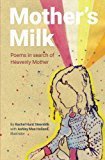 Mother’s Milk: Poems in Search of a Heavenly Mother
Rachel Hunt Steenblik’s blog posts at the Exponent
Ashley Mae Hoiland’s blog posts at By Common Consent
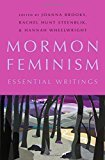
Mormon Feminism: Essential Writings edited by Rachel Hunt Steenblik, Joanna Brooks and Hannah Wheelwright
Rachel Hunt Steenblik on Twitter
Rachel’s poem at A Mother Here: Art and Poetry Contest
 One Hundred Birds Taught Me to Fly: The Art of Seeking God (A living faith book) by Ashley Mae Hoiland
We Brave Women cards by Ashley Mae Hoiland
Listen and subscribe below:
A Brief Syllabus on Whiteness
[image error]In the aftermath of Charlottesville, I’ve seen my academic friends reposting crowd-sourced syllabi on various topics around racism and hate in America. If you want to learn more about a contemporary topic, you can read your way through a list of curated links and come to a better understanding. There are excellent syllabi on Black Lives Matter, Ferguson, Charlottesville, and the history of hate in America.
This past week, the Shoulder to the Wheel group collaboratively published a booklet that discusses the problem of racism in the LDS Church with practical suggestions on how to combat racism. It is worth reading and sharing with friends and family. The goal is to get people to commit to learning more in advance of the 40th anniversary of lifting of the priesthood-temple ban for Black members.
One thing that I haven’t seen yet is a good crowd-sourced syllabus on whiteness so I’m going to start one here.
‘Whiteness,’ like ‘colour’ and ‘Blackness,’ are essentially social constructs applied to human beings rather than veritable truths that have universal validity. The power of Whiteness, however, is manifested by the ways in which racialized Whiteness becomes transformed into social, political, economic, and cultural behaviour. White culture, norms, and values in all these areas become normative natural. They become the standard against which all other cultures, groups, and individuals are measured and usually found to be inferior. (source)
I’m interested in whiteness because it seem to be at the heart of racial tension and colonization. Whiteness determines who the other is. Whiteness sets itself up as normal and claims power for itself. It has been such a successful construct that many white people don’t even have a clear understanding of what it is, because whiteness refuses to learn about itself. I’m interested in this idea because I feel that my ability to challenge and dismantle whiteness will grow with understanding.
There are a number of foundational works on whiteness:
W. E. B. Du Bois “The Souls of White Folk”
James Baldwin “A Letter to My Nephew”
James Baldwin “Letter from a Region in My Mind”
Theodore William Allen “Class Struggle and the Origin of Racial Slavery: The Invention of the White Race”
Toni Morrison, Playing in the Dark: Whiteness and the Literary Imagination
Ruth Frankenberg, White Women, Race Matters: The Social Construction of Whiteness
David Roediger, The Wages of Whiteness
What resources have been helpful to you in learning about whiteness? What do you want to know about whiteness? How do you see whiteness manifest in the LDS Church? How do you see whiteness manifest in our own Mormon feminist movement?
The Exponent II joins other Mormons in committing to eradicate racism in our faith community.
[image error]On behalf of Exponent II, several Exponent editors and bloggers have signed the following op-ed. The Exponent II endorses this message:
Putting our shoulders to the wheel to end racism and white supremacy in Mormonism


![[image error]](https://i0.wp.com/www.the-exponent.com/wp-content/uploads/2017/08/yellow-07-youve-got-mail.w710.h473.2x.jpg)
![[image error]](https://i1.wp.com/www.the-exponent.com/wp-content/uploads/2017/08/scott-webb-199470.jpg)
![[image error]](https://i2.wp.com/www.the-exponent.com/wp-content/uploads/2017/08/VIP-1.jpg)
![[image error]](https://i0.wp.com/www.the-exponent.com/wp-content/uploads/2017/06/7203339630_ba40d1f8ab_z.jpg)
![[image error]](https://i2.wp.com/www.the-exponent.com/wp-content/uploads/2017/08/Screen-Shot-2017-08-20-at-8.36.13-AM.png)