
Exponent II's Blog, page 291
August 12, 2017
Talk About Your Easy Fixes
A proper missionary sendoff, in my ward, includes the performance of a certain EFY medley you’ve probably heard once or twice. This is fairly conventional stuff. Back in my day (aka the 80’s) the Young Women invariably sang In the Hollow of Thy Hand to whichever boy was leaving for the MTC on the other side of the country. Its chorus was equal parts sweet and cringe-worthy. To wit:
In the hollow of thy hand as he grows from boy to man
Help his understanding deepen and increase
In the hollow of thy hand as he grows from boy to man
Let him know the special blessing of thy peace
The lyrics were/are vintage Janice Kapp Perry. We sang them very sincerely, secure in our belief that a better, manlier version of our departing brother would be returned to us in two years. And, wonderfully, this was very often the case. By the way, there was no analogous song for the Young Men to sing to outgoing girls. (Nor would we have particularly cared to listen to the boys warbling about us growing from “girls to women”—er, no thank you.)
In any case, the youth + leaders in my ward will sing a different number tomorrow: the As Sisters In Zion/We’ll Bring the World His Truth medley (music by Janice Kapp Perry, natch). Initially, I found this custom tedious in a ward that launches an extremely robust number of missionaries every year. But it has deep meaning for the young men and women who leave us, and those are often very good customs to keep. I’ve actually come to like it. Now I wouldn’t change it for all the herbal tea in China.
I should say that I wouldn’t change most of it. I’m all for keeping the song, but I’d tweak the lyrics ever so slightly. It’s strange to have the boys sing about being born “as Nephi of old to goodly parents who love the Lord” but have the girls sing about being daughters of “our Heavenly Father who loves us, and we love Him”. So much dissonance right there for people who believe in the divine reality of heavenly parents as much the importance of earthly counterparts! Where is Heavenly Mother? What’s the point of excluding Her?
Anyway, it’s a super easy fix. We could simply swap out “Heavenly Father” for “Heavenly parents” and “we love Him” for “we love Them.” And then we could repeat the process a thousand, thousand, thousand times for all the hymns and Primary songs and lessons in which Father is referenced without Mother. How easy is that?


August 11, 2017
Relief Society Lesson 15: The Holy Priesthood
[image error]Teachings of Presidents of the Church: Gordon B. Hinckley
“I love the priesthood of this Church. It is a vital, living thing. It is the very heart and strength of this work. It is the power and authority by which God work on the earth.” Gordon B Hinckley
I like this quote because the image of priesthood being “living” and a “heart” make it feel malleable, fluid, and hopeful.
A note about Language
If we seek to discuss Priesthood and involve women – we, as Latter-day Saints, have a difficult time – because there is simply no good language. The word priesthood itself is masculine. If we use Priestess-hood we may conjure images of wiccans dancing in a moon-lit forest.
f we use “the priesthood” as a synonym for “the men”, we diminish the meaning of priesthood as the power of God.
If we use the term “priesthood-holder” – we leave women out of the conversation.
There is no easy answer for this situation, but I would suggest being careful language as you teach a group of women about Priesthood.
1 – Keys, Authority, and Power
The difference between keys, authority, and power with Priesthood is confusing – and we get it wrong all the time in our discussions.
The best source for clear definitions (in my opinion) is Chapter 6 (“Both Women and Men have access to God’s Highest Spiritual Blessings”) of Sheri Dew’s book “Women and the Priesthood”. Elder Oaks’ talk “The Keys and Authority of the Priesthood” is another source that sheds some light.
I like to think of it this way:
Keys: Largely administrative; allowing for order in ordinance work and in quorum hierarchy. Not all men who are ordained have keys. The men who hold keys in a ward are: Deacon Quorum President, Teachers Quorum President, and the Bishop. The Stake President holds the keys to the Melchizedek Priesthood.
Authority: This gets a little murky. It seems that all men who are ordained to the Priesthood have Priesthood authority. And women who are set apart of callings act with Priesthood authority.
Power: This is accessible to all – through faith. And can be called on by both men and women. The Power of the Priesthood blesses both men and women.
Explanations from the lesson:
“God has restored the priesthood and the keys of the kingdom of heaven.
“Priesthood power and authority [were] given to men anciently. The lesser authority was given to the sons of Aaron to administer in things temporal as well as in some sacred ecclesiastical ordinances. The higher priesthood was given by the Lord Himself to His Apostles, in accordance with His declaration to Peter: “And I will give unto thee the keys of the kingdom of heaven: and whatsoever thou shalt bind on earth shall be bound in heaven: and whatsoever thou shalt loose on earth shall be loosed in heaven” (Matthew 16:19).
“It is veritably the power of the Almighty given to man to act in His name and in His stead. It is a delegation of divine authority, different from all other powers and authorities on the face of the earth. Small wonder that it was restored to man by resurrected beings who held it anciently, that there might be no question concerning its authority and validity. Without it there could be a church in name only, lacking authority to administer in the things of God. With it, nothing is impossible in carrying forward the work of the kingdom of God. It is divine in its nature. It is both temporal and eternal in its authority. It is the only power on the earth that reaches beyond the veil of death.”
2 – Priesthood and Church Governance
The Priesthood is both a spiritual power and an administration structure. Each office of the Priesthood has specific duties, which are spelled out in D&C 107.
From the Lesson:
“The holy priesthood carries with it the authority to govern in the affairs of the kingdom of God on the earth. Under the revelations of the Lord, the Church is to be presided over by three presiding high priests. They are to be assisted by a council of Twelve Apostles, who in turn are to be assisted by … the Seventy. A Presiding Bishopric of three are responsible for temporal affairs under the direction of the Presidency. All of these are priesthood officers. That power divinely given is the authority by which they govern. It is so in the stakes and the wards with presidencies and bishoprics. It is so in the quorums. The auxiliary officers carry forth their work under direction and delegation from the priesthood. Without the priesthood there might be the form of a church, but not the true substance. This is the church of Jesus Christ, and it is governed by that authority which is “after the Order of the Son of God.” (D&C 107:3.)
3 – Blessings of Priesthood
“The blessings of the priesthood are to be enjoyed by all.”
“[The priesthood] … is a part of the plan of God our Eternal Father to bless the lives of His sons and daughters of all generations.”
Ordinances
Baptism and Sacrament – under the Aaronic Priesthood
Bestowal of the Holy Ghost – under the Melchizedek Priesthood
Washing and Anointing– under the Melchizedek Priesthood
The Endowment – under the Melchizedek Priesthood
Sealing – under the Melchizedek Priesthood
“The Holy Ghost shall be thy constant companion, and thy scepter an unchanging scepter of righteousness and truth; and thy dominion shall be an everlasting dominion, and without compulsory means it shall flow unto thee forever and ever.” (D&C 121:46.)
Blessings
Blessing Babies
Blessing of the Sick
Blessings of the Comfort
LDS Women and Blessings –
Blessings are an area where men and women have participated together in the past, but women’s blessing are discourage now. In the early church, women gave specific blessings (considered an ordinance) to women about to bear children and blessed newborn babies with a specific blessing.
A good resource for understanding LDS women’s blessings is “A Gift Given; a Gift Taken” by Linda King Newell
4 – Living Well to use the Priesthood
This section has heavy masculine language. Remember that it is not only men who work with Priesthood power or receive blessings. Living well is a applicable to both genders.
From the Lesson – here are some of the passages I like best:
“Sons [and Daughters} of God who hold His divine authority must be true to the very best that is in them.”
“Such is the wonder of this priesthood. Wealth is not a factor. Education is not a factor. The honors of men are not a factor. The controlling factor is acceptability unto the Lord.”
“[We are] in partnership with God [and have] the sacred obligation so to live as one worthy to speak and act in the name of God as a qualified representative.”
“We must be true to the very best that is in us.”
“Each of us is responsible for the welfare and the growth and development of others. We do not live only unto ourselves. If we are to magnify our callings, we cannot live only unto ourselves.”
5 – Priesthood Quorums and the Relief Society
It is my belief that the Relief Society was set up as the partner to male Priesthood Quorums. Relief Society is not intended to be an auxiliary or a support, but a quorum of women working in partnership with their brothers.
Motherhood is an important part of womanhood. Priesthood and fatherhood are an important parts of manhood. But (in my opinion) these things are separate things; not to be equated.
From the lesson:
“The priesthood quorum is the Lord’s organization for men of the Church, just as the Relief Society is the Lord’s organization for women of the Church. Each has among its responsibilities, basic to its reason for being, the assisting of those in need.”
“A priesthood quorum can be an anchor of strength for its members.”
“I am confident that the Lord intended that a priesthood quorum should be far more than a class in theology on Sunday mornings. Of course, the building of spirituality and the strengthening of testimony through effective gospel teaching is an important priesthood responsibility. But this is only a segment of the quorum function. Each quorum must be a working brotherhood for every member if its purpose is to be realized.”
“When the Relief Society was organized the Prophet Joseph said of the women of the Society: “They will fly to the relief of the stranger; they will pour in the wine and oil to the wounded heart of the distressed; they will dry up the tears of the orphan and make the widow’s heart to rejoice.”
I recommend reading
President Beck’s “Upon my Handmaidens I will Pour Out my Spirit”
President Nelson’s “A Plea to My Sisters”
6 – Priesthood at Home
The home may be the best example of women working with Priesthood authority – and of men and women working together in with Power from God. It is here that single women can bless their own homes, single mothers can bless their children, and husbands and wives can serve their families together.
“ … the man neither walks ahead of his wife nor behind his wife but at her side. They are co-equals in this life in a great enterprise.”
From the lesson:
“There is strength and great capacity in the women of this Church. There is leadership and direction, a certain spirit of independence, and yet great satisfaction in being a part of this, the Lord’s kingdom, and of working hand in hand with [holders of] the priesthood to move it forward.”
7 – History of Priesthood (Addition)
If history is of interest, I recommend Greg Prince’s book: “Power from On High”. This could add some interesting pieces to the lesson.
The history of the Priesthood within the church is more complex and convoluted that I understood when I was younger.
There were many steps and many years – as things evolved to the place of organization that we know in the church today.
Songs of a Fat Mormon Woman
[image error]i.
When I was little — two, maybe three years old — my mother used to get me out of the bath and wrap me in one of her peach-colored towels. She would hang the towel around me like a cloak and hoist me onto the counter so I could see myself in the mirror. My face was the only visible part of me — a downy tuft of my curly black hair peeking out over my forehead. My mother wrapped my sister in a second towel and lifted her up beside me, pointing to our reflections in the mirror. “Look at you,” she said. “All clean! My little princesses.”
I didn’t just beam when she said this, I glowed.
Back then, I was not ashamed of my body. I loved the softness of my clean skin, the cool touch of my wet hair draped over my back. I remember my mother standing over me in the bathroom, tugging my hair into a long braid so I could run and swim and bike without it getting tangled. I kicked and threw and hung tumble-down from belly bars and jungle gyms. On the swings I pumped my legs so hard that my stomach leapt and my shoes painted the clouds. I loved every feeling, every touch, every sensation.
ii.
I remember how my dad used to make lemonade from the lemons that grew on the tree in our back yard. We dumped cups and cups of sugar into the fresh-squeezed lemon juice and watched as the thick slurry disappeared in the bottom of the pitcher. I remember the exact taste of it — the cool, sweet tang — how it hit my belly like a popped water balloon.
I remember, too, how I used to sneak into the kitchen early in the morning and fish marshmallows from the Lucky Charms box. I remember how the crunchy sugar dissolved on my tongue, how I could eat and eat and never be filled.
iii.
I think I was born hungry. There’s no other explanation for my appetite, my size. I suffered no abuse, experienced no trauma. I simply had to eat. There was too much to feel — a roiling in my belly that was only quiet when I ate.
So I grew. I grew and grew and people around me noticed. Sometimes they were cruel. Mostly they were indifferent, which is another form of cruelty. For being so large, I often wondered how I could be so very invisible.
iv.
When I was thirteen I sat beside two boys in math class. I didn’t talk to them. I barely breathed in their direction. At that point I knew better than to open my huge, fat, food-eating mouth.
One day the boys were talking about girls, about who they would make out with, who they would pick as their girlfriends. This was not unusual. They often talked to each other like I wasn’t there.
Then, in the middle of it, the boy next to me slipped his arm around my shoulders.
“I’d pick Becca as my girlfriend,” he said.
And then they laughed. I sank down into my body, burning up from the inside.
I remember thinking: “I’m in here, you know. There’s a me inside all of this body. Do you think I can’t see you? Do you think I can’t hear you? I’m in here.”
v.
When I was in Primary, we had a lesson about our spirits and our bodies. My teacher picked up a glove, slid her hand inside and said: this is us. The hand is our spirit, the glove is our body. Then she took the glove off, dropping it limp in her lap.
Years later, as an adult, I came across a quote by Carrie Fisher. “My body is my brain bag,” she said, “it hauls me around to those places and in front of faces where there’s something to say or see.”
vi.
When I was ten I used to sit on the toilet holding my belly in my hands. I grabbed fistfuls of myself, measuring the folds of my flesh that were too much, too big, too there. I cried. I yanked at my fat and imagined chopping off these parts of me with a knife, carving myself down to a girl who was finally small enough to be allowed to exist.
vii.
When I was eleven I started measuring my salad dressing.
Back then my school lunch was this: A quart-size Rubbermaid full of lettuce, one tablespoon of dressing, one teaspoon of sunflower seeds. I was so, so hungry, but I told myself I didn’t need to eat. I told myself I was weak for even wanting to.
And despite my teaspoons and tablespoons, I was still not thin.
I was never thin.
viii.
When I was in high school I stopped eating breakfast and lunch altogether. I learned to distrust my body. It was, after all, the seat of sin. It was the natural man, full of cravings and impulses that could ruin my life.
I remember how people talked — to me and about me. They said I looked so fit, so healthy. For the most part people didn’t know that I wasn’t eating, they just watched as my flesh melted away.
All the while, huge, thick clumps of my hair came out in the shower every morning. I was cold, so cold. My eyes drew back in their sockets and my skin was so, so pale.
But I was still not thin. I still had so much flesh, so much to lose.[image error]
ix.
The first time I felt I had permission to take up space was when I was pregnant. My size finally had a purpose, a motive beyond my boundless, selfish hunger.
x.
After my first baby, I lost my next baby. To people around me, I got fatter and disappeared from church for a while. Only my family and closest friends knew why I had become so big, so full, and then at once so empty.
I bled and bled so much I felt my heart would bleed right through my chest.
After that I took up long distance running. I needed a distraction from the big, huge emptiness inside me. I had to grow thinner, to erase what lost, to make it seem like she was never there. I pounded out my pain in miles, hammered them into the earth in sweat and solitude.
As I ran, I talked to my body.
You are my enemy, I said. You have always been my enemy.
xi.
Last year, my body began its revolt.
It started with my lungs. Each time I went out on the trail, I felt so short of breath I could hardly run a mile, much less ten or twenty. I came back wheezing, clutching chest and my throat as though they were trying to strangle me.
Next it moved on to my joints, my muscles. Each time I ran, I grew so tired I felt like I had a dozen bodies stacked on my shoulders.
Then it moved on to my mind, my feelings. It slid between my thoughts and began scorching the earth of my mental landscape. I felt equal parts rage, depression, panic and apathy. I’d felt these things individually at different points in my life, but now they appeared like the four horsemen, spreading their banners above all my better parts.
I felt like I was drowning inside myself.
xii.
I gained weight. One day I pulled on my pants and grabbed the folds that spilled over the top. It made me exhausted. I was physically too tired to hate my body.
We’re sick, I realized. Both of us are sick.
xiii.
Most women can sing you their own version of this story. We’re full-fleshed and thick as trees. We measure endlessly, assigning ourselves numbers and sizes and points and calories. That is the song of womanhood, the crack we make when we outgrow our girl-sized containers. For many of us, it’s not a joyful sound. For me it has sometimes been a sob—at other times a great, gutsy wail.
xiv.
I’m thirty-one years old. I can truly say that this is the first time in my life that I’ve tried to love myself. It’s an awkward love — a new, young puppyish love. I find I’m not good at it, but I’m trying.
I nourish myself. I read and run and sit still in my room, just listening to inner tickings of my body. When I exercise, I do it slowly, methodically — marveling at my growing strength. The depression and anger and fear and apathy have begun their retreat. I feel like myself, my whole self, finding my voice in the stillness they left behind.
My body has begun to shed, like wax melting from a candle wick. I don’t feel victorious as this happens. This is because I’m no longer fighting a battle against my flesh. I mourn what is gone, and give gratitude for the way my body held me in and protected me.
xv.
We women know that we should not feel ashamed for being big. We hold space for each other, and we tell each other over and over not to back down, not to become so small that we become invisible. We constantly extend permission to each other: Be big, be loud, we say. Do what you need to do in a world that would seek to shrink you.
And yet, even the best of us make rules for how we can take up space. Roxane Gay recently wrote in her memoir Hunger: “As a woman, as a fat woman, I am not supposed to take up space. And yet, as a feminist, I am encouraged to believe I can take up space. I live in a contradictory space where I should try to take up space but not too much of it, and not in the wrong way, where the wrong way is any way where my body is concerned.”
Even as feminists we disconnect ourselves from our bodies. We unplug when we should tune in. It’s a bizarre contradiction: we give ourselves room to grow our ideas, our voices, but not our bodies. And as Mormon women, we’ve been taught to bind up our worth in our attractiveness to men. We are the gatekeepers of male pleasure, we exist to be seen and beloved.
But what happens when we truly begin to feel our bodies? What happens when we treat our spirit and our bodies as the same entity? What happens when we sit inside ourselves and listen to the deepest folds of our history?
What secret songs lie buried in our flesh?
I don’t know the answers to these questions, but I think one answer is this: as we become our bodies, we will unlock something as big and as vast as the sky. We will be boundless. And we will not be ashamed.
August 10, 2017
Guest Post — A Peculiar People: Mormon Like Me
[image error]My name is Brittany. I am a college graduate, a political scientist, a feminist, a woman, a sister, a daughter, a friend. I am a seeker of truth, a lover of light and a disciple of Christ.
I’m also a Mormon.
Can I be honest with you? Sometimes I find being Mormon a hard cross to bear. The way I choose to live my life, and the things I choose to not participate in often act as a billboard. I feel as though I have “I’m a Mormon” plastered across my forehead. I wear physical reminders of my temple covenants under my clothes at all times. I love these covenants, I strive to keep them, but often times they are a reminder of this identity that I do not always understand, but cannot seem to escape. A man I went on a date with (a non-member) asked why I would not let him touch me after he kissed me goodnight. Besides the fact that I, a single woman in her 20s, is trying her best to live the law of chastity – I was wearing these undergarments that often make me feel different. I know I didn’t have to explain myself to him but I figured honesty is the best policy.
“I’m a Mormon. I wear temple garments under my clothes to remind myself of the promises I make in the temple. They’re sacred and very special to me.”
I could not believe myself in the moment. I had avoided the Mormon conversation all night. I found myself feeling so incredibly embarrassed and so different.
He didn’t seem to mind and found the whole topic interesting. Although, he did ask if he could see my garments – which was sort of awkward when I had to explain to him that he could not.
You see, I didn’t really want him to find out that I was Mormon. It can seem that I end up talking about my religion in seemingly random situations. And sometimes, once people attribute the label of “Mormon” to me, that’s all I am. I have felt no longer myself in some settings, just a member of a church that some people find strange. I know this can be a great excuse to share the gospel, but many times I just find it exhausting. Perhaps I find it difficult to reconcile with the way I feel about being Mormon because I haven’t always been Mormon. I found the church during my junior year of college and chose to be baptized on the 23rd of April, 2016. I was confirmed the next day and endowed in the Indianapolis temple just over a year later, on the 29th of April, 2017. These three days and everything in between has been an incredibly beautiful experience for me. However, there have been some real difficulties – there are always are.
I woke up the other morning feeling like all of this might be too much. I was struggling with garments, struggling with being the only member of my family and struggling with a new ward that I had been in for a while and had not made a single friend. I was struggling with my faith and was having severe doubts about the gospel. The title of “Mormon” made me feel strange and different.
I’m not really sure what I’m going through. I think it’s a cross between a faith and identity crisis. As I write, I am in the midst of it. Because of this, I do not really have a conclusion for you. However, in a way that is so gentle it could only be of God, I opened my journal the other night and the last thing I had written was this quote:
“I feel that I am called with a high and holy calling and that I ought to be peculiar.” – Angelina Grimke
It seems to me that an identity within Mormonism can often make us feel peculiar. People will force their ideas on what it means to be a Mormon onto us and expect us to take it. I no longer want to do this and I no longer want to feel embarrassment in the title of Mormon. I want to feel comfortable with myself and my identity as a person so I can be Mormon like me.
I hope you can feel comfortable enough to be Mormon like you.
August 8, 2017
On World Breastfeeding Week and Divine Mother’s Milk
[image error]I have been thinking very hard of the (just passed) World Breastfeeding Week, and what I would like to say, and I think what I would like to say is this. It’s my own story, because in many ways that’s what I can say, and because I know every human, and woman, and even mother has a different tale to offer. I hope that we can hear each other’s, and learn from each other’s, even when they don’t match up. So here goes.
Once upon a time, I gave birth to a tiny and very hungry girl in an also tiny (and perhaps hungry) New York City apartment, on purpose, surrounded by my caring and competent midwives, doula, and husband. I call her C. Sometime after that, I held her on my couch, surrounded by those same caring and competent attendants. She found my breast quickly, by its smell, but did not latch. The midwives and doula worked together to teach me how to feed C from my own body, suggesting I cup my hand like the same letter (c) to form my breast in the most accessible shape, where C’s mouth should be, how open, and at what angle, and various ways I could hold her.
Even with their help, it was hard. Whole hours hard, per latch. Which might be why every time it worked, it felt like a miracle, and also why my husband was nervous she wasn’t getting enough nourishment, and insisted I wake her up to try, nearly every time she slept. Thankfully our doula intervened by declaring her fine: she still had lots and lots of nourishment from when she was inside of my womb, and her belly was still very, very small. More thankfully still, nursing became easier and easier until it just worked well for both of us. (This is one of those specific places where I know my experience does not match up with every woman’s. Including many women who would prefer it to. And for that, I’m sorry.)
In those very early days, I covered up while nursing when those around me seemed uncomfortable, including in my own home, when male Mormon friends and family members visited. The most significant time (with the longest duration) happened on a cross country flight when C was exactly 4 weeks old. We were seated between two men, one whom I can fairly safely assume was an orthodox Jew. They seemed uncomfortable, which made me uncomfortable, then C even more uncomfortable as I tried to place a light blanket over her while she ate. The result is that she didn’t eat at all, then stayed up that entire night at our destination, nursing. I was lucky, because my generous sister not only shared her hotel bed with us, she also stayed up with me throughout that night, helping where she could, primarily with diapers and lullabies. (I still remember her strong voice singing O Brother Where Art Thou’s “Go to sleep my little baby.”)
That long night became a turning point for me. In asked myself why I would ever put someone else’s comfort above the needs of my own daughter, and as there was no satisfying answer, I made a choice that I wouldn’t do it again. And I didn’t. Instead, I nursed C everywhere she needed to nurse, in whatever way she needed to, which often (if not always) meant without a cover. Somehow the only explicit comment I received about it was from another of my own sisters, who observing me nurse at a public swimming pool accurately declared, “Wow! You nurse everywhere!”
My initial nursing goal was one year, almost entirely because that is how long my own mama nursed me (as well as all of my six siblings). But when a year came, it was still working for C & I, so we kept going. And then I found international airfare to London (and my best friend) for cheaper than almost every domestic flight I have taken home, and took advantage of it. C would come with me and need whole milk of some kind, until she turned two, and it just seemed easier to keep nursing (and carry myself around rather than bottles) through the end of that trip. Soon after that we hit the two year mark. And then a tiny bit beyond that. And it was still working! Until it wasn’t. (Which wasn’t aligned with getting pregnant with my son, S. Can we talk about sore?!)
C still nursed on demand upwards of 10-12 times a day. I worked for the next three to four weeks to get her down to three to four times. Shortly after that, I threw up in a trashcan in JFK’s airport in front of literally hundreds (if not thousands) of people, Facebook declared my pregnancy because I needed kind words, and boarded a plane by myself for my first Mormon Feminism: Essential Readings book events. My husband’s sister very graciously took care of C during the days, and my husband took care of her during the nights. She was effectively weaned while playing with–and being distracted by–sweet cousins.
I flew back (thankfully without throwing up), and my husband left for a conference in Italy the next day. Because C was with me, she remembered Mama’s milk. We both cried when I couldn’t give it to her. She also threw herself on the floor, and screamed, and kicked and hit me. Which things were all new for her. I had no one to tag team with, so I would just scoop her up and hold her while we cried again. Weaning was emotionally, and sometimes physically, painful.
A few more months passed, and I gave birth to my son, S, in my Connecticut home, surrounded by a new midwife–a Mormon one, who prayed to help deliver one of her sisters, as well as her assistant, and again, my husband. Baby S latched by himself within a minute of being born, and the thing that felt close to a miracle was his ability to find me, to know me as his mother. I thought nursing would be cake, or a dream, or whatever golden word I could use to describe it. But it wasn’t any of those things. I didn’t know it until later, but his tongue was slightly tied. It made his latches slightly shallow and my breasts more than slightly raw. They cracked and bled in a way that no measure of lanolin or nursing pads could solve. It was so, so painful and required all of the courage I had to nurse him every time he needed to be nursed, which in those days was almost always.
My midwives visited often and would observe his latch, teach me more tips, and give me much needed words of encouragement. They also offered (and then really did) FaceTime me as many nursing sessions as I needed it to do more of the same. If I didn’t hope that it would get better, and knew that it could and should be better, I would have stopped. (Statistics about nursing mamas doing just that in the first two weeks made all of the sense.) With S, too, I got fortunate, because it did get easier. Maybe not C level easy, but close-ish. He learned how to nurse with his slightly tied tongue in a way that gave him the milk he needed and didn’t hurt my body. He is almost 15 months now, and nursing is still working enough for us.
The end. Sort of.
Because now I have a book titled Mother’s Milk (subtitled Poems in Search of Heavenly Mother), that I started writing soon after my daughter C was born. Why this title for this book? What does it mean to me? The short answer is “So many things.” The longer answer is, well, longer.
“Mother’s milk” means Jesus and the beautiful scriptures describing him as a nursing mother. It means Søren Kierkegaard and the beautiful (albeit sometimes harrowing) explanations concluding the four parts of his exordia to Fear and Trembling (one of which I used to begin Mother’s Milk.) It means a long ago Metro ride to Brooklyn church when C was new, and watching my husband unsuccessfully try to feed her a bottle filled with my body’s own milk. She saw me standing there, and pierced me with her sad/confused/large brown baby eyes, reminding me that I’d once read that babies are more likely to drink from a bottle if they cannot smell their moms–if they are gone.
It means the first poem I ever wrote on Heavenly Mother, inspired by that experience (which is placed at the first part of the first chapter of the book). It means many more of my experiences, which I suppose becomes clear to every reader. I use my children’s names, and words, and cries, as well as my own. (It is just one reason why I want others to write heavenly Mother poetry and words, too. Their revelations would be different than mine–their truths, new truths.) It means lovely passages on milk and honey, for among those who offer milk without money and without price are surely mothers.
It also means thinking of mother’s milk metaphorically rather than only literally. What do I hunger for from the divine Mother? What do I want to flow down from heaven? What would that nourishment be? For me, a few of those answers are Heavenly Mother’s wisdom, closeness, care, love, mercy, and self. What would Heavenly Mother’s Milk be for you?
August 7, 2017
Becoming a Master
[image error]I had a friend ask last week about going to graduate school with children. It was a good opportunity to reflect on my experience so I thought it might be nice to share a bit of that here since it’s fairly common for Mormon women to need to juggle both.
First, a bit of background: I (finally!) graduated with a Master’s in Public Administration/Policy this past December. It took me 6 years. I suppose my degree would be considered a professional degree and while it was one of the most highly rated programs in the country, it was very much designed to be flexible enough for students already in the workplace. There was no pressure to get done in 2 or 3 years–the professors and administrators expected that it would take most students a little longer to finish the program because they were trying to balance both their careers and school. The school built the program to provide the most flexibility possible and allowed students to take courses either in person or remotely. This was a huge benefit for me because it gave me flexibility to take courses at my own pace, do my school work during nap times but also gave me an escape from stay-at-home-mommyhood when I could fit it in. I ended up doing about half of my coursework in person and half remotely which was a great balance for me.
In terms of motherhood I had a 3 year old, a 2 year old and was 6-months pregnant when I started graduate school and had my 3rd baby at the end of the first semester. I had my 4th baby during my last semester of coursework, about 2 1/2 years later. It was not my intention to add 2 more children to our family when I applied to the program but sometimes life happens and you have to roll with it. Another complicating factor, I went back to full-time work about 4 years into my program so then I was juggling children, school and work.
So with that background, here are my tips, with the usual caveats that this is what worked for me and also acknowledging the huge amount of privilege I had:
Front load your coursework for your first two semesters. That’s when you’ll be most excited about being back in school and will have the most drive to get things done. Know that it will be hard.
Invest in childcare. I wasn’t lucky enough to live near family that could watch my children so we put my oldest two children in part-time daycare during my first two semesters when I did the majority of coursework in person. Honestly, most of the student loans I took out went to pay for daycare and I don’t regret it one bit. I needed this to both do well in school and for my mental health. God bless daycare!
Find an adviser/mentor that has children (or that at least gets what it means to juggle both children and school). I was lucky enough to find a professor my first semester who also had a 2 year old and was endlessly patient and supportive as I struggled to manage all the things.
Know your village. It is vital to have people you can lean on. For me, it was the women of my ward who offered to babysit, brought us dinners during finals week. One of my people even gave me her parking pass so I could park downtown and walk to campus. (If you live downtown and know about parking you know that it was worth its weight in gold).
Call in the reserves. Sometimes you need a little more intense help. This is a great time to bring in a family member or close friend who can manage your life while you just deal with school. My sister flew in twice, once during the finals week my first semester and again at the birth of my 4th child while I was trying to finish up my coursework.
Find a room of your own. I really struggled with being productive at home, there were just too many distractions. When I had a test or a big paper to write I would go somewhere else. Generally this was my husband’s work office but I also used his Bishop’s office at church.
Take breaks. Take stock of your situation and what’s best for your family. I took an almost two year break after I finished my coursework because I had four really small children, my husband became the bishop, I struggled with anxiety and then I went back to work. Know that this will be a marathon-like experience and that it will take all the endurance you have.
Be flexible. If I’m being honest, this was not the romantic graduate school experience that I wanted–I wanted to be immersed in classes and research and all the trappings of academia–but that is not how life worked out. I did not get into a program before I had children and I quickly figured out that while my ideal might have looked different, this was my reality and it was up to me to make it the best experience I could. I will also say that the skills I developed from having so many balls in the air are invaluable and I don’t think I would have gained those if I had gone to school before having kids.
Doing graduate school with kids is hard and there were for sure times when I thought I would never finish but I am so grateful for the opportunity. Not only did it open professional doors it also allowed me provide an immediate example to my children of having goals and working hard to achieve them. The title of this post was taken from my youngest son who told everybody he met for months that his mom became a master and while it’s one of those cute things kids say, it helped highlight for me that my graduate school was an invaluable experience for all of us.
I’d love to hear others’ experiences with balancing school, kids and all the things.
August 6, 2017
Guest Post: A Blessing Withheld — A Letter to my Area Authority
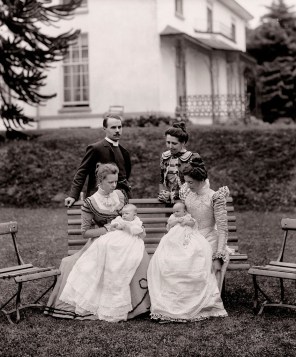 by Hope
Preface: This is a letter I never sent; I have instead chosen to publish it here because I believe it will ultimately do more good to tell the story widely.
Dear Elder,
Recently, my infant son was given a name and a blessing by his father. My husband, concerned for our child and thoughtful of how to make this moment special for our entire family, requested that I hold our son during the blessing. I consented with a full heart. We requested permission and our bishop agreed that it would be a good way to bless our willful and older-than-typical child; we felt the grace of God in his response. It was minutes (or perhaps hours) before the blessing was scheduled to occur that we received word from our apologetic bishop that this decision, so carefully and prayerfully considered, blessed by the Spirit of God, had been vetoed by you, our area authority.
We have not met, so you cannot know what it had meant to us, to present our child to God jointly (even with me sitting down, as to avoid even the semblance of priestesshood). You cannot know the great reverence with which we regard his birth. The event of his baby blessing ought to have been cause for celebration and joy, but for us it was neither.
It is my hope that, upon reading this, you will better understand the needless pain and offense that the church causes mothers by systematically excluding us from the naming and blessing of our children. I hope you will be our advocate with those in authority to make decisions that affect change.
It feels like the greatest offering of your heart is crushed violently beneath careless feet.
It feels like the widow’s mite that is mocked and rejected.
It feels like all we have been told, about men and women holding the priesthood together, eternally, as a family unit, is a big, fat lie.
It feels like motherhood, the calling of our hearts, which extracts its’ price dearly in the currency of sleep, heartache, tears, milk, and blood, is regarded as nothing.
It feels like an eternity of separation.
It feels like being betrayed.
It feels like being stoically, silently cloistered.
It feels like being diminished.
It feels like being shamed.
I had heard women before express their sorrow and dismay at similar circumstances, but I was still surprised when it happened to me. That morning, my heart broke, and I am still putting together the pieces. Someday we will have another baby, and I do not expect that we will present that child before the church. What a shame; how lovely it could be!
Yours respectfully,
Hope
(photo by National Library of Ireland on The Commons (Christening Day) [No restrictions], via Wikimedia Commons)
August 4, 2017
Thoughts on a Bat Mitzvah
A few months ago, my family was invited to a bat mitzvah. I had gone to a friend’s bar mizvah when I was 14, so I had some idea of how it would go: reading and expounding from the torah, party later. My friend’s bar mitzah’s service was 3 hours long (I was well-prepared as a Mormon kid to sit through 3 hours of a religious service!) and fairly traditional for Reform Judaism. This recent bat mitzvah was a different experience: this synagogue community is neither Orthodox nor Reform, but instead Jewish Renewal.
A couple of years ago we went to temple (this is how our friends refer to their synagogue experience- I don’t know if that’s a general Jewish term, Jewish Renewal term, or a family term) while church-hopping to expose our kids to different faith communities. Our friends described Jewish Renewal as “Hippie Jews” and there was lots of dancing and singing. It was fun. They invited us again for their daughter’s bat mitzvah.
[image error]
The bat mitzvah was similar- lots of singing and dancing to traditional Jewish songs and less traditional songs. Some of the songs were in Hebrew, other songs were in English. The family was definitely the highlight of the service. The bat mitzvah’s younger siblings fetched the synagogue’s large Torah from the cabinet for their sister to read from. Her older sister dyed her new prayer shawl as a gift and presented it to her. She read from the Torah and expounded on a passage of her choosing. She chose to speak about the Jewish laws about food, eating, and food preparation and added that she thought if God was giving rules today about food, the rule would be veganism. I overheard a couple of older people tsk at that, but in general it was well-received. The bat mitzvah very much cares for animals and talked about how all creatures come from God.
[image error]
Near the end of the ceremony, there is a part where the bat mitzvah is supposed to be granted accountability for her actions and her parents are relieved of that responsibility. That felt like it was similar to our Mormon idea of the age of accountability at 8. However, when it was time for that, her parents stood at the front and spoke, saying that, as with their older daughter for her bat mitzvah, they had a conversation with this daughter and decided that they were willing to still be held accountable for her actions until she is older. Plot twist!
And in the evening- there was a party! And all my years of youth dances prepared me well. We also lifted the parents and siblings and bat mitzvah on chairs. It was really a fabulous party.
I came away with a lot of thoughts: Can you imagine Mormon parents choosing to continue being accountable for their child’s actions and sharing that in a baptism talk? I loved that the bat mitzvah (and all bat/bar mitzvahs) was given a chance to expound on the scriptures to her community. I think church would be better with more drums. When the congregation chanted/read together, I really loved the words we were saying. There was looking forward to Zion, but also some Mother Earth imagery and I love religions that include the feminine divine.
August 2, 2017
I am (insert word here)
[image error]I procrastinated until it was too late. I had printed the email request, added to my to-do list, thought of a few ideas, stalled, and finally just forgot all together. So when I arrived at Sunstone and my friend said quizzically … “your bio?” I assumed it was blank. I shrugged and slapped my palm to my forehead. Oh well, I would present in anonymity.
But my bio wasn’t blank. It spelled out my identity in clear nouns: “Pandora is a quilter, editor, mother and wife.” All true and more than I deserved. It should have read: “Pandora shirks assignments.” But I was unsettled. First, who was this mysterious ghost writer who knew enough detail to summarize my life with some accuracy? I was grateful for the effort. Yet the words lined up in this way suddenly felt strange, as if I caught my blurry reflection in a window and was startled by the tousle of my hair or the shape of my body or the expression on my face. Is this how the world sees me?
We all have lists of words we use to describe ourselves. These labels are attached to us early and we spend a lifetime crossing out and rewriting the original text. My early words – stutterer, new girl, bookworm, foureyes, good daughter – evolved into adolescence words, adding – anxious, Mormon, chaste, emotional, best friend, nerd. As an adult, the list of who I was expanded, spilled, and scattered. I found and kept a few dropped essentials and let the rest gather dust under the bookshelf. Until recently, quilter, editor, mother, wife would have felt familiar and right.
How could my ghost writer know how the last few years have complicated who I thought I was? A different job has allowed less time for sewing and writing, forcing me to question my work/life priorities. My adult children are navigating their own lives and my role of mother is in flux, careening between cheerleader, consultant and hand-wringer. My husband and I have always had topsy turvy gender roles, now even more pronounced by my recent professional commitment. I suppose all of this is normal for middle age, many women tell their own version of this story. But I did not expect it to be as disconcerting as past transitions and thresholds. I did not expect the same questions or the same mixed-up feeling of courage and uncertainty. What words do I give myself? What words are given to me? What words do I carry over from then to now and what words do I leave behind? Did I lose the word “wise” along the way only to pick up “amused” and “this-again?” instead?
This year the Sunstone name badge/lanyard featured a section asking the wearer to declare “I am a (blank space) Mormon” and to fill out a descriptor in the blank space. My favorite responder had scribbled “awesome!” but most tried to share a serious assessment. Post, Progressive, Feminist, Fundamentalist, Believing, Non Believing Mormons all owned their adjectives. I turned this part of my name card around. Not there yet.
Deep in the not-so-unconscious part of my brain, I wonder the obvious. Did I really “forget” to turn in my bio or did I just not want to do it? Did I secretly want a Pandora Bourne moment where I could start over as the star of a new action movie? Be incognito? Or simply not choose – I could be anyone today and someone else tomorrow? It is not lost on me that I have the privilege of possibility. But I also feel the weight, a guilt steeped in years of trying to live up to or sort correctly or assemble the appropriate combination of labels to be … Righteous? Productive? Growing? Nice? Fabulously happy and beautiful in all ways?
This identity business is hard work. The minute we think we have it right it feels too tight or slightly wrong like a dress we have outgrown or is no longer quite in style. Mine keeps hiking up in the front and I keep tugging it down at the hem. Boss? Workaholic? Quirky? Intense? Storyteller? Distracted? Creaky? Geeky? Until then, perhaps Quilter, Editor, Mother, Wife will have to do. I am still procrastinating.
August 1, 2017
Guest Post Book Review: Illuminating Ladies
The Exponent blog is happy to share this guest review of our own colouring book, Illuminating Ladies by Carolina Allen.
Carolina Allen is the founder and CEO of the nonprofit organization and movement, Big Ocean Women. She is passionate about global women’s issues as they intersect with faith, family and motherhood. She is grateful to be linked for eternity to her husband Kawika and their 6 children whom they have the honor of homeschooling together.
[image error]As my daughters and I have colored the beautifully rendered art pages together, this thoughtful book has sparked open discussions in our family about faith and testimony anchored in Jesus Christ, even amidst difficult challenges and hardships.
Our favorite pages have been about the pioneering women from diverse racial and ethnic backgrounds and the unique challenges they have faced and continue to face. In it’s simple format and easy to understand language, the women featured in this book have inspired conversations about how we too can remain committed and faithful throughout our present day challenges.
One of the most special features in this book are the pages found towards the end that encourage the readers to explore and write their own stories. As a family, we are excited to add the stories of our pioneering foremothers and fathers from the Polynesian islands and South America, and how we too can carry their torch of steadfast discipleship into the future!
Copies of the colouring book are still available from the Exponent II Etsy store. Do you already have the book and are hungry for more? Check out Exponent books, or go ahead and subscribe to the Exponent magazine. You will be spiritually fed!
We invite you to share your thoughts about this book on Goodreads, and invite you to follow the Exponent Goodreads page for all of our most recent book reviews.


![[image error]](https://i0.wp.com/www.the-exponent.com/wp-content/uploads/2017/08/singing.jpg)
![[image error]](https://i2.wp.com/www.the-exponent.com/wp-content/uploads/2017/08/Blessing.jpg)
![[image error]](https://i1.wp.com/www.the-exponent.com/wp-content/uploads/2017/08/womenicecreamwide-Edited.jpg)
![[image error]](https://i0.wp.com/www.the-exponent.com/wp-content/uploads/2017/08/womanmirror.jpg)
![[image error]](https://i2.wp.com/www.the-exponent.com/wp-content/uploads/2017/08/gradpic.jpg)
![[image error]](https://i1.wp.com/www.the-exponent.com/wp-content/uploads/2017/08/IMG_0097.gif)