Exponent II's Blog, page 27
May 13, 2025
Revisiting the 1982 Pilgrimage: The Birthplace of Mormon Feminist Retreats
Consider attending this year’s Exponent II Retreat on September 19-21, 2025, at the Barbara C. Harris Center in Greenfield, New Hampshire! Registration is now open. Learn more here.
The extensive “Pilgrimage” network of Mormon feminist retreats, as well as many of the traditions of the Exponent II retreat, have a shared origin story: the 1982 Pilgrimage organized by Salt Lake City-based writers and historians Lavina Fielding Anderson, Maureen Ursenbach Beecher, Jill Mulvay Derr, Carol Cornwall Madsen, and Linda King Newell. Mormon feminists from around the country gathered for a weekend in Nauvoo, Illinois, for workshops, discussion, and friendship. A network of regional retreats was launched in 1983.
Below are two historical articles about the 1982 Pilgrimage published in Exponent II. The first, “The Pilgrimage,” by Melodie M. Charles, provides an overview of the retreat shortly after it occurred. The second, “Nauvoo: A Time of Healing,” by Charlotte Cannon Johnson, reflectively considers the religious and political atmosphere of the original Pilgrimage.
The Pilgrimageby Melodie M. Charles, Arlington, Virginia
The official purpose of our pilgrimage to Nauvoo was to celebrate, with a group of likeminded women, the anniversary of the founding of the Relief Society. Since Nauvoo is nowhere, it took a national airline, a commuter prop plane, a city bus, a Trailways bus, a cab, and a mile walk to get me to the Nauvoo House where we were to stay. Nauvoo House sits on the banks of the Mississippi across the street from the log cabin where Joseph and Emma first lived when they came to Nauvoo. Envisioned as a hotel, it was only finished and used as such after Joseph’s death. In spite of travel fatigue and a twisted ankle and shinsplints from jogging, a moonlit walk with Linda Newell, Marilyn White, and some fireflies was a perfect introduction to our slightly unreal world of “Women Only.” More brisk walks with Linda during the next few days aggravated the shinsplints, but were otherwise very satisfying, as we discussed historical dirt, prophets, polygamy, Nauvoo, and our families.
Our first planned event, a Nauvoo tour the following afternoon in the rain, was led by Nancy Richards Clark, who was involved in the early stages of the restoration. Historic Nauvoo in its restored state looked lovely—too lovely to me. The decaying, ruined homes brought me closer to Nauvoo’s original inhabitants than did the rebuilt homes with their prim flower gardens, lush lawns, and anachronistic gas meters.
That evening we met in the room over Joseph Smith’s store to introduce ourselves to each other, and to meet our ancestors who had begun the Relief Society there years before. As each woman spoke, we saw a sample of the wit, insight, commitment to the Church, and concern for Mormon women that became so evident as our pilgrimage progressed. To meet our ancestors, we watched Maureen Ursenbach Beecher’s readers’ theatre about the organizing of the Relief Society.
The next day included a flip-chart presentation by Diane McKinney Kellogg and Kate Kirkham, experts in the field of organizational behavior, on the subject of effecting change, followed by small-group discussions. Jill Mulvay Derr gave a description of Sarah Kimball and a tour of her home, the most recently restored. We listened to Linda Newell place the Smiths, particularly Emma, in this Nauvoo setting. We gathered to have Cathy Stokes lead us in singing.
The feeling of warmth, intimacy, and beauty—both traditional Mormon hymns, such as “Come, Come, Ye Saints,” and hymns Cathy chose from her pre-Mormon background, such as “Were You There When They Crucified My Lord.” I became less and less able to sing around the lump in my throat. For an hour, I was free from all the cynicism and disappointment I often feel in Church gatherings. I joyfully, tearfully, worshipped my Lord in peace with people I loved.
That evening, Laurel T. Ulrich presented an analysis of the religiosity of American women in the nineteenth century. Laurel had found that Mormon women’s religious involvement paralleled that of American women in general. They had manifested good works through benevolent societies similar to the Relief Society. We learned that the Relief Society is one of the oldest women’s organizations in the nation, but five or six are older. Laurel also discovered that Mormon women had displayed gifts of the spirit, had preached and proclaimed God’s word, and had officiated in the Church’s rituals, However, our discussion brought out that in each category but the first, Mormon women’s involvement has been limited in comparison with other American religious women’s.
During this discussion, as with every scheduled activity, informal groups—sometimes even the discussion leaders—peeled themselves off from the rest to talk. This group gradually dissolved into two’s and three’s and six’s. This part of the pilgrimage was like a teenage slumber party. We laughed, ate, and talked until absurd hours. But unlike those parties of my youth, which focused on our relationships with males (relationships that were largely fantasy), this party focused on our relationships with ourselves, other women, our Church, and our God.
We ended our pilgrimage the next morning with a meeting wherein anyone could share whatever she was moved to. We gathered our chairs in a circle on the banks of the Mississippi on a morning newly brilliant after three days of rain near the place where Joseph and Emma had lived and Emma had died. Thoughts of our heritage made our hearts soar. Indeed, before we started, Lavina Fielding Anderson announced that a mysterious pair of shoes had been found and postulated that they may have belonged to Emma. (Unfortunately, they said “Airstep” on the insole.)
A beautiful, sincere prayer set the tone for that meeting. Emma Lou Thayne reflected on arrivals and departures: birth and death, geographical comings and goings, reunions and partings, and states of mind entered and left behind. All of these had affected us during our pilgrimage.
Most who spoke expressed gratefulness for having been in this honest, open, and accepting group that had explored many thought-provoking ideas and shared a warm camaraderie. Someone responded that there were probably plenty of others out there with whom we should share the commonality we felt here.
I felt a marvelous spirit of love for these women and was not the only one who took some of the Kleenex that we passed around to wipe eyes and noses. We closed by singing and praying, and after hugs all around, we began our journeys home.
Nauvoo: A Time of Healingby Charlotte Cannon Johnston
Excerpts from a talk given May 31, 1992, at the Midwest Pilgrims Retreat, Nauvoo, Illinois
While I was president of the stake Relief Society in the Chicago area, the ERA was a flaming issue. I’m sure many of you remember that Illinois was a key state in the ratification of that amendment to the Constitution. The Church saw defeat of the ERA as a moral issue and put much pressure on us to participate in protests against its passage in Springfield. Our stake chose not to direct the women to join the protest, and we gave women information on both sides of the issue.
This period was a stressful time among the women of the Church as well as the women of the nation. Battle lines were drawn over the merits of the ERA and what effect passage would have on women and families. In Hyde Park, we had splits between women who worked outside the home and those who stayed home; between those with college degrees and those without. Women felt devalued for the choices they were making, whatever they chose to do.
A very unfortunate incident associated with this time was Sonja Johnson’s excommunication. It was a tragedy for Sonja personally and for her family, as well as for the Church. I remember feeling that I wished she could work out her issues within the Church rather than before the world.
Sonja’s excommunication made many Mormon women feet vulnerable. There was a ground swell reaction from across the country. In 1982, partly in response to the Sonja Johnson incident and because of questions raised by the Church’s handling of the ERA, Mormon women gathered in Nauvoo to air their feelings. They were concerned about women’s issues in general and women and the Church in particular. Lavina Fielding Anderson spearheaded the event from Salt Lake; Exponent II women came from Boston; individual women came from points all over the United States.
It’s clear to me that those sixty women represented many women who weren’t there. We were stand-ins for many others. There was an electricity in the air. In the very room in Joseph Smith’s store where the Relief Society was founded, Maureen Beecher gave a presentation about the founding of Relief Society, which included Joseph Smith’s original statement of giving the keys to the sisters rather than in behalf of them as later stated. Doctrinal issues, such as women’s relationship to the priesthood, were discussed with intensity. Even more important, Nauvoo began a time of healing and furnished a place to talk and experience appreciation for the sisterhood women were feeling.
Out of that gathering grew our Midwest Pilgrim group. We were very concerned about the direction the group would take. Many possibilities had suggested themselves at Nauvoo. We wanted our discussions to be stimulating and honest and in the context of allegiance to the Church. I feel we have been able to achieve those goals.
Sign up for the Exponent II monthly newsletter to stay updated with announcements and retreat registration information. As this blog series develops, read more blog posts about the Exponent II retreat.
Featured image of Nauvoo House credit: ChurchofJesusChrist.org


May 12, 2025
Come Follow Me: Doctrine and Covenants 49-50 “That Which Is of God Is Light”
In 1831, a Shaker community resided in Ohio not far from the Latter-day Saint community in Kirtland, Ohio. Leman Copley, a convert to the Church of Jesus Christ of Latter-day Saints (LDS, Mormons) from the United Society of Believers in Christ’s Second Appearing (Shakers), was eager for Mormon missionaries to visit his friends in the Shaker community. Doctrine and Covenants 49 calls Copley and some prominent LDS leaders on a mission to the Shakers.
The Mormon missionary effort to the Shakers was a disaster, largely because not all of the Mormon missionaries were willing to engage in respectful interfaith dialogue. In this lesson, we’ll learn from both the good intentions and missteps of these missionaries, and from exhortations about more edifying ways to teach and learn gospel principles which are explained in Doctrine and Covenants 50. We’ll learn about the Shaker religion, but first, we’ll learn about respectful ways to learn about others’ faith traditions. This lesson should be an opportunity to practice being open-minded about another faith community, not judgmental.
In This Lesson…Teaching and learning with the SpiritListening to and learning from people of other faithsPractice respectfully learning about another faith community.Mormon Missionaries visit the Ohio Shaker Community in 1831Oliver Cowdery visits the Shaker community.Leman Copley and Sidney Rigdon visit the Shakers.Parley P. Pratt joins the Shaker mission.Bless, but do not curseTeaching and learning with the SpiritHow do we preach by the Spirit?How do we learn by the Spirit?
17 Verily I say unto you, he that is ordained of me and sent forth to preach the word of truth by the Comforter, in the Spirit of truth, doth he preach it by the Spirit of truth or some other way?
18 And if it be by some other way it is not of God.
19 And again, he that receiveth the word of truth, doth he receive it by the Spirit of truth or some other way?
20 If it be some other way it is not of God.
Doctrine and Covenants 50:17-20
How can you ensure that your teaching is edifying for both the teacher and the learner?
22 Wherefore, he that preacheth and he that receiveth, understand one another, and both are edified and rejoice together.
23 And that which doth not edify is not of God, and is darkness.
Doctrine and Covenants 50:22-23
How can we receive God’s light in our lives?How can we gain more light from God?How can we chase darkness away?
24 That which is of God is light; and he that receiveth light, and continueth in God, receiveth more light; and that light groweth brighter and brighter until the perfect day.
25 And again, verily I say unto you, and I say it that you may know the truth, that you may chase darkness from among you;
Doctrine and Covenants 50:24-25
How are we sometimes like “little children” and not ready to bear all things?How can we grow in grace and knowledge of truth?
40 Behold, ye are little children and ye cannot bear all things now; ye must grow in grace and in the knowledge of the truth.
Doctrine and Covenants 50:40
Why don’t we always want to know the whole truth?What happens when we watch only part of a movie, see one piece of a puzzle, or hear one side of an argument? How can we receive more light from the Lord?Listening to and learning from people of other faiths
2 Behold, I say unto you, that they desire to know the truth in part, but not all, for they are not right before me and must needs repent.
Doctrine and Covenants 49:2
Share this Instagram post by Elder David A. Bednar celebrating World Interfaith Harmony Week in January, 2024. Ask the class to think about ways we can have better interfaith dialogue as they listen.
View this post on InstagramHow can we best achieve harmony and interfaith dialogue with people of other faiths?Why is it important to have respectful relationships with people of other faiths?Why is it necessary to listen and learn, not just teach, when we engage in interfaith dialogue?A post shared by David A. Bednar (@davidabednar)

Bednar mentioned that the Golden Rule is key to many world religions. Share this chart from the Islamic Networks Group: First Principles of Religion: Treat Others As You Would Like To Be Treated (The Golden Rule). It contains quotes about the Golden Rule from a variety of faith traditions.
Why do you think the Golden Rule is a common tenant of so many faith communities?How can following the Golden Rule help us have better interfaith dialogue?As we share, either with people of other faiths or even with people of our own faith with different points of view, we may find some teachings confusing or that we believe to be wrong. This advice about discerning between spirits can be applied to these situations.
How might we react if teachings confuse us?How might we react if we do not believe a spiritual teaching comes from God?How can we “account it of God” if we hear a spiritual truth from an unexpected source?
31 Wherefore, it shall come to pass, that if you behold a spirit manifested that you cannot understand, and you receive not that spirit, ye shall ask of the Father in the name of Jesus; and if he give not unto you that spirit, then you may know that it is not of God.
32 And it shall be given unto you, power over that spirit; and you shall proclaim against that spirit with a loud voice that it is not of God—
33 Not with railing accusation, that ye be not overcome, neither with boasting nor rejoicing, lest you be seized therewith.
34 He that receiveth of God, let him account it of God; and let him rejoice that he is accounted of God worthy to receive.
Doctrine and Covenants 50:31-33
The filmmaker describes the short film, the Laundromat, as a short film on interfaith and interreligious dialogue, although the characters, two women of different religions and cultures who speak different languages from each other, say very little to each other.
How did the characters in this short film exemplify interfaith dialogue, despite speaking few words?How can we be good interfaith neighbors in our day-to-day lives?Practice respectfully learning about another faith community.Tell the class that we are going to watch a video about a different faith community, the United Society of Believers in Christ’s Second Appearing, known as the Shakers, that resided near the Mormon pioneer community in Kirtland, Ohio.
Keeping the Golden Rule in mind, what kinds of attitudes and actions would you like non-Mormons to adopt as they learned about our faith community? How can we adopt positive attitudes and actions as we learn about someone else’s faith?Watch the video, The Shakers on PBS. Encourage class members to practice listening and learning about this other faith with respect, curiosity and open-mindedness, focusing on what they could learn from them rather than focusing on how they may see them as weird or wrong.
 What are some positive things we could learn from the Shakers?What are some ways the Shaker community was similar to their Mormon neighbors?What were some ways they were different?Mormon Missionaries visit the Ohio Shaker Community in 1831Oliver Cowdery visits the Shaker community.
The first Mormon leader who met with the Shakers was Oliver Cowdery.
In your opinion, was this interaction edifying to teachers and learners? Why or why not?Did these Latter-day Saint missionaries do anything well that we could emulate?Did they have any missteps that we might try to avoid?Leman Copley and Sidney Rigdon visit the Shakers.
Cowdery introduced himself to the Shaker leader, Ashbel Kitchell, as “an assistant in the translation of the golden Bible” and as one of three who had witnessed an angel bear testimony of its truthfulness. Kitchell allowed Cowdery to share his message at one of the community’s gatherings.
After two nights in North Union, Cowdery and his companions went on their way, but not before leaving seven copies of the Book of Mormon with Kitchell. The missionaries had complete confidence “in the virtue of their books, that whoever would read them would feel thoroughly convinced of the truth of what they contained.” Following this early encounter, the Shakers and Latter-day Saints in Ohio remained on good terms, engaging in “trade and other acts of good neighborship,” according to Kitchell.
–Matthew McBride, Leman Copley and the Shakers, Revelations in Context
Leman Copley was a Mormon convert who had previously participated in the Shaker congregation, although he had not fully lived Shaker tenants, since he was married and lived away from their commune. In response to his inquiry about the possibility of missionaries visiting his Shaker congregation, Joseph Smith called Copley to a mission to the Shakers, with church leaders Parley P. Pratt and Sidney Rigdon as his companions. This revelation is documented in Doctrine and Covenants 49.
In your opinion, was this interaction edifying to teachers and learners? Why or why not?Did these Latter-day Saint missionaries do anything well that we could emulate?Did they have any missteps that we might try to avoid?Parley P. Pratt joins the Shaker mission.
So, with revelation in hand, Rigdon and Copley set out for North Union almost immediately. They arrived in North Union later that day and were received cordially by Kitchell and his associates. They spent the evening together, debating the relative merits of their religions, each likely feeling they had gotten the best of the debate.
The next morning, Kitchell proposed to Rigdon and Copley that neither side should “force their doctrine on the other at this time.” Rigdon had planned to read the revelation to the Shakers at their Sabbath service that day but decided to keep his peace for the moment and “subject himself to the order of the place.”
–Matthew McBride, Leman Copley and the Shakers, Revelations in Context
Just before the meeting began, Parley P. Pratt arrived at North Union on horseback. Upon hearing of Rigdon’s submissive response to Kitchell’s proposal, the fiery Pratt insisted they “pay no attention to [him], for they had come with the authority of the Lord Jesus Christ, and the people must hear it.”
The missionaries sat in silence until the meeting was complete. As the people stood to leave, Rigdon “arose and stated that he had a message from the Lord Jesus Christ to this people; could he have the privilege of delivering it?” With Kitchell’s permission, he read the revelation in its entirety and asked if they might be allowed to continue preaching as the revelation dictated.
Kitchell, keeping his indignation in check, responded that he did not accept the message and “would release them and their Christ from any further burden about us, and take all the responsibility on myself.”
Rigdon countered, “This you cannot do; I wish to hear the people speak.”
But when Kitchell allowed others present to speak their minds, they too affirmed “that they were fully satisfied with what they had.”
Rigdon stoically set the revelation aside, resigned that their mission had been unfruitful. Pratt, on the other hand, was not finished so easily. He arose, Kitchell recounted, and shook the dust from his coattail “as a testimony against us, that we had rejected the word of the Lord Jesus.”
–Matthew McBride, Leman Copley and the Shakers, Revelations in Context
Shaking off dust was a ritual Mormon missionaries used to perform to indicate that they were cursing people who rejected their message.
And in whatsoever place ye shall enter, and they receive you not in my name, ye shall leave a cursing instead of a blessing, by casting off the dust of your feet against them as a testimony, and cleansing your feet by the wayside.
Doctrine and Covenants 24:15
This cursing ritual had Biblical origins.
And whosoever shall not receive you, nor hear you, when ye depart thence, shake off the dust under your feet for a testimony against them. Verily I say unto you, It shall be more tolerable for Sodom and Gomorrah in the day of judgment, than for that city.
Mark 6:11
The Shaker leader, Ashbel Kitchell, understood exactly what Parley P. Pratt meant by the dust-shaking gesture, and it got a big reaction from him.
In your opinion, was this interaction edifying to teachers and learners? Why or why not?Did these Latter-day Saint missionaries do anything well that we could emulate?Did they have any missteps that we might try to avoid?
But Kitchell would not tolerate it. His forbearance at its limit, the Shaker leader denounced Pratt in full sight of his congregation: “You filthy Beast, dare you presume to come in here, and try to imitate a man of God by shaking your filthy tail; confess your sins and purge your soul from your lusts, and your other abominations before you ever presume to do the like again.”
Kitchell then turned his wrath to Copley, who had begun weeping, and gave this stinging rebuke: “You hypocrite, you knew better;—you knew where the living work of God was; but for the sake of indulgence, you could consent to deceive yourself.”…
“We fulfilled this mission, as we were commanded, in a settlement of this strange people, near Cleveland, Ohio; but they utterly refused to hear or obey the gospel.” Following this incident, contact between the Church and the Shakers was rare and usually tense.
Rigdon stayed for supper before returning to Kirtland that evening, leaving a copy of the revelation with Kitchell. Copley, meanwhile, remained at North Union that night and made for his farm the next day…
The encounter had shaken him such that upon his return to Thompson, he backed out of an agreement he had made to permit Church members from Colesville, New York, to live on his farm.
–Matthew McBride, Leman Copley and the Shakers, Revelations in Context
Bless, but do not curse
By the turn of the century, church leaders had reconsidered the dust-shaking gesture and were teaching that cursing people is not in accordance with the spirit of missionary work:
If they cursed, in the spirit of righteousness and meekness before God, God would confirm that curse; but men are not called upon to curse mankind; that is not our mission; it is our mission to preach righteousness unto them. It is our business to love and to bless them, and to redeem them from the fall and from the wickedness of the world. . . . We are perfectly willing to leave vengeance in the hands of God and let him judge between us and our enemies, and let him reward them according to his own wisdom and mercy.
— Joseph F. Smith, 1904 Available in Samuel R. Weber, “Shake Off the Dust of Thy Feet”: The Rise and Fall of Mormon Ritual Cursing, Dialogue: A Journal of Mormon Thought , Spring 2013, Vol. 46, No. 1
By the middle of the 20th century, the Missionary Handbook banned the practice altogether:
Bless, but do not curse.
— 1946 edition. The Missionary’s Hand Book Available in Samuel R. Weber, “Shake Off the Dust of Thy Feet”: The Rise and Fall of Mormon Ritual Cursing, Dialogue: A Journal of Mormon Thought , Spring 2013, Vol. 46, No. 1
How do we pursue missionary work differently if our goal is to bless, not to curse?Today it is not the general custom in the Church for our Elders on missions to shake off the dust of their feet against the people who do not receive them. In our time the Lord is giving men everywhere ample opportunity to receive the Gospel. Consequently, Elders may return to the same people time and time again, thus giving them every opportunity to receive the word of God before His judgments come unto them.
— Doctrine and Covenants Compendium, 1960 Available in Samuel R. Weber, “Shake Off the Dust of Thy Feet”: The Rise and Fall of Mormon Ritual Cursing, Dialogue: A Journal of Mormon Thought , Spring 2013, Vol. 46, No. 1
The antidote to correlation is … the Internet?
Remember when Russell M. Nelson was working his way through demographic groups, challenging them to do a social media fast? First it was children, then it was women. I was so excited for the men’s turn. As a regular general conference Twitter commenter, I was looking forward to being harangued about 90% less often.
Of course, that challenge never came. I wondered why the call never came to the demographic group that is the most abusive on social media but it had come to women who found community and connection on Twitter that I and many others hadn’t felt from IRL church in years
The fraught relationship between the Church of Jesus Christ of Latter-day Saints and the media—social, traditional and otherwise—is at the heart of “Mediated Mormons,” a new book by Rosemary Avance, an assistant professor of media and strategic communications at Oklahoma State University and published by the University of Utah Press.
Avance, who is not a member, studied the “Mormon moment” of 2012-13: Mitt Romney was running for president, the “I’m a Mormon” campaign was in full swing, “The Book of Mormon Musical” was a Broadway darling. More conversations than ever were happening, and the LDS church jumped in to drive many of those conversations. But what Avance noted early in her book, and what stayed in the back of my mind as I read, was this simple fact: The Internet allowed people to find each other, to share their thoughts, stories and hurts, to make their own community and plan their own lessons and talks. The Internet, she said, made everything more “uncorrelated,” in defiance of the church’s carefully correlated material, doctrine and image (37). Here are some other highlights.
The etic, or outsider’s viewBecause Avance has never been a church member, her observations come only from what she’s seen. Without the ingrained language or knee-jerk reaction to make explanations or add something about the good intentions of a man who has done something hurtful, she just calls it like she sees it. Nowhere was this more jarring than when discussing priesthood: “A woman’s access to the priesthood and its power is limited to what she can gain secondhand through marriage or another close association with a male priesthood holder. The concept of priesthood authority not only sets Mormonism apart from other Christian groups but also creates a structure with the LDS culture that gives both spoken and unspoken normative authority to those with a divinely sanctioned voice. In practical terms, this means church leaders have more sway than congregants, that men have more authority than women, and that ultimately the refusal to accept or submit to counsel from leaders is tantamount to rejecting God’s chosen leadership and thus God himself. The stakes are high in a culture built on the concept of priesthood authority” (38).
None of this is revelatory to anyone reading The Exponent II, but to see it laid out so baldly made clear how dangerous such a structure is. Putting any man in such a position that he believes he is a stand-in for God—that his words carry the force of the words of God—is ripe for abuse. And it has been abused for all of human history. Abusing the authority of gods is as old as humanity’s belief in gods.
As someone who was an insider, with an emic view, who has now left and is moving to outsider, I appreciated these insights. I will never not have Mormonism in me; there is no way to excise the teachings and culture and traditions that have become part of my DNA in the last several decades.
Wear Pants to Church DayRemember this day? I was a reporter in Provo, Utah, when the Facebook group appeared encouraging women to wear pants one Sunday in mid-December 2012. I watched as people melted down in rage at this proposal, as word of death threats spread, as people I knew demonstrated their “rightness” by insisting they would wear dresses. When the day came, I put on pants and went to church, grateful that we had a stakewide sacrament meeting and no other classes, so only my roommates noticed.
A decade removed from that, I regularly wore pants to church, including when I taught Relief Society and spoke in sacrament meeting. Sometimes it was to make a point, but sometimes I just felt like wearing pants. Other women—women who definitely were not progressive Mormons—also wore pants to church. Sometime in the intervening years, pants became a sartorial choice, not an activist one.
Avance’s discussion on wearing pants to church gave me a lot to consider. First, it shone light on the culture vs. doctrine discussion and how sometimes, or often, there is no difference. There is zero doctrine about what to wear to church, no policy, just a statement in a manual somewhere that you should wear your best to church. Yet people accused the participants of being radical feminists, which in Mormonism is a bad word, they accused female pants-wearers of stoking contention—and contention is of the devil!—and they reported the page to Facebook as hate speech so many times that Facebook removed the group (115-117).
What really stood out, however, were the comments that such a “protest” did not belong in sacrament meeting. It was not the time or place. That’s not what sacrament meeting is for. Which begs the question: What is the right time or place for taking a stand about inequality in the church? It seems, based on what I have heard, the correct time and place is never and nowhere. It’s not taking a stand at all. If something as innocuous as wearing pants, or sitting on the stand or holding a baby during a baby blessing, offends other congregants so much that they must be shut down, then there is no way to disagree. There is only one correct path, and that is agreeing, or at least submitting to, leadership, because it is from God and therefore is above repute.
To be clear, I do not agree with that—but if sacrament meeting is not the place to make any kind of stand, then perhaps when you are a speaker in general conference with some number of people worldwide listening, it is not the place to air your political opinions either?
Find “Mediated Mormons” at bookshop.org (support independent bookstores!), University of Utah Press or wherever books are sold.
Note: I received a free copy from University of Utah Press in exchange for an honest review.
May 11, 2025
Where do You Draw the Line?
Recently, an LDS influencer with the Instagram handle @whyistaypodcast shared a video expressing her support for polygamy. She said:
“I believe polygamy was ordained of God.
Do I like it?
No. Not really.
Do I need to like it?
No. Not really.
All I need to know is: were each of the prophets in the church of Jesus Christ authorized to make decisions for the church by its head, Jesus Christ.
And I believe they were.
So even though it’s weird and hard and difficult to swallow. I believe polygamy was ordained of God.”
I respect everyone’s right to believe according to the dictates of their own conscience. If polygamy feels right to her (which it doesn’t seem like it does, she simply trusts in men who claim it is right), then that is her prerogative to believe as she may.
Yet I also hold the right to believe according to the dictates of my own conscience, and to express such beliefs as I see fit. Just as she has done in this video.
I’m sure she was aware that she was treading on controversial ground. I suppose that is why the comment section is turned off on her post. If I could have left a comment, I would have asked something like this: where do you draw the line?
Are you willing to do anything that the prophet of the Church of Jesus Christ of Latter-day Saints asks you to do?
Anything at all?
Even if it feels wrong?
Let’s pose some hypotheticals.
What if the prophet asked you to give your daughter to him in marriage, though she is but only 14 years of age, and he in his 30s?
What if the prophet asked you to be sealed to him as an already married woman, which, according to Mormon doctrine, would then give you and your children unto him, and your first husband would be left out of your family in the eternities?
What if the prophet asked you to swear to keep quiet about the temple endowment, or else you would promise to slit your throat and have your bowels spill out upon the ground?
What if the prophet asked you to support racist teachings that portrayed those of African descent as inferior to the rest of us?
Unfortunately, these are real examples from the history of the Church of Jesus Christ of Latter-day Saints.
And many believers said yes. They obeyed their prophet, even if it felt weird or hard or difficult to swallow.
Shall we look at some other examples from outside of our faith?
What if the prophet asked you to murder your sister-in-law and niece? (The Lafferty Brothers).
What if the prophet asked you to join him and other believers in committing mass suicide? (Heaven’s Gate).
What if the prophet asked you, as a teenage girl, to marry him in the temple, where he would then rape you on the altar? (The Fundamentalist Church of Jesus Christ of Latter-day Saints).
What if the prophet asked you to fly a plane into a building and murder thousands of innocent people? (Al-Qaeda).
What if the prophet asked you to murder your own children because he claimed they were processed by evil spirits? (Chad and Lori Daybell).
All of the examples above have one thing in common: believers followed a man who they believed to be a prophet/spiritual leader; A man who claimed to speak for God or claimed to have greater access to higher wisdom and knowledge.
Many believers said yes. They obeyed their “prophet,” even if it felt weird or hard or difficult to swallow.
Which, unfortunately, is the same logic you use to defend polygamy.
Stating that you support polygamy solely because you believe LDS prophets to be authorized by Jesus Christ simply isn’t good enough.
It is not sound logic. In actuality, it is dangerous thinking.
May I ask: would you do it? Would you do all of the above simply because the prophet told you to?
Would you do it, even though it felt wrong?
Would you do it, even if it didn’t make sense to you?
Would you do it, simply because a man who claims to speak for God, a man who you trust and believe in, told you to?
I have to ask, because that reasoning has lead to some of the greatest atrocities we have seen across human history.
It has lead to abuses and murders of the most egregious kind.
I would argue that LDS polygamy – the treatment of women as if they are property, the rape of teenagers, the neglect of women and children – easily falls within the category of abuse.
May I respectfully suggest that you draw a line somewhere? Somewhere where you decide: this is too far. This is abusive. Or quite simply, this just doesn’t feel right so I refuse to do it.
May I suggest that you believe according to the dictates of your own conscience; a conscience that is screaming at you that something is wrong? A conscience that seems to intuitively know that polygamy is “weird and hard and difficult to swallow.” May I suggest that you are having those feelings for a reason?
If you study polygamy as it was practiced in our church’s history, and you come to a different conclusion than I have, that’s fine. I would love to hear your defense of the practice or why, exactly, you believe Jesus would support it. I would love to see logic and evidence and receipts used in such a defense.
But I will not accept blind allegiance to religious leaders as an excuse to justify abuse of any kind.
When looking at other religions or faith systems, as shown above, we can see the abuse and the faulty justifications for such abuses as clear as day.
Yet we are blind when it occurs within our own walls.
I will not create a double standard for my church. And neither should you.
Yes, I support a person’s right to believe according to the dictates of their own conscience.
But I draw a line when those beliefs lead to the harm and abuse of others. Especially when it occurs within my own religion.
Do you?
May 10, 2025
Guest Post: Some Reflections on Mother’s Day in the LDS Church
by Carol Brown
In a church that idolizes the heteronormative family, the annual Sunday Mother’s Day can be a fraught Sabbath worship service for many. A majority of LDS members are single, and some married women long to have children but cannot. Others have challenging relationships with mothers, and some feel bereft at the radio silence of the LDS church regarding Heavenly Mother. Yet, every year the LDS Church holds a Sabbath service that venerates mothers, leaving some women feeling marginalized and others feeling like they are never enough.
While some Christian congregations will focus on Jesus on Mother’s Day, LDS ones will revere mothers and pass out flowers or candies to them after the service. Primary children will sing about the exalted role of mothers while parents beam and childless couples cringe. A speaker or two will talk about motherhood, while some single women wonder if they will need to be eternal polygamists to fulfill that role in the afterlife. Those grieving the loss of their mothers may wish that the service focused more on Jesus and less on mothers. LGBTQ members will feel an increased exclusion from a church that only values heterosexual families. Some infertile women will leave the service, vowing to forego future Mother’s Day meetings. A few mothers will leave the Church service in tears.
If the Church valued love and kindness as much as the temple and obedience, it would be a safer space for all to attend, including on Mother’s Day. More would feel welcome if the Church focused on Jesus’ compassion, inclusivity, and mercy instead of emphasizing God’s wrath and judgment. Women would feel worthy just because they exist, and fewer would feel they are never doing enough to be of value to the church or themselves. There would be less depression among LDS women and more unity in the church.
Because of the complex emotions connected with LDS Mother’s Day, some women do not attend church on that day. Some brave women speak up for equity, hoping the Church will value women as Jesus did. Many long for the day when the LDS Church will allow all members a seat at the table, which is now reserved for married heterosexual men.
The church should remember that a single childless woman was the first person to see Jesus after his resurrection. Some honor Mary Magdalene as an “apostle to the apostles” for she was the first person to proclaim that Jesus had risen. Mary Magdalene, Mary, Jesus’ mother, and Salome stood at the cross when Jesus was crucified. In the early days of the church, Phoebe led the Cenchrean congregation that met in her home. The church could celebrate all women who carry so much of the burden of church service. Or, better yet, the Church could include women as Jesus did, giving each a seat at the table.
On Mother’s Day and every day, let us honor all who respect, value, and include marginalized people, especially those whom religions exclude, shun, and devalue. Jesus invited all to sit at his table, including women, the poor, the bad and the good. Jesus’ first convert was a woman. His first miracle was given to honor a woman. The first person to proclaim Jesus’ resurrection was a woman.
May the Church inspire us to love others—and ourselves—and include and value all as Jesus did.
Carol loves to serve and learn from those whom the LDS Church has chosen to marginalize.
Forgiving Grandma
A few years ago, around the time my paternal grandmother’s health started failing, I realized she had been talking about me to others behind my back, probably throughout my young adulthood. She didn’t like some of my views and choices or the way I voted. She didn’t like the nomadic life my young family lived as my husband got training for his academic career. Heaven knows if she were alive today she’d be horrified about my publishing critical things about the Church on a feminist blog!
Grandma died in April 2021 during a time when flying across the US-Canada border required an exorbitant amount of time, testing, quarantining, and costs. I did not attend her funeral in Utah because the travel requirements made it impossible, and this was disappointing and difficult for me.
Learning my grandmother talked negatively about my life behind my back has put a damper on my memory of her for the past few years. I’ve struggled to feel like she can continue to serve as the anchor she’s been in my life. It felt like she ultimately decided I wasn’t worth rooting for.
She was a very important source of what I experienced as enthusiastic, unconditional love as a child. Every time we were reunited, it was so obvious how delighted she was too see us, how much she adored us. I lived for the ways she gave me attention, from Christmas and birthday calls and packages, to bedtime stories and fun grand-child-oriented outings we took during our annual 10-day visits. These reliable events worked like sacred rituals that marked the cycles of each year and always gave me something to look forward to. Her love played an important role in me developing a sense of self-worth, and love for and trust in other people.

Me on Grandma’s lap alongside my parents on Thanksgiving Day at Grandma’s house.
My sisters felt the same way. When we were little and Grandma left for the airport after a visit, I found the sister just older than me sobbing on the top bunk, placing a duffle bag Grandma had given her as a gift under her pillow. She said she was putting it there to feel close to Grandma and kept if there for months. I was impressed she had thought of what seemed to me like an ingenious coping mechanism!

One of my favorite childhood photos despite the blurriness. Me in front of Grandma, with my two sisters
Grandma’s affectionate ways and story telling helped me feel connected to her family roots. She grew up in Ridgeway, SC, the daughter of parents she considered very tender-hearted and admirable. In 2012-13, I created a family history book about Grandma and her parents, their recipes, and family stories. Gathering information from her as we talked for days in her kitchen was a wonderful experience. Later, when she died, I felt grateful I’d had the desire to put this book together because she did not manage to write a personal history, even though she had wanted to.
Grandma was a very talented person, but did not have the educational opportunities I’ve had. Her parents were subsistence farmers and factory workers and had an eighth grade education. She graduated as a high school valedictorian in her small town, but never went to college. She worked at a furniture store for many years. She made delicious cakes, pies, and savory food, and was a skilled, avid gardener. An extrovert, she could easily strike up conversations with strangers, and was an attentive and entertaining host. She loved shopping and sales, and curling her hair and doing her makeup before going out. She was playful and funny and would threaten us by saying “horse bite the pumpkin!” when she was behind us walking up the stairs. (this was grabbing your thigh if you didn’t run away fast enough!) She had an artistic eye and learned to paint well with oils and also did embroidery, quilting, and sewing.

Grandma as a young woman in SC
Recently I’ve felt a shift toward recognizing and accepting Grandma for all she was. As I look back, I can’t remember a childhood visit with her when she wouldn’t spend time gossiping about her neighbors and relatives. Because I adored her so much, I was fascinated by hearing how she would go about solving others’ problems if they were her own. I didn’t recognize how this kind of habit could be a problem.
Why should I have expected Grandma to exclude me from her list of people to gossip about and critique? It now seems obvious this was the inevitable outcome as I reached adulthood. Talking about others was her way of coping with her anxiety in relationships. This certainly isn’t the most caring way of dealing with difference, but maybe she didn’t have much of a chance to learn other approaches. Grandma talking about me was another sign that I was important to her, as well as evidence the directions my life took felt threatening to her.
It would be one thing if I felt I had forsaken good values or made poor choices, but the real issue was the gap in our life experiences. 1940s rural South Carolina was a very different place to grow up from Seattle’s suburbs in the 90s. Being a young mom in 1960s and a silent generation grandparent in suburban Utah was very different from being a young nomadic millennial mom. I’m seeking to accept our relationship as it really was, celebrating and still being anchored in the good while also recognizing what hurt and disappointed me. Recognizing how little education and support she received throughout her life concerning good mental health and relationship practices, and how she spent her early years in communities where expectations to conform and to obey elders and Church authorities were sky high help me to have compassion for the way she was.
I don’t want what happened in our relationship to repeat in the future. Within reason, I’m planning to accept and respect my adult children’s and grandchildren’s choices even if they surprise me or if I struggle to understand their worldviews. I want to talk about them to others with respect and manage my anxiety in ways that won’t hurt others. Experienced women, namely the At Last She Said It team and their guests, have taught me that once children are adults, unsolicited advice, pressures, and judgments only harm children and relationships. As a younger person, I didn’t expect to need and want to do better with my children and grandchildren than my own incredible grandmother, but now that I’m hitting middle age, it seems to me this must be a common experience.

Grandma with my daughter during Thanksgiving 2008
My sense of being cherished by Grandma as a child need not be cancelled out by her blind spots and mistakes. Her love and positive influence still feel foundational to who I am. I sense how she is part of me every time I hug my own children or talk to a stranger. I seek to build on goodness she passed on.
The last time I talked with Grandma, she cried on the video call. We knew it was our goodbye call. She told me through tears I was precious to her. She’d been saying this as long as I could remember. I know she loved me. Perhaps my anger at her has partly been a way for me to numb and avoid feeling how I miss her immensely, and that I find my grief intolerable at times. The other day I looked up her obituary for something, and seeing her face on the funeral home page gave me a few moments of mental vertigo. It’s hard to accept that she’s gone and that I can’t go home to her.

Saying goodbye during my last visit to her house before she passed
I’m an immigrant. I live far from family and don’t see them very often and am an outsider where I live. I need to find familial belonging where I can. This has become harder in recent years due to me differentiating from some of the standard LDS thinking and approaches that older family members taught me to adhere to for life. Yet I am trying to stay anchored in family, and I will take what I can get at this point.
One day this winter, I was hiking past a forested area with beautiful homes built in the 1800s. They were snow covered and looked warm and inviting. I imagined that Grandma and others from my family tree were gathered inside, aware I was there and waiting for me to come in. If I could just enter that house, I told myself, I would be with them. I’m holding on to my longing for intergenerational ties despite differences and disappointments. This longing is one of the things I cherish most about Mormon thought and experience. I want love and connection to transcend our struggles, and I have faith that in the long arc of history, they will.
For a more formal, deeper-dive essay related to other aspects of my complicated relationship with my Grandma published in Wayfare Magazine, see “Awakening to Grief in Montreal.” The feature photo is of me and my grandma on her 80th birthday in 2013 when I presented her with a printed copy of the book that we compiled together about her memories, recipes, and her parents’ lives.
Inspired to write and share? Submit a guest post! Learn more about our post guidelines and use the submission form on our guest post submission page.
May 9, 2025
Guest Post: The Power to Bless
Guest Post by Naomi McAllister Noorda
 Photo by Yaroslav Shuraev
Recently my husband injured his back. I woke up in the middle of the night to the sound of my husband crying out in pain and crumpling to the floor when he got up to help our baby.
He could not get off the floor, and I felt physically and spiritually powerless to help him. I wished that I were strong enough to lift him off the floor and back into bed. I wished that I had better first aid training or a medical background.
But what I wanted more than anything in that moment, sitting on my bedroom floor at 3 AM with my injured husband, was to give him a priesthood blessing of healing. After all, as a temple ordinance worker I regularly got to anoint and bless women by the laying on of hands in the temple. After all, isn’t the church always telling women we need to start using priesthood power more? But I was held back by knowing my husband (supportive though he is of my fiesty feminist heart) would be uncomfortable with this, and right now was about helping him. I was also held back knowing that I could face church disciplinary action for doing so.
So instead, I offered a prayer in which I asked for God’s help and plead for my husband’s healing and comfort. Eventually he was able to make it off the floor and back into bed.
The next morning, when it was a reasonable hour to call friends from our ward, we had two men come over and give my husband a blessing of healing. They anointed his head with consecrated oil, and then sealed that blessing. They pronounced in the blessing that he would have a full and quick recovery. They promised that he would have many happy, healthy years ahead of him, and would be a blessing to our young family.
As I held my baby daughter and listened to the words of this blessing, I couldn’t help but notice the stark contrast between prayer and priesthood blessings of healing.
I asked, they pronounced.
I plead, they promised.
At some point that morning, I mentioned to my husband how I wished that I could have just given him a blessing right away. He agreed emphatically, also pointing out that I did the closest thing I could do by praying with him, and that prayer is just as good.
I agree that God hears and answers our prayers, meeting women where we are despite current institutional limitations to exercising God’s power. But it still seems sad that in a moment of acute need, I felt so needlessly powerless when I could have been empowered to bless my husband using the priesthood power we are both endowed with.
The dichotomy of the church nagging women to understand and draw on priesthood power without telling them how to use it, while simultaneously putting up barriers to women actually using it (such as only ordaining men, and disciplining women who do give blessings of healing), is an irony not lost on me.
Naomi has a masters degree in family studies and human development from BYU. She loves thrifting, serving in her ward’s relief society, and being a mom to her daughter.
May 8, 2025
Grandma and My Last Temple Adventure
“There is nowhere you could go that I won’t be with you.”
(Gramma Tala, in the movie Moana)
Dust clung to the cracks in my red leather temple bag as I shimmied into the moth-smelling temple dress that tugged at my body in all the wrong ways.
“Check and make sure you have everything in your envelope,” Grandma whispered over the dressing room door as I tried, again, to wipe the dust off my temple bag with a limp stocking before stretching it onto my foot.
There was only one white sock in my bag. I debated keeping this wardrobe loss a secret; I could have rebelliously and obliviously hidden my one bare ankle under the floor-length temple dress. But after obediently checking my fabric envelope, I realized that I also did not have the pleated sheer robe—that was at home in the dress-up bin. My girls had been using it as their Rapunzel hair.
I never thought I’d need it again, but here I was, returning to the temple because I love my grandma, and my grandma loves the temple.
After begging for free rentals, I sat, squished in a silent chapel pew, my shoulders pressed between Grandpa and Grandma, with thirty minutes until the endowment session would begin. The small organ gently played the hymns of a conveyor belt my body seemed to remember. We all sat there, waiting to be mindlessly shuffled into hallways by others dressed in white. I was the youngest person in the room by at least twenty years.
Grandma, maybe noticing my dull panic, pulled me out of the pew and whispered that she wanted to explore the bride’s room with me. After convincing grandpa and then the temple worker guard at the door to release us from the chapel, we felt a little wild and free.
We oohed and ahhed at the golden details, the glittering crystals, the round couches, and the bold colors in the hallways. Temple workers kept stopping us, asking us where we were supposed to be. But my white-haired, stubborn grandmother just smiled, nodded, and ignored them, fueling our sneaking about.
The bride’s room slightly underwhelmed us, and Grandma, a lifelong weekly temple attender and former temple worker who welcomed everyone in, “even if they wore ripped jeans,” really wanted to see the sealing rooms of this new temple, so we snuck to the elevators as we marveled at the architecture and the theme of cherry blossom buds and branches that wrapped around us.
When we entered the sealing hallway, my grandmother gasped and squeezed my hand. The stained glass windows on the top floor blossomed into delicate blush-colored blooms. The dark wood chairs were carved with blossoms. The doorknobs, baseboards, carpets, and ceilings were covered in garden details. Winter sunlight poured in through the massive windows, lighting the dark wood and pink blossoms as if we were in an orchard.
We explored every off-limits corner we could find. In one of the waiting rooms, my grandma stopped in front of a painting depicting a Black woman with cornrows. We stood there for a long time, holding hands. My grandma began to weep. So did I. And I wondered if Grandma knew I was only there for her. And then I wondered if we were both weeping because this was the only painting in the entire temple depicting a woman.
Grandma touched everything. She opened every door and ran her fingers along the walls. Her eyes glittered like the chandeliers. We seemed to be the only people around and we took our time exploring the sealing rooms, touching the altars, waving at thousands of ourselves in the infinity mirrors, and testing the cushioned chairs.
When we opened the last door, a sealing was in session, and all heads turned toward us. Panicked, we pulled the door closed and made a hobbling exit to the elevator. Grandma yell whispered, “Hurry! Before they see us!” It all felt very rebellious. But I knew it wasn’t. The true rebellion was in the lies I told to get there.
There was so much beauty in the temple that day, mostly my grandma, but also the artistry and the details. It brought my grandmother so much joy to see this temple crafted and created with her tithing money. She participated in this project, she belonged to it in a way that I feel honored to have witnessed. She felt close to her dead sisters and to me, and it brought her wonder and awe and energy. The extravagant and exclusive palace allowed her in, and she felt completely comfortable breaking the rules because this was her temple. Built with her love and commitment.
But that art and craftsmanship did not translate into the endowment session. It was like a tax document compared to poetry.
As I sat next to my grandma, back on the conveyor belt in a dark room, dressed in my rental robe, and watching a rudimentary movie, mechanical, lacking completely in the beauty and craft we’d just explored earlier, I wished we were watching Moana together instead.
I wanted to watch the way Moana’s grandmother breaks the rules of the village, guides Moana to the stories of the past, and finds Moana alone and betrayed on a raft in the middle of the ocean, far from the traditions and home of their family. I wanted to watch Gramma Tala sing to Moana about the quiet voice still inside her. I wanted to watch Moana learn how to listen from Gramma Tala, again and again, until Moana listens her way to a black, lava scarred monster who transforms into a healing, moss-covered goddess.
I wanted to watch Moana because it would have mirrored the beauty and love I found in the hallways and corners of the temple, all the places I wasn’t supposed to be. I found the divine that day in the hands of my grandmother, tugging me toward light and beauty, inviting me to question, to notice, to ignore the voices that tell me where I should be—and listen to the voice still inside me, that voice calling me away from my home.
(Photo by TOMOKO UJI on Unsplash)
May 7, 2025
The Second Arrow
One of the most common issues I treat as a therapist is Anxiety. My clients feel anxious about careers, family dynamics, religion, sexuality, politics, life. And I’ve learned over time that anxiety is a tricky thing to treat because the more you try to change it or replace it with something healthier, the more likely it is to get more intense or get redirected into a different, difficult issue.
So instead of fighting against the anxiety or trying to change it, one of the things I’ve found most effective is to teach my clients to accept it, even lean into it, and get curious about what it’s holding. But I always make sure to explain that “accepting it” doesn’t mean that you believe your fears are actually true or that the thing you are anxious about is *actually* going to happen. Instead, you are accepting and acknowledging that you’re feeling anxious about this thing, like you would acknowledge or accept that you’re wearing a blue shirt today. It’s just something that exists, and there doesn’t need to be any additional judgment, criticism, energy, or reaction towards it.
This is much easier said than done. But over time, as clients practice approaching anxiety with a curious “Huh, that made you anxious, didn’t it? Thanks for letting me know, body of mine.” framework, the more likely it is that their anxious mind and body will feel seen and thereby more likely to disappate rather than getting louder.
There is a Buddhist concept that illustrates this idea of acceptance well. It’s called The Second Arrow. The Buddha explained a parable of pain vs suffering using these two arrows. The first arrow is the initial pain of human experience. This is unavoidable. This is getting sick, having your heart broken, stubbing your toe. It’s the anxiety that comes in the middle of the night when you’d much rather be sleeping. All of these initial pain points are a core part of human experience, shared by anyone who is navigating this thing called life. We have no control over this pain.
The second arrow is how we often react to these events in our lives and the way our minds create additional meaning that makes us suffer beyond the initial pain. This would look like stubbing your toe, then piling on a barrage of self-criticism about “why am I so stupid and clumsy? I’m always walking into walls like that. Other people don’t do this, they are more graceful. People probably think I’m ridiculous.” and on and on. According to the Buddha, this type of suffering is more avoidable and unnecessary. It’s the suffering we pile on after the pain and it’s something we have more of a choice in. How do we want to approach our stubbed toe? Is there a way we can redirect or approach that situation differently so we aren’t experiencing additional suffering on top of the unavoidable pain?
I often think about how my upbringing in the church made it especially difficult to let go of the second arrow or come to that place of acceptance vs fighting against my experience. Growing up, I internalized messaging from the church about “doubting your doubts” or “thinking Celestial” (except mine was more in the era of “hum your favorite hymn” or “if you chance to meet a frown.”) We were taught, not just indirectly, but overtly to challenge, redirect, and corral our thoughts and feelings into very specific places.
“You’re sad? No, you’re not! Smile instead! God is a god of happiness, don’t let Satan bring you down.”
“You’re feeling sexual feelings? No, you aren’t! Hum that hymn, and Godly thoughts will take all of those sexual feelings away.”
“Something in church history, doctrine, or culture made you upset? Challenge that. Mental gymnastics your way back to pure belief and conformity.”
The church taught me to live in the second arrow of experience. And beyond that, the church taught me exactly what the second arrow was “supposed” to look like and why.
The problem? I couldn’t always get there.
In fact, if I’m honest with myself, I almost never got where I felt the church wanted me to be. Instead, it would look something like:
“I’m sad. But I’m not supposed to be sad. God is a god of happiness. This must be from Satan. I guess I’ll read my scriptures. I think that felt better. I’m not really feeling sad, right? Like, I can probably just push that away. Yeah, Ok. Sadness gone. If anyone asks, I was never sad in the first place. Phew.”
It was a constant push and pull between my first arrow, real, lived experiences, and the second arrow of suffering the church required of me.
And it always felt like my fault.
It was my fault that I still had that little bit of sadness leftover deep inside. I must not have hummed the right hymn or prayed hard enough. There must be something wrong with me. (Which then continued the second arrow and on, and on, and on)
But what would it have been like, what could it be like now, if instead of fighting against my true, lived experiences, I accepted them? What if I learned about them and leaned into them instead of pushing them away? What if a God I believed in didn’t need to place so much additional meaning and energy on fighting against my “natural man” ways of experiencing?
What if I could just be?
I have found that giving myself the permission to experience the first arrow while stepping out of the suffering messaging from the second arrow has been one of the most powerful, transformative concepts of my life, and that of many of my clients.
To allow my sadness, anger, hurt, doubt, grief, all of it to exist. To just let it be exactly what it is, without fighting against it or changing it to be what I think it’s “supposed” to be, has helped me understand myself and find inner peace far better than any church-messaging second-arrow response I had in the past.
It’s not perfect. I still get caught up in anxiety loops, “shoulds,” self-criticism, etc, on a daily basis.
But now that I can see it for what it is, now that I know that it’s not necessary and that I have choices, I try as often as possible to choose curiosity. I choose self-compassion and leaning in. I choose to get to know the parts of me that are hurting rather than adding additional suffering by ostracising or criticising those parts of me.
Hopefully, someday, the church will trust its members with their first arrows more and stop feeling the need to perpetuate harmful messages filled with negative meaning and expectations of how people “should” feel or experience life.
Hopefully, the church will lean into teaching its members correct principles or values, and let them govern themselves based on true, unfiltered access to their first arrow.
From what I have experienced, this will go much further in helping members healthily live the good values of the Gospel with authenticity and faith.
May 6, 2025
Guest Post: Letter to President Nelson
Guest Post by Jami Newton
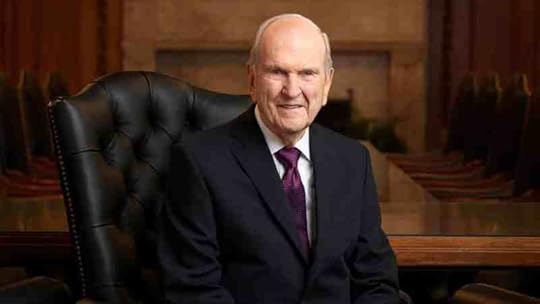
President Nelson,
I wrote you back in June 2021, after your April 2021 conference talk, “Faith in Him Will Move Mountains,” destroyed me. I explained in my last letter how your talk caused me great pain. I had never written a prophet before, but your message hurt me so much that I finally said, “Enough.”
Throughout my life, I’ve been taught that prophets can’t lie, cause harm, or say anything that will lead me astray. I was taught that when a prophet speaks, it is like scripture: “And this is the ensample unto them, that they shall speak as they are moved upon by the Holy Ghost. And whatsoever they shall speak when moved upon by the Holy Ghost shall be scripture, shall be the will of the Lord, shall be the mind of the Lord, shall be the word of the Lord, shall be the voice of the Lord, and the power of God unto salvation.” (D&C 68:3–4)
I’ve also been taught that when a prophet speaks, it’s as if God Himself is speaking directly to me—and I must listen and obey. The prophet was presented as our earthly link to our Heavenly Father and His Son, Jesus Christ. Supposedly, we are blessed to have a living prophet through whom God communicates.
I was taught that whatever the prophet says is from God: “What I the Lord have spoken, I have spoken, and I excuse not myself; and though the heavens and the earth pass away, my word shall not pass away, but shall all be fulfilled, whether by mine own voice or by the voice of my servants, it is the same.” (D&C 1:38)
I have also been taught through the scriptures that “Surely the Lord God will do nothing, but he revealeth his secret unto his servants the prophets.” (Amos 3:7) The Church teaches that a prophet teaches truth and interprets the word of God.
And the biggest and most damaging and deeply indoctrinated teaching of them all is that a prophet will never lead us astray. As stated in D&C and reinforced for generations, President Wilford Woodruff said: “The Lord will never permit me or any other man who stands as President of this Church to lead you astray.” This message has been repeated again and again, often with the added threat that if a prophet were to lie or mislead, God would remove him from the earth.
For example, Harold B. Lee taught: “You don’t need to worry about the President of the Church ever leading people astray, because the Lord would remove him out of his place before He would ever allow that to happen.” (The Teachings of Harold B. Lee, 1996)
And Virginia U. Jensen once said: “The Lord has given some marvelous guarantees without any disclaimers. And this is one of them: He will choose the prophet, and He will never let that man lead us astray.”
Even Brigham Young assured members that they could have complete confidence in the prophets when he stated: “The Lord Almighty leads this Church, and he will never suffer you to be led astray if you are found doing your duty. … If [your leaders] should try to do so, the Lord would quickly sweep them from the earth.” (Journal of Discourses, 9:289)
And most recently, Elder Ronald A. Rasband in October 2021 said: “We are distinguished as a Church to be led by prophets, seers, and revelators called of God for this time. I promise that as you listen and follow their counsel, you will never be led astray. Never!”
Never be led astray! That’s a big promise.
Because of these teachings, I was indoctrinated to believe that prophets and apostles always spoke the truth, could not lie, were infallible, could not cause any harm, were always right, always spoke for God, and everything that came out of their mouths was true. It’s heartbreaking that God had to come behind the Church and these teachings to correct what was, in fact, being led astray—something that was promised would never happen.
These doctrines have caused my family and me great harm. They are unhealthy, untrue, and psychologically damaging. After being diagnosed with spiritual trauma and scrupulosity, I am now in my third year of spiritual trauma processing and recovery therapy.
I now know that you and other prophets and apostles—past and present—are just human beings. You can and do make mistakes. You lie. You say untruthful things, harmful things, hurtful things, and manipulative things. You do not always speak for God. You are not always kind. You are not always good leaders. And yes—you can and do abuse power.
I wish these truths were taught in the Church. Acknowledging your humanity wouldn’t diminish your importance—it would enhance it, by making your leadership more grounded in love and humility, rather than the authoritarian way that dominates our church teachings. The authoritarian teachings the church uses regarding prophets and apostles are very destructive and abusive. They stifle the spiritual growth, development, and agency of the individual members. Because the members have been indoctrinated to outsource their spiritual authority to an external figure, rather than learning to trust their own internal spirit and in development of their own personal connection with God.
This is not Christ’s plan. It aligns more closely with Satan’s—removing a person’s agency, eliminating personal choice, demanding obedience over connection, and pressuring them to conform rather than letting them choose for themselves what they believe in and what strengthens them spiritually.
President J. Reuben Clark Jr. once counseled: “You will never make a mistake by following the instructions and the counsel of him who stands at the head as God’s mouthpiece on earth.”
These authoritarian teachings about prophets and apostles are a big mistake. President Woodruff’s teaching that prophets will never lead you astray, is also a big mistake. These teachings have caused immense pain and internal suffering—not just for me and my family, but for many others as well.
While some now claim that the Church teaches prophets are fallible, that message is barely taught—and only in recent years. I’ve heard it maybe a handful of times in my 45 years in the Church. When a message is presented 99% of the time in one direction, people internalize it. That’s how indoctrination works.
There’s a quote I love: “The Catholics teach that the pope is infallible—and nobody believes it. Latter-day Saints teach that the prophet is fallible—and nobody believes it.”
My latest struggle has come from Elder Holland’s message, “The Garment of the Holy Priesthood” (September 2024): “Please don’t misunderstand. As you reach out for divine guidance, the Spirit will not inspire you to do less than follow the instruction received in the temple and the prophetic counsel shared by the First Presidency.”
So, is he teaching that we believe in personal revelation—or in personal conformity to the leaders?
These are exactly the types of messages that lead people astray. These are the kinds of messages that cause real and lasting harm. People spend years in therapy recovering from the shame, fear, and internal conflict these teachings create. They can not hear or feel the spirit speaking to them when the messages from the church are so much louder and contradict what they are feeling from the spirit.
Also, in October 2021, you said: “Take your questions to the Lord and to other faithful sources. Study with the desire to believe rather than with the hope that you can find a flaw in the fabric of a prophet’s life or a discrepancy in the scriptures. Stop increasing your doubts by rehearsing them with … doubters.”
I hate how, as Church leaders, you think you have the right to dictate what our spiritual journey should look like. When I read about Jesus Christ and his life, I see someone who welcomed questions more than He gave answers. I see someone who embraces seekers, not silences them. Doubt, questions, curiosity, and honest struggles are essential to spiritual growth. That’s how revelation works.
When you discourage questioning, whether you realize it or not, you are following Satan’s plan more than Christ’s—you are stripping away a members free agency, you are removing their ability to think and choose for themselves, you’re telling them not to trust their own spirit, not to listen and use their own discernment, and not to trust in our Heavenly Parents process of communicating directly to their children. Many of you should already know that using manipulation tactics like fear, shame, guilt, and spiritual gaslighting destroys a member’s free agency. Because now they are making choices based off of that manipulation tactic instead of making decisions from a place of love, peace, and truth.
I’m thankful that my Heavenly Parents have come behind the Church to correct the terrible, untruthful, hurtful, and abusive authoritarian teachings about prophetic authority. I only wish They had done it sooner—and not waited 43 years. I’ve had to painfully work through years of betrayal trauma because I sincerely believed everything I was taught. I know better now, but that doesn’t lessen the pain of the spiritual abuse I have endured.
People can handle painful truths far more than they can survive manipulative lies. Lies catch up to you—and those lies destroy people.
It has been empowering to take my control back for my own spirituality. I will never again outsource it to the leaders of our church. In a strange way, I should thank you—because your April 2021 talk was the moment when God clearly told me that what you were saying was, “Not true. And was not kind.” Can you imagine the pain, the turmoil, and the betrayal that was stirring in my heart and soul. It was devastating! It has been a long and difficult journey—but I made it. And I know my Heavenly Parents are proud of me. And I am proud of myself.
I finally understand my true worth, without the layers of manipulation, lies, fear, and control. I know my connection with my Heavenly Parents is eternal and will always be. I no longer believe the Church’s lie that I would lose that connection if I stopped “doing all the things.” Their love is unconditional. Their guidance is gentle and peaceful. And Their Spirit is stronger in my life than ever before. And I now know that it has nothing to do with all the rules, rituals, or perfect/exact obedience. In fact, I was being blinded by “doing all the things”, that is what destroyed my spiritual connection to Them and caused years of mental health struggles.
There is still so much pain and trauma to work through. But I know I can do it—because I feel Their love surrounding me. And love—not fear—is what heals, encourages, liberates, and transforms.
I’m writing this not because I expect a reply or even an apology—but because my story deserves to be heard. I will no longer stay silent about the harm done in the name of obedience. I speak up for myself, for my healing, and for the many others who are still trying to find their voice.
Thank you for listening,
Jami Newton
PS: I’m still a member but trying to do it with a new Lens of love, it is much harder than just following a script blindly, but also, way more rewarding.
Jamie is a life long Mormon & return Missionary. She has struggled with perfectionism and scrupulosity most of her life. She internalized so many harmful teachings from the church probably because she had no parent at home to tell her otherwise. Everything she learned, she learned from the church. She and her 3 brothers raised each other. She played college basketball and loves all things sports, and outdoors. She has 3 amazing kids, one of which was diagnosed with a rare incurable pain disease called AMPS/CRPS, after 3 major brain surgeries to remove a brain tumor when he was 5 years old. She been married to her best friend for over 20 years. She is thankful for him everyday.