Julia McCoy's Blog, page 12
February 19, 2024
How to Write a Blog: A Step-by-Step Guide for Beginners
Alright, you’ve decided to plunge into the blogging universe. Whether it’s sharing your passion, connecting with a like-minded community, or even turning a profit, knowing how to write a blog is your first step toward success.
This guide will walk you through choosing the right platform that suits your style and needs — from WordPress for those craving flexibility to free options like Wix for beginners on a budget.
Diving into the art of creating captivating material, we’ll ensure your audience always yearns for another visit. From brainstorming buzzworthy topics using Google Trends to mastering keyword research tools like Semrush, you’ll learn how to make your posts pop and pick up some strategies for monetizing your hard work.
Ready? Let’s start blogging smarter — not harder — and turn those ideas into digital gold.
Want to build a real money-making blog, 10x faster with the use of AI? Check out our AIO Blogger course.
Table Of Contents:Starting Your Blogging JourneyWhat Should You Write About?How to Choose a Blogging PlatformHow to Write a Blog PostAdding Visual Elements to Blog PostsOptimizing Your Blog Posts for Search Engines (SEO)Add Keywords NaturallyBuild a Powerful Linking StructureCreate an Editorial CalendarHow to Promote Your BlogShare on Social Media PlatformsSend to Your Email ListJoin Content Promotion PlatformsPartner With Bloggers and InfluencersHow to Monetize Your Blog PostsAffiliate MarketingSponsored ContentAdvertisingSelling Products or ServicesMembership or SubscriptionEvents and WorkshopsStart Writing Compelling Blog ContentStarting Your Blogging JourneyFinding your footing in the blogging world begins with a clear plan. Let’s talk about setting up for success from day one.
What Should You Write About?Picking blog topics that spark your interest and appeal to potential readers is key. But, it goes beyond just what you love talking about.
Launching a blog that hits the mark requires plunging into subjects where your distinctive perspectives or problem-solving abilities can shine through. When your passion meets the practicality of what you’re sharing, it results in blog posts that not only fulfill but captivate your audience.
What Should You Name Your Blog?Your blog’s title is its first impression — make it count. A memorable name captures the essence of your content while being easy to remember. When creating a blog, think of titles that are both descriptive and intriguing enough to pique curiosity at first glance.
A few tips on how to choose a title for your blog:
Reflect the content: A good blog title should accurately reflect the content and theme of your blog. It should give readers a clear idea of what they can expect to find.Be descriptive: Use descriptive words that convey the main topic or focus of your blog. This helps potential readers understand what your blog is about at a glance.Keep it concise: Aim for a title that is short and to the point. Long titles can be overwhelming and difficult to remember. Ideally, your title should be under 70 characters so that it’s easily readable and shareable on social media platforms.Make it engaging: A great blog title will capture the reader’s attention and spark their curiosity. Use words that evoke emotion or intrigue to entice people to click and explore your blog further.Be unique: Stand out from the crowd by choosing a blog title that is unique and memorable. Avoid generic or overused phrases that blend in with other blogs in your niche.Consider SEO: Incorporate relevant keywords into your blog title to improve search engine visibility. Think about what terms your target audience might use when searching for content similar to yours.Think about your audience: Consider who your target audience is and what would appeal to them. The title of a business blog will be very different from the title of a travel blog or food blog. Your blog’s title should resonate with your target demographic and speak to their interests and needs.How to Choose a Blogging PlatformChoosing the right blogging platform is essential for managing your blog effectively. Here are some factors to consider when making your decision:
Ease of use: Look for a blogging platform that is beginner-friendly. A simple and intuitive interface will make it easier for you to create, edit, and publish your blog posts without technical headaches.Customization and branding: Look for a platform that allows you to customize your blog’s design and branding to reflect your unique style and personality. Choose a platform that offers a variety of templates, fonts, colors, and layout options to create a visually appealing and cohesive look for your blog.Hosting options: Decide whether you want a hosted or self-hosted blogging platform. Hosted platforms like WordPress.com or Blogger offer all-in-one solutions with hosting included, while self-hosted platforms like WordPress.org require you to find your own hosting provider.SEO and analytics: Choose a platform that prioritizes search engine optimization (SEO) and offers built-in analytics tools to track your blog’s performance. Look for features like customizable meta tags, sitemaps, and integration with analytics platforms like Google Analytics to monitor traffic, engagement, and other key metrics.Scalability: Choose a platform that can grow with your blog as it expands. Make sure the platform can handle increases in traffic, storage needs, and additional features or functionality as your blog grows.Cost: Evaluate the cost of using the blogging platform, including any subscription fees, hosting costs, or additional expenses for premium features or upgrades. Consider your budget and the value you’re getting in return for the investment.Community and support: Consider the size and active community of users for the blogging platform, as well as the availability of support resources such as documentation, tutorials, forums, or customer support. A strong community and support network can be invaluable for troubleshooting issues and getting help when you need it.By considering these factors and doing some research, you can choose the blogging platform that best fits your needs, preferences, and goals for your blog.
Best blogging platforms outside of WordPress
How to Choose a Domain NameThe next critical step is securing a that represents your brand. Here are some tips to help you choose a great domain name:
Relevance: Make sure your domain name reflects the content and theme of your blog. It should give visitors an idea of what your blog is about.Keep it short and simple: Choose a domain name that is easy to spell, pronounce, and remember. Avoid using slang, hyphens, or numbers that can confuse people. Shorter domain names are easier to remember and type so keep it under 15 characters if possible.Keywords: Incorporate relevant keywords into your domain name to improve search engine visibility. Think about what people might search for when looking for content similar to yours.Avoid trademark issues: Make sure the domain name you choose is not trademarked by another company to avoid legal issues down the road.Consider the extension: While .com is the most common and often preferred extension, other extensions like .net, .org, or country-specific extensions can also work depending on your target audience and niche.Future-proof: Choose a domain name that will still be relevant as your blog grows and evolves. Avoid using too narrow or specific terms that may limit your blog’s potential in the future.Check availability: Once you have a few options in mind, use a domain name registrar to check if your desired domain name is available. If it’s not, consider slight variations or explore other options.Social media availability: Check if the domain name is available as a username on major social media platforms to ensure consistency across your online presence.Remember, your domain name is an important part of your brand identity so take your time and choose wisely.
How to Write a Blog PostMastering the art of writing blog posts that resonate with your audience is no small feat. It’s about striking the perfect balance between informative and engaging content.
A good starting point is to remember that people spend an average of 52 seconds reading a blog post. This means you barely have a minute to leave a lasting impression. Keeping sentences short and sweet can help maintain reader interest from start to finish.
Now let’s talk specifics.
First, how do you write a killer headline? A great headline will grab the reader’s attention and compel them to click through to read your content.
A few tips on how to write a headline that converts:
Highlight the benefit: Tell the reader what benefit or value they will get from reading your blog post. What problem does it solve? What information or insights will they gain?Use action verbs: Use strong, active verbs that convey a sense of action or urgency. This can help draw readers in and make your headline more compelling.Spark curiosity: Use curiosity or intrigue to pique the reader’s interest and make them want to learn more. Ask a question, tease a surprising fact, or hint at a solution to a common problem.Make it specific: Be specific and concrete in your headline to give readers a clear idea of what to expect. Include details or numbers if relevant to make your headline more compelling.Include keywords: Incorporate relevant keywords into your headline to improve search engine visibility and attract readers who are searching for topics related to your blog post.Consider the reader’s perspective: Put yourself in the reader’s shoes and think about what would grab your attention and make you want to click on the headline. What would be most valuable or interesting to your target audience?Keep it honest: Avoid clickbait tactics or misleading headlines that promise something the blog post doesn’t deliver. Your headline should accurately reflect the content of your blog post to build trust with your readers.Once your reader has landed on your page, deliver what you promised — rich content filled with insights from someone who gets it.

Next: how to write a blog outline. Each blog post has an introduction, body, and conclusion. Let’s break down these main elements plus the sections in between.
Introduction: Begin with an introduction that sets the stage for your post and hooks the reader’s interest. Clearly state what the post is about and why it’s relevant or important to your audience. Copyblogger shares some incredible tips on how to write a great blog intro.Subheadings: Break up your content into sections using descriptive subheadings. This helps organize your thoughts and makes it easier for readers to scan the post.Paragraphs: Write clear and concise paragraphs that focus on one main idea each. Use short paragraphs to improve readability and make your content more digestible.Bullet points or numbered lists: Use bullet points or numbered lists to present information in a clean and easy-to-digest format. This is particularly effective for lists, tips, or steps.Supporting evidence: Provide evidence, examples, or data to support your points and add credibility to your post. Link to reputable sources when necessary.Conclusion: Wrap up your post with a conclusion that summarizes the main points and reinforces the key takeaways for the reader. You can also end with a thought-provoking question to encourage further engagement.Call to action (CTA): A good blog post will always include a clear call to action at the end to tell readers what to do next, whether it’s subscribing to your blog, leaving a comment, or sharing the post on social media.Some additional elements you can include in your blog post to boost engagement:
Author bio: If applicable, include a brief author bio at the end of the post to introduce yourself and provide credibility.Related posts: Consider including links to related posts or content that your readers might find interesting or helpful.Comments section: Enable comments on your blog post to encourage feedback, questions, and discussions from your readers.Before publishing your post, take the time to proofread, fact-check, and edit it for clarity, grammar, and spelling errors. Pay attention to formatting, such as using bold or italic text for emphasis, and ensure consistency throughout the post.
By following this structure, you can create blog posts that are well-organized, engaging, and informative for your audience.
Adding Visual Elements to Blog PostsUnless you’re a professor or lawyer, no one wants to read a whole block of text with 2,000 words. Writing a text-heavy blog post with no breaks is the quickest way to make your reader bounce.
Multimedia elements like photos, gifs, infographics, charts, and videos are not just about aesthetics — they’re a cool strategy designed to break up text, illustrate points more clearly, and ultimately keep readers scrolling.
Videos are especially hot right now as they cater to people who prefer watching over reading or simply need further clarification on complex topics covered in your post. View them as an upgrade to the user’s journey, adding a sprinkle of diversity to what you present.

Source: ProBlogger
Things to keep in mind when adding multimedia elements to your blog posts:
Images
Upload images directly to your blog post by inserting them using the built-in editor or content management system (CMS).Optimize images for the web to ensure fast loading times and good quality.Use images to break up text, illustrate concepts, or provide visual examples related to your content.Videos
Embed videos from platforms like YouTube, Vimeo, or your own video hosting service.Copy the embed code provided by the video platform and paste it into the HTML editor of your blog post.Use videos to provide tutorials, demonstrations, interviews, or other relevant content that complements your written post.Infographics
Create or source infographics that visually represent data, statistics, or complex information related to your blog post.Upload the infographic image to your blog post or embed it from an external source.Use infographics to make complex information easier to understand and more visually appealing.Slideshows
Create slideshows using presentation software like PowerPoint or Google Slides.Export the slideshow as an image or PDF file and upload it to your blog post.Use slideshows to present step-by-step guides, lists, or visual narratives related to your content.Audio
Embed audio files or podcasts directly into your blog post using the embed code provided by your audio hosting platform.Provide transcripts or summaries for audio content to make it accessible to all readers.Use audio to share interviews, discussions, or additional commentary related to your written content.Interactive Elements
Incorporate interactive elements like quizzes, polls, or surveys using third-party tools or plugins.Embed interactive content directly into your blog post to engage readers and encourage participation.When adding multimedia elements to your blog post, make sure they enhance the overall user experience and provide value to your audience. Avoid overloading your post with too many multimedia elements as this can distract from your main content.
Additionally, ensure that all multimedia elements are mobile-friendly and accessible to users with disabilities.
Optimizing Your Blog Posts for Search Engines (SEO)Finding your blog buried on Page 10 of Google’s search results can feel like hosting a party that no one shows up to. But, fear not. By mastering SEO optimization techniques, can propel your blog post to Page One, improve online visibility, increase organic traffic, build credibility and trust, and enhance user experience.
Add Keywords NaturallyStart by strategically incorporating relevant keywords into your content. This process is similar to leaving a trail of breadcrumbs for search engines — keywords indicate the topic of your content and why it deserves to be displayed when users search for related terms.
A valuable tool I recommend for identifying impactful keywords is Semrush. It simplifies the task of discovering keywords that strike a balance between high search volume and manageable competition levels, removing much of the uncertainty from the process.
Incorporating these targeted phrases naturally into titles, headers, and body text makes your blog post more relevant to user queries. Remember though, stuffing an article with too many keywords will do more harm than good — it’s all about striking the right balance.
Build a Powerful Linking StructureBeyond selecting the right words, another powerful SEO tool is implementing linking strategies within your blog posts.
Identify opportunities for both internal links (connecting different pages within your own site) and external links (directing readers to authoritative sources).
Both types of links enhance the reader experience and are positively regarded by search engines.
However, it’s important to prioritize quality over quantity, just as with keyword usage. By selecting strong SEO keywords and implementing smart linking, you’ll position your brand and your content for success.

So, you’re ready to turn your blog into a bustling hub of awesome content, right? Well, it all starts with planning and organization.
Say hello to your new best friend: the editorial calendar.
An editorial calendar is not just about marking dates on a spreadsheet; it’s about strategizing your content to align with your blogging goals, your audience’s needs, and search engine algorithms — all while keeping you accountable and focused.
To start building your editorial calendar, open up Excel or Google Sheets. This simple tool becomes powerful when you customize it according to your specific blogging strategy. Your main columns should include:
Publishing Date: When will this post go live? Timing can be crucial depending on the topic (think seasonal posts).Blog Title: What’s the working title? Having this upfront helps keep content focused.Main Keywords: Which SEO keywords are you targeting? Insert them here for easy reference as you write.Status: Is it a draft, in review, or ready to publish?Comments: Any notes or ideas that need consideration during the writing or editing stages?If procrastination tempts you away from writing duties, Google Calendar, with its customizable notification system, serves as an excellent ally.
If you’re already using my favorite AI writing tool — Content at Scale — you can also create a schedule for your blog posts right inside the app.
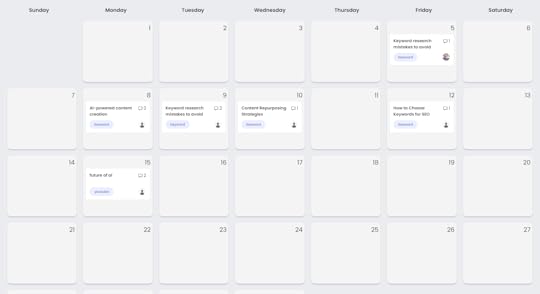
As you can see from the screenshot below, you can assign keywords, blog post titles, and team members to your writing tasks each day. The content calendar syncs with the content planner so you can generate hundreds of blog posts in just a few clicks.
Determining how often to publish is pivotal but varies widely among blogs. While more frequent posts generally correlate with increased traffic, you should never sacrifice quality for quantity.
Commit to what feels manageable — whether that’s weekly or bi-weekly — and adjust as needed based on performance metrics and reader feedback.
With these steps completed, you’re now well-equipped to blog confidently, knowing each piece of content has its place and purpose within your broader marketing strategy. Staying organized with an editorial calendar isn’t just good practice — it’s essential for anyone serious about their blogging journey.
How to Promote Your BlogIn content marketing, creating stellar long-form content is just half the battle. Promoting your blog posts effectively to reach a wider audience is equally crucial.
At Content Hacker, we understand that entrepreneurs and marketers might struggle with this aspect. To help you get the word out there, here are some practical strategies to amplify your blog’s visibility.
Share on Social Media PlatformsSocial media platforms like Facebook, Twitter, Instagram, and LinkedIn are excellent places to promote your blog posts. Share snippets, images, or quotes from your blog content, along with a link to the full post. Engage with your followers by asking questions, hosting polls, or encouraging them to share their thoughts on your content.
Additionally, join relevant groups or communities related to your niche and share your blog posts there to reach a larger audience.
Each platform caters to a unique demographic and style of engagement, allowing you to tailor your promotional efforts accordingly.
Facebook: Ideal for sharing longer posts along with images or videos that link back to your blog.Instagram: Perfect for visually appealing snippets from your post or infographics that tease the reader into visiting for more information.Twitter: Great for quick, impactful quotes from your article and engaging with followers through retweets and replies.LinkedIn: A professional network where detailed summaries or articles related to business growth perform well.Send to Your Email ListBuild an email list of subscribers who are interested in your blog content and regularly send out newsletters or email updates.
Use enticing subject lines and preview text to encourage subscribers to open your emails and click through to your blog.
Include links to your latest blog posts, along with summaries or teasers to pique their interest.
You can also segment your email list based on subscribers’ interests or preferences to send targeted content that resonates with them.
Join Content Promotion PlatformsContent promotion platforms like Medium, Quora, or Reddit can help get your blog posts in front of a larger audience.
Write informative answers to relevant questions on Quora, participate in discussions on Reddit, or repurpose your blog content for Medium to reach new readers and drive traffic back to your blog.
Be sure to follow the guidelines and etiquette of each platform to avoid being seen as spammy or self-promotional.
Partner With Bloggers and InfluencersCollaborate with other bloggers, influencers, or brands in your niche to expand your reach and promote your blog.
Guest posting on other blogs allows you to tap into their audience and drive traffic back to your own blog.
You can also participate in joint ventures, co-host webinars or podcasts, or collaborate on content projects to reach new audiences and gain exposure for your blog.
By implementing these strategies consistently and strategically, you can effectively promote your blog and attract more traffic, engagement, and visibility for your content.
How to Monetize Your Blog PostsNow that you’ve dipped your toes into the blogging world, chances are you’re itching to turn your successful blog into a money-making machine. Monetizing blogs isn’t just a dream; it’s very much achievable with the right strategies in place.
Let me show a few strategies on how to make money blogging.
Affiliate MarketingAffiliate marketing tops our list as one of the most popular ways to monetize blogs. By promoting products or services within your content, you can earn commissions for every sale made through your affiliate links. It’s like being a digital salesperson without ever having to leave your home office.
Sponsored ContentMoving onto sponsored content, think of this as profitable storytelling. Firms compensate writers for crafting narratives around their offerings, weaving these products into the fabric of their content. However, it’s crucial to keep realness at the forefront — your audience values your honesty and personal stories above all.
AdvertisingOne of the most straightforward ways to monetize your blog is through advertising. Display ads are banners or other ad formats placed on your website, and you earn revenue based on factors like impressions or clicks. By strategically placing ads in your blog posts, you can generate passive income from your blog traffic.
Selling Products or ServicesAnother option is to sell your own products or services directly through your blog. This could include digital products like e-books, online courses, or premium content, or physical products like merchandise or handmade goods.
Alternatively, you could offer services such as consulting, coaching, or freelance work related to your niche. By leveraging your expertise and audience, you can create additional revenue streams beyond traditional advertising.
Membership or SubscriptionYou can also monetize your blog by offering premium content or membership subscriptions. This could involve creating a membership site where users pay a monthly or yearly fee to access exclusive content, resources, or community features.
You could also offer a subscription-based newsletter or premium content gated behind a paywall. By providing valuable content or services that users are willing to pay for, you can generate recurring revenue and build a loyal audience.
Events and WorkshopsHosting events, workshops, or webinars related to your blog niche can be a lucrative way to monetize your expertise and engage with your audience in person or online. You can charge admission or registration fees for these events, and offer additional products or services for sale during or after the event.
Events also provide opportunities for networking, collaboration, and building relationships with your audience and other industry professionals.
Each of these methods offers unique opportunities for monetizing your blog, and the best approach will depend on your niche, audience, and business goals. By diversifying your revenue streams and experimenting with different monetization strategies, you can maximize your earning potential and create a sustainable income from your blog.
Start Writing Compelling Blog ContentJumping into the blogging world, you’ve armed yourself with key strategies on how to write a blog. From selecting the perfect platform to crafting posts that resonate. You learned about leveraging SEO and visuals to make your content shine.
Maintain focus on quality and consistency in your writing. Remember: the heart of blogging lies in connecting with others through stories only you can tell.
Your journey has started. Continue to grow and change, letting each blog post move you closer to becoming a master storyteller in the blogging world.
It’s time to build your blog empire.
Want to be a real Content Hacker along with us, but not sure where to start?
We’ve got custom-created resources just for you, friend.
Get inside the Content Hacker Community  – at just $20/month, it’s a no-brainer. On-call, expert support, live calls, and so much more.
Want to go deeper? Check out our AIO Blogger course – an immersive one-week course teaching you everything you need to know to build a money-making online blog.
Can’t WAIT to welcome you inside.
with gratitude,
Julia
The post How to Write a Blog: A Step-by-Step Guide for Beginners appeared first on Content Hacker.


February 18, 2024
What is a Personal Blog? A Guide to Sharing Your Story
Ever wondered what is a personal blog? It’s your digital space to share stories, ideas, and passions.
Come along for a ride into the world of personal blogging! We’ll start by writing your first blog post and then dive into connecting with folks who share your interests. It’s all about exploring your thoughts and building relationships with people who get you.
You’ll learn how easy it is to start a personal blog and make it truly yours by picking the perfect theme on platforms like WordPress.
Plus, we’ve got tips on creating content that resonates and strategies for growing your audience through social media engagement.
And if you’re curious about turning your passion into profit? We cover monetization strategies too! By the end of this blog post, starting your very own personal blog won’t just be a dream — it’ll feel within reach.
Want to build a real money-making blog, 10x faster with the use of AI? Check out our AIO Blogger course.
Table Of Contents:What is a Personal Blog?Starting Your Blog JourneyDesigning Your Personal BlogWhat to Write in Your Personal BlogsBoost Impact With VisualsGrowing Your Personal Blog’s AudienceMonetizing Your Personal BlogNavigating Challenges in Personal BloggingThe Future of Personal BloggingBuild Connections and Communities with Personal BlogsWhat is a Personal Blog?A personal blog is your digital diary, a canvas where you paint with words. This snug nook online where individuals recount tales of their journeys, musings, and the wisdom they’ve gathered along the way. But it’s not just about pouring out your heart; it’s about connecting common interests with readers worldwide.
Whether you’re sharing everyday stories or diving deep into your passions like traveling or working out, a personal blog is where you can be totally you. It’s not about selling stuff; it’s about being real and letting your unique voice shine through.
About 53% of marketers tout blogging as their top content marketing strategy, highlighting its importance even in a business context. Yet at its core, personal blogs remain intimate spaces fostering connections through shared experiences and unique perspectives.
If you’re thinking of starting a blog but are unsure how to begin, tips on picking the best domain can help carve out your niche effectively while exploring different blogging platforms offers insights into finding the perfect home for your stories.
Remember though – successful personal blogs go beyond mere storytelling; they engage readers by resonating with them on a deeper level. That’s why choosing topics close to your heart yet relatable to others becomes key in building an audience.
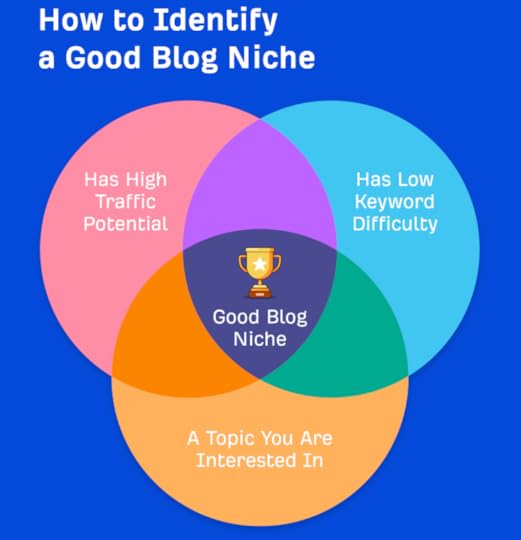
Tips on finding a good blog niche from Ahrefs
Starting Your Blog JourneyFinding the right blogging platform is your first step to entering the world of personal blogging. With options ranging from WordPress, known for its robust features and flexibility, to simpler platforms like Wix that let you easily create a stunning online presence without needing to code, making this choice can feel overwhelming.
Think about how much control you want over your blog versus how easy you want it to be to use. Consider if SEO stuff is super important to you or not. And figure out if you want a free domain or if you’re cool with paying for hosting. It’s all about finding what works best for you and your blog!
For instance, bloggers choose WordPress for its powerful search engine optimization capabilities and extensive plugin library. On the other hand, platforms like Wix offer an all-in-one solution with hosting services included.
Selecting a unique domain name distinguishes you from the 600 million blogs out there. It’s not just about finding something catchy; it’s about creating an identity that resonates with your audience.
Check out our comprehensive guide on and choose something memorable that aligns with your theme.
The layout you choose for your personal blog speaks volumes before visitors even start reading. Whether opting for minimalist aesthetics or vibrant color schemes depends on what story you’re trying to tell through your content.
A visually appealing site not only attracts more viewers but also encourages them to stay longer. You want them to explore different pages within your blog posts section or click affiliate marketing links if monetization is part of your goal.
Selecting themes directly impacts how users interact with content. Some of the features you might want to consider adding are email sign-up forms and social media sharing buttons. Browse through blog examples to find inspiration for the overall look and functionality of your personal blog.
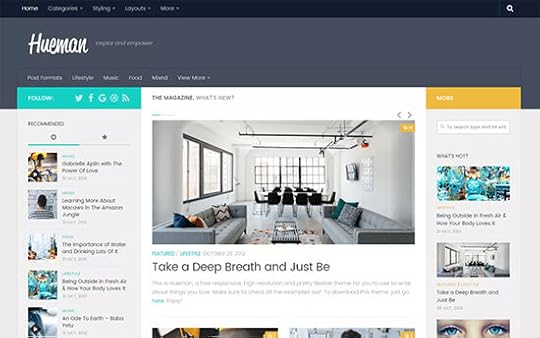
Check out 60+ Free WordPress Themes from WPBeginner
What to Write in Your Personal BlogsSharing your unique experiences through a personal blog is like opening a window to your soul. In this space, you have the freedom to write about everyday occurrences, exchange ideas, and establish bonds with like-minded individuals.
To truly resonate with your audience, start by weaving stories from your own life into each blog post. Whether it’s starting a new hobby or lessons learned from past mistakes, these narratives make your content relatable. Remember, authenticity breeds connection.
But it’s not just about putting your stories out there; it’s about making sure they grab your audience and keep them hooked. Break down complicated ideas into easy-to-understand bits and use catchy titles to guide your readers through your story’s twists and turns.
Running out of ideas for your blog? Try a keyword research tool like Ahrefs or Semrush to discover hundreds of topics for your blog posts.
Boost Impact With VisualsIn the personal blogging sphere, incorporating visuals significantly improves the allure and impact of your stories Whether you’re running a first-person perspective blog, diving into lifestyle topics, or exploring popular niches, integrating images and videos can significantly boost your written content.
Visuals serve as an instant hook. They not only break the monotony of dense paragraphs but also offer your audience a more enjoyable reading experience. Share vivid photos of your recent escapades in your travel diary or mouthwatering images of your latest recipe. Visuals are key to elevating your narrative — breathing life into plain text.
Visuals also help improve your standing with Google and other search engines. Google values content that engages users — photos and videos encourage visitors to spend more time on your page which signals quality content to search algorithms. This approach can help elevate your blog’s visibility online.
To start enriching your blog posts with engaging imagery and clips, explore tools like Canva and Adobe Creative Cloud that simplify finding high-quality visual assets.
If you’re a personal blogger on Wix, you can find dozens of templates that beautifully showcase visual elements within personal blogs. By thoughtfully including visuals alongside well-crafted stories, you’ll enhance both engagement rates and SEO performance — a win-win strategy.
Remember though: always use visuals relevant to the topic at hand. For instance, learn how effective travel bloggers integrate captivating landscapes into their narratives, turning each post into a mini-expedition for their followers.
Growing Your Personal Blog’s AudienceAttracting readers to your personal blog is like throwing a party. You want everyone to have a good time, but first, you need to let them know where and when it’s happening.
How do you promote your personal blog?
Social media promotion is the megaphone for your blog. It lets you shout out loud about your latest posts or thoughts directly into the ears of those who might care most. But here’s the twist: each platform has its own language and etiquette.
To boost your blog’s visibility on social media, start by identifying which platforms share common interests with your blog focuses. If you’re all about travel, Instagram and Pinterest could be gold mines for visuals while Twitter can help spark quick conversations around hot destinations or tips.
Beyond just posting links to new articles, engage with others’ content too. Comment on related posts and join discussions in groups or forums that align with your niche. This helps build community and attract readers back to your site.
Email lists are another powerful tool often overlooked by bloggers. By offering something valuable in exchange for an email address — like exclusive insights — you create a direct line of communication with folks genuinely interested in what you have to say.
Monetizing Your Personal BlogDid you know that you could make money blogging?
Monetizing your personal blog can be both exciting and rewarding. Let’s look at some of the ways you could turn your personal blog into a revenue-generating machine.
Selling products directly on your blog opens a direct income stream that blends seamlessly with your content. By writing compelling product reviews or creating original merchandise, you establish a storefront within your digital space.
Promoting products through affiliate marketing is another lucrative avenue. In this process, you weave product suggestions into your content and receive a financial reward for each purchase that happens via your distinct referral link. Choose an affiliate partnership that aligns with your audience’s interests to maintain viewer confidence.
Building email lists also unlocks the potential for direct monetization, offering a pathway to deliver tailored promotional content straight into the inboxes of your subscribers. Creating this list should start early — offer incentives like free downloads or exclusive content in exchange for their email addresses.
Learn more tips and tricks on how to monetize your blog here.
Navigating Challenges in Personal BloggingEach person who decides to start a blog faces unique obstacles along the way. However, this shouldn’t deter you from embarking on your writing journey and expressing your ideas.
One common challenge is finding the time to write amidst a busy schedule. Blog posts take hours to write, edit, and publish — hours you might not have if you are working full-time.
Another obstacle many bloggers face is deciding what to write. When you start writing, think about what excites you or the challenges you’ve overcome. These stories resonate well with readers looking for unique experiences in daily life.
Additionally, growing an audience requires more than just great content; it demands strategy too. Social media promotion can significantly boost your visibility and attract readers who share common interests.
Finding ways to monetize your passion often puzzles bloggers too. Whether through selling products directly on your blog or exploring affiliate marketing opportunities, there are numerous paths to generating income from personal blogs.
All of these challenges can be solved with technology — particularly artificial intelligence.
Don’t have time to write? An AI writer like Content at Scale can generate a full blog post on any topic in under 5 minutes!
Don’t know what to write? Content at Scale’s in-app keyword research tool can dig into hundreds of terms and phrases you can write about.
Don’t know how to promote your blog on social media? ChatGPT or Content at Scale’s AIMEE chatbot can help you write killer captions for your Facebook, Twitter, Instagram, LinkedIn, TikTok, or Pinterest posts.
Staying driven as the days roll on presents its own set of challenges. Remember why you wanted to easily start a personal blog in the first place — connecting with like-minded individuals and sharing parts of your world that others might find inspiring or informative helps keep the spark alive.
The Future of Personal BloggingPeering into the future, it’s clear that personal blogging is not dead. With new technologies and platforms emerging, bloggers are finding innovative ways to share their stories.
Blogging platforms have evolved from simple text-based interfaces to rich multimedia experiences. The shift has ushered in an era where narratives come alive, captivating the audience through varied and layered engagement.
Personal blogging in the era of multimedia digital content is all about breaking free from the usual writing stuff and getting creative. Throw in some videos or start a podcast — it’ll spice up your blog and bring in all sorts of different folks who are into different things.
Picking the right blogging platform is crucial as it impacts not just how you present your content but also how easily people can find it through search engines. Opting for platforms known for strong SEO capabilities will help ensure your voice reaches far and wide.
Social media is crucial for expanding your reader base, blending the digital with personal touchpoints. Platforms like Instagram allow bloggers to visually complement their written content while engaging directly with followers through comments and direct messages.
Monetizing? It’s more than possible. With strategies ranging from affiliate marketing to selling products directly, turning passion into profit becomes real.
But what truly sets apart successful blogs in this ever-evolving landscape? It’s the ability to forge genuine connections with readers by sharing unique experiences.
Build Connections and Communities with Personal BlogsSo what is a personal blog?
In essence, a personal blog is your digital playground, where you’re the director, storyteller, and curator of your own unique experiences. It’s a space where you can share your thoughts, passions, and adventures with the world, connecting with like-minded individuals and building a community around your authentic voice.
Whether you’re chronicling everyday moments or delving into niche interests, a personal blog is a reflection of who you are and what matters to you, inviting others to join you on your journey through the vast landscape of the internet.
Start simple, stay true to yourself, and engage earnestly with your audience.
It’s time to build your blog empire.
Want to be a real Content Hacker along with us, but not sure where to start?
We’ve got custom-created resources just for you, friend.
Get inside the Content Hacker Community – at just $20/month, it’s a no-brainer. On-call, expert support, live calls, and so much more.
Want to go deeper? Check out our AIO Blogger course – an immersive one-week course teaching you everything you need to know to build a money-making online blog.
Can’t WAIT to welcome you inside.
with gratitude,
Julia
The post What is a Personal Blog? A Guide to Sharing Your Story appeared first on Content Hacker.
February 15, 2024
How to Name Your Blog: Setting The Tone for Success
Choosing the right name for your blog is more than just a creative endeavor; it’s a crucial first step that sets the tone for your entire online presence.
With our guide on how to name your blog, you’ll learn how to blend creativity with strategy, ensuring your blog stands out and resonates with its intended audience.
From identifying your niche and understanding who you’re writing for, to integrating SEO-friendly terms that boost visibility in search engines, we’ve got you covered.
Plus, we’ll help you navigate the technicalities of domain availability and legal checks to avoid future hassles.
Let’s give your blog a name that reflects your spirit and magnetizes an audience.
Want to build a real money-making blog, 10x faster with the use of AI? Check out our AIO Blogger course.
Table Of Contents:Determine Your Blog NicheKnow Your Target AudienceConsider SEO When Naming Your BlogChecking AvailabilityNavigating Trademark WatersFinalizing Your DecisionAsk for FeedbackRevisit Your Starting PointSeek Validation Beyond Your CircleHow to Name Your Blog: A Comprehensive GuideSo you want to start blogging. What do you name your blog?
Blog names need to be catchy and memorable, and give readers an idea of what to expect.
Determine Your Blog NicheFinding the sweet spot for your blog starts with nailing down its niche. This isn’t just about what you love; it’s also about where your expertise lies. Say, for example, you’re all about vegan cooking or have a knack for DIY home projects — these passions can form the backbone of your content.
There are endless choices when it comes to blog niches. Globetrotting adventures, culinary delights, style trends, daily living tips, and wellness journeys are just some of the most popular niches that can open up a world of possibilities for your blogging career.
Knowing what you are good at helps you brainstorm blog names that are not only relevant but also appealing to those interested in these topics.
Tools like Google Translate and Word Hippo are great starting points for finding blog names that are closely connected to your niche. These resources can spark creativity and help you land on something unique that still clearly communicates what you’re all about.
Know Your Target AudienceYour audience defines the language and tone of your blog — and by extension its name too. If you’re aiming at professional photographers, something straightforward yet sophisticated might work best. If it’s new parents looking for advice and comfort through humor, then a playful blog name would likely resonate more.
Knowing your target audience shapes not only how you write but also influences the kind of blog name that will catch their eye.
A good practice in how to name your blog is creating reader personas — a semi-fictional representation of ideal readers based on market research and real data about existing audiences. They help ensure that when someone stumbles upon blog names during a domain search, yours stands out because it speaks directly to them in a language they understand.
Always keep in mind who will read your blog posts, because ultimately they’re whom your blog is meant for.
Brainstorm Blog NamesTo begin brainstorming blog names, consider your blog’s message. What are you trying to convey? This clarity can inspire names that resonate with your audience.
For example, if you’re launching a travel blog, incorporating words related to adventure or destinations can make it more appealing.
Crafting a name often involves tinkering with various word blends to spark creativity. Find synonyms, opposites, and various noun instances that are related to your keywords. It’s about mixing and matching until something clicks.
What Makes a Good Blog Name?Around 600 million blogs are vying for readers’ attention, and standing out begins with choosing the right blog name.
So what makes a good blog?
A memorable blog name is your first step towards building a brand that resonates with your audience and remains etched in their memory.
To ensure memorability, simplicity is key. Short names are not only easy to remember but also effortless to type — a crucial factor considering the fleeting nature of online interactions.
Imagine having a potential reader interested in your content, yet they’re unable to revisit or share your blog simply because they can’t recall its lengthy or complex name.
Beyond brevity, relevance plays an instrumental role. Your blog’s name should serve as a clear indicator of its content theme and niche focus.
For instance, if you specialize in long-form content marketing strategies for scaling businesses — as we do here at Content Hacker — choosing words that reflect this expertise will immediately inform visitors about what to expect from your site.
Sound plays a crucial role too. Alliteration can make blog titles more rhythmic and easier to remember. Think ‘Fashionista Finds’ for a fashion blog or ‘Backpacker’s Bliss’ for a travel site.
Equally important is making sure that your blog name isn’t just unique within the confines of blogging platforms but across social media channels as well. This consistency helps establish a cohesive online presence, making it easier for audiences to find and engage with you on various platforms.
Incorporating relevant keywords into your blog’s name can enhance its visibility on search engines — a vital consideration given that most internet sessions begin with a search query. However, striking the right balance between keyword optimization and creativity ensures both discoverability and brand integrity.
Your choice of blog name should ultimately be something you’re proud to represent. After all, it becomes synonymous with your digital persona and professional image online.
Remembering these guidelines while brainstorming blog names will help you choose one that not only captures what you offer but also paves the way for effective branding.
Consider SEO When Naming Your BlogNaming your blog isn’t just about creativity; it’s also a strategic move to boost its visibility on search engines. Integrating SEO-friendly terms into your blog’s name can make all the difference.
A memorable brand starts with a name that sticks. But beyond being catchy, including relevant keywords can significantly enhance your blog’s discoverability online. Merging imagination with tactical thinking is crucial for drawing in more specific visitors through search engines such as Google.
When brainstorming how to name your blog, think about keyword combinations related to your niche that people are likely to search for. This doesn’t mean stuffing keywords awkwardly but finding a natural fit that reflects what you write about and helps improve blog SEO.
Choosing Targeted NamesPicking a name closely connected to your topic has clear SEO advantages. It signals immediately to both readers and search algorithms what content they can expect, boosting relevancy scores and potentially improving rankings on result pages.
But there’s a balance to strike here because specific names may limit future topics or expansion areas for your blog. However, zeroing in on these specialized topics typically results in enhanced credibility within specific areas, an exchange that’s definitely advantageous when your sights are set on sustained growth in a distinct domain.
Where to Find Blog NamesIf you’re wondering how to name your blog, browsing through existing blogs in your area of interest can help you come up with a unique and attention-grabbing name for your own blog.
By looking at popular travel or food blog names, you can notice patterns such as the use of puns, alliteration, or direct descriptors that could spark an idea tailored for your content.
Many bloggers regret their initial choice of blog name because they didn’t take the time to research and explore other options. Do a simple online search and you might discover a bunch of cool ideas without falling into the same old pitfalls.
Use a Blog Name GeneratorIf you’re starting a business blog, your blog name should reflect your brand, appeal to your target audience, and stand out in the crowded digital space. For entrepreneurs, founders, business owners, and marketers looking to grow their businesses through long-form content marketing, starting with an engaging blog name is essential.
Luckily, technology has provided us with tools that make this process easier — namely, blog name generators. These online tools are designed to spark creativity and provide you with unique names based on keywords related to your business or niche.
How do blog name generators work?
Blog name generators typically ask you to input one or more keywords that describe your blog’s focus area. After submitting your key phrases, these platforms use algorithms to combine your keywords with other words — including trendy suffixes or prefixes — to generate a list of potential names for you.
Here’s an example of blog name ideas I got from for a blog I want to start for my little fella:
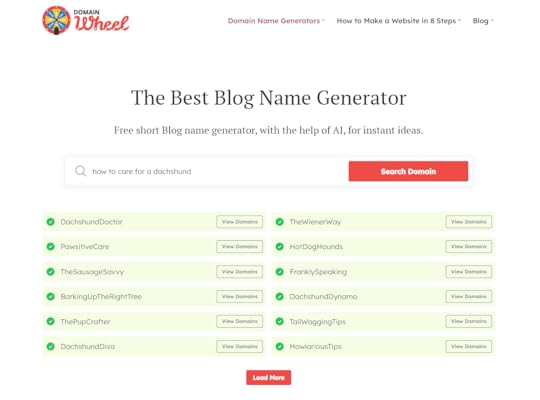
Even if you don’t select one of the suggested names outright, they might inspire an idea that leads you directly toward naming nirvana.
Instead of spending hours brainstorming ideas only to find they’re already taken when checking domain availability, these tools streamline both processes by often offering only available options.
You’ll find hundreds of creative combinations of words that you might not have considered otherwise — expanding the pool from which you can choose your perfect blog name.
Aside from Domain Wheel,, and Wordoid are all also excellent resources worth exploring. Each tool offers unique features such as filtering by language preference or setting length parameters — ensuring that every suggestion aligns closely with what makes your brand stand out.
Ask AI to Generate Blog NamesIf you’re not satisfied with the suggestions from browser-based blog name generators, why not ask AI for help?
AI chatbots can be super helpful in brainstorming blog name ideas because they can generate a ton of creative suggestions quickly. You just need to input some keywords or themes related to your blog’s topic and the AI will churn out a bunch of potential names based on that.
AI tools save you time and can spark ideas you might not have thought of on your own. Plus, you can easily tweak the suggestions until you find the perfect fit for your blog.
Some AI chatbots like Content at Scale‘s AIMEE are also trained to focus on SEO so they can generate search-engine-friendly blog names that increase discoverability online.
Here are 20 blog name suggestions I got from AIMEE for the same topic:
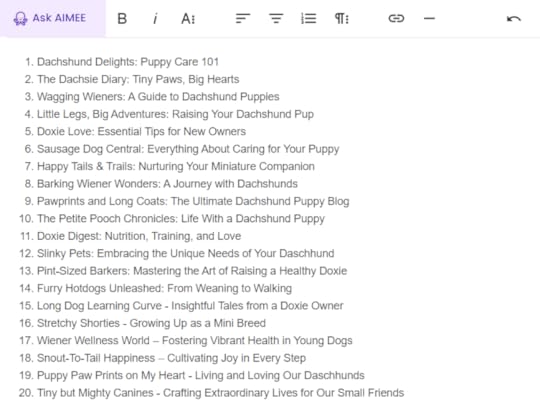
That’s a lot of blog name suggestions you can take inspiration from!
Incorporating these strategies allows marketers and bloggers to harness technology effectively while adding a personal touch — making their blogs stand out in a crowded marketplace through memorable branding.
Checking AvailabilityBefore you fall in love with a blog name, make sure it’s not already taken. A quick is your first step.
Use tools like Domain.com to check if your dream name is available. If it’s taken, don’t give up just yet. Sometimes, tweaking the wording slightly or adding keywords can land you that perfect name without straying from your original vision.
Remember, rebranding later because of a poor initial choice can be a real hassle for both SEO and traffic. It’s why test-driving your top 3 choices comes highly recommended.
As I earlier mentioned, your blog name should ideally be consistent across all social media platforms. Maintaining this uniformity across platforms enhances your brand’s visibility, simplifying the process for enthusiasts to locate you in the digital realm.
To ensure availability on social networks, use a simple Google search or specific tools designed for checking username availability on multiple platforms.
Navigating Trademark WatersThe last thing you want is legal trouble over a blog name. To avoid this headache, do some digging into trademark databases before making any final decisions.
Using the United States Patent and Trademark Office’s official website, search through their database to see if there are any existing trademarks closely connected to the blog names you’re considering.
Despite taking all these precautions, consulting with a specialist might still be necessary to navigate the complex legal landscape of trademarks.
Should any concerns emerge from your investigation, seeking guidance from a lawyer who’s an expert in intellectual property rights might ward off forthcoming complications.
Finalizing Your DecisionSo, you’ve done your homework and brainstormed a list of potential blog names. But before making a final decision, let’s discuss a few key actions to help confirm your selection.
Ask for FeedbackFriends and family can offer fresh perspectives or even highlight something you might have missed. Remember, many bloggers regret their initial choice because they skipped this step. It’s not about seeking approval but rather gaining insights that could make all the difference.
Anecdotes abound where a casual conversation led to an ‘aha’ moment for naming blogs. Engaging in idea-sharing often reveals brilliant insights that were overlooked, elevating mundane concepts to exceptional ones.
Revisit Your Starting PointYour starting point was likely guided by passion or expertise in a particular area – be it travel, food, fashion, or another niche. Returning to why you started helps align your name with your blog’s message and mission.
A strong blog name reflects what readers expect from your content while also setting up SEO advantages down the line. A targeted name means better visibility on search engines when people look up topics closely connected to what you write about.
Seek Validation Beyond Your CircleBeyond personal networks lies another valuable resource: online communities relevant to your blogging niche — forums, social media groups, or even Reddit threads where like-minded individuals gather are gold mines for feedback.
Set The Stage for Success with a Memorable Blog NameWhether you’re starting a food blog, a travel blog, a lifestyle blog, a fitness blog, or a photography blog, choosing a blog name marks the beginning of an adventurous path forward.
Blog naming might seem like a daunting task, but with the right approach, it can be a fun and rewarding experience. By following the tips and strategies outlined in this blog post, you can create a name that not only reflects your blog’s content and personality but also resonates with your target audience.
Remember to keep it simple, memorable, and unique, and don’t be afraid to get creative. With a little time and effort, you’ll find the perfect name that sets your blog apart and paves the way for your online success.
It’s time to build your blog empire.
Want to be a real Content Hacker along with us, but not sure where to start?
We’ve got custom-created resources just for you, friend.
Get inside the Content Hacker Community – at just $20/month, it’s a no-brainer. On-call, expert support, live calls, and so much more.
Want to go deeper? Check out our AIO Blogger course – an immersive one-week course teaching you everything you need to know to build a money-making online blog.
Can’t WAIT to welcome you inside.
with gratitude,
Julia
The post appeared first on Content Hacker.
February 14, 2024
What Is a Blog? A Simple Guide to Starting Your Own
So, you’re curious about what is a blog.
Let’s explore how blogs have evolved from simple online diaries into dynamic platforms for sharing knowledge and driving digital marketing strategies.
Along the way, you’ll learn practical tips on starting your own blog, whether it’s for personal expression or as part of a strategic content marketing plan.
We’ll also dive into strategies for enhancing your blog’s visibility through effective SEO techniques and interactive social media engagement to attract more visitors.
Additionally, we’ll look into the myriad of blog genres available — from culinary adventures to travel chronicles — and discover how each caters to unique interests and demographic preferences.
By the end of this article, you’ll not only understand what makes a successful blog but also learn how you can use blogging as a tool to establish your authority within your niche.
Want to build a real money-making blog, 10x faster with the use of AI? Check out our AIO Blogger course.
Table Of Contents:What is a Blog?The Birth of BlogsFrom Weblog to BlogTypes of Blogs You Can CreateFood BlogsMom BlogsTravel BlogsFashion BlogsHealth BlogsBeauty BlogsSports BlogsGaming BlogsHow to Start Your Own BlogStep 1: Define Your Niche and AudienceStep 2: Choose a Blogging PlatformStep 4: Set Up HostingStep 5: Install and Customize Your BlogStep 6: Start BloggingMaximizing Your Blog’s PotentialOptimize Your Blog Posts for Search Engines and ReadersShare Your Blog on SocialsUpdate Your SubscribersAttract Visitors with Great UXMonetize Your Online PresenceAffiliate Marketing: A Gateway to EarningsSponsored Posts: Building Brand PartnershipsSell Products: Beyond Just ContentBuild an Engaged Community Around Your BlogStart Blogging and Dominate Your NicheWhat is a Blog?A blog is a regularly updated website or online platform where an individual or a group of individuals, known as bloggers, share their thoughts, opinions, expertise, experiences, or information on various topics. These topics can range from personal interests, hobbies, professional insights, news commentary, travel experiences, product reviews, and much more.
The Birth of BlogsWhen Justin Hall started Links.net in 1994, he probably didn’t realize he was setting the stage for what would become one of the internet’s most influential platforms. This site marked the birth of personal web logs or blogs as we know them today.
Blogs have evolved from simple online diaries to powerful tools in digital marketing. The term “weblog” itself, coined by Jorn Barger in 1997, simplifies into “blog,” showcasing its evolution into a more accessible format.
In those early days, blogs were primarily personal spaces where individuals shared their thoughts with an online audience. Back then, envisioning a world where your innermost reflections were accessible to anyone across the globe for engagement was groundbreaking.
This interaction is key because it sets blogs apart from static websites – readers could leave comments, sparking discussions right there on your personal web space.
From Weblog to BlogAs technology advanced, so did blogging platforms, making it easier than ever before to start a blog and share ideas across various topics.
“Blog” became part of our daily vocabulary and they are now considered the 5th most trusted source for gathering online information.
Types of Blogs You Can CreateThe world of blogging opens up a multitude of captivating niches just waiting to be explored. With over 600 million blogs on the internet, there’s no shortage of topics or audiences.
Here are some of the most popular blog genres with examples.
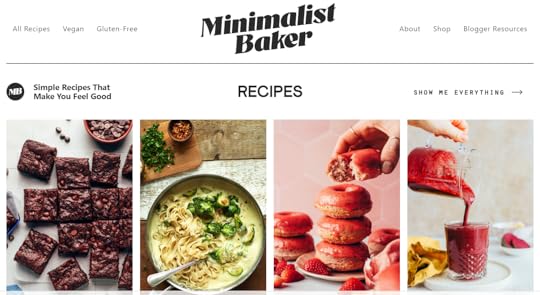
Food BlogsFood blogs focus on culinary delights, recipes, cooking techniques, restaurant reviews, and food-related experiences. Bloggers in this niche share their passion for food through mouthwatering photos, step-by-step recipe guides, cooking tips, and stories behind the dishes they create. Food blogs cater to a wide audience of food enthusiasts, home cooks, and aspiring chefs looking for inspiration and guidance in the kitchen.
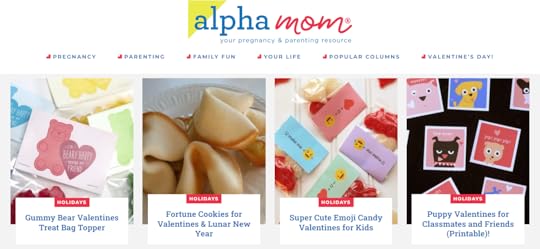
One of the most popular niches in the blogosphere, mom blogs are dedicated to parenting and family life covering a wide range of topics related to parenthood. Bloggers share parenting tips, advice on child-rearing, family activities, personal anecdotes, and product reviews geared toward other parents or individuals interested in family-oriented content.
Travel blogs document the adventures and experiences of travelers as they explore different destinations around the world. Bloggers share travel stories, itinerary recommendations, travel tips, photography, and insights into various cultures, cuisines, and attractions. These blogs often inspire and inform readers who are planning their own trips, offering practical advice and firsthand accounts of travel experiences.

Fashion blogs are dedicated to the latest trends, styles, and fashion-related topics. Bloggers in this niche often share outfit ideas, styling tips, fashion trends, shopping hauls, and reviews of clothing brands and accessories. They may also cover fashion events, runway shows, and celebrity fashion, providing readers with insights into the ever-evolving world of fashion.

Health blogs focus on promoting well-being, covering topics such as fitness, nutrition, mental health, and overall lifestyle choices. Bloggers in this niche share tips on maintaining a healthy lifestyle, workout routines, nutritious recipes, and information on various health-related topics to help readers make informed decisions about their well-being.

Beauty blogs delve into the world of skincare, makeup, hair care, and beauty products. Bloggers in this niche share beauty tips, product reviews, tutorials, and insights into the latest trends in the beauty industry. These blogs cater to individuals seeking advice on skin care routines, makeup application techniques, and recommendations for beauty products.

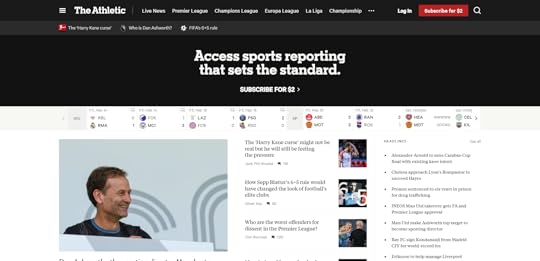
Sports blogs focus on everything related to sports, including coverage of games, athletes, and sports events. Bloggers in this niche share commentary, analysis, and updates on various sports, teams, and players. Sports blogs cater to sports enthusiasts who seek in-depth coverage, insights, and discussions on their favorite sports.
Gaming blogs are centered around the world of video games and gaming culture. Bloggers in this niche share game reviews, gaming news, tips and tricks, and insights into the gaming industry. These blogs cater to gamers looking for information about new releases, gameplay strategies, and discussions about their favorite gaming experiences.

These are just a few examples of the diverse types of blogs that exist, each catering to different interests, passions, and lifestyles.
How to Start Your Own BlogStarting your own blog can be an exciting journey. Here’s a detailed step-by-step guide to help you get started:
Step 1: Define Your Niche and AudienceDetermine what topics you’re passionate about and what audience you want to target. Choosing a niche will help you focus your content and attract a specific audience interested in your subject matter.
Step 2: Choose a Blogging PlatformConsider your blogging goals, technical skills, and budget. Determine whether you need a simple platform for personal blogging or a more robust solution for professional or business purposes.
Evaluate the platform’s user interface and ease of use. Choose a platform that matches your technical proficiency and provides intuitive tools for creating, editing, and managing your content.
Look for blogging platforms that offer a wide range of features and customization options to meet your specific needs. Consider factors like themes, plugins, widgets, SEO tools, and integration with third-party services.
Popular options include WordPress, Blogger, and Squarespace.
Step 3: Select a Domain NameStart by brainstorming ideas for your domain name. Consider your blog’s niche, target audience, brand identity, and the message you want to convey. Make a list of keywords, phrases, and combinations that reflect your blog’s content and purpose.
Choose a domain name that is short, easy to spell, and memorable. Avoid using complex or hard-to-spell words, numbers, hyphens, or special characters that can make it difficult for users to remember or type your domain name correctly.
Use domain registration services like GoDaddy, Namecheap, or Google Domains to check the availability of your desired domain name. Enter your chosen domain name into the search bar to see if it’s available. If your preferred domain name is already taken, consider variations, alternative extensions, or different combinations.
Select the right domain extension (also known as a top-level domain or TLD) for your blog. The most common extension is “.com,” but other options like “.net,” “.org,” “.co,” or country-specific extensions like “.uk” or “.ca” are also available. Choose an extension that is relevant to your audience and aligns with your brand identity.
Before finalizing your domain name, research to ensure it doesn’t infringe on trademarks or copyrighted names owned by other individuals or organizations. Check trademark databases and conduct a thorough online search to avoid legal issues and potential conflicts down the line.
Step 4: Set Up HostingAssess your hosting requirements based on factors like website traffic, storage space, bandwidth, technical expertise, and scalability. Determine whether you need shared hosting, VPS (Virtual Private Server) hosting, dedicated hosting, or managed WordPress hosting based on your budget and technical requirements.
Research and compare hosting providers based on factors like reliability, speed, uptime guarantees, security features, customer support, pricing, and user reviews. Look for reputable hosting companies with a track record of providing excellent service and support to their customers.
Security is crucial for protecting your website from cyber threats and vulnerabilities. Choose a hosting provider that offers robust security features such as SSL certificates, firewalls, malware scanning, DDoS protection, regular backups, and security updates to safeguard your website and data.
Website speed and performance are essential for user experience and search engine rankings. Choose a hosting provider with fast servers, solid-state drives (SSDs), content delivery networks (CDNs), and caching technologies to ensure optimal speed and performance for your website.
Popular hosting providers include Bluehost, SiteGround, and HostGator.
Step 5: Install and Customize Your BlogInstall your chosen blogging platform on your hosting account. Follow the platform’s installation instructions provided by your hosting provider.
Customizing your blog allows you to personalize its appearance and functionality to align with your brand identity and meet the needs of your audience.
First, select a theme that suits your blog’s style, content, and purpose. Most blogging platforms offer a variety of free and premium themes with different layouts, color schemes, and customization options.
Customize the layout of your blog by arranging widgets, menus, and content sections to create a cohesive and intuitive user experience. Use the theme’s customization options or drag-and-drop editors to rearrange elements and adjust the layout according to your preferences.
Customize typography and colors to create a visually appealing and readable design. Choose fonts that complement your brand and are easy to read on various devices. Experiment with color schemes to create a cohesive and harmonious color palette that reflects your brand personality and enhances readability.
Brand your blog by incorporating your logo, colors, fonts, and imagery into the design. Use custom headers, backgrounds, and graphics to enhance your blog’s visual identity and reinforce your brand message. Ensure consistency in branding across all elements of your blog to create a cohesive and professional look.
Enhance your blog’s functionality by adding custom widgets, plugins, and features. Depending on your blogging platform, you can integrate social media feeds, email subscription forms, contact forms, related post widgets, and more to engage your audience and improve user experience.
Customize navigation menus to organize your content and make it easy for users to navigate your blog. Create custom menus for different sections of your blog, such as categories, pages, and external links. Arrange menu items in a logical order and use descriptive labels to help users find the information they’re looking for.
Finally, make sure your blog is optimized for mobile devices by selecting a responsive theme and customizing the design for smaller screens. Test your blog on different devices and screen sizes to ensure it displays correctly and provides a seamless user experience on mobile devices.
Step 6: Start BloggingNow that you have your blog in place, start creating content for your blog.
Publishing your first blog post acts as a gateway, revealing both your identity and the topics you’re eager to share your thoughts on. Begin by understanding buyer personas and let your blog posts speak directly to them.
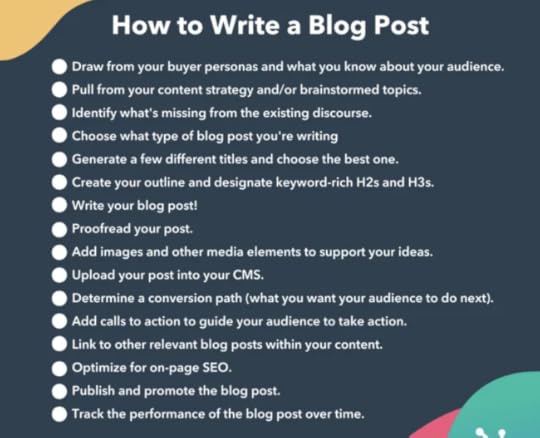
To truly make your blog posts shine and stand out from the crowd, search engine optimization is key. Writing blog posts is one thing, but ensuring they’re discoverable takes a whole different set of skills.
How do you boost your blog’s visibility?
Optimize Your Blog Posts for Search Engines and ReadersOptimizing your blog posts to rank higher in search engine results goes beyond mere keywords. It involves understanding what your target audience is searching for and how they are searching for it.
Apart from keywords, ensuring your website’s technical health boosts its rank on search engines significantly. This includes improving site speed, mobile responsiveness, and secure connections (HTTPS). Tools like Google PageSpeed Insights can unveil critical areas that need improvement.
Share Your Blog on SocialsSocial media does more than just drive traffic directly to your site; it increases brand visibility which indirectly benefits SEO ranking as well. Share engaging snippets of your blog posts across various platforms but tailor them according to each platform’s unique environment.
Learn more about integrating social media with content strategy here.
Update Your SubscribersEmail marketing campaigns help keep subscribers updated on new blog posts while encouraging repeat visits — a critical factor in boosting website rank over time.
According to HubSpot, consistently delivering relevant content via email keeps engagement high and drives traffic back to the blog effectively.
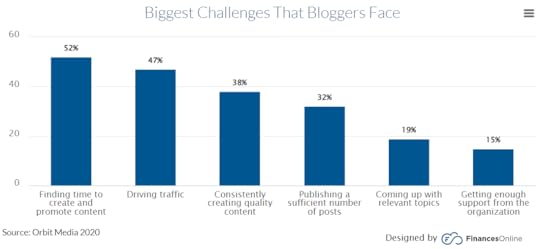
Source: Finances Online
Attract Visitors with Great UXEvery blogger dreams of a website that captivates their audience from the moment they land on it. What’s the secret sauce to turning that dream into something tangible? Stellar web design and an unwavering focus on user experience (UX).
First things first, let’s talk about the look and feel of your blog. A well-designed blog doesn’t just happen by chance; it requires thoughtful planning and execution. Picking the perfect palette and making sure your site is easy to wander through are key factors in shaping visitor impressions. Remember, good design keeps people there; great design compels them to come back for more.
User experience takes center stage when considering how visitors interact with your content. It’s not just about aesthetics; functionality plays a crucial role too. Pages should load quickly because speed matters in keeping potential readers engaged — no one likes waiting around for images to appear.
To further enhance UX, consider incorporating features like search bars or category tags that help users find what they’re looking for without hassle. Incorporating options for accessibility dramatically enhances the experience for individuals with disabilities, guaranteeing that all readers have the opportunity to equally delight in your blog posts.
Incorporating feedback mechanisms such as comment sections or contact forms allows you direct insight into what works and what needs improvement based on real user interactions — a vital step towards creating a space where readers feel valued and heard.
Monetize Your Online PresenceOne of the main reasons why people blog is to make money. Bloggers make around $45,000 on average, with most bloggers earning around $38,440 to $51,906.
Here are some of the ways you can turn your blog posts into a source of income.
Affiliate Marketing: A Gateway to EarningsAffiliate marketing stands out as one of the most accessible and effective ways to start monetizing a blog. Through collaborations with various brands and showcasing their items in your content, you secure a commission for each sale initiated via your distinct affiliate identifiers. This method aligns well if your blog post focuses on reviews or product recommendations, making it feel more like sharing useful tips than outright advertising.
Sponsored Posts: Building Brand PartnershipsSponsored posts are another lucrative avenue where companies pay you directly for creating content around their products or services. The key here is maintaining transparency with your readers while crafting authentic stories that naturally incorporate the sponsor’s offerings.
Sell Products: Beyond Just ContentYour blog post doesn’t have to be solely about others’ products. You can use your blog to sell yours too. Whether it’s digital goods like e-books and courses or physical merchandise related to your niche, blogs provide an excellent opportunity for direct sales by showcasing what makes these offers valuable additions to the lives of your audience.
Find more money-making opportunities from blogging here.
Build an Engaged Community Around Your BlogStarting a blog is merely the first step; the real magic lies in fostering an engaged community around it. This phase of developing a lively, connected audience transcends mere content creation. It involves nurturing genuine connections with readers — transforming simple posts into meaningful conversations and shared experiences.
Encouraging discussions in the comments section of your blog post can turn casual visitors into regular members of your online community. Start by asking thought-provoking questions at the end of each blog post and respond to comments as quickly as possible. Appreciate contributors when they engage in the conversation.
Making sure every visitor feels heard can transform them from silent observers into active participants who are eager to leave comments, share blog posts, and engage deeper with your content. Remember, when readers share blog posts within their networks, they’re not just increasing your reach — they’re giving you their stamp of approval.
To make these interactions even richer, consider integrating social media directly into your blog post which lets visitors easily like or tweet about what they’ve read without leaving the page. Some blogging platforms offer widgets that seamlessly connect your blog to a wider audience across different channels.
The goal here isn’t simply to increase numbers — it’s about creating meaningful relationships with those who visit your blog because at its core, blogging is all about connection. When done right, encouraging reader interaction not only boosts engagement but also turns passive viewers into loyal followers invested in what you have to say next.
Start Blogging and Dominate Your NicheNow you know what is a blog and how it evolved from a simple online journal to becoming a digital powerhouse for sharing and marketing. You learned how to start one, grow it, and even make money from it.
Blogs are not just personal diaries; they’re strategic tools in content marketing. They let you share knowledge, connect with like-minded folks, and establish your authority online.
Exploring niches like food or travel blogs opens doors to vast audiences, and SEO tactics and social media promotion can skyrocket your traffic.
Remember: consistency wins the race. Engage regularly with your readership through comments or emails to build a community around your blog.
It’s time to build your blog empire.
Want to be a real Content Hacker along with us, but not sure where to start?
We’ve got custom-created resources just for you, friend.
Get inside the Content Hacker Community – at just $20/month, it’s a no-brainer. On-call, expert support, live calls, and so much more.
Want to go deeper? Check out our AIO Blogger course – an immersive one-week course teaching you everything you need to know to build a money-making online blog.
Can’t WAIT to welcome you inside.
with gratitude,
Julia
The post What Is a Blog? A Simple Guide to Starting Your Own appeared first on Content Hacker.
February 12, 2024
How to Start a Blog in 10 Easy Steps
So, you want to learn how to start a blog.
It’s an exciting journey, but also one filled with questions.
Deciding on the theme of your blog is like choosing a destination for an adventure; it sets the stage for every step that follows.
In this comprehensive, 10-step guide, I will teach you how to set up a blog for success from day one. You will learn how to choose profitable niches and the best blogging platforms as well as creation, design, SEO, promotion, and monetization techniques to amplify your growth.
By the end of this read, starting a blog won’t just feel possible — it will feel actionable.
Want to build a real money-making blog, 10x faster with the use of AI? Check out our AIO Blogger course.
Table Of Contents:Step 1: Choose Your Blog’s Niche and PurposeStep 2: Know Your AudienceStep 3: Choose a Blogging and Hosting PlatformStep 4: Install And Personalize Your ThemeStep 5: Design an Attractive LayoutStep 6: Brainstorm Blog TopicsDiving Deeper: The Topic Cluster ModelStep 7: Start BloggingStep 8: Optimize Your Blog Posts for Search EnginesSpeed Up Loading TimeBuild High-Quality BacklinksStep 9: Promote Your Blog EffectivelyGet Social on Social MediaRespond to Blog CommentsEngage via EmailStep 10: Monetize Your BlogPaid AdsAffiliate MarketingTracking and Analyzing Blog PerformanceLegal Compliance and Security MeasuresCopyright and Intellectual Property LawsProtect Your Blog from Security ThreatsGrowing and Scaling Your BlogYour Journey to Blogging Success Starts NowStep 1: Choose Your Blog’s Niche and PurposeThe first step in how to start a blog is to find a niche.
The sweet spot for any blogger is where passion meets expertise. Think about what topics you can talk about all day without getting bored.
Now cross-check that list with areas where others come to you for advice or information. That intersection is your goldmine.
Now, don’t just dive into any area that sparks joy. Take a step back and see who else might be interested in these topics. Tools like Google Trends can be super handy here, helping you peek into how popular certain topics are.
But before getting too excited, let’s talk money — because eventually, most bloggers think about monetizing their websites. Different niches have different paths to making cash, whether through ads, affiliate links or even selling your own products or services down the line.
Also important is checking out the competition: seeing who’s already writing about similar things can give clues on how to make your blog stand out — or highlight gaps they’ve missed that you could fill.
Lastly — and this bit’s crucial — think long-term sustainability over fleeting trends. You want a topic that not only interests people now but will continue to do so in the future.
Combining these considerations with some strategic thinking should lead you towards selecting a blog niche not only profitable but also fulfilling personally.
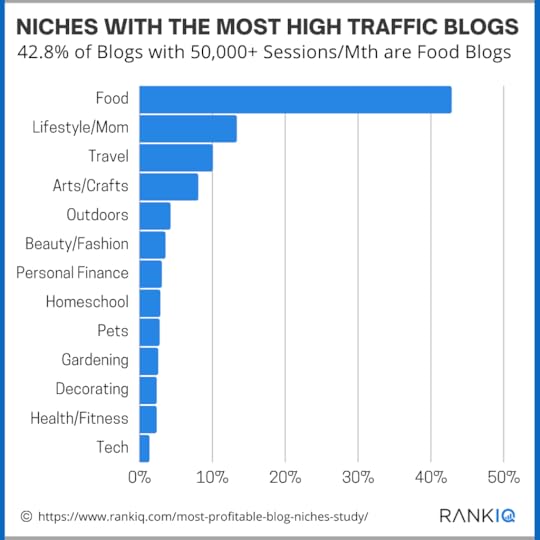
Source: RankIQ study
Step 2: Know Your AudienceStarting a blog without knowing who you are writing for is akin to shooting arrows in the dark — you might hit something, but chances of hitting the bullseye are slim. Start by understanding who will be reading your content, what they’re looking for, and how you can connect with them on a deeper level.
First up, think about the people already interacting with similar content — either yours or competitors’. Social media platforms are great for this initial dive. Look at comments, shares, and discussions to get an idea of who’s engaging and what matters to them.
Second, go straight to the source by conducting surveys or interviews. This doesn’t have to be complex — a simple online survey shared on social media or sent via email can reveal a lot about your potential readers’ preferences, challenges, and interests.
Pay attention to demographics data but also behavior patterns — what people read the most, how long they stay on pages etc., which provides clues into their interests and needs.
Check out online forums such as Reddit or Quora or specific Facebook groups related to your niche. Here you’ll find unfiltered conversations about the desires, frustrations, and questions that real users have – offering direct insight into potential topics or problems you could address in your blog.
Step 3: Choose a Blogging and Hosting PlatformA blogging platform is your blog’s home, so it needs to be solid, welcoming, and capable of growing with you.
WordPress stands out due to its adaptability and extensive network of resources. With thousands of themes and plugins, it lets you craft nearly any type of site. For those who love customization and have some tech skills, WordPress is a dream come true.
Blogger, on the other hand, offers simplicity. Owned by Google, it provides an easy-to-use interface that’s perfect for beginners. While not as customizable as WordPress, it takes care of hosting for you which means one less thing to worry about when starting out.
If a blogging platform is your blog’s home, your domain name is your digital address – make sure it reflects what you’re all about.
In some cases, such as with certain all-in-one blogging platforms like Squarespace, web hosting is bundled with the site builder itself. This integration simplifies setup and maintenance since you won’t need to manage separate accounts or interfaces for your website’s content and its digital home.
However, if you’re leaning towards WordPress, you’ll find yourself in need of a separate web hosting service. Popular web host options include:
Bluehost: Known for their excellent customer support and reliability.SiteGround: Offers cutting-edge speed technologies and proactive security measures.WP Engine: A premium web hosting choice focused on WordPress hosting with robust features.To navigate through these choices effectively, keep two critical factors in mind: uptime and bandwidth:
Uptime: This metric represents how often a server remains operational without downtime. Look for providers offering an uptime rate of 99.95% or higher to ensure that visitors can always access your site when they want to.Bandwidth: Bandwidth determines how much data can be transferred between your site, users, and the internet within a given period — essential for handling traffic spikes without slowing down page loads..Selecting the right web host isn’t just about finding somewhere to store your blog; it’s about ensuring optimal accessibility and user experience for every visitor who clicks through. By prioritizing high-quality web hosts known for reliability and strong technical support, you set yourself up not just for successful blogging but also for scalable growth online.
Step 4: Install And Personalize Your ThemeThe fourth step in how to start a blog is choosing a theme.
In essence, selecting a theme is like dressing up your blog. It sets the tone, the vibe, and how welcoming it feels to guests.
Don’t rush this step; explore various options until something clicks. Remember, first impressions matter immensely online.
For those using WordPress, the plethora of available themes can seem overwhelming at first glance but also liberating once you start experimenting with different styles. From minimalist designs that let content shine to intricate layouts crafted for visual storytelling — there’s truly something for everyone.
Blogger users aren’t left behind either. While choices may appear limited compared to WordPress, there are still plenty of options for customization and functionality available on the platform. Diving into these options allows Blogger aficionados to craft sites that are not only interactive but also tailored specifically to their individual preferences.
Step 5: Design an Attractive LayoutThe journey doesn’t stop at picking out the perfect theme — customization brings out its full potential by aligning it with your unique brand identity. Customizable elements like color schemes, font choices, and header images give you control over how readers perceive your site aesthetically.
If coding isn’t exactly in your wheelhouse but customization sounds daunting; don’t worry. Many themes come equipped with built-in customizers or page builders, allowing for drag-and-drop adjustments without touching any code.
A visually appealing blog layout isn’t just about pretty colors and trendy fonts. It’s about creating a space that reflects your content’s voice and makes it easy for readers to navigate. When designing your blog layout, think simplicity over complexity. An overly busy design might turn guests away, but a streamlined setup lets your message take center stage.
Bear in mind: mobile responsiveness is non-negotiable today. With more people accessing blogs from their smartphones than ever before, choosing a mobile-friendly design ensures everyone has a pleasant reading experience regardless of device type.
Step 6: Brainstorm Blog TopicsSo what should you write in your blog?
Start by reflecting on your unique experiences, successes, and even the lessons learned from failures within your niche. What have these taught you that could benefit others? Remember, authentic stories and insights often make the most compelling content.
Next, put yourself in your reader’s shoes. Consider their challenges, pain points, and questions they might have about your industry or service area. What would they love to read about? This empathy-driven approach ensures that the topics you choose are not only interesting to you but invaluable to them as well.
Diving Deeper: The Topic Cluster ModelA powerful strategy for creating blog content is utilizing the topic cluster model.
Start with a broad subject matter like “sustainable living” and then break it down into subtopics such as “eco-friendly products” or “reducing waste at home”.
Each of these subtopics can further be divided into more specific areas like “biodegradable cleaning solutions” or “DIY composting techniques”.
Not only does this method help generate a wealth of potential blog post ideas, but it also boosts SEO efforts by creating interlinked content clusters around key themes.
Here are a few ideas for your blog posts that might be interesting to readers:
A 30 before 30 list (also applicable for 40 before 40 or 50 before 50): A personal yet universally appealing way to share goals and inspire others.Your biggest learning moments: Sharing pivotal points in either personal development or business growth invites engagement through shared experiences.Trends analysis: Keeping abreast of trends within your sector shows thought leadership while providing valuable insights to readers looking ahead.Step 7: Start BloggingNow that you have a few blog topics in mind, it’s time to write your first blog post.
The bedrock of a successful blog post is identifying the right keywords. These are not just any words but strategic phrases that potential readers use to find content like yours on search engines.
For instance, if you’re about to share a delectable carrot cake recipe, targeting keywords such as “best carrot cake recipe,” “easy carrot cake,” or “homemade carrot cake” could significantly increase your blog post’s visibility online.
To pinpoint these golden nuggets, tools like Google Keyword Planner offer a great starting point without cost. However, for more in-depth analysis and broader keyword options, investing in premium keyword research tools such as Semrush or Ahrefs might be beneficial.
Analyze the top 10 results for your chosen keyword(s) on Google to understand what blog post formats resonate most with readers — and thus rank well. These can be listicles, how-to guides, or narrative stories.
Create blog posts that provide value to the reader. This means answering their questions thoroughly or solving a specific problem they may have regarding the topic at hand.
Once you have selected your keywords, weave them throughout your blog posts naturally. Overstuffing can detract from readability and penalize you in search rankings.
Incorporating these strategies ensures not only does your blog posts stand out but also align closely with what both users prefer and search engines reward — a critical balance every blogger should strive towards achieving right from their very first blog post.
Step 8: Optimize Your Blog Posts for Search EnginesBeyond just picking keywords, placement matters too. Make sure your keywords are in your blog titles and headings and sprinkled throughout your content naturally. But remember, stuffing keywords will do more harm than good so find a happy balance.
Speed Up Loading TimeWe’ve all been there: waiting impatiently for images to load on websites. This spells disaster for user engagement rates on blogs particularly when visuals take forever to show up.
To speed up loading times, consider compressing image files using tools like TinyPNG.
A handy trick I’ve learned is to also optimize images with relevant keywords in their file names and alt text because every little bit helps when climbing those search engine rankings.
Build High-Quality BacklinksEarning backlinks from reputable sites tells search engines that you’re a trusted authority in your niche. Moz’s guide on link building offers an excellent blueprint on how to start earning these valuable nods of approval.
Gone are days where any link would do; now it’s quality over quantity always.
To get those valuable links:
Create compelling blog posts that others want to share organically.Dive into guest blogging on respected platforms within your industry — it opens doors for networking while securing those coveted links.Step 9: Promote Your Blog EffectivelyYou now have a well-written, visually attractive, fully optimized blog post.
But the work doesn’t stop there. It’s time to promote your blog and get your message in front of your target audience.
Get Social on Social MediaSocial media is a vast empire, but if you know how to navigate it correctly, it can be your blog’s best friend. Maintaining regular activity on social media networks and actively connecting with your audience is the secret sauce.
To start, find out where your audience hangs out. Are they scrolling through Instagram or debating on Twitter?
Once you know this, tailor content that fits each social media platform’s vibe. An eye-catching infographic might slay on Pinterest but could flop on LinkedIn.
Remember to interact with your social media followers by replying to comments and messages promptly — because nothing says ‘I value you’ more than timely responses.
Foster a vibrant community around your blog where mutual admiration and curiosity flourish.
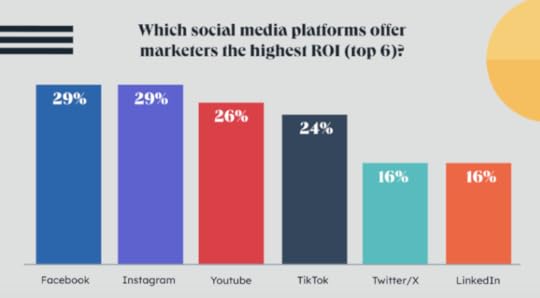
Source: HubSpot
Respond to Blog CommentsThe comment section of your blog post isn’t just a space for readers to express their thoughts; think of it as an open house party where everyone’s invited to chat about what’s written above the fold.
A pro tip here is not just responding to comments but sparking conversations within them. Ask follow-up questions or share additional insights related to the reader’s remarks. It turns passive readers into active participants, and suddenly, your blog feels more like a bustling café rather than an echo chamber.
How do I get people talking? The answer lies in crafting content that either solves problems, touches hearts, makes waves — or all three.
Engage via EmailDon’t forget the good ol’ email. This direct line allows personalized interaction unmatched by any social platform.
Firstly, build an email list using sign-up forms sprinkled throughout your site.
Then, it’s time for newsletters. Emails should feel like catching up over coffee — not sitting through another PowerPoint presentation. Dive into the latest news, explore intriguing blog posts, swap personal anecdotes, and uncover unique deals. Remember, the goal here is connection.
Step 10: Monetize Your BlogMaking money from your blog posts isn’t just a dream; it’s a very achievable reality.
But how do you make money blogging? Let me break down some proven methods that can help turn your passion into profit.
Paid AdsAds might seem like the go-to for blog monetization, and they are, for good reason. Services like Google Adsense make it straightforward to begin earning through pay-per-click or cost-per-impression ads. Yet, not all ad networks are created equal. Dabbling with various platforms is key to discovering which one yields the greatest return on your investment.
More visitors to your blog posts mean more potential clicks and earnings. So focusing on building your audience first will lay the groundwork for successful ad revenue later on.
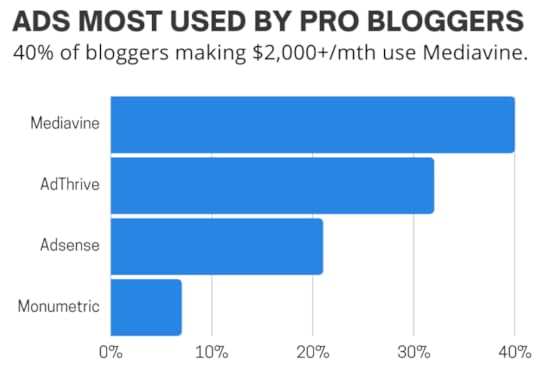
Affiliate marketing takes things up a notch by allowing you to earn commissions on products or services you recommend on your blog posts. By integrating affiliate links within your content naturally, you can provide value to your readers while also making a profit.
Finding affiliates that align with your niche and audience interests is vital for authenticity and trustworthiness — two factors that significantly impact click-through rates and conversions.
To get started with affiliate marketing, join networks such as Amazon Associates or seek out individual programs from companies relevant to your blog.
This method works best when paired with high-quality blog posts that genuinely aim at solving reader problems or answering their questions because this establishes trust — a critical factor in persuading someone to make a purchase based on your recommendation.
Sharing your personal experience about using certain products or highlighting how they could benefit users is far more persuasive than merely listing product features.
Here are more resources on how you can earn passive income from your blog:
How to Make Money Fast with the Amazon Affiliate ProgramHow to Make Money with Pay-Per-ClickHow to Make Money with AIHow to Make Real Money on Content at Scale’s Affiliate ProgramRemember, patience is key when starting any monetization strategy. Results may take time but stay consistent in providing valuable content alongside these techniques, and watch your blog transform into an income-generating asset.
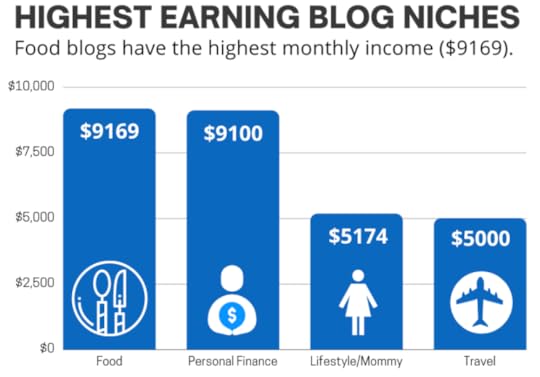
Knowing how well your blog is doing isn’t just about feeling good when you see big numbers. It’s about understanding what works, fixing what doesn’t, and making smart decisions to grow your audience.
The first step in analyzing your blog’s performance is getting familiar with analytics tools. Google Analytics stands out as a powerhouse for tracking traffic patterns. You can uncover which posts are home runs and which ones strike out.
To get started, Google Analytics lets you dive deep into page views, unique visitors, and bounce rates. These metrics tell the story of how engaging your content is and where there might be room for improvement.
Next up are key performance indicators (KPIs). KPIs are like signposts guiding us toward blogging success, but knowing which ones matter makes all the difference.
A few critical KPIs include engagement rate (how long people stick around), conversion rate (turning readers into subscribers or customers), and growth trends over time.
Every single metric provides insights for refining our approach to content, ensuring it aligns more closely with what our audience seeks and enjoys.
Legal Compliance and Security MeasuresImagine your blog as a bustling storefront. Just like you’d lock up at night and follow the city’s business rules, your online space needs protection and adherence to laws too.
Copyright and Intellectual Property LawsCopyrights are like invisible fences around your creative work, keeping it safe from unauthorized use. When creating content, always ensure it’s either original or properly credited.
But remember, fair use is more complex than just giving credit; it often depends on how much of the work you’re using and for what purpose.
To get a clearer picture of copyright laws that apply to bloggers, diving into resources such as the U.S. Copyright Office website can be incredibly helpful. They offer comprehensive guides that break down everything in layman’s terms.
If ever in doubt about using someone else’s work — be it images, quotes, or even ideas — seeking permission is not only respectful but legally sound practice.
Protect Your Blog from Security ThreatsThe internet can sometimes feel like the Wild West with hackers lurking around corners ready to jump at any vulnerability they find in websites — including blogs. That’s why installing security plugins becomes non-negotiable for safeguarding against these threats.
Maintaining regular backups might seem tedious but imagine losing all your hard-earned content overnight due to an attack or glitch. Suddenly those few minutes spent setting up automatic backups don’t seem so bad after all.
Services such as UpdraftPlus make this process easy by automating backups directly to cloud storage services of your choice.
Last but not least: keep everything updated. This reduces vulnerabilities that could be exploited by attackers aiming at outdated software components.
When it comes to data protection (yours and your visitors’), ensure compliance with regulations such as GDPR if your blog caters to European audiences.
Remember, while creativity fuels our blogs — bringing them alive through words and visuals — securing their foundation within legal boundaries protects both our efforts and integrity long term.
Growing and Scaling Your BlogNow it’s time to take things to the next level.
You might have heard that guest posting is a solid strategy for growing your blog. But why?
By leveraging guest posting, you unlock the door to a pre-built audience, showering your work with fresh attention. Think of it as getting a warm introduction at a networking event rather than cold-calling strangers.
To start, look for blogs in your niche with engaged readerships. Aim for those where adding value can lead to mutual benefits. Crafting compelling pitches is key here — highlight what makes your perspective unique and how their readers will benefit from it.
A handy tool in this journey is BuzzSumo. BuzzSumo helps you pinpoint blogs of interest and the degree of interaction they receive.
If guest posting gets people through the door, SEO keeps them coming back.
SEO-driven content marketing focuses on creating valuable content that also ranks well on search engines like Google. This means more visibility without constantly paying for ads or promotions.
The first step? Keyword research — it guides what topics you should cover based on what people are searching for related to your niche. Then comes crafting engaging yet informative posts around these keywords without sacrificing quality or readability.
As your blog grows, consider outsourcing tasks such as content creation, graphic design, and website maintenance to free up your time and focus on strategic growth initiatives.
One way to truly scale your blog is to use an AI writer like Content at Scale. This powerhouse tool is more than just a writing assistant — it has a full SEO suite that helps you do keyword research, build topic clusters, and run content audits right inside the app. Plus, it syncs directly to your WordPress account so you can publish hundreds of blog posts in an instant!
Your Journey to Blogging Success Starts NowThere you have it, my 10-step guide on how to start a blog.
Blogging is an exciting journey that offers endless opportunities for creativity, connection, and growth. By following these steps and staying committed to your vision, you can lay a strong foundation for your blog’s success.
Remember, the key ingredients are passion, persistence, and a genuine desire to provide value to your audience.
So, go ahead, take that first step, and embark on your blogging adventure with confidence!
It’s time to build your blog empire.
Want to be a real Content Hacker along with us, but not sure where to start?
We’ve got custom-created resources just for you, friend.
Get inside the Content Hacker Community – at just $20/month, it’s a no-brainer. On-call, expert support, live calls, and so much more.
Want to go deeper? Check out our AIO Blogger course – an immersive one-week course teaching you everything you need to know to build a money-making online blog.
Can’t WAIT to welcome you inside.
with gratitude,
Julia
The post How to Start a Blog in 10 Easy Steps appeared first on Content Hacker.
February 9, 2024
Artificial Intelligence Optimization: Humanizing AI Content
Imagine a world where your brand speaks directly to every customer, like an old friend who knows just what they need. That’s the power of artificial intelligence in today’s marketing. With AI, companies are personalizing interactions at scale and revamping how they connect with audiences.
This transformation doesn’t stop there; it extends into optimizing content for search engines and analyzing performance on the fly. And as businesses weave AI into their creative processes, they’re finding that not only does productivity soar but so does creativity.
But let’s be real — adopting AI isn’t without its hurdles. From technical snags to ethical dilemmas, there’s a lot to navigate. Stick around as we dive deep into overcoming these challenges when you pair human ingenuity with artificial intelligence in brand strategy.
Want to build a real money-making blog, 10x faster with the use of AI? Check out our AIO Blogger course.
The Transformative Impact of AI on Brand-Audience Interaction
Artificial intelligence is revolutionizing the way brands communicate with their customers, personalizing experiences, and streamlining marketing efforts.
Personalization at Scale with AI
Gone are the days of cookie-cutter experiences. With AI, brands can now deliver tailor-made interactions that are as unique as fingerprints, all while maintaining scalability.
Streamlining Customer Service with Chatbots
No more lost midnight questions in an inbox. Thanks to AI-powered chatbots that work round-the-clock, customers can get instant and hassle-free answers, even in their pajamas.
Dive into these new waves, and it’s clear: customer satisfaction is soaring sky-high because individuals feel heard and seen like never before, thanks to AI’s magic touch.
The Rise of AI as a Collaborative Content WriterImagine your writing team has just gained an extra member who never sleeps and can process information at lightning speed. That’s what integrating artificial intelligence into content creation feels like.
Streamlining Research and Data AnalysisData is the lifeblood of insightful content, but sifting through it all can be overwhelming. AI steps in to help by quickly analyzing vast datasets for valuable insights that humans might miss or need countless hours to uncover.
This assistance isn’t just about efficiency; it’s about precision too. With these tools, businesses have seen an 80% reduction in time spent on content production while doubling their output and ranking at the top of Google.
Augmenting Human CreativityCreativity remains a uniquely human trait, yet AI offers a fresh perspective that pushes our creative boundaries further. It provides suggestions based on data trends and user engagement metrics, sparking new ideas for writers to explore.
Enhancing SEO Strategies with AIWe’re using AI to climb up search engine rankings like never before.
This tech-savvy approach is transforming how we drive organic traffic, tapping into tools that can analyze patterns and keywords at an astonishing rate.
You’ll find these AI-driven tactics are not just about playing the game; they’re about changing it entirely.
Real-time Content Performance AnalysisGone are the days when you’d post content and hope for the best.
Now, with real-time performance analysis powered by artificial intelligence, feedback loops are almost instantaneous.
You get actionable insights on what works and what doesn’t right away.
Prioritizing E-E-A-T in AI-Generated ContentWhen it comes to creating content with artificial intelligence, one of the biggest challenges is how to make it not sound like a robot.
You see, the secret to getting love from Google (and readers) is expertise, experience, authoritativeness, and trustworthiness — all of which are inherent traits of humans, not AI.
How do you make AI content exhibit E-E-A-T?
This is where AIO comes in.
AIO is short for artificial intelligence optimization. It’s the process of humanizing AI-generated content to build trust with audiences and search engines.
We’re aiming for the sweet spot where innovation meets information. Think of AI as your high-tech sous chef — it can chop up data faster than you can blink, but without the seasoned hand of an expert human writer to guide it, you’ll end up with a bland meal no one wants.
To get there, we need writers who are experts in their fields — those who bring life experiences into play — and know how to use AI tools effectively.
After all, would you rather read a health article written by someone who’s actually worn scrubs or one churned out by someone whose closest brush with medicine was watching hospital dramas?
The Challenges of Implementing AI in Content StrategiesIt’s no secret that almost half the businesses out there hit roadblocks when they bring AI into their existing setups. But it’s not just about plugging in new tech and hoping for a miracle.
Overcoming Technical LimitationsThe key lies in easing into AI, one step at a time. You need to map out your systems, find where AI fits, and train your team accordingly. Start with areas you know can benefit from automation — like data crunching or content creation — and build from there.
Don’t let technical snags hold you back; partner up with IT pros who eat complex integrations for breakfast. They’ll help streamline this transition so your creative minds can focus on what they do best: crafting killer content.
Ethical Considerations in AI DeploymentTread carefully here because ethics is where brands often stumble. Remember, every piece of content should reflect honesty and transparency — not just tick boxes for search engines or algorithms.
Create guidelines that ensure the ethical use of AI within your marketing practices — think of respect for privacy, consent, and fairness across all customer interactions. These principles are crucial in keeping trust intact between you and your audience.
AI is Your Teammate, Not Your ReplacementIt’s clear that AI is shaking things up in the content world, but that’s not a bad thing for us writers. Think of AI as that reliable friend who’s always ready to lend a hand when you’re swamped with work. It’s here to take some weight off our shoulders, dealing with the grunt work so we can zero in on pouring soul into our stories.
We should see artificial intelligence as a teammate rather than a competition out to get our jobs. It helps us overcome writer’s block by offering suggestions when we’re stuck and works behind the scenes 24/7 — leaving all the creative glory to us.
Embrace AI as part of our writing toolkit. Tap into its strengths — like lightning-fast research and error-checking — while augmenting its weaknesses with expertise, experience, authoritativeness, and trustworthiness that only humans can provide.
It’s time to build your blog empire.
Want to be a real Content Hacker along with us, but not sure where to start?
We’ve got custom-created resources just for you, friend.
Get inside the Content Hacker Community – at just $20/month, it’s a no-brainer. On-call, expert support, live calls, and so much more.
Want to go deeper? Check out our AIO Blogger course – an immersive one-week course teaching you everything you need to know to build a money-making online blog.
Can’t WAIT to welcome you inside.
with gratitude,
Julia
The post Artificial Intelligence Optimization: Humanizing AI Content appeared first on Content Hacker.
February 7, 2024
How to Write a Brief in 5 Steps
So, you’re here to learn how to write a brief. Good call. Whether it’s nailing that creative project or arguing a case with precision, getting your brief right can set the stage for success.
This piece is designed to walk you through the nuts and bolts of crafting effective briefs — be they creative or formal.
We’ll dive into defining clear objectives, pinpointing your target audience, and articulating key messages that resonate. Plus, tips on leveraging technology for better collaboration.
By sticking around, you’ll get practical insights into structuring your document for impact and making sure every word counts through proofreading practices.
Let’s make sure your next brief hits all the right notes.
Want to build a real money-making blog, 10x faster with the use of AI? Check out our AIO Blogger course.
Table Of Contents:What is a Project Brief?Types of Creative BriefsMarketing Creative BriefsProduct Design BriefsAdvertising Agency Creative BriefsKey Components Every Project Brief Must HaveProject BackgroundObjectivesTarget AudienceTimelineHow to Write a Brief in 5 StepsStep 1: Provide Context or Background InformationStep 2: Clearly Define Your Project ObjectivesStep 3: Outline Scope and DeliverablesStep 4: Identify Key Stakeholders and RolesStep 5: Assign Timelines and BudgetsAutomate Your Project BriefsStreamline Projects with a Creative BriefWhat is a Project Brief?A project brief lays the foundation for any creative or strategic initiative, serving as a roadmap that guides team members and stakeholders from start to finish. Think of it as the blueprint of your project’s building process.
At the core, creative briefs involve merging background information with clear targets, ensuring everyone moves in sync toward the envisioned outcome.
Types of Creative BriefsHere at Content Hacker, we emphasize the importance of strategic long-form content marketing. A crucial part of this strategy involves crafting an effective creative brief that aligns with your project’s goals.
What are the types of project briefs?
Marketing Creative BriefsThe marketing creative brief is a powerhouse tool used predominantly to steer campaigns toward market success. Whether you’re launching a new campaign or revamping an existing one, this type of brief lays down broad business objectives alongside strategies designed to achieve them.
It often encompasses revenue targets and budget considerations — key components that ensure all team members are on the same page regarding financial constraints and expectations.
Product Design BriefsProduct design briefs, on the other hand, focus squarely on introducing new products or features into the marketplace. Crafted by product marketers in collaboration with product managers, these documents detail not only what makes a product unique but also how it benefits its intended audience.
They typically include comprehensive product documentation and descriptions — a vital resource for any team tasked with bringing innovative solutions to consumers efficiently.
Advertising Agency Creative BriefsCreative agencies employ their version of concise yet informative briefs tailored specifically for each client they serve. These documents encapsulate everything from brand guidelines to specific project directives — and oftentimes budgetary outlines — to guide decision-making processes effectively across teams.
An account manager or supervisor usually spearheads this development process before sharing it with the project stakeholders, ensuring brand alignment before any actual work starts.
The value of a creative brief lies in the streamlining of communication between different departments while clearly defining project objectives upfront.
Selecting which type of brief suits your current needs depends largely on your role within your organization as well as the specific projects at hand.
Key Components Every Project Brief Must HaveTo kick things off right, every effective creative brief starts with a comprehensive company background. This sets the stage by providing context about who you are and what drives your business forward.
Project BackgroundThe project background serves as the foundation for your entire project plan. Consider questions like what led to this project? Was it customer feedback or a gap identified through research?
Also, if there were related projects previously undertaken by your team, how did those go and what lessons were learned? This section ensures everyone starts on the same page regarding why this project matters.
ObjectivesClearly defining your project goals within your brief can significantly impact team alignment and motivation. These objectives act as your north star — guiding every decision made during the project.
Without sharp goals, projects can drift aimlessly so be sure to articulate what success looks like for this particular venture.
Target AudienceUnderstanding your audience is the cornerstone of any successful content marketing strategy, especially when it comes to long-form content that aims to educate, engage, and convert. If you’re catering primarily to entrepreneurs, founders, business owners, and marketers, know that these individuals are not just looking for quick tips but comprehensive insights on how to leverage long-form content marketing to grow and scale a sustainable business.
To further break down your target audience:
Entrepreneurs and founders: Driven by innovation but often strapped for time, they require efficient yet potent strategies that promise real ROI from their content efforts.Business owners: With an eye on growth opportunities but facing fierce competition, they need ways to stand out through high-quality content that resonates with their niche market.Marketers: Always on the lookout for trends and tools that can enhance engagement rates while streamlining campaign management processes across multiple platforms.Whether you’re crafting an insightful blog post series or developing comprehensive guides laden with industry expertise, knowing precisely who you’re talking to will determine how effectively your message lands.
TimelineA well-structured timeline highlights key dates and milestones critical for keeping everything on track. This clarity helps manage expectations around deliverables and deadlines amongst all involved parties.
Incorporating buffer times for unforeseen challenges can also ensure more realistic timelines are set from the get-go.
Your timeline isn’t just about when things happen; it’s about making sure they happen efficiently while maintaining quality standards throughout each phase.
How to Write a Brief in 5 StepsCreating a comprehensive project brief is essential for ensuring all stakeholders are aligned from the get-go. This document serves as the foundation for your project, outlining objectives, expectations, and how success will be measured.
Below are five crucial steps to craft an effective project brief.
Step 1: Provide Context or Background InformationThe first step in drafting your project brief involves setting the stage by offering necessary background information. For instance, if you’re launching a new feature within your app, the project overview should detail its relevance based on current user behavior or feedback:
Step 2: Clearly Define Your Project Objectives“Currently, chat is our second most popular feature (first is connecting with friends via email). With 84% of users utilizing chat in some capacity and 63% reported being on another platform’s video or voice call while using our app.”
After providing context, articulate what this project aims to achieve. Use specific metrics where possible to set clear targets.
For example:
Increase user retention rate by X%Migrate Y% of free users to monthly plans through enhanced featuresStep 3: Outline Scope and DeliverablesDelineate exactly what will be delivered upon completion of the project. If developing an in-app live video experience, specify functionalities expected at launch.
For example:
User-to-user video calls within the app interfaceScreenshare capabilities during callsStep 4: Identify Key Stakeholders and RolesThis section should list everyone involved in the project along with their responsibilities. Effective stakeholder management is critical for seamless execution; thus clarifying the roles of project team members early prevents confusion down the line.
For example:
Project Manager – Oversees overall progress and coordinates between teamsStep 5: Assign Timelines and BudgetsTo avoid projects dragging on indefinitely, it’s vital to assign realistic timelines and budgets. Include milestones to track progress against deadlines and ensure there is enough financial runway to see the initiative through to completion.
For example:
Prototype of in-app video chat feature ready for testing by Q2Following these steps ensures that every stakeholder has a clear understanding of what needs to be done, why it’s important, how it will happen, who is responsible for each task, when it needs to be completed, and how much it will cost.
Armed with this information from the outset can dramatically increase the chances of successful project outcomes.
Automate Your Project BriefsCreating compelling long-form content requires meticulous planning and precision.
The solution? Preparing your briefs well in advance.
Yes, it might seem like an additional task on your already overflowing plate. However, crafting detailed briefs ahead of time can save you from countless hours of frustration and internal screaming down the line.
This is where efficiency comes into play. Did you know that AI can now write detailed project briefs? Getting a chatbot to create your briefs can cut hours from your workload, without compromising on quality.
Here’s an example of a project brief I asked AIMEE to write:
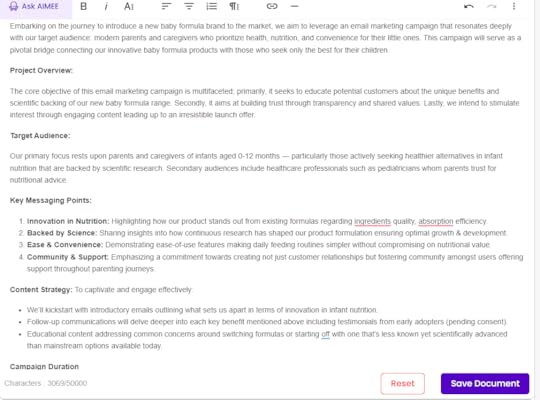
And this was done with no detailed prompting at all! Just a simple, generic instruction to write a sample project brief for an email marketing campaign for a new baby formula brand.
Here’s another AI-generated project brief, this time for a social media marketing campaign for a golf club brand:
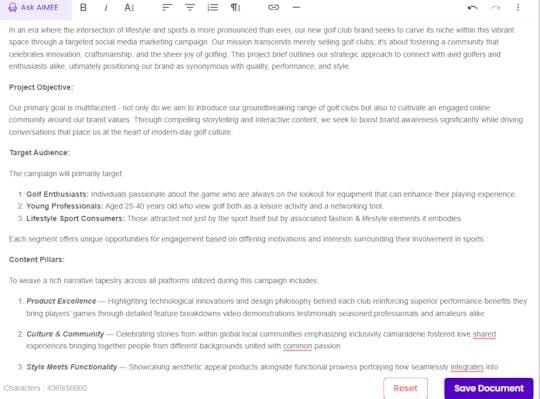
Remember, effective long-form content marketing isn’t just about writing; it’s about strategic thinking, prior planning, and understanding that good things take time. Preparing briefs embodies this philosophy promising smoother workflows, fewer headaches, and more impactful results.
So, before diving headfirst into creation, take a step back. Planning may initially feel cumbersome, but ultimately, it lays down solid groundwork facilitating easier moves forward.
It’s time to build your blog empire.
Want to be a real Content Hacker along with us, but not sure where to start?
We’ve got custom-created resources just for you, friend.
Get inside the Content Hacker Community – at just $20/month, it’s a no-brainer. On-call, expert support, live calls, and so much more.
Want to go deeper? Check out our AIO Blogger course – an immersive one-week course teaching you everything you need to know to build a money-making online blog.
Can’t WAIT to welcome you inside.
with gratitude,
Julia
The post How to Write a Brief in 5 Steps appeared first on Content Hacker.
February 6, 2024
Build Trust and Authority Through Thought Leadership Marketing
So, you’re diving into the world of thought leadership marketing. Smart move. This isn’t just about pushing content; it’s about becoming a beacon in your industry, someone others look to for insights and guidance.
By reading this piece, you’ll get the lowdown on how thought leadership can transform not just how potential clients see you but also how they discover and decide on your brand.
We’ll walk through crafting a strategy that elevates your brand, developing compelling content that makes decision-makers take notice, and ensuring your wisdom reaches far and wide.
You’re set to learn tactics for leveraging social media effectively, measuring the success of your efforts with precision, attracting top talent through visibility as an industry leader, and even forging strategic partnerships thanks to newfound credibility.
Let’s make sure those hours spent creating don’t go unnoticed.
Want to build a real money-making blog, 10x faster with the use of AI? Check out our AIO Blogger course.
Table Of Contents:What is Thought Leadership Marketing?When Should You Use Thought Leadership Content?Crafting Brand Awareness and CredibilityFueling Connections Through Expertise SharingDeveloping Your Thought Leadership StrategyDefine Your Target AudienceResearch Your Target’s NeedsCreating Compelling Thought Leadership ContentConduct Original ResearchSelect Topics That Matter to Your AudienceShowcase Genuine ExpertiseMaintain Brand Consistency Across All ContentMake Thought Leadership VisibleLeveraging Social Media PlatformsMeasuring the Success of Your Thought Leadership CampaignsThought Leadership Content Examples to Learn FromRand Fishkin’s Marketing Insights on SparkToroThe Async Advantage by Glenn Rogers at FloatLeadership Coaching Benefits by Imran Omari of HotjarNavigating Remote Work and Parenting with SliteAnalyzing Industry Trends at ProfitWellStart Writing Exceptional Thought Leadership ContentWhat is Thought Leadership Marketing?In the B2B sector, thought leadership marketing stands out by pushing boundaries and offering fresh insights. It’s more than just content; it’s about setting trends and guiding your target market.
This strategy plays a crucial role in brand discovery. Imagine scrolling through countless articles weekly. Over half of B2B decision-makers do this, seeking not just any content but valuable insights that can steer their decisions.
It’s interesting to note that 47% of these professionals discovered brands leading to purchase decisions through thought leadership content. This shows its powerful impact on business growth and brand visibility.
Distinguishing between traditional marketing strategies and thought leadership is essential for understanding its value. While conventional methods focus on showcasing products or services directly, thought leadership delves deeper into solving industry challenges with innovative ideas.
The goal here is not only to present solutions but also to spark conversations around them, positioning your brand as an authority within your niche.
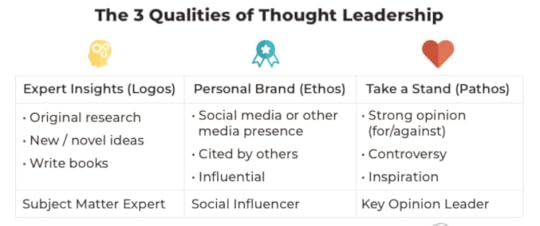
Source: Orbit Media
When Should You Use Thought Leadership Content?Thought leadership is a great way for companies to establish credibility and build trust with their target audience. But when exactly is the right time to deploy this strategy?
Crafting Brand Awareness and CredibilityThe journey towards becoming an industry leader begins with brand awareness, and what better way to achieve this than through sharing insightful, expert-level content?
Thought leadership pieces serve as a testament to your company’s expertise, helping you foster trust among potential customers. This type of content goes beyond mere advertising; it positions your brand as a reliable source of information — a critical factor in today’s information-saturated market.
As highlighted by the Content Marketing Institute, providing value without expecting anything in return can significantly boost your brand’s stature within the industry.
Fueling Connections Through Expertise SharingA unique aspect of thought leadership is its ability to humanize your brand. By featuring articles written by or about key team members — including founders — your company becomes more relatable.
Potential clients see faces behind the name, transforming abstract corporate entities into groups of real people dedicated to solving problems just like theirs. This connection fosters loyalty and can be especially potent when experts take definitive stances on pressing issues within their fields.
To truly harness the power of thought leadership content, visibility plays a crucial role. Making authors known builds stronger connections between them and their readership since consumers tend to place higher trust in individuals over faceless brands. Therefore, integrating personal insights from leaders within your organization not only enriches the quality but also amplifies engagement levels among targeted demographics.
Developing Your Thought Leadership StrategyTo elevate your brand and stand out as an industry leader, crafting a thought leadership strategy is key.
But where do you start?
First off, know who you’re talking to.
Define Your Target AudienceFinding your tribe means understanding their needs inside and out. It’s not just about demographics; it’s diving deep into what keeps them up at night.
Tools like Semrush can help shed light on the topics they search for, giving you valuable insight into creating content that resonates.
This step is crucial because 55% of B2B decision-makers will look elsewhere if your content doesn’t grab their attention in around 60 seconds. So make sure what you put out there speaks directly to them.
Research Your Target’s NeedsNow that you know who they are, it’s time to find out exactly what they need from someone in your position. Use platforms like AnswerThePublic to uncover the questions they’re asking online. This intel helps shape content that answers their biggest queries and positions you as the go-to source for insights.
The goal here is not just answering questions but doing so in a way that demonstrates deep expertise and unique perspectives — traits of a true thought leader.
A solid thought leadership strategy isn’t just about being seen — it’s about being remembered for bringing value nobody else does. Remember, over half of B2B decision makers spend more than an hour each week reading thought leadership content with nearly half saying this type of material led them to discover brands resulting in purchases.
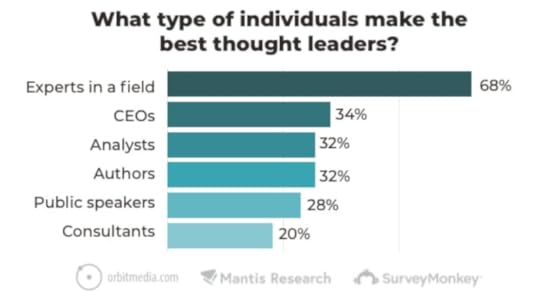
Developing content that cements your status as an authority in your field isn’t just about churning out blog posts or white papers. It’s about bringing something new to the table.
A staggering 70% of professionals report that most thought leadership content they encounter doesn’t pack enough valuable insights. This shows a clear gap, one you can fill by conducting original research.
To get started, platforms like Ahrefs are invaluable for digging deep into what your audience craves. They let you uncover questions people ask but rarely find satisfactory answers to.
Conduct Original ResearchGone are the days when rehashing common knowledge could position someone as a leader. Today’s audience demands more; they seek unique perspectives backed by data they can trust.
This is where original research comes into play. Identify gaps in existing content and provide fresh insights or data-driven conclusions that truly add value to your target audience.
Beyond giving readers information, this approach enhances credibility significantly. When you share findings from a study that you conducted, it demonstrates not only expertise but also dedication to advancing understanding within your industry niche.
Select Topics That Matter to Your AudienceIt’s tempting to focus solely on what interests you or aligns with your expertise, but for true engagement, it’s crucial to address the questions and challenges facing those you aim to serve.
Consider conducting surveys, engaging in social listening, or creating detailed audience personas as methods for uncovering these valuable insights.
Showcase Genuine ExpertiseExpertise lies at the heart of all compelling thought leadership content. This doesn’t necessarily mean having decades of experience (although that certainly helps), but rather possessing deep knowledge about specific subjects within your industry.
If an area falls outside your expertise, consider leveraging interviews with subject matter experts as a method for enriching your content with authoritative perspectives.
Maintain Brand Consistency Across All ContentEnsure every piece of content reflects the core values and mission statement of your brand.
Adopt a consistent tone and style across all platforms where you publish content – from blog posts to social media updates – reinforcing brand recognition among audiences.
Regardless of format or channel, always try to educate and add value. These can be unique insights tailored toward solving problems faced by your readers.
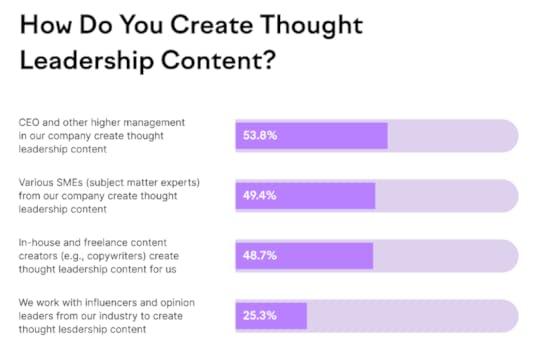
Source: Semrush survey
Make Thought Leadership VisibleYour insightful content deserves an audience beyond those who stumble upon it organically through search engines or social media shares.
Platforms like LinkedIn are goldmines for promoting thought leadership. But it’s not just about posting articles; engaging directly with industry peers and potential clients can set you apart. Comment on relevant posts, share valuable insights and don’t shy away from starting conversations. This hands-on approach helps build your reputation as an accessible expert.
An often-overlooked strategy is participating in or hosting webinars where you can share your expertise live. Not only does this provide real-time value to attendees, but it also strengthens your position as a trusted advisor in your field.
Beyond digital interactions, never underestimate the power of face-to-face networking at industry events. These opportunities allow for deeper connections that online platforms can sometimes lack.
Remember: The key is engaging authentically — sharing relevant findings without overt self-promotion builds lasting relationships.
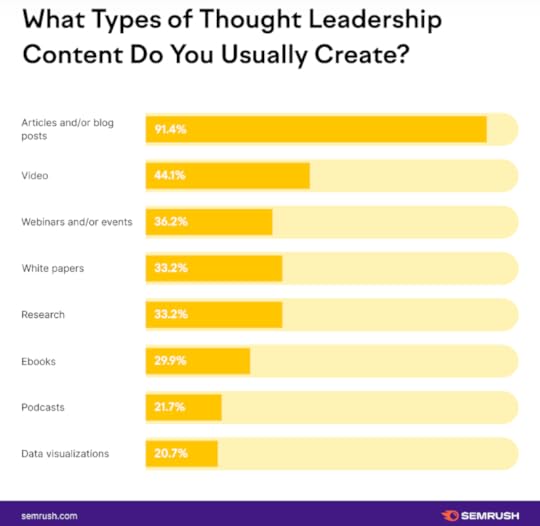
Maximizing the impact of your thought leadership through strategic use of social media channels is a game changer. But, it’s not just about posting content; it’s about creating connections.
First up, let’s talk strategy. A solid social media strategy goes beyond occasional posts. It involves engaging with your audience on platforms where they spend their time. Whether it’s answering questions on Quora or diving into discussions on Reddit, being active in these communities positions you as an approachable expert.
The goal? To make your thought leadership visible to those who matter most — your target market. This doesn’t mean shouting into the void but rather sharing insightful content that sparks conversations and builds relationships.
To do this effectively, you need to understand what resonates with your audience. Tools like AnswerThePublic can help uncover the questions people are asking around topics related to your expertise, guiding you in creating content that addresses these queries directly.
Beyond individual interactions, consider hosting live sessions or AMAs (Ask Me Anything) on platforms like Reddit. These real-time engagements offer a unique opportunity for deep dives into subjects you’re passionate about while allowing for immediate feedback from participants.
In summary, leveraging social media isn’t just about broadcasting messages — it’s about fostering meaningful interactions that elevate your status as a trusted advisor within your industry niche.
By strategically choosing where and how to engage with potential clients and partners online, you set the stage for building lasting business opportunities far beyond mere visibility.
Measuring the Success of Your Thought Leadership CampaignsKnowing if your thought leadership efforts hit the mark is crucial. But, how do you measure success? It’s not just about feeling good; it’s about hard data.
Evaluating key metrics gives you insight into your campaign’s impact. This goes beyond likes and shares. You’re looking for deeper engagement signs.
To get started, track website traffic directly from your published pieces. Use tools like Google Analytics to see how many readers stick around or bounce off quickly.
Engagement on social media can also be a goldmine of information. Look at comments and shares rather than just likes to gauge real interest in your topics.
Email open rates for newsletters featuring your content are another metric worth watching. High rates mean people are eager to read what you have to say, indicating strong thought leadership presence.
Beyond basic analytics, delve into behavioral data with platforms like Hotjar or Crazy Egg. These tools let you see exactly what parts of your content keep readers hooked and where they lose interest. This kind of feedback helps refine future content for better performance.
Hotjar, for instance, offers heatmaps showing which sections draw the most attention, while Crazy Egg provides visual reports on user interaction patterns across pages. These insights ensure every piece packs a punch in holding the reader’s attention.
Thought Leadership Content Examples to Learn FromHere at Content Hacker, we’re dedicated to showing you how long-form content can significantly impact your growth strategy. Here are five exemplary pieces of thought leadership content that every marketer should study.
Rand Fishkin’s Marketing Insights on SparkToroRand Fishkin‘s blog posts on SparkToro serve as a masterclass in delivering value without overtly pushing products or services. By challenging conventional marketing wisdom and sharing insights based on his extensive experience, Fishkin exemplifies how thought leaders can influence industry standards and practices.
The Async Advantage by Glenn Rogers at FloatGlenn Rogers‘ personal narrative about building an asynchronous work culture at Float offers invaluable lessons for companies transitioning to remote operations. His story goes beyond mere tips for managing remote teams; it provides a blueprint for embedding company values into operational strategies.
Leadership Coaching Benefits by Imran Omari of HotjarIn an insightful piece by Imran Omari on Hotjar’s blog, readers gain access to firsthand experiences with leadership coaching within large corporations. His article not only highlights the tangible benefits but also aligns perfectly with Hotjar’s commitment to fostering growth through valuable resources rather than direct sales pitches.
Navigating Remote Work and Parenting with SliteThe challenges of balancing remote work with parenting responsibilities are addressed head-on in a compelling post found on Slite’s blog. Through this discussion, Slite solidifies its position as an ally for remote workers everywhere —providing them not just tools for collaboration but guidance on maintaining harmony between professional and personal life spheres.
Analyzing Industry Trends at ProfitWellThis ProfitWell article dives into another thought leadership content angle: industry trends. The writer takes us through the journey of how Zoom, the video-conferencing app we’ve all come to know, skyrocketed past 10-year leader Skype during the COVID-19 pandemic.
Taking these examples as inspiration, you can craft your unique approach toward establishing your brand as an authoritative voice within your industry.
Remember: successful thought leadership is not just about showcasing expertise — it’s about connecting deeply with your audience by addressing real-world problems and offering genuine solutions.
Start Writing Exceptional Thought Leadership ContentSo, you’ve dived deep into thought leadership marketing.
You’ve learned that thought leadership marketing is not just about writing long-form blog posts. It’s your beacon in the industry — becoming that guiding light that lifts your brand above the rest.
You now know creating compelling content is crucial. But remember, this alone won’t cut it unless decision-makers see and value your insights.
Leverage social media to amplify your voice. And when measuring success, look beyond likes and shares to real engagement and influence.
To make an impact, start by listening before speaking. Make every word count towards building trust and authority in your space.
It’s time to build your blog empire.
Want to be a real Content Hacker along with us, but not sure where to start?
We’ve got custom-created resources just for you, friend.
Get inside the Content Hacker Community – at just $20/month, it’s a no-brainer. On-call, expert support, live calls, and so much more.
Want to go deeper? Check out our AIO Blogger course – an immersive one-week course teaching you everything you need to know to build a money-making online blog.
Can’t WAIT to welcome you inside.
with gratitude,
Julia
The post Build Trust and Authority Through Thought Leadership Marketing appeared first on Content Hacker.
February 4, 2024
Boost Your Brand with Optimized Content Marketing Essentials
You’ve just penned a killer article. It’s smart, it’s insightful — it should be the talk of the town. Yet when you check your site analytics, there’s barely a blip on the radar.
What gives?
Turns out, writing is only half the battle in digital marketing; what wins the war is optimized content marketing.
This guide cuts through the noise to show you how to shine online. We’ll walk through creating meta tags that grab attention and title tags that get clicks because let’s face it — search engines lead readers right to your doorstep.
You’ll also find out how to weave keywords into your posts like a pro so people actually find them when they’re scouring Google for answers. And because eye-catching visuals matter too, we’ll cover optimizing those images and videos without missing a beat.
The best part? You don’t need wizard-level skills — just some solid know-how and elbow grease can skyrocket engagement with every post you publish.
Want to build a real money-making blog, 10x faster with the use of AI? Check out our AIO Blogger course.
Table Of Contents:What is Content Optimization?The Importance of Content OptimizationMaking Your Content Visible And ImpactfulHow Do You Know If You Need Content Optimization?Optimizing TextTitle Tags That Drive Click-Through RatesCraft Meta Descriptions That Sell Your ContentAlign Content with User Search QueriesLink Your Content StrategicallyOptimizing ImagesOptimizing VideosCreate a Branded ChannelOptimize Video TitlesWrite Descriptive Video SummariesAdd Links To Your Website In The DescriptionOptimizing NewsGetting into Google NewsThe Importance of Static URLsKeyword Optimization: A Must-Have StrategyOptimizing for Social Media SharesCrafting Shareable ContentSocial Sharing Buttons: Make Them Visible!Optimizing for BacklinksDon’t Know How to Start Optimizing Your Content?What is Content Optimization?In the digital marketing world, content optimization plays a pivotal role in enhancing your online visibility. It’s an intricate process that involves tailoring your website’s content to align with search engine algorithms and rank higher on search result pages.
If you’re a business owner, regardless of the size of your enterprise, you understand how crucial it is to market your brand effectively. Successful marketing not only helps in acquiring new customers but also retains existing ones – leading to increased sales and profits.
In this context, the content featured on your website, blog posts, and landing pages becomes an integral part of your overall marketing strategy.
The Importance of Content OptimizationCreating engaging content alone isn’t enough; ensuring its visibility to potential customers through search engines is equally important.
A key aspect of achieving success in content optimization lies in understanding how search engines work. They utilize sophisticated algorithms that evaluate numerous elements from authority signals to backlink profiles when ranking webpages against relevant user queries.
Making Your Content Visible And ImpactfulTo ensure maximum reach and effectiveness for all the hard work you put into your content creation, it’s important to understand and implement content optimization techniques. This includes everything from keyword research, on-page SEO practices like URL, and off-page SEO strategies such as generating high-quality backlinks.
Remember: Even the most compelling content will fall flat if it doesn’t reach its intended audience — hence why a strong focus on content optimization is crucial for any business looking to grow online.
How Do You Know If You Need Content Optimization?If your website isn’t getting the traffic or engagement it deserves, there’s a high chance that your content could use some optimization. But how can you be sure?
Here are some telltale signs:
Poor Search Engine Rankings: Your content should ideally appear on the first page of search engine results for relevant keywords. If it doesn’t, SEO might just be what’s missing.Low Engagement Rates: If visitors aren’t interacting with your site by leaving comments, sharing posts, or clicking through to other pages, this is another sign that your content may not be resonating with them and needs optimizing.High Bounce Rate: A high bounce rate indicates people leave quickly after landing on your page without taking any action. This often means they didn’t find what they were looking for — an issue that optimized content marketing can help address.Optimizing effectively requires understanding both SEO principles and who exactly makes up your audience. The better aligned these two factors are, the more likely that users will engage meaningfully with what you’re offering.
The bottom line? Don’t ignore these red flags! They’re telling you something important about how poorly positioned your business currently stands in terms of online visibility and relevance – both crucial elements when trying to sustain growth.
Optimizing TextThink of optimized content marketing as the spine holding up your digital strategy. It’s not just about churning out blog posts or social media updates; it’s about fine-tuning every piece to make sure it resonates with both search engines and humans alike.
Title Tags That Drive Click-Through RatesThe tag in HTML code serves a vital role in both search engine optimization (SEO) and user experience. It tells users what your page is about, whether they’re looking at search results or browsing through tabs on their browsers.
Every time you craft a title tag, imagine you’re dangling a carrot in front of potential visitors. Your goal is to make that carrot irresistible.
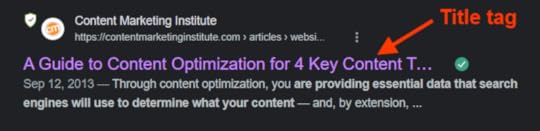
Start by making your title tags shout “click me” but keep them honest — no clickbait here. Include keywords naturally because when they match up with a user’s search term, bingo — you’ve caught their eye.
We know from research that clear, descriptive titles increase the likelihood someone will choose your link out of all others on the SERP page.
Beyond just describing the page’s content for audiences, title tags are also used by search engines as link text in their results pages. They even appear when someone shares your webpage on social media networks — making them essential tools for promoting visibility and click-through rates.
Craft Meta Descriptions That Sell Your ContentYour meta description acts like an elevator pitch for each page: short and snappy yet full of promise. The best ones tell users exactly what they’ll find when they click through — and remember, including relevant long-tail keywords can help align expectations perfectly.
This is why crafting precise descriptions isn’t just fluff work — it directly impacts whether someone feels compelled enough to explore further into what you have provided.
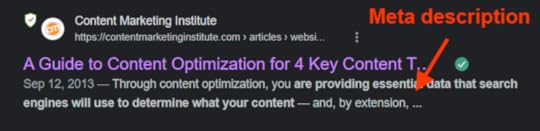
An effective meta description should accurately represent the linked content while enticing readers to click through with engaging language.
Remember though — keep these concise! Search engines typically truncate any text beyond 150-160 characters, so make every word count!
Note: Avoid generic phrases like “Welcome to our homepage”. Instead, provide a compelling reason for users to click through and learn more about your content.
Optimizing text is an integral part of creating an effective online presence. By paying careful attention to title tags and meta descriptions, you can enhance the visibility of your website while providing valuable information that encourages visitors to explore further.
Align Content with User Search QueriesIn optimized content marketing, understanding and meeting search intent is key. This means using target keywords smartly so people who need what you offer can find you easily via search engines.
Consider user queries as questions needing specific answers — your content should be those answers.
Remember folks might use additional terms in their searches so consider synonyms and related phrases too.
Link Your Content StrategicallyInternal linking serves as the scaffolding for your website’s structure, providing multiple benefits that enhance content optimization. By strategically embedding links within your text that connect to other relevant pages or articles on your site, you effectively guide users and search engines through a network of information.
This approach can bolster user engagement by keeping visitors circulating within your site, thus reducing bounce rates and increasing the time they spend engaged with your content.
From an SEO perspective, internal linking distributes page authority across different pages, which can help lesser-known pages gain visibility in search engine rankings when linked from higher-authority ones.
Moreover, these connections enable search engines to crawl the site more efficiently; clear pathways mean easier indexing of web pages.
Internal links also help establish a hierarchy on your site. By highlighting certain pages as important through numerous links, you signal their value to crawlers.
By using descriptive anchor texts for these links (the clickable words), you provide context about the destination page’s subject matter not only to users but also to algorithms parsing content for relevance.
Furthermore, well-implemented internal linking can facilitate topic clusters around core subjects. Creating such ecosystems improves topical strength and domain expertise perception since it presents organized packets of knowledge interlinked logically around central categories.
When structuring links, always prioritize user experience. Overloading a single page with excessive hyperlinks could detract from readability and dilute each link’s potential impact.
Optimizing ImagesIn the digital age, visual content is king. But it’s not enough to simply have images on your website — they need to be optimized for search engines.
Search engines can’t read images, so they have to rely heavily on text-related tags to learn what the image is all about.
Alt tags serve as alternate text descriptions when an image fails to load or to help visually impaired users who use screen readers. They play a crucial role in improving your site’s accessibility and SEO performance by providing context about what your images are representing.
To optimize alt tags, you should choose simple yet keyword-rich phrases describing each image on your website accurately. For example, instead of using ‘image1.jpg’, use ‘red-apple-on-table.jpg’ if it’s a picture of a red apple sitting on a table.
Besides alt tags, there are also title or hover-over texts called Image Tags that appear when someone hovers over an image with their cursor. These tags help provide additional context about the purpose and relevance of your visuals. With the right keywords, they further enhance visibility during searches.
Note: While optimizing images, remember to also consider the file name and location (source) of your image files. A clear, descriptive filename can provide additional context about an image and help it rank in search results.

Source: Finances Online
Optimizing VideosVideo content is an essential tool for businesses to engage with their audience – these are like real estate gold in digital marketing today.
However, creating compelling videos is only half the battle; optimizing them effectively can greatly enhance your brand’s visibility and reach. Here are some strategies you should consider:
Create a Branded ChannelThe first step towards successful video optimization involves establishing a branded channel on your preferred video platform. This not only increases brand recognition but also provides leverage for other forms of content that you produce.
Optimize Video TitlesYour video title plays a crucial role in attracting viewership and improving search engine rankings. It should contain relevant keywords without compromising its appeal to the viewer’s interests.
Write Descriptive Video SummariesA well-crafted description gives potential viewers an idea of what they can expect from your video while simultaneously boosting SEO performance by including relevant keywords.
Note: Your primary focus should be addressing the needs of your audience rather than appeasing search engines alone.
Add Links To Your Website In The DescriptionTo further optimize your videos, include links leading back to related pages on your website within each description box. This will guide interested viewers towards additional resources or information provided by you.
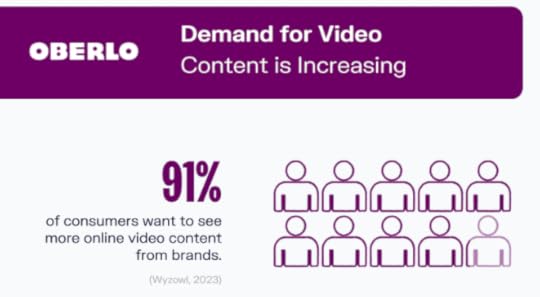
Source: Oberlo
Optimizing NewsIn the digital age, every business owner with a website has become a publisher. You can now produce and report on industry-related news through various channels like blogs and dedicated “news” sections on your site or social networks.
Creating optimized news content is crucial for your organization’s recognition as an insightful source of relevant industry news.
Getting into Google NewsTo ensure that your website’s news feed gets included in Google News results, you need to submit your blog or press release sections directly to Google News. The team at Google will review your content and if it meets their explicit requirements, they’ll include it in their search results.
The Importance of Static URLsPublishing each article on a separate page within your site (i.e., using static URLs) helps rank alongside other authentic news sites. This practice helps search engines to index individual articles effectively, which ultimately increases visibility online.
Keyword Optimization: A Must-Have StrategyYour news articles should be keyword-optimized just like any other type of content you publish. Include relevant keywords throughout the body text but avoid keyword stuffing.
If there are photos or videos embedded within the piece, make sure these elements are also appropriately optimized according to SEO best practices.
Remember, effective long-form content marketing isn’t just about quantity but quality. By optimizing each piece carefully and correctly, you’re not only increasing chances of discovery but also fostering ongoing reader interest that benefits both parties involved — readers get valuable insights while businesses gain increased visibility and credibility.
Optimizing for Social Media SharesGaining traction on social media is a critical aspect of successful content marketing. The key is to optimize content to encourage readers to share it across their networks. But how can you make this happen?
The first step is creating engaging headlines that spark curiosity and conversation. A dash of controversy can often be beneficial here — but remember, it’s crucial to strike a balance. You want to incite interest without alienating or offending your audience.
Your content should offer real value, providing information or insights that are useful and relevant to your readership.
Crafting Shareable ContentJust as important as an enticing headline is the body copy itself. Your writing should captivate your reader’s attention and inspire them to pull out quotable moments they can readily share on their social media platforms.
Good practice involves formatting these potential “shareable moments” so they stand out from the rest of the text, making them easy for users to identify and distribute among their followers.
Social Sharing Buttons: Make Them Visible!To further facilitate sharing, ensure that social share buttons are included on all web pages – not hidden away where users have difficulty finding them! These buttons allow readers with just one click (or tap) instantly post links back to your site onto their preferred platform(s).
By following these tips, you’ll be on your way to optimizing your content for maximum shares – growing visibility, expanding reach, and building a sustainable business through optimized content marketing.
Optimizing for BacklinksThe journey to improve your off-page SEO begins with creating high-quality content. If you’ve been diligently following the on-page optimization tactics, then you’re already a step ahead in enhancing your off-page SEO.
Let’s dive into some additional strategies that can help earn valuable backlinks and enhance your site’s authority.
An effective way to attract other sites to link to your content is by offering unique insights that readers cannot find elsewhere. This could mean focusing on new developments in a field, sharing original ideas, or incorporating exclusive research data.
Featuring an industry expert not only adds credibility but also increases the chances of them linking back to your content once it’s published. You might consider inviting an expert guest author or hosting webinars on trending topics within their expertise.
Apart from improving on-page SEO, engaging visuals like infographics are highly shareable content pieces that can garner more backlinks pointing toward your site as the source of information.
Similarly, informative videos and helpful downloadable resources can serve as bait for attracting links.
Incorporating these practices will give you a head start in optimizing for quality backlinks — an essential component of off-page SEO.
Don’t Know How to Start Optimizing Your Content?If this question resonates with you, then Content Hacker can help. Here we’ll teach you not only content optimization but also how to build effective SEO campaigns.
Master optimized content marketing, and watch your brand soar.
You’ve learned the essentials: crafting meta tags that turn heads, writing title tags that get clicks, and weaving in keywords to meet your audience right where they Google.
Tackle those meta descriptions with clarity and punch. Remember how crucial these snippets are — they’re your digital handshake with potential readers scrolling through search results.
Don’t just upload images; optimize them. Alt tags aren’t afterthoughts; they’re golden opportunities for visibility.
And videos? Size them right to keep users glued.
Dive into this knowledge pool often. Use it as a springboard for every piece of content you create because when you do, engagement spikes, rankings rise, and success is no longer just possible — it’s expected.
It’s time to build your blog empire.
Want to be a real Content Hacker along with us, but not sure where to start?
We’ve got custom-created resources just for you, friend.
Get inside the Content Hacker Community – at just $20/month, it’s a no-brainer. On-call, expert support, live calls, and so much more.
Want to go deeper? Check out our AIO Blogger course – an immersive one-week course teaching you everything you need to know to build a money-making online blog.
Can’t WAIT to welcome you inside.
with gratitude,
Julia
The post Boost Your Brand with Optimized Content Marketing Essentials appeared first on Content Hacker.
February 1, 2024
10 Email Subject Line Best Practices to Skyrocket Opens
Picture this: You’ve just crafted an email that’s pure gold, packed with content ready to dazzle your subscribers. But then, it sits unopened, lost in someone’s inbox — or worse, the spam folder.
The culprit? A lackluster subject line.
Email subject line best practices are your secret weapon for slicing through the clutter. With a sprinkle of personalization and a dash of intrigue, you can boost those open rates sky-high.
It’s not rocket science; certain tweaks make people more likely to click open.
This guide will help you master crafting punchy subject lines and optimize them for various devices and email clients — essential moves in today’s mobile-first world. Plus, we’ll dive into real success stories where top-notch subjects made emails irresistible.
Want to build a real money-making blog, 10x faster with the use of AI? Check out our AIO Blogger course.
Table Of Contents:10 Email Subject Line Best Practices1. Personalize Your Subject Lines2. Keep It Brief Yet Impactful3. Maximize Preview Text4. Draw Attention with the Right Emoji5. Use Power Words6. Use Odd Numbers7. Get to the Offer Quickly8. Make an Announcement9. Avoid Shouting10. Test Your Way to SuccessImprove Open Rates With a Killer Subject Line10 Email Subject Line Best PracticesIn today’s digital whirlwind, your email message competes with hundreds in an inbox, and you’ve got mere seconds to captivate interest before your masterpiece is relegated to the archives — or worse, the dreaded trash bin.
So how do we stop our emails from meeting such a grim fate?
Well, it starts with mastering the delicate craft of writing irresistible email subject lines — those few crucial words that can make or break your reader’s decision to click through.
Here are some of the best practices for writing email subject lines.
1. Personalize Your Subject LinesPersonalization is the key to capturing your subscribers’ attention in a crowded inbox. It’s not just about addressing them by their name; it involves understanding their needs, preferences, and behaviors to deliver relevant content that resonates with them.
Instead of sending emails from a generic brand email address, why not send messages from an individual in your company? This simple tactic adds a human touch and makes recipients feel like they’re receiving a personal email rather than promotional brand communication.
Beyond using real names for sender addresses, you can also personalize email subject lines based on what you know about each subscriber. For instance, if heavy snowfall is predicted in Toronto where some of your subscribers live, those individuals might receive an email with this subject line: “It’s snowy in Toronto – get 20% off leather jackets.”
This type of geo-targeted personalization shows that you understand and care about your audience’s specific circumstances or challenges. It helps make your emails more relevant and appealing amid the numerous other messages vying for their attention every day.
In essence, effective personalization is all about making sure each recipient feels valued as an individual rather than being seen as part of a mass marketing effort.
2. Keep It Brief Yet ImpactfulIn today’s fast-paced digital world, brevity is key — especially when it comes to email subject lines.
Nearly half of all individuals prefer viewing their emails on a mobile device, meaning that lengthy subject lines often get cut off in mobile view. This means that your message should be able to get across within those first few words.
A study conducted by Marketo found that four-worded subject lines received the highest average open rates at 18.26%. However, while open rates are important for gauging initial interest, click-to-open (CTO) rates provide deeper insights into user engagement levels as they measure both opening the mail and clicking on at least one link within – essentially capturing conversions.
The highest average CTO rate was observed with seven-worded subject lines (10.8%).Nine-worded ones followed closely behind with an average CTO rate of 10.6%.Six-worded subjects also fared well with a 10.1% CTO rate.These statistics underscore the importance of keeping your email subject lines concise yet compelling enough to entice readers not just to open but to engage further with your content.
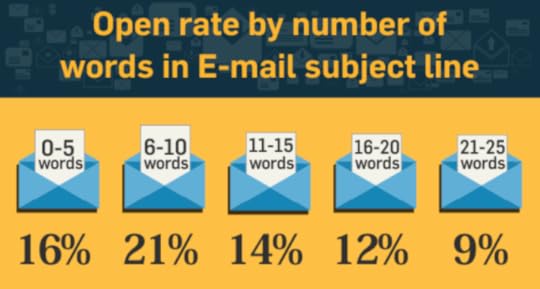
Source: Business 2 Community
3. Maximize Preview TextEmail subject lines are the first impression that you make on your audience, and as such, they should be impactful and concise. But there’s more to an effective email than just a catchy subject line — you also need to leverage the preview text or pre-header for maximum impact.
In an example from InVision, the subject line reads “Real World: Product Design” while the preview text provides additional information with “5 UX career trends for 2019. Plus, the true life of a lead product …”. The combination of these two elements creates intrigue and offers value right off the bat.
The key here is not to repeat what has already been said in your subject line but rather expand upon it or provide extra details in your pre-header section. This can include highlighting something introduced by the subject line or including a detail that isn’t evident from reading only this brief intro.
Tips for leveraging the preview text effectively:
Keep It Short: Aim for around 26 characters in your subject lines so they don’t get cut off on mobile devices.Add Value: Utilize up to 68 spaces here for added context without being overly verbose.Avoid Repetition: Don’t simply restate what’s already been mentioned in your headline – use this space strategically!An effectively crafted email isn’t about cramming as much information into every nook and cranny possible; instead, it’s about using each element wisely — creating harmony between them while maximizing their combined potential impact on readers.
4. Draw Attention with the Right EmojiPicking just the right emoji can be like choosing the perfect accessory — it should complement but not overwhelm your outfit — or in this case, your message.
A well-placed emoji grabs attention and conveys emotions faster than words ever could; think of them as shorthand for sentiment or humor. But there’s an art to effective use of emojis in email subject lines without stepping over into unprofessional territory.
Your audience is unique: what delights one person might confuse another. So knowing who’s on the other side of that email is crucial when incorporating emojis into subject lines. This understanding will help prevent false promises through misinterpretation.
Different devices also render emojis differently — which means what looks fine on a desktop computer could appear completely foreign on a mobile device.

Source: Finances Online
5. Use Power WordsTo elevate your email subject lines from ordinary to captivating, consider the use of power words. These are potent terms that can trigger an emotional and psychological response in your readers, making them more likely to open your emails.
Power words spark curiosity, appeal to vanity, build trust, or evoke a sense of FOMO (fear of missing out).
Arouse Curiosity
We all have an inherent desire for knowledge and understanding. This is why phrases that leave us with unanswered questions or present something that contradicts our beliefs tend to pique our interest.
For instance: “Wonder How We Make Our T-shirt Unique?” or “7 Unexpected Tactics to Increase Your Sales.”
Appeal To Vanity
Vanity-appealing power words tap into the human need for admiration and recognition.
A great example would be: “A Dazzling Skin-Care Product That Will Make You Look Younger.”
The key here is not just using these powerful terms but combining them effectively without overdoing it.
Foster Trust
Incorporating trustworthy phrases into your subject line can help foster a sense of reliability among recipients.
For example: “Try These Bestselling Products” or “Get Lifetime Access to Our Membership Plan.”
Evoke Fear Of Missing Out (FOMO)
Lastly, you can evoke FOMO by telling recipients what they stand to lose if they don’t open your email.
For example: “5 Hacks You Must Know When Buying Jeans.”
When using power words in email subject lines, always keep balance in mind. Overuse can lead to desensitization, reducing the effectiveness of your power words. So use them sparingly and strategically for maximum impact.
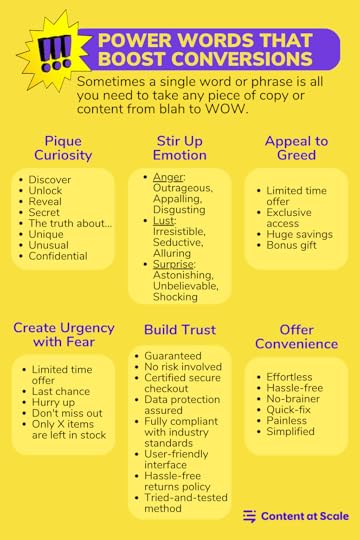
The power of using numbers in your email subject lines cannot be overstated.
As Debra Jason, a renowned marketing expert once said: “Our brains are attracted to numbers because they automatically organize information into a logical order. A single, small odd-numbered digit, like seven, for example, is like candy for your organizational mind.”
This is particularly true when it comes to crafting compelling email subject lines.
A study conducted by Yesware, which analyzed 115 million email subject lines, found that including numbers increases open and reply rates significantly. Numbers provide clear and concise information, making them visually distinct from letters and thus more likely to catch the recipient’s attention in their inbox.
To illustrate this point further, let’s consider two similar messages:
Email Subject Line A: “How you can increase your profits”Email Subject Line B: “7 proven strategies for increasing your profits by 30%”Between these two options, Email Subject Line B works better as it sets expectations clearly while providing an enticing snapshot of what’s inside for the recipient.
Incorporating specific figures not only makes your emails appear more credible but also helps readers quickly grasp the value proposition being offered.
7. Get to the Offer QuicklyIt’s crucial to make your value proposition clear right from the start. This principle applies not just to your overall brand messaging, but also when you’re crafting individual email campaigns.
Your email subject lines are essentially a promise of what recipients will find inside your email. It should be enticing enough for them to want to click and read more, yet honest enough so as not to mislead or disappoint them once they do open it.
Let readers know exactly what they stand gain by opening and reading through your message — whether that’s a special discount on their favorite product, an exclusive piece of information that can help grow their business, or even an inspiring success story related to how someone benefited from using your product/service.
If you’re offering a limited-time sale or discount on certain products/services, don’t hesitate to highlight this in your email subject line: “Enjoy 20% off all our premium services – Today Only!”
Sharing valuable insights is another way to pique interest: “Uncover Top Marketing Trends For 2024 Inside”.
You might also consider sharing customer testimonials or case studies like: “See How Our Software Helped XYZ Corp Increase Their Revenue By 30%”.
The key here lies in being transparent about what recipients are going to get after opening your email. Make sure your offer is compelling and irresistible, yet completely honest. Avoid making false promises just to earn an open – it could harm your brand’s reputation in the long run.
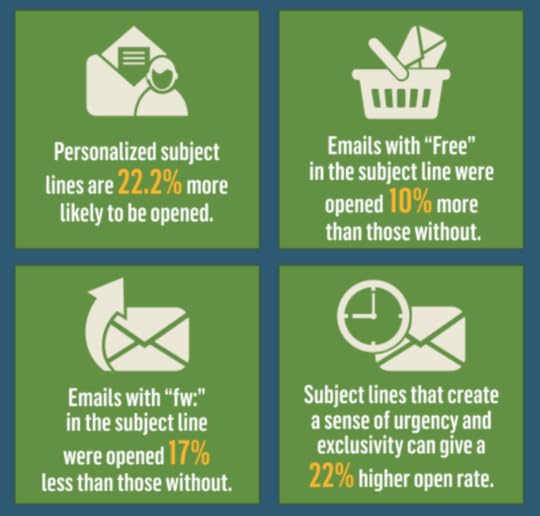
The power of announcements cannot be underestimated when it comes to email marketing. Announcing new product releases, updates, limited editions, or upcoming events in your organization not only keeps your audience informed but also generates a sense of excitement and anticipation.
A good email subject line can make all the difference here — it should convey that feeling of insider news or exclusivity. Remember, the goal is to entice recipients into opening the email and engaging with its content.
Let’s compare:
Email Subject Line A: “New Feature Update”Email Subject Line B: “You’re Invited: Exclusive Sneak Peek at Our New Feature”Subject Line B creates curiosity while offering value by making readers feel part of an exclusive group getting early access to information.
If you are announcing an event or webinar, for example, consider using urgency in your email subject lines.
For example: “Save Your Seat! Only 10 Spots Left for our Exclusive Webinar”
This encourages immediate action from your subscribers due to scarcity.
9. Avoid ShoutingHave you ever received an email with a subject line that seemed to be yelling at you?
Something like “OPEN NOW—YOU WILL BE SURPRISED!” can feel more like a command than an invitation, and it’s not the best way to engage your audience.
In fact, such aggressive tactics could get your emails flagged or marked as spam by many email service providers. It’s always better to approach your audience in a less confrontational manner when crafting email subject lines.
All caps should never be used in email subject lines. They give off the impression of shouting and can turn off potential readers. However, experimenting with different case styles – sentence case, title case, or lower case – may yield interesting results for engagement rates.
No matter which casing style you choose, avoid sounding overly promotional or desperate. Instead, focus on creating catchy email subject lines that spark curiosity and provide value.
10. Test Your Way to SuccessIf you want higher open rates, don’t guess what might work; test it. Optimizing subject lines through A/B testing can skyrocket your success story.
A/B testing lets you send email variants to see which subject line not only makes people click open but also keeps them engaged.
Create an A/B Test, then sit back and watch as data pours in showing which phrases or strategies lead to more emails opened.
The knowledge you gain from successful email split tests goes beyond boosting immediate open rates — it helps refine future campaigns too. Use findings from past tests when sending out new product releases or holiday specials like Black Friday promotions. If something worked before, there’s a good chance it’ll succeed again under similar circumstances.
Improve Open Rates With a Killer Subject LineRemember, your subject line is your first (and often only) shot at capturing attention in an overflowing inbox.
Keep it concise yet compelling; personalize whenever possible to forge a connection with your reader; and don’t shy away from A/B testing different strategies to see what resonates best with your audience.
Crafting compelling subjects isn’t just an art; it’s backed by data-driven strategies that lead to real results.
By sparking curiosity and steering clear of spammy tactics, you’ll be well on your way to crafting subject lines that not only stand out but also encourage clicks.
You’ve got this! Now go out there and write those eye-catching titles that get people clicking faster than ever!
It’s time to build your blog empire.
Want to be a real Content Hacker along with us, but not sure where to start?
We’ve got custom-created resources just for you, friend.
Get inside the Content Hacker Community – at just $20/month, it’s a no-brainer. On-call, expert support, live calls, and so much more.
Want to go deeper? Check out our AIO Blogger course – an immersive one-week course teaching you everything you need to know to build a money-making online blog.
Can’t WAIT to welcome you inside.
with gratitude,
Julia
The post 10 Email Subject Line Best Practices to Skyrocket Opens appeared first on Content Hacker.