Julia McCoy's Blog, page 16
August 27, 2023
Dream, Hack, Scale: The Content Hacker – Content at Scale Merger Story

created in midjourney with prompt: recreate this person [Julia’s image] as human and half robot, red neon, sitting in a chair
On January 16, I shocked 100% of you by telling you that I’d gone and taken a job working for the Dark Side.Okay, I exaggerate…
But that’s what it felt like. I’d taken a job as the VP of Marketing at Content at Scale, and pushed my full-time work at Content Hacker over to the side.
To write is life… or so goes the version of a botched-up quote originally penned as something else entirely by Ernest Hemingway. (I blame Pinterest and memes.)
Writing was my life.
It was my self-built career, the foundations of my 100-person empire, and eventually – I’d written so much content (over 1,000 blogs, emails, and 8 books), it was my life.
So why would someone like me suddenly take a role working at a leading SEO AI writer?
Leonard Ravenhill, a famous UK evangelist, wrote in the early 1900s: “The opportunity of a lifetime must be seized within the lifetime of the opportunity.”
When I see the ship of golden opportunity landing at the shores of my life, I know I have to jump on it before it leaves.
And I’ve learned never to hesitate on my instincts.
I’ll think it through – but I do not hesitate.
When Ravenhill wrote that quote, he knew that opportunity can leave as quickly as it comes. You have to be ready to jump at the right one. Otherwise, you could completely miss out on the life you were meant to life.
It’s now August.
As I look back at January, I take a moment of silence and gratitude as I bring back to memory the best move I’ve probably ever made in the past 11 years in my career.
And now today, I’m announcing another shocking move. Content Hacker has officially merged with and been acquired by Content at Scale. Here’s the story.
The ship of opportunityIBM did a study this year pulling data from a survey of 3,000 C-level executives across 28 countries and another of 21,000 workers in 22 nations.
Their conclusion: 40% of the workforce will have to reskill in the next three years – because of AI.
Specifically, a whopping 1.4 billion of the 3.4 billion people in the global workforce will need to reskill for AI. 
According to the IBM research, adopters who successfully reskill to adapt “technology-driven job changes report a revenue growth rate premium of 15% on average” and those who focus on AI “see a 36% higher revenue growth rate than their peers.” And 87% of the executives surveyed expect generative AI to augment roles rather than replace them.
And the World Economic Forum, in the same study, predicts that workers’ skills will be disrupted between 2023 and 2028 – now and in the future.
Did I know this walking into the role in January? I could not have predicted the growth of AI this year. However, I do believe that when we walk in self-made paths, follow our instinct, and give our paths to God, He looks out for us in amazing and mysterious ways.
2021 to 2022 – the AI skepticWhen I sold my writing agency in 2021, I knew that GPT would change everything. The technology possibilities with it were simply huge.
However, I wasn’t a firm believer in AI or GPT. Why? It wasn’t that great.
Even when ChatGPT came out and was widely adapted by over 100 million users in just a few short weeks, I didn’t find it capable of augmenting or improving my own writing process.
I live in the real world. Clients pay you – or they don’t, depending on the quality and the actual value you bring.
If something works – actually saves you time or money – you use it. You introduce it into your business, your team, your clients.
But you don’t introduce it, if it will ruin or degrade quality, efficiency, or output.
And I couldn’t introduce AI because it just wasn’t there yet.
In 2022 AI would have degraded my workload, not enhanced it.
And that’s why I was on DigitalMarketer’s stage in December of 2022 saying, “don’t use AI – it won’t replace a human.” 
If we’re being real, though…
Selling coaching and high-ticket services was a struggle.
This was the truth of the inside that I rarely to never shared on the outside.
I’d been used to the agency life, where sales rolled in almost on autopilot day after day – the agency I sold in 2021. I missed it a ton.
I was lucky to get five mentorship enrollees per month, and I had to fight for each one. Convince and spend weeks to get people in the door.
And I enrolled ONE Content Engine client for all of 2022. (It was a hard sell, although people loved the idea.)
That said, I shone at coaching – and even helped 10x one of my student’s businesses. I grew in my empathy and care for other people, and shed my agency owner mindset.
Along the way, I’d been testing out AI tools, talking to founders, even consulting for some.
That was a disappointing experience in 2022.
From buggy products built overnight by college kids that got their hands on unhealthy amounts of funding… to AI founders that didn’t actually believe AI tools didn’t need to have built-in fact-checking features. Or other founders that didn’t believe in content marketing. (I can’t help them.)
But I was determined that AI would absolutely shape the future of content, and I knew it was just a matter of time till the right tool came along.
And so – when 2023 rolled around, I decided to do something wild.
I stopped everything I was doing and studied AI that January.
2023 – the great AI embracerOn January 4th, I was watching another AI content writing video (by Adam Enfroy).
And as soon as I saw Content at Scale, I knew I was looking at the Holy Grail of solutions for long-form content.
I paused the video – zoomed in on the dashboard Enfroy screenshared – and saw everything. The SEO content itself. All the formatting with H2s, H3s, and a full table of contents. Hours and hours of human work, done in minutes.
I began to research Content at Scale. Even though the brand logo identity was poor at best – it looked thrown together – I knew I was looking at something genius.
The content writing Content at Scale on their site to sell their own tool was good. Their guides, like this one on a simple but mind-blowingly good keyword research strategy, demonstrated real experience in the founder and the small but mighty team.
Jeff’s TikToks, like this one, showed that Content at Scale was serious about getting video content out.
All the things I loved to do.
I was pleasantly surprised–I hadn’t till now seen great inbound content on any AI content tool’s website.
However, a total skeptic, I emailed Justin and asked, “What are you doing for factual accuracy in AI content? This is the main problem I haven’t seen any AI solve.”
Not expecting much, I hit send on the email.
Justin’s response blew me away –

Not only was Justin transparent and told me, “you’d better check the content in a plagiarism tool” – but he said they actually had a plan linking to credible sources automatically.
That alone made me incredibly excited. (Come to find out, Content at Scale directly ties into the tool I used daily in my agency – Copyscape! You simply hit the button and it’ll run a plagiarism check for you.)
I was instantly intrigued and excited. I booked a call with Justin for Monday, January 9th, and that weekend, emailed him a quick gameplan on how to grow Content at Scale with an inbound plan.
I wanted to jump on board this opportunity ship immediately.
Because I’d finally found the AI writer that would augment or replace all the human work I did as a service.
January 9th, Monday, Justin and I hop on a call. We instantly identified with each other, and knew we saw things similarly. He had the technical skills and vision, with a strong background of SEO and content marketing – I had the creative and market trailblazing capabilities, with a history of content, writing and speaking skills, and thought leadership.
I was offered the role of VP of Marketing on the spot.
Not one to make the rare boat of golden opportunity wait around, I said yes and signed the offer by Friday.
On January 16, Monday, I announced to the world that I was joining Content at Scale.
People were shocked.
I saw LinkedIners create posts just to talk about my post.
All in all, 13,000 people saw my work announcement post in the next few days.

Some context:
The week before I accepted the offer to work at Content at Scale, I decided to learn how to use Content at Scale and create a free tutorial for my Content Hacker peeps.
I worked my knuckles off to film, write, and publish to build up Content at Scale on my own site before I took the role, to show people how much I believed in it.
And – something crazy happened.
I teased my list to see if there was any interest in Julia’s AI adaption. 5,000+ people got an email that said “I finally found an AI writer for long-form content.”
And I had the most responses I’ve ever had to ANY email ever.
It confirmed the direction I was going in, in a huge way.
Sharing Content at Scale started a fire.  (And that fire has only grown bigger.)
In fact, longtime friend and Content Hacker alumni Jacki Alcorn told me – “I was getting ready to buy Content Engine. Thank the Lord you found Content at Scale when you did, Julia. Pivoting and adapting saved us over $10,000.”
January to March was a wild season as I came in like a whirlwind and started doing a lot.
From building out new concepts like AIO writer and the AIO model, to starting a weekly newsletter (3,500 subscribers on LI, and a 50k email list), to filming an innovative video at my lake that earned me an invitation to give my first keynote, to rewriting my 8th book to include AI 30 days before it launched – it was a crazy wild ride. I loved every minute of it.
By the end of March, I was President of the company. It’s just my style – in fact Steve, our Partner Manager, recently called me Overlord and President. 
But the truth is I would never have gotten there without a team that supports me, and a founder that really gets out of the way of good people and simply lets them get to it. That’s Justin – and when he handed me the President role, I was excited and completely honored that he saw the potential in what I could do both in AI and for this company.
Another 6,500+ people saw that career move on LinkedIn – I received hundreds of messages that day congratulating me.
But there was one thing plaguing me all along.
And it was the fact that I couldn’t be an entrepreneur.
I was a full-fledged, super proud, incredibly hard-working business builder. I was, and am, an entrepreneur.
I’d worked for myself for 10 years.
Working for someone else was hard.
Harder than hard. In fact, I’d leave meetings in tears because my subconscious was nagging at me about working for someone else. I tried to translate it in a million different ways, tried to make sense of it, tried to hush it – but in the end, my brain was sabotaging me because I didn’t have full freedom. I wasn’t a partner. I was just an employee. Building an empire of my own that I had a real share in was something I sorely missed.
2024 – the great AI mergeIn mid-August of this year, Justin and I had a talk about the Great Mind Struggle I was going through.
I’d complained about not feeling like a President, not getting to do bigger things. He said – “You need to go bigger. You need to be on bigger stages. We can get you everything you need to achieve all of this. But you’re going to have to be all in.”
So then, I said something crazy.
“Alright, make me a partner.”
Like a pro, Justin didn’t flinch. Batting that ball right back, his answer was – “Alright, I’ll do it if Content Hacker and Content at Scale can merge.”
That thought shocked me.
In fact, I paused for four days to think, pray, ask mentors, and really get serious about it. That’s how long it took me to wrap my mind around literally merging all my IP into the Content at Scale brand.
The more I thought about it, the more the sky opened up.
I get unlimited resources.
I get to do all the things I love. (Some crazy backstory: Justin tried to buy ContentHacker.com a couple of years ago. But I’d already beat him to the punch. Of course, we didn’t know each other back then, but the trajectory of our paths was so uncannily lined up in the same direction even then… that he thought the Content Hacker brand was perfect for what he wanted to do. So did I. )
And as we’ve mapped out a plan of action for Content Hacker, I see with incredible humility and honor that it becomes infinitely bigger than myself.
As big as the stars, in fact.
Because the plan is to start our own event. Book out Content Hacker Live in 2024 with 500+ people. We’ll have the budget, resources, and brains to do it all.
Create incredible impact through community, resources, and training. My new AIO Blogger course will be included – all my best trainings under one roof as free, or nearly-free, Content Hacker resources.
And we’ll kill it.
My goal, which I say out loud with hands shaking, because that’s my style  – to do it even in the face of my fear – is to become what Russell Brunson is to Funnel Hacking/ClickFunnels, here at Content Hacker merged with Content at Scale.
I want us to be the AI writing brand with 100,000+ users. And I have no doubt that once all the things in the pipeline launch – by the end of this year, we’ll have a new app, a new website, and so much more – the markets will notice.
And we will climb, climb, climb.
Dream, Hack, Scale – We’re Going to the MoonThis is a story of two original Content Hackers finding each other and pooling all their resources together – so people like you get a tenfold benefit.
The world truly works in mysterious ways.
Stars aligned for this to happen.
I cannot wait to help you navigate the new realm of AI with the incredible resources we’re going to build for you.
From Content Hacker Live 2024 in the heart of downtown Austin, to the world’s best AI writing platform and SO much more, we’ll have a ton to offer you in the days ahead. I hope you stay tuned and follow this incredible journey, so we can make an impact on your workplace efficiency, skills, and education – and help you achieve incredible things, too. 
Content Hacker will be changing soon into a community-focused resource featuring free training and courses, a full AIO writer directory, live events, and more. Stay tuned!

The post Dream, Hack, Scale: The Content Hacker – Content at Scale Merger Story appeared first on Contenthacker.com.


August 18, 2023
Optimizing Your Sales Funnel Marketing Strategy for Success
So, you’ve heard about a sales funnel marketing strategy, right?
Usually, this is all about segmenting your marketing (and your content) so you address each sales funnel stage (awareness, intent, desire, consideration).
For most marketers and business owners, this means ads, and then different content pieces addressing different stages separately.
You’re intrigued and eager to give it a whirl in your business.
You invest time, energy, and resources into creating what you believe is a flawless sales funnel. You sit back confidently, expecting leads to pour in like water from a broken dam.
A week goes by… then two… and then three. But all you hear are crickets – not the flood of customers knocking on the virtual door that you had envisioned.
Then reality hits: mastering an effective sales funnel marketing strategy isn’t as straightforward as it initially seemed.
It’s not just a case of throwing up ads and expecting customers to come.
So, how can you develop a sales funnel marketing strategy that boosts your revenue? 
That’s exactly what I want to show you in this blog + video — a different way to approach your sales funnel marketing strategy (I call it AOFU), along with techniques to make sure you nail it from the get-go.
Table of Contents:Learn a Different Approach to Your Sales Funnel Marketing Strategy: AOFUThe Crucial Role of Effective Lead Nurturing in Sales Funnel MarketingThe Role of Landing Pages in Conversion RatesOptimize Landing Page DesignCraft Copy that Speaks to Your AudienceUse Data to Power Your StrategiesHarnessing Lead Nurturing for More Sales-Ready LeadsStrategies for Effective Lead NurturingPersonalized Content Marketing CampaignsPersonalized Email Marketing CampaignsQuality Over Quantity, Every TimeThe Power of Aligning Sales and Marketing: A Brief OverviewAchieving Alignment Between Your Sales & Marketing TeamsRegular Communication MeetingsShared GoalsIntegrated Technology and ToolsA Holistic Sales Funnel Marketing Strategy: Adopting the AOFU ApproachLeverage the Power of AIFind and Train AIO WritersC.R.A.F.T Content that ConvertsAdd Trust TriggersEnd with a Compelling Sales LetterFocusing On Complete Customer ExperienceGrow Your Business and Revenue with an Impactful Sales Funnel Marketing StrategyLearn a Different Approach to Your Sales Funnel Marketing Strategy: AOFUThe Crucial Role of Effective Lead Nurturing in Sales Funnel Marketing
Lead nurturing and its importance is HUGE to understand within a full-funnel marketing strategy.
The fact that 73% of leads fail to convert into sales is crazy AND makes it pretty clear that we need to rethink our sales funnel strategies.
One of the ways to help you ensure your lead nurturing efforts result in sales — and to NOT spend additional marketing dollars — is to unravel conversion barriers. These prevent your leads from taking the desired action on your blog posts or landing pages.
Determining potential barriers hindering conversion rates is your first step towards improvement.
A common issue could be targeting – reaching out to the wrong or uninterested audiences can significantly impact conversions.Poor messaging often serves as another barrier. If you’re unable to clearly convey your value proposition or address pain points effectively, it might result in low engagement and, ultimately, lower conversion rates.Ineffective follow-up strategies also contribute to poor conversions. Timely interactions with prospects play a big role in maintaining their interest throughout their journey, from being just a lead to becoming customers, contributing positively toward the complete customer experience.The Role of Landing Pages in Conversion RatesLanding pages, often the first interaction point for potential customers on your website, hold a significant role in conversion rates.
Despite their importance, it’s startling to know that the average conversion rate across industries stands at a mere 2.35%.
I think there’s room to improve here, right?

So, how do you ensure your landing pages attract, engage, and convert your prospects?
Optimize Landing Page DesignYour landing page is a virtual sales pitch.
Because of this, you must ensure it looks good. Here are a few tips for ensuring your landing page’s design is optimized for conversion:
Craft a compelling headline: A compelling headline is the cornerstone of any landing page design optimization strategy. It serves as your initial pitch to prospective clients and should be crafted carefully to capture attention instantly.Nail your call-to-action: Your CTA (Call-to-Action) is integral to driving conversions. An effective CTA not only persuades visitors but also guides them toward taking desired actions, such as signing up or making purchases.User-friendly layout: User-friendly layouts are another essential aspect you can’t overlook while optimizing your landing page design. A simple yet intuitive layout ensures users find information easily without getting overwhelmed by cluttered content.Optimizing your landing page design to be eye-catching is the first step to getting your prospects to pay attention. Next, you need to craft copy that sells.
Craft Copy that Speaks to Your AudienceYour landing page copy should be your sales pitch. It should be crafted in such a way that:
Your audience will understand: Study your target audience and understand them. This will help you write landing page copy that speaks to them, not at them.Spells out the benefits: Don’t get overly excited about your product/service features to the extent that your landing page copy becomes all about your product/service. Instead, focus on your prospects. What will they benefit from partnering with you?Sells convincingly: Once your prospects read your landing page copy, they shouldn’t be in doubt that you’re the best solution provider for them. Your landing page copy must be compelling enough to move them to act immediately.With the right copywriting chops and content marketing strategy, you can use words to grow your business without relying on sales calls.
Use Data to Power Your StrategiesIncorporating data-driven full-funnel marketing strategies into your business will bring you closer to developing a holistic approach toward sales funnel marketing strategy.
This involves analyzing user behavior patterns using analytics tools and creating experiences tailored specifically for different segments within highly targeted ad markets.
Such strategic use of additional marketing dollars results in efficient spending with maximum returns from every ad spend compared with traditional brand-building methods.
To ensure that your sales and marketing strategies pay off, you should invest in market and consumer analysis. This will give you the data you need to run content marketing and ad campaigns that are highly targeted. As a result, your conversion rates will soar through the roof.
This level of insight helps you identify potential customers who are most likely to make branded search queries online after viewing certain ads. This provides a significant advantage over your competitors.
Need help with your landing pages, copy, or overall site design? Check out our packages at Content Hacker Projects.
Harnessing Lead Nurturing for More Sales-Ready LeadsLet’s talk about lead nurturing.
It’s a crucial component of your full-funnel marketing strategy and plays an instrumental role in converting potential customers into sales-ready leads. Companies that have mastered the art of lead nurturing are known to generate 50% more sales-ready leads while spending less.
The beauty of effective lead nurturing is its ability to keep your brand at the forefront with prospects throughout their journey in the sales funnel. By providing relevant information from awareness through consideration until they’re ready to make a purchase decision, you build trust while gradually nudging them toward becoming paying customers.
Strategies for Effective Lead NurturingTo create an impactful sales marketing strategy, you need to master lead generation. Here are a few tips to help you with that:
Personalized Content Marketing CampaignsOffering valuable consumer content and ads is a key element to running successful lead-nurturing campaigns. This approach isn’t necessarily about immediate conversion but rather establishing yourself as a trusted source of industry-related information.
Doing so will inevitably result in branded search queries favorably leaning towards your business over competitors’ offerings when the time comes for purchasing decisions to be made by those you serve.
Personalized Email Marketing CampaignsA successful data-driven full-funnel marketing strategy hinges on personalized email campaigns as part of its core tactics. Personalization goes beyond just addressing recipients by name; it involves delivering content tailored to user behavior and preferences.
Email automation tools can be highly beneficial here, as they trigger targeted emails based on specific actions users take. Examples include downloading an eBook or signing up for a webinar. Automation tools also help ensure timely follow-ups, which are vital in maintaining high engagement levels.
Quality Over Quantity, Every TimeRegarding lead nurturing, focusing solely on quantity without considering quality is detrimental.
No matter how many leads you drive to your business, your efforts will be wasted if they aren’t a good fit. Plus, it results in terrible ROI as the resources you allocate to your campaigns won’t impact your bottom line.
Therefore, as you plan your lead generation campaigns, be very targeted.
The Power of Aligning Sales and Marketing: A Brief OverviewWhen it comes to driving business growth, the alignment between sales and marketing teams is a critical factor. It has been proven to help businesses grow 32% faster.
This significant competitive advantage stems from seamless communication, shared objectives, and integrated tools that enhance efficiency in data-driven full-funnel marketing strategy efforts. These aspects are key for businesses operating in today’s highly targeted ad markets.
Achieving Alignment Between Your Sales & Marketing TeamsSales and marketing aren’t two disciplines competing against each other. They’re teammates working toward the same end goal. That’s why achieving a symbiotic relationship between the two in your business should be a priority. Here are some top tips to help you align your sales and marketing teams:
Regular Communication MeetingsOpen communication channels allow both departments to discuss strategies and share insights on potential customers’ shopping behavior. This collaborative approach also helps address any issues hindering conversion rates promptly.
Shared GoalsIt’s crucial that each team understands its goals, those of the other departments, and the overall company targets. This understanding makes allocation decisions more effective, leading to higher ROI on marketing and sales campaigns. This approach increases conversions while reducing costs compared to competitors not leveraging such techniques properly.
Integrated Technology and ToolsBy using unified technology solutions like CRM systems or automation software, these two units gain visibility into each other’s workstreams, facilitating collaboration and better tracking of progress against set objectives. This contributes to solving the age-old problem of measuring brand building’s impact on campaigns, especially when multiple touchpoints are involved over extended periods.
A Holistic Sales Funnel Marketing Strategy: Adopting the AOFU ApproachLet’s talk about the art of crafting a successful sales funnel marketing strategy. This is not just about individual tactics but an integrated ecosystem where each element enhances the others.
Sound impossible for a small business owner?
Well, not if you use my new framework for creating content that supports sales and marketing efforts, all in one fell swoop.
I call it AOFU: All of Funnel.
This blog writing formula enables you to incorporate every element in the sales funnel ecosystem into one piece of content so potent it can achieve your marketing and sales goals.
For more information on creating such a piece of content, check out my in-depth guide explaining the AOFU concept.
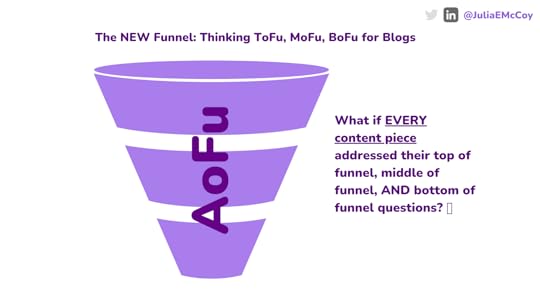
We’re talking about data-driven blog posts that impact every funnel stage.
Using the AOFU framework, you can craft a single piece of content that meets your target audience’s needs no matter the stage of the buyer journey.
So, how do you master the AOFU framework?
Here’s a simplified version of how you can create AOFU content that boosts your sales and marketing strategies.
Leverage the Power of AIIf you had told me a few years ago that artificial intelligence could write blog posts, I’d have laughed you out of town.
I was utterly anti-AI when AI came on the scene.
Today, however, I’m a believer.
AI has become capable of creating near-perfect blog posts containing almost all the elements you need to create E-E-A-T content. That’s why I strongly recommend you leverage AI writing tools like Content at Scale.
Content at Scale is so powerful it can easily create 2,000-word blog posts in minutes. The best part is that the content has well-researched data and links to facts and stats. This saves you a ton of research time. The tool also comes with AI detection and plagiarism checkers.
This means each piece of content you create is unique, human-like, and authoritative.

As I’ve said, AI writing tools create near-perfect blog posts. To get perfect AOFU content every time, you must find and train AIO writers.
What’s that, you say?
AIO stands for artificial intelligence optimization.
Because AI isn’t perfect, AI-generated content needs a human writer to refine and optimize it so it aligns with your content goals and reads well for other humans.
Despite the human touch needed to perfect it, AIO content can be produced 5-10x faster than 100% human power alone.
C.R.A.F.T Content That ConvertsNow that you have your AI-writing tool and have found the best AIO writer(s), you need a framework to help ensure that you consistently produce the best content for your site.
This is where my C.R.A.F.T blog writing framework comes into play.
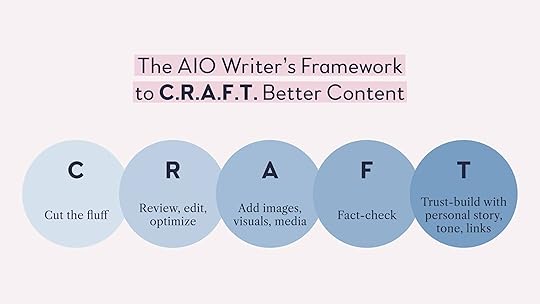
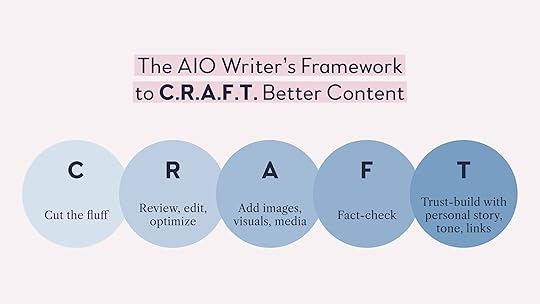
FYI, C.R.A.F.T. stands for:
C. Cut the fluff.R. Review, edit, optimize.A. Add images, visuals, and media.F. Fact-check.T. Trust-build with a personal story, tone, and links.This is the secret sauce to ensuring your AI-generated content is 100% factual, flows naturally, and resonates with your target audience.
Add Trust TriggersPeople buy from brands they trust.
This is the time to shine for small businesses, as studies show that trust has shifted from the government and media to brands. That’s why you must include trust triggers in your AOFU content. Examples include:
TestimonialsReviewsStatisticsCase studiesOriginal researchAnd moreThese trust triggers will help turn your blog post from being merely informational to being a powerful sales machine.
Speaking of sales, let’s look at the crux of an AOFU blog post — the “sales letter.”
End with a Compelling Sales LetterThe last and probably most important element to include in your AoFu blog post is the “sales letter.” This refers to the last two H2s on your blog. These two sections should be designed to encourage readers to act.
Don’t treat the conclusion of your AOFU blog post like a summary of your article. Instead, craft it to “soft sell” your product, program, or service. Your “sales letter” is the final persuasion element in your content. Make it count!
Here’s an example of how you can effectively sell in these last two sections of your AOFU blog post:
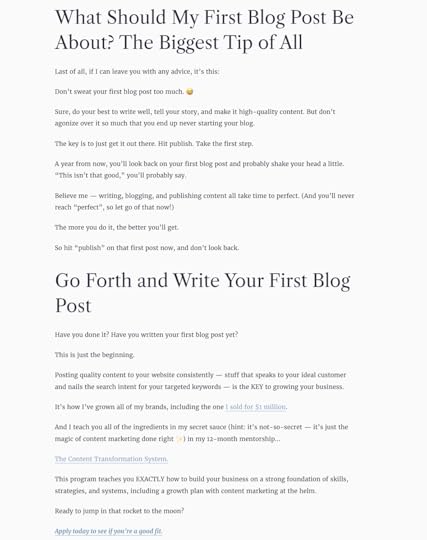
As you can see, my conclusion is nothing like traditional blog post endings. It’s a mini landing page selling my core offers.
This means your single AOFU blog post has every element of ToFu, MoFu, and BoFu blog posts.
This makes AOFU blogs the perfect content type to fuel your sales funnel marketing strategy.
Focusing On Complete Customer ExperienceAn impactful sales funnel marketing strategy doesn’t end with making a sale. It also focuses on the complete customer experience.
Your strategy should go beyond simply driving conversions to focus on providing a complete customer experience.
This has proven its worth within saturated industries like the apparel retail industry. According to studies, emotionally engaged customers tend to repurchase products and services three times more often than those who feel indifferent toward brands they interact with regularly.

Source: Harvard Business Review
That’s why taking a holistic approach when developing a sales funnel strategy ultimately leads to increased revenue growth and sustained long-term success.
It’s also why the AOFU framework is so impactful. It helps you meet all your customers’ needs, ensuring you deliver value at every stage of the customer journey. And that without high content overhead costs.
Grow Your Business and Revenue with an Impactful Sales Funnel Marketing StrategyMastering the sales funnel marketing strategy is a game-changer.
It all starts with effective lead nurturing, which can turn potential customers into loyal ones.
The power of landing pages in conversion rates cannot be overlooked either. Optimizing them for better conversions is key.
But the heart of it all is AOFU content!
This is serious content hacking — creating content that meets all your prospects’ needs increases your conversion rates, boosts sales, and drives more revenue to your business.
If you want to use content marketing to drive traffic and sales, then you must master the AOFU strategy.
But remember: AOFU doesn’t work if you don’t have a lot of other key pieces in place.
I’m talking about your website, your offers, your pricing, your landing pages, your lead magnets, and so much more.
Luckily, I teach you how to do ALL of this in my 12-month mentorship, the Content Transformation System. 
Ready to get your business skills, systems, and strategies in place so you can become a true Content Hacker?
Apply today to see if you’re a good fit. Let’s do this. 

The post Optimizing Your Sales Funnel Marketing Strategy for Success appeared first on Contenthacker.com.
August 17, 2023
Revamp Your Content: WordPress Rewrite and Republish
Ever heard of the rewrite and republish feature for WordPress?
No?
It’s like a magic wand for your old, dusty content on WordPress. 
You’ve spent hours crafting that perfect blog post. You hit publish, it gets some traction, but then… nothing. The views dwindle down to a trickle and soon it becomes just another piece in your archives.
A year later, you stumble upon this forgotten masterpiece while doing some routine cleanup. You read through it again – oh boy! It’s not as good as you remember. There are outdated facts, links leading nowhere, and an overall style that makes you cringe slightly. 
This is where the rewrite and republish feature comes into play.
Instead of letting such posts gather digital dust or deleting them out of embarrassment, breathe new life into them by updating information, improving readability, or even giving them a complete makeover.
We can do it in WordPress with the rewrite and republish feature. Let’s learn how.
Table of Contents:Leveraging the Rewrite & Republish Feature in WordPress: A Detailed LookUnlocking the Rewrite & Republish FeatureRevamp Your Content with the Rewrite and Republish FeatureUpdating Content with EaseDealing with Outdated InformationComparing Old and New Versions: A Key to Quality ContentRewrite and Republish: Keeping Your Content Fresh and RelevantLeveraging the Rewrite & Republish Feature in WordPress: A Detailed LookAs you know, content plays a huge role in growing and scaling a sustainable business.
Imagine a tool that empowers you to maintain your website’s content effortlessly, be it posts, pages, or custom post types. This is precisely what the Rewrite and Republish feature offers WordPress users.This unique functionality is invaluable for bloggers, business owners, and marketers who understand the power of content marketing. With this republish option at hand, you can immediately start rewriting any existing post without affecting its original version.
This helps ensure you always have fresh content on your site.

The magic happens when, after making all necessary changes to your duplicated draft version, one click on the “republish” button replaces the old with the new while preserving SEO benefits by maintaining the original URL.
Now, isn’t that smart? 
How do you use the rewrite and republish feature?
By default, WordPress doesn’t have a rewrite and republish feature built in.
Instead, you must install and activate the Yoast Duplicate Post plugin to get it on your site.
The plugin also extends support for the rewrite and republish functionality beyond blog posts or web pages to other custom post types.
Deciding whether to update or delete older content can often be challenging. However, with this powerful feature on your site, you can easily turn stale content into fresh current, relevant, and engaging content, all at a click of a button.
Unlocking the Rewrite & Republish FeatureRewriting and republishing existing posts becomes easy once you’ve installed and activated the Yoast Duplicate Post plugin. All you have to do is go to the posts section in your WordPress dashboard and hover your cursor over the post you want to revamp.
This will give you options for what to do with that post. In this instance, you’ll want to click on the Rewrite and Republish option.
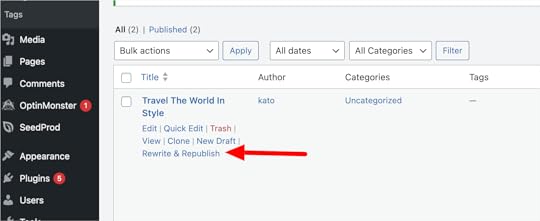
Clicking on the Rewrite and Republish button will create a clone of the original post. You can immediately start rewriting on the cloned version of the post. This won’t affect the content on your original URL.
Once you’re done, you can republish immediately by clicking the Republish button.
Another option is to create a clone of your original post. This creates a draft of your existing post that you can edit and update. However, this option doesn’t come with the republish menu item. You’ll have to copy the revamped version and paste it over your original post or click the Publish button. The latter will result in the updated post being published on a new URL.
Revamp Your Content with the Rewrite and Republish FeatureOne of the best things about content marketing and SEO is that the initial efforts you put into creating content will pay off for years to come. That’s especially true if you keep your content fresh and up to date, something the Rewrite and Republish feature can help you
Here are a few benefits of using this feature:
Updating Content with EaseThe Rewrite & Republish feature is the busy entrepreneur’s best friend when it comes to maintaining fresh and relevant content. It provides the ability to immediately start rewriting outdated information, enhancing readability in the process.
It also makes it easy to combat content decay, a gradual decrease in organic performance. This is usually a result of newer and better content than yours being published by competitors.
The “freshness factor” is a critical ingredient to helping ensure your content continues to rank well, and the Rewrite and Republish function can help you do that.
The best way to ensure your content updates are impactful is to use the C.R.A.F.T formula.
I developed this framework for AI writing, but it can be used to edit any type of content.
Dealing with Outdated InformationIn our digital age where trends change at lightning speed, ensuring your site’s content stays current can be a daunting task. A viable strategy would involve routinely scanning through posts for data or references that may have become obsolete over time.
If you find details no longer pertinent or accurate, don’t hesitate. Replace them swiftly with updated facts or eliminate them entirely. Remember: your objective should be to ensure your content remains current and enhance trustworthiness and optimize SEO performance in the process.
One of the biggest dangers of having outdated content is that it won’t meet search intent. This can lead to a decrease in rankings. 
Once you’ve made the necessary changes to your content, you can put the Yoast Duplicate Post plugin into action – hit that republish button without hesitation.
Your existing post will be overwritten by this duplicated version immediately while preserving its original URL – offering continuity of user experience and retaining hard-earned SEO value simultaneously.
Comparing Old and New Versions: A Key to Quality ContentThe Rewrite & Republish feature takes content management up a notch by allowing you to compare the old and new versions of your posts or pages. This is crucial in maintaining accuracy, quality control, and ensuring that no outdated information slips through.
Tracking all the changes you’ve made in your duplicated version is super easy. Simply click on the Republish button then, on the window that opens, select “Save changes and compare”.
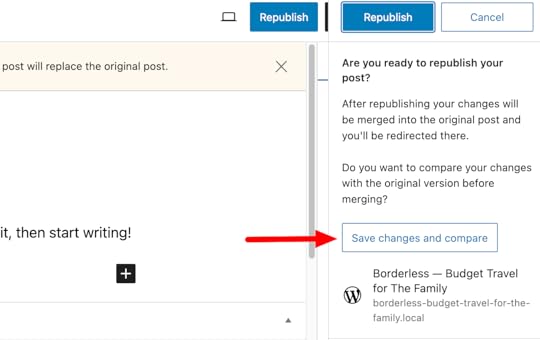
This will open WordPress’s revision history showing you the two versions of your content.
Rewrite and Republish: Keeping Your Content Fresh and RelevantUnleashing the power of the Rewrite and Republish feature can transform your old WordPress content into fresh, engaging masterpieces.
This ensures that the investment you put in crafting the original post continues to pay off handsomely.
Besides keeping your content fresh, this feature gives you an opportunity to update outdated information, improve readability, and enhance the overall user experience.
The steps are simple – access the tool through the Yoast Duplicate Post plugin or directly from the post edit screen. Make necessary changes without affecting the original post, and once done, click the Republish button.
You have control over every aspect – comparing versions before finalizing updates (you can even check the revision history) and scheduling the republish date and time for maximum impact.
It’s all in your hands!
If you want to learn more about creating content that moves the needle, that’s what my 12-month mentorship program is all about…
It’s called The Content Transformation System.
This is a personalized coaching program that empowers you with the knowledge and skills you need to start doing content marketing strategically — and grow your business by leaps and bounds.
Ready to find out more? Watch my free training for a preview of the lessons and results you can expect inside.
Just ready to get your booty inside and start learning? Apply today.

The post Revamp Your Content: WordPress Rewrite and Republish appeared first on Contenthacker.com.
August 10, 2023
Content Transformation with Julia McCoy: E50 – Why the Future of (AI) Content is Bright
Have you ever pondered the future of content marketing?
You know, during those late-night musings when you’re contemplating how to keep your brand relevant in an increasingly digital world.
The future of content marketing is like a chameleon, constantly changing its colors to adapt and thrive. As expected, there’s another shift in the works.
AI is taking over. And with AI-powered content writing tools becoming better at creating human-like content, our very jobs are at stake.
Needless to say, it’s obvious why we keep emphasizing the need to adapt. That’s what the future holds for us – constant evolution.
And those who fail to adapt to changes, particularly in technology, get left behind.
(Just ask Blockbuster. Remember them?  )
)
That’s exactly what I’m discussing in this episode of the Content Transformation Podcast.
I’ve been in the role of President at Content at Scale since early this year (read my story of adapting here) – it’s now August, I’ve been here for eight months, and I’m taking some time to share with you in this episode why I believe the future of writing is incredibly bright with the AIO approach. For both the writer, and the business owner hiring them.
So, let’s explore the future of content marketing and how to position yourself for the changing times. 





var gform;gform||(document.addEventListener("gform_main_scripts_loaded",function(){gform.scriptsLoaded=!0}),window.addEventListener("DOMContentLoaded",function(){gform.domLoaded=!0}),gform={domLoaded:!1,scriptsLoaded:!1,initializeOnLoaded:function(o){gform.domLoaded&&gform.scriptsLoaded?o():!gform.domLoaded&&gform.scriptsLoaded?window.addEventListener("DOMContentLoaded",o):document.addEventListener("gform_main_scripts_loaded",o)},hooks:{action:{},filter:{}},addAction:function(o,n,r,t){gform.addHook("action",o,n,r,t)},addFilter:function(o,n,r,t){gform.addHook("filter",o,n,r,t)},doAction:function(o){gform.doHook("action",o,arguments)},applyFilters:function(o){return gform.doHook("filter",o,arguments)},removeAction:function(o,n){gform.removeHook("action",o,n)},removeFilter:function(o,n,r){gform.removeHook("filter",o,n,r)},addHook:function(o,n,r,t,i){null==gform.hooks[o][n]&&(gform.hooks[o][n]=[]);var e=gform.hooks[o][n];null==i&&(i=n+"_"+e.length),gform.hooks[o][n].push({tag:i,callable:r,priority:t=null==t?10:t})},doHook:function(n,o,r){var t;if(r=Array.prototype.slice.call(r,1),null!=gform.hooks[n][o]&&((o=gform.hooks[n][o]).sort(function(o,n){return o.priority-n.priority}),o.forEach(function(o){"function"!=typeof(t=o.callable)&&(t=window[t]),"action"==n?t.apply(null,r):r[0]=t.apply(null,r)})),"filter"==n)return r[0]},removeHook:function(o,n,t,i){var r;null!=gform.hooks[o][n]&&(r=(r=gform.hooks[o][n]).filter(function(o,n,r){return!!(null!=i&&i!=o.tag||null!=t&&t!=o.priority)}),gform.hooks[o][n]=r)}});
Email* gform.initializeOnLoaded( function() {gformInitSpinner( 44, 'https://contenthacker.com/wp-content/...', true );jQuery('#gform_ajax_frame_44').on('load',function(){var contents = jQuery(this).contents().find('*').html();var is_postback = contents.indexOf('GF_AJAX_POSTBACK') >= 0;if(!is_postback){return;}var form_content = jQuery(this).contents().find('#gform_wrapper_44');var is_confirmation = jQuery(this).contents().find('#gform_confirmation_wrapper_44').length > 0;var is_redirect = contents.indexOf('gformRedirect(){') >= 0;var is_form = form_content.length > 0 && ! is_redirect && ! is_confirmation;var mt = parseInt(jQuery('html').css('margin-top'), 10) + parseInt(jQuery('body').css('margin-top'), 10) + 100;if(is_form){jQuery('#gform_wrapper_44').html(form_content.html());if(form_content.hasClass('gform_validation_error')){jQuery('#gform_wrapper_44').addClass('gform_validation_error');} else {jQuery('#gform_wrapper_44').removeClass('gform_validation_error');}setTimeout( function() { /* delay the scroll by 50 milliseconds to fix a bug in chrome */ }, 50 );if(window['gformInitDatepicker']) {gformInitDatepicker();}if(window['gformInitPriceFields']) {gformInitPriceFields();}var current_page = jQuery('#gform_source_page_number_44').val();gformInitSpinner( 44, 'https://contenthacker.com/wp-content/...', true );jQuery(document).trigger('gform_page_loaded', [44, current_page]);window['gf_submitting_44'] = false;}else if(!is_redirect){var confirmation_content = jQuery(this).contents().find('.GF_AJAX_POSTBACK').html();if(!confirmation_content){confirmation_content = contents;}setTimeout(function(){jQuery('#gform_wrapper_44').replaceWith(confirmation_content);jQuery(document).trigger('gform_confirmation_loaded', [44]);window['gf_submitting_44'] = false;wp.a11y.speak(jQuery('#gform_confirmation_message_44').text());}, 50);}else{jQuery('#gform_44').append(contents);if(window['gformRedirect']) {gformRedirect();}}jQuery(document).trigger('gform_post_render', [44, current_page]);gform.utils.trigger({ event: 'gform/postRender', native: false, data: { formId: 44, currentPage: current_page } });} );} );Exploring the Future of Content Marketing: Trends to Watch in the AI EraContent development is shifting to rely heavily on AI tools and platforms.
AI can be used for anything from content strategy to content creation and everything in between. You can even create personalized video content with AI.
And powerful platforms like Content at Scale can easily create content from relevant keywords in a matter of minutes. That’s why content teams should embrace such technologies to help them create high-quality content. And the best part is that it reduces your SEO efforts as it was built with search engines and users in mind.
This is a huge shift — from relying on 100% human power to relying on machines to do the work for us.
But should content marketers and writers be worried about AI taking over their jobs? That’s one of the most asked questions in the world of content creation right now.
The simple answer is no — you shouldn’t be worried. You’ll find out why in a minute.
So, what future trends should content creators watch out for in the next few years? What’s on tap for the future of content marketing?
AIO Writing is on the RiseArtificial intelligence optimization (AIO) is a skill you need to master if you’re to remain relevant as a writer. As powerful as AI is, AI-generated content still needs a human touch to ensure you publish engaging content that resonates with your readers.
As a brand or content manager, you need to know how to hire and train your own AIO writers. These are the skilled people who can use AI to create near-perfect blog posts in minutes just from relevant keywords, video-based content, podcasts, and more.
Marketing Budgets Will Go DownIf there’s one major benefit of automation every business looks forward to, it’s the reduction in overhead expenses.
And this is one advantage embracing the AI revolution will bring to brands: a reduction in content production costs across all marketing channels. As a result, you’ll be able to make massive savings on your overall marketing budget.
Meeting Marketing Goals Will Be EasierAI makes it easier for content teams to create content for their target audience. It also helps ensure your content strategy is optimized for conversions. Because of these benefits, and more, it will be easier than ever for you to reach your marketing goals.
Because AI can help you fine-tune your content marketing strategy, you’ll be in a better position to reach your potential customers easier.
Creating Personalized Content Will Become EasierOne of the biggest challenges of producing content that resonates with potential customers is personalization. AI makes this super easy, as you can instruct your content creation tools to target specific demographics.
This makes it simpler to show potential customers the value of your products.
Producing content that helps you meet your marketing goals is becoming much easier in the AI era. That’s why, as you try and predict content marketing trends, AI adoption should top your list.
Interactive Content is on the RiseThe way users consume content is changing.
Particularly with younger consumers, interactive content is in demand. And AI has the capability of helping you create a tailored experience for each visitor to your site.
The days of static content are fast coming to an end. To win with interactive content, you’ll need to embrace AI technologies.
Decoding the Future of Content Marketing with AI: The Impact on Creators and AIOAI is rapidly transforming the content marketing landscape. This revolutionary transformation presents a massive shift in how we strategize, create, and distribute engaging content.
BUT — the fusion of AI into our content strategy offers immense potential for efficiency and effectiveness. 
But what does the future of content marketing look like for brands and content teams?
The Impact of AI on Writing JobsIn the coming years, it’s projected that over 300 million jobs will be influenced by this technological advancement. However, let’s not forget – while some traditional roles may evolve or even disappear due to automation, new opportunities are also on the horizon.
Does this mean the future is bleak for content creators?
Many, many doom-and-gloom marketers, entrepreneurs, and writers would have you think so.

But I don’t agree.
If anything, the future is bright for content creators. 
New avenues open up as machine-generated content becomes more prevalent. There are many scenarios where the demand for human skills will increase. And one such scenario is fact-checking AI-generated content and adding a human touch.
This need can be summed up in a framework I coined for editing AI content: C.R.A.F.T.
Great content still requires skills like creativity and critical thinking — which machines can’t replicate.
Artificial Intelligence Optimization (AIO)A key player shaping the future of content marketing is none other than Artificial Intelligence Optimization (AIO).
AIO involves taking what artificial intelligence has generated – high-quality material at scale – then optimizing it further using techniques like SEO or personalization. It combines strengths from both worlds – technology powered by artificial intelligence along with human expertise. Art and science, working together. 
This approach helps businesses produce relevant, keyword-rich, evergreen blog posts but ALSO ensures each content piece aligns perfectly with their brand identity. As a result, the content will resonate with target audiences across various content and social media platforms.
Businesses adopting these practices have reported improved engagement rates among other benefits. It also leads to huge cost savings thanks to automated processes.
Creating content with AI is one thing, optimizing it is another. And that’s why you must master AIO. (It’s the Content Hacker way. )
So, we’ve made it pretty clear that AIO is the future of content.
That means all types of businesses, from small startups to large corporations, can experience immense benefits by incorporating it into their content marketing strategies. Here are some of the most significant ones:
Improved Content Quality at ScaleOne of the biggest advantages of adopting AIO is the ability to generate high-quality, engaging content consistently across all your brand’s marketing channels, even if you scale up and increase your production by 3x, 5x, or even 10x.
Yep, it’s totally possible now. AI can help content marketers do just that.
To visualize how it works, check out how human-only content production compares to AIO:
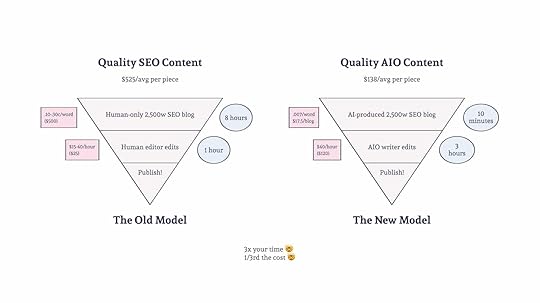

In addition, AI tools have an impressive capacity to analyze vast amounts of data and understand content marketing trends, which helps them produce relevant content pieces tailored specifically for your target audience. This level of personalization increases customer engagement, leading to higher conversion rates.
Besides content quality, AIO also helps you create SEO-friendly content. This results in content that ranks well, converts, and drives business growth.
Developing Content More EfficientlyThe efficiencies brought about by artificial intelligence extend beyond producing compelling content. Machine learning algorithms power these tools, enabling them to learn from each task they undertake, thereby improving performance over time.
This translates into less time spent proofreading or editing articles as errors or inconsistencies are detected during the writing phase itself – imagine having a round-the-clock editor!
Furthermore, the speed at which these advanced machines operate allows rapid production without compromising quality – something human writers can’t physically do (we need to eat and sleep!).
To truly understand the difference in capacity, consider this: Users leveraging Content at Scale and the AIO model were able to churn out 50 million words monthly and save 60% on content production AND 70% on time/effort. Crazy.
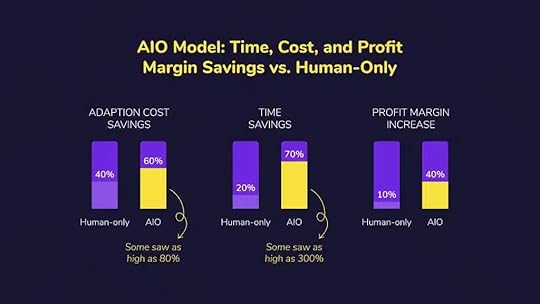
Integrating AI in content creation doesn’t diminish the need for the human touch. Instead, it opens up new avenues where humans and artificial intelligence can collaborate for even better results.
Why You Still Need Humans in AI-Powered Content CreationNo doubt, artificial intelligence is a formidable tool that churns out large volumes of content swiftly. However, its abilities lack nuance, creativity, and emotions inherent to humans. That means humans NEED to stay involved.
Without the human touch, AI-generated content may rank well in search, but it will lack the power to connect on a human level.
That’s why the future of content marketing lies in merging AI technologies with human skills.
Bridging the Gap Between Businesses and Skilled AI WritersFinding great, skilled writers who understand how to use these advanced tools effectively remains a challenge today’s businesses face.
For one, finding the right writers is hard, whether you use AI or not.
Secondly, once you find the right writer, you need to bring them up to speed on your preferred content creation tools, processes, style, and tone.
This requires a lot of time and effort and may slow your business down.
That’s why I’m proud to say we’ve created a solution for this.
I call it the AI Blogger course.
This is a powerful course designed to help solopreneurs and content teams know how to create AI-generated blog posts that move the marketing needle and drive sales.
Leveraging Large-Scale Content Creation For Business GrowthBeyond rapid production capabilities lies another significant advantage – scalability. Businesses can now generate more content pieces than ever before without worrying about manpower limitations or escalating costs associated with hiring additional writers.
This capability means they can effectively target multiple marketing channels simultaneously while maintaining consistency across all platforms. From email marketing campaigns to social media posts, you can leverage AI to increase your brand awareness exponentially.
Furthermore, search engines favor websites that consistently update their pages with keyword-rich content, which is a huge boost to your SEO and online visibility.
The ability to create high-quality engaging content rapidly is an incredible game-changer. It enables you to keep pace with ever-evolving consumer demands and stay ahead in competitive markets where fresh, relevant content reigns supreme.
Maintaining Quality in High Volume ProductionWhen we talk about rapid content production and scaling, a question might arise:
Can you sustain quality when producing on such a large scale?
With the right tools, YES.

The best AI tools like my favorite, Content at Scale, will help you keep your content quality exactly where it needs to be to both rank and resonate with your audience.
Want to give Content at Scale a whirl? Sign up with my link to get 20% extra credits towards writing posts.

To sum up, leveraging effective long-form content marketing on your website using AI-tools is downright exciting. So if you’re looking forward to developing high-quality content pieces at unprecedented speed, then AI is the answer.
The Future of Content Marketing is Here, and It’s Spelled “AI”The future of content marketing is here, and it’s powered by AI.
We stand at the threshold of a new frontier where AI technology can generate high-caliber content in record time.
Great content can easily be created within a few hours with the right content generation tools. Whether it’s written content, video content, social media posts, and more, AI can do it all.
But with great power comes great responsibility. 
Amid all this technological advancement, human involvement still remains vital. We need skilled AIO writers who can collaborate effectively with these powerful AI systems.
And we need people who aren’t afraid to pivot with the times, to embrace the changes in the industry, and show how AI can power up a human to produce greatness.
That’s what I believe AI can do for our content marketing.
Do you need help adapting? Do you want to go from “confused content newbie” to Content Hacker?
Then you might need a personalized coaching program to help you harness the power of content marketing in your business.
We’ve got exactly what you need.
It’s called the Content Transformation System.
This is my 12-month mentorship program where you learn to build a sustainable business with solid foundations and practices like content marketing… right alongside me. 
Watch my free training to see how it works.
And when you’re ready, apply right here.
See you inside! 

The post Content Transformation with Julia McCoy: E50 – Why the Future of (AI) Content is Bright appeared first on Contenthacker.com.
August 3, 2023
How to Start a Content Writing Business That Succeeds (for Beginners)
So, you want to learn how to start a content writing business?
Good luck.
I didn’t mean that as somber as it sounded.
But, let’s be real. Learning how to start a content writing business—any business, really—is tough.
Hopeful entrepreneurs start around 543,000 businesses every month. And according to the Small Business Association, barely half of those businesses will still be around in five years. The other half will be long gone, with the majority of them failing in two years or less.
Yikes! That’s why I wrote this guide on how to start your own content writing business.
If you want to start a content writing business, you’ve got your work cut out for you – but fear not! Every truly great accomplishment at first seems impossible. I’m not promising it’s easy, but it will be worth it.
Everyone knows my writing agency was my primary source of income for ten years before my exit in 2021 (exit story here). Here’s why I’m sharing this guide:
a.) I was personally asked by several readers for this guide, and I like to write about topics my audience cares about.
b.) I believe there is room for everyone in today’s market. With nearly 5 billion people and 60% of the world’s population online, now is a better time than any to seek to build a brand in the digital space.
As the former 10-year CEO of a successful content writing business, today’s guide will walk you through the things you must consider when you’re embarking on your own journey in building a writing biz.
What skills and tools you’ll need to succeed
How to build your brand and reputation
The inside scoop on hiring and managing writers
By the time you’re through, you’ll have everything you need to lay the groundwork for your own content writing business.
Without further ado, here’s how to go from unpaid to paid and start a content writing business.
Want to sit with me and learn? Join me for a free class on content strategy, skills and systems, customized to your level (solopreneur or established founder). Over 2,000 entrepreneurs have LOVED this class. → Watch now.
How to Start a Content Writing Business: Table of Contents
Part 1. How to Start a Content Writing Business: Do Your Homework Before You Start That (Content Writing) Business!
Part 2. Identify Your Priorities & Goals for Your Content Writing Business
Part 3. Transition from Presence to Process When Starting Your Content Writing Business
Part 4. Get Your Team Together for a Content Writing Business
Part 5. Leverage the Power of AI Content Writing Tools (and AIO Writers)
Conclusion: Start a Content Writing Business in Months, Not Years
Watch Me Explain What Goes Into Starting a Content Writing Business
Part 1. How to Start a Content Writing Business: Do Your Homework Before You Start That (Content Writing) Business!
Succeeding at planning is planning to succeed.
The single most important thing you can do when starting a content writing business (or any business) is laying your foundations. And how do you get started with that?
By doing your homework.
Transforming your freelancing efforts into a full-fledged content writing business takes a few specific steps. Here are the two specific things you need to do.
1. Identify Your Area of True Expertise
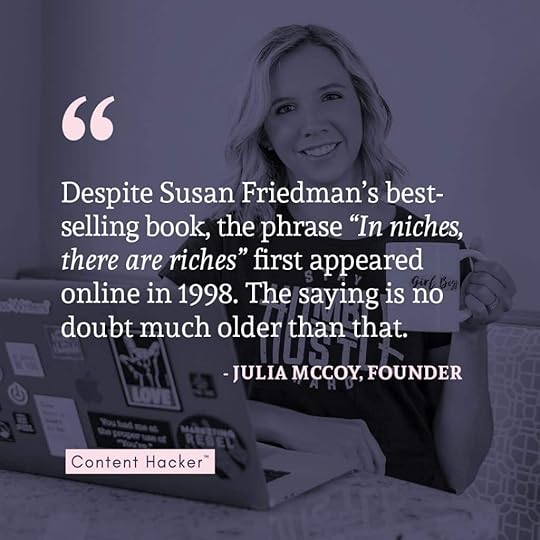
Your research into the industry should give you insights into who and what is out there – and what isn’t. That’s good, because you’ll need to niche down into a specialty to succeed with your content writing business.
We’ll refer to this niche as your Area of True Expertise. It’s what you’re known for and what you strive to be the best at as you can.
When I was just getting started with Express Writers way back when, I wasn’t terribly picky about my clients. I picked up all manner of content, often starting my days at 4 a.m. just to send out dozens of emails to potential clients and agencies. It eventually worked, but that was because the industry at the time simply needed writers to stuff keywords into posts.
That will not work today.
In 2020, the content writing industry has matured and become more sophisticated. Your clients will expect you to be an expert in what you do. Therefore, it’s better to be a True Expert in one or two things than it is to be adept at several.
As you review the state of the industry, think about where you fit in (or where you don’t). This will give you a sense of what you need to do to begin scaling your operations. In particular, identify these things:
Who is your ideal client? Startups? SMBs? Fortune 2000 companies? SEO agencies? You’ve got a lot of options.
What do you do (and not do)? You may already have specific areas of expertise, such as executive ghostwriting or long-form content for tech startups. You may be still finding your feet but have nature aptitude at things like SEO or content marketing.
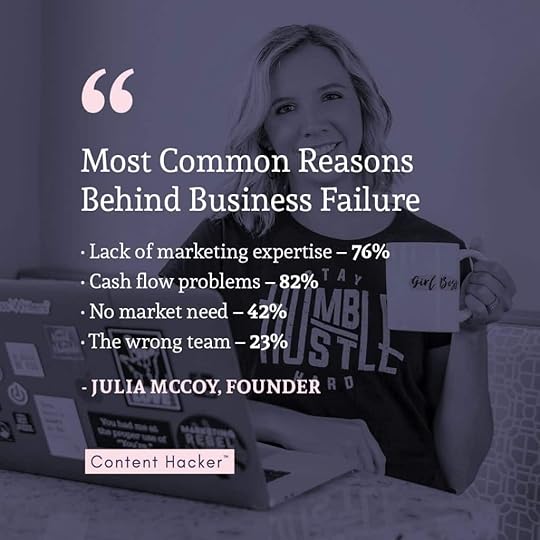
Is what you want to do sustainable? Identify what you do and figure out whether or not you can position yourself as a True Expert. Then, identify whether a market need exists – some 42 percent of businesses fail because there isn’t one. Finally, determine if you can turn your position into a unique selling proposition.
How can you turn your Area of True Expertise into a USP and a CDF? You want to differentiate, offering something your competitors can’t.
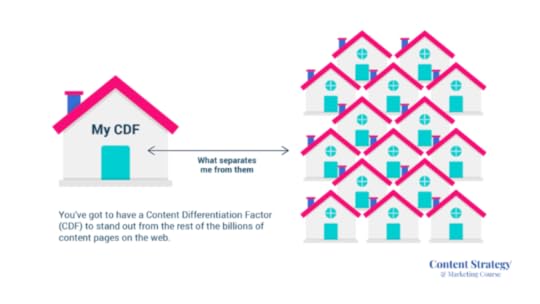
Your CDF is your “it factor” and you need it when starting a content writing business.
2. Analyze Your Business Competency
As a writer, you already know how to do a lot. However, starting a content writing business and scaling one both take skills that you may not have developed in your freelance writing career. Some things you should pick up if you haven’t already:
Marketing. If you don’t have a grasp on marketing, you’ll need to get it down ASAP. This includes everything from digital marketing to content strategy and marketing.
Project management. Ultimately, your goal will be to remove yourself from your agency’s processes so you’re no longer trading time for money. You’ll need to know how to manage projects to create project processes.
Accounting. You must know how to manage money. From paying your subcontractors to dealing with taxes, consider taking a basic course in accounting.
Leadership skills. As your team grows and your business takes on more ambitious projects, you’ll find yourself leading teams and people. Make sure you know how to handle them.
Communication skills. You’re probably already versed in dealing with clients. Now, you’ll need to learn to deal with managers, contractors, business partners, and more.
3. Build a Business Website
You’re a content writer.
And all the content you create gets published on your clients’ sites.
But have you stopped to build your own online presence?
If you haven’t yet, you need to put together a professional-looking website ASAP!
This will help you display your portfolio and expertise.
It will also help you leverage SEO to reach a wider audience and generate organic leads.
Part 2. Identify Your Priorities & Goals for Your Content Writing Business
So, you know who you are, what you’re doing, and what you’re up against. Now, it’s time to establish where you want to go and how you’re going to get there. In the next phase, you’ll need to do three things: identify your priorities, establish your goals, and write your business plan.
What Do You Want Out of This?
People go into business for many different reasons. Sometimes it’s because we feel stifled by the corporate world. Sometimes it’s because we’re chasing a passion.
Before you sit down to actually build your business, spend some time identifying your priorities with your business. These are the things that are important to you and will impact your goals or strategies. Some examples of priorities include:
Profitability. Who doesn’t love making more money?
A superior customer experience. Are your clients waiting weeks for content?
Free time. Perhaps you need to delegate or automate aspects of your business.
Here are a few things my students have said about what they’re trying to accomplish.
“I have been a freelance copywriter and editor for just over five years. I haven’t niched the work I do, but I’m fortunate to have some very loyal clients who have achieved impressive results with my content thus far. Although I have a company, that is merely a store-front for the solo work I do. I have become so busy that I am turning work away and some of my very patient clients are waiting 1-2 weeks for content. This is far from what I want for them, and for me.” – Elizabeth
“I have a natural love for writing as well as for fitness and motivating others. But I have been stuck in HR/recruitment jobs in the corporate world. I’m looking to break out, follow my passions and do what I love … trying to start my own business, my own website, but I also still have to work while doing all that.” – Heather
You can see that each of these two students has different priorities. Elizabeth needs to scale an existing operation to provide better service to her clients. Heather needs to develop a profitable, sustainable content writing business to pursue her passion.
Establish Your SMART Goals
SMART stands for Specific, Measurable, Actionable, Relevant, and Timely. It’s a formula for creating achievable goals with defined steps.
Some SMART goals when starting or scaling a content writing business might include:
Land three clients in a specific niche by the end of the year.
Build a five-page website showcasing my expertise within the next 30 days.
Produce ten pieces of thought leadership for the blog to support the content marketing efforts in the next 90 days.
Delegate five projects to five writers this week to free up 20 hours of my time for other activities.
Build Your Writing Business With a Slow, Steady, Practitioner-First Approach
Do you know the top reason why startups fail? According to CB Insights, 42 percent of failed startups indicated they found no market need.
In other words, they created a product that nobody wanted.
That’s one of the dangers when you simply get a team together and go into business.
Fortunately, you can sidestep that by becoming a practitioner in your field first. That means going out, getting clients of your own, and learning what it takes to create great content.
Once you go into business, you’ll find that things become so much easier. That’s because you’ll:
Know what the final deliverables should look like.
Have the ability to step in at any point in your business to help make things work.
Understand how to sell your service or products.
Be able to identify new hires who know what they’re doing.
How do you build your skills faster?
Mentors are an age-old recommendation to accelerate learning that’s well-regarded in business. Yet, it’s a tool that’s routinely under-utilized. In one study of 3,000 people, 76 percent of respondents agreed that mentors were important. Yet only 37 percent of people currently had one.
I highly recommend you find a mentor. Identify who’s a voice of authority in your industry and take them on as a role model. These are my three:
Jon Morrow at Smart Blogger.
Joe Pulizzi at Content Marketing Institute.
Kimanzi Constable at Results Global Impact.
And remember, an investment in your skills is not an expense; it’s an investment.
I may have written a book called Skip the Degree, but that doesn’t mean I don’t advocate paid training. (I’ve invested over $8,000 into my own in the past six months.)
In contrast, don’t be shy about investing in paid courses, seminars, workshops, or anything else from your mentors or other industry leaders. Small doses of the right training can accelerate your career much faster than any degree that takes years to complete.
Your professional development is not an expense. It’s an investment that pays dividends in the long run.
Of course, not all courses are created equal or of equal use to everyone. When considering whether or not to invest in a course, ask yourself:
Will it help me move forward? Is this a hard or soft skill I need to be successful at [x]?
Are they credible? Is the instructor someone who’s known and respected in my field?
Do they have proof? Does the instructor have their own business that proves their teachings work, or does their business seem to be simply teaching certain skills?
If the answer is yes to all three, figure out how to make it happen!
Part 3. Transition from Presence to Process When Starting Your Content Writing Business
Have you made it this far? Congratulations!
But if it seems like I frontloaded this guide, it’s because I did. Everything covered so far is the groundwork upon which you’ll build the next steps. The more thoroughly you’ve completed parts one and two, the stronger foundation you’ll have for starting your content writing business.
So, spend as much time as you need on the above. Once you know where you’re going and why, you can begin to build the engine that allows your brand, client base, and profits to scale.
I’m talking about your processes.
Processes Keep You Focused, and Help You Scale
If you’re a solopreneur, you’ve been doing everything on your own this whole time. That might have worked for you. Or, like Elizabeth, you quickly discovered that you have more demands on your time than you can manage.
Now, you need more writers. Maybe even a project manager, a bookkeeper, and a social media marketer. You need a team.
But with more hands touching the business, there are more opportunities for it to get pulled in multiple directions. How do we solve that?
By creating processes. Having detailed, documented processes lets you:
Standardize the business and amplify the brand. Everyone will do everything the same way. Additionally, you can develop templates that keep branding and image consistent.
Accelerate new employee or subcontractor training. Imagine explaining the same thing over and over again to every new hire. Now imagine handing them a document that they can study before getting to work.
Lets you maintain your Area of True Expertise. Stick to your processes, the things you do. Say no to everything else, and you’ll never water down your brand.
How to Create Processes for a Content Writing Business
Creating processes for your content writing business doesn’t need to be difficult. However, you should be consistent with them. Do:
1. Identify things that you already do a lot. These business activities are the best candidates to be standardized and replicated across the board. Some examples of this might include:
Client onboarding and interviews
Writer interviews and onboarding or offboarding
Content creation
Content strategy or keyword research
Quality control
Editing and revisions
Client invoicing
Subcontractor payments
2. Document everything. Even if it’s simply in Google Docs, make sure that you’ve written down what to do. This gives you a paper trail for others to study and for you to improve upon.
3. Identify where you need technology and invest. This may include hardware or software, subscriptions, services, and the like. I highly recommend that you invest in:
Accounting software
Plagiarism detection
Cloud storage
Audio and video calling software
4. Create templates. Templates help standardize the formatting, language, and layout of your most critical documents. Such consistency helps you present a more professional image to your clients and saves your team time.
5. Disseminate the processes to your employees or subcontractors. Build into your processes a process for getting information into the hands of the people who need to know. Again, it can be as simple as a Google Drive that has everything your writers, managers, or clients need to know.
6. Check in with people about what’s working and what’s not. At the end of the day, it’s your people who will make the processes run. Check in with them to learn what’s working and what isn’t. Then, make changes to improve your processes.
Part 4. Get Your Team Together for a Content Writing Business
Up until this point, you’ve been at it solo. But that means the business stops working when you stop working. That’s what we’re trying to escape.
At some point, you’ll realize you need people power to drive your content writing business to the next level. However, you don’t want just anyone touching the business you’ve built.
As you get your team together, let your mantra be: People create value. When chosen well, your people are your most valuable business asset.
In general, you’ll interact with three groups of people:
Writers & Editors
You’ll need writers (and if you invest in AI tools to speed up content production, you’ll specifically need AIO writers – more on that later) to delegate work to and editors to check the work.
It’s very easy to access writer pools, but your writers will make or break your reputation for quality.
Upwork is a great place to look for talented freelancers, but plenty of other places exist as well. Wherever you go, to succeed with hiring writers:
Require fluency in the language you work. In most cases, that’s English. It’s up to you whether you want to hire U.S.-based writers only, or if you’re willing to look globally. Just be aware that will have tax implications and potentially complicate quality.
Headhunt, don’t post jobs. Content writing is one of the easiest careers online to get into, which means everyone is doing it. Posting jobs is a great way to get flooded with randos. Instead, identify talented writers with expertise in your company’s niche, then approach them.
Don’t ask for lengthy, unique “samples.” Instead, ask for a portfolio. If they don’t have one, consider giving them a writing test and requesting a unique paragraph or two. Asking for an entire article as part of the interview process (especially if you have no plans on paying for it) is something scammers do – and good writers know that.
Be upfront with what they can expect. Don’t promise $2,000/month in work if they’re not going to consistently make that.
Pay by the word. The industry standard for content writing is to pay your writers by the word. You may charge your clients a lump sum for the entire project, but your writers are expecting a per-word agreement.
Don’t go for the cheapest you can find. You get what you pay for. Avoid sites where you can hire writers for rock-bottom rates.
Set up an NDA and a contract ahead of time. Protect your processes and internal documentation by having everyone you hire sign a non-disclosure agreement.
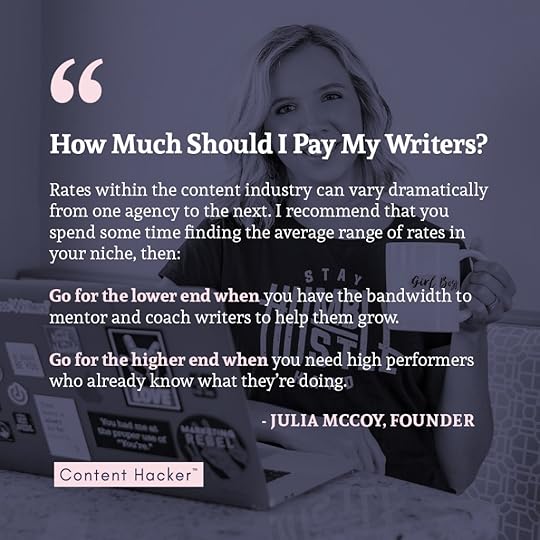
Support Staff
Support staff may or may not be necessary depending on where you are in scaling your operations. They can help a business run more smoothly, especially if you’ve got multiple processes that require the human touch. Bring on support staff as you need. They may include:
The web admin or IT support
Customer success agents
Writer support agents
Business and project managers
Specialists, such as content strategists or SEO experts
Marketers
Business Partners
Business partners can breathe life, perspective, and capital into a growing enterprise. However, if you’re just starting a content writing business, it’s unlikely that you’ll need one. You may naturally have one, such as a spouse. That’s also fine!
Bringing on a business partner lies beyond the scope of this guide, but it’s worth mentioning because some people have asked me if they’re critical when you start a content writing business.
When you have a partner whose skills and competencies complement your own, that relationship will propel your business to profitability. However, don’t feel pressured to bring one on if you don’t feel like you need it.
A Few Other Tips for Working With Subcontractors
At the end of 2019, freelancers and independent contractors constituted some 36 percent of the U.S. workforce. It’s expected that they’ll be the majority by the late 2020s.
When you hire your writers and editors (and possibly others), you’ll likely hire them as independent contractors. However, you need to be aware of what that means for you as a business owner.
Here are a few tips:
Be wary of the IRS rules around employees and independent contractors. The IRS is very clear about what you can and cannot require from independent contractors. Familiarize yourself with these rules before hiring anyone.
Be careful with non-compete agreements. NCAs are extremely common, but come with some major caveats. In the U.S., enforceability varies by state (they’re often unenforceable with online work). However, they may scare off some potential hires.
Get your subcontractors’ availability and work around them. The easiest way to keep your staff happy is to work with them. Have everyone give you their availability, then task out work accordingly. This makes it easier to enforce accountability and deadlines, while making it more obvious when you need to hire more writers.

Part 5: Leverage the Power of AI Content Writing Tools (And AIO Writers)
AI (artificial intelligence) is one of the best inventions of modern times, especially for writers. It has brought so many benefits to the content marketing industry that you, as a writer and business owner, can’t ignore.
AI comes with many benefits and opportunities that can significantly enhance your productivity, creativity, and overall success. Here are some compelling reasons why you should integrate AI into your writing business:
Why Should AI Be a Critical Part of Every Writer’s Business?
So why should you embrace AI as a critical tool in your business?
Sure, the camp is divided on whether using AI is good or not.
And others advocate for AI-generated content to be labeled.
However, at the end of the day, one thing is certain — AI is an excellent tool for boosting your writing business.
The main reason for that is AI can help you run a writing business with tantalizing profit margins of over 70%!
Here’s why:
Scalability: AI helps you write faster without compromising on quality. Because of this, you can easily take on more clients and projects. You can scale your business and exponentially grow your income.
Speed and efficiency: AI-powered tools can automate various writing tasks, such as idea generation, grammar and spell-checking, proofreading, and content formatting. This allows writers to focus more on their creative process and spend less time on mundane editing tasks.
Content generation assistance: AI can assist in generating content ideas or even drafting portions of articles, blog posts, or other written content. While the final creative touch remains with you, the writer, AI can serve as a valuable co-writer, offering suggestions and inspiration.
Enhanced content research: AI can assist you in finding relevant and reliable sources quickly. Other more powerful ones, like Content at Scale, even add links to sources in their drafts. With the ability to process vast amounts of information, AI-powered content writing tools can streamline the content creation process and help you discover valuable insights and facts to add credibility to your content.
SEO: SEO is an integral part of content creation, and AI can help ensure your content is SEO-friendly. It can suggest relevant keywords and analyze search trends, ensuring that your content is primed to rank and drive traffic.
However, it is essential to remember that while AI can be an incredible tool, it’s not a replacement for creativity or the human touch. You should only use AI as a complementary tool to enhance your skills and efficiency rather than relying solely on it for content creation.
By combining the power of AI with your unique perspectives and creativity, your businesses can enjoy a significant advantage in today’s competitive digital landscape.
By the way, I used to be THE biggest AI critic. I was totally against using it in my content marketing for a long time — but then I came to my senses once the right tool came along that emphasized integrity in content.
Need help convincing or converting your team, business, bosses, or clients to the AIO way? Want me at your next event? I can teach your people how AI in content can be done ethically, with that aforementioned integrity. Get me to speak at your next event!

Best AI Content Writing Tool
Now that you’ve seen the value AI adds to your writing business, let me show you the best AI content writing tool.
It’s called Content at Scale.
Content at Scale AI has the ability to produce a high-quality 2,000+-word blog draft in mere minutes!
This is the first-ever content automation platform built to help writers and business owners scale content marketing without losing touch with quality, authenticity, and accuracy. This is a powerful tool built by long-form SEO content marketers for long-form SEO content writers who want to create impeccable content at scale.
Unlike most AI content generators out there, Content at Scale outputs content that is truly human-like, bypasses AI content detectors, and is optimized for search.
As if that wasn’t good enough, Content at Scale also integrates with Copyscape, so you can rest assured your content is plagiarism free. It also has a WordPress plugin that enables you to sync your content directly to your blog right from the Content at Scale dashboard.
It also has my personal stamp of approval, which isn’t easy to earn. Plus, as an AI speaker, I’ve tested a lot of AI-powered tools and this one is by far the best one I’ve tried.
Check out my tutorial below to get a behind-the-scenes glimpse of how powerful this tool really is.
Find and Train AIO Writers
As your reputation grows, you’ll soon find yourself with a good problem — more clients than you can handle as a one-person team.
When this happens, you have two options — pass on the work to other businesses, or hire writers to help you with the workload.
I’d personally go with hiring and growing my business into an AIO writing agency.
But where do you find writers who can use AI tools proficiently and produce fantastic content? Plus, how do you vet, hire, and train them?
No need to fret – I’ve got you. 
I’ve created an in-depth guide to help you source and hire the best AIO (artificial intelligence optimization) writers.
However, here’s a simple 3-step process:
Craft a detailed job listing
Use relevant and reliable hiring platforms
Train your new hires
Here’s a short video tutorial explaining the process 
Growing your team may be a daunting step if you’re a solo writer, but it’s a critical part of business and personal growth.
AI: Supercharging Your Content Creation
Leveraging AI in your writing business is a no-brainer.
It’s the missing piece in your content creation production line.
With your processes and team in place, AI gives you that extra boost you need to ensure content production is effective and runs like a well-oiled machine.
So, don’t be discouraged by the naysayers. AI is here — and it’s here to stay.
Those who embrace it early will have a huge advantage over the competition. 
Part 6. 6 Common Mistakes to Avoid When Starting a Content Writing Business
Whether you’re starting a content business or scaling up a solopreneurship, there’s plenty of room for things to go wrong. I’ll round out the guide with a few lessons I’ve learned the hard way over the years.
Some common mistakes include…
1. Scaling Too Fast (or Too Slowly)
If you scale too fast, you end up with bloat that eat away at your profits. This may include things like hiring too many people or jumping into too many projects. At the other end of the spectrum, scaling too slowly may mean overworked people or lacking the infrastructure you need to take advantage of opportunities.
To fix this: Think long-term, identify your priorities and your goals, then focus on creating value with your people and your processes.
2. Not Doing Content Marketing for Your Business
I didn’t start content marketing with Express Writers until 2016. The moment I did, the brand took off and became the multi-million-dollar agency it is today.
Why? Content marketing is one of the most powerful ways for you to demonstrate your expertise and showcase your content differentiation factor. It’s how you prove you’re a True Expert at what you do without pushing yourself into people’s faces.
To fix this: Draw up a content strategy when you do your business plan. Your content and your business goals should align. That will also help you produce content without feeling burnt out.
3. Saying Yes to Projects Outside Your Scope
The most valuable weapon in your arsenal is also one of your smallest: It’s the word no.
Most freelancers aren’t trained in this weapon. As a business owner, you’ll need to be because you don’t want to take on projects that are outside your Area of True Expertise. There are several pragmatic reasons for this:
They’ll take longer because you don’t have the processes or people for it
They’ll water down your brand
They’ll force you to tweak the very processes you built to try to make them fit
To fix this: Go back to your Area of True Expertise. Develop processes for everything in which you’re a True Expert. Say no to any jobs or work for which you don’t have processes already.
4. Not Learning How to Handle Money
You need to learn how to manage money – and no, I don’t mean simply hiring a bookkeeper who will handle everything.
I learned this the hard way when I discovered the people that I had put in charge of money were stealing from me.
Even if something as severe as that never happens to you, not knowing how to manage money may mean unnecessary expenses, lost revenue, or inaccurate records that get you in trouble down the line.
To fix this: Take a course on accounting for business online or at your community college. Then, play an active role in the money of your company.
5. Being Scared of Delegating
I get it. Your business is your baby. You’ve worked hard to build a reputation and a client base. Handing that over to someone else can be terrifying.
But you’ll need to do it to grow. Getting in the way by trying to continue to do everything yourself will only hamstring the rest of your efforts.
To fix this: Make your processes extra well-thought-out to give you the peace of mind that everyone is doing things correctly. Then, hire the right people. Here’s a good video from my archives on what I learned from hitting $180k in one month in my agency.
6. Not Firing People When They Need to Go
It sucks to fire people, but sometimes it needs to happen. Having the wrong members on your team is just as bad as not having any people at all – in fact, it can be worse as your reputation will be on the line.
Don’t be afraid to put your foot down and make room for better professionals to join your team.
To fix this: Create a list of behaviors for which you have no tolerance, then refer to this list to determine if someone needs to be let go. Some examples may include consistently missing deadlines or going MIA when you need revisions from them.
Conclusion: Start a Content Writing Business in Months, Not Years
There you have it – close to everything you need to consider when you start a content writing business.
From thinking about your position in the industry to the details of dealing with independent contractors, you’re now equipped with the insights you need to get started.
Plus, with the power of AI to help you, there’s no reason why you should struggle to scale and grow your business!
Of course, the skills I’ve outlined here are just the tip of the iceberg of what you need to know. The content writing industry itself is constantly changing. In addition to running your business, you’ll need to keep pace with the state of content writing best practices and tools.
Knowledge is power, as they say.
And if you want to turn insights into action, with 1:1 guidance from me along the way, you need my Content Transformation System. 
This strategic coaching program teaches you the skills, systems, and strategies to turn your struggling business into a sustainable, cogs-turning, 6 and 7-figures-busting brand.
Apply today to start your journey to the next level.
Get a taste of my program for free right now in our training class.

The post How to Start a Content Writing Business That Succeeds (for Beginners) appeared first on Contenthacker.com.
July 27, 2023
What Should I Write in My Blog: 5 Strategies for Coming Up with Blog Ideas
“What should I write in my blog?” 
If I had a penny for all the times I’ve been asked that question, I’d be richer than Jeff Bezos.
Don’t worry if you’re asking the same question. You’re definitely not alone.
Even the biggest bloggers, businesses, and brands get stuck when generating blog ideas.
And with studies showing that readers consume at least 3-5 pieces of content before engaging with a vendor, being consistent with your blog publishing is critical to your success.
With the correct approach and mindset, you can consistently develop interesting blog posts for your readership.
As a result, your content marketing efforts are bound to pay off, resulting in faster business growth.
In this post, we’ll delve into proven strategies and tips to help you generate captivating blog ideas. From utilizing blog post templates to conducting keyword research for SEO, there are numerous ways to ensure your content remains relevant and appealing.
We’ll also discuss how social media marketing is crucial in generating topic ideas, promoting your posts, and keeping readers interested.
Whether you’re starting a travel blog or a fashion-focused Wix blog, our step-by-step guide will provide valuable insights on crafting compelling content across various niches.
So let’s begin exploring the secrets behind answering the ever-important question: “What should I write in my blog?”
Table of Contents:The Importance of Consistently Publishing Blog PostsFresh and Engaging ContentImproved Search Engine VisibilityIncreased Website TrafficEstablishing Authority and ExpertiseSupports Your Content Marketing“What Should I Write on My Blog?” 5 Tips for Generating Blog Ideas1. Know Your Target Audience2. Conduct Keyword Research3. Leverage User Feedback4. Consider Industry Trends5. How-to Guides and Tutorials“What Should I Write in My Blog?” Consider Long-form ContentThe Benefits of Long-Form Content MarketingTips for Creating Effective Long-Form ContentTime To Be Consistent With Your Blog Writing!The Importance of Consistently Publishing Blog PostsConsistently publishing blog posts is vital for maintaining an active website. That’s especially true if you couple it with quality and quantity.
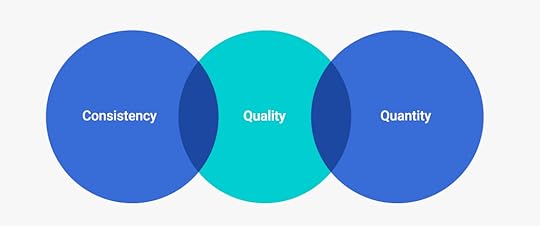
Consistent blog publishing also has many other benefits, including:
Fresh and Engaging ContentSearch engines and users love fresh content.
That’s why search engines promote sites that regularly publish fresh content or update old blog posts.
As for your visitors, the more you serve fresh, engaging, helpful content, the more they’ll keep coming back for more. It also leads to longer time spent on your site and power bounce rates. Both are positive signals that your site provides valuable content. As a result, you’ll enjoy a boost in your SEO.
Improved Search Engine VisibilityBy consistently publishing blog posts, you give search engines more content to index and crawl. This increases the chances of your website being discovered and ranked higher in search engine results pages (SERPs) for relevant keywords. As a result, your website can attract more organic traffic and potential customers.
Increased Website TrafficEach new blog post presents an opportunity to attract new visitors to your website. With proper optimization and promotion, your blog posts can generate traffic from search engines, social media platforms, email marketing campaigns, and other channels.
Over time, a consistent flow of blog posts can contribute to a steady increase in website traffic. And this means organic leads and business growth.
Establishing Authority and ExpertisePublishing high-quality and informative blog posts helps establish your brand as an authority in your industry or niche. It showcases your expertise, knowledge, and insights. These are factors that can help you build trust with your audience.
As you consistently provide valuable content, visitors are more likely to perceive your brand as a reliable source of information, increasing their confidence in your products or services.
Supports Your Content MarketingBlogging is a fundamental element of a comprehensive content marketing strategy. It provides a platform to create and share valuable content that can be repurposed, shared on social media, incorporated into email newsletters, and linked to other marketing channels.
Consistently publishing blog posts enables you to fuel your content marketing efforts and leverage the content across various platforms.
“What Should I Write On My Blog?” 5 Tips for Generating Blog IdeasStruggling to come up with topic ideas for your blog?
Here are some tips to help you consistently publish content to keep readers interested in your brand and product.
1. Know Your Target AudienceBefore typing a single word on your blog, you must understand your target audience.

Consider their interests, needs, and pain points.
What topics are they likely to find valuable and engaging?
Put yourself in their shoes and think about what kind of information or solutions they seek.
2. Conduct Keyword ResearchConduct keyword research to identify relevant topics and popular search queries related to your niche. SEO tools like Google Keyword Planner, SEMrush, or Moz Keyword Explorer can help you discover keywords your target audience uses to find content online.
And once you find good keywords, you can create content around them. 
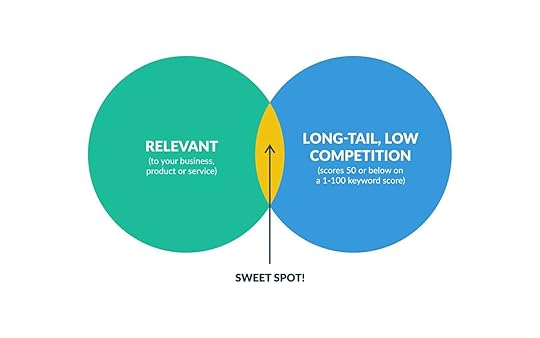
You can use these keywords as a basis for writing content for your blog.
3. Leverage User FeedbackUser feedback is a goldmine of blog topic ideas.
Pay attention to the questions, comments, and feedback from your customers and website visitors. You can also reference social media posts to get a peek into hot topics they’re talking about.
What are their common concerns or inquiries?
Address these questions in your blog posts to provide helpful information and demonstrate that you understand their needs.
By joining in the conversations, you can better position yourself as a friendly voice they can trust.
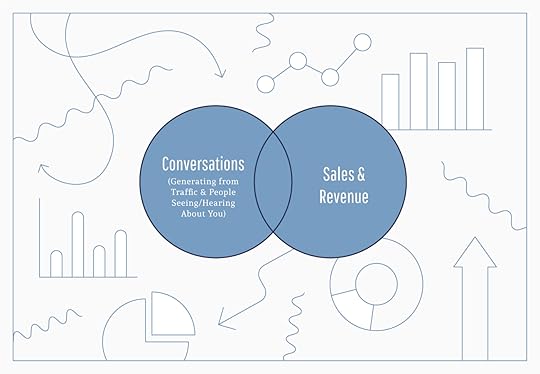
Stay current with the latest news, trends, and developments in your industry and write blog posts that discuss and provide insights on these topics. This positions your brand as knowledgeable and current, and it can attract readers who are interested in industry-related updates.
This strategy is best suited for bloggers and small businesses in fast-paced niches. For example, a fashion blog can create tons of content based on the everchanging trends and news in the industry.
5. How-to Guides and TutorialsAnother powerful way of generating blog ideas is by considering how you can help your website visitors improve their skills. You can do this by creating blog posts that offer step-by-step guides, tutorials, or instructional content.
To do this, identify tasks or processes your audience might need assistance with and break them down into actionable steps. Visual aids, screenshots, or videos can enhance the effectiveness of these guides.
When creating how-to posts, put yourself in your readers’ shoes and ensure you cover the main points thoroughly.
These are also easier to create as you can create blog post templates to follow. Plus, because they hinge on your expertise, you don’t need a lot of research.
“What Should I Write In My Blog?” Consider Long-form ContentTo keep your business competitive, long-form content marketing is an essential strategy to consider. This approach helps you establish authority in your niche, drives organic traffic, and leads to sustainable growth.
To create winning long-form content, you need a process. Guess what? I’ve got it for you right here.  Get my Content Process Blueprint for the full map to creating profitable content from A to Z.
Let’s zero in on some of the most important benefits of creating long-form content on your site.
The Benefits of Long-Form Content MarketingHigher search engine rankings: Google loves long-form content as it provides more value to users. By creating comprehensive articles on relevant topics, you can improve your chances of ranking higher in search results. Check out this study by Backlinko, which shows a positive correlation between longer content and better rankings.Better user engagement: When visitors spend more time reading your content, they’re likely to engage with your brand further – be it through comments, social shares, or even making a purchase. High-quality long-form content keeps readers hooked and encourages them to explore other parts of your website.In-depth information builds trust: Detailed articles demonstrate expertise in a particular subject matter. As readers gain valuable insights from your posts, they’ll begin trusting you as an industry expert – eventually turning into loyal customers.Natural link-building opportunities: Other websites are more inclined to link back to well-researched and informative pieces than short ones lacking substance. Earning high-quality backlinks improves domain authority while boosting SEO efforts simultaneously.Tips for Creating Effective Long-Form ContentTo make the most out of long-form content marketing, follow these best practices:
Focus on quality over quantity: Instead of churning out multiple short articles, invest time and resources into crafting well-researched pieces that provide actionable insights. It’s preferable to create a few top-notch posts rather than numerous inferior ones.Use relevant keywords strategically: Conduct thorough keyword research to identify phrases your target audience is searching for. Incorporate these terms naturally throughout the article. This helps improve SEO while ensuring readability remains intact.Add visuals and multimedia elements: Break up long blocks of text with images, infographics, or videos that complement the information you’re presenting. This not only enhances user experience but also makes your content more shareable across social media platforms.Promote your content effectively: Don’t just hit “publish” and hope for the best. Actively promote your long-form articles through email newsletters, social media channels, or even paid advertising campaigns if necessary. The more eyes on your content, the greater its potential impact will be.Incorporating long-form content marketing into your overall strategy can significantly benefit brand authority, organic traffic growth, and customer acquisition.
By following these tips and staying consistent – you’ll be well on track toward achieving sustainable business success through your content.
Time To Be Consistent With Your Blog Writing!I hope this has been a helpful response to the query, “What should I write on my blog?”
Creating content for your blog can help position you as a leader in your industry. It can also help increase organic website traffic and foster trust with potential customers. That’s why you should plan on writing content regularly for your blog.
And if your biggest hurdle to this was coming up with blog post ideas, that problem has just been solved  !
!

Consistent blogging should be part of your content marketing strategy if you want to grow and scale a sustainable business.
But what about the other pieces necessary for growth?
Do you have them?
If the answer is “no” right now, that’s okay.
I created my mentorship program, the Content Transformation System, for people EXACTLY like you. 
This coaching program gives you the knowledge you need to maintain a consistent blog calendar —and so much more.
It will also give you the skills, strategies, and systems you need to finally get your business ducks in a row. (Watch my free training to see how it works.)
With these key puzzle pieces in place (business foundations + content strategy), your growth will be unstoppable.
Ready to dive in?
Apply today to get started in The Content Transformation System.
The post What Should I Write in My Blog: 5 Strategies for Coming Up with Blog Ideas appeared first on Contenthacker.com.
July 21, 2023
Delivering My First Keynote: AI Talk at #TBEX 2023
April of this year, I received an email from someone named Rick Calvert – a “someone” I’ve grown very fond of now, since being on his stage and getting to know him.
It was an invitation to deliver my first keynote.
He’d watched this powerful video, featured in my newsletter over at Content at Scale:
This was Rick’s email after watching that story:
And thus commenced an amazing conversation – all about AI, how Rick was one of the very first to launch an event for content creators and social influencers, Blog World, in 2007. Talk about OG! Rick literally defines original gangsta when it comes to getting people together around content.
I won’t forget the look on his face when we met over Google Meet.
“Julia, I need someone to come KNOCK SOME SENSE into these bloggers about AI. It’s going to take jobs. It’s going to take everything. Can you do that?”
He believed in me, and gave me the Thursday opening keynote.
It was amazing.

A full replay of my 45-minute keynote, on How You Can Win in the Future of Content with AI, is coming to my YouTube channel!
Till then, here are some highlights.
Highlights from My First Keynote – TBEX 2023Content at Scale was a platinum sponsor of the event. I attended with our COO Josh Slone, and our Creative Director Adrian Boysel.
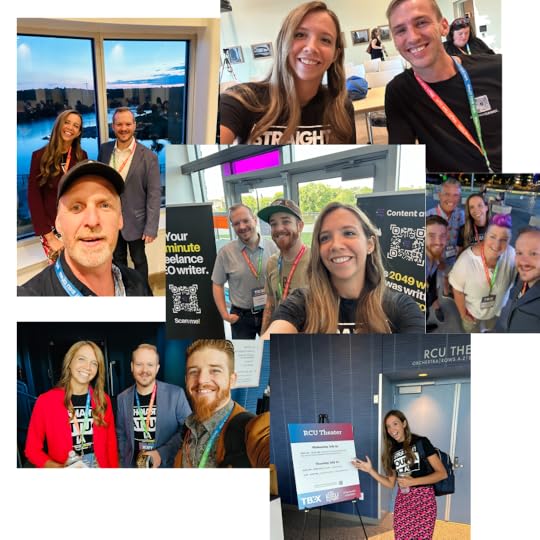
I must pause and give a well-deserved HUGE shoutout to Rick Calvert, creator and CEO of TBEX.
He told his people that they needed to see AI as an opportunity and adapt… “or get hit by a freight train.” (His words. Not mine.) “And go hear Julia.”
Rick was the first in the world to create an event for bloggers.
And he gets the implications of AI in blogging and content as a whole.
The keynote was so much FUN.
I’m craving the next one already, because I absolutely loved walking off that stage and knowing (SEEING) the impact my ideas, models and frameworks had – we’re talking real clarity for people. Listeners went from completely mystified to knowing exactly how to approach AI and take it into their jobs and life. 
If you have an event… if you are reaching people and want to add a female voice on AI in the mix… let’s talk. There’s not a lot of us out there. Drop me a note.
I don’t show up and give just any old talk.
I show you how to use AI with integrity.
I show you how YOU are needed more than ever, but only if you adapt, before AI takes your job.
And I teach you what these new skills will look like.
All based on real data from hundreds of use cases inside Content at Scale’s user base.
I’m updating my evergreen deck at least once a week.
It’s incredible, the sheer unbelievable new era we’re in.
Now let’s move to…
THE QUESTIONS at TBEX.
Dang, they were great.
These people.
Let’s get into ’em.
Top AI Questions From TBEX AttendeesQ. “Don’t you fear AI?”
My A. “Yes, that’s why I chose to hurry up and work for the good AI.”
Q. [Aha moment.] “Julia! You’re essentially the Terminator created (by Content at Scale) to fight the other Terminator trying to destroy us all. Right?”
My A. “I’ll take it.” (What else do you say? Bahahaha.)
To have som fun, I took this as a prompt to Midjourney. It turned me into a 13-year-old computer tech geek, but, I’ll take it.

This was my favorite question, by far.
Q. “What about the existential crisis of people just settling to publish and read ‘okay’ content, aka non-optimized AI content? Since it’s far easier and cheaper to mass produce? Will HQ human writers still even be needed at all?”
My A. “We’re already tired of ‘okay’ content. HQ writers and personal experience will matter more than EVER. It’s all we will want to read or publish. More bad content doesn’t create the desire to read said bad content. It creates the opposite.”
It’s funny, because the person asking this question then told me… “Well Julia, you have more faith in humanity than I do.”
Not really.
I simply believe that humanity won’t change too far from the fundamentals of what makes us, well, human.
Think about it.
As we encounter more and more new and radical tech…
We also get tired of it.
Metaverse fell way flatter than Meta anticipated. People wanted real hugs. Real touch. Real encounters. Not VR ones. Especially in a post-pandemic world where we’d just been cut off from normal society for almost two years.
Bad idea, Meta.
As AI content floods the oceans of the interwebs…
We’re going to want human content. We’re going to crave it, look for it, and turn away from AI-riddled garbage that hasn’t been properly C.R.A.F.T.ed with care.
(Google predicted it in December of 2022, with E for Experience. They want to see your human experience in your content more than ever.)
Want me to speak at your event?I’m taking these gigs through both Content Hacker and Content at Scale.
If you want me there with the team at Content at Scale (full power ), check out this resource on Content at Scale and drop me a note there. You can also reach just me through this form.
Cheers to this new age of AI!
The post Delivering My First Keynote: AI Talk at #TBEX 2023 appeared first on Contenthacker.com.
All of Funnel (AoFu): A New Content Marketing Framework for Creating Revenue Boosting Blogs
It’s the 2020s.
Consumer trust and how we earn it has shifted forever.
Edelman’s study of trust in 2021 blew minds.
In Edelman’s study, over 30,000 consumers were surveyed, and it was found that trust shifted away from major sectors (nonprofit, media, and government) and shifted into the small business owner and entrepreneurial sector.
That means we have the chance to grab more trust than ever before, but how we do it critically matters.
The power of content marketing is undeniable. It’s a way to attract, create, and earn the trust you need for someone to buy.
Great content can help generate inbound leads, build relationships with your customers, and drive sales.
But for many businesses, their content just fails to produce all the good results they read about online.
Perhaps you, too, aren’t seeing great results from your blog posts and overall content marketing campaigns.
And that’s even after following all the content marketing strategies you’ve learned and read about.
Well, you’re in luck. 
In this in-depth guide, I’ll show you exactly why your content marketing isn’t working. I’ll also show you a new formula that will supercharge your strategy, resulting in more leads and sales–with a new approach called AOFU, or All of Funnel.
Let’s talk about it.
Table of Contents: AoFu BloggingThe Drawbacks of Segmenting Your ContentAoFu, or All of Funnel: What It Is?AoFu: The Impact and BenefitsHow to Create AoFu Content: The Easy WayDefine Your Content StyleBuild a Solid Content TeamCreate Feature Pages (Money Pages and Freebies)Use AI to Create Your Base ContentNail the IntroAdd Persuasion Elements Strategically in Your AoFu ContentInclude a Table of ContentsImplement C.R.A.F.TUse CTAs Strategically in the ContentLeverage Your Personal BrandingInclude Trust TriggersConclude with a Sales LetterThe Drawbacks of Segmenting Your ContentAfter 12+ years creating content for many different industries, I’ve discovered certain patterns that, if applied to content, can yield phenomenal results.
I’ve also realized that most content teams are still following outdated practices.
One of these (surprise, surprise) is how we approach the traditional content marketing funnel.
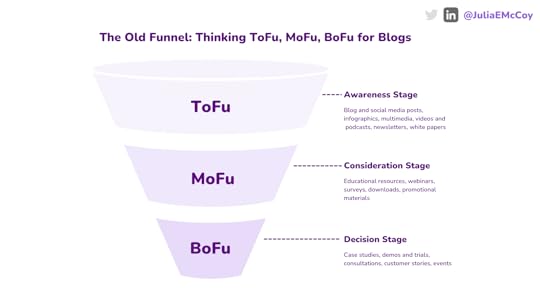
And I’ll be quick to point out that we’ve also been using this funnel for a long time.
But after a lot of studies and experiments, I’ve realized the traditional marketing funnel is no longer as effective as it was before.
It’s 2023. Trust has shifted forever. I mentioned earlier, but it’s worth mentioning again: Edelman’s study of trust in 2021 blew minds. Over 30,000 consumers were surveyed, and it was found that trust shifted away from major sectors (nonprofit, media, and government) and shifted into the small business owner and entrepreneurial sector.
That means we have the chance to grab more trust than ever before, but how we do it critically matters.
A few major drawbacks I’ve been seeing with this funnel lately include:
The Bracket ProblemOne of the biggest disadvantages of the traditional ToFu, MoFu, BoFu, system is that it forces you to bracket people into these 3 categories. But the truth of the matter is that you can’t really do that.
Practically speaking, it’s difficult to truly know which stage of the funnel a lead is in.
Not all people fit in one or the other of the marketing funnel stages. Some can overlap.
The problem with bracketing people is that your content will miss its mark. It won’t fully satisfy your prospect’s needs.
The Temperature ProblemAnother problem with the traditional content marketing funnel is that it assumes the readiness of people at different stages of the funnel. For example, ToFu prospects are cold, MoFu prospects are warm, and BoFu prospects are hot.
This is the temperature problem.
Making these assumptions can be detrimental to your content marketing because it results in you creating content designed to only cater to those “temperatures.”
But the truth is that your prospects can move from cold to hot just from reading a single blog post.
And the reverse is also true. Poorly crafted content can move them from hot to cold regarding your product or service. This results in them seeking out your competitors for the solution they’re looking for.
The Touch ProblemAnother outdated content marketing philosophy is that it takes about 8 touchpoints for a prospect to convert. This leads many content creators to focus on quantity, therefore compromising quality. It also results in creating content that lacks relevance for some users.
Many traditional content marketing funnels are built with this philosophy of touchpoints in mind.
However, today’s customer is savvy and is already armed with a lot of knowledge. Because of this, they don’t necessarily need many touchpoints to convert.
You can actually create a single blog post that is so powerful, it can be as impactful as 8 touchpoints.
And that’s what I’ll be showing you today. 
So, if the traditional content marketing funnel isn’t effective in today’s world, what should you do?
DITCH IT!
Yes, you heard me.
If you rely on content to grow your business, ditch the ToFu, MoFu, BoFu content marketing funnel.
Instead, embrace my all-new content marketing system: All of Funnel (AoFu).
What is AoFu?All of Funnel (AoFu) is my new approach to blogging born from over 12 years of studying under the best content marketers and conducting experiments of my own.
Instead of breaking down your blog into categories to address each stage of the marketing funnel, think of all stages of the funnel and address every question, fear, and concern your customers might have.
Think All of Funnel (AoFu) and answer every question, concern, and fear from the get-go in a single blog.
This way, each blog post is informational, conversational, and conversion-focused.
What does AOFU blogging look like?
Do think: real blogs that build real trust that make the author/publisher real money. Don’t think: bland old boring SEO blogs created just to drive traffic.
This came from years of studying the blog results across 40,000 projects that clients ordered from my writing agency. We delivered over a million blogs every year.
Studying blogs that brought in real results (sales, income, subscribers) was my life.
I’ve also invested countless dollars to study this and get good at it. In 2019, I had a life-changing discovery on blog writing when a top SEO consultant, the one behind WebMD’s rise to the top of Google, taught me that every single blog I write should have persuasive copy, and a “sales letter” blend at the bottom.
I’ve since taken that up a notch and learned how to weave multiple “persuasive elements” into my blog. It has since become a TOFU-meets-BOFU piece of gold, earning me a four-figure-plus purchase (think $2,500+) from a brand-new lead in a matter of days.
I’m excited to share that exact framework with you, in this post.
And I can’t wait to see you replicate the results I’ve seen!
AoFu: The Impact and BenefitsNow that you know what AoFu is, let’s dive into its impact and benefits.
I promise you, once you grasp and master this revolutionary content marketing framework, your business will never be the same again.
One Blog Post to Rule Them AllThe traditional content marketing funnel requires you to create a set of blog posts to attract prospects, another set to draw them down your funnel, and another set to convert them into paying customers.
With AoFu, a single blog post can do all that.

AoFu helps you create one blog that caters to every lead’s needs.
Don’t worry. Creating such a blog post doesn’t require rocket science.
In fact, I’ll break down my proven process for creating such a blog post in just a few hours.
Cut Down Resources, Time, and EffortAnother advantage of the AoFu formula is that it helps you win huge savings on your content marketing budget.
That’s because you can consolidate the budget for ToFu, MoFu, and BoFu content into one blog post.
You can address the concerns at all the funnel stages in one go.
By cutting down the resources, time, and effort needed to create your content, you can better focus on creating high-quality content.
Better Conversions and ROIBecause AoFu focuses on informational, conversational, and conversion-focused content, you can easily turn a browser into a customer.
It results in content with higher conversions. As you’ll see in a moment, one of the most important elements of AoFu content is to include persuasive elements in each blog.
Doing so ensures that every blog post you create converts like gangbusters!
How to Create AoFu Content: The Easy WayReady and raring to know how to create AoFu content?
Without wasting much time, let’s get to the nuts and bolts of creating a single piece of content that covers ToFu, MoFu, and BoFu.
1. Define Your Content StyleOne of the first steps to creating winning content is to define your content style.
Content style refers to the specific guidelines and rules that dictate how your content should be written and presented. This helps you maintain consistency and helps develop an online brand identity.
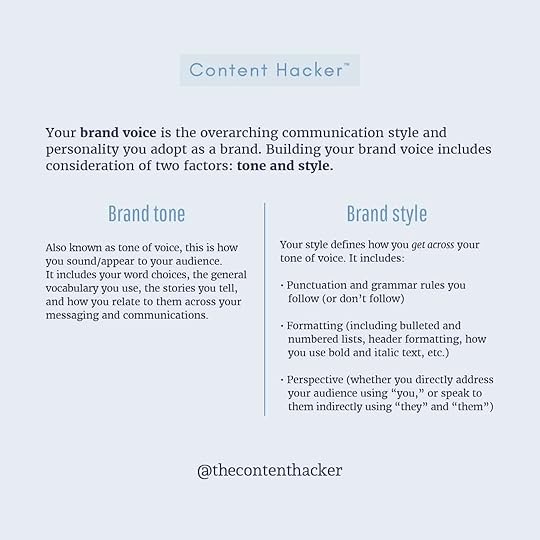
Some elements to consider when developing your content style include:
Tone: This is the overall attitude, mood, and style of language used in your content. It can be formal, informal, conversational, technical, or casual, depending on the target audience and the nature of the content.Grammar and punctuation: Define the specific rules governing the use of grammar, spelling, capitalization, and punctuation in your content. For example, a style guide may specify whether to use the Oxford comma or not.Formatting and structure: Have guidelines for organizing the content, including headings, subheadings, paragraphs, bullet points, numbering, image use, etc.Voice and point of view: The preferred way of addressing the audience, such as using a first-person, second-person, or third-person perspective.For more tips on developing a brand style guide, check out this in-depth guide.
Defining your content style is essential for creating a uniform and professional appearance in all written materials, not just your blog posts. It also helps your audience identify you online, further bolstering trust and authority.
2. Build a Solid Content TeamAnother critical component of creating AoFu content is to build a solid content team.
A great team is essential to creating impactful content and managing a consistent content calendar. And two of the most important roles you need to fill on your content team include:
Content Strategist/ SEO ManagerThis is the person responsible for the oversight of your content strategy and content delivery. If you’re running a low-overhead business, this could be you.
Some of the responsibilities of a content strategist would include:
Keyword research: Conducting thorough keyword research to identify relevant and high-traffic keywords that align with the website’s content and business objectives.Competitor analysis: Monitoring and analyzing competitor SEO strategies to identify opportunities and stay ahead in your industry.SEO audits: Conducting regular SEO audits to assess the website’s performance, identify areas for improvement, and implement necessary changes.Performance tracking and reporting: Using various SEO tools to track key performance indicators (KPIs), such as organic traffic, keyword rankings, conversion rates, and providing regular reports to stakeholders.AIO WriterTo speed up your content creation and cut down on content production costs, you should rely on AI content tools like Content at Scale.

But because AI isn’t perfect, this kind of content needs a human writer to refine and optimize it so it aligns with content goals and reads well for other humans.
I call this kind of content AIO content.
Because it’s supported by AI, AIO content can be produced 5-10x faster than just using human power alone.
However, this is rarely publish-ready. It needs polishing and optimizing before you hit publish.
This is where your AI Optimization (AIO) writer comes into play.
Hiring the right AIO writer will save you tons of money while ensuring that your AoFu content does what it’s supposed to — generate leads and convert them into customers.
Graphic DesignerCustom graphics are an important element of AoFu blog posts. That’s why a graphic designer should be one of your first picks when building your team.
One of the most important reasons to include custom graphics is that they help bolster your personal branding. This, in turn, makes it easier for your prospects to identify and relate with you easily.
Custom images are also a great way to incorporate natural-looking CTAs in your content.
Once you have your team in place, you can now start creating AoFu content.
3. Create Feature Pages (Money Pages and Freebies)Feature pages are some of the most important pages on a website. That’s because they’re designed specifically to help you grow your subscriber base and boost your revenue.
They are your main business growth drivers.
Money pagesMoney pages refer to specific web pages on a website primarily designed to generate revenue or conversions. They are crucial for business as they directly contribute to your bottom line and financial success.
Money pages typically focus on promoting products, services, or content that leads to transactions, sign-ups, or other desired actions that generate revenue or valuable leads. Examples include:
Product pagesService pagesLanding pagesSubscription pagesCreating these pages first is important because you’ll have to link to them in your blog content, thereby driving your readers to content with a stronger sales message.
FreebiesAnother important element of AoFu content is the freebies you offer readers. These are conversion magnets that help you turn readers into subscribers. Examples can include:
TemplatesCheatsheetseBooksMake sure these are hooked up to relevant email sequences that soft sell your subscribers to your money pages.
4. Use AI to Create Your Base ContentNow that you’ve laid the foundation for a high-converting blog, it’s time to start creating content.
This is the part I love because all your results hinge on a well-executed content strategy.
And I get it if you’re on the opposite end of the spectrum and hate writing blog posts.
Fortunately, in today’s age, anyone can write impactful content even if they’re not a writer.
This is all thanks to powerful AI writing tools like Content at Scale.
With AI writing tools, you can easily produce a 2,000-word article in a matter of minutes!
This is the draft your AIO writer works with. If you’re a Content at Scale user, the first draft will have nearly all the elements you need. Examples include links, research, links, and near-perfect content.
Want to learn the A to Z process I use to produce top-notch content with a touch of AI? You need my Content Process Blueprint.
One of the most important elements of a blog post is the introduction or hook, as it’s sometimes called. This is because its main purpose is to hook readers and get them to read the rest of your article.
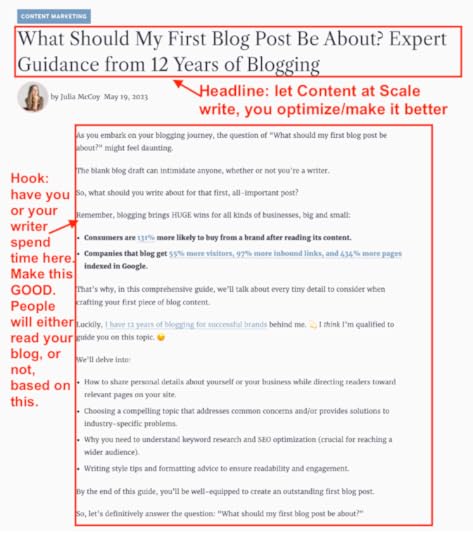
Getting this element right not only gets readers interested in your content but also increases the chances of your blog post converting.
A few tips for nailing your intro include:
Start with a captivating hook: Use a story, question, or fact/statistic to hook your readers and grab their attention. You can also add an element of curiosity to keep them engaged.State the problem or need: Clearly state the problem or need your blog post aims to address. This helps readers understand the relevance of your content and why they should keep reading.Keep it concise: Introductions should be concise and to the point. Avoid lengthy paragraphs or unnecessary details. A brief and clear introduction is more likely to maintain readers’ interest.Use an empathetic tone: Write in a tone that connects with your readers on a personal level. Show empathy and understanding for their concerns or interests.Remember that the introduction is the gateway to your blog post. Investing time and effort into crafting an attention-grabbing and persuasive intro can significantly improve the overall engagement and success of your blog content.
That’s why I train my AIO writers to spend time on the intro to ensure that it’s as impactful as possible.
6. Add Persuasion Elements Strategically in Your AoFu ContentAoFu blog posts are designed to help you:
InformEducateBuild trustConvertAs a result of all this, they’re great for driving revenue.
But for your posts to achieve all this, they must be infused with several persuasion elements throughout.
In fact, the first persuasion element must be found in your hook!
Your hook should contain your first “tidbit” of persuasive copy. But, note: You’re not hard-selling anything here. Your number one goal is to build trust, let the reader in on who the author/publication/brand is, and create that connection.
After this, you can add other hard-selling persuasive copy in strategic places. This includes text-based and image-based CTAs linking to your money pages.
Other persuasive elements include:
Statistics: Use research and studies to drive your point home.Credibility-building phrases: These are statements about yourself showing your experience or results. For example, “12 years of experience…”All these persuasive elements help build trust and convince readers to click on your CTAs and purchase your product.
7. Include a Table of ContentsA table of contents is another powerful element you should add to your AoFu-focused blog posts.
Despite being simple, it has many powerful benefits.
For example, your table of contents can help boost your SEO. That’s because adding a table of contents helps search engines understand what your content is about.
A table of contents also adds an interactive element to your blog post. This helps users engage with it more.
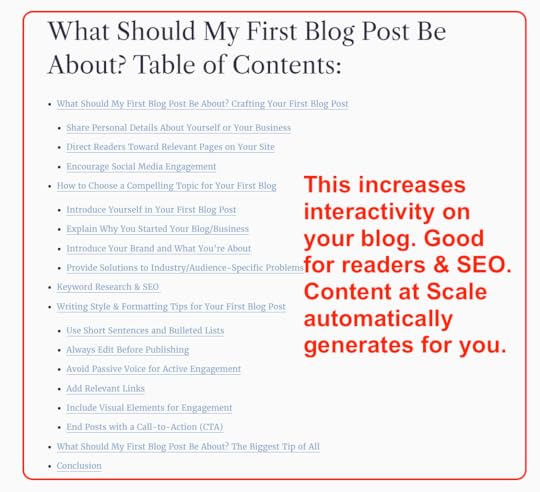
One of the biggest advantages of a table of contents is that your readers can use it to jump to sections that matter to them the most. Because of this, it’s a powerful tool you can use to transform a single blog post into a piece of content that addresses the concerns on the ToFu, MoFu, and BoFu stages of the traditional marketing funnel.
8. Implement C.R.A.F.TAI blog writing is very effective if you have the right tool.
However, for your content to be impactful, it still needs a human touch.
Remember, an AI writing tool is just that — a tool. For it to yield the best results, it needs to be put in the hands of someone who understands their craft.
And in the case of your AIO writer, someone who understands the C.R.A.F.T writing framework.
If this is your first time hearing about this framework, C.R.A.F.T. stands for:
C. Cut the fluff.R. Review, edit, optimize.A. Add images, visuals, and media.F. Fact-check.T. Trust-build with personal story, tone, and links.This is the secret sauce to impactful AI blog writing. Here’s a summary of how this framework works in this step-by-step C.R.A.F.T writing tutorial:
9. Use CTAs Strategically in the ContentOnce you’ve polished your blog post using the C.R.A.F.T framework, the next step is to add calls-to-action (CTAs) strategically in your content.
The purpose of CTAs in your content is to get readers to take a specific action on your blog. This can be any action like:
Subscribing to your newsletter.Reading another blog post.Downloading a freebie.Buying a product.CTAs are powerful tools that bridge the gap between the reader’s interest and the action you want them to take on your blog.
Well-designed and strategically placed CTAs can significantly impact user behavior and contribute to the success of your content.
Note: For inspo, take a look at how we’ve used CTAs in this very blog post. 
You’ve probably heard me harp on about personal branding.
Well, that’s because it’s a critical component of business success.
Building a brand has many advantages that spill over into your AoFu content creation. Examples include:
Fosters trust and credibility: Personal branding allows you to establish yourself as an authoritative and trustworthy figure in your field. When people recognize and trust a personal brand, they are more likely to engage with the content and recommendations shared by that individual.Helps you connect with your audience: Content marketing is all about engaging and resonating with your target audience. A strong personal brand enables you to connect with your audience on a deeper level.Differentiates you from competitors: In a crowded digital landscape, personal branding helps you stand out from the competition. A unique personal brand with a distinct voice and style can make a content marketing strategy more memorable and appealing to the target audience.Boosts conversions: A personal brand makes you more likeable, authoritative, and trustworthy. All these things can result in an uptick in your conversion rates and, ultimately, your revenueLet your personal brand shine through your content.
Hot tip: Add custom images with your face within your blog posts. This helps make it easier for readers to relate to the person behind the blog.
11. Include Trust TriggersPeople buy from people they trust.
And as you saw in the intro, trust is shifting from big corporate and government entities to small businesses.
That’s why you must take advantage of this shift and prove to your readers that they can trust your brand.
To do this, you must include trust triggers in your AoFu content. These are elements of your copy designed to help prove that you’re the best solution provider for your readers. Examples include
TestimonialsStatisticsOriginal researchCase studiesReviewsAdding these elements to your content will help you nudge readers closer to clicking on your CTAs.
And that’s exactly what you want to achieve with your content.
12. Conclude with a Sales LetterThe last element to include in your AoFu blog post is the “sales letter.” It’s the last two H2s on your blog and should be designed to encourage readers to act.
This is your final persuasion element and must be crafted in a compelling way.
It’s your opportunity to “soft sell” the program, product, or end service your brand offers.
But don’t just settle for mediocre sales writing!
Know your product or offer in and out and speak from its place of differentiation. If this is you writing for your own brand at first, you can set a standard that you can eventually give your writers. Make sure you take time on this because this part of your blog does a LOT of heavy lifting.
One way to make your sales letter more impactful is to add in “personal branding” elements whenever you can. A picture of a real human at your brand makes all the difference in building that trust associated with the persuasion to buy/act.
Here’s an example of a sales letter from one of my blog posts:
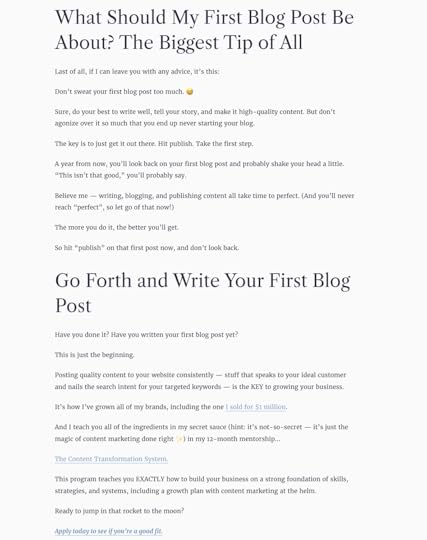
Follow the style above to write a full call to action that is at least 4-5 short, one-to-two-sentence paragraphs. Use a classic copywriting formula like AIDA (Attention, Interest, Desire, and Action) or PAS (Problem, Agitation, and Solution) here to elicit a response from your reader.
I particularly love PAS – it’s simple, easy to remember, and you can play with it. You need to name the problem they face. Agitate it (speak about it, point to it). Then, solve it with the solution at hand.
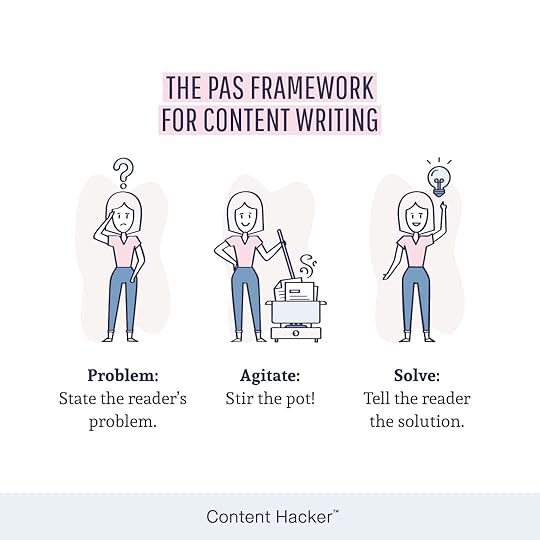
Don’t use the old boring ways of concluding your blog posts. Instead, turn your conclusion into a powerful sales letter.
That’s another difference between ordinary blog writing and AoFu-focused blogging. Every section of your blog post has a role to play in driving business growth.
Get Started Using the AoFu Model NOWNow you know what the All of Funnel model is.
You’ve seen its benefits.
You know how to create content that follows the framework.
It’s now time to put AoFu into action.
This system just works.
It’s the EXACT framework that has helped me build my businesses through blogging.
If you want to learn more about creating content that moves the needle, that’s what my 12-month mentorship program is all about…
It’s called The Content Transformation System.
This is a personalized coaching program that empowers you with the knowledge and skills you need to start doing content marketing strategically — and grow your business by leaps and bounds.
Ready to find out more? Watch my free training for a preview of the lessons and results you can expect inside.
Just ready to get your booty inside and start learning? Apply today.
The post All of Funnel (AoFu): A New Content Marketing Framework for Creating Revenue Boosting Blogs appeared first on Contenthacker.com.
July 13, 2023
How to Find and Remove Bad Backlinks: Your Quick Guide
Finding yourself getting spammed with bad links?
Picture this…
You’ve put a lot of effort into building an SEO-friendly website with amazing content. Users and search engines will definitely reward your efforts.
You’ve applied SEO best practices.
You even have a phenomenal number of organic backlinks.
All things being equal, you should be ranking high on search engine results pages, but you’re not.
So, what could be the problem?
You could have some bad backlinks pointing to your site.
With backlinks being an important ranking factor, this is definitely cause for concern.
Don’t worry, though. Learning how to find and remove bad backlinks is something you can handle on your own.
This blog post will help you do just that. We’ll look at how to:
Identify low-quality backlinks.Disavow backlinks negatively impacting your site.Identify and build good backlinks.By the end of this post, you’ll understand how to clean up your link profile and protect your website from potential search engine penalties.
Learning how to find and remove bad backlinks is essential for any entrepreneur, founder, business owner, or marketer looking to maintain a healthy online presence.
Let’s dive in.
Table of Contents:How to Identify Bad Backlinks?5 Reasons Bad Backlinks Are Harmful to Your Site1. Google Penalties2. Negative SEO3. Poor Link Quality4. They Damage Your Brand Reputation5. Poor SEO PerformanceHow to Find and Remove Bad BacklinksIdentifying Bad BacklinksAhrefsMoz Link ExplorerGoogle Search ConsoleRemoving Bad BacklinksContact the website ownerUse Google’s Disavow ToolMonitor Your ProgressNow You Know How to Find and Remove Bad Backlinks…How to Identify Bad Backlinks?Backlinks are one of the most important ranking factors search engines use to rank content.
These are links from other sites pointing to yours. They hold a lot of value because they’re considered a vote of confidence that your site is authoritative and has valuable content.
The more high-quality backlinks you have, the better your chances of outranking your competitors.
However, not all links pointing to your site add value.
Some are toxic backlinks that can lead to your site not ranking as well as it should.
Bad backlinks, also called toxic backlinks, come from spammy, harmful, irrelevant, or low-quality websites.  These backlinks can hurt your website’s search engine rankings and overall SEO performance.
To better help you identify bad backlinks, here are some of their characteristics:
Spammy or Low-Quality Websites

Backlinks from websites known for spamming, link farms, or low-quality content are considered bad backlinks. This includes all links from sites built specifically for link-building purposes, like private blog networks (PBNs).
How do you build a good backlink profile organically? Create incredible content that people WANT to link to. It all starts with a proven process — get that right now in my Content Process Blueprint.
Backlinks from websites or pages unrelated to your industry, niche, or content topic can be considered bad backlinks. Search engines value backlinks from relevant sources that provide valuable information to users.
This is why links from sites in your niche or industry are considered high-quality backlinks.
Paid or Unnatural LinksBacklinks obtained through paid link schemes, link exchanges, or other manipulative practices violate search engine guidelines. These artificial links are considered low-quality and can lead to penalties or a loss of trust from search engines.
Over-Optimized Anchor TextsBacklinks with overly optimized anchor text, i.e., exact-match keywords stuffed into the anchor text, can raise red flags to search engines. Natural backlink profiles have a mix of different anchor text variations and include branded and generic anchors.
Negative SEO AttacksCompetitors or malicious individuals may intentionally create or acquire bad backlinks to your website as part of a negative SEO strategy. These are usually low-quality backlinks designed to harm your website’s search rankings, reputation, and business growth.
Link Networks or Link ExchangesBacklinks from link networks or link exchange schemes, where websites join together to exchange links solely for the purpose of boosting rankings, are considered bad backlinks. Search engines can identify such artificial linking patterns and penalize the websites involved.
Search engines are so advanced they can easily tell the type of backlinks pointing to your site. As a result, they’re better able to tell which sites are trying to use link building to game the system.
As a website owner or manager, you need to know how to find and remove bad backlinks that are harming your site. Because these types of websites aren’t trusted by search engines, when they point to your site, your SEO will be negatively impacted.
And as you know, low rankings correlate to reduced traffic and poor sales.
5 Reasons Bad Backlinks Are Harmful to Your SiteIf backlinks are good for SEO, why are toxic backlinks harmful to your site?
1. Google Penalties

If your website has accumulated a significant number of low-quality links, it can trigger a penalty from search engines like Google. These penalties can result in a drop in search rankings or even complete removal of your website from search results.
Knowing how to disavow backlinks helps mitigate the risk of such penalties.
2. Negative SEOIn some cases, competitors or malicious actors may create or acquire low-quality backlinks to your website to harm your search rankings. This is called negative SEO.
Disavowing these bad links signals to search engines that you do not endorse or associate with those links, protecting your website from negative SEO practices.
3. Poor Link QualityBad links from spammy or irrelevant sources can dilute your website’s authority and impact its overall performance. Knowing how to remove harmful backlinks helps ensure that your backlink profile consists of high-quality, relevant links that positively contribute to your SEO efforts.
4. They Damage Your Brand ReputationLow-quality or spammy websites linking to your site can reflect poorly on your brand’s reputation. Disavowing bad links helps maintain a clean and reputable backlink profile, preserving your brand image and credibility online.
5. Poor SEO PerformanceBad backlinks pointing to your site have an overall negative impact on your SEO. Knowing how to find and remove bad backlinks helps you improve the overall quality and relevance of your backlink profile. This can lead to higher search rankings, increased organic traffic, and improved SEO performance.
A strong and healthy backlink profile is essential for long-term SEO success.
Now that you know how to identify bad and good backlinks, let’s dive into how you can find bad backlinks and remove them from your site.
How to Find and Remove Bad BacklinksWhether you’re an entrepreneur, founder, business owner, or marketer aiming to elevate your website’s search engine rankings, you should comprehend the value of backlinks.
As you’ve seen by now, not all backlinks are equal. Some may be detrimental to your website’s SEO.
In this section, we’ll show you how to find and remove bad backlinks.
Identifying Bad BacklinksThe first step in dealing with bad backlinks is identifying them. As we’ve already discussed, these are:
Links from spammy websites with thin content and numerous ads.Links from unrelated niche sites that have no relevance to your industry or target audience.Paid links designed solely for manipulating search engine rankings.And more.To spot these problematic links quickly and efficiently, consider using one of the following SEO tools  :
:
Ahrefs is an excellent tool for analyzing your website’s backlink profile and running backlink audits. With its comprehensive database of live backlinks updated regularly, Ahrefs allows you to identify potentially harmful ones by filtering based on factors like domain rating (DR), anchor text distribution, and more.

Source: Ahrefs Site Explorer
Not only does Ahrefs give you tons of backlink data, but you can disavow links from right within the tool.
It also enables you to manually go through the links in your audit so you can be sure every single backlink you’re targeting to disavow is really toxic. Once done, you can download your list of bad backlinks in a format you can upload to Google Search Console (GSC) if necessary. More on this in a moment.
Moz Link ExplorerMoz Link Explorer is another popular option among marketers interested in running backlink audits on their sites. It gives you detailed insights into your site’s link health status and offers a detailed analysis of your backlink profile. It also provides a spam score metric to help you gauge the quality of each link.
Google Search Console is another valuable resource for identifying bad backlinks, as it shows which websites are linking to yours and allows you to download this data in CSV format for further analysis.
These tools take the grunt work out of manually going through all the links on your site to spot the toxic ones. You can use them to easily find incoming links that search engine spiders can flag as spammy.
Removing Bad BacklinksOnce you’ve identified harmful links pointing to your site, removing them is easy.
Contact the Website OwnerReach out politely via email or contact form requesting the removal of the unwanted link. Be sure to provide details about where the link is on their site and why it’s problematic for your SEO efforts.
Granted, most website owners may not be bothered to respond or take action.

Thankfully, this isn’t your only option to remove toxic backlinks on your site.
Use Google’s Disavow ToolIf contacting website owners doesn’t yield results or isn’t feasible due to a large number of bad links, you can also submit a disavow file through Google’s Disavow Tool. This informs Google that you don’t want certain links considered when assessing your site’s ranking.
Here’s an insider tip from Josh McCoy (who heads up our website services) on uploading URLs to disavow in Google Search Console:
Step 1: Log in to your Gmail that you used to verify your domain with Google Search Console.
Step 2: After logging in, go to this link: “https://www.google.com/webmaster/tool...”
Step 3: Select your domain property (http/https version)
Step 4: Click on replace and upload your disavow file (from Ahrefs or your other SEO tool of choice)
Note that using this tool should be done cautiously and only as a last resort since incorrect usage can negatively impact your rankings.
Monitor Your ProgressAfter taking action against bad backlinks, monitor any changes in your organic traffic and search engine rankings over time. This will help confirm whether removing those links has positively affected your SEO performance.
Knowing how to remove toxic backlinks may seem daunting at first  .
.
But as you can see, anyone can do it.
Now You Know How to Find and Remove Bad Backlinks…Finding and removing bad backlinks is an important part of your website maintenance.
After all, identifying and eliminating bad backlinks is critical to maintaining good SEO rankings. That’s why periodically inspecting your website for any shady connections can help guarantee an improved online presence. It also ensures that you avoid penalties from search engines and results in good SEO performance.
As you can see, all it takes are a few simple steps to protect yourself from the negative effects of bad backlinks while continuing with successful content marketing strategies.
And if you’re still unsure what that looks like (successful content marketing), or you feel like you’re stumbling around in the dark guessing on how to grow through content…
Your pathway through the weeds and onto the road to success is right here.
It’s called the Content Transformation System, my 12-month mentorship program where you learn to build a sustainable business with solid foundations and practices like content marketing… right alongside me.
Your search for the right path to growth is over. It’s here!
Watch my free training to see how it works.
And when you’re ready, apply right here.
See you inside!
The post How to Find and Remove Bad Backlinks: Your Quick Guide appeared first on Contenthacker.com.
July 7, 2023
How to Grow My Business Without Sales Calls: Top Strategies
Do you dread calling strangers?
For most introverts, making calls is one of the hardest parts of sales. 
And let’s face it: Introvert or not, making sales calls sucks.
And that’s probably why you’re googling “how to grow my business without sales calls.”
Well, I’ve got good news for you: You DON’T have to rely on cold calling to generate sales leads for your business.
The thought of cold calling can be daunting and even demoralizing for many entrepreneurs, but alternative strategies can generate leads and convert prospects just as effectively.
In this blog post, we’ll help you discover and discuss how you can grow your business without picking up the phone or delivering a canned sales pitch.
By focusing on non-intrusive techniques instead of cold calls in your quest to learn “how to grow my business without sales calls,” you’ll foster stronger relationships with potential buyers while maintaining a positive brand image.
Table of Contents:Content Marketing: The Key to Automatic Lead Generation on Steroids (No Phone Calls!)5 Effective Content Marketing Strategies to Grow Your Business1. Create Comprehensive Guides2. Write Case Studies That Showcase Success StoriesTips for Writing Engaging Case Studies:3. Utilize Long-Form Blog Posts with Strong SEO PracticesBenefits of Long-Form Content:4. Use Guest Blogging to Widen Your Reach5. Promote Your ContentHow To Grow My Business without Sales Calls: Now You KnowContent Marketing: The Key to Automatic Lead Generation on Steroids (No Phone Calls!)If you hate cold calling and are looking for alternative ways to generate leads, then you’ll love content marketing.
Content marketing is a digital marketing approach focused on creating and distributing valuable, relevant, and consistent content. This aims to attract, engage, and retain a clearly defined audience – ultimately driving profitable customer action.The types of content you create can be anything from blog posts to social media content to email newsletters, and everything in between.
The major advantage of content marketing over other traditional marketing strategies like cold calling (yuck!) is that it helps you generate inbound leads. This means instead of going after potential customers and invading their space, the content you create attracts your ideal customers. And thus…
Generating leads becomes much easier!
Aaaaand… You don’t even have to make a single phone call. 

Besides helping you attract potential customers, content can also be used to streamline your customer service.
By creating content that answers commonly asked questions about your business, you’ll have more satisfied customers. For most of them, reaching out to customer support is daunting, so they’ll be more than happy when they can find answers and solutions on your website.
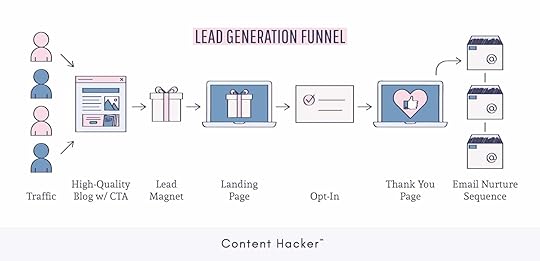
That means leveraging content throughout every stage of the buyer journey is a sure way to foster strong relationships that result in loyal customers.
So, how do you use content to grow your business without sales calls?
Pssst… You need a process for that! Luckily, I give you the keys to the kingdom in my Content Process Blueprint. Learn everything you need to know about setting up your content marketing in this handy, exhaustive guide.
Growing your business without sales calls is possible with the right content marketing strategies.
And one of the most effective is to create long-form content.
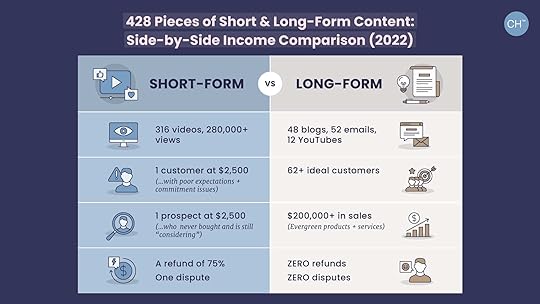
You should prioritize creating long-form over short-form content. Here’s why.
You can attract and engage potential customers by leveraging effective long-form content on your website. This leads to increased traffic, conversions, and growth for your business.
In this section, we’ll delve into the best approaches for generating high-caliber long-form content that yields tangible outcomes.
1. Create Comprehensive GuidesOne way to provide value through long-form content is by creating comprehensive guides on topics relevant to your target audience.
These in-depth resources should cover all aspects of a subject and be designed as a go-to reference for readers seeking information or solutions related to that topic.
For example, if you’re in the digital marketing industry, consider crafting an ultimate guide on digital marketing strategies. Or, if you run an eCommerce store specializing in running shoes, create content around the best running shoes or exercises for runners.
Real-life example: I created an ultimate, comprehensive guide for Content Hacker on how I make YouTube videos.
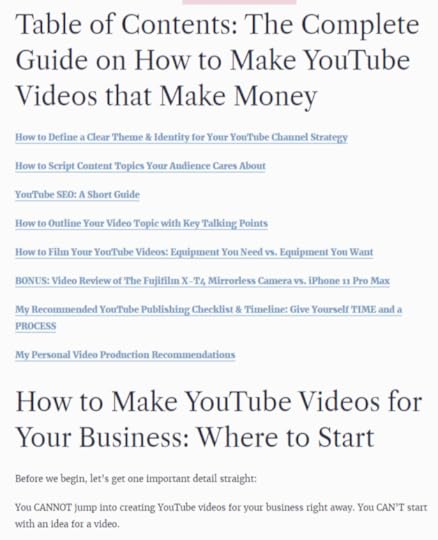
These comprehensive guides will help generate sales leads for your business. Again, no need to make a phone call! They can also serve as aides to your prospects and help speed up the buying process
2. Write Case Studies That Showcase Success StoriesA well-written case study can effectively demonstrate how your product or service has helped other customers succeed while providing valuable insights into real-world applications of what you offer.
Be sure to include specific details about challenges clients faced before working with you and highlight tangible results achieved after implementing your solution.
Tips for Writing Engaging Case StudiesCase studies are a unique type of long-form content that must be crafted carefully. Here are a few tips to help you craft impactful ones:
Showcase relatable customer stories: Choose subjects representing different industries or niches within your target market.Use data-driven evidence: Back up success claims with quantifiable metrics such as revenue increase percentages or time saved per task completed.Incorporate visuals: Graphs, charts, and images can help break up text-heavy content while making it easier for readers to digest complex information.Perfecting the craft of writing case studies will help you solve the question of “how to grow my business without sales calls.”
3. Leverage Long-Form Blog Posts with Strong SEO PracticesLong-form blog posts are a fantastic way of providing valuable content that resonates with your readers. However, besides adding value, you should also focus on making it discoverable on search engines.
To create effective long-form content, you need to cover your topic thoroughly and ensure the content is optimized for search engine visibility.
Because these content pieces are long, it’s important to pack them with as many actionable tips as possible. They should also be carefully researched, educational, and captivating to keep readers intrigued throughout the article.
To maximize visibility on search engines like Google, incorporate strong SEO practices. Examples include optimizing headings and subheadings with relevant keywords, strategic internal linking, and many more.
Benefits of Long-Form ContentBetter engagement: Longer content pieces tend to hold your reader’s attention better than shorter ones. They also help educate existing customers on using your product or services, reducing their need to contact customer service.In-depth analysis: Allows you to explore topics thoroughly and offer unique insights not found in shorter formats.Better search rankings: Research has shown that long-form content is better for SEO as it tends to rank higher on search engine results pages (SERPs). A Backlinko study also found that long-form content is correlated with more backlinks.Social sharing potential: comprehensive resources often get shared more frequently across social media platforms due to their perceived value by users.Inbound lead generation: inbound leads are easier to generate when you publish helpful content that’s discoverable. This usually entails long-form content.
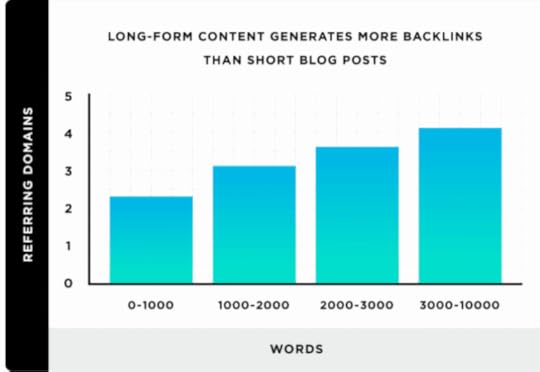
Source: Backlinko
By implementing these effective long-form content marketing strategies into your overall plan, you’ll be well on your way toward growing your business without relying solely on sales calls.
Always prioritize quality over quantity when creating new pieces of content. This will ensure a positive user experience while helping establish trust between you and potential customers. This makes it easier to convert readers into satisfied clients and keeps current customers engaged with your brand.
Do you struggle to write long-form SEO content? …Have you considered leveraging an AI writing tool to make your life easier? Try out my tool of choice, Content at Scale, and get 20% extra credits when you sign up with my link.
If you’ve googled “how to grow my business without sales calls,” it means you want to grow your business without having to employ cold calling.
Not every business owner is comfortable talking to strangers to drum up leads. Many hate cold calling!

One of the most effective ways to grow your business without picking up the phone is to leverage the power of guest blogging. This is the practice of publishing valuable content on other blogs that aren’t yours (ideally, ones with good reach, and readership that overlaps with your audience).
The beauty of guest posting is that it:
Brings you before a wider audience: Publishing on other blog sites puts you in front of a “warm” audience you’d otherwise not be able to reach on your own. This results in greater visibility for your company online, making it easier for potential buyers and leads to notice you.Builds your credibility: Getting featured in different publications shows you’re a reliable source and an authority in your field.Boosts your SEO: Guest blogging can earn you backlinks, a big ranking factor search engines use. Earning quality backlinks results in better rankings in Google.All these benefits of guest blogging are great for your lead-generation efforts.
5. Promote Your ContentPublishing content is only one part of executing an impactful content marketing campaign.
To get the best results out of your content, you must promote it to reach the right audience. Some effective ways of doing so include:
Email marketing: Distributing your content to your email list is an excellent way to ensure it reaches its intended audience: your existing customers. These people can also help spread the word by forwarding your newsletters to their network.Social media marketing: Social media is a powerful platform to help you promote your content to your ideal customers. Targeted social media campaigns are one of the most effective ways of ensuring your content marketing strategy bears fruit.Search engine optimization (SEO): SEO is probably the most powerful way business owners can reach and convert prospects into customers. It’s also one of the most cost-effective digital marketing strategies.Content promotion is an essential aspect of growing your business without sales calls.
Ultimately, you can use your content as a sales pitch designed to reach as many potential buyers as possible. And you’ll never have to pick up the phone again. 
The key to growing your business without sales calls is understanding the power of content marketing.
When used correctly, it can help you:
Reach a wider audience and build relationships with potential customers.Establish yourself as a knowledgeable, authoritative figure in your industry.Support the buying journey of your audience, as it helps convert prospects into customers.With consistent effort over time, you’ll be able to scale up your business without relying on costly sales calls or other traditional customer acquisition methods.
So, now you know the answer to “how to grow my business without sales calls.”
If you need help getting started with the strategies mentioned in this post, you’re in the right place.
The Content Transformation System is my 12-month mentorship program that teaches you the skills, strategies, and systems you need to grow a sustainable business without cold calling, pushy sales tactics, or ad funnels.
If your heart is leading you to a more helpful, organic way of marketing — of building real relationships with your customers — let me help you put it into action. 
To get started, apply today for a spot in the Content Transformation System.
The post How to Grow My Business Without Sales Calls: Top Strategies appeared first on Contenthacker.com.